From the FasterSkier archive — posts syndicated from athletes’ and coaches’ own blogs between 2004 and 2012, kept online as published. Current coverage is at fasterskier.com.
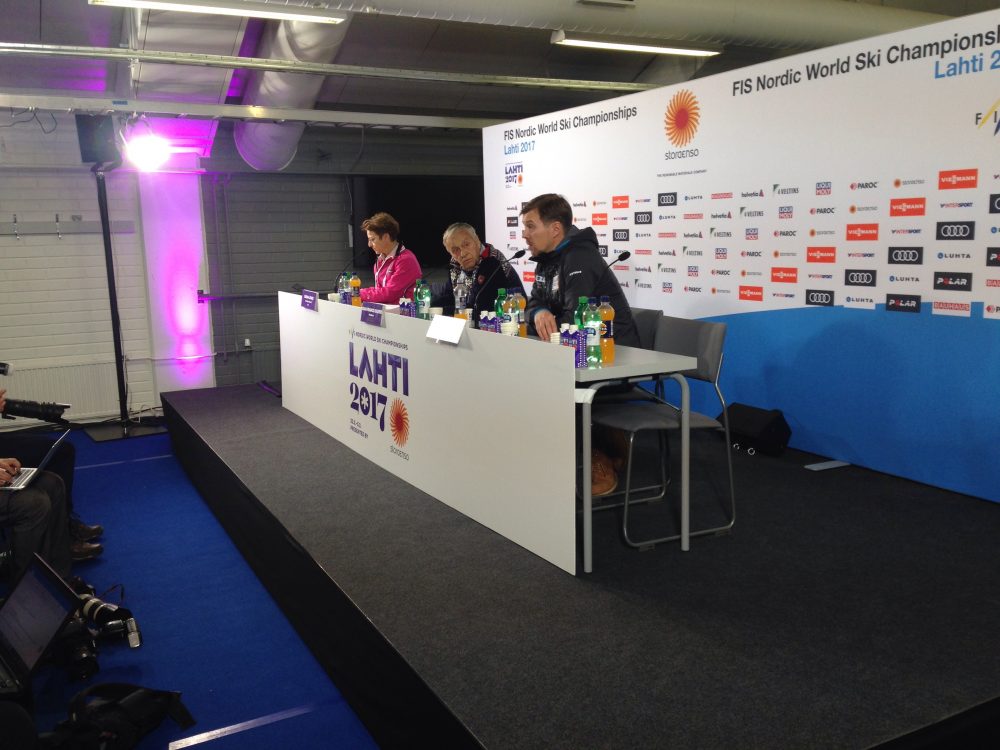
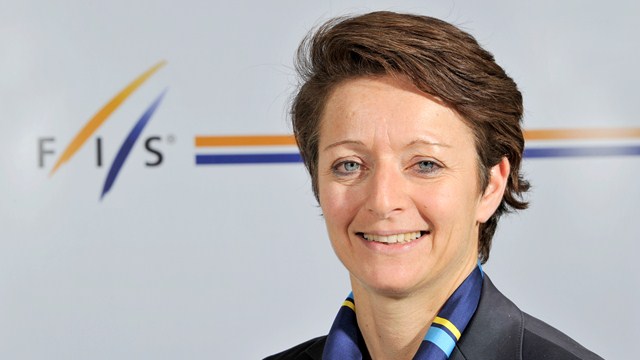
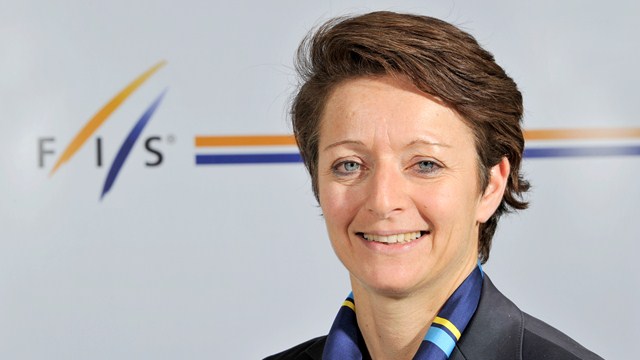
FIS President Gian Franco Kasper (c) during a press conference at the 2017 Nordic World Ski Championships. Sarah Lewis (l), at the time served as Secretary General of FIS.
Gian-Franco Kasper, the President of FIS for the past 23 years, will step down after a new candidate is elected at the FIS virtual FIS Congress on Friday, June 4th. The new President will be only the fifth person to hold that role since the inception of FIS in 1924. The elections come at an inflection point within the organization as it looks to navigate the ski sports under its governance into a new, post-pandemic era. Four candidates are vying to replace Kasper as the leader of world skiing.
Here is a brief look at each candidate and where they may take the organization in the future.
Mats Årjes
Titles: Swedish Olympic Committee President, and FIS Vice President.
Mats Årjes (Photo: Fis-Ski.com)
Billed as the safe pair of hands to modernize FIS, Mats Årjes is Kasper’s preferred successor at FIS. He brings experience from a decade with FIS and 17 years as the CEO of SkiStar, which operates Scandinavia’s largest resorts. Årjes’ agenda is to review FIS practices, bring together stakeholders, promote ski sports more widely, and establish environmental standards for FIS events. As the mainstream candidate to take over FIS, Årjes has put forward a cautious, middle-of-the-road agenda that can be described as a gentle transition to a reformed FIS.
Opposition: Årjes has stated that if elected he will continue in his role as President of the Swedish Olympic Committee, and will hold dual presidencies. Whether or not Årjes will be distracted by his Olympic Committee duties and the potential for conflicts of interest remain a concern. As Kasper’s favored successor, he will need to win over delegates who are looking for change to come from outside of FIS.
Pet Campaign Promise: Environmental standards
Urs Lehmann
Title: Swiss Ski President
Urs Lehmann. (Photo: urs-lehmann.ch)
Lehmann is running on the promise of replicating his leadership successes at Swiss Ski, both organizationally and financially, at FIS. Lehmann believes that FIS must be run more like a company, and suggests that the organization’s structure is outdated, telling SkiRacing.com that, “it has become dusty over the years.” In response, he proposes streamlining its product in the fashion of the IBU. “Things have been done in bits and pieces, but there is no clear system.”
He also promotes changing the tenor of its governance, telling Inside the Games, “FIS has to take the lead” when it comes to big issues such as the environment, human rights, and inclusivity. “What about transparency? What about gender diversity? People are talking about this, but there is no clear set of values and ethics,” Lehmann lamented to SkiRacing. Lehmann told Inside the Games that his solution was simple: “FIS has to take a clear position on all these big issues.”
Lehmann points to a possible source of future income from gaming. “The key word for me is E-gaming”, he has said, and points to FIFA—a popular soccer game—that helped keep the governing body of soccer fiscally afloat during the pandemic.
He advocates bringing a more muscular approach to FIS leadership in all respects: He wants more World Cup events to take place outside of Europe, a more efficient FIS that takes a strong stand on issues, and a more developed financial model for the sport. In short, Lehmann promises that FIS, under his presidency, will lead.
You can learn more about Lehmann’s candidacy at this link.
Johan Eliasch
Titles: CEO of HEAD
Johan Eliasch (Photo: johaneliasch.com)
Eliasch, the billionaire CEO of ski company HEAD, and dual Swedish-British citizen is campaigning as the outsider and radical change agent in this election. His manifesto is expansive and he calls for, among other things, rethinking how ski events are produced. Viewer-friendly production that includes night races, interactive experiences, and content streaming are all part of his plan. He would like to take the FIS racing package in the direction of the PGA or Formula 1.
Eliasch calls for sweeping change to shepherd FIS into the 21st century, and argues that his success in the ski industry is the sort of outsider know-how the organization has been lacking.
Opposition: Eliasch summed up the reasons to vote against him best in his statement to delegates reported by Skiracing: “I have a vision and I can execute that vision. If you don’t want change, then I’m not your candidate. If you do want change, then I’m your choice.” The comfort of the status quo may prove difficult for some delegates to overcome.
Pet Project: Interactive content
You can learn more about Eliasch’s candidacy at this link.
Sarah Lewis
Titles: Former Secretary General of FIS
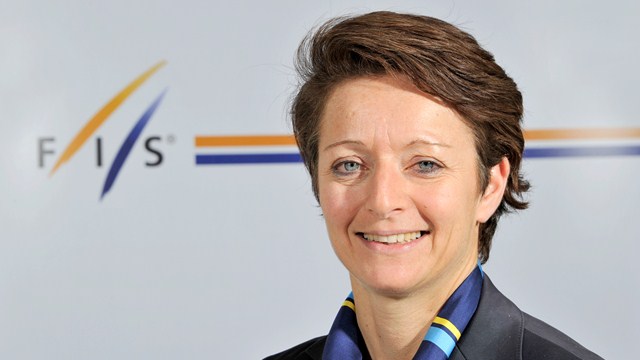
Sarah Lewis. (Photo: sarah-lewis.com / Tom Trachsel)
Sarah Lewis has developed a manifesto she calls the “FIS piste map” for the future of the organization. The piste map is a part of her three-pillar strategy that will also offer national associations financial help in recovering from losses during the pandemic and reformed governance at FIS.
She is championing the possibilities of bringing in private equity investments to support World Cup skiing, and eyeing new revenue models including virtual reality, suggesting to Skiracing, “Wouldn’t you love to be in the eyes of that skier as she’s dropping into Cortina?” She points to expanding snowsports in new markets, with China as a key opportunity.
Opposition: Paradoxically Lewis is considered to be both the outsider and the status quo candidate. From 2000 – 2020 Lewis served as FIS Secretary General before being suddenly terminated from the position “based on a total lack of confidence”, according to a short-lived FIS statement.
FIS has provided no further information on the matter, but Dagbladet reported that her ouster had to do with a deteriorating relationship between Lewis and Kasper and other FIS officials that came to a head over poor work performance due to the amount of time Lewis was spending campaigning for president. Lewis, on a call with the AP, said she was shocked by her dismissal, saying, “I was probably blindsided that there were politics going on behind the scenes.” The decision to remove her from her post by the FIS Council has been reported by SVT and Nettavissen as being 15-1.
Lewis has been nominated by the Belgian Ski Federation after her home federation of Great Britain opted to nominate Eliasch. The Washington Times reported that she was positioning herself as the global candidate with support from Russia, China, and South Korea. Whatever truth lies behind her dismissal from FIS, a Lewis presidency is likely to be divisive within the organization.
Pet Project: Pandemic recovery funds for National Federations
You can learn more about Lewis’s candidacy at this link.
Like so many organizations, FIS, the governing body for international skiing, is a slow-to-change entity. Doping reforms, for example, have evolved but at a yawn-worthy rate. So in rather atypical fashion, like a finger snap, FIS voted to oust its Secretary General, Sarah Lewis, on October 9th. Lewis had been considered a lifer at FIS. She’d been on staff for two decades. News on the “why” of her removal remains sparse. Yet it was an unexpected departure.
Not so unexpected, the postponement of the FIS fluoro ban which was announced in November 2019. Originally, FIS and the associated stakeholders were to outlaw fluorinated wax products, across all disciplines, beginning this season. A noble task considering the documented adverse health and environmental impacts related to long-chain fluorocarbons, yet one notably tough to execute. Put simply, the testing mechanism for detecting flours on ski bases was flawed. As we reported earlier, FIS stated: “Despite the accuracy of the device measurement technology, testing also indicated that there were potential sources of measurement error related to other aspects of the testing system that require further testing and design adjustments to ensure absolutely fair and consistent results for all competitors.”
So…fluoros are fair game this season on the World Cup.
That and a bit more on the show. Thanks for listening and if you have questions for Devon, you can email them to Devon@fasterskier.com or Jason@fasterskier.com.
Sarah Lewis, secretary general of the International Ski Federation. (FIS file photo)
The International Ski Federation announced last Friday that Secretary General Sarah Lewis has been relieved of her duties effective immediately.
“At its meeting today, the FIS Council, including the members of the Marc Hodler Foundation, has decided by a great majority vote to terminate the employment relationship with Sarah Lewis (in accordance with its contractual terms) and that she is released from her work duties as the Secretary General of FIS, effective 9th October 2020.”
The statement now publicly available on the FIS website stands in contrast to the FIS announcement made public on October 9. Although close in verbiage, that statement included the following, “based on a complete loss of confidence” in lieu of “(in accordance with its contractual terms)”.
For 20 years, Lewis worked for FIS in several capacities. Since 2000, she has served as Secretary General. With Gian-Franco Kasper, the current FIS president expected to step down, Lewis was considered a possible replacement.
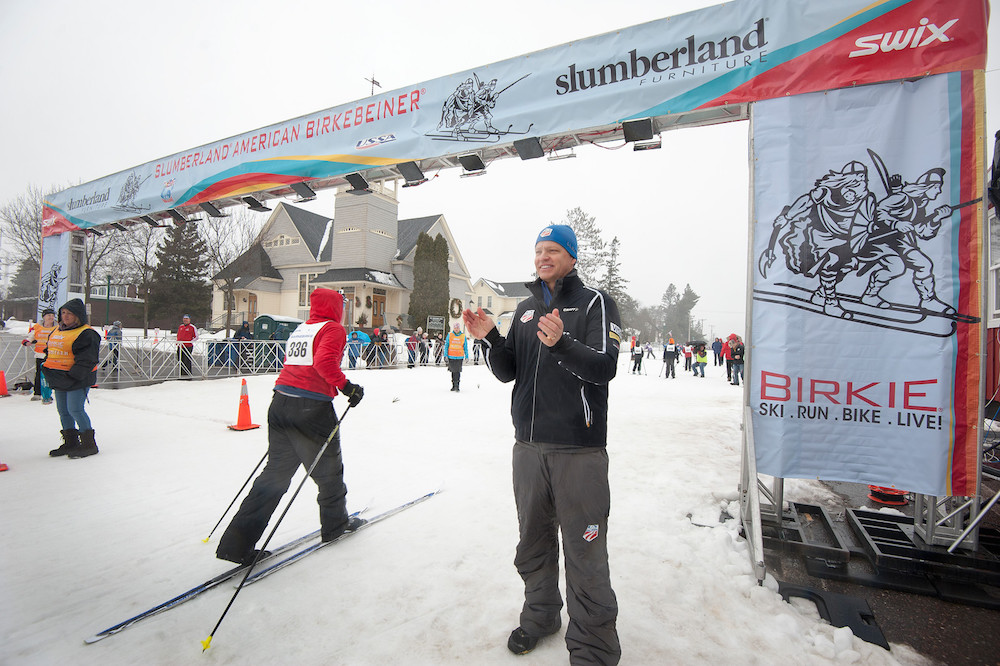
USSA President and CEO Tiger Shaw cheers on kids in the Barnebirkie race during the American Birkebeiner. (Photo: USSA/Tom Kelly)
ZURICH, Switzerland—Tucked at the top of U.S. Ski and Snowboard’s list of proposals for policy changes at the recent International Ski Federation (FIS) Technical Meetings here was this: “Independent Doping Panel.”
The idea was developed along with the Norwegians, who submitted an identical proposal. U.S. Ski and Snowboard President and CEO Tiger Shaw explained that at the moment, FIS decisions made on doping may be made by individuals who also serve other roles in the organization or internationally.
“The idea is just to have a more independent panel at FIS,” Shaw said in an interview before he headed to the FIS Alpine World Cup a few hours away in Sölden, Austria. “What if, for instance, it’s a Russian who is the head of the [doping panel], and we are talking about sanctioning Russia from the Olympics? You can imagine that there would be a sense of conflict of interest there.”
“You cannot let a country compete that has had more than 1,000 people overtly cheating for years, where that has been proven,” Shaw said. “What the hell are we doing? The athletes have to stand up and demand that. Throw the Russians out [as a country], and let their athletes compete if they are clean and they can prove it.”
Strong words. But Shaw’s feelings about the current “soap opera” surrounding Russian doping are symptomatic of broader governance changes that U.S. Ski and Snowboard is seeking in the sporting world.
“FIS is typical as compared to a lot of older European governance bodies,” he said. “The concept of conflicts of interest is somewhat new in the last couple of decades, and in the case of FIS there has been very little done [to address this].”
Indeed, the International Olympic Committee (IOC) only this month required all of its members to sign a commitment to “ethical principles” for the first time. Included in the document was a primer on the correct way to handle conflicts of interest, and it was almost entertainingly basic in the level of information presented.
“Globally, we want to really push a movement to remove the conflicts of interest between anti-doping and sports organizations around the world,” Shaw said. “The conflicts of interests there are rife and absolutely absurd.”
For instance: Gian Franco Kasper, the President of FIS, is also a member of the IOC Executive Board, and was a member of the World Anti-Doping Agency (WADA) Executive Board from 2003-2016. Are the best interests of all three of those organizations always served by the same decision, and it not, then what is one to do?
And so dealing with the Russia situation is task number one. But it’s part of a bigger picture – a picture U.S. Ski Team athletes and coaches have become noticeably more outspoken in interviews and on social media in the last year.
“There are a lot of Europeans within these establishments who are trying to protect the status quo,” he said. “They are not happy with us. We are the obvious ones to point to because we are becoming the loudest. And Trump doesn’t help… [He] makes it easy to say that we’re on a self-serving mission. No, we’re on a sport-saving mission. If other countries aren’t going to step up and be as loud as we are, then we will just get louder.”
Potential Doping Ban for Six Russian Skiers
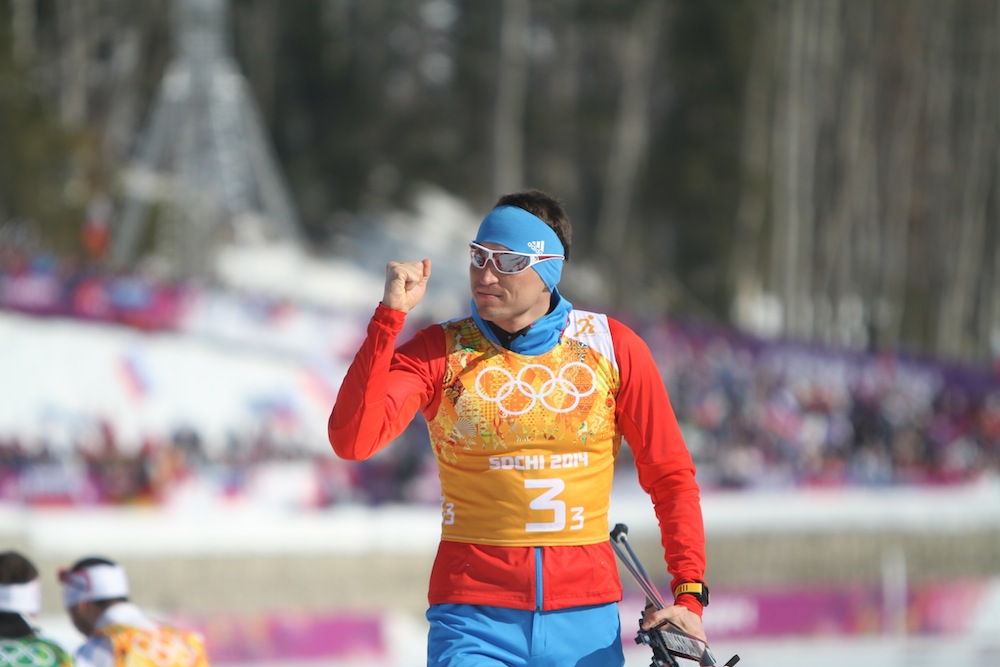
The Court of Arbitration for Sport decided that there was a “reasonable possibility” that Alexander Legkov had doped at the 2014 Olympics. Here, he pumped his fist after Russia won silver in the 4 x 10 k relay, their nation’s first medal in cross-country at the Sochi Olympics.
Shaw believes that there is plenty of evidence in the McLaren Report to justify rule violations brought against the athletes, and questions why FIS hasn’t charged them already.
At the moment, FIS is waiting for the IOC to share information from a disciplinary commission which could add to the evidence in the skiers’ cases. But the delivery date on that information has been pushed back time and time again.
When asked this week whether FIS had received any information from the IOC commission regarding the six Russian athletes, FIS Secretary General Sarah Lewis replied:
“As outlined previously you will need to address this question to the IOC. We made sure the IOC is aware of the dates of the start of the FIS Cross-Country World Cup in late November and as far as we are informed the IOC is aiming to deal with the cases involving athletes under FIS authority before that.’”
When the Court of Arbitration for Sport (CAS) reviewed the provisional suspension of the athletes, and in particular 2014 Olympic gold medalist Alexander Legkov, it signaled that it largely believed the evidence in the McLaren Report and did not buy character assassination against the report’s main source, whistleblower Grigory Rodchenkov.
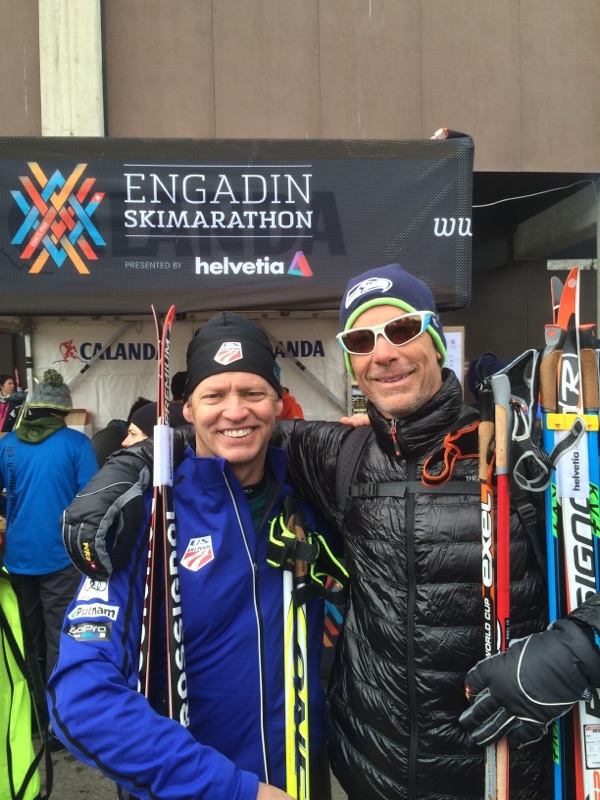
Tiger Shaw (l) and Tony Weiderkehr at the 2016 Engadin Ski Marathon. A former Olympic alpine skier, Shaw has become not only an enthusiastic supporter of U.S. Ski and Snowboard’s cross-country team but also a practitioner himself. (Photo: Fast Big Dog)
“I don’t understand the comment she made to you,” Shaw said of Lewis’s email. “FIS ultimately has to decide whether or not to charge the skiers. So far they have provisionally suspended them, presumably to gather more evidence. It’s logical that FIS is waiting to hear from the [IOC] commissions, because there will be additional evidence in there… [but] CAS, when they reviewed the provisional suspension, said essentially that the information and the evidence in the McLaren report is enough to convict. So you have the appellate body itself saying, we uphold your suspension. You have the evidence, but you have to make a decision.”
Current Investigations and a Broader Russian Ban
What is going on with the IOC commissions, which are taking so long?
The McLaren Report already contained evidence that Russian athletes had been involved in an elaborate sample-swapping scheme at the 2014 Olympics, and email evidence also showed evidence that doping violations were covered up in the years preceding 2014 as well.
Rather than act on that evidence, the IOC commissioned two more committees. One, headed by Denis Oswald, was tasked with looking at the guilt of individual athletes; another, headed by Samuel Schmid, was tasked with looking at the systematic nature of the doping in Russia. Schmid apparently said that he would have his work finished by December – after the winter sports season has already begun.
It has been months since the commissions began their work, and so far nothing has come out of it.
“Look at the Schmid and Oswald Commissions, which the IOC commissioned after the Independent Person report came out, that McLaren wrote,” Shaw said. “The IOC is commissioning more, to re-study what was already studied by an independent person report triggered by WADA, which is a child organization of the IOC. So it’s questioning itself. It has dragged this out for a year now.”
Against this backdrop and inaction, a number of organizations and individuals are nonetheless calling for Russia to be banned from the upcoming 2018 Olympics based on the McLaren Report. Among them are some spectators and athletes, but also 37 national anti-doping agencies (NADO’s), including USADA, the Canadian Centre for Ethics in Sport (CCES), and many others.
By comparison, only 14 NADO’s signed on to a similar statement urging Russia to be banned from the 2016 Olympics in Rio de Janeiro. Feelings on the issue have if anything become stronger since then as the IOC continues not to act.
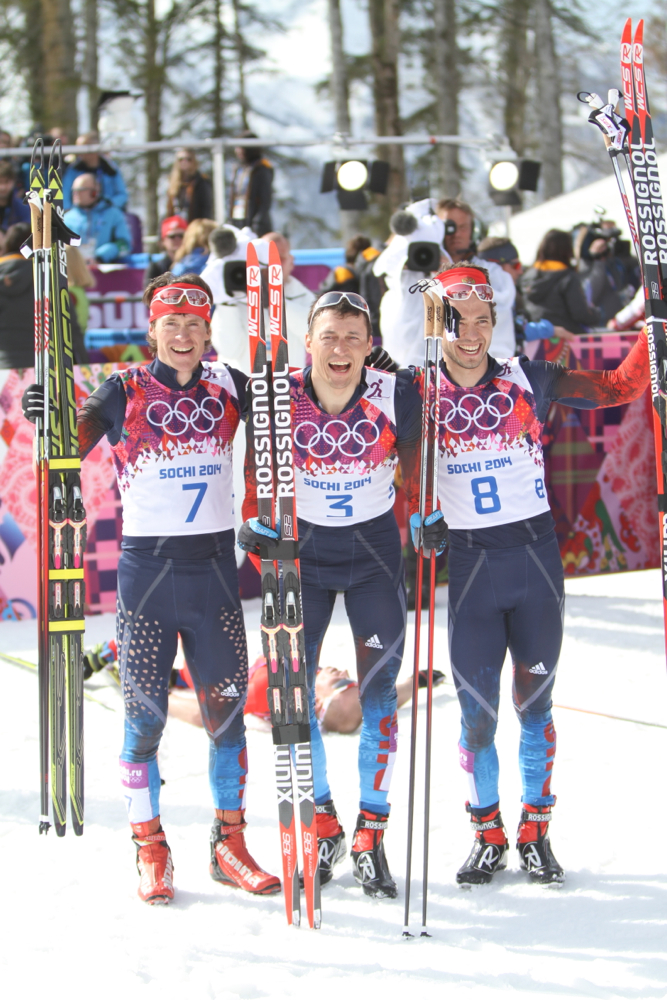
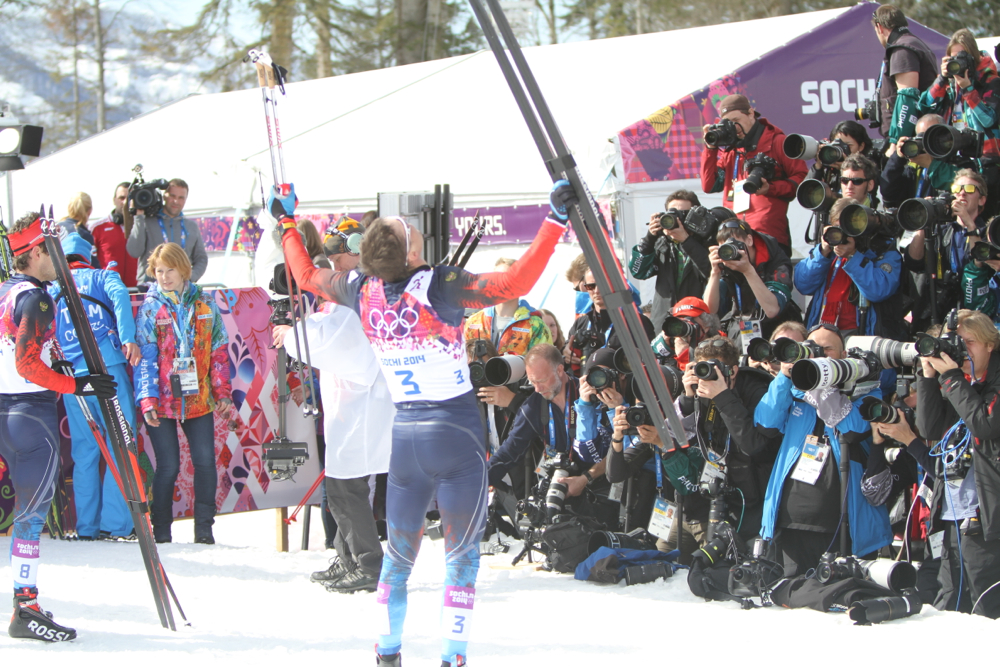
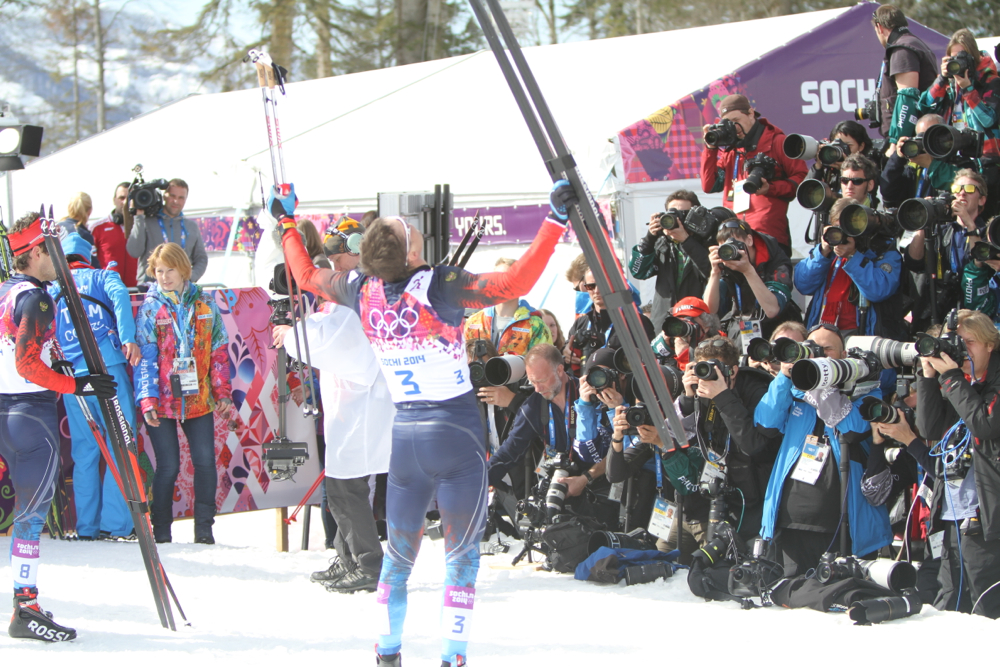
The Russian podium grinning ear-to-ear after Alexander Legkov (3) won gold, Maxim Vylegzhanin (7) earned his third silver in Sochi, and Ilia Chernousov took bronze in the 50 k freestyle mass start, the last race of the 2014 Winter Games. Both Legkov and Vylegzhanin were implicated in the McLaren Report.
Calling for a Russia ban is seen by some as a kneejerk reaction, and an unfair one, but Shaw says that it is grounded in the kinds of statutes his organization and others around the world agree to be bound by.
“They have violated tons of anti-doping rules and FIS statutes,” Shaw said of Russia. “The statutes call for suspending a member federation if they do that, as well as if there are more than four doping convictions in a single year. Well, FIS is heavily pursuing at the moment [six athletes]. All of it ends up in the logical conclusion of FIS sanctioning Russia and excluding them from the season, which also means the Olympics.”
As for potentially innocent athletes caught up in the middle of it, there is a solution.
“There is a compromise that’s possible,” he said. “Suspend Russia, but allow athletes that have been continuously tested outside of competition in the preparation for the Olympics. In cross-country that probably means all summer. If they tested clean, then let them compete under an independent flag.”
That compromise, though, may have expired. Summer is over; athletes have half a training year under their belts and this outside-of-Russia testing and surveillance was never put into place, because decisions were put off about how to deal with Russia.
“Of course because of the general foot-dragging of the IOC, there is no time left,” Shaw said. “Everybody’s backs are up against the wall, unnecessarily, unfortunately, but maybe by design.”
How The System Could Work
“By design” gets at some of those conflicts of interest. Shaw says that the responsibility for investigating, trying, and sanctioning athletes shouldn’t all be housed with FIS and the IOC anyway.
At the moment, there is a mixture of agencies responsible for testing athletes. Each country has (or should have) their own anti-doping agency; in the United States, that’s USADA. Each international sports federation, like FIS, also has to do testing and deal with cases. Then, at the Olympics, all of that responsibility is transferred to the IOC.
In each case, there are conflicts of interest, Shaw says. A country may want to hide positive tests by their star athlete. That’s certainly what Russia did, to a massive extent.
The same is true for international federations.
Russia’s Petr Sedov en route to his first non-stage World Cup, in the PyeongChang World Cup 30 k skiathlon in South Korea in 2017. Russia hopes to compete there again at the 2018 Olympics; many are calling for them not to. (Photo: Fischer/NordicFocus)
“What if you look at a smaller [international federation] that might have one super famous athlete,” Shaw said. “It’s going to have a huge economic impact on that federation’s worldwide image and brand [if that athlete fails a doping test]. That tiny federation might have 12 employees. How are they going to deal with this? It’s daunting.”
Then there is the IOC, which has plenty of money and resources, but at the moment is slow as molasses in dealing with its doping scandal.
“[IOC President] Thomas Bach obviously doesn’t want Usain Bolt to be disqualified right before the Rio Games,” Shaw said, using a hypothetical example. “It’s a major conflict of interest, a financial one as well as a moral and branding one. So there has to be a revamp of that whole thing.”
Instead, he asks, imagine how a criminal justice system works.
“You have an independent body that makes the rules – the laws,” he explained. “Then you have an independent agency that enforces them – that’s the cops. This is the ideal, not that it doesn’t get corrupted in the U.S. or anywhere else. Then you have another independent system – the courts. Even within that, you have independent systems where you have a jury of your peers and you have a judge. And then if anyone wants to challenge that you go to a higher court.”
Doping and sports governance is pretty far from that model, with the same organizations often making the rules, investigating cases, and handing out punishments.
“CAS does appear to be reasonably independent, thank God,” Shaw said of the highest court in sports. “But we need a single entity to run each of those other functional roles. We need a body to make anti-doping rules for the world of Olympic sports. Then we need enforcement. There could be multiple levels, but there has to be one body which is really controlling it all and enforcing independence across all of that… So the WADA-[national anti-doping agency] arrangement is not bad, but it’s politically screwed up. We need to fix that.”
Under such an arrangement, international sports federations could drop much of their anti-doping programs and focus merely on enforcing decisions made by other bodies. That would allow them make strategic plans for growth of their sports, something Shaw sees as sorely lacking in many international federations.
“Hopefully in the future, all the federations pay into a pool, and someone else takes care of it,” Shaw said. “And then you can focus on your sport and your brand. Hopefully that’s not a dream.”
Nuts and Bolts
So how does the dream become reality?
“You get excited about change and you think it can happen soon,” he said of U.S. Ski and Snowboard’s proposed reforms. “And then you run smack into political stalling. We see this happen at our level – you are trying to argue the merits of a position with one of our counterparts from another country. They say they agree but they aren’t going to do anything about it. It’s the most deflating thing you can run into.”
Regarding the situation with Russia, for instance, Shaw said that few other national ski federations are outspoken about the issues.
“They are confused and choosing not to study this closely, or do much about it,” he said. “And that’s simply because of the control exerted over them… You can’t have a council member of an international federation saying that they aren’t going to do anything about it because they are worried about re-election and angering the leadership. That is not leadership.”
Shaw is not alone in becoming a loud voice in the arguments over doping. Max Cobb, the President of the United States Biathlon Association and an Executive Board member at the International Biathlon Union, is also a vocal proponent of clean sport. Scott Blackmun, the CEO of the U.S. Olympic Committee, recently said that “at some point, justice delayed is justice denied, and we are fast approaching that point” regarding the Russia scandal. USADA CEO Travis Tygart has long been a vocal leader in the NADO community.
All of that means that the U.S. is sometimes framed as a bully on the issue, including in the ski world.
“There are a number of people and countries who love to say, the U.S. is trying to get Russia thrown out so they can win more medals,” Shaw said. “We want the [clean] athletes to be able to compete, but yes, we want Russia thrown out. So do 36 other countries. 36 other anti-doping organizations have called for this. What more of a majority do you need?”
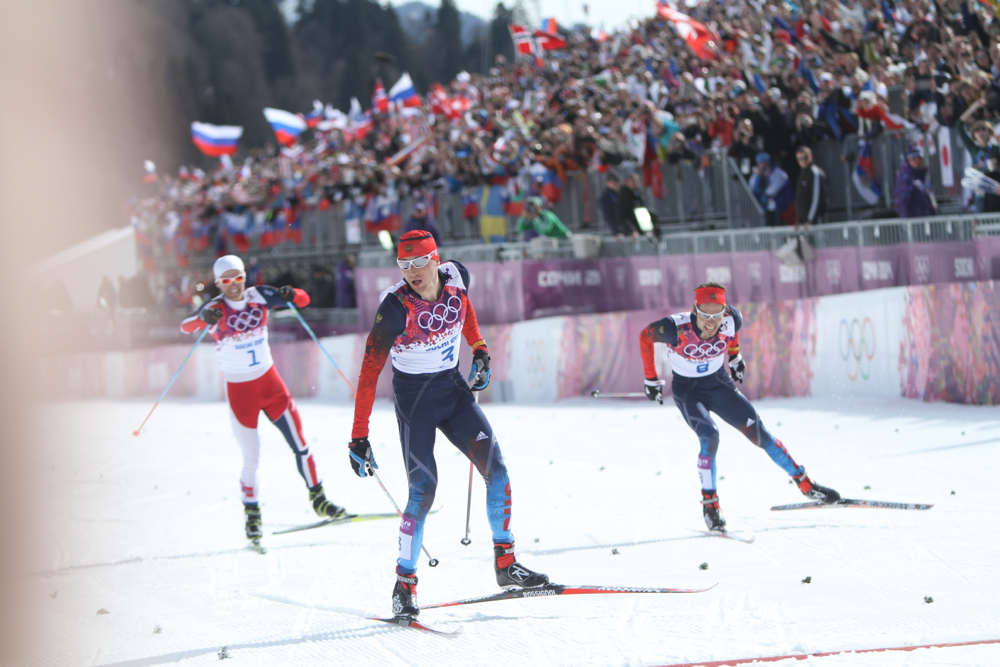
Alexander Legkov (c) beat out fellow Russians Maxim Vylegzhanin (not shown) and Ilya Chernousov (r) for gold in the Sochi Olympics 50 k freestyle mass start — the last race of the 2014 Games. Vylegzhanin took silver by 0.7 seconds, just a tenth of a second ahead of Chernousov in third, and Norway’s Martin Johnsrud Sundby (l) missed a medal by 0.2 seconds in fourth. Legkov will soon know whether he is clear to compete this 2017/2018 World Cup season.
That date is drawing near, and although there has been no external sign of progress, action might come soon.
At an International Olympic Committee (IOC) meeting in Lima, Peru, last month, Denis Oswald, the Swiss lawyer heading that organizations Disciplinary Commission, told Reuters that the IOC may begin adjudicating the first cases under investigation from the 2014 Olympics in October.
Christof Wieschemann, the German lawyer hired by Sochi gold medalist Alexander Legkov, believes he will hear about his client’s case soon.
“We expect that our case will be the first one which will be brought to Oswald commission hearing,” he wrote in an email to FasterSkier on Friday. “[We] hope it will be clarified until 31 October. But even if not, the athletes are free.”
On the opposite side, FIS Secretary General Sarah Lewis wrote in an email that FIS is awaiting any information from the IOC commission and will act as soon as possible once it receives a directive.
“FIS will not undertake any actions before the findings of the IOC Disciplinary Commission are communicated, which are scheduled to follow in October,” Lewis wrote. “Thereafter FIS will act with any aspects that come within its competence. There is regular communication and coordination between the respective legal experts… We would not be able to enlighten you any further on more precise timings of the IOC Disciplinary Commission and you will have to address this question with the IOC.”
This underscores some awkward dynamics about the case. Because the alleged doping took place at the Olympics, the IOC has jurisdiction to address the cases.
Thus, FIS is waiting for the IOC. But the IOC is operating slowly and very much on a different timeline. Many observers have noted that the IOC is only motivated to adjudicate the cases before the start of the 2018 Olympics in PyeongChang, South Korea, in February.
Athletes, obviously, would like the case resolved much more quickly – ideally, long ago. Legkov and the other five skiers have already been suspended for nine months.
Meanwhile, FIS is now facing a deadline mandated by CAS, but is not directly in charge of the investigation themselves.
“The CAS panel left no doubt that the time limit to complete the investigations and to provide the result is not expandable,” Wieschemann wrote. “A longer term would not be reasonable and appropriate regarding the interests of the athletes. The problem is that the investigations are conducted by IOC. They have no problem with the deadline because their ‘deadline’ is the beginning of the Olympic Games, not the season of FIS competitions. However, I suppose that all will do their very best to bring the cases to their end before the deadline expires.”
The CAS Award
Although the CAS decision was announced at the end of May, CAS has still not posted its arbitration award on its website, and so Wieschemann did instead.
Many are taking the decision to mean that Legkov will be free to compete on Nov. 1, and at the upcoming Olympics in South Korea as well.
But with 30 days left in October, that’s not a sure bet.
First of all, CAS did not disagree that it was appropriate for FIS to issue Legkov a provisional suspension in the first case.
It rejected many of Legkov’s arguments about the shortcomings of the McLaren report, which implicated him in a sample-swapping scheme at the 2014 Olympics. One of Legkov’s urine sample bottles was shown to be tampered with, and his name appeared in documents related to the planning of systematic doping.
While this wasn’t enough to prove an anti-doping rule violation, CAS wrote in the decision (available here), it was certainly enough to indicate a “reasonable possibility” of a rule violation, which is all that is required for a provisional suspension while further investigations proceed.
“The Panel concludes that the evidence establishes a ‘reasonable possibility’ of an [anti-doping rule violation] in the Appellant’s case,” the decision reads. “It further considers that the Appellant has not demonstrated with satisfaction the fulfillment of criteria necessary to lift the suspension, though the Panel has decided that it should be modified.”
As that modification, CAS decided that the length of a provisional suspension should not be indefinite. It gave FIS until Oct. 31 to bring an anti-doping rule violation against Legkov – and if they don’t, his provisional suspension will be lifted.
If Legkov’s case is not addressed by the Oswald commission before Oct. 31, but is brought up later with new evidence, FIS can then start over and apply a new provisional suspension. The federation just can’t extend the current suspension based on the current evidence.
“The Panel appreciates the unusual magnitude and complexity of cases awaiting Mr. Oswald’s attention,” the decision noted. “It cannot however endorse an indefinite and indeterminable suspension as proportionate… the Panel deems it appropriate and just that the current provisional suspension expire after 31 October 2017, at which time it will be for FIS to consider whether or not to seek a further suspension justified by new developments.”
So – it’s all down to the IOC, and if they find some speed (and new evidence) in their investigation.
International Politics
Others, too, are impatient.
“If you chose to cheat at the Olympic level, and put banned substances into your blood so you can gain an advantage, I really don’t see any place for that person in the Olympic movement,” U.S. biathlete Lowell Bailey told the Associated Press.
And the athletes are not the only ones frustrated by the IOC’s slow progress.
“A lot of progress has been made, but we’re not there yet,” a Dutch IOC member, told the Associated Press. “I understand it takes a lot of time, but we cannot have this discussion just before the PyeongChang Games. It must be clear months before.”
“The failure to expeditiously investigate individual Russian athlete doping poses a clear and present danger for clean athletes worldwide and at the 2018 Winter Games,” leaders of the organizations, collectively called the National Anti-Doping Organization and including such countries as France, Germany, Norway, Sweden, Japan, Australia, and the United Kingdom, wrote. “We have serious doubts that the 2018 Games will be clean due to the incomplete investigation of massive evidence of individual doping by Russians athletes at the 2014 Sochi Olympic Games and given the inadequate testing evidence of Russian athletes over the past four years.”
“When you have our International Olympic Committee commissioning additional studies, questioning its own regulatory body, WADA, you wonder, really, who’s controlling all of this? What’s the motivation there?” U.S. Ski and Snowboard CEO Tiger Shaw told the Associated Press. “The investigation has been done. It’s conclusive.”
Meanwhile, Russian President Vladimir Putin denied that any state-sponsored doping had occurred at the Olympics in Russia.
“In Russia we never had, don’t have, and I hope won’t have a state-sponsored doping program,” he reportedly said on Russian television. “On the contrary, there will only be a fight against doping.”
Several days later, the Russian government issued a warrant for the arrest of Grigory Rodchenkov, the former director of the Moscow anti-doping laboratory who actually helped athletes cheat before turning whistleblower and fleeing the country.
“Russia has refused to accept responsibility,” Rodchenkov recently wrote in an op-ed in The New York Times. “My former boss, Vitaly Mutko, a deputy prime minister and former minister of sport, has repeatedly denied knowledge of my activities as director of the Moscow Anti-Doping Center, where I oversaw Russia’s doping program with help from several agents of the Federal Security Bureau (formerly the K.G.B.), and many government officials.”
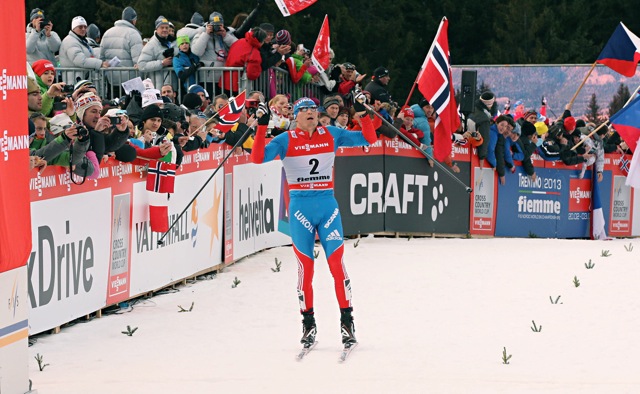
Alexander Legkov of Russia celebrates his Tour de Ski victory atop the Alpe Cermis in January, 2013. Legkov cannot compete in this year’s Tour de Ski because he is suspended for possible doping violations. (Photo: Fiemme2013)
The International Ski Federation (FIS) has denied an appeal by six Russian cross-country skiers suspended under the suspicion of doping.
FIS and the International Olympic Committee (IOC) are investigating the six athletes because bottles used to store their urine samples from the 2014 Olympics in Sochi, Russia, bore signs of tampering. FIS suspended the skiers while the investigation takes place.
The athletes had appealed this suspension because many planned to compete in the Tour de Ski, starting on Saturday.
“After receiving written submissions from the athletes and the response from FIS, the FIS Doping Panel made the unanimous decision today to uphold the provisional suspensions of the Russian Cross Country athletes, Evgeniy Belov, Julia Ivanova, Alexander Legkov, Evgenia Shapovalova, Alexey Petukhov and Maxim Vylegzhanin,” FIS wrote in a statement emailed to the press. “The reasons for the Panel’s decision will be communicated directly to the athletes in due course. As a result of the decision, all of the above mentioned athletes may not take part in any competitions or national team activities.”
This was also the first time that FIS publicly named the six skiers.
FIS Secretary General Sarah Lewis told FasterSkier last week that one other athlete may be suspended.
“There is only one additional non-Games time case and this is presently being processed,” she wrote in an email. “The timeline is the next week if possible.”
FIS did not tell the athletes what part of the World Anti-Doping Code they were suspected of violating.
The suspensions were based on the McLaren report’s findings that sample bottles had been opened and closed after sample collection. Wieschemann notes that in some other cases, the samples were positive for banned substances, or even belonged to a different person than the athlete who was supposedly being tested. This was not true for either Legkov or Belov. Evidence showed only that the bottles had been opened or tampered with. Wieschemann argues that this does not necessarily mean that the samples were not “clean”.
According to Wieschemann, neither Legkov nor Belov were on the “Duchess” list. That was a list of athletes who were provided banned performance-enhancing drugs by the Russian government and then protected from anti-doping measures.
The statement also notes that Legkov and Belov were often previously tested by outside anti-doping agencies in Europe.
“There is neither a positive sample from either of the athletes, nor any other indication that they could have taken banned substances… Such a connection is also not provided in the McLaren Report,” the statement says, according to a translation. “In fact, both athletes also gave blood samples in Sochi, which were negative.McLaren does not provide any information about swapping blood samples.This is a sure sign that both athletes were not drugged at the time of the Olympic Games.”
Complicit in Tampering or Not?
FIS wrote in their statement that “the reasons for the Panel’s decision will be communicated directly to the athletes in due course.” The rationale was not described to the media.
However, there are several reasons that FIS may want to keep the athletes suspended while they finish their investigation.
Article 2.5 of the World Anti-Doping Code prohibits “Tampering or Attempted Tampering with any part of Doping Control: Conduct which subverts the doping Control process but which would not otherwise be included in the definition of Prohibited Methods. Tampering shall include, without limitation, intentionally interfering or attempting to interfere with a doping Control official, providing fraudulent information to an anti-doping organization or intimidating or attempting to intimidate a potential witness.”
A footnote clarifies that “for example, this Article would prohibit altering identification numbers on a Doping Control form during Testing, breaking the B bottle at the time of B Sample analysis, or altering a Sample by the addition of a foreign substance.”
Sports organizations must decide the appropriate action for cases where a sample was tampered with by someone other than an athlete.
According to emails in the McLaren report, anti-doping officials opened sample bottles in order to replace “dirty” urine with “clean” urine. That means that the athletes must have been complicit in providing the “clean” urine sample in the first place. Yet it’s also very possible that some sample bottles were either opened by mistake or tampered with in a different way, without the knowledge or complicity of the athlete.
FIS may have evidence that they have not disclosed. The federation may also simply want more time to determine whether the athletes were complicit in sample manipulation.
Other Reasons the Appeal May Have Failed
Legkov and Belov do appear in planning documents for Sochi released as part of the McLaren report evidence packet. At the very least, that means that the government anti-doping officials carefully noted and tracked their participation at the Games.
Regarding the clean blood samples, this may not be sufficient evidence that athletes had not taken performance-enhancing drugs. Urine and blood samples detect different substances over different periods of time.
“A blood sample does not replace a urine test, because it concerns primarily different substances and different methods,” the Finnish Center for Integrity in Sports, SUEK, writes on its website.
Urine contains substances excreted from the body, while blood contains those integrated into the body. Testing agencies may not even test for all of the same substances in the two different types of samples. For example, human growth hormone is tested in blood, but not in urine; steroids are easier to detect in urine than in blood.
Furthermore, the IOC may not have even fully tested the samples collected at the Olympics.
“The initial tests take place in the lab located in the Olympic city,” NBC wrote of Olympic testing procedures. “Because of the huge number of samples and tests that need to be conducted in a short period of time, not every sample is tested for every drug. Experts take educated guesses on which set of athletes are more likely to use certain drugs and run the according tests.”
Finally, Wieschemann’s statement concludes that “Alexander Legkov and Evgeny Belov have at no time used prohibited means or applied forbidden methods.”
Budesonide is a corticosteroid sometimes used in asthma medication. In September, Secretary General of the Russian Ski Federation Georgiy Mnatsakanov told Norways’ NRK broadcaster that both Legkov and Ilia Chernousov used asthma medication despite the fact that they have no diagnosis of asthma.
Email released as part of the McLaren report show that Legkov did not have a Therapeutic Use Exemption for such medication.
Therese Johaug celebrates her decisive victory in the second stage of the Ski Tour Canada, the 10.5 k classic mass start in Montreal, Quebec, in 2016. (Photo: Flyingpointroad.com/NNF)
Interviewed by Norway’s Dagbladet newspaper at the Alpine World Cup opener in Sölden, Austria, International Ski Federation (FIS) President Gian Franco Kasper said that Norwegian cross-country skier Therese Johaug should likely get a four-year ban.
“It is first a foremost a national case now and it is up to the Norwegians to find a solution,” Kasper said. “After that FIS or WADA may appeal, and we must do so if nothing happens or whatever happens isn’t enough.”
He said that after receiving a four-year ban, Johaug could appeal to the Court of Arbitration for Sport and perhaps negotiate her suspension down by 12-18 months.
Johaug tested positive for the anabolic steroid clostebol on September 16, 2016. She has said that the drug was in a lip cream given to her by a team doctor to treat a severe sunburn at a training camp in Italy; Anti-Doping Norway has provisionally suspended her for two months while they investigate the case.
A final decision on whether and how to suspend Johaug will be taken by the Arbitration Committee of the Norwegian Olympic Committee. While Johaug could appeal the case to the Court of Arbitration for Sport if she feels the suspension is unfairly harsh – and she has signaled that she likely would, as she considers herself completely innocent – either the World Anti-Doping Agency (WADA) or FIS could also appeal the case if they believe that the World Anti-Doping Code has not been correctly applied by the arbitrators.
While admitting that he had seen no details of the case, Kasper said that FIS would do just that.
“Normally, if she is guilty, it is very clear that she should receive a 4-year ban,” Kasper said, according to a translation. “There really is no question about that. And then she can appeal to the courts, and normally she would then have her punishment reduced to 2 and ½ or 3-years, but that’s really just speculating.”
Christian Hjort, Johaug’s lawyer, found it inappropriate for Kasper to comment on the case without having seen documents from the investigation, which is headed by another governing body and is not associated with his own organization.
“I reacted strongly to FIS boss’s statements in advance of a pending case…This shows an alarming lack of understanding of [organizations’] roles and little confidence in their own judging bodies,” Hjort told Norwegian newspaper VG.
Kasper also said that he didn’t totally buy Johaug’s explanation that Trofodermin, a lip cream, caused her positive test.
“Listen, I haven’t seen the evidence,” he said. “That’ll be up to the medical experts to determine, but I have my doubts. Now, doubt doesn’t necessarily mean anything so we need to get all the facts on the table.”
Norwegian team doctor Fredrik Bendiksen – who has since resigned his position – allegedly bought Trofodermin at an Italian pharmacy and told Johaug that it did not contain anything banned by WADA.
Medications which contain prohibited substances are required to be labeled in Italy. Multiple sources have traveled to Italy to buy the drug, and all reported that the cardboard packaging contains a label warning of doping. The label is not visible on the front (display side) of the package, but is prominent on the back: “If the packets that there are pictures of now are the same as what Johaug’s doctor purchased, one can’t know what to believe,” TV2’s Mads Kaggestad said. “You would have to be blind not to see it.It is not possible not to see it.”
Nevertheless, Bendiksen says that he cannot remember seeing the warning, and the ski federation no longer has the cardboard packaging to determine whether the label was in fact lacking. There is no labeling on the tube of medication itself. However, Norwegian Olympic Committee statutes require that athletes investigate any medication they take to make sure that it does not contain prohibited substances.
FIS had previously expressed frustration regarding how Norway handled the case. Antidoping Norway did not notify FIS before the case was made public, which happened while Kasper and FIS Secretary General Sarah Lewis were at meetings in Finland.
“I wasn’t happy about the way I was informed of the case,” Kasper said. “I was in a room full of journalists in Lahti and in the middle of my speech this guy raises his arm and calls out that Johaug had tested positive. And I’m giving a speech about doping, it was strange time to be informed.”
And that weekend, Lewis had told the media that “the Norwegian Ski Federation is facing some major challenges.”
Kasper agreed in the new Dagbladet interview, and said that he hoped the Norwegians would undertake the case with care.
“They’re doing what they can, but luckily they haven’t got much experience from similar cases,” he said of Anti-Doing Norway. “Up until now there’s no discussion about that but it really depends on what they do in the next couple of months. If they acquit the poor girl without any disucussion we will of course take action. If they can prove that she is innocent that would be nice but we’ll see.”
FIS was directly responsible for the case of Johaug’s teammate Martin Johnsrud Sundby. In that case, the ski federation did not issue a four year ban and let Sundby appeal. Rather, FIS concluded that Sundby had not broken any rules by using high doses of the asthma medication salbutamol. WADA appealed the case to the Court of Arbitration for Sport, and Sundby ultimately served a two-month ban.
Kasper now appears to be calling for a ban more than ten times as long for Johaug.
“We’ve had a year full of other doping cases so this is just two more cases that have appeared,” he continued. “I hope that it is a coincidence that they appear now because Norway has alays been a great example to us when it comes to dealing with doping. It is clear that they may have been unfortunate, but I never trust anyone in doping related matters. You never know what happens behind closed doors.”
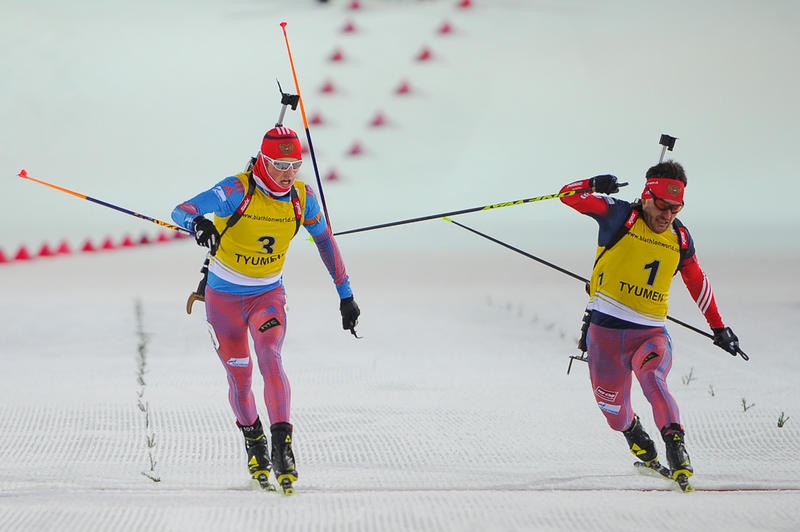
Russia’s Anton Babikov lunges across the line ahead of teammate Evgeniy Garanichev in the men’s pursuit race at the 2016 Open European Championships in Tyumen, Russia. The venue just won the hosting rights for 2021 World Championships. (Photo: IBU)
Note: In an interview with the Associated Press which was published the day after this story, IBU President Anders Besseberg suggested that if Russian biathletes’ anti-doping samples from the Sochi Olympics came back positive during the re-testing process, Tyumen’s hosting rights for World Championships 2021 could be revoked.
In July, the McLaren report dropped and the world learned that Russia had implemented a systematic doping program before the 2014 Winter Olympics in Sochi, Russia.
Then, there had been a parallel systematic program to cover it up, directed by Russia’s Ministry of Sport and its state security service. That had led to the infiltration of the International Olympic Committee (IOC) on-site anti-doping laboratory.
In the wake of the scandal, the IOC Executive Board suggested several guidelines for how to handle Russian winter sports. Among them was a call on “all International Olympic Winter Sports Federations to freeze their preparations for major events in Russia, such as World Championships, World Cups or other major international competitions under their responsibility, and to actively look for alternative organisers.”
And yet, over the weekend the International Biathlon Union (IBU) Congress, which includes 49 possible voting countries, voted to award 2021 World Championships to Tyumen, Russia. The venue in western Siberia will also host World Cup competitions in March 2017, and 2017 Youth and Junior World Championships in Ostrov, Russia, are also moving ahead as planned.
And the IOC did not object. What changed?
“Not only was it surprising, but it was also shocking that [Tyumen] got 25 votes,” Bernd Eisenbichler, chief of sport for the U.S. Biathlon Association (USBA) and the voting representative for the U.S. at the Congress, said in an interview on Tuesday. “I want to state that it is wrong. It is a very disappointing outcome of the vote.”
“It is a country that is under investigation and the IOC has in fact warned against giving new events to the country — that half of the delegates don’t understand what this means for the young international biathletes is disappointing,” Erlend Slokvik, president of the Norwegian Biathlon Federation, told his country’s NRK television station.
Public vs. private attitudes on Russia
Apparently, while stating one thing publicly – that plans for major competitions in Russia should be frozen – the IOC was telling winter sports federations something different.
A still from the candidature video of Tyumen, Russia, which won the hosting rights for 2021 Biathlon World Championships. The International Olympic Committee had previously recommended that no major competitions be awarded to Russia until it comes into compliance with the WADA Code.
“The IOC will not hesitate to take the toughest sanctions available against any individual or organisation implicated,” IOC President Thomas Bach said in July after learning about Russia’s widespread doping at the 2014 Olympics.
Once amongst its stakeholders, the IOC seems to sing a different tune, one which could hardly be described as the “toughest sanctions available.”
Last month, all seven international winter sports federations met with the IOC and World Anti-Doping Agency (WADA) in Rio de Janeiro, Brazil. All seven had competitions scheduled for Russia in 2017, and they wanted clarification about what to do.
What they got was the go-ahead to continue working with Russian organizing committees.
“They said, all competitions given to Russia which are taking place this winter, they should go on as planned,” IBU President Anders Besseberg told FasterSkier on the phone Tuesday. “This is what the IOC Sport Director clearly stated. About awarding them new competitions, the answer was also very clear. When they applied for this bidding process and it was in progress [before the McLaren report dropped], then this should also go the normal way.”
Secretary General of the International Ski Federation (FIS), Sarah Lewis confirmed this account of events in an email to FasterSkier.
Unlike competitions slated for this winter, 2021 is a long way off. World Championships easily could have gone somewhere else. Although the bid process was already started and Tyumen had filed its candidacy before the McLaren report came out, there were two other cities bidding, Nove Mesto in the Czech Republic and Pokljuka in Slovenia.
“There were three very correct candidates,” Besseberg said. “And there was a vote.”
When asked about how Tyumen had won the election given the ongoing discussion of sanctions, Besseberg objected.
“I am not the right person to ask,” he said. “It’s the Congress who is the highest authority in the IBU, it is the delegates in the Congress.”
Who voted for Tyumen?
And so, what did the delegates think?
In his remarks to the Congress at its opening, Besseberg explained that Tyumen’s candidacy was not against any IOC guidelines. That caused a stir.
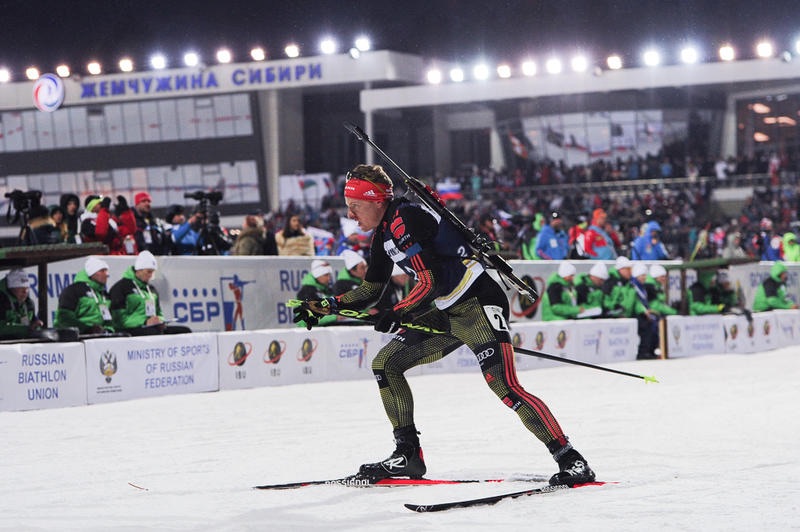
Germany’s Florian Graf competing in the men’s 15-kilometer mass start at the 2016 Open European Championships in Tyumen, Russia, on his way to winning the gold medal. (Photo: IBU)
“This was very surprising because there was no official statement by either the IBU or the IOC before the congress,” Eisenbichler said. “I discussed with a few friends in other federations about this topic. I got the sense that we were pretty much in agreement.”
Regardless of IOC rules, some feel that biathlon and cross-country skiing should be especially wary of Russia, since they were acutely stung by the allegations in the McLaren report. That investigation implicated 10 biathletes and 13 cross-country skiers.
“The McLaren report is very clear and detailed about what happened in Sochi and mentions biathlon explicitly as one of the sports,” Eisenbichler wrote in an email. “As long as there are not clear signs, facts and proof about different future behavior, it is not time to have Russia get awarded a Biathlon World Championships.”
There has been no news on re-testing of the anti-doping samples in Sochi, and no revelation of which athletes might have been involved.
Clearly, however, there are two lines of thinking on the matter. There are those, like Eisenbichler and Norway’s Erlend Slokvik, who would never vote for Tyumen.
“The IOC letter, I disagree that the IOC took this step after [previously] declaring that the competitions should be frozen and should not be further planned on,” Eisenbichler said. “I’m not in favor of it. So that did not change anything, that I would vote for it or not.”
Murray Wiley, the president of Biathlon Canada, could not be reached for comment, but Canada’s national-team coach Roddy Ward said he was disappointed with the decision.
“Back here in Canada, we have been discussing where they would move [the Tyumen World Cup weekend] to this winter, given our assumption it must be moved after the McLaren report,” Ward wrote in an email. “After all, how can we race in Russia when that has come to light? However, not only does [the World Cup] remain but the IBU has now rewarded Russia with WCH2021!! This is a massive slap in the face to clean athletes.”
But then there are those who would vote for it.
“Western Europe understands that this is not good for the younger international biathletes,” Slokvik told NRK. “There are many nations that are distraught … It’s the small nations from Asia and the old East block that voted for Tyumen.”
Either way, minds appeared to be made up. After his presentation on the new IOC recommendations, Besseberg said he had welcomed discussion.
“They were asked if they had any questions about it and there was not a single question,” Besseberg said.
What now?
Eisenbichler had little doubt that the Tyumen organizing committee would do a good job with the championships.
The venue hosted 2016 Open European Championships, and although neither the U.S. nor Canada attended (nor a number of other countries), reports from those who did compete were positive. Tyumen also hosts a Champions show race, so many top competitors have been there for the cash-rich prize money. Simon and Martin Fourcade of France both tweeted their support for Tyumen along with Antholz, Italy, which was awarded 2020 World Championships.
The local organization is not what concerns Eisenbichler, who heads the U.S. national team along with domestic development.
“Hopefully the future will be showing us that Russia does a different job than they did in Sochi,” he said. “But the McLaren report is very clear. I just think that now, with all the news that we got from the report, it’s the wrong signal to the sports world, to the fans, to the youth athletes, to all the athletes who are fighting for clean sports, that it’s a very wrong signal to reward them right now with that event.”
The biathlon world is also waiting for the other shoe to drop, to find out whether or which of the Russian stars had doped in 2014.
“The McLaren report showed systematic doping in Sochi, with Russian biathlon and x-c implicated,” Ward wrote. “I have been waiting to hear from the IBU how they would respond to the report and I hoped it would be by throwing their weight behind clean sport and punishing Russia… The IBU have made it very clear now that Russia is above anti-doping, that they can get away with anything and that what they did in Sochi totally acceptable.
“Biathlon and all Olympic sport is in a dangerous time,” Ward concluded. “We are losing all credibility. IOC and IBU need to take a strong stand against doping and with the decision to award Russia with [World Championships] they have done the exact opposite.”
Norway’s Martin Johnsrud Sundby lost is 2014-2015 overall World Cup title after breaking anti-doping rules regarding the use of asthma medication. (Photo: Fischer/Nordic Focus)
Among athletes and fans, one of the biggest reactions was of surprise: Sundby’s samples had been collected in December 2014 and January 2015, yet the case had never been publicized.
That is primarily because despite the adverse analytical finding (AAF) of salbutamol — a common asthma medication — in two of Sundby’s urine samples, the International Ski Federation (FIS) concluded that he had not broken any rules.
First, because salbutamol is a “specified substance”, according to the WADA Code, FIS was not required to give Sundby a provisional suspension while they resolved his case. Thus he did not miss any races after the AAF’s were reported to FIS.
Then, because the eventual Anti-Doping Hearing Panel conclusion was that there was no ADRV, FIS was also not required to publicize the result – in fact, they could not publicize it at all without Sundby’s consent, which he did not provide.
“FIS and the Norwegian Ski Association have followed the regulations and procedures as provided for in the FIS Anti-Doping Rules and WADA Code concerning communication of the decision of the FIS Doping Panel,” FIS Secretary General Sarah Lewis wrote in an email to FasterSkier.
Confidentiality is oft-discussed and highly prized according to FIS Rules. Thus only after the Court of Arbitration for Sport supported an appeal by the World Anti-Doping Agency (WADA) and ruled that an ADRV did occur, was FIS required to publicize the case.
Why No Rule Violation?
One common circumstance where an AAF can lead to no rule violation is if an athlete has a Therapeutic Use Exemption (TUE) for the substance in question.
Although he has long discussed his asthma diagnosis, Sundby did not have a TUE for salbutamol because he believed he didn’t need one.
As a class of drugs, the World Anti-Doping Agency (WADA) prohibits the use of beta-2 agonists, with the following exceptions (as described in the 2015 Prohibited List):
“Inhaled salbutamol (maximum 1600 micrograms over 24 hours);
Inhaled formoterol (maximum delivered dose 54 micrograms over 24 hours); and
Inhaled salmeterol in accordance with the manufacturers’ recommended therapeutic regimen.
The presence in urine of salbutamol in excess of 1000 ng/mL or formoterol in excess of 40 ng/mL is presumed not to be an intended therapeutic use of the substance and will be considered as an Adverse Analytical Finding (AAF) unless the Athlete proves, through a controlled pharmacokinetic study, that the abnormal result was the consequence of the use of the therapeutic inhaled dose up to the maximum indicated above.”
Sundby’s urine samples both had over 1300 ng/mL of salbutamol, triggering an AAF and beginning the investigative process into whether he had an appropriate TUE.
He didn’t, based on advice of a team doctor. The reason — that he was taking the medication through a nebulizer rather than an inhaler and believed that this made a TUE unnessecary — was explained in a previous article.
“We know the rule for use of the the nebulizers now and we will not do the same mistake again,” Norwegian men’s coach Tor-Arne Hetland told FasterSkier in an email. “We will for sure ask for a TUE one extra time instead of one too little in the future. Martin would have gotten a TUE if he asked for it. To get a TUE happens quickly, but the decision is made separately in each case.”
Marit Bjørgen, the winningest female skier of all time, also uses asthma medication. “I have medical test results that indicate that I am qualified to use Symbicort,” she said in a press release from the Norwegian ski federation. “I have the necessary permissions from the International Ski Federation (FIS) to use this medication, and all research studies show that this asthma medicine does not have any performance enhancing effect unless you have asthma. Just like Martin, I could not have become the best in the world without using my asthma medicine.” (Photo: Fischer/NordicFocus.com)
Most people don’t consider the use of the salbutamol to be performance-enhancing. Doctors and medical researchers have concluded that salbutamol is not ergogenic for athletes who are not experiencing constricted airways through asthma or exercise-induced bronchiospasm.
“The net effect for anyone whom does not have [exercise-induced bronchiospasm] is negligible: you can’t relax smooth muscle in the airway if it has not been contracted,” Dr. Michael Kennedy told FasterSkier in January, referring to the drug’s mode of action.
Numerous studies have backed this up, showing that giving asthma medication to athletes does not improve performance in time trials or races.
None of this changes the fact that WADA prohibits inhalation of the drugs in high concentrations, or via injection or ingestion. And salbutamol is also banned because it is a masking agent – that is, it could be used to hide the presence of another performance-enhancing drug.
In the “masking agents” section of the Prohibited List, the organization writes that “The detection in an Athlete’s Sample at all times or In-Competition, as applicable, of any quantity of the following substances subject to threshold limits: formoterol, salbutamol, cathine, ephedrine, methylephedrine and pseudoephedrine, in conjunction with a diuretic or masking agent, will be considered as an Adverse Analytical Finding unless the Athlete has an approved TUE for that substance in addition to the one granted for the diuretic or masking agent.”
One might expect that after an AAF, an athlete would be provisionally suspended. But according to FIS Rules, that was not necessary.
No Provisional Suspension
Martin Johnsrud Sundby placed 12th in the 15 k skate World Cup in Östersund, Sweden, in February 2015 – one day after FIS decided to cancel his scheduled Anti-Doping Hearing Panel and instead subject him to lab tests to determine how much salbutamol showed up in a urine sample after using a nebulizer as he had described. That trial eventually took place in April, long after the World Cup season (and Sundby’s victory for the overall title) had wrapped up. (Photo: Fischer/Nordic-Focus.com)
FIS rules about confidentiality are clear. In the early stages of a case, only those who “need to know” should be told about it, according to the rules. For instance, from the 2015 Anti-Doping Rules: “FIS shall ensure that information concerning Adverse Analytical Findings, Atypical Findings, and other asserted anti-doping rule violations remains confidential until such information is Publicly Disclosed in accordance with Article 14.3.”
If a case makes it into the media at this point, it is usually because it has been publicly announced by the athlete or their national federation, or else leaked by someone else who has inside knowledge.
“Information sometimes reaches the public domain since the athlete or person defending an anti-doping rule violation is communicated during the course of the proceedings,” FIS Secretary General Lewis wrote. “This has not been the case this time.”
It could have been obvious that something was going on if Sundby had disappeared from the World Cup based on a provisional suspension. But he didn’t, because salbutamol does not lead to a mandatory provisional suspension.
According to Provision 7.9.1 of the 2015 FIS Anti-Doping Rules, only athletes who have tested positive for a drug which is not a “Specified Substance” must receive a provisional suspension. Provision 7.9.2 states that for drugs which are Specified Substances, a provisional suspension is not mandatory.
“7.9.1 Mandatory Provisional Suspension: If analysis of an A Sample has resulted in an Adverse Analytical Finding for a Prohibited Substance that is not a Specified Substance, or for a Prohibited Method, and a review in accordance with Article 7.2.2 does not reveal an applicable TUE or departure from the International Standard for Testing and Investigations or the International Standard for Laboratories that caused the Adverse Analytical Finding, a Provisional Suspension shall be imposed upon or promptly after the notification described in Articles 7.2, 7.3 or 7.5.
7.9.2 Optional Provisional Suspension: In case of an Adverse Analytical Finding for a Specified Substance, or in the case of any other anti- doping rule violations not covered by Article 7.9.1, FIS may impose a Provisional Suspension on the Athlete or other Person against whom the anti-doping rule violation is asserted at any time after the review and notification described in Articles 7.2–7.7 and prior to the final hearing as described in Article 8.”
What is a Specified Substance? WADA’s 2015 Prohibited List defines those as all substances except: anabolic agents, peptide hormones, growth factors, and related metabolic substances and mimetics, anti-estrogenic substances, agents modifying myostatin functions, and some stimulants.
As a beta-2 agonist and masking agent, salbutamol does not fall into any of these categories.
“Salbutamol is a Specified Substance,” FIS Anti-Doping Administrator Sarah Fussek wrote to FasterSkier in an email. “Therefore a provisional suspension is not mandatory.”
FIS did not opt to give Sundby a provisional suspension through Provision 7.9.2, either. Instead, they asked him a series of questions about his use of the drug, consulted an Australian expert, and then sent his case to an Anti-Doping Hearing Panel. During this time, Sundby continued to compete.
The way that FIS handles public disclosure of ongoing cases is notably different than that of some other federations. The International Biathlon Union (IBU), for example, releases information on provisional suspensions when “A” samples test positive for prohibited substances, but do not include the name or nationality of the athlete. Here’s an example.
Why Wasn’t Sundby’s Case Made Public?
The Anti-Doping Hearing Panel concluded, as previously described, that no ADRV had occurred – partly because it deemed the WADA Prohibited List’s language unclear as to whether “inhaled” referred to the specific method of use, i.e. from an inhaler, or the general method of consumption, i.e. inhalation versus injection or ingestion.
At this point, FIS was constrained by its own rules as to whether it could publicize the case.
If a hearing panel determines that no ADRV has occurred, FIS can only publicize the case with the athlete’s consent, according to Provision 14.3.3:
“In any case where it is determined, after a hearing or appeal, that the Athlete or other Person did not commit an anti-doping rule violation, the decision may be Publicly Disclosed only with the consent of the Athlete or other Person who is the subject of the decision. FIS shall use reasonable efforts to obtain such consent. If consent is obtained, FIS shall Publicly Disclose the decision in its entirety or in such redacted form as the Athlete or other Person may approve.”
This language is similar to that of rules from FIFA, soccer’s governing body.
“After the decision of the FIS Doping Panel, the decision not to communicate the decision is the prerogative of the athlete, and yes FIS officially made this request to the athlete and Norwegian Ski Association in accordance with the FIS Anti-Doping Rules and WADA Code,” Lewis wrote.
After the CAS decision asserted that an ADRV had in fact occurred, the situation changed. FIS must report the final result of an appeals case — or three other types of cases, included those where the athlete does not challenge that a rule violation has occurred — within 20 days.
Sundby, who has vigorously defended himself in the press once the case went public, clearly wanted it to stay private. One can assume that’s why he opted not to go public after he was initially vindicated by the FIS Anti-Doping Hearing Panel.
“Reactions in Norway have been on different levels positive for Martin,” Hetland wrote. “The athletes in the team and from the other sports support him, the federation support him, sponsors for the federation and for Martin support Martin [and the federation] and media that have read and understood the case support Martin. Of course some media ask questions… The case is hard for Martin. He takes his punishment and [is] looking forward to get back to training with the team again.”
Russia’s Alexander Legkov after winning the Olympic 50 k mass start at the 2014 Sochi Winter Games.
(Note: This article has been updated to include the IBU’s official statement in response to the McLaren report, published in an IBU press release on Friday.)
What’s a sports federation to do when informed that 13 of its athletes (skiers — not distinguished by discipline, whether it be cross-country, nordic combined, jumping, alpine or freestyle) were involved in the cover-up of positive doping tests between 2011 and 2015? Or even 10 — the amount of Russian biathletes’ samples found to have been “disappeared” by the Moscow anti-doping laboratory during that time period?
The good news for an international sports federation like the International Ski Federation (FIS) is, they’re dealing with winter sports in summer. That buys them more time to make a plan of action when deciding how to deal with the allegations against Russia and its systematic doping confirmed in the McLaren report earlier this week.
In response to the 97-page independent report, which made no recommendations for action and left it up to the World Anti-Doping Agency (WADA), the International Olympic Committee (IOC), international sports federations (IFs), and relevant authorities moving forward, WADA’s executive board outlined seven recommendations for affected federations. Most prominently, they called for a complete ban on Russian athletes from the upcoming Summer Olympics and Paralympics in Rio de Janeiro, Brazil.
The IOC Executive Board then came out with a list of “provisional measures” of its own, applicable until further review this December. Among the measures, it asked Professor Richard McLaren to share the names of the Russian athletes implicated in the “disappearing positive methodology” (i.e. the 13 skiers and 10 biathletes) with their respective IFs, and for all winter sports federations to “freeze their preparations for major events in Russia, such as World Championships, World Cups or other major international competitions under their responsibility, and to actively look for alternative organisers.”
So how is FIS moving forward? For starters, they are relieved to have more time to process these findings than, say, a summer Olympic sports federation.
“As far as the winter sports federations are concerned, I don’t think I need to repeat the fact that the whole situation is utterly, utterly, shocking, appalling,” FIS Secretary General Sarah Lewis, also the secretary general of the Association of International Winter Sports Federations (AIOWF), said on the phone Wednesday. “It is totally against all of the values that we believe sports stand up for and that it’s built on trust, on fair play, on demonstrating personal excellence…”
Because at least six of the seven winter IFs were mentioned in the report, decisions on how to move forward will be made at a previously scheduled AIOWF meeting in early August at the IOC session in Rio.
“This will clearly be the main item on the agenda so that we can all address this jointly, commonly, exchange information, exchange positions, and potentially there can even be areas where we can undertake some management matters together as well in order to try to expedite and consolidate the process,” Lewis explained. “That’s what we’ve agreed to do because our season isn’t immediately around the corner and [the] Olympic Games on our doorstep, as is the case for the summer sports. In fact, this time next week, I’ll be on my way to Rio and meeting the IOC already at the end of next week in order to be able to obtain more detailed information.”
In terms of what information FIS currently has, Lewis explained that it “is in the process of obtaining information about specific names of athletes and/or other persons who may be subject to an anti-doping rule violation.”
Once information is obtained from WADA to follow up on, FIS will then proceed with results management based on FIS rules and the WADA Code, and will do so on an individual, case-by-case basis, she added.
“How the process works, if there are any tests connected with the Olympic Winter Games, which of course the investigation was centered around, then it’s the IOC’s responsibility to undertake the results management there,” Lewis said. “But what will be addressed is whether this can be addressed in a joint way with the respective international federation when the IOC has to carry it out anyway. The IOC only has the authority to be able to sanction the person related to their participation at the Olympic Games and then they give then the task to the respective international federation to follow up with any further sanctions and procedures under their jurisdiction.”
When it comes to freezing events, such as Cross-Country World Cup finals in Tyumen, FIS has eight major events across its sports previously scheduled in Russia. They are now suspended until further notice to comply with what Lewis explained as an immediate measure from the IOC.
As for seeking alternate venues, Lewis said that’s premature.
“The decision of the IOC Executive Board hasn’t even been communicated for 24 hours, and I haven’t been dealing specifically with whether there are other organizers who have already offered to step in. That’s in the hands of our cross-country management,” she said. “One thing is freezing the events now and it’s quite another story whether it’s going to be necessary to reassign events. But in any case, don’t worry, there won’t be a shortage of organizers for the [events]. Everyone wants to do the best thing for the sport and be committed to it. And for sure, other nations will be ready to rally around to ensure that the athletes and the World Cup circuits are not affected, should it be necessary.”
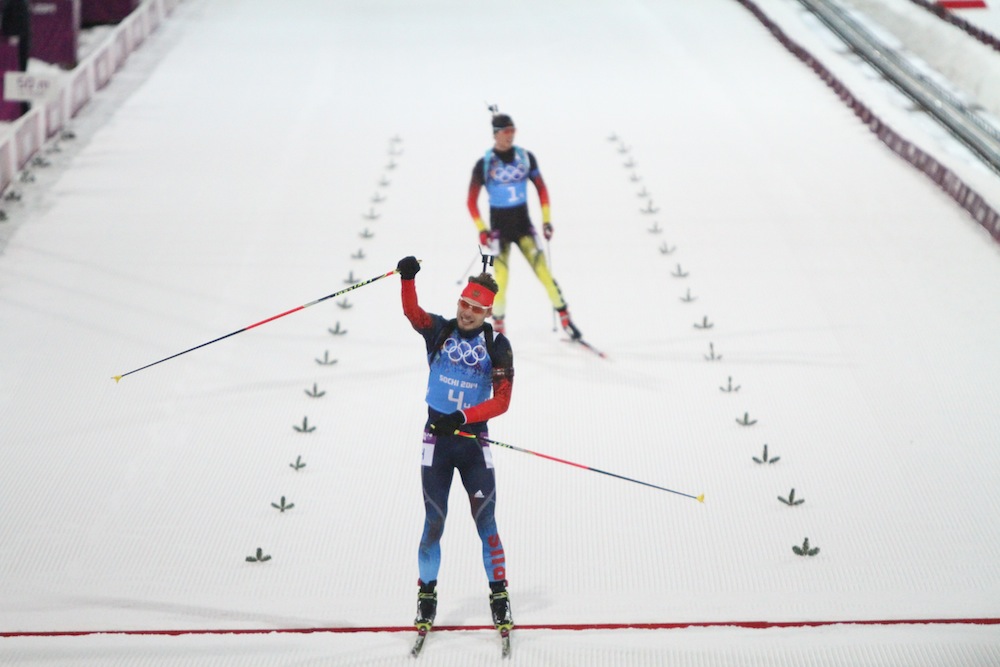
Russian anchor Anton Shipulin (front) celebrates his team’s gold medal in the men’s biathlon relay at the 2014 Sochi Olympics. Germany’s Simon Schempp anchored his team to second and Austria placed third.
In an email seeking a comment on the McLaren report, International Biathlon Union (IBU) Secretary General Nicole Resch responded on Wednesday, “Due to travelling I did not have the chance to read the full report yet.”
Resch did not respond to a follow-up email requesting to speak with another IBU spokesperson.
The IBU released a statement on Friday, noting: “The IBU is truly appalled and deeply saddened by the findings of the McLaren Report (IP Report).
“The IBU has always emphasized clean sport, fight against doping and protection of clean athletes as its top priorities,” the press release continued. “We will therefore carefully evaluate this report and the recommendations of the IOC and will proceed with investigations concerning references to biathlon included in the IP Report. If and when appropriate, the IBU will not hesitate to open disciplinary proceedings against bodies or persons subject to infringements of the IBU Anti-Doping Rules.”
Lowell Bailey, a U.S. Biathlon team veteran and IBU Athlete Representative, said he was awaiting an official statement from the IBU as of Wednesday.
“The McLaren report specifically says that they advise that no international federation should hold international competition in Russia,” Bailey said on the phone. “So in my mind, I think a strong response from the IBU, something that would be a definitive sign that they are very much supporting and fighting for clean competition would be to ban the upcoming Tyumen [World] Cups. I think that’s the least they can do at this point, is to show that, no, we are not complicit, we are not OK with this and as a punishment, we’re moving the World Cup…
“I think it’s just really unfortunate if we are outwardly saying, as a sport, ‘We hear you, WADA, and we are very much against doping and we are trying to clean up our sport,’ then in the same 12-month period to go and hold a World Cup in that country, which is in violation of the WADA code. I think that’s a double standard,” he added. “So I’m hopeful that the IBU will do the right thing…”
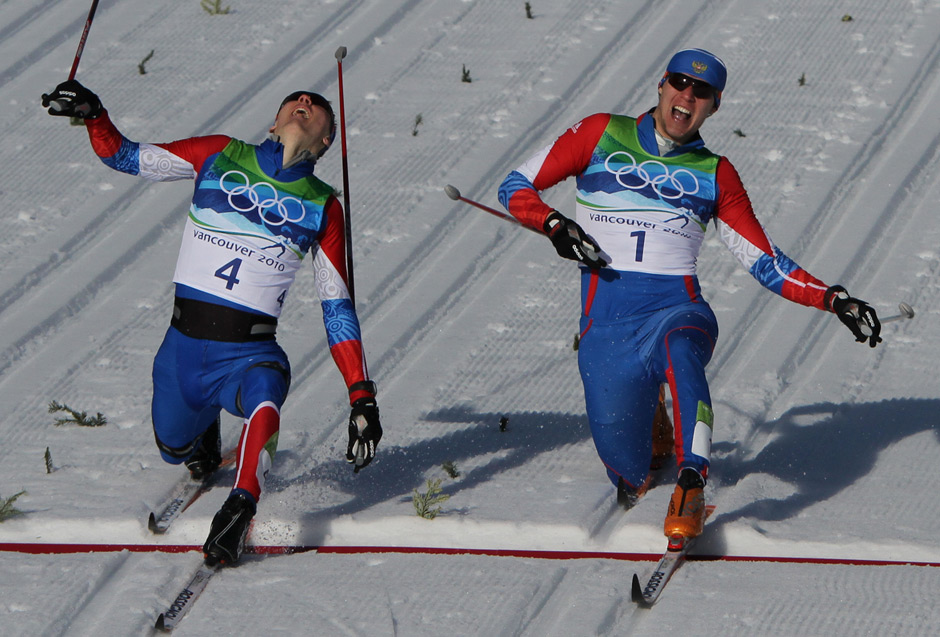
Russia’s Nikita Kriukov (l) and Alexander Panzhinskiy placed first and second in the men’s sprint at the 2010 Olympics in Vancouver, B.C. Russian Minister of Sport Vitaly Mutko recently told Russian media that the entire cross-country ski team was doping at those Olympics: “Of course, I knew all about this, they were all doing the doping,” he said. There are several ways in which the team allegedly avoided positive doping tests.
Allegations in the documentary opened a new possibility for how Russian sports officials avoided positive tests by doped athletes: did they use the Anti-Doping Administration and Management System, ADAMS, to learn when their athletes would be tested and warn staff who might be able to help athletes avoid positive tests?
“The ADAMS doping control database provided to [Anti-Doping Organizations] is an essential tool for managing both an in- and out-of-competition doping control program,” the World Anti-Doping Agency (WADA) explains on its website. “Coordination of doping control programs in the ADAMS system helps to avoid duplication of testing efforts and harmonizes communications between testing authorities, sample collection agencies as well as WADA accredited laboratories.”
But it may have been used for something else.
Government Interference
The 35-minute piece put together by journalist Hajo Seppelt primarily focused on what Russia should have to do in order to send athletes to the upcoming 2016 Summer Olympics in Rio de Janeiro, Brazil.
After widespread indignation over the last year about rampant doping in Russia, Seppelt questioned whether Russia was making a good-faith effort to change. Collusion had been revealed in several of his previous documentaries, as well as by pieces in The New York Times, Sunday Mail, 60 Minutes, and by the World Anti-Doping Agency Independent Commission.
This time, Seppelt revealed more than ever about the involvement of the Ministry of Sport and specific government officials in covering up doping so that Russian athletes could compete – with great success – on the international stage.
Buried in the documentary was an allegation that for two winter sports, the Ministry of Sport had worked to warn coaches and athletes before visits from doping control officers.
The allegations involved Minister of Sport Vitaly Mutko and his anti-doping advisor Natalia Zhelanova, and came from a document signed by Grigoriy Rodchenkov, the former head of the Moscow anti-doping laboratory who has since fled to the U.S. and cooperated with The New York Times.
“Zhelanova deliberately evaded and undermined Test Distribution Plans of [International Ski Federation] and [International Biathlon Union]. Usually, RUSADA was informed two or three days before their [doping control officers] should collect samples from the Russian national team. [Name redacted] immediately notified Zhelanova, then the latter notified Head coaches, and the national team had change location, just escaped.”
Zhelanova was a member of the WADA Finance and Administration Committee from 2010 until 2015.
The documentary notes that not everyone approved of this policy. RUSADA Executive Director Nikita Kamaev apparently registered his concern, telling Zhelanova that “RUSADA was losing credits” in terms of respect and credibility.
The ADAMS system is used by anti-doping agencies for a variety of purposes. One of the main uses is for athletes to report where they are living, training, or staying, a so-called “whereabouts” report.
If a doping control officer comes for a visit and the athlete cannot be located where they said they would be, it is considered a whereabouts violation. Three such violations over the course of 12 months can lead to a suspension from competition.
But another use of ADAMS is for the multiple authorities which test athletes to report and coordinate their efforts. For instance, an athlete is subject to testing by both their international federation and their national anti-doping organization.
“Where reasonably feasible, testing shall be coordinated through ADAMS or another system approved by WADA, in order to maximize the effectiveness of the combined testing effort and to avoid unnecessary repetitive testing,” the 2015 World Anti-Doping Code states.
This use of the system actually addressed complaints by athletes that they were tested to often and too disruptively, according to International Biathlon Union (IBU) Vice President for Medical Issues Jim Carrabre.
“Each nation has access to that data for their national athletes in the IBU test pool so that we minimize the probability of having two separate test authorities test an athlete on the same day,” he wrote in an email. “We each could still choose to do this if we wished but the benefits would be minimal. This was earlier a major complaint by athletes from many countries, and this access in ADAMS improved this complaint immensely.”
FIS Anti-Doping Administrator Sarah Fussek explained the use of the ADAMS system slightly differently.
“If you do register an exact mission in ADAMS beforehand, another organisation can only see this planned testing if the testing organisation has set explicit access in ADAMS for this purpose for each individual organisation,” she wrote in an email on Saturday. “At FIS this is currently not the case for any [national anti-doping agency] and vice versa.”
FIS does register tests in ADAMS once they have been completed.
But he confirmed that all of the tests ordered by the IBU were not only carried out by RUSADA, historically, but were also entered into ADAMS where RUSADA could access them.
“RUSADA could therefore notify internally any one if they had intentions of cheating the system,” he wrote. “This could have occurred but they would have had to check the system regularly if they wanted to know IBU test plans on Russian athletes when they were tested outside Russia. I presume that this was not done or otherwise we would have not caught the ones that we did.”
That’s why even aggressive testing by international federations could have been circumvented by individuals or agencies in Russia: whereabouts violation in reverse.
And, if this was the mechanism used by Zhelanova to warn teams before testing occurred, it could potentially have jeopardized testing by any international federation using ADAMS to pre-register its tests with the national anti-doping organization, as was encouraged by WADA.
Aggressive Testing, For Good or For Naught
Some federations have had concerns about Russian anti-doping efforts for years.
The International Ski Federation (FIS) caught a number of Russian cross-country skiers doping in the mid- to late-2000s, and in June 2010 sanctioned the Russian Ski Association. After fining the federation $185,000, FIS declined to press further sanctions and in November 2010 wrote in a press release that the federation had taken “positive steps” in anti-doping.
At the same time, FIS was avoiding relying on RUSADA to carry out testing missions to a large extent, instead relying on companies which train doping control officers and do the sample collection themselves.
“There was quite a lot of testing missions which were coordinated with [the Russian Anti-Doping Agency, RUSADA], but most were carried out by the FIS-appointed doping control agency with their own personnel and equipment,” FIS Secretary General Sarah Lewis explained to FasterSkier in May. “Most samples were transported to a different laboratory, in Lausanne or Cologne or somewhere else. We weren’t in the position that they could be manipulated in the Moscow laboratory.”
In an email on Thursday, FIS Anti-Doping Administrator Sarah Fussek said that the organization also did not usually notify RUSADA if and when tests were going to take place.
“With the exception of a handful missions, testing in Russia was carried out by a private sample collection provider,” she wrote. “We did have a couple of joint missions some years. Otherwise FIS testing did not give notice to RUSADA when conducting missions within Russia.”
As such, Fussek was confident that the FIS testing program was adequate to ensure that Russian athletes were mostly not cheating.
“Keeping in mind that you can never guarantee that every athlete is clean, we strongly believe that our programme covered testing in the country well and that we did all possible efforts to achieve a regular at home testing on Russian athletes (who most time of the year travelling on the World Cup circuit, plus training camps outside Russia and are tested there regularly as well),” she wrote.
“In the years three years prior to Sochi, the new administration in [the Russian Biathlon Union], Mr Mikhail Prokorov and Mr Sergei Krushenko, were verbally and financially committed to antidoping,” Carrabre wrote. “I had personal meetings with them and they went from one of the countries with the least number of internal antidoping tests to the country with the most number of internal tests in IBU. This effort was appreciated by myself and IBU and was, in my opinion, a large step in the right direction. I even publicly commended the RBU for this action. As I also said publicly, the number of tests does not always equal quality tests so the IBU would not decrease its efforts despite the testing of the RBU.”
The increased number of tests did catch some regional-level athletes, but no Russian Biathlon Union testing ever led to the suspension of a national-team athlete.
IBU testing, however, did, in particular when they tested outside of Russia. As Fussek had noted, athletes spend almost the entire winter, as well as periods of the offseason, training and competing in Europe, offering ample time to take many anti-doping samples.
“No national or international level athletes were ever found with their testing,” Carrabre said of the Russian Biathlon Union. “It was therefore surprising that the IBU would catch several of their athletes in the year prior to Sochi with testing performed outside of Russia while their athletes were at international training camps.”
Superficial Admissions of Guilt
The Ministry of Sport denied that they had interfered with RUSADA business in any way – or that such interference would even be possible.
“How can I exert influence there?” Mutko asked, rhetorically, in the new ARD documentary. “What influence can we exercise on the personnel of the anti-doping organizations?”
Just two days before the documentary aired, Zhelanova had done a question-and-answer session on Twitter, where she stressed that Russia was changing. The full exchanges from June 6 can be found on her twitter feed.
And Zhelanova seemed to admit that even today, it is difficult for doping control officers to do their jobs. U.K. Anti-Doping, which took over testing in Russia after RUSADA was stripped of its authority, reported in May that 40 percent of the tests it was supposed to carry out were impossible because they couldn’t locate the athlete.
Evading a sample or refusing to give a sample are both considered Anti-Doping Rule Violations, the same as a positive test or three missed whereabouts.
The current procedure for testing seemed to still be under negotiation. U.K. Anti-Doping had reported that Russia requested 30-day notice before testing of any athletes in military areas, which is clearly not standard operating procedure in the world of anti-doping.
“We agreed a procedure with WADA to help doping inspectors to carry out their important jobs,” Zhelanova tweeted in response to Rachel Axon of USA Today.
But what is there to discuss? In 2006, the Russian Federation ratified the International Convention Against Doping in Sport, under the purview of the United Nations Educational, Scientific, and Cultural Organization (UNESCO).
Article 12 states,
“States Parties shall, where appropriate:
(a) encourage and facilitate the implementation by sports organizations and anti-doping organizations within their jurisdiction of doping controls in a manner consistent with the Code, including no-advance notice, out-of-competition and in-competition testing…”
The 2015 World Anti-Doping Code further states that “Each government will take all actions and measures necessary to comply with the UNESCO Convention.”
After the documentary aired on Wednesday, Zhelanova was less than thrilled.
“I was very upset and disappointed by the allegations made against me in the recent @ARDde documentary,” she stated in a series of tweets. “These claims are untrue and are made by 1 disgraced person who disagreed with me on the importance of fair & clean sport. I really believe in the fight against doping and dopers and am doing everything I can to create change and restore trust. Reforms are under way but our system won’t be perfect immediately – cultural change takes time.”
Competitors in the women’s 15 k skiathlon crest a hill at the 2014 Winter Olympics in Sochi, Russia. (Photo: Fischer/NordicFocus)
“There needs to be an investigation by WADA,” International Ski Federation (FIS) Secretary General Sarah Lewis told FasterSkier in a phone interview on Monday. “FIS totally supports it and we have already expressed that anything we can provide, we will do. And it needs to be done [quickly], but carefully.”
With allegations published last week in The New York Times of state-sponsored doping at the 2014 Olympics in Sochi, Russia, attention turned immediately to the World Anti-Doping Agency (WADA) and the International Olympic Committee (IOC).
FIS runs its own anti-doping program, as does each country which sends skiers to the World Cup. Those programs add up to thousands of urine tests done on skiers each year. When it comes to the Olympics, however, the IOC takes over all in-competition testing and WADA provides Independent Observers to watch the process.
There had been allegations as early as November of last year, in the WADA Independent Commission report, that Russian state security personnel had infiltrated the Sochi anti-doping laboratory; WADA did not follow up on the finding.
Thus when Grigoriy Rodchenko, the former head of Russia’s anti-doping laboratory, said that 66 Russian athletes had been protected from testing positive by laboratory and security staff who swapped out their dirty urine samples, there was outrage from many sides.
Outrage – and bewilderment. Lewis was the head of the WADA Independent Observers at the 2008 Summer Olympics in Beijing, China. She is intimately acquainted with the anti-doping process and the tamper-proof bottles which were allegedly opened in a secret lab and filled with replacement urine.
Sarah Lewis, secretary general of the International Ski Federation. (FIS file photo)
“Frankly, these bottles, having seen the whole thing in action, to imagine that they can be reopened– wow,” Lewis said. “The fact that they could even be taken out of the lab is really quite shocking.”
WADA has pledged, finally, to investigate winter sports and the Sochi Olympics. But should the investigations confirm the allegations, all the IOC can do is ban an athlete from the Olympics, including retroactively. With 14 Russian cross-country skiers implicated in The New York Times report, including superstar Alexander Legkov, many are wondering whether World Cup results will also be shaken up.
For instance Legkov – who won the 50 k skate in Sochi as well as helping the Russians take home silver in the men’s relay – was on the podium three more times later that season, including at World Cup finals; he then earned a number of top-ten World Cup results in the next two seasons. Are those results in jeopardy?
In the 2014/2015 season, Russian Olympians Evgeniy Belov and Maxim Vylegzhanin – who have not been implicated by name but were members of the 20-athlete team of which 14 were supposedly on the doping list – both finished in the top 10 of the overall World Cup standings. Are the many individual race results that went into those standings also in jeopardy?
Whether to negate results going forward from the date of a positive test – if such a test exists – would be a decision left to FIS, which is also shaking its head about how doping could have happened in its sport, on the world’s biggest athletic stage.
“The story has to be verified – that’s a basic principle,” Lewis said of the allegations. “If any elements of it are true, then it’s a huge throwback, a huge step back for all anti-doping efforts. Especially that this could happen at the Olympic Games where there are so many resources in terms of money, personnel, global expertise – it’s such a major blow.”
Why Weren’t Cheaters Caught?
Russia led the world in anti-doping rule violations in 2014: 148 athletes faced sanctions, 14 of which were in Winter Olympic sports and more specifically four in biathlon and seven in skiing. Despite those numbers, no star cross-country skiers were caught in the leadup to the Olympics.
Irina Starykh (far right) celebrates with her Russian teammates after they won an IBU World Cup biathlon relay in Ruhpolding, Germany, in January 2014. The result was voided as a result of Starykh’s doping ban, from a sample collected in December 2013. (Photo: Fischer / Nordic Focus.)
So could FIS have done more, and tested harder, in order to prevent the cheats from reaching the Games in the first place?
“To be honest, with what they are talking about, namely a steroid program during the Games, it’s likely that the program was very specifically targeted around the Games,” Lewis argued. “Of course you’re always looking at your processes, but with the out-of-competition program we have in place it’s very comprehensive … Nevertheless in hindsight, of course you ask those questions. Until we know what the time scale was, it’s hard to know.”
A total of 6,439 anti-doping samples were collected by various testing agencies from athletes across the skiing disciplines in 2013, a number that shrank to 5,764 in 2014, the Olympic year.
But here, too, numbers don’t tell the full story, FIS argues.
“Let us respectfully point out that this question is rather outdated,” FIS Anti-Doping Coordinator Sarah Fussek wrote in an email on Tuesday. “The WADA policy and guidance to [anti-doping agencies] many years ago was to move away from large testing numbers and move to more quality testing. For example to organise a doping control at a remote location takes much more planning efforts, logistics, transport costs as 10 tests collected at a training camp at an easy to reach place. So comparing numbers only says nothing about the quality of a testing programme.”
In fact, Lewis said that the Russian skiers had been targeted with plenty of tests. That fact was underscored in an interview over the weekend where Legkov claimed to have been tested 33 times in the season leading up to the Games.
“Our specialists are monitoring the results of the testing from a clinical perspective, but also performances, participation, history of that nation, it’s all connected together,” Lewis said. “There’s no question that there’s been extensive targeting of the Russian team for more than ten years.”
That testing did lead to a rash of positive tests and disqualifications before the 2010 Olympic Games in Vancouver, Canada. But despite the bans, some athletes and coaches who were picked up in the sweep stayed in the sport. In one case, Russian athletes who had previously served doping bans decided not to train with the national team, and instead took up with a coach who had been barred from working with the national team because of his involvement in doping.
Rodchenkov – the head of Russian anti-doping who admitted massive fraud to the New York Times – also remained on the FIS Medical Committee until November, when he was suspended after the initial WADA Independent Commission report.
The history of Russian doping in skiing is not lost on anyone. But the biggest personality on the current scandal, Legkov, is a different case from the doping Russian skiers of six or seven years ago, at least in terms of lifestyle. He trained not only away from the standard national team coaching staff, but also primarily outside of Russia, basing himself instead in Davos, Switzerland, with non-Russian coaches in the seasons leading up to Sochi.
Additionally, Lewis had confidence in FIS’s out-of-competition testing.
“During the winter season, you have the athletes more or less with you the entire time,” she said. “It’s possible to carry out very extensive testing.”
Chain of Custody
Vitaly Stepanov, a former RUSADA employee, during an interview with 60 Minutes’ Armen Keteyian, which aired Sunday, May 8. (Photo: CBS News)
With the accounts of malpractice in Russian anti-doping laboratories in not only The New York Times piece but also by another whistleblower to CBS News’ 60 Minutes, there’s also a question as to whether previous anti-doping samples belonging to Russian skiers were manipulated.
Rodchenkov, for instance, said that he had destroyed over a thousand samples to prevent them from being re-tested by a different testing authority.
According to Lewis, samples collected by FIS were rarely stored in Russia.
“There was quite a lot of testing missions which were coordinated with [the Russian Anti-Doping Agency, RUSADA], but most were carried out by the FIS-appointed doping control agency with their own personnel and equipment,” she explained. “Most samples were transported to a different laboratory, in Lausanne or Cologne or somewhere else. We weren’t in the position that they could be manipulated in the Moscow laboratory.”
In addition, after RUSADA was suspended and the Moscow laboratory lost its accreditation from WADA, FIS took any samples that had been stored there immediately out of the country.
“In fact, all the samples were delivered to Cologne,” Lewis said. “They were evaluated again, all of the profiles, the blood profiles but also the steroid profile. That information was analyzed again as to whether there was the need to re-tests … They all returned negative.”
FIS anti-doping samples are handled primarily by a company called PWC, which is based in Germany and also offers services to other international and national federations.
“PWC is currently the main sample collection provider for FIS on the basis of an annual contract, but FIS uses regularly also the services from various national anti-doping agencies, and does not have an exclusive contract with PWC,” Fussek explained in her email.
The company then delivers samples to WADA-accredited laboratories around the world.
“The samples are not left overnight somewhere in a vault,” Lewis said. “Doping control officers carry out the tests and then ship or take them to the lab. That period for tampering doesn’t exist.”
Moving Forward
News broke on Tuesday that the U.S. Department of Justice would investigate the Russian doping claims. Earlier that day, the IOC announced that it directed the Lausanne laboratory where Sochi samples are stored to cooperate with WADA on potential re-testing, a move that many have urged for months.
“The statement by WADA and the IOC in terms of re-testing samples stored in Lausanne, we fully support that and have championed that cause for a long time,” Lewis said. “But that is an issue for the IOC, they are responsible for doping controls at the Olympics.
“In terms of what could be found through the re-testing, we would also support DNA testing of the urine samples in case there has been switching of urine and some errors,” she continued. “How it reads in the [Times] article is that they have used those athletes’ own urine, but nevertheless the experts are able to assess if there has been a change in terms of the composition of the samples. Plasticides were mentioned and that sort of thing.”
FIS already worked with the Russians to ensure that testing was carried out in the 2015/2016 season, even after RUSADA and the Moscow laboratory lost a say in the process.
“On the request of the Russian ski association, they asked FIS to step in and arrange in-competition testing,” Lewis said. “They didn’t have RUSADA to do it. We did that through the group appointed to help them, which was UK Antidoping. There was some additional blood testing carried out by the FIS agency during competitions during the season.”
That said, the testing arranged by UK Antidoping over the last six months was not exactly a roaring success.
Forty percent of the tests the agency was prescribed to carry out were unsuccessful, with one test being flat-out refused by an athlete. Of the tests which were collected, 49 were positive. UK Antidoping is reportedly considering ending its role in Russia altogether.
Nevertheless, Lewis asserted that athletes who competed in 2015/2016 should not worry that they were facing an unfair playing field.
“Anti-Doping holds a very high priority in our organization,” she said. “We have a strong commitment to clean sport. There’s no question that we’re horrified by these stories and absolutely support this investigation to clarify that situation. But when it comes to the statements of how the manipulation was done, in terms of exchanging samples and tampering with the bottles, those things can’t happen with the testing which is carried out by the FIS-appointed agency.”
For FIS, internal discussions are ongoing and the organization’s top brass has already set aside time at their biennial Congress in the second week of June.
“To be perfectly honest, the situation was and is on the agenda based on the WADA report on November,” Lewis said. “The situation with the Russians is on the agenda of the FIS Council already, and then obviously there is more information to be able to discuss and address.”
Correction: The author previously quoted Lewis as saying that she had “dropped a note through to Alex.” She was referring to Fasterskier’s Alex Kochon, not Alexander Legkov. We apologize to Lewis and to readers for this misunderstanding.
When asked by FasterSkier at Monday’s Geneva press conference whether the worst fears of those in the nordic sports community – namely that Russia has had an organized doping program off and on for many years – were true, World Anti-Doping Agency Independent Commission Chair Richard Pound hedged.
“Certainly the two sports you mentioned are known to have had a lot of doping problems, and probably not just Russia,” he said.
Dr. Jim Carrabre, the Vice President for Medical Issues at the International Biathlon Union, says that whether biathlon has a doping problem depends on how you define problem – but that no way is it the IAAF. (IBU file photo)
(You can read the background on that press conference, and its implications for winter sports, here. The topic was largely centered on Russian track and field.)
To ask those in the cross-country ski and biathlon communities, that statement is both true and false. Both the International Ski Federation (FIS) and the International Biathlon Union (IBU) touted the successes they have had in fighting doping from Russia and beyond, but also welcomed more information, investigation, and re-testing of old samples.
They also weighed in on the serious finding that the Russian state security apparatus, FSB, was present in the anti-doping laboratory at the 2014 Olympics. That finding has the potential to undermine the results from the Games, although the panel did not find direct evidence that agents had manipulated samples.
Unfairly Maligned?
“I have to say I’m a little disappointed that in the context of this investigation, [Pound] would name FIS and biathlon as having severe doping problems,” said Dr. Jim Carrabre, a Minneapolis-based family doctor who is the IBU’s Vice President for Medical Issues.
“Is there evidence of that in what he uncovered, that we were implicit in this problem?” he asked. “If there wasn’t, then he shouldn’t have even mentioned it. On this stage and this scale of deception and criminal acts, I don’t think it’s appropriate to include us in the same sentence. I think we deserve more respect than that.”
Apparently speaking off the cuff, Pound did make comments that neglected specific aspects of his anti-doping program.
For instance, take this one.
“The only organization I know that actually keeps samples for a long-term basis is the [International Olympic Committee],” Pound said in response to a member of the press. “Most other testing agencies, if it’s not a positive test, a sample is kept for a number of months and then routinely destroyed.”
The IBU actually did have such a program, anticipating the update to the WADA Code which went into effect on January 1, 2015.
Carrabre and his team kept samples that had suspicious profiles, but which weren’t positive, from the two years leading up to this change. Then they re-tested them with the new methods.
Sarah Lewis, the Secretary General of the International Ski Federation, would welcome re-testing samples from the 2014 Olympics in Sochi, Russia. (FIS file photo)
That effort led to several new positives. Some were from athletes who had already been banned from other samples, but it also led to the bans of Sergui Sednev of Ukraine and Alexander Loginov of Russia, a former Junior World Champion who competed at the 2014 Olympics.
“I don’t know if there were any other federations which suspended athletes just prior to Sochi,” Carrabre said. “I think that we were the only ones that did that.”
So does that mean that biathlon has a serious doping problem?
“It’s a glass half full or half empty kind of thing: do you have a problem because you catch them?” he asked. “Or do you have a problem because you’re not catching anyone?”
Likewise, FIS Secretary General Sarah Lewis touted her organization’s dealings with Russian doping in an email to FasterSkier.
“In 2010 FIS sanctioned the Russian Ski Association following an investigation due to the high number of Russian doping cases,” she wrote. “A series of measures were implemented by FIS and the Russian Ski Association through enforcement of a compliant anti-doping programme. The Association was required to provide a detailed report on their activities and actions it had undertaken to address the doping problems in a meaningful way. These included a significant number of changes such as changing cross-country ski team and other officials.”
Alexandr Loginov, en route to winning the 2013 World Junior Championship sprint, was allowed to compete at the Sochi Olympics; but a re-test of a sample taken pre-Sochi was found positive, meaning he never should have been there. However, his doping was sophisticated enough that the sample was merely marked as suspicious using pre-2015 methods. (Photo: Mario Danzl/Obertilliach 2013.)
One of the notable things in the WADA Independent Commission report is that track and field’s governing body, the IAAF, did not sanction Russia (they are now considering doing so). That is a radical difference to how FIS handled their own situation.
… But Help Wanted
Both federations however made it clear that if the type of behavior found in the track and field investigation was widespread across all sports within Russia, their carefully-designed anti-doping programs would lose some key components.
“Where biathlon and nordic skiing have troubled histories in terms of doping in Russia, I want to believe that we caught the athletes who were doing it,” said Max Cobb, the President and CEO of the U.S. Biathlon Association and the chair of the IBU’s Technical Committee.
“I really want to believe that,” he continued. “But I think you can’t look at a case like this and say, we don’t need to investigate further in our sport. I think this is a watershed moment in sport. All of us who are working in sport need to seize the moment to dig deeper into this and respect the work that WADA has done to expose this ,and see where else the evidence leads. Does it lead to more cases in our sport? I hope not, but it’s on us to find out.”
That said, FIS and the IBU had policies in place to minimize the amount of damage corruption at RUSADA could have caused.
“The samples of the Russian cross-country skiing athletes are collected by the FIS-appointed agency directly,” Lewis wrote, explaining that the disgraced RUSADA agency did not have responsibility. “Consequently we can be sure there was no-notice for the testing missions, no pre-screening of samples that have been shipped out of the country, and we are not specifically aware of manipulation of whereabouts reporting (but can also not exclude for cases where FIS has not planned a testing mission).”
“A number of samples are sent to the Moscow lab (mainly those for purposes of the ABP due to the limited possible transport time for arrival at the laboratory according to WADA Guidelines) but a large amount are taken to a different WADA-accredited lab outside of Russia,” Lewis continued. “There were challenges to be able to ship the samples out of the country in the past, but we have always succeeded to do so. Samples in Russia are not only being collected in the Moscow region, but also from other areas in Russia where the athletes are living and training, which is certainly time- and cost-intensive, but FIS has allocated a significant amount of its anti-doping budget for this testing strategy since many years.”
Furthermore, while the narrative of the WADA report is that athletes were doped and protected in Russia so that they would never test positive outside the country, Carrabre pointed out that all of the Russian doping cases he has seen have been detected based on samples taken outside of Russia.
“There’s obviously still doping outside of the country, because we caught them!” he said of the biathlon program.
And yet – he has had trouble catching athletes inside Russia, suggesting that there may very well be deception and collusion going on inside the country.
“RUSADA has reported some positive EPO tests on very low-level athletes who competed at national championships, maybe to make a smoke screen for the other ones they may be hiding,” he said.
Both FIS and the IBU use an Athlete Biological Passport program, and Carrabre was particularly anxious to know whether hidden or manipulated tests taken by RUSADA belonged to biathletes for this reason.
“But I would hope that in the WADA database if they have reports on positive tests by athletes that we are not aware of, that they would share that with us,” he said. “Because that would be useful information for us.”
For instance, the Report stated that “significant percentages of [Doping Control Forms] in Russia are either not entered into ADAMS or are significantly delayed,” referencing WADA’s global database tool which stores and manages anti-doping test information. In particular, one whistleblower said gave the number of her sample to an official who hid it at the RUSADA laboratory, and this positive test was never entered into ADAMS.
The Independent Commission noted that in many cases, even when information was entered in ADAMS, there was a significant delay first.
WADA had not directly contacted him or the IBU, Carrabre said.
About Sochi
While much of the report focused on track and field athletes, one finding did shine a light on winter sports. The Independent Commission revealed that the FSB had infiltrated the anti-doping lab in Sochi.
From the report:
‘Specifically, Moscow laboratory personnel have reported, under confidentiality, regarding the continued presence of the Russian security (FSB), “[L]ast time in Sochi, we had some guys pretending to be engineers in the lab but actually they were from the federal security service, let’s call it the new KGB; FSB.” ‘
This is similar to the atmosphere in the Moscow anti-doping laboratory:
“One laboratory staff member provided information to IC investigators about the suspected bugging or wiretapping of telephones, while another staff member reported that office spaces within the Moscow laboratory were monitored (bugged) by the FSB in order to be informed of the laboratory’s reported statements demonstrate the perceptions of laboratory officials, who believe they are under constant state surveillance.”
Everyone involved seemed puzzled by the allegations of FSB presence in Sochi.
“My first reaction is that what Dick Pound said sounds pretty good to me: I can’t imagine what the state’s interest in urine samples was,” said Cobb.
Cobb was the IBU’s Technical Delegate overseeing the Sochi competitions, meaning that he was intimately involved with the Games but that anti-doping was far outside his direct responsibility.
“It’s disturbing to have any outside influence present in something as sensitive as anti-doping at the Olympic Games,” he said.
“It totally surprises me,” Carrabre said. “Really, frankly, I’m a little shocked to hear that… they would have to have had been granted access through IOC to do so. WADA had an Independent Observers group there who were aware of all the people in the laboratory. So it would be interesting to hear from them.”
But were there actually more positive tests, which never saw the light of day?
“I would think that if there was mishandling of results before Sochi, then there would be no reason to think it wouldn’t continue during the Games,” Carrabre said.
“In regard to samples from Sochi 2014, these are in custody of the IOC,” Lewis wrote. “FIS would certainly support the IOC if it decides to re-test any of these – as has been the case in the past – at any other WADA accredited laboratory.”
Bottom line
The findings in the WADA Independent Commission report definitely have implications for skiing and biathlon. It’s even possible that the findings will lead to further action which may eventually lead to changes in the results sheets.
But a separate aspect of the track and field investigation, and what made it so horrific and allowed the behavior to continue for so long, was collusion by the IAAF, in the person of President Lamine Diack. Diack is under investigation in France for taking bribes to hide doping.
“I’m disappointed too because the people I know in IAAF are good doctors,” Carrabre said. “They are working hard to keep this sport clean. I think the image there, now, is that everybody is trying to manipulate sport. But the people who are working hard to keep that sport clean have also been deceived.”
And likewise, although there may be dopers – Russian or otherwise – in their sports, FIS and the IBU do not want to be categorized alongside the IAAF and its criminal president.
“We can’t keep people from doping,” Carrabre said. “Just like if you have a store you can’t stop people from shoplifting. But you can catch them. I think we’ve done a reasonably good job of doing that.”
The Court of Arbitration for Sport (CAS) has overturned a guideline used by the International Association of Athletics Federations (IAAF) to define female competitors based on naturally-occurring testosterone levels. The decision has implications for other sports as well, with skiing relying on related IOC rules to define gender.
The case was brought by Indian sprinter Dutee Chand, who has hyperandrogenism, a syndrome where the body produces excess testosterone. This led her to test over the 10 nanomole per liter limit set by the IAAF for female athletes. That value falls on the low end of the range typical for men.
Chand successfully argued that because her high testosterone levels were naturally-occurring, not the result of doping, they were just the same as any other athletic gift someone might be born with: long legs, genetics that make it easier to add muscle, or a tendency towards aerobic fitness, for instance.
CAS agreed, saying that the IAAF must provide additional evidence that high testosterone levels provide a substantial advantage to women. If this is not the case, then testosterone should not be used as a guide to defining biological sex, because it would lead to the needless and harmful exclusion of some women who are, in fact, female.
In the meantime, Chand is cleared to compete.
“I have a right to run and compete,” Chand said in a statement released by her legal team. “But that right was taken away from me. I was humiliated for something that I can’t be blamed for. I am glad that no other female athlete will have to face what I have faced, thanks to this verdict.”
Implications for Nordic Sports
The decision has other implications as well, as the International Olympic Committee (IOC) uses similar guidelines to determine sex. For both the London 2012 and Sochi 2014 Olympics, the IOC mandated that panels be created to investigate “suspected cases of hyperandrogenism” with a potential end result of women being excluded if they had high testosterone levels.
Thus, athletes in other sports were also subject to so-called “gender verification” since 2011. And many other federations, even those without explicit policies about defining sex for competition, use the IOC guidelines.
The CAS verdict does not explicitly address other federations’ guidelines which use the same logic. However, it is doubtful that the IOC or other groups would continue using their rules stipulating testosterone as a definition of gender given that any athlete could appeal an exclusion with Chand’s precedent and win at that CAS level.
The International Biathlon Union (IBU) does not appear to have any published guidelines for how to define the sex of an athlete.
“We do not have a gender identity policy,” IBU Vice President for Medical Issues Dr. Jim Carrabre wrote in an email to FasterSkier. “We do not check or verify gender as a general pre-competition requirement. This idea is antiquated in terms of sport and doping.”
The International Ski Federation (FIS) reserves the right to do gender verification. The current International Competition rules read, “If any question or protest arises as to the gender of the competitor, FIS shall assume responsibility for taking the necessary steps to determine the gender of the competitor.”
FIS used to have explicit procedures for gender verification, but Secretary General Sarah Lewis told FasterSkier in an email that the practice had been discontinued.
“The rules of the Olympic Movement were adopted by FIS and it was necessary to undertake a gender verification test at FIS World Championships and the Olympic Winter Games (I did so myself as an athlete),” she wrote. “I am not certain whether these were withdrawn first for the Games or for the FIS World Championships, but in any case since many years, I believe 2000, it has no longer been necessary to undergo gender verification.”
(Lewis was traveling en route to Kuala Lumpur, Malaysia, and did not have access to documents which would have confirmed exact dates.)
Still, FIS has the possibility to do gender verification tests and this responsibility is also listed in documents explaining hosting for events like World Junior Championships.
“Should it be necessary to arrange a gender verification – which has never been required since the change of rules – then the Olympic Movement rules would be applicable,” Lewis wrote. “If these have been suspended by CAS, then of course FIS respects this decision.”
The necessity is defined in FIS rules as as “If any question or protest arises as to the gender of the competitor”.
FIS has one high-profile gender verification case in its history, that of Austrian skier Erik Schinegger. As Erika, Schinegger was a World Champion alpine skier in 1966; gender testing before the 1968 Olympics revealed that Schinegger was intersex. He later fully transitioned to being a man and, in 1988, returned the medal he had won.
Is Hypoandrogenism an Advantage?
Finding the necessary evidence may be a difficult task for the IAAF. Although it is widely assumed that testosterone increases female athletic performance, it has actually rarely been researched and never definitively proven.
This may be in part because research on female athletes lags far behind the amount of research completed on male athletes, across all disciplines of sports science.
A 2012 paper authored by a team of international researchers from Stanford, Barnard, and Kings College London argued that the androgen/testosterone-based rules were scientifically unsound and also did not lead to improved fairness for female athletes. (You can read that critique here.)
Another paper, published in the Journal of Clinical Endocrinology and Metabolism just this year (and available here), agrees, stating that “Even if it can be shown that high levels of natural T predictably determine better athletic performance (which the research to date does not support), we do not accept that it would necessarily violate the ideals of sport… We must point out that for many years now, natural advantage among male athletes has not been policed and reduced in sports, but on the contrary has been admired and celebrated.”
More importantly, however, those authors raised ethical concerns about alerting unsuspecting athletes that they may have either an endrocrinological disorder , such as hypoandrogenism, or a genetic condition which made them intersex. Chromosome testing is another method used in gender verification, with syndromes such as XXY chromosomal composition falling in no-mans-land.
“The discovery and diagnosis of a [developmental sex disorder] will likely come as a severe shock, and the potential for harm is not a trivial matter,” the JCEM authors wrote. “It was this well-recognized harm that led the IAAF in 1991 and the IOC in 1999 to abandon their mandatory testing practices.”
While in Schinegger’s case, the discovery that he could be male led to a long and happy life as a man, this is definitely not always the case.
“If it wasn’t for my family, I don’t think I could have survived,” Caster Semenya, a South African runner whose gender was questioned before she was eventually reinstated to compete as a woman, recently told the BBC. “It was upsetting, you feel humiliated. You cannot control what people think.”
Female athletes who have been stripped of results because of hyperandrogenism have indeed taken drastic measures. One Indian runner tried to commit suicide, twice, after losing her athletic career.
In one of the most heartbreaking stories, some athletes were told to try to lower their testosterone levels either by surgery or by taking drugs. Four very young female athletes found to have hypoandrogenism through the pre-London 2012 testing appear to have consented to surgeries that they were told would lower their testosterone levels to an extent that they would be able to compete, but the surgeries ended up being plastic surgery on genitals or breasts, and did not have the desired affect because this was not the source of testosterone.
While the IAAF denies that this ever happened, it was reported in the International Business Times and in the medical journal article linked to above. All four women were rumored to be from rural areas of developing countries where the concepts of gender as not only a sociological but also a biological spectrum, which have only just begun to permeate the West, have not yet reached.
In a landmark decision on Tuesday, the Court of Arbitration for Sport upheld the appeal of Andrus Veerpalu, an Estonian skier who had tested positive for recombinant human growth hormone. In condemning WADA’s method for setting decision limits – the value in a sample which separates a positive test from a negative one – the court effectively made it impossible to prosecute any other cases based on the same test and same decision limits.
Although the appeal was against the International Ski Federation (FIS), which had banned Veerpalu for three years after February, 2011, test, the main question of the case was not for FIS but instead for WADA. How did they set those limits? The group’s mandate is to be 99.99% certain that a positive test is not a false positive. While the court did not dispute the test’s ability to detect ratios of different isomers in a blood sample, or that these ratios indicate use of recombinant hGH, they said that WADA did not accurately determine that 99.99% confidence level.
The limits chosen by WADA, for men, were 1.81 for kit 1 and 1.68 for kit 2; anything higher was considered a positive test. Veerpalu’s A-sample values were 2.62 for kit 1 and 3.07 for kit 2; the B-sample was 2.73 and 2.00.
The outcome is already being used by the NFL Players’ Association, among others, to decry the use of hGH tests as inaccurate and unusable, but anti-doping administrators aren’t changing their line.
“WADA is deeply disappointed with this situation, but acknowledges the CAS authority and understands that the panel was not comfortably satisfied with the decision limits currently applied to the hGH test,” WADA said in a statement on its website. “WADA will immediately engage in a process to re-establish these limits taking into account the remarks expressed in the CAS award… WADA will therefore encourage Anti-Doping Organizations (ADOs) to continue collecting samples for analysis pursuant to the hGH test and will, based on the larger number of samples now available, advise on revised decision limits shortly.”
FasterSkier talked with Sarah Lewis, the Secretary General of FIS, about how the case proceeded from the federation’s point of view, and what it means for federations prosecuting future doping cases.
FasterSkier: Although the appeal was against FIS, many of the witnesses were from WADA. How did that work?
Sarah Lewis: It has to be that way. The whole point is that WADA doesn’t carry out results management. You have a bunch of different organizations that carry out doping controls. You have the major events organizers, you have international federations, you have national bodies, those are in principal the major anti-doping organizations. And you have WADA, which carries out testing.
But in terms of results management, that’s clearly specified… this was actually a WADA out-of-competition test, but then the results management defaults to FIS. Obviously for us, we carry the responsibility for doing that. Any mistakes carried out in terms of sample collection, analysis done by the laboratory, things that are relevant to the international standards for testing – that’s all defined in the rules.
But when it actually comes to the test itself, basically what the labs are doing is carrying out the analysis in accordance with the WADA standards for laboratory. From an international federation’s perspective, we are relying on the fact that all of the prohibited substances and methods on the WADA list, that they have been scientifically validated and that aspect is not going to be challenged. So that when we receive an Adverse Analytical Finding from a laboratory, we proceed on that, on the basis that the science behind the test is not in dispute.
There are of course other things that can go wrong, with the collection or storage or transportation, or the athlete’s right to be heard, which are contained in the rules. But that’s all very clear in the rules. The one thing that we have no control over whatsoever, because it’s not our business, we’re a sports organization, is the doping tests.
FS: So were you prepared to have the science come under question, or was it surprising?
SL: Well, it had already come up. What happens is the first thing when the appelant makes an appeal, they have to submit their written submissions so that you have an overview of what their case is, why they are appealing the decision. Then the respondent will give its version of events. Then there’s a hearing and both sides have to nominate their experts. But you only know who those will be based on the written submissions, when you have an understanding of what the arguments are.
FS: Did you feel that the WADA experts who were brought in to defend how they set the limits – did you feel like they did a good job, or how did you feel they presented their work?
SL: I’m not really sure that’s something I can comment on, to be honest. Without sufficient expertise, it’s not really possible to say. It all sounded very compelling and convincing and very scientific, and Veerpalu’s experts were countering them. It was a boxing match between both sides. And the panel decided to give the athlete the benefit of the doubt.
In layman’s terms, it’s possible to describe the situation as that Veerpalu was caught doing 180 kilometers an hour, and the speed limit was 120. Then when they checked out the machine to measure speed, they showed that it may not have been accurate between 118 and 119, and at that speed it could be a case that there would be a false positive. And consequently, even though he had done 180 and that’s not disputed, he was nevertheless given the benefit of the doubt because there was a fault in the machine.
FS: Thinking into the future—
SL: We haven’t gotten that far yet.
FS: Okay. But thinking about WADA guidelines and whether they are correct, will this affect your strategy in the future? Is there anything you can do about this sort of thing?
SL: This was the first time this test has been challenged, and it took quite a long time to get there anyway with this test. I think WADA will respond very quickly. They already put a statement up yesterday about it. The point is that the panel confirmed the test itself, and so what do they need to look at? They need to look at the decision limits.
From the time they designed the original decision limits, there have been many, many, many more samples carried out. They have a whole stack more data, which they can use to reassess what the decision limits should be. Presumably, that’s what they’ll do.
They actually brought that into the trail, they said, in the meantime, this is what we have assessed, and I think it was something like 10,000 samples. So it’s a very different situation now… it’s just a question of WADA going through the process and formalizing that.
FS: It seems so unusual for an appeal like this to succeed – do you think that this will embolden athletes in the future to appeal based on the science?
SL: Well, obviously if it’s going to make them challenge the science of every test, then it will get to the stage that nobody will be able to afford to do anti-doping work, and that would not be very funny. But you know, it’s not the first time that the science has been challenged. Each times there seems to be this reaction, like, is this the end of anti-doping as we know it? And of course it isn’t.
Perhaps with this test, there may have been a deadline of wanting to get it done very quickly, namely for the Vancouver Olympics I think it was. In any case, there was a certain deadline that they were really pushing for. Perhaps that influenced the amounts of data they had for the whole process. But it’s a one-off situation.
Of course everybody needs to be sure that the substances and the methods on the list have been properly validated, and that really is the job of their scientific and legal groups and specialists. And this can be just a little bit of a signal that, yes, we have to check and make sure that’s all okay. Sometimes it takes that little reminder or kick to do that, and I’m sure WADA will react in that way to make sure in case there are any other, especially new, developing tests.
With pretty much everything else, there’s so much jurisprudence, there’s so much on-the-record decisions that have been taken, and backed up with admissions. But with a new test, that would be the moment that it could be challenged. So as they come forward with new tests, they have to be sure that every step of the way, this level of documentation is followed.
FS: I can imagine that it probably is a difficult job to have to define that thin line between a negative and a positive test.
SL: I guess it is. It’s like alcohol, drinking and driving. That’s got a different level, and it’s even different in different nations. In some you’re deemed to be over the limit with anything over 0.00, and in others you’re over the limit with considerably more than that.
Epilogue: Luckily for anti-doping agencies and federations like FIS, a new hGH test, using biomarkers instead of the isomers described in our previous article, was debuted at the 2012 Olympics in London, where it caught two Russian Paralympic powerlifters. But was it, too, rushed through the validation stage for a big event? Time will tell…
Andrus Veerpalu competing in Muonio, Finland, in the fall of 2010, as he started what would be his last season in the sport.
Athletes who test positive for a prohibited substance in both their A and B samples rarely, if ever, win their appeals cases, which often devolve into lawyers grasping at straws and drawing on desperate, irrelevant arguments in an attempt to get the case overturned.
But in a case heard ‘round the ski world, Estonian cross-country legend Andrus Veerpalu has done what seemed impossible: despite an “adverse analytical finding” (AAF) of recombinant human grown hormone (rhGH) in both his A and B sample, the Court of Arbitration for Sport (CAS) overturned his ban on a technicality.
And what a technicality it was. On Tuesday morning, CAS announced in a press release that the International Ski Federation, the governing body for skiing which initially handled the case and was the respondent in Veerpalu’s appeal, “failed to meet the applicable standard of proof with respect to the procedure followed to set the aspects of the decision limits.”
In short, the test itself was valid, but the way that anti-doping administrators applied it was not. And it clearly pained CAS to have to rule in favor of Veerpalu.
“There were many factors in this case which tend to indicate that Andrus Veerpalu did himself administer exogenous hGH,” the press release noted, but continued on to say that there was insufficient statistical proof to ban him.
Has this ever happened before?
CAS is sure that Veerpalu administered some form of hGH, perhaps like Genotropin, shown here; they just can’t prove it. Photo: Hunted230 via Wikimedia Commons.
Gary Wadler, a New York doctor who used to work on the committee to select the World Anti-Doping Agency (WADA) Prohibited List, wasn’t familiar with the case, but he was certainly surprised.
“I have not heard of that, no,” he told FasterSkier of a successful appeal on the basis of math.
And the doctor who created the test, which compares ratios of differently-structured molecules of hGH and had served as a witness in the CAS hearings, was no less flummoxed.
“I could not understand from the information I have what the criticism was,” Dr. Martin Bidlingmaier told FasterSkier in an interview from his clinical offices at the University Clinic of Munich. “I know the findings in this case, and in my opinion it looked quite clear.”
No matter who you ask, as long as they are not affiliated with Veerpalu, you’ll hear that the cat was in the bag; Veerpalu was doping. So how could the case have gone wrong, with a test that has been peer-reviewed and can easily detect an unnatural ratio of the different forms of hGH?
The CAS ruling blamed not FIS, but WADA, which sets the procedures and standards that other anti-doping bodies must follow. WADA’s Senior Manager for Media Relations Terence O’Rorke has been unavailable for comment since the ruling announcement on Tuesday, and requests to the media e-mail account, as directed by his secretary, went unanswered. WADA Science Director Olivier Rabin was briefly reached by FasterSkier, but said he was on his way to a meeting and to make an appointment with his secretary, who never answered the phone.
With no official word from WADA – which has not posted anything about the outcome of the case on its website – it’s tough to know why they chose to set the decision limits in the way that they did. But both the CAS decision and WADA’s guidelines for the application of the hGH test provide a few insights.
Isomers and Ratios
Bidlingmaier has been studying growth hormones since the mid-1990’s in a range of applications: diabetes. Exercise. Pregnancy. When it came to doping, he and his colleagues tackled what seemed like an unsolvable problem: how to detect recombinant hGH, which was in many ways identical to the natural kind. Making matters worse, hGH expression fluctuates in the body over both short and long time scales, making it impossible to employ any absolute cutoffs.
The structure of the most common isomer of hGH. Image: WikiMedia Commons
Bidlingmaier and an international team of researchers published a paper in the Journal of Clinical Endocrinology and Metabolism examining how the expression of hGH changed in the human body when an athlete began to administer the exogenous, or recombinant, variety.
In a normal, non-doping human, about 70 percent of hGH — the naturally-occurring variety that is secreted by the pituitary gland and referred to as pithGH — is expressed in forms that are 191 amino acids long, known as 22-kDa isomers. Much of the rest is in a form that has shorter, 176 amino acid chains, known as 20-kDa isomers. There are also other forms of various shapes and structures. rhGH exists only as 22-kDa isomers.
After injecting rhGH and exercising, serum concentrations of the 20-kDa and rarer isoforms dropped off to practically nothing. The high level of rhGH interferes with the body’s signaling and feedback mechanisms and tells it not to produce any more natural hGH. So instead, the ratio of 22-kDa isomers, from the recombinant form, rises.
In 1999, Bidlingmaier and three collaborators published a short report in leading medical journal The Lancet reporting that they had developed a test that compared the ratio of pithGH to rhGH. Over the next few years, more tests were developed.
The one used on Veerpalu’s samples was described in a 2009 article in Clinical Chemistry. As in previous tests, the researchers used mice that they raised either normally or on only rhGH. They then isolated antibodies that would bind specifically to one isoform of the hormones or the other. The test itself relies on two of these antibodies, which are labeled with acridinium ester, a chemical which luminesces.
A sample, then, is put in a vial with both of these antibodies. The amount of luminescence tells how strongly each is expressed, and the ratio is then calculated. If there’s too few of the non-22-kDa isomers, it is assumed that rhGH must be suppressing their production. The team verified this by establishing baseline values for the ratios in several groups of healthy subjects, then tested samples from 10 male and 10 female athletes who had been administered rhGH.
For peer review in a medical journal, this was enough to prove that the test worked – and CAS agreed, saying that the method was robust and reliable. Bidlingmaier’s job was done; it was WADA’s turn to run with his work.
Setting the Limits
Just because a test works doesn’t mean that it can immediately be put to use. Among other things, WADA had to decide what constituted a negative or a positive test. Even using a ratio, there had to be a line somewhere, and deciding where to set it would have a huge impact on future doping cases. The test, which consisted to two kits each containing one antibody of each type, was put to the test.
According to WADA’s own “Guidelines for hGH Isoform Differential Immunoassays” handbook, published in July 2010, as well as the CAS ruling, there were three trials to calibrate the test and set detection limits. The first was an “Initial Study” using samples from the 2009 IAAF Track and Field World Championships. Using these samples, WADA set a detection limit based on a lognormal distribution of the ratios in each sample.
Examples of the gamma (a) and lognormal (b) distributions; Note the differences in shape on both the left and right sides of the distributions.
Over the next year, WADA collected over 700 new samples from nine of its accredited laboratories around the world. In a point that is central to Veerpalu’s case, the organization decided to combine this data with the samples from the “Initial Study” to form a “Validation Study.” They also combined male and female samples, and African and Caucasian samples, all of which had been kept separate in the Initial Study.
At this point, WADA said in the CAS hearing, they decided that sex and race did not significantly impact a finding, even though in the Initial Study they had found that ratios were typically higher in the African samples.
The researchers had 801 male samples for the first kit and 142 for the second kit. They also decided that instead of using a lognormal distribution model to set a decision limit, they would use a gamma model. The original lognormal model, they said, was not acceptable.
What’s the difference? In some ways, not much; both cater to “right-skewed” datasets, with many observations close to zero and a long tail of less common observations at higher values. But the mathematical equations used to describe the distributions are different, and their shapes are not exactly the same.
However, the conclusions were not much different than in the Initial Study, and the decision limits that they established were put into the July 2010 Guidelines. For kit 1, the limits of the ratio are 1.81 for males and 1.46 for females; for kit 2, the limits are 1.68 and 1.55.
(As reported in the original FIS ruling, Veerpalu’s A-sample values were 2.62 for kit 1 and 3.07 for kit 2; the B-sample was 2.73 and 2.00, in other words, not on the border of this decision point that WADA had identified but rather quite extreme.)
A year later WADA conducted a second verification study, using over 1,000 samples and the gamma distribution. Their results showed that the decision limits previously set were conservative, had a relatively low risk of producing false positives, and would therefore not be unfair to clean athletes.
Inappropriate Science?
In a key point, WADA decided to exclude any samples with very high values from either Validation Study. In some cases, these were samples that they knew had rhGH, but in others they were simply outliers that did not fit well within the distribution.
This was one of Veerpalu’s team’s main arguments: that by excluding samples with high ratios, even though they may have come from clean athletes, WADA set itself up to have a tight decision limit and constrained the amount of variation that could be considered clean.
Furthermore, the team claimed that the distribution of ratios from the samples can’t be modeled parametrically at all – why else would there be these troublesome outliers? They point to the rejection of the lognormal distribution in the Validation Study as evidence that no distributions truly fit the data. And WADA itself admitted: the gamma distribution fit the data well at high values, but not at low values. It wasn’t a perfect match.
The lawyers brought up, too, the question of why WADA lumped all the ethnicities together, when there were clearly – at first, at least – differences among them. It was likely an issue of sample size, but even after combining all the samples Veerpalu’s team argued that the 142 samples for kit 2 were not enough to fit a solid distribution curve. And finally, why did they not use any known positive samples to test their decision points? Why use only samples that they knew were not from dopers?
In response to all of this, WADA acquitted itself poorly. Always reluctant to explain how it develops tests due to a fear of dopers listening in and “beating the system,” the organization answered only what it was asked for, and sometimes barely that. At one point the CAS ruling notes that “The Respondent has not provided evidence or further information on the other distributions considered.”
Basically, instead of explaining what they did, WADA said: don’t worry. We did it right. The group’s scientists even backtracked and changed their explanations of the distribution models at the very last hearing.
CAS was unconvinced:
“Despite the Respondent’s ample opportunities to convince the Panel on the correctness of the decision limits including in the post-Hearing brief as well as in response to the two subsequent rounds of Panel Questions, the Panel cannot exclude to its comfortable satisfaction that the decision limits are overinclusive and could lead to an excessive amount of false positive results (beyond the claimed specificity of 99.99%). Although the Panel has found that the Test itself is undoubtedly reliable (as explained in Section 5 (‘The Reliability of the Test’)), the Panel finds that the following factors prevent it from concluding that the decision limits are equally reliable: (1) The inappropriate exclusion of certain sample data from the dataset; (2) the small sample sizes; and (3) the data provided on the distribution models used.”
Fallout and Failure
What is somewhat astounding about this case is that providing more detailed explanations of the statistics used to set the decision limits would likely not have hurt WADA. The organization’s continual refusal to share the chemical makeup of its kits or the techniques used in detecting banned substances is understandable, albeit frustrating at times.
WADA publishes the numbers that it uses as limits for these ratios; why not talk about the statistics? Knowing which type of data distribution was used to set a limit is unlikely to help a doper in any way. What it could do, however, is instill more confidence in WADA itself, from athletes across the spectrum.
After all, even if everyone is convinced that Veerpalu is guilty, anti-doping efforts have to be science, not a witch hunt. To ban an athlete you need evidence, not a hunch.
“The Panel accepts that a dynamic approach to testing may be desirable and acceptable, particularly in the field of anti-doping,” CAS wrote. “However, the Panel must bear in mind the seriousness of the allegations made against the Appellant when assessing whether it is satisfied that the decision limits with regard to hGH have been correctly determined.”
Lost in all of this is FIS itself, which should have had a slam-dunk case against a prominent athlete. When the CAS decision came out, FIS did not publicize any comments – instead they posted a brief, few-sentence announcement on their website with links to the CAS press release and ruling. Short of blaming WADA, they nonetheless passively pointed a finger at the larger body which gives them its rules and guidelines.
“The Panel found that the Decision Limits of the Test for the substance as published in the WADA Regulations were unreliable and therefore his appeal against the decision of the FIS Doping Panel to sanction him is upheld,” the statement read.
As FasterSkier reported previously, FIS Secretary General Sarah Lewis said that “there is nothing else to add.”
As for Bidlingmaier, who developed a test that he thought would catch people just like Veerpalu, he’s still marveling at how WADA failed to do so.
“All I know is from the media and the website of CAS,” he told FasterSkier. “As far as I understood, the decision made very clear that the test itself is scientifically sound and there were no doubts with respect to all the labwork. The discussion arose only around the statistical model used around the decisions they make, between positive and negative… I’m a physician and a biochemist, I’m not a statistician, and it’s their world, their arguments. I have no idea if it’s valid or not.”
As soon as the news broke that Estonian Olympic gold medalist and world champion Andrus Veerpalu had tested positive for human growth hormone (HGH), the ski world knew that a fight lay ahead.
For Veerpalu and the Estonians, a doping ban would be disastrous; as FasterSkier reported earlier this summer, the tiny country had built its ski program from the ground up after achieving independence from the Soviet Union in 1991, and a young but powerful legacy of success was at stake for the whole nation, not just its biggest star. Most of the Estonian Ski Federation’s leadership promised to step down if Veerpalu was convicted.
For the International Ski Federation (FIS), the pressure was on, as well. For years, the ski community had accused the Estonians of doping as they won medal after medal at World Championships and the Olympics. But none of the racers had ever been caught, and rumors continued to be just that.
While everyone knew that they were in for a battle, the minutes from the doping panel’s hearing, obtained by FasterSkier, show a full-on war, with Veerpalu launching protest after protest against everything from the HGH test itself to a typo in the blood sample’s documentation package. The minutes also show a misunderstanding between FIS and the Estonian ski federation, and finally, a harsh penalty from FIS that is almost without precedent.
Veerpalu is currently appealing a three-year ban handed down by FIS; his case is now before the Court of Arbitration for Sport. In the meantime, we dig into the details.
How it All Began
As soon as Veerpalu and the Estonian federation were notified of the positive A-sample on February 15th, they launched into damage control.
That very day, the doping panel’s minutes show that the federation’s president, Toomas Savi, called Sarah Lewis, the secretary-general of FIS. Savie reportedly told Lewis that Veerpalu’s career was ending immediately due to a knee injury – the star missed almost the entire 2007 season after coming back too quickly from arthroscopic surgery in 2006 – and asked that FIS not disclose the positive test to the public until after World Championships in Oslo had concluded. Lewis acquiesced, and also agreed to investigate whether the B-sample could be examined after World Championships, not sooner as in many other doping cases.
Savi recently explained to the press that he had wanted to protect other members of the Estonian ski team; had the media storm begun before World Championships, he worried that other athletes would have been distracted, and that the whole team would not have performed well.
FIS and the Estonians each thought that they had some sort of agreement, and proceeded accordingly. Roughly a week after the initial notification from FIS, Veerpalu announced his withdrawal from the World Championships in Oslo, and his immediate retirement.
“We have prepared for the World Ski Championships, and all the team put in a lot of work, but health, and probably age too, have sent signals that even the most ambitious sportsman has to take into account,” he said in a statement at the time. “I would have dearly liked to cap off a career nicely at the World Championships, but real life is something else.”
As World Championships progressed, and rumors about Veerpalu began to swirl, FIS denied that a positive test had occurred.
“I have heard rumors about the alleged doping case against Veerpalu, but…we have no case against him now,” FIS Anti-Doping Administrator Sarah Fussek told the Norwegian Aftenposten newspaper on March 4th.
Four days later, FIS notified the Estonian federation that it would proceed with the case, and it soon became clear that Savi’s phone conversation had sparked some sort of misunderstanding.
The first hint of trouble was that FIS’s letter stated that Veerpalu had admitted to doping, which both Veerpalu and the Estonian federation deny.
The B-sample was another point of contention. The Estonians apparently believed that FIS had agreed to allow the sample to be opened later; they responded to the letter by requesting that the B-sample be examined. FIS, however, pointed out that the period during which the athlete could request that the sample be analyzed had closed on February 24th. But “considering the achievements of the[a]thlete as a former champion,” they accepted the request anyway.
Veerpalu and a scientist he had chosen were present for the opening of the B-sample, which also came back positive for HGH.
Desperate Times Call for Desperate Measures
After six Olympic Games and 20 years on the World Cup circuit, Veerpalu had made a name for himself as a quiet, humble champion. He was reclusive, spent most of his time with his family, and tried to avoid the media circus. But as has been the case with many other famous athletes who have been accused of doping, the Estonian was willing to go to almost any length to prove his innocence.
The doping panel’s minutes show Veerpalu tried not just any tactic, but all of them. He mounted a truly exhausting number of arguments in the hearing, many of which had little scientific or legal basis.
For instance, Veerpalu claimed that because more than the recommended 36 hours had elapsed between when his blood sample was collected and when it was centrifuged, the result should be invalid. In the hearing minutes, Dr. Osquel Barroso noted that the longer delay would lead to under-reporting the true concentration of HGH in the blood, not to a false postive. Barroso, who works for the World Anti-Doping Agency (WADA), was serving as the independent expert, although FIS acknowledged its ties to WADA.
Because antidoping test protocols are not publicized, FasterSkier was unable to confirm either side of the argument. Confusingly, the test window for HGH is aproximately 36 hours, after which injected hormones are no longer detectable in the bloodstream if a sample is collected. Veerpalu, however, is talking about a 36-hour delay between the sample collection and processing, which is a separate issue.
Veerpalu also claimed that the long workout he had just completed must have changed his blood chemistry.
But while a 1999 study by a group of European and Australian researchers showed that exercise did spike HGH levels in the bloodstream by more then tenfold, the decline was dramatic after exercise stopped. The scientists reported that the half-life of HGH was just twenty minutes, meaning that if Veerpalu experienced a normal-sized spike in HGH, by the time he was tested two hours later the concentration in his blood would have returned to normal.
However, his team also argues that he was genetically predisposed to a higher-than-usual spike in HGH. An Estonian scientist named Anton Terasmaa claims to have sequenced Veerpalu’s DNA and revealed a mutation.
“Andrus Veerpalu exhibits uniquely strong post-exertion production of growth hormone,” he told Estonian Public Broadcasting in late August. “It became evident that while other skiers had a tenfold rise in the level of growth hormone, in Veerpalu it was a hundredfold.”
If Veerpalu did experience a hundredfold increase in HGH, then after two hours his blood would still show higher-than-normal levels of the hormone.
Terasmaa, who is a geneticist at the University of Tartu and works on mice, said that he had sent his analysis to FIS, but that the panel had ordered it sealed until recently. The doping panel, however, wrote in its minutes that “the Athlete has not provided any evidence that would indicate the existence of that genetic particularity.” It’s unclear whether the panel meant that it never received the documents that Terasmaa alluded to, or that it did not find them convincing. Without the actual documents, it’s tough to assess the legitimacy of Terasmaa’s claims.
Terasmaa’s genetic explanation was tarnished by his next argument, which had little scientific basis. Terasmaa told the panel that Veerpalu showed higher levels of HGH because he had been living in a hotel room pressurized to simulate a high elevation. Terasmaa said that that this would increase production of HGH, but the relationship between altitude and HGH has not been researched with any degree of rigor; FIS noted that there is only a single study on how elevation affects HGH concentrations in the blood, which concluded that there was no effect.
FasterSkier found the study, which was published in 1994 by researchers from Milan, Italy. They selected seven men to run a marathon at 4,000 meters of elevation, and found that the increased HGH concentrations found following the marathon were smaller than the increases reported by previous researchers working at sea level.
The champion’s last major line of defense was that the HGH test was not reliable.
Strictly speaking, he is right: The test doesn’t always tell whether an athlete is doping or not. It is very difficult to detect actual HGH use, and Veerpalu is among a very small handful of athletes that WADA has caught. (After years of testing, an English rugby player produced the first positive test in February 2010). The HGH test has a false-positive rate of roughly one in 10,000, and much more frequently produces false negatives.
Not only was the weakness of the test not in Veerpalu’s favor, but WADA, not FIS, selects test procedures, so even if the panel had bought his argument, they would not have been able to erase his positive finding, FIS said.
“It is not the responsibility of the FIS Doping Panel to question the applied testing method as long as a method which is validated and admitted by WADA and documented by the respective document has been used,” the panel noted in its hearing minutes.
There were other arguments, including that there was a typo on the sample documentation package. But the doping panel rejected each of Veerpalu’s many claims.
The Flip Side
One of the most interesting arguments from the pre-decision minutes is not one that was made by Veerpalu and his legal team. Instead, it was a simple question for FIS: Why did its panel assert that the Estonian star had admitted to doping?
Back when FIS notified the Estonian federation that the doping panel was opening a case against Veerpalu, they included one piece of surprising information.
“By a letter dated 8 March 2011, the FIS informed the [Estonians] that since the Athlete had admitted the use of the prohibited substance verbally and through his withdrawal from the FIS World Ski Championships in Oslo 2011 and his immediate retirement from sports, the case would now be dealt with by the FIS Doping Panel,” FIS wrote in its minutes.
But Veerpalu and his lawyers immediately replied that the skier had never admitted to doping. While fans may remember a tear-filled press conference in early April, that event transpired later. And while Veerpalu was crying as he announced that he had tested positive, he still publicly denied taking any banned substances.
There’s no evidence that he made a confession in private, either. The doping panel’s minutes do not record any conversation in which Veerpalu admitted to doping. In fact, the minutes note that FIS notified the Estonian federation of the positive test and that the president asked to avoid public disclosure, but do not show that FIS and Veerpalu ever interacted at all.
Lewis, the FIS secretary general, declined to comment, citing the fact that the case was still pending, and Patrick Smith, a Canadian judge who heads the FIS doping panel, did not respond to a request for an interview.
But Ilmar-Erik Aavakivi, a partner in the law firm representing Veerpalu, said that FIS had pulled the admission out of thin air.
“The information about the Athlete’s ‘confession’ is not accurate,” Aavakivi wrote in an e-mail to FasterSkier. “It is just not true. Andrus Veerpalu has never admitted the doping use. He has always said that he has not used doping. Moreover, he has not personally communicated with FIS (Ms. Sarah Lewis), after the blood samples’ results.”
So what made the panel decide that he had confessed? And, even after Veerpalu’s lawyers told FIS that he had not, in fact, confessed, continue to assert that he had?
“FIS attributes the admittance of doping use to the contacts the general secretary of [the] Estonian Ski Association has made on behalf of the [a]thlete in February,” Aavakivi wrote. “FIS has interpreted this communication and the following withdrawal /retirement as the admittance of doping use. In reality, the [a]thlete has never said that he has used doping, and has never authorized anyone to say something like that on his behalf.”
Aavakivi pointed out that Veerpalu had little choice but to retire, since he was planning to do so at the end of the season anyway and could not compete with a provisional suspension.
“What was left for him to do?” the lawyer asked.
A Ban Above and Beyond
After squabbles, misunderstandings, and myriad arguments from Veerpalu, the FIS doping panel did something that took his team by surprise: instead of a standard two-year ban, they tacked on one more, prohibiting Veerpalu from competing for three years.
At no time in the last decade does FIS appear to have handed down a three-year ban, and their guidelines state that it is rare to do so for a first-time offense.
The rules do address increased sentences, and describe situations when they are appropriate. Four examples of “aggravating circumstances” include systematic or methodical doping, the use of multiple banned substances and methods, the use of a masking agent to hide a banned substance, or an instance where the effects of the substance are so long-lasting that after a standard ban, the athlete would still have some benefit. Veerpalu was not accused of these types of violations.
In its minutes, the panel gave two reasons for the three-year ban. First, they said, they considered his immediate announcement of retirement “rather disturbing,” and believed that it was obstruction of justice, akin to using a masking agent.
However, Veerpalu is not the first athlete to have immediately announced his retirement following a positive test. CAS documents from Yuliya Chepalova’s 2010 doping case show that the Russian Ski Federation sent FIS administrators an e-mail when they learned that the Olympic champion had tested positive for EPO.
The case “could be closed,” the federation wrote, because Chepalova was retiring.
And like Veerpalu, even after filling out the official retirement form for FIS, Chepalova continued to fight the charges against her. And at the end of the day, FIS handed Chepalova a two-year ban, without tacking on additional punishment for her efforts to avoid a ban by retiring.
The second reason cited by FIS for its increased penalty was essentially that Veerpalu meant to dope.
“The FIS Doping Panel is also disturbed by the fact that [the HGH] cannot have been applied incidentally like, e.g., a substance contained in medication negligently prescribed or administered by a doctor,” it wrote in the minutes. Instead, the HGH use “required a high degree of expertise, and a methodical approach with the help of medical personnel.”
But the vast majority of doping cases do not address instances of accidental doping, and over the last decade, FIS has not increased the period of ineligibility for any other skiers, even if they appeared to have doped intentionally.
Even the handful of Russians who tested positive for EPO – the presence of which, like HGH, isn’t generally ascribed to accidental application – received standard, two-year bans. Yuliya Chepalova was joined on the bench by teammates Yevgeniy Dementiev, Sergey Shiryaev, Nina Rysina, Nikolai Pankratov, and Natalia Matveeva, many of whom are just finishing their sentences and will return to competition this season.
So why did FIS increase the length of the Veerpalu’s ban? Aavakivi, the lawyer, has a theory.
“According to the decision, with imposing the sanction of three years (instead of two years), FIS is rebuking the Athlete for not requesting the opening of B-sample immediately,” Aavakivi wrote in an e-mail. “We believe that the actual reason behind increasing of the sanction is that the Athlete put up a very strong defence against the adverse analytical finding. The fact that he dared to scientifically attack the reliability of the whole WADA test was definitely a bad surprise for FIS and WADA.”
What’s Next
Since Veerpalu’s legal team recently appealed the case to CAS, the drama isn’t over yet. Both sides are working to strengthen their evidence before they argue head-to-head in the independent courtroom.
The stakes are even higher for the appeal than they were for the original hearing, but the outcome of the case is unlikely to change significantly: out of all of the doping cases in CAS’s online archives from the last ten years, not a single ban has been overturned. All of the decisions by sport-specific or national governing bodies have been upheld or partially upheld, and many appeals have been dismissed outright.
Aivar Pilv, Veerpalu’s lead lawyer, recently told Estonian Public Broadcasting that more information has become available since the end of the FIS case, which he claims will buttress his arguments.
“We now clearly know FIS’s conclusions, and now we have reason to provide additional explanatory – and we believe, countermanding – arguments,” Pilv said.
But FIS may have added ammunition of its own. Dr. Inggard Lereim, a Norwegian doctor who is a member of FIS’s medical team, told several Estonian news sites that he had been threatened regarding of the case. He would not reveal the nature of the threats or even where they came from, saying that “I cannot and do not want to go into the details.”
Fussek, the FIS administrator, told the Baltic news service Delfi that she had no knowledge of any threats.
A date has not yet been set for the CAS hearing. But in many ways, the results of the case are only relevant for Veerpalu’s legacy, not to his future as a racer. In an interview with FasterSkier last November, far before the doping allegations surfaced, he indicated that he would retire and that he had no plans to race for another Olympic medal representing Estonia.
“I would like to go to my seventh [Olympics] as a journalist, or something like that,” he said.
The Czech Republic's Lukas Bauer racing at the 2011 World Championships in Oslo. Bauer recently received over $2,500 in prize money owed to him by the International Ski Federation.
Two skiers have received more than $5,000 in overdue prize money owed to them after the disqualification of a Russian skier for doping in 2009.
This spring, both Finland’s Sami Jauhojaervi and the Czech Republic’s Lukas Bauer confirmed to FasterSkier that they had each received some 2,200 Swiss francs apiece from the International Ski Federation (FIS), for their performances in the 2009 edition of the Tour de Ski.
Jauhojaervi and Bauer finished 10th and 11th, respectively, in the overall standings of the race, and had been elevated one position after Russian Evgeni Dementiev’s ninth place was voided due to his use of EPO, a banned blood-boosting drug.
A little-known FIS rule required that Dementiev’s prize money be confiscated and distributed retroactively to Jauhojaervi and Bauer, but the case had stalled until a FasterSkier investigation highlighted it in November.
In an interview last week, FIS Secretary General Sarah Lewis acknowledged that there had been an “oversight” in her organization, which she attributed to the relative rarity of such cases, and their complexity.
“It’s such an ad hoc, unusual thing to happen—it just needs to be better followed-through,” she said. “You’ve got multiple little chains there, where there can be a breakdown. Clearly, it didn’t work as well as it should.”
Dementiev’s case was especially drawn out: because of procedural hurdles, it was more than six months before he was suspended based on the results of a drug test that occurred in January, 2009.
By that point, Bauer said, the Tour results had dropped off his radar, and it hadn’t occurred to him to ask after the prize money. In an interview in Oslo in March, he called on FIS to do a better job of overseeing the redistribution process.
“I think that they have to work on it,” he said. “It was not the first case—and I’m sure it will not be the last case.”
FIS officials had previously noted that neither Bauer nor Jauhojaervi—nor their national ski associations—had approached the federation about the missing prize money in the period following Dementiev’s disqualification. But in the interview, Lewis said that the responsibility for follow-up ultimately lay with her organization, not the skiers themselves.
“It’s not the athletes who have to initiate the process,” she said. “The athletes…should expect that the process will be managed by FIS.”
The Russian Ski Association (FLGR) has received high praise over the last two months for its work to combat performance-enhancing drug use. After being fined more than $180,000 this spring, the country escaped a second round of penalties at meetings of the International Ski Federation (FIS) in early November, thanks to its anti-doping efforts—which included changes in officials and coaches affiliated with scandals.
“We know they are on the right track,” Gian Franco Kasper, the FIS president, told the Associated Press.
But while nearly ten individuals have been barred from employment by the Russian national team, at least one coach, Anatoly Tchepalov, continues to work with athletes racing and training at an international level. Tchepalov was spotted in early November at events in Finland sanctioned by FIS, where one of his athletes, Sergei Shiriaev, skied to a victory over stars like Pietro Piller Cottrer, Tobias Angerer, and Kris Freeman.
“He was there,” said Pepa Miloucheva, the coach of the Vermont-based Craftsbury Green Racing Project, in an e-mail. Miloucheva’s team was racing in Finland at the time.
Tchepalov is the father and former coach of Olympic champion and convicted doper Julia Tchepalova, who was caught using the blood-boosting drug EPO at a race in 2009 and banned from the sport for two years.
Tchepalov also coaches Shiriaev—who served a two-year ban for EPO use that ended in 2009—and Vassili Rotchev, an Olympic medalist who is married to Tchepalova.
In a press release earlier this month, the FLGR stated that Tchepalov would not be engaged as a coach of Russia’s national team for the next four years, due to his involvement in past doping cases.
But according to Andrey Kondrashov, a Russian Eurosport commentator, Tchepalov broke his contract with the national team two years ago—and there is nothing that the FLGR can do to keep Tchepalov from continuing to coach Shiriaev, Rotchev, and others.
“The sports federations have no rights to disqualify coaches under the Russian Constitution and labor legislation,” Kondrashov wrote in an e-mail to FasterSkier. “That is why coaches are prohibited from working with the national team only.”
Shiriaev and Rotchev were asked if they wanted to join the national team last spring, but in an interview with the Russian newspaper Kommersant in November, FLGR President Elena Vyalbe said that the two athletes made a decision to work with Tchepalov instead.
The FLGR did not respond to a request for comment about Tchepalov’s status. But according to FIS Secretary General Sarah Lewis, skiers like Shiriaev and Rotchev are free to pick their own support staff.
“According to the information received by the Russian Ski Association, Mr. Tchepalov has been removed from any coaching function within the Russian Ski Association,” Lewis wrote in an e-mail. “Athletes that are not part of the national team…can choose the coach(es) they want to train with.”
The FLGR suspended eight other coaches aside from Tchepalov, but he is not the only one to remain in the sport. Former national team head coach Yuri Charkovsky is now the squad’s manager, while according to Vyalbe’s interview with Kommersant, another coach, Victor Smirnov, is working as a technician for the Kazakhstan team.
Asked whether she foresaw any action to be taken against Tchepalov or other coaches in similar situations, Lewis said that issue was in the hands of the FLGR.
“This is a matter for the Russian Ski Association to follow up as to whether the officials they have dismissed are breaching the terms of their dismissal,” she said.
But according to Kondrashov, there is not much more that the FLGR can do. Tchepalov, he said, “works independently, without financial support from the state and federation.”
“Tchepalov [is] not deprived of a job [as] coach, and therefore has the right under Russian law to appear in any field,” Kondrashov said.
Kondrashov said that there are several other athletes on Tchepalov’s team, most notably 23-year-old Alexey Slepov, who took fourth at one of the races in Finland earlier this year.
So far this winter, Tchepalov’s highest-profile skiers have competed solely in second-tier races—not on the World Cup, where thousands of dollars of prize money are at stake at each competition. But in the Kommersant interview, Vyalbe said that Shiriaev and Rotchev could make an appearance at World Championships in Oslo, if they qualified.
Criteria for making the Russian team for that event would be released in December, Vyalbe said.
The Czech Republic's Lukas Bauer racing at the 2010 Olympic Games.
A second athlete has not been paid more than $2,000 U.S. dollars owed to him under International Ski Federation (FIS) rules.
When Russian cross-country skier Evgeni Dementiev was suspended for doping in 2009,FIS rules called for the redistribution of 4,375 Swiss francs in prize money that he won at that year’s edition of the Tour de Ski, after testing positive for performance-enhancing drug use. But in an e-mail to FasterSkier, Czech skier Lukas Bauer, who should have received 2,187 Swiss francs as a result, said that the funds had not reached him.
“I never received additional money after Dementiev was disqualified,” Bauer said. “ I was never contacted by FIS or Tour de Ski organizers about this problem…We will see later, but I don’t expect any miracles.”
The news comes less than a week after FasterSkier reported that Finnish skier Sami Jauhojaervi also had not received prize money owed to him—another 2,187 Swiss francs, or roughly $2,200 U.S.
In a brief phone interview Monday afternoon, FIS Secretary General Sarah Lewis dismissed questions about the prize money, saying that they were unwarranted.
“The process is very straightforward, from the point of view of the funds being available,” she said. “You don’t need to be concerned that the matter isn’t being dealt with.”
But in an e-mail sent later in the afternoon, FIS Anti-Doping Administrator Sarah Fussek acknowledged that there had been a delay in the redistribution of the money after Dementiev’s sanction was handed down. She said that the situation was in the process of being corrected.
“It appears there was an administrative lapse in handling the necessary transfers from the Russian Ski Association account to the Finnish and Czech accounts after the decision was taken by the FIS Doping Panel,” Fussek said, noting that neither Bauer, Jauhojaervi, nor their respective ski associations had taken the issue up with FIS in the interim. “In any case, the prize money is at their disposal through their National Ski Association.”
According to Lewis, her organization interacts solely with these national ski associations—not with individual athletes.
“The member associations are the only people with whom FIS can have any actual dealings, according to our statutes,” she said.
Under FIS rules, each national ski association must have in place legal agreements that provide for the “immediate return” of any prize money earned after an athlete tests positive.
“The national ski associations are really responsible for the conduct of all their athletes—if we were to have somebody that had a doping violation, FIS would essentially just send us a bill for the prize money,” said U.S. Ski and Snowboard Association (USSA) Vice President for Athletics Luke Bodensteiner in an interview. “I can understand their position, because they’re dealing with however many different nations there are, and different legal systems.”
All members of the U.S. Ski Team, for example, must sign a contract with USSA that guarantees any prize money forfeited in the event of a doping violation, Bodensteiner said.
After the money is collected from the national ski association of the offending athlete, FIS passes it on to the national ski associations of the athletes to whom it is due—in Dementiev’s case, from the Russians to the Czechs and Finns.
Dementiev tested positive for the blood-boosting drug EPO in the sixth stage of the Tour de Ski in January, 2009, but because of hurdles in the legal process, he was not officially suspended until the following November.
That left him free to finish the 2008-2009 racing season, and Dementiev’s ninth-place overall finish in the Tour de Ski garnered him 4,375 Swiss francs—the only prize money he would earn before the end of the year.
A former Olympic champion, Dementiev’s ban expires in November of 2011. News recently broke in the Russian media that he is planning a return to the sport next year.