Tag: Scandinavian Cup

  • Closing the Gap: Racing in the Dark

    Closing the Gap: Racing in the Dark

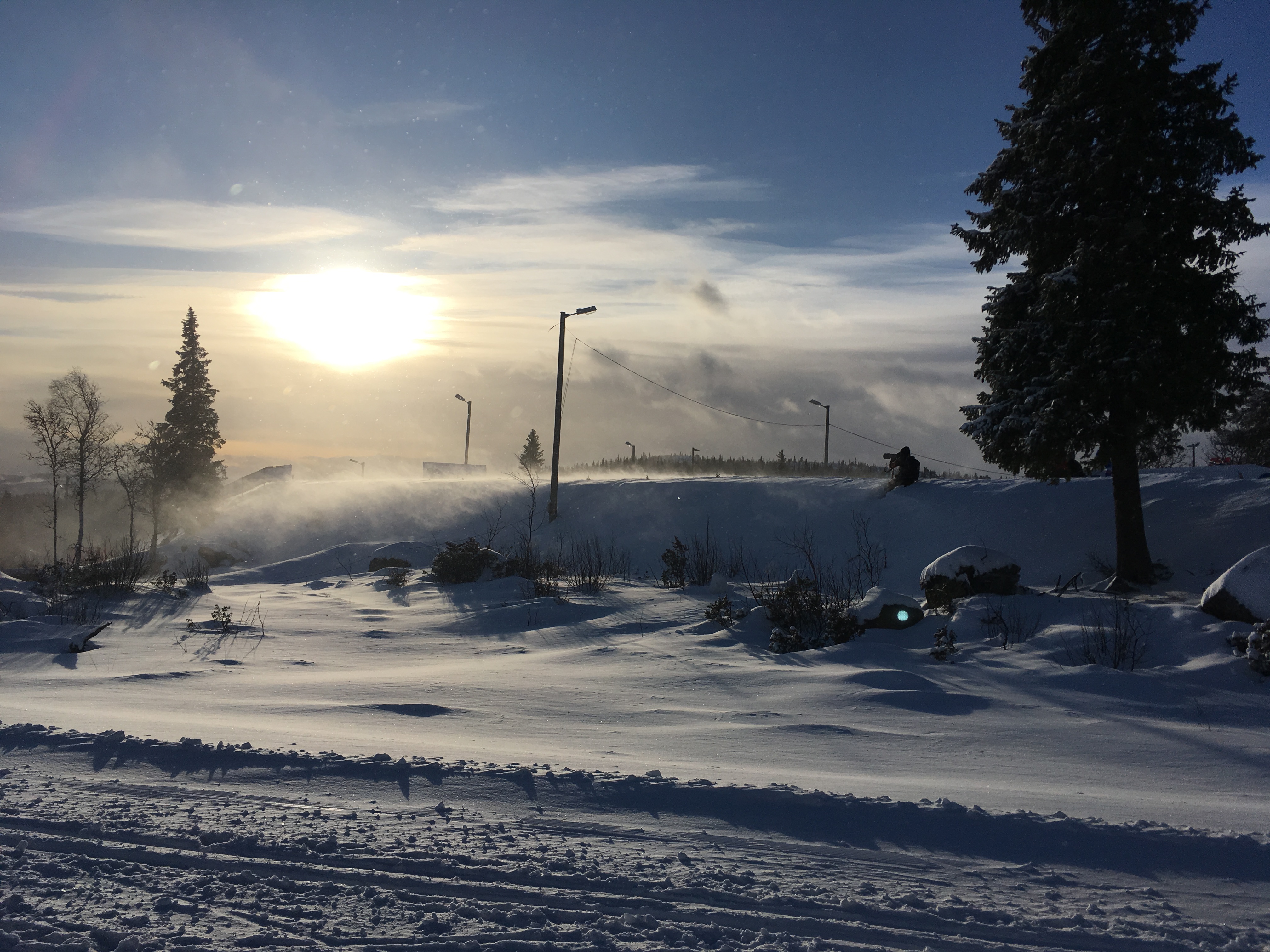
    Soft Scandinavian Cup track as seen last weekend at the Dec. 15-17 Scando Cup in Vuokatti, Finland, “the same conditions for Sundby all the way down to me,” author Maks Zechel writes.

    Editor’s Note: The following is part of a series proposed by Maks Zechel, a 20-year-old Canadian cross-country skier embarking on his first season training abroad. In August, he made the big move to Norway, where he’ll be training and racing with Team Asker for the entire winter. Through these updates, Maks hopes to share his personal “observations, stories and lessons learned” to help close the gap between North American and Scandinavian nordic skiing. Previous posts: #1, #2, #3#4#5#6, and #7.

    ***

    Part 1: Vuokatti

    It’s Thursday morning and I’m in the Oslo airport, waiting to catch a flight to my second Scandinavian Cup race weekend of the winter. I haven’t seen the sun yet and, from what I’ve heard, my destination of Vuokatti, Finland, doesn’t look much like a Caribbean postcard either.

    Two flights and an hour on a bus later, we arrive in Vuokatti. There is something about 3 p.m. total darkness that I suspect I will never grow accustomed to; it’s the impending sense of urgency that I need to go to bed soon. Or maybe that’s just coming from the fact that I still have to check into the hotel, ski the race loop, test skis, eat dinner, and then write my final exam for my online university course. By the time I start my exam, and reboot my laptop after it crashes, it’s 8 p.m. … classic.

    We wake up before the first race in the dark. The sun allegedly rises into the cloudy, snowy sky at 9:59 a.m. and sets at 2:07 p.m. Despite our noon start time, the trails remain cast in dusky shadows, and the entire race loop, and ski jumps overlooking the stadium, remain lit 24/7. For the record, I spent approximately 72 hours in Finland, and I can’t confirm that the sun actually touches that part of the world; for all I witnessed they might just brighten the streetlights every morning.

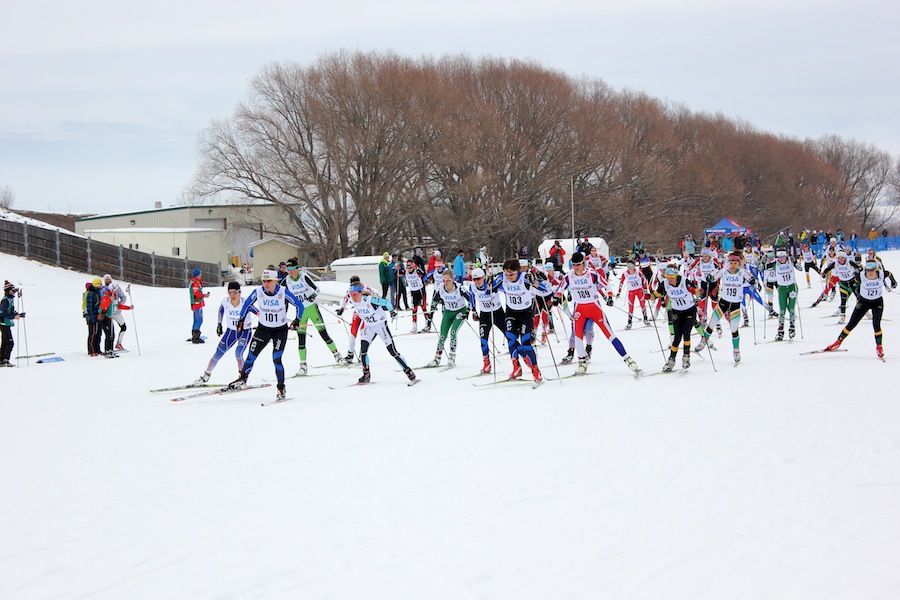
    We jog a few hundred meters from the hotel to the race site, located by the Vuokatti Olympic training center. All the racers are staying in two large hotels within walking distance of the race site, which creates an exciting “athlete village” atmosphere. Vuokatti is an epic training and racing location with 7.5 k+ of lit world class ski trails, early season snow making, a ski tunnel, and ski jumping and biathlon venues. Nordic countries don’t seem to like hosting races anywhere with a big chalet, or with any chalet at all, so we set up base in the snow. Luckily for us, the infamous Finnish cold weather decided to leave for the weekend. The stadium is tiny, hardly wide enough for a finishing straight, miniscule individual start corral, and a lap lane. It’s easy to feel lost amongst the tall, uniform pines of a snowy Finnish forest, but the Vuokatti course has something for everyone. Each day, 200-250 participants are on the senior men’s start line, with Norway, Sweden and Finland well represented; the top 100 doesn’t get more competitive than this anywhere in the world.

    As I’m warming up for my 15 k skate race, I have never recognized so many people that I’ve never seen before in real life: “Oh hey random Norwegian skier, congrats on beating your 3000-meter track PB this summer! By the way, say hi to your dog for me.” The potential for a seriously awkward conversation with one of my idols is too high, so I try my best to avoid in-awe-eye-contact…
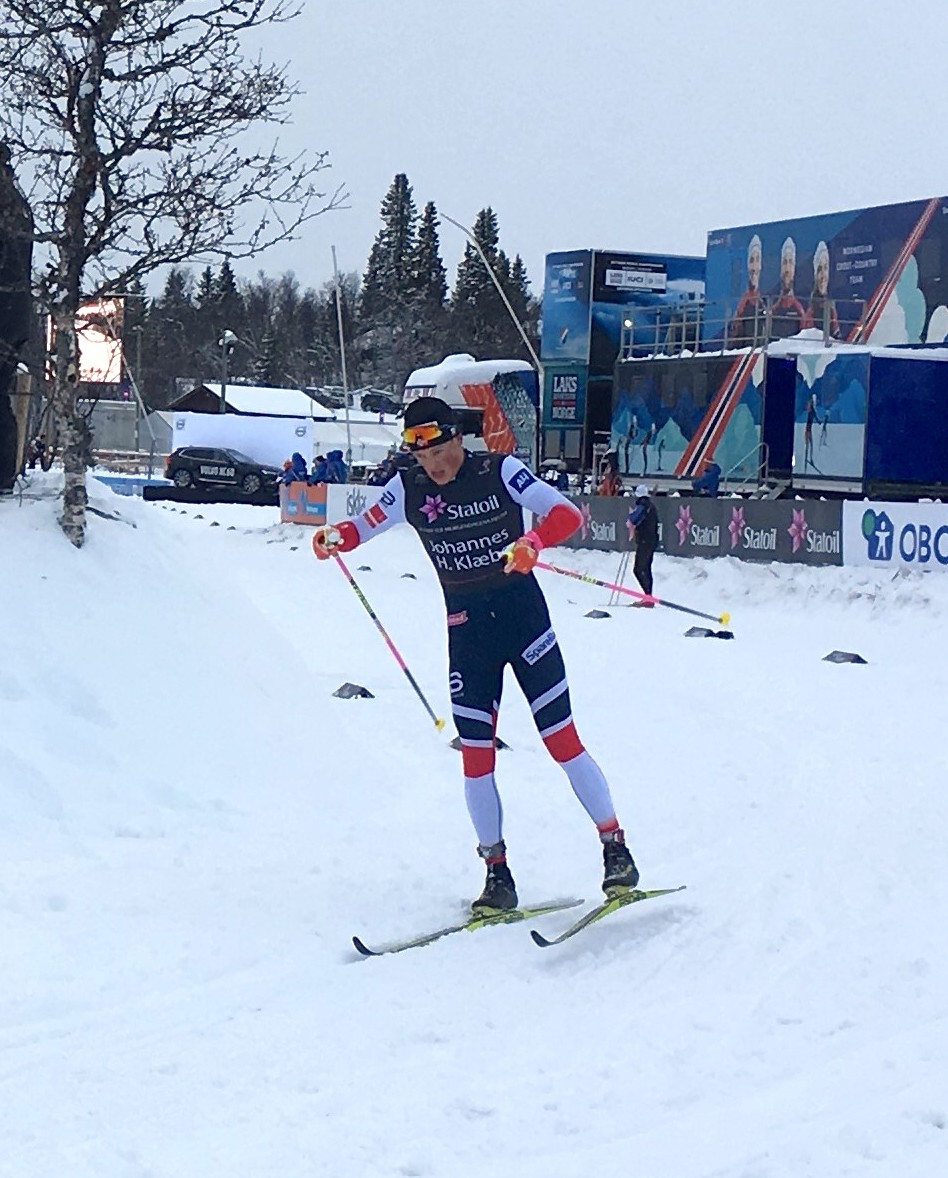
    Norway’s Johannes Høsflot Klæbo in his debut race of his record-setting 2017/2018 season. In eight World Cup starts so far, he’s won seven of them. Here he’s shown racing at Norway’s FIS season opener in Beitostølen last month. (Photo: Maks Zechel)

    At the end of the first day our teammate, Erland, placed 19th, with Ryan and I at 107th and 132nd. After racing in the Beitostølen Scandinavian Cup and Gålå Norwegian Cup race weekends in November, it remains hard to swallow our pride as we race better than we ever have, but still fall far short of our lofty goals.

    However, the lessons that we learn in every international race that we compete in are crucial to our development. During the 15 k classic race in Vuokatti, my teammate, Eirik, was caught by the eventual top-two skiers of the day, Ristomatti Hakola (Finland) and Martin Nyenget (Norway). Eirik is a strong double poler, so he was impressively able to stay with them until the set of steep hills in the last 2 k of the course, where they put around 50 seconds into Eirik per lap. What he was unable to match, was the insane power that Hakola and Nyenget were kicking their skis with, giving them big glides on even the steepest pitches where I had to run out of the tracks

    Racing with athletes who are able to ski at this level creates an unforgiving racing environment if you are unable to push yourself to new heights. After a poor race, the performance is reflected by a drop of dozens of spots down the results sheet. Scandinavians respect the high level of these races and they know that there are hundreds of skiers working just as hard as them, ready to take their place if they don’t race fast. Poor races by even the best cause them to disappear down the results (Petter Northug finished 17th in a Norwegian Cup race this winter). Although Erland is an incredible skier who is capable of top-20 Scandinavian Cup results, he had placings of 89th and 47th in Beitostølen. This is nothing to be ashamed of, but the results clearly represented that he was not in top form at the time. Good performances are rewarded in the opposite manner. That is the nature of these races, where 1 minute gained or lost can mean 30-50 spots. In the Vuokatti sprint, the top-30 men in qualifying were all within 5.87 seconds, with the top 58 within 10.55 seconds, and top 84 within 15.15 seconds. The reality is harsh, but it feels productive to know exactly where I stand against the best.

    World Cup racing is ridiculously hard, and that is a lesson that should be experienced as early as possible. When I was 132nd in the 15 k skate race in Vuokatti, a good race for me, it felt like a smaller reward than I was used to for my efforts. It’s easy to feel overwhelmed by the sheer number of competitors, but it helps to look at the time gap when looking for achievable next steps. In this race I was 4:38 minutes behind race winner, Daniel Stock (Norwegian skier with a World Cup podium from last year). It’s a lot over a 38-minute race, but if I can shave off 1 minute by the end of the season, then I’m in the top 100. Wherever I place, at the end of the day I know how far away I am from top World Cup contenders. Doing these races doesn’t make getting fast easier, but it does put into perspective exactly how much my efforts and improvements mean on an elite level.

    Every weekend these races feel a little more familiar, a bit more like home. The competition is intimidating, but every race still has the same enthusiastic community of athletes, volunteers, coaches, wax techs, friends, and families that we are used to in Canada. In Beitostølen, a stressed Ryan was enthusiastically interviewed four minutes before his race start and the NRK commentators talked about our goals in Norway and this FasterSkier blog for over a minute on national television. In Vuokatti, the race announcer introduced us as the two Canadians living in Asker, Norway, with their goal of becoming two of Canada’s best World Cup skiers. It’s flattering to be known like this, despite struggling to come even close to the top 100, and it makes us feel like we belong. Soon enough we will make sure we are known for more than just booking a couple of plane tickets to Norway.

    Part 2: Getting to the Top
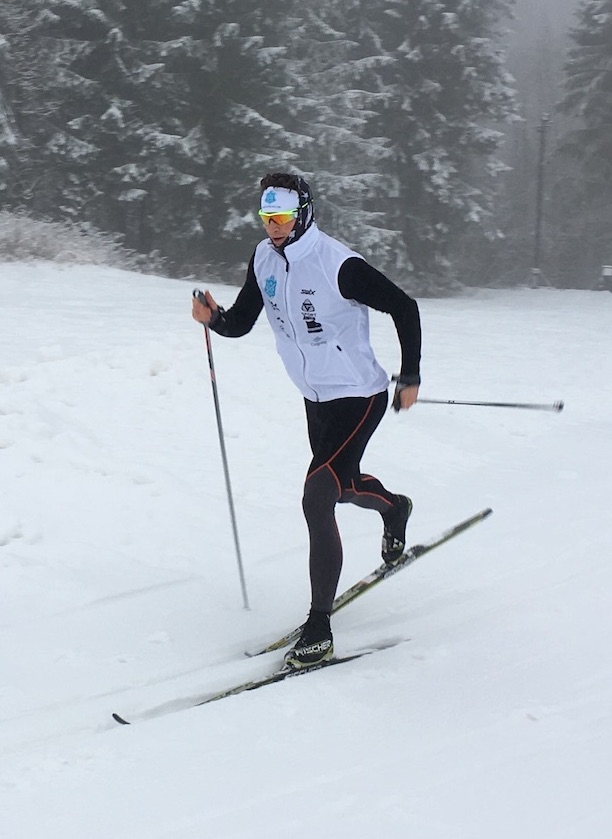
    Author Maks Zechel repping the Asker Skiklubb white and blue.

    Racing in Scandinavia is like getting on the freeway out of the city at 5 p.m. on the Friday of Thanksgiving weekend; everyone is heading in the same direction, and no matter who you are, you have to be patient and observant in order to seize the opportunities that will bring you to the front of the never-ending queue. In Canadian racing, we often lack this traffic, and this causes skiers to race at their own level, because there aren’t enough skiers of similar abilities to push each other to the top. I believe that it is still possible to become a great skier from racing in North America, but we have to be prepared to take even bigger risks than our Scandinavian counterparts, as we can be sure that they are encountering far more opportunities than us.

    From my experiences watching NorAm, SuperTour, Scandinavian Cup, and World Cup results, the best skier of the day will often win a three-lap 15 k with a certain order of lap times: the first lap is the fastest to take advantage of fresh legs, the second lap is the slowest, and the the third lap is the second fastest. These margins are small, but they indicate a skier who has skied a smart and controlled race, riding the edge of blowing up in order to expend energy perfectly and close fast where weaker skiers tire. This is how a winner skis a race. The skiers who don’t win the race ski differently because they are not at the same level. If they ski in the same controlled manner, they fall short of the win because they cannot maintain the same pace/execute the same pace changes. A dark horse who is trying to win, or merely trying to break through the ranks, gives everything in an effort to ski at a level that is higher than they can actually maintain. They may try to go out as hard as possible, risking blowing up early with the hope that they will be able to maintain a “suicide pace”. The skiers who don’t control the race usually ski with positive splits, becoming slower each lap on a good day, because if their splits are negative it means they will lose too much time at the start of the race.

    In North America, we get comfortable skiing like winners. The shock comes when we try to make the jump to World Cups, and we suddenly have to relearn how to ski like developing skiers, to ski like we are trying to break through to the top.

    Here’s a fact: nobody comes to World Cups from North America and starts winning right away. The jump is too big to make all at once. Scandinavians can sometimes go straight to the top, because they had to grow up skiing like losers, or at least skiing like winners who had to fight against 30 other winners every race. The issue is that North Americans begin to relearn the lessons of devastating time gaps at an important point in their careers, when ideally they would be fighting competitively for coveted World Cup top 30s. We’re not developing as much as we could at home, because we’re not desperately fighting just to come top 50 or top 100 as juniors and U23s. Not to say that you can’t develop hugely between the ages of 25 and 35 (many do), but we rarely see this happen in North America because the attrition rate of skiers in that age range is so high. Many skiers never see their full potential realized.

    In North America, we get comfortable skiing like winners. The shock comes when we try to make the jump to World Cups, and we suddenly have to relearn how to ski like developing skiers, to ski like we are trying to break through to the top.

    In Vuokatti, numerous small skiing nations were well represented, countries that we North Americans would see as “lesser” skiing nations, when in fact they’re doing things better than us. The Vuokatti Scandinavian Cup saw a large contingent of Chinese national-team skiers compete, and at Beitostølen, Japan was well represented. I even saw a couple of Mongolian skiers in Finland. These national-team skiers are consistently starting Scandinavian Cups in their pursuit of becoming competitive on the World Cup (zero Chinese skiers started the Toblach World Cup, while 10 Chinese men and women started in Vuokatti the same weekend). These small skiing nations recognize that they cannot develop all of their athletes through World Cup starts, so they send their remaining skiers to the next best thing. This mentality has led Japan to produce podium-capable World Cup skiers such as Masako Ishida and top 15 contenders such as Keishin Yoshida.

    We need to fill up our quota spots on the World Cup, but for the rest of us, Scandinavian Cups are an equally good opportunity to develop. A month of World Cup racing can cost a Canadian National Team member upwards of $5,000 Canadian dollars (not including flights). Last winter Team Hardwood Elite ran a one-month trip from Canada to Norway for $2,700 CAD (flights included) per athlete, where they raced nine Scandinavian- and Norwegian Cup-level races. We shouldn’t scoff at local-level Norwegian races either, which can be found all over the country every weekend of the winter. Sondre Turvoll Fossli, a World Cup medalist, won a local race, with a senior men’s field of 12, in Lier, the same weekend as Toblach and Vuokatti. At a local race in Konnerud the weekend before, I was bib number 1051 as the last starter of the day. Only 17 senior men raced, but the winner has placed top five in Norwegian Cups.

    Many North American skiers want to break through on the World Cup, but there are limited World Cup starts that offer a small and difficult opportunity for us to impress on a stage that we have never experienced before. The chances of breaking through this way have proven nearly impossible for numerous talented North Americans. For the countless incredible skiers who didn’t even receive those World Cup opportunities, the chance of World Cup success is a long-dissolved dream. This builds the impression that only a select few North American skiers can ever be great. This is untrue. The truth is that only a select few will ever break through when offered a handful of World Cup-level racing opportunities. The truth is also that us remaining North Americans have the ability to achieve that same level, but we must do so more patiently and down a less traditional path. If you truly want a chance at becoming competitive on the World Cup, you don’t have to fight for years to qualify for a World Cup development experience that most of us cannot afford. Instead you can race as many Scandinavian/Norwegian Cups as you like, every year, at a far cheaper cost, which will allow you to race against skiers who are already at the World Cup level that many of us dream to achieve. These skiers are no more talented than our skiers, they just have had the time and the countless opportunities to race at a level that most of us never have the chance to see.

    This leaves an important question: who is left to race in North America? It is hard to develop our best senior athletes to become World Cup podium contenders, it is harder still to do this in such a way that will allow all of our younger skiers to develop, too. My experience in Norway has been a positive one so far, and I will continue to promote what I am doing. But I should not have to come to Norway to develop. The simplest way for an individual to learn to race like the Scandinavians is to come to a country like Norway, but by individually developing overseas, we put a stop to the widespread development that we could be doing back home.

    Norwegians are successful at skiing because they love it; skiing is everywhere in Norway, and for that reason Norwegians never have to go far from home to ski fast. Top Norwegian skiers race in local races because they know that good racing is great development, no matter who you’re racing against. If we want races to be competitive, then it’s up to us to race fast.
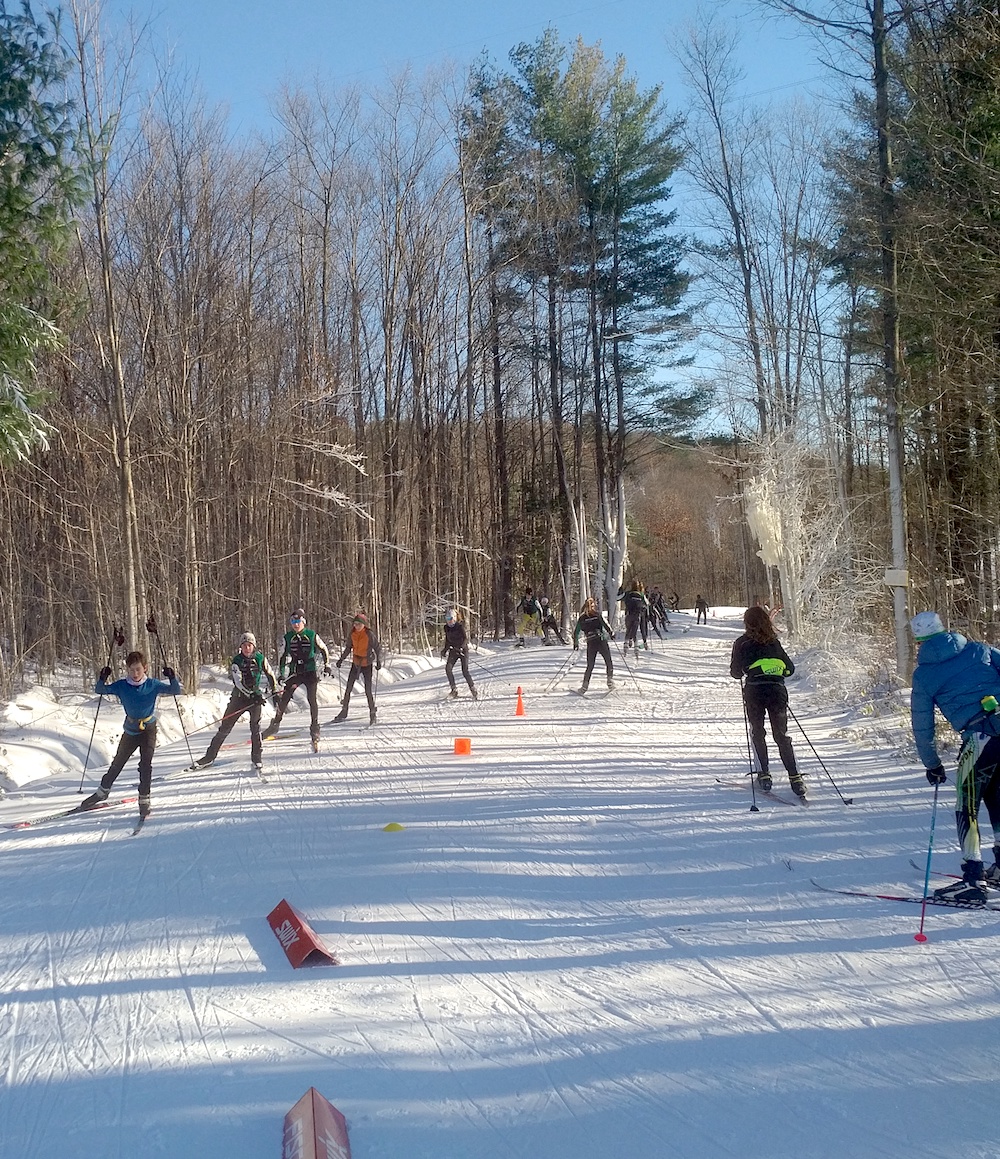
    Youth and masters alike getting some early season ‘ k’s in on Nakkertok Nordic’s “Nakkertrak” on opening day Nov. 11, 2017. (Photo: Nakkertok Ski Club)

    My home club, Nakkertok Nordic, was able to purchase snowmaking equipment last year. Due to the enthusiasm and incredible dedication of the parents and volunteers who are the backbone of Nakkertok, they were able to host two early season race weekends this year, just outside of Ottawa (a city of 900,000 people). Ottawa is in an excellent central location for Eastern Canadians and Americans. The same weekend as the Dec. 15-17  NorAm race weekend in Rossland, over 200 people raced the Candy Cane Cup on the “Nakkertrak” early season snow loop. In the future, I see this becoming a main event in an early season racing series, where athletes race in Craftsbury, Vermont, at their annual early season races, then drive the mere four hours to Ottawa for two back-to-back high level FIS races. Eastern Canada and the U.S.A. are full of the skiing culture that makes Norway so great, our issue is that we fail to coordinate to create the fantastic race opportunities that we could have. Many top Canadian skiers already travel to Craftsbury at the beginning of the winter to be in a race where Patrick Caldwell takes the win and the field is deep with professional, university, high-school, and part-time racers of all levels. There is a fear in Canada of burning young athletes out by letting them race up. I agree, we shouldn’t just allow our “prodigies” to race up; I think that everyone from age 16 and up should race together. Development as a skier is only loosely correlated to age, and I am grateful at every training session with Team Asker for the young junior skiers that kick my butt in workouts. Our egos have to be thrown aside, because the more we segregate our racing categories, the less we can help each other get faster in the way that the Norwegians do.

    The simplest way for an individual to learn to race like the Scandinavians is to come to a country like Norway, but by individually developing overseas, we put a stop to the widespread development that we could be doing back home.

    Many Norwegian skiers race almost every weekend, all winter long. We have to create these same local racing opportunities, and if we make them accessible, they will soon turn into world-class events. Nakkertok took a race, which has simply been a club time trial in past years, and turned it into a CPL (Canadian Points List) level race with a field of 68 open men and 45 open women in one year (that is a bigger field than the Rossland NorAm). The depth of such events, with their diverse assortment of competitors, creates an environment where both our top racers and our developing racers can grow. An athlete is much less likely to quit skiing if they are regularly racing in a field with dozens of skiers at their level and with similar ambitions of going to university or working full time, all while skiing as fast as they can. Because you know what, racing is really fun, but only if it is a commodity made accessible to every North American skier, not just our Olympic hopefuls.
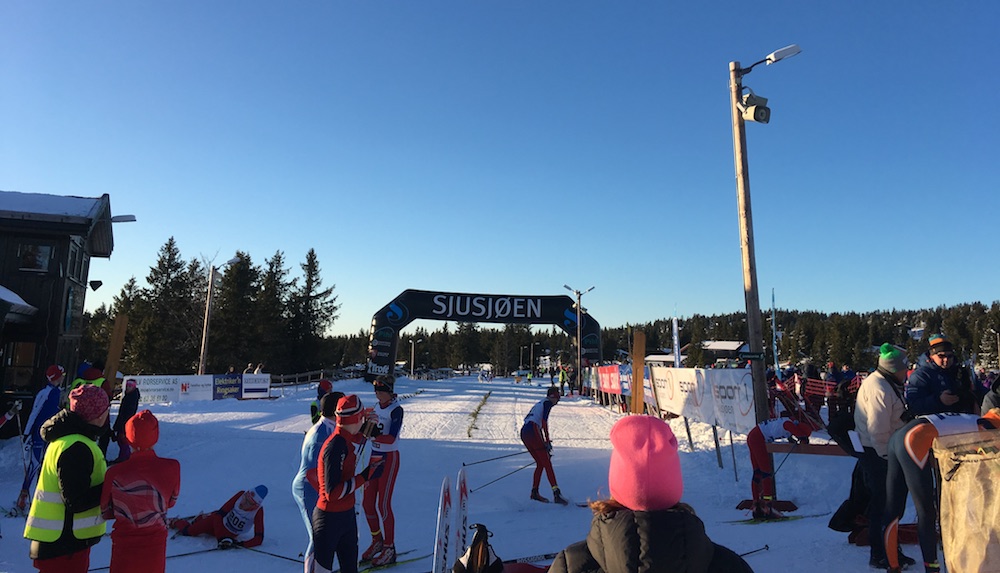
    A local race in Sjusjøen, Norway, with hundreds of racers of all ages. (Photo: Maks Zechel)

    About Maks: Maks Zechel is a competitive cross-country skier who secretly wants to become a professional mile runner. He loves hiking and going on canoe trips with his family, as well as peanut butter cups in ice cream. Johan Olsson is his favourite skier and he hopes to race the Cortina-Toblach stage of the Tour de Ski one day. He enjoys writing about his experiences. Follow him on Instagram @makszechel.


  • Closing the Gap: Brain Training

    Closing the Gap: Brain Training

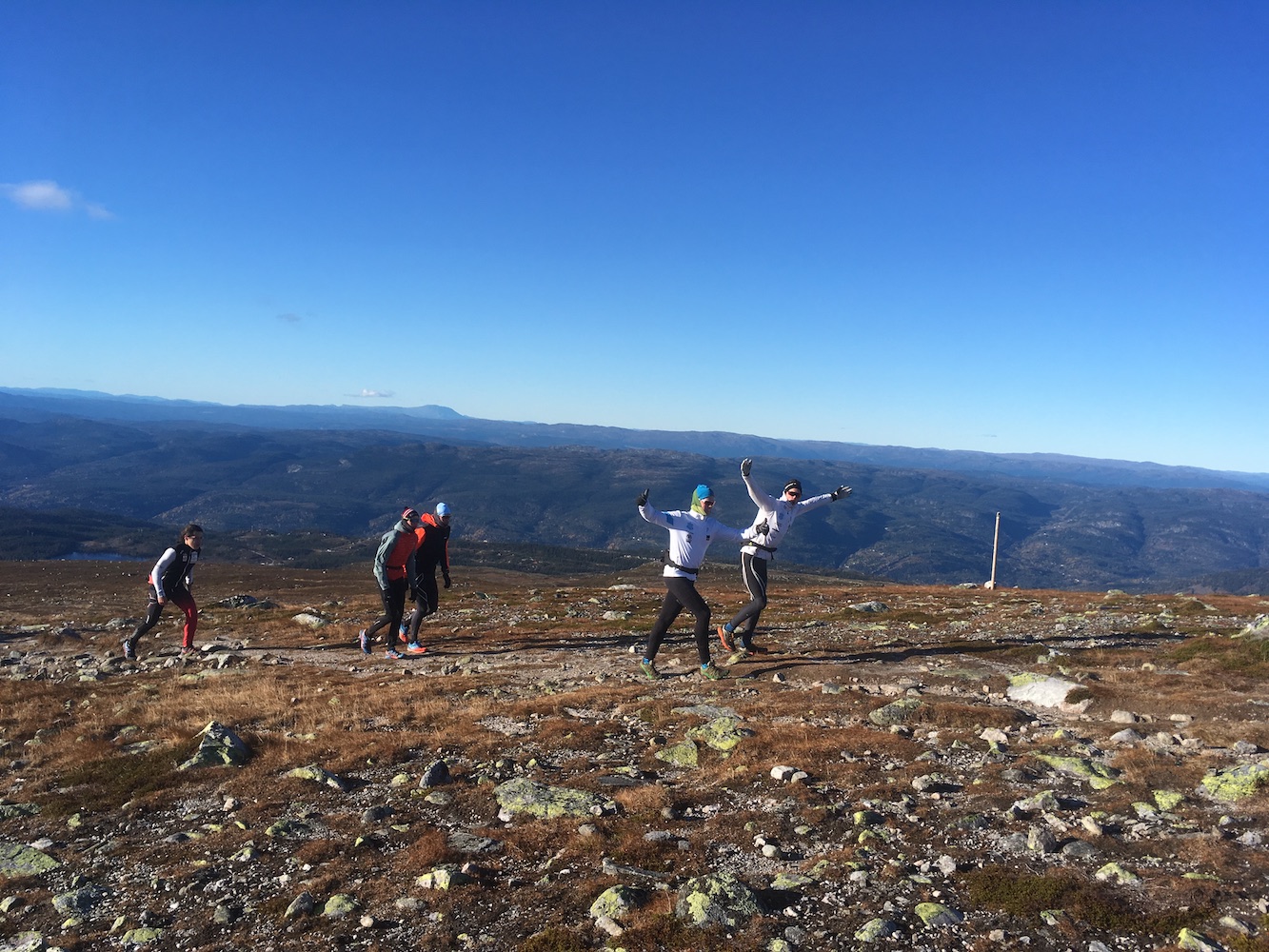
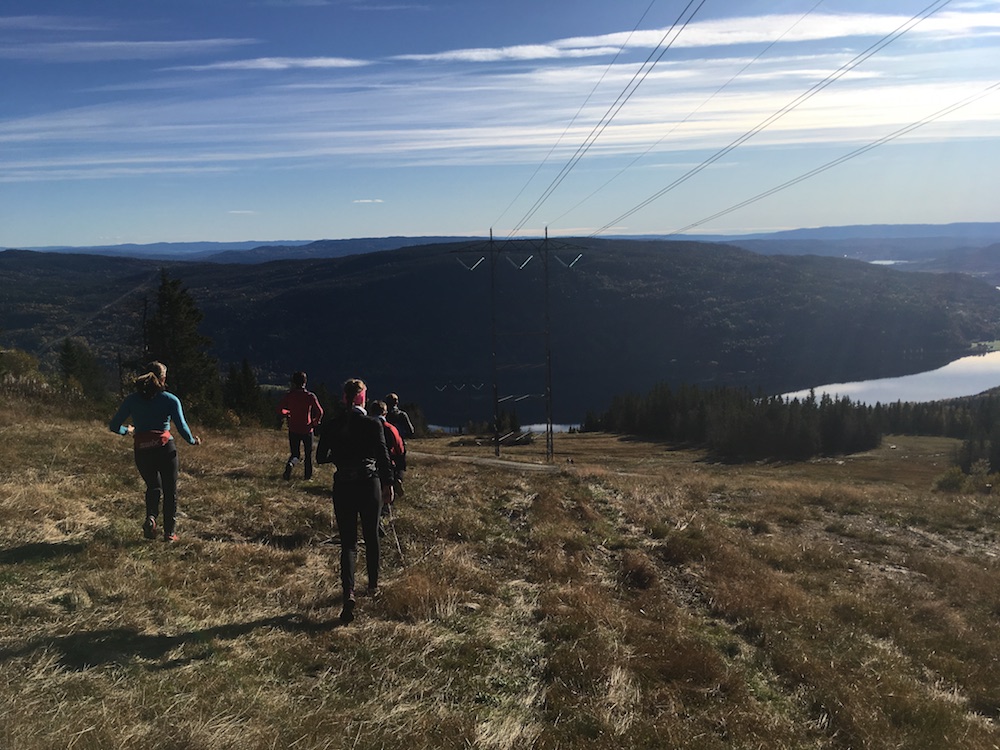
    “Norwegian fjell running.” Team Asker doing some dryland mountain training during a training camp in Norefjell, Norway. (All photos: Maks Zechel)

    Editor’s Note: The following is part of a series proposed by Maks Zechel, a 20-year-old Canadian cross-country skier embarking on his first season training abroad. In August, he recently made the big move to Norway, where he’ll be training and racing with Team Asker for the entire winter. Through these updates, Maks hopes to share his personal “observations, stories and lessons learned” to help close the gap between North American and Scandinavian nordic skiing. Previous posts: #1, #2, #3#4#5and #6.

    ***

    There is something about passion that drives people to push boundaries like nothing else. For many Canadians, this passion lies in hockey. If it’s January and you aren’t within walking distance of at least two outdoor hockey rinks, you probably don’t live in Canada.

    I’ve never been a huge hockey fan, but regardless I still went through a phase as a 9 year old when I practised my stick-handling skills religiously, making marks against the garage door or the basement wall. Black marks and dented aluminum are the proud checkmarks of passionate Canadian youth (and the source of endless frustration for Canadian parents). Canadian hockey drives youth and even adults to fervently practice a sport that only a small percentage will ever play professionally. Even on a weekday night in the middle of winter, if you bring a stick and skates to any Canadian outdoor rink, you will be allowed to join a game of shinny. No matter your gender or age, whether you claim to have been a AAA hockey legend or have never skated before, whether your family has lived in Canada for generations or if you are a newly landed immigrant, Canadians are brought together by something that transcends sport.

    National passion for a sport ensures that a large and diverse percentage of the population will actively pursue that activity in a multitude of ways. It encourages creativity and innovation. Similarly to hockey in Canada, albeit on a smaller scale, there are an astonishing number of Norwegian skiers who dedicate much of their time to just training and racing fast, even without sponsorships or national-team status.

    This creates a field of close to 500 open men at the Norwegian national championships. In the 10-kilometer skate race at last year’s national championships, the top-100 racers were separated by 1:47.6 minutes, the top 200 by 2:33.2 minutes, and the top 300 by 3:31.7 minutes (note that the conditions were fast that day). The medal winners, and many of the skiers far off the podium, were World Cup, World Championship and Olympic medalists (Anders Gløersen won, Martin Johnsrud Sundby was second, Emil Iversen was 11th, Sjur Røthe was 32nd (full race results here). The depth of field at Norwegian and Scandinavian Cups and national-championships races rivals that of World Cup races, with many believing it to be more difficult to crack the top 30 in the aforementioned three than it is at most World Cups.

    Team Asker skiers recover as they run down an alpine ski slope during 10- x 4-minute Zone 4 bounding intervals, with one minute rests in between, at a recent training camp in Norefjell, Norway.

    The success that we see in the Norwegian senior ranks begins with Norway’s junior skiers, and I am lucky enough to be training partners with some of these top-level athletes. One of Team Asker’s most successful junior skiers, Harald, has two medals from last year’s Junior World Championships. To put his level of skiing into a senior-racing perspective, he was 26th in the previously mentioned 10 k race at the Norwegian nationals — as an 18 year old.

    It can be deceptive to see skiers who still look quite young, but to know that they are already skiing fast enough to potentially crack the top 30 on a World Cup. I believe that much of this ability stems from the incredible amount of maturity in Norwegian junior racers, although not necessarily in the traditional sense. Not all of them are obsessive about the small things; I have seen top Norwegian skiers down two Cokes per day at training camps, eat Nutella for breakfast and stretch as little as possible. Their maturity becomes apparent in how they approach training and races, ready to learn to push their bodies in the best way that they can.

    With more skiers, you see more body types and different minds. My teammates have told me to expect many funny styles of double poling when I race Norwegian and Scandinavian Cups this winter. Already at the junior level, skiers spend hours working on their double-pole technique, not just doing exactly what their coaches told them to do, but practising different movements and seeing how it works for them. Double poling is a simple motion, in theory, but with different body types you can have countless different styles of double poling that all produce the maximum amount of power for those individual skiers.

    With Team Asker, we discuss technique with our coach and we do group-technique sessions, but then we are encouraged to try things out by ourselves and see how we can adapt those basics of power transfer to how our individual bodies work. The same goes with training plans. The spectrum of what type of training makes someone ski fast is all over the place, and that is something that many Norwegian skiers seem to accept. Some athletes on Team Asker disagree with certain things that our coach says, but they are not criticized for this and are supported in altering their training as they see fit, although they are encouraged to discuss why they are making these choices.

    In Canada, I have often heard repeated “golden rules” to technique and training, things that are accepted by most coaches across the country. In Norway, I learn a new philosophy every time I speak to a different coach or athlete. For some skiers, it is important for them to train long and slowly in Zone 1 so that they have the energy to focus on interval workouts. Other skiers do short Zone 1 workouts, but push the workouts so that they are in high Zone 1 or low Zone 2, skiing closer to competition speed. Many skiers do sprints with every workout, even long runs, while others add sections of Zone 3 pickups in the middle of their easy workouts. I have a teammate who builds up to a period in the training season where he is doing 30 short sprints per day. I know Norwegian 16 year olds who are training more than 1,000 hours per year, but there are also World Cup skiers who are barely training 600 hours.

    Team Asker finishing a combo rollerski/run workout at recent training camp in Norefjell, Norway.

    Some people think that too much base training (slow Zone 1) is a waste of time, so they do the bare minimum that is required to be able to absorb intensity training and the long race season. Johannes Klæbo’s big breakthrough in the past couple of years is said to have come from an emphasis on strength and sprint training, while Petter Northug has long sworn by doing intervals in “myra” (spongy and uneven bog/marsh), but for some people, those same things will make little difference to their speed on snow. Talent may have helped them in the beginning, but whether it was Klæbo or Northug, they didn’t reach the top level through talent alone, but by perfecting all the things that make them fast.

    There are skiers, some point to Therese Johaug, who many think could do almost any type of training, and they will be fast simply from general fitness, but for most people training is not so simple. Fortunately for us mortals there is no limit to what we can achieve, so long as we are willing to take chances and use our brains rather than just succumbing to that “training junkie gene” that so many skiers possess. Each one of us is so different, that it is not possible for us to do the same things and achieve the same results.

    Over and over I have heard coaches and athletes, who go to Scandinavia for a few weeks to learn the “secrets” of the best skiers in the world, come back and confidently tell us Canadians that “they do the same training as us” and therefore we can be just as fast as them. I agree that we can be just as fast, but from my first three months in Norway, I can tell you that we do not train anything like the Norwegians. We may do similar bounding, rollerskiing and running workouts, but training in Norway is taken to the highest level by the competitive dialogue that takes place among young skiers, old skiers, back of the pack skiers, and top skiers. From my perspective, training innovation and experimentation doesn’t happen in North America on the same small scale level as it does in Norway.

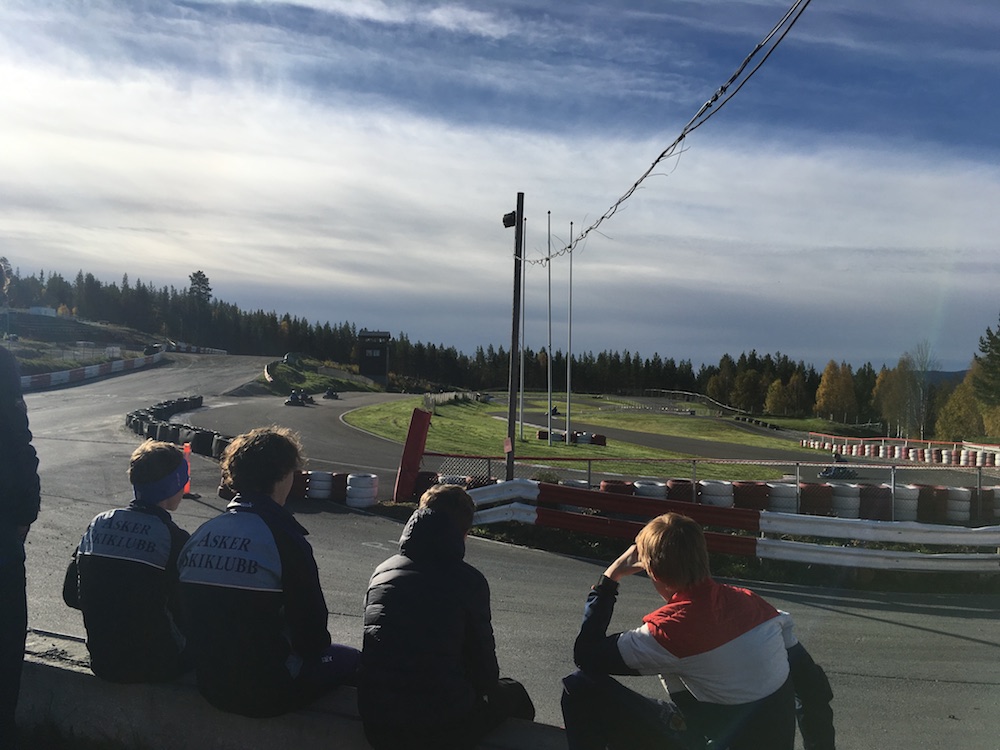
    The go-kart track where Team Asker held “King’s Court” style rollerski skate sprints (8 x approximately 1:30 minutes) during a recent training camp in Norefjell, Norway.

    In Canada we look to those that are better than us, whether they are national-team members or World Cup skiers, and try to copy them from afar. This puts us decades behind the competition. A lot of the technique innovations that we will see on the World Cup in the next two decades will have come from the Norwegian junior skiers of today, but by the time North American skiers take note of these changes, and adjust their training, the next generation of Norwegian juniors will already be working on the technique advances for the next decade.

    When I first came to Norway, the first thing I did was try to copy how the best skiers on the team double poled. I copied them for 12 weeks, but every time I looked at video footage of myself, I still looked completely different. It wasn’t until my coach explained a miniscule timing difference to me that I understood what the others were doing differently. With the switch flicked, my double poling has improved because of things that I could not figure out just by watching others ski. It is this type of interaction, between skiers and coaches of all levels, that causes breakthroughs in technique. Not all club-level coaches in Norway look to the Norwegian national team for advice on all aspects of skiing. Many coaches disagree with the common consensus on technique and training, and this opens up the discussion which is so important to moving forward.

    Most skiers love to talk about technique and the finer aspects of skiing, but when I was in Canada, I found these discussions usually revolved around what faster people were doing. In Norway I find myself having more discussions on what we individually think we should be doing, and even if someone is superior at a certain aspect of skiing, they are usually eager to try what someone else thinks might be better.

    As “Mad-Eye Moody” from J.K. Rowling’s Harry Potter series would say, “Constant vigilance!” and adjustment are required in all aspects of our training if we want to succeed. We have to seek variation in training, and learn together to discover the things that make us go fast as individuals, or else we suffer individually under the repetition of uniform training that cannot meet all of our needs.

    Norwegian Phrase of the Week:

    Norwegian: “Jeg er ut å mate.”

    Google Translate: “I’m out to feed.”

    True meaning: “I am training a lot.” (slang)

    Team Asker during a long run through the mountains at a recent training camp in Norefjell, Norway.

    ***

    About Maks: Maks Zechel is a competitive cross-country skier who secretly wants to become a professional mile runner. He loves hiking and going on canoe trips with his family, as well as peanut butter cups in ice cream. Johan Olsson is his favourite skier and he hopes to race the Cortina-Toblach stage of the Tour de Ski one day. He enjoys writing about his experiences. Follow him on Instagram @makszechel.
  • Closing the Gap: Meet Maks Zechel, A Canadian in Norway

    Closing the Gap: Meet Maks Zechel, A Canadian in Norway

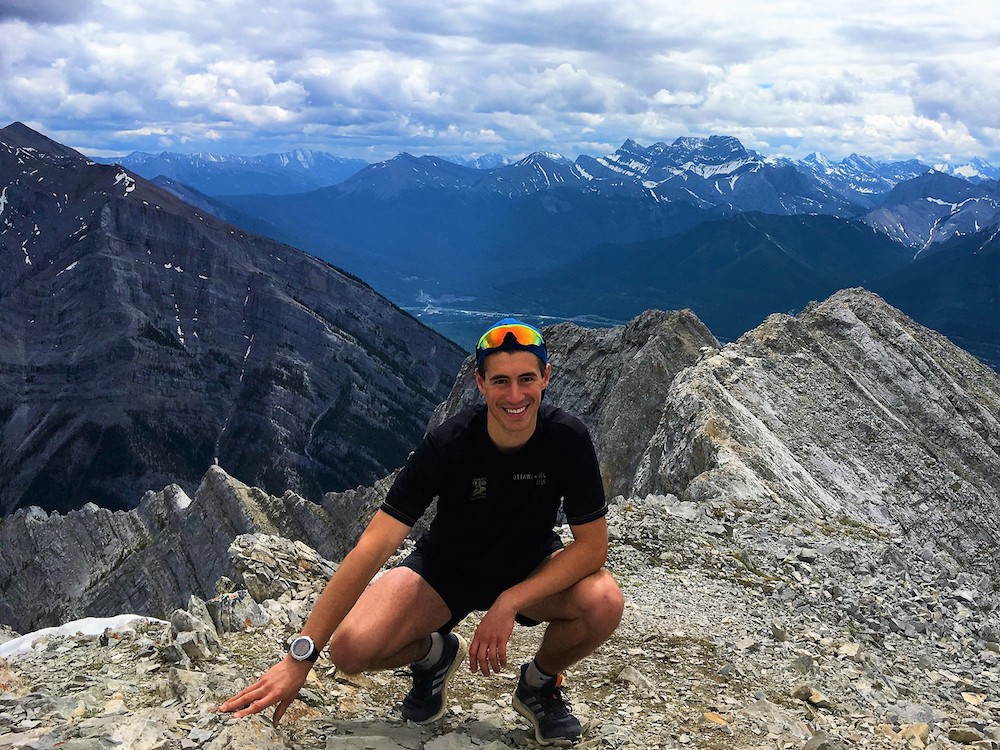
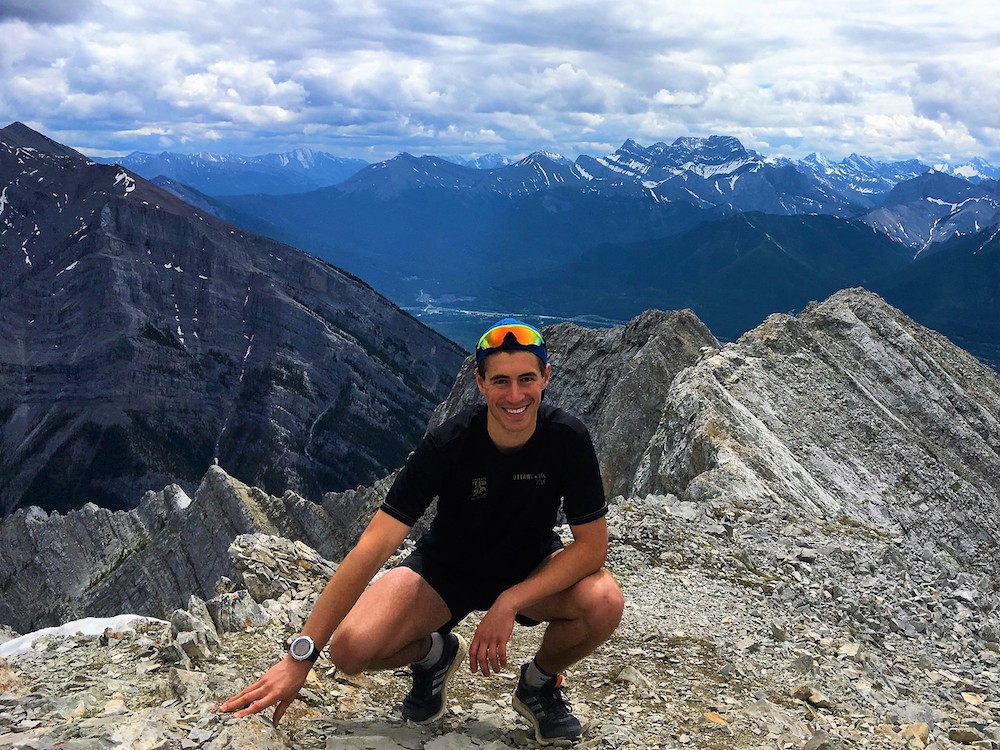
    Author Maks Zechel hiking in Canmore. The 19-year-old skier recently left Nakkertok Nordic in Ottawa to spend the next ninth months living and training in Norway. (Courtesy photo)

    Editor’s Note: The following is the first post of a series proposed by Maks Zechel, a 19-year-old Canadian cross-country skier embarking on his first season training abroad. He recently made the big move to Norway, where he’ll be training and racing with Team Asker for the next nine months. Through these updates, Maks hopes to share his personal “observations, stories, and lessons learned” to help close the gap between North American and Scandinavian nordic skiing.

    ***

    Intro

    I am a 19-year-old Canadian cross-country skier who moved to Asker, Norway on Aug. 1, 2017, to pursue my goal of qualifying for, and being competitive on, the World Cup circuit in the coming years. The World Cup is a big stage, one that I am not even close to being ready for. Many North Americans, if given the chance, race World Cups because it is a wonderful opportunity that is almost impossible to turn down. But for many skiers, these chances do not lead to further success because they are not prepared for the intense level of competition that is World Cup ski racing. One of the issues is that North American skiers do not develop in close proximity to the world’s best skiers. We don’t know how fast a top World Cup skier races because we are never in the same races. Norwegian skiers are exposed to this level of skiing, even just through observance, during their entire ski careers.

    This is the introduction to my series of observations, stories, and lessons learned as I live in Norway and train with Team Asker for the next nine months. I want to make it easier for other Canadians and Americans to come to Norway by making as many connections as I can and I hope to make them feel a little bit closer to the environment that the world’s best skiers grow up in. I am here to be in races that have a depth going all the way from your average junior skier to last weekend’s World Cup medalists so that I can attempt to pick away at the visible steps that lead to World Cup success. If we can be a bigger part of the Norwegian ski scene and see the environment that produces skiers like Martin Sundby and Heidi Weng, maybe that will erase some of the barriers that we see when trying to chase down seemingly “otherworldly” athletes.

    Post 1: Why Norway?

    Maks Zechel finding his name all over Norway. (Courtesy photo)

    I just moved to Kenya to pursue my dream of running a sub-two hour marath– I just moved to Norway to pursue my passion for competitive cross-country skiing. Just two days have gone by since I arrived, and I already love it here.

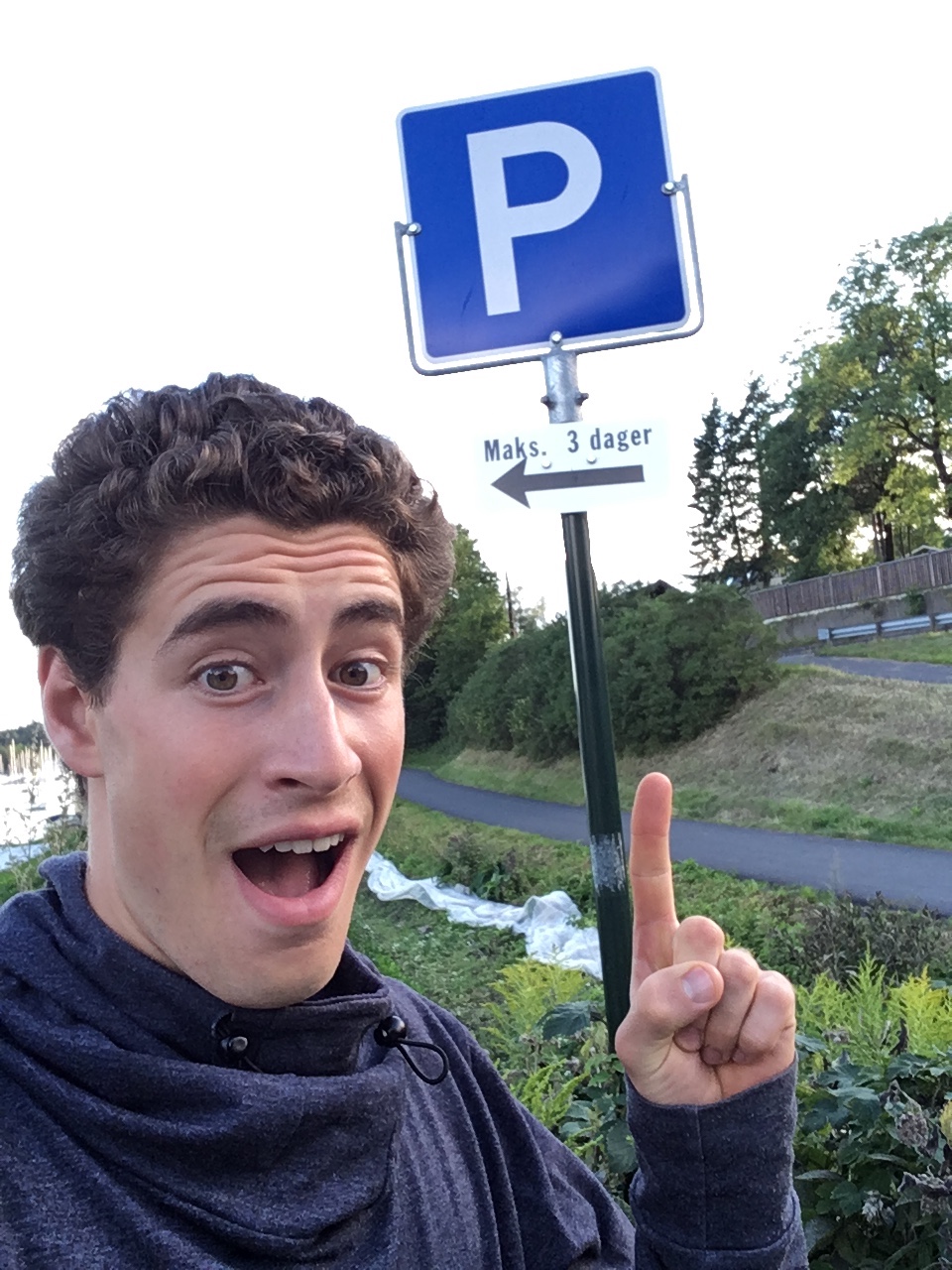
    In Asker, Norway, my name is written in greeting on signs all over town! Well, maybe they are not greeting me. It is actually one sign by the beach saying that you can only park there for a “Maks.” of three days (maximum=maksimum in Norwegian), but hey, it is a step up from people thinking my name is a typo.

    My name is Maks Zechel, and I am a Canadian skier who is made unusually happy by Norwegian signs. I learned how to ski at Cypress, just outside of Vancouver, at around the same time that I started walking. Since then I have lived in York, England; Zurich, Switzerland; Kingston, Canada; Freiburg im Breisgau, Germany; and most recently, Ottawa.

    I started racing with Nakkertok Nordic, based just outside of Ottawa, when I was 11 years old. Once per week, my parents (both avid skiers) younger sister, and I would drive two and a half hours to Ottawa from Kingston so that we could all go skiing and I could train with Nakkertok. Being the biggest club in Canada, Nakkertok made me fall in love with skiing, as I always had one or two dozen skiers my age to train with. There is not much skiing in Kingston, so once I graduated from high school I moved in with some friends in Ottawa and took advantage of training with teammates and getting on snow more than once per week.

    Over the past two years, I have studied part-time at the University of Ottawa, raced in Switzerland and Austria, skied on the Dachstein glacier in August, skied at Sunshine (near Canmore) in May, raced in Park City, trained and raced in Silver Star, and had various other amazing opportunities all over Canada and the U.S. All of this thanks to my incredibly supportive parents, who somehow rarely get frustrated by how excited I get over World Cup predictions based off of Lysebotn Opp results, or how this insignificant change in my double poling is going to make me race like Alex Harvey. As you can see, I like skiing…

    Maks Zechel and friends skiing in Campra, Switzerland, this past February. (Courtesy photo)

    Coming to Norway is something I have thought about for the past two years. I have come here with the goal of learning as much as I can from training and racing with the Norwegians. This season I will be racing at the Scandinavian/Norwegian Cup level and focusing on my personal development.

    As many Canadians can attest to, it is hard to go from racing solely in North America to racing on the World Cup. European ski racing is unrivaled by anything we see in North America and — because of the distance separating us — we are not often exposed to that level of competition. By familiarizing myself with the European competition atmosphere, I hope to set myself up for success and show others back home what I have learned. As a first-year senior, I still have far to go, but I am here to learn and hopefully improve. Getting a start on a World Cup is not an opportunity that many Canadians receive; if I ever get such a chance, I want it to feel like a step, not a near impossible jump, up from my regular races.

    Another reason that I have moved to Norway is, strangely enough, to reduce my skiing costs. In Canada it costs a ridiculous amount every year to fly to early season skiing opportunities, to train with other fast skiers at camps, and to attend as many high level races as possible. Despite all of these flights, I have still found it difficult (even as a junior) to fill my race calendar with enough opportunities to race at a high level. In Canada, the entire season is mostly centered on our World Junior/U23 qualification races that happen in January. Before that, we have two NorAm race weekends that happen in December. Everyone gets fired up for these fun and exceptionally well-organized races. However, once January is over and you have not qualified for anything yet, there are few races with deep fields left until Nationals at the end of March. Some opportunities exist, like SuperTours and Carnival races in the U.S., but they are infrequent, far away, or they overlap with Canadian races.

    In Norway, once you have bought your plane ticket, there are regular high-level races, within driving distance, from mid-November until mid-April. The fields are deep, with most of the Norwegian World Cup team racing the Beitostølen Scandinavian Cup in November, and you are paying for a weekend trip within driving distance instead of flying away for ten days in Park City. Food in Norway has so far been reasonable; some things are more expensive and you should not expect to be buying “Costco-style”, but you can eat well without breaking the bank. Rent is expensive in some parts of the country, but through connections and a bit of luck you can make things work. I was particularly lucky and am paying $634 Canadian dollars (about $501 U.S.) per month for an adequate basement apartment.

    Planning my trip to Norway was filled with days of excitement, but also with days of doubt that things would ever work out. From the start I knew that I was going to see this through to the end, so with a lot of willpower, and even more help from others, I am now finally in Norway. In my next post I will share my first impressions of Norway and explain how I was able to make it to Norway and join Team Asker, my new ski team!

    Norwegian Phrase of the Week: “Hilse på!”

    = What you say to a dog if you want to shake its paw. Literally: “Greet”

    (Lesson brought to you by Kira, the dog who lives upstairs).

    ***

    About Maks: Maks Zechel is a competitive cross-country skier who secretly wants to become a professional mile runner. He loves hiking and going on canoe trips with his family, as well as peanut butter cups in ice cream. Johan Olsson is his favourite skier and he hopes to race the Cortina-Toblach stage of the Tour de Ski one day. He enjoys writing about his experiences. Follow him on Instagram @makszechel.
  • U.S. Nationals Open This Weekend at SoHo; World Champs Starts on the Line

    U.S. Nationals Open This Weekend at SoHo; World Champs Starts on the Line

    The last time U.S. Nationals were held at SoHo: Start of the women's 20 k freestyle mass start at 2014 U.S. Cross Country Championships at Soldier Hollow in Midway, Utah. Caitlin Gregg went on to win going away.
    The last time U.S. nationals were held at SoHo: Start of the women’s 20 k freestyle mass start at 2014 U.S. Cross Country Championships at Soldier Hollow in Midway, Utah.

    The domestic trials for the FIS Nordic World Ski Championships team begin at Soldier Hollow on Saturday morning. Not officially, but in practice that’s pretty much the case. That’s one implication of the numbers and points system used to help determine who competes for the U.S. at next month’s races in Lahti, Finland. Here, FasterSkier previews the races and considers the subtle math behind U.S. championship-team selection.

    The races

    The women race a 10-kilometer freestyle individual start at 10 a.m. local time on Saturday, followed by the men in a 15 k freestyle at noon. Sunday brings a full classic sprint (men’s qualifying starting at 10 a.m., women’s qualifying at 11 a.m., and sprint heats starting at 12:30 p.m.). Then Tuesday, Jan. 10, brings classic mass starts, 20 k for women and 30 k for men, starting at 10 a.m.

    A qualification-only, freestyle-sprint type event rounds out the week on Thursday, Jan. 12. (Why no heats? Because of overall demands on local volunteers and an elementary school housed at the venue. The national championship skate sprint will be held at U.S. SuperTour Finals, a.k.a. Spring Series, in March in Fairbanks, Alaska.)

    Social media shows several inches of fresh snow currently on top of a manmade base at Soldier Hollow in Midway, Utah.

    FasterSkier will be on site throughout the week, providing live updates and reports on the races. 

    What’s at stake

    Bragging rights, for one. All racers like to win, and the week’s first three events are all national championships. Also money: $1,200, $600, and $300 for podium spots in each of the distance races and sprint. It’s no Qaniq Challenge money, but it’s no small sum, either.

    Paddy Caldwell (Dartmouth/SMS/USST) racing to 21st in the men's 15 k freestyle at U23 World Championships in Rasnov, Romania. (Photo: Logan Hanneman)
    Paddy Caldwell (Dartmouth/SMS/USST) racing to 21st in the men’s 15 k freestyle at 2016 U23 World Championships in Rasnov, Romania. (Photo: Logan Hanneman)

    But beyond who takes home the medals and the money this week, the races are also important for determining who gets to compete in higher-level races later this season. Skiers under 18 are competing for spots on the Scandinavian Cup Team. Skiers slightly older are competing for spots on the U.S. team for U23/Junior World Championships, which will also be held at Soldier Hollow Jan. 30-Feb. 5. And at the highest level, there are spots up for grabs on the World Championships team for Lahti next month. Probably.

    As FasterSkier previously explained, the U.S. Ski and Snowboard Association (USSA) looks first to athletes’ performance on the World Cup in light of objective standards, and then potentially applies discretionary picks. After objective and discretionary selection, then “any remaining positions” for the Lahti team “may be filled by considering the athlete ranking highest on the 2017 Championship Selection List.” (As FasterSkier previously parsed, technically speaking the document says that remaining positions may be filled rather than will or shall be filled, meaning that USSA would not be strictly required to name a leading domestic skier to the team if it did not want to.)

    Filling out the team: Objective and discretionary selections

    So who’s already in from the U.S. Ski Team (USST)? One woman for sure, five more women basically guaranteed, one man basically guaranteed, then one woman and two men on the bubble.

    On the women’s side, Jessie Diggins has automatically qualified for Lahti twice over with her fifth- and sixth-place sprint finishes in Davos and Val Müstair.

    Behind her, five more skiers were well within the top 50 in either the sprint or distance World Cup standings following Wednesday’s pursuit race in Oberstdorf: Sophie Caldwell (12th in sprint standings), Sadie Bjornsen (15th in distance standings and 16th in sprint), Ida Sargent (33rd in sprint), Kikkan Randall (32nd in distance and 38th in sprint), and Liz Stephen (42nd in distance).

    Jessie Diggins celebrates finishing fifth in the Davos skate sprint. (Photo: Salomon/NordicFocus)
    Jessie Diggins celebrates finishing fifth in the Davos skate sprint. (Photo: Salomon/NordicFocus)

    (In the most strictly technical sense, everyone after Diggins cannot officially qualify this way until they are in the top 50 in those discipline standings that are released on Jan. 16. But – barring some extremely statistically improbable races by all eight women immediately below Stephen in the distance rankings – they should all qualify then with ease.)

    Rosie Brennan was 56th in the distance standings Wednesday, five points – one solid race – away from the top 50. She got that race in Toblach on Friday, moving up to 47th in the distance standings after finishing 23rd in the 5 k skate.

    For the men, Simi Hamilton is currently 41st in the sprint standings, and should be well within the top 50 on Jan. 16.

    As of Wednesday, Erik Bjornsen ranked 53rd for distance, four points out of 50th, and 55th for sprinting. Noah Hoffman was 67th in the distance standings. Hoffman moved up to 60th following his 25th-place finish in the 10 k skate in Toblach on Friday. 

    USST Women’s Coach Matt Whitcomb told FasterSkier in July that athletes who were on the bubble for World Championships selection “going into the Tour de Ski” would “need to make a pretty important decision. And that is whether or not to go back to U.S. championships and qualify domestically, or to take a chance and go with what they know and qualify in the Tour de Ski, and the sprint weekend after the Tour de Ski in Toblach.” Whitcomb added, “And so there are a great number of options both domestically and internationally on the World Cup, that I think we feel is as fair as can be.”

    But in practice, all USST athletes discussed above have remained in Europe rather than race at U.S. nationals. Diggins, both Bjornsens, Stephen, Caldwell, Randall, Hamilton, and Hoffman raced at least the first two stages of the Tour de Ski. Sargent and Andy Newell, joined by Hamilton and Caldwell, will compete in OPA Cup races in Planica, Slovenia, this weekend, USST Head Coach Chris Grover told FasterSkier by email last week.

    APU skier Scott Patterson made roughly the inverse decision in deciding to start the 2016/2017 season in this country (he had hoped for World Cup starts as last year’s SuperTour distance leader, but was not offered them for the first period of racing). Describing conversations between himself, Grover, and APU Coach Erik Flora, Patterson wrote to FasterSkier in November, “One of the most important points brought up was regarding qualification for world championships in Lahti. The selection criteria favors domestic racing for men due to the difficult objective criteria and weaker World Cup performances relative to the women. In accordance with the criteria I will be looking for some extremely strong early season results so that I can hopefully head to Europe in January and not return until after World Cup finals.”

    Regardless of who qualifies off the World Cup via objective standards, USSA may then make discretionary selections. FasterSkier previously surveyed the guidelines for the exercise of this discretion.

    Briefly put, USSA has almost unlimited discretion under the listed criteria. And if those criteria give USSA insufficient discretion, a catch-all provision lets USSA make discretionary selections for nearly any other reason if it feels like the objective criteria won’t work: “Other unanticipated failure of objective criteria to select an athlete likely to achieve competition results consistent with USSA program goals for World Championships.”

    Filling out the team: SuperTour leaders and bonuses for nationals podiums

    After objective and discretionary selections, that leaves this country’s top domestic racers skiing against each other for (probably) one remaining spot per gender.

    Before the season began, FasterSkier wrote in a preview article that “American cross-country skiing does not have a trials system.” Kris Freeman (Team Freebird), a man who has been selected to 12 U.S. Olympic or World Championship teams (up to 15 if you include World Juniors teams) since 1998, politely begged to differ, writing in a comment to the FasterSkier Facebook site after the article was posted (see final two sentences in particular):

    Kris Freeman comment on FasterSkier Facebook page, Sept. 4, 2016. (photo: screenshot)
    Kris Freeman comment on FasterSkier Facebook page, Sept. 4, 2016. (photo: screenshot)

    Both FasterSkier and Freeman are technically correct. Given the numbers involved, Freeman is probably more correct. That is, there is no official trials system, but U.S. Nationals this year is getting pretty close to one.

    The World Championships Selection List is based on an athlete’s best two finishes in a single discipline, distance or sprint (qualification round only), across the 2016/2017 SuperTour to date, including the four races at U.S. Nationals. But first through third at the December SuperTour races were worth 30, 25, and 21 points, respectively. Because of the additional Nationals-only bonus points that will be awarded this week, first through third in the next four races count for 45, 35, and 26 points, respectively. Best two races, from the entire season to date, wins.

    So Freeman is correct that the “normal” SuperTour events were, if not meaningless, maybe less meaningful in light of the potentially dispositive points available for nationals podium finishes. (There are of course other advantages to being the season-long SuperTour leader, and the December races still count toward that.)

    In practice, two firsts at nationals would be unsurpassable by any combination of other races. Same for a first and second at nationals. Indeed, two seconds at nationals is a better result than two firsts in December. Two thirds at nationals beats two seconds from last month. The bonus points for nationals podiums are certainly significant digits.

    Matt Gelso (SVSEF) racing to his second-straight victory at the West Yellowstone SuperTour on Sunday in the men’s 15 k classic.
    Matt Gelso (SVSEF) racing to his second-straight victory at the West Yellowstone SuperTour in the men’s 15 k classic in December 2016.

    Matt Gelso (Sun Valley Ski Education Gold Team) and Liz Guiney (Craftsbury Green Racing Project) come into nationals as the SuperTour leaders to date, Gelso by a profound margin. Although both have World Cup start rights in Europe later this month by virtue of that status, both athletes will compete in at least the first three races in Soldier Hollow, Gelso and Guiney told FasterSkier earlier this week.

    The current SuperTour discipline leaders are Gelso for men’s distance, with 55 points, and Ben Saxton (SMST2) for men’s sprint, with 50 points. Jennie Bender (Bridger Ski Foundation) leads the women’s sprint standings with 55 points, while Katharine Ogden (Stratton Mountain School/USST D-Team) has 50 points to lead the women’s distance standings. These are not unimpressive point totals, which may become relevant if no single athlete puts together two podiums at nationals.

    The first race at Soldier Hollow begins at 10 a.m. Saturday morning. The U.S. team for Lahti is tentatively scheduled to be announced on Jan. 23.

  • Minor Leagues

    OPA Cup races (also known as Alpen Cup) and Scandinavian Cup races have acquired an informal reputation as a sort of “minor league” racing circuit, relative to the World Cup.  One question this leads me to ask is exactly how much movement is there between these two circuits?

    To answer this question I took data from skiers who had started in at least one World Cup and at least one OPA or Scandinavian Cup race since the 2004-2005 season.  This yielded 543 men and 352 women.  This is a rather wide net, since I’m including skiers who may have done one WC race in 2005 and then only OPA Cups, or vice versa.

    Here is a graph that shows the number of starts of each type for men and women:

    Each dot represents a different skier.  The number of starts is the total (distance and sprint) over 6 seasons (04-05 to 09-10) and the points have been plotted with some alpha blending since many are directly on top of each other.  Darker areas correspond to more points being plotted.

    As you can see, the overwhelming majority of skiers who have done both types of races have done fewer than 15 of each type.  Much of that racing is spread over 6 seasons.  The skiers who’ve done a ton of WC’s tend not to have done many OPA or Scandinavian Cups, which isn’t terribly surprising.

    As we move away from each axis, we get the skiers who’ve come the closest to splitting their time between these two racing circuits.  As you can see, they exist, but not in huge numbers.  Most of the OPA Cup skiers are probably getting their WC starts as part of Nation’s Group starts, rather than being rotated back and forth within or between seasons.

    Related posts:

    1. <OPA Cup vs Scandinavian Cup: Quality
    2. <Predicting FIS Points For World Cup Races
    3. <Predicting World Cup FIS Points (con’t)


  • Nishikawa Breaks Away to Finish Fifth in Scando Cup 30 k

    Nishikawa Breaks Away to Finish Fifth in Scando Cup 30 k

    Graham Nishikawa of the Alberta World Cup Academy races to the fastest time in the 15 k freestyle pursuit at the NorAm Western Canadian Championships in Canmore, Alberta, on Jan. 22. Photo courtesy of Angus Cockney.

    There’s something to be said about consistency. Canadians Graham Nishikawa and Michael Somppi might say it’s a little annoying.

    With repeat results, the two can’t be too upset with their performances in recent Alpen and Scandinavian Cup races. Both Senior Development Team skiers, Nishikawa and Somppi finished the same as they did in their previous races.

    At the Alpen Cup in Switzerland on Sunday, Nishikawa of the Alberta World Cup Academy was fifth in the 15 k freestyle pursuit. Somppi (National Development Centre-Thunder Bay) skipped the race because of illness, but finished 20th in the preceding Alpen Cup classic sprint.

    On Thursday, Nishikawa was fifth again in the 30 k freestyle mass start at the Scandinavian Cup in Madona, Latvia. Somppi was 20th for the second straight day after Wednesday’s freestyle sprints.

    “Well, another 20th place for me today. It seems to be my number,” Somppi wrote in an email after Thursday’s race. “I felt good on my skis today and am happy with the result. … I gave my best effort today and that’s all I can ask of myself.”

    Somppi noted he avoided several crashes and broken poles throughout the 30 k race by skiing relaxed and aware in a pack of more than 50 skiers. Before the race, he talked to Canadian Paralympian and Foothills skier Brian McKeever, who advised him “to chill out and not waste energy doing little bursts for position,” Somppi wrote.

    The course itself required a hefty amount of energy with 198-meters (650 feet) of climbing per 5 k lap.

    “Doing that 6 times really burned everyone’s legs,” Somppi wrote, commending Nishikawa for his fifth-place finish with an aggressive group of leaders.

    Somppi finished 2:26.67 behind Sweden’s Fredrik Karlsson, who won in 1:15.33.05.

    Nishikawa wrote in an email that the pace out of the mass start was actually pretty slow. That changed about 15 k later.

    “I tried to stay in the top 10 for most of the race – in order to stay out of trouble,” Nishikawa wrote. “[Five] of us got away on the last lap and it came down to a sprint. I could not get very good position on the final hill and came around the final corner in 5th and could not get around anyone – as there was no room.”

    Nishikawa finished fifth, 0.45 seconds behind Karlsson. Another Swede, Lars Nelson was second (+0.20), and Norway’s Kristian Tettli Rennemo and Anders Tettli Rennemo were third and fourth, respectively. Nishikawa was 0.05 seconds out of fourth.

    “It was a great race,” Nishikawa wrote. “I am in very good shape and could match any of the attacks. Losing the sprint is a bit tough to take as it would have been amazing to capitalize on this opportunity.”

    Mike Sinnott of the Sun Valley Ski Education Foundation Gold Team was 15th (+1:12.14) after skiing in fourth shortly after the start. On one of the first downhills, he wrote that he came too close to some other racers, causing him to crash hard when his skis slipped out.

    “I broke a pole and waited for everyone to pile into my rib cage, but somehow they all avoided me,” Sinnott wrote. “That pretty well changed my game plan from there. I found myself dead last and was forced to ski half a climb with one pole, before I grabbed one that was much too large. I traded it out later but wasted a lot of energy fighting through the stragglers – not reaching the lead pack for another 6km but still fighting in the yo yo until about 15km.”

    With about 10 k remaining, he was back in fourth. The eventual top five broke away around 22 k and Sinnott said he pushed a little too hard trying to stay with them.

    “Ten other guys had some patience and moved by me and regained the lead,” he wrote. “At that point it was damage control for me, and I feel I skied well to keep it fairly close. The leaders had some impressive finishing speed considering they were only 20 seconds up with 4km to go.”

    McKeever was 22nd, Peter Kling (Alaska Pacific University) placed 34th, Welly Ramsey (Maine Winter Sports Center) was 44th and Max Christman (Bend Endurance Academy) was 46th out of about 55 competitors.

    ***

    In the women’s 15 k mass start, Becca Rorabaugh of APU was 17th, 3:37.66 behind winner Martine Ek Hagen of Norway. Hagen beat Norwegian runner-up Marte Monrad-Hansen by nearly a minute and three seconds in 41:19.62. Three other Norwegians placed third through fifth.

    Alana Thomas of Nakkertok was the top Canadian in 20th (+3:50.14). In her second week of racing abroad in Europe, she wrote in an email that she expected the start to be faster. She felt comfortable with the pace, which could have been a result of the crowded mass start, and wrote that it picked up one kilometer later.

    “I was tremendously surprised to see how many fast euro girls were doing big ugly snowplows on the downhills,” Thomas wrote. “That’s one skill advantage we North Americans seem to have!”

    She followed her plan and went hard from the start, skiing with Rorabaugh and two Swedes for a lap before falling in the stadium.

    “My fault, quite embarrassing,” Thomas wrote.

    She attempted to catch back up and later tucked in with the group behind them. Feeling strong on the hills, Thomas tried to drop them on a large hill midway through the last lap.

    “Unfortunately the group came back to eat me up in the last k which was mostly downhill and flat,” she wrote. “I guess I needed an uphill finish today!”

    Zoe Roy, who races for Rocky Mountain Racers, StellaRacing and XC Oregon, was 25th. Emily Hannah (Steamboat Springs Winter Sports Club) was 26th of 30 women in her first career 15 k.

    ***

    The Scandinavian Cup continues this weekend in Albu, Estonia, with classic sprints on Saturday and 10- and 15-k classic races on Sunday.

    Men’s 30 k results

    Women’s 15 k results


  • Widmer, Sinnott Trail Norwegians in Scando Cup Final

    Widmer, Sinnott Trail Norwegians in Scando Cup Final

    Phil Widmer (Alberta World Cup Academy) at the NorAm Western Canadian Championships in Canmore, Alberta, on Jan. 22. Photo courtesy of Angus Cockney.

    Any high-level racer will tell you experience is key, but sometimes it’s just as important to take in the moment. Ask Mike Sinnott, a member of the Sun Valley Ski Education Foundation Gold Team who recently competed in a couple of World Cups.

    Six days after placing 37th in the Moscow freestyle sprints for his second-best individual World Cup result, Sinnott made his first Scandinavian Cup start this year on Wednesday in Madona, Latvia. There, the 27-year-old qualified for the freestyle sprint heats in 17th and went on to place sixth in the A-final.

    Mike Sinnott (SVSEF) racing in the NorAm opener at Sovereign Lake in Vernon, British Columbia, on Dec. 10, 2011. Photo by Jesse Winter/jessewinterphotography.com

    Canadian Phil Widmer (Alberta World Cup Academy) also made the Scando Cup final after qualifying in 12th, winning his quarterfinal and placing second in his semifinal. He finished fifth overall after four Norwegians. Kristian Tettli Rennemo won the A-final, Hans Petter Lykkja was second, Eirik Lorentsen placed third and Joergen Braathen was fourth.

    While both Widmer and Sinnott raced on similar European domestic circuits in the past, Sinnott wrote in an email that Wednesday’s races were invaluable as he looked forward to future World Cups.

    “I never qualified for the heats on the World Cup, and that is where I think the real experience was gained today,” he wrote. “I think this helps me better prepare and learn about what to expect in a World Cup race, rather than the other way around. It was a pretty impressive field today.”

    Carried by a little bit of luck and some sprint savvy, Sinnott made it through the rounds, advancing out of the quarterfinal after a crash bumped him from fifth to second. He dodged another pileup about 500 meters from the finish of his semifinal. His pole broke with about 100 meters to go, but he finished third to make the final.

    “There was chaos like I’ve not seen,” Sinnott wrote of the heats. “I think it’s fair to say that I did a better job than other people in avoiding the crashes and I kept myself in contention to take advantage.”

    As for the inevitable learning curve, Sinnott surmised he skied well in places and not so hot in others. He noted the course was windy and difficult to make moves on, particularly on the hills where he “felt great on the climbs but was frequently blocked out.”

    “I think I can climb with those top guys, but I need to work on weaseling through the tight spots and starting faster so I don’t have to,” Sinnott said.

    He also aimed to leave less in the tank and reflected that he should have gone harder in the qualifier, considering he was seeded sixth to start.

    “If this was a couple weeks ago, I would have been happy with how it went. I was racing based on my body from last month, but my February body seems to have more,” Sinnott wrote. “I can’t complain on the day as a whole, and I think it was a great learning experience against some fast skiers.”

    Widmer reported in an email that he felt good in the heats after recovering from stomach bug, which infected the Canadian team. He came down with the multiple-day sickness last Friday after the Alpen Cup classic sprint in Campra, Switzerland. There, he placed fifth after winner Dario Cologna, the defending Tour de Ski champion from Switzerland.

    After qualifying in first on Friday, Widmer said he had hoped for the podium and wasn’t intimidated by World Cup leaders, like Cologna.

    “It’s not my first time to the rodeo so to speak,” wrote Widmer, 28. “The guys over here are fast, but that being said the OPA isn’t light years ahead of the Nor-Am’s in Canada and the US. Obviously Dario is ridiculously fast so to get to ski with him is always something that’s motivating.”

    After placing fifth in his second-straight race since missing Saturday’s 10 k in Campra, Widmer was satisfied overall.

    “I was scrambling at some points and didn’t have as much ‘jam’ as I would have liked in the final,” he wrote. “There’s never a dull moment during these Scando Cups, so being ready for that helps.”

    After Widmer, Michael Somppi (National Development Centre-Thunder Bay) was the next top North American in 20th. He qualified in 29th and was fourth in Widmer’s quarterfinal. Last Friday in Campra, he also qualified in 29th and ended up 20th, which he called, “really odd.”

    “I guess I’m learning how to ski more tactically in heats and maybe able to push myself a little harder when others are setting the pace,” Somppi wrote in an email. “This has been my first time racing heats in international competition and I’m having fun with it.”

    One of several Canadians struck by sickness, Somppi wrote he finished Saturday’s 10 k “with very little energy and was immediately sick upon making it back to our accommodation.”

    Fortunately, the ailment passed and the team was healthy again, according to Somppi. He was looking forward to a challenging 30 k freestyle mass start on Thursday with 198-meters of climbing per 5 k loop.

    Rorabaugh Leads North American Women

    It might be her first Scando Cup race of the season, but Becca Rorabaugh (Alaska Pacific University) knew what to expect after racing in Madona last year. She was 14th in Wednesday’s quarterfinal, the top North American in the women’s freestyle sprints.

    At last year’s 1 k skate sprint in Latvia, Rorabaugh finished 15th. With the Swedish national team there this year, she wrote in an email that 14th was significantly better.

    “The race felt pretty darn good; I have been surprised by how good skiing has felt after the amount of travel that it took to get here,” Rorabaugh wrote after last racing in Alaska at the end of January. “It was really fun to get into a heat with these girls and mix it up a little. I felt like I was in contact the whole way, not really struggling or falling behind, and I was happy with that.”

    She placed third in her quarterfinal behind eventual winner Kjersti Boe (NOR) and Eva Svensson (SWE), who also made it to the A-final and finished fourth. Norwegians Kathrine Rolsted Harsem and Martine Ek Hagen took second and third, respectively. Also for Norway, Kari Vikhagen Gjeitnes was fifth and Maria Nysted Groenboll sixth.

    Rorabaugh recalled the top finishers from last year’s Madona Scando Cup sprint: Norway’s Heidi Weng was second and U.S. Ski Team members Ida Sargent and Jessie Diggins placed a respective fourth and fifth.

    “[They] are on the World Cup tearing it up now, so I know the field is pretty strong,” Rorabaugh wrote.

    Nakkertok racer Alana Thomas also made the quarterfinals, where she finished fifth in her heat and 23rd overall. She qualified in 26th.

    “Today’s sprint went well – definitely picked up a few tips and tricks from the fast Scandinavians,” Thomas wrote. “I had great energy and wasn’t quite able to crack into the top 20 so it was an eye-opening day to see just how fast girls move over here.”

    At the Alpen Cup last weekend, Thomas placed eighth in Sunday’s 10 k freestyle pursuit. She was sick earlier in the week and sat out Friday’s sprint. On Wednesday, Thomas was back at full strength and excited for the 15 k freestyle mass start.

    Emily Hannah (Steamboat Springs Winter Sports Club) qualified as well on Wednesday, placing 29th in her first race in Europe. Out of 39 competitors, she wrote that she was excited to squeeze into the heats after qualifying in 28th.

    “Right out of the start it [the quarterfinal] was the fastest heat I’ve ever been in,” the 17-year-old wrote. “I just couldn’t keep up. The announcer had said something about a Norwegian in my heat having had some World Cup starts – which I think is pretty cool.”

    Thursday’s race will be Hannah’s first career 15 k.

    “I’m just hoping to find someone to ski with, but I’m sure it’ll be fun no matter what,” she wrote.

    Complete results

  • Self-Described ‘Late Bloomer,’ Thomas Embarks on First OPA Trip

    Rossland NorAm
    Alana Thomas (Nakkertok) rounds a corner in a NorAm 1.4 k freestyle sprint in Rossland, British Columbia, on Dec. 17, 2011. She went on to place 10th overall. (Photo by Dan Roycroft/AWCA)

    When the phone rang and Alana Thomas answered to hear the voice of Tom Holland, Cross Country Canada’s high-performance director, she had a sense of what was coming.

    The 23-year-old Nakkertok racer, who lives and trains in Ottawa, had been waiting for a similar call since she started skiing competitively more than seven years ago.

    With a considerably better-than-average start to her season this year, Thomas knew this might be her best chance to earn a trip to Europe. She had passed the windows for the Junior World and U23 World championships and never belonged to one of the Canadian national team’s elite training centres, yet Thomas had a few results going for her.

    A week and a half ago at the NorAm mini tour in Canmore, Alberta, she placed second in a 5 k classic interval start. She was third in a preceding NorAm skiathlon in Whistler, British Columbia. By her estimations, that put her in the running for Canada’s OPA Tour/convergence trip Feb. 3-12.

    Holland’s news confirmed she was right as he invited her to join a select group of Canadians for the European Continental Cup circuit – the Scandinavian equivalent of NorAms.

    “I tried to play it cool, obviously,” Thomas said with a laugh on the phone Saturday before flying out on Sunday. “It was funny. He’s pretty understated so he was like, ‘You can go if you want,’ and I was like, ‘Yeah, OK, I really want to go,’ then I was like, ‘Uh, where does the trip actually go?’ ”

    Canadian OPA/Convergence Tour Schedule:

    Feb. 3-5: OPA Cup in Campra, Switzerland

    Feb. 8-9: Scandinavian Cup in Madonna, Latvia

    Feb. 11-12: Scandinavian Cup in Albu, Estonia

    For more on the trip and the team, click here

    Thomas said this will be her first time in Switzerland, Latvia and Estonia, and she never raced in Europe before. She’s mostly excited for the adventure of the whole experience.

    While packing Saturday night, Thomas said she was sorting out some necessities after her last shift at Fresh Air Experience, a ski and bike shop in Ottawa. She remembered to buy a hairdryer outlet adapter, but wasn’t sure what else she’d need.

    As a university student for most of her ski career, the Carleton University grad had been to northeastern China for the 2009 World University Games in Yabuli. The OPA Cup events in Campra, Switzerland, and Scandinavian Cup races in Madonna, Latvia, and Albu, Estonia, would likely be entirely different.

    Regardless, Thomas remained relaxed about the trip. Since flying home from Canmore on Monday, she had been home for six days and spent the early part of the week resting. She sat out the final pursuit race of the mini tour in anticipation of the OPA races she found out about just a day or two before. At the time, Thomas said she felt slightly run down, but was at full strength in a prologue with her Nakkertok teammates on Saturday.

    Alana Thomas racing at the Sovereign Lake NorAm (Photo: Jesse Winter Photography / jessewinterphotography.com)

    “For me, it’s huge. It’s so satisfying,” Thomas said of the trip. “It kind of makes me feel like, ‘Oh, I can do this,’ even if it doesn’t result in being on the national team or going to the Olympics.”

    After graduating high school in her hometown of Mississauga, Ontario, she explored her racing options and applied to several national development centres.

    “I always got turned down so I just sort of thought, ‘Well, I guess school’s the right place for me then,’ ” she said. “ ‘If I’m not good enough for that, I might as well go to school and keep skiing, have fun.’ ”

    She started at the University of Toronto and transferred to Carleton University two years later for better skiing opportunities. There, she joined Nakkertok, and in December 2010, graduated with an economics degree. While most of her competitors took the more common path in Canada and jumped into full-time training after high school, Thomas said the balance kept her going strong later.

    “It was at some points super-discouraging, feeling like, ‘Yeah, I really want to ski race, and I really want to be good at this, but I can’t go to a training centre,’ ” she said. “Maybe I’ll just try to tell myself I’m a late bloomer.”

    In her first season without studies on her mind, Thomas was happy with her decision to stay with the sport for at least another year. Despite holding two jobs, including a teaching-assistant position at Carleton, she devoted last fall to training and said it made the difference this season.

    “Usually I don’t really find my groove until January,” she said. “I tried to be on my game a little earlier in the season this year.”

    Of the seven athletes who will race on the European circuit, Thomas is one of the few without ties to a training centre. Zoe Roy races independently with the help of several teams, including the Rocky Mountain Racers, and Brian McKeever of the Foothills Nordic Ski Club is also a national team Paralympian.

    Three members of the Alberta World Cup Academy will also race in Europe: Alysson Marshall, Graham Nishikawa and Phil Widmer. Michael Somppi will represent the Thunder Bay’s National Development Centre on the team along with head coach Eric Bailey, the appointed team leader.

    Looking ahead, Thomas said she was especially excited for the 5 k classic in Switzerland and a 15 k freestyle mass start in Latvia. An outsider to the competition, she wasn’t sure what to expect, but said she would attack each race and with the intention of feeling good about every performance.

    “Hopefully the results are, well, I don’t know, they’ll be what they are,” Thomas said. “I kind of feel like I have my chance, like they’ve given me a chance to kind of prove myself or get a little more experience. I’m hoping to take this chance and run with it and go over there and be focused. … Hopefully it all goes well.”

  • OPA + Scandinavian Cup FIS Points Follow-Up

    I started writing an answer to a comment to Monday’s post, but it started getting long, so I thought I’d make it a short post, instead.

    Basically, the question was how can the points be so different between OPA and Scandinavian Cup races when the penalty calculation methods is exactly the same. Recall that these were the estimated point differences between the FIS points of top ten finishers at OPA and Scandinavian Cups and their FIS points in WCs.

    OPA Cups:

    EstimatedDifference StandardError
    Men Distance 27.04 2.23
    Men Sprint 16.73 3.10
    Women Distance 43.24 2.95
    Women Sprint 21.16 3.91

    Scandinavian Cups:

    EstimatedDifference StandardError
    Men Distance -6.03 2.25
    Men Sprint -6.67 2.40
    Women Distance 4.05 3.09
    Women Sprint -0.88 3.57

    So, the penalty calculation method doesn’t really have anything to do with this. Suppose that someone races in an OPA Cup and receives 20 FIS points. Supposedly, this should mean that they ought to get about the same result in a WC race. But in reality what we see is that they tend to do quite a bit worse than this. At least, as measured by FIS points.

    Conversely, if someone gets 20 FIS points in a Scandinavian Cup race, it’s much more likely that this is close to how they’ll perform in a WC race. Again, close as measured by FIS points.

    So what’s happening here is that the penalties at OPA Cups are likely artificially low, in that they are overestimating the field strength. Notice that the estimates for many of the Scandinavian Cup disciplines were actually negative, indicating that FIS points at these races are actually underestimating people’s performance in a WC race. How could this be? Well, remember that the penalty at these races can’t be any lower than 15, but Scandinavian Cups often have several Norwegian or Swedish national team members present, perhaps working their way back from an injury or something. This means that the penalty of 15 is likely too high.


    Related posts:

    1. <OPA Cup vs Scandinavian Cup: Quality
    2. <How To Win The SkiTrax FIS Fantasy World Cup Contest
    3. <Predicting FIS Points For World Cup Races


  • OPA + Scandinavian Cup FIS Points Follow-Up

    I started writing an answer to a comment to Monday’s post, but it started getting long, so I thought I’d make it a short post, instead.

    Basically, the question was how can the points be so different between OPA and Scandinavian Cup races when the penalty calculation methods is exactly the same. Recall that these were the estimated point differences between the FIS points of top ten finishers at OPA and Scandinavian Cups and their FIS points in WCs.

    OPA Cups:

    EstimatedDifference StandardError
    Men Distance 27.04 2.23
    Men Sprint 16.73 3.10
    Women Distance 43.24 2.95
    Women Sprint 21.16 3.91

    Scandinavian Cups:

    EstimatedDifference StandardError
    Men Distance -6.03 2.25
    Men Sprint -6.67 2.40
    Women Distance 4.05 3.09
    Women Sprint -0.88 3.57

    So, the penalty calculation method doesn’t really have anything to do with this. Suppose that someone races in an OPA Cup and receives 20 FIS points. Supposedly, this should mean that they ought to get about the same result in a WC race. But in reality what we see is that they tend to do quite a bit worse than this. At least, as measured by FIS points.

    Conversely, if someone gets 20 FIS points in a Scandinavian Cup race, it’s much more likely that this is close to how they’ll perform in a WC race. Again, close as measured by FIS points.

    So what’s happening here is that the penalties at OPA Cups are likely artificially low, in that they are overestimating the field strength. Notice that the estimates for many of the Scandinavian Cup disciplines were actually negative, indicating that FIS points at these races are actually underestimating people’s performance in a WC race. How could this be? Well, remember that the penalty at these races can’t be any lower than 15, but Scandinavian Cups often have several Norwegian or Swedish national team members present, perhaps working their way back from an injury or something. This means that the penalty of 15 is likely too high.


    Related posts:

    1. <OPA Cup vs Scandinavian Cup: Quality
    2. <How To Win The SkiTrax FIS Fantasy World Cup Contest
    3. <Predicting FIS Points For World Cup Races


  • Accuracy of FIS Points In OPA Cups vs Scandinavian Cups

    Some comments on a recent post got me curious about the FIS points awarded at OPA Cup races. Similarly to my commenters, I’d noticed that oftentimes the top skiers at an OPA Cup race would receive very low (i.e. good) points for that race, and that this often wouldn’t seem to match up well with how they actually ski against a real World Cup field.

    Here’s what I’m interested in: are the FIS points of top skiers at OPA Cups a worse indicator of performance on the WC than the FIS points of top skiers in high-level Scandinavian races (i.e. Scandinavian Cups). I think we all would suspect that the answer is yes; but how big is the difference? Can we quantify it?

    Let’s take all the skiers who finished in the top ten in an OPA Cup race over the past five season and compare their OPA Cup FIS points with their WC/WSC/OWG/TdS FIS points. In the process, we obviously going to filter out some folks who didn’t participate in both types of races. Normally I just make a pretty graph, but I was feeling fancy, so here are some estimates of the difference in FIS points obtained via some simple linear modeling:

    EstimatedDifference StandardError
    Men Distance 27.04 2.23
    Men Sprint 16.73 3.10
    Women Distance 43.24 2.95
    Women Sprint 21.16 3.91

    These values all indicate significantly higher FIS points against actual WC fields for these skiers. (Note: these models were fairly crude, but did attempt to account for the number of races of each type a skier did as well as general performance changes over time.) Note that generally speaking, OPA Cup FIS points are a worse predictor of WC FIS points in distance races; for the women, they are very bad, on average.

    How about Scando races? Let’s do the exact same thing, but instead we’ll take the skiers who’ve finished in the top ten over the past five seasons in Scandinavian and even general FIS races held in Norway, Finland and Sweden. The estimates we get for this group of skiers are:

    EstimatedDifference StandardError
    Men Distance -6.03 2.25
    Men Sprint -6.67 2.40
    Women Distance 4.05 3.09
    Women Sprint -0.88 3.57

    Holy Cow. The negative values suggest that these skiers actually have a slight tendency to get better FIS points against a WC field. However, note that only the estimates for the men are “statistically significant”, and even those aren’t really that far from zero in a practical sense. (A difference of 5-6 FIS points, on average, is not very big given how variable people’s FIS points are to begin with.)

    Still, these values are definitely strong evidence that a top result in an OPA Cup isn’t nearly as meaningful as a top result in a competitive FIS race held in Scandinavia. Not a big surprise, but fun to quantify.

    Finally, I should point out that all the models I ran here “fit poorly” in some senses. By that I just mean that their R-squared values were fairly low (generally around 0.3 or so). Now, R-squared isn’t really a good indicator of model fit, but it’s safe to say that while the differences we just observed do exist on average, there is a lot of variation from athlete to athlete. The somewhat mythical ‘average’ OPA top ten skier will tend to do much worse on the WC circuit, but what you see in individual skiers will vary considerably.

    Related posts:

    1. <A New Sprint Points Method
    2. <OPA Cup vs Scandinavian Cup: Quality
    3. <FIS Points Development Guide


  • Accuracy of FIS Points In OPA Cups vs Scandinavian Cups

    Some comments on a recent post got me curious about the FIS points awarded at OPA Cup races. Similarly to my commenters, I’d noticed that oftentimes the top skiers at an OPA Cup race would receive very low (i.e. good) points for that race, and that this often wouldn’t seem to match up well with how they actually ski against a real World Cup field.

    Here’s what I’m interested in: are the FIS points of top skiers at OPA Cups a worse indicator of performance on the WC than the FIS points of top skiers in high-level Scandinavian races (i.e. Scandinavian Cups). I think we all would suspect that the answer is yes; but how big is the difference? Can we quantify it?

    Let’s take all the skiers who finished in the top ten in an OPA Cup race over the past five season and compare their OPA Cup FIS points with their WC/WSC/OWG/TdS FIS points. In the process, we obviously going to filter out some folks who didn’t participate in both types of races. Normally I just make a pretty graph, but I was feeling fancy, so here are some estimates of the difference in FIS points obtained via some simple linear modeling:

    EstimatedDifference StandardError
    Men Distance 27.04 2.23
    Men Sprint 16.73 3.10
    Women Distance 43.24 2.95
    Women Sprint 21.16 3.91

    These values all indicate significantly higher FIS points against actual WC fields for these skiers. (Note: these models were fairly crude, but did attempt to account for the number of races of each type a skier did as well as general performance changes over time.) Note that generally speaking, OPA Cup FIS points are a worse predictor of WC FIS points in distance races; for the women, they are very bad, on average.

    How about Scando races? Let’s do the exact same thing, but instead we’ll take the skiers who’ve finished in the top ten over the past five seasons in Scandinavian and even general FIS races held in Norway, Finland and Sweden. The estimates we get for this group of skiers are:

    EstimatedDifference StandardError
    Men Distance -6.03 2.25
    Men Sprint -6.67 2.40
    Women Distance 4.05 3.09
    Women Sprint -0.88 3.57

    Holy Cow. The negative values suggest that these skiers actually have a slight tendency to get better FIS points against a WC field. However, note that only the estimates for the men are “statistically significant”, and even those aren’t really that far from zero in a practical sense. (A difference of 5-6 FIS points, on average, is not very big given how variable people’s FIS points are to begin with.)

    Still, these values are definitely strong evidence that a top result in an OPA Cup isn’t nearly as meaningful as a top result in a competitive FIS race held in Scandinavia. Not a big surprise, but fun to quantify.

    Finally, I should point out that all the models I ran here “fit poorly” in some senses. By that I just mean that their R-squared values were fairly low (generally around 0.3 or so). Now, R-squared isn’t really a good indicator of model fit, but it’s safe to say that while the differences we just observed do exist on average, there is a lot of variation from athlete to athlete. The somewhat mythical ‘average’ OPA top ten skier will tend to do much worse on the WC circuit, but what you see in individual skiers will vary considerably.

    Related posts:

    1. <A New Sprint Points Method
    2. <OPA Cup vs Scandinavian Cup: Quality
    3. <FIS Points Development Guide


  • Predicting FIS Points For World Cup Races

    The title of this post has dramatically over-promised on the actual content.  Sorry.

    I’ve talked a little before about race penalties.  Since race penalties are specifically intended to adjust for the strength of the field, I thought it would interesting to think up some way to see how well they do that.

    Everything having to do with FIS points revolves around measuring people relative to the fastest skiers in the world (i.e. by definition, people who win World Cup races).  Someone racing in, say, a domestic collegiate race might wonder whether the FIS points they get that day actually reflect the FIS points they’d get if they had done a World Cup race instead.

    If FIS points work as advertised, this should generally be the case.  Of course, no system is perfect, but we should at least expect a reasonable correlation.  Is that what we get?  Let’s see…

    Since FIS points for sprinting are, well, kind of dumb, we’ll just look at distance events.  Let’s begin with the so called “minor league” races: OPA and Scandinavian Cups.  I looked for skiers who had done at least one “minor league” race and at least one World Cup race within the same season.

    It turns out that this happens fairly rarely, or at least less than you might think.  How often?  Well, generally we see around 20-25 women and 30-35 men each season.  But oftentimes, these skiers will have done only one World Cup, or conversely only one OPA/SC.  For the time being, I’m going to ignore this paucity of data and push forward.

    Then I took the median FIS points score in each category for each skier/season combination.  The idea being that these two values should (roughly) match up if FIS points are working as they should.  Let’s check the graph…

    An absolutely perfect relationship would lie exactly on the diagonal white line.  The blue lines are (non-linear) trend lines.

    We could go one of two ways in interpreting this graph:

    (a) There does appear to be a correlation that (roughly) tracks the hypothesized relationship, so maybe things aren’t all bad.

    (b) The variability in this relationship can swing as high as 50-100 points!  That’s so huge as to make any correlation we see essentially meaningless.  Additionally, the correlation for men appears noticeably less than one, and something hinky is going on with women who score low points in OPA and SC races.

    Like everything else in statistics that ends up being suitably ambiguous, I’d say both are accurate descriptions of reality.  There certainly is a correlation.  The fact that the points vary quite a lot above and below the blue trend lines is hardly surprising given the potential sources for error here: I’m taking medians of very small numbers of races, even just one sometimes!  Fast World Cup skiers might on occasion do an OPA Cup while recovering from illness or injury and not really be at full form.  I’m sure you can think of more…

    Still, I think the general message here is that the FIS points you get (at least in an OPA or SC race) are, on average<1, at least a reasonable indication of what you’d get in a World Cup race.

    1. The key, here, being “on average”.  What we’ll see for specific athletes in specific races can vary dramatically, as the graph clearly shows. <

    Related posts:

    1. <Variability In World Cup Ski Racers
    2. <How Well Prepared Are World Cup Rookies? (Part 1a: Distance)
    3. <OPA Cup vs Scandinavian Cup: Quality


  • When the Town Fits…

    When the Town Fits…

    Whitefish, Montana, from a ski run called “Inspiration” (Photo courtesy of PJ Sullivan, creative commons content)

    Heaven is pretty much how Robin Brooks feels about her job as the head coach of the Glacier Nordic Team in Whitefish, Montana. Sometimes, coincidences just seem to happen at the right time: Brooks was looking for a new home, Whitefish was looking for her.

    The 25-year-old Seattle native left her parents’ driveway and set out on a 12-month bicycle tour across the U.S. in September of 2009. Brooks spent most of that time on her own, exploring new areas of her home country and trying to figure out what she wants in life.  She found it in Whitefish. While she was camping there in August, only a couple of weeks before her 365-day bike tour was officially finished, she called her dad to check in and tell him about this amazing little town she had landed in.

    Her father, Don Brooks, had just seen an ad on FasterSkier a few days earlier, which announced that the Glacier Nordic Team in Whitefish was looking for a head coach.

    Robin (left) and sister Holly Brooks at the 2010 West Yellowstone Ski Festival

    “I decided I was very interested in living here. I liked the feel of the town, I liked the downtown area, there was a farmer’s market with live music and that was something I really looked for. And growing up in Seattle, I always wanted to have skiing out my door, and there is amazing mountain biking and running here,” Brooks said.

    Brooks has been skiing since she was 2 years old, and started racing with the youth ski program at Snoqualmie Pass, coached by her dad. She always loved skiing, and imagined that some day, she’d be living in a place with consistent snow in the winter. Like Whitefish.

    Why Whitefish?

    The only thing Brooks was missing in Whitefish was an established social network, something she had identified as important to her during her long bike ride.

    But Brooks was willing to take a gamble on that. The opportunity was too good to give up.

    “I’ve always been independent, and always gone into things with the attitude that I will make it work,” Brooks said.

    Her gut feeling turned out to be the right choice for Brooks.

    “I was really excited and very nervous at the same time. Part of me didn’t expect the job to be offered me. But I was psyched to know I was coming back to Whitefish and this area, excited to work with the team, and definitely nervous since I had never been a head coach,” Brooks said.

    In terms of building that social network she was looking for in the place she wants to call home, the Whitefish community has been more than welcoming as well, Brooks added.

    “The ski community has been fantastic. The parents have really made a great effort to include me and help me get involved,” Brooks said, adding that she stayed with one of the ski team families for a couple of weeks while looking for a place to rent. Living with them also helped her get to know the community better.

    Also, it turned out that two of Brooks’ good friends from junior skiing in Seattle now live in Whitefish. One of them, Noah Young, will be her assistant coach this season.

    Although Brooks is a city kid and grew up in Seattle, she’s been drawn to smaller places since she graduated from high school and took off for college. A 2008 graduate, Brooks was an environmental studies major at St. Lawrence University in Canton, New York, a town of roughly 5,900 people. She skied for St. Lawrence for four years on the collegiate circuit.

    Last year, Brooks spent the winter in Cle Elum, Wash., a town of less than 2,000 people about two hours from Seattle, just east of Snoqualmie Pass. While living in Cle Elum, she helped coach the Bush School nordic team, a private high school ski squad from Seattle that trains and races at Snoqualmie.


    Learning on the job

    Holly Brooks with the Glacier Nordic Ski Team at the 2010 West Yellowstone Ski Festival.

    While Brooks doesn’t have a long list of formal coaching experiences beyond her winter with the Bush school, she feels well-prepared to start building training plans and setting goals for the athletes. For starters, her sister Holly Brooks has been coaching at Alaska Pacific University for several years, and she also raced for the U.S. Ski Team at the 2010 Olympics. Holly offers help and advice whenever Robin needs input.

    Additionally, Robin said that she spends a lot of her time looking up coaching and physiology resources online – and, with years of personal competitive experience at the junior national and collegiate level, Brooks has a good understanding of what it takes to bring out the best in young racers.

    The Glacier Nordic Team has seven competitive skiers this season, and Brooks thinks two of them could qualify for the J1-Scandinavian Cup races this winter. 17-year-olds Stella Holt and Jack Steele have to make the U.S. team at National Championships in Maine in early January, but Brooks is optimistic.

    The five other athletes on the team are good development skiers, Brooks said, and she added that she’s hopeful at least two of those will qualify for the Intermountain Division team racing at Junior Nationals in Minneapolis in March.

    “They’re all looking good, and I’m happy with where they are at this point, so they should be able to qualify,” Brooks said.

    Challenges and surprises

    Technically, the head coach position in Whitefish is a part-time job, and Brooks thought she would get a second job to help make ends meet and stay busy. But that remained a thought.

    “I am a lot busier than I expected, making training plans, doing one to two practices a day with the team, all the logistics for the different ski events…the meeting list, the board, the parents, and doing some training on my own,” Brooks said. “It’s definitely a learning experience for me. Things that don’t seem like they should take very long take forever.”

    Since Brooks doesn’t know the area well, she said she also spends a lot of time trying to scout out good places for her team to do different workouts. The nordic area at the downhill resort is no longer groomed and maintained, so the team has to train on a local golf course. But Brooks said she’s hoping to find other good locations for on-snow workouts.

    As far as Brooks’ own athletic goals, they have been scaled back this season to make room for her kids. She has skied since she was two years old, raced through her youth, junior and collegiate years, and now, she said, she’s ready to step down from the start line and onto the side line.

    “It won’t be a lot of racing for me, but that’s okay,” Brooks says, noting that she still has some competitiveness left in her. “There is a Tuesday night race series in town that I’ll try to jump in, and I’ll definitely do some local races as long as I’m not coaching the whole time.”

    The Brooks family: (left to right) Mother Chris Syrjala, brother Scott Brooks, Holly Brooks, Robin Brooks and father Don Brooks.
  • Scandinavian Cup relays: Norway wins both, U.S. in 6th and 8th

    The top 5 teams in both men and women’s divisions of the team relays in Kuopio, Finland looked strikingly similar. In the women’s race it was, 1st-5th: Norway 1, Finland, Sweden, Sweden 2, and Norway 2.  In the men’s race it was, 1st-5th: Norway 1, Sweden 1, Norway 2, Finland, and Sweden 2.

    The format was a 3x3km for women and 3x5km for men, the first leg of each was classical and the last two legs were in the skate technique.

    The U.S. women’s team of Annie Liotta, Kinsey Loan, and Katie Gill finished just behind the Scandinavian powerhouses with a solid 6th place finish out of 13 teams.  They were just 1:13.9 back to the first place Norwegian team of Barbro Kvåle, Hilde Landheim and Cilda Buhrkall.

    The second U.S. relay team consisted of Isabell Caldwell, Jessica Jortberg and Kate Backstrum. They placed 12th, 2:33.5 off the winning time.

    The U.S. men’s team of Austin Cobb, David Sinclair, and Logan Hanneman finished 8th out of 14 teams, 2:35.4 behind the gold medal team of Martin Nyengat, Håvard Solås Taugböl, and Sindre Björnestad Skar from Norway.

    U.S. racers Mike Vigers and Will Wicherski raced the first two legs but did not have a third relay partner and so did not qualify for a finishing place.  Vigers had the 13th fastest split in his leg and Wicherski had the 12th fastest.

    Women’s Results

    Men’s Results

  • Liotta and Hanneman top U.S. finishers in Scandinavian Cup classic races

    Today was the second of three races in the the Puijo, Finland Scandinavian Cup.

    Annie Liotta, in 15th place,  was the first U.S. finisher in the Women’s 5 km classic race.  Also in the top-30 was Kinsey Loan, in 25th place.  Stina Nilsson, of Sweden, was the race winner and her teammate Settlin Evelina placed second.  Norway’s Landheim Hilde Losgaard was third.

    Other U.S. Results:  Katie Gill, 31st; Kate Backstrum, 36th; Isabel Caldwell, 39th; Jessica Jortberg, 40th.

    In the men’s 10km race Logan Hanneman was the top U.S. racer, in 23rd place.  Austin Cobb also finished in the top-30 with a 24th result.

    Sami Lähdemäki of Finland won the race, with Norwegian teammates Skar Sindre Bjørnestad and Martin Nyenget in second and third, respectively.

    Other U.S. results: David Sinclair, 31st; MichaelVigers, 35th, Will Wicherski, 36th.

    Tomorrow’s races: 3x3km and 3x5km relays.

    Women’s 5km

    Men’s 10km Cl

    Results page for all races