
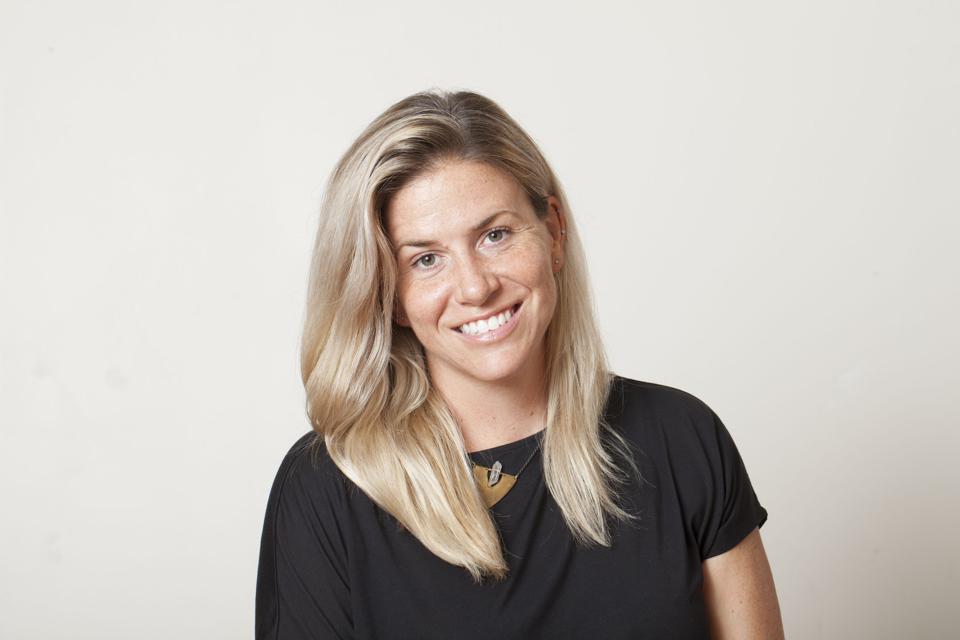
FasterSkier interviewed Constance Beverley, the CEO of Share Winter, last week. Share Winter is a non-profit focused solely on providing access to snowsports to a more diverse community of children. As Beverley states in the interview, the primary goal is to share winter. Beverley was part of U.S. Ski and Snowboard’s virtual panel: “Discussing Racial Diversity In Snowsports”
This interview has been edited for length and clarity.
FasterSkier: Can you tell me a bit about Share Winter and its origins in the ski community?

Constance Beverley: The organization itself and understanding its roots is pretty critical to the conversation. Share Winter was originally called the National Winter Sports Education Foundation or NWSEF, and you’ll notice that nomenclature based on traditional ski team stuff, everything is “ski education foundation”.
The idea behind NWSEF was to create an organization to find and provide resources and services, and to build a collaboration point for learn toski and snowboard programs. At the time, there was no centralized youth outreach organization spanning all three sports and providing funding and resources etc.
This organization was started initially as an initiative of the U.S. Ski Team by Schone Malliet, Dick Coe, and Phil Gross — at the time Dick Coe was the Chief Operating Officer at the ski team and Schone Malliet, (I think he was involved with the team then in some regard), and Phil Gross was a ski team trustee — they recognized that you need more youth outreach in order to create more skiers and riders if you want to a diversify the pool. If you want to break down barriers you need to do something that reaches kids. And the U.S. Ski Team, as an elite competitive organization, wasn’t moving in that direction. So this was proposed and presented. Dick Coe, within the ski team, was working on this initiative and the ski team was like “you know what, we focus on elite athletes, so we really cannot shoulder this.”
The three founders, Dick, Schone, and Phill then created the National Winter Sports Education Foundation in 2012 with the hope (1) that there would always be a partnership with the ski team that would allow the athletes and the organization to give back, and (2) would bring best practices to youth organizations and (3) bring in a more diverse group of youth to all three sports. That is how it started.
NWSEF served as a grant making organization for a couple of years, and it was very instrumental in the development of the National Winter Activity Center, which is headed by Schone Malliet. That was their first big project; they purchased a mountain and Schone turned it into what it is today.
Initially, NWSEF gave out some grants to a couple of organizations, but they wanted to grow First, they realized that the mountain needed to be seperate, so the National Winter Activity Center is the facility and the programs are run by Winter 4 Kids. NWAC/Winter 4 Kids is its own 501C(3) non-profit and Schone Malliet now runs that.
So Schone moved over from NWSEF to NWAC, and then I was hired to take over for both he and Dick who were running NWSEF, Dick and Phill still sit on the Share Winter Board.
In 2019, I rebranded NWSEF as Share Winter for various reasons.
FasterSkier: How have you tried to grow Share Winter and increase the efficacy of its mission?
CB: When I took over we came up with a robust grant program that was different than the previous one. We wanted to expand our reach significantly. We wanted to bring the industry together and quite frankly NWSEF was a mouthful and we needed something more approachable that really got to the heart of what we do, which is share winter, provide winter sports opportunities to kids that are traditionally denied access.
So, I came to NWSEF, now Share Winter in 2017. In brief, my background is this: growing up I wanted to be a doctor, then an environmental lawyer, then life gets weird and you end up on Wall Street. And part of that trajectory is that I was an alpine skier as a kid. I learned to alpine ski at I think two or three, and I skied until I was nine years old. Both of my parents skied and when I was nine my dad dropped dead of a massive heart attack in the middle of the night. My mom became the sole breadwinner and caretaker for three young girls who were five, seven and nine. And when your life shifts like that, all of these things that make parents not want their kids to ski – danger, expense, time – all those things became factors and so we were no longer skiers.
FasterSkier: Let me take a step back. How did that experience inform your work at Share Winter?
CB: I taught myself to snowboard at 14 because I missed the mountain. My mom was awesome. Even though we couldn’t make skiing happen, she would take us to ski shops, we would go get hot chocolate at the ski area and we would go tubing and we would watch Warren Miller films. She kept us very connected to ski culture and we would dress up in my dad’s old ski clothes.
We did not get to do it, to actually ski, but we never lost that ski-family-vibe that really mattered. My mom was a genius like that. My mom knew what she was doing. When I was 14, snowboarding started to become a thing, I am 38 now, this was in the early 90’s but not a lot of girls were snowboarders, and not a lot of snowboarders were in the Midwest. I grew up in Akron Ohio.
I told my mom I wanted to learn to snowboard, and she said that is great but that I was going to pay for myself and she had to work. She said, “I’ll drop you off but you are stuck there all day. I cannot come back to get you, there is no one else to get you.”
So I cut a coupon out of the paper that allowed me to rent a board and get a bunny hill lift ticket. I dressed up in my dad’s old ski gear with layers underneath and got a board. I sat on the bunny hill and eavesdropped on lessons because the lessons were extra and I could not afford them.
After doing that the first day I went back to my mom and I was like, “I stole the paper off of our neighbor’s porch because I need another coupon. I am going to go back.”
Of course, I go back and they are like, “kid you were here yesterday,” and I said, “it does not matter, the coupon does not say only once.” This is why I went to law school.
I eventually met a girl in my high school and she snowboarded and her parents were doctors. They had a car and extra gear. I learned that within the ski/snowboard community if you make the right friends you can break down barriers and you can be a part of the sport that is supposed to be only for the elite.
But you have to be in the community. You have to be accepted. You have to know the ropes. You have to know what to say to people. You have to speak the lingo and once you have that cultural cache, even if you are a nerdy, chubby, unathletic kid dressed up in your dad’s ski gear to go snowboarding, if you walk the walk enough you can get in and you figure it out. I learned that lesson very early.
FasterSkier: Did you ever consider competing?
CB: I did not infiltrate competition, that was never going to be accessible. And I knew that. And I did not even try. That is very different, and you have to remember the snowboarder experience, especially the snowboard experience in the 90s, was very different.
It was counterculture, and you could be a little punk rock and I was a punk rock. Even though boys would knock me over, and I got made fun of, I kept going. By the way,— I only knew two other girls at my home mountain, and they were very good and I was nothing.
I also did not look the part. I was not skinny. I wasn’t petite. I was 5’8″ and a little heavy for my age. And I definitely did not have the hottest gear, so I got picked on.
FasterSkier: In my eyes, snowboarding has always sort of embraced that counterculture message and maybe in some ways was, or is, more accepting of people from different backgrounds.
CB: That is what is interesting. If you talk to anyone from the snowboard side, they would agree with you. There is less investment in snowboarding than alpine. Snowboarders have always gotten a bad wrap. People have a lot to say about snowboard culture.. When you look at how the ski community treats snowboarding(which is so ridiculous) and then you look at the fact that snowboarding for the longest time amongst our kids was the driver as far as kids that get to choose their snowsport discipline. More kids of color are choosing snowboarding still because it does have that air of irreverence.
FasterSkier: I know this is Share Winter’s mission, but what are your thoughts on the racing scene and how inaccessible that continues to be?
CB: That’s hard, and if you are thinking about creating competitors, I am probably not the person to talk to because that has never been in my wheelhouse. That aside,what if my dad had not passed away and I progressed in skiing, I probably would have raced, that was on the plan. We talked about doing mogul camps as kids. But once that very perfect pipeline – the two–parent home, enough income, walk the walk, talk the talk – the minute that my life deterred from that perfect pipeline, the idea of competition was over.
Now, for how many people is that the same story? And from a competition standpoint, you are losing out on really truly finding the athletes that can win you medals and that is a serious problem if medals are a concern. It is that required uniformity – and this analysis can be applied to business and politics and everything else, that if you do not look this way, talk this way, come from this background, the message is, this is not for you.
Ski competition is just a very obvious mainstream version of that. And that is why you look at the ski industry and it is really an interesting analogy to how white supremacy works at large.
You have to be hyper aware of it, if you look at it, and I have an outsider’s perspective and I admit that. But I think that is the thing, people keep saying, “but yeah, this is what a ski racer looks like, and this is where a ski racer comes from. This is who this person is.”
But they have said that before, “this is what a doctor looks like, this is what a lawyer looks like, this is what a Supreme Court Justice looks like.” That same rhetoric is a tool of control and has been utilized as such in all forms to create a power struggle.
So am I surprised that it exists in the most elite level of a sport that has been predominantly white? Absolutely not.
It is to me very obvious. But, that means we have to deconstruct that and ask ourselves why we are so committed to that? If we really want to find the best athletes, why do we care what they look like or where they come from?
FasterSkier: Tell me a bit about your partner organizations, the organizations you support with grants?
CB: I don’t represent anybody specifically, I share knowledge and best practices and insight. But each of our partner organizations are strong organizations that are fully on board with the mission and have their own unique perspective and approach. So while they are under the umbrella of our funding, we are also not their only funder. We look for them to receive donations from a wide variety of sources, in fact, we choose them because they have healthy financial portfolios that allow them to run an offering for kids who typically cannot access these sports.
I think that is an important distinction. The partners are the real MVPs as we would say. We have 28 partner organizations and they run the gamut.
We have Boys & Girls Clubs, we have YMCAs, we have not-for–profit ski areas, school programs, programs run by U.S. Ski & Snowboard Clubs. The unifying factors are that they all teach skiing and snowboarding – and we fund their “learn to programs” not competition — we don’t fund racing, we don’t fund elite training. For our partners, the emphasis is for kids to learn this skill to the point that you can become confident and enjoy it for the rest of your life. And if you go in those other directions, we will help, but that is the unifying factor that all of these programs do that.
FasterSkier: I did notice that you fund some ski clubs that we traditionally associate with higher level racing.
CB: There is a huge range amongst our partners, and not all of them are diverse, and that is something that is crucial to understand. A lot of people will look at things and say, “if you really care about diversity why are you funding a nordic ski organization that is predominately white?”
Well if you have a nordic ski club that has strong infrastructure and connections to all the pipelines that keep people, they have proven they can turn any kid with means into a nordic skier, why would I not support and challenge those pipelines to open them up to other people rather than build new pipelines?
And it is sometimes easier to bring a diverse group of people within these strong and exisiting organizations because that is going to make that whole organization stronger and every kid within it stonger, more aware, more empathetic, and hopefully anti-racist. . If we say the only way we are going to fund a program is if it is all kids of color in this or that particular area, what does that ultimately do but say these types of programs should be separate?
That is not what I want to advocate for. I want to advocate for opportunities for all kids. We do prioritize programs that have high diversity.
When grants come in, we have a very stringent vetting process. Our requirements are that the kids go at least four times a season. We do not fund gimmicky programs that take kids for one day of exposure and which generally becomes a marketing session. That does not work for us.
If you look into research the ski areas have done, they say it takes four sessions for someone to really decide if they like the sport, then they have had enough exposure to make enough advancement and really feel like they are getting the hang of it – that is why we require four times.
We also prioritize certain things. We prioritize diversity. We prioritize the usage of professional or well trained instructors if they can be volunteers. But we do prefer they have been trained in some way and are not your average Joe saying, “I am going to go out and ski with the kids,” we all know that can end in disaster.
We ask that partners have a plan to keep kids in the sport. We want to know what have they done to make the sport cost effective? How do they determine financial need? What are their recruiting efforts? If we see that our grantees are in certain neighborhoods and two neighborhoods over would bring over a whole different group of kids, we challenge them to go two neighborhoods over.
We do all of these things to maintain, expand, and empower all of our different organizations so they can reach a diverse number of people.
We focus on economic diversity too. That is not spoken a lot about right now. I’d say over 40 percent of the kids in the program are on free and reduced lunch.
Speaking about clubs directly, we look at the umbrella organization and people assume we are funding the club. We do not fund Central Cross Country for their elite programs, we fund their Nordic Rocks! Program which is a school program that is in 120+ schools, which they oversee
Or, Same with Boulder Junior Nordic Racing, in Colorado, they also have a Nordic Rocks program that is in schools. The Boulder club gets money for Nordic Rocks not for racing.
With different languages and different backgrounds and different kinds of people — the more kids, the more new skiers are exposed to the world the way it actually is and that is for the better.
FasterSkier: Who are your major funders and what is your budget?
CB: We have some industry funders. Our budget is about $1.5 million dollars and I think collectively from those industry partners we receive $125,000. We are mostly funded by private family foundations and donor advised funds. These are all anonymous donors and that is all on purpose.
Most of our funding is from outside the industry. We do not get very much financial support from the industry, yet, and right now, with Covid and other constraints, I don’t know that they have it to give. No one has been knocking down my door begging to write us checks. But we also haven’t really asked.
We have not hit them very hard with the asks, yet. We wanted to prove our model first and say, “we were not going to ask you to invest in us until we proved what we do works.” It does work, so we’re definitely going to start asking.
FasterSkier: What are you telling people in the ski community know about what appears to be a cultural tipping point?
CB: I tell people this: guys (it’s mostly guys), we are not going to end racism by this August, you better buckle up because there is a lot of work to do. There are a lot of apologies to make and there is a lot of growing and learning to do. This is a forever thing. This is a life’s work thing. This is not a trend.
I have no intention to allow people to make this a trend. And to the extent that I have resources and platforms to use, I am going to say this is not a trend. We are here long term and you should commit to this work long term, this is something we have to do.
I am cautiously optimistic. I think this is an amazing time. Due to Covid everyone has been sitting back and reevaluating their lives, and we are finally in a headspace to receive change.
