Tag: Scott Jerome

  • Following Jerome’s Leave, UAF Taps Nick Crawford as Head Nordic and Running Coach

    Following Jerome’s Leave, UAF Taps Nick Crawford as Head Nordic and Running Coach

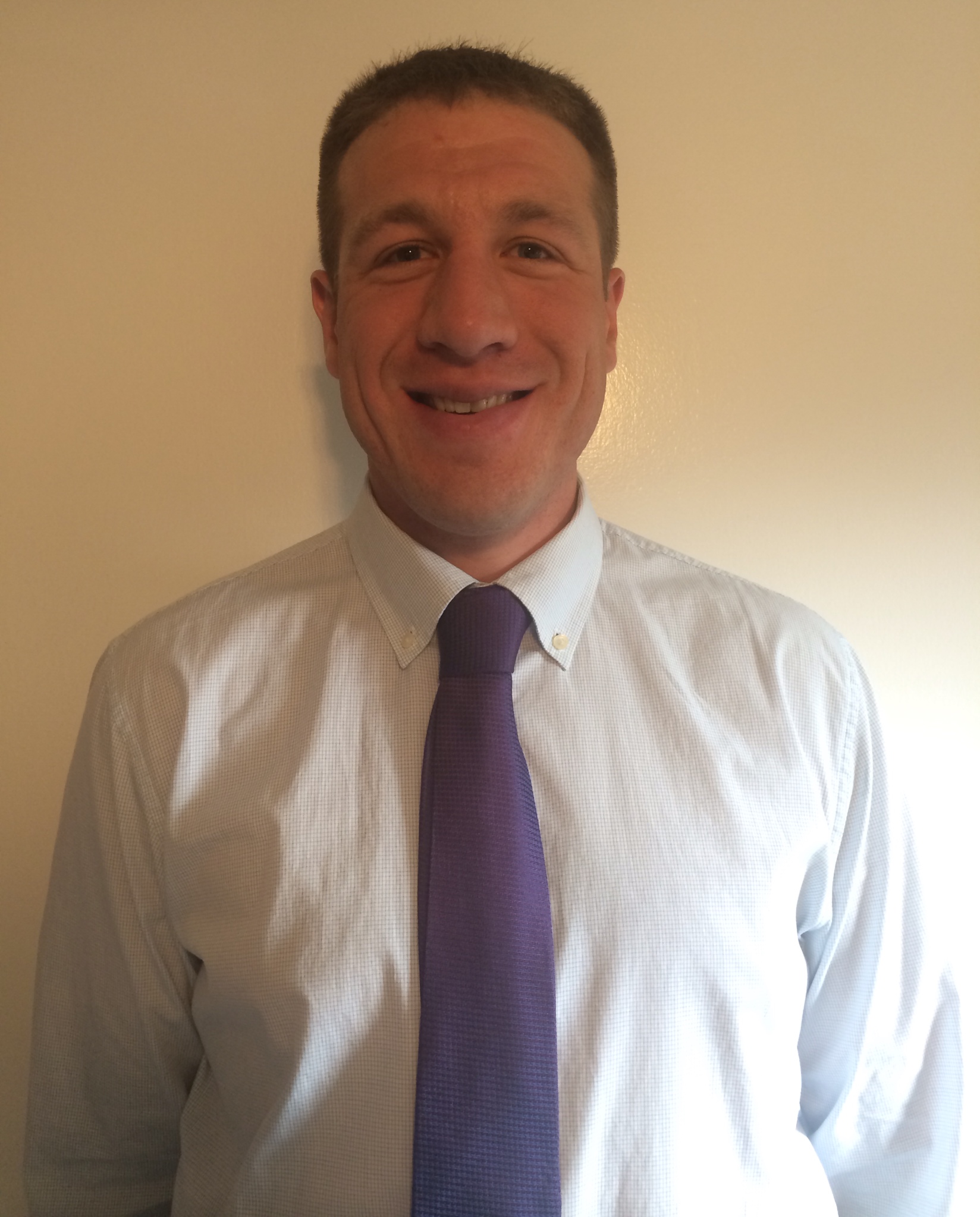
    Nick Crawford, 28, who headed the Bogus Basin Nordic program as well as the Lathrop High School ski team, will assume the role of head coach of the University of Alaska Fairbanks nordic and cross-country running teams in July. (Courtesy photo)
    Nick Crawford, 28, who headed the Bogus Basin Nordic program as well as the Lathrop High School ski team, will assume the role of head coach of the University of Alaska Fairbanks nordic and cross-country running teams in July. (Courtesy photo)

    After a four-year hiatus from Alaska, Nick Crawford is returning to Fairbanks to take over as the new head nordic and cross-country running coach at University of Alaska Fairbanks (UAF).

    Originally from Hawley, Mass., Crawford skied for Bowdoin College in Brunswick, Maine, and spent two years in Fairbanks from 2009 to 2011 as the assistant coach for Fairbanks Cross Country and head coach at Lathrop High School. While at Lathrop, he coached Logan Hanneman to the Alaska state Skimeister title in 2011. Hanneman swept the individual freestyle and classic races that year.

    Crawford, 28, recently finished a master’s degree in exercise science from Boise State University and applied for the opening at UAF in April. In addition to his studies, Crawford was head coach and program director of the Bogus Basin Nordic Team in Boise, and oversaw its youth ski programs.

    “This is really perfect timing for me to return to Fairbanks because it’s a place I really love to be a skier, an excellent community and a fantastic program with Alaska Nanooks,” Crawford said in a phone interview last week.

    The coaching position opened suddenly, as Scott Jerome, head coach of the Nanooks’ nordic and cross country teams for 10 1/2 seasons, was put on administrative leave shortly before the 2015 U.S. Cross Country Championships took place in January. His contract expires June 30 and will not be renewed.

    Citing confidentiality policies regarding personnel, UAF officials did not comment on the circumstances surrounding Jerome’s departure. In January, UAF spokeswoman Marmian Grimes told the Fairbanks Daily News-Miner that his leave was not a result of NCAA eligibility sanctions placed on UAF last November.

    “It’s not related to the past NCAA violations; it’s not new violations that prompted this issue,’’ Grimes said. “It was just us [UAF] needing to go in a different direction with coaching for these teams.”

    During his senior season on the team, Jonas Lӧffler told the Nanooks’ Sun Star in February that the skiers themselves vocalized a need for a leadership shift.

    “We athletes were involved in the whole process of Scott leaving. We were the initial people to say we needed change,” Lӧffler said.
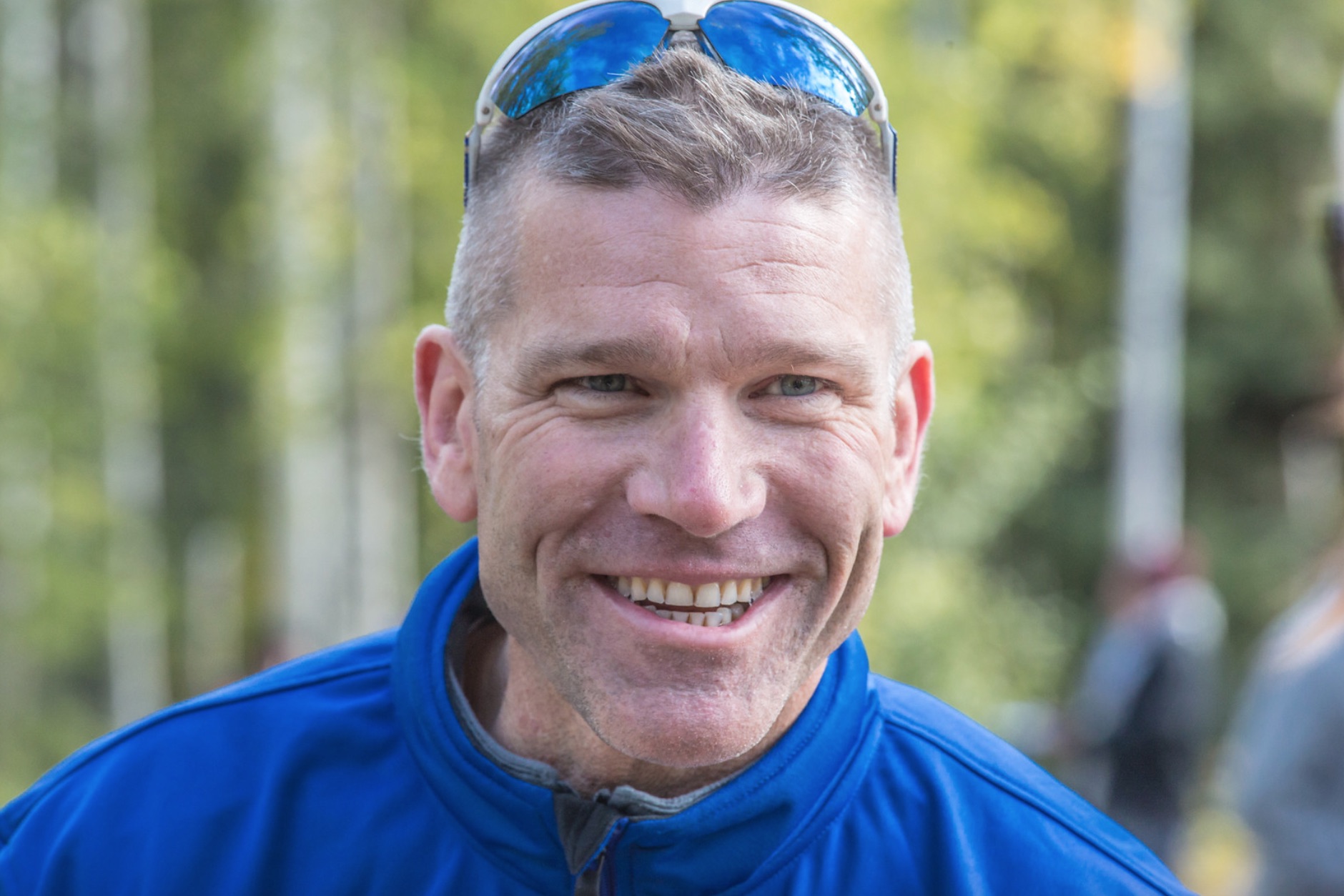
    Scott Jerome, former head coach of the UAF cross-country running and nordic teams. (Photo: UAF/http://www.photos.uaf.edu/keyword/smiling/i-4sjsQSP/A)
    Scott Jerome, former head coach of the UAF cross-country running and nordic teams. (Photo: UAF.edu)

    Jerome was one of several switchups in the UAF athletics department. Also this past winter, volleyball head coach Mallory Larranaga was let go after two seasons “following the self-reporting of violations of NCAA rules on Jan. 13,” according to the Star.

    “There are many rumors swirling on why Larranaga was fired on Feb. 12, from the less than stellar record of 7-48, to the NCAA violations that happened with a recruit this past summer [of 2014], which included the filming of visits and practices,” the Star stated.

    As of mid-May, UAF was looking to fill the vacancies left by its outgoing women’s basketball assistant coach Greg Bruce, who retired in April after 30 years with the program, and sports information director Drew Desrosiers, who planned to step down when his contract ends June 30, the News-Miner reported.

    Jerome, 44, coached 17 All-Americans, including Marius Korthauer, who became the Nanooks’ first national champion at 2008 NCAA Skiing Championships in the men’s 20-kilometer classic race.

    More recently in 2014, senior Max Olex placed second in the 20 k freestyle at NCAAs and Nichole Bathe finished fourth as a freshman at the championships. Before joining UAF in 2004, Jerome spent four years heading the nordic and cross-country teams at Gustavus Adolphus College in St. Peter, Minn.

    In an email to FasterSkier, Jerome wrote that he was still in Fairbanks and had “begun a PhD program in biochemistry at UAF focusing on human performance, specifically overtraining syndrome.”

    Following his departure in January, assistant nordic coach Christina Turman took over as interim head coach, with support from Josh Eide, of Marquette, Mich. She will remain in the position until Crawford officially starts in July.
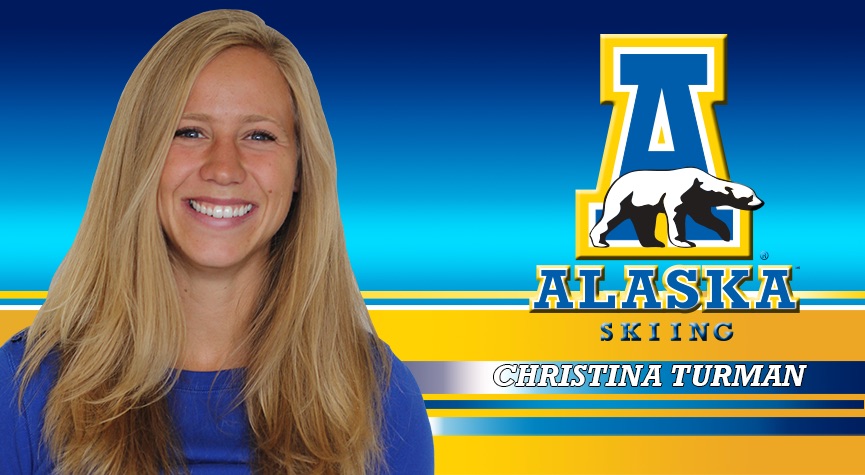
    Christina Turnman came on as UAF assistant nordic coach in 2013. (Photo: UAF)
    Christina Turnman came on as UAF assistant nordic coach in 2013. (Photo: UAF.edu)

    Turman, 27, did not apply for the head-coach position, but said she felt pressure from university’s administration, friends, family, and athletes to do so. She explained she preferred to remain an assistant, to work and learn under someone else to develop as a coach while preserving time for her family. She will remain assistant coach.

    “I’m delighted to have her stay on,” Crawford said. “I think the program has done really well under her tenure as interim head coach. I look forward to working with her. ”

    For Turman’s part, she’s excited for the future of the team.

    “I think the future is bright. I’m excited to be back with the program for a third season next year, we have some really solid returning athletes and some good ones coming in,” she said in an interview in her UAF office. “There’s no reason UAF shouldn’t have one of the most competitive teams in the nation. We have the resources, we have the trails, we have the climate for it, so I look forward to continuing to be with the program and watch it build and become more and more successful.”

    “There’s no reason UAF shouldn’t have one of the most competitive teams in the nation.” — Christina Turman, assistant coach entering her third season with the UAF nordic team

    UAF has a young team, with most of its returning women being either sophomores or juniors, and a lot of depth in the men’s team as well. This season, they picked up incoming freshmen Max Donaldson, three-time Alaska state Skimeister and 2015 Junior National champion. Turman coached him while head coach of West Valley High School before starting at UAF.

    As for Crawford, he said that he is joining a successful program and doesn’t want to change too much too soon. Both he and Turman said that they have already discussed working together on what to tweak and what to keep the same in order to continue to build on the Nanooks’ success.

    “You really want to make sure you have a good philosophical fit with the program,” UAF Athletics Director Gary Gray said in an interview at UAF, referring to Crawford. “It’s also important – this happens sometimes – we’ll hire someone from the lower 48, and in a year they’re homesick. And that’s not completely unusual. So it’s trying to find someone that is that right fit, of someone that we think is going to give that stability to the program.

    “Things that attracted us to Nick included his familiarity with this community,” Gray continued. “He has coached here, he has recruited here. He had some successful results with his club program in Boise. … The fact that Nick has been here before and was part of this community, that seems to speak well of his fit to Fairbanks.”

    “The fact that Nick has been here before and was part of this community, that seems to speak well of his fit to Fairbanks.” — UAF Athletics Director Gary Gray

    Crawford is also a close personal friend of FasterSkier’s former editor, Nat Herz, who also skied for Bowdoin.

    “Nick’s decision not to use me as a reference has clearly paid off again,” Herz wrote in an email. “I look forward to testing his mettle when we both race in next year’s Oosik Classic in Talkeetna. Also, his athletes should ask him about that time he tried — and failed — to complete the gallon challenge when we were in college together.”

  • Pros of Tomorrow Brought by Fischer: Nichole Bathe

    Pros of Tomorrow Brought by Fischer: Nichole Bathe

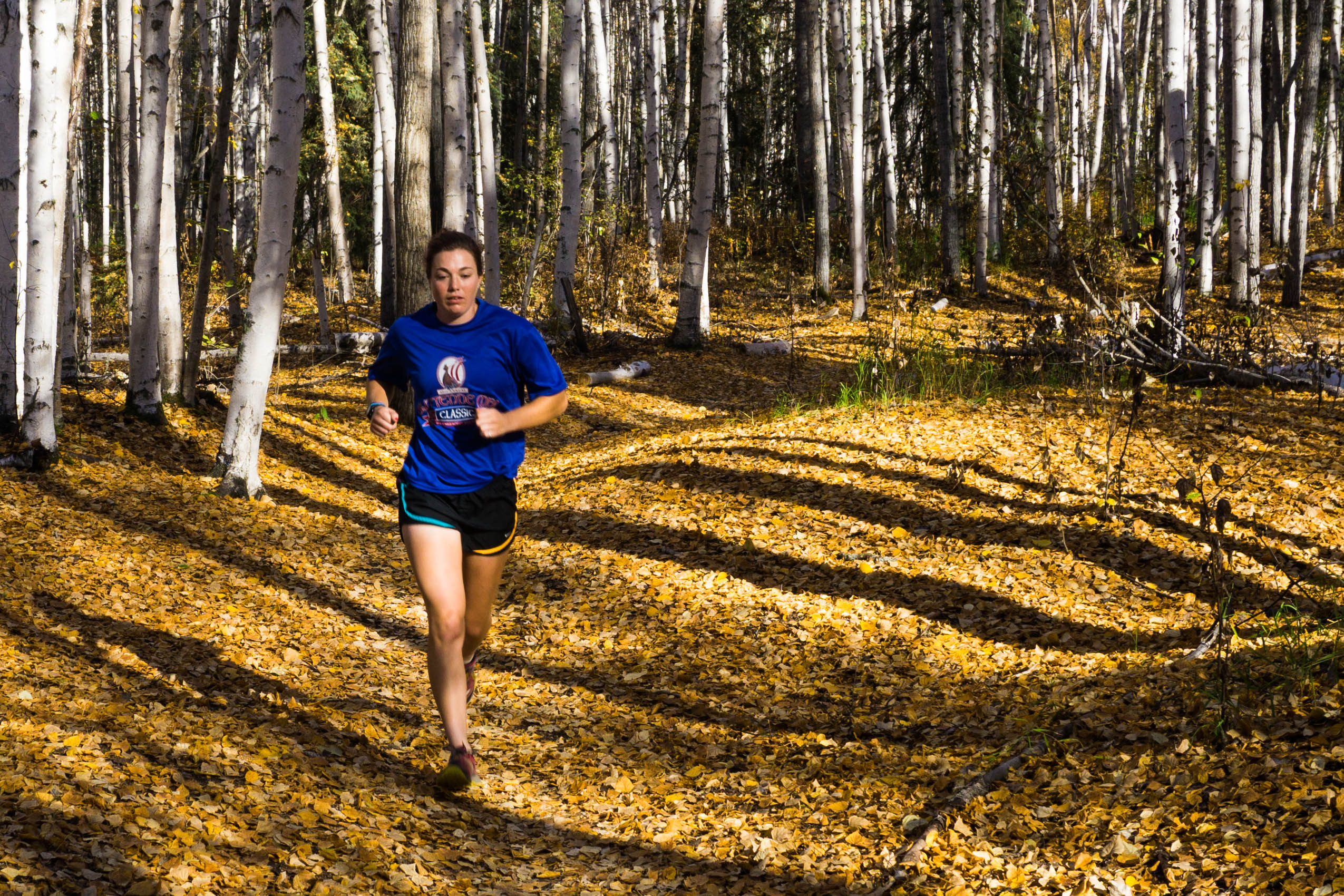
    Nichole Bathe on a training run at the UAF campus earlier this month.
    Nichole Bathe on a training run at the UAF campus earlier this month.

    This ‘Pros of Tomorrow’ series, brought to you by the generous support of Fischer Sports, aims to highlight some of the most notable up-and-coming athletes around the world, not necessarily Fischer-sponsored skiers. If you have an idea for a top-notch skier you’d like to read more about, please email info@fasterskier.com with the subject line: Pros of Tomorrow. We’re also looking for stories about intriguing juniors, collegiate skiers, or lesser-known athletes; please email us with names — subject line: From the Pack.

    ***

    FAIRBANKS, Alaska — Heads turned when the first American across the line in the women’s 5-kilometer classic race at the 2014 NCAA Skiing Championships in March was an 18-year-old freshmen from the University of Alaska Fairbanks (UAF).

    Nichole Bathe took fourth overall in the race, following her win at Midwest Conference Regionals, also in the 5 k classic. Earlier in the season in January, she placed third among seniors at U.S. Cross Country Championships (U.S. nationals) in the classic sprint for her first national podium. A classic specialist, she was 11th in the skate sprint at nationals and 12th in the 15 k skate at NCAAs.

    Now 19, Bathe is beginning her sophomore year at UAF. The Madison, Wisc., native chose to attend school at UAF because Alaska is so close, but yet oh-so-far away, from her hometown.

    “I was looking at a couple of different schools, but I liked the fact that UAF was in the Central Conference,” she explained at a coffee shop in Fairbanks. “And I knew [UAF Head Coach Scott Jerome] before I came up here and I liked him, and I liked his coaching style, so that was mainly why I came.

    “In the end I decided that I didn’t want to be that close to home, I wanted to try something new and get out, but I wanted to be a part of the Central Conference,” she added. “I think it’s a nice conference to be in just because there are lots of people and I get to go back to the Midwest when racing. So I get to see my parents on race weekends, which is always nice. I also get to ski on courses that I skied on as a junior, so I know the courses pretty well.”

    Growing up skiing under Central Cross Country (CXC), Bathe remains an athlete there as part of its regional elite group.

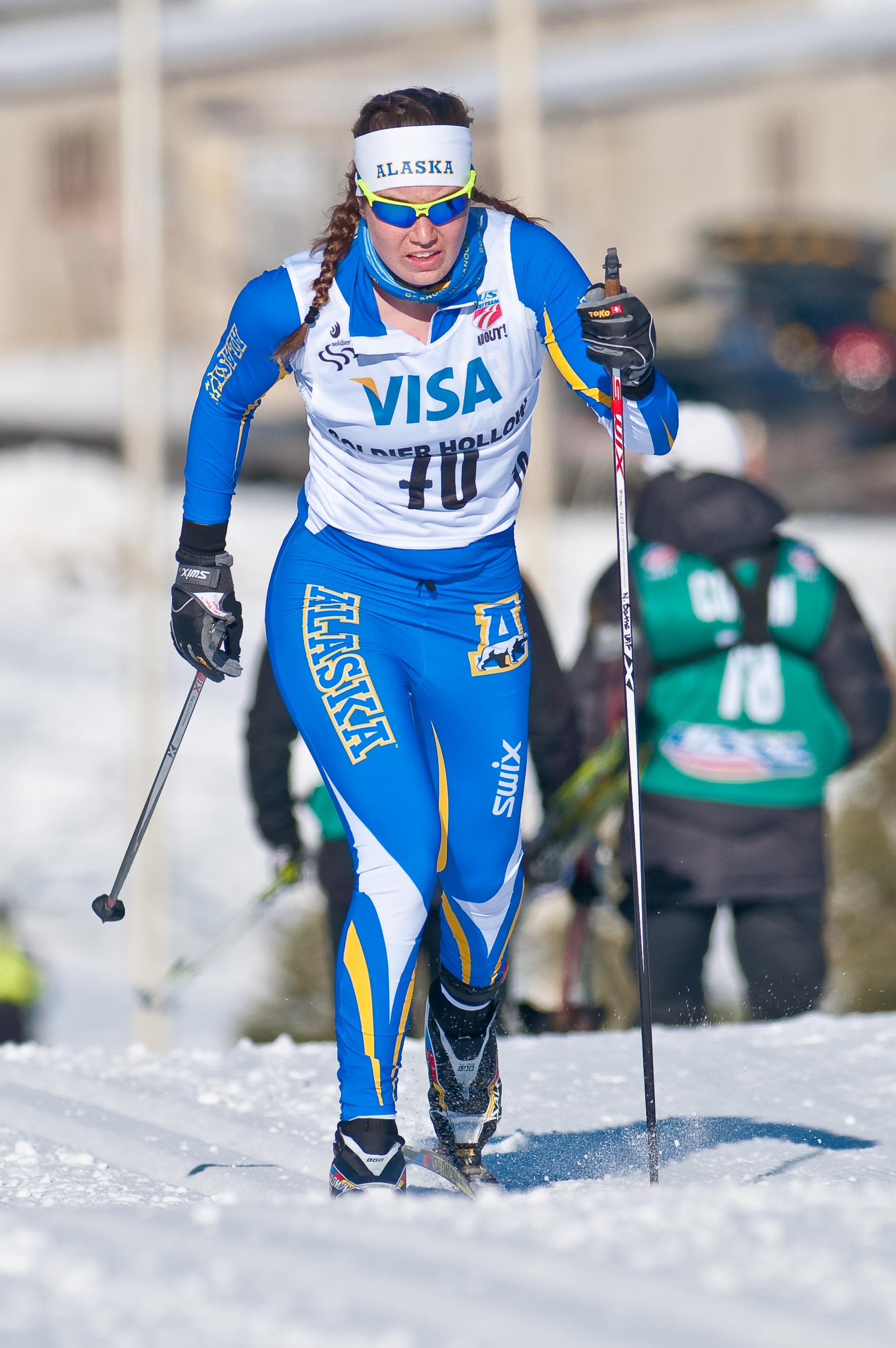
    Nichole Bathe sprinting to 3rd place at the 2014 U.S. Cross Country Championships at Soldier Hollow in Midway, Utah. (Photo: Bert Boyer - http://bertboyer.zenfolio.com/)
    Nichole Bathe sprinting to 3rd place at the 2014 U.S. Cross Country Championships at Soldier Hollow in Midway, Utah. (Photo: Bert Boyer/http://bertboyer.zenfolio.com/)

    “When we took Nichole on, we knew that she was good,” UAF Coach Scott Jerome said in his office. “We had seen her results at Junior Nationals, especially up close and personal [when Junior Nationals were] here in Fairbanks, where she got a top-five finish in the classic race – I think it was third place. And so we knew she was good.”

    He pointed to assistant coach Christina Turman, who was in the room for most of the interview.

    “I don’t think [either of us] would have predicted she would be top-5 at NCAAs her first year, but certainly we knew that she had the determination, training background and work ethic that we were looking for,” he said.

    With three seniors, UAF has a young team this year with a large influx of new skiers. Bathe in her second year will likely be one of a small group of experienced collegiate skiers that her teammates will look up to.

    Jerome sees lots of potential in Bathe, with some focus on her weaker areas.

    “Strength for Nichole was a big factor last year,” he said. “She was physically weak in some areas, and when she got in the weight room consistently results really took off.

    “Part of the problem is that when she gets tired her technique really falls apart,” he added. “I think the strength component is really important for her because she has to be strong enough that when she gets tired she has to hold it together — whether it’s the final climb or the final 2 k of a race, she has to hold it together.”

    Jerome touched on a couple technique issues that need smoothing over, some of which amount to the growing pains of moving into a higher level of competition.

    “Really working on glide is important,” he said. “When you’re a junior and you’re a little bigger than the others you can kinda fake it, but now everybody’s development has gotten to the same point and so you can’t fake it anymore.”

    Above all else, though, Jerome stressed that whatever they were doing with Bathe’s training appeared to be working.

    “We don’t want any big changes to the training plan — it’s been working, and you don’t want to change something that’s working,” he said. “Maybe tweak it here and there. Christina Turman has done a fantastic job working with Nichole and working with her on her technique. They’ve really formed a very strong coach/athlete relationship, it’s worked really well, and Christina has laid out a really good training program that Nichole has responded really well to.”

    “If it ain’t broke don’t fix it, and so far so good,” he added.

    “If it ain’t broke don’t fix it, and so far so good.” — Scott Jerome, University of Alaska Fairbanks Head Nordic Coach, on sophomore Nichole Bathe

    Bathe spent the summer training with CXC in the Midwest, mostly trying to build distance and focus on longer intervals. When she wasn’t training, she worked as a bartender at a beer and wine bar.

    “We don’t have many liquor laws in Wisconsin,” the 19 year old said with a smile. “I just poured tabs of wine.”

    In the winter, school and training keep her busy. She studying for a degree in social work with a minor in justice.

    “My goal with the whole thing is to work in the justice system with orphan and foster kids and replacing them into homes,” Bathe said.

    Every college skier knows that it is difficult to balance the time requirements of training — especially in Alaska where so much travel is required — with school. This is not lost on Bathe, and provides a rare insight into where she thinks skiing might take her after graduation.

    “I think Sophie Caldwell is a very important person to look up to if you’re a college skier because she did go through college,” she said of the U.S. Ski Team member and 2014 Olympian, who graduated from Dartmouth in 2013. “It shows that it is possible to go through four years of schooling and then come out at the end and still be able to race World Cups and race them well, like she does. I think she’s actually been really helpful for skiers who are in college currently and helping us to realize that we can still keep doing it out of college.”

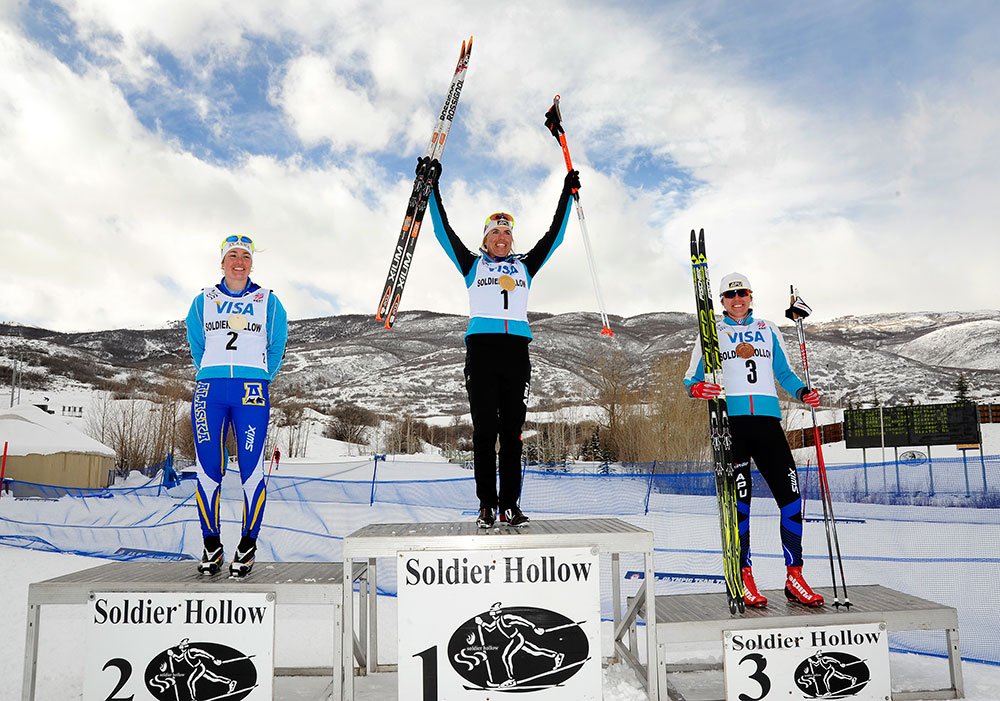
    The U.S. women's classic sprint podium with Rosie Brennan (APU) as the top American (second overall), Nichole Bathe of the University of Alaska-Fairbanks (l) in second, and Becca Rorabaugh (APU) in third. (Photo: Tom Kelly/U.S. Ski Team)
    The U.S. women’s classic sprint podium with Rosie Brennan (APU) as the top American (second overall), Nichole Bathe of the University of Alaska-Fairbanks (l) in second, and Becca Rorabaugh (APU) in third. (Photo: Tom Kelly/U.S. Ski Team)

    Apart from hinting that Bathe considers a ski career after college to be a possibility, she limited her speculation to the upcoming season.

    “Doing better at NCAAs than I did last year is a goal, and [so is] making the World Juniors trip again,” she said.

    At last season’s Junior World Championships in Val di Fiemme, Italy, she had a personal-best 26th in the 5 k classic.

    “When I get there I’ll know what to expect, instead of going in like a newbie like I was last year,” she added. “So I’d definitely like to do better there than I did last year.”

    The 2015 World Junior Championships will be held in Almaty, Kazakhstan.

    “I haven’t really looked too far ahead of any of that,” Bathe shrugged. “I just like to play it year-by-year and see how it goes.”

    As for the transition to life in Alaska, Bathe has only glowing things to say.

    “I love Alaska. I mean, there’s no place like Alaska,” she said. “Even just driving through Alaska you get to see a lot of stuff. … We get to pick berries, and we have lots of fun in the spring … We go snow-machining and downhill skiing and it’s fun.”

    This series is brought to you by the generous support of Fischer.
    This series is brought to you by the generous support of Fischer. Visit them online at fischersports.com.
  • University of Alaska Fairbanks: Ski Coaching Intern Position

    The University of Alaska Fairbanks is hiring a ski coaching intern for its ski team for the 2011-2012 ski season.  This is a full-time, six month position.  The University of Alaska Fairbanks is an NCAA D-II program.  The intern will assist the head coach and assistant coach. Main duties include daily supervision of practices; videography; technique demonstration; technique analysis and correction; strength training demonstration; strength-training supervision; equipment maintenance; waxing; van-driving; fundraising support; and other duties as assigned. Intern will also assist with home and away competitions in the following areas: transportation; wax selection & application; providing feeds during races; giving split times; and other duties as assigned.


    The complete description and application may be found at:

    www.uakjobs.com/applicants/Central?quickFind=73821


  • After Sprint Setback, Flora Fires Back in 15 K

    After Sprint Setback, Flora Fires Back in 15 K

    Lars Flora on his way to the win in Wednesday's classic distance race. Photo, Kris Dobie.

    Going into the 15 k classic race in Rumford, APU’s Lars Flora had a total of four national championships to his name. But to say that he had endured a dry spell would be an understatement: it had been 1098 days since his last title, which came in Houghton, MI in 2008.

    James Southam on course in Wednesday's 15 k. Photo, Kris Dobie.

    After two tough seasons, and a demoralizing defeat in Sunday’s sprint, the 32-year-old Flora finally broke through on Thursday to collect his fifth crown, besting his teammate James Southam by 18 seconds.

    “It’s good to see him skiing well again,” Southam said.

    Two skiers from the University of Alaska-Fairbanks (UAF) rounded out the top four, with David Norris completing the podium, 41 seconds back, and Lex Treinen in fourth.

    The men ran six laps of the same course used by the women in the morning race. While organizers were limited to a 2.5-kilometer loop due to poor snow conditions, many athletes said that the race didn’t lack for challenging terrain.

    Flora, however, said he still would have preferred more hills—and he opted for slick skis, which he used to stake himself to an early lead over Southam.

    “The first two laps, I think I blazed it. I was really worried I was going to blow up out there,” he said.

    Both Noah Hoffman (USST) and Torin Koos (Methow ODT) were within 10 seconds of Flora through five kilometers, but both lost significant time over the latter portion of the race.

    For Koos, it was just the second distance competition of the year, and while he tried to ease into the race, the course’s two big climbs began to take the punch out of his legs towards the end.

    “I thought I started conservative—I was really going to try to bring it home [in] the last two laps. But more, I think I just kind of skied it kind of consistent,” he said. “It was a tough course…I [could] hardly see the tracks the last two laps.”

    Hoffman had nearly cracked the top-30 on the World Cup earlier this season, and he said he was skiing to win on Wednesday, in hopes of securing a spot on the U.S. team for World Championships. He looked sharp and quick on the first few laps, but couldn’t hold on.
    “I just didn’t quite have what I was looking for,” he said.

    Southam ultimately overtook both men by the finish, though he didn’t have quite enough to match Flora. The two are good friends, and entering Thursday’s race, they owned the same number of national titles.

    “If I’m going to get beat by someone, it might as well be Lars. Although I hate to get beat by Lars,” Southam said.

    Meanwhile, the 20-year-old Norris put in a strong closing lap to pick off several places and move up to third.

    UAF's David Norris. Photo, Kris Dobie.

    It was an impressive performance, though not altogether unexpected—Norris was fourth in the national championships 30 k last year in Anchorage.

    Norris was actually sitting in third for most of that event, before bonking and missing out on the podium; he said that it was “awesome” to finally finish a race in the top three.

    Treinen, Norris’s roommate at UAF, was another nine seconds back in fourth, and their teammate Tyler Kornfield was ninth, marking the second time in as many years that the school has turned in strong results at nationals. In last year’s classic sprint in Anchorage, UAF put three of their skiers in the top five.

    According to Head Coach Scott Jerome, his team is a straightforward bunch. (Jerome included—informed of his athletes’ finishes over a walkie-talkie, the strongest language he could muster was a “holy smokes!”)

    “We don’t do any super crazy peaking thing—we don’t have any secrets,” he said. “I think it’s just a good, solid training plan.”

    Ultimately, though, not even UAF could touch Flora on Thursday.

    While the win was his first in Rumford, it was the third captured by APU this week; between men and women, they’ve captured 75 percent of the titles awarded.

    For Flora, the performance was especially gratifying after his struggles in Sunday’s classic sprint.  In that race, he set the fastest time in qualification and blazed through two heats, only to collapse in the finals and watch Koos take the victory.

    “I haven’t been that disappointed after a race in a long time…It wasn’t that I didn’t win or anything. It was just that I wanted a chance to go against Torin, because I was feeling so good, and I haven’t beat Torin in a sprint in forever,” he said. “I just wanted a head-to-head battle.”

    The result was disappointing for Flora, but he showed Thursday that he’s still at the same level he’s been all year—a step above the form he’s found in the last two seasons.

    An Olympian in 2002 and 2006, Flora missed the U.S. team for Vancouver last year, and was forced to skip a big chunk of the domestic calendar when he came down sick. But according to Koos, his occasional training partner, Flora still had the potential.

    “He hasn’t raced that well the last two years, but besides for [Kris] Freeman, I think he’s the most talented distance skier we’ve got in the U.S.,” said Koos.

    This year, Flora said, more rest and a few changes to his training plan left him in better shape for early-season races in West Yellowstone, where he captured three podium finishes.

    Since then, he said, “it’s just confidence.”

    “It’s a big difference once you start doing well—you get to relax a little bit, not second-guessing yourself,” he said. “The past few years, I’ve done so much of that.”

    For complete results.

    James Southam and APU Head Coach Erik Flora. Photo, flyingpointroad.com.
  • Estonian Sees Fairbanks as World Cup Launch Pad

    Estonian Sees Fairbanks as World Cup Launch Pad


    Estonian skier Vahur Teppan, racing for the University of Alaska Fairbanks, alongside Middlebury's Simi Hamilton at the 2008 NCAA Championships. Photos courtesy of Scott Jerome.

    In the early fall, World Cup hopefuls fan out across the globe, fine-tuning their approaches on glaciers in places like Ramsau, Austria, or Tignes, France. This year, you can add an American spot to the list: Fairbanks, Alaska.

    Fairbanks may not have the same cachet as those European locales, but for Vahur Teppan, it’s got a lot going for it. Teppan, a native of Estonia and an alumnus of the University of Alaska Fairbanks (UAF), has been training in the city for nearly two months, taking advantage of early snow and a low-key training environment. In one week, he’ll head back home, then to qualifying races in Finland that he hopes will propel him onto the World Cup circuit with his country’s ski team.

    Teppan first came to the U.S. from Estonia in the fall of 2006, drawn by the offer of a full-ride scholarship from UAF Head Coach Scott Jerome. He raced for the school for two years and pulled down a fifth place finish at NCAA Championships, all while taking classes in psychology, business, and Russian.

    After finishing at UAF in the spring of 2008, Teppan earned a spot on the Estonian National B-Team, and he made seven World Cup starts in the 2008-2009 season—including a 23rd place in a city sprint in Stockholm.

    But his results, Teppan said, have not been improving, and he lost his spot on the national team. So this fall, he decided to return to Fairbanks for September and October, where he knows there is “early snow, good athletes, [and] good coaching.”

    “I was like, ‘I have to come back to the place where I was doing well, and regain the confidence,’” he said.

    Supported by his Estonian club, Teppan flew to Fairbanks in early September, where he lives in an A-frame with UAF Assistant Coach Matt Dunlap and a local club coach, Nick Crawford. Teppan said he does about half of his training with the university and pitches in with some volunteer coaching on the side—as well as venturing out on the occasional hunting excursion with Jerome.

    “I’m trying to get as much as possible out of the team, and also give back,” he said.

    Vahur Teppan

    In the past, Teppan has primarily trained for sprinting, with lots of strength and weight training. But he said that he changed his focus this year to improving at 10- and 15-kilometer races—becoming a better all-around skier.

    “I felt there was balance missing in my training,” he said.

    Teppan will fly back to Estonia on November 2, and he leaves a few days later for early-season races in Muonio, Finland. Those competitions serve as qualifiers for the Estonian squad that will travel to the World Cup opening mini-tour in Kuusamo, Finland—which means that the rest of Teppan’s season will be determined, in large part, by his results in Muonio.

    “There’s not many openings for the Kuusamo World Cup, and most of the guys are going to be picked from the national team,” he said. “I have to be faster than…any other Estonian, outside the national team, to be qualified.”

    For most of the year, Teppan lives in the winter sports hot-spot of Otepaa, which hosts a World Cup annually. And this year, the Junior and U-23 World Championships will also be held in Otepaa, as well.

    “There’s definitely been money involved, and interest,” Teppan said. “It’s interesting to…see how the Estonian guys are going to do. They’ve been focused.”

    Cross-country skiing has grown popular in Estonia after the Olympic medals won by stars Kristina Smigun-Vahi, Jaak Mae, and Andrus Veerpalu. Teppan said that he’d had the opportunity to train with both Veerpalu and Mae this summer, which was “really inspiring.”

    But Teppan still has one week left in Fairbanks before he heads home, and he said that he has been enjoying the relaxed setting—away from athletes in Estonia who would get “tense” and “serious” as the competition season approached.

    “The environment here is really, really supportive, and I’m really having fun,” he said. “Lots and lots of outside training, cool activities—that has kept my mind pretty optimistic.”