Tag: Scott Johnston

  • Still Charging: Erik Bjornsen Retires at 28

    Still Charging: Erik Bjornsen Retires at 28

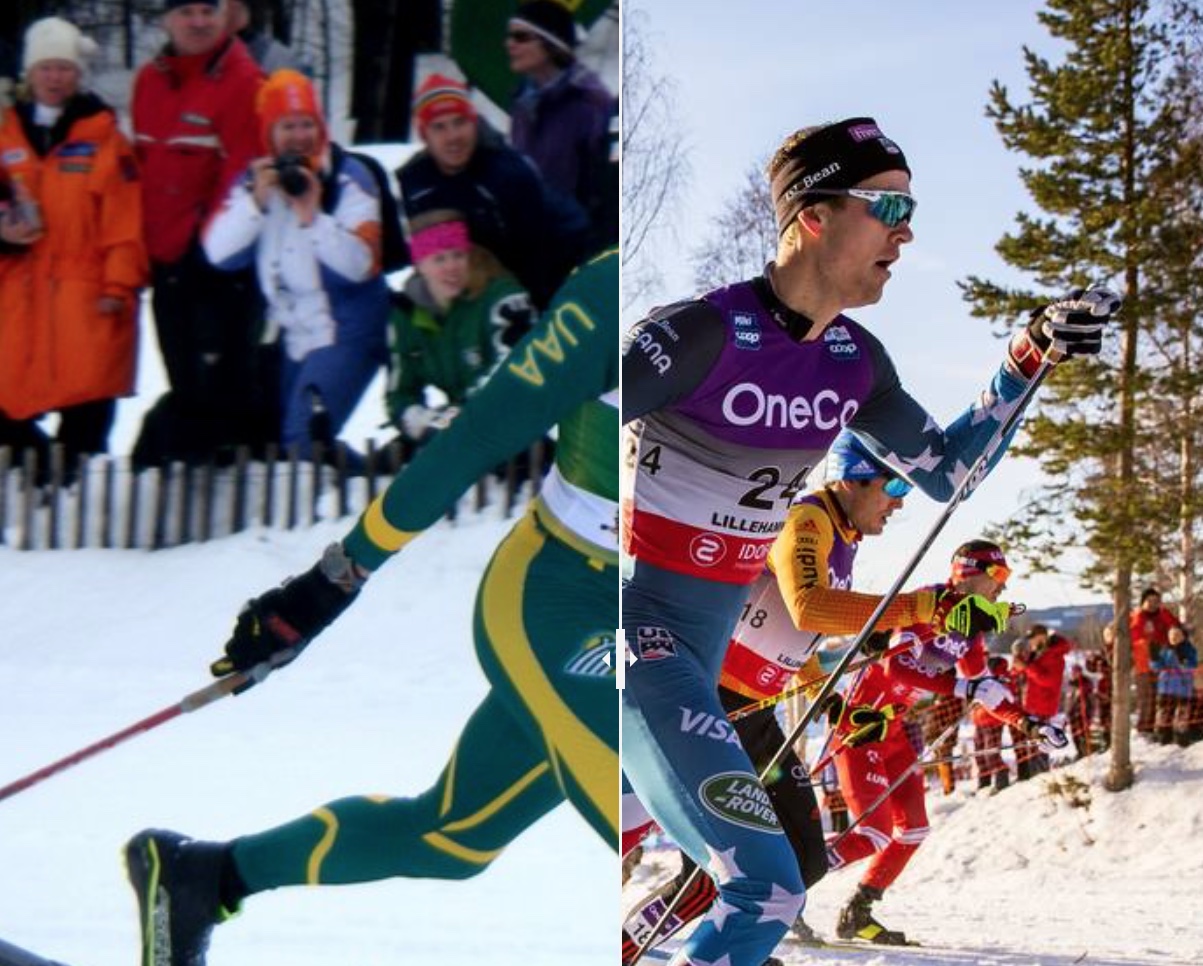
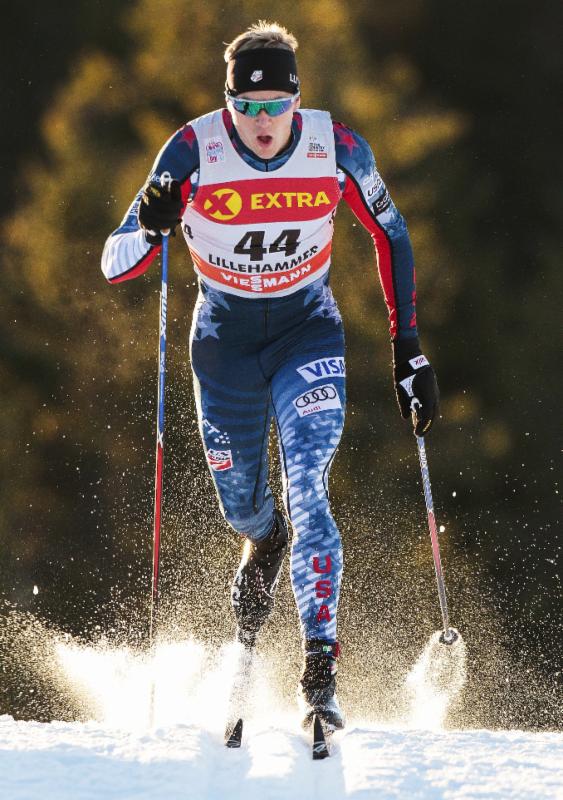
    Erik Bjornsen crossing the line in the 2019 15 k skate pursuit in Ruka, Finland. (Photo: NordicFocus)

    Bright lights in PyeongChang. The men’s second semifinal of the Olympic freestyle team sprint was a career highlight moment for Erik Bjornsen. Fourteen teams would crowd the start lanes with Martin Johnsrud Sundby in bib 1. The Norwegian was paired with Johannes Høsflot Klæbo: The duo blessed with Sundby’s stamina and his younger counterpart’s break-from-the-pack speed.

    With Simi Hamilton racing the second, fourth, and sixth legs for the U.S., and Bjornsen leading off, the semi was a chance to not only advance to the finals, but establish some mojo amidst an Olympic field. Hamilton and Bjornsen both possess slower tempo big-power generating F-350 type motors that belie the meters gobbled up with each cycle of their cadence. 

    As Bjornsen was tagged for the fifth of six legs, he locked on to France and Norway to position himself in rarefied company. PyeongChang’s Alpensia sprint course packed a punch. The course’s second climb it’s Everest – a drawn out leg burner. Pulsing into that climb, France’s Maurice Manificat, Sundby, and Bjornsen had already separated from the field. Midway up, Bjornsen subtly shifted gears, moved to the left of Manificat, and dropped the two steely veterans by 10 and then 15 meters pushing over the top.

    It was a Stars-and-Stripes flex.

    Bjornsen tagged Hamilton in first by nearly five seconds. The pair went on to qualify for the final and placed sixth overall in an event eventually won by the Sundby-Klæbo pairing. 

    (Video of Bjornsen’s breakaway on the 5th leg.)

    “It was interesting, I think that everybody knew what I was capable of in the field when I made those moves,” said Bjornsen when reflecting on career highlights. “I remember one of the strongest memories I have from racing is when I made that move against Sundby. And after the race, as we were starting the final in PyeongChang, he turned and looked at me for a while, and I could tell that he was thinking ‘what is this kid bringing to the final’? He eventually got the gold medal with Klæbo, and he is looking at this American guy, and I think that was one of the coolest feelings I have ever had — knowing that this legend was looking at me, and thinking, ‘what is this guy about to bring to the biggest performance of our lives?’”

    The U.S. men’s team has been overshadowed by a dominant women’s program for going on a decade. Through that time, the men’s distance program has seen the end of Kris Freeman’s reign and the emergence of Noah Hoffman and Erik Bjornsen. Hoffman retired in 2018. With Bjornsen announcing his retirement last month at twenty-eight years old, a void remains. As one generation bleeds into the next, Bjornsen is an anchor point for all those speedy juniors we’ve heard of. An affable athlete who set the American distance skiing bar for the past five years.
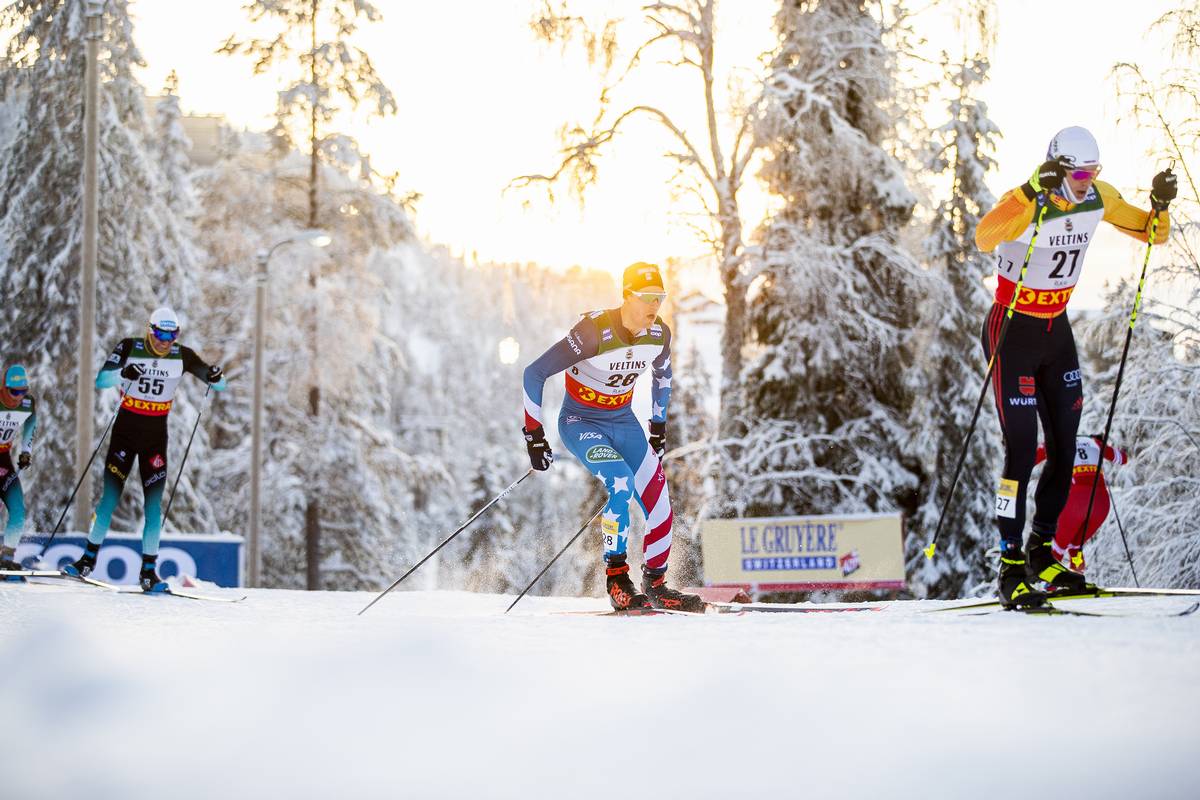
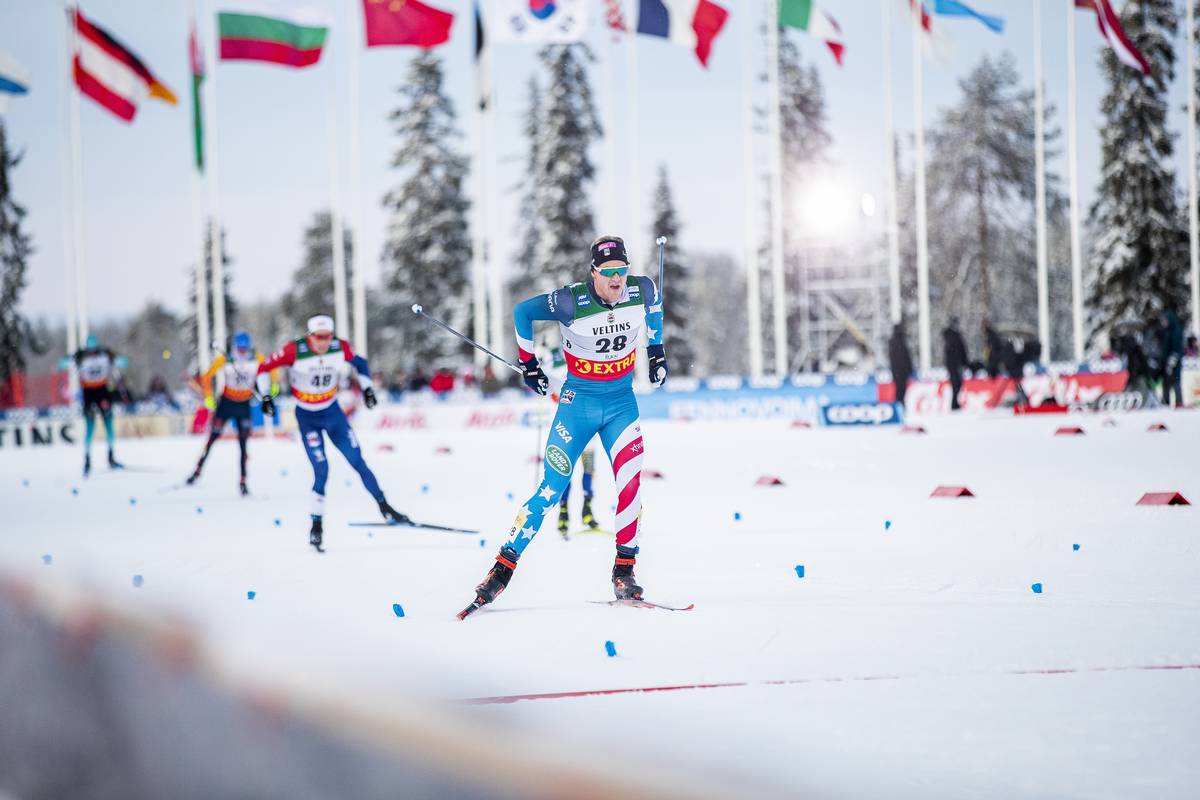
    Erik Bjornsen of the U.S. (bib 28) during the 2019 15 k skate pursuit in Ruka, Finland. In bib 27, Sebastian Eisenlauer (GER) leads Bjornsen. (Photo: NordicFocus)

    Bjornsen often shouldered the pressure for a team and broader community starved for that dominant distance performance by a U.S. male — a World Cup podium or a championship medal to validate the personal quest and the vicarious desire from some fixated on top-3 hardware. Making the top-30 on the men’s World Cup is a herculean task. Bjornsen first passed that threshold with an 18th place in 2014 during a 15 k classic (his marquee event), in Toblach, Italy.

    In January 2018, he surpassed that 18th place, which up to then was a career best individual mark on the World Cup, with a ninth place in Seefeld’s 15 k mass start skate. He peaked individually at the World Championships with an 18th and 17th, respectively, in the 2017 and 2019 Worlds in the 15 k classic. 

    The manifestation of steady improvement was Bjornsen’s calculus for remaining in the game. And the wait and wait for results beyond his stream of top-30s and top-20s was arduous. Even on the best of days, all things must align for the breakthrough.   

    “Definitely, my last couple of years, I was really hungry for great results, like everybody that puts so much into the sport,” said Bjornsen. “I was ready to make that next level. But I was moving towards the end of time I wanted to put into the sport and I really wanted to make the progress every year that I knew what I was capable of. There are so many variables in nordic skiing that I was just frustrated not to put it together more on the days when it was so tough. My thing was 15 k classic — that is where I could put together a top performance. That’s four 15 k classics a season, you are trying for your top performance in those four or five and also nailing the wax and also nail everything on that day. So I am proud of the results that I had but I was frustrated like any World Cup athlete. I was just definitely hungry for more at the end.”

    The World Cup came to an end for Bjornsen in December after he raced the opening weekends in Ruka, Finland, and Lillehammer, Norway. Yet, the decision to retire from World Cup level competition came after the 2018-2019 season if he did not, in his words, “step-up”.  

    After a solid summer of training, Bjornsen was blunt about his 2019-2020 World Cup campaign. “I am going over to the World Cup to make a step forward, or call it a career,” he said.

    He placed 25th overall in the Ruka triple. The following weekend in Lillehammer’s 15 k/15 k skiathlon he had a reason for optimism. At the same venue with the same race format in 2017 Bjornsen had placed 20th. This year, he initially raced near the sharp end. But as the temps warmed a degree or two, his skis began to ice. He faded to 39th. The plug was pulled.

    Bjornsen explained that U.S. World Cup regulars leave bags on the wax bus after each season, a stash of clothes and items to rely on when they arrive for the season each November. “I had left a bag over there basically for the last five or six years,” said Bjornsen. “On the last trip, I packed that one up. I didn’t know if I would be coming back.”

    Having grown up skiing in Washington’s Methow Valley, Bjornsen followed the usual path of success: solid Junior Nationals, World Junior Teams, a second place in the 2011 U.S.Nationals 20-kilometer classic, and his first senior championship two years later in the 15 k skate. USST D-team, B-team, and then A-team. Although the family fostered two future Olympians, (you know this but older sister Sadie is a USST veteran) Bjornsen’s parents moved to the Methow when a new alpine ski area was in the works. As luck would have it, the planned downhill area never materialized. 
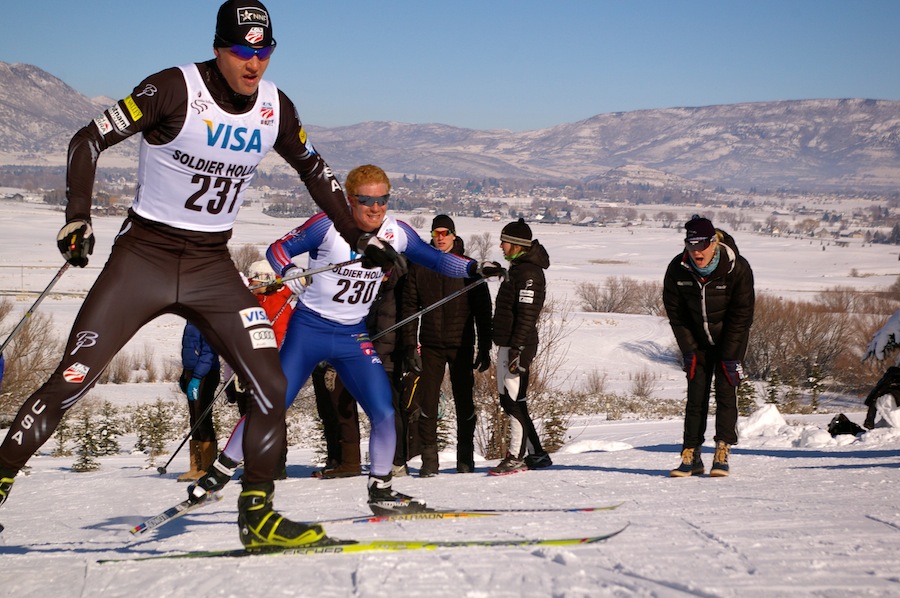
    Erik Bjornsen (APU/USST) and Matt Gelso (SVSEF) headed up Hermod’s Hill for the final time at the end of the 15 k freestyle at the 2013 U.S. Nationals. Bjornsen took his first career national title and Gelso finished third.

    The Bjornsens live on the more secluded Mazama end of the Methow. Mazama sits at the base of a closed-in-winter State Highway 20 which snakes its way up to Washington Pass and alpine paradise. Drive any direction but south in the winter from Mazama and it’s a snowy dead end. One road during those cold months serves as a diversion into Winthrop and further south to Twisp. The region’s storied cross-country trails provided another outlet. Within walking distance of Bjornsen’s neighborhood were endless ski trails and families falling in love over and over again with the sport. Sean and Laura McCabe and Leslie Hall (Laura McCabe and Hall are former USST members) lived nearby and were constant reminders that sliding on snow without a gravity assist had merits.

    With his two older sisters, the Bjornsens joined the local ski club. It was a steady stream of hand me downs terminating at Erik. As Bjornsen became more serious, he relied on Scott Johnston as his primary coach. Johnston is known as fastidious and established a serious training regime for Bjornsen. 

    “I learned a lot from him,” said Bjornsen. “He took the time to explain everything about skiing and also the physiology side of things. I started to understand the ways of training and training plans. He brought my curiosity out and made me think about each and every workout.”

    By the time Bjornsen was in his late teens, Sadie had moved to Anchorage to ski race as a student-athlete for the University of Anchorage Alaska (UAA). When it came time for a post-high school decision in 2010, Erik chose to attend UAA too. Both Bjornsens ultimately aborted their UAA paths after earning NCAA All-American status and began taking opportunities on the World Cup as they trained with APU. APU, an emerging powerhouse team, was coached by Erik Flora and championed by Anchorage’s Kikkan Randall. 
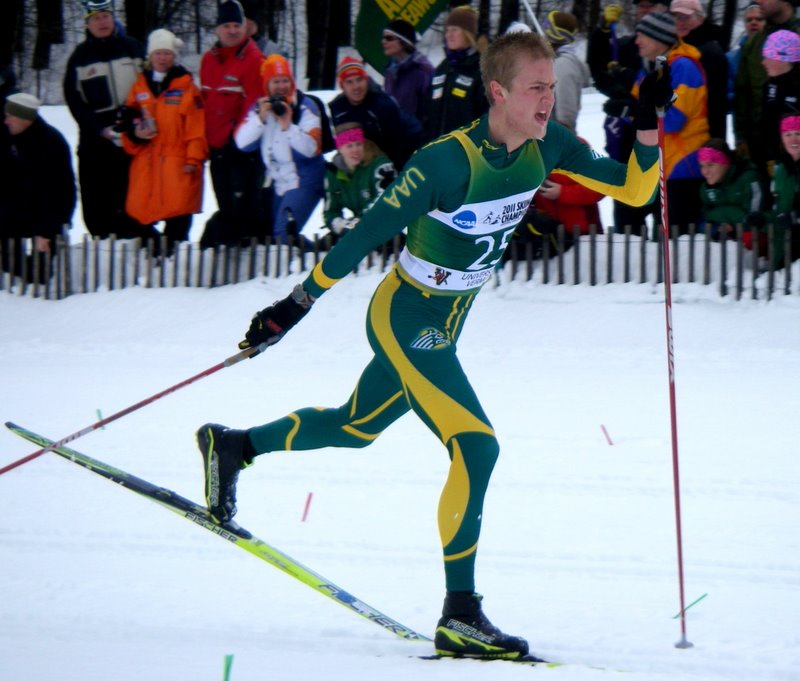
    Erik Bjornsen on his way to second at the 2011 NCAAs in Stowe, VT.


    For a juxtapose of Bjornsen between 2011 and 2019, click the following link.


    With a cohesive training group at APU and the steadiness of Flora, both Bjornsens blossomed. Erik earned his first World Cup start on Dec. 7, 2012 in Québec. A few days later in Canmore, he popped a 36th place in the 15 k classic. Along the way, he won six national championships and was a member of the U.S. Ski Team for seven years. 

    “When Erik first came in, I could see this young, talented skier that was excited about skiing, and he really enjoyed racing,” said APU’s Flora. “And when he first came in, I thought, Okay, if I can help him with his training, and help him reach the next level in fitness, that seemed like an opportunity that was an easy one to help him get toward his goals. And as he retires, you know, there was a certain point where Erik went from being in a place where talking about daily training was constructive, to where Erik absorbed all of that over the years, to the point where Erik knew how he wanted to train, and he had the foundation for it.”

    During the later part of his career, Bjornsen had enough know-how and self-knowledge to write his own training plans with the occasional check in or hands-on training session with Flora. 

    Bjornsen imprinted the cycle in his muscle memory. He attended USST camps, looped around on the Eagle Glacier during the summer, and locked in for a lengthy stint as a World Cup regular. The bag he eventually snagged off the wax bus this past December was left in Europe for five seasons or so, during which he raced at two Olympics and four World Championships.
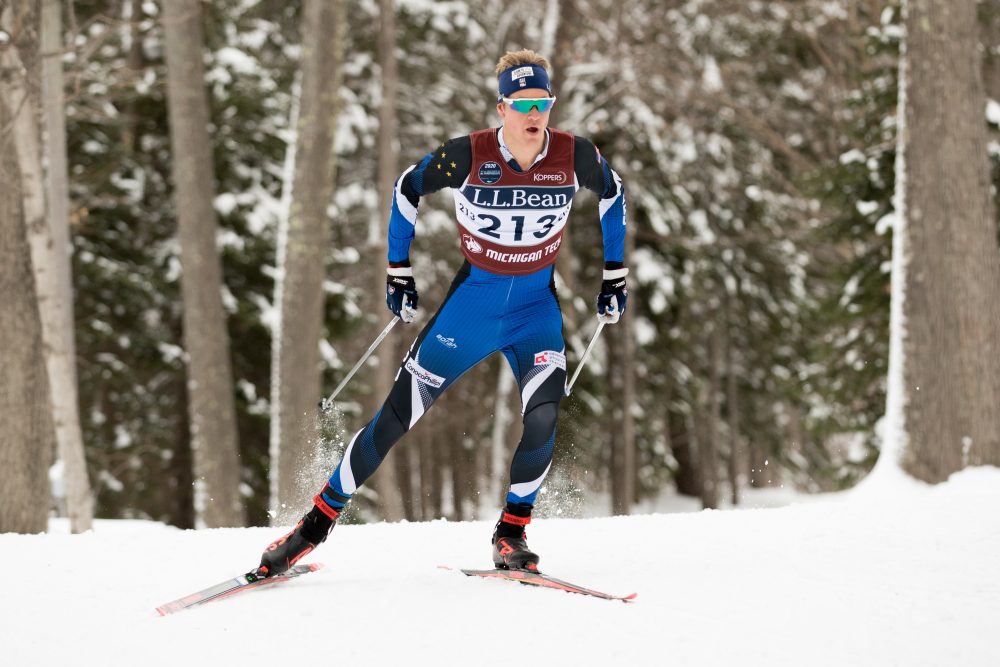
    Erik Bjornsen (APU) during the 2020 U.S. Nationals men’s 15 k skate. (Photo: Reese Brown)

    At the 2014 Olympics, Bjornsen contested five of six events as the youngest member of the team at 22 years old. Sochi was a time he recalls fondly not so much for a “media-worthy” result, but for the pure novelty of it. Big eyes. The Olympic rings. An international career yet to unfold. “It was just so fun, everything around it was great,” said Bjornsen.

    What was also great were the Hamilton-Bjornsen prospects in the team sprint. It’s one thing to prognosticate and imagine a team sprint medal on the men’s side. On paper and on snow this was no pipe dream. Other teams had the luxury of mixing and matching athletes over the years. When sprinting three laps, a total of roughly 4.5 k full tilt, the combo of stamina and 100 meter close out speed is rare. Deep teams can play around, shuffle a deck, optimize for those parameters when naming a team sprint duo. Someone falls ill, insert A for B. Someone has an off year, change X for Y. 

    For Hamilton and Bjornsen, the USST was all in. Sixth in Sochi. Sixth in PyeongChang. Fifth at the 2017 World Championships. Better than coming close, these two provoked legitimate medal hope. And better, the two were good friends. They were not simply two speedy specimens tolerating one another for a material outcome.  

    Walking through the mixed zone in PyeongChang after their finals, on a night when Jessie Diggins and Kikkan Randall won a historic gold 30 minutes prior, Hamilton and Bjornsen were consummate pros. There’s was a no-bullshit interview post-race. In tight quarter racing, Bjornsen had tumbled during the second leg after tripping on another skier’s tails. A tough-to-rebound-from-mishap on the tightrope of Olympic sprinting. 

    “It was super disappointing when I went down, but I mean, it was only halfway through the race and I just got up, and that’s for sure not going to be the end of it for us today,” Bjornsen said to FasterSkier at the time. “Unfortunately, I kind of felt like I let the team down there a bit. I think that was one mistake that may have made a huge impact on our race today, but you know, that’s ski racing, that’s the way it goes sometimes. Unfortunately, it’s at the Olympics.”

    Hamilton immediately responded by focusing on the asset that is Bjornsen.

    “In absolutely no way did Erik let any of us down, especially me,” Hamilton said. “I watched that on the big screen, I have been at a lot of team sprints on the World Cup, World Champs, Olympics, that always happens to someone, and 99 percent of the time, that person, especially if it’s in the finals, just gives up, whether it’s the first leg, second leg, third leg, they just give up. And Erik, he never does that, no matter what happens to him, what happens to us, he just fights ’til the absolute very end.”
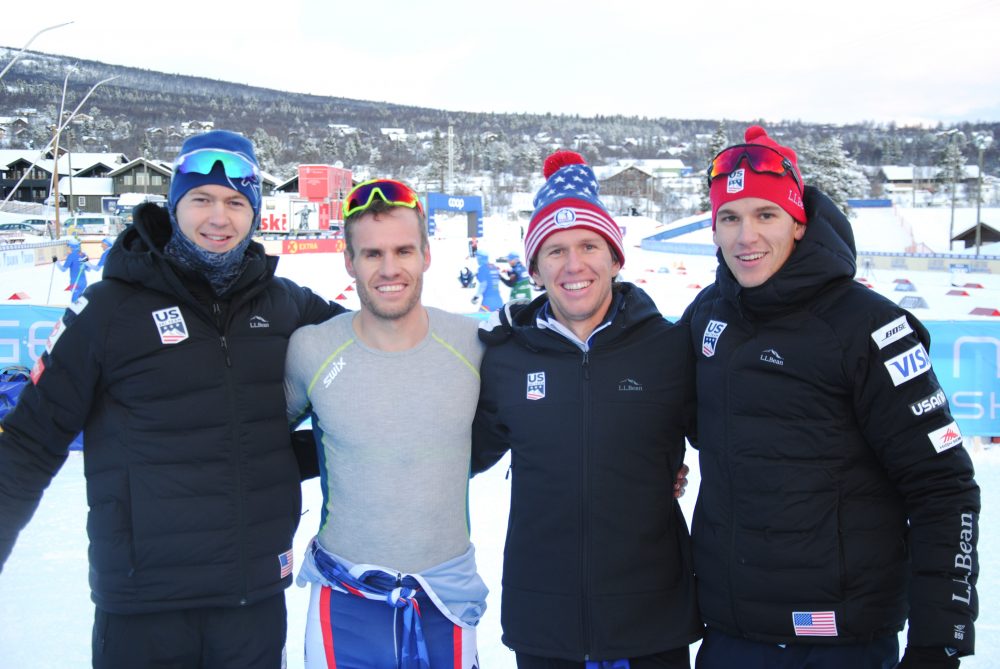
    The U.S. team for the men’s 4 x 7.5 k relay in Beitostølen, Norway (2018). From left to right, Erik Bjornsen, Simi Hamilton, Scott Patterson, and Kevin Bolger. (Photo: Aleks Tangen)

    This was, as Hamilton and Bjornsen knew, their best career opportunity for a hallmark medal. They both made eye contact with reporters — their disappointment palpable. This was clear: The two men had a deep bond forged over countless laughs and near misses. More than anything, the two could trust one another to bring their best. 

    “It’s hard to put into words the impact that Erik not only had on our team, our program, and XC skiing in general over the years, but also the impact that he had on me as my teammate and my friend,” Hamilton emailed when asked about Bjornsen’s retirement. “He grew to become one of my closest friends and I’m confident we’ll remain as such for the rest of our lives. Within the team, Erik defined what it meant to be a genuinely supportive teammate and he was the first person to celebrate any success that someone within our group had. His unwavering selflessness was evident as he always put his teammates, our coaches, and the staff before himself. I think in a way his successes and accomplishments went very much unnoticed because being genuinely happy and supportive of everyone around him always came before the desire to highlight his own results and market his own extraordinary talents. I’ve never laughed harder after hearing some of his witty remarks and jokes over the years and he always lent a tone of humor to any situation, no matter how serious everyone else was taking themselves. I’m grateful for so much that ski racing has given me over the years, but being on the team with Erik lands close to the top of the list of things I’m most grateful for.”
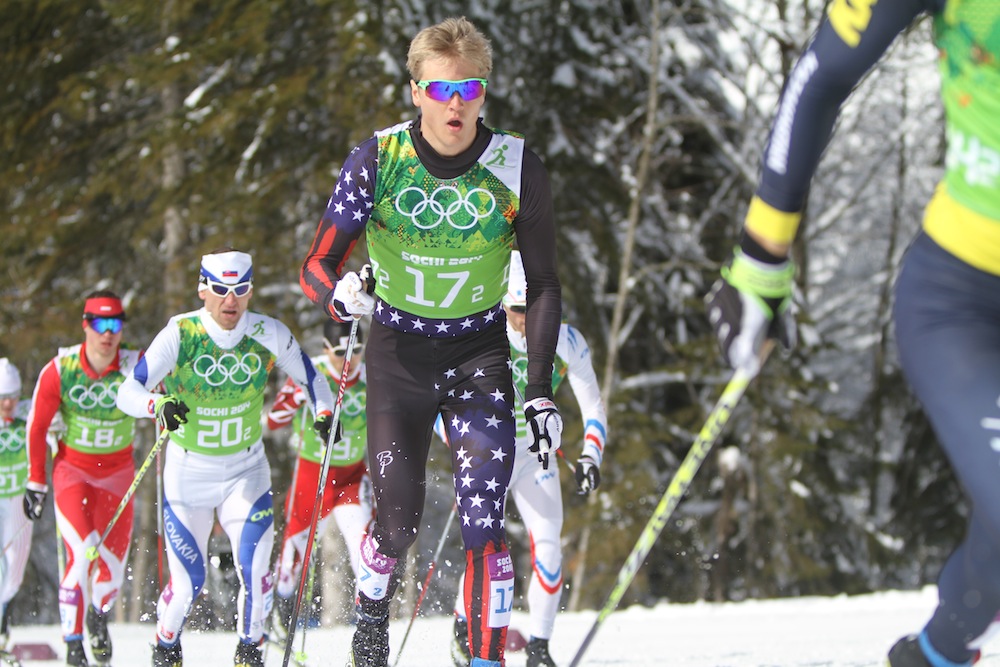
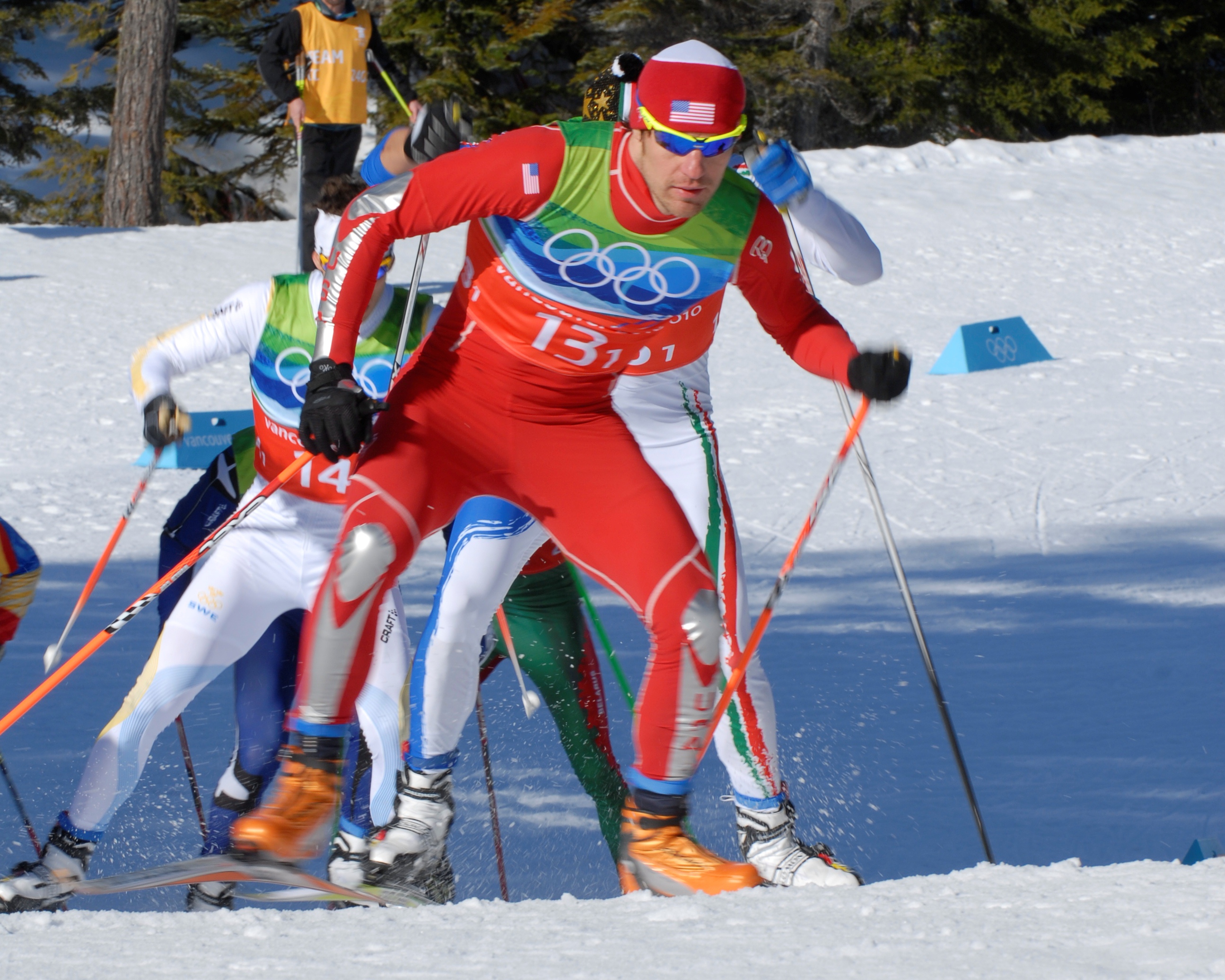
    Erik Bjornsen (USA) racing in the semifinals of the 2014 Olympic team sprint.

    It’s also hard to imagine that a force such as Bjornsen would have successes and accomplishments go unnoticed. Such is the atmosphere of quick turnaround news cycles amidst the backdrop of a national women’s team setting an incomprehensibly high watermark of podiums weekend after weekend.

    “You have to understand, it is like getting beat up over there if you are not achieving what you know you are capable of,” Sadie Bjornsen mused. “Erik has put in a lot of time doing so. I believe Erik is a top-10 World Cup racer. I don’t just believe it, I actually know it.

    “But, in order to achieve that, I don’t want to say it is different in the men’s than the women’s field, but the men, it is to me, just a little more thick on the top. When I have an off day I am generally in the 20s. When I have an on day, I am in the top-10. It is a lot less fun when you have an off day and you are in the 50s or 60s and you have an on day and you can be top-10. That is a big difference.”

    Sadie said her respect for Erik stemmed from his investment in a plan and holding himself accountable to it. “I really respected his confidence in that plan. What it showed me is that he believes in himself and he knows what he is capable of. He did not think of himself as a 50th place racer, he thought of himself as better. At the end of day, if someone achieves that confidence, that is huge.” 

    With Bjornsen’s departure from the team in December, he set forth to race several marquee domestic skate marathons. Although it afforded North American based skiers a chance to toe the line with a generational talent, for Bjornsen it was an opportunity to touch base with the many friends he had connected with during his years as a ski racer. Call it an unofficial retirement tour. 

    Bjornsen said he didn’t come into the races expecting to win since he had modified his training to savor simple on-snow moments. He emphatically claimed that this past winter had been one of his most “fun” yet.

    There’s a prevailing mythos in sport: The peak performance, like Bjornsen dropping Sundby and Manificat, are the highlight reel’s apogee. Those instances all have their place. They send chills. But what about the 99.9 percent of the time when that person was off-stage, not performing? That matters. 

    “Thinking about this, an athlete like Erik retiring makes your chest kind of heave,” Matt Whitcomb, the U.S. Ski Team’s Head Coach said. “You are trying to suppress emotions because he has been such an important part of my life as a coach. He is one of those people that makes being a coach so great. Makes these 120 consecutive days on the road tolerable because he is such a great guy. … He is the kind of the guy that has your back and everybody needs people like him.”

    Lightness and humility are attributes many peers associate with Bjornsen. He was, according to Sadie, unequivocally as much a support mechanism for her as she was for him. The shoulder to lean on tilted in both directions. Outside his immediate family, Erik’s even keeled perspective became an integral piece of the U.S. Ski Team’s European based unit. 
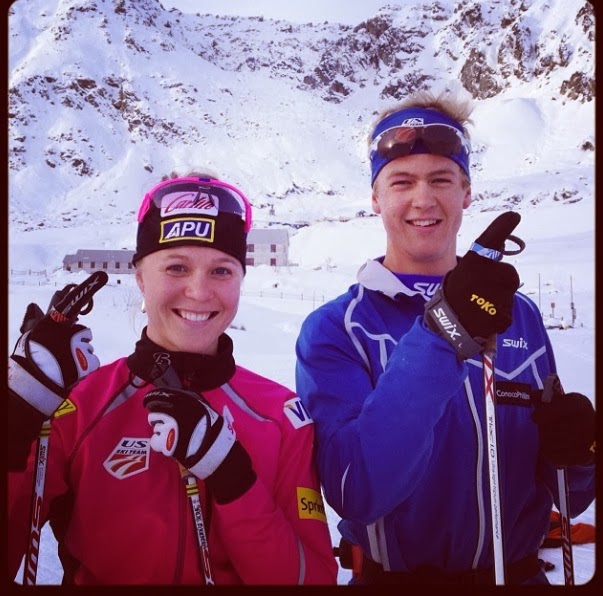
    Sadie Bjornsen and her younger brother Erik in 2013 after winning an Alaska Pacific University time trial earlier this month at Hatcher Pass near Anchorage, Alaska. (Photo: Courtsey Sadie Bjornsen)

    “The role Erik played on the team is easily overlooked,” said Sadie. “We can never talk about it enough. We got a breath of it without Erik the rest of this past winter. That position was really missed. That person who is always enthusiastic, always positive, always having a game, making light of everything. Erik took on that role really young, he was not going to hide anything. He was going to admit when he was struggling or whatever it was. That is a talent when spending four and a half months on the road. That is a long time. It is your family that you are living with, and it is difficult to maintain a positive outlook all the time.”

    There was no bitterness in Erik Bjornsen’s statements or tone when we spoke. He seemed ready with open arms for his next chapter. He did, however, mention a teaser of a thought experiment. “It would have been, at times, super fun to have Kris Freeman at his peak come around 10 years later and I could have skied alongside him. That would have been sweet. We could have pushed each other well.” 

    We can all imagine the mutually beneficial pacing that may have developed. The mentioning of Freeman was only a fleeting whiff of a “what if” moment. The rest, his thoughts of the World Cup, his training principles, his discussion of not meeting some of his expectations, seemed rooted in the past just months after stepping away from the life he’s known since his teens. 

    “It would have been fun to be racing on the podium,” said Bjornsen. “But one thing I noticed just from watching my sister so closely, is I don’t think you get any more happiness. I always really enjoyed racing and being over there even though maybe her results were 10 to 15 places on average higher than mine. It really doesn’t make any difference except maybe a bit financially. In the end, I got as much joy out of it than a guy that would have been on the World Cup podium.”
     

    Erik Bjornsen – 2016 vintage classic skiing powerhouse. (Photo: NordicFocus)
  • Turning the Pages: “Training for the Uphill Athlete”

    Turning the Pages: “Training for the Uphill Athlete”

    “Training for the Uphill Athlete ”– Kílian Jornet runs down the Täschhorn, Switzerland. Photo: Steve House

    For many who read FasterSkier, going uphill remains the name of the game. Although we assume the fidelity to nordic skiing is strong we know many dabble in several outdoor pursuits. Some athletes nordic ski as a means to remain aerobically and anaerobically sharp to parlay their fitness into proud adventures or race efforts far from a PistenBully’s corduroy. In many mountain towns, Crested Butte comes to mind, cross-country skiing becomes a default post-work burn until the weekend’s ski mountaineering epic.

    If you are one of those athletes who are more keen on throwing a 30-meter skinny rope and skin wax in your backpack instead of a tin of extra-blue and you’ve been looking for a training guide, there’s a new book in the training-sphere that might be for you. It’s titled “Training for the Uphill Athlete”. The subtitle reveals more about its target audience — “A Manual For Mountain Runners and Ski Mountaineers”.   

    The book is penned by Kilian Jornet, Steve House, and Scott Johnston. Jornet remains a cutting edge mountain runner and ski mountaineer, House brings his experience training for and scratching up some of the globe’s most demanding alpine climbs, and Johnston, himself an accomplished alpinist and cross-country ski coach brings much of the training know-how.

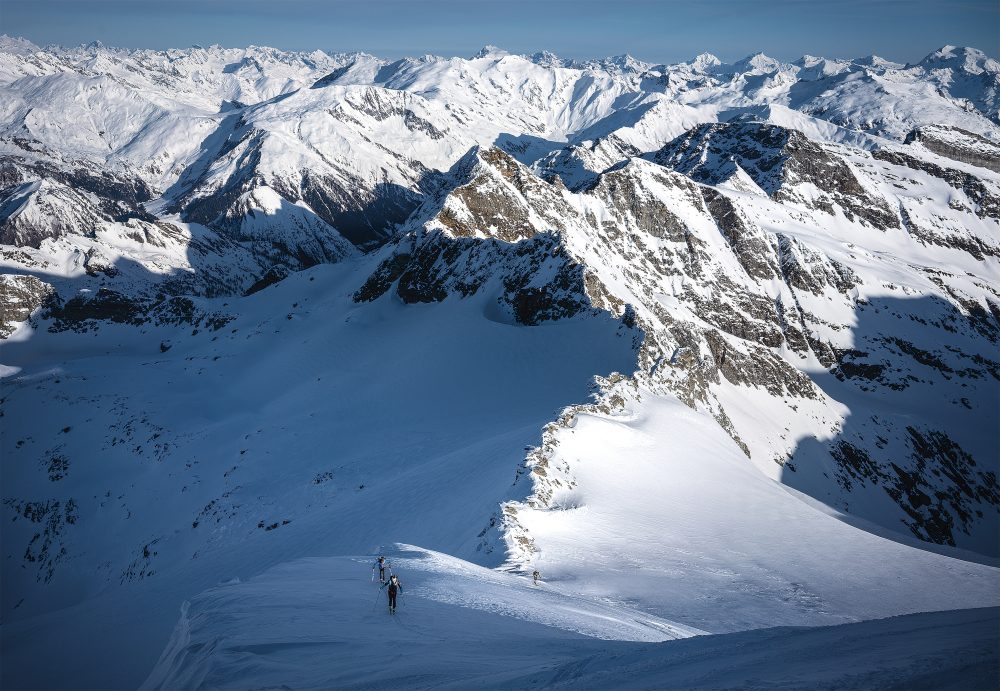
    A photo from “Training for the Uphill Athlete”. Tamara Lunger, Philipp Reiter, and David Wallmann nearing the summit of Rheinwaldhorn in Switzerland. Photo: Mark Smiley

    “Training for the Uphill Athlete” piggybacks on the template of Johnston’s and House’s book “Training for the New Alpinism”. What that means is this: readers are exposed to the science of endurance training physiology, training methods and how to monitor training effects, and the principles of strength training for those interested in defying gravity.

    Like their first “Alpinism” book, “Training for the Uphill Athlete” provides enough information for newcomers to enhance their understanding of training physiology (think metabolic pathways) without feeling as if they are reading a journal article. Conversely, for those well versed in training theory, the book provides a robust collection of sport-specific training stimulus ideas.

    Make no mistake, this is no touch-the-surface book. It is a deep dive pushing 400 pages.

    Organizationally, the writers and editor are genius in a few categories. First, the pages are liberally peppered with lovely photographs that allow one to daydream about why you might be training in the first place. Presumably, if you are reading their book, that reason would be moving fast or faster in the hills. Just when you might be overloaded by the wordsmithing on capacity versus utilization training, presto, several photos are presented that make the book seem like a sunny big-mountain hiatus. (Or a respite from mentally recreating the pathway of glucose to ATP + Pyruvate and so on.)

    Secondly, the book offers countless diagrams, charts, and graphs to help further illustrate the training principles conveyed in text. If you are a visual learner, don’t rule the book out. The visual means by which the authors illustrate information are top-notch and are worth the $35.00 price of admission. The visuals masterfully present dense technical information clearly and allow the reader to glance over at a diagram to reinforce a concept. In that way, it is like an über functional textbook written by Zen masters, not a snore-worthy treatise you might recall from your college days.   

    In reviewing the book over the winter in digital format, and now with the physical book in hand, one thing is clear and it is stated in the sub-title: This is a “manual”.

    The book remains a one-stop library for answering why we do certain types of training to providing scores of ideas for the highly motivated self-starter to craft a training plan. Sandwiched between the covers are personal anecdotes from numerous athletes that bring a human dimension to the book’s more science-oriented presentations.

    With Johnston’s experience in the cross-country ski world (disclaimer, I live in Scott Johnston’s old house but did not purchase it from him), you’ll notice several crossover ideas like moose hoofing, bounding, and striding. In the strength section for ski-mo you’ll feel at home when there’s a mention of rollerskiing and options like a ski-erg workout. So even if you remain a skinny ski devotee — and a 60mm underfoot ski as is typically used in ski-mo races sounds like a powder board — you’ll sense the common training DNA.

    A photo from “Training for the Uphill Athlete”. Anne Gilbert Chase training at The Mountain Project in Bozeman, Montana.
    (Photo: Jason Thompson)

    This is not a new treatise on training specifically for cross-country skiing. Looking for a tome on the why, how, and when to harness your inner Johannes Høsflot Klæbo or Stina Nilsson? “Training for the Uphill Athlete” may not be your go to. Want to delve into ski-mo racing or mountain trail running, or become a faster stronger version of yourself in those disciplines, or simply diversify your on-snow and off-snow training? Then have a read.

    The book’s backstory also offers insight into what you’ll be reading. Johnston was interviewed this past winter in Washington’s Methow Valley where he makes his home. According to Johnston, his first stab at a book, “Training for the New Alpinism”, allowed him an initial go at articulating his thoughts on endurance training.

    “I think I am a little more clear in this book because I have had to explain the physiology hundreds of times to so many people that I am better at it,” Johnston said. “I think the presentation is a little more clear this time. The information is essentially the same. Physiology hasn’t changed since I wrote the first book, but my ability to explain it to people has. I tried to use more metaphor in it this time. I think it is easier for people to learn more challenging concepts when they can relate it to other stuff.”

    Johnston also explained that in writing the book he had plenty of time to collaborate with Jornet. Pinning down Jornet for anything beyond the hardest-core of any mountain adventure remains a task. As Johnston said, “Kilian is busy being Kilian and doesn’t do much except run around the mountains all the time.”
    During the crafting of the book, Jornet suffered a shoulder injury requiring surgery and he then broke his leg in a ski-mo race. Those injuries slowed down Jornet enough for him to discuss uphill training.

    articles

    “I had quite a bit of time to spend on the phone with him last year putting these finishing touches on the book,” said Johnston. “One of the things we wanted to be sure we did was that we are not really presenting any real formulaic recipes. Like here is a training plan for X, Y, or Z. It is more here is all the bits and pieces of how to build a training program. Here are the things you have to keep in mind. Here is how to monitor your fatigue. Here is how to monitor your progress — more like how a coach would look at it than just a cookie cutter recipe.”

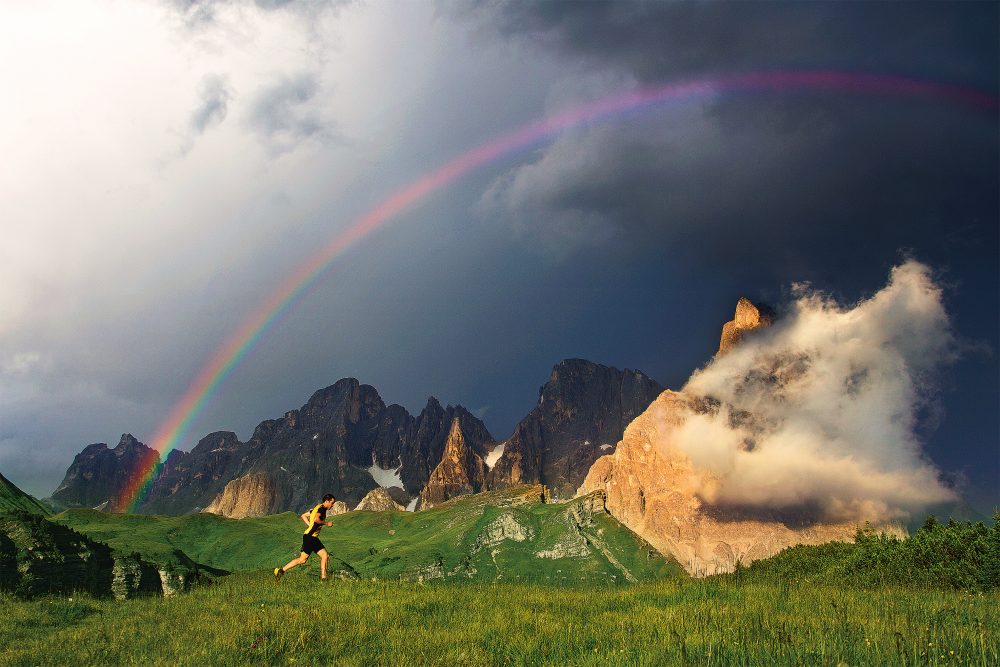
    A photo from “Training for the Uphill Athlete”. Christian Varesco loosens up with a run in view of the Pale di San Martino range clearing after a summer storm. Dolomites, Italy. (Photo: Federico Modica)

    What that means is the reader must be the filter when determining how to use the book. An independent-minded pro, as in self-coached, could use this resource as much as a neophyte master aged athlete. If your life includes activities like caring for small humans, time-consuming employment, or other priorities, the reader will have to scale back the training and determine for themselves how to optimize their reduced training hours.

    By design, the book becomes a stepping off point, like any good how-to book on say climbing, for an athlete to become more self-sufficient. Looking for where to play Lightning Roulette ? Go to the official website of the game https://lightningroulettegame.com/en/

    “Training for the Uphill Athlete” is as much a feast for the intellect as it is for the eyes.


  • After Summer Wildfires, Methow Valley United, Undeterred and Open for Business

    After Summer Wildfires, Methow Valley United, Undeterred and Open for Business

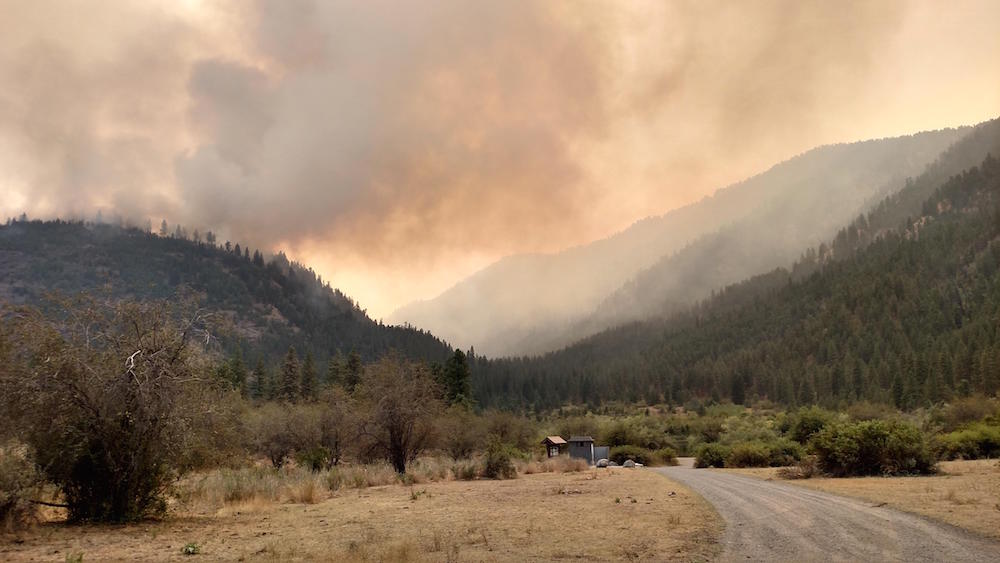
    The Okanogan Complex Fire near Omak, Wash., began with a lightning strike on Aug. 15, 2015 and consumed more than 300,000 acres. (Photo: US Forest Service)
    The Okanogan Complex Fire near Omak, Wash., began with a lightning strike on Aug. 15, 2015 and consumed more than 300,000 acres. (Photo: US Forest Service)

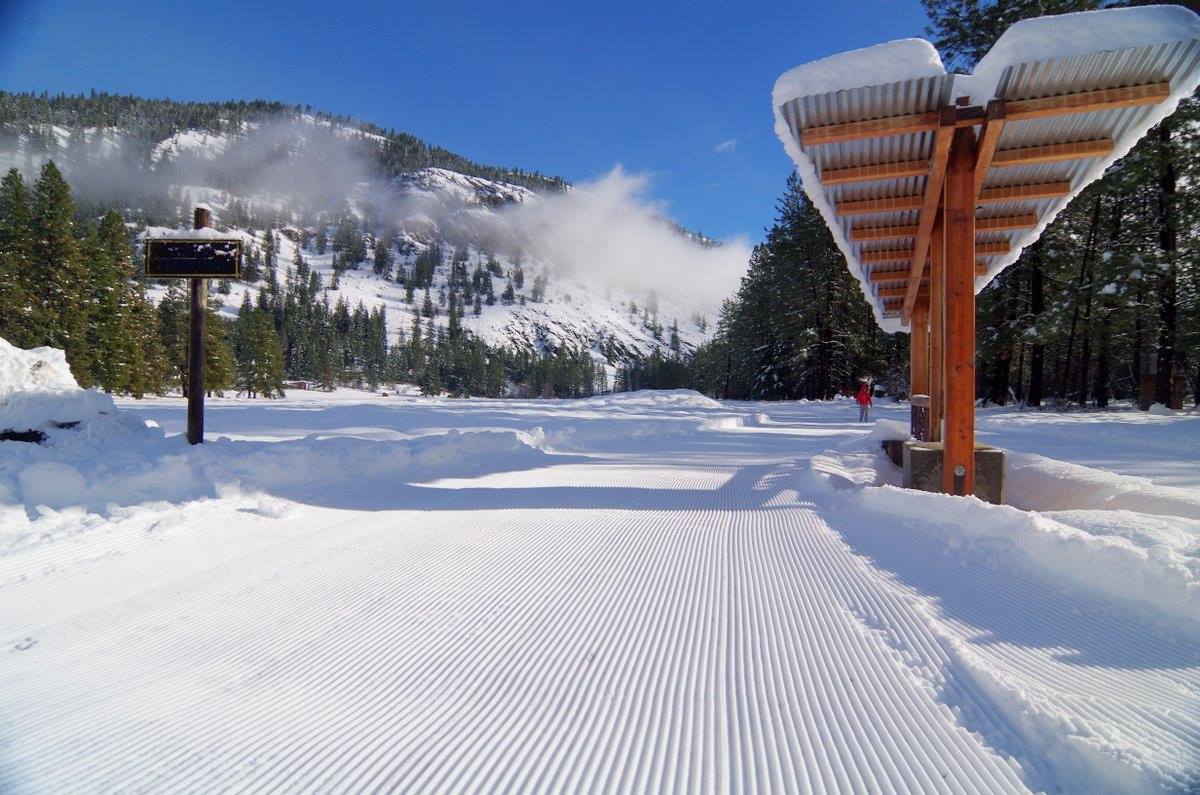
    In late October, snow fell on Washington Pass just outside the Methow Valley in Washington state’s North Cascades. Just yesterday, grooming began on the Methow Trails in anticipation of the earliest opening in the nordic center’s history, set for this Saturday. This kind of start to the season is warmly welcomed by a community that endured two consecutive summers of record-setting wildfires.

    A skiing mecca and home to four 2014 Olympic cross-country skiers (the Bjornsen siblings, Brian Gregg, and Torin Koos), the Methow Valley is also home to the Methow Trails, the self-proclaimed “nation’s largest cross-country ski area.” With more than 200 kilometers of trails in Winthrop and Mazama, Wash., this recreational area attracts visitors from around the country for skiing, trail running, mountain biking, and hiking.

    This past August, lightning strikes ignited what was named the Okanogan Complex Fire, an immense fire that grew to threaten homes, businesses and livelihoods. Actually five fires fought as a single fire due to their proximity to one another, the Okanogan Complex surpassed the previous year’s Carlton Complex Fire to become Washington’s largest wildfire on record. Peaking at 304,782 acres, the fires burned from Aug. 14 through the declaration of 95-percent containment on Sept. 20, according to the National Incident Information System.

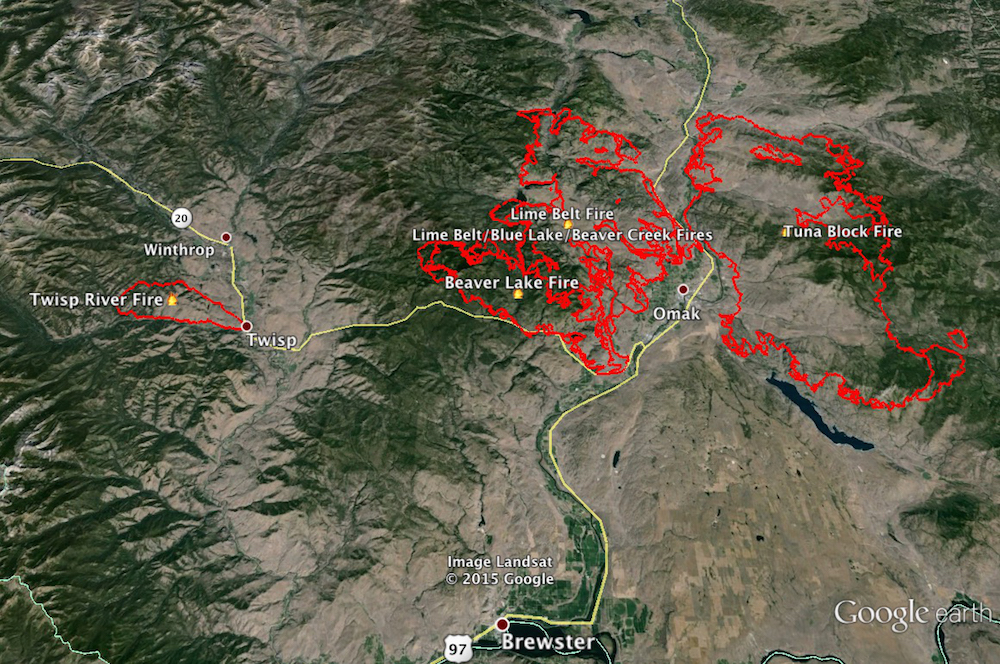
    A map of the Okanogan Complex Fire (Photo: Jeremy Blazar/Overlays by InciWeb)
    A map of the Okanogan Complex Fire (Photo: Jeremy Blazar/Overlays by InciWeb)

    Starting just down the valley from the ski towns of Winthrop and Mazama, the Twisp River Fire posed the highest threat to the ski infrastructure of the Methow Trails and Sun Mountain Lodge.

    Roughly thirty miles to the east, the Beaver Lake, Lime Belt, Tunk Block, and Tuna Block fires combined to create a much larger blaze, forcing evacuations of about 5,400 homes in Okanogan County.

    It was this evacuation that drew the attention of U.S. Ski Team athletes Erik and Sadie Bjornsen, who call the Methow Valley their home despite living and training in Anchorage, Alaska. Their parents still live in the valley.

    “For Eric and I it was a bit a scary because we didn’t hear from our parents right away,” Sadie Bjornsen said in a phone interview. Once they made contact with their parents, they learned they had evacuated to Seattle.

    Bjornsen also mentioned that aside from the size and unpredictability of the last two fires, it had been the idea of getting trapped that Methow residents feared the most.

    “The really freaky thing that happened this summer was that there was a fire over the North Cascade Highway … and there was a fire down in Twisp, and then there was a fire in Omak,” she said. “So all three ways of getting out of the valley were potentially blocked.”

    None of these closures coincided for a total road blockage; however, the valley’s entrapment by fire was a conceivable reality.

    This was more of an issue the previous summer when heavy rains created flooding and mudslides in addition to the ongoing fires. From the experience with the Carlton Complex in July 2014, the valley as a whole learned and was “a little better prepared for evacuation and the infrastructure issues,” Mark Waechter, longtime resident and owner of the Winthrop-based ski shop, Nordic Ultratune, wrote in an email.

    Waechter, who wrote about the fires on his blog in August, didn’t feel the affects of the fires on his business due to the shop’s exclusively winter focus and high volume of mailed-in, ski-grinding work.

    While the Winthrop and Mazama townships that many skiers call home were not immediately affected, the blazes quickly captured national attention when three firefighters died on Aug. 19 and four others were injured. These deaths, especially overwhelming for a small community where just about everyone knew or had a connections to one of the deceased, also drew enough regional media attention to spread an exaggerated sense of devastation throughout the valley, potentially dissuading tourists.

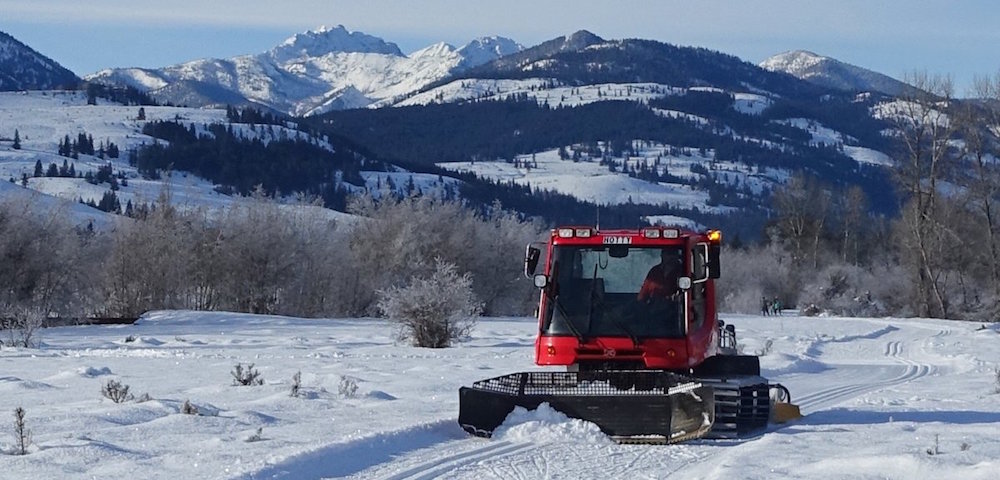
    The first grooming pass of the season took place Wednesday at the Methow Trails. The 200-plus-kilometer trail system is on track for the earliest opening ever on Saturday. (Photo: Methow Trails/Facebook)
    The first grooming pass of the season took place Wednesday at the Methow Trails. The 200-plus-kilometer trail system is on track for the earliest opening ever on Saturday. (Photo: Methow Trails/Facebook)

    “The hardest part about the recovery is convincing people to come visit after the smoke and fire went away,” Methow Trails Executive Director James DeSalvo wrote in an email. “Within a few weeks after this fire took off, the valley was open for business, but our marketing engine can’t compete with national disaster news.”

    All of the skiers and members of the ski community interviewed for this article echoed that sentiment, including Methow Olympic Development (MOD) Squad Head Coach Scott Johnston.

    “If you came here and you drove just up the Methow Valley on the main road, you’d hardly see any damage other than some burned, blackened hillsides,” Johnston said.

    Methow Valley Nordic Team coach Leslie Hall expressed sorrow for the loss of life and property, but explained that her team, “never really missed a beat even with smoke and fire.”

    “The hardest part about the recovery is convincing people to come visit after the smoke and fire went away.” — Methow Trails Executive Director James DeSalvo

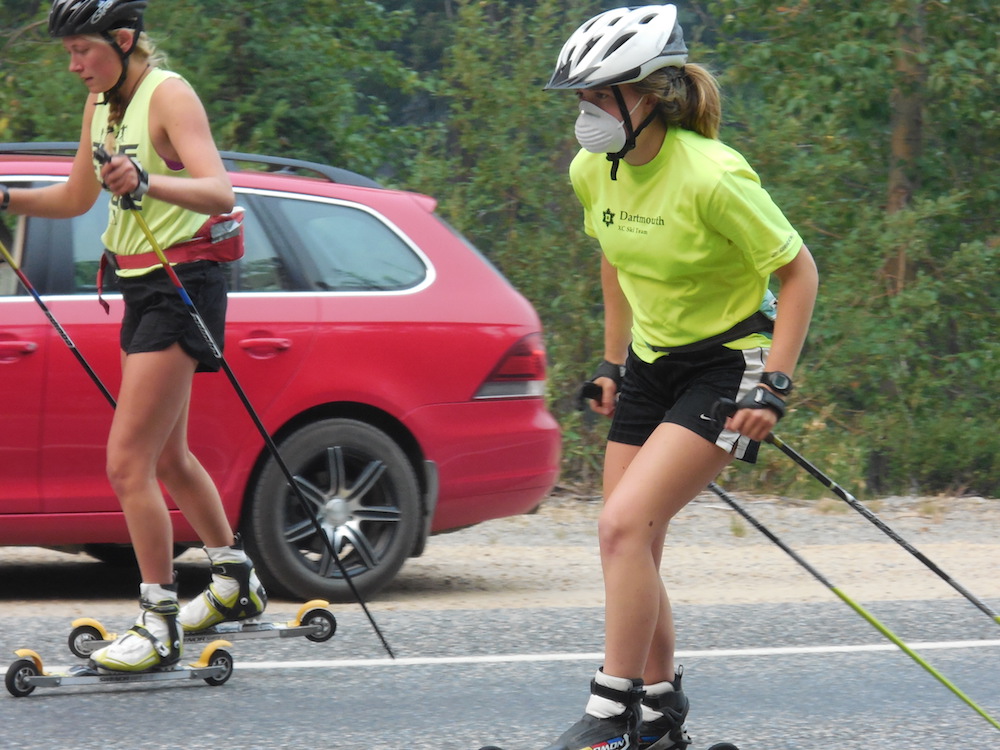
    Training deviated from the planned schedule only when smoke levels hit unhealthy levels. Hall, Johnston and former MOD athlete, Sam Naney, who now runs Momentum Northwest in Seattle, all mentioned the smoke as a training inhibitor, but explained it was easily avoidable by adjusting to the wind and elevation. Bjornsen said her parents still got outside with the use of breathing masks, and she only missed one interval session because of smoke during the week she visited after the fires.

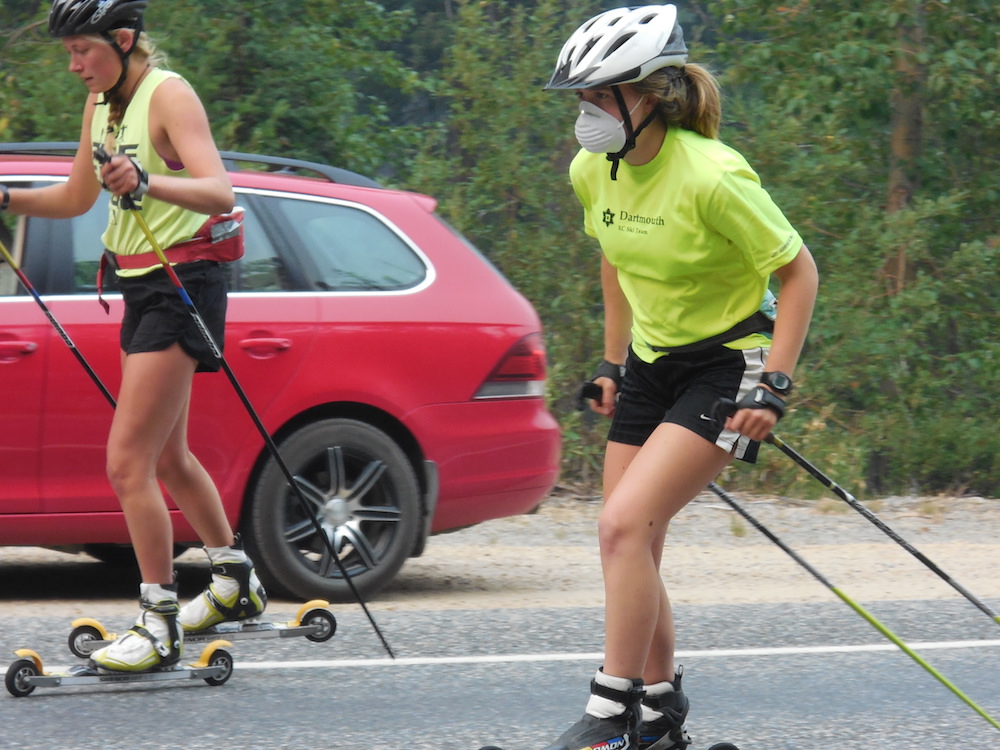
    Methow Valley Nordic Team skiers Ella Hall and Claire Waichler rollerski amidst the smoke on closed Highway 20 this summer. (Photo: Leslie Hall)
    Methow Valley Nordic Team skiers Ella Hall and Claire Waichler rollerski amidst the smoke on closed Highway 20 this summer. (Photo: Leslie Hall)

    From an economic perspective, many agreed that it was imperative for early snow in order to draw tourists back to the Methow. Despite the fires and forest closures, DeSalvo’s staff at Methow Trails has done all of their normal preparation in readying the trails for the winter. On Saturday, they’ll open earlier than ever, right in the nick of time, according to a grooming report.

    To understand the nordic center’s role in the economic recovery of the region, one might consider its return on investment. According to the Methow Trails’ economic analysis published in August, it creates 152 full-time jobs each year, and has accounted for $700,000 dollars in sales tax revenue and $12.4 million dollars in combined direct and secondary expenditures made by trail users. Also, for every dollar spent on trail maintenance, $23 is returned to the local economy.

    Not only do the trails serve the community’s transportation and recreational needs, they are aiding in economic recuperation. Now they just need the snow to cooperate this winter.

    Winter on the Methow Trails. (Courtesy photo)
    Winter on the Methow Trails. (Courtesy photo)

    Looking toward the future, it’s easy to predict more fires as the snowpack and weather becomes more unreliable, and each year seems to be drier than the previous. Wildfires are natural and essential to the ecosystem; thus this will happen again. However, it’s the severity and relentless nature of these past fires that’s scared the community.

    Naney, who grew up in the valley and lived there until this past year, mentioned that this year’s fires were “essentially burning over areas that burnt last year,” making the entire event “… horrifying for people.”

    On the other hand, the community, and the skiers within it, know that preparation is key. Part of this is trail advocacy and promotion since, “the last three major wildfires in our area have all been redirected away from homes and towns due in some part to the trail network acting as a fire line,” according to DeSalvo.

    Part of it is simply working around what the fire destroyed. The Methow Nordic Team did so by offering free membership to those team members whose families lost property.

    As the snow falls, skiing and tourists will return to the valley, and life as usual will continue for all of Okanogan County.

    “Our official opening will be this Saturday and forecast is for sunny and cold for the foreseeable future,” DeSalvo wrote in an email. “Good news for everyone.”

  • Common Training Mistakes: Exposed at West Yellowstone!

    Common Training Mistakes: Exposed at West Yellowstone!

    From left to right: Alex Matthews, Managing Editor, and Mark Vosburgh, Para Nordic Contributor, in West Yellowstone, Mont.  "Let the races begin!"
    FasterSkier contributor Mark Vosburgh (r) with editor Alex Kochon last Thanksgiving 2013 in West Yellowstone, Mont.
    I have been following the Central Ski Association’s CXC Academy training program since last January, so when I traveled to the Yellowstone Ski Festival this Thanksgiving, I was eager to see how my preparations would translate to skiing on snow.In my enthusiasm, I skied long and hard from day one, eagerly testing my limits.  As with past years at West, I was utterly exhausted at the end of each day and pretty much toast by the end of the week.  Additionally, I believed my high-intensity early season training would be the winning formula for improving my racing results this season.
    Early season skiing at the 2014 West Yellowstone Ski Festival as pictured on Nov. 24. (Photo: Lander Karath)
    Early season skiing at the 2014 West Yellowstone Ski Festival as pictured on Nov. 24. (Photo: Lander Karath)

    Then, on my last night at the festival, I attended Scott Johnston’s lecture: Capacity Training vs. Utilization Training; making an informed decision. As I listened, my confidence in my training approach was shaken.

    Johnston, coach of the Methow Olympic Development Program, climber and former U.S. Ski Team member, said that he has seen many athletes whose training habits result in a phenomena called Aerobic Deficiency Syndrome (ADS). With ADS, athletes are forced to rely on inefficient high-intensity anaerobic energy pathways for even slow paced workouts.

    In the lecture, Johnson looked out at the conference room full of fit, dedicated skiers and said he guessed that many, and possibly most of the attendees fit into this category.

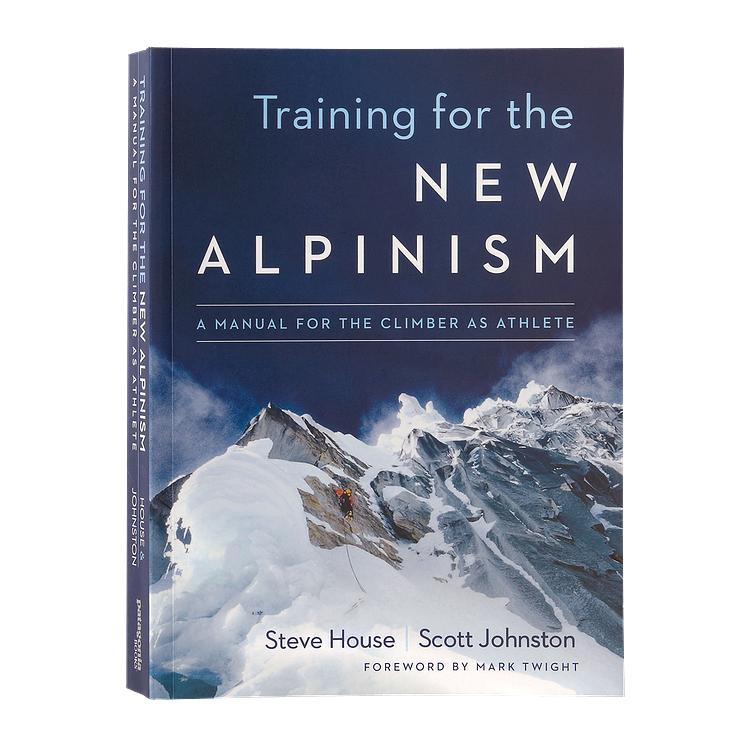
    Intrigued, I followed up the lecture by reading Johnston’s book,Training for the New Alpinism: a Manual for the Climber as Athlete,” co-authored with mountaineer Steve House.  In the book, Johnston goes into detail on the importance of proper aerobic training.Starting with the familiar concept of training zones, Johnston points out that the vast bulk of training, for athletes at all levels, should be done in Zone 1 (below the aerobic threshold).  He states, “The better developed the aerobic base, the faster you can move for extended periods.”

    “The better developed the aerobic base, the faster you can move for extended periods.” — Scott Johnston, Methow Olympic Development Program head coach

    He points out that even world-class endurance (defined as efforts lasting around two minutes or longer) athletes, including 800-meter runners, excel by developing a huge aerobic base before adding the high-intensity work needed to peak for competition.
    "Training for the New Alpinism: a Manual for the Climber as Athlete" by Scott Johnston and Steve House
    “Training for the New Alpinism: a Manual for the Climber as Athlete” by Scott Johnston and Steve House
    Johnston goes on to explain the mistake that I (and apparently many others) make.  For many of us, our Zone 1 workouts are mistakenly performed at intensities too high to give us the aerobic system benefits that are intended.”Harder is not better when it comes to development of your aerobic threshold,” he stresses.Johnston says that part of the problem is that Zone 1 aerobic training may feel too easy and too slow to be beneficial, a problem that worsens as we do more and more high-intensity training.   Without physiological testing to identify our aerobic threshold, we are left with a variety of methods including perceived exertion to heart-rate monitoring to gauge our intensity. In the real world, many of us overestimate the effort required to effectively train our aerobic energy systems.  As a result, our aerobic capacity can actually decrease.

    The symptoms of improperly training our aerobic base include not being able to ski without breathing hard, and prematurely tapping into our high-powered, but short-lived anaerobic energy reserves.Johnston points out that “long slow distance” aerobic training is better described as “long easy distance” training.  As our aerobic base develops, we should be able to ski faster and faster on our long distance days while not losing the feeling of “easy” effort.

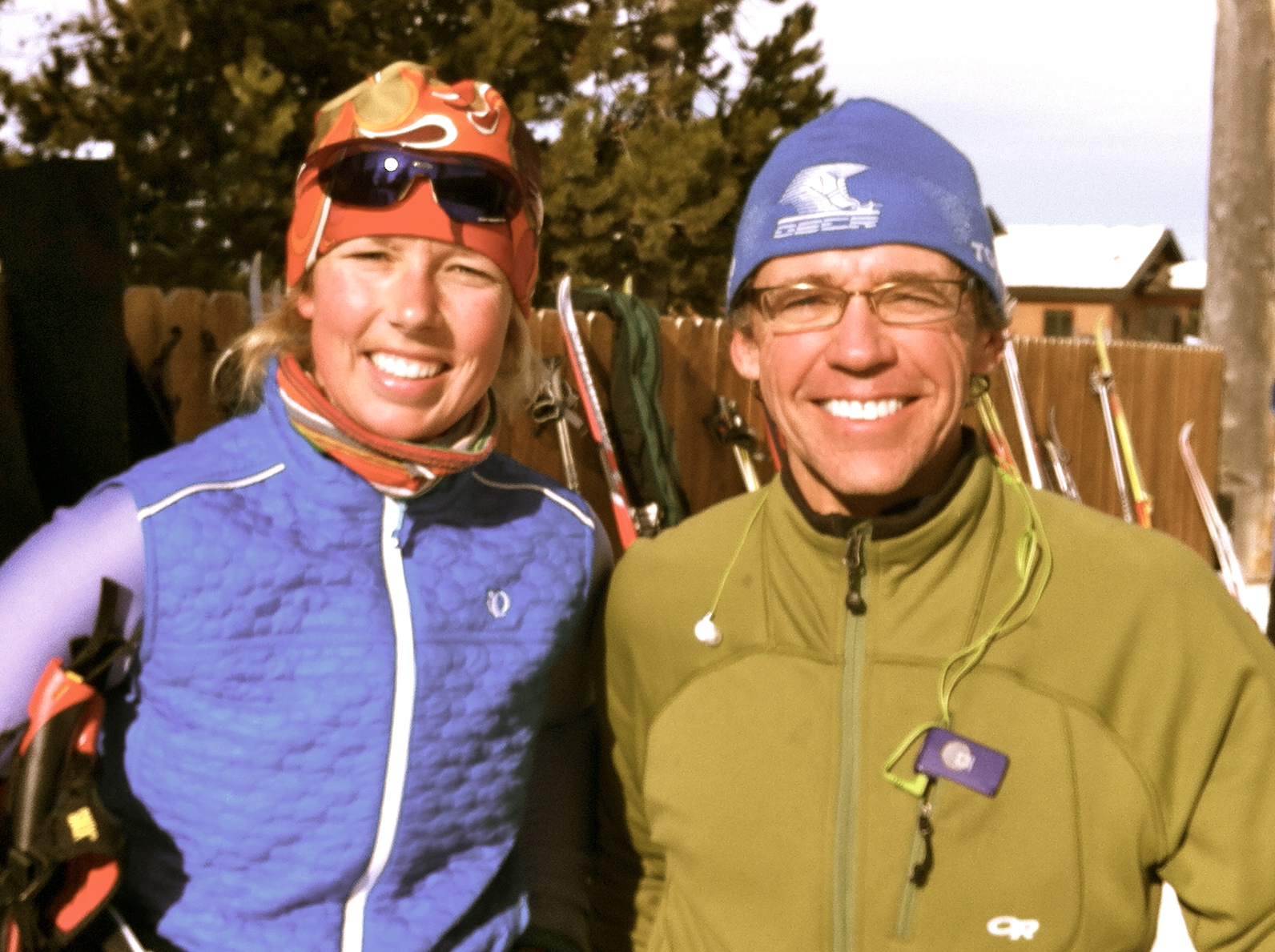
    Scott Johnston (r) with Olympian Torin Koos in 2010. (Courtesy photo)
    Scott Johnston (r) with Olympian Torin Koos in 2010. (Courtesy photo)

    Another symptom of improper aerobic training was what I experienced at West Yellowstone.  Since I trained too hard on my long easy days and warm-ups, I was simply too tired to effectively train during my harder Zone 3, 4 and 5 workouts.  My exhaustion at the end of the week should have been a red flag my training was unsustainable, given my inadequately developed aerobic energy system.

    In his lecture and in his book, Johnston provides a prescription and practical methods to avoid Aerobic Deficiency Syndrome. If you are unable to get a laboratory test to find your aerobic threshold heart rate, Johnston recommends starting to exercise slowly while breathing through your nose only.

    “As you increase intensity/speed, note the point at which this nose breathing becomes noisy and labored,” he notes.  This is the upper limit of Zone 1 (your aerobic threshold).

    Brian Gregg (Team Gregg/Madshus) racing to second in the SuperTour 15 k freestyle in late November in West Yellowstone, Mont. (Photo: Toko)
    Brian Gregg (Team Gregg/Madshus) racing to second in the SuperTour 15 k freestyle in late November in West Yellowstone, Mont. (Photo: Toko)

    In his lecture, Johnston described coaching 2014 U.S. Olympian Brian Gregg and prescribing months of long distance aerobic base training at an effort where Gregg would breathe only through his nose.  At first, Gregg found it very challenging to stay at this low intensity, and joked that he felt like training with “a bag over his head” because he was embarrassed that he was running so slowly.

    With time, Gregg’s aerobic capacity increased to the point where he could easily click off mile after mile at a faster pace while maintaining Johnston’s nose-breathing limit. Johnston credits Gregg’s improved aerobic capacity as setting the stage for Gregg’s eventual selection to the 2014 U.S. Olympic team.

    My experience with the nose-breathing method mirrors Johnston’s description in the book: “For some of you this (Zone 1) will be the hardest zone to train in.  You may find that you can barely jog or can only hike uphill very slowly … before you must begin mouth breathing … and your heart-rate climbs … right through Zone 2 and into Zone 3.”

    In my experiment with the CXC Academy training plan, I realize that I should have paid more attention to the information on training zones.  While the information is provided in the plan, I skimmed over it.  It took me hearing Johnson’s lecture and reading his book to jar me into recognizing my two major (but common) training mistakes.  Johnson summarized these mistakes in an Outside Online interview:

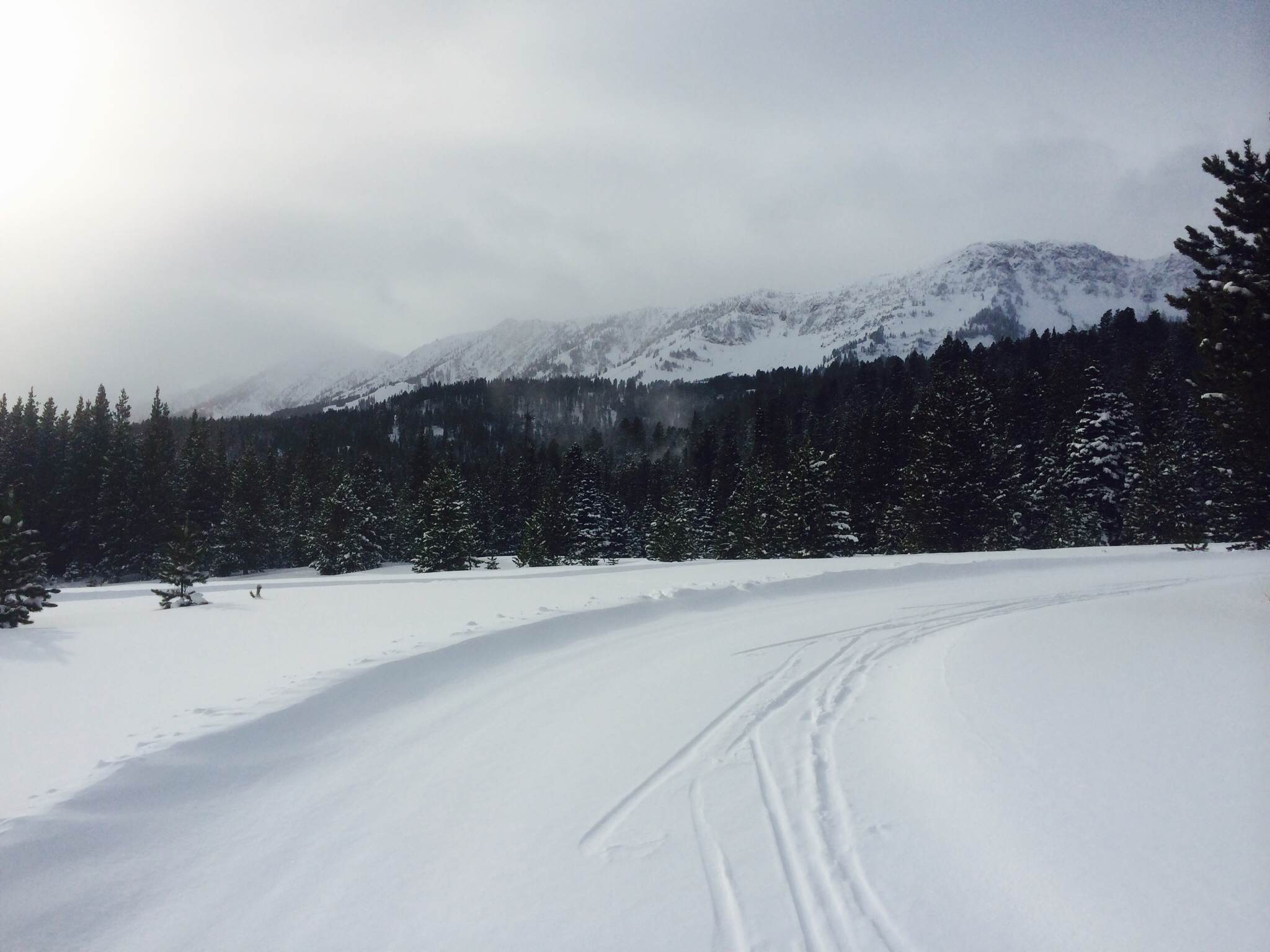
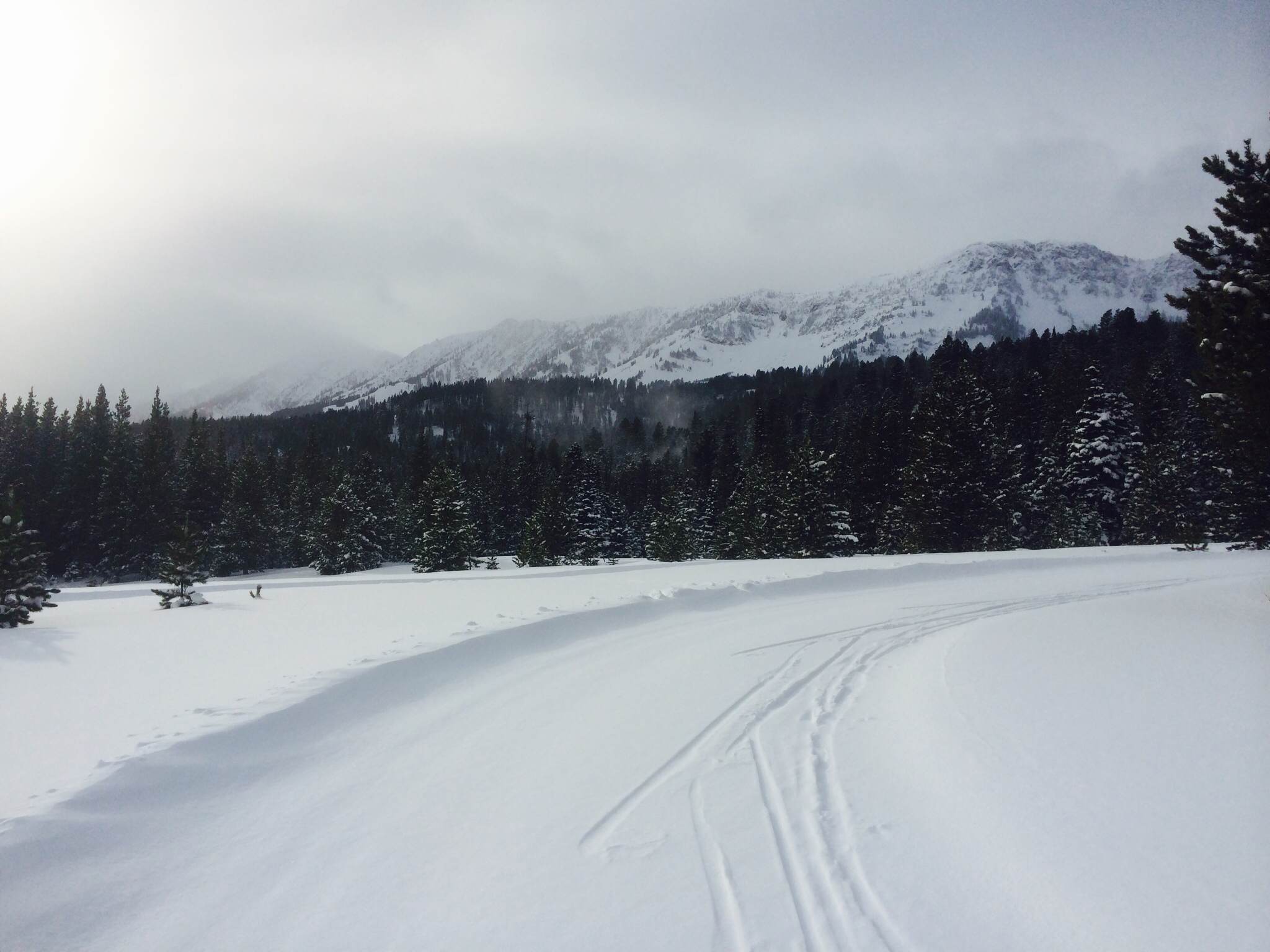
    Fresh tracks this winter at Bohart ranch near Bozeman, Mont. (Photo: Mark Vosburgh)
    Fresh tracks this winter at Bohart ranch near Bozeman, Mont. (Photo: Mark Vosburgh)

    “Most people, regardless of sport, train basic aerobic endurance too hard or fast. This happens for two primary reasons. The first is that this intensity level ‘feels like training’ because it feels moderately hard. Secondly, many people are time-limited in their training and imagine that they can make up for the duration of training by increasing the intensity.”

    So now, armed with good information, I’m back on track with my training plan.  I credit the CXC Academy training plan for a steep change improvements in my ski specific strength and ski technique.

    Now, I’m looking forward to improving my aerobic capacity.  On my CXC Academy prescribed Zone 1 over-distance days at Montana’s Bohart Ranch and Seeley Lake trails, I’ll be skiing easy, breathing through my nose, and avoiding the temptation to put a bag over my head!


  • An Open Letter to USSA CEO Tiger Shaw from Methow Valley’s Scott Johnston

    Three-time Olympian Torin Koos (L) and Scott Johnston in 2010. Courtesy photo.
    Three-time Olympian Torin Koos (L) and Scott Johnston in 2010. Courtesy photo.

    The following is a letter that Scott Johnston, the coach of the Methow Olympic Development squad that at some points included Sadie and Erik Bjornsen and Torin Koos, and who also coached Team Gregg, shared with FasterSkier. He addressed it to U.S. Ski and Snowboard Association CEO Tiger Shaw after receiving Shaw’s Fall Quarterly Update, but says he has not received a reply. Some of Johnston’s concerns served as the basis of questions we asked Shaw when we interviewed him earlier this week. You can read the resulting story here.

    In his letter, Johnston references a report commissioned by USSA from the consulting firm McKinsey & Company. The report can be found here.

    For his part, Shaw told FasterSkier that he had no record of Johnston’s e-mail on the USSA server (we provided him with a copy of the letter so he could search the email address). The disconnect appears to have been an electronic snafu, and FasterSkier has put the two men in touch.

    Dear Mr. Shaw:

    It is with interest that I read your recent letter to USSA members but I must confess to some dismay as well.  I’d like to point out the areas that cause my dismay.  Please be aware that these are areas that have been a source of disappointment with USSA for years and I was really hoping to see substantive changes after the McKinsey report and the recent welcome change in leadership.

    I well understand, firsthand, the need for a focus on results at the World Class level.  Four of the members of this year’s Olympic Cross Country team were skiers that I have coached extensively, two of them from the age of 12.  So, my desire to place athletes on the world stage should be in no doubt.  In that way I share your goal of International excellence.  However, I am concerned by what I perceive at USSA as a general lack of understanding of where these elite athletes come from in the first place.  I have encountered this disconnect at all levels of dealing with the USST/USSA and now I sense that same disconnect in reading your letter.

    These kids do not pop fully formed on to the international scene ready for the USST to take them to World Junior Championships or the World Cup.  These young champions come from the clubs and the private coaches working for small financial gain or volunteering huge amounts of time and resources to see that these young skiers develop in the best possible way.

    To that end, your base of membership and its development should be the number one goal of USSA.  If this is done well the USST will have ample talent to choose from for the secondary goal of wining medals.  Without this club oriented base and the effective development process it ensures we will continue to rely on luck in finding our next world beaters.

    One year ago I attended a coaching symposium for cross country coaches at the Center for Excellence.  One of the most engaging and informative speakers was Jack Roach, USA Swimming’s National Junior Team Director. Jack spoke for a few hours on the development process utilized in swimming.  Without doubt US swimming can be viewed as an athletic success story. One that, with regularity, produces world class performers.  They fully prioritize the importance of the clubs and their membership base in contributing talent to the national team and place many resources and a large focus at the individual and club level.

    Sadly the USSA does not do share this vision. From the Mckinsey report and as verified by my casual polling of coaches, parents and skiers the perception is very strongly held that USSA/USST exists to extract fees from it members to support a largely top heavy organization that has little regard for its basic membership.  This may seem like a harsh criticism and I would love to have my perception changed, but it is a message that does not seem to have made it to the meeting rooms and offices of the Center of Excellence, so, forgive my bluntness.

    Last year USSA members received notice that their competition license prices were going up substantially.   Among the skiers, coaches and parents I know there was considerable discussion about this and it was largely seen as further evidence of the points I have made above.

    In an already small membership in an already very expensive sport, this seems like the exact opposite of a good business decision.  Would any other company seeking to increase market share raise its prices?  Your base of members, kids coming into competitive skiing, is also lured by other sports.  For comparison with other individual sports, here is a list of membership fees/competition licenses:

    USA Swimming: $50/yr

    US Track and Field U-18 $20/yr, Adult $30/yr

    USA Gymnastics  $54/yr

    All of these sports can lay claim to larger membership bases than USSA as well as consistent top results at the international level.  All of them are directly competing with skiing for the time, energy and funds of these young people.  Could there be a connection between lowering the barrier to entry in the sport and more consistent elite results.  I am in no doubt of it.

    A few USST stickers and a Comp guide are really not very much of a benefit of membership. Sadly that is the perception of many kids and parents who are making decisions about the direction that these young athletes will be taking during the critical adolescent years.  As a minor sport in a culture filled with distractions and diversions we cannot afford to have our talent turned away from skiing during these peak development years. We just don’t have talent to waste.

    I hope that these heartfelt comments from someone who has spent many years volunteering his time and money to the sport will be taken not as the ranting of some disgruntled malcontent but instead as constructive critique from a guy working daily in the trenches.

    Sincerely,

    Scott Johnston

    Mazama, WA

  • The 12: Methow Olympic Development

    The 12: Methow Olympic Development

    Sam Naney leads Rogan Brown during a Trout Lake Camp time trial. (Photo: Curt Hawkinson)
    Sam Naney leads Rogan Brown during a Trout Lake Camp time trial in Washington. (Photo: Curt Hawkinson)

    Note: This is the ninth preview in our U.S. elite-team series, called the “The 12.” We asked coaches to tell us what’s new and whom to look out for this season, and we’ll publish additional previews in the coming weeks in no particular order.

    Team: Methow Olympic Development (MOD)

    Coach: Scott Johnston

    Roster: Sam Naney, Brian Gregg; Caitlin Gregg, Maya Seckinger

    Brian and Caitlin Gregg skiing on Donner Pass in California. (Photo: Mark Nadell/MacBeth Graphics)
    Brian and Caitlin Gregg skiing on Donner Pass in California. (Photo: Mark Nadell/MacBeth Graphics)

    Who’s new: Both Greggs (formerly of Central Cross Country, a.k.a. CXC) and Seckinger (Methow Valley Nordic Team). Brian Gregg was previously an MOD training partner, working out with Naney and Johnston in Washington’s Methow Valley last summer while Caitlin balanced school and training in the Midwest. Seckinger, a junior, will be pursuing success at Junior Nationals, according to Johnston.

    Top results last season: The team’s longstanding staple, Naney, 28, qualified fifth in the classic sprint at U.S. nationals in January and went on to place ninth in the heats at Soldier Hollow in Midway, Utah. He was ninth again at the SuperTour Finals classic sprint in Soda Springs, Calif., placed 10th in the American Birkebeiner in Wisconsin, and was fourth in the Madison SuperTour skate sprint.

    Brian Gregg, 29, narrowly missed the podium in the 15 k skate at nationals, placing fourth, and was the second-fastest qualifier in the skate sprint at Soldier Hollow. He won a SuperTour in Aspen, Colo., and was second in the hill climb at SuperTour Finals.

    Caitlin, 32, qualified for the Canadian World Cup sprints in Quebec, where she was 18th in the team sprint and 49th in the individual skate. She won the American Birkebeinerfor the second time since 2011 and took the 5 k title at Canadian Nationals in Whistler, B.C. Like her husband, she qualified second in the U.S. nationals skate sprint at Soldier Hollow.

    Maya durign the Trout Lake time trial. (Photo: Curt Hawkinson)
    Maya Seckinger during the Trout Lake time trial. (Photo: Curt Hawkinson)

    As a first-year J2, Seckinger clocked the eighth-fastest relay leg at Junior Nationals in Fairbanks, Alaska, where she was also ninth in the sprint qualifier and 14th in the 5 k freestyle. Her stellar season earned her an invite to the USSA National J2 Camp in late July in Michigan.

    Coach’s comments: “The new additions have brought challenges but great rewards, too,” Johnston wrote in an email. “As a coach I am continually learning from the athletes and having more top level skiers has made my job more interesting. My approach is to design each athlete’s training to meet their individual needs and at times were are going 4 different directions but all with the same ending destination.”

    ***

    Other previews: Alaska Pacific University | Bend Endurance Academy |Bridger Ski FoundationCraftsbury GRP | Maine Winter Sports CenterSSCV/Team HomeGrown | Stratton Mountain School T2 | Sun Valley SEF Gold Team

  • Elite Team Preview: Methow Olympic Development

    Elite Team Preview: Methow Olympic Development

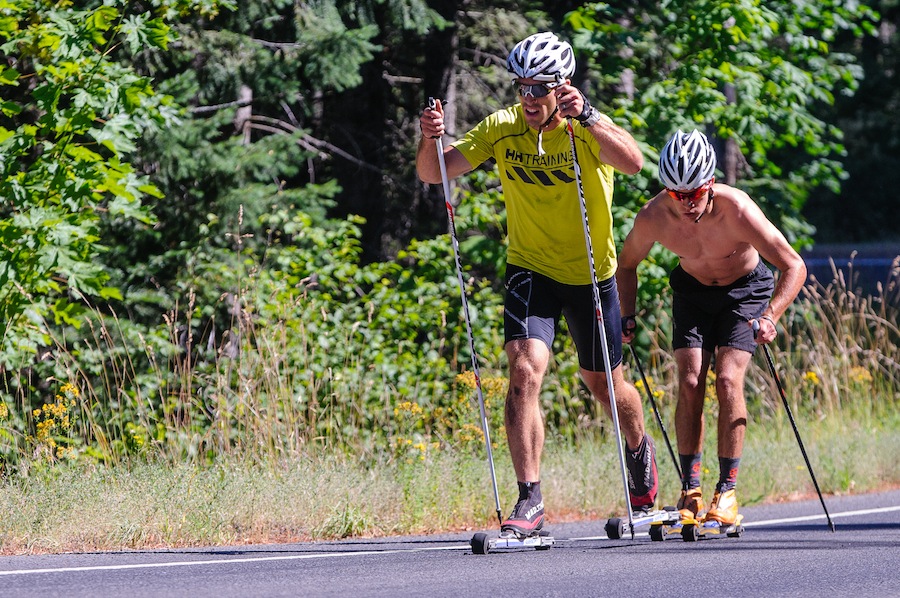
    Methow Olympic Development skier Sam Naney (left) rollerskiing with Brian Gregg of CXC during a recent training session in Washington state’s Methow Valley. Gregg joins the MOD squad as a training partner this summer, but will continue to compete for CXC. (MOD photo)

    Note: This is the seventh preview in a quick-and-dirty series on U.S. elite teams. We asked coaches to send their 2012/2013 rosters and tell us what’s new for the coming season. We will be publishing additional reports over the next few weeks. Teams are presented in no particular order.

    Team: Methow Olympic Development (MOD)

    Coach: Scott Johnston

    Roster: Sam Naney

    What’s new: Brian Gregg as a training partner. Gregg will spend much of the summer in his hometown of Winthrop, Wash., working with Johnston and Naney in the Methow Valley. Naney tied the knot in June, marrying massage therapist Alison Hanks in his parents’ backyard.

    Top results last season: Naney, 27, notched a career best of 13th at U.S. nationals in the 15 k skate. In the Tour de Twin Cities that followed, he tallied three top-five finishes and ended the season with a slew of SuperTour and NorAm top 10s. He made the podium in St. Paul, Minn., placing third in the 20 k freestyle pursuit.

    Coach’s comment: According to Johnston, last year was an important building block for Naney, a sprinter with aspirations of being a better all-around skier.

    “We chose to take a slightly different approach with his training and focus more on building a better aerobic base training. We did this at the expense of his Sprint specific training and his results bore this out,” Johnston wrote in an email. “We had to make decisions to deviate from his traditional strengths of sprinting and power in the training, and those decisions cost us in the season; despite qualifying 5th in the Nationals skate sprint, Sam did not move on through his quarter and went on to have similar disappointing results in sprinting, usually his strongest event.”

    Sam Naney of the Methow Olympic Development squad working out in northern Washington. (MOD photo)

    This year, they’re working “to bring the whole package together,” Johnston wrote, adding that the progression was already happening.

    “This winter should be Sam’s strongest yet,” he continued.

    In an email, Naney explained that he specifically wanted to boost his speed and anaerobic power by the start of the season.

    “The hope is to carry the training well all the way through to November and the Canadian World Cup trials,” Naney wrote. “Last season we built a great ‘cake’ but didn’t have time to add the finishing touches.”

    It can’t hurt to have Gregg, 28, training alongside him. Entering his seventh year with Central Cross Country (CXC), Gregg will continue to compete for the Midwest’s elite team, keeping his home base in Minneapolis. His wife and CXC teammate, Caitlin, will stay there, training between a series of five-week intensive anatomy and physiology courses at Normandale Community College.

    Reflecting on his performance last year and goals of improving, Brian Gregg decided to return to Johnston, his high-school coach in Winthrop, Wash., as a personal coach.

    “Scott and I have discussed his training philosophies a lot and we have identified a number of areas that I have to improve,” Gregg wrote in an email.

    Gregg detailed the move on his blog, explaining that he’d return to the Midwest for training camps while working individually with Johnston and Naney out West. He aimed to minimize travel, training in long blocks, and liked Johnston’s scientific approach with speed and intensity monitored by GPS, lactate and heart rate. Gregg is currently training most days with the two-man MOD crew and loving the coach-to-athlete ratio.

    “Scott’s coaching style is very hands on and individual and requires a small group,” Gregg wrote. “For Sam and me, our individual strengths complement well with opportunities for the other to improve.  We are able to push each other and are making notable improvements.

    “It is tough to be away from Caitlin but I do get to spend more time with my family, and I believe this will help me make that next jump in performance,” he added.

    His childhood friend, Naney is excited.

    “It’s been a great change from last season in which I spent the whole year training solo,” Naney wrote. “Brian offers distinct qualities as a training partner and his distance skiing focus contrasts well with my sprinting, allowing us to feed off each other and push each other in our weaknesses.”

    As for Johnston’s method, Naney has always liked its unique and out-of-the-box ideas.

    “Scott has made a concerted effort to look outside traditional ski training and into other sports to find better ways to train endurance and speed athletes,” he wrote. “Currently we’re working with a mixture of marathon runner training and swimmer training. Instead of maintaining a cyclical-style training plan where we repeat the same workouts all year, we operate off progressions of workouts, increasing workloads and intensities all the way into the fall. We’ve found that in this manner, we can continue stressing the various physiological systems such that they respond faster and stronger than before.”

    ***

    Other previews: Bend Endurance Academy | Craftsbury GRP | CXC | Far WestMaine Winter Sports Center | XC Oregon

  • Koos Looks To Sochi, Heads Back to School

    Koos Looks To Sochi, Heads Back to School

    Torin Koos, who just completed his first season outside of the US Ski Team structure but still managed to qualify for a spot on the squad representing the United States at the 2011 World Championships in Oslo, is hungry for more.

    “I plan to race through 2014, so I’m recharging the batteries as the moment,” Koos said. “My goal is to have top results in both the 2013 World Championships in Val di Fiemme and in Sochi 2014 [at the Olympic Games].”

    After spending last season living in Mazama, Washington as part of the Methow Olympic Development Project (MOD) working with coach Scott Johnston, Koos will be on his own for the 2012 season, but doesn’t think pursuing his goals outside the US Ski Team, and without a formal coach will be a disadvantage for him.

    “Doing it this way gives me the opportunity to do what I am doing and spend time where I want to be,” Koos said, adding that after a decade on the international circuit he feels that he knows how to put together a training plan.

    “It’s not rocket science,” said Koos, who is turning 31 in July.

    Changing everything

    On Monday May 9, Koos moved to Utah and drove straight to campus to attend his first classes of the spring/summer term at Westminster College. His tenure on the US Ski Team, which ended after the 2010 Olympic season, earned him free tuition at Westminster College.

    Torin Koos (MOD) winning the skate sprint at the U.S. National Championships in Rumford, ME. (Photo: flyingpointroad.com)

    “I’m excited to get back into that and get going on my degree again,” Koos said to FasterSkier.

    While Koos is going back to school this spring to complete his master’s degree, he is planning to race full time in the winter. He started the degree – a Masters of Professional Communication with emphasis on Internal Business Communication – in the summer of 2005.

    He considers the 2005-06 season the breakthrough year in his skiing career, so going back to the program he started prior to that brings back good memories.

    Koos will go to school full-time this spring/summer and fall, and then again next spring/summer and fall. If all goes according to plan, he will receive his degree in the end of the fall term 2012. That progression leaves him free to pursue skiing full-time in the winter.

    Training in Norway

    The fall term ends in mid-December, and Koos plans on heading to Rumford, Maine for US Nationals in early January.

    After Nationals, Koos is making plans to spend a large chunk of the winter in Trondheim, Norway, training with the Strindheim ski club – the club that is home to World Champions and Olympians Petter Northug and John Kristian Dahl.

    “I plan on spending the heart of the winter training with the best skiers in the world. I think that must be one of the best clubs in the world,” Koos said,.

    “They have 11 medals from the Worlds, nine golds. It seems like a good club. They’re into skiing for sure,” Koos noted.

    Surgery

    Coming up on a season with no major events or championships, Koos is looking forward to get back in shape after a bout of mono this spring as well as rehabbing from a shoulder surgery in May.

    Koos racing the team sprint at World Championships

    Koos crashed in a sprint race just prior to the World Championships in Oslo, and dislocated his shoulder. He was able to keep the pain under control for the rest of theseason, but realized he needed to fix the problem. With a more relaxed race schedule this upcoming season, it seemed like the best time to have a 2-month break from training would be right now.

    “Now is the time to do it. I’ll have six weeks of no movement at all; I’ll even be sleeping with it pinned down somehow. Then I’ll start some light physical therapy, and after two months I expect to start training for skiing,” Koos said.

    Ups and downs

    Koos’ main goal for the 2011 season was qualifying for the World Championships in Oslo, even though he had to do that without the support of the US Ski Team. He achieved that goal, but was not able to perform at his best due to the shoulder injury.

    Marred with both accidents and injuries, and then coming down with mono at the end of the season, Koos was looking for a change as the 2011 season came to a close.

    “I was looking for a move in terms of school and to move on as a skier and athlete. I had my breakthrough years in Utah in 2005-06, and I felt like coming back to an environment that I know works for me, a place where I’ve had success before,” Koos explained.

    Splitting from MOD

    Koos left MOD after the World Championships in Oslo. And while Koos and MOD head coach Scott Johnston originally intended to work together for longer than the fall and winter, the relationship came to an earlier end.

    Scott Johnston

    “It wasn’t the plan. The plan was to continue on for longer than this season. I really don’t want to comment on that,” MOD head coach Scott Johnston said.

    However, looking back at the 2010-11 season, a lot of things went well, Johnston said.

    “From the mechanical end, the season went very well. Everything was according to plan. Torin was headed in a great direction until he dislocated his shoulder just before the Worlds in Oslo,” Johnston said, pointing out that Koos won a couple of National Championship titles (classic and skate sprints) and a sixth place in the 15K classic in Rumford, Maine, in January.

    Johnston and Koos have not worked together since World Championships. Koos stayed in Europe to continue racing there while Johnston returned to the US to help his other MOD Squad athlete, Sam Naney, at the USSA SuperTour finals in Sun Valley, Idaho.

    When Koos mentioned to Johnston that he wanted to move away from Mazama and go back to school, Johnston encouraged the change.

    “He had the opportunity to have free tuition at Westminster College, even though he was no longer on the US Ski Team, and he would have to go to Salt Lake City to do that. I don’t think that will negatively impact his training program. He has training partners there and I actually think that will be a really good thing for him to combine school with athletic pursuit,” Johnston said.

  • Toko: Field Report from Nationals

    Toko: Field Report from Nationals

    Field Report from the MOD Squad

    I wanted to report how the week here in Maine went for the MOD skiers.  It was a super week for us results wise with Torin’s two wins along with a 5th place and Sam’s 9th place in the skate sprint yesterday.

    As you are aware it was a tricky wax week with temps fluctuating in big swings on several of the race days. We were testing multiple brands of waxes every day.  We ended up racing on Toko for both of Torin’s championship days.  Were we consistently finding the HF Blue base layer to be our winner and we mixed Nordlite XCold Powder in during yesterday’s sprint.  For top coats we mainly used the Jetstream block.  For the warm day of the Classic sprint we used the Yellow block and for the Skate Sprint the Blue block was the wax for the colder conditions of the morning qualifier while we warmed it up a bit for the afternoon heats.

    Regards,

    Scott Johnston, Head Coach MOD

    Lukas Bauer after winning the final stage of the 2011 Tour de Ski. Photo: Toko.

    Bauer Wins Final Stage of Tour de Ski

    Lukas Bauer stormed to the fastest time up the Alpe Chermis winning the final stage and finishing 3rd overall in the Tour de Ski.

    Last Chance to Sign Up for Toko eBlasts before Drawing

    On 15 January, we will draw 3 names that will receive $500 of Toko product each.  The names will be selected randomly from those signed up to receive Toko eBlasts.

    Over 130 Toko Wax Seminars Scheduled

    Click here for the master schedule and to find a clinic near you.

  • Koos Hauls into Second Place in Norwegian Cup Sprint

    Koos Hauls into Second Place in Norwegian Cup Sprint

    Torin Koos at the 2010 Olympics sprint race. (Photo courtesy of Kent Murdoch)

    GÅLÅ, Norway – Cold weather is not the only thing that can clutter up the race routine, as Torin Koos of the Methow Olympic Development Project (MODT) experienced at a domestic Norwegian sprint race on Saturday morning. While frigid temperatures delayed the start for an hour, the fact that the coaches’ meeting was in Norwegian only caused additional problems for the former US Ski Team racer.

    “Probably the most exciting, or frustrating, part of the day for me came three minutes before the start,” Koos told FasterSkier, explaining that he had asked about timing chips at the coaches’ meeting. However, something got lost in translation, and Koos still needed one. That made for an unusual last-minute warm-up.

    “There was definitely some miscommunication, and I had to get my best steeplechase on right before my start, running from the start gate to the second story of a building, then back. I made it just in the nick of time, but probably skied the prologue with a bit too much adrenaline!”

    Turns out adrenaline might not be the best prerace cocktail for Koos. He was 11th in the qualifier, which both Koos and MODT coach Scott Johnston felt was less than what Koos is capable of. However, you only need to qualify to advance to the rounds, and with the skis and wax nailed, Koos calmed down from the morning’s rat race and worked the 1,848-meter sprint course to his advantage.

    “In the rounds, I felt quite good and was staying out of trouble and moving through the quarters and semis with hard but in control efforts,” Koos said. In the final heat, he was racing against Sindre Wiig Nordby from Team Sector Alarm for the top of the podium (ed. one of the top private Norwegian elite development teams).

    “I came into the final uphill in third place, when Sindre Wiig Nordby made a monster push off the front. I came off the climb in second, and then fought to get into Sindre’s draft over the last rollers,” Koos said, noting that he almost had it nailed. “With 100meters to go, I came around Sindre. Seventy-five meters to go I was in the lead, but in the last 50 or so he powered back a meter or two to take the victory.”

    Koos was still content about his second place, especially considering the traveling he’s had to do, as well as the cold and the early season. Stain Hallen was third, Britain’s Andrew Musgrave fourth, Martin Hammer fifth and Tobias Dahl Fenre was sixth in the final heat.

    “Before coming over to Norway, I thought it’d be quite special to win a Norwegian Cup. This time, I was very close. Also, every week I’m getting better and better, and with this, the stoke is high for the real part of the season that awaits me,” Koos told FasterSkier.

    On track

    From coach Scott Johnston’s perspective, the Gålå sprint race was a good indication of what Koos has to offer, and a confirmation that he has learned a trick or two himself in the wax trailer.

    “Temps were very cold, and the start was postponed three times before finally getting off at 11, after the TD held the thermometer in his armpit and was able to read -17.5C. I was psyched when they decided not cancel because I knew we finally had good skis,” Johnston said, noting that he secretly felt like he won the lottery with the race still a go.

    “I pretty much nailed it, and for a change, Torin had as good skis as anyone on the course. While I’d like to take some credit it may have been more luck than skill. The chemists at Toko had as much to do with our success today as I did,” Johnston explained.

    Steady progression

    While Johnston was pleased that Koos qualified despite the hurdles, the ever-critical coach always finds something to improve on.

    “Torin’s qualifier was still not up to snuff again, and he finished 11th. The good news is that the speed and endurance are both there in good measure,” Johnston said, pointing out that the basic premises for success are there.

    “His ability to ski with, or out-ski, the fastest qualifier of the day has been in evidence during each race,” Johnston said of the three events Koos has raced so far on the “2010 MOD Tour de Scandinavia.”

    At his season opener at Beitostolen two weeks ago, Koos was already showing signs of promise, despite not nailing the wax until the heats, Johnston said.

    “At Beito, he managed to make a big move from fifth place to come even with the fastest qualifier and eventual winner, [John Kristian] Dahl, before getting pinched into third in the last corners to the finish,” he said.

    Last weekend in Finland, Koos out-skied the fastest qualifier in two heats. Only in the final, with a change in strategy, did he get boxed into fourth. This weekend, Koos was sharper yet, despite his 11th place in the qualifier.

    On Saturday, Johnston said, the fastest qualifier–who was 7.7 seconds ahead of Koos–and the eventual race winner was in each of Koos’s three heats.

    “Torin won the quarterfinal…was two meters back in second place in the semifinal, and only six inches back in final,” Johnston said, noting that the field was setting a wicked pace from the start.

    “To give some idea of the speed being skied in these races, [Saturday’s] very intelligent course was 1,848 meters, and the typical time, per kilometer, of the qualifier and heats was 1 minute and 36 seconds. That’s right: 1:36!”

    Koos will head back to Washington soon, but he still has another week in Europe, in which he travels to Duesseldorf, Germany, for next weekend’s World Cup sprint races.

  • Koos Opens Season with Training Races at Beito

    BEITOSTØLEN, Norway – A seasoned racer who is a veteran of three Olympics and five World Championships, Torin Koos is aiming for a spot on the U.S. squad heading to the 2011 World Championships in Oslo in February. While a 17th place in the skate sprint qualifier at Beitostølen (NOR) and a 58th place in the 15 k classic Sunday may not seem like the most impressive application, Koos regards his season openers as just that: getting his feet wet and readjusted to the scene.

    “Oh, it was a start. It always feels good to get the first race of the year under the belt,” said Koos after the Saturday sprint race, admitting that he was aiming a little higher than 17th.

    “In the qualifier, I thought I was putting down one of my most fluid prelims yet. The legs didn’t feel incredibly snappy, and the glide on the skis was a little off, and I was hoping for a little more than 17th here,” he said.

    After the qualifier, Koos and Scott Johnston, Koos’s coach with the Washington-based Methow Olympic Development Project, decided to get more creative with the wax to improve the glide for the heats.

    “For the rounds, Scott Johnston got his mad scientist ski testing skills on and found a better overlayer, getting my skis in the game,” Koos said.

    More than great skis

    They nailed the wax, but a sprint is full of surprises outside the technical details that you can control – the terrain and the course setup also play a role. And after a poor start in his heat, Koos ended up missing out on a lucky loser spot by a less than a half-second.

    “Unfortunately, at the start, my lane had a bit of a downhill…and instead of rolling into a false start, I checked myself right as the starter’s pistol fired. I was way back in the pack most of the race, but found some daylight up the final climb and made a good move into third.

    “I heard I missed the lucky loser spot by two-tenths of a second. Okay day, and there’s many more chances to fight again,” said Koos, who is looking forward to his next events in Finland with the group led by the Maine Winter Sports Center.

    “Sure, you want more. But I see myself racing myself into competition shape and getting back the great feeling for snow over these next weeks.”

    Video from Beito sprint here:

    Beito sprint race Saturday

    Decent start

    Johnston was also content with the season opener at Beitostolen.

    “Overall we are both pleased with way the race went,” Johnston said, emphasizing that this was the first of many race weekends in a long season.

    “We made the decision to train through this race so we could make the most of our first ten days on snow for the season,” Johnston said. “We are encouraged by this solid-if-not-spectacular result in a very strong field (the race penalty was 17 points), that shows all the components of his training to be in place.”

    This is also Koos’ first season outside the U.S. Ski Team in many years, which makes for new experiences both logistically and support-wise. While in Norway, Koos and Johnston are working with a regional elite team based out of Sjusjøen/Lillehammer, coached by former World Cup racer John Anders Gaustad. The set-up has worked smoothly, and helped the duo make the most of their prep time in Norway.

    “Team Sjusjoen, they’re a bunch of great guys and have been a big help in making us feel welcome,” Johnston said.

  • Koos Reloads for 2011, But Quietly

    Torin Koos in the final of the team sprint at the 2010 Olympics in Vancouver.

    It’s hard to fly under the radar when you’re 6’2” and one of the best sprinters in the world. But Torin Koos is giving it his best shot.

    Koos, who was dropped from the U.S. Ski Team (USST) this spring, has been quietly reloading for the upcoming season with the Methow Olympic Development Project (MODP), a two-person team based in central Washington.

    He has been off the grid, living in a cabin 15 miles from cell phone service on the property of his coach, Scott Johnston. He declined to be interviewed for this story, writing in an e-mail that he preferred to wait until the season “is on in earnest.”

    But in just a few weeks, Koos will start his first race of the year in Norway, and by all accounts, he’s missing none of the speed that put him on the World Cup podium in 2007. At the USST’s September camp in Sun Valley, Koos finished second in three separate time trials to Andy Newell, setting the stage for the competition season.

    “He came out chargin’, ready to race,” said USST Head Coach Chris Grover. “I think we’ll be seeing him really, really soon.”

    According to Johnston, he and Koos will travel to Norway on October 30th for a month of racing in Scandinavia. Koos will start his season with domestic competitions in Beitostolen, Norway, before moving on to Rovaniemi, Finland, to meet up with a trip headed by the Maine Winter Sports Center. Between the two weekends in Beitostolen and Rovaniemi, he’ll have the option of starting up to five races, including a pair of sprints.

    In addition to Johnston’s help, Koos will also be receiving assistance from a Norwegian club, Team Sjusjoen, which will support him at the races in Beitostolen. (The details of the arrangement aren’t set, but they will be worked out once Koos arrives in Norway.)

    The Rovaniemi races will be scored to the U.S. National Ranking List, which plays into the selection of the American World Championships team. And there’s another incentive in Finland: Athletes who are “killing it” at those early-season events could be called up to the World Cup with the USST, Grover said.

    “We’re going to be watching the results,” said Grover. “If someone’s having the kind of results where that could be, for sure, a top-20 result or maybe a top-30 result [on the World Cup]…then we’ll probably give them a start.”

    Johnston was cautious about setting the bar too high, saying that Koos’s priority in November and December is to get some time on snow and some races under his belt. But the team sprint World Cup in Dusseldorf on December 5 could be a good fit, Johnston said.

    Torin Koos racing at the pre-Olympic World Cup in Canmore in February. Photo, Win Goodbody.

    Koos will fly back to the U.S. on December 7 and put in a training block before traveling to National Championships in Maine in early January. Then, he’ll travel back to Europe for more racing, and a run at World Championships.

    Last year, Koos was on-and-off, battling sinus infections and lingering complications from an infected hair follicle that required surgery. He failed to qualify for the heats in four World Cup sprint starts in November and December, then returned to North America to recover and train.

    At the pre-Olympic sprint in Canmore, Koos qualified second and made the semifinals, only to miss the heats in Vancouver, which turned out to be the end of his international race season.

    Koos joined the MODP in April, and he has been training with teammate Sam Naney in central Washington since roughly mid-July. (Erik Bjornsen was also a member of the team until departing for college in August.) The two are rarely far from the watchful eyes of Johnston, who takes a hands-on approach to coaching and supervises workouts each day, often twice a day.

    “Scott is extremely dedicated to the task—he takes the time to learn an athlete and all of the facets—more than just how that athlete performs in a given workout, or how they race,” Naney said. “That’s really what sets Scott apart. He doesn’t want to be the coach of 15 athletes. He wants to be the incredible coach of two or three or four athletes.”

    At the start, Johnston said that he focused on areas where he could make a relatively quick impact on Koos’s technique and fitness—what Johnston termed “low-hanging fruit.”

    “He needed to regain some confidence, and some sense that the direction he was headed in was going to be a beneficial one,” Johnston said. “I wanted to attack that from a couple of different ways that would net positive changes in fairly short order, so that he would see them and feel them, and be encouraged.”

    By Naney’s account, the approach has worked, and Koos’s close relationship with Johnston has paid off.

    “He’s really thrived under it,” he said. “He knows when he’s feeling good, and I think that’s been pretty visible.”

    According to Naney, Koos’s “pinnacle goal for the year” is netting a strong result at World Championships. But neither Naney nor Johnston said that Koos had his sights set on returning to the USST. Currently, Johnston said, Koos’s living and travel expenses are being covered by the MODP, and he has maintained a relationship with In the Arena, a non-profit that provides financial support for athletes who perform community service.

    Koos has also been cutting and selling firewood, as well as working on a motorcycle, and generally adhering to what Johnston called a “monastic lifestyle.”

    “It’s remote—it has allowed him to focus just on what he’s doing,” Johnston said. “We just want to keep our heads down, do our work, and then see how things go this season.”

    –Topher Sabot contributed reporting.

  • Making Sense of Training Principles

    Making Sense of Training Principles

    MAZAMA, WASH. – “I’m trying to raise awareness of what I consider to be correct training techniques. There are big misconceptions about training for endurance,” says Scott Johnston, head coach for the Methow Olympic Development program in eastern Washington. He considers a lot of the information out there fad-ish and focused on quick fixes and instant results.

    “People get swept up in these fads and trends without understanding the concepts and fundamentals of endurance training. The truth is that there are no short cuts. If there were, endurance athletes would flock to that all over the world,” Johnston says. He mentions Norwegian physiologist Jan Helgerud and his 4×4-minute intervals “magic” recipe as one of the more recent and publicized examples of such fads, and adds that there is a long history of these theories in endurance training.

    Scott Johnston (Photo: MOD)

    Last fall Johnston offered a clinic on the principles of endurance training and the techniques of the trade to a couple of dozen master skiers in the Methow. This fall, he takes the show on the road to three locations in the Northwest. MOD squad members Sam Naney and 3-time Olympian Torin Koos join the tour and help out with the program during the clinics.

    Johnston and the MOD squad kick off the clinic tour in Wenatchee, Wash., this coming weekend, September 24-25. The second clinic will take place on October 9-10 in Mazama, Wash., and the final clinic is scheduled for Oct 23-24 at the Kongsberger Ski Club headquarters at Cabin Creek, Wash.

    Lack of information

    Johnston feels that good scientific information on endurance training is hard to locate and hard to decipher. Accordingly, many athletes and coaches turn to the popular press, which often presents over-simplified solutions to quick fix results.

    “What I really want is to avoid that people go to places like Runner’s World and the popular press. Those places are generally a disservice to athletes. They often advertise how to get race-ready or run a PR in six weeks, or deliver a snapshot look at the training of someone who just set a new world record ,where they list one week of that athlete’s training program. People come away from these places really confused. There is a surprising lack of general understanding of the training principles even in athletes at a pretty high level,” Johnston says.

    “While there are certainly some unique aspects to training for cross-country skiing, most of the physiological principles of endurance training apply to cross-country skiing as well. I will pick through the current information on training and explain how it applies to skiing, and weigh it against conventional wisdom,” Johnston says about the purpose of the clinics.

    Solid science

    “The basics of endurance training are fairly well understood. We’ll talk about what they are, the theoretical science behind them and explain here’s what we know, here’s what the leading athletes in endurance sports do, and here’s why that should work well,” Johnston says. He points out that the principles and techniques of middle-distance runners transfer well to cross-country skiing.

    Koos

    During the weekend clinics, Johnston will spend the first day touching on some endurance training techniques and theoretical fundamentals that he considers commonly underappreciated or overlooked and some of the unique and specific things he does with the athletes he coaches. On the second day, Johnston, Naney and Koos will take the participants outside to practice the techniques as well as tie together all the seemingly disjointed ideas and theories and put them into a system of periodization that can help them plan for their specific performance goals.

    “The purpose of the clinics is to help contextualize the information and put it into a system. But they won’t come away with a recipe or a 52-week training program. The point is to give people tools and help them understand what they should be doing. Most intelligent people can work through this, and come up with here’s what I should be doing at this time of the year,” Johnston explains.

    No spreadsheet approach

    Johnston feels that too many coaches approach training programs as a solid 52-week plan presented in an Excel spreadsheet.

    “Training plans are organic and need to be flexible, but in my experience, once it’s written and handed to an athlete, it’s treated like a Bible,” Johnston says.

    Training plans from Johnston rarely cover more than two weeks at a time. One week represents what he calls a micro cycle, and after every micro cycle, Johnston sits down with his athletes to evaluate the individual adaptation to the training load, and adjust the plan as necessary.

    “About 90 percent of the time, we stay on track and get the things I want to accomplish in that time period done. But that’s also because I know my athletes so well,” Johnston says, explaining that the individualized approach is the key to maximizing each athlete’s potential. He recognizes that this approach can be hard in a larger group or when attending training camps.

    “They might do different things in the same workout, but that. And that can be a problem at training camps or when coaching larger groups. This is not a practical way to coach a large high school team or a group of recreational master ski racers. But I’m not coaching those kinds of people right now,” Johnston says.

    To register for the clinics and for more information, contact Scott Johnston, Methow Olympic Development Project, tel. 509 996-8080, or E-mail: 901scott@gmail.com