

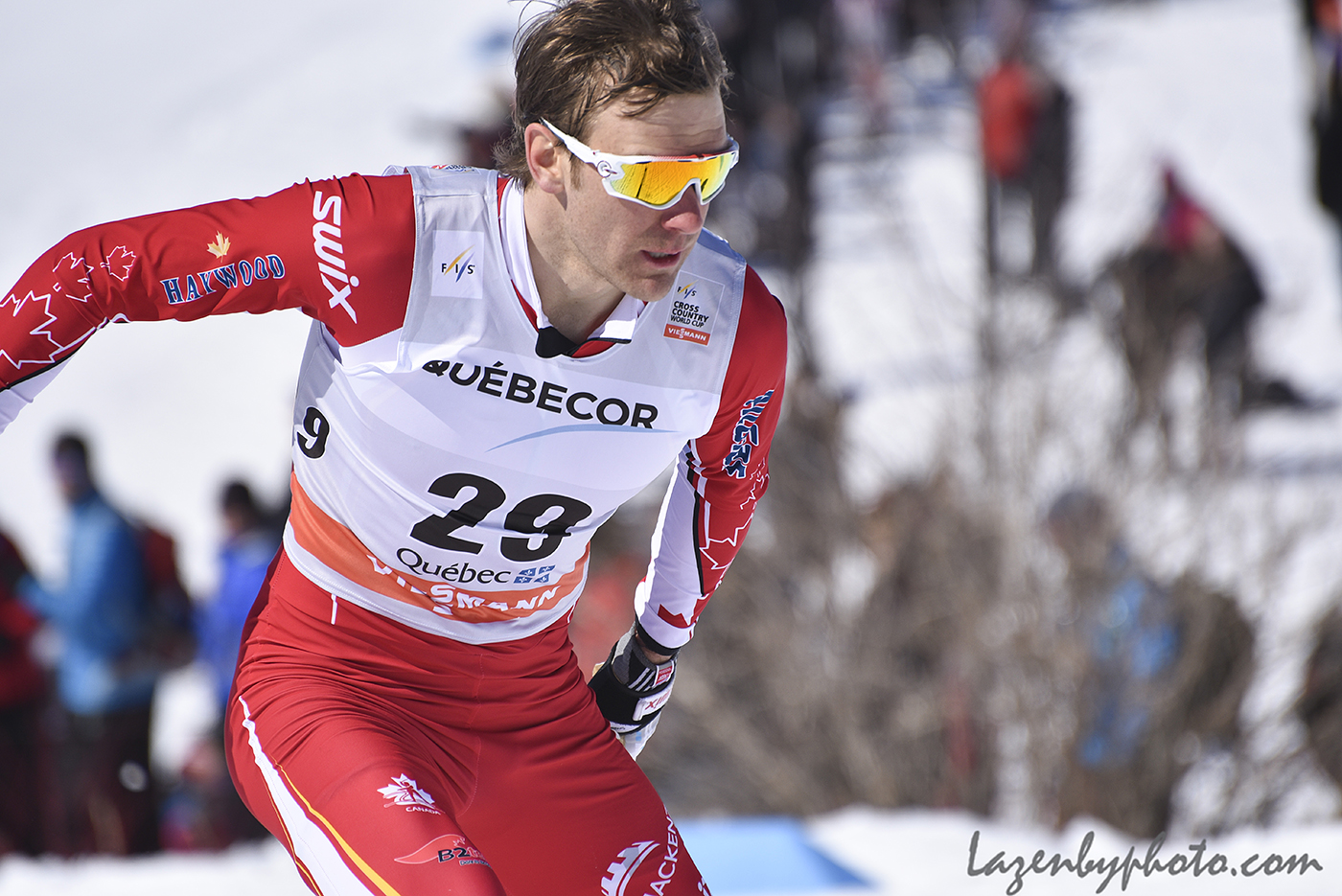
On April 26, Devon Kershaw posted a photo on social media of Alpina boots hanging on a line. The next day, he spoke on the phone with FasterSkier from his new home in Lillehammer, Norway, after a day of running around outside with his 15-month-old daughter, Asta Isabel.
Kershaw was tired, but in a good way. For the first time in 17 years, he was ready for a new challenge, a new focus and much more time with his daughter and wife, Kristin Størmer Steira, a former standout Norwegian skier.
Three years after Steira left professional cross-country skiing and pursued a career in business, starting with her master’s degree in business management, Kershaw is following suit and headed back to school. The 35-year-old Canadian hung up his boots to quietly announce his retirement after about a month of deliberation.
“I was really keen to keep ski racing, to be honest,” Kershaw said. “I had the motivation to go one more year, and in my head, I wanted to race one more season, but as things progressed in the spring, there were a lot of different factors that just made it seem like, oh man, it doesn’t look like it’s gonna be super realistic at this point.
“I struggled with that, when you feel like you still have more in the tank,” he continued. “But at the same time, it’s a bit of a double-edged sword in the sense that it’s been a fantastic career.”
Kershaw was quick to reflect on his roots as a kid growing up in Sudbury, Ontario, “a mining town with a small but passionate skiing community,” as he put it. He also reiterated how proud he was to represent Canada for 17 consecutive seasons, first as a junior national team skier for two seasons starting in 2001, then as an under-23 national team member in 2003, and finally as a full-fledged World Cup Team member starting in 2004.
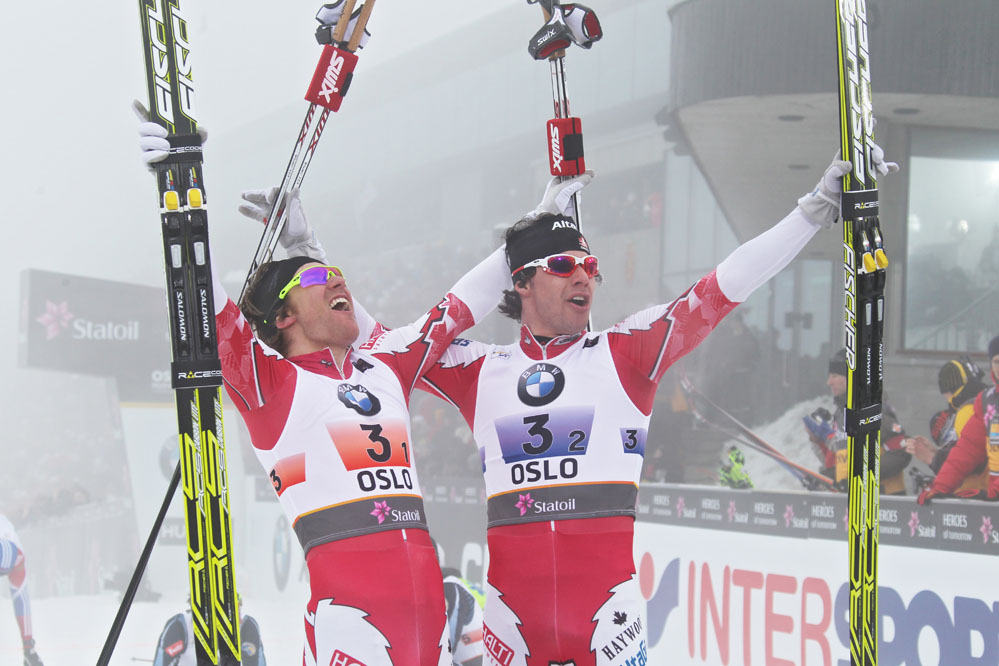
His career included three World Cup wins and 14 podiums, and a gold medal at 2011 World Championships with teammate Alex Harvey in the classic team sprint. Kershaw finished the 2011/2012 World Cup season ranked second overall and second in the distance rankings.
When he reflects on those accomplishments, he still has a hard time believing that all happened to him.
“So instead of focusing on being bummed at the situation or a bit frustrated with the state of things in Canadian skiing right now, I have to look back with a smile,” Kershaw said. “I feel just so privileged and grateful to have had the opportunity to be part of a real movement for men’s skiing in Canada.”
Kershaw said he was left with unanswered questions this spring during a transitionary period at Cross Country Canada (CCC). The team’s budget was undetermined, camps were not yet set in stone, and Kershaw said his decision — which he wanted to make by May 1, the start of the new training year — became about energy management.
“Part of managing your energy properly is putting all of your energy and focus into training, and if you’re being pulled with uncertainty or being stressed about uncertainty, that will come back, the World Cup will exploit that,” he said.
According to CCC Chief Executive Officer Shane Pearsall, High Performance Director Thomas Holland had planned to retire this past March, yet has stayed onboard as an advisor until CCC fills the position. Pearsall said the hiring process is still ongoing and will hopefully be wrapped up by next month. He confirmed that CCC has yet to finalize its budget and doesn’t anticipate being able to do so until a government minister signs off on the amount from Own The Podium (OTP), one of its primary funding sources, in July. Pearsall explained that they expect to have a better sense of national-team finances in mid to late June.
Typically, the team’s budget is determined in May, but because of necessary “quad reviews” following the Olympics, which took place before CCC met with OTP, the process was delayed by about a month. Pearsall did not elaborate on how significantly the budget would be decreased from last year, but said, “It’s certainly tighter than last year.”
Kershaw said he needed to pay about $25,000 Canadian dollars in team fees if he wanted to continue racing this year, up from $15,000 last year. That didn’t cover the cost of living, which he figured to be around $55,000 Canadian, for a grand total of $80,000.
“The financial burden is big, and moving forward the financial burden went from big to 100 percent paying for every cost,” Kershaw said. “So all travel, accommodations, everything. … I’ve just been in the sport a long, long time, and from a directional standpoint, I’m not sure we’re moving in a direction that will yield sustainable results at this point in time, but I understand it is difficult when you’re under such financial duress to create a sustainable program. But from a vision standpoint, I think there’s a lot of questions that remain unanswered, and it’s late in April. The fact of the matter is the rest of the world has all of the holes plugged — if they have holes in their boat — because May 1 is the new year of every ski program. And we’re just constantly slow and off the mark with that.”
Budget cuts had been expected as Canada’s World Cup Team missed performance benchmarks throughout last season. The team finished 2017/2018 with just two men scoring World Cup points (top 30) in distance races: Harvey and Kershaw. Two men (Harvey and Julien Locke) scored in World Cup sprints. On the women’s side, Dahria Beatty landed one World Cup sprint top-30 last season, and Cendrine Browne was the top Canadian woman in a distance race with a 27th place for time of day in the last race of the season.
Meanwhile, Alex Harvey led the team with four World Cup podiums, including third overall in the 2018 Tour de Ski, and a top result of fourth place at the 2018 Olympics. He finished his season in fourth in both the Overall and Distance World Cup standings. But Harvey’s results alone weren’t enough to buoy the whole team for another winter.
“Throughout my entire career, it’s almost unfathomable to think that the season ends and that’s the stat line,” Kershaw said of the team’s overall results. “It wasn’t so long ago that we had over 16 World Cup podiums in a season. The truth hurts, as [former Canadian coach] Tor-Arne Hetland once said, but things go in waves and this is the reality that we live in right now.”
Despite the prospect of self-funding, Kershaw didn’t feel pressed into retirement. Several of his teammates have decided to retire as well, including Graeme Killick, Jess Cockney and Knute Johnsgaard, but Kershaw said they weren’t forced, either.
“You can choose to work and you can choose to hustle for money; there are ways to make it,” he said. “No one’s forced into it. I could keep skiing if I wanted to, but I think the stark choice you’re faced with is, maybe perhaps some people are like, I can’t really see a path to international success currently, and that’s what I think is sad…”
‘A dream scenario’
When Kershaw moved to Canmore, Alberta, in 2001 and entered Canada’s elite skiing scene, Cross Country Canada (CCC) was entering a fruitful period. At the 2002 Olympics, Beckie Scott was proclaimed winner of the women’s 10-kilometer pursuit (now called the skiathlon), becoming the first North American woman to win an Olympic gold. At 2005 World Championships, Sara Renner earned a sprint bronze to become the first North American woman to medal at World Championships. Scott and Renner teamed up for silver in the team sprint at the 2006 Olympics in Turin, Italy, where yet another Canadian woman, Chandra Crawford, won the individual skate sprint for Canada’s second-straight gold in as many Winter Olympics. Scott finished that 2005/2006 season ranked second overall in the World Cup, just 16 points behind Norway’s Marit Bjørgen in first.
Kershaw made his Olympic debut in 2006.
“Coming into Torino, we were quoted in the newspaper as being like the world’s most anonymous men’s ski team,” he said of the Canadian men’s team that year. “We weren’t really ‘on the map,’ but I’ve just been so grateful and lucky to have such a great group of guys around that really welcomed me in.”
He credited his former roommate and teammate Chris Jeffries as well as other Canadian competitors of his time, including George Grey, Gordon Jewett, Dan Roycroft, Sean Crooks, Dave Nighbor, Phil Widmer, Brent McMurtry, and Graham Nishikawa (who’s still racing), for having a major impact on the formative stages of his career.
“[There were] so many athletes in Canmore that tried hard, wanted it bad, and loved ski racing and training,” Kershaw reflected. “That’s a dream scenario for a young athlete to come into a community like that and be welcomed into that environment.”
Less than a month after the 2006 Olympics, he notched his first World Cup podium by placing third in the Borlänge, Sweden, skate sprint. In doing so, he became the first Canadian male cross-country skier to reach the podium since Pierre Harvey (Alex’s father) in 1988 and the first ever to medal in a World Cup sprint.
“I had no idea who Pierre Harvey was,” Kershaw said of his younger self.
Pierre Harvey had previously won the 1988 Holmenkollen 50 k as well as two other World Cup distance races and the Norwegian Birkebeiner, making him the most successful Canadian male skier before Kershaw.
“He could walk into the room and I would not recognize him,” Kershaw continued. “Even his results, I had heard that he had five World Cup podiums and that seemed pretty cool, but that’s all I knew about him.”
Kershaw’s second World Cup podium came early in the 2006/2007 season in a skate sprint in Munich, Germany. That same day, Crawford — whom he was dating at the time — placed third in the women’s sprint.
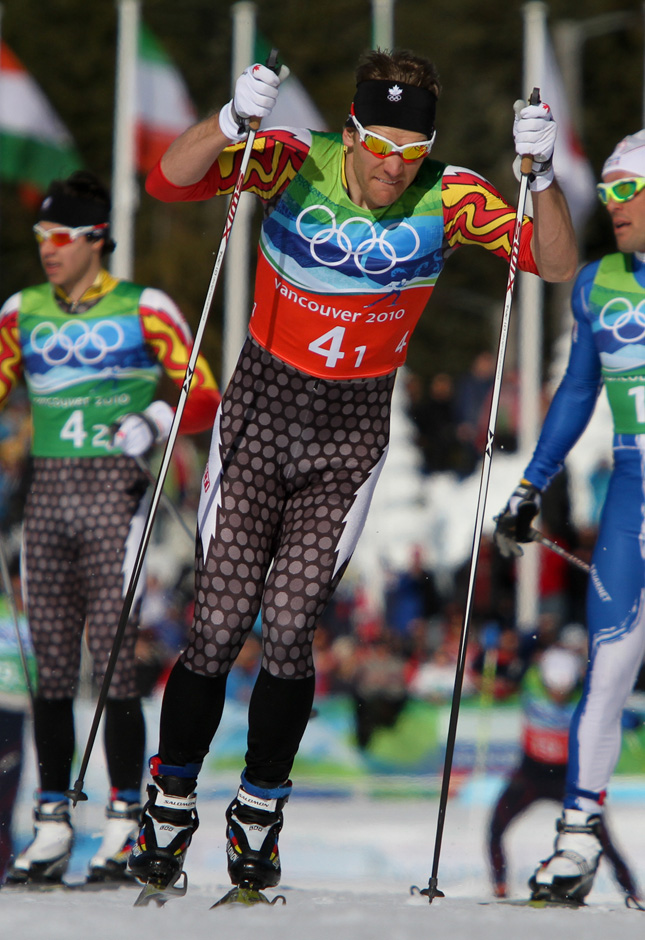
At his second Olympics in 2010, Kershaw finished fifth in the 50 k classic mass start for the best individual Olympic result for a Canadian male nordic skier. That record stood until Alex Harvey, who burst onto the World Cup scene in 2008, bested it with a fourth place in the 50 k classic at this year’s Olympics in PyeongChang, South Korea.
Kershaw and Harvey also teamed up to place fourth in the freestyle team sprint at the 2010 Olympics.
Kershaw’s first World Cup win came in a skate sprint during the 2011 Tour de Ski. He finished that Tour in seventh, and the next year, came back to place fourth overall in the 2012 Tour de Ski (TdS). Kershaw started all 12 editions of the TdS, a record he shares with France’s Jean-Marc Gaillard.
Harvey scored his first individual World Cup podium in a 50 k classic in 2009 and won his first World Cup race (a 3.3 k freestyle prologue) at the TdS in 2012.
“Then next thing you know, Alex and I are sharing a podium on some World Cups,” Kershaw reminisced. “Two Canadians on one podium in the World Cup, like, really? And then you win World Championships and I’m on the overall World Cup podium, and then next thing you know, Alex has been on the overall World Cup podium a few times and also now 50 k world champion. It’s crazy. It’s insane. From nothing. From no results. The journey has just been amazing. … I never would’ve thought Canada would, I mean, how could you? We had Pierre Harvey and that’s it in, like, a hundred years of international ass-kicking.”
Kershaw credited his initial World Cup breakthrough as a 23-year-old skier in Borlänge to Dave Wood, Canada’s national-team coach at the time.
“I came into a team with a coach that you could call at midnight. He’d do anything for you,” he said of Wood. “There was no way I would’ve stepped onto the podium in 2006 without him, and Mike Cavaliere, too, my first-year senior, Mike was my coach. We had staff that was just committed to the core for the cause and I’m incredibly grateful for that.”
‘A hell of a season’
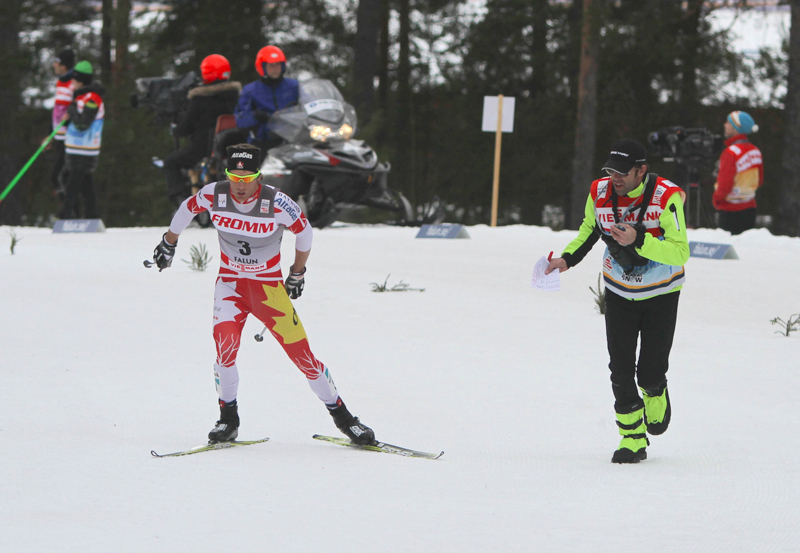
Of his coaches, Kershaw gave special credit to Justin Wadsworth. A three-time U.S. Olympic cross-country skier who became Canada’s head coach in the spring of 2010, Wadsworth coached Kershaw for five seasons, and the two developed a close friendship.
“When Justin came into the national team, the level of professionalism and excitement and freshness that he brought … I don’t know if you call it luck or happenstance or just the right place, right time,” Kershaw reflected, alluding to his 2011 World Championships gold with Harvey and his 2012 Overall and Distance World Cup podiums. “Justin’s best results as a coach were me and my best results as an athlete were when I was coached by Justin. Talk about an amazing relationship there.”
“The main thing that I really appreciated with Devon, and I think he would say the same thing about me, is that we could be honest with each other and talk about hard things and enjoy the good times when we had them,” Wadsworth said on the phone last week. “… It’s cliche, but when I was talking to Devon the other day about his retirement, it’s not about the medals or the performances or whatever, it’s about your times together on the road.”
One of Kershaw’s biggest moments came at those 2011 World Championships in Oslo, Norway, where he and Harvey beat out Norway’s Petter Northug and Ola Vigen Hattestad by 0.2 seconds for gold on the Norwegians’ home turf. They had done so after Kershaw lost one of his skis early in the race, Wadsworth pointed out.
“His ski fully came off and he had to put it back on and get back into the race,” Wadsworth said. “Just the whole day was pretty incredible. That was a great, great opportunity for us, and the guys cashed in.”
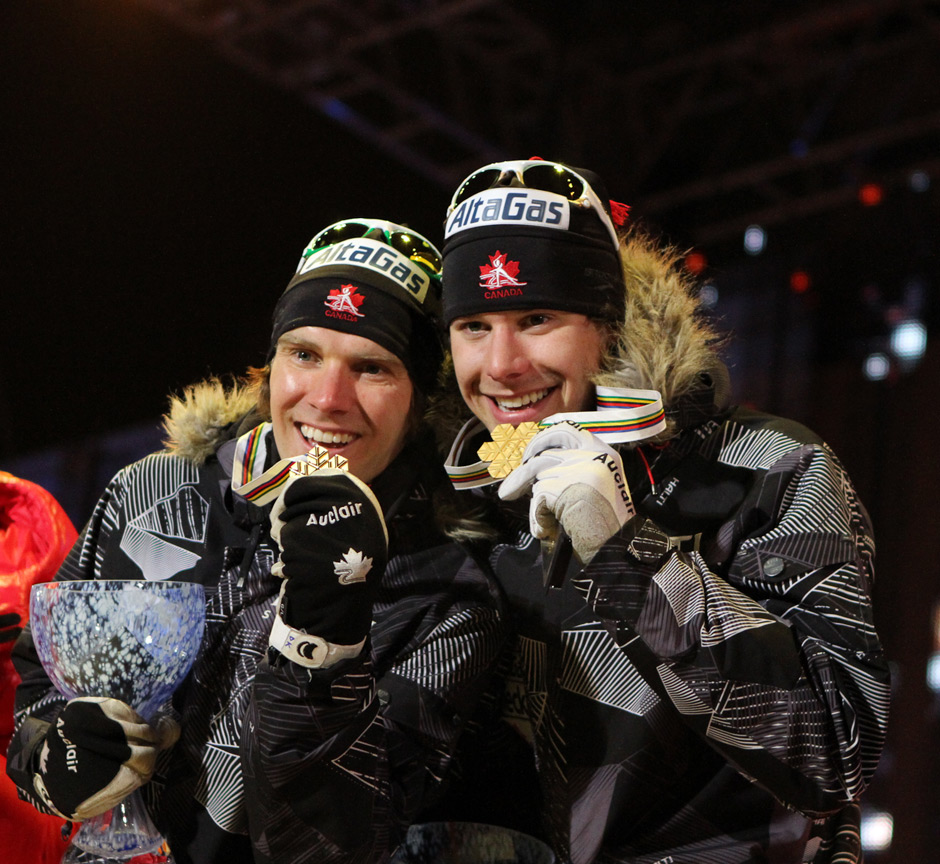
In a difficult-yet-strategic move to conserve for that race, Kershaw and Harvey both sat out the 15 k classic the day before.
“With anybody else running the ship, there’s no way I would’ve trusted that [decision],” Kershaw said of Wadsworth’s call. “But I trusted Justin’s leadership and we went all-in, and the next thing you know we won World Championships. I mean, are you kidding me? How can you get a better start to the next quadrennial? And Justin as a first-year head coach of a national team, that’s gotta go down as maybe the best season ever for a first-year North American coach of a national-team program.”
He and Wadsworth reiterated the crucial foundation that Wood had laid.
“Dave Wood had done a really good job with the athletes leading into that period, mainly focused on building a big base and doing a lot of hours and also doing a lot of time at altitude,” Wadsworth explained. “And when I took over the position, I saw that both Alex and Devon were really primed and had a really good response rate to altitude, and all we had to do was fine tune a little bit of strength training and intensity. I was really excited to work with both those athletes and saw that they had a lot of potential.”
For Kershaw, Wadsworth’s “American swagger … was magic for me,” he said. During the 2011/2012 season alone, he stood on the podium 10 times, with four top-three finishes in seven races at the 2012 Tour de Ski.
“It was a hell of a season for me,” Kershaw said.
‘Best sand-digger ever’
He went on to compete at two more World Championships and two more Olympics. This past season, Kershaw finished in the top 30 in eight World Cup distance races, with a top result of 19th in the 30 k skiathlon in Lillehammer, Norway. While struggling with lung issues, he finished 26th in the 50 k classic at the PyeongChang Olympics.
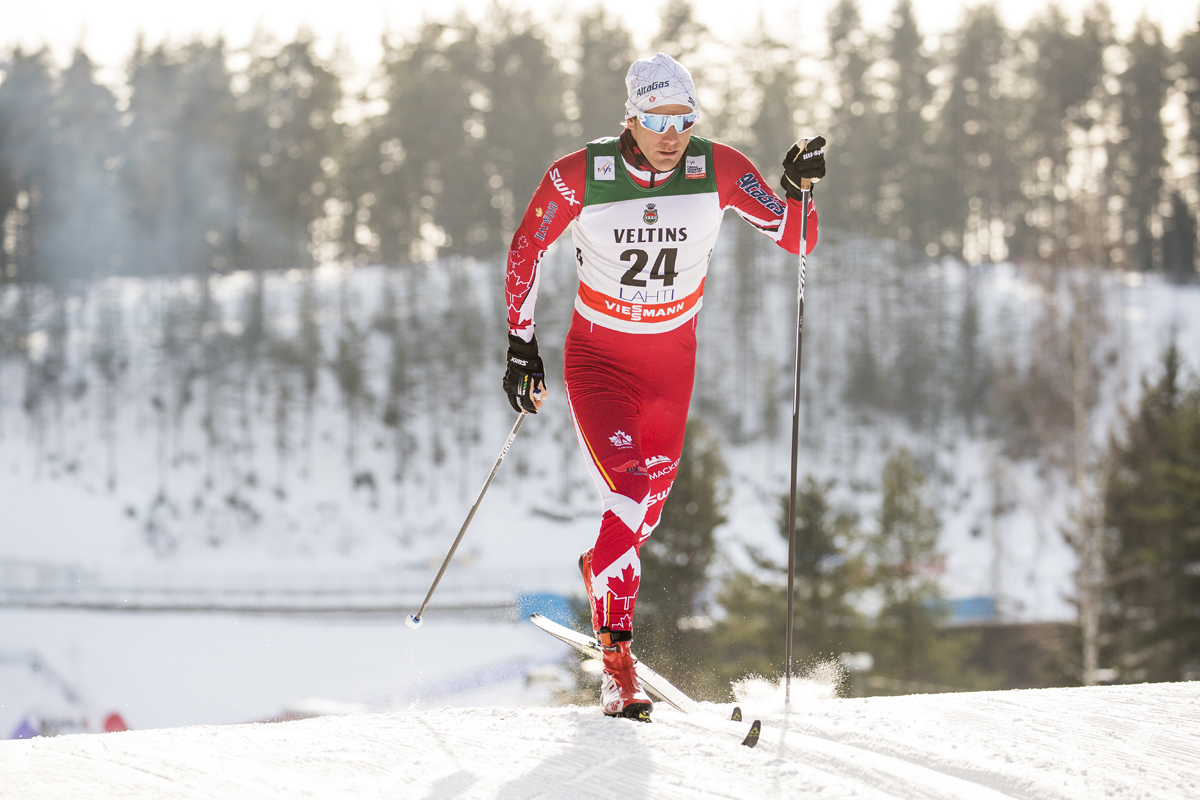
Initially plagued by a lung infection in 2014, Kershaw discovered after a 2015 bout with an pneumonia and whooping cough that he has exercise-induced asthma.
“We worked to get that under control and it was manageable but it never felt good like it felt prior to 2015,” Kershaw said his health over the last three seasons. “In PyeongChang, it was a calamity of bad luck. When we got there it was minus 20 [Celsius], and this makes me sound so soft, because I’m from northern Ontario so you’d think I’d know, but it was really cold. I did some intervals and it aggravated my lungs and it was super windy and dirty and a lot of sand blowing around, and that really flared up my asthma to the point that I was wheezing badly.”
His breathing troubles also affected his sleeping and took most of the two-week Olympics to manage. At one point, he had a chest X-ray to make sure it wasn’t pneumonia.
“It was sporting asthma,” he said. “… It took all the way to the 50 k to kind of get it 70 percent.”
While he noted he was left wanting more from a performance standpoint at both his final Olympics and in his final season, Kershaw also acknowledged that he’s his biggest critic.
“That’s been probably the biggest detriment to my entire career; I’m the best sand-digger ever,” he said. “I am disappointed in the sense that I work really hard and I train hard and I prepare well, and it didn’t go exactly as planned. … When you’ve competed in the top 10 for as many years as I have and on the podium, of course that becomes your bar that you hope to achieve, but at the same time … when you’re in the top 30 in the results page, you’re in the race at least. And I’m proud of the fact that in almost all classic races, not every, but most, I was in the top 30 and ‘in the race’.
“Am I satisfied? In my life I’ll probably never be satisfied, that’s just how it goes,” he added with a laugh. “But am I somewhat proud of maintaining a fairly competitive level? Yeah, absolutely.”
Wadsworth reflected that Kershaw was one of the best athletes he had ever seen, even “physiologically as good as Alex [Harvey]” at the peak of his career.
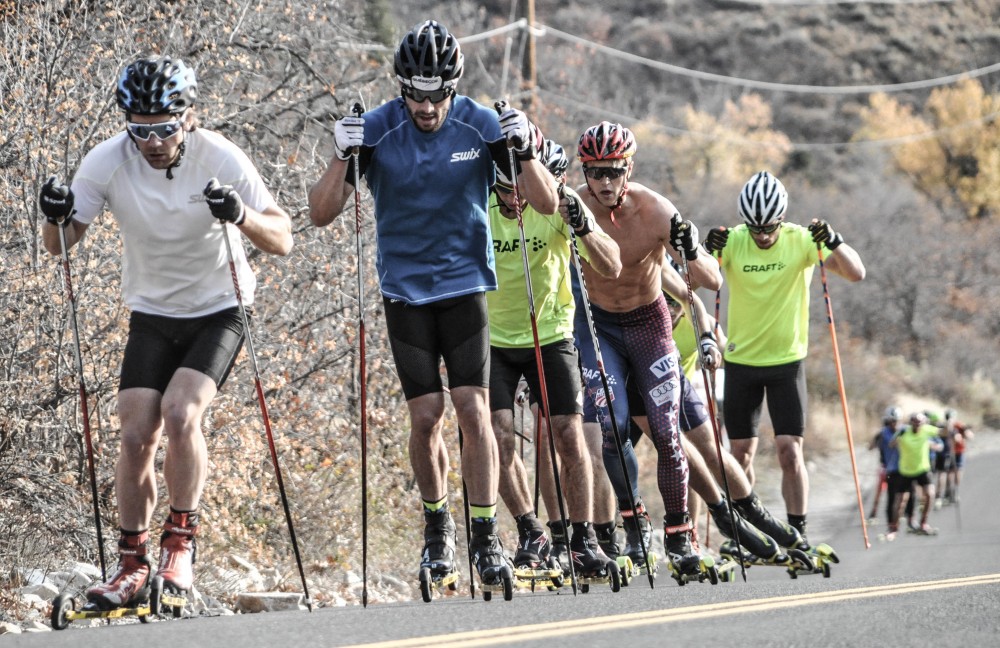
“Devon’s a very intelligent person and sometimes he might’ve overthought things and lacked in confidence, and as a coach that’s really frustrating to see because you know how good they are physically,” Wadsworth said. “And when he was on mentally, too, in training, when he was at his very best, he had total confidence and could destroy anybody in any workout.”
He recalled a hill-bounding workout with the Norwegian team in which Kershaw was literally leaps and bounds ahead of everybody else — even Martin Johnsrud Sundby and Russia’s Ilia Chernousov, who joined the training session.
“He was just shelling everybody,” Wadsworth said. “So when Devon was at his best like that and mentally confident and relaxed, he was a real force of nature. Unfortunately that didn’t always translate into the racing season, but in 2012 he put it all together and had a tremendous year. … If he had the confidence the whole time, he would’ve been almost unbeatable, in my opinion, but it takes the whole package all the time, and he was among the greats there for a while.”
‘Younger, faster, better dog’
And then there was Harvey, another one Kershaw’s of his best friends and longtime roommates.
“I’ve spent more nights in a room with him than my wife or any girlfriend I’ve had,” Kershaw joked. “… He was eager to learn, he chased me for years, he was always a hard worker, too. He trained really hard, he believed in himself, and I still am in total awe of that. I’ve never met anybody as confident as him. It’s too bad that didn’t rub off on me, but that’s been great to be around.”
He likened Harvey’s addition to the team as a family adopting a puppy.
“You know when your parents get a puppy because your dog is 10 years old? He’s kind of slowing down a little bit and then you see that old dog get fired up and run again and jump around and play; that’s me,” Kershaw said. “And I’m so grateful that my owners got a younger, faster, better dog to hang out with because it was so inspiring.”
Several times over the last few years, Kershaw has said that witnessing Harvey make Canadian history has been one of his biggest reasons for staying in the sport.
“He, for sure, has kept me in this probably longer than I should’ve,” Kershaw said. “I just love traveling with him and seeing what he can accomplish and training with him and seeing that professionalism.
“There’s no question he’s the best Canadian skier ever, that’s not even close,” he added. “… I just feel so honored that I got the chance to see it all happen, from his last-year junior when he did his first World Cups and then all the way though I’ve been with him.”
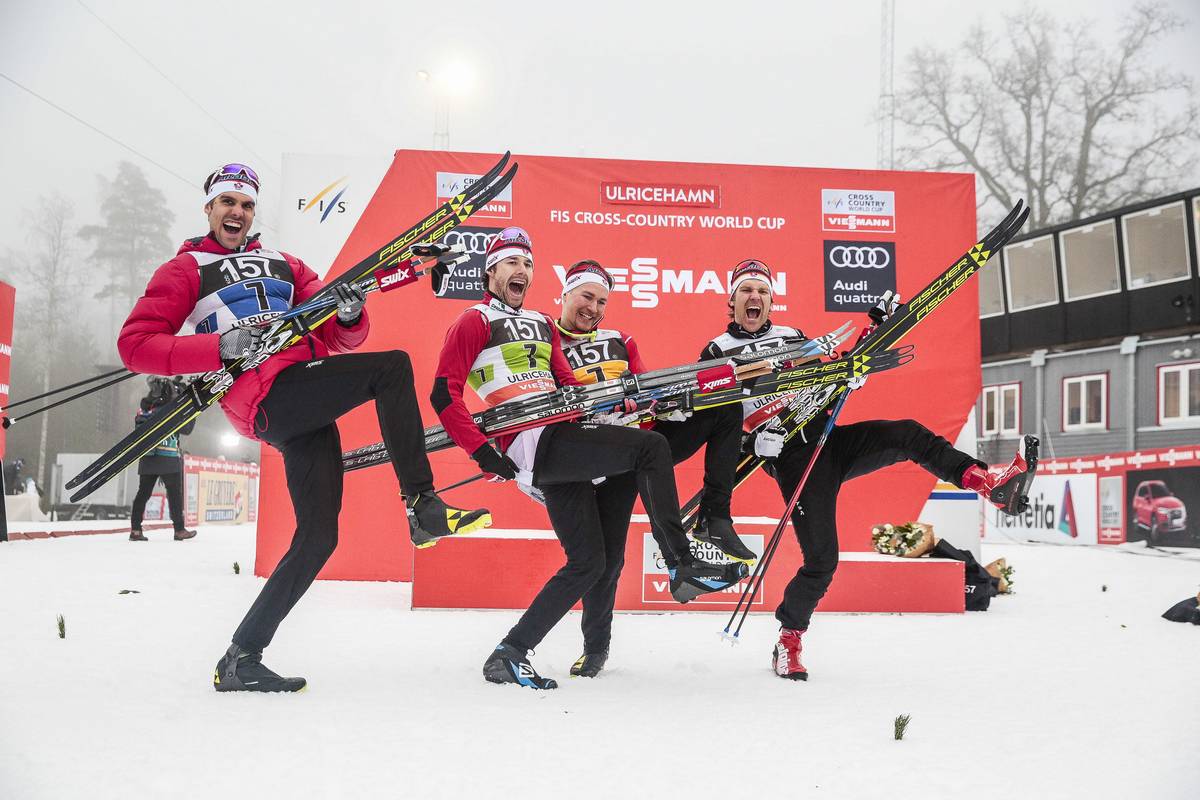
In an email, Harvey explained that he and Kershaw first met in the fall of 2005 at a training camp at Sovereign Lake, British Columbia. Harvey was on the junior team and Kershaw a senior, but the whole team stayed at the same hotel.
One morning, Kershaw accidentally took Harvey’s poles from the hotel. Harvey had to track him down on the ski trails to get them back.
“That was the first time I talked to him and to me it’s just perfect because that’s so Devon,” Harvey wrote.
Later that season on March 7, 2006, Kershaw made history with his first podium. That same day, Harvey won his first national title in the 10 k classic at Canada’s senior national championships as a 17-year-old junior.
“I guess our friendship was meant to be before we even knew it!” Harvey wrote.
When the two became teammates, Harvey immediately took to imitating Kershaw, both in training and racing.
“He took me under his wings and he has a big part in the athlete I became today,” Harvey wrote, likening Kershaw to a big brother. “I feel very privileged to have spent all that time with him. I think we became such close friends because we are both very driven athletes and we don’t accept any compromise. We’re both huge fans of our sport, ‘nor-dorks’, so we also love to talk about everything from altitude training to who is seeing who on Tour.”
Kershaw’s decision to retire didn’t surprise Harvey.
“I think it’s a mix of a few things,” Harvey wrote. “… Probably this biggest reason, he has a little girl at home. I know this winter was extremely hard on him. Not seeing Asta Isabel was pure torture, I think I would have done the exact same if I was him.
“I will miss a lot of things about Devon,” he added. “He’s always there to give good advice about everything and anything. He knows so much about all that is going on in the world, probably the most well-read person I know. He’s kinda my news source. I’m still amazed by how indecisive one can be. This brought a lot of laughter throughout the years. I have so many memories from the last 10 years with him. Seeing him dominate the World in 2012 was just amazing but also very eye-opening for me. He raised the bar for all North American skiers that year and I’m very thankful for it.
“We both lived great emotions in high accomplishments and huge disappointments. I’d like to think I helped him get through these upsets and I can say he definitively helped me get through mine. A page turns in the life of Devon Kershaw but knowing the man, I’m not worried about what’s gonna come next.”
Without Kershaw, Killick, Cockney, and Johnsgaard on the men’s team, Harvey acknowledged that next winter will be “very different” for him on the World Cup.
“All these guys are calling it a career and I’m super proud of what all my friends accomplished,” he wrote. “I’m excited to try to help the next generation step it up and fill the shoes of the previous generation. … Also, after 10 years on Tour I’ve made some friends on other teams so I’m not too worried. I’m just excited to step into a bit of a mentor role for our next generation.”
Onto the Next
As for Kershaw, he didn’t rule out coaching future generations of Canadian skiers, but he said he was focused on getting an education first. In just over a week, he’ll start a course that requires 20 hours of classes a week — all in Norwegian — for what he anticipates will take six months. The course is essentially an advanced version of Norwegian as a second language, and foreigners must pass it to pursue a degree in Norway.
After that, Kershaw plans to apply to universities “and hopefully study forever,” he said with a laugh. “Not forever, but study, and I want to stay involved in skiing in any way I can and I want to help the next generation get better.
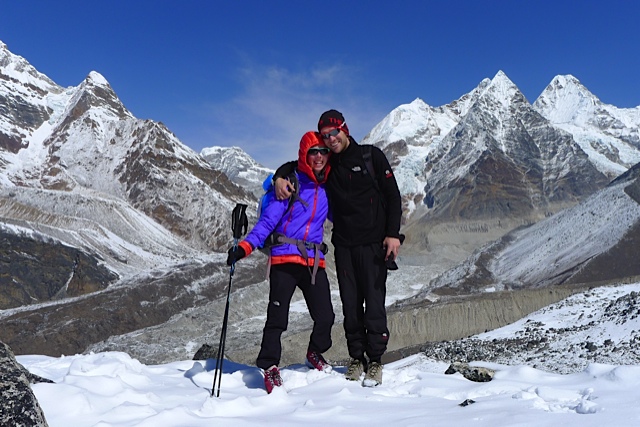
“First things first, I have to get my Norwegian at a level where I can sit through a lecture and write an essay at a decently good level, at least good enough that my wife doesn’t have to rewrite it, she can just correct it,” he explained.
Asked what he’d like to study, Kershaw said medicine, specifically orthopedic surgery, has always intrigued him. (As a junior skier, Kershaw took undergraduate classes at the University of Calgary until 2006, but those credits have since expired.)
“But now I’m 35 and I’m going to have to do all of this in my third language,” he acknowledged. “So for now, I’d say that that’s still my first choice and I’m exploring what it would take.”
If not medicine, he’d like to pursue a degree in “some kind of science physiology, and then in a totally shifted way, if I have a panic attack and be like, ‘Science is too hard after ski racing forever,’ then I am interested in economics and economic theory and business to some degree…”
Regardless of which path he choses, he’ll be doing it in Norway, Kershaw said.
“I don’t mind the challenge. … It’s intimidating in a way, but it’s also really exciting,” he said. “Kristin’s family [who lives in Lillehammer] is just so fantastic and to see how happy my daughter is here, to have her family, to have family around her and everything for the short term, and I hope to be educated in Norway.”
Asked if he’ll jump into any ski races this season, Kershaw was quick to respond, “No.” But he will continue skiing. The beauty of the sport and the struggle, as he put it, is what’s kept him in it so long.
“Imagine just having a singleness, a purpose, a goal that’s just there in your face and then you get to wake up every day and do the things you absolutely love to do,” he said. “… I adore cross-country skiing. I just think it’s such a peaceful, beautiful exercise, and the technique and the flow of it all. … You’re just skiing through the woods peacefully, gliding over snow, over all the terrain you can cover. It’s a beautiful, zen-like endeavor, and I think that’s what’s kept me in it this long. And the people, the Canadian ski community, the world ski community, really. I’ve met so many inspiring people and beautiful people and worked with a lot of absolute experts and I’ve had brilliant teammates and brilliant coaches.”
And because of skiing, he met his wife and started a family in Norway.
“I have a daughter with a woman that I love and respect and am in total awe of every day of my life and without ski racing there’s no way that would’ve ever come to fruition,” he said. “There’s the biggest gift right there, as cliche and Hallmark as that sounds, it’s true.”


