From the FasterSkier archive — posts syndicated from athletes’ and coaches’ own blogs between 2004 and 2012, kept online as published. Current coverage is at fasterskier.com.
Momentum Northwest, Seattle’s Junior Nordic ski program, is seeking an Assistant Coach for the Summer Season. Programming will run from May 15 to August 17. Hourly compensation based on availability and ability. Must be able to run, rollerski, and bike. Nordic ski experience not required, but an interest in working with kids and knowledge of athletic development are. Potential to continue position through Fall and Winter.
The Bush School is dedicated to inspiring curiosity, motivating employees to take risks, encouraging compassion and kindness and valuing different perspectives and backgrounds. Our employees enjoy an environment that inspires creativity and being part of a collaborative community.
Varsity Cross Country Skiing Head Coach
Seattle, WA
Stipend Position
The Varsity Cross Country Skiing Head Coach is responsible for overseeing and developing all aspects of The Bush School’s Cross Country Skiing Program. The main responsibilities include practice planning and implementation, scheduling of practices and race calendar, race coverage, team communications, overseeing inventory of sport specific gear/uniforms, and driving team to practices/competitions. The ideal candidate should have extensive experience as a head coach and must possess excellent communication skills.
A qualified candidate will be able to manage the key responsibilities and tasks as listed below:
Provide positive, safe, healthy, challenging and supportive experience for participants
Identify, develop, and apply age and developmentally appropriate coaching methods
Develop and implement daily practice plans and routines
Plan practice and race schedules, and logistics for overnight trips
Communicate team and program related information to coaches, athletes and parents effectively and in timely manner
Communicate with athletic department staff effectively and in timely manner
Attend meetings and trainings scheduled by the Athletic Director
Comply with all school, state association, and league policies and regulations
Successful candidates will have:
Expert knowledge of given sport
Experience in interscholastic, club and/or collegiate coaching
Coaching certification preferred
Capacity and desire to seek out and participate in professional development
Ability and willingness to be a team player
CPR and First Aid Certification
Clean criminal background check
Clean driving record and willingness to transport students in school provided vehicles
Ability to work and connect with people
Enthusiasm to contribute, grow, and develop as a member of the Blazers Athletic Department Team
Outstanding communication, organizational, and problem solving skills
Proficiency in Microsoft Office and Google applications
Compensation:
Competitive coaching stipends are paid in monthly installments during each season. Additional benefits include access to professional development funds and Bush Blazers athletic apparel.
HOW TO APPLY
Applicants should send a resume and cover letter outlining how they meet the specific requirements of the position (as described here) to employment@bush.edu.
If you are interested in working at The Bush School, but this position doesn’t fit your talents, please visit our website for additional openings. www.bush.edu
All applications are appreciated and reviewed, however only those selected for interview will be contacted.
For a complete job description, requirements and process for applying please go to www.bush.edu and search under ‘employment’. No Phone Calls will be accepted.
The Bush School is an Equal Opportunity Employer.
The Bush School does not discriminate in matters of employment, recruitment, admission or administration of any of its programs on the basis of race, color, creed, religion, sexual orientation, national or ethnic origin, disability, gender, or genetic information. In addition, The Bush School does not discriminate in matters of employment based on the basis of age or marital status.
Momentum Northwest, Seattle’s Junior Nordic Racing Team, is seeking a Head Coach for its young program. Reliable snow within an hour’s drive. Compensation is dependent on experience. Please submit resume to Courtney@momentumnorthwest.org.
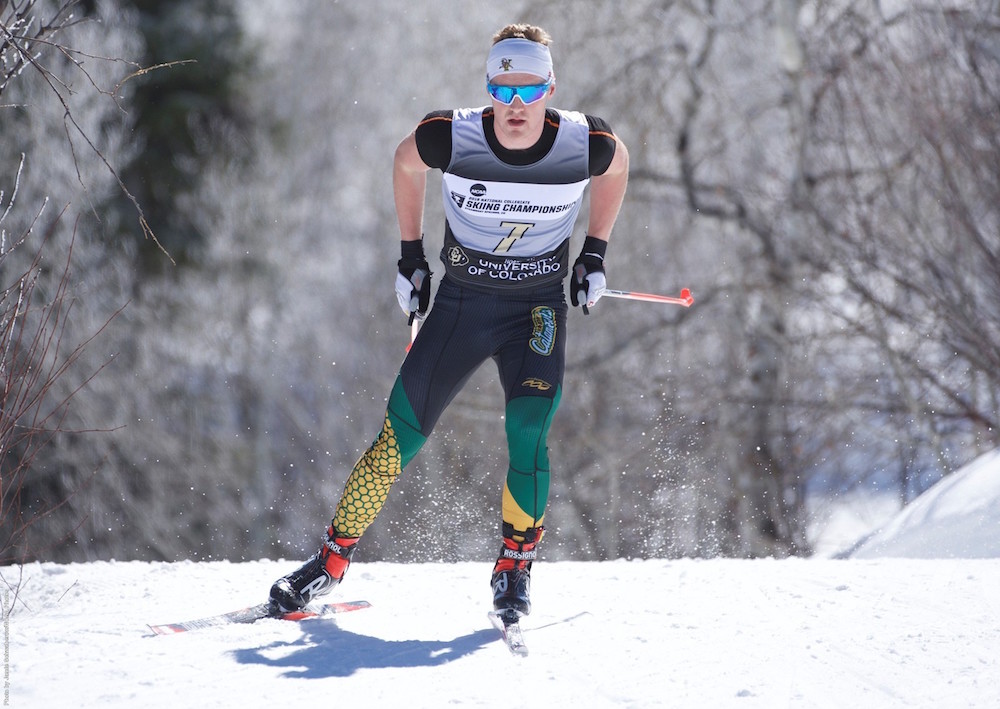
Former University of Vermont skier Cole Morgan (now with the Sun Valley Ski Education Foundation) racing to 21st in the men’s 10 k freestyle at 2016 NCAA Championships in Steamboat Springs, Colo. (Photo: UVM Athletics)
In an effort to showcase the North Americans competing at this week’s International Ski Federation (FIS) 2017 USANA Nordic Junior World Championships and U23 Cross Country World Championships at Soldier Hollow in Midway, Utah, we asked those qualifying athletes several questions about themselves — actually, we had them fill in the blanks. Here we have 22-year-old Cole Morgan, of the Sun Valley Ski Education Foundation (SVSEF) Gold Team, who’s representing the U.S. at his first U23 World Championships after competing at two Junior Worlds in 2012 and 2014. Earlier this month, Morgan was named to the U.S. team for senior World Championships, which will be held in late February in Lahti, Finland.
***
“My full name is Cole, but you can call me Pierre. I was born in Seattle, Wash., raised in Bozeman, Mont., and one thing you should know about my hometown is that it’s a place where I lived.
I started cross-country skiing when I was eight?, thanks to my mom. I currently train in Sun Valley with Sun Valley Ski Education Foundation.
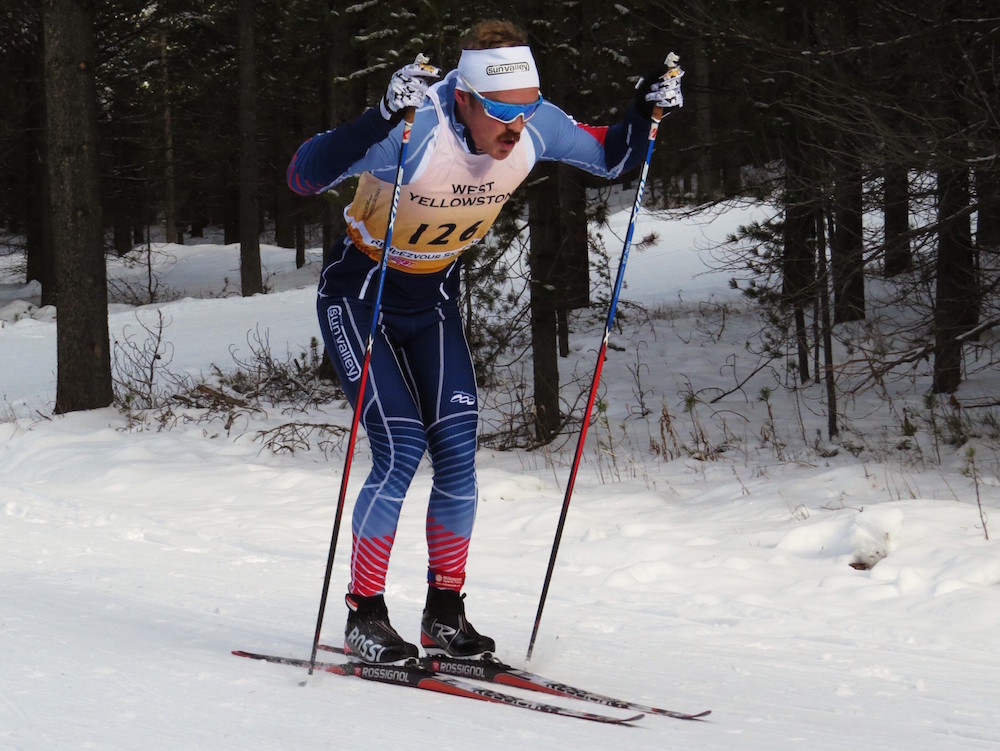
Cole Morgan (SVSEF) racing to 12th in the 10 k classic FIS race in West Yellowstone, Mont., on Nov. 26, 2016. (Photo: Toko)
If I’m not skiing, you might find me beating Jack Hegman at squash. If I had to pick a favorite book, it would be ‘The Martian’.
One of the things I’m most excited about for U23/Junior Worlds at Soldier Hollow is racing where I’ve raced since I was 12 years old. One race I’m especially targeting there is the classic sprint.
The best advice anyone ever gave me about skiing or racing is anything out of Matt Gelso’s mouth. One of the best race memories I have is beating Jack Hegman by 0.6 seconds for the J2 national championship.
If I could meet one World Cup skier, it would be Stina Nilsson.
If I don’t end up being a professional skier, I’ll probably be gainfully employed.
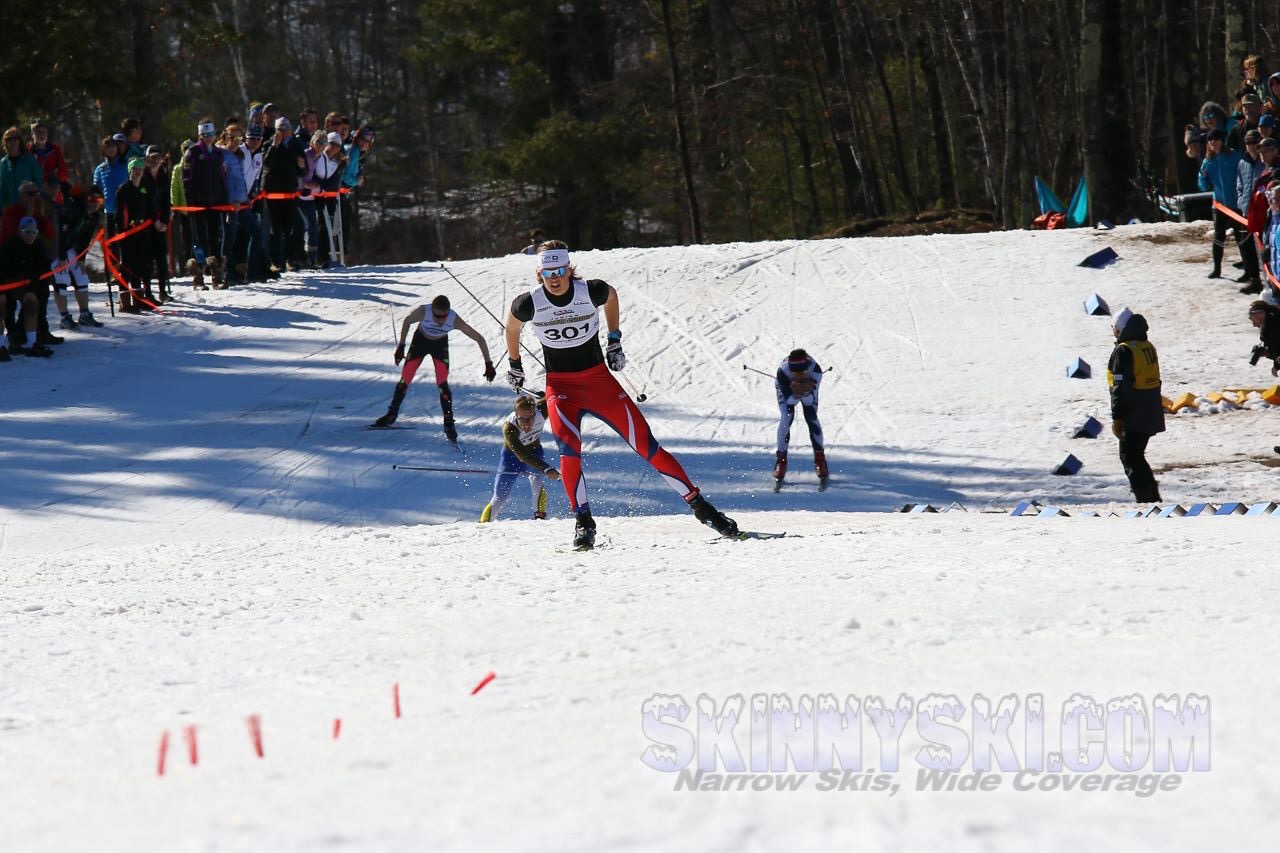
Logan Diekmann (Utah Ski Team) coming down the finishing stretch of the 2016 Junior National skate sprint in Cable, Wis. (Photo: Logan Diekmann/SkinnySki.com)
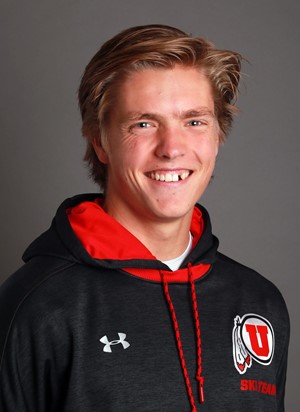
In an effort to showcase the North Americans competing at this week’s International Ski Federation (FIS) 2017 USANA Nordic Junior World Championships and U23 Cross Country World Championships at Soldier Hollow in Midway, Utah, we asked those qualifying athletes several questions about themselves — actually, we had them fill in the blanks. Here we have 19-year-old Logan Diekmann, of the University of Utah who’s representing the U.S. at his first Junior Worlds. On Monday, Day 1 of the championships, he qualified for the classic-sprint heats in 23rd.
***
“My full name is Logan Diekmann but you can call me Logan, or Logie Bear, I don’t really care. I was born in Seattle, raised in Bozeman, Mont., and one thing you should know about my hometown is that people don’t work and ski when they can, they ski and work if they must.
University of Utah freshman Logan Diekmann (Courtesy photo)
I started cross-country skiing when I was a child, thanks to my parents and the Bridger Ski Foundation. I currently train in Salt Lake City with the Utah Ski Team.
If I’m not skiing, you might find me squeezing in a 30 min. nap among training, classes, and homework. If I had to pick a favorite book, it would be ‘The Martian‘.
One of the things I’m most excited about for Junior Worlds at Soldier Hollow is repping the stars and stripes on my home course. One race I’m especially targeting there is the classic sprint.
The best advice anyone ever gave me about skiing or racing was ‘hard work pays off.‘ One of the best race memories I have is the classic 10 k mass start at JN’s in Truckee CA where I earned my first national title.
If I could meet one World Cup skier, it would be Alexey Poltoranin.
If I don’t end up being a professional skier, I’ll probably be bored out of my mind without any training to do.
I’m missing five days of school to be here, and my teachers are probably thinking, ‘Haha, good luck making up my 5 lectures, 2 quizzes, a midterm, and 12 pre-lectures.‘
Momentum Northwest, a non-profit organization founded in 2014 to promote youth cross-country skiing in the greater Seattle area, has an opening for a Program Director/Head Coach. This is a year-round position with April and May off from training.
The Program Director/Head Coach is responsible for oversight and management of the junior Nordic ski training and race program for junior skiers aged 6-18. The Program Director/Head Coach is answerable to the Momentum Northwest Board of Directors.
Duties and responsibilities include, but are not limited to:
Promote Momentum Northwest’s vision to create a national-caliber cross-country ski program in Seattle.
Develop and conduct appropriate training and racing activities throughout the year for U12 skiers (Mavericks), U14 skiers (Devo group), U18 skiers (comp group).
Build and sustain enrollment in the program by recruiting new athletes, including those from crossover sports, such as kayaking, mountain biking, cross country running, soccer and/or other sports and activities, and retaining athletes within the program.
Hire, train and supervise assistant and volunteer coaches.
Manage and oversee logistics and infrastructure, including organization of trips and race registration; ski equipment and transportation.
Maintain effective communication with parents, athletes, and board members.
Manage the annual budget for the program.
Manage web site content so that it is accurate and up to date
Develop an active coaching presence in regional and national ski associations.
Seek professional growth opportunities to stay abreast of best practices in junior Nordic racing.
Provide help in development and fundraising activities.
Compensation for this job will be based on expertise and previous experience in management and coaching of Nordic sports.
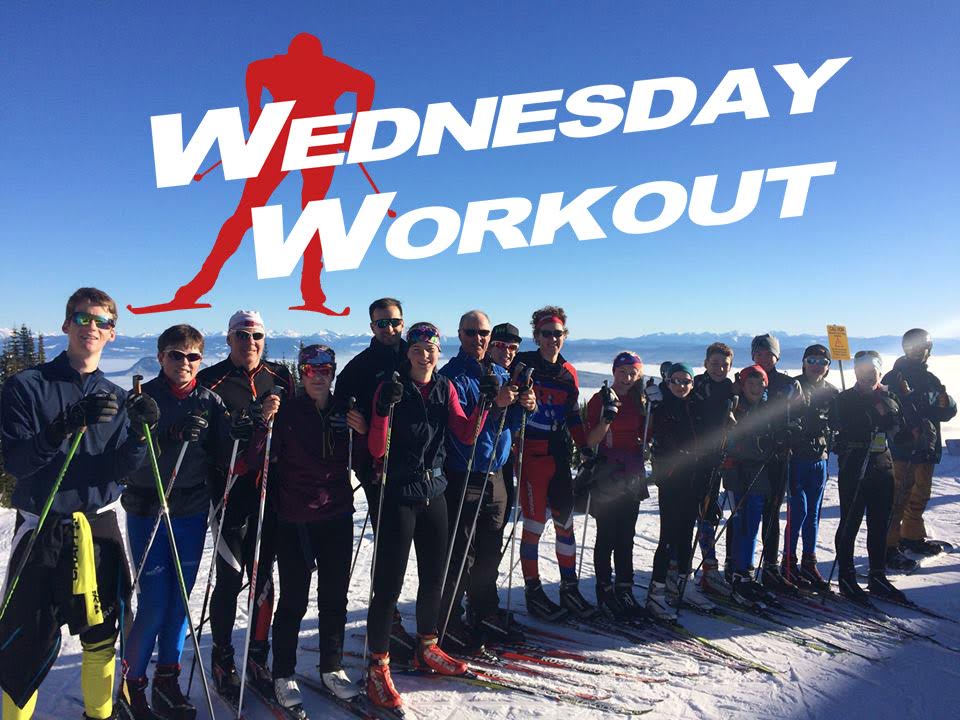
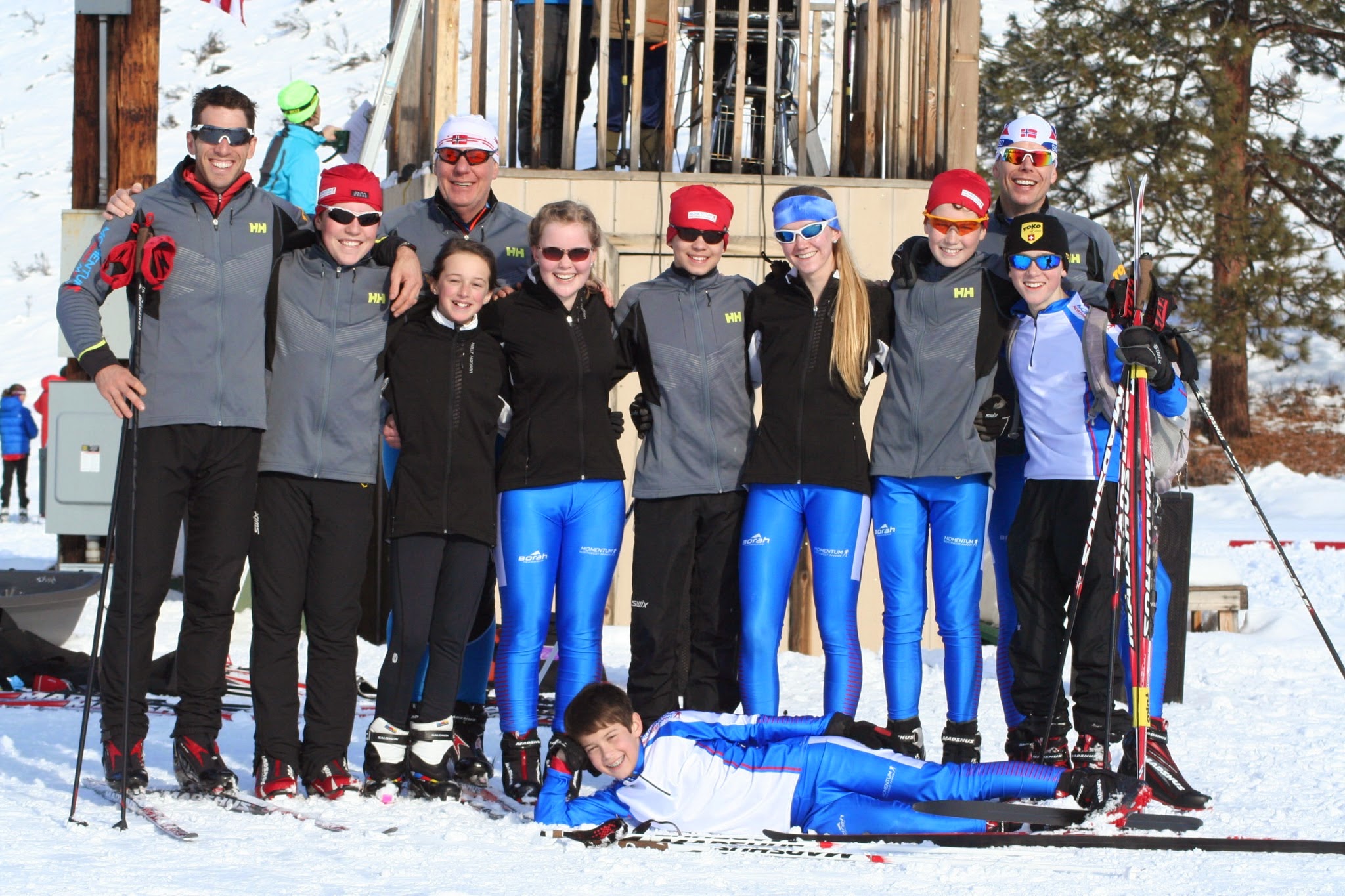
A Momentum Northwest group shot during the team’s Thanksgiving camp at Sovereign Lake in Vernon, British Columba. (Courtesy photo)
Last year, a group of motivated skiers and parents founded Momentum Northwest, with hopes of creating a junior development club amidst the urban sprawl of Seattle, Wash. While Seattle is an outdoor-orientated city, abutting the Cascades to the east and the Olympic peninsula across the Puget Sound to the west, it is not exactly the prime nordic-ski territory that other urban junior clubs like those in Minneapolis, Denver, Salt Lake City, or even Boston metropolitan areas are blessed with.
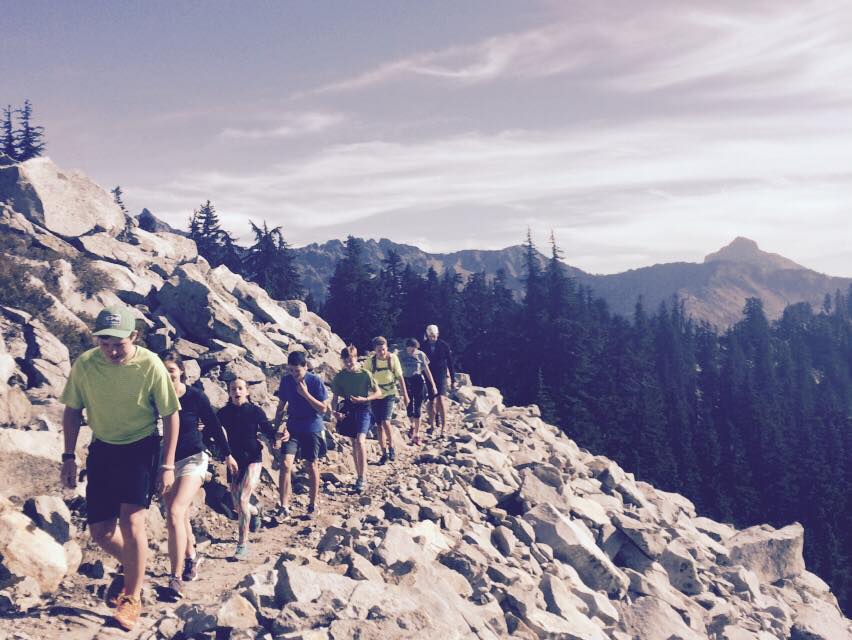
Momentum Northwest logging some quality dryland miles. (Courtesy photo)
Seattle lacks natural snow, and groomed trails are at least an hour away, too far for an after-school trip. Cold weather to make snow and accessible parks dedicated to trail grooming do not exist in the Seattle area either. In the winter, the sun sets early, and rain often falls continuously, eliminating the potential for any roller skiing. Making matters worse for a budding junior program, the area schools are separated by bodies of water with few bridges and the booming urban population means traffic is worse than ever.
So, how do you solve this logistical nightmare and continue to grow in both attendance and skier ability?
According to Momentum Northwest’s head coach and program director Sam Naney, in order to “find alternatives that allow for coaching opportunities while maximizing a training effect,” he takes advantage of local parks to “condense as much work as possible into that timeframe [the hour and half between the kids leaving school and the sun setting], in a manner that’s not simply going and doing hard intervals.” He believes focusing on fundamentals during this window of opportunity best prepares his athletes for their time on skis.
Naney shared the following workout via email:
“One of our standard sessions that we use year-round is done at Woodland Park in northwest Seattle. The focus of the workout is to keep touch with the key elements for skiing in one session: strength, speed, endurance and agility/technique. The bonus with this venue and workout is that it is condensed in space, so the group can stay together even with varied fitness levels.”
The Workout:
Warmup: 20-minute run to pull-up rings and dip bars
Classic and skate technique balance drills – 5 minutes
100 push-ups (can be done in sets) and 50 hanging leg or knee raises (progress to bent arms and straight legs)
10-minute run to long, gradual uphill path
3 x the following:
double-legged frog hops (from deep squat) – 6 hops
Single-leg hops for distance – 5/leg
Lateral skate hops (face perpendicular to hill for first leg, then switch for other leg) – 5/leg
Hill sprints – 8 seconds
5-minute run to flat grassy area
20-minutes strength (45 seconds on, 15 seconds rest in circuit): use variety of exercises such as front plank, V-ups, kayakers, pushups, boat pose, mountain climbers, etc.
Cool down: 5-minute run to return to van
An advantage with this workout is that it introduces various concepts that the athletes can then conduct on their own during non-coached workouts. Plus, the ever-changing nature of the workout makes it fun to do in a large group and can offer a competitive element.
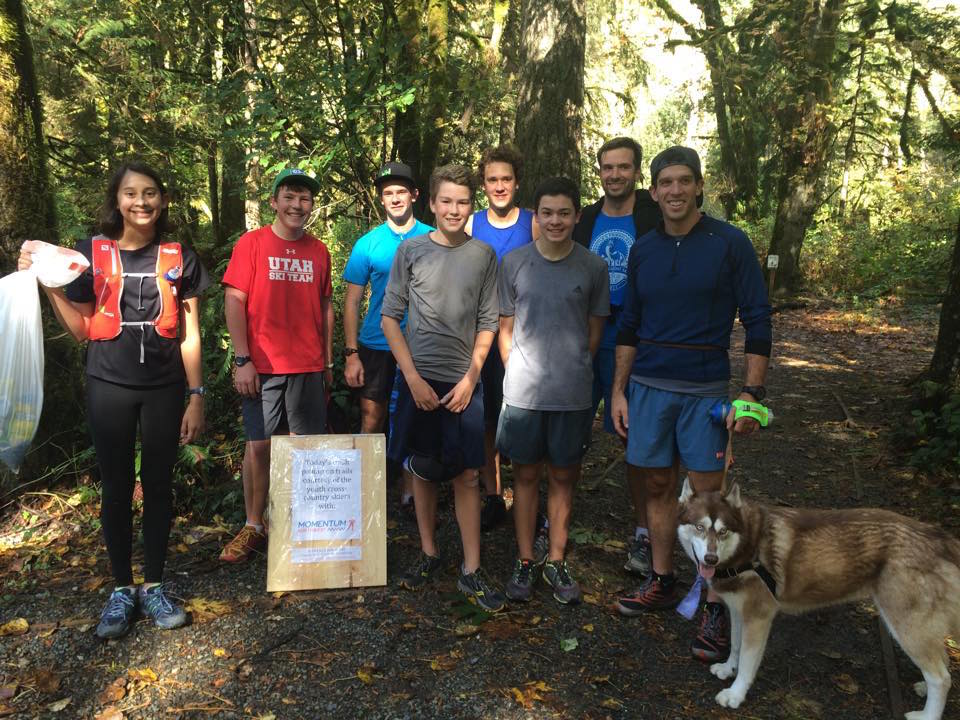
Momentum Northwest Head Coach and Program Director Sam Naney (r) with some of his athletes and pup during a trail-maintainence day. (Courtesy photo)
Blair Voorhees of Momentum Northwest leading the pack to the finish this winter. (Photo: Sam Naney/Momentum Northwest)
The Northwest as a region had one of the driest winters on record, keeping the brand new Seattle-based development program Momentum Northwest to no more than a couple of weeks of on-snow training locally. Despite all that, nobody is leaving the program, and more athletes are joining.
“Locally, it was a terrible winter in terms of snow and opportunities to get on snow, but the silver lining is that we’ve been able to do a lot of dryland training together and really build the team and the team spirit,” said Momentum Northwest head coach Sam Naney of the first season with the program.
Perhaps part of that good attitude comes from the fact that the team isn’t used to having snow in their backyard. Seattle itself receives just over six inches of snow per year, on average. Momentum Northwest lists their home ski area as the Cabin Creek Sno-Park, about an hour west on Interstate 90 and also the home of the Kongsberger Ski Club.
So Naney knew that dryland would be a big part of his work anyway. With that in mind, as well as frequent trips to Cabin Creek and a Thanksgiving Camp to Silver Star and Sovereign Lakes, British Columbia, Momentum Northwest offers two different programs: a fulltime program for skiers 12 years of age and older, with training sessions trains four times a week in the summer and fall and three to five times a week in the winter, and the “Mavericks” program for skiers aged eight to 11, which meets only on Saturdays during the winter.
“I think in some ways, the bad winter has made us better prepared to meet whatever conditions come our way, and the kids are mentally tougher for it,” Naney said of the low-snow winter. “We had some really good results despite the conditions and the lack of on-snow training, and that has given our kids the confidence that you can be competitive even though much of what they did all winter was dryland drills and short out-and-back ice skiing.”
The first line of Momentum Northwest’s athlete handbook is about excellence. The team’s goal, it says, is “Creating a national-caliber cross-country ski racing program in Seattle.”
But right after that, there are some other goals. The handbook lists core values: speed isn’t amont them. Instead you find personal growth, community and team building, commitment to excellence, and enjoyment.
Teaching those core values of sport doesn’t require snow.
“I quickly came to learn that those experiences come as a product of simply participating,” Naney explained. “If I can make the program fun, provide interesting workouts, fun van rides, and build a good team dynamic, the athletes will adapt to the changing circumstances with remarkable ease.”
Building a program from scratch is no easy undertaking. The team got a van, a banner, and bright blue race suits, but those are the tangibles – the intangibles like community involvement and name recognition are a bit harder. No matter: Momentum Northwest has found an underserved niche in the Seattle region.
“We are not competing with other programs, but we have to show people that Nordic skiing can be a complimentary part of the endurance lifestyle,” said Naney. “Even if you are already committed to track or cross-country running, Nordic is a good fit in that environment. And our program is no small commitment, so we have to show the families that they get something out of it.”
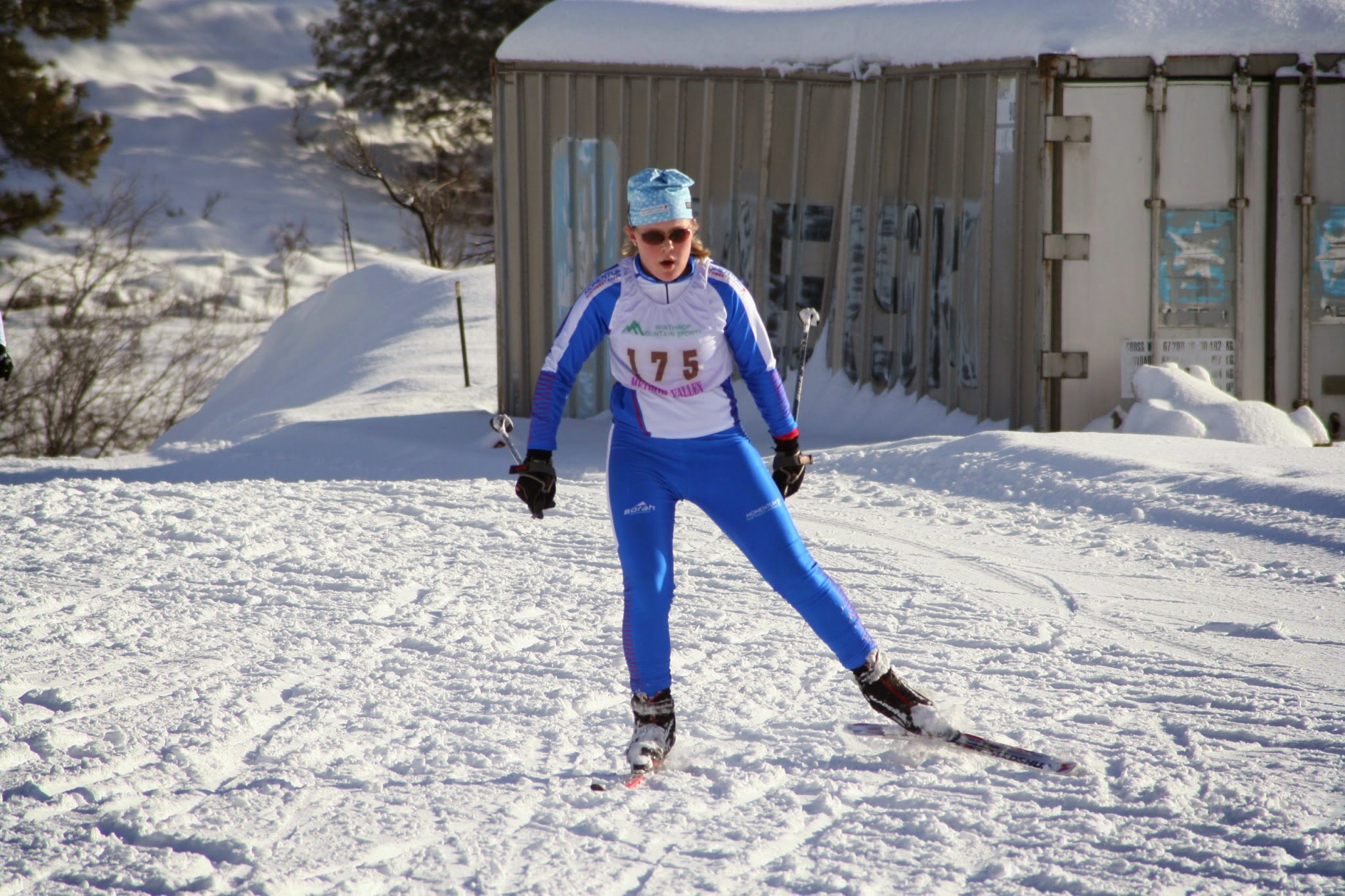
Momentum Northwest race trip to the Methow Valley this winter. (Photo: Sam Naney/Momentum Northwest)
Naney had a roster of more than two dozen motivated and eager athletes in his program when he launched Momentum Northwest’s first winter season last November. The kids were hooked in one season – with or without snow. But with no other full-time, performance-oriented Nordic programs in the Seattle area, Momentum Northwest also has to build a culture and a community around the sport.
However, several Washington areas with consistent snow have racing and development programs, such as the Methow Valley, Leavenworth, Wenatchee, Ellensburg and Spokane. Other regional programs include The Bend Endurance Academy, XC Oregon and Mount Bachelor Sports Education Foundation in Bend, Teacup Nordic at Mount Hood in Oregon, and Sandpoint in Idaho.
“Snoqualmie Nordic (based on Snoqualmie Pass, 50 miles east of Seattle) is the closest program, but they have more of a focus on beginner skiers and introducing families to the sport,” said Naney. “So far, we’ve actually been quite complementary with one another… Leslie (Hall), who is the Program Director of the successful Methow Nordic Team, helped connect me with some skiing families she knew in the Seattle area. That type of inter-program support is so beneficial and welcomed when you’re first getting started.”
At the moment, Naney is the only paid coach in the program. He’s helped by three assistant coaches: Jordan Goldwarg, a former Williams College skier and Dartmouth College development coach; Alexandra Sonnabend; and Halvard Berg, a former Norwegian junior racer. But those three work strictly on a volunteer basis.
Adding another paid coach is a big goal for the program in the next year. Naney seeks a ratio of about six to eight athletes per coach.
And while the roster is likely to grow, so too might the level of performance and the range of abilities of the athletes. Momentum Northwest may have been hurt by the lack of snow, but Naney believes that his athletes have high performance potential.
“When we have really good conditions and can ski three to four times a week on snow, you will see several of these kids go to Junior Nationals,” Naney said, adding the program is only losing two athletes from this year’s roster, simply because they are moving out of the area. “The kids realize that there is no limit to where they can take their skiing beyond our program. Some of them are kids you are going to see at the Junior Nationals in the future, some will ski in college and some will just enjoy the lifelong sport of skiing.”
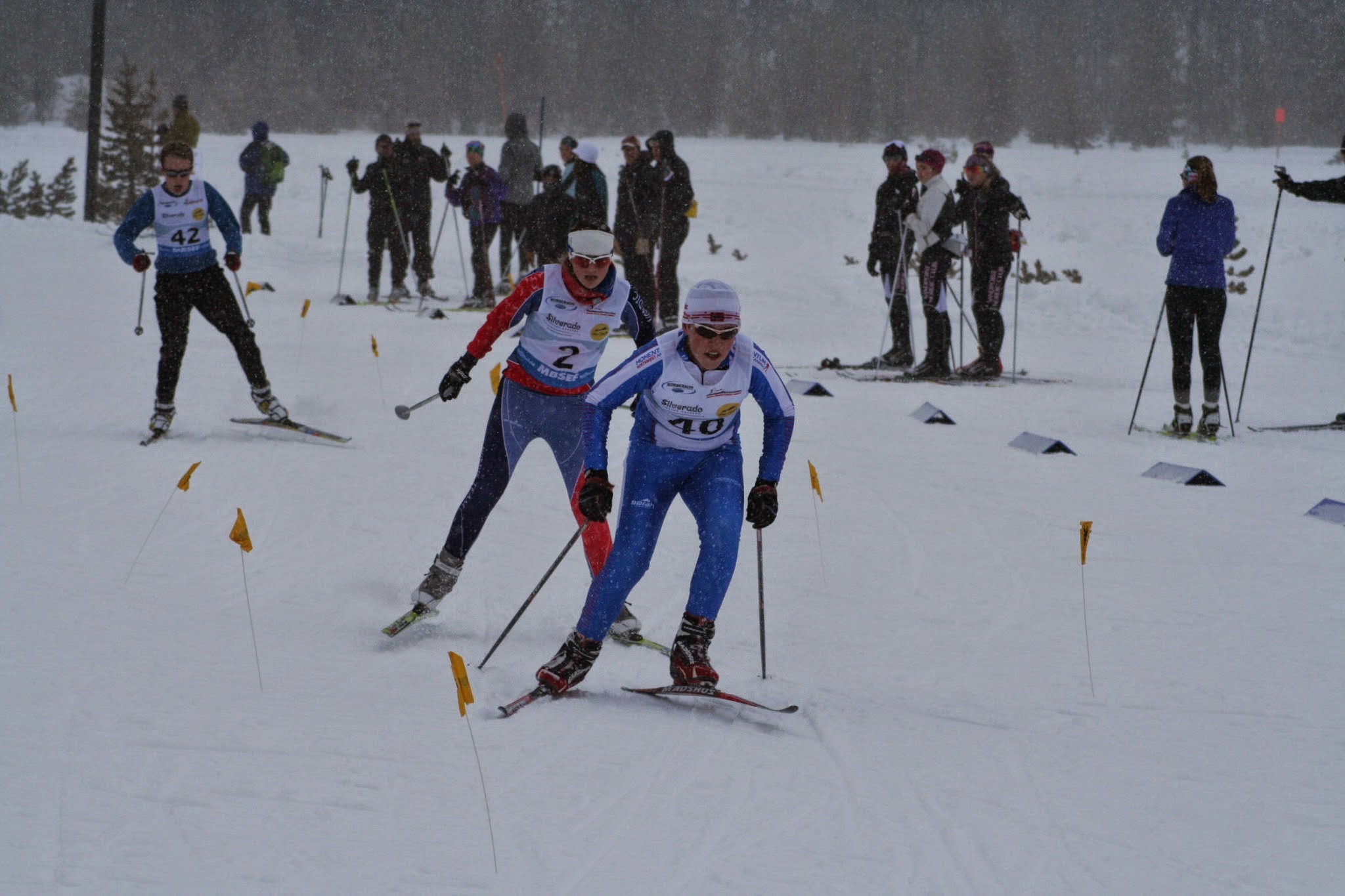
Emerson Rogers of Momentum Northwest racing in the Methow Valley, Washington, this winter. (Photo: Sam Naney/Momentum Northwest)
The new coach’s favorite memory from the 2014-15 season was the team’s first race trip, where he took 10 athletes in the team van to Bend, Oregon.
“We competed against a huge field of PNSA juniors at the first Junior Nationals Qualifier of the season,” Naney recalled. “In the final race, Cooper Jackson, who is one of my U14 athletes, landed on the podium in a tight finish. When they held the medal ceremony, all the Momentum athletes were crammed in the front row and were excitedly discussing how they were committed to being the loudest cheering, most exuberant teammates of any of the medal winners, to show their support for Cooper and Momentum.”
That comes back to those core values and the team spirit that are as much a part of the goal as the podium was.
“It was a validation for me that what we’re doing here is working,” Naney explained. “These athletes are learning not only how to ski well, and even win medals, but how to be on a team and how to support one another in times where it is often all too easy to begrudge a fellow teammate their success. It was a great moment, and many more of them followed throughout the rest of the season.”
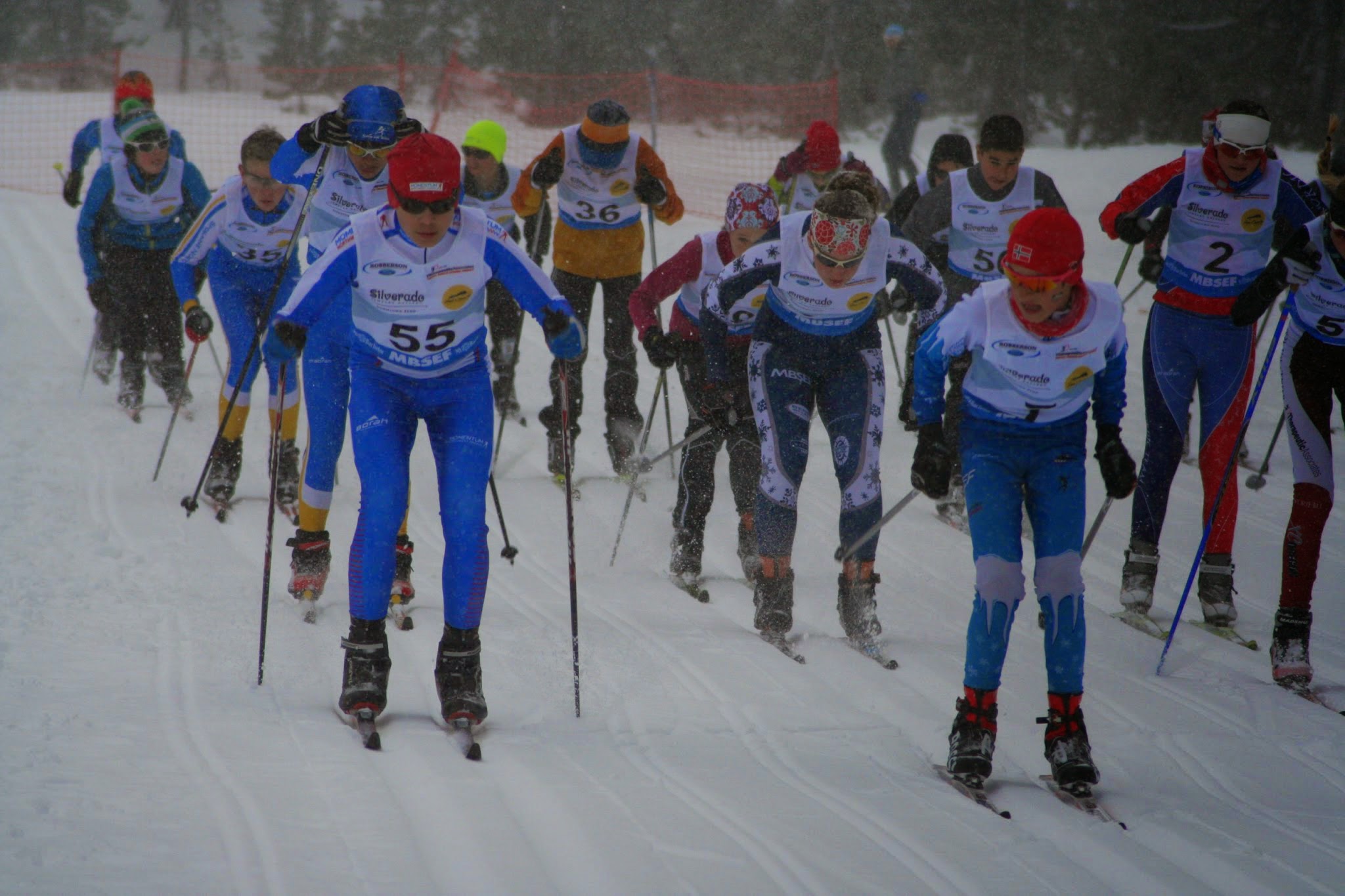
Cooper Jackson of Momentum Northwest (far left) in a mass start this winter. (Photo: Sam Naney/Momentum Northwest)
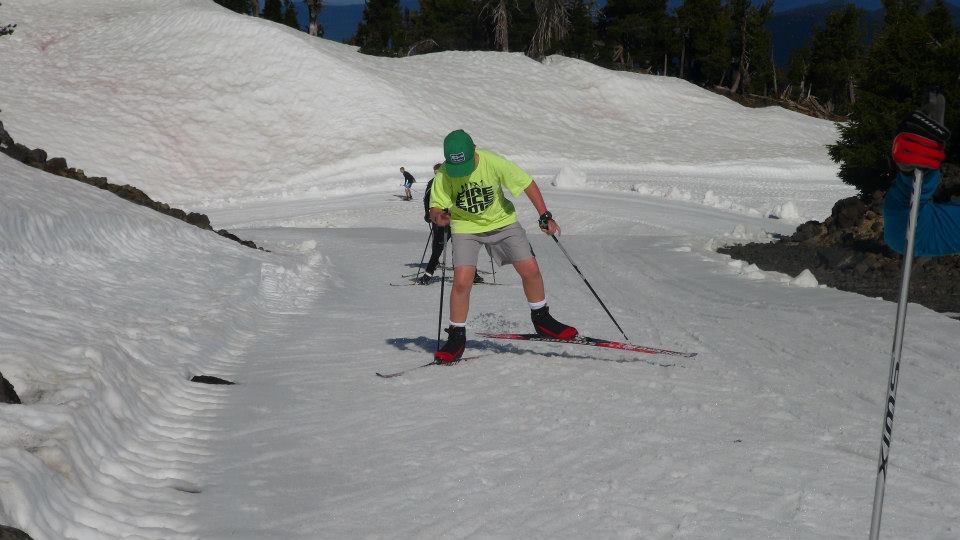
A member of the Momentum Northwest Ski Team makes his way up a hill in Bend this summer as part of the Fire and Ice Camp hosted by MBSEF. Momentum Northwest is Seattle’s newest nordic ski club. (Photo: Sam Naney)
It’s been a busy few weeks for Sam Naney. The former Methow Olympic Development Team racer welcomed a new baby girl into the world with his wife Allison on May 28. The couple also hosted three running races and moved to Seattle from the Methow Valley in the span of six weeks. On top of all that, Naney is starting his new position as Momentum Northwest’s head coach and program director.
If you’ve never heard of Momentum Northwest, you’re not alone. The nordic program is a new push from the Seattle community to bring back nordic skiing to the Pacific-Northwest’s largest city.
The idea was hatched by Coert Voorhees, a Seattle native and former U.S. Skit Team member. Voorhees attended the Overlake School in Seattle and was a member of the nordic team under three-time Olympic coach Nat Brown.
According to Naney, Voorhees was intent on brining back nordic skiing to Seattle, and this past winter he had his chance.
With the interest of several donors, the Voorhees family along with several others in the Seattle ski community such as Gretl Galgon, came up with the name, Momentum Northwest, secured sufficient funds, and sent out a hiring advertisement.
Momentum Northwest is the newest push by Seattle natives to bring nordic sports to the largest city in the Pacific Northwest. (Photo: Momentum Northwest)
That’s where Naney came in.
After a successful 2013/2014 season in which Naney finished sixth in the freestyle sprint at U.S. Nationals, the Washington native made the decision to retire from racing.
“I felt like I got a lot out of the sport and in particular a lot from the support from others. In combination with that I felt like I had a good season last year and was more interested on ending on a high note than going on a downward spiral,” Naney said in a phone interview.
In addition, his wife’s pregnancy made the decision all the more easy.
Despite his retirement, Naney wasn’t sure what he was doing next. When he saw the employment advertisement for Momentum Northwest, he realized all the opportunities starting as a head coach for a new program would present.
“The thing that first attracted me was how new and unique the program was because of the opportunity to start and design a program from scratch,” he said. “Instead of coming into an existing program with a lot of history or politics or an existing board that has an agenda. I get to create that and determine how this project goes.”
Even before Naney moved to Seattle, he realized the challenge that he has ahead of him. In a city that is traditionally thought more conducive to summer sports, Naney will need to make a winter sport program attractive to the cities residents.
That’s not to say it hasn’t been done before. In addition to the Overlake School, Sun Valley head Coach Rick Kapala was a former coach at Pacific Lutheran University and recent Olympian Holly Brooks found her start with cross country skiing while growing up in Seattle.
Despite the challenges, Momentum Northwest is already off to a good start. The club has roughly eight to ten children who regularly attend practice. Several of them recently made a trip to Bend, Ore. to participate in a training camp.
In order to attract more participants to the program, Naney is enacting traditional methods.
“We’ve put together some social media pages. I started to send out mailings and posting print fliers,” Naney said. “I also sent out an email flyer to all the athletic directors in schools in Seattle, Bellevue and Issaquah to get their students who are looking to do things in Seattle.”
In addition, Naney plans to market Momentum Northwest as a club for all athletes to boost their fitness, regardless of sport. However, once participants are training with the team during the summer, the goal is to convert them to cross country skiing.
When the athlete base is built, Naney hopes that word of mouth will be the future recruiting technique for the club.
Athletes or not, the question arises as to where Momentum Northwest will train.
Sam Naney, program director and head coach of Momentum Northwest, hopes to build the program to over one hundred youth athletes in the next two years. (Photo: Momentum Northwest)
According to Naney, there are several options all roughly an hour away from Seattle, located east of the city on Snoqualmie pass. They include the Cabin Creek ski trails run by the Kongsbergers Ski Club in addition to the nordic ski trails at the Summit at Snoqualmie.
Naney’s plan is for the team to train three days a week on snow once winter settles in, with a Wednesday night headlamp-ski on the Cabin Creek trails in addition to daytime skiing both Saturday and Sunday. The other training days will be spent in the city, where the team will rollerski and run in surround parks despite the persistent precipitation that often plagues the city in winter.
Naney sees the club continuing to grow and develop in the future. Within two years the goal is to attract over one hundred athletes. Long term goals include advancing athletes to junior national podiums and college-level programs.
“My hope, and our stated goal with the program, is to see it as one of the formidable nordic programs in the country,” said Naney. “We spent a lot of time talking about places like Cambridge Sports Union and what they’ve been able to do there. That’s our goal, to make it comprehensive, far-reaching, and competitive.”
For now the program director and head coach is hoping to juggle all the new events going on in his life as he furthers nordic skiing in the big city. Fortunately, he’s aided by a month-old girl named Fiona, who literally sleeps like a baby.
“In the midst of all this, we have a really easy baby. From the first night in the hospital she’s slept through the night,” Naney said. “When people say I must be exhausted, I tell them I’m actually sleeping really well. I haven’t felt like it’s a hindrance. I feel like it’s enriched our exciting life.”