Tag: Seeley Lake

  • Former Olympian Comes Out of Retirement to Race at Seeley Lake

    (Press release)

    John Morton comes out of Retirement to race
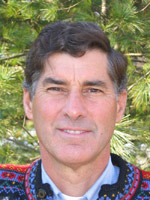
    John Morton

    Seeley Lake ROCKS is pleased to announce that John Morton, former Olympic Nordic Skier, will participate in the Peter Hale Memorial Race to be held on Saturday, February 4, 2017, in Seeley Lake, MT.   Morton is very familiar with Seeley’s ski trails.  He knows the existing Seeley Creek Nordic Trails system well, and worked on the proposed Fawn Creek trail system that is bringing such excitement to the regional ski community.  “We are looking forward to John’s participation in the race,” stated Noah Brautigam, Race Director.  Morton’s involvement is expected to attract other notable skiers to the race, and the Seeley Lake Regional Outdoor Center for Kinetic Sports [ROCKS] is excited to expand the excellence and availability of the local Nordic experience.

    ROCKS is expanding the 2017 Peter Hale event by adding an inspiration talk given by Hall of Fame Olympic Biathlete John Morton.  Morton will share his extensive knowledge and stores about Nordic skiing at the 7pm, Friday, Feb. 3rd event at the Rich Ranch.  An Amazon book reviewer notes “John Morton is a great coach and story teller, and …[he] delivers on so many levels. Morty gives advice about physical preparation, equipment and mental preparation, all laced together with great stories and anecdotes. I still bring this book out to read the stories when I need a little motivation.”  The event targets young skiers, but is open to all ages.

    The Peter Hale Race includes the traditional and challenging 22 km race, as well as a mellower 10 km race.   Both races are open to classic and skate skiers.  There will be a tent near the finish line with snacks, hot chili, and beer.  The race day finishes with a 1 km fun race for children.

    Why is it called the “Peter Hale Race?”  Peter was a dearly beloved figure in the American Nordic Ski community.  He also has strong Seeley Lake connections.  His passion for skiing and for young people was critical to the early development of the Seeley Lake Elementary Ski Program.  Peter helped ROCKS with the initial challenge of outfitting the fourth grade class with skis, and introducing them to a wonderful life-time sport.  The program has expanded to the entire elementary school, and is a daily reminder of one man’s involvement and legacy that continues today.

    Former Olympic skier John Morton regards Peter Hale as a good friend and is verbal with his recognition and high respect.  “Skiing the Peter Hale Race is a fitting tribute,” say Morton as he looks forward to skiing in the namesake race to honor his late friend.

    John Morton has an amazing history as an Olympic skier, coach, trail designer, and author.  He started skiing where he grew up in Walpole, NH.  Initially he participated in four events (slalom, downhill, jumping, and cross country) at Tilton School in Tilton, NH.  Later he skied at Middlebury College, and excelled in cross country skiing.  “Morton was an outstanding collegiate skier for Middlebury College, sweeping all the Eastern Carnival races in 1966.  He was named to the US Cross Country Ski Team in 1968, and the US Biathlon team in 1969.  He remained on the US Biathlon team from 1969 through the 1976 season (with the exception of a tour of duty in Vietnam in 1971, earning the Bronze Star).  In that span of time, he represented the US at the [1972] Sapporo and [1976] Innsbruck Olympics as an athlete.  From 1976 through 2002 Morty served as an assistant coach and team Leader for the US Team, including at 5 more Olympic events.”  [US Biathlon News] Morton was inducted into the US Biathlon Hall of Fame in 2009.  “John has modeled the spirit of the Olympic movement for generations of athletes over his 30 years of involvement with the US Biathlon Team, and set a standard for humility, integrity, and success,” says Larry Pugh, the 2009 Chairman of United States Biathlon.

    His teaching and coaching career started in 1974 as a high school English teach, running coach, and ski coach in Anchorage, Alaska.  He became head men’s skiing coach at Dartmouth College, Hanover, NH in 1978.  He coached eleven years at Dartmouth.  Then, in 1989 he began writing and designing trails.  He wrote “Don’t Look Back,” about training and cross country ski racing.  A reviewer at Amazon Books notes “John Morton is a great coach and story teller, and this book delivers on so many levels. Morty gives advice about physical preparation, equipment and mental preparation, all laced together with great stories and anecdotes. I still bring this book out to read the stories when I need a little motivation.”

    In 1989, Morton initially focused on designing cross country ski trails.    But, he soon found that fun, high quality trails were attractive to mountain bikers, runners, horseback riders, and others.  His company, Morton Trails, has designed over 100 trails in the US, and around the world.  These trail encourage healthy lifestyles, and increase surrounding property values.  See details at MortonTrails.com.

    Morton became an international biathlon referee with the International Biathlon Union in 2004.  He is also a certified course homologation inspector for the FIS (International Ski federation).

    Finally, Morton is an accomplished writer.  He wrote “Don’t Look Back” (comprehensive guide to cross country skiing) in 1992, and a novel “Medal of Honor.”  He is a frequent commentator on Vermont Public Radio, and has written over two-dozen magazine articles.

    In short, we are thrilled to have John Morton joining us for the Peter Hale event, and speaking at the 7pm, Friday, Feb. 3rd inspirational event.

    Complete details of the race and the Friday night are available at http://www.seeleylakenordic.org/PeterHaleMemorialRace.aspx.

    Seeley Lake Regional Outdoor Center for Kinetic Sports (ROCKS) is a 501c(3) non-profit located in Seeley Lake, MT, whose mission is to promote healthy children, strong families and vibrant communities through outdoor recreation.   ROCKS working with regional organizations has been instrumental in equipping the Seeley Lake Elementary School students with skis, providing a warming hut at the Seeley Creek Trails and is currently developing a plan for a new Nordic ski area in Seeley Lake.
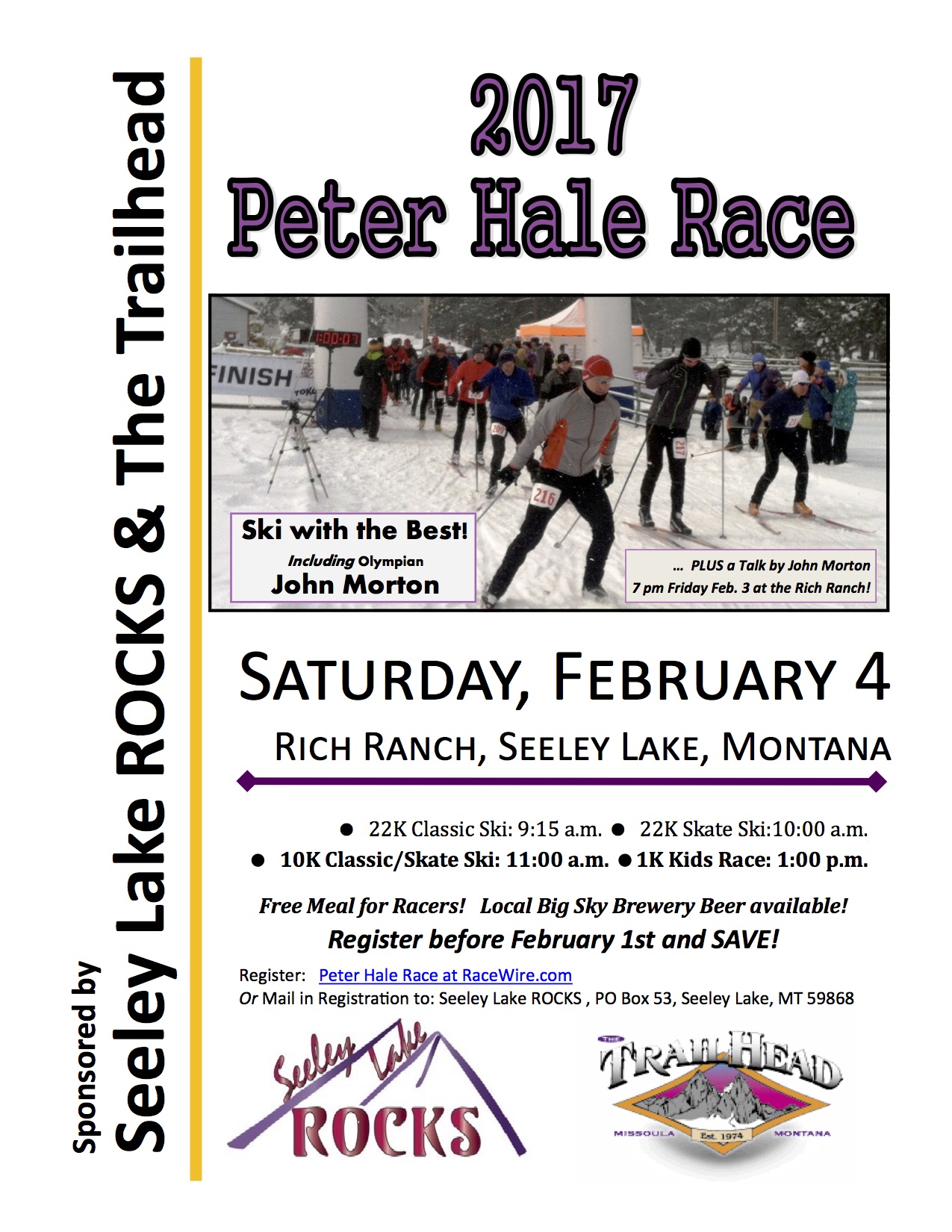
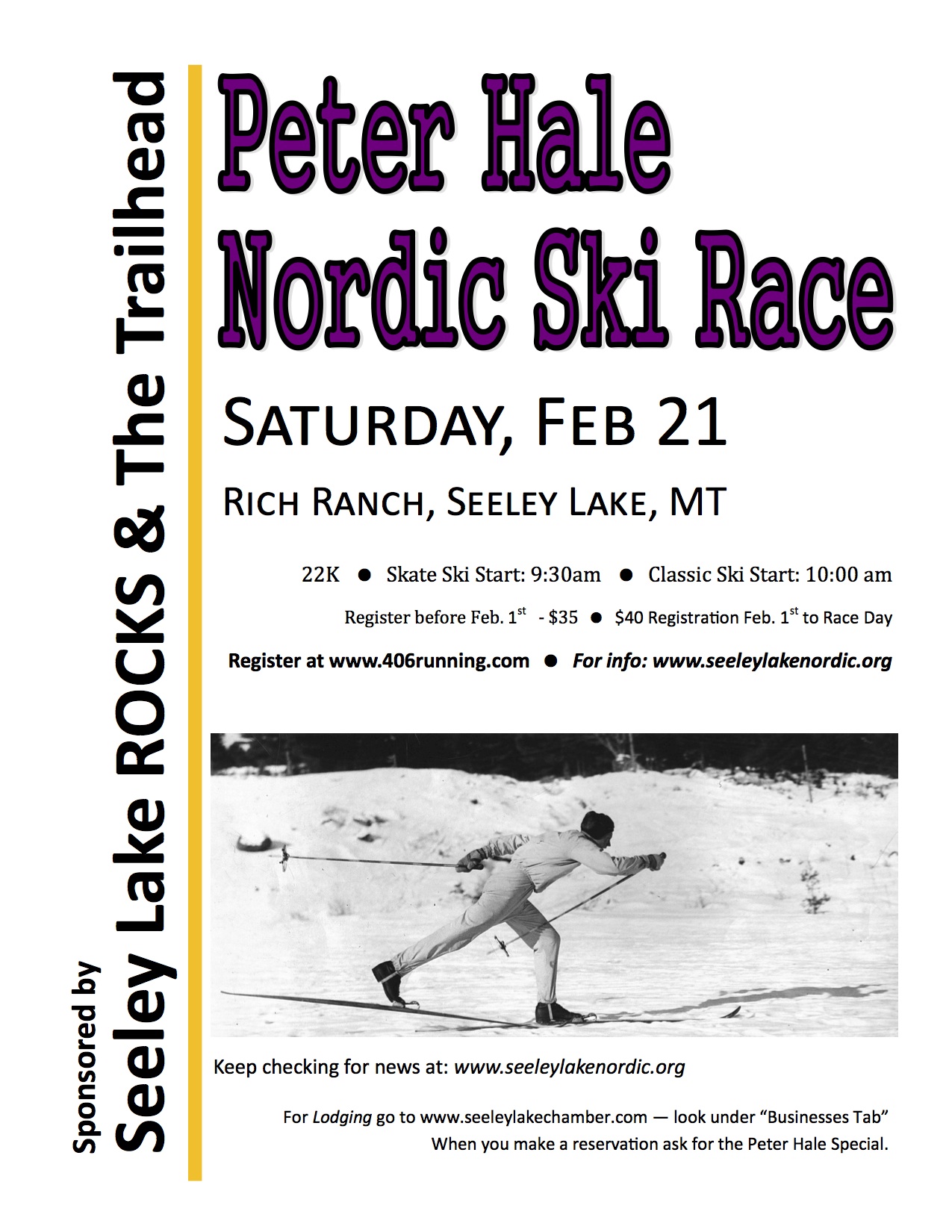
    Seeley Lake Race Poster 2017
    Seeley Lake Race February 4, 2017 in Seeley Lake, Montana. (Photo Credit: Jim McLean)
  • Small Montana Town Working to Create a Big Nordic Ski Vision

    Small Montana Town Working to Create a Big Nordic Ski Vision

    Inside the Seeley Lake ROCKS new warming yurt in Seeley Lake, Mont.
    Inside the Seeley Lake ROCKS new warming yurt in Seeley Lake, Mont.

    SEELEY LAKE, Mont. — Inspired by the birth of the Maine Winter Sports Center, a group of Seeley Lake (population 1,659) residents formed the Seeley Lake Regional Outdoor Center for Kinetic Sports (ROCKS).

    That was in 2010.

    In the spring of 2015, ROCKS will file an application for a Special Use Permit with the United States Forest Service (USFS) to build a new Seeley Lake nordic-ski venue, which is “intentionally being designed to international race-ready specs, fully homologated, with both the skier and spectator in mind,” according to ROCKS President Chris Lorentz.

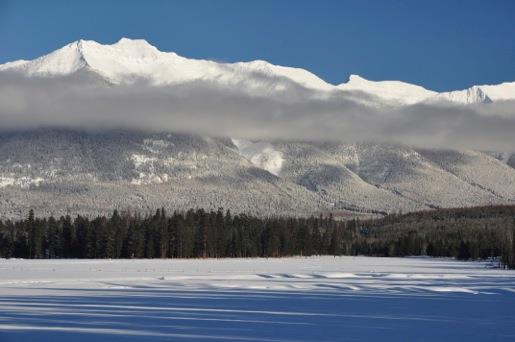
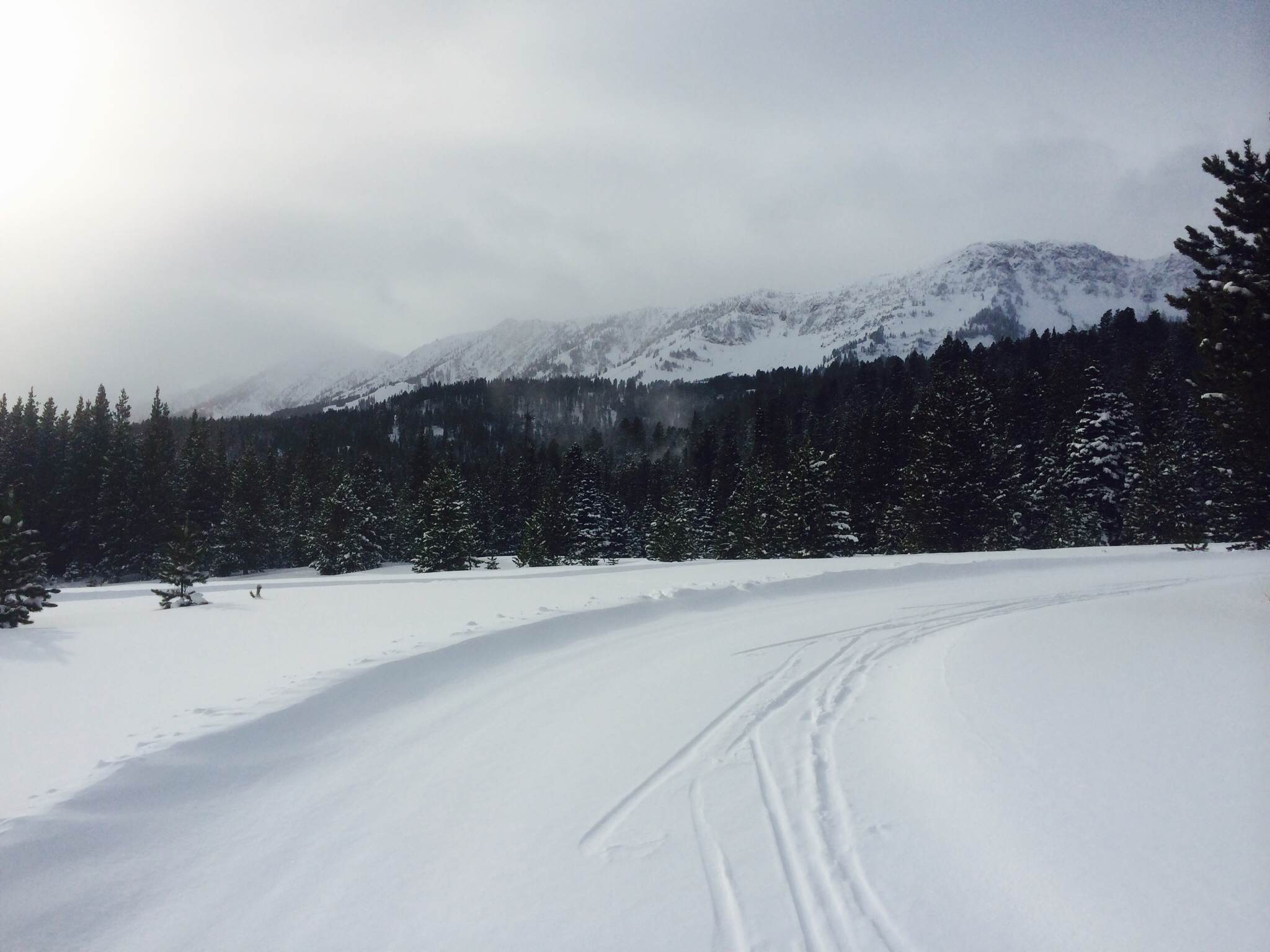
    Swan Range forms the backdrop for the Seeley Lake ski trails. (Photo: Seeley Lake Nordic)
    Swan Range forms the backdrop for the Seeley Lake ski trails. (Photo: Seeley Lake Nordic)

    Lorentz said the Forest Service will review the permit application, perform an environmental analysis (including a mandatory 90 day public input period) and provide a decision by October 1, 2016.

    “We believe the (process) will result in a positive decision notice,”  Lorenz said.

    ROCKS hired John Morton, owner of Morton Trails, to provide both a feasibility study (2011) and course design (2012) for the new Seeley Lake venue. According to a report issued by Morton Trails to the USFS, Morton states that efforts have “resulted in a workable concept for what offers to be a nationally, and even internationally, recognized cross country skiing venue … suitable for hosting Continental Cup races such as US Junior Olympics, US Nationals, North American races [i.e. Super Tour], as well as regional races where participants can be awarded FIS points for international ranking.”

    Morton’s design would meet specifications for D-category homologation, making Seeley Lake one of six venues certified to this level in the United States. A D-certification allows a venue to host all events, including mass-start freestyle races. The only event requiring a designation beyond a D category is the skiathlon, which requires two separate courses (used concurrently).  Soldier Hollow in Midway, Utah, is the only course in the US which currently has this designation.

    To provide Seeley Lake with an advantage in bidding for major events and training camps, and to keep the door open for a possible World Cup event bid, Morton designed the course to “comply to a World Cup standard – which will make this venue truly representative of courses hosting the most elite competitions.”  The most recent FIS Homologation Manual would have allowed for certification with a 25-meter climb; however, Morton chose to exceed this standard and comply with the World Cup’s 30-meter requirement.

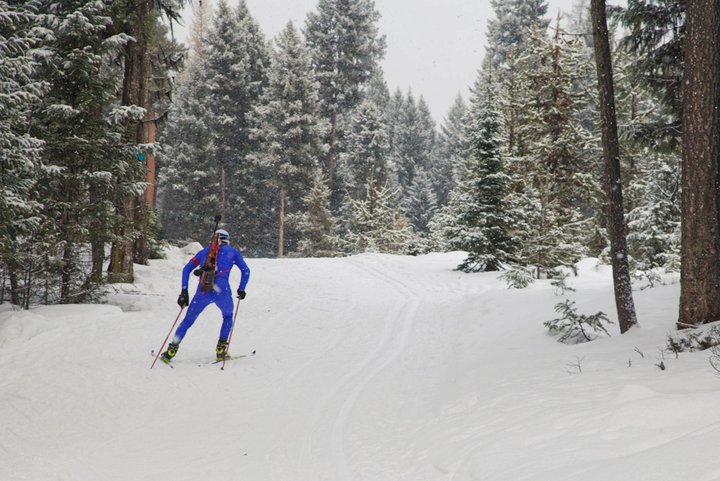
    In January, Seeley Lake hosted its 8th annual biathlon, with 115 racers participating in three events. (Photo: Seeley Lake Nordic)
    In January, Seeley Lake hosted its 8th annual biathlon, with 115 racers participating in three events. (Photo: Seeley Lake Nordic)

    Morton’s design includes a 15-point biathlon range and identifies a location for a 30-point range (meeting the IBU World Cup requirements) that could be installed with some additional construction. The course design for the five-kilometer loop is “spectator friendly” allowing  spectators to view competitors five to seven total times, or 10 to 14 times for a 10 k race.

    While USFS permit approval, new venue construction, and hosting of events at the new venue are years in the future, Seeley Lake, is not waiting for course completion to continue taking steps forward.  Recent ROCKS activities have clearly energized the town which has a long standing nordic ski racing tradition.

    The town’s existing nordic ski trails at Seeley Creek have seen an upsurge in use following the installation of a new yurt (installed by Seeley Lake ROCKS) at the trailhead.

    “The yurt is way more popular than we expected,” Lynn Carey of the Seeley Lake Nordic Ski Club said. “Our metal ranger now takes in more money than any other ranger in the state.”

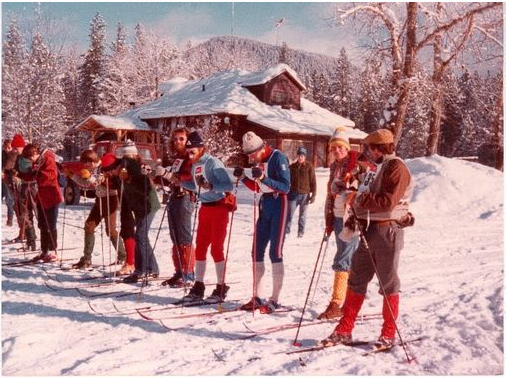
    Seeley Lake, Montana, has a long history of ski racing.  This is a photo of the start 1983 OSCR race. (Courtesy Seeley Lake Pathfinder)
    Seeley Lake, Montana, has a long history of ski racing. This is a photo of the start 1983 OSCR race. (Courtesy Seeley Lake Pathfinder)

    ROCKS founder Karen Pratt notes, “The idea is that you need a culture shift to bring in an elite race [to Seeley Lake] and get enough interest in town to support it.  An international race is a lot of work!”

    The ROCKS plan seems to be working.

    “There has already been a big culture shift in Seeley,” Pratt said. The Seeley school system started a ski program where any student above the 3rd grade can access free skis, transportation and ski instruction. Twenty students have caught the ski bug and joined the school’s newly formed nordic ski racing team.

    According to Pratt, many local parents are learning to ski as a result of the new youth programs.  She is convinced that the increased activity is improving community health.  “It’s not a good thing when the people in Seeley don’t get out of the house in the winter,” she said.

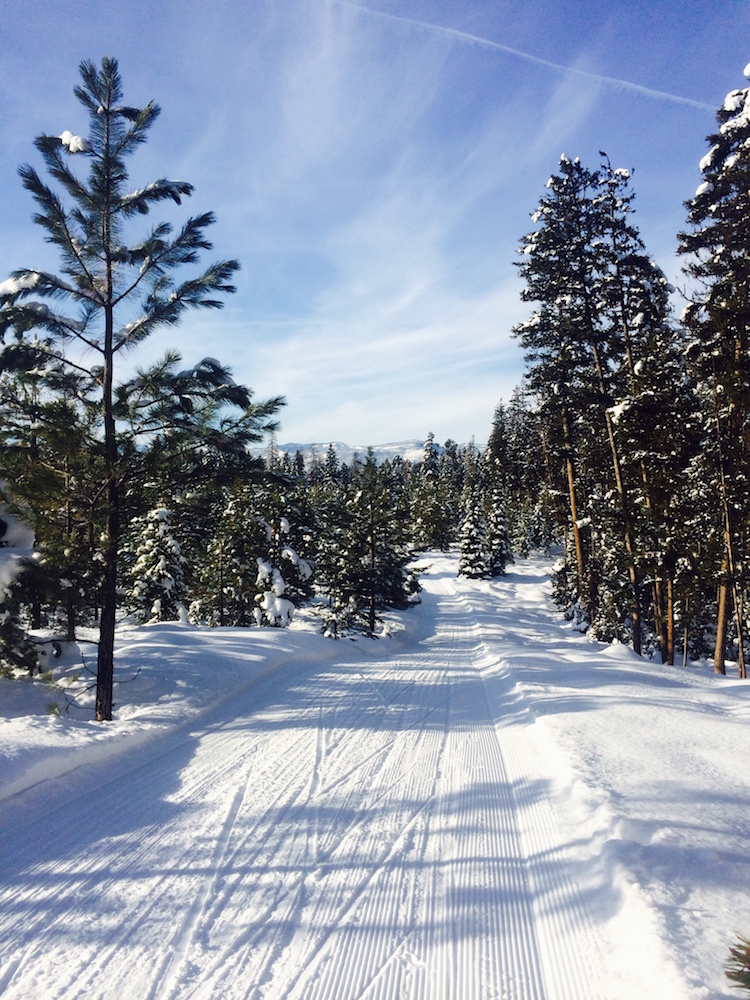
    Seeley Lake's existing ski trails at Seeley Creek. (Photo: Mark Vosburgh)
    Seeley Lake’s existing ski trails at Seeley Creek. (Photo: Mark Vosburgh)

    Grooming the 23-kilometer Seeley Creek trail system is now conducted daily, and several trails that had been abandoned or rarely groomed have been re-opened.  The rolling trail system, designed by Olympian Jon Elliott, is seeing a resurgence in use and the trails are receiving rave reviews from regional skiers.  The eighth-annual Seeley Lake biathlon had 115 entrants this year, nearly double last year’s count, according to race director Cheri Thompson.

    Once the new trails at Fawn Creek are open, ROCKS organizers hope that overnight visits and resulting economic benefits to Seeley Lake will increase with skiers spending two days in the  Seeley Lake area in order to ski both trail networks.

    Pratt credits generous donations from the late Peter Hale and his estate for supporting the Seeley Lake ski program with skis, waxing supplies and equipment. Hale’s connection to Seeley and his passion for skiing is in part responsible for at least one concrete example of increased economic activity sought by ROCKS.

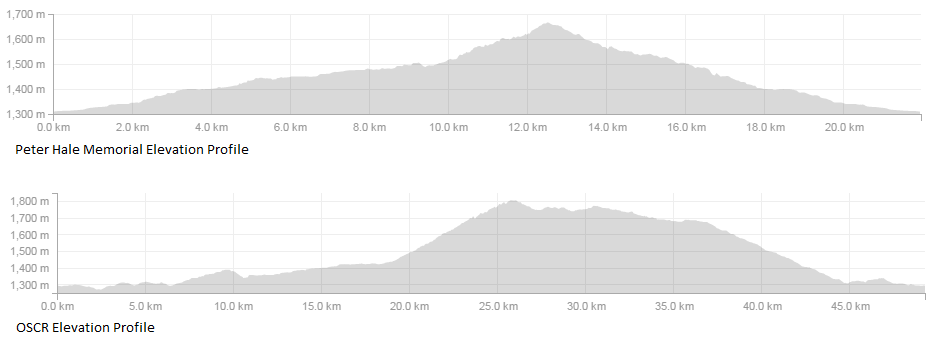
    Elevation profiles for Seeley Lake's signature nordic ski races, the Peter Hale Memorial and OSCR.
    Elevation profiles for Seeley Lake’s signature nordic ski races, the Peter Hale Memorial and OSCR.

    In 2012, Mike and Cathy Kahnle opened Seeley’s first bike-and-ski shop, Rocky Mountain Adventure Gear. Describing how he came to a decision to start the business, Mike said, “ROCKS was happening … Peter Hale contacted me prior to putting this business together and just filled my ear… It was pretty evident his love for skiing was overwhelming.

    “Peter basically talked me into running Madshus skis in a shop that didn’t exist,” he continued. “You couldn’t have a conversation with him without feeling better about yourself and life in general.”

    A passionate endurance athlete, Kahnle was also attracted to Seeley by its reputation for challenging endurance events like the Over Seeley’s Creeks and Ridges (OSCR, pronounced “Oscar”) 50 k ski race.

    Describing the race, Kahnle said, “No matter what level athlete you are, you are going to have the opportunity to push yourself to find the limits of what you’ve got.” Referring to the nearly 800 meters of elevation gain in OSCR, he added, “If you want an easy race, go somewhere flat because we are not going to have it for you here.”

    Carey, OSCR race director since 1991, agreed: “OSCR [founded in 1981] is a damn-tough race. It always has been, and we are proud of it … really it’s an adventure more than a race.”

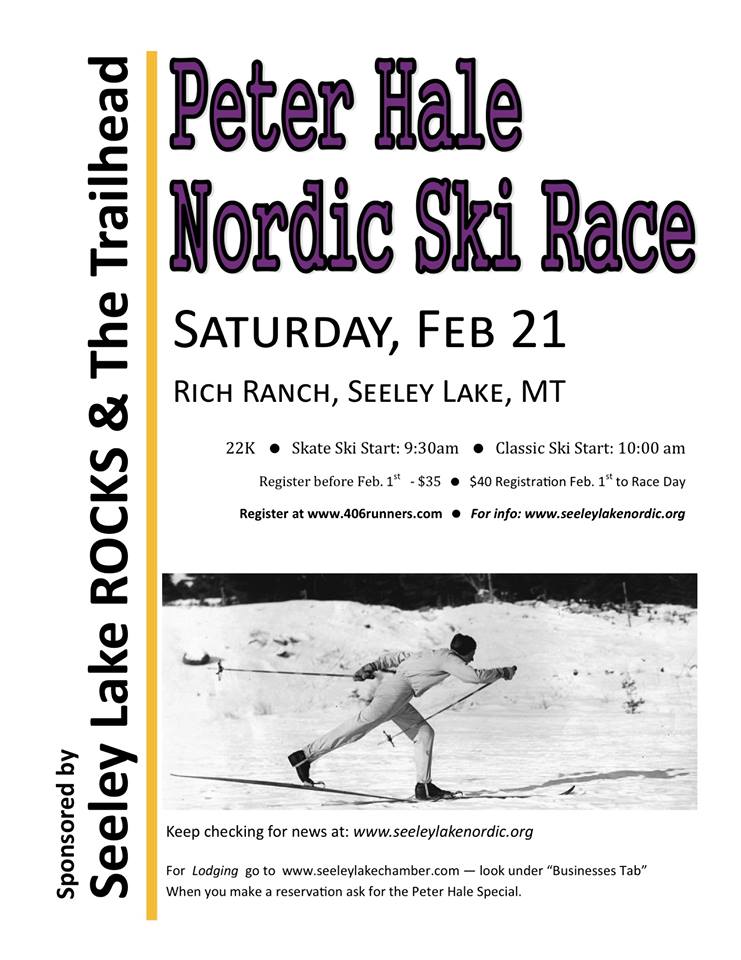
    Peter Hale 2015 Race Poster
    The second Peter Hale Nordic Ski Race will be held Saturday, Feb. 21, in Seeley Lake, Mont.

    ROCKS will hold the Second Annual Peter Hale Memorial 22 k Ski Race on February 21, 2015.  With an elevation gain of nearly 400 meters, the race is not easy.  In honor of Hale’s love of classic skiing, both classic and freestyle races are offered.  Inaugural race feedback (in spite of frigid temperatures) was positive with about half of the participants choosing the classic event.  Pratt anticipates that the race entry will need to be capped after this year’s event due to capacity limitation of the venue.

    With momentum building in Seeley Lake, the ROCKS vision for a national and international caliber ski venue is moving forward.  “The focus is on the new course right now because it has to be,” Pratt said.

    While not everyone in Seeley Lake is optimistic about the outcome of the ROCKS effort, Pratt stated, “If we did have a venue that brought in a week’s worth of high-end racers, it would mean us [in Seeley Lake] having a larger number of people who would have a larger vision about what is possible.”

  • Common Training Mistakes: Exposed at West Yellowstone!

    Common Training Mistakes: Exposed at West Yellowstone!

    From left to right: Alex Matthews, Managing Editor, and Mark Vosburgh, Para Nordic Contributor, in West Yellowstone, Mont.  "Let the races begin!"
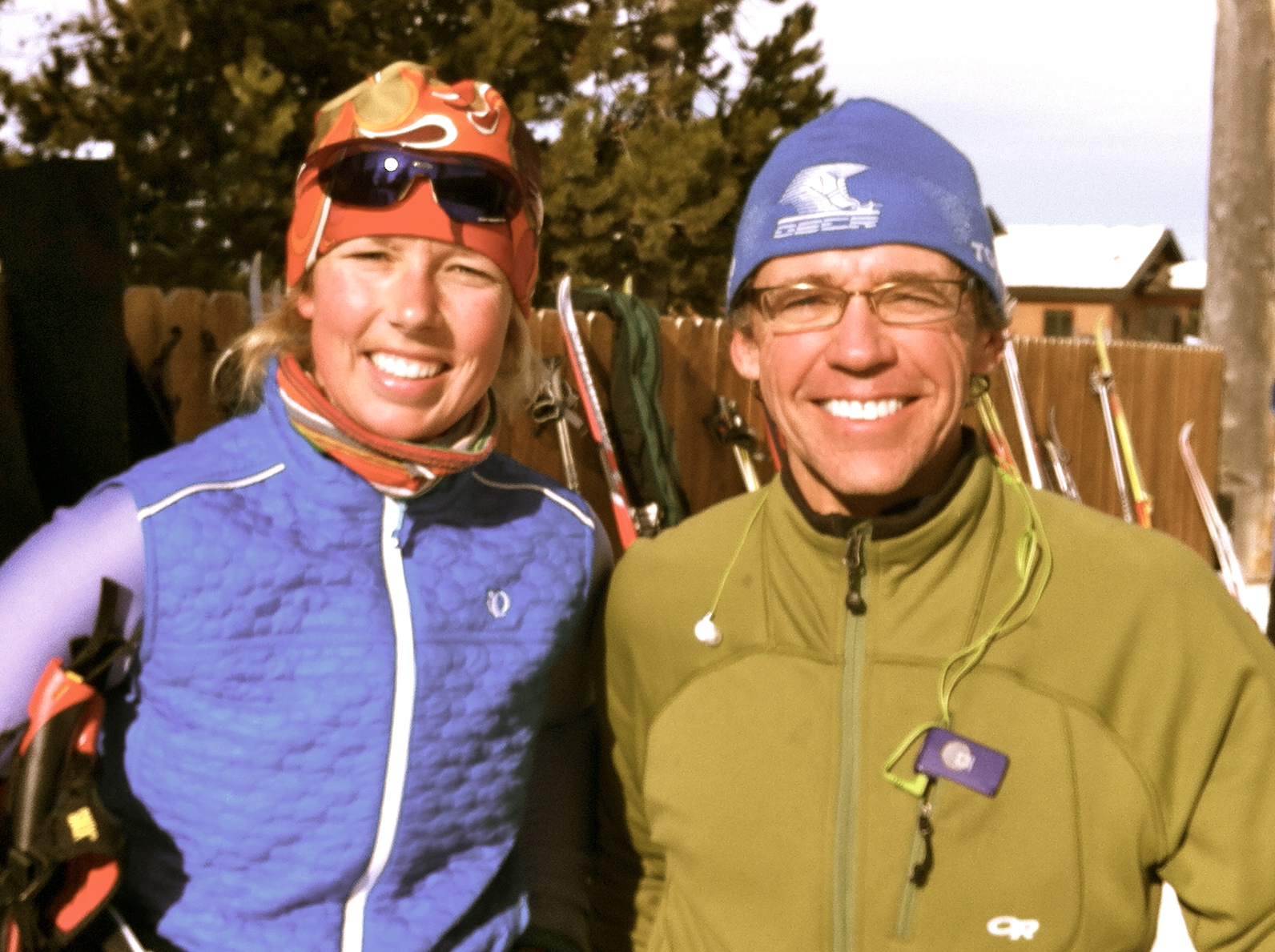
    FasterSkier contributor Mark Vosburgh (r) with editor Alex Kochon last Thanksgiving 2013 in West Yellowstone, Mont.
    I have been following the Central Ski Association’s CXC Academy training program since last January, so when I traveled to the Yellowstone Ski Festival this Thanksgiving, I was eager to see how my preparations would translate to skiing on snow.In my enthusiasm, I skied long and hard from day one, eagerly testing my limits.  As with past years at West, I was utterly exhausted at the end of each day and pretty much toast by the end of the week.  Additionally, I believed my high-intensity early season training would be the winning formula for improving my racing results this season.
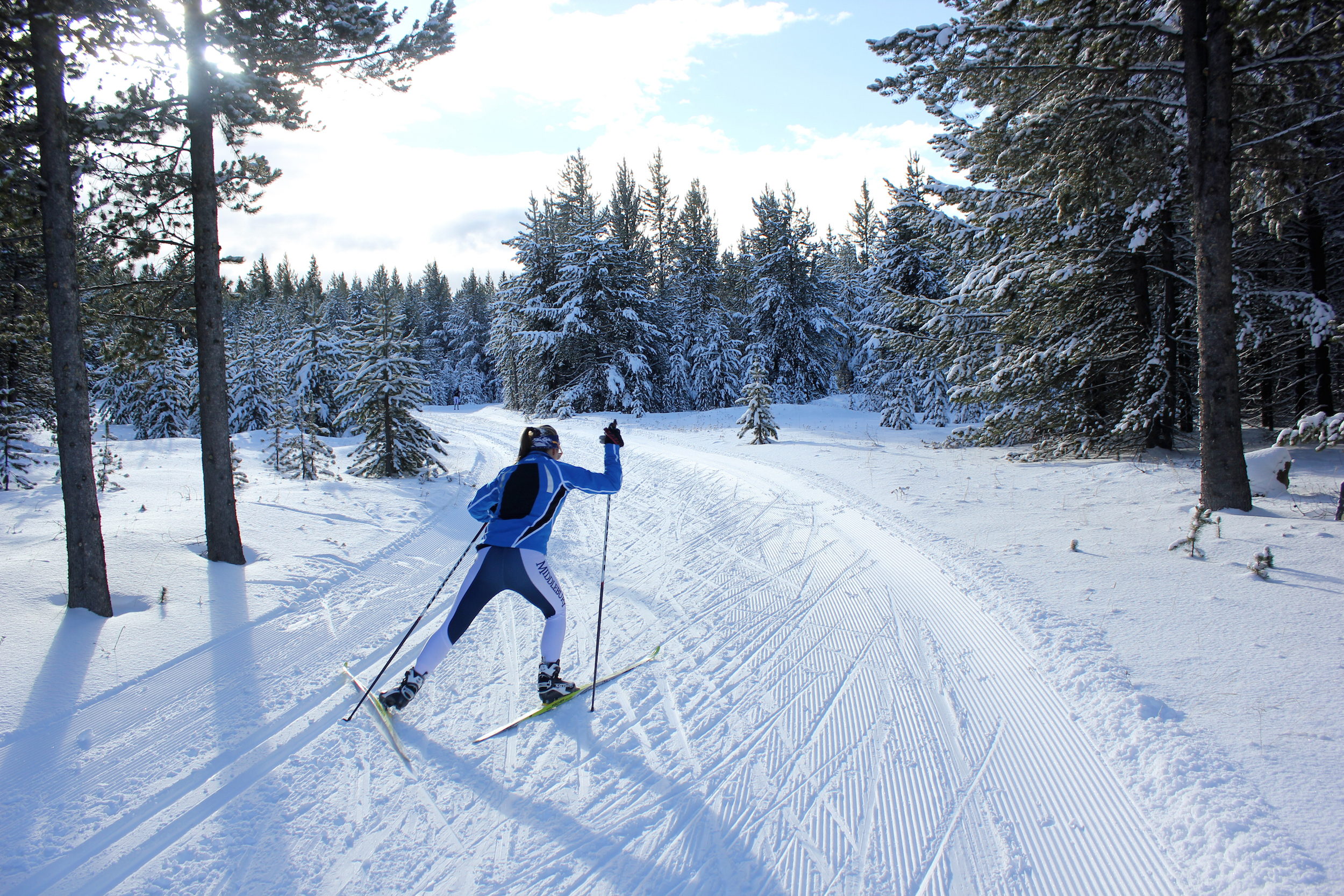
    Early season skiing at the 2014 West Yellowstone Ski Festival as pictured on Nov. 24. (Photo: Lander Karath)
    Early season skiing at the 2014 West Yellowstone Ski Festival as pictured on Nov. 24. (Photo: Lander Karath)

    Then, on my last night at the festival, I attended Scott Johnston’s lecture: Capacity Training vs. Utilization Training; making an informed decision. As I listened, my confidence in my training approach was shaken.

    Johnston, coach of the Methow Olympic Development Program, climber and former U.S. Ski Team member, said that he has seen many athletes whose training habits result in a phenomena called Aerobic Deficiency Syndrome (ADS). With ADS, athletes are forced to rely on inefficient high-intensity anaerobic energy pathways for even slow paced workouts.

    In the lecture, Johnson looked out at the conference room full of fit, dedicated skiers and said he guessed that many, and possibly most of the attendees fit into this category.

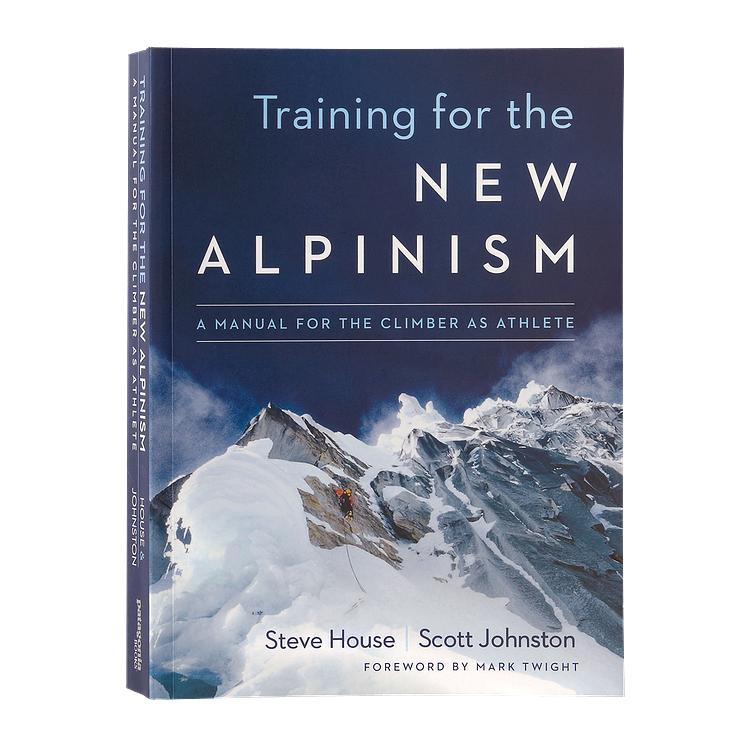
    Intrigued, I followed up the lecture by reading Johnston’s book,Training for the New Alpinism: a Manual for the Climber as Athlete,” co-authored with mountaineer Steve House.  In the book, Johnston goes into detail on the importance of proper aerobic training.Starting with the familiar concept of training zones, Johnston points out that the vast bulk of training, for athletes at all levels, should be done in Zone 1 (below the aerobic threshold).  He states, “The better developed the aerobic base, the faster you can move for extended periods.”

    “The better developed the aerobic base, the faster you can move for extended periods.” — Scott Johnston, Methow Olympic Development Program head coach

    He points out that even world-class endurance (defined as efforts lasting around two minutes or longer) athletes, including 800-meter runners, excel by developing a huge aerobic base before adding the high-intensity work needed to peak for competition.
    "Training for the New Alpinism: a Manual for the Climber as Athlete" by Scott Johnston and Steve House
    “Training for the New Alpinism: a Manual for the Climber as Athlete” by Scott Johnston and Steve House
    Johnston goes on to explain the mistake that I (and apparently many others) make.  For many of us, our Zone 1 workouts are mistakenly performed at intensities too high to give us the aerobic system benefits that are intended.”Harder is not better when it comes to development of your aerobic threshold,” he stresses.Johnston says that part of the problem is that Zone 1 aerobic training may feel too easy and too slow to be beneficial, a problem that worsens as we do more and more high-intensity training.   Without physiological testing to identify our aerobic threshold, we are left with a variety of methods including perceived exertion to heart-rate monitoring to gauge our intensity. In the real world, many of us overestimate the effort required to effectively train our aerobic energy systems.  As a result, our aerobic capacity can actually decrease.

    The symptoms of improperly training our aerobic base include not being able to ski without breathing hard, and prematurely tapping into our high-powered, but short-lived anaerobic energy reserves.Johnston points out that “long slow distance” aerobic training is better described as “long easy distance” training.  As our aerobic base develops, we should be able to ski faster and faster on our long distance days while not losing the feeling of “easy” effort.

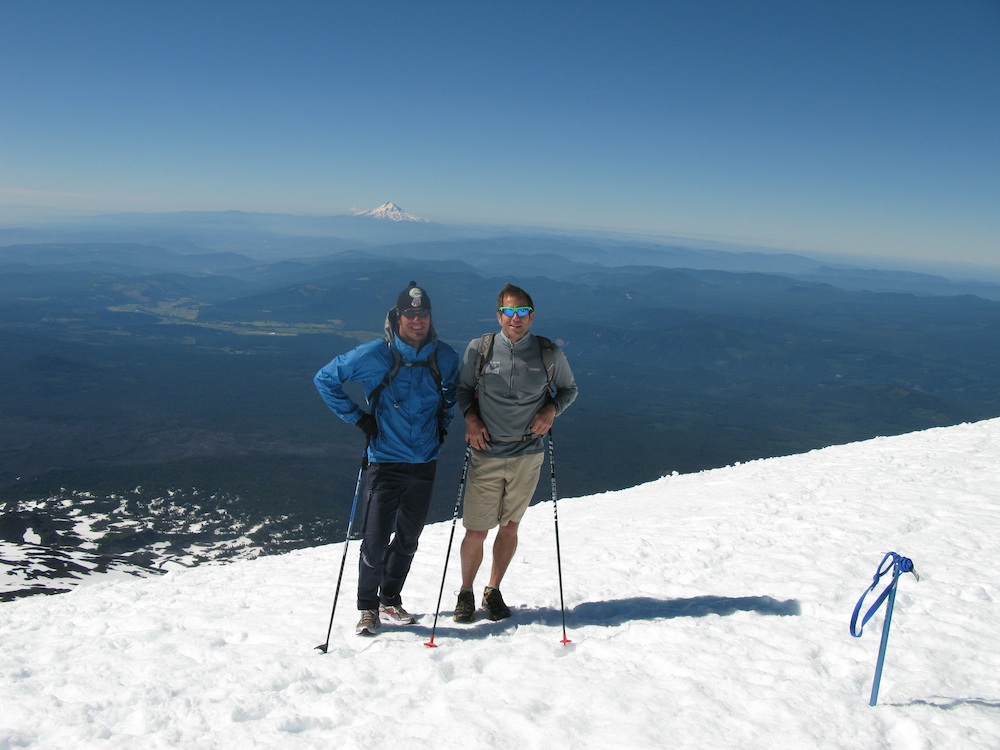
    Scott Johnston (r) with Olympian Torin Koos in 2010. (Courtesy photo)
    Scott Johnston (r) with Olympian Torin Koos in 2010. (Courtesy photo)

    Another symptom of improper aerobic training was what I experienced at West Yellowstone.  Since I trained too hard on my long easy days and warm-ups, I was simply too tired to effectively train during my harder Zone 3, 4 and 5 workouts.  My exhaustion at the end of the week should have been a red flag my training was unsustainable, given my inadequately developed aerobic energy system.

    In his lecture and in his book, Johnston provides a prescription and practical methods to avoid Aerobic Deficiency Syndrome. If you are unable to get a laboratory test to find your aerobic threshold heart rate, Johnston recommends starting to exercise slowly while breathing through your nose only.

    “As you increase intensity/speed, note the point at which this nose breathing becomes noisy and labored,” he notes.  This is the upper limit of Zone 1 (your aerobic threshold).

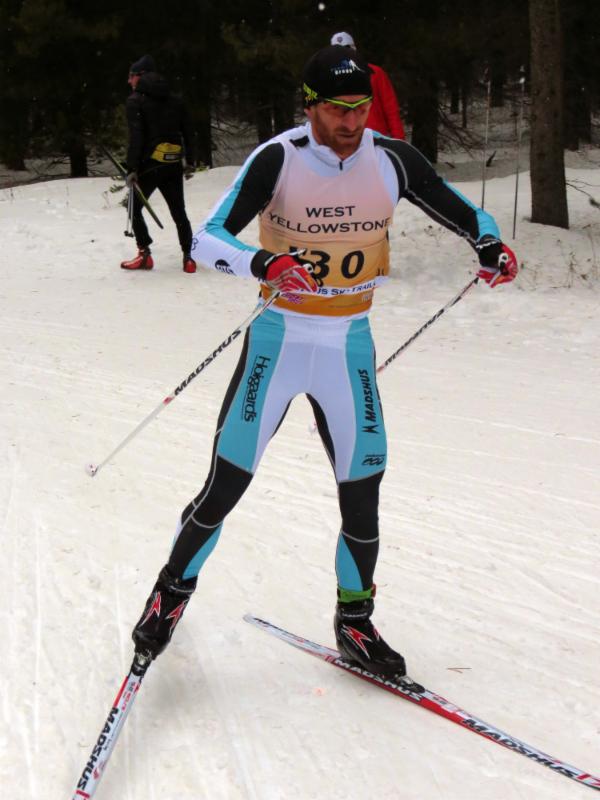
    Brian Gregg (Team Gregg/Madshus) racing to second in the SuperTour 15 k freestyle in late November in West Yellowstone, Mont. (Photo: Toko)
    Brian Gregg (Team Gregg/Madshus) racing to second in the SuperTour 15 k freestyle in late November in West Yellowstone, Mont. (Photo: Toko)

    In his lecture, Johnston described coaching 2014 U.S. Olympian Brian Gregg and prescribing months of long distance aerobic base training at an effort where Gregg would breathe only through his nose.  At first, Gregg found it very challenging to stay at this low intensity, and joked that he felt like training with “a bag over his head” because he was embarrassed that he was running so slowly.

    With time, Gregg’s aerobic capacity increased to the point where he could easily click off mile after mile at a faster pace while maintaining Johnston’s nose-breathing limit. Johnston credits Gregg’s improved aerobic capacity as setting the stage for Gregg’s eventual selection to the 2014 U.S. Olympic team.

    My experience with the nose-breathing method mirrors Johnston’s description in the book: “For some of you this (Zone 1) will be the hardest zone to train in.  You may find that you can barely jog or can only hike uphill very slowly … before you must begin mouth breathing … and your heart-rate climbs … right through Zone 2 and into Zone 3.”

    In my experiment with the CXC Academy training plan, I realize that I should have paid more attention to the information on training zones.  While the information is provided in the plan, I skimmed over it.  It took me hearing Johnson’s lecture and reading his book to jar me into recognizing my two major (but common) training mistakes.  Johnson summarized these mistakes in an Outside Online interview:

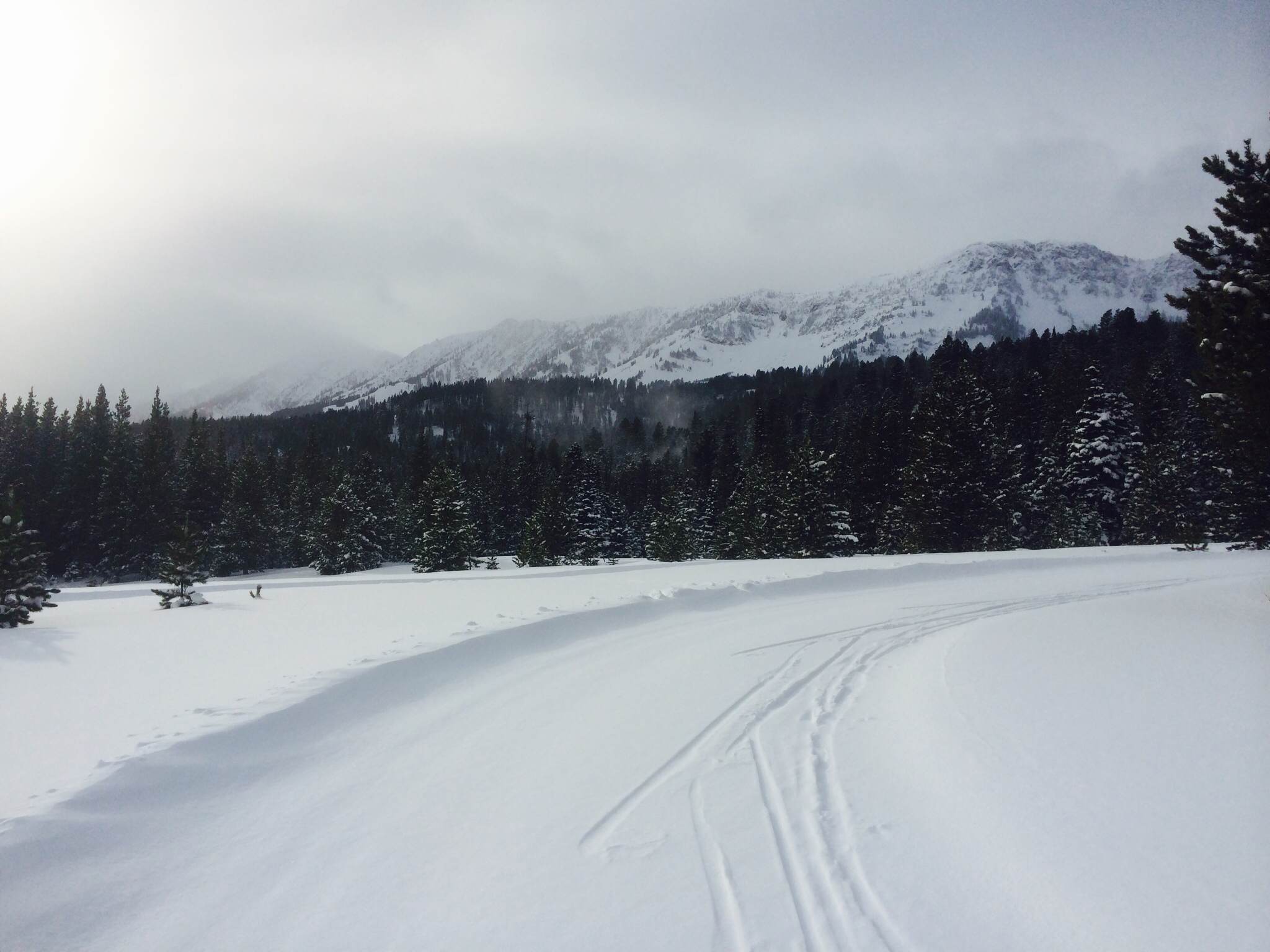
    Fresh tracks this winter at Bohart ranch near Bozeman, Mont. (Photo: Mark Vosburgh)
    Fresh tracks this winter at Bohart ranch near Bozeman, Mont. (Photo: Mark Vosburgh)

    “Most people, regardless of sport, train basic aerobic endurance too hard or fast. This happens for two primary reasons. The first is that this intensity level ‘feels like training’ because it feels moderately hard. Secondly, many people are time-limited in their training and imagine that they can make up for the duration of training by increasing the intensity.”

    So now, armed with good information, I’m back on track with my training plan.  I credit the CXC Academy training plan for a steep change improvements in my ski specific strength and ski technique.

    Now, I’m looking forward to improving my aerobic capacity.  On my CXC Academy prescribed Zone 1 over-distance days at Montana’s Bohart Ranch and Seeley Lake trails, I’ll be skiing easy, breathing through my nose, and avoiding the temptation to put a bag over my head!