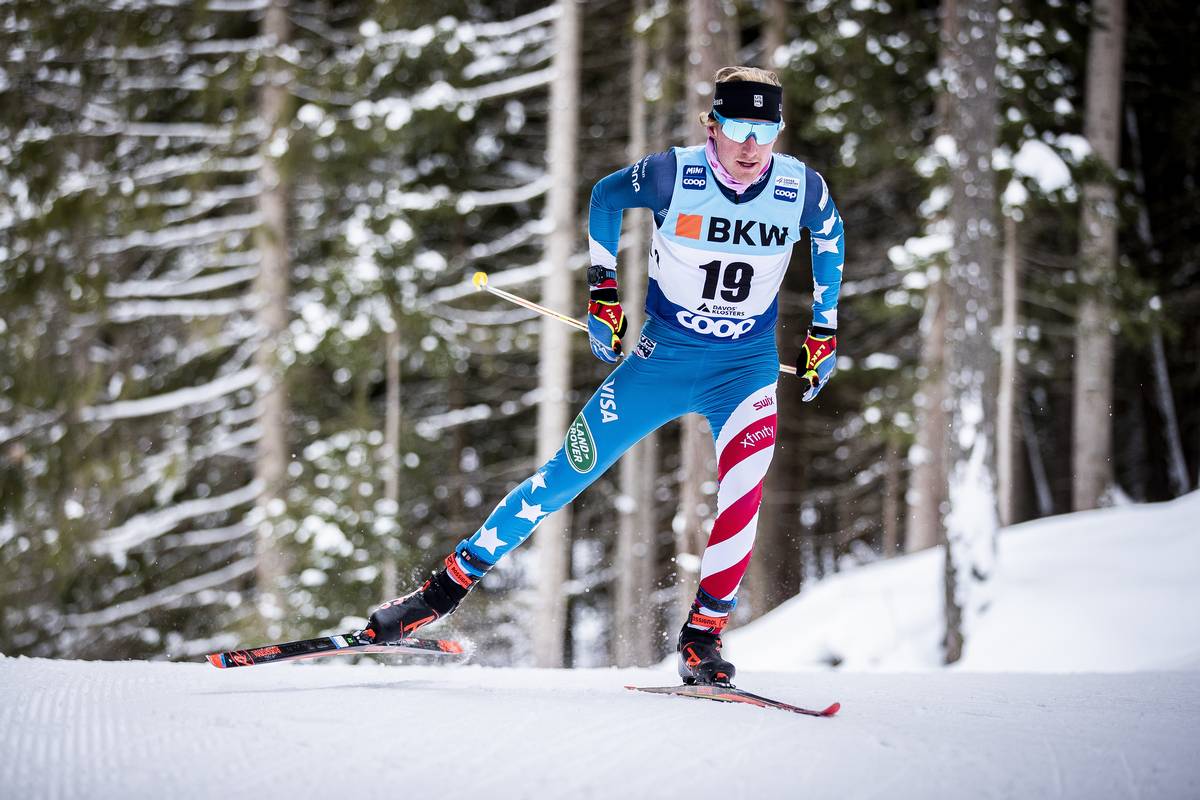
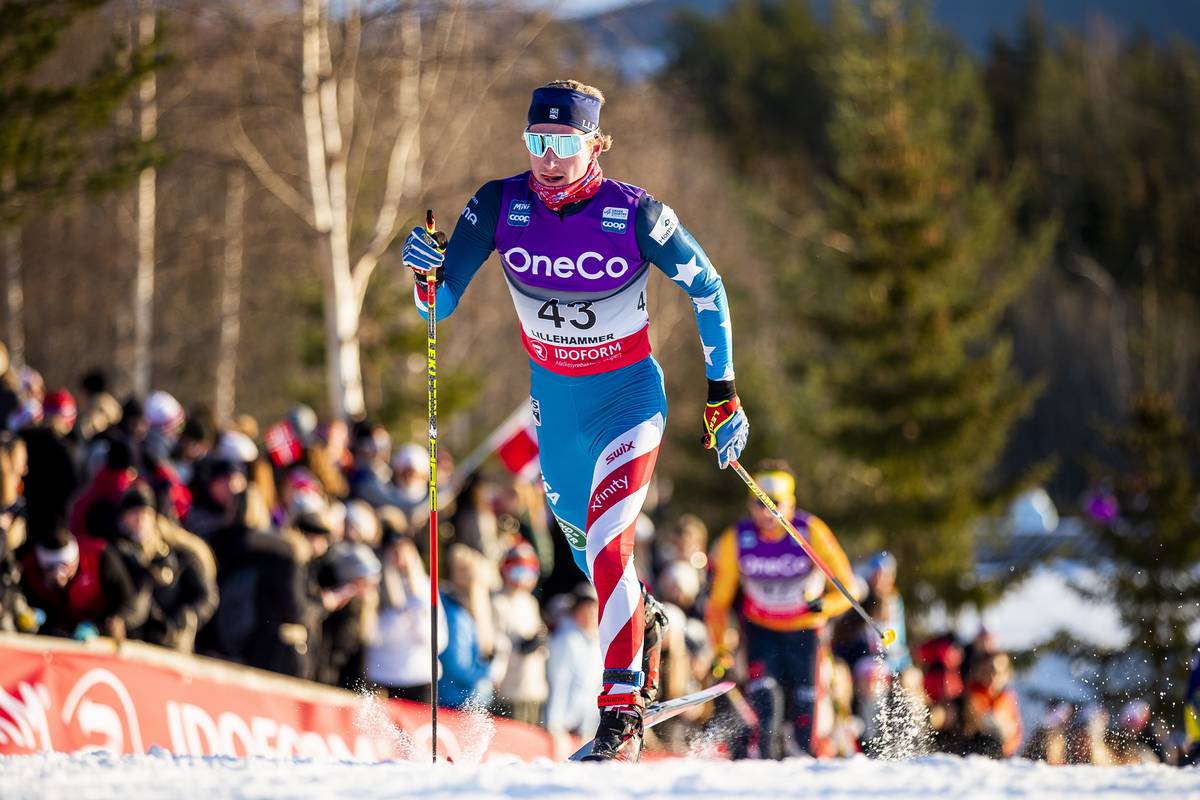
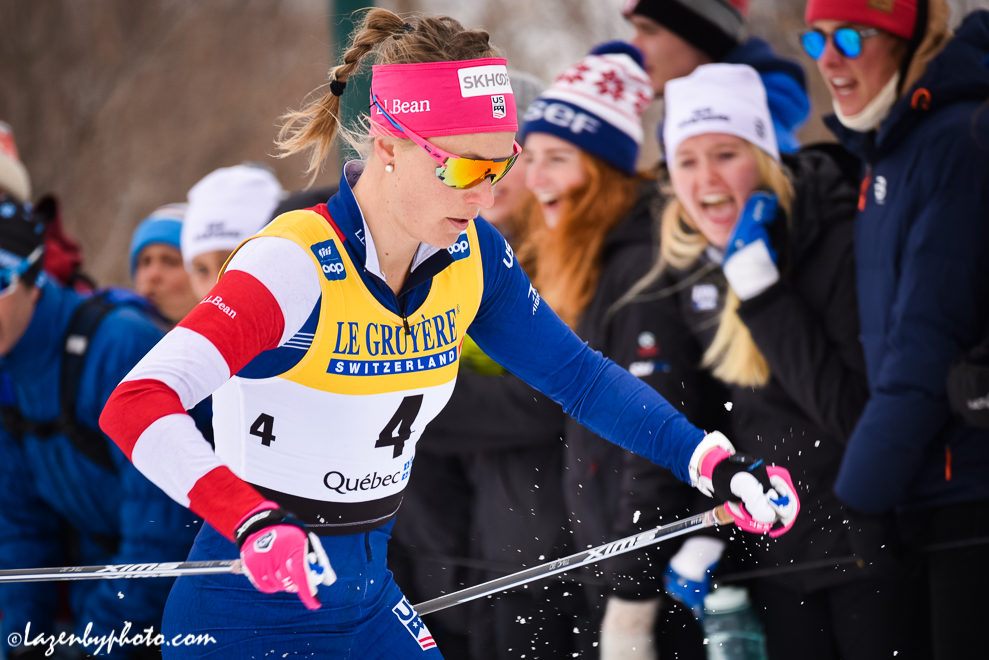
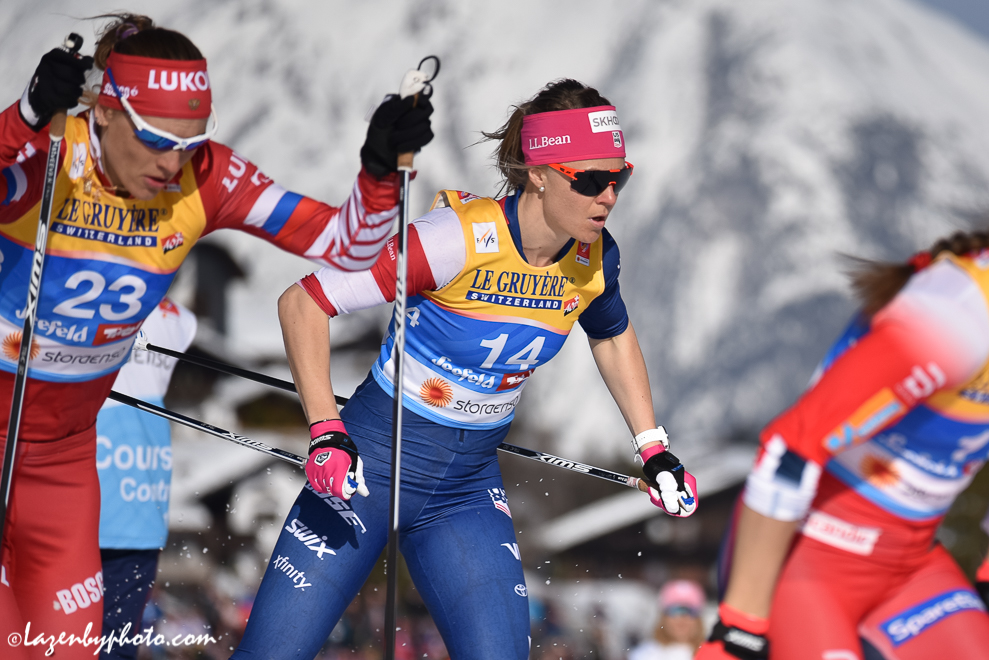
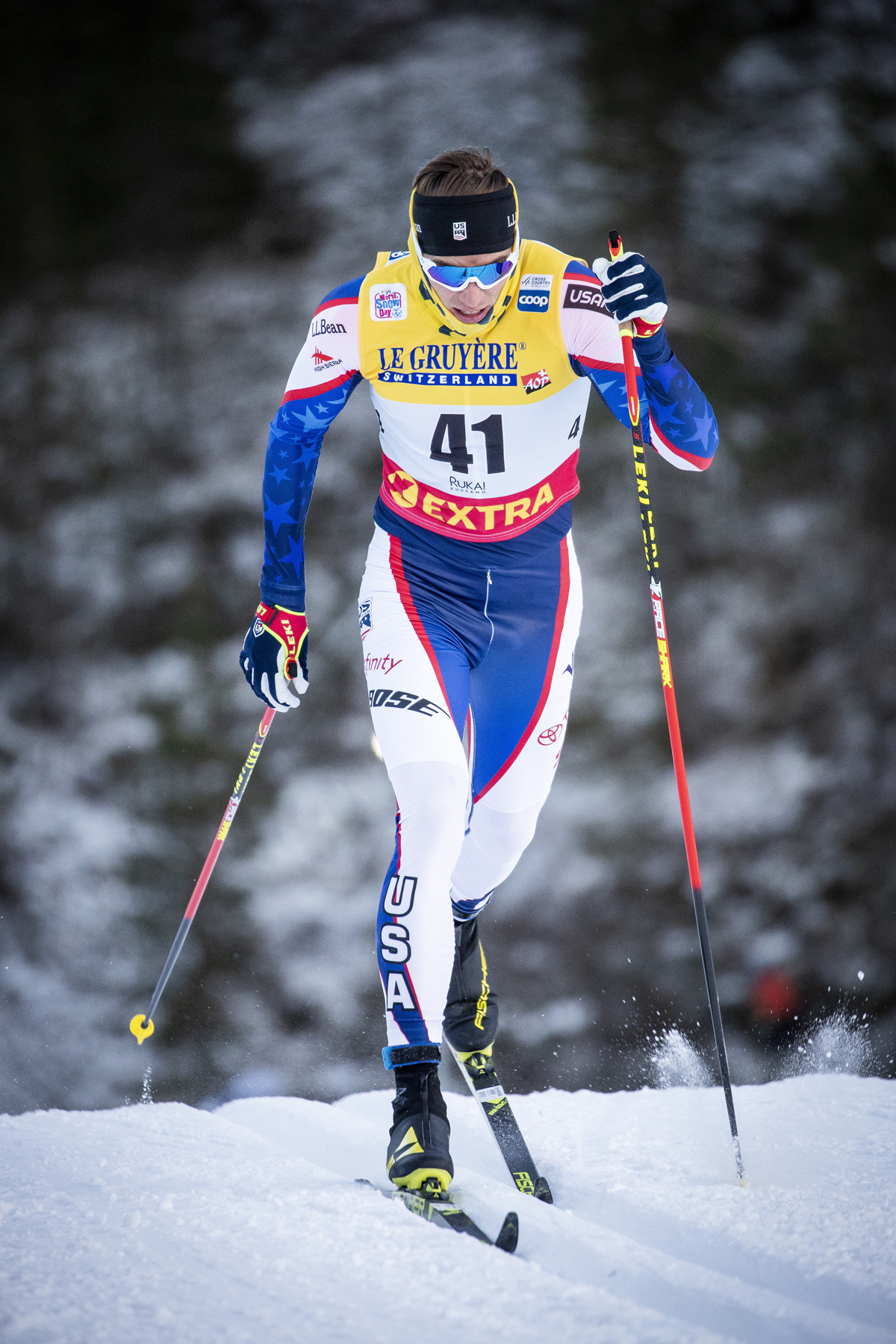
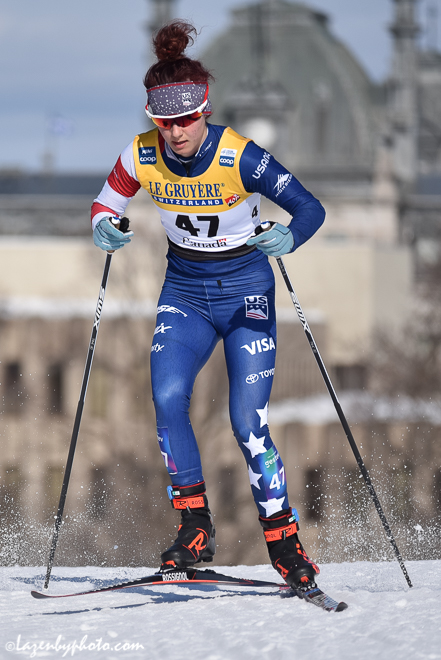
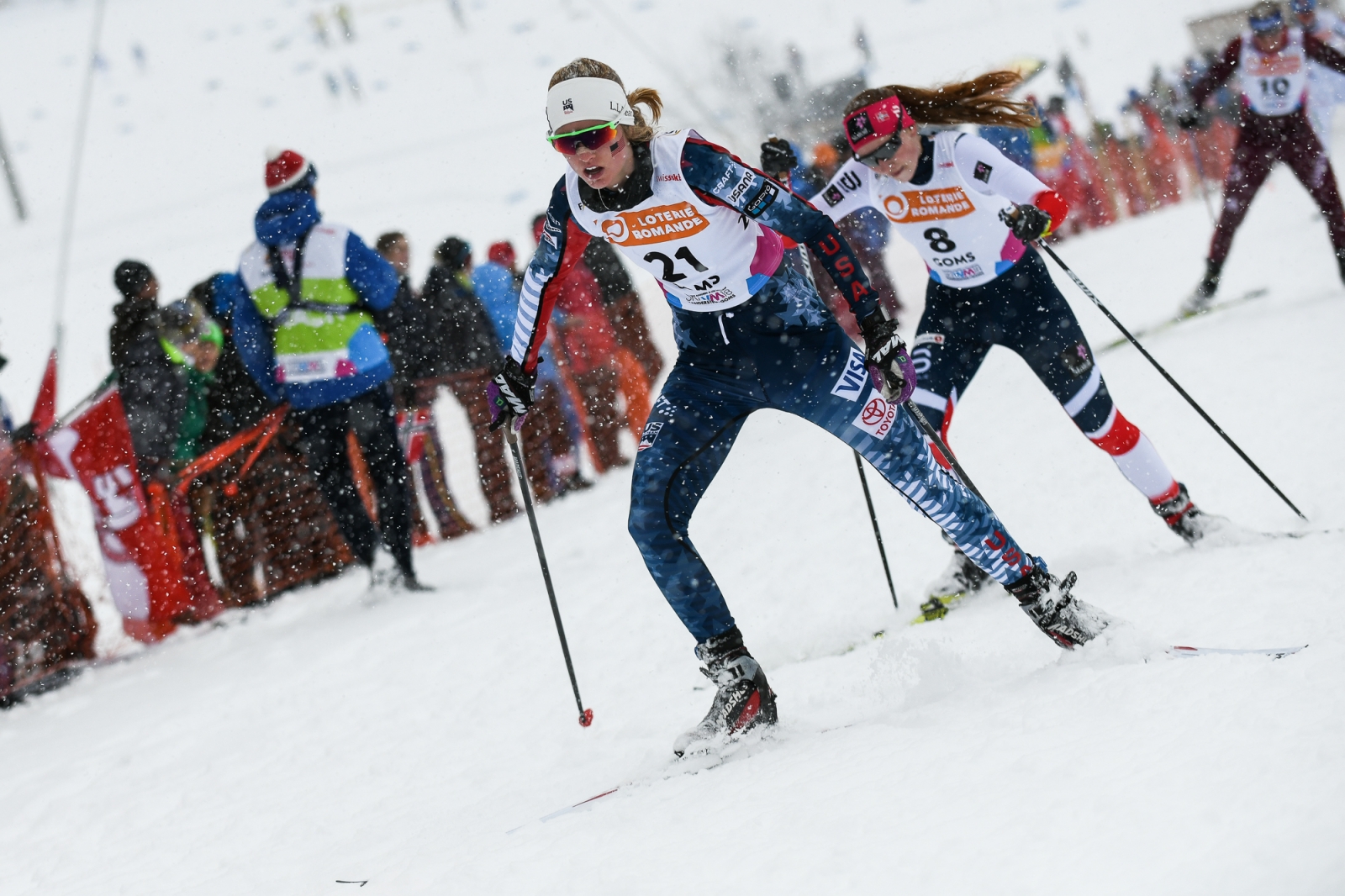
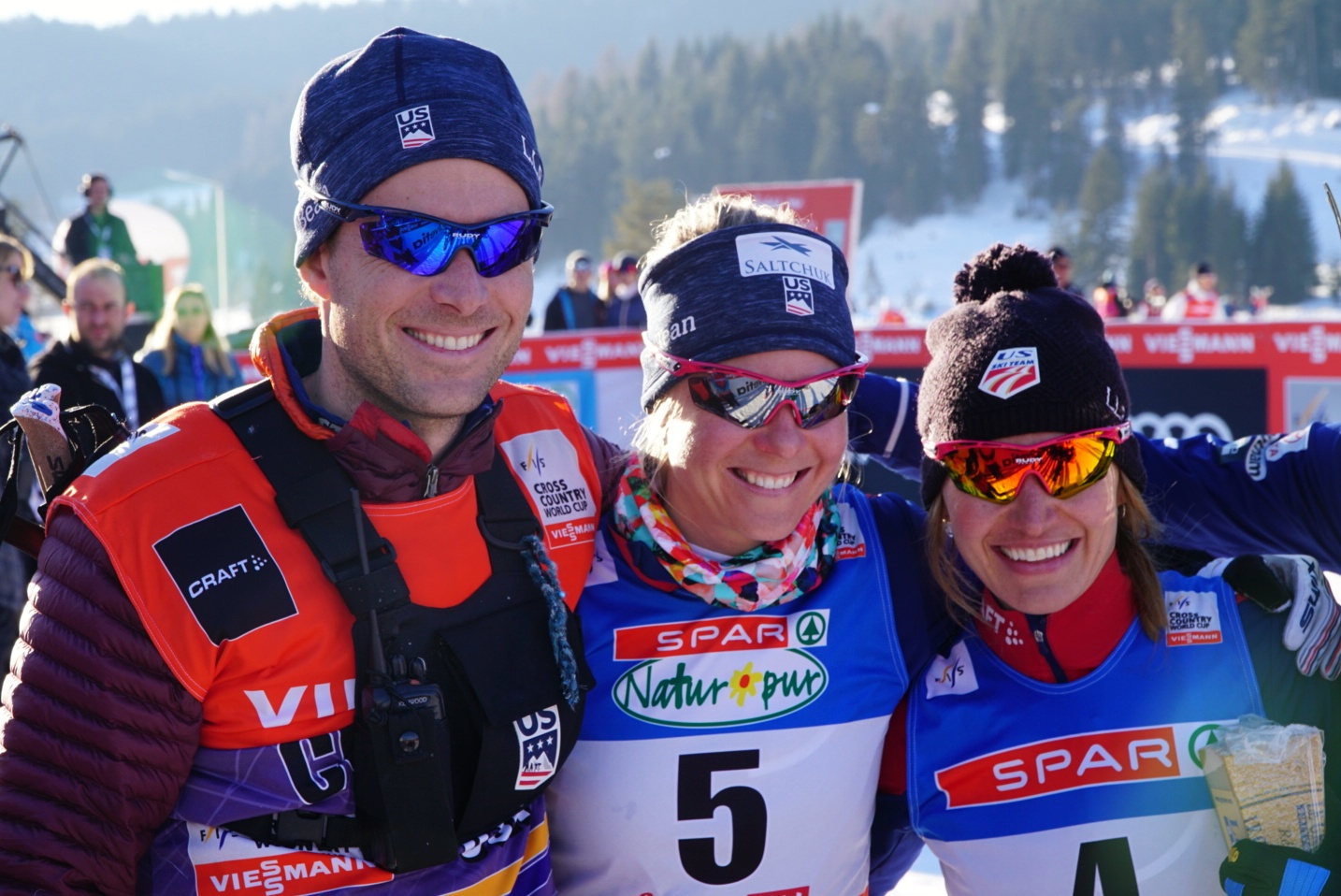
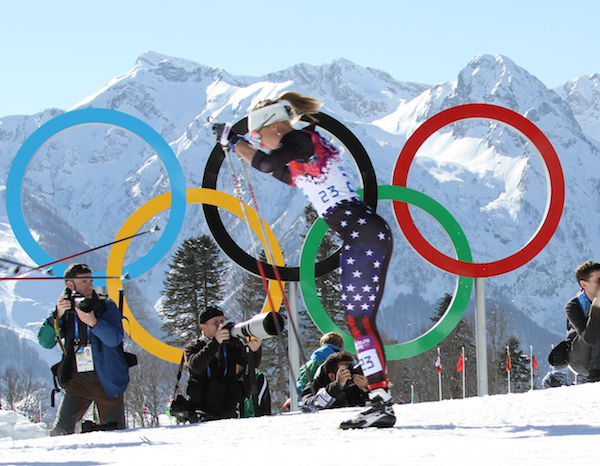
Kyle Bratrud placed 31st in the 15 k classic at the 2019 World Championships in Seefeld, Austria. (Photo: John Lazenby/lazenbyphoto.com)
On February 18th, four days before the American Birkie, Kyle Bratrud (SMS T2) announced that the race would be his final competition as a professional skier. The news caught many by surprise as Bratrud seemed to be having a strong season, following a solid season in 2018/19.
Last season, the 26-year-old Minnesota native won the 15-kilometer classic and took second in the 30 k free at U.S. Nationals in Craftsbury and ended his season as the 2019 Overall SuperTour winner.
“Kyle has been an athlete that has always had a very clear understanding of what he needed to do to succeed, especially when it came to championships, and winning national titles,” said Pat O’Brien, head coach of the SMS T2 program. “He was fantastic at that. His track record was, anytime you came into a World Championship year, more often than not, he was the guy that was winning those championship level races.”
Being the SuperTour winner, Bratrud was granted his first Period 1 World Cup starts this season, which O’Brien explained they planned to target. They recognized that it can be very hard for a distance skier to find success in Period 1 as international athletes are also using these starts to prove they belong on the World Cup squad — every on-the-cusp racer desperately seeking the top-30.
Kyle Bratrud (APU) placed 38th during Sunday’s 15 k skate in Davos, Switzerland. (Photo: NordicFocus)
“The World Cup is a tricky one, because you don’t have the luxury of picking and choosing,” O’Brien explained. “You have to spend some time over there to learn the venues and figure out how to live on the road with your teammates over there for support.”
The first two weekends in Ruka and Lillehammer were not what Bratrud was hoping for, but he placed 38th in the 15-kilometer freestyle in Davos. He was the top American, just ten seconds outside of the top-30, and less than two minutes behind winner Simen Hegstad Krüger of Norway.
Though he was offered starts for the Tour de Ski, Bratrud headed back to the US after Period 1 to race the distance events at Senior Nationals in Houghton, Michigan. There he repeated his 2019 results with a 15 k freestyle win and second in the 30 k classic.
Bratrud explained that the venue in Houghton is special for him as it is where he won his first national championship back in 2015 during his senior year at the University of Northern Michigan.
That 2015 was not just a win. He burst onto the scene and took the 15 k freestyle by 50 seconds, followed by third in the 30 k classic four days later. These results instilled belief that he could ski at the professional level and opened doors for him to ski at the FIS U23 World Ski Championships in Almaty, Kazakhstan, where he took 19th in the 15 k skate. Bratrud was also given World Cup starts the following week for a distance race in Östersund, Sweden and again at the World Ski Championships in Falun.
Kyle Bratrud (SMST2) during the men’s 15 skate at the 2020 U.S. National Championships. (Photo: Reese Brown)
Men’s 15 k Senior National’s podium: Gus Schumacher in second, Kyle Bratrud first, and tied for third, Ian Torchia and Erik Bjornsen (l-r). (Photo: Reese Brown)
Rather than his recent results motivating him to continue, Bratrud explained that it felt like the pieces were fitting together in a way that allowed him to walk away on a high note. Though he still loved the process, the lifestyle had worn on him and he was ready for a change.
“The time in between [training and racing], used to not bother me at all, and now I’m feeling kind of restless and like I want to do something different and engage my brain in a different way and help other people.”
O’Brien recounted his conversations with Bratrud following his performances in Houghton about a transition in his career. They discussed taking a break and evaluating the weights of the variety of passions that were calling to Bratrud.
“It’s an interesting dynamic,” O’Brien said. “When you’re a young, hungry athlete, you want nothing more than to have the opportunity to have these at bats racing over in Europe and trying to become a World Cup ski racer. I think for the first time in his life, it was like, ‘Okay. I’m at an age where I’ve gotten to experience World Championships, I’ve gotten to experience the World Cup, I’ve succeeded at a level that very few people have.
“And I’m actually at a point in my life where it’s great to know that I have those options available to me, but maybe the sacrifices that I didn’t view as sacrifices when I was 21, 22, 23, I start getting older and I realize, I just don’t know if that’s really what I want to throw myself back into.’ It’s a very difficult crossroads to be at as an athlete, but it’s also very important to acknowledge that something you’ve pursued for a long time — it doesn’t mean that it doesn’t still inspire passion in you, but it may start looking different and feeling different.”
Bratrud spent some time in Boulder, Colorado with his girlfriend, Kelsey Phinney, and her family. He also raced in the RMISA races in Steamboat Springs, winning the 10 k skate and taking second in the 20 k classic, and won the 42 k skate at the Alley Loop in Crested Butte.
Ultimately, Bratrud decided he was ready to step away mid-season. Being from the Midwest where the Birkie reins supreme, he selected it as the “perfect opportunity” to ski his final race as a professional.
“More people ask me how I’ve done in the Birkie than about any of my World Cup results, which I think is a little funny, but that’s kind of how the culture is,” he laughed.
After burning a few too many matches responding to Niklas Dyrhaug’s early moves, Bratrud lost contact with the lead pack and crossed the finish line in Hayward in 10th (+1:47).
In this conversation, Bratrud talks about his day at the Birkie and the experience of skiing across the lake, over the international bridge, and up Main St. knowing it would be his last professional race. He also reflects on his career highlights and gives an honest answer to the National Team and World Cup selection criteria for domestic skiers.
Since the call, Bratrud has moved to Boulder and has accepted a position with the 20th Judicial Court in the Court Clerk’s office. Here he can apply his undergraduate degree in criminal justice, and the experience will support his interest in pursuing law school.
Interview with Kyle Bratrud discussing his retirement after the 2020 American Birkie.
Kyle Bratrud during the 30 k skiathlon in Lillehammer, Norway. (Photo: NordicFocus)
In addition to providing further insight into Bratrud’s season and decision to retire, O’Brien also discussed how he advises his athletes in terms of meeting age-weighted criteria, a charging group of juniors who are achieving international success, and the balance of their career with other pursuits.
“It’s also incredibly difficult. If you are an older athlete who has not made an A or B-Team age weighted criteria, the expectation is that, yes, you can earn World Cup starts through various pathways… but it’s difficult as an athlete who’s not fully funded on the A-Team or supported on the B-Team. There’s the higher financial costs, there’s a lot more logistics involved, so it becomes difficult and at some point in time, it’s very hard for those athletes to figure out how they can continue to balance — ‘How am I going to financially support my ski racing? And also, every year that goes on is another year that I’m not entering a normal job market.’
My feeling and approach to it has always been that I’m fully supportive of whatever athletes decide and whatever their passions are. If it’s 100% skiing, then that’s what they should pursue. If it’s like, ‘This is what I want and I’m going to chase this dream for as long as I possibly can.’ That’s fantastic. But if they get to a point where they’re starting to say, ‘Okay, this is something that is still a passion of mine that I’m going out and pursuing, but I’m starting to think that my time pursuing this at the highest level might be coming towards an end or I’m starting to look at what’s out there and available to me.’ Then I think it’s important to recognize that this sport isn’t something that you do forever…
“I think the most important thing is that whether they decide that they’re going to be completely done with ski racing or try to find a different balance between skiing and pursuing a job on the side, there’s no right or wrong. It has to be an individual decision and it has to feel right.”
Sadie Bjornsen of the U.S/. Ski Team placed 18th overall in the women’s 1.2-kilometer freestyle sprint at the 2019 World Championships in Seefeld, Austria. (Photo: John Lazenby/lazenbyphoto.com)
On May 6, U.S. Ski & Snowboard sent out a press release announcing the 2019-2020 U.S. Cross-Country Ski Team (USST). Twenty athletes were named to the team comprised of A, B, and D-Team selections. One of the most notable aspects of this year’s iteration of the USST is that all 20 skiers were nominated by meeting objective criteria. No athletes were discretioned despite the published criteria including language for discretionary picks and no specific limitation on team size.
This past year the USST implemented criteria guidelines based on an athlete’s year of birth (YOB) and a minimum World Rank on the 8th FIS points list. (An athlete’s best World Rank between sprint or distance was considered.) The criteria also included non-age weighted performance benchmarks that auto-qualified athletes for an A-Team nomination.
“The great thing is, from our perspective, we feel very pleased with how the selection criteria is working so far,” USST Head Coach Chris Grover said in a call on April 29. “It has selected 20 athletes objectively, and it is selecting a lot of the younger athletes which I think is reflective of the fact that we have a massive amount of talent in our junior and our U23 groups. It seems like so far, in its first year, it seems like it is grabbing the right athletes. The tough thing about it or any other criteria is that there are a lot of great athletes that are just on the outside of making it too. I don’t want to take anything away from all those athletes who fell just outside the criteria because there were some absolute standout performances in that group. But that said, objective criteria tend to draw a line and you can find yourself as an athlete easily on one side of the line of the other.”
A-Team
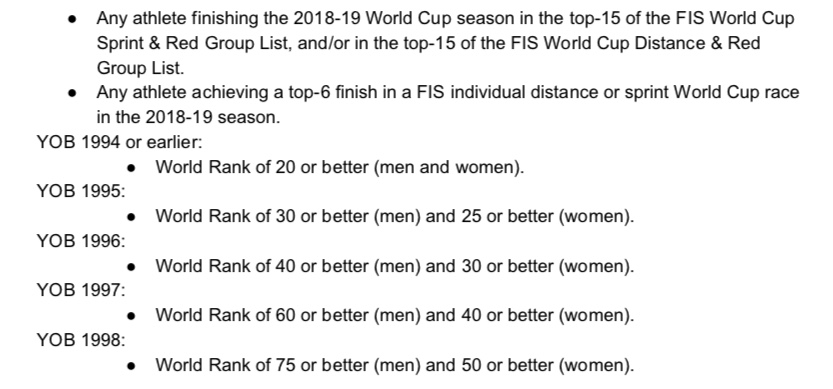
Beginning with the A-Team, Simi Hamilton, Erik Bjornsen, Sadie Bjornsen, Rosie Brennan, Sophie Caldwell, and Jessie Diggins made the cut by meeting at least one portion of the A-Team criteria listed below.
Hamilton met the standard by placing top-six in a World Cup individual race with his fourth place in Cogne, Italy’s freestyle sprint and earning a “Winner of the Day” fourth place in Québec’s 15 k skate pursuit. Erik Bjornsen advanced to the A-Team by skiing to a third place “Winner of the Day” time in Lillehammer, Norway’s 15 k classic pursuit. (We’ll explore this towards the end of this piece, however, the recently published draft 2020-2021 USST nomination criteria has been modified to exclude “Winner of the Day” results when considering a top-six on the World Cup.)
Diggins and Bjornsen ranked within the top-15 in the final sprint and distance World Cup rankings. Caldwell was ranked fourth overall in the sprint standings. Those respective benchmarks met the auto-qualification standards of a top-15 World Cup rank in either sprint or distance to be an A-teamer. Rosie Brennan — along with Diggins, Bjornsen, and Caldwell — jumped the top-six placing on the World Cup hurdle. Brennan earned a World Cup career-best sixth place in the Davos, Switzerland 10 k skate.
B-Team
Kevin Bolger and Scott Patterson are the returnees. Julia Kern and Hailey Swirbul bumped up from the D-Team. Caitlin Patterson sits as the only newly minted B-Team athlete who is new to the USST.
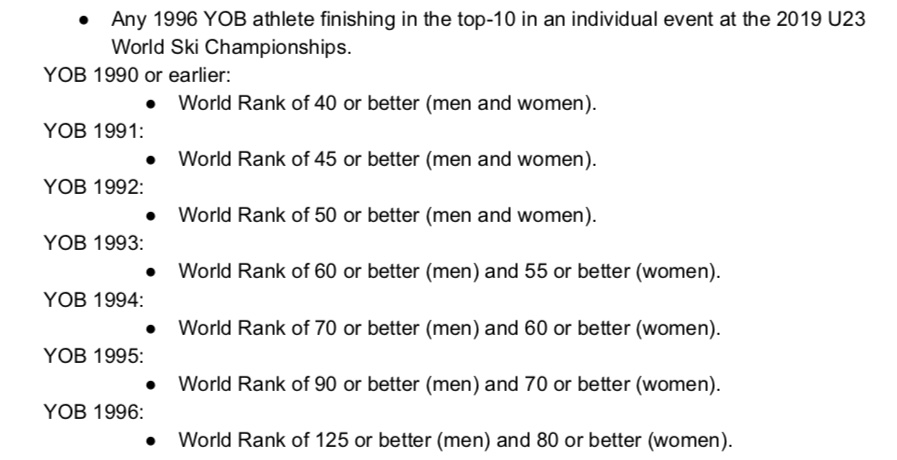
The B-Team nominations rely on YOB / World Rank standards or a performance standard of a top-10 individual result at U23 Worlds for an athlete born in 1996 or later. (Below are the B-Team criteria.)
Kevin Bolger of the U.S. Ski Team racing the 2018 World Cup sprint qualifier in Kussamo, Finland. (Photo: Fischer/Nordic Focus)
Born in 1998, making her twenty-years-old, Swirbul placed 10th in the U23 15 k mass start classic. She also ranked 58th in distance on the final (8th) FIS Point / World Ranking list.
Kern, at twenty one years old, YOB 1997, held a sprint World Rank of 57th on the 8th points list to make the B-Team.
Caitlin Patterson, born in 1990, ranked 32nd in distance on the 8th FIS points list to meet the standard.
Younger brother Scott Patterson (YOB 1992), ranked 47th in distance on the 8th FIS points list.
Bolger (YOB 1993), ranked as the 38th sprinter on the 8th FIS points list.
With the new strict constructionist standards, missing the objective criteria can become a function of aging out on a team nomination by not meeting a specific age-related World Rank by the time the 8th FIS Points list is published. Here’s Grover with his thoughts on that process.
“Of course the older you are as an athlete, the tougher the World Rank that you need to be able to achieve to stay on that pathway. Interestingly, you have an athlete like Andy Newell, an absolute veteran, only three places outside of the criteria for the B-Team. On the women’s side, Kelsey Phinney, three places outside the criteria. Back on the men’s side: Adam Martin five places outside. Logan Hanneman, eight places out. Kyle Bratrud, ten places out. David Norris 12 places out. That is a handful of athletes, all of whom had some absolute standout performances, who are just outside the criteria. And this is, I think, this is where having this new criterion and having it be completely as objective as possible is really going to be meaningful for the community. In the past, there would have been a lot of very tough discretion cases with all of those athletes that I just mentioned. Athletes and clubs and coaches and parents would have had a very hard time understanding necessarily why so and so was picked and why so and so wasn’t picked via discretion because it’s really hard for us to compare athletes at different ages against similar performances. And so I think the new criteria, although it draws a hard line, it is going to in the long run take away some of the mystery of selection and hopefully prevent a little bit of the heartache that goes along with that.”
D-Team
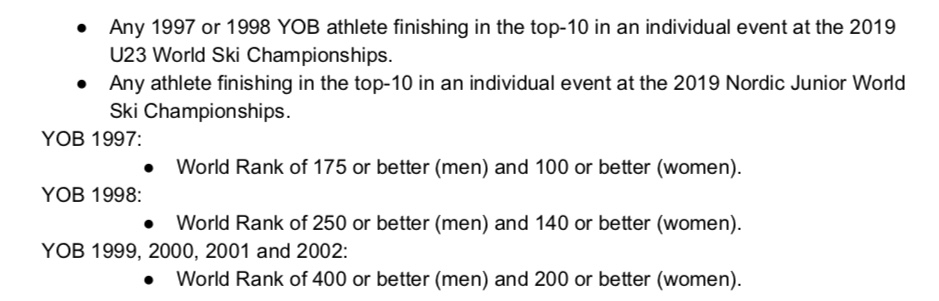
The D-Team remains robust. And promising. By design, it is a true U23 squad: an athlete must categorically be under the age of 23 to qualify. (See D-Team criteria below.)
Kendall Kramer from Fairbanks, Alaska during the women’s 10 k skate pursuit on Sunday. (Photo: John Lazenby/Lazenby photo)
New to the men’s side are Johnny Hagenbuch, Luke Jager, Noel Keeffe, and Zak Ketterson. Ben Ogden and Gus Schumacher are returnees. For the women, Hannah Halvorsen also returns. Novie McCabe and Kendall Kramer are the new women’s additions.
The following skiers all placed well enough (a top-10) in individual events at World Juniors to meet the D-Team top-10 performance standard. Schumacher auto-qualified by placing sixth in the World Junior’s 10 k skate and fourth in the 30 k mass start classic. Ogden was 10th in the 30 k and eighth in the classic sprint. In the 15 k classic mass start, Kramer skied to fourth, McCabe 10th.
Hagenbuch, Jager, Keefe, and Ketterson met the YOB / World Rank criteria for their respective D-Team nominations as did Halvorsen.
The lone outlier here initially was Ketterson. The 8th FIS points list had Ketterson listed at 177th in the distance rankings. Ketterson’s YOB is 1997, meaning he fell two places short of the minimum World Rank of 175.
On that final list preventing Ketterson from auto-qualifying were several skiers arrested for doping activity in Seefeld, Austria during the 2019 World Championships. Those athletes were Austria’s Dominik Baldauf and Maz Hauke, and Kazakhstan’s Alexey Poltoranin.
(Baldauf ranked 119 on the 8th distance list, Hauke 83rd, and Poltoranin 31st.)
“Zak pointed out to us something we hadn’t actually dug into and actually taken a look at,” Grover said. “That perhaps three of the athletes who were busted in Seefeld were still on the list — the World Ranking list — still with their active FIS licenses ahead of him. And so our perspective was that those athletes should not be ranked ahead of him. And we weren’t going to let doping basically prevent an athlete from being nominated to the team. That is the one person who I guess technically could be looked at as outside of it. We felt strongly that those athletes should not count against somebody’s World Rank.”
Reflection and World Cup Starts:
“Because it is a new criteria it is a change for the community and I think some very understandable frustration on a part of the few athletes who were just outside of making the criteria because several years ago the result that they just had might have been good enough for a discretionary nod to be nominated to the ski team,” Grover said. “I absolutely understand that and understand that frustration and that disappointment with brand new criteria. It is a change for the community. It takes a little while for everybody to come to a point where they feel like they can understand it fully and also have that expectation in mind. That is a challenge. But I think it is a real step in the right direction.”
With the objective nomination standards defined, Grover noted a working group had already made changes to a draft of next season’s 2021 USST nomination criteria. That draft is posted on the U.S. Ski & Snowboard website. The initial changes, so far, have been isolated to the A-Team criteria. The change specifically addresses the issue of whether or not the criteria will recognize “Winner of the Day” as part of a top-six (or top-12) individual World Cup performance.
“Last year we did not specify in that language, mistakenly did not specify in that language, that we were not looking for a ‘Winner of the Day’ performance, but we’re looking for an individual result page performance. So we specified that in the criteria,” Grover said. “The intention is to focus on events we can medal in … we are trying to capture World Cup performances that are on the pathway to obtaining a medal and obviously there are no medals for the ‘Winner of the Day’ performances.”
Additionally, next year, a top-six in an individual sprint or distance World Cup race alone will not pass muster for an A-Team nomination. An athlete will also need to post a top-12 in an individual World Cup event. The language in the current draft states these results will be “excluding ‘Winner of the Day’ performances in Pursuit events.”
The path to the World Cup does not rely solely on USST membership. Open spots remain available for Period 1. According to Grover, Diggins, Sadie and Erik Bjornsen, Brennan, Hamilton, Caldwell, and the two Continental Cup leaders (Kern and Kyle Bratrud) have secured Period 1 starts. Otherwise, a 15 member working group will determine who will fill any remaining Period 1 starts using discretion.
“My intention is actually to meet face to face with that group hopefully at U.S. Ski & Snowboard congress here in May, make the selections and then notify athletes,” Grover explained. “We are in May basically, so they have the summer and the fall to prepare for coming over to World Cup.”
Absent from this year’s USST are several notable athletes. Former D-Team skier Katharine Ogden continues to have a stellar collegiate career. She will be a third-year student at Dartmouth next season. Ian Torchia aged out from the D-Team as he recently turned 23. And Patrick Caldwell, a B-Team athlete last season, announced recently he has retired from elite level competition to begin a job in renewable energy based in Denver, Colo.
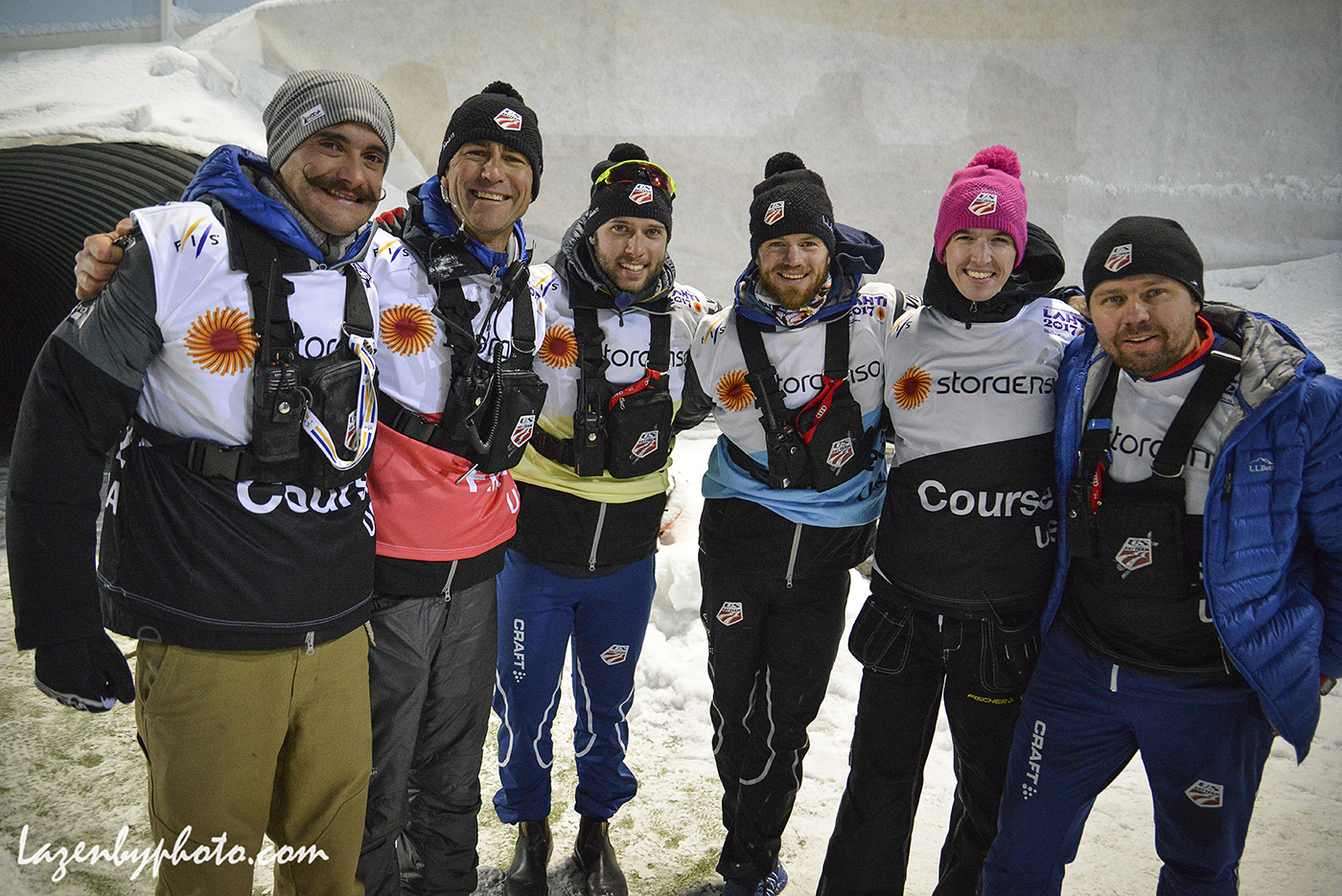
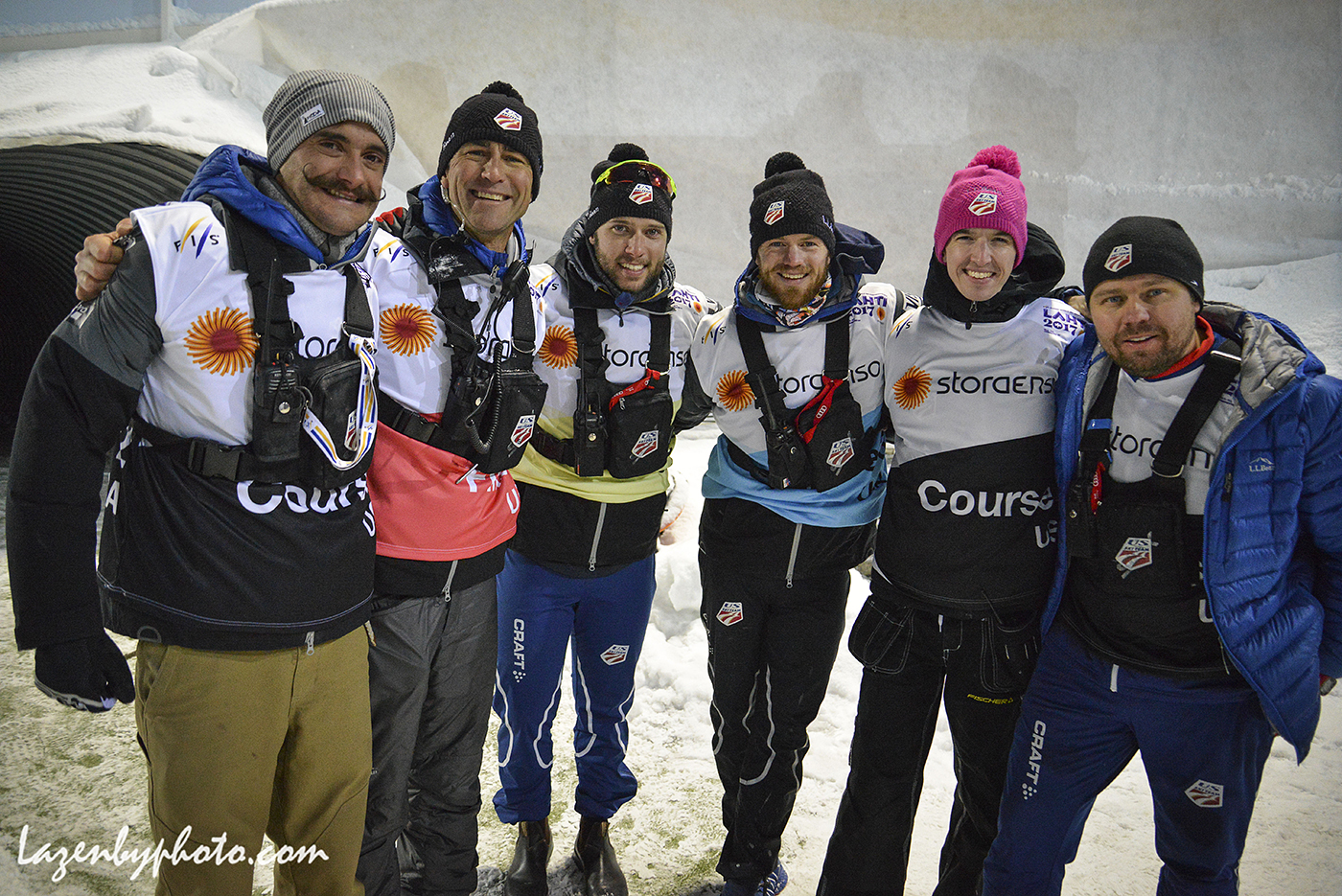
U.S. support staff after their team’s double podium in the women’s freestyle sprint at 2017 Nordic World Championships in Lahti, Finland. (From left to right) J.P. Laurin, Chris Grover, Tim Baucom, Andrew Morehouse, Patrick Moore, and Oleg Ragilo. (Photo: John Lazenby/Lazenbyphoto.com)
BEND, Oregon — Late last month, FasterSkier reached out to U.S. Ski Team (USST) Head Coach Chris Grover to discuss the team’s recent nominations.
The original range of topics was fairly narrow, the new iteration of the USST athletes and staff. Grover, however, ventured into the realm of how the USST will be modifying its criteria for team selection before the start of the 2018/2019 competition season. The criteria Grover discussed in the following Q & A, conducted over the phone on May 22, dealt with future USST nominations: not championship-team selection criteria. In other words, the rewritten criteria he discussed will have to do with the objective benchmarks an athlete must meet to be named to the USST D-team, B-team, and A-team, respectively. Beyond the objective criteria, Grover noted that coach’s discretion will remain an instrument of some future team nominations.
FasterSkier: OK, let’s jump in and discuss the U.S. Ski Team’s A-team roster.
Chris Grover: First of all, let me say one thing that we have been working on now for perhaps eight months, is trying to create new selection criteria to the U.S. Ski Team. And Gus Kaeding, who is a new staff member for us, someone that we just hired in the last few weeks, who came out of business school last year after coaching before that. He has actually been crunching the data for us. He took a bunch of statistics courses when he was in business school. So he kind of volunteered to come and start helping us try to figure out how to make a much more objective selection criteria. As you know, right now we have criteria where it is often about 50/50 in terms of athletes who make the objective criteria and athletes that are selected through discretion. And our goal is to create selection criteria for the 2019/2020 season that we put in place this summer, or at least before the ski season begins when the selection criteria would start. It is much more objective. It shows pathways not only at the very high end and not only in terms of a junior worlds medal but all along the different potential ages and potential athletes.
So that is coming together. We are still working on it. It will probably be tied to an athlete’s world rank at different ages, but our goal is to take a lot of the guesswork out of future selections. We couldn’t have put it in place this year because the selection criteria was already published as of last year and we cannot retroactively go back once the selection period is opened and apply new criteria. We can only apply it in years moving forward, but I am really excited to get to a point where the guesswork for athletes and coaches, for parents, is taken out of it. And ideally those people can look at criteria before a ski season and go, “If I do this, then I will be nominated to the U.S. Ski Team.” That said, I envision that there will always be discretionary picks that we make. There will always be people for whatever reason that come on late in the season.
Like, for example, their world ranks doesn’t mesh with what their current potential is. They have outstanding results that for whatever reason we didn’t see coming. So I envision that there will be discretionary selections going forward, but our goal is to make it so that there are many fewer discretionary selections and it is much more objective and clear-cut. I am excited to put something in place and something that we will be pushing out to the team hopefully later this summer or the very early fall at the latest.
A U.S. Ski Team selection is different than say a championship selection. It won’t go to, let’s say, a committee like our U.S. Ski and Snowboard cross-country committee. We will probably push it around to some athletes reps but it won’t go to a greater community. Because at the end of the day, this is the U.S. Ski Team and it is not necessarily the same as qualifying for World Juniors or the U23 or the World Cup or the World Championships. It is a little bit of a different deal. And the selection, basically, it needs to reflect the goals of the organization. And the goals of the organization are to win medals at the highest levels in the sport.
That didn’t answer your question. The question was something about the A-team.
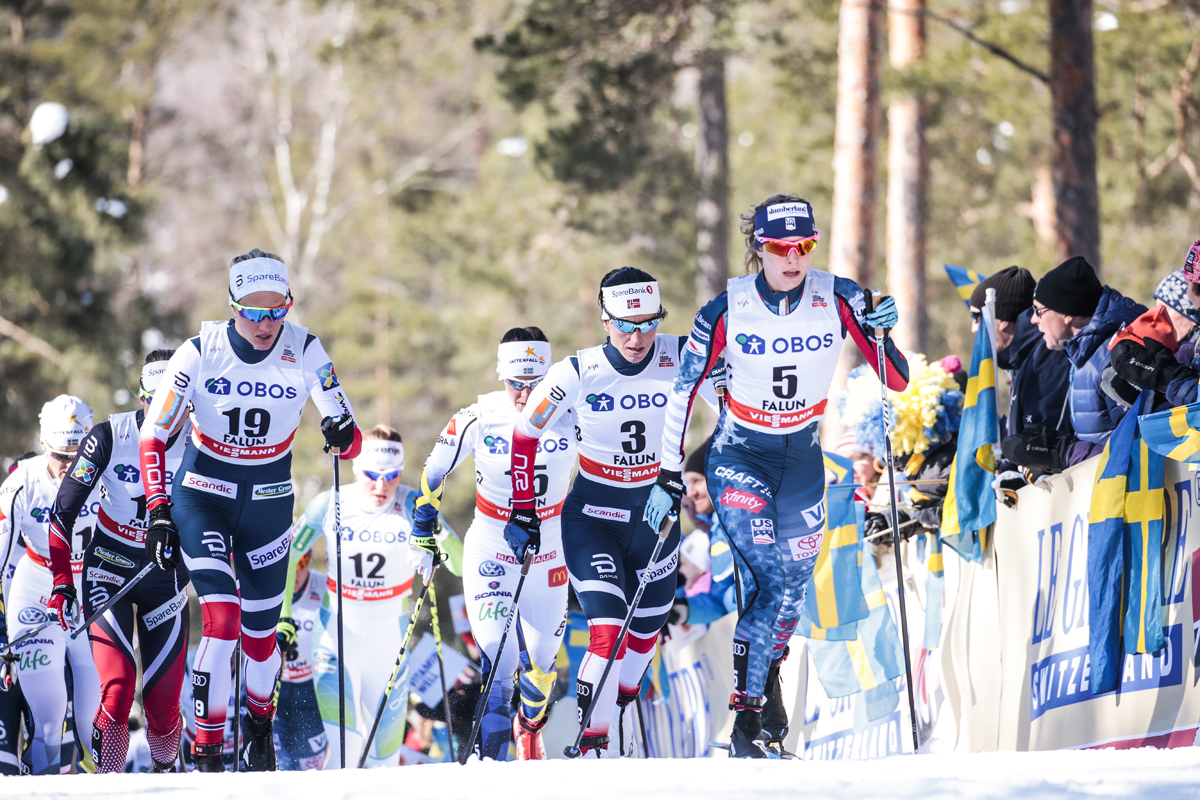
American Jessie Diggins (5) leading the pack up an early climb with Norway’s Kathrine Rolsted Harsem and Marit Bjørgen just behind during the women’s 10 k classic mass start at 2018 World Cup Finals in Falun, Sweden. (Photo: Fischer/NordicFocus)
FS: Back to the A-team. It’s quite impressive as it stands. An Olympic gold medalist in Jessie Diggins, third overall ranked World Cup women’s sprinter Sophie Caldwell, sixth-ranked overall skier Sadie Bjornsen, highly ranked sprinter Ida Sargent, and one dude, Simi Hamilton, who was 17th in the final World Cup sprint rankings.
CG: So the A-team athletes. That is objective. They make the team based on being top 30 in the world in either sprint or distance. They were all clear A-team selections based on the team nomination criteria. I am not quite sure yet if we will keep that exact standard going forward. We may. We also are really diving into this new data and seeing what we can find out. So, all those athletes qualify objectively. And then, the only other athlete that qualified objectively was Hailey Swirbul because she was an individual medalist two times over at World Junior Championships.
FS: Let’s jump to the D-team then. Some renominations. There’s Ian Torchia, Julia Kern, Hannah Halvorsen and Katharine Ogden. Then the newest members — Hailey Swirbul, Ben Ogden, and Gus Schumacher. Seven total. Is this the largest D-team you have had for awhile?
CG: For sure the largest D-team in at least in the past decade. And really, I mean, obviously, we are very excited because the results, just World Junior results alone, with this group of athletes has surpassed any group of athletes that we have ever had come through the ranks of the U.S. Ski Team.
These D-team results for many of these athletes are better than those of any of our A-teamers ever were able to accomplish at the World Junior Championships. And obviously, we have gone from 2016 at World Juniors having never had a medal at the World Junior Championships to now having five medals as a nation. So it is a super exciting step forward. We are really excited to have all these new faces as part of the team.
And this is why we have hired Gus Kaeding. He has been hired as a D-team coach specifically to help nurture and shepherd this group of athletes through the next few years of their development.
FS: Does Bryan Fish’s job change? Does the job description change as it relates to these specific athletes?
CG: Absolutely. The challenge that we had is that for Bryan, for one coach to effectively manage seven athletes at a high level is pretty daunting as it is. Bryan has so many other tasks already, including basically creating all the materials for our coaches education and then implementing the clinics and certification conferences as well as running all of our development summer camp opportunities REG, NEG, NTG … assisting at the U16 elite camp and then also trying to coordinate efforts between the NNF and what we are doing and the American Birkie Foundation, which is coming on as a supporter as well. And then winter trips and what he is doing to oversee the Super Tour, it was just too much. It was too much for one person to handle and we needed some help. And the greatest need with all these incoming younger athletes was certainly with the D-team squad.
FS: I believe this is Ian Torchia’s third year on the D-Team.
CG: That sounds right to me.
FS: Do you normally have a sort of “statute of limitations” on D-Team membership?
CG: Yeah, we really should. In Ian’s case, he had mono the year before last and then kind of was coming back this year and a little bit inconsistent with results. But I think that challenge that you just alluded to really speaks to why we need different selection criteria, why we need more objective selection criteria. Because athletes at some point should be moving. Either they are moving off the D-team or they are moving up to the B-team or moving up to the A-team. But they have to have movement after a few years. And the same goes for B-team athletes, but it is really unclear. I mean, right now, we don’t have any sort of clarity as to what those markers might be. And so that is why it is critical for us to figure a more concrete pathway for athletes so that they know the expectation. So you know, Ian, I would expect with his age he is probably going to have to be on the B-team next year if he is going to continue to be on the national team. So I am hoping with these new criteria that we create and define that pathway or at least define the expectations, I should say.
FS: So the new criteria, those expectations as they relate to the D-team, would have be to SuperTour-specific unless these athletes have start rights because they have earned them?
American Hailey Swirbul (University of Alaska Anchorage) leads Norway’s Lone Johansen up a climb during the second half of the women’s 10 k skiathlon at 2018 Junior World Championships in Goms, Switzerland. Swirbul placed third for her second individual podium of the championships. (Photo: JWSC2018.ch)
CG: I think that is why we are really looking at world rank for athletes. This is probably the most helpful thing as opposed to how they did on SuperTour, how they did on World Cup, how they did at the U23 World Championships, what happens at the NCAA Championships. That is the challenge for us, especially in North America being somewhat removed from where a lot of the racing is happening, a lot of the international racing obviously being in Europe. That is the challenge. World rank is going to help us identify that picture in a more meaningful way.
FS: Does that mean a reliance on FIS points?
CG: The difference is between using straight-up FIS points and world rank is that with FIS points, you can have very low FIS points but there could be one hundred people packed in there between you and zero FIS points. But with world rank, it gives us a finite amount of people that are below you or above you.
FS: So then as I am understanding the world ranking, this is then some sort of proprietary ranking that you will have?
CG: The way Gus has approached this, is that he is taking a look at every medalist at the Olympics and the World Championships in the past ten years. He has retraced the development path of those medalists. We are including not only those that have medaled in individual events but those who have medaled in team events. And then retracing kind of what their pathway is. And then perhaps we are going to give a plus-minus, a little 80th-percentile type adjustment to it, that allows for some leeway for an athlete. For example, coming from North America where maybe the pathway is slightly different than it is for European athletes. What we are basically trying to identify are the pathways for an athlete to win an Olympic medal or a World Championship medal and clarifying where you need to be. What are the markers at different ages? And that will help guide as to what the right world rank is for a given athlete to make the team.
And yes, there are always going to be a few outliers. That is why still need some discretion built in there. Once we have selection criteria in place then an athlete will be able to identify what their world ranking is and know how they fit into that selection or don’t fit into it.
FS: Anything more about the D-team that we should chat about?
CG: I don’t think any additional comments on the D-team. We are just excited to have such a talented group. There are lots of other athletes we have been looking very closely at who we anticipate as potential D-team members in the next year, but I wanted to see them basically make another small step forward before some sort of team nomination was implemented. That is where this new selection criteria is really going to help us out. Right now, it is selecting athletes via discretion and it is a judgment call on every one of these guys. That is not ideal from our perspective and it is not ideal from the athletes’ perspective.
FS: On to the B-team. Rosie Brennan was obviously not renominated. So it’s status quo with Erik Bjornsen, Paddy Caldwell, and Scott Patterson with the lone new addition of Kevin Bolger.
CG: With Rosie, we did not renominate her simply because she had been on that B-team position for awhile and hadn’t been making the step forward, hadn’t been making the objective criteria. That said, none of the guys made the objective criteria, either. But that is kind of normal of a B-team athlete, and that’s the challenge. That is where the main challenge is for us — to be able to identify those athletes especially when they are post-U23 athletes but they aren’t quite skiing consistent top-30 on World Cup — and be able to identify which athletes are still on the path to making forward progress. We named the others on discretion: Erik, Scott and Paddy because they were making forward progress on the World Cup. And then Kevin obviously had one of the best entrances to the World Cup of any U.S. athlete in history. So he really showed up and he did exactly what he needs to do to demonstrate that he absolutely has a ton of potential.
That was an easier call for us. The questions with the B-team and discretionary choices go back to why we need to create a new selection criteria.
FS: It’s within an athlete’s right to advocate for themselves. Did you get any pushback in terms of Rosie not meeting objective criteria?
CG: I’d say Rosie was very magnanimous about the decision and very professional about the decision. And for Rosie, and just like any of these athletes who kind of fall on the edge of making objective criteria, we absolutely still believe in them. They are invited to camps. We want to be able to work with them. They are going to be invited to competitions. We are going to be inviting many athletes to come and ski and fill World Cup start spots. So we want to be able to provide an opportunity for these athletes and Rosie is absolutely no exception. She is one of our best distance skiers in the country. We want to find opportunities to help her improve and make a step forward and we need to create an objective selection criteria that identifies that pathway and what the demands are better for athletes like her.
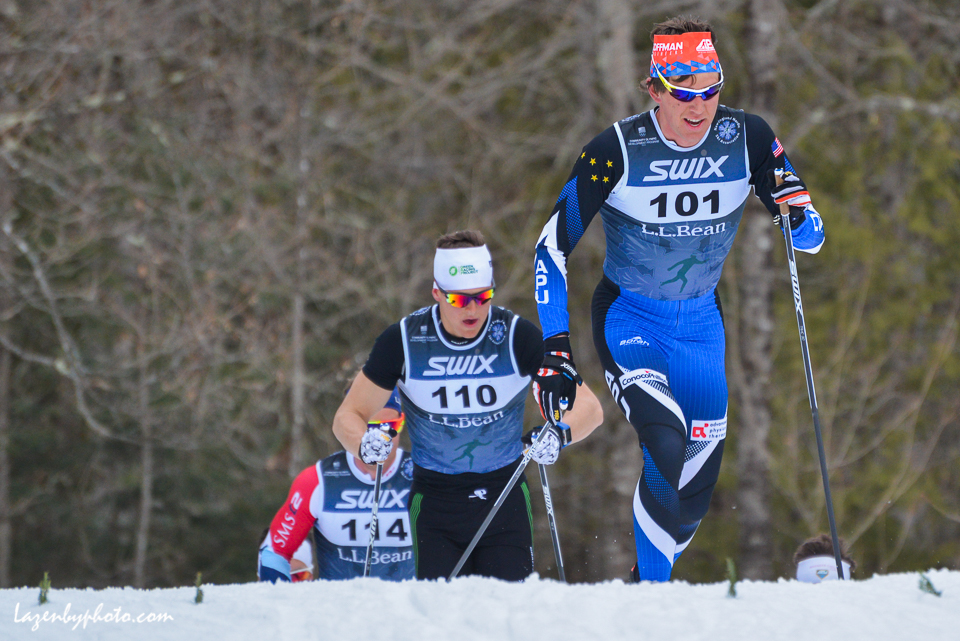
Scott Patterson (101) leads Adam Martin (110), Simi Hamilton (114) and others during the men’s 50 k classic mass start at 2018 U.S. Distance Nationals in Craftsbury, Vt. (Photo: John Lazenby/Lazenbyphoto.com)
FS: Looking at the athletes on the B-team, Scott Patterson obviously had a killer Olympics and a great Holmenkollen 50 k. Was that in the forefront of your mind with regards to his renomination to the B-team?
CG: Yeah, and he had a pretty rough start to the year. According to him, he had a pretty serious setback in the middle of the summer around an ultrarunning race that he was doing in Montana. And it really set him back and he struggled during World Cup Period 1. He seemed to come into his form during the Olympics. Scott actually skied quite well in the spring. Unfortunately, in the first distance race of the World Cup Finals, he and Erik both went down and they struggled to recover in a high-paced race in Falun. But I think Scott is definitely beginning to demonstrate what his potential was from the Olympics onward.
FS: Paddy Caldwell had some impressive time-of-day pursuit results early on in the season.
CG: He, unfortunately, got sick at one point during the Tour de Ski and he got sick during the Olympics. He definitely had some setbacks. But, overall, he skied quite well for a young athlete, the youngest of the group — being his first full year of World Cup. He would need to take a step forward this next year. Now he has a year under his belt. Now he is going to have to start scoring some points and those points are going to need to come from events that are beyond simply having a fast time of day split in a pursuit. But, that is going to be the step I am guessing in order to get whatever world rank he is going to need for this new selection criteria. That is what it is going to take.
FS: I believe Paddy is not here in Bend. That said, Paddy decided to remain in Europe and compete in and finish the Tour de Ski. Does it look like he would do the full complement of the Tour de Ski again?
CG: I am not sure. It is a real challenge around the Tour de Ski versus U.S. nationals. Because we have a selection criteria, although we have not implemented a new selection criteria, and we have not created the new selection criteria yet for the World Championships in Seefeld. But we have had a selection criteria for the last two years which has, obviously, two pathways: one being U.S. National Championships and SuperTour and the other being World Cup, including the Tour de Ski.
That makes it a real challenge. For those athletes that are on World Cup during Period 1, it makes it really hard to decide whether they should go back to U.S. nationals to qualify or whether they should go to the Tour de Ski. We are going to be encouraging probably anyone who is not really skiing well during World Cup Period 1, to go back to U.S. nationals and race at U.S. nationals and try to create a very robust selection process at U.S. nationals.
So you are right, Paddy is not here in Bend, he is doing finals at Dartmouth right now. So we have not had a chance to talk through those scenarios quite yet. One thing that for sure we are going to change about the selection criteria, and this is something to discuss with the community at the Cross Country Committee meetings in Park City, is that we are going to remove the final stage of the Tour de Ski from the championships selection period for distance athletes, and for sprinters as well. The distance period for selection will close on the day prior to the final climb. That has been a point of contention, as you know, within the community. Are we selecting the right athletes by having athletes who are racing uphill in skate? From my personal perspective, the athletes who have done well in that are the athletes that you want on a major championship team. They are aerobic engine skaters. But it is no problem from my perspective to remove that stage and hopefully remove some of the contentious feelings about that particular event.
So I don’t know exactly what [Paddy’s] plan will be yet. U.S. nationals versus a Tour de Ski. I think for a lot of these athletes, including him, we are going to see how people are skiing during Period 1 and whether it makes sense to ski the Tour de Ski or whether it makes sense to go back to U.S. nationals.
FS: Does that mean the USST will establish real concrete criteria as to whether or not someone would come back to U.S. nationals or remain on the World Cup?
CG: No. That is really challenging. If you create concrete criteria or something like that, then it probably needs to be blind to the athlete’s age and experience, but should it really be the same for an athlete who is 22 years old versus an athlete who is 34 years old? I don’t think it ever should. I think it is always important that there is some sort of coach’s discretion that is left that can contribute to making that decision because a younger athlete who might have ten or twelve years of World Cup ahead of them certainly can benefit perhaps from that experience more than an older athlete who might at the end of their career.
I think the heartache in the community comes when people think that we are looking at that decision as in prior to having qualified for the major championships instead of long-term development. And I can tell you from our staff perspective when we are making decisions like that, we are looking at two things. One: can the athlete contribute to outstanding results on World Cup? In this case, begin the Tour de Ski immediately? And second: is this athlete a U.S. athlete that we are trying to really develop for the future who would very much benefit from having this stage and experience and experience at these particular venues at this time?
CG: If he had raced the end of the Tour de Ski, had he raced those last couple of distances races, he may have made the B-team criteria. But one of his biggest goals for last season was to represent the U.S. in the team sprint in PyeongChang and to fight for a medal, so he was very focused on that. And that is why he stopped the Tour de Ski when he did, in order to get ready to race in Dresden. That was the one team sprint on the calendar last year. So he wanted to have the experience. Just from the aerobic as well as anaerobic and the tactical side of that as well. That was his real focus last year. And team sprint, for some of our key men, will continue to be one thing that we absolutely target and it probably remains one of our best chances at a medal.
FS: You are obviously still here. The assumption might have been that at the end of an Olympic cycle, a very successful cycle, that perhaps you would step down. Can you talk about your decision-making process to remain with the U.S. Ski Team?
CG: First of all. We are extremely lucky to have the staff that we have and one that has been as effective as they have been and as loyal as they have been. That goes not only for the coaching staff but also for our service team staff and also for so many of the volunteer providers that we utilize every year.
We have a handful of docs, PT’s, massage therapist — all of who we go back to year after year and ask for weeks and weeks of their time away from work, away from their paying work, away from family, and we ask them to volunteer their time and they keep coming back. We are incredibly lucky to have a staff that we have been able to retain. For Matt [Whitcomb], he came on in 2006, so I think he is going into his 13th year with the team. Jason [Cork] and Bryan [Fish] both came on the year right after 2010, I want to say 2011-2012, somewhere in that range. We have had a lot of longevity. Oleg Ragilo, who is our head technician, is back and he has been, I don’t know how many years he has been with the team, quite a few. He has been with us twice actually.
Also, Jean-Pascal Laurin, Tim Baucom, and Andrew Morehouse, all of those guys are returning. We do have one change on the service team. And that is that Marek Sander, who had been Kikkan [Randall’s] and Andy [Newell’s] tech, has decided to go back to Estonian biathlon which is where he came from when we hired him. Instead, we are hiring Eli Brown. Eli, people will know, he’s a former head coach of the University of Utah, but has been somebody that has been volunteering his time at least the last three major championships plus some World Cup racing for us as a technician.
And so we have just hired him to replace Marek as one of our technicians. So our staff is quite similar, obviously, we brought on Gus as well.
From left to right: Coach Matt Whitcomb with Sadie Bjornsen and Sophie Caldwell in Seefeld, Austria, last winter. (Photo: Garrott Kuzzy / LumiExperiences.com)
The other change that we are going to have, it’s a little bit of a job title change for Matt. Obviously, Matt has been our women’s coach. This year we have him in place to work with both men and women. So that Jason Cork, Matt and myself all basically work as a team with all of the World Cup athletes. We felt like we needed to change some of our setup in order to accommodate the needs of the team. We had some veterans that retired last year. When you have a smaller quote-unquote, “core”, at least the U.S. Ski Team on the World Cup level, we need to be more versatile in terms of helping and being able to help both men and women on a daily basis. And be more versatile with what our job requirements and our job titles are.
So we have some small changes there, but in general, we are really lucky to have everyone coming back. I think in terms of my own continued work with the national team, I will most likely continue until my family says stop and or until I don’t feel like the athletes are getting what they need out of my leadership. So, either one of those two things will be my cue to step down.
FS: For example, Jason Cork is out there testing skis with Jessie Diggins prior to races. I understand why she is a huge investment and the return on investment is important to the team, too. I understand why she might get a lot of resources. And it sounds like Matt is Simi’s coach and that has been going on for a year plus maybe. That said, as things might look from say Cork, Matt, and you redefining roles, how might that look different on the ground during race day?”
CG: It won’t look so different. Like you just alluded to, we are a smaller team. Well, I should say, we are starting to be a fairly big team. We are a smaller ski nation in terms of what our total imprint is on the World Cup and what our budget is perhaps, at least compared to our biggest competitors. Because our budget is so small compared to a Norway or a Russia, everybody, as you know, on our staff tends to do everything. And that is why job titles don’t always really make the most sense. We can give ourselves a title, but everybody ends up once in awhile cleaning some klister at the end of the day. That is just part of the nature of our program. So someone like Jason, he is spending a lot of time in the wax truck. Not only actually helping Jessie but as a key part of our service team as someone who helps Oleg with the overall organization of what we are doing on a daily basis. So someone like Jason is going to be in the wax truck quite a bit. And then also have coaching duties. Matt will be in the wax truck quite a bit less and have a lot more on the coaching duty side. I am going to have a lot of logistical work on a daily basis as well as a lot of staff management and athlete management type task, as well as some coaching duties.
But it is pretty hard to define those more specifically. They definitely change from day to day and week to week. The three of us are trying to basically cover all bases at that World Cup level.
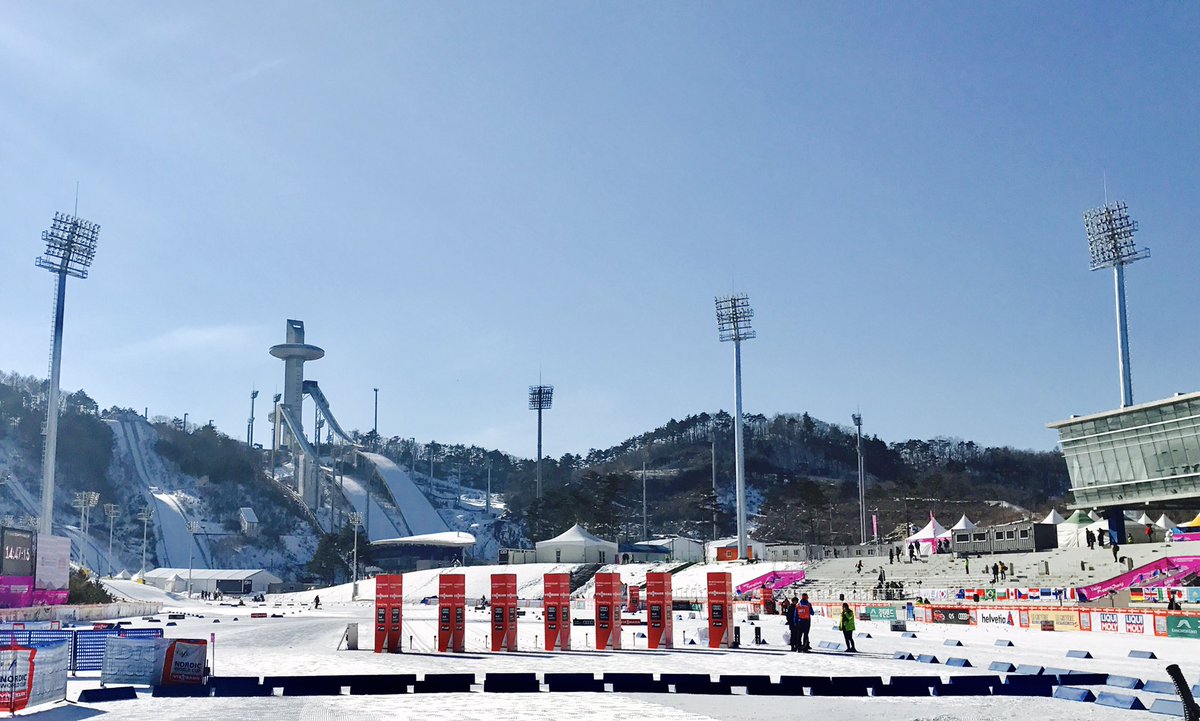
The PyeongChang venue as seen in February 2017. PyeongChang, South Korea, will host the 2018 Olympic Games this coming February. (Photo: FIS Cross Country/Twitter)
Note: This is the first of a multiple-part series on the 2018 Winter Olympic selection criteria for the U.S. cross-country ski team. A parallel piece compares the cross-country team’s criteria with other U.S. winter sports.
***
Friday, July 7, will mark seven months to go until the Opening Ceremony for the 2018 Winter Olympics in PyeongChang, South Korea. As athletes across the country ramp up their commitment in this Olympic year, and #roadtopyeongchang trends across various social media platforms, FasterSkier takes a look at the recently released selection criteria and procedures for nomination to the U.S. Olympic team.
Briefly put, what does it take to get to PyeongChang? And what factors will U.S. Ski Team (USST) coaches and (newly rebranded) U.S. Ski & Snowboard leaders apply in deciding who will be wearing red, white and blue next February?
In this article, FasterSkier first breaks down the criteria themselves, then summarizes a recent interview with USST Head Coach Chris Grover about why these criteria were chosen and how they should work.
Inside the criteria: World Cup performance, discretion and potential domestic picks
The criteria themselves are little changed from the standards used to pick the American team for the last two international championship events, World Champs in Falun in 2015 and Lahti in 2017. First comes objective qualification via performance on the World Cup. Second comes the potential use of discretionary picks. Third, if any spots are left over, the highest-ranking athlete on a domestic points list may, but does not have to, be nominated to the team.
As for the overall size of the U.S. team, a maximum of 12 male or 12 female athletes may be nominated, with a final team quota of probably 17 to 20 athletes to be determined closer to the Olympics themselves. (This is up from a total team quota of 17 in 2014, though ultimately only 14 athletes were named for Sochi, and the extra three American spots were redistributed to other nations.)
The U.S. may enter up to four athletes in a single race at the Olympics. The six cross-country events in PyeongChang will be a skiathlon (15 kilometers for women and 30 k for men), individual classic sprint, freestyle team sprint, 10/15 k skate interval start, 4 x 5 k or 4 x 10 k mixed technique relay (classic, classic, skate, skate), and 30/50 k classic mass start.
As for the criteria themselves for making the U.S. Olympic team: In order:
Objective qualification via World Cup results
Athletes who have achieved a top-eight finish in one of five specific races, or who have a top-50 ranking on either the World Cup sprint or distance list midway through Period II, will be named to the team.
Most precisely, “Any eligible athlete that posts a top-8 individual final World Cup result during the selection period [Nov. 23, 2017, through Jan. 15, 2018] in the following events will be selected to the Team: Sprint C, individual start 10/15 km F, and 15/30 km Skiathlon.”
Looking to the schedule for the 2017/2018 World Cup season, classic sprints will be held on Nov. 24, in Ruka, Finland; Dec. 2, in Lillehammer, Norway; and Jan. 3 in Oberstdorf, Germany (as part of the Tour de Ski). A 10/15 k freestyle individual start will be held in Davos, Switzerland, on Dec. 10. The only skiathlon on the 2017/2018 World Cup calendar will be held in Lillehammer on Dec. 3. Any athlete posting a top-eight final result in one of those five races will be named to the Olympic team.
(The 10/15 k skate pursuits on the schedule don’t count for top-eight purposes – it’s only Olympic formats that are used for qualification. And the 10/15 k skate race in PyeongChang is an interval-start race, not a pursuit.)
So that’s high finishes in individual races. As for cumulative performance across multiple races, “Athletes ranking in the top-50 in the distance World Cup standings or the top-50 in the Sprint World Cup standings as of January 15, 2018 shall be selected to the team.” Jan. 15 marks roughly the midway point of the World Cup calendar. By that point, 18 World Cup races will have been held.
U.S. Ski Team member Sadie Bjornsen racing in the women’s 15 k skiathlon at the 2014 Winter Olympics in Sochi, Russia. Bjornsen is a veteran member of the national team heading into another Olympic year.
As of the comparable point in the 2016/2017 season, shortly after the Tour de Ski, USST members Sadie Bjornsen, Rosie Brennan, Sophie Caldwell, Jessie Diggins, Simi Hamilton, Noah Hoffman, Andy Newell, Kikkan Randall, Ida Sargent, and Liz Stephen had top-50 rankings in either or both disciplines.
A maximum of five athletes per gender may be selected based on their Sprint World Cup rankings. Tiebreaking procedures come into play at that point if necessary, generally based on an athlete’s single best finish in a sprint race.
Discretionary selection
Spots on the U.S. Olympic team will presumably remain open after the application of the objective criterion of World Cup performance. In that case, “the USSA Cross Country Head Coach may use discretion … to determine team nominations” for additional spots on the Olympic team.
Grover would at that point recommend additional athletes to a three-person committee, composed of U.S. Ski & Snowboard President Tiger Shaw, Executive Vice President of Athletics Luke Bodensteiner, and athlete representative Rosie Brennan.
If Brennan stands exposed to a potential conflict of interest from discretionary selection (that is, through no fault of her own, she “stands to benefit privately from a decision made by the Selection Committee,” as would happen if she had not qualified objectively and were being considered for discretionary selection), then she would be directed not to engage in any conduct “meant to unduly influence” the selection committee regarding her potential selection to the Olympic team.
Grover is then directed to consider any of (a) “outstanding competition results” from both this season and last season, (b) “Recent positive direction or trend of competition results indicating a potential for Olympic success,” or (c) “Indication of medal potential in future Olympic or World Championship competition (such as international age group results and rankings) that would be materially enhanced by selection to the team.”
U.S. Ski & Snowboard was not required to make discretion a means of selection to the team. It also has the discretion not to use discretion at all; as the document states, Grover may use discretion to determine additional team nominations, but does not have to.
Domestic selection. Maybe.
If there are any spots remaining on the team after applying criteria (1) and (2), U.S. Ski & Snowboard may consider the highest-ranked domestic athlete, one per gender. But it technically doesn’t have to.
(There is some ambiguity within the selection document itself as to whether more than one team spot could be filled via a domestic ranking list. On the one hand, selection criterion 3 uses the plural when it talks about “any remaining positions,” and “those positions may be filled.” On the other hand, it also mentions “the athlete with the highest rank on the 2018 Olympic Winter Games Selection List,” and both “athlete” and “rank” are in the singular. In practice, Grover clarified in a recent phone interview that the national team is potentially open to bringing more than one skier per gender, pointing out that four men and two women were brought to Lahti off the domestic rankings list.)
The 2018 Olympic Winter Games Selection List, as with the comparable list for 2017 World Champs in Lahti, is essentially the “normal” 2017/2018 SuperTour points list, plus substantial bonus points for 2018 U.S. National Championships. An athlete’s best two finishes in a single discipline (sprint or distance, not skate or classic) will be counted.
The SuperTour point totals system, and bonus points for podium finishes at 2018 U.S. nationals, appear to be precisely the same as those used last winter for Lahti. That is, first through third at the December SuperTour races will be worth 30, 25, and 21 points, respectively. The addition of nationals-only bonus points means that first through third in the four races in Anchorage count for 45, 35, and 26 points, respectively. When an athlete’s best two finishes are counted, a second and third at U.S. nationals (61 points) would be worth more than two firsts (60 points) at “normal” SuperTour races.
For this reason, in last year’spreview for 2017 U.S. nationals, FasterSkier quoted longtime racer Kris Freeman as stating that “the allocation of bonus points to Nationals essentially makes the remainder of the SuperTours irrelevant. Nationals is now World Champ and Olympic Trials which is fine, but let’s call them what they are.”
The math is the same this season as last season. This season, U.S. nationals start in Anchorage on Jan. 3, 2018. The four races there will be a skate sprint, classic sprint, 10/15 k skate interval start, and 20/30 k classic mass start.
Discretion and selection to international championship events
The appropriate role of discretion when selecting athletes for a World Ski Championships or Olympic team is a subject of recurring interest for fans and supporters of American cross-country skiing, and has frequently arisen on this site.
For example, here’s USST Women’s Coach Matt Whitcomb in an interview with FasterSkier in July 2016, answering the question, “Is it fair to say that making discretionary picks is one of the harder parts of your job as a coach?” Whitcomb replied, “For sure. We love not to do it. But in any criteria, discretion can often be one of the most important pieces. We really envy these Olympic Trials [for the American track and field athletes for the 2016 Rio Olympics] that we’re watching right now, where the top three go and fourth is either an alternate or they don’t go, and it’s just much more objective.”
And here’s Grover in January 2017, slightly ahead of the naming of the U.S. team for Lahti: “The real key thing is that, at the bottom of the selection, we followed the selection criteria. That’s key. Discretion really belongs to be used at the top, for those athletes who have a chance to come over and have big races at World Championships, and by big races I mean someone who can go on the podium, or the top five, top 10, or top 15. Look for some selections from USA, but I wouldn’t look for a lot of discretion at the end of the day.”
Or here’s Grover in January 2014, discussing why he and the rest of U.S. team leadership abjured discretion completely in taking Brian Gregg to Sochi but not Matt Liebsch, when only 0.04 points separated the two on the domestic men’s distance list: “We really tried to apply the selection criteria in the most fair way possible.That becomes, for sure, a challenge, especially on the men’s side when you get down to the sixth, seventh, eighth guys, you’re really splitting hairs because the FIS points are so close at that point. Because they were so close we opted not to use discretion. It really wasn’t a fair way to do it.”
(As things played out in Sochi, USSA selected 14 athletes out of a total possible quota of 17. Grover explained at the time, shortly after selections were made and before the Olympics began, that they had only intended to bring those athletes whom they planned on starting in races. “With seven women and seven men, we have our start positions filled,” Grover told FasterSkier before the Games. “Seven and seven was the magic number for us.” Liebsch is reported to have considered legal action to gain a spot on the U.S. team for Sochi, but found that that it was “too late” for him to do so. In Sochi a few weeks later, U.S. athlete Torin Koos did not start the 50 k skate race, a race format in which Liebsch had previously won at the American Birkebeiner.)
The U.S. Ski Team’s views on discretion
Grover, the longtime USST head coach, is aware that people feel strongly about the substance and application of selection criteria for U.S. championship teams. “I think overall I’d say people get a little bit mired up and tied up with selection criteria, and whether it’s fair or not, or how this potentially sees them falling within that criteria,” Grover told FasterSkier in a recent phone interview.
But Grover has a simple message for domestic athletes hoping to go to PyeongChang: “All you need to do is to ski fast, you need to go out there and win races, or to reach podiums. And if you can do that, your chances of being selected to the team are quite good.”
The current criteria are “better than ever, more fair than ever,” Grover continued. “I think [it] gives athletes the most direct path possible to a major championship team.”
Grover urged domestic athletes not to obsess over the apparent prioritization of discretion over domestic race results as a means of picking the Olympic team. Addressing a hypothetical non-national team member, he said, “As as an athlete domestically, don’t get hung up in the order that those things come down in the selection criteria. Discretion has to be next, because a discretionary athlete that’s picked needs to be picked because they are a top athlete who should be on the team, who has somehow been missed by the selection criteria.
“So that’s the placement it has to be,” he continued. “And that’s consistent with selection criteria across different disciplines, in different sports. So that’s just the way that the procedure needs to work. But it doesn’t mean that a large number of discretionary athletes will necessarily be selected prior to the domestic field.”
The statements that discretion “has” to have this status, and that this is “consistent with … different sports,” are not necessarily correct. As reported today in another article on FasterSkier, discretion plays a less prominent role in every other U.S. Ski & Snowboard sport.
Grover also underscored that the use of discretion within American skiing pales in comparison to its role in Norway or Russia.
“We’re competing against teams that are using 100-percent discretion to name their teams,” Grover emphasized. “So in the U.S., we have kind of the most democratic, objective, fair, I guess you could say – other nations, our Scandinavian peers, might call this an American system that we use for selecting athletes. It’s very cut-and-dried.”
The four countries that Grover mentioned by name in his interview as the Americans’ main competition – Norway, Sweden, Finland, and Russia – all finished ahead of the U.S. in the final Nations Cup standings for the 2016/2017 World Cup season.
Grover also stressed that U.S. Ski & Snowboard used only one discretionary pick for the Lahti roster, taking USST athlete Erik Bjornsen. “And the reason that we used one discretionary spot to select Erik was because he basically fell between the two criteria. He didn’t quite make the top-50 in the world standard because he had gotten sick during the selection process, and he wasn’t home domestically to race in the races domestically, but I think very few people out there would argue that that wasn’t a good use or a smart use of one discretionary spot.”
Grover further stressed that the team had used, as he initially put it, “zero discretion” when selecting athletes for Falun World Championships in 2015. (In a subsequent email to FasterSkier, Grover clarified that “We used zero discretion in the original selection of 16 athletes (8 men and 8 women) to the Falun Team, but we did add Ben [Saxton] at a later date via discretion after he finished 6th in the sprint at U23 Champs.”)
Writing criteria for the top vs. the bottom
Grover cited the decision to bring Erik Bjornsen to Lahti as an exemplary use of discretion, underscoring that Bjornsen was a skilled athlete who “had some of the very best individual results there” among American skiers.
“So that is absolutely our intention,” Grover continued, “it has been our intention, and it will be our intention going forward, is that we use discretion on the rare case where there’s an injury, or an illness, with a top athlete, and/or the criteria fail to select someone that I think most everyone would agree should be there representing the United States.”
At world champs in Lahti in 2017, Bjornsen finished 18th in the 15 k classic and teamed up with Simi Hamilton to finish fifth in the team sprint. At world champs in Falun in 2015, Saxton finished 54th in classic sprint qualifying, roughly nine seconds from making the heats.
While Grover is confident that discretion is most appropriately used for a top-performing U.S. athlete, he acknowledged some issues regarding the final athletes selected (or not selected) to a team.
Summarizing his discussion with domestic senior club coaches about the selection criteria used for Lahti, and any potential changes before PyeongChang, Grover said, “All the responses I got back were positive, people were like, Yeah, it worked well. It’s never perfect at the bottom, but I don’t really see any way to improve it.”
Indeed, he noted, the U.S. Ski & Snowboard working group “struggled with” how to select “athletes at the bottom of the selection, and make it as fair as possible. And what you come up with at the end is, in the end there’s no real perfect way to do it, and there’s going to be challenges to the way that any selection criteria works at the very bottom of the selection.”
Current success vs. preparing for the future
Another issue surrounding selection is the question of current competitiveness vs. taking a young athlete to a “practice” Olympics just for the experience – that is, is the Olympics for development or for podiums. In 2014, for example, regarding the recently named team for Sochi, Grover said, “The Olympics is the pinnacle of the performance or competition pipeline.”
Development occurs at many lower levels, Grover noted (Europa Cups, World Juniors, etc.), but “It does not and should not come at the World Championships or the Olympics. … It’s not a development trip; it’s a competition trip at the very highest level.”
Similarly, earlier this year Grover explained that junior skier Katharine Ogden (a.k.a. “KO”) was not selected for Lahti on the grounds that “athletes should first aim to be successful at – in the age group that they’re competing against. So for KO, that means World Juniors, and being successful at World Juniors.”
The third prong of discretionary selection for the current Olympic team, “Indication of medal potential in future Olympic or World Championship competition (such as international age group results and rankings) that would be materially enhanced by selection to the team,”may be said to go against these principles.
But Grover explained that this “future medal potential” path to discretionary selection is rarely if ever used, even when the Olympic team is selected with an eye to current podium potential.
“We haven’t used it that way,” Grover said. “Obviously the language is there if we were to choose to use it, but in the past we really have not used it that way, and I don’t anticipate using it going forward into this season. … We want … the fastest skiers on the start line in Korea, and those are the ones that we’re gonna be selecting.”
Different standards for men and women?
An additional issue in selecting American skiers is that the women are currently, proportionally speaking, faster than the men – that is, the U.S. women, as a team, have recently tended to achieve better results within the women’s World Cup field than the U.S. men do within the men’s World Cup field.
It is also true that the international men’s field is more top-heavy than the women’s field, across the course of a single World Cup season, meaning that a greater number of World Cup points is needed to crack the top-50 of a discipline ranking.
Perhaps for these reasons, multiple athletes have confirmed to FasterSkier the substance of a suggestion made at a recent athletes’ meeting at the season-ending 2017 U.S. Distance Nationals in Fairbanks: That the selection criteria should be made more challenging on the women’s side, such as by making the objective cutoff there be a top-40 or even a top-30 discipline ranking rather than top-50.
“I understand where the person who asked that question, where kind of they’re coming from” Grover told FasterSkier, when asked generally if there had ever been discussions about making the objective criteria different between the genders.
“They’re referring to the fact that there’s greater depth on the men’s side … there’s a lot more men ranked – that have FIS points that are say 30 and under, versus the number of women perhaps that have 30 FIS points or less.”
But, Grover continued, “top results are top results at the end of the day. And there’s three medals that are handed out, for men and for women. And if that means that selecting an athlete who ends up to be, say, 46th in the top, in terms of the top 50 in a discipline list by the middle of January, that athlete might be closer to contributing to a top result or a podium than one of the guys.”
For this reason, Grover questioned the aims served by this suggestion. “Is the end objective for that person just to provide more opportunities for men to come over and be 50th place at the Olympics? Because if that is the objective, then I don’t think it’s worthwhile pursuing. What we’re trying to do is have top results … to really compete. And that means selecting those athletes who are the closest to the top placings.”
Freeman also argued that it was illogical to use a non-championship event for selection to the USST, “whose primary stated goal is to win medals. … Is racing up a hill at the end of a nine-day tour really a fair way to determine who goes to the World Championships or Olympics?”
Grover’s stance is that it’s more difficult to finish in the overall top 30 of the Tour de Ski than reach the podium at U.S. nationals. Due to recent changes in FIS rules that will allow more pure sprinters to start the 2017/2018 Tour de Ski without counting against their nation’s start quota, he foresees a greater number of finishers in this year’s Tour.
“I would anticipate that this year you’re going to have much better numbers of athletes that are actually finishing the Tour,” he said, “and so the standard there won’t be quite as ‘easy,’ quote-unquote. It’s not necessarily easy, but won’t be as easy as it was this last year.
“Is it easier to score points, even at the end of a Tour de Ski if you can survive it, versus to have a podium at U.S. nationals, given that a bunch of the top USA athletes are doing the Tour de Ski at the same time?” he asked. “I would still guess that it’s easier to reach the podium at U.S. nationals, and thereby that would make it an easier path for an athlete to make the Olympic team.”
FasterSkier has separately addressed Freeman’s argument regarding the “access problem” of obtaining Tour or World Cup start rights in the first place. FasterSkier has also considered the approach used by the US Biathlon Association, which makes it “not a foregone conclusion” that athletes receiving World Cup starts will necessarily make the Olympics.
The bottom line
“At the end of the day,” Grover concluded, “I would anticipate that we’ll be able to bring the athletes that we want to bring so that we can fill every potential start spot at the Games. … We will fill every start at the Olympics.”
Grover and U.S. Ski & Snowboard intend to do so by making sure “that we capture any athlete who can reach the podium, any athlete who can reach the top five, the top 10, the top 15. That’s the absolute critical element, is that we give ourselves the best chance to be successful.”
And Grover believes that the current criteria are “the best way to do that.” We “were trying to create a more equitable, more concrete, easier to understand and visualize path for domestic athletes, racing SuperTour, to qualify for a major championship team,” Grover said. The result, he concludes, is “better than ever, more fair than ever. … So, you know, I feel good, I feel really good about the criteria, I feel like we got the most fair criteria for the Olympic selection that we’ve had, and I’m excited to see how it turns out.”
— Jason Albert and Chelsea Little contributed reporting
***
Stay tuned for more on this topic, including an article on American athletes’ reaction to the Olympic selection criteria and how they feel the exercise of discretion has affected them and U.S. skiing. And be sure to read about the role of discretion across other U.S. Ski & Snowboard sports, particularly biathlon.