From the FasterSkier archive — posts syndicated from athletes’ and coaches’ own blogs between 2004 and 2012, kept online as published. Current coverage is at fasterskier.com.

Tag: Seraina Boner

  • ThoraxTrainer Nordic Ski Machine Now Available in the United States!

    (Press release)

    BRIDGEWATER, N.J. (October 12, 2017) — BTE Fitness Group (www.btefitnessgroup.com) is excited to announce that they are the authorized distributor of the ThoraxTrainerTM Nordic ski machine in the United States.

    What is the ThoraxTrainerTM?

    ThoraxTrainerTM is the world’s most realistic indoor cross-country training machine.  Recent research conducted at Sweden’s Umeå University showed a correlation of 0.96 between the ThoraxTrainer™ and cross-country skiing. In other words, you can predict your performance on skis from your performance on the ThoraxTrainer™ with 96% accuracy.

    Who developed the ThoraxTrainerTM?

    ThoraxTrainerTM was developed in Europe for skiers by skiers.  ThoraxTrainer Ltd. was founded in 2008 by two passionate cross-country skiers, both with elite sports careers within triathlon and cross-country skiing. As a medical doctor and an engineer respectively, they used their knowledge of training and skiing to build the first ski ergometer in the world that realistically imitated Nordic skiing.

    What are the benefits of the ThoraxTrainerTM?

    Developed specifically to improve strength, endurance, core stability, technique and VO2-max the ThoraxTrainer™ offers highly efficient training that delivers significant results on your whole body with as little as three 10-minute workouts per week.  The ThoraxTrainer™ high cardiovascular impact will improve your VO2-max and endurance very quickly to an even higher degree than training on skis or rollerskis.  The ThoraxTrainer™ also has a high impact on your core muscles that will improve your skiing on snow in both the classical and skating techniques. Exercises with double and diagonal poling on one leg at a time will particularly have a huge impact on your core muscles and balance. This will improve your classical technique on the uphill and your skating on the flat and slight uphill.  The ThoraxTrainer™ computer enables you to evaluate your training and technique in detail, helping you to improve your performance in the ski track.

    antabuse

    Who uses ThoraxTrainer™? 

    ThoraxTrainer™ has been used for years by both professional and amateur skiers in Europe.  Recently, American cross-country skiers, as well as other athletes and fitness enthusiasts have also discovered the benefits of ThoraxTrainerTM.

    “ThoraxTrainer™ gives me something extra that I cannot achieve on skis, roller skis or other training.  It has improved my skiing substantially, and ThoraxTrainer™ is an important key to my success.”

    Seraina Boner

    Pro skier, Team Gel Rossignol

    “I tried a lot of ski-simulators. ThoraxTrainer™ is the best simulation of real movement on skis. This year is the first year I have incorporated ThoraxTrainer™ into my long-term preparation and initial tests show promising results in my performance level.”

    Stanislav Řezáč

    Cross-country skier, Czech Republic

    “ThoraxTrainer™ gives me the final edge to my physical shape and is an important part of my comeback among the best in the IBU World Cup.”

    Michael Rösch

    Pro Biathlete, Germany

    Want to learn more?

    Visit www.btefitnessgroup.com or send an email to btefitnessgroup@gmail.com


  • Ski Classics Opens with Doubleheader in Italy 

    Ski Classics Opens with Doubleheader in Italy 

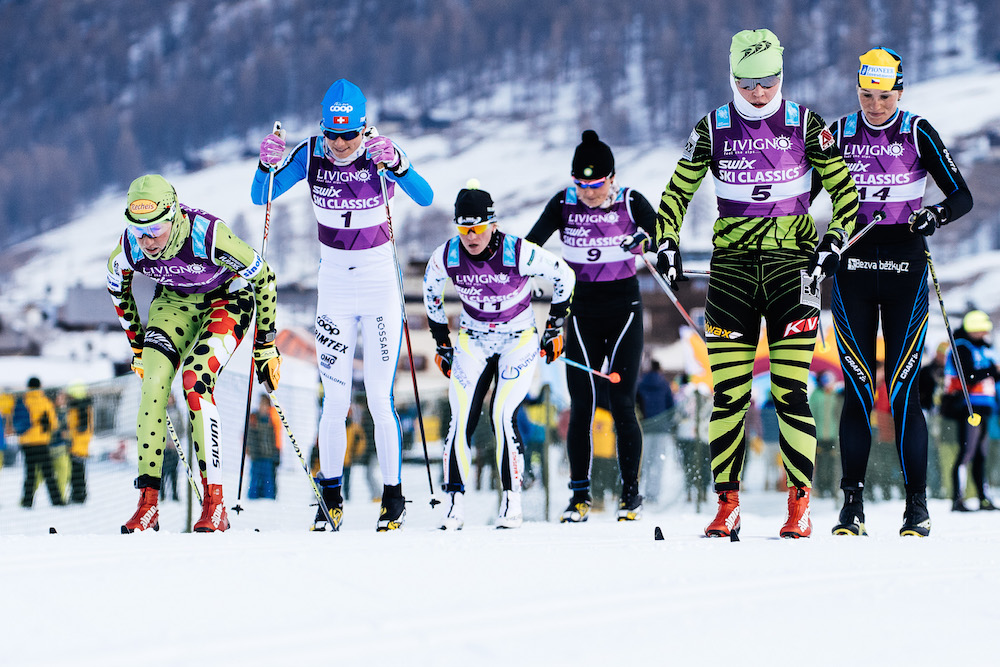
    Last year's Team Tempo Prologue in Livigno, Italy, which Team Coop won. This year, the team prologue will again open the Ski Classics series in Livigno on Saturday, followed by the shortened La Sgambeda classic race on Sunday. (Photo: Visma Ski Classics)
    Last year’s Team Tempo Prologue in Livigno, Italy, which Team Coop (in bib 1) won. This year, the team prologue will again open the Ski Classics series in Livigno on Saturday, followed by the shortened La Sgambeda classic race on Sunday. (Photo: Visma Ski Classics)

    The 2016 Ski Classics kicks off with a doubleheader in Italy on Saturday and Sunday, and the marathon regulars are chomping at the bit to get started with the long-distance race series.

    The 15-kilometer Proteam Prologue in Livigno, Italy, on Saturday opens the show for the marathon series, now called the Visma Ski Classics (with a new title sponsor in place of Swix), which has been extended to nine venues this season.

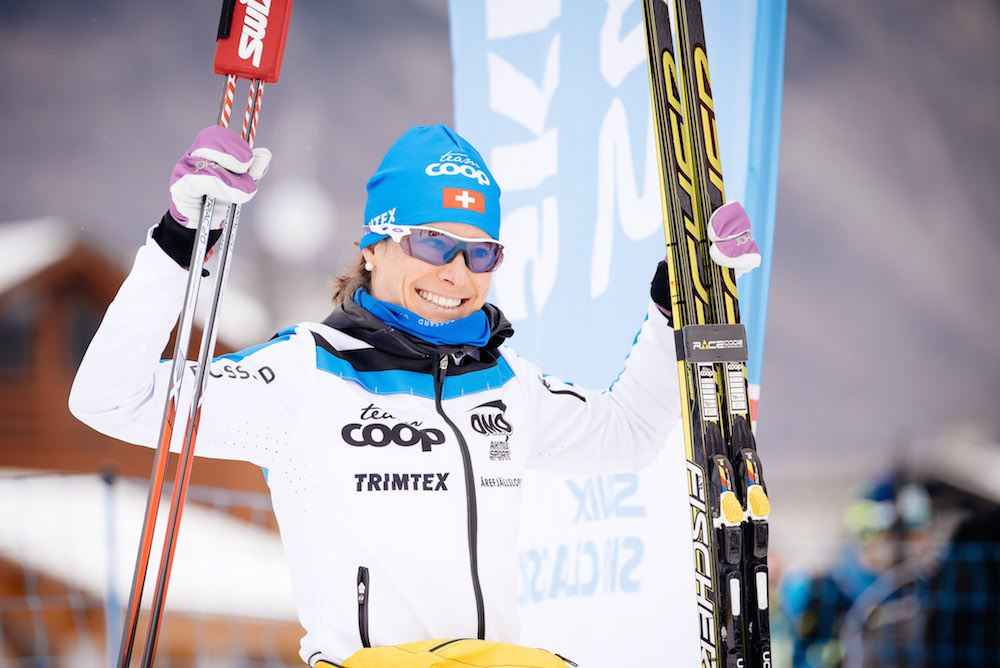
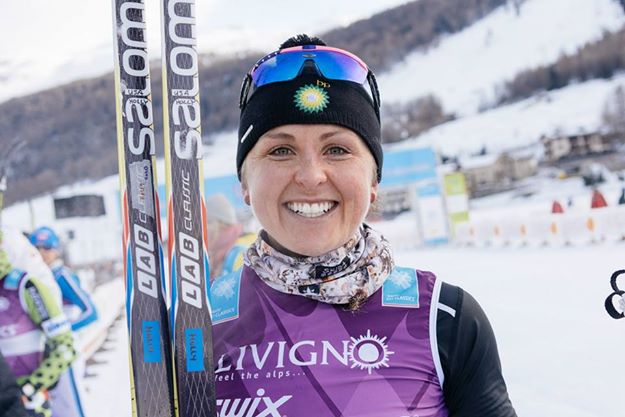
    Seraina Boner of Switzerland and Team Coop/Exspirit after winning the 2014 La Sgambeda in Italy last season. (Photo: Ski Classics)
    Seraina Boner of Team Coop (now called Team Exspirit) after winning the 2014 La Sgambeda in Italy last season. (Photo: Ski Classics)

    On the women’s side, last season’s Ski Classics champion Katerina Smutna of the Czech Republic will be on the start line for the first races this weekend, but she will face plenty of competition. Team Exspirit’s Seraina Boner of Switzerland is eager to take back the overall title, which she has earned three times (2011, 2013 and 2014), beginning with La Sgambeda.

    Poland’s World Cup star and the queen of the FIS Tour de Ski, Justyna Kowalczyk, will be doing several of the Ski Classics long-distance events this season with the Norwegian Team Santander headed by the Aukland brothers. And Britta Johansson Norgren of Sweden, who was on the podium at several of the Ski Classics events last season, is one to keep an eye on. Last season, she raced with the all women’s team Ski Pro Am, and this year she is a part of Sweden’s Lager 157 Ski Team, with teammates such as three-time Vasaloppet champion Jörgen Brink of Sweden.

    Among the men, 2015 Ski Classics overall champion Petter Eliassen of Norway makes his season debut in Italy this weekend. He will have to fend off a large and deep field of competitors such as Norway’s 43-year-old marathon veteran Anders Aukland and his Santander teammates, including younger brother Jørgen Aukland, and former World Cup skiers Tord Asle Gjerdalen of Norway and Johan Olsson of Sweden.

    Norwegian stayers such as Johan Kjölstad, Øystein Pettersen, Eldar Rønning, and John Kristian Dahl of Team United Bakeries, as well as Ski Classics veterans of Team Exspirit, including Daniel Richardsson, Anders Södergren and Jimmie Johnsson of Sweden and Norway’s Morten Eide Pedersen, will certainly do their best to make it a tough season opener from Day 1.

    Two unique competitions in Livigno

    The Prologue, in which the teams must field at least three racers to compete, was added last year, and is a team effort where the third person’s time determines the team result. The next day, on Sunday, the skiers embark on the first distance event, the now-24-kilometer classic technique La Sgambeda.

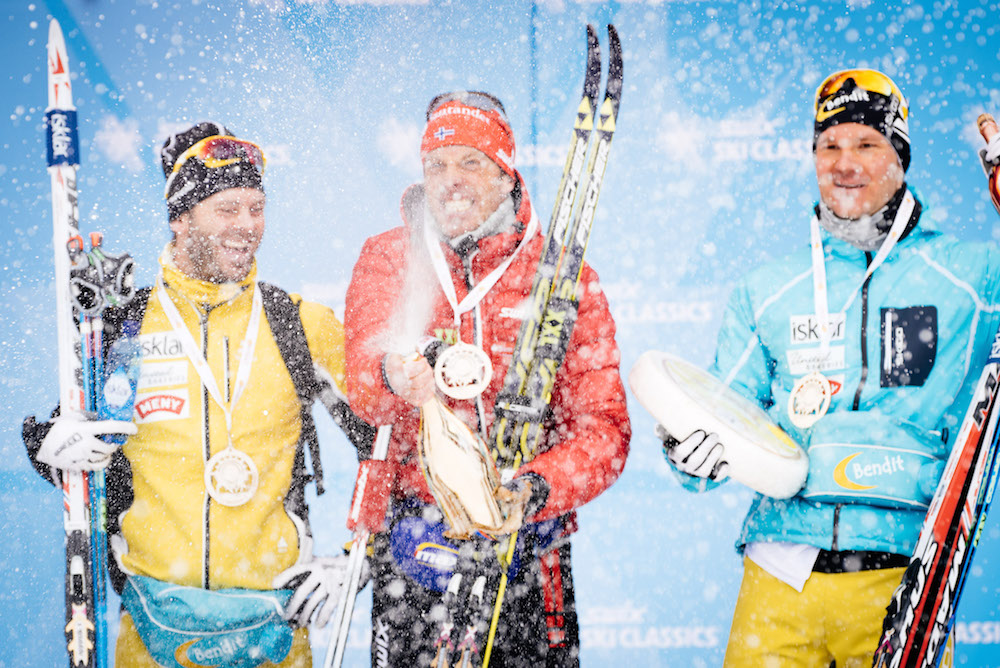
    Team Santander's Anders Aukland (c) after winning the 2014 La Sgambeda in Livigno, Italy. Johan Kjølstad  (l) and Øystein Pettersen (r) both of Team United Bakeries, placed second and third, respectively.  (Photo: Ski Classics)
    Team Santander’s Anders Aukland (c) after winning the 2014 La Sgambeda in Livigno, Italy. Johan Kjølstad (l) and Øystein Pettersen (r) both of Team United Bakeries, placed second and third, respectively. (Photo: Ski Classics)

    Team Exspirit (previously known as Team Coop) won the prologue last year and is aiming to defend the title this year.

    “We have had great preparations here in Livigno, skiing on the race course and acclimatizing to the high altitude,” team member Jimmie Johnsson said in a press release on Friday. “Of course, we’re aiming to defend our victory and we’re faster this season than ever before.”

    Team Exspirit’s Seraina Boner won La Sgambeda last year after breaking away from the field on the hard climb at the turning point of the course. This year, the course is shortened to from 35 k to 24 k due to lack of snow and is also flatter. While Boner prefers more elevation gain, she was still optimistic before the race.

    “The tougher course fits me better than the flatter one we have now,” she said. “But I will do my best, and I am really excited to finally start the long distance season together with my teammates.”

    While the Team Prologue is only open to professional teams registered with the 2016 Ski Classics, La Sgambeda on Sunday is open to amateurs and pros alike.

    Saturday’s Prologue will be held on the original course, but due to lack of snow in Livigno, the classic marathon on Sunday will be run on 6 k loops.

    “Last season, seven of the nine Ski Classics events had to change their courses due to weather issues,” Ski Classics CEO David Nilsson in a press release earlier this week. “We can just cross our fingers that the political leaders at the environmental summit in Paris this week are able to make the right decision.”

    For the 2016 season, there are 28 pro teams registered for the Ski Classics series.

    After the season opener in Italy, the Ski Classics takes a break until the Jizerská Padesatka in Liberec, Czech Republic, on January 10, 2016. The race series concludes April 2 with Årefjällsloppet in Sweden as the season finale, as it has been for years. New this year is the Toblach/Dobbiaco Cortina, a 50 k classic race in Italy on Feb. 13.

    Vasaloppet matters most

    For Madshus racer John Kristian Dahl of Norway, who won the Vasaloppet two years ago, the 90 k race from Sälen to Mora in Sweden is the main goal for the 2016 season.

    “It’s the longest and one of the oldest races in the circuit, and very special with the flats. That package makes it very unique, and difficult to win, too. In our world, it’s the championships in marathon skiing, and I’m happy that we have it every year,” Dahl said in an interview with Ski Classics earlier this fall.

    Live streaming in English

    In order for fans to follow the action live, Visma Ski Classics has launched the Live Streaming “Season Pass” available with English commentary on the app or the Tour Live Center at Visma skiclassics.com.

    2016 Ski Classics Schedule

    1. Dec. 5, 2015: Proteam Tempo Prologue, 15 k classic, Italy
    2. Dec. 6, 2015: La Sgambeda, 24 k classic, Italy
    3. Jan. 10, 2016: Jizerská Padesatka, 50 k classic, Czech Republic
    4. Jan. 23, 2016: La Diagonela, 65 k classic, Switzerland
    5. Jan. 31, 2016: Marcialonga, 70 k classic, Italy
    6. Feb. 7, 2016: König Ludwig Lauf, 50 k classic, Germany
    7. Feb. 13, 2016: Toblach/Dobbiaco Cortina, 50 k classic, Italy
    8. March 6, 2016: Vasaloppet, 90 k classic, Sweden
    9. March 19, 2016: Birkebeinerrennet, 54 k classic, Norway
    10. April 2, 2016: Årefjällsloppet, 65 k classic, Sweden

    For race recaps, follow FasterSkier’s marathon blog.

  • Gearing up for the Long Run: Ski Classics’ Jizerská 50 in Czech Republic on Sunday

    Gearing up for the Long Run: Ski Classics’ Jizerská 50 in Czech Republic on Sunday

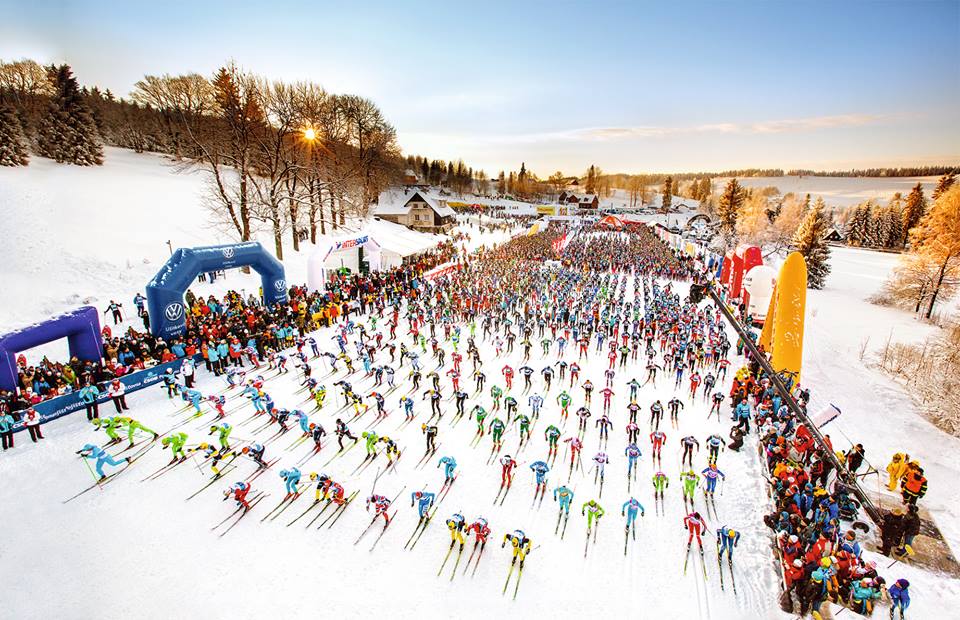
    Start of the Jizerská Padesatka, a 50 k classic race near Liberec Czech, Republic. (Photo: Swix Ski Classics)
    Start of the Jizerská Padesatka, a 50 k classic race near Liberec Czech, Republic. (Photo: Swix Ski Classics)

    Sunday’s 50-kilometer classic race Jizerská Padesatka near Liberec, Czech Republic, is the next event in the 2015 Swix Ski Classics long-distance circuit and racers are eager to hit the tracks after a long break since the first races in Italy in mid-December.

    Going into the third event in the Ski Classics (after the opening Pro Team Prologue and La Sgambeda), Norway’s Anders Aukland of Team Santander tops the overall ranking. Johan Kjølstad, who won the overall Ski Classics title last season, is second overall.

    In the Ski Classics athlete ranking, 42-year-old Aukland tops the list in front of his younger brother Jørgen Aukland. Kjølstad, who races with Team United Bakeries, is in third place, three points ahead of Czech veteran Stanislav Rezac of Team Silvani Madshus, while Sweden’s Jörgen Brink of Team Lager 157 is fifth overall going into the Jizerská 50 k on Sunday.

    In the overall sprint competition, Andreas Nygaard (Team Santander) is currently wearing the green points bib, while Team United Bakeries’ Øystein Pettersen is in second place, 10 points behind Nygaard.

    Holly Brooks at the Pro Team Tempo, which opened the Swix Ski Classics season in mid-December in Livigno, Italy. (Photo: Swix Ski Classics)
    Holly Brooks at the Pro Team Tempo, which opened the Swix Ski Classics season in mid-December in Livigno, Italy. (Photo: Swix Ski Classics)

    Brooks Skips the Jizerská

    American Holly Brooks, who was picked up by the Aukland brothers’ Team Santander just a day prior to the start of the Ski Classics season, is in sixth place in the women’s overall competition. Seraina Boner of Switzerland, who races for Team Coop, tops both the overall standing as well as the athlete ranking.

    However, Brooks is sitting out the Jizerská, returning to Europe for the Dolomitenlauf on Jan. 18, and joining her team for the Marcialonga a week later.

    “I’m just trying to balance the FIS Marathon Cup, the Swix Ski Classics, and travel,” Brooks wrote in an email. “In years past I’ve done maybe three races 30K and longer spread out over a season, so I don’t know how my body is going to react and/or how the fatigue will build.

    “My goal is to race as much as possible without a downgrade in performance,” she added. “I have a feeling I will be very, very tired by the end of the season.”

    New Women Join Circuit

    Prior to the Jizerská, the competition for the women’s overall Ski Classics title gets tougher. Three different Pro Teams have entered new female skiers into the long-distance series: Norway’s Hilde Landheim will race for Team Coop, Viktoria Melina joins the Russian Marathon Team, and Masako Ishida of Japan will race for Team United Bakeries.

    In the Ski Classics, each professional team may enter a total of 10 skiers per season, male and female skiers included. Once entered, the teams may not unregister athletes, but they can enter additional athletes until they reach the maximum of 10 skiers.

    Stellar Conditions

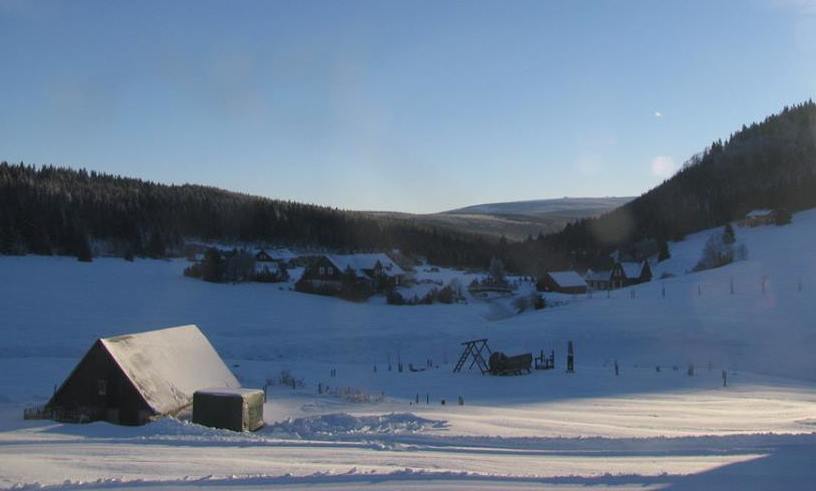
    Czech Republich, home of the Jizerská 50, which will be held on Sunday, as pictured on Jan. 6.
    Czech Republich, home of the Jizerská 50, which will be held on Sunday, as pictured on Jan. 6.

    Last year, the Jizerská races were canceled due to lack of snow, so event organizers are especially excited to put on the races this year and are proud to present stellar conditions on the race course. Promising weather forecasts, decent snowfall in the past week and cold weather have made it possible to produce enough artificial snow to cover the whole course, and the organizers are confident that they will be able to run the race as planned given the weather forecast, which predicted snow at the start and temperatures around freezing.

    “We are happy to see that the weather has turned fine and the winter conditions have finally arrived,” Martin Koucky, a member of the Jizerská 50 Organizing Committee, said in a press release. “The whole Jizerská 50 track is now covered with snow while the race preparations continue to run along at full speed. There are some thirty centimeters of artificial and natural snow at potential critical points: at the Bedrichov stadium as

    In addition to the 50 k Ski Classic on Sunday, the Jizerská race weekend opens with a 30 k skate race and a children’s race on Friday, and also offers a 25 k classic race as well as a corporate relay race on Saturday. New this year is a 1.5-kilometer double-pole sprint on Friday.

    Six More Marathons on Tap

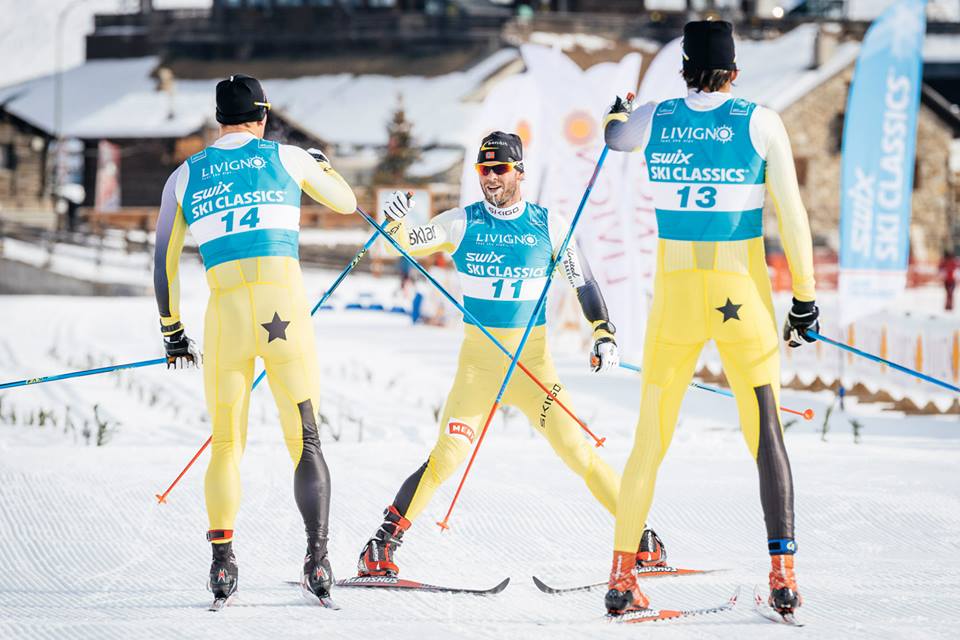
    Team United Bakeries' Pettersen (14), Berdal (11), and Kjølstad (13) at last month's La Sgambeda in Livigno, Italy. (Photo Swix Ski Classics)
    Team United Bakeries’ Pettersen (14), Berdal (11), and Kjølstad (13) at last month’s La Sgambeda in Livigno, Italy. (Photo Swix Ski Classics)

    After the Jizerská 50 on Sunday, the Ski Classics moves to Switzerland for the brand-new La Diagonela on Jan. 17.

    La Diagonela was introduced to the race series last winter as a replacement for the Jizerská 50, which was be canceled, but was such a success that the circuit included the race as a new, permanent installment on the Ski Classics calendar for the 2014/2015 season. This year, the 65-kilometer La Diagonela will be held on a picturesque new course through the villages of St. Moritz, Zuoz and Pontresina in the Engadin Valley.

    After the stop in Switzerland, the Ski Classics moves to Italy for the Marcialonga in the valleys of Val di Fassa and Val di Fiemme on Jan. 25. The 70 k race is famous for its notorious final uphill climb, the Cascata, to the finish in Cavalese town square.

    From Italy, the Pro Teams travel to Germany for the 50 k König Ludwig Lauf in Oberammergau, Bavaria, on Feb. 1.

    After the König Ludwig Lauf, the athletes get a well-deserved break from competing until the legendary 90 k Vasaloppet from Saelen to Mora, Sweden, on March 8.

    After Vasaloppet, the circuit moves on to Norway’s Birkebeinerrennet on March 21. The 54 k classic race starts in Rena, crosses to mountains to the finish line in Lillehammer, the host of the 1994 Winter Olympics.

    The series once again ends with the season finale Årefjällsloppet in Sweden on March 28. The 75 k race offers stunning views from the in Vallbo to the finish line in Åre.

    More information and complete Ski Classics schedule

  • From Marcialonga Champ to Olympic Team Sprint, Boner Sets the Pace for Switzerland

    From Marcialonga Champ to Olympic Team Sprint, Boner Sets the Pace for Switzerland

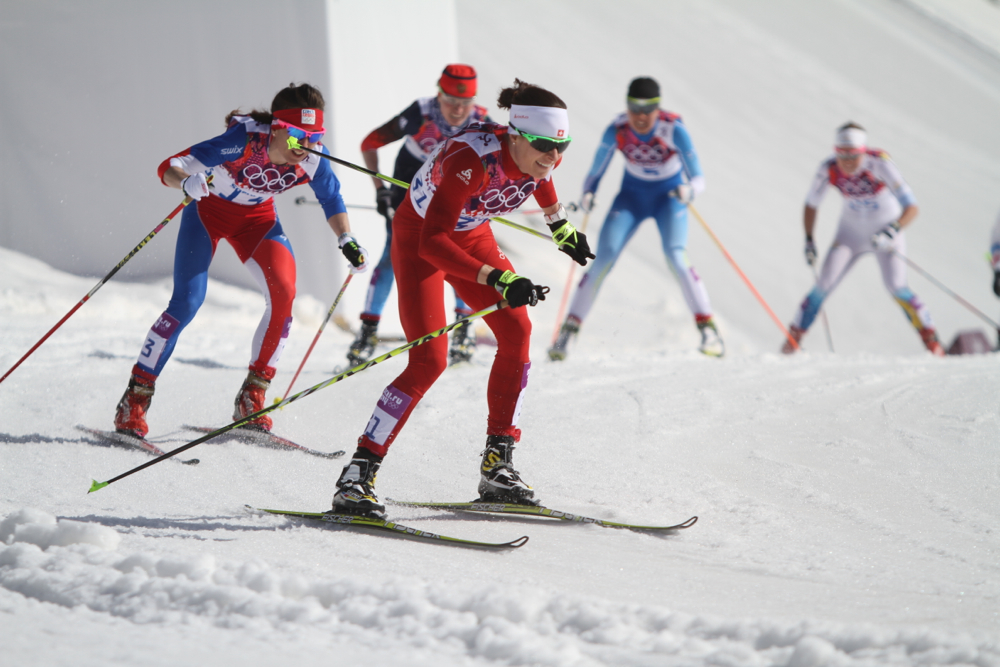
    Seraina Boner of Switzerand leading the chase pack into the stadium with 5 k left to go in today's Olympic 30 k competition.
    Seraina Boner of Switzerand leading the chase pack into the stadium with 5 k left to go in today’s Olympic 30 k competition.

    FasterSkier’s coverage is made possible through the generous support of Swix.

    KRASNAYA POLYANA, Russia – If you talked to Switzerland’s Seraina Boner a few months ago, she said that her main focus for this season of racing was the Vasaloppet, Sweden’s 90-kilometer sufferfest which is the last big-name marathon that Boner has yet to win.

    How things change. With just eight days to go until the Vasaloppet, she was 1,500 miles away in Russia, racing a 30 k in the Olympics.

    “This is maybe not the best preparation but we will see,” Boner said after placing ninth today, by far the best Olympic result of her career. “This is probably my last Olympics, though, and I can always do the Vasaloppet next year.”

    When your specialty is racing over such long distances – Boner is the best female marathon skier in the world – sometimes you get a little bit of perspective.

    An opportunity opened up for Boner when Switzerland was unable to fill its Olympic quota along the strict lines laid out by its Olympic Committee. Athletes need one top-15 or two top-25s on the World Cup to be allowed to represent Switzerland, and no female distance skiers had met that mark.

    Boner raced the 10 k freestyle in Davos in December, mostly because she lives there and wanted to compete in front of a home crowd. She finished an unimpressive 29th.

    In Szklarska Poreba, Poland, in January, Boner tried again and finished 11th in the 10 k classic in a weakened field that did not include the Norwegians, Finns or Swedes. It was enough to meet the requirement, but she was still almost two minutes behind the winner, Justyna Kowalczyk. There were doubts within Switzerland about how well their marathon star could do competing in normal-length races.

    Boner is not a member of the national team, instead racing on the Team Coop marathon team in Scandinavia. But Swiss coach Guri Hetland said that it was a “no brainer” to include Boner, who sometimes trains with her athletes, on their Olympic roster.

    “She is the best distance skier we have,” Hetland said. “We all know that the level in long-distance skiing is also really good and is improving.”

    And at the Olympics, things have been going better. Immediately after arriving, Boner got the call to replace Laurien Van Der Graaf in the team sprint. The format couldn’t be more different from the long distances Boner is used to covering, but she held her own. Not only did she and teammate Bettina Gruber – a bona fide sprinter – qualify for the final, but they finished seventh.

    “I was able to be skiing right in with them, with these girls who are the sprinters,” Boner said. “We still came in seventh place, which is really cool.”

    Switzerland had finished 17th and last in the team sprint four years ago in Vancouver, and had not entered a team in the event’s first appearance in Torino.

    But more than that, it was exciting because it gave Boner some confidence in her form heading into today’s 30 k, the race she had flown to Russia to compete in.

    “She showed in the team sprint that her shape is really good, and we all know that 30 k should be a better distance for her,” Hetland said.

    Still, Boner was not used to racing against the likes of Marit Bjørgen and Therese Johaug.

    “I wasn’t sure where I would be in this field,” Boner said. “I made a lot of different plans to maybe use. But it turned out that I was in that pack fighting for, I think, fourth place. So I found more motivation near the end because of this.”

    When Bjørgen, Johaug, and Kristin Størmer Steira broke away from the main field, Boner stuck tight in the chase pack and even led it for sections of the race. She ultimately couldn’t find the same finishing speed as some of her competitors, but still placed 9th, about halfway deep in the pack.

    It was the best result by a Swiss woman at the Olympics since 1998, when Brigitte Albrecht Loretan finished seventh in the 30 k skate in Nagano.

    Boner said that the course here, with its notoriously long and brutal climbs, might have contributed to her much-improved result.

    “I like long climbs, it is a little bit more like what the long distance races are like,” she said. “I like minutes, not 30 seconds here or there. So I guess this was good for me.”

    Hetland didn’t care too much about why it was a good race – she was just happy to see a Swiss suit up front, something that has been rare in women’s distance racing in the last few years.

    “I’m really impressed that she is making such a good race and result,” Hetland said. “It’s great for female skiing in Switzerland to see that it’s possible.”

    As for Boner? Now that the race is over, there’s other fish to fry, namely that pesky Vasaloppet.

    “I fly home and then straight to Sweden,” she laughed.

    Results

  • Marathon Queen Seraina Boner, with Scandinavian Support, Eyes Unconquered Vasaloppet

    Marathon Queen Seraina Boner, with Scandinavian Support, Eyes Unconquered Vasaloppet

    Swiss national team coach Guri Hetland checks Team Coop's Seraina Boner's time on a threshold interval on Wednesday.
    Swiss national team coach Guri Hetland checks Team Coop’s Seraina Boner’s time on a threshold interval on Wednesday.

    DAVOS, Switzerland – Seraina Boner hasn’t been part of the Swiss national team since the 2010 season, when the 2006 Olympian was left off the squad for the first time.

    But has that stopped her? Not at all. Boner decided three years ago to focus on long-distance racing, and has become the world champion in that discipline. A two-time Birkebeiner winner, last year she also won the prestigious Marcialonga marathon in Italy and the Engadin Marathon in her home region here in Switzerland.

    At 31 years old, she might not be part of the national team, but she’s still welcome.

    “My philosophy is that anyone who wants to train with us, can,” Swiss head coach Guri Hetland told FasterSkier. “It’s good to have her here to push the women.”

    On a recent Wednesday morning Boner was at a national team training session that actually didn’t include any other women, just Dario Cologna and Roman Furger. She was taking advantage of the fact that Hetland was driving the men down a long, narrow, winding hill – not ideal for skiing down – in between intervals, and hopped in for the workout.

    “It’s really good for me to join the training group in Davos when I’m back home, and I’m back home pretty often,” Boner said at the end of the session. “It’s more fun if there are more girls around. There are not so many up here, but we try to fix some workouts together, and that helps.”

    Boner, who is part of the Team Coop marathon squad, is focused exclusively on racing very long distances. But that doesn’t mean that she can’t train with the other Swiss women, who are primarily focused on sprinting (Laurien Van Der Graaf and Bettina Gruber are tops on the team). In fact, she doesn’t think that she trains many more hours than them, and still does plenty of fast workouts.

    “I think that the basic training is pretty much the same probably,” Boner said. “The ones that are more specializing for sprints will have some specific workouts, and I will have some specific workouts for long distance, but the average is pretty much the same…  sometimes it’s good to have company, especially in speed workouts. You can help each other a lot when you’re in a group.”

    Boner putting in the hours in Davos.
    Boner putting in the hours in Davos.

    Boner is also still no slouch at shorter distances. This past season, she won two titles at Swiss national championships. In the 5 k skate, she was fourth behind Americans Liz Stephen, Jessie Diggins, and Holly Brooks. The next day, with the Americans sitting out, she won outright in the 10 k classic pursuit.

    But while national teams around the world are gearing up for the Olympics, Boner is focused on the Vasaloppet, a race where she has “always struggled a bit.” She is doing more double-pole training, including a recent 48 k workout in southern Sweden, far from the mountains she is used to here.

    “I’ve been three weeks in Norway this summer, so there I focused a lot on double-poling,” Boner said. “And also when we’re at training camps with the team we have a lot of double-poling sessions. But you can also find some flat parts like here, you just have to look for it a bit more.”

    And so continues the renaissance of Boner’s career. 41st in her only individual start in the Olympics back in 2006, she has now won the Swix Ski Classics title as well as almost every major European marathon except the Vasaloppet, where she finished third the last time she tried.

    Boner has to look outside of Switzerland for support. Despite her dominance at long distances, she is not the star she would be in Norway or Sweden.

    “Cross country skiing is not so big in Switzerland,” she said. “Of course, since Dario is racing pretty okay it’s getting bigger and bigger.”

    She jabbed Cologna, who was sitting next to her in the team van.

    “But it’s not as big as in Scandinavia, at least not marathons and stuff,” she explained. “There is some support, but for doing the long distance I had to join a Scandinavian team and that helps me a lot of course.”

    With Scandinavian backing, she hopes to add the legendary Swedish 90 k race to her list of conquests this year.

    “That is kind of the biggest, so it’s a goal to have a good race there,” she said.

  • Norwegian Birkie: Rezac, Boner Take Final FIS Ski Classic Event

    Lillehammer, Norway: Stanislav Rezac (CZE) won the exhilarating sprint finish in the men’s elite wave of the Norwegian Birkebeiner Saturday. He polished off the 54 kilometers from Rena to Lillehammer in 2 hours, 39 minutes and 54 seconds. Jörgen Brink (SWE) was right on his tails, finishing in 2:39:55, with Jerry Ahrlin another second back for third place.

    “I had fantastic skis, super glide and perfect kick the whole way,” said Rezac, who skis for the Madshus Marathon Team.

    In the women’s elite wave, Seraina Boner (SUI) won by almost a minute. She clocked in at 3:11:17, with Jenny Hansson (SWE/NOR) posted 3:12:05 for second place. Sara Svendsen (NOR) was third in 3:12:09.

    “I really had to fight for it. This is probably the hardest course I’ve ever done. It’s up and down all the time and there is no place to recover,” Boner said to langrenn.com after the race.

    “I had really good skis, and I’m in great shape right now, so I really hammered the uphills. I think that was the difference between first and fourth place today,” Boner explained.

    Stephanie Howe (XC Oregon) was 17th in the FIS elite women’s wave, posting 3:38:29 for the 54-kilometer course. Brayton Osgood (XC Oregon) finished in 3:02:38 and earned him 24th place – the same as in the Engadin Ski Marathon last weekend. Teammates Taylor Leach was 33 in the 25-29 age category while Sarah Max was 11 in the 35-39 bracket.

    Postcard beautiful weather and solid tracks made for an enjoyable day across the mountains for all participants. The Norwegian Birkebeiner was filled to capacity, a maximum of 16,000 skiers, already in October, less than an hour after online registration opened. Complete and searchable results here. http://resultatservice.birkebeiner.no/sok_resultater2.php?arr=2&per=2011

  • Ski Classics: Boner’s Version

    Sandra Hansson’s behavior toward the end of the FIS Ski Classics marathon König Ludwiglauf Sunday stirred a lot of strong reactions. Hansson has publicly apologized for her behavior. Norwegian newspaper Dagbladet got offended skier Seraina Boner’s version of what happened.

    “I was totally shocked over her behavior. I’ve never experienced anything like this before. I just wanted to pass her. Because the course is pretty narrow toward the end, it’s important to be in a good position. But I didn’t stand a chance. She blocked me, punched me with her pole and screamed something I didn’t understand. It was madness,” Seraina Boner said to Norwegian newspaper Dagbladet.

    The Swiss Ski Association sent a formal complaint to the FIS after the fact, but pointed out that in the finish area Boner didn’t show obvious signs of anger. “Yes, I was mad. I just didn’t want to see her face. She was celebrating her victory. I couldn’t understand how she could be so happy,” Boner said.

    – People say you were bleeding when you came across the finish?

    “Yes, I my arm was bleeding where her pole hit me,” Boner said.

    Boner has been informed that Hansson’s winning points were reduced by 30 points, which leaved Boner ahead for the overall Ski Classics lead. Boner also pointed out that the Swiss Ski Association has protested Hansson’s behavior to the FIS as well.

    “We have sent a formal protest to the FIS, which is not decided yet. I don’t know what they will do about it, it’s not up to me. I don’t know what the norm is in ‘regular’ cross-country competitions. Maybe they do these things all the time? I was definitely mad when it happened to me. The fastest skier should win, but I never got the chance,” Boner said to Dagbladet.

    All said, Boner still thinks Hansson would have had a good chance at the victory even without violating the fair play rules.

    “I’m sure she has a strong finish regardless, she could have won the fair way,” Boner said.

    – Have you raced head to head with her before?

    “No, this was actually my first time. In the two other races we’ve done together, we’ve each won our race, but those victories have been of the undisputed kinds (ed: Boner won the Marcialonga),” she said.

    From langrenn.com and Daglbadet.no February 9, 2011. Translation by Inge Scheve

  • FIS Classics: Ulvang shocked over König Ludwiglauf Fair Play Violation

    “Ski Classics can’t just go in there and appoint their own jury. Only the FIS jury can judge in cross-country skiing,” Vegard Ulvang said to Langrenn.com.

    Ulvang is reacting to the Sandra Hansson’s case of unfair play in the 2011 König Ludwiglauf in Germany last weekend, which resulted in Hansson having her points for winning the FIS Ski Classic race reduced as a penalty for her actions.

    “I am shocked that Nils Marius Otterstad (ed. Hansson’s team manager) and Ski Classics steps up and plays jury here. They do not have the right to do that. Only an FIS-appointed jury that can make these decisions. That is the first principle, and this is shocking,” Ulvang said to Langrenn.com.

    “This is a clear example that private players in this field are a concern,” Ulvang added.

    – But why didn’t FIS act on this after the incident?

    “I don’t want to comment on this case. The FIS had a jury on site, and as far as I know, this jury did not act on the situation. Nobody else can put together a jury of their own and make these decisions,” Ulvang said. “If anyone is discontent, they have the right to appeal,” he emphasized.

    – Nils Marius Otterstad criticized the FIS for not taking action, and argue that the FIS doesn’t care about the ski marathons. What is your comment on that?

    “If he criticizes the FIS, he is basically criticizing himself. The FIS has a separate citizen race and marathon committee, consisiting of representatives from all the major ski marathons. This committee appoints the jury,” Ulvang explained.

    David Nilsson: – We had to take action

    David Nilsson, the Ski Classics director, said to Langrenn.com that in their opinion, the Hansson incident was grave enough that they felt required to step in.

    “If we hadn’t reacted in this case, that would have been damaging to both the reputation of the Ski Classics, and ski marathons in general. We have a point system, and there is a lot of prize money at stake,” Nilsson said.

    While Langrenn.com was interviewing Nilsson, they were informed that the Swiss Ski Association (representing the offended skier Seraina Boner) had submitted a formal protest to the FIS about the incident between Hansson and Boner.

    “To us, it would be peculiar if the FIS doesn’t react to this incident,” Nilsson concluded.

    “They totally didn’t care about König Ludwiglauf”

    Jørgen Aukland (NOR/Team XtraPersonell) said the FIS has ignored marathon racing for too many years.

    Aukland has raced the FIS marathon circuit for a decade and argues that FIS never cares.

    “FIS has neglected and ignored marathon racing for far too long,” Aukland said to Langrenn.com.

    After Sandra Hansson (Team United Bakeries) was stripped of a portion of her points due to the incident in the König Ludwiglauf in Germany last Sunday, several people have reacted both to Hansson’s unfair behavior in the race and to the Ski Classic organizers taking matters in their own hands.

    “But what should the Ski Classic organizers have done? FIS didn’t care about the König Ludwiglauf. Nowbody knew where the technical delegate was, he didn’t have a cell phone on him, there was no coaches’ meeting and there was no m formal seeding. This was all just a mess. How should the racers deal with that? Nobody did anything,” Aukland said to Langrenn.com.

    Aukland is mad

    “I understand that this creates a conflict of interest, but Otterstad and Ski Classics have already publicly apologized for that. But that’s not what this is about. I’ve never seen Vegard Ulvang at a FIS marathon before. He speaks before he even knows the details. Nothing has happened on the marathon circuit for the last decade. Ski Classics really does a great job exposing this aspect of ski racing and contributes to unite the cross-country communities. It’s awesome that someone finally took action in the incident on Sunday,” Aukland said to Langrenn.com.

    “All the racers I’ve talked with supports the Ski Classic’s decision in this case,” he added.

    The youngest Aukland brother in the strong ski family tried repeatedly to contact Ulvang on Tuesday but was unable to get a hold of him.

    “I just wanted to give him my opinion. This is a hopeless situation,” Fredrik Aukland said.

    “The FIS is sleeping in class, and during the König Ludwiglauf they definitely didn’t do their job. Then someone else has to do it, and it’s good that they did,” he concluded.

    From Langrenn.com, February 8 and 9, 2011 By Ola Jordheim Halvorsen, translation by Inge Scheve