Tag: seward

  • Yeaton, Norris Take Dramatic Mt. Marathon Wins

    Yeaton, Norris Take Dramatic Mt. Marathon Wins

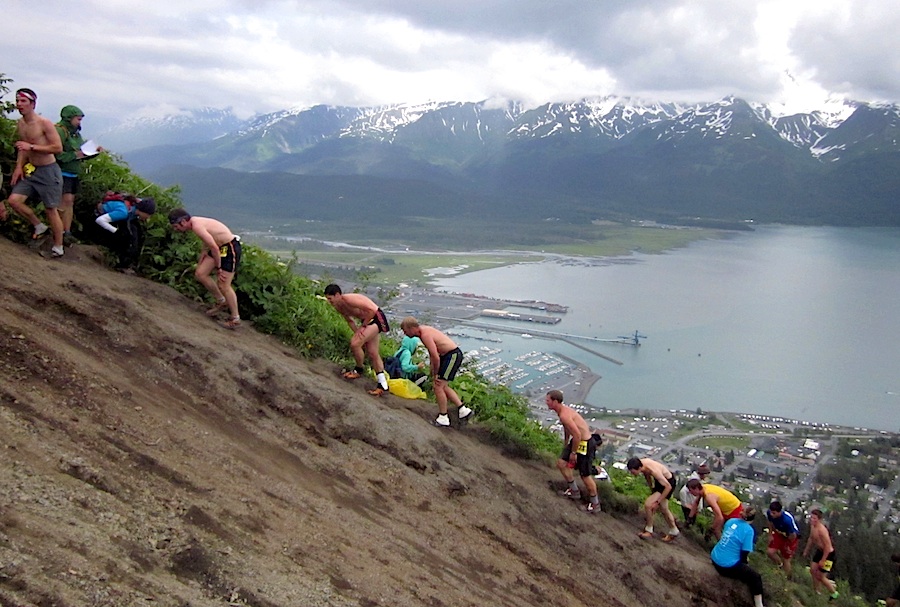
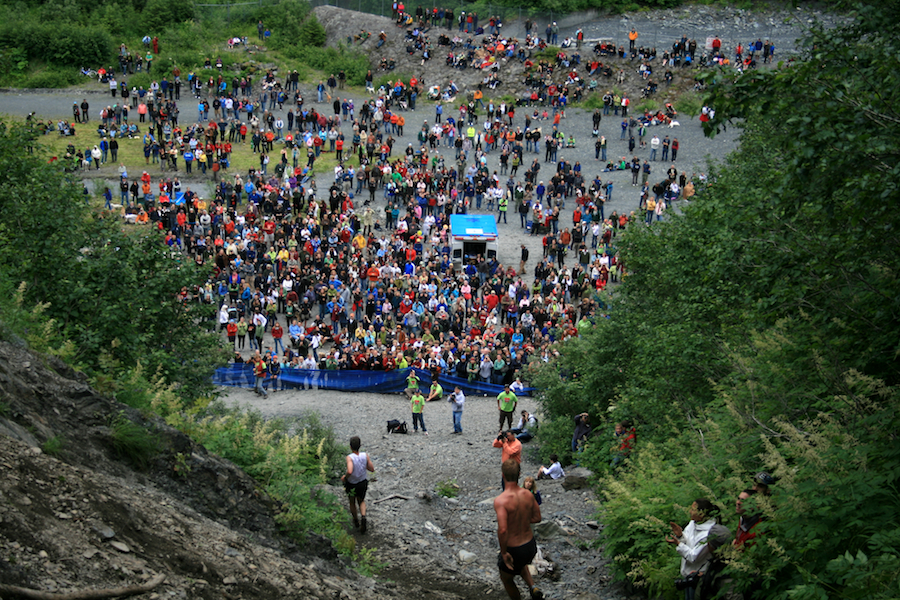
    The 91st annual Mount Marathon Race, one of the oldest footraces in the country, once more descended on the small town of Seward, Alaska, on July 4. Crowds estimated at up to 30,000 perennially throng to the waterfront community, population less than 3,000, to watch racers push themselves up a steep mountain and hurl themselves back down. At the end of the day, a pair of Alaska Pacific University (APU) skiers, Jessica Yeaton and David Norris, had picked up victories in the quintessentially Alaskan race.

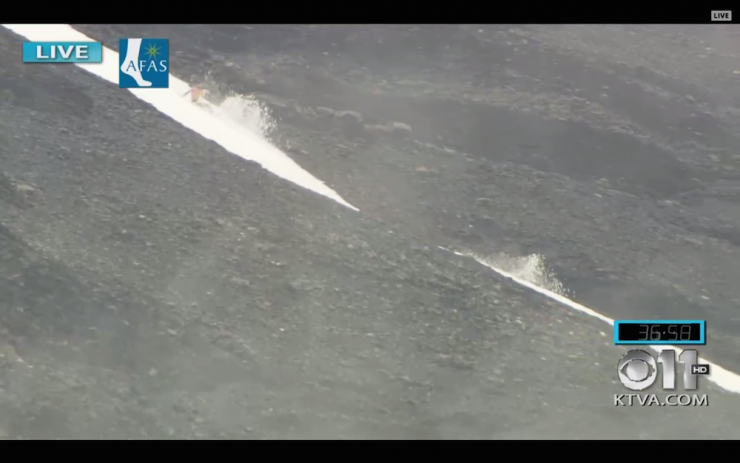
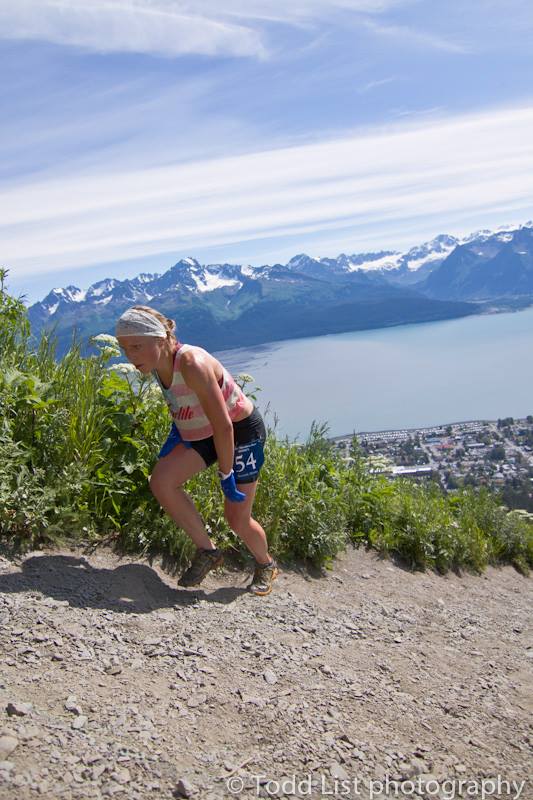
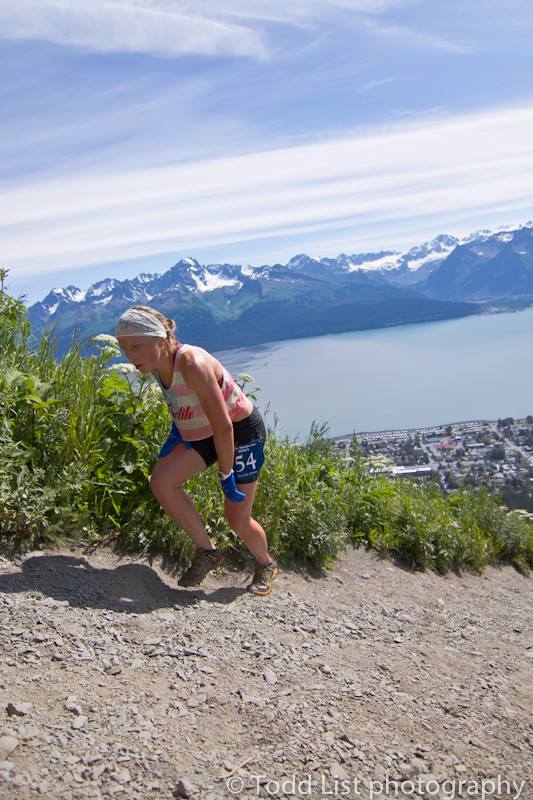
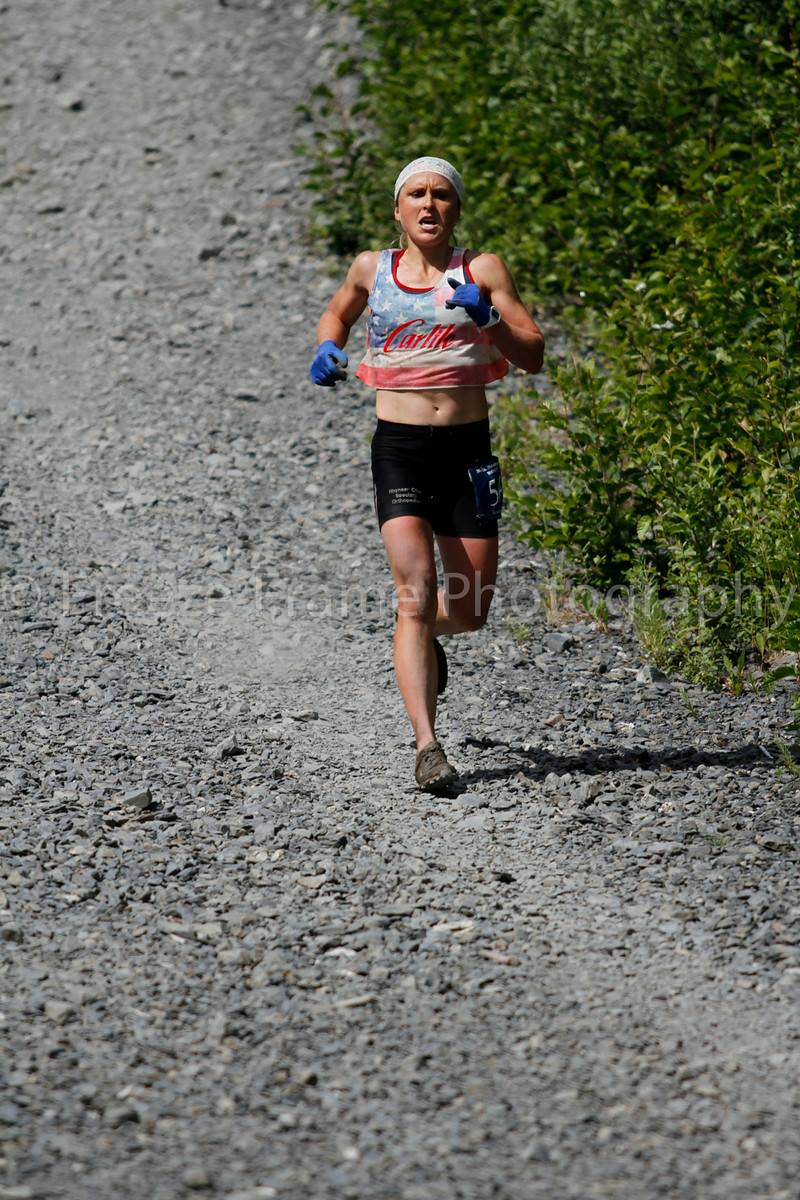
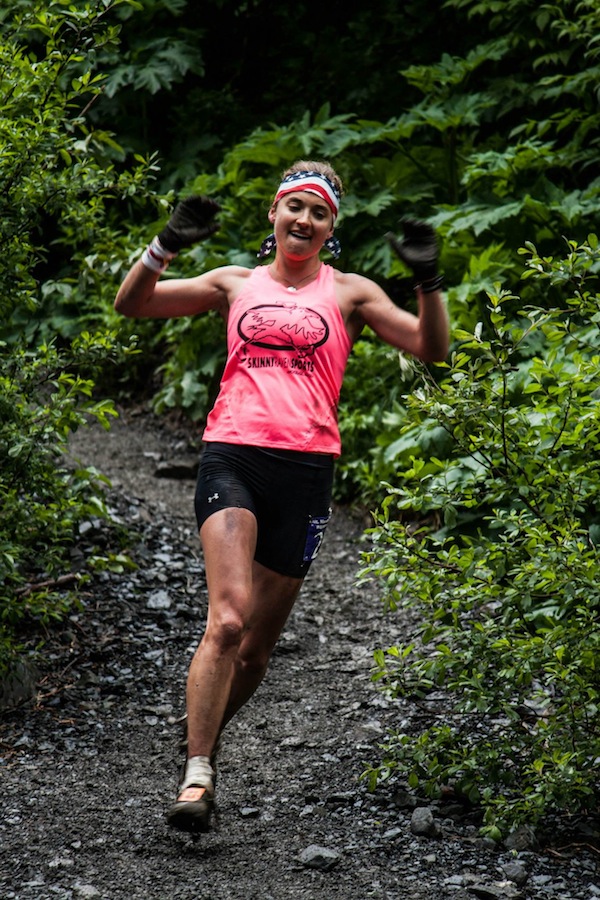
    Women’s Race: Jessica Yeaton Wins After Frankowski Backs Off on Downhill
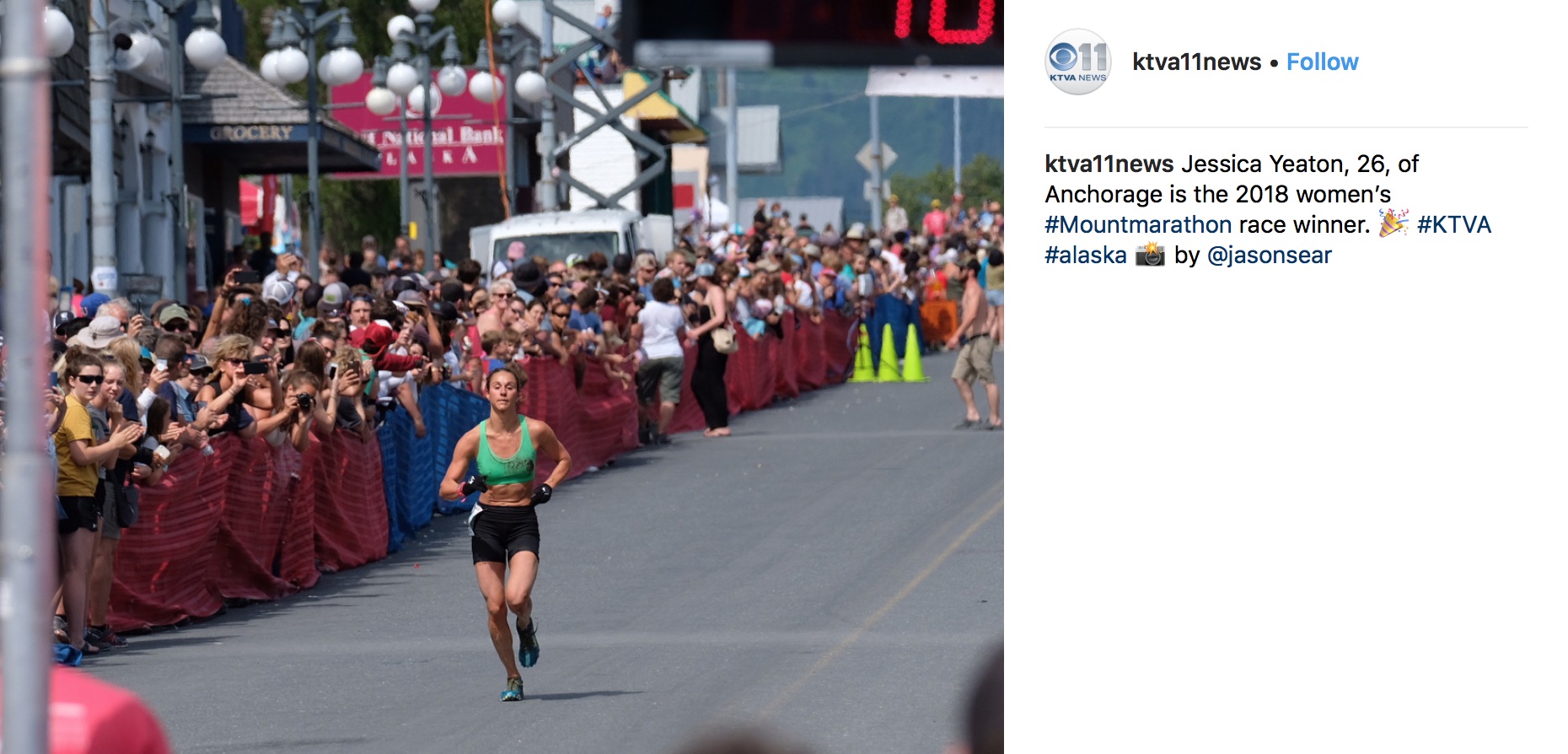
    (Photo: KTVA 11 News/Instagram)

    The couple that trains together, wins together. Yeaton and Norris have dated for some time. They traveled down to the race together, they went out fishing the day before together, and they previewed the course together. And they’ll be going back to Anchorage with a pair of trophies together.

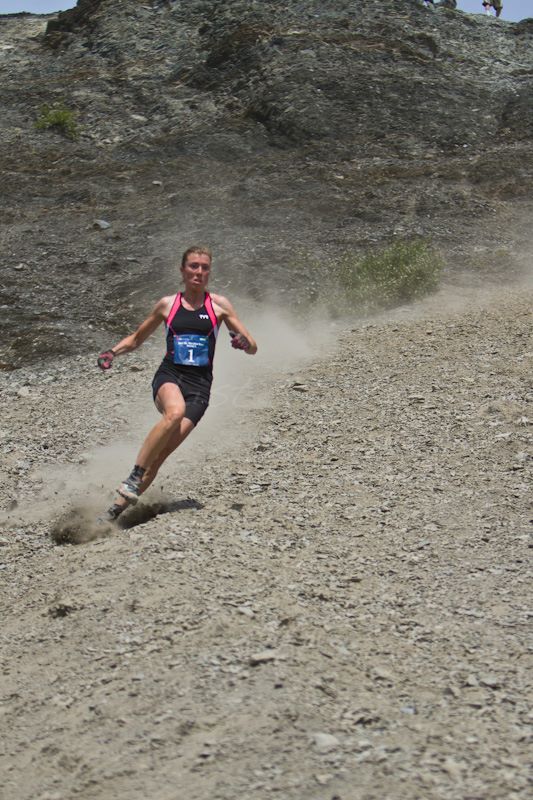
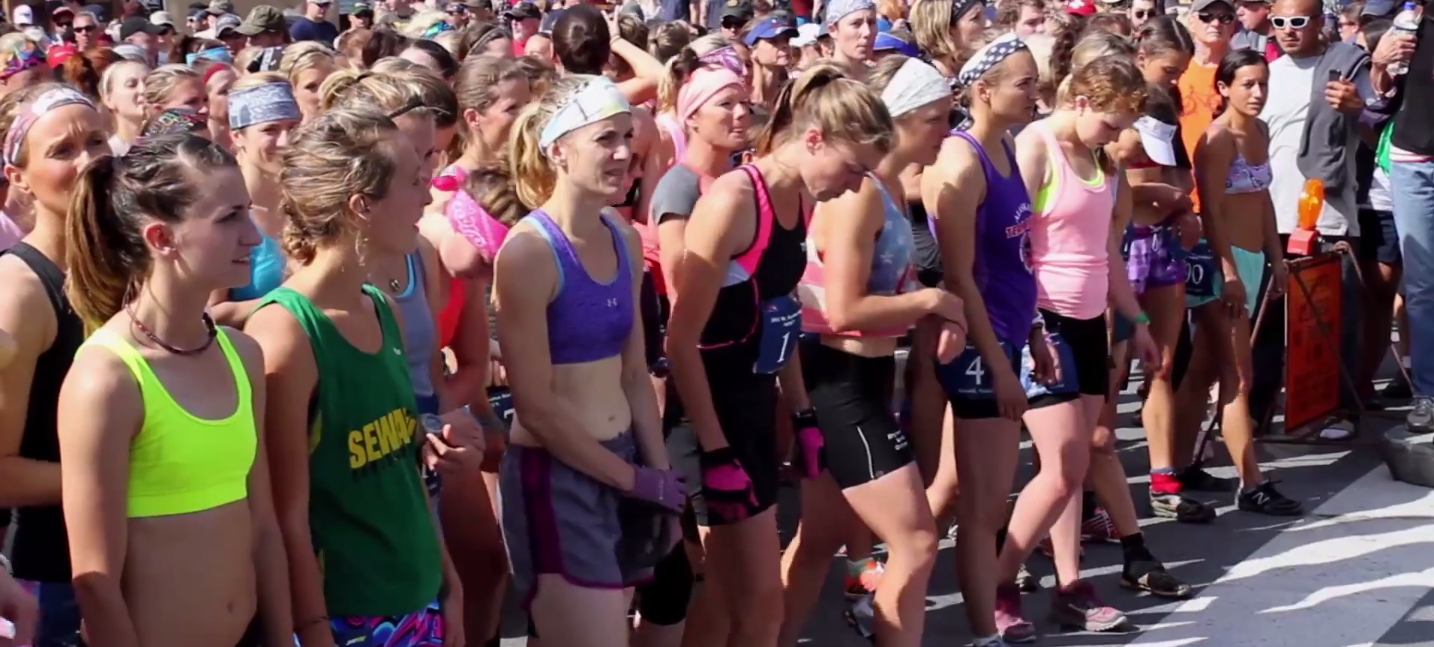
    After Norris took a dramatic victory in the men’s race Wednesday morning (see below for men’s race recap), Yeaton matched him in the women’s race in the afternoon. Racing in the marquee afternoon time slot, Yeaton led a field of roughly 270 women off the starting line at 2 p.m. The women’s reward for racing in the afternoon this year (the men’s and women’s race alternate the prime-time afternoon slot) was temperatures even warmer than this morning, although thankfully a light breeze had picked up.

    After roughly four minutes of gradual uphill through the streets of Seward, Yeaton, 26, was among the five-person lead pack to the base of the climb. By shortly into the climb, APU teammate Rosie Frankowski, also 26, was first, with Yeaton close behind. At the mid-point uphill time check, it was Frankowski, then Yeaton (+16 seconds), with Najeeby Quinn third over a minute back.

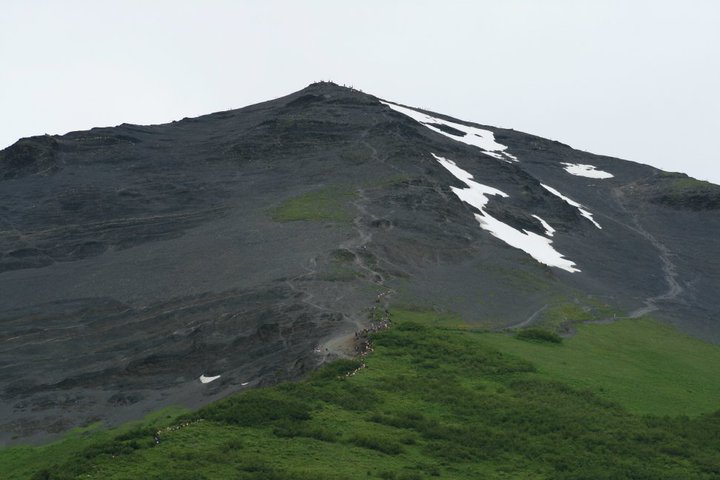
    Frankowski and Yeaton continued to stretch their lead as the race climbed out of a humidity choked tunnel of vegetation and onto the stark shale rocks of the mountain’s upper half.

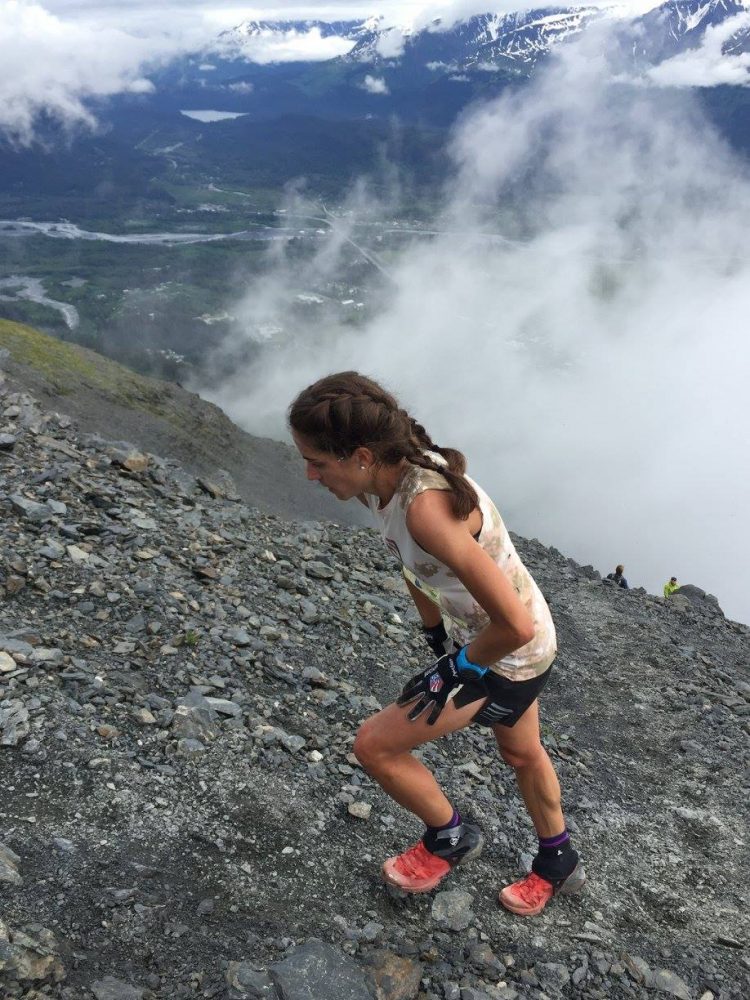
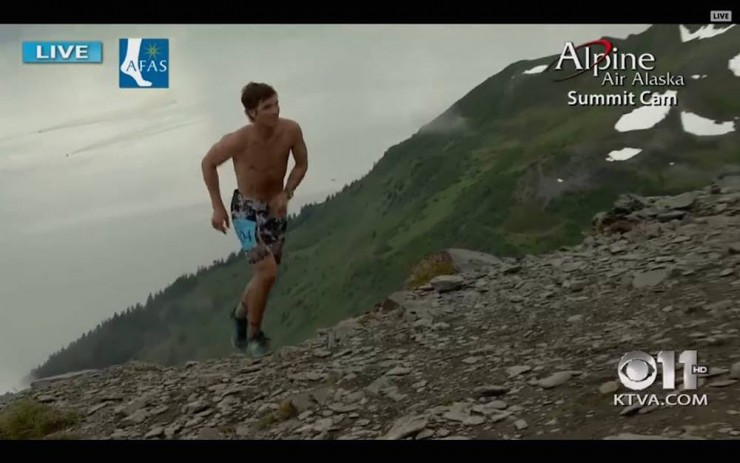
    The two APU skiers and race rookies (Frankowski earned her entry spot by winning the Government Peak hill climb in early June, Yeaton by winning the Bird Ridge hill climb in mid-June) were both climbing fast and moving well, although they were a study in contrasts on the live television broadcast. The compact Frankowski climbed the hill the way Marit Bjørgen had skied the Olympic 30 k, attacking the hill with each step as she leaned into the steep climb. “You can almost hear her feet hitting the ground with each stride,” veteran Mount Marathon racer-turned-color commentator Clint McCool marveled on the broadcast, praising the redoubtable power of Frankowski’s lower body.
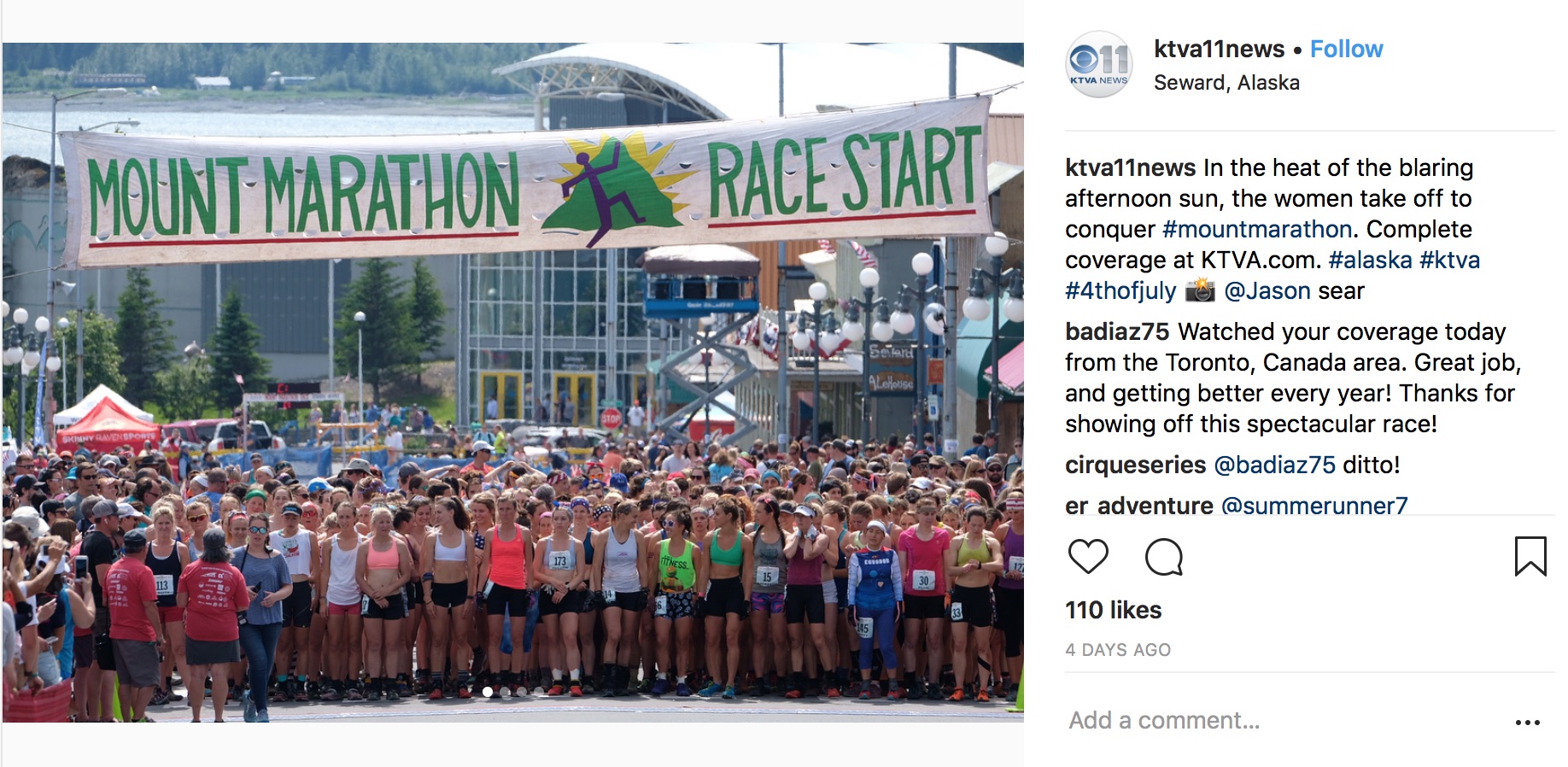
    (Photo: KTVA 11 News/Instagram)

    Behind her, the more lithe Yeaton seemed to float upward with an ease that belied the effort of climbing the 47-degree slope. While Frankowski’s high turnover remained the same throughout the climb, Yeaton even broke into a few brief running strides on the “flats.”

    Frankowski crossed the timing mat at the turnaround in a (staggeringly fast) unofficial time of 37:06. Yeaton was 29 seconds back in 37:35. The time back to Quinn in third (39:13), let alone Christy Marvin in fourth (39:56) or Denali Foldager-Strabel (40:33) in fifth, seemed significant if not insurmountable.

    But that’s why you run the race. Frankowski then took a meandering and suboptimal line onto the snowfield that begins the precipitous descent. In fact, she bypassed the snowfield entirely, running around its rocky edge for several hundred vertical feet.

    “I train with Rosie every day and she was not stoked about the downhill,” Yeaton said in a post-race interview with the Anchorage Daily News (ADN). “So she was like, ‘I’m gonna take this [other] route.”

    Frankowski told the ADN she wanted to didn’t want to risk getting injured on the downhill.

    “This is fun, but my primary sport — I’m not going to ruin it,” Frankowski said.

    By the time Frankowski reached the bottom of the snowfield, Yeaton had come flying past her, opening up a lead she would not relinquish. Quinn had passed her as well.

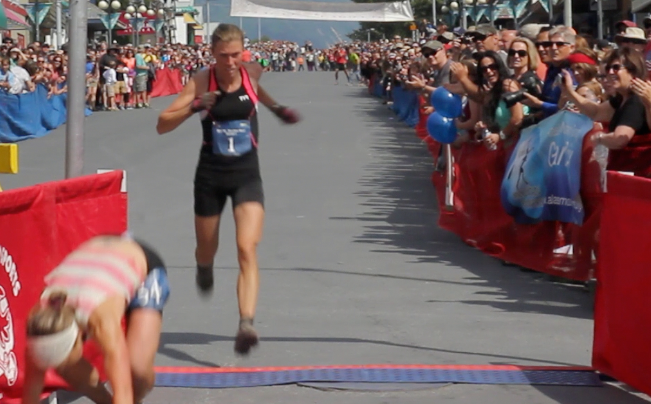
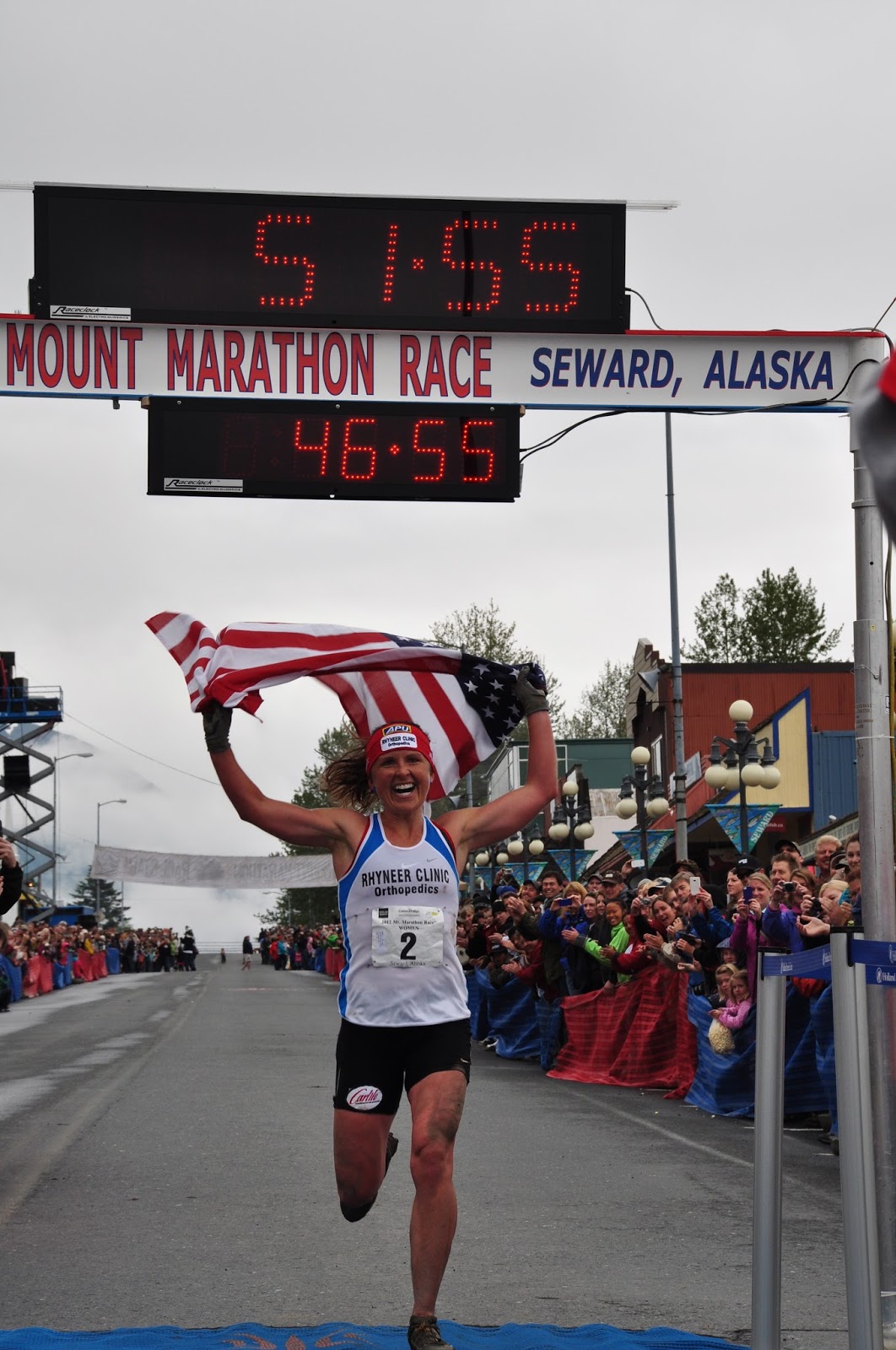
    Yeaton ran smoothly all the way to the bottom, going from the turnaround point to the finish line in under 14 minutes. (Her pre-race preview with Norris may have been helpful: “You just do a front flip here,” Norris calmly advises the camera in one of Yeaton’s recent Instagram videos as he demonstrates a flip down a small cliff approaching the bottom of the climb. “It’s easier in the race with the adrenaline.”) Despite the effort, Yeaton looked calm and in control running down Main Street, ultimately taking the victory in an unofficial time of 51:30.

    Yeaton’s overall time ranks ninth all-time in a race first contested by women in 1963.

    Frankowski’s unofficial uphill split of 37:06 ranks third all-time among uphill marks, behind only pro runner Emelie Forsberg and two-time NCAA steeplechase champion Allie Ostrander, who has a track 5 k PR of 15:22 and finished eighth in the 2016 U.S. Olympic Trials in this event. Yeaton’s 37:35 uphill would be sixth among Mount Marathon climbs.
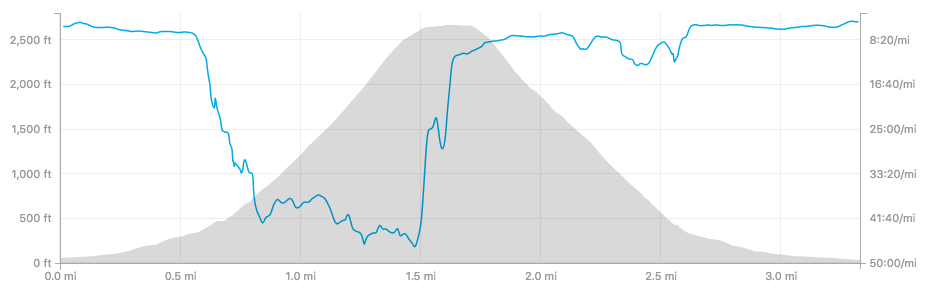
    About that uphill: Elevation profile of Mount Marathon course, from an athlete (Jeff Levin) who finished 58th out of 306 men in 2017. Note the 35- to 45-minute pace per mile for much of the climb. (Photo: Strava screenshot)

    Behind Yeaton, there was ample movement in the standings. Frankowski would ultimately post the day’s 91st-ranked downhill, alongside the fastest uphill, to finish seventh overall. Foldager-Strabel, fifth at the turnaround, would drop an all-time record 11:27 downhill (prior record: 11:31, Forsberg, in 2015) en route to finishing second overall in 52:00, barely ahead of a charging Marvin who took third in 52:04. Fourth overall was Quinn, who had been as high as second during parts of the downhill but was either injured or cramped up severely during the latter half of the descent. And fifth overall was Boulder resident Hannah LaFleur, who had been in sixth at the halfway point.

    buy allopurinol no prescription, buy arcoxia online, buy ibuprofen, buy motrin online

    Also of note, former FasterSkier contributor Aubrey Smith was 11th. And former champion Holly Brooks, less than one year removed from giving birth to twins, was 19th, while wearing a microphone and providing live commentary to the broadcast team along the way. (“Can I sneak by on the left? Thanks,” she was at one point heard to exclaim on air.)

    An ebullient Yeaton spoke with KTVA Channel 11 at the finish. “I was just, like, trying to hold them off the whole way” down, she said of her race strategy for the descent in reference to her pursuers.

    “The heat was horrible,” Yeaton said of the day’s conditions. “But there were so many people out there with water, I probably got 30 different things of ice and water on my head. It made it so much better. I couldn’t do it without all the people on the mountain.”

    Men’s Race: David Norris Holds Off Max King

    Norris did it again.

    The 27-year-old APU skier came into Wednesday’s race, the 91st running of an event first held in 1915 that is among the oldest footraces in this country, as the course record holder at Mount Marathon. He had set a course record at the uphill-only Bird Ridge hill climb last month. Meanwhile, defending champion and APU teammate Scott Patterson was out of this race with a toe injury. Previous Mount Marathon course record-holder Eric Strabel was out with a stress fracture. As the ADN wrote in its preview of the men’s race, Norris had “a target on his back.”

    https://www.instagram.com/p/Bk0qm_PBiLa/

    Despite the pressure that comes with being the widely acclaimed favorite in a race variously described as “Alaska’s Olympics” or “Alaska’s Super Bowl,” Norris delivered.

    He set a torrid pace off the starting line following the 11 a.m. start, charging toward the base of the peak that rises immediately above the seaside town of Seward, Alaska. Close behind was Max King, 38, a professional runner from Bend, Oregon.

    https://www.instagram.com/p/Bk0wF3OlmHS/

    King has been described as “the most versatile runner in the country,” with a race résumé that ranges from two top-20s at the U.S. Olympic Marathon Trials (where he ran a 2:14 and a 2:17) to sixth in the steeplechase at the U.S. trials to strong finishes while racing around the world as a sponsored athlete, in distances ranging from a vertical kilometer to 100-mile ultramarathons.

    Norris hit the base of the climb first, with King not far behind. Norris went through the mid-mountain uphill split in 21:01, with King 34 seconds back. Adam Jensen, 37, an Anchorage dentist, was at that point third in 22:08. Fifth (22:32) was 18-year-old Luke Jager, another APU skier, making his debut in the senior race this year after winning the junior race three times in a row from 2015–2017.

    Norris reached the turnaround point in 31:37, according to this reporter’s unofficial split, with King roughly 30 seconds behind him.

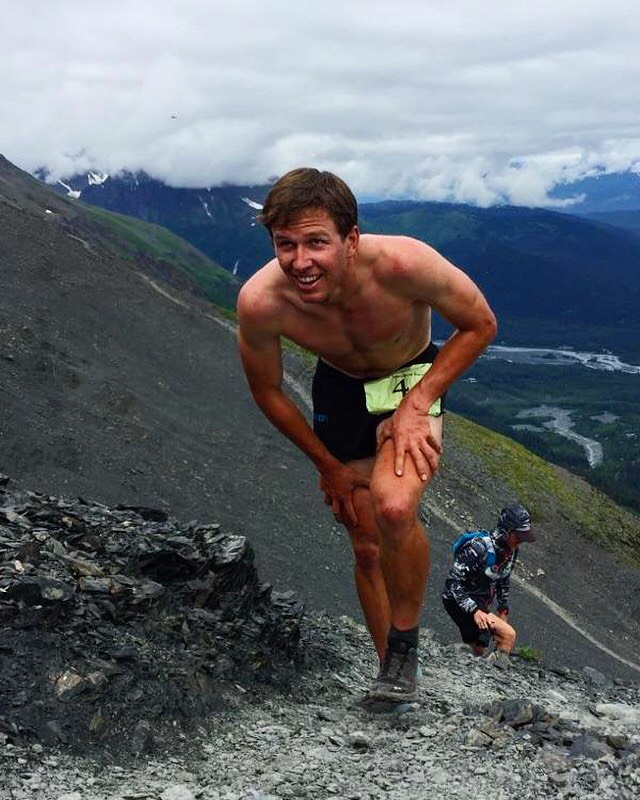
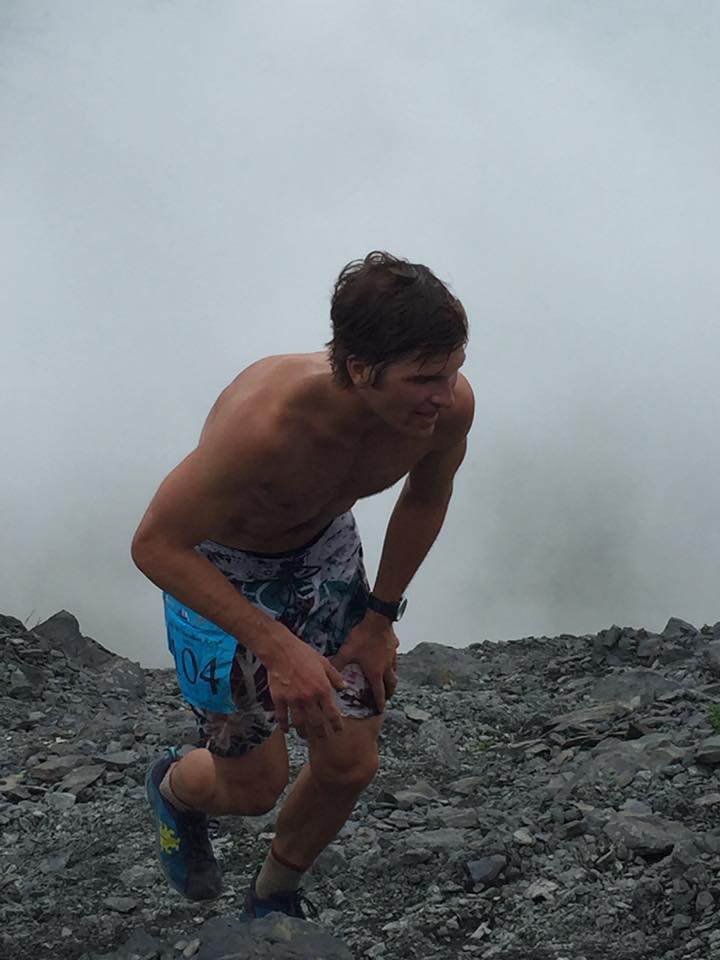
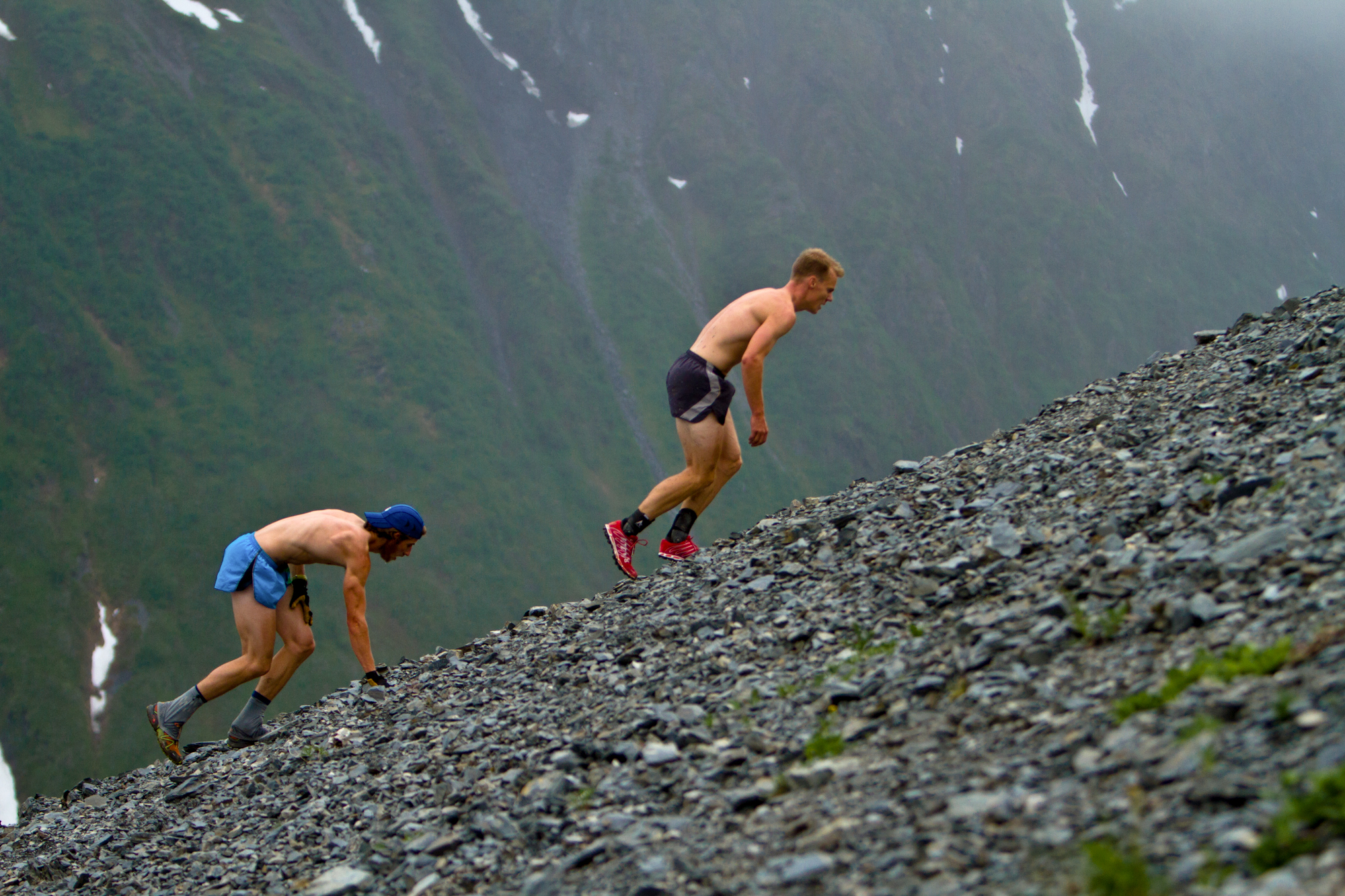
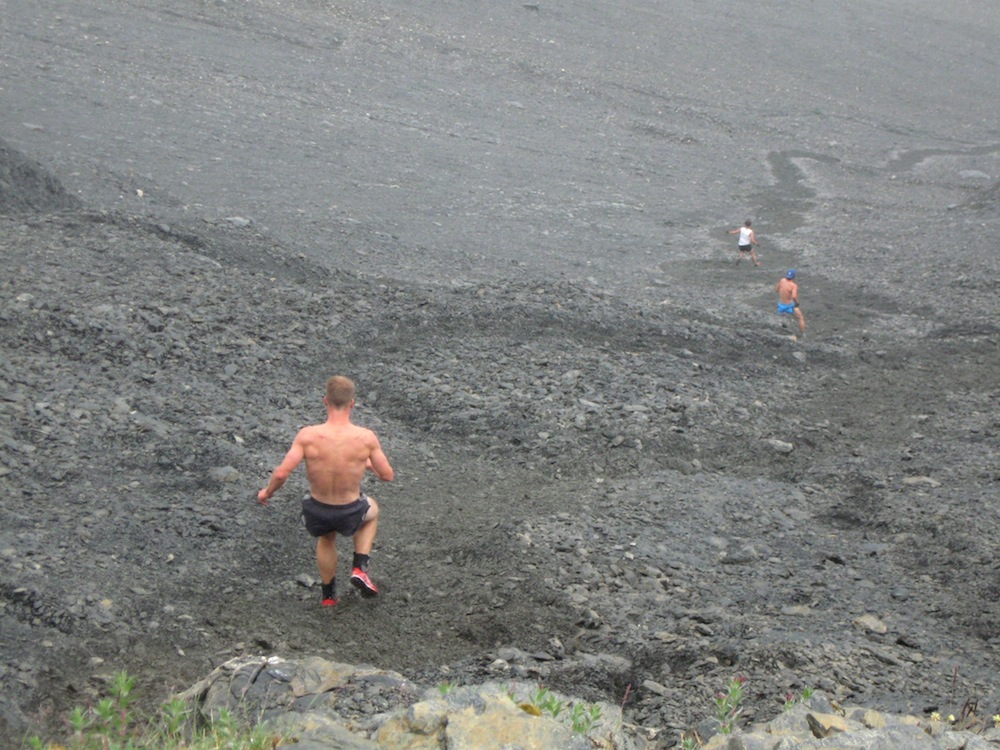
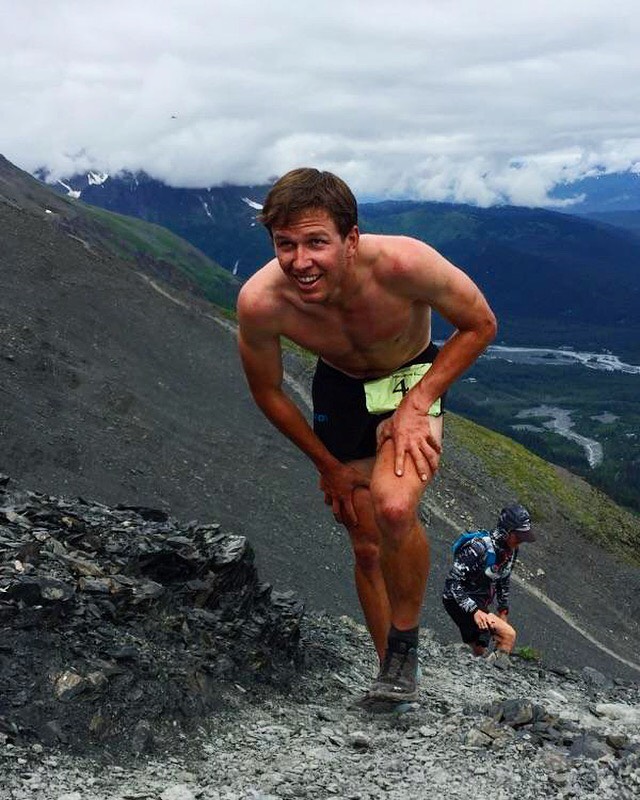
    Norris was still in the lead, but he looked rough. He climbed up the steep shale face of the upper mountain with a ragged tempo. He was hunched over, with his hands on his quads, unable to run or even power hike with with the upright posture that he prefers. (“Hiking is fine and maybe even better on certain pitches, but forcing yourself back into a running stride as soon as the terrain allows is crucial,” Norris previously told FasterSkier about his approach to climbing.) He stumbled repeatedly, and took the turns wide. He accepted water from everyone who offered it. He was covering the climb roughly 1 minute slower than he had when he set the course record in 2016, and he looked far worse doing it.

    tizanidine buy online

    Behind him, King looked fresh and smooth. He was running where Norris was walking. He was upright where Norris was hunched over. He was moving hands-free where Norris was dabbing the rock. He was eschewing water where Norris had guzzled it. On the live broadcast, color commentator Clint McCool surmised that King had pushed Norris fast off the line in an attempt to blunt some of Norris’s climbing prowess, and that it had largely succeeded.

    But then the two men started going downhill. Norris took a better line onto and off of the steeply pitched snowfield that begins the precipitous descent. He looked rough running down the mountain below that, but so did King. By the time Norris hit the sweeping expanses of shale down the mountain’s flank, he was flying. He cleared multiple technical stretches (“the three problems,” three small waterfalls) with ease.

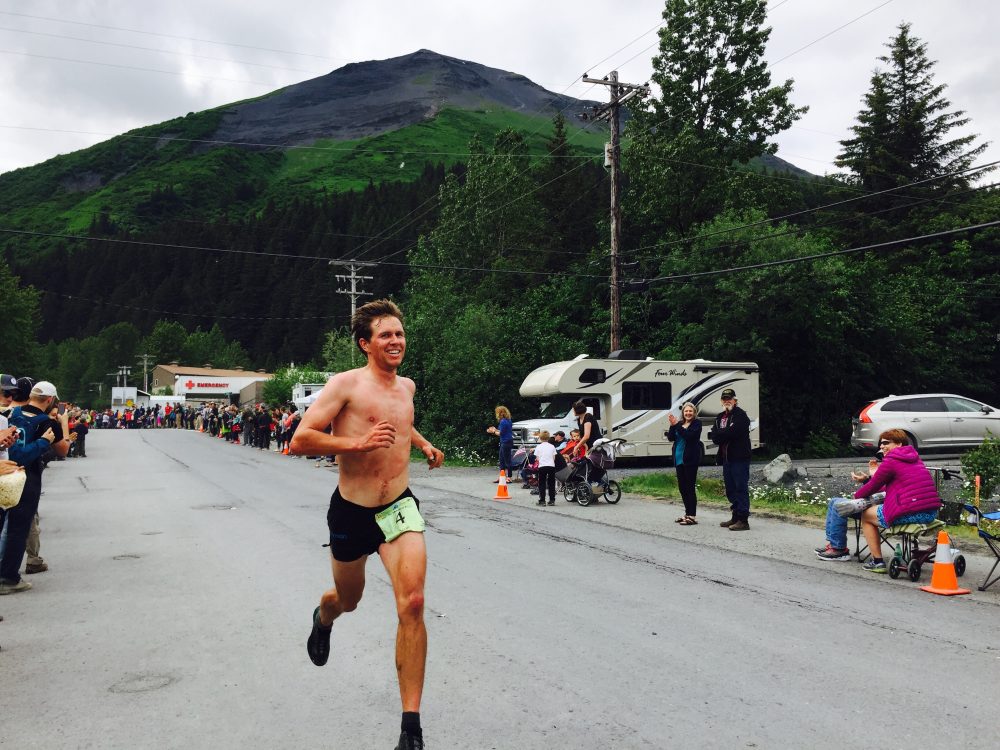
    When Norris came off the mountain and within sight of tens of thousands of fans in town, his lead was still around 30 seconds, according to unofficial splits taken off the broadcast. He gave back some of that on the remaining 0.6 miles of pavement running down to the finish line, as he slowed slightly to high-five the assembled hordes and King put his 2:14 marathon speed to work. Indeed, King’s downhill split was 12 seconds faster than Norris’s.

    https://www.instagram.com/p/Bk0oo0th0H7/

    But Norris had a gap, and he kept it to the finish to close out a gutsy race. When he crossed the finish line – which is itself outside of a bar, commemorating the race’s bar-bet origins – he was the most famous athlete in Alaska for the second time in three years.

    Third in this year’s race was Adam Jensen, over three minutes out of second. Matt Shryock was fourth. Benjamin Marvin edged Jager by three seconds for fifth.

    Norris “pushed the early part of the race, like way harder than last year,” he told local television station KTVA Channel 11 in a live interview after the race, “trying to put pressure on Max.”

    “Coming down,” Norris continued, “my legs were way more tired than two years ago,” largely proving McCool’s surmise correct.

    Looking to the future, Norris promised to keep coming back. “I would love to mainly keep getting my own uphill record,” Norris said of his future race strategy, “and then just survive the downhill.”

    Norris’s uphill record of 30:35 remains safe for another year. (Behind him on that list: pro runner Rickey Gates (31:26), pro runner Kílian Jornet (31:27), Anchorage attorney and father Jim Shine (31:29), and APU teammate and Olympian Scott Patterson (31:40).)

    Norris’s overall time of an unofficial 42:13 for 2018 places him third on the all-time list, behind only his course-record 41:26 from 2016 and Jornet’s 41:48 from 2017.

    King, who finished in an unofficial 42:33, now ranks fourth on that all-time list. Competing in his first Mount Marathon, he had nothing but praise for the Alaska tradition and spectacle.

    “It is unbelievable up there,” King told KTVA at the finish. “I got here, I’ve been intimidated and scared the entire week of this mountain. … This race, it was awesome to be able to experience that.”

    He will “absolutely” be back, King said. “This is awesome; I love it here. The mountains are fantastic, there’s tons of things to run.”

    For his victory, Norris collected a small trophy and large bragging rights. Other than free lifetime entry into future races, there is no cash prize associated with Mount Marathon. The race has one of the deepest fields in the country on the merits (consider that Gates was only 12th in this year’s race, and Jornet and pro runner Emelie Forsberg are believed to be the only non-Alaskans to ever win the race), certainly one of the deepest anywhere for a bragging rights-only event.

    Juniors Race: Michael Connelly, Kendall Kramer Prevail

    (Photo: KTVA 11 News/Instagram)

    In the day’s first race, junior boys and girls raced together, starting at 9 a.m. under humanely still relatively cool conditions. First place went to Michael Connelly, 16, a rising star from Chugiak who had finished in the top-10 overall of every mountain race he had done this year. Connelly was sixth last year in the junior race. This was his first boys title; APU skier Luke Jager, now 18 and aged out of the junior race, had won the race the last three years.

    Second place was Ali Papillon, 13, who had spent much of the first part of the summer in Colorado. Papillon was described by the ADN as 4-foot-5 and 70 pounds following his third-place finish in 2017, and appeared only slightly taller this year. Third place was claimed by Gavin Block, 16, of Palmer, who was second among junior boys last year. Block runs and skis for Colony High School.
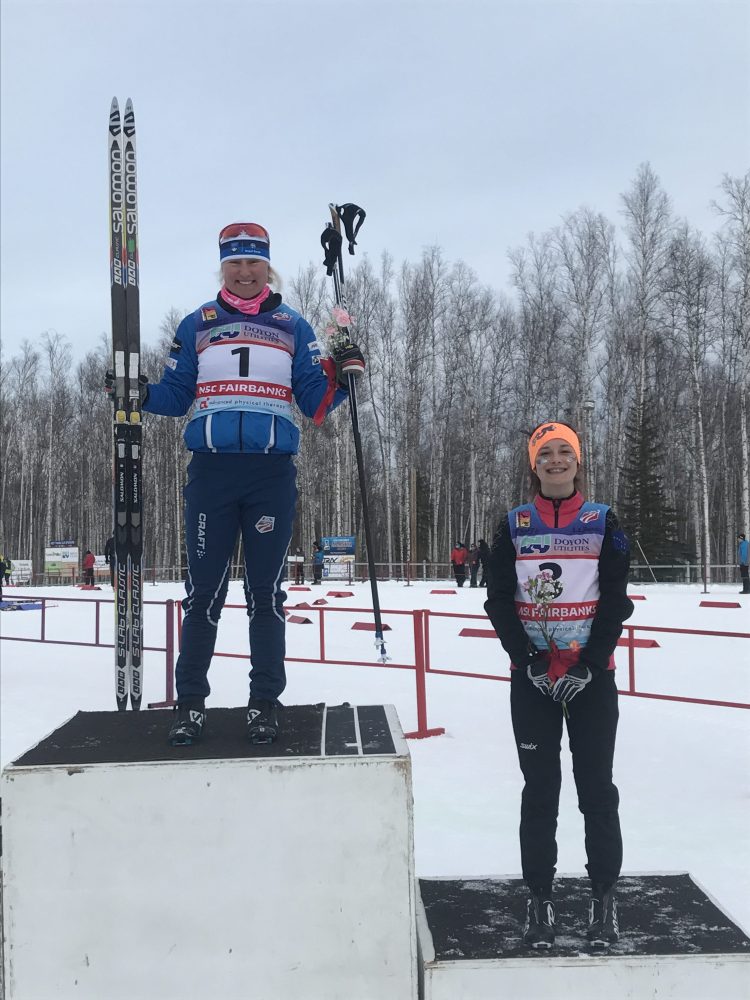
    The junior women’s 7.5 k classic podium on Monday at SuperTour Finals in Fairbanks, Alaska, in March 2017, with Hannah Halvorsen (Sugar Bowl Academy/USST D-team) in first and Kendall Kramer (Nordic Ski Club of Fairbanks/FXC) in third. (Photo: Reader submission)

    A few minutes behind Block in the co-ed mass start race, Fairbanks skier and runner Kendall Kramer, 16, was the first girl across the finish line. Kramer was third in the 5-kilometer classic mass start race at 2018 U.S. nationals in Anchorage. It was Kramer’s first Mount Marathon title.

    Aubrey LeClair, 17, of Anchorage and Katey Houser, 14, of Palmer, also both skiers, rounded out the junior girls podium in second and third. LeClair skis and runs for West High School, and trains with the APU junior team. She was the women’s winner in the season-opening Race to the Outhouse ski race in early November 2017. Houser earned multiple medals in cross-country ski events at the 2018 Arctic Winter Games in Northwest Territories.

    The Race and Its History

    Here’s some background on the race’s origin story, according to the official website:

    “According to folklore, the tradition of the Mount Marathon Race began when two sourdoughs argued about the possibility of climbing and descending the mountain in less than an hour. ‘Impossible’ one said. To settle the argument, and the resulting wager, a race was held, with the loser to furnish drinks for the crowd. At the same time, enterprising merchants put up a suit of clothes and other attractions for the winner and proposed the race take place on a holiday – why not the 4th of July? The optimistic sourdough lost his bet. The winning racer took one hour and two minutes.”

    The race was first formally contested in 1915, with a winning time of 1:02:02. There were no races held in the early 1920s, the mid-1930s, and for one year during World War II. The race has been held every year since 1943, always on the fourth of July. 2018 marks the 91st running of the race.

    The first official women finishers were in 1963, nine years before women were officially allowed in the Boston Marathon and 21 years before women were allowed to race distances over 1,500 meters at the Summer Olympics.

    naltrexone buy online

    Notable past Mount Marathon champions who were also skiers include, in reverse chronological order, Holly Brooks, Kikkan Randall, Nina Kemppel, Lynn Galanes, and Betsy Haines (Randall’s aunt). Notable male Mount Marathon champions who were also skiers include Scott Patterson, David Norris, Eric Strabel, Trond Flagstad, Toby Schwörer, Todd Boonstra, Bill Spencer, Jim Renkert, Tom Besh, and Sven Johanson. Kílian Jornet, who won in 2015 and held the course record before David Norris happened, may merit honorable mention as a ski mountaineer.

    The race’s course description page reassures racers, “Mount Marathon is not quite as steep as has been previously reported. The true steepness – from the base of the mountain to the lip of the mountain just before the turnaround rock – averages 34 degrees. That figure was calculated using GPS data from several racers. Excluding the road approach, the vertical gain is about 2,675 feet in 0.9 miles.”

    King, a professional runner who has raced all over the world for nearly twenty years, told McCool that he “had never raced anything so steep, and had never come down anything so fast,” according to McCool’s comments on the broadcast.

    Outside magazine has called Mount Marathon “the toughest 5k on the planet.” It is undeniably the most famous footrace in Alaska, and the second most famous athletic event anywhere in the state, behind only the Iditarod Trail Sled Dog Race. It has grown from its humble origins to a yearly spectacle that is covered by helicopter and drone and broadcast live on local network television, as well as online (tune in to ktva.com next July 4 for the 2019 race, or this week for an archived replay of 2018).

    (Video screenshot: The Alaska Life/Instagram)
  • ‘Why Not Go Again?’ Patterson Makes Mt. Marathon His Own One Year Later

    ‘Why Not Go Again?’ Patterson Makes Mt. Marathon His Own One Year Later

    U.S. Ski Team B-team member and Alaska Pacific University skier Scott Patterson scaling his way to the top of Mt. Marathon in Seward, Alaska on July 4, 2017. (Photo: Rob Whitney)

    As with other epic modern-day adventure race series, the fabled origin of Seward, Alaska’s annual Mount Marathon — held every July 4 — began with beer and a bet: who among us can run from the streets of downtown to the top of the 3,022-foot mountain crowding Seward’s skyline, then back to the bottom the fastest? What about within the hour?

    While the footrace race has evolved massively since the port town’s pioneer miners took on the challenge, clambering up its craggy course in woolen pants and workman’s boots nearly 90 years ago, it holds no less prestige for the millennial athletes or spectators who partake nowadays. To many Last Frontier residents, it is their Olympics. An estimated 30,000 outsiders annually inundate the town’s (population 2,500) sidewalks just to watch the event.

    “It’s Mount Marathon. It’s Alaska. It’s my Fourth of July,” Allie Ostrander, the 2017 women’s overall race winner and a Soldotna, Alask. native, told Alaska Dispatch News reporter (and former FasterSkier editor) Nat Herz after the competition. “Fourth of July feels empty without Mount Marathon.”

    Scott Patterson on his way to winning the 2017 Mt. Marathon running race on July 4 in Seward, Alaska. (Photo: Holly Brooks)

    Despite the obvious risks associated with careening down a mountain at top speed, stories of close encounters with kidney failure, brain-damaging falls, and disappearance deterred a few from re-entering this year’s version of the event.

    The upcoming 2018 PyeongChang Winter Olympics was reason enough for the current Mt. Marathon course-record holder and last year’s overall male champion, David Norris, to watch from the sidelines. His Alaska Pacific University (APU) teammate, Scott Patterson, who also recently earned a U.S. Ski Team (USST) nomination, however, did not.

    “It’s a big deal up here. I just figured why not go again?” Patterson, an Anchorage native, explained on the phone.

    In his debut Mt. Marathon race, Patterson had twisted his ankle and ultimately finished fourth last year. This year, as he weighed out his risk in racing, he arrived at a far less insidious calculation.

    “There’s definitely always a risk, that downhill is tricky,” Patterson said. “But I think looking at the competition beforehand, I knew that I could probably have a pretty good lead at the top and stake the downhill at my own speed; not really have to duke it out with someone down the hill.”

    With that, Patterson entered the 2017 event aiming for the win, but not the record. Norris was not on the start list, nor Kilian Jornet, the 2015 record holder and a professional ski mountaineer and ultramarathon  runner, not to mention Patterson had recently returned from the men’s USST training camp in Park City, Utah, which ran from June 26-July 5. Patterson departed the camp early to return for the race. 

    “Everyone was saying going into it that it was my race to lose,” the 25-year-old Patterson said. “The other guys who could really challenge me on the uphills this year skipped it, so it was kind of just me just out there on my own.”

    Patterson completed the 5-kilometer race in a time of 44:30 for the win, just over three minutes off the course record. The closest male finishers behind Patterson were Erik Johnson in second place just under a minute back (+0:52), and Kenneth Brewer in third, a little over two minutes behind (+2:23). Patterson’s first-place finish at Mt. Marathon is nothing unheard of among cross-country skiers. A number of other nordic athletes have been crowned the overall champion, including current USST A-team member Kikkan Randall, former USST athlete and Olympian Holly Brooks, APU nordic coach Eric Strabel, and Norris.  

    Morgan Arritola scaling her way to the top of Mt. Marathon in Seward, Alaska on July 4, 2017. (Photo: Rob Whitney)

    The runner-up in this year’s women’s event, Morgan Arritola, was also a member of the 2010 Vancouver nordic Olympic squad and skied competitively for over six years before she made the switch to mountain running in 2012. In her debut Mt. Marathon race, Arritola, 31, finished second in a time of 51:09, a minute and fifty seconds behind the 20-year-old Ostrander, who won in 49:19.

    While Arritola did preview the course once, she also indicated that she didn’t hold a whole lot over herself in terms of expectations and outcome going into race. Ultimately her goal coming into her first Mt. Marathon event was to “take it all in.” In discussions with her former teammates and champions, Randall and Brooks, the advice remained fairly simple: enjoy the atmosphere.

    “I didn’t really pre-race research. That’s not really my style,” Arritola, of Ketchum, Idaho, wrote in an email to FasterSkier. “Everyone has their own way of handling racing and I tend not to overthink.

    “I would love to come back next year,” she continued. “If there was a race-specific goal it would be to know the route I’m taking better. I asked for directions a few times 🙂 and be more confident on the downhill. I haven’t raced that kind of downhill and I just never got into a good rhythm.”

    While Arritola has three U.S. Mountain Running Championship titles to her name and a World Mountain Running bronze medal, mountain running is not where she is indelibly focused. She is currently going back to school for a degree in respiratory therapy and working various jobs to help fund her racing, such as The Rut 50 k in Big Sky, Mont., which she is registered to race in September.

    “I’m not running full time like with skiing,” Arritola wrote. “I am in my last year of school and running just keeps me sane. I don’t overthink it, I do what I want with it, and I enjoy it.”

    Finishing behind Arritola to round out the women’s top three was mother of three and three-time Mt. Marathon champion, Christy Marvin, in third place with a time of 52:22.

    In the junior race division of the event — in which racers run approximately halfway up the mountain before turning around for the descent — APU’s Luke Jager won the boys’ race in a time of 29:09, marking Jager’s second junior title in a row. Jager was followed by Gavin Block in second in a time of 29:32 and Ali Papillon in third in a time of 30 flat. The junior girls title went to Molly Gellert (Alaska Winter Stars) in a time of 32:53, also for the second year in a row. Behind Gellert in second was Ruby Lindquist finishing in a time of 33:55. Kendall Kramer (FXC) came in third, finishing in a time of 35:06 for the girls race.

    Results

  • Mt. Marathon Rookie, Norris Blasts Course Record

    Mt. Marathon Rookie, Norris Blasts Course Record

    Fairbanks resident David Norris, who skis for Alaska Pacific University (APU), won Monday’s Mount Marathon Race outside Seward, Alaska, in record time.  The 5-kilometer race — which takes racers from the shores of Resurrection Bay up 3,022 feet to the summit of Mt. Marathon and back down again, on slopes as steep as 60 degrees — was first held in 1915 and is among the country’s oldest footraces. A crowd estimated at 30,000 people crams into Seward (pop. 2,500) each July 4 to watch a race that has been described as the “Olympics of Alaska.”

    The former men’s course record was 41:48, set last year by Killian Jornet, a man widely acknowledged as the world’s best mountain runner.

    On Monday, at the 89th edition of the race, Norris took 22 seconds off that time. Running alone for most of the race, Norris was first to the halfway mark of the ascent, first to the turnaround at Race Point (elevation 3,022′), and first across the finish line (elevation approximately 20′, depending on how high the tide is).  He finished in 41:26.

    Jornet tweeted his congratulations to Norris within minutes of the race’s conclusion.  His Twitter feed made it apparent that he had been watching the live feed of the race.

    Three-time champion Eric Strabel, a former APU skier and current APU coach, was third in 44:19.  Scott Patterson, Norris’s teammate on the APU Elite Team, finished fourth in 44:43 after reaching the turnaround point in second.

    In the days leading up to the race, Norris and his teammate Patterson, both race rookies at Mt. Marathon, were marked by the local mountain running community as strong climbers but unproven downhill runners. There was also a suspicion that they might hold back slightly on the descent, in deference to their professional ski careers and out of a desire to avoid injury.

    APU's David Norris ascends Mt. Marathon en route to a course-record time, above Seward, Alaska, on Monday. (Photo: Rob Whitney)
    APU’s David Norris ascends Mt. Marathon en route to a course-record time, above Seward, Alaska, on Monday. (Photo: Rob Whitney)

    Speaking on live television soon after the finish, Norris acknowledged that this was his race strategy.

    “I had enough of a lead that I knew I could take it easy [on the descent] and not hurt myself,” Norris said in his interview with Anchorage’s KTVA Channel 11.

    Describing his descent, in which he lost 3,000 vertical feet in roughly 10 1/2 minutes, Norris recounted sliding down a snowfield for roughly 250 meters near the top: “The snow was totally out of control, the scree was fine,” he said.

    Norris admitted that he had not come in expecting to break the record.  “I thought that my down would be so slow,” he said, “that even if I had a good up, it wouldn’t even matter.”

    But as things turned out, Norris said, “I felt awesome.”

    So was there anything that marred his performance on a day in which Norris set a course record in a century-old footrace?  “I crashed into the willows right in front of the crowd at the bottom,” Norris recalled.  “Other than that it was a perfect race.”

    Other nordic skiers in top ten in the men’s race included former University of Alaska Fairbanks (UAF) skier Kenneth Brewer in ninth. Sixth-place finisher Lyon Kopsack, a current member of the UAF cross-country running team, has also competed in local ski races.

    Women’s race

    Christy Marvin, a stay-at-home mother of three from Palmer, Alaska, won the women’s race in similarly dominant fashion. Competing in the prime-time afternoon spot for the first time – the men’s and women’s races began alternating their positions this year, after decades’ worth of the men getting the most prestigious last race of the day – Marvin ran away from pre-race favorite Yngvlid Kaspersen, a Salomon-sponsored professional mountain runner who flew over from Norway just for the race, early on and never looked back.

    Much like Norris before her, Marvin was first to reach halfway on the uphill, first to the turnaround point, and first to the finish. She collected her second Mt. Marathon victory, and first since 2013, in a personal record time of 51:02. Kaspersen finished over two minutes back in 53:22, followed by Denali Strabel in 53:40, giving Eric and Denali a pair of third-place finishes on the day.

    Notable skiers in the top 10 included Anchorage’s Ann Spencer (daughter of former Olympian and long-time Mt. Marathon course record holder Bill Spencer), who currently skis for Middlebury, in fifth and Seward native and former FasterSkier reporter Aubrey Smith in seventh.

    Junior race

    Nordic skiers dominated the podium in the first race of the day, the junior race that goes roughly halfway up the mountain before turning around and returning to downtown Seward. Luke Jager, an APU junior skier from Anchorage who won the U16 10 k skate race at this year’s Junior Nationals, won the boys’ race for the second year in a row, this time in 27:29. He was followed by fellow APU junior skier and Anchorage resident Hamish Wolfe in 28:01. Anchorage’s Trent Fritzel, who skis with Alaska Winter Stars, was third in 28:49.

    Both genders race together in the junior race; in 2014, Allie Ostrander beat the boys to finish first overall.  This year, Molly Gellert was first in the girls’ race in 31:55, good for 10th overall. Gellert, of Anchorage, skis with Alaska Winter Stars and has podium finishes at both Junior Nationals and Alaska’s Besh Cup to her name. Second place went to Riana Boonstra of Ninilchik, last year’s junior girls’ champion, in 33:11.  (Riana Boonstra’s father, former Olympic skier Todd Boonstra, is a four-time champion of the men’s race.)  Local Ruby Lindquist, who runs and skis for Seward High School, was third in 34:02.

    Results

  • Photos from Mount Marathon 2015

    Photos from Mount Marathon 2015

    The Mount Marathon Race is one of the oldest continuously run races in North America and is known as the Super Bowl of Alaska. Though only five kilometers long, the course climbs a grueling and treacherous seaside mountain for 3,022-feet, before turning around and plunging back down to the start line in town. After professional mountain runner Rickey Gates told his friend and teammate Kilian Jornet that he couldn’t beat the locals on their home turf, Jornet, who holds countless speed records throughout the world, showed up to turn up the heat.

    Though Mount Marathon is famous in Alaska, its home in Seward is far from my home in Fairbanks, and I had never been to watch. This year I promised my friend Nick Elson that if he got in, I would go to support him. I knew it would be fun. It was.

    The race results are available on FasterSkier, but here are some photos.

  • Records Shattered in 2015 Mount Marathon by Jornet, Forsberg

    Records Shattered in 2015 Mount Marathon by Jornet, Forsberg

    The 3,022-foot Mount Marathon rises above above Seward, Alaska.
    The 3,022-foot Mount Marathon rises above above Seward, Alaska.

    Records were destroyed this Fourth of July in Seward, Alaska at the 88th edition of the annual Mount Marathon. In impressive fashion three runners bested previous course records, with international running stars Kilian Jornet and Emelie Forsberg claiming the men’s and women’s titles, respectively.

    Jornet notched a time of 41:48 on the 5-kilometer course, that climbs and descends roughly 3,000 feet, to take the men’s victory. The Spaniard beat Eric Strabel’s 2013 course record by 67 seconds. Forsberg took first in the women’s race with a time of 47:48, breaking Nancy Pease’s 25-year-old record by 2:42. Forsberg wasn’t the only woman to surpass Pease’s record, with 18-year-old high school running sensation Allie Ostrander crossing the line in 50:28 to take second place in her senior class debut. Prior to 2015, Ostrander competed in the junior category of the race and is the only junior woman to claim the overall junior title.

    https://instagram.com/p/4xNdDDlnsV/?taken-by=kilianjornet

    It came as no surprise that Jornet crossed the line in first. Considered the best mountain runner in the world, he has six-time Skyrunner World Series championships to his name along with countless course records across the globe. After his record-breaking performance in Alaska, Jornet remarked to Alaska Dispatch News that the run reminded him of some European races due to the thousands of fans that lined the finish.

    “That’s crazy,’’ Jornet said to the news organization. “Some races in Europe are like that. Here in the U.S., it’s unique.”

    Rounding out the podium were Rickey Gates (42:56) and Jim Shine (43:11).

    On the women’s side, Forsberg said she was surprised by the win given the strong competition. The Swede is a three-time Skyrunner World Series champion.

    “I’m super surprised and so, so happy,” Forsberg said to Alaska Dispatch News. “I had a really good day.”

    In second, Ostrander said to Alaska Dispatch News that while she was please with her senior debut she still hoped to claim the record time in the future. “I kinda wish the record was mine but I have a lot more years in me,” Ostrander said. “Some people are racing at 70 so I’ve got, oh, 50 more shots at it.”

    The final woman on the podium was Chrissy Marvin (52:28).

    Missing from the women’s race was two-time Mount Marathon champion Holly Brooks, who decided to sit out the race in order to rest after the long 2014/2015 FIS Marathon ski season.

    2015 Mount Marathon Results

  • WWU Runner Max Romey Documents the Challenge of Alaska’s Mt. Marathon

    WWU Runner Max Romey Documents the Challenge of Alaska’s Mt. Marathon

    “We came into it with the idea of making a really cool video about a race that had never been filmed well before,” Anchorage native Max Romey said in a Skype interview.

    Romey, a junior cross-country runner at Western Washington University (WWU) who turned 21 on Monday, was talking about the Mount Marathon hill climb, the “Olympics of Alaska,” in Seward, Alaska.

    Eric Strabel is chased by Wylie Mangelsdorf during the 2013 Mt. Marathon race. Photo courtesy Todd List Photography.
    Eric Strabel is chased by Wylie Mangelsdorf during the 2013 Mt. Marathon race. (Photo: Todd List Photography)

    The up-and-down race is just a little over five kilometers total, but starts at sea level in Seward and reaches halfway at the top of the mountain 3,022 feet above sea level. From there, racers begin a headlong plunge back into town. It is not uncommon for racers to finish muddy and bloody.

    In Sept. 2013, Romey published a 43-minute-long video called “A New Mt. Marathon Record,” his largest-scale production that generated more than 27,000 views on YouTube.

    Christy Marvin descends during the 2014 Mt. Marathon race. During the descent she made up over two minutes on winner Holly Brooks, to finish only three seconds behind. Photo courtesy Cole Deal Photography.
    Christy Marvin descends during the 2014 Mt. Marathon race. During the descent she made up over two minutes on winner Holly Brooks, to finish only three seconds behind. (Photo: Todd List Photography)

    Together with Natalie Fedak, his freshman-dorm resident advisor at WWU, Romey has been working on his latest project, a 20- to 30-minute documentary of the 2014 race. The film, 3022 ft., will include pre- and post-race interviews with the athletes, as well as plenty of race-day footage.

    Mt. Marathon is Alaska’s oldest race, first formally organized in 1915 and based on a running bet from several years prior. It is also among Alaska’s most competitive races, with a lottery to get into the race and the state’s best athletes vying for the top spots.

    In an interview with iRunFar.com, 2009 winner and 2014 runner-up Matias Saari summed it up:

    “To give you an idea of how competitive Mount Marathon is, Salomon-sponsored Rickey Gates finished just seconds behind Kilian Jornet at September’s The Rut Vertical K, but placed fourth at Mount Marathon [in 2014],” Saari said. “In 2013, Rickey broke the Mount Marathon course record, but didn’t win the race, as [Alaska Pacific University nordic coach] Eric Strabel was even faster.”

    Also from APU, Holly Brooks, a former U.S. Ski Team member who competed at the 2014 Winter Olympics, won her second Mt. Marathon title this past July. Brooks dominated the uphill portion, reaching the top 2 minutes and 5 seconds before Christy Marvin in second. But Marvin is a ferocious downhiller, and by the time she crossed the finish line she was just three seconds behind Brooks.

    “The race was insane – probably the most exciting women’s race ever,” Romey recalled of the 2014 edition. “Just knowing what was behind it, and it was closest ever, and we filmed everything, and we were lucky enough that it turned out super-suspenseful and exciting. The part I’m really excited about sharing is the stories behind it.”

    The 6-foot-4, energetic junior is pursuing an interdisciplinary degree in cultural diversity, environmental science and film that entails “basically filming a bunch of other cool stuff,” he said.

    A two-time Alaska state champion from Service High (in the 3,200 meters and 1,600 meters in 2012), Romey is a varsity runner at WWU and started making films about running when he was injured his freshman year of college. During that time he devoted his energy to filming the team’s practices and races.

    Last November, he published a 3:45-minute video about his cross-country team leading up to the 2013 NCAA Division II national championships.

    In 3022ft., Romey explores the backstories of the Mt. Marathon’s main characters, from record-holder Strabel to young phenom Allie Ostrander.

    Max Romey
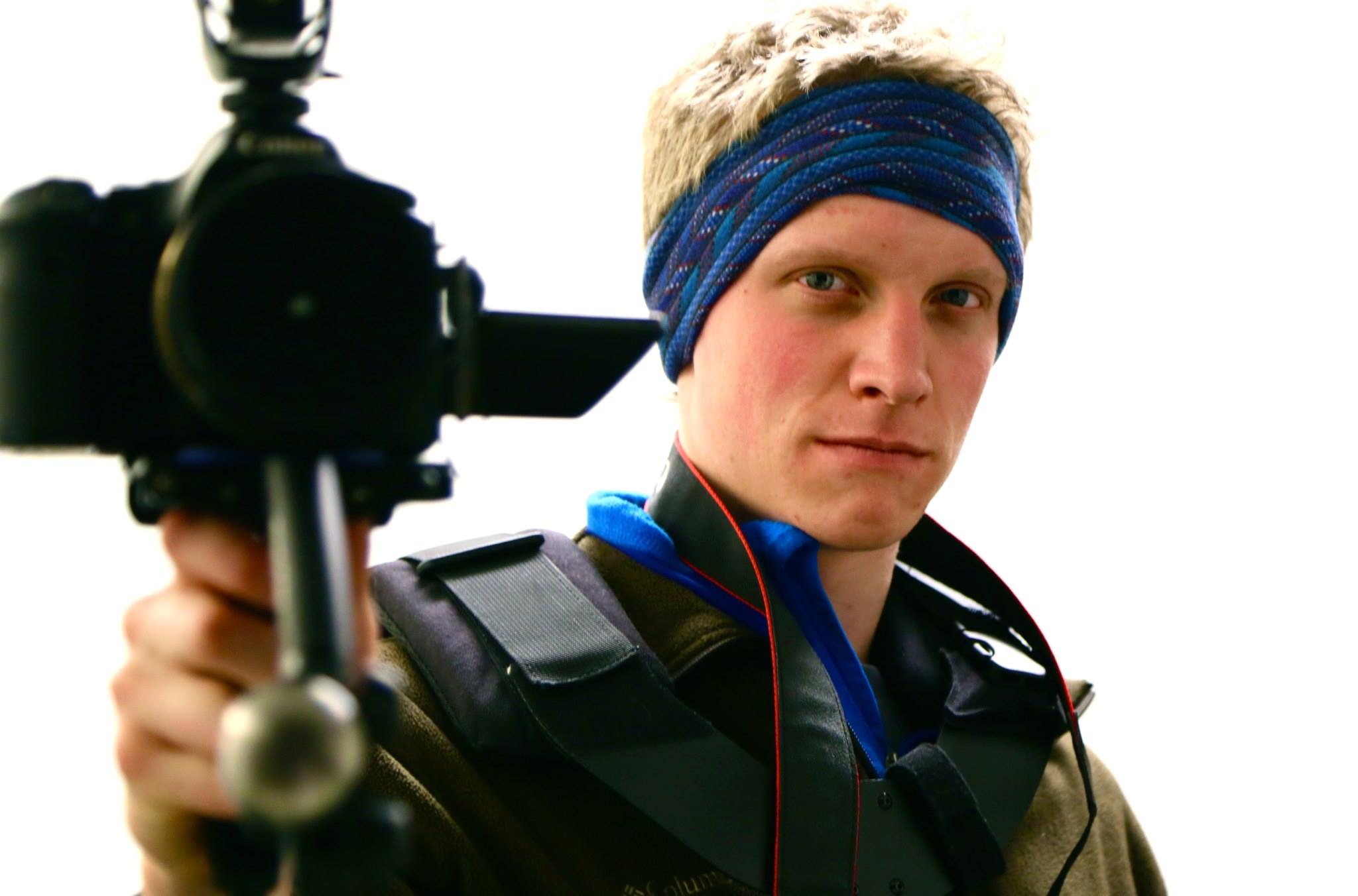
    Max Romey with his camera (Photo: Natalie Fedak)

    However, it was the race’s women that captured Romey’s attention, and he has his work cut out condensing hours of interviews with Brooks, Marvin, Najeeby Quin, and Denali Foldager, among others, into a relatively short film.

    “We got a lot of these interviews and the story that we ended up following was one of predominantly really strong women in this sport,” Romey explained. “But the part I’m really excited about sharing is the stories behind it, you know, like the stakes of why Holly is going into this race, why she’s racing against Najeeby and Christy and Denali and all these other really strong women who don’t get the recognition that the men’s race gets … [The women] are working just as hard as the men, they’re just doing it for eight more minutes.”

    “The race was insane – probably the most exciting women’s race ever.” — Max Romey, 20-year-old filmmaker from Western Washington University

    "It's not a video about women being awesome, it's an awesome video, and naturally women are in it," Romey states on his 3022ft. fundraising website. https://www.indiegogo.com/projects/3022-ft-a-mt-marathon-story
    “It’s not a video about women being awesome, it’s an awesome video, and naturally women are in it,” Romey states on his 3022ft. fundraising website. His campaign ended Oct. 31. (Photo: Indiegogo/3022 ft: A Mount Marathon Story)

    Romey’s goal is to release a video that is partly about the emotional drama of racing — the preparation, the emotional hurdles, the fear of the treacherous downhills — and partly about the beauty and excitement of the race itself, with tight shots of runners barreling down the loose mountainside matched with panoramic shots above the picturesque seaside town of Seward on Alaska’s Kenai Peninsula.

    Before the 2014 race even started, however, Romey encountered an unexpected obstacle. He asked permission to fly his drone — a tiny, remote control helicopter equipped with a camera — and was denied.

    “I asked Seward and Seward asked the FAA and then the town of Seward said ‘no,’ ” he recalled. “[This] hurt me to hear because so many people do it and just don’t ask, but I was the one that asked permission, and now I’m the one that is being told no.”

    Eric Strabel descends from the highpoint of Mt. Marathon in 2014. Photo courtesy Todd List Photography.
    Eric Strabel descends from the highpoint of Mt. Marathon in 2014. (Photo: Todd List Photography)

    Romey scrambled for a solution, and so to get the footage for the video, he positioned 12 photographers with video cameras all over the race course — 20 cameras, in all.

    “I pulled every string I had just to make sure I had everything captured,” he said. “Or tried to have everything captured; we missed some stuff even with 20 cameras going.”

    What Romey was left with was over a terabyte (1,000 GB) of footage, including many hours — “many more than I need,” he said — of interview footage. Romey said that, on race day, he ran or hiked nearly nine miles to film a three-mile race. Has he run Mt. Marathon?

    “My coach at Western says I’m not allowed to, just because it’s a leg breaker,” he said.

    On Oct. 2, Romey released the trailer for the video and started a one-month crowdsourcing campaign to help fund the production of the video, estimated at $45,000. As of Oct. 31, he’d raised $8,589, or 19 percent, of that goal. But that wouldn’t stop him from finishing it.

    “The only thing that puts our schedule at risk is if we don’t get enough money to hire the people who would make the post-production phase shorter and the final product better,” he explained on his fundraising site. “We don’t want to rush this film; we have a production schedule that allows for revision, critique and refining, but at a pace that demands several hours of work each day.

    “If worst comes to worst and we are forced to extend our schedule, we will still finish the film,” he added. “But extending the schedule means slowing the distribution of our film to you, our supporters, as well as risking film festival entries if we miss the deadlines.”

    While the campaign ended, there were still options to support Romey on his website: 3022ft.com. And when it comes to the thought of releasing his final film, Romey bubbles over with excitement.

    “All this footage is in a hard drive, and I just can’t wait to pack it into 25 minutes and share it with everybody,” he said. “It’s like having this secret and I’m just waiting to tell it.”

    On Oct. 27, Romey published his latest project, “Alaskan Recess,” a 2:30-minute trail-running video with the tagline, “If trails are nature’s playground, then recess never has to end.” He also used his drone to film and follow Brooks during an “all uphill” rollerski/trail run up Hatcher Pass.

    “This kid’s going somewhere,” Brooks said in an October interview. “We were talking about the eventual premiere of the Mount Marathon documentary and we’re talking about it at a brewery, and he [wasn’t] even old enough to drink … He’s one of the most organized and hard working people I know.”

  • Brooks Earns Second Mount Marathon Title in Close Race

    Brooks Earns Second Mount Marathon Title in Close Race

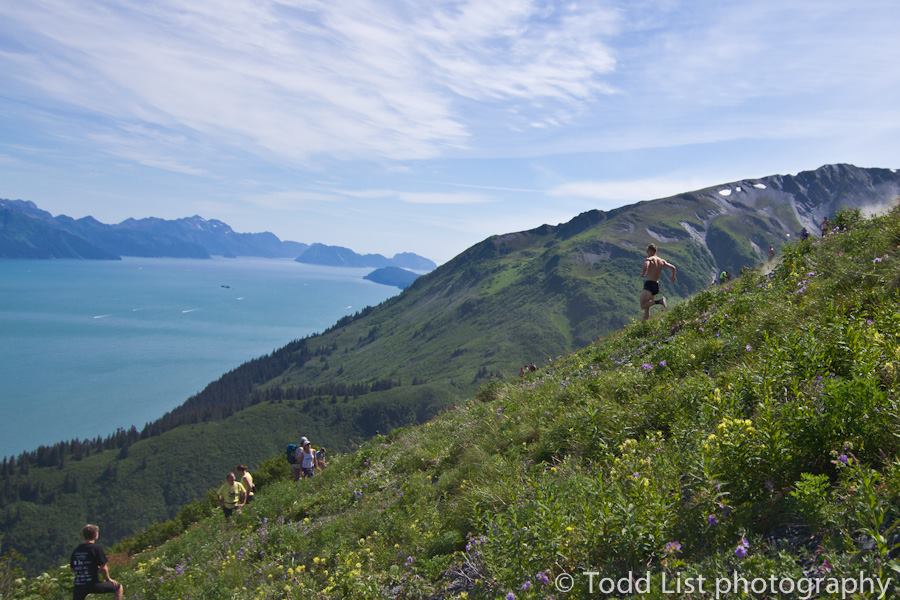
    Brooks nears the top of Mount Marathon with Resurrection Bay in the background (Photo: Todd List)
    Holly Brooks nears the top of the 2014 Mount Marathon race course with Resurrection Bay in the background. Brooks won the 5 k race by two seconds to claim her second win. (Photo: Todd List)

    Holly Brooks understands the hazards of the acclaimed Mount Marathon. Having previously run the race six times the Olympian knew winning her second title wouldn’t be easy. Despite a brutal course, high temperatures, and challenging field of women Brooks was able to claim the 2014 Mount Marathon victory with a time of 52:49.

    The 5 k race which tests participants with a 3,000 foot climb and decent on the slopes of Mount Marathon in Seward, Alaska is often referred to as the “Olympics of Alaska.”  The race has claimed many causalities over the years ranging from severe injuries to the tragic and mysterious disappearance of Michael LeMatire from the course in 2012.

    Brooks races down scree in the 2014 Mount Marathon. (Photo: Free Frame Photography)
    Brooks races down scree in the 2014 Mount Marathon. (Photo: Free Frame Photography)

    Mount Marathon is also one of the most esteemed races in the state. The annual Fourth of July competition draws roughly 35,000 to 45,000 spectators to the small town, demonstrating the popularity and the importance of the race.

    “Mount Marathon is to Alaska what the Birkie is to Minnesota, only with the additional element of extreme danger,” Brooks wrote via email.

    Brooks, who won the Mount Marathon in 2012, sat out last year’s race to focus on training for the 2014 Olympics. While the former U.S. Ski Team member has big plans for international marathon racing this year, she decided to enter the race in 2014 despite its physical costs.

    Brooks was wary of the weather on race day as warm temperatures and intense sun greeted racers prior to the competition. It was a situation Brooks knew all too well. In 2009, the APU Skier was forced to drop out of the race due to extreme dehydration. According to Brooks, her recovery required four to five bags of IV fluid.

    Not only did she have to worry about the heat, she also faced a strong women’s field including 2013 champion Christy Marvin who was hungry for a back-to-back win.

    When the race began Brooks took an early lead, and by the top of the epic climb she was roughly two minutes ahead of the next competitor.

    From there, however, it was all downhill.

    As Brooks descended the peak she began to feel as if she had no control over her legs. She later joked to NPR that she felt like a “marionette running down a mountain.”

    Coming into the finish, Brooks struggled to maintain her speed. In addition, Marvin had decimated Brooks’ two minute lead and was rapidly approaching the finish.

    Fortunately for Brooks there wasn’t enough pavement for Marvin to catch her and she was able to claim the win by only two seconds.

    “The home stretch down Fourth Avenue was possibly the longest two minutes of my life and the finish line couldn’t have come sooner. Had the race been 10 yards more she would have passed me as she was charging hard,” wrote Brooks. “She had a great kick and I was described looking like ‘a race walker that wasn’t racing.’”

    Despite some embarrassment in regards to her condition in the finishing stretch of the race, Brooks was ecstatic to garner her second Mount Marathon win.

    Brooks falls to the ground after barely holding on to her win over Marvin. (Photo: Max Romey productions)
    Brooks falls to the ground after barely holding on to her win over Marvin in the 2014 Mount Marathon. (Photo: Max Romey productions)

    “I love to race and this is without a doubt, the biggest race in Alaska,” Brooks said.  “It’s good for people to see skiers excelling in non-ski events and I think it adds to our legitimacy as the good, all-around, tough athletes that we are.  I always told my kids when I was coaching that ‘skiers can do anything!’  I think that having a good result in Mt. Marathon proves that.”

    After proving her strength and toughness, Brooks did what any skier would have done; she continued to train. With the start of the U.S. Ski Team Women’s Camp in Anchorage on July 7, Brooks is now in preparing for the winter.

    However, even champions like Brooks have to take it easy sometimes.

    “While I’m participating I’m having to moderate workouts,” Brooks said. “It’s kind of a bummer but since the race went well this year it is worth it, I’m hoping by next week’s trip to Eagle Glacier that I’ll be 100% and can ski all the workouts with the girls.”

    In the men’s race, 2013 champion and APU coach, Eric Strabel, won the men’s race with a time of 44:46.

    Results for the 2014 Mount Marathon can be found here.

  • APU Coach Strabel Makes Mount Marathon His Own, Tops 32-Year-Old Record (Updated)

    APU Coach Strabel Makes Mount Marathon His Own, Tops 32-Year-Old Record (Updated)

    Eric Strabel chasing down 2013 Mount Marathon Race (Photo: Dave Blanchet)
    Eric Strabel chasing down Wylie Mangelsdorf, a college senior, and Rickey Gates (front) at the 2013 Mount Marathon Race on July 4 in Seward, Alaska. (Photo: Dave Blanchet)

    Note: This race recap has been updated to include comments from Ann Spencer, the third woman and Alaska Winter Stars skier.

    Mount Marathon isn’t one of those races you can wake up the morning before and decide you’re going to do. People spend years trying to get into the fabled Fourth of July hill climb, a 3,022-foot ascent up and terrifying trek back down to the town of Seward, Alaska.

    In 86 years, the grueling 3.5-mile race has grown to selectively award 350 senior entries to senior men and women, and another 250 juniors, evenly divided by gender. If you finish 10 Mount Marathons, you’re considered a veteran, which is one way to get in. Junior races don’t count toward that. Win it the year before or make the top 10 in your age group, you’re also in. Try your luck with a lottery some people have spent more than a decade trying to get registered through, or pay at least a grand for one of 10 auctioned entries.

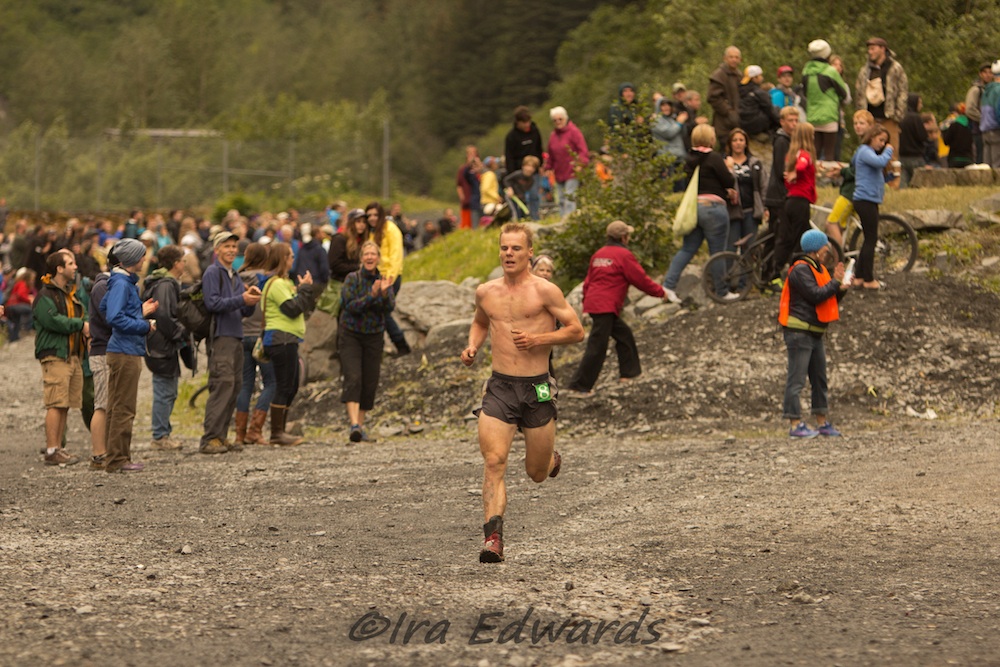
    Eric Strabel, who coaches the APU university and junior nordic teams and assists with the elite team, coming off the mountain to win the 2013 Mount Marathon on July 4 in Seward, Alaska. It was his second victory in three years and he broke a 32-year-old course record by 26 seconds. (Photo: Ira Edwards/roosterskier.com)
    Eric Strabel, who coaches the APU university and junior nordic teams and assists with the elite team, coming off the mountain to win the 2013 Mount Marathon on July 4 in Seward, Alaska. It was his second victory in three years and he broke a 32-year-old course record by 26 seconds. (Photo: Ira Edwards/roosterskier.com)

    Two years ago, Alaska Pacific University (APU) nordic coach Eric Strabel won Mount Marathon. It was a goal he had more or less been working toward since he was 11, and in 2011, he achieved it.

    Last year, he finished eighth – not what he was hoping for. APU’s university coach and elite-team assistant, Strabel decided to recommit to the race he grew up doing and spent the next 12 months getting ready for his 20th consecutive Mount Marathon.

    “For the first time, I was ready to commit to 12 months of specific training for the extreme demands of the race,” Strabel, 31, wrote in an email.

    He reasoned climbing was his problem and increased his uphill training while decreasing the distance covered in each workout.

    “I have a higher disposition of fast twitch muscle fiber than what is ideal for mountain running so I needed to build up a monstrous aerobic engine before I started to do anything close to race pace for longer than 30 seconds,” he explained. “Looking back, one of the biggest keys of the training was having more than twenty 1 hour sustained low to mid level 3 efforts on steep grades before ever letting myself push my heart rate over 90% of max. … Sustained assertive steep hiking and running really works wonders for building hip and leg strength and endurance for skiing!”

    Sounds pretty technical for a guy who placed third in this year’s 50-kilometer Tour of Anchorage ski marathon without doing much ski training beyond coaching, or someone trying to break the Mount Marathon course record without a watch.

    “Wearing a watch distracts me. And it should be unnecessary,” Strabel explained. “I should already know by race day what I need to be doing and how I should be moving to have my best speed. Nevertheless, I did ask a couple people how the time was looking at landmarks to know what was possible.”

    Strabel’s speed came from within on July 4 in the 86th annual Mount Marathon Race – and with the help of a commentator’s words before the start. The announcer said the morning rain and lack of snow (for traction) would make for slower conditions, ultimately eliminating a shot at the 32-year-old course record (43 minutes, 21 seconds) set by Olympic nordic skier Bill Spencer.

    “[That] gave me kind of a chip on my shoulder and added more fuel to the fire,” Strabel wrote. “The record has been such a legend, that even the thought of breaking it has been presumptuous, but with the growing level of competition and preparation, a handful of us were starting to believe it was possible over the last couple of years.”

    Rickey Gates leads the men's race up Mount Marathon on July 4 high above Seward, Alaska, while Wylie Mangelsdorf (r) and Eric Strabel keep him in sight. (Photo: Dave Blanchet)
    Rickey Gates leads the men’s race up Mount Marathon on July 4 high above Seward, Alaska, while Wylie Mangelsdorf (r) and Eric Strabel keep him in sight. (Photo: Dave Blanchet)

    Last Thursday, amid drier conditions than the previous women’s race, Strabel did it, pushing himself to win it 42:55. Nine seconds later, runner-up Rickey Gates, a multiple-time member of the U.S. Mountain Running Team, crossed the line in record time as well.

    Both saw their times on the big clock, but neither wore a watch to confirm nor thought it was possible.

    “When I got to the finish line and saw the 42 minutes and change, I thought what Eric Strabel thought, that something went wrong with the timing,” Gates, 32, said on the phone Saturday after flying home to San Francisco.

    “For a few minutes after the race it felt like after a serious accident, everyone’s kind of quiet and a little bit confused, and you’re kind of piecing together information but you’re not quite sure what to believe,” he said. “It felt like that, but when we finally got information that the clock was right, then it finally settled in. Eric gave me a huge hug; he’s really a gentleman and a gracious competitor and said it wouldn’t have happened without the two of us battling it out like that.

    “I certainly wouldn’t have run that fast without him either,” Gates continued. “It’s one of those second-place finishes that I can imagine going any better.”

    This is coming from a man, albeit a Mount Marathon newcomer, who’s won trail races around the world, including one in Antarctica and the Canadian Death Race, and is headed to Europe for the 65 k Ice Trail race in Val d’Isère, France, on Sunday. After that, Gates will compete in back-to-back 32 k races in Italy and Switzerland, then return to his home state of Colorado in late September for the Ultra Race of Champions (UROC) 100 k in Vail.

    Six weeks ago, Gates rode his 2002 BMW F650 Dakar motorcycle from San Francisco to Alaska, flying to Colorado for a wedding before settling back in around Seward (he’s getting a friend to drive his bike back). There, Gates trained with local high-school runners on the slopes of Mount Marathon, getting to know the terrain and how locals tackle it.

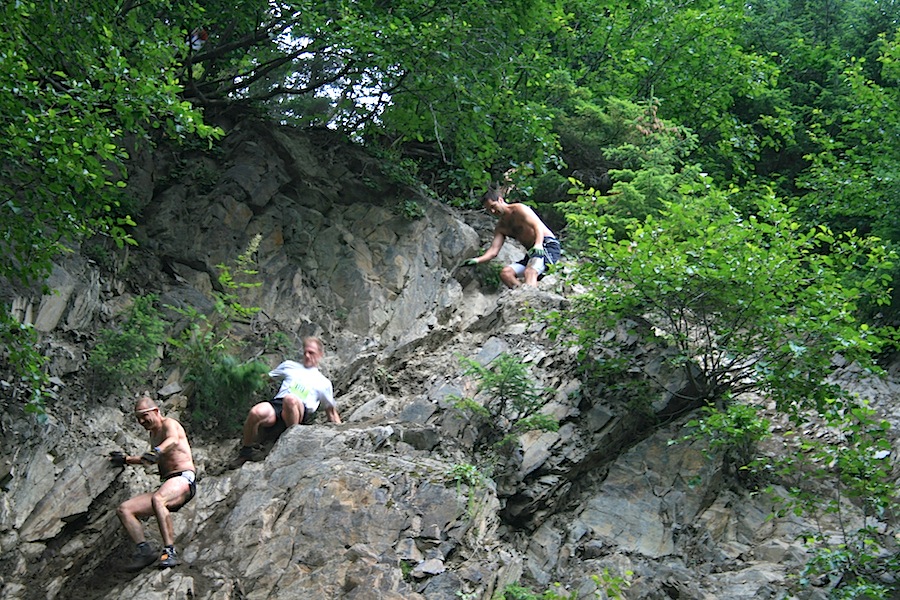
    Racers navigate the cliffs along Mount Marathon, a 3,022-foot peak, during the 2010 edition of the race in Seward, Alaska. (Photo: Lauren Fritz)
    Racers navigate the cliffs along Mount Marathon, a 3,022-foot peak, during the 2010 edition of the race in Seward, Alaska. (Photo: Lauren Fritz)

    “It was cool to see a high school cross-country team out there on the course actually dialing in little five-five foot drops and maneuvering cliffs,” Gates said. “Of course they’re high schoolers and they don’t think anything of it.”

    Less than a week before the race, Gates did a time trial up the agonizing climb. He clocked in around 51 minutes. “Muscles hurt on me that have never hurt before,” he told the Anchorage Daily News. He later told FasterSkier it’s one of the shortest yet hardest races he’s ever done.

    On Thursday, Gates didn’t worry about time, just about winning – or coming as close to doing so as possible.  His mother, Trish Gates (formerly Schultz), finished second in the 1969 Mount Marathon, but was quick to point out there were only two women in the race. She had been working at a fish-packing plant at the time, had a week off and decided to give it a go.

    “It’s the only race that she’s ever run, she never run one before then and she’s never done one since then,” Gates said of his mom, who flew to Alaska to watch him last week. “Being a traveling hippy, they were offering free meals to whoever did the race. The salmon weren’t running yet so she had a week.”

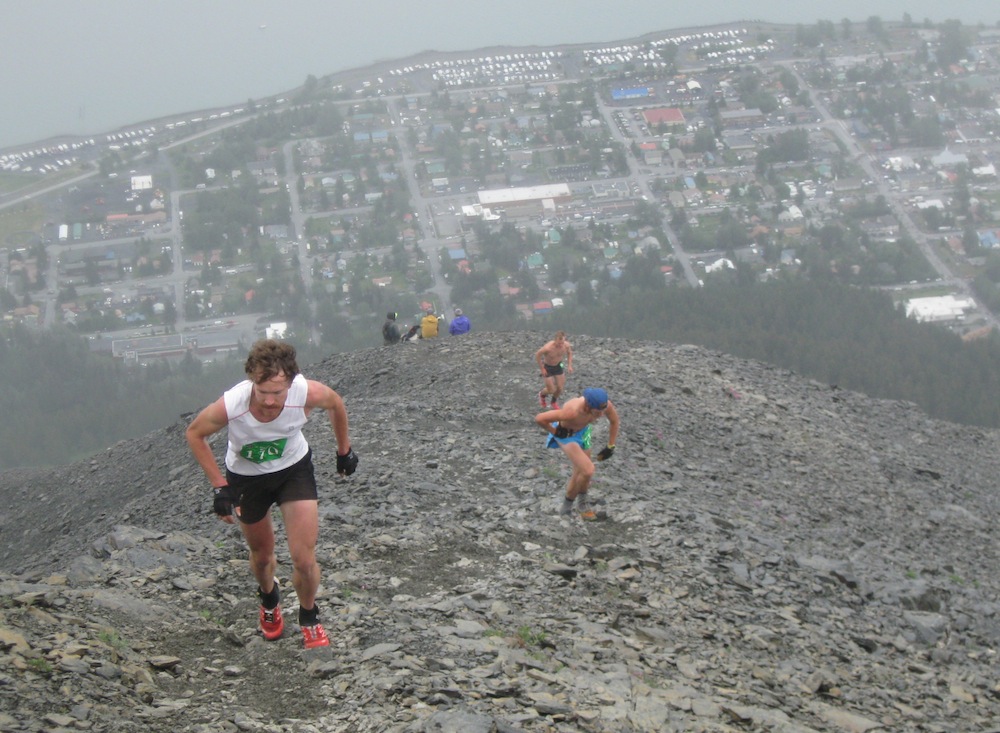
    Racers ascent the 3,022-foot Mount Marathon above Seward, Alaska, at the 2011 edition of the hill climb. (Photo: Lauren Fritz)
    Racers ascent the 3,022-foot Mount Marathon above Seward, Alaska, at the 2011 edition of the hill climb. (Photo: Lauren Fritz)

    Knowing she did the race was cool, but when he heard how technical and gut-wrenching it was, Gates started to respect her even more. He spent the last five years dreaming of racing Mount Marathon, and tweaked his schedule to make it happen this year.

    Jetting toward the top of the three-thousand-foot peak, Gates was the first to the turnaround point just over 1 ½ miles in. The third man to the halfway mark (behind Wylie Mangelsdorf, a Principia College senior, in second), Strabel passed both Mangelsdorf and Gates on the descent.

    “I’m not the strongest downhiller,” Gates said. “I ran 11 minutes down that thing, which isn’t bad, but I knew I wasn’t going to run 10 minutes down it which Eric did.”

    At the base of the mountain before a half-mile stretch along a road to the finish, Gates in second place looked up to see where Strabel was. Then, he crashed, dislocating his shoulder and spending several seconds on the ground.

    2013 Mount Marathon runner-up Rickey Gates shortly after a crash dislocated his shoulder at the mountain base a half mile before the finish on July 4 in Seward, Alaska. (Photo: Ira Edwards/roosterskier.com)
    2013 Mount Marathon runner-up Rickey Gates shortly after a crash dislocated his shoulder at the mountain base a half mile before the finish on July 4 in Seward, Alaska. (Photo: Ira Edwards/roosterskier.com)

    “I just caught my foot on something or nothing at all and just went down really hard in front of 10,000 people,” Gates said. He stood up, popped it back in, and proceeded to cut an estimated 20-second deficit to finish 9 seconds behind Strabel.

    “There’s a lot to be said about adrenaline,” Gates said. “If I’d had not fallen I still don’t think I would’ve gotten him.”

    According to Strabel, catching Gates, which he did about two-thirds of the way down, wasn’t easy. He strategically attacked the final cliff section before the road, thinking Gates would be less familiar with it and thus not as fast.

    “As it turned out, a lot of the cushion that I built by the base of the mountain was due to Rickey stumbling, catching himself and dislocating a problem shoulder, and quickly resetting it himself,” Strabel explained. “I did look back twice early on the road to know that he was making up serious ground so I had to gather a sprint over the last 90 seconds whether my body was capable of it or not.

    “I was incredibly relieved at the finish,” he continued. “The only other thought I had over the final seconds of the race was of the large display clock that came into focus. I had completely set aside thoughts of a record for most of the race. I recall seeing it ticking through the 42:30’s and remember struggling to think if a time in the 42’s was faster than 43:21. That was how far down Rickey had pushed my brain function.”

    That night, Strabel, Gates and other finishers celebrated with a night out on the town, where Gates lost his rental-car keys. All in all, the trip went as well as Gates could’ve imagined, he said, except for a couple blips.

    “I’d appreciate it if my shoulder didn’t really hurt really bad right now and if I didn’t lose my rental-car keys at 4 o’clock in the morning,” Gates said.

    Other Top Skiers

    Longtime APU skier Brent Knight, 29, placed fifth in the men’s race – four years after he led the 2009 Mount Marathon then collapsed near the finish from dehydration. He was hospitalized in Seward, where he received five liters of IV fluid.

    Brent Knight, 29, en route to a fourth-place finish at the 2013 Mount Marathon Race on July 4 in Seward, Alaska. (Photo: Ira Edwards/roosterskier.com)
    Brent Knight, 29, en route to a fourth-place finish at the 2013 Mount Marathon Race on July 4 in Seward, Alaska. (Photo: Ira Edwards/roosterskier.com)

    Knight returned to the race in 2010 and took fourth, was second to Strabel in 2011, and placed sixth behind winner Matt Novakovich in 2012.

    “It’s hard to describe the feeling you get when you are surrounded by 30,000 people in what could be the gnarliest sub hour race out there,” Knight wrote in an email.

    The first time he watched the race as a kid, the air was hazy from nearby fires. Knight watched as the men’s leader turned the corner at the top of a long hill before the finish.

    “The sun combined with smoky haze created a dull orange backdrop to a lean mountain runner covered in blood and mud,” he wrote. “Eye of the Tiger was playing over the loud speakers and I think that memory of the whole scene was etched in as one of the most awesome events I’ve ever witnessed. Now years later and multiple Mt. Marathon finishes later, I still get this overwhelming feeling like I’ve just saved the world from devastation or something. The roar of the spectators makes you feel like you’re a gladiator in the ancient [Coliseum].”

    That’s why he calls the race “addicting.” This year, Knight lost some ground at the leaders along the ascent, and by the top, he realized how fast they were going.

    “I didn’t think it was record fast, but I thought it might be close,” he wrote. “Matias [Saari, who placed third] closed in and passed me a 1/4 way down the mountain and I decided to put comfort aside (if there was any) to hang on him.”

    Knight lost about 15 seconds to Saari after the “gut,” which he described as an extremely technical creek bed with multiple cliffs before the bottom of the mountain, but made up about 10 seconds on the road.

    “It’s hard to cover ground that fast when it feels like you’ve been run through a meat grinder,” Knight wrote. “Had I run a minute faster, I would have been competing for 3rd in a time that would have easily been a winning time any of the past 32 years. This race, this year, was the toughest field I’ve ever competed against.

    “I’m a skier that loves to be a mountain runner,” he added. “I’ll find my way to the front … Perhaps next year or the year after that or the next. Strabel set a new mark to fight for this year.”

    Alaska Winter Stars skier Ann Spencer, 18, racing to third place in her first year as a senior at the 2013 Mount Marathon on July 4 in Seward, Alaska. (Photo: Ira Edwards/roosterskier.com)
    Alaska Winter Stars skier Ann Spencer, 18, racing to third place in her first year as a senior at the 2013 Mount Marathon on July 4 in Seward, Alaska. (Photo: Ira Edwards/roosterskier.com)

    In the women’s race, Christy Marvin, a 32-year-old mother of three, won in 53:20. A race newcomer but well-known local runner, she was the first rookie to win since Toby Schwoerer took the men’s title in 2004.

    Allison Barnwell placed second just under two minutes later, and 18-year-old Ann Spencer of the Alaska Winter Stars placed third (56:15) in her first year as a senior.

    In an email, she explained it was her fourth Mount Marathon (after three junior races), but first time racing the whole mountain.

    “I was definitely not expecting to do so well,” Spencer wrote. “I was aiming for a top 20 finish with a time under 1:05. Hill climbs are definitely my strength.”

    Accepted at the University of Vermont, Spencer planned to defer a year to continue skiing and training in Anchorage to better prepare herself for college racing.

    Fresh off a training camp on Eagle Glacier, APU Elite Team skier Lauren Fritz, 25, placed fourth (57:57) among the senior women. Last year, she was second in Mount Marathon to teammate and 2010 Olympian Holly Books.

    “There was a lot of pressure going into this year’s race … which is tough because there isn’t a lot of room for improvement and a lot of room for disappointment,” Fritz wrote in an email. “I really wanted to win, of course, and I had as good of a shot as any, with Holly and Kikkan [Randall] both skipping this year’s race. There are always top contenders though, and this year was no different.”

    Lauren Fritz racing back down to Seward, Alaska, for fourth in the 2013 Mount Marathon Race on July 4. (Photo: Cole Deal)
    Lauren Fritz racing back down to Seward, Alaska, for fourth place in the 2013 Mount Marathon Race on July 4. (Photo: Cole Deal)

    Meanwhile, Fritz has dealt with chronic tightness in her calf muscle for the last couple years. Skating in slush on Eagle Glacier last week didn’t help.

    “I knew going into the race that it would probably bother me, but there wasn’t much I could do about it,” she explained. “I tried to warm up well but it still flared up during the race. It was raining throughout the morning, including during the race a little bit, so it was a lot muddier than I’ve ever raced it, so there was a lot of slipping and grabbing for tree branches or plant roots or whatever you could hold onto to keep from sliding backwards. Really not ideal conditions for fast times, plus the slipping put more stress on my lower legs.”

    Just before tree line about halfway up, her calves got the best of her and she lost contact with Barnwell, Spencer and Sheryl Loan, who ended up seventh. Marvin led from the start, but was not too far in front of the chase pack at the top, according to Fritz.

    “I rounded the turn-around rock, I thought ‘OK, here we go, I’ll be done in less than 15 minutes,’” she wrote. “Just let the legs go on autopilot. It’s impossible to describe how your legs feel as you start the descent and it’s really just best not to think about how they feel and just go.

    “It is actually crazy, and unless you’ve put yourself through the torture you don’t realize how incredibly fun and satisfying it is to be able to accomplish something like this mountain,” she continued. “Still, it is an inherently dangerous race … I usually have one of the top descent times in the women’s race, but this year I did try to not let myself get too out of control on the downhill that would lead to me getting hurt. I LOVE this race, and always plan to come back, but there is a lot at stake this ski season and I recognized that. I wanted to win and I gave it my best effort, but this race isn’t the focus of my racing career right now.”

    In her seventh Mount Marathon, Fritz nabbed her fifth-consecutive top 10 and posted the sixth-fastest downhill time.

    “I’m still pretty happy,” she wrote. “Mt. Marathon is definitely the Olympics of Alaska and I’ll definitely be back to hunt down the coveted winner’s cup.”

    Results | Race video

    The scene from above at the 2010 Mount Marathon Race in Seward, Alaska. (Photo: Lauren Fritz)
    The view from above at the 2010 Mount Marathon Race in Seward, Alaska. (Photo: Lauren Fritz)
  • Reigning Champ Brooks Opts Out of Mt. Marathon; Recalls Memories Good and Bad

    Reigning Champ Brooks Opts Out of Mt. Marathon; Recalls Memories Good and Bad

    The fabled Mount Marathon, more than 4,000 feet above sea level, in Seward, Alaska.
    The fabled Mount Marathon, more than 4,000 feet above sea level, in Seward, Alaska. (Photo: Holly Brooks/hollyskis.blogspot.com)

    Editor’s note: The following was written by U.S. Ski Team member and 2010 Olympian Holly Brooks of Anchorage, Alaska. In her blog post, Hard Decisions, Obvious Decisions, the 31-year-old Washington native talks about the race she won last year — one which is widely considered the Olympics of Alaska. Despite all of Mount Marathon’s epic qualities, there are still some memories she’s forced to reckon with, which is why she decided to sit out the hill climb before an Olympic year.

    ***

    This upcoming July 4th will be spent entirely different than my last couple. For the past four years I’ve raced Mt. Marathon in Seward, Alaska. Mount Marathon – they claim, is the Nation’s second oldest foot race behind the Boston Marathon and this year will be the 86th running.

    Holly Brooks on the descent of the 2010 Mount Marathon Race. (Courtesy photo)
    Holly Brooks on the descent of the 2010 Mount Marathon Race. (Courtesy photo)

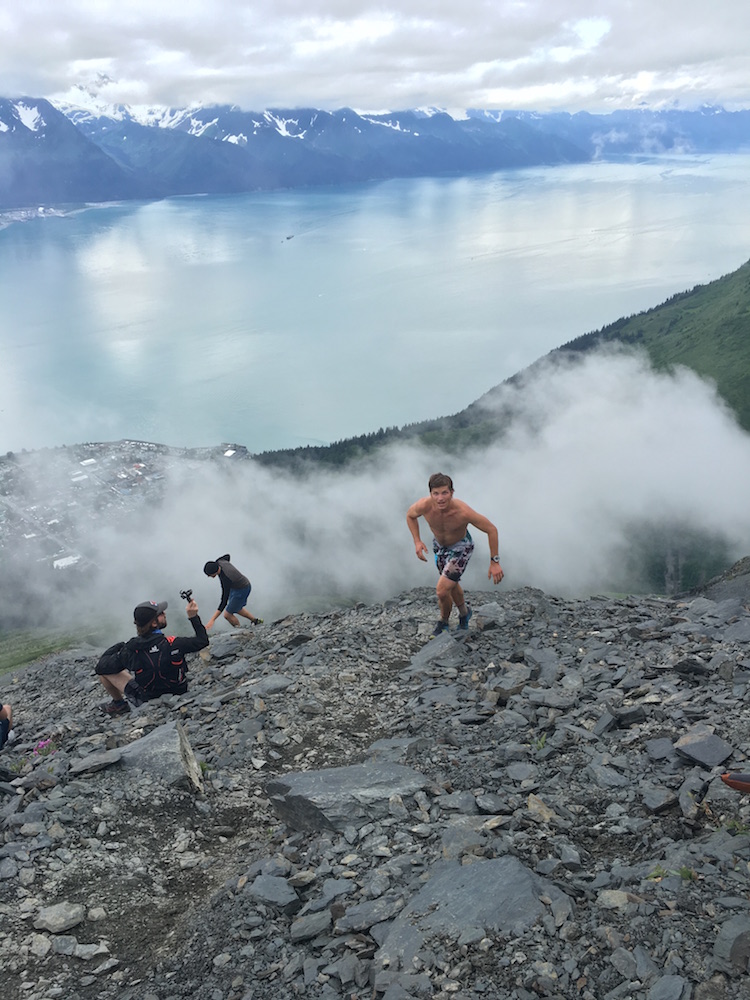
    It’s a tradition for Alaskans on Independence Day and the small town of Seward swells from 3,000 people to 30,000 thousand overnight. While only 500 or so people actually compete in the race, the rest crowd main street eating ice cream, socializing, and watching the race unfold. For those unfamiliar with the format, the race starts on main street, runs 3,022 feet directly up a mountain, rounds a rock at the top and descends 3,022 feet.

    To put it in perspective top female racers take approximately 38 minutes to get to the top and last year Eric Strabel (Friend and APU coach) set a new downhill record by getting from the top of the mountain to the finish line on main street in a stunning ten minutes and eight seconds!

    Last year’s race had a tragic twist in that one man, Michael LeMaitre, disappeared entirely while another well-known Alaskan Mountain Runner fell down a cliff and suffered a Traumatic Brain Injury. (Recent front-page article on Matt Kenney in the Anchorage Daily News can be read HERE.)

    Runner’s World took notice of the horrendous events and freelance journalist Christopher Salomon wrote an amazing piece titled, “The Last Man Up” which can be read HERE. If you have time I highly recommend taking the time to read this.

    Michael LeMaitre, who disappeared while competing in last year's Mount Marathon Race in Seward, Alaska. Another Alaskan, Matt Kenney, fell down a cliff and suffered a traumatic brain injury. (Photo: Holly Brooks)
    Michael LeMaitre, who disappeared while competing in last year’s Mount Marathon Race in Seward, Alaska. Another Alaskan, Matt Kenney, fell down a cliff and suffered a traumatic brain injury. (Photo: Holly Brooks)

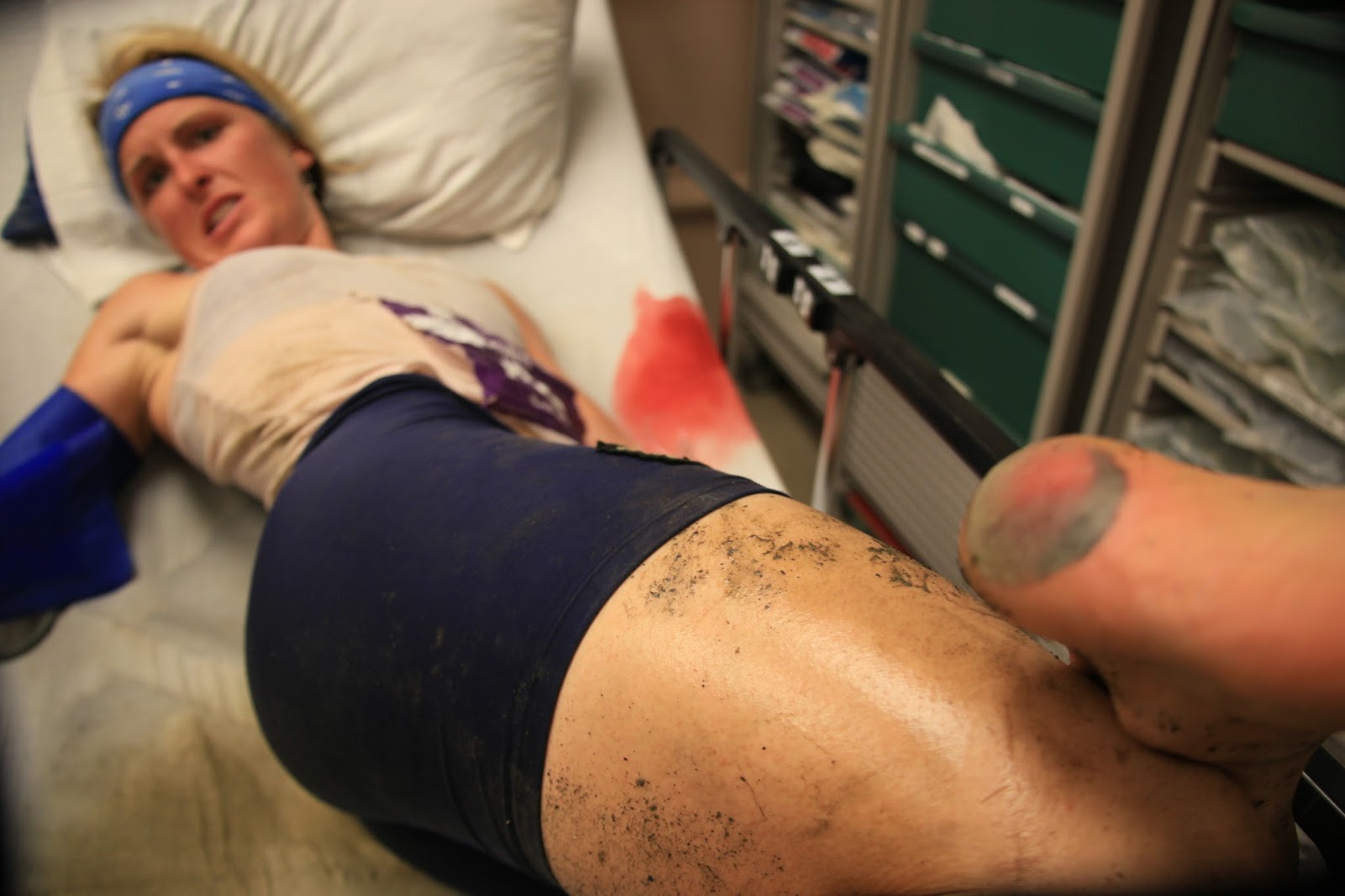
    I don’t have a sparkling history with this race either. In 2009 I was leading at the top of the mountain and midway down what Alaskan’s call “the gut” when I slowed, everything became foggy, and I passed out in the arms of Erik Flora’s mom directly in front of the Seward Emergency Room (ironically located on the race course). My eventual diagnosis was that I suffered from a rare form of exertional rhabdomyolsis. In layman’s terms, severe muscle damage & potential kidney/renal failure.

    2009 saw near record temperatures and on the trip up the mountain I literally sweat out all the liquid in my body. The trip down features extreme eccentric loading on your body as parts of the course literally run down a waterfall…… some might describe it as a controlled fall and it’s all racers can do to descend as fast as possible without falling. Once the water from my body was dried up, the decent literally tore my muscles apart.

    Once in the Seward ER it took the medical staff literally an HOUR to start an IV in my arm. Funny enough, after the IV was started and my body soaked up a couple liters of fluid I checked myself out of the ER against the doctor’s orders to walk across the finish line and come back. (Because – if you don’t finish, you don’t have an automatic start the following year!)

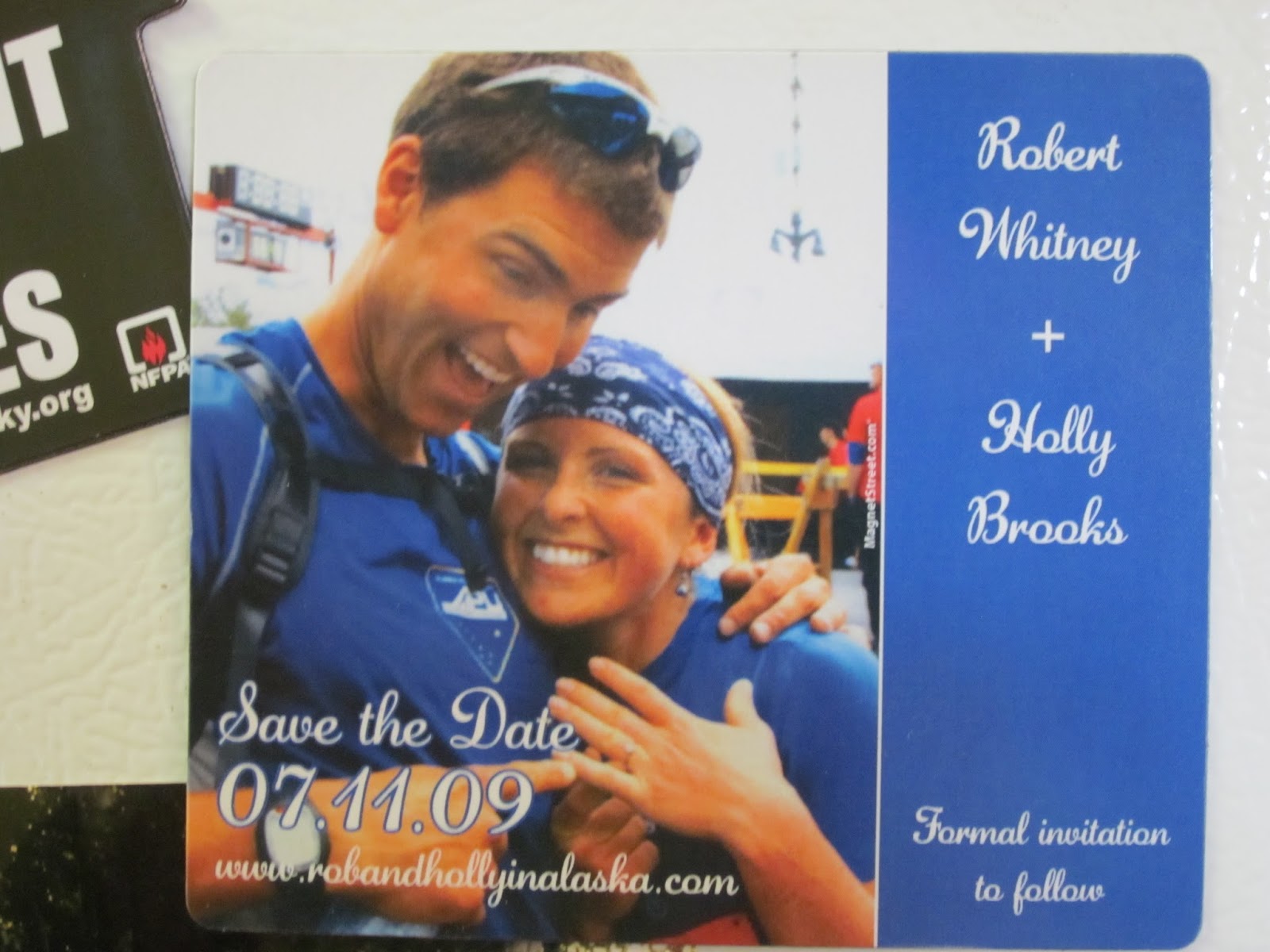
    After reading this you might wonder, why in the heck would I even consider racing this race at all, let alone in an Olympic year? Well, the short of it is that Mount Marathon has signified some monumental moments in my life. Two days before my Mount Marathon debut in 2008 Rob and I got engaged – and then shared our happy news at the race with family and friends.

    Holly Brooks and Rob Whitney were engaged two days before Brooks' Mount Marathon debut in 2008. (Courtesy photo)
    Holly Brooks and Rob Whitney were engaged two days before Brooks’ Mount Marathon debut in 2008. They were married seven days after the race in 2009. (Courtesy photo)

    In 2009 I suffered my accident and then proceeded to get married seven days later. A blood blister covered the diameter of my entire heel and my opposite big toe was enlarged with pussy fluid that I couldn’t fit into my high heels. Ultimately I burned a hole in my toenail with a red-hot safety pin and relieved the pressure, fitting into my bridal shoes just in the nick of time! (Sorry, that was graphic, I know.)

    My 2009 accident also had another side effect – an epiphany that struck me while I was laying in the Seward Emergency Room. I’ve honestly never had an idea hit me so hard… it was like something that you read about it books….. but the clarity of the idea was something that I’ll always remember. Hopped up on adrenaline and a bit loopy from the overall experience I decided then and there that I would try and make the 2010 Olympics in Vancouver, literally seven months away. I temporarily kept this thought to myself until late August (2009) when I was finally healed from my “rhabdo” (as I affectionately called it) and decided to share the news with my coach (then boss), family & friends.

    Holly Brooks at the Seward Emergency Hospital after passing out during the 2009 Mount Marathon Race when she suffered from exertional rhabdomyolsis, severe muscle damage & potential kidney/renal failure. (Courtesy photo)
    Holly Brooks at the Seward Emergency Hospital after passing out during the 2009 Mount Marathon Race when she suffered from exertional rhabdomyolsis, severe muscle damage & potential kidney/renal failure. (Courtesy photo)

    This episode was almost four years ago to the day and if you’re reading my blog, you probably know how much the decision to go after skiing full tilt has affected my life.

    Since my 2009 Mt. Marathon Injury I’ve raced in the Olympics, quit my job as a full time coach, and this year will be my second on the US Ski Team. While the Sochi Olympic team hasn’t been named yet (and won’t officially until Jan/2014) I’m putting all my energy towards racing there, peaking in February, and attempting to help make US Women’s Cross Country Skiing history. This is a once in a lifetime opportunity and I’m not in a position to take any chances….

    So, come July 4th 2013 you won’t find me in Seward. As much as it seems like racing Mt. Marathon would feel like completing a circle – and my Olympic cycle, it’s just too risky. I’ve worked too hard, made too many sacrifices, and dedicated too much of my time and energy to get injured on the Mountain and put my Sochi Olympic bid in jeopardy. This is the year for the Olympics and fortunately, every year is a year for Mount Marathon.

    Despite it’s risks, I love the race dearly and while I won’t have a bib on the fourth I’ll be thinking about everyone who is participating and wishing, hoping, for a safe trip up AND down the mountain for each and every participant. (First AND Last!) I will most likely be off in the mountains somewhere else – only in a different direction, enjoying the raw beauty that makes Alaska home.

    Good luck to all the participants! Be safe and I’ll see you next year – Mark my words!

    U.S. Ski Team and APU skier Holly Brooks winning her first Mount Marathon in 2012. (Courtesy photo)
    U.S. Ski Team and APU skier Holly Brooks winning her first Mount Marathon in 2012. (Courtesy photo)

    2013 Mount Marathon results will be posted here

  • Holly Brooks on Winning the ‘Olympics of Alaska’

    Holly Brooks on Winning the ‘Olympics of Alaska’

    U.S. Ski Team member Holly Brooks after winning her first Mount Marathon title on Wednesday. She also set a top-10 time in the hill climb’s 85-year history in 51:53. (Photo by Rob Whitney)

    In Anchorage, getting on the front page of the Alaska Daily News is a big deal. It doesn’t matter if you’re an Olympian and U.S. Ski Team member; Holly Brooks was still pumped to be featured in Thursday’s paper.

    The 30-year-old Alaska Pacific University skier did so by winning Mount Marathon, one of Alaska’s biggest athletic events and Fourth of July traditions.

    Brooks near the bottom of Wednesday’s grueling Mount Marathon trail run in Seward, Alaska. (Photo by Rob Whitney)

    Brooks ascended the 3,022-foot mountain, which averages a 38-percent incline, and completed the out-and-back course in Seward, Alaska, in a record time of 51:53. She not only won the race, she set one of the top-10 women’s times in the race’s 85-year history. And she wasn’t even wearing a watch.

    A three-time runner up, Brooks had finally sealed her first Mount Marathon win. Engaged the day before the 2008 race, in which she came in second, she had a special history with the event.

    She led it back in 2009 — a week before her wedding — until dehydration and heat exhaustion pulled her out and into the emergency room. She returned in 2010, where she was beaten by seconds by seven-time Mount Marathon champion Cedar Bourgeois. Last year, U.S. Ski Team veteran and APU teammate Kikkan Randall edged Brooks by 19 seconds for the win.

    “The Birkie and Mount Marathon have driven me crazy,’’ Brooks told the Daily News, referring to her photo-finish loss in the American Birkebeiner ski marathon in 2009. She redeemed the former by winning the 50 k skate race in February.

    “No one lets you forget it. ‘You gonna win this year?’ I no longer have to answer that question, because I did it,” Brooks said. “I can put the demons to rest.’’

    While Brooks did plenty of interviews on Wednesday, she shared some afterthoughts with FasterSkier via email on Friday.

    Brooks on her way up Mount Marathon on Wednesday. (Photo by Rob Whitney)

    FasterSkier: What was the race like this year? How did it compare to years past?

    Holly Brooks: The race had a different kind of pressure this year… while I knew that Kikkan wasn’t running, I didn’t know who else would be out there to race against. I came into the race just days after my biggest week of training ever – 30 plus hours of glacier skiing [with the North American Women’s Training Alliance on Eagle Glacier] and I had no idea how my body would react to a race effort. I’ve been really close to winning this race so many times that I really wanted to come away with a victory this year!

    I went out hard from the line and tried to establish a gap on the uphill such that I didn’t have to take any big risks on the decent. I had some friends that gave my splits 1/4 and 1/2 up the mtn. I knew I had a decent margin going into the downhill… it’s certainly different just racing by yourself out there – as compared to last year when Kikkan and I were two inches away from each other the entire race!

    I purposely didn’t wear a watch because it was wet and trail was slippery. I knew I was tired and didn’t think I would be capable of putting in a good time. I was shocked when I finally saw the race clock near the finish line – I ran faster this year than we ran last year! Had I known my splits I certainly could have run faster – but, it was really fun to enjoy the race instead of going for every second. Usually main street is extremely stressful – the race has come down to a couple of sprints for me – but this time I had a HUGE grin the entire way …. I stopped to pick up an American flag from one of the spectators, too! It was awesome and I was really able to savor the moment. Main street was so loud and everyone was cheering – it was fabulous!

    Mt Marathon is the Birkie of Alaska, that’s for sure! I’m totally psyched that I was able to cross both of those off my list this year. I got two gorillas off my back!

    FS: How did you approach it mentally?

    HB: The race was really hard to prepare for – in fact, I did virtually no preparation seeing that the NAWTA camp ended right before it. I drove down to Seward the day before and hiked up past the halfway point. It’s really important to inspect “the gut” (the down trail) for safety reasons… you basically run down a waterfall with snow bridges. It’s important to see it before race day. I didn’t want to expend the energy to run to the top of the mtn and it was tough not knowing what to expect when I encountered it in the race. There was a big snow patch and a huge glissade chute.

    Brooks bearing the American flag she ran with across the finish line to win the Mount Marathon trail run. She also earned a champagne shower. (Photo by Rob Whitney)

    It’s difficult when everyone tells you that it’s “your race to loose”… everyone expected me to win and I didn’t want to disappoint. I also didn’t want to be over confident. You can’t take anything for granted in this race. In 2009 I lead almost the entire race before passing out right in front of the emergency room four blocks from the finish line.

    I did my best to relax going into the race, and remember that it was “all for fun.” But, it was hard to avoid the pressure! Mt. Marathon is certainly the “Olympics of Alaska” and I can’t go anywhere in town without people asking me about the race.

    FS: How does it stack up against other races you’ve done?

    HB:  The visibility of the race in AK is much more so than any other races I compete in – the story made front page news July 5th and leading up to the race there were articles in the paper everyday. There is also a certain element of danger and risk in the race which makes for an additional level of stress. There is one man still MISSING from the race – two days after the event. My fingers are crossed for him but time is running out as race day was 50 degrees and raining. I really hope he turns up, alive. Ironically, the finisher race t-shirts read, “Survivor” on the sleeve this year. I’m not sure the race organizers anticipated a potential death (in the race) when designing the t-shirts.

    FS: What does it mean for you to finally win it?

    HB: Well, I can sleep at night now! Actually, it feels great to finally be able to “check the box” for Mt. Marathon. This race has been really monumental is my life the past couple of years – my rookie year I came in second and got engaged the day before the race, then 2009 I passed out (ER Trip) , decided I wanted to make the Olympics, and then was married a week later… 2010 was right after the Olympics, 2011 Kikkan and I battled it out. So far, 2012 has been great in that I was finally able to take a Birkie win and a Mt. Marathon win – two really fun, big races!

    Now that the race is over I can re-focus on my ski training and get ready for a second glacier trip, then our camp in Sweden!

    Brooks’ husband, Rob Whitney, with Gumby at the Mount Marathon trail run on Wednesday. “Gumby” did the entire 3.5-mile race in costume, which Brooks explained was no small feat considering how technical the course is.

    Complete results