Tag: shooting

  • As Nationwide Ammunition Shortage Hits Gun-Shop Shelves, Biathletes Seek Bullets

    As Nationwide Ammunition Shortage Hits Gun-Shop Shelves, Biathletes Seek Bullets

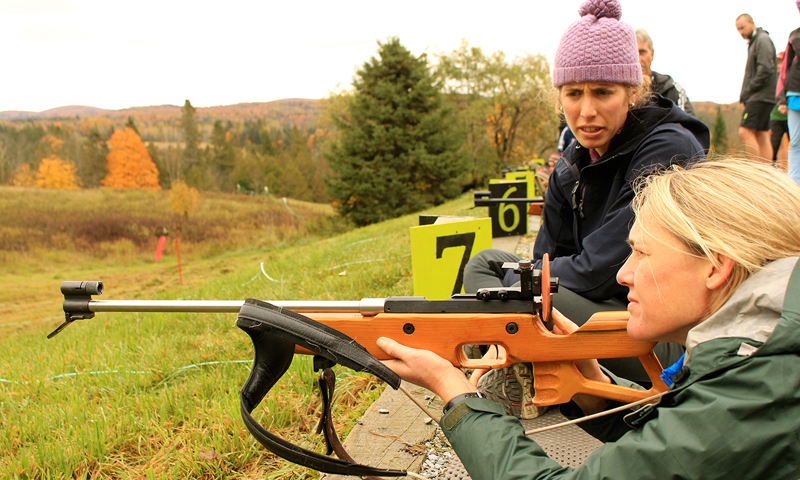
    US Biathlon National Team member Susan Dunklee will provide instruction.
    U.S. Biathlon National Team member Susan Dunklee (top) instructs at the Craftsbury Outdoor Center last September in Craftsbury, Vt.

    For the last five years, there has been an ammunition shortage in the U.S. The shortage is most acute in inexpensive rimfire-type ammunition, particularly .22-caliber, which is preferred by competitive and recreational shooters.

    Though a careless web search can send you down a rabbit-hole of internet-forum conspiracy theories, the National Rifle Association (NRA) studied the problem and determined that the shortage was being caused by increased demand in the civilian market. President Barack Obama’s election in 2008 has created a lasting sense that gun and sales will be restricted, which has resulted in a five-year-long buying frenzy.

    Steve Hornady, president of Hornady Ammunition, one of the nation’s leading ammunition manufacturers, explained the cause of the shortage to the NRA. “We’re working as hard as we can to get as much out as possible,” he said, according to Forbes.com. “People walk into the store, they don’t see as much as they want so they take everything they can get. The next guy who comes in can’t get anything, so he panics … ”
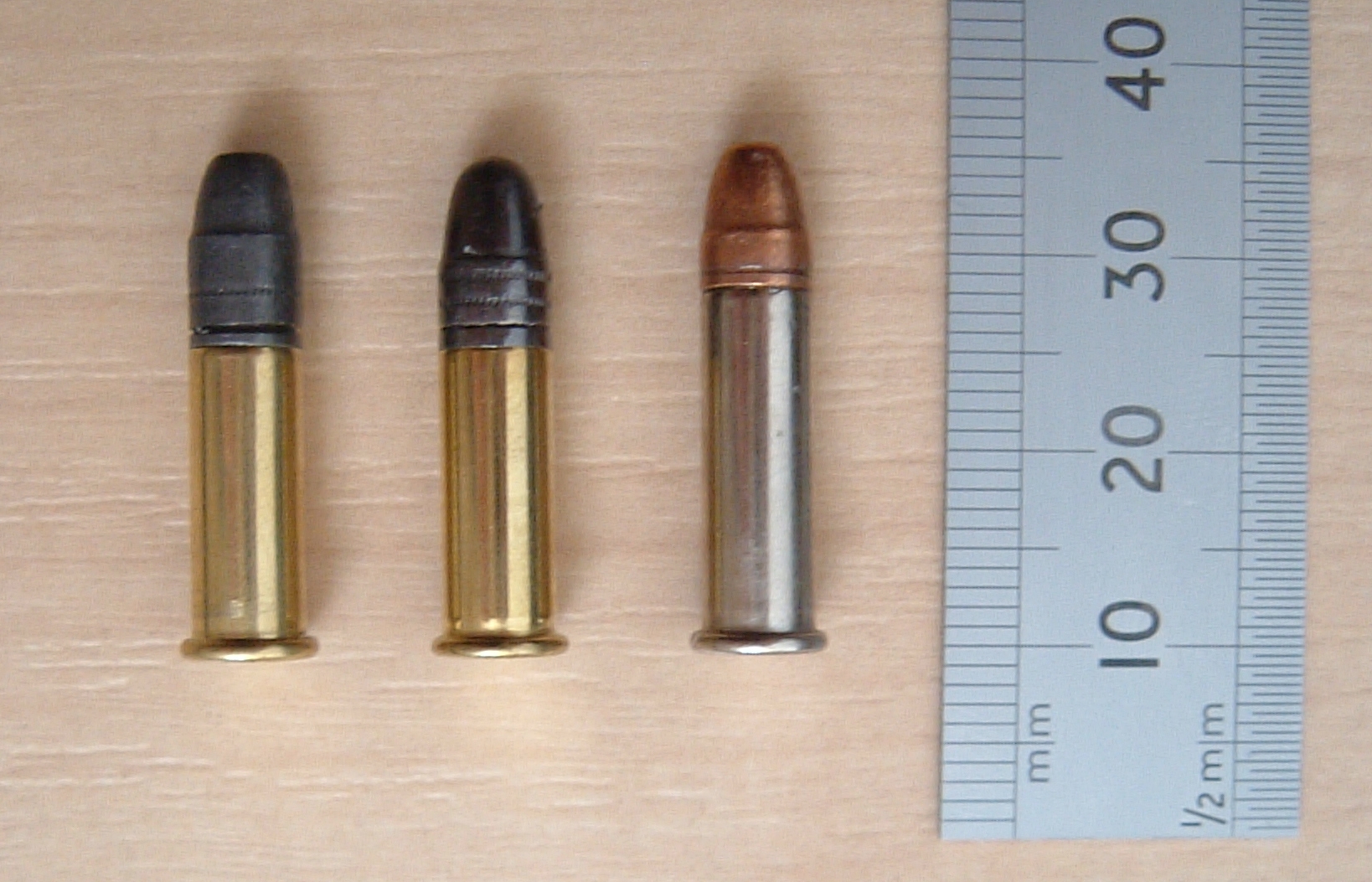
    The .22 Long Rifle rimfire cartridge, the most common in the world. (Photo: Wikimedia Commons)
    The .22 Long Rifle rimfire cartridge, the most common in the world. (Photo: Wikimedia Commons)

    The .22 long rifle (.22lr) bullet has long been the bullet of choice for target and competition shooting due to accuracy, low recoil, and low cost. With retail shelves nation-wide empty, how have American biathlon clubs responded?

    “Our club has been affected by ammunition shortages,” explained Zach Hall, head coach at AK Biathlon. “A large bulk order put in last year still hasn’t been produced by Federal, leaving many biathletes scrambling to find other sources of .22lr.  Mostly, families with small stores of ammunition have resorted to sharing with those in need, and everyone is going out of their way to purchase more when they travel to the lower 48.”

    But the shortage is not restricted to Alaska.

    “The junior program isn’t being affected yet, but some of our masters are having to conserve ammo,” explained Eric Tremble of the Ethan Allen Biathlon Club in Jericho, VT, in an email. “We buy our ammo directly from Federal/CCI through their youth direct sale program where Federal sells ammunition directly to clubs to be used exclusively for youth shooting. It’s a great program except that it’s only offered when Federal has surplus.

    “Because of the infrequency of the offers, we were proactive and bought the maximum allowed amount whenever we could. I put in big orders in 2011 and 2012, and we’ve been using that ever since. At one point I had an entire bookshelf filled with ammo, but now it’s down to three cases. Those three cases will get us through the rest of this summer and next winter. I’m hoping that Federal will be able to offer the youth program again before we run out.”

    “Our club has been affected by ammunition shortages. … Mostly, families with small stores of ammunition have resorted to sharing with those in need, and everyone is going out of their way to purchase more when they travel to the lower 48.” — Zach Hall, AK Biathlon Head Coach

    Seth Hubbard, of the Maine Winter Sports Center, encountered shortages in the past, but has enough ammo for the time being.

    “The biggest thing that I am doing is that I am spending more time working on sourcing the ammo that we need as well as keeping an eye on our inventory as we move through training,” he wrote.

    The shortage has been most account in the cheapest bullets, which are most popular with recreational shooters. However, even competitive biathletes use the cheaper ammo during training.

    “The quality of ammo hasn’t been affected, though lower grade (cheaper) target ammo is more difficult to locate, especially in bulk,” Hall continued.  “With .22 ammo being less prevalent it has been necessary to include more dry-fire drills as a precursor to live-fire training.  Also, we have several high-tech laser rifles that have substantially expanded our training opportunities and reduced our direct reliance on ammo.  We use the laser rifles to teach athletes a new concept and only when they have achieved a level of mastery over fundamentals do we add live ammo to the progression.”

    For Hall’s team, however, the need resort to the laser rifles has been a bit of a silver lining.

    “[The laser systems] allow for real-time monitoring and playback of aiming, shot placement, breathing, and follow through,” Hall explained. “As a coach I can diagnose issues on a laser rifle after only a few shots because I can see details of what’s happening during the whole shot process. With live ammunition some of that info is more difficult or impossible to discern without shooting through hundreds or even thousands of rounds.”

    “Another benefit to the laser rifles is that I can use the system to teach young kids or athletes who may initially be apprehensive about the loud noise of a gun or anticipated kick,” Hall added. “Once they’ve learned the basics of shooting then we can introduce them to live-fire shooting and the transition is usually really comfortable and low stress.”

    Like AK Biathlon, the Maine Winter Sports Center has encountered a shortage in the cheaper types of ammunition.

    “The biggest shortage that I have encountered and heard other coaches dealing with has been on the lower-grade ammo that younger athletes may be using,” Hubbard wrote in an email. “This is the grade of ammo that you will see more commonly at your local sporting shop, when it is available. This ammo is very very hard to come by and I am sure that it is causing greater shortages with clubs and athletes, depending on how individuals are purchasing their ammo there can be long waits.”

    But, as with all nordic sports, the coaches become personally invested in their athlete’s performance:

    “We’ve also been using up my personal supply from when I was racing in the ’90s,” Tremble added.

  • With A New Weapon In His Arsenal, Svendsen Wins 20 k, Sets Up For Olympic Dominance

    With A New Weapon In His Arsenal, Svendsen Wins 20 k, Sets Up For Olympic Dominance

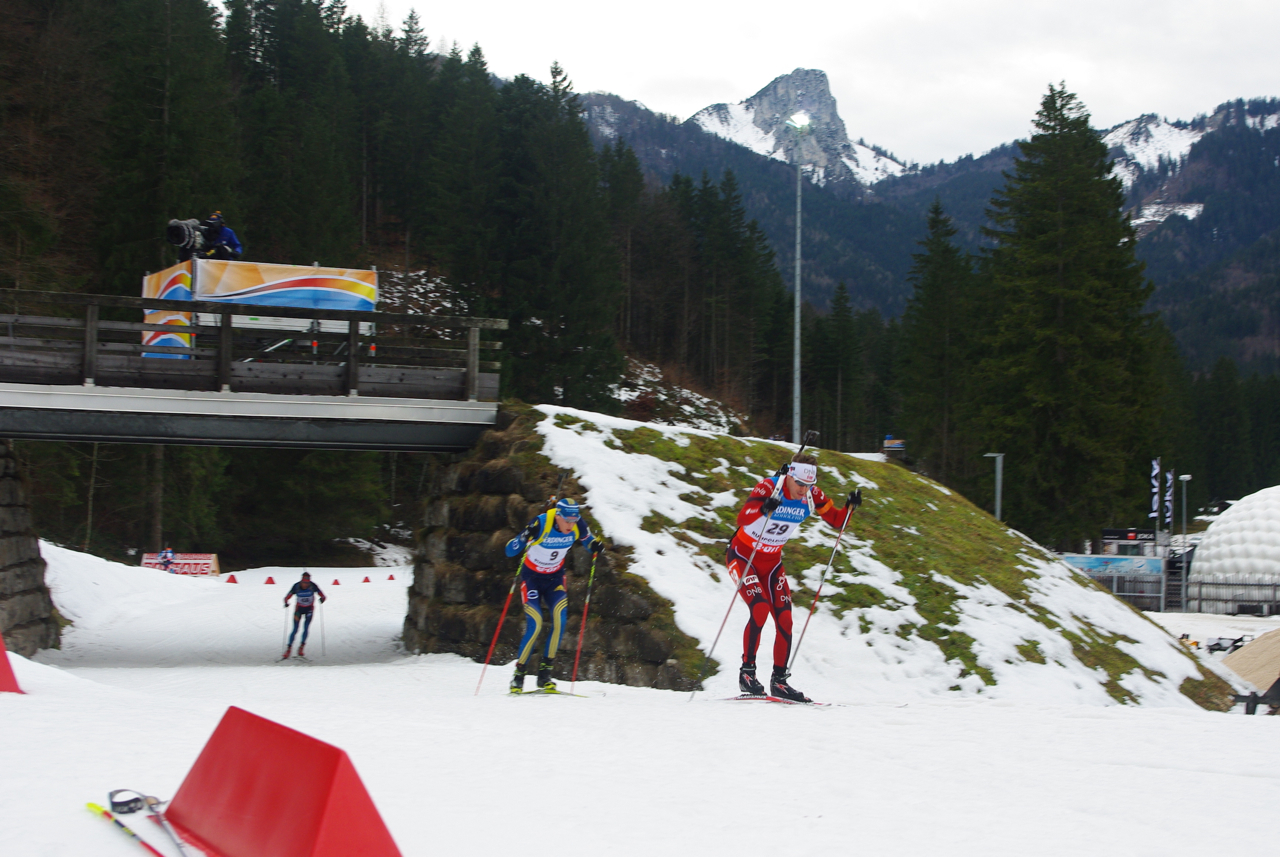
    Emil Hegle Svensen (NOR) leads Bjorn Ferry (SWE) out on course in Ruhpolding today. Svendsen won the 20 k individual, while Ferry missed three shots to place 15th.
    Emil Hegle Svensen (NOR) leads Bjorn Ferry (SWE) out on course in Ruhpolding today. Svendsen won the 20 k individual, while Ferry missed three shots to place 15th.

    RUHPOLDING, Germany – Emil Hegle Svendsen didn’t have the most auspicious start to today’s 20 k individual race. He missed a shot in prone: bam, a minute of added time as a penalty. With many athletes cleaning that first stage, he was left down in 51st place after four kilometers.

    But the veteran Norwegian has an added tool in his arsenal this year: mental resilience. He came back to hit every one of his next 15 shots, which combined with the fifth-fastest ski time of the day earned him his 34th World Cup victory.

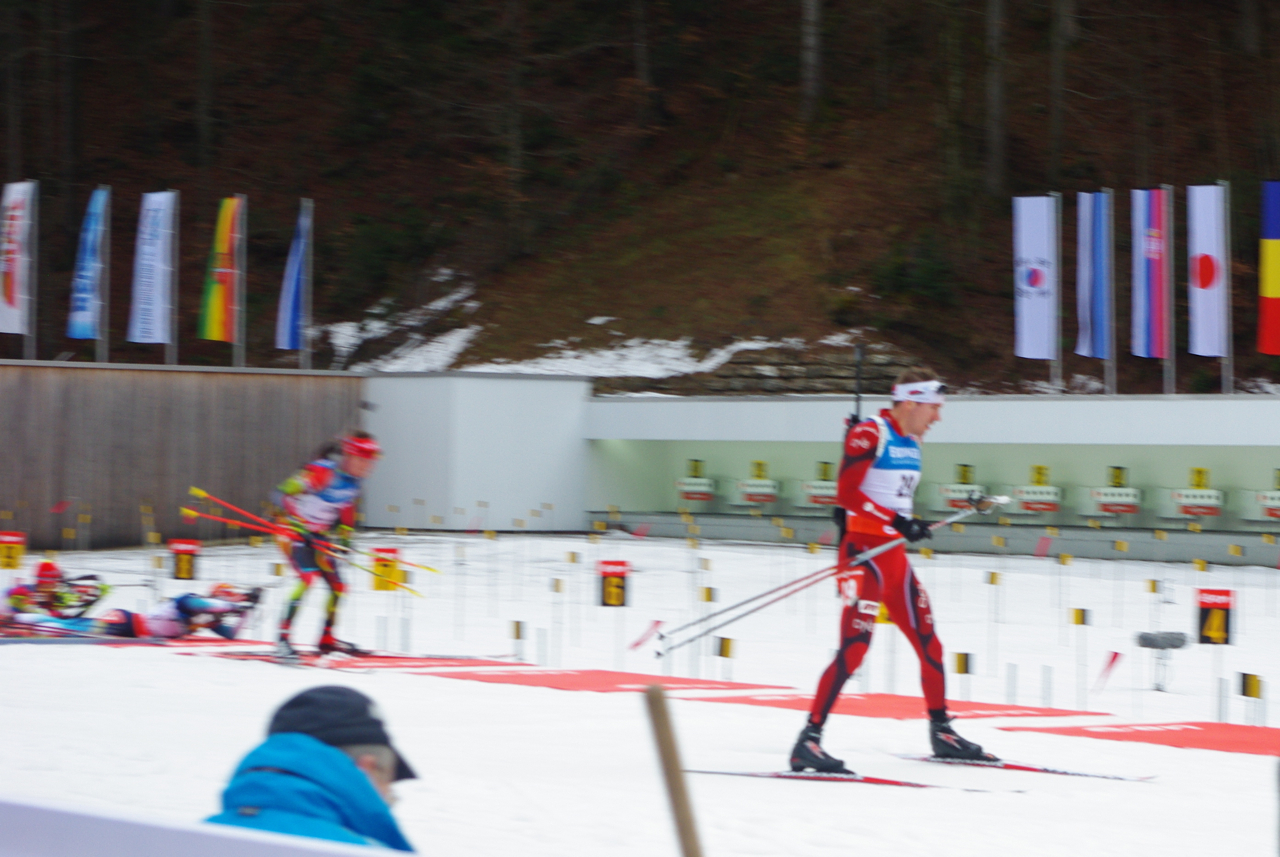
    Entering the range is now a zone of calm for Svendsen.
    Entering the range is now a zone of calm for Svendsen.

    “I found a way to focus on the right way,” Svendsen said of this season. “What is different now is that I really focus on doing it the same every time and not letting myself slack when I do a good race. I focus on doing the same thing race after race, and I think this is the recipe for good and stable racing – to do the same thing every time.”

    By the second clean stage, Svendsen was up to 13th place. After the third, he was in sixth. When he cleaned his final five targets, he moved into the lead, at the time by 27 seconds over Evgeniy Ustyugov of Russia.

    Later in the start order, Alexei Volkov, also of Russia, hit all 20 of his targets. He left the final stage only four seconds down to Svendsen. But he was unable to ski anything near the Norwegian’s pace, and Svendsen ended up winning by 14 seconds. Volkov barely managed to hold on to second place over Ustyugov.

    Among the things that Svendsen has changed this year is to work hard on his mental game. Once dominant in the sport – he won three medals at the 2010 Olympics as well as that year’s overall World Cup title – Svendsen has been pushed hard in recent seasons. Martin Fourcade of France has come on strong, taking the overall title both of the last two seasons.

    Where Svendsen’s incredible ski speed used to be plenty to win him races, even if he made mistakes on the range, coming into this year’s Olympics he knew he needed to be more than just fast. He needed to be accurate, if he was to beat Fourcade on the sport’s biggest stage.

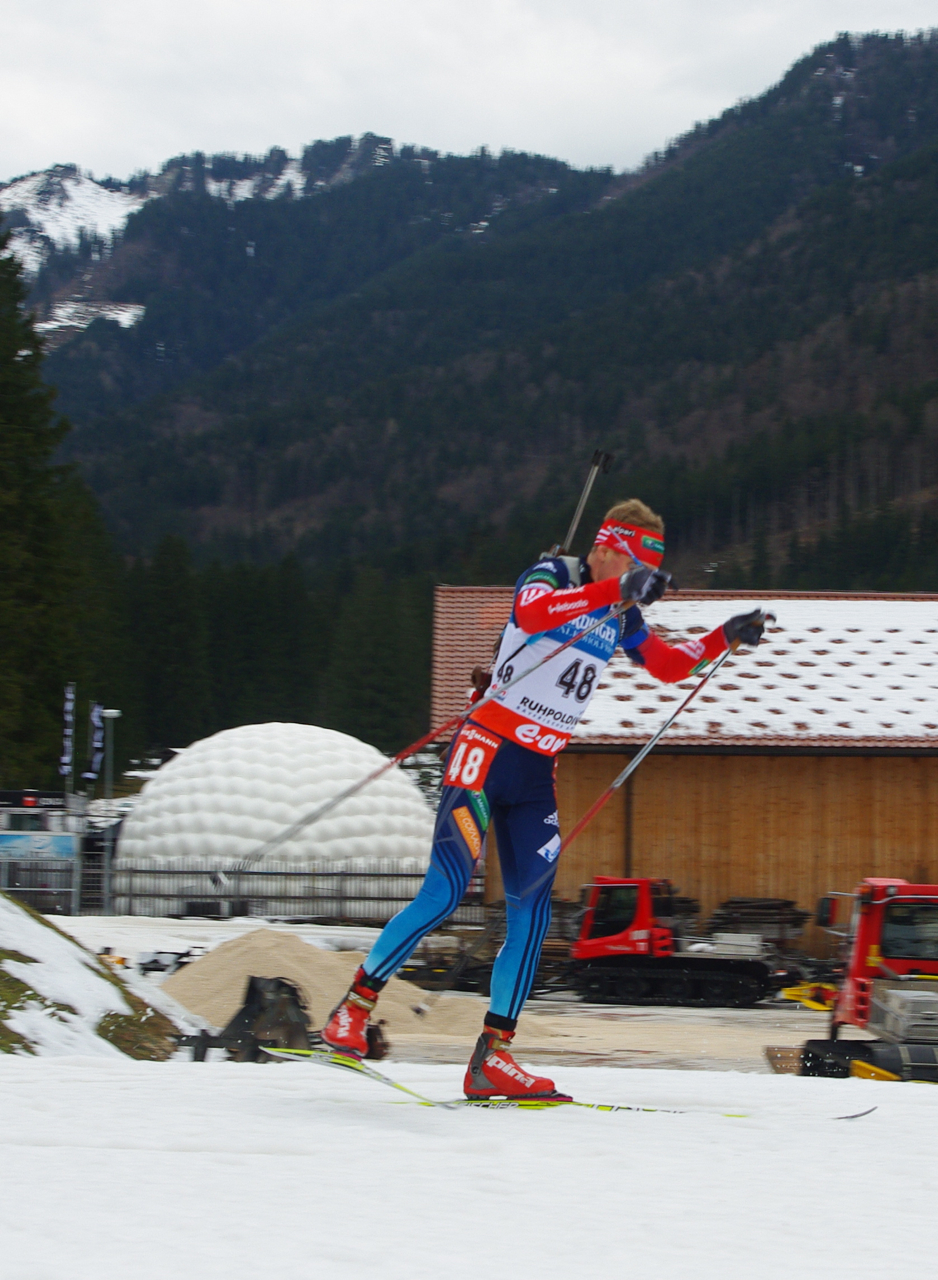
    Alexei Volkov (RUS) used clean shooting to secure second place.
    Alexei Volkov (RUS) used clean shooting to secure second place.

    The press hasn’t always been easy on him when he loses races, either. “I’m a big fat man,” he joked today of how hard the last loop was, alluding to the way that Norwegian broadcaster NRK dedicated an entire story to the fact that he gained six kilograms over the summer.

    It doesn’t seem to have cost him anything. Svendsen is still fast, and now he’s better on the range, too. This weekend, Fourcade isn’t here – he’s off training. But last weekend in Oberhof, Svendsen beat his French rival in back-to-back races for the first time this season.

    “I think the biggest difference is that I’m stronger on the shooting range,” Svendsen said. “I have been working a lot of course with the shooting in the summer and the fall, and also in the winter.”

    The mental work isn’t just about staying focused in a single race, but also over the course of a season. Svendsen had a tough opening, failing to make the top ten in either of the opening individual races in Östersund, Sweden, while watching Fourcade take a more than two-minute win in the kickoff competition. But this year, Svendsen cares about the big picture. That’s the Olympics.

    “This is one of my advantages now, I’m strong mentally,” he said. “I have been doing a lot of good mental work and it is starting to pay off… Hopefully I can keep it that way even in the Olympics when it’s even more pressure. It is going to be fun to see if I can keep it together.”

    Fourcade will likely take the Total Score again, but can he beat Svendsen at the Olympics? The Norwegian has shown that he can be at his best when it counts, including last year when he won gold in both the sprint and pursuit, as well as the relay, which Foucade had hoped France would win. It was a slap in the face considering how dominant Fourcade was for the entire rest of the season.

    Svendsen believes that he’s setting up for another chance to win the gold.

    “This victory is very important to me today, especially considering the shooting,” Svendsen told NRK. “The 20 k is a shooting competition, and today it turned out that I’m on a good track for the Olympics.

    To be at his best in Sochi, Svendsen is taking the next weekend of World Cup racing off in order to relax and focus.

    “I race tomorrow and after that I go home for some days, and after that we are going to Switzerland, to Lenzerheide, for preparation for the Olympics,” he said. “For me now, it’s important to get some rest and get my head straight before the Olympics. I think it’s going to be very big and very tough, and it’s important to be in top shape.”

    Results

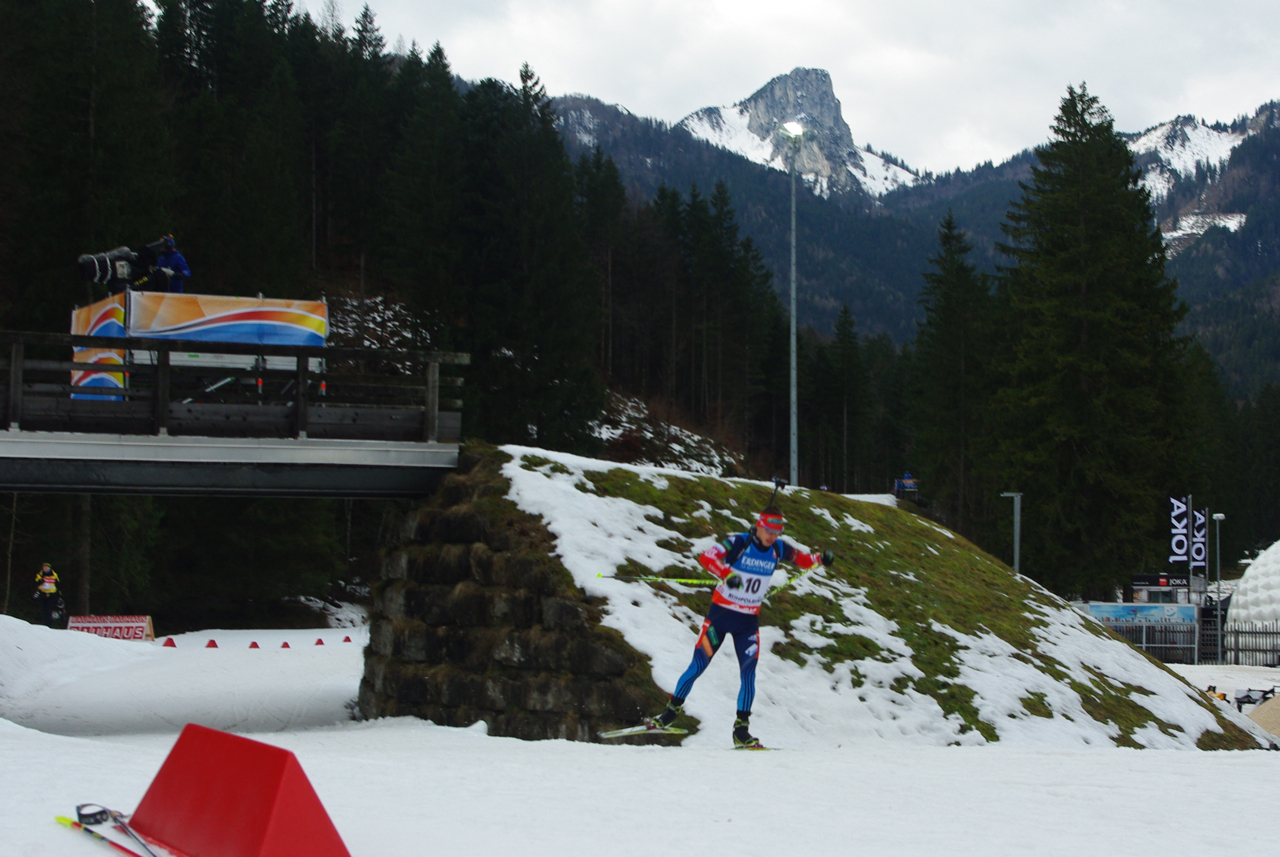
    Evgeniy Ustyugov (RUS), third place.
    Evgeniy Ustyugov (RUS), third place.