From the FasterSkier archive — posts syndicated from athletes’ and coaches’ own blogs between 2004 and 2012, kept online as published. Current coverage is at fasterskier.com.

Tag: Simen Hegstad Krüger

  • How do you solve a problem like Johannes? The World Cup weighs in on how to dethrone him.

    How do you solve a problem like Johannes? The World Cup weighs in on how to dethrone him.

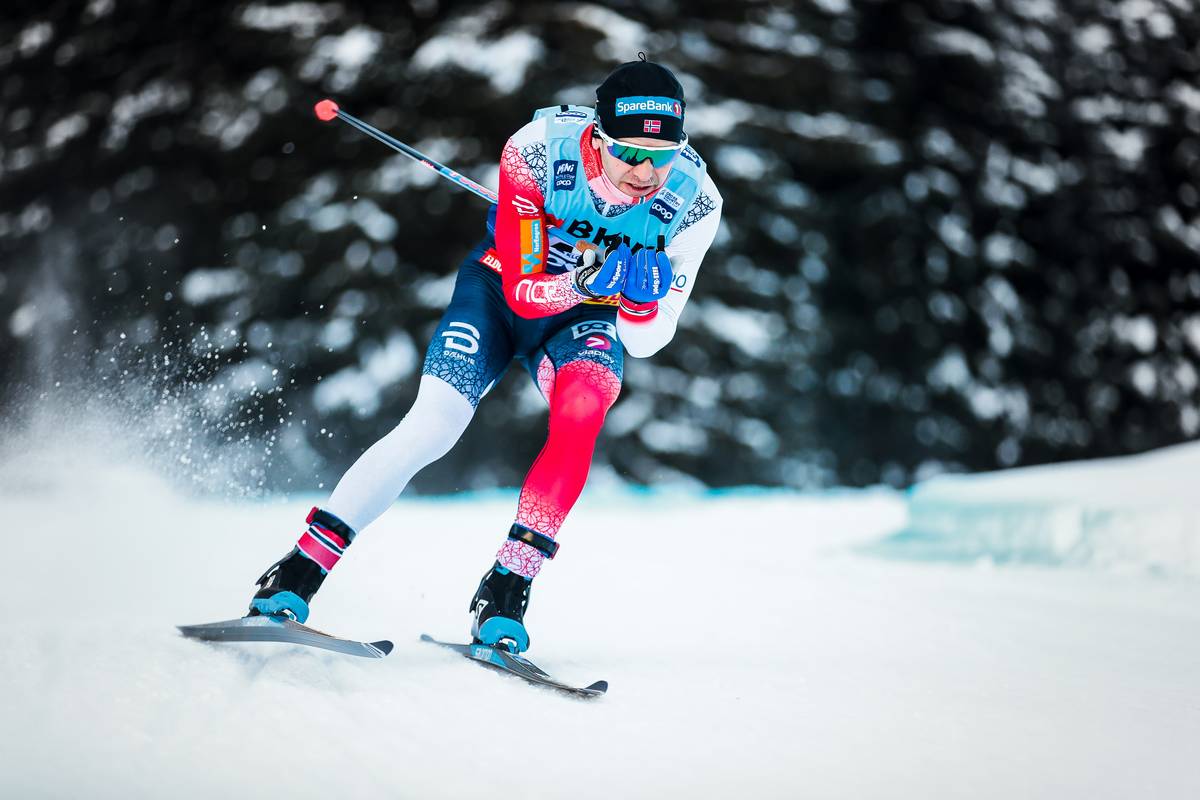
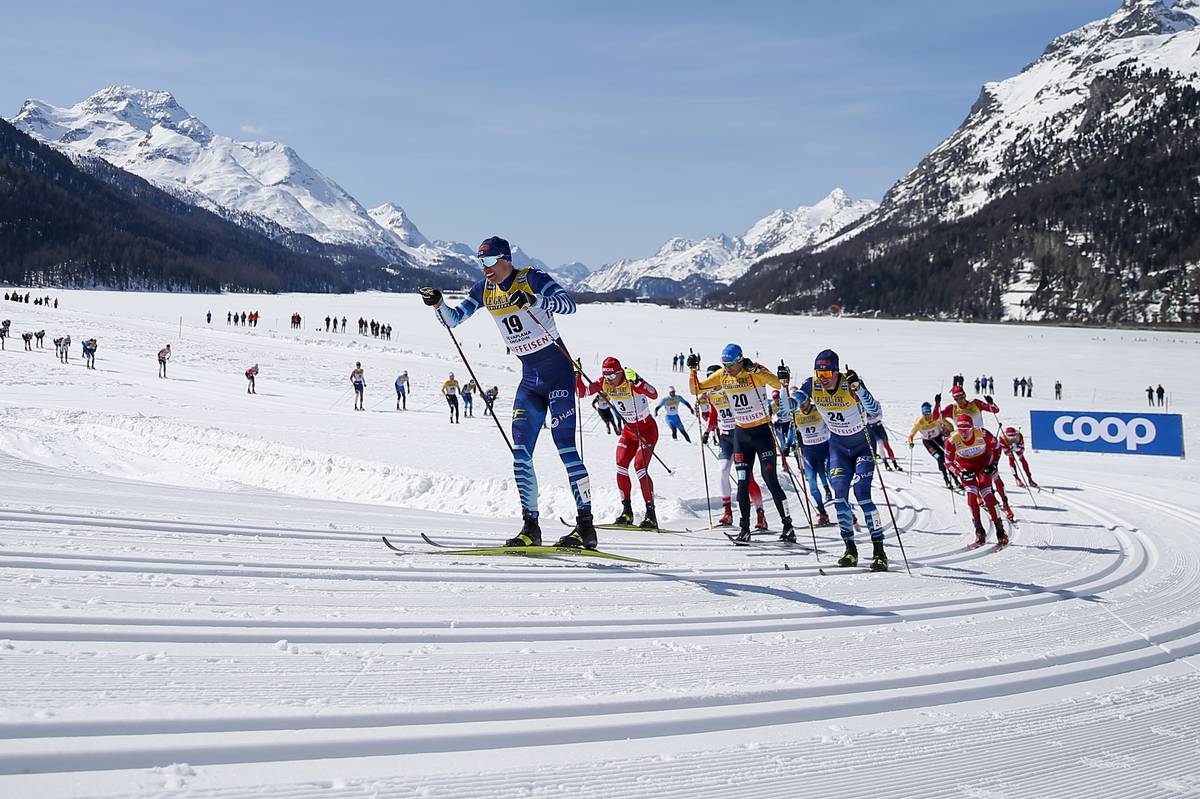
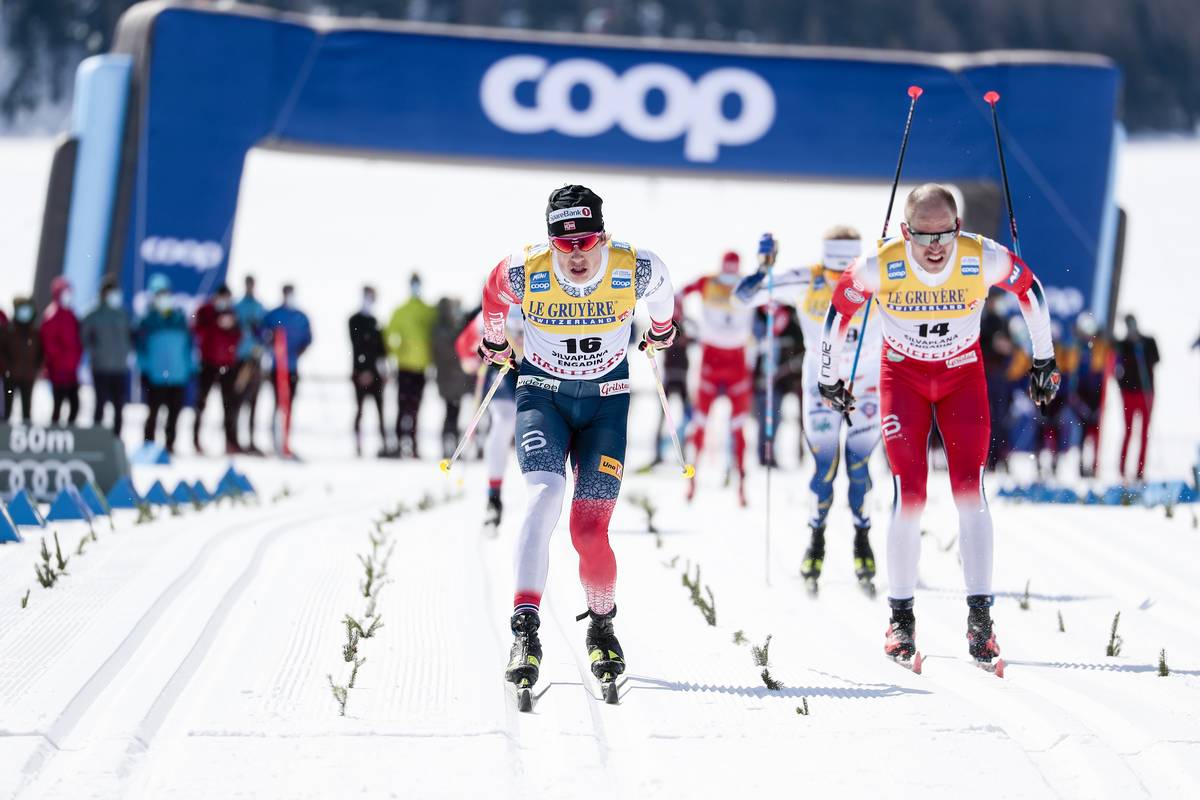
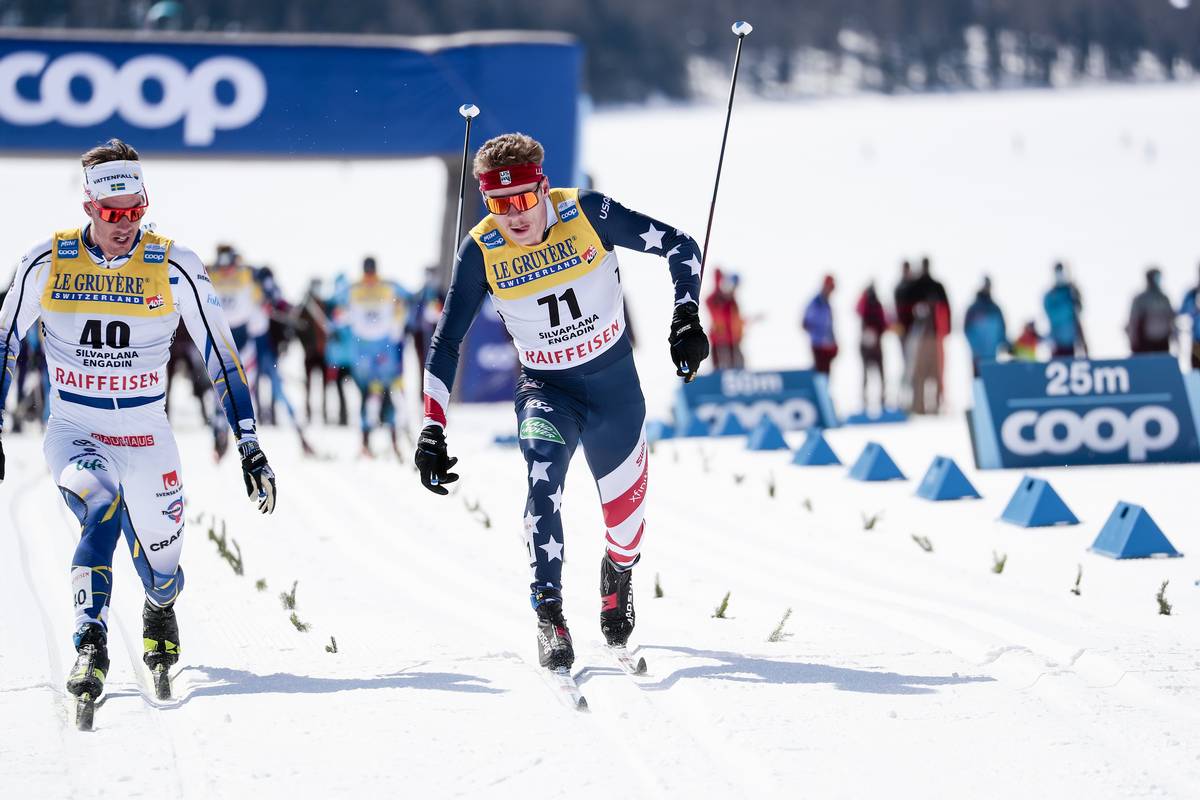
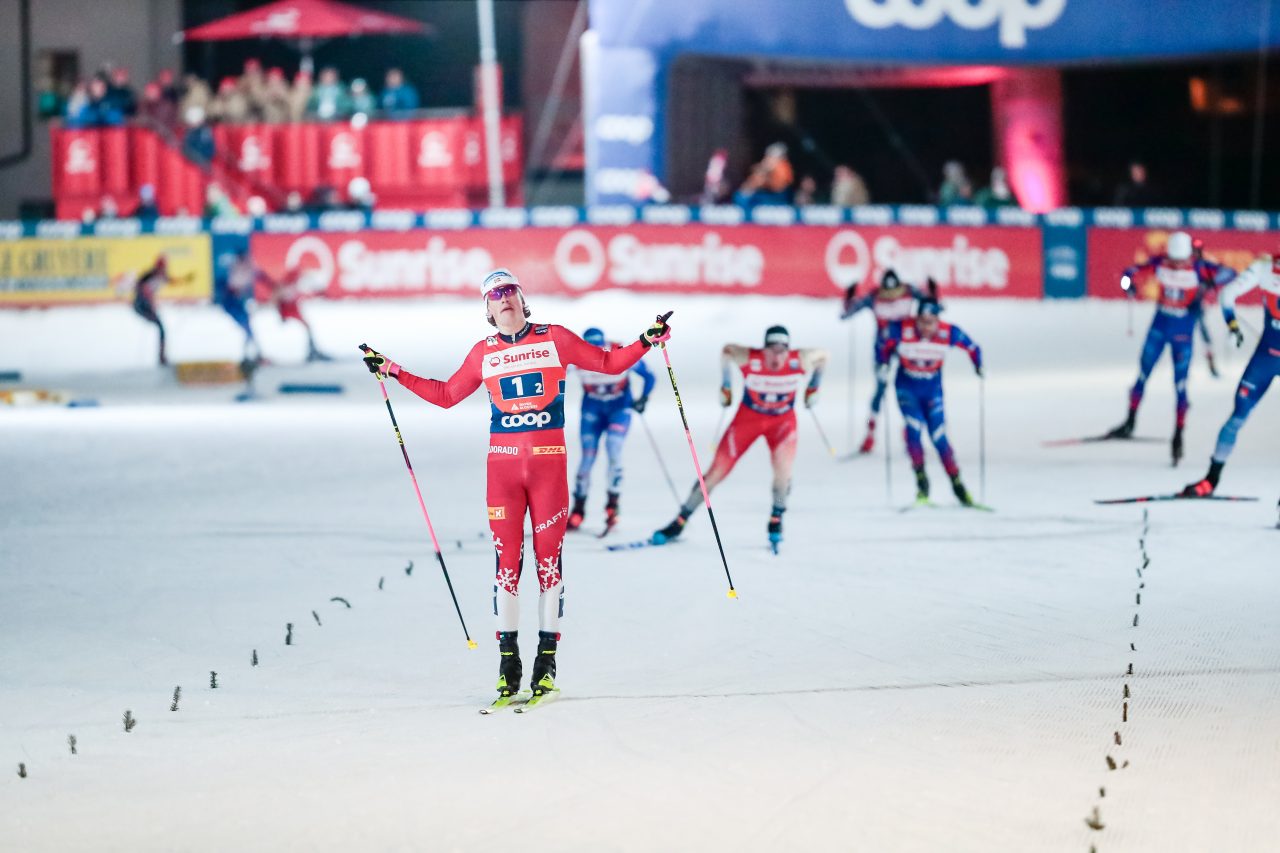
    Johannes Høsflot Klæbo, in typically dominating fashion, anchored the Norwegians to a victory in the team sprint in a World Cup in Switzerland earlier this month. (Photo: Modica/NordicFocus)

    In cross-country skiing, sprinting is a notoriously inconsistent discipline for a single competitor to dominate. The short distance leaves little time for racers to recover from even small mistakes; sharp corners and tight spaces often produce race-ending crashes.

    Which makes the track record of Norway’s Johannes Høsflot Klæbo almost impossible to comprehend.

    Klæbo, a five-time Olympic gold medalist, has won the last 10 straight sprint races he’s entered on the World Cup — the highest level of international competition. He often crosses the finish line far enough ahead of his rivals — if you can call them rivals — that he has time to unstrap his poles before crossing the finish line.

    Klæbo, 28, has won five out of the six Olympic and World Championships sprints he’s contested, and 52 of his 69 sprint World Cup starts — missing the World Cup sprint podium just once since 2018, according to data from the International Ski Federation.

    So: How do you beat this guy?

    FasterSkier, when the World Cup made its swing through Canada and Minnesota last season, decided to pose that question to an array of the circuit’s athletes and coaches. We’ve put together a kind of brief oral history below, seeking to appropriately describe Klæbo’s supremacy and the best ideas about how to take him down.

    Enjoy.

    What kind of tactics would you use to beat Klæbo in a sprint?

    Håvard Solås Taugbøl, a Norwegian World Cup racer and one of the nation’s (and globe’s) best sprinters: That’s the $1 million question. I have never managed to do it. 

    Swiss sprinter Valerio Grond: Maybe break his poles or something? I don’t know.

    French sprinter Lucas Chanavat: I mean, if I had the answer, I would have won the last one. You just focus on yourself, do the best race you can. It’s about my strengths. I think you have to be really perfect on every move you do. That’s the fun part about competing with him. It’s, like, you have to be perfect. And that’s really motivating.
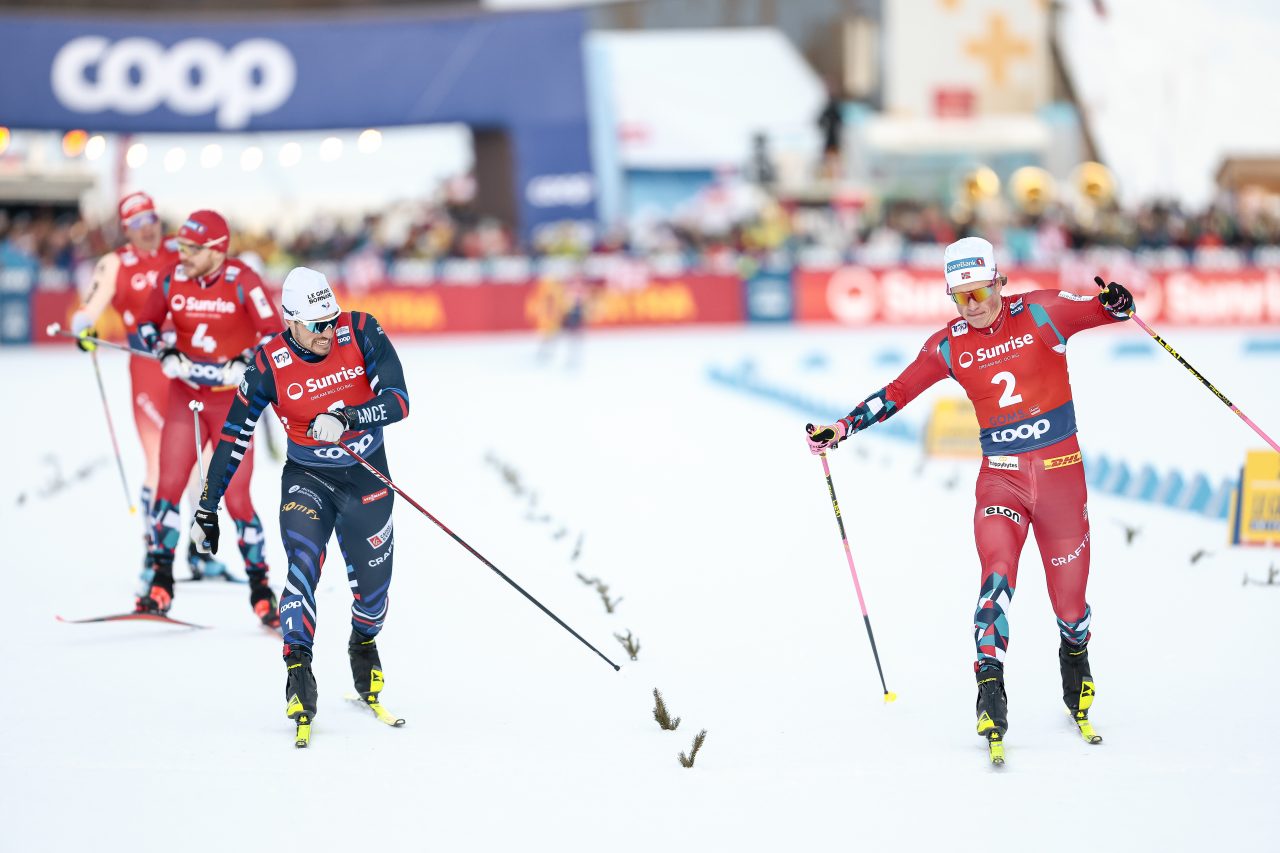
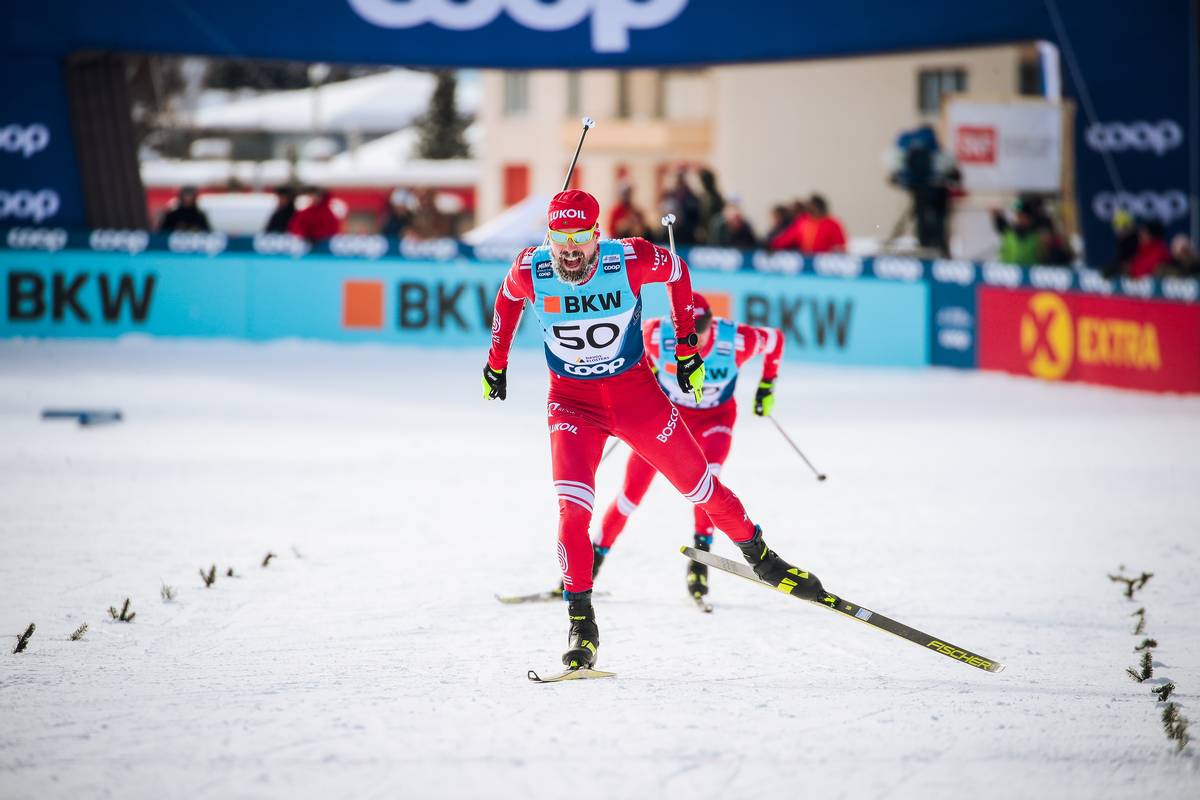
    Lucas Chanavat of France alllllmost beat Klæbo at a World Cup sprint race in Switzerland last year. But he didn’t. (Photo: Modica/NordicFocus)

    Sweden’s team manager, Anders Bystrom: I think, first of all, you have to mentally know that he’s not unbeatable. Because I think many people think so. He’s shown that he is almost unbeatable, so it’s fair that people think that. But we don’t talk about him like that.

    Jonna Sundling, the Swedish Olympic champion from 2022 in the women’s sprint: I would go hard from the start, and don’t leave any power. Just go, all that I have. I don’t think I could take him in the final meters — he’s too quick for me. The men, maybe they’re scared sometimes — I don’t know, I think they can do more than what they think they can do. Maybe.

    Maja Dahlqvist, a Swedish Olympic sprint medalist: I would try to sprint him down, like waiting til the end. But I guess a lot of people try to do that, and people are not so successful.

    Grond: If he’s in his top shape, he’s almost unbeatable. He’s really, really always in a good spot. But when he’s maybe not in the best spot, you have to take advantage of this and put in an attack.

    Canadian national team coach Robin McKeever: Break his pole? 

    Swedish sprinter Edvin Anger: I think we need to push him really hard, and take our chances. I don’t think I need to go hard early, but I think I need to have a good place. And when I take my chance, I really need to take my chance. And I need to push from the place in the track that I think is best for me. I can’t wait to see what he will do, because I need to do the thing first.

    Norwegian sprinter Erik Valnes: How to beat Johannes in sprint is all about him being in bad shape. [Laughs] I think maybe it’s about the finish — or, to be able to have a good finish after a high-speed final. There are many things that have to be right to beat him. You just need to start the finishing sprint before him, and be ahead. Because as long as you’re behind him, you’re one step behind him in the mind games as well.

    McKeever: I think the only way is by surprising him. And they’re trying.

    What makes Klæbo so good at sprinting?

    Chanavat: He’s strong in every aspect of the sprint race. He has, like, amazing turns, an amazing finishing sprint, he’s insane in stamina. He’s good at everything. He’s the GOAT [Greatest Of All Time]. 

    Grond: He’s so good in every technique and part of the race, and also tactically. He’s simply the best skier in history.

    Dahlqvist: He’s good in everything. He can go hard, he can wait, he can go from the start.

    Norwegian distance specialist Simen Hegstad Krüger: He often likes to control the heat and he gets a lot of respect. And you have — I think there’s a lot of guys that think there’s no chance to beat him so they just give him room and then they give it away to him. He has earned the respect but especially in sprint you can’t give anything away and you have to take your place and take your positions. And I think he’s the best in that but I think sometimes he gets the best positions a little bit too easily.
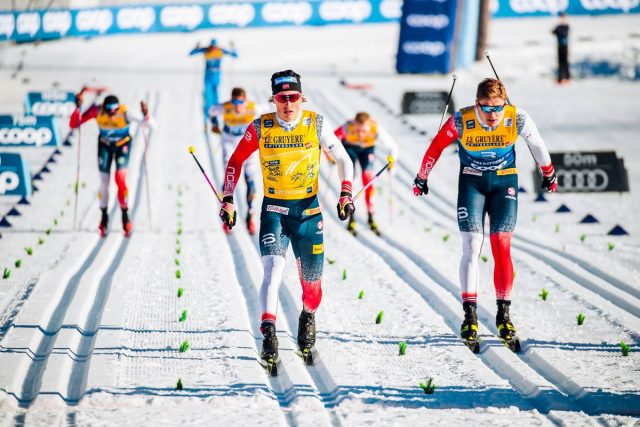
    Klæbo wins a Tour de Ski stage just ahead of his Norwegian teammate Erik Valnes. (Photo: Modica/NordicFocus)

    Valnes: I’ve been angry with myself sometimes because of bad tactical decisions. Because many times I’ve just, in my unconsciousness — you think, ‘Just follow him, and you’ll get a good result.’ But then you will not get past him.

    Bystrom: If you meet him in a heat, you almost adapt to what he’s doing. Because you have to see, ‘Okay, what’s Johannes going to do now?’ Because you know he has this X-factor in many parts of the course. 

    Does Klæbo have any weaknesses in sprinting?

    Chanavat: You should probably ask him. That would be the best.

    Klæbo: That’s going to be a secret. [chuckles] I don’t think I will tell everyone. I think I’ll keep that for myself and I’ll tell everyone when I’m done racing. That’s my answer.

    Norwegian sprinter Even Northug: Maybe none.

    Valnes: No. That’s the thing with him. He’s not having any weaknesses. You can say, like, maybe double-poling long flats. But he’s quite good there.

    Krüger: Not that I’ve seen so far. Even in distance races, it’s not so many weaknesses to find. 

    French sprinter Jules Chappaz: I think running [uphill], like in Ruka [the Finnish ski resort that hosts the season-opening World Cup races each year]. First it was the ‘Klaebo run,’ but now I think I’m really good at it. Maybe, hopefully next year in Ruka, I can run faster, beat him. [He didn’t.] He is sick a lot of times — maybe that’s sort of his weakness. 

    Klæbo coasts to the win in Ruka this year, beating everyone, including Jules Chappaz. (Photo: Modica/NordicFocus)

    Anger: It’s a hard question. But I think we need to push him and then make him a little stressed — that’s what I think.

    Bystrom: Mayyyyyybe it’s skating without poles — using your legs to be able to, maybe, go past him. But it’s really hard to say. He’s the best. He’s shown that many times. He’s so good in so many areas. It’s hard to say there’s one where you could beat him when there’s 28 areas where you can’t beat him.

    Are there ways athletes can train over the long-term, like over next summer or multiple seasons, to beat Klæbo?

    Chappaz: Just trying to focus on ourselves. This spring, I will compete in the Ski Classics [marathon races] to improve my double poling. To look to the Olympics, 2026, with the Val di Femme finish — I hope it will improve my double poling skills, to [be able to] beat him.

    Dahlqvist: Maybe they need another team like us, like the Swedish women, because you can use your team more. So, maybe a whole team needs to be stronger, to try to beat the Norwegian. They could do team tactics in a way, like everyone knows where they will go. 

    Anger: I’m still young — I’m just 21 years old. And he has a lot of training hours. A lot more than I have. With one or two years more, with good summers, also with a lot of hours, I think it will be better for me. And maybe I will be better in the final — I’m good in the quarters and the semis right now, but maybe I miss a little in the finals. I need to be a little harder and stronger.
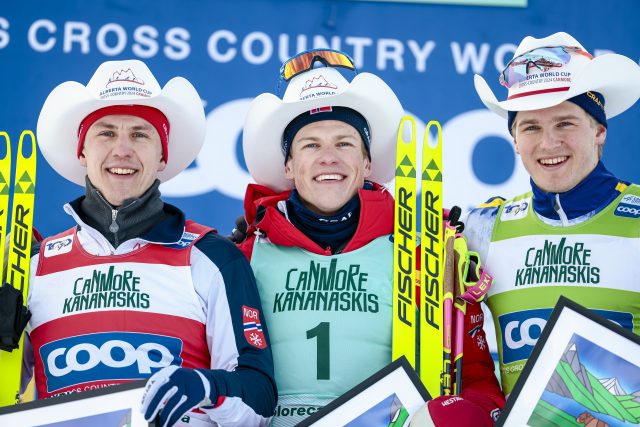
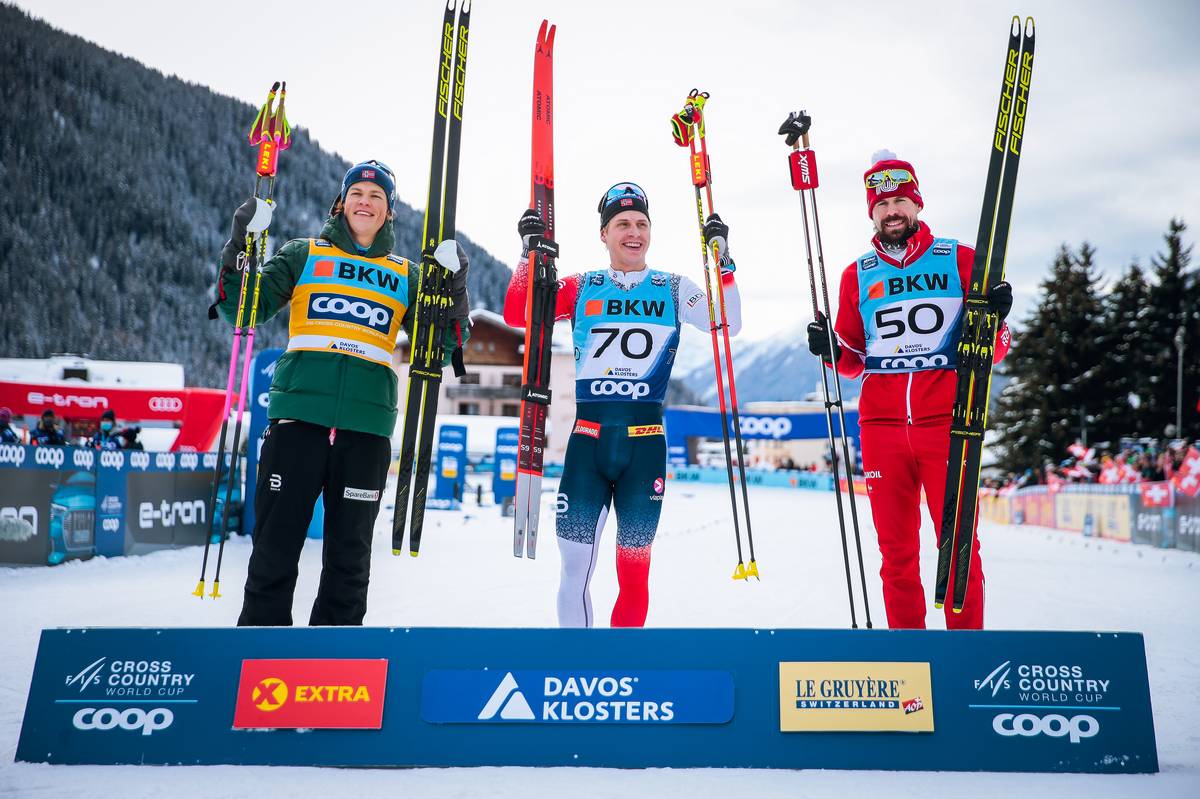
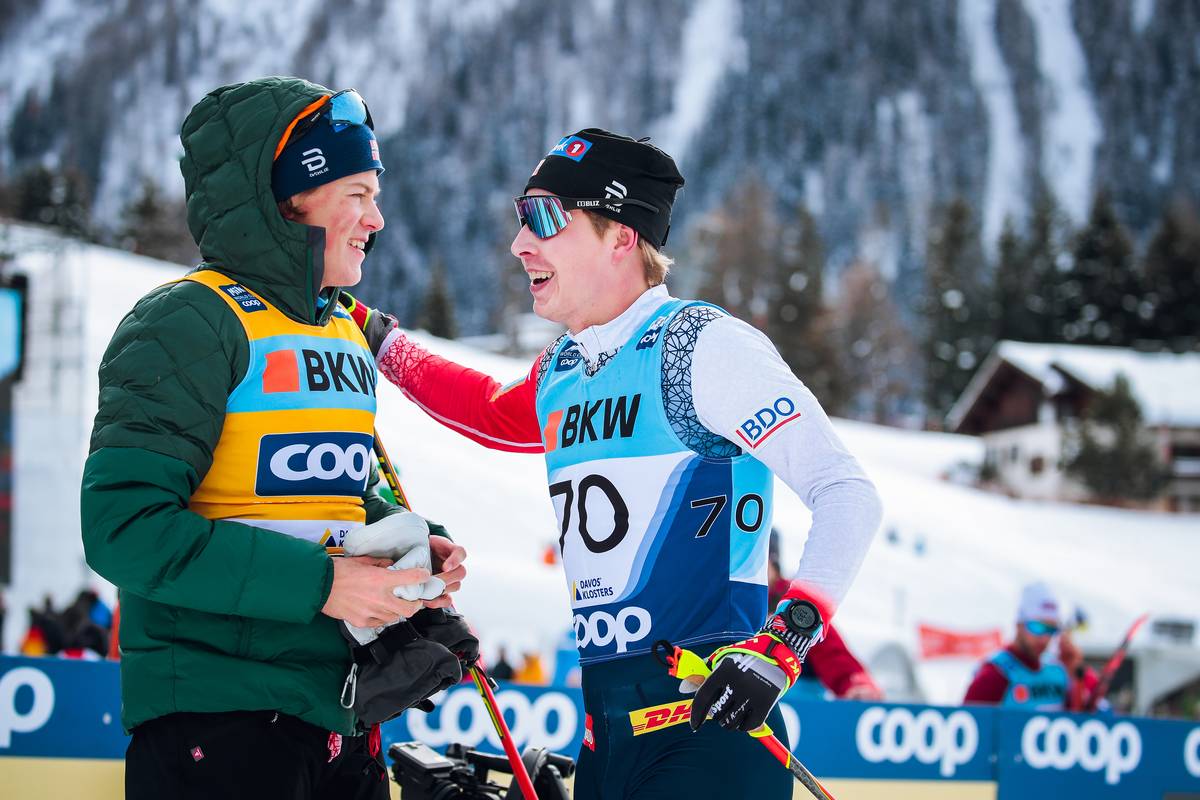
    Valnes, Klæbo and Anger pose for a podium photo after Klæbo won a World Cup sprint in Canada last year. (Photo: Modica/NordicFocus)

    Grond: We’ve just got to work hard. It’s also about learning how to ski against the best skier, for me. So, I’m trying, also, to get some experience on how they ski and where I can be better than them.

    Valnes: It’s more about improving the base level, the capacity, the VO2 max. If you have that base, from May until September, then you can build a little bit on that with specific training in October and November and just before the season starts.

    McKeever: The reality is, how do you beat Klaebo? Have him age out a little bit. 

    Northug: Training.

    Norwegian national team coach Eirik Myhr Nossum: You have to train, of course. But there were a lot of people training for the 100-meter dash, as well: Usain Bolt still won. So, if everybody in the world trains the best they can, still one will win — and it’s hard to beat Johannes. It’s possible, but he’s probably the best skier that’s ever been. And now it’s harder than ever, and he still wins.


  • Norway Rules in Lillehammer—Nyenget Scorches 10 k Freestyle

    Norway Rules in Lillehammer—Nyenget Scorches 10 k Freestyle

    This coverage is made possible through the generous support of Marty and Kathy Hall and A Hall Mark of Excellence Award. To learn more about A Hall Mark of Excellence Award, or to learn how you can support FasterSkier’s coverage, please contact info@fasterskier.com.

    Martin Loewstroem Nyenget (NOR) crushed the field in Lillehammer’s World Cup 10 k Freestyle Interval Start. (Photo: NordicFocus)

    There will be a Cross-Country World Championships in Trondheim, Norway later this winter—and it looks like the anticipation of those important race days on the International Ski Federation (FIS) calendar is causing this season to be viewed in a whole new way. In seasons past, the rewards of performing well in the year-long FIS World Cup standings would’ve inspired many skiers to enter every single available World Cup race, even when they were tired (rationalizing that everyone else would’ve been tired), maybe even when they were sick (can’t afford to take a day off in which some other skier could steal their points). Even the exhaustion-inducing, plague-generating Tour de Ski (and the massive number of points it offers) has generally been seen to be so important that skiers risked ruining their whole season by skipping it. Not anymore: FIS has already announced plans to investigate alternative scheduling—and reconfigured scoring values—of future Tour de Ski events so that racers will continue to consider it valuable. As for the tightly packed races of World Cup weekends, World Championship contenders are already selectively entering—and selectively skipping—those. And the season is only two weekends old.

    With what’s certain to be the astronomical value of a Norwegian victories in World Championship races contested on native soil, Team Norway seems to be taking a different approach to those days on the FIS calendar. Last week in Ruka, Finland, Johannes Hoesflot Klaebo was said to have displayed mild cold symptoms—he did not start Sunday’s 20 k Freestyle Mass Start, a race he truly was likely to have won (healthy or not). This on a weekend when he had already earned his way into the FIS World Cup overall leaders bib (Klaebo’s absence from Sunday’s 20 k would deliver the bib to Norwegian teammate—and defending Crystal Globe winner—Harald Oestberg Amundsen).

    Eight Norwegians raced into the top ten of Lillehammer’s 10 k Freestyle, including names that are fairly new to international audiences like Andreas Fjorden Ree (NOR) who would finish an impressive fifth. (Photo: NordicFocus)

    In this weekend’s Lillehammer World Cup races, Team Norway is entitled to a whole host of starters—eight for being the nation of a World Cup overall winner (Amundsen), and another four as the host nation of the weekend’s racing in Lillehammer. Twelve Norwegian starters lined up for the Men’s 10 k Freestyle—Iver Tildheim Andersen, Mattis Stenshagen, Didrik Toenseth, Simen Hegstad Krueger, Paal Golberg, Martin Loewstroem Nyenget, Jan Thomas Jenssen, Andreas Fjorden Ree, Sander Haukvik-Jensen, Einar Hedegart, Ole Tafjord Suhrke, and Amundsen—but no Klaebo on the roster. Team physicians have suggested that his case of the Ruka-sniffles continues . . . so no racing for him on Friday. He’s likely to rise from his sick bed just in time to smack around the rest of the competition in Saturday’s Sprints. Then we’ll see what he has left for Sunday’s Skiathlon. What’s evident is that Klaebo (perhaps more than any other skier) is planning his season so that “what he has left” on race day will find him at his absolute best when the World Championships come to Trondheim.

    Other teams’ star athletes are already following suit: Team Sweden’s Frida Karlsson followed up her utterly dominant performance in Ruka’s 20 k Classic Individual Start by skipping the 20 k Freestlye Mass Start only two days later (a race in which she would’ve been certain to contend for the win). But the World Cup is filled with fine athletes, and so many of them DID race the event in Lillehammer. In the end, Norway continued its dominance with eight skiers in the top ten and a decisive a victory for Nyenget, followed by Krueger in second and Amundsen in third.

    Among Americans, Gus Schumacher finished 25th, followed by Ben Ogden (31st), Zanden McMullen (32nd), John steel Hagenbuch (38th), Hunter Wonders (53rd), Michael Earnhart (64th), Zak Ketterson (72nd).

    Canadian racers in Lillehammer included Antoine Cyr (35th), Max Hollmann (37th), Xavier McKeever (63rd), Olivier Leveille (66th), Sasha Masson (68th).

    Gus Schumacher (USA) followed up his eighth place finish in Ruka’s 20 k Mass Start with a 25th place finish in the 10 k Freestyle in Lillehammer. (Photo: NordicFocus)
    10 k Freestyle Interval Start

    Fans of American skiing were eager to see if Ogden could make a mini-comeback after a less-than-stellar couple of races (and a DNS in the 20 k Mass Satrt) in Ruka a week ago. Though cameras were able to follow Ogden for the first meters of the start, he looked to begin very conservatively, very relaxed.

    “I’m always trying to be as good as I can be in all the races,” said Ogden. “That being said I have an emphasis on sprinting this season as I want to target the individual and team sprint at world champs. Lots of work to be done on both.”
    The more I race the better I get,” Ogden continued. “Always has been that way for early season, that’s how todays 10k fits into the master plan.”
    Fans were also eager to see if McMullen and Schumacher could repeat their top ten finishes of a week ago in the Ruka 20 k Mass Start. Team USA’s season continues to be one in development.

    “Definitely pretty had conditions,” said Schumacher. The hills, especially, were quite soft . . . kinda no matter what you did, it seemed like that last lap was really hard.”

    Naoto Baba (JPN) was one of the leaders among early starters. He would finish an excellent 17th in Lillehammer. (Photo: NordicFocus)

    Strong early splits by Joe Davies (GBR) and Naoto Baba (JPN) gave hope to the early starters, but once the wave of Norwegians took to the course, all earlier contenders turned back into pumpkins. Andersen displaced early-leader, Davies by a whopping 23 seconds at the 3.5 kilometer mark. Racing in a pair of distinctly un-Nordic mirror-backed shades, Andersen (winner of last year’s Lillehammer World Cup 10 k Freestyle) blitzed all earlier starters and appeared positioned to repeat his 2023 Lillehammer 10 k World Cup win. But Andersen would find himself replaced in the leader’s chair by Krueger, who would then be displaced by Nyenget’s stunning 22:58 finish.

    “The condition today was really tough,” said, Nyenget. “I worked really hard with my motivation—this track and also this condition is not my favorite—but today I had a fantastic good day and good skis, so then it was a great experience.”

    Harald Oestberg Amundsen (NOR) defended his hold on the World Cup yellow leader’s bib with his third place finish in the  10 k Freestyle in Lillehammer.(Photo: Modica/NordicFocus)

    Late starter, Amundsen, skied brilliantly to claim third place on the podium, and in active defense of his World Cup Overall leader’s bib (ahead of Nyenget by 47 points). But the day was definitely Nyenget’s whose victory was made even more impressive when the finishing gaps are considered: more than a minute separated the top ten finishers.

    “Last week in Ruka I was really happy,” Nyenget comented after the race. “But to take this win is something extra. Obviously one of my best races, I think.”

    Naturally, all Norwegian team skiers are conscious of the bright media spotlight that illuminates their performances each week. Ironically, Nyenget’s career-day may be overlooked in the selection for World Championship starting positions since the 10 k Freestyle is not one of the events slated to be contested in Trondheim later this season. But it’s always a special occasion for any Norwegian skier to find himself atop a World Cup podium.

    “It’s a special season with the championship in Trondheim,” said Nyenget. “So fantastic to have a great start for this season.”


    Lillehammer 10 k Freestyle Interval Start RESULTS

    Simen Hegstad Krueger (NOR), Martin Loewstroem Nyenget (NOR) and Harald Oestberg Amundsen (NOR), (l-r) lead Norway’s dominance in Lillehammer by sweaping the podium. (Photo: NordicFocus)
  • Can jet-setting ski racers be climate activists? Schumacher, Diggins lean into “imperfect advocacy.”

    Can jet-setting ski racers be climate activists? Schumacher, Diggins lean into “imperfect advocacy.”

    American cross-country skier Gus Schumacher, pictured competing in Germany, works with a climate advocacy group called Protect Our Winters, and races with their “POW” logo on his hat. (Photo: Nordic Focus)

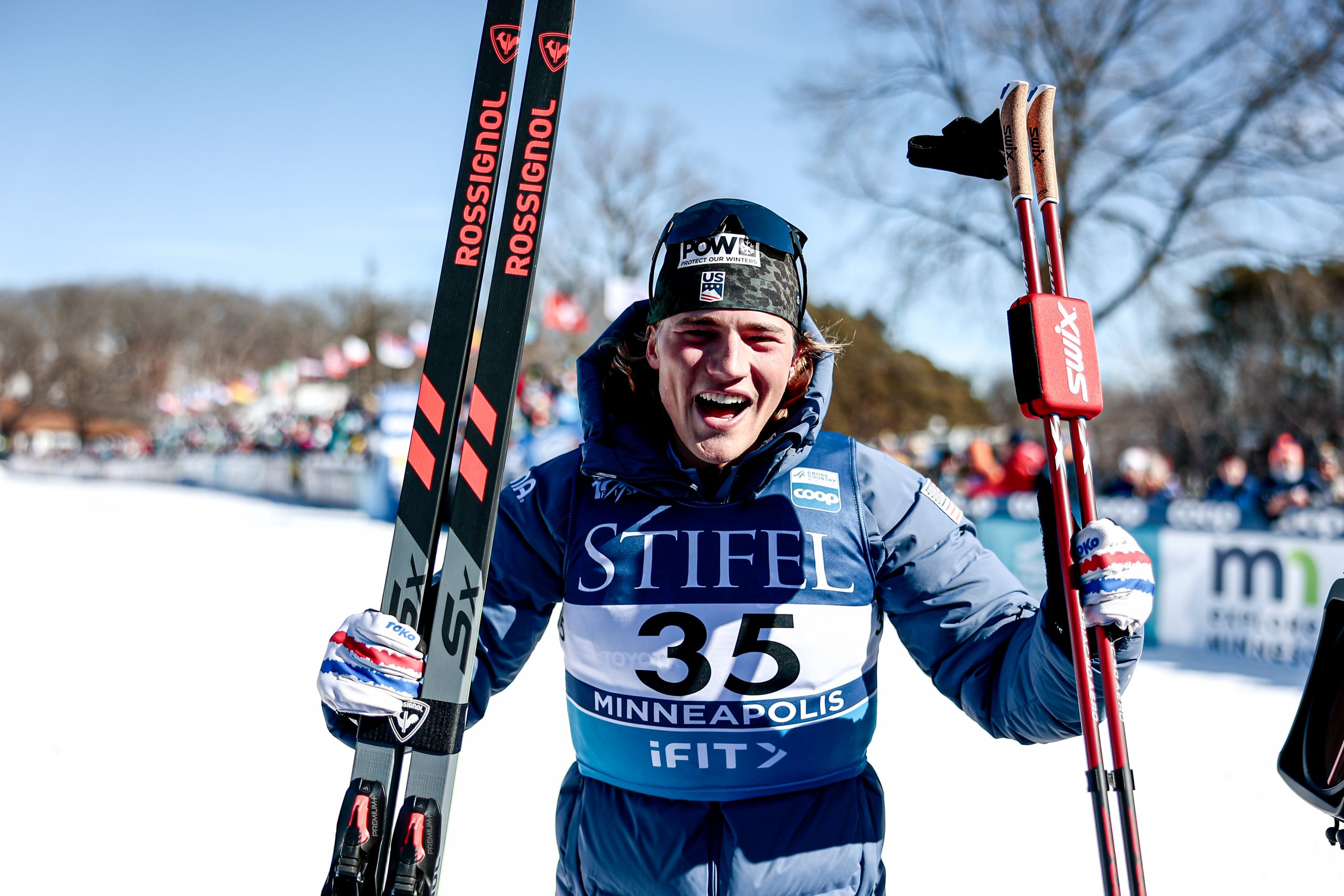
    MINNEAPOLIS — After Gus Schumacher’s upset win at an international cross-country ski race here last week, one of his first moves was not to celebrate at a bar, but instead, to stand in front of the crowd and talk about climate change.

    With hundreds listening to the panel discussion from the grandstand, Schumacher, his teammate Jessie Diggins and activist and author Bill McKibben passed a microphone back and forth.

    The subject, for Schumacher, is immediate and personal: Global warming poses an existential threat to his chosen sport, and not just over the long term.

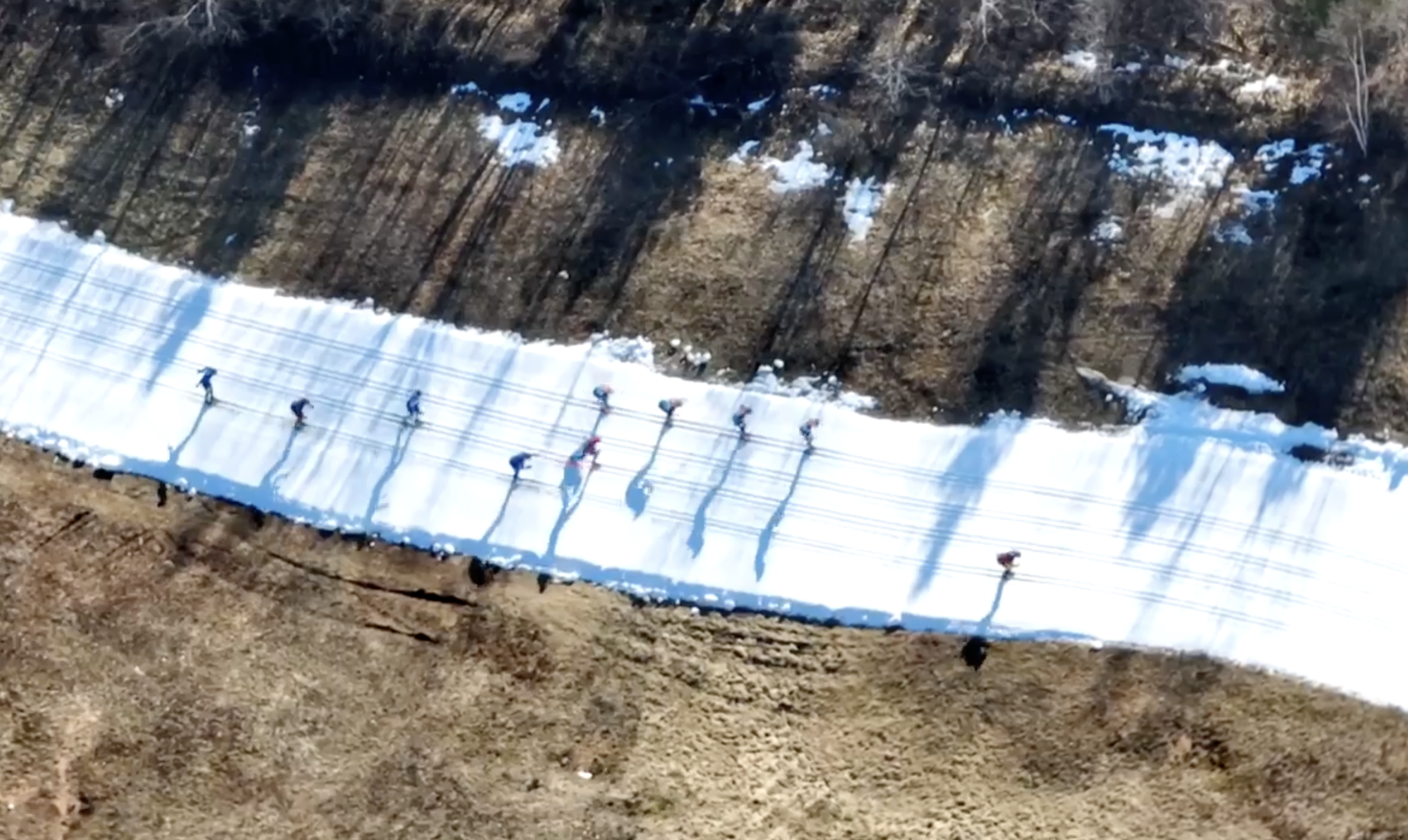
    Minneapolis has had its warmest winter on record this year. Up until a storm dumped six inches of snow on the same day the international cross-country skiing circuit arrived in the city, organizers were expecting to hold the races on a ribbon of man-made snow snaking through an otherwise bare and brown golf course.

    This year’s American Birkebeiner was held on a 10-kilometer loop of man-made snow. (Screen grab from American Birkebeiner live stream)

    “We’re a sport that needs snow, and cold temperatures,” Schumacher said in an interview. “We can be a group of people that can make some change.”

    Climate advocacy is at the center of Schumacher’s career: He’s part of a coalition of athletes and other outdoor professionals called Protect Our Winters, and wears the organization’s logo on his hat when he races. Five of his American cross-country ski teammates also work with the group, including Diggins, who’s on its board.

    But some of Schumacher’s other teammates and rivals, meanwhile, have held back — in part based on their fears that speaking up could make them sound hypocritical, given the carbon-intensive nature of their careers.

    “We’re the ones flying the most. We’re the ones traveling the most,” said Mika Vermeulen, a 24-year-old Austrian racer. “And then we are going to tell other people to cut down on stuff?”

    Schumacher acknowledges that there’s some inherent awkwardness in his work, because of his background and occupation.

    Austrian athlete Mika Vermeulen racing in Canada earlier this year. (Photo: NordicFocus)

    “Most of us are upper class white kids that, when climate stuff is starting to hit the fan, we have somewhere to go,” he said. “Other people don’t have that liberty.”

    But advocates familiar with Schumacher’s sport, however, say that athletes shouldn’t get too hung up on their own individual identities and lifestyles when the problem is systemic.

    “We’re in much too deep a hole to climb out of it one Tesla at a time. That’s not how this is going to work,” said McKibben, a writer, activist and avid cross-country skier who wrote a groundbreaking book on climate change. “The most important thing an individual can do is be less of an individual, and join together with others to fight to change the basic political and economic ground rules.”

    People can bring their own unique skills and experiences to that effort, McKibben said. Some can testify to the impacts of rising seas; others will bear witness to the disappearance of winter, he added.

    “I think the only requirement, now, is that you actually be willing to just be plain-spoken about it,” McKibben said. “And by plain-spoken, I mean willing to actually take sides.”

    ‘Imperfect advocacy‘

    Schumacher, 23, has done just that.

    Raised in Alaska, where oil producers have long funded the state budget and commanded ample political and economic power, the Olympian and world junior champion has nonetheless been willing to publicly challenge the industry — which has been a longtime sponsor of Schumacher’s own club team and Anchorage’s cross-country ski association.

    In 2022, when ConocoPhillips was seeking approval for its big Willow oil development on Alaska’s North Slope, Schumacher helped amplify Protect Our Winters’ opposition campaign on his own social media accounts.

    Afterward, he found himself invited to a meeting with ConocoPhillips officials, who tried to convince him that the project was a “good thing,” Schumacher said. It was clear that he’d gotten the company’s attention, he added.

    “That was, honestly, a cool thing to experience,” he said.

    Gus Schumacher and Jessie Diggins traveled to Washington, D.C. on a lobbying trip with Protect Our Winters in 2022. (Courtesy Gus Schumacher)

    Along with Diggins, Schumacher has also taken lobbying trips to Washington, D.C., where he’s spoken with one of his U.S. senators, Republican Lisa Murkowski, about the Willow project and about global warming’s impacts on a failing commercial salmon fishery that his family has participated in. And he’s started publishing a climate focused-newsletter for the Anchorage skiing association.

    “You can move the needle pretty easily,” said Schumacher, adding that he’d like to see a little more advocacy from his colleagues on the World Cup circuit. “I’d think that the Norwegians could meet with the king and the prime minister tomorrow, if they wanted to.”

    So far, though, most cross-country skiers from other nations have not because vocal advocates on the subject of climate change.

    In Norway, the national ski federation is sponsored by Equinor, the state-owned oil and energy company, and recent World Cup races held in the country have drawn disruptive protests from climate activists.

    In an interview after a World Cup race in Canada this month, Simen Hegstad Krüger, a Norwegian Olympic champion, said there’s no doubt that global warming is a “big issue,” particularly for athletes who depend on snow.

    “It’s crucial that we have good winters,” Krüger said. “But I can’t say that I have the solution.”

    Krüger noted that the International Ski Federation, which runs the World Cup circuit, has taken steps to reduce jet travel by teams — namely by clustering a few cross-country race weekends at a time at ski areas within driving distance.

    But McKibben, the author and activist, cautioned athletes against focusing narrowly on the climate impacts of their own participation in the World Cup.

    “The key task here is not reforming cross-country ski racing in order to make it less damaging. Because on any applicable scale, it’s irrelevant,” McKibben said. “On any applicable scale, almost everything is irrelevant that anyone’s doing — it’s the whole thing that has to shift.”

    The power that professional skiers can wield most effectively, McKibben and others advocates said, is through their platforms. Tens of thousands of people follow athletes like Schumacher and Diggins on social media, and thousands more turned up in person to watch them compete in Minneapolis last week.

    “The medium of sports, and the medium of storytelling that goes along with sports, is such a potent tool to use in order to drive change,” said Graham Zimmerman, a mountain climber who helps manage Protect Our Winters’ athlete coalition, and who participated in the panel discussion in Minneapolis.

    Ben Ogden, a 24-year-old American ski racer who’s been ambivalent about participating in climate advocacy, said those arguments make sense to him — and that waiting to get involved makes him feel like he’s “making a bunch of excuses for not being more proactive.”

    American cross-country skier Ben Ogden rests after a race in Norway. (Federico Modica/Nordic Focus)

    “But I think I’m waiting for the thing that feels right for me,” Ogden said. “I need to figure out, personally, how I can use that voice without being hypocritical.”

    Speaking out about climate change’s effects on his sport feels trivial, Ogden added, when considering the life-or-death impacts that global warming could inflict on more vulnerable people.

    “There are a lot of horrible tragedies in the world that are at the hands of climate change,” Ogden said. The possible loss of cross-country skiing, and “nice snow,” he added, are “probably among the least compelling ones.”

    Zimmerman, with Protect Our Winters, said that his group isn’t acting out of self interest — “so that we can go ski more” —as much as it’s asking coalition members to leverage their profiles to ensure worldwide access to clean air, clean water and clean energy.

    The organization has also tried to tackle, head on, the guilt that some athletes feel about their own climate impacts: It recently funded a film, “The Hypocrite,” that follows a professional skier, Amie Engerbretson, as she tries to reconcile her fossil fuel-intensive career with her participation in environmental advocacy.

    “The perceived hypocrisy about being a climate advocate who also travels for sports a lot is something that’s a stumbling block for a lot of people. But it’s something we have to get past,” said Zimmerman. “We live in an imperfect system. And to work within that system, to advocate within that system, to build a platform within that system requires burning fossil fuels. Imperfect advocacy is the only thing we’ve got.”

    Diggins, at a news conference in Minneapolis, said she’s embraced that concept.

    “Of course, there’s some hypocrisy there. We fly, for our jobs, like most people,” she said. But, she added: “If we have a chance to do something, or anything, to take a step in the right direction, that is better than sitting back and just watching the world burn.”

  • Canmore Reporter’s Notebook: Scandinavian Feuds, Nearly-Nudes, Car Crash Recovery, and Doping Doubts

    Canmore Reporter’s Notebook: Scandinavian Feuds, Nearly-Nudes, Car Crash Recovery, and Doping Doubts

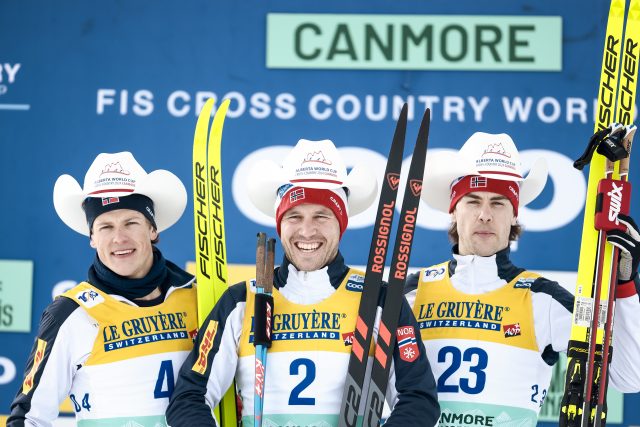
    The three Norwegian podium finishers sport their new cowboy hats Sunday. From left: Johannes Hoesflot Klaebo, Paal Golberg and Mattis Stenshagen. (Photo: NordicFocus)

    CANMORE, Alberta:  We’re three days into a six-race series of World Cup racing in North America and I’m just one guy, which means there hasn’t been time to share all the fun little stories and subplots that have been filling my notebook.

    I’m summarizing a few of the better ones here. Stay tuned for more notes and some feature stories after Tuesday’s final race in Canmore. If you have ideas for stories, tips or feedback for us, drop us a line at info@fasterskier.com.

    Canmore mayor says thanks but no thanks to nearly-naked Krüger

    Canmore is situated in the spectacular Canadian Rockies, but Alberta’s prairies start just down the highway to the east, and the events here celebrate the province’s cowboy culture with branded 10-gallon hats awarded to the podium finishers.

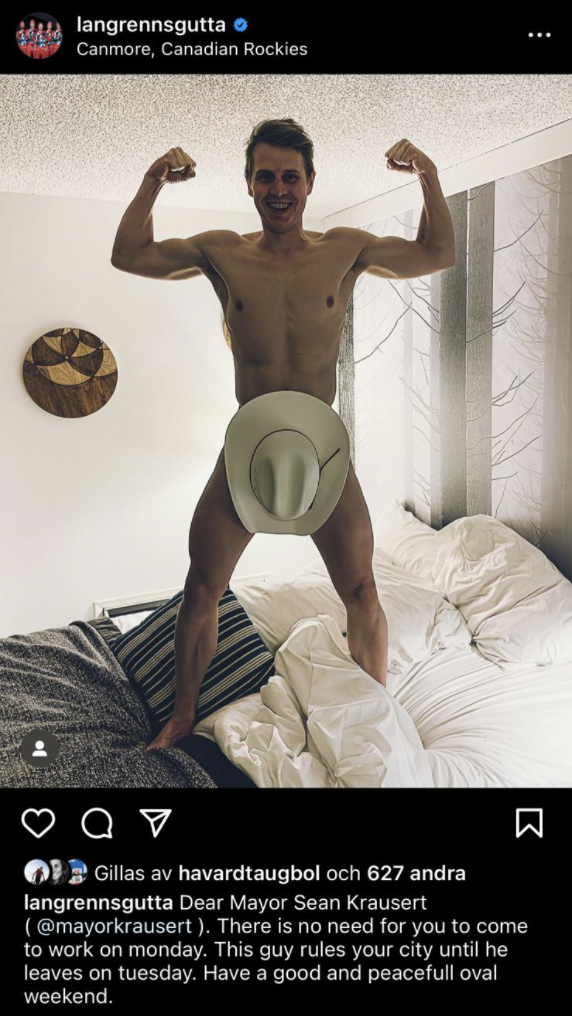
    Simen Hegstad Krüger of Norway won the first men’s race in Canmore in spectacular fashion Friday, and swiftly proceeded to defile the prize: In an Instagram post from the Norwegian team’s account later that day, he posed for a photo, naked, with only the cowboy hat preserving the image’s PG rating.

    This post from the Norwegian team needs no explanation.

    “Dear Mayor Sean Krausert,” the post said, tagging the mayor of Canmore. “There is no need for you to come to work on Monday. This guy rules your city until he leaves on Tuesday. Have a good and peaceful long weekend.”

    The next day, the post had been deleted. But after Norway swept the podium in Sunday’s men’s race, they published a new photoshopped image with five team members all posing naked with tastefully-placed hats and another offer that Krausert and his staff could have “two more days off, if you want.”

    Reached Sunday, Krausert said he was not aware of the posts, then, after I sent them to him, responded with a laugh-crying emoji.

    “Really…what can I say!!” he said. I said that he could, in fact, say whatever he wanted, to which he responded: “While I appreciate the offer, I’ll be at work on Monday so these incredible athletes can focus on skiing and enjoying Canmore.”

    Krüger said the idea for the original post came from his teammate Didrik Tønseth. “We had some fun about it, but then I figured in the morning that it is enough — maybe we can take it down,” he said, adding that no one instructed him to remove it.

    Tønseth told me, cheekily, that the Norwegian men had been failed by their “back-up crew, back in Norway,” which includes their “oldest and wisest” teammate, Sjur Røthe. The crew, Tønseth explained, is supposed to review all posts from the team’s Instagram account but didn’t because of the eight-hour time difference between Alberta and Europe.

    “It’s a lot of things we post that stop in the committee back in Norway,” Tønseth said. “Sjur is the athlete representative, but he was asleep, so it was his mistake, I think. Not ours.”

    Unfortunately for Røthe, it was too late in Norway for me to reach him for comment.

    A car crash derailed Jortberg last month. She’s back now.

    U.S. skier Lauren Jortberg is racing in Canmore just two weeks after a crash that left her with “pretty bad” whiplash and totaled the car she was driving — and she nonetheless placed 19th in Saturday’s skate sprint.

    “Honestly, I think it was for the better, looking back on it,” she said after the sprint. “I was having kind of a tough season and kind of just needed to have a little gratitude for life and everything — and have a scary situation that makes you appreciate everything more.”

    Lauren Jortberg racing earlier this year. (Photo: Nordic Focus)

    She added: “I wouldn’t recommend it, definitely. But it definitely gave me some perspective that skiing isn’t everything.”

    Jortberg, who races with the SMS T2 team in Vermont, said she was leaving a race in Craftsbury late last month and was driving on a dirt road in freezing rain when she had a head-on collision. Her car had gotten caught in a rut while she was driving around a turn.

    “It was pretty traumatic and scary,” she said.

    An ambulance came to the scene, and while Jortberg didn’t go to the hospital, she said she was suffering some “pretty bad symptoms” that stopped her from training for the next week.

    “But I feel a lot better now,” she said. “And we have a great staff here, and they’re really taking care of me.”

    Skistad fans the flames of a feud that…may not actually be much of a feud

    One of the fun ongoing subplots of the past year of racing on the World Cup has been the up-and-coming Norwegian sprinter, Kristine Stavås Skistad, poking at her Swedish rivals.

    Skistad, 25, has been the only woman to consistently puncture the dominance of the Swedish sprinters, who often put as many as three or four women in the six-person final heats on the World Cup. And when she wins, she seems to relish rubbing it in — or trying to, anyway.

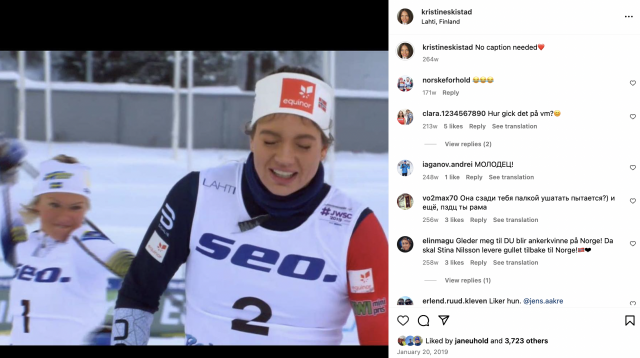
    Skistad’s ski-related snark appears to date back several years: An informed observer pointed me toward this objectively hilarious Instagram photo she posted from the World Junior Ski Championships in Finland five years ago. In it, Skistad smiles as she wins a gold medal in the sprint, while a clearly enraged Frida Karlsson of Sweden, who’s now a superstar on the World Cup, appears poised to smash her ski pole into the snow. “No caption needed,” Skistad wrote.

    No caption needed.

    In Saturday’s skate sprint, Skistad delivered not just a win but also another provocative gesture—a kiss, blown in the direction of the three Swedes who finished directly behind her.

    The Scandinavian media is delighting in what appears to be a budding rivalry: On Saturday, a Swedish television channel that was covering the Canmore races played a clip that analogized Skistad to a villainous character from the horror film “The Ring.”

    The Swedes themselves, however, appear generally unperturbed.

    “I feel like she sees us more like a rival than we really see her,” Maja Dahlqvist, one of the Swedish sprinters, told me. “We’re kind of friendly to her, and I think that maybe annoys her more. It doesn’t affect us at all—it’s not anger.”

    Johanna Hagström, another Swedish sprinter, said it’s a “little bit annoying” that Skistad is such a strong finisher. But she said the team’s read on Skistad is that she’s actually “really shy.”

    “She doesn’t speak that much—but on social media, she’s very cocky,” Hagström said. She added: “It’s really fun that she’s doing it. But I would never do that.”

    Hagström said she also thinks it’s good for the Swedish women to have other strong sprinters to compete against, and to give them motivation for summer training.

    Diggins works on saying ‘no’

    Nearly 30,000 tickets have been distributed for next weekend’s World Cup races in Minneapolis, which is setting up to be something of a homecoming celebration for Jessie Diggins, the U.S. star who grew up in Minnesota.

    Diggins is adored by fans, but the attention on her is making for an “exceedingly high” level of intensity and pressure, she told reporters after Friday’s race.

    “There’s a lot going on in my life right now. That’s the magic of having races at home is, it’s something you wanted and something I have worked for and advocated for for six years,” she said. “But at the same time, it comes with a lot of pressure and a lot of expectations and a lot of obligations for my time.”

    She added: “But that’s something I’m trying to role model well, for not just me but my teammates — like, it’s okay to be able to focus on your race, it’s okay to say no to things.”

    Saying no to things, however, is not always easy, she said.

    “It’s exceedingly difficult, and I struggle with it,” she said. “That’s something that I have to keep reminding myself is, I can’t do everything. Can’t possibly do it—it’s not possible. So we’re going to pick and choose, and kind of shoot for the happy medium.”

    I ended the interview by cheerfully pointing out that the Devon Kershaw Show, the FasterSkier podcast, is “ready for a yes” any time.

    Breakout Austrian star on doping doubts: “I get it.”

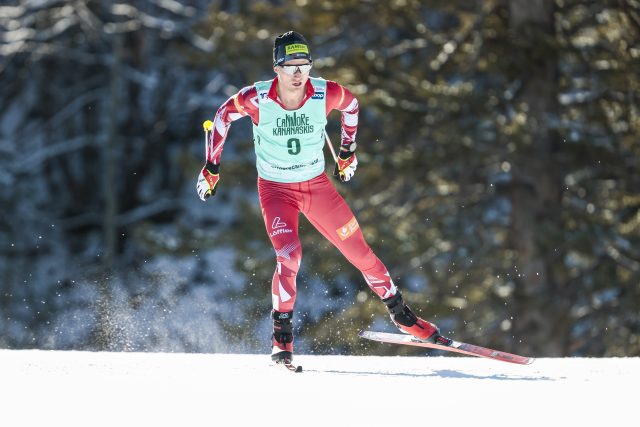
    Austrian racer Mika Vermeulen has been having a breakout season, and earned his first podium finish in Friday’s distance race.

    But Austrian cross-country racers have been implicated in doping scandals multiple times — most recently during the World Championships in Austria in 2019, where one of the country’s athletes was caught in the middle of a blood transfusion.

    Mika Vermeulen races Friday. (Photo: NordicFocus)

    Vermeulen was not implicated in that scandal and no evidence has ever emerged to cast doubt on his own performances. But I’d heard him bring up the subject on his own podcast previously, and also heard from one person in Canmore who had doubts about Vermeulen’s results.

    So I asked him, gently, what he wants people to think when he performs well, in light of the Austrian team’s history.

    “With all the shit that’s been happening on our team, and the last few years, yeah, I get it,” he said. “But the only thing I can do is keep on being good, being on my level. And I can tell you I’m not going to be caught, because I don’t do anything.”

    He added: “That’s the only thing I can do: Be on the level not just once but many and many times. And I just keep telling people I believe in myself, and I invite everyone to believe me.”

  • The Devon Kershaw Show: Canmore is lit and so was the racing

    The Devon Kershaw Show: Canmore is lit and so was the racing

    The World Cup gave us two great races in Canmore today to start a 10-day swing through North America. Devon and Nat recap the results, and hear from a couple of special guests at the tail end of the show. We’ll be back tomorrow.

    Questions? Comments? nat@fasterskier.com and devon@fasterskier.com.

  • The Devon Kershaw Show: Go big and go Goms

    The Devon Kershaw Show: Go big and go Goms

    Goms! These races, in Switzerland, were unambiguously awesome. Wipeouts, sun, fondue, North American podiums and breakout performances. And an Alaskan guest who watched the races firsthand.

    We really went above and beyond the call of duty this week — we’ve got sounds from the side of the trail and even a profanity-laced tirade from Devon if you stick it out to the end of the show. We’ll be on scene at the next round of World Cups, which are in a couple of weeks in Canmore, Alberta.

    A sincere thank you to everyone who’s generously pitched in to support us over the past few weeks. Email us at devon@fasterskier.com and nat@fasterskier.com. We’ll be back soon.

  • The Devon Kershaw Show: Recapping a frigid weekend in Gallivare

    The Devon Kershaw Show: Recapping a frigid weekend in Gallivare

    More smashing results from U.S. women, boring-on-paper but fun-to-watch racing from the Norwegian men’s distance team and some interlopers wearing similar colors, and a poorly-attended relay. Devon and Nat break it all down.

    Keep the feedback and questions coming: nat@fasterskier.com and devon@fasterskier.com. We’ll see you next week.


  • The Devon Kershaw Show: An epic 30k to cap World Champs women’s racing

    The Devon Kershaw Show: An epic 30k to cap World Champs women’s racing

    This race had it all — a solo breakaway, chase packs and a nail-biting performance from America’s Rosie Brennan. Devon and Nat ditch the guests to break down the race themselves. We’ll be back tomorrow with a last World Championships episode.

    Thanks for your support. Reach us at devon@fasterskier.com and nat@fasterskier.com.

  • The Devon Kershaw Show: Recapping the 15k with the Jessie Diggins of Swedish ski journalism

    The Devon Kershaw Show: Recapping the 15k with the Jessie Diggins of Swedish ski journalism

    Tomas Petterson, a veteran sports reporter for the Swedish newspaper Expressen, joins us to recap the men’s 15 k at World Championships, and to discuss Sweden’s fantastic women’s team and the country’s hopes for its raw, talented men’s squad.

    Reach us at devon@fasterskier.com and nat@fasterskier.com. Seven days down, four to go.

  • The Devon Kershaw Show: Norway’s men pull out the broom for a pursuit sweep

    The Devon Kershaw Show: Norway’s men pull out the broom for a pursuit sweep

    Longtime Canadian racer Jesse Cockney joins us to recap a surprisingly exciting men’s pursuit race at the World Championships in Planica, Slovenia.

    We’ll be back tomorrow. Send your questions to devon@fasterskier.com and nat@fasterskier.com.

  • The Devon Kershaw Show: Norway’s COVID crisis, and a Latvian star is born

    The Devon Kershaw Show: Norway’s COVID crisis, and a Latvian star is born

    There’s too much going on in the Tour de Ski for us to cover in just one episode — so we’re back to quickly hype up a breakout performance by Latvia’s Patrīcija Eiduka yesterday, and to break down a COVID crisis on the Norwegian team that’s erupted in the past 24 hours.

    We’re at devon@fasterskier.com and nat@fasterskier.com; we’ll be back Sunday.

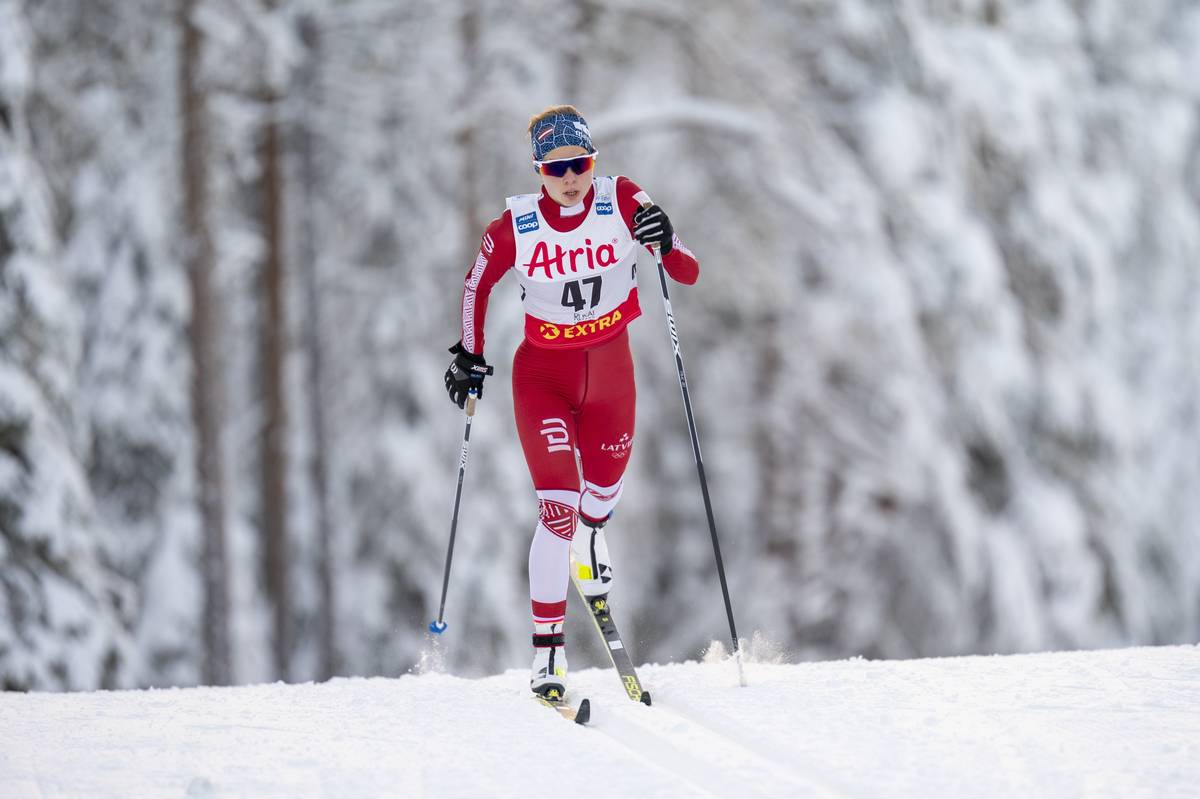
    Latvia’s Patricija Eiduka races at a World Cup in Finland. (Vianney THIBAUT/NordicFocus)
  • The Devon Kershaw Show: They only raced half a 50k. We’ve still got a full podcast.

    The Devon Kershaw Show: They only raced half a 50k. We’ve still got a full podcast.

    This isn’t a spoiler, even if it spoiled some of the glory Saturday: Organizers shortened the Olympic men’s 50 k to a 28 k skate. People were mad; the athletes still raced and delivered a good show. We’ve got our own show here, featuring guest star Kris Freeman, the retired American Olympian.

    Alaska’s Scott Patterson threw down the best Olympic result for a U.S. man in nearly a half-century, too. We break that down, plus the Russians and Norwegians on the podium, and we’ll have one last Olympic podcast after the women’s 30 k skate tomorrow.

    Get us at devon@fasterskier.com and nat@fasterskier.com in the mean time.

    Scott Patterson races in the lead group, performing well above his bib number to finish 8th in the mens not-quite-50 k. (Photo: NordicFocus)
  • Bolshunov collects third gold medal while Krüger rebounds to bronze post-COVID; Patterson historic 8th place for USA

    Bolshunov collects third gold medal while Krüger rebounds to bronze post-COVID; Patterson historic 8th place for USA

    This World Cup coverage is made possible through the generous support of Marty and Kathy Hall and the A Hall Mark of Excellence Award.  To learn more about A Hall Mark of Excellence Award or to learn how you can support FasterSkier’s coverage please contact info@fasterskier.com.

    There were a number of stories to unpack during the men’s 50-kilometer mass start free, which was changed last minute to 28 k due to extreme weather conditions in Zhangjiakou. You’ve got Alexander Bolshunov leading the charge to collect a third gold medal of the Games, continuing his streak of nine Olympic medals in nine Olympic appearances. Bolshunov was followed by his teammate Ivan Yakimushkin, with all four members of the Russian Olympic Committee (ROC) finishing in the top six, interrupted only by two Norwegians, Simen Hegstad Krüger and Sjur Røthe, the first of whom earned bronze in his first Olympic appearance following a COVID-19 detention in a hotel room in Seiser Alm, Italy. 

    But let’s get one key story to the front off the bat: The only American on the start list for the final men’s event of the 2022 Beijing Olympic Winter Games was Scott Patterson, and he skied to eighth place, just 26.9 seconds shy of a medal. It’s the second best result in American men’s cross country ski history, only surpassed by Bill Koch’s silver medal in 1976. That’s the best result in almost 50 years. 

    Scott Patterson tucks into the lead group, on the tails of Alexander Bolshunov (ROC) and Sjur Røthe (NOR). (Photo: NordicFocus)

    Let’s rewind.

    The news of the change in time and distance arrived just hours before the start of the race, with the following message from the organizers: “Due to strong winds and the resulting extreme conditions on course, the distance of the originally planned 50km will be shortened to 30km. The decision was taken in regards to the athletes safety, to reduce the time of exposure of athletes in extreme conditions.”

    While there were various opinions on this change, which we’ve covered separately, there’s no getting around the fact that the race distance was slashed nearly in half. Nonetheless, as the lead group moved in and out of the wind, finding shelter on the leeward side of hills and under the protection of treed sections, the four lap course skied like a long-distance event. 

    Shortened due to extreme weather, the men’s 28 k mass start freestyle is underway in Zhangjiakou. (Photo: NordicFocus)

    At the end of the first lap, the top-30 were separated by less than five seconds, thinning to a 13-man pack by the end of the second lap, and a group of 10 by the end of the third, with an 11 second gap to the first chase group.  

    Perhaps the only truly noteworthy moment at this point in the race was the departure of Norway’s Johannes Høsflot Klæbo, who won gold in both sprint events – the individual freestyle and the classic team sprint – while also collecting a silver medal in the men’s relay and bronze in the 15 k classic. Klæbo later reported that he was struggling with a stomach illness and had spent more of the night prior to the race in the bathroom than he had been sleeping.

    “I thought I would’ve regretted it if I didn’t give it a try but now I’m standing here and it didn’t work out on the whole,” Klæbo told the media.

    He said it was “sad” pulling out of the race, but will focus on leaving the Games with his best Olympic distance results.

    “I’ll definitely bring with me what’s been positive. What makes it feel more annoying is that my shape has felt better and better and I’ve actually felt that I’ve had a good energy today too. Then the stomach started to speak up and then it got very far to make it to the finish line.”

    Johannes Høsflot Klæbo (NOR) dropped out of the 28 k mass start free after his third lap. (Photo: NordicFocus)

    The race for medals truly began in the final lap. With Bolshunov and Krüger each surging to thin the lead group, Sweden’s William Poromaa and France’s Maurice Magnificat began to fall off the back. Patterson was tucked into seventh, working with Clement Parisse (FRA) and Denis Spitsov (ROC) to maintain contact and respond to the accelerations of the front. 

    Simen Hegstad Krüger (NOR) leads the men’s 28 k freestyle alongside the ROC’s Ivan Yakimushkin (bib 3). (Photo: NordicFocus)

    Over the final 5 k, Bolsunov kept the pressure on, looking relaxed as he tried to create space between himself and Krüger, who had been tucked onto his tails, matching him push for push. With them was Yakimushkin, the three skating in tandem as the finish line drew nearer. 

    At 24 k, the leaders had only a few seconds on Patterson’s chase group, but when they hit the 27.2 k checkpoint, the gap had drastically expanded. Artem Maltsev (ROC) and Røthe were still just a few seconds back, but Patterson, Parisse, and Spitsov were now over 20 seconds behind, with a 20 second cushion ahead of the next chasers.

    Alexander Bolshunov (ROC) races to his third gold medal of the 2022 Olympic Winter Games during the men’s 28 k freestyle. (Photo: NordicFocus)
    Norway’s Simen Hegstad Krüger leads the charge during the men’s 28 k mass start freestyle. (Photo: NordicFocus)

    Up the final long climb, Krüger would not yield, holding his ground immediately behind Bolshunov. Tucked low into the downhill, the three stayed together, with Bolshunov upping the tempo and power as they accelerated out of the curves and over the gentle rises that interrupted the sweeping descent. 

    As the three hit the final rise into the stadium, Bolshunov began to break away, with Yakimushkin using Krüger’s draft to slingshot into second with 500 meters to go. 

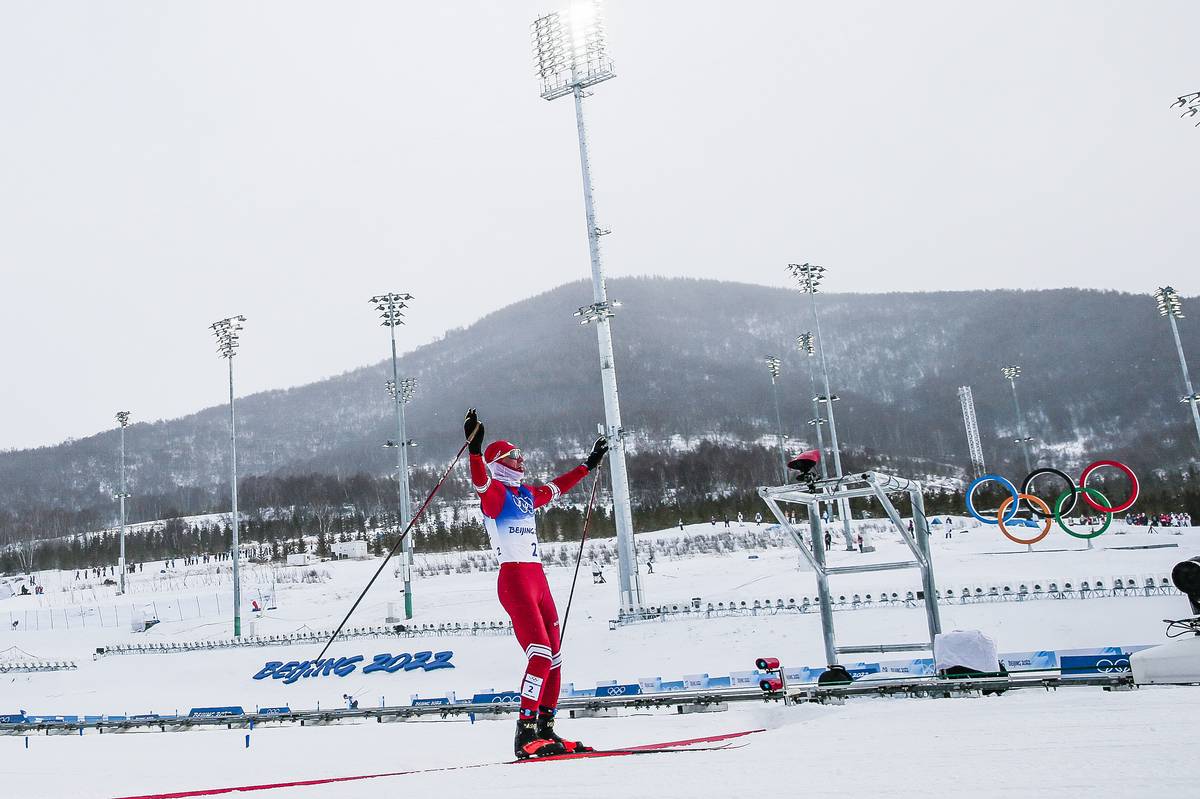
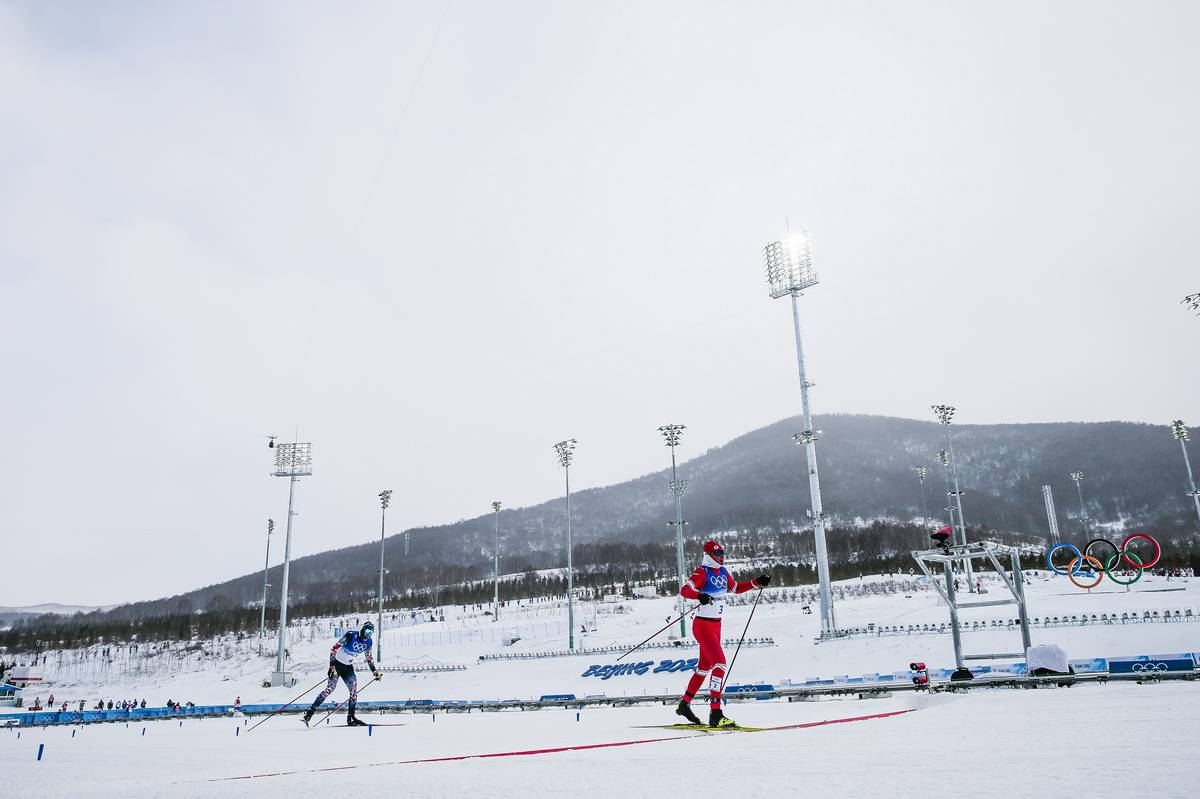
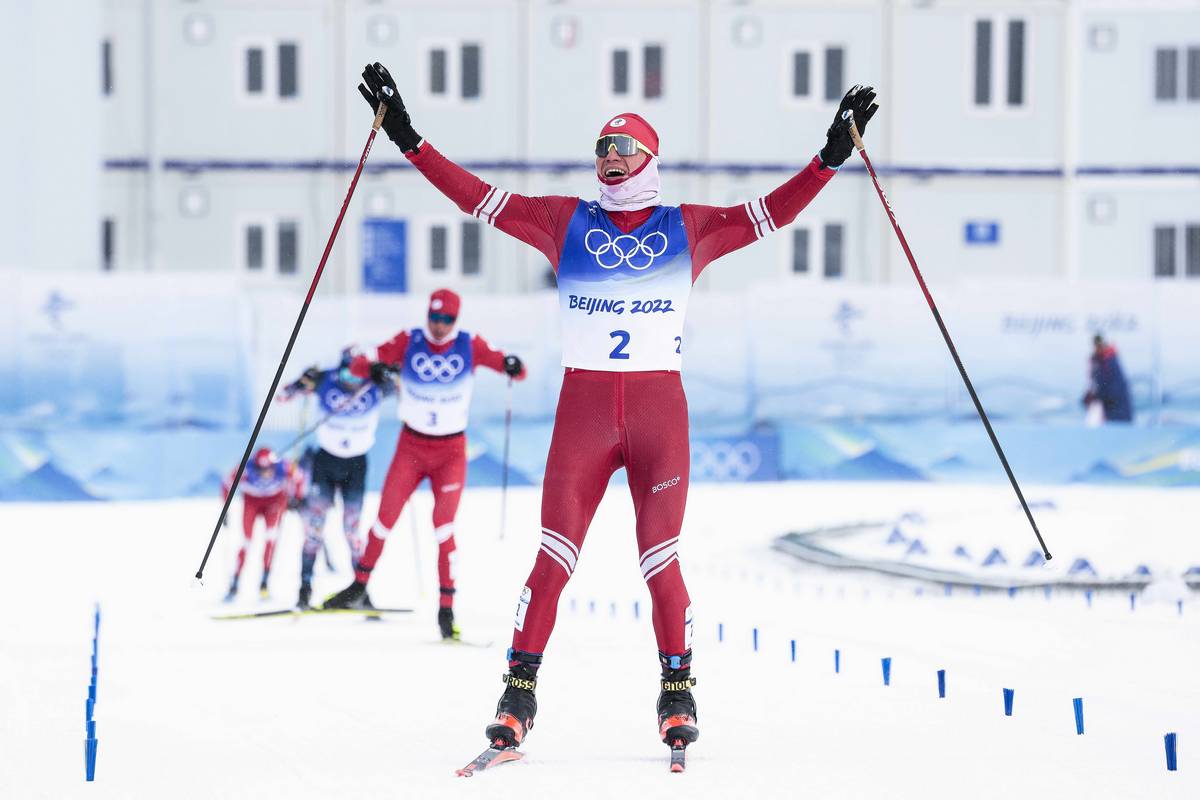
    Entering the stadium, the gold medal looked to be predetermined. With a fist pump as he made his way around the final bend into the finish lanes, Bolshunov V2ed powerfully down the home stretch, crossing the line with his hands raised in 1:11:32.7.

    Alexander Bolshunov (ROC) celebrates his win in the 28 k mass start freestyle. (Photo: NordicFocus)
    Ivan Yakimushkin (ROC) takes silver in the men’s 28 k free, while Simen Hegstad Krüger finishes third for Norway. (Photo: NordicFocus)

    Holding his advantage through a final sprint to decide silver and bronze, Yakimushkin crossed the line second (+5.5) with Krüger taking third (+7.0) for Norway.

    Behind, Maltsev came to the line fourth (+10.7), followed by Røthe in fifth (+15.8). 

    Spitsov led the now-spread chase group to the line, taking sixth (+26.2) ahead of Parisse in seventh (+28.8) and Patterson eighth (+33.9).

    Alexander Bolshunov (ROC) wins his third gold medal of the 2022 Games in the men’s 28 k mass start freestyle. (Photo: NordicFocus)

    Nine Olympic medals. Three gold. Four silver. Two Bronze. Five from the 2022 Olympic Winter Games.

    “Five? Really?” Bolshunov counted on his fingers as he exuberantly celebrated the golden ending to his Beijing Games appearance. “Five medals, three gold, it is something unbelievable because before the season I set the goal of two gold medals and now I have three. I’m just unbelievably happy. The emotions overfill me. This is above all praise to win these medals here. It’s very cool, and in every race that I took part in.”

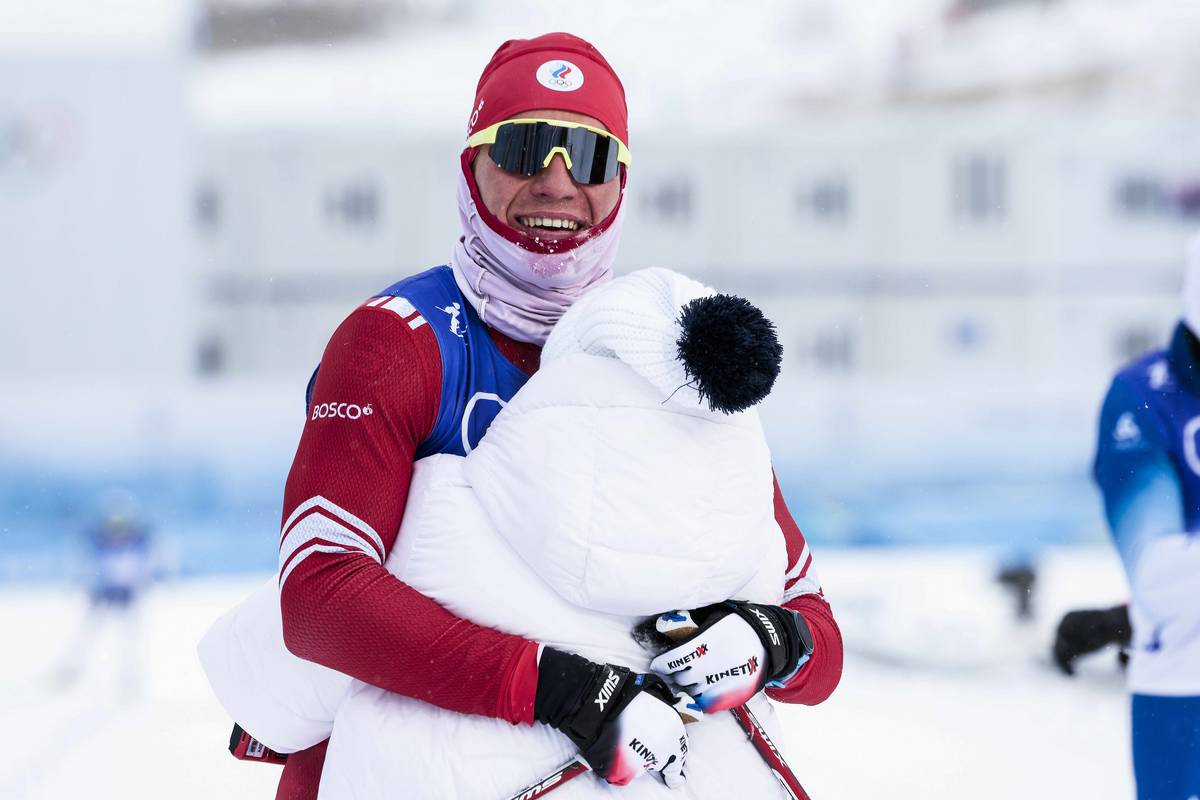
    Alexander Bolshunov (ROC) receives a cozy Olympic themed gift following his win in the men’s 28 k freestyle. (Photo: NordicFocus)

    Regardless of the color of the medal he earned, Krüger said his real victory was simply making it to Zhangjiakou and having the opportunity to race at the Games. Though his illness stayed mild and he stated that it did not impair him in today’s race, he had still spent 10 days in isolation in his hotel room, and remained in isolation while the opening event of the Games, the men’s 30 k skiathlon, was underway. Krüger was the defending Olympic champion in the event after taking gold in 2018. He went on to win a silver medal in the 15 k skate, and help Norway to gold in the men’s relay. 

    During the 2021 World Championships, Krüger earned two silver medals, first in the 30 k skiathlon and the next in the 15 k free, with a bronze in the 50 k skate. He was one of the top distance skiers on the World Cup heading into the 2022 Games, shouldering Norway’s medal hopes; the nation experienced collective heartbreak following the news of his positive COVID test in late January. 

    “To be able to go home with an Olympic medal, that’s a huge victory for me and an amazing feeling,” Krüger said after the race. “I’m really proud of what I have achieved today; from not thinking I would be able to ski one single competition to being able to get everything out here today.”

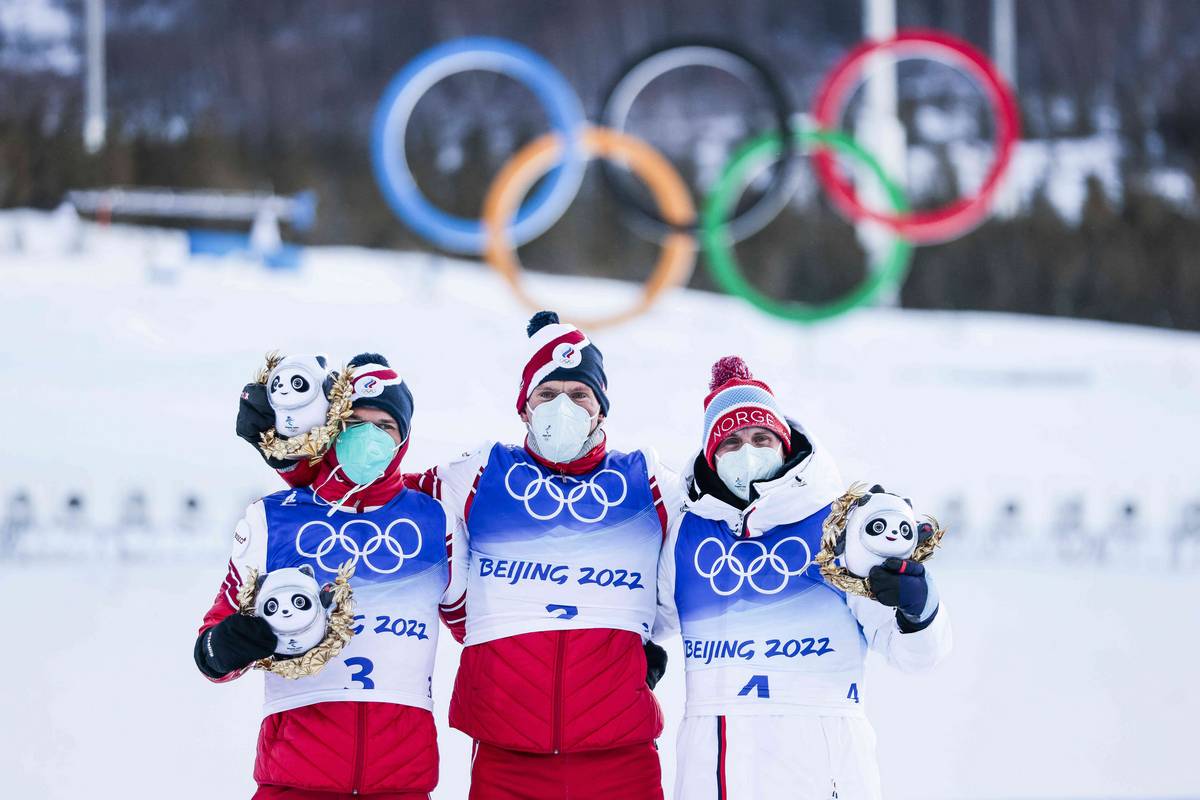
    The podium of the men’s 28 k freestyle: Alexander Bolshunov (ROC) took the win ahead of Ivan Yakimushkin (ROC) and Simen Hegstad Krüger (NOR). (Photo: NordicFocus)

    For Patterson, eighth place meant achieving the goal, though he admitted being in the hunt for positions even closer to the podium leaves him hungry for more. 

    “I’m happy,” he told FasterSkier in the mixed zone. “I came in wanting the top 10 and got it today. It’s a little tantalizing to be in eighth and 33 seconds back from the win.” 

    He continued that the “dream” of a medal crossed his mind as he found himself inside the lead group in the final lap, but he could feel the fatigue accumulating in his body and recognized that he was finding it hard to respond to the tactical moves of the eventual medal winners. “I don’t think it was exactly realistic to fully believe it was happening today,” he said frankly. 

    Scott Patterson skis to an Olympic career best with 8th place in the 28 k mass start freestyle. (Photo: NordicFocus)

    Patterson’s result, while historic, should not come as a surprise to American cross country ski fans. He was 11th in the skiathlon at the opening of the Games, and has made his ability to come on form and earn season-best results during Championships well known over the last four years. 
    During the 2018 Games in PyeongChang, he put together breakout performances, skiing to 18th in the skiathlon, 21st in the 15 k skate, and 11th in the 50 k classic. He raced into the top-30 in each individual distance race of the 2019 World Championships, with a 23rd place finish in the 50 k free. Improving on these results in the 2021 World Championships in Oberstdorf, Germany, Patterson was 14th in the skiathlon, 27th in the 15 k skate, and 10th in the 50 k mass start classic. 
    And, he likes going long. He said he would have preferred another 20 k today – “I wanted the grinding instead of the punches” – and might have even been able to pull off a higher result had the race been longer. 

    Back in 2016, his first World Cup appearance was in the 50 k classic at the Holmenkollen, which sits above Oslo, Norway. He was 32nd on the day in perhaps the most storied and highly revered cross country ski race on the World Cup. Patterson advanced to 28th the following year, before making a leap into the top-20 to finish 16th in 2018 and 19th in 2019.

    Scott Patterson takes a feed during the men’s 28 k free in Zhangjiakou. (Photo: NordicFocus)

    From the outside, it can be hard to appreciate the dynamics of mass start racing among the best athletes in the world in the sport. Energy management, tactics, drafting, protecting equipment while the field remains dense in the first lap, which Patterson called “chaotic.”

    “You get those lead skiers fighting the wind, and a lot of the back skiers that could just draft in. And there are a few people who definitely don’t have a lot of World Cup experience making a mess out of the pack,” Patterson described.

    In his second Olympic appearance at the age of 30, with plenty of World Cup experience, Patterson skied a smart race, telling FasterSkier that he felt “strong” and “relaxed”, while looking to be “in a comfortable position and not [using] too much out of my energy.” He also reported having competitive skis that allowed him to utilize the downhills and stay in the position where he wanted to be. 

    U.S. Ski Team head coach Matt Whitcomb complemented Patterson on his race execution, telling FasterSkier emphatically that he was “so proud of him.”

    Scott Patterson races in the lead group during the men’s 28 k mass start freestyle. (Photo: NordicFocus)

    Talking through the race from his vantage point, Whitcomb pointed out that Patterson stayed calm through the congestion in the opening lap, rather than becoming flustered and wasting energy by constantly trying to move up. He also shared how Patterson was able to “wisely” keep himself on the correct side of other racers to utilize the windbreak on unsheltered sections of the course.

    “Some incredible skiers ended up on the wrong side of the break and were toast…” Whitcomb explained. “When that happened, I heard a Finnish yelling at a German skier saying, ‘Hey, take me up to them!’ People were desperate to do work together, and so [I’m] very proud of Scott and unsurprised that he was in a tactically wise position.”

    Apart from battling the elements, maintaining an optimal position within the lead group is also a skill that requires experience and maturity.

    “If you have a pack of 15 guys, of course, it’s easy to follow in a draft in 14th and 15th,” Whitcomb said. “But what you don’t realize is that there’s quite a big accordion effect, so you’re constantly pulsating on the gas pedal. What you saw [today] was Scott moving up into between fourth and seventh, for a large part of [the race], and that ends up being a much more efficient position to ride. Draft is good, but you’re also able to just kind of stay on a steady gap.”

    Scott Patterson races to the line, finishing 8th in the men’s 28 k mass start freestyle. (Photo: NordicFocus)

    For Whitcomb, Patterson’s eighth place ends the Games on a high note for the American men’s program as a whole.

    “This is, this is for sure one of the goals that our men’s program wants: to start breaking through in one of the ultimate races of the Olympics,” Whitcomb shared. “To do that today, under conditions like this, is such a huge success for our program and for Scott and for his club, APU. For all the coaches over the years, Erik Flora that’s worked with him, and the [rest of the] coaches at APU. It’s such a huge success for [Patterson’s collegiate program], the University of Vermont; Alaska Winter Stars where he started skiing; and just so many people have been a part of this incredible journey. And so happy for all of them. But mostly for Scott because he earned this sucker today. It was brutal.”

    Rémi Drolet (CAN) skis to 35th in the men’s 28 k mass start skate. (Photo: NordicFocus)

    Two Canadian’s raced the 50 k today, with Olivier Léveillé leading the Canucks at the finish in 27th (+4:21.6). 30 seconds back, Rémi Drolet crossed the line in 35th (+4:54.4). 

    Racing continues tomorrow with the women’s 30 k mass start freestyle, the final cross country event of the 2022 Beijing Olympic Winter Games. At this time, the distance of the women’s event remains unchanged, however, the start was moved up by 3.5 hours to account for the forecasted weather conditions.   
    Results

  • News Brief: COVID Outbreak in the Norway Olympic Delegation, and updated plans to get Klæbo, Johaug, and teammates to Beijing

    News Brief: COVID Outbreak in the Norway Olympic Delegation, and updated plans to get Klæbo, Johaug, and teammates to Beijing

    The Planica World Cup cancellations this month brought the skiing world to the perilous edge of what it feared most, but hoped wouldn’t happen – the central focus of this ski season, and the sport’s biggest moment, the Olympics – affected by the Omicron COVID-19 variant. Over the last week in the Italian Alps, the sport went over that edge. This Olympics, as with everything in the world right now, will have to deal with the frustration, confusion, and all around uncertainty that’s de rigueur during this pandemic.

    On January 23rd, NRK first reported that Norwegian national team sprint coach Arild Monsen had tested positive while at the team’s pre-Olympic camp in Seiser Alm, Italy. That set into motion a close contact, self-isolation, and testing regime with the stakes very clear – if athletes tested positive, suddenly the Olympics would be up in the air.

    Aided by a win in the final hill climb, Heidi Weng took third place in the 2021/22 Tour de Ski overall standings. (Photo: NordicFocus)
    On Tuesday the 25th, despite the best efforts of the team, Heidi Weng and Anne Kjersti Kalvå tested positive for COVID. Close contact tracing led to an announcement from the Norwegian Ski Federation that the scheduled charter flights for the Norwegian Men’s Team on today were canceled.
    The story has since followed two lines of development. First, new cases that are still emerging from the outbreak at the Norwegian National camp in Italy, and second, the Norwegian Ski Federation’s plans to get athletes to Beijing in time for their first competition on February 5th.

    On the former the latest update, as reported again by NRK today, is that Simen Hegstad Krüger has tested positive for COVID. Krüger’s test is the first within 10 days of the start of Olympic competition, meaning that the 2018 gold medalist of 30-kilometer skiathlon will not get the chance to defend his title. The news has hit the Norwegian team hard. In a statement to NRK, teammate Hans Christer Holund said “It’s terribly sad. A lot of hard work is behind getting to the Olympics, then it goes in the sink, and it is very sad for Simen.”

    Simen Hegstad Krüger had a commanding win in the 15-kilometer skate in Davos in December, 2021. (Photo: NordicFocus)

    As to travel plans, The Norwegian Ski Federation announced its updated plan to get their athletes to Ziangjiakou just hours ago. The men’s team will now fly direct from Verona, Italy to Beijing on a chartered flight on January 30th. The women’s team will follow suit out of Zurich, Switzerland on February 1st. That cuts out a trip back to Norway that was planned for the National Team before flying to Beijing. It also assumes no new infections in either the men’s or women’s teams. In NRK’s report, Espen Bjervig, National Team Manager, explained that the plan reflects “so many unknown factors. You never know what will turn up around the next turn. But you just have to cut through.”

    Bjervig also pointed out that the plan is designed to move along with the COVID situation that is now underway in the Norwegian camp. “Fortunately, it is flexible with the girls. There are charter flights every day from Zurich between February 1st and 4th. The scheme for the boys presupposes that no infection appears.”

    It is a big assumption, but one that allows there to be hope that for the individual athletes, and for ski fans alike, these Olympic games may be the exciting showcase of the world’s best skiers – many of whom are from Norway – that we have all looked forward to watching together.

  • Krüger Dominates the 15k Skate in Davos; Schumacher 29th

    Krüger Dominates the 15k Skate in Davos; Schumacher 29th


    The men’s 15k freestyle podium in Davos: Simen Hegstad Krüger (NOR) took the win with command ahead of Johannes Høsflot Klæbo (NOR) and Sergey Ustiugov (RUS). (Photo: NordicFocus)

    This World Cup coverage is made possible through the generous support of Marty and Kathy Hall and the A Hall Mark of Excellence Award. To learn more about A Hall Mark of Excellence Award or to learn how you can support FasterSkier’s coverage please contact info@fasterskier.com.


    The second day in Davos, Switzerland started with the Men’s 15K Freestyle individual race.  In contrast to yesterday’s snow and wind, it was a beautiful blue sky day, as 108 men chased splits around the tracks in Davos. 

    Two of the favorites, Johannes Høsflot Klæbo (NOR) and Alexander Bolshunov (RUS) started one minute apart from each other. The two ascended from the junior level together to quickly become World Cup champions, Klæbo in sprinting and Bolshunov in distance, though the Russian has proven all-around talent. 

    In total, Klæbo has won 44 World Cup events, including yesterday’s sprint, putting him 3rd on the all-time list behind Petter Northug (47) and Bjørn Dæhlie (46). Bolshunov has won 24 World Cups, with nine individual World Cup distance events in 2021 – already a men’s record for most individual World Cup distance event wins in a single calendar year. As Klæbo has looked to improve as an all-around skier, this matchup is one to watch.

    After a conservative start, Johannes Høsflot Klæbo skis to second place in Davos. (Photo: NordicFocus)

    Last week’s 15k winner at Lillehammer, Simen Hegstad Krüger looked to win back-to-back individual World Cup distance events. The last man other than Bolshunov to win back-to-back was Sergey Ustiugov (RUS) in the Tour de Ski in 2019.

    Six Americans started the race, including Ben Ogden who is coming off a career-high 12th place finish in the sprint yesterday. The Canadian team did not race today, though Antoine Cyr had been on the start list. 

    Norway’s Sjur Røthe on course during the 15k individual start freestyle in Davos. (Photo: NordicFocus)

    As splits from the seeded middle group of starters rolled in, it looked like Klæbo (+20.4) was struggling through the first 3k with Bolshunov (+6.6) closing the gap between them both.  Perhaps not surprisingly after last weekend’s podium sweep and top-15 dominance, Norway had the top-4 spots through the first 3k, held by Krüger, Hans Christer Holund, Martin Løwstrøm Nyenget, and Harald Østberg Amundsen, respectively. Sjur Røthe was also sixth as the team’s fifth man in the top-10, however, Klæbo had fallen just outside the top-30 in the rankings. 

    Bolshunov held the lead for the Russian men at this checkpoint, sitting in 8th, but the name that would rapidly ascend the rankings was Ustiugov, who was 19th (+15.6). Ustiugov started in bib-50, later in the lineup than most of the Norwegians except for ​​Krüger, who wore bib-70.

    At 12.2k, with roughly 3k to go, the rankings looked similar, with a couple of names making a dramatic swing in standings. ​​Krüger, blasting through each checkpoint as the new leader, had increased his margin to over 24 seconds ahead of his teammate Holund, and Ustiugov had skied all the way up to third. 

    Simen Hegstad Krüger smashes the 15k skate in Davos. (Photo: NordicFocus)

    Close behind by time, Amundsen sat in fourth with Klæbo making a rapid rise into fifth. 

    Continuing to grow his lead over the final lap, ​​Krüger ran away with the win, stopping the clock at 32:20.4.  

    Sergey Ustiugov powers down the final stretch for third in Davos. (Photo: NordicFocus)

    Klæbo hit the final kilometers hard, accelerating to set what would stand as the fastest time of day until ​​Krüger came through 26 bibs later. Ustiugov had beaten Klæbo’s split at 13k, but could not hold the pace required to stay ahead in the final 2k. After all the top men came through, in particular ​​​​the dominant Krüger, it was decided that Klæbo took second (+22.9) and Ustiugov third (+27.2), both men earning their second podium of the weekend in Davos.  

    After back-to-back distance wins, Krüger gave the following remarks in a FIS interview from the leaders chair:

    “It feels great and I like it here and I enjoyed every minute of skiing today.  My skis were incredible and I just enjoyed every single minute of it.  It was a really fun day today.” 

    Johannes Høsflot Klæbo hands over the leader’s chair to his teammate, Simen Hegstad Krüger, who had smashed the fastest splits at every checkpoint. (Photo: NordicFocus)
    Winning back-to-back 15k freestyle races, Simen Hegstad Krüger is on form. (Photo: NordicFocus)

    The remaining top-10 was composed of three Norwegians, two Russians, and two French skiers.  Amundsen (NOR), Holund( NOR), and Røthe (NOR) finished 4th (+32.), 5th (+33.7) and 6th (+38.3), respectively.  Artem Maltsev (RUS) finished in 7th (+39.4) with fellow teammate, Ivan Yakimushkin (RUS) finishing in 9th (+52.0).  Maurice Manificat (FRA) had a strong race to finish in the top 10 in distance for the second week in a row, this time in 8th (+50.8).  His teammate, Hugo Lapalus (FRA) finished 10th (+54.7).

    Bolshunov dropped back to 12th in the standings, following 14th place in this event last weekend in Lillehammer. The three-time overall World Cup distance champion has not been outside the top-10 in consecutive events since December 2018.

    Gus Schumacher leads the American men with a 29th place finish in the distance race in Davos. (Photo: NordicFocus)

    The top U.S. Skier in Davos was Gus Schumacher sat inside the Top-30 throughout most of the race, rising as high as 18th at the 5k. Having started just behind Swedish junior champion William Poromaa, Schumacher held his margin to the Swede even through the first half, then began to cede time to the leaders. Schumacher ended his day in 29th (+1:53.8), improving upon his result from the Lillehammer 15k, where he finished 38th.

    “[I’m] pretty happy with it, but i still think I have better races coming,” Schumacher reflected in a post-race email. “I think I did a better job with pacing than last year, but still didn’t quite nail it. Definitely getting a better handle on the race routine and pacing, and I’m looking forward to some more races later this season!”

    Schumacher added that he plans to stay in Davos through Christmas with “the boys”, which he said will be “magical.”

    Ogden, coming off a fantastic sprint yesterday, was the next American in 51st (+2:39.7).  Norris (USA) had a solid race coming in just behind Ogden in 54th ( +2:44.7).  Schoonmaker, Wonders, and Patterson finished in 66th (+3:03.5), 70th (+3:07.5), and 75th (+3:26.0) respectively.

    David Norris on course during the 15k individual start freestyle in Davos. (Photo: NordicFocus)

    After a weekend at altitude, the World Cup now heads to Dresden, Germany for an exciting individual and team sprint in the city. This will be the last races before  a break for the holidays, and then we begin the Tour de Ski.

    Final Results

  • Bolshunov Pulls Away for a Solo Victory in the 15 k Classic; Cyr 21st

    Bolshunov Pulls Away for a Solo Victory in the 15 k Classic; Cyr 21st

    Engadin, Switzerland – a stellar backdrop for the men’s 15 k mass start classic. (Photo: NordicFocus)

    This World Cup coverage is made possible through the generous support of Marty and Kathy Hall and their A Hall Mark of Excellence Award. To learn more about A Hall Mark of Excellence Award or to learn how you can support FasterSkier’s coverage please contact info@fasterskier.com.

    It’s the last hurrah, folks. Roughly a year after the COVID-19 virus achieved its global pandemic title, the World Cup finds itself at the end of a season that once looked as if it may not happen in the first place. Though four competitions — Lillehammer, Nové Město, Oslo, and Beijing — were cancelled or postponed, the World Cup toured through Europe from November to March without any known significant outbreaks. All things considered, they pulled off a bold and robust competition schedule. 

    Leaving the unpredictable spring conditions at the World Championships in Oberstdorf, Germany, the cold, crisp tracks and an Alpen backdrop looked like a wintery treat during today’s 15-kilometer mass start classic event. The picturesque venue, home to the Engadin Ski Marathon, is nestled in the Engadin Valley of Switzerland just south of St. Moritz in the town of Surlej. Pristine conditions, bluebird skies, and high mountain air; what more could you ask for in a final stop?

    Iivo Niskanen leads the way midway through the 15 k mass start classic in the Engadin Valley of Switzerland. (Photo: NordicFocus)

    As the dust settles from the World Championship, in particular the conclusive result of the men’s 50k classic just six days ago, eyes were on the 24-year-old duo up front with 5k to go. To put it clearly, we mean Norway’s Johannes Høsflot Klæbo perhaps looking for redemption after his disqualification for obstruction and loss of the World Championship gold medal versus Russia’s Alexander Bolshunov. The Russian also felt robbed of this medal as the interaction with Klæbo in the finishing stretch resulted in a snapped pole, consequently losing him ground to Emil Iversen and leaving him with silver. 

    With the field staying tight over the first 10 k on Saturday, it was on Bolshunov to move early and avoid setting up a repeat opportunity for Klæbo to sit and kick in his signature style. Time and again, Klæbo the World Champion and Olympic gold medalist in the classic sprint has demonstrated his potential to, quite literally, run away from the field in the final 400 meters, rocketing down the final stretch to clinch the win. Though Bolshunov is the overall World Cup winner for the third year running, it would not behoove the Russian to face off with Klæbo in this way.

    Alexander Bolshunov leads the way in the 15 k classic, with Johannes Høsflot Klæbo drafting on his tails. (Photo: NordicFocus)

    And he knew it. Crossing the bonus sprint checkpoint at 10 k, Bolshunov and Klæbo were side by side. But as the leaders kicked and glided into their final lap, Bolshunov began to surge off the front. At 11.4 k, he had only a second gap ahead of Klæbo who attempted to match the pace. But, by 2 k later, the winner was clear. Bolshunov had a 24.9 second gap at 13.8 k, while Klæbo had allowed the chase group to catch back up, letting go of a win and setting himself up for a sprint finish for second place. 

    Despite his lead, the Russian kept his foot on the gas all the way to the finish stretch where he raised his arms to soak in his achievement and coasted through the finish in 34:07.1. 

    Bolshunov coasts through the finish without challengers at the 15 k mass start classic in the Engadin Valley of Switzerland. (Photo: NordicFocus)
    Alexander Bolshunov takes the win in the 15k classic in Switzerland. (Photo: NordicFocus)

    “I really like St Moritz,” Bolshunov told FIS through a translator after the race. “I was very pleased with the conditions here and feel it is one of the best places I have been skiing and training. About the race, I was really happy with the result and happy that now we have again hard winter conditions and that I could push hard on this course. I am very happy to take the victory.”

    The remainder of the podium was less certain, with Klæbo heading toward the stadium with a pack of seven men. Utilizing his aforementioned signature, Klæbo engaged his sprint gear to move up to the front of the group, coming into the final 100 meters alongside his teammate Pål Golberg. Klæbo held Goldberg off by half a ski length for second (+18.5), leaving Goldberg in third (+18.9). 

    Johannes Høsflot Klæbo edges out teammate Pål Golberg for second place. (Photo: NordicFocus)
    The 15 k classic men’s podium in the dreamy Engadin Valley. Alexander Bolshunov (RUS) took the win ahead of Johannes Høsflot Klæbo (NOR) and Pål Golberg (NOR). (Photo: NordicFocus)

    Sweden’s Jens Berman took 4th (+20.0), with Simen Hegstad Krüger of Norway in 5th (+21.2), Artem Maltsev of Russia 6th (+24.2), and Iivo Niskanen of Finland 7th (+27.4). Hans Christer Holund brought up the rear for the first group of chasers in 8th (+31.2).

    Alexander Bolshunov celebrates his 9th World Cup distance win this season at the final stop in the Engadin Valley of Switzerland. (Photo: NordicFocus)

    With this 23rd World Cup win under his belt — nine from this season alone — Bolshunov joins Norway’s Peter Northug as joint-fourth on the all-time list. He is the first male skier to win three consecutive World Cup crystal globes, tied for the second-most distance globes in his collection with Norway’s Martin Johnsrud Sundby who also holds three. Only the Swiss champion Dario Cologna outranks Bolshunov, with four distance globes.

    Antoine Cyr (CAN) tucks into the draft of Jean Marc Gaillard (FRA) during a career-best race in the 15 k classic in Switzerland. (Photo: NordicFocus)

    Turning to the North American results, Antoine Cyr took 21st for Canada (+54.5), nailing his best individual result of his career. This is the second season on the Senior National Team and racing at the World Cup level for the 22-year-old who hails from Gatineau, QC. 

    As the dense cluster of skiers from the mass start slowly began to thin out, Cyr skied his way up from 45th and 23 seconds back at the halfway mark to 21st and just 9 seconds behind the leaders at the 10 k checkpoint. Holding his ground in this group over the last 5 k, Cyr crossed the line just behind Andrew Musgrave of Great Britain. 

    “I had a really good race today — it is the first time I have earned World Cup points, so it’s pretty exciting,” wrote Cyr in a post-race email. “I knew it was a good course for me but I was starting far back on the grid and had to make up a lot of spots on the third lap, then the fourth lap I was just hanging with the pack I was skiing with. I am really happy with the results but I know I have even more to give as I am a rookie on the World Cup and just getting used to the way it races here. I am excited for tomorrow and what is to come!”

    Graham Ritchie (CAN) crosses the line just behind Andrew Young (GBR) at the 15 k mass start classic in the Engadin Valley. (Photo: NordicFocus)

    Also racing for Canada, Russell Kennedy took 35th (+1:17.0), Rémi Droulet 67th (+2:57.1), and Graham Ritchie 71st (+3:25.5).

    David Norris navigates mass start chaos in the 15 k classic in Surlej, Switzerland. (Photo: NordicFocus)

    For the US squad, David Norris was the top finisher, leading the way in 41st (+1:31.4). 

    “Our transition from World Champs to the Engadin went smoothly,” wrote Norris in a post-race email to FasterSkier. “I’ve spent this week previewing the new courses here in the Engadin and trying to recover from the 50km last week. Up until Wednesday my legs were still pretty heavy from my final effort in Germany. I’m in a good place now and race preparation on Friday felt good.

    “I didn’t know what to expect going into today’s race. The course is quite flat and there was a pretty strong wind all morning. I chose the wrong skis for this morning so I consistently lost ground on a few crucial descents that fed into long double pole sections where you didn’t want to be alone breaking wind. When the guys up front started to stretch out the pack I was still pretty far back. I wasn’t strong enough to move forward so the last two laps my group seemed to pick guys off who were fading, but otherwise I think we bled time to the packs ahead of us. It was a fun race, but I know this is far from a great performance for me. Time to start thinking about tomorrow’s 50km – I’m real excited for Sunday!”

    Hunter Wonders skis to 47th in the 15k classic in Surlej, Switzerland. (Photo: NordicFocus)


    Ben Ogden throws his boot for 51st alongside Johan Haeggström of Sweden. (Photo: NordicFocus)

    Next up for the Americans, Hunter Wonders crossed the line in 47th (+1:45.4) closely followed by Gus Schumacher in 48th (+1:46.1). Ben Ogden took 51st (+1:51.5) with Scott Patterson 53rd (+1:58.8), Kevin Bolger 60th (+2:11.5), and Johnny Hagenbuch rounding it out in 72nd (+3:39.7). The race saw 82 finishers. 

    Scott Patterson (bib 52) and Ben Ogden on course during the 15 k mass start classic in Surlej, Switzerland. (Photo: NordicFocus)


    Johnny Hagenbuch on course between two Canadians during the 15 k mass start classic in the Engadin Valley of Switzerland. (Photo: NordicFocus)

    Racing continues tomorrow with a pursuit start 50 k freestyle.

    Final Results

  • A Mega-Classic 50 k to Close out the Championships: A Klæbo DQ in the Final Straight Reshuffles the Podium

    A Mega-Classic 50 k to Close out the Championships: A Klæbo DQ in the Final Straight Reshuffles the Podium

    Saturday’s new snow did not linger long, and spring conditions returned to Oberstdorf for the men’s 50 k classic. (Photo: NordicFocus)

    This World Championship coverage is made possible through the generous support of Marty and Kathy Hall and their A Hall Mark of Excellence Award. To learn more about A Hall Mark of Excellence Award or to learn how you can support FasterSkier’s coverage please contact info@fasterskier.com. 

    It was under overcast skies that the men made their final preparations before the start of Sunday’s mass start 50 k classic, the final event of the 2021 World Championships in Oberstdorf, Germany. They would be skiing eight laps of a 6.25 k loop in temperatures of 40 degrees. With the crack of the starting gun, 57 athletes were underway, with hours of racing ahead of them.

    As the championships began to wind down, the sharp end of the race began to wind it up. In the early kilometers the accordion effect from so many bodies jostling with pacing and positions causes a few mishaps, like a fall on the same hill where Heidi Weng, Ebba Andersson, and Frida Karlsson slid yesterday. The first-lap tumble took out Norway’s Simen Hegstad Krüger, Lauri Lepisto of Finland, and Jason Rüesch of Switzerland.

    Watch the poles and skis – close quarter racing during the 50 k classic. (Photo: NordicFocus)


    The long snake that was the men’s field early in the 50 k classic. (Photo: NordicFocus)

    But such small insertions of mayhem are common in what was close-quarter racing. Through 16.5 k, maybe a small grimace from classic crusher Iivo Niskanen upfront revealed a smidge of hurt. Otherwise, 41 skiers came through within 13.2 seconds. The point: this race had yet to blow apart. To keep the accounting tidy, by then Krüger, Lepisto, and Rüesch were all comfortably back in the morass of skiers.

    At 20.5 k, Russia’s Alexander Bolshunov, wearing bib 1 and puple-mirrored shades, moved towards the front. As the winner of the last World Cup 50 k, the Holmenkollen 50 k classic last March, this was an apt position for a skier seeking his second career individual championship win. He won the 30k skiathlon in Oberstdorf.

    Alexander Bolshunov (RSF) navigates the final corners heading into the stadium. (Photo: NordicFocus)

    An hour in, Norway’s Hans Christer Holund and Iivo Niskanen shared calm words through the checkpoint – perhaps a nod to when and where the race would become a more earnest affair.

    Through the stadium for another hill-climbing lap at 25 k proved to be the point of no return as Bolshunov and Niskanen moved towards the front and some more than mild duress began to break apart the field. The names already mentioned, along with Dario Cologna (SUI), Emil Iversen (NOR), and Johannes Høsflot Klæbo (NOR), skied near the front.

    Johannes Høsflot Klæbo (NOR) looks to his right, receiving info from a coach mid-race. (Photo: NordicFocus)

    Keeping the accounting straight, the main pack still included 30 skiers, separated by 8.4 seconds at 27.9 k.

    By 31 k, counting the skiers up front became markedly easier. Twelve skiers raced through within 10.5 seconds, a distinct pack forming: from Bolshunov in the lead to Ireland’s Thomas Westgård Maloney in 12th. A few kilometers later, skiers latched on to the front pack from behind, including American Scott Patterson and Brit Andrew Musgrave in 15th and 16th. All five of Norway’s skiers were bunched together as were three of Russia’s.

    Andrew Musgrave (GBR) finds a tuck. Musgrave finished 8th. (Photo: NordicFocus)
    Iivo Niskanen (FIN) charging down the corners on the descent towards the stadium. (Photo: NordicFocus)

    One Finn, Niskanen, pulled the trigger around 35 k. The skier is known to have gone out on solo missions. In 2018, at the Olympics, he rolled away alone late in the race to win gold, with Bolshunov through 18.7 seconds later in second. In close contact on Sunday were Jens Burman and Klæbo, with Musgrave, Goldberg, Iversen, and Scott Patterson within 18.9 seconds. For all practical purposes, this race had busted apart into different pieces scattered across the course.

    At 1:48, roughly 40 k into this affair, Iversen snuck a few looks behind here and there and sensed the final chapter was being written. Bolshunov was dangling off the lead group of six skiers that included Iversen, Holund, Klæbo, Burman, Bolshunov, and Niskanen.

    Emil Iversen (NOR) took on much of the work in the later stages of the race and came away with a gold medal. (Photo: NordicFocus)

    And as if on cue, as the racing became increasingly spicier upfront around the two-hour mark, storm clouds shrouded Oberstdorf’s peaks, and light precipitation began to fall. Working from behind, and connecting to that front group with their own spiciness were Musgrave and Krüger, who closed down a 41-second gap at 43.8 k (1:54:25.4) to connect with the leaders.

    Atop the final go-around up the Burgstall climb, notorious at these championships for breaking apart the skate races, four Norwegians (Holund, Iversen, Krüger, and Klæbo) and Bolshunov remained. Coursing through the upper plateau before the descent towards the stadium, Bolshunov upped the tempo, perhaps mindful of his tactical mistakes late in the men’s 4 x 10 k relay when Klæbo out-ran him on the final hill before the finish straight.

    Emil Iversen (NOR), and Johannes Høsflot Klæbo (NOR) (l-r), animating the 50 k. (Photo: NordicFocus)
    Johannes Høsflot Klæbo and Emil Iversen round a corner. (Photo: NordicFocus)

    That final hill was again a showdown – yet, Bolshunov led the run with Klæbo on his tails. Iversen scurried slightly behind and was positioned solidly for third.

    All hyperbole aside, Klæbo is the game’s best finisher… maybe ever. Klæbo’s dream finish almost wasn’t.

    Swooping around the left-hander into the straight, it was Bolshunov in the lead and going wide up against the edge of the right-hand V-boards. (Reminiscent of Lahti where Finland’s Joni Mäki of Finland and Bolshnov nearly tied up near the 4 x 7.5 k relay finish? Maybe. Tune into the post-race podcast.)

    No matter how you look at it, pro-Russia, pro-Norway, pro-fun racing, Bolshnov went wide to close the door on Klæbo, and the Norwegian sprinter nearly lost his balance dodging V-boards, ski tips, and Bolshunov’s physical presence. During the brush-up, with no crowd noise, you can hear Bolshunov’s pole crack with the bottom half falling to the ground after he stuck it between his legs.

    As Klæbo and Bolshunov re-centered, both now with barely enough room to push the pedals down, the drag race ensued with, as one might guess, Klæbo winning and Bolshunov, with one effective pole, losing ground. It looked like this: Klæbo as the 2021 championship sprint champ and 50 k classic champion in 2:10:52.2. Iversen, for his part, closed in down the straight and passed Bolshunov for second place (+0.7), with the Russian crossing third (+1.4) while slamming his now-dysfunctional pole to the snow.

    The closing stages of Sunday’s 50 k classic mass start. Klæbo (NOR), Bolshunov (RSF) and Iversen (NOR) (left to right). (Photo: NordicFocus)
    Johannes Høsflot Klæbo lunges for the line. (Photo: NordicFocus)
    Disgruntled and disappointed, Alexander Bolshunov (RSF), after 50 k of effort. (Photo: NordicFocus)

    STOP THE PRESS.

    In the meantime, still, twenty minutes after the race, the race jury discussed the final moments of the race. In the jury room, on a live feed, were Russia’s Markus Cramer, a longtime head coach, a Norwegian official, and Klæbo arguing his case. Later on, within the post-race compound, Bolshunov, alone and masked, awaited the decisions, as did Klæbo and Iversen.

    Thirty minutes later and Klæbo was called back towards the jury room. Rule ICR 343.10 – Disqualified – Obstruction, came into play as Klæbo was disqualified.

    The disappointed look of Klæbo after being informed of his DQ. (Photo: NordicFocus)


    Followed by the press – a dejected Klæbo. (Photo: NordicFocus)

    The official podium became Iversen for the win in 2:10:52.9, Bolshunov second (+0.7), and Krüger third (+ 8.2). Norwegian broadcaster NRK is reporting that the Norwegian Ski Federation may file an appeal of the race jury’s decision to disqualify Klæbo; it has 48 hours in which to do so.

    A fitting podium shot for a hotly debated final 100 meters. The men’s 50 k podium: Alexander Bolshunov (RSF) second, Emil Iversen (NOR) first, and Simen Hegstad Krüger (NOR) third. (Photo: NordicFocus)
    Eyes downward for Bolshunov during a moment on the podium. (Photo: NordicFocus)

    For the Americans, two skiers paced into the top-20. Scott Patterson skied a steady and headstrong race to place 10th (+1:24.7). Patterson skied to 11th in the 2018 Olympic 50 k classic. With dogged skiing and persistently moving up, Patterson’s effort completes a solid championships that saw him place 14th in the skiathlon.

    “It was good, it was an interesting race, a lot of the early laps felt pretty chill, a lot of maneuvering around, people skiing on each other and then kind of lap four people accelerated,” Patterson told the U.S. Ski Team (USST) after the race. “Lap five, I went in and changed skis and that really all of a sudden strung us out. I mean I put in a pretty strong surge after that to try and get back on the leaders and paid for it in the end but I’m pretty happy. I wish I could have gotten a few more but I was hurting that last lap, up the big hill. It was a good race, I’m pretty psyched with it.”

    Scott Patterson racing to 10th overall for the U.S. (Photo: NordicFocus)
    Scott Patterson (USA) closing the race. (Photo: NordicFocus)

    Asked about his thoughts on the week, the Anchorage skier was already looking ahead for more. “I mean overall I was really shooting for a top ten, I was one place off today but I mean I’m fit, I’m feeling pretty good,” Patterson said before the official results were announced and he was bumped up to 10th overall. “ I think I can pull out top-tens and if you’re in the top-ten it’s not that much to get a little further up so I’m looking forward to a few more races for this season and then see what we can do for next year and build into the Olympics.”

    David Norris was the next U.S finisher in 16th. Norris, who grew up in Fairbanks but is now based in Anchorage, returned to the racing fold to notch his lifetime best championship result. He placed 17th in last week’s skiathlon, and 20th in the mass start skate at the 2019 Seefeld World Championships.

    “It felt good, I’m just a little disappointed that when we transitioned, I lost the lead pack and the slow transition and my skis were sticky for maybe 3 k or so,” said Norris to the USST. “But once they skied in, my second pair was actually quite good. I think I definitely picked off some spots in the last 10 k but that gap was already formed so it’s a little disappointing to know I could have been fighting for a top-ten and instead I got stuck with a top-20 battle.”

    David Norris skied to 16th overall in the men’s 50 k classic. (Photo: NordicFocus)

    Late last year, Norris recovered from Covid-19 and a modified training and race schedule to ultimately be named to the U.S. championships team.

    “Earlier in the year I didn’t think I’d race this winter so I’m grateful to be here and happy that I’m in good shape and yeah I really can’t complain, I just have big goals,” added Norris. “I’ll be hard on myself a little bit but overall I’m stoked.”

    Gus Schumacher, in his first senior championship and first ever 50 k at any level, ended his day in 29th. “There were definitely some times when I started to flood a little bit and I was like, ‘oh boy there’s five more laps’,” said Schumacher to the USST. “I had some good guidance in that it’s such a long race you have some ebbs and flows and I finished feeling solid, I mean completed it. I mean I’m glad I made it, fun first 50 k.”

    Gus Schumacher of the U.S., pacing to 29th overall. (Photo: NordicFocus)

    In a race in which the twenty-year-old, also from Anchorage, lost a pole basket at 8 k, he came away from Oberstdorf all the wiser. “This year has been a really big learning year,” said Schumacher to the USST. “A lot of it is patience, a lot of it is just kind of seeing how everyone does it and you know I would have loved to do better this week. But you know, this morning I was happy, I released a little pressure from myself and I came into the day just ready to absorb it and focus on the future and how to be in the top in a year. I mean a lot can happen and I feel good about myself and where I’m at.”

    Russell Kennedy (CAN) and Hunter Wonders (USA), also from Anchorage, charging through the early laps of Sunday’s 50 k. (Photo: NordicFocus)

    The trio of Canadian skiers also left a mark within or near the top-30. Antoine Cyr (22) was 27th, Russell Kennedy 28th, and Rémi Drolet (20) 31st. Phillippe Boucher began the race but did not finish. Forty-eight skiers finished the race.


    07.03.2021, Oberstdorf, Germany (GER):<br /> Antoine Cyr (CAN) - FIS nordic world ski championships cross-country, 50km men, Oberstdorf (GER). www.nordicfocus.com. © Modica/NordicFocus. Every downloaded picture is fee-liable.
    Antoine Cyr was the top Canadian in 27th. (Photo: NordicFocus)


    Rémi Drolet and Russell Kennedy for Canada. (Photo: NordicFocus)

    We’ll have more race coverage later on today from The Devon Kershaw Show Podcast with 2017 World Championships 50 k champion Alex Harvey.

    Final 50 k Results

  • Another Norwegian Sweep in the 15-Kilometer Skate: Holund, Krüger, and Amundsen

    Another Norwegian Sweep in the 15-Kilometer Skate: Holund, Krüger, and Amundsen

    This World Championship coverage is made possible through the generous support of Marty and Kathy Hall and their A Hall Mark of Excellence Award. To learn more about A Hall Mark of Excellence Award or to learn how you can support FasterSkier’s coverage please contact info@fasterskier.com.

    Here we are in the back half of the 2021 World Championships in Oberstdorf, Germany. As athletes strive for their peak fitness, storylines from the World Cup season, pandemic, and historic World Championship results intertwine to set the stage for the 15-kilometer interval start classic. 

    Sundby who had not raced a World Cup this season, had an auto start as the reigning 15 k champion – made the best of his opportunity. (Photo: NordicFocus)

    Out of the woodwork and starting in bib 19 was Norway’s Martin Johnsrud Sunby, who earned an automatic start based on his long sought after victory in the 15 k classic during the 2019 World Championships in Seefeld, Austria, his first career individual win at a World Championship or Olympic Games. Because his start was based on this result, he added to the four additional Norwegians on the start list, rather than taking a spot away.

    The 36-year-old Sundby has a storied history on the Norwegian National team, but has not raced on the World Cup since the 2020 50 k classic at the Holmenkollen, where he finished 12th. He had two top-5 World Cup results last season, two in skiathlon and one in the 15 k classic, but this season he has only cracked the top-10 once while racing domestically and is listed as DNF or DNS for each of the three 15 k skate opportunities he was presented. Dark horse?

    Picked as a favorite for the 15k, the beast that is Bolshunov came up slightly short of the medals on Wednesday when he placed fourth overall. (Photo: NordicFocus)

    Perhaps the more obvious storyline, who may resonate with Sundby’s slew of not-quite-gold individual World Championship results, is whether the Russian Ski Federation’s Alexander Bolshunov could repeat his win in Saturday’s 30-kilometer skiathlon, where he collected his career first gold medal to hang above his collection of four silver medals. Positioned well above the field in the overall and distance World Cup standings, all eyes were on Bolshunov in bib 22 as he time trialed through the woods on the tracks in Oberstdorf.  

    In an individual start where athletes are seen passing checkpoints at a variety of times, it can be difficult to assess the performances without a look to the splits at checkpoints. That said, Bolshunov exhuded confidence and strength as he pushed over the top of each climb, worked every corner, and rhythmically grinded through the woods, his bright yellow and purple glasses a contrast to his typical stoicism. By 1.8 k, he had 4 seconds over the rest of the field. 

    But the story was not pre-written for us. Roughly 80% of the field started behind Bolshunov, and the string of Norwegian’s were looking equally strong.

    The 22-year-old Harald Østberg Amundsen of Norway – with only three World Cup starts, shines with a third place in the 15 k skate at World Championships. (Photo: NordicFocus)

    Perhaps a new-to-us name, Harald Østberg Amundsen of Norway was one of Bolshunov’s biggest threats. I’ll fill you in — it looks as if we’ll want to get to know him. 

    The 22-year-old has several noteworthy results in the 15 k skate event:  2nd in 15k skate at the Norwegian National Championship in 2020, followed by a 3rd place result in 2021 behind Sjur Røthe and Simen Hegstad Krüger. Amundsen also has a 1st, 3rd and 4th in the event in domestic FIS races this season while Norway was sitting out the World Cup due to concerns for COVID-19 management and athlete safety in the opening weekend of events in Ruka. 

    A U23 World Champion in the 30 k skate, Amundsen has just three World Cup starts, one this season in the 15 k skate in Falun where he landed in 8th, overshadowed in our coverage by the three Norwegian men ahead of him and a career best result and first top-10 for Gus Schumacher, who finished 9th. 

    Harald Østberg Amundsen skis his way onto the podium in his first senior World Championships. (Photo: NordicFocus)

    Starting in bib-10, Amundsen set the bar for his more experienced teammates, and the rest of the field for that matter. As splits rolled in, he was just over 5 seconds back on Bolshunov at the 5 k, seven seconds at the 10 k, and then the plot began to twist. 

    Perhaps the Russian began to fade or perhaps the Norwegians had an untapped gear, but by 12.9 k, Amundsen was over 18 seconds ahead of Bolshunov. 

    Within the last kilometer, cameras followed Amundsen as he rocketed down a hill into a hairpin curve that spit skiers back into a final steep climb. At the apex of the curve, his skis sunk into the degrading corn snow, sending him into the back seat and costing him his balance. Amundsen shot out of the corner into the fencing, however, with no broken equipment — and unfortunately, no momentum — he rebounded to head to the finish, where his time flashed green on the leaderboard, more than 27 seconds ahead of the field. 

    Amundsen had plenty of time to soak in this moment, as his time was not challenged until his teammates starting much deeper in the field entered their last 5k of the race. 

    Hans Christer Holund beats the clock in the 15 k skate. (Photo: NordicFocus)

    Progressively working his way up was Norway’s Hans Christer Holund in bib 40, who took bronze in the skiathlon on Saturday. He set the fastest split at the 6.6 k mark by 1.6 seconds, incrementally building his lead until it was 9.1 seconds at 10 k, 15.9 seconds at 12.9 k, and ending with a bang, 20.2 at the finish. He stopped the clock with a time of 33:48.7.

    Hans Christer Holund smashes the 15 k skate in Oberstdorf, Germany, winning by a margin of more than 20 seconds. (Photo: NordicFocus)
    Hans Christer Holund celebrates a gold medal performance in the 15 k skate. (Photo: NordicFocus)

    Looping around his teammates in a surge of emotion and adrenaline, Holund was ecstatic at the finish. A second gold medal to keep his 2019 50 k freestyle gold medal company.

    “It’s amazing, I don’t know what to say,” Holund told FIS breathlessly after the race. “I am as shocked now as I was in Seefeld two years ago. I had a really good day — this track is super tough, and it’s tough conditions. I knew I was going to have a good race as long as I was staying calm in the first round and tried to push harder later in the race.”

    On course, Norway’s Simen Hegstad Krüger raced to second overall in the 15 k Wednesday. (Photo: NordicFocus)
    Simen Hegstad Krüger and Hans Christer Holund celebrate a job well done in the 15 k skate. (Photo: NordicFocus)

    Also climbing his way up the time standings was Krüger, who sat in 11th at the 5 k and 6th at the halfway point. He overtook Amundsen by the 10 k mark and continued to surge, though he could not make any headway on Holund. He finished solidly in second place for a silver medal (+20.2), with Amundsen holding on for bronze (+35.6).

    The men’s podium of the 15 k skate: Hans Christer Holund takes gold ahead of Simen Hegstad Krüger and Harald Østberg Amundsen. (Photo: NordicFocus)

    Bolshunov took fourth (+43.7) with his teammate Artem Maltsev 5th (+50.7), interrupting the string of five Norwegians in the top 7. That’s right: Røthe in 6th (+55.3) and our dark horse, Sundby, in 7th (+55.9). 

    Alexander Bolshunov collapses at the finish of the 15 k skate in Oberstdorf. (Photo: NordicFocus)
    Disappointment on display as Bolshunov takes fourth in the 15 k skate. (Photo: NordicFocus)

    Perhaps with the weight of a U23 World Championship gold medal in an individual start distance event — the 10 k classic — Gus Schumacher started in bib 14 to kick things off for the Americans. It was clear that it would not be Schumacher’s day as he hovered well outside the top-30, finishing 51st (+4:02.3).

    Gus Schumacher, in his first individual championship event, skied to 45th. (Photo: NordicFocus)

    Coming off of top-20 finishes in skiathlon and wearing higher bib numbers were Scott Patterson and David Norris. After 15 k, Patterson held the top spot for Americans in 27th (+2:22.0), with Norris a few spots behind in 34th (+2:47.6).

    “It was a tough race,” said Patterson in a post-race interview. “I think I started out pretty strong, skiing where I wanted to be. But the conditions started to deteriorate on laps two and three. I definitely suffered because of that and bled a lot of time. The winner started thirty seconds behind me and just blew by me. It definitely was not quite what I wanted but I think there are still some good signs for later in this week.”

    Though official start lists have not been released, both Patterson and Norris will race the 50 k classic on March 7th.

    Scott Patterson races to 27th in the 15 k skate in Oberstdorf, Germany. (Photo: NordicFocus)

    “I had higher expectations, but I know given the circumstances and that it is a tough day I felt like I fought through it and did my best,” said Norris of his race. “I cannot complain. My skis were good. All the support was there, I just did not feel my sharpest.” 

    A name we associate more with sprinting, Simi Hamilton finished just 0.1 second outside the top-30 in 31st (+2:34.2). After ending his team sprint with Schumacher in the semifinals, Hamilton spoke with optimism after his race.

    Down the final straight for Simi Hamilton in the 15 k skate. (Photo: NordicFocus)

    “I never really know what to expect in an individual start,” said Hamilton after the race. “I’m a good mass start skier because I think that requires a little more sprint tactics and you always have someone to ski with. These individual start races are tough for me, mentally and physically. Just not having trained for races like this, they’re tough, but I know that I’m fit right now. With the focus on the team sprint, fitness is a big thing for that kind of race, so just being distance fit kind of comes with that territory.”

    Simi Hamilton, for the U.S., toes in for 31st in the 15 k skate. (Photo: NordicFocus)

    Hamilton discussed the changing conditions as skiers lapped the course. Tracks became softer and wetter, though hardpack conditions on the flats held up well. The biggest climb became soft and slow, even more taxing than it otherwise might have been. He shared that they could only check out the downhill that took out Amundsen once before the race began, but the tacky corner with a fresh groom was nothing like the conditions in the back half of the race. “You have to expect the unexpected,” he stated with a laugh. 

    Hamilton complemented the techs for their job producing fast skis and finished with a positive outlook on his day.

    “It was nice to get an effort in like that,” Hamilton said. “It kind of validates a lot of the work you’ve been putting in for other races, so it was fun.”

    Canada’s Russell Kennedy rounds the fateful corner on the tracks in Oberstdorf. (Photo: NordicFocus)

    Racing for Canada, Russell Kennedy cracked the top-30 (+2:34.1).

    Next up for Canada was Phillipe Boucher in 50th (+4:00.2), with Remi Droulet close behind in 52nd (+4:02.7), and Graham Ritchie rounding out the Canadian field in 67th (+5:15.3).

    Graham Ritchie of Canada skis to 67th in the 15 k skate. (Photo: NordicFocus)

    Final Results


    Do you enjoy FasterSkier?  If you do, help keep FasterSkier free for our readers.


  • Bolshunov Victorious in the 30-Kilometer Skiathlon; Patterson 14th, Norris 17th

    Bolshunov Victorious in the 30-Kilometer Skiathlon; Patterson 14th, Norris 17th

    The field of all skiathlon athletes leaves the stadium in Oberstdorf, Germany. (Photo: NordicFocus)

    This World Championship coverage is made possible through the generous support of Marty and Kathy Hall and their A Hall Mark of Excellence Award. To learn more about A Hall Mark of Excellence Award or to learn how you can support FasterSkier’s coverage please contact info@fasterskier.com.

    With swaths of bare ground peeking through the melting snow, skis rattling through tracks and swooshing across the lanes, and short-sleeved race tops, World Championship racing continued in a warm Oberstdorf, Germany for the men’s 15k/15k skiathlon. Swirling through the stadium after each 3.75 kilometer lap, four in classic then another four in skate.

    For some historical context, Norway’s Sjur Røthe won the event in 2019 during the World Championships in Seefeld, Austria by a margin of just 0.1 seconds over Russia’s Alexander Bolshunov, with Martin Johnsrud Sundby crossing the line just 0.6 seconds later. Because of this victory, Norway was able to enter five men in today’s skiathlon, compared to four representing other countries. 

    Two years prior at the World Championships in Lahti, Finland, Russia’s Sergey Ustiugov took the win ahead of Norwegian’s Sundby, who had fallen 500 meters from the finish, and Finn Hågen Krogh. The message – the 30 k championship skiathlon comes down to the wire.

    With Bolshunov clearly on form this season and a pack of hungry Norwegians in pursuit, today’s mass start event looked again to be a Russia versus Norway dog fight.

    Alexander Bolshuov leads the men’s field during the classic leg of the World Championship 15k/15k skiathlon in Oberstdorf, Germany. (Photo: NordicFocus)

    As a large lead group of men slowly whittled down in the classic leg, Bolshunov held a steady position at or near the front alongside Finland’s Iivo Niskanen, who was 4th in 2019, and a slew of strong Norwegian racers that included Røthe, Hans Christer Holund, Emil Iversen, Johannes Høsflot Klæbo, and 2018 skiathlon Olympic champion, Simen Hegstad Krüger. These men entered and left the exchange together, with a steady stream of chasers not far behind. 

    Alexander Bolshunov (RUS) leads Iivo Niskanen (FIN) and Emil Iversen (NOR) during the classic leg of the World Championship 15k/15k skiathlon in Oberstdorf, Germany. (Photo: NordicFocus)


    A train of Norwegians near the front of the pack during the 15k/15k skiathlon in Oberstdorf, Germany. (Photo: NordicFocus)


    Bolshunov and company swapping skis. (Photo: NordicFocus)

    In the chase pack at the exchange and sitting in 11th place at the 16 k checkpoint was Scott Patterson. The American started in bib 38, well inside the inner workings of the accordion of racers that stretched and compressed over the first few laps. Nonetheless, Patterson steadily worked his way up through the field, looking to build on his 18th place finish in the event at the 2018 Olympics and 30th place finish the subsequent year in Lahti. With 11 k to go, Patterson was tucked in with Russia’s Ivan Yakimushkin and Alexey Chervotkin, roughly 21 seconds behind the leaders and reeling in Niskanen and Jens Burman of Sweden.

    Scott Patterson (bib 38) skis his way up through the men’s field during the World Championship 15k/15k skiathlon in Oberstdorf, Germany. (Photo: NordicFocus)

    Back at the front, it was still Bolshunov versus five Norwegians with Great Brittain’s Andrew Musgrave interjecting the pattern, though fitting within the red-blue-white color scheme. 

    With 6 k to go the pack whittled further. It was Røthe, Bolshunov, Holund, then Krüger, with Iversen and Klæbo chasing with pained faces a few seconds behind. Musgrave had fallen off the pace, and the chasers led by Patterson in 8th position were over 1:20 back.

    The eventual winner, Bolshunov, setting the tempo on the skate leg. (Photo: NordicFocus)


    Johannes Høsflot Klæbo (NOR) marks Andrew Musgrave (GBR) in the final laps of the World Championship 15k/15k skiathlon in Oberstdorf, Germany. (Photo: NordicFocus)

    There was no question that Bolshunov looked strong and confident at the front; the spring in his V2 and full-body power in his V1 were enviable after 26 k’s of racing. But he had bobbled on a descent the previous lap as the men stepped as if on hot coals around a corner, a reminder that anything could happen in the final lap. The Norwegians were matching his every move, albeit from a few meters behind.   

    With 2 k remaining, Holund took to the front, pulling Bolshunov who finally showed signs of fatigue, with Krüger on his tails. Hop-skating up a rolling climb and building his small gap, Holund continued to hammer, but the threesome rejoined on the downhill.

    Attacking the final roller with a seemingly superhuman tempo, stepping around a hairpin, and dropping into a tuck, Bolshunov took back the lead and tore away at the front. He created enough of a gap over Holund and Krüger that he could look over his shoulder, raise his arms, and take in the victory as he crossed the finish line in a time of 1:11:33.9. 

    Alexander Bolshunov raises his arms in celebration as he crosses the line for the win in the World Championship 15k/15k skiathlon in Oberstdorf, Germany. (Photo: NordicFocus)
    Alexander Bolshunov for the win with Simen Hegstad Krüger and Hans Christer Holund behind. (Photo: NordicFocus)
    Simen Hegstad Krüger (bib 9) and Hans Christer Holund of Norway finish second and third, respectively, in the World Championship 15k/15k skiathlon in Oberstdorf, Germany. (Photo: NordicFocus)

    Krüger took the silver medal (+1.1) with Holund just behind for bronze (+1.7).

    Alexander Bolshunov roars in celebration of victory at the World Championship 15k/15k skiathlon in Oberstdorf, Germany. (Photo: NordicFocus)

    Today marks Bolshunov’s first individual World Championship gold medal. He holds two individual silver metals, one in the aforementioned skiathlon and another in the 50 k freestyle in 2019. He also helped the Russian team to second place in the 4×10 k relay and team sprint.

    “I felt fine in the first half, then on the last uphill, I was repeating ‘I have to win today. I have to win today,’” Bolshunov told FIS through a translator in a post-race interview. “On the final descent, I could understand that this is the day that I finally achieved this task.”

    Silver and bronze: Simen Hegstad Krüger (L) and Hans Christer Holund (R) of Norway finish second and third, respectively, in the World Championship 15k/15k skiathlon in Oberstdorf, Germany. (Photo: NordicFocus)
    The men’s podium of the World Championship 15k/15k skiathlon in Oberstdorf, Germany. Alexander Bolshunov (RUS) took the win ahead of Simen Hegstad Krüger (NOR) and Hans Christer Holund (NOR). (Photo: NordicFocus)

    After a gap, Klæbo was next across the line in 4th (+21.5) followed by Iversen in 5th (+22.1) and Røthe 6th (+47.3).

    Johannes Høsflot Klæbo and Emil Iversen ski to 4th and 5th in the World Championship 15k/15k skiathlon in Oberstdorf, Germany. (Photo: NordicFocus)

    For the Americans, the excitement continued as Scott Patterson made his way with the chase pack toward the finish. He sat in 9th with 2k to go, but his group was nine men deep. As they made their way into the stadium and sprinted toward the line, Patterson was unable to hold this position, ending his day in a nearly indistinguishable photo finish with Niskanen. It was decided Niskanen edged him out for 13th, leaving Patterson 14th (+2:03.3), less than three seconds behind Yakimushkin who led this chase group.

    “It was great, we had awesome skis today, classic felt pretty good,” Patterson said after the race. “The last lap the front guys definitely turned it up a bit and started spreading things out. But, kind in the transition I was able to put a pretty good switchover and get on some more guys… It is the first race of World Champs, I have not raced in a month. I felt good, so looking forward to some more racing. I think without a pack, I think 15 k skate next, I think it could be even better, I felt strong out there. Really excited for this week coming up.”

    Scott Patterson skis to 14th in the World Championship 15k/15k skiathlon in Oberstdorf, Germany. (Photo: NordicFocus)

    Commenting on the course conditions, Patterson continued, “It was definitely different than yesterday out there on the course; it was skiing really well. It was pretty consistent all the way around, the corners weren’t nearly as deep as we have had the last couple days. Honestly, this cloudy weather and a little rain over night made it really nice skiing. Consistent fair racing for everyone, I think. And we had awesome skis…the best thing.”

    Behind this group but steadily holding his ground inside the top-20, David Norris finished 17th (+2:19.8). This is Norris’s best individual finish on the world stage since he took 16th in a 15 k freestyle in Falun, Sweden in March, 2019. Leading the American men, he took 20th in the 2019 World Championships in the 50k freestyle, finishing 24th in the 50k classic a week later at the Holmenkollen in Oslo, Norway. 

    David Norris cracks the top-20 with a 17th place finish in the World Championship 15k/15k skiathlon in Oberstdorf, Germany. (Photo: NordicFocus)

    Norris’s start to this season was delayed after he contracted COVID-19 in November. After two weeks of complete rest, Norris conservatively began to resume training in hopes that he could still salvage a season on the World Cup. Today’s result is a testament to his fortitude in the face of adversity, COVID-induced and otherwise. 

    “It was good,” Norris put his race simply. “The classic was pretty mellow until it wasn’t with about 3 k to go before the exchange. That was the first time I really flooded and started to suffer. But then, I got through the exchange and then worked up in the skate with groups of seemed like groups of three and four. We kind of worked our way up until we caught a good chase pack.

    “By the first 3 k of the skate I was really kind of still suffering the final effort in the classic,” Norris continued. “Then all of a sudden, my legs got under me and I felt pretty free — it is the best I have felt all season skating. And that was awesome.”

    David Norris bumps fists with Imanol Rojo of Spain after the World Championship 15k/15k skiathlon in Oberstdorf, Germany. (Photo: NordicFocus)

    At the 20k mark, Norris was roughly 30 seconds back on Patterson’s group, but made up 10 seconds over the last two laps. 

    “I worked my up until I was in the group with Scott and then it was kind of funny, because I mean, I was a little bit suffering on the climbs and dangling, and Scott was at the front kind of pushing, but I felt really good in the rolling terrain and flats, so I’d usually make up any ground I lost and I held kind of strong in that position, but I wasn’t really in it for the fight at the front of that group.”

    Hunter Wonders skis to 31st in the World Championship 15k/15k skiathlon in Oberstdorf, Germany. (Photo: NordicFocus)

    Fellow Alaskan Hunter Wonders was the next American, just outside the top-30 in 31st (+4:25.7). 21-year-old Ben Ogden rounded out the American starters in 45th (+6:27.4). 

    Antoine Cyr races to 27th in the World Championship 15k/15k skiathlon in Oberstdorf, Germany. (Photo: NordicFocus)

    Racing for Canada, Antoine Cyr skied his way into the top-30 finishing 27th (+4:01.9). A minute back, Remi Droulet took 39th (+5:02.4), with Phillipe Boucher finishing 51st (+7:46.1). 

    Canada’s Remi Droulet skis to 39th in the World Championship 15k/15k skiathlon in Oberstdorf, Germany. (Photo: NordicFocus)

    58 men finished the race with an additional 11 starters ending their day early after being lapped by the leaders. Racing continues on Sunday with the team sprint.  

    Final Results 


  • Bolshunov Wins a Nail-Biter in Falun; Schumacher 9th and Patterson 15th (Updated)

    Bolshunov Wins a Nail-Biter in Falun; Schumacher 9th and Patterson 15th (Updated)

    The men’s 15 k skate podium from Falun, Sweden: Simen Hegstad Krüger (NOR) second, Alexander Bolshunov (RUS) first, and Sjur Røthe, (NOR) third, (l-r). (Photo: NordicFocus)

    This World Cup coverage is made possible through the generous support of Marty and Kathy Hall and their A Hall Mark of Excellence Award. To learn more about A Hall Mark of Excellence Award or to learn how you can support FasterSkier’s coverage please contact info@fasterskier.com.

    Sunny skies and cold snow greeted the skiers for the start of the men’s 15 k individual freestyle on Friday, kicking off an extended weekend of racing in Falun, Sweden. With temperatures below 10°F (-14.1°C to be exact) the athletes were well bundled as they headed out of the start gate, one by one. Joni Mäki of Finland, perhaps better known now after his relay performance and ensuing run-in with Russia’s Alexander Bolshunov in Lahti last weekend, was the first starter in a field of 84. 

    Racing to yet another distance win, Russia’s Alexander Bolshunov squeaked out the 15 k victory in Falun, Sweden. (Photo: NordicFocus)

    Initially, it seemed as though it would be another runaway performance from Bolshunov. With the exception of the first split at 1.8 k (taken by Sergey Ustiugov of Russia), Bolshunov led with an ever-growing margin over the course of 15 kilometers. When he finished, wearing bib 41, he led by over a minute (-1:14.5), ahead of the young Norwegian, Harald Amundsen. Among those first 41 finishers was Johannes Høsflot Klæbo of Norway, who returned to the World Cup circuit a week later than his fellow countrymen. Today marked his first World Cup race since the season opener in Ruka, Finland, in November 2020. 

    In his first World Cup race since the Ruka series, which concluded in early December, Johannes Høsflot Klæbo of Norway placed seventh in the Falun 15 k skate. (Photo: NordicFocus)

    In a pre-race interview Klæbo said, “It’s great to be back and something I’ve been looking forward to for a long time now and to be back here in Falun, finally able to compete again, it’s something that I think will be really good… I think it will be really interesting, I’m going to do my best and go as fast as I can but there are a lot of strong guys here so it will be interesting.”

    When asked whether he had been following the races in his absence, Klæbo replied, “Yeah for sure I’ve been following it, every weekend. I love skiing so for sure I’ve been following and the guys look really strong so it’s sad to be at home and not to be able to compete. The guys look really strong so we’ll see how it goes for me.” 

    Klæbo began in bib number 39 and just before 12.8 k was caught by Bolshunov, who started two places behind. At the conclusion of the day, Klæbo placed seventh, +1:01.3 back from Bolshunov. 

    Norway’s Simen Hegstad Krüger toeing the line- he missed the win by 1.8 seconds on Friday. (Photo: NordicFocus)

    However, Bolshunov was not completely unchallenged. Further back in the field was a string of Norwegian starters who, spearheaded by Simen Hegstad Krüger, mounted an attack. At 6.8 k, Krüger was 6.5 seconds behind Bolshunov, and Sjur Røthe nine seconds behind the Russian. Jump forward to 11.3 k and Bolshunov had stretched the lead to +10.5 over Krüger while Røthe was down +23.9, having been overtaken by his teammate Hans Christer Holund.

    At 14.1 k, however, Bolshunov’s lead began a precipitous decline, as Krüger raced through +0.7 seconds behind. Despite his best efforts, however, the victory remained elusive for Krüger as Bolshunov came away with the win, yet again, in a time of 32:33.3. Røthe closed hard and regained time from Holund, sneaking into third place (+23.9).

    Sjur Røthe, on form, skiing to third overall in the Falun 15 k skate. (Photo: NordicFocus)

    After the race Bolshunov spoke through a translator, saying, “This is my third victory in a row in Falun for a skating race, so this place is lucky. Big thanks to the technicians and my team, I had really good skis today.”

    With such a dominant season thus far, Bolshunov is well on his way to taking the Overall Crystal Globe at the end of the season – he currently leads the standings with 1491 points, more than double that of the runner-up, Ivan Yakimushkin of Russia (720 points). When asked about this, Bolshunov responded, “[today’s victory] is really important because I have quite a secure lead in the overall, so I can add to it and that makes me relaxed and confident and I can focus on getting ready for World Champs.” 

    Scott Patterson for the U.S. remains on form skiing into 15th overall. (Photo: NordicFocus)

    The day’s most notable results came in the form of two Americans in the top 20. Scott Patterson, who started bib 2, paced well throughout the race and held the leader’s chair through the first 24 starters, until his teammate, Gus Schumacher, crossed the finish line –18.9 seconds ahead of him. In an email, Patterson wrote, “My thought for the race today was to really take advantage of the power V2 and gradual rolling terrain.  A lot of people look at Falun and see the Morderbaken as the key feature, but really there is a lot of time elsewhere on the course.  I also figured after last weekend returning to low altitude from our post tour time in Seiser Alm that I really wanted to push hard the whole course and not hold much back pacing early. In the end I think this worked out quite well and I felt that I was able to charge even the last time up Morderbaken.” 

    “The coaches tried to provide some good information from splits, but I knew as an early starter it was mostly about hammering and then hammering some more.  The big benefit of the early start was that I got to spend quite a bit of time in the leader’s chair at the finish.  It made it even better than when I finally was displaced it was by Gus.” Patterson finished in 15th, a season-best finish for him, one-upping his 16th place in Davos, Switzerland during the 15 k skate.

    Looking forward, Patterson wrote, “I’ve always been aiming for world champs as the focus of this season so it is good to be moving in the right direction.  I’m feeling pretty good about my skating and fitness right now, but I really want to have some good classic races and boost my confidence there.  My big goal for worlds is to get a top 10 in one of the individual distance races. I also am pretty excited that we seem to have a little momentum going for the guys team. It would be really sweet to throw down a good 4x10k relay.”
    Gus Schumacher racing into the top-10 in Falun’s 15 k skate. (Photo: NordicFocus)

    For Schumacher, today proved that his stellar performance in Val di Fiemme during the Tour de Ski, where he placed 8th, was no fluke. In a fully stacked field, Schumacher finished the day in 9th with a time of 33:50.7. Placing just behind him were a string of Russians, including Denis Spitsov, Evgeniy Belov, and Sergey Ustiugov. 

    Post race interview with Gus Schumacher:


    Simi Hamilton, in his first World Cup since the Tour de Ski, was just outside the points in 32nd. (Photo: NordicFocus)

    Also in the field for the Americans was Simi Hamilton, who placed 32nd having recently returned to the World Cup circuit after a brief break. David Norris placed 40th, Hunter Wonders was 52nd, and Kevin Bolger finished 61st. 

    Post-race interview with U.S. Head Coach Matt Whitcomb


    For the second weekend in a row, Russell Kennedy skied into the top-30, placing 29th on Friday in Falun. (Photo: NordicFocus)

    The Canadian men were led by Russell Kennedy who finished in 29th, matching his result from last week’s skiathlon in Lahti, Finland. Behind Kennedy, Philippe Boucher finished 58th, and Remi Drolet 63rd. 

    Racing continues tomorrow with a 15 k mass start.

    Results: Men’s 15 k