Tag: Sir Philip Craven

  • IPC Suspends Russia from Rio Paralympics

    IPC Suspends Russia from Rio Paralympics

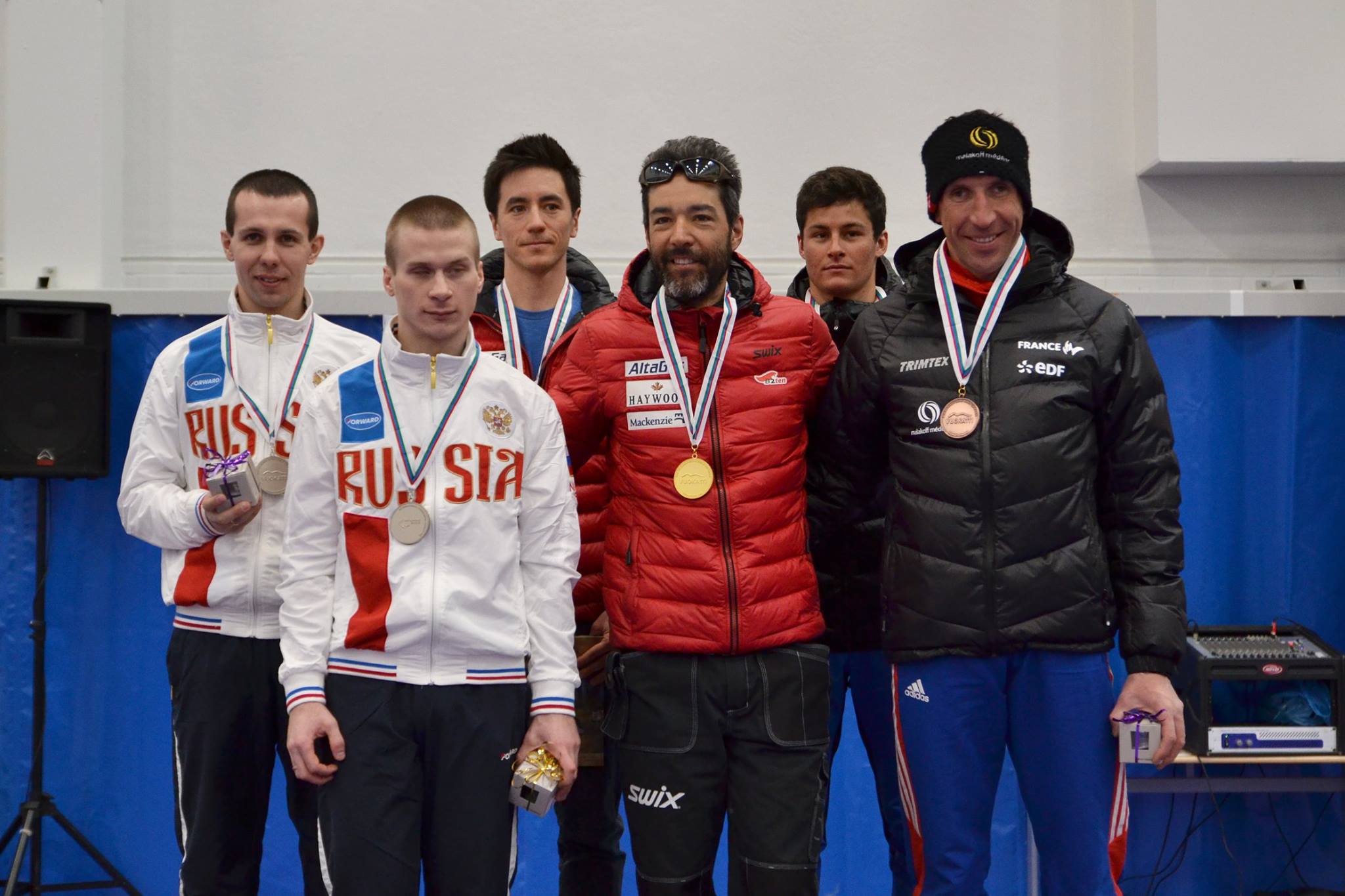
    Brian McKeever (c) and his guide Graham Nishikawa with their gold medals after the men's visually impaired 30 k at 2016 IPC World Cup Finals in Vuokatti, Finland. Russia's Alexsander Artemov (l) placed second and France’s Thomas Clarion (r) was third. (Photo: IPC Nordic Skiing/Facebook)
    Brian McKeever (c) and his guide Graham Nishikawa with their gold medals after the men’s visually impaired 30 k at 2016 IPC World Cup Finals in Vuokatti, Finland. Russia’s Alexsander Artemov (l) placed second and France’s Thomas Clarion (r) was third. (Photo: IPC Nordic Skiing/Facebook)

    As many athletes continue to prepare for the upcoming Paralympic Games taking place exactly one month from Sunday in Rio de Janeiro, Brazil, those sporting the white, blue and red flag of Russia will not. On Sunday, Aug. 7, the International Paralympic Committee (IPC) announced its decision to suspend the Russian Paralympic Committee from competition in Rio and upcoming IPC competitions.

    A press conference was held Sunday morning in Rio to announce the IPC Governing Board’s unanimous ultimatum that the Russian Paralympic Committee had failed its duties as an active member to the IPC in light of recent investigations. Namely, the Russian Paralympic Committee was found at fault in their inability to comply with sanctions set forth by the IPC Anti-Doping Code and the World Anti-Doping Code. Prior to any decision from the IPC Governing Board, the Russian Paralympic Committee was permitted to provide a written and verbal claim during the conference.
    The logo for the 2016 Summer Paralympic Games, which will be held Sept. 7-18 in Rio de Janeiro, Brazil.
    The logo for the 2016 Summer Paralympic Games, which will be held Sept. 7-18 in Rio de Janeiro, Brazil.

    The repercussions of the decision for the Russian Paralympic Committee include the suspension of its IPC membership rights and privileges. This means Russia is not allowed to vote at IPC member meetings nor enter athletes in IPC-sanctioned events, which includes the 2016 Summer Paralympics and IPC competitions (involving summer and winter sports) beyond that.

    Much of the decision, according to IPC President Sir Philip Craven, was based on the findings of the McLaren report. Within the report, “35 disappearing positive samples from Paralympic sport in 2012 to 2015,” were included in the report’s findings.

    “Since the publication of the McLaren Report on 18 July our priority has been to establish the full facts in respect of Para sport,” Craven stated in the press release.

    “In particular, we have taken the necessary time to ask further questions of Professor McLaren and his investigation team, to await the results of samples undergoing further forensic examination and to invite the Russian Paralympic Committee to present its case to the IPC and enter into dialogue with the IPC Governing Board. With the full facts to hand, we were deeply saddened to find that the State-sponsored doping programme that exists within Russian sport regrettably extends to Russian Para sport as well.”

    As head of the IPC, Craven maintains it is his and the governing body’s responsibility to ensure equity between all competitors. The motion to suspend Russia, he indicates, represents an attempt to create fair competition among all para-athletes.

    “Tragically this situation is not about athletes cheating a system, but about a State-run system that is cheating the athletes,” Craven said. “Our decision is driven by the need to hold our members accountable for their obligations. On the basis of the evidence we have, in the current environment our member the Russian Paralympic Committee cannot comply with the IPC’s Anti-Doping Code and the World Anti-Doping Code.  Those obligations are crucial to the IPC’s guarantee of fair competition for all.”

    Tragically this situation is not about athletes cheating a system, but about a State-run system that is cheating the athletes.“– IPC President Sir Philip Craven on the decision to suspend Russia from the Rio Paralympics

    Also on Sunday, the World Anti-Doping Agency (WADA) announced its support of the decision.

    “WADA supports the decision taken by the IPC, which we believe is in the interest of clean athletes and the clean sport movement,” a WADA statement noted. “The IPC’s decision follows the WADA Executive Committee’s 18 July recommendation to the IPC that they consider declining entries of athletes by the Russian Paralympic Committee for Rio 2016 as a result of the McLaren Report.”

    Robin McKeever, head coach of the Canadian Para Nordic Ski Team, pointed that beyond the summer games in Rio, the decision will also impact the upcoming winter ski season.

    “It’s a very sad day for IPC sports and in the end, the athletes pay the heaviest price overall in sport,” McKeever wrote in an email to FasterSkier. “From what I read the entire RUS IPC is banned from competition so that includes winter sports for the upcoming season. Whether or not that changes in the coming days or weeks time will tell. This obviously will have a huge effect on the size of the IPC Nordic World Cup field for this winter…True Sport must prevail and the line between what’s fair or unfair has to be drawn. I only hope we can all play on an equal playing field and move forward from this point.”

    In a phone interview before the IPC decision on Russia, McKeever emphasized that the Russian doping scandal is rooted in far more than just the athletes themselves.

    “The opportunities that the paralympics provide for some countries athletes are astronomical,” McKeever said last month.  “Russian athletes winning a gold medal at the paralympics is 145,000 euros for athlete, guide — if there’s a guide involved — and the coach. All paid out by the state. So this is a huge, huge organization from the political side all the way down. There’s one Russian who won six medals in Sochi and that’s the difference between living life in a wheelchair — pretty much fighting day to day to have a meal — versus living life as a rock star.”

    With the present decision instated, the IPC is currently working to redistribute the 267 slots that had been given to Russian athletes for Rio 2016. No action will be taken, however, until the 21-day time period that the Russian Paralympic Committee has to appeal the decision is complete. The Rio Paralympics start in 31 days on Sept. 7.

  • Russian Doping: McLaren Report Confirms Cover-Up of Positive Samples in Sochi

    Russian Doping: McLaren Report Confirms Cover-Up of Positive Samples in Sochi

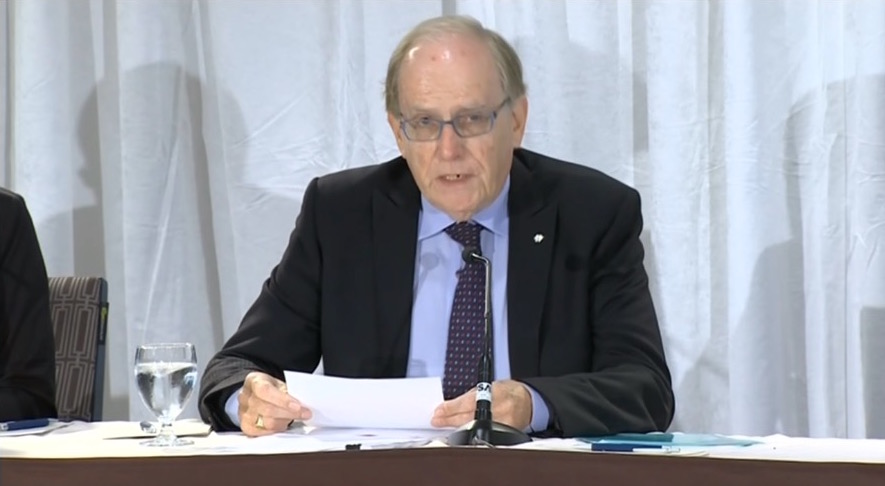
    Richard McLaren speaking at a news conference in Toronto on Monday regarding his WADA-commissioned report on state-sponsored doping in Russia.
    Richard McLaren speaking at a news conference on Monday in Toronto regarding his WADA-commissioned report on state-sponsored doping in Russia.

    In a press conference in Toronto on Monday, the long-awaited McLaren report confirmed allegations of state-sponsored doping in Russia.

    The World Anti-Doping Agency (WADA) gave Professor Richard McLaren, a Canadian lawyer, a mandate to investigate claims about doping during the Sochi Games in 2014. The report, however, made claims that the system to protect dopers was in place from late 2011 until August 2015.

    This confirmed statements by whistleblowers, including Vitaly Stepanov to German broadcaster ARD and Grigoriy Rodchenkov to The New York Times. When the initial allegations were made, they were strenuously denied by Russian officials including those named and identified in the McLaren report as having helmed the doping cover-up.

    The 97-page report itself made no recommendations for action, but McLaren said that standards of criminal law were followed and the findings were passed on to relevant authorities. Those findings were severe enough that following the report, the WADA Executive Board met and released a seven-point recommendation including that individual international federations bar all Russian athletes from competing at the 2016 Summer Olympics in Rio de Janeiro, Brazil.

    In terms of the report’s basics, here’s what McLaren concludes.

    Two labs responsible for anti-doping testing were investigated: the Moscow laboratory and the Sochi laboratory, its “satellite” facility for the 2014 Olympics. Both labs, according to the McLaren Report, were guided by the Ministry of Sport to ensure positive tests were removed and replaced by clean samples. The Ministry of Sport did not act alone. According to McLaren’s findings, it was aided in the cover-up by the Russia’s state security service (FSB).

    McLaren described two similar, but distinct, efforts to protect doped Russian athletes. The Moscow laboratory was responsible for ensuring clean samples for both summer and winter Olympic sports. Based near the highest powers of government, “The Moscow Laboratory was the final failsafe protective shield in the State directed doping regime,” the report stated.

    McLaren called this lab’s deceptive process the “disappearing positive methodology”. Positive tests were labeled “Save” or “Quarantine”. The “Saved” samples were swapped for clean ones, whereas the “Quarantine” samples were reported as failed drug tests.

    The Sochi laboratory helped protect Russian athletes from popping a positive specifically during the 2014 Sochi Olympics. The FSB, Russian Ministry of Sport, and the Moscow laboratory all assisted with planning and executing the sample swapping methodology used during the Games. The Sochi methodology was more complex — tamper-proof bottles were manipulated.

    Since their introduction at the 2000 Olympics in Sydney, it was assumed that the bottles could never be opened without showing a mark. But McLaren explained that they had been — small scratches on the bottles remained as proof of manipulation, but the marks were not visible to the naked eye. This confirmed a major allegation by Rodchenkov, which had been met with some skepticism by those who assumed that the bottles were indeed tamper-proof.

    Small scratches on the bottles remained as proof of manipulation, but the marks were not visible to the naked eye. 

    Other claims of Rodchenkov were not fully proven, although also not disproven. Rodchenkov, the former head of the Moscow laboratory, had said that there was a list of pre-approved athletes whose samples would be protected. He named Russian cross-country skier Alexander Legkov as one of them.

    McLaren, however, did not mention athletes by name. But he did confirm that there was a “pre-selected” group of Russian athletes that benefitted from the Sochi lab’s clandestine work.

    With all of his findings, McLaren made clear he used the threshold of “beyond a reasonable doubt,” when writing the report and substantiating any claims.

    According to page 41 of the report, since 2011, Russian winter sports athletes were implicated in the “disappearing positive methodology”: 10 positive tests were rendered clean in biathlon with 13 in “skiing”, although this was not broken down into disciplines such as alpine or cross-country. It should be noted that Russia qualified a small team of alpine skiing athletes for the Sochi Games.

    The WADA Executive Board called on all international federations whose athletes were included in the report to take investigative action. So far, neither the International Ski Federation (FIS) nor the International Biathlon Union (IBU) have made official statements.

    “The findings of the report show a shocking and unprecedented attack on the integrity of sport and on the Olympic Games,” International Olympic Committee (IOC) President Thomas Bach said in a press release. “Therefore, the IOC will not hesitate to take the toughest sanctions available against any individual or organisation implicated.”

    International Paralympic Committee (IPC) released a reactionary statement on Monday, quoting its president, Sir Philip Craven: “The IPC will now analyse the report’s findings in detail to evaluate what impact they have on the Paralympic Movement and Para Sport,” he said. “After an initial review of the report, we note the 35 ‘disappearing’ positive samples from Paralympic sport between 2012 and 2015 and have sent a letter to WADA and the report’s author Richard McClaren seeking further information on these samples.  We have also requested urgent clarification from both parties to better establish how the findings implicate the Sochi 2014 Paralympic Winter Games and Russian Para athletes as the report defines the Sochi Games as the XXII Olympic Winter Games…”

    The U.S. Olympic Committee (USOC) also weighed in: “The McClaren Report confirms what we have stated previously: the current anti-doping system is broken and urgently requires the attention of everyone interested in protecting clean athletes,” USOC CEO Scott Blackmun said in a press release. “We look forward to working with the IOC, WADA and the entire Olympic family to address the flaws in the current system so that a uniform approach to anti-doping can be implemented and enforced around the world. In the meantime, we are focused on preparing Team USA to compete at the upcoming Rio Games and will rely on the IOC, WADA and the international federations to impose sanctions that are appropriate in relation to the magnitude of these offenses, and that give clean athletes some measure of comfort that they will be competing on a level playing field in Rio.”