From the FasterSkier archive — posts syndicated from athletes’ and coaches’ own blogs between 2004 and 2012, kept online as published. Current coverage is at fasterskier.com.

Tag: sit skier

  • Norwegian Start-up Rethinks Dryland Sit-Ski

    Norwegian Start-up Rethinks Dryland Sit-Ski

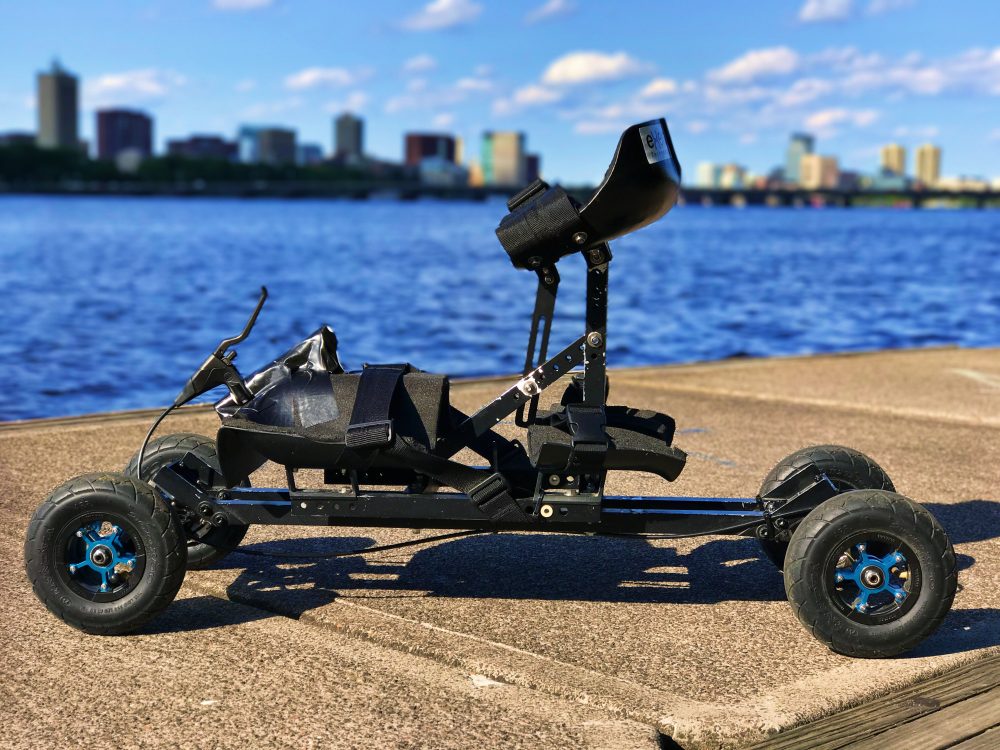
    A group of five Norwegian students updated the dryland sit ski: on display is the Exero Spike prototype. (Photo: Exero Technologies)

    There are ah-ha moments when an idea comes — poof — out of thin air. Then there are blunt-force type ideas, when reworking, redirecting and reconfiguring brings about the desired outcome. For five students from Norway who recently formed a start-up called Exero Technologies, there’s been a mix of ah-ha and continual reconfiguring.

    The group of five Norwegians, all studying at NTNU in Trondheim, includes mechanical engineers and a civil engineer with a business background, are developing a new dryland specific sit-ski. NTNU’s Business School is part of the Norway Entrepreneurship Program (NEP), which is based at the University of Oslo. A unique aspect of the program sends approximately 150 NEP students to the United States for 10 weeks during the summer.

    That’s how Nicoline Bergh, Bendik Fon and Solveig Christensen, three of the five founders of Exero Technologies, found themselves on their 10-week immersion at the Boston University (BU) Questrom School of Business. Bergh described BU as ideal for refining the group’s pitch and exposing their product to new user groups.
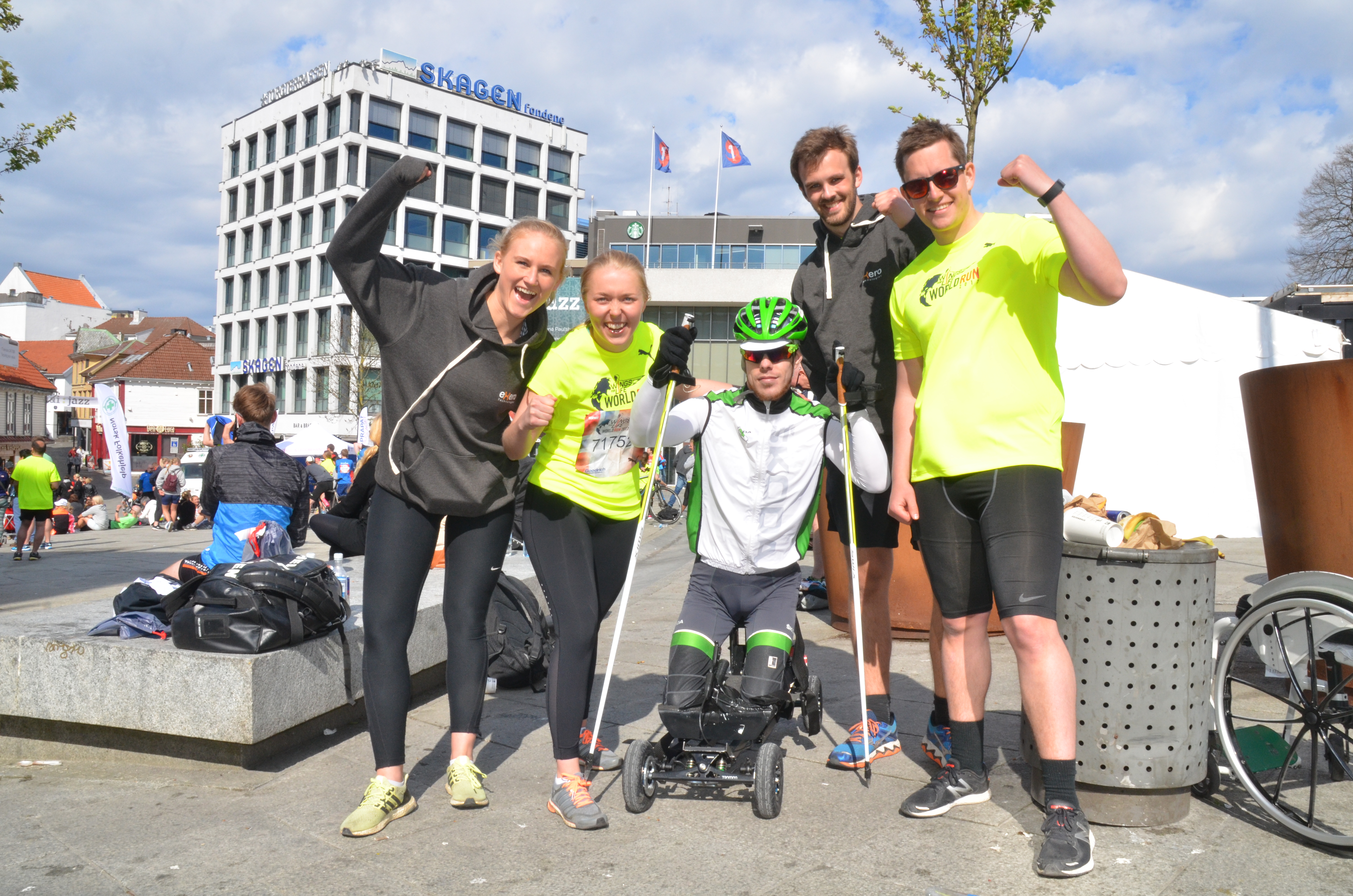
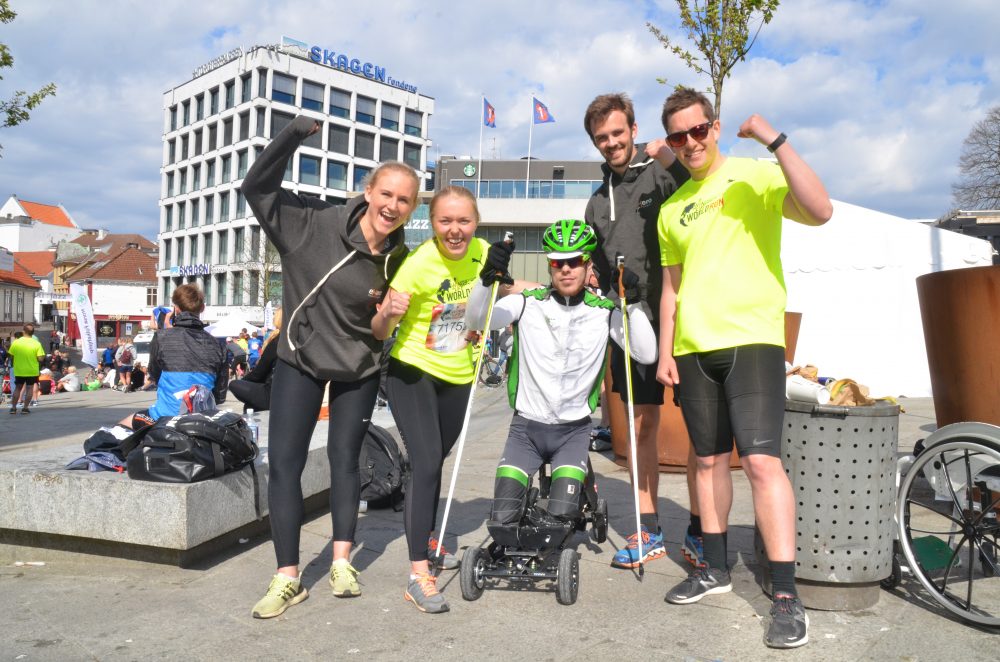
    From left to right: Solveig Christensen, Nicoline Bergh, Espen Aksnes, Mathias Berg, and Bendik Fon after the Wings for Life Run in Stavanger, Norway on May 7, 2017. (Photo: Exero Technologies)

    As part of NTNU’s course requirements, students must start a business.

    “This project started one year ago when the three guys on our team, they studied mechanical engineering, and they began production,” Bergh said. “Initially, the mechanical engineers in the group were given a problem that was looking for new solutions: how to win more medals in the Paralympics. They were looking for new solutions to improve athlete performance … the problem was to make a new solution for the cross-country sit-ski.”

    The on-snow XC sit-ski is simple yet functional. Most often the frame is aluminum or a composite with a pair of skate skis attached to the base. The athlete sits in an affixed molded seat. Forward movement is strictly a double-poling affair. Basic, light and minimalist — on-snow sit-skis have no steering or braking mechanism. In the racing scene, they are built for speed.

    Like their able-bodied counterparts, para athletes train in the offseason. That requires specialized equipment. Mountain boards, a wider and longer version of their skateboard park cousins, have been the go-to platform for dryland sit-skiing.
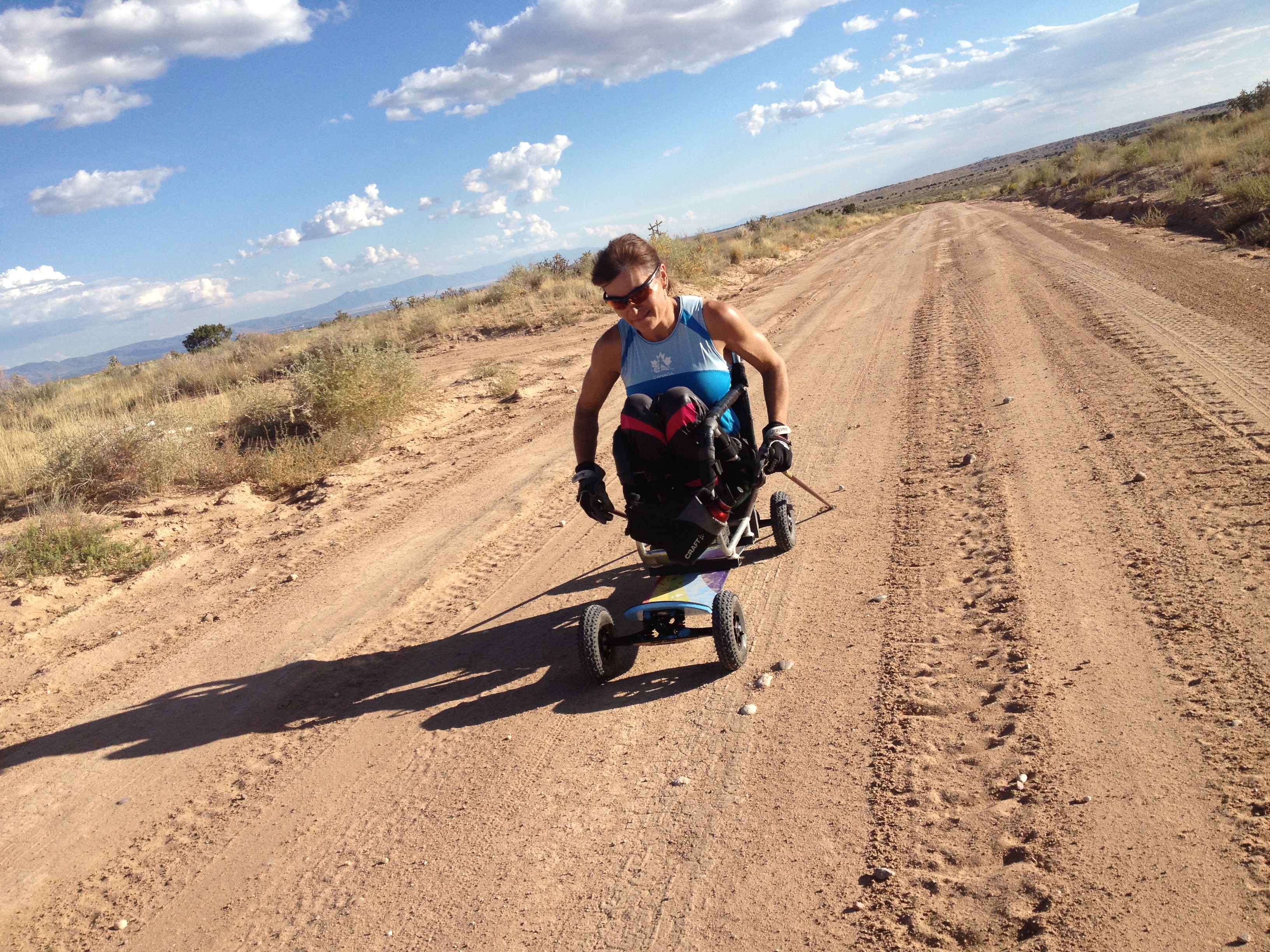
    Colette Bourgonje doing some mountain-board sit-skiing during a Canadian Para-Nordic Team training camp in Arizona in 2012. (Photo: Robin McKeever)

    Mountain boards feature pneumatic tires, beefier and stiffer trucks, and in some cases a hand-operated caliper brake. A molded seat is bolted to the board. And because of the single pivots on the front and rear trucks, athletes can steer by leaning their torso.

    Those modified mountain boards are a manifestation of making the best with what’s available off the shelf.

    That’s where Bergh says her team’s product, the Exero Spike, will make a difference. Bergh calls the Exero Spike the “total solution”. In other words, adaptive athletes will have more steering control, comfort, off- and on-road functionality, and hand-operated front-wheel disc brakes. All that amounts to better stability and possibly a potentially bigger user group, she asserted.

    Beyond the one-off mountain boards made for adaptive athletes, Bergh explained that none of the comparable products in the marketplace are best serving those adaptive athletes wanting a more fluid exercise experience.
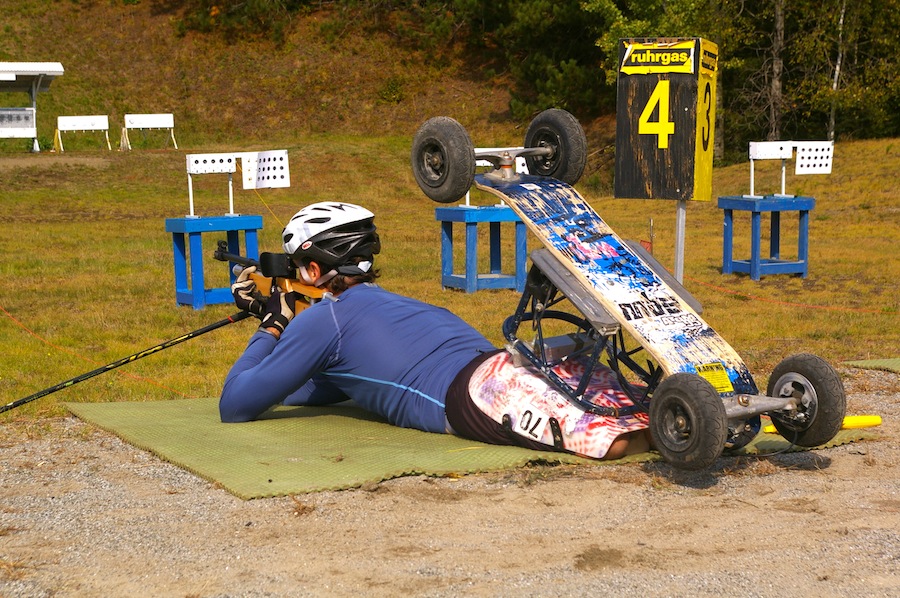
    U.S. Paralympics Nordic national-team member Andy Soule works on shooting at the Mt. Van Hoevenberg biathlon range during time-trial intervals on sit-ski mountain boards in September 2012.

    “Products used today are mostly hand bikes and 3 wheel wheelchairs,” Bergh wrote in an email. “The handbike is both big and heavy and often difficult to manage on your own. With a 3 wheel chair, it is difficult to both steer and make progress at the same time, as you have to use a steering wheel to change direction, forcing you to stop making forward movement at the same time.”

    Bergh envisions a market for the Exero Spike well beyond adaptive snow and dryland sit-skiers.  

    “So far, we have looked at people with spinal-cord injuries, amputees, cerebral palsy, polio, or other muscle diseases as our primary segment,” Berg emailed. “These also the segments that we are focusing on and see as the potential users. But, as we are developing a summer sports equipment, we see that the sled we are developing can be used for more than just cross country summer training. We’ve been testing with sledge hockey players and rowers, and we’ve got the impression that the movements they’re used to are quite similar to the sled we are developing.”

    Bergh and her partners foresee approximately 50,000 potential users in Scandinavia (12,000 of whom reside in Norway), and two million potential users in the U.S.

    Perhaps those numbers look inflated. As medical costs increase, in cases where more exercise correlates with smaller health bills in the long term, tools like the Spike, making outdoor exercise more accessible, may make sense. According to The Centers for Disease Control and Prevention estimates, 2.2 million people in the U.S. depend on wheelchairs for mobility. Another 6.5 million require a cane, walker or crutches.

    “We want to make a product, that is both fun to use, beneficial in terms of health and that looks cool,” Bergh wrote. “We want to make a product for people with disabilities that don’t have the same options to do exercising as you and me. Also, focusing on design and making a cool product, it will differ from many of the alternatives today.”

    Exero Technologies remains in start-up mode. Bergh said the group has no firm price set for their initial model, which they plan to release in a year.

    “The longtime goal is to make several products, making a portfolio,” Bergh wrote. “By now, we’re starting out with the current product and will develop a sled for those who need their legs straight out. I think we will wait for the users’ feedback on the first product, and then decide whether we should experiment with different materials.”

    On Sept. 7, Norway’s Spare Bank 1 announced Exero Technologies had won its business innovation competition: Exero Technologies was awarded 250,000 Norwegian Krone (almost $32,000 U.S. dollars).

    https://www.instagram.com/p/BYyUG7lDu05/?taken-by=exero_technologies

  • Fourth No More, Soule Up to Third Overall in IPC World Cup with Five Medals at World Champs

    Fourth No More, Soule Up to Third Overall in IPC World Cup with Five Medals at World Champs

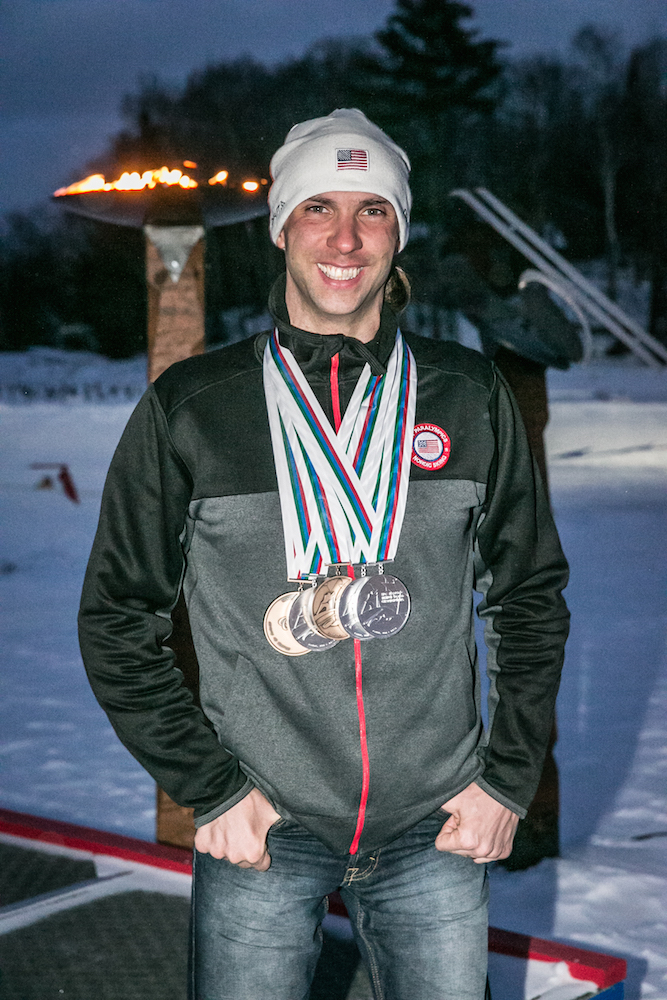
    Andy Soule and his hardware from 2015 IPC World Championships: five medals with three silvers and two bronze. (Photo: James Netz)
    Andy Soule and his hardware from 2015 IPC World Championships: five medals with three silvers and two bronze. (Photo: James Netz)

    Andy Soule took one look at the skate course at the International Paralympic Committee (IPC) World Championships — with technical downhills and a massive uphill — and thought, I could do that. The 35-year-old Army veteran previewed it the day before the final race in Cable, Wis., and found it to be “fairly difficult by our standards,” he said in a phone interview last week.

    Difficult in the sense that he’s a sit skier who relies entirely on his upper body and core strength, double poling everything from flats to steep hills. The course was designed for standing athletes — with two freestyle legs in the mixed relay, but the U.S. only had one man that could skate.

    “We wanted to enter a relay at World Champs, but we only had one standing athlete available to us, Omar Bermejo, who had been battling sickness during these events so running him twice on a super cold day did not seem like the best idea,” U.S. Paralympics High Performance Director John Farra explained in an email. “So we floated it by Andy and he did not hesitate to say yes!  … This is the first time a sitting athlete has done the standing course in the relay, so that was fun as countries came up to me to be sure we had not made a mistake.”

    It wasn’t against the rules, as Soule pointed out: “There is no rule that says you have to have a sit skier or a stand skier on either one; factors are just supposed to take care of those.” So as the second leg of the U.S. mixed relay on Feb. 1, he headed out after teammate Oksana Masters tagged him in fourth of seven teams.

    Farra’s Take on the “Sit-Ski Heavy” U.S. Team:

    “It’s a good thing… we have been able to attract sitting athletes from other sports and they are having success, which is getting attention from other sitting athletes,” U.S. Paralympics High Performance Director and Coach John Farra wrote in an email. “We have proven that we can be a good sport for summer sport athletes looking for cross training and a new challenge and tough competition.”On the other side we are very much interested in increasing the [numbers] of standing and visually impaired athletes who can develop into strong international racers.  Those who are finding success are finding it best to join up with a USSA Club program so they can be training & racing with other standing (able bodied) skiers as much as possible.”

    “Our team is very sit-ski heavy right now, and while we didn’t really go into the relay with an expectation of a high place or anything, they decided to go ahead and field me on the standup course,” Soule said from his home in Pearland, Texas. “I told my coaches I believed it was entirely doable … it’s probably not any sort of a competitive advantage for sure, but it was an interesting experience, and it went pretty well.”

    Soule came through the exchange in seventh, just seven seconds behind Germany’s Tino Uhlig, a standing skier who uses one pole, in sixth. With sit-skier Tatyana McFadden and Bermejo, a single-arm amputee, racing the third and fourth legs, respectively, the Americans placed seventh, 45.4 seconds out of sixth.

    From the outset, the mixed relay was the team’s weakest event of the week, one in which they did not field a team at last World Championships. However, more symbolically, it capped their historic showing in Cable, where Soule racked up five medals — unprecedented for a U.S. cross-country skier at World Championships — and competed in all seven events, including the relay.

    He was glad he did it.

    “It have me a really good gauge of where we are in terms of what relative speeds look like for sit skiers versus standup athletes,” Soule said. “On the largest climb of that race, I was passed by one of the best standup skiers in the world in our sport, Nils-Erik Ulset, of Norway. I think it was an interesting event for a lot of people to see exactly what is possible for a sit skier, too.”

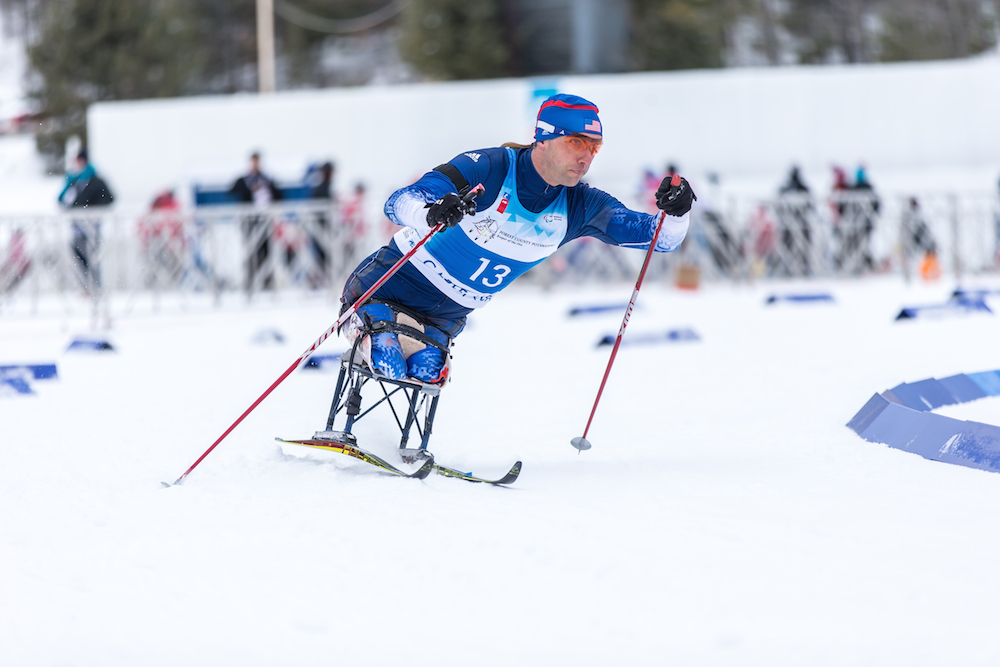
    Andy Soule navigates a turn  during one of his six individual races at 2015 IPC World Championships in late January in Cable, Wis. Soule medaled in five of those events. (Photo: James Netz)
    Andy Soule navigates a turn during one of his six individual races at 2015 IPC World Championships in late January in Cable, Wis. Soule medaled in five of those events. (Photo: James Netz)

    And he held his own on the descents. “I definitely didn’t lose any time on downhills,” Soule added.

    “Andy left Cable as a bit of a Legend,” Farra wrote. “5 medals and climbing & descending Telemark Hill successfully!”

    In his eighth year on the U.S. Paralympics Nordic team, it was not only Soule’s most successful World Championships, it was perhaps the highlight of his career after winning bronze in biathlon at the 2010 Paralympics.

    “This is a pretty high highlight,” Soule said. “After the second podium, I just started feeling like that wasn’t a fluke. This isn’t just a one-time thing, I’m really up here with the top of the field. I can compete with these guys. I can come out and compete on a level with the top guys every day. It was a confidence builder as well when you have that feeling.”

    “After the second podium, I just started feeling like that wasn’t a fluke … I can come out and compete on a level with the top guys every day.” — Andy Soule, who earned three silver medals and two bronze at the 2015 IPC World Championships in Cable, Wis., unprecedented for an American

    That feeling translated into three silver medals in two of three biathlon events and the cross-country 10-kilometer race at the 2015 championships, and two bronze in the cross-country 15 k and 1 k sprint (where Soule charged up from fourth with 40 meters to go to take third). On Monday, the IPC named Soule its January athlete of the month across all sports.

    Prior to this season, he had a Paralympic bronze from 2010 and placed fourth twice during last winter’s 2014 Paralympics in Sochi, Russia.

    “I wanted to break through that last little barrier for sure,” Soule said of his tendency toward wooden medals. “Between being almost on the podium and being a solid, consistent at least podium-potential finisher … that’s kind of been the source of all the little tweaks and changes we’ve been working with over the past year.”

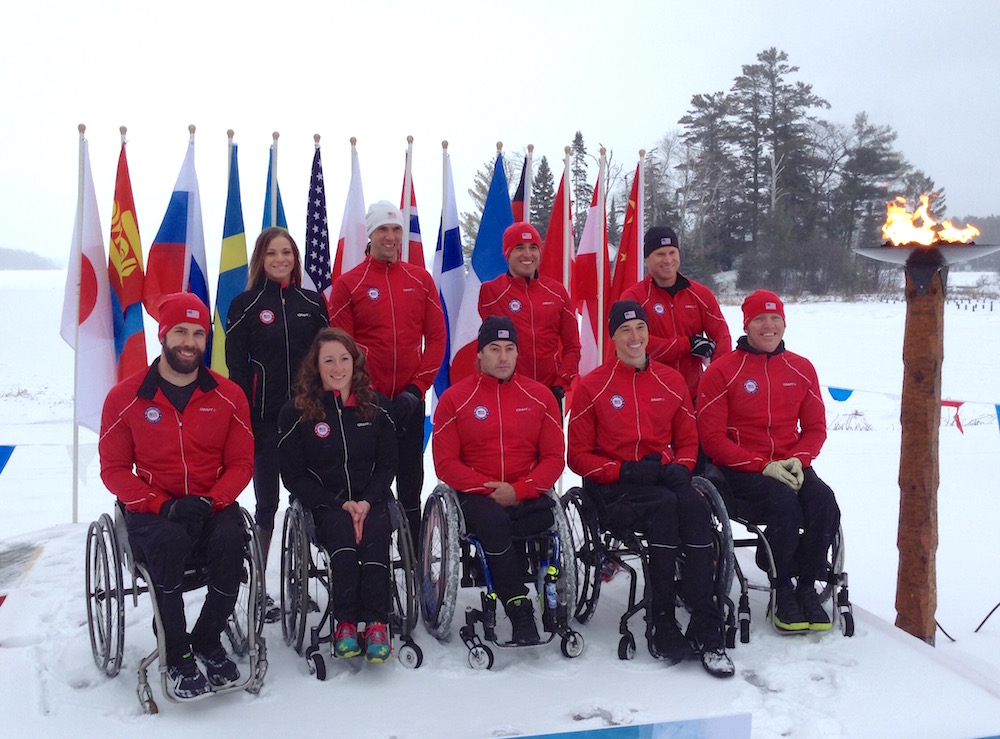
    2015 U.S. Paralympics Nordic World Championships Team in Cable, Wis. (Photo: U.S. Paralympics Nordic)
    2015 U.S. Paralympics Nordic World Championships Team in Cable, Wis. (Photo: U.S. Paralympics Nordic)

    Asked specifically about those changes, U.S. High Performance coach Eileen Carey explained, “To talk about what any one individual athlete has done to improve is to talk about the whole team,” she wrote in an email.

    Everyone on the team is analytical and thoughtful when it comes to what they need to work on and how to achieve those changes, she added. “They have created a really cool team environment focused on improving as individuals and as a team.”

    For Soule, it was about relaxing his technique at race pace.

    “He has always skied well at level 2, but speed had previously introduced a lot of wasted, inefficient movements into his technique, especially on flat terrain,” Carey wrote. “His ski speed and relaxed technique have always been there, it was just a matter if translating them to a race pace.”

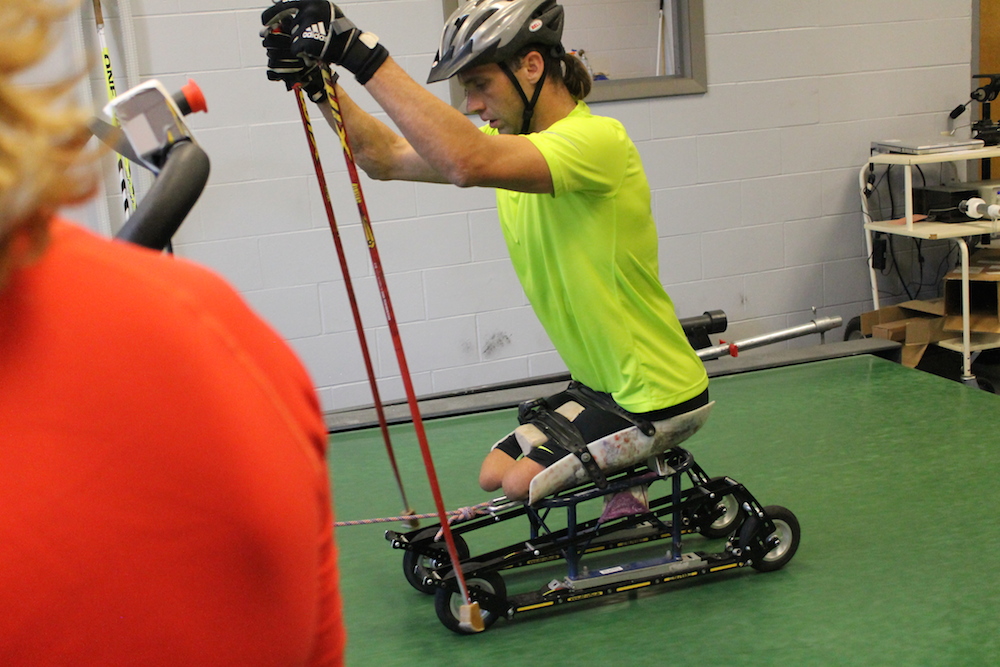
    In September, they started with rollerski sessions on the treadmill with live video so Soule could see the changes he was making as he tried them out.

    “Once we had the cues we knew worked for him, we brought it to snow this fall,” Carey explained. “It has been an evolution and I am sure it will continue to evolve. We did a lot of video analysis during and after the first World Cup in Finland in December and spent the pre-World Champs camp honing in on some of the patterns we saw from that.  He and his teammates have driven the process and we have worked to find the process and communication style that works best with each athlete.”

    Andy Soule working on technique during a treadmill session on Sept. 16 at the Olympic Training Center in Lake Placid, N.Y.
    Andy Soule working on technique during a treadmill session on Sept. 16 at the Olympic Training Center in Lake Placid, N.Y.

    As a result, Soule came out of the World Cup opener in Vuokatti, Finland, with two fourth-place finishes in the cross-country 10 k and biathlon sprint. While they weren’t podiums, he could feel a difference.

    “What I used to be doing was concentrated more on high tempo,” he said. “My emphasis on training recently has been to focus on flat sections of the course, what standup, able-bodied skiers would be considering a V2-technique section, lengthening out the pole stroke.”

    He continued to work on his technique at U.S. nationals in early January and at the team’s pre-World Championships training camp after that. He also switched to shorter poles this season.

    “I think everything just builds off what you’ve been working on in the past,” he explained. “You keep watching video of yourself, keep looking at races and identify what did work and then what little things we can maybe experiment with to get a little more speed.”

    Soule approached the biggest races of the season in Cable hoping to see improvement first, then results.

    “I wasn’t really worried going in what specific places I was aiming for — you can never really control that because you can never control how good everyone else is going to be,” he said. “But I wanted to see a personal improvement in what I would be able to accomplish as compared to how I’ve been performing in the past year.”

    As for which medals meant the most to him, he said his bronze in the cross-country 15 k was something he’d remember.

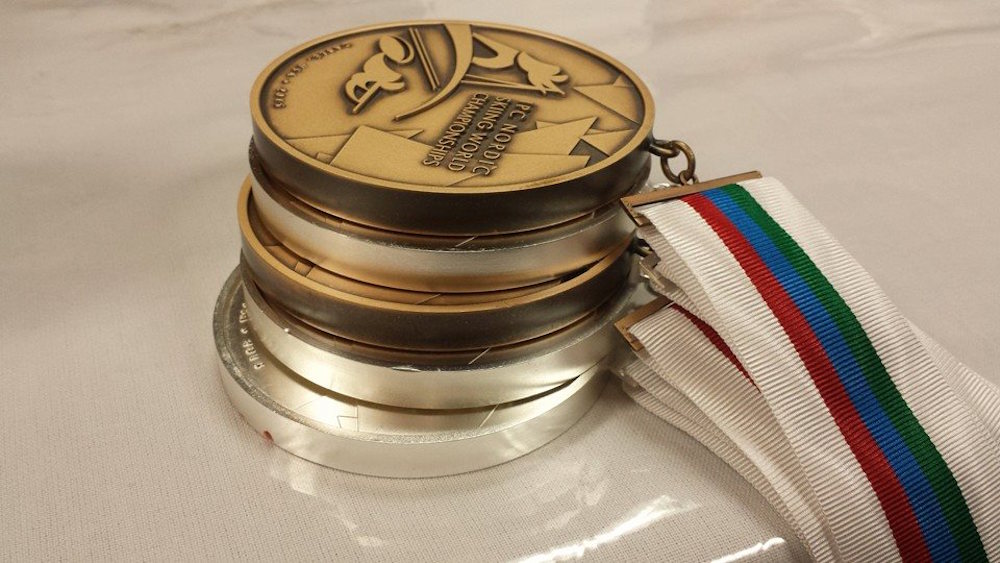
    Andy Soule's stack of medals from 2015 IPC World Championships in Cable, Wis., where he earned three silver and two bronze between three biathlon and two cross-country races. (Photo: U.S. Paralympics Nordic)
    Andy Soule’s stack of medals from 2015 IPC World Championships in Cable, Wis., where he earned three silver and two bronze between two biathlon and three cross-country races. (Photo: U.S. Paralympics Nordic)

    “It meant a lot to get the medals in the cross-country races just because that long-distance race, the first cross-country race of the week, was actually my first-ever podium in a cross-country race,” he said. “And it also boosts my confidence going into a biathlon event. It used to be, in order to have a shot at the podium in biathlon, I had to outshoot the top competitors. They had to miss shots in order for me to have a shot at the podium. Now I have that confidence that I can ski right with them. If neither of us misses anything, between me and the top competitors, I’m still in it.”

    Now third overall in the IPC World Cup standings with two major stops remaining (this weekend in Asahikawa, Japan and at World Cup Finals from March 16-22 in Surnadal, Norway), Soule said he mostly wanted to put together a “solid string of really great performances” for the rest of the season. Beyond that, he has his sights set on the 2018 Paralympics in Pyeongchang, South Korea.

    “I’m right at that age and I’m right at the point in my career where I’m in the prime of real top-performance potential,” he said. “I feel really great about what I have going forward and that I’ll be able to build on it and still improve on it.”

    In most every interview in Cable, Soule tossed around the word: “team.” He reiterated that he couldn’t have done it without his teammates and turned the focus toward their many successes at this year’s World Championships as well, including five Americans making the sit-ski sprint finals (three men and two women), and Masters tallying silver and bronze in the cross-country 5 k and cross-country sprint, respectively.

    “It just feels really good to have great teammates,” Soule said. “You’re always cheering for each other and everyone wants to see everyone else succeed, so it makes practice more fun when we’re all there and it makes racing more exciting. A good team component is really important to what we have going right now.”

    “Lots of good things were going in Cable beyond the medals,” Farra added.

    Masters currently ranks first in the World Cup in cross-country. Stay tuned for her interview.