This World Cup coverage is made possible through the generous support of Marty and Kathy Hall and the A Hall Mark of Excellence Award. To learn more about A Hall Mark of Excellence Award or to learn how you can support FasterSkier’s coverage please contact info@fasterskier.com.
It’s the last hurrah, folks! The World Cup Finals kicked off in Falun, Sweden today with a classic sprint. While the season has been a wild ride for many reasons – spills and thrills in the Tour de Ski, COVID-cancellations, Olympic Games, geopolitical nightmares – Falun evidenced that spring is on it’s way and it’s time for the World Cup crews to head home take a break, and begin anew.
Contrasting the dim light and long shadows of far-north Ruka, Finland at the opposite bookend of the season, the sprints in Falun were raced under bright sun, with temperatures well-above freezing, bare ground and green grass emerging from beside ski tracks.
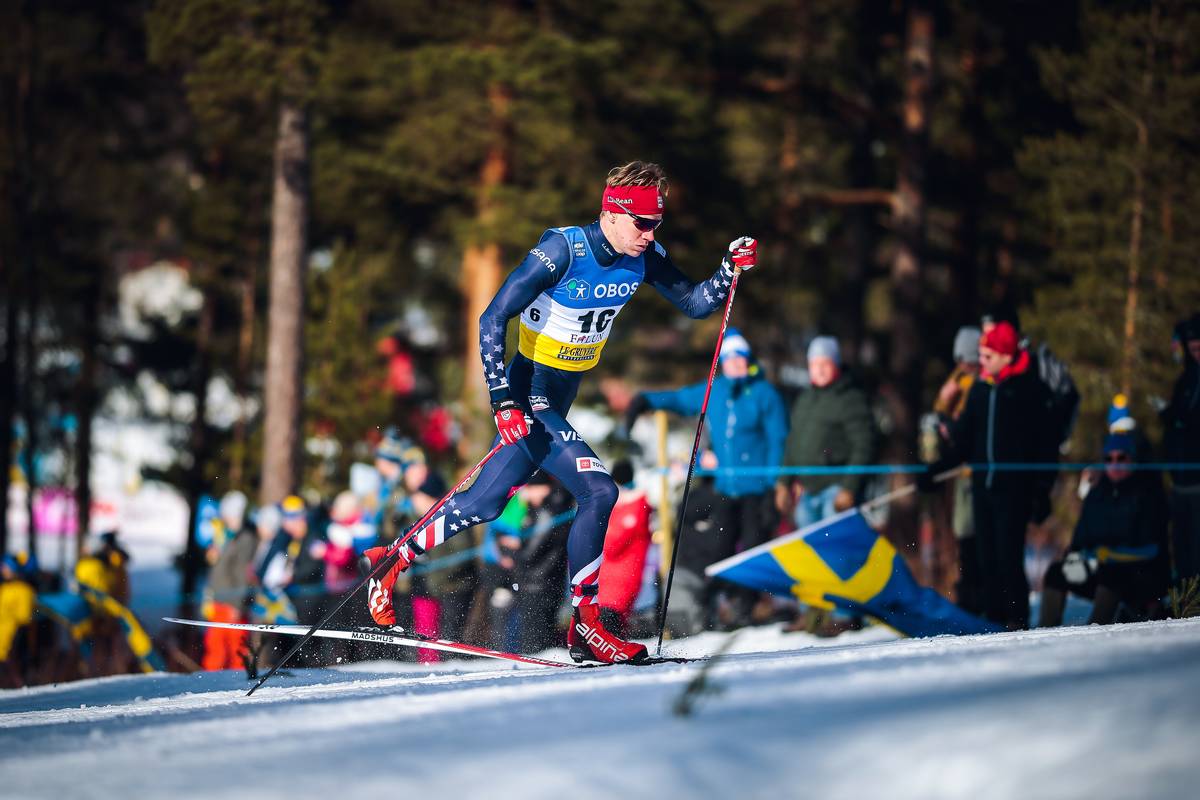
The American men, particularly in sprint, headed into the Falun weekend at a significant disadvantage. Kevin Bolger announced on Instagram Thursday that he had tested positive for COVID, while Ben Ogden, JC Schoonmaker, and Luke Jager – the remainder of the four sprint men who competed during the 2022 Olympics in Zhangjiakou – are currently competing at the NCAA championships in Soldier Hollow, UT. The sprint field as a whole has been weakened; Russian athletes were banned from competition on March 1st, while Norway’s top-six sprinters, including sprint and overall World Cup leader Johannes Høsflot Klæbo, each tested positive for COVID following the World Cup race weekend in Lahti, Finland. With no Russian’s and the top-Norwegians out, the men’s field had been cracked wide open.
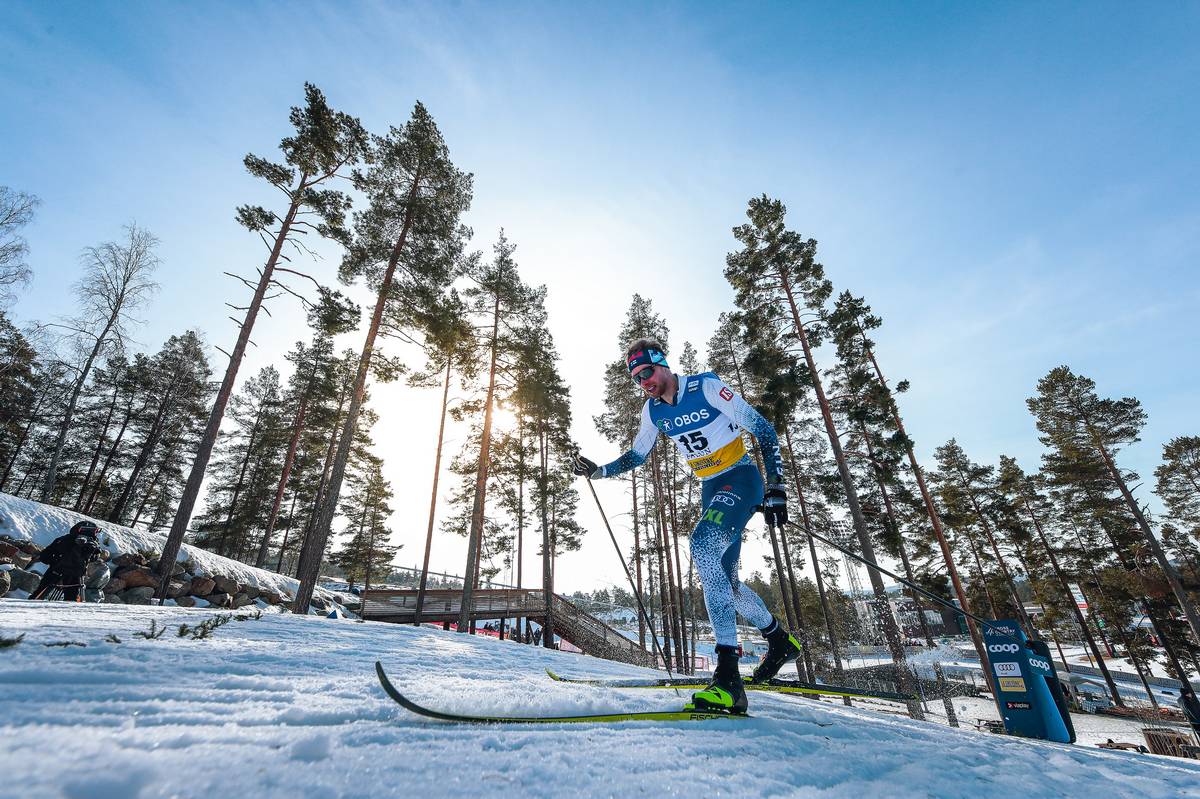
Finland’s Joni Mæki took the top spot in qualification, setting the mark at 2:51.58. Sivert Wiig of Norway took second in the qualifier (+0.69), with Sweden’s Calle Halfvarsson in third (+1.41). Three nations represented in the top-three.
Though new-to-FasterSkier names made the top-30, the early heats featured little surprise. Building momentum from a podium day in Drammen last week, France sent three of its top men to the semifinals: Lucas Chanavat and Richard Jouve, who had been third and first, respectively in Drammen, plus Jules Chappaz. Long-time sprint force Federico Pellegrino of Italy also moved through with an automatic spot, joining the day’s top-three qualifiers in the next round.
What did shake up the quarters was some trouble for the two Chinese athletes in the field. Shang Jincai, who had qualified in 25th, had a false start in heat three. Jincai looked as though he had been trying to keep himself so primed for forward momentum at the start beep, that he lost his balance, kicking a foot forward to catch himself well-before the beep and thus triggering the start. After a discussion with a jury member, while Pellegrino shook his head and raised his hands nearby, looking impatient, Jincai received a yellow card and was disqualified.
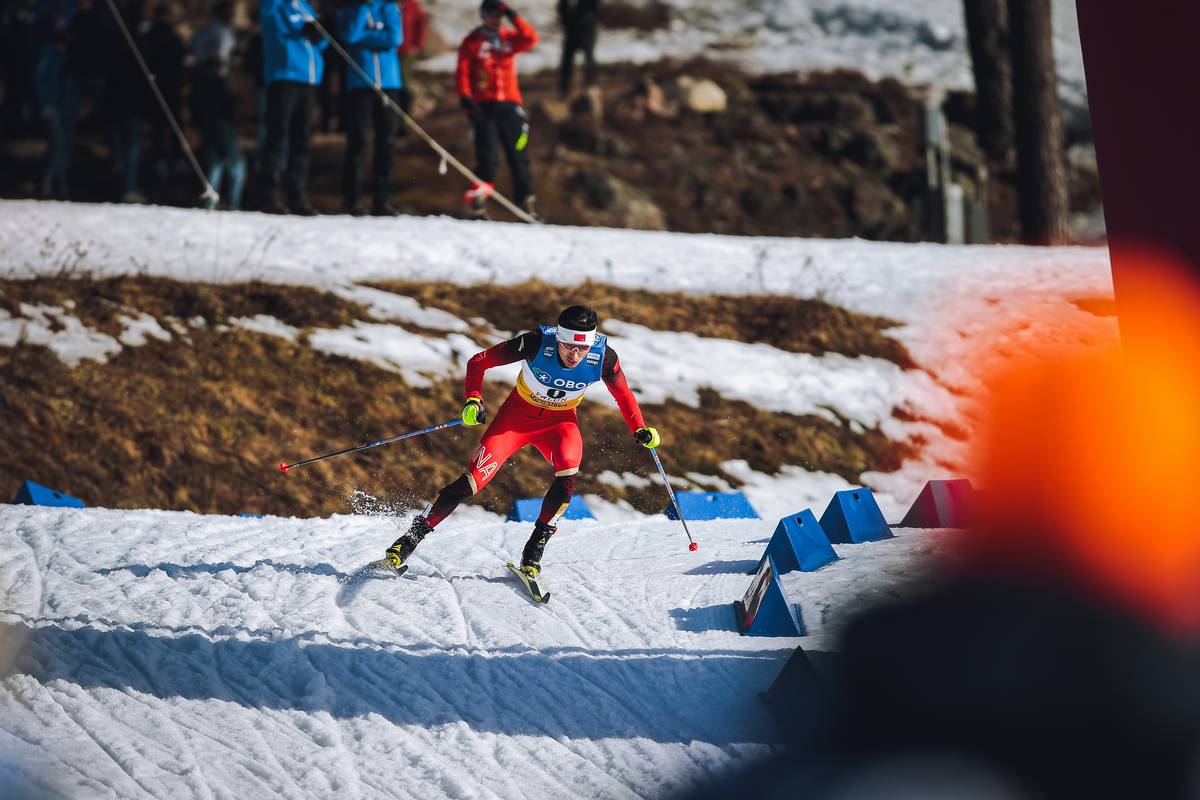
In the next heat, Wang Qiang, who qualified in 9th and took second in Drammen, fell when hopping out of the track to run uphill, roughly two minutes into the heat. Qiang had been in the lead, though the pack remained tight. After a few missteps, he was back to his feet, chasing as real estate ran out, while Lars Agnar Hjelmeset (NOR) and Calle Halfvarsson (SWE) took the reins at the front to go 1-2 in the heat. Qiang raced his way back to fourth, just over a second back, but it was not enough for a lucky loser spot.

In the semis, France’s Jouve took control of the fast first heat, beginning a surge just under-two minutes in as the men ran up the steep climb and banked left to head back toward the stadium. Around the last corner, Jouve still held the lead with Mæki (FIN) just off his shoulder. Jouve pulled ahead in the double pole sprint through the lanes, while Mæki, Wiig (NOR), and Chanavat (FRA) raced each other and the clock down the final meters. At the line, it was Norway-France-Finland, spread by 0.38 seconds, fifth and sixth less than a second behind also. Each of the top-four finishers advanced into the final round.
The second heat was significantly less smooth, though times did not reflect the chaos and were only marginally slower than the first. As the course broke down, it looked to be continually harder to keep klister free and stay upright. Heading into the final downhill in strong position to take the heat, France’s Jules Chappaz looked as if his klister snagged some loose granules of snow; as he pushed off the outside ski to stay in the curve, the ski looked unable to slide and he crashed into the abrasive corn.
The remaining athletes in the head narrowly dodged Chappaz, allowing Hjelmeset and Pellegrino to take the lead and eventually win the heat. Sweden’s Halfvarsson also went down earlier in the heat, looking to have similarly iced up while running up the first climb, leaving him off the back after the subsequent downhill.
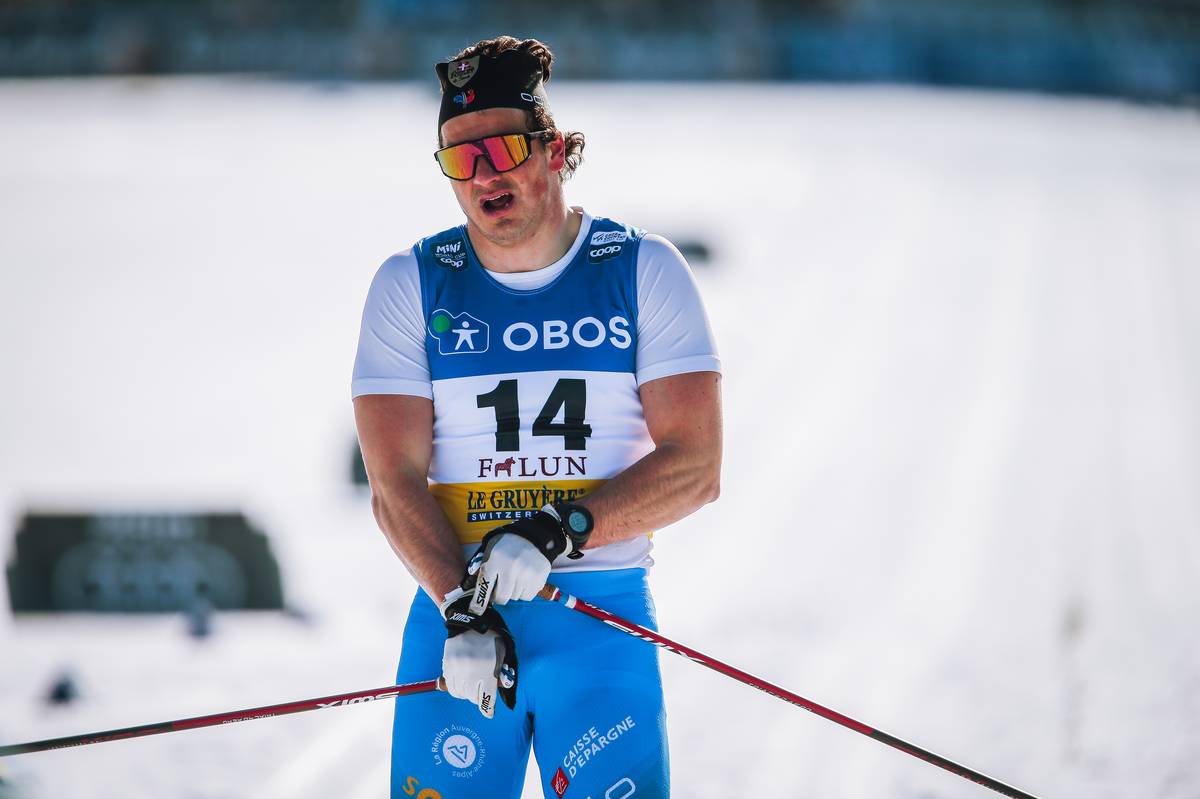
Once again, Jouve took control of the final early, with Pellegrino marking. Mæki stayed wide on the first climb looking for better snow, but came over the top and into the curve behind the top three. Jouve, still calling the shots, led into the downhill, but he could not create any significant gaps there; Wiig, Pellegrino, Chanavat and Mæki quickly accordioned onto the backs of his ski tails.
Looking confident and composed despite being unable to break away, Jouve remained at the front heading into the final curve. Once in the lanes, Jouve began to pull ahead a final time, creating a gap of several meters to Mæki and Chanavat, who were evenly matched in the double pole sprint.
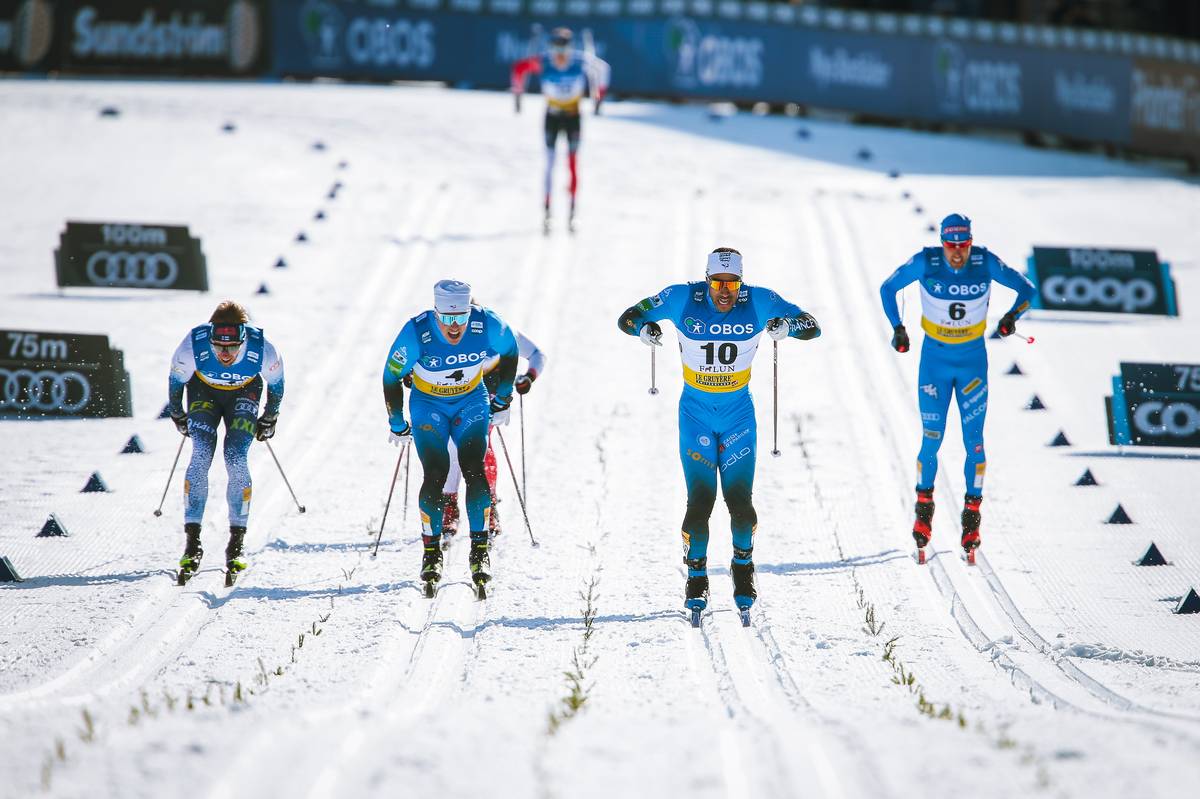
Emptying his lungs with a triumphant cry, Jouve coasted over the line for the win in 3:03.62, while Mæki and Chanavat threw their boots forward in a photo finish for the second and third podium spots roughly half a second behind. From the slow-mo, it was Mæki with the better lunge, nipping Chanavat by 0.03.
Just behind Wiig crossed fourth (+1.41), with Pellegrino fifth (+2.06), followed by a gap to Hjelmeset in sixth (+13.18).
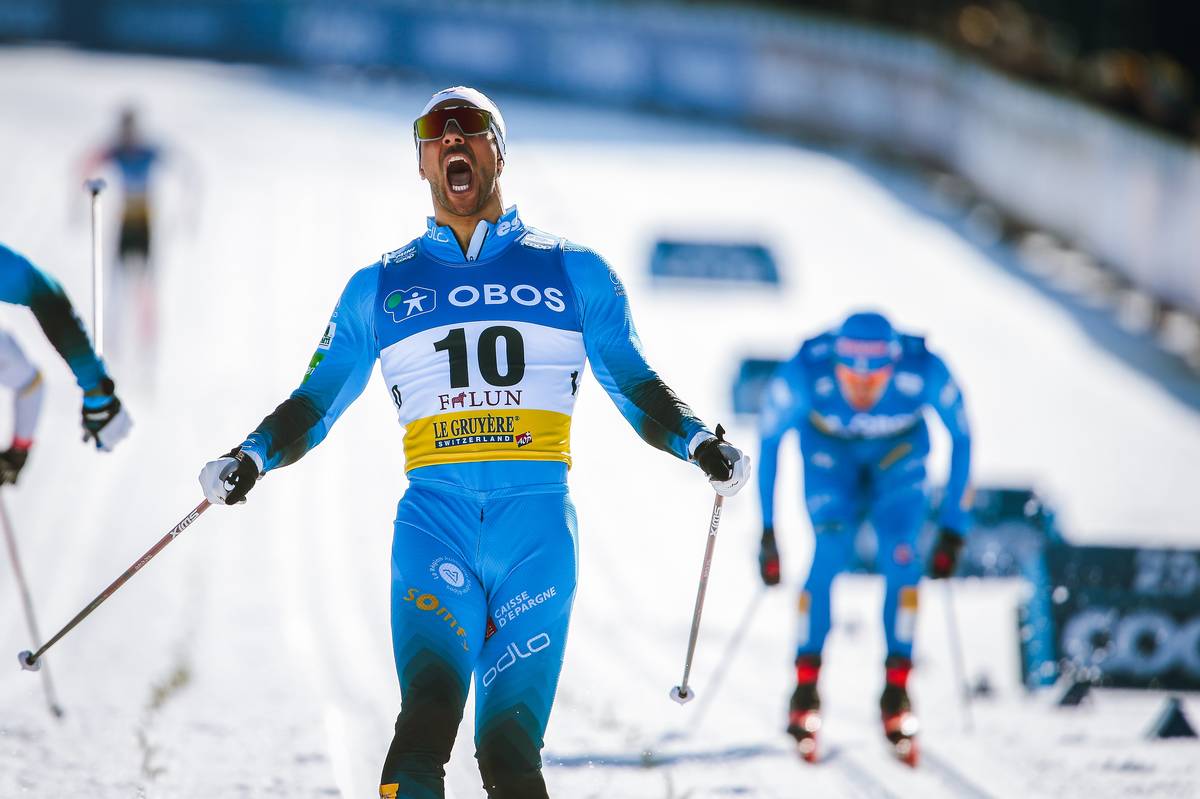
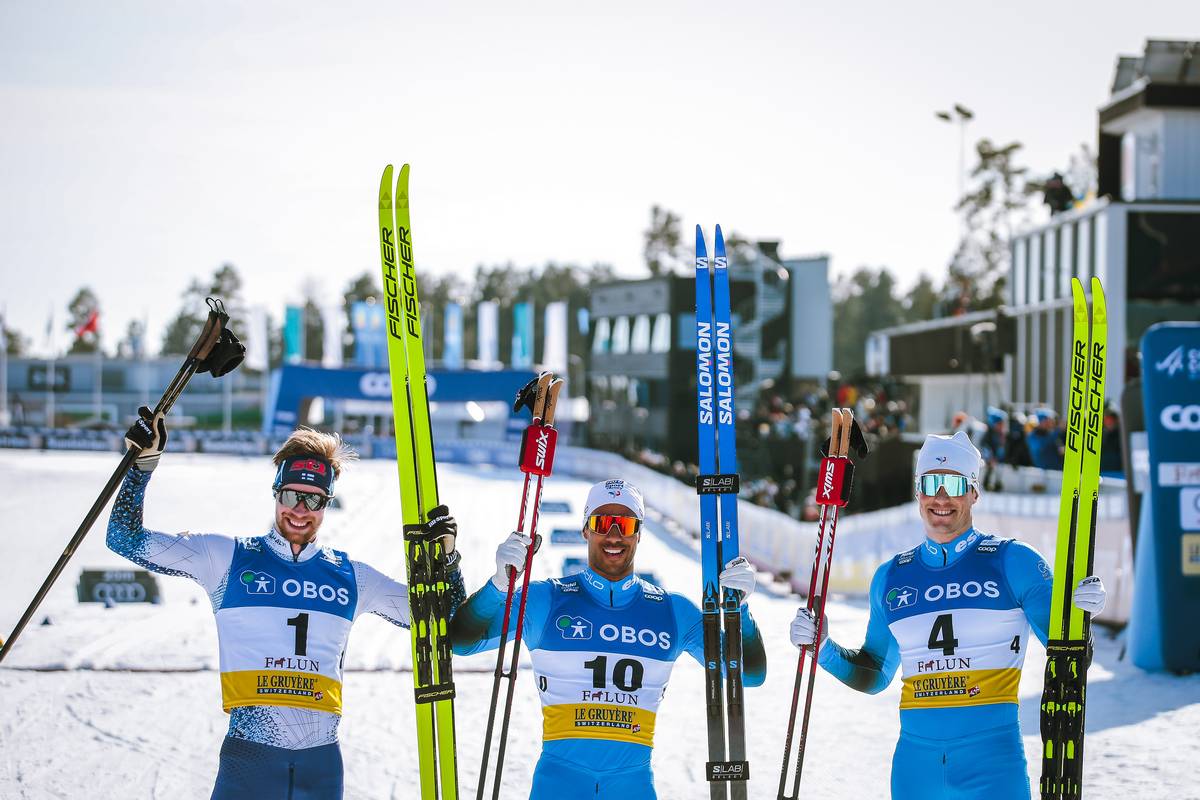
“I’m very proud,” Jouve told FIS after the race. “Off myself, my team. It’s amazing.”
With the win today, Jouve also took the lead in the sprint World Cup standings, advancing by just six points ahead of Johannes Høsflot Klæbo (NOR). The season saw Jouve land on four World Cup podiums, finish seventh in the freestyle sprint during the Olympics, and then earn his career first World Cup win in Drammen’s classic sprint last Thursday.
“It’s amazing,” said an emotional Jouve, seemingly in happy disbelief. “The season was very great for me, to win at the end of the season is already a dream, but to grab [the globe], it’s big. Fantastic.”
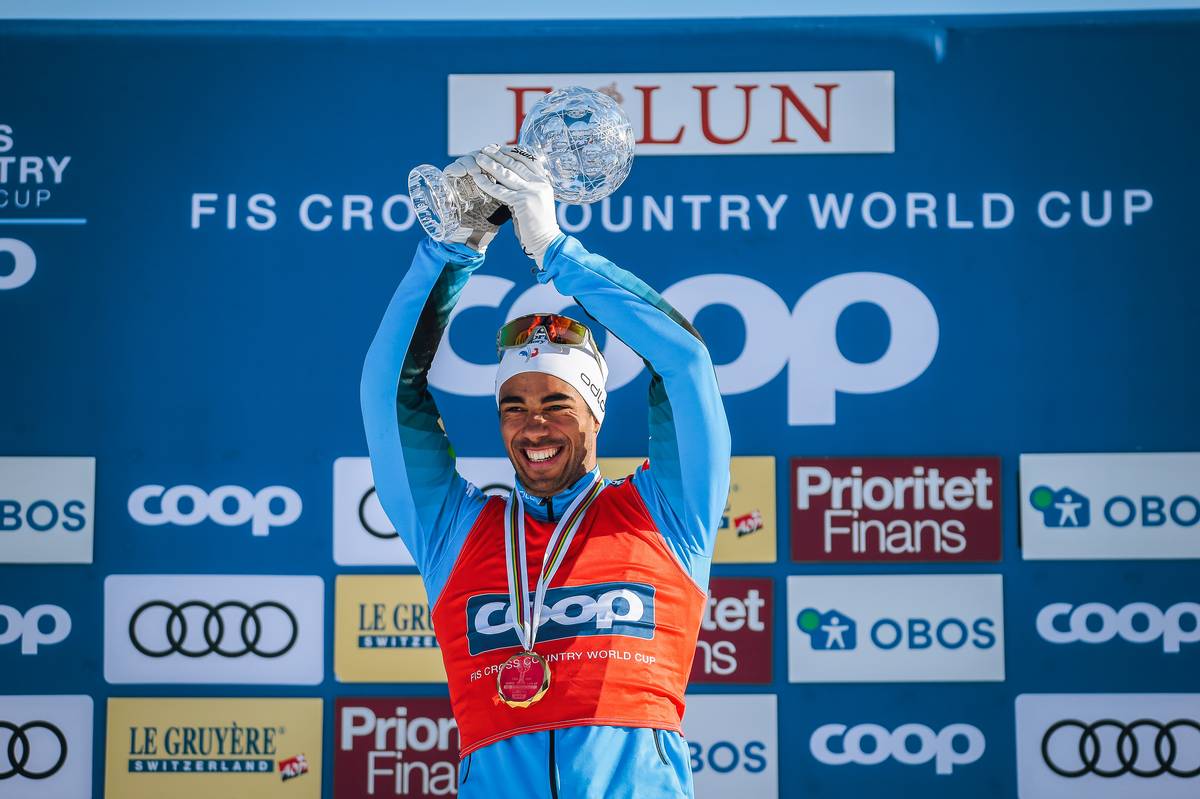

A quick review of the final standings: With 568 points, Jouve is the 2022 sprint World Cup champion, with Klæbo second (-6) and Chanavat third (-107). Italy’s Pellegrino was fourth (-238), with Norway’s Håvard Solås Taugbøl fifth (-244).
The US had three starters for today’s final sprint stage. Zak Ketterson led the way for the American team in 39th (+9.92), followed by Logan Hanneman in 47th (+10.79), and Peter Holmes 54th (+13.38).
Listen to post-race interview with U.S. Ski Team Head Coach Matt Whitcomb here.
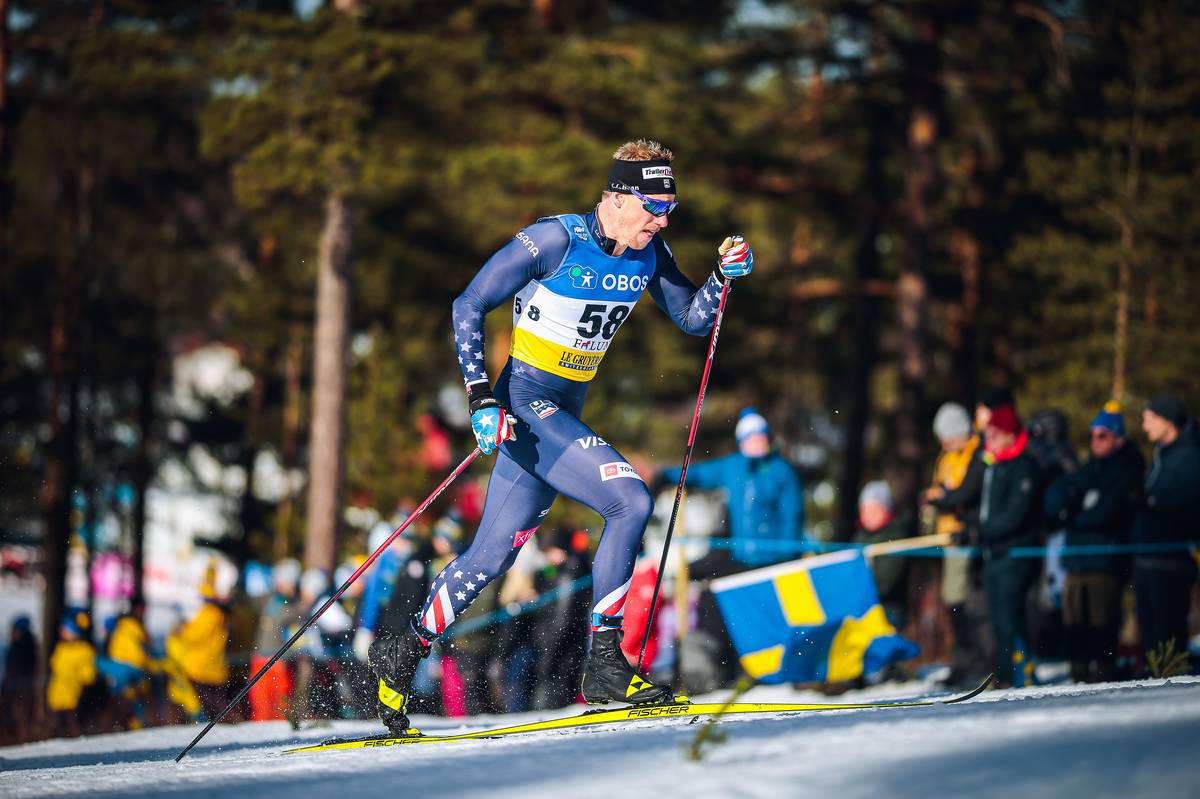
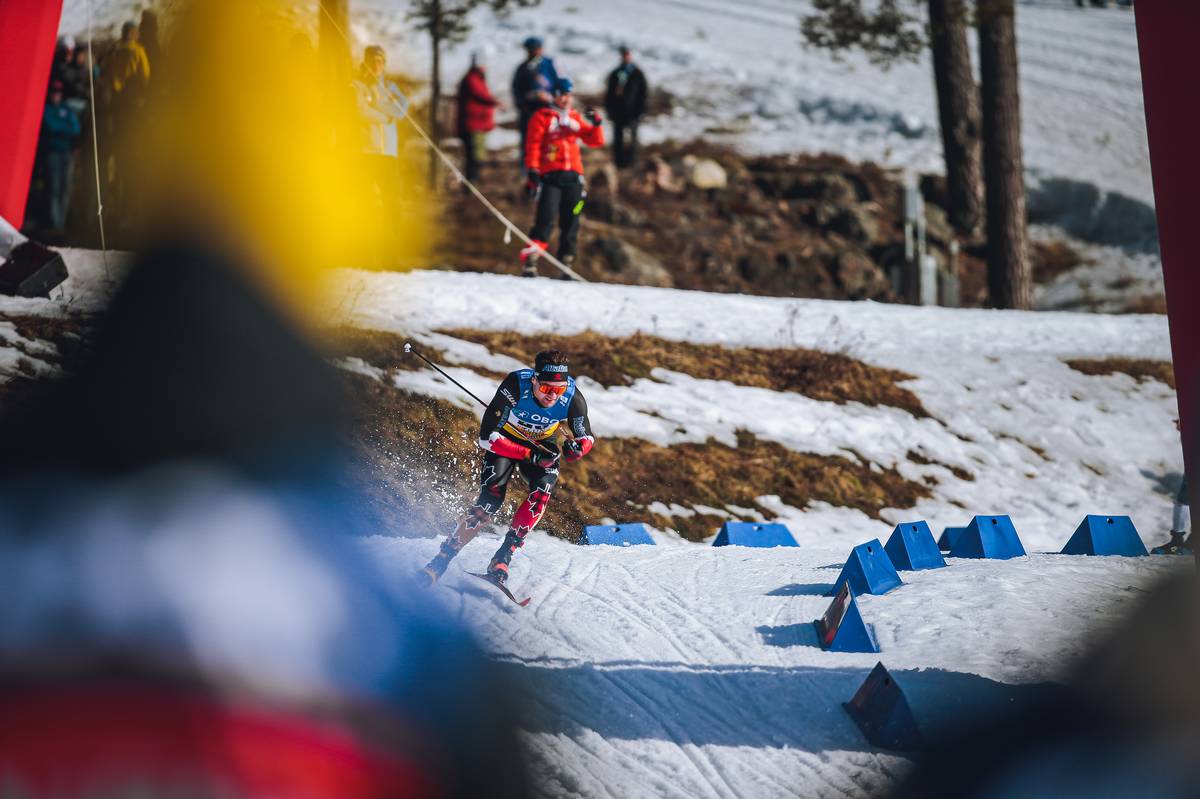
Racing for Canada, Graham Ritchie was the sole North American to break into the heats after qualifying in 28th (+8.11). Racing in the third quarterfinal heat, Ritchie crossed fourth, roughly three seconds behind Chanavat and Pellegrino, the heat winners. The effort landed him in 20th overall once final rounds were decided.
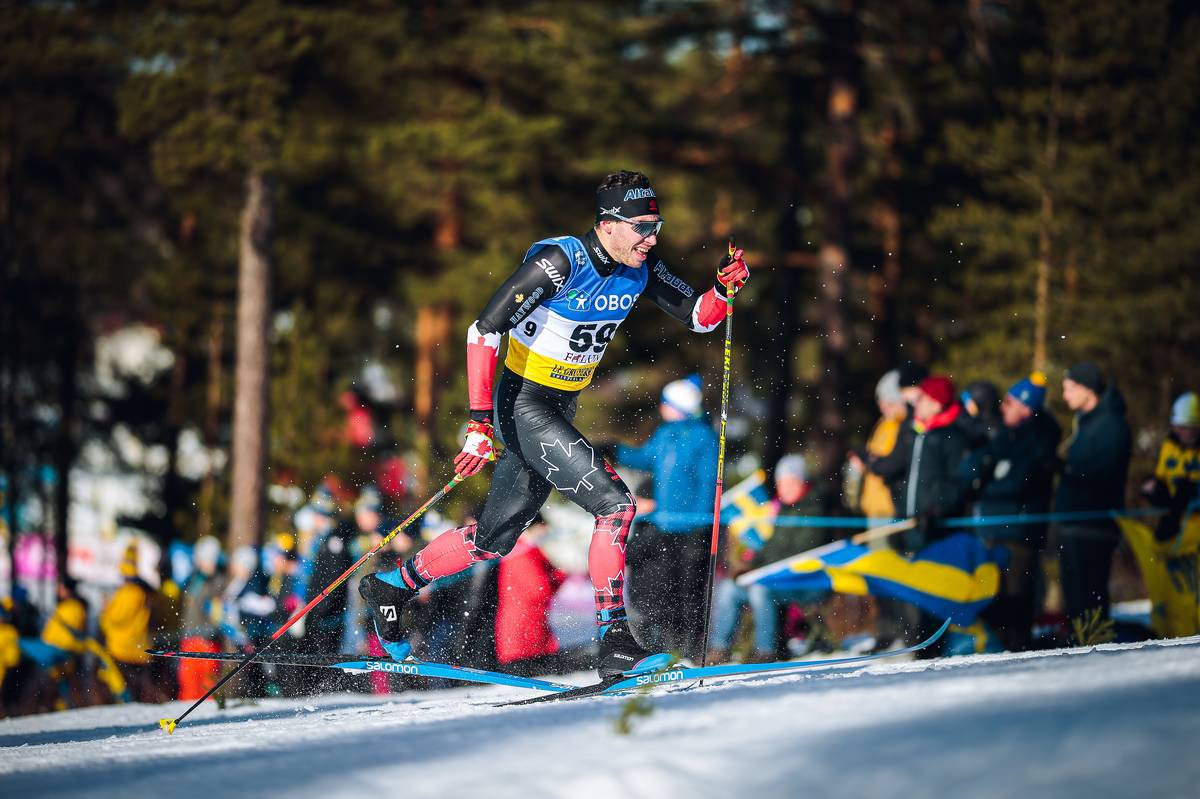
Missing the top-30 by just 0.27 seconds, Antoine Cyr was next for Canada in 31st (+8.76), with Xavier McKeever next in 44th (+10.54), followed by Rémi Drolet in 57th (+14.59).
Racing in Falun continues tomorrow with a 15 k individual start skate.
Results:
Qualification | Final | World Cup Sprint Standings