Snow is the first question anyone asks about a ski trip. It is rarely the one that decides whether the trip was any good.
Plenty of skiers have booked a week somewhere with a meter of base and come home flat, because the grooming was inconsistent, the trail network was a single 5-kilometer loop repeated until it went stale, or the lodging was a forty-minute drive from the tracks. The destinations people return to year after year get a handful of less obvious things right at the same time.
Here are seven worth checking before you book. Winter travel outfits likeAlpine Elements build packages around most of them, but the list applies whether you are booking through an operator or piecing a trip together yourself.
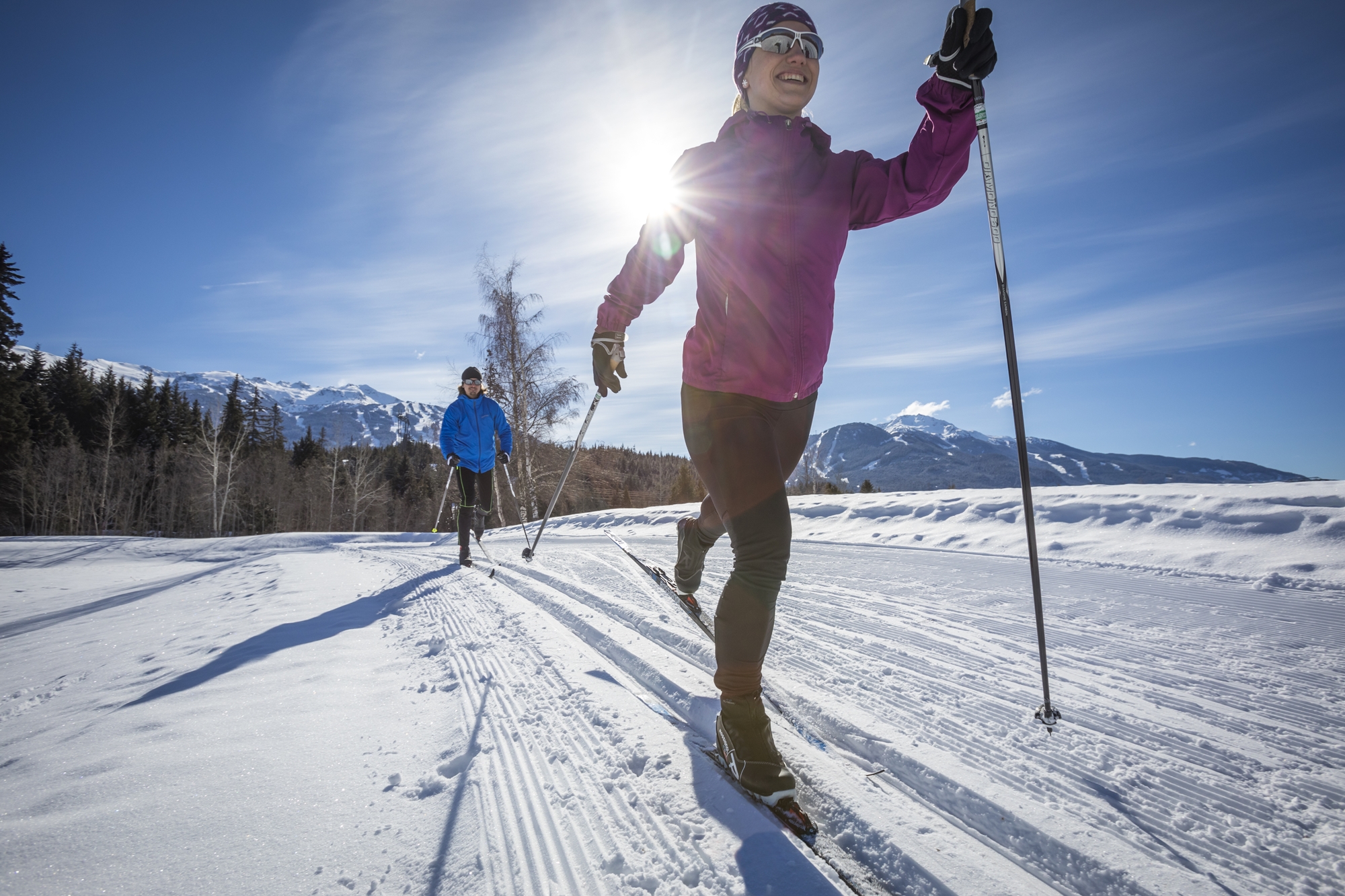
Photo: Tourism Whistler
1. Snow reliability, not just snowfall
The quality of any cross-country skiing holiday depends heavily onsnow conditions. Average annual snowfall is the number resorts advertise. It is not the number that matters most. What matters is how consistently a place holds skiable snow through the window when you can actually travel.
Altitude does a lot of the work here. Higher trail systems stay cold enough to keep a base intact through a February thaw that wipes out valley tracks. So does snowmaking. A growing number of Nordic centers now blow snow on a core loop, typically 3 to 5 kilometers, which guarantees you something to ski on even in a bad year. That loop will not carry a full week on its own, but it is real insurance.
Look up the last five seasons rather than the thirty-year average. Early December and late March are the risky bookings. Mid-January is almost always safe.
2. Grooming you can count on
Scenery does not save a badly groomed track. Nothing does.
The questions to ask are specific ones. How often does the center groom, and does it groom after a storm or wait for it to settle? Are classic tracks set on both sides of the skating lane, or does the skate deck take priority when the cats are short on time? Is there night grooming, so morning corduroy is a given rather than a coin flip?
Most serious centers post a daily grooming report. Read a few weeks of them before you commit. A center that logs conditions honestly, including the days when things were icy, is telling you something useful about how it operates.
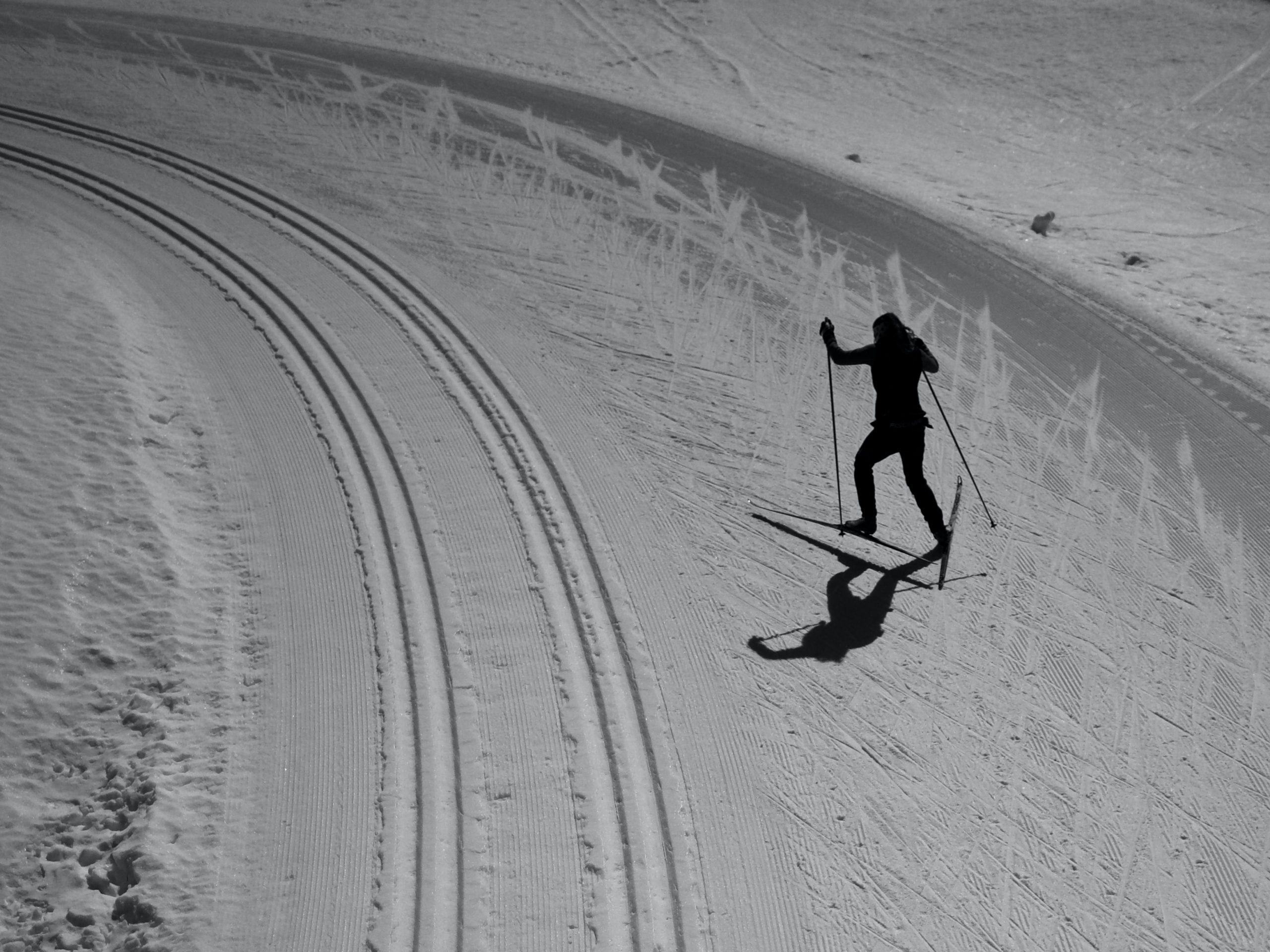
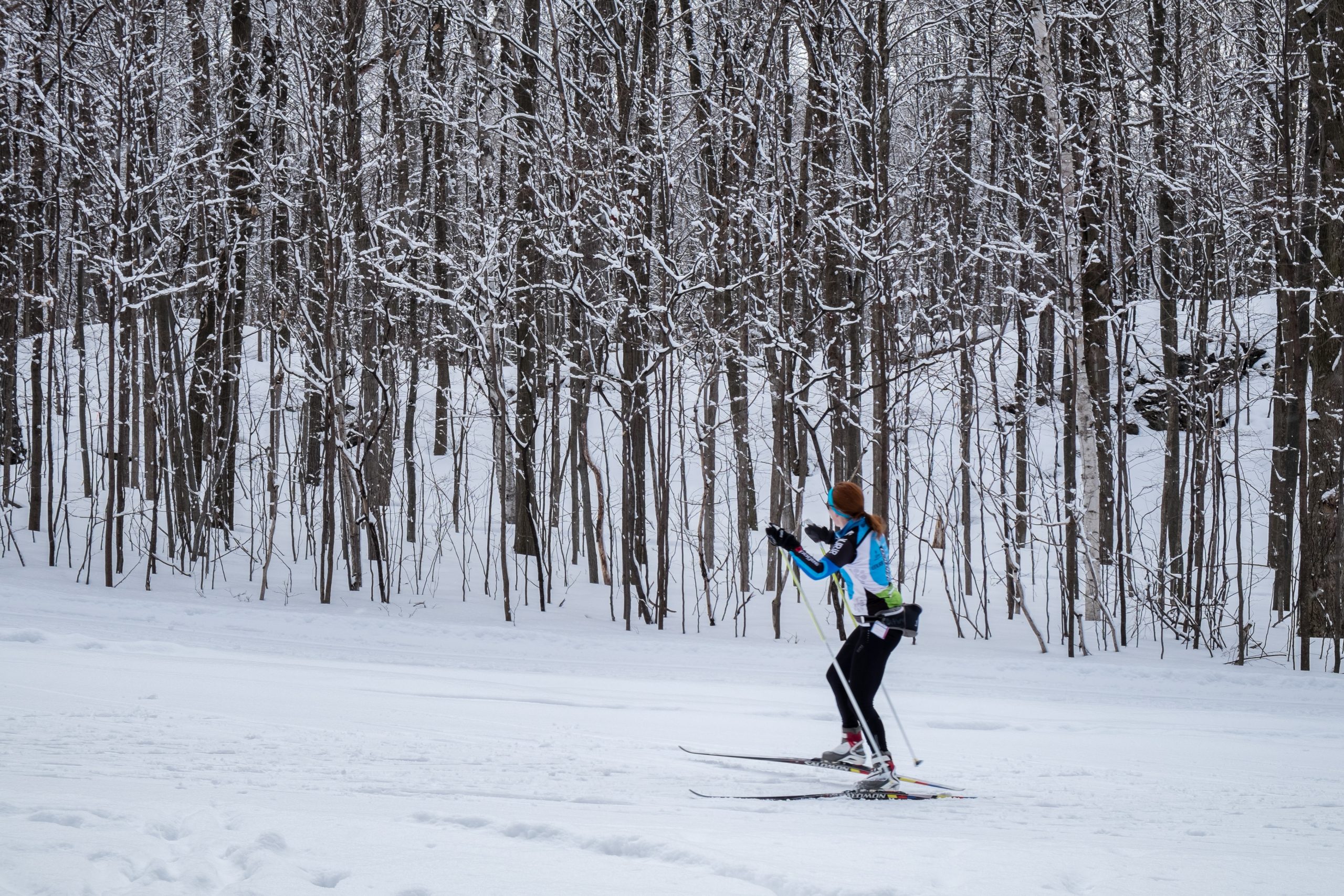
Skating has been shown exacerbate CECS, even more than classic skiing. (Photo by Thomas Dils on Unsplash)
3. Terrain that matches the skiing you actually do
Cross-country skiing is unusually welcoming across ages and ability levels, which is exactly why destinations vary so much in who they suit.
A newer skier wants gentle, wide, well-signed terrain and a lesson program worth taking. Someone comfortable on skis wants 40 or 50 kilometers of connected trail with real climbing and descending, so a full day out does not mean skiing the same loop four times. A racer or a distance skier wants a network that supports a three-hour effort and, ideally, a hill they can do intervals on.
Beginners often benefit from gentle terrain, dedicated practice areas and professional tuition, whileintermediate skiers may prefer destinations offering longer routes with a mixture of climbing, descending and varied scenery. Experienced skiers and endurance enthusiasts are likely to appreciate extensive trail systems that provide technical challenges and opportunities to cover greater distances.
Groups complicate this. If you are traveling with a partner who skis twice a year and a kid who wants to go hard, a center with one difficulty band will frustrate somebody every day. Trail maps are free and they answer this question in about two minutes.
4. Where the trails go
Skiing is the rare winter sport that moves you through a landscape rather than down it. You cover ground at a pace that lets you see it.
That makes the setting a genuine part of the product, not a marketing photo. Trails that thread through old-growth forest, cross a frozen lake, or open onto a valley floor at the right hour give you something a treadmill of a loop through a parking-lot perimeter never will. Light matters more here than people expect. Low winter sun on fresh snow at nine in the morning is most of the reason skiers get out of bed on vacation.
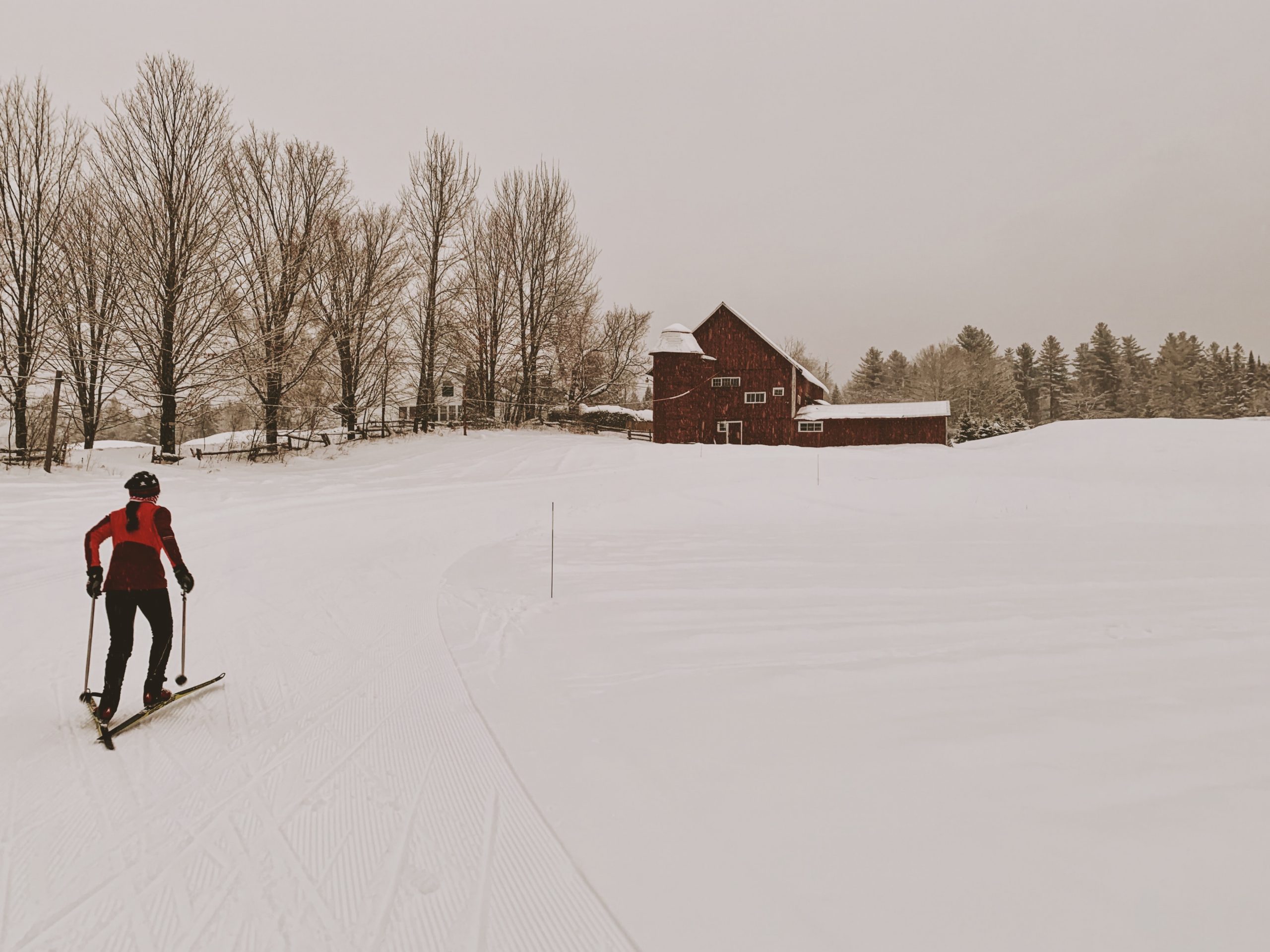
Recreational skate. (Photo: Phillip Belena)
5. Lodging close enough to matter
Ten minutes from the trailhead and thirty-five minutes from the trailhead are different trips. The second one costs you an hour a day and quietly kills the second ski.
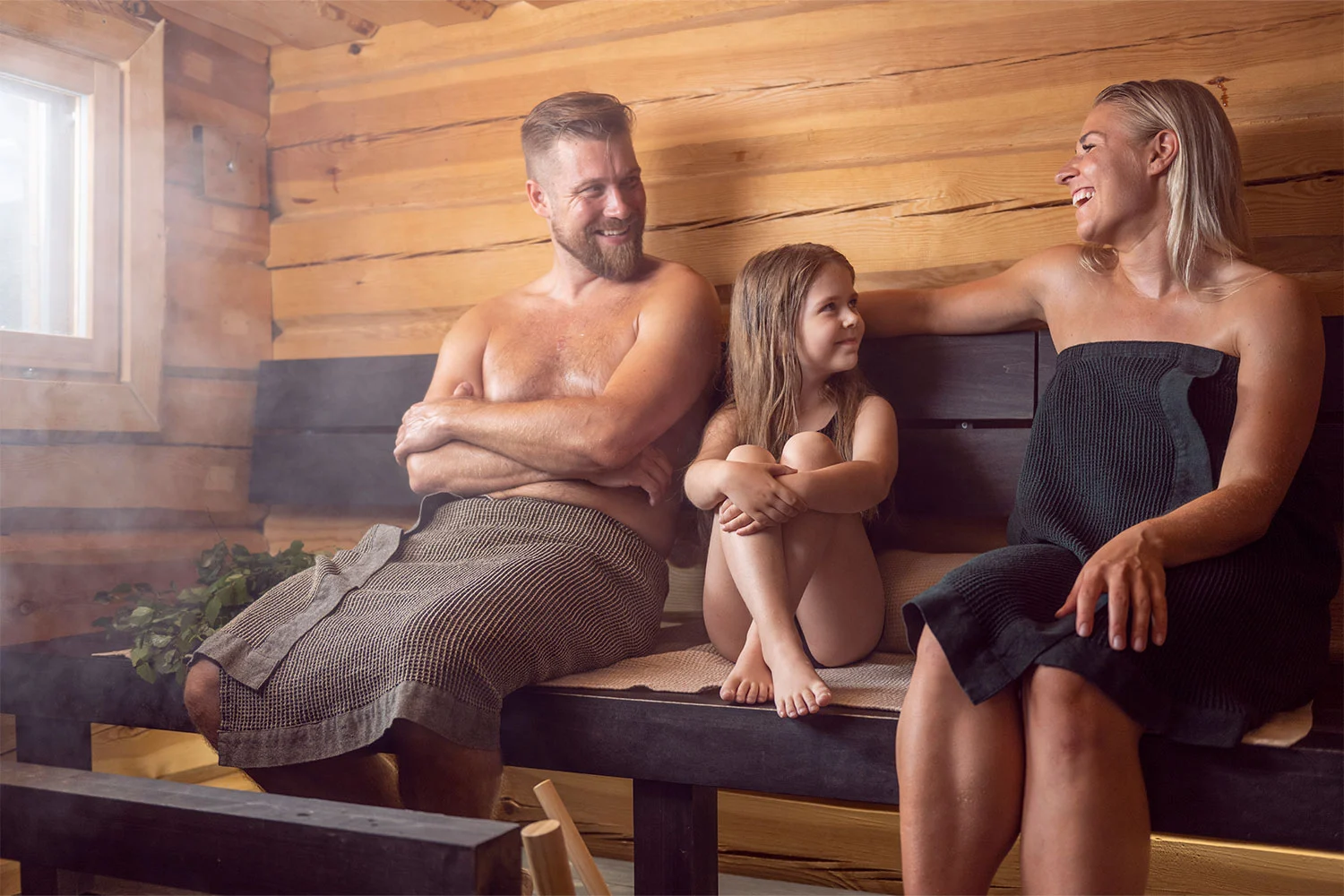
Beyond distance, the practical stuff is what separates a place that understands Nordic skiers from a place that rents rooms. Heated wax and boot rooms. Somewhere to dry gloves. A kitchen or a breakfast that runs early enough to eat before you go out. A sauna, which is not a luxury after four hours in the cold so much as a piece of recovery equipment.
6. What happens when the skiing stops
You are probably skiing three or four hours a day. That leaves a lot of day.
Towns with something going on, a bakery, a decent restaurant, a bar where people who ski actually go, turn the rest of the day into part of the trip instead of downtime in a rental. It also matters if you are traveling with someone who does not ski every day. Snowshoe trails, winter walking paths, a market, a hot spring, all of that keeps a group happy without forcing everyone onto the same schedule.
7. Getting there and getting outfitted
Logistics are boring right up until they eat a day of your trip.
Check the transfer time from the nearest airport or rail station honestly, including the last leg, which is often the slow one. Check whether you need a car once you arrive or whether a shuttle connects the lodging to the trails. If you are flying with skis, check the airline’s oversize policy before you buy, not after.
Rental quality is the other one people underestimate. A center with a real shop, current skis, a waxing service, and staff who ski themselves will get you on decent equipment in twenty minutes. A center without one will hand you a pair of rock skis from 2009 and wish you luck.
Recreational skate. (Photo: Pierre Jarry)
The right destination is the one that fits how you ski
Some skiers want distance and a network big enough to get lost in. Some want a quiet loop through the woods and a long lunch. Neither is looking for the same trip, and neither is served by picking whichever place claims the most kilometers.
The places worth returning to are the ones where reliable snow, honest grooming, terrain that suits you, and lodging you can walk to from the tracks all show up in the same week. Get those four right and the rest of it, the light on the snow, the pace, the quiet, takes care of itself.
Novie McCabe of APU narrowly winning over Kendall Kramer and Alayna Sonnesyn. (Photo: Tryg Solberg / FasterSkier)
CRAFTSBURY, Vermont — Craftsbury’s SuperTour Finals 40k highlighted some awesome battles amongst the top American men and women. The women started off the day with some extremely fast conditions on the winding and punchy Craftsbury 5k loop. The men took on the course later in the morning and conditions were mostly firm besides the south facing hills.
The women’s race broke into a lead pack of 5 that held strong until a sprint finish. APU’s Novie McCabe narrowly took the win over Kendall Kramer of APU and Alayna Sonnesyn of Team Birkie. Luci Anderson of Team Birkie and Craftsbury’s own Margie Freed, both 2026 Olympic biathletes, finished 4th and 5th.
The early leaders of the women’s 40k heading up Screaming Mimi hill. (Photo: Tryg Solberg / FasterSkier)
In an interview with Craftsbury’s Sheldon Miller after the race, McCabe said that “it was really fun to ski with such a great group of girls.” In regards to her difficult last couple of seasons, McCabe said that “it’s nice to have these good days again. It’s super fun to be back racing this year.”
Margie Freed, mostly a biathlete in the last few seasons, said that “it was really nice to not carry an extra ten pounds on my back, but I was a little sad to not be able to lay down in the middle of my race.” She thanked her coaches for helping her keep track of the lap count.
Alayna Sonnesyn, the Team Birkie athlete that narrowly missed out on the Olympics, said that the top three broke away at the top of the Screaming Mimi climb. When asked how her race went, Sonnesyn said “it was great, it was so fun to be out here. Conditions were fast and furious, kind of like the Birkie this year.”
The men’s 40k leaving the stadium. (Photo: Steve Snider)
The men’s race was tight with the top 14 coming in less than 60 seconds behind the win. Gus Schumacher of APU ended up edging out John Hagenbuch of Dartmouth for 1st. Kevin Bolger of Team Birkie finished 3rd.
Jake Brown in his last race for Craftsbury Green Racing Project taking the lead up Screaming Mimi. (Photo: Steve Snider)
Hagenbuch said that he has been fighting through some illness since the Lake Placid World Cup Finals.“I didn’t win today, but I was still smiling out there and really just taking in what was my last race for Dartmouth.”
Gus Schumacher also said that the conditions were really fast and it was hard to get away from the pack. He and Zak Ketterson were pushing at the front when Zak had an unfortunate fall within the last few hundred meters: “I was given the first place position and just went for it from there.”
The award ceremony’s after the races highlighted the 40k, junior 20k and 2025-2026 SuperTour awards.
Thank you to Sheldon Miller of Craftsbury Outdoor Center for the post-race interviews with athletes.
FasterSkier will have our own Nat Herz on the ground at the Olympics, which, to be honest, is a very big financial lift for us. If you value the thoughtful work and access FasterSkier provides at championships like this one, please consider becoming a Voluntary Subscriber. Your support directly fuels the work we do to cover the people, places, and moments that make our sport special.
LAST CALL for an Incredible Nordic Weekend at Sovereign 2 SilverStar Ski Marathon, Vernon, BC
April 4-5, 2026 | Stussi Night Sprints April 2
Registration Closes 6pm (local) Sunday, March 29th
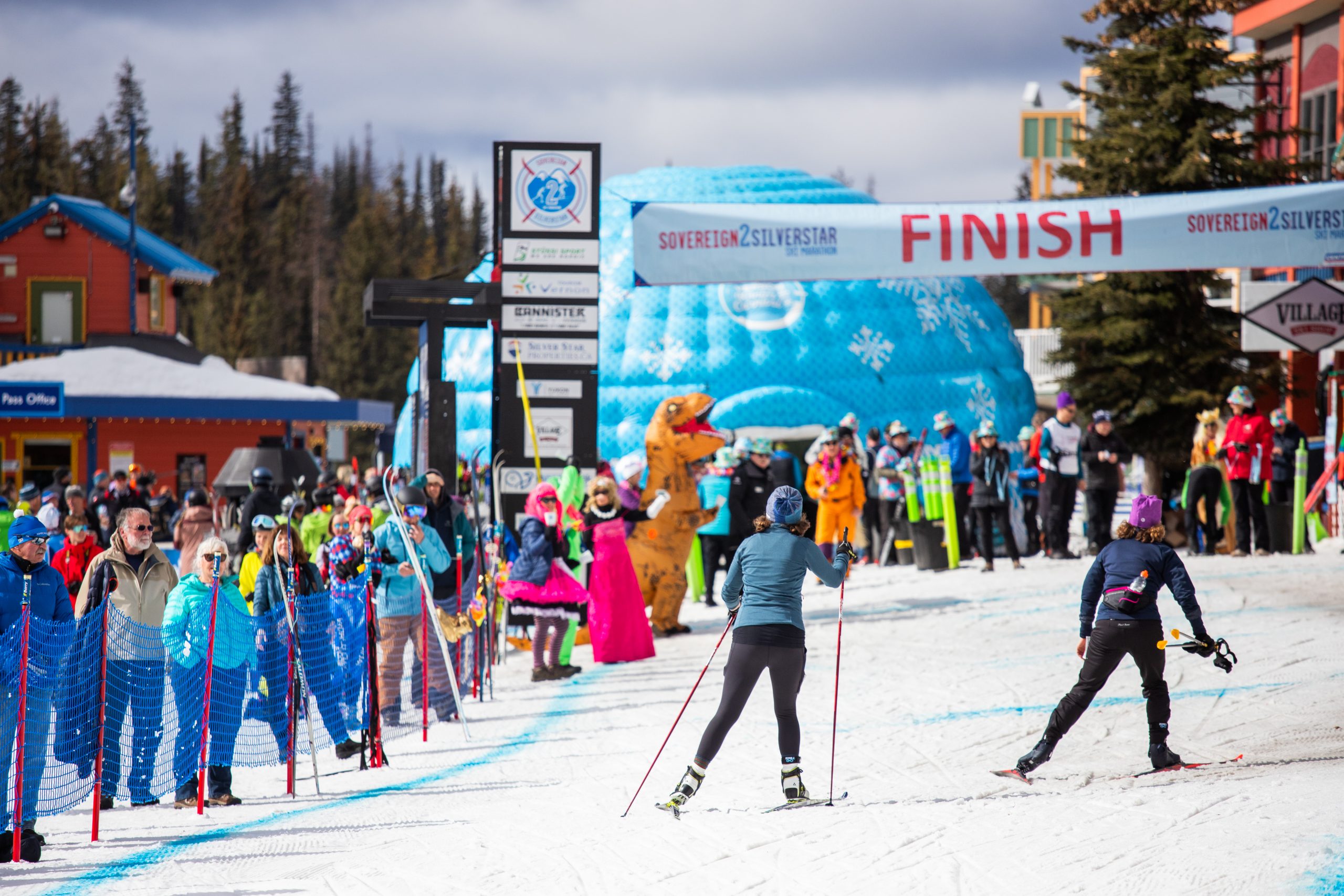
You don’t want to miss out on the 5th annual S2S! Sovereign Lake Nordic Club and Silver Star Mountain Resort — the two world-class venues co-hosting the event — have had new snow and colder temps over the past week, and the groomers have been doing a great job. (The picture below is for real.) Classic Saturday and Skate Sunday, with 21km and 41km distances available both days.
Stussi Night Sprints — The Best Way to Get Ready for the Ski Marathons
April 2 @ 4pm
If you’ve ever wanted to try out the exciting event of sprint skiing, now’s your chance. On a fun, fast, and spectator-friendly 1.1km course, this is a great opportunity for Masters and Development athletes to give it a go. And after you’re done racing, stick around to watch Elite racers compete for $3,400 in prize money. Come out and enjoy an exciting evening of head-to-head racing.
This coverage is made possible through the generous support of Marty and Kathy Hall and A Hall Mark of Excellence Award. To learn more about A Hall Mark of Excellence Award, or to learn how you can support FasterSkier’s coverage, please contact info@fasterskier.com.
Gus Schumacher (USA) and the rest of Heat 2 climb over Toblach’s iconic feature during the 5 K Freestyle. (Photo: Modica/NordicFocus)
The Tour de Ski has always asked skiers to live with imperfect information. You race hard when you’re tired. You make decisions based on feelings and instincts, while coaches are screaming ‘splits.’ You tell yourself the only honest thing in a stage race: don’t do anything you can’t recover from tomorrow.
On Wednesday, the Tour leaned fully into that uncertainty — and then amplified it.
Stage 3, a 5-kilometer freestyle, arrived with a new wrapper: four separate mass-start heats, each sent off at a different time, with final standings determined only after all heats were complete and all times were combined. The spectacle was real — a small parade of high-speed skating races rather than one long pageant — but the competitive implications were sharper than the format’s novelty suggested. Skiers weren’t simply racing the men next to them. They were racing an invisible standard set by athletes they couldn’t see, in heats that could be slower or faster for reasons that had nothing to do with any one skier’s fitness.
If that sounds like chaos, it wasn’t. Not for Gus Schumacher.
Schumacher (USA) didn’t treat the new format as a novelty or a gamble. He treated it like a solvable problem — and in doing so, he won the stage in 9:35.4, claiming the second World Cup victory of his career and stamping his authority on a Tour de Ski day that felt, at times, like a controlled experiment.
Behind Schumacher, Austria’s Benjamin Moser was second (+0.2), and Norway’s Lars Heggen — the U23 skier who helped turn Schumacher’s heat into a metronome — was third (+0.6).
And here is the detail that will define how this stage is remembered: the top seven overall finishers all started in the same second heat, the heat that began at 11:48:45. In a race decided on aggregate time, that start time became a kind of gravitational center — the heat where cooperation, pace, and intention converged into the day’s fastest runway.
Ben Ogden (USA), JC Schoonmaker (USA), Remi Drolet (CAN), and others follow Johannes Hoesflot Klaebo (NOR) during the third heat of the 5 K Freestyle. (Photo: Modica/NordicFocus)
The Format: Four Races, One Result — and a Quiet Incentive to Collaborate
The four start times — 11:30:00, 11:48:45, 12:07:30, and 12:26:15 — didn’t just separate the field. They separated narratives. In one heat, the pace would be relentless and communal; in another, it might be cagey, tactical, or simply a touch less urgent. In a normal mass start, you can afford to be patient. In a normal 5K interval start, you can measure yourself against the clock. On this day, you had to do both — without complete visibility into either.
U.S. head coach Matt Whitcomb framed it simply: the 5K has been absent from the World Cup menu for long enough that today was “unknown territory,” and athletes had to be ready to adapt. “Nobody really knew what to expect,” he said — not because the course was mysterious, but because the format forced a different kind of decision-making.
Whitcomb also emphasized that heat assignments weren’t random theater. They were determined by overall Tour standings after two stages, via a snake-draw system written into the rules — in other words, the groups were structured, and the group you landed in mattered.
That mattered most in the heat Schumacher found himself in — and, crucially, in the way he decided to race it.
Gus Schumacher (USA) leads Heat 2 during Stage 3 of the Tour de Ski in Toblach (ITA). (Photo: Vanzetta/NordicFocus)
Heat 2 Becomes the Day’s Engine
By the time Schumacher’s heat went off at 11:48:45, the day already had shape: one race had happened, a set of times had been posted, and the Tour’s new experiment had revealed its first truth — you could win your heat and still lose the stage.
Schumacher and his heat-mates didn’t merely acknowledge that truth. They embraced it.
“I think my heat-mates and I realized that having a fast heat was the biggest picture,” Schumacher said afterward. “I was prepared to be 10th in the heat if it meant we were fast.”
That sentence — prepared to be 10th if it meant we were fast — is the kind of thing athletes say when they’re not racing for ego. It’s what they say when they’re racing for an outcome.
Schumacher described how the plan became practical: “We were able to trade leads also with Ben Moser’s help and keep the pace fast without too much effort before the hills, then actually continued to work together even better than I thought we would from there into the finish.”
Whitcomb confirmed the same dynamic from the outside: Schumacher “reached out to Lars Hagen and Ben Moser and came up with a plan,” and the result was “well orchestrated trading off of the lead,” the kind of collaboration you don’t often hear described so plainly in a World Cup race. In a typical mass start, you hide. In a typical interval start, you suffer alone. In this format, the fastest solution was neither — it was to share the work early and arrive at the decisive sections with enough fuel to race, not just survive.
And the split data makes the story legible.
At 1.7 km, Schumacher hit 2:54.2. Moser was 2:54.4. Heggen was even quicker at 2:53.5. The heat was not strolling into the race; it was setting terms.
At 2.7 km, Schumacher reached 4:59.6, and the heat’s front remained dense and alive. By 3.1 km, Schumacher was at 6:16.4 — still close enough to the line that the stage would be won in the last two kilometers, but far enough out that the wrong decision on the climb would show up in the final time like a bruise.
Schumacher’s last 1.9 km — from 3.1 km to the finish — was the sharpest of the podium trio, and among the best in the field. He closed in 3:19.0, a finish that wasn’t just a sprint, but a controlled acceleration from a high baseline.
This is what it looked like in practice: a heat that refused to turn into a chess match. A group that made the race fast enough to matter. And a skier — Schumacher — who could do the work and still finish.
Gus Schumacher (USA) and Benjamin Moser (AUT) lead other Stage 3 top finishers to the line in Toblach (ITA). (Photo: Modica/NordicFocus)
The Podium: Schumacher Leads, Moser Hangs, Heggen Announces Himself
Schumacher’s stage win — 9:35.4 — put him at the center of the day’s story, but the day’s podium also revealed how perfectly the format could reward the right combination of collaboration and individual capacity.
Moser (AUT), second at 9:35.6, was integral to the heat’s pace-making. Heggen (NOR), third at 9:36.0, wasn’t a passenger either — he was part of the mechanism.
Schumacher was explicit about what the format rewarded him for. “Sometimes I feel like a jack of all trades and a master of none,” he said, “but high-speed skating with an element of required distance capacity is a place where I can excel. I think Minneapolis had that too.”
It’s the kind of description that links two very different wins — one on home snow in Minneapolis in a 10K Freestyle Interval Start, the other here, in a four-heat 5K puzzle — without pretending they are the same. What connects them, Schumacher suggested, is the ability to ski fast in a way that isn’t fragile: pace you can sustain, not just ignite.
“I’ve been feeling good, but I’m still building momentum,” he said. “Today definitely helped.”
Benjamin Moser (AUT), Gus Schumacher (USA), Mattis Stenshagen (NOR), (l-r) worked together to claim the podium of the 5 K Freestyle. (Photo: Vanzetta/NordicFocus)
Where the Race Was Won: The Climb, the Urge to Go Early, and the Last Kilometer
If Heat 2 was the engine, the course still demanded decisions — and it punished some of them.
J.C. Schoonmaker (USA), who would finish 29th, described the mental load of the format in a way that felt honest rather than polished. “The new format just changed the way I thought about things because I felt I needed to be prepared for lots of different scenarios,” he said. “I probably haven’t done a 5K since high school… I was just trying to be ready for whatever came and be ready to react to it.”
Schoonmaker pinpointed the moment that mattered: “On the big climb, I sensed that things were starting to stretch out a bit, so that was where I decided I needed to make a move. It was a bit early in hindsight because our heat ended up staying together, and I got pretty tired in the very end and lost some positions.”
That’s the stage’s second truth: in a format like this, you can race aggressively and still end up punished by the math. An early move that might win you your heat can also drain the last 400 meters you need to protect your time — the thing that actually counts.
Ben Ogden (USA), 20th, offered the same theme from a different angle. He admitted he didn’t dictate his heat’s tempo — and that, in hindsight, he wished he had done more when he felt capable.
“I didn’t really dictate the pacing in my heat,” Ogden said. “I let Klaebo and Stenshagen really dictate the pacing, and I just held on as best I could.”
Then the key sentence — the one that tells you how easy it was, in this format, to race the wrong race: “It’s hard to remember that it’s sort of us versus them a little bit in that race format rather than just trying to win your group.”
Ogden noted that his heat’s final kilometer became a bit of a one-man chore: “Pellegrino led for most of the last K… down through the corners and stuff. I think it would have been better if we’d been trading off leads.”
In other words, the format quietly rewards heats that turn into rotating pacelines and punishes heats that turn into sprints for pride.
Schumacher’s heat was a paceline that never forgot the clock.
Ben Ogden (USA) and Johannes Hoesflot Klaebo (NOR), (l-r) leading Heat 3 of the 5 K Freestyle in Toblach, Italy. (Photo: Vanzetta/NordicFocus)
The Americans: A Day of Depth Under a Day of Headlines
Schumacher’s win was the headline, but the U.S. team’s men didn’t only deliver a winner. They delivered a set of performances that made the result feel like something sturdier than a single bright point.
Here’s where the Americans landed on the day:
1st: Gus Schumacher (USA) — 9:35.4
20th: Ben Ogden (USA) — 9:45.4
29th: J.C. Schoonmaker (USA) — 9:46.2
41st: Zak Ketterson (USA) — 9:48.9
42nd: Jack Young (USA) — 9:49.1
79th: Kevin Bolger (USA) — 10:08.9
Whitcomb framed the broader men’s story as an execution day — athletes moving up within their heats and carrying out their plans — and in a stage race, that matters. You can’t win a Tour de Ski on one beautiful moment if you give it away everywhere else. You win it by repeatedly doing things that don’t make headlines: staying attached, eating enough, recovering enough, skiing smoothly when you’re cooked.
Schoonmaker, in particular, gave a clear explanation of how the heat system changed the burden of responsibility. “For someone like me, the group I was in played a big part in my result,” he said. “As someone with not a ton of distance prowess, I didn’t have much responsibility to lead, so I was able to sit in the back and wait.”
Then, without making excuses, he told the truth about the dependency built into the format: “That basically made it so my overall time was in the hands of the top guys — but with that being said, it also does take fitness to stay with them.”
It’s a nuanced defense of the format — and also a subtle admission that it can be cruel. It can make your best decision feel like passivity. It can make your best fitness feel like waiting.
Schoonmaker ended with the line the sport’s decision-makers will want to hear: “It’s a cool balance of tactics and fitness, sprinting and distance, and I hope they keep this format around.”
Johannes Hoesflot Klaebo (NOR) was the fastest in Heat 3, but that was only good enough for 12th place overall on the day. (Photo: Modica/NordicFocus)
Norway: The Pressure Cooker Is Always On
Norway, as ever, arrived in Toblach with depth so thick it looks almost unfair from the outside — and with selection pressure that turns every race into a referendum.
Johannes Høsflot Klæbo (NOR) finished 12th in 9:44.0, a day when his 12th place looked strange even when the format explained it. Emil Iversen (NOR) was 8th in 9:42.5. Harald Østberg Amundsen (NOR) finished 17th in 9:44.7. Andreas Fjorden Ree (NOR) was 9th in 9:42.6.
But the real Norwegian story at the sharp end was Heggen — third — and the way his podium was tied to a heat that chose to cooperate rather than conserve. In the Olympic year, Norway’s selection picture isn’t just about who can win on a given day. It’s about who can be trusted to perform across formats, courses, and chaos — and this format delivered chaos with a stopwatch.
If you are a coach trying to build a roster for Milano-Cortina, you probably liked what you saw from athletes who could do the work and still finish — athletes who could be generous early and ruthless late. That’s not a ski cliché. It’s a trait.
Antoine Cyr (CAN) led the way for the Canadian men on a strong day in Toblach (ITA). (Photo: Vanzetta/NordicFocus)
Canada: After Trials, Into the Fire — and Right on the Doorstep of the Top 10
Canada came into the Tour de Ski after holding Olympic trials at home — a different rhythm than many of their European rivals — and Stage 3 gave the Canadian men a tidy set of results that will matter both psychologically and practically.
Antoine Cyr (CAN) led the Canadians in 11th (9:43.8), with Xavier McKeever (CAN) 13th (9:44.2) and Max Hollmann (CAN) 14th (9:44.3).
In a race where the top seven all came from one heat, those placements have extra weight: they suggest Canada wasn’t simply lucky with a draw. They were close enough to the best to make the math uncomfortable. They were within seconds — the kind of seconds that, in a Tour, can turn into minutes if you don’t recover, and can turn into opportunity if you do.
And because this format was so dependent on heat tempo, these results also reinforce a quieter Canadian strength: the ability to race within a fast-moving group and stay composed enough to cash it in at the end.
Benjamin Moser (AUT), Gus Schumacher (USA), Lars Heggen (NOR), (l-r) celebrate the podium in Toblach (ITA). (Photo: Modica/NordicFocus)
A Stage That Felt Like a Debate About the Sport — and a Race That Still Had to Be Won
The Tour de Ski has always been, in some sense, a referendum. It’s a referendum on endurance. On recovery. On whether your season has enough structure to survive a week of high heart rates and thin margins.
This stage was something else too: a referendum on presentation. On whether cross-country skiing can be made to feel urgent to people who don’t already love it.
FIS itself framed Stage 3 as a premiere — the first Heat Mass Start event of its kind at the World Cup level — and pointed directly to fan engagement as a key motivation for the format shift.
Whitcomb put it less diplomatically in his own way: in his view, whether the format stays should be determined by what fans think, because “what the fans think dictates whether or not the sport survives in some regards.” He described traditional, interval starts as difficult for casual viewers — not because the racing isn’t real, but because it can be hard to feel the tension without context.
Wednesday’s format was designed to create tension. You could see the effort. You could see the decisions. You could see the finish. And then you had to wait — which is its own kind of tension — to learn what it meant.
But none of that changes the simplest truth of Stage 3: Schumacher still had to win it.
He had to be strong enough to take pulls. Smart enough to strategize and invest in cooperation. Calm enough to accept a plan that might have left him “10th in the heat” if the math demanded it. And then, at the end, he had to be fast in the most old-fashioned way — a finish that doesn’t care about format innovation, that doesn’t care about start times, that doesn’t care about how clever you were at 1.7 kilometers.
It cares only about what you have left when the line is close enough to hurt.
Three nations working together, one shared podium for Benjamin Moser (AUT), Gus Schumacher (USA), Lars Heggen (NOR), (l-r) in Toblach (ITA). (Photo: Modica/NordicFocus)
The Tour Moves On — and the Final ‘Hill’ Looms
Schumacher, already looking forward, kept his gaze where Tour de Ski veterans always keep it: on what the next stage demands.
“Those time gaps are tight,” he said. “I’ll keep taking it day by day and especially try to ski well tomorrow and keep in mind how important that hill climb will be.”
That’s the Tour in one sentence: tight gaps, day by day, and a hill that doesn’t care how good you felt yesterday.
The new 5K heat format gave the Tour a jolt of spectacle, yes — but it also gave us something more interesting: a day that rewarded not only fitness, but the willingness to race in a way that made sense for the structure of the event.
Schumacher understood it. His heat executed it. The numbers validated it.
And now the Tour moves on with the usual debts: tired legs, shifting standings, and the knowledge that in a stage race, the best days are never purely celebrations. They are also investments — and the bill always comes due tomorrow.
Feature stories like this one take time, access, and care to produce. If you value thoughtful storytelling and independent ski journalism, please consider becoming a Voluntary Subscriber. Your support directly fuels the work we do to cover the people, places, and moments that make our sport special.
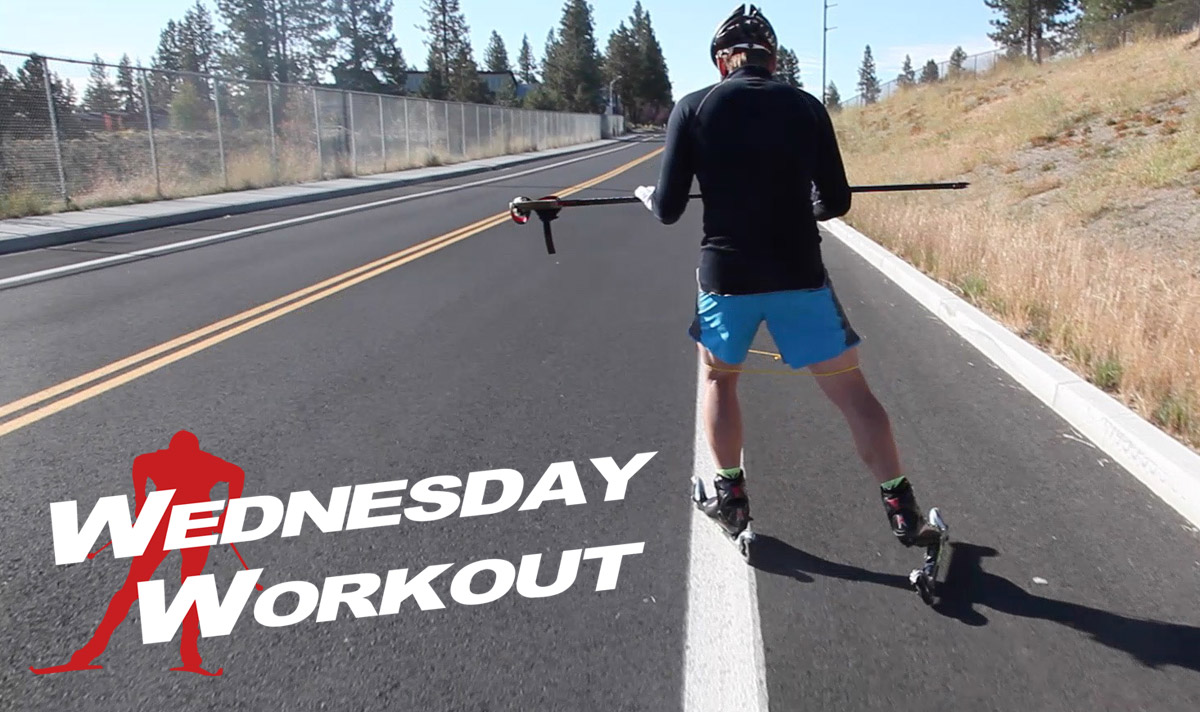
Wednesday Workout with Dave Cieslowski: cueing and engaging the glutes while skate skiing.
From the penguin walk to what physical therapist Dave Cieslowski calls the “white line drill”, now is the time to embrace strength and efficiency in your skate skiing. But with snow not exactly flying in abundance yet, it’s also time to break out the rollerskis for a disciplined workout to hardwire some specific biomechanical cues.
This Wednesday Workout is an extension of Cieslowski’s Wednesday Workout #1 where we learned how to increase skiing efficiency by engaging the glutes. If on-snow or pavement, Cieslowski advises to start slowly, skate skiing at an intentionally slow speed to feel the glutes firing.
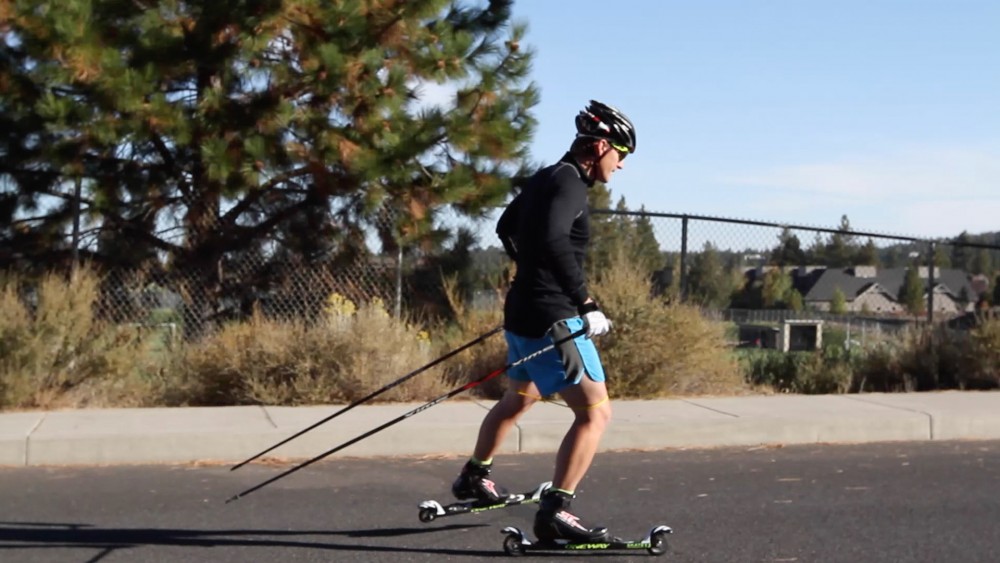
Dave Cieslowski uses a therapy band above his knees to help “cue” the glutes to fire while skate rollerskiing.
The Workout
Part 1:
The penguin walk — a simple back and forth motion using a therapy band stretched around the top of the knees (see video below) — allows the athlete to “cue up” the glutes. In other words, you’ll begin to understand how it feels when the glutes are indeed firing.
Rock back and forth on the skis for two to three minutes. You’re trying to “teach” the glutes to help stabilize your body while on skis.
Part 2:
Without poles go ski while still using the therapy band above the knees. When you come up onto the ski, try to the get the glutes to fire (squeezing the glutes together), keeping the hips high, and remain on the ski a bit during the glide phase.
Do the same drill with poles.
Part 3:
Find a gradual uphill suitable for no-pole, V2 and V2 alternate skiing.
While still using the therapy band, and without poles, ski uphill keeping the white line of the bike lane as centered as possible. The objective is to move up the hill without what Cieslowski calls significant “lateral translation”. You want your force going “down the trail”.
Repeat with poles using V2 and V2 alternate technique.
Dave Cieslowski is a DPT (Doctor of Physical Therapy), CSCS (National Strength and Conditioning Association Certified Strength and Conditioning Specialist). He also works with the U.S. Nordic Combined Team in and out of the competition season.