Tag: ski coaching

  • Saint Michael’s College Seeks Assistant Nordic Coach

    Saint Michael’s College Seeks Assistant Nordic Coach

    The Saint Michael’s College Nordic ski team is looking for an assistant coach for the 2026-27 season. The start date is flexible, though the ideal candidate would begin in mid-September and stay on through mid-March.

    Saint Michael’s College is a fully residential liberal arts college in Colchester, Vermont. An NCAA Division II institution, Saint Mike’s competes as a member of the Eastern Intercollegiate Ski Association (EISA).

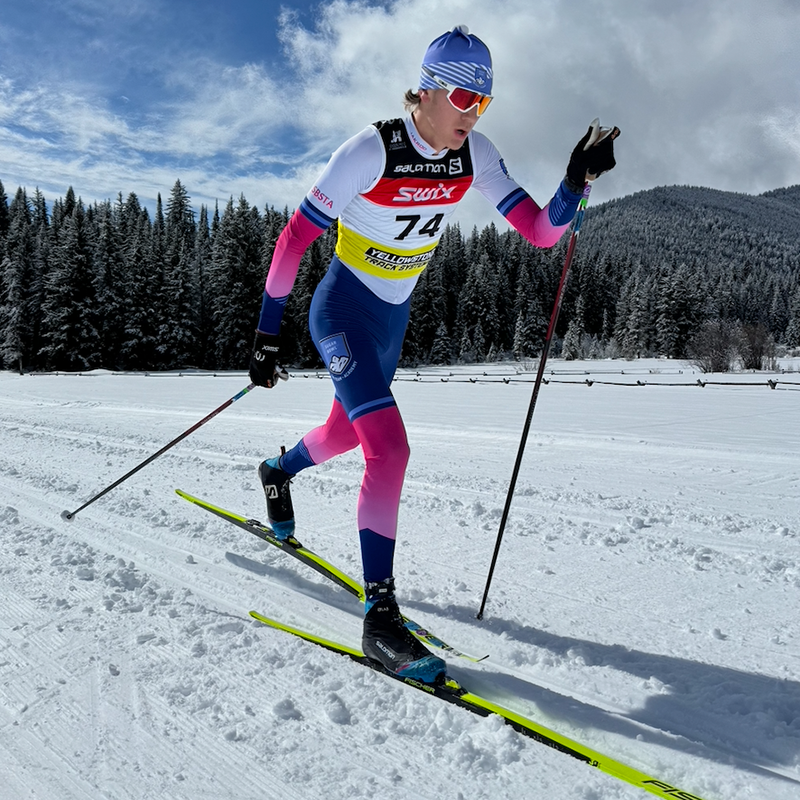
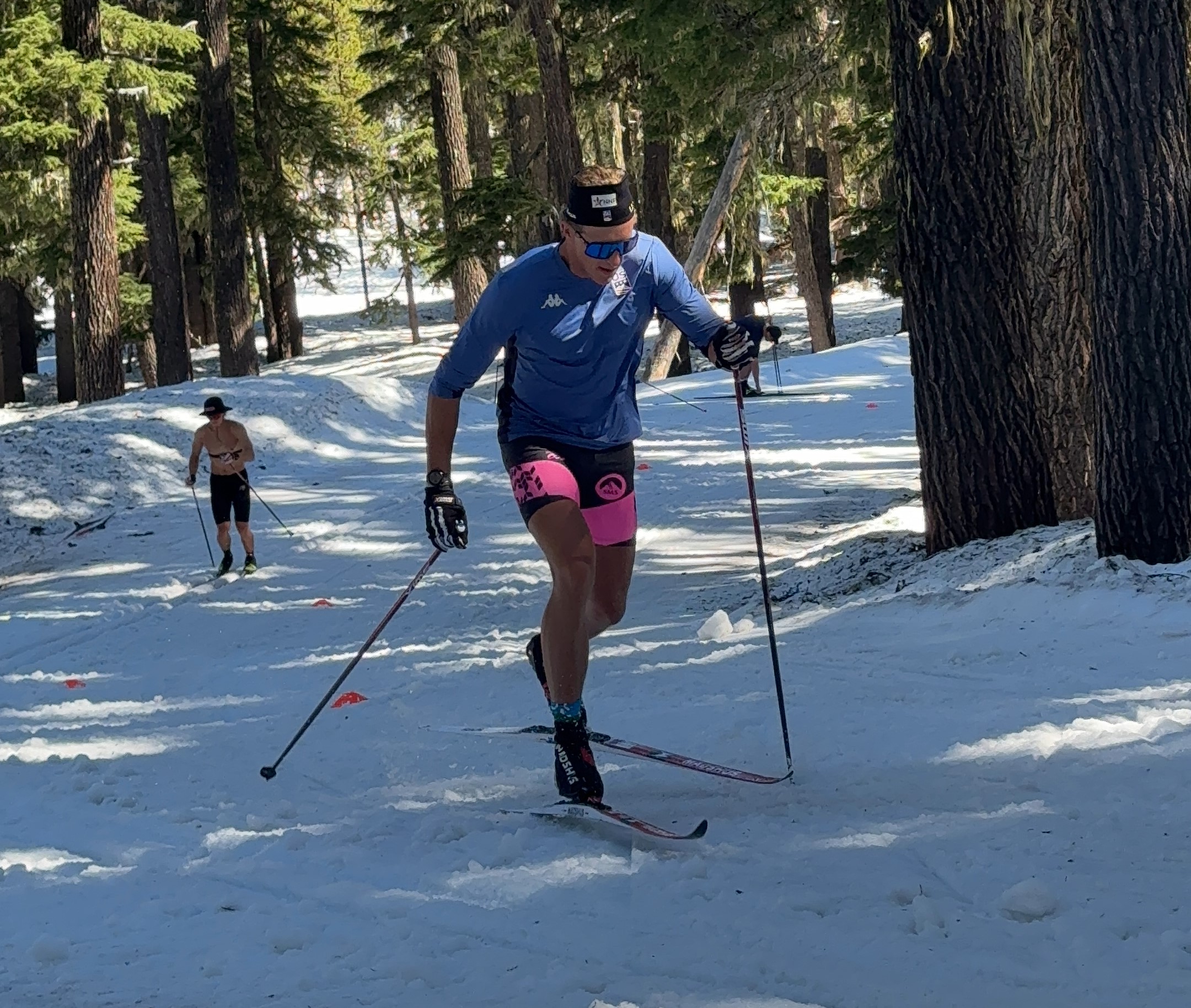
    Declan Hutchinson during the 20k Freestyle at the 2025 NCAA Championship. (Photo: Tobias Albrigtsen)

    Responsibilities:

    • Assist the head coach in planning and running training sessions in both fall dryland and winter on-snow practices. This includes driving vans, recording film sessions, providing nutrition, testing and recording skier data, and ensuring student-athlete safety.
    • Guide student-athletes at training sessions and races so they can compete at their highest level.
    • Help the head coach and athletes with race preparation, including transportation, nutrition, and testing and waxing skis.
    • Learn the recruiting database and help identify qualified student-athletes for the SMC ski program.
    • Assist with team operations such as booking travel, managing lodging logistics, wax inventory, equipment repairs and orders, and more.
    • Manage and develop the team’s social media presence.
    • Help keep the Kelley Ski Center, team vans, and equipment clean and well-maintained.
    • Other duties as assigned.

    Qualifications:

    • Competitive Nordic skiing experience.
    • Two or more years of high school and/or collegiate coaching experience.
    • USSS L100 coaching certification, or the ability to obtain L100 status.
    • Knowledge of NCAA Division II rules and policies.
    • Strong interpersonal skills and the ability to work collaboratively.
    • Ability to perform a wide variety of manual labor for extended periods, often in adverse weather conditions.
    • A valid driver’s license. Successful completion of a Motor Vehicle Records (MVR) check is a condition of employment for driving college vehicles and transporting students.

    This is a part-time position with a flexible schedule, and it includes one free class at Saint Michael’s College each semester. The role is compensated through a stipend, with a range of $9,000 to $12,000 depending on experience.

    Interested candidates should send a cover letter, resume, and three professional references to head coach Kyle Steitz at ksteitz@smcvt.edu.

    Oliver Miatke
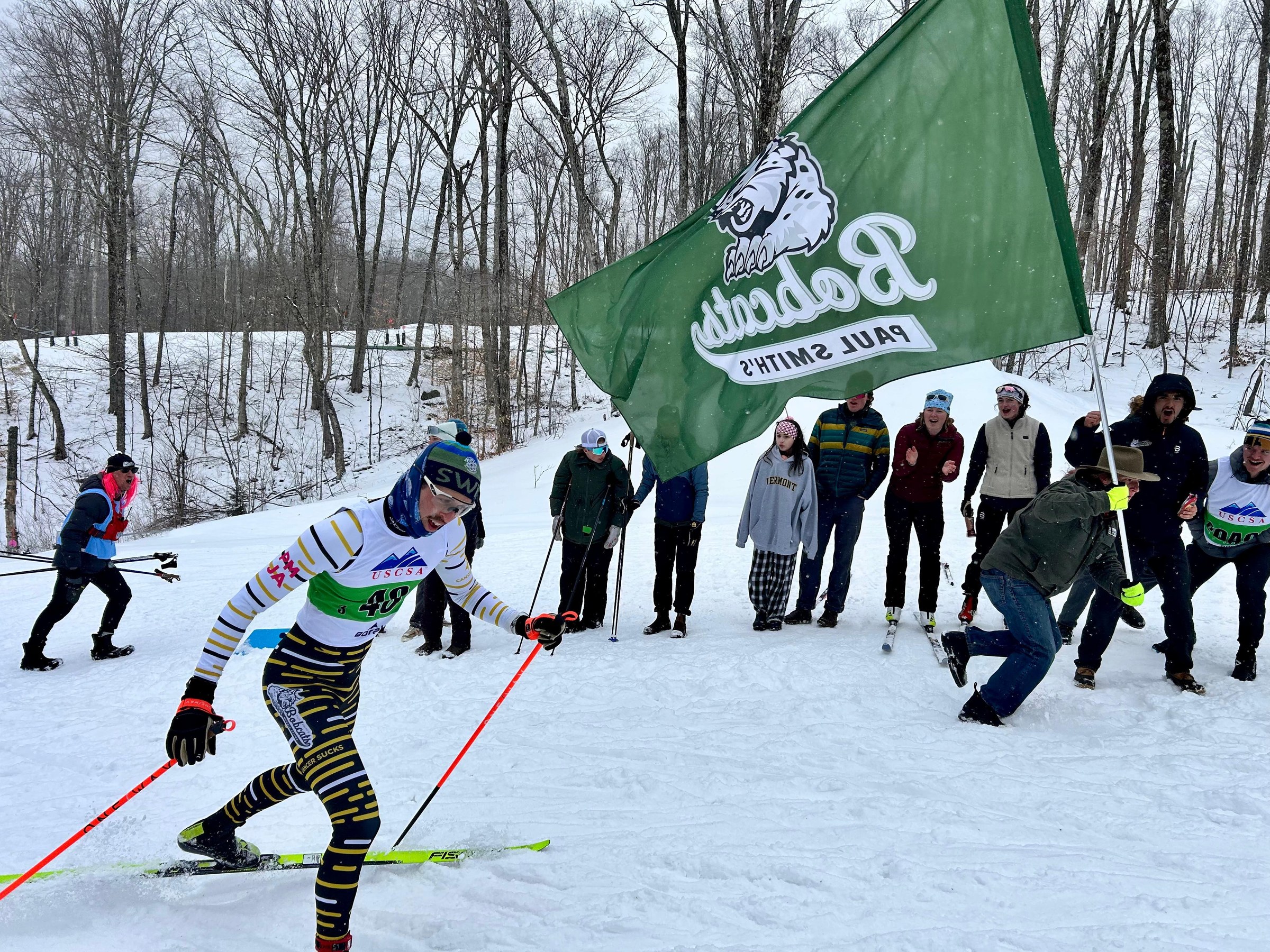
    Oliver Miatke during the 7.5k Classic at the 2025 NCAA Championship. (Photo: Tobias Albrigtsen)
  • The Wrong 30,000

    The Wrong 30,000

    This article was made possible through the generous support of our voluntary subscribers. If you value coverage like this, please support FasterSkier with a voluntary subscription.

    Quinn Holan on his way to a top 5 junior finish at US Nationals Lake Placid. (Photo: Courtesy Photo)

    Will Sweetser thinks American Nordic skiing is recruiting in the wrong places. Here is what he is building on Donner Pass to prove it. This is the second of two parts — be sure to read part one, to learn about Sweetser’s background and coaching philosophy — Keep Showing Up: Will Sweetser’s Unglamorous First Principle

    The number Will Sweetser carries around is thirty.

    That, he says, is roughly how many development and junior racers a competitive Nordic ski club will produce from any 30,000 Americans with access to snow. The figure does not move much. Aroostook County, Maine, from Houlton to Fort Kent, about that. Stratton, Vermont, about that. Truckee, California, where he lives now, about that. He has been watching the number hold for thirty years.

    “Maybe it’s a little richer in some of these alpine resort towns like Jackson or Aspen,” Sweetser said. “But in general, I think that’s a pretty good estimation of what you’re going to get.”

    If he is right, the implication cuts against how most American Nordic clubs are organized. Truckee has three programs competing for that local pool. Each ends up with roughly ten development-age athletes. Sweetser, who runs the Nordic operation at Royal Gorge on Donner Pass, calls the result “not functional. And actually bad for athlete development.”

    His conclusion is the one most clubs in snow country do not want to hear. He thinks they are fighting over the wrong 30,000 people.

    Quinn Holan, Walker Rawlinson and Cabot Godoy celebrating learning at Jackson Hole International Spring Series 2023. (Photo: Courtesy Photo)

    The 30,000 that interest Sweetser sit on the other side of the Sierra crest.

    The Reno valley, by his count, holds about 650,000 people. The slice he is targeting — the corridor running from Gardnerville up through northwest Reno into Verdi, Nevada — is roughly 140,000 of that. He likes to compare it to the state of Vermont, where the total population is about 648,000. From west Reno to Royal Gorge is under 50 minutes. To Auburn Ski Club, the next program over, it is 40.

    That, he points out, is shorter than what plenty of Vermont families drive to ski on Saturday mornings. It is shorter than what he himself drove from Bates to find usable snow in the 1990s.

    “Why am I fighting over the 30,000 who live in Truckee,” Sweetser said, “who are frankly inundated with sports options?” Lacrosse. Soccer. Dance. Most of his daughter’s friends, he said, are doing two or three sports a season through elementary school. “How do you compete? Do cross-country ski training on top of all of that?”

    There is a second front in the same argument. Truckee is a snow-sport town, but it is also a freeride town, and Nordic, in his telling, is losing the adolescent attention war to a sport that was built for the camera roll. “It’s never going to look as good as huck yourself off of a classic line at Palisades or Sugar Bowl or Heavenly,” he said. “You’re just not going to.”

    Quinn Holan, Walker Rawlinson and Cabot Godoy. (Photo: Courtesy Photo)

    So Royal Gorge is being repositioned. Sweetser describes it as a destination training center, by which he means destination for both racers and resources. The piece that interests him most is the labor pool.

    A generation of Eastern Intercollegiate Ski Association graduates moved to the Bay Area for jobs in tech and finance over the last decade or so. Sweetser, off the top of his head, can name seven or eight. Widen the age range and he says he can name another thirty. They are not coaches by trade. Most of them make considerably more money than coaching pays. But they are skiers, and Sweetser’s bet is that a meaningful number of them would take three and a half hours twice a week — a Tuesday and a Thursday morning, say, or a Tuesday and a Saturday — to be paid by Royal Gorge to run a session in the Bay.

    “The ones who are older don’t care about the money. They’ll do it anyway,” he said. “But the younger guys probably care about the money even less. They’re psyched to be out.”

    He has tried this before with a Bay Area satellite through Sugar Bowl Academy and lost it to a turnover in headmasters. The current effort is being underwritten by Royal Gorge, whose general manager, Tom Miner, took over a few years ago and has been, in Sweetser’s description, the institution willing to write the checks. Bay Area families would still drive up Thursdays and Fridays for weekend training; the satellite sessions supplement, they don’t replace. “Four to five sessions of skiing per week,” Sweetser said. “Which is pretty crazy if you think about it. You can develop a lot.”

    His reference point was his own résumé. He coached at Bates in the 1990s, when the team was off Mondays, didn’t ski Tuesdays or Wednesdays most weeks, and drove an hour each way the rest of the time or just left on Thursday for the next carnival stop. “I don’t think it’s the worst development plan for kids who want to ski in college,” he said. “Nor do I think it’s going to hurt your lifelong love of the sport to ski three or four days a week instead of six.”

    JC Schoonmaker and Emma Ribom giving back at a Far West dryland clinic. (Photo: Courtesy Photo)

    “I think it’s also a thought exercise more than a practicality,” he said. The snow-belt population is small to begin with, he argued, and within it, Nordic competes against alpine, against freeride, against every other thing a kid with a phone can see. He went looking for the counterexample and landed on Great Britain. Their entire cross-country skiing base, he estimated, is “maybe a thousand” people. Three British men finished in the top eight of a World Cup race in the lead-up to last year’s Olympics. The United States, from a population orders of magnitude larger, did not have three.

    “So I think we have to apply both systems simultaneously,” he said. “You want the best possible resource application and preservation, as well as the recruiting.”

    The recruiting, in his version, is what is taking him to Reno and to the foothills around Auburn and Grass Valley, towns at 2,000 feet of elevation, with populations several times Truckee’s, that have a history of ski teams without a current knowledge base. He has also been watching California middle-school track results, the way a baseball scout reads box scores. He is looking for the eleven- and twelve-year-olds who will hit puberty, stop being runners, and still have an engine.

    Long view of program and athlete development. (Photo: Courtesy Photo)

    The institutional pieces have been moving in the meantime, some faster than others.

    Sweetser submitted a bid this month to host the 2028 Junior Nationals at Royal Gorge. The bid still needs approval from the sport committee and the junior working group, and the organizing committee is largely the one already preparing for an earlier event. He said the bid is in part a consequence of another organization having stepped back, and would not elaborate.

    He is also in the middle of homologating four race courses at Royal Gorge — a sprint, a 2.5, a 3.3, and a 3.75 kilometer loop, with options for a 5K and additional sprint variants. Sweetser did the initial mapping himself; a professional GIS contractor is doing the formal version now.

    The third moving piece is administrative. Sweetser owns a company called Ydalir, which is the U.S. importer for the Italian wax brand Maplus and the holding entity for his coaching operation. Ydalir’s junior and weekend programs are being folded into the Royal Gorge brand. “Weekend program up through juniors is branded Royal Gorge cross country,” Sweetser said. The older athletes — gap-year skiers, elite development athletes, masters groups — sit one tier up, with the financial arrangement still being worked out.

    The deal makes sense to him because of what an institution provides. “I can’t just be running around in the woods all the time,” he said. “I need a home.”

    Walker Rawlinson (Menlo CA) in a breakthrough race Jackson Hole 2023. (Photo: Courtesy Photo)

    The home matters because of who he wants in it.

    The NCAA is on the verge of changes that will give skiers a five-year clock from high school graduation, capped at age 24, in which to use four years of eligibility. Sweetser thinks the new rule will quietly squeeze out the gap-year athlete — the kid who could use a year at a prep school, the kid who is simply not ready at 18, the kid who would be a different athlete and a different person at 20. The five-year window is generous in theory and tight in practice.

    What Royal Gorge can offer those athletes, Sweetser said, is a landing pad. Last year the resort gave passes to the three older skiers he was coaching. This year, in addition to the passes, it will offer them paid work with the ability to ski before and after a shift.

    “It’s a pretty decent deal when you’re trying to make it,” he said.

    None of this is new in concept. The Maine Winter Sports Center built something close to it in the 2000s, and produced a long run of national-team athletes from it. Sweetser was part of that operation. The Royal Gorge version inherits the DNA and adds a piece Maine never had: a population base on the other side of the mountains big enough to recruit out of.

    Whether his thirty-out-of-30,000 math holds in California the way it held in Aroostook is the experiment.

    “You take an 18-year-old and go out as a 20-year-old,” Sweetser said, “you’re a different person.”


    Help Support Our Coverage!

    If you value the thoughtful work and access FasterSkier provides, please consider becoming a Voluntary Subscriber. Your support directly fuels our work to cover the people, places, and moments that make our sport special.

    Join the FasterSkier community!
     

    Superfluous photo of Sweetser’s dogs… but we love dogs too, so had to include this photo! (Photo: Courtesy Photo)
  • Keep Showing Up: Will Sweetser’s Unglamorous First Principle

    Keep Showing Up: Will Sweetser’s Unglamorous First Principle

    This article was made possible through the generous support of our voluntary subscribers. If you value coverage like this, please support FasterSkier with a voluntary subscription.

    Two older girls on the Edward Little ski team went looking for bodies. It was the mid-1980s, the boys’ Nordic program at the Auburn, Maine, high school was thin and not very good, and the girls’ team was strong. The two girls, Becky Flynn (SVSEF) and Sarah Pribram (NWVE), knew a freshman who had skied a little in middle school. They asked him if he wanted in.

    Will Sweetser’s second cross-country ski race ever was the Maine High School State Championship, he finished 34th, the best result on the team.

    The next winter Edward Little won the state title. Sweetser placed seventh in the state — and fourth on his own squad. “I was the fourth guy running, I was the fourth guy skiing,” he said. The sport was tilting toward skating then, and almost nobody his age had figured out how to skate yet. Technique was a wash. So the results sorted themselves out the only way they could.

    “It turned out that engines won,” Sweetser said.

    That phrase could serve as an epigraph for everything he has done since, except for one inconvenient fact. His own engine was nothing special, at least by his own standards.

    He learned exactly how unspecial his was as a freshman skier at Dartmouth, when the team did VO2 max testing. The results put Sweetser, the slowest man on the roster, “squarely in the bottom half of the women’s team.” He ran the numbers on his own future and did not like the answer. “I was already running almost the times they suggest for my VO2 max,” he said. The writing, he decided, was on the wall.

    If the engine couldn’t get bigger, the speed had to come from somewhere else.

    “Wax makes things faster. Strength makes things faster. I better learn technique,” Sweetser said. “Maybe I was a genetic predeterminist, and that’s why I started learning all the physiology.”

    After graduating from Dartmouth, Sweetser took an assistant coaching position at Bates College in Lewiston, Maine, where he went to the library and more or less stayed there.

    At Bates, Sweetser became a fixture in the stacks while living with his grandfather, working into the evening. “I literally was in the library more than the team,” he said. For two years, he averaged four or five interlibrary-loan requests a week. He calls what he built in that period “a self-taught, master’s-level survey course” in exercise physiology. He was also, by his own account, one of the first coaches in the country mailing away for VHS tapes of World Cup races, freeze-framing technique frame by frame because there was no other way to see it.

    Will Sweetser (right) has worked with Olympian JC Schoonmaker (left), who now lives in Alaska and races for APU, since Schoonmaker was a young skier.

    Three decades later, that reading has produced one of the more idiosyncratic coaching minds in American skiing. Sweetser is now based in Soda Springs, California, high on Donner Pass, after a long stretch running the program at the Maine Winter Sports Center. And the first principle he’ll hand you is almost aggressively unglamorous.

    It’s consistency. Just showing up.

    Sweetser points to a Norwegian study he came across years ago — his recollection puts it around 2006 to 2008 — that examined the country’s top 14 nationally ranked women, essentially its entire World Cup pipeline. Researchers measured everything: VO2 max, speed broken into 20-second segments, correlation after correlation. The single factor that most cleanly separated the top seven from the next seven, Sweetser says, wasn’t engine size or top speed. It was days lost to illness and injury. The lower group averaged roughly two weeks of missed training a year. The top group averaged two or three days.

    “That seems to be the most correlated thing,” he said. Stretch it across a four- or five-year Olympic cycle and the gap stops being trivial.

    It sounds obvious. It is also not how a great many junior programs actually behave, which is where Sweetser’s second idea comes in, and that one is stranger.

    He builds training around fiber type, and he has a field test for sorting it. He’ll have an athlete — 15 or older — run a 400 meters, rest 20 minutes, then run a 3,000 meter. Then he looks at the ratio. A “normal” distance athlete, he says, holds about 76.5 percent of 400-meter pace over 3k. He can quote the figure to the hundredth. Drop below 68 percent and the athlete is built to sprint; climb above 82 and they’re built to grind. “This is how specific they are,” he said of the research he leans on.

    The athletes all come to the same session. What changes is the leash. The sprinter types get a short one, where Sweetser wants the heart-rate alarm to go off the instant it “faintly whispers” the next zone, because those athletes overshoot every interval.

    Where the distance types might run eight intervals, the sprinters run five or four. Body position stays the same for everyone. Cadence and power output are already different on their own. What he actually teaches, he says, is tactics — where on the course to spend, and where to wait based on each athletes strengths and weaknesses.

    This is also why he keeps reaching for the treadmill. It is measurable and it is controllable, and that combination lets him do something he values more than almost anything: build what he calls “an athlete persona that’s rooted in belief, not hope.”

    The clearest proof he offers was from an athlete he met at Bates, Sarah Dominick — the woman who would later become his wife and is now his coaching partner. At Bates, her running coaches kept pushing her mileage up, and every time she got much past 25 miles a week, she broke down. It made sense to Sweetser: she had a sprinter’s makeup, but was being asked to train like a distance runner. She was miserable enough that she sat out her junior year of competition entirely.

    When she came back as a senior wanting to race the 3k and 5k, Sweetser says her coach called it a waste of time.

    His plan went the other direction. He capped her running at roughly three hours a week and backfilled the volume with cycling and roller skiing. Warm-ups and cool-downs were run on grass, in the opposite direction around the track, to spare the leg that always flared. The key session, twice a week, was deceptively small: two sets of 15-seconds-on, 15-seconds-off at 3k race pace, jogging the corners, six minutes of rest between sets. Start to finish, it took about an hour.

    She went from 11:38 to 10:00 for 3,000 meters in a month. She became a Division III All-American and set a school record. The following year, training off skiing and running on a dirt road at altitude, she ran 9:27.

    The lesson Sweetser took from it is the one he now spends most of his time trying to give away. “Your best training computer is still between your ears,” he said.

    Will Sweetser doing lactate testing during a hill-bounding session two season ago with Quinn Holan.

    You can see what that looks like in Quinn Holan, the 18-year-old Sweetser coaches most directly and has worked with since the athlete was 11. These days, Holan, Far West’s standout U20 skier, writes his own training plans and brings Sweetser the questions, not the other way around. Increasingly, when the two disagree, the athlete keeps his own counsel, which is exactly the point. “You can call me his coach,” Sweetser said, “but it’s sort of like Klæbo’s grandpa is his coach.”

    It is a strange arc for a man who started with so little to work with. Sweetser was the high school freshman recruited because the team needed a warm body, the college skier in the bottom half of the women’s VO2 results, and the coach who had to teach himself the sport one interlibrary loan slip at a time. Thirty years on, the whole project — the fiber-type tests, the treadmill data, the athlete who outgrows his coach — is really just an effort to spare the next kid the loneliness of that library.

    Sweetser never did get the engine he wanted as an athlete, but as a coach, he has built something much more durable.

    Next: why Will Sweetser thinks American skiing is fighting over the wrong 30,000 people — and what he’s building on Donner Pass to prove it.


    Help Support Our Coverage!

    If you value the thoughtful work and access FasterSkier provides, please consider becoming a Voluntary Subscriber. Your support directly fuels our work to cover the people, places, and moments that make our sport special.

    Join the FasterSkier community!


    Will Sweetser and Matt Seline
  • Patrick O’Brien hired as Assistant GRP Ski Coach

    Patrick O’Brien hired as Assistant GRP Ski Coach

    We’re happy to welcome Patrick O’Brien back to the ranks of the Craftsbury Ski Club, this time as the Assistant GRP Ski Coach. Pat, a native of Putney, VT, raced collegiately for Dartmouth before his stint as a professional ski racer with the Green Racing Project from 2010-2014.

    While on the GRP, Pat competed in multiple World Cups and also became known to the Craftsbury community as a hardworking jack-of-all-trades with a deep love of skiing and the outdoors. Pat moved on from racing to become the head coach of the SMS T2 team from 2014-2022. Although he coached multiple athletes to international success, he’s most proud of the role he played in building a program that brought together athletes of all ages and rooted the team in its local community.

    In recent years, Pat has supported various junior, college, and elite teams as a service technician, all while juggling a job as a builder and wrangling a growing young family. When not up to his eyeballs in ski wax or construction detritus, Pat can often be found outdoors with his wife Ida, who also has deep ties to Craftsbury, and their two kids. Welcome back, Pat!

  • Annika Martell Named Head Ski Coach at Craftsbury Green Racing Project

    Annika Martell Named Head Ski Coach at Craftsbury Green Racing Project

    Annika Martell racing during the NENSA club relays, Saturday, March 28, 2026 at Craftsbury. (Photo: Phil Belena)

    The Craftsbury Green Racing Project has named Annika Martell as its new Head Ski Coach.

    Martell brings a resume that spans nearly every corner of the Nordic skiing world. A Minnesota native, she headed east to ski at Colby College, where she captained the team and earned recognition for her leadership before graduating with a degree in economics and environmental science.

    Her coaching career has taken a similarly wide path. Early on, she interned with the US Biathlon Association and coached juniors at Ford Sayre and the Berkshire Nordic Ski Club, before moving into elite-level work as an assistant coach with the Stratton Mountain School T2 Team. She spent four years as an assistant coach at Williams College, during which time she completed two stints as a Trail to Gold Fellow with the US Ski Team and served twice on the wax staff for Team New England at Junior Nationals.

    Most recently, Martell was the Head Nordic Coach at St. Michael’s College, where she guided the program to highly competitive results.

    Her background extends well beyond the ski tracks. She is a certified weightlifting coach and handled strength and conditioning duties at Williams. She also has experience in finance and operations management, and holds a Master’s degree in Sports Business from Drexel University.

    The Craftbury Green Racing Project is still accepting athlete applications for the incoming 2026 snow class — Apply Here
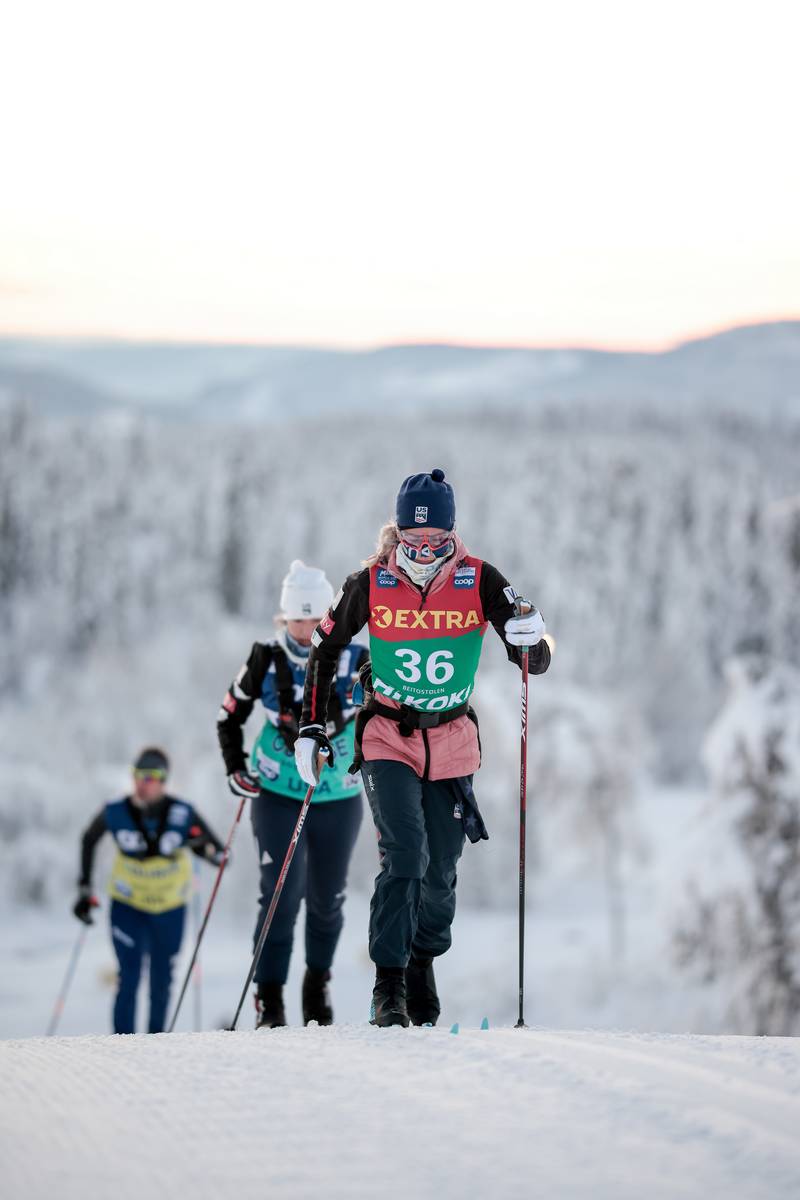
    Martell follows Jessie Diggins on course in Beitostolen in 2022. (Photo: Nordic Focus)
  • When to Increase Training Load… and When to Wait

    When to Increase Training Load… and When to Wait

    This article was made possible through the generous support of our voluntary subscribers. If you value coverage like this, please support FasterSkier with a voluntary subscription.

    American Neve Gerard (l) leads athletes from other countries at an International Training Camp in August, 2024, in Sjusjøen, Norway. (Courtesy photo)

    As this ski season wraps up, many of us coaches are doing similar work. Using spreadsheets or a popular training platform, we map out training for the year. We plan the yearly hours, monthly hours, and weekly hours, along with defining the training intensity distribution. We also plan how long and over-distance sessions should be, and maybe how much high-intensity training we should include, etc.  I have done the same in the past.

    Nowadays, my yearly plans include almost none of those things, but rather it is a general road map of how I might want the training loads to progress, what type of high-intensity, neuromuscular work, strength training focus, technique development, training camps, testing sessions, and a general concept of where we start in April or May. We must be able to adjust training on the fly based on an assessment of how athletes’ recovery and adaptation, week to week, with the training and developing fitness.

    In this article, I want to make a case for the changes I have made. Why? Because these detailed hours and training-intensity distribution plans we make are about as good as the day they were written. We then must avoid the temptation to implement training in May, June, or July just because we wrote it down in April. There is no way we can anticipate in April how an athlete will respond to training next month, much less than 2-6 months down the road.

    In discussion with many athletes and coaches I have consulted with in the last four to five years, I believe the biggest challenge faced is how and when to increase training load within a training year. For reference, I use TRIMP to define the metabolic load. TRIMP is described as a modeled internal-load metric or composite index based on exercise duration and HR-derived intensity weighting. TRIMP is not perfect because it is based on heart rate parameters, so power and strength training, mechanical loads are not accounted for. I find TRIMP an excellent proxy for the loads of all endurance training.

    Bates College getting after some dryland in 2024. (Photo: courtesy photo)

    Others simply use hours to plan and measure the loads. The challenge is difficult when just looking at hours, how to compare an hour of easy training versus an hour of hard training. Then, looking at percentages of time in zones or with other training methods does not define the load or focus the training on the desired adaptation.

    I am not going to address the year-to-year increases simply because all the assorted tables recommending volume of training at an age are based on population averages. The goals of the athletes, the athletes’ training age, training history, and many other potential factors. Just assigning training based on a table is foolish without considering these other factors. In most cases, athletes will train enough if the right principles are followed.

    When we are coaching athletes, we should only increase loads because of improved fitness not in an attempt to drive fitness gains. The decision to increase loads should come from evidence that the athlete(s) have absorbed the current load, not simply because it is a new month and the plan calls for a month-over-month increase. I believe that in the past we have used templates or models that have called for big month-to-month increases. The basis of building fitness is consistency and adaptation to the training. In many cases, we can go as long as 2-3 months at a very similar or very small increase in load.

    I am far from certain how coaches plan training these days, but others and I in the past have planned training based on monthly and weekly hours. In my days, I used to start in May with 50 hours, and by November, I was training more than 100 hours. Then the weekly progression within those months might go 12 hours, 14 hours, 16 hours, 10 hours or something like that. Even back then, how does a 50-hour month prepare you to do a 60-hour month, how does a 12-hour week prepare you to do a 14-hour week? What I learned more than 30 years ago. It doesn’t work that way; even if an athlete completes that kind of protocol, it does not mean it worked; it just means they survived it.

    The research and experience suggest that higher monthly volume and small periodic increases are better for building long-term fitness and performance, with far less risk than the typical plans that ramp up training with increases of 10-15-20% per month. Many old-school thoughts persist that we must increase volume to stimulate further improvements. That is an invalid belief and has been shown to be in much research and analysis. If we are in fact building fitness, we are moving faster at every intensity. Isn’t that already an increase in load? Recruiting more muscle fibers and motor units aerobically, improving mitochondrial density and function,  improving aerobic enzymes in more muscle fibers, among other aerobic adaptations.

    Fin Bailey works on uphill technique at training camp. (Photo: courtesy photo)

    I look for three layers of signals: performance stability, physiological response, and behavioral cues.

    The stability of performance in training is easily measured with simple technology, such as heart rate and GPS. Prior to increasing loads, the athlete should show improvement or stable performance in workouts. The aerobic training sessions should feel consistent and easy, with very little or no heart rate drift through the workouts. So, a simple training session once a week, once every two weeks, around a standard loop, both for high-intensity and aerobic training, can tell us much.

    The key workouts should show repeatable performance levels from week to week. The pace athletes can maintain at aerobic intensity should gradually and slowly improve, and the technique should stay stable and efficient throughout the workouts.

    Indicator What it suggests
    Same HR but faster pace, HRV is improving Aerobic adaptation
    Same workout feels easier, HRV is stable or improving Load is absorbed
    Ability to repeat intervals without extra fatigue Ready for progression
    If workouts are still producing large fatigue swings, the system is still adapting and increasing load is premature.


    As I have written previously for FasterSkier, older junior ( U18’s) athletes, masters, and elite athletes, I think it is important to use HRV to assess recovery. Using HRV, we can see whether the athletes are recovering predictably between sessions. We can see the stability or improving response their training, and we can assess whether the training loads are sustainable.

    Useful signals:

    • Resting HR stable
    • HRV 7-day trend stable or improving
    • Sleep quality normal
    • Muscle soreness minimal after aerobic sessions
    • The data and the athlete reports feeling normal again within ~24 hours

    If recovery between sessions is incomplete, increasing load compounds fatigue rather than builds fitness. The rush to hit hourly objectives and the failure to respond to accumulating fatigue are the biggest causes of maladaptive training.

    The critical question HRV can help to address. Are the current loads the athlete is doing correct? HRV, especially RMSSD trends collected consistently, can help flag whether an athlete is tolerating training well. But HRV should be interpreted alongside performance, subjective recovery, resting HR, sleep, and life stress rather than used as a standalone decision rule. In some cases, this may mean adjusting other areas of life; in others, we may simply have to reduce the training loads. Simply low HRV indicates a compromised ability to recover from and adapt to training

    A good indicator of readiness is the athlete’s ability to handle training density. Most athletes should have at least one rest day per week. During a training period, the athlete should be able to handle 3-5 moderate training days in a row without feeling accumulated fatigue, and the quality of workouts remains normal and stable.

    The occasional longer sessions should not disrupt the next day’s planned training, and recovery should be normal the following day. If an athlete is doing double sessions, the second session of the day should not be carrying excessive fatigue from the morning session, and the quality, speed, pace, or intensity of the second workout should be consistent.

    When the athlete’s readiness and physiological measures indicate that an increase in load is appropriate, there should only be a slight increase in volume. Make a few sessions per week a little bit longer, followed in the future by adding a workout or two per week

    Training load should only increase when the muscles and connective tissue are tolerating the training. If there is persistent tendon soreness, joint irritation, muscle tightness, or recurring niggles are common, it is not appropriate to increase the loads. Aerobic fitness improves faster than structural durability, which is why injuries often appear right after a volume jump.

    We also need to be aware of and watch for behavioral cues in the athletes, not just the recovery and performance data. We should look for the athlete’s motivation to train and their assessment of the RPE (rating of perceived exertion) for a given workout. If the perceived exertion of a given workout is increasing, it is not a positive signal. Finally, we should ensure that athletes’ nutrition is good, and their body weight is stable.

    As a practical guideline, I would recommend increasing load only after a period of 3-6 weeks, where we can see stable adaptation and improvement in training and recovery measures. When we look at elite training, we always see the training progression is often much slower than people expect.

    JC Schoonmaker and Luke Jager training in Anchorage, Alaska back in 2023. (Photo: Brinkema Brothers)
    Training Phase Progression Pattern
    Base Phase +5–10% volume every 3-6 weeks, but only if all inputs are positive.  If using TRIMP or Training Peaks TSS the load increase should never exceed 15-20%
    Race Prep Phase Maintain a stable volume, intensity increase slowly from the base phase
    Competition phase Volume and Training load decreases slightly; intensity is maintained or increased due to race load.


    As useful guidelines for coaches. If a training day or a week feels heroic, it is too big. Most likely, all the heroic training did was build fatigue and greatly slow recovery and adaptation. Sure, the athlete can do it occasionally, but it in no way means the load improves fitness or performance, or that the athlete adapts to it. My rule of thumb is that the longer it takes for an athlete to recover from a workout, a week, or a month of training, the less adaptation that is possible. When I shared this comment regarding high-intensity workouts with Zach Caldwell, I asked him when we should adapt to them. His response was Thursday! Not next Thursday, not a Thursday next month. Thursday!

    An effective training progression should feel well-tolerated for weeks. Fitness improvements are built on consistent, manageable weeks. Where the fitness is developed through compounded training, not the occasional massive week. I have seen it repeatedly, it is big increases in training load, too much, too soon, that ultimately leads to declining performance and overtraining. Sure, elite athletes train massive weeks, but to get there, they adapt to training every year, step by step.

    Increases in training load should be almost invisible over weeks and months as athletes develop. Over the years of training, the increases are clearly visible and large.

    In summary, increase training load when:

    1. Current workouts are repeatable and controlled
    2. Athletes recover following training days, normally within ~24 hours
    3. No structural soreness or injury signals
    4. Motivation and energy are normal
    5. This training performance has improved, and recovery has been stable or improving for 3-6 weeks


    Help Support Our Olympic Coverage!

    If you value the thoughtful work and access FasterSkier provides, please consider becoming a Voluntary Subscriber. Your support directly fuels our work to cover the people, places, and moments that make our sport special.

    Join the FasterSkier community!

     

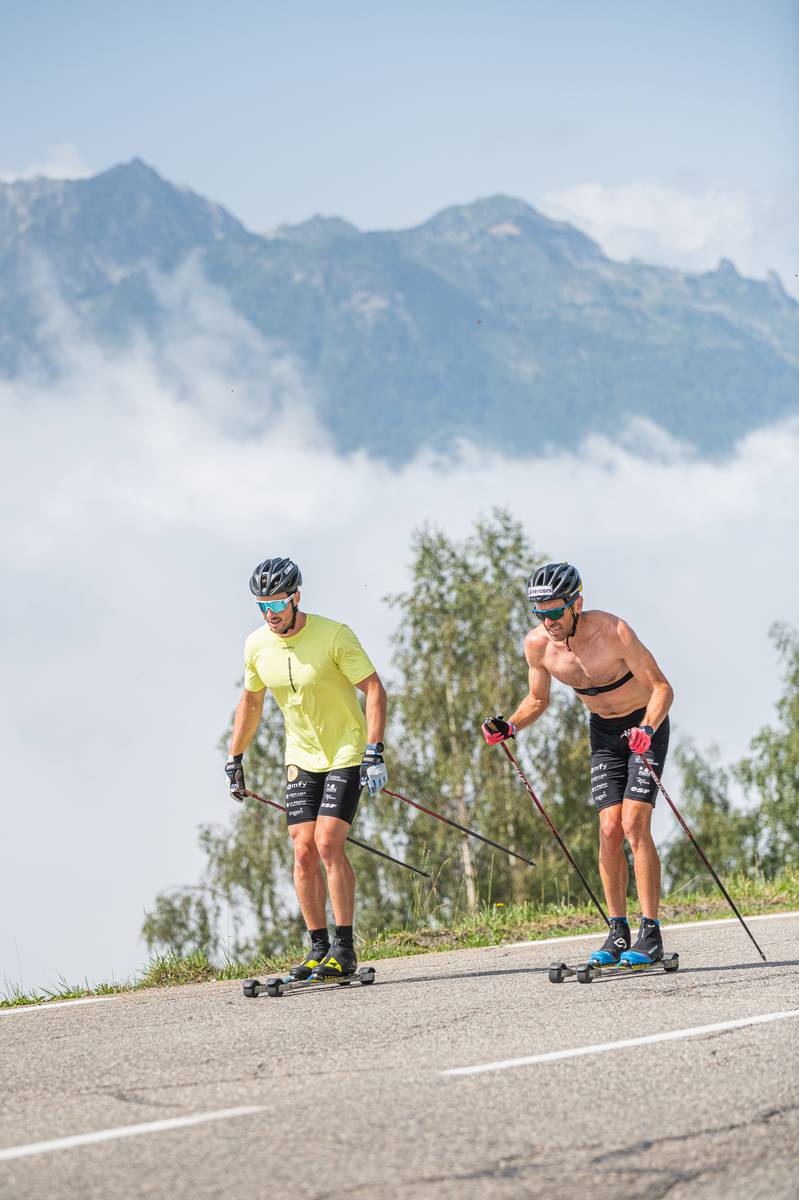
    French athletes Lucas Chanavat (left) and Maurice Magnificat (right) out for a rollerski during a training camp in Tignes. (Photo: NordicFocus)
  • Long-Term Development in Nordic Skiing: What We Say vs. What We Actually Do

    Long-Term Development in Nordic Skiing: What We Say vs. What We Actually Do

    This article was made possible through the generous support of our voluntary subscribers. If you value coverage like this, please support FasterSkier with a voluntary subscription.

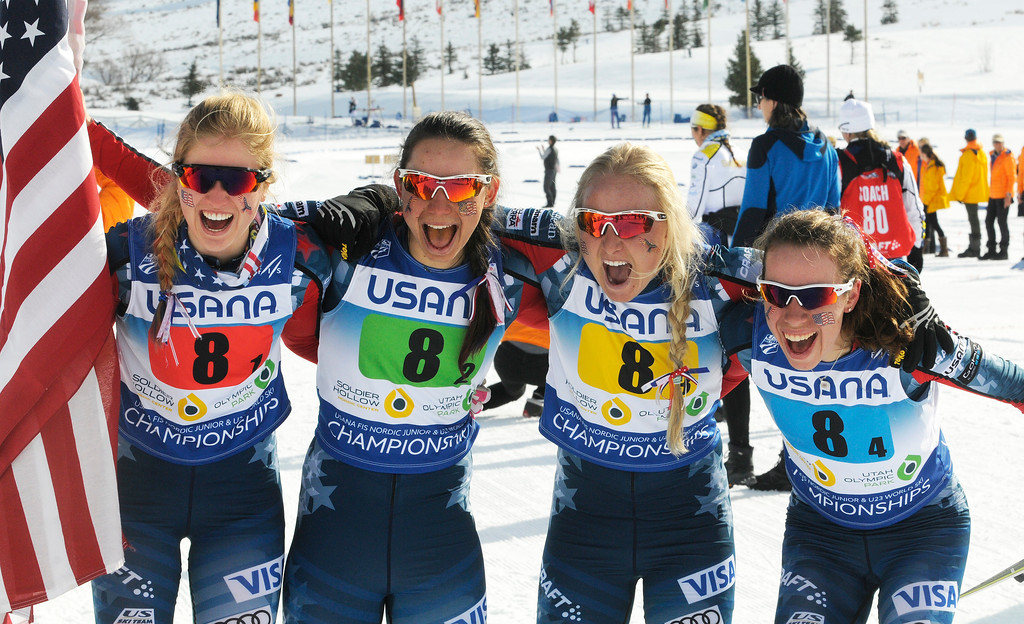
    The U.S. women’s relay after taking a historic third in the 4 x 3.3 k relay at 2017 Junior World Championships on Sunday at Soldier Hollow in Midway Utah, with (from left to right) Hailey Swirbul, Julia Kern, Hannah Halvorsen, and Katharine Ogden. (Photo: U.S. Ski Team/Tom Kelly)

    As the season winds down, it’s worth stepping back and asking a simple question: Does the way we develop young skiers in the United States reflect the philosophy we say we believe in? I know everyone is probably done with hearing about how the Norwegians do it, so let’s look at what we say we know and what we embrace.

    Many coaches and programs describe cross-country skiing as a lifetime sport. We talk about patience and say it takes ten years or more to develop as a skier. Clubs reference long-term athlete development models, and parents hear that endurance sports reward athletes who build gradually and peak later in life.

    All of that is true.

    But much of the system we’ve built rewards the opposite.

    Once rankings, camp selections, college recruiting, and program reputation become tied to junior results, the incentives quietly shift. Development begins to be measured by podiums and training hours rather than movement quality, long-term improvement, or whether athletes are still engaged in the sport five or ten years later.

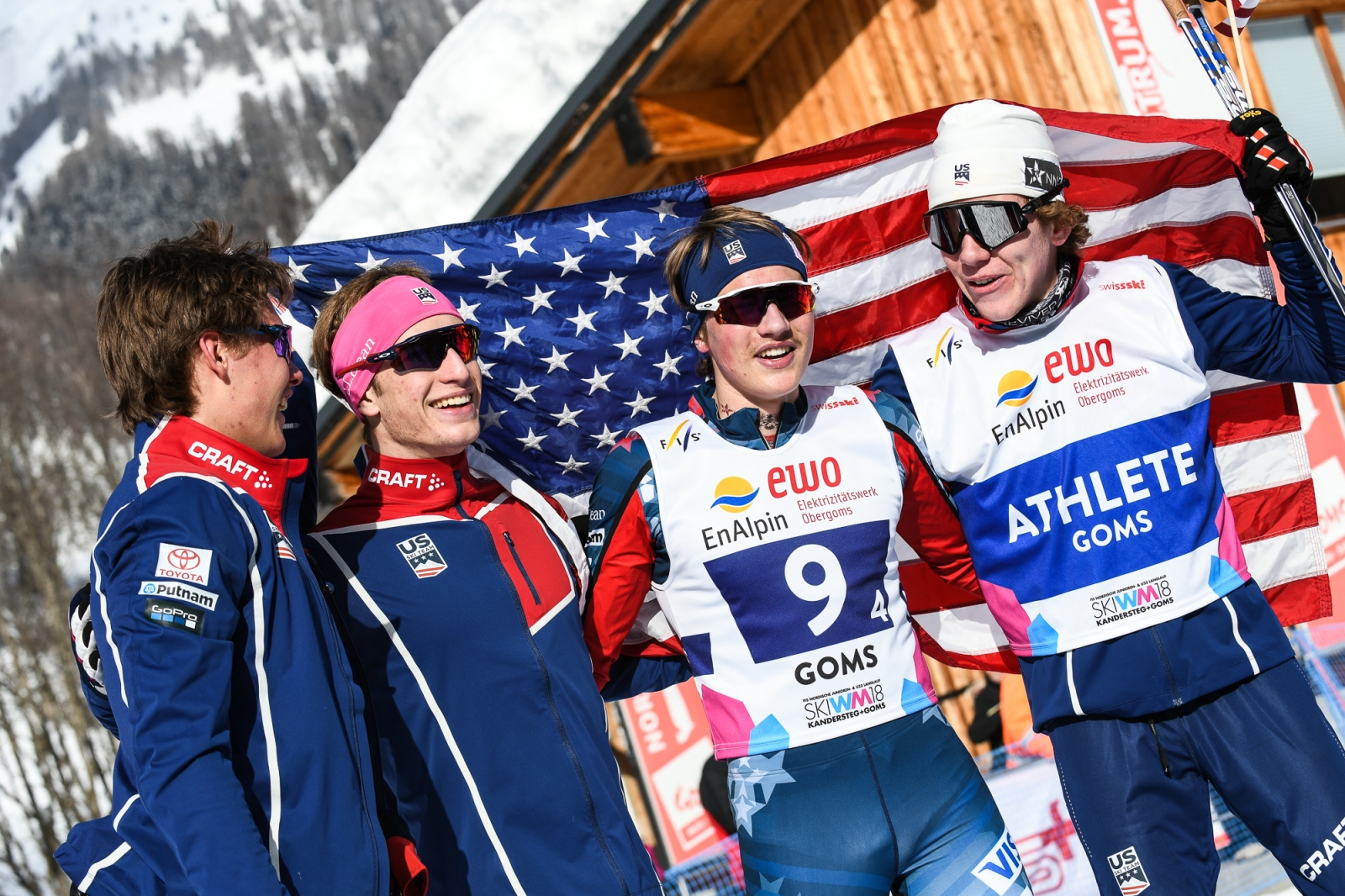
    The U.S. men’s silver-medal relay at 2018 Junior World Championships in Goms, Switzerland, with (from left to right) Luke Jager, Hunter Wonders, Gus Schumacher, and Ben Ogden. (Photo: JWSC2018.ch)

    What is long-term development

    Aerobic capacity develops over years, often decades. Technical efficiency improves gradually. The durability required to handle training load is built slowly through years of training.  Most elite endurance athletes reach their peak in their mid-twenties or early thirties, not in high school.

    If peak performance happens ten or fifteen years after an athlete first enters the sport, the early years should focus less on maximizing results and more on building the foundation that supports long-term growth.

    That foundation includes several elements.

    Movement skill. Nordic skiing is a technical sport, and the best skiers move efficiently long before their physiology fully matures. This efficiency is critical to managing training loads in the future. More efficiency in technique equals less stress and load from training.

    General athletic development. Running, biking, jumping, climbing, and playing other sports all contribute to coordination and resilience. Athletes who move well tend to adapt better to training later.

    Motivation. The most valuable asset a young athlete has isn’t VO₂ max or the hours trained by some arbitrary definition. It’s the desire to keep showing up year after year.

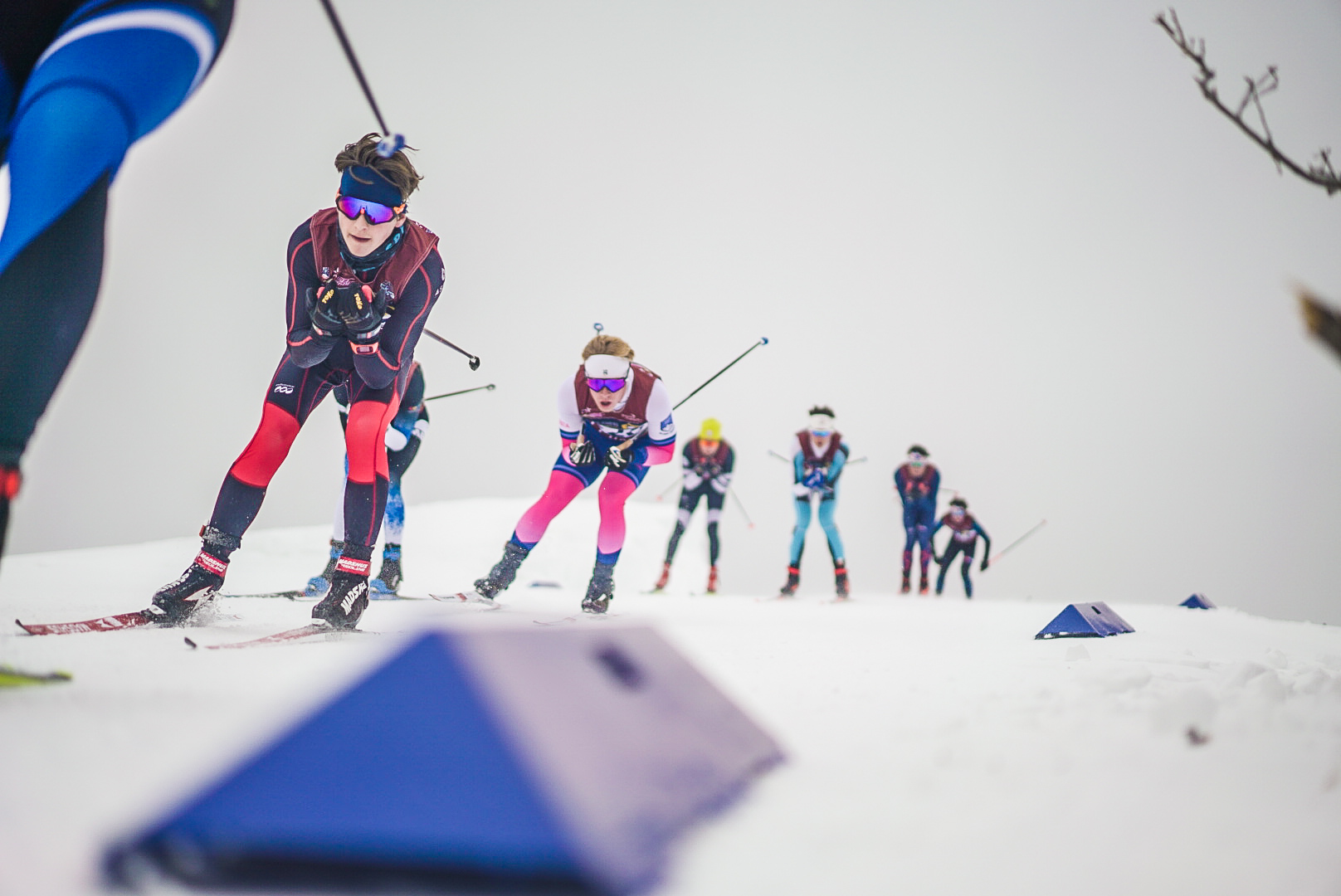
    Junior athletes race during the 2022 U.S. Cross Country Championships in Soldier Hollow, UT. (Photo: Tobias Albrigtsen / @untraceableg)

    The System Sends Mixed Signals

    In practice, the system often sends young athletes a different message.

    Junior racing has become increasingly competitive. Rankings exist even for younger age groups, and selections for camps, trips, and development programs often depend on early results. National events and development pathways can make performance at 14 or 15 feel like it carries some long-term significance. Yet we also claim to know that identifying future elite athletes at that age is extremely unreliable. If that’s true, it’s worth asking why the system places so much weight on those results.

    One example is allowing U14 athletes to ski up in order to qualify for Junior Nationals. It doesn’t happen frequently, but it happens every year. It’s hard to reconcile that with the philosophy of not rushing development. If long-term development truly matters, governing bodies should show leadership and address this issue.

    In some regions of the country, qualifier races have U16 athletes seeded in the start list with U18 and U20 athletes. People say it doesn’t matter because we separate them in the results. I disagree, the are intermingled with much older and more developed athletes. But more than that it is again the message begin sent?

    At the same time, training culture has shifted. Training data is widely shared, and conversations often revolve around hours. Young athletes begin comparing workloads long before their bodies are ready to handle them. Often the more is better attitude prevails, even though we say that we should be working on other skill aspects of development.

    These pressures can push athletes toward earlier specialization and higher training loads than their stage of development requires. A 14-year-old begins to feel like they need to train like a college skier. A 15-year-old worries that missing races or reducing training volume might put them behind.

    The Boulder Nordic Junior Race Team out for an adventure ski in 2014. (Photo: BNST)

    What are the impacts of the mixed signals

    The most visible consequence is burnout. Many people challenge the idea of burnout. But after more than forty years around this sport, I’ve seen the pattern repeatedly. Just because we don’t measure something well doesn’t mean it isn’t happening.

    Coaches who have spent time around junior skiing see the pattern: talented athletes who disappear from the sport sometime between their late teens and early twenties. Sometimes academics, finances, or changing interests are the reason. But often the explanation is simpler, they are tired from too much too early and to intense.

    There are also physical consequences. Adolescence is a complex period of growth and development. Training loads that are manageable for more mature athletes are impossible for a developing body. When volume and intensity climb too quickly, overuse injuries and chronic fatigue become more likely.

    Early specialization is not the problem. Rather, it is ineffective programming that has these young athletes training like more mature athletes.  This early training focus limits athletic development. Athletes may accumulate impressive training hours but miss the movement diversity that builds long-term durability.

    The biggest loss in this process is one that is unseen because those athletes are lost from the sport.

    From a coaching perspective, the shift shows up in small ways. Conversations revolve around weekly training hours instead of how well athletes are skiing. Easy sessions slowly become harder. Fatigue accumulates while movement quality quietly declines. None of this happens overnight, but over time, the focus drifts away from skill development and toward simply doing more.

    Development in endurance sports isn’t about accumulating work. It’s about adapting to the work being done and building the capacity to handle more later. A training log that looks impressive at 15 doesn’t necessarily translate into success at 25. What matters more is whether the athlete remains healthy, motivated, and technically sound over the long term.

    Hailey Swirbul celebrates the U16 Junior National Championship title in the Freestyl Mass Start in Stowe, Vermont, in 2014. (Photo: Voisin/FasterSkier)

    What Good Development Actually Looks Like

    If long-term development is the goal, the early years should look different from elite training. Young skiers benefit from variety. Running, cycling, hiking, and other sports build coordination and resilience. The goal isn’t to replicate elite training programs but to create athletes who move well and enjoy being active.

    Technique deserves major attention. Nordic skiing rewards efficiency, and athletes who develop strong movement patterns early often progress faster later because every hour of training becomes more productive. Training volume should increase gradually over time. Consistency across years matters far more than pushing limits in any single season.

    Most importantly, development should seek to preserve motivation. The sport needs athletes who remain engaged long enough to realize their potential. We often see athletes try to do a big training year to catch up or reach a target training volume. It rarely works out.

    The Problem With “More Volume” Thinking

    In Nordic skiing, training volume carries a certain mystique. Conversations quickly turn to hours, weekly totals, yearly totals, and stories of elite athletes training 800 to 1,000 hours per year.

    It’s easy to see why. Endurance sports reward consistency and large training volumes. But a subtle misunderstanding often occurs. Volume stops being seen as the result of long-term development and starts being treated as the cause of performance.

    Correlation becomes mistaken for causation.

    Hunter Wonders (APU/Alaska) winning the U16 Boys Mass Start Freestyle race at the US Junior National Championship in Stowe, Vermont. (Photo: Voisin/FasterSkier)

    High Volume Works for Elite Skiers

    At the elite level, high training volume makes sense. World Cup athletes have spent years building the capacity to handle that workload. Their aerobic systems are highly developed, their movement patterns are efficient, and their bodies have adapted gradually.

    High volume works because it sits on top of a massive foundation: technical skill, durability, and years of progressive training.

    The problem arises when that model gets copied without the same foundation underneath it.

    The Missing Variable: Training Age

    One of the most overlooked concepts in endurance development is training age. Training age refers to how many years an athlete has spent consistently adapting to structured training. Two 18-year-old skiers may have very different training ages. One may have spent eight years gradually building capacity. Another may have entered the sport recently and increased training dramatically. On paper, their training logs may look similar. In reality, their ability to adapt to those loads can be very different.

    Training only produces progress when adaptation occurs. Without adaptation, training simply builds fatigue.

    The U18 Girls field works its way past the Loppet Foundation Adventure Center in Minneapolis during Junior Nationals on March 11th, 2022. (Photo: David J Owen Photography)

    The Efficiency Problem

    Elite skiers move extremely well. Their technique allows them to ski long distances while conserving energy and minimizing unnecessary muscular stress. Developing this efficiency early is critical. In the future, it will allow the athletes to train large volumes without the metabolic and neuromuscular stress that can lead to overtraining.

    Young athletes often lack efficiency. When technique is still evolving, large training volumes can actually slow technical development. Fatigue reinforces inefficient movement patterns that later become difficult to change.

    For developing skiers, time spent improving movement quality can be far more valuable than time spent extending distance.

    The Cost of Chasing Hours

    There is also a practical cost to the “more volume” mindset. Elite athletes structure their lives around training. Sleep, nutrition, and recovery are integrated into the system. Young athletes are balancing school, travel, social life, and other commitments. When training volume climbs, something gives. Sleep declines, recovery becomes inconsistent, and fatigue accumulates.

    Under those conditions, simply adding more hours rarely produces better results.

    What Volume Should Really Represent

    Training volume does matter. Endurance sports ultimately require substantial workloads. But volume should be viewed as a long-term outcome of development, not a short-term objective. Successful endurance athletes rarely build training hours quickly. They accumulate them gradually across many seasons, allowing their bodies to adapt step by step. By the time they reach elite levels, high training volumes feel natural because they have spent years building the durability to support them.

    The 2026 US Ski and Snowboard Junior National Championships in Cable, Wisconsin, hosted by the American Birkebeiner Ski Foundation. (Photo: Tryg Solberg)

    A Better Question to Ask

    Instead of asking how many hours an athlete should train, a better question might be:

    What training can this athlete adapt to right now?

    For some athletes, the answer may involve increasing volume. For others, improving technique, strength, or intensity distribution may produce greater gains. Development is not identical for every athlete. What matters is finding the training load that promotes consistent adaptation rather than constant fatigue.

    Why This Matters for the Future of the Sport

    Cross-country skiing, like all endurance sports, depends on long-term participation. The sport needs athletes who remain engaged, not only as competitors but as lifelong skiers, coaches, and community members.

    A development system that pushes athletes too hard, too early risks losing them before they reach their potential. It also narrows the pathway to elite performance by favoring early maturity and filtering out late developers.

    If Nordic skiing truly wants to remain a lifetime sport, its development culture must reflect that philosophy.

    Closing

    Cross-country skiing has always valued endurance. That value should extend beyond physiology and into how we develop athletes. Endurance isn’t just about how long someone can ski hard on race day. It’s about how long they can remain engaged in the process of improving.

    If we truly believe Nordic skiing is a lifetime sport, then our development system should not resemble a funnel that selects kids out at every progressive age group. It should look more like a runway, where every young athlete has the opportunity and the time to fully develop their potential, not just the ones who mature early.


    Help Support Our Olympic Coverage!

    If you value the thoughtful work and access FasterSkier provides, please consider becoming a Voluntary Subscriber. Your support directly fuels our work to cover the people, places, and moments that make our sport special.

    Join the FasterSkier community!


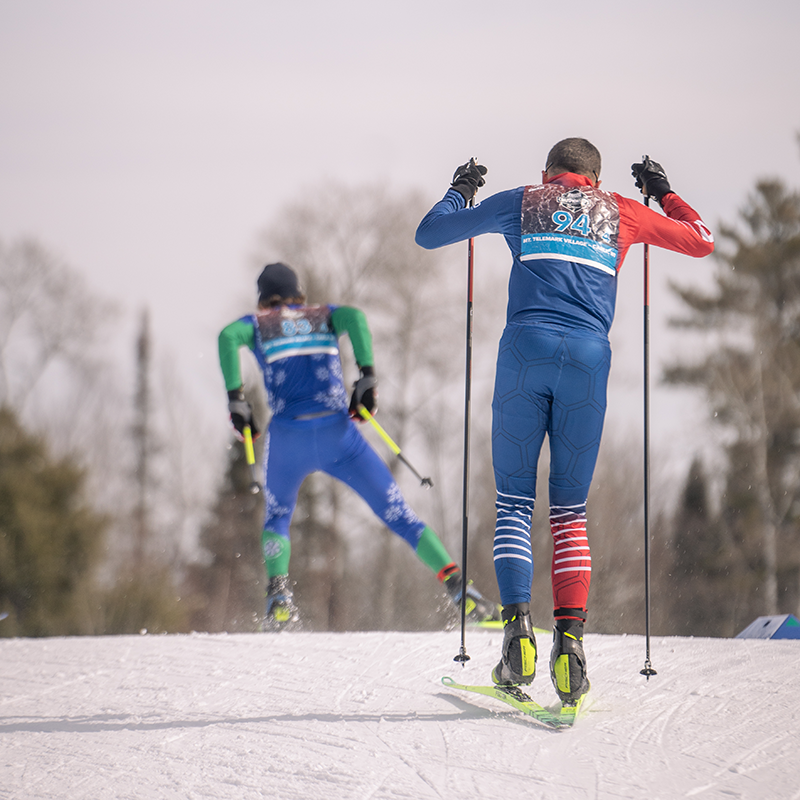
    The 2026 US Ski and Snowboard Junior National Championships in Cable, Wisconsin, hosted by the American Birkebeiner Ski Foundation. (Photo: Tryg Solberg)