From the FasterSkier archive — posts syndicated from athletes’ and coaches’ own blogs between 2004 and 2012, kept online as published. Current coverage is at fasterskier.com.
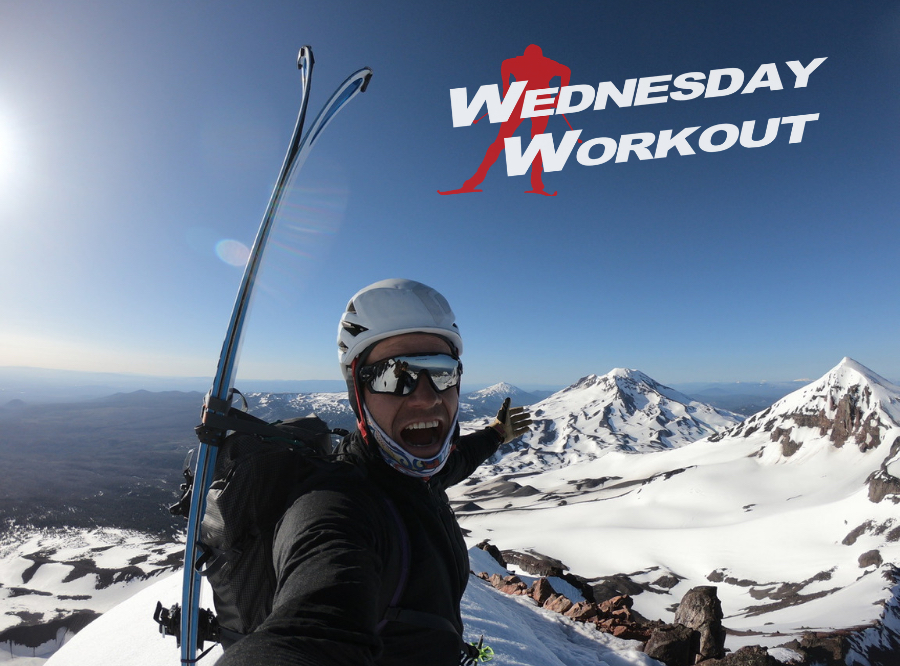
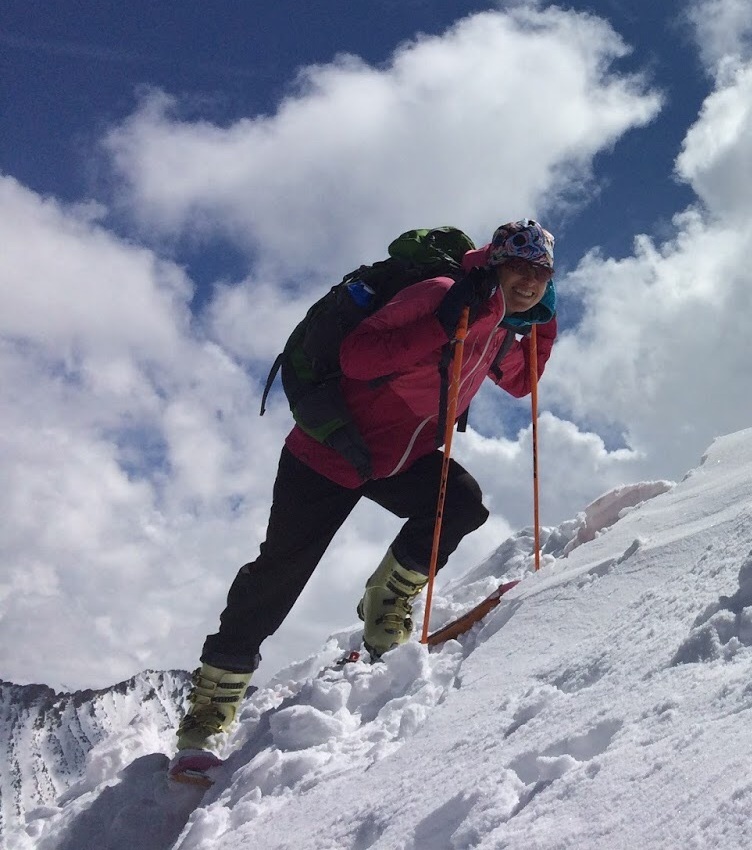
Simi Hamilton on a solo ski-mountaineering adventure to Oregon’s North Sister. The photo was shot before Hamilton skied down and tagged the summit of the Middle Sister (rightmost peak) this May. (Photo: Simi Hamilton)
This post in our long-running Wednesday Workout series takes the 10,000-foot view — almost literally. The nuts and bolts of it are this: we’re posting Simi Hamilton’s training log from Monday, April, 3oth thru Saturday, June 9th.
Hamilton needs no introduction to FasterSkier readers. In any case, here are Hamilton’s basics. Thirty-one-year-old sprint specialist who popped a 12th last season in Seefeld, Austria in a loaded 15-kilometer mass start freestyle. The seventeenth ranked sprinter on the World Cup. Member of the U.S. Ski Team. Fond of thin air, like any good kid from Aspen, Colorado.
On his International Ski Federation (FIS) profile page, two small dashes “–” leave a void describing Hamilton’s hobbies. Let’s assume this was an oversight, with too little room to honor what Hamilton sees as more than a hobby.
He is an athlete clearly satisfied with skiing fast as he’s been a top-ranked World Cup sprinter since 2012. But if you follow Hamilton on social media or the Stratton Mountain School blog, there’s the occasional glimpse into Hamilton’s “hobbies”. If it’s an outdoor activity involving larger than normal size mountains, moving fast and light, pushing what even fit athletes would consider sustainable aerobic thresholds, Hamilton is home.
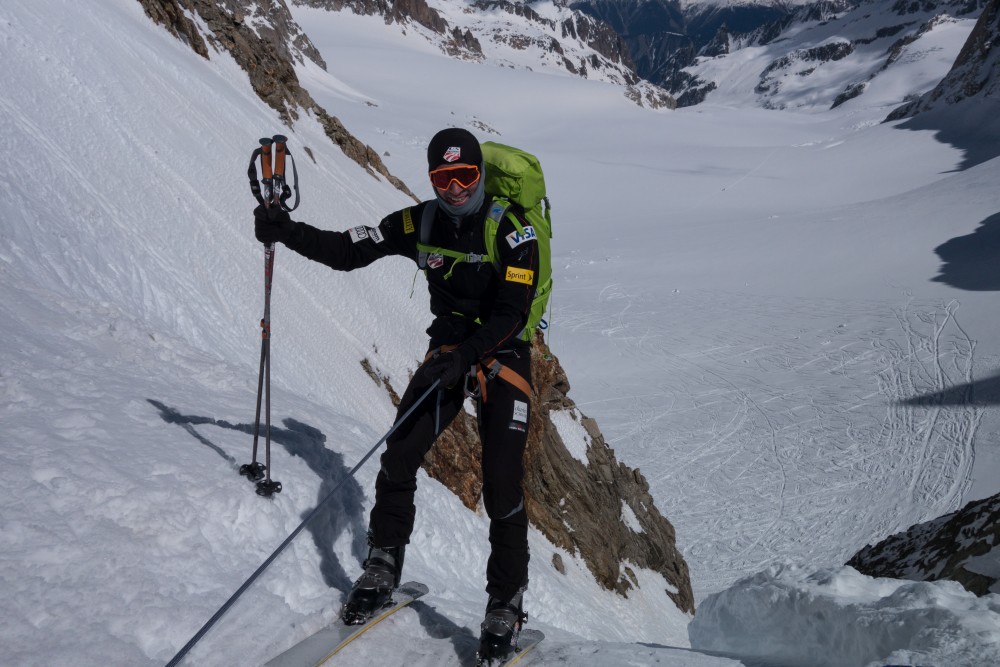
Simi Hamilton (left) with Akeo Maifeld-Carucci (right) on the southeast ridge of Mt. Jefferson.
Why present a broad-in-scope training log snapshot for a Wednesday Workout? By now, we are guessing most cross-country skiers are seeking snow. They have logged hundreds of hours. There’s been the OD, the L1-L5, the 30 x 30s, the 4 x 4 min. And we are also hoping there’s been plenty of “hobby” time.
If there’s something to learn from Hamilton’s logs, it’s to have fun.
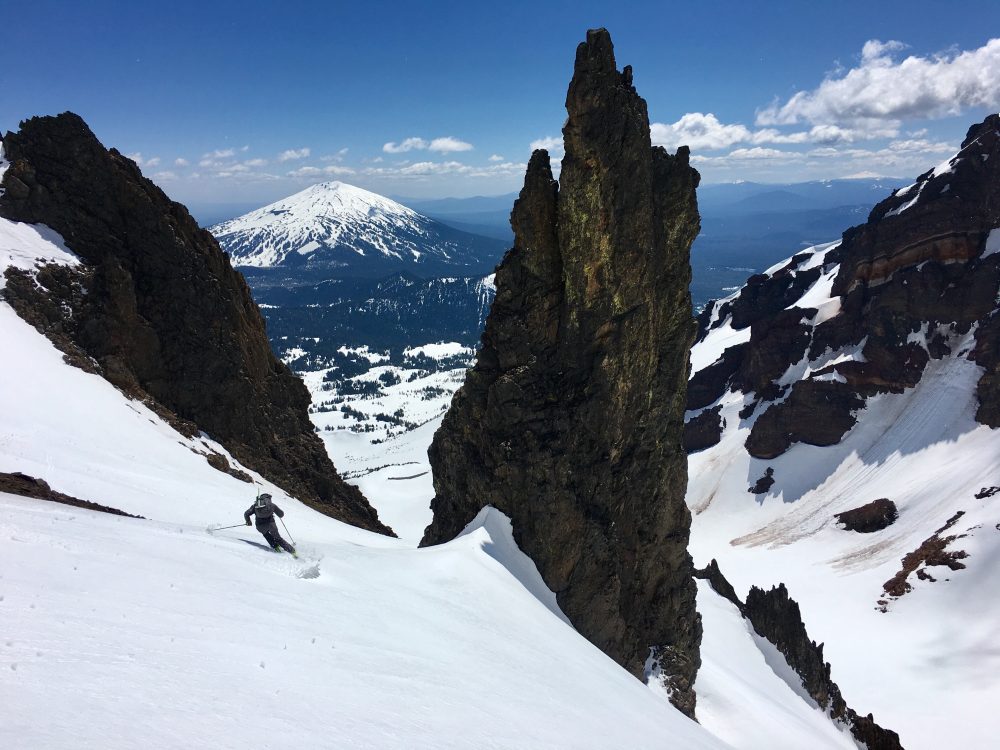
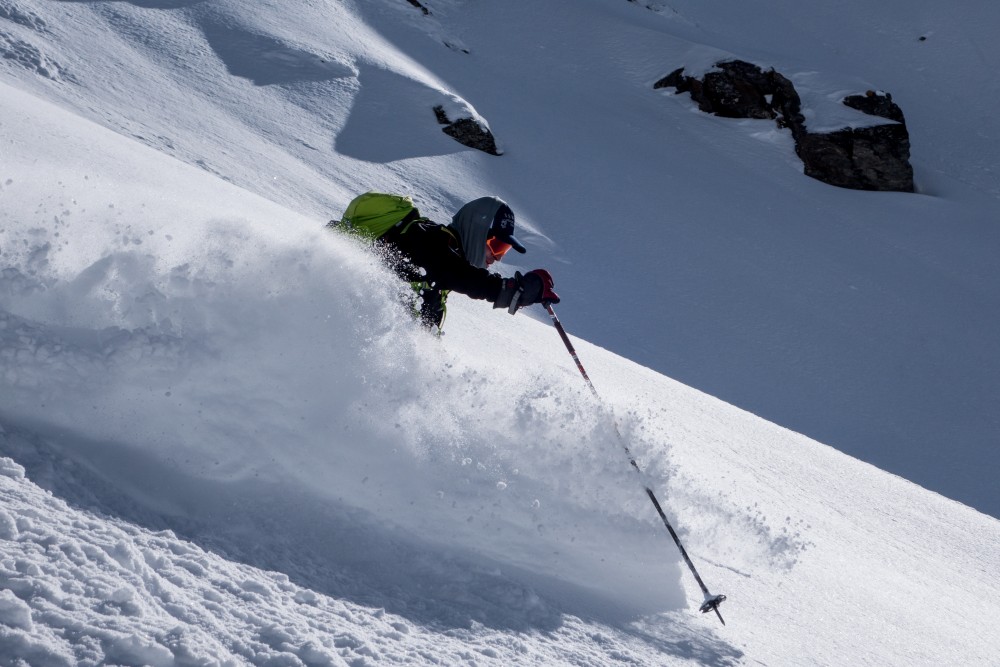
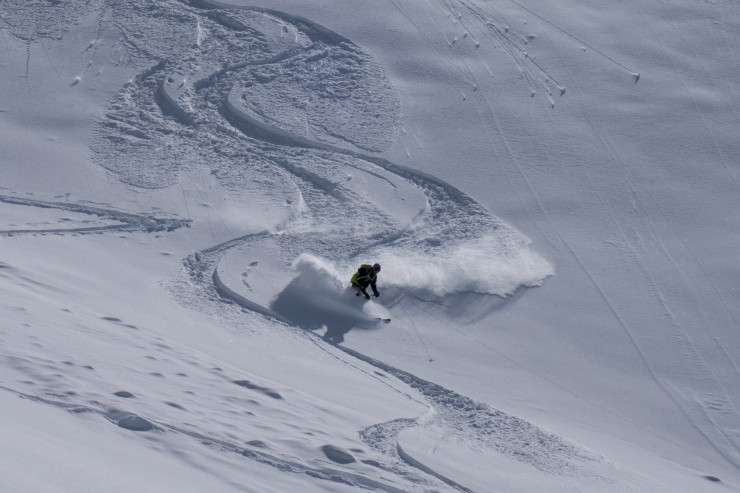
Simi Hamilton harvesting corn snow on Broken Top near Bend, Ore. (Photo: Linden Mallory)
***
The Training Logs:
“That first week in May probably looks a little weak, and it was,” Hamilton emailed, explaining he had been relaxing on a river trip in early May. “I’m usually on my bike a bit more in May, but Matt [Whitcomb] and [Chris] Grover have tried to steer me more towards skiing while in Bend the last few years.”
Technically speaking, skiing has many forms. Maybe skiing in the mountains is what his coaches had in mind.
If you’re reading this now and you’re wearing a race bib at some point this season, we hope you’re having fun. We hope you’ve had fun. We hope you’ve logged some full-blown adventure days.
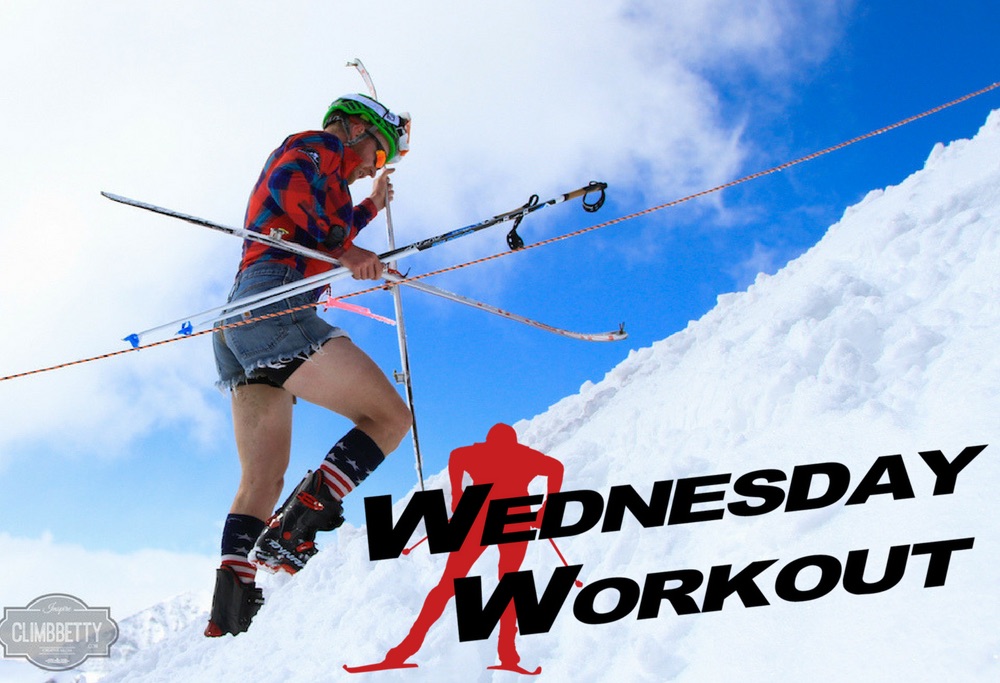
Summit Endurance Academy coach/owner Joe Howdyshell getting vertical with his skinny skis. (Photo: Climbbetty.com)
You name it and Joe Howdyshell, director and founder of Summit Endurance Academy in Frisco, Colo., has probably coached it. From skiers to cyclists to ski mountaineers, Howdyshell’s repertoire extends beyond endurance athletes. His experience with a wide range of outdoor-sport enthusiasts made him a prime candidate for one of our weekly workouts. Here he provides a workout he has all of his endurance athletes do, regardless of sport, throughout the year at the end of their recovery weeks.
***
With the utterance of endurance athlete, a certain individual often comes to mind. The cross-country skier clamoring over boulders during a three-hour hike. The road cyclist grinding up the final hill of a four hour ride. The Ironman competitor, finishing up a 2.4-mile swim with more than a century bike ride and marathon run left to go.
Many make the list. What about the motocross biker drifting a machine operated hunk of metal around a dirt course? Or the extreme-obstacle-course racer army-crawling under a stretch of barbed wire? Some would say they don’t fall under the same category.
But 33-year-old Joe Howdyshell, founder and director of Summit Endurance Academy (SEA) in the Colorado Rockies, has a different point of view. He sees these individuals as one in the same. From the athlete he coaches who is currently climbing Everest, to the professional Spartan racer under his advisory, to the motocross racer he provides training plans to, all fall under the umbrella of endurance athlete.
Joe Howdyshell of Summit Endurance Academy (Photo: Erin Gigliello)
The key is how one defines endurance and athlete. For Howdyshell and SEA — a training program he started in 2013 that offers coaching and training advice to its members –endurance is defined “as any effort lasting longer than two minutes (this includes crashing time)” and an athlete as “anyone who is trying to systematically improve performance or capacity.”
If anything, the definition attracts a wide span of participants. At present, Howdyshell has 50 athletes following his training philosophy, 19 of which are Summit County locals. The other 31 athletes he works with hail from various states and countries, including New York, California, Washington, Utah, Vermont, Wyoming, Arizona, New Zealand, Spain, and Ecuador. Many fit the more traditional sense of endurance athlete, such as distance cyclists, skiers, and runners, and others less so.
“It doesn’t really matter to me how fast they are, if they’re willing to dedicate to the process, then I’m all about working with them and figuring out ways to help them,” Howdyshell said on the phone last month. “So the guy who’s a motocross racer, he’s like, ‘Yeah, I’ll wear a heart-rate monitor every time I’m on the track or every time I’m at the gym.’
“We looked at his heart-rate profile when he’s in a motocross race, and he’s pegged it for 185 for 15-20 minutes,” Howdyshell continued. “So the cardiovascular demands are insane. By collecting data and being communicative, together we can develop a strategy to make him faster.”
As Howdyshell continues his professional work with athletes, he also continues to expand his realm of expertise. He began coaching professionally in 2005, and for almost a year now, has served as the head coach for the U.S. Ski Mountaineering national team.
An average workweek for Howdyshell entails 40-60 hours for the SEA and another four to five hours for his national team coaching duties. His introduction to the U.S. Ski Mountaineering position and sport itself was in large part due to his background in cross-country skiing: he’s been nordic skiing since the age of 12, and he was previously head coach of the Summit Nordic Ski Club prior to founding SEA.
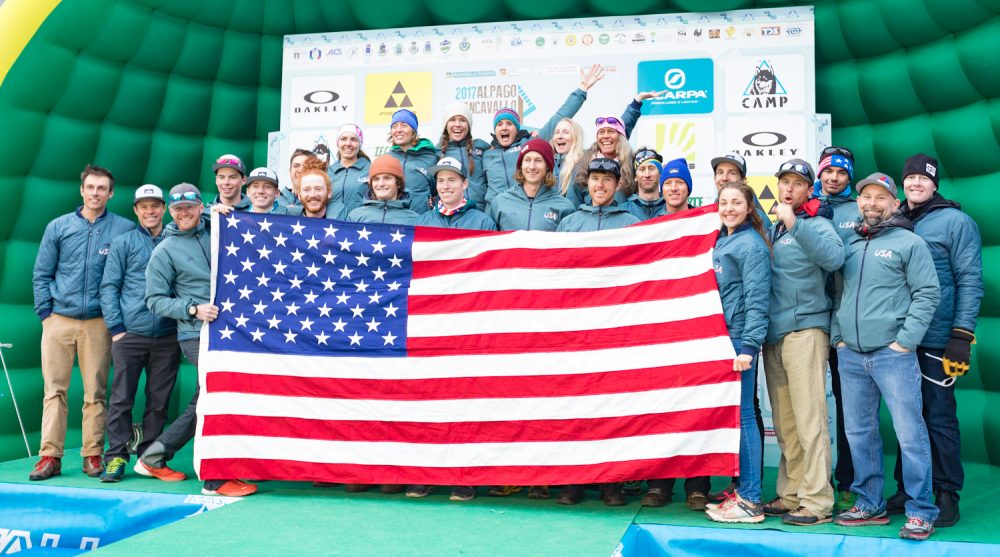
Coach Joe Howdyshell (third from left, holding flag) with the U.S. Ski Mountaineering national team in Italy. (Photo: Mike Smiley)
“I was the head coach of the Summit Nordic Ski Club for a number of years and I had all these crazy friends and a lot of the parents who would go skinning,” said Howdyshell, who also has a degree in exercise science. “I was like, ‘What the hell is that?’ … then I did it a few times and friends were like, ‘Hey, you gotta try this ski-mo race thing, so I started doing that. … Then, since there aren’t many coaches in the sport in the U.S., [becoming the national-team head coach] kind of happened naturally.”
Regardless of which athlete he’s working with, there’s one workout he has each of them do. On the Thursday of a recovery week, whether in-season or off, he has his athletes complete a 20/40 workout: 20 seconds of on-time, followed by 40 seconds off. Each athlete repeats these 20/40s for five minutes, followed by five minutes easy. The set is then repeated two more times. The workout is intended to help athletes safely return to interval training. To an extent, his workout epitomizes what he hopes SEA embodies: demonstrating a way to bring on the “bad ass” without burning out the engine.
“One of the big things that and I’m still trying to figure out how to say is that idea of what is bad ass,” he said. “Knowing when to work hard and when to just relax. Part of [SEA] is trying to teach people that you can get very, very, very fit if you take the time and you dedicate and you work hard when you need to and you don’t when you don’t need to. …. Training doesn’t have to be a monkish isolated journey that only involves hail. You should be able to have a beer after your workout. I think that too often we see a separation between the people who take it too serious and then people who don’t take it seriously at all. … For me, spreading that message that you can be fast and have fun at the same time, that’s kind of my key goal.”
The Workout: 20/40 recovery
Purpose: Remind the body what intervals feel like without overtaxing the system; on-time should not be max pace.
“Typically I’ll do a rest week every third or fourth week and that’ll be a day off, a day easy, a day off, a day easy, and then I kind of get them back into the training mode with 20/40s,” Howdyshell explained.
For XC skiers, he recommends doing the workout on rollerskis or running.
Ideal time: Thursday of a rest week (rest week usually includes two days off and two days easy in four days for his athletes). Can be done year-round.
Warmup: 15 minutes progressive
5 minutes: Go from the bottom of Level 1 to the top of Level 2
5 minutes: Done at 10-15 beats below Level 3
5 minutes: Back to Level 1
The set: 20/40s (x 3)
20 seconds on and 40 seconds off for 5 minutes
5 minutes easy
Repeat two more times
(Note: Howdyshell recommends using 2- or 3-kilometer race pace for on-time effort)
Cool down: 15-20 minutes easy
Total time: 60-65 minutes
Howdyshell’s Top-3 Suggestions:
Staying on track sometimes means holding back. The 20 seconds of on-time should not all be done at a full-out sprint. Instead, goal pace should be around 2-3 k race pace. “I’ve had athletes come back and be like, ‘That was so hard,’ and I’m like, ‘Did you hit each one of them as hard as you possibly could?’, ‘Yeah I did,’ ‘Well, that’s exactly what I told you not to do.’ ”
The workout won’t feel the way you want.“Especially if you’re coming off of an extended rest block, you’re going to feel sh*tty,” he said. “And that’s exactly what the workout is for; it’s a bridge to get you out of your body thinking that, after a few days of rest, your body is in couch-potato mode, which is good, it needs to be, but you’re not going to feel amazing right off the bat.”
Make right with your warmup. After an extended period of recovery time, jumping into intensity without a good warmup isn’t always fair to you or your body. “It’s kind of easy to get antsy after a few days of not training too much and jump into the higher intensity too fast,” he said. “Make sure you don’t shortchange the warm up.”
Liz Stephen (U.S. Ski Team) on a backcountry ski tour in Colorado in April 2016. (Photo: sophiecaldwell.blogspot.com)
Liz Stephen has made a name for herself as one of the best uphill climbers in the world on the cross-country World Cup circuit, frequently achieving her best performances of the season in the final stage of the Tour de Ski up the grueling Alpe Cermis climb on a ski slope in Italy. She placed second for the time of day up the climb again this year, her fourth time to do so.
“I want to win this thing before I retire,” Stephen told FasterSkier in January. “So we’ll see, maybe a little extra training for it specifically next year.”
FasterSkier recently learned that the 30-year-old Vermont native, who was introduced to cross-country as a young alpine skier at Burke Mountain Academy, plans to take her uphill climbing skills and indomitable fighting spirit to the next step. After next season (2017/2018) and the 2018 Winter Olympics in PyeongChang, South Korea, Stephen plans to professionally take up the sport of ski mountaineering.
Despite the fact that ski mountaineering (“skimo” for short) sprung out of cross-country skiing, the race formats and equipment slightly differ between the two sports.
“Individual” skimo races can last one to three hours and include up to 2,000 meters of total climb, multiple ascents and off-piste descents in difficult terrain, as well as steep sections where the skis have to be carried in a rucksack harness on the back. There are also fast-paced sprint races lasting just around three minutes on a ski slope, and long-distance team races with a partner as well as relays.
“I just love the concept of that sport. It looks so hard but also so much fun,” Stephen said after being glued to the online broadcasts of 2017 Ski Mountaineering World Championships in Piancavallo, Italy. “They only ski steep uphills for hours, which is just my thing, and while the downhill sections are a bit scary I can finally put my high-school background in alpine skiing from Burke to good use.”
The skis used for skimo are wider and heavier than cross-country skis and have steel edges, but the boots and skis are lighter than the ones mostly used in alpine skiing. While skiers can use any technique, there frequently are no tracks, so the typical climbing style looks similar to diagonal classic cross-country skiing. On the steep ascents racers don’t use kick wax, but synthetic “skins”, before taking them off for the downhill sections, often just stuffing them under their spandex race suits for re-use on the next ascent. They also wear helmets for protection.
Stephen, who still regularly goes alpine and backcountry skiing in the offseason for fun, said she especially looks forward to the team events and a discipline called “The Vertical”, a format usually “carried out on well packed snow with the whole race taking place with skins under the skis in a single, long ascent,” according to the International Ski Mountaineering Federation (ISMF).
A separate entity from the International Ski Federation (FIS), the ISMF has professionalized the recreational sport of skimo with regular World Cup tour and biannual World Championships. The races are becoming increasingly popular in central and western European countries bordering the Alps, such as Italy, France, Spain, Switzerland, and Germany. And the sport has also been gaining traction in North America.
One of the most prominent athletes in skimo is Spain’s Kilian Jornet Burgada, an elite skier and mountain runner who became known in the U.S. to a wider audience when he won the 2015 Mount Marathon race in Anchorage, Alaska, in a record time. A year later, Alaskan elite cross-country skier David Norris broke that record.
Skimo is not yet an Olympic sport, but the ISMF is hoping to soon make it one, with a potential demonstration to the International Olympic Committee (IOC) as soon as the 2018 PyeongChang Olympics.
At those Games, Stephen still plans to compete in cross-country, targeting individual races as well as a medal in the women’s relay.
“I feel like I won gold already with this team,” Stephen told FasterSkier in an interview during the Nordic World Championships this season in Lahti, Finland. “I think it is more about these friendships and these inspiring teammates that I am around every day. They are why I ski, and I couldn’t be happier to just be a part of the team.”
This time next year, Stephen will be making the transition to a new team and a new sport. While she said she’ll miss her friends, she said training solo won’t be a problem as she’s done that for years based out of Park City during the offseason.
In the ISMF World Cup’s overall rankings, there aren’t any senior U.S. skiers currently in the top 30. However, the U.S. team did post multiple top-15 results at this year’s World Championships, and 15-year-old Quinn Simmons of Durango, Colo., even earned a bronze medal in the cadet (youth) sprint race.
“There’s definitely going to be a learning curve for Liz, like quickly skinning the skis without any help from ski techs, or carrying them over steep sections using ropes and crampons,” U.S. senior national team coach Joe “Pale Thunder” Howdyshell said on the phone. According to his bio, he’s a self-described “jorts-wearing, whiskey-drinking, creative-swearing badass coach.”
“But she seems like a hard-working, passionate athlete, and given her enormous endurance and experience as an alpine racer, I know she’ll be a huge asset to our skimo family,” Howdyshell continued.
And at the ripe age of 31 next year, she’ll be one of the younger ones on the U.S. senior women’s team, most of which is over the age of 30.
“I am so fired up about PyeongChang and going out on the highest note possible,” Stephen said of her cross-country career. “Then onto higher mountains and hopefully, even bigger things.”
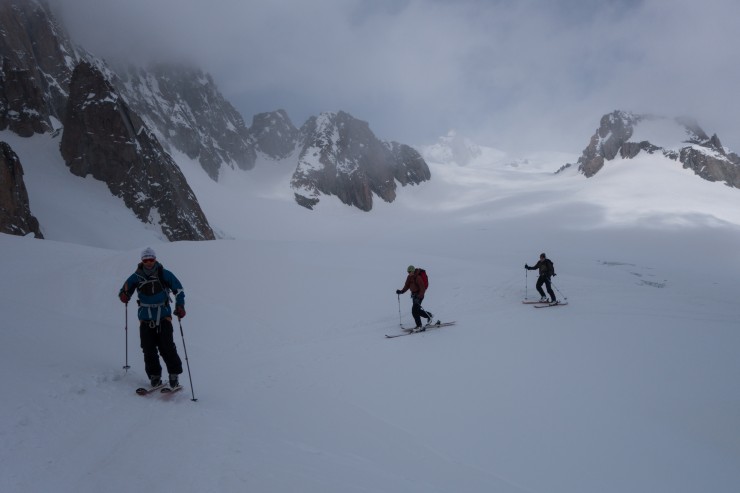
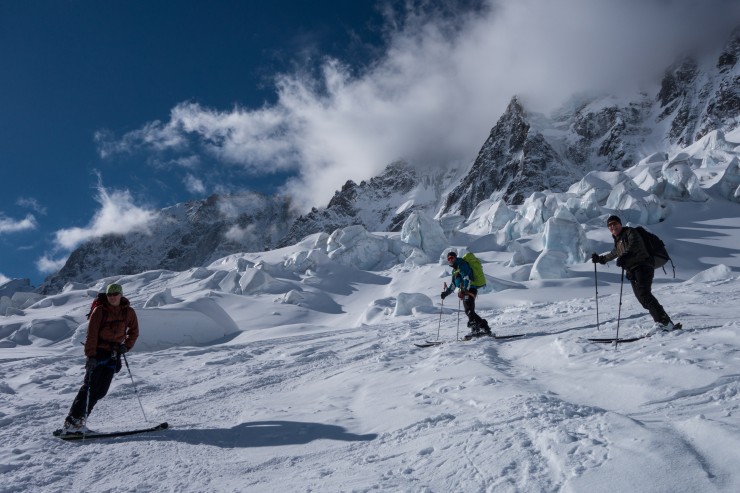
Josh Smullin lowering off the Col du Chardonnet. (Photo: Nick Pope)
“At some point late in the season, when skiing around on small groomed loops becomes a chore, rather than a passion, it’s time for an adventure where you are going out of your comfort zone,” Josh Smullin, head coach of the U20/U18/U16 teams at the Steamboat Springs Winter Sports Club, said of his decision to ski the classic Verbier Haute Route this past March. “I am pretty comfortable in pretty much anything cross-country skiing, but this was a way to go on a ‘bigger adventure.’ ”
That big adventure took Smullin from the whirlwind of coaching and klister at Junior Nationals and SuperTour Finals to a place more sublime — a place where, functionally speaking, a climbing rope, crampons and ice axe are a skier’s best friend: Chamonix, France. It’s there, in arguably the world’s alpine climbing epicenter, that Smullin set off on a planned seven-day, six-night ski tour from Chamonix to Zermatt, Switzerland. On the way, Smullin, 34, would immerse himself in a cycle of rustic fondue meals and ski belays.
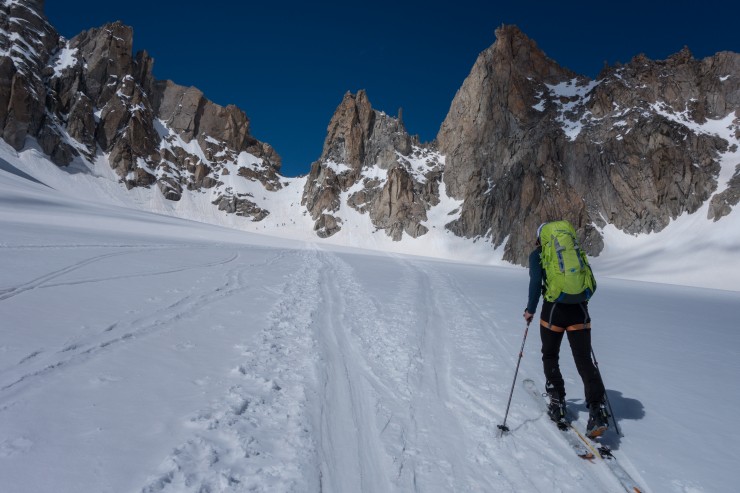
He explained the nuts and bolts of the trip require a 35-liter pack, warm and cold weather clothing, and a willingness to be in your ski boots most of the day. Mind some mild discomfort and possible blisters and this hardcore Euro-tour becomes accessible. (Smullin decided to rent boots and skis in Chamonix rather than travel with his personal setup.) The adventure entails long grinds across vast glaciers, boot packing up chutes, and if it’s your first night on the Verbier route, a night’s rest in the classic Trient Hut. Smullin said the Trient was no exception — each hut seemed like a secluded James Bond lair hanging on a precipice.
But before you think it’s a posh cruiser, to those new to exposed sidehill skinning and switching from ski crampons to boot crampons and back again, it’s a headfirst plunge into ski mountaineering.
“There is a lot of switching back and forth, transitioning between all that stuff,” Smullin said.
Beyond the stellar big alpine-wall vistas, Smullin was there to grow as a skier. “I’m scared of heights,” Smullin remarked of his willingness to tempt himself with big vertical voids. “I’ve repelled two hundred feet. I’ve bungee jumped 134 meters in New Zealand. I’m not paralyzed by height, but for me this stuff was pretty big exposure and I did something that scared me everyday. Something that took me out of my comfort zone.”
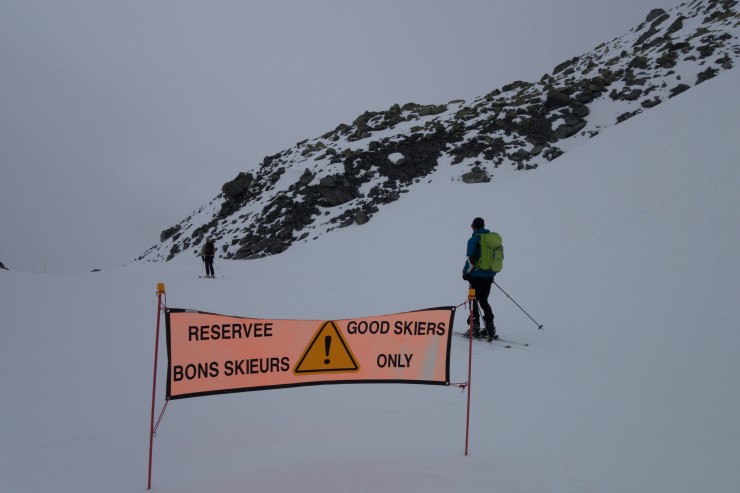
Among the objective hazards one might reasonably fear are avalanche terrain, crevasses, high-angle skiing and the likelihood of low-visibility navigation. So that’s where the guide came in — Smullin says the guide made the unsettling and exposed situations tolerable.
“I’m glad that I had a guide, Smullin reflected. “I certainly wouldn’t have been able to go all of places we did, or ski the lines I did by myself.”
Admittedly, Smullin says he’s become a bit of a snow snob back in Steamboat Springs, Colo.
“I’m a fair-weather skier and I go when its powder in Steamboat and that’s about it,” he said. “There [on the Haute Route], you have to be ready for all the conditions.”
In other words, in the likely event you’re not “slaying” powder, you take what you get in the mountains. That could be ice, breakable-crust, corn, navigating through avalanche debris, or unbelievable powder. Expect the full package of snow types — other than at the resort in Verbier, which the group skied during their tour, there’s no grooming along the route.
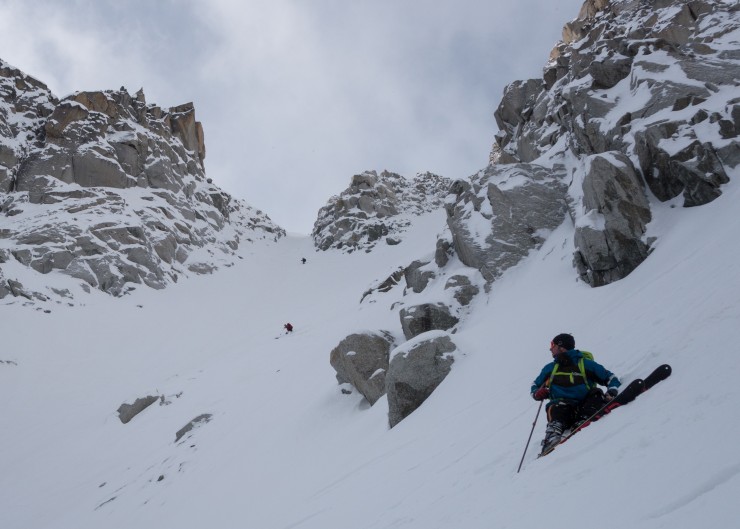
Beyond the point-to-point ski touring, Smullin craved turns. So having a guide who knew the prime ski lines amongst the maze of couloirs was critical.
“For me, the main reason I had the guide was the actual skiing we were doing in the afternoon,” he explained. Wake up time each morning was a brisk 6 a.m. or earlier, with the day’s tour to the next hut beginning an hour later. Smullin’s group, including a total of three clients and a guide, would arrive at the next hut expecting to make a quick turnaround. “We would not rest for very long. We would get in there, eat something, and then scope out whatever the sweetest line was and give it a go.”
This is where a season’s worth of cross-country ski fitness paid dividends.
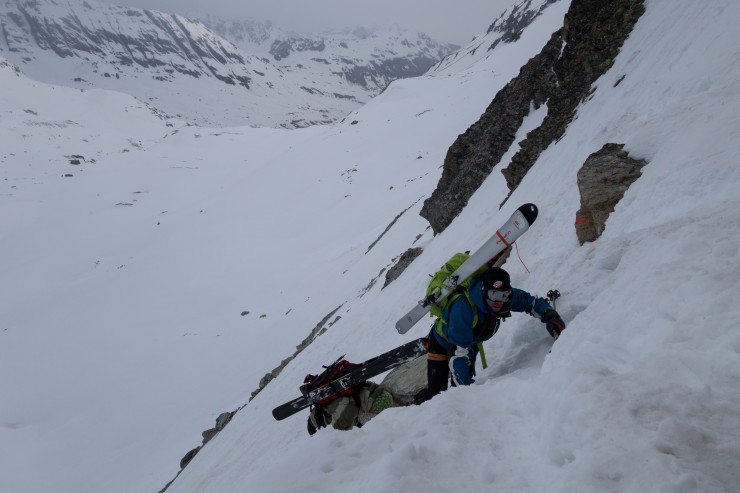
Steep skinning up to a col on the Verbier Haute Route (Photo: Josh Smullin)
“Being fit you have more options to do more things,” Smullin said. “The majority of people on these trips get to the hut, sit down and get a bottle of wine plus a fondue or a rosti, and chill the rest of the evening. We were in the minority.”
On a cloudless day, with the group scanning the craggy panorama from a hut balcony, Smullin got what he came for: a one-stop shop for fear induced butterflies and Steamboat-like powder.
“We got to the hut and the guide pointed up to the highest peak in front of us,” he recalled. “I wasn’t sure if he was being serious … but he was! We arrived at the spine of the summit and it was a steep drop off on both sides. We were traversing across to get to the tight entrance of this couloir. I was pretty nervous and it was probably the steepest longest powder run I’ve ever done. As I committed to dropping in and made the first turn, my mood shifted from terror to shear joy.”
Two thousand feet later, Smullin was all grins.
Part of maintaining that grin is knowing what you signed up for Smullin said. If you plan on taking Smullin’s lead and booking a post-race season trip next spring, here’s a few key pieces of info.
First, the huts have bunk style rooms and can be a bit noisy. Bring industrial strength ear plugs.
Second, decide if you are willing to join a group made up of strangers, as Smullin did.
“That is a consideration for people. There are some guides that won’t take people that don’t know each other,” he explained. “You have to decide if are you willing to pay more for that and have a group of people that you know their speed, their goals, and are all working together towards that? Or if you go with an unknown group, you have to be OK with going whatever speed the other people in your group are. There can be vast differences in fitness, goals and ski ability, so that is a gamble.”
“The majority of people on these trips get to the hut, sit down and get a bottle of wine plus a fondue or a rosti, and chill the rest of the evening. We were in the minority.” — Josh Smullin
Either way, the Alps’ hut system offers a way for adventurous skiers to move light and fast. The huts are staffed and serve hot meals and drinks. Ski packs along the Haute Route can remain light as the hut’s provide bedding and the next day’s lunch can be purchased along the way.
The Verbier Haute Route isn’t exactly a 20-kilometer skate loop or even a day’s long tour in the Colorado backcountry. It’s part high-mountain culture, part steep skiing, part touring and sight seeing, and a whole big part of living the skiing life.
“I guess, I have skied in some respect nearly everyday of the winter from October on,” Smullin said. “So I could have gone somewhere else, for warmer weather. But, certain times of the year are ideal for some adventures and not ideal for others. The end of the cross country race season matches up quite well with the ideal time to ski the Haute Route. In my mind, skiing the Haute Route is about being a complete skier. It’s an activity where you get the exercise, learn new skills and get the payoff for your hard work with the powder turns!”
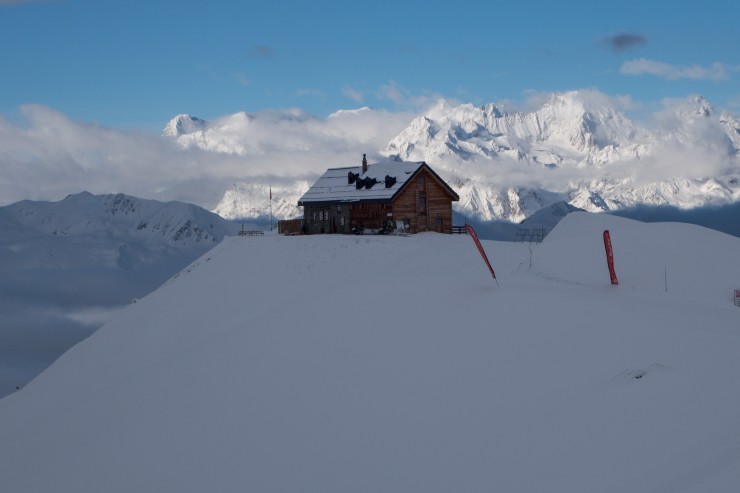
Afternoon lap #2. (Photo: Nick Pope)
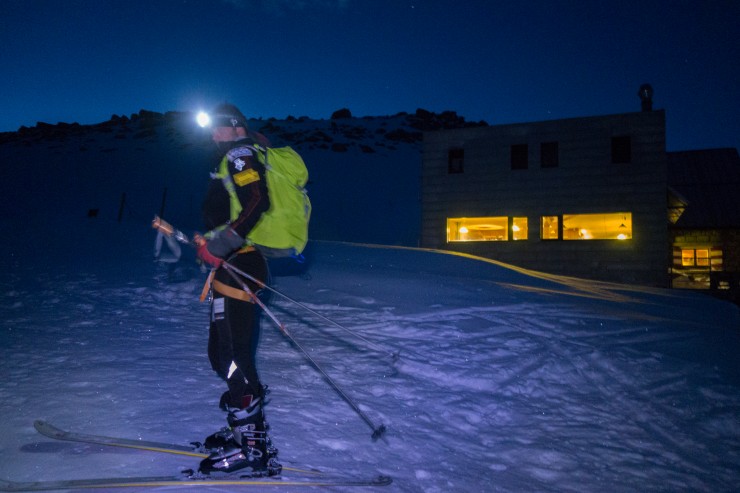
Cabane du Trient. (Photo: Nick Pope)
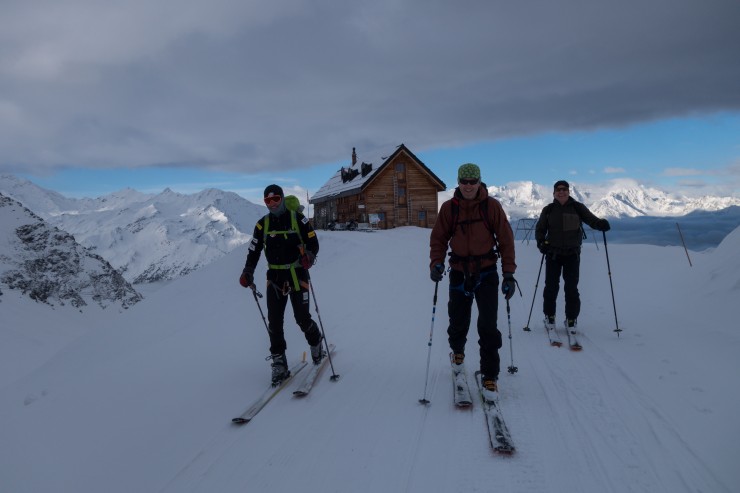
Day 4. Skinning out of Cabane du Trient. (Photo: Nick Pope)
A party approaches the Cabane du Trient. (Photo: Nick Pope)
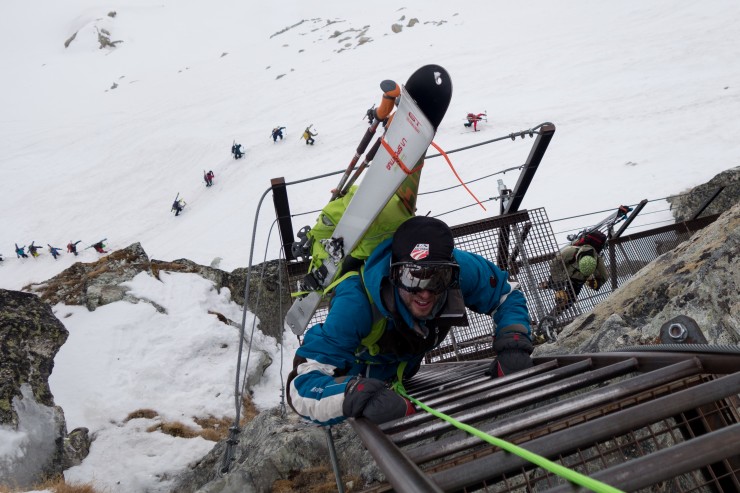
Final ladder on the Pas de Chêvre. (Photo: Nick Pope)
Skinning into the clouds. (Photo: Nick Pope)
Climbing towards the Fenêtre du Saliena. (Photo: Nick Pope)
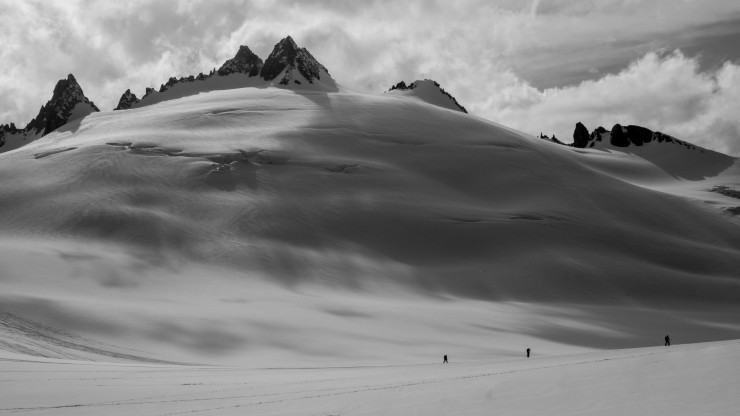
Descending the Glacier d’Arpette. (Photo: Nick Pope)
Heading for the mogul stash in Verbier. (Photo: Nick Pope)
Afternoon lap #1. (Photo: Nick Pope)
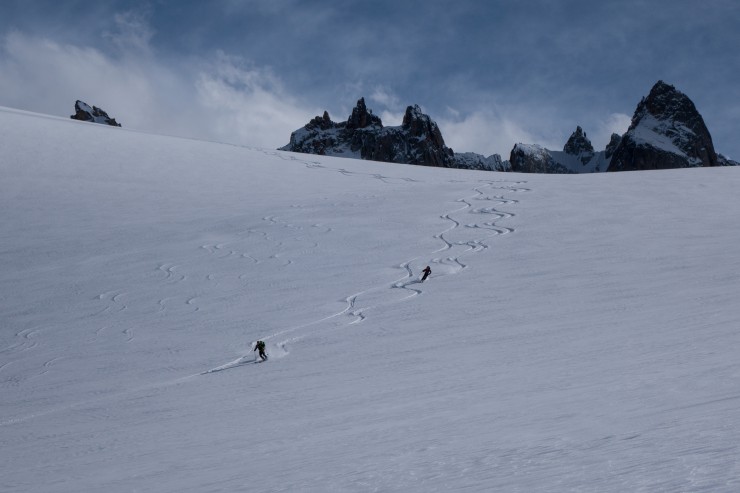
Skiing down from Grands Montets. (Photo: Nick Pope)
Day 3. 5:48 departure for dawn patrol before breakfast. (Photo: Nick Pope)
Booting up towards the Pas de Chêvre. (Photo: Nick Pope)
Evening powder run down from the Col des Plines. (Photo: Nick Pope)
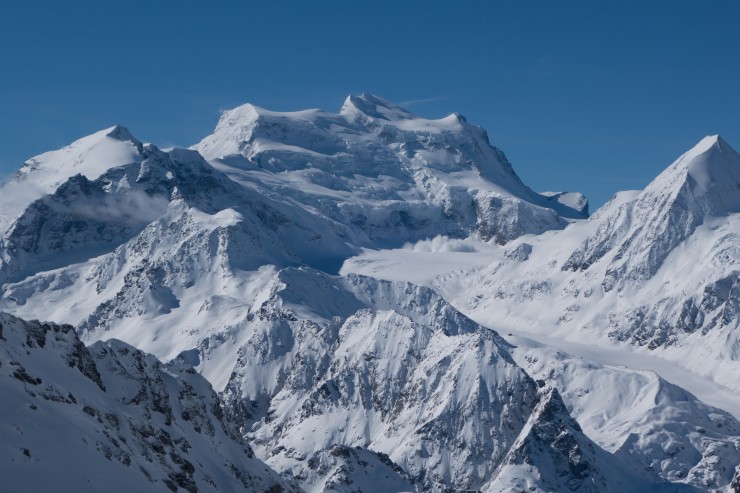
The mighty Grand Combin. (Photo: Nick Pope)
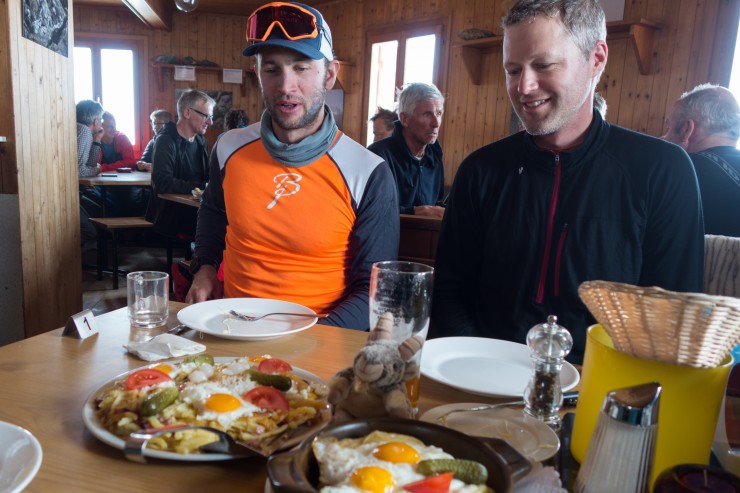
Ready to dig into rösti at Cabane des Dix. (Photo: Nick Pope)
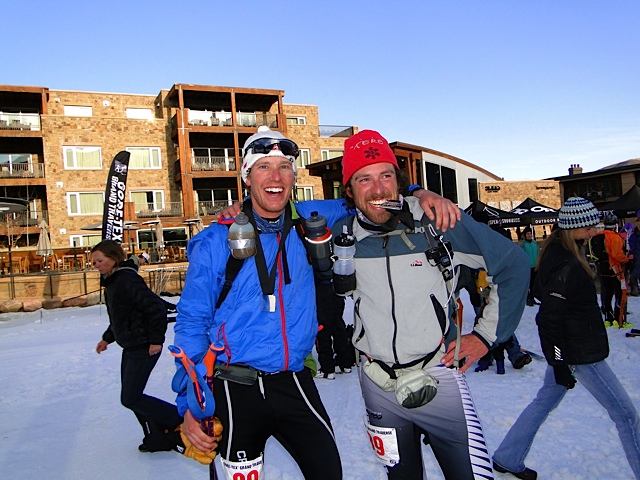
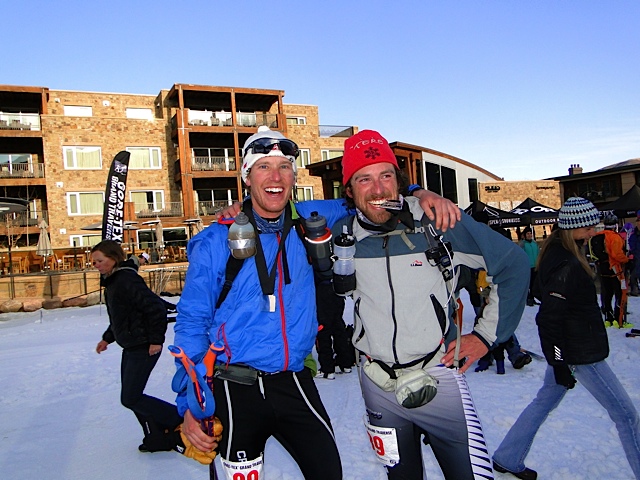
Former Dartmouth nordic teammates, Linden Mallory (l) and Ben Koons stand together at the finish of 2013 Grand Traverse on March 30 in Aspen, Colo., where they placed fifth. (Courtesy photo)
Miles into the wilderness of west-central Colorado last Saturday, two men kept things interesting, accelerating to take the lead in the 16th annual Elk Mountain Grand Traverse then fading when the climbing got too tough or conditions too rough for their skinny skis.
To some 170 other two-person teams in the co-ed field, they were simply the nordic guys. They had no team name, no celebrity status, just freestyle racing skis. Ben Koons and Linden Mallory were like that little brother you can’t drop. It doesn’t matter how many gears you have, he’ll catch you on his one-speed bike.
Annoying, maybe, but several top competitors in the 40-mile ski mountaineering race from Crested Butte to Aspen considered it impressive.
Three years ago, Koons, New Zealand’s leading 2010 Olympian and 2011 World Championships skier, did an altered version of the race because of high winds and too much new snow. At 38 miles, the Grand Reverse was only slightly shorter, but the top finishers clocked in 1 ½ to three hours faster than usual.
He estimated that half the racers wore cross-country skis back then; the other half went with ski-mountaineering gear. Oh, how times change.
The conditions did as well. What looked to be perfect snow for XC this year turned out to be challenging for everyone on breakable crust, even the backcountry skiers. Early in the race, which started at midnight, a fast and tuck-able descent abruptly switched to unforgiving knee-high snow.
Eventual winners Marshall Thomson and Tom Goth were the first to slam into it in the darkness, with Thomson breaking his pole upon contact. The two trekked through the wee hours of the morning to win in 7 hours, 40:54.8 minutes, about 4 ½ minutes ahead of the runners-up.
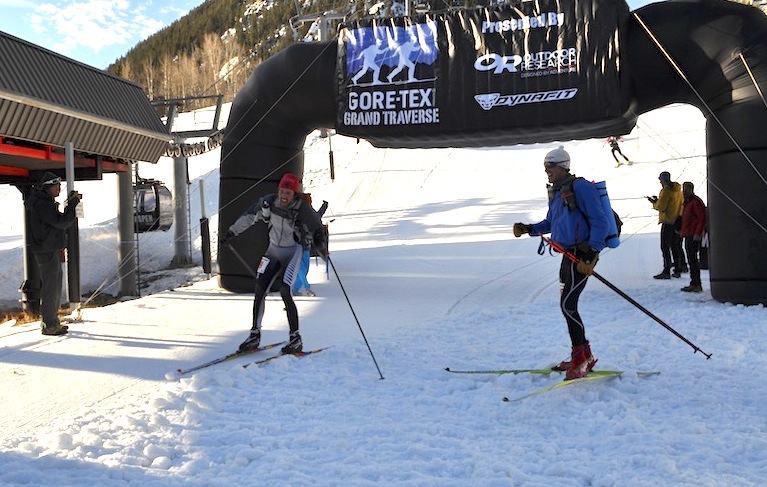
Ben Koons (l) and teammate Linden Mallory finishing the 2013 Grand Traverse from Crested Butte to Aspen, Colo., on March 30, where they placed fifth on skate skis. (Courtesy photo)
Koons, 26, and Mallory, 27, finished fifth, 26:24.4 after Thomson and Goth. It was the best result for two Aspen skiers in the race’s history and they had done it to the surprise of many.
Heading out with the leaders, the first two hours of the race turned into a single-file slugfest through the cumbersome crust. Some 340 participants moved along together at a walking pace, their headlamps bobbing in the night.
When the frontrunners hit the snowmobile track, the race opened up again. Six teams broke away, including Koons and Mallory.
“At first the nordic team was in the lead but we all figured they’d be a non factor since their gear is so incredibly hard to ski,” third-place finisher Jason Dorais wrote on his blog. “They ended up 5th – amazing. Turns out olympic nordic guys can rip some steep descents on their gear.
Former Dartmouth teammates, Koons and Mallory casually signed up for the race, deciding to take their chances on their college skis rather than spend the big bucks on new equipment. Both new to ski mountaineering, they knew how to ski fast, but were unsure how they’d stack up.
Shortly before the race, competitors were briefed in a series of meetings about the exact course. This year it ascended a total of 7,800 feet, but that was about all they knew. Little would prepare for what was ahead except acute awareness, driving grit, and a good teammate.
“All day you’re gearing up with these meetings, like eight hours ’til the start of this race, so by the start you’re pretty tired,” Koons said on the phone. “It’s a struggle to try and eat and drink enough through the race ’cause it’s dark and it’s 4 in the morning.”
“It was like a long day in the mountains; you’re just going at a higher intensity because it was a race,” Mallory said. “I think that’s where Ben and I had an advantage. Being on XC skis, being comfortable in the mountains makes a big difference.”
Graduating one year apart, Koons left Dartmouth a year after Mallory in 2008 and moved to Aspen this past December to work for anarchitecture firm while coaching juniors on the side.
Mallory (’07) continued his tenure as a longtime climbing guide for a Washington-based company, RainierMountaineering, Inc. He spends about two-thirds of the year in Aspen and guides in places like Alaska, Russia, Africa, South America and Nepal.
Back in Aspen, he and Koons started talking about the Traverse, the town’s celebrated event. Mallory usually wasn’t around when it took place; this year he was. They decided to try it, and once they caught a glimpse of gold, it was hard to race for anything else.
After a rough start (Koons had some ski and pole-basket troubles then ripped his pants upon hitting the breakable crust), the two surged to the front on the flatter snowmobile track. With skins on their skate skis, they started to gap the field.
“[We] were able to kick and glide, full-on classic skiing up there,” Mallory said. “As it got higher and steeper, that advantage became a disadvantage.”
Around the halfway point at Star Pass, Thomson and Goth took off on the descent, leaving them and the rest of the teams behind for good.
“Those guys on alpine skis were much, much faster,” Mallory explained. “Ben and I just tumbled our way down the pass.”
The two finished shortly after 8 a.m., 2.4 seconds ahead of sixth place.
“It’d be nice to win, but it’s OK,” Koons said. “We were really hoping for crust-skiing conditions. … Most conditions we’d have had an advantage.”
Thrilled by the scenery and challenge of the race itself, they resolved to come back – probably on cross-country skis again.
“I’d encourage more cross-country racers to race it, and do it on skate skis with skins,” Koons said. “You can still be really competitive even if you don’t have the setup. If you’re strong, have good endurance, good on your feet … it’s kind of crazy terrain, ice, whatever, and it’s so fun.”
“You’re not sure what to expect because it’s so unexpected,” Mallory said. “It’s helps having a partner you’re on the same page with. … We struggled in the same places and were able to move well. You get to go on a pretty epic adventure with a good buddy, and when you’re having a tough time, they’re there to touch you forward and vice versa.”
“Honestly I’d like to do more races like it,” Koons said. “Maybe not as long or involved where you’re going with 350 others into backcountry in middle of night; it’s pretty wild. It’s just fun to go out and thrash around the mountain.”
Another Dartmouth alum, Brett Palm (’09), who’s studying to earn his PhD in chemistry at the University of Colorado in Boulder, teamed up with former Colby College skier Anders Wood (’07). Under the team name the “Big Green Nordorks,” they finished 121st, seven hours and five minutes behind the winners, on telemark skis.
“It was exhausting, for sure,” Palm said. “Definitely should not have done it on tele gear. It was great though, a challenge. I guess that’s why we did it did it.”
Within the first five or six hours of the race, the two realized they picked the wrong equipment. Too heavy on the inclines and not fast enough on the descents, they dropped toward the back of the pack, focusing on good turns rather than a top finish.
Like Koons and Mallory, they had heard nordic was the way to go, but hadn’t gotten around to finding the right gear. Ultimately, more people chose backcountry race skis, which made all the difference.
“The race didn’t involve that much skiing or technique, more just an endurance sport,” Palm said. “Definitely one of the top five hardest things I’ve ever done, mentally as well as physically.”
He recalled his days on Dartmouth’s nordic team when they’d talk about three strong urges to quit long-endurance activities. Palm said the first one came too early in the Traverse – around six hours in. The two recovered over Star Pass, but started to fade again during the final six miles along Richmond Ridge.
“We got to the third strong urge for sure,” Palm said. “But we did it. Fortunately, the word ‘quit’ is not in a nordic skier’s vocabulary and everything was OK.”
US Ski Mountaineering member Nina Silitch on the podium after placing third in her age group at the CCC Ultra Trail du Mont Blanc on Aug. 31 in Chamonix, France. (Courtesy photo/ninasilitch.com)
In late May, weeks after Nina Silitch finished her last race of the season, loads of her ski-mountaineering equipment still occupied more than half the space in her bedroom.
Her husband, Michael, couldn’t understand why, after six months on the World Cup and international circuit, she wasn’t ready put it away.
At 39, Silitch was coming off a career-best season in most respects – she became the first American to earn World Cup gold in ski mountaineering after winning a sprint, finished eighth overall in the World Cup and placed fifth in the Grand Course championship series, a two-year culmination of some of the toughest mountaineering races.
In 2011, Silitch teamed up with Lyndsay Meyer and Valentine Fabre to place sixth in The Italian Trofeo Mezzalama, a high-altitude ski mountaineering competition in the region of Cervinia. The race was part of the two-year Grand Course race series. (Courtesy photo)
In 2011/2012, she racked up nearly 30 starts, many of which included three- to four-day stage treks across technical, high-altitude terrain. Other distance races took an average of six to ten hours, and then there were team events.
Silitch ended the season on a high note, placing seventh with two of her US Ski Mountaineering teammates – Sari Anderson and Lyndsay Meyer – at the Patrouille des Glaciers in Switzerland. Typically 53 kilometers long with 4,000 meters of climbing, the team race in early May was cut short around the halfway point because of dangerous winds and unstable snowpack. Silitch, Anderson and Meyer combined to finish strong, physically tying themselves together at times to avoid falling into glacier crevasses.
Once that was over, one would think Silitch would want to move on, spend time with her 6- and 8-year-old sons, and enjoy spring at their home in Chamonix, France.
Of course she wanted all that, but Silitch had one more ski-related task on her “to-do” list. The view from her home reminded her of it almost daily. No sooner had she finished racing in Switzerland that Silitch decided to ascend Mont Blanc, the highest mountain in the Alps and 11th tallest in the world (4,810.45 meters, or 15,782 feet, above sea level).
The view of Mont Blanc from Silitch’s home in Chamonix, France. (Courtesy photo)
About 500 meters short of the summit, high winds forced Silitch and her climbing companion to turn back. Two weeks later, the ski gear remained where she left it, sprawled across her bedroom.
Since moving to Chamonix in 2006, Silitch had summited the mountain twice. Both times, she packed up and skied down its North Face, but this time she wanted to do it in a day. It took most people two or three. It didn’t take long before she enlisted a guide friend to join her on another attempt.
“I wanted to do something, just to have a completion of something and put my season to end that way,” Silitch said during an online chat while visiting family in Maryland. “So that’s what I did this year, Mont Blanc from my house.”
At precisely 2:20 a.m., Silitch turned on her headlamp and left home. She had about 12 hours before she needed to pick up her boys, Birken and Anders, from school.
“Mont Blanc is big undertaking and … one that I by no means take lightly,” Silitch wrote on her blog.
It involved a tricky ascent of 3,375 meters (12,385 feet) and an equally challenging descent. There was altitude sickness to be wary of along with unknown weather elements near the top.
“The challenge of the Mont Blanc summit for me embraces much that one needs in journey of daily life whether you are a mom, dad, athlete, anyone finding their path,” Silitch wrote. “Breathe, endurance, perseverance, confidence, fortitude, grace, energy, vision, attentiveness, awareness, caution, respect, experience, tenacity, commitment, presence.”
Silitch remained focused for the duration, meeting her goal in fairly favorable conditions. After arriving at the top, she took a moment to admire the view, then locked her boot heels in place and started back down.
“I returned home safe, after a successful summit day, with some tired legs, a little nauseated stomach from altitude, but very happy to pick up my boys at school at the end of the day,” she blogged. “Now, finally the overflow of ski gear in my bedroom can be put away. Operation summer mode!”
Championing Her Sport
For Silitch, that meant fewer offseason races and more time with family. A few days after arriving in Maryland for a month-long visit with her in-laws in July, she put her 6-year-old, Anders, in front of the computer during a Skype chat.
Nina Silitch with her 8-year-old son, Birken, who helped pace her at the CCC Ultra Trail du Mont Blanc on Aug. 31 in Chamonix, France. (Courtesy photo)
“Hi,” he said politely, then took off.
“We were just out at the pool,” Silitch explained.
After she and Michael moved to France 11 years ago, had their children while living in Switzerland then returned to Chamonix, they made a point to return to the states periodically. Both American citizens living abroad on visas, they had raised their sons to speak French as well as English.
In Maryland, where they spent a few weeks before visiting Silitch’s parents in Carrabassett Valley, Maine (she’s originally from Shaftsbury, Vt.), the boys had signed up for swim team, tennis and triathlons.
“They’re very active,” Silitch said. She wasn’t much different.
During her 2012/2013 campaign, Silitch knocked off most every goal she set out for. On April 14 in Tromsø, Norway, she claimed gold at a SkiMo World Cup sprint, which combines kicking and gliding, kick turns, boot packing (carrying one’s skis) and often some skating. The race includes a qualification round and heats, and typically takes 3 ½ to 4 minutes to complete the course.
Silitch (center) on the sprint podium after becoming the first American to win a ski mountaineering World Cup on April 14 in Tromsø, Norway. With Anna Figura of Poland in second and Emilie Gex-Fabry of Switzerland in third. (Photo by Alex Lugger)
The final race of the World Cup season, it was only Silitch’s second sprint of the year (one other on the circuit was canceled, and Silitch did another at French nationals, where she finished second).
“It’s kind of been an event that I’ve fallen in love with,” she said. “It’s been a combination of my cross-country skiing background [at the Holderness School and Dartmouth College], but also just the event itself, combining all the aspects of ski mountaineering. You need to be very efficient in transitions … you can’t make a mistake. So it was really special that it came together.”
Next year, there are three sprints in the International Ski Mountaineering Federation series, which consists of more than 20 races in France, Switzerland, Italy, Spain, Poland and Norway. Silitch was excited that, for the first time, points awarded at sprints will be equal to those earned in longer races. The shorter format was adopted to broaden the sport’s appeal, and with several races in downtown venues, it’s become more accessible to spectators.
“They actually created the sprint to grow the sport more and hopefully someday it will become an Olympic sport,” Silitch said. “They’re trying to do more TV coverage next year so we’ll see.”
When she’s not gutting for a win, Silitch is the president of the volunteer-driven Chamonix Ski Alpinisme Club. She founded the ski-mountaineering group three years ago, and has since seen its membership grow from about five to 70 members.
Women’s ski mountaineering World Cup sprint semifinal on April 14 in Tromso, Norway. (Nina Silitch courtesy photo)
“That’s something I’m really trying to do, help grow the sport and bring it more to women especially,” she said, “and also to the younger kids as well, the youth. In the U.S., I think that’s where we need to target, those kids that don’t necessarily find their way in alpine skiing or cross-country or even those cross-country skiers that want to try something a little different.”
One can compete in ski mountaineering as early as 14, which is the age group Silitch would like to draw in. “That’ll be my next step after competing,” she said.
For now, she’s mostly focused on the season ahead.
“I think I’m just going to give it one more year of World Cup skiing,” Silitch said. “Hopefully from that I’ll move into other things with my experiences in the World Cup and apply that to whatever I do next.”
Her husband, an internationally certified mountain guide, is interested in moving to Norway to teach. Silitch ran a female outdoors program at Aiglon College in Villars, Switzerland, while they lived there for four years, then committed to full-time racing when she made the US team in 2008.
Finances, however, remain a stumbling point for most American competitors in the sport.
“We don’t really have any funding. It’s up to everyone to get their own sponsorships and everything,” Silitch said. “All the European teams are nationally funded. They’ve got coaches and all their events are paid for and their travel expenses. For me, [it’s] from my heart and passion. … It’s definitely a big commitment, but we feel like it’s such a great experience for me and also for my family, that it’s really worth it even if it can be a little tight at times.”
In December, she’ll turn 40, yet Silitch remains relatively new to ski mountaineering after trying it for the first time in 2005. It wasn’t until two years later at a night uphill race that she decided to pursue it more seriously.
“It’s funny that I didn’t really fall into this until after my kids were born,” she said. “So that’s been a whole new experience for me, a whole new challenge. I think because it combines so many of the different things I love, the endurance, the kick and glide cross-country skiing, but also being in the mountains and the mountaineering aspect of it. I’m also a huge downhill skiing fan, and just being able to combine those things, it just kind of creates a sport that’s really fun and challenging.”
Frame of Mind
After a long season, which started in mid-December and wrapped up in early May, Silitch took about three weeks off to regenerate with some fun and loose training. She planned to slowly build into a ski-specific dryland routine while staying away from trail racing until the end of summer.
Primarily concerned about past injuries, she worked with her coach, Adam St. Pierre, a cross-country ski coach with the Boulder Center for Sports and Medicine in Colorado. With his help, she developed the strength to compete in the one summer event she set her sights on: the CCC Ultra Trail Mont Blanc. One again, it was an objective viewed from her backyard.
Nina Silitch during the first climb up to Bertone before the cold and wind set in at the CCC Ultra Trail du Mont Blanc on Aug. 31 in Chamonix, France. (Courtesy photo)
In late August, she completed the 90-kilometer race (slightly altered from the original 100 k), finishing third in her age group and 15th among women.
“My biggest goal of the summer is now behind me,” Silitch wrote on her blog. “1800 runners withstood rain, wind, snow, sleet, mud. Temperatures plummeted on the high cols and runners ran through passes with 10-20cm of snow. … It got to points on the course where it was merely about survival and being well prepared in the conditions with not only the right gear & clothing for but the right mental attitude.”
That was where her other summer training came in. While in France this year, she’s been working with sports-performance and mental-training coaches, one of which mentored Rafael Nadal, formerly the top-ranked tennis player in the world.
“It’s helped me tremendously,” she said of learning how to motivate herself through her sport’s toughest moments, no matter how fatigued or bad she feels.
“Usually I have little mantras like, ‘Go mommy go,’ … or ‘fast and light,’ ” Silitch said. “If I ever have a negative thought come into my head I try to have two positives. Like, ‘Oh my legs feel so heavy,’ ‘No, your legs are really light,’ and ‘Think about your quickness or your cadence,’ and those things really help. I’m really interested in that and it’s a neat thing to apply to coaching, for sure.”
For Silitch, instructing could her next step, especially as she and Michael plan their next move.
“We’re not sure if we’ll eventually work our way back to the states,” she said. “We both really love teaching, so maybe we’ll explore.”