Tag: ski performance

  • Paul Choudoir — “The Right-Brain Grinder”

    Paul Choudoir — “The Right-Brain Grinder”

    This article was made possible through the generous support of our voluntary subscribers.  If you value coverage like this, please support FasterSkier with a voluntary subscription.  

    Paul Choudoir with his wife Julia Curry. (Photo: Courtesy Photo)

    A Portfolio, Not a Resume

    Paul Choudoir did not set out to work at the Olympic Games. He did not study engineering. He did not grow up in a wax room, nor did he apprentice under a legendary grinder with a machine humming in the background. He went to school for communications. Advertising, specifically. He built a portfolio. He expected a desk.

    “I was a communications major,” Choudoir said. “Yeah, in advertising.”

    In 2018, his life looked orderly in the way young professionals’ lives often do just before they don’t. He was finishing school, assembling work samples, and preparing to enter an industry with defined pathways and predictable ladders. He interviewed at an ad agency. They liked him.

    “The next day, they offered me the job,” he said.

    The day after that, something else happened.

    “And I told them that I took a job with the snowboard team,” Choudoir said. “And I couldn’t be more grateful that I turned that down.”

    That second offer was seasonal. It was physical. It came with no guarantee of permanence. It was also the beginning of a career that would, eight years later, place Choudoir at the center of the U.S. Cross-Country Ski Team’s Olympic preparation, responsible for the grinding program that shapes the skis American athletes will consider racing on when the Winter Games begin this Saturday.

    It is not a path that makes immediate sense on paper. Which, in many ways, is the point.

    Growing Up on Skis, Not Destined for Them

    Choudoir grew up in central Wisconsin, five minutes from his local ski trails. Skiing was present from the start, not as destiny but as texture—something you did because it was there.

    “I’ve been skiing all my life,” he said. “As soon as you could walk, you played on skis.”

    He raced. He trained. He went to college and skied there too, though he is careful not to mythologize that part of the story.

    “Not exactly an illustrious college career,” he said. “But I wouldn’t be where I am today if I hadn’t done that.”

    The tone matters. Choudoir does not frame himself as a near-miss Olympian or an athlete who found a second life in service. He is precise about what his racing was and wasn’t. Skiing gave him familiarity with snow, equipment, and race culture. It did not hand him a blueprint.

    What it did give him—though he didn’t know it at the time—was an eye.

    US Snowboard Cross Team started using cross-country skis and techs to help determine what to do to their snowboards for races. Choudoir was one of those techs at the last Olympics. (Photo: Courtesy Photo)

    Learning to See the Ski

    “I fell in love with the service side of the sport,” Choudoir said.

    That love did not arrive fully formed. It developed slowly, through observation, repetition, and mentorship. One name comes up again and again when Choudoir talks about learning to grind: David Chamberlain.

    “David taught me to grind,” he said. “I’ve been grinding since… about ten years now.”

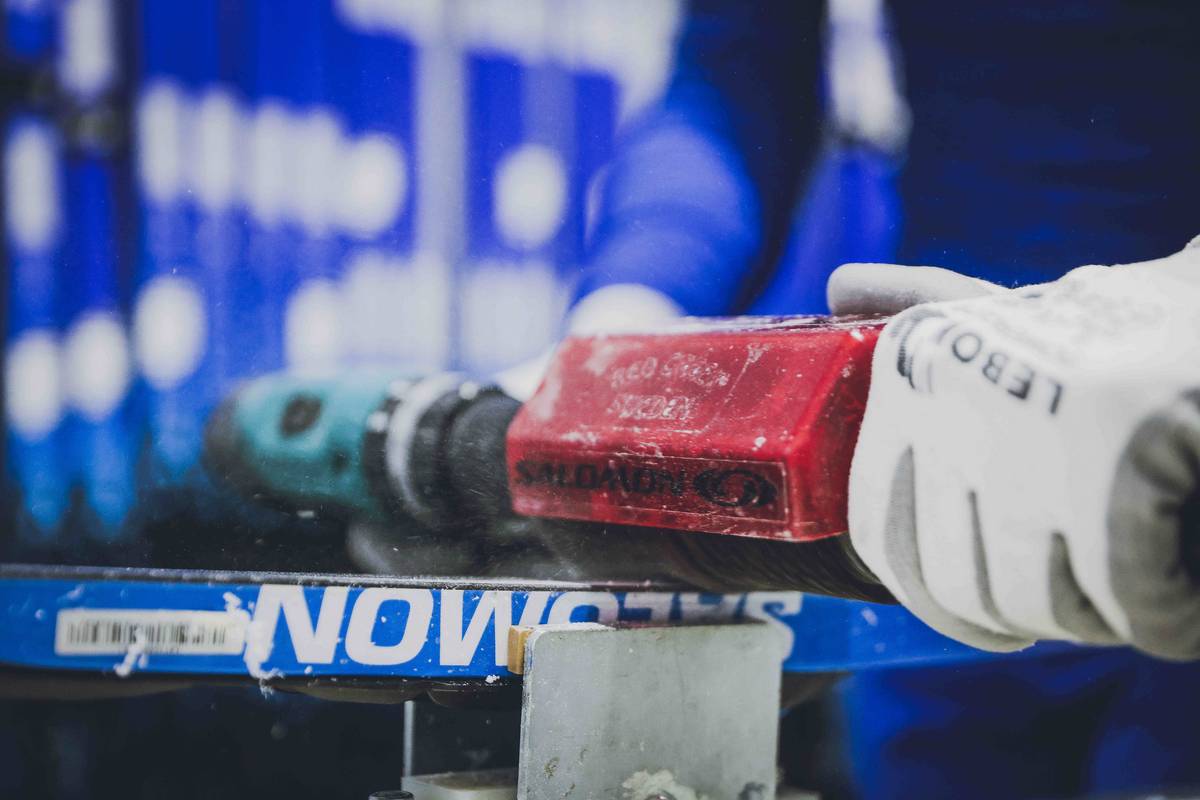
    Grinding, at its simplest, is the process of cutting microscopic patterns into the base of a ski using a stone grinder. Those patterns—called structure—help manage how water behaves between the ski and the snow. Too much suction and the ski sticks. Too little contact and it chatters. In dry snow, structure can be minimal. In wet snow, it can be decisive.

    But Choudoir resists explaining grinding as a purely technical exercise. What matters, he suggests, is not just the machine but how you look at the ski coming off it.

    “When running a grinding machine,” he said, “I think you need both. You need right-brain and left-brain people.”

    There are databases. There are measurements. There are RA values, stone parameters, and logs that stretch back years. And then there is feel.

    “You need the people who have the database of what we waxed with here three years ago,” he said. “And you need the gut-instinct people.”

    Choudoir’s background in visual communication—learning how images convey meaning, how patterns read, how subtle differences change perception—became an asset. Grinding is, in many ways, about pattern recognition. Noticing when something looks right. Or wrong.

    The First Call to Europe

    The moment when Choudoir’s interest hardened into commitment came not in a classroom or a wax room, but through a phone call.

    “Someone had to bail from the OPA Cup trip,” he said. “And [Bryan] Fish was asking around.”

    Chamberlain’s name came up. So did Choudoir’s.

    “David immediately asked me,” he said.

    The trip was three weeks long. It was his first sustained exposure to European racing, to the rhythm of international service work, to the stakes that live just behind the results sheet.

    “I went on that trip for three weeks,” Choudoir said. “And that kind of solidified what I wanted to do.”

    Service at that level is relentless. Skis arrive. Conditions change. Decisions must be made quickly and defended quietly. There is no time to romanticize the work. But for Choudoir, it clarified something fundamental: this was where his skills mattered.

    Constructing the Arrow While Shooting It

    “This grinding development project is kind of my baby,” Choudoir said.

    He is referring to the U.S. team’s effort to build a modern, resilient grinding program—one capable of producing skis that perform across a wide range of snow conditions, with limited resources and little margin for error.

    “We’re kind of constructing the arrow while we’re shooting it,” he said.

    The phrase captures both the ambition and the constraint. Unlike larger federations, the U.S. does not have the luxury of endless testing or redundancy. Time, money, and personnel are finite. That reality shapes every decision.

    The goal is not perfection. It is coverage.

    There have been moments of early confirmation along the way. Certain grinds have worked immediately, validating months of off-season testing and reinforcing the idea that the overall approach is sound. But Choudoir is quick to note that genuine development rarely happens when the calendar is full. Race weekends compress decision-making into survival mode: skis need to be ready, not experimental. Time disappears, weather intrudes, and the consequences of being wrong grow heavier. Building new structure in those moments is less about innovation than restraint—knowing when to trust what already exists, and when to leave the next step for another week.

    “You’re trying to limit catastrophe,” Choudoir said. “You’re trying to make sure you’re never hand-structuring a ski and making it slower.”

    The program relies on building a menu of grinds—each tested, logged, and understood well enough that when race day arrives, choices can be made with confidence rather than desperation. It is a philosophy rooted in risk management as much as speed.

    Choudoir with US Snowboard athletes and techs at the last Olympics in Beijing, China. (Photo: Courtesy Photo)

    The Detour That Mattered: Snowboard Cross

    Before Choudoir arrived in cross-country, he spent six seasons with the U.S. Snowboard Cross Team.

    “Not exactly the trajectory I thought,” he said. “But I was with them for six seasons.”

    Snowboard Cross is chaotic by design. Courses change. Weather shifts. Equipment choices are compressed into narrow windows. The service environment is intense.

    “I went to Beijing with that crew,” Choudoir said. “Had a blast.”

    He is not being flippant. Beijing mattered. It was his first Olympics, his first exposure to that particular compression of pressure and permanence. Mistakes echo. Success is fleeting. Everything is amplified.

    “Very different environment,” he said, “but still kind of doing the same thing.”

    What transferred was not discipline-specific knowledge but temperament. The ability to make decisions under stress. To stay calm when the margins disappear.

    Pressure Without a Bib

    “I still wake up on race day with that nervous stomach,” Choudoir said.

    It is an admission that disrupts the usual hierarchy of anxiety. Athletes are expected to feel it. Techs are supposed to be invisible. But Choudoir does not pretend otherwise.

    “We’re being demanded to perform,” he said.

    Service technicians do not get a lane. They do not get a split time. Their work is judged indirectly, through glide, through kick, through moments when an athlete looks down mid-race and knows something is wrong—or right.

    “If we’re the first ones to freak out,” Choudoir said, “that trickles down.”

    Pressure in the wax room is quiet. It hums rather than roars. It lives in choices made hours before a start, when weather models disagree, and snow crystals are in flux.

    No Assholes in the Wax Room

    “Nobody wants to work with an asshole,” Choudoir said.

    It is a blunt statement, and an accurate one. Service teams operate on trust. Ego corrodes that trust quickly.

    “We have to be calm,” he said. “If we’re calm, the athletes are calm.”

    Calm does not mean passive. It means deliberate. It means creating an environment where athletes feel supported rather than scrutinized. Music plays. Routines settle. Decisions are explained clearly and without drama.

    Choudoir describes a culture where competence is expected, and humility is enforced—not through policy, but through proximity.

    Collaboration, Not Espionage

    There is a persistent myth that ski service at the highest level is governed entirely by secrecy. Locked rooms. Guarded notebooks. Stolen glances.

    The reality, Choudoir suggests, is more complicated.

    “People help each other more than fans realize,” he said.

    There are boundaries, of course. Proprietary information remains protected. But when a machine breaks, when conditions confound everyone equally, assistance flows.

    “Nobody wants to see anyone fail because of equipment,” he said.

    It is a quiet fraternity, built on shared exposure to the same uncontrollable variables.

    Saturday

    “At some point, the decisions are made,” Choudoir said. “After that, it’s just execution.”

    As the Olympic races begin this coming Saturday, the grinding lists are locked. The skis are prepared. The patterns have been chosen based on months of testing and years of accumulated knowledge.

    What remains is the weather. And trust.

    Choudoir will be there, awake early, stomach tight, listening to the machines and watching the snow. His name will not appear on the results sheet. But his work will.

    And that, for him, will be enough.


    Help Support Our Olympic Coverage!

    FasterSkier will have our own Nat Herz on the ground at the Olympics, which, to be honest, is a very big financial lift for us. If you value the thoughtful work and access FasterSkier provides at championships like this one, please consider becoming a Voluntary Subscriber. Your support directly fuels the work we do to cover the people, places, and moments that make our sport special.

    Join the FasterSkier community!


  • What makes a fast ski? A discussion on league-wide wax protocols and ski performance theory with Andy Gerlach, Zach Caldwell, and Knut Nystad (Part 2)

    What makes a fast ski? A discussion on league-wide wax protocols and ski performance theory with Andy Gerlach, Zach Caldwell, and Knut Nystad (Part 2)

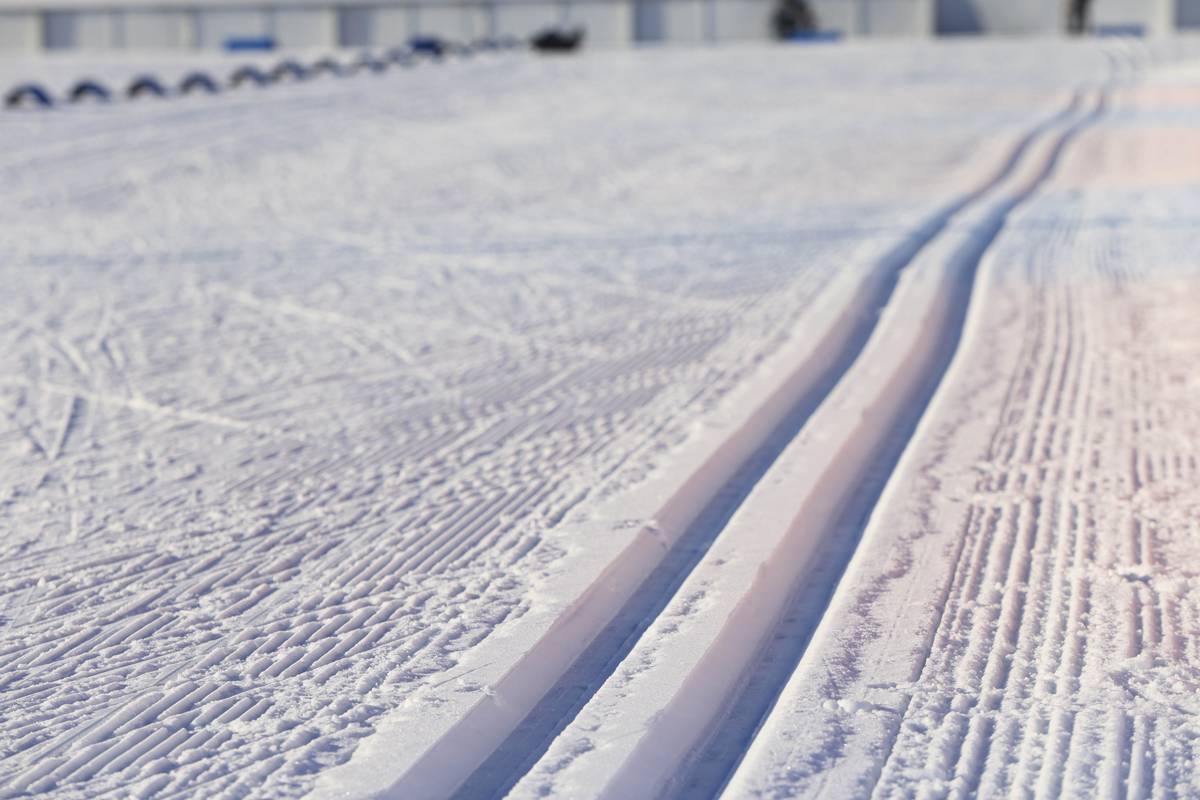
    Cold, firm tracks and perfect corduroy: the stuff of cross country skiers’ dreams. (Photo: NordicFocus)

    Click here to read part 1 of this story.

    In most states, youth skiing is divided between club and high school programming, where club programs support skiers looking to race competitively on a regional, national, or international level, perhaps with goals of NCAA skiing and beyond. High school ski programming is typically more participation focused, and comes with a much lower price tag for families, consequently with a much smaller program budget. It’s less about year-round training, and more about learning to ski, enjoying a low-cost introduction to the sport, and providing a healthy activity to get kids outside in the winter. In some places, athletes may fall into an overlapping Venn diagram of  categories, while in others, it may be a choice of club versus high school racing.

    Within high school programs, it is much less common to have multiple pairs of skis, and conversations on grinds and structures are less likely to be overheard between coaches. Here in Colorado, it’s one of the only (maybe the only?) high school sport that does not have a uniform rule – kids can essentially race in whatever they want; no lycra required.

    In this setting, a universal wax call might be a more reasonable proposition, according to Nystad. 

    “Arguments can be made on both sides. If everyone just agrees: ‘We have one pair of skis and we wax with blue.’ Okay, it probably will be as fair as you can probably make it, but just be aware that still there will be huge individual differences on the quality of the skis and how they differ from different conditions… there will still be variations, it’s not like everyone will start on the starting line having identical skis. That’s not realistic.”  

    Slovenian sprinter Eva Urevc tests skis with her wax technician at the 2022 Olympics in Zhangjiakou, CHN. (Photo: NordicFocus)

    With all of this in mind, is there a way to create equity via equipment or waxing at any level of the sport? 

    “No,” said Caldwell frankly. “No, there isn’t.” Adding perspective from his business, Caldwell explained that the cost of equipment has been steady over time with respect to inflation. That said, among competitive programs, the demand for skis has increased with time, in particular, following the removal of a now-banned leveler that we haven’t yet mentioned: fluorocarbons.

    “It’s a technical sport,” Caldwell said. “And the fact is that people have become more aware of the opportunity to get ahead with material. And I think what we’re seeing is a reaction to the reality of what the sport is. It’s not running. It’s just not. And yet people are doing the same thing in running with these carbon-plated shoes. Now you can only win if you have a high-tech shoe that goes 4% faster. Does that mean that those shoes shouldn’t have been invented? Or should they be banned? Possibly. I mean, whatever, we have to talk about this. 

    “They banned fluorocarbons for a lot of very good reasons, or they’re in the process of it. When it’s health and safety that is the problem, then you have to take the necessary steps. And yet, we also have to acknowledge that removing fluorocarbons really takes a big, big leveling factor out of the equation. There’s no opportunity to take a universal cold grind ski and put it in a wet race. That kid’s screwed. Every single time we remove the opportunity to optimize the solution that’s at hand, you’re penalizing the kids who don’t have the perfect setup.”

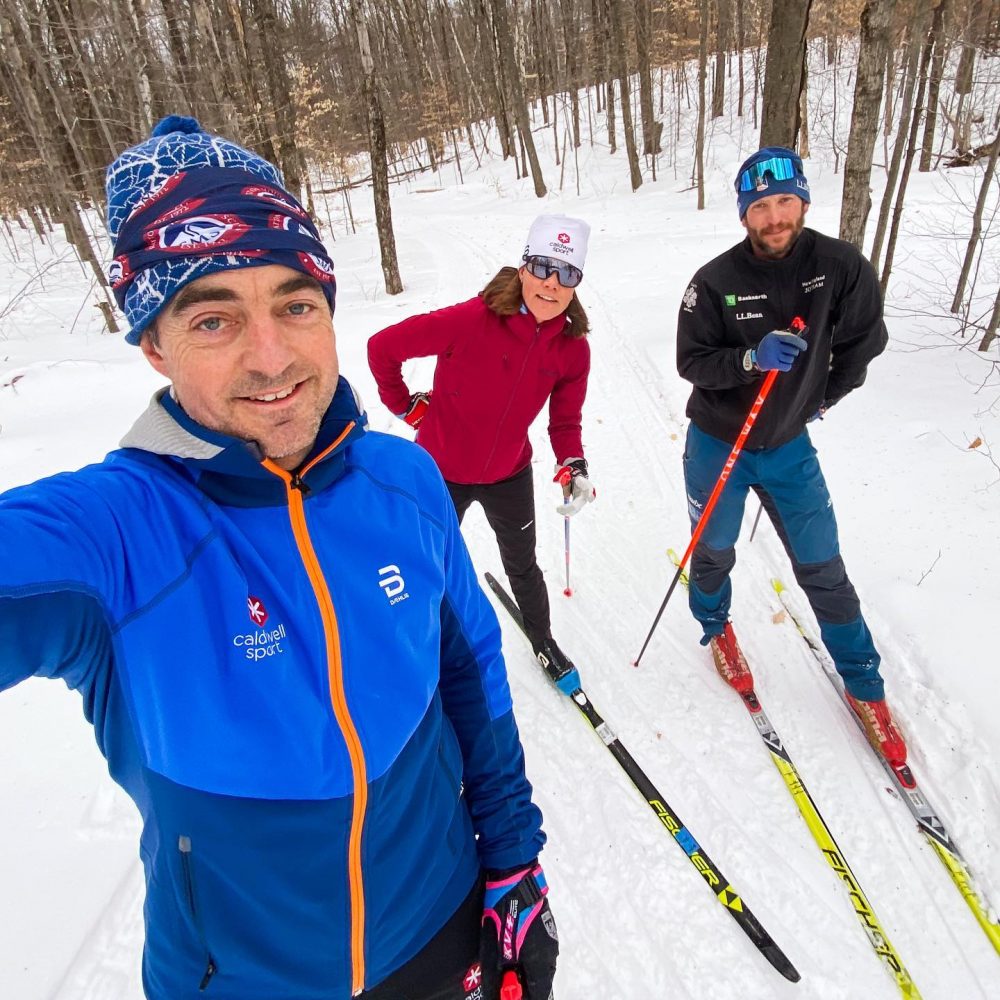
    Zach Caldwell (left) out for a ski with his wife and business partner Amy and Craftsbury Green Racing Project wax tech Nick Brown. (Photo: Facebook Caldwell Sport)

    Making it clear that his opinion is not clouded by the inability of a Colorado, Wisconsin, or Washington-based club skier to use a non-Swix wax purchased through Caldwell Sport, he added, “From a business perspective, with regard to my overall outlook, I probably should be applauding this model because it creates a massive incentive for kids to carry a lot more skis. And we’ve already seen this with the removal of fluoros from competition – you wouldn’t believe the uptick that we’ve seen in demand for warm weather skis, and grinds, and bases.”

    In Caldwell’s opinion, the opportunity for athletes and coaches to optimize a ski through testing and the use of a product line they know well, regardless of brand, is a more viable option for “leveling the playing field” as it could bring any ski closer to what he called it’s “terminal velocity.” A wax protocol that puts every athlete on the same brand and hardness of wax, creates “a situation where that opportunity doesn’t exist and the only way to gain competition advantage is to buy another pair of $800 skis. So it very quickly becomes a sport that, really, is hard to succeed at without a lot of personal resources.” 

    While the focus of these points might suggest that competitive youth skiing will trend toward an arms race, Nystad’s points included a reminder that a skier with limited access to equipment and race-day wax expertise may not be doomed. Other aspects of athlete development remain as important as ever in a skier’s trajectory and long term prospects. 

    “Quite honestly, I don’t want kids to have ten pairs of skis,” Nystad said. “I have kids that ski, but I try to limit the amount of skis and I try to buy used skis and rather look at what properties do the skis have, so that they have okay skis for for each condition. And then we focus on other things that are far, far more important. And that is the mentality to learn to train, to have fun while you’re training, and then to work on technique and tactics. So it’s also a cultural thing.

    “If you only focus on buying yourself time by buying equipment and buying wax and tweaking things and using resources — yes, you are probably going to gain some time, but you have to also say, ‘Are you investing as much time training and enhancing your technique and your tactic as the others are?’ So it’s definitely possible, even if you come from less resources, you can beat the guys with the most resources if you just train well and smart and develop good technique and good tactics.”

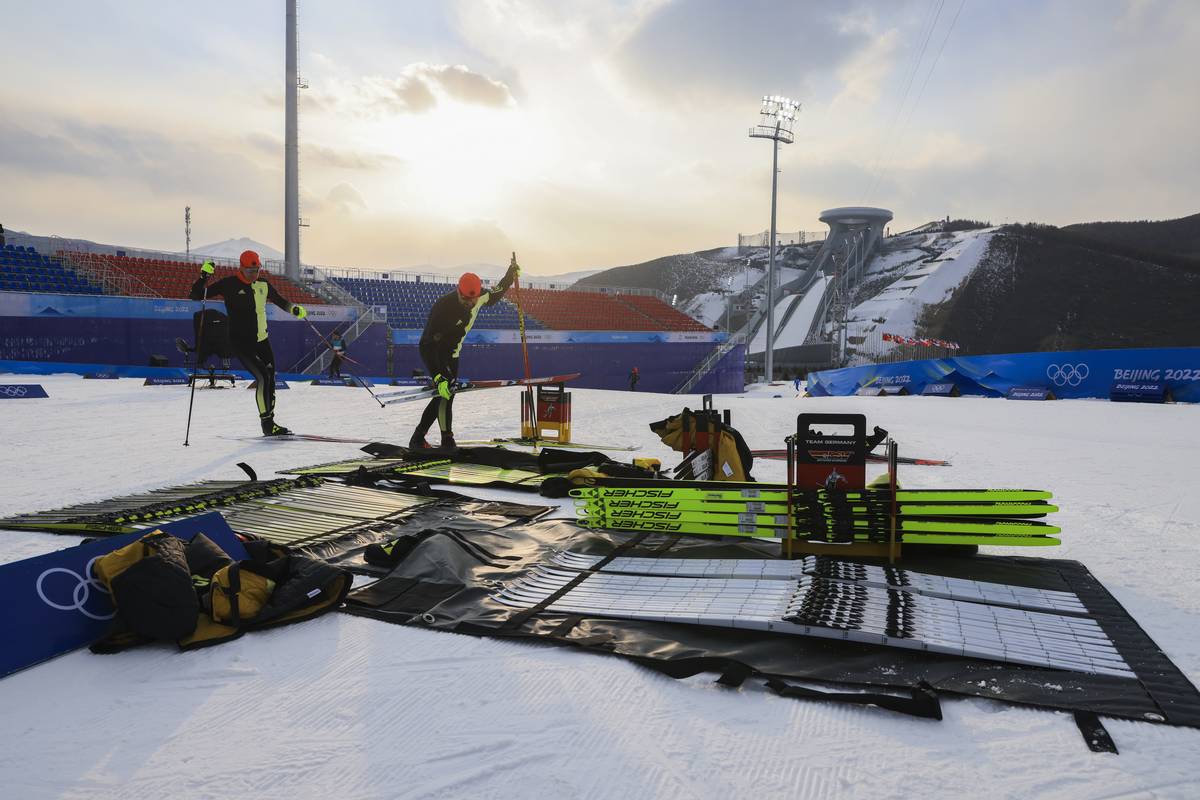
    The German biathlon team tests skis during the 2022 Olympic Winter Games in Zhangjiakou, CHN. (Photo: NordicFocus)

    As a serviceman working at the highest level of sport, Nystad also offered a thought-prompt on the impact to athlete knowledge and the ability to develop a new generation of wax technicians under a protocol, regardless of brand. 

    “If you want to educate athletes to also be able to become great service people at World Cup level races – if you take away that experience in club skiing or in high school skiing or in collegiate skiing, you will have no resources that are going to be able to serve your American athletes going to World Cups or World Championships or Olympics. Where are they going to get the knowledge? Because it’s like anything else, if you want to become good at something, you have to work at it.”

    According to Caldwell, incorporating a wax protocol is “reductionist attempt to level the playing field” that creates more disparity than equity. And so, the goal of leveling the playing field in cross country skiing remains “laudable”, but out of reach, and perhaps unattainable. 

    “I understand the discussion, but I think you have to cater to common sense,” Nystad concluded. “You can always tell people that we decide to [have] one pair skate, one pair classical. I think you can also try to have the waxes [matched]. But still be aware, it’s never going to be fair.” 

    Stay tuned next week for follow-up series which highlights some of the leagues who have enacted a waxing protocol, namely, the Wisconsin Nordic Ski League (high school & club), and coaches from Rocky Mountain, Intermountain, and the Pacific Northwest. This discussion includes the evolution and reasoning behind the protocols, and what advantages/disadvantages have been identified by each league.

  • What makes a fast ski? A discussion on league-wide wax protocols and ski performance theory with Andy Gerlach, Zach Caldwell, and Knut Nystad (Part 1)

    What makes a fast ski? A discussion on league-wide wax protocols and ski performance theory with Andy Gerlach, Zach Caldwell, and Knut Nystad (Part 1)

    FasterSkier shares insights into ski performance theory from Any Gerlach, Zach Caldwell, and Knut Nystad. (Photo: NordicFocus)

    In November 2021, the Wisconsin Nordic Ski League (WNSL), which oversees both high school and club level youth programming state-wide, accepted a sponsorship proposal from Swix and Salomon, which would provide the league with $10,000 in funding per year for three years. The proposal also included stipulation that a standardized wax protocol using Swix waxes would be adopted by the league at all affiliated races, including the state championship. 

    In practice, this would look like an email going out to all coaches a day or two prior to the event indicating which of a subset of Swix glide waxing products should be used by athletes that weekend. Equivalent temperature range and performance level waxes from other companies would be disallowed. In the sponsorship presentation given to the league by Swix, the proposal promoted the simplicity and affordability of a unified wax call, and a shift in focus for coaches away from time-consuming wax testing to race day support of their athletes. 

    The concept is not new, and WNSL is not the first league to adopt such a protocol. An equivalent protocol has been used by the high school, club, and collegiate level ski programs in the Rocky Mountain region (RMN and RMISA) for the last six years, and has more recently been adopted by the Pacific Northwest and Intermountain Division junior club programs. On the whole, these policies have been seen as beneficial by these regions. 

    While an additional $30,000 of funding has the potential to profoundly impact the reach of the WNSL, which will be discussed in a subsequent story, the adoption of the corresponding wax protocol also raised red flags, particularly among members of the Independent Nordic Distributors of America (INDA). The INDA includes distributors of wax products from other smaller companies like Start, Vauhti, Star, and more, and are primarily based in the Midwest. 

    The two primary issues that were flagged were the restriction of trade should Swix monopolize the buyer market encompassed by the WNSL, and also whether limiting the available choices to a single option actually creates the equity and uniformity that one might anticipate from putting all skiers on the same wax. Instead, could it widen the opportunity gap between those who could afford high-end skis with condition specific grinds and those who could not?

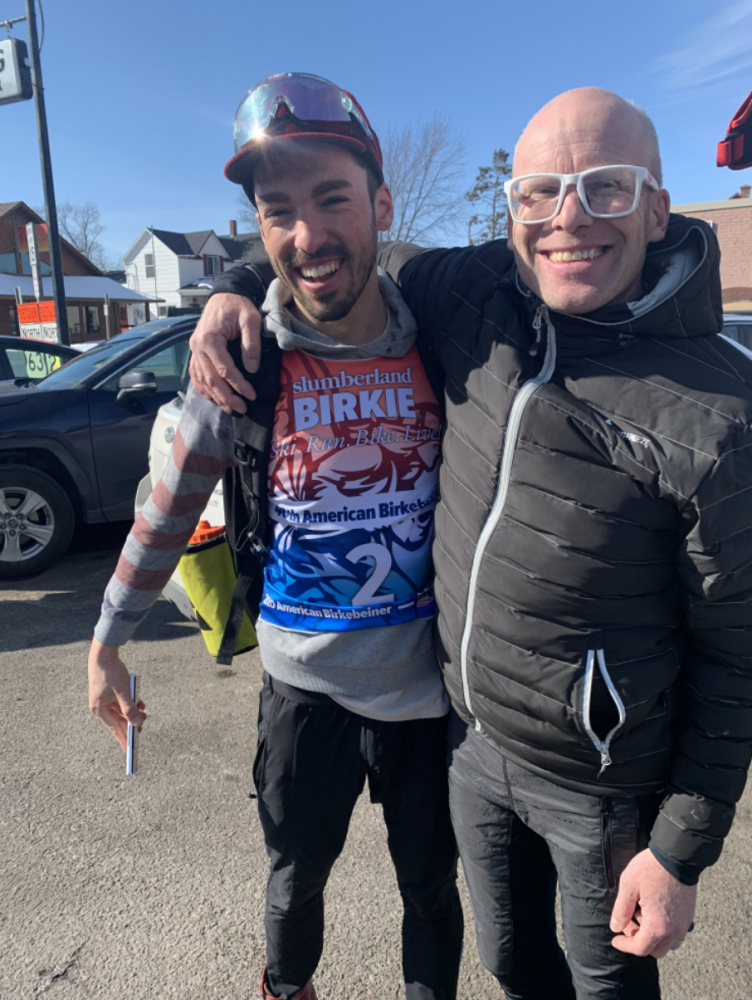
    Enjoy Winter’s Andy Gerlach snaps a picture with 2020 Birkie Champion Ian Torchia (SMS T2). (Photo: EnjoyWinter.com)

    In the fall, these issues were brought to FasterSkier by Andy Gerlach, director of Madison, WI based EnjoyWinter, which distributes Start, among other cross country related brands like Blitz Eyewear and Swenor rollerskis. With vested interests in the implications to his own business, but also as someone who offers brand-neutral education on wax theory for coaches, Gerlach actively opposed the decision by WNSL to accept the offer from Swix. 

    “The biggest argument against these exclusive sales agreements and proof that they are bad for the sport, and in fact illegal, is that they decrease the incentive for any other brand to fight for any part of a team’s or consumer’s business,” Gerlach said in the fall. “Why should my business continue to do wax clinics for Madnorski (Madison Nordic Ski Club) members if we know we are no longer getting a large chunk of their business. Why should any brand even visit Colorado clubs if we know we do not have a chance at a large chunk of the business there? Legal marketing arrangements should increase competition in the market, not decrease it. Change the agreements to marketing rights and not sales rights and every other brand would increase their efforts to reach the individual teams.”

    After discussions among the cross-country sport committee during the recent U.S. Ski & Snowboard annual spring congress meetings, Gerlach summarized his objections to wax protocols to the following four points.

    1. “They perpetuate a misconception that waxing is so difficult and mysterious. Our clinics state just the opposite.
    2. “They perpetuate a misconception that extensive testing is effective and needed to select a glide wax that an athlete can race up to their abilities with. Our clinics state just the opposite.
    3. “They increase the likely hood that those skiers with a quiver of skis will have the fastest skis. Multivariable mathematical analysis, as well as ski industry testing and ski sales figures shows this.
    4. “They endorse one brand ‘because it is the most available’ and in so doing extends this advantage.”


    There is plenty more involved in the debate on the legality and consequences on the business end of the decision whether to accept the sponsorship offer from Swix, which will be revisited in subsequent parts of this story. This installment, however, will focus on the underlying principles of ski performance theory, with input from experts, like Gerlach, on what factors ultimately determine ski speed, and whether restricting the waxes available for a given race would level the playing field by reducing variables, or adversely affect the pre-existing disparity between ski performance, thus limiting the potential of the skier clipped into the binding.

    Brimming with insights into ski performance, this thought-provoking conversation should provide fodder for discussion within race-leagues at all levels as they consider waxing protocols and avenues to improve equity within the sport. 

    ***

    We’ll start with what Gerlach identified as the factors that affect the performance of a ski from most to least significant, and where in this process limiting a coach/athlete to a single wax from a single brand becomes significant. 

    “In my hierarchy of ski speed deciding factors, it’s a flexible ski, the freshness of the base is the next important, the structure, then the hardness of the wax, and then the brand,” Gerlach explained in a call. “Now we’re going to take away the hardness of the wax as a differentiator between them. And now, all we have as the only differentiator is the ski model, the freshness of the base, and the structure.” 

    The understanding of this theoretical model underscores the remainder of the question. When we hear “wax tech”, the name seems to imply the key player being adjusted and assessed is the wax. Gerlach explained that this reasoning is misguided.

    “I, and scientific studies, will show you that 95% of this theoretical wax testing is not determining the fastest wax to apply that day. If it was, at US Nationals, or at any of these races, the line Saturday morning two hours before the race start would all be at one wax trailer. But you know, every coach comes up with their own thing… There is a different theoretical ideal wax for a Rossignol with an aggressive grind to the same Rossignol with a fine grind, and you would theoretically wax it differently. If you are testing on your Madshus cold skis and all your kids are on dried burnt out skis, or are on Fisher or on Salmon, theoretically, there’s a different wax [for each ski].”

    It’s a counterintuitive concept to those, like myself, who prefer to focus on the technique and training aspects of the sport, versus the technical side. Why doesn’t putting everyone on Swix PS8 on a day forecasted to be in the right temperature range remove a factor that might create disparity between ski performance, thereby improving equity? Particularly in a larger state, like Colorado, where teams are driving long distances (through vastly different elevation zones) to race without knowing exactly what conditions will be like until arrival, I could see the appeal for coaches of removing a step in the planning process. 

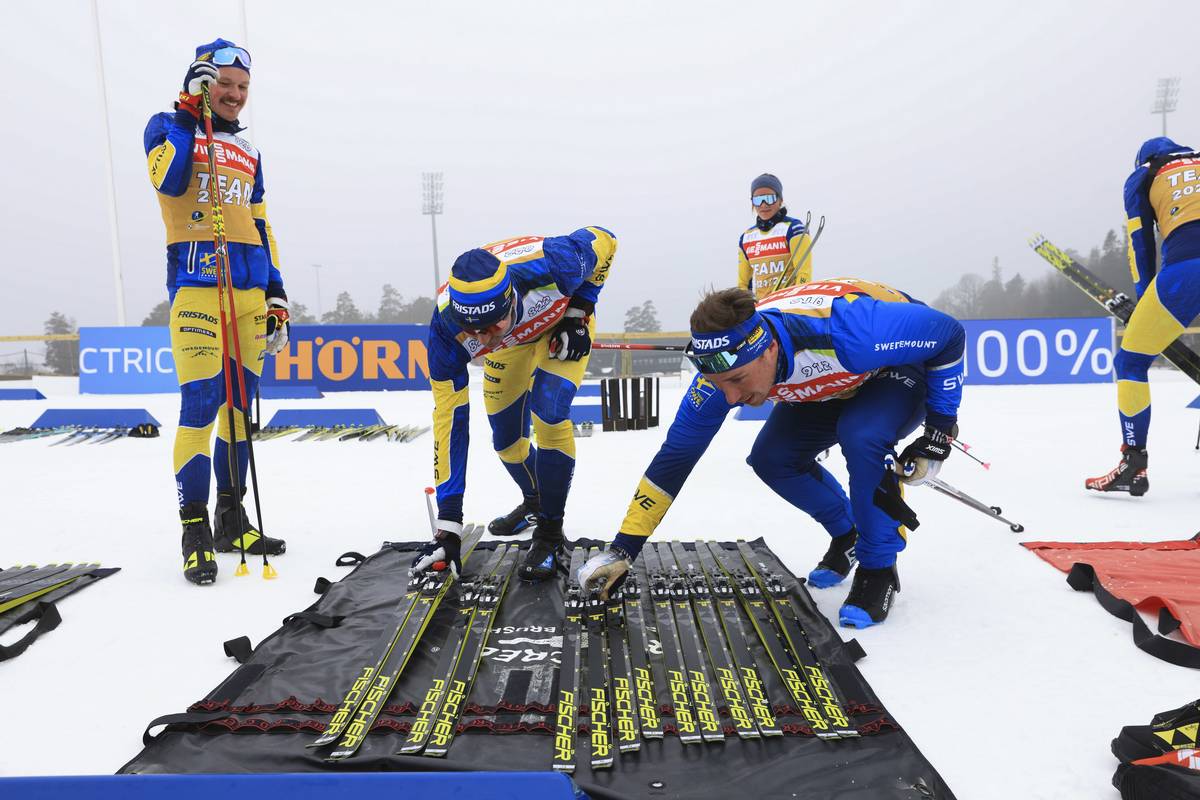
    Swedish Technicians at work at a March, 2022 biathlon World Cup event in Oslo, NOR. (Photo: NordicFocus)

    To simplify the answer on why equity may not be achievable with wax, Gerlach offered an analogy most skiers can relate to, regardless of their background knowledge in waxing theory.

    “If you’ve ever shaved your legs or your face with a razor,” he began. “A sharp, brand-new razor is like a fresh ski with a fresh base. You don’t need shaving cream and that razor works great. But a dull razor – a dried, crappy base – you need that shaving cream. And you need the best shaving cream you can get, and it’s going to help that razor and that shave a whole lot more.”

    How does this affect youth level programming? Ultimately, it accentuates the ever-growing “pay to play” problem of competitive sports. A newer, higher-end ski with a fresh base, or perhaps a quiver of skis that are ideal for different conditions, becomes much more important without the ability of a skier or coach to add versatility and improve the performance of a single pair of skis ski by utilizing a range of products to optimize the wax job. 

    “We have one ski with a great freshness of the base and a great structure, and one ski with a really dried up base. Had I applied wax to [the dry base], it does more to increase the ski speed than applying wax to a great ski… The more skis you can add to that quiver, all waxed the same, one of those is going to highly outperform the others. Versus when you had the ability to not only figure out which ski to go with, but which wax to go with. So by taking away variables that are easy to change, you make it more important to have a very good ski.”

    To include additional knowledgeable voices in the discussion, FasterSkier also spoke with Zach Caldwell and Knut Nystad, two savants in the complex and nuanced world of wax and skis. Caldwell is a leading expert in ski selection, wax, and grinds in the US, and the co-owner of Caldwell Sport. As a distributor of Vauhti, Rode, Star, and other waxes, Caldwell is also a member of the INDA. 

    Nystad is the former head of the Norwegian Wax Team, who still works as a ski serviceman for the Norwegian program at the World Cup, World Championship, and Olympic level. Prior to this work in his home country, Nystad spent twelve years as the head coach at the University of Denver. 

    “The idea of having a fair competition and limiting variables in order to generate more fairness and equity in the racing and create equal opportunity and a lower barrier to entry is a really laudable goal, but it misses the point,” Caldwell said simply in a call. 

    “The fact is that it’s a pretty complex system that we’re working with, with a lot of additive contributing variables that contribute to a whole solution, including ski flex, base material, base preparations, waxing, hand structure, all of it. When you have a lot of variables available to you, you have a lot of different pathways to success. The peak performance that might be available [on a particular ski] can be considered something along the lines of terminal velocity; you’re just not really going to go past a certain level of performance [on a day], the performance that the snow is going to yield. But there are a lot of ways to get there.” 

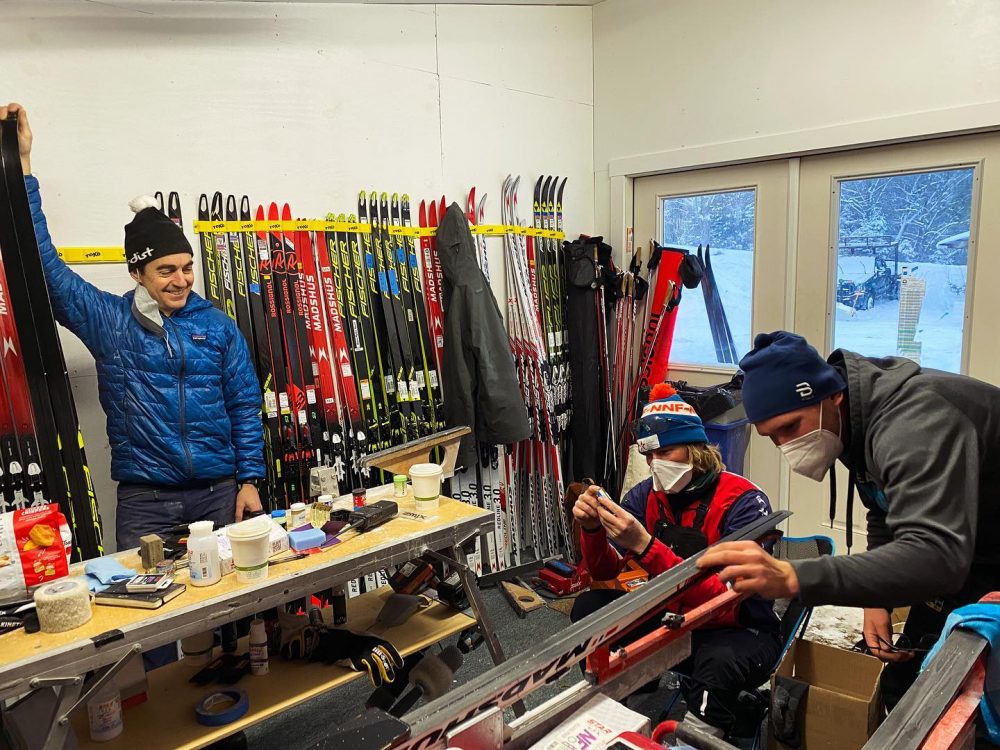
    Inside the wax at a February SuperTour race weekend in Craftsbury, VT, where Zach Caldwell (left) supported SMS T2 athletes. (Photo: Facebook Caldwell Sport)

    “As you begin to limit variables,” Caldwell explained, “you begin to place much more emphasis on other variables. They become proportionally much more important in determining how to get to the best performance possible [on the day]. And as you remove wax, which is a really inexpensive variable per application that can be put on specific to a day, you skew the emphasis toward skis base materials, grinds and hand structures.”

    Individual variation among the skis and in the technique and strengths of the skier on those skis adds additional complexity to the scenario.

    “Think about classic skis; this is a better way to imagine this,” Caldwell pitched. “Some athletes or some skis require different layering and build up of classic wax on a day. But if you’re saying, ‘Oh, you get two layers of extra blue. That’s it.’ That’s asinine. It means some people get to race and others basically have to herringbone.”

    Nystad also questioned the premise of leveling the playing field by creating uniformity in the wax selection.

    “Let’s start with the beginning,” Nystad said. “All of us that have done this for a long time, the only thing we know is that we don’t know. The only thing we know is that we need to test in order to get the answers. But what I can tell you from my experiences is that if you limit one factor, sometimes it just opens up another can of worms…

    “There’s definitely good arguments for trying to make the sport as simple as possible. But I think that for the people that think that just by waxing with blue, that that’s going to make it more equitable. It is a sign to me that they don’t have that much in-depth knowledge.”

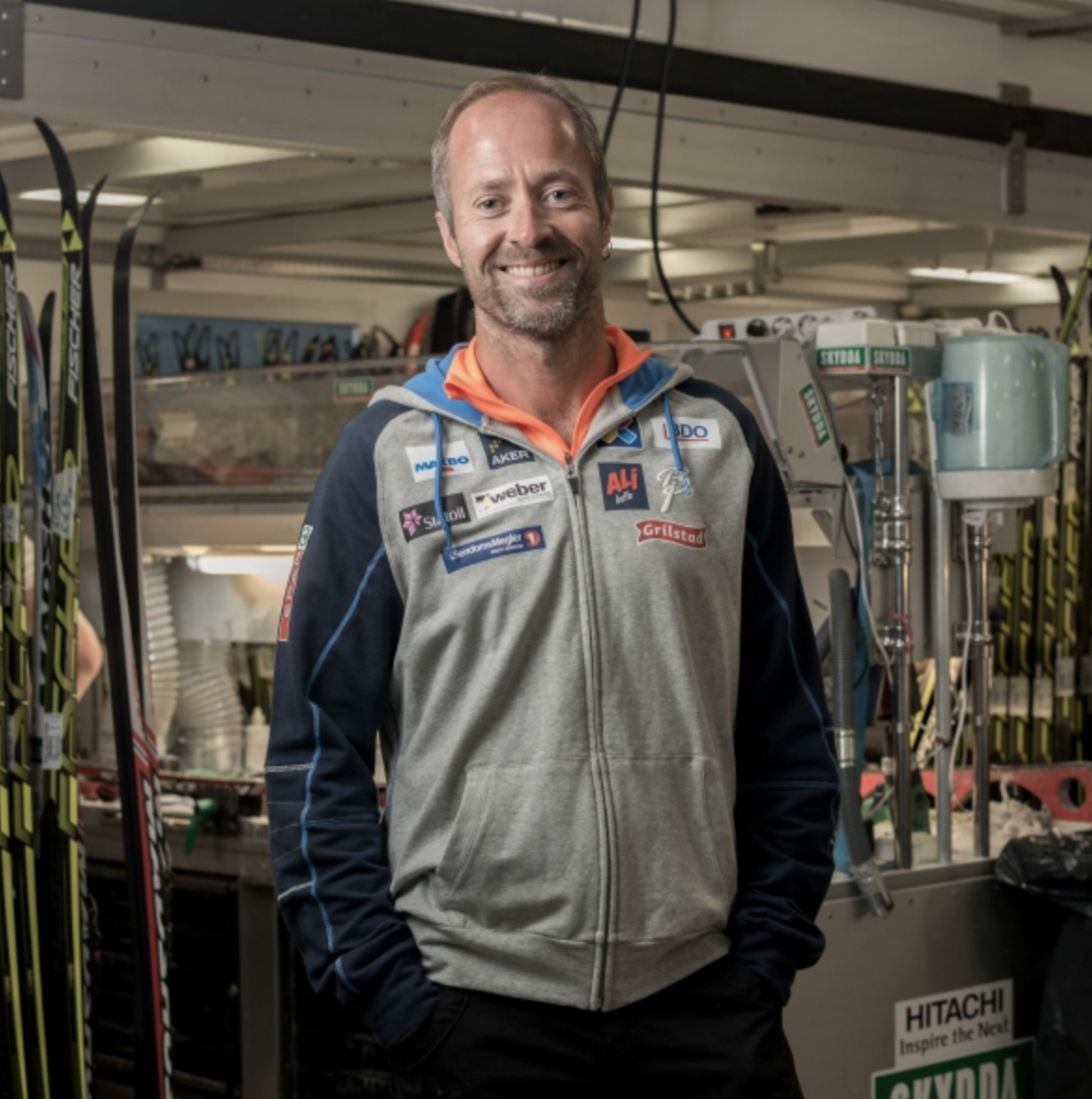
    Knut Nystad provides insight into ski performance theory and why a one-wax call may widen the gap in cross country skiing. (Photo: knutnystad.com)

    Without giving hierarchical ranking, Nystad also discussed the myriad of factors that contribute to the performance of a ski on a given day: the properties of the ski, including flex and splay, the quality of the base and its structure, the manual tools used, and the wax. “And then to top it all off, you have the method methodology that you use to apply the wax.”

    He walked through various ways a particular wax could be applied to yield different results, before echoing Caldwell’s sentiments that equity and uniformity cannot be achieved by restricting the options for wax that can be applied to a ski. 

    “When people say, ‘Well, can’t we just all wax with the same thing? It will make it easier.’ Clearly it will make it easier; you have one less factor to think about. But if the intention was to make it more of an even playing field, it’s not necessarily the truth. Because when you go to a race,  you’re only limited to try to test what you can afford from money, resources, and of course, time being one of those resources. So if you don’t have the test wax, what else can you test? Well, you can test many more skis, with many more properties with many more different bases, with many more structures, with many more manual tools. 

    “So it just opens up other things that you can test to get an advantage. And everything that you’re going to test if you’re going to have more skis, of course, that’s going to cost more. If you’re going to have more structures, different kinds of structures, that will also cost more. If you’re going to add manual tools, that will also cost more.”

    Stay tuned for more insights from Gerlach, Caldwell, and Nystad in Part 2 of this story.