From the FasterSkier archive — posts syndicated from athletes’ and coaches’ own blogs between 2004 and 2012, kept online as published. Current coverage is at fasterskier.com.

Tag: Skijoring

  • The Pull of Winter: A Field Guide to Skijoring

    The Pull of Winter: A Field Guide to Skijoring

    The leash goes taut, and suddenly you are cargo.

    That is the moment when most newcomers to skijoring understand the bargain. One second you are a cross-country skier, in charge of your own pace and direction. The next, a dog has decided that the trail is hers, and you, all sixty or eighty or a hundred and seventy pounds of you strapped into a hip belt and a bungee line, are merely the most interesting thing she has ever towed.

    There is, in that first lurch forward, a particular kind of laughter that comes out involuntarily. People who skijor know it. It sounds a little like surprise and a little like joy and quite a lot like the noise you made the first time you went down a sledding hill as a kid.

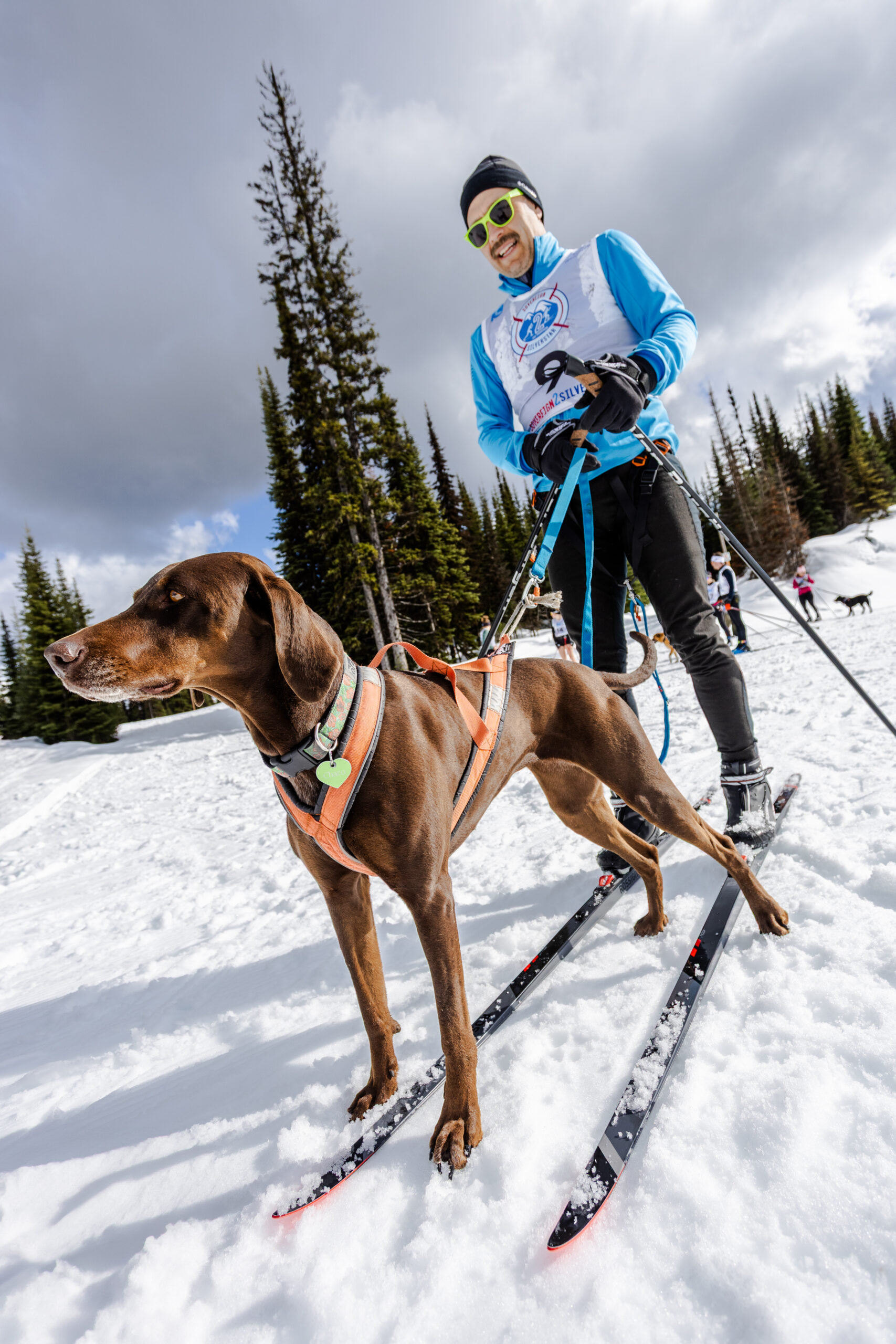
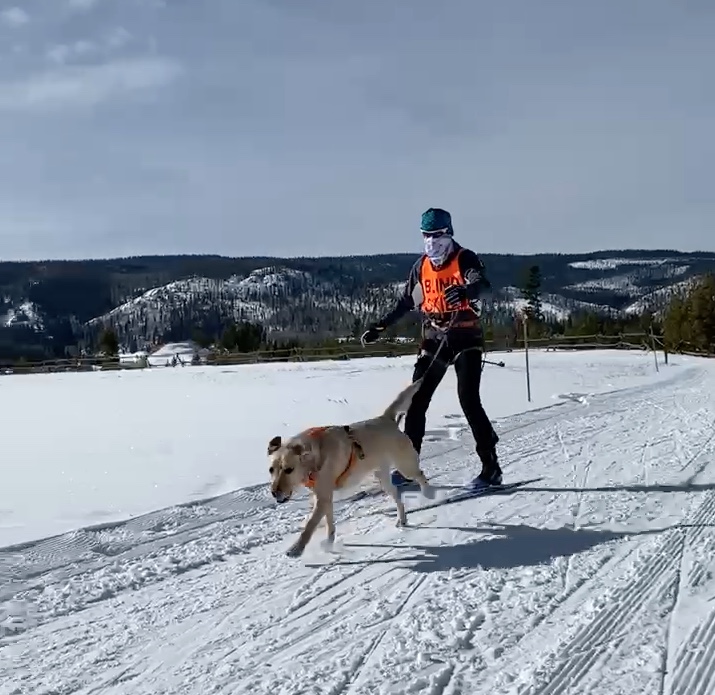
    Skijoring, whose Norwegian-derived name translates roughly to “ski driving,” is one of those winter sports that sits politely in the corner of the room until someone finally asks about it, at which point everyone in the room wants to try. The recipe is disarmingly simple: a willing dog in a sled-style harness, a stretchy line about eight to ten feet long, a wide belt on the skier, and a set of cross-country skis. Together, the team moves through snow at speeds that would be hard, and in some cases impossible, to reach on skis alone.

    The sport’s roots are Scandinavian, but its DNA is much older. For centuries, people in northern Europe have been hitched to draft animals on snow: horses, reindeer, and dogs. Equestrian skijoring still exists as a niche-but-spectacular oddity in places like Leadville, Colorado and St. Moritz, Switzerland, where galloping horses tow racers over jumps and through gates. At the 1928 Winter Games, in fact, equestrian skijoring appeared as a demonstration sport on the frozen lake. The dog-powered version is the offshoot that has quietly taken root in North America, especially in New England, the Upper Midwest, and across Canada, where it shares blood and culture with the older world of mushing.

    It is also, importantly, the version most people can actually do.

    The dog

    The first question any prospective skijorer asks is which dog. The romantic answer is a Siberian husky or an Alaskan malamute, with a face built for sled-team posters and a genetic memory for pulling weight across snow. The realistic answer is broader. German shorthaired pointers, Australian shepherds, labradors, border collies, Belgian malinois, and a great many mutts have all proven themselves capable. The rough rules of thumb: thirty pounds or more, healthy joints, a coat that handles cold, and, most important, a temperament that wants to go forward on a line rather than circle back to sniff something off-trail.

    Almost every veteran skijorer will tell you the same thing about the dog: the relationship matters more than the breed. A dog who likes to please you, who has been taught to keep the line tight, and who finds the activity genuinely rewarding will outwork a high-pedigreed sled dog who would rather be home on the couch.

    The gear

    The list is short, but every piece matters. A skijoring harness is cut differently from a daily walking harness: it distributes load across the dog’s chest and shoulders, with the tow point at the base of the spine near the hips, where the dog can pull most efficiently and the line clears the skier’s tips. The skier’s belt is wide enough to spread the force across the lower back rather than dig into one hip. The line itself, usually six to ten feet long with a built-in bungee section, absorbs the small explosions of speed that happen when a squirrel becomes relevant.

    Two design details matter more than they appear to. The first is a quick-release on the belt. If the dog bolts after a deer and you, on skis, would rather not follow into the brush, you want to be able to drop the line in half a second. The second is the absence of metal edges on the skis. Classic touring or skate skis without sharp edges are gentler if the team tangles. Skate gear is preferred by racers for sheer speed; for most recreational skijorers, well-waxed classic skis are perfectly fine.
    Visually impaired skiers use dogs to get out on the trails as well. Michael Stone skiing with his guide dog Geo. (Courtesy photo)

    The vocabulary

    It is borrowed wholesale from mushing. Gee means right. Haw means left. On-by means ignore that dog, that smell, that picnicker eating a sandwich. Whoa means slow down, please, the hill is steeper than I’d like. There is no command for stop, exactly, because dogs in harness do not really stop the way cars stop; they slow until they think it is time to go again. New skijorers learn to talk constantly, not yelling, just keeping up a stream of warm, encouraging chatter that tells the dog the team is still working together.

    Training and fuel

    Off-season training is its own subculture. Canicross, which is running with a dog tethered the same way, is the warm-weather equivalent. Bikejoring substitutes a bike for the skis. Both keep the dog’s pulling instinct sharp and the human’s cardiovascular system honest. So does paying attention, year-round, to what the dog eats. A working dog burns through calories the way an Ironman athlete burns through gels, and skijoring owners tend to be opinionated about nutrition. Many experiment with high-protein options, including raw and minimally processed beef dog food formulated for active animals, then dial it in across the season as mileage rises. The goal is the same as for any endurance athlete: enough fuel to perform, clean enough sources to recover.

    The trail

    Trails are the other variable, and they change by the hour. Groomed cross-country courses, when they allow dogs, are the gold standard: predictable surface, no surprises buried under the snow, room to pass. A growing number of Nordic centers in New England, Vermont, Quebec, and the Upper Midwest now host dog-friendly days or designated dog loops. Beyond the groomed network, snowmobile trails, frozen logging roads, and quiet rail-trails all work. The two enemies are crust and ice. Hard, crusty snow can slice a dog’s paw pads, and slick ice gives a hard-pulling dog nothing to brake against. Booties and paw balm help; reading the forecast and the thermometer helps more.

    The community

    The community around the sport is small enough to be neighborly. The New England Sled Dog Club, founded in 1924, is the oldest organization of its kind in North America, and along with regional groups like the Down East Sled Dog Club in Maine and the Pennsylvania Sled Dog Club, it hosts winter races whenever the weather cooperates. National-level competition runs through organizations like Skijor USA, which has been quietly lobbying for the sport’s broader recognition. The Skijor National Championships, held annually in Minneapolis, draw competitors from across the country and have produced a small constellation of standout racers, several of them, notably, college-age Nordic skiers who have discovered that their endurance fitness translates beautifully onto a tow line.

    What is striking, at a race or even at an informal Saturday-morning meetup at a Nordic center, is how little hierarchy there is. Beginners line up next to athletes who have podiumed in Quebec. A first-time skijorer in a borrowed rock-climbing harness gets the same coaching as the racer in carbon poles. The dogs do not particularly care about the human’s résumé.

    Why now

    There is a reason, beyond novelty, that the sport keeps drawing new converts. Winter in the eastern United States has become moodier and less reliable; cross-country skiers have learned to take their days where they find them. Skijoring stretches the season, in a way. A trail that is too thin for a good kick-and-glide can still hold a dog and a willing skier. A snowfall that would feel ordinary on foot becomes, with eighty pounds of husky strung out in front of you, an entirely different thing.

    It also restores something that more performance-focused corners of endurance sport sometimes lose, which is the simple presence of another living creature whose enjoyment is the point. Skijoring is not really faster running. It is not exactly skiing. It is a collaboration, in which the human contributes balance and judgment and the dog contributes everything she has ever wanted to be allowed to do. The bargain works because both parties think they are getting the better end of it.

    On a good day, on a packed-down trail in the long light of a February afternoon, the leash goes taut and the dog hits her stride and the trees on either side begin to blur. The only sound is the hush of skis on snow and the soft, ridiculous laughter of a person being towed somewhere they had not quite planned to go this quickly. The day ends with the dog asleep before dinner and the skier sore in muscles they did not know they had. Both, almost certainly, will be ready to do it again tomorrow.

  • The Story Behind the New World Cup Race Format

    The Story Behind the New World Cup Race Format

    Yesterday’s announcement of changes to next year’s World Cup schedule came as a dramatic surprise to the cross-country skiing community. But the story behind those changes is just as interesting as the changes themselves. Lars Johansen, the Swedish delegate to the FIS (International Ski Federation) competition committee described how the historic changes came about. “I was sitting glumly in my Cortina hotel room. In nine days, I was due to give my final report to the annual meeting of the FIS’s cross-country skiing competition committee, and the news wasn’t good. Soon the good feelings and sugar buzz of the winter Olympics would be over,” said Johansen, “and the hard choices of what to do next would need to be resolved.”

    Johansen was referring to the task the committee had directed him to address, which was the thorny issue of traditional cross country skiing’s sagging television ratings. The preliminary numbers from the Olympics were very good—but they always were—however the ratings for the regular season World Cup competitions continued to disappoint. There has been a long steady decrease in television viewers for traditional cross-country compared to other Nordic sports, and if the pattern continued, it would become an existential threat to the continued viability of traditional cross-country World Cup racing. Without the money associated with strong viewership, a business model simply doesn’t exist for traditional cross-country to continue on the World Cup circuit.

    The data was now in and the results were unmistakable. The numbers weren’t bad, but biathlon continued to kick traditional cross-country’s butt. In fact, biathlon had surged to become the most watched winter sport in Europe, and despite the U.S. cross country team’s success in recent championships, North American viewership wasn’t increasing nearly fast enough to offset the decline in European viewers. The problem is that there are only so many advertising dollars to go around, and advertisers go for the biggest bang for their buck. The limited pool of existing advertisers were sinking their budgets into biathlon. Eyeballs were glued to biathlon, and traditional cross-country had become an afterthought. Biathlon’s dominance was becoming hard to take, and the Nordic competition committee wanted answers. Something had to be done.

    The viewer data for traditional cross-country skiing compared to biathlon is not good. (Data/Photo: O’Neil Data Services Inc.)

    The competition committee’s meeting process is well established. During every World Championships and Olympics, the Committee gathers to discuss changes to race formats and other issues which need to be addressed. It is a logical way to conduct business. Most of the governing body’s members are already in town for events, so it makes sense to get everyone together while officials are already there. The routine goes something like this; delegates are free to watch live events as they choose, after events and on off days; they meet to discuss business.

    However, this year while the format was the same, the mood was very different. This year the mounting crisis facing traditional cross-country was the main topic and it was definitely not business as usual. “What were we going to do about the falling viewer ratings? That was the only agenda item.” The committee had already had two meetings, and they did not go well. “We batted around a bunch of tweaks to competitions to make them more attractive,” said Johansen. “But the reality was that we all knew these minor changes wouldn’t make much of an impact. I had been directed to submit new fresh ideas and really, I didn’t have much. We were looking at adding mixed relays to the Olympics and continuing them more prominently into the world cup schedule, but I knew that it was just nibbling around the edges. We needed something dramatic, something that would serve as a wakeup call to the world that we were not the stodgy older brother of biathlon, but that we could be the cool kid as well.”

    “But I was totally stuck, and the committee wasn’t happy, though I think they knew that there really wasn’t much to be done. We were probably just going to have to accept our fate and continue to struggle with declining viewership and therefore declining revenue. I was fully prepared to be the one to deliver the bad news, knowing that it would mean that I would probably lose my job.”

    The all important metric of total viewer engagement for traditional cross-country skiing is not looking healthy. (Data/photo: O’Neil Data Services)

    However, as it turned out, serendipity intervened and Johansen came up with a groundbreaking idea that has rocked the Nordic world and put traditional cross-country back into the spotlight, hopefully for good.

    “It was Wednesday, and my next update was due the following day. To be totally honest, I was pretty depressed. I didn’t even go the Sprint races that day, instead I watched them from my hotel room. I wasn’t really even paying much attention to the competition, but then I saw what now has become a worldwide phenomenon. The dog everyone now knows as Nazgul strayed onto the Sprint qualifying course. At first, I was annoyed by this. How could anyone be so careless with their animal I thought? Someone could have been hurt.”  Johansen continued that, “the day progressed like any other day, and I mustered the energy to go watch the Sprint finals live. By the time I returned to my hotel room every social media channel was blowing up over this dog. I couldn’t believe it. In 30 seconds, this canine achieved more media notoriety than our hard working athletes had in years. I was dumbfounded but didn’t really know what to make of any of this other than that it was an interesting Olympic footnote.”

    Johansen had bigger fish to fry than the curious case of a stray dog. He staggered into Thursday’s meeting empty handed, and admittedly dejected. “The discussion began and everyone turned to me for my suggestions. I had nothing. It was as you Americans like to say, the sound of crickets. So, just to fill the dead air, I asked if people had seen the dog who was now a social media star, of course everyone had. For the next half hour, we all talked about the dog and how amazing it was that it had gone viral. Slowly the discussion began to return to what suggestions I had to address our issue; that’s when the lightning bolt struck.”

    “How about adding skijoring as an event, I said? It popped into my head and came out of my mouth before I even had time to think about it, though I did have the common sense to put it out there half joking just to see what the reaction would be. To my surprise, no one laughed. In fact, everyone seemed pretty interested.” (To the uninitiated, skijoring is the sport of a dog harnessed to a cross-country skier pulling the skier along as the skier skis, usually freestyle. The result is incredibly fast skiing).

    Total dollar amount spent on dogs in the United States. (Photo/Data: American Pet Supply Federation, Inc.)

    “I then pulled out my phone and showed the committee that there had already been over 15 million views on X of the dog crossing the finish line. That’s more than the number of viewers we had for the women’s Sprint finals in the United States!” It seemed to be the perfect solution in the right moment. Skijoring is wildly popular in Scandinavian countries. On any given winter’s day ski trails are crowded with skijorers, and even if you don’t care about skijoring, most people love dogs. But there were a few doubters in the room, surprisingly mostly from the nontraditional skiing countries. So, I did a quick Google search of how much money is spent in the United States on dog care and put the result on the conference room’s television screen. Over $150 billion was the answer. The room went silent. No one could argue with those numbers.”

    Johansen continued, “that’s when my brain really started rolling. I put out this idea; imagine the image of an exhausted skier and dog crossing the finish line together, both collapsing to the ground embracing each other. The images alone would be better than all of the advertising we could spend. I quickly constructed an AI generated image of a finishing ski racer lying in the snow collapsed with a dog next to her. The doubters immediately went silent, everyone was in awe, the potential power of the imagery was more than anyone could have imagined, and it was impossible to argue against it. By then, I had gathered enough momentum and confidence to close the deal. I said, imagine joining the power of the most demanding athletic competition in existence with humankind’s innate love of animals into one package. I paused for a moment and looked at the delegates to let the statement’s impact set in. We have been handed the greatest promotional opportunity in sport history. No one disagreed.”

    This AI generated image was used by Johansen to convince the FIS delegates that Skijoring would be cross-country skiing’s television savior.

    But this was just the beginning. “From there, things started moving pretty fast. We immediately brought in a consultant on Zoom to help us understand possible formats and logistical issues. Krag Stellon from the Finnish contingent had contacts in the sled dog world (which is a completely different discipline but there is crossover in how the dogs are trained), and we immediately arranged a meeting with his friend Andrew Steffson to discuss if such races were even possible. After a full day of discussion, we had outlined possible formats. There were also discussions with independent skijoring associations to roll their races into the World Cup calendar and combine efforts with those independent associations. The committee was so excited that we all agreed to skip watching the remaining competitions live and focus on our work. So, with the men’s 50k race on the television in the background, we worked out our format.

    Skijoring at the World Cup for the 2026/27 hopes to be the radical change needed to increase television ratings. An added bonus; men and women will compete at the same time. It’s an opportunity to link traditional cross-country skiing to an industry with endless growth potential.

    For the next race season, we decided that there will be three skijoring events added to the calendar as demonstration events. The format will be broken down into three distinct categories. First there will be the combined event which will work like the skiathlon. Racers will ski 10 kilometers freestyle, then they will come into the exchange station where they will be harnessed to their dog to ski another 10 kilometers. The first to cross the finish line wins.

    The next event will be the individual 10 kilometer race where the dog and skier will start in a time trial fashion.

    The third event will be the mixed relay. There will be one male and one female skier. One skier will ski a five kilometer Classic leg, and they will then tag off to the skijoring skier who will ski five kilometers Freestyle to the finish. Teams may choose which gender skier they wish to have ski each leg.

    FIS promotional image of skijor mixed relay. (Photo: Lars Johansen)

    “For next year there will be 200 world cup points available for each skijoring race. This is twice the normal race point value which will serve as incentive for racers to partake in the new format. For 2027-28, we plan on there being one skijoring event every other weekend, with points being assigned the same value as traditional races. Skiers will not be compelled to skijor race, however, if they don’t, they will lose valuable points and hurt their Overall cup rankings.”

    “All dogs will be provided by neutral trainers with kennels based in Finland and Sweden. For North American races, dogs will be transported by plane to the venues. The dogs will be subject to the same doping control protocols as their human companions. Teams will be assigned a group of dogs which they will work with throughout the season. For the first year, trainers will be assigned to teams. After that, teams will be free to hire their own dog coach/trainer, similar to the way wax technicians work, but the dogs themselves will always come from neutral kennels. This way we will avoid a dog arms race similar to what we see with ski preparation.”

    FIS is hoping to have many smiling experiences like this one to draw in television viewers.

    However, there were still a lot of details left to consider. “We contacted our representatives from every voting nation, and the immediate response was overwhelmingly positive. Then we decided to put out our findings for our corporate liaisons to reach out for sponsorship.

    The response has already been overwhelmingly positive. “Our business representatives and lawyers have reached out to companies in the pet supply world, and the response has been huge. We already have a multi-year, multimillion dollar contract with Purina (pending legal reviews), as the principal sponsor for the skijoring races. We also have a seven figure sponsorship deal with a North American chain of dog kennels. Zoetis, the world’s largest canine prescription pharmaceutical company has also agreed to a multi-year, multi million U.S. dollar agreement. The inquiries from potential sponsors haven’t stopped since we made the announcement. Companies ranging from dog clothing accessories, to training devices, to grooming products, have been contacting us nonstop. It has simply been amazing.”

    Lars Johansen with one of the hopeful saviors of traditional cross-country skiing.

    “We’ve run preliminary viewer focus group studies and have had an over 85 percent positive response. That’s the highest focus group response we’ve had in the history of running such studies on any race concept.”

    “When you stop to think about it, it’s really a no brainer, and it’s kind of embarrassing that we never thought of it before. Everyone loves dogs, and the cross-promotional tie-ins are limitless.”

    “My view on the entire Nazgul situation has completely changed. I have to admit that at first I was a little frustrated and angered by what happened. But now I see it as the serendipitous confluence of an entirely new chapter in competitive cross-country skiing—something that could actually save cross-country as a televised sport. After having had some time to reflect I’m willing to bet that in five to ten years, skijoring audiences will greatly surpass human only powered racing. It’s really remarkable when a chance circumstance comes along at just the right time and changes history. Now we will let the races begin!

    Even Ben Ogden’s (USA) silver medal couldn’t compare to the media boost provided by Nazgul the dog. (Photo: NordicFocus.)

    THIS STORY WAS ORIGINALLY PUBLISHED ON APRIL 1, 2026


  • FasterSkier’s 12 Days of FBD Christmas: Day 5

    FasterSkier’s 12 Days of FBD Christmas: Day 5

    Editor’s note: For the second-straight year, we’re presenting another 12-day holiday gift guide, brought to you by the one and only “FBD”, our gear-review guru. Kicking the series off, recommendations for recovery gifts to keep you and your ski buddies on the trails and injury free. See also: Day 1 | Day 2 | Day 3 | Day 4

    ***

    Day 5: Canine Companions

    With a moniker like “Fast Big Dog,” you know I’m all about the hounds, pouches, mutts, and mongrels. I mean, come on, who doesn’t like a good dog? They’re called “man’s best friend,” for a reason, all of you cat weirdos out there.

    They also happen to be the ultimate training partners. My trusty black lab, Pdiggy (not to be confused with this guy…

    No one is quite sure who was nicknamed “Diggy” first. The homosapien CU skier/rockstar Diggy Terranova is older, but the canis lupus familiaris Pdiggy has been called this his whole life, so it’s kinda a push. Both are awesome though, so it doesn’t really matter. You know he’s down with FBD too because he has pretty girls kissing him.

    … who probably gets way less media attention than he deserves due to that camera-hog Pwolfgang, has logged more miles with me than probably any other living organism.

    Dogs are awesome. They are also ready to go, never complain that you’re going too fast or too slow, or about the route, or anything else. They’re always just stoked to be out there.

    They’re also awesome at helping you dispose of all of that extra, unwanted income to do cool stuff like replace perfectly functional carpets that you already own that they’ve chosen to destroy for no apparent reason, or rip the seat belts out of your new truck (an insanely expensive repair, btw — they’re just a bunch of webbing and a buckle, for Christ’s sake, you bastards). They’re also a tremendous assistance in weight control, as they’ll gladly eat your thoughtfully prepared breakfast burrito when you turn your back, terrorize the neighbor’s cat (and therefore also the neighbor), and who better to keep that pesky mailman on his toes that your four-footed enforcer?

    In short, dogs rule. So do your favorite canine companion a solid and take him or her out for a rip right now, whether it is a train run, ski, or something special that we’re going to describe in a bit, these loyal companions will do anything for you, so how about you do something nice for them?

    ***

    Under $29

    Bark Box

    Bark Box: FBD pick for under $29
    Pwolfgang, freaking out that his was replaced by Pdiggy for just one photo op (those model types can be VERY high maintenance), vents his frustration on one this month’s BarkBox toys, Santa. Not to worry either, I have it on good authority that Santa said he’d prefer to go out this way, like a “G,” rather than have to schlep toys around to all of your filthy, unappreciative offspring. Aw, snap! Sounds like Santa has a bit of an attitude, doesn’t it? Who can blame him though, have you spent much time in airports at this time of year? Seriously, airports are the worst. I’ve got your back on this Santa.

    I’m slightly embarrassed to admit how much I like this company and this concept. Basically their schtick is that they send you a box of toys and treats at whatever regular interval you select. Sure, that’s kinda cool, but what really puts this concept over the top and catapulted it into this rarified air of the 12 D o’ FBD (as all of the cool kids say) is the job they do with the toy selection.

    Each month is “themed,” so for example, October’s offering (naturally, I am a monthly subscriber) was Halloween-based. That might seem like a bit of a gimme, but trust me, they have a staff of very creative people and they really kill it each and every month with clever themes, very representative toys, and an overall great vibe.

    Is it a little overly anthropomorphic to read too much into the concept of each month’s dog toys? Not when you have as much time on your hands and as many glaring social problems as I do.

    Do the dogs get the joke or seasonal association? With the notable exception of my Great Dane, yes, mine do. If yours do not, well, they are either also Great Danes or are just plain dumb. Tell them I said that.

    Subscriptions starting at $20/month on BarkBox.com


    ***

    $30 – $99

    Yellow Lab Dabbing T-shirt

    Women’s Relaxed Fit “Dabbing Labrador Retriever” T-Shirt: FBD pick for $33-$99

    If you don’t think that a T-shirt emblazoned with a yellow lab “dabbing” on the front is hilarious, then, well, you are dead on the inside. Sure, this is the type of garment that you might see at a state fair in Alabama or God forbid, Disney World, with the owner waddling about, carrying a deep-fried corn dog and their arm flab flapping in the wind, but no one is going to steal my sunshine on this, as this just so happens to be an awesome shirt. Buy it, own it (which I suppose is inherent in “buying it,” but hopefully you realize I’m using this in a more metaphorical sense), and F the world. You do you. $31.95 on RedBubble.com

    If you don’t think that this is an amazing shirt, there is something really wrong with you.


    Tactipup Dog Collar

    Tactipup Extreme Tactical 1.5″ Dog Collar with Handle: FBD pick for $30-$99

    Yes, $59 is a lot for a dog collar, but if you’re like me and have more money than sense, not to mention a penchant for gear, when something like this comes drifting into your inbox, you’re pretty much obligated to pull the trigger (see what I did there? Tactical collar? Pull the trigger? I’d be an awesome Navy Seal if I wasn’t so afraid of danger. And bullets. And mean people. And the dark. And water. And the cold. And air travel. And carrying heavy stuff. And long hours. Aside from that, I’d be perfect).

    For you haters out there chuckling as I piddle away my hard-earned cash, I’ll have you know that I had the last laugh because in the aforementioned Great Dane/neighbor pizza incident, thanks to the Tactipup collar “restraint handle,” I was able to apprehend my monster as he was making a run for the delicious smelling pizza before any real damage was done. Sure adequate training and even a slightly above average canine I.Q. would also be effective abatement, but sadly, those both seem to be in short supply with this particular beast.

    These collars are also incredibly well-made, made in the good ol’ USA, and come in a variety of cool colorways (or colors, for you normal people out there). Since Pwolfgang fancies himself a bit of a ladies man, I got him one in the kick-ass snow camo colorway (why the hell do I keep saying that, goddamnit that stupid expression annoys me).

    This thing has it all — get one for all of the bitches (as explained at 2:38 in this clip) and sires in your life. $58.95 on Tactipup.com

    When not jumping through plate glass windows to chase the tile guy, eating remote controls, golf balls, light bulbs, or bullets, Pwolfgang likes to take some quiet time in the garden to reflect on how good he looks in his collar. And to ponder if he wants to jump the fence again to chase the neighbor carrying pizza. You see, he is quite introspective.


    ***

    $100 – $299

    Whistle Dog Tracking System

    Whistle 3: FBD pick for $100-$299


    If you have any dog that’s “a runner,” then you can just stop reading right here and go buy this product. An earlier version of this system the Whistle 2.0 was reviewed last year and has been extremely well-received, so when I was doing some research for this overall category and discovered that Whistle had just released a new model, the Whistle 3.0, I was eager to give it a whirl. For any even semi-regular reader of any of my work, I think you know why I need it and who it’s for.

    While these are great units, they also clearly are not Great-Dane proof.

    This latest model is smaller, which is good, as the former model was large enough to offer enough purchase that the Great Dane figured out how to remove his and do this. (He barely knows he name, but he has the spatial reasoning ability and dexterity to remove and ruin a device attached to his collar, behind his neck. Freakin’ unbelievable).

    Probably even more importantly, the new model “cycles” faster, meaning it updates you via your smartphone even more rapidly when your disobedient monster has left the perimeter that you have created around your home (also a super-slick feature, as you can customize this to be as large or as small as you’d like, so whether your yard is 50’ x 50’, or 50 miles x 50 miles, the system can accommodate either option and anything in between).

    Overall, the interface is very good, works well, and all things considered, the whole system is fairly economical. It’s on sale right no

    w for $49, but keep in mind that you also have to get a monthly subscription (think of it as a wireless data plan for your dog). This still doesn’t break the bank, but if you opt for a two-year subscription (the most economical choice), this adds $7/month, bringing your first year’s expense on this to $133, hence this placement in this price category. Obviously, all subsequent years you only incur the expense of the subscription, unless your dog chews up the device, as Pwolfgang did, therefore taking you smack, dab (like the shirt?!?!?!), back to $133.

    All of this is still way cheaper than a vet bill if something happens to Fido during his prison break and certainly way, way better than the wife murdering you if something even more serious happened. Think of it as investing in the future of your relationship.

    Device and 1-year subscription for $133 at Whistle.com 


    Skijoring contraption

    Omnijore Joring System: FBD pick for $100-$299

    Have a death wish? Well then boy do I have a product for you.

    I’m fortunate enough to be in Switzerland often for work. It’s a beautiful place; clean, organized, safe, and with a generally very active, outdoor-oriented population (sure, they hid a bunch of money for the Nazi’s a few years back, but who amongst us is perfect, right?). One of the things that the Swiss pride themselves on is not only their precision, but also their ability to not just follow rules, but follow them to the letter.

    It is for just that reason why I was so surprised to see a guy skijoring one morning on a trail in Davos, Switzerland, that prohibited dogs. Sure, it was 6 a.m. on a Tuesday, but for a Swiss person to break a rule that cut and dry is almost unheard of. There was a method to his madness though — he was attempting to train his wife’s dog (and with very little success), so his brought this beast to the far end of the trail system where he thought he was unlikely to run into any other skiers. Overall, sound logic, as generally that portion of the trail is completely empty at that time of day, as it is quite remote. I was skiing to work and since it was dark every night on my ski back to my apartment, my only way to get in extra k’s was to squeeze them in every morning at O-Dark Thirty.

    So as is always the case in every good story, I was “just skiing along,” (all shop rats LOVE “JSA,” and it’s cycling cousin, “JRA,” inquire about this in your next visit to either a bike or ski shop), when all of a sudden this guy came screaming by me, wrapped up in a labyrinth of webbing, straps, cables, handles and pulleys: it looks like a Rube Goldberg nightmare mashup with a paratrooper, cartoon dog, and lost Swiss banker.

    The guy and his out of control hound passed me at Mach 7 and I immediately had a few thoughts: first, “Wow, those guys were going fast.” Next was, “Hmm, there’s something you don’t see all that often out here, I wonder if that is allowed”, (it’s not). Then finally, as he was heading for a hairpin turn going about 60 kph, “Geez, he must be a REALLY good skier if he can make that turn, at that speed, with the crazy dog.”

    Well, it turns out that he wasn’t a good enough skier to make that turn at that speed, as “Lovitz,” or some interesting Swiss/German name somewhat close to that, rocketed him into the snowbank. He didn’t just crash either, he crashed HARD. Being extremely sympathetic to this situation and being the beautiful person that I am, I turned around and skied up to see if he was OK. He was fine, though thoroughly embarrassed. He then went on to apologize profusely for skijoring in an illegal section of trail, passing me too closely, and disrupting my ski. This poor gentleman then went on to offer excruciating detail on the terrible luck he was having training this dog and how pissed he was at his wife for getting this stupid animal and not training it properly. All of this seemed hilarious at the time, but since God is a ball-buster, the schadenfreude I experienced at that moment has come back to haunt me 1,000 times over with the acquisition of my own giant, untrainable animal. That was my first experience with skijoring, but it wouldn’t be the last.

    On that topic, while it would undoubtedly make for some hilarious video, I have somehow managed to amass enough common sense in the past few years to realize that even attempting to go rollerski skijoring with Pwolfgang is a bad idea. Snow? Maybe. But unforgiving East Coast motorists, hilly, narrow roads and an overpowered, under-IQ’d Great Dane? That’s ones of those situations in which you truly deserve a stern lecture from the ER doc when you’re being admitted for multiple-blunt trauma.

    Not that I need any more reasons to not take my Great Dane skjorring, but in case you are wondering, I have a bunch of them: there’s the fact that as we discussed yesterday, I have beautiful but very delicate, bruisable, alabaster skin, piano wire-like cruciate tendons, and a tendency to cry at the drop of a hat — not the mention the eagerness of so many of those around me to see my fail (I’m looking at you again, Mr. Mom Jeans, Josh Smullin). Add of this up and my decision to leave Pwolfgang at home to wreck the house was an easy one. Before all of you get your panties in a wad though, do not worry, I did, in fact, test the skijoring system — I simply opted for a few of the better behaved, slightly lessly powered option in the FBD stable, er, kennel — my trusty Labradors.

    If you’re going to do it, do it right with all the firepower you can muster. Having said that, I still recommend using dogs that have a basic understanding of commands and are at least reasonably well-behaved: remember, you’ll be on open roads on devices with no brakes. This is already insane, so for the safety of you and your canine companions, do your best to apply as much common sense as possible in this clearly insane situation.

    Snow is obviously a bit of a different situation, but even so, do be perhaps a bit careful. After all, I could be skiing the other way and as we all know, I have a lot to live for, so please factor this in accordingly.

    So what are you waiting for? Go get this wicked contraption and get out there. Don’t worry either, I know CPR and I’m a wonderful person, so if I see you in a ditch, I’ll do the same as I did for Lovitz and my Swiss friend.

    $174.95 on RuffWear.com (but with your pending bills from your emergency-room visit, this could take you well over the $300 cutoff for this category)