Tag: skimo

  • Ski Mountaineering is the Newest Olympic Ski Discipline, Nordic skiing is Touchstone for its American Pioneers

    Ski Mountaineering is the Newest Olympic Ski Discipline, Nordic skiing is Touchstone for its American Pioneers

    “Skimo” will be the newest Olympic ski discipline when it premiers at the 2026 Milan-Cortina Games. In 2022, those ready to represent the USA are bringing what they learned from their Nordic skiing background to higher peaks, steeper downhills, and techier technique.
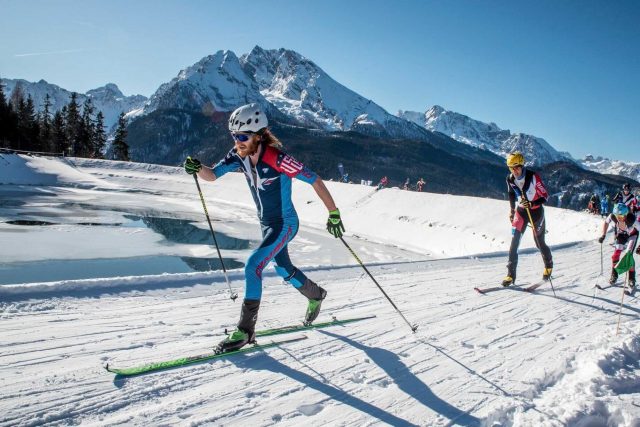
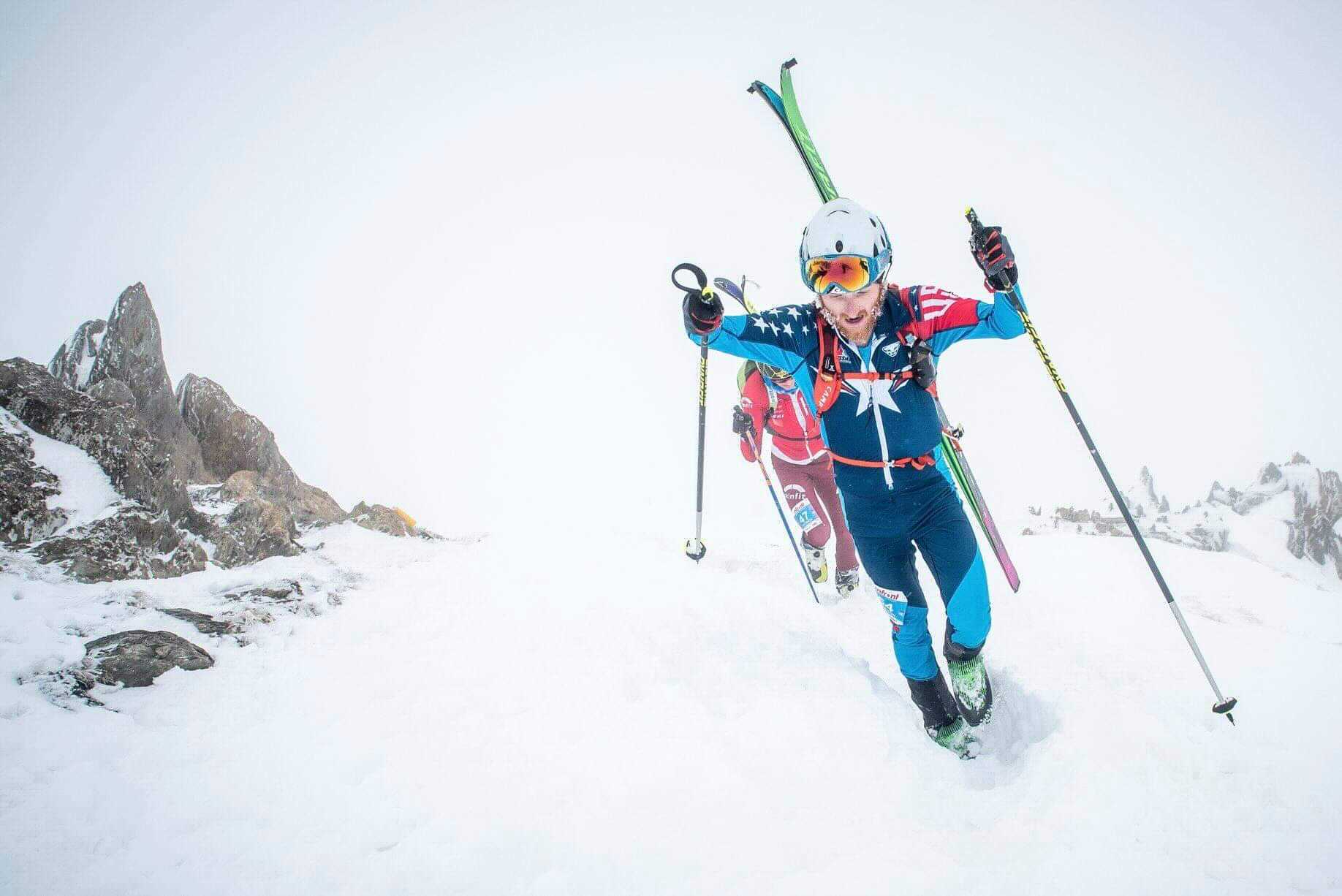
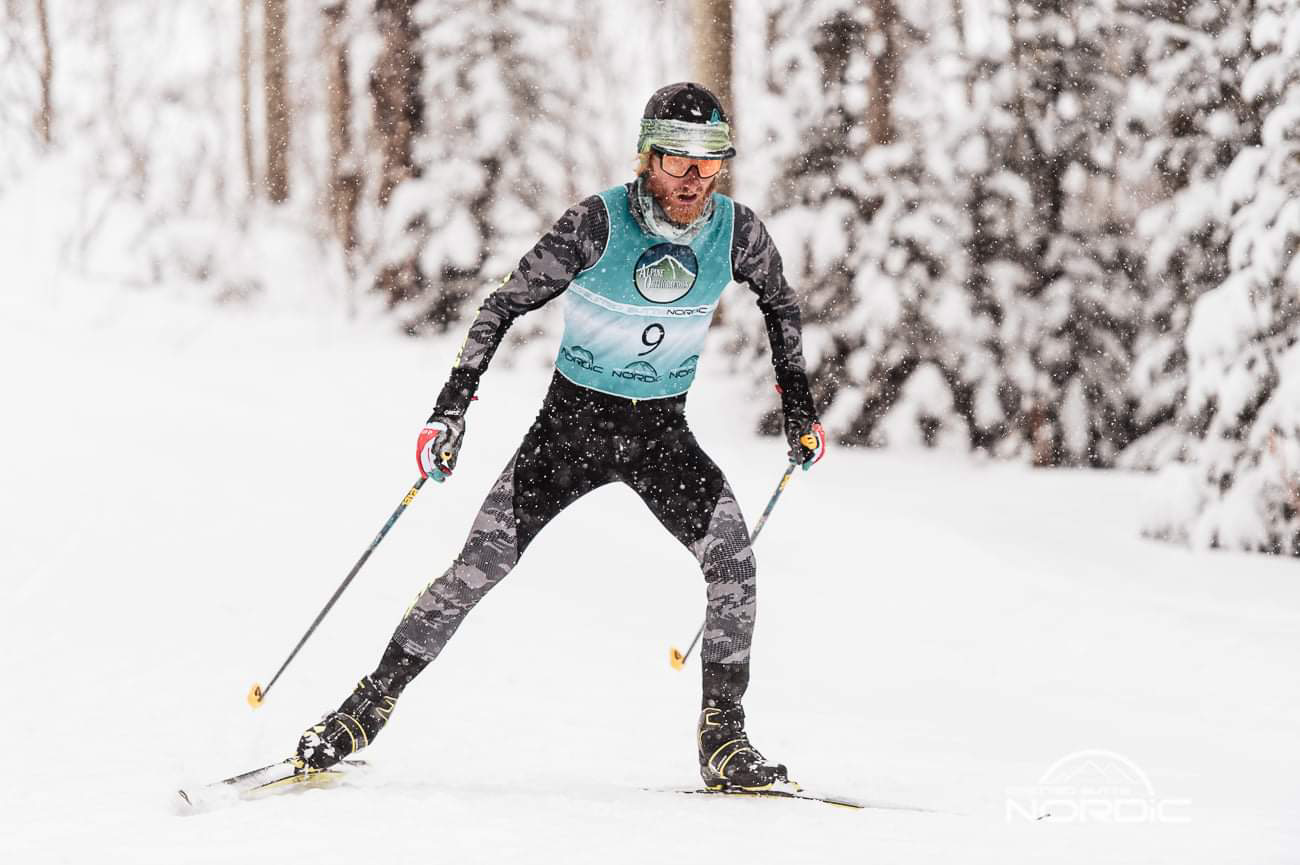
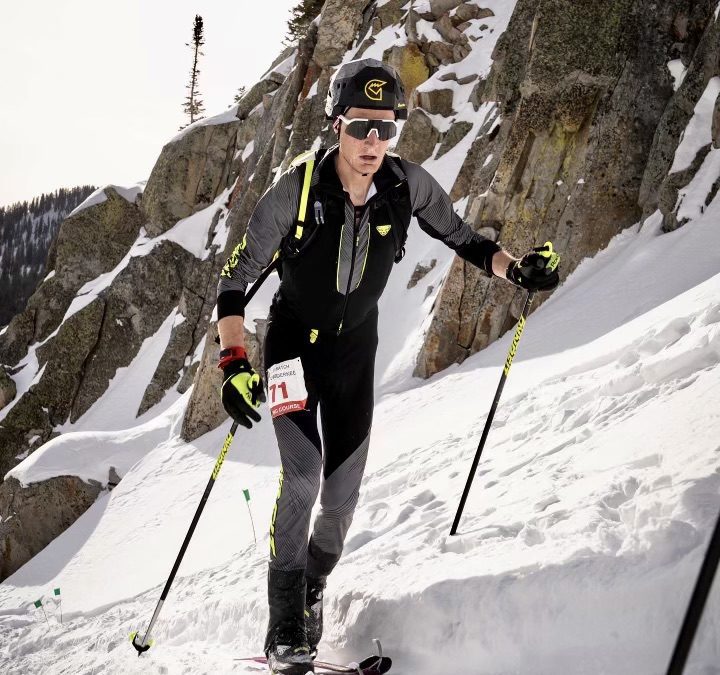
    Cam Smith strides during the early stages of a Ski Mountaineering, or “Skimo,” World Cup. Smith, who lives in Crested Butte, CO, hails from a Nordic skiing background and is currently the best Skimo athlete in the US. (Photo: USA Skimo).

    The details of ski mountaineering are dizzying. Take the little challenges unique to each discipline of skiing, amalgamate them together into one race, and you’re left with “Skimo,” which may or may not serve as a euphemism for the discipline. In cross-country, the FIS recommends that courses don’t cross the 6,000 feet (~2000 m) elevation mark. Skimo revels in regularly sending its participants from that level up to 12,000-13,000ft (~3,600m-3,900m) and down again. In between the uphills are tricky, technical descents on off-piste terrain normally reserved for extreme events most likely sponsored by Red Bull (in fact, they’re already on it). Skimo is the kind of challenge that usually comes packaged in a ski movie tour program, matched to jump cuts and a generic EDM track, with proceeds benefiting “the next generation of shredders,” or something like that.

    For the endurance skier, it is an extreme sport. Breathtaking scenery, the emotive challenge of man versus the harsh environment – turned up to its most stark proportions. Up until now it has remained on the periphery of the world of winter sports, born in the French Alps a generation ago and for the most part having stayed there.

    Last summer though, the International Olympic Committee (IOC) added Ski Mountaineering to its program for the 2026 Milano-Cortina Winter Games, which started to turn a few eyes towards who might be the first Skimo star to find themselves in the NBC prime-time slot reserved four years down the line.

    So, what stretch of the United States is home to those that are quietly, surely, plodding their way up and down mountain passes in preparation for the Olympics in 2026? Bozeman to Missoula, Anchorage to Fairbanks, maybe Durango to Aspen?

    Turns out, they’re more likely running the 700ft-850 ft of elevation between Eau Claire, Wisconsin and Duluth, Minnesota.

    Somewhere up there, near-ish to where a little rise on US-53 gives way to views of Lake Superior, Cam Smith responds to my email.

    The Athlete Leading the Way

    Cam Smith is at his family’s cabin in Gordon, Wisconsin. Like many who find retreat Up North in Wisconsin, he is from Illinois. Rockford, to be exact. A town that’s probably best known for being the next stop on I-90 West of Chicago, and for wearing a kind of flat, banal vision of American life on its sleeve with pride. Last winter, while skiing in Crested Butte, Colorado, Cam and I were talking over our shared Midwestern roots when he stopped mid-stride to declare his hometown’s motto to me: “Rockford doesn’t suck, you do!”

    That scene in Crested Butte, for all intents and purposes, is where I was introduced to Cam, and by extension, the world of Skimo too. At that juncture in December 2021, he was eyeing up the International Ski Mountaineering Federation’s (IMSF) upcoming World Cup, to be held in Andorra in January. But it wasn’t until after I saw him perform a one-man monologue about the importance of pushing through the finish-line – complete with skis, poles, and jackets strewn around as props – that I got a glimpse into his place as a rising star in the Skimo world.

    Murray Banks, coaching alongside Cam and I, and observing this performance, turned to me and asked through a laugh, “can you believe he’s one of the most serious athletes in the world?” In truth, it wasn’t exactly clear at that moment.

    A few weeks later, Cam Smith went to Andorra and earned U.S. Skimo’s first-ever IMSF World Cup podium, taking 3rd place in Comapedrosa. When I picked up the local newspaper, I found the same big grin, that weeks before had accompanied Cam’s skit, staring back at me from a podium in Europe. By making it to that podium, Smith was the first non-European to medal on  the international Skimo circuit, which started a full calendar of racing in 2008. It was a breakthrough for Smith, and for the sport in North America. 
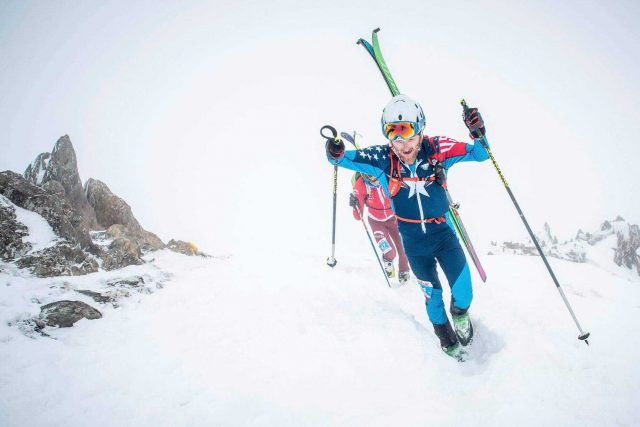
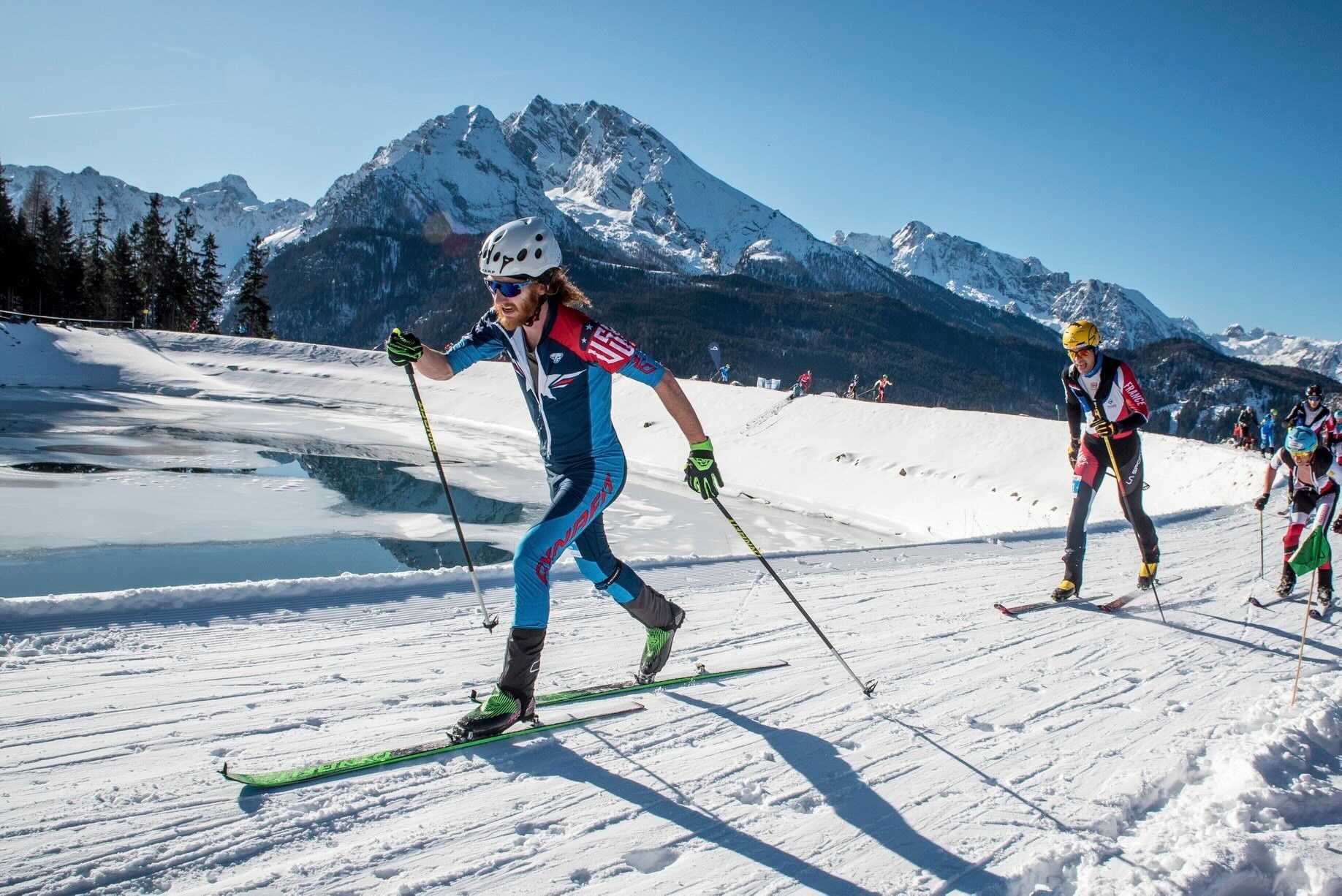
    Cam Smith nearing the crux of a Skimo race. (Photo: USA Skimo).

    Smith returned to the North American continent in March, and quickly won the Continental Championships in Kicking Horse, British Columbia. He finished off his season in April, returning to Crested Butte to win his third straight Elk Mountain Grand Traverse, a kind of one-day classic in the U.S. Skimo world (think Paris-Roubaix, if it started at midnight and touched a 12,389ft mountain pass instead of cobblestones) from Crested Butte to Aspen. In that race, he edged out Simi Hamilton and Ben Coons for first place alongside his partner, renowned Skimo racer John Gaston.

    In the first true generation of American Skimo racers, Cam Smith is the pioneer lighting the way (to hear from him, listen to FasterSkier’s interview with Smith in 2021 here).

    A New Kind of Coach

    In the first true generation of American Skimo coaches, the same pioneering accolade could be given to Adam Loomis.

    Loomis is currently based out of Park City, Utah, where he leads a first-of-its-kind youth Skimo team with the Park City Ski and Snowboard Club, while also having earned himself a spot on the national team as an athlete this year.

    Originally though, Adam Loomis is from Eau Claire, Wisconsin – our shared hometown.

    As a kid there he showed a penchant for both taking to the most unique corners of the ski world he could find and excelling in them. He started in the ski jumping world with the Eau Claire Flying Eagles, and got his start on cross-country skis with the once-a-week after school program put on by the Eau Claire Ski Striders. By high school, he was combining the two disciplines and set to become a top-level Nordic Combined athlete. He was soon named to the U.S. Nordic Combined National team, and that took him out to Park City, Utah for the first time.

    Even during those early days as an athlete, Loomis showed an inclination towards viewing his athletic development in the context of the larger structures it was happening in – the clubs and organizations he trained with. In other words, he was thinking like a coach. Or, at least, that’s how it looked to me, a kid learning to ski race in the wake that Loomis left with his accomplishments in Eau Claire.
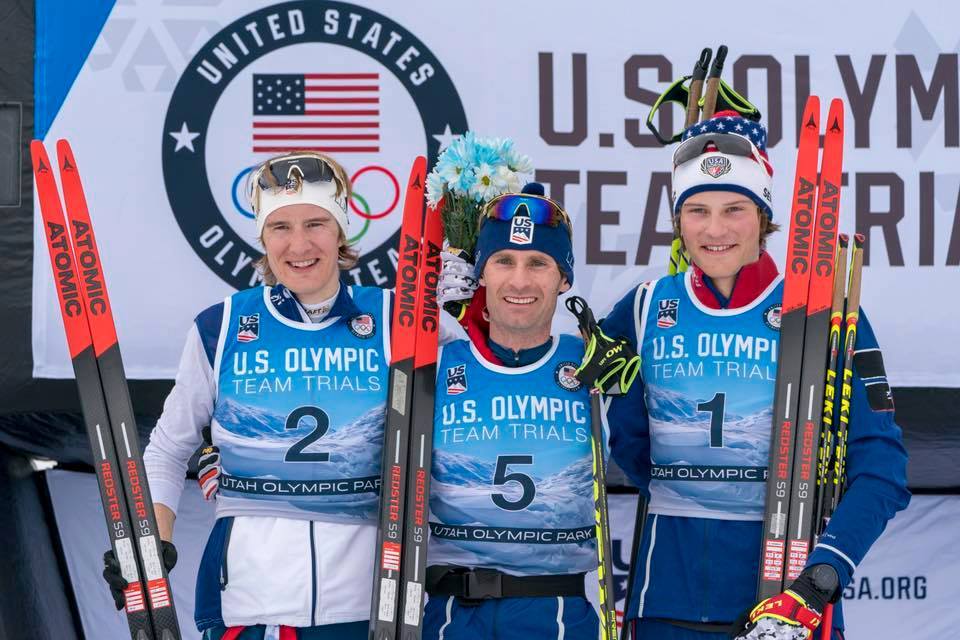
    (L-R) Adam Loomis, Taylor Fletcher, and Ben Loomis on the podium after the jumping portion of US Olympic Trials in 2018. (Photo: USA Nordic).

    I knew Adam as Ben Loomis’ big brother – who I was learning to ski alongside, and would eventually watch follow in the Nordic Combined path forged by Adam (where he is two Olympics in, so far). When Adam was first transitioning to being a National Team athlete, he would come back to Eau Claire to put on clinics with our middle school team, Chippewa Valley Nordic, which he had a unique role in forming as the leading athlete coached by our team founder, my father, Ted Theyerl.

    There I remember Adam, on roller skis in the vast parking lot outside of Eau Claire’s minor league baseball stadium, clad in the black Bjorn Dæhlie U.S. Ski Team warmups indicative of that early 2010s era. He looked like an alien hero, someone from another planet that each and every one of us knew, just by looking at him, that we wanted to visit. He brought insights from that far off place too. Logging training, the concept of heart rate zones, and the idea that training was something you constructed over long periods of time, not what you did to augment your baseball practice. In the winters, he would follow a few of us around on our intervals through the Wisconsin woods, pointing out small tweaks, like where to place a pole or when to transition techniques with the terrain. The snapshots in my memory of his advice come from maybe three or four sessions, which is only a further testament to Loomis’ coaching talent. When Adam gives you something to work on, it sticks.
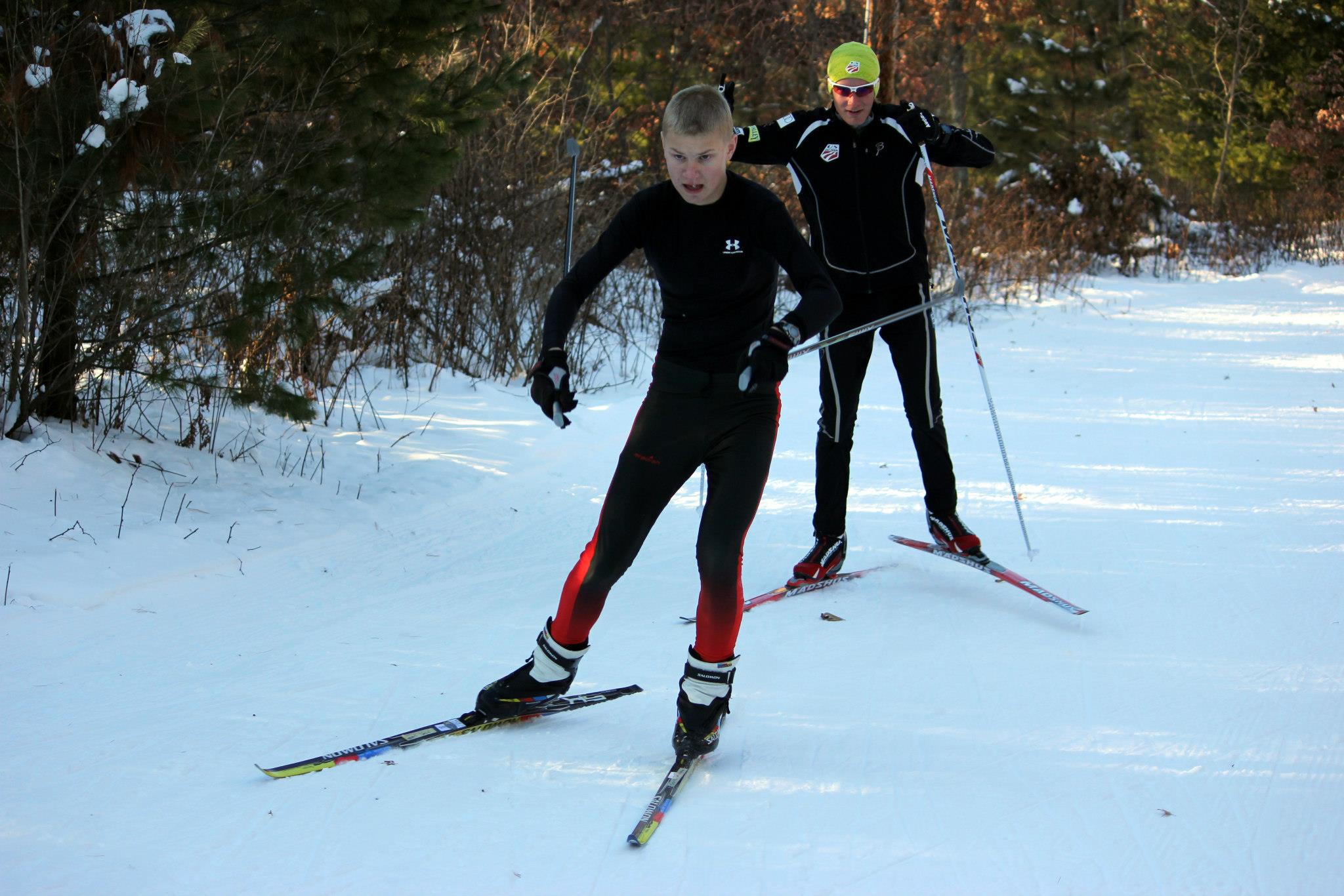
    Adam Loomis follows the author on a trip home (circa 2012) to work with his home club Chippewa Valley Nordic. (Photo: Chippewa Valley Nordic/Ted Theyerl).

    Eventually, Loomis climbed from racing Continental Cups to World Cups. All the while, he was based in Park City, where he continued his early pattern of searching out new ways to go fast on skis. Skimo had found its way to Park City by then, with the Wasatch PowderKeg offering a community full of talented endurance athletes a gateway to the new discipline. Loomis saw a new challenge and a natural fit, and so started racing. After retiring from competitive Nordic Combined skiing, he spent a year in Alaska coaching the discipline, which further gave him access to the backcountry needed to work on the technical skills of Skimo. When he joined up with Park City Ski and Snowboard Club (PCSS) to coach their youth Nordic Combined program in 2021, he came up with the novel idea to not only race Skimo, but to help coach youth interested in the discipline as well.

    These days, his daily routine at PCSS is busy, even by ski coach standards. Beginning the morning standing at the ready to watch and coach jump practice for Ski Jumping and Nordic Combined athletes before heading over to the base of Park City resort to work on climbing on skins, transitioning, and bombing down for Skimo. And between competitions on the weekends, he gets out and races too. Loomis has forged his own way in the past, out of the county forests and bluffs of Wisconsin to high peaks and deep powder pockets, and now looks to be forging a future for a whole new sport in the present.

    New Ideas for a New Sport

    Being the first generation in a sport comes with the necessary condition that the athletes and coaches leading the way have developed in other athletic contexts. And for those now looking to lead the first generation of U.S. Skimo towards the Olympics in 2026, that’s often been in Nordic skiing (while I’m covering Smith and Loomis here, it’s worth noting that other familiar Nordic faces, including Liz Stephen, Caitlin Patterson, and Simi Hamilton have all had impressive forays into the new discipline).

    Cam Smith started his athletic career as a burgeoning track and cross-country star in Rockford, before deciding to attend Western Colorado University in Gunnison, Colorado (30 miles down valley from Crested Butte). “I loved [running], but I kept having injury issues…and at the same time [being in Gunnison] led me to start mountain biking,” he said in his email to FasterSkier. Mountain biking at Western was Smith’s gateway to the College’s unique Mountain Sports Program, which houses seven disciplines of mountain sports – from freeride to Nordic to climbing – under one program. Started in 2012 by mountain bike trailblazer and longtime Gunnison resident Dave Wiens (seen here beating Lance Armstrong in 2008), the Mountain Sports Program was designed to give institutional support to talented athletes who share a pioneering streak with their coaches to pursue the newest challenges in the mountains. Smith became the archetype for Western Mountain Sports’ success.

    Mountain biking led to learning how to Nordic ski, which led to racing with Western’s United States Collegiate Ski Association (USCSA) program. He found success there, and then was convinced by his older sister, also attending Western, to give the Grand Traverse (GT) – the same race he is now a three-time defending champion in – a try.
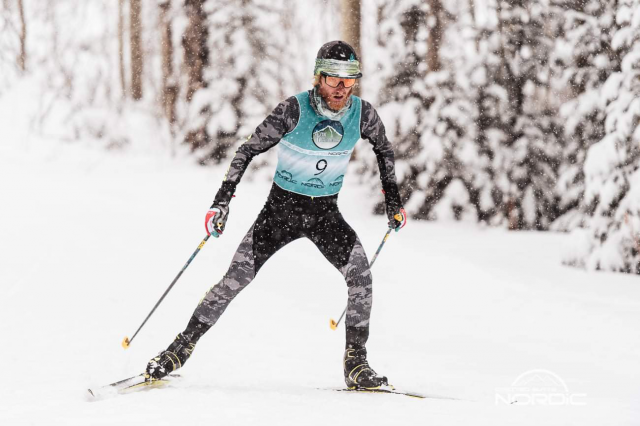
    Smith racing in a local 10 k near his home in Crested Butte, Colorado. (Photo: Xavi Fane/Crested Butte Nordic)

    In his first GT, Smith made it to Aspen, which for a first run was a huge success. It was enough to give him the nudge to go all in on it. He was selected to compete at Skimo World Championships for the first time in 2017, and then named to the National Team in 2019.

    Smith’s background lent itself to an ability to chart out an intensive training program for a program where training principles weren’t set. Smith frames his attitude towards training as one that sees all aspects of the challenge, “Skimo is just very dynamic! You have the same fitness and effort [as Nordic skiing] to worry about, but then also the exposure, extreme terrain, and inherent challenges to being in a high alpine environment.”

    On a typical day of training in the winter, he says:

    “I start every day with a morning session. Whether it’s before work or on the weekends I like to get started with movement. I try to ski the backcountry more often than I do on-piste (riding the chairlifts on Crested Butte) for extra technical practice. Almost every day my afternoon schedule is a little more varied – skate skiing, a session downhill skiing on the chairlifts, or a second skin in the afternoon.”

    As for hours, Smith is no stranger to putting in over 20-25 hrs a week in, but mainly marks his training off by a different metric; vertical.

    “During a hard training block, I’m climbing 40,000-60,000 vertical feet in a week.”

    The key for Smith’s training approach is building off the basic endurance-type structure of Nordic skiers, while putting in focused technical work for the challenges of extreme downhill terrain. What shooting practice is for biathletes is what vertical gain and drop is for Smith:

    “It’s a challenge to push yourself [downhill] coming off the aerobic part of Skimo (read; uphill) without taking on a lot of risk. That’s where downhill skiing relatively hard in the backcountry comes in. Rock climbing also goes a long way in the summer to being comfortable with the ‘mountaineering’ part of Skimo.”

    For Adam Loomis, adding in a layer of technical consideration to a well-tuned ski training plan was a simpler task when he started to gravitate towards Skimo more seriously a few winters ago. Swap out ski jumping for mountaineering, and the rest has been fine-tuning. That swap, it turns out, doesn’t always mean abandoning aspects from his ski jumping days, “there’s still a very big emphasis on strength training, which is super important in Skimo. You’re descending at such a fast pace after having just pushed yourself uphill, and the only way to prepare yourself is to work on muscular endurance” said Loomis, in an interview with FasterSkier.
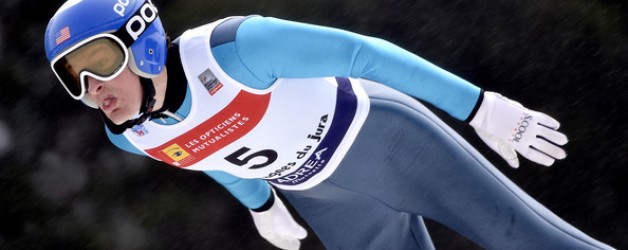
    Adam Loomis jumping in a World Cup in 2015. These days, Loomis is both Ski Jumping and Skimo coach for Park City Ski and Snowboard Club (Photo: National Nordic Foundation)

    From the coaching perspective, Loomis sees this added emphasis as a “specific” type of general training, meaning while hours in the weight room aren’t direct correlates for Skimo, they are targeting its demands for his athletes that are coming from other athletic backgrounds, “All of my athletes are runners and bikers. That allows them to put in a lot of base hours in the off-season, so what I look at is the transition between biking and skiing. What are they going to need to make sure that fitness translates seamlessly and without injury? In Nordic Combined, that transition is a big focus you’re constantly working on for staying healthy jumping and is something I try to bring over to Skimo.”

    Loomis’ model of supplementing already hard-training athletes from other sports with specific Skimo training is one he sees as being key for the next step of the sport’s development in the United States:

    “You look at how most Skimo training plans are designed, and the metric is vertical (like Smith’s) – runners’ train by mileage, skiers by time, but there’s movement in this sport towards vertical being the important metric to center. Realistically, my athletes are all coming from those other training universes and it’s more helpful to think about what we can do to work on the specific, technical demands of Skimo.

    We start with a mix of distance and intensity days, racing and recovery. For Skimo, our intensity days specifically focus on doing a lot of vertical. We might even do a day on our Olympic Park Hill, where it’s only 100m vertical, but our workout will be doing that hill 20 times, transitioning with our [climbing] skins every time. Our easy days might entail sending our kids up to the moguls to just work on downhill skiing, since that’s a really important environment to mimic when it comes to handling the backcountry.

    Having a structured program is helpful because our athletes would be out skiing regardless, but they might not get that technical aspect otherwise. Yes, it’s nerdy stuff, but having our kids practicing ripping off skins and doing transitions on snow, and not just in their living room before they race, is very helpful to get them dialed to handle whatever comes on a Skimo course, which by design could be just about anything.”

    Both Smith and Loomis acknowledge that part of the appeal of Skimo is that it presents unknowns to sort out. Like Nordic skiers at the dawn of skate skiing in the early 80s, or mountain bikers at the dawn of dedicated off-road bikes in the late 80s, they’ve found a discipline where training strikes a balance between known endurance principles, evolving competition formats, and the capabilities of Skimo equipment.

    That last factor, equipment, has been an especially important factor in Skimo’s recent growth. It was only a decade and a half ago that the Grand Traverse, the event that introduced Smith to the sport, was regularly won by skiers on Nordic skis or Telemark ski setups shoddily adapted for climbing marginally faster (this article, written for the Aspen Times in 2002, gives a picture of what these early days were like). In 2022, Simi Hamilton and Ben Coons finished behind Smith by just a half hour on full Nordic setups, but Smith, with experience on all types of setups says, “I feel pretty strongly that Skimo gear is faster over the entire [GT] course because of its versatility.”
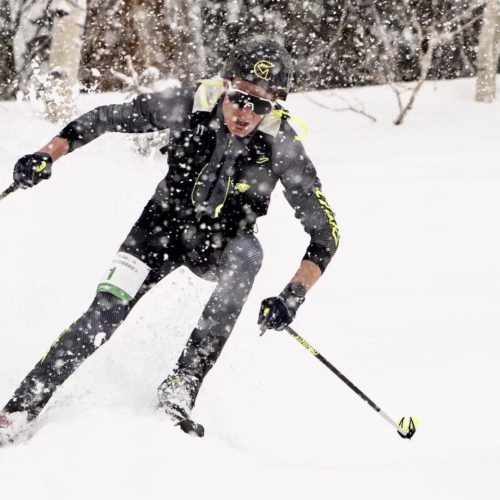
    Adam Loomis lights out on a technical downhill section using modern Skimo equipment during this year’s Wasatch Powderkeg in Park City, Utah. Loomis, finished 2nd in the race. (Photo: USA Skimo)

    That versatility includes extremely light and skinny downhill skis (64-66mm wide has become widely accepted, typical Nordic race skis are usually 41-44mm) that can pack in metal edges, bindings that easily switch between a heel-detached climbing mode and heel-attached descending mode, and flexible, ultralight boots that come with as much carbon as your Fischer Speedmax, but with support that holds your whole ankle in place. Today’s Skimo skis, in other words, have an answer for every time us Nordic skiers have found ourselves bushwhacking and wishing for something to make things a little more capable.

    For those coming from traditional backcountry backgrounds, Skimo skis open up the world of a true endurance sport. Loomis says, “I think there’s a lot of excitement around [Skimo] from people who had no idea of what it was a few years ago. It’s gone from this weird little thing that people raised on skinny skis like myself did, to being something that a few of those people on heavy, recreational backcountry setups looked at and said, ‘that looks like it could be some great type 2 fun.’”

    Back at the forefront of U.S. Skimo’s development, both Smith and Loomis see a blueprint for jumping off of present successes on those even skinner skis.

    “I think [with a World Cup podium this year] we showed that the U.S. has the potential to be a world player,” says Smith. “Sort of like where the Nordic ladies were 10 years ago, and I hope we can follow a similar path, but holy smokes that is a tall task.”

    Loomis, looking at those athletes coming up in the Skimo ranks, says that “I think in a couple years we could easily be up there on the world stage. Maybe not a dominant force like Italy or Switzerland, but we have some serious talent already competing. And kind of like the U.S. Ski Team the past half-decade, you can see this is a special group based on how they’ve blown past anything before them at the junior level.”

    Loomis points to one of his athletes in Park City, for example. Griffin Briley, who won the European U18 Championships in both the vertical and individual races this year. “Unfortunately, they can’t count him as the European champion because he’s not European, at which point you go, ‘ok, doesn’t that show he’s the best in the world at his age group?’”

    Those breakthrough results though, says Loomis, point Skimo towards its next step in developmental success. “Having the 2026 Olympics out there is amazing for establishing the sport as something that endurance athletes can seriously pursue. Having the Olympics means young skiers can have Olympic dreams, and for any niche sport, that’s huge. We need support to bolster the sport at the youth level though – more clubs and the ability to make the barrier to entry less daunting.”

    Smith too, has one eye on ensuring the sport’s future this way, “Broader participation at the younger levels is a huge need and a challenge. I also see making marquee events as high quality as possible as important…making the race experience a positive one is super important at all levels.”

    Bringing it All Back Home

    “When I got to the mountains, I think I looked at them and said, ‘I just want to do everything I can in them.’ The stark change in environment from my childhood in [the Midwest] just fueled this hunger to do everything, and I think I appreciate what I’m doing in part because of it.”

    “Where’d he find that wisdom?” I thought to myself as I listened to Adam Loomis provide that answer to my throwaway question about why he thought that the Midwest was a hotbed for Skimo talent. I was, of course, hoping it was something that we shared in our upbringing in Eau Claire, but initially dismissed that thought. Then I came back to it. In fact, I did pick up on that appreciation for landscape and the possibilities that they provide, in all their forms, for those willing to get out and explore by foot and by ski. I just happened to have accrued that wisdom from a skier who went out and did it first from Eau Claire: Adam Loomis himself.

    With his perspective and talents, U.S. Skimo can look towards a world of possibility in Milan-Cortina in 2026.

    As for the National Team’s current best shot at a medal there, Cam Smith, I’ll be sure to continue to report on his drive forward first-hand, with every friendly wave and “hey there!” as he passes me on the slopes of Crested Butte. He is after all, as our co-coach Murray Banks says, “one of most serious athletes in the world” and you would never suspect it.
    Loomis on course and in the mountains. (Photo: USA Skimo).
  • Nordic Nation: A Backcountry Ski Race on Skinny Skis – Simi Hamilton and Ben Koons Take Second at the 2022 Montane Grand Traverse

    Nordic Nation: A Backcountry Ski Race on Skinny Skis – Simi Hamilton and Ben Koons Take Second at the 2022 Montane Grand Traverse

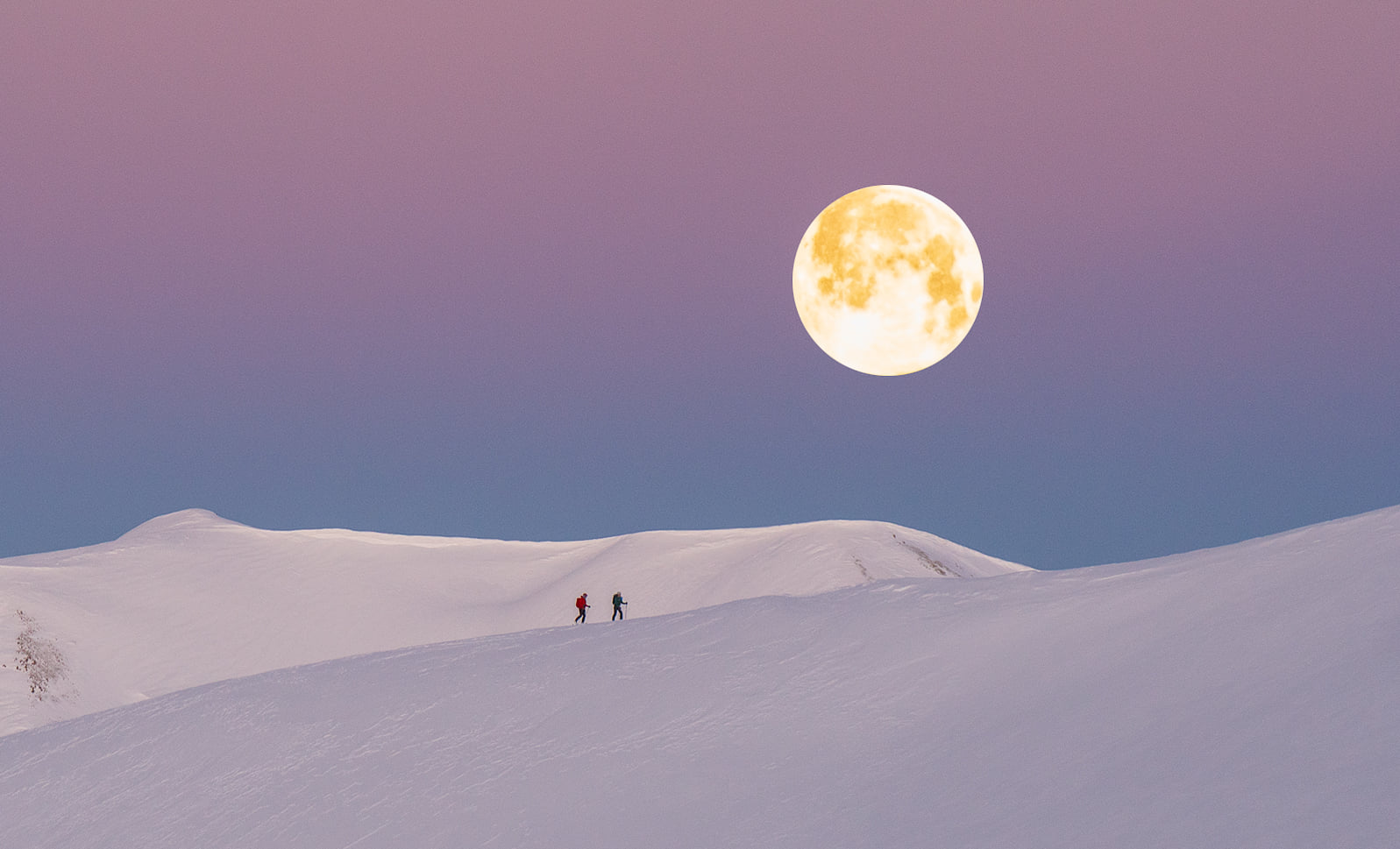
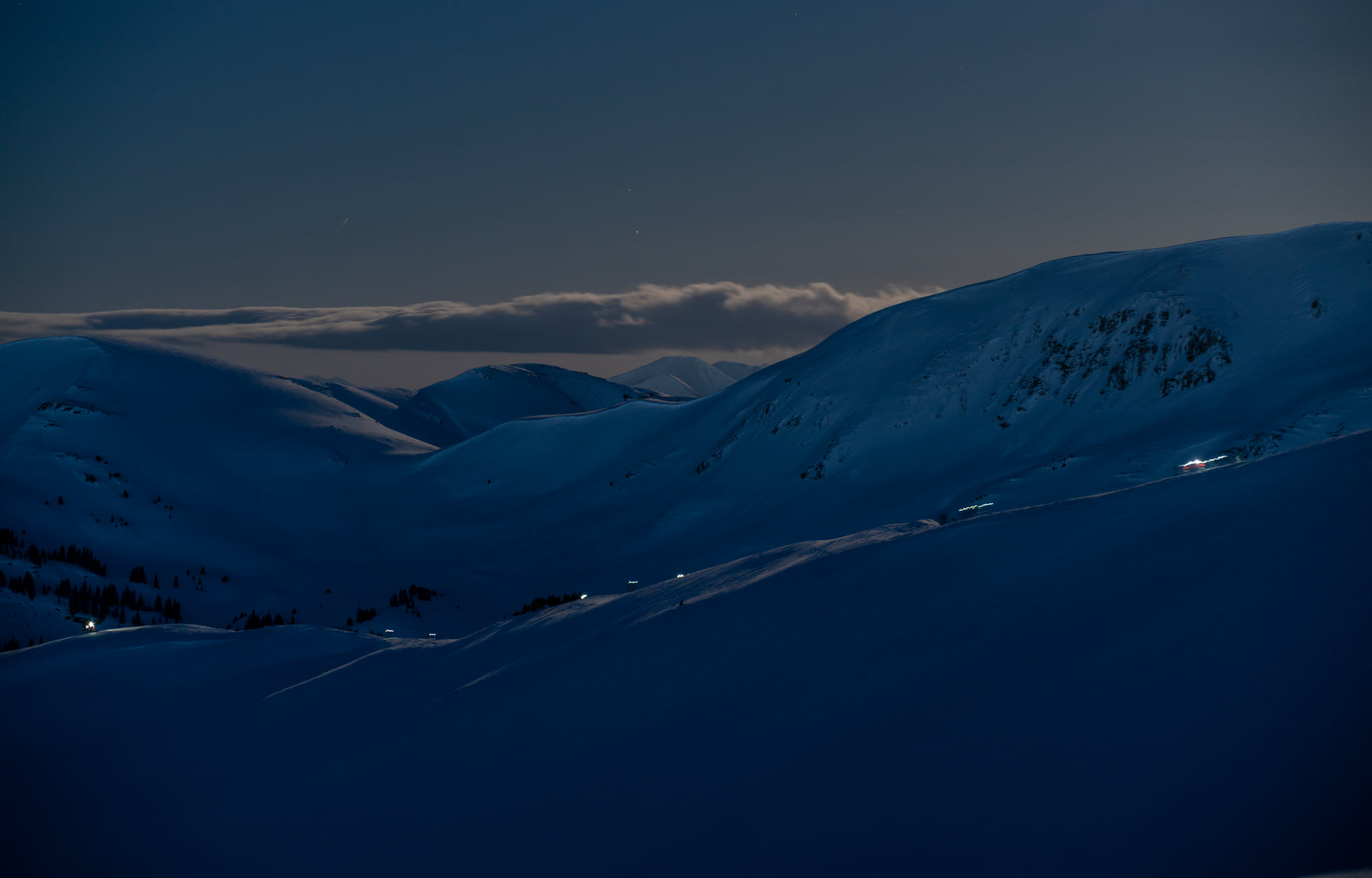
    The 2021 Grand Traverse saw a magical full moon under clear skies and mild temperatures. (Photo: Jesse Levine / Crested Butte Nordic)

    Tucked deep into snowy valleys, the tiny iconic Colorado mountain towns of Aspen and Crested Butte are separated by a mere 40 miles by foot, but roughly 200 miles by car in the winter. Separating the two is the expanse of the rugged Elk Mountain range, which features six of Colorado’s 14’ers, peaks that reach above 14,000’. 

    Now meccas of outdoor recreation, the two towns were historically established as profitable coal and silver mining sites, following the forced removal of the native Ute residents in the late 1800’s. In those days, communication between towns during the winter relied on the fortitude and alpine savvy of mail carriers, who skied back and forth between towns through burly terrain across a notoriously unstable snowpack. 

    A 2021 Grand Traverse racer descends off of Star Pass at sunrise. (Photo: Jesse Levine / Crested Butte Nordic)

    In 1998, this historic route was revived as a backcountry ski race called the “Grand Traverse”, which begins at the base of the Mt. Crested Butte ski resort and travels north over two 12,000-plus foot passes, with roughly 8,000 feet of elevation gain spread over the roughly 40 mile route. The inaugural winners (athletes must race in pairs), racing on metal edged cross country skis, were Aspen’s Travis Moore and Pierre Wille, local legends, and accomplished cross country skiers and alpinists. Moore, who taught at Aspen High School for more than 20 years and continues to coach the cross country ski program, eventually became the coach of a young Aspen resident, Simi Hamilton. 

    For many living in the Roaring Fork or Gunnison river valleys, the Grand Traverse (GT) is a storied annual pilgrimage, respected for the unique and burly nature of the route and its local lore as a rite of passage for endurance enthusiasts. Adding to the mystique, the race begins at midnight, allowing racers to cross the highest avalanche risk sections while snow is presumably frozen, firm, and at its most stable. The avalanche safety arsenal of beacon, shovel, and probe are part of a long list of items athletes must carry for safety, along with extra layers, an emergency shelter, and other items that reflect how deep into the backcountry the route leads and what it might take to survive a night out in the elements should something go awry. 

    A 2021 Grand Traverse racer receives instructions for the descent off of Star Pass from the safety dispatch stationed there. (Photo: Jesse Levine / Crested Butte Nordic)
    A racer descends off of Star Pass during the 2021 Grand Traverse ski race. (Photo: Jesse Levine / Crested Butte Nordic)

    With the rapid advancements in ski mountaineering technology, few still commit to cross country skis for the GT – SkiMo race skis with AT bindings or lightweight backcountry or telemark gear are more stable and typically handle better descending off the passes. But this year, the team of “Yeah, but we can skate” showed skinny skis aren’t yet an antiquated option for success at the GT, particularly if you’ve got the skills of two Olympians who have continued to foster their love for mountain adventures on boards less than 43 mm underfoot. 

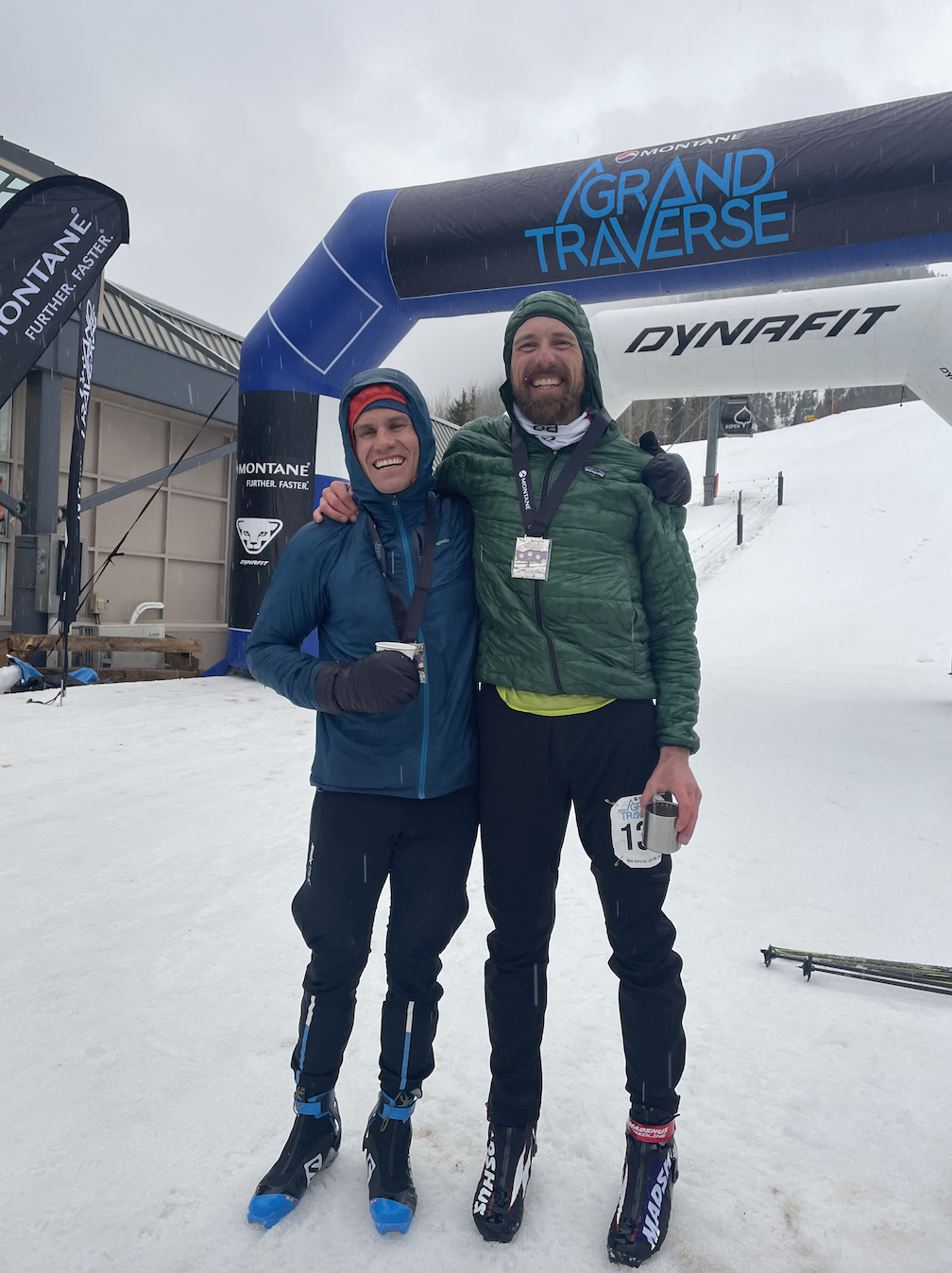
    The duo was Simi Hamilton and Ben Koons, who lined up on Fischer skate skis. After a fast start skating out of Crested Butte, the team leapfrogged with eventual winners and top SkiMo athletes Cam Smith and John Gaston, who eventually broke away as conditions favored wider skis and metal edges. Smith and Gaston made it to Aspen in 6:13:15.4, just over 36 minutes ahead of Hamilton and Koons. (Results here)   

    Before and after: still smiling. (Photos: Sophie Caldwell Hamilton)

    Though Hamilton won the GT running race in early September, 2021, it was his first crack at the storied winter event. For Koons, it was his sixth crack at chasing the ideal crust cruising conditions that might allow a strong skater with some backcountry experience under their belt to smash the course record and take the win on skinny skis. The two have shared a number of big adventure days in the mountains on ski, foot, and bike, often with a third friend, Linden Mallory, who grew up in Aspen with Hamilton and raced on the Dartmouth ski team with Koons, and later became one of his GT partners

    While last year boasted perhaps the most ideal conditions, with athletes racing on firm and stable snow under a full moon in mild temperatures with minimal wind, this year, mother nature had a few twists up her sleeve. The week leading into the race saw a little bit of everything springtime in the mountains has to offer: warm sunny days, heavy wet snow, rain, wind, and plenty of freeze-thaw cycles. Consequently, this was shown in the snowpack, leaving Hamilton and Koons with far less skateable conditions, lots of breakable crust, some “spicy” downhills. Nevertheless, with only one broken pole, they were still smiling at the finish, and seemingly aren’t ready to accept defeat just yet. 

    A train of headlamps climbs Star Pass during the 2021 Grand Traverse. (Photo: Jesse Levine / Crested Butte Nordic)

    For more with Hamilton and Koons, you can head to the Grand Traverse Instagram account, where the duo was interviewed pre and post-race, along with a video capture of their finish, in the rain, at the base of Aspen Mountain. For those interested in testing their mettle in next year’s Grand Traverse ski, registration opens at midnight on December 1st and spots fill very quickly. For those looking to explore the route in the summer, there is also a Grand Traverse run and bike race happening Labor Day Weekend. The events are among the primary fundraisers for the Crested Butte Nordic Center.

  • Nordic Nation: Intentional Versatility in the Masters Athlete Lifestyle with Elite Ski Mountaineering Athlete Cam Smith

    Nordic Nation: Intentional Versatility in the Masters Athlete Lifestyle with Elite Ski Mountaineering Athlete Cam Smith


    If you have the good fortune to spend time in the Gunnison Valley of Colorado, perhaps on Crested Butte Nordic’s extensive trail system, exploring the Elk Mountain backcountry on mountain bike or skis, or taking laps on Mount Crested Butte, you may cross paths with a friendly red-haired resident who is likely moving faster and breathing easier than you are. Known locally as an aerobic machine, 25-year-old Cam Smith embraces all mountain sports as training to support his burgeoning development as an elite ski mountaineering (SkiMo) racer.

    Cam Smith gaining ground.

    Originally focused on running, Smith moved from Illinois to study exercise science at Western Colorado University in Gunnison. Embracing everything the school’s mountain sports program had to offer, Smith began trail running, mountain biking, cross country skiing with the USCSA program, and was convinced by his older sister, who was also attending Western, to be her teammate for the 40 mile Grand Traverse ski race from Crested Butte to Aspen.

    Flash forward through a few years of dedicated skill development and steady progress: Smith was a member of the 2019-20 US Ski Mountaineering Association National Team and won two events at the 2020 National Championships, the uphill only vertical race in just under 20 minutes and the longer individual race which lasted 3 hours 48 minutes. (Because of the pandemic and a lack of qualifying events, a national team was not selected this season.)

    Smith was selected to compete in the World Championships in 2017 and 2019, racing in additional World Cup races in the 2018-2020 seasons. His best international finishes to date include an 8th place finish in the team race at the 2019 World Championships in Villars-sur-Ollon, Switzerland with partner John Gaston, and a 7th place World Cup team finish racing with Rory Kelly. Individually, he’s taken 18th in the vertical race at the 2019 World Championships, and 20th in a 2020 World Cup vertical race in Jennerstier, Germany.

    Remaining fit and sharp, Cam Smith racing on his home trails in Crested Butte. (Photo: Crested Butte Nordic)

    Alongside his 20-plus hour training weeks (often with astounding amounts of vertical gain), Smith plays a variety of roles within the Crested Butte community, including coaching the masters’ performance groups and youth programs at CB Nordic, assisting adaptive athletes on the mountain through the Crested Butte Adaptive Sports Center, and teaching strength and conditioning classes at a local gym.

    In response to the pandemic, Smith shifted his focus to the well-established local racing opportunities. Instead of chasing a World Cup top-15, he made a goal of setting a new course record on what he calls “The Elk Mountain Classics”: the Gothic Mountain Tour in Crested Butte, the Power of Four in Aspen, and the Grand Traverse. Smith also hopped into two of the CB Nordic town series interval start skate races, winning each.

    At the time of our call, Smith had checked two of the three course record boxes: dropping the Gothic Mountain Tour record by over ten minutes to 3:37:06, and the Power of Four record by thirteen to 4:15:21 with World Championship partner John Gaston. As cross-country skiers well know, conditions on the day impact the possibility of chasing these records, but the results are nonetheless a testament to fitness and strength. Smith was lucky enough to have the two factors align symbiotically on the day.

    Given his humble and easygoing nature, he probably wouldn’t tell you about any of this unless you knew to ask.

    Smith also looked outside athletic development for his season goals. Dedicating his training and race performance at the Grand Traverse to Living Journeys, a local nonprofit that holistically supports individuals with cancer and their families during treatment, Smith set out to raise $15,000. This goal has already been exceeded; however, if you’d like to support his cause, you can donate here.

    It also turns out Smith and his partner for the Grand Traverse, Tom Goth, set a new course record in 6:06:24 on Saturday.

    Cam Smith striding along and representing the U.S. in Europe.

    In this conversation, Smith shares more about his development from mountain-sport-newbie to national champion. We also discuss how he still includes nordic skiing to support his SkiMo training, and how a versatile approach to yearly training paired with some sport-specific blocks could serve masters athletes focused on premier races like the Birkie.

    Thanks for listening.

  • Liz ‘Hill’ Stephen Plans Her Foray Into Skimo

    Liz ‘Hill’ Stephen Plans Her Foray Into Skimo

    Liz Stephen (U.S. Ski Team) on a backcountry ski tour in Colorado in April 2016. (Photo: sophiecaldwell.blogspot.com)

    Liz Stephen has made a name for herself as one of the best uphill climbers in the world on the cross-country World Cup circuit, frequently achieving her best performances of the season in the final stage of the Tour de Ski up the grueling Alpe Cermis climb on a ski slope in Italy. She placed second for the time of day up the climb again this year, her fourth time to do so.

    “I want to win this thing before I retire,” Stephen told FasterSkier in January. “So we’ll see, maybe a little extra training for it specifically next year.”

    FasterSkier recently learned that the 30-year-old Vermont native, who was introduced to cross-country as a young alpine skier at Burke Mountain Academy, plans to take her uphill climbing skills and indomitable fighting spirit to the next step. After next season (2017/2018) and the 2018 Winter Olympics in PyeongChang, South Korea, Stephen plans to professionally take up the sport of ski mountaineering.

    Despite the fact that ski mountaineering (“skimo” for short) sprung out of cross-country skiing, the race formats and equipment slightly differ between the two sports.

    “Individual” skimo races can last one to three hours and include up to 2,000 meters of total climb, multiple ascents and off-piste descents in difficult terrain, as well as steep sections where the skis have to be carried in a rucksack harness on the back. There are also fast-paced sprint races lasting just around three minutes on a ski slope, and long-distance team races with a partner as well as relays.

    “I just love the concept of that sport. It looks so hard but also so much fun,” Stephen said after being glued to the online broadcasts of 2017 Ski Mountaineering World Championships in Piancavallo, Italy. “They only ski steep uphills for hours, which is just my thing, and while the downhill sections are a bit scary I can finally put my high-school background in alpine skiing from Burke to good use.”

    The skis used for skimo are wider and heavier than cross-country skis and have steel edges, but the boots and skis are lighter than the ones mostly used in alpine skiing. While skiers can use any technique, there frequently are no tracks, so the typical climbing style looks similar to diagonal classic cross-country skiing. On the steep ascents racers don’t use kick wax, but synthetic “skins”, before taking them off for the downhill sections, often just stuffing them under their spandex race suits for re-use on the next ascent. They also wear helmets for protection.

    Stephen, who still regularly goes alpine and backcountry skiing in the offseason for fun, said she especially looks forward to the team events and a discipline called “The Vertical”, a format usually “carried out on well packed snow with the whole race taking place with skins under the skis in a single, long ascent,” according to the International Ski Mountaineering Federation (ISMF).

    A separate entity from the International Ski Federation (FIS), the ISMF has professionalized the recreational sport of skimo with regular World Cup tour and biannual World Championships. The races are becoming increasingly popular in central and western European countries bordering the Alps, such as Italy, France, Spain, Switzerland, and Germany. And the sport has also been gaining traction in North America.

    One of the most prominent athletes in skimo is Spain’s Kilian Jornet Burgada, an elite skier and mountain runner who became known in the U.S. to a wider audience when he won the 2015 Mount Marathon race in Anchorage, Alaska, in a record time. A year later, Alaskan elite cross-country skier David Norris broke that record.

    Stephen is an accomplished runner herself, as a three-time Trail Run National champion at half-marathon distance as well as shorter “fun” events, such as the Red Bull 400 hill climb up a ski jump in Park City, Utah, another indication for her excellent potential in the sport of ski mountaineering.

    Skimo is not yet an Olympic sport, but the ISMF is hoping to soon make it one, with a potential demonstration to the International Olympic Committee (IOC) as soon as the 2018 PyeongChang Olympics.

    At those Games, Stephen still plans to compete in cross-country, targeting individual races as well as a medal in the women’s relay.

    “I feel like I won gold already with this team,” Stephen told FasterSkier in an interview during the Nordic World Championships this season in Lahti, Finland. “I think it is more about these friendships and these inspiring teammates that I am around every day. They are why I ski, and I couldn’t be happier to just be a part of the team.”

    This time next year, Stephen will be making the transition to a new team and a new sport. While she said she’ll miss her friends, she said training solo won’t be a problem as she’s done that for years  based out of Park City during the offseason.

    In the ISMF World Cup’s overall rankings, there aren’t any senior U.S. skiers currently in the top 30. However, the U.S. team did post multiple top-15 results at this year’s World Championships, and 15-year-old Quinn Simmons of Durango, Colo., even earned a bronze medal in the cadet (youth) sprint race.

    “There’s definitely going to be a learning curve for Liz, like quickly skinning the skis without any help from ski techs, or carrying them over steep sections using ropes and crampons,” U.S. senior national team coach Joe “Pale Thunder” Howdyshell said on the phone. According to his bio, he’s a self-described “jorts-wearing, whiskey-drinking, creative-swearing badass coach.”

    “But she seems like a hard-working, passionate athlete, and given her enormous endurance and experience as an alpine racer, I know she’ll be a huge asset to our skimo family,” Howdyshell continued.

    And at the ripe age of 31 next year, she’ll be one of the younger ones on the U.S. senior women’s team, most of which is over the age of 30.

    “I am so fired up about PyeongChang and going out on the highest note possible,” Stephen said of her cross-country career. “Then onto higher mountains and hopefully, even bigger things.”

    (Is this for real?)

  • First American to Win Ski Mountaineering Gold, Silitch Preps for Winter

    First American to Win Ski Mountaineering Gold, Silitch Preps for Winter

    US Ski Mountaineering member Nina Silitch on the podium after placing third in her age group at the CCC Ultra Trail du Mont Blanc on Aug. 31 in Chamonix, France. (Courtesy photo/ninasilitch.com)

    In late May, weeks after Nina Silitch finished her last race of the season, loads of her ski-mountaineering equipment still occupied more than half the space in her bedroom.

    Her husband, Michael, couldn’t understand why, after six months on the World Cup and international circuit, she wasn’t ready put it away.

    At 39, Silitch was coming off a career-best season in most respects – she became the first American to earn World Cup gold in ski mountaineering after winning a sprint, finished eighth overall in the World Cup and placed fifth in the Grand Course championship series, a two-year culmination of some of the toughest mountaineering races.

    In 2011, Silitch teamed up with Lyndsay Meyer and Valentine Fabre to place sixth in The Italian Trofeo Mezzalama, a high-altitude ski mountaineering competition in the region of Cervinia. The race was part of the two-year Grand Course race series. (Courtesy photo)

    In 2011/2012, she racked up nearly 30 starts, many of which included three- to four-day stage treks across technical, high-altitude terrain. Other distance races took an average of six to ten hours, and then there were team events.

    Silitch ended the season on a high note, placing seventh with two of her US Ski Mountaineering teammates – Sari Anderson and Lyndsay Meyer – at the Patrouille des Glaciers in Switzerland. Typically 53 kilometers long with 4,000 meters of climbing, the team race in early May was cut short around the halfway point because of dangerous winds and unstable snowpack. Silitch, Anderson and Meyer combined to finish strong, physically tying themselves together at times to avoid falling into glacier crevasses.

    Once that was over, one would think Silitch would want to move on, spend time with her 6- and 8-year-old sons, and enjoy spring at their home in Chamonix, France.

    Of course she wanted all that, but Silitch had one more ski-related task on her “to-do” list. The view from her home reminded her of it almost daily. No sooner had she finished racing in Switzerland that Silitch decided to ascend Mont Blanc, the highest mountain in the Alps and 11th tallest in the world (4,810.45 meters, or 15,782 feet, above sea level).

    The view of Mont Blanc from Silitch’s home in Chamonix, France. (Courtesy photo)

    About 500 meters short of the summit, high winds forced Silitch and her climbing companion to turn back. Two weeks later, the ski gear remained where she left it, sprawled across her bedroom.

    Since moving to Chamonix in 2006, Silitch had summited the mountain twice. Both times, she packed up and skied down its North Face, but this time she wanted to do it in a day. It took most people two or three. It didn’t take long before she enlisted a guide friend to join her on another attempt.

    “I wanted to do something, just to have a completion of something and put my season to end that way,” Silitch said during an online chat while visiting family in Maryland. “So that’s what I did this year, Mont Blanc from my house.”

    At precisely 2:20 a.m., Silitch turned on her headlamp and left home. She had about 12 hours before she needed to pick up her boys, Birken and Anders, from school.

    “Mont Blanc is big undertaking and … one that I by no means take lightly,” Silitch wrote on her blog.

    It involved a tricky ascent of 3,375 meters (12,385 feet) and an equally challenging descent. There was altitude sickness to be wary of along with unknown weather elements near the top.

    “The challenge of the Mont Blanc summit for me embraces much that one needs in journey of daily life whether you are a mom, dad, athlete, anyone finding their path,” Silitch wrote.  “Breathe, endurance, perseverance, confidence, fortitude, grace, energy, vision, attentiveness, awareness, caution, respect, experience, tenacity, commitment, presence.”

    Silitch remained focused for the duration, meeting her goal in fairly favorable conditions. After arriving at the top, she took a moment to admire the view, then locked her boot heels in place and started back down.

    “I returned home safe, after a successful summit day, with some tired legs, a little nauseated stomach from altitude, but very happy to pick up my boys at school at the end of the day,” she blogged. “Now, finally the overflow of ski gear in my bedroom can be put away. Operation summer mode!”

    Championing Her Sport

    For Silitch, that meant fewer offseason races and more time with family. A few days after arriving in Maryland for a month-long visit with her in-laws in July, she put her 6-year-old, Anders, in front of the computer during a Skype chat.

    Nina Silitch with her 8-year-old son, Birken, who helped pace her at the CCC Ultra Trail du Mont Blanc on Aug. 31 in Chamonix, France. (Courtesy photo)

    “Hi,” he said politely, then took off.

    “We were just out at the pool,” Silitch explained.

    After she and Michael moved to France 11 years ago, had their children while living in Switzerland then returned to Chamonix, they made a point to return to the states periodically. Both American citizens living abroad on visas, they had raised their sons to speak French as well as English.

    In Maryland, where they spent a few weeks before visiting Silitch’s parents in Carrabassett Valley, Maine (she’s originally from Shaftsbury, Vt.), the boys had signed up for swim team, tennis and triathlons.

    “They’re very active,” Silitch said. She wasn’t much different.

    During her 2012/2013 campaign, Silitch knocked off most every goal she set out for. On April 14 in Tromsø, Norway, she claimed gold at a SkiMo World Cup sprint, which combines kicking and gliding, kick turns, boot packing (carrying one’s skis) and often some skating. The race includes a qualification round and heats, and typically takes 3 ½ to 4 minutes to complete the course.

    Silitch (center) on the sprint podium after becoming the first American to win a ski mountaineering World Cup on April 14 in Tromsø, Norway. With Anna Figura of Poland in second and Emilie Gex-Fabry of Switzerland in third. (Photo by Alex Lugger)

    The final race of the World Cup season, it was only Silitch’s second sprint of the year (one other on the circuit was canceled, and Silitch did another at French nationals, where she finished second).

    It’s kind of been an event that I’ve fallen in love with,” she said. “It’s been a combination of my cross-country skiing background [at the Holderness School and Dartmouth College], but also just the event itself, combining all the aspects of ski mountaineering. You need to be very efficient in transitions … you can’t make a mistake. So it was really special that it came together.”

    Next year, there are three sprints in the International Ski Mountaineering Federation series, which consists of more than 20 races in France, Switzerland, Italy, Spain, Poland and Norway. Silitch was excited that, for the first time, points awarded at sprints will be equal to those earned in longer races. The shorter format was adopted to broaden the sport’s appeal, and with several races in downtown venues, it’s become more accessible to spectators.

    “They actually created the sprint to grow the sport more and hopefully someday it will become an Olympic sport,” Silitch said. “They’re trying to do more TV coverage next year so we’ll see.”

    When she’s not gutting for a win, Silitch is the president of the volunteer-driven Chamonix Ski Alpinisme Club. She founded the ski-mountaineering group three years ago, and has since seen its membership grow from about five to 70 members.

    Women’s ski mountaineering World Cup sprint semifinal on April 14 in Tromso, Norway. (Nina Silitch courtesy photo)

    “That’s something I’m really trying to do, help grow the sport and bring it more to women especially,” she said, “and also to the younger kids as well, the youth. In the U.S., I think that’s where we need to target, those kids that don’t necessarily find their way in alpine skiing or cross-country or even those cross-country skiers that want to try something a little different.”

    One can compete in ski mountaineering as early as 14, which is the age group Silitch would like to draw in. “That’ll be my next step after competing,” she said.

    For now, she’s mostly focused on the season ahead.

    “I think I’m just going to give it one more year of World Cup skiing,” Silitch said. “Hopefully from that I’ll move into other things with my experiences in the World Cup and apply that to whatever I do next.”

    Her husband, an internationally certified mountain guide, is interested in moving to Norway to teach. Silitch ran a female outdoors program at Aiglon College in Villars, Switzerland, while they lived there for four years, then committed to full-time racing when she made the US team in 2008.

    Finances, however, remain a stumbling point for most American competitors in the sport.

    “We don’t really have any funding. It’s up to everyone to get their own sponsorships and everything,” Silitch said. “All the European teams are nationally funded. They’ve got coaches and all their events are paid for and their travel expenses. For me, [it’s] from my heart and passion. … It’s definitely a big commitment, but we feel like it’s such a great experience for me and also for my family, that it’s really worth it even if it can be a little tight at times.”

    In December, she’ll turn 40, yet Silitch remains relatively new to ski mountaineering after trying it for the first time in 2005. It wasn’t until two years later at a night uphill race that she decided to pursue it more seriously.

    “It’s funny that I didn’t really fall into this until after my kids were born,” she said. “So that’s been a whole new experience for me, a whole new challenge. I think because it combines so many of the different things I love, the endurance, the kick and glide cross-country skiing, but also being in the mountains and the mountaineering aspect of it. I’m also a huge downhill skiing fan, and just being able to combine those things, it just kind of creates a sport that’s really fun and challenging.”

    Frame of Mind

    After a long season, which started in mid-December and wrapped up in early May, Silitch took about three weeks off to regenerate with some fun and loose training. She planned to slowly build into a ski-specific dryland routine while staying away from trail racing until the end of summer.

    Primarily concerned about past injuries, she worked with her coach, Adam St. Pierre, a cross-country ski coach with the Boulder Center for Sports and Medicine in Colorado. With his help, she developed the strength to compete in the one summer event she set her sights on: the CCC Ultra Trail Mont Blanc. One again, it was an objective viewed from her backyard.

    Nina Silitch during the first climb up to Bertone before the cold and wind set in at the CCC Ultra Trail du Mont Blanc on Aug. 31 in Chamonix, France. (Courtesy photo)

    In late August, she completed the 90-kilometer race (slightly altered from the original 100 k), finishing third in her age group and 15th among women.

    “My biggest goal of the summer is now behind me,” Silitch wrote on her blog. “1800 runners withstood rain, wind, snow, sleet, mud. Temperatures plummeted on the high cols and runners ran through passes with 10-20cm of snow. … It got to points on the course where it was merely about survival and being well prepared in the conditions with not only the right gear & clothing for but the right mental attitude.”

    That was where her other summer training came in. While in France this year, she’s been working with sports-performance and mental-training coaches, one of which mentored Rafael Nadal, formerly the top-ranked tennis player in the world.

    “It’s helped me tremendously,” she said of learning how to motivate herself through her sport’s toughest moments, no matter how fatigued or bad she feels.

    “Usually I have little mantras like, ‘Go mommy go,’ … or ‘fast and light,’ ” Silitch said. “If I ever have a negative thought come into my head I try to have two positives. Like, ‘Oh my legs feel so heavy,’ ‘No, your legs are really light,’ and ‘Think about your quickness or your cadence,’ and those things really help. I’m really interested in that and it’s a neat thing to apply to coaching, for sure.”

    For Silitch, instructing could her next step, especially as she and Michael plan their next move.

    “We’re not sure if we’ll eventually work our way back to the states,” she said. “We both really love teaching, so maybe we’ll explore.”