From the FasterSkier archive — posts syndicated from athletes’ and coaches’ own blogs between 2004 and 2012, kept online as published. Current coverage is at fasterskier.com.
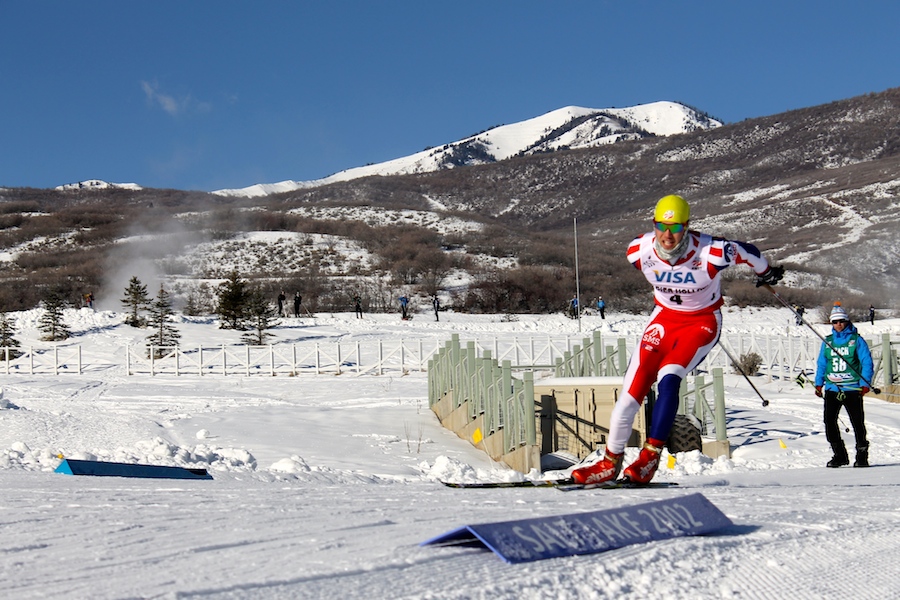
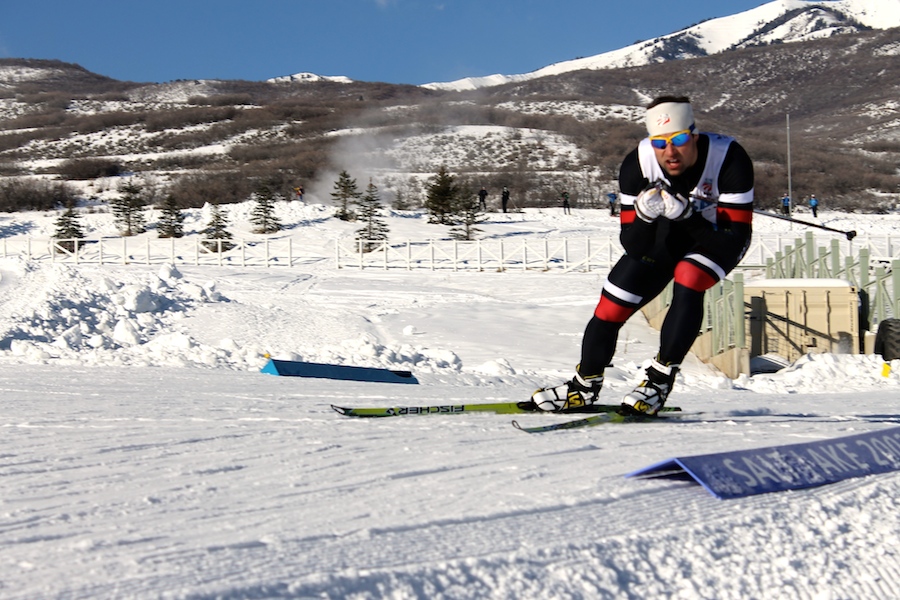
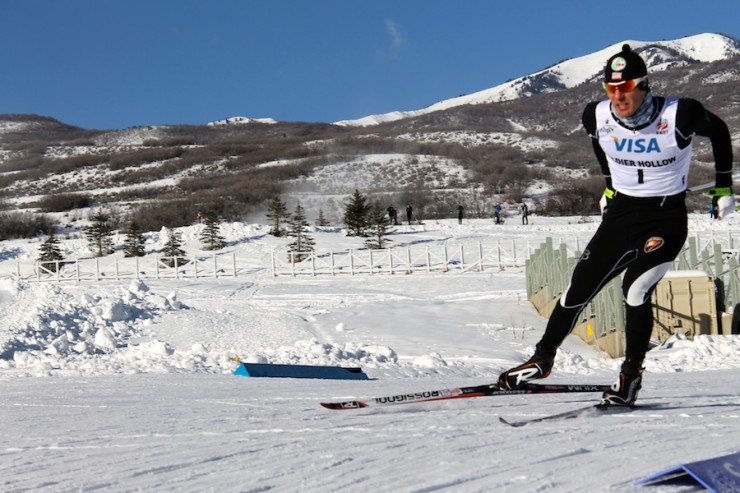
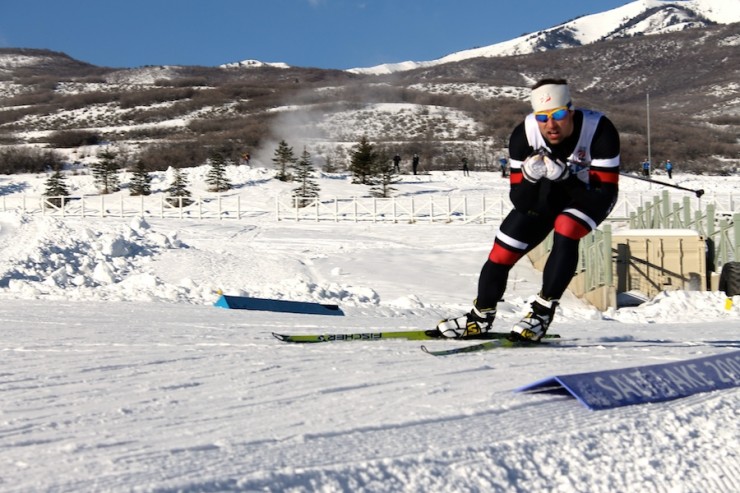
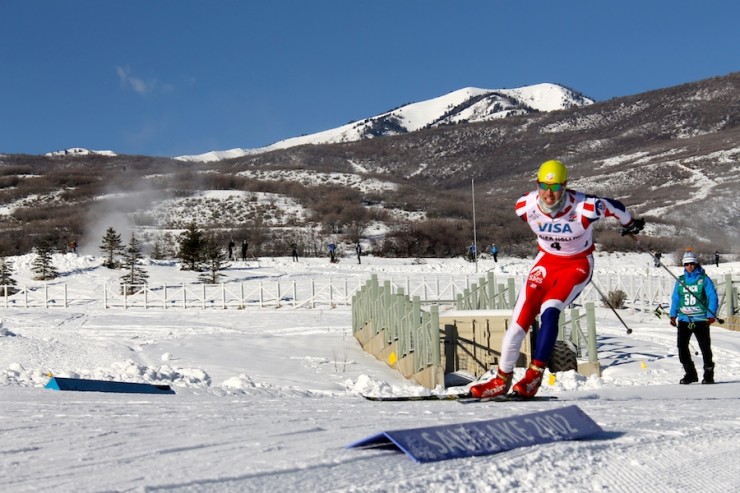
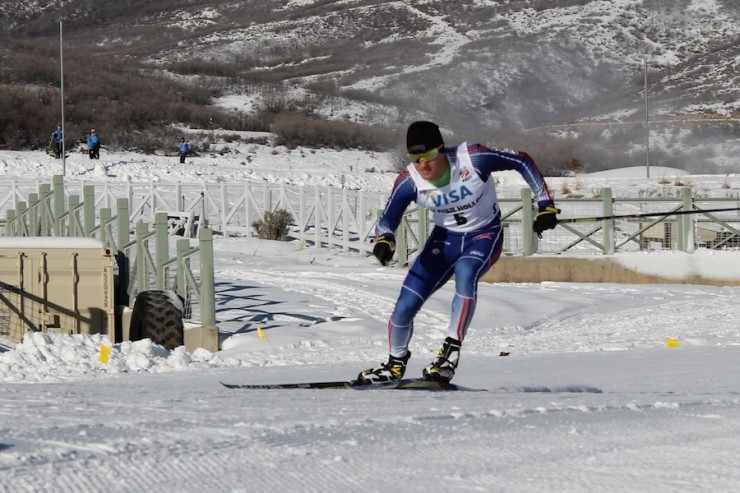
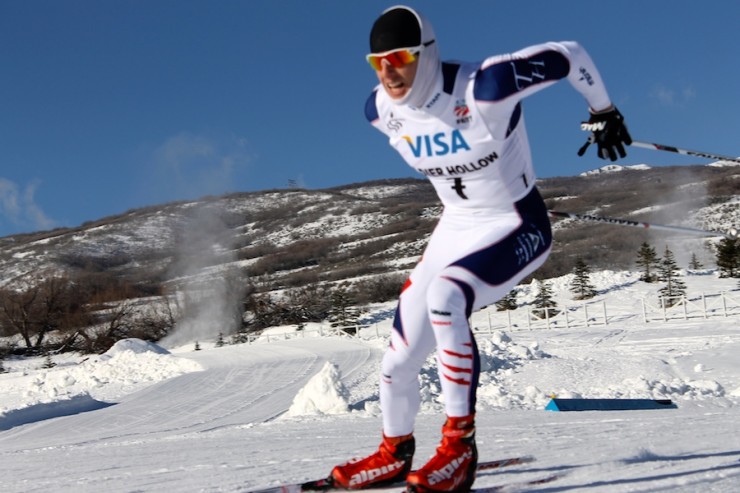
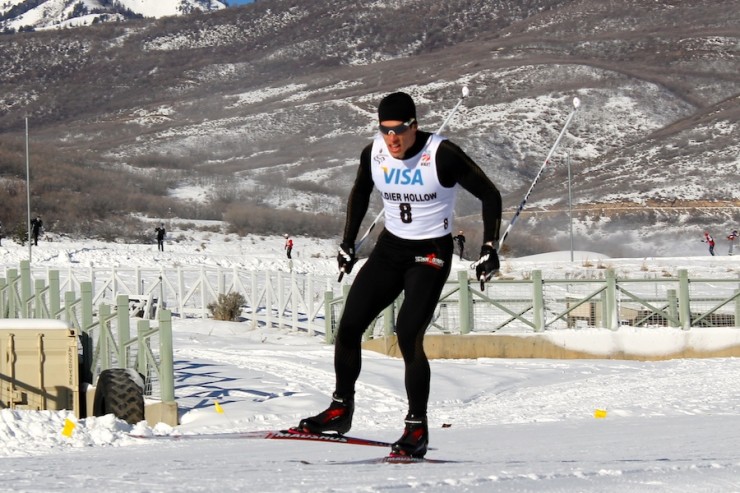
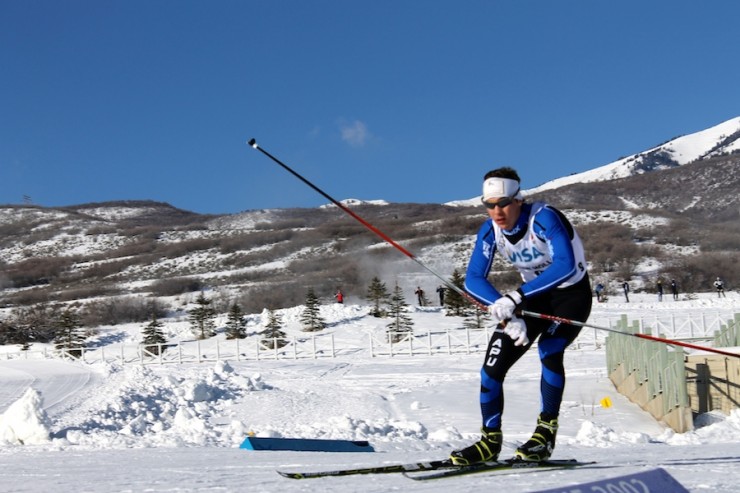
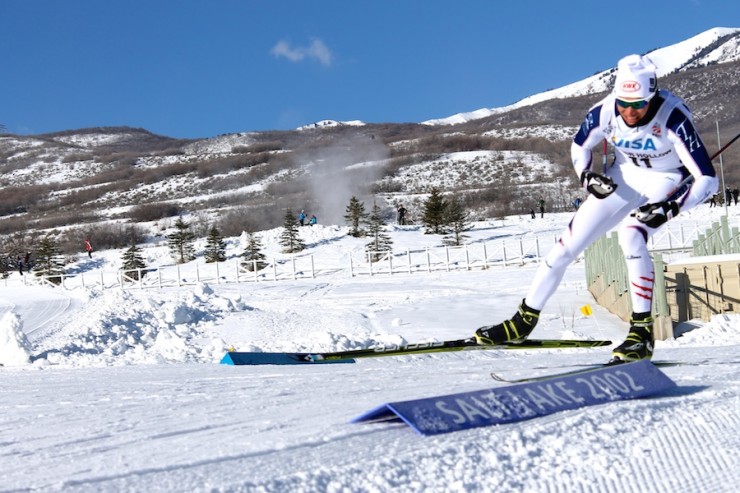
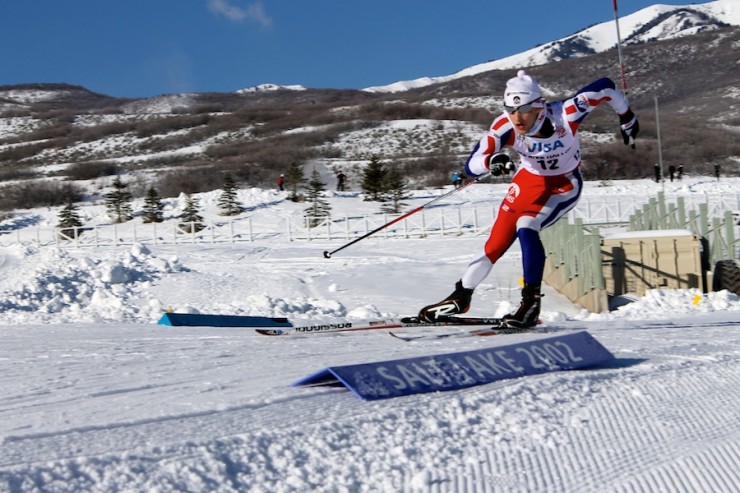
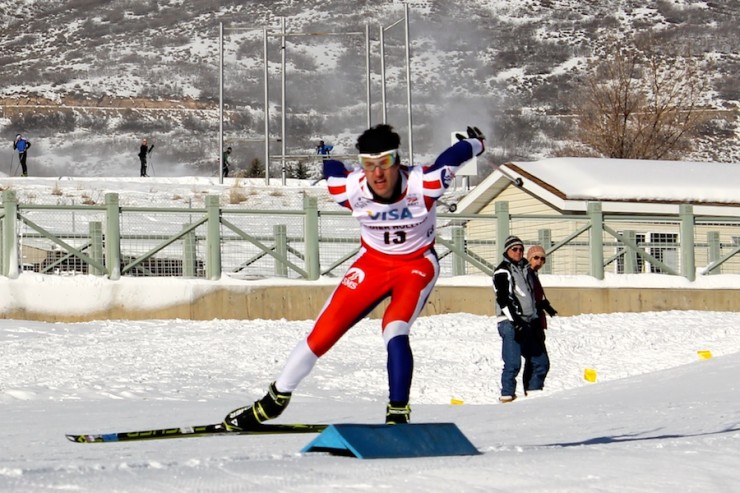
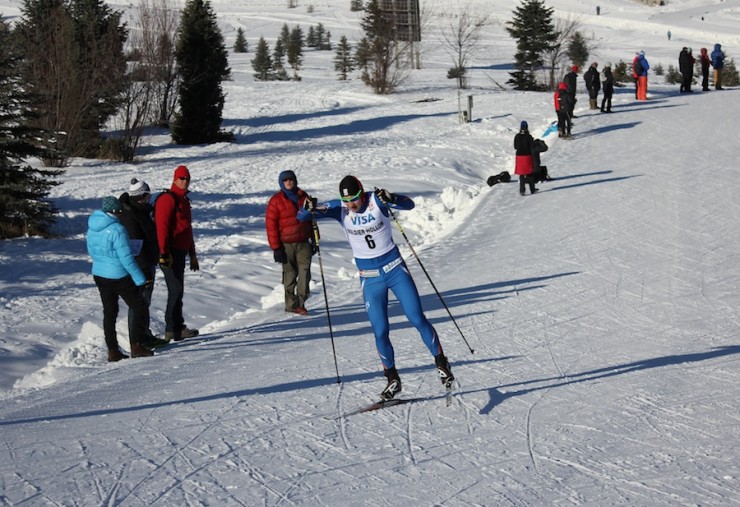
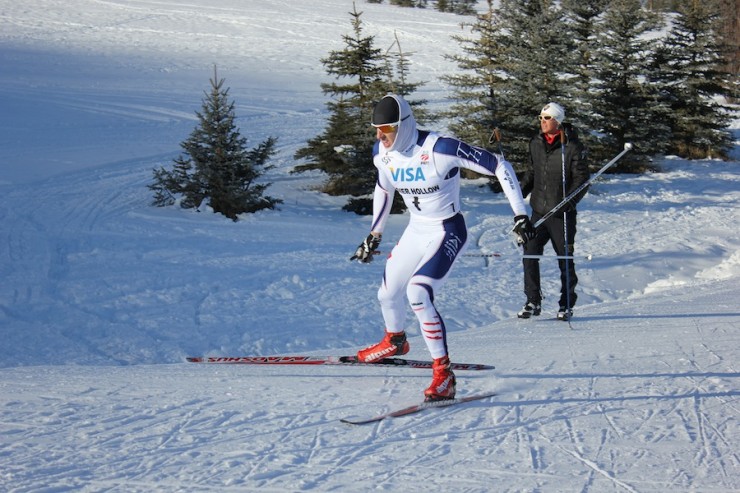
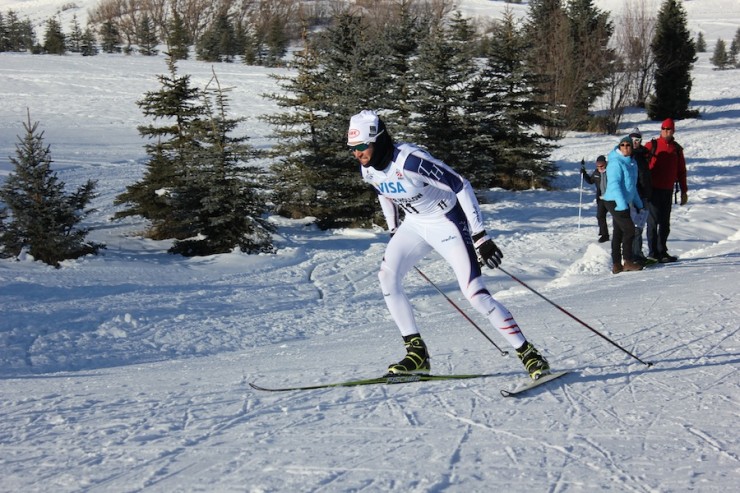
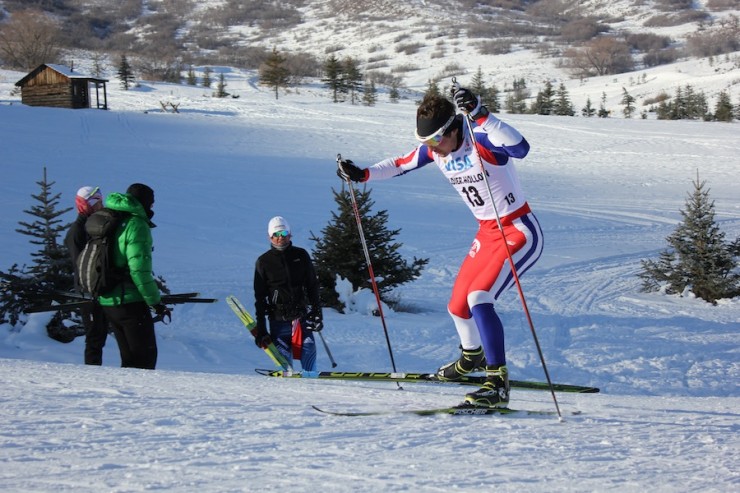
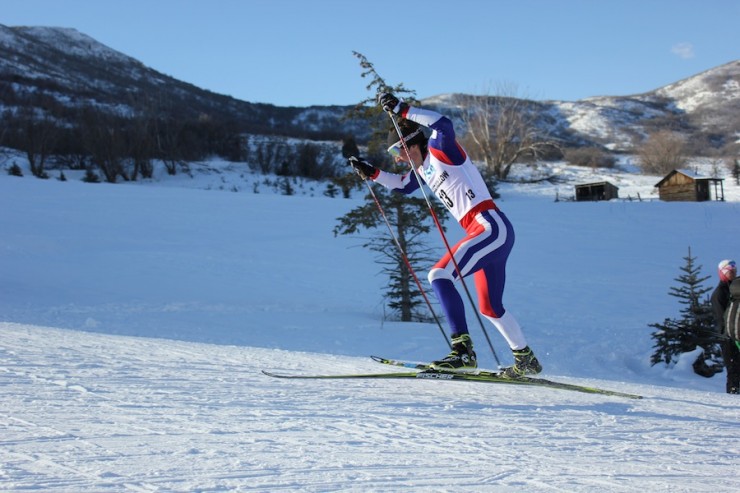
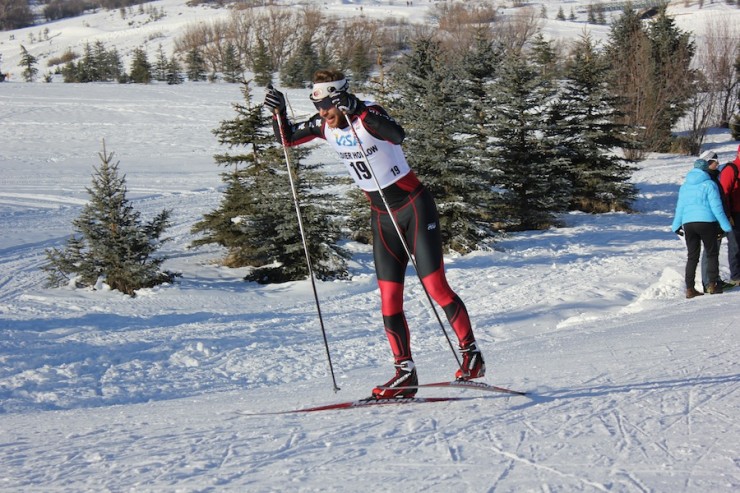
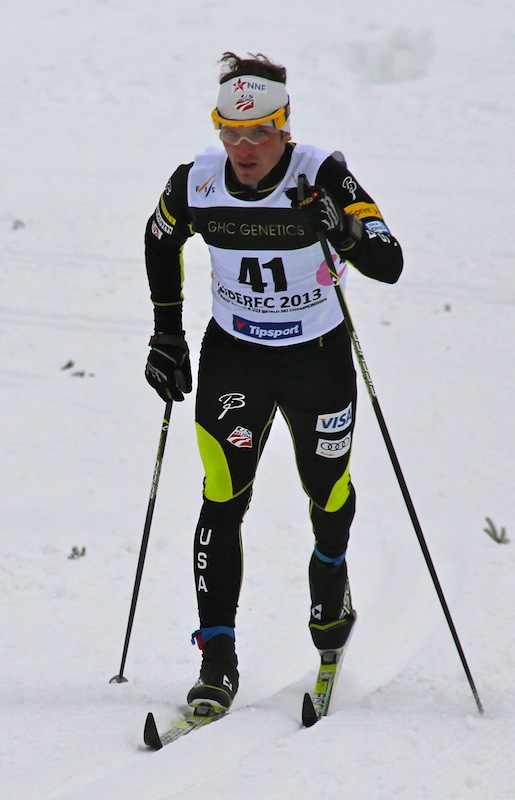
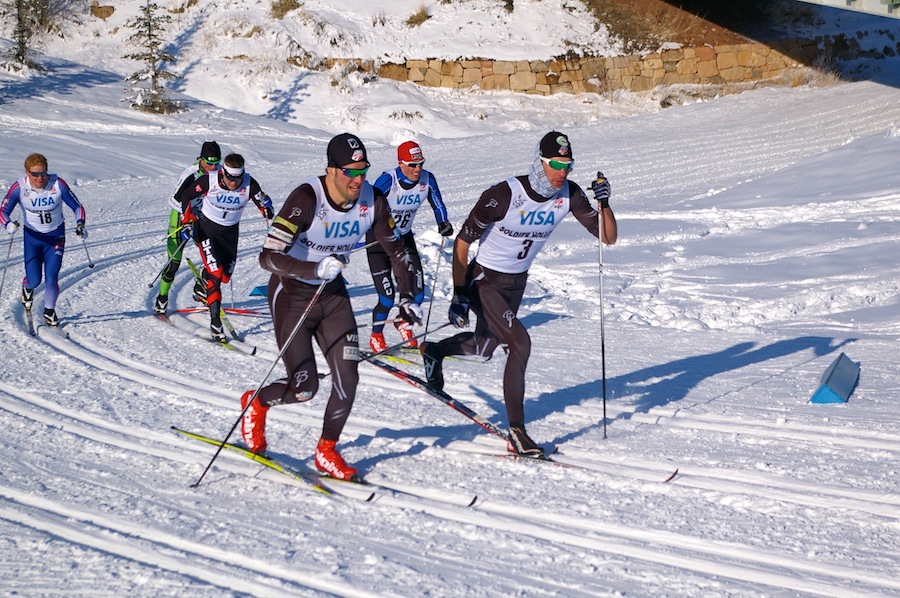
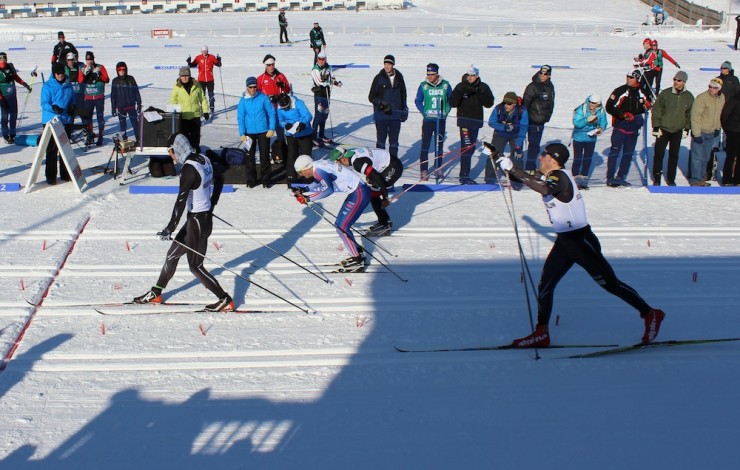
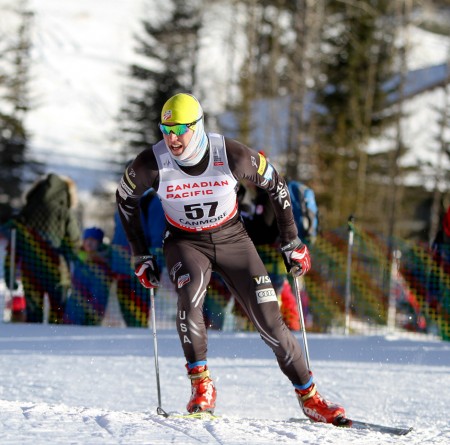
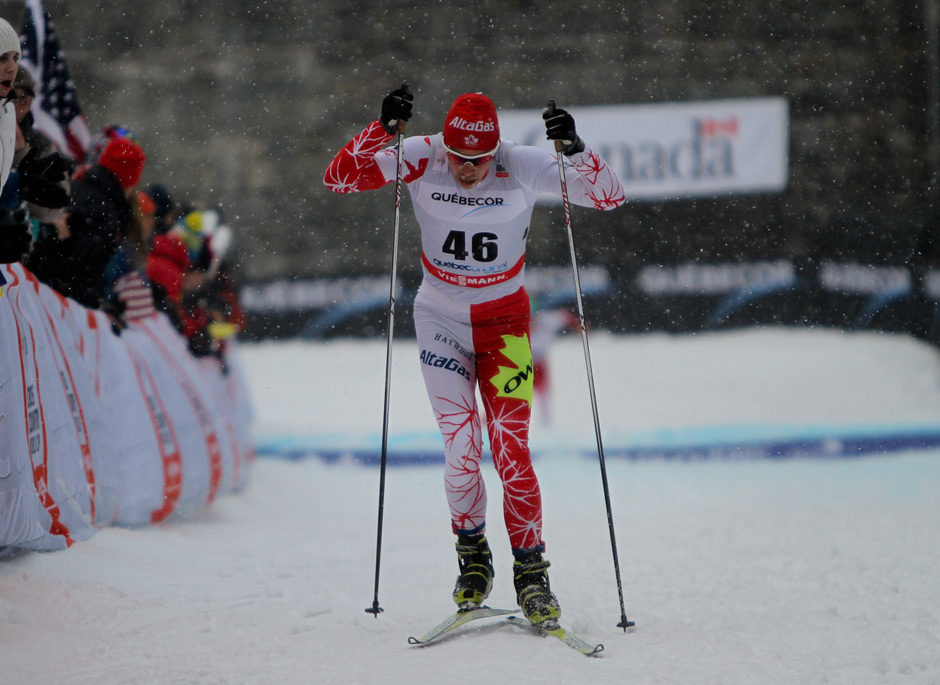
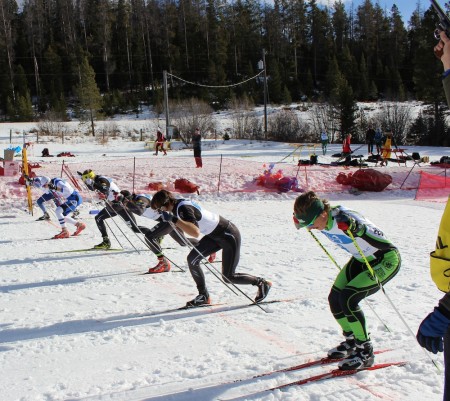
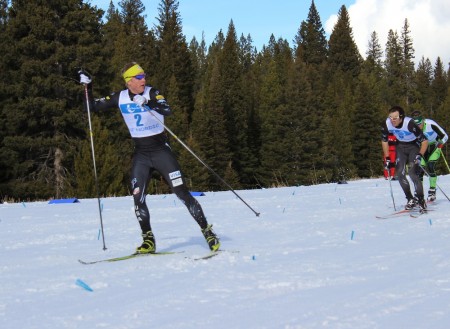
Skyler Davis competes at the 2014 U.S. Cross Country Championships at Soldier Hollow. Davis retired from skiing following the championships and took up soccer at UVM. He was recently named captain of the team for the 2015 season.
In 2011 Skyler Davis made headlines by claiming third place in the 1.4 km classic sprint at the U.S. Cross Country Championships in Rumford, Maine. This was just the beginning of a successful year for the then 19-year-old, which ultimately ended with a naming to the U.S. Ski Team D-team. In 2012 Davis’ success continued with a standout-24th place in the freestyle sprint at his second ever World Cup in Canmore, Alberta. In 2013 the former SMS T2 skier had another successful U.S. Cross Country Championships, qualifying second in the 1 km classic sprint before finishing just off the podium in fourth.
Though he did not reach his goals at U23 Championships that year in Liberec, Czech Republic, Davis was hungry for a bounce back in 2014. However, the young skier virtually disappeared from the cross country ski world after nationals in Soldier Hollow, Utah. As it turns out, Davis was ready to go back to school.
“School was the biggest deciding factor for me,” Davis said in a phone interview. “I loved my team [and] I loved my coaches, Gus [Kaeding] and Sverre [Caldwell], at the time when I did retire. I was in a really good situation actually because the T2 Team had just started to really send off. We were doing well, we had a good group of guys, the coach was great, but I really wanted to enter school before another Olympic year went by.”
“If I made the Olympics I would keep skiing and then probably enter [school in] the fall and if I didn’t, I would stop skiing and enter the spring semester which started I think honestly 12 to 24 hours after senior nationals ended that year,” he added.
Even though Davis was headed to school, he didn’t want to leave athletics completely behind. Searching for a continued relationship with sport, he turned to an old passion of his, soccer. “As I viewed it, it was my chance to stay at a really high level…Soccer was something I had a really strong background in. I was very raw going back into the sport but it definitely was what I was looking for,” Davis, who played on northern Vermont’s premier soccer teams throughout elementary and middle school, stated.
Prior to the of the 2014/2015 ski season — knowing that he might not qualify for the Sochi Olympics — Davis met with many division 1 soccer coaches and ultimately decided that the University of Vermont (UVM) was the right fit for him. “The deciding factor with UVM was the coach, I really love the coach, and I really like the team,” Davis said.
Though Davis was ineligible to play until the following year, he was allowed to join the team for practices and training, which proved to be a challenge. Suffering from ailments ranging from shin splints to back problems, Davis worked to transition from low-impact skiing the high-impact movement required in soccer. That, in combination with intense lifting sessions, left Davis wondering if he would be able to reach the level required for large university soccer program. “That was definitely an interesting two plus months where I was like, I might get cut. I really wasn’t sure,” stated Davis.
But the former cross country ski racer took on the challenge, and managed to impress the coaches and the team enough to maintain his roster spot for the following year. Still, he was ineligible to play in the fall and patiently waited for his chance this past spring. “Once the spring started up for games, we play about six games in the spring, I was able to actually carve out a roll on the team at center back so I actually played every minute of every game in the spring,” said Davis.
This past June, Davis was named as one of the two captains for the upcoming season — something he credits to both his relationships with his teammates and some lessons he learned from skiing.
“I think nordic skiing definitely helped me as far as being a good role model and leader for the team because with nordic skiing you have that work ethic that surpasses basically any other sport,” Davis said. “There definitely are moments where it brings me back to my nordic skiing training where we will be doing intervals which are obviously a little bit differently tailored, but the get me excited compared to other people.,” said Davis.
In a recent press release by the University’s athletic department, the program’s staff had nothing but praise for the former USST member.
“Skyler is a natural born leader who has a tremendously positive impact on the program from day one”, Head Coach Jesse Cormier said. “He has established himself as a strong, mature voice in the locker room and is an exemplary student. He has made amazing progress in training, his game has changed so much and is reflective of the consistent growth we have seen from the group as a whole. I’m excited for Skyler to play in his first match, he was waited a long time and prepared well to say the least.”
The newly named captain is currently in Burlington, Vt. preparing for the upcoming season. “It has been ratcheting up pretty quickly,” Davis said. “Basically every day we train together. We have about half the team here now and preseason starts in about a month, so everyone is filtering in soon…Once we get about 20 to 25 guys we can really make it competitive with playing and training.”
Though the 2015 soccer season at UVM is currently his biggest athletic focus, Davis certainly has not forgotten about his love for skiing. “Hopefully, after I’m done with soccer I’ll be able to get back to skiing and other more nordic ski related activities,” he said.
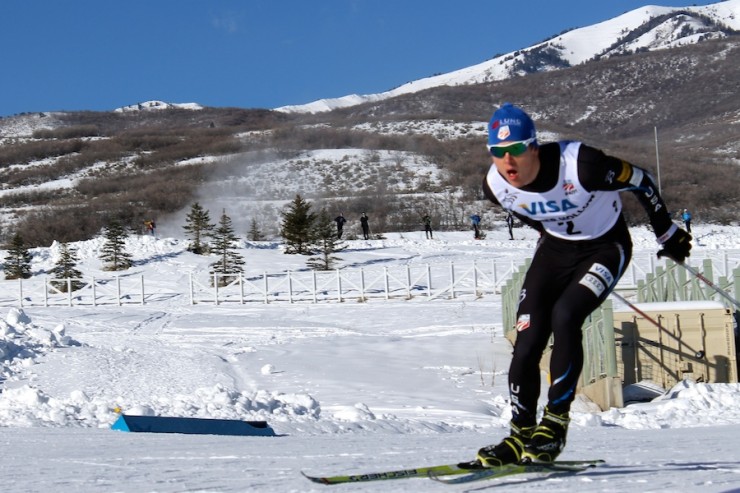
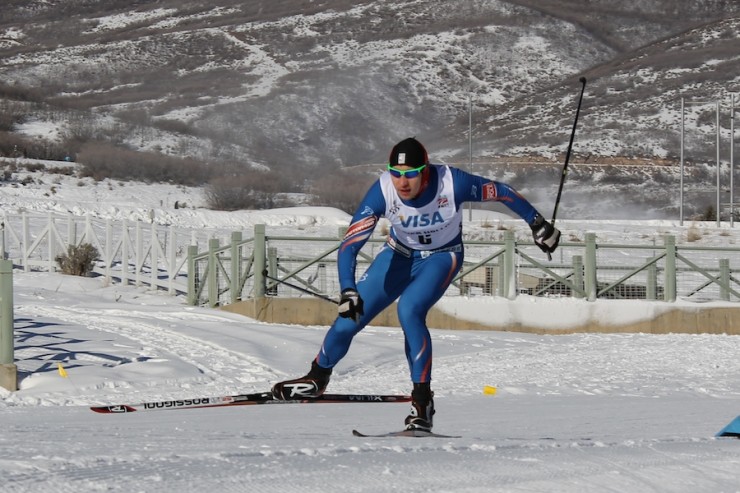
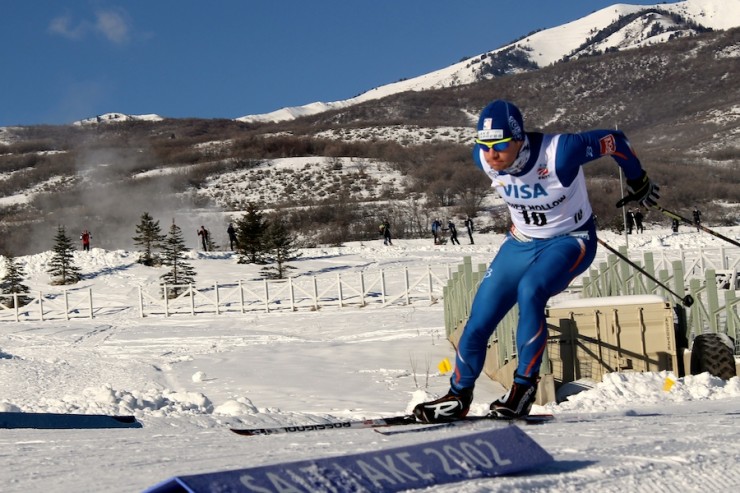
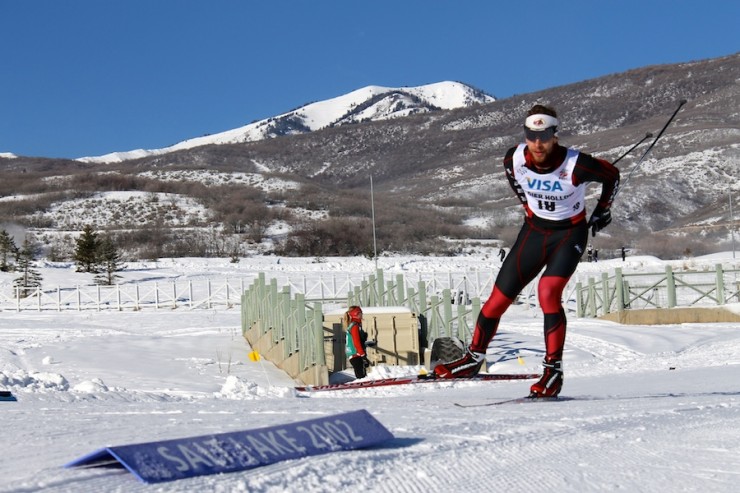
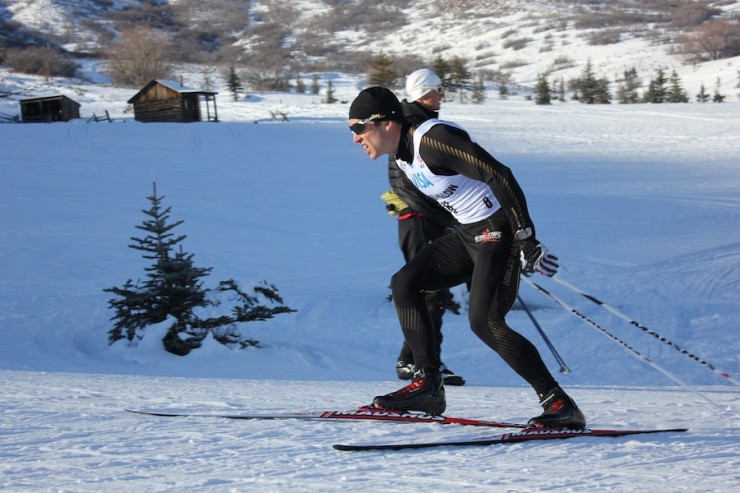
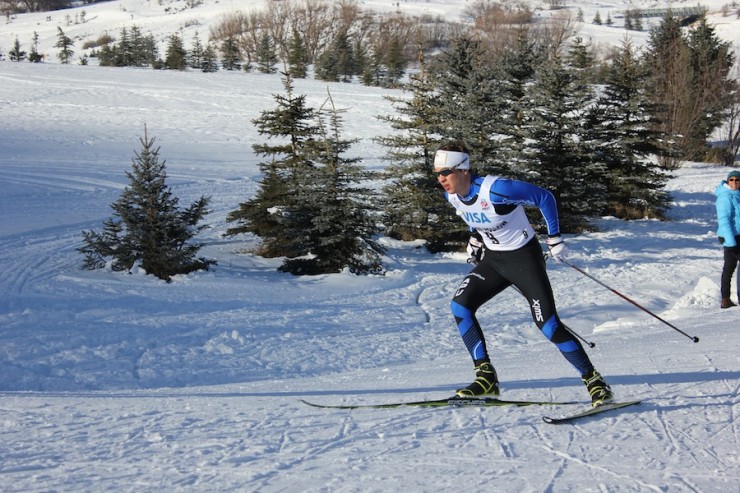
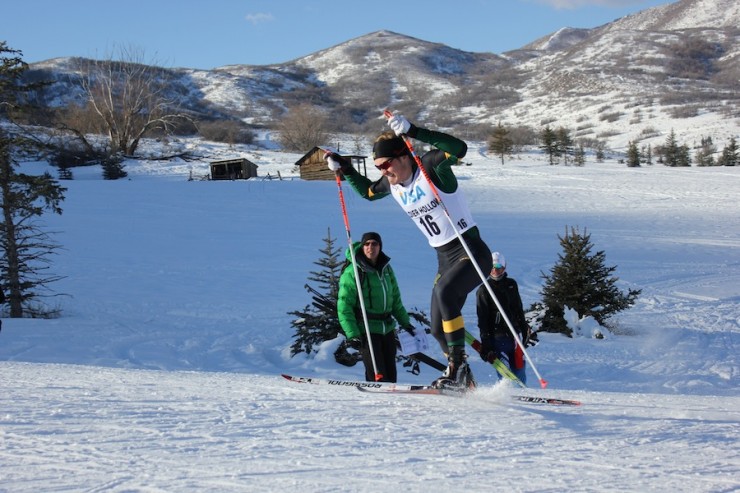
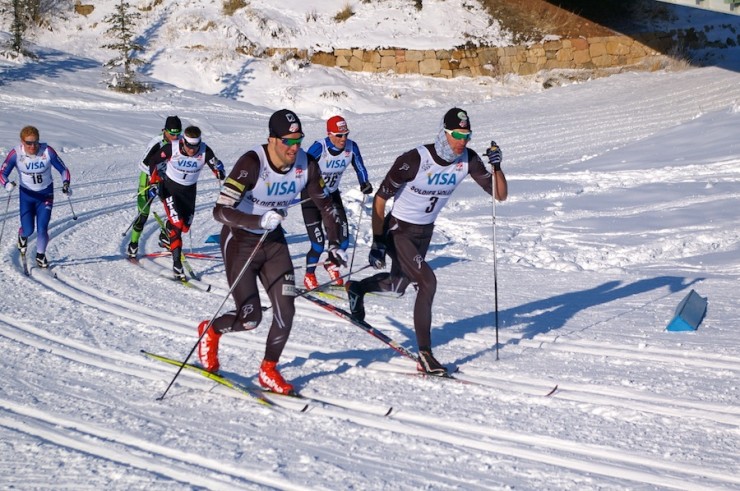
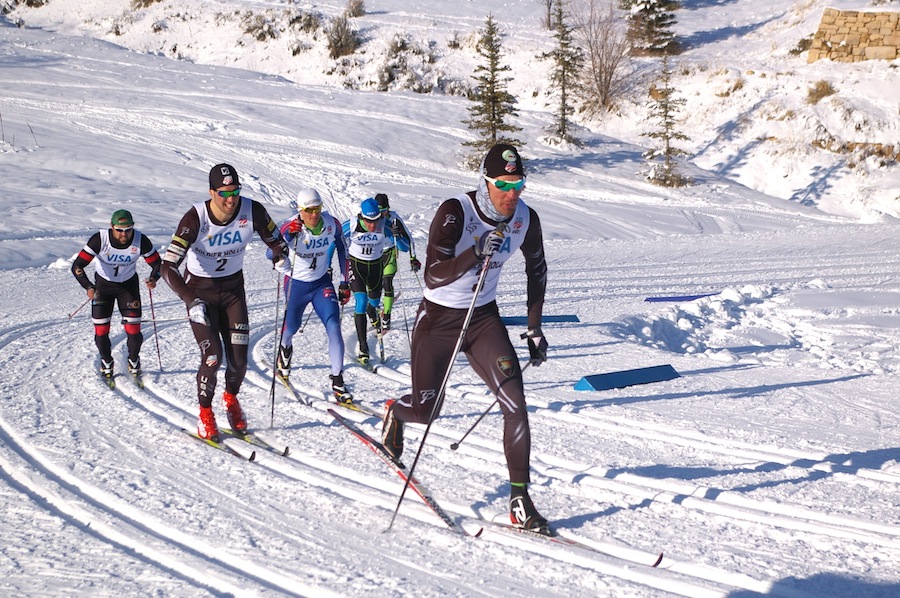
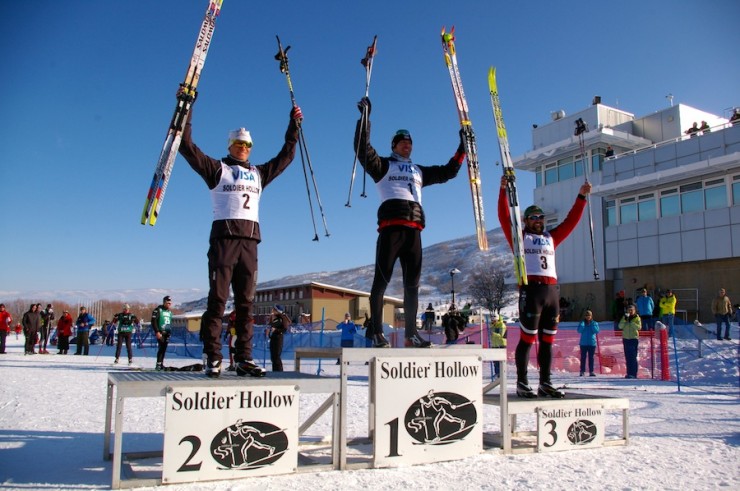
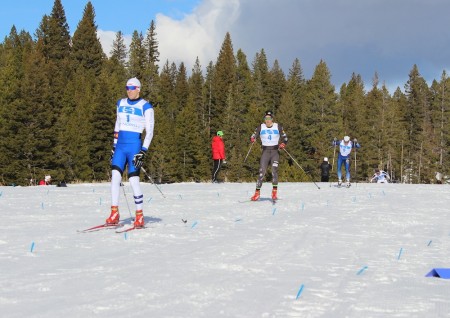
MIDWAY, Utah — Photos of some of the top finishers in the U.S. Cross Country Championships men’s 1.5-kilometer freestyle sprint on Sunday. Dakota Blackhorse-von Jess of the Bend Endurance Academy won it by nearly two seconds in 2:41.37 to advance to the heats, which start at 1 p.m. MST. Live results
Torin Koos (BSF/Rossignol) 10th
Erik Bjornsen (APU/USST), 9th
Dakota Blackhorse-von Jess (BEA), 1st
Skyler Davis competes at the 2014 U.S. Cross Country Championships at Soldier Hollow. Davis retired from skiing following the championships and took up soccer at UVM. He was recently named captain of the team for the 2015 season.
WEST YELLOWSTONE, Mont. — Some of the most competitive skiers in the U.S. SuperTour circuit give thanks and express appreciation for friends and family before, during and after their Thanksgiving Day ski sessions. The first SuperTour of the season starts Friday with the 1.3-kilometer skate sprint at the Rendezvous Ski Trails in West Yellowstone. On Saturday, hundreds of skiers will take part in the 10/15 k distance skate races.
“Super thankful for my family, friends, and my wife Sarah (we haven’t been able to spend a Thanksgiving together yet),” said Sylvan Ellefson of Ski & Snowboard Club Vail/Team HomeGrown (whose video interview was inadvertently lost).
“Thankful for blue skis, fast ski tracks, and great November mustaches!” Ellefson added. “I’m really excited to get this ski season going and I know everyone else is pretty antsy as well!”
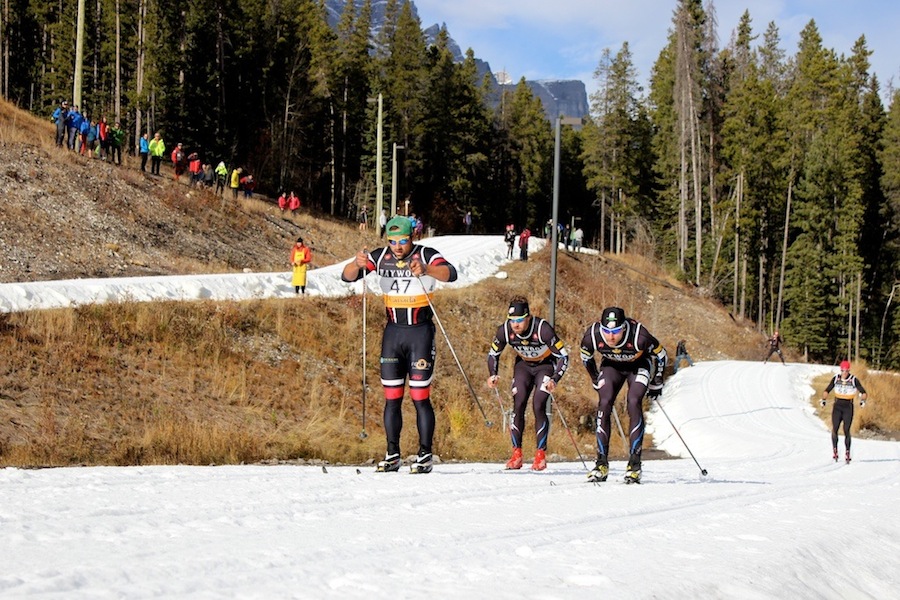
With one lap to go, Dakota Blackhorse-von Jess (Bend Endurance Academy) leads the men’s A-final of the Frozen Thunder classic sprint at the Canmore Nordic Centre in Canmore, Alberta. U.S. Ski Team and Stratton Mountain T2 teammates Simi Hamilton and Andy Newell follow, along with Sam Naney (Methow Olympic Development). (Photo: Pavlina Sudrich)
Note: This article has been correct to recognize Sophie Caldwell (USST/SMST2) as the women’s qualifier winner.
CANMORE, Alberta – The 2013-14 ski season unofficially kicked off Thursday with a classic sprint on snow at Frozen Thunder in Canmore, Alberta. While a fairly low-key event overall, it served as a tune-up race for many of the skiers as they head into the World Cup races in Finland or U.S. SuperTour openers in West Yellowstone, Mont., in late November.
Racing two laps around a shortened version of the 2.2-kilometer Frozen Thunder loop, skiers completed the course in 4 to 5 minutes for the women, and roughly 30 seconds faster for the men, making for a long sprint course to start the season.
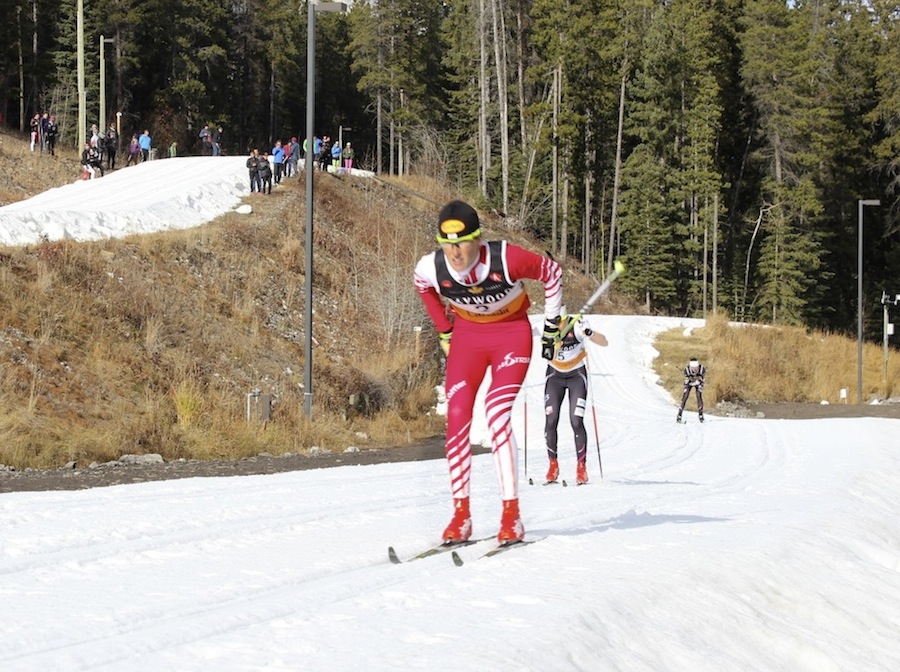
Katerina Smutna of Austria leading the women’s A-final at the Frozen Thunder classic sprint on Thursday in Canmore, Alberta. U.S. Ski Team members Ida Sargent and Sophie Caldwell chase to finish second and third, respectively. (Photo: Pavlina Sudrich)
As Caitlin Gregg of the Methow Olympic Development team in Washington explained, the variety of terrain on the course, with plenty of uphills, downhills and turns, made for a quality course. However, the two-loop experience made for a unique mental challenge of staying psyched for big hills the second time around.
To deal with possible crowding issues in the qualifiers, race organizers used a unique starting strategy. After the first five skiers, they left a larger time gap than usual before starting the next of five racers to space out the field.
The field of 34 women raced first. Sophie Caldwell of the U.S. Ski Team (USST) and Stratton Mountain School T2 Team (SMST2) won qualification by just over a second, followed by Austrian Katerina Smutna and Ida Sargent (USST/Craftsbury Green Racing Project) rounding out the top three.
The men’s field was somewhat larger with 54 racers, and like last year, saw a combination of skate and classic equipment used among the top racers. Andy Newell (USST/SMST2) won the qualifier on skate skis by more than 3 seconds. SMST2 teammates Skyler Davis and Simi Hamilton (USST) followed up in second and third.
Only 16 men and 16 women moved onto the heats. As a result, many of the less sprint-endowed racers came up with alternate plans for their workout that day. Some moved on to interval sessions, while others simply decided to save up energy for Friday’s classic-distance time trial. However, many skiers were impressed with the organization of the sprint.
Sargent appreciated the trademark low-key, high-organization style of an event run at the Canmore Nordic Centre. “The race this morning was very chill but also very well organized and well run,” she said. “They did a great job keeping the schedule rolling which can be tricky with a two-lap course.”
After leading much of the A-final, Smutna ended up with the win, while the Americans showed their strength, with Sargent finishing second, Caldwell placing third and Liz Stephen (USST) in fifth. Alysson Marshall of the Canadian National Senior Development Team and Alberta World Cup Academy was the top Canadian in fourth, with Olivia Bouffard-Nesbitt took sixth and 2013 World Championships team member Andrea Dupont was seventh. American Jessie Diggins (USST/SMST2) did not race due to a cold, and Canadian World Cup team member Perianne Jones did not start. Her Canmore-based teammates, Lenny Valjas and Ivan Babikov were not on the start list, and Dasha Gaiazova is in Quebec.
On the men’s side, several skiers were strong on Thursday. Dakota Blackhorse-von Jess (Bend Endurance Academy) looked especially strong in winning the A-final by a large margin on classic skis. He was the only one of the top three on classic skis. Both Newell and Simi Hamilton used skate skis for the qualification and final to end up second and third, respectively.
Across the board, U.S. and Canadian skiers appreciated the chance to mix it up on snow before the season starts in earnest.
“It was really great to have everybody in town with the US skiers and even some Austrian skiers in the race,” Dupont said.
On the significance of an October race, Sargent said, “I was less concerned with results than trying to go hard and get out some of those racing tweaks like remembering how to warm up, test wax, and stay fueled on between sprint heats.”
Finally, as a footnote to a race well run, several teams showed off their new season’s spandex. The U.S. team showcased their new uniforms with electric blue accents for men and pink accents for the women, while Team Ninja, the band of independent skiers based out of Canmore, showed up in suits adorned with pink and white snowflakes, and ninjas.
Alysson Marshall (l) of the Canadian national team and Alberta World Cup Academy and Jennie Bender of the Bridger Ski Foundation (r) lead their quarterfinal in the Frozen Thunder classic sprint on Thursday at the Canmore Nordic Centre in Canmore, Alberta. Chandra Crawford (second from l) and Annie Pokorny (SMST2) follow. (Photo: Pavlina Sudrich)
Sophie Caldwell (USST/SMST2) leads her semifinal in the classic sprint at Frozen Thunder on Thursday. Olivia Bouffard-Nesbitt chases, along with Canadian Senior Development Team member Alysson Marshall (AWCA) and Crawford (not pictured). (Photo: Pavlina Sudrich)
In the men’s quarterfinals on Thursday, Phil Widmer (CNST/AWCA) leads teammate Jesse Cockney (second from l), Dakota Blackhorse-von Jess (Bend Endurance Academy) and Canadian Para Nordic skier Brian McKeever (r). (Photo: Pavlina Sudrich)
In the men’s quarterfinals on Thursday, Phil Widmer (CNST/AWCA) leads teammate Jesse Cockney (second from l), Dakota Blackhorse-von Jess (Bend Endurance Academy) and Canadian Para Nordic skier Brian McKeever (r). (Photo: Pavlina Sudrich)
In another men’s quarterfinal, Andy Newell (USST/SMST2) leads Patrick Stewart-Jones (NST/AWCA), Eric Packer (SMST2), and Sebastian Townsend (AWCA). (Photo: Pavlina Sudrich)
Katie is a Canadian contributor at FasterSkier. Hailing from Minnesota, she raced for Dartmouth College and Sun Valley before turning her energies to climbing (and becoming the fastest known woman to ascend Mt. Rainier in Washington). Now based in Canmore, Alberta, she is an athlete ambassador for Millet and works as a mountain guide in Alaska, Washington and South America.
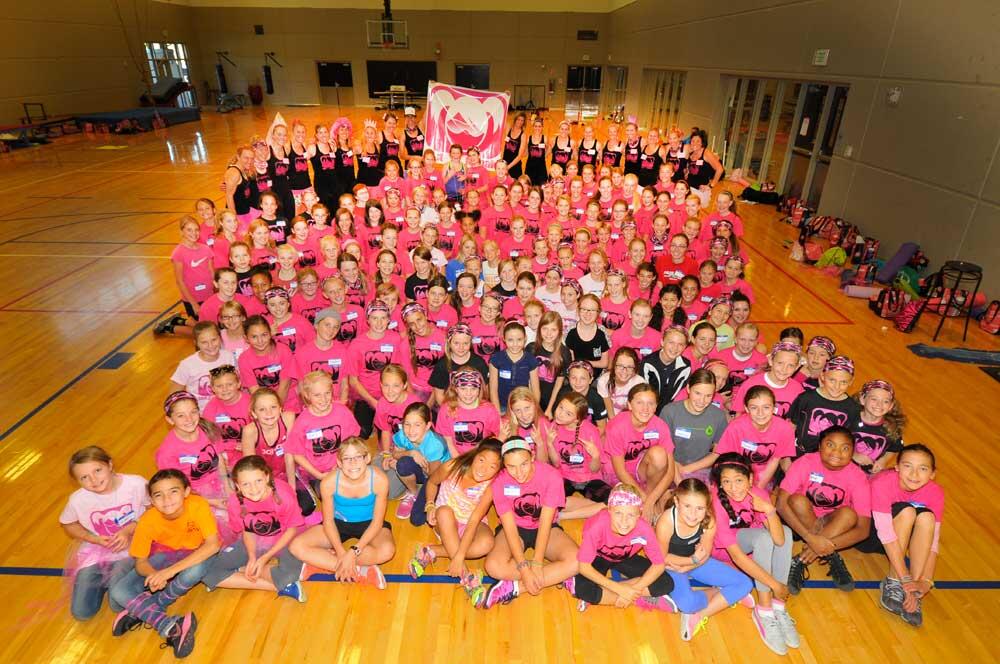
A huge group of happy campers at Fast and Female’s Champ Camp at the USSA Center of Excellence on Oct. 6 in Park City, Utah. (Photo: Tom Kelly/USSA Nordic)
In 2005, Fast and Female sprung to life as the brainchild of Chandra Crawford and the Canadian women’s cross-country ski team. The idea: get more girls skiing and help them build confidence in the process. The slogan: Empowerment through sport.
Within two years, Fast and Female events – which included days filled with skiing, yoga and “good eats,” according to the organization’s website – had become so big the nonprofit established a board of directors and continued to expand its reach through regional leaders across Canada. With the help of the U.S. women’s nordic team, movement trickled down into the states and is now a household brand among North American female skiers ages 9-19.
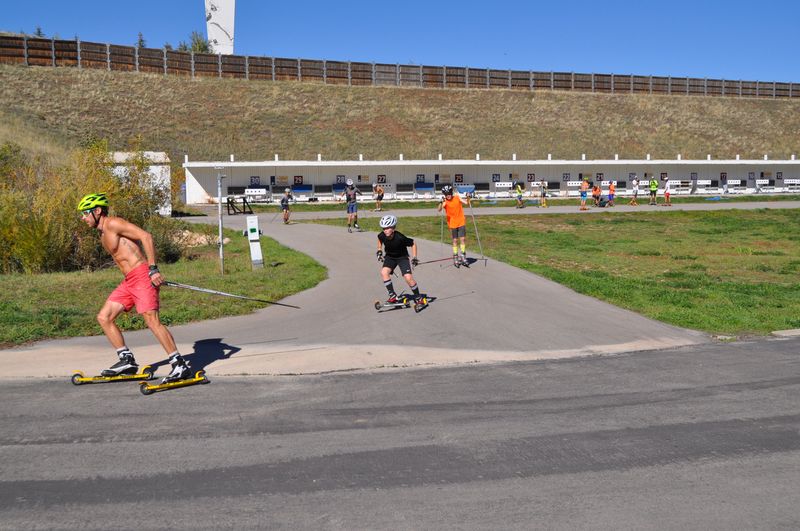
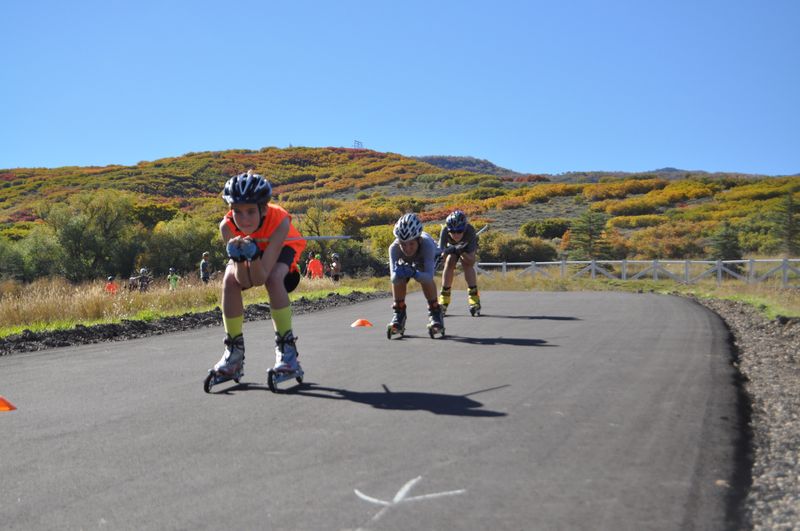
Andy Newell (l) shows junior boys how to ski fast and safe during the first Speed Camp on Oct. 6 at Soldier Hollow in Midway, Utah. (Photo: Jason Cork/USST)
That got the men’s U.S. Ski Team (USST), specifically Andy Newell and Simi Hamilton, thinking: how can we replicate Fast and Female’s success and provide a similar service for young males?
In an email, Newell explained the light bulb came on while training in New Zealand; they’d call it Speed Camp. His goal was to create a new type of clinic that would be exciting for junior boys and help the USST elevate the sport.
“Speed Camp is different than other traditional clinics because it’s specifically designed teach the kids how to move fast and improve their overall athleticism, which will translate over to skiing more comfortably at high speeds,” Newell wrote.
Most importantly, pushing those limits of speed was fun so the kids would likely find it more enjoyable than most practices, explained Newell, one of the world’s top-ranked sprinters.
With the help of the USST and assistant coach Jason Cork, Newell and Hamilton picked a time and place for their inaugural Speed Camp. On Sunday, the same day Fast and Female attracted some local 140 girls to Park City, Utah, the USST hosted its first Speed Camp at Soldier Hollow in nearby Midway with about 15 boys and five instructors (Newell, Hamilton, Cork, Skyler Davis, and Nick Hendrickson) participating.
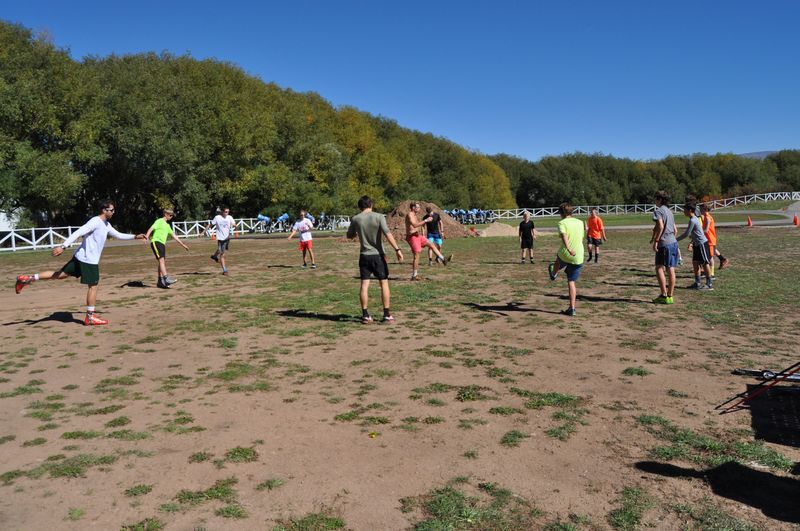
USST members lead the warmup at Speed Camp on Sunday in Midway, Utah. (Photo: Jason Cork/USST)
Newell explained the camp was as “great success” thanks to local coaches that helped spread the word and allowed them to use the paved rollerski track at Soldier Hollow.
“The goal of Speed Camp is definitely to focus on quality and make sure we have one on one interaction with each young skier,” he wrote. “It was a good instructor-to-athletes ratio so that we could really focus on our goals of going fast.”
While the girls attended seminars Sunday from 1-5 p.m., exploring fitness stations, dancing or doing yoga, and making their own tutus, what exactly did the boys do? For a couple hours, World Cup skiers Newell and Hamilton led a dynamic warmup then some fun on rollerskis, with an emphasis on safety, and finished up with a Question and Answer session.
The junior boys practiced high-speed skating and learned techniques for fast cornering, sprint finishes, transition skiing, tucking, drafting, and slingshotting past others, “all types of fun racing techniques they might not be able to learn at their typical ski practice,” Newell explained.
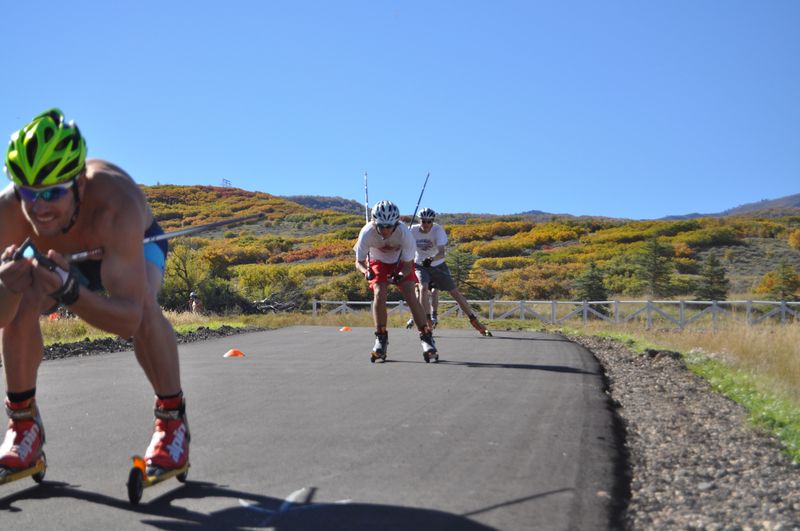
Simi Hamilton (l) leads junior boys in a tuck at the inaugural U.S. Ski Team Speed Camp at Soldier Hollow. (Photo: Jason Cork/USST)
“Distance racing, sprinting, all types of XC skiing require athletes to push high speeds at one point or another and sometimes the best way to learn some if these techniques is from the World Cup skiers themselves,” he wrote.
In an email, Hamilton wrote they couldn’t have asked for better weather or a more enthused group.
“It’s always fun to do things like this with some of your teammates, and I felt like we all contributed a diverse array of technical knowledge,” Hamilton wrote. “I was very impressed to see how much the boys improved throughout each of the drills, and it looked like they were having a great time … especially during some of the friendly head-to-head races we had set up.”
Many might wonder when and where the next Speed Camp will be. With the World Cup season kicking off next month, there won’t be anymore this year with Newell and Hamilton, but they’re focused on continuing it.
The idea is to complement Fast and Female, Hamilton explained. “Give the boys an opportunity to do something fun and valuable!” He hopes they’ll be able to watch it evolve into a program of similar caliber.
“We really admire how that program has grown and we’ve seen firsthand how the hard work from the women on our team and other female athletes throughout North America has been able to shape the lives of young people in great communities,” Hamilton wrote. “I think we were all pretty psyched about how [Speed Camp] turned out and are super amped to continue this momentum for another Speed Camp next year and further into the future.”
Some fast, all-male fun on rollerskis at the U.S. Ski Team Speed Camp in Soldier Hollow on Sunday. (Photo: Jason Cork/USST)
With less than 10 months to go until the 2014 Winter Olympics, three of seven men on the U.S. Ski Team (USST) were not renamed to the 2013/2014 national squad.
A former U.S. Ski Team D-team member, Erik Bjornsen (APU) is shown at 2013 World Championships in Val di Fiemme, Italy. After winning his first national title and achieving several other personal bests last season, Bjornsen, 21, was recently named to the B-team for 2013/2014.
Official nominations have not been publicized, but it appears the remaining four – Andy Newell, Noah Hoffman, Simi Hamilton and Erik Bjornsen – will be divided between the A- and B-teams. By making the World Cup Red Group, Newell retained his A-team status while Hoffman and Bjornsen explained they will be the B-team along with Hamilton, a former A-team member.
One of two Development Team skiers for the last two seasons, Skyler Davis of the Stratton Mountain School T2 Team (SMST2) was not renamed and his D-team status was not renewed. Bjornsen, of Alaska Pacific University, received the call-up to the B-team, and both said on the phone Friday that they were surprised.
“I didn’t think they would take anyone off the team before an Olympic year,” Davis said. “I thought, why not keep us on for one more year? Especially when you’re cutting half the guy’s team. That didn’t make much sense to me.”
At least three women are expected to remain on the A-team, with Kikkan Randall and Jessie Diggins confirming they kept their spots. After a breakout season, Liz Stephen has also met the Red-Group, A-team criteria.
Earlier this week, three-time Olympian and A-team veteran Kris Freeman expressed his alarm at being dropped. Teammates confirmed Tad Elliott was not renamed to the B-team. Head coach Chris Grover has declined to comment until nominations are released early next week.
“I was pretty confident with all the strong racing at the end of the year, I thought they would keep me on,” Bjornsen said, coming off his first SuperTour Finals title at the age of 21. “Last year, I was pretty nervous. This year, I didn’t think much about it. … I just felt like I’m stronger than those next-tier guys, like David Norris and Tyler Kornfield. For Grover to chose me over them was [huge].”
On the other hand, Davis said the phone call he received from Grover was a “little surprising,” considering he showed improvement over the previous season and scored World Cup points in Canmore, Alberta, where he was 24th in the freestyle sprint.
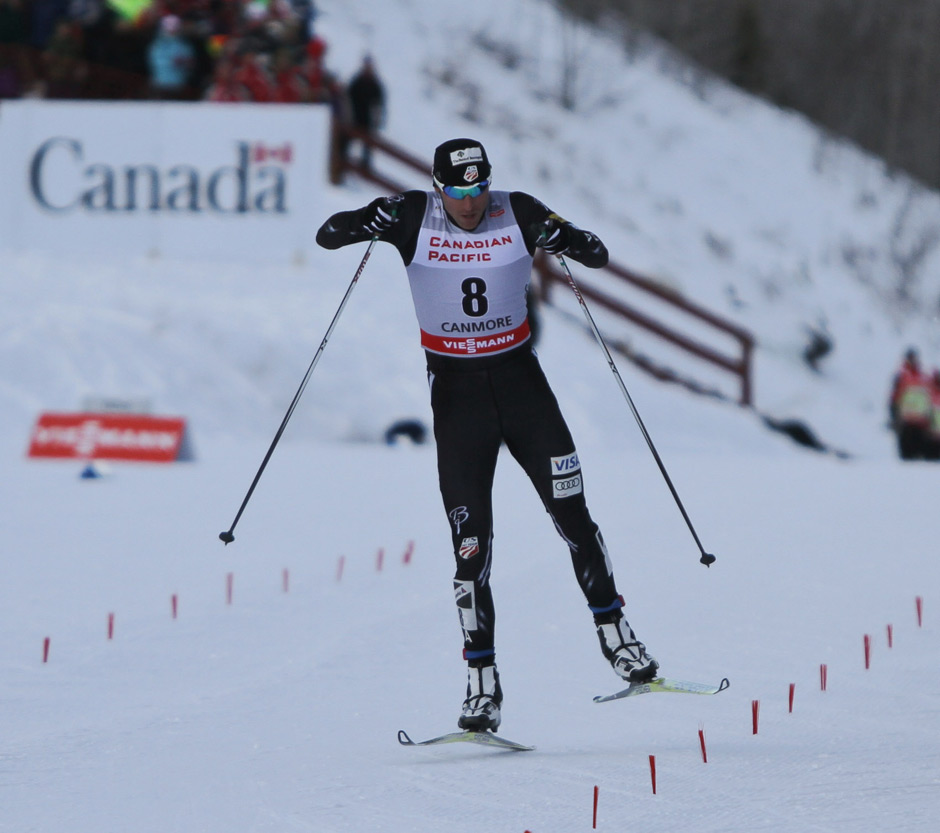
Skyler Davis qualifying at the World Cup freestyle sprint on Dec. 15 in Canmore, Alberta, where he finished a career-best 24th. A former D-team member, Davis was not renamed to the USST, but will continue training with Stratton Mountain School T2 Team in an effort to make U23s and the 2014 Olympics.
“I didn’t think they were gonna bring back the D-team,” Davis said. “It was more like you have to race fast and live up to the B-team if you’re gonna be on it.
“I’m still only 21 years old,” he added. “I thought they’d try to keep me on, but it’s not that big of a deal because if you ski fast, you make it again. … With the D-team, I didn’t really get much funding as it was, so that part’s not really different. Basically I got stripped of the title and some free clothes.”
He said not being named shouldn’t affect his sponsors, and he plans to attend certain USST camps except the upcoming one in Bend, Ore., and those in New Zealand and Europe this summer. Davis will try to make U23 World Championships and the Olympics next year, drawing inspiration from SMST2 teammate Sophie Caldwell, who is expected to be added to the U.S women’s team.
“World champs [are the] same as Olympic criteria; Sophie got picked because she was racing fast,” Davis said. “I didn’t get picked. I don’t think [not being on the U.S. Ski Team] will help or hurt your chances.”
As for the reduced men’s team size, Davis and Bjornsen had mixed reactions.
“It’s not really a team anymore with [four] guys,” Davis said. “That’s really small for any group to be a team.”
“It’s definitely a stronger team,” Bjornsen said. “I don’t think it’s a bad thing. I’m gonna miss training with Freeman and Tad and having Skyler there was awesome.
“All the women, too, it seems like it’s such a strong group right now,” he added. “Everybody has the possibility of doing something amazing. I’m glad that they categorized me with those other guys and I hope I can show everybody that I was a good choice and I’ll be making a charge for the Olympics.”
With the conclusion of the 2012-2013 World Cup season and of competition Period IV in Falun, Sweden, FIS released the world ranking lists in sprint and distance disciplines from which the new Red Group is determined.
A top-30 spot on either the sprint or distance list gets athletes a spot in this elite set of skiers whose travel, lodging and living expenses are paid for, within the sprint or distance discipline, through the next competition period, until the rankings are recalculated.
Out of all the rankings released periodically throughout the winter, a spot in the Red Group after Period IV most truly represents performance consistency within a single season. Rankings are tabulated from World Cup points from the previous calendar year, which means that lists released after Period I, II and III include results from the previous season. Period IV, however, only represents races from the last five months, and in contrast to the straight World Cup rankings include points from World Championships.
This can turn out to be good news for athletes who sat outside the bubble at the end of Period III, and bad news for those who were previously inside it. Moving in or out of the top-30 from one period to the next comes down to relativity — whether an athlete performs better within a period than they did in the same time frame the previous season. New results at the same venues supplant the old ones with the release of each list.
American Holly Brooks, for example, was outside the top-30 cutoff at the end of Period III in the distance rankings, when she was 41st. With a few of her best results of the season in Falun this past weekend, however, she moved up to 29th and will have her expenses covered at the beginning of next year for distance World Cups.
Her teammate Jessie Diggins, by contrast, moved from 30th in the distance list at the end of Period III to 35th for Period IV, just outside the Red Group cutoff. Diggins ended this season with a strong eighth in the Falun prologue, but it didn’t quite match the results she posted last season in the same period and she consequently moved down the list.
Outside the bubble skiers, there were few changes amongst those who made the Red Group on the American and Canadian teams between this period and the last. In the sprint rankings, Kikkan Randall led the way at the top of the women’s list and Ida Sargent joined her in the top-30 in 23rd.
Canada’s Dasha Gaiazova and Perianne Jones both remained in the money in 17th and 30th, respectively.
Andy Newell finished the season comfortably in the Red Group with a seventh-place sprint ranking and is the lone American in the top 30.
Canada’s Lenny Valjas finished the year only a few points behind him in eighth, and Alex Harvey and Devon Kershaw also squeaked into cutoff in 21st and 23rd.
Randall also finished the season with a high ranking in the distance list, in tenth, to lead two additional Americans in the top 30: Liz Stephen was 14th and Brooks just made the cutoff in a points tie with Italy’s Virginia De Martin Topranin in 29th.
No American men made the distance Red Group; Noah Hoffman was 42 points away in 35th.
Ivan Babikov and Harvey each made it in for the Canadians, Babikov in 18th and Harvey in 23rd. Kershaw and Valjas were outside in 43rd and 44th.
In all, five Americans (four women, one man) and six Canadians (two women, four men) are in the Red Group for the start of the 2013-2014 season. For athletes on the U.S. Ski Team the distinction is an important one; Hoffman told FasterSkier he was informed at the beginning of the season that Red Group would be sufficient for A-Team nomination for the following year.
North Americans on the World Ranking Lists, Period IV:
Now this is something you don’t see too often: finish line officials look up at the start of the Spring Tour prologue atop “Mount Craftsbury.” Racers started out by descending the pile of manmade, saved snow. Photo: Judy Geer.
What a difference a year makes.
At this time last season, the Craftsbury race crew were shoveling snow like crazy in an attempt to host spring series and the national championship marathon. This year? It’s not spring series, but rather the venue’s Spring Tour, a three-day mini-tour. And there’s plenty of snow, meaning that they can use some tough courses instead of the loop that racers were so used to last season.
“As tends to be the case (curse) of hosting national-level events, we were of course virtually snow-less last year and have been inundated with beautiful late-season powder this year,” Craftsbury GRP racer Clare Egan, who is also heading up communications for the event, told FasterSkier. “On Tuesday we received 12 to 14 inches of snow and have been getting an extra several inches every day since then. All of our trails, even Grand Tour, are open.”
So this is a little bit more like what Craftsbury had in mind a few years ago when they originally floated the idea of Spring Tour; the first was canceled completely due to lack of snow.
And so, too, is the competition. Stratton Mountain School T2’s Sophie Caldwell has dominated the women’s competitions so far, but there’s plenty of depth in the field, with NCAA qualifiers, U23 and World Juniors racers, and a national team biathlete toeing the line with her. For the men, there’s a U.S. Ski Teamer, a former Olympian, plus the same collection of college and senior racers, a few of whom have just returned from Europe.
Craftsbury GRP member and national team biathlete Hannah Dreissigacker hammers it home in the prologue. She sits sixth going into Sunday’s pursuit. Photo: Judy Geer.
“The courses we’ve been racing here are very hard and could probably be World Cup courses because they’re so hilly, so the racing isn’t too different in that sense,” said Caldwell, who is back in Vermont after a long stint in Europe that included World Cup, FIS, and World Championships racing. “There aren’t many people here but it’s a fast group and there are a lot of college skiers, and then Stratton and Green Team skiers. So it’s been good competition and really fun to see everyone after being gone all winter.”
Caldwell picked up a 34-second win in the 3.6 k classic prologue after University of Vermont skier Stephanie Kirk and University of New Hampshire’s Elizabeth Guiney. After winning Saturday’s skate sprint going away, Caldwell goes into the final pursuit on Sunday with a more than one-minute lead over Guiney, who sits in second.
“The prologue and sprint both went well and I’m excited to do a distance race tomorrow because I’ve been primarily sprinting the second half of the season,” Caldwell told FasterSkier. “I haven’t seen a start list and don’t know what my lead will be but I’m looking forward to it!”
Caldwell won the sprint qualifier by ten seconds over Caitlin Patterson of Craftbury, showing why she was picked for World Championships and how she finished 20th in the sprint there.
“Ten seconds is actually in my normal range for how far back I am from Sophie in qualifiers,” Patterson said in an interview that Egan posted on the Craftsbury website. “It just shows how she’s a head above the rest of the field. I was definitely happy I got second and happy to be racing after feeling a little funny recently.”
Things were complicated in the heats as fresh snow, which had begun falling in the morning, began to accumulate. Craftsbury has made this mini-tour “LF only”, so the skiers didn’t have any help from their skis. With both slow skis and heavy powder, it was easy to bog down; Patterson said she was “lurching in the fresh powder” and only made it through the quarterfinals as a lucky loser.
After that, though, things came together for the Alaskan and just as in the qualifier, she finished second to Caldwell in the A Final.
“I was still in fourth coming into the last hill and for whatever reason that last hill was really good for me, so in both the semi and final I made a big move there,” Patterson said. “In the A final I moved from fourth to second on the last hill and finished comfortably in second. I am happy with the day.”
Linda David-Malm and Anja Gruber of UVM finished third and fourth, with Guiney and NH teammate Elizabeth Izzo rounding out the final.
In the men’s race, prologue winner Patrick O’Brien of Craftsbury was unable to do what Caldwell had made look easy: repeating his win in the sprint. And second-place prologue finisher Paddy Caldwell of the Stratton Mountain School didn’t make the final.
Rather than calling it a bad day for these guys, chalk it up to some great competition.
In the end O’Brien was third, and the sprint came down to a drag race between SMST2 teammates Eric Packer and Skyler Davis. Packer prevailed.
“My strategy was to conserve some energy throughout the heats for the final, but it ended up being really tough to save anything with the slow skiing,” Packer told FasterSkier. “The skiing was definitely slower than normal with the new wet snow and the LF only wax restriction. With the fresh snow it was important to stay light on your feet and not bog in the soft sections.”
Davis said that despite Stratton’s good day – three podium finishers in two races – it’s not like their team had figured out something special with the LF. Instead, it was just about strategy and adjusting to the conditions.
“The conditions were pretty brutal,” he told FasterSkier. “It pretty much a blizzard for the entire day with snow piling up throughout the rounds, it for sure made the track softer and slower. It was all about staying in the best line throughout the heats because once you got into that powder, all momentum halted. The race was run very well though and it was a fun day.”
Davis, who is also a member of the U.S. Ski Team’s D Team, said that he had a plan for the final, and followed it perfectly. He had no regrets about his racing, it just turned out that his teammate was a little faster.
“My big goal was the prelim and to feel strong throughout the heats, and I think I accomplished both,” he said. “The final was exactly how I wanted it to play out, I hammered from the get go. Packer managed to stay on me and make a move in the final stretch, but yeah, very happy with the day.”
He and Packer have been on very different trajectories in the last few weeks. Davis hasn’t done any FIS racing since U23 World Championships in Liberec, Czech Republic, two months ago. In fact, he hasn’t done much racing at all, skipping the domestic race circuit as well.
“I haven’t raced in a long time,” he said. “I took some time to refocus and train hard… the end of the season has been good for me, good training, lots of fun and excited to get a couple more races in!”
In contrast, Packer stayed in Europe that whole time and has just returned after ten weeks.
“Racing in Europe is pretty unforgiving,” he said of the experience. “At races like U23’s and Scando cups, the fields are stacked with national team skiers. With a great race, you can be in the mix, but if not you end up at the back of the field in a hurry. The last few weeks in Europe were pretty rough for me, so it was awesome to bounce back from that and have a good one today.”
Besides the results, what’s it like to be back in the States?
“It’s definitely nice to be home!” Packer said. “The conditions here in Craftsbury have been incredible, with tons of snow and great grooming.”
For Caldwell, too, the weekend has been a nice way to feel at home before Spring Series kicks off out in California.
“I had a relaxing week at home and enjoyed the nice skiing around, but this time a year I’m not worrying too much about training and mostly just focusing on racing and resting,” Caldwell said. “The Spring Tour has been great so far. Conditions are perfect and the snow is still coming down. It definitely doesn’t seem like late March!”
Sophie Caldwell (USA) on her way to ninth place in the classic sprint at U23 World Championships in Liberec, Czech Republic. Photo: Liberec2013.
To follow up a strong first day of junior racing at the 2013 Junior and U23 World Championships in Liberec, Czech Republic, the U.S. team posted another set of personal-best results in the U23 classic sprint. Sophie Caldwell (SMS T2) and Erik Bjornsen (Alaska Pacific University/U.S. Ski Team) made the semifinal round to finish ninth and tenth, respectively, in strong fields that included several regular World Cup skiers.
“They looked really good,” said USST development coach and trip leader Bryan Fish. “Erik and Sophie both in the top 10, that’s awesome.”
Caldwell and Bjornsen have both been to the World Junior/U23 championship event several times before. More importantly to them, however, they have each qualified for the sprint heats on multiple occasions but were always stopped in the quarterfinals. That track record that didn’t sit well with either of them going into Tuesday’s race in Liberec. With another chance to get the monkey off their backs the Americans set the record straight: they can compete with the best sprinters in the world.
Caldwell skiing through the semifinals. Photo: Annie Hart.
Caldwell has been to three World Juniors before but has never attended the championships as a U23. Her previous best at was 17th in the sprint in 2009, but as she has already shown throughout the first half of the season, Caldwell is skiing on another level this year. With a ninth place now in the bag in her first race of the week at U23s, she’s feeling pretty good.
“I’ve very happy with the result,” Caldwell said. “I wasn’t sure what to expect going into the day but saw that I was ranked tenth so I thought top-10 could definitely be a possibility.”
Qualifying tends to be her strong point in classic sprints and Tuesday was no exception; she started off in fifth place in the prologue and knew after that she had a good shot at doing well in the heats.
“I’m better at striding than I am at double-poling but Gus [Kaeding] and I worked a lot on double-poling the other day and my double-pole finish felt pretty good in the quarterfinal so I was psyched about that!” Caldwell said. “I had qualified in the top 30 all three times I went to World Juniors but never made it past the semis, so once I had a good qualifier I really, really wanted to make it to the semis.”
To leave no doubt she would make it to the second round Caldwell pushed hard in the quarters, winning the heat outright. The effort, combined with the qualifier she’d just completed, nearly made her sick.
“I basically went as hard as I could go in my prelim and I was really tired after both my prelim and my quarterfinal,” Caldwell said. “Like, ‘I think I might throw up’ tired (but I didn’t).”
In the semifinals, she positioned herself well in the beginning against women like Hanna Kolb (GER), who ended up third, but ran out of gas in the end to finish fifth in the heat.
“I wished I had relaxed a little more [earlier] because it was easy to tense up and waste energy that way,” she said. “There were three pretty big hills so it was easy to get tired.”
At the end of the day, Caldwell couldn’t complain about a top-10.
“My confidence is good right now — I’ve had a lot of solid results this year that I’ve been really excited about,” she said. “But I definitely still want to build off them. I’m thrilled about the World Champs nomination and feel very lucky and honored, so I want to do everything possible to try to be as fast as I can in late February.”
After Caldwell, three women finished just outside the top-30 cutoff. Liz Guiney (University of New Hampshire) was 36th in the prologue, 2.5 seconds out of the heats, Caitlin Patterson (Craftsbury Green Racing Project) was 38th and Annie Hart (Dartmouth College) was 39th, five seconds out of 30th.
Guiney, in her first U23s appearance, had mixed feelings about 36th.
“I was pretty happy with my result today,” she said. “It was for sure a little frustrating to be within 3 seconds of qualifying, but I’m happy with the way I skied… I didn’t really know what to expect going in, and there are some really fast girls here!”
Hart was also happy with the way she raced, even if it didn’t produce a top 30.
“I feel pretty content I think with the result,” she said. “Results wise I was only a little bit out of qualifying so that’s encouraging for sure. You know, it’s kind of weird to feel good about a race where the whole point is to make the heats, but coming over here and racing against the very best U23s I think it’s really important to focus on how the race felt and not so much on the result (although obviously getting a good result is better than not).”
Erik Bjornsen (USA) in qualifying. Photo: Annie Hart.
On the men’s side, the history leading up to Bjornsen’s performance was almost a mirror of Caldwell’s. He, too, had been to the championships many times but never made the semifinals. Bjornsen, like Caldwell, has come on strong in the U.S. this year to establish himself consistently as one of the best in any given distance.
With a 10th place at U23s, he feels he can confidently ski with the best in the world, too.
“I was pretty excited,” Bjornsen said. “I’m feeling good right now, I keep surprising myself as the weeks go by and I keep getting fitter, it seems like. It finally feels like I have my finish speed back.”
Bjornsen began the heats wearing bib 16 after qualifying with a time four seconds behind Federico Pellegrino’s (ITA) winning mark. To leave no doubt he belonged in the next round Bjornsen his quarterfinal by half a second.
“I just went into it with the mindset that I’ve been in three quarterfinals at these championships and I got knocked out there, and I wasn’t going to let that happen today,” he said. “I felt like I was in a good mindset, like I was going to go out there and fight.”
It actually turned out to be a bit of a real fight, as some aggressive skiing by his competitors in the quarterfinal forced him to be aggressive right back. Many athletes commented on how important positioning and choosing the right track was to the outcome, and Bjornsen had to defend his right to his line.
“I kind of got pushed around by an Italian kid who took my position, so I went over the top of the second hill really hard,” Bjornsen said. It happened twice, but the second time Bjornsen was ready. “He tried to ski right into me but [that] time I didn’t let him do it. I pushed back and it was really crucial.”
Perhaps on the adrenaline of the jockeying, Bjornsen wanted to win the heat decisively.
“I hammered out into front, just like, ‘I’m gonna do this, not gonna let this get away from me,’” he said. “So I pinned it the whole way to the finish. If it was at a US Nationals race I would have tried to be more conservative, but I think these races here you just have to hammer every heat you’re in. I threw up my arms; I was really excited. I think I won it by a solid five to ten feet. That was sweet.”
He beat the eventual runner-up, Juho Mikkonen (FIN), by half a second.
In the semis Bjornsen was matched up with Evgeniy Belov (RUS), who wound up third, and Tomas Northug (NOR), Sindre Skar (NOR), Alexander Wolz (GER) and Amund Bygland (NOR) — a group Fish described as “a really solid field.”
Bjornsen started up the first steep climb in second postion, but got unlucky with positioning on the descent down the other side. Belov and Bjornsen both wanted the inside track and as they both moved to take it they lost the opportunity to double-pole off the top of the hill, and the lost momentum cost them at the bottom. Belov won the best line while Bjornsen was left on the outside, and Bjornsen finished fifth in the heat.
“The guys like to push around out there, I don’t know what the best thing to do is,” Bjornsen said. “You’ve got to choose times where you think you can win that little — I don’t know — conflict, and sometimes skip it and maybe take the slower track if you have to.”
Though slightly different positioning could have moved him to the final round, the 21-year-old was happy to have made it further than he had before and to learn over the course of the day that he could ski competitively with some of the guys who were in the final.
David Norris (USA). Photo: Bryan Fish.
“I feel like I could ski with any of the guys out there, so it’s sweet,” Bjornsen said. “Pellegrino and that Finnish kid, they were looking really good and Pellegrino is a great sprinter, but [Belov] I was skiing with in my semi so that was really cool.”
After Bjornsen, Eric Packer (SMS T2) was the first American to just miss qualifying for the rounds. He was 34th, 2.68 seconds out of 30th. David Norris (Montana State University) was in 36th and Skyler Davis (SMS T2/USST), who was sick, was 53rd.
Packer, who was 26th in the freestyle sprint in Turkey, was not quite happy with the result.
“I’m definitely bummed to have missed out on qualifying,” he said. “I was hoping for a top-15, and I feel like I could have been in there on a good day, but just didn’t piece it together quite right. You have to be on form and ski the course well to qualify in this field. I knew the pace I needed to ski to qualify, and was on track until the last 45 seconds when the wheels started to come off.”
The men’s course as particularly brutal. At 1.6 k it was slightly longer than the women’s, with an addition over the very top of the first climb to make a hard hill even harder.
“The hills were definitely bigger than anything we’ve raced in a sprint domestically this year,” Packer said.
To put the biggest climb in context, Fish said, “the guys were able to diagonal stride right up it, but candidly, it was the type of hill that I couldn’t, physically.”
Simi Hamilton (USA) competing in the Quebec City team sprint last month. He and Andy Newell were 13th in Liberec, Czech Republic, on Sunday.
Team sprint strategy on Sunday in Liberec, Czech Republic, seemed to be pretty standard: start slowly, put minimal effort into the middle and ramp up the pace in the last few laps. In the men’s semifinal round the tactics were no different for the first few legs of the relay, Simi Hamilton and Andy Newell were able to sit in third or fourth and keep the U.S. with the leaders.
“Andy and I were having a great semifinal right before I tagged off to him for the last leg,” Hamilton said in an email from Liberec.
It was at that critical stage, as the pace began to increase, that Hamilton got unlucky. Just before the last exchange Matias Strandvall (FIN II) caught his ski on a V-board and went down right in front of Hamilton, causing the American to spin around and lose time on the leaders.
“I did my best to avoid going down with him, but unfortunately my skis tangled underneath him and I got spun 180,” Hamilton said. “I did end up saving myself from going down, but we probably lost about five-plus seconds on the leaders once I could get myself sorted out.”
Such is sprint racing. Newell was able to scramble back onto the pack and re-pass the teams that had moved ahead of Hamilton to bring the U.S. to fifth place at the finish, only 1.6 seconds behind the winner in the first of two semifinals.
“I thought our heat finished pretty fast,” Newell said. “Simi got spun around a little bit so we lost a little time on the last tag, [but] I think we both felt pretty good.”
Only two teams auto-advance to the finals in team sprints and six lucky losers move on between the two heats. Before the second heat finished the Americans thought they had a shot at being one of them, but the second round ended up being 10 seconds faster than the first. Perhaps benefitting from the knowledge of the first heat’s splits, the top eight teams from semifinal two moved on to compete for the podium and Newell and Hamilton ended their day early.
“I thought we were looking good for making the finals but it just didn’t happen,” Newell said. “In the second semi there were two teams from Norway and two from Germany. Any time you get that many pairs you know they’re going to push the pace pretty hard.
“But I think we both felt pretty good so that’s a good sign.”
Hamilton agreed. “It was for sure a disappointing and unlucky end to our day, but I think we skied well and we’ll just be more fired up for the next team sprint in Sochi,” he said.
Just how important is it to be in the second semifinal of a team sprint? It’s hard to say. This time, because the 1.7 k course was longer than usual, Newell felt it mattered a great deal. Team sprints used to work such that more teams from each heat automatically advanced and there were fewer lucky losers. Since FIS adopted the present rules, Newell thinks the longer courses have made the format even more dogged in the early heats, contrary to the original intent of the change.
“I liked it better when they used to move on four from each heat and have only two lucky losers,” Newell said. “On a day like today where it’s such a long race, the second semi was getting all kinds of splits. At first they were running ten seconds down and they’re getting all that information from their coaches, so by the time they’re on their last lap they know that and they’re able to push the pace more and more.”
While Hamilton and Newell ended their day earlier than desired, the second American team of Skyler Davis and Erik Bjornsen racked up team sprint experience.
The duo finished 14th out of 14 teams in the first semifinal, 52.2 seconds off the winners. Bjornsen anchored and was focused simply on maintaining contact with the leaders for as long as he could. When the team lost the pack in the third leg, Bjornsen produced an impressive second-fastest fourth leg split in an attempt to put them back in the race.
“I almost beat the Polish dude (Pawel Klisz) who started about five to ten seconds in front of me,” Bjornsen said. “We had a good sprint to the finish. He got me though, I had spent all my energy trying to catch him.”
Bjornsen has brought his sprinting and distance skiing along well this year, and his competency in both disciplines suit him well in team sprints like Liberec where three segments on the 1.7 k course adds up to over 5 k.
“I really like the format,” Bjornsen said. “I like it because it is a lot like a distance race, so I think it really favors the sprinters that can distance ski.”
World Cup action resumes next weekend in La Clusaz, France, with a 10/15 k mass start classic on Saturday and 4 x 5 / 4 x 7.5 relay on Sunday.
Andy Newell (USA) competing in Canmore, Alberta, last month. He was sixth in the classic sprint on Saturday in Liberec, Czech Republic.
Andy Newell’s sixth-place finish in the classic sprint in Liberec, Czech Republic, brought his number of top-six showings up to three for the season and ties his best classic result from the past three years. Coming from an American team that seems to reach some new milestone every day that fact may seem routine, but for Newell it raises his confidence significantly as he looks ahead to the rest of the winter.
“I was feeling good, the fitness is good, the skiing felt great,” he said on the phone from Liberec. “When I went to the line in the final I knew I’d been working hard all day but I still thought I had a good shot at the podium, at least.”
It turned out that the earlier rounds were more draining than he expected. As Sweden’s Teodor Peterson blasted out of the gate, Newell was unable to keep up and wound up finishing 20 seconds behind him.
“It’s frustrating not to be on the podium having made three finals this year,” he said.
But he handled a few factors on Saturday that he thinks will make future bouts in the final round easier by comparison. The short running time of the women’s 850-meter race abbreviated the men’s rest in between heats by almost half, and on top of that Newell’s qualifying place put him in the worst possible quarterfinal: the last one.
“I just ran out of gas a little bit in the final and I think a lot of that has to do with being in the last bracket,” Newell said. “I qualified eighth, which means I’m in the last quarter, and pushed hard in my quarter to move on. You run the risk when you push so hard in the quarter, and you’re in the last bracket, that you don’t have much time to recover. That was kind of even magnified more today.”
Practice handling the worst-case recovery scenario, and still making it to the final, means Newell is hoping that future sprints will be a breeze, relatively speaking.
“Today was good practice because of the quick turnaround. The next time we run a World Cup sprint if I’m not in that last bracket — and even if I am — it’s going to feel like I’m recovering a lot better because today was so short,” Newell said. “It was a good workout even though it wasn’t the result it was really looking for.”
Bjornsen in action at U.S. Nationals earlier this week.
Newell was the lone American, man or woman, to make it past the qualifying round on Saturday. Kikkan Randall and Jessie Diggins both sat out to recover from the Tour de Ski, but the depth of the U.S. Ski Team this year means they are able to field a full team sprint team this weekend.
Four American starters — Sadie Bjornsen, Erik Bjornsen, Skyler Davis and Sophie Caldwell —arrived in Liberec earlier this week for their first European World Cups of the season, and for two of them, it was their first time racing at that level across the pond ever.
Sadie Bjornsen, for what must feel like the umpteenth time, missed the top-30 by under a second and was the top woman in 34th. For the Americans who’ve been racing in the U.S. at altitude all fall, Liberec’s low elevation took some getting used to, and Bjornsen thought that might have been a limiting factor.
“I actually don’t feel bad after this big travel. I felt good, I just didn’t go hard enough,” Bjronsen said. “This is a good sign though, because I crossed the line feeling good. Today it would have been better if it was longer, because I think my adjustment from altitude may have been smoother. I just simply needed to stand in place and move my limbs really fast to remember how to move fast as sea level.”
The women raced only one lap of the 850-meter loop. Minimal natural snow cover leading up to this weekend meant that manmade snow had to be carted in for a course to exist, and the women completed a single lap to the men’s two.
“It was very short, but I wasn’t thinking of that as a bad or a good thing going into it. I just knew I wasn’t going to have to pace it — just go from the gun!” Bjornsen said.
Sophie Caldwell, in her first career World Cup in Europe, was 38th in Liberec and less than two seconds out of qualifying. Being her first classic sprint and against a much deeper field than she saw in Canada, her expectations were simply to do the best she could.
“I wasn’t sure how I’d feel after traveling overseas,” Caldwell said. “I obviously would have loved to qualify in the top 30 and think it is possible but today wasn’t the day. It was encouraging to see that none of us were very far out of the top 30 though.”
Ida Sargent was 42nd, 2.96 seconds out of 30th. In a race as short as 850 meters everything had to go perfectly, and Sargent didn’t pick the right skis on Saturday.
“I struggled with ski testing and selection today and my race was affected by that,” she said. “The race was so short and fast that there wasn’t any room for things to go wrong.”
Sargent is optimistic about the rest of the post-holiday season, though. “I had lots of energy and I’m feeling good so [I’m] looking forward to more racing,” she said.
The men had four athletes in the classic sprint. After Newell, Simi Hamilton was 41st, 2.12 seconds out of qualifying. Hamilton spent the holiday at home and returned to Europe just after the New Year, and felt his racing legs had yet to return to 100%.
“I was a little disappointed with how the day turned out for me, personally, but the WC fields are always so tight and if you are off your game even by 1% it can be the difference between having a great day and day that ends too early,” Hamilton said.
“In the past, my best races have come after I’ve gotten some time to get into a rhythm of races, especially on the World Cup. Today was the first race back after over a month, so I’m confident that my form will come back in these upcoming weeks… My energy felt good and I’m very psyched to get my body ramping up to these hard efforts again.”
Erik Bjornsen and Davis were 47th and 55th, respectively. Liberec is Davis’ first European race of the season and Bjornsen’s first experience overseas at the World Cup level.
Bjornsen, whose start right was his reward for being the SuperTour leader at the end of Period 1, felt his race was on par with his ability.
“I’m still new to the World Cup level so I don’t have a place goal, except that I would love to ski some heats before the end of the year,” he said. “I think the field seemed a little harder then the field in Canada.”
Bjornsen and Davis both expect to feel better the further they get from their trans-Atlantic travel days.
“I definitely wanted to try to qualify in top 30 but knew I may not be feeling top notch,” Davis said. “I’m never very good at traveling but definitely felt like I’m getting better at it…I think it will take a least another week for me to be feeling ready to romp.”
The U.S. has two men’s and one women’s team entered in the team sprint on Sunday. Hamilton and Newell will pair up, as will Davis and Bjornsen. The women will again ski 850 meters each leg, and Bjornsen and Sargent will start for the U.S.
Skyler Davis (SMS T2) and Torin Koos (BSF/Rossignol) matched stride for stride on the last climb during the heats.
MIDWAY, Utah – Tactics were the name of the game in Wednesday’s classic sprint at Soldier Hollow on the first day of racing at the 2013 U.S. Cross Country Championships. Some of the best didn’t have them completely dialed in, and with that, they failed to move on.
U.S. Ski Team member Erik Bjornsen, who finished eighth after being eliminated in the quarterfinals, racked it up as a learning experience. At least racers like him will have another shot on Tuesday with the skate sprint – and they’ve got two distance races before that. But enough about the future, let’s get to what we didn’t fit in Wednesday’s race recaps.
On tactics:
“I thought I could break some people on this first uphill, and that wasn’t the case. I went out hard and lead it over the top, and Torin [Koos] and Matt [Gelso] were right behind me and they slingshotted past me like everybody said they would.
I think everybody’s learned that you can’t be leading over that hill unless you really have a gap. Skyler Davis did it a couple times today, but there wasn’t a lot of other people, well the girls were, but that’s a little different. Number one thing is not lead over the top.” – Erik Bjornsen (Alaska Pacific University/USST), 21st
“The beginning is probably the most rough because it’s where the panic sets up coming around the turn, you really can’t drop back too much. … On the down you just need to be top three. So I seemed to catch up on the downhill. I passed Sophie [Caldwell] and I was like, ‘Woah, OK.’ ” – Jenny Bender (Central Cross Country), women’s winner
“The qualifier was really funny. I didn’t do any double-poling warmup, and for the first time, it didn’t feel good and I was concerned about it. But then once we got into the heats the first quarter, I tried tactics but I was a little frustrated because even though we’re back in the U.S. and could be skiing easy, it’s good practice to go hard. So then in the semi, I was like I’m just gonna go for it.” – Sadie Bjornsen (APU/USST), 2nd
“I was just trying not to be the leader at the top of the hill, basically. The draft was so important that it was important to be around second or third on the downhill to make sure you get the advantage in the draft. And then just having a strong double pole; it’s a long finishing stretch. … Because of the way it skis tactically, it was nice to relax. Normally when girls race, we just go as hard as we can the whole time and last one standing wins sort of thing. So it was fun to ski in there and move a little bit and then just really give it over the top of the last hill into the finish.” – Rosie Brennan (APU), 3rd
“[I] definitely tried to get behind people because that’s such a key point to get that draft. And yeah it was just trying to hang in there in the finishing stretch. For sure, it’s a lot longer, like, you can see the finish, but then its like am I there yet? But it’s a great finish for sure.” – Kate Fitzgerald (APU), 4th
“All today I knew my strength was not necessarily the double-pole finish, so throughout the day I tried to put some time in on the hills and I felt great for most of it. My arms just felt dead on that final stretch. … Usually my strategy is not to lead, this is more for skate sprints because I have a pretty good finish kick so I hold on the end of that. But classic sprinting is a little different, especially for the double-pole finish.” – Sophie Caldwell (Stratton Mountain School T2 Team), 5th
On whether or not to use skate skis:
“Qualification was good, it was really cold and I decided to still use the skating skis to use the upper body. It wasn’t the best choice, but I wanted to take that opportunity to know that I could do that in the final, and I ended up opting to go with the kick wax instead. Obviously it was a pretty good choice.
“I think it would’ve been an OK choice to go with skating as well, but I just had the idea that I know how to win this on the kick wax.I had a pretty good idea that I would race against some of the other guys in the heats, and I was like, ‘OK, this is where they’re gonna be really good, but I think I can do this better than them.’ ” – Torin Koos (Bridger Ski Foundation/Rossignol), men’s winner (qualified third on skate skis, won A-final on classic boards)
“I double poled most everything until that last hill and when Torin [Koos] came up beside me, he was afraid I was on no-wax skis so he’s like, ‘Are you double poling?’ because he figured if I was double poling he needed to be leading going into that. I didn’t answer him, but he quickly figured it out when I started striding.” – Erik Bjornsen, who stuck with classic skis
On feeling good:
“In Bozeman, I finished a heat and I wanted to weave around like this (wavers on her feet), and today I felt back to normal. I was kinda jazzed, like, ‘Oh, this is a good sign. I don’t feel completely dead.’ So you know, one heat at a time.” – Bender
“I felt good today. I’m really low on racing. I’ve only done two sprints and both those the health was not good. I was just trying to race for qualification reasons. So this is kind of like a start to the season because it’s only the second of the year. I’m really looking to build on this. … My health’s good. Coming back into race shape. ” – Koos
“I’ve been feeling better. We had some races at home [in Sun Valley, Idaho] and I’ve been getting some rest and feeling pretty good. Ready for the 15 k, for sure.” – Mike Sinnott (Sun Valley Ski Education Foundation), 2nd
“[These] last five days are the best I’ve felt all year so I have to take that as a real good sign for the next week and the next couple weeks.” – Skyler Davis (SMS/USST), 4th
“I’m pretty excited that’s the best I’ve done at nationals ever. I find it ironic because I didn’t think classic sprinting was my forte. … Maybe as a team we did enough double-pole sprinting this summer, … but this summer my goal was to work on my distance racing and my threshold.” – Becca Rorabaugh (APU), 6th
“I was feeling pretty well, been out at altitude for a while so didn’t hurt as much as Bozeman or Yellowstone because those were really bad.” – Ben Saxton (F.A.S.T. Performance Training), 5th
“I was feeling really good at home [in Durango, Colorado], had a great holiday and had some awesome training. My twin brother’s up here helping me test with Team HomeGrown. I had a great holiday training with those guys and had a few down days the last couple days, but feel like I’m coming back now. It’s the best classic sprint qualifier I’ve ever had, just missed the top 30 so I’m stoked.” – Tad Elliott (Ski & Snowboard Club Vail/Team HomeGrown/USST), 39th
“I felt good, I felt powerful. The [SuperTour] races in Bozeman and West Yellowstone were pretty similar to this, but those races I felt pretty weak and I didn’t have the speed. I felt like I had the speed today and whatever it was it just didn’t work out.” – Tyler Kornfield (University of Alaska Fairbanks), last year’s national classic sprint champ, 42nd in Wednesday’s qualifier
On keeping results in perspective:
“I was pretty frustrated after the races in Montana, but I mean, it’s a long season. This happened before, it happens to everyone. You just need to get through it, stay focused stay calm and relaxed. … I’m going to have to adjust my goals, but I still have big goals.” – Kornfield
“I did have some people, a few this summer, that I got angry at who told me to write the year off. I’m pretty stubborn so having something you can’t control is extremely frustrating no matter what it is, but at the same time, to come to terms with what you can’t control is an interesting process. I think that’s what I’ve been: more relaxed and I’ve come into a lot of races with a neutral mentality. I still have goals, but it’s possibly been helpful because I had no expectations.” – Bender
“I always just try to go into races with, I mean, just be myself and we’ll see how the rest of it plays out. A lot of factors on the day, skis and tactics and everything, worked really well for me. The next sprint will be a lot different and next meet will be different. Just changes it up, I guess.” – Saxton
On Soldier Hollow:
“I did my first World Cup here, my first Olympics here, my first national championship here, and so I was looking forward to coming back. It kind of feels like it’s coming full circle, and it’s really cool that it’ll be this year and next because no matter what, the organizers here do a phenomenal job. The course is always in very fair shape. As an athlete it makes you feel like what you do is respected.” – Koos
“It’s great. That’s a great course, it’s a fantastic venue, you know, racing with a bunch of my friends. … These bibs are not as tight as the ones in Rumford (puts on podium bib). That’s nice. Good-fitting bibs are nice.” – Dakota Blackhorse-von Jess (Bend Endurance Academy), 3rd
“SoHo always pumps out a lot of snow and you can see, it’s pretty wild. The course is in great shape, two feet of snow everywhere pretty much.” – Leif Zimmermann (BSF), 48th
“I knew some of the guys wanted to keep skiing in Europe; I wanted to be here, though. That was kind of the plan all along. If I was really killing it early season that might have been an option, but knowing how good Noah [Hoffman] and Kris [Freeman] are doing, they go the Tour [de Ski] starts and I’m here. Both win-win situations. I’m happy to be here and these are big races. I always want to try do well at national champs.” – Elliott
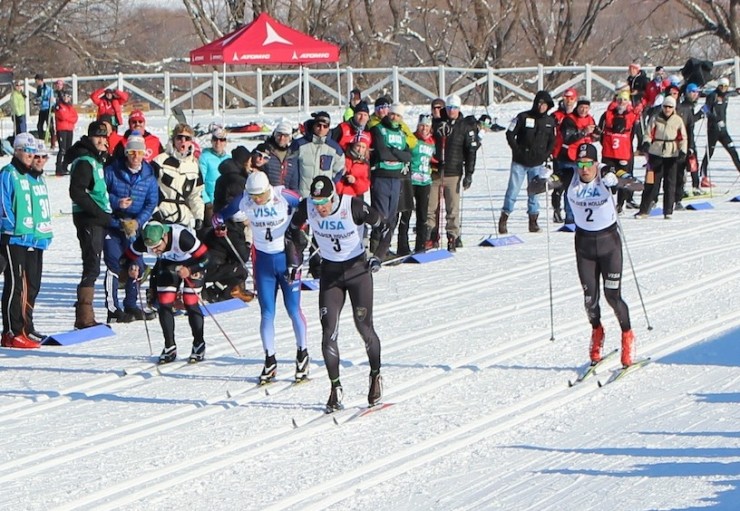
Torin Koos (Bridger Ski Foundation) leads the A-final of the classic sprint up the second of two climbs on the 1.3-kilometer course on Wednesday. Koos went on to win his fourth sprint title, seventh overall, ahead of Skyler Davis (second from left), who was fourth, Mike Sinnott (c) in second, and Dakota Blackhorse-von Jess (l) in third.
FasterSkier’s coverage of the 2013 U.S. Cross Country Championships is brought to you through the generous support of The Memory Clinic in Bennington, Vt.
MIDWAY, Utah – Unlike many of the blank slates surrounding him, young minds with open expectations at one of their first U.S. Cross Country Championships, Torin Koos had a lot to think about Wednesday.
Here he was, 32 years old and skiing for the umpteenth time at the Soldier Hollow nearly 6,000 feet above sea level. The 1.3-kilometer sprint course remained largely the same since his previous visits: rolling terrain with a long slingshot finish. Without any sizable trees in sight, there was no place to hide, no place to slack.
The former U.S. Ski Team member, now with the Bridger Ski Foundation and Rossignol, didn’t see himself falling behind anyhow. Nope, he had come to win, like always. Even after being sick for the start of the season. Even after being disqualified in last year’s U.S. nationals classic sprint – which ruined his run for his fourth straight national title – Koos was thinking positive and looking ahead.
“I tried not to think about that stuff last year,” Koos said after winning Wednesday’s sprint for his seventh national title, second in a classic sprint. “I know what happened in that race [last year] and I know that is absolutely just part of racing, and many things like that happened to me, I feel, even in that same race. It was a decision that was made. I don’t really agree with that, but that’s in the past.”
Torin Koos of the Bridger Ski Foundation/Rossignol (c) atop the 2013 U.S. Nationals men’s classic sprint podium, with Mike Sinnott (Sun Valley Ski Education Foundation) in second and Dakota Blackhorse-von Jess (Bend Endurance Academy) in third.
Standing in the stadium at Soldier Hollow, the site of the 2002 Olympics where Koos raced his first World Cup, Olympics and national championship, he smiled and soaked up the “now.” He had made a plan and executed it, he said.
The five men skiing behind Koos in the A-final – Skyler Davis (USST/Stratton Mountain School T2 Team), Mike Sinnott (Sun Valley Ski Education Foundation), Dakota Blackhorse von-Jess (Bend Endurance Academy), Ben Saxton (F.A.S.T. Performance Training) and Alex Howe (Craftsbury Green Racing Project) – weren’t exactly surprised that he took it. The three-time Olympian had challenged them from the beginning, double poling hard up the first gradual climb then continuously leading over a straightaway at the top.
Knowing that the most-used tracks were icing up, Koos opted for an outside lane up the second hill – a tactic he figured no one else would think of. Davis apparently did, skiing right behind Koos up the last climb and getting the benefit of some extra kick. Meanwhile, Koos put on the jets.
“I looked back and saw I had three or five meters, not very much, but I had the little bit of the climb [left] and I knew I had good skis so I tried to put in a little spurt up through the horseshoe,” he said. “I was able to get a little bit of a gap and hold it to the finish line.”
Davis tried to hang on, thinking he’d come up with a way to pass Koos on the long descent into the stadium, but he was caught off guard coming out of the screaming downhill corner.
“We all switched lanes for some reason,” Davis said. “I kind of got off balance then I got back on balance, went into the inside lane, double poling I was in second, third, second, third and then I was just gassed out.”
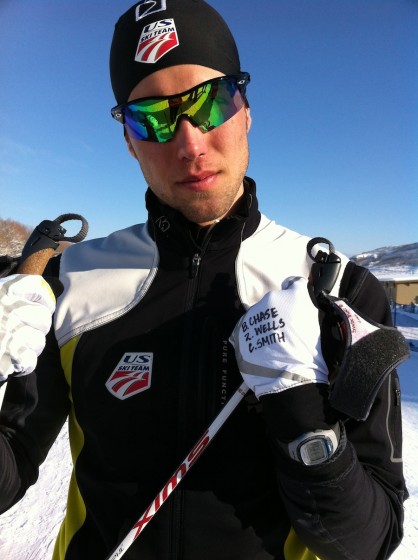
Skyler Davis pays tribute to his fallen friends, including Charlie Smith, a former nordic racer from Bend, Ore.
Davis settled for fourth while Sinnott edged Blackhorse-von Jess, the top qualifier, for second.
“I really wanted to win today,” the usually upbeat Davis said, looking at the ground. “A couple of my friends passed away so I was racing for them today.”
On his white ski gloves, he had written their names: “B. [Brian] Chase”, “Z. [Zachary] Wells”, and “C. [Charlie] Smith”.
While their deaths were separate, they had all come in the last week, Davis said. Chase and Wells were his friends from Vermont, and Smith was an NCAA bronze medalist who raced for the University of Nevada-Reno.
Blackhorse-von Jess, too, fought back emotions when talking about Smith, who shared his hometown in Bend, Ore. At the same time, Blackhorse-von Jess also used it as motivation for securing his fourth national podium, the first in a classic sprint.
“He’s definitely in many people’s thoughts this week, which is cool,” Blackhorse-von Jess said, adding that the support of his family watching him race for one of the first times in five or six years was uplifting.
His defining moment Wednesday came in his semifinal, when he fell in the scrub zone shortly after the start.
“The first thought was, ‘Expletive, coach is gonna kill me!’ The second thought was, ‘Mmm, I can probably get this back,’ ” Blackhorse-von Jess said. “Luckily I have really smart teammates who were at the first turn and they were like, ‘You’re fine, you’re gonna roll back into them, be relaxed,’ and that helped a lot. I stayed really calm and it was good.”
The finish of the men’s A-final at the U.S. nationals classic sprint on Wednesday at Soldier Hollow in Midway, Utah. Torin Koos (second from r) won, followed by Mike Sinnott (second from l), Dakota Blackhorse-von Jess (l) and Skyler Davis (r), respectively.
Blackhorse-von Jess did, in fact, catch up and went on to place second to Sinnott in the heat. In the final, the two chased Koos to the line.
“I got close to second, got real close,” he said. “Mikey and I had a really good battle. It was a lot fun. You want to be disappointed, but I raced hard and there’s nothing else you can do so I’m excited.”
Sinnott was also pleased – even though it was his third consecutive silver at nationals in the classic sprint.
“Happy birthday to Sylvan [Ellefson] is the first thing I want to say,” he said of his friend, who skis for Ski and Snowboard Club Vail and Team HomeGrown and placed 12th on Wednesday. “I would’ve liked to climb one more place up, but I was pretty happy. … It’s nice to have some good heats in this year.”
It was also good practice to be in them with someone like Koos. After qualifying in fourth behind Blackhorse-von Jess, Davis and Koos, respectively, Sinnott won both his quarterfinal and semifinal, but had to step it up once more in the A-final.
“Torin and Skyler went out a bit harder than I had done in the other heats and then Torin just picked it up on the hill,” Sinnott said. “It was a lot more of a kind of fast pace, real sprint race.”
Torin Koos (BSF/Rossignol) pulling out the victory at U.S. nationals on Wednesday in the classic sprint ahead of Mike Sinnott (SVSEF) in second, Dakota Blackhorse-von Jess (BEA) in third and Skyler Davis (USST/SMS) in fourth.
The fifth- and sixth-place finishers, Saxton and Howe, respectively, felt similarly after making the A-final at senior nationals for the first time.
“At the risk of sounding like a fan boy, there are like posters of all these guys in my room that you get at expos or whatever and I was racing them today,” said Saxton, 19, currently taking a post-grad year to train in Wisconsin.
“My goal coming in was to qualify for senior heats so I was pretty excited to go past that,” he said. “It was just sprint racing, especially at Soldier Hollow, it’s a really tactical course and anything can happen and coaches gave us wicked fast skis.”
But fast skis can only get you so far, and when Koos and Davis initially took off, Saxton was a bit slow on the uptake and had to catch up before the second climb. Working his way up the inside lane, he started to slip and fade back again.
“Barring any miracle skis, it was not going to pull me back to contact on the downhill,” Saxton said. “I just double poled really hard and Alex gave me a great finish and it was really fun.”
Howe, 23, who recently graduated from the University of Vermont, had previously placed 21st in a classic sprint at nationals in 2009. Heading into Wednesday, he hoped to make the heats “and ski more than one,” he said.
Howe went on to place second in his quarterfinal and decided to go for it in the semi in hopes of advancing further. He did, but realized he was a bit drained at the start of the final. He resolved to hang toward the back and try to push at the end.
“Both times when we turned to striding on those two hills my legs were absolutely toast,” Howe said. “By the time I got to the bridge [near the finish], I was like maybe I’ll be able to catch [Saxton] but there was no way.”
Moving forward, Howe has his sights set on distance races and surpassing his expectations after an pneumonia sidelined him for six months this summer.
“Prior to that I wasn’t in the best shape going into the summer so I think I beat myself up going into that,” he said. “I just remember it being 95 degrees outside, and I was sitting inside underneath a blanket shivering. I had to go the hospital. … Hopefully that’s behind me.”
And as for his new standard: “I just like to think of it as I’m back doing more of where I should be,” said Howe, a 2008 Junior Nationals sprint champion. “I’m a little more focused now than I have been in the last couple years, putting my energy more toward what it should’ve been toward.”
Sophie Caldwell (SMS T2) at the Quebec City freestyle sprint. She finished 14th there and went on to place 23rd the next weekend in Canmore.
Based on their results from the recent World Cups in Quebec City and Canmore, U.S. Ski Team head coach Chris Grover has offered Sophie Caldwell (SMS T2) and Skyler Davis (SMS T2/USST) starting spots in the Liberec, Czech Republic, World Cups on January 12 and 13.
U.S. SuperTour leaders Sadie and Erik Bjornsen will also join the World Cup tour beginning on January 12 for Period Two per the usual start rights FIS awards to Continental Cup leaders after every competition period.
Skyler Davis (SMS T2/USST) qualifying for the Canmore sprint heats in 20th. He went on to place 24th overall.
Liberec could be an important weekend for athletes like Davis and Caldwell for several reasons. Consisting of an individual classic and team sprint, it immediately precedes U23 World Championships on the same courses a week later. Davis and Caldwell, provided they continue to race well at U.S. Nationals, are still young enough to compete in U23s.
“Along with COC leader Erik Bjornsen, both Sophie and Skyler…can use the experience they gain during the Liberec World Cup sprints to help them prepare for the sprint during the U23 World Championships a week later,” Grover said in an email.
The Liberec World Cup also falls just within selection period the U.S will use to pick its 2013 World Championships team. The published objective criteria are based first on World Cup ranking: up to eight American men and women could go to Val di Fiemme in February if they rank in the top 60 overall or top 50 in sprint or distance by January 14. Liberec is the only World Cup remaining within that period outside the Tour de Ski, so the opportunity presents Caldwell, Davis and the Bjornsens, none of whom are on the American Tour roster, with a final chance to meet that objective criteria.
On Wednesday Caldwell said she had accepted the invitation to compete in Liberec.
“I’m not sure which races I’ll be doing yet because one is a sprint race and one is a team sprint, but I think it will be a great opportunity for some more international experience,” Caldwell said.
As for her World Championships ambitions?
“Obviously World Champs is something I’d love to compete in,” she said. But Caldwell is primarily looking at Liberec as another top-level racing opportunity.
“I don’t know how many spots the US has or who they’re looking to take so I’m trying to enjoy each chance I get to race a World Cup in the meantime and not worry too much about World Champs yet,” Caldwell said.
Davis also accepted the Liberec invitation. “I’m very excited to keep racing on the World Cup,” he said in an email. “It is a huge consideration to have more World Cup starts in my goal to be racing in world champs!”
Though the U.S. can take up to eight men and eight women, that doesn’t mean the team will be sixteen-strong come February. Grover says the Val di Fiemme team could consist of anywhere from six to eight athletes of each gender.
“Our goal is not simply to fill start spots,” he said. “Rather, our goal is to be successful. We have our sights set on a medal in Val di Fiemme. [These] Championships will not be an experiential or development project for us, and the team that is named will reflect that fact.”
This article was updated Dec. 20 at 11:30 am EST to include confirmation of Davis’ acceptance.
CANMORE, Alberta — A week after posting his best result in two years, Andy Newell followed up with an identical performance, placing 5th in the World Cup skate sprint at the Canmore Nordic Center.
Despite showing consistency, Newell was not willing to settle for a spot just off the podium.
“Last weekend, I was satisfied with 5th, not so much today,” Newell said. “I was really hoping for more.”
Newell has not skied well in Canmore sprints past, failing to make it out of the quarterfinals in three previous starts. But after a strong qualifying round where he placed 8th, Newell showed good form in the first round of heats.
He won that heat on the strength of good execution on the long descent into the homestretch and a powerful kick to the line. He was second in the semis, solidly clear of third to advance to his second sprint final in three starts this year.
In the finals he was in ideal position headed up over the top of the climb, sitting 4th, right behind eventual winner Emil Jönsson (SWE).
“I was stoked,” Newell said. “If you can just follow Emil into the lanes, he’s going to have a good slingshot too, just follow him, stick on his ass, that’s your ticket to the podium for sure.”
But it didn’t play out exactly that way.
“Some reason or another I just didn’t get enough speed around that corner maybe,” Newell explained.
Newell qualifying.
He lost contact and was quickly four meters back, outside the slipstream. Anders Glöersen (NOR) came by fast, riding the draft, and Newell was left in no-man’s-land.
Coming in with few expectations based on his past performances in Canmore and his struggles on the final descent due to his smaller size, Newell ended up making a run for the podium.
“He had a strategy for each round and he really executed that strategy,” U.S. Ski Team Head Coach Chris Grover told FasterSkier.
“Today felt great and the skis were running good, so after the first heat I was really focused,” Newell said. With his kick feeling good he knew he had a shot for the top 3.
And while he came up short, he is pleased with the indicators.
“The last few years I’ve felt like I’ve been a better classic sprinter, but it feels like my skating is coming around really good,” he said.
He was also happy to perform well in the flat twisty city sprint last weekend in Quebec City and then follow up with another result on the hillier terrain in Canmore.
“I’m feeling good about the fitness and the speed,” Newell said.
Grover points to an off-season of preparation that he terms “better than he ever has had before” as the reason for Newell’s recent success.
“He’s in good shape…today we saw really heads-up skiing,” Grover said.
Davis in the Points
Coming from the other end of the spectrum, the 20-year-old Davis cracked the World Cup top 30 for the first time in his young career.
He qualified in 20th despite contracting a cold on the way to Canmore.
Davis qualifying.
With only twenty minutes on snow since Monday, Davis was not a candidate for a top result and after “feeling terrible” at breakfast, even starting was in question.
SMS T2 coach Gus Kaeding compared the event to the football playoffs, telling Davis “You have a sprained ankle, You can still go out there and do well.”
Davis rallied, and the stretching and treatment with team phsyios during the week paid dividends – his legs and body felt fresh.
He kept his warm-up quick — just 30 minutes — in order to conserve energy.
With a relatively short course, Davis focused on just need a minute-and-a-half out of his legs to get to the top of the climb.
“Got to the top of the hill, I had so much energy and speed,” he said. “I Knew it was good.”
Skiing in the first quarterfinal, Davis was slotted in second behind Russian Mikhail Devjatiarov headed around the corner into the final hill.
He lost contact over the top, just a small gap, but it was enough to end up outside the draft.
The rest of the pack came flying by, and when German Tim Tscharnke bumped Davis, the American was forced to come out of histuck, losing any chance to slip in behind.
“It was wild,” Davis said of the downhill. “In the qualifier you obviously don’t have any slingshot. I just wasn’t ready for how drastic it was.”
He ended up 5th in the heat, ahead of Renaud Jay of France, good enough for 24th on the day.
“Getting in the top-30 is a huge goal for the season. I wasn’t expecting to do it today, but more than happy about today,” Davis said.
The Bates College cheering section on Saturday during the Quebec World Cup 1.6 k men’s and women’s skate sprints.
QUEBEC CITY – There were a lot of North Americans milling around the downtown World Cup sprint venue this weekend, but the ones inside of the fence were doing the most work.
That’s not to say cheering doesn’t take energy, too. It just taxes different muscles.
Either way, many racers found the support of thousands of spectators invaluable during the 1.6-kilometer individual sprint on Saturday – even if they didn’t make the top 30 to qualify.
“It was a tunnel of noise,” said Patrick O’Brien of Vermont’s Craftsbury Green Racing Project (CGRP) after placing 53rd in the prelim. “The closest thing I can think of for me was Dartmouth Carnival at home times one hundred. Everywhere out there people were screaming your name and that was just awesome to have everyone come out. It is good for nordic skiing in general. I think everyone would say that this event was a huge success.”
That positive feeling was echoed by most competitors regardless of their results.
“I can’t get over how awesome the crowd is,” said Sylvan Ellefson (Ski & Snowboard Club Vail/Team HomeGrown), after placing 57th. “The Bates [College] crew being out here again, my alma mater, that was just so loud so powerful going through there. We are in Canada, I’m from the United States, but it still feels like we are on home territory.”
Eighteen-year-old Corey Stock of the Cambridge Sports Union, who placed 47th in her first World Cup, had a feeling a lot of people would come out for the event, but she had no idea what it would be like.
“I just feel so lucky to have this be my first World Cup, a city sprint in Quebec with all these Americans cheering,” Stock said. “It was just really cool. My parents are here, my brother is here and the whole Dartmouth Ski Team is here so it is so awesome hearing them cheer on the side of the course. … I couldn’t have asked for a more exciting atmosphere.”
As for the snow conditions, many North Americans used words like “sugary,” “soft,” and “mushy” to describe them – at least for the qualifier (organizers firmed it up for the heats).
Jesse Cockney (AWCA) en route to placing 32nd in the Quebec World Cup individual sprint qualifier, 0.25 seconds outside the top 30.
“Your tips were just cutting through mounds of sugar on all the turns so you tried to keep [them] up on top,” said Reese Hanneman of Alaska Pacific University (APU), who was 61st. “You were trying to hammer, but you’re also doing preventative damage control.”
“I’m a bigger guy, but I’m a really bigger guy,” said Skyler Davis of the Stratton Mountain School T2 Team (SMS) and U.S. Ski Team (USST) after ranking 69th. “A big guy is like 180, and 25 pounds more … With this stuff, any little movement your legs die a little bit, it was just so squirrelly.”
Any experience on similar conditions mattered. Thomsen D’Hont of the Yellowknife Ski Club placed 65th in his first World Cup because of that.
“I train in these conditions all the time in Whistler [British Columbia] so like the harder the conditions are, the better I am,” he said. “It was hard, but for sure, pretty fun … You can’t just focus on going hard, you have to focus on skiing well.”
“I definitely went harder than I ever have before,” said APU skier Lauren Fritz, who was 55th in the qualifier. “My feet and shins were pretty tense, which I don’t think helped. … But the energy, oh my God, it’s so exciting. It’s easy to go harder.”
“It was really tough; I just tried to ski as smooth as possible,” Canadian National Team member Perianne Jones said after placing 38th in her first race since tying her personal-best of 12th in a World Cup sprint in Kuusamo, Finland.
“I know the course really well, but it’s never been as mushy as this,” she said.
In his first individual World Cup, Russell Kennedy of the Alberta World Cup Academy (AWCA) placed 45th.
“I like harder conditions,” he said. “I’m a bit bigger of a guy and the soft isn’t usually good for me, but I thought I skied it good all things considered. I don’t know, it was super fun.”
Ryan Scott (SSCV/Team HomeGrown) wasn’t so comfortable on the course.
“Just because we’ve been rollerskiing so much I haven’t had a lot of on-snow time, especially soft snow, not my thing so I’ll definitely be looking for a harder track in Canmore,” Scott said.
Several skiers would remember the highlights of their weekend, which ranged.
“I was really excited to race the team sprint,” said Andrea Dupont (Rocky Mountain Racers), who ranked 48th in the individual race after placing 20th in the team sprint with Kate Brennan (AWCA).
“I hadn’t had an opportunity to do that before on a World Cup so that was really a positive experience,” Dupont added. “The weekend before we got to race with some of the Swiss girls in Canmore and they were actually the team right in front of us and we got to play cat-and-mouse with them which was a lot of fun.”
While the two hail from different teams, Dupont and Brennan were really looking forward to the Canmore World Cup at home later this week.
“There’s a lot of tactics on it and I am itching,” Dupont said. “I really, really want to make the top 30 there. This is super fun though. This is an amazing atmosphere and I hope it does something good for North American and Canadian skiing.”
“I learned a lot just skiing in the different conditions,” said Brennan, who was 54th on Saturday. “Canmore’s been rock-solid this year so we haven’t had a chance to work in slush like this or just the deep pellets. It was cool, Quebec City put on quite a show.”
“There’s a lot to take away from it,” said Jesse Cockney (AWCA), who just missed qualifying in 32nd. “I mean, just being ready for everything and just being able to go with the flow. The events are so big that things go wrong with them and you’ve got to just roll with the punches and just be relaxed, that’s the big thing.”
He’s noticed how Canada’s top national-team racers Devon Kershaw and Alex Harvey usually adjust and tried to mimic them.
“They’re pros at adjusting to jet lag, traveling long days, eating weird food, sleeping in weird rooms,” Cockney said. “I’m getting to the at point but I’m not quite a professional yet. Training with them in the summer helped a lot to see how they live every day. Training is above and beyond everything else for them.”
That raises the question: what does it take to get to the next level? Holly Brooks (APU/USST), who was 36th said she didn’t have it.
“It was hard to push it so I was really hoping to come in with a better qualification than that,” Brooks said.
Ida Sargent (CGRP/USST) charges ahead in bib 1 to start things off in the 1.6 k Quebec World Cup individual freestyle sprints on Saturday. She was 44th in the qualifier. (Photo: FlyingPointRoad.com)
Ida Sargent (CGRP/USST) placed 44th after being the first starter out on the course and wasn’t satisfied, either.
“I just was, like, frantic, never found any flow out there and was just really rushed,” Sargent said. “It was tricky conditions. I couldn’t really go hard and get it going. I was struggling out there and I think skiing first I couldn’t focus. I felt like I was just being chased down.”
Simi Hamilton (Sun Valley Ski Education Foundation) was another USST member who finished short of his expectations in failing to make the rounds. He placed 33rd.
“I didn’t feel very good, but I just tried to stay light on my feet and just tried to stay upright,” he said after the qualifier. “It’s still early in the season and I never historically skied that fast early on. I was able to qualify in Kuusamo last weekend which is a good sign and hopefully I’ll just keep climbing throughout the whole season.”
Phil Widmer (AWCA), who was 55th, said he felt like he skied the qualifier “reasonably well,” yet he had to reflect back and figure out where he lost time.
“I’m not sure if my body was a little bit off or I didn’t technically execute,” Widmer said. “I might have been missing a little snap, but I need to be able to ski through those sorts of efforts. You train all year for it.”
Dakota Blackhorse-von Jess (Bend Endurance Academy), who ranked 38th, felt much differently with positive feelings throughout the day.
“This is the first time I felt good this season,” he said. “I’m a big up-and-down guy. When I’m high, I’m really jacked up. [Saturday] morning I wanted to race so everything was perfect. If I was the best in the world, that’s how I think I would feel. It just wasn’t enough today, I guess.”
Caitlin Gregg of Central Cross Country (CXC), who was 49th, reflected on her race and tried to pick up tips from others.
“It was tough to decide whether or not it was a high-tempo or a high-power day,” Gregg said. “I think somehow giving good powerful strokes, but obviously not bogging down, it’s a finessing of the ski. I could definitely tell some girls were pretty good at that.”
One of her highlights was watching Kikkan Randall, whom she placed sixth with in a team sprint at the 2010 Olympics, win the team sprint in Quebec City.
“That team is destined for big things,” she said. “That was sweet to watch.”
Personally, she said the experience was great and an affirmation that her training was working.
“This is why we do it weekend after weekend in the states to earn our berths over here,” she said. “Every time I come to these I’m reenergized for the next training or the next race cycle or whatnot. This is what you think back to when you’re training in the summer time and in the nasty fall weather. This is the best.”
“Oh my God, it’s like a dream,” said APU skier Kate Fitzgerald, who was 52nd. “Especially to watch Jessie and Kikkan win. I was like, ‘I just watched history and I got to be here in person, too.’ ”
“I went to bed last night and I was like, ‘Wow this is incredible what I’m getting to do,’ ” Kennedy said. “Especially downtown Quebec with all the spectators and stuff, it’s the first time I’ve been to a nordic race and felt like it’s a real sporting event, almost like a football game or something. It’s an unbelievable experience.”
The Quebec City sprint course is practically designed to make competitors feel like rock stars this Friday and Saturday during the much-anticipated World Cups. Photo: Ryan Scott.
A rare opportunity presented itself this season for a higher than usual number of American athletes to compete in the two World Cups in Canada this December. For many of the best domestic-level athletes in the country, it was the chance to break into the next level and compete for the U.S. on the biggest stage there is in cross-country skiing. Earning one of those start rights became the focal point of the season for SuperTour athletes who thought they had a shot at making it.
For American athletes in Quebec City about to compete in their first World Cup, that dream became a reality last week in Bozeman, Mont. Two hard-fought sprints later and just like that: they’re here. Hello, World Cup.
“It was certainly stressful having such important races right off the bat this season,” said Alaska Pacific University’s Kate Fitzgerald “Had a few restless nights wondering how things were going to turn out.”
Athletes learned they had made it in fittingly dramatic fashion: while lining up for the final race in Bozeman last weekend. U.S. Ski Team Head Coach Chris Grover emailed successful qualifiers the morning after the classic sprint, but at the remote, service-less Bohart Ranch the day of the mass start event, some athletes didn’t see it before departing for the venue.
“When I heard…I was absolutely floored,” said Crafsbury Green Racing Project’s Pat O’Brien. “I got the news from some of the other athletes that had made the team right before the distance race. Needless to say it was a huge relief going into the last race in Bozeman!”
The APU contingent found out from a teammate at about the same time.
“Brent Knight came running up to us ten minutes before the 10 k classic and told us the list,” said APU’s Becca Rorabaugh. “It was a great boost to hear about it before we started; it certainly took the pressure off!”
“I started yelling and whooping and giving all the girls high fives,” Fitzgerald said. “I was so excited! I knew it was going to be close so it was all the more exciting when I found out that I made it.”
The cold, hard math of the selection criteria made the last few available spots heart-breakingly close. A single SuperTour point separated the last female who qualified from the first one that didn’t. Two points made that difference in the men’s field.
“I was ecstatic upon hearing that I had officially made the World Cup team,” said Ryan Scott (SSCV Team HomeGrown). “I had such a disappointing classic sprint race in Bozeman that I thought for sure that I had lost my only opportunity to qualify with that one poor performance.”
Now that they’ve made it, however, the real work begins. Simply wearing a World Cup bib is not enough; these athletes want to compete. In the words of Reid Pletcher, “TIME TO THROW DOWN!”
Presenting the Americans who fought tooth-and-nail to make their first Eurosport appearance this Friday and Saturday — their hopes, dreams and aspirations. (For the full list of Americans competing in Quebec this weekend, look over here.)
Get your cowbells ready.
__________
Erik Bjornsen (APU)
The Methow Valley native has been on the U.S. Ski Team development squad for over a year, but this will be his first World Cup appearance. With a second and third-place showing in the Bozeman sprints, he was pretty clearly going to be on the Quebec roster. Still, Bjornsen said it was satisfying to officially meeting the season-long goal.
“I was so excited to be named,” Bjornsen said. “It has been my goal since the beginning of the summer.”
The 21-year-old turned down World Cup start spots last season because he didn’t think he was quite ready. “Now I think I should have a pretty good shot of mixing it up with some guys and I hope that in a couple years I will be a full time World Cup athlete,” he said.
Bjornsen is approaching the Quebec races like he would any other.
“I’m doing my usual training leading up to the races,” he said. “I’m sure I will start getting more nervous tomorrow but for now I’m just really excited to be here experiencing it. Quebec City seems really cool and it’s nice to be back with some of the USST crew.”
__________
Reid Pletcher (Sun Valley Ski Education Foundation)
This is his first year out of college, but the Hailey, Idaho, native has already skied twice on the World Cup before: first in Canmore in 2008 at the age of 19 and again in Whistler in 2009. Quebec won’t be his first rodeo, but Pletcher is just as excited about the prospect of racing there as anybody else.
“I would say I am most excited for the crowds and cheering,” he said. “There is nothing like hitting the last 100 meters and you can’t even focus because the noise is so overwhelming.”
Pletcher was 35th and 37th, respectively, in Canmore and Whistler. He skied to his best SuperTour sprint result in Bozeman last weekend, and coming off the confidence of the win he wants to see action in the rounds in both Quebec and Canmore these next two weekends.
“My goals for the next two weeks are to qualify for the heats and be in the mix of things,” he said. “My goals this season were to prove to myself and my competition that I have what it takes to be very competitive in professional skiing. Last week I had my best SuperTour result ever, and the World Cup makes it even more amazing.”
__________
Reese Hanneman (APU)
With his classic sprint victory on Saturday, Hanneman all but guaranteed himself a ticket to Canada. It won’t be his first time on the World Cup stage, having competed in Canmore in 2010, but that didn’t make the moment he realized he was going any less meaningful.
“When I actually saw my name on the list, it was a mix of excitement and calm,” Hanneman said. “It’s something that I had as a goal for such a long time, and I have spent so much time and energy trying to actually do it, and so to complete that objective gives you a sense of completion.”
Like Bjornsen and Pletcher, Hanneman has moved past the initial excitement and says he’s ready for World Cup action — “Now I’m just so amped up!”
In Canmore in 2010, where he was 70th, Hanneman was “inevitably nervous and star-struck,” he said. “Now I feel like I will be in a much better place mentally, having a lot more international racing experience and just more high level racing. My goal is to be able to just keep myself calm and go about business like its just another race, albeit an important one.”
__________
Skyler Davis (SMS T2/USST)
Davis’ World Cup debut in 2011 didn’t go as planned thanks to mono, but it’s a different year and different season now: with a new coach and new team, Davis is feeling good about where he’s at.
A slight cold held him back in Bozeman, but now Davis says he’s back to feeling 100% headed into the big show, and has a top-30 in his sights.
“My biggest goal is to make it into the rounds,” Davis said. “I believe I’m capable, just have to put it together.”
__________
Pat O’Brien (CGRP)
Craftsbury went to more training camps this summer in order to push its intensity with people from around the country, and for Pat O’Brien, the work paid off.
“Obviously being my first World Cup, I am simply excited for the experience,” he said. Other than a few FIS races in Europe this will also O’Brien’s first significantly international race.
“So much of ski racing is seeing that higher level and figuring out how to get there. The US girls have shown this year that there is no reason the American skiers can’t succeed on the big stage. It’s just a matter of hard work and believing in it.”
He has performance goals, but believes the World Cup exposure will be more valuable than anything. The atmosphere will probably be pretty cool, too.
“You know that everyone will be showing up and cheering like mad, especially for Alex Harvey. If he had a helicopter following him at Canadian nationals, imagine how nuts it’s going to be for a World Cup city sprint! I think this is great for the sport, to show Europeans that yes, skiing may not be the biggest sport here in the US or Canada, but it is a sport on the rise and something people care hugely about.”
__________
Ryan Scott (SSCV Team HomeGrown)
The Boulder, Colorado, native spent a lot of time working on his skate sprinting this summer specifically for the purpose of competing in Quebec. “My emphasis all fall was to develop true speed for flat terrain,” he said.
A few man-made bumps represent the only climbing on the city street course, which suits Scott just fine. “I do think this course…suits my skiing skyle and so I know that I will be prepared for a good performance. The first SuperTour races of the season were a great warm-up for these races.”
Like his countrymen, Scott has high expectations — merely qualifying is not enough, he’s looking for a top-20.
“Racing at such a large venue as in Quebec will be unparalleled to anything I have experienced in the U.S.,” he added. “The crowds provide great motivation so that will be something that I look forward to most. The team sprint will be an excellent chance to test my fitness and stay competitive with the rest of the field.”
Blackhorse-von Jess found out a little bit after everyone else that he would be going to Canada, as a new spot became available when Torin Koos declined the trip. He and coach Ben Husaby thought for a moment whether they’d be able to make it work, but realized “there aren’t any drawbacks to going and this is living the dream the way we all envision it,” Blackhorse-von Jess said.
The Bend native has been to the big show before. In the Whistler World Cup in 2009, he was 34th in the classic sprint. As the last name on the qualifying list this year he has just the individual race to turn in the performance he wants: a top-30. In 2009 he says he let the whole production get to him; this time he knows what to expect.
“I’m here to compete. You don’t get a lot of opportunities (they are few and far between with a lot of talented athletes competing for them) so when you get a chance like this, you have to do everything with it you can,” Blackhorse-von Jess said.
“From watching Simi [Hamilton]’s career as a World Cup skier, it’s pretty clear that being off even a little can end a day early, but also that there is a completely reasonable expectation for success, even with little or no World Cup experience. So the plan is to go out there and qualify as fast as I can. It’s time to quit being a little conservative during qualifying and push deeper. Find that extra bit I’d normally save and push it as far as I can. This field isn’t looking like the normal weakened North American field of the last few years, so every hundredth could make the difference.”
__________
Sophie Caldwell (SMS T2)
With numerous Junior World Championship trips under her belt, Caldwell is no stranger to high-profile international skiing. But this is the big-leagues, and as it will be the first World Cup of her career, she was thrilled when she heard she’d made her biggest early-season goal.
Now that she’s here Caldwell is not sure where she’ll stack up, but is looking forward to turning in the best race she can.
“I’m really looking forward to racing in the city,” she said. “Sadie [Bjornsen] told me the city sprint is the most I’ll ever feel like a celebrity in my life! I have a lot of family and friends coming up so it will be fun to see everyone and hopefully I’ll have some good races.”
__________
Lauren Fritz (APU)
Fritz has seen Alpen Cup and OPA Cup-level skiing before, but this will be her first World Cup experience.
“I’m pretty psyched to be here,” she said. “It took a while to process that I actually made the cut, but it was exciting to get the news with my teammates who also made it. There were a lot of high fives.”
Once she takes to the snow in front of the Parliament building, Fritz says she’s going to go out and ski the best race she can.
“Hopefully the results will be good. I have a tendency to do pretty well when I have no real expectations because I’m just psyched to be skiing and I’m more relaxed,” she said.
“I think Quebec is going to be awesome because there are going to be a lot of fans here cheering for the Americans — family, friends from the East coast driving up, etc — and i’ve never done a race that is packed with fans the entire way.”
__________
Corey Stock (Dartmouth/Cambridge Sports Union)
The 18-year-old from Massachusettes has done it again, and skied much faster than where her experience level would have predicted. It must be time to get used to it.
The Dartmouth freshman focused her training this summer, spending time with APU on Eagle Glacier to give herself competitive training partners and quality on-snow time. Based on her third-place finish in the Bozeman classic sprint, which was thisclose to being a place or two higher, Stock clearly knew what she was doing. Now she’s in Quebec for her first World Cup races.
Stock is a fierce competitor, but once the bib comes off after a race she’s all happy excitement, and makes a point of soaking in every part of her experience. It’s just a hunch, but we’ve a feeling the World Cup scene will be a commonplace one for her down the road.
__________
Becca Rorabaugh (APU)
The Alaskan competed in the Canmore World Cup in 2009, where she was 59th in the classic sprint. Though she says she’s been a bit more tired than usual this fall, she’s worked more recovery into her preparation to be ready for Quebec. Rorabaugh certainly has a handful of international races under her belt, so she knows what she’s in for.
“I was really relieved to hear that I was going. I knew I must have been close,” she said. “I really hope to improve on my last sprint place in Canmore, and I am so excited to be around a city sprint atmosphere!”
__________
Kate Fitzgerald (APU)
It’s always thrilling to watch Ftizgerald race because every time she puts on a bib, she pushes herself just a bit further over the edge than those around her. Her reaction to finding out she’d made the Quebec team demonstrates why: it means that much.
Now that she’s in Canada for her World Cup debut, Fitzgerald is taking in every part of the event.
“The whole experience is so new to me so I do not really have many expectations,” she said. “My plan is to enjoy this incredible experience, soak it all in and see what it is like to be a World Cup skier! And on race day I plan to approach it like I do any other race- work hard and try my best. Only in these races I get the unique opportunity to see where I stack up with the best skiers in the world!”
__________
Caitlin Gregg (CXC)
Unlike the rest of the Quebec qualifiers from the SuperTour, Gregg has seen her fair share of World Cup, World Championship, and Olympic-caliber racing. She was on her way to making the switch to post-skiing life this summer when she realized, after taking four months off of training to go to school, that she missed the sport too much to leave it quite yet.
“With such a short amount of time to prepare I feel very fortunate to have skied as well as I did in Montana and to be heading to the World Cup,” she said.
Her goals now are simple: to ski the best she can.
“The US women are so strong right now on the World Cup and that excitement and enthusiasm is contagious,” she said. “I fell like I am racing in the company of celebrities and they are from the USA! The atmosphere of the City will bring an amazing amount of energy to the races.”
Reid Pletcher, victorious in the first true sprint of the season in Bozeman, Mont. Erik Bjornsen (left) was second and Ryan Scott (center) took third.
BOZEMAN, Mont. — A certain excitement hung in the air at Bohart Ranch on Thursday morning. Perhaps it was because this was the first true sprint of the season. Maybe the field was happy to finally contest the event that was cancelled last weekend. Sprinting in its true, head-to-head format was also a long time returning to the beginning of the SuperTour calendar. Expectations were most certainly piqued with several World Cup qualifying spots up for the taking.
When it was all said and done — the qualifying, the heats, the nervous skiing around between races — Sun Valley Ski Education Foundation’s Reid Pletcher came out on top, just edging out Erik Bjornsen (APU/USST) and Ryan Scott (SSCV Team HomeGrown). Alex Howe (Craftsbury Green Racing Project) finished a close fourth, Skyler Davis (SMS T2/USST) took fifth and Torin Koos (BSF/Rossignol) straggled in sixth.
Pletcher finishing with Howe in the earlier heats.
Pletcher flew under the radar throughout the morning, qualifying in fifth and never once winning a quarterfinal or semifinal. Even in the final round he followed the leader and tucked in behind Scott, who had dominated each of his earlier heats and did the same in the early stages of the final. Pletcher hadn’t even expected to make the last round, and at that point was simply skiing to hang on.
“I was hoping for a top twelve,” he said. “I mean, I have a decent history in sprinting, but I haven’t done heats in years because of college racing [for Colorado University].
“I’ll take this one, for sure. [The Quebec World Cup] would be amazing. All my goals are coming through, so I feel pretty good about this. I needed a good result to show me I was on track.”
Earlier that morning, Pletcher finished second to Scott in his quarterfinal just ahead of Sam Naney (Methow Olympic Development/Madshus). In the semifinals he scraped through in third thanks in part to crashes that took out Rune Odegaard (Colorado University) and Pat O’Brien (Craftsbury Green Racing Project). All day long, Scott and Bjornsen made it look easy and Pletcher seemed to require more of an effort to survive each round. Or perhaps that’s just his style of skiing.
“I was thinking for the final, I’m not going to have the energy for it, I’m just going to try to hold on.” Pletcher said.
The men’s final leaving the line.
He managed leave the double pole zone in second, but Scott quickly gapped the field and there was no drafting him. But before long he and Davis, who ended up in fifth, worked together and caught back up in time to catch a pull down the final hill.
“I had the advantage on the downhill, and there was a strong headwind into the finish,” Pletcher said. “It just worked out. I had a little draft and did a little slingshot move coming into the finish. It went better than planned. It was phenomenal.”
The difference between the top three was slim, but the win was definitive enough for Bjornsen to look sideways in the last stretch to see Pletcher with his arms already raised in celebration.
A new International Ski Federation (FIS) rule gets rid of the penalty for changing finish lanes and Bjornsen made the most of it, first choosing the line behind Pletcher and then traveling left in front of Scott’s. In the end, though, Pletcher simply had too much momentum.
“I’m always going for the win, but second is awesome so I’m pretty happy about that,” Bjornsen said. The USST D-Team member dug his way out from the back of the pack early on to first pass Koos, then Davis, then Scott.
Bjornsen easily sliding through his semifinal.
“I took it slow, so I felt I had quite a bit of energy left, and got past this big kid [pointing to Davis] on the flat section before the finish. Ryan was kind of dying, so I got past him. I was happy; it was fun.”
Scott, who won the qualifying round and breezed through each of his heats without needing to exert much energy in the finish, said that he may have ultimately underestimated the men who lined up next to him in the final.
“I had a lot of confidence coming out of last week,” Scott said. “My goal was obviously to win today; I just didn’t quite play it right in the final.”
After skiing so easily through the rounds, Scott set out to immediately put distance between himself and the field in the last one.
“I sized up the guys I was against and thought my best bet was to try to break [them], because I know they’re real quick in the finish,” Scott said. “I thought perhaps if I could string them out, and I’ve been feeling good, then I could maybe break them. The other heats I never had to finish very hard because I was able to break the group earlier, but not so much in the final. I underestimated the speed of the group a bit.”
Scott, leading Davis and Pletcher, coasting through the end of the semis.
Not appearing too put out, Scott concluded that he’d simply take Thursday’s performance as fuel for the next race, a classic sprint on Saturday.
In fourth place, the domination of the SuperTour rookies continued with Alex Howe (Craftsbury Green Racing Project). The University of Vermont alum qualified in sixth and next won his quarterfinal, beating Pletcher. In the final he got boxed out and stuck at the very back of the pack, but bided his time and slowly moved up. Howe’s expectations earlier that morning had simply been to advance.
“I really just wanted to be able to qualify and ski more than once,” Howe said. “So I was really happy.”
Davis, in fifth, gave his result a “six out of ten.” He skied in second or third for most of the race but built up lactic acid in his legs so that, by the end, he was running on steam and upper body strength.
“I came up into the finish and my legs were just gone,” he said. “It did anything to try to stay with these guys.”
Koos, once unbeatable in any given sprint, has been battling illness recently and finished the final behind the field with his arms on his knees and his head down. The image is perhaps emblematic of a changing of the guard that seems to be taking place on the domestic circuit — the top five male sprinters on Thursday were all 24 years old and under.
“I’m definitely excited to see younger guys skiing fast and coming through now,” Scott said. “I think it definitely bodes well.”
Just three seasons after finishing his career as a ski racer, Gus Kaeding this year was named the head coach of the newly formed Stratton Mountain School T2 team, where his athletes include star sprinter Andy Newell and breakout talent Jessie Diggins.
Topher Sabot and Nathaniel Herz caught up with Kaeding last week, as his team prepared for the first SuperTour races of the season.
The podcast will be off next week for Thanksgiving, but check back a week later for a breakdown of the first World Cup races of the year, featuring our Canadian bureau chief Kieran Jones.
The major focal points for the SuperTour field this year are qualifying for the Canadian World Cups in December and World Championships in February. Photo: Flying Point Road.
Ready or not, the 2013 SuperTour season is fast approaching. Here’s what you need to know about the domestic race scene this year.
At this point, we’ve pretty much said everything we can about the twelve senior ski programs in the U.S. We ran a series throughout the summer highlighting each team’s past accomplishments and goals for the future. Read back through ‘em for comprehensive rosters and standalone previews (scroll down for links). Now that it’s November, it’s time to discuss who stands a shot at beating whom.
First, there are a few unusual things about the race schedule to understand, as domestic results have an important role to play in qualifying athletes for bigger things this season. The U.S. can enter more athletes than usual in each World Cup race in Canada and can have eight athletes of each gender on its World Champs team, meaning that U.S. Ski Team (USST) members have a shot at top-end international competition this winter (those on the USST are not guaranteed World Championship slots, either).
Not surprisingly, the big focus is a combination of Canadian World Cup starts and World Championships. The overall, sprint and distance SuperTour leader(s) at the end of each competition period get World Cup start rights no matter what year it is, but being consistently fast enough to be in one of those positions is hard.
The five extra Nation’s Group spots afforded to the U.S. for each of the Quebec and Canmore World Cup races will be partially filled based on the SuperTour standings after the Bozeman races. With selection criteria theoretically reaching further into the field and requiring just two weekends of top results, the international stage suddenly seems much closer and more attainable. Who cares if SuperDario Cologna won’t be there, it’s still the World Cup!
World Championship criteria are a slightly different story, but early SuperTour races could still help decide who gets to go. The U.S. will bring up to eight men and eight women, with the first spots going to athletes who reach a certain World Cup ranking by January 14. After that, USSA goes down the National Ranking List, which is created off of competitors’ best four USSA-scored races from the twelve months prior to the selection date.
The road to Val di Fiemme, then, has already begun. The beginning of the current SuperTour and the week’s worth of racing at U.S. Nationals are further opportunities for athletes to turn in one of their four-best results and move up the ranking list.
Consequently, there’s a lot potentially riding on the SuperTour this year, despite the continued absence of leader bonuses at the end of the season. It’s not that everyone wasn’t trying hard before, but with a handful of top-level start rights on the line that only come around every so often, things could get feisty. Dreams will come true and hearts will be broken.
Now, the players: last year’s overall SuperTour leaders, Sylvan Ellefson (SSCV Team HomeGrown) and Jessie Diggins (SMS T2/USST), are already in Europe and out of the domestic picture for the next two weekends. Even so, the potential lineups for West Yellowstone and Bozeman are impressive.
The Rookies
Eric Packer (DAR). Photo: Flying Point Road.
For the purposes of this preview, athletes can pretty much be divided into two groups: knowns and unknowns. Every spring a handful of top-tier college skiers graduate and the domestic circuit gets an injection of new blood. Most graduates have competed in SuperTours before, but not when it’s actually been their job to ski fast.
So while the rookies aren’t joining the circuit as complete unknowns, their changed training circumstances can make the first results of the year a bit of a surprise. The 2012-2013 freshman class has generally never trained without academic demands competing for their time, and given the results they’ve been able to churn out even during school, count on them disrupting the status quo on the SuperTour this year.
Take Eric Packer, who joins the SMS T2 team from Dartmouth College and already has a handful of SuperTour and national podiums to his name. Packer was probably the most consistent college performer, sprinting and distance-wise, on the circuit last year, and could be ready for a significant step forward in his transition to full-time racing.
Reid Pletcher (CU) winning the skate sprint qualifier at West Yellowstone, 2011.
There’s also Reid Pletcher, who has been described as a “sprint fiend” and returns to skiing for Sun Valley this winter after graduating from CU. Remember how he won the skate sprint in West Yellowstone last year, just six months after a climbing accident landed him in the ICU? Yeah, that was ridiculous. Imagine what he might do this winter with a strong summer of training behind him.
Ryan Scott will be another sprinter to watch for. Regardless of the whole obstruction controversy, he was still in the classic finals at U.S. Nationals. At U23s he was the top American performer in the freestyle sprint. He didn’t race a whole lot after that, but his coaches at Ski & Snowboard Club Vail think he’s looking mighty fast in the run-up to the first race of the year.
In the women’s field, newcomer Sophie Caldwell (SMS T2) presents the greatest threat to the usual SuperTour standbys. Amy Glen (Craftsbury Green Racing Project) did beat her by a toe-length at the biggest college race of 2012, but the name Caldwell regularly shows up at or near the top of the results sheet week after week — whether it’s Sophie or one of her equally fast relatives.
The Upperclassmen
Though they represent relatively known quantities, the more seasoned SuperTour athletes are no less intimidating for it. They’ve been around the block and they know what it takes to be at the top of the domestic field.
Jennie Bender (CXC) was the second-ranked woman on the SuperTour last year, and stands a good chance at leading it in winter with Jessie Diggins now in Europe. Photo: Flying Point Road.
Central Cross Country (CXC) was indisputably the best all-around team last year, and won the National Nordic Foundation’s team trophy in a landslide to prove it. The Midwest squad has lost a few athletes and coaches to other programs since last spring, but still claims four athletes ranked in the top five on the SuperTour in 2012: Jennie Bender, Karl Nygren and Caitlin and Brian Gregg. Look out for their fire engine-red spandex when the gun goes off.
The next team to mention is undoubtedly Alaska Pacific University (APU). Sadie and Erik Bjornsen (APU/USST) are both racing stateside this November, and present a formidable threat when united with the rest of their teammates. Kate Fitzgerald, Becca Rorabough, Rosie Brennan, Reese Hanneman, Peter Kling — the Alaskans have a lot of returning talent. Thanks to Eagle Glacier, they’ll also be stepping onto their skis with more on-snow hours under their belts than anyone else.
From the Bridger Ski Foundation, Torin Koos and Leif Zimmerman present solid all-around threats. Zimmerman has traditionally pulled off a distance win at West Yellowstone every year, and Koos will no doubt be looking for redemption for getting erased from the results the last time he raced in the U.S. When we spoke with him in June, Koos said that every day he thinks about the Canadian World Cups more than anything else.
He’s probably not the only one. Mikey Sinnott (SVSEF), after finally earning his first World Cup starts in March, will be raring to get back. With two real, actual, sprints on the schedule in the first two weeks, Sinnott should be in contention to go to Canada. His teammate Matt Gelso is another name to watch in both sprint and distance. Representing Sun Valley’s women, Chelsea Holmes is coming off a strong finish to her 2012 season, where she was fifth in the 30 k at distance nationals.
Matt Liebsch (Team Strong Heart/Team Birkie) skiing to the finish. Photo: Flying Point Road.
Racing for Team StrongHeart/Team Birkie, Matt Liebsch is a perennial distance challenger. He took second in the 15 k freestyle at nationals and usually puts up solid distance results at the opening races. This year he’s been training in West Yellowstone longer than anyone getting ready to hit the ground running on November 23.
In the east, the CGRP has another impressive lineup. Tim Reynolds and Pat O’Brien both finished the season strong at distance nationals and will want to continue the trajectory in 2013. To the north, Maine Winter Sports Center’s Welly Ramsey has been logging the hours with Kris Freeman and apparently been able to keep up at times, which can only be good for his skiing. Skyler Davis will be on the domestic circuit for the first period, at least, and could be a sprint contender for SMS T2 if he’s in full form.
From Oregon, Dakota Blackhorse-von Jess (Bend Endurance Academy) proved last year he is not to be overlooked on a sprint day. And with more of those legitimately on the SuperTour schedule this year he’ll have plenty of opportunity to contend in the heats. XC Oregon added Santi and Carolyn Ocariz to its roster this year, and returning skiers Matt Briggs and Ollie Burruss will be looking to top their career-best SuperTour finishes from last season.
That’s a lot of skiers entering the starting gate this week, and this list doesn’t even include everyone. At some level, each athlete is trying to do the same thing: ski better than they ever have before and hope that it’s enough to break through to the next level. The trouble is, they’ll have to get around each other first.
* * *
For more in-depth discussion of each team and its athletes, read FasterSkier’s features from this summer: