Tag: Sleepy Hollow

  • From Olympian to Coach to Mentor: Patrick Weaver, the Quiet Architect of UVM’s Ski Culture

    From Olympian to Coach to Mentor: Patrick Weaver, the Quiet Architect of UVM’s Ski Culture

    The first time you meet Patrick Weaver, you might not realize you’re talking to one of the most quietly influential coaches in American skiing. There’s no bravado, no self-promotion. Just an easy Vermont calm — a man who measures his words the same way his athletes measure their training: carefully, purposefully, with feel.

    On a fall morning, the UVM Nordic team threads through the mist at the Craftsbury Outdoor Center, the quiet hum of rollerskis against asphalt echoing in the distance. Weaver watches from the side, hands in his jacket pockets, hat pulled low. He doesn’t bark instructions. He doesn’t need to. The rhythm of his teams speaks for itself.

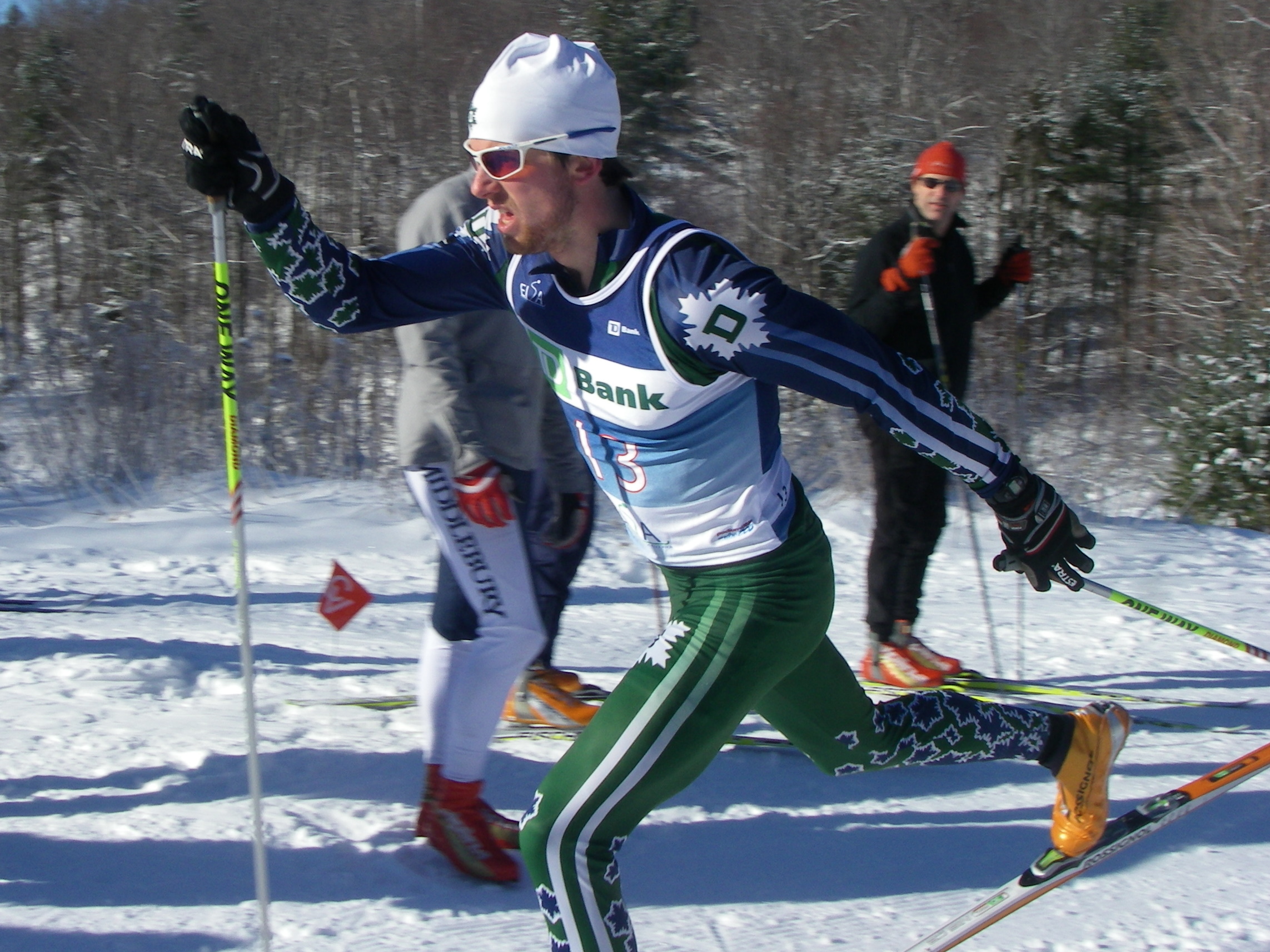
    Wilmington, Vermont’s Sophomore Luke Rizio. (Photo: Philip Belena/EISA)


    “I always say it’s not the individuals that make the team fast — it’s the team that makes the individuals fast,” he says. “Once they believe that, the motivation takes care of itself.”

    For nearly twenty years, that philosophy has shaped the University of Vermont into one of the most respected programs in NCAA skiing — not through hype or heavy recruiting, but through a culture of trust, humility, and balance.

    Lessons in Motion

    Weaver’s path to coaching wasn’t linear. It’s more like a relay through decades of ski mentors who left their fingerprints on his philosophy.

    “I never had one coach through my whole career,” he says. “There were a lot of influential people — high school, Stratton, college, the national team. I just learned to take things from each of them.”

    He spent a post-graduate year at Stratton Mountain School under Sverre Caldwell before skiing for Cory Schwartz at UNH — a relationship that would define his sense of what a team could feel like.

    “Cory was probably the most influential,” he says. “The way he ran that program — it was a family. I took that with me when I came to UVM.”

    After college, Weaver worked under a rotating cast of national and international coaches: Gordon Lange, Christer Skog, Sten Fjeldheim, Torbjørn Karlsen. Each brought a different rhythm to training. The mosaic of ideas shaped the adaptable style he’s known for today.

    “There’s not one way to coach,” Weaver says. “And because of my background, I’m not a ‘my way or the highway’ coach. I’ve seen too many ways that work.”

    Patrick Weaver racing in the 15 k Classic at the 2002 Olympics in Soldier Hollow, Utah. Weaver finished in 16th place. (Photo: UNH Ski Team)

    The Season He Cut His Hours

    In 2002, the year of his second Olympics, Weaver did something radical. He trained less.

    After years of logging 800-plus-hour seasons, he realized the grind was killing his joy. So he cut down to 600 hours — just one session a day, mornings only.

    “I was kind of burned out,” he says. “I’d dread the afternoon workouts. I loved the sport, but I wasn’t feeling good anymore. When I stopped doing the PM sessions, I felt better — I started looking forward to training again.”

    It’s a story he still tells his athletes, not as dogma but as permission. Permission to rest. Permission to find balance.

    “I’m never afraid to tell an athlete to train less,” he says. “Sometimes that’s the thing that gets them going faster.”

    That season became a turning point — not just in Weaver’s career, but in his view of what performance really means. It was the seed of a coaching style rooted not in metrics, but in intuition.
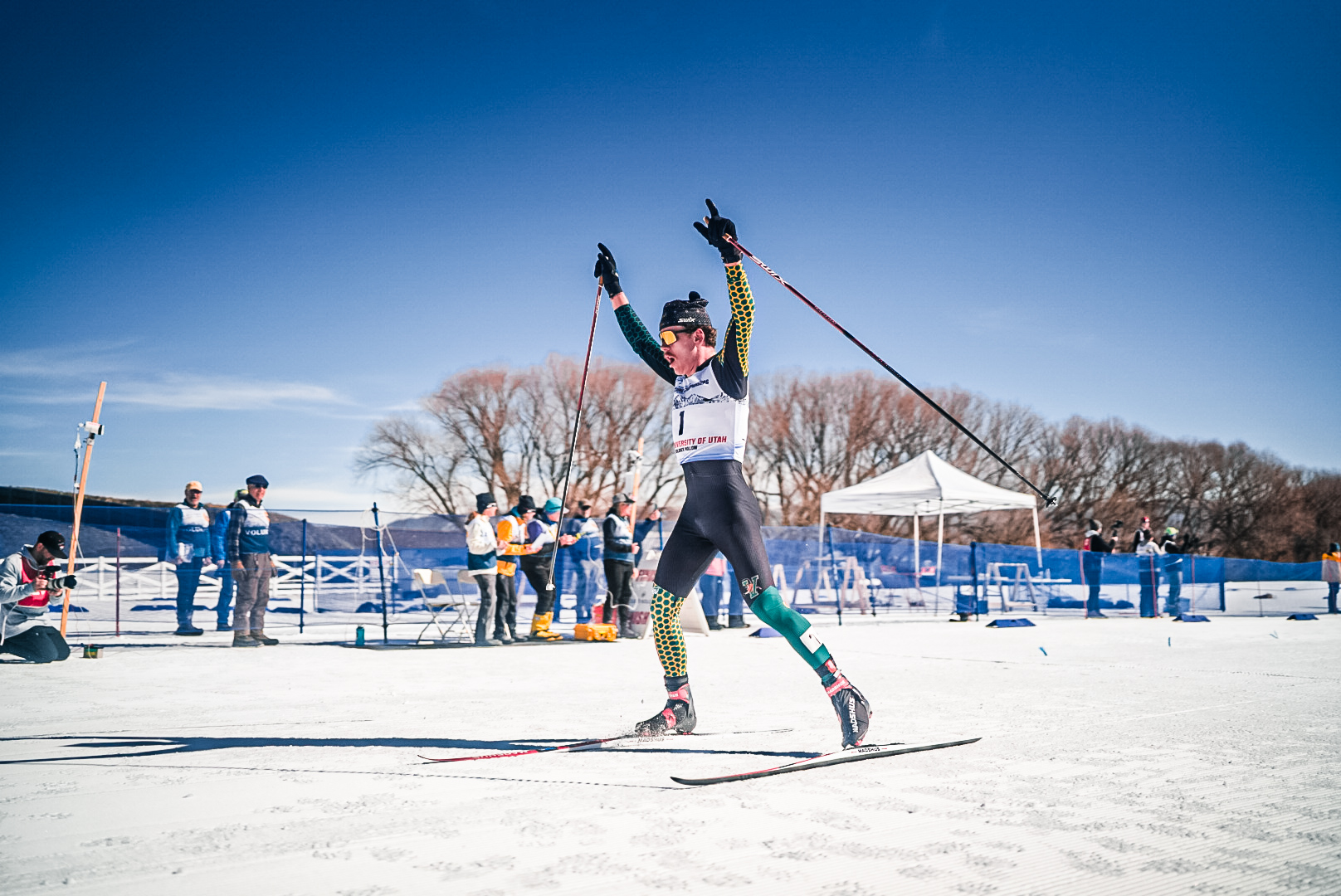
    Ben Ogden celebrates after sweeping the 2022 NCAA Championships in Midway, Utah. Ogden became 1 of only 4 skiers (alongside US Ski Team teammates Novie McCabe and Sophia Laukli) to win an NCAA Championship and represent the US at the Olympics in the same season. (Photo: Tobias Albrigtsen / @untraceableg)

    Coaching Ben Ogden — and the Art of Listening

    If Weaver’s name is not immediately known outside the NCAA world, it should be. One of his former athletes — UVM graduate Ben Ogden — is now one of the most dynamic racers on the World Cup circuit. Their partnership, built over seven years, is the epitome of Weaver’s coaching DNA: patient, collaborative, and deeply human.

    “I’m not Ben’s day-to-day coach,” he explains. “He’s got great people at Stratton and the U.S. Ski Team. But we talk — a lot. Strategy, planning, recovery, the big picture. And it’s never me saying, ‘Do this.’ We talk it through and find what makes sense logically.”

    That logic isn’t written in a spreadsheet. There are no lactate meters, no elaborate testing protocols.

    “We’re very unscientific,” Weaver says with a grin. “Ben appreciates the go-with-the-flow training plan. It’s all feel-based. If it feels good, we go with it.”

    The two share what they call the “Gus Workout” — a set of smooth, fast intervals inspired by Gus Schumacher. “It’s not about killing yourself,” Weaver says. “It’s about moving fast with good technique.”

    It’s fitting that one of America’s most promising World Cup athletes traces his development back to a coach who believes that skiing, at its best, is about rhythm and relationship more than data and drive.

    The UVM Way

    Weaver took over the Catamount program with a straightforward goal: strip away the clutter.

    “When I first got here, I just explored,” he says. “I found training venues close to campus — trails and loops that were right here. We stopped driving hours to ski. It simplified everything and gave athletes more time to recover.”

    That ethos — local, focused, efficient — defines UVM’s identity. Training isn’t glamorous, but it’s deliberate. The team atmosphere is close-knit, even familial. “There’s nothing special about UVM,” Weaver jokes, “and that’s what makes it special.”

    He points to the campus support network — trainers, nutritionists, sports psychologists, and strength coaches all under one roof — as one of the program’s hidden advantages. “It’s on par with professional teams,” he says. “The athletes can see everyone they need in one day.”

    That infrastructure helps athletes stay healthy, grounded, and balanced — which, for Weaver, is the real key to longevity.

    “We’ve had international athletes come in liking skiing, and they leave loving it,” he says. “That’s when I know we’ve done something right.”

    Junior Owen Young (Anchorage, Alaska) and Sophomore Fin Bailey (Peru, Vermont). (Photo: Phillip Belena/EISA)

    Through Change and Uncertainty

    Weaver has been around long enough to see college skiing evolve from a regional stepping stone to a legitimate World Cup pipeline. He’s also watched it collide with new realities: NIL money, early recruitment, the escalating costs of youth development.

    “When I was at UNH, I was training 500 hours a year and thought that was a lot,” he says. “Now I’ve got athletes training 700 or 800 hours — and managing school on top of it.”

    That dedication, he says, is a sign of progress — but also a warning.

    “Kids are training more and more at a younger age,” he says. “Sometimes it worries me. Are they doing it because they want to, or because they’re being told to?”

    He worries, too, about the economic side. The college landscape, reshaped by NIL and revenue sharing, could make Olympic sports harder to sustain.

    “We’re fundraising to pay athletes while big schools make $200 million a year off TV deals,” Weaver says. “It’s hard to see how that’s sustainable.”

    He laughs softly when asked what NCAA skiing looks like fifteen years from now. “I hope we’re still here,” he says. “I really do.”

    The Long Game

    If the world of college skiing is shifting underfoot, Weaver’s motivation remains rooted in something simple: people. Every year brings a new roster, a new set of personalities, a new chance to start fresh.

    “You do something long enough, it’s hard to stay motivated,” he admits. “But each fall I get new athletes, new relationships. First-year students I barely know become seniors I can’t believe are leaving. That cycle keeps it exciting.”

    He pauses, then adds, almost to himself:

    “Maybe that’s what success really is — watching them fall in love with skiing all over again.”

    UVM Sophomore Rose Horning from Leadville, Colorado. (Photo: Phillip Belena/EISA)


    Vermont’s Quiet Legacy

    Weaver doesn’t measure his legacy in NCAA titles or Olympic appearances, though UVM has had plenty of both. He measures it in the quiet mornings at Craftsbury, Jericho, or Sleepy Hollow, where athletes rediscover why they started skiing in the first place.

    He doesn’t see himself as a gatekeeper of results but as a caretaker of culture — one that prizes simplicity, joy, and belonging in a sport that often forgets how to slow down.

    In a world obsessed with metrics, Weaver’s story is a reminder: sometimes the best architectures of success are invisible — built in the space between workouts, in trust, and in the quiet confidence that skiing, at its best, should always be fun.

    “The best thing I can do,” he says, “is help people love the sport.”

    Coach Weaver chats with his first-year from St. Paul, MN, Hanna Koch. (Photo: Philip Belena/EISA)


  • Wednesday Workout: On the Up with Mountain Running World Champ Kasie Enman (with Video)

    Wednesday Workout: On the Up with Mountain Running World Champ Kasie Enman (with Video)

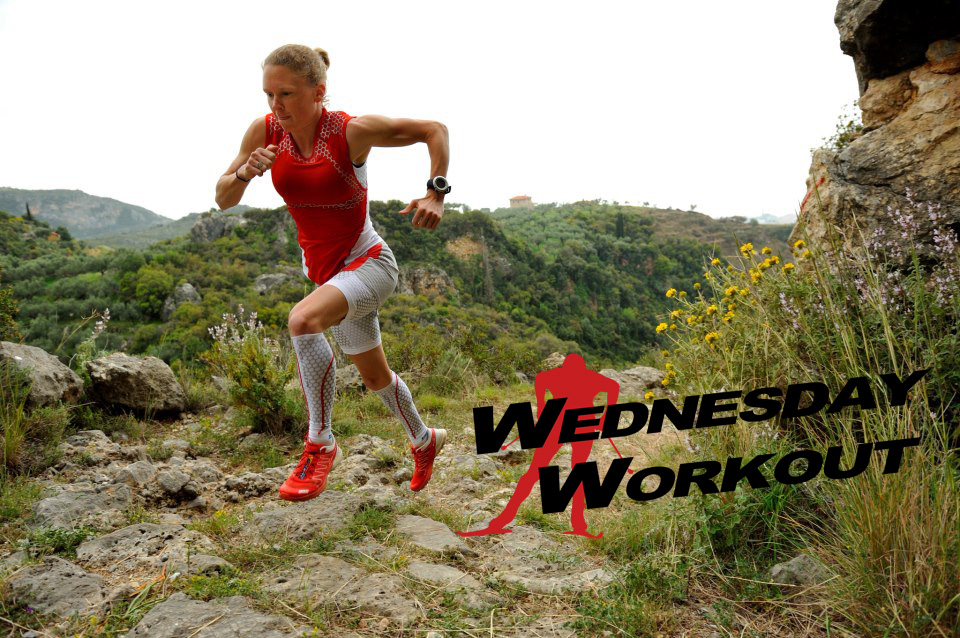
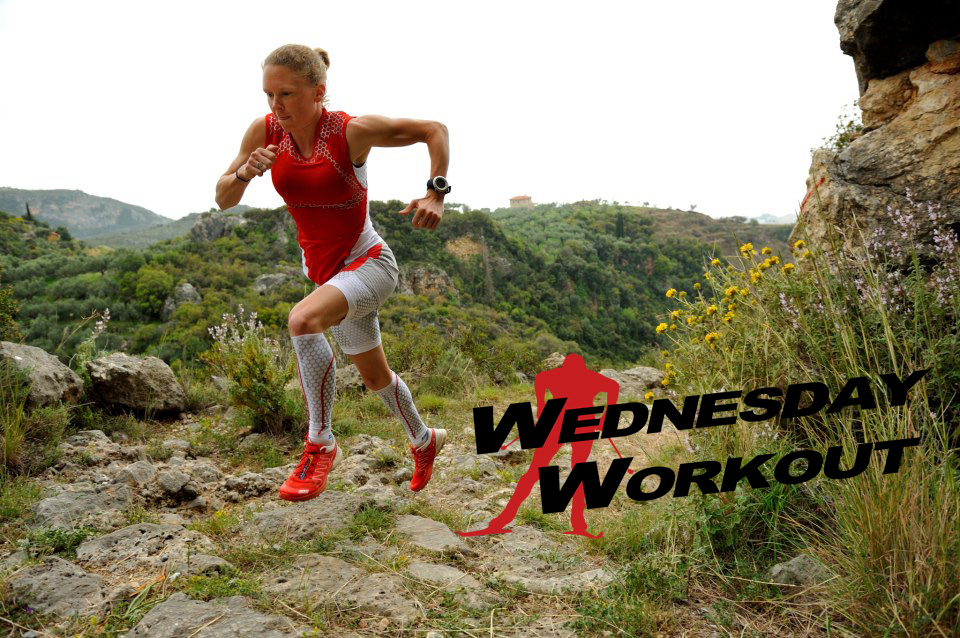
    Kasie Enman getting up a hill back in 2013. (Photo: Kasie Enman/Droz Photo)
    Kasie Enman getting up a hill back in 2013. (Photo: Kasie Enman/Droz Photo)

    This week, FasterSkier caught up with elite mountain runner Kasie Enman. A 2011 World Mountain Running champion, 11th-place finisher at the 2008 Olympic marathon trials, competitive snowshoe racer, collegiate All-American, and more, Enman divulged her secret to prepping for mountain races and the latest projects she’s been tackling when it comes to mountain running.

    ***

    Mountain running, marathons, maple-syrup manufacturing, mother of twoVermont-based 2011 U.S. World Mountain Running champion Kasie Enman has plenty on her plate. Pile on coaching two club running teams and her and her husband Eli’s living-off-the-land lifestyle, it would appear all her time is already taken. But Kasie, a Middlebury College alum, made room for one more project this year: the push to make mountain-running race team sizes and distances equal between men and women.

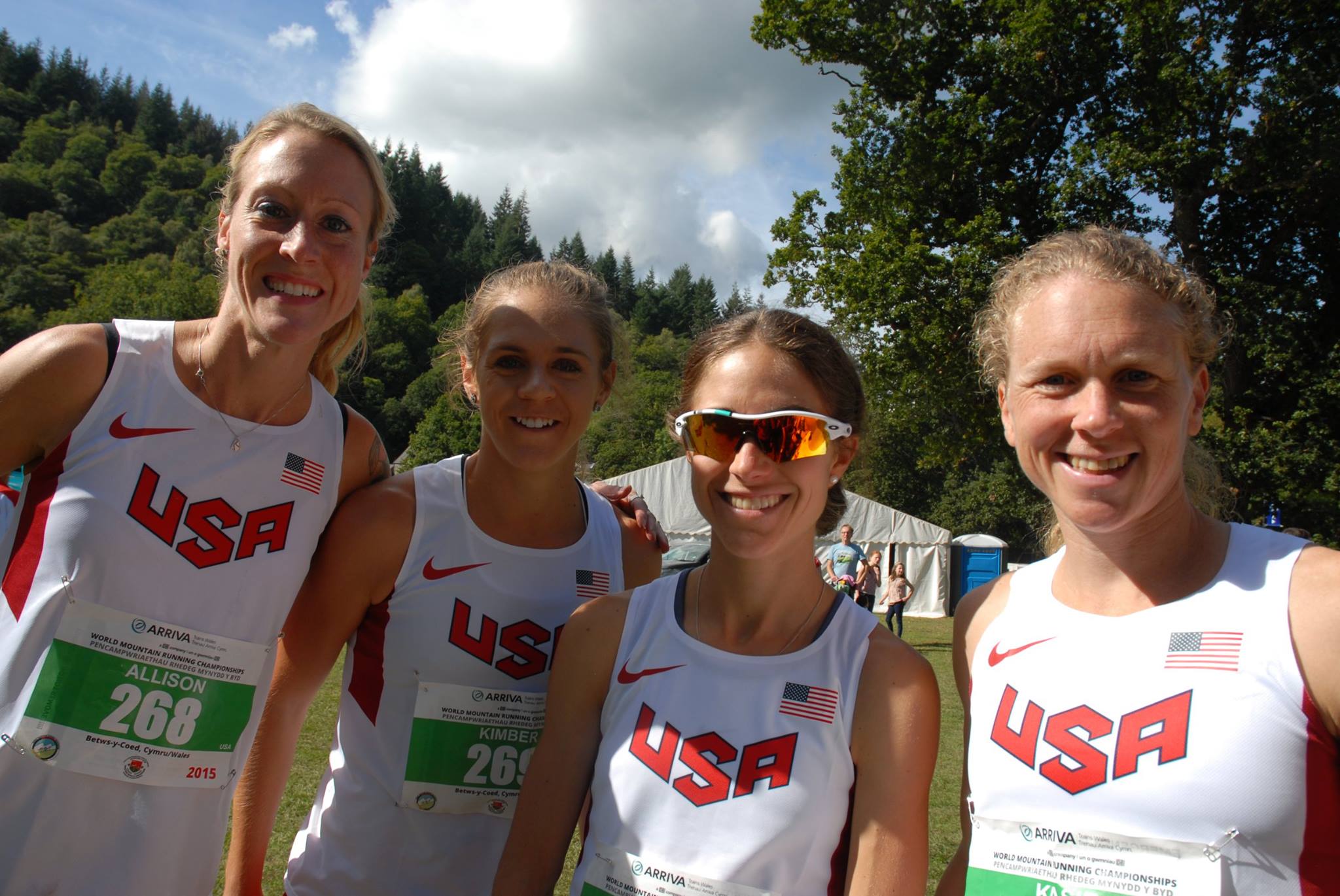
    The women's 2015 World Mountain Running team senior sivler medalists at this year's 2015 World Mountain Running Championships, shown (left to right) Alli Grace Morgan, Kimber Mattox, Morgan Arritola, and Kasie Enman. (Photo: Courtesy/Nancy Hobbs)
    The U.S. women’s senior team after claiming silver at the 2015 World Mountain Running Championships: (from left to right) Alli Grace Morgan, Kimber Mattox, Morgan Arritola, and Kasie Enman. (Photo: Nancy Hobbs)

    Not normally the one to “be the squeaky wheel,” Enman, 37-years-old, felt this was a scenario where it was acceptable for her to do so. Currently, the World Mountain Running Association (WMRA) permits each international team to carry six men and four women. In the WMRA, similar to the National Collegiate Athletic Association (NCAA) and International Ski Federation (FIS) competitions, men and women also compete on different length courses. Enman hopes to not only achieve equal course length, but equal team size at all levels of the sport, nationally and beyond.

    “The most exciting thing that’s happening in the near future is at the U.S. [Mountain Running] Championships this year, we will be running equal distances,” she said in a recent phone interview. “So that’s something to be proud of.

    “The next big push will be heading into the World Championships in September [because] that’s when the votes will happen,” she added, referring to a proposal that was submitted to make team size and course distances the same for both genders.

    In order to be present for the September vote, however, Enman still needs to make the U.S. Mountain Running Team. The qualifier will take place this year on July 3 at Loon Mountain in Lincoln, N.H.

    The Work[out] to Make the Team

    Though Enman is an extremely experienced and adept runner (she finished 11th at the Olympic Marathon trials in 2008, won the 2011 U.S. Mountain Running Championships, and that same year, went on to become the first American woman to take the title for World Mountain Running Championships), she wasn’t always darting over peaks. Her transition into mountain running was shaped by her surroundings and situation.

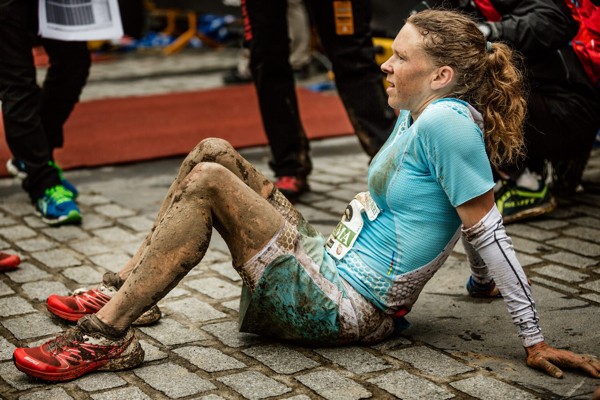
    Kasie Enman post 2014 Zegama Marathon (Photo: Courtesy/Jordi Saragossa)
    Kasie Enman post-2014 Zegama Marathon (Photo: Jordi Saragossa)

    “I ran cross country [in college], but that was the most trailish kind of thing that I had any experience with,” she explained. “I think [my interest in mountain running] really morphed from the location where I live.”

    After graduating from Middlebury and spending a year in Burlington, Enman moved to Sleepy Hollow in Huntington, Vt. with her husband. With only a mile separating her from the mountain biking, running, and nordic ski trails of Sleepy Hollow Inn — a family owned and operated outdoor center — it didn’t take Enman long to fall into technical trail running.

    “I’m not going to be driving somewhere to train. I train where I live and where I live happens to be really hilly, fairly mountainous and technical footing,” she said. “Gradually over time, [mountain running] just became something I could do well because I did so many hours of it. I tried out my first actual mountain race on a year when I had a plantar facsciitis injury and it was too painful to run on anything flat or even on downhill, but I found I could run pain free uphill.”

    Cranking out the uphill kilometers without any pain in her heel, Enman unearthed her calling. She quickly became addicted to mountain racing and competed in the Loon Mountain Race, Ascutney Mountain Run and Mount Washington Road Race. Learning that there was an opportunity to make a U.S. National team only pushed Enman further.

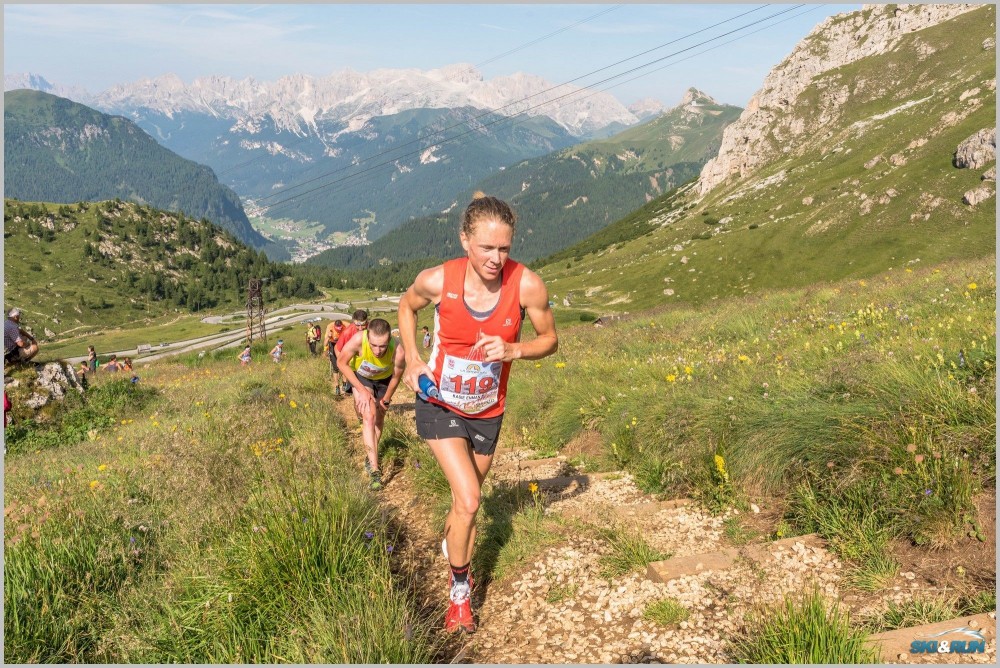
    Kasie Enman getting above tree line at the 2015 Dolomites Sky Race. (Photo Kasie Enman/Ski & Run)
    Kasie Enman getting above tree line at the 2015 Dolomites Sky Race. (Photo Kasie Enman/Ski & Run)

    “It took me a number of years to actually make the team,” she said. “I kept just missing it, and then 2011 I finally made the worlds team and that opened up a lot of doors. … It was sort of a whirlwind of a few years of discovering things and having some surprising success.”

    This year, Enman’s training regime takes on a slightly different look, as she is coming off of an eight-month period of injuries and illness–a fall hamstring strain that led to back and hip pain and a a virus that led to Enman to feel chronically fatigued. With this year also being an uphill-year only (mountain-running race seasons alternate between uphill-race-only years and years with courses that involve downhills), her current focus is running economy and efficiency.

    “This is an uphill-only year and that’s not my strength,” she said. “I’m always trying to get better with that and that’s kind of why I choose to push the uphills because I’m experimenting with … what feels like using the least amount of energy necessary to get up this hill the fastest and most efficiently.”

    With the Mt. Washington and Loon Mountain races ahead and a her injury behind, Kasie’s “transitional workout” is quite simple: get to an uphill and giddy up.

    “I start on an uphill, our driveway, which is a half mile uphill to the trails,” she said. “ Then I continue up to the nordic trails and the single track … and then, basically anytime there’s a choice to go up, I take it.”

    The Workout: Hill (Rather, Mountain) Repeats

    Purpose: Work on uphill running efficiency and economy

    Pace: Enman suggests Level 3/4 during uphills

    – Find an uphill and start climbing!

    Her uphill segments to be around 11-12 minutes of steady climbing … times 10.

    “Some of the uphills are as long as like 11-12 minute continuous climbs to the top,” Enman said. “Of course then I’m like, I only have to do that 10 more times consecutively before I’m done.”

    – The steeper, the better.

    Enman isn’t afraid to tackle pitches that are similar to those she’ll be racing on, no matter the amount of related calf and quad pain.

    “There’s this part of Loon called Upper Walking Boss that gets to like a 45-degree grade slope that you’re running up — it’s like a black-diamond ski trail,” she said. “And there are some trails that steep around here, too.”

    – Look for technical terrain that will challenge your footing and coordination.

    Total time: 90 minutes

    For an adaptation to the above hill workout, check out a video Kasie posted of her hill preparation for the 2015 Hartford Marathon race. (Video: Courtesy of Kasie Enman)

    https://www.youtube.com/watch?v=nrSzVpZnwZM

    Enmans’s Top-Two Mountain Running Musts:

      1. Ditch the watch and — heaven forbid — the heart rate monitor. Every once in a while, don’t be afraid to ditch the GPS, watch and heart rate monitor that might be hindering you from hearing what your body has to say. “I rarely run with a watch, I also don’t run with a GPS garment,” Enman said. “Then I can pay attention to how I’m feeling. I’ve shown up at enough races and have done well enough, that now I have confidence that I can sense my effort and that I am doing what’s the best for me on [competition] day.”
      2. Drop everything and run. Being flexible is certainly important for those on a strict schedule. As a mom, Enman takes any opportunity she can to get out the door, thanks greatly to communication with her husband and extended family. “I’ve just gotten to where I’m ready to go at any moment,” she said. “it doesn’t matter if I’ve just eaten a big lunch, I’ll step right out the door and go right then if that’s when the window opens.”
  • Essex High School Hiring Head Nordic Coach

    Essex High School Hiring Head Nordic Coach

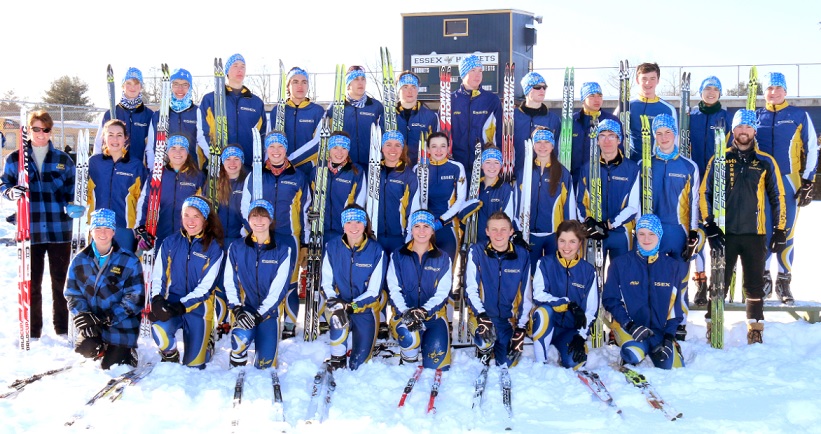
    Essex High School Nordic Team
    Essex High School in Essex Junction, VT is seeking a Head Nordic Ski Coach for the upcoming season.Last season we had over 30 student-athletes compete.  Our Nordic skiers are some of the finest student-athletes in our school with an enrollment topping 1,400 students.

    We have both on-site terrain as well as the ability to train at Sleepy Hollow as well as the Jericho training center.

    Individuals interested in applying should visit SchoolSpring or email athletic director Jeff Goodrich at jgoodrich@ccsuvt.org.

  • Dartmouth Wins St Michael’s EISA Collegiate Qualifiers

    Dartmouth Wins St Michael’s EISA Collegiate Qualifiers

    The scramble leg of the men's classic sprint relay (photo: Lincoln Benedict)
    Patrick O'Brien from Dartmouth (center) and Graham Egan from Middlebury (left) lead the scramble leg of the men's sprint relay (photo: Lincoln Benedict)

    With bright sunshine and temps in the teens, no one could complain about the weather for the St. Michael’s EISA Carnival weekend at Sleepy Hollow.

    It was an open Carnival which meant participation numbers were high, and each event saw over 90 racers.  Only Friday’s distance event was a scoring race for NCAA points, while Saturday’s sprint relay was purely for fun, speed and – as one racer hoped – “world domination”.

    Saturday’s course for the 10 and 15 kilometer skate races was a series of loops around the stadium: a tough mix of long, unrelenting climbs, followed by very fast and icy downhill luge runs.

    Erika Flowers (DAR) winning the 10km skate at Sleepy Hollow
    Erika Flowers (DAR) winning the 10km skate at Sleepy Hollow (photo: Ruff Patterson)

    The women were up first, and Dartmouth showed that even without some of their top racers they were a dominant force.  With teammates Ida Sargent and Rosie Brennan absent, Erika Flowers stepped up for the team to take the first place spot, winning by 23 seconds.

    Flowers said she hadn’t felt great that morning, but once she got into the race she found the winning stride after receiving feedback from her coaches.  “I got splits off teammates and that was really encouraging, just to see they were having good races. That motivated me to try and get back in it, especially in the second half.”

    Lucy Garrec from Colby finished second, preventing the Big Green from owning the podium, as Katie Bono and Stephanie Crocker from Dartmouth took 3rd and 4th.  Anya Bean from UNH, who had a stand-out race last weekend, showed that result was no fluke by finishing in 5th place.  With teammate Natasha Kulles right behind her in 6th place, UNH was the team that challenged Dartmouth’s high score of the event.

    Nils Koons (DAR) wins the men's 15km skate
    Nils Koons (DAR) wins the men's 15km skate (photo: Ruff Patterson)

    In the men’s 15km race Dylan McGuffin of UNH wore the yellow jersey, but it was Dartmouth’s Nils Koons who had the fastest collegiate race of the day. Just four seconds back was UVM’s Alex Howe in second place and McGuffin finished third, 15 seconds behind Koons.  It was UVM who nearly upset Dartmouth’s  win in the mens race, as Franz Bernstein of UVM joined Howe at the top of the points list by placing 4th.

    The overall winner of the men’s race was Tim Reynolds, of the Craftsbury Green Racing Project, who bested the field by 11 seconds.

    When asked if he still held onto the yellow jersey, McGuffin said he thought he and Koons were tied in points after the weekend, but if there was no present protocol for determining a tied score, he was ready to issue a challenge to Koons in a simple statement: “Dance-off.”

    Sprint Relays:

    Saturday’s sprint relay consisted of 3 person teams, each racing 3 x 1km.  Considering the short, narrow course and 30+ teams on the start line, the race saw relatively little carnage, as the top teams in both races got to the front fast and the steep herringbone hill at the beginning of the course spread the field out considerably.  The men’s race saw a surprise battle between Middlebury and Dartmouth.

    As Graham Egan from Middlebury explains, though his team thought there would be others in the top of the mix, “Dartmouth was obviously the team to beat.”

    Egan said that his team had a simple strategy, to get a good start and then stay in the mix.

    He then ensured they did just that by hanging onto Dartmouth’s scramble leg, Pat O’Brien, who Egan says, “threw down a monster of a first lap.”

    Chase Marston (MID) leads Gordon Vermeer (DAR) for a Middlebury win in the team sprint relay (photo: Lincoln Benedict)
    Chase Marston (MID) leads Gordon Vermeer (DAR) for a Middlebury win in the team sprint relay (photo: Lincoln Benedict)

    Egan and O’Brien took off on the first hill and never looked back, separating their two teams from the rest of the pack for the remainder of the race.  Middlebury’s second and third legs, Chase Marston and Doug Debold, kept extending the lead on Dartmouth’s Gordon Vermeer and Nils Koons, so that Middlebury crossed the line with a nice 12 second cushion.   In third was a strong finish by Saint Lawrence University’s Zachary Wetherell, Benjamin Knowles, and Eric Wolcott.

    The Dartmouth women evened out the score in the following sprint relay by beating Middlebury’s women in a 1-2 finish.  Stephanie Crocker, Katie Bono and Erika Flowers, who had all finished in the top 4 the day before, set out to be a formidable team.  With a fall in the first lap, they recovered the lead in the second lap and never let up, taking the win by nearly 30 seconds.  Lauren Fritz, Keely Levins, and Corinne Prevot of Middlebury put together an impressive relay to add to the team’s winning day of races. Finishing third was the University of Vermont’s team of Caitlin Curran, Jane McClelland, and Jennie Bender.

    “It was a really awesome day,” said Egan of the Middlebury team’s spirits,” we’re really psyched about it.”

    Erika Flowers tags off to teammate Katie Bono as Keely Levins (Middlebury) waits for the tag (photo: Ruff Patterson)
    Dartmouth's Erika Flowers tags off to teammate Katie Bono as Keely Levins (Middlebury) waits for the tag (photo: Lincoln Benedict)

    The Dartmouth women were also psyched about their winning weekend, despite missing teammates who are competing at the U23 Games in Germany.  Flowers said they get emails from Germany wishing the team luck and cheering them on and that these sentiments really fire up the team to continue their success.

    “We just kind of feed off each other and really push each other,”said Flowers, “and I think that really helps too, because we’re racing for each other and also racing for them.”

    Combined with alpine scores, it was Dartmouth who led the weekend, UVM in second and UNH in third.

    Next week will be a break in the EISA schedule, letting racers get some training and rest before the upcoming races at Stowe – and perhaps giving Nils Koons a little time to work on those dance moves.

    Full Results

    More pictures and video on the EISA website (by Lincoln Benedict)