From the FasterSkier archive — posts syndicated from athletes’ and coaches’ own blogs between 2004 and 2012, kept online as published. Current coverage is at fasterskier.com.

Tag: Sloan Storey

  • NCAA Champs Day 1: Strøm Makes CU History; Miller Nabs Individual Win for MSU

    NCAA Champs Day 1: Strøm Makes CU History; Miller Nabs Individual Win for MSU

    Note: FasterSkier is seeking photos from the nordic races at 2016 NCAA Skiing Championships. Please email info@fasterskier.com with photos of top finishers or for more info.

    ***

    Two juniors, one from Montana State University (MSU) and the other from the host team, the University of Colorado-Boulder (CU), claimed the ultimate collegiate titles on Thursday at 2016 NCAA Skiing Championships in Steamboat Springs, Colo.

    It was the first of two days of nordic racing at Howelsen Hill, and Anika Miller (MSU) and Mads Strøm (CU) emerged as the individual winners in the 5- and 10-kilometer freestyle races, respectively.
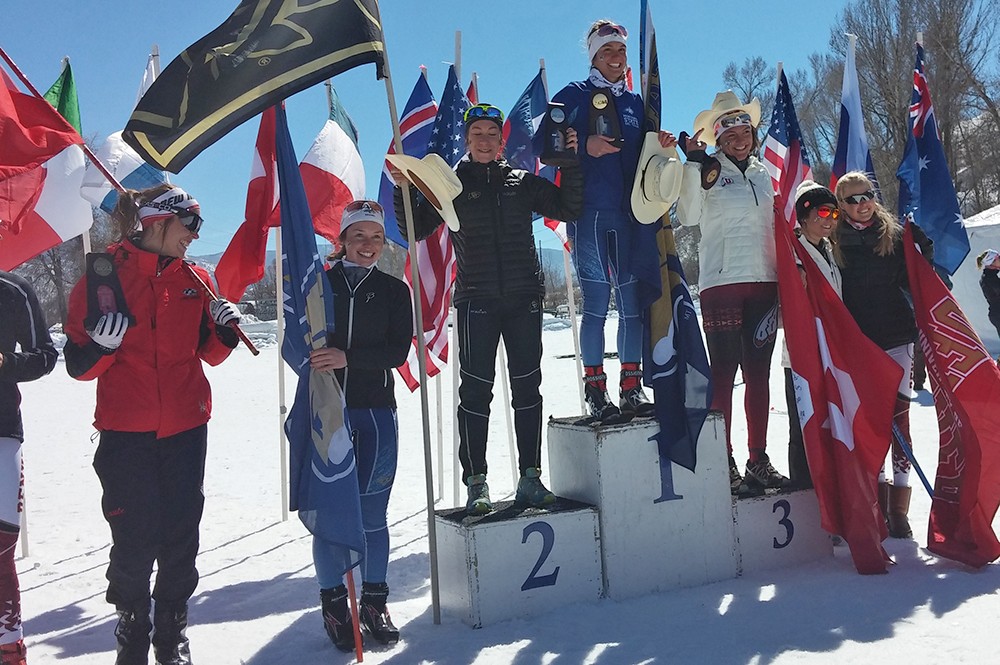
    The women's 5 k freestyle podium on the first day of nordic racing at 2016 NCAA Skiing Championships in Steamboat Springs, Colo. Anika Miller (MSU) placed first, Petra Hyncicova (CU) finished second and Utah's Sloan Storey took third. (Photo: MSUBobcats.com)
    The women’s 5 k freestyle podium on the first day of nordic racing at 2016 NCAA Skiing Championships in Steamboat Springs, Colo. Anika Miller (MSU) placed first, Petra Hyncicova (CU) finished second and Utah’s Sloan Storey took third. (Photo: MSUBobcats.com)

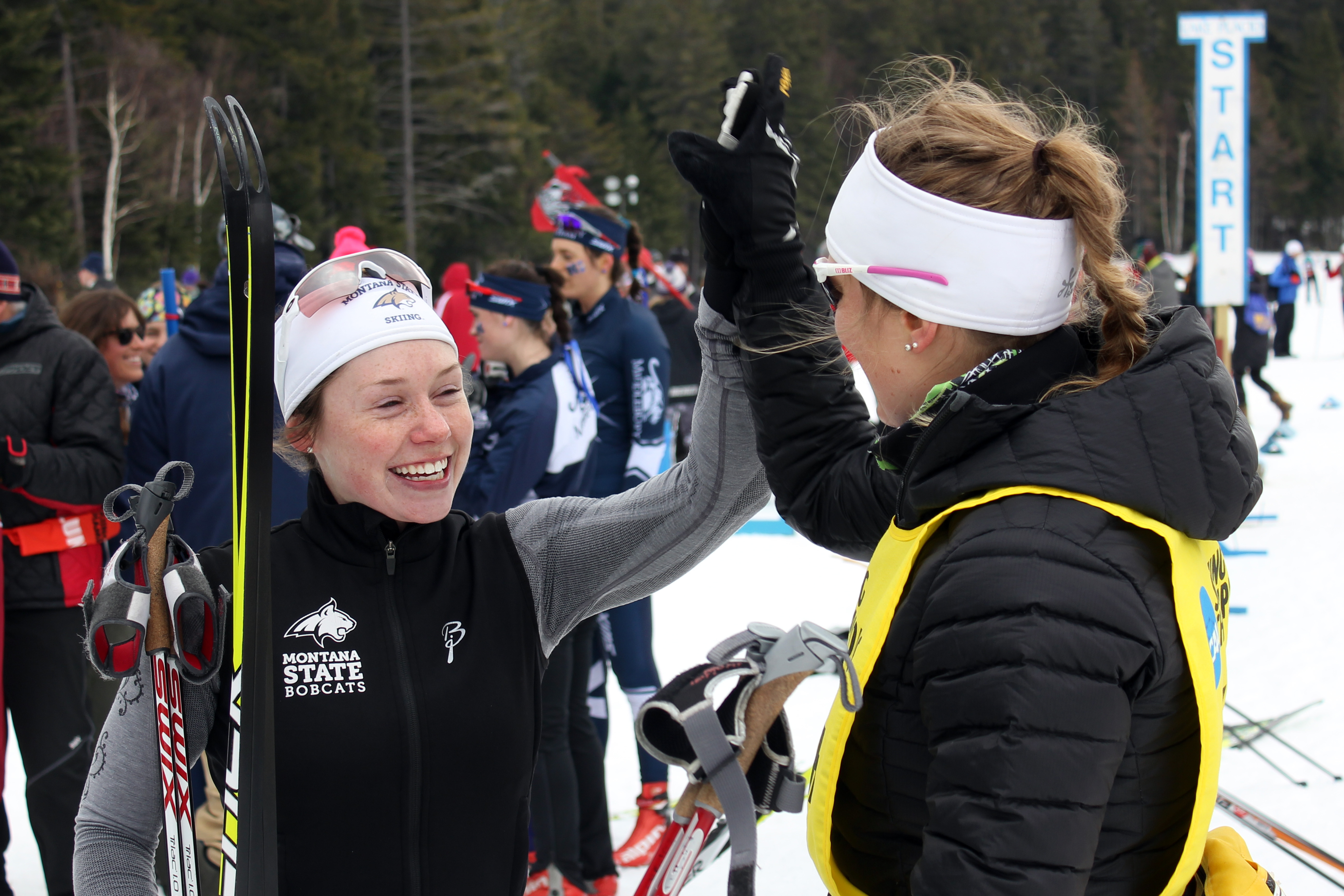
    Miller led four Bobcats in the top 10, winning the women’s 5 k freestyle individual start in 13:06.1. Her teammate, Cambria McDermott, placed fourth, 9.4 seconds back.

    “When I finished, I had no idea how I’d done actually until my teammates jumped on me and were screaming,” Miller told NCAA.com. “I had no idea. I just started crying.”

    A native of McCall, Idaho, Miller bested second-place finisher Petra Hyncicova (CU) by 7.9 seconds for the win, becoming the first MSU skier to win an individual title since 1978, when Dan Brelsford (now the director of skiing) won the slalom race, according to an MSU press release. She is also the first female skier to win an individual title for MSU.

    Just one-tenth of a second behind Hyncicova, Sloan Storey (University of Utah) reached the final step of the podium in third.

    An NCAA champion in 2014, Strøm achieved his second freestyle title in the men’s 10 k freestyle on Thursday in 22:06.8. His time proved to be 10.6 seconds faster than runner-up Ian Torchia of Northern Michigan University (NMU). Denver University’s Moritz Madlener placed third (+19.8).

    For Strøm, the win was his fifth in a row and seventh total this season, according to a CU press release.

    “It feels awesome, it feels amazing,” the 24-year-old Norwegian told CUBuffs.com.  “For ten months this has been my goal and to accomplish my goal is amazing. I was so nervous. I knew there was going to be a mass crowd out. I just had to find good skis, good pacing, and push it as hard as possible. It was definitely the best win of the year. Pulling it off when it matters the most is great.”
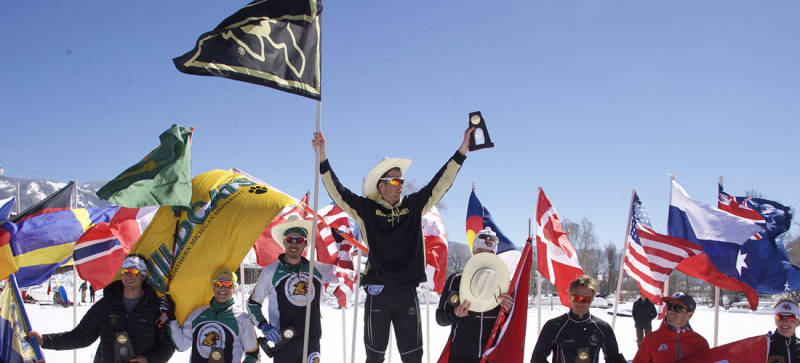
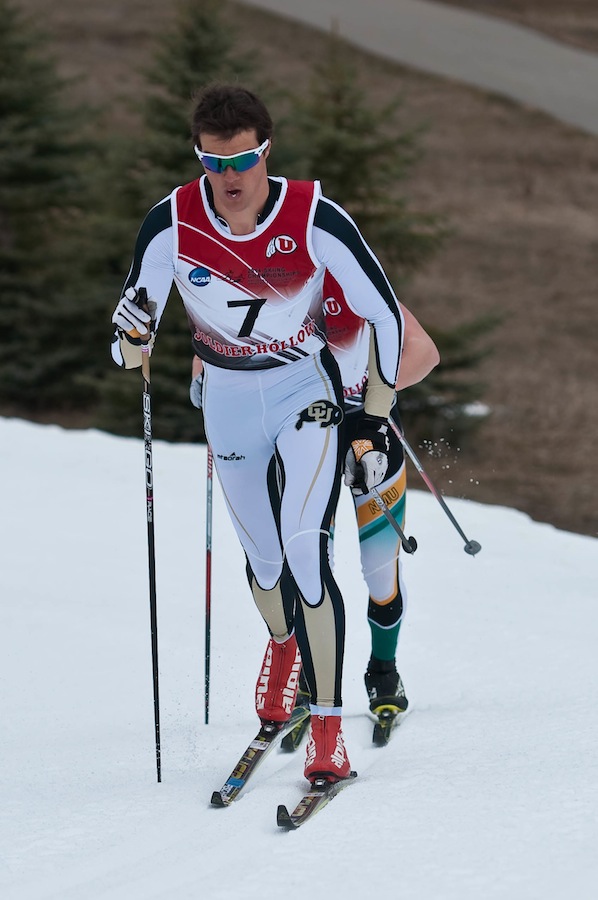
    Mads Strøm of the University of Colorado-Boulder celebrates his win in the men's 10 k freestyle on Thursday at 2016 NCAA Championships in Steamboat Springs, Colol. (Photo: Jamie Schwaberow/NCAA via CUBuffs.com)
    Mads Strøm of the University of Colorado-Boulder celebrates his win in the men’s 10 k freestyle on Thursday at 2016 NCAA Championships in Steamboat Springs, Colol. (Photo: Jamie Schwaberow/NCAA via CUBuffs.com)

    Strøm explained he had to “push it all the way to the end,” so hard that he was physically ill across the line.

    “I was so tired in the end,” he added. “As soon as I crossed the finish line, I had to lie down.”

    With his seventh win, Strøm is the winningest male nordic skier in CU history. He exceeded the amount of wins of Per Kare Jakobsen (who won six races in 1989) and Ove Erik Tronvoll (six in 1999). It was also the 89th individual win by a Buff, the most of any school in NCAA history, the CU release stated.

    For women’s runner-up Hyncicova, a 21-year-old sophomore from the Czech Republic, second stood as her best result of the season and matched her career best.

    “It was so hard, but it was really nice in the end. I didn’t hope for getting second, so it’s really nice,” Hyncicova told CUBuffs.com.  “I really didn’t have any idea what I was hoping for. In each race you want to win, but I didn’t expect that I would win here because I was always around fifth [place] this season.  I went to Romania a couple of weeks ago [for U23 World Championships], so I was really tired and didn’t feel that great.

    “I was really nervous before the start,” she added. “But once I saw everyone here — the alpine’s and everyone who cheered for us — I was like, ‘Yes I have to do it. I have to do it for the team.’ ”

    Team Standings (through 4 races):

    1. Montana State: 282
    2. Utah: 264
    3. Denver: 263
    4. Colorado: 214.5
    5. Vermont: 154
    6. New Mexico: 139.5
    7. Dartmouth: 126
    8. Alaska Anchorage: 124
    9. Northern Michigan: 122
    10. Middlebury: 81

    “I feel somewhat relieved but happy,” CU Nordic coach Bruce Cranmer said.  “Compared to racing, coaching is way more stressful.  You are worried about everyone and getting the right wax. I am still trying to calm down. I get so fired up.

    “Mads did great,” Cranmer added. “The guy that got second [Torchia] is one of the top U.S. [skiers] that went to World Juniors. [Mads] was on really good form before he got here, so I had high expectations without trying to get too caught up.

    “As for Petra, we were hoping for a top five finish. That is we thought she was capable of.  … For her to finish in second is awesome. … She does really well in skating.”

    Late last month, Torchia led the U.S. junior men in Romania with his top individual result of the week in 15th in the 15 k freestyle. It was his second-best at Junior Worlds since placing 11th last year in the 20 k skiathlon.

    Following Torchia in second, Northern Michigan had three in the top 10 with Adam Martin in fourth (+28.4) and Jake Brown in ninth (+56.1).

    “We knew that if we had a good day, all three of those guys were capable of winning and we just didn’t know which one,” said NMU Head Coach Sten Fjeldheim told NCAA.com. “We weren’t shocked or surprised that they’re all in the top 10, but you never know at altitude.”

    The base elevation of Steamboat Springs’ Howelsen Hill is about 6,700 feet.

    Through four events (two cross-country and two alpine) at 2016 NCAA Championships, Montana State leads the team standings with 282 points and Utah is second with 264. Denver is a close third, with 263 points after two days of racing. With a win and second-place finish on Thursday, CU moved into fourth in the standings, with 214.5 points.

    MSU’s previous team best was seventh, which it achieved last year with 259 points. The University has already exceeded that total at the halfway point of the championships. Racing wraps up Saturday with 15/20 k classic mass starts.

    “The momentum definitely helps our mindset, but the bottom line is we’ve got to go out and race the same way that we race everyday. That’s the way to succeed,” MSU Head Coach Matthew Johnson told NCAA.com. “Trying to mix it up and change it for the championship isn’t going to go well. Coming in with too much excitement isn’t going to go well, but skiing like we’re in the lead and skiing like we’re champions is going to do well for us.”

    5/10 k freestyle results | with splits

    Top 10 men: 

    1. Mads Strøm (CU) 22:06.8
    2. Ian Torchia (NMU) +10.6
    3. Moritz Madlener (DU) +19.8
    4. Adam Martin (NMU) +28.4
    5. Sawyer Kesselheim (MSU) +28.6
    6. Petter Reistad (CU) +35.1
    7. Nick Hendrickson (DU) +40.6
    8. Lars Hannah (DU) +50.1
    9. Jake Brown (NMU) +56.1
    10. Jack Hegman (UVM) +56.9

    Top 10 women:

    1. Anika Miller (MSU) 13:06.1
    2. Petra Hyncicova (CU) +7.9
    3. Sloan Storey (Utah) +8.0
    4. Cambria McDermott (MSU) +9.4
    5. Emilie Cedervaern (UNM) +12.8
    6. Natalia Mueller (Utah) +13.1
    7. Taeler McCrerey (DU) +13.4
    8. Linn Eriksen (DU) +13.6
    9. Ane Johnsen (CU) +14.7
    10. Mary Kate Cirelli (UVM) +17.5
  • Movember in West: Skiers Share ‘Stache Stories and Race Goals

    Movember in West: Skiers Share ‘Stache Stories and Race Goals

    WEST YELLOWSTONE, Mont.– While the Yellowstone Ski Festival crew is plenty busy grooming the trails with the fresh snow fall Wednesday, many skiers are also busy grooming their upper lip. In the spirit of no-shave “Movember,” FasterSkier decided to rank the top mustaches found out on the trails. Ranking decisions were made based off the official rules according to the Movember Foundation, as well as an individual’s responses, and overall look. 

    The photo gallery shows our picks for the Top 10 Movember Men. This is followed by the Top Five Movember Women*, abbreviated because of the number of women who participated*. The gallery is rounded out with the top-three Bearded Honorable Mentions.

    *Cutout mustaches provided by FasterSkier.

    Along with getting the history behind the facial hair, FS asked athletes about their race goals for the weekend and beyond:

    Annie Pokorny (SMST2): “Be one of the top girls going into the season.”

    Sloan Storey (University of Utah): “Just getting back into it, waking my body up, and having fun.”

    Liz Guiney (CGRP): “Get the first races out of the way and have fun.”

    Miles Havlick (SVSEF): “Should be a good weekend to get into the racing routine.”

    Chris Parr (Unaffiliated): “To try and not to shave … I’m hoping I can hold off, it’s tempting.”

    Joe Dubay (Unaffiliated): “I’m going to try not to let the icicles on my beard get too out of control.”

    Nicholas Michaud (BSF): “Have the best mustache in the A-final on Friday.”

    Eric Packer (APU): “First race of the year you’re always trying to put down a good effort and practice all of the things you worked on over the summer. My biggest goal is to go out there and ski really well.”

    Akeo Maifeld-Carucci (BSF): “Make sure my mustache is looking real good at the finish.”

    Reese Hanneman (APU): “I’m focusing on the sprint and hoping for an elite podium.”

  • Caldwell, Mayerhofer Claim NCAA Freestyle Titles as Colorado Takes Early Lead

    Caldwell, Mayerhofer Claim NCAA Freestyle Titles as Colorado Takes Early Lead

    The men's 10 k freestyle interval start podium at the 2015 NCAA Championships in Lake Placid, N.Y. Taking the top three spots were Dartmouth's Patrick Caldwell, Denver's Moritz Madlener (not pictured), and Colorado's Rune Malo Ødegård.
    The men’s 10 k freestyle interval start podium at the 2015 NCAA Championships in Lake Placid, N.Y. Taking the top three spots were Dartmouth’s Patrick Caldwell, Denver’s Moritz Madlener (not pictured), and Colorado’s Rune Malo Ødegård.

    LAKE PLACID, N.Y. — Excitement was high in upstate New York as the 2015 NCAA Skiing Championships kicked off in Lake Placid with the men’s 10 kilometer and women’s 5 k freestyle interval starts. Dartmouth’s Patrick Caldwell claimed his first national title, while the University of Utah’s Veronika Mayerhofer led a western sweep in the women’s race.

    While Lake Placid has faced a colder-than-average winter, Wednesday welcomed temperatures in the 40s and occasional sun. Snow was hard packed for the men’s race, and conditions were incredibly fast despite the difficulty of the course.

    Caldwell finished the 10 k with a time of 25:09.1. The University of Denver’s Moritz Madlener placed second, just 2.1 seconds off the Big Green skier’s winning time. The Univeristy of Colorado’s Rune Malo Ødegård finished third, 26 seconds behind.

    Fellow Buff, Mads Ek Støm (+29.8) took fourth, as Montana State University’s Forrest Mahlen (+1:00.7) finished fifth.

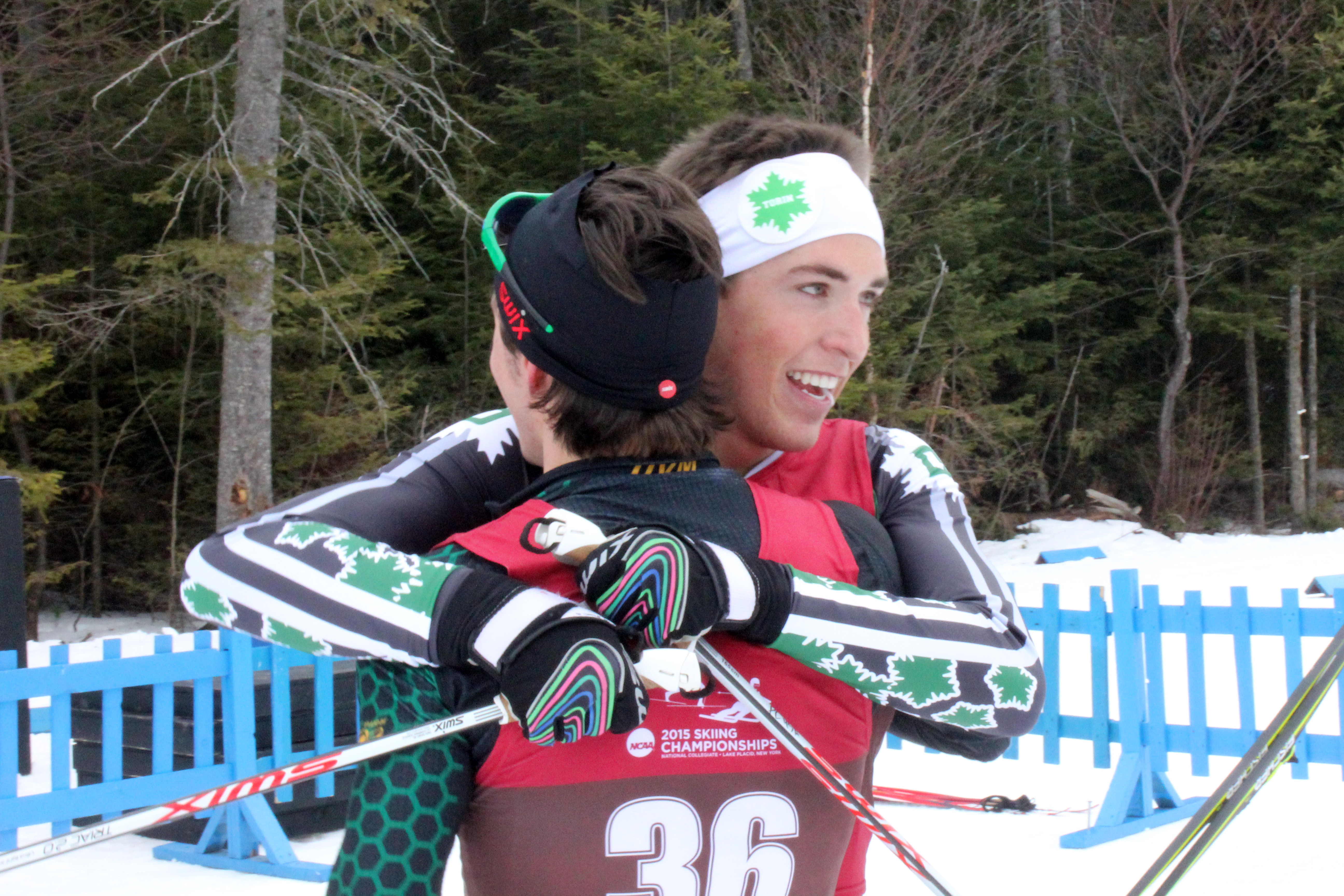
    Dartmouth's Paddy Caldwell hugs Vermont's Rogan Brown at the finish of the 10 k freestyle at the 2015 NCAA Championships in Lake Placid, N.Y.
    Dartmouth’s Paddy Caldwell hugs Vermont’s Rogan Brown at the finish of the 10 k freestyle at the 2015 NCAA Championships in Lake Placid, N.Y.

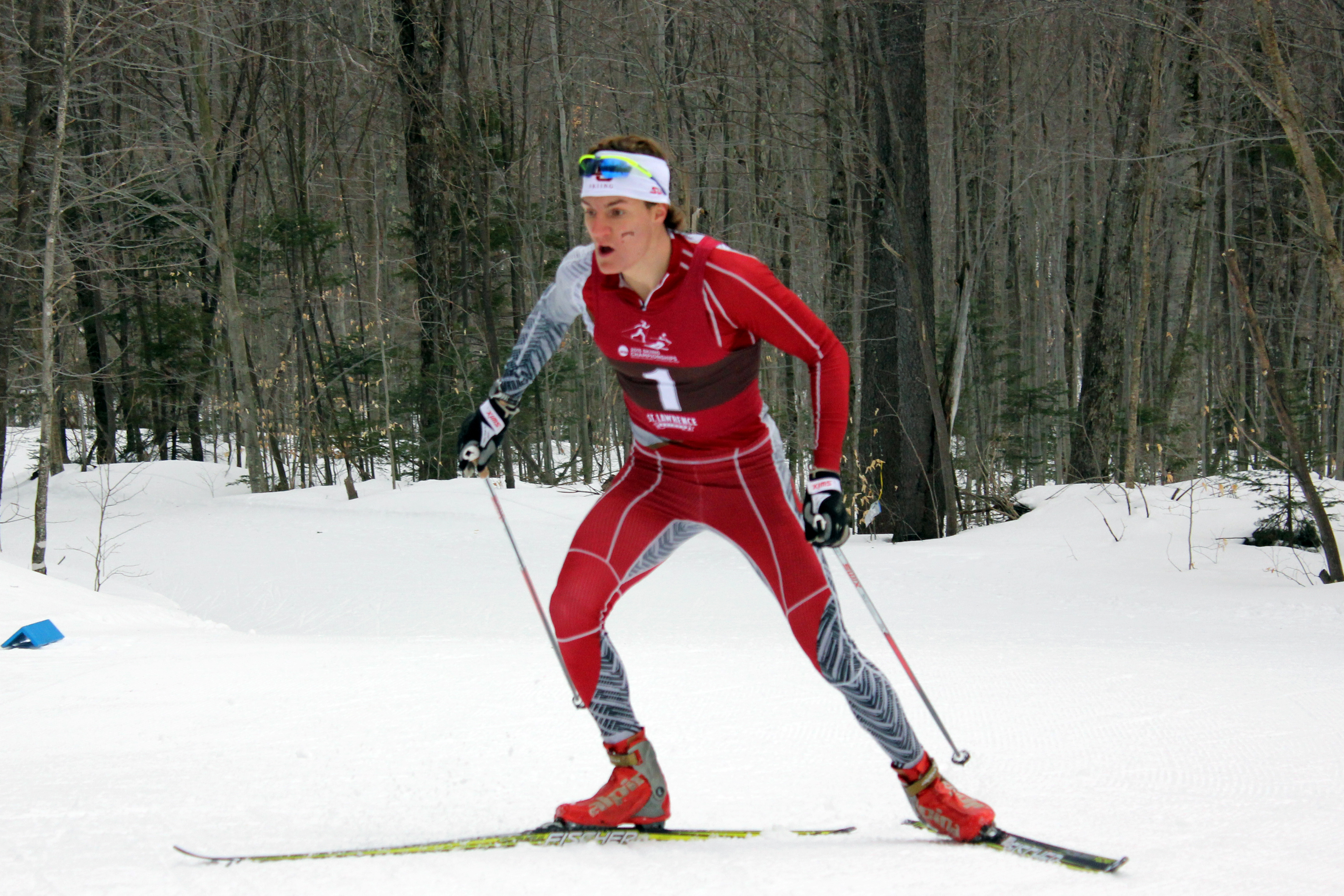
    Starting in bib 40, Caldwell was the last skier to begin the two-lap race on the challenging Women’s Cross Country Olympic 5 k course at the Mt. Van Hoevenberg Nordic Center. Given the conditions, the Dartmouth sophomore said he entered the race planning to begin fast and maintain high speed until the finish line.

    “With the fast conditions I just wanted to go as hard as I could. I tried to get a fast pace from the start and hold it,” he said in a post-race interview.

    Caldwell notched the fastest time at the halfway mark, 8 seconds ahead of Madlener. As the Big Green’s skier traversed the second lap his lead over Madlener gradually decreased – at one point it reached 10 seconds but eventually whittled down to 2 seconds. Cakdwell said that he was fading fast by the last kilometers. “The wheels were coming off at the end but I was able to hold it just long enough,” Caldwell said in an interview.

    After his victory, Caldwell said that the 10 k freestyle was a target of his in the 2015 season. “I was definitely shooting for this race,” he said. “This is one of my favorite events. I definitely wanted to have a good one today.”

    Caldwell is also a member of the U.S. Ski Team D-Team. Given his position between collegiate and national team skiing, the 20-year-old faced a decision – focus solely on skiing or continue racing for Dartmouth. Caldwell chose to spend the winter at school and said that his focus of the season has been to have strong individual and team performances in Lake Placid.

    Moritz Madlener of The University of Denver skied to second in the 10 k freestyle at the 2015 NCAA Championships in Lake Placid, N.Y.
    Moritz Madlener of The University of Denver skied to second in the 10 k freestyle at the 2015 NCAA Championships in Lake Placid, N.Y.

    In second place, Denver sophomore Madlener earned his best finish at a NCAA Championships. Last year the German skier placed fifth in the 10 k classic individual start and said his goal was to top the result in either race in Lake Placid. Although he hoped to place better than fifth, Madlener never expected to land on the freestyle podium. The Pioneer said that he was surprised by his second place finish because he is traditionally performs better in the classic technique and didn’t feel strong in the days prior to Wednesday’s race.

    Although Madlener was one of the highest ranked skiers he started his race in bib 1, a position that he said had benefits and a drawbacks. “In some ways it’s a disadvantage because you don’t know what the other guys are doing, but I think I had better conditions. I didn’t get information about the others and I think that was good too because you start thinking during the race what the others are doing,” he said.

    Madlener has played second fiddle to the dominating Colorado duo of Ødegård and Strøm for the entirety of the western collegiate season. He said it felt good to finish higher than third, especially at the year’s most important races. “There’s always been two Norwegian guys in our region who got third and fourth today. They always tease me and tell me it’s my favorite spot to be third, so I thought today I’m going to show them that I like the second spot too,” he said with a smile.

    Ødegård, a senior at CU and two-time NCAA champion, said that the 10 k was one of the best freestyle races of his career. He explained that he paced his race to start slow and finish strong.

    “I felt like I had a really strong race, it’s probably one of the best skate races I’ve ever done,” the Norwegian said. “I felt like started smart and I skied faster and faster throughout. I couldn’t believe I was behind because I had a super, super strong race.”

    One of the later starters, Ødegård explained he spent much of the race chasing Madlener’s time, which he was ultimately unable to match. He said was impressed with Caldwell’s finish, especially given the slowing conditions that the last starters faced.

    “I lost a lot from the top and the end of the last lap. Probably conditions were slowing a bit down there in the last lap but you saw by Caldwell that it was possible to beat it. I just wasn’t strong enough,” he said, adding that he was looking forward to Friday’s classic mass start. Ødegård won the 2013 and 2014 classic races at the NCAA Championships.

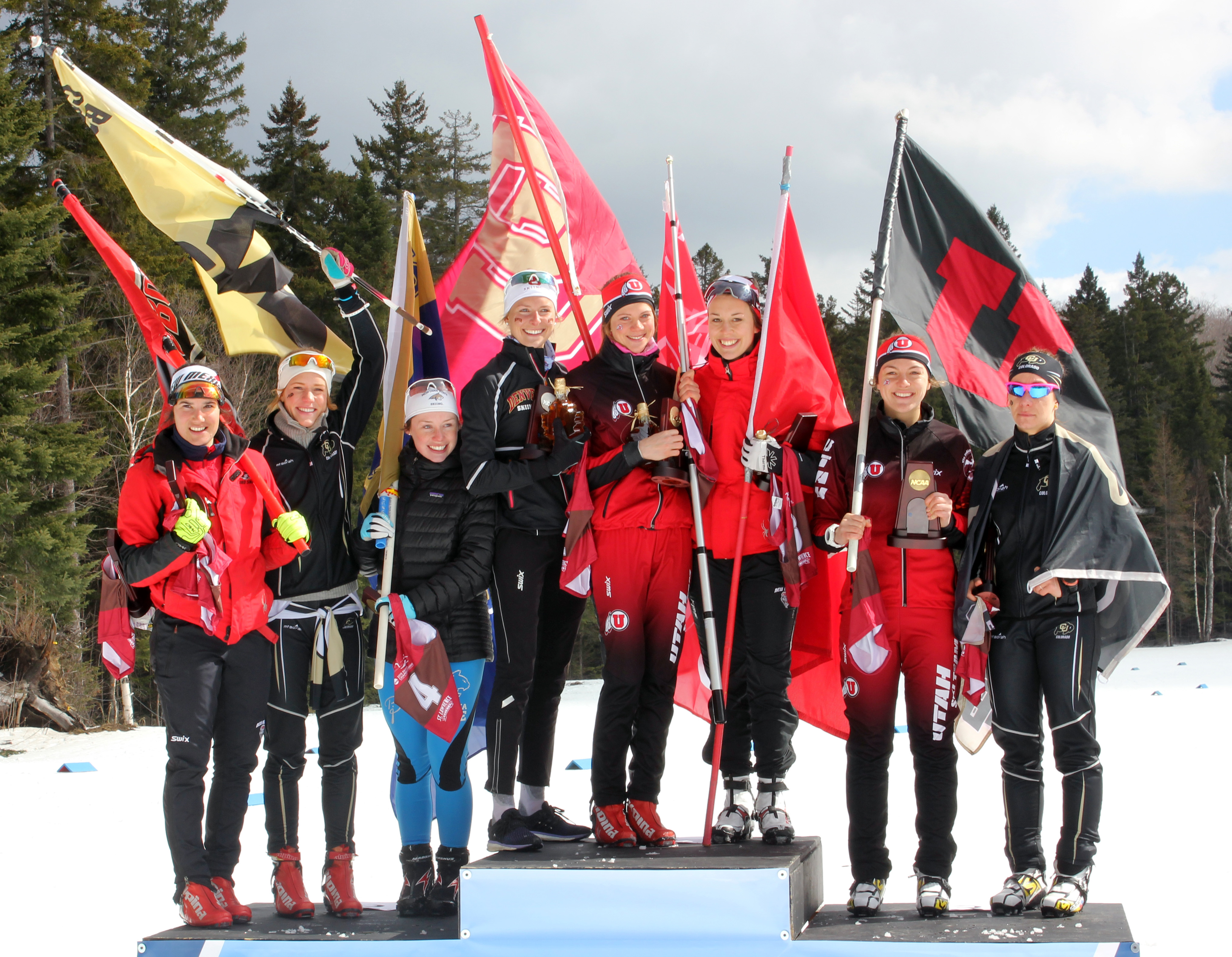
    The women's podium in 5 k freestyle at the 2015 NCAA Championships in Lake Placid. Utah's Veronika Mayerhofer took the win, while Denver's Sylvia Nordskar placed second and Emilie Cedervaer claimed third.
    The women’s podium in 5 k freestyle at the 2015 NCAA Championships in Lake Placid. Utah’s Veronika Mayerhofer took the win, while Denver’s Sylvia Nordskar placed second and Emilie Cedervaer claimed third.

    Mayerhofer Victorious in 5 k 

    In the women’s 5 k freestyle the University of Utah’s Veronika Mayerhofer skied to a convincing win with a time of 14:21.4. She bested Denver’s Sylvia Thorson Nordskar by 13.2 seconds. Emilie Cedervaern of the University of New Mexico raced to third, 15.8 seconds back from the victor.

    The first American skier, Montana State’s Cambria McDermott (+15.9), finished fourth and 0.1 seconds from third. In fifth was Utah’s Sloan Storey (+22.7).

    The women began their race two hours after the men to slightly warmer temperatures and softer snow. Despite the change, the course remained fast and intact for all 40 starters. The western women swept the top 11 to dominate the 5 k. The eastern skiers originally hoped to capitalize on a home course, but their best finish on the day came from Mary Kate Cirelli in 12th. The central regions best finisher was Jordyn Ross in 13th.

    Mayerhofer, a freshman, entered Wednesday with low expectations. She had a cold in the days prior to the race and was feeling flat in training. At the start of the race Mayerhofer said her race felt slow. Everything changed after a coach told her she had a one second lead over Nordskar in the first kilometers. According to the Austrian, the news of the lead motivated Mayerhofer to fight for the win and reach the next level of exertion.

    The Ute said that she had no particular strategy while fighting on the challenging course that featured several kilometers of climbing. “In a 5 k you have to go as fast as you can,” she said. “Through the first kilometer you have to not kill yourself because it’s a tough course. I think it’s one of the toughest. We are very used to high elevation so you never know how you’re going to feel.”

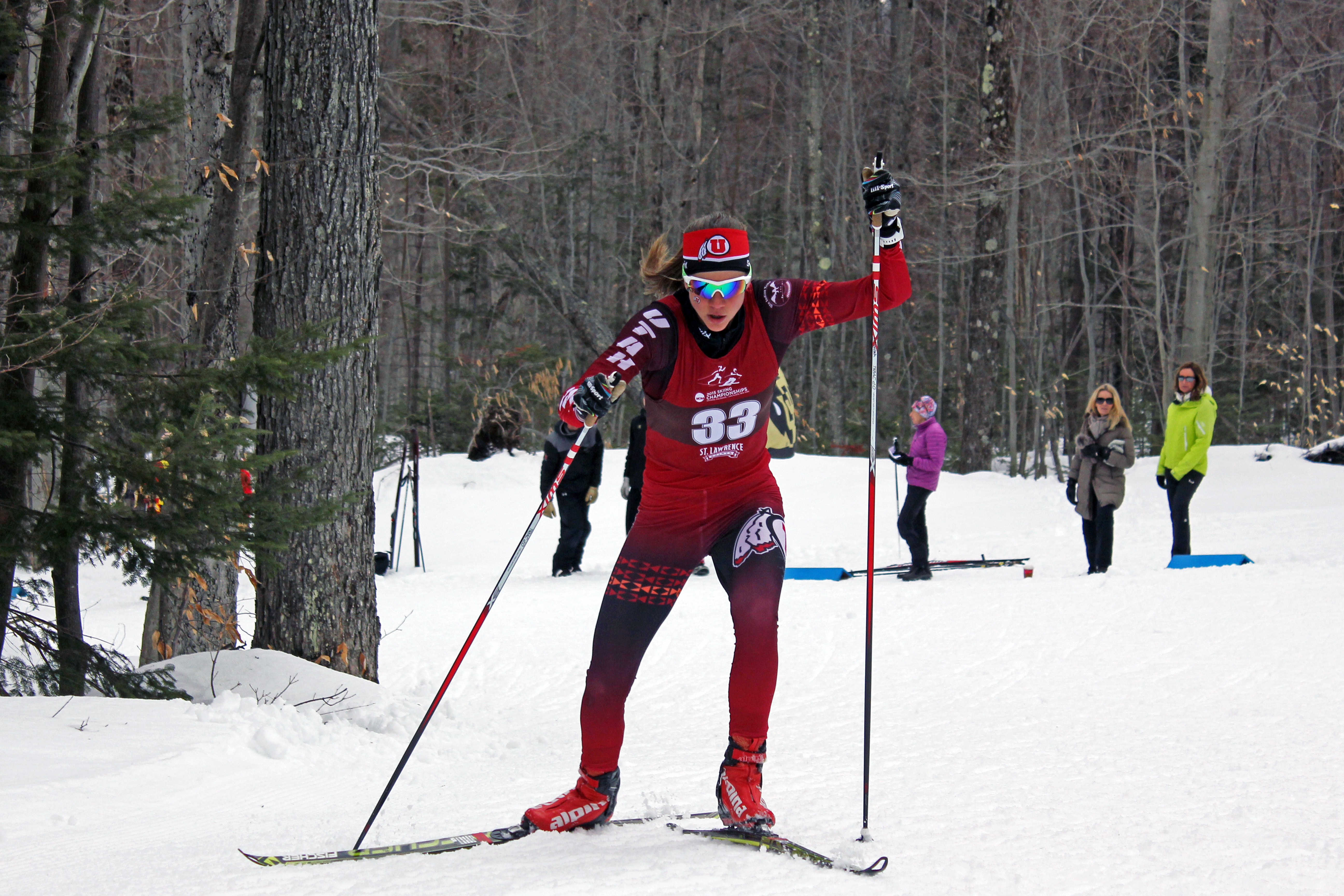
    Veronika Mayerhofer en route to a win in the 5 k freestyle at the 2015 NCAA Championships in Lake Placid.
    Veronika Mayerhofer en route to a win in the 5 k freestyle at the 2015 NCAA Championships in Lake Placid.

    Mayerhofer said that she enjoys the collegiate circuit because of its focus on the team rather than the individual. With her teammate, Storey also in the top five, Mayerhofer said she was happy to see the team’s training be rewarded at the end of the season.

    “It’s my first year of college racing and I was so happy that I could go to the NCAAs,” she said. “I really enjoyed it so much because it is so much for the team and not just individual racing, because cross country skiing is so much on your own. It’s maybe less pressure and everyone is so happy for you.”

    Nordskar entered Wednesday’s race with little training or racing logged since the start of the new year, as she sat out much of the season due to illness. Her last race before the Championships was at the Colorado Invite in late January. Although she complained of breathing troubles, Nordskar said she was happy to race again after the draining illness. “I’ve been sick the whole last month and haven’t been able to train,” she said. “That has been difficult but I think I’ve done a good job to comeback and now race.”

    Like her DU male counterpart, Nordskar was also the first starter and set the time to beat early on in the race. She said that while the course was challenging, she enjoyed racing at the Olympic venue.

    “It was a very hard race but I really liked the course. It’s some brutal hills,” she said. “I really pushed myself today. It was fun and I’m satisfied with my race today even though I couldn’t get to the very top, which was my goal.”

    Cambria McDermott, fourth place and top American finisher in the 2015 NCAA 5 k, high fives Montana State University Head Coach Kristina Trygstad-Saari.
    Cambria McDermott, fourth place and top American finisher in the 2015 NCAA 5 k, high fives Montana State University Head Coach Kristina Trygstad-Saari.

    In third was Cedervaern, a New Mexico Junior from Falun, Sweden. The trip to Lake Placid was the Swede’s first NCAA Championships.

    “That was good. I was very tired after 2.5 k so I just tried to hammer all the way in,” she said of her race. “5 k is too short to think and I was just trying to hammer the whole way.”
    McDermott, a senior at Montana State, said her achievement as the 5 k’s first American was especially satisfying because she was able to share it with her friends and family in attendance. “I’m really excited. It was an awesome course. It was a lot of climbing but I had fast skis and that made it pretty quick,” she said. “I was so happy that my family here to cheer me on and all my friends from home.”

    NCAA Standings

    With the first races of the 2015 NCAA Championships complete, the University of Colorado leads the points with 155. The Buffs have won the last two Championships in the East and Wednesday’s race gives them a good beginning to their quest for their 28th championship title. They will have to overcome the University of Utah which sits in second and less than 25 points behind.

    The NCAA championships continue on Thursday with the giant slalom at Whiteface Mountain,

    2015 NCAA Championships standings after Wednesday (link):

    University of Colorado 155

    University of Utah 131

    University of Vermont 106

    University of New Mexico 106

    University of Denver 93

    Dartmouth College 88

    Montana State University 77

    Northern Michigan University 76

    University of Alaska – Anchorage 56

    Williams College 29

    Results: men | women

  • 2015 NCAA Preview: Collegiate Championships Return to Lake Placid After 33 Years

    2015 NCAA Preview: Collegiate Championships Return to Lake Placid After 33 Years

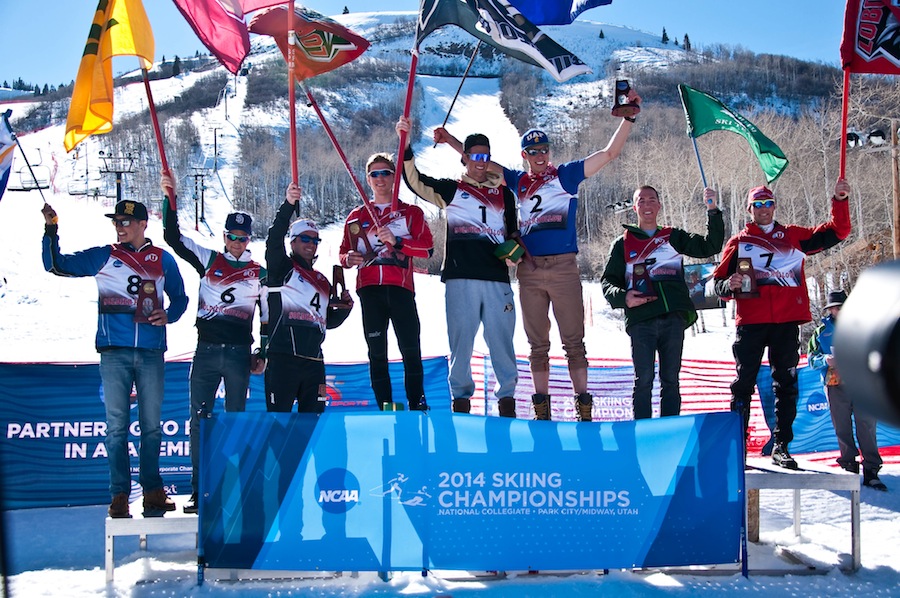
    The men's podium in the 20 k freestyle mass start at the 2014 NCAA Championships in Soldier Hollow. (Photo: http://bertboyer.zenfolio.com) All proceeds from photo sales will be directly donated to NNF.
    The men’s podium in the 20 k freestyle mass start at the 2014 NCAA Championships in Soldier Hollow. (Photo: http://bertboyer.zenfolio.com) All proceeds from photo sales will be directly donated to NNF.

    LAKE PLACID, N.Y. — Come Wednesday, the 148 best collegiate skiers in the U.S. will descend upon Lake Placid for the 2015 NCAA Skiing Championships. Hosted by St. Lawrence University, NCAA’s will serve as the premier collegiate races of the season as skiers aim for both individual and team success. The last time Lake Placid hosted the Championships was 33 years ago in 1982, when the national races were only for men.

    The nordic portion of NCAA’s will take place on the trails of the Mt. Van Hoevenberg, the site of the cross-country events in the 1980 Olympic games. The first day of competition on Wednesday will comprise of the 5- and 10-kilometer women’s and men’s freestyle interval starts, while Friday will feature the 15/20 k classic mass starts. Conditions should be pristine in the Adirondacks as recent weather has provided ample snow and below average temperatures.

    The 2015 NCAA Championships will have similar team favorites in 2014. At last year’s championships in Park City, Utah, the University of Denver dominated the nordic races to win the overall team title. With several departures from the Pioneers’ squad, however, other schools from the west and east will look to capture the trophy.

    The University of Colorado enters the NCAA’s as the top-ranked team from the Rocky Mountain Intercollegiate Ski Association (RMISA). The Buffs earned the most combined points throughout the season and were recently crowned the RMISA regional champions. If that wasn’t enough to boost their pre-championships confidence, their history in the east certainly will. Colorado has won the last two national collegiate titles in the east in 2011 and 2013.

    Utah and Denver followed close behind in the 2015 RIMSA points rankings and will likely be Colorado’s top competition in New York, while the University of Vermont will look to extend its Eastern Intercollegiate Ski Association (EISA) dominance to the national stage. The last time Vermont won the NCAA team title was in 2012 in Bozeman, Mont.

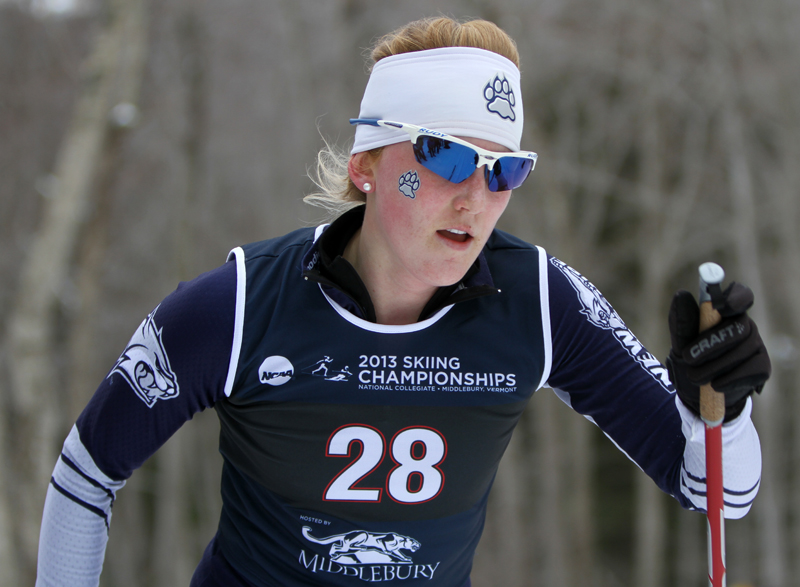
    University of New Hampshire's Annika Taylor races in the 2013 NCAA Championships.
    University of New Hampshire’s Annika Taylor races in the 2013 NCAA Championships.

    The East:

    If there are two skiers from the EISA to know before the start of NCAA’s, they are Middlebury College’s Heather Mooney and University of New Hampshire’s Annika Taylor.

    With five wins apiece in the 2014/2015 season, Mooney and Taylor have shut out the rest of the eastern competition from the top of the podium. While their fight for eastern dominance will continue in Lake Placid, it remains to be seen how they will match up with the western and central women.

    The Middlebury College women’s nordic team has qualified a full team for the first time in many years, including Mooney, Kelsey Phinney and Stella Holt. The trio has won many women’s nordic competitions throughout the season and will look to do the same in Lake Placid. If the recent EISA Regional Championships results are any indication — where Mooney and Phinney finished second and third, respectively, in the 15 k classic mass start — the Panthers are well on their way to their goal.

    Patrick Caldwell finishes the men's 15 k freestyle in fourth place at the 2015 Cross Country Championships in Houghton, Michigan.
    Paddy Caldwell (Dartmouth College) finishes the men’s 15 k freestyle in fourth place at the 2015 Cross Country Championships in Houghton, Michigan.

    If the eastern women have been defined by two individuals, the region’s men are characterized by dueling schools — Vermont and Dartmouth. The Vermont trio of Rogan Brown, Jørgen Grav and Jack Hegman ended the eastern season ranked second, third and sixth, while Paddy Caldwell, Fabian Stocek and Silas Talbot took the first, fourth, and fifth spots.

    Caldwell, who spent a large chunk of the season in Europe at the U23 World Championships in Almaty, Kazakhstan, enters as one of the favorites at NCAA’s. Last year, his best finish was fifth in the 20 k freestyle mass start. Talbot’s best finish at 2014 NCAA’s was 11th in the 20 k freestyle.

    Brown’s best finish at the same championships was 13th in the 20 k freestyle, while Grav’s was 20th in the 10 k classic.

    The West:

    Rune Malo Ødegård of CU races to first in the 10 k individual classic at the 2014 NCAA Championships in Soldier Hollow. (Photo: http://bertboyer.zenfolio.com) All proceeds from photo sales will be directly donated to NNF.
    Rune Malo Ødegård of CU races to first in the 10 k individual classic at the 2014 NCAA Championships in Soldier Hollow. (Photo: http://bertboyer.zenfolio.com) All proceeds from photo sales will be directly donated to NNF.

    If Caldwell wants to step atop the NCAA podium, he’ll have to overcome the RMISA frontrunners from the University of Colorado, Rune Malo Ødegård and Mads Ek Strøm. With the exception of one race, the two have alternated on the top rungs of the 2014/2015 RIMSA podium in every single competition. By the end of the regular season, Ødegård won five of 10 races while Strøm won four.

    Ødegård is no stranger to NCAA’s as the Norwegian won two national titles in 2013 and 2014. His wins made NCAA history, as he is the first collegiate skier to repeat as an individual national championship in the classic discipline. Strøm earned his national title in the 20 k freestyle mass start in 2014.

    While the two Buffs are the RMISA favorites, there are several other standouts to watch in this week’s races. German Moritz Madlener of DU and enters Lake Placid as the third-ranked westerner after earning bronze in four western qualifiers. The University of Utah’s Niklas Persson is another potential top finisher. The Ute finished third at 2014 NCAA’s in the 10 k classic. Mats Rudin Resaland of the University of New Mexico is also another top contender, and will look to improve on his bronze from last year’s 20 k freestyle.

    The University of New Mexico’s Emilie Cedervarn is the top-ranked western woman after winning the last four RMISA races of the season. The Utes’ Veronika Mayerhofer is close behind for total wins in the west with three. Denver’s Sylvia Nordskar will look to repeat her podium performances from 2014 NCAA’s where she placed second and third. The Norwegian only raced the first four RMISA races this season. She won both the races in the Utah qualifiers and placed first and second at the Colorado invite before taking a six-race hiatus.

    Other skiers to watch from the West are the Buffs’ Petra Hyncincova and the Utes’ Sloan Storey.

    Central:

    Kyle Bratrud of Northern Michigan University racing to 52nd in the men's 15 k freestyle at 2015 World Championships in Falun, Sweden.
    Kyle Bratrud of Northern Michigan University racing to 52nd in the men’s 15 k freestyle at 2015 World Championships in Falun, Sweden.

    Kyle Bratrud of the University of Northern Michigan is the favorite from the central region after a successful season that saw him win the 15 k freestyle at the 2015 U.S. nationals and compete at the U23 World Championships in Almaty, Kazakhstan, followed by senior World Championships in Falun, Sweden.

    Bratrud will look to overcome the fatigue of weeks of international racing and travel to fight for a spot on the NCAA podium. In 2014, he was the top American in the 10 k classic in sixth overall.

    Joining Bratrud in the quest for collegiate success will be teammates Fredrik Schwenke and Erik Soderman. If the UNM trio can repeat their impressive performances from U.S. nationals, they have the possibility of leading the men’s nordic at NCAA’s. Last year, the men finished third overall in the 10 k classic and helped their coach, Sten Fjeldheim, earn 2014 national coach of the year.

    Logan Hanneman of the University of Alaska – Fairbanks is another strong skier to watch from central.

    Despite the graduation of Rosie Frankowski, the central women have a chance at top performances from NMU’s Jordyn Ross and Michigan Tech’s Deedra Irwin, among others. They will look to build on the region’s successful 2014 Championships to gain more starting spots in future national events.

    Live timing will be available at BartTiming.com. FasterSkier will be on site for both days of nordic racing, so stay tuned for recaps from Wednesday and Friday.

    Schedule (all times Eastern Standard Time)

    Wednesday, March 11:

    Nordic:

    10 a.m.: Men’s 10 k freestyle (start list)

    Noon: Women’s 5 k at noon (start list)

    Thursday, March 12:

    Alpine: Women’s giant slalom (start list); men’s giant slalom (start list) at Whiteface

    Friday, March 13: 

    10 a.m.: Women’s 15 k classic mass start (start list)

    Noon: Men’s 20 k classic mass start (start list)

    Saturday, March 14:

    Alpine: Women’s slalom (start list); men’s slalom (start list) at Whiteface

    Note: This article was corrected to state that the last time Lake Placid hosted NCAAs was in 1982, not 1983

  • Brennan Continues to Dominate SuperTour, Winning Bozeman 10 k Classic

    Brennan Continues to Dominate SuperTour, Winning Bozeman 10 k Classic

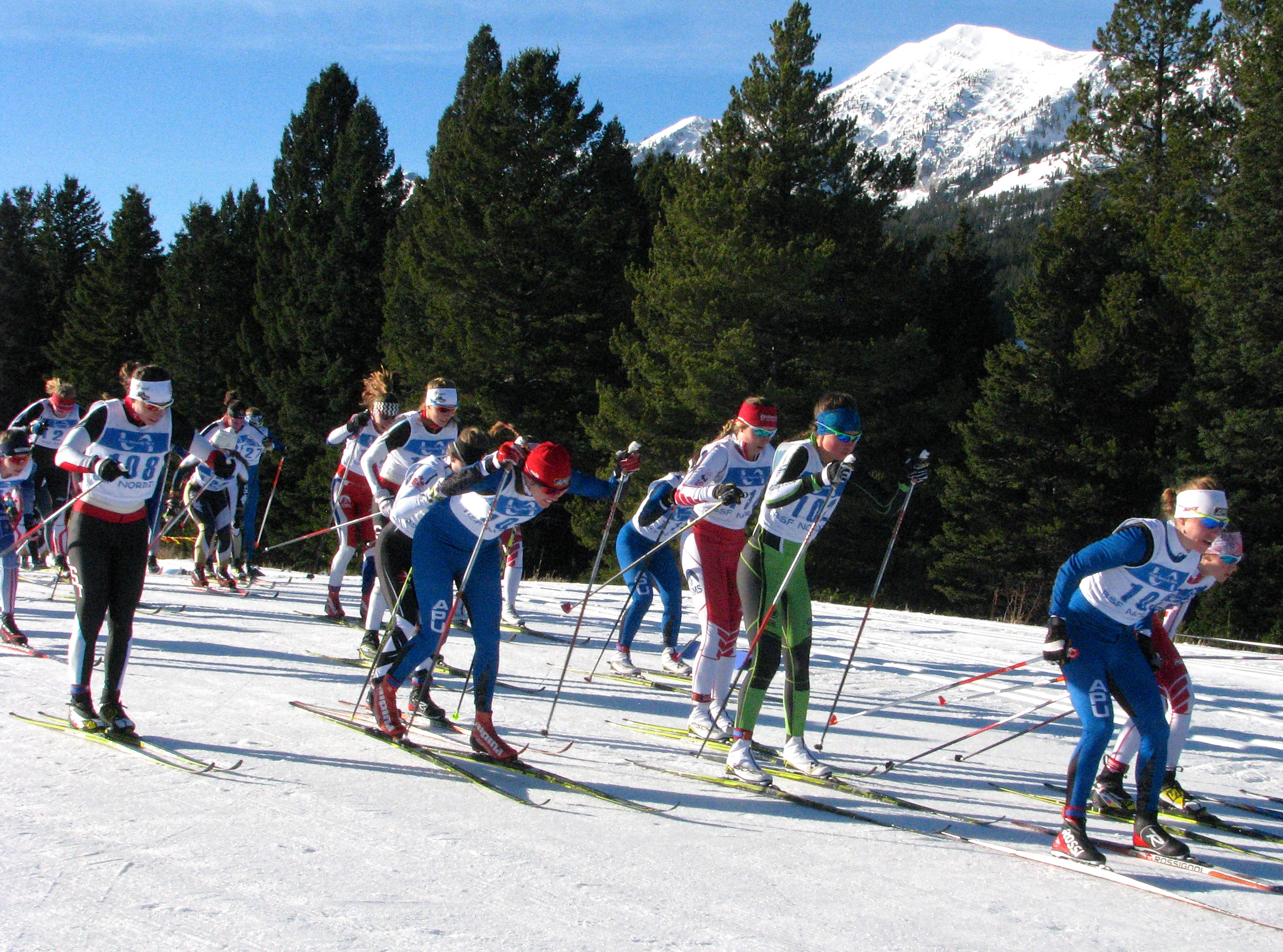
    Race organizers delayed by an hour the start of the women's SuperTour 10 k classic mass start at Bohart Ranch near Bozeman, Mont., in order to let the course thaw.
    Race organizers delayed the start of the women’s SuperTour 10 k classic mass start by an hour Sunday at Bohart Ranch near Bozeman, Mont., in order to let the course thaw.

    BOZEMAN, Mont. — Rosie Brennan of Alaska Pacific University (APU) overcame what she called her “least favorite conditions” to notch her third-straight SuperTour victory on Sunday in the women’s 10-kilometer classic mass start at Bohart Ranch.

    Saturday’s 45-degree temperatures left the course fast and icy upon freezing overnight, making the numerous corners even trickier. Race officials delayed Sunday’s race by an hour to allow for the 40-degree weather to help thaw the course.

    But the conditions did not stop Brennan, 26, and teammate Chelsea Holmes from immediately breaking away from the rest of the pack. They maintained a safe distance throughout the two laps, and Holmes completed the first 5 k lap with a 1-second lead over Brennan.

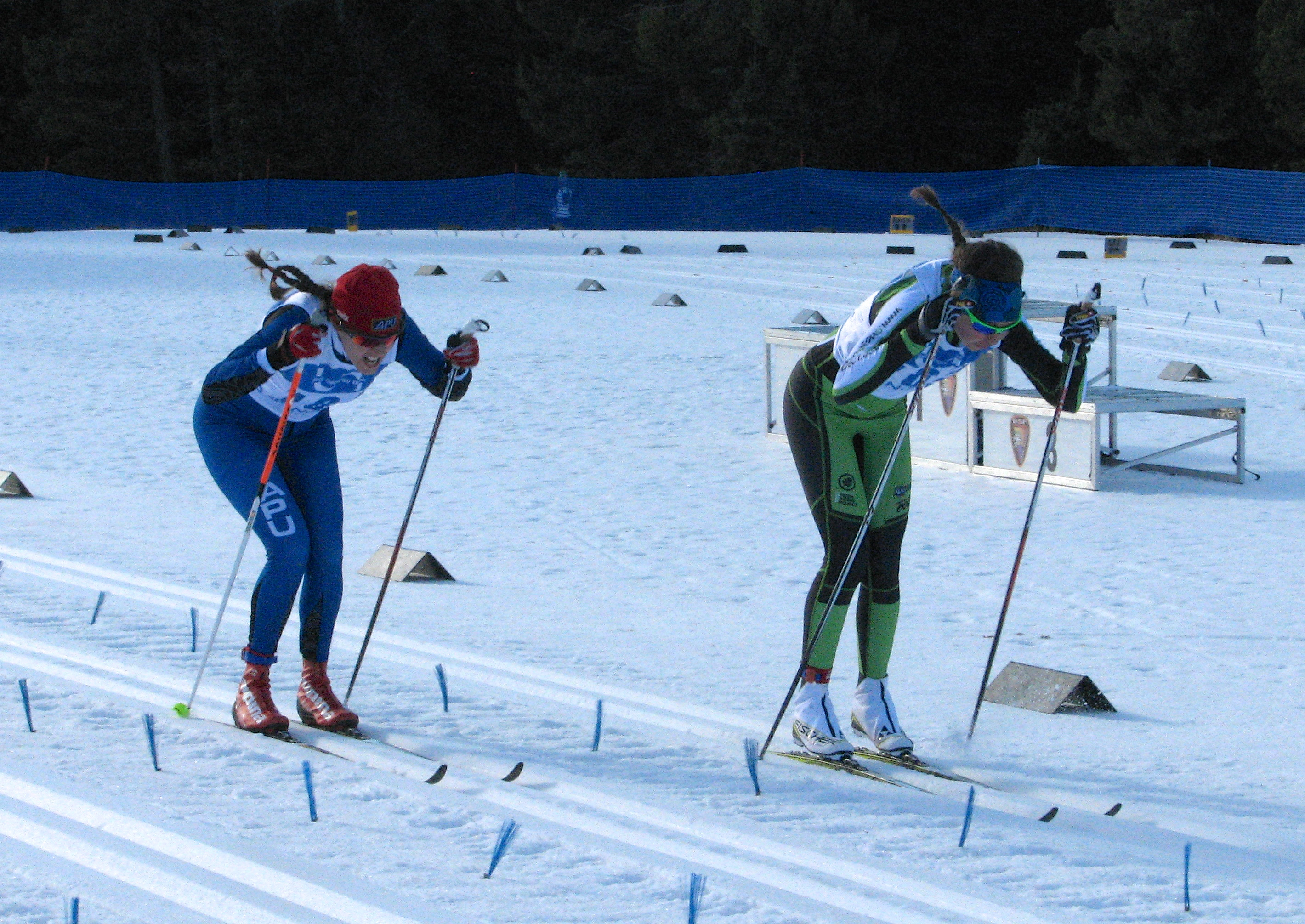
    Caitlin Patterson (Craftsbury Green Racing Project) holds a slim lead over Becca Rorabaugh (APU) during a sprint to the finish of the Bozeman SuperTour women's 15 k classic mass start.
    Caitlin Patterson (Craftsbury Green Racing Project) holds a slim lead over Becca Rorabaugh (APU) for fourth place during a sprint to the finish of the Bozeman SuperTour women’s 15 k classic mass start.

    However, Brennan would take over on the second lap, cruising into the stadium with the lead and finishing in 31:07. Holmes’s final charge came up 5.2 seconds short.

    Katharine Ogden, 17, of the Stratton Mountain School (SMS) – who was second at last weekend’s 10 k freestyle in West Yellowstone – finished in third, 1:20 behind the APU skiers. Caitlin Patterson (Craftsbury Green Racing Project) was in fourth (+1:30.8), narrowly beating APU’s Becca Rorabaugh by 0.3 seconds in a sprint finish. Sloan Storey of the University of Utah was sixth (+1:59.4).

    Holmes said she lost her small lead on the second lap due to Brennan’s strong double poling up the long climbs.

    “She just crushes me in double pole. Which is good – I see her go by and I go as hard as I can to keep up with her, and maybe one day I will be able to,” Holmes said. “If not, I’ll work in the meantime on making up time on the uphills.”

    Brennan described the conditions as her “worst nightmare,” but said that it was time for her to “conquer some fears” and ski confidently down the icy, technical hills.

    “It gives you confidence for skiing in weaker conditions,” she said.

    Katharine Ogden (SMS) cruises to a third-place finish in the Bozeman SuperTour women's 15 k classic mass sprint.
    Katharine Ogden (SMS) cruises to a third-place finish in the Bozeman SuperTour women’s 15 k classic mass sprint.

    Ogden, who maintained third place while trying to catch the two leaders and was 33 seconds behind Holmes after the first lap, said she was “really psyched” about her result.

    She explained that while the course was slippery, “that added to the fun of it. It was an extra challenge.” She recalled agility training on rollerskis last summer, saying it probably helped her in navigating such a technical course.

    Meanwhile, she said her wax techs’ work gave her “kick that lasted the whole race.”

    “Our skis were really fast,” she said. “So despite the tricky conditions, they made it work.”

    Rorabaugh’s fifth-place finish was an improvement over Saturday’s sprint, where she was relegated to last (sixth overall) by a jury decision after double poling too aggressively (i.e. skating) outside of the tracks.

    Sunday’s race got off to a rocky start for Rorabaugh, as the basket popped off her pole right out of the gate, and she could not get a new pole until “about half a kilometer” into the race. This left her “kind of behind,” she said, though she made up time on downhills and the double-pole sections.

    “I wasn’t super confident in my kick, so I double poled a lot of gradual uphills and really, really tried to make it up on the downhills,” she said.

    After a holiday break, the next stop on the SuperTour is U.S. nationals from Jan. 4-10 in Houghton, Mich.


    Women’s 15 k class mass start top ten | full results

    1. Rosie Brennan (APU) 31:07

    2. Chelsea Holmes (APU) +5.2

    3. Katharine Ogden (SMS) +1:20.0

    4. Caitlin Patterson (Craftsbury Green Racing Project) +1:30.8

    5. Becca Rorabaugh (APU) +1:31.2

    6. Sloan Storey (University of Utah) +1:59.4

    7. Liz Guiney (CGRP) +2:01.2

    8. Jennie Bender (Bridger Ski Foundation) +2:15.3

    9. Kaitlynn Miller (CGRP) +2:17.8

    10. Erika Flowers (SMST2) +2:42.6

  • 2014 NCAA Preview: Colorado, Utah, Vermont, and Others Hungry for Title

    Photo: Flyingpointroad.com (All proceeds benefit NNF)
    An NCAA banner hangs at the 2013 NCAA Skiing Championships in Vermont. The 2014 Championships are set to begin Wednesday in Park City Utah. Photo: Flyingpointroad.com (All proceeds benefit NNF)

    FasterSkier’s coverage is made possible through the generous support of Madshus.

    One-hundred and forty-eight. That’s the number of skiers who have descended upon the ski town of Park City, Utah, to participate in the 2014 NCAA Skiing Championships. The championships will be hosted by the University of Utah, who last had the honor in 2000. The four day event, which consists of two alpine and two nordic races, begins Wednesday and continues through Saturday.

    The cross country portion of the event will take place at Soldier Hollow in Midway, Utah, the site of the 2002 Olympic Games and many national events, including the 2014 U.S. Cross Country Championships.

    The weather in Utah looks to be warm and wet with highs in the mid 40s to lower 50s and precipitation expected on Thursday and Friday, making for tricky waxing and racing conditions. 

    Given the nature of course, sloppy conditions, the field, and the stakes, the competition is set to be fierce. Several schools will be in the hunt for the title of america’s fastest skiing school, but only one will walk away with the championship title.

    Last year at the 2013 NCAA Championships in Ripton, Vt., it was the University of Colorado that came out on top followed by the University of Utah and the University of Vermont. Colorado’s chances in Utah seem a more slim in 2014, as they were unable to win a collegiate weekend all season. However, with a strong showing for men’s nordic, the Buffs may be able to make up for their other weaknesses.

    The University of Utah is hungry to break a three-year-streak of finishing second at NCAAs. After winning last weeks Rocky Mountain Intercollegiate Ski Association (RMISA) Championships, Utah goes into this week’s races with confidence and energy. Having the home advantage should certainly help Utah as well. However, if they want the title that’s slipped out of their hands the past three years, they’ll have to rely less on their alpine team and see better results from their nordic squad.

    It would be asinine to discount the University of Vermont, whose skiers have been looking especially strong this year. In the 2012 Championships they demonstrated that they could tackle western altitudes with ease in Bozeman, Mont. And with Soldier Hollow looking to be warm and wet this week, the conditions may favor eastern skiers who are used to rough easter weather.

    The East

    The eastern skiers are as strong as ever this year with the undefeated University of Vermont setting its sites on another NCAA victory. The 2012 champions have a strong team in both alpine and nordic which has contributed to their uncontested dominance this season.

    Anja Gruber (University of Vermont) racing to fourth in Saturday's 10 k classic mass start at Soldier Hollow for her best U.S. nationals result by more than 20 places. (Photo: Bert Boyer/http://bertboyer.zenfolio.com/) All proceeds from photo sales will be directly donated to NNF.
    Anja Gruber (University of Vermont) racing to fourth in the 10 k classic mass start at Soldier Hollow for her best U.S. nationals result by more than 20 places. (Photo: Bert Boyer/http://bertboyer.zenfolio.com/) All proceeds from photo sales will be directly donated to NNF.

    The east finds its greatest strength in its women. Anja Gruber, a native of Germany, has been UVM’s shining star this year, and finishes the regular season as the top-ranked skier in the Eastern Intercollegiate Ski Association (EISA). Last year’s NCAA 5 k classic champion, she placed fourth at the 2014 U.S. nationals at Soldier Hollow on the same course where the NCAAs are being held. Throughout the season the senior has been a top contender in the EISA circuit, consistently winning all but one classic race and finishing in the top three in every freestyle race.

    UVM’s talent doesn’t stop there, with sophomores Linda Danvid-Malm of Umea, Sweden and Stephanie Kirk of Anchorage, Alaska, showing that Gruber isn’t the only catamount with claws. Danvid-Malm has been dominant in freestyle, winning three out of six EISA races this season. Kirk, who competed in Italy as part of the U23 World Championships, has been a consistent performer as well highlighted by a spectacular win in the 15 k skate mass start at the EISA Championships at Middlebury College last weekend.

    Annie Hart of Dartmouth College has been the only real threat to Vermont’s dominance all season, having been the only non-UVM woman in the east to win a scored collegiate race this season. Consistently on the podium in classic races, Hart finally saw her hard work pay off at the EISA championships when she won the 5 k classic. With the same event being held on Thursday, Hart is hungry for a national championship title. Corey Stock, also of Dartmouth, has had a decent season as well, ranking fifth in the eastern points standings.  

    While not as dominant as their women, the UVM men shouldn’t be taken lightly. Their lead skier, Scott Patterson of Fairbanks, Alaska, has won three of the six collegiate races he’s participated in this season. Patterson made the headlines earlier this year when he riskily tried to break away from the men’s field in the 30 k mass start. Unsurprisingly, the move failed on the national level, but a similar move with in a collegiate field may be what Patterson needs to secure a title..

    Sophomore Jorgen Grav is another UVM skier to watch in Soldier Hollow. The Oslo, Norway native finished fifth in the EISA rankings, followed by teammate Rogan Brown of Durango, Colo., in sixth.

    Silas Talbot (DAR)
    Silas Talbot of Dartmouth racing in the 2013 NCAA Championships at Middlebury, Vermont.

    Two Dartmouth College skiers have the chance to dethrone the dominant catamounts. Paddy Caldwell and Silas Talbot have both been atop the results this year both winning multiple carnival races. Caldwell skied to a convincing win in the men’s 20 k freestyle at the ESIA Championship and was named 2014 rookie skier of the year for the region.

    A notable emission from this year’s NCAA Championships will be Ben Lustgarten of Middlebury College. Lustgarten had a spectacular year which started with strong skiing at the 2014 U.S. National Championships, continued with racing at the U23 World Championships, and finished with a win in the 10 k classic (by 50 seconds!) at the EISA Championships. Lustgarten would have been a top contender in Soldier Hollow this year but due to an knee injury he sustained in the 20 k mass start at the EISA Championships the senior will be on the sidelines.

    —

    The West

    Unlike the east, there has been no clear contender for the top spot in the west. At the beginning of the season it looked as if the University of Denver might be ready for another NCAA Championship, but by the time the RMISA Championships was over last week, Denver had finished fourth, roughly 60 points behind the winner, the University of Utah. Despite the end-of-season falter, Denver still held the top spot in the regular season standings demonstrating their potential.

    Sylvia Nordskar (University of Denver), fourth
    Sylvia Nordskar of the University of Denver racing in West Yellowstone, Montana earlier in the 2013/2014 season.

    Sylvia Nordskar of Bærum, Norway, is the most-likely woman from the West to capture an NCAA title. The University of Denver freshman has either won or placed second in every collegiate race that she has competed in this season and has no signs of stopping.

    Senior Makayla Cappel, a Sun Valley native skiing for Denver, became a late-season standout after winning the 5 k classic and taking third in the 15 k freestyle mass start at the RMISA Championship in Minturn, Colo. After dealing with illness upon her return from the World University Games in Italy, Cappel recovered from a slow start to her season to rocket herself onto the first team All-RMISA. Rounding out the Denver women is Silje Benum, who has also had many top finishes this season.

    Only two non-Denver skiers have been able to top Nordskar this season. The first is Marine Dusser of the University of Alaska Anchorage, who was third in the women’s 15 k in 2013 and has had several wins in the RIMSA circuit this year. The second is Slovenian Eva Severrus of the University of New Mexico, a freshman who has helped New Mexico improve its standings in the west.

    Sloan Storey of the University of Utah is another western woman to watch. Storey joined the U.S. contingent at the Junior World Championships in Italy earlier this year and made first team All-RMISA after and exemplary collegiate season.

    Rune Oedegaard (CU) 8th place classic
    Rune Ødegaard racing in the West Yellowstone Super Tour.

    Like its women’s team, the Denver men were the top team in the west during the regular season. The trio of Moritz Madlener, Pierre Guedon and Trygve Markset made the Pioneers proud in 2014 and hope to continue the trend into the NCAA Championships. However, they’ll need to have a better performance than they did at the RMISA Championships, where they garnered only 46 points compared to the University of Colorado’s 93.

    Norwegians Rune Ødegård and Mads Strøm, a junior and freshman, have been the top skiers from Colorado throughout the latter half of the 2014 collegiate season. After sitting out the first two weekends of collegiate racing the duo has consistently been in the top five. Ødegård won last year’s 10 k classic at the 2013 NCAA Championships and looks to continue that success into 2014.

    The University of Utah men have shown that the best skiers in the west aren’t just based in Colorado. Niklas Persson, Oscar Ivars, and Noe Bellet have all performed well this season, garnering spots on the second team All-RMISA. However, all three will need to up their game if they want to outpace the Catamounts and the Buffs.

    Colorado, Denver, and Utah have had steady competition from the 2013 RMISA skier of the year, Lukas Ebner of the University of Alaska Anchorage. The senior, who hales from Germany, hopes to build on a season that has included multiple podiums.

    —

    Central

    The Central Collegiate Ski Association (CCSA) has traditionally trailed the east and west in terms of results at past NCAA Championships, which is reflected in the small numbers of qualifiers from the region. Despite that fact, there are several top performers who have a chance at an NCAA podium in Utah. 

    Rosie Frankowski of Northern Michigan University in the 20 k freestyle mass start at U.S. Nationals at Soldier Hollow.
    Rosie Frankowski of Northern Michigan University in the 20 k freestyle mass start at U.S. Nationals at Soldier Hollow.

    Rosie Frankowski, a senior of Northern Michigan University, has had an excellent season and looks to continue her speed into her time in Utah. Frankowski finishes her regular season as the top skier in the CCSA.

    Freshman Nicole Bathe of University of Alaska Fairbanks has turned out to be quite the powerhouse in classic races. Bathe has had excellent start to the season after finishing third in the classic sprint at the 2014 U.S. Cross Country Championships.

    Fellow Fairbanks  teammate Logan Hanneman looks to be the top male competitor for the CCSA in Utah. The junior finished fifth in the freestyle sprint at U.S. Nationals earlier this season.

    —

    Whether Colorado can reclaim its title, Utah can snap its second place curse, or Vermont use the sloppy conditions to their advantage, the NCAA Championships will be an exciting display of talent from the fastest skiers in the country.

    The 5 k and 10 k classic will take place this Thursday at 10 a.m. and 12 p.m. MST. The Championships will conclude with the 15 k and 20 k freestyle mass starts on Saturday, also at 10 a.m. and 12 p.m, MST. Watch the action unfold live on the NCAA site and check FasterSkier for reports.

  • Norway Wins Overall on Final Day of Junior Worlds; Canadian Women 10th in Relay

    Norway Wins Overall on Final Day of Junior Worlds; Canadian Women 10th in Relay

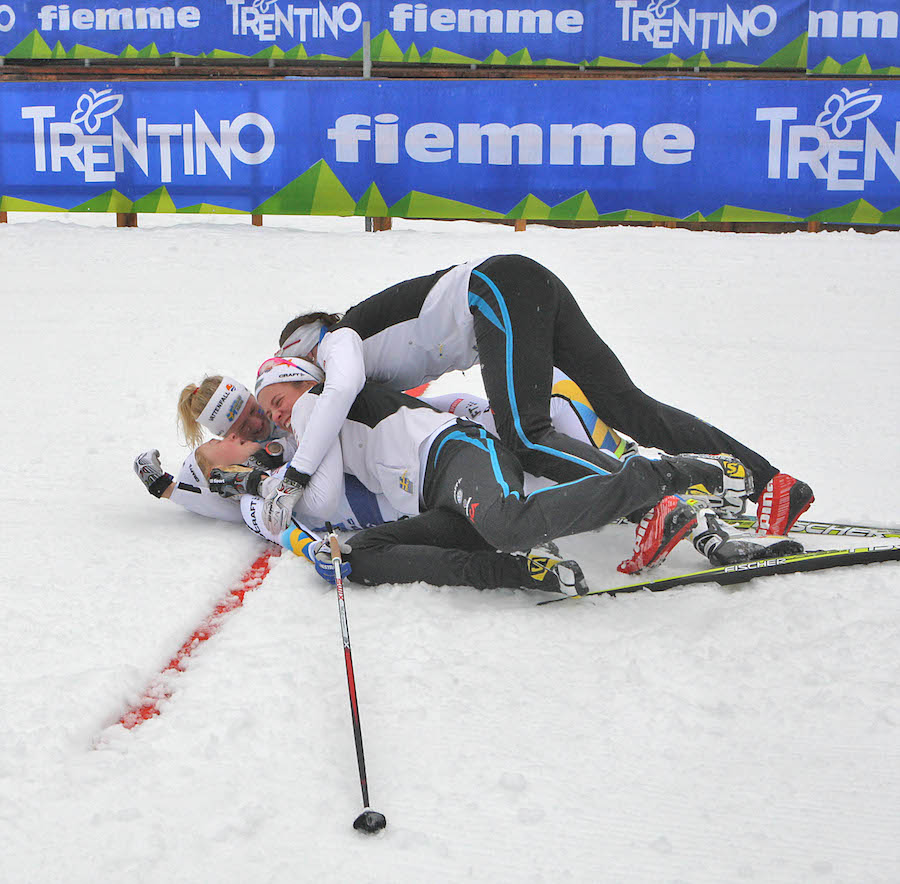
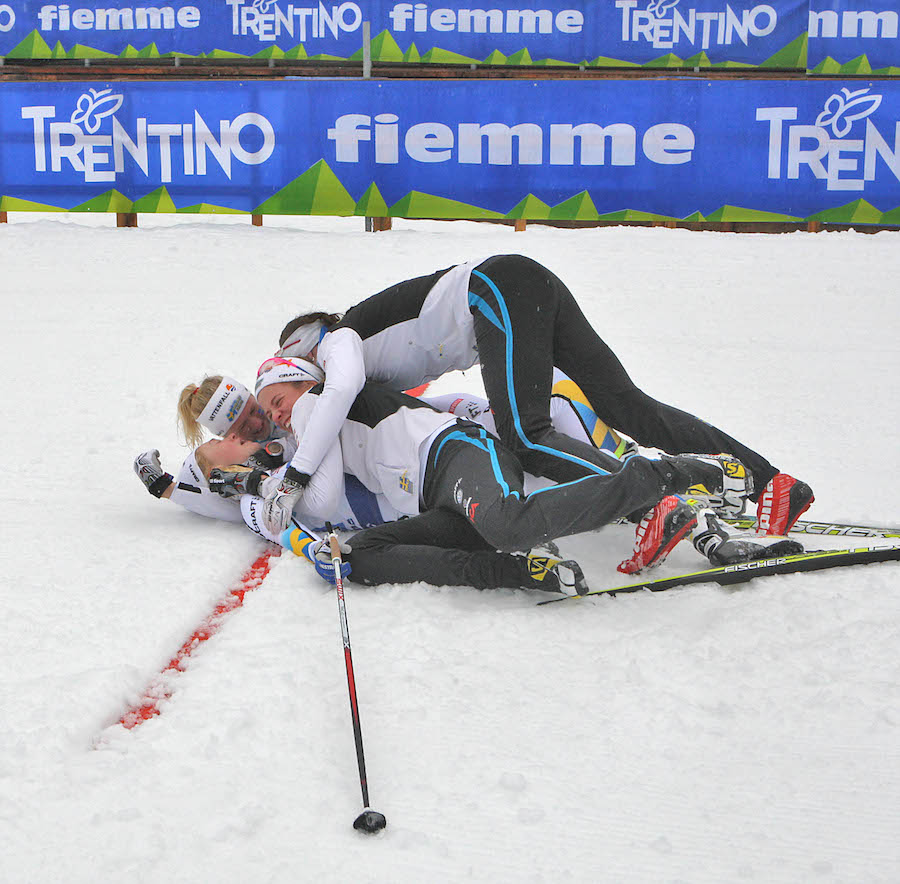
    The Swedish women's relay team of Anna Dyvik, Sofia Henriksson, Maja Dahlqvist, and Jonna Sundling celebrate after defending their Junior World Championships relay title with another win on Monday in Val di Fiemme, Italy. (Photo: Fiemme2014)
    The Swedish women’s relay team congratulates anchor Jonna Sundling at the finish, with Anna Dyvik, Sofia Henriksson, and Maja Dahlqvist, after defending their Junior World Championships relay title with another win on Monday in Val di Fiemme, Italy. (Photo: Fiemme2014)

    Monday’s final event of the Junior World Championships included the women’s 4×3.3-kilometer and men’s 4×5-kilometer relays. Both events alternated classic and skating legs in Val di Fiemme, Italy.

    According to a press release, Russia, France and Sweden led through the classic legs, while Norway and Finland sat patiently. On the last leg, Norway’s Eirik Sverdrup Augdal was first to pick up the pace at the end of a long uphill. Alexey Chervotkin, of Russia, and Jean Tiberghien, of France, were surprised and forced to react quickly. Over the final sprint, Augdal found the best line and captured gold for Norway in 53:36.6, exactly 1 second ahead of Tiberghien who outskied Chervotkin by a tenth of a second for second.

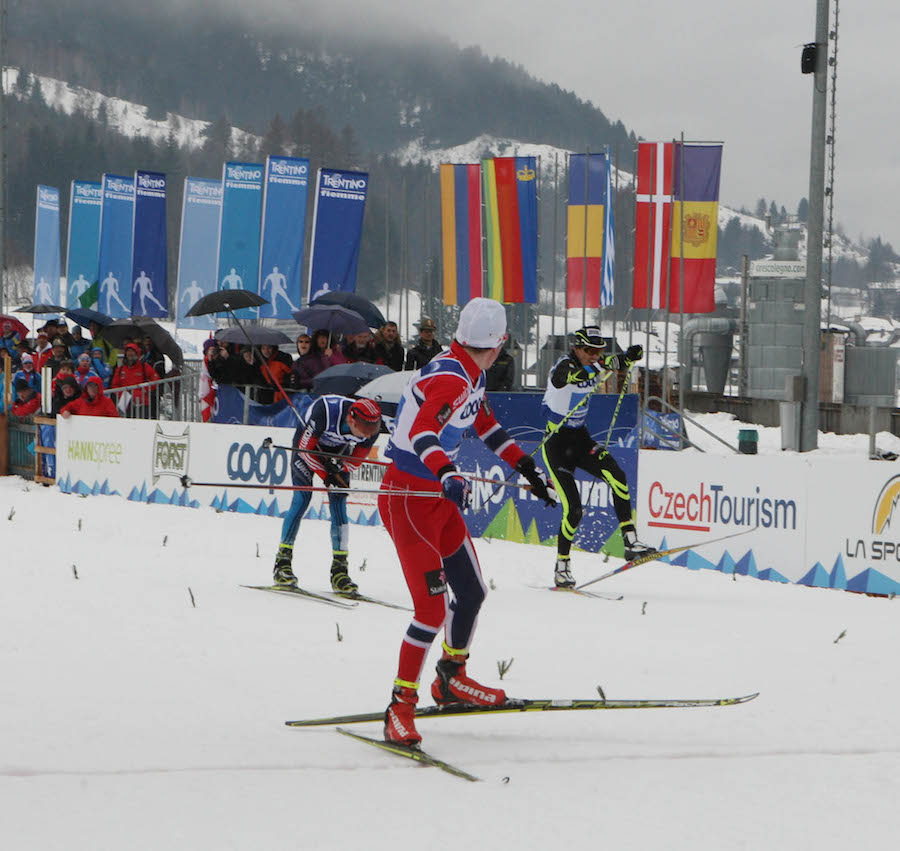
    Norway's Eirik Sverdrup Augdal looks back after anchoring his 4x5 relay to gold on Monday on the last day of Junior World Championships in Val di Fiemme, Italy. France took second, 0.1 seconds ahead of Russia. Augdal teamed up with Eivind Krane Heimdal, Petter Reistad, and Johan Hoel. (Photo: Fiemme2014)
    Norway’s Eirik Sverdrup Augdal looks back after anchoring his 4×5 relay to gold on Monday on the last day of Junior World Championships in Val di Fiemme, Italy. France took second, 0.1 seconds ahead of Russia. Augdal teamed up with Eivind Krane Heimdal, Petter Reistad, and Johan Hoel. (Photo: Fiemme2014)

    In the women’s relay, Russia led the first leg, but Sweden’s Sofia Henriksson did not let the Russian off easily, according to press release. Early in the the skate portion, Sweden was a hair ahead of Russia, while Norway was shortly behind, attempting to make up ground. At the final exchange, Russia’s Natalia Nepryaeva started off with a slight advantage over Jonna Sundling of Sweden, but by the end of the last leg, Sundling had gained enough ground to surpass — and even create a gap on — Nepryaeva, sealing the win for Sweden in 39:54.8. Russia took second, 7.7 seconds behind, and Norway’s Lotta Weng followed in third, 26.8 seconds behind the Swedes.

    With four gold, two silver, and eighth bronze medals, Norway was crowned as the winning team at the 2014 FIS Nordic Junior/U23 World Ski Championships.

    Among the North Americans, Canada placed just above the U.S. women in 10th (out of 14 teams). The Canadian females chosen to participate in the day’s event included Frédérique Vézina of the Pierre-Harvey National Training Centre (CNEPH), Dahria Beatty (Alberta World Cup Academy), Anne-Marie Comeau (CNEPH), and Katherine Stewart-Jones (Nakkertok). They raced in that order and Team Canada finished 2:49.9 behind the winners.

    “I love mass starts so I was pretty pumped when I knew what position I had for the relay,” Vézina wrote in an email. “It was a great fast fight right from the start. My body felt very good and I was able to stay with the lead pack up the first long up hill.”

    With slightly slower skis, Vézina explained she struggled on the downhills, but was able to catch back up to the pack on the climbs. “I am very happy with our race and it was as always a lot of fun!” she wrote.

    The American women finished about a minute after, 3:51.4 behind the leaders in 12th. Racers included Nichole Bathe (University of Alaska-Fairbanks), University of Vermont’s Marion Woods and Stephanie Kirk, as well as Sloan Storey (University of Utah), respectively.

    The Americans men placed 12th out of 18 teams, 3:08.4 behind the winners, with Canada finishing 45 seconds later in 13th. The U.S. men’s team included Adam Martin (Northern Michigan University), Lars Hannah (Steamboat Springs Winter Sports Club), Thomas O’Harra (Alaska Pacific University), and Patrick Caldwell (Dartmouth College), in that order.

    “It was exciting to race today, because we got another chance to race head to head with the best junior athletes,” Martin wrote on Monday. “I was able to hang with the Norwegian skier for both 2.5 k loops. … In general the relay was fun, it was a nice way to conclude the week. … It is very motivational to see some of the other athletes’ strong form and on days like today realize that I can really get in and race them.”

    The Canadian men’s team included Ricardo Izquierdo-Bernier (Fondeurs Laurentides), Alexis Dumas (Skibec),  Scott James Hill (NDC Thunder Bay), and Benjamin Wilkinson-Zan (NDC Thunder Bay), who crossed the finish line in 13th. The Canadians finished in 57:30.4, 3:53.8 minutes behind the winners.

    Results: Men | Women

  • Russia Reigns Junior Worlds 5/10 k Classic; Two Canadians in Top 15 (Updated)

    Russia Reigns Junior Worlds 5/10 k Classic; Two Canadians in Top 15 (Updated)

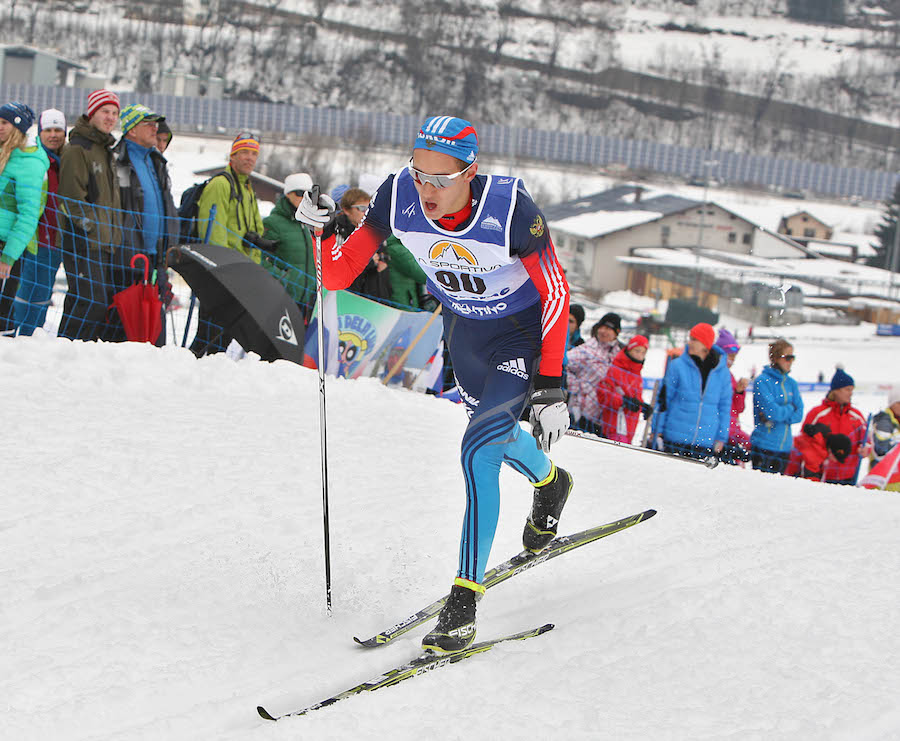
    Russia Roman Kaygorodov racing to his first Junior World title on Sunday in the 10 k classic individual start in Val di Fiemme, Italy. (Photo: Fiemme2014)
    Russia Roman Kaygorodov racing to his first Junior World title on Sunday in the 10 k classic individual start in Val di Fiemme, Italy. (Photo: Fiemme2014)

    Note: This article has been updated to include comments from Canadians Ricardo Izquierdo-Bernier, Scott Hill and Katherine Stewart-Jones.

    Russia went out on a high note on the last day of individual racing at Junior World Championships in Val di Fiemme, Italy, with Natalia Nepryaeva and Roman Kaygorodov winning the women’s 5- and men’s 10-kilometer classic individual starts, respectively, on Sunday.

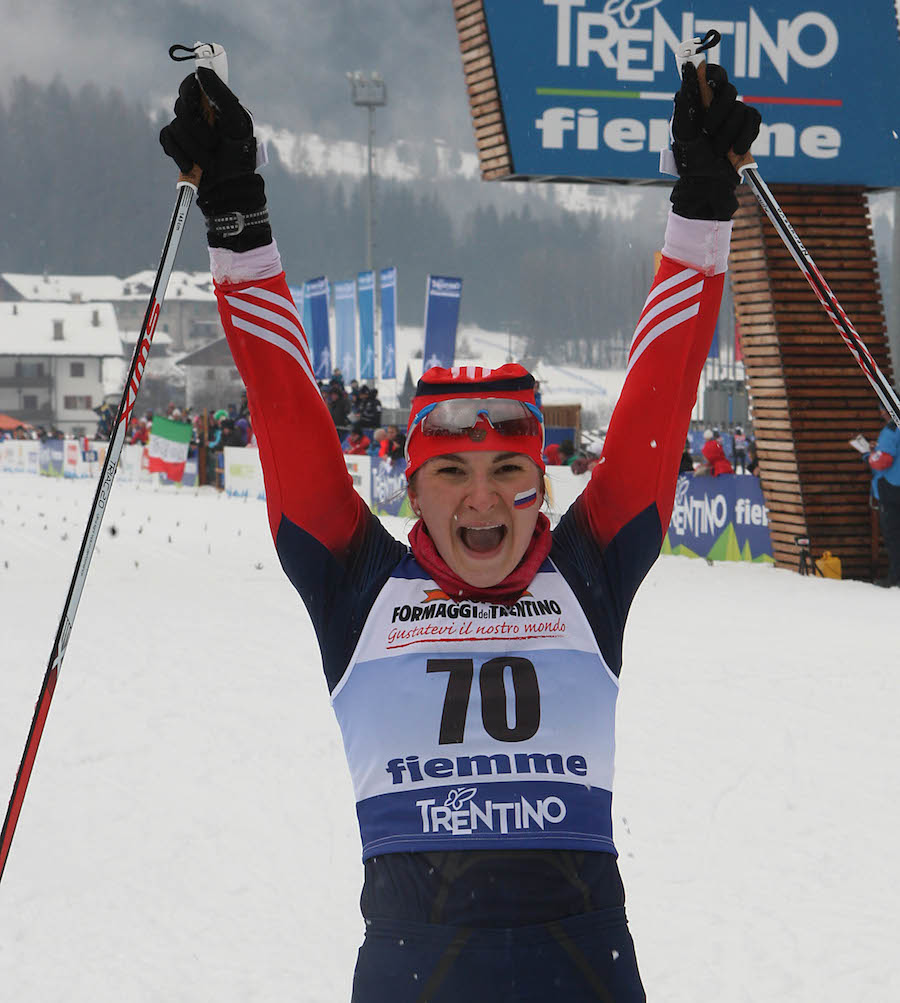
    Russia's 18-year-old Natalia Nepryaeva celebrates her 2.7-second victory in Sunday's 5 k classic individual start for her first title at Junior World Championships in Val di Fiemme, Italy. (Photo: Fiemme2014)
    Russia’s 18-year-old Natalia Nepryaeva celebrates her 2.7-second victory in Sunday’s 5 k classic individual start, her first title at Junior World Championships in Val di Fiemme, Italy. (Photo: Fiemme2014)

    For Nepryaeva, 18, the victory was her first at the world championships and she did so by edging Sweden’s Sofia Henriksson by 2.7 seconds in 14:05. Another Russian, Anastasia Sedova rounded out the podium in third, 13.6 seconds after her teammate.

    “I am exhausted, but winning a gold medal in a world championship is an incredible satisfaction,” Nepryaeva told FIS after the race. “I kept focused on my pace throughout the whole race, although I wasn’t sure I was going to be able to climb the last uphill. There was another girl in front of me and I kept skiing really close to her to keep control of my pace. I am really happy for the other girls in my team too, it’s a great day for Russia.”

    For Henriksson, 19, the silver marked her first individual podium at her fourth Junior World Championships.

    “I feel so happy today because I have been struggling for this medal for so long,” she told FIS. “In 2012 in Erzurum in the 5km Classic I finished fourth, only one second behind the bronze medal. It feels good to break up the three Russians.”

    As Nepryaeva and Henriksson passed through the intermediate checkpoints, it was clear they were gunning for top two. Nepryaeva narrowly prevailed on a hilly and challenging course at Lago di Tesero, leading four Russians in the top six, with Alisa Zhambalova in fourth (+16.4), Germany’s Julia Belger in fifth (+24.2) and Russia’s Yulia Belorukova in sixth (+27.4).

    In the men’s race, Kaygorodov, 18, won his first race at the championships in 26:36.9 for his first title (and podium) as well, beating Swedish runner-up Jens Burman by 5.5 seconds. Norway’s Petter Reistad was another 0.3 seconds back in third.

    “I can’t believe it!” Kaygorodov told FIS. “In the first part I didn’t want to push too much, the snow was pretty slow and I wanted to save most of my energy for the last lap. When I finished this race I was totally exhausted, and for me this result will be unforgettable.”

    Burman said he felt like he had good power and energy throughout his race.

    “I think that was a good race for me,” he told FIS. “I don’t do anything in particular to get encouragement or motivation, I only think I have to go fast.”

    Canada's Ricardo Izquierdo-Bernier leads a teammate at 2014 Junior World Championships in Val di Fiemme, Italy. (Photo: Ricardo Izquierdo-Bernier)
    Canada’s Ricardo Izquierdo-Bernier leads a teammate in the 20 k skiathlon on Jan. 31 at 2014 Junior World Championships in Val di Fiemme, Italy. (Photo: Ricardo Izquierdo-Bernier)

    France’s Jules Lapierre and Valentin Chauvin were fastest through the first checkpoint, but Kaygorodov picked it up for the last half of the race and put time into his competitors over the final kilometers.

    Lapierre ended up fourth (+12.9) and Chauvin placed seventh (+18.4), while Sweden’s Simon Lageson placed fifth (+13.5) and Marcus Ruus took sixth (+16.9).

    Monday’s relays were the final races on the schedule, with Sweden winning the women’s 4 x 3.3 k, defending their title from last year with Anna Dyvik, Henriksson, Maja Dahlqvist, and Jonna Sundling.

    Canada placed 10th with Frédérique Vézina, Dahria Beatty, Anne-Marie Comeau, and Katherine Stewart-Jones. The Americans finished 12th of 14 teams with Nichole Bathe, Marion Woods, Stephanie Kirk, and Sloan Storey.

    Norway won the men’s 4 x 5 k with Eivind Krane Heimdal, Reistad, Johan Hoel, and Eirik Sverdrup Augdal. The U.S. men placed 12th of 18 teams, with Adam Martin, Lars Hannah, Thomas O’Harra, and Patrick Caldwell Canada was 13th with Ricardo Izquierdo-Bernier, Alexis Dumas, Scott Hill, and Benjamin Wilkinson-Zan.

    Two Canadians in Individual Top 15

    Izquierdo-Bernier (Fondeurs Laurentides), who’s living in France with his family until August, when he’ll return to Montreal, notched 14th in the 10 k on Sunday.

    In an email, he xplained his goal was top 20 in one race at his first Junior World Championships.

    “I had identified the skiathlon to be my best chance to accomplish it, but bad skies in the classic part ruined my race … it’s part of cross country,” he explained of the preceding race, in which he placed 57th.  “Sunday morning I had no expectations, my only goal was to do a good race in classic and keep a steady pace for the 2 laps. Up to now this year in classic, I didn’t have any good race and the result of Sunday morning surprised me a little!”

    Throughout the 10 k, he focused on managing himself and his effort.

    “I knew that I had a good race but I was not expecting to finish in the top 20,” Izquierdo-Bernier wrote. “After the race I was watching the screen with the timings, as the other skiers were ending their race and my time was staying tin the top ones. As the last racer  finished, I was very happy and my goal was achieved.”

    Izquierdo-Bernier moved to the French Alps, specifically the Vercors, for his father’s sabbatical year.

    “Last summer I trained at the training center in Québec and when I came to France I trained 2 months with some French athletes and had finalised my preparation alone with a personal coach,” he explained.

    Dahria Beatty (Alberta World Cup Academy) racing to 29th in Friday's 10 k skiathlon at Junior World Championships in Val di Fiemme, Italy.  She notched 15th in the 5 k classic on Sunday. (Photo: FlyingPointRoad.com/Proceeds go to the National Nordic Foundation)
    Dahria Beatty (Alberta World Cup Academy) racing to 29th in Friday’s 10 k skiathlon at Junior World Championships in Val di Fiemme, Italy. She notched 15th in the 5 k classic on Sunday. (Photo: FlyingPointRoad.com/Proceeds go to the National Nordic Foundation)

    The lone Canadian man in the top 40, he shared a personal best in the top 15 with Dahria Betty of the Alberta World Cup Academy (AWCA), who was 15th in the women’s 5 k.

    For Beatty, 19, the result was her best in three world championships after she placed 20th in the freestyle sprint on Jan. 29. She explained in an email that her goal was top 15.

    “I am really happy to have achieved that,” Beatty wrote. “The 5k classic was the race I was most looking forward to as I prefer classic races to skate races. I’d like to think I can be both a sprinter and a distance skier, and I hope that I showed that with my 20th place finish in the skate sprint the first day!”

    Her plan for the 5 k was to start fast but relax on the climbs, then push hard over the remaining parts of the course.

    “I didn’t push enough on the second last climb in the skiathlon Friday so I made sure not to make that mistake again today and went all all out up the climb at 3.5km,” she wrote. “All along I was getting splits that I was leading at my bib, which is what I was hoping for. It’s always great to cross the line in first and see your name with a 1 beside it even if you know it won’t last. I had the chance to sit in the winners chair for a minute too which is always great!”

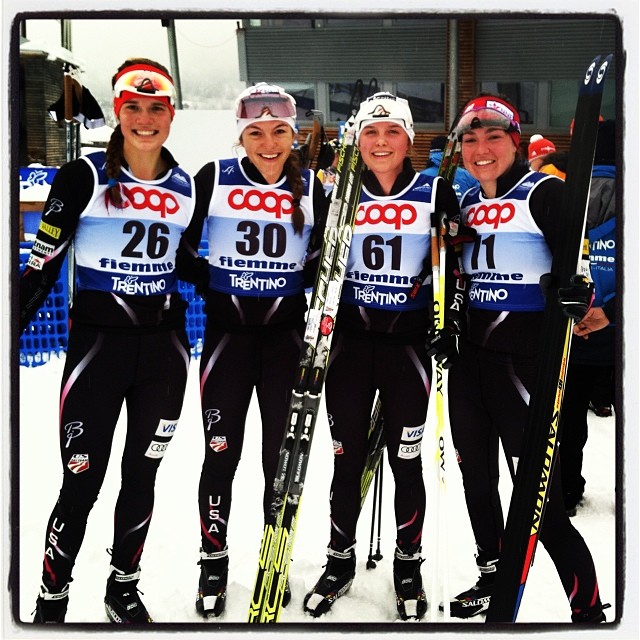
    The 2014 U.S. women's Junior World Championships team (Photo: Sloan Storey)
    The 2014 U.S. women’s Junior World Championships team (Photo: Sloan Storey)

    Two Americans tied for the best U.S. result of the day in 26th: Nichole Bathe (University of Alaska-Fairbanks) and Adam Martin (Northern Michigan University). For both, it was their first top 40 at their first world championships.

    “My goal going into to today’s race was to top 40 and to just feel like I was skiing strong and to really leave it all out there,” Bathe wrote on Sunday. “I didn’t know what place I was in while racing, I went off third so there where only two girls started ahead of me so I just went out as hard as I could and tried to hold on and set down a time that would hold to a certain extent.”

    After breaking through with her first podium at U.S. nationals a month ago, Bathe explained that results like third-place in the nationals classic sprint gave her confidence, but she also knew she would be racing at another level internationally.

    “I knew … these girls … are the fastest juniors in the world and that it was going to be tough to even hang in there,” she wrote. “I’m feeling pretty good about where I am at, I’m looking ahead to the next couple weekends of racing leading into the end of the collegiate year knowing that those are going to be some tough races so I’m just gonna try and keep everything going for another month and a half and hope that it all goes well.”

    Martin wasn’t sure how he’d stack up in the 10 k after placing 40th in the preceding 20 k skiathlon on Jan. 31. He thought top 30 “would be cool,” but tried not to dwell on results — instead focusing on having a strong race in difficult conditions. He remembered seeing the thermometer read 8 degrees Celsius (46 Fahrenheit) at one point.

    “The race was back seeded with the best ranked skiers starting last, so I tried not to think too much about splits, but they did help me gauge that I was picking up a few spots towards the end,” Martin wrote. “I was pleased when I saw that I was 26th. More so,  I was happy that I was 1:24 off of the leader. While this certainly is a notable amount of time back in a 10k, it seems like a margin that I can hopefully work with.”

    About 3 1/2 seconds after Martin, Caldwell (Dartmouth College) placed 29th. Two days earlier, he notched 10th in a 20 k skiathlon.

    Woods, a University of Vermont freshman, placed 34th, and her U.S. teammate Storey (University of Utah) was 43rd.

    Canada’s Katherine Stewart-Jones (Nakkertok) finished 36th, Anne-Marie Comeau of the Pierre-Harvey Training Centre (CNEPH) was a second behind in 38th. Also of CNEPH, Vézina finished 51st of 72 women.

    Stewart-Jones wrote in an email that she was aiming for top 25 and felt good before falling on a downhill after the first 2 k.

    “After that I really picked it up,” she added. “I have had a lot of fun so far. … I also improved my placings in every single race, so it is encouraging to see that improvement!”

    Comeau, 17, wrote than her goal was to have fun and give 100 percent. She had already placed 21st in the 10 k skiathlon, and two years ago at Junior Worlds, she was 18th in the skiathlon.

    “I’m happy about the result,” she wrote Sunday. “I felt good during my race and I gave all that I had! I think that’s important.”

    Also for Canada, Hill (NDC Thunder Bay) placed 45th, Dumas (Skibec) was 1.2 seconds behind in 46th, and Wilkinson-Zan (NDC Thunder Bay) placed 66th of nearly 100 men.

    “Going into this season I had my sights set on a top 10 at world juniors,” Hill wrote in an email. “Unfortunately I wasn’t feeling that great leading into the championships and I knew that I wasn’t going to get to the top 10 unless I was in good race shape.

    Rain before his race, which made the snow wet and heavy and ruined the tracks on the hill made things tougher.

    “I knew I wasn’t capable of reaching my original race goal but I was still hoping for a top 30 so I was disappointed with where I ended up,” he explained. “I have been disappointed with my racing in Italy but I really like the venue and courses, more than last year in the Czech Republic. This year I was solely focused on my racing and results compared to last year where I was more just trying to get experience. My season has been good up until now and I hope I can rest up and finish the season on a strong note at nationals.”

    Among the U.S. men, Hannah (Steamboat Springs Winter Sports Club) finished 57th in the 10 k and Cole Morgan (University of Vermont) was 68th.

    Sunday’s 5/10 k classic results: Women | Men

    Monday’s relay results: Women | Men

  • Skiathlon Format and Snowfall Make for Tricky Day at World Juniors; Caldwell Notches 10th

    Start of the skiathlon at Junior World Championships on Friday in Val di Fiemme, Italy. (Photo: FlyingPointRoad.com/Proceeds go to the National Nordic Foundation
    Start of the women’s 10 k skiathlon at Junior World Championships on Friday in Val di Fiemme, Italy. (Photo: FlyingPointRoad.com/Proceeds go to the National Nordic Foundation)

    As if skiathlons weren’t rare enough, Friday’s 10- and 20-kilometer races at Junior World Championships in Val di Fiemme, Italy, posed another unique challenge with 2 1/2 feet of new snow from the night before. Tracks had to be set for the races that combined both classic and skate disciplines.

    Paddy Caldwell (Dartmouth) racing to a career-best 10th on Friday in his skiathlon at his first Junior World Championships in Val di Fiemme, Italy. (Photo: FlyingPointRoad.com/Proceeds go to the National Nordic Foundation)
    Patrick Caldwell (Dartmouth) racing to a career-best 10th on Friday in his skiathlon at his first Junior World Championships in Val di Fiemme, Italy. (Photo: FlyingPointRoad.com/Proceeds go to the National Nordic Foundation)

    For American Patrick Caldwell, of Dartmouth College, this was his first skiathlon. After not feeling great following the long trip to Europe, Caldwell wrote in an email: “I think the sprint really helped wake me up and get me ready.”

    Caldwell’s strategy in the skiathlon was to hang on in the classic race, then try to gain ground in the skate.

    “Overall this strategy worked very well,” the 19-year-old freshman said, after finishing 10th for a career-best in his first Junior Worlds.

    Snow kept falling continuously early Friday morning and continued up to the first race: the junior women’s 10 k skiathlon. According to a press release, the Russians took the lead in the classic leg with Alisa Zhambalova and Natalia Nepryaeva, followed by Germany’s Julia Belger and Sarah Schaber, as well as Norway’s Lotta Udness Weng.

    Zhambalova was first through the exchange with about 10 competitors close behind her, and Sweden’s Anna Dyvik led the chase group while trying to close the gap. Halfway through the fourth lap, Weng, Belger, Schaber, and Zhambalova accelerated to the front, but Belger crashed on the second-to-last descent. Schaber stayed on her feet and dropped the pack on the final climb, winning the skiathlon by 2.1 seconds in 30:45.8. Zhambalova placed second and Dyvik outsprinted Weng and Nepryaeva for third (+3.0).

    Japan had a solid showing as well, with two women, Yukari Tanaka and Kozue Takizawa, placing in the top 16.

     
    Dahria Beatty (Alberta World Cup Academy) racing to 29th in Friday's 10 k skiathlon at Junior World Championships in Val di Fiemme, Italy.   (Photo: FlyingPointRoad.com/Proceeds go to the National Nordic Foundation)
    Dahria Beatty (Alberta World Cup Academy) racing to 29th in Friday’s 10 k skiathlon at Junior World Championships in Val di Fiemme, Italy. (Photo: FlyingPointRoad.com/Proceeds go to the National Nordic Foundation)

    Canada’s Anne-Marie Comeau, 17, of the Pierre-Harvey National Training Centre (CNEPH), was the top North American in 21st, her second-best individual result at her third Junior Worlds. Dahria Beatty (Alberta World Cup Academy) placed 29th, Frédérique Vézina (CNEPH) was 30th and Katherine Stewart-Jones (Nakkertok) 31st.

    American Sloan Storey (University of Utah) was not thrilled after finishing 39th, but was happy to be the top American female and to have made it to this level of racing.

    “Today’s race was tough but really fun!” she wrote. “I always find myself getting very nervous before these international races with all the insanely fast-looking Russians, Germans, Norwegians, and Swedes warming up around me, but then I remind myself how amazing it is that I just get to compete against these girls and experience racing at this level. My nerves begin to settle and I just get excited.”

    Unlike Caldwell, Storey, a 19-year-old sophomore, competed in this event last year (and placed 32nd in Nove Mesto), which made her more comfortable with the race format. Regardless, she wrote that her warmup was pretty unorganized and hectic because of the races’ delay of an hour due to continuous snowfall.

    After Storey, Nichole Bathe (University of Alaska-Fairbanks) placed 47th, Stephanie Kirk (University of Vermont) was 52nd and Maggie Williams (University of Vermont) placed 59th.

    Eirik Augdal (12) at the front of the pack in the men's 20 k skiathlon at Junior World Championships on Friday in Val di Fiemme, Italy.  (Photo: FlyingPointRoad.com/Proceeds go to the National Nordic Foundation)
    Eirik Augdal (12) and Evgeniy Vakhrushev (18) at the front of the pack in the men’s 20 k skiathlon at Junior World Championships on Friday in Val di Fiemme, Italy. (Photo: FlyingPointRoad.com/Proceeds go to the National Nordic Foundation)

    On the junior men’s side, Russia dominated yet again as Alexey Chervotkin and Evgeniy Vakhrushev took the lead in the classic part of the race. They were followed by France’s Jules Lapierre and Petr Knop of the Czech Republic.

    Norway’s Eirik Sverdrup Augdal and Johan Hoel joined the lead pack after the transition zone, and formed a chase with the Russians. The Norwegians and Russians both finished with a solid day as Augdal won in 56:09.6, Chervotkin placed second, 10 seconds back, and Hoel took third, 1.3 seconds later.

    Russia had four in the top nine with Vakhrushev placing seventh, Evgeniy Grigoriev in eighth and Alexander Bakanov in ninth.

    While Caldwell was the lone North American in the top 39, Americans Adam Martin (Central Cross Country) placed 40th and John Hegman (University of Vermont) was 59th.

    Scott Hill (NDC Thunder Bay) led the Canadian men in 51st, Ricardo Izquierdo-Bernier (Fondeurs Laurentides) was 57th, Alexis Dumas (Skibec) 60th, and Benjamin Wilkinson-Zan (Nakkertok) 68th.

    Results: Women | Men

  • Diggins Charges to Second in U23 Freestyle Sprint, Bjornsen Leads U.S. Men

    Jessie Diggins (U.S. Ski Team) skiing to first place in the qualification round of Wednesday's freestyle sprint. She finished second overall in the finals, a best-ver finish at a Junior/U23 World Championships. (Photo: FlyingPointRoad.com)
    Jessie Diggins (U.S. Ski Team) skiing to first in the qualification round of Wednesday’s freestyle sprint at U23 World Championships in Val di Fiemme, Italy. She finished second overall in the finals, a best-ever finish at U23 World Championships. (Photo: FlyingPointRoad.com/Proceeds go to the National Nordic Foundation)

    Jessie Diggins once again demonstrated that she’s a skier with a lot of heart at the 2014 U23 World Championships in Val di Fiemme, Italy. On the same course where she earned a historic gold in the World Championship team sprint with Kikkan Randall in 2013, the 22-year-old was once again the talk of Lago di Tesero as she powered through the rounds of the 1.2 k freestyle sprint.

    With perfect conditions blessing the quaint Italian village of Tesero, Diggins started the day with a blistering pace that was boosted her to top of the field in qualification. Continuing to build confidence and speed, she just kept going.

    Deciding to go hard from the sound of the gun, Diggins sped to the front of the pack in her quarterfinal, semifinal, and the A-final en route to her silver medal. Although she breezed through her quarterfinal, the semifinal proved more challenging.

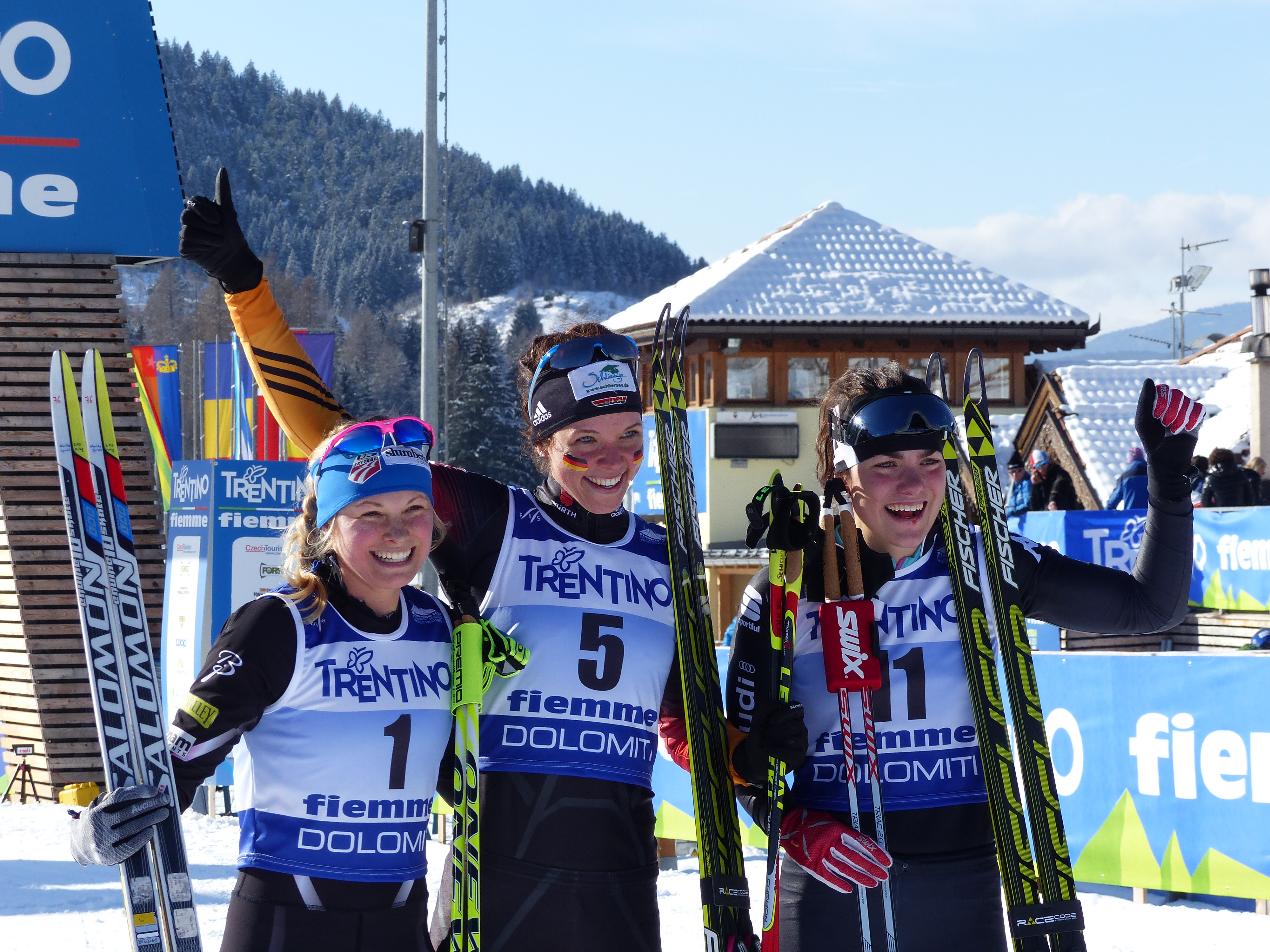
    Jessie Diggins (l) was second in Wednesday's freestyle sprint at the U23 World Championships in Val di Fiemme, Italy. She was joined by Germany's Elisabeth Schicho (c) and hometown skier Giulia Stuerz (r). (Photo: Gerry Furseth)
    Jessie Diggins (l) was second in Wednesday’s freestyle sprint at the U23 World Championships in Val di Fiemme, Italy. She was joined by Germany’s Elisabeth Schicho (c) and hometown skier Giulia Stuerz (r). (Photo: Gerry Furseth)

    Trying to save energy, the Minnesota native relaxed at the top of the main hill, allowing her competitors to step in behind her, draft, and then slingshot around her into the finish. She finished third in her heat, hopeful that the other semifinal would be slower.

    Fortunately for Diggins, her heat was significantly faster and she was the first lucky loser into the A-final.

    Diggins knew that in order to perform well in the final, she needed to learn from her previous mistakes and take her strengths into account. “In the final I knew that I hadn’t been skiing the finishing lanes very well today but if I could tire people out, that was going to be my chance to win it,” said Diggins in an interview.

    Tire them out she did. One by one her competitors dropped until it was just Elisabeth Schicho of Germany who clung to the heels of the charging American.

    Coming down the hill, Schicho blew by Diggins and after that the German “just skied off.”

    Despite being unable to hold her lead, Diggins was extremely happy with best ever finish at a Junior or U23 World Championships.

    Diggins’ main goal was to make the heats and have fun in the process. After coming off a large training week, Diggins was fatigued and she knew she wasn’t at her best. Despite her tiredness, there were valuable lessons to gain from the sprint.

    “It was so good to practice dealing with pressure and use this as a tune up race to get more experience,” she said “All I wanted to do was to make the final, get the experience, and get the tactical practice.”

    Annie Pokorny (SMST2) skiing in the qualification round of Wednesday's freestyle sprint at the U23 World Championships in Val di Fiemme, Italy. Pokorny finished 28th, a career-best international result. (Photo: NNF/Flyingpointroad.com)
    Annie Pokorny (SMST2) skiing in the qualification round of Wednesday’s freestyle sprint at the U23 World Championships in Val di Fiemme, Italy. Pokorny finished 28th, a career-best international result. (Photo: FlyingPointRoad.com/NNF)

    Roughly a week and a half out of Sochi, it certainly didn’t hurt the U.S. Ski Team member to receive a confirmation that she can ski well even when she isn’t feeling up to par.

    “This has been a great confidence booster going into Sochi knowing that when I hit my peak I’ll have more energy. Gaining the experience of skiing through to the finals has really great for me because it’s been so long since I’ve been in finals.”

    The freestyle sprint is Diggins only race at the U23 World Championships, and she will return to train with the U.S. Ski Team to prepare for the Olympic Games in Russia.

    The only other American to make the heats was Annie Pokorny (SMST2) who earned her best international result to-date after qualifying 28th and finishing in the same position.

    “When we woke up, the valley was sunny for the first time since we arrived, so I had a feeling that, whether for me or my teammates, today would be a good day,” said the Spokane, Washington native in an email. “Today was my first time starting an international championship sprint, so I focused most on keeping myself calm before the qualifier. I’ve been focusing more on sprinting this year, and wanted my races to speak to that.”

    Rounding out the American women’s results were Elizabeth Guiney (Craftsbury GRP) who finished 39th and Mackenzie Kanady (UAA) who placed 40th.

    In the U23 men’s 1.5 k two Americans cracked the top 20. Erik Bjornsen of the U.S. Ski Team and Tyler Kornfield of APU finished 18th and 19th after finishing fourth in each of their heats.

    Erik Bjornsen (U.S. Ski Team) in the qualification round of the freestyle sprint at the 2014 U23 World Championships in Val di Fiemme, Italy. Bjornsen finished 25th in qualification and 18th in the finals. (Photo: Flyingpointroad.com)
    Erik Bjornsen (U.S. Ski Team) in the qualification round of the freestyle sprint at the 2014 U23 World Championships in Val di Fiemme, Italy. Bjornsen finished 25th in qualification and 18th in the finals. (Photo: Flyingpointroad.com/Proceeds go to the National Nordic Foundation)

    Bjornsen who is also headed to Sochi in the coming weeks wasn’t pleased with his result, but viewed it as a learning experience.

    “The two guys that won my heat ended up going 2-3 in the final so that’s a good sign. I took some notes on how I think I can improve, for now I will put those in the safe and try to just focus on tomorrow,” said Bjornsen, who won the 15 k classic at U.S. Nationals earlier this month. “I know that tomorrow is another great opportunity to have a good result.”

    Unlike Diggins, Bjornsen isn’t treating the Championships as a tune up for Sochi. Instead he plans on racing as he normally would, aiming to earn his best results in the two distance races.

    A two-time classic sprint national champion in 2010 and 2012, Kornfield was excited that this was his first time qualifying for the heats in the three years that he’s been to the Junior/U23 World Championships.

    “I am definitely happy to be in the mix, but I know that I am capable of more. There were portions of the course that I was dead even with the field, but it was when I got boxed in that I lost time,” he said. “I may have had better days over the past few weeks, but I felt like my fitness did not hold me back today.”

    Ben Saxton (SMST2) finished just outside of the top 30 in 33rd. He was followed by Benjamin Lustgarten (Middlebury) in 48th.

    In the junior men’s 1.5 k Cole Morgan was the only American to advance to the heats, after qualifying in 14th position. Morgan, who ended his day in 17th, was motivated by his good qualification result because it showed him that he “could be competitive in the rounds.”

    The University of Vermont skier had only raced internationally once before Wednesday’s race, but didn’t let the advanced level of competition get to his head. “I don’t like to think of international racing as anything different,” he wrote in an email. “Regardless who is racing you just have to go out there and race your own race. Getting hung up on where the other skiers are from is only going to hurt your chances.”

    Patrick Caldwell (SMS) followed Morgan in 39th. Jack Hegman (UVM) and Thomas O’Harra (APU) were 53rd and 54th.

    The American junior women were unable to place any of their starters in the top 30. The top finisher was Stephanie Kirk (UVM) finishing 36th. She was followed by Marion Woods (AWS), Sloan Storey (UU), and Nicole Bathe (UAF) in 51st, 54th, and 56th.

    The Americans will continue racing in Val di Fiemme Thursday with the 10 k and 15 k classic for the U23 skiers.

    U23 Women’s Freestyle Sprint Results

    U23 Men’s Freestyle Sprint Results

    Junior Women’s Freestyle Sprint Results

    Junior Men’s Freestyle Sprint Results 

  • Mooney Takes 26th to Lead U.S. in World Juniors Skiathlon

    Mooney Takes 26th to Lead U.S. in World Juniors Skiathlon

    Heather Mooney (USA) led the U.S. at World Juniors on Friday with a 26th-place finish in the 10 k skiathlon. Photo: Sawyer Kesselheim.
    Heather Mooney (USA) led the U.S. at World Juniors on Friday with a 26th-place finish in the 10 k skiathlon. Photo: Sawyer Kesselheim.

    At a race as big as Junior World Championships, a lot of factors go into turning a race into a great day. A personal best. Fast skis. Bluebird skies. For Heather Mooney (Middlebury College), it was some combination that helped her towards her 26th-place showing in the women’s 10 k skiathlon in Liberec, Czech Republic, a performance that led the Americans at the championships on Friday.

    “I’m definitely very happy with my race today,” Mooney wrote in an email. “My real goal was to try and stay relaxed and not waste any energy through the classic leg, getting in a good position, not getting pushed around by anyone, and then in the skate I hoped just to ski smooth and stomach as much pain as I could. I think I did those things really well, so I’m happy with that.”

    Mooney and two teammates, Sloan Storey and Corey Stock, started next to each other in the narrow, five-lane chevron with bibs 41, 42 and 43. The trio, along with Mary O’Connell in bib 35, was able to ski close to each other in some fashion through the classic leg. The Americans expected a chaotic mass start and for the most part made it through the first few kilometers unscathed and in control of their own races.

    “The course starts up a steep hill before dropping down a big downhill over a bridge with a big corner, so we were all expecting there to be a lot of crashes, but it ended pretty hassle-free for most of us,” Mooney said. “Getting through the first lap was a bit nerve wracking, but the girls in front took it out really fast, so it spread out reasonably well.”

    Mooney working through the skate leg. Photo: Sawyer Kesselheim.
    Mooney working through the skate leg. Photo: Sawyer Kesselheim.

    Mooney came through the pit in 31st at the halfway mark and picked people off in the skate leg to finish 26th overall with the 28th-best freestyle time. As someone who is historically a better classic skier Mooney was particularly excited with the second half of her race.

    “I’m generally not as strong of a skater, but it’s something I’ve been working a lot on this year, so I’m really excited to have a solid skate result, especially here!” she said.

    Two years ago in Estonia, Mooney was 50th in the pursuit. On the heels of a 19th-place showing in the classic sprint, the skiathlon marks her new best in a distance race at World Juniors.

    On top being happy with a PR, Mooney said having good weather for the first time all week made a great day even better.

    “Thanks to the wax techs, our skis were really fast, and I was able to glide up a lot of the beginnings of the hills where other people were already skiing, so that was really fun!” she added. “It was a bit colder this morning, so the tracks were firm and fast.”

    Storey finished 32nd, 13.2 seconds behind Mooney. The University of Utah freshman characterized her skiathlon experience as “crazy,” “hectic,” and “very fun.”

    “Every aspect of it — coaches having to have to wax two pairs of race skis versus just one, racers having to have stay on their feet and not crash or break a piece of equipment during the many collisions in the mass start…and half way through the mass start we had [to] switch all of our gear from classic to skate. It was hectic to say the least, but very fun,” Storey said.

    She and Mooney worked together to move up through the pack, and Storey also caught rides with athletes she was able to pass by the end of the race. Like Mooney, she attributed a big part of her success to great skis.

    “My skis were BOMB!” Storey said. “One of my highlights was being able to run and not slip up one of the steepest pitches and pass a group of girls who began herringboning… All in all the race was super fun and another great new experience here in Liberec! I’m so proud of all of my teammates for all of their success as well as myself.”

    O’Connell finished 35th, 8.6 seconds behind Storey. The Dartmouth College freshman was hoping for a top 30 on Friday had a hard time being too disappointed with 35th in spite of a few trip-ups in the classic leg. For the first kilometer she felt she skied smart and relaxed, but was unable to avoid colliding with another girl that went down in front of her shortly into the race.

    “At about 1 k, a girl in front of me fell and I just skied right into her, and then some people behind me skied into me, I think maybe a few US girls too,” O’Connell said. “That was a bit chaotic for a second. After that, I sorta lost my composure and sorta panicked and wasn’t able to kick my skis real well. Going up one of the steep hills in the classic leg, I just tripped again and took a face plant. At this point I was just trying to make it to the skate leg, trying to keep it together.”

    O’Connell came through the classic leg in 38th. She made it through the transition to freestyle with no mistakes and began to work her way back to the teammates ahead of her, posting the 30th-fastest skate split as she did so.

    Though she didn’t think it was her best race, O’Connell was inspired by the skiing she saw around her on course.

    “Being here is so fun, and cool to see all these really fast kids racing around you,” she said. “It’s really inspiring. It lets me know what I need to do from this point on to be able to compete at the top level in the future.”

    Corey Stock (Dartmouth College) finished 40th overall in 29:56.8. She had the 49th-ranked classic split at the halfway mark and moved up nine places by posted the 23rd-fastest freestyle time.

    Women’s 10 k skiathlon results.


    Kyle Bradtud (USA). Photo: Logan Hanneman/Corduroy AK.
    Kyle Bratrud (USA) competing in the freestyle race earlier this week. Photo: Logan Hanneman/Corduroy AK.

    Kyle Bratrud (Northern Michigan University) led the Americans in the junior men’s 20 k skiathlon in 34th. With the 28th-fastest classic time and 40th-ranked freestyle split, he finished 3:06 behind the Russian leaders at the front of the pack.

    “I am pretty satisfied,” Bratrud said. “I started with bib 47 so I knew I was going to have my work cut out for me getting in to it.”

    By the end of the first 10 k the field had begun to string out. Bratrud said he “really laid down the hammer” in the classic portion in order to move up and he came through the first half in 28th, about one minute down to the leaders.

    “The change was not nearly as bad as I thought I just tried to relax,” he said.

    The 19-year-old hadn’t competed in a skiathlon since his freshman year of high school, so Friday’s race was a “rather new experience” for him.

    “I think it’s definitely an interesting format,” he said. “It’s a really grueling race since you work both sets of muscles, so there was a lot of pain experienced in that race.”

    Like his teammates, Bratrud noted that sunny skis and hard tracks made for a more enjoyable day of skiing than competitors have yet seen this week under Liberec’s overcast skies.

    “[There were] very challenging courses so they really tested me… I was able to see my weaknesses so I’m very excited to train this summer and fix those!” he added. “Overall [I’m] pretty pleased. Feels great to wear that uniform and look down and see USA on my leg — living the dream.”

    Logan Hanneman skiing in a pack. Photo: Josh Smullin.
    Logan Hanneman skiing in a pack. Photo: Josh Smullin.

    Logan Hanneman (University of Alaska, Fairbanks) was the second American to come through in 39th. Ever the competitor, Hanneman had high expectations for the skiathlon and in the first few kilometers of the race he led the field for a few laps.

    “After the sprint qualifier, I thought that I definitely had a top ten in me,” he said. “The first few laps of the classic portion were great. I was right up there and feeling great.”

    The wheels started to come off after the second 2.5 k lap.

    “I was leading the race on the second lap of the classic portion. Then I seemed to find reverese,” Hanneman said. “It really felt like I ran into a brick wall. The muscles just began cramping and I don’t really know what happened. So from there on out, I was in survival mode, as dumb as that sounds. In the skate, I was just barely skiing.”

    Hanneman came through the exchange in 23rd at 10 k and went into damage control in the second half. His skate leg was the 61st-best time in the field.

    “I am not realy that excited about my result,” he concluded. “I hope the relay goes much better.”

    Forrest Mahlen (Alaska Pacific University) and Tucker McCrerey (University of Utah) came in 70th and 71st, respectively, just under six minutes behind the winning time. Like Hanneman, they were not happy with the placing but looked forward to a shot at redemption in the relay.

    Mahlen thought he may have suffered from mild food poisoning from dinner the night before and felt his stomach clench throughout the race.

    “I don’t know if it really affected my performance other than to make the race a little more painful than usual,” he said, adding that “the race itself was super exciting; 92 of the best junior skiers in the world all trying to fit into two classic tracks on a 2.5 kilometer loop lets you know how you stack up real quick.”

    McCrerey echoed the sentiment. “I love the skiathlon because it tests your form in both disciplines,” he said. “I’m really bummed that I did not have a good race because I thought I could really do some damage in this field. There will be another time in the future.”

    Men’s 20 k skiathlon results.

  • Mahlen, O’Connell Lead U.S in Junior Worlds Distance Freestyle

    Mahlen, O’Connell Lead U.S in Junior Worlds Distance Freestyle

    Sawyer Kesselheim leading Forrest Mahlen partway through the men's 10 k freestyle at Junior World Championships in Liberec, Czech Republic. Photo: Logan Hanneman/Corduroy AK.
    Sawyer Kesselheim leading Forrest Mahlen partway through the men’s 10 k freestyle at Junior World Championships in Liberec, Czech Republic. Photo: Logan Hanneman/Corduroy AK.

    Junior World Championships action continued in Liberec, Czech Republic, on Wednesday with a 5 and 10 k individual start freestyle. Forrest Mahlen (Alaska Pacific University) and Sawyer Kesselheim (Bridger Ski Foundation) put up another pair of top-30s for the U.S. in the men’s event, placing 27th and 29th, respectively. Mary O’Connell (Dartmouth College) led the way for the American women by finishing 33rd in the 5 k.

    The 10 k freestyle was Mahlen’s first event of the championships, and his 27th-place showing brought redemption over what he called a “super-poorly” skied distance race in Turkey last year, where he was 72nd.

    “I’m super-excited with my result today!” Mahlen said. “One of my goals for this season was a top 30 here at world juniors so 27th is right in there. I was only 90 seconds behind the leaders and 15 seconds out of top 20 so I’m pretty happy with my time.”

    As the 33rd starter out of a field of 98, Mahlen sought to pace his 10 k aggressively.

    “My strategy was to take it out at a pace that I couldn’t hold the whole time to see what I had in me,” he said.

    As a result, Mahlen skied by himself for nearly the whole race, which went three times around a 3.3 k loop. With the 18th-ranked split on the first lap, he accomplished the fast opening pace he intended. When Kesselheim was on his first lap he caught Mahlen finishing his final one, and the two helped each other along while Mahlen was “fading hard” from his quick early pace.

    “He brought me around, for sure,” Mahlen said.

    U.S. Ski Team development coach Bryan Fish thought the competitive field and challenging course in Liberec demanded highly focused skiing from athletes from the get go.

    “I think at World Championships like this you have to be aggressive,” Fish said. “It was also an interesting course. There weren’t any really long hills but there were certainly some steep ones out there, so very transitional skiing. You had to ski well on the corners, dowhills and the uphills. The uphills were quite steep, much like the sprint course, so really powerful skiing [worked well].”

    While Mahlen went out fast and faded, Kesselheim skied a more consistent race to finish two places and only 0.6 seconds behind him. In addition to catching a ride with Mahlen, Kesselheim skied one of his laps with one of the German skiers in the top seed.

    “I was lucky enough to lap through when some of the top guys were starting,” Kesselheim said. “I got some help on my last lap from a German skier who pushed me up some of the biggest hills.”

    He had hoped for a top-20 but was still excited with a top-30. “I felt that I raced smart,” Kesselheim said. “I pushed the transitions and paced it well… I also felt that pushing over the tops of hills and through the flats was very important. I focused on that and was able to execute which helped me to make up a lot of time.”

    Kyle Bratrud (Northern Michigan University), in his first career World Juniors race, took 46th on Wednesday, 33 seconds behind his other teammates. In his debut at the event Bratrud was focused primarily on gaining experience and was pleased with the result.

    “My goal this year was to make World Juniors, beyond that was all a learning experience and getting to race on a course of that difficulty and watch and even ski with a few of the top juniors in the world was a huge opportunity,” he said. “I have been feeling pretty sluggish this week from the travel as this is my first trip to Europe so it was nice to finally get to race and shake out some of that junk from my legs.”

    As the 55th starter Bratrud skied mostly by himself, but watched the faster seeds closely when they skied near him.

    “A few of the top juniors were starting as I was going out for my last lap so I got to ski with them for a little bit and get a feel for what they do that makes them so fast, which was awesome,” Bratrud said.

    Ben Saxton (F.A.S.T. Performance Training) was the fourth American in 60th. He was the top U.S. performer in the classic sprint on Monday but didn’t feel at his best in the 10 k.

    “I don’t know exactly what my goals were but whatever they were, I didn’t reach them today, so it was a disappointing result in that sense,” Saxton said. “But I have a LOT of stuff to learn from this and it’s my first distance race on a big stage.

    “I didn’t really feel too hot out of the start, but I was essentially on my own the whole way. The one chance I had for a ride I blew because I chickened out and scrubbed some speed on a downhill. I was getting consistently mediocre split results which I could tell by just looking around behind me were becoming obsolete as soon as higher bibs came through. But I tried my hardest I just wasn’t springy and at my sharpest today.”

    Men’s results.

    Mary O'Connell on her way to finishing 33rd in the World Juniors 5 k. Photo: Logan Hanneman/Corduroy AK.
    Mary O’Connell on her way to finishing 33rd in the World Juniors 5 k. Photo: Logan Hanneman/Corduroy AK.

    On the women’s side, O’Connell led the American team in 33rd. She was introduced to Junior Worlds competition in Turkey last year and, like Mahlen, wanted to come to Liberec and improve upon her original results. Her best finish a year ago was 42nd in the 10 k skiathlon and on Wednesday she cut that down by nine places in the 5 k freestyle, finishing 1:05 behind the leaders.

    “I am happy with the way it went,” O’Connell said. “The course was super short but very painful, I’d say one of the hardest 5 ks I’ve ever done. There are a few places where I wish I could have pushed a little harder, and a top 30 would have been great! But I’m still pleased with the way I raced.”

    O’Connell got off to a strong start in her freshman season with a seventh-place finish at U.S. Nationals earlier this month in the senior freestyle race, surprising even herself. Not sure of where that would put her against the fastest juniors in the world, she limited her expectations for the 5 k.

    “I knew my fitness was there after Nationals, I just wasn’t sure how that was going to compare internationally. Obviously, these kids are fast. I think the winning time was less than 13min!” she said. (It was; Germany’s Victoria Carl won in 12:35.)

    For such a short race, O’Connell said it was important to go hard for the entire thing.

    “There was one really steep hill, comparable to Hermod’s Hill (at Soldier Hollow) and it was important to ski light and quick but not kill yourself there on the first lap. Since it was so fast, pacing was important, but there was not a significant difference.”

    O’Connell noted that the snow and her skis was also extremely fast, contributing a quick finish time.

    “The coaches and wax techs are doing an incredible job with our skis, they were so fast today!” she said. “I actually almost fell on some of the corners! The team atmosphere is really great and we’re really all just having so much fun!”

    At the end of the day, races like those from O’Connell, Mahlen and Kesselheim are exactly the kind of improvements Fish likes to see from year to year and race to race.

    “Head to head competition like today is not only a test but also an incredible opportunity to strengthen the performance of our top developing athletes,” he said.

    Sloan Storey (University of Utah) finished 45th in the 5 k for the U.S., Emily Hannah (Harvard University) took 51st and Anika Miller (Payette Lakes Sports) was 52nd.

    Women’s results.

    Special thanks to Logan Hanneman/Corduroy AK for his photography.


  • Saxton 14th in World Juniors Sprint to Lead Four Americans in the Top 30

    Saxton 14th in World Juniors Sprint to Lead Four Americans in the Top 30

    The American athletes at Junior World Championships in Liberec, Czech Republic, this week started things off with a bang in the classic sprint on Monday, qualifying four athletes for the heats. Two men and two women made it as far as the quarterfinals; Ben Saxton (F.A.S.T. Performance Training) and Logan Hanneman (University of Alaska, Fairbanks) headlined the day in 14th and 16th, respectively. Heather Mooney (Middlebury College) led the way for the U.S. in the women’s heats in 19th and Corey Stock (Dartmouth College) took 24th. For a team that didn’t qualify anyone at the championships last year, it was a big step up for the group overall.

    Ben Saxton (F.A.S.T. Performance Training) competing at U.S. Nationals earlier this month. His 14th place finish was the top American result at World Juniors in the classic sprint on Monday in Liberec, Czech Republic. Photo: Bert Boyer.
    Ben Saxton (F.A.S.T. Performance Training) competing at U.S. Nationals earlier this month. His 14th place finish was the top American result at World Juniors in the classic sprint on Monday in Liberec, Czech Republic. Photo: Bert Boyer.

    “I’m super excited about the result,” Saxton said. “A top-15 at World Juniors was definitely one of my goals and to do it emphatically and show I belonged there was really important.”

    U.S. Ski Team development coach and trip leader Bryan Fish was also pretty pleased with the first competition day in Liberec.

    “I thought today was a very strong start,” he said. “This is a huge step forward and they skied well. It was a pretty tough course with tricky conditions; we had some new snow this morning… So although it was a tricky day, it was definitely a good day.”

    Saxton, who turned heads at U.S. Nationals earlier this month by making the A-final in the classic sprint, had big ambitions for the opening event of the week. In the qualifying round he started in the spot 15 seconds in front of Hanneman, and it must have helped both athletes, as Hanneman qualified 10th and Saxton 11th, just four seconds off Vadim Korolev’s (RUS) top time in 2:54.

    “We rocked that qualifier,” Saxton said. “They read our names with a plus 4 seconds I did a double take and it was so cool!”

    In the quarterfinals Saxton and Hanneman met again. The sprint course consisted of three climbs followed by descents, with the last hill feeding into the finishing stretch. Saxton and Hanneman finished third and fourth in the heat and didn’t advance.

    “I skied like such a fool on that opening climb and cost myself a lot of energy, I’m still kicking myself for that,” Saxton said.

    For the athletes, the improvement in team results was cause for excitement as well as a desire for more. Fourteenth and sixteenth out of the best U20s in the world is not too shabby — it’s Hanneman’s best Junior Worlds result and Saxton’s first one on the books — but in another sign of how far the juniors have come, neither was perfectly happy with the results.

    “I’m not totally satisfied,” Saxton. “To show myself and the world that I was supposed to be there and then get bounced from the quarters really doesn’t sit well with me. I loved today and I’m not sad, but I know I’m capable of more and I’m disappointed I didn’t get to show it.

    “I think Logan kind of feels the same way, really wishing we could’ve thrown down our absolute best and not made certain decisions in our quarter.”

    In his writeup for the National Nordic Foundation, the non-profit providing a significant amount of funding for the Liberec trip, Hanneman essentially concurred.

    “Unfortunately, we both raced slightly chaotic races in the heat and failed to move on,” he wrote. “We were close though… This was a great showing for us. It showed that we were right in the hunt, but just need a little more experience when it comes to head to head racing.”

    Outside the top 30, Tucker McCrerey (University of Utah) was 42nd, less than four seconds out of the rounds, and Sawyer Kesselheim (Bridger Ski Foundation) finished 45th a fraction of a second behind McCrerey.

    “I was excited for all the races but the 10 k skate is the one I believe I can do the best in,” Kesselheim said. “This is my first trip to Europe for racing and I came into it not knowing where I stand. Given that, I am hoping to be top-20 in the skate race.”

    Men’s results


    Heather Mooney (Middlebury College) training with U23s Annie Pokorny and Annie Hart in Ramsau, Austria last week. Mooney was the top U.S. in the women's classic sprint. Photo: Eric Packer.
    Heather Mooney (Middlebury College) training with U23s Annie Pokorny and Annie Hart in Ramsau, Austria last week. Mooney was 19th in the classic sprint. Photo: Eric Packer.

    On the women’s side, Mooney came into the sprint with plenty of international experience to her name. She competed in the Youth Olympic Games in Austria last winter and at World Juniors in Estonia in 2011, and she took pride on Monday in no longer being intimidated by foreign turf and unknown competition.

    “I’m definitely excited with the day!” Mooney wrote in an email. “I knew if I had a perfect day I maybe could make the semi finals, so I just focused on the details I could control, my skis, my warm up, and skiing the course well, and it turned out pretty well.

    “There are definitely things to improve on, but I’m happy that I felt comfortable with the racing scene here, and didn’t feel like the idea of racing in Europe threw me off this time. It was cool to see USA qualify 4 people for the heats, we’re definitely contenders over here, so it’s fun see us holding our own. Proud to be an American!”

    Mooney described the sprint course as “really hard, definitely the hardest I’ve ever raced,” and likened it to Black Mountain in Rumford, Maine — “crazy, but it makes it comfortable I guess!”

    The classic sprint is one of her favorite events but she also has high hopes for the pursuit, and if she skis well there, the relay, too.

    Stock’s 24th was also a personal improvement from her first Worlds appearance last year, where she was 41st in the freestyle sprint. The Dartmouth freshman qualified in 25th and moved up a place in her quarterfinal.

    Sloan Storey (University of Utah) was 45th, 9 seconds out of qualifying, and Anika Miller (Payette Lakes Sports) finished 52nd, 11 seconds out of 30th.

    The athletes that didn’t make the heats said they were looking forward to the distance races throughout the rest of the week and felt more motivated to improve upon Monday’s result.

    Anika Miller (USA) skiing the qualifier. Photo: Bryan Fish.
    Anika Miller (USA) skiing the qualifier. Photo: Bryan Fish.

    Storey and Miller also made first-time World Juniors performances in the sprint. Storey considers herself to be more of a distance skier and was perfectly happy with her result.

    “Today was a pretty great day,” she said. “My result was 45th so I didn’t qualify for the heats, but I was fine with that considering sprinting isn’t my best event and these girls are insanely fast!”

    Miller was disappointed not to move on in the sprint, which she considers one of her stronger events, but is looking forward to another shot in the 5 k.

    “I didn’t quite perform to expectations today and I struggled a little bit out there, but I think I have a better chance to perform in a skate race so hopefully Wednesday will go well,” she said. “I am a much stronger and more consistent skate skier so hopefully I can represent the team well on Wednesday and put down a big result.”

    All told, she was excited to be part of the American group on a successful day.

    “So far we’re off to a good start as a team and I am very excited to see what team USA can bring to the table for the rest of the week because this is a very talented team,” Miller said.

    The individual improvements on Monday combined to make for a big step up for the U.S. showing as a whole, and the amount of international experience on this year’s team reinforced the idea that experience leads to success. According to Fish, fourteen out of the 22 juniors and U23s on the team have raced internationally before.

    “That’s the biggest thing,” Fish said. “Fourteen of these guys are returning in some fashion from international experience and the more they get that opportunity and experience the better they are. I attribute it to their preparation and a good camp, and they’re working well together.”

    Women’s results

  • Stock, Caldwell Lead Dominant New England J1s at Junior Nationals

    Stock, Caldwell Lead Dominant New England J1s at Junior Nationals

    Corey Stock (r) and Sloan Storey (l) lead the J1 girls 10 k freestyle mass start to the top of the final climb at the 2012 Cross Country Junior Nationals at Soldier Hollow in Midway, Utah, on Wednesday. Stock (NE/Cambridge Sports Union) made her move on the hill and edged Storey (IM/Sun Valley) for first.

    All 2012 Cross Country Junior Nationals coverage is brought to you through the generous support of The Memory Clinic, in Bennington, Vt., committed to caring for the mind since 1987. Currently conducting clinical research on the Alzheimer’s disease vaccine.

    MIDWAY, Utah – As Corey Stock glanced up Hermod’s Hill, the grueling climb at Soldier Hollow made famous by the 2002 Salt Lake Winter Olympics, she thought about the three racers in front of her.

    The 17-year-old from New England couldn’t get over how good they looked.

    2012 Junior Nationals J1 girls podium after the 10 k freestyle mass start at Soldier Hollow on Wednesday: Bib 1. Corey Stock (NE/Cambridge); 2. Sloan Storey (IM/Sun Valley); 3. Marion Woods (AK/Alaska Winter Stars)

    That’s Stock for you. After winning eight Junior Nationals titles, including Wednesday’s J1 10-kilometer freestyle mass start, she still shifts the focus to others.

    Yes, she caught up to Sloan Storey (IM/Sun Valley), Marion Woods (AK/Alaska Winter Stars) and Emily Hannah (RM/Steamboat Springs) on that hill and took a permanent lead.

    Yes, hills are one of her strengths, which is partly why the Cambridge Sports Union skier has achieved two titles in as many races at the 2012 Cross Country Junior Nationals.

    But Stock, who won Wednesday’s mass start in 29:20.6, said she went into the race without expectations. Initially second then fourth by the second of two laps, she hoped she get back in the mix.

    “They had a gap on me for a lot of it so I was just trying to stay as close to them as I could,” Stock said. “But it was really cool watching them. They’re such strong climbers.”

    Stock finished 6.3 seconds ahead of Storey, who was second after leading most of the last climb. Four girls converged at the bottom of the hill, and Storey started them up it.

    “Corey Stock caught back up to the lead group and then I decided to try to go for it,” Storey said. “They all stayed along and it was just a fight all the way until the finish.”

    As the two met near the top of Hermod’s Hill, named after the course’s Norwegian designer Hermod Bjorkestol, Stock took off.

    “I realized I needed to start making a move to stay on the podium,” Storey said.

    Unable to catch Stock, she successfully held off Woods by 0.9 seconds. Woods finished third (+7.2).

    Smiling after the race, Stock, who won Monday’s classic sprint, talked about how much she liked the course and the girls she raced against.

    “It was a great race,” Stock said. “It was a really hard one, but it was really fun. Really fun.”

    Hannah finished fourth (+12.5) after mostly skiing in second. Sarah Freistone (AK/Alaska Nordic Racing) was fifth, Jesse Knori (IM/Sun Valley) was sixth, and Canadian Maya McIsaac-Jones (Rocky Mountain Racers) placed seventh.

    Kelsey Phinney (RM/Boulder Nordic) was eighth, Margaret Pope (IM/Sun Valley) was ninth and Rachel Hampton (RM/Durango Nordic) was 10th.

    J1 girls 10 k freestyle mass start results


    Caldwell Breaks Away

    Paddy Caldwell knew exactly who was trailing him and by how much in the J1 boys 10 k freestyle mass start on Wednesday. Hearing splits from his New England coaches throughout the race, Caldwell was aware of his 5- to 10-second gap as he neared the end of the first loop.

    Patrick Caldwell (NE/Stratton) about 30 seconds in front of the pack on the last lap of Wednesday's 10 k freestyle mass start at the 2012 Junior Nationals in Soldier Hollow in Midway, Utah. Caldwell won by nearly 30 seconds.

    With one lap to go and four New England teammates working together behind him, Caldwell (Stratton Mountain School) said he had a surge of inspiration.

    He not only felt good; he knew was setting the pace for a potential team sweep.

    “Coming through the lap lane, I started to put the hammer down and really pushed through the transitions as much as I could,” Caldwell said.

    His skis proved they were fast as he rode them to the front of the pack on a gradual downhill before a massive climb. On the backside of Hermod’s Hill – the Whale’s Tail – he soared ahead and decided to keep pushing the pace.

    With four kilometers to go, Caldwell heard four of his teammates were about 20 seconds behind him. That was great news, he thought, and soon Caldwell was 30- to 45- seconds ahead.

    He crossed the finish line in 24:39.3, nearly 30 seconds ahead of anyone else. For Caldwell, it was his second individual victory at Junior Nationals and third including a relay.

    “It’s huge,” Caldwell said. “It’s been a long season and this is championship time, and it’s really fun and exciting to have it all come together.”

    Behind him, Eli Hoenig led a pack of New Englanders to the finish. Hoenig (Cambridge Sports Union) was second (+27.9), Fabián Stocek (NE/Holderness) was third (+28.2), and two others on the team – Sean Doherty (Mt. Washington) and Gino Pastore (Stratton) – rounded out the top five.

    Four New Englanders chase teammate Paddy Caldwell (not shown) in the J1 10 k freestyle mass start at Junior Nationals on Wednesday. From left to right: Sean Doherty, Eli Hoenig, Fabian Stocek and Gino Pasatore

    Monday’s classic sprint winner, Hoenig said it was a great feeling to be part of a New England sweep. On Tuesday night, he said one of their coaches told them to work cohesively if they found themselves in a pack ahead of the 80-plus racers.

    While they were a chase pack of their own, the four maintained the momentum in an effort to catch Caldwell, switching the lead every 500 yards or so.

    “We might have been slowly gaining, but we were definitely slowly breaking away from the pack,” Hoenig said.

    Unsure if they’d close the gap, they tried anyway. On the final downhill, Hoenig as the group’s leader realized he needed to work for second.

    “I thought [Stocek] was gonna shake-and-bake me, like, slingshot ahead,” Hoenig said. “It was a close one.”

    After Doherty (+39.6) and Pastore (+41.6), Cal Deline of RM/SSC Vail finished sixth (+1:07.4). Jackson Hill (RM/Summit Nordic) was seventh, Max Scrimgeour (RM/Steamboat Springs) was eighth, Patrick McElravey (FW/Auburn) was ninth and Christian Shanley (RM/SSC Vail) was 10th.

    J1 boys 10 k freestyle mass start results

     Audrey Mangan contributed reporting.