Tag: SMS Elite Team

  • Americans Dominate the Field, Podiums at Winter Games NZ (Updated)

    Americans Dominate the Field, Podiums at Winter Games NZ (Updated)

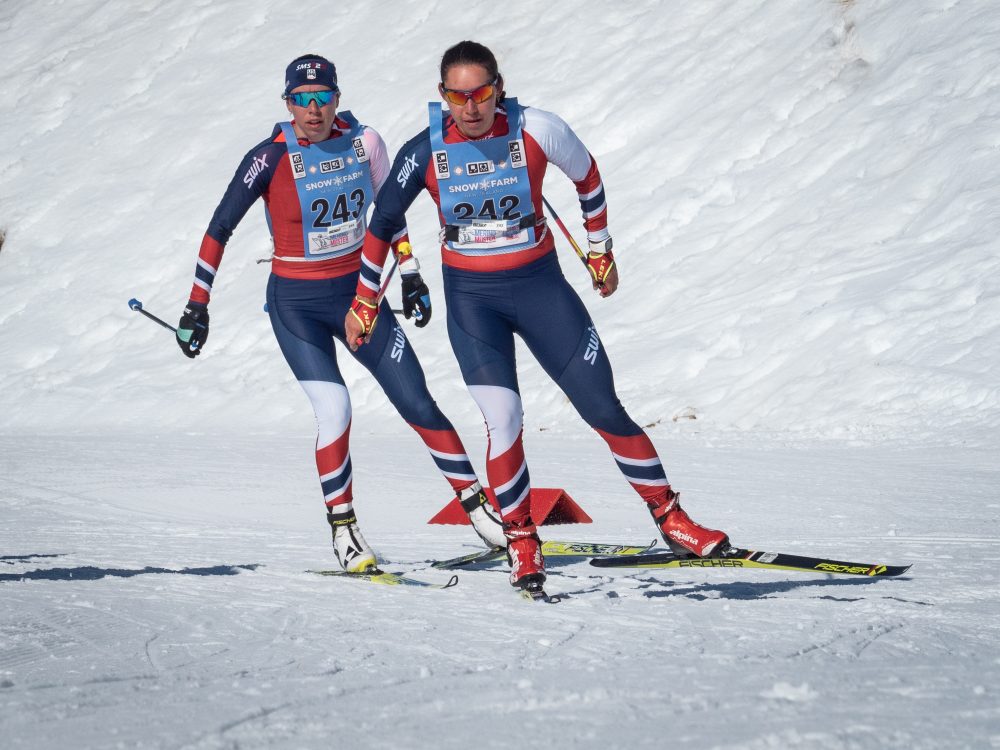
    Julia Kern leads Katharine Ogden, her fellow Stratton Mountain School (SMS) and U.S. Ski Team development team member, during the Snow Farm’s 21 k Snow Rake at the 2018 Merino Muster in Wanaka, New Zealand. (Photo: Garrick Cameron)

    Note: This article has been updated to include comments from Simi Hamilton of the U.S. Ski Team (USST) and Stratton Mountain School (SMS) T2 Team, and Kevin Bolger of the USST and Sun Valley Ski Education Foundation.

    ***

    It’s that time of year again where several members of the U.S. Ski Team, along with top-level skiers from the Craftsbury Green Racing Project (CGRP) and Stratton Mountain School (SMS) T2 Team are training at the Snow Farm above the town of Wanaka, New Zealand.

    The on-snow volume camp, which featured multiple days of racing, started Aug. 20 and continues through Sept. 10, and includes U.S. Ski Team (USST) athletes Jessie Diggins, Ida Sargent, Sophie Caldwell, Katharine Ogden, Julia Kern, Simi Hamilton, Kevin Bolger, and Paddy Caldwell, and coaches Matt Whitcomb, Jason Cork and Gus Kaeding.

    According to Sophie Caldwell, conditions have been “amazing” for the duration of camp so far. “New Zealand had a great snow year and we’ve been lucky to have sunny days almost every day,” she wrote in an email to FasterSkier.

    Japan’s Tomoka Satou (446) leads American Jessie Diggins (428) and others up a climb during the Merino Muster 42 k skate race on Sept. 1 at the Snow Farm in Wanaka, New Zealand. (Photo: Garrick Cameron)

    Diggins called it the annual trip one of her “all-time favorite camps because the living at the Snow Farm is great, the food is outstanding, and you can step out the door right onto the 65+ km of trails!” she wrote in an email.

    “I love having the chance to work on my on-snow technique for three solid weeks because that’s when I get to really see progress and make some changes in my striding,” Diggins wrote.

    Apart from logging kilometers on snow and soaking up the vitamin D, the team has also spent time trail running in Wanaka.

    “The highlight [of the camp] will probably be a crust cruise we go on in the next few days, but since we haven’t done that yet, some highlights so far are an awesome distance run down in Wanaka, and pretty much every day of bluebird skiing we’ve had up here!” Caldwell wrote.

    The camp also coincided with the Merino Muster, a 42 k freestyle marathon that is part of the Worldloppet series, and the Winter Games NZ, which doubled as the Australia/New Zealand Cup FIS races and included three days of nordic racing this year at the Snow Farm: a 5/10 k freestyle individual start, a freestyle sprint, and a 10/15 k classic mass start..

    Defending their 2017 Merino Muster titles last Saturday, Sept. 1, were two SMST2 and USST members, Diggins and Hamilton.

    Diggins finished a minute and 21 seconds faster than the second-place woman, Aurelie Dabudyk of France, while Hamilton edged Craftsbury skier Adam Martin by 3 seconds for the overall win.

    “The day of the Merino Muster was gorgeous and sunny, with fast conditions,” Diggins wrote. “I loved getting the chance to race a long race, and starting with the men as one big field is really exciting! I hope to get to race the 42km race every year. Huge thanks to the volunteers and organizers for making it such a fun day.”

    Crossing the finish line in 1:52:34 hours, Diggins placed sixth overall. Dabudyk was eighth overall and Alayna Sonnesyn (SMST2) was the third woman, 11th overall, 5:30 behind Diggins.

    Meanwhile, Hamilton finished in 1:39:46, beating his time of 1:40:33 from last year’s race. Martin followed 3 seconds later, while Kyle Bratrud (SMST2) finished 24 seconds after from Hamilton in third, followed by Tomoka Satou of Japan in fourth (+45.0).

    “The Merino Muster is always an awesome race,” Hamilton wrote in an email. “It actually lends itself to the type of intensity we are still mostly focused on in August/late September because the terrain and snow conditions usually make for a really good chance to get in about 1.5 hours of level 3 effort followed by a few minutes of really hard skiing in the last km before the finish. It’s a very rolling course and if you ski it in a pack with people switching leads it’s basically impossible to go much harder than level 3.”


    Also on Saturday, Americans also took the top spots in the 21 k Snow Rake. Ben Saxton (SMST2) ran away with the overall win by more than 12 minutes in 47:48, while Paralympic sit skier Dan Cnossen placed second (+1:12:13) nine seconds ahead of Petr Sykora of the Czech Republic in third (+1:12:22).

    Ogden was the fastest woman and second overall with a time of 50:29. Her SMS and USST teammate Kern finished 56 seconds later as the second woman, and Elizabeth Martin of the University of New Hampshire (UNH) followed in third, 7 minutes and 30 seconds behind Ogden.

    buy allopurinol online, buy motrin online, buy ibuprofen online

    With about 300 participants between three different races at the Merino Muster, Hamilton described the atmosphere as “super fun and light.”

    “But the grooming always rocks and it’s just a really fun course to ski,” he added. “I think that in this day and age of social media being so huge and cross-country skiing gaining more attention in the US and world-wide, we’ll start to see more and more people showing up for the marathon. I feel like in the last few years alone their has been noticeably more attention and attendance each year. The quality of skiing is a small part of the race atmosphere here… New Zealand’s south island is one of the most beautiful parts of the world and the culture is so welcoming and comfortable.”

    Many of the American skiers in New Zealand also competed in the Winter Games NZ races this week.

    “The New Zealand Winter Games are also a huge opportunity to get back into racing mode and test out all the technique work we’ve been putting in so far!” Diggins wrote. “And if you know me, you know how much I adore 5km individual skate races, and we no longer get to do those on the World Cup. So I’m so grateful to the Snow Farm and race organizers for keeping such a fun and hard, fast race alive! I forgot how much it can hurt to go so hard for 5km, but it was fun to really get that lung burn back for the first time since last winter.”

    Three days after her marathon win, Diggins won the 5 k skate at the Snow Farm in 15:02.6. The U.S. swept the top five with Sophie Caldwell finishing 10.5 seconds back in second place, Caitlin Patterson (CGRP) in third (+16.7), Sargent (USST/CGRP) in fourth (+1:02.6), and Kelsey Phinney (SMST2) in fifth (+1:16.6) out of eight women.

    Kyle Bratrud (SMST2) gets a feed from U.S. Ski Team coach Jason Cork during the 2018 Merino Muster 42 k skate race at the Snow Farm in Wanaka, New Zealand. He finished third behind two other Americans. (Photo: Garrick Cameron)

    In the men’s 10 k skate on Tuesday, Bratrud took the win in 27:48.1, 21 seconds clear of Kaichi Naruse of Japan in second, while Craftsbury’s Ben Lustgarten and Martin (CGRP) followed in fourth (+23.0) and fifth (+44.0), respectively. Eight men competed.

    Wednesday featured 1.1 k skate sprints, which saw Sophie Caldwell take the win in a field of 10 women, ahead of Sargent in second and Phinney in third.

    “The sprint was a short and tactical race that was awesome practice for what’s to come this winter,” Caldwell wrote. “It was really fun toeing the line with my USST and SMS training partners. On one hand, that final could have been any day of summer training, but it also could be a World Cup heat! It’s pretty cool to be pushed by so many strong training partners and friends and we were psyched to throw on a bib and put in a race effort.”

    In the men’s final, Bolger landed the top spot on the podium, ahead of Saxton in second and Satou in third. Eleven men competed in the sprint.

    “I really enjoy these early session races it gives us as races a chance to get in the mindset and practice real race strategy,” Bolger wrote in an email. “I wanted to go out there test myself, I approached every round like a final and attacked from the start getting out in front and leading into the finish, and was very happy to end the day on top, especially after a long camp down here with the US crew.

    “… Coming down here and having a good result in the sprint is of course a huge confidence booster heading into the September/ October training months, but there is still a ton of preparation to be done,” he added.

    On the final day of Winter Games NZ racing, Diggins continued her undefeated streak (after skipping the sprint), winning the 10 k classic mass start, while Patterson placed second and Sargent placed third. Saxton picked up his second win of the week, while Martin took second and Lustgarten third.

    Complete results will be posted once they’re available.

    “We have been incredibly lucky with weather and conditions this year,” Hamilton noted. “Usually, when you’re here at the Snow Farm for 3 weeks in the winter, you’re bound to get an extended period of really nasty weather and wind. But this year we’ve basically had sunshine and cold night time temps every single day, making for amazing skiing for pretty much 3 weeks straight. There is about 40-50 km of trails to ski when everything is groomed, so it’s essentially impossible to get bored. The highlight of our camp every year is a big crust ski up to and around Mt. Pisa. We are planning on getting out tomorrow [Friday, Sept. 7] because the crust hasn’t been great yet while we’ve been here, but conditions for tomorrow look promising. But even when we can’t get out for a huge adventure like that, it’s just one of the best and most fun places in the world to train.”

    Results:

    Sept. 1: 42 k Merino Muster /21 k Snow Rake

    Overall results

    Winter Games NZ

    Sept. 4: 5/10 k skate: Women| Men

    Sept. 5: Skate sprint: Women|Men

    Sept. 6: 10/15 k classic mass start: Women | Men

    https://www.instagram.com/p/BnU4ZSVgG56/?utm_source=ig_web_button_share_sheet

    https://www.instagram.com/p/BnXhCe2lq5m/?utm_source=ig_web_button_share_sheet/
  • Lake Placid to France: U.S. Ski Team Camp Photos

    Lake Placid to France: U.S. Ski Team Camp Photos

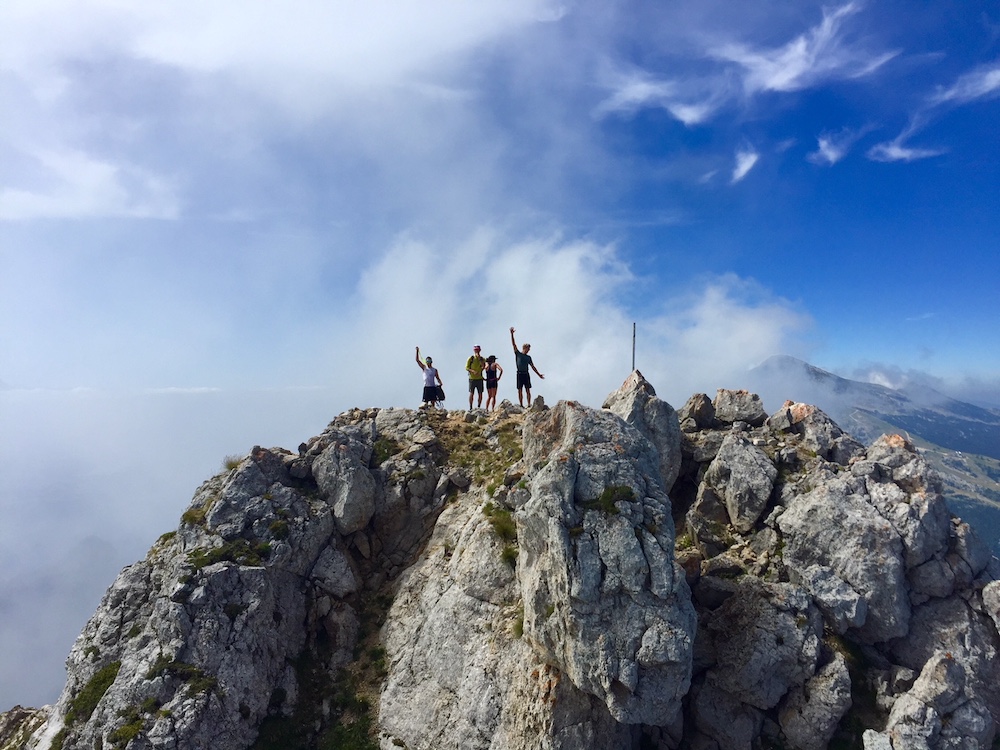
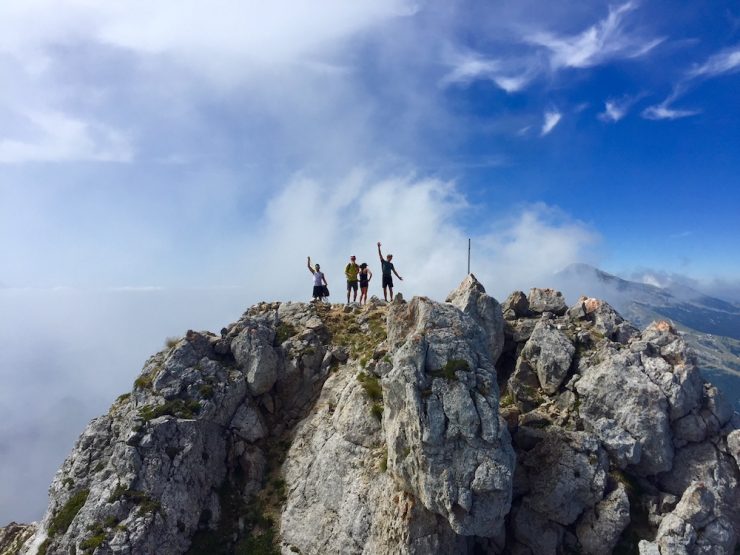
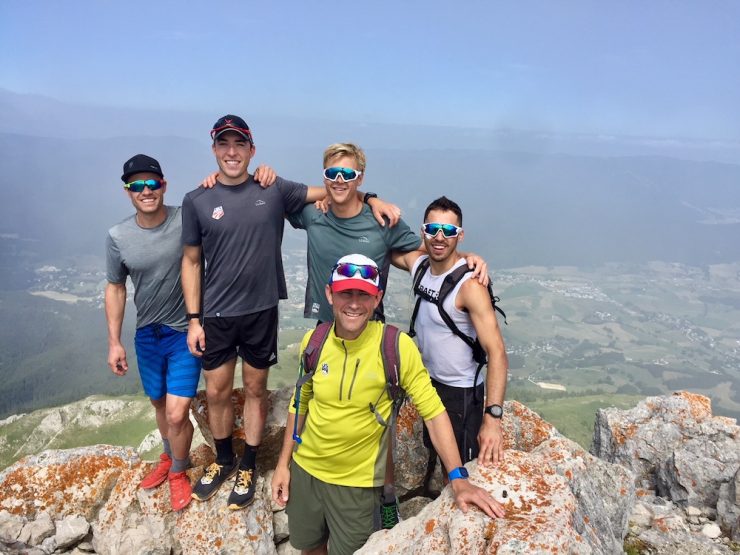
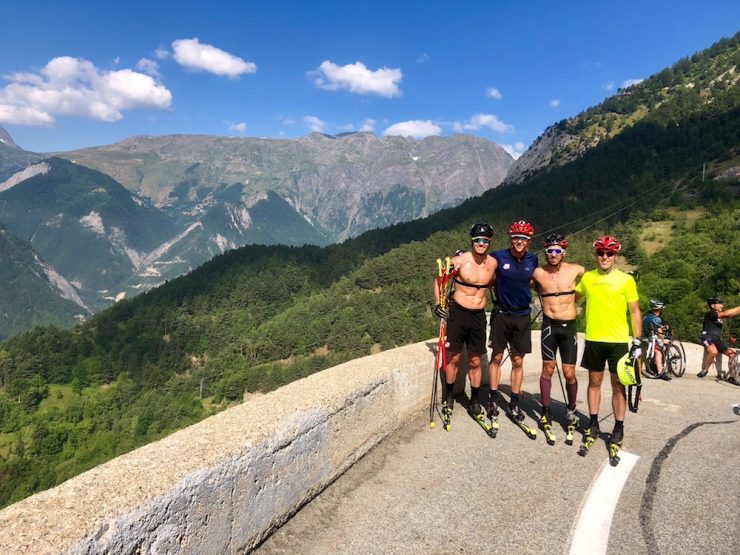
    Members of the U.S. men’s ski team on a mid-overdistance run on top of the Roc Cornafion above Villard-de-Lans, France. (Photo: Chris Grover)

    This month, the U.S. Cross Country Ski Team (USST) held dryland camps simultaneously, about 6,000 kilometers away from each other, in Lake Placid, N.Y., and Villard-de-Lans, France. Five of the eight women on the team attended the camp from July 11-20 in Lake Placid, which, up until a couple of years ago, was a September staple on the USST calendar. Meanwhile, four of the team’s men trained together in the picturesque, mountainous region of southeast France from July 9-18.

    Who was where? In Lake Placid, USST A-team athletes Jessie Diggins, Sophie Caldwell and Ida Sargent worked out alongside development (‘D’) team members Julia Kern and Katharine Ogden, as well as several others from their respective clubs and Stefani Böhler of the German National Team. Outside of camps, the five USST women spend most of the offseason training with their respective Vermont-based programs; Diggins, Caldwell, Kern, and Ogden are all on the Stratton Mountain School (SMS) Elite Team, and Sargent trains with the Craftsbury Green Racing Project (CGRP).

    The other three women on the national team — Sadie Bjornsen, Hannah Halvorsen and Hailey Swirbul — are based in Anchorage, Alaska, where they train with Alaska Pacific University (APU) and have multiple opportunities to ski on snow on nearby Eagle Glacier.

    “Getting participation in a country as large as ours is always a challenge,” U.S. coach Matt Whitcomb told FasterSkier in Lake Placid. “… But the Alaskans have gone out of their way to give us adequate representation at these camps. They work really hard to, when they’re present, be very present.

    “It’s not so much an APU or Alaska issue, it’s a distance issue,” he continued. “We can fight it as hard as we want, but we’re going to be running into a wall because it’s hard to get from upstate New York to Anchorage or Fairbanks; it’s a long ways. We do our best. We try to identify which camps the whole team will be present at, and while we’d love to be able to get together five or six times a year like the Norwegians do every four weeks for eight days, it’s not the reality for us. Our club system is the key for us, and APU is doing a great job with or without the Ski Team at a camp up there, and you have all these other clubs now running their programs like mini national teams. If we can have more of those, that’s how we’ll get better.”

    In France, Erik Bjornsen (fresh off his wedding there), Simi Hamilton, Ian Torchia, and Paddy Caldwell trained under the guidance of head coach Chris Grover. Two of the team’s B-team members, Scott Patterson and Kevin Bolger, did not make the trip; Patterson has been rehabbing a fractured toe in Anchorage and Bolger is currently training in Norway.

    From Aug. 20 to Sept. 10, half of the team plans to train on snow in New Zealand (Diggins, Sargent, Kern, Ogden, Hamilton, Bolger, and Sophie and Paddy Caldwell) with three coaches: Whitcomb, Jason Cork and Gus Kaeding. Then from Oct. 8-21, most of the 16-athlete squad will meet up for a final dryland camp in Park City, Utah, before revving up for another World Cup season.

    Here are some photos from the two mid-summer camps, courtesy of the U.S. Ski Team:


    “The Villard-de-Lans camp was excellent, and the men came away from camp mentally charged for the next period of training, although certainly needing some physical rest,” Grover summarized in an email.

    French national-team member Adrien Backscheider, who lives part time in the area, joined a few of their workouts. Grover explained their training included five “high-quality sessions” during the 10-day camp, all held on the rollerski loop in Corrençon-en-Vercors: a classic speed session, a skate speed session, a Level 3 classic workout, a Level 4 skate workout, and a classic team sprint simulation. The remaining sessions were either distance, over-distance or strength.

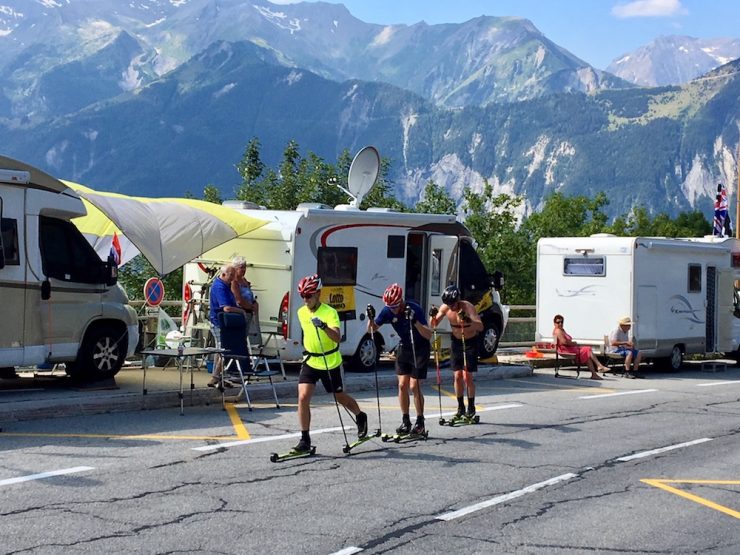
    “We had 2 classic roll + run combo workouts in the mountains, including skiing up l’Alpe d’Huez two days prior to the Tour de France stage and then hiking/running up the mountain from the village to create a 4 hour/6000 vertical feet workout,” Grover wrote. “We are very grateful to all the people we met in the Villard-de-Lans area for welcoming, supporting, and taking care of us.”

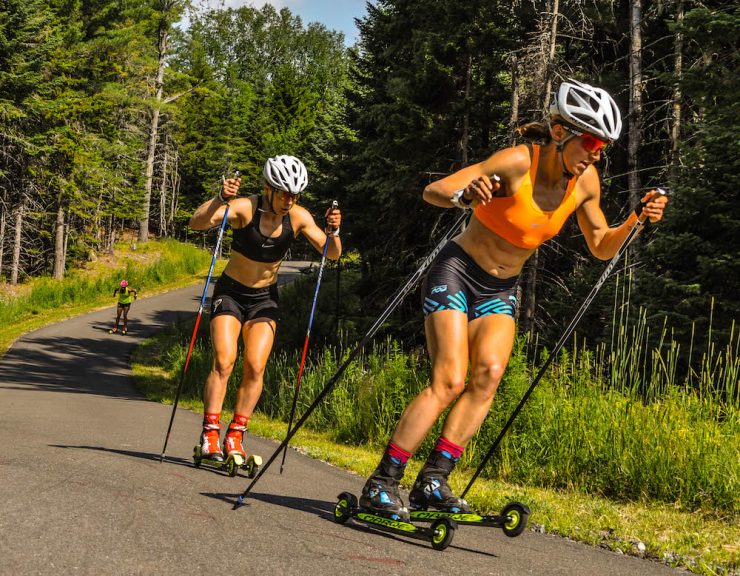
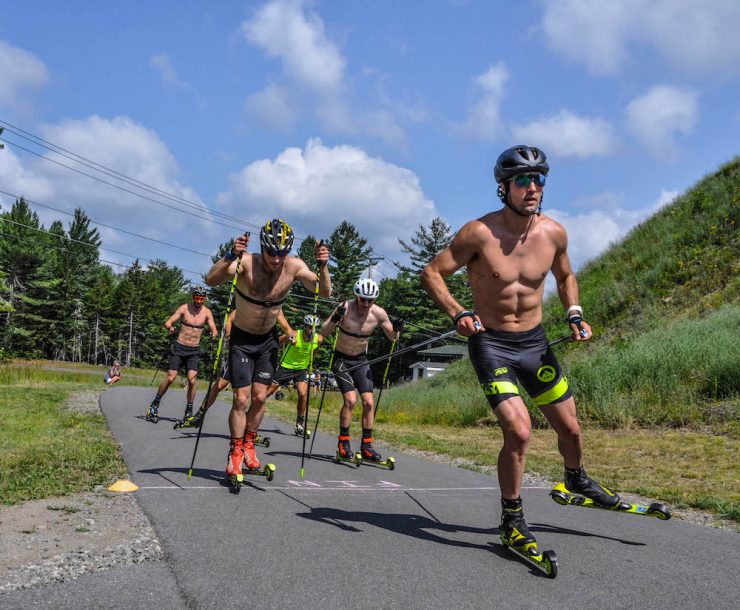
    “Being sea level, we can do more of an effective intensity camp, which this is a semi-intensity focused camp here,” Whitcomb said of the USST’s 2018 Lake Placid camp. “It’s only 2,000 feet here. The running is really great here and the mountains, you get these great Adirondack peaks all over 4,000 feet. The roads in upstate New York are hardly used and the pavement is fantastic. It’s really great rollerskiing out here.”

  • Kern on the European World Cup Scene: ‘There’s No 99 Percent Out There’

    Kern on the European World Cup Scene: ‘There’s No 99 Percent Out There’

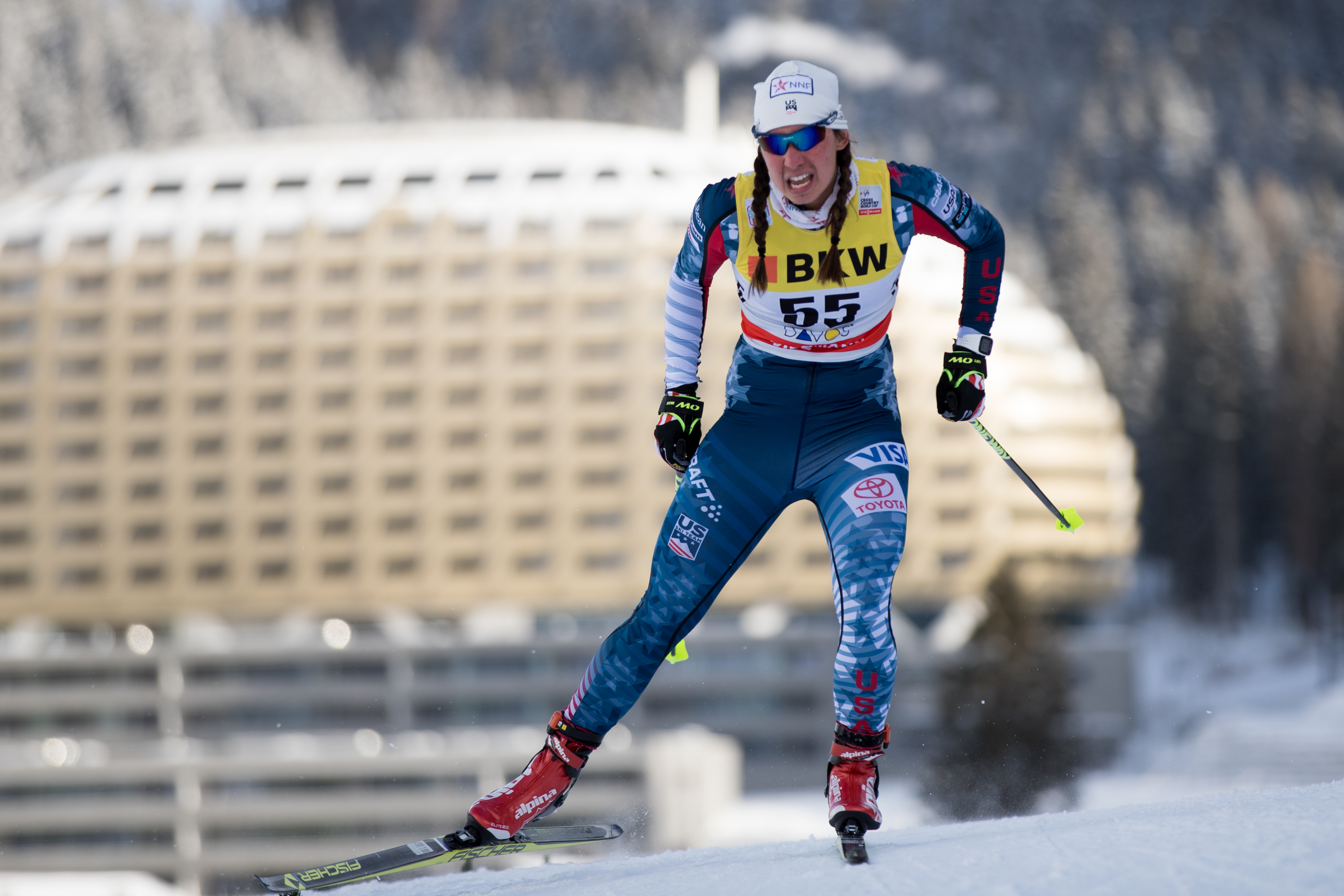
    Julia Kern (U.S. Ski Team/SMS Elite/Dartmouth College) racing to 57th in the World Cup freestyle sprint last weekend in Davos, Switzerland. (Photo: Reese Brown/U.S. Ski & Snowboard)

    After scoring World Cup points in her first try as part of the U.S. Nations Group roster in Canada last season, Julia Kern is getting a crack at the European World Cup scene this winter.

    The 20-year-old Stratton Mountain School (SMS) Elite Team member, Dartmouth College student, and U.S. Ski Team D-teamer has been finding her place, surrounded by teammates who have racked up three sprint podiums so far this season.

    “The early season World Cups are definitely really hard, especially in an Olympic year,” Kern said last Saturday after finishing 57th in the skate sprint qualifier in Davos, Switzerland. “Everyone is trying to make the Olympic team. The fields are incredibly deep. Even though Canada was a pretty big field [last year] it’s not quite the same. And early season is a lot different than late season.”

    Unlike many of the women she is competing against, Kern is not trying to make her country’s Olympic team. She is a first-year Under-23, and U23 World Championships in Goms, Switzerland, is a logical focus for the year. But there are plenty of other racing opportunities as well from NCAA racing to the Continental Cup.

    “Olympics were not really my mindset this season,” she said. “The sprinting team is really strong and I’m really young, and I think my goal is just to keep developing as a skier.”

    To that end, she is on the World Cup to learn for later.

    “This Period 1 was exactly the purpose of that — to gain experience, and focus on just getting faster and learning,” she said. “My biggest goal was really to learn from the older girls, and experience the World Cup, and learn the courses. Obviously, I wanted to break into the top 30 and that didn’t happen, but hopefully down the road that will. I got to see what it’s like to go on the road with the team.”

    Kern also raced in Kuusamo, Finland, in the first week of the World Cup season, scoring an identical result in the classic sprint before placing 74th in the 10 k classic and 73rd in the overall minitour after a 10 k skate pursuit.

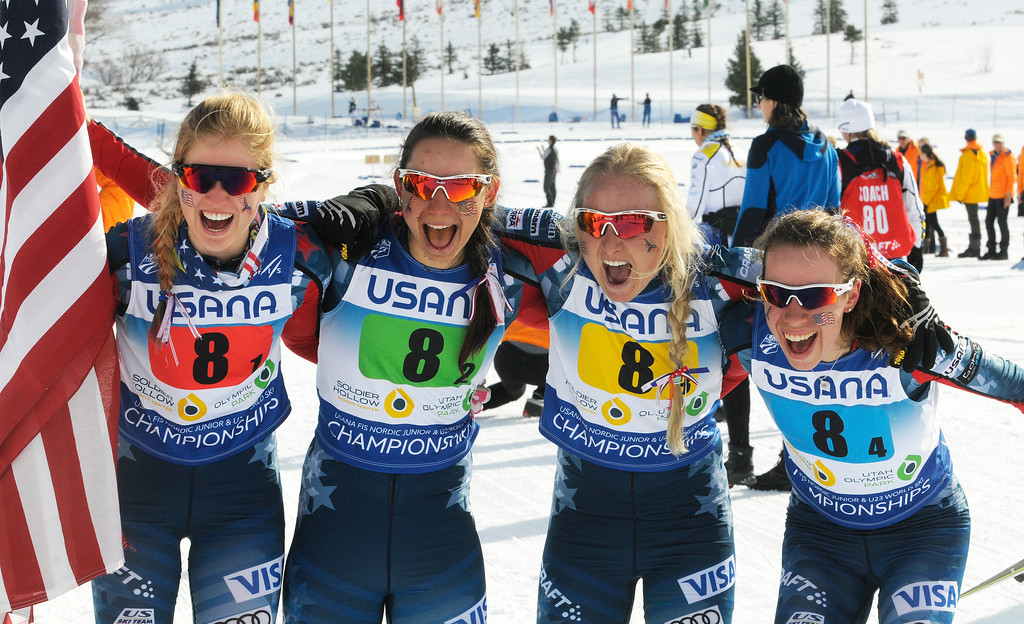
    The U.S. women’s relay after taking a historic third in the 4 x 3.3 k relay at 2017 Junior World Championships at Soldier Hollow in Midway Utah, with (from left to right) Hailey Swirbul, Julia Kern, Hannah Halvorsen, and Katharine Ogden. (Photo: U.S. Ski Team/Tom Kelly)

    “Yes, Julia scored points in Canada last year,” SMS Elite Team Head Coach Pat O’Brien wrote in an email. “Those were deep fields of athletes, but compared to period one it is a different game. I was never expecting [her] to blow it out of the park.”

    Kern is the youngest athlete on the U.S. Ski Team’s World Cup roster this year, and one of the youngest in a few years. That inevitably brings up discussions of whether such young athletes should be sent to skiing’s highest-level competitions.

    According to O’Brien, such familiarization is exactly what is needed if Kern is going to be a successful World Cup racer in the future.

    “The simple reality is that Supertour does not properly prepare an athlete for World Cup racing,” he explained. “A four-minute effort on slow natural snow at 7,000 feet doesn’t get us a sprint qualifier in Davos or Kuusamo. So part of the game is figuring out the venues, figuring out what is required to do well there. I would rather have a younger athletes start hard and blow up than figure out how to nurse their way around a long slow course and never be able to qualify at the top level of our sport. It’s a little tricky because it’s too quick and easy to draw assumptions and conclusions in this sport.”

    Kern is definitely learning the speed that is required for World Cup sprint success.

    “In a big field to start off the season, it’s a good way to get in the mind of, ‘you’ve gotta give it your all’,” she said. “There’s no 99 percent out there.”

    After some injuries this summer, she doesn’t feel like her upper body strength is 100 percent. But O’Brien said that Kern’s fitness is actually excellent.

    Julia Kern (U.S. Ski Team D-team/SMS) racing to 29th in the women’s 1.5 k freestyle sprint qualifier at World Cup Finals in Quebec City in March. In her first World Cup race, Kern ended up 24th on the day. (Photo: John Lazenby/Lazenbyphoto.com)

    “Obviously everyone has personal struggles in the sport, and for her, staying healthy and injury free is a big one,” he wrote. “She made a tremendous step forward in her fitness BECAUSE of an injury this summer. It was a lot of lower body exercises and running, but she was smart balancing her training so that it wouldn’t put her over the edge… The goal from the start has been to bring her into the season with less injuries and better baseline capacity than other years, and to continue to improve on stability year to year.”

    Starting the season on the World Cup actually helps with that in some ways, he believed.

    “One of the other nice things about World Cup is better accessibility of physiotherapy and body care, as well as reliable snow access and ski service,” he wrote. “All of these are really important things that tend to be lacking while following the SuperTour.”

    Still, it can be a mental challenge to go up against the best in the world on their home turf.

    “You know, last season, every race I got a little better,” Kern said. “Usually I probably peak in the last weekend, which means, awesome, but frustrating. So I think when I’m in the US, I usually didn’t try to peak for the early races. This year, I was hoping to be in a little better shape early season, but given injuries, it just didn’t happen.”

    For now, Kern is done with her World Cup tour and will be racing at Continental Cups in Austria.

    “A lot of the sprinters [will be there], so that’ll be fun — to take a little step down, even though its quite competitive as well,” she said. “My whole family is coming to watch because we spend Christmas in Germany. So it will be nice to do the weekend racing at a little bit of a lower level. To be a little more comfortable.”

  • Wednesday Workout: Journaling and Time Trials with Anne Hart

    Wednesday Workout: Journaling and Time Trials with Anne Hart

    Anne Hart getting on early season snow in Sjusjøen, Norway. (Courtesy photo)

    Coming off a top-20 distance result during Norway’s season-opening International Ski Federation (FIS) races a little less than a month ago in Beitostølen, Anne Hart, of the Stratton Mountain School (SMS) Elite Team, jetted to a victory in the first SuperTour race of 2017/2018 — the freestyle sprint in West Yellowstone, Montana.

    “I haven’t straight out won a highly competitive race in two years, so winning on my arch nemesis course of West Yellowstone was huge,” Hart, 25, wrote in an email last week about her Dec. 2 sprint win. “I know that the period one altitude is not my best friend, and am really working on keeping a positive and confident mentality. The race for period two World Cup starts is tight (I think right now there are five or six women all within three points), so I’m trying not to focus on that too much.  It would obviously be wonderful to lock those up, but more than anything I just want to set myself up physically and mentally well for a stellar nationals in Alaska.”

    The day after her win in the 1.3-kilometer skate sprint, Hart finished 15th in West Yellowstone’s 10 k classic mass start on Dec. 3. Last weekend up at Sovereign Lake in British Columbia, Hart finished seventh both in the NorAm-opening skate sprint and 10 k skate, which counted toward SuperTour standings.

    She started her season with a training block in Sjusjøen, Norway, then at the Beitostølen races, with a goal of racing on snow before it really counted at this month’s SuperTour and U.S. nationals. In Beitostølen, she told FasterSkier she was mostly focused on recovering, feeling fresh, and above all, having fun.

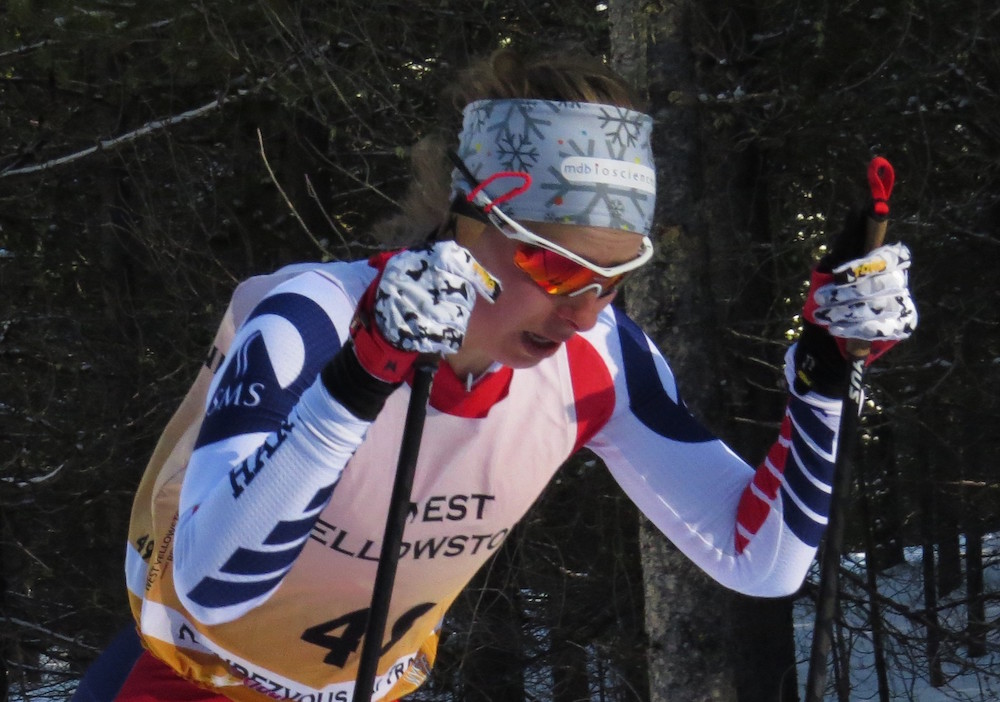
    Anne Hart (SMS Elite Team) racing in last month in Beitostølen, Norway. (Courtesy photo)

    “I’ve just been doing way less training this year and paying attention with my strength coach, saying that you’re trying to be an athlete first and then the skiing comes,” she said on Nov. 17, after placing 31st in the 10 k classic in Beitostølen (she raced all three races there, repeating in 31st in the classic sprint, then 19th in the 10 k skate). “So this whole summer I’ve been working on my general athleticism and I’m just now starting to hone in on the skiing intensity of that.”

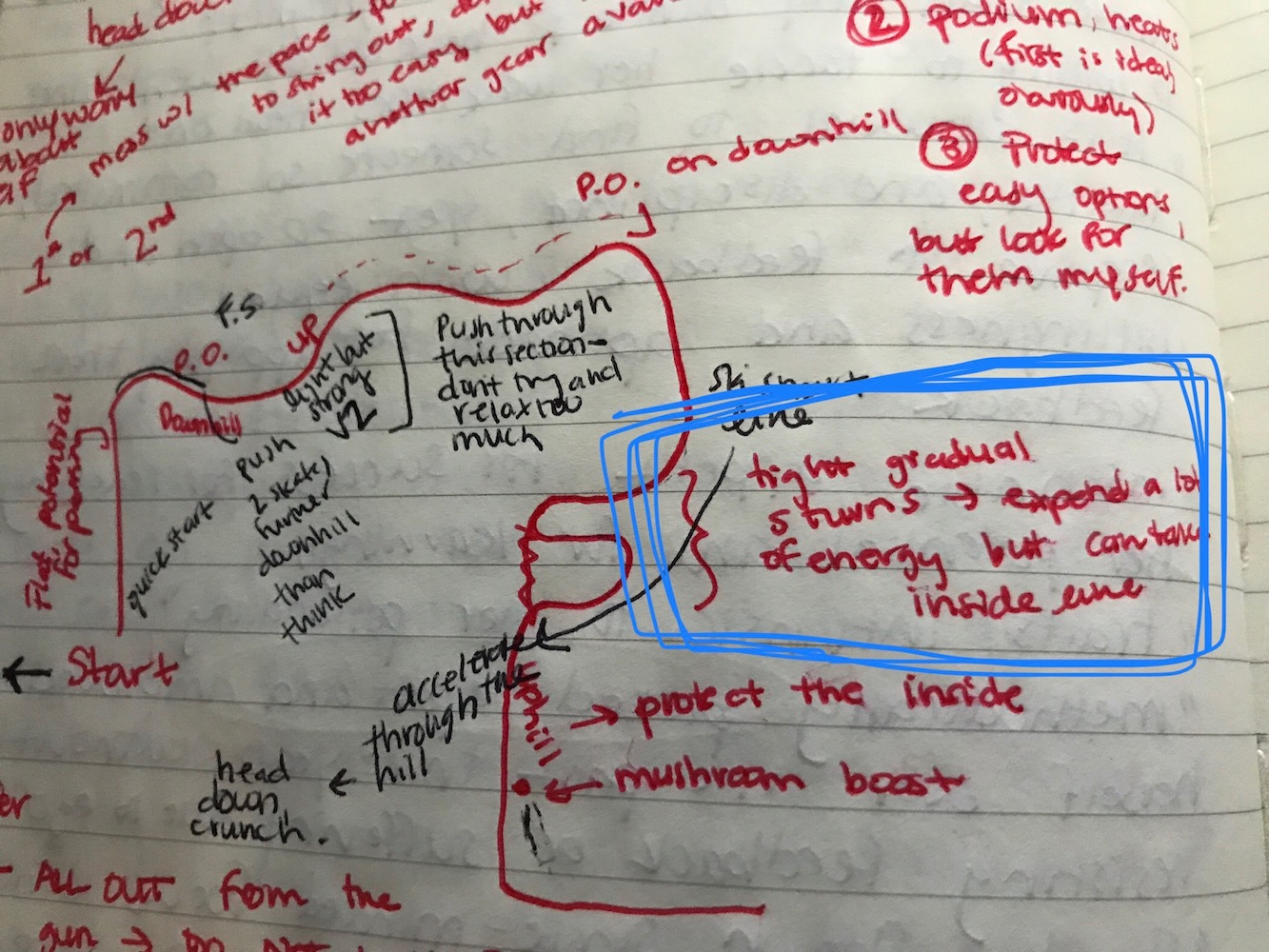
    In West Yellowstone, she talked about using her journal to map out the sprint course, point pointing areas to focus on.

    “In my journal last night I actually had part of the course labeled ‘mushroom boost,’ which is right over the top of that last hill,” Hart said after her sprint win, alluding to the speed burst featured in the Mario Kart Nintendo game.

    “So I was able to do my planned mushroom boost at the end, came across with the win and I couldn’t be more thrilled,” she said.

    That mushroom-boost reference got us thinking: what kind of journal does Hart keep? It’s nothing like a training log, she explained, but rather a tool she picked up from a mental trainer she’s been working with since the summer, at the suggestion of her strength coach Max Lipset.

    “I had been doing all of this physical training, but had been struggling a bit with how to wrap my mind around all the variables inherent in ski racing,” Hart wrote in an email. “This past season I had a really hard time shaking off bad races, and ended up carrying negative feelings from one weekend to the next. And I can tell you that there is no amount of physical training that can surmount that.”

    She started speaking with John D’Agostini of Invictus Leadership, a “mindset and personal leadership coaching” company based out of the Twin Cities, according to D’Agostini’s Linkedin profile. Hart grew up in Stillwater, Minnesota, attended Dartmouth College in New Hampshire, and now trains out of Stratton in southern Vermont.

    Hart explained that they initially spoke twice a week and are now in contact about once every 10 days.

    “The Invictus program is a bit unique in that John is not a sports psychologist — he is just an individual with a lot of experience in the arena of mental fortitude, and has developed a curriculum that has helped me immensely,” Hart wrote. “As part of my ‘homework’ he suggested I start keeping a journal. I’m the only one who looks at it (although I’ll give you a sneak peak), and it has been a great way for me to critique myself without being negative.”

    Here are the key aspects of Hart’s journaling:

    1. Don’t think of it as a training log. It’s for everything else that’s on your mind.

    “It has absolutely nothing to do with a training log (I have a big old google spreadsheet for that), but is instead a place I write down random thoughts, anything that is bothering me, things that are empowering me, and even recipes I want to try,” she explained.

    2. It can include drawings, or more specifically, course maps for pre-race, mental training.

    In West Yellowstone, Hart “drew a very loose representation of the sprint course, noting how I wanted to ski different sections and places I should look for passing opportunities (to either pass or be passed),” she explained. “This ended up being a huge help, as when it came to the final of the sprint and I found myself in the back, I had already figured out four or five different places I could attempt a pass as long as I kept my head cool and my wits about me. I ended up being able to use one of my pre-planned places and come out with the win.”

    3. It’s your journal. Nobody else needs to see it. Although Hart did share a few excerpts (below) as examples:

    Anne Hart’s course map, as she drew it in her journal, of the SuperTour sprint course in West Yellowstone, Montana.
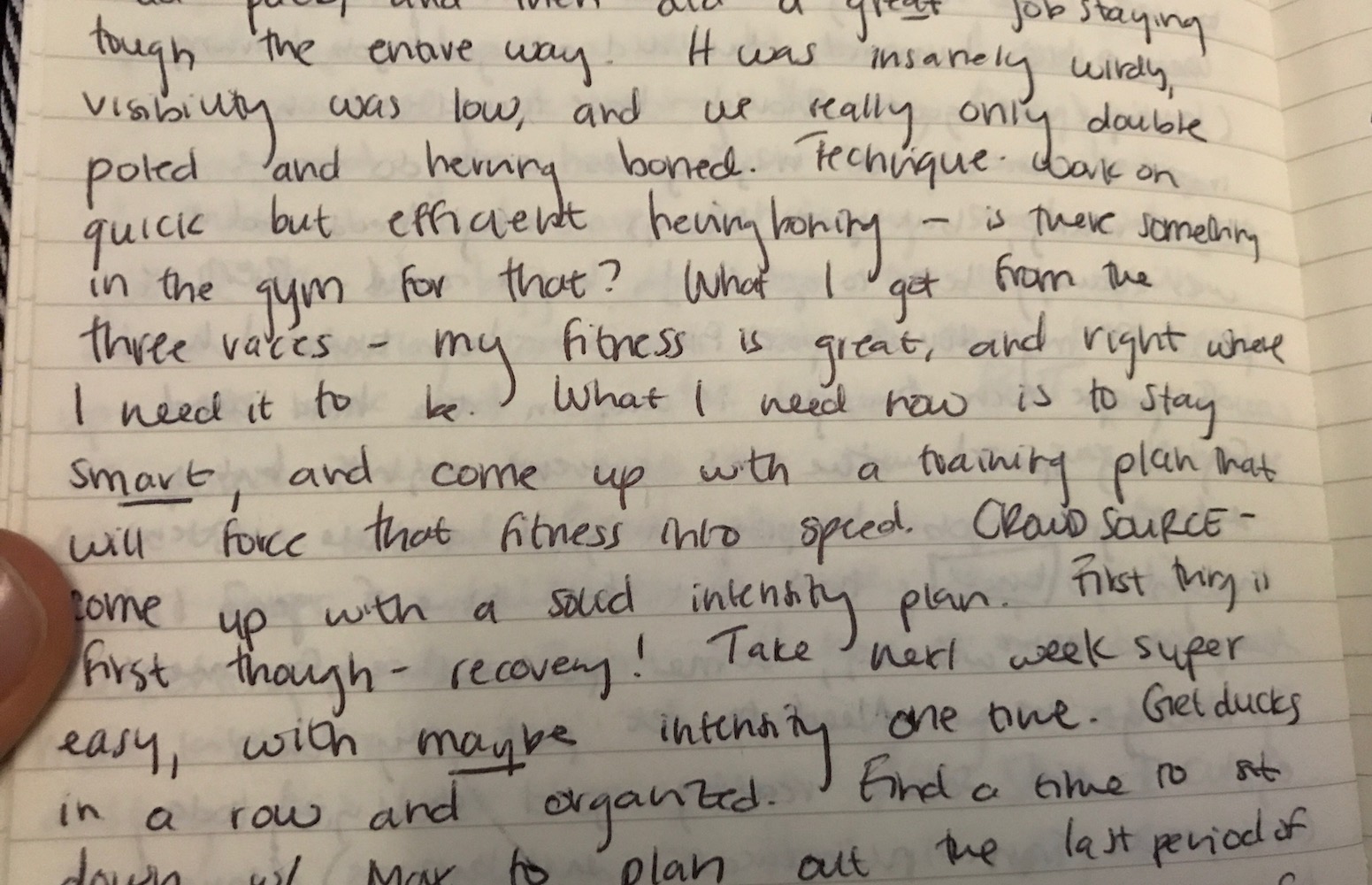
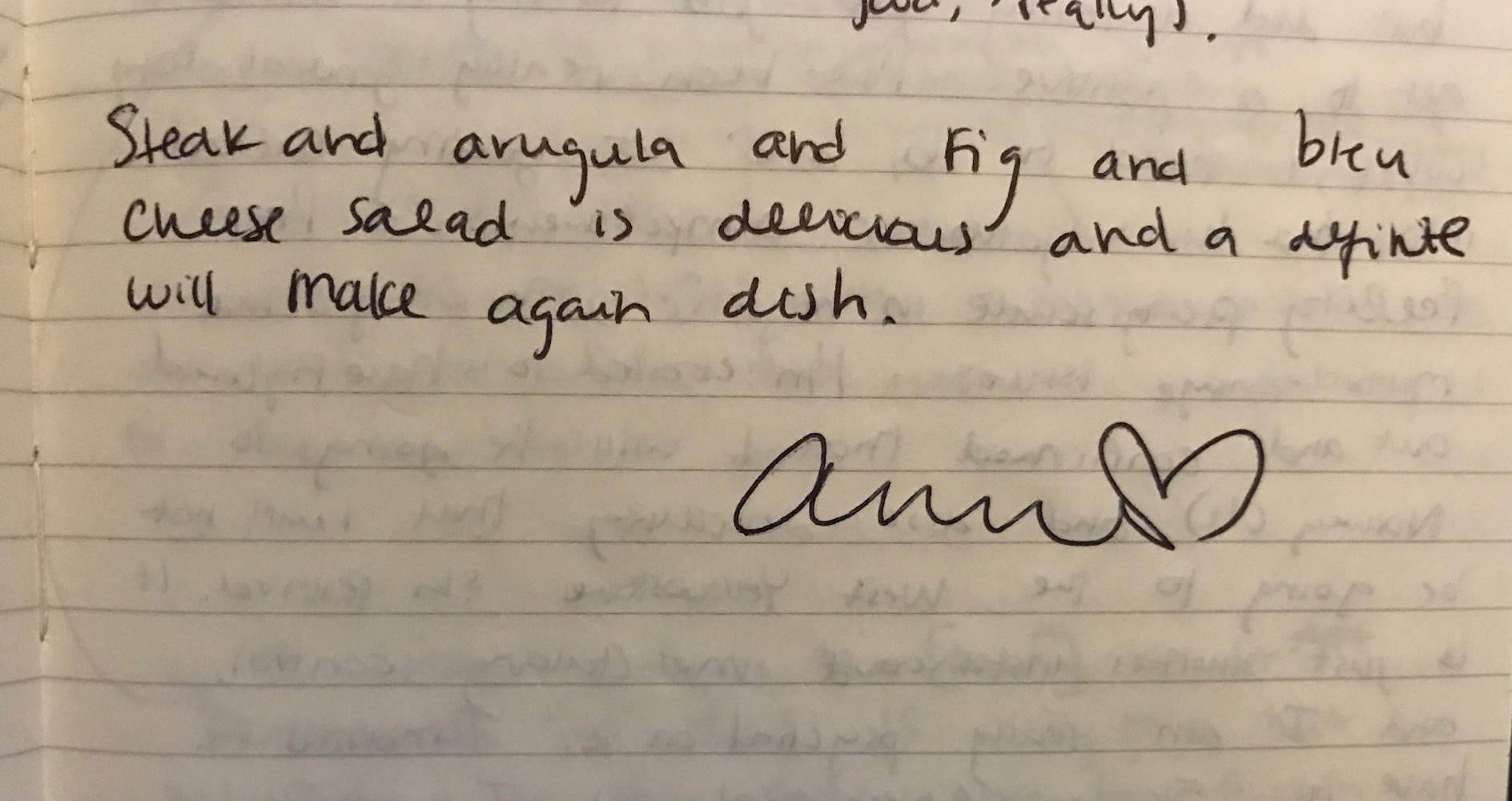
    An excerpt from Hart’s journal entry after racing in New Zealand in this past September.
    Recipe notes as seen in Hart’s journal.

    In terms of a physical workout, here’s one Hart recommended:

    “Late last winter I did a workout with the Craftsbury team that I really loved,” she wrote. “It is designed to prepare for a hard but somewhat paced 10-kilometer race, and I did it once while I was in Norway to get ready for individual start distance races.”

    The Workout: 2 x 5 k time trial

    Warmup: 30 minutes of easy skiing, plus 3-6 minutes of threshold

    The workout: On a measured 5 k loop, time yourself while completing 5 k at threshold with an occasional Level 4 pace.

    Rest for five minutes, then try to complete the same loop 15-30 seconds faster.

    “It is WAY harder than I would have initially thought, but is an awesome way to find a hard but sustainable pace, and a good way to pay off part of the mortgage on your own personal pain house :)” Hart wrote.

    Cool down.

  • Bjørgen, Krüger Top Distance Skate Races in Beito; Hart 19th

    Bjørgen, Krüger Top Distance Skate Races in Beito; Hart 19th

    Anne Hart (SMST2) racing at last year’s 5 k classic FIS race in West Yellowstone, Montana, where she finished 12th. A year later, Hart placed 19th in the Beitostølen, Norway, 10 k freestyle race. (Photo: Ian Harvey/Toko)

    In one weekend of racing, Anne Hart has already learned a lot, the types of things you can only learn from careful observation and reflection. And for Hart, a 25-year-old member of the Stratton Mountain School (SMS) Elite Team, the season doesn’t truly begin until Dec. 2.

    After racing to 19th in the women’s 10-kilometer freestyle individual start on Sunday in Beitostølen, 2:41.9 minutes behind Norwegian winner Marit Bjørgen, Hart talked about being inspired by numerous speedy Norwegians there — many of which are gunning for a spot on Norway’s World Cup team.

    Hart ventured to Norway earlier this month to jumpstart her season before heading back to the U.S. to race the SuperTour opener in West Yellowstone, Montana, Dec. 2-3. In two previous races in Beitostølen on Friday and Saturday, she finished 31st in both the 10 k classic and classic sprint.

    On Sunday, she resolved to leave it all out there, just as she’d seen Norwegian World Cup regular Finn Hågen Krogh do.

    “Today we were watching the men’s race [before our race], and we watched Finn Hågen Krogh halfway up the hill the last time, the third time. I kid you not, he just stopped, bent over and he went on and finished fifth,” Hart reflected. “He went out hard, he blew up, but he made up so much time at the beginning that he just had to make it in.”

    That’s precisely what Hart’s been working on.

    “I really just pushed it from the go,” she said of her race. “After watching the [top] women start the classic race [on Friday], and then watching how fast they go in the sprints [on Saturday], there is just no easy pace out there … You just keep on going, and you suffer. But the harder you suffer the faster it is over.”

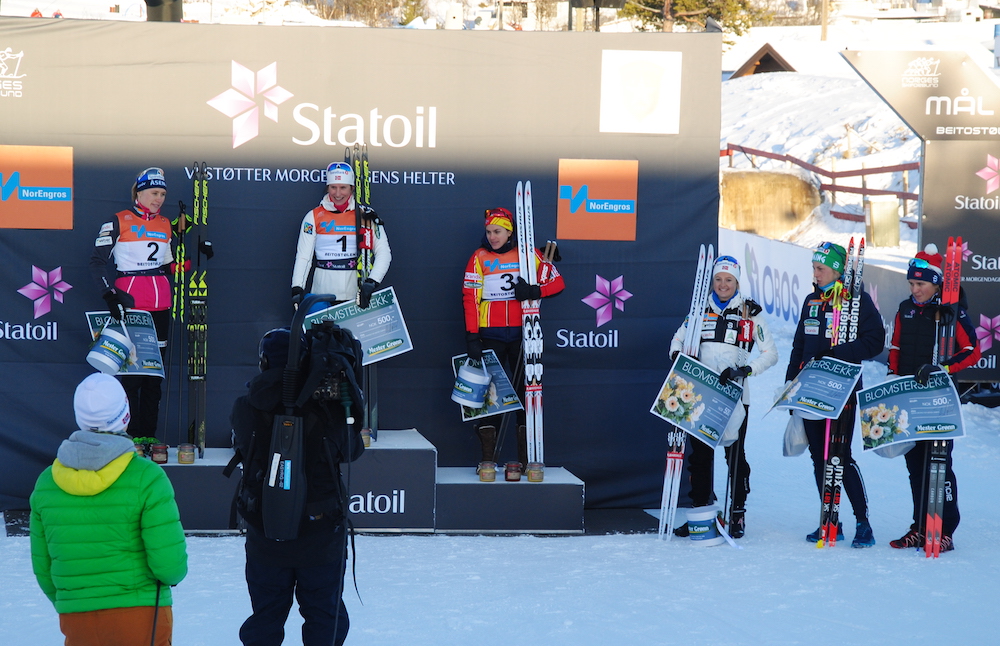
    The women’s podium (and top six) after Sunday’s 10 k freestyle in Beitostølen, Norway, with Norway’s Marit Bjørgen (1) in first, Ragnhild Haga (2) in second, Heidi Weng (3) in third, Ingvild Flugstad Østberg in fourth, Astrid Uhrenholdt Jacobsen in fifth, and Tiril Udnes Weng in sixth. (Photo: Aleks Tangen)

    Hart finished her 10 k, in what she described “beautiful skiing” conditions, in 26:37.1. Bjørgen raced to first for her second distance win of the long weekend in 23:55.2, 12.6 seconds ahead of Ragnhild Haga in second place. Norway once again swept the podium with Heidi Weng in third, 30.1 seconds behind Bjørgen.

    “It’s a course that doesn’t have a lot of rest in it … basically I was just trying to V2 as much as I could, because I noticed that’s another thing they do over here,” Hart said. “It’s like riding a bike; it’s easier to go in a lower gear. … I know I am a stronger V2-er, and the longer I can V2 up the hills, I figured the better I would do overall. Then [I] backed off, worked on quick turnover, and then really tried to push the V2-ing.”

    For much of the race, her split times hovered between 19th and 20th. But after a strong effort from 7 to 9.8 k, where she clocked the 15th fastest time in 7:58.2, Hart secured 19th, 8.5 seconds behind 18th-place finisher Silje Theodorsen, of the Norwegian National U23 Team, and 12 seconds ahead of 20th, which went to Norway’s Magni Smedås (Lillehammer Ski Club).

    That stands as Hart’s best international finish outside of an Alpen Cup last season in Seefeld, Austria, where she notched two top 20’s. Each year, Norway’s season-opening FIS races in Beitostølen attract most of Norway’s top skiers and upcoming talent.

    So 19th in Beitostølen is a big deal.

    At the time of her post-race interview with FasterSkier, Hart wasn’t sure where she ended up. But she knew she pushed herself to the limit.

    “I think last year I suffered from over-pacing, and it’s gonna hurt no matter what you do,” she said. “And I am very much of the mentality, for me anyways, to just go all in, no fear. And the worst thing that happens is you blow up.”

    In terms of how her results in Beito will affect her moving forward, she said it was about building confidence with each race and “having faith in my training and my fitness. The worst feeling in the world is when you finish and are like, ‘Damn, I could have gone harder.’ I would much rather literally collapse out on the course.”

    Great Britain’s Annika Taylor, who grew up in Truckee, California, and raced at the University of New Hampshire, placed 23rd (+3:09.9). Taylor, 24, finished 29th in the 10 k classic two days earlier

    At the front of Sunday’s race, the final time between Bjørgen and runner-up Haga was what made the news. One Norwegian journalist asked Norwegian women’s team coach Roar Hjelmeset if “this was almost like a victory since the gap was so small”. He replied “no” but added that it was “a very good performance” for Haga.

    Bjørgen started last in bib 63 and, as she typically does, clocked the fastest times through essentially every checkpoint and put more time into her competition with each passing kilometer. Haga’s time from 4.9 to 6.1 k was actually 2.5 seconds faster, but Bjørgen later told reporters that she expected a strong performance from her 26-year-old teammate.

    “The race was acceptable,” she told NRK. “I was prepared for Ragnhild’s approach since she’s better at skating, but I felt like I was somewhat in control.”

    Haga was pleased to hold on to second ahead of fellow World Cup Team members Weng (who ended up third) and Ingvild Flugstad Østberg in fourth (+32.3).

    “I had hoped to kick harder from the start so that Ingvild wouldn’t catch up to me,” Haga told NRK. “I didn’t tighten up and was able to keep pushing. I couldn’t really do anything about Marit, but I was closer than normal.”

    Both Weng and Østberg told NRK how impressed they were with Haga’s performance.

    “Ragnhild has shown strength over a lot of years,” Østberg said.

    Weng added that she was impressed Haga gave Bjørgen a fight for first place.

    “[Haga] does this because she’s been able to train well over the course of long time, and she has done very well leading up to this season,” Hjelmeset explained to a group of reporters.

    Krüger: ‘It’s a big deal’

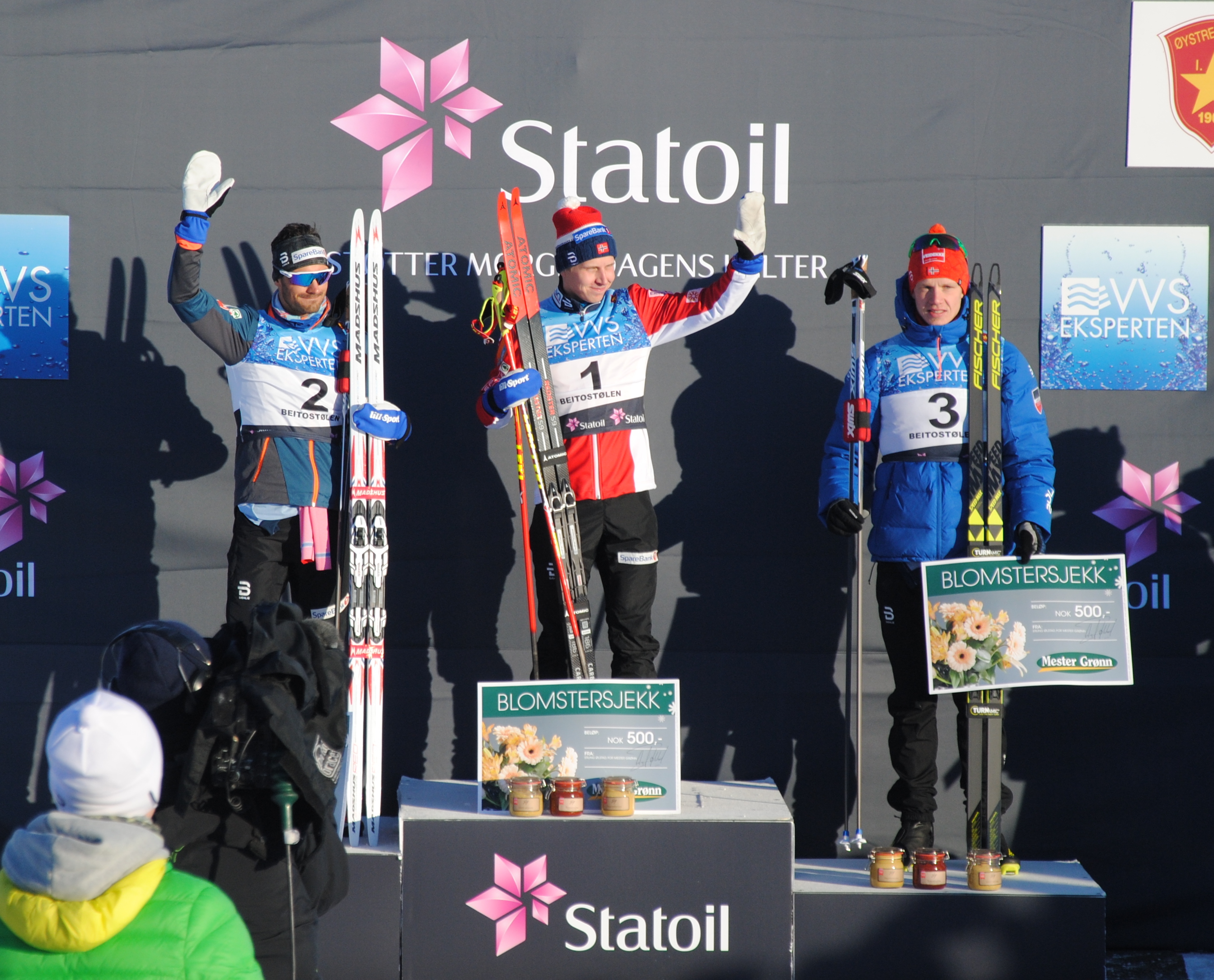
    In the men’s race, Norway’s Simen Hegstad Krüger took advantage of the optimal conditions — with temperatures between -6 and -9 degrees Celsius, firm tracks and a clear blue sky — to win the 15 k freestyle by 16.5 seconds in 32:59.6.

    He did so after starting in bib 122 of 124 and taking control of the race at 2.1 k. Krüger led from that point on, clocking the fastest splits in every stretch except from 11 to 11.9 k. At the finish, he beat out the likes of fellow Norwegian World Cup Team members Hans Christer Holund in second, Hågen Krogh in fifth (+42.1), Sjur Røthe in sixth (+42.8), and Martin Johnsrud Sundby in seventh (+52.9).

    The men’s podium after Sunday’s 15 k freestyle FIS race in Beitostølen, Norway, with Norway’s Simen Hegstad Krüger (1) in first, Hans Christer Holund (2) in second and Jan Thomas Jenssen (3) in third. (Photo: Aleks Tangen)

    “This is incredibly cool,” Krüger told NRK. “Even if it’s early in the season, it’s not common to win at this level. It’s a big deal when entire Norwegian elite is here.”

    Notably, 21-year-old Norwegian Jan Thomas Jenssen, of Hommelvik Il, placed third (+30.7). He’s never raced on the World Cup.

    “What should I say? This is amazing,” he told NRK, adding that the experience was “indescribable.”

    Great Britain’s Andrew Musgrave raced to fourth place (+37.1) as the only non-Norwegian in the top 24. American Noah Hoffman was next in 25th (+2:09.6), and Andy Newell (U.S. Ski Team) finished 52nd (+2:56.0).

    “It was better than the other day, a step in the right direction and I feel pretty good and looking forward to next weekend,” Hoffman, who finished 29th in Friday’s 15 k classic, told FasterSkier on Sunday. “Part of it is just having a race under my belt, but beyond that, I think on these more gradual courses I’m better at skating than I am classic, and the conditions were better for me today.”

    While he was able to navigate traffic on the course by picking off several racers, Hoffman was frustrated with his “lapse of concentration” that caused him to clip a V-board on the biggest downhill and fall on his second lap.

    “[I] went down really hard, lost my glasses, but at least I didn’t hurt myself,” Hoffman said. “Got a little bit of whiplash, I think I might be sore from it. … I probably lost 10 seconds. It was just silly. It still was a good effort and it doesn’t make too big of a difference.”

    Andy Newell (c) racing to 52nd in the men’s 15 k freestyle FIS race on Sunday in Beitostølen, Norway. (Photo: Aleks Tangen)

    Newell started out skiing around 70th and made his way up to 38th mid-race, but lost time over the final three kilometers to finish 52nd. When he spoke with FasterSkier immediately after, he was unsure of how he placed.

    “I don’t think my time will be great, but it was a good workout and my body felt good despite being a little tired and sore from yesterday,” said Newell, who placed 16th in Saturday’s classic sprint. “It was a good training race, and these guys are so fast, and since skating is not my best, I just looked for a good feeling in the body. …. I think I have a little more in the tank. I can save that for next weekend.”

    The World Cup opens next Friday, Nov. 24 with the three-day Ruka Triple in Kuusamo, Finland.

    Of the four Canadian men that raced on Sunday, Scott James Hill of Barrie Cross Country (BXC) led them in 64th (+3:09.8).

    “Today was good, a lot better,” said Hill, who placed 84th in Saturday’s sprint and 99th in Friday’s 15 k classic. “The classic race was kind of my first race and time trial of the year so I wasn’t expecting much, but today I felt like I was ready to race.

    “I think everything worked out well,” the 23 year old continued. “I was never skiing alone other than maybe the first half lap, so I was always being pushed, which was really good.”

    Ryan Jackson (Team Asker) followed in 102nd, Maks Zechel (Team Asker) was 113th, and Joey Foster (BXC) finished 118th.

    Results: Women | Men

  • From D to B: Paddy Caldwell’s Natural Progression

    From D to B: Paddy Caldwell’s Natural Progression

    American Paddy Caldwell (SMS/USST) on his way to qualifying 20th in the men’s classic sprint at U23 World Championships at Soldier Hollow in Midway, Utah. He went on to place fourth in his quarterfinal and 18th overall for his best sprint result at U23 Worlds. (Photo: FlyingPointRoad.com)

    Back in December of 2010, 15-year-old Patrick “Paddy” Caldwell was racing amongst grown men. He finished 17th in an International Ski Federation (FIS) classic sprint held in Craftsbury, Vt. Today, at 23, Caldwell skis for the Stratton Mountain School (SMS) Elite Team and is a newly minted U.S. Ski Team (USST) B-team member. To put things in perspective, during that 2010 Craftsbury sprint, Patrick O’Brien, Caldwell’s current primary coach and head of the SMS Elite Team, was nearly 23 at the time and placed fourth in the race.

    The USST has a well-established development pipeline. Here’s the basic philosophy: have skiers find success at each rung of the ladder before exposing themselves to deeper competition as they progress towards more rarefied races. From local and regional events to junior nationals, OPA Cup trips, NCAAs, senior nationals, to Junior and U23 World Championships, Caldwell has paid his dues, notched benchmark performances, and maintained the grind to find success at each incremental step.

    It wouldn’t be a stretch to say Caldwell embodies the spirit of a USST development model where skiers can remain in school, meet conflicting demands, and with a big dose of hard work and a smidge of luck, make progress as a skier.

    From D to B

    Initially, Caldwell was named to the U.S. D (development) team for the 2014/2015 season. He maintained D-team status until this spring when he was officially nominated to the B-team. (His cousin, Sophie Caldwell, remains on the A-team.)

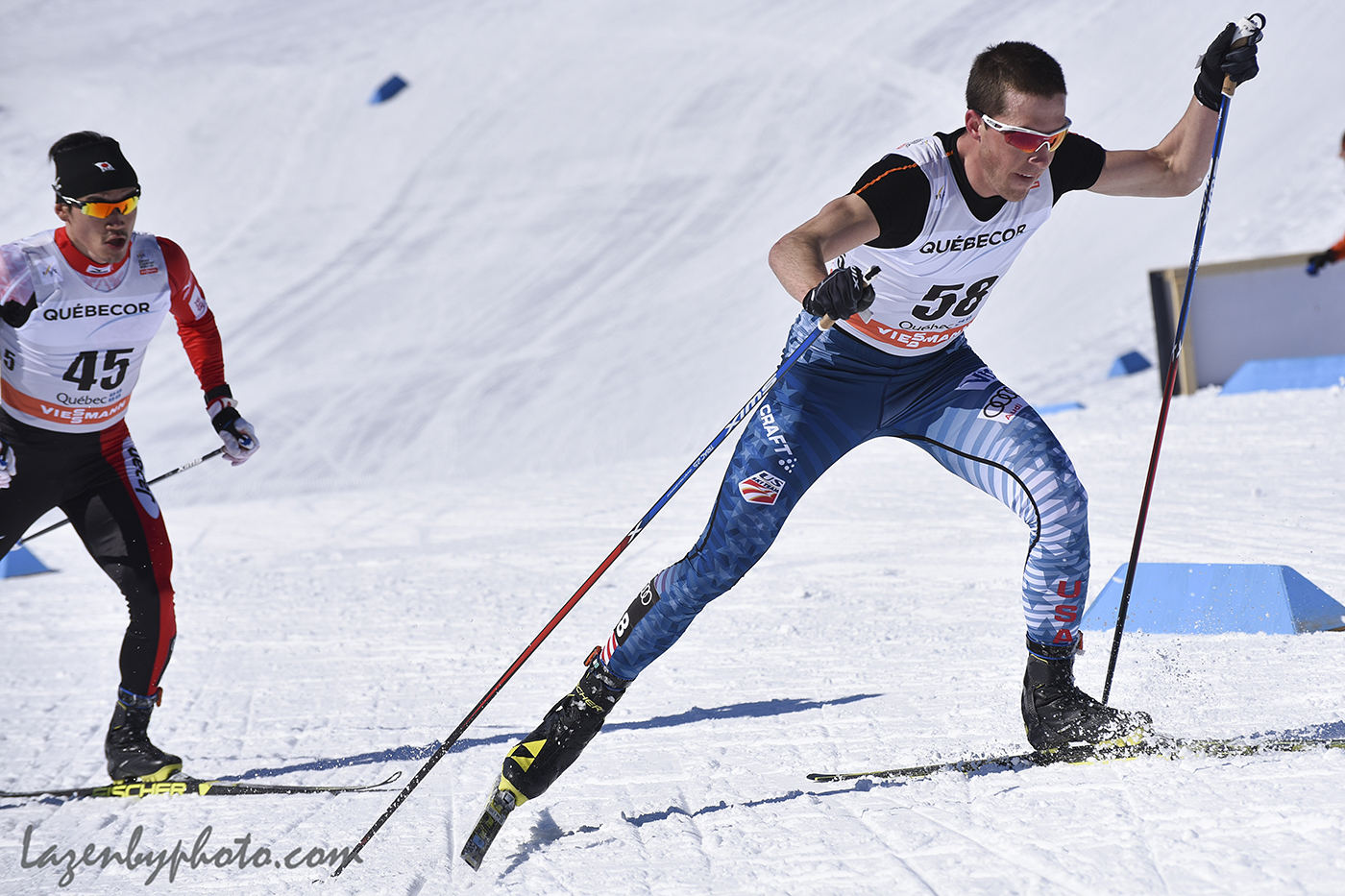
    Paddy Caldwell (U.S. Ski Team D-team/SMS) racing to 46th overall and 25th for time of day in the men’s 15 k freestyle pursuit at World Cup Finals in Quebec City. (Photo: John Lazenby/Lazenbyphoto.com)

    In a phone interview two weeks ago, the Lyme, N.H., native explained that making the jump to the B-team wasn’t an explicit goal.

    “I don’t think I officially wrote that down in a goal section or something like that in the beginning of the year,” Caldwell said while finishing up spring classes at Dartmouth College in Hanover, N.H. “By looking at it as sort of progression, it definitely has been a goal of mine. My goal was to be a competitive World Cup skier and that is a step that needs to happen.”

    Caldwell’s 2016/2017 objectives highlighted U23 World Championships at Soldier Hollow outside Midway, Utah.

    “I was really focused trying to peak for those events and put up the best results that I could in that field,” he explained.

    At U23 worlds, he earned two top 10s, placing ninth in both the 15-kilometer skate and 30 k skiathlon.

    Caldwell was granted starts for the World Cup’s closing weekend, a three-race mini tour in Quebec City. He placed 46th overall at World Cup Finals, but turned heads with a 25th-best time of day on the final-stage 15 k skate pursuit.

    In the near term, despite his promotion, it’s life as usual for Caldwell. There’s school to finish up and training hours to log. (Caldwell returned recently to Hanover from the USST’s first on-snow camp of the year in Bend, Ore.)

    “I think that is very much in the air,” Caldwell said when asked if he’d be racing a full World Cup schedule. “And it depends on a lot of things — foremost if I am skiing well. And those are plans I am still working out. I don’t know exactly what opportunities will be there. Those are things, discussions we’ll have later in the year.”

    Caldwell will remain under the guidance of O’Brien at SMS. And from a funding standpoint, Caldwell said he won’t see a bump in USST funding.

    “Not in terms of support from the U.S. Ski Team,” Caldwell said when asked if his B-team status came with greater financial support. “The last few years I have been really fortunate to be successful fundraising through the local community here in the Upper Valley in New Hampshire and Vermont. So I am really thankful for the support from local people in both the ski community and outside the skiing community. I think absolutely if I end up racing in Europe more, it will be a bigger expense, and those are things I am not completely dialed on yet.”

    Caldwell is officially a senior at Dartmouth, having earned 32 of 35 credits for his bachelor’s degree while studying geography and economics. In 2015, he won the 10 k skate at NCAA Skiing Championships.

    Paddy Caldwell (13) chases Kris Freeman in the 50 k freestyle mass start at 2015 U.S. Distance Nationals in Sun Valley, Idaho.

    “I feel really fortunate to go to Dartmouth College and be able to balance skiing and education,” he said. “One of my goals, I’ve always been aimed at finishing an undergraduate degree in a timely manner. I’m really thankful to be at Dartmouth where there is a flexible quarter system. I’ve taken off most fall terms since I have started at Dartmouth as well as winter and been able to go in the spring and summer fairly consistently.”

    As a discretionary pick for the USST, Caldwell has jumped a significant pipeline-hurdle. Domestically, his peers have been skiing in a tight pack — on this year’s SuperTour, the men’s side had several different standout performances.

    “I think there is an aspect of added pressure,” Caldwell said of his new B-team status. “But I also think that that is an inherent part of our sport. At the end of the day, it comes down to racing fast. That pressure is going to be there no matter what team you are on. It is something that I try not to focus on and just see it as an opportunity to keep growing as a skier and not as a target on my back, because I think it is easy to see it that way. Absolutely there will be some pressure from that, it’s also not something that I am unfamiliar with. I think it’s part of the sport. You have to, at least for me, just focus on trying to achieve results for my own growth as a skier and not focusing on the stuff going on around me.”

  • Under 23 Questions with Paddy Caldwell

    American Paddy Caldwell (SMS/USST) racing to 20th in the men's classic sprint qualifier on Tuesday at U23 World Championships at Soldier Hollow in Midway, Utah. He went on to place fourth in his quarterfinal for 18th overall, his best sprint result at U23 Worlds. (Photo: FlyingPointRoad.com)
    American Paddy Caldwell (SMS/USST) racing to 20th in the men’s classic sprint qualifier on Tuesday at U23 World Championships at Soldier Hollow in Midway, Utah. He went on to place fourth in his quarterfinal for 18th overall, his best sprint result at U23 Worlds. (Photo: FlyingPointRoad.com)

    In an effort to showcase the North Americans competing at this week’s International Ski Federation (FIS) 2017 USANA Nordic Junior World Championships and U23 Cross Country World Championships at Soldier Hollow in Midway, Utah, we asked those qualifying athletes several questions about themselves — actually, we had them fill in the blanks. Here we have 22-year-old Paddy Caldwell, of the Stratton Mountain School (SMS) Elite Team/U.S. Ski Team D-team, representing the U.S. at his third U23 Worlds.

    On Thursday, Caldwell raced to a career-best ninth in the men’s 15 k freestyle, his first top 10 at U23 Worlds. He finished 18th in Tuesday’s classic sprint for his best-ever sprint at U23s.

    ***

    “My full name is Patrick Fitzgerald Waters Caldwell, but you can call me Paddy. I was born in Lebanon, N.H., raised in Lyme, N.H., and one thing you should know about my hometown is it was founded in 1761.

    I started cross-country skiing when I was two or three, thanks to Mom and Dad. I currently train in Stratton, Vt., with SMS Elite Team.

    Paddy Caldwell (20), of the Stratton Mountain School and U.S. Ski Team D-team, racing in the quarterfinals men's classic sprint at 2017 U23 World Championships on Tuesday at Soldier Hollow in Midway, Utah. He finished 18th on the day for his best sprint result in three U23 Worlds. (Photo: FlyingPointRoad.com)
    Paddy Caldwell (20), of the Stratton Mountain School and U.S. Ski Team D-team, racing in the quarterfinals men’s classic sprint at 2017 U23 World Championships on Tuesday at Soldier Hollow in Midway, Utah. He finished 18th on the day for his best sprint result in three U23 Worlds. (Photo: FlyingPointRoad.com)

    If I’m not skiing, you might find me studying at Dartmouth College. If I had to pick a favorite book, it would be ‘Unbroken.’

    One of the things I’m most excited about for U23/Junior Worlds at Soldier Hollow is the new courses at SoHo. One race I’m especially targeting there is the 30km Skiathlon.

    The best advice anyone ever gave me about skiing or racing was ‘you gotta love it!’

    One of the best race memories I have is the mixed Biathlon/ Cross Country, Men/Women team relay in Seefeld, Austria.
    If I could meet one World Cup skier, it would be Johan Olsson.

    If I don’t end up being a professional skier, I’ll probably still be chasing snow.

    I’m missing zero days of school to be here…

    You can follow me on Instagram @paddy_caldwell.”

  • O’Brien, Nelson Continue Their Development as U.S. Junior/U23 Worlds Coaches

    O’Brien, Nelson Continue Their Development as U.S. Junior/U23 Worlds Coaches

    Bernie Nelson U.S. U23 Worlds Coach (l) and Patrick O'Brien U.S. Junior Worlds Coach get settled in Utah with their athletes prior to Monday's start of the U23 and Junior Worlds racing at Soldier Hollow. (Photo: Courtesy Bryan Fish)
    Bernie Nelson (l), U.S. U23 Worlds coach, and Patrick O’Brien (r), U.S. Junior Worlds coach, get settled in Utah with their athletes prior to the start of the U23 & Junior World Championships, which start Monday, Jan. 30, at Soldier Hollow in Midway, Utah. (Photo: Bryan Fish)

    The world is coming to Soldier Hollow in Midway, Utah. From Jan. 30-Feb. 5, the Olympic venue known as “SoHo” will host 2017 Junior and U23 World Championships. Throughout the last week, skiers from approximately 40 nations have descended on rural Utah and the race venue tucked up on the Eastern flanks of the Wasatch.

    From the outset, athletes, coaches and wax techs will be busy. It’s the usual hustle and bustle and last-second scramble of any ski race weekend — the early morning ski tests, athlete meals, handing out bibs, and delivering just-in-time prepped skis to a racer waiting at the line. No glamour. It’s long before any potential podiums — it’s when any coffee is good coffee.

    This environment with higher-stake races at SoHo isn’t simply a means of exposing emerging international skiers to the world’s best. It’s also fertile ground for coach development where they are exposed to the inherent stressors of international-level ski racing. This year, U.S. Ski Team Development Coach Bryan Fish will lead the cadre of 12 junior skiers and 10 under-23 (U23) skiers gathering in Utah, with the help of Stratton Mountain School (SMS) Elite Team Head Coach Patrick O’Brien and Bend Endurance Academy (BEA) Nordic Director Bernie Nelson.

    O’Brien, a 26-year-old Vermont native and former Craftsbury Green Racing Project skier, will lead the U.S. Junior Worlds team. He’s coming off an eventful U.S. nationals, also held at SoHo, where his level of tolerance and preparedness for the whimsical Heber Valley weather gods was tested.

    “It was one of those situations when it’s a waxers nightmare and you just have to try and figure your best to have options and keep your head on a swivel and see how conditions are changing,” O’Brien said on the phone from Truckee, Calif., site of last weekend’s SuperTour races, as he reflected on the all-hands-on-deck conditions during nationals.

    “We ran the full array for what we saw for weather,” O’Brien added. “Temperatures that were so cold that they were causing the diesel generators in the wax areas to gel and shut everything down to some really heavy rain that was putting the courses in jeopardy as well as our ability to get there and set up. We were digging drainage ditches and sandbagging to move water around the wax area to some pretty heavy snowfall for the last day sprint qualifier.”

    That experience will help O’Brien keep his calm. In the event of an all-conditions SoHo morass during World Juniors, he’s already helped his SME Elite techs and athletes make quick decisions there.

    “The thing is, you just have to be prepared for everything, you never know what you are going to wake up to, at SoHo especially,” O’Brien said.

    His return visit to the 2002 Olympic venue, only weeks after U.S. nationals, comes with an emphasis on ensuring the athletes are prepared, and less pressure on prepping skis — he’ll leave that job to the team’s wax techs.

    “The role that I am best suited in is trying to see the forest through the trees and provide the clearest information in terms of what I see going on out there,” O’Brien clarified. “So the best thing that I can do is be outside the wax room.”

    “I am a facilitator,” Nelson, also 26, said of how she defines her role when traveling as an international coach. “These athletes come with training plans, they come knowing what they are going to do. I am the person in the starting pen that is like, ‘Hey, you’ve got this, the work is done. Go out there and have fun. Have a good race.’ ”

    The coaching duo return to Utah with past international coaching experience on their resumes. It’s O’Brien’s third year as the SMS Elite Team head coach, where he supports his athletes with training plans and wax-tech support at SuperTours, including U.S. nationals. He’s also teched and coached at a spring OPA cup trip and at last year’s season-ending World Cup series, the Ski Tour Canada.

    Nelson, the U.S. U23 team coach, served the dual tech-coach role at 2015 World Championships for Australian national-team member Paul Kovacs. At the time, Nelson was also Kovacs’s coach at the Bridger Ski Foundation (BSF). She also teched at last year’s Juniors Worlds and U23 Worlds in Romania. Like O’Brien, Nelson gained experience working the Ski Tour Canada.

    Both coaches enter a situation demanding flexibility and a willingness to embrace unknowns. For Nelson, the U23 athletes are ones she may not work with on a daily basis, but she’s begun to develop relationships with.

    “Kelsey Phinney came and spent a summer with me when I was at BSF,” Nelson explained. “Bill Harmeyer is a former BEA postgraduate and I spent this past summer with him. Logan Diekmann is a former post-grad, Alayna Sonnesyn also spent the summer at BEA. I feel really connected to a lot of the athletes. For the ones that I don’t, it goes hand in hand. It’s my job as a coach to reach out to them and let them know I am someone they can trust.”

    Nelson said she’ll only be responsible for waxing skis when asked by a technician. Her primary tasks will focus on athlete preparedness, and include big-picture items, like allowing athletes to decompress away from the competition venue, and small-picture, businesslike tasks of handing out bibs and communicating accurate start times, which aren’t exactly glamorous, but essential.

    “I also feel responsible for making sure the techs have what they need to succeed — coffee, a chair, or whatever,” Nelson added.

    Nelson said she believes the U.S. sends competitive teams to Junior & U23 World Championships. Although this year, with U.S. athletes enjoying home-field advantage, Nelson stated she’ll emphasize not adding any undue pressure to perform.

    “It is important for the athletes to not feel that pressure, but to understand that they belong there and they have been brought to this event for a reason,” she said.

    One reason these athletes are brought to events like Worlds is for the opportunity for a race performance on the international stage representative of their current form and to learn. These events are stepping stones.

    Rolling into the SoHo infield where a world of flags will snap in the Wasatch downdraft may also remind these two young coaches that they are enhancing their knowledge base to help foster a stronger ski community.

    “I am still learning,” Nelson willfully admitted. “Every time I go on a trip my eyes are wide open. I think there are always opportunities to make split-second decisions and I think a lot of the learning happens after the fact, because you get to another situation and you’ll have the tools to make an informed decision that you didn’t really realize that you had. They compound and build on each other.”

  • Under 23 Questions with Julia Kern

    Under 23 Questions with Julia Kern

    Julia Kern, of the Stratton Mountain School and U.S. Ski Team D-team, racing to the win in the junior women's 7.5 k classic mass start at 2017 U.S. nationals at Soldier Hollow in Midway, Utah. (Photo: U.S. Ski Team)
    Julia Kern, of the Stratton Mountain School and U.S. Ski Team D-team, racing to the win in the junior women’s 7.5 k classic mass start at 2017 U.S. nationals at Soldier Hollow in Midway, Utah. (Photo: U.S. Ski Team)

    In an effort to showcase the North Americans competing at this week’s International Ski Federation (FIS) 2017 USANA Nordic Junior World Championships and U23 Cross Country World Championships at Soldier Hollow in Midway, Utah, we asked those qualifying athletes several questions about themselves — actually, we had them fill in the blanks. Here we have 19-year-old Julia Kern, of the Stratton Mountain School/U.S. Ski Team D-team, who’s representing the U.S. at her third Junior Worlds.

    ***

    “My full name is Julia Kern but you can call me jkern.

    I was born in Berkeley, Calif., raised in Waltham, Mass., and one thing you should know about my hometown is that it has a sweet view of Boston on my favorite running trails.

    I started cross-country skiing when I was one, thanks to my grandparents in Germany, who would feed me gummy bears along the way. I currently train in Stratton, Vt., with the SMS Elite Team.

    If I’m not skiing, you might find me doing photography or film stuff. If I had to pick a favorite book, it would be ‘1984′ by George Orwell.

    Julia Kern (SMS/USST) leading a SuperTour classic spring heat last weekend near Truckee, Calif. She went on to finish third in the final. (Photo: Annie Pokorny)
    Julia Kern (SMS/USST) leading a SuperTour classic spring heat last weekend near Truckee, Calif. She went on to finish third in the final. (Photo: Annie Pokorny)

    One of the things I’m most excited about for Junior Worlds at Soldier Hollow is having a home course and country advantage! One race I’m especially targeting there is the classic sprint.

    The best advice anyone ever gave me about racing is that all the work is done before race days and race days are the chance to show off all your hard work and nothing can slow you down except yourself.

    One of the best race memories I have is racing the classic sprint at SilverStar this season.

    If I could meet one World Cup skier, it would be Stina Nilsson.

    If I don’t end up being a professional skier, I’ll probably be working for a marketing or advertisement firm.

    I’m missing zero days of school to be here because I am taking off winter term at Dartmouth to travel and race!

    You can follow me on Instagram @juliakernski or on my blog.”

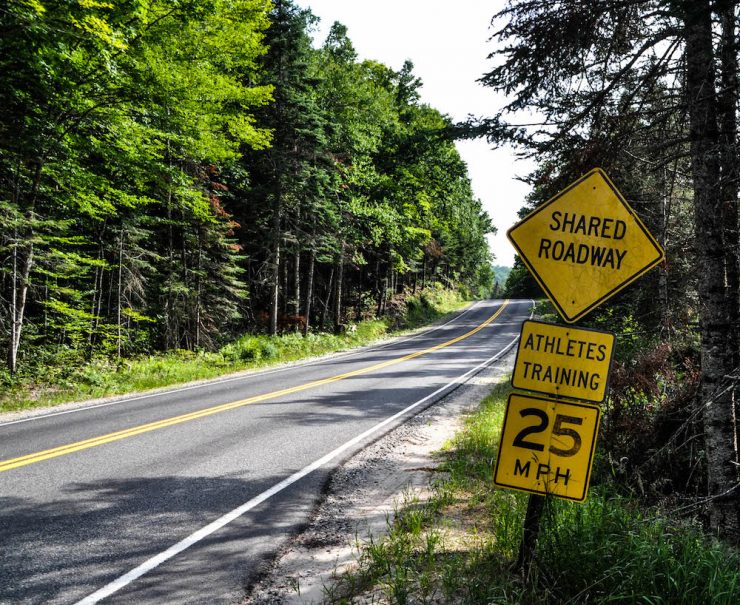
  • SMS Elite Team Hosting Two Clinics: Aug. 21 and Sept. 25

    The Stratton Mountain School Elite Team is hosting 2 clinics

    Sunday August 21 at Stratton Mountain School

    Sunday September 25 in Hanover, NH

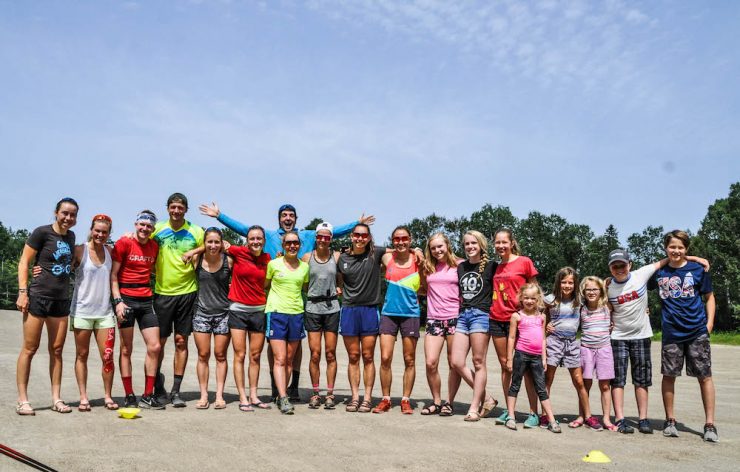
    Come rub shoulders with Olympic athletes and celebrate cross-country skiing!

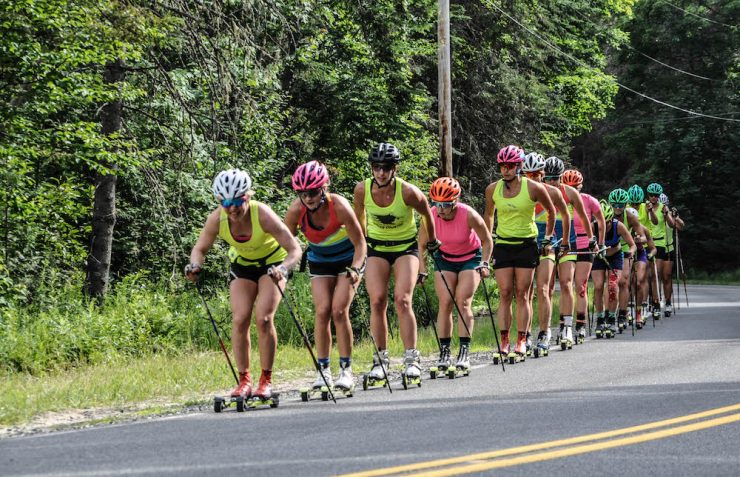
    Both clinics start with instruction and training and end with a video presentation and a question and answer period with the team. Everyone should bring running clothes, bounding poles and a change of clothes.

    Clinics will run from 2:30-4:30 pm. There is no charge for the clinics. The team mission statement is “International Excellence, Local Inspiration” and this is our way of giving  back to the community that supports us.

    For more information on the Stratton clinic, contact Sverre: scaldwell@gosms.org

    For more information on the Hanover clinic, contact Scottie: M.Scottie.Eliassen@dartmouth.edu