From the FasterSkier archive — posts syndicated from athletes’ and coaches’ own blogs between 2004 and 2012, kept online as published. Current coverage is at fasterskier.com.

Tag: Sochi Olympics

  • More Than Medals: Clean Sport in the ‘Icarus’ Era (Op-Ed)

    More Than Medals: Clean Sport in the ‘Icarus’ Era (Op-Ed)

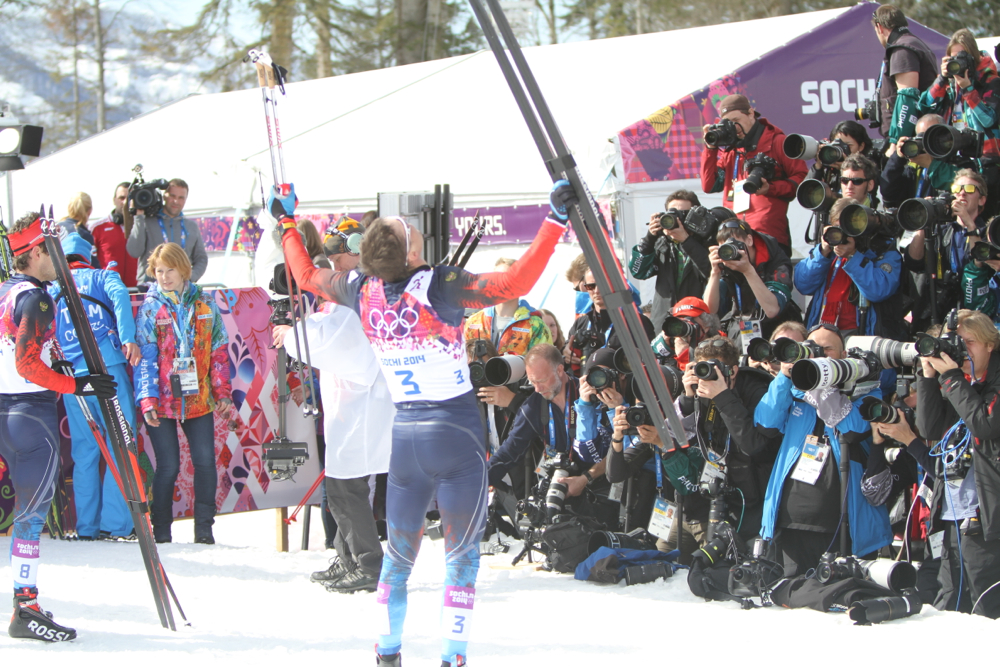
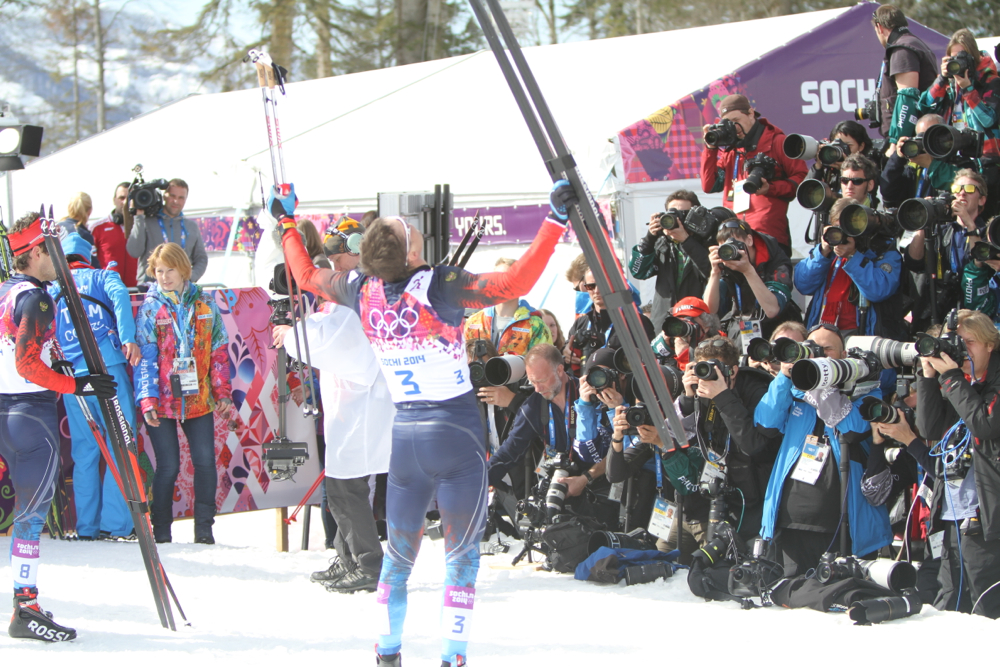
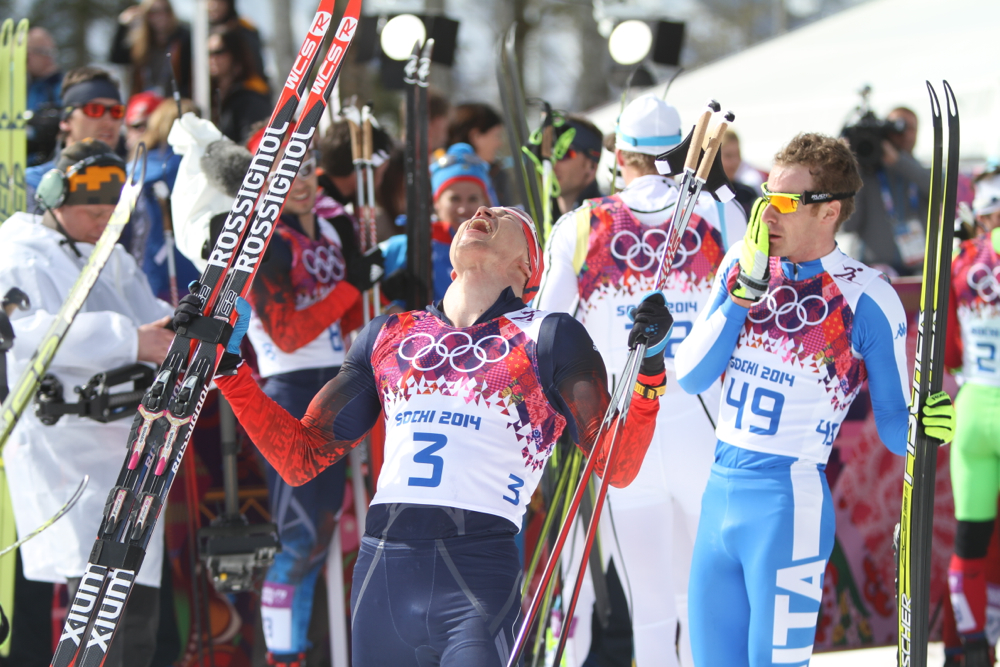
    Russia’s Alexander Legkov (3) after winning Olympic gold in the men’s 50 k freestyle mass start at the 2014 Winter Olympics in Sochi, Russia. Russia’s anti-doping director at the time, Grigory Rodchenkov stated that he switched out Legkov’s anti-doping sample for a vial of clean urine collected previously. The International Olympic Committee stripped Legkov of his gold medal and banned him from future Olympics, but the Court of Arbitration for Sport overturned those sanctions in February 2018.

    Editor’s Note: The following thoroughly cited opinion piece, prompted by the 2017 ‘Icarus’ documentary, was written by Maks Zechel, a 20-year-old Canadian cross-country skier who spent the 2017/2018 race season training abroad with Team Asker in Norway. Zechel is a regular contributor at FasterSkier, with his ongoing series: “Closing the Gap”.

    ***

    February 23, 2014

    Sochi: a home Olympics and the opportunity of a lifetime. Russia, despite being one of the strongest skiing nations in the world, has no individual medals in cross-country skiing leading into the final race of the championships. As the athletes shuffle nervously in the tracks before the 50 k mass start, the pressure on the Russian men can be felt even by me, watching on TV from home.

    Putin is in the stands. It’s just a ski race, but how much more than that is at stake?

    “The Moscow Laboratory operated, for the protection of doped Russian athletes, within a State-dictated failsafe system” (McLaren 1)

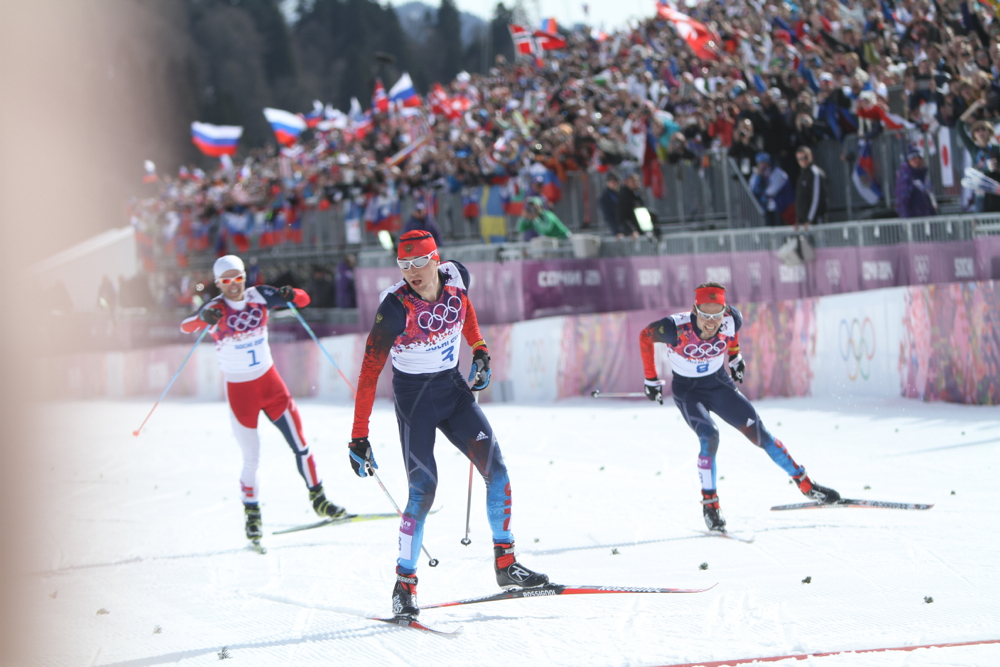
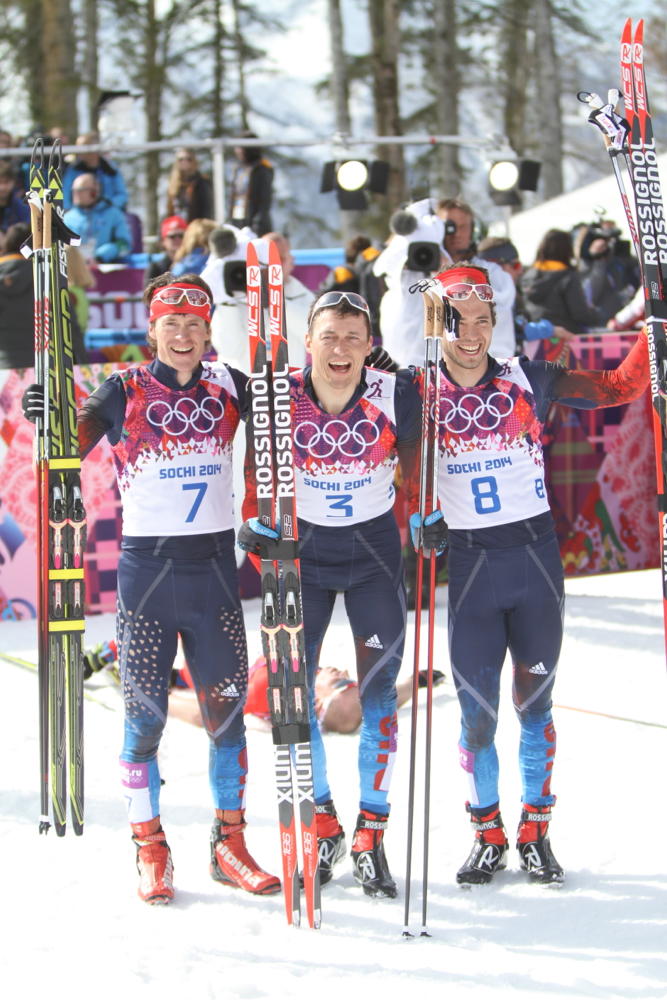
    A sunny day, a roaring home crowd. Alexander Legkov is in a world of his own as he absolutely destroys himself over the final climb, skiing with the passion that it takes in all sports to win an Olympic medal. Russian flags waving everywhere, the crowd is absolutely deafening as Legkov adds his first Olympic gold to his already legendary career. Maxim Vylegzhanin and Ilia Chernousov lunge across the line behind him, with Chernousov having given every last bit of himself to outsprint Norway’s Martin Johnsrud Sundby to complete the Russian podium sweep on home soil. A dream come true.

    “The Sochi Laboratory operated a unique sample swapping methodology to enable doped Russian athletes to compete at the Games” (McLaren 1)

    When you ski with your teammates in front of your friends and family at home, you ski with a fire that is otherwise difficult to find. The presence of those who know you makes you feel guilty if you do not perform to your very best, you are pushed to keep up to those that your mind refuses to admit defeat against, and your own potential reaches new heights when your teammates accomplish something great. There is no cover of anonymity with which to hide the secrets behind your performance, because these people know what it took, and did not take, to get you to where you are.

    “A pre-selected group of Russian athletes competing at Sochi were protected by the Sochi sample swapping methodology” (McLaren 67)

    Despite the whispers of corruption surrounding Russia’s Olympic team, I cheered for those three skiers, who did the nigh-impossible and pushed their bodies as hard as anyone else to make their country proud. I do not know what exactly went into achieving that medal, but I do know that the incredible display of effort and the tears of happiness falling from Legkov’s face as he was raised onto his teammate’s shoulders, were very real.

    “After he became laboratory director, and in furtherance of his responsibility to improve Russian sport performance by covering up doping, Dr. Rodchenkov developed a steroid cocktail optimized to avoid detection” (McLaren 49)

    I first dreamt of going to the Olympics when I was 11 years old. This dream sparked an inner drive of mine that has lasted almost a decade, and I like to think that it will never extinguish. Sometimes, I wonder what lights that same flame in children around the world. In most countries, I like to think that many experience moments like mine: a motivation flourished from watching the passion of the Olympics, being inspired by older siblings, or being born with the need to be the first kid through the school doors when the bell rings for recess.

    “The steroids were dissolved in alcohol … The solution was then swished in the mouth in order to be absorbed by the bucal membrane and then spit out … the detection window for the steroids in the cocktail would not exceed 3-5 days” (McLaren 49-50)

    In parts of the world where fewer children are fortunate enough to make the decision to pursue a sport just because they are inspired, I wonder what brings them to those future championships. Is their talent used out of joy or out of the need to provide for those without the same athletic abilities? Was their talent exploited at a young age as a way for a country to show its dominance? Were they given a choice: to follow their dreams and do what they love by the prescribed method, or to not follow their heart at all?

    I think about the lengths that I would go to support my family if they depended on me, and suddenly the way that I pursue sport seems insignificant, a trivial lifestyle “earned” through right of birth. Being born to these opportunities makes it all the more important to not waste them. My great-grandfather used to say, “if you’re going to do something, then you may as well do it right”, and those are words that I attempt to live by. To me, that means clean sport.

    But clean sport is now more at risk than it has been in decades. Once an already colossal task of catching individual dirty athletes, we are now facing an extensive doping regime, backed by an entire government.

    “[B]y the time of the Olympic Games in London, many of Russia’s top athletes were using the cocktail” (McLaren 51)

    When faced with the enormity of the Russian state-sponsored doping system, it is no longer adequate to simply prosecute individual athletes. A large part of the problem when it comes to justly dealing with the system that made it possible for Russian athletes to cheat, is that WADA and the IOC are pitted against the entirety of the Russian government. It is not the USA and Canada versus Russia, or any other country versus Russia; it is two sporting entities, independent of any particular country, against the full power of the Russian government.

    “The Ministry of Sport directed, controlled and oversaw the manipulation of athlete’s analytical results or sample swapping, with the active participation and assistance of the FSB [Russian Federal Security Service], CSP [Center of Sports Preparation of National Teams of Russia], and both Moscow and Sochi Laboratories” (McLaren 1)

    “… Deputy Minister of Sport, Yuri Nagornykh, was appointed in 2010 by Executive Order of then Prime Minister, Vladimir Putin” (McLaren 10)

    The state-run doping program organized for the Sochi Olympics was not just about sport, it was politically motivated, overseen by President Putin himself. This sets Russia apart from previous doping scandals, such as that of the Finnish cross-country ski team in 2001, where doping operations were concentrated to a select number of skiers and their coaches. When the truth was uncovered about their national heroes, Finland, in complete shock, took steps to recover from the international disgrace that its ski team had brought upon them (Andrews). Iivo Niskanen and Krista Pärmäkoski have proven that it is possible for a great skiing nation to recover from such a disaster and win clean, paving the way for the next generation of Finnish skiers.

    “ … this Article would prohibit altering identification numbers on a Doping Control form during Testing, breaking the B bottle at the time of B Sample analysis, or altering a Sample by the addition of a foreign substance” (“World Anti-Doping Code” 21)

    The situation we see today is different. After the exposure of irrefutable evidence confirming state-sponsored doping and the covering up of doping evidence in Russia, it came as a disappointment to many when the Court of Arbitration for Sport (CAS) annulled the sanctions imposed by the IOC on 28 Russian athletes.

    The evidence of coverups and doping are clear, but the CAS ruling was that “the evidence collected was found to be insufficient to establish that an anti-doping rule violation (ADRV) was committed by the athletes concerned” (“Media Release”). The evidence may be adequate to find Russia guilty of state-sponsored doping, but it is not enough to build a case against each individual athlete. This is likely because of the destruction and tampering of drug tests and results by Russian “anti”-doping personnel and Article 10.5.1.2 of the World Anti-Doping Code, which states that, if the “detected Prohibited Substance came from a Contaminated Product, then the period of Ineligibility shall be, at a minimum, a reprimand and no period of Ineligibility, and at a maximum, two years Ineligibility” (“World Anti-Doping Code” 64).

    But if the evidence is inadequate, then why are some Russian athletes still facing penalties? Alexander Legkov and Sergey Ustiugov were both unable to compete at the PyeongChang Olympics, but Ustiugov can still race on the World Cup, while Legkov cannot. Evidence against athletes like Legkov proves that they were in some way a part of the state-sponsored doping program, but it is difficult to legitimately sentence them when evidence proving exactly what they have done has been tampered with or destroyed. Athletes like Ustiugov have not been proven to be a part of Russian doping operations, but have violated Article 2.1 of the World Anti-Doping Code through their association with people who are a part of it. This article states that “Athletes and other Persons must not work with coaches, trainers, physicians or other Athlete Support Personnel who are Ineligible on account of an antidoping rule violation … Prohibited association need not involve any form of compensation. (“World Anti-Doping Code” 24).

    Sport in Russia will never be fair until Russia takes responsibility for their crimes against clean sport. Whereas Finland bore the weight of what their athletes had done in 2001, and ensured that it would never happen again, the Russian government has more at stake than a few drugged athletes. When doping is politically motivated and backed by the state, I do not think it is possible to solve the issue through sanctions by sporting bodies such as WADA and the IOC alone. Until the Russian government is pushed by other nations to take an interest in ensuring that sports in Russia are clean, the problem can never be completely resolved.

    Until substantial action is taken, we will continue to be caught up in a stalemate of “partial blanket bans” and other half-measures. When imposed on a level of command that is too low in the Russian doping system, these actions cannot bring about the outright eradication of doping that we seek. Are sports a high enough priority for entire countries to impose sanctions on the Russian government until they answer for their crimes against clean sport? Or will doping be protected by other political motivations that keep Russia inseparable from the rest of the world? The scope of the Russian government’s involvement in doping is far beyond the reach of traditional sporting sanctions.  

    “Clean sport is dead” — Jim Walden, lawyer of Dr. Grigory Rodchenkov (Panja and Pérez-Peña).

    The sporting world no longer holds its breath in anticipation of change. An uncertain future exists for clean sport, but even more disconcerting is the stagnation in which we now settle. With the anti-doping world left spinning its tires in frustration, where does that leave athletes for whom a future of fair play is too late?

    Icarus, 2017 documentary film, debuted Aug. 4, 2017 on Netflix (Photo: Wikipedia)

    In his dramatic documentary, Icarus, director Bryan Fogel convinced many sports fans that clean athletics, despite the improvement of anti-doping efforts over the years, is a hopeless pursuit. Fogel’s documentary was key to bringing the extent of systematic doping in Russia into the public eye.

    In Icarus, Fogel takes anti-doping research to a personal level: after years of training as a high-level (amateur) cyclist, he spends a full year preparing for the “Haute Route” amateur cycling event, while following a doping program. This was prescribed to him by Dr. Grigory Rodchenkov (the former director of Russia’s Anti-Doping Center, turned whistleblower, who is now under the witness protection program in the U.S.).

    Fogel routinely took a cocktail of PEDs (Performance Enhancing Drugs), under the careful guidance of Dr. Rodchenkov, and saw massive improvements in his power output ratings on the bike in less than a year. Having placed 14th in the seven-day Haute Route event the previous year, while racing clean, it seemed clear that Fogel would be a strong contender for the win.

    He ended up finishing the unbelievably hard event in a far worse position than when he raced clean. From an athlete’s perspective, this does not surprise me. I understand that there are countless elements involved in producing an incredible athletic performance at a set time and place. Fogel’s reaction was different; visibly depressed, he talked of how sobering it was to realize that, no matter what he did, he could never be as great as his cycling heroes. This is a delusional conclusion, one that is biased by his dreams (influenced by growing up with Lance Armstrong as a hero) of becoming a better cyclist.

    In these turbulent times for clean sport, it is important for athletes to remember that there are many aspects to training and competing, aside from other athletes cheating, that they can control. Living in Norway has taught me that there is a lot more to skiing fast than just being fit, and that applies to all sports.

    Drugs don’t magically make you a fast skier, just like a high VO2 max score doesn’t make you a competitive World Cup skier. There are many elements to cross-country skiing that have a far bigger effect on a skier’s ability to ski fast than drugs do. If skiing were purely about fitness, aerobic machines like Hans Christer Holund would beat skiers with a lower VO2 max, like Petter Northug and Finn Hågen Krogh, without contest. Divergent technique revolutions, like those brought to us by pioneering skiers such as Petter Northug and Johannes Høsflot Klæbo, show us just how many ways there are to win a ski race.

    In his reaction to not becoming a better cyclist even while doping, Bryan Fogel shows what he is: a film director with a remarkable story to tell. As most people would, he takes his failures in sport and attributes them to his personal characteristics; he feels he is simply not good enough at a genetic level. While not everyone will reach their athletic dreams, true failure occurs only when you stop trying after the first attempt. When athletes make changes to their training, it is rare to see dramatic results in the following competition season. Some things will never yield improvements, while other things take a few years of consistent work before they take effect. In the highly competitive world of cross-country skiing in Norway, many skiers go unnoticed down the results list for years, they are seen as average, before suddenly rocketing to incredible new heights seemingly out of nowhere. That is the nature of how training, competition, and life stress the body and mind over a prolonged period of time. To take a one-year snippet of an athlete’s life and make broad conclusions about sport is naive.  

    An otherwise brave and instructive self-experiment that helped uncover the scope of how doping continues to mar the sporting world uncontestedly, Fogel’s conclusion of his doping experiment sends the wrong message to the audience viewing Icarus. The message he sends is that only extremely gifted humans can become great athletes. This personal look into how his experiences have affected him make his documentary engaging and dramatic, something that the genre normally lacks for your average movie audience. The devastation that Fogel portrays in this realization hits viewers hard and the movie adopts an “apocalyptic” tone from that point on. The worldwide end of clean sport is confirmed with Rodchenkov’s exposé of Russian state-sponsored doping and the footage of him escaping Russia with his life in danger. Icarus uncovers frightening realities that affect the sports we love, but the film also incites new dangers to the culture surrounding sport.

    Although accurate in their severity, the events at the end of Icarus doom its audience to pessimism against the current world of sports. This acts as fuel for ungrounded accusations against successful athletes by uninformed viewers. When a complicated issue arises, people quickly try to make sense of it by looking for a distinction between good and evil. By making an issue seem black and white, anyone can have a strong opinion about it, because the choosing of sides is based on your morals. You are either against doping, or you support it. Unfortunately, the issue is not so simple, but this type of inflamed, unschooled “debate” is perfect advertising for a film such as Icarus.

    When making conclusions about an issue, it is our duty to question how someone else’s portrayal of events is affecting our opinion and to keep ourselves informed. FasterSkier Editor-at-Large Chelsea Little is an example of the brave reporting and investigating that it takes to keep organizations such as WADA and the IOC held accountable. We owe it to journalists like Chelsea, who sacrifice countless hours of their personal lives to enlighten us about the issues that affect us the most, to simply read their vital research. We must take the facts from the sources available to us, and add our own informed debate to the world of sport, because angry, baseless commentary are what keep humanity from moving forward.

    Most Olympic athletes…would favour lifetime bans for doped athletes. IOC President, Thomas Bach, himself an Olympic champion, has publicly indicated a personal preference for life bans, but has correctly noted that the legal order, particularly in relation to human rights issues, will not permit such automatic sanctions, for first offences. Nor does the Code. The IOC itself has lost an appeal before CAS in respect of an IOC rule providing for the automatic exclusion of any doped athletes from Olympic competition in the Olympic Games next following the imposition of even a first doping sanction. (Pound, et al. 63)

    It is our responsibility as athletes to represent all of those that have helped us and to lead by example. We can start with the atmosphere that we create amongst our fellow athletes. The culture of discrimination and groundless accusations against clean, Eastern-European athletes, or any successful athlete in endurance sports, has to stop. The “blame game” has some of the same ill-effects on our sport that we are trying to prevent by fighting against doping. Remember how ashamed Canadians felt when Ben Johnson, our “Olympic champion hero”, was caught for doping? Now imagine the irreversible damage that would have been done if he had been falsely accused. By telling young athletes that anyone doing something impressive — something that we could not imagine ourselves doing — is doping, teaches young athletes that no matter how hard they work, they will never become greater than their biggest dreams.

    “The problems of the world cannot possibly be solved by skeptics or cynics, whose horizons are limited by the obvious realities. We need men [people] who can dream of things that never were, and ask why not.” — John F. Kennedy (“J.F.K. in Ireland”)

    Teach young people to dream outside the realms of what they see as possible, and they will get there via the path you set them.

    Athletes have the power to make more of a difference than just complaining about the flaws of their sport. Sports are visually flashy and exciting to an audience, and athletes are celebrated around the world for their raw fight against the limits of the human body. The hero-status of athletes gives them a sphere of influence greater than that of other members of society who work equally hard, or harder, in the goal of helping people.

    The playing field of sport will never be equal for every child born on earth, when some athletes fight past obstacles far greater than the trials of sport, just to get to the start line. If we are lucky enough to be living the life of an athlete, it is not enough just to win medals.

    Endurance sports may not get the same extent of attention as soccer, football, or basketball, but the popularity of these sports has elevated some athletes to leadership roles from which athletes from smaller sports can learn. Take LeBron James, one of the greatest basketball players of all time, who has recently come under fire for his comments regarding President Trump. Some feel that his place in society is to play basketball and entertain, not to comment on political events, but he has decided that his popularity gives him a greater responsibility than just playing sports:

    “I mean too much to society [to ‘shut up and dribble’] … I mean too much to the youth, I mean too much to so many kids that feel like they don’t have a way out and they need someone to help lead them out of the situation they’re in.” — LeBron James (Conway)

    As a Canadian, the opportunity that I have to pursue cross country skiing is a selfish privilege. I have the chance to use sport to meet new people, to inspire, and to use my experiences and influences to create a better world around me. Otherwise, I am just a lucky individual, riding on the support of those that I do little to help, enjoying what I have been given and doing little to share my wealth. I work hard at what I do, but to think that I am an inspiration to others simply through my existence would be incredibly pretentious. Athletes can gloat in their athletic prowess, or they can use their abilities to promote the joy of sport, health of body and mind, and the hard work involved in reaching a goal.

    Good leadership is to rise and accept challenges even with the possibility of failure. Leaders show their true qualities, and that shows others that they can only achieve success by being their honest selves. Leaders show that there are no shortcuts.

    My heart breaks every time that one of my idols is suspected of cheating. It doesn’t hurt because it’s unfair; it hurts because I saw myself in their footsteps, and every time they succeeded, I saw that I could, too. Our dreams scare us because they seem impossible from where we currently stand. When I look at my heroes, I see my future; they are living my dreams, proving them possible. My dreams are crushed when one of my favourite athletes is caught for doping, because that tells me that I am not good enough to be great. Some say that we watch the Olympics to witness the impossible happen, but I watch the Olympics to see the people who started off where I am accomplish the things that seem impossible to me now.

    Despite the damning evidence against Russian sport as a whole, I refuse to believe that every Russian athlete is doping for the same reasons that I refuse to believe that the majority of top cross-country skiers are doping. It must be remembered that skiers are people, and the vast majority of people who have grown up surrounded by the positive and welcoming culture that exists in cross-country skiing around the world, do not become cheaters. Even in Norway, where skiing culture is on a much bigger scale than that of North America, it remains a community of people who love being outside year-round, exploring the world around them and the limits of their bodies.

    We must keep sport a positive and safe space for people to grow into compassionate citizens of the world. Clean sport isn’t important just so that medals are handed out to the rightful winners; sport must remain possible for real people everywhere, because when doping is left unchecked, sport loses all significance as a tool to inspire, bring people together, and make the world a better place.

    March 2, 2011
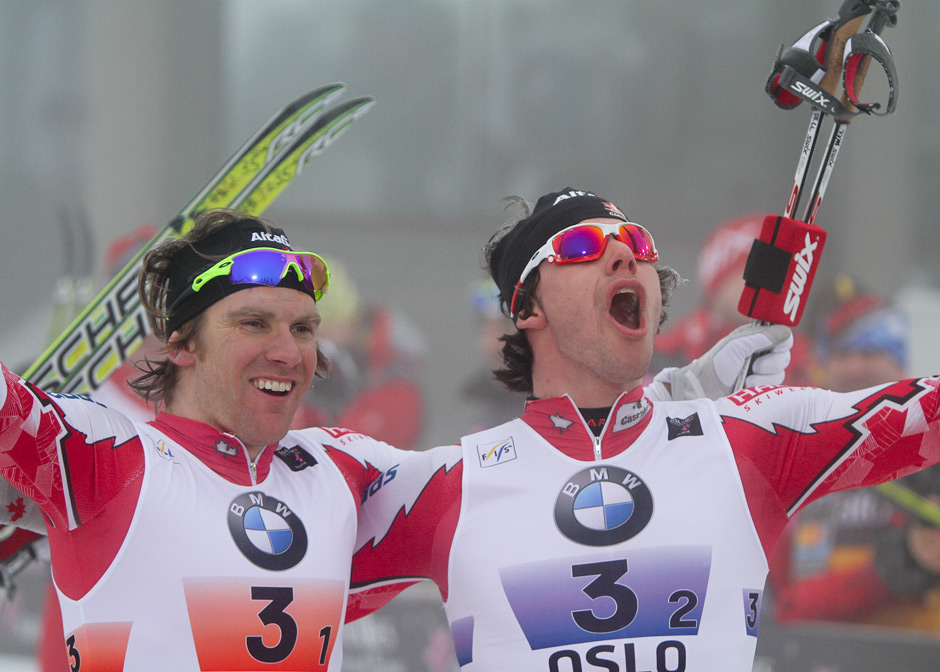
    Alex Harvey (r) and Devon Kershaw (l) celebrating their World Championships gold in 2011 in Oslo.

    My heart pounds in my chest. Adrenaline courses through my body as my ungainly 13-year old legs run chaotically down the front steps. The slam of the door behind me pierces the stillness of the heavy evening air, but to my ears the whole world is alive in celebration. The rush of blood in my ears is deafening as I relive the race in my head. Alex passing Hattestad — shushing the crowd across the line –raising his arms in disbelief — Devon and Alex playing air guitar on their skis — walking before the massive crowd to the top step of the podium — WORLD CHAMPIONS! … The excitement settles into a glow that becomes an immovable rock of confidence in my chest. I start to notice where I am, running aimlessly to the top of a grassy hill above the trees. I smile as I look down to where I came from: “Yes”, I think, “I can do it, too.”

    ***

    Works Cited

    Further Reading:

    Chelsea Little:

    FasterSkier spreadsheet showing skiers mentioned in the McLaren Report:

    McLaren Reports Part 1 and 2:

    IC Report:

    CAS rulings media release:

    CAS dismissal of Russian athletes’ appeal:

    CBS News 60 Minutes interview with Grigory Rodchenkov:

    IOC Code of Ethics:

    Icarus, documentary directed by Bryan Fogel (available on Netflix)
  • Tied for First, Caldwell and van der Graaf Share Seefeld Sprint Win

    Tied for First, Caldwell and van der Graaf Share Seefeld Sprint Win

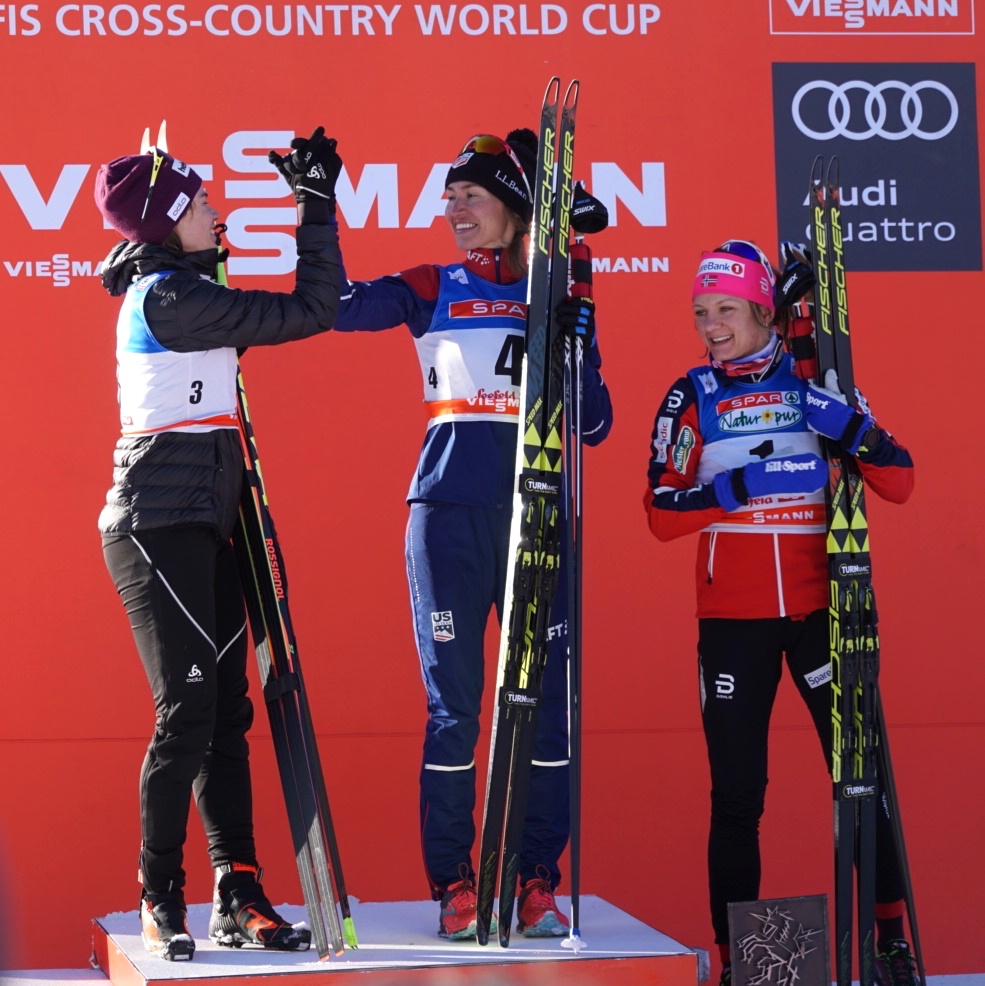
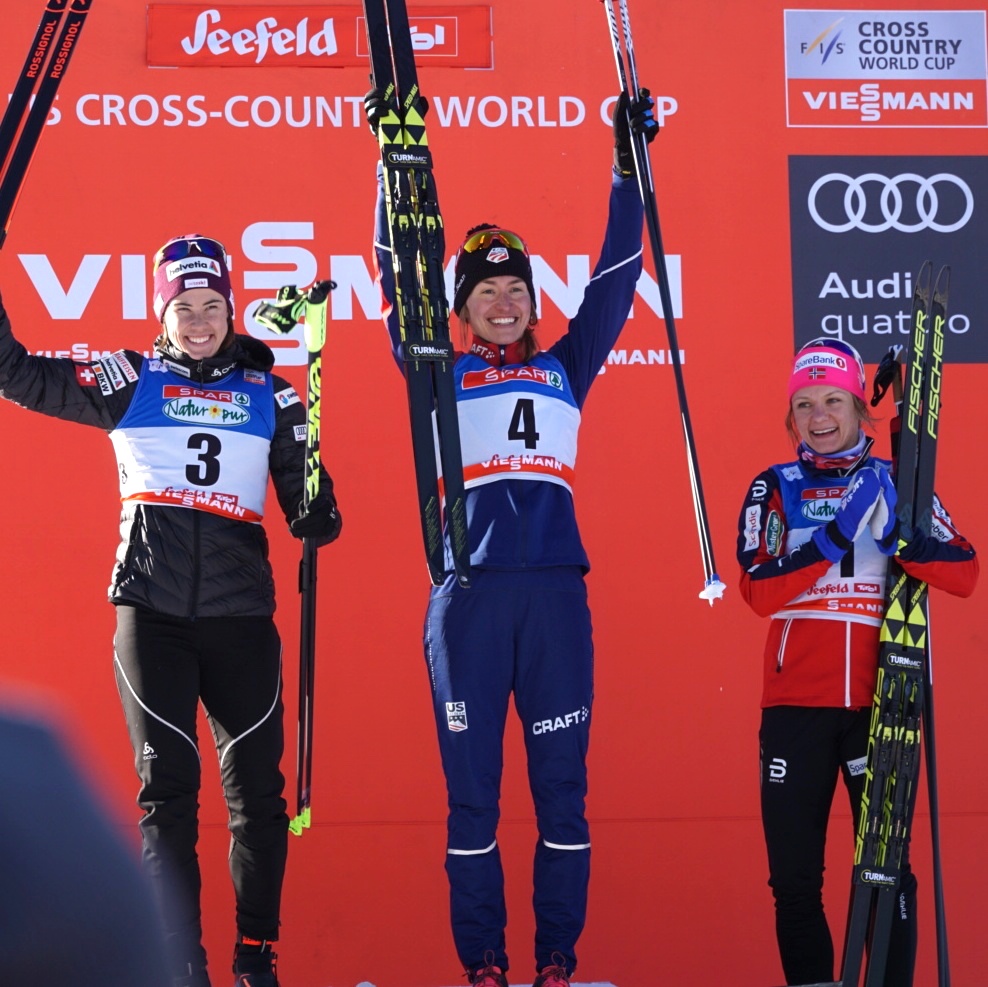
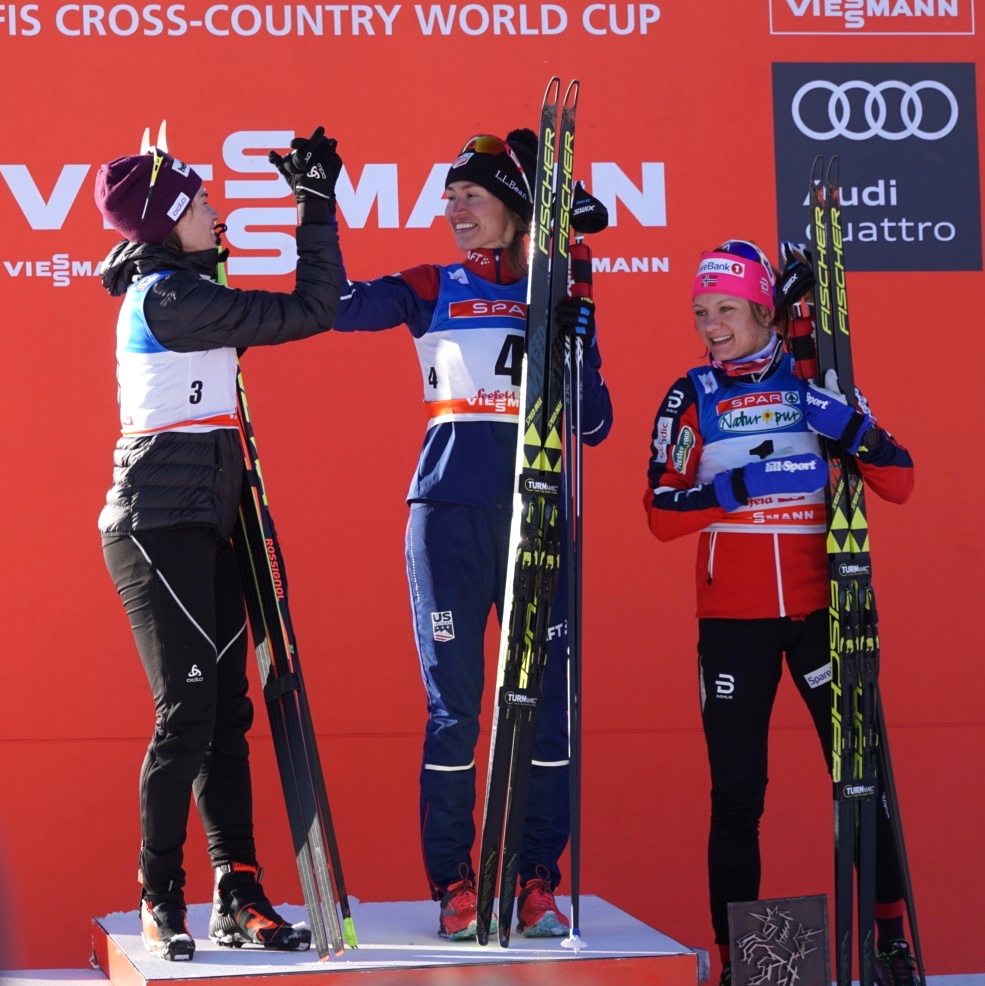
    American Sophie Caldwell (c) and Switzerland’s Laurien van der Graaff high-five after tying for first in the women’s 1.3 k freestyle sprint on Saturday at the World Cup in Seefeld, Austria. Norway’s Maiken Caspersen Falla was next across the finish line for third place. (Photo: Garrott Kuzzy / LumiExperiences.com)

    SEEFELD, Austria — By the time the women’s finalists toed the start line, fans lucky enough to find a spot directly against the fence lining the World Cup 1.3-kilometer freestyle sprint course on Saturday showed signs of sunburn on their cheeks. The Seefeld sun was high and bright, but not the only one radiating on the Tirol ski trails.

    U.S. skier Sophie Caldwell found Seefeld treating her well. And she herself was on the strike.

    She started the day by qualifying for the heats in fourth, 1.84 seconds behind top women’s qualifying time of 2:21.44 posted by Norwegian Maiken Caspersen Falla. Heat selection came next. Caldwell opted for Heat 1, knowing that she had a fair chance of running up against Falla in that quarterfinal.

    The move was gutsy. Falla has 14 World Cup sprint victories. She was last year’s world champion in Lahti, Finland. Falla also has an Olympic gold medal from the 2014 Olympic Winter Games in Sochi, Russia. Both those events were in freestyle; Saturday’s discipline as well.

    But Caldwell wanted to be in the fast heat, even if it had the potential of knocking her out.

    “She kind of guessed when she selected quarterfinal 1 that Maiken would also go in quarterfinal one .. that was part of the strategy,” U.S. Ski Team Head Coach Chris Grover told FasterSkier in person after.

    “Maiken and I chose the first quarterfinal,” Caldwell told FasterSkier. “I knew we were going to have fast times throughout the day and I had a good chance of being lucky loser.”

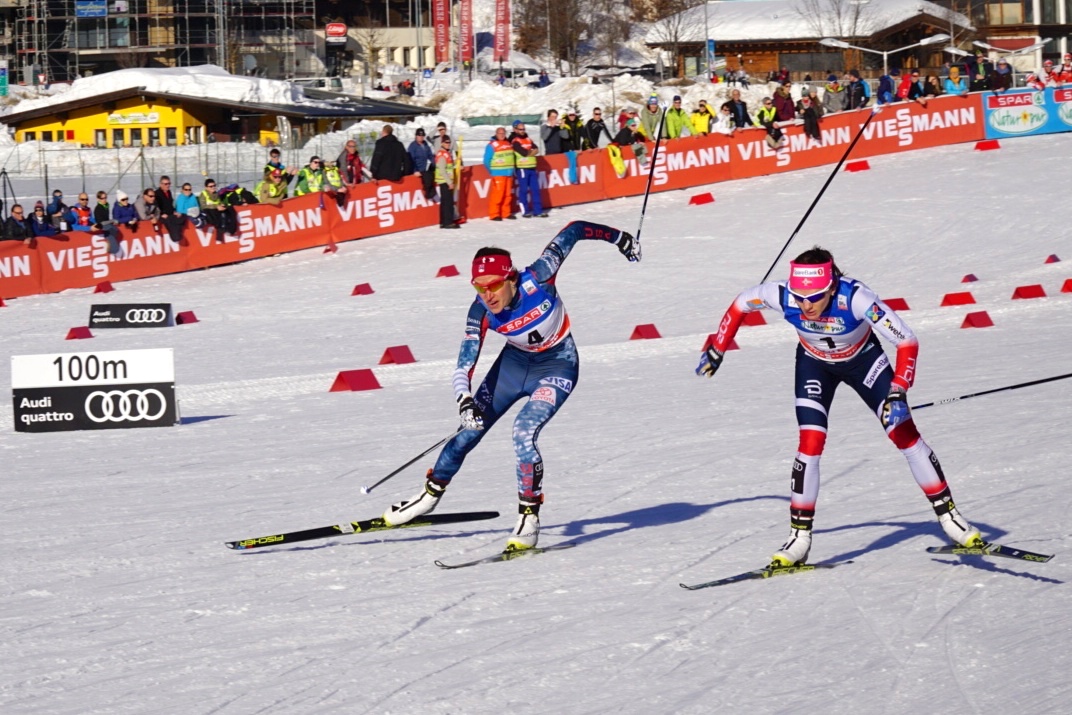
    American Sophie Caldwell (l) and Norway’s Maiken Caspersen Falla (r) contested for the win in both their quarterfinal and semifinal. Falla won the quarterfinal while Caldwell won the semi. Ultimately, Caldwell placed first in the final, tying Switzerland’s Laurien van der Graaff (not shown) while Falla placed third overall. (Photo: Garrott Kuzzy / LumiExperiences.com)

    From the start of their quarterfinal, the first of five, the American not only hung with Falla, she pressured her. Caldwell skied in second just behind the Norwegian as they approached the finish, where Falla outlunged Caldwell by 0.8 seconds to win the heat.

    Both automatically advanced to the semifinal, and faced off once again in the first semi. This time through, the 27-year-old U.S. Ski Team member was even more ready.

    After skiing in second behind Falla, also 27, into the final 100-meter stretch, Caldwell made her move around the Norwegian with 50 meters to go. The two once again lunged for the line. Caldwell emerged victorious, crossing the semifinal first in a time of 2:18.88, this time 0.16 seconds ahead of Falla.

    “She’s an amazing skier and an amazing skier to follow,” Caldwell said of Falla. “My goal was to follow her all day long.”

    The two were headed for the final together. Their fast semifinal also produced two lucky losers, Switzerland’s Laurien van der Graaff and Sweden’s Linn Sömskar.

    From the second semifinal, another American had qualified for the final, Sadie Bjornsen, along with Norway’s Kathrine Rolsted Harsem. Until Saturday, Bjornsen had never qualified for a freestyle sprint. That hadn’t stopped the American from skiing aggressively to the win in her quarterfinal and then place second in her semifinal.

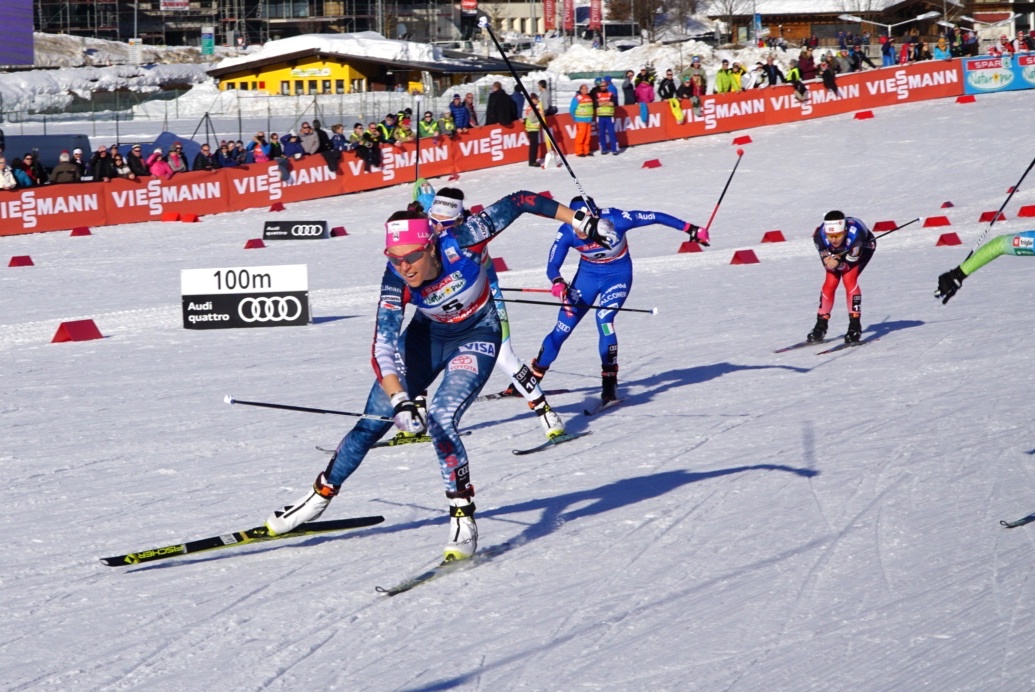
    American Sadie Bjornsen racing toward the finish of her semifinal with 100 meters to go. She ended up second, 0.4 seconds behind Norway’s Kathrine Rolsted Harsem in first. Both advanced to the final, where Harsem placed fourth and Bjornsen sixth overall. (Photo: Garrott Kuzzy / LumiExperiences.com)

    “My coach Erik Flora is here … we had a talk and basically he said, ‘Sadie, it never works when you try to do tactics, so just go as hard as you can and attack where you can and don’t try to play anything out there; just go,’ ” Bjornsen reflected. “So, that’s kinda what I was going with today.”

    Two Norwegians, two Americans, one Swiss skier and one Swede then lined up for the women’s final on Saturday. At the sound of the gun, Falla surged to the front. Caldwell shadowed her in second, which was part of the plan.

    “For the ladies, the course was so short that you wanted to stay in the front,” Grover said. “If you ended up towards back…you had to do a lot of work to get back up to the front.”

    Just behind Caldwell and Falla was van der Graaff skiing just a bit to the outside. Harsem, Bjornsen and Sömskar were next in line through the course’s first uphill and corner back toward the stadium.

    Tuck-skating the final section of the first downhill and powering into the next uphill, Falla seemed to see the spot as an opportunity to distance herself from the field. But Harsem and van der Graaff were now poling hard to her left. Caldwell was glued to the back of Falla’s skis, with Bjornsen and Sömskar right behind.

    At the top of the final climb, however, Falla had once again put herself in the lead. Cornering into the final descent, it was Falla, Caldwell, van der Graaff, Harsem, Bjornsen, and Sömskar.

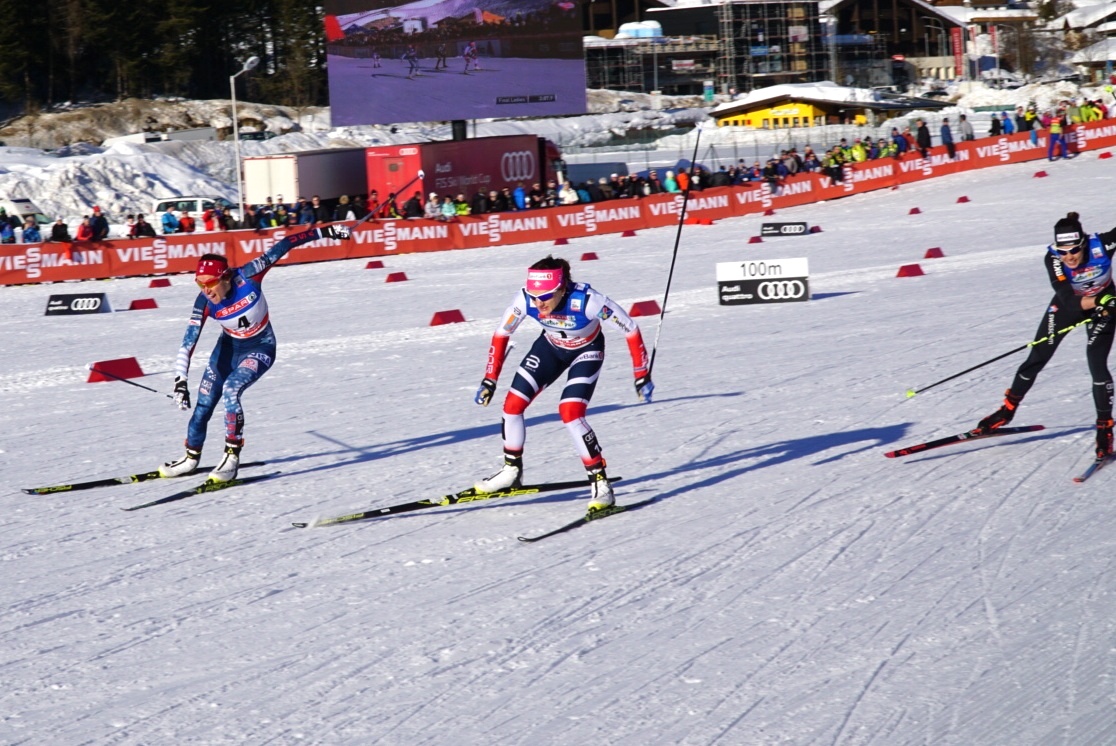
    In the final 100 meters, Falla stayed in the center, Caldwell moved to her right and van der Graaff skate skied to the left. As the three sped toward the finish, Falla was just slightly ahead.

    The three-way battle for first, with (from left to right) American Sophie Caldwell, Norway’s Maiken Caspersen Falla and Switzerland’s Laurien van der Graaff in the women’s 1.3 k freestyle sprint final at Saturday’s World Cup in Seefeld, Austria. Caldwell and van der Graaff ended up tying for the win. (Photo: Garrott Kuzzy / LumiExperiences.com)

    The taste of a non-Norwegian victory, however, was too sweet to let go. Neither van der Graaff nor Caldwell slowed their pace to settle for anything but first place. The Swiss skier and the American crossed together in a photo finish, which was eventually ruled a tie for the win. Their time was 2:18.65. Falla crossed 0.21 seconds later for third place.

    “It’s so great to win again,” said van der Graaff, 30, who earned her first World Cup win earlier this season at the opening stage of the Tour de Ski. “I have told myself to believe that it was possible and now I have two wins this season. I didn’t realize Sophie was so close at the finish. It’s kind of fun to share the podium with her. I have never heard of that happening before.

    The camera at the finish focused on van der Graaff, who initially thought she won outright over Caldwell and Falla. She was televised as the day’s singular winner, and even Caldwell was unaware of her win until she was told ten minutes after the finish by Jeff Ellis, the FIS Cross Country Media Coordinator and Kikkan Randall’s husband.

    “I thought he was messing with me at first,” Caldwell wrote in an email, explaining when she first heard the news.

    After she learned the result was real, Caldwell described he response as “very surprised, but pleasantly so” at learning she and van der Graaf had identical lunge times to the line.

    “I honestly don’t even remember lunging, but I’m glad I did,” she wrote. “It was really fun sharing the podium with Laurien. She’s a great competitor and it’s kind of cool that a tie for first place is possible!”

    American Sophie Caldwell (c) shares the top step of the World Cup podium with Switzerland’s Laurien van der Graaff (l) on Saturday after they tied for first in the women’s 1.3 k freestyle sprint in Seefeld, Austria. Norway’s Maiken Caspersen Falla (r) placed third. (Photo: Garrott Kuzzy / LumiExperiences.com)

    The win is the first one for the U.S. Ski Team this season. It is Caldwell’s third individual sprint podium this season, eighth-career World Cup podium and second individual win. Her first came in the 2016 classic sprint stage of the Tour de Ski in Oberstdorf, Germany.

    While the sprint was the last until a classic sprint is contested at the 2018 Olympics next month, Seefeld is the site of next year’s World Championships.

    Finishing out the women’s final were Harsem in fourth (+1.34), Sömskar in fifth (+1.83) and Bjornsen in sixth (+2.26).

    “I felt really awesome in the quarters,” Bjornsen said. “In the semis, I definitely could feel some fatigue and by the finals. I tried to do what I could, but for sure could feel I was a bit tired, as is everybody, but I was missing that final push that I really needed on that last hill.

    “I was out there learning,” Bjornsen continued. “It’s fun to see it the year before world champs and kind of what to expect.”

    Slovenia had three in the top 10 with Vesna Fabjan in seventh, Katja Visnar in eighth and 22-year-old Anamarija Lampič in 10th. Italy’s Greta Laurent started the day by qualifying second, 1.43 seconds behind Falla, and ended up ninth overall.

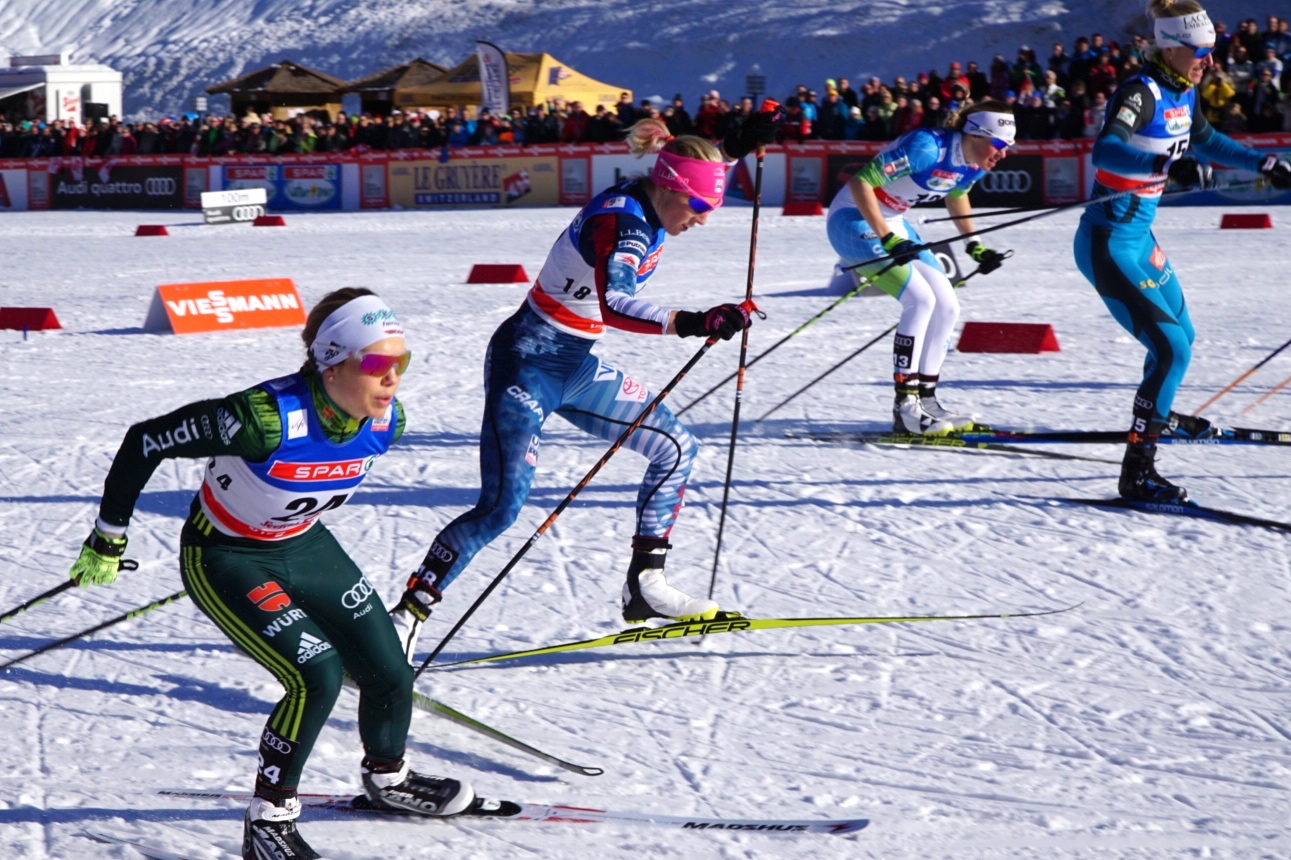
    American Kikkan Randall (second from l) racing with (from left to right) Germany’s Sandra Ringwald, Slovenia’s Anamarija Lampic and France’s Aurore Jean during their quarterfinal of the women’s 1.3 k freestyle sprint at the World Cup in Seefeld, Austria. (Photo: Garrott Kuzzy / LumiExperiences.com)

    U.S. skier Kikkan Randall also qualified for Saturday’s heats with the 18th-ranked time, then finished third in her quarterfinal (1.33 seconds behind Sömskar in first) to finish the day in 14th.

    “Good for Kikkan, descent qualification,” Grover said. “In the heats she kind of felt like she just didn’t ski it tactically super well and kind of got boxed out a bit. Little bit disappointing for her not to go through.”

    After qualifying in 30th (+7.68), Canada’s Dahria Beatty advanced to the fifth quarterfinal, where she finished fourth (1.65 seconds behind Laurent in first). That put her 20th overall, which stood as a season best.

    “I was feeling good today, and I really like this course,” Beatty, of the Canadian World Cup Team, said after. “It’s a good power course. … The heat was a bit frustrating. I felt like I was skiing well, but I just couldn’t make the right move to get around the girls in front of me. I got pushed into that wall, so that really allowed the gap to open up, which was unfortunate because I felt like I was skiing really well today and I could have — if I could have, tactically, been able to move up better and get into that final sprint.

    “But I am happy with today,” she continued. “It’s a good feeling, and I am excited for tomorrow.”

    Sunday features 10/15 k freestyle mass starts in Seefeld. While Diggins did not participate in Saturday’s sprint, she is slated to start Sunday’s 10 k freestyle mass start. After feeling a little fatigued from last weekend’s races in Planica, Slovenia, Diggins decided to take off one of Seefeld’s race days.

    “She wanted to pick one race this weekend to focus on,” Grover explained. “She was feeling a little bit of fatigue from last weekend and chose to go in the 10 k simply because we have a 10 k at the Games and no skate sprint. So she would have been outstanding in there today.”

    While three American women qualified for the heats on Saturday, Ida Sargent was 0.52 seconds outside the top in 37th. The U.S. Ski Team member fell just before the qualifier and sustained an injury, which Grover believed was to her thumb. Following the race, she was taken to the hospital in Innsbruck, located approximately 30 minutes from the venue, for further examination.

    “It was a hard day for Ida. She had a crash right before the qualification and sounds like there is some injury to her thumb. So were still trying to figure that out,” Grover said. 

    Rosie Brennan (U.S. Ski Team) finished the qualifier in 42nd, Emily Nishikawa (Canadian World Cup Team) was 51st, Caitlin Patterson (Craftsbury Green Racing Project) 52nd and Cendrine Browne (Canadian U25 Team) 54th.

    The Canadian women opted out of the past two weekends of World Cup racing and have been training in Livigno, Italy, for the week leading up to Seefeld.

    “We did a training camp in altitude to prepare ourselves for the [Olympic] Games,” Browne explained. “We did the same formula last year for World Champs and it’s something that worked really well for me, so I am confident with my preparation and I am looking forward to tomorrow.”

    Results: Qualifier | Finals

  • Currier Back on US Biathlon World Cup Team

    Currier Back on US Biathlon World Cup Team

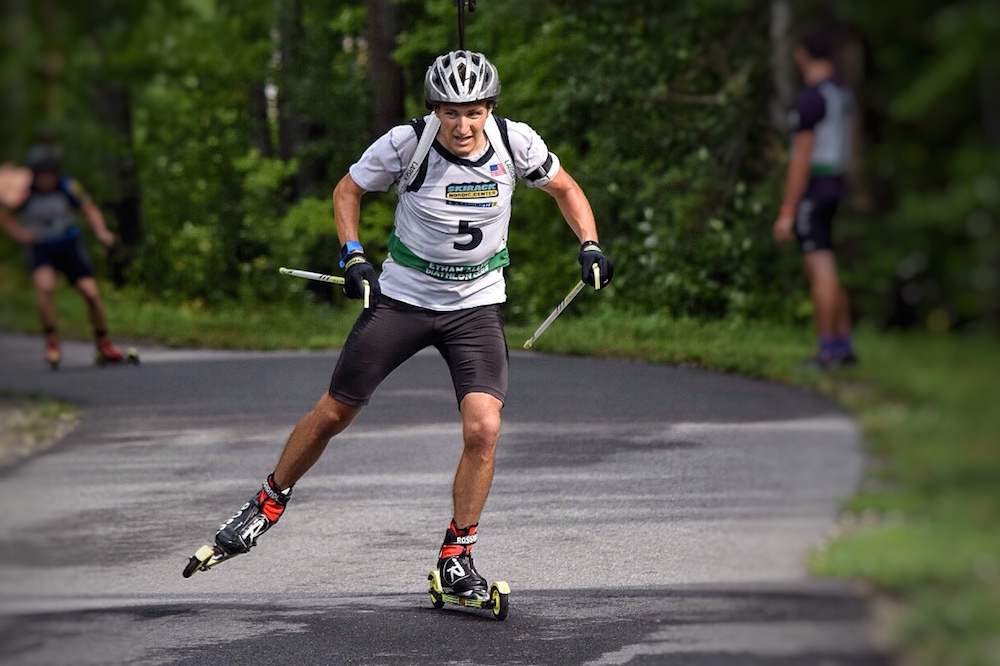
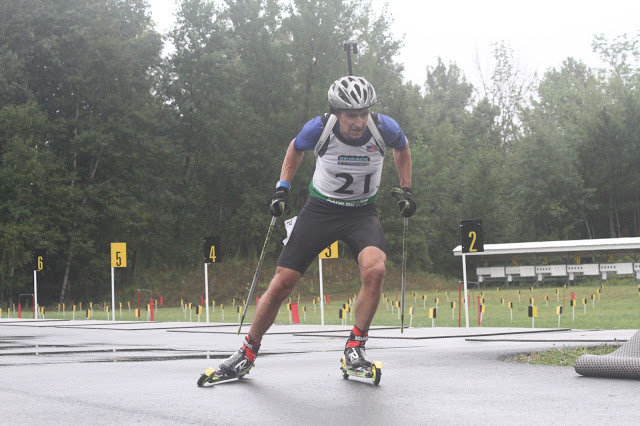
    Russell Currier during the men's mass start at the 2016 US Biathlon National Rollerski Championships on Aug. 14 in Jericho, Vt. (Photo: Katrina Howe)
    Russell Currier (Outdoor Sports Institute) during the men’s mass start at the 2016 US Biathlon National Rollerski Championships on Aug. 14 in Jericho, Vt. (Photo: Katrina Howe)

    “The season that never was continues at its steady pace.” That was how Russell Currier, a three-time national team biathlete and 2014 Olympian opened one of his blog posts in late March of this year.

    According to that month’s post and the two months prior, Currier’s ski career had reached an all-time low. While the two seasons prior (2013/2014 and 2014/2015) involved him racing on the national team and within seconds of top-20 times on the International Biathlon Union (IBU) World Cup, the year after saw Currier relegated to a reserve-athlete status. Within two years he had been dropped from the national team and was watching races he had formerly been competitive in from the screen of his laptop.

    The sudden change wasn’t easy on him.

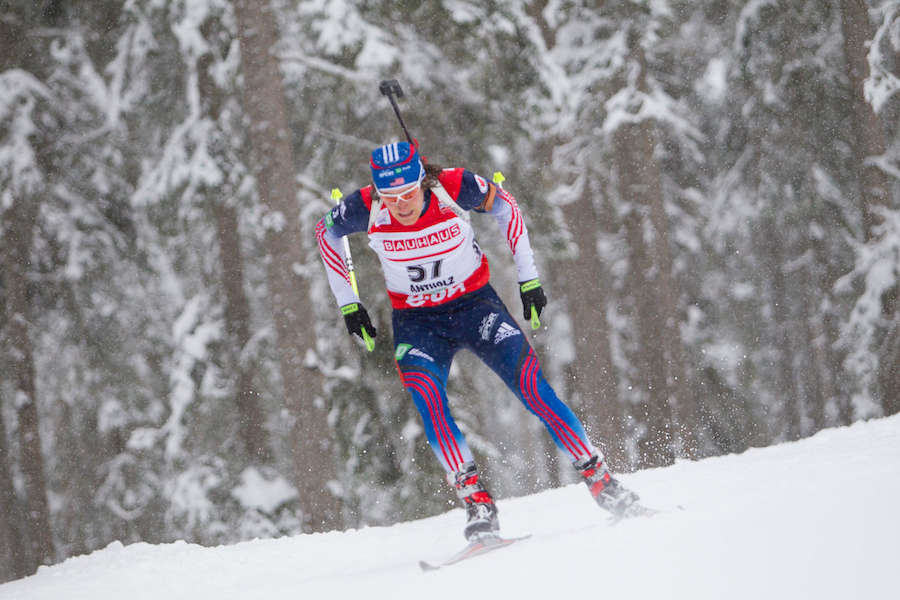
    Russell Currier competing in a World Cup sprint in Antholz, Italy, in 2014. An Olympian in Sochi and a two-time sixth-place World Cup finisher, Currier had his worst season in years and was cut from the U.S. National Team. Paired with funding cuts to his home club, the Maine Winter Sports Center, Currier and his teammates are trying to pick up the pieces. (Photo: USBA/NordicFocus.com)
    Former national-team member Russell Currier competing in a 2014 World Cup sprint in Antholz, Italy. (Photo: USBA/NordicFocus.com)

    Currier, now 29, had spent countless hours, even as an eighth grader, with a headlamp and bounding poles on his hometown hills in Stockholm, Maine, contemplating how many 5:30 a.m. intervals he could fit in prior to school, while his peers contemplated how many more times they could snooze their alarms.

    He had worn the U.S. colors competitively not only at IBU World Cup events, but at the Olympics in Sochi, Russia, as well. But last season, he watched his former US biathlon teammates race against the backdrop of Italy’s Dolomite mountain range, while he looked on from the couch.

    “I went from being convinced I was going to keep racing biathlon to looking for something else whether it was marathon racing or just a whole new career,” Currier said on the phone from Maine. “It was a little tricky trying to find a definitive decision by the end of April.”

    But by the end of April, Currier had reached a decision. Throwing caution to the wind, he decided once more to live, eat and breathe biathlon.

    “…[Here’s] to thrashing it for another round,” Currier wrote in an April blog post. “In the long run, if I win I win and if I lose, I win.”

    “I just wanted to see if I could produce any results or make anything happen again,” Currier said in November of his decision to give biathlon another go.

    According to US Biathlon Chief of Sport Bernd Eisenbichler, Currier’s decision to continue was also encouraged by his national team’s coaches.

    “Russell was unsure in the spring, if he should continue with the sport after a disappointing season 15 – 16,” Eisenbichler wrote in an email. “We had a couple of calls together with him and the coaches and at the end of this discussion process he decided to keep going.

    “It was clear for everyone involved, that some things at the shooting part must change and Russell and his coach at home Seth Hubbard put forward a good strategy and we could provide a few good resources to support that,” Eisenbichler continued in the email. “We know, that Russell has the physical capacity to lock top results at the [World Cup].”

    With that in mind, Currier got back in the training lane. He spent his summer and fall once more in “the County”, exploring Northern Maine’s treasured trails and roads. Involved with the Maine Winter Sports Center since the beginning of his biathlon career, he remained affiliated with the revamped-and-renamed center, now the Outdoor Sports Institute (OSI), despite it shifting its emphasis away from elite teams. Along with its name change, Currier also witnessed a change in financial support when the program drastically reduced its Olympic Development Team funding in the spring of 2015.

    “It was mostly in terms of resources,” Currier explained. “When you have to make a trip happen to qualify for a team and you need the support financially to make that plane ticket and that hotel room, it made things different in terms of needing to be a little more careful. But the core is still there. We still have practices held every few mornings a week and we still have races.”

    Since no senior elite biathlon team for OSI presently exists, Currier spent much of his offseason training on his own or with under-23-aged athletes who joined OSI for the summer. The work appeared to pay off, and by late August, Currier was racing well at this year’s US Biathlon time trials in Jericho, Vermont.

    Russell Currier (Outdoor Sports Institute) competing in the men's mass start sprint race in Jericho, Vermont August 2016.
    Russell Currier (OSI) competing in the men’s mass start sprint race in Jericho, Vermont August 2016.

    In order for Currier to be selected to US Biathlon’s World Cup team, however, he needed to also perform at Biathlon Canada’s time trial races on Nov. 9 and 10 in Canmore, Alberta.

    In Canmore’s two 10 k sprints, Currier placed 10th on Day 1 (the third U.S. man behind Lowell Bailey and Tim Burke, respectively) and seventh on Day 2 (again, the third U.S. male behind Burke and Bailey, respectively, both of which had already prequalified for the World Cup). A day after the races finished, Currier received an email informing him that he had been selected to compete in World Cups 1, 2 and 3 on the IBU World Cup this season.

    “It was a huge relief,” Currier said of being named to the team. “It feels good and it was just a huge relief.”

    His selection includes the IBU World Cup opener in Östersund, Sweden, as well as races in Pokljuka, Slovenia, and Nove Mesto, Czech Republic.

    But in order to race those weekends, Currier must requalify at an IBU Cup prior to the start of the World Cup season, since he did not race any World Cups last season. Currier planned to leave the U.S. this Tuesday, Nov. 22, for the IBU Cup in Beitostølen, Norway, this Friday through Sunday.

    “In order to prevent anybody coming out of the blue that isn’t qualified to be on the World Cup, or shouldn’t be there, they have a standard you have to meet at the IBU Cup just below the World Cup,” Currier explained. “So I have to fly to Beitostølen first, race the sprint race there [on Friday] and meet the standard.”

    Though Currier still needs to requalify for the IBU World Cup, Eisenbichler has complete faith in Currier’s ability to compete against other World Cup regulars, grounding his decision to select Currier based on his recent sprint performances.

    “Just like in the past years, we kept one spot open for the Dec [World Cups] on the men’s side,”  Eisenbichler wrote. “We agreed to take the winner of the roller ski trials (2 races in Aug and 2 races in Oct) and one athlete by discretionary choice to the WC prep camp in Canmore and decide there after the camp is finished, whom of the two we take on to the [World Cups] in Dec. Russell won the trials and Paul Schommer was our discretionary pick.”

    “Both worked very well at the camp and were close in training, but Russell was  stronger than Paul in the two races at the end of the camp,” Eisenbichler continued in the email. “As he was also the winner of the trials races  we decided to pick Russell. on top of the Biathlon complex performance, Russell showed also a higher level at physical side in terms of ski speed.”

    As Currier prepares to pack his bags for Europe and potentially another full World Cup race season, he is relieved to be back on US Biathlon’s World Cup Team, but also more open to adjustment than he’s perhaps been in the past.

    “It’d be nice to stay on the World Cup … and then beyond that it would be nice to make the 2018 team,” Currier said of his goals within the sport. “But after last season, it’s just kind of a day-by-day, month-by-month structure, more so than in the past. At this point, it’s just if I can say I tried, it’s better than nothing. If I try, I succeed.”

    ***

    We asked Currier to give our ’17 Questions for 2017′ a go. Here are his responses:

    1. Biggest change in your life in the last five or so months since the ski season ended?

    I invested in a new, French-made stock.  Since I’ve been using the same stock for the last six years, it has taken some adjustment. My neighbor is a machinist and has helped me out with a lot of custom made parts that supplement the original design. He made me a bladed trigger a while back, which is exactly what it sounds like, an incredibly sharp trigger which creates a major incentive not to jerk the trigger quickly.

    2. Biggest change in your training?

    This will be my lowest year in terms of volume since I was a junior. However, I’ve added in a little more intensity and the overall quality of my training has been better.

    3. Major areas of improvement you’ve seen so far?

    The base for my position in prone is much more stable this year. Tight and consistent groups are possible now. I worked a lot this summer with one of the professional marksmen that has assisted USBA in the past – he’s an Olympic gold medalist, so he has a lot of good advice. Though the sports are fundamentally similar, they are executed at different speeds and heart rates, so there’s a lot of adaptation that has to take place.

    4. Whom you’ve been working closest with this offseason (coaches or training partners)?

    OSI’s (Outdoor Sports Institute is the renamed Maine Winter Sports Center) Seth Hubbard has been a super helpful coach despite the lack of resources for an OSI elite team. Since OSI lost funding it has been a bumpy road. As one of the only places in North America with a fully paved, world class biathlon venue, it’s still a great training ground and is open to more attention

    5. Best trip in the last five months (and why)?

    Canmore, it just felt nice to be back in the training camp schedule and working with the national team again. Plus, it’s great to get on snow as early as October to readjust to the different feel of natural skiing.

    6. Favorite cross-training?

    Running, it’s the most affordable and all terrain form of training there is. There’s a certain ease and ensuing calm in doing something your body was made to do.

    7. Favorite non-athletic activity or pastime this summer?

    Mostly nerd things and it’s finally deer season. Though, I’m down to one afternoon left to see anything in the field.

    8. Song that was your jam this summer?

    We’re Not Going To Make It – The Presidents and Lingonberry was my favorite jam.

    9. All time favorite race moment?

    Maine State meet class B Sophomore year. Very few in Rumford saw that win coming.

    10. First thing you pack in your bag when you leave for Europe?

    Noise cancelling headphones, batteries for headphones, then back up headphones. I think mental recovery is as important as physical recovery, and quiet is a crucial part of that. On the road, that can be hard to come by.

    11. Venue/event you’re most excited to visit this season?

    Nove Mesto, CZ. Nice, closed in and well balanced profile. A course built more for skiers and less for TV cameras.

    12. Who will win the men’s and women’s World Cup titles this year?

    I don’t follow XC enough to make a bold decision and biathlon is too off the wall inconsistent to call.

    13. Biggest sacrifice you feel you’ve made choosing this career path?

    An income.

    14. If you could change one thing about your sport, what would it be?

    No doping, no politics.

    15. What did you have for breakfast this morning?

    A lot. About half of my caloric intake comes from breakfast. I really think highly of breakfast

    16. In 5 years, I’ll be ____?

    About 1/8th of the way done with my education.

    17. In 50 years, I’ll be ____?

  • Norway’s 10,000-Meter Champ, Steira Taking One Step at a Time

    Norway’s 10,000-Meter Champ, Steira Taking One Step at a Time


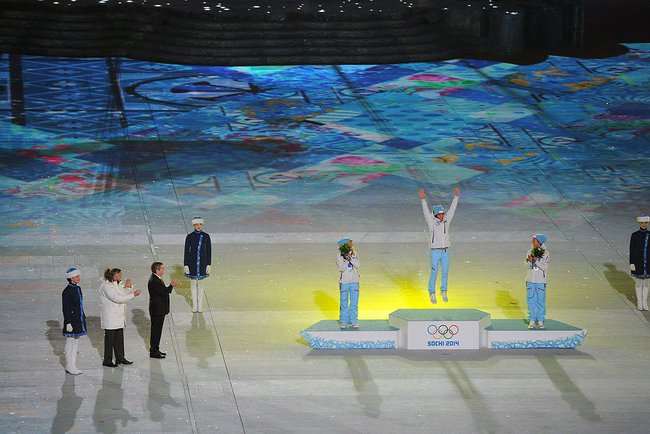
    Kristin Størmer Steira on the podium at the Sochi Olympics closing ceremony with teammates Marit Bjørgen (top) and Therese Johaug, after Norway swept the podium in the women's 30 k freestyle mass start, the last cross-country race of the Olympics. (Photo: Wikimedia Commons)
    Kristin Størmer Steira (r) on the podium at the Sochi Olympics closing ceremony with teammates Marit Bjørgen (jumping) and Therese Johaug, after Norway swept the podium in the women’s 30 k freestyle mass start, the last cross-country race of the Olympics. (Photo: Wikimedia Commons)

    Note: This article has been updated to include Kristin Størmer Steira’s most recent athletic accomplishment as 10,000-meter champion at Norwegian Athletics Championships on Sunday. It was her first time running the 10,000, according to VG.

    ***

    If you asked Kristin Størmer Steira about the ‘R’ word six months ago, the Norwegian national-team member might’ve told you she was considering it.

    A not-so-hot start to her third Olympics had left the then-32-year-old Steira contemplating retirement. Never before had she been outside the top 10 at the Olympics, and in two previous 15-kilometer skiathlons at back-to-back Olympic Games, she placed fourth.

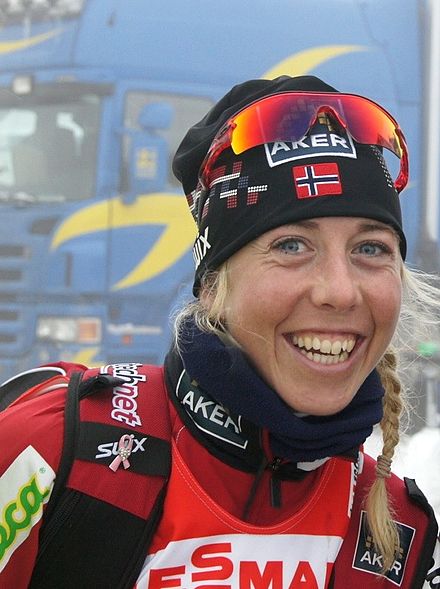
    Kristin Størmer Steira in 2012 (Photo: Wikimedia Commons)
    Kristin Størmer Steira in 2012 (Photo: Wikimedia Commons)

    But in Sochi, she was 23rd — not bad, but not to her standards.

    Her next chance came in the 30 k freestyle mass start, the final race of the Sochi Games.

    In a seemingly seamless race for three Norwegians, Steira placed third behind her two teammates Marit Bjørgen and Therese Johaug, respectively. It was her first Olympic medal in eight individual starts.

    “My Olympics went from the worst competition I’ve ever had to maybe the best,” Steira said on the phone from Norway earlier this summer. “It was a special Olympics for sure.”

    Before the races began, her team had to cope with the sudden passing of teammate Astrid Jacobsen’s brother, a skier whom many of the national-team members were close with.

    “It was a lot of feelings, a lot of emotions,” Steira recalled. “We had a rough time in our team … but in the end, to have a medal in the 30 k … I really, really felt that I worked hard for that and to be able to do it when it counts was a great feeling.”

    She also had the unique experience of standing on the podium at the closing ceremony in front of 40,000 spectators and millions more who watched on TV.

    “It was maybe the best day for being on the podium,” Steira said. “You felt kind of small getting up on stage with the crowd and the stadium. I’ll never experience [that] again.”

    One might ask, why not? With four individual World Championships podiums and 22 World Cup podiums in the last 12 years, and after placing second in the rollerski hill climb at the Blink Festival in Norway earlier this month, how does she know when it’ll be over?

    She doesn’t, but she was thinking about it after Sochi.

    “I was more towards not doing another year and I guess the medal in the 30 k both made me kind of feel [like] I could stop skiing — I managed to do what I planned to do: have a medal individually in the Olympics,” she said. “On the other side, it also makes you so motivated to do another year. I guess when I was thinking about it, it counted both ways.”

    “I want to learn something other than classic and skating and technique, to put my mind a bit on other stuff and also start preparing for the next step — whatever that will be.” — Kristin Størmer Steira, Norwegian national-team member & three-time Olympian

    So here she is, 33 and revving up for the 2015 World Championships in Falun, Sweden.

    “It’s close to Norway,” she said of her decision to focus on Falun and race for another season. “I think it will be amazing [at World Championships] … a lot of people, but I guess in the end mostly the motivation was still there and I love skiing and I wanted to give it one more year, mostly because it was so fun.”

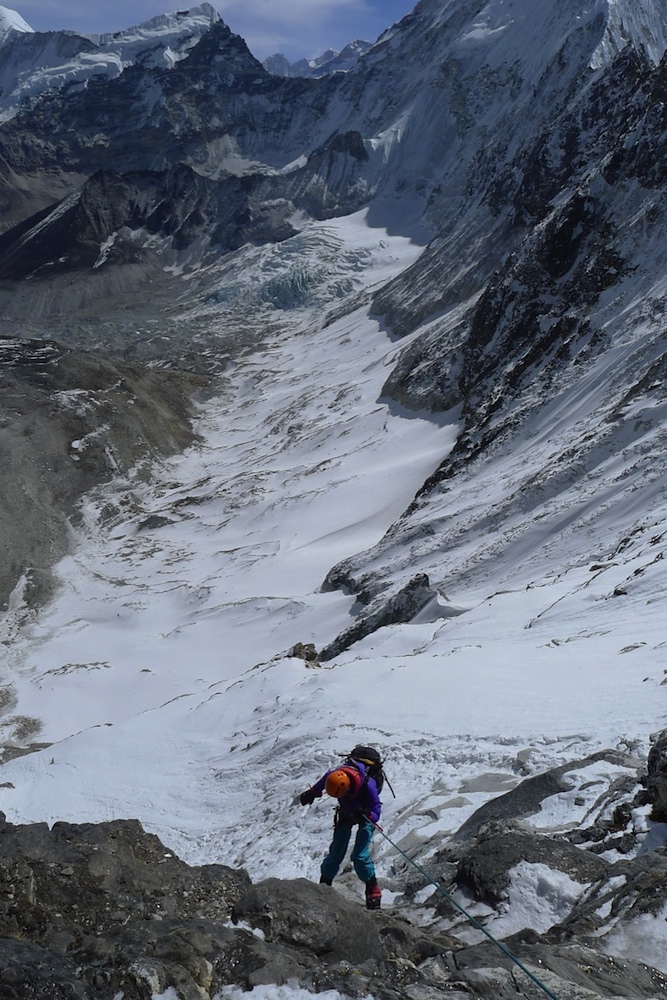
    Kristin Størmer Steira rappels during her three-week trek with Devon Kershaw in the Himalayas in April. (Photo: Devon Kershaw)
    Kristin Størmer Steira rappels during their Himalayan trek. (Photo: Devon Kershaw)

    In late April, she got sick during a three-week excursion in the Himalayas. She left Kathmandu with a ring on her finger, thanks to fiancé Devon Kershaw, but it took her some time to shake the parasite she contracted on her way up the 6,476-meter (21,000-foot) Mera Peak.

    “Early summer was not quite as planned … I still struggled to recover after illness in Nepal,” she wrote on her blog.

    After spending some time with family, “hiking, swimming, grilling,” she worked back into her full-training load before Blink and her team’s training camps in August.

    Steira missed the women’s team’s June camp in Hemsedal because she wasn’t fully recovered, but was back with them in Lillehammer earlier this month. She said they planned to train in Italy in late August-early September, and will be back in Norway in October.

    “We normally have been in Italy in the last week of June-first week of July, but since worlds is not at altitude we decided not to,” she said of the altitude camp.

    On Sunday, she ran the 10,000-meter distance event at Norwegian Athletics Championships and won it by a minute and 46 seconds. Norway’s VG asked Athletics Association Director Ronny Nilsen whether that was embarrassing for the sport.

    “No, it is not,” he said, according to a translation. “Kristin is strong, and there were several good runners that were missing at the starting line.”

    Steira said “it was a pity” that so many top runners didn’t start, but it wasn’t embarrassing. She simply dropped the pack early.

    “Ten-thousand [meters] is a distance that suits a skier well,” she told VG. “But athletes certainly wish there were more people to compete with.”

    After the race, she tweeted that she was celebrating her 10,000-meter debut with coffee.

    “Ten-thousand [meters] is a distance that suits a skier well.” — Steira on her 10,000-meter win in her debut at Norwegian Athletics Championships

    Back to Skiing

    Looking ahead to Falun, Steira couldn’t say exactly what was next — except for no more Olympics.

    “I do not have a long-term plan for my skiing, but I learned from my earlier mistakes saying this is my last year,” she said. “But I don’t think longer than Falun this year of skiing, then we’ll see. It’s a pretty sweet life so it’s hard to stop doing the thing you love the most. I’m getting older and it’s other things I want to do and have a family and stuff so we’ll see. I will not take another Olympic year, that’s for sure.”

    She has a bachelor’s degree in marketing and is starting an MBA program this fall.

    “I’m going part time back to school this year mostly because I feel it’s time,” she said. “I want to learn something other than classic and skating and technique, to put my mind a bit on other stuff and also start preparing for the next step — whatever that will be, I’m not sure.”

    Her focus will be human resources: mostly concerning personal relationships and working in teams.

    “I’m still hoping that Oslo will get the Olympics for 2022, so maybe I’ll get some work for that,” she said. “That could be interesting.”

  • Sochi Can’t Make Money? Who Says? OC Posts $261 Million Profit

    Sochi Can’t Make Money? Who Says? OC Posts $261 Million Profit

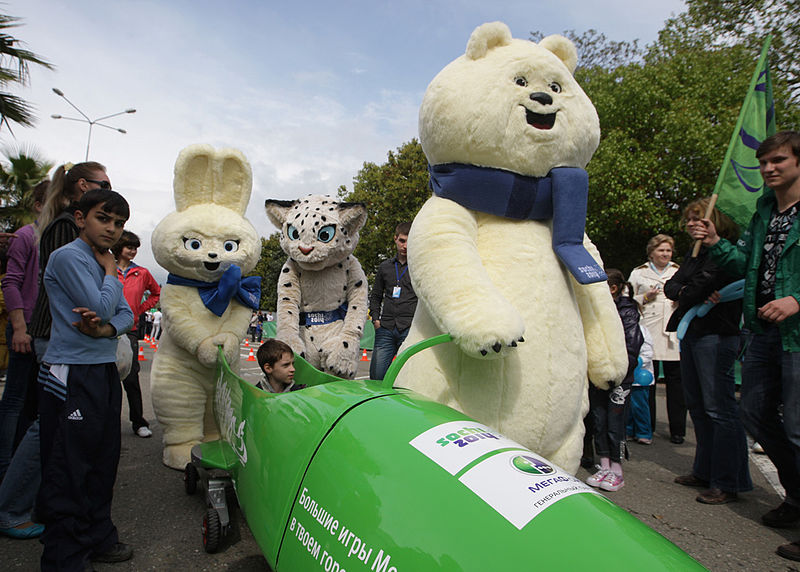
    Bunny, Leopard and White Polar Bear, the mascots of Sochi's 2014 Winter Olympics, seen on the city streets during the 2014 Winter Olympics: 1,000 Days To Go festival. (Photo: Wikimedia Commons)
    The mascots of the 2014 Sochi Olympics: Bunny, Leopard and White Polar Bear, leading up to Russia’s Winter Games in February. (Photo: Wikimedia Commons)

    The Russian hosts of the 2014 Sochi Winter Olympics had their doubters; $51 billion U.S. dollars was simply too much to spend on two-week sporting event, they said. Even though it did come only once every four years, Beijing blew the cost of holding an Olympics out of the water when its organizing committee (OC) spent $40 billion on the 2008 Summer Games.

    For China, it wasn’t a total loss — its OC claimed a profit of over $146 million, according to The Associated Press. Four years later, London spent nearly $15 billion and profited $8 million.

    Sochi’s got y’all beat. Russian organizers announced Thursday that they posted a provisional surplus of $261 million — $119 million higher than the projected figure its organizers announced in April, the AP reported. The Sochi OC said that was a record for any games, higher than the 1984 Los Angeles Olympics, which had a $232 million surplus.

    But what’s the truth behind the numbers? When it comes to Russian bucks, it’s almost like we’re talking about play money. (Can fathom what you’d do with $51 billion?)

    The surplus regards Sochi OC’s operations budget, which was about $2 billion, and not its construction or infrastructure costs, the AP explains. And while making $261 million on a $2-billion investment isn’t too shabby, it isn’t anywhere close to how much the Russian government doled out to the OC, estimated at $420 million in December. Aside from government subsidies, the OC also made money off merchandise and ticket sales, and sponsorships, including those from Russian state-owned companies.

    The reality is, Russia, like many other Olympic hosts, lost money on the deal. But that was to be expected. Regardless, they aren’t quite $51 billion in the hole.

    In a statement, Sochi organizing committee chief Dmitry Chernyshenko said that all the profit, which will be final by the end of the year, would be “oriented towards the development of sport in Russia,” along with providing “a significant sum” to Paralympic sports, plus a lump sum of $17.5 million.

  • Post-Retirement, Crawford Hits the Books Hard, Gets into Calgary’s MBA Program

    Post-Retirement, Crawford Hits the Books Hard, Gets into Calgary’s MBA Program

    Fast and Female founder/president Chandra Crawford retired from competitive-nordic racing this spring after 14 years in the sport (and five more in biathlon). She was recently accepted into the University of Calgary's business school. (Photo: Chandra Crawford/ http://chandracrawford.com/ive-never-met-anyone-so-excited-to-write-the-gmat-before/)
    Fast and Female founder/president Chandra Crawford retired from competitive-nordic racing this spring after 14 years in the sport (and five more in biathlon). She was recently accepted into the University of Calgary’s business school. (Photo: Chandra Crawford/chandracrawford.com)

    Chandra Crawford knows a thing or two about headspace, and as she smiled at the program director for the University of Calgary’s Executive MBA (Master of Business Administration) program as the they reviewed admission requirements, the director told her she’s never met anyone so excited to take the GMAT (Graduated Management Admission Test).

    Born and raised in nearby Canmore, Alberta, Crawford, now 30, finished high school 14 years ago and catapulted into competitive nordic racing. Before that as a junior, she had been a biathlete for five years, but by age 22, she was known on the world scope as one of the most promising cross-country sprinters — a surprise gold medalist in the skate sprint at the 2006 Torino Olympics.

    Chandra Crawford celebrating her gold medal at the 2006 Olympic Winter Games in Torino, one of the many strong performances by North American women in the past decade.
    Crawford celebrating her gold medal in the freestyle sprint at the 2006 Olympic Winter Games in Turin, Italy.

    That moment changed her life forever, defining her career and who she was as a skier.

    Crawford put off education in pursuit of loftier goals in skiing — but after a gold medal, where does one go from there? She went on to win her first World Cup gold in Canmore in 2008 and repeated the feat two months later at a World Cup sprint in Lahti, Finland. She competed at two more Olympics in Vancouver in 2010 and most recently in Sochi, Russia.

    In her blog, Crawford recalled her former teammates and Canada’s gold and silver medalists, Beckie Scott and Sara Renner, saying it would take “ten years to get good.” That kind of commitment is was kept Crawford onboard through the Sochi Games, after she opted to train apart from the national team last spring and spent much of last season playing catchup.

    Gold medals six years ago weren’t enough to secure her international starts this past season without first proving herself, and Crawford went through the process just as any Canadian not on the World Cup Team would — by giving it all she had at trials. In January at the Canadian Olympic trials in Canmore, Crawford won the freestyle sprint to earn her trip to Sochi. She had previously raced two World Cup sprints in December in Davos, Switzerland, and Asiago, Italy, placing 43rd and 45th, respectively.

    Back on the World Cup in February in Toblach, Italy, she finished 34th in the freestyle sprint, just shy of the top 30 needed to make the sprint rounds. Crawford went on to race one event at the Olympics — the skate sprint — where she placed 44th.

    “Looking back on it now, it seems like things never really came around physically,” she said on the phone from Canmore in late April. “How much I had burned out from my tough years — I didn’t really have the time to recover from it.”

    Two seasons ago in February 2013, Crawford had put racing on hold after the pre-Olympic World Cup in Sochi — flying home to Canmore to recover before her last season-long Olympic push. She didn’t race again that 2012/2013 season, and resumed training last spring as a member of the newly formed Team Ninja, a band of four independent female racers in Canmore.

    Chandra Crawford (CAN) during qualification.  Photo: Fischer/Nordic Focus.
    Crawford in what would be the final race of her career, the Sochi Olympics freestyle sprint qualifier, in which she placed 44th. (Photo: Fischer/Nordic Focus)

    While she had always hoped for a comeback story, it didn’t come to fruition. Her energy levels went through highs and lows, something she attributed to thyroid and iron issues, which she explained as a direct result of overtraining.

    “It’s not bad luck, it’s just what happens,” she said of her underactive thyroid, which doctors discovered last fall. “Your endocrine system just gets blown out.

    “The energy was different at different points throughout the normal training and racing year, but I never really got going fast,” she explained. “I was always working hard, but I was never really [skiing] hard. I was maximizing other aspects, like am I doing everything I can technically? … I always came out that I’m going 10 out of 10 on the process. This normally works.”

    Come spring, she was about ready to be finished altogether.

    “I was on the fence if I would continue through Sochi or not,” Crawford said. “I redefined success into my own terms. That’s what enabled me to carry on and ski through Sochi. It was a great feeling, like the feeling you get from the last rep and last international race of a career — everything leading up to it was my last taper or my last World Cup…”

    Crawford was optimistic at the Olympics, and she enjoyed what turned out to be the final race of her career while back with the national team.

    “This year was amazing,” she said. “The less I needed from the team, the more I enjoyed it.”

    “It was a great feeling, like the feeling you get from the last rep and last international race of a career — everything leading up to it was my last taper or my last World Cup…” — Chandra Crawford, on ending her racing career with the Sochi Olympics

    Rosanna (l) and Chandra Crawford on one of their bike outings during the Gold Medal Plates trip last month in Provence, France. (Photo: Rosanna Crawford)
    Rosanna (l) and Chandra Crawford on one of their bike outings during the Gold Medal Plates trip last month in Provence, France. (Photo: Rosanna Crawford)

    Crawford spent the rest of the Olympics cheering on her younger sister, Rosanna, a Canadian biathlete in her second Olympics. There, Rosanna posted her Olympic best of 25th in the 7.5-kilometre sprint.

    “Chandra has been one of the major factors in my career, watching her get her gold medal when I was 18 really helped motivate me to strive for the Olympics,” Rosanna, 25, wrote in an email. “It was always a dream of mine to go but once I saw her go and win it made me realize that if she can then I could too! She has always been my biggest fan and always rooting for me.”

    The sisters recently spent two weeks wining, dining and biking in Provence, France, with Gold Medal Plates (GMP). The foundation auctions exotic destinations as a fundraiser for Own The Podium and to support “Canadian Excellence in cuisine, wine, the arts and athletic achievement,” according to its website. This marked the Crawford sisters’ second-straight trip overseas with GMP; last year they visited Tuscany, Italy. Chandra was on year No. 6 with the program.

    “I feel so lucky to have such an awesome sister that’s taught me it’s ok to be strong and powerful and to follow your dreams,” Rosanna added. “Her work with Fast and Female has also motivated me to be a good role model and know that there are always people looking up to you.”

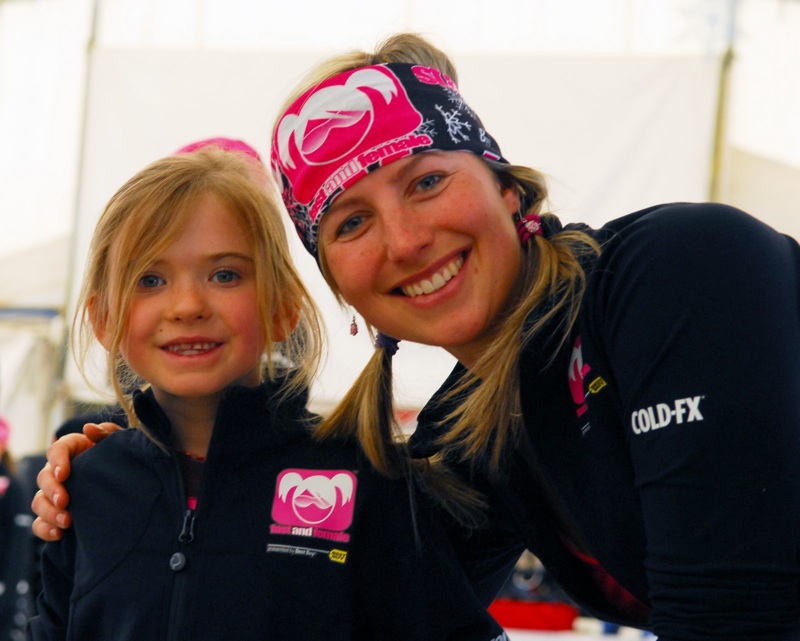
    Nearly nine years ago, Crawford founded Fast and Female, a series of sports-based events designed to empower females ages 9 to 19, with the help of her teammates on the Canadian National Team in 2005. The concept took off and spread throughout the nation by 2007, at which point the program became a registered-nonprofit corporation with a board of directors.  Crawford became president, overseeing the nonprofit’s mission and vision while focusing on her job as an athlete — which Fast and Female championed front and center.

    It wasn’t long before the series caught on the U.S. and other countries overseas. According to Crawford, Fast and Female had 105 ambassadors in 24 sports as of April, and was on track for a record-smashing 3,000 participants this year.

    “Fast and Female really took itself internationally,” she said, pointing out events in Sweden and Norway this past winter, and a presence in Australia. “We’re running with a lot of volunteer-based energy. We’re a really small team based here in Canada with how big we are.”

    Looking forward, she’s like to make the series “more profound,” extending beyond sport experience to working together to “create solutions in the environment,” she said. “I just can’t say enough about the American program and how I learned from everything Kikkan [Randall] and [U.S. women’s coach] Matt Whitcomb and the American team create.”

    Chandra Crawford during a Fast and Female event in 2009.
    Chandra Crawford during a Fast and Female event in 2009.

    Fast and Female celebrates its nine-year anniversary in November. While Crawford will remain president/founder, she’s going to spend the next two years learning how to be a better business leader and generate more revenue for her program moving forward.

    That’s right, Crawford go into Calgary’s Haskayne School of Business, scoring a 540 on the GMAT “with about 25 hours studying math and by being a positive game-day performer,” she wrote in an email.

    “It was so fun to wake up on test day with the exact feeling of a race morning: ‘Today is the day I get to do the thing I prepared for!’ she recalled. “ ‘Right on!’ ”

    In addition to a score of at least 500, she needed 10 years of work experience to get in (without a university degree). Everything she learned with Fast and Female — from brand marketing to relationships — qualified, she explained.

    “It’s going to be extremely challenging to do two years of business school, but I’m ready to get growing way out of my comfort zone and am at a great time in my life to invest in my skills through education,” she added.

    “It was so fun to wake up on test day with the exact feeling of a race morning: ‘Today is the day I get to do the thing I prepared for! Right on!’ ” 

    Her goals with the program include becoming a better leader for Fast and Female and a more-effective motivational speaker for business groups, all while staying open to possibilities “because at least half of the amazing things in anyone’s life could not have been predicted,” she said.

    “It’s great to see Chandra so excited about this next phase of her life,” her father, Glen Crawford, wrote in an email. “I think I can speak for both Louise & myself when I say, as a parent, our biggest priority was giving our 3 children the opportunity to experience many things. We started doing that really early on. I think it was a good move because it seems that with kids, by the age of about 5 or 6, they already know what they like and what they don’t like.”

    The key was choosing activities they had fun with at an earlier age.

    “The other thing that was key was raising our kids in Canmore,” Glen added. “I think Chandra & Rosanna are testament to the fact that if you build facilities, you will train Olympians. Without the ’88 Olympics and the Canmore Nordic Centre, I’m sure our girls would have still gone on to do great things, but it probably wouldn’t have been Nordic ski racing.”

    The owner of his own media-production business, Glen made the following video for Chandra’s retirement party last month, which highlights some of the great moments he shared with her as a cameraman at many of her races.

  • Gaiazova Decides in Scotland: ‘The Time is Right to Leave the Competitive Side of Sport’

    Gaiazova Decides in Scotland: ‘The Time is Right to Leave the Competitive Side of Sport’

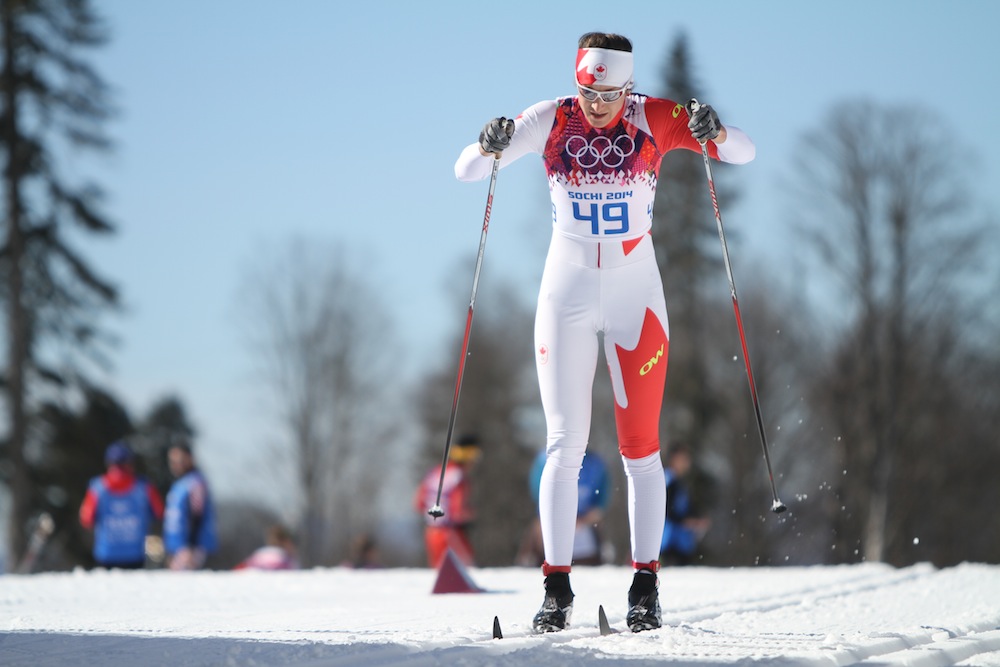
    Dasha Gaiazova (Canadian World Cup Team) racing to 44th in Thursday's 10 k classic individual start at the 2014 Olympics in Sochi, Russia.
    Dasha Gaiazova of the Canadian World Cup Team racing to 44th in the 10 k classic individual start at the 2014 Olympics in Sochi, Russia. After 10 years of World Cup competition and two Olympics, Gaiazova recently decided to retire.

    Two-Time Olympic Cross-Country Skier Daria Gaiazova Calls it a Career

    —World Cup medallist to retire after back-to-back home Olympics— 

    (Press release)

    CANMORE, Alberta — It turns out Daria Gaiazova took her final international cross-country ski race where her career all began – in her native Russia at the 2014 Olympic Winter Games.

    The dual citizen, who along with teammate Ivan Babikov had the rare opportunity to race back-to-back home Games in Canada and Russia, has decided to call it a career. The 30 year old, of Banff, Alta., raced 10 years on the World Cup circuit where she captured two bronze medals.

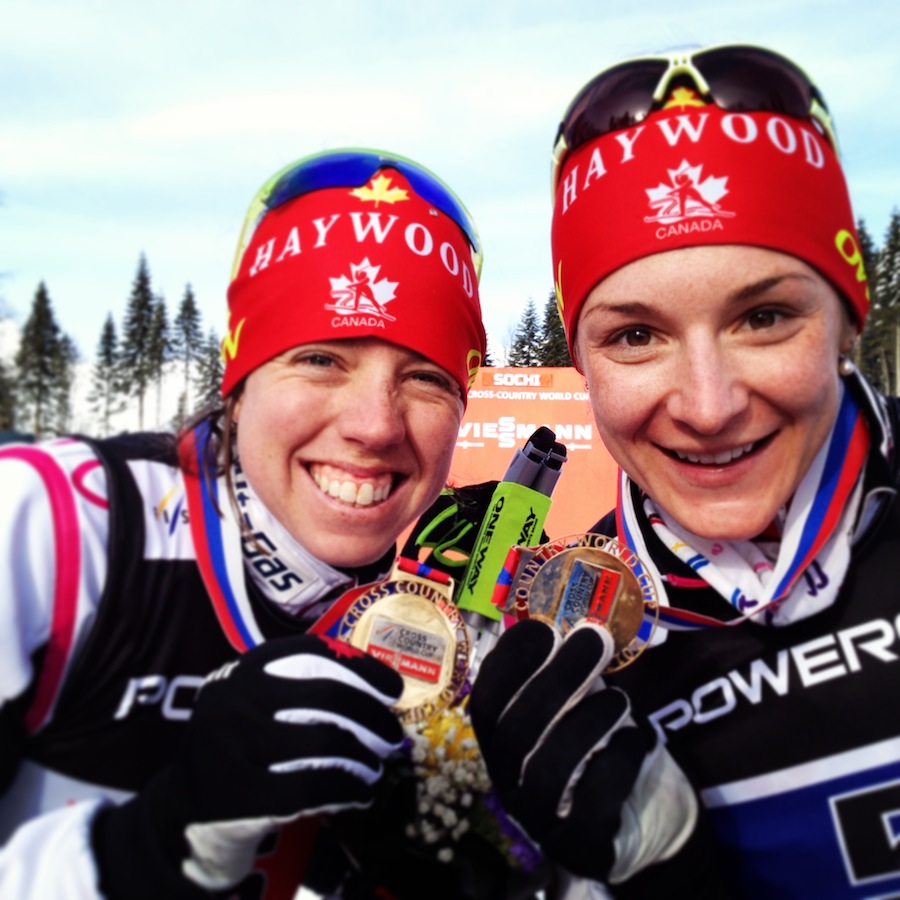
    Canadians Perianne Jones and Dasha Gaiazova celebrate their first bronze of the season, and together, in the Sochi World Cup classic team sprint. (Photo: Chandra Crawford)
    Canadians Dasha Gaiazova (r) and Perianne Jones celebrate bronze in the Sochi pre-Olympics World Cup classic team sprint in 2013. (Photo: Chandra Crawford)

    “I thought I had a little more left in the tank, but having some good discussion with my dad while on a bike trip in Scotland, I realized the time is right to leave the competitive side of sport,” said Gaiazova. “Truly I can’t think of a better way to go out. To have a rare opportunity to race two Olympic Games in my home countries.”

    The top-ranked female skier over the last four years in Canada, Gaiazova twice climbed onto the podium in team sprint races. Her first medal came with Chandra Crawford in Dusseldorf, Germany, in 2010. She then teamed up with Perianne Jones to win another bronze medal at the Olympic test event in Sochi one year out from the Games. Her best individual World Cup finish came in a classic-sprint race in Liberec, Czech Republic in 2013 where she placed fourth.

    “As much as I’d love to race competitively forever, there comes a time when the body says it is time to go,” said Gaiazova. After 10 years of intense training, and living out of a suitcase while competing around the world, Gaiazova is thinking of settling down in Alberta’s Bow Valley Corridor in search of the next opportunity life presents her.

    “The last four years have been nothing short of a grind, and right now I want to take some time this summer and research what I want to do next,” said Gaiazova. “I know one thing for sure is I still want to be involved in sport at some capacity. I love giving back and inspiring our country’s next generation of Olympic and Paralympic athletes. I will take some time and do something that I love.

    “I will miss the countless hours of training alongside the girls and all of my teammates. My team and I have been through a lot in all corners of the planet. I will miss all of the great coaches that have pushed me to be my best, but I will take the precious memories that I have accumulated to the next stage in life. I can’t thank every one enough in the Nordic community for your incredible support. It has been an exciting ride.”

  • Cross Country Canada’s President Richard Lemoine Resigns, Elections This Weekend: ‘I Was Asked Not to Run’

    Cross Country Canada’s President Richard Lemoine Resigns, Elections This Weekend: ‘I Was Asked Not to Run’

    Former CCC President Richard Lemoine (Photo: Richard Lemoine/LinkedIn)
    CCC President Richard Lemoine stepped down from his volunteer position on the Board of Directors two weeks ago. (Photo: LinkedIn)

    After this weekend, there’s going to be a new president/chairman of Cross Country Canada’s Board of Directors after Richard Lemoine stepped down from the volunteer position a few weeks ago.

    “I was asked not to run,” Lemoine explained on the phone Tuesday from Mississauga, Ontario, where he works as a partner with the chartered accounting firm, Lemoine Hyland LLP.

    Acting chair Jim McCarthy, Lemoine’s predecessor who served four consecutive years (two terms) as CCC president/chair from 2008 until 2012, said on the phone Tuesday that Lemoine’s resignation was “not really anticipated, but it happened.”

    “There was a difference of opinions as to how CCC should move forward and he felt he didn’t want to continue under those circumstances,” McCarthy added.

    President of the board since 2012, Lemoine said he chose to resign rather than not be reelected for a second term by CCC’s division chairs and board members at their Annual General Meeting (AGM), an open board meeting, this weekend in Canmore, Alberta. He’ll be in attendance, however, but will no longer hold a position on the board.

    “It really came down to where the board should have influence,” Lemoine said. “We’re a policy board and the model … some people think we should be running under is the Carver model, which has been described as nose in, fingers off.”

    He explained that this system, also known as policy governance, as “something that’s loved by executive directors, but I believe at the end of the day the board is going to be held accountable so they should be more knowledgeable and involved in the day-to-day process.”

    Accountability arrived front and center after the Sochi Olympics, a time in which CCC’s decision makers looked at their athletes’ results and lack of medals and decided it was time for change. In April, CCC hired Tor-Arne Hetland, a Norwegian Olympic gold medalist and former Swiss sprint coach, to help head up its World Cup Team.

    Lemoine said he advocated developing a stronger, domestic-coaching model, while acknowledging there were two sides to any decision and adding, “It’s not a decision for the board to take, but from a policy point of view, we need to make sure that we are preparing our domestic coaches for the top coaching positions.”

    But he and CCC’s Executive Director Davin MacIntosh often did not see eye to eye, Lemoine said.

    MacIntosh wrote in an email that he declined to comment.

    “There have been a number of areas of tension between Davin and I,” Lemoine said. “He was not pleased when I was proclaimed president.”

    There was a fundamental disagreement over what constitutes policy decisions — which the board should oversee — and operations decisions— which the executive director is responsible for, he explained.

    “Certainly post-Sochi I didn’t think the hard questions were being asked,” he added. “For example, I look at what the U.S. has been able to do over the last four years, converting athletes to the World Cup… and I look at that and say we could do better.”

    Yes, Canada’s seen unprecedented success in recent years, Lemoine said, but the nation’s athlete-feeder pipeline is dwindling.

    “We came out of our high-performance meeting this April not being able to fill our spots for training centres and having to decide to stop supporting the Callaghan Valley Training Centre as there weren’t enough athletes to go around,” he said. “Certainly the depth of talent is not what we want it to be … We are generally seeing a drop in retention rates of our athletes once they graduate from high school.”

    He pushed for Canada to fill its World Cup quota and bring the next tier of the best domestic racers over to Europe. With that comes costs, and likely struggles, but Lemoine pointed out that’s how Canada’s Olympic gold medalist Beckie Scott got her start — getting crushed by the competition.

    “You send them to Europe, you support them right, give them the best chances you can, and they see what the difference is,” Lemoine said. “We know our skiers are skiing slower than their European counterparts.”

    When it came to hiring coaches or restructuring the staff, Lemoine said, “that’s definitely getting past to where the board should be.” But he did look at the athlete-development system on the whole, and ask what direction it was trending in.

    “In my opinion we had a horrible Olympics; seventeenth was our best finish,” he said. “So you then ask the question, I like to quote Einstein: [insanity is] if you do ‘the same thing over and over again and expect different results’… Don’t come back with the same team because something’s gotta change. That’s where our executive director thought I was crossing the line.”

    Two weeks ago, Lemoine said the provincial and territorial directors met to consider the situation before the AGM on June 14.

    “They sided with Davin and decided it would be best if I stepped down,” Lemoine said.

    While CCC presidents can run for back-to-back two year terms, McCarthy is the only one who has held the position for four years, Lemoine said. At the request of the provincial chairs, Lemoine agreed to step aside rather than stay at the helm until this coming Sunday, when he would have likely been officially voted out.

    “I know all  of these people; I am going to stay involved in the sport,” he said. “I’m going to be the chief of competition at this year’s trials races for World Juniors/U23 Championships. I would have nothing to gain other than saying it’s going to protect my reputation a little bit … the sport is more important. I learned a long time ago that it’s all about the athletes.”

    According to McCarthy, who served as CCC Ontario chair before becoming president in 2008, he’s known Lemoine for “a dozen years” and observed, “he’s a pretty strong-minded character, works hard, has his own vision of things.”

    “I would have nothing to gain other than saying it’s going to protect my reputation a little bit … the sport is more important. I learned a long time ago that it’s all about the athletes.” — Richard Lemoine, President/Chair of Cross Country Canada’s Board of Directors from 2012-2014

    “The two of us worked well together, but occasionally clashed and … that’s what Richard’s about — he’s made a big contribution,” McCarthy said. “Like all volunteer organizations, it depends inordinately on a relatively small number of volunteers that put out.”

    At the end of the day, however, and on what McCarthy called an ongoing basis, “the executive director is more important to the operations of CCC than the board chairman.”

    In the last few weeks since Lemoine resigned, McCarthy has been filling in as chair, but said he would not be up for another term as president. As of June 4, no candidates had been nominated for the position, but McCarthy said they could be chosen and subsequently elected this weekend. Candidates do not have to be current members of the nine-person board.

    Lemoine’s involvement with CCC dates back to more than a decade ago, where he remains treasurer of the CCC Ontario board. From 2003-2004, he served as a director-at-large under CCC’s former structure and chaired the marketing committee from 2003 until 2005. That year, the structure of the board changed, and Lemoine went on to run three times to be a director-at-large from 2006 to 2009. He didn’t win, but was ultimately appointed to the board after his third failure, he said.

    “Oddly after being rejected three times as a director at large, the same people acclaimed me as president,” he said. “Dave Rees who was also acclaimed as president in 2006 also failed to win a position as a director-at-large at a previous AGM.”

    McCarthy explained that the board is made up of nine people: a chairman, six directors-at-large, one director representing the chairs of the provincial and territorial divisions, and an athlete director, “preferably an active athlete who tries to represent that perspective.” The divisions meet once a year, and the board meets three times annually, including at the AGM. They also check in via monthly phone meetings.

    The board hires and oversees an executive director who’s responsible for the day-to-day running of the organization. The executive director reports to the board “usually by monthly meetings, usually by telephone,” McCarthy said. MacIntosh was hired by CCC in 2009 and will retain his position in the immediate future, McCarthy said.

    Asked about the level of stress within the organization the last few months since the start of a new Olympic cycle, McCarthy said, “I’d say it’s pretty close to the same level of stress [as usual]. Everybody in this business is pretty passionate. People develop strong viewpoints of how things should be done.”

  • “I’m tired of pretending and lies” – Justyna Kowalczyk Reveals her Battle with Depression

    “I’m tired of pretending and lies” – Justyna Kowalczyk Reveals her Battle with Depression

    Justyna Kowalczyk (POL) celebrates her victory in the Asiago, Italy city sprint Photo: Fischer/Nordic Focus
    Justyna Kowalczyk celebrates her victory in the Asiago, Italy city sprint. The 31-year-old skier suffers from depression, which has resulted in several mental breakdowns. The Polish star also dealt with a miscarriage in May of 2013. (Photo: Fischer/Nordic Focus)

    With two Olympic Championships, countless World Cup victories, and limitless admiration from Poland and beyond, Justyna Kowalczyck has led a remarkable life, but even the most remarkable people can suffer from mental illness regardless of the number of podiums they’ve achieved.

    The multiple Tour de Ski victor revealed to Polish news organization, Sport.pl, on June 4th that she has been battling severe depression for over a year. The acclaimed skier also suffered a mental breakdown in May of 2013 as a result of a miscarriage at the time.

    Throughout the past year she has dealt with constant nausea, fainting spells, fevers over 104 degrees, anxiety, and many sleepless nights. Despite many attempts to quell the effects of her depression, including the use of medication, Kowalczyk has yet to find relief.

    Justyna Kowalczyk didn't forget what this felt like, after finishing second in the 30 k classic mass start at the 2013 World Championships in Val di Fiemme, Italy. She went on to win Sunday's Lahti World Cup 10 k classic mass start by more than 23 seconds.
    Justyna Kowalczyk after finishing second in the 30 k classic mass start at the 2013 World Championships in Val di Fiemme, Italy. The Polish skier recently revealed her debilitating fight with depression, which has lasted for over a year.

    The news came as a shock to many of Kowalczyk’s fans as it had appeared that the 31-year-old exhibited a successful season, especially after garnering her second Olympic victory.

    The lack of the ski community’s knowledge involving her condition was not due ignorance or lack of interest. Kowalczyk worked to keep her depression and miscarriage a secret during the 2013/2014 season due to concerns of the stigma surrounding depression and the fact that it was an Olympic year.

    “During all this bad time [I was] trying to keep up appearances. Because I was told that [it was] the right thing to do. I pretended to be normal,” said Kowalczyk in her interview with Sport.pl.

    However, this spring Kowalczyk decided that she was done hiding her illness, as she was “tired of pretending and lies.” Her motivation behind the public announcement came both from a personal desire to stop burying the truth, but also to help eliminate the negative connotation surrounding mental illness.

    “This is also one of the reasons why I decided to tell my story. Because public perception is that depression was a shame… Athlete does not [have] the right to such weakness… Many people see in me a strong girl. They tell me sometimes that [I am] the strongest girl in Poland. If the strongest benefits from the help of specialists, it can and someone else breaks through the shame and benefit either dump the mask and to cleanse,” she said.

    Although she contemplated retirement, Kowalczyk has decided to continue skiing in the 2014/2015 season because she believes that training will help fight her depression. The skier hopes that the constant exercise will support her mental health.

    “It’s not for a great love of the sport that I’m returning… I’m returning to fight for myself.”

  • Done with Skiing Career, Ellefson Becomes the Face of Vail Distillery

    Done with Skiing Career, Ellefson Becomes the Face of Vail Distillery

    The 10th Mountain Whiskey & Spirits team: with partial partner Sylvan Ellefson (c) and owners Christian Avignon (l) and Ryan Thompson. (Photo: Slade Cogswell | 970 Design)
    The 10th Mountain Whiskey & Spirit Company team: partial partner Sylvan Ellefson (c) with owners Christian Avignon (l) and Ryan Thompson. (Photo: Slade Cogswell/970 Design)

    If you see Sylvan Ellefson hoisting a glass of whiskey or bourbon at a farmer’s market this summer, don’t be alarmed. He hasn’t gone off the deep end since retiring from nordic racing earlier this spring; he’s just doing his job.

    At the end of last season, the 27-year-old Ski and Snowboard Club Vail member and Team HomeGrown founder decided he was ready for a change. Born and raised in Vail, Colo., he wanted to stay there, but the income he was reaping as a professional skier wasn’t cutting it. The 2014 Winter Olympics in Sochi, Russia, had been his carrot, enticing him over the last several years (and his career) to train harder, race faster and hopefully make the U.S. Olympic team.

    Sylvan Ellefson (SSCV/Team HomeGrown) at 2014 U.S. Cross Country Championships last week at Soldier Hollow in Midway, Utah. (Photo: Swix)
    Sylvan Ellefson (SSCV/Team HomeGrown) lining up for the 30 k at 2014 U.S. Cross Country Championships at Soldier Hollow in Midway, Utah. (Photo: Swix)

    But it didn’t happen.

    The night before the 30-kilometer freestyle mass start at U.S. nationals in January, a race which Ellefson considered his best shot at proving his stripes for the Olympic team, he wrote himself a letter, which he posted on Facebook when he announced his retirement on March 31.

    “Skiing began on a whim,” it began. “A suggestion from Duncan as something I might be good at. … Here I am, a night out from the biggest race of my entire life. Have I put in enough work already to help get me bid to the 2014 Sochi Olympics? I have no idea…

    “Success is such a subjective thing,” the note continued. “I have to do this for me. As much as I want to do this for everyone else, I have to remember that I am doing this for me because it is what I love. It is my passion.”

    The next day, Ellefson remembered feeling completely relaxed lining up for the 30 k.

    “I knew I was just out there doing what I loved to do,” he said on the phone from Vail last month.

    He won the race by 2.8 seconds over Brian Gregg of Team Gregg/Madshus. It was his first national title.

    Exactly two weeks later on Jan. 22, the U.S. Ski Team named its Olympic squad. Ellefson wasn’t on the list.

    “I’ve never been so anxious my entire life for a phone call,” he recalled. “And then I didn’t get a phone call, I got an email, and then I returned the email with a phone call and I got another email back after that. I got so bummed out about it for a couple days. It took me to read that letter I had written to myself that night before the 30 k to really remember why I was doing it.”

    Sylvan Ellefson (SSCV/Team HomeGrown) pushes off the front with just over 5 k remaining in the men's 30 k freestyle mass start at U.S. nationals at Soldier Hollow in Midway, Utah.
    Ellefson in the lead with just over 5 k remaining in the men’s 30 k freestyle mass start at U.S. nationals in Midway, Utah.

    His had been so concerned with the end goal rather than the process, he said.

    “The reason I skied for so many years is because it’s so fun and I’ve met so many good people, so many good friends,” he added. “… Then it caught back up with me again when I didn’t get selected to the Olympic team and I was so angry for a while and just sad, and just maybe 5 percent relieved that it was over.”

    Ellefson took nearly a month off racing, resuming the SuperTour circuit in St. Paul, Minn., then the American Birkebeiner on Feb. 22, in which he placed 21st. As a mid-season SuperTour leader, he earned World Cup starts in March in Lahti, Finland, and Drammen and Oslo, Norway. In those four World Cup races, he posted a best result of 67th in the Drammen classic sprint.

    “It was good for me to take a little time off after the Olympic selection,” he said. “It was good for me to do things I liked to do — I went skiing and I kind of stopped training for a while and I enjoyed my life here in Vail. I knew I was going to finish out the season as much as I could … I did want to ski a couple more World Cups just because the feeling of skiing a World Cup is pretty awesome. My results weren’t fantastic, but just to be over there and experiencing it was good for me to remind me, and now I miss it again.”

    The Holmekollen 50 k classic mass start in Oslo was Ellefson’s last race. He didn’t finish, and when he began contemplating a trip to Anchorage, Alaska, for the final SuperTour races of the season, Ellefson knew he was ready to hang up his racing boards. Not for good, but for the time being.

    “I chose this life path a long time ago,” he said. “Getting married and knowing that I wanted to live in Vail for the rest of my life, I kind of started realizing this year that in order to do that I had to make life more sustainable here. Unfortunately a skier’s income is hard to pay all the bills with so that kind of slapped me in the face, made me realize that maybe not necessarily an entire withdrawal from the sport, but putting it on the back burner a little bit was probably in the cards if I wanted to continue living here.”

    In contention for an overall SuperTour podium for 2013/2014, he spoke with his coaches Eric Pepper and Dan Weiland about whether he should finish out the season in Alaska.

    “That was kind of the point in which I was like, yeah I want to go to Spring Series because this is what I do at the end of every year — it’s fun, it’s the end-of-the-season races you get to be with all the people you’ve been racing with all year and have a good time afterwards,” Ellefson said.  “Then I kind of had to get out of that mentality and think about whether it actually made sense.”

    If he wasn’t planning on racing next season and wasn’t concerned with improving his SuperTour standing or International Ski Federation (FIS) point profile, it didn’t. And so he made his decision, and now it was time to get to another line of work.

    The Whiskey Man

    The 10th Mountain Whiskey & Spirit Company's lineup (Photo: 970 Designs)
    The 10th Mountain Whiskey & Spirit Company’s lineup (Photo: 970 Designs)

    “… I am a current 10th Mountain soldier who has multiple deployments to Afghanistan and I am extremely proud to contribute to your endeavor. You have paid tribute to the soldiers that have come before and forever persevered their legacy. Thank you and CLIMB TO GLORY!” — Ben Coon, a current 10th Mountain soldier based out of Fort Drum, N.Y., in an email to 10th Mountain Whiskey & Spirit Company. According to The Bourbon Review, Coon will probably be amongst the first to enjoy one of the original batches once they’re released this summer or fall.

    After stepping back from skiing this spring, Ellefson took a job overseeing the property management and service department at his friend’s masonry company, Avignon Stone and Outdoor Living in Vail.

    Sylvan Ellefson while picking up barrels recently in Indiana for the 10th Mountain Whiskey & Spirit Company. (Courtesy photo)
    Sylvan Ellefson while picking up barrels recently in Indiana for the 10th Mountain Whiskey & Spirit Company. (Courtesy photo)

    His days were long — often 7 to 7 — but Ellefson had an end in sight. He was already a partial partner with Christian Avignon, the owner, and Ryan Thompson, one of Ellefson’s high-school soccer coaches, but not in the masonry business.

    Avignon and Thompson, who owns the West Side Cafe in Vail, had been working on creating a craft distillery — the 10th Mountain Whiskey & Spirit Company — for the last two years. The business was homegrown, promising locally sourced whiskey and bearing the name of the 10th Mountain Division, of which Avignon’s grandfather Fred Vetter was a medic in during the 1940s. At the time, the U.S. Army trained at Camp Hale, about 30 minutes away from Vail.

    “The patriotic men of the 10th brought diversity, courage, and hope to the Rocky Mountains when they arrived in the 1940′s to train just a few miles south of what is now Vail,” the 10th Whiskey’s website states. “They were part of the greatest generation of men, wanting to make each day count and each day better than the last. The mentality they had was strong after being shaped from the rigors of mountain warfare, their ego’s humble.

    “The 10th Mountain Whiskey and Spirit Company is an extension of the mountain lifestyle, bringing together the old with the new,” the statement continued. “Generation after generation, men and women alike, all share this same passion, enjoying it for a day, a weekend, a lifetime, or somewhere in between. No matter how long it’s embraced the combination of friends, mountains, memories and spirits, bring people together like no other.”

    Sylvan Ellefson's new business card for 10th Mountain Whiskey & Spirit Company in Vail, Colo.
    Sylvan Ellefson’s new business card for 10th Mountain Whiskey & Spirit Company in Vail, Colo. (Courtesy photo)

    The two founders approached Ellefson late last summer with a proposal, in full support of his racing career, letting him know they’d have a job for him at the distillery later on if he was interested. As Ellefson understood it, he would assume a range of jobs and responsibilities in the early days of the business (including social media, event planning, and merchandise design and ordering), and eventually become the tasting-room manager — “somebody who’s going to meet and greet the people and hopefully cause customers to come back and help create that brand loyalty,” according to Ellefson — at their tasting room in Vail.

    The 7,000-square-foot distillery, where the alcohol is made, would be at a leased space in Gypsum, Colo., about 30 miles from Vail, and Ellefson confirmed both the tasting room and distillery were in place and planning to open mid-summer. As of now, they’re waiting on licensing and all the necessary paperwork to be approved.

    In April, the Kickstarter online fundraiser Ellefson put in place raised nearly $28,000 dollars, well over the company’s $25,000 goal. A day before the campaign ended, he wrote on Facebook that an “Angel donor” pledged $10,000 for a personalized 53-gallon whiskey barrel and bottles containing a whiskey named after the donor.

    While the money Kickstarter raised wasn’t essential for 10th Mountain Whiskey’s development, it’s a good chunk of change toward establishing their business, estimated to cost at least half a million dollars, according to Ellefson.

    “The reason we did the Kickstarter is because we are starting mom-and-pop style,” he said. “We really wanted people, even before we had a product to feel, especially in this small town, that they were a part of something like this.”

    The three faces of the 10th Mountain Whiskey & Spirit Company, including Sylvan Ellefson (l) dressed in corn at Vail's Closing Day. (Courtesy photo)
    The three faces of the 10th Mountain Whiskey & Spirit Company, including Sylvan Ellefson (l) dressed in corn at Vail’s Closing Day. (Courtesy photo)

    The craft distillery will be the first in the Vail area, with another distillery about 45 minutes away in Breckenridge and some smaller distilleries down the valley from Vail, he said.

    “The neat thing about craft distilling is there’s not a ton of competition. If anything it’s more craft distilleries working together to compete against the Jim Beams, the Jack Daniels, the big guys,” he explained. “It’s kind of cool to see a couple craft distilleries help market each other and make craft distilling a cool thing, especially in the state of Colorado.”

    He learned there were more than 250 craft breweries in Colorado, a boom which distillery owners are anticipating will hit their industry. Adding to the hype, there’s a possibility that 10th Mountain Whiskey could be featured in a reality TV show about startup craft distilleries, although Ellefson wasn’t sure of the details.

    “We are a sponsor of the GoPro Games in Vail, CO coming up June 5-8 and will have a tent with all of our spirit accessories including whiskey barrels, rocks glasses, pint glasses, t-shirts, hats, flasks, stainless steel mason jars, etc.,” he wrote in an email.

    Sylvan Ellefson getting some "corn air" at Vail's Closing Day in late April. (Courtesy photo)
    Sylvan Ellefson getting some “corn air” at Vail’s Closing Day in late April. (Courtesy photo)

    And this week, he’s fyling to Kentucky — Bourbon Country — to pick up some barrels and drive them back to Colorado, and plans to post updates about his road trip on Facebook.

    As for the farmer’s market, Ellefson said that’s a possiblity since Colorado allows distilleries to sell liquor from different locations simultaneously (i.e. a tasting room and a farmer’s market).

    “I love whiskey,” he said with a laugh. “You definitely have to know your product so to be able to taste other bourbons and whiskeys … I’d say in the month of April I was a pretty avid whiskey taster.”

    He’s also taken an advanced distilling class to learn about the process, but none of the partners will actually create the product. Thompson and Avignon attended Moonshine University in Louisville to learn the ins and outs of whiskey making, but will hire a master distiller to do the dirty work.

    They plan to purchse a still from Vendrome Copper & Brass Works, which could cost around $150,000 to $200,000 for a 500-gallon tank.

    According to The Bourbon Review, they’ll start off with a corn moonshine, a rye whiskey, a Bourbon, a potato vodka and a sage infused, peach-vanilla cordial.

    And whenever Ellefson’s not promoting the business, he’ll be off enjoying some of what he’s missed over the years, like Colorado hut trips in the middle of the winter and back-to-back-to-back weekends with friends in Moab, Utah. Earlier this month at the Greenland Trail 25 k in Larkspur, Colo., Ellefson placed ninth in 1:48:23.

    “I’ve been pretty excited to start a new life,” he said. “Especially doing it with [my wife] Sarah [who graduated physical therapy school in May], because we’ve never been able to spend a ton of time together. … Even the little times when we get to do these backcountry skinning trips or these little bike trips, we’re just like, man if we could just do this all the time, it would be so fun and so awesome. Now that we’ve been able to do that a little bit, I’m happy that I made the decision that I did.”

    Sylvan Ellefson and his wife, Sarah, await the podium ceremony after Ellefson won the men's 30 k freestyle mass start at U.S. nationals on Wednesday.
    Sylvan Ellefson and his wife, Sarah, await the podium ceremony after Ellefson won the men’s 30 k freestyle mass start at U.S. nationals in January.
  • Not on the U.S. Ski Team List, Brooks Still in the Hunt for International Podiums

    Not on the U.S. Ski Team List, Brooks Still in the Hunt for International Podiums

    Brooks racing to third for APU's second team in the 4 x 5 k mixed relay at U.S. Distance Nationals in late March in Anchorage, Alaska. (Photo: Rob Whitney)
    Holly Brooks locks up third for APU’s second team in the 4 x 5 k mixed relay at U.S. Distance Nationals in late March in Anchorage, Alaska. (Photo: Rob Whitney)

    Holly Brooks isn’t retiring. Some people might assume that because, at 32, they think of her as a U.S. Ski Team veteran with two Olympics in the bag — and she wasn’t listed on the recently published U.S. Ski Team (USST) 2014/2015 nominations.

    She thinks the veteran misconception is funny considering she’s only been on the national team for two seasons. In a way, she’s just warming up.

    On the phone Monday from her cabin in Hope, Alaska, Brooks said that any time someone declines a national-team nomination, or gives their coaches a heads up that they’d like to train and race on their own terms for the upcoming season (like she did this spring), it raises some reactions.

    Holly Brooks, who was first named to the U.S. Ski Team in 2012 at the age of 30.
    Holly Brooks, who was first named to the U.S. Ski Team in 2012 at the age of 30, holding an American flag while awaiting the awards ceremony at the Quebec World Cup in December 2012. (Photo: FlyingPointRoad.com/Proceeds from photo sales go to NNF)

    “[One coach] called and left a message that, ‘Wow, that’s a really bold decision, but we support you,’ ” Brooks said with laugh. “I don’t know that they’re entirely surprised, but at the same time it wasn’t something I was openly talking about last season.”

    She had been thinking about the possibility for some time and brought it up to women’s coach Matt Whitcomb before leaving Europe in March. She hadn’t made up her mind, but wanted to have some conversations about the possibility of training apart from the national team in 2014/2015.

    “[Last] season was definitely my hardest year in a while,” Brooks said. “When I went on this whole role of being an elite skier, I told myself I’d do it as long as I was improving.”

    After making the 2010 Winter Olympics while working as a nordic coach at Alaska Pacific University (APU), she spent the next three years competing and feeling like she was steadily improving. Last season, she trained extremely hard and reflected that might’ve been too dedicated, to a fault. This year, she knew something had to change if she wanted to continue.

    “I feel like when you take your name out of renomination to the U.S. Ski Team everyone thinks that you’re retiring,” she said. “I just want to do it almost a little on my own terms.”

    At the Sochi Olympics in February, Brooks ended the trip to Russia with her career-best Olympic result: 27th in the 30-kilometer freestyle mass start. While a top 30 was something she’d grown accustomed to on the international circuit, it wasn’t the podium or top 10 she continually strived for.

    Ask Kikkan Randall, ask anyone on the U.S. team, she said: being on the podium is fun. All of them are competitive, and at that level, medal contention is always the goal.

    Holly Brooks after placing fourth in the 2014 Engadin Ski Marathon in March in Switzerland. (Courtesy photo/HollySkis.blogspot.com) http://hollyskis.blogspot.com/2014/03/home-sweet-home.html
    Holly Brooks after placing fourth in the 2014 Engadin Ski Marathon in March in Switzerland. (Courtesy photo/Hollyskis.blogspot.com)

    Brooks came frustratingly close at the Engadin Ski Marathon in Switzerland this year. Fourth in the 42 k skate marathon, she had been in the hunt for first with 15 k to go. A momentary lapse in focus sent her crashing to the ground, and ultimately dropped from the pack. It was a good result nonetheless and hardly the end-all to her season, but it reminded Brooks she wanted more.

    “It’s exhilarating being up in the lead pack; that’s something you don’t always feel on the World Cup when you’re not in your top shape,” she said. “Some of these marathons I’d like to go in with a goal of winning. … Not to discount myself, but it’s pretty hard to win a World Cup [and] it’s pretty fun to stand on a podium. I’m excited to have the possibility back in my life.”

    In the World Cup’s red group at the end of 2012/2013, an achievement which helped elevate her to the USST A-team last spring, Brooks fell out of it after the first period of 2013/2014. That left her with some “out-of-pocket expenses,” including some lodging, food and travel (FIS covers travel and several nights of room and board for red-group athletes on World Cup weekends, scheduled around the sprint or distance races a given athlete is in the red group for).

    Originally planning to skip the Tour de Ski and fly back to the U.S. to train in late December, Brooks stayed in Europe to try to boost her World Cup ranking and qualify for the Olympics. She started the Tour and didn’t finish it, but was able to meet the USST’s objective criteria for Sochi.

    In early January, she resumed her plan to take a break and train for two weeks in Park City, Utah. The problem with North American teams on the World Cup circuit, she said, is there’s nowhere to go when you need to get away from the racing scene for a week or two, she said. Even if you’re not competing, you’re still at the race.

    “That’s a tough thing that we’re going to have to address,” she said. “The team has talked about how ideally, if the team had this limitless budget, we’d have an apartment [in Europe] where [members] could go and take a rest.”

    Until the team finds that amount of money or someone opens their home or part-time residence to them, she said it’ll be a challenge they’ll continue to face.

    After getting back up to speed in terms of training and fitness in January, Brooks rejoined the USST in Toblach, Italy, where she scored her first World Cup sprint points of the season (qualifying in 27th and placing 29th overall). From there, she attended the pre-Olympic camp with the team in Seiser Alm, Italy, and went on to compete in three events at the Olympics (15 k skiathlon, 10 k classic and 30 k skate).

    She closed out her season with the World Cups in Lahti, Finland, and Drammen, Norway, just before the Engadin in early March. At the end of the month, she raced in front of a home crowd at SuperTour Finals and U.S. Distance Nationals in Anchorage, Alaska.

    Holly Brooks early in the women's Olympic 15 k skiathlon.
    Holly Brooks early in the women’s Olympic 15 k skiathlon.

    In the final World Cup standings, she ranked 56th in distance, 76th in sprint, and 84th overall (compared to 27th in distance, 43rd in sprint and 35th overall the year before). She spent a few weeks finalizing her decision regarding her plan for next season, and reached out to her coaches before they met to start planning for 2014/2015.

    “It feels funny declining a spot on the U.S. Ski Team,” she said. “I think I may be the oldest person to be named as a rookie … and I worked really hard to be on the team. It feels a little weird to be giving that up, but at the same time … the team in and of itself is fantastic. That’s one of the hard things to step away from … but I’m hoping I can be an honorary member of the team.”

    Very much interested in competing in at least a couple marathons next season, perhaps Worldloppets or Ski Classics (and potentially considering joining a European marathon team — or North American-based one if it existed), Brooks, the 2012 American Birkebeiner champion, didn’t rule out aiming for World Cup starts if they’re available.

    “I need a little bit of time to come up with my ideal schedule,” she said. “I feel like I haven’t quite had time to settle into my home life.”

    USST Head Coach Chris Grover said the decision was entirely hers. “From our perspective, she is invited to every camp that she wants to attend,” he said on Monday. “There will be World Cup opportunities for her; I would not be surprised if she qualified for the [2015] World Championship team.”

    That said, with a 2014/2015 national quota of five distance and five sprint spots for the women (to be shared among six women on the USST), it’s not going to be easy to secure those starts.

    “Caitlin Gregg and Reese Hanneman have the Period 1 spots locked-up,” Grover explained in an email, referring to the female and male Continental Cup (SuperTour) leaders.

    “We may award a start spot at a given World Cup based on the kind of fitness we see in camp this summer and fall, and it will be awarded purely on Coaches’ Discretion,” he added. “We haven’t had the staff resources to cover providing service for invited athletes, so there is a good chance we will ask invited athletes to bring a tech/coach with them. This will be case by case and depends on what the race format is and how many staff we currently have assigned to the WC weekend.”

    While Brooks wasn’t sure how many national-team camps she’d attend (not Bend, Ore., in May, but certainly Alaska in July) and whether she’d pursue World Cups by leading the SuperTour circuit early next season, she knew she hadn’t determined which races she wanted to do — or how she wanted her winter to play out.

    Holly Brooks and Rob Whitney were engaged two days before Brooks' Mount Marathon debut in 2008. (Courtesy photo)
    Holly Brooks and Rob Whitney were engaged two days before Brooks’ Mount Marathon debut in 2008. (Courtesy photo)

    She had spent some 200 days on the road away from Alaska each of the last several years. She was married, hadn’t seen her brother in four years (until recently), and her sister got married last winter. Instead of catching up with family on the phone during airline layovers, Brooks wanted to see more of her loved ones in person, including her husband, Rob Whitney. A former national-team member, Whitney gave Brooks — a self-proclaimed “mediocre” junior and collegiate skier — the confidence to chase a career in professional racing five years ago.

    “He’s been my biggest fan and biggest supporter, but at the same time I think he misses a wife that’s present,” she said. “A funny little analogy that I came up with, it’s a lot like a little deployment. It’s not like war or anything, but you leave for winter and come back. … He’s been the one holding down the fort. I think he’s really excited to spend more time together.”

    With the help of his parents, Whitney has spent much of his time building a 1,600-square-foot, wood-heated cabin in Hope, about a 1 1/2-hour drive south of Anchorage. Reminiscent of her family’s cabin in Snoqualmie Pass, Wash., which Brooks used to ski to and from as a child, it’s already larger than their 900-square-foot home in Anchorage, and Brooks was excited to help him finish it. With three acres and wilderness all around them, she said they plan to build some trails and invite friends and the Ski Team to join them there in the future.

    The upcoming World Championships in Falun, Sweden, remain high on her list, but Brooks said she’d have to see how financing her ski career and associated travel go. She contacted her sponsors informing them of her decision, and hoped they’d stay onboard.

    “I’m hoping that some of my local sponsors still see value in what I’m doing, she said. “I’m going to be able to spend more time in Alaska, and one of my favorite parts about being an elite athlete is being able to give back to the community I live in. If I had to quit skiing and had no sponsorships I’d have to go out and do a traditional job. I wouldn’t have time to do the projects that I’m doing [with the community].”

    Brooks will continue to race for APU and one day, she might consider resuming coaching part time. For now, she’s working on earning a master’s degree in counseling psychology at APU, and is about a third of the way through a hefty 60 graduate credits.

    “I am looking forward to just having more flexibility with my schedule so I’m probably not going to eight training sessions a week,” she said. “Maybe a little more training with Rob. I think it’ll be a combination of what I think I need to do and I can bounce that off [APU head coach] Erik [Flora] and work in some team sessions as well.”

    “She’s a pro,” Grover said. “She, just like the rest of the group, leads by example, trains hard, races hard, is a great competitor — just a positive person and professional athlete. We’ll miss her from the group.”

    Come May 19, when the USST starts its first official camp in Bend, Brooks said she won’t necessarily miss training on snow. But she knows she’ll miss the team.

    “I don’t think it’s really set in that I’m not on the team, but I think on May 19 that will set in,” she said. “I know in advance that’s going to be really hard. I love my teammates …I’ll miss them but I’ll see them in Alaska.”

  • Downing’s Side of the Story: What Happened to Team Dominica in Sochi

    Downing’s Side of the Story: What Happened to Team Dominica in Sochi

    Team Dominica nordic skiers, the oldest Olympians at the 2014 Winter Games, Gary di Silvestri (with flag) and his wife Angelica Morrone (l) at the Opening Ceremony in Sochi, Russia.
    Team Dominica nordic skiers, the oldest Olympians at the 2014 Winter Games, Gary di Silvestri (with flag) and his wife Angelica Morrone (l), and coach J.D. Downing (r) at the Opening Ceremony in Sochi, Russia.

    After the Olympics in late February, FasterSkier published a news blog about an American couple, Gary di Silvestri and Angelica Morrone, that represented the island nation of Dominca as cross-country skiers at the Sochi Winter Games. The post was based on allegations and reports that the couple pulled a fast one in order to get to the Games, and once there, did not compete. 

    We then reached out to their coach, J.D. Downing, who founded the XC Oregon nordic team in Bend, Ore., and is a well-known figure in the US master’s circuit, for his take. Downing’s frustration with the negative coverage his athletes received was apparent. What follows is an article based mainly on excerpts from his thorough response. 

    (Note: In the interest of writing the most-straightforward article, only Downing’s statements that pertained to the  FasterSkier’s news blog were included in this article. In his original email, Downing addressed the issue of taking advantage of a loophole in the rules. A few more excerpts from Downing’s email that are relevant to the first comment on this article have been added under the heading ‘What Exactly is the Problem Here?’)

    ***

    “You have two people that have fallen madly in love with cross-country skiing and the combination of their unbridled enthusiasm and personal resources has spread proven positive benefits far and wide in the worldwide XC ski community.” — J.D. Downing, XC Oregon head coach and Dominca Olympic coach

    “I first had the pleasure to work with Gary and Angelica at the 2005 Oregon Spring Camp,” J.D. Downing wrote in an email. “Shortly after that camp they became supporters of the XC Oregon non-profit under our Friends of XC Oregon program. Gary and Angelica have been two of our many generous donors over the past eight fiscal years.

    “Within the Friends of XC Oregon program, all donors to XC Oregon receive as benefits access to our XC Oregon workouts, camps, and training programs,” he continued. “So in that way I have coached Gary and Angelica for the past eight years. Beginning spring 2013 we mutually increased my time demands beyond the Friends of XC Oregon program to match the pressing requirements for Olympic qualification and the Games itself.”

    What distinguishes di Silvestri and Morrone from the other wealthy donors Downing coaches was that they were attempting to qualify for the Sochi Olympics under the flag of the tiny Caribbean nation of Dominica. Forty-eight and 47 years old, respectively, at the time of the Olympics, Morrone and di Silvestri weren’t quite at the level for qualifying for the U.S. Olympic team, or, for that matter, the Italian Olympic team, as Morrone is Italian-born. (Di Silvestri is from Staten Island and the couple lives in Montana.)

    The Rules

    There are two separate issues on the table — what anyone chooses to think of Morrone and di Silvestri, and what anyone chooses to think of the rules they followed.  Downing wrote that criticism of the rules was being improperly directed at his athletes:

    “If it’s a matter of short versus long-term citizenship that bugs people, then feel free to take appropriate steps with your IOC representatives to suggest an international rule change that requires a certain period of time of holding citizenship before you can represent a country at the Olympics.  

    “If you have a problem with how specific nations legally grant citizenship, take it up with national leaders worldwide for the next Olympics. You know, the people that actually write and enforce laws in various countries.

    “If you have a problem with how specific nations set their national Olympic participation criteria, again, please speak with the specific national leaders in question.”

    Morrone and di Silvestri qualified according to the “B Standard” — nations that do not have any “A-Standard” athletes can still send one male and one female representative of each sport. However, the B-Standard qualification must still be met, which is a maximum of 300 International Ski Federation (FIS) points in order to enter the mid-distance classical races. Dominica had never previously fielded a team at the Winter Olympics, and their B-Standard cross-country ski spots were open.

    “Now there’s been plenty of commentary and opinion about the level of skiing required to meet the Olympic B standard,” Downing continued. “I am perfectly OK with that conversation and if anyone is really bent out of shape about that standard then I’d encourage writing to your FIS and IOC representatives to voice your views. For example, you can argue for lowering the Olympic B standard to an average of 250 or even 200 FIS points. If a tougher ‘standard’ of the Games is your mission, those official entities are the right parties to lobby.

    “But please understand just who you impact versus how little you accomplish by lowering the 300 FIS point average. The list of nationalities eliminated largely would be smaller, poorer, and/or snow-challenged. [The resulting pool of athletes will closely resemble] a typical World Cup race. So you’ll successfully make the Winter Olympics far less inclusive while changing nothing in terms of the overall pros and cons of the Olympic movement.”

    How It Really Went in Sochi

    The Deadspin article quoted in the article by FasterSkier had a great deal of personal criticism for the couple. Downing’s irritation with the negative coverage was apparent, beginning with the coverage of their Olympic experience:

    “[That their Olympic experience was an] un-mitigated disaster is completely true. I take issue with how this Olympic experience was presented. Deadspin clearly painted the health of the athletes with a wide brush of suspicion, derision, mocking, and doubt. FasterSkier itself doesn’t exactly leave readers with an accurate portrayal by claiming Angelica just had a ‘broken nose’ and the sarcasm of Gary ‘didn’t get the memo’ on potentially tainted water.”

    Downing described their untimely predicaments:

    “On Saturday, February 8 Gary woke up with severe abdominal cramps so severe he could not walk nor even stand for more than a few seconds. […] Ultimately he was diagnosed […] as having a serious bacterial gastroenteritis infection. Our best guess was the water in our lodging as the culprit. The symptoms came and went for over a week. In the best of times he could ski, but felt very weak. At the worst, he was back to the day one misery and barely able to walk or stand.

    “That very same morning of Saturday, February 8, Angelica and I were skiing on the race courses before the women’s skiathlon and she had a high speed crash into the fence on the exact same downhill corner of the ‘Red’ course that caused so many problems for many athletes in the early portion of the Games. In fact, the exact location of her crash was precisely where Anders Gloeersen hit the bottom of the same fence in the men’s sprint final and where Marcus Hellner and Sergey Ustiugov collided in the same race.

    “Although the fence you could see on TV footage was padded, the padding ended just shy of the top metal cross bar (it’s a permanent fence). In her crash, Angelica hit her face right on that exposed cross bar which resulted in a heavy craniofacial injury with multiple fragmental open fractures. Most serious initially was the penetrated open crania-cerebral injury where surgeons were worried that bone fragments might enter her brain. She was transported by ambulance [and] quickly admitted to the Intensive Care Unit, and subsequently underwent four surgeries between the evening of February 8 and lasting until February 24.”

    “The medical record regarding this crash provided by the hospital is comprehensive and without dispute. Yet the Deadspin writer actually goes out out of his way to characterize Angelica’s injuries as trivial and Gary’s infection as imagined — and in a bizarre twist insinuates they made it all up for some unspecified reason. Thus he was such a great ‘reporter’ that he supposedly uncovers pointless dirt dating back 30 years ago [including tax-evasion accusations in the Deadspin article], but he couldn’t be bothered to actually get an accurate account of one of the worst injuries to take place at the 2014 Winter Olympics? Even the accounts of Angelica having a ‘broken nose’ are horrifically incomplete in painting the true picture here. […] If you have just a broken nose, it’s painful, but rarely a serious medical emergency. Angelica’s injuries were Intensive Care Unit for the better part of a week serious. Four surgeries serious. In the hospital almost the entire Winter Olympics serious. But apparently not serious enough for accurate reporting. As I’ve already pointed out, the writer never bothered fact checking the medical realities drawing his credibility in all regards into total question.”

    And as for di Silvestre’s illness?

    “For Gary, his Olympic routine consisted of daily trips to the hospital to be with Angelica and dealing with the ups/downs of his bacterial infection. The morning of the men’s 15k (Friday, February 14) the abdominal cramps brought on by his infection returned with a vengeance. Even after the Endurance Village clinic treated him with every cramp-relieving medicine at their disposal, he was barely able to walk from the village shuttle to our wax cabin.  […] it was literally everything Gary could do to make it around the stadium in a vain hope that Angelica could at least see him start (from her hospital bed). [The assertion that he made it] 300 meters is about right and yes, he collapsed off the track (so as not to impede other skiers in any way) before I could run around the stadium to assist him off the field of play.”

    “To top off Gary’s erstwhile Olympic start, his race skis were stolen that afternoon from a credential-only ‘secure area,’ ” Downing added.

    “Accountability in any writing matters. The original Deadspin account openly challenges Angelica was ever severely hurt or that Gary was ever seriously ill. Right there I don’t need any more proof that the writer in question wasn’t interested in honest and factual reporting. I know what happened to these people because I was there every second. The writer didn’t ask me. He didn’t ask the Dominica National Olympic Committee. He didn’t ask the IOC. The medical issues that confronted both Angelica and Gary were not insignificant sidebars. Any writer and any resource that doesn’t can’t get very basic medical facts straight simply cannot be trusted with anything that was alleged.”

    ‘What Exactly is the Problem Here?’

    “It is a fact that Gary and Angelica were hardly the only athletes in Sochi with multiple past or present passports in their name. Multiple examples exist in both XC and biathlon. In several cases the athletes very openly switched national affiliation purely for athletic reasons. In many cases the athletic reasons involved a measure of direct financial gain to the athlete which is most certainly NOT the case for Gary or Angelica.

    “I’m fascinated the vitriol leveled at Gary and Angelica that conveniently ignores the situations where many other athletes (including multiple medalists) gained citizenship for various nations with the clear and often admitted motive of, ‘I’ll get better support or simply have access to the Olympics if I switch to such-and-such country’. I know of no example where any athlete in these many other situations was then subject to the character assassination that Gary and Angelica have been through.

    “Try as anyone might, no valid argument can be made that Gary or Angelica bumped someone else out of the Olympics. There was never going to be a Dominica Winter Olympic Team at all if they didn’t make it. They didn’t take a dime from the Dominica NOC. They covered every Olympic and National Ski Federation expense and would have happily covered more if ever required by FIS, the IOC, or Sochi organizers. The IOC and the Sochi O.C. were openly delighted they were there representing Dominica. So please tell me — what exactly is the problem here?

    “Finally, I can guarantee the world that if there was any other Dominican citizen that really had a serious plan for making the 2018 Winter Olympics — Gary and Angelica would be the first in line to offer support. How many ‘legitimate’ athletes from other nations can say the same?”

    Good People

    Throughout Downing’s email he paints di Silvestre and Morrone as kind, generous, and hard-working.

    “Both Gary and Angelica would have to be among the most impressive examples I’ve ever come across of near-total devotion to a sport. Any age. Any ability. Their work ethic is literally off the charts. More often than not I needed to warn them about working too hard or too much, which is often the case with the most motivated skiers of any age.

    “Over eight years I honestly cannot think of anyone that got to know Gary and Angelica that has not expressed enjoying the positive energy that comes with being around them. But I can document a very long list of clubs, athletes, events, associations, fundraising campaigns, ski retailers, ski industry companies, websites (yes, including FasterSkier) that have all benefited from contributions, expenditures, participation, etc. by Gary and Angelica’s love of cross-country skiing.

    “XC Oregon can document an extensive list of athletes, ski programs, and other worthwhile causes that our program has impacted and supported over the past eight years around the XC world. These positive efforts would not have been possible without the support of donors such as Gary and Angelica.

    “In sum you have two people that have fallen madly in love with cross-country skiing and the combination of their unbridled enthusiasm and personal resources has spread proven positive benefits far and wide in the worldwide XC ski community.”

  • Kowalczyk to Stay in the Game, Train Less, Focus on World Champs

    Kowalczyk to Stay in the Game, Train Less, Focus on World Champs

    Justyna Kowalczyk with her gold from the 10 k classic at the 2014 Winter Olympics in Sochi, Russia. It was her second gold medal and fifth at the Olympics. Kowalczyk recently announced she plans to continue ski racing, but with modifications to her training. (Photo: FIS/NordicFocus)
    Justyna Kowalczyk with her gold from the 10 k classic at the 2014 Winter Olympics in Sochi, Russia. It was her second gold medal and fifth at the Olympics. Kowalczyk recently announced she plans to continue ski racing, but with modifications to her training. (Photo: FIS/NordicFocus)

    It’s not over  ’til it’s over, and as Justyna Kowalczyk announced at a recent Polish press conference, she’s not hanging up the skis yet.

    Her potential retirement at the end of the 2013/2014 season became more plausible when the 31-year-old Polish gold medalist said the Sochi Olympics would likely be her last. She did not finish the final race of the Games, the 30-kilometer freestyle mass start, because of a broken foot she raced on throughout the Games — with pain-numbing injections — and won a gold medal with in the 10 k classic individual start in Sochi.

    Kowalczyk bailed on the remainder of the World Cup season following the Olympics because of her foot injury.

    “The foot comes up, but she still needs a lot of painkillers to train and compete,” Kowalczyk’s Facebook post stated. “It’s time to stop with all these chemicals. Winter time is over.”

    And while she recently told reporters in Krakow that she’s going to continue into next season, Kowalczyk noted she’s going to be more restrained in her training.

    “I decided that I will continue to compete, but on a different basis,” she said, according to FIS. “Sixteen years of training left marks on my body and I need a rest. The training will be aimed for the World Championships in Falun.”

    Her first training camp is scheduled for early August — four months from now — and she plans to train alone or with her club in the meantime.

    “World Cup will not be the main goal next year but training for the World Championships,” she added. “I will be aiming for competitions in classical technique in Falun.”

    Kowalczyk is a two-time gold medalist in classic distance events, and a two-time world champion in skate races: the 15 k and 30 k at the 2009 World Championships in Liberec, Czech Republic. She has five Olympic medals and seven world-championships medals — all in individual events.

  • Canadian Women Stand Together, Reflect on Olympic Experience

    Canadian Women Stand Together, Reflect on Olympic Experience

    The Canadian women's team before the Closing Ceremony in Sochi, Russia: (from left to right) Heidi Widmer, Perianne Jones, Amanda Ammar, Brittany Webster, Emily Nishikawa (Photo: Emily Nishikawa)
    The Canadian women’s team before the Closing Ceremony in Sochi, Russia: (from left to right) Heidi Widmer, Perianne Jones, Amanda Ammar, Brittany Webster, Emily Nishikawa (Photo: Emily Nishikawa)

    KRASNAYA POLYANA, Russia — One by one, the four Canadian women in the 30-kilometer freestyle mass start last Saturday, their final race of the Olympics, walked away from the finish line and into the media corrals, assembling as a unit to be interviewed.

    Without watching the race, one might’ve guessed they missed the relay; that’s how much of a team these women appeared to be.

    Two were teammates on the Alberta World Cup Academy and Canadian Senior Development Team: Emily Nishikawa and Heidi Widmer, both in their first Olympics.

    The other two were independent racers, Amanda Ammar, 28, of Team Ninja, and Brittany Webster, 26, of Team Mito.

    All had finished within seven places of one another in the 30 k finale, with Webster notching the top result of 46th and Widmer, the youngest on the team at 22, placing 52nd. (On Friday, Widmer turned 23.)

    Without the team’s three World Cup sprinters in Perianne Jones, Dasha Gaiazova and Chandra Crawford in the race, the group provided a glimpse of the future of Canadian women’s skiing.

    Each had taken different roads to get there — Nishikawa and Widmer more traditionally through the Olympic Team Trials in January, and Ammar and Webster through an appeals process soon after the trials. The latter two, both former national-team members, were in their second Olympics since semi-retiring from the sport a few years ago. Ammar cited injuries and burnout; Webster had gone to the 2010 Vancouver Games but did not compete, then in 2011, decided her slip in results stemmed from a lack of enjoying the sport.

    Ammar returned to racing in late 2011, Webster in 2012.

    Come the next Winter Olympics, here they were, with two newcomers in Nishikawa, 24, and Widmer as teammates.

    Several members of the Canadian Olympic cross-country ski team get the perfect photo opp at the Olympic rings in Krasnaya Polyana, Russia. (From left to right): Perianne Jones, Amanda Ammar, Heidi Widmer, Brittany Webster, and Emily Nishikawa. (Photo: Emily Nishikawa)
    Several members of the Canadian Olympic cross-country ski team get the perfect photo opp at the Olympic rings in Krasnaya Polyana, Russia. (From left to right): Perianne Jones, Amanda Ammar, Heidi Widmer, Brittany Webster, and Emily Nishikawa. (Photo: Emily Nishikawa)

    Together, the team had its best results of 11th in the classic team sprint with Jones and Gaiazova, 14th in the 4 x 5 k relay with Jones, Gaiazova, Nishikawa, and Webster, and a top individual result of Jones’ 23rd in the freestyle sprint, just ahead of Gaiazova in 25th.

    The 30 k wasn’t a personal best for any of the Canadians, but it was a capstone in their respective careers.

    Aside from her result of 49th, Ammar called it her most memorable part of the Sochi Games.

    “I’m so proud of these girls — I mean 30 k is so hard,” she said, fighting tears while looking at her teammates. “I know we were all a little terrified, maybe, excited, but anyone who does this race is a hero in my eyes.”

    Of her teammates, Ammar said she started the fastest and paid the price. Webster and Nishikawa passed her, and like Widmer, Ammar said that gave her motivation to push harder.

    “A 30 k is just an abundance of walls and when you’re going to hit it you never know,” she said.

    Webster said it was funny because the ended up within places of one another, but didn’t ski together. Only Ammar changed her skis, which she called “a mistake.”

    “They got slower, but so did everyone else’s, I felt like,” Webster said.

    Widmer was hoping the competitor she was skiing with would go in for a fresh pair.

    “I was secretly like, ‘Please change, please change. OK, we’re not changing, we’re gonna do it,’” she recalled. “But my skis were fast, so I was like ‘If they change, I’ll change,’ but mine were faster so I was like … ‘Maybe I’ll just go chill.’ ”

    Widmer went on to beat Croatia’s Vedrana Malec by nearly two seconds in what she called a “slow-motion sprint” to the finish. She had been skiing with Kazakhstan’s Tatyana Ossipova in front of her and Malec behind her for most of the race.

    “The last 5 k, the Kazakh broke me and the [Croatian] chick passed me on the last uphill, and then I passed her back,” Widmer said. “I was like, ‘I will stay in front of her if it’s the last thing I do,’ so that was the sole victory.”

    The four women laughed together, snapped a group photo and hung out under the sunny and warm skies. They were in no rush, despite being indescribably tired.

    After finishing 33 seconds behind Webster in 47th, Nishikawa reflected on her first Olympics.

    “From the start of my first race, the pursuit was an incredible feeling — ‘Oh my God, I’m an Olympian!’ ” Nishikawa said. “It was just really cool to realize, ‘Oh, I’m here,’ and I had a great race that day. I’ve had an incredible time here, so I’m incredibly fortunate and just feel incredibly grateful that I had the opportunity to get three Olympic races in.”

    “The two words that stick out right now are how proud I am and how inspired I am that you get to represent your country and then you get to race against the best in the world,” Widmer said. “That has inspired you to be that much better, come back stronger.”

    Webster praised her teammates after spending three weeks with them at a hotel in the valley town of Rosa Khutor. “It’s been nice to become close to everyone and feel like … for the first time in my entire ski career, I feel we have a great team,” she said. “I’ve never really felt that before.”

    The Post-Olympic Period

    After the Games, some team members, like Gaiazova, went home.

    According to Cross Country Canada, Widmer will join other NorAm leaders, including Andrea Dupont and Alysson Marshall, in the March World Cups, which start this weekend in Lahti, Finland. Jones is the lone woman on the Canadian World Cup team who will be racing there, and Cendrine Browne was also called up for the races based on her results at U23 World Championships.

    While Gaiazova could not be reached for comment, she tweeted on Feb. 23, the day after the 30 k: “Really sad to be going home instead of the World Cup races in Scando. Such is life… @cccski good luck to those racing!!!”

    Head coach Justin Wadsworth said Gaiazova wanted to leave after she was done racing at the Olympics.

    “We did tell her that she’s not welcome on the rest of the World Cup,” he said. “She broke all our team policies and code of conduct.”

    After Gaiazova placed 44th in the 10 k classic, her second of four races at the Olympics, Wadsworth said she had “been out partying” the night before.

    “We had talked about it at our Olympic briefing, that there’s no partying at the Olympic Games [before your races are over],” Wadsworth said, adding that Cross Country Canada had the paperwork to back that contract up. “She’s appealing it.”

    On Feb. 17, Crawford tweeted that she was on her way back to Canmore.

    Since the beginning of the season, there have been indications that this would likely be the last Olympics for Jones, Gaiazova, and Crawford, although when each plans to retire has not been publicly laid out.

    “I will definitely race ’til 2015 at World Champs in Falun,” Crawford told FasterSkier more than a year ago. “It’s just set in my mind as a for sure, but I’ll probably reevaluate after the Olympics the feasibility of another quadrennial.”

    Gaiazova said she’d make a decision after Sochi.

    “When I ski race, I put my 100-percent effort into it, and as long as I’m able to do that and as long as there’s desire and determination I think I would be thrilled and honored to continue,” she said around the same time. “And if my priorities shift and something else comes up or for whatever reason I’m not able to perform at 100 percent then, you know, you sort of reevaluate and see if you want to commit to more.”

    — Seth Adams contributed reporting

    Lahti skate sprint start list

  • Four Years Later, U.S. Nordic Combined Lacks Olympic Fanfare But Comes Full Circle

    Four Years Later, U.S. Nordic Combined Lacks Olympic Fanfare But Comes Full Circle

    Billy Demong (l) with his son Liam and wife Katie after the final competition of the 2014 Sochi Olympics, the 4 x 5 k team event.
    Billy Demong (l) with his son Liam and wife Katie after the final competition of the 2014 Sochi Olympics, the large-hill/4 x 5 k team event in Krasnaya Polyana, Russia.

    KRASNAYA POLYANA, Russia — With the clock ticking away and a competitor from the Czech Republic in hot pursuit, Billy Demong dug deep exactly a week ago in the last nordic combined race of the Olympics, trying to find any extra grit to push him across the line as the anchor leg of the 4 x 5-kilometer team event.

    The U.S. Nordic Combined veteran found it, leaving him gasping for air on the ground at the finish, but when he got up, his team’s result on the video board at the RusSki Gorki Ski Jumping Center didn’t reflect the fairy tale ending many had come to expect from his team.

    The Sochi Olympics hadn’t played out like the 2010 Winter Games in Vancouver, British Columbia. Not even close.

    The jumps hadn’t gone well enough for the four-man U.S. Olympic team — not Thursday or in either of the two preceding individual competitions — at least not to their potential.

    Billy Demong after placing 31st in the 2014 Sochi Olympic individual large hill/10 k, the event which he won gold in at the 2010 Olympics, on Feb. 18 in Krasnaya Polyana, Russia. "There’s certainly some details to look at for sharing and for the future," Demong said after anchoring the U.S. to sixth in the  \team event. "The headspace was right ... I’m thinner than I was in Vancouver, I'm just as strong. Throw the dice another day on a different jump and who knows?" (Photo: Sarah Brunson/U.S. Ski Team)(Photo: Sarah Brunson/U.S. Ski Team)
    Billy Demong after placing 31st in the 2014 Sochi Olympic individual large hill/10 k, the event which he won gold in at the 2010 Olympics, on Feb. 18 in Krasnaya Polyana, Russia. “There’s certainly some details to look at for sharing and for the future,” Demong said after anchoring the U.S. to sixth in the \team event. “The headspace was right … I’m thinner than I was in Vancouver, I’m just as strong. Throw the dice another day on a different jump and who knows?”
    (Photo: Sarah Brunson/U.S. Ski Team)(Photo: Sarah Brunson/U.S. Ski Team)

    Demong got some satisfaction with his best competition jump of the Sochi Games in the large-hill/4 x 5 k team event, but his score of 108 ranked seventh in his group of nine teams. Two of his teammates, Todd Lodwick and Taylor Fletcher, also ranked seventh in their groups, and Bryan Fletcher ranked ninth of the final jumpers.

    Combined, the results on the hill put the U.S. in eighth, 1 minute and 52 seconds behind Germany in first. The Germans started the relay first, 7 seconds ahead of Austria. Norway followed another 25 seconds back in third, then France, the Czech Republic, Japan, and Russia, respectively.

    The Americans started 38 seconds after Russia in seventh and needed to make up a minute and a half if they wanted to come close to the podium. With Demong posting the second-fastest anchor time, the team finished sixth, 2:21.6 behind the German winners and a second ahead of the Czech Republic in seventh.

    “Throw the dice another day on a different jump and who knows?” Demong said after the race. “But the important thing I think as a group is that we were able to overcome any disappointment and kind of rally. Today wasn’t perfect, but I think we all enjoyed ourselves.”

    A year earlier, the same team notched the first-ever U.S. relay medal at World Championships, coming back from a minute deficit in fifth to place third.

    Four years ago, U.S. Nordic Combined made Olympic history with a series of unprecedented performances at the Vancouver Olympics. Johnny Spillane, who retired this past spring, opened the Games with an individual silver in the normal hill/10 k. The four-man team of Spillane, Demong, Lodwick, and Brett Camerota went on to tally another silver in the 4 x 5 k. Two days later in the individual large hill/10 k, Demong became the first U.S. nordic skier to win gold, just 4 seconds ahead of Spillane, who captured his third silver of the Games.

    That is the memory that stands out for Demong, a 33-year-old, five-time Olympian, when he thinks back to the accomplishments and accompanying bliss he and his teammates experienced in Vancouver.

    “Before we got whisked down to the Today Show … [Johnny and I] were sitting in room 406 or whatever … I don’t think we even had a TV in our room,” Demong told reporters after last Thursday’s 4 x 5 k. “It was pretty bleak, except we had five medals sitting on the bed, and it was kind of like, 16 years ago we were sharing the popup camper in your parents’ backyard for a summer. We did it, we’re here. It was that whole thing coming true, the dream beyond dreams.”

    The Sochi Olympics didn’t repeat those memories or create new stories of success to take their place. And while Demong couldn’t put his finger on what exactly went wrong over at these Games, he wasn’t devastated by it either.

    For the U.S., the team event in Sochi took on a new kind of significance, which extended beyond results for a big-picture perspective.

    Lodwick, 37, who became the first six-time Winter Olympian in U.S. history, had returned to his first series of competitions since a training-jump crash in early January sent him back to the U.S. to rehab his shoulder.

    The Sochi relay would be his first race back in nearly two months, and also the last of his career. For Demong, the race would most likely be his final one at the Olympics.

    “I would seriously doubt that I’ll be here in four years in that capacity on skis,” Demong said.

    At the same time, he didn’t rule out competing on the World Cup next season.

    “As of three months ago, I was like, today’s the day, you can ship my skis to Park City or wherever, Lake Placid when this is over,” Demong recalled. “But I’m going to be back [in Europe] and I’m gonna race Trondheim and Oslo [March 6 and 8]. Part of that is to keep some options open for the team, part of it’s for myself. I think my wife and my coach Dave showed me, OK, maybe you can plan for years ahead your entire career, [but] maybe have a little grey area.”

    So that’s Demong’s tentative plan — finish out the World Cup season, “take a deep breath,” then see what his team needs.

    “I’m sure I’ll stay involved in the sport; I may do some racing next year,” he said. “I’m more excited and I think I owe it to the younger guys to see what they need in order to usher in the next group.”

    Taylor Fletcher, a two-time Olympian and the youngest member of the A-team at 23, said it would be difficult to imagine the future without Lodwick and Demong.

    “Billy and Todd and Johnny, they’re gone and honestly that sucks,” he said after skiing the fastest penultimate leg to lift the team from eighth to seventh. “Without them, it’s hard to say, but really, we’ve shown over the years that our team’s capable of putting in the hard work, getting the good results, and it’s just a matter of time.

    “Hell, it might take us a decade, but we’ll get them,” Fletcher added, referring to the team’s medal drought leading up to the 2010 Olympics.

    “We know what to do now. I would say last year was the year that we really figured it out. Bryan got the King’s Cup podium and that seemed like it came easy to him, and last year I got a [World Cup] podium and then we got that World Championships medal.”

    The team has several development skiers that will be looked at to fill the void, including Brett Denney, who nearly made the U.S. Olympic team as the fifth-man out of its four allotted quota. While the Fletchers are the A-team’s only “sure-shot” returners, U.S. Nordic Combined has experienced B-team members in Nick Hendrickson, Adam Loomis and Michael Ward.

    “Hell, it might take us a decade, but we’ll get them.” — Taylor Fletcher, on U.S. Olympic medals

    “I heard several times in 2010 that nordic combined was one of the most exciting events,” Taylor said. “USA Today just rated it the hardest Olympic sport and people know what nordic combined is now, and that’s because of them [Demong, Lodwick and Spillane]. And now it’s my job, Bryan’s job and the rest of the team to kind of keep it there. … I don’t see any rhyme or reason why it won’t be where it is now and even higher. It’s just a matter of believing in ourselves and allowing it to happen.”

    Demong credited team veterans like Lodwick, who won two gold medals at the 2009 World Championships after taking two years off from the sport, for raising the bar way back when.

    Todd Lodwick and his 8-year-old daughter embrace after Lodwick won the Gold Cup U.S. Olympic trials on Dec. 28 in Park City, Utah, to qualify for his sixth Olympics -- unprecedented among U.S. Winter Olympians.  (Photo: Sarah Brunson/U.S. Ski Team)
    Todd Lodwick with his 8-year-old daughter after Lodwick won the Gold Cup U.S. Olympic trials on Dec. 28 in Park City, Utah, to qualify for his sixth Olympics — a first for a U.S. Winter Olympian.
    (Photo: Sarah Brunson/U.S. Ski Team)

    “Nobody does it like Todd,” Demong said. “There’s some really good lessons that I think we’ve all learned from him, a number of which are not traditional athletic lessons, but it’s about finding the right headspace. Todd can have a bad day, and he can write it off and come back out swinging”

    Demong said he learned from Lodwick’s example and even put that into action in Sochi when he struggled individually, placing 31st on the large hill and 24th in the normal-hill competitions.

    “If Todd hadn’t started winning World Cups as an annoying 18 year old to his older teammates, I don’t know where we’d be,” Demong said. “He certainly showed us younger guys the way, and he invested in the team … and he helped us believe that we could do it too. He’s given a lot to this sport over the years.”

    Lodwick fought tears after Thursday’s race, in which he lost one place after Bryan tagged him in seventh and handed off to Taylor in eighth, 20 seconds behind Italy. It wasn’t necessarily the pain in his shoulder, which he said was improving: “It’s getting there. It’s stronger than I ever thought it would be.”

    Rather, it was the fact that he was at his sixth Olympics.

    “I really enjoyed getting up this morning and starting the day off right,” Lodwick said. “The Olympic rings are something that as an athlete throughout my career, you believe in them you see them in different ways. Lillehammer was the most amazing experience to that point and I really had a lot of fun. Going into Nagano, I was way too serious and I didn’t really take in the Olympic Games for what it was all about. Through the years, this being my sixth, I came here with the biggest smile. I came here just taking it in because I didn’t think I was gonna be here.”

    He recalled sitting in an ambulance six weeks earlier, thinking that an Olympic comeback was out of the question.

    “I remember going up to each of my teammates’ rooms and saying, please don’t count me out. They kind of looked at me like, OK, and from the first day I got back from Park City, I was on the treadmill and working my ass off to get to this point to be a team supporter. I couldn’t have gotten there without my teammates and my coaches and [team physiotherapist] Adam Perreault … he’s gotten my shoulder back the most amazing place and I cant thank him enough.”

    Selected by his fellow U.S. Olympians, Lodwick went on to lead more than 200 U.S. Olympic team members as the Opening Ceremony flag bearer on Feb. 7. The next week, he returned to competition for the first time since December and logged half a dozen training jumps in Sochi — the first since his accident.

    Lodwick jumped to 34th on the 106-meter normal hill on Feb. 12, the second-best result after Demong in 31st, then ranked 30th on the 140-meter large hill on Feb. 18. He did not race either days in an effort to let his shoulder heal as much as possible before the team event on Feb. 20.

    There, Lodwick’s jump was the second-best after Demong’s. He started his first race in nearly a month as the U.S. team’s second leg, taking over after Bryan made up more than 50 seconds on the teams ahead of him.

    “You start, the gun goes off and you race, you get tagged and you race,” Lodwick recalled. “I proved probably more to myself than I did to anybody else, that with hard work and a lot of support that anything is possible. First step is to dream big. That’s something that I live by. Anything is possible and I wouldn’t do anything different. The shoulder injury was a blessing. It made me respect this sport and the hard work to getting back, these Olympic Games, just taking everything in.”

    Lodwick reflected on how each Olympic experience was different, and how he’s grown over the last two decades in the sport.

    “Lillehammer [in 1994] was the most amazing experience to that point and I really had a lot of fun,” he said. “Going into Nagano [in ’98], I was way too serious and I didn’t really take in the Olympic Games for what it was all about. Through the years, this being my sixth, I came here with the biggest smile. I came here just taking it in because I didn’t think I was gonna be here.”

    He guaranteed himself a spot by winning the U.S. Olympic Trials on Dec. 28. Less than two weeks later, he crashed in Chaux-Neuve, France, just four weeks out from the Sochi Games.

    While Lodwick soaked up the moment in the mixed zone with reporters, looking up at times with tears in his eyes, Demong caught a glimpse of his wife holding their 3-year-old son, and took an early exit to meet them on the other side of the fence.

    “Liam!” Demong exclaimed.

    “Daddy!” Liam called out.

    Four years ago, Demong proposed to Katie after winning gold in Vancouver, then was chosen to carry the U.S. flag in the Closing Ceremony. In Sochi, his personal journey had come full circle; he had both Katie and his first child cheering him on.

    Team-event results | Complete Olympic results

  • Russia Sweeps for First Time in Olympic History; Legkov Captures Gold in 50 k

    Russia Sweeps for First Time in Olympic History; Legkov Captures Gold in 50 k

    Alexander Legkov (3) after winning his first Olympic medal with gold in the 50 k freestyle mass start on Sunday, the last day of the Sochi Games. He beat fellow Russians Maxim Vylegzhanin (not shown) and Ilia Chernousov (r). Vylegzhanin took silver by 0.7 seconds, just a tenth of a second ahead of Chernousov in third, and Norway's Martin Johnsrud Sundby (1) missed a medal by 0.2 seconds in fourth.
    Alexander Legkov (3) after winning his first Olympic medal with gold in the 50 k freestyle mass start on Sunday, the last day of the Sochi Games. He beat fellow Russians Maxim Vylegzhanin and Ilia Chernousov, who took second and third, respectively, to complete Russia’s first-ever podium sweep at the Olympics.

    FasterSkier’s coverage is made possible through the generous support of Swix.

    KRASNAYA POLYANA, Russia — It was the kind of race Russia had been dreaming of since it won the bid to host the 2014 Winter Olympics nearly six years ago.

    President Vladimir Putin vowed that his athletes would be clean in their home Olympics, and in the leadup to the 2010 Vancouver Games, at least 10 Russians in various sports were disqualified for the use of banned substances. In Vancouver, Russia went on to win three total golds for their worst Olympic showing.

    Sochi had to be different. Putin put it delicately the week before the Opening Ceremony, telling his athletes, “We’re all counting on you.”

    Before the men’s 50-kilometer freestyle mass start on Sunday, the final day of the Sochi Games,  the Russians led the medal count with 28 — 11 golds, 10 silvers and seven bronzes — two of which had come from cross-country skiing, both silver, in the men’s 4 x 10 k relay and men’s classic team sprint. The U.S. ranked second in the standings through Saturday, two medals behind with a total of 27, one medal ahead of Norway.

    As of Sunday, Russia was up to 32 medals — out of reach for teams like the U.S., with 27, and Norway, with 26. That afternoon, the host nation’s golden moment finally came in cross-country skiing, less than a day after biathlete Anton Shipulin anchored Russia to gold in the 4 x 7.5 k relay on Saturday night.

    And the 50 k victory didn’t come easy, or without some serious tactics and a gut-wrenching four-way race for first after five long laps, each of which included a trip to the stadium halfway through.

    Russia’s Alexander Legkov had led the charge — truly turning it up over the last two kilometers to the finish. With a pack of nearly 30 sticking together for the first 45 k of the race, several ambitious hopefuls tried their luck at dropping the field, including Finland’s Lari Lehtonen on the second of five laps, then Michail Semenov of Belarus from around 28 k to 30 k. Finland’s Matti Heikkinen took control from about 32 to 38 k, as another teammate, Iivo Niskanen, tried hard to keep Heikkinen’s pursuers at bay.

    If this was going to be a game of cat and mouse, somebody had to help the little guy get away. Unfortunately for the Finns, the hungriest competitor at the front of the chase pack was Legkov. Four years ago, he had let his first individual medal slip away in the 30 k skiathlon when two Swedes, Marcus Hellner and Johan Olsson, and Germany’s Tobi Angerer bested him.

    Olsson had forged ahead and Legkov reined them back in, but couldn’t quite close the gap in time for the finish.

    Hellner won, Angerer took silver by 2.1 seconds, Olsson was right there in third, and Legkov was another second back in fourth.

    Russia's Alexander Legkov basks in the glory of winning his first Olympic medal, gold in the 50 k freestyle mass start on Sunday at the 2014 Sochi Olympics.
    Russia’s Alexander Legkov basks in the glory of winning his first individual Olympic medal, gold in the 50 k freestyle mass start on Sunday at the 2014 Sochi Olympics.

    No way was he going to let that happen again.

    Olsson led a pack of more than 50 early in the race from about 10 to 15 k. He never made any bold moves, and by 18 k, he was back to 20th, five seconds behind two of his teammates, Anders Södergren and Daniel Richardsson toward the front. Hellner did not race because of illness.

    An hour into race, which started at 11 a.m., three hours earlier than most of the Olympic races in Sochi, the 30 k mark seemed to be the defining moment — as it presented the third opportunity for racers to change skies. Nobody in contention had opted to go in for a fresh pair yet, with the exception of Lukas Bauer of the Czech Republic. Bauer did so at 20 k, and caught back up to the group by 30 k.

    There, Legkov was first over the top of the steep climb before the downhill stadium approach, making a point to lead toward the exchange — and then went in. Most everyone followed him, with the exception of Semenov, Austria’s Bernhard Tritscher and Spain’s Imanol Rojo up front.

    Five kilometers later, Heikkinen had blasted off the front, 22 seconds ahead of the Semenov-Tritscher-and-Rojo trio. Legkov was up to fifth behind them, forging ahead with Norway’s Martin Johnsrud Sundby and American Noah Hoffman over the next lap.

    Legkov kept Heikkinen within range, blowing past Niskanen on the descent into the stadium around 35 k — despite Niskanen’s persistent attempts to stay directly in front of him and slow the pace. Three kilometers later, Legkov and Sundby had shaved eight seconds off the gap to come within 14 seconds of Heikkinen.

    By their next time into the stadium at 40 k, Legkov had caught him, and 2.5 k later, Heikkinen was down to 13th, nearly 9 seconds back. He ultimately placed 15th.

    Sundby and Hoffman followed Legkov as he led them into the stadium for the final opportunity to change skis — which most had already taken advantage of one full lap earlier. They continued down the long descent before the several-kilometer sufferfest back to the top. At the bottom, Legkov again upped the pace in an attempt to break the pack, which included frontrunners like Sweden’s Daniel Richardsson, Legkov’s teammate Maxim Vylegzhanin, and Switzerland’s Dario Cologna.

    In the accordion-like reaction that followed, Cologna was involved with an untimely tangle, where he and another competitor collided, breaking his ski. Unable to find an immediate replacement, Cologna, who had already won two golds at these Olympics (in the skiathlon and 15 k classic) slipped to 27th by the finish.

    “I’m disappointed,” Cologna told reporters. “It was a big chance to get another medal.”

    Hoffman went from 12th to 26th with a broken pole at the bottom of the climb, yet the Russians stayed out of trouble up front.

    Alexander Legkov (3) beats out fellow Russians Maxim Vylegzhanin (not shown) and Ilia Chernousov (r) for gold in Sunday's 50 k freestyle mass start -- the last race of the 2014 Sochi Olympics. Vylegzhanin took silver by 0.7 seconds, just a tenth of a second ahead of Chernousov in third, and Norway's Martin Johnsrud Sundby (1) missed a medal by 0.2 seconds in fourth.
    Alexander Legkov (3) beats out fellow Russians Maxim Vylegzhanin (not shown) and Ilia Chernousov (r) for gold in Sunday’s 50 k freestyle mass start — the last race of the 2014 Sochi Olympics. Vylegzhanin took silver by 0.7 seconds, just a tenth of a second ahead of Chernousov in third, and Norway’s Martin Johnsrud Sundby (1) missed a medal by 0.2 seconds in fourth.

    Legkov led Vylegzhanin up toward the stadium for the final kicker of a climb, with Sundby and another Russian, Ilia Chernousov, right behind.

    On the steepest portion of the hill, Legkov found another gear and launched another attack over the top to continue to lead into the finish. He outlasted the three others for gold, his first individual Olympic medal, by 0.7 seconds in 1:46:55.2. The two other Russians and Sundby battled for silver, with Vylegzhanin edging Chernousov by 0.1 seconds, and Sundby placing fourth another 0.2 seconds back.

    It was Russia’s first-ever podium sweep at the Olympics, and the first time in 78 years that any nation had swept the podium in the 50 k. The race also set a record for the fastest 50 k, surpassing the previous Olympic best of 2:03.

    “This victory is special for me because I became an Olympic champion,” Legkov said in a translated press conference. “I congratulate my teammates on their second and third place — this is very good result.”

    Legkov explained that he hadn’t thought of the potential for a podium sweep before the race, which came a day after the Norwegian women did just that in the 30 k mass start.

    “I thought we could compete for the medals, but when it happened all of a sudden it was a huge success and luck for us,” he said.

    Vylegzhanin won his third medal of the Games after taking silver with Legkov, Alexander Bessmertnykh, and Dmitriy Japarov in the relay a week earlier. On Wednesday, he teamed up with Nikita Kriukov to place second in the team sprint.

    The Russian podium grinning ear-to-ear after Alexander Legkov (3) won gold, Maxim Vylegzhanin (7) earned his third silver in Sochi, and Ilia Chernousov took bronze in the 50 k freestyle mass start, the last race of the 2014 Winter Games.
    The Russian podium grinning ear-to-ear after Alexander Legkov (3) won gold, Maxim Vylegzhanin (7) earned his third silver in Sochi, and Ilia Chernousov took bronze in the 50 k freestyle mass start, the last race of the 2014 Winter Games.

    “I’m happy to make the people happy,” Vylegzhanin said. “Even though we’ve lost in the past, we’ve won now.”

    And just as expected, the crowd erupted, volunteers danced around the Laura Cross-Country Ski Center and nearby biathlon stadiums, and the team celebrated with as much excitement as they’ve shown all week.

    “Russia power, Alexander Legkov, the power of Russia!”  forerunner Sergey Gamuzov, 20, exclaimed.

    “It was wonderful day! This day is celebration in Russia — Man Day!”

    And thus, the timing couldn’t have been better on the closing day of the Olympics, Men’s Day (formally Defender of the Fatherland Day) in Russia.

    Russian Ski Federation President Elana Vyalbe told reporters that while she was confident in her team, she didn’t think that kind of podium dominance was possible.

    “Yesterday lots of people said we will have the podium, but I was thinking it was a joke,” she said through a translator.

    Pleased with her team, specifically Legkov who “proved he is the king of skiing for at least four years,” Vyalbe said their total medal haul didn’t meet the federation’s expectations.

    “We didn’t manage to fulfill our medal plan,” she said. “In sprints, we should have had completely different results.”

    Still, some like Norwegian coach Vidar Lofshus, gave credit where it was due.

    “It was just a magnificent race by the three Russians,” Lofshus said. “I just feel bad for [Sundby] that he didn’t get his medal.”

    “It’s impressive, of course, like when any country sweeps the podium at the Olympics,” Canadian Ivan Babikov said after placing 20th. “It’s amazing, but they are hosting, it’s their Olympics, it’s their course, and they’ve been strong through the whole Olympics. I’m not surprised. Dario crashed at the end and that threw some people off, but those guys were just the strongest at the finish.”

    The Russians’ performances at the Olympics have drawn some skepticism from Canadian Head Coach Justin Wadsworth. He compared Legkov’s skiing on the final climb of his leg of the men’s relay last week to that of Johann Mühlegg, the Spanish cross-country skier who was caught doping at the 2002 games.

    “Pushing that hard the whole relay and then jump-skating that hill is not possible. Period,” Wadsworth said.

    In a press conference after the relay, Legkov declined to address Wadsworth’s allegations.

    But Chris Grover, the American head coach, said he found the Russian performances at the Olympics to be plausible — noting that on Sunday, they were not far ahead of Sundby.

    “To me, they look like they were in good shape, had good skis, and had really smart strategies during the games,” Grover said. “But they were digging deep like everybody else.”

    — Nat Herz & Chelsea Little contributed reporting


    Results

  • Bjørgen Racks Up Third Gold in Sochi; Norwegian Women Complete 30 k Sweep

    Bjørgen Racks Up Third Gold in Sochi; Norwegian Women Complete 30 k Sweep

    Marit Bjørgen celebrates a 2.6-second victory over Norwegian teammate Therese Johaug in Saturday's 30 k freestyle mass start, the last women's race of the Sochi Olympics.
    Marit Bjørgen celebrates a 2.6-second victory over Norwegian teammate Therese Johaug in Saturday’s 30 k freestyle mass start, the last women’s race of the Sochi Olympics.

    FasterSkier’s coverage is made possible through the generous support of Swix.

    KRASNAYA POLYANA, Russia — Wouldn’t it have been fun to be a fly on the wall, or on the headband of one of the three Norwegian women leading the Olympic 30-kilometer freestyle mass start on Saturday?

    The dialogue between Marit Bjørgen, Therese Johaug and Kristin Størmer Steira throughout the three-lap race must’ve been interesting. Who called the shots? Who decided when to lead when? Who directed the charge?

    Then again, it sounded like it was fairly straightforward and a matter of executing a plan that didn’t really need verbal cues. With the three skiing alone for the last 20 k of the race, it was basically like a long training session. If anything, the chatter was probably conversational.

    After Johaug led early out of the start, the Norwegians’ defining break came at the end of the first 10 k loop. They had already put some time into the women behind them up the unrelenting 2.5 k climb back to the stadium. There, they stuck with their team plan and skipped the first of two possible ski changes. Sweden’s Charlotte Kalla in fourth followed Johaug, Steira and Bjørgen, respectively, just under 5 seconds back.

    A full lap later, Kalla was down to 31st, two and a half minutes back behind Bjørgen. No one else was close to the Norwegian trio; Eva Vrabcova-Nyvltova of the Czech Republic led the chase 50 seconds back.

    Norway's Marit Bjørgen leads teammates Kristin Størmer Steira (10) and Therese Johaug (not shown) up one of the steep climbs in the 30 k freestyle mass start on Saturday, the final women's race of the 2014 Sochi Olympics. Bjørgen won by 2.6 seconds over Johaug in second, and 23.6 seconds ahead of Steira in third.
    Norway’s Marit Bjørgen leads teammates Kristin Størmer Steira (10) and Therese Johaug (behind) up one of the steep climbs in the 30 k freestyle mass start on Saturday, the final women’s race of the 2014 Sochi Olympics, while Norwegian women’s sprint coach Roar Hjelmeset runs along side them. Bjørgen won by 2.6 seconds over Johaug in second, and 23.6 seconds ahead of Steira in third.

    “We have a plan to go as a team the first 20 [kilometers] and after that they have to go for each other,” Norwegian women’s coach Egil Kristiansen said afterward.

    According to Johaug and Steira, they had also been instructed to change skis before the final 10 k. They made the executive decision not to, fearing what some 30 seconds in the transition area would cost them.

    “Me and Therese decided not to change skis; I think Marit was a bit more insecure,” Steira said in a press conference. “She was in the stadium looking around and she was thinking, if I do the ski change then the other two won’t. We talked about it and got some messages from coaches around 15, 17 k and they told us to change the skis and we were like, ‘No, no we’re not doing it!’ ”

    Bjørgen, the well-established queen of cross-country skiing, went with the consensus. Unlike teams like the U.S., which switched to fresh skis at both 10 and 20 k, the Norwegians wore the same pair from start to finish.

    The plan worked as they finished nearly a minute ahead of anyone else, with Finland’s Kerttu Niskanen closing hard at the front of the 11-person chase pack and edging Vrabcova-Nyvletova by 0.2 seconds for fourth.

    Aside from who would win the race for fourth, the top story of the day materialized in the last few hundred meters of the final climb. Johaug led up the long hill from the lowest point of the course a few kilometers before the finish. Bjørgen sat in second and Steira started to waver in third, allowing some daylight between her and the other two for the first time in the entire race.

    Up to that point, the three had generally skied single file on the tails of one another, taking feeds simultaneously and even chatting when the terrain allowed.

    Now, Johaug was starting to push. The sense was that Bjørgen would make a move; where was the question.

    The 33-year-old Bjørgen, who had already notched two Olympic golds in Sochi, charged over the top of the steep hill before the finish, passing Johaug and immediately gapping her on the downhill.

    Johaug, 25, chased her down into the finishing lanes, which ended with a horseshoe-shaped loop and false flat that was actually slightly uphill. Bjørgen took the victory by 2.6 seconds over Johaug with a winning time of 1:11.05.2. Steira finished 23.6 seconds after Bjørgen for bronze, her first individual Olympic medal.

    “I’ve tried so many times and I finally succeeded,” Steira, 32, told reporters. “It’s amazing. … It’s been a lot of hard work, but also a lot of fun. [I was] smiling all the way, but when I crossed the finish line, I felt emotional.”

    It was Norway’s first Winter Olympics medal sweep since 1994, and 12th overall in the history of the Games.

    For Bjørgen, the gold was her sixth, adding to her total Olympic haul of 10 medals, which made her the most successful woman in Winter Olympics history. She equaled the total gold medals won by former Russian speed skater Lidia Skoblikova and former cross-country skier Lyubov Ivanovna Yegorova, also from Russia, and tied former nordic skiers Stefania Belmondo of Italy and Russia’s Raisa Smetanina for 10 Olympic medals.

    But her ratio of six golds, three silvers and one bronze beats them all.

    “I am not thinking about how many medals I have,” Bjørgen said in a press conference. “This year, for sure this 30 k has been motivation for me. I am really happy … with my teammates also … it’s very good for our teammates. I think when I’m finished skiing I can think about how many medals I have.”

    While she plans to compete through the 2015 World Championships in Falun, Sweden, Bjørgen said this Olympics will likely be her last.

    “I think in four years is a long time, and I’m not getting younger,” she said. “I’m also thinking to have a family. I was also thinking to compete in Falun and we’ll see after that. … It’s hard to sit here and say what I will do in four years.”

    Marit Bjørgen leads Norwegian teammates Therese Johaug and Kristin Størmer Steira into the stadium during the 30 k freestyle mass start, the last women's race of the Sochi Olympics.
    Marit Bjørgen leads Norwegian teammates Therese Johaug and Kristin Størmer Steira into the stadium during the 30 k freestyle mass start, the last women’s race of the Sochi Olympics.

    Johaug notched her best individual finish at the Olympics and second medal at these Games (after bronze in the 10 k classic). Four years ago, she and the Norwegian women’s team won gold in the 4 x 5 k relay. This year they placed fifth behind Sweden, Finland, Germany, and France, respectively.

    “We knew we were stronger than that,” Johaug told reporters.

    As for her own race, Johaug knew an attack was coming from Bjørgen, who’s typically stronger than her on the flats. While Johaug’s strength is climbing, she said her legs seized a bit on the last hill.

    “I know that Marit is really strong in the last hill and she had a lot of power,” Johaug said. “I tried to do my best, but she was better than me today. … I’m really happy with my second place, but what I’m most happy for is we are three girls in the top three. It’s a big day for my team and for Norway.”

    It was also the final women’s cross-country race of the Olympics, and it left Bjørgen with as many golds as she accumulated in Vancouver. At those 2010 Games, she was second in the 30 k classic and won gold in the classic sprint, 15 k skiathlon, and relay. This year, she defended her skiathlon title, then went on to win the team sprint with Ingvild Flugstad Østberg, and finally the 30 k.

    “It’s incredible,” she said. “This has been a goal for me for a long time.”

    Despite skiing in eighth through 12.5 k, Poland’s Justyna Kowalczyk pulled out of the race after someone apparently accidentally kicked her broken foot.

    “Immediately after starting I got a minor collision with another skier,” the 10 k classic Olympic champion, Kowalczyk told Poland’s TVP, according to a translation. She had received injections in her foot before her races in Sochi to numb the pain. But on Saturday, someone’s ski hit her in a part of it that wasn’t numb.

    “Eventually I got so much pain that I could not continue,” she said.

    While Kowalczyk has declined to elaborate on when she plans to retire, she’s said this is her last Olympics.

    “I am very upset,” she told TVP. “It was not how I wanted my Olympic career to end.”

    Germany’s Nicole Fessel and Bulgaria’s Teodora Malcheva also did not finish.

    As for Kalla, who ended up 34th, her Swedish teammate said the result was not unexpected after she had been “lying in bed” sick for the last few days, according to EuroSport. Aftonbladet reported that she had a cold.

    Finnish head coach Magnar Dalen said his team was “very happy” with fourth.

    “Norway had a very strong team with four skiers, and one of them had a bad day and three had a good day, so then the medals was gone,” he said, referring to Norway’s fourth woman Heidi Weng in 19th. “Then we was winning the league number 2, so we’re happy about that.”

    “That is not an abnormal … high altitude, hard track, skating race,” he said of the Norwegian sweep. “It was just sad that Charlotte Kalla had been sick and was not able to fight with them.”

    “It’s nice to see them skiing, helping each other, working as a team and building up the distance to the others,” Swiss head coach Guri Hetland said. “It’s impressive, and it’s impressive what Marit does. I think it’s her 18th gold medal in championships or Olympics. So that’s amazing. For them, it’s normal. They are training together, they are pushing it, and that’s also the reason why they are so strong.”

    Østberg said her teammates have been “really focused since the relay, trying not to think about the skis.” Ultimately the Norwegian team went out on a high note, along with its waxing staff.

    “At some point [we knew] they would figure out what to do with the skis,” Østberg said.

    — Nat Herz and Chelsea Little contributed reporting

     Results

  • Sochi Notebook: Sachenbacher-Stehle Positive Is Disappointing – But Is It Sinister?

    Sochi Notebook: Sachenbacher-Stehle Positive Is Disappointing – But Is It Sinister?

    German Ski Association spokesman Stefan Schwarzbach takes questions after Friday's women's relay race.
    German Ski Association spokesman Stefan Schwarzbach takes questions following Friday’s women’s relay race, after news broke that day that German biathlete Evi Sachenbacher-Stehle had tested positive for a banned stimulant.

    Editor’s Note: This is an editorial written from a firsthand perspective of covering Friday’s news of the Evi Sachenbacher-Stehle doping case. 

    KRASNAYA POLYANA, Russia – Early Friday afternoon I got a frantic email from a colleague asking if there was any way I could make an impromptu press conference at the German House at the Olympic mountain venue, where details of a positive drug test by a Norwegian athlete would be released.

    I sprinted there, incredulous. Norwegians don’t test positive; their results in the endurance sports I cover, cross-country skiing and biathlon, are usually unassailable, as the country has little history or culture of cheating among its athletes.

    I ran my stuff through a metal detector and went inside, where I was told that there was, in fact, no press conference. Someone had released information prematurely, and we would have to wait for more details.

    Hours later, following an afternoon of frantic reporting and parsing the output of Google Translate, we finally learned that the athlete involved was a German: 33-year-old biathlete Evi Sachenbacher-Stehle. It was not a Norwegian, which explained why the rumored press conferenced had been scheduled for the German house.

    I’ve covered nordic sports for five years. I’m 26 and not a veteran by any means, but I’ve already written about my fair share of doping scandals: three Russian cross-country skiers who were busted in the summer of 2009, plus an Estonian Olympic champion in the same sport who was caught using the blood-boosting drug erythropoietin before the 2011 World Championships.

    Those cases had been frustrating for the American and Canadian athletes I cover. But they hadn’t been personal—the Russian and Estonian teams have never had close ties to the North Americans, given the barriers stemming from geography, and the lack of a shared language.

    Sachenbacher-Stehle, 33, wasn’t a Norwegian, but nonetheless, her case was  different.

    This was someone the North Americans were friendly with, had spoken to. She was a cross-country skier for 15 years before switching to biathlon last winter, so athletes from both circuits knew her.

    She’s on the same German team as Andrea Henkel, who dates Tim Burke, the American biathlete. I’d interviewed her just Monday, waiting 10 minutes for a brief one-on-one once she finished taking questions in German after her fourth-place finish in the mass start biathlon race.

    Her positive test came literally half an hour later.

    “She’s always been pretty friendly and outgoing, and we’ve chatted at times,” said Kikkan Randall, the American cross-country skier. “She’s always seemed like such a nice and sincere person, so it’s definitely kind of shocking.”

    The news Friday felt like it sucked up all the spare energy and attention of an Olympic Games that had seemed to be winding down uneventfully.

    It was a big distraction for the Americans cross-country skiers and biathletes, who were preparing for races on Friday evening and over the weekend.

    “I came back from lunch after training and walked into our chalet, and all the girls were sitting around the table and asked me if I’d heard,” Randall said, who called Sachenbacher-Stehle “the last person, really, that you would suspect.”

    “It was definitely a real, definite sad thing to hear for all of us,” she said. “Even if she’s in biathlon, it still puts suspicion into cross-country, and that’s just not fair, because these games have been going on so positively.”

    By the evening, a plausible explanation seemed to have emerged.

    It turned out Sachenbacher-Stehle had tested positive for a stimulant, methylhexanamine, the benefits of which were not immediately clear. It’s not one of the bread-and-butter blood-boosting or muscle-building drugs like erythropoietin or steroids. The Germans said the evidence suggested she could have ingested a contaminated supplement.

    I’m not so naïve that I’m willing to take their word for it. As noted by Beckie Scott, the Canadian former Olympic champion in cross-country skiing who now works with the International Olympic Committee and the World Anti-Doping Agency, Sachenbacher-Stehle “seemed nice enough. But we all know that nice guys dope too.”

    In her hearing before the International Olympic Committee on Friday, Sachenbacher-Stehle’s defense was disappointing.

    According to minutes from the hearing, she said that she had been taking supplements at the recommendation of her nutritional adviser for more than a year. Some, she said, had been tested at a lab in Germany, and were found to be clean. But others, also taken at the recommendation of her adviser, had not been tested—instead, according to the minutes, she simply trusted the “advice and assurance” from her adviser that they were clean, as well.

    Under questioning from an IOC official at the hearing, Sachenbacher-Stehle “indicated that the nutritional adviser was her personal adviser, who has no connection with the German Olympic Committee, is not a doctor, but a former athlete who also advises other athletes and businessmen, although she does not know who.”

    Well then.

    Endurance athletes are taught to be wary of supplements—in fact, the German skiers and biathletes are supplied with a list of approved products known to be clean, according to Stefan Schwarzbach, a spokesman for the German Ski Association.

    Sachenbacher is 33; in Sochi, she was competing in her fourth Olympic Games.

    “Any athlete that’s even halfway educated these days should know better than to make these mistakes,” Scott said. “An athlete as experienced and long-term in the sports arena as she has been—it does beg the question, ‘What happened to the education and awareness component?’

    To their credit, the Germans, through Schwarzbach, didn’t try to dodge responsibility, even as they maintained that Sachenbacher-Stehle’s actions were not aimed at cheating intentionally.

    “It really seems that it is a mistake,” Schwarzbach said. “And she has to handle the consequences.”

    But in some ways, in this case, those consequences seem a little out of proportion to the offense. Sachenbacher-Stehle now faces a year-long ban from her sport, at least, and has to face the voracious appetite of the international press, which is more than likely to lump her in with the three biathletes from Russia and Lithuania who tested positive before the games—at least one of whom was using erythropoietin, a more sinister drug.

    And even if it turns out that Sachenbacher-Stehle’s ingestion of the drug was accidental, the damage has already been done to biathlon and cross-country skiing—to sports which, despite the recent positives, many athletes and officials feel are predominantly clean.

    “The story will be headlines all over the international media. And it just puts biathlon in a negative light—especially for what I think this is, which is just all a big mistake. I think that’s really sad,” said Burke, the American biathlete. “My personal feeling is that this is the cleanest biathlon field that’s ever competed in an Olympics. I do not go to the start line thinking I’m at a disadvantage.”

    Max Cobb, the president of the U.S. Biathlon Association, put it another way.

    “I think accidental doping happens from time to time. It’s a real shame for athletes involved. But there’s a big difference between this kind of accusation, versus blood doping. There’s no way you can blood dope by accident. There’s a big difference between having someone stick a needle in your arm, and eating the wrong sports bar,” he said. “On the other hand, you have millions of people around the world watching the Olympics right now. For many of them, they won’t bother to differentiate between a real case of blood doping, and a case of accidental doping.”

    If there’s any solace for the Americans involved in biathlon, it’s that at least someone they know, and involved in a German program that they trust, doesn’t appear to have intentionally abused that trust.

    “I just couldn’t imagine it was something that the German team was doing, some kind of systematic doping program,” Cobb said late Friday. “It didn’t fit with anything we know of those coaches, and know of their program. I was happy to hear that it was accidental. That makes a lot more sense. It’s more consistent with what I know about these people.”

  • US Biathlon Women End Olympics on ‘Happy’ Note, Best-Ever Seventh in Relay

    US Biathlon Women End Olympics on ‘Happy’ Note, Best-Ever Seventh in Relay

    Annelies Cook anchoring the U.S. to an unprecedented seventh in the women's biathlon 4 x 6 k relay at the Olympics on Friday in Krasnaya Polyana, Russia.
    Annelies Cook anchoring the U.S. to an unprecedented seventh in the women’s biathlon 4 x 6 k relay at the Olympics on Friday in Krasnaya Polyana, Russia.

    FasterSkier’s coverage is made possible through the generous support of Swix.

    KRASNAYA POLYANA, Russia — If you were looking for the women’s US Biathlon Olympic team between training and racing over the last two weeks, your best bet was to follow the music.

    Led by Annelies Cook and Hannah Dreissigacker, the women’s team took the Pharrell Williams song “Happy” with them throughout their adventures at the 2014 Winter Games — playing it in unique picturesque scenarios around the Endurance Village, Laura Cross-Country Ski & Biathlon Center, and even at some of the security checkpoints.

    The idea was to dance to the upbeat music, get others to join in, film it, and make friends in the process. While the teammates collaborated in the past, they planned to publish it before the end of the Olympics.

    “I think the coolest thing was going up to people, random people like volunteers and asking them to dance for us,” Cook said after Friday’s relay. “[And] how excited people were. Once you did that then people would talk to you, so I got to meet a lot of volunteers and hear their stories. Just asking different athletes to dance for us and breaking down those barriers was really special.”

    Aiming to publish the dance video before the women’s 4 x 6-kilometer relay on Friday night, the U.S. team successfully went into the race with that mission accomplished (although it was temporarily made private to comply with Olympic rules). Now they could focus on their last race of the Olympics.

    Annelies Cook anchoring the U.S. to an unprecedented seventh in the women's biathlon 4 x 6 k relay at the Olympics on Friday in Krasnaya Polyana, Russia.
    Annelies Cook anchoring the U.S. to an unprecedented seventh in the women’s biathlon 4 x 6 k relay at the Olympics on Friday.

    The ultimate goal, however, remained consistent with their running theme: have fun.

    “I felt so relaxed and I just came out and was like, I don’t even care how we do, I’m just so happy to race,” Cook said. “I mean, you do care, but there’s days when you’re out there and you’re just so nervous.”

    Fortunately for Cook, the team’s anchor, Sara Studebaker cleaned both her prone and standing stages to rocket to fifth, 1:12.9 behind the leader and 43.7 seconds out of third. She continued the momentum after teammate Susan Dunklee posted the fastest first-leg time to put them in fourth, with three spare rounds. Second-leg Hannah Dreissigacker used six spare rounds and tagged Studebaker in sixth.

    “I felt really confident in how the girls were gonna do, and when they tagged off to me in sixth I was like, Yeah this is where we should be. We’ll let’s just see what happens,” Cook recalled.

    The U.S. women’s previous best was eighth in two World Cup relays this season, with the first one coming in early December in Hochfilzen, Austria

    Heading out of the tag zone just a second ahead of the Czech Republic’s Jutka Landova, Cook clocked the fourth-fastest course time on her first of three laps.

    “It was nice because … I could just sit with her and I felt really relaxed,” Cook said.

    Feeling good on her first and second laps, Cook used two spare rounds on both her prone and standing stages, which kept her out of the penalty loop, but cost her some time on the range. She headed out on her second of three 2 k loops in sixth place, then seventh by the next time around.

    Trailing Italy’s Karin Oberhofer on the final loop, Cook tried to catch her. There, she recalled: “My body filled with lactic acid like crazy. It was all I could do to stand up.”

    Cook held her position to finish seventh for the best U.S. women’s Olympic relay result, surpassing the eighth-place mark set by Beth Coats, Joan Smith, Laura Tavares, and Joan Guetschow at the 1994 Olympics.

    With a team total of 13 spare rounds (one fewer than the Czech Republic) and zero penalties, the Americans came in 2:11.7 behind the Ukrainian winners (who won in 1:10.02.5) and 30.7 seconds after Italy in sixth.

    “I felt like sixth was so close,” Cook said. “It was right there, but I had two many extra rounds, but you could take those extra rounds in any other leg.”

    “I think it was a very big opportunity to do something very, very special and we missed out on the shooting part to do so,” US Biathlon (USBA) High Performance Director Bernd Eisenbichler said. “They gave everything they had so that’s great to see, but the shooting held us back from an absolutely sensational result today.”

    Closest to the podium after the first leg, in which Dunklee handed off six seconds out of third, Dreissigacker lost two places using three spare rounds on both of her stages. Studebaker bumped them up to fifth, passing Switzerland’s Aita Gasparin and Landova on her last loop.

    “I’ve had some really good results in relays; I really like relays so it was great,” Studebaker said.

    In her first race a week after she placed 55th in the 15 k individual last Friday, the 29 year old had her best race of the season and said she felt especially rested and relaxed coming into the relay. Studebaker’s third-loop course time was the second fastest of her leg.

    “That was hard, but it was awesome,” Studebaker said of her last loop, in which she attacked up the first long climb out of the stadium. “It’s just a 2 k, your chances of blowing up are pretty small and I can usually pull out a really great last lap, that’s kind of my specialty. I just went for it.

    “I was a little worried on the downhill that I might have some lactic-acid legs and fall or something but it worked out great,” she added with a laugh. “It was a good feeling, too, for sure to see that in myself.”

    Dreissigacker wished she could take back a couple of the spare rounds, but so did some of her other teammates.

    “Once you get to that third spare round, you don’t even care that you had to shoot it — you just care that you hit it,” Dreissigacker said. “I was just really happy I didn’t have a penalty loop today.”

    None of the Americans did, and with a fewer spares, Eisenbichler was confident the could’ve placed even higher than their previous World Cup best of eighth.

    “If you look at the time back, we are with absolutely awesome shooting we are 1:30 back from the medal, with, you know, nine extra rounds,” he said. “So it was a possibility for sure, that’s a very, very high goal. But I think top five for us was absolutely possible and that’s still for us a sensational result.”

    “Everything is in our hands, everything was there,” U.S. women’s coach Jonne Kähkönen said. “The material was really good today, and it was just those extra rounds that we kept having. … This is just another good confirmation of what I’ve been staying throughout the season. When they started bringing results as a team, this is what you have to believe in. You have to be open for a good result and not just hope that you will get one. It’s reality, for sure.”

    Dunklee, for one, wanted to win her scramble leg. Derailed slightly by two spare rounds in prone and another in standing, she relied on fast skiing to stay within 13 seconds of Italy’s Dorothea Wierer in the lead.

    At the end of the day, she said the team was upbeat and in what could be the final Olympic race for at least one of its members. Studebaker said this will most definitely be her last Games, and she’s unsure whether she’ll continue to race next season. Cook said she’ll have to reevaluate in a couple years.

    Dreissigacker, who had a career best by more than 30 places in the 15 k Olympic individual, emphasized the importance of keeping it light.

    “I think for all of us it was like, this is the last one so just have fun,” she said, showing off the American flag painted on the side of her face. “For us, it was leave it all out there, have fun doing it, enjoy being here.”

    “There’s definitely some stress here at the Olympics, especially early in the week I felt it, but it’s been [nice] to unwind a little bit as we get into the rhythm of things and be able to enjoy it as we go,” Dunklee said.

    As for their video: that’s been keeping Dreissigacker, the editor, occupied since they arrived the first week of February.

    “It was … really fun getting athletes from other countries involved, and making some new friends that way,” she explained. “So far we’ve gotten lots of good feedback. I’ve gotten both ABC and NBC asking for permission to post it. So thats awesome!”

    — Nat Herz and Chelsea Little contributed reporting

    Results

  • U.S. NoCo Shifts Focus to Team Event, Best Medal Chance in Sochi

    U.S. NoCo Shifts Focus to Team Event, Best Medal Chance in Sochi

    From left to right: Todd Lodwick, Billy Demong, Bryan Fletcher and Taylor Fletcher with their bronze medals from Sunday's team event at the 2013 Nordic Combined World Championships in Val di Fiemme, Italy. (Photo: Fiemme2013)
    From left to right: Todd Lodwick, Billy Demong, Bryan Fletcher and Taylor Fletcher with their bronze medals from the team event at the 2013 Nordic Combined World Championships in Val di Fiemme, Italy. (Photo: Fiemme2013)

    FasterSkier’s coverage is made possible through the generous support of Swix.

    KRASNAYA POLYANA, Russia — Today is the day for U.S. Nordic Combined. Its four Olympians pinned the 4 x 5-kilometer team event as their best shot at a Sochi Winter Games medal as far back as a year ago when they won their country’s first-ever World Championships medal in the event in Val di Fiemme, Italy.

    Not everything had panned out exactly as planned in the season that followed; in early January, Todd Lodwick crashed on a jump in France a day before the World Cup there. He immediately flew to the team’s primary base in Park City, Utah, for further evaluation, and spent the next few weeks rehabbing his shoulder there.

    His first time back jumping wouldn’t come until Sochi about two weeks ago.

    Meanwhile, the team narrowly missed out on getting a fifth member to score World Cup points, which could have granted them a fifth quota spot at the Sochi Olympics. That would’ve taken the pressure off Lodwick, a six-time Olympian in his final Winter Games, to compete in the team event.

    Regardless, Lodwick has been one of the top Americans on the normal- and large-hill competitions at the RusSki Gorki Ski Jumping Center, jumping to 34th on Day 1 and 30th on Day 2.  He opted not to race the 10 k Gundersen starts in both competitions, allowing his shoulder to continue to heal as much as possible before the relay.

    Thursday marks Day 3, the final day of nordic-combined competition at the 2014 Olympics, and Lodwick hasn’t raced internationally in nearly two months.

    “We came into these Olympics knowing that getting back on my skis and getting back in shape and knowing that I can jump … and having the confidence to do that,” Lodwick told the U.S. Ski and Snowboard Association (USSA) after Tuesday’s large-hill jump. “We are continuing to gain every single day — just builds more confidence through the team event, which is the reason why we came here in the first place. … I’m in a really good place, and taking in the Olympic spirit is something that is really rare for a lot of people, especially as an athlete, and I’m just trying to live every moment of it.”

    Taylor Fletcher, Billy Demong, and Bryan Fletcher racing together in the individual 10 k at World Championships in Val di Fiemme, Italy.
    Taylor Fletcher, Billy Demong, and Bryan Fletcher racing together in the individual 10 k at World Championships in Val di Fiemme, Italy.

    So far, the top U.S. result in nordic combined at these Olympics has been Taylor Fletcher’s 20th two days ago. Bryan Fletcher placed 22nd in the same individual event, and Billy Demong — the defending large-hill/10 k champion — finished 38th. Almost a week earlier Demong led the team in 24th on the normal hill.

    On Tuesday, the Fletcher brothers and Demong each knocked off at least five places to finish with a better result than where their jumps put them, with Taylor skiing up 15 spots with the sixth-fastest time. Bryan improved from 27th on the large hill, and Demong moved up from 38th.

    “Obviously things haven’t been going too great, I’ve had a super up-and-down year,” Taylor said.

    With pouring rain complicating the jump, causing at least two men to crash in front of him, Taylor had to wait more than 10 minutes at the top of the hill. The rain didn’t stop all afternoon, lasting through the 10 k as well.

    “It was just like wait, wait, wait and then I ended up having a strong jump – a jump I was happy with,” he said. “I had the worst wind on the hill so to have that jump in those conditions – I can’t be disappointed. I came out and had a good race, I was happy with the race. I skied away and picked up the tempo on each lap and I felt really, really good. So it’s a step forward for the team event.”

    Demong left Tuesday’s competition disappointed and at a loss for words: “I swore I woke up feeling like today was the day, and right up until I landed that first comp jump, I didn’t see anything coming,” he said. “I mean, I feel great, body-wise and everything. It’s kinda devastating, really.”

    Unsure why his competition jump was the shortest in the last few days by 10 meters, Demong explained not knowing what to correct was the problem.

    “I think I’m old enough and wise enough to have expectations and be able to follow through on them and then a day like today happens and it throws you for a loop,” he said. “I swear I felt the same tingle today that I felt in Vancouver. … Everything feels like it’s in the right place. I did a really good job tapering. I’ve been sick a lot, but that’s always the case. I won World Championships in 2009 with a cold, so I don’t want to make any excuses, but I’m certainly going to look for a more concrete reason why things didn’t go any better.”

    The youngest member of the team, Taylor, 23, said Demong had a “fantastic” trial jump. “He’s just gotta figure out what he’s doing – if he’s putting a little bit too much pressure on himself or what.”

    Talking about the rest of his teammates, Taylor said, “Todd showed today that he can still jump … and he hasn’t taken many jumps, so each jump he takes is gonna get better and better. And Bryan showed that he’s consistent. He didn’t have a great jump [Tuesday] and he was still right in there, and he’s skiing fast. So I’m looking forward to the team event; I think we have a strong team. We may not be showing it on the results in the individual comps, but a little spirit comes into these team comps and everyone pulls out a little bit of extra … I think it’s gonna be special when we come to this, and we’re gonna let it happen.”

    Thursday’s 4 x 5 k team event starts at 3 p.m. Moscow time. Click here for live results.

    ***

    Update: Out of the nine teams that started on Thursday, the U.S. unofficially ranked eighth after the jump and will start the relay 1:52 behind Germany.

    At World Championships last year, the Americans started fifth, 1:02 behind the race leader, to finish third 4.2 seconds behind the French winners.

    Previous results:Normal hill/10 k | Large hill/10 k

    — Rosalie Lipfert and Seth Adams contributed reporting