

This World Cup coverage is m ade possible through the generous support of Marty and Kathy Hall and the A Hall Mark of Excellence Award. To learn more about A Hall Mark of Excellence Award or to learn how you can support FasterSkier’s coverage please contact info@fasterskier.com.
A relay medal evaded the American women’s 4 x 5-kilometer team for another Olympic quadrennial today, as Hailey Swirbul, Rosie Brennan, Novie McCabe, and Jessie Diggins finished sixth, +1:28.2 behind the winners from the Russian Olympic Committee (ROC). Silver went to the German team, who finished +18.2 back on the ROC, while bronze went to Sweden (+19.7), who took Finland to the line, leaving them 0.5 shy of a medal in fourth.
The relay is seen as a testament to a program’s depth and breadth; with two classic and two skate legs, it’s not enough to have one or two podium-caliber skiers who are specialists in one technique or the other. A team needs to have four strong women who can compete at the top of the field, and the program must have the technical proficiency to maintain contact with the front as the race switches from classic to skate.
And, those four strong women need to have all the pieces come together on the day. “It’s really hard to have four people have an amazing day on the same day,” Brennan said after today’s race.
The American team has steadily become a medal contender in the event as the level of the program has continually elevated over the last four Olympic cycles.
In 2010, Kikkan Randall was the sole member of the relay team who was reaching the World Cup podium, as she raced alongside Caitlin Compton (now Gregg), Holly Brooks, and Morgan Arritola. The American women finished 11th in Vancouver, nearly +3:40 behind the Norwegian gold medal team, which was anchored by a young Therese Johaug.
Eight years ago in Sochi, a team of Jessie Diggins, Randall, Liz Stephen, and Sadie Bjornsen (now Maubet) pulled the team up to 7th, +2:30 behind the Swedish winners. Four years later in PyeongChang, Sophie Caldwell, Bjornsen, Randall, and Diggins again brought Team USA 70 seconds closer to the podium, finishing fifth, +1:20 behind Norway.
Over the last three World Championships, the Americans finished fourth in 2017, 30 seconds behind the Finnish bronze medal team, and fifth in 2019, one minute behind Russia in third.
At the 2021 World Ski Championships in Oberstdorf, Germany, the Americans were impossibly close to the podium. In a final sprint between anchors Krista Pärmäkoski (FIN) and Diggins, the Finn closed hard in the final kilometer to pull ahead of the Americans, taking bronze by just 0.8 seconds.
While only one of the four relay team members from the 2018 Olympic team remains on the team in 2022, three of the four members from last year’s World Championships made today’s list. That lineup was Swirbul, Bjornsen, Brennan, and Diggins.
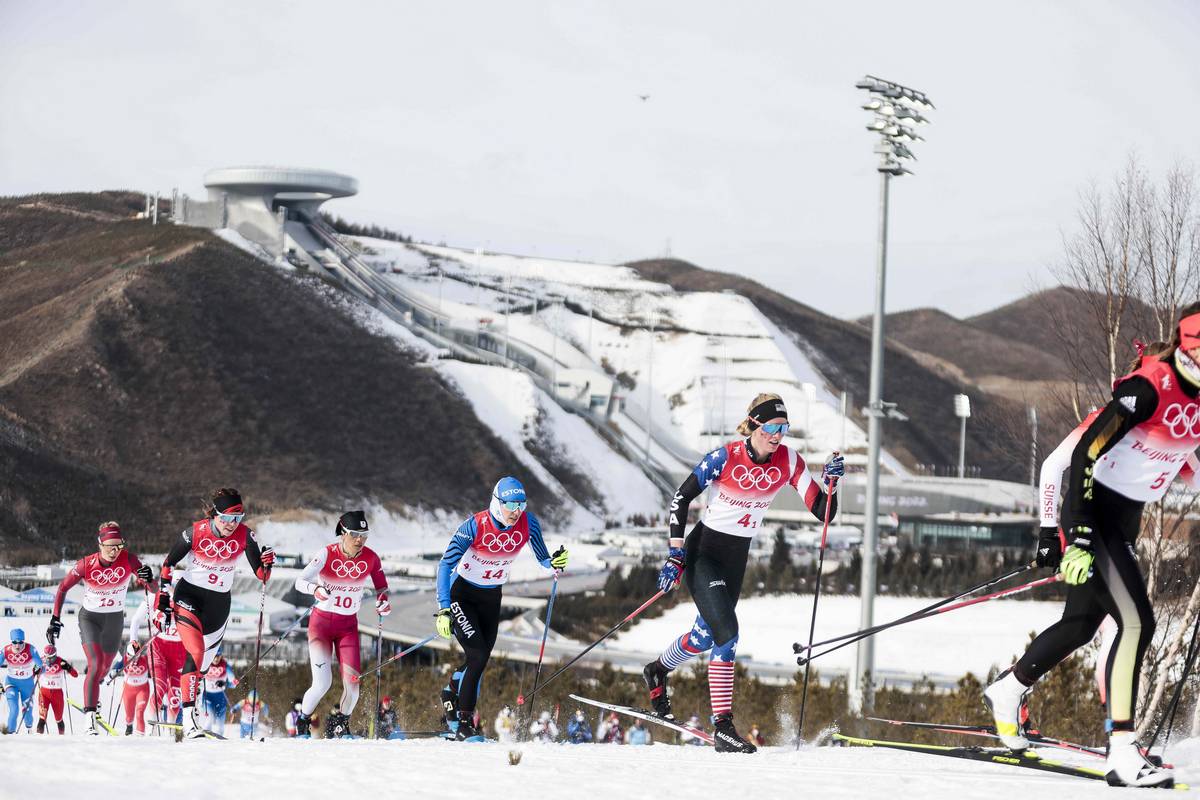
Today, Swirbul would again lead the Americans skiing the first classic leg, this time followed by Brennan, who was 13th in the 10 k classic on Thursday. McCabe skated the third leg in her second Olympic appearance, tagging off to Diggins as the anchor.
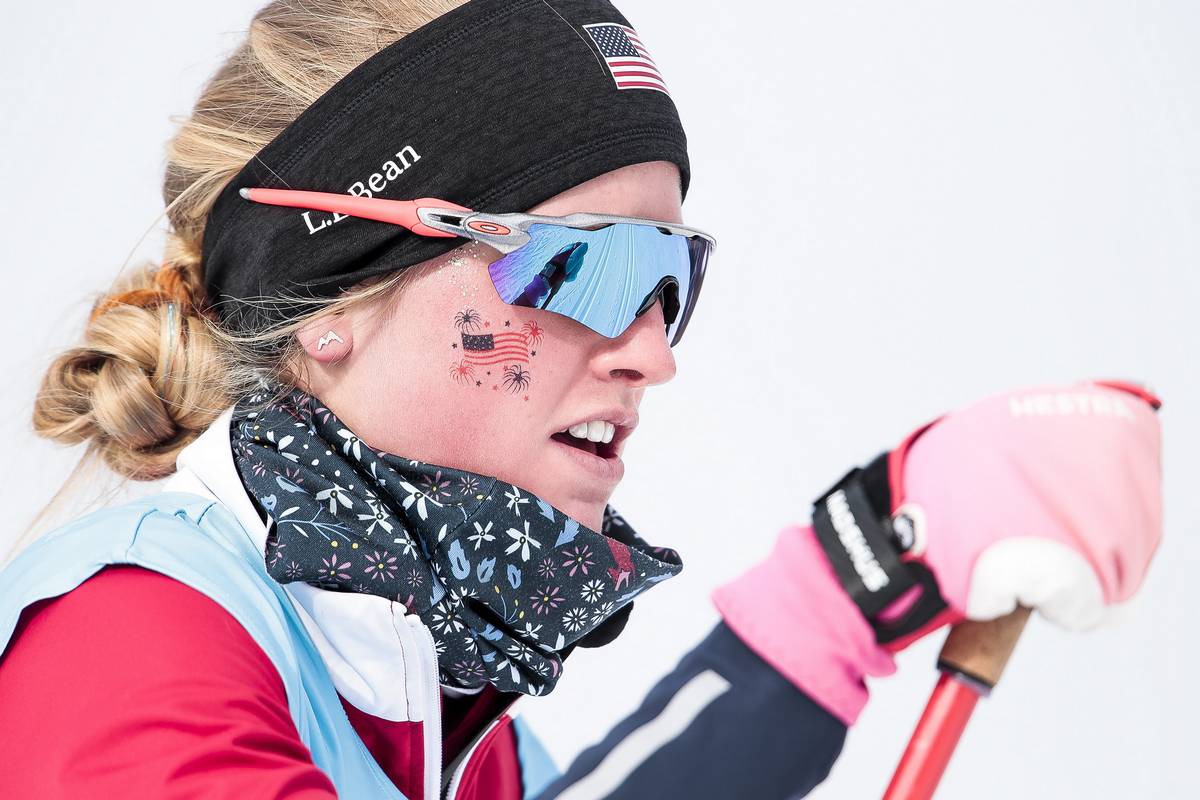
Keeping with tradition, all four women – along with current NBC analyst Randall calling from a booth in Connecticut – wore knee-length striped “relay socks”, with beglittered cheekbones to feed their enthusiasm for the event. In a program that remains focused on team, even when standing on an individual podium, glitter and socks are merely symbols of the cohesion that has fostered the American’s rise to success.
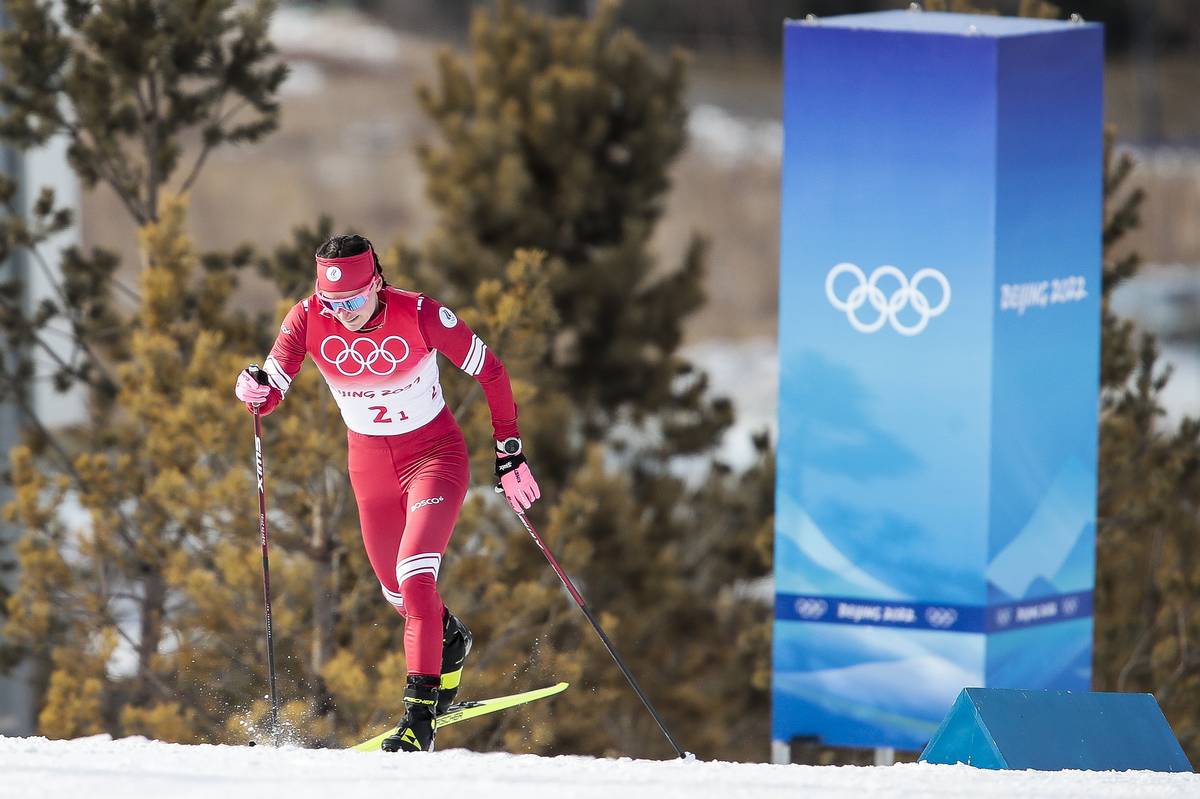
As the first two-lap 5 k classic leg took to the course, the ROC’s Yulia Stupak charged off the front, creating a 12 second gap by the end of the first lap while the next eight team remaining tightly spread, with less than three seconds of separation. In the final kilometer of the first leg, the German team dropped the chase pack to tag its second skier just 1.5 seconds behind the ROC. Masako Ishida tagged off in third for Japan, with Finland just behind in fourth, and Sweden a few seconds behind in fifth.
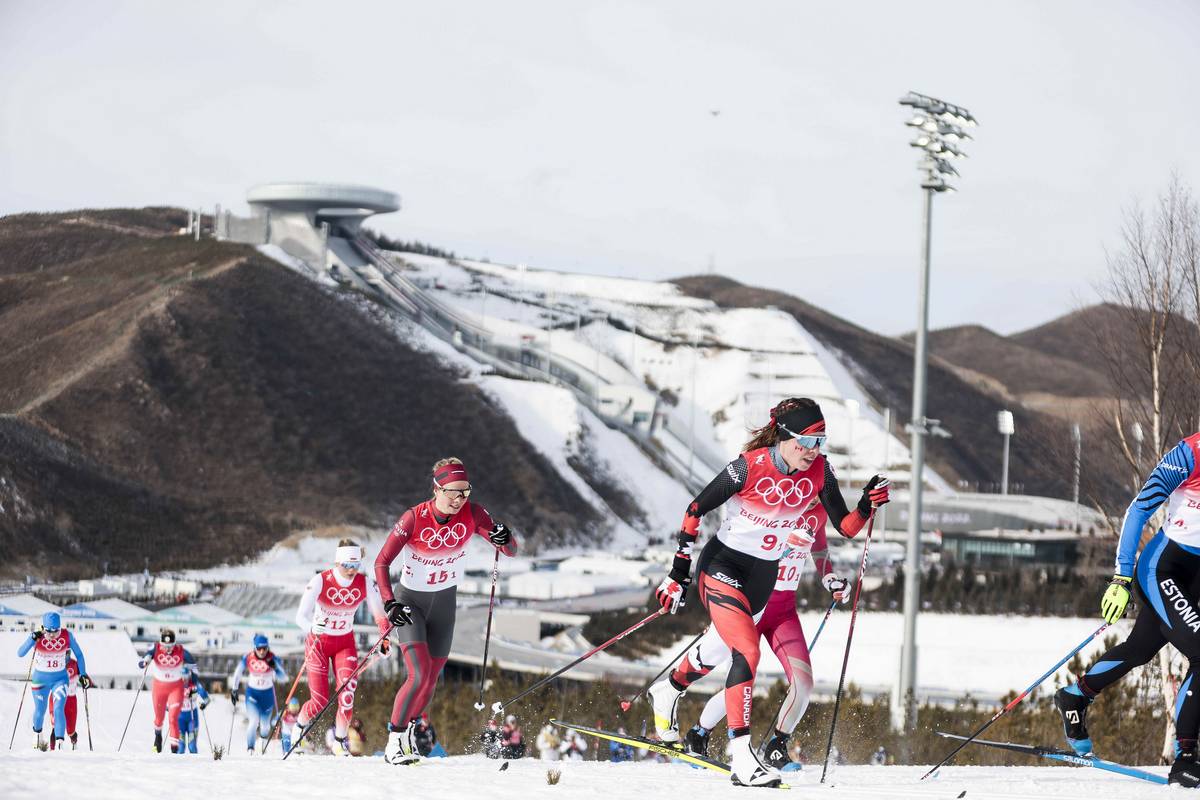
Swirbul tagged off for the Americans in seventh, +24.7 back on the ROC and Germany, and +12.4 seconds on the podium chase pack. The Canadian team, led by Katharine Stewart-Jones, tagged off in 10th (+43.2).
The Germans are often a dark horse in the relay, despite frequenting individual World Cup podiums less often than other countries like Norway, Russia, or Sweden. Germany won a silver medal in the women’s relay in the 2010 Games in Vancouver, followed by a bronze in Sochi. They were roughly 20 seconds behind the Americans in fifth at the 2021 World Championships, and 20 seconds ahead of the Americans in fourth place in 2019.
In this Games, two of the four members of the 2021 World Championships team were again in the lineup, Victoria Carl and Katharina Hennig, both of whom have seen top-10 finishes in the Games so far. Hennig, who would ski the second classic leg, was fifth in the 10 k classic on Thursday, while the third leg skater Carl was 10th in Tuesday’s freestyle sprint. Anchor Sofie Krehl was 8th in qualification and 11th in the final during the freestyle sprint, while classic opener Katharine Sauerbrey was 11th in the 10 k classic and 13th in the 15 k skiathlon. A deceptively stacked lineup.
Meanwhile, Norway’s Tiril Udnes Weng had tangled with a Latvian skier, causing a crash that robbed her momentum. Already at a deficit with two of their eight athletes, including Lillehammer World Cup relay team member Heidi Weng, waylaid due to positive COVID tests just prior to the Games, the team that would otherwise be a podium threat faced yet another setback.

In the second classic leg, the ROC and Germany remained at the front, trading off in the lead at each checkpoint as they built their lead over third place to come through the exchange with nearly double the gap to third. This time, it was Germany’s Hennig in the lead, with the ROC’s Natalia Nepryaeva four seconds behind. Gold medalist in both distance events so far this Olympiad, Norway’s Therese Johaug brought her team back into podium contention, tagging Helene Marie Fossesholm in third (+22.8), just ahead of Sweden and Finland.

The Americans lost an additional 12 seconds over the course of Brennan’s leg, but held their ground in seventh (+36.4). Canada’s Dahria Beatty tagged teammate Cendrine Browne in eighth after a sizable gap (+1:42.7).

While Germany and the ROC continued the story at the front, Norway and Finland began making up time on the leaders, with Fossesholm and Thursday’s 10 k classic silver medalist Kerttu Niskanen gaining roughly 8 seconds during the first skate leg. Norway was less than 15 seconds back at the final exchange, with Finland an additional three seconds behind. Sweden was in fifth, exactly 35 seconds off the leaders and just over 20 seconds behind Norway, but they were about to prove they were not out of the running.
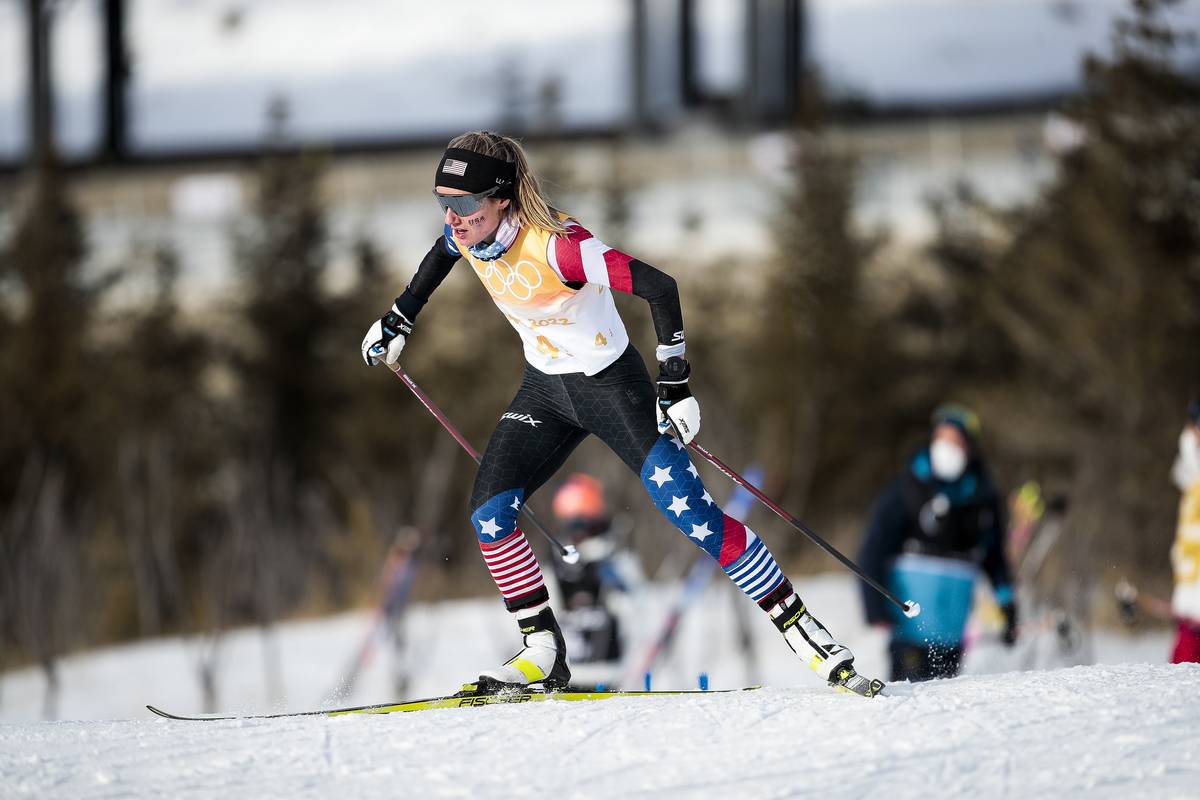
McCabe had brought the Americans into sixth (+1:34), in a dead zone with 30 seconds to the next racer on either side. The Canadian women tagged off in 8th, +2:21.2 back on the leaders.
In the final leg, the ROC’s Veronika Stepanova quickly began to reel in Germany’s Krehl.
Establishing herself as a strong closer at just 21 years of age, Stepanova also anchored Russia’s winning relay team in Lillehammer back in December to a thrilling finish, narrowly beating Norway and Sweden in a three-way sprint to the line.
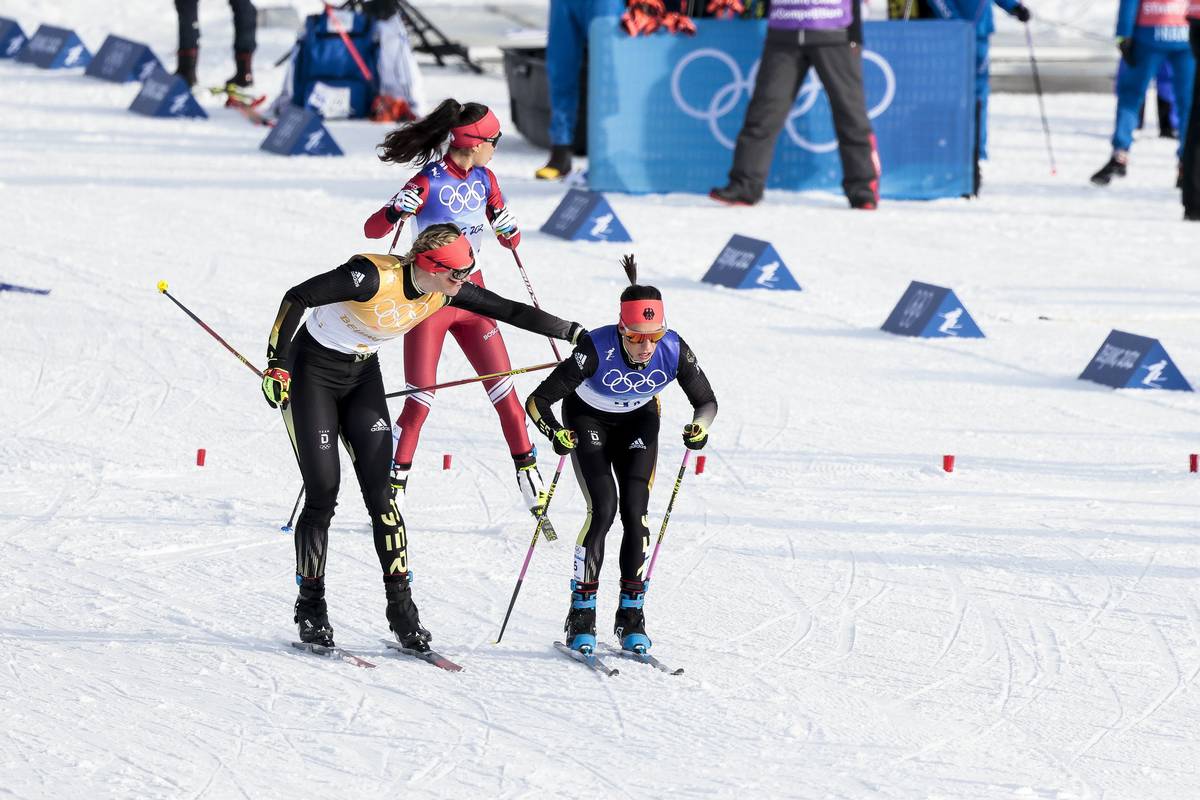
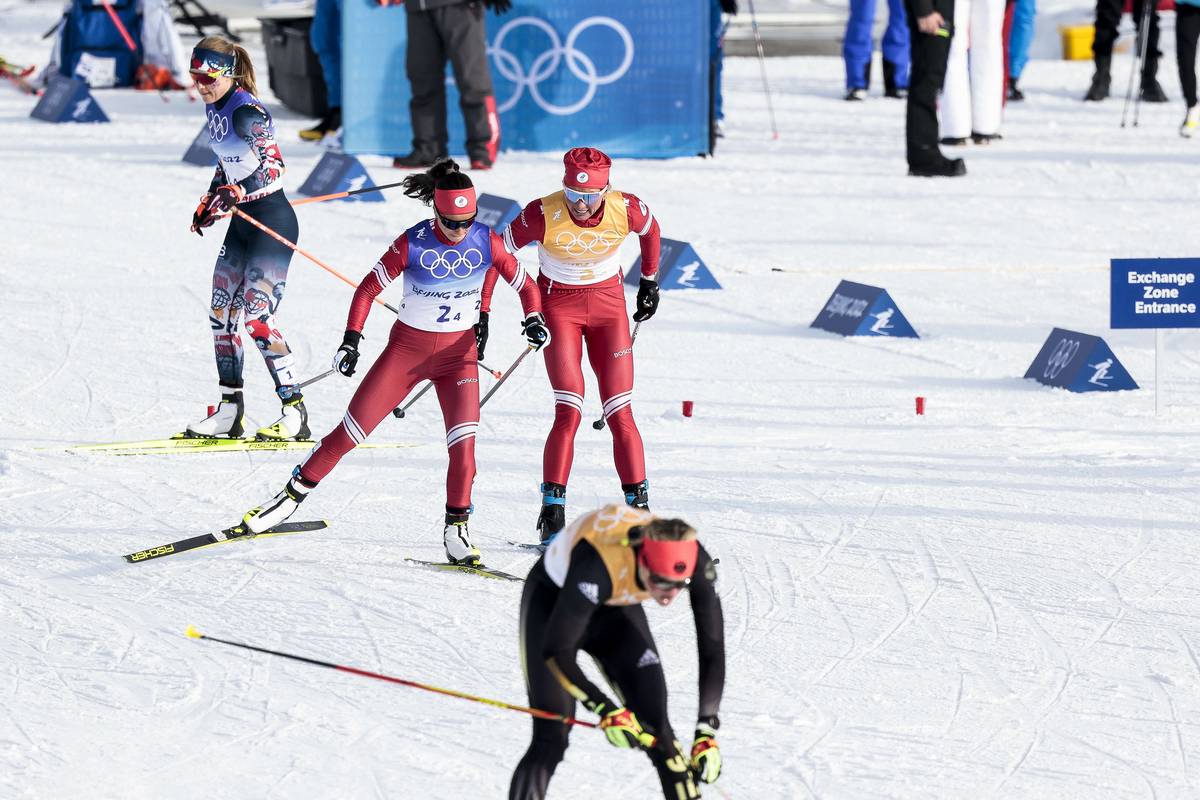
This time, it did not look as if the ROC was looking for a climactic ending for its spectators. Stepanova had Krehl in her sights at the lap, and was now just 1.5 seconds behind. Stepanova kept the effort high, leaving the German five seconds back a kilometer later.
Then, Krehl began to fade rapidly.
As the ROC soon looked to have the gold medal on lock, the question became whether Germany could hold onto silver. Sweden’s sprint gold medalist Jonna Sundling was showing her stamina against Pärmäkoski, who looked to be repeating the approach that allowed her to take bronze for Finland in the 2021 World Championship where she was facing Diggins.
The pace stayed hot as the Finnish veteran steadily fatigued the legs of the sprint champion, and over the final lap, the pair brought Krehl into contact. Heading into the stadium, Krehl was hanging onto her lead by a thread.
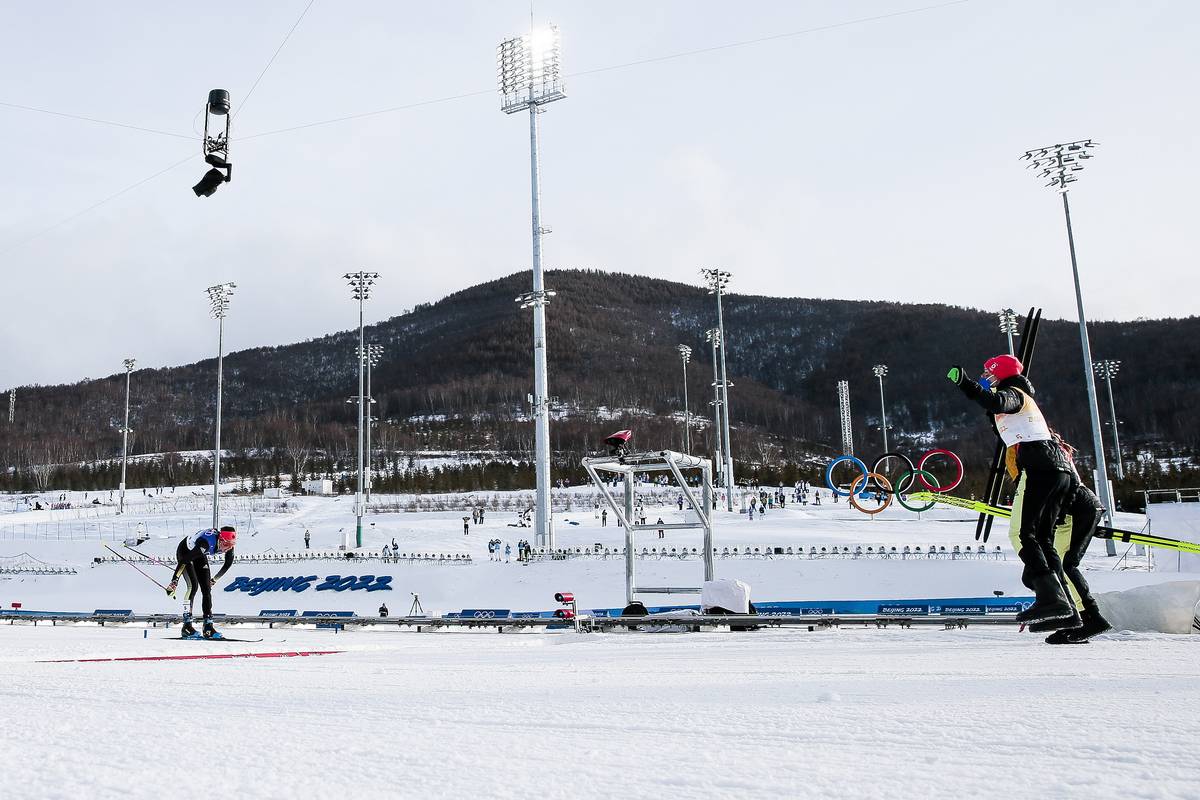
Cameras panned away as the German rounded the final bend into the stadium, returning just as she crossed the line, only ten meters ahead of Sundling and Pärmäkoski, who V2ed side by side through the lanes.
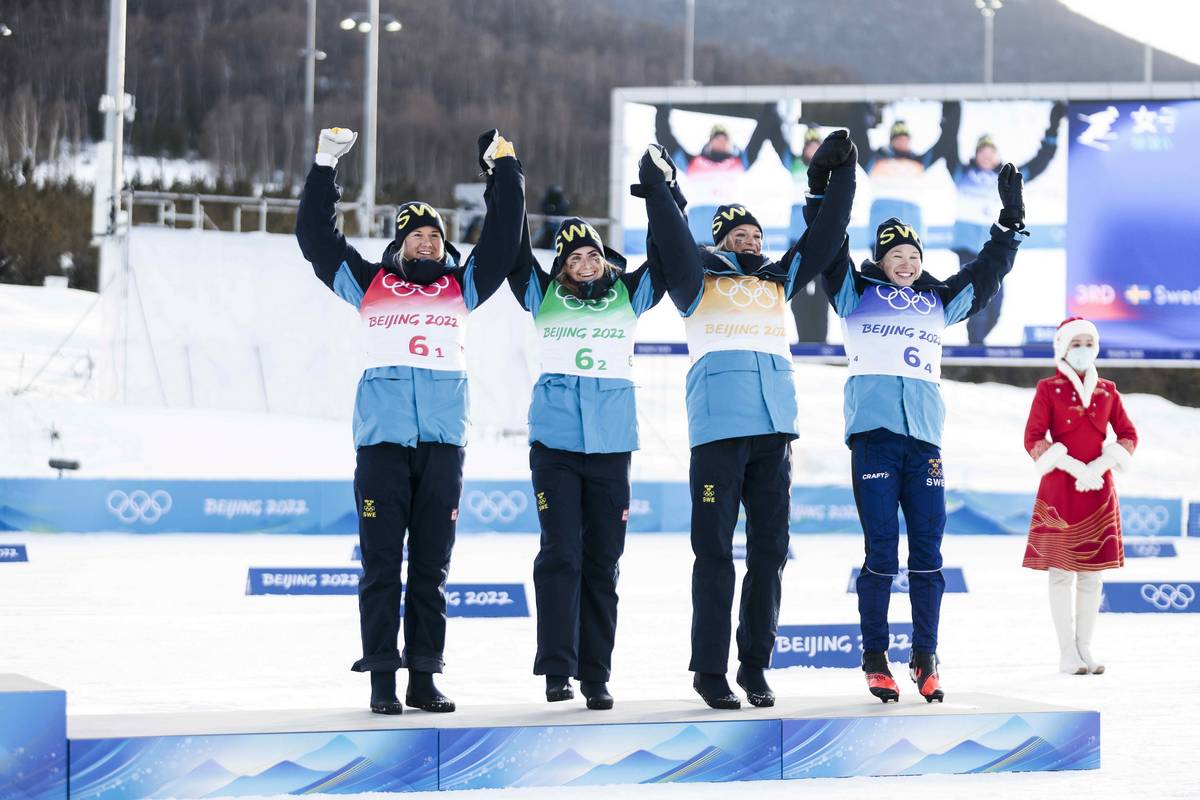
Ultimately, Sundlings sprint prowess gave Sweden the advantage, as she nipped Pärmäkoski by 0.5 seconds at the line for the bronze medal.
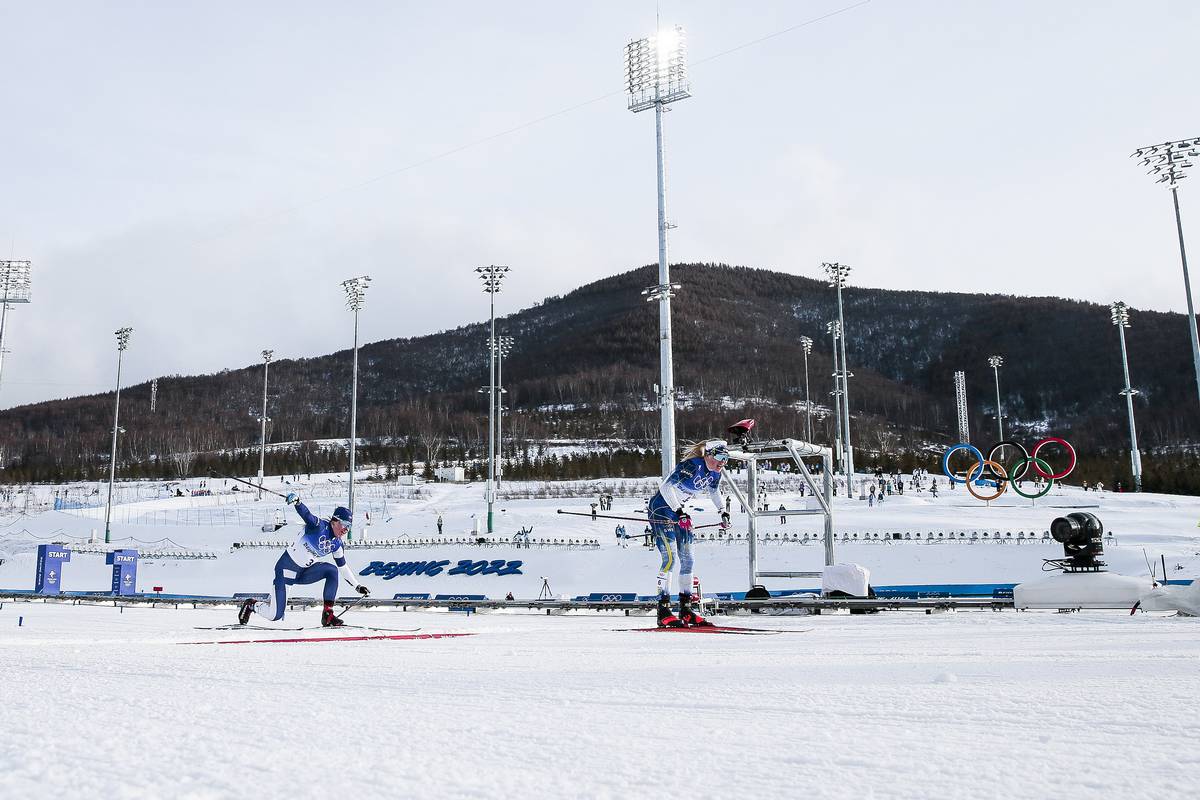
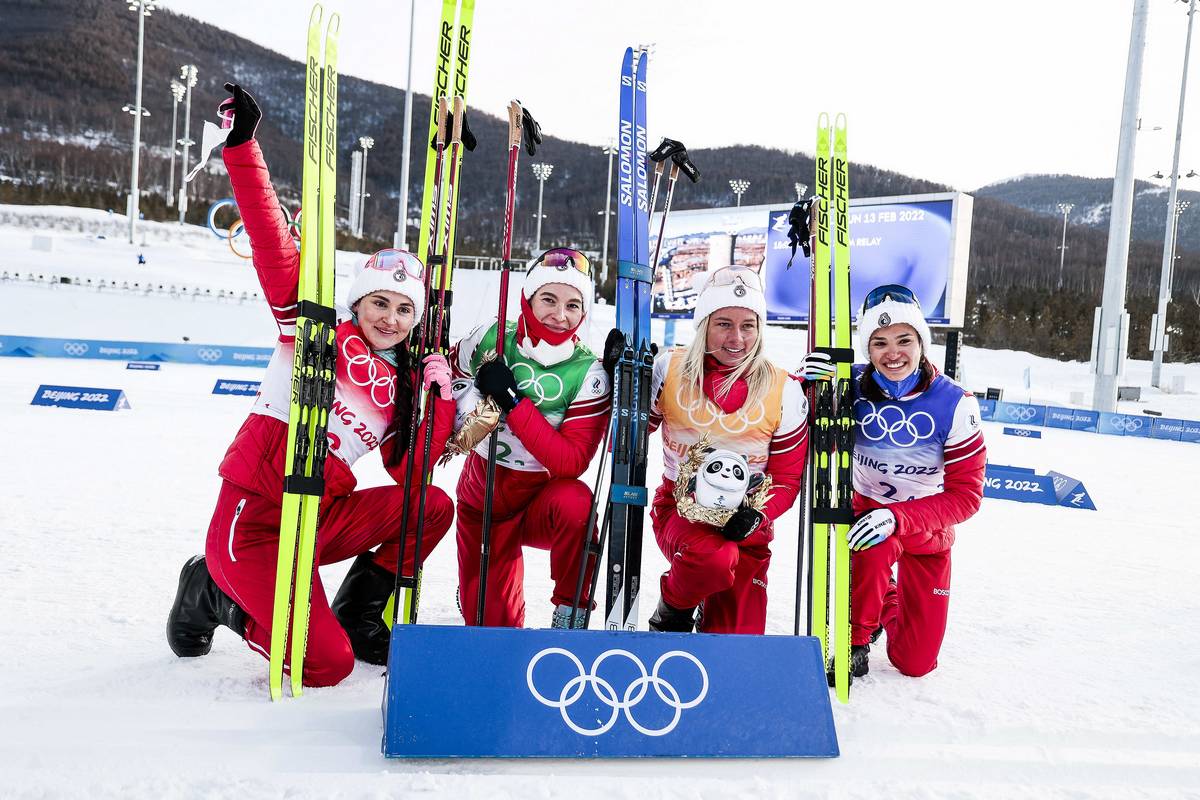
It was the ROC for gold in 53:41.0, with Germany in second (+18.2), and Sweden third (+20.7).
“Of course, it is a special day,” Stepanova told the media after the race. “It was really tough because we have a win in the World Cup, and a lot of people know we can win, so they say, ‘You must win, you must win.’ So I am like, ‘OK, we need a good result,’ and I do what I can do.”
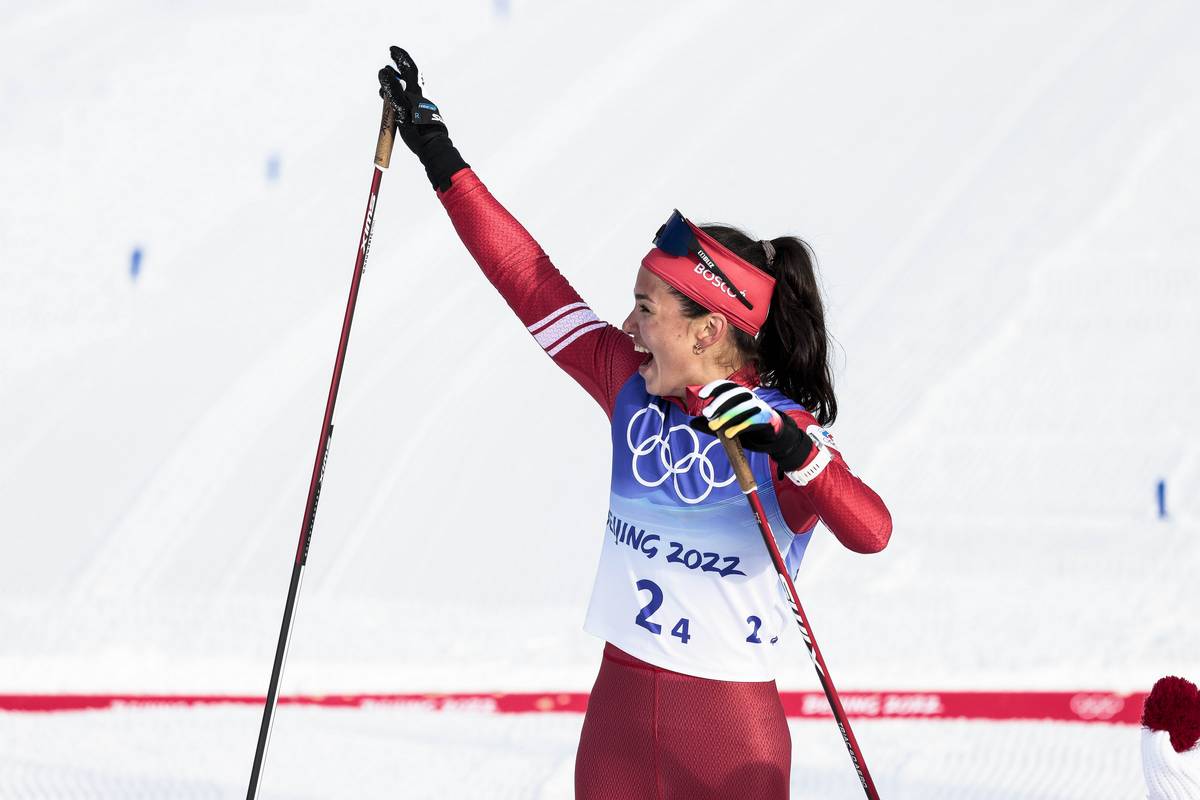
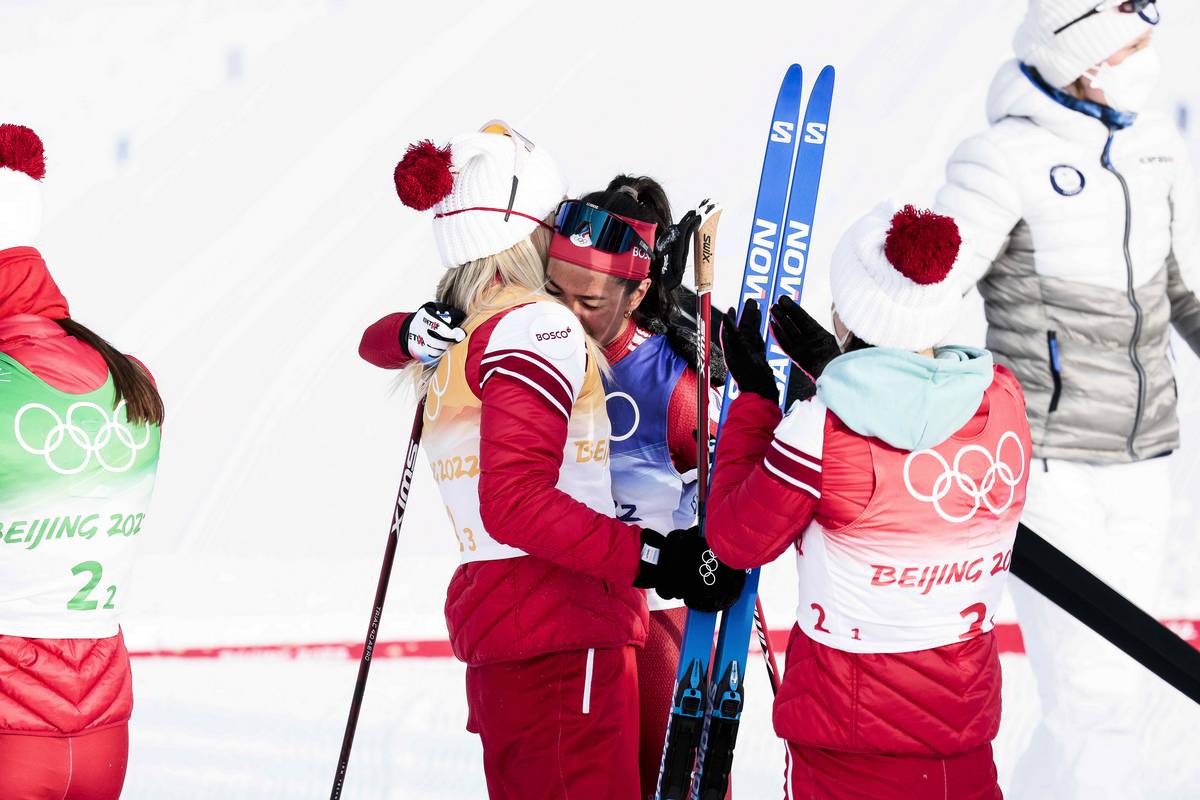
While the depth of its women’s team made the ROC a good choice as a podium pick, Stupak made it clear in her post-race comment that the team had also been targeting the event, saying the result was “not a shock.”
“We prepared for this race the whole year,” she explained. “It’s a good result for everybody in our team. We were ready for this medal.”
On the ROC’s approach and early lead, Stupak continued, “We tried to push the limit. We had big motivation and good concentration before the start. It was a hard race but it was a good race for us.”
For the Germans, the tone implied less certainty that a medal would be earned. Rather, it was the culmination of strategic pacing and hard work, leading to what Krehl called a “surprise” ending.
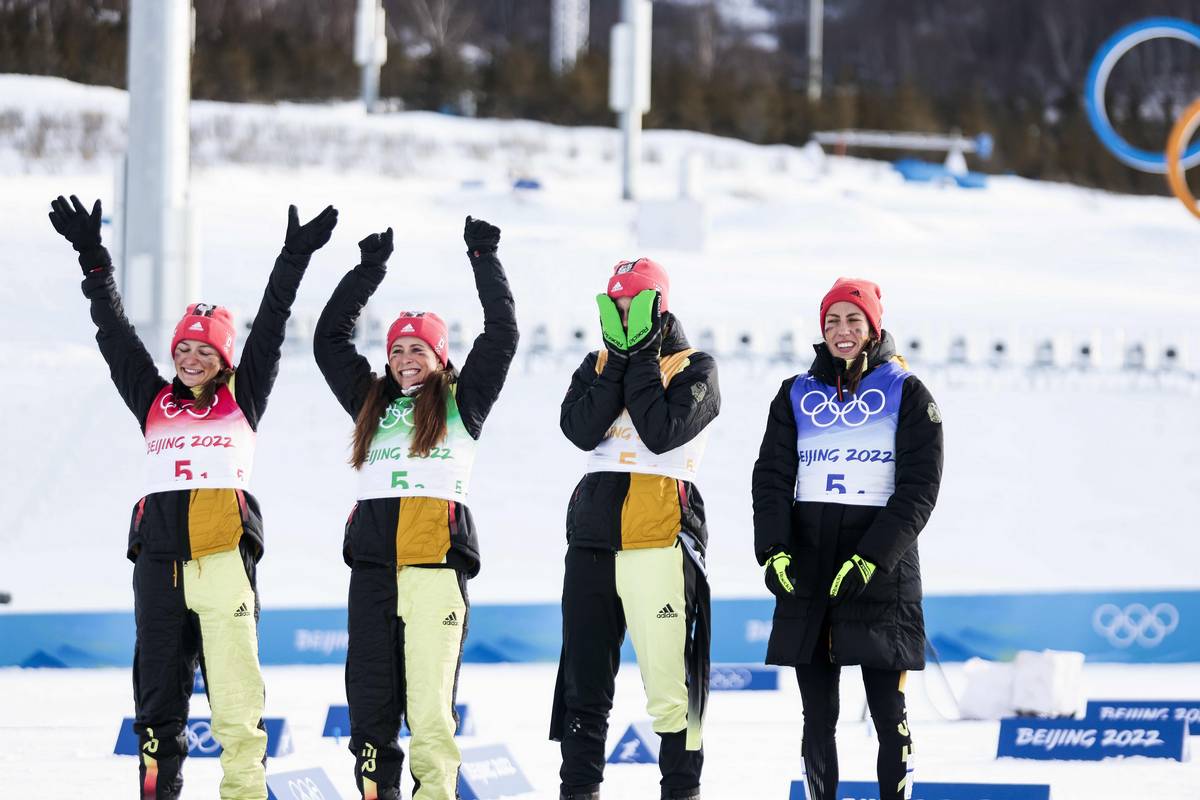
“We are so happy and excited,” Hennig said. “This is a special day for us and we are so thankful that all the hard work pays off now for the whole team and all of cross-country Germany. So we are very, very happy. We had a good plan and our plan worked. And we did our best, and so it was an exciting and amazing day.”
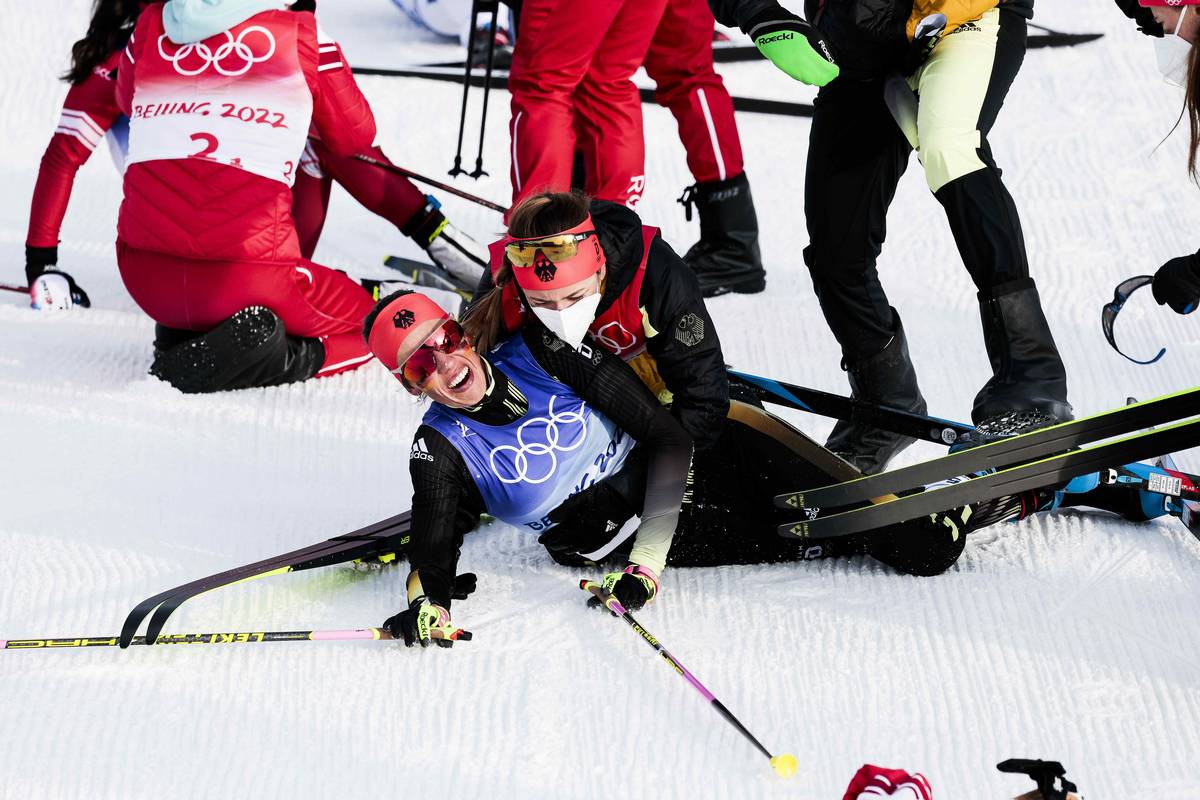
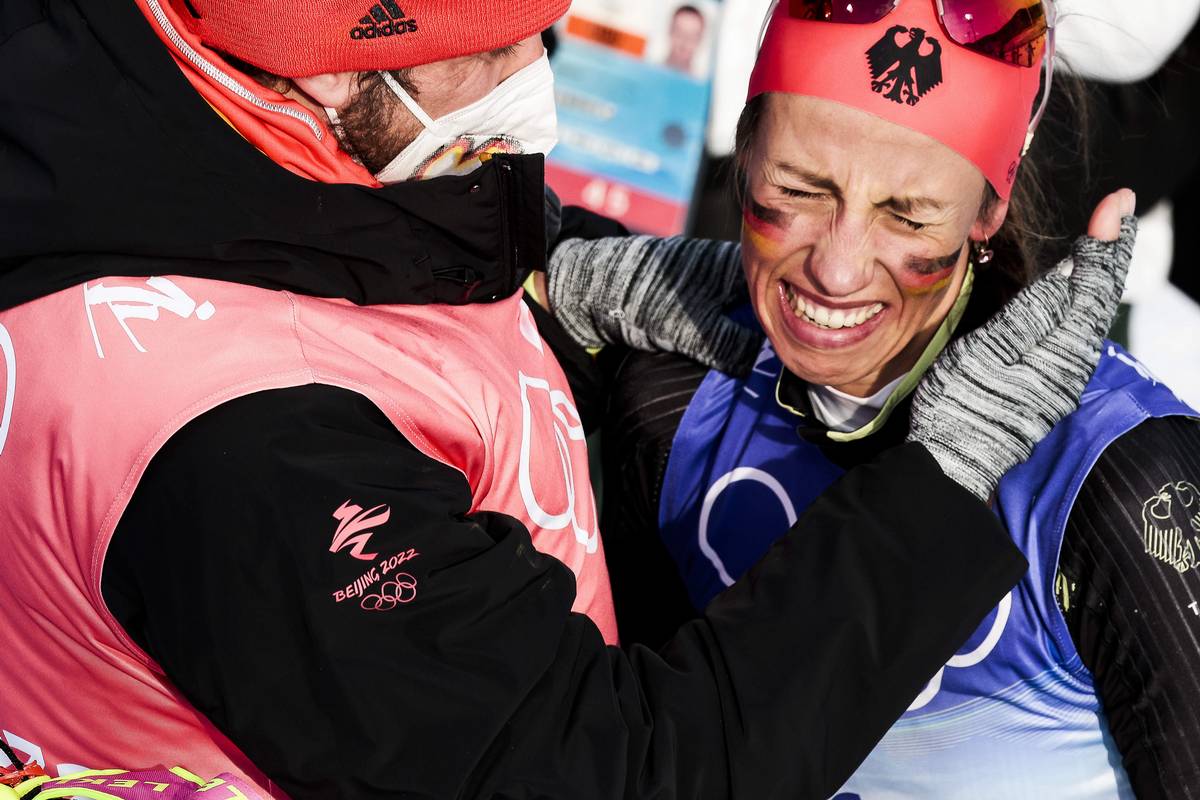
Krehl explained that she had skied her first lap defensively, expecting Stepanova to catch her sooner. In the second lap, she described the ROC athlete as “too good”, causing her to let go of gold. Though she was nervous when she began to feel Sweden and Finland closing on her, she was able to hold on for a result she described as “good for the whole team”, including the German coaches and wax technicians.
“It’s a lot of emotion,” Krehl said. “It feels like a dream. Maybe I need some time and then I can recognize what we have done.”
Behind the podium contenders, Norway had lost contact with the Swedes and the Finns over the final lap, fading to fifth (+28.8). Racing alone through her lap, Diggins crossed the line for Team USA a minute later in sixth (+1:28.2).
“Personally, I’m really, really proud of this team,” Diggins said in the mixed zone. “Every single one of these girls went out and skied so hard and skied gutsy races. And we gave it everything we have. And some days that ends up in the results of your life and some days it doesn’t. But either way, all you can control is going out there as hard and as smart as you can. And this team did that.”
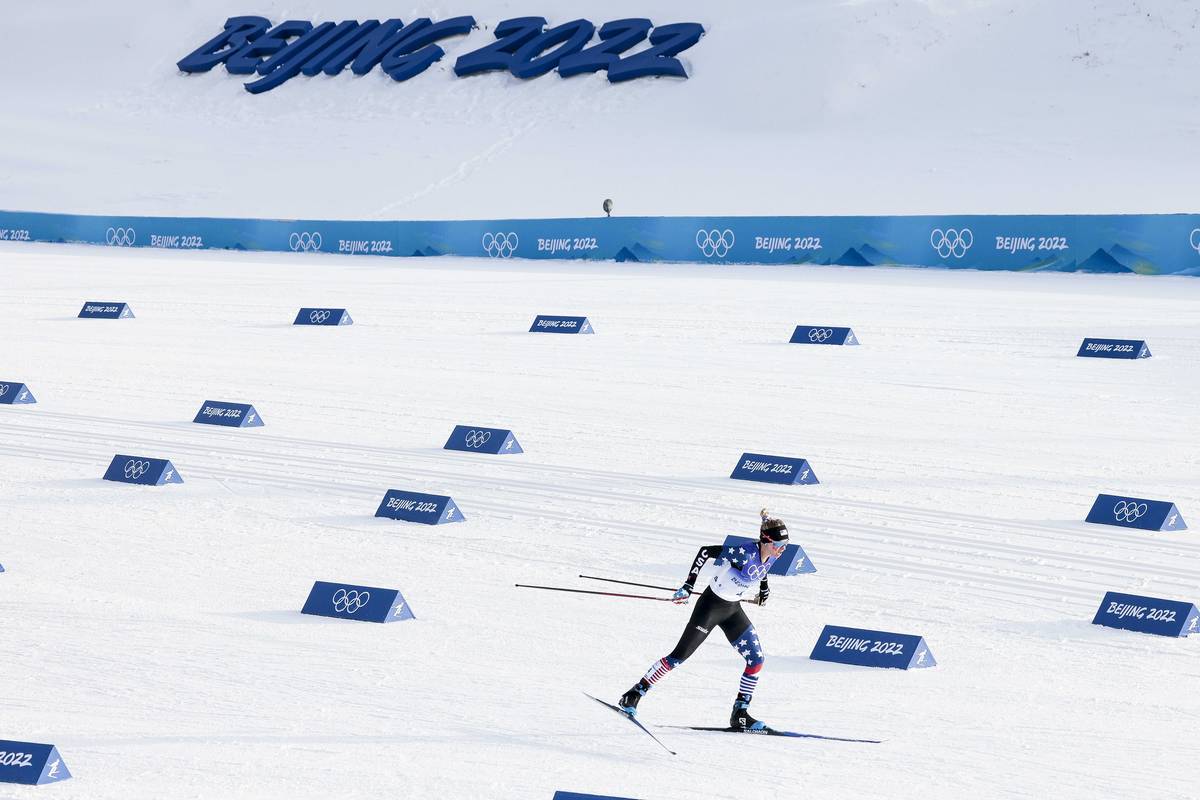
Though they did not walk away with Olympic hardware, the energy and enthusiasm were high in the mixed zone, with laughter filling the gaps between the athletes’ comments.
On a team composed of two veteran Olympians, Brennan and Diggins, and two first-timers, Swirbul and McCabe, experience and insight helped unify the group and set the Americans up for their best chance at putting together a strong performance.
Leading the breakdown of the race, Swirbul shared, “It’s always important, I think, to try to ski my own race, even though you’re in the field. I definitely had advice from Rosie last night to make sure to pace it how I would face the race – and Jessie. We’re focusing on time, so the fastest time that we can get around that course [for] each person is the best, no matter what place you come in.”
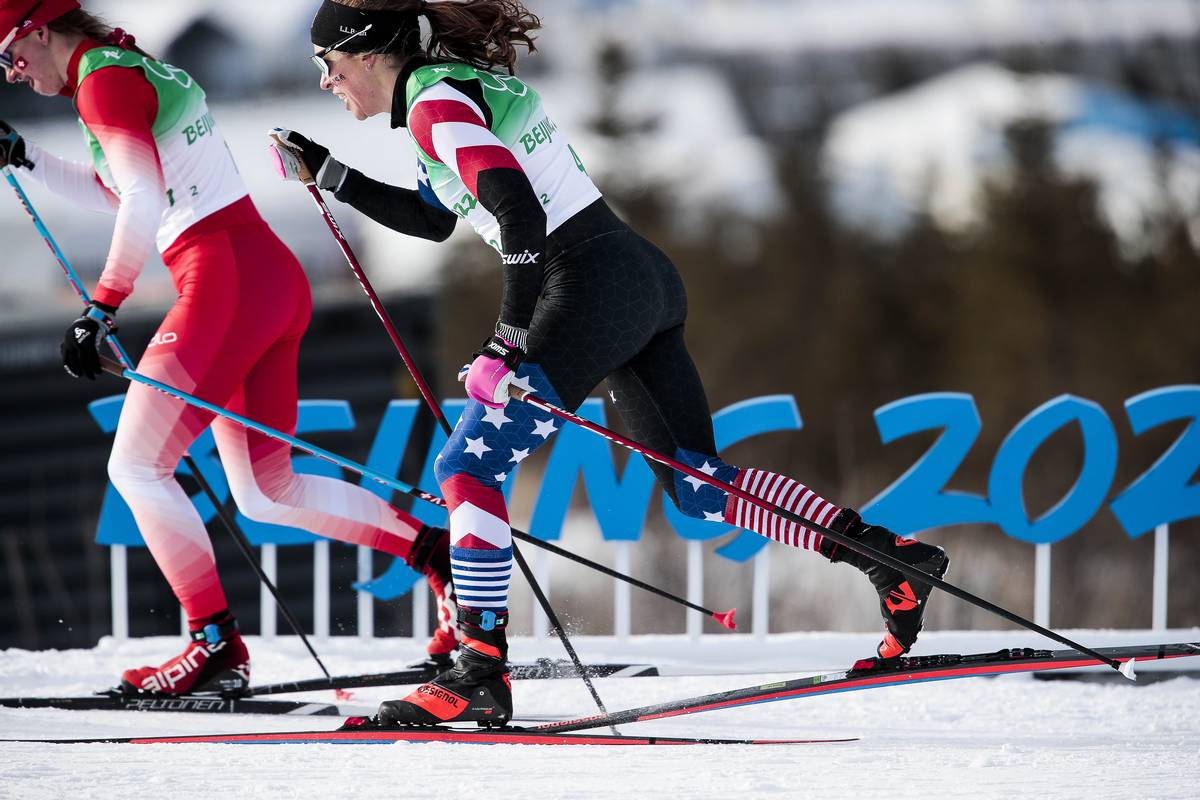
Brennan’s performance in the sprint demonstrated her impressive mental strength to overcome setbacks and not count herself – or in this case, her team – out of the running. A bad pole plant directly onto her ski in the sprint quarterfinal could have shaken her confidence, but she rebounded to ultimately finish just over a second off the podium in fourth place.
She approached today with a similar resolve.
“I knew it was full of a lot of the heavy hitters, so I knew I had a tough job ahead of me,” Brennan said. “So I tried to ski smart, but also find something extra to dig a little deeper, but I knew there was going to be some hard fighting at the end. I felt really good about my climbing. And I was a little disappointed with my inability to stick with [the other women] over the top of the hill in the double pole section, but it was all I had out there. So, I have to be happy with that. And I guess I know what I’ll be working on in the future.”
At 21-years-old, McCabe is the youngest member of the relay team.
“It’s so cool to be a part of a team with three legends and I had a lot of fun doing it, even though I was extremely nervous beforehand,” she said with a laugh.
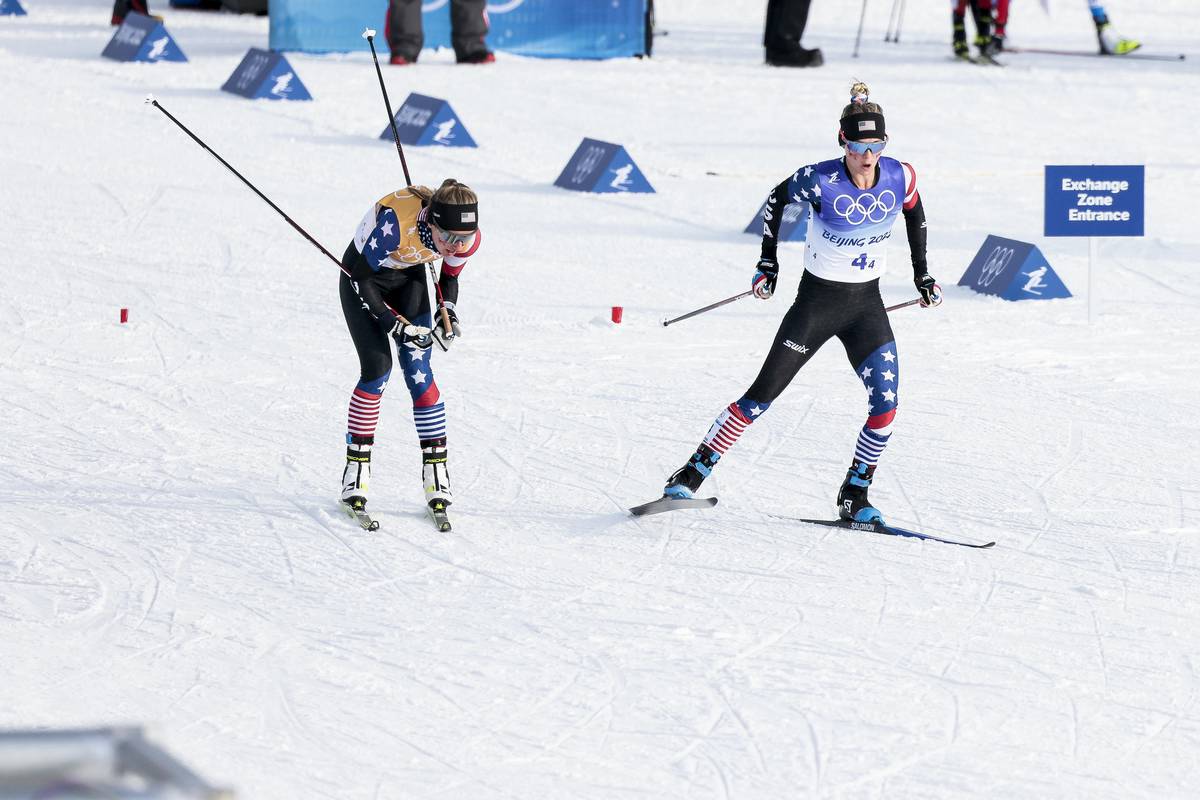
Her mom, Laura McCabe, is a two-time Olympian who skied the third leg of the relay in both 1994 and 1998. However, Novie laughed that she had not talked to her mother in several days and thus had not received any advice heading into the relay. After much deliberation, the team had only been decided the afternoon prior.
“I tried on the first lap to just stay relaxed,” McCabe explained of her plan. “I knew that there was a chance I would blow up and end up losing a lot of time to that group ahead of me. So I was just trying to focus on [pacing] for the first lap, and on the second, I kind of tried to drop the hammer and do what I could to not lose time.”
In her lap, McCabe lost just 11 seconds to Sweden’s distance standout, Frida Karlsson. She had accomplished her goal.
Diggins explained she headed out for the final leg optimistically hoping things would shake out differently than they ultimately did.
“I basically just swung for the fences and thought, ‘Okay, I’m gonna go out as hard as I can. Because if there’s a chance that [the women ahead of me] monkey around and don’t want to lead, then I’ve got to go for it.’ I thought, ‘You know, if I get lucky and they’re messing around in tactics, there’s a chance I can glom on the back.’ Unfortunately, they did not, as much as I had hoped. And I definitely paid for it in the second lap. I could not feel my legs at all.”
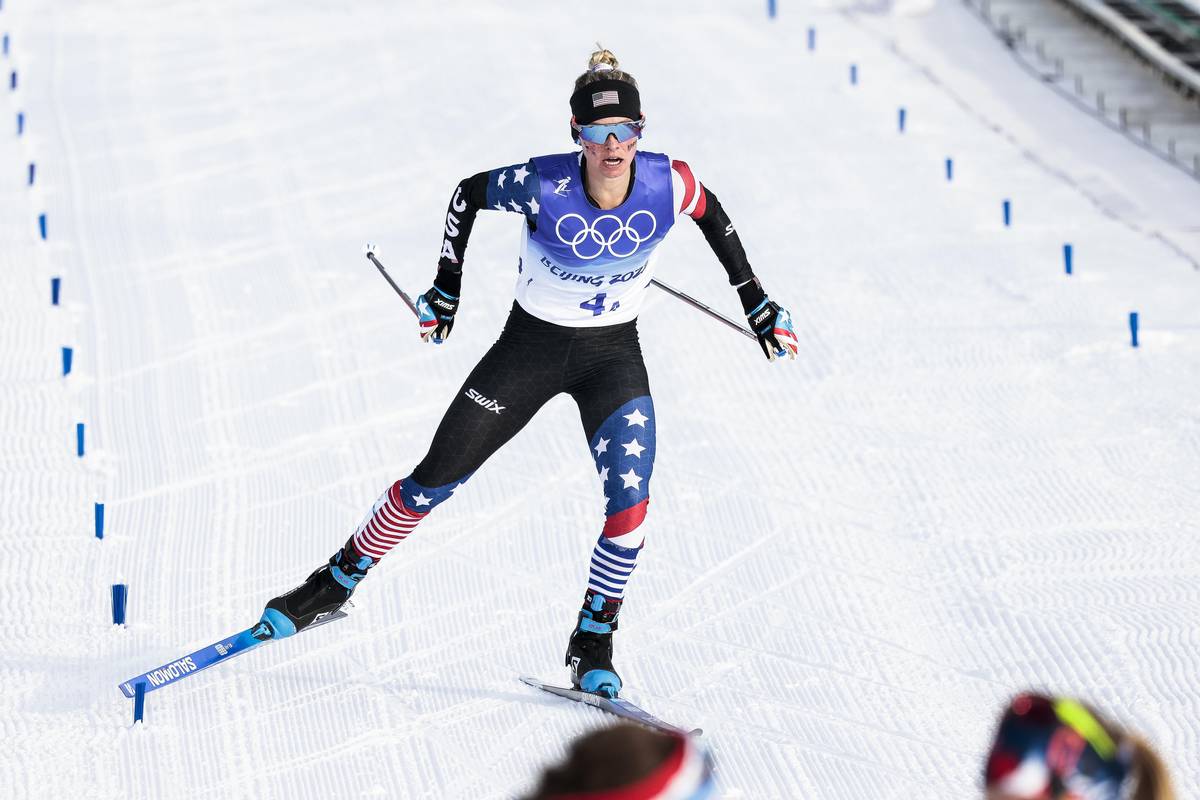
After a windy skiathlon and 10 k classic that left tracks blown in with loose snow, the women expressed that conditions today were the best they’ve experienced in racing so far. Though two inches of snow came down overnight, perhaps an unexpected twist in the weather patterns, the Americans each affirmed that their skis were competitive, with Swirbul and Brennan adding the change was especially favorable for their classic legs.
“I actually got to ski in the tracks today, which is so nice,” Brennan said.
On the camaraderie of the team, Brennan shared, “It’s an individual sport, but we also spend close to five months on the road a year together. So it would be pretty boring if you only ever care about yourself. [That’s] not very fun or fulfilling – it doesn’t mean that much. So when we get to actually, truly be out there together, and all of our times count for each other. I think that brings like a new level of meaning and purpose to what we’re doing. And it’s really special to get to share that with your teammates.”
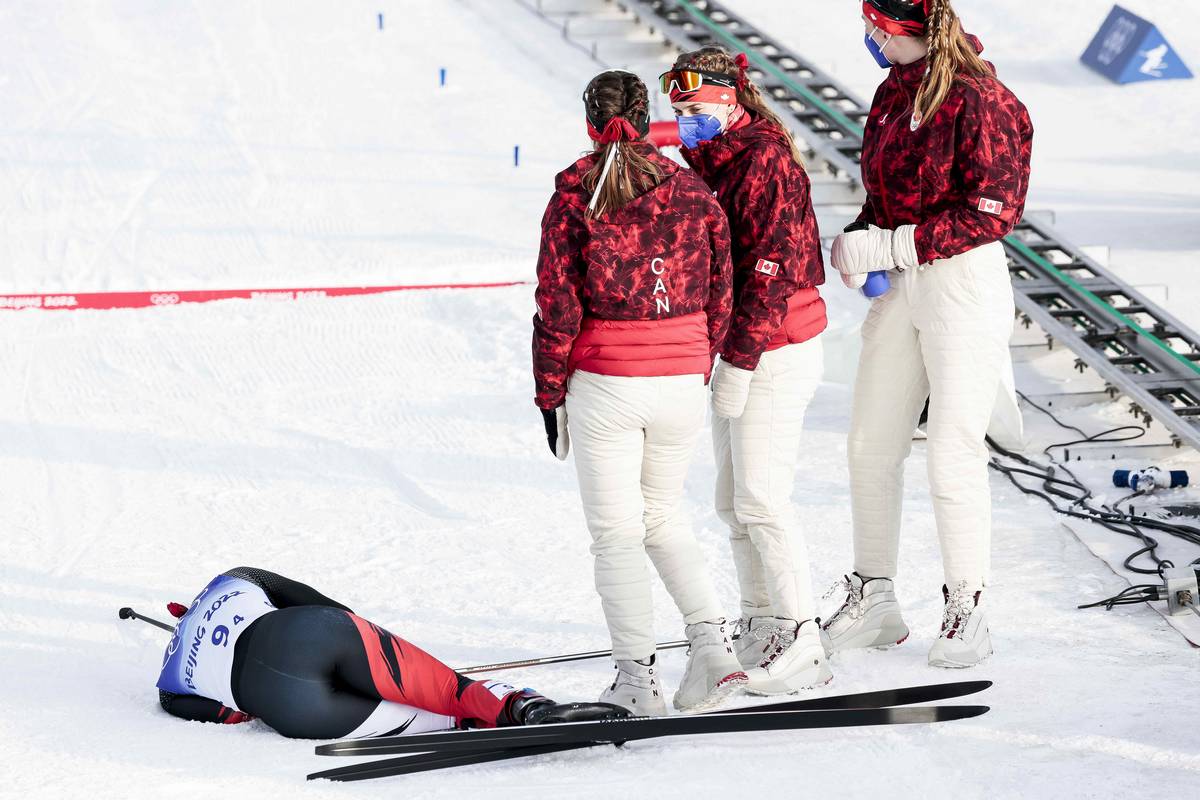
Closing for Canada, Olivia Bouffard Nesbitt lost one spot to the Italian team in the final leg. The Canadian women ended their day in 9th (+3:39.9).


