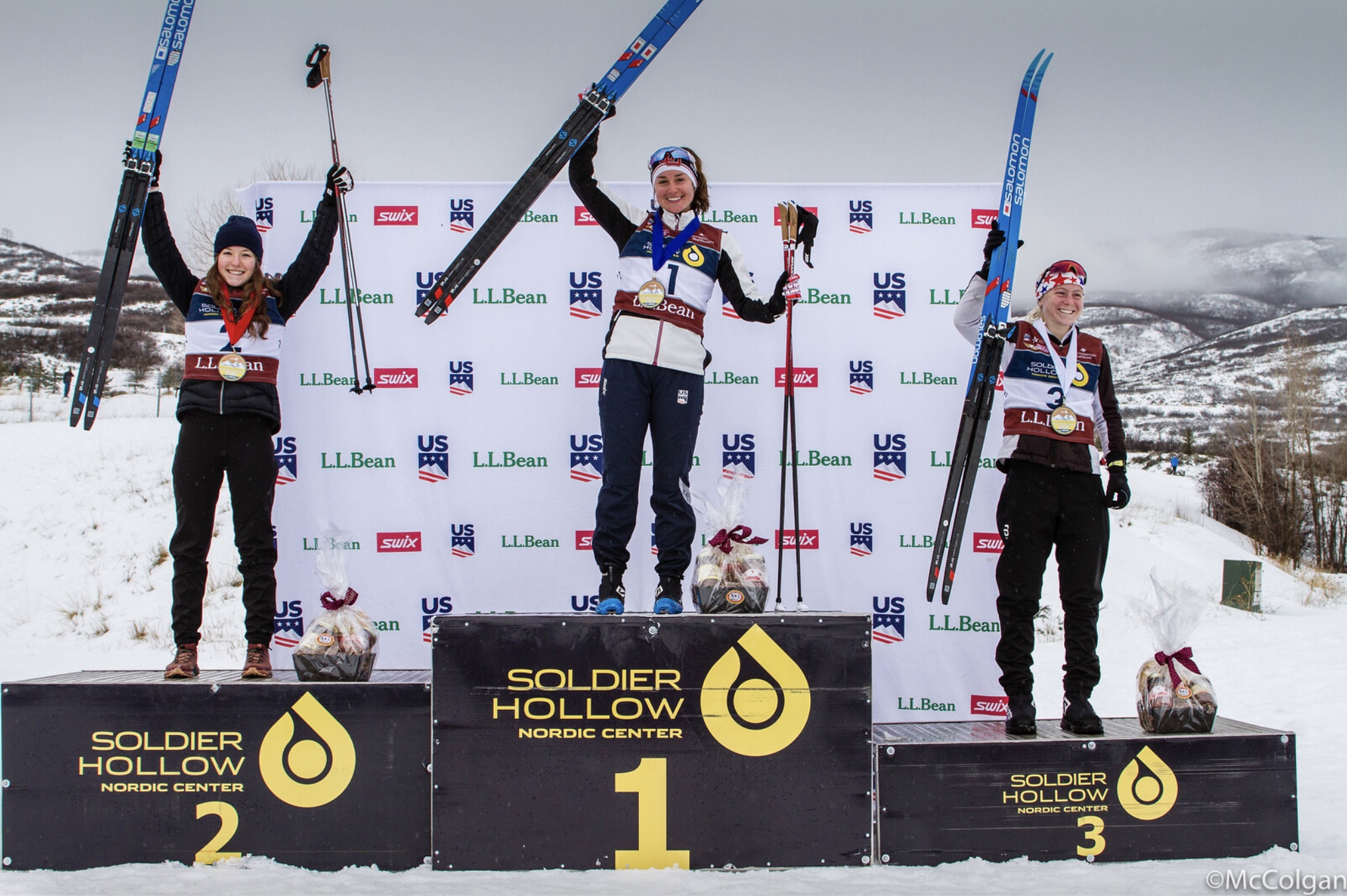
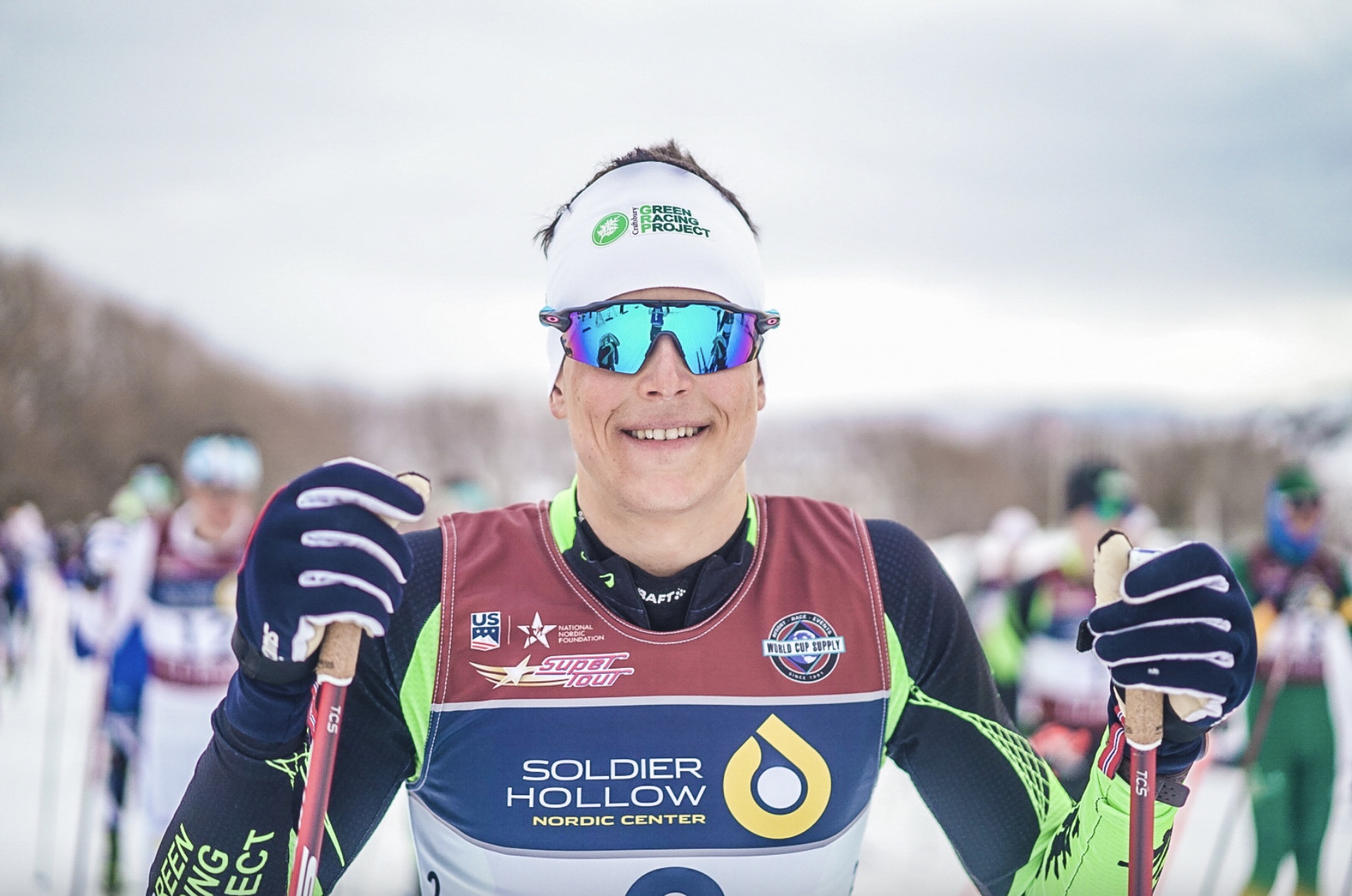
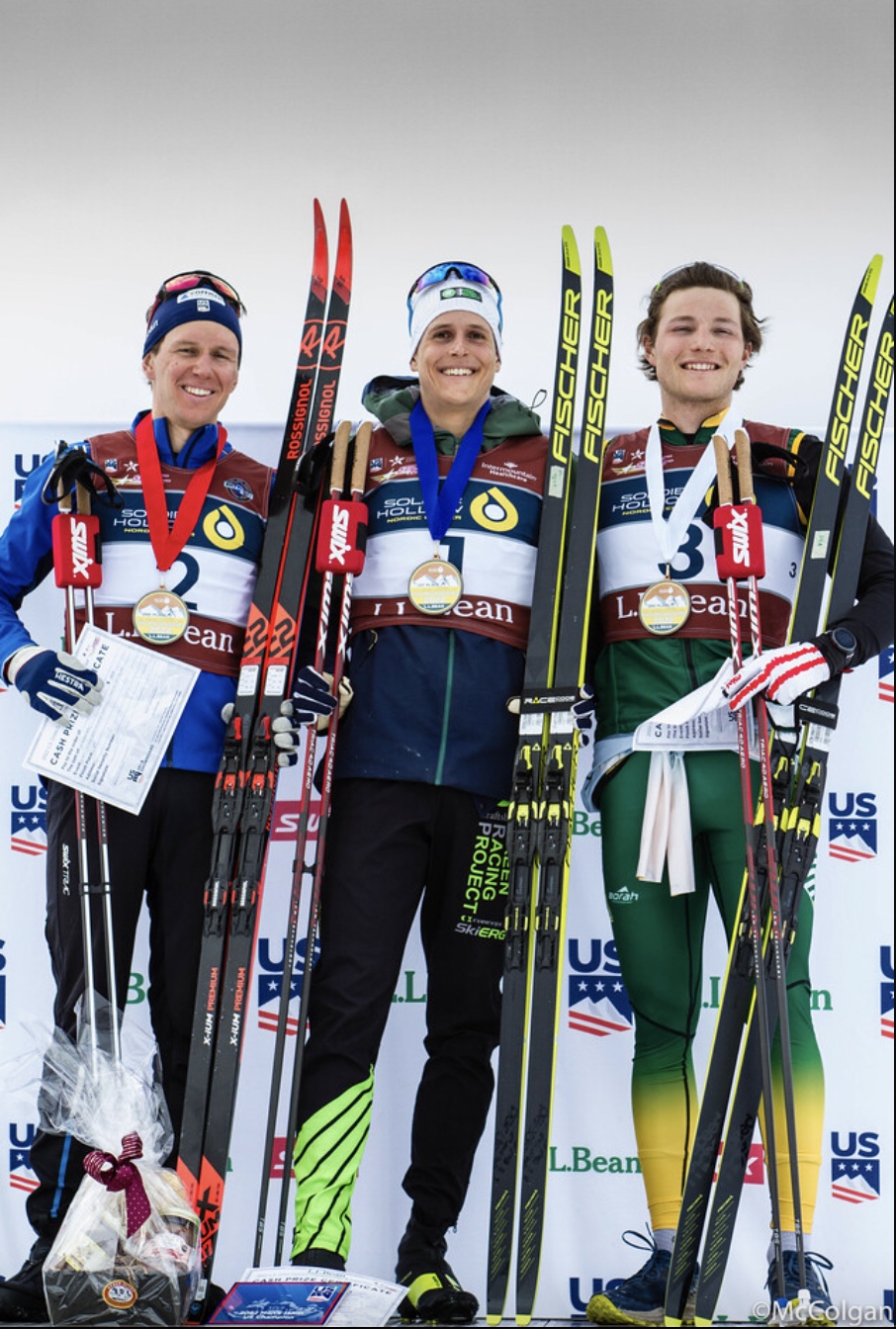
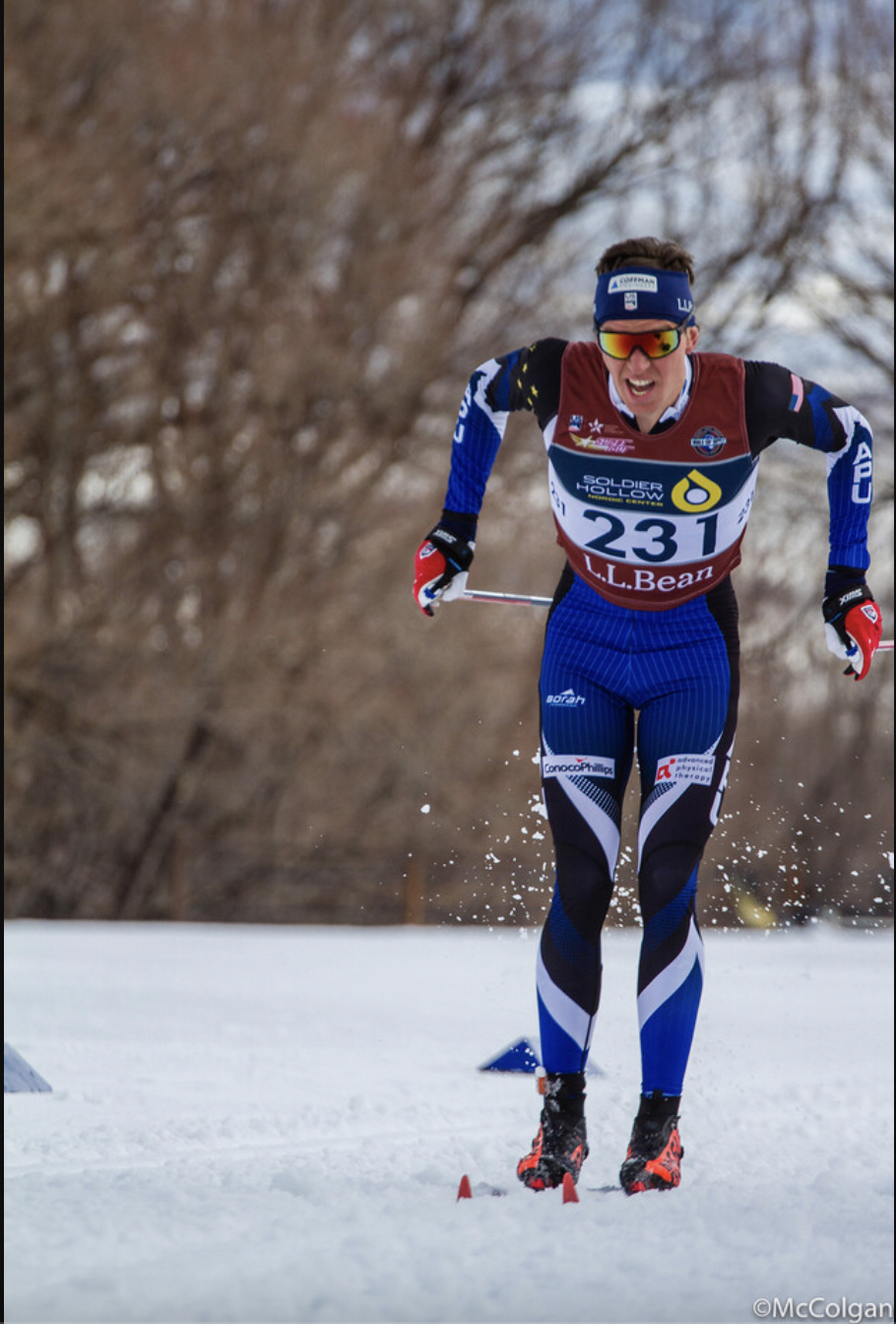
From the FasterSkier archive — posts syndicated from athletes’ and coaches’ own blogs between 2004 and 2012, kept online as published. Current coverage is at fasterskier.com.
Soldier Hollow Nordic Center is hiring a Venue Operations Supervisor to run snowmaking, snowcat grooming and trail operations at the Midway, Utah venue that hosted biathlon and cross country skiing at the 2002 Olympics.
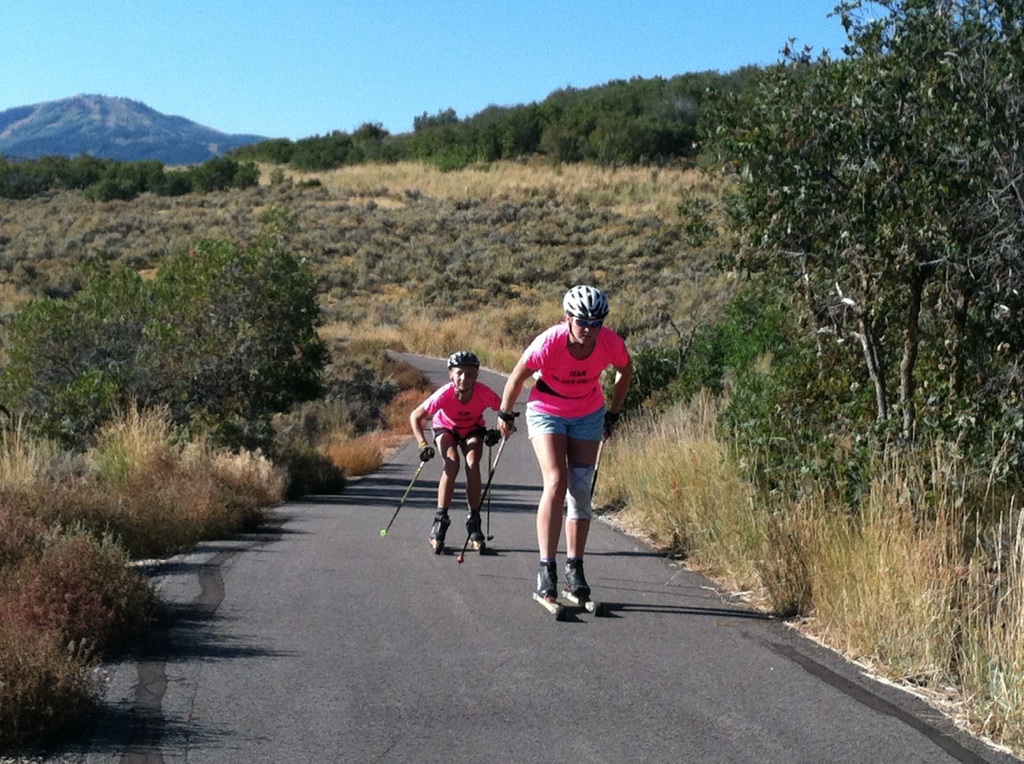
The job is full time and year round, and it sits at the center of how the venue works. Winter means building base, setting classic and skate track, shaping the tubing hill and prepping racecourses. Summer means mountain bike trail construction, roller ski trail repair, mowing and fleet maintenance across 31 kilometers of terrain.
Soldier Hollow is operated by the Utah Olympic Legacy Foundation, which also runs the Utah Olympic Park in Park City and the Utah Olympic Oval in Kearns. With the Games returning to Salt Lake City in 2034, the venue crew is preparing trails that have to work for World Cup athletes and first time skiers alike.
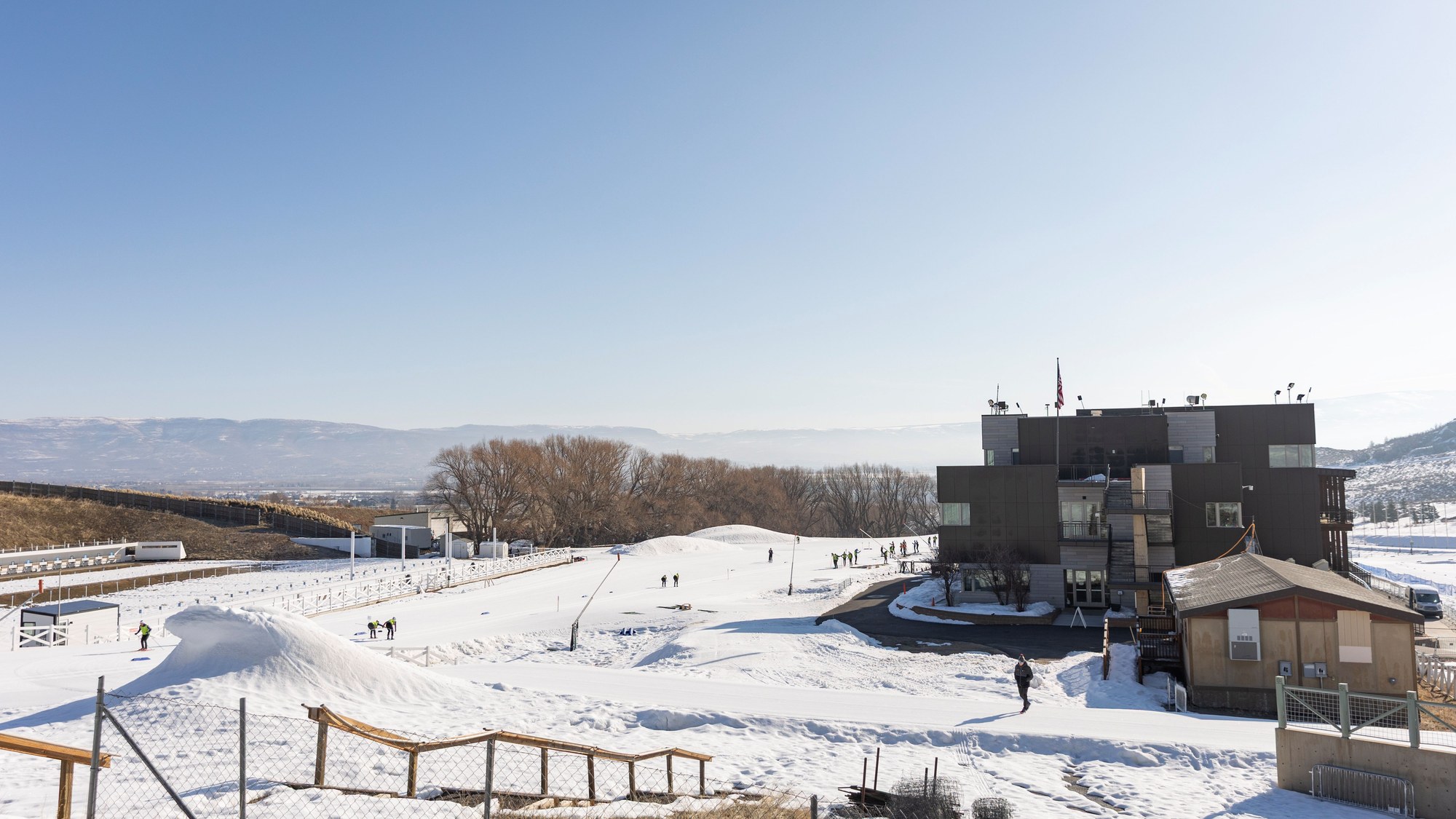
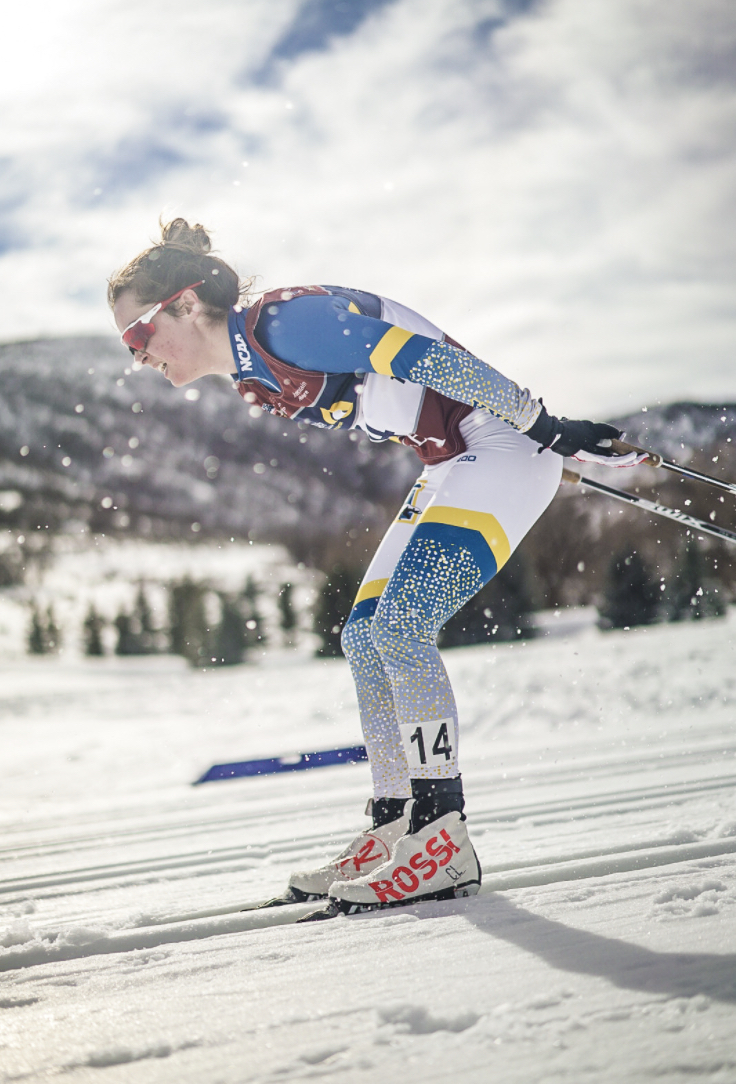
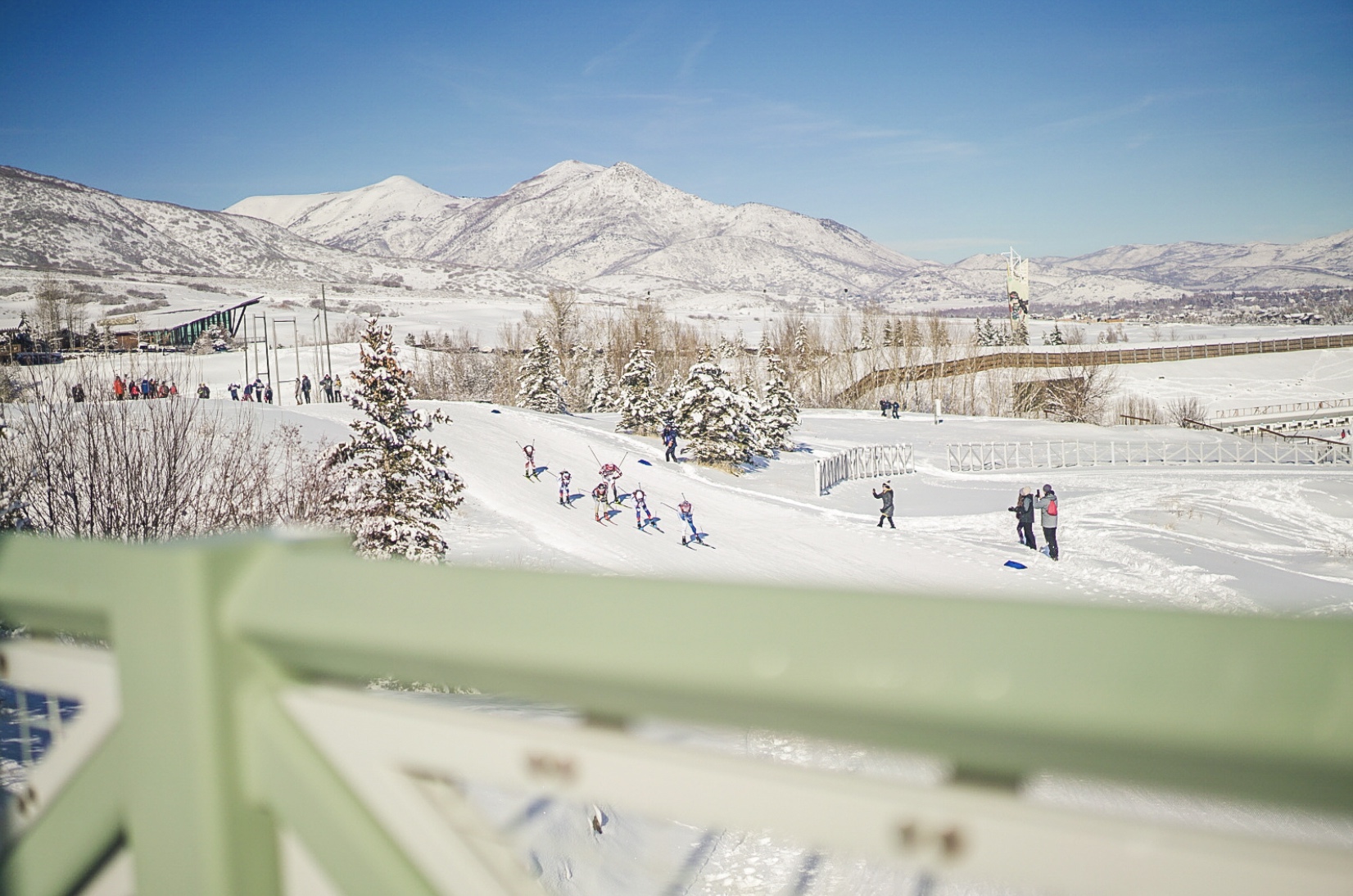
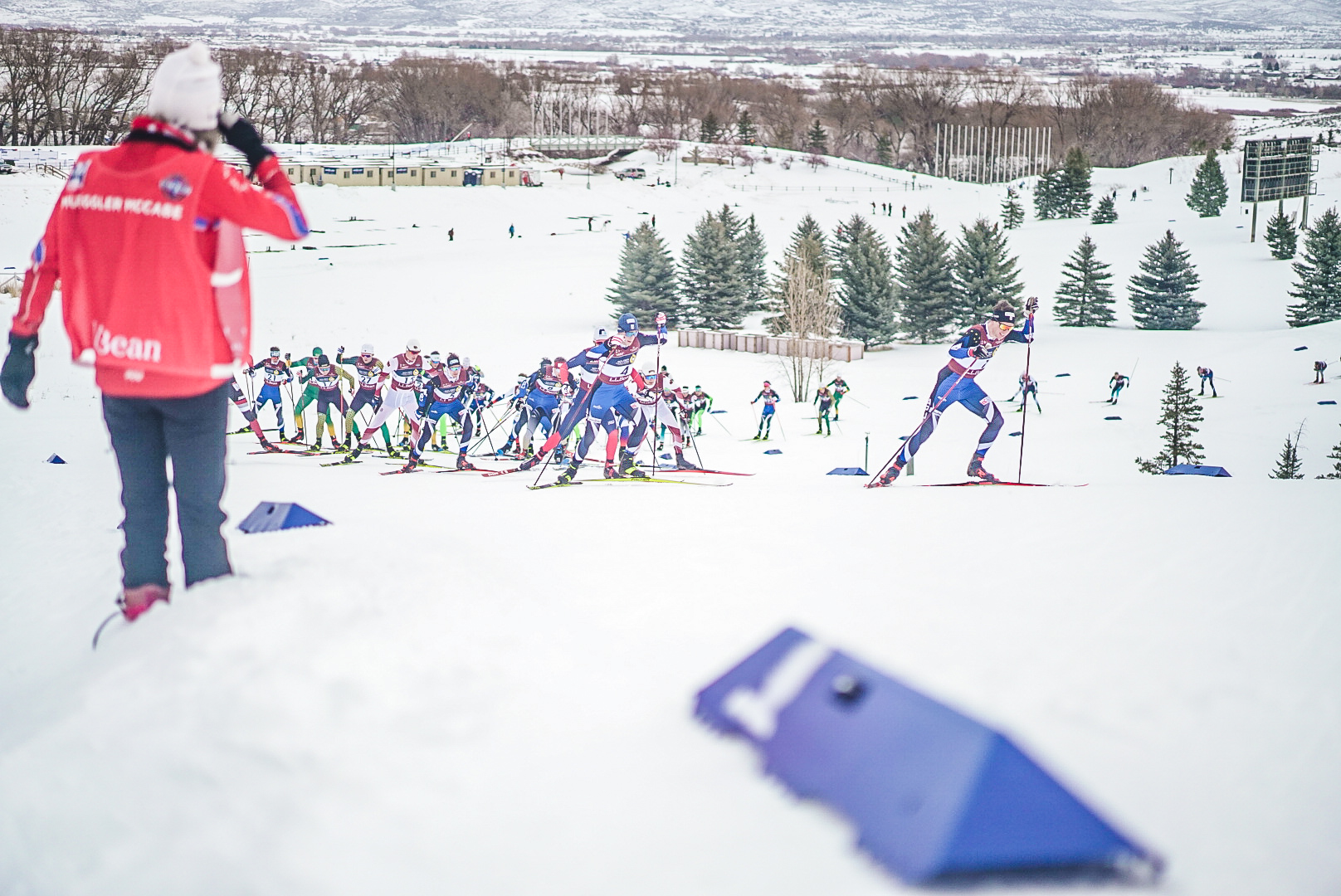
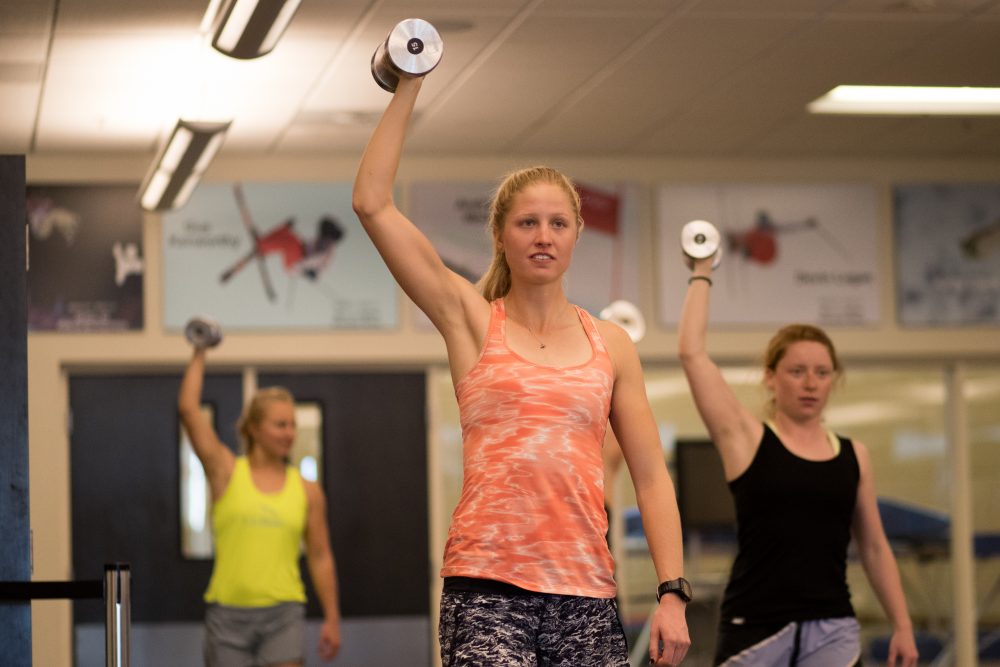
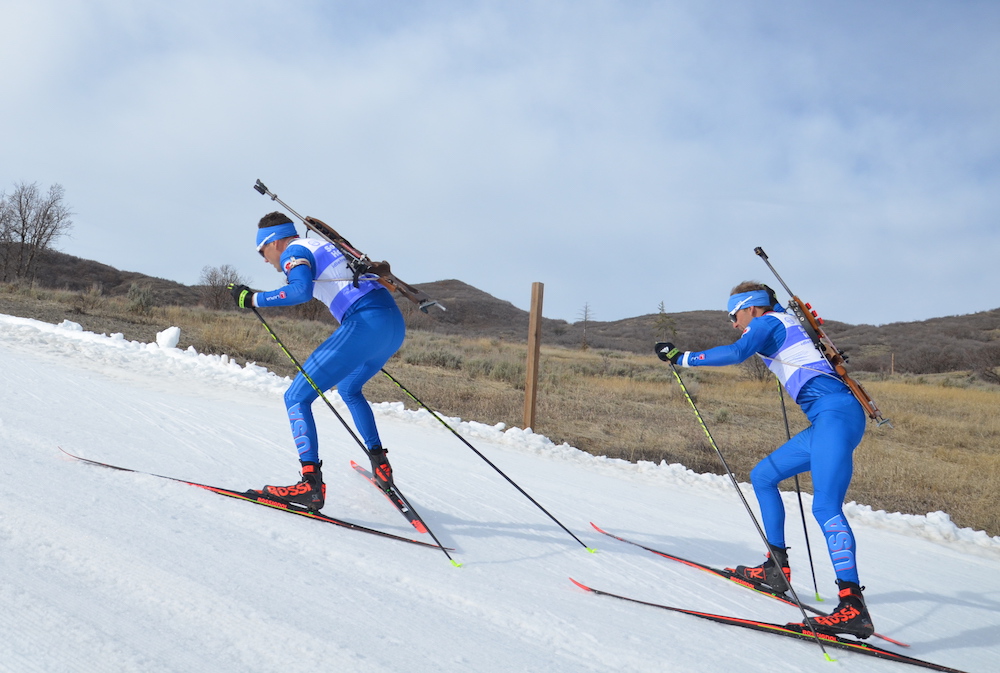
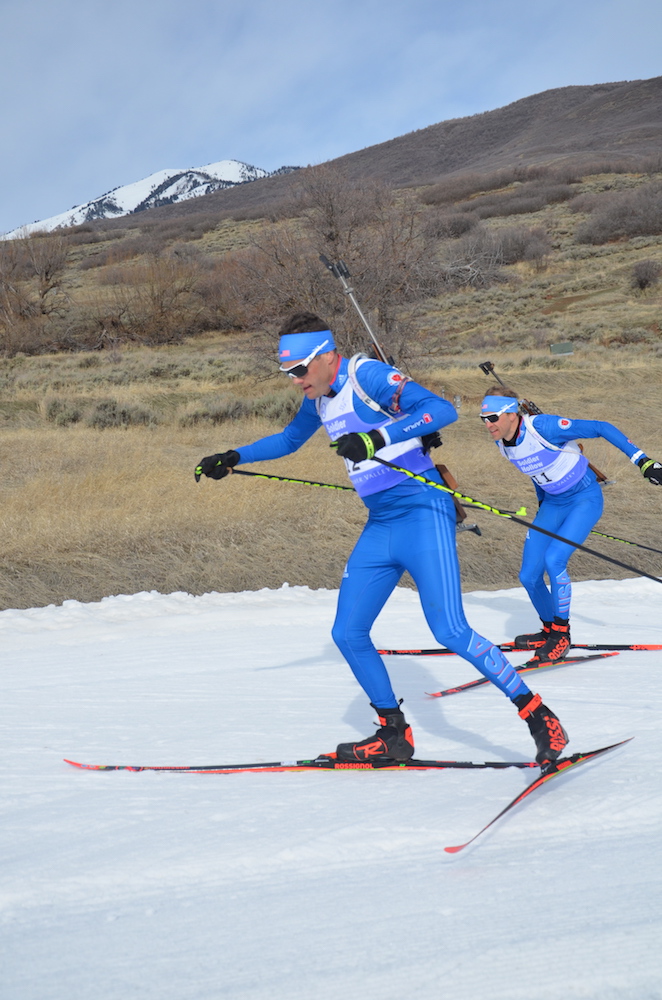
Skiers training near the biathlon range and the Sports Discovery Center at Soldier Hollow Nordic Center in Midway, Utah. (Photo: Tanzi Propst)
The Position
From the posting: “Soldier Hollow Nordic Center in Midway, Utah, is hiring a Venue Operations Supervisor to work in snowmaking, snowcat grooming, and trail operations at the Salt Lake 2002 Olympic biathlon and cross-country venue. With the Olympics returning to Utah in 2034, you’ll help prepare Olympic-caliber trails for daily skiing and events and assist with maintenance and operations of this year-round facility. If you’re a hands-on leader who knows snowcats, snow guns, and trail building, keep reading.”
Schedule, Pay and Benefits
Full time, year round, hourly position
Pay range: $24 to $30 per hour, depending on experience
Overtime eligible and expected during winter operation
Winter: the weather sets the day. Snowfall, temperatures and events shape each shift, and prime snowmaking happens overnight
Spring through fall: Monday to Friday, plus event weekends
Medical, dental and vision
HSA and 403(b) retirement with company matches
Up to $200 wellness credit
Friends and family vouchers for winter tubing, the bobsled experience, a Utah Olympic Park summer gold pass and more
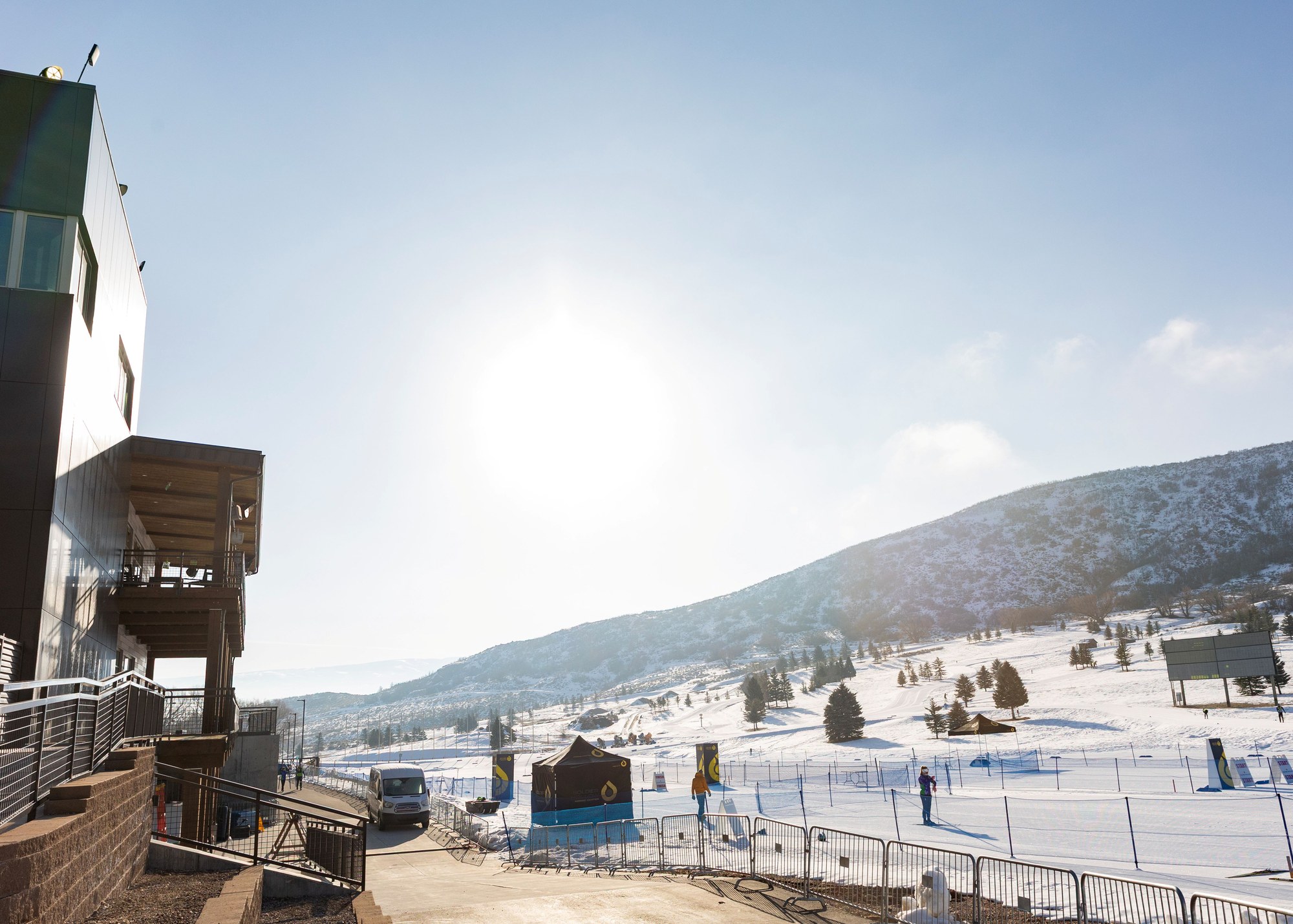
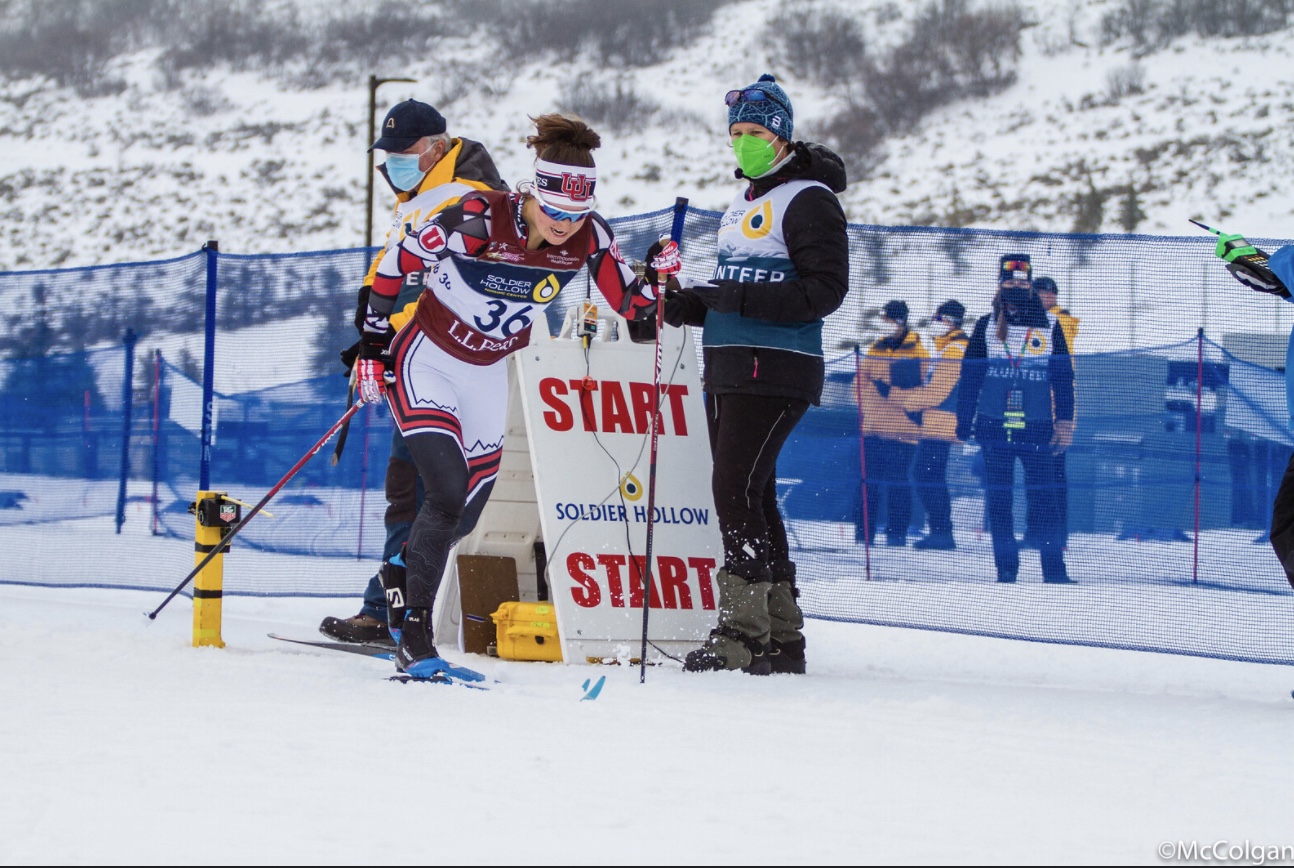
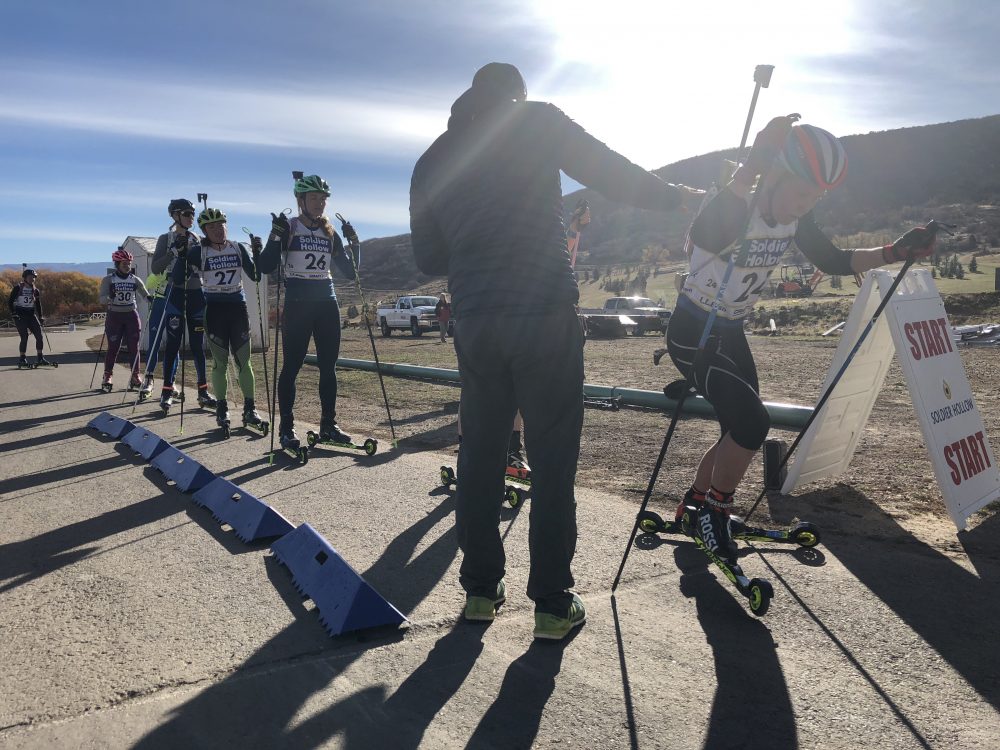
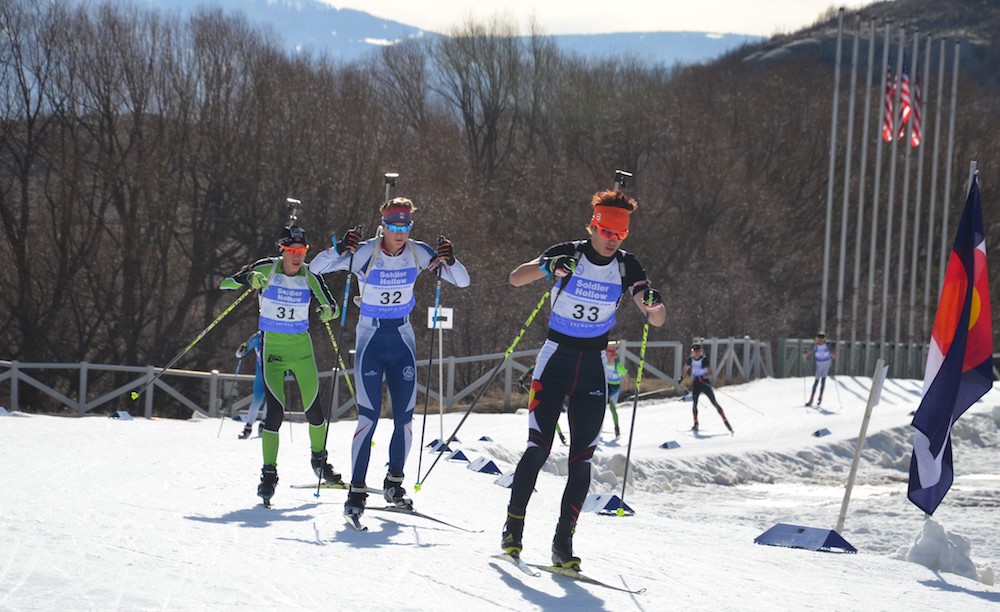
The start and finish area built for a race at Soldier Hollow Nordic Center. (Photo: Tanzi Propst)
What the Job Asks For
Must haves:
3+ years of snowcat grooming and snowmaking experience
2+ years maintaining and repairing heavy equipment, snowmobiles and vehicles
1+ years leading a field crew, including hiring, training and scheduling
Experience preparing venues and courses for events such as mountain biking, cross country skiing or biathlon races
Valid driver’s license
Comfortable with snowmaking software, equipment logs, email and the Nordic Pulse app
Ready to work outdoors in every Wasatch season
Nice to haves:
Chief of Course experience
Welding skills
Three phase electrical experience
Nordic ski area operations background
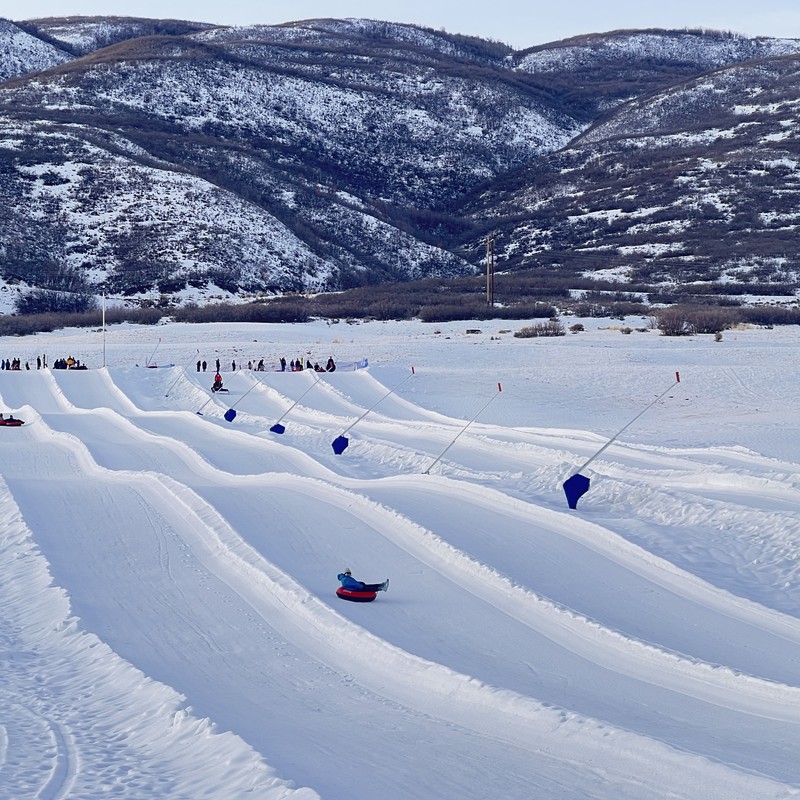
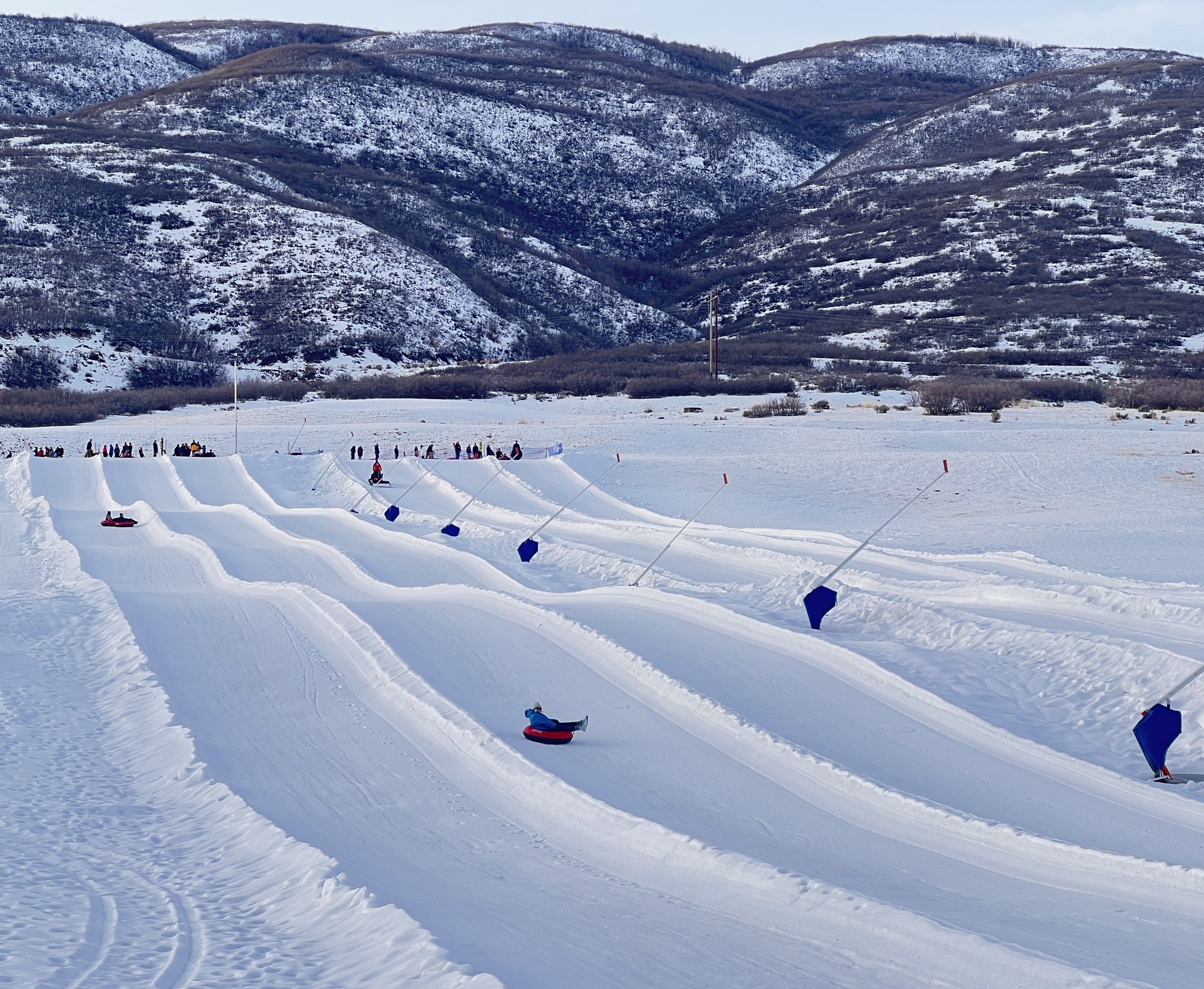
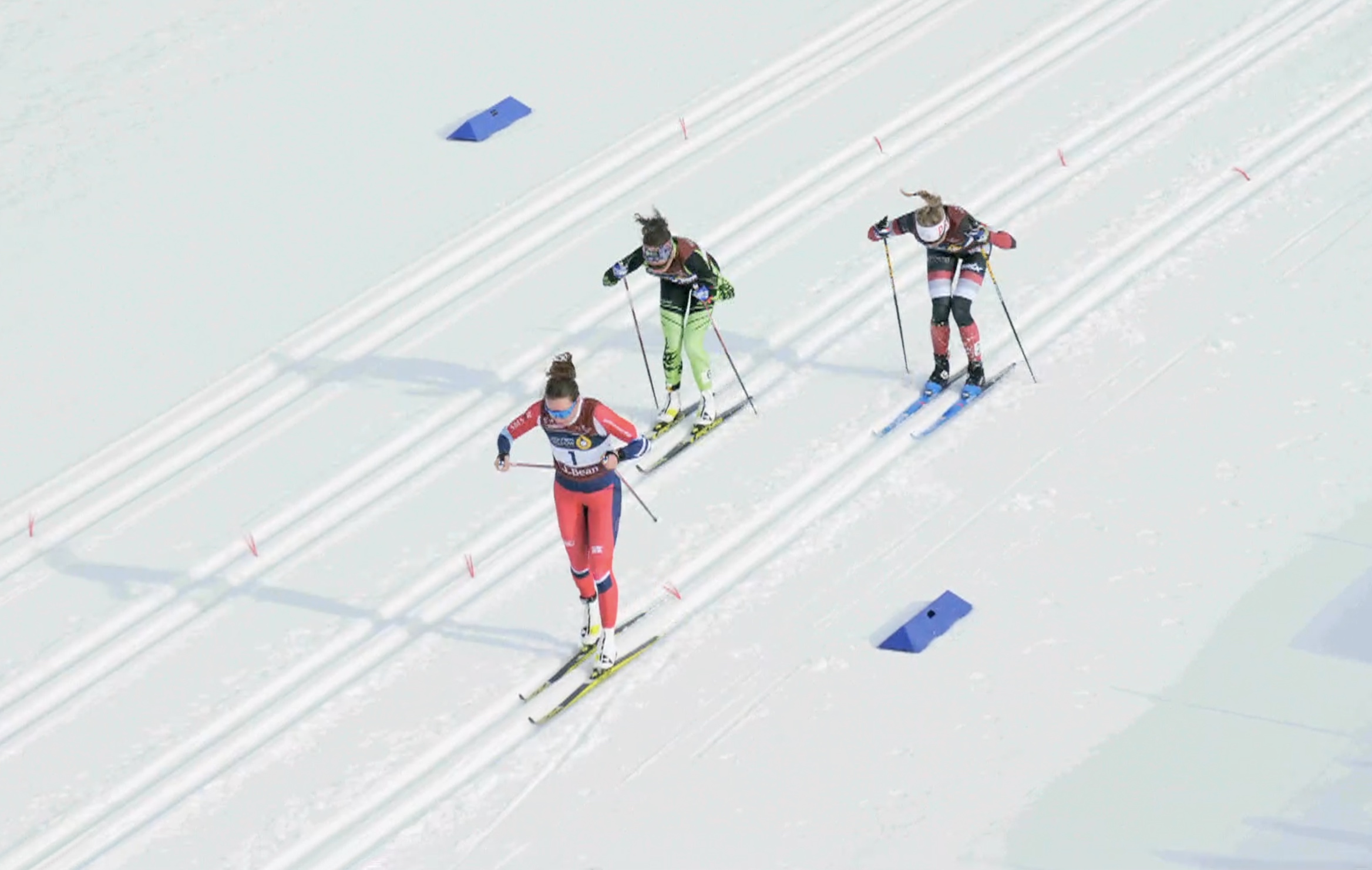
Tubing lanes built and maintained each winter at Soldier Hollow Nordic Center. (Photo: Tanzi Propst)
A Day in the Life
From the posting: “Winter starts with an aggressive snowmaking push. When temperatures drop overnight, you and your crew fire up the system and build base so the tubing hill and ski trails open on time. Once the snow is down, you set classic and skate track, shape the tubing hill, and prep racecourses. In summer, you shift to mountain bike trail construction, roller ski trail repair, mowing, and fleet maintenance. Every day, you lead alongside your crew, and every athlete, family, and racer feels the result.”
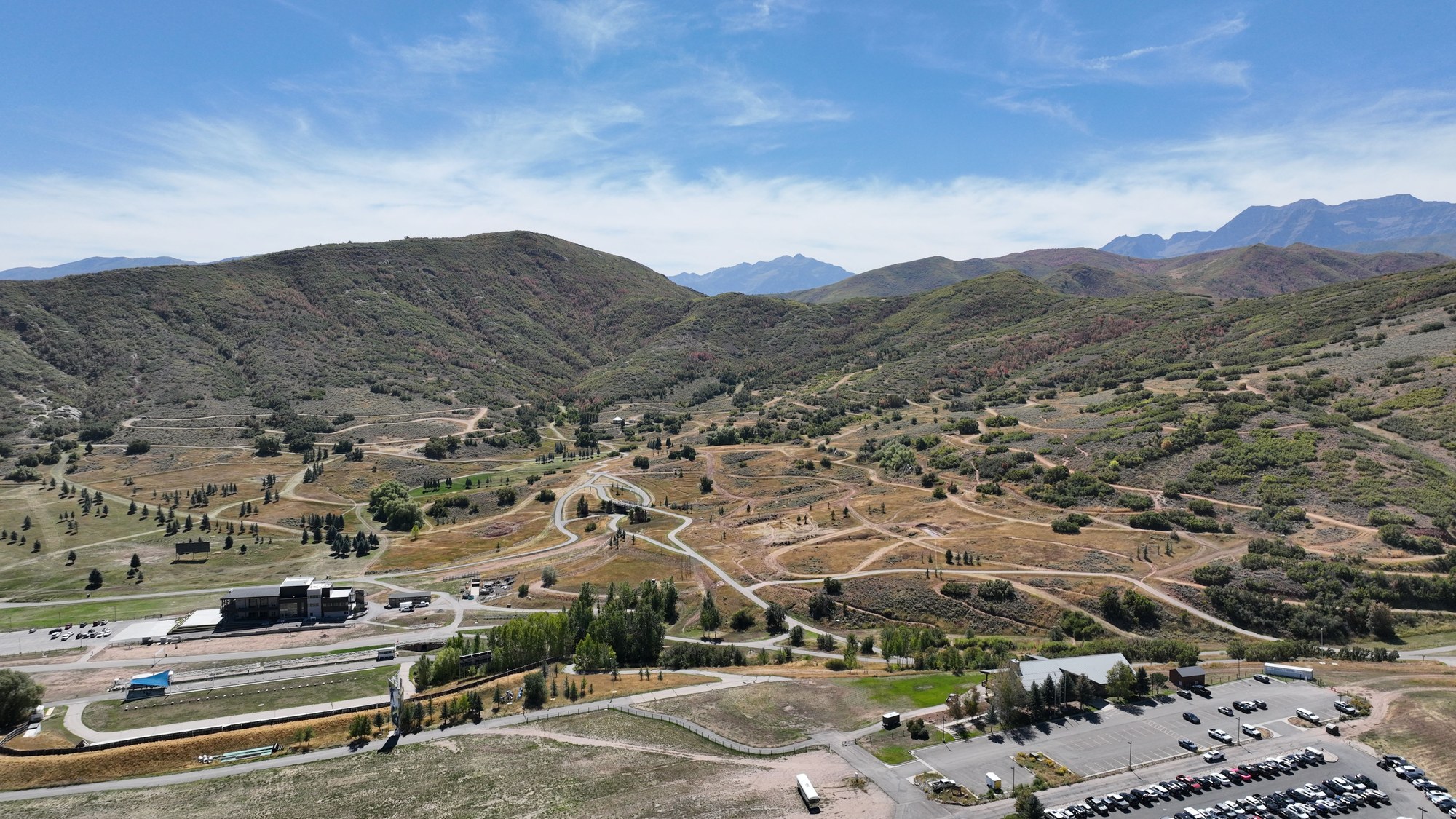
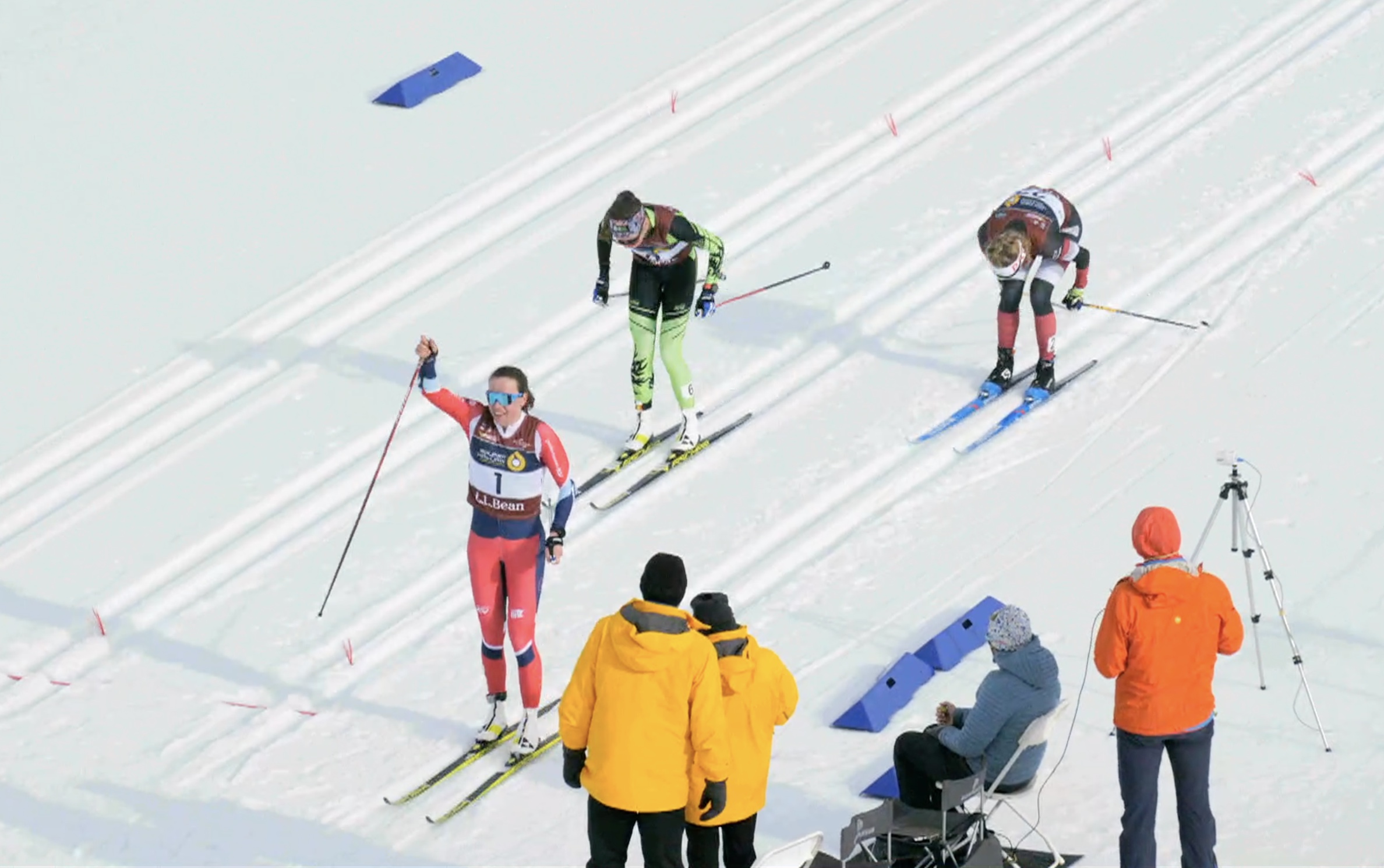
An aerial view of the trail network at Soldier Hollow Nordic Center. (Photo: Utah Olympic Legacy Foundation)
Why Soldier Hollow
“As part of the Utah Olympic Legacy Foundation, Soldier Hollow exists to cultivate champions in sport and in life,” the posting reads. “Our venue crew is preparing for 2034, and we’re not afraid to try new things. Last winter, we stored 12,000 cubic meters of snow to jump-start this season. You’ll join a crew that values fresh ideas, building trails for World Cup athletes, first-time skiers, and mountain bikers across 31 kilometers.”
The foundation describes the person it is looking for this way: “You’re happiest with grease on your hands and a plan for tomorrow’s grooming. You bring Grit to midnight snowmaking shifts and Excellence to every corduroy line, always looking for a better way. You build a strong crew through Collaboration, working right beside your team. You want your work to have Impact on athletes chasing Olympic dreams and on the Community that skis, bikes, and hikes these trails.”
How to Apply
Apply through the Utah Olympic Legacy Foundation listing:
The role is also listed on the foundation’s careers page at utaholympiclegacy.org/careers, alongside a seasonal Snowmaking, Grooming and Trail Crew Lead position at Soldier Hollow. Questions about hiring can go to hr@uolf.org or 435.658.4218.
As the pageantry and athletic performances of Paris 2024 captivated audiences across the United States, a team of organizers had their eyes fixed on a target far beyond the shores of the Seine. Ten years beyond, in fact. The International Olympic Committee announced on July 24th that Salt Lake City, Utah will host the 2034 Olympic and Paralympic Games, with the Cross-Country and Biathlon events returning to the Soldier Hollow Nordic Center, site of the 2002 Games.
Lacking some preternatural power of precognition or comprehensive data from our nation’s youth development programs, this journalist is unable to provide any outcome predictions for the 27th Winter Olympiad. Instead, FasterSkier reached out to the trio of skiers ready to guide Soldier Hollow down the decade-long road to 2034.
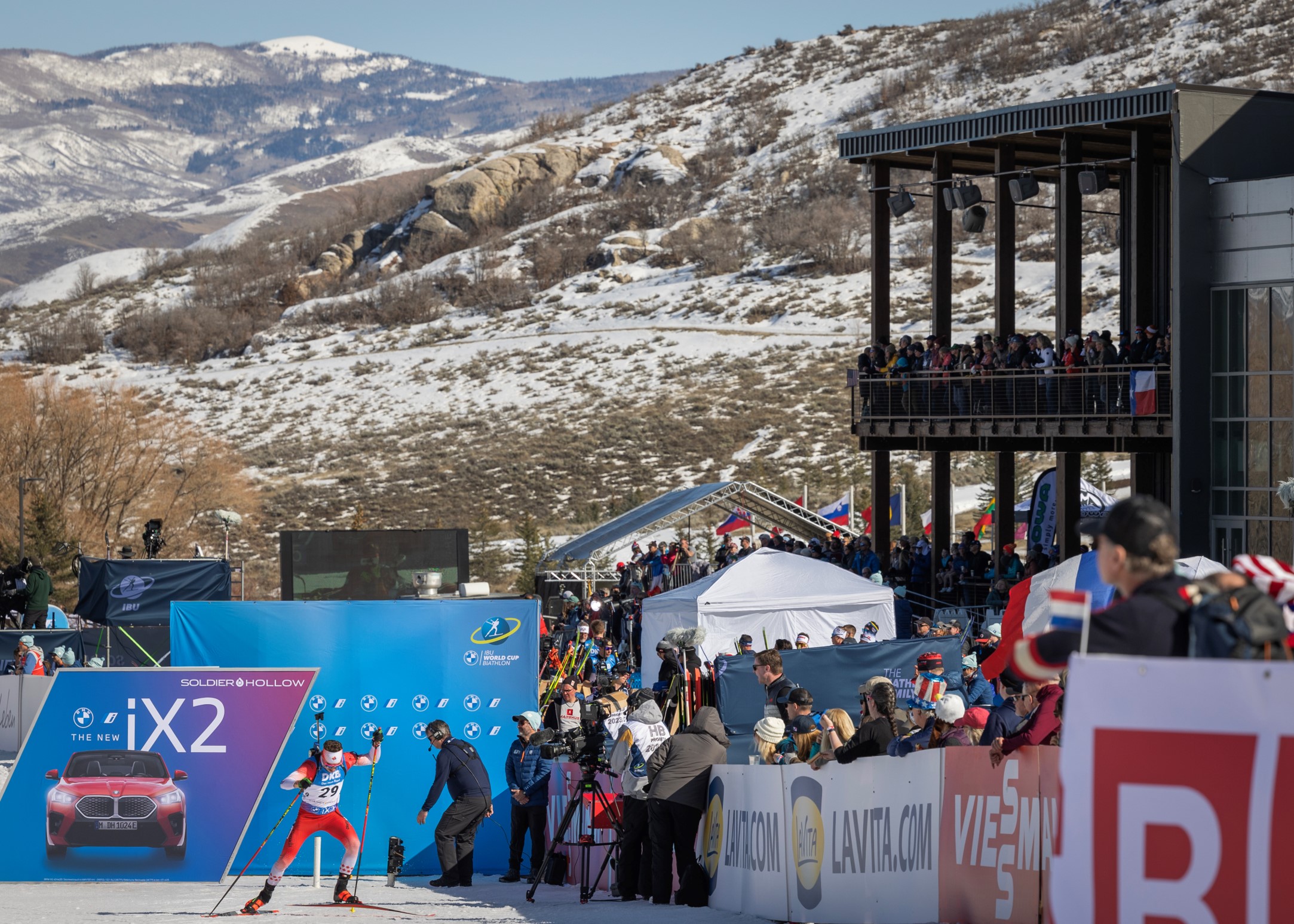
International Biathlon Union World Cup races at Soldier Hollow, 2024. (Photo: Josh Korn)
Salt Lake City’s Two-Boxed Bid
Twice a U.S. National Champion while skiing for the University of Utah, twice an Olympian (Albertville in 1992 and Lillehammer in 1994), and Chief of Sport for the U.S. Ski Team from 2007 to 2019, Luke Bodensteiner is currently the Chief of Sport Development for Utah Olympic Legacy and General Manager of the Soldier Hollow Nordic Center. In this role, he is responsible for both the Solider Hollow venue itself, and the range of Olympic and Paralympic sport programs that contribute to Salt Lake City’s vibrant, active winter community.
In Bodensteiner’s view, Salt Lake City checked two distinct boxes. For the U.S. Olympic & Paralympic Committee (USOPC), with whom the Utah Olympic Legacy Foundation partnered for over ten years to gauge community interest, assess venue capability, and to ultimately make a bid for the 2034 Games, the Foundation’s robust youth programming was a major draw. Over three thousand young athletes participate in winter sports through the Foundation—engagement which the USOPC recognizes as reflecting “the strength of the [2002 Games’] legacy,” and which made bringing the world’s best back to Utah “a really compelling proposition for the USOPC.”
Meanwhile, for the International Olympic Committee (IOC), Salt Lake City’s Olympic infrastructure, which has enjoyed intensive usage at a “regular cadence” since the 2002 Games, and aligns with Agenda 2020—an initiative to ensure “sustainable games” through long-term usage and reusage of venues, among other environmental and financial considerations.
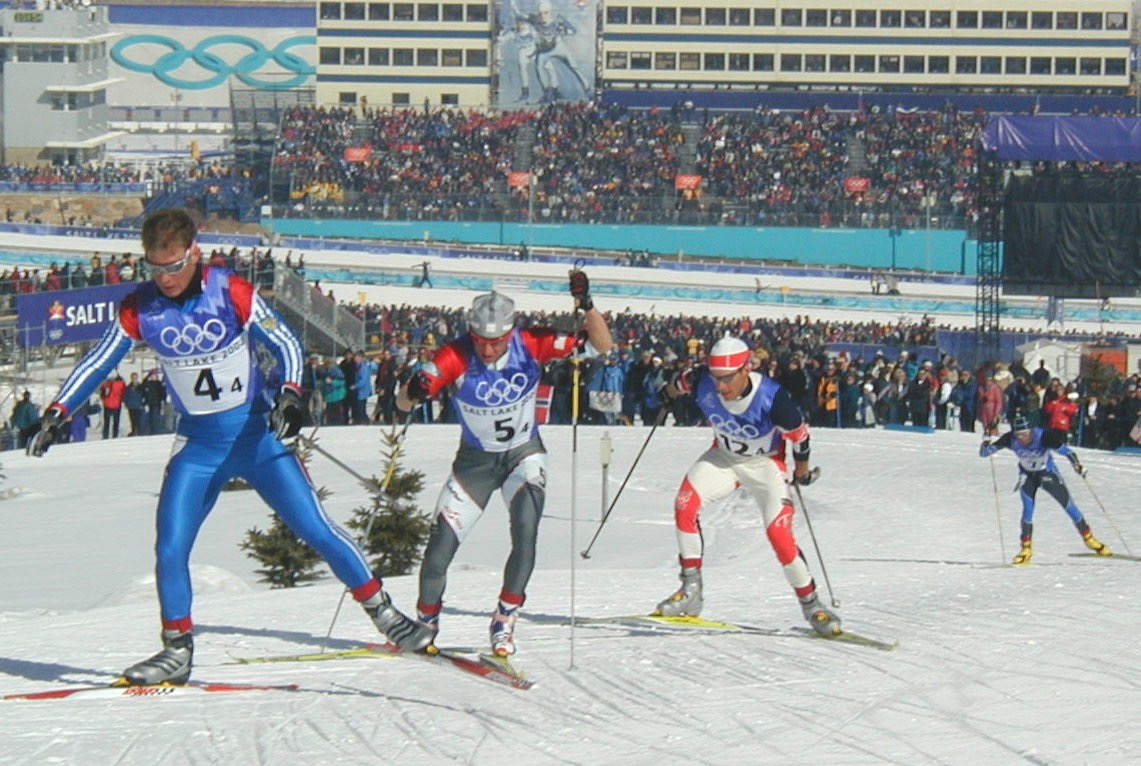
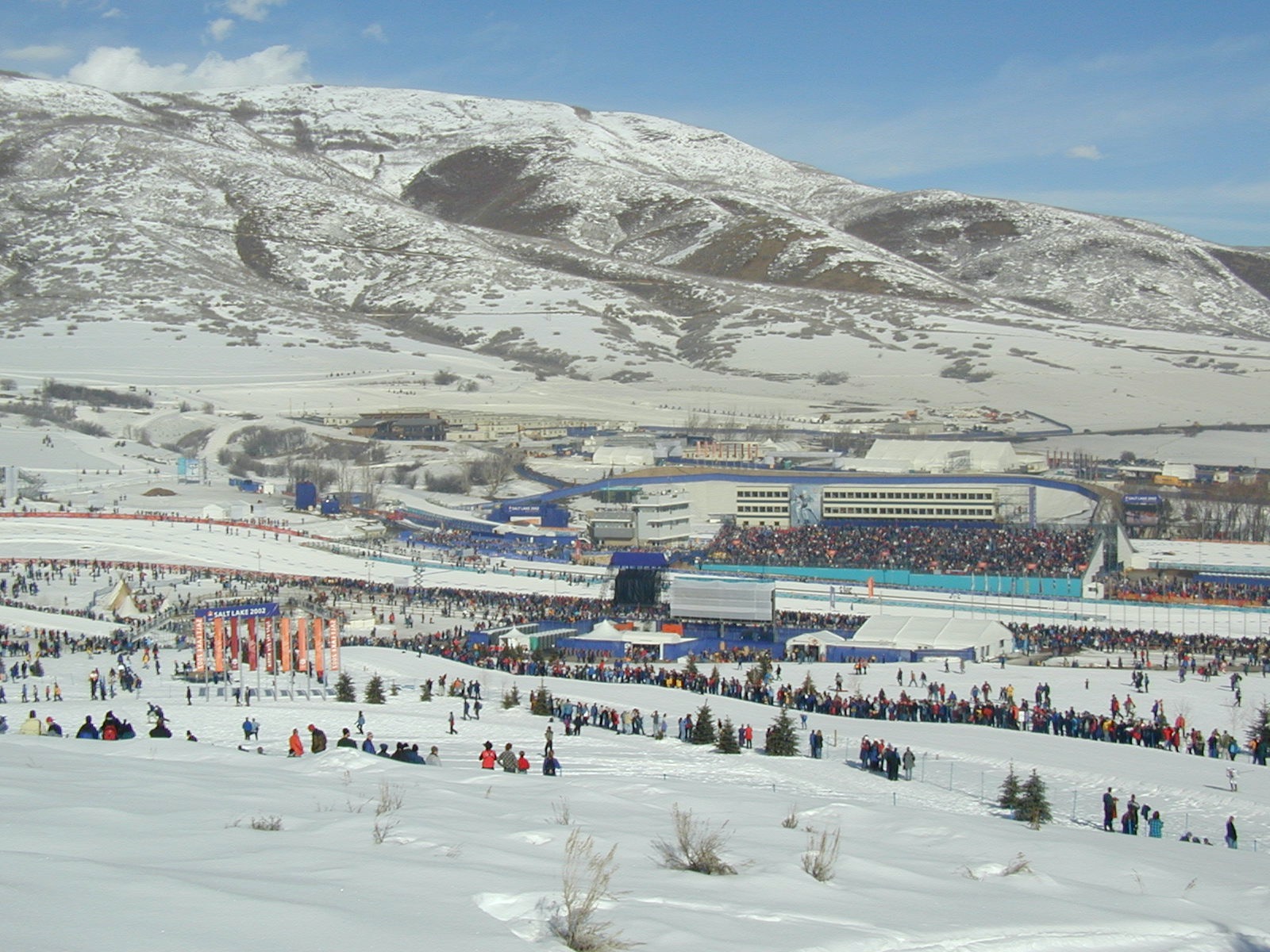
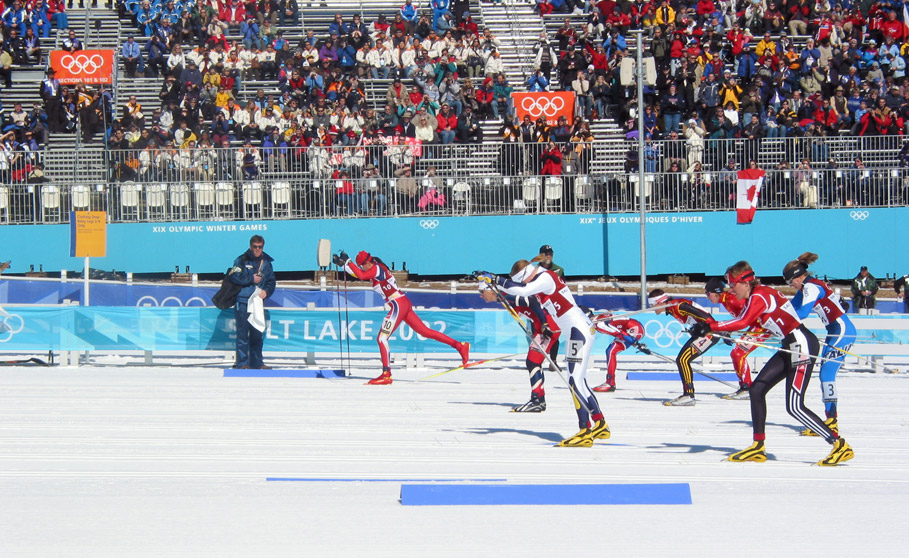
20,000 fans attended the Men’s Relay at the 2002 Olympics in Soldier Hollow. (Photo: Cory Smith)
Josh Korn agrees that Soldier Hollows’ infrastructure has enjoyed “great utilization already,” and heavy engagement with national and international events since ’02. “First and foremost, we are an Olympic venue,” he reminds me. “We’re predisposed to have the terrain and facilities necessary for high-level racing. It’s in our DNA—that’s why [the USOPC and IOC] chose Soldier Hollow” for the games two decades ago. A Wisconsin native (as is Bodensteiner) and UW-Green Bay Nordic alumnus, Korn came on as the Solider Hollow Nordic Event Manager in 2021. During his three-year tenure alone, the venue has hosted an impressive roster of races, including the International Biathlon Union World Cup (2024), the US National Championships (2024), the NCAA National Championships (2022), and the Biathlon Junior World Championships (2022). In the coming ten years, Korn expects Soldier Hollow will conduct at least “six to ten” more major events, beginning with the US Junior National Championships in 2025 (which will be the first event to use Soldier Hollow’s recently-expanded Olympic Stadium in “quite some time”), and likely including the IBU World Cup between 2026 and 2028, as well as the Cross-Country World Cup after 2030.
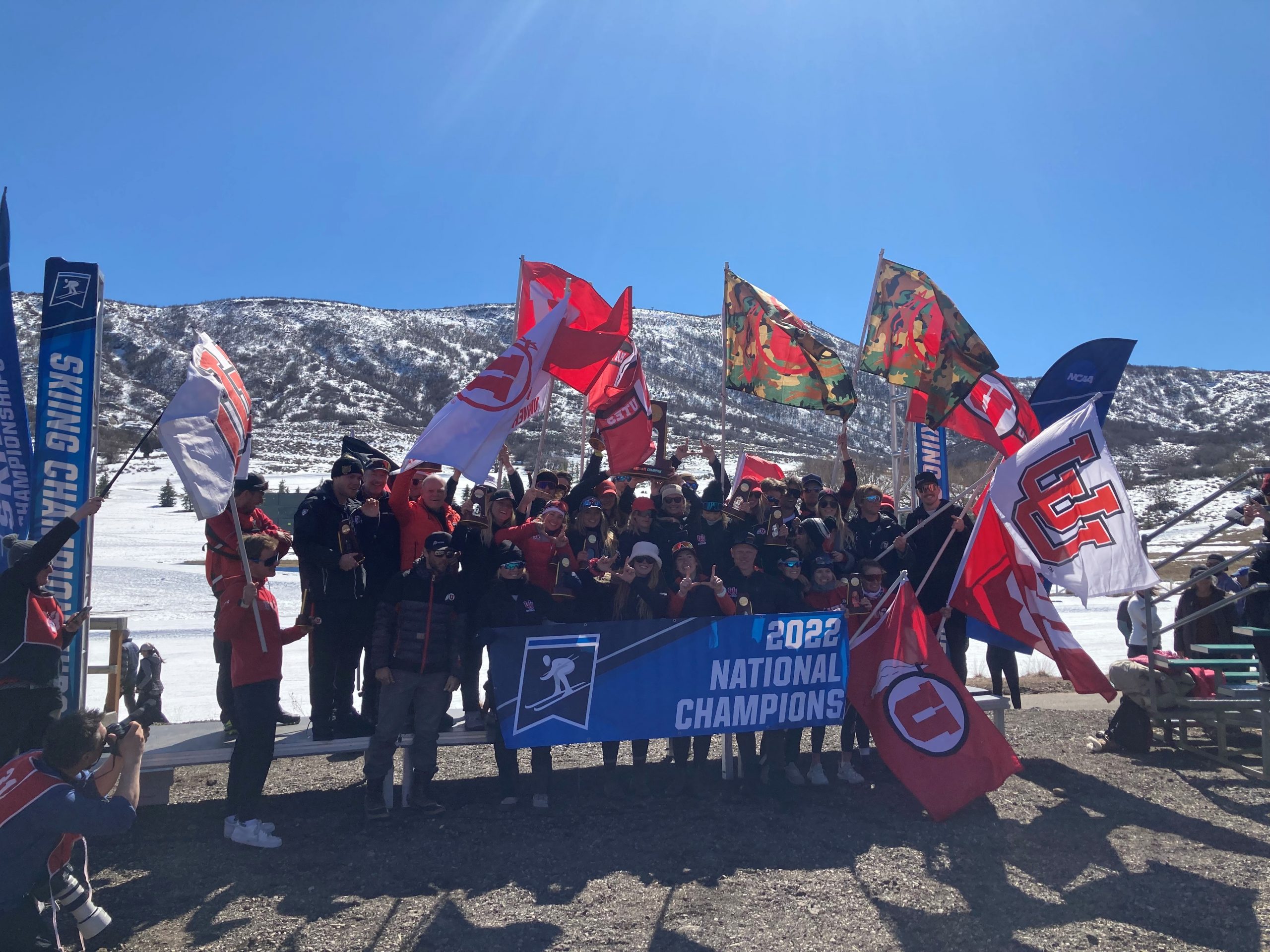
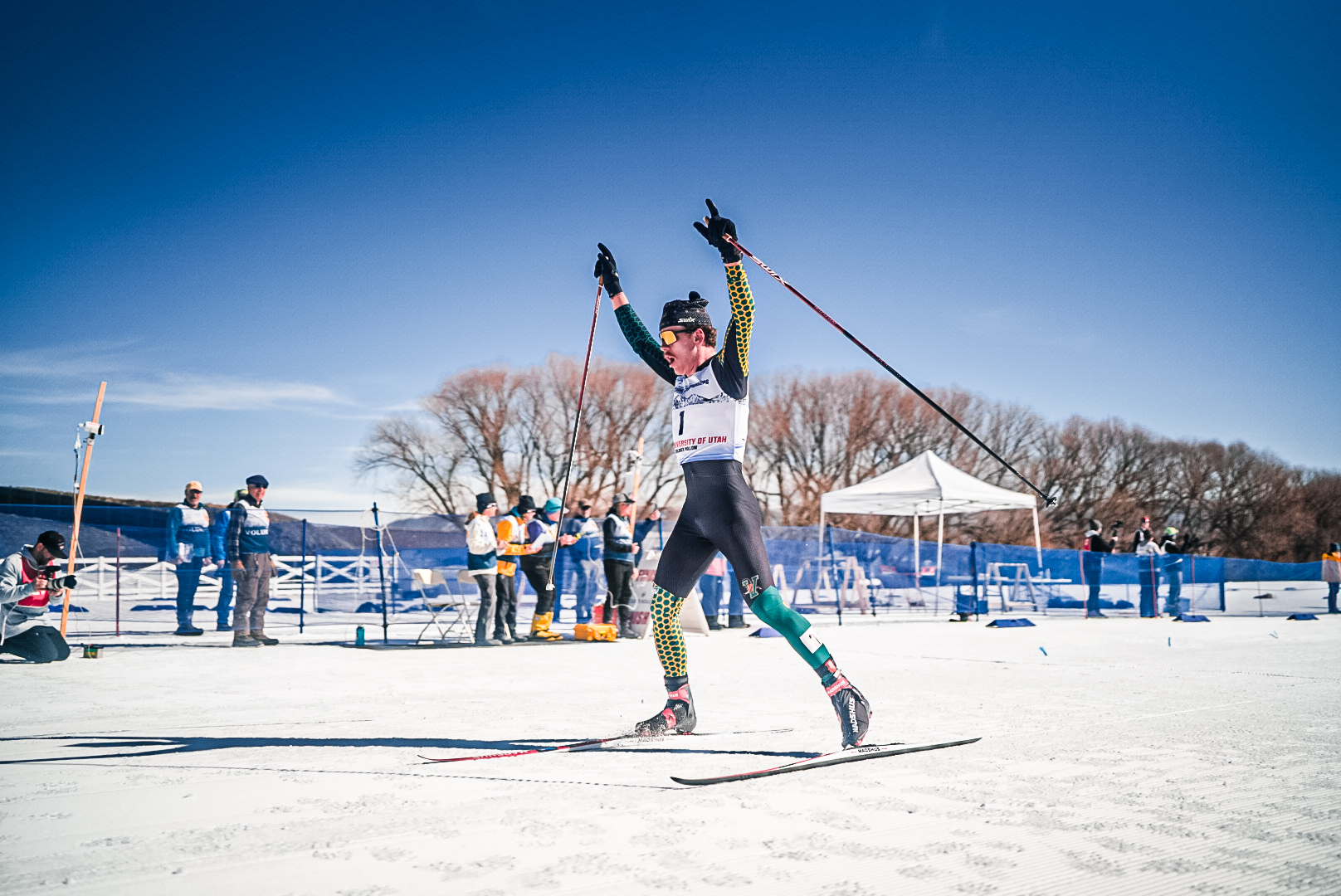
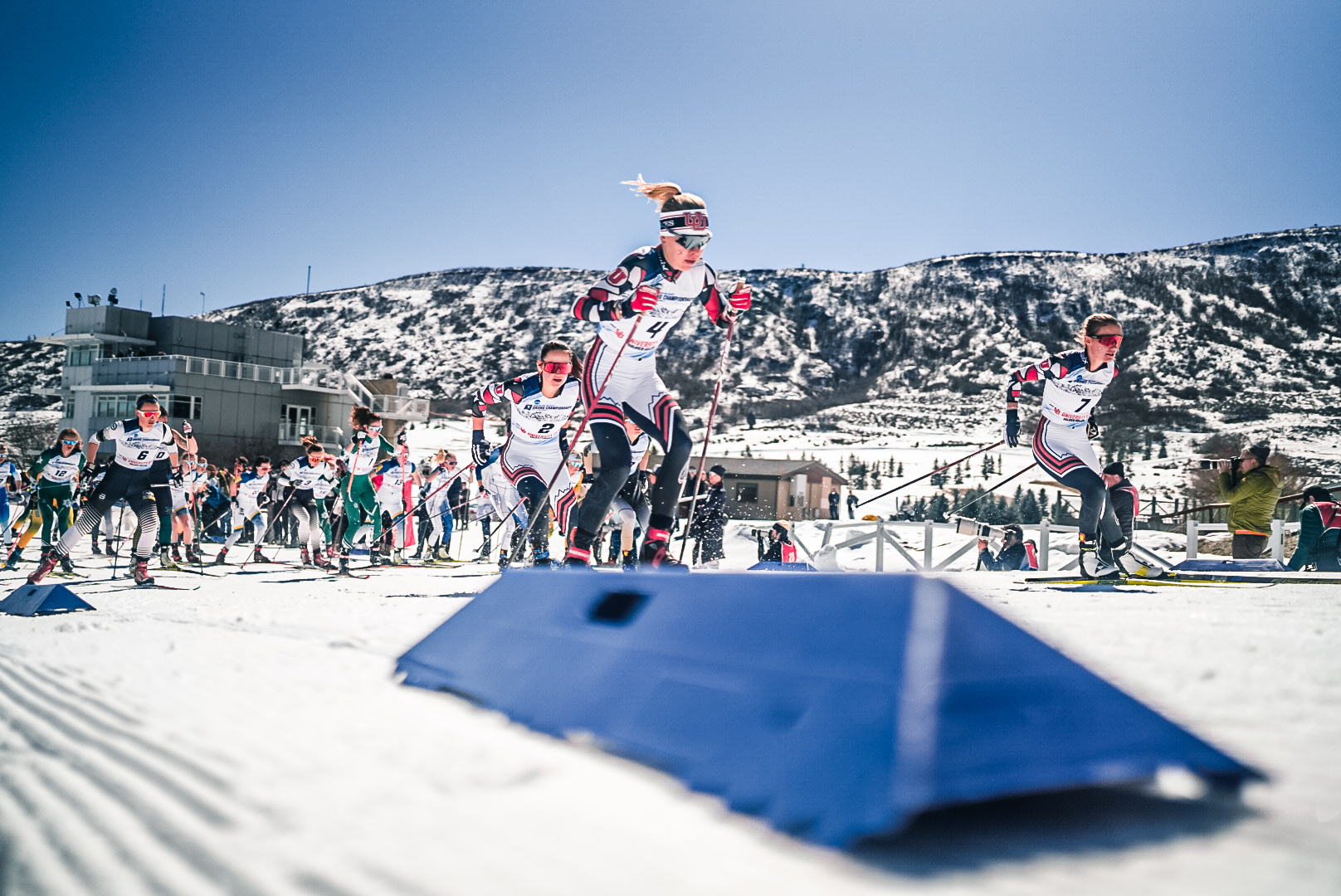
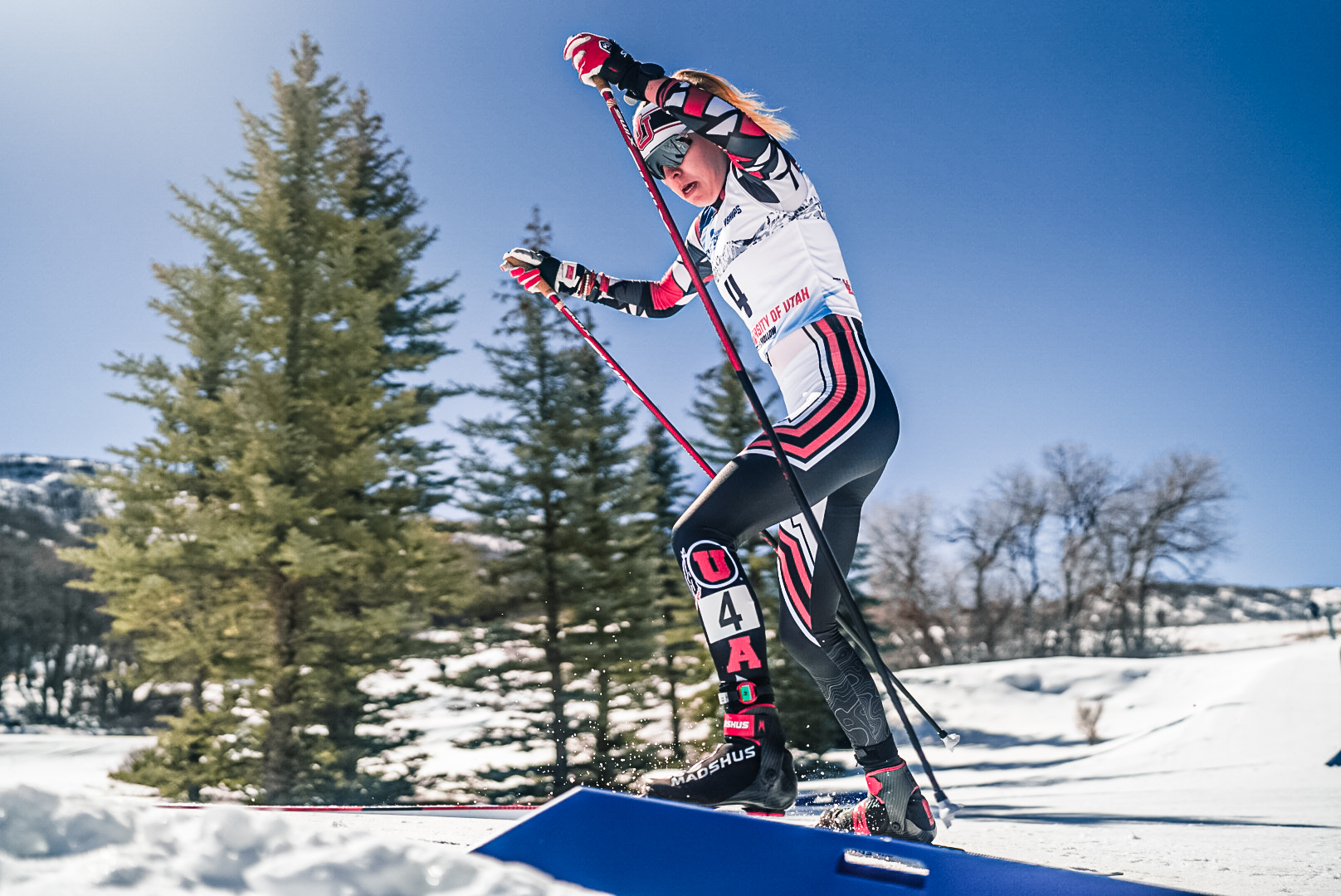
University of Utah skiers celebrate their 2022 NCAA National Championship title at Soldier Hollow. (Photo: Josh Korn)
While these races will serve as crucial pre-Olympic “test events” for Soldier Hollow’s organizing committee and volunteer corps, ensuring they are “savvy enough to work at the highest level,” the teams are already “pretty doggone good at putting on races out here,” Korn concedes. In his estimation, “there’s probably nobody in North America” better equipped to host elite-level Nordic racing.
Two-Week Windows
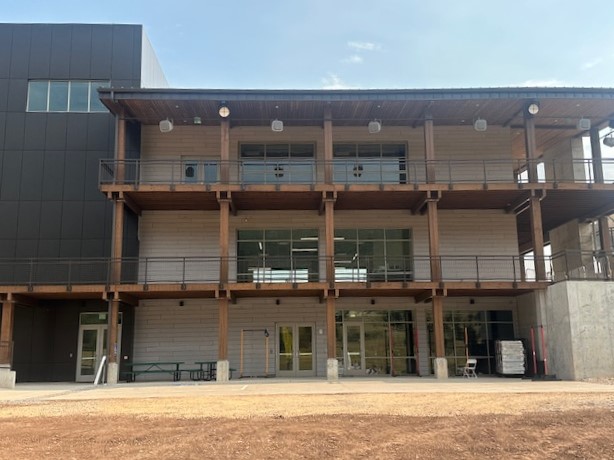
Nevertheless, Korn recognizes there is work to be done, both on and off the trails. Soldier Hollow just completed a 19,000 square foot addition Nordic Center, which brings the building’s footprint to just under 30,000 square feet of training, business, and conference space. Newly-homologated courses for the 2023 FIS Para Nordic World Cup incorporated terrain better suited to sit-skiing than the existing trails—terrain which is also more appropriate for beginning, non-adaptive skiers. “We want to be the go-to place for Utah, for the Mountain West, for people to come as a destination to ski,” Korn tells me. “We’re really trying to expand what we’re doing by allowing more people to get involved.”
With a dramatically-expanded Nordic Center, Soldier Hollow now boasts nearly 30,000 feet of indoor conference and event space. (Photo: Bill Pierce)
That expansion is the “cornerstone” of the thriving Nordic community the Soldier Hollow team hopes will underlie the 2034 Games, and it is underway despite increasingly-adverse climate conditions. Bill Pierce is the current Venue Operations Director for Soldier Hollow, with an impressive resume spanning decades of trail and venue design, twenty years of professional coaching, and management of both the sprawling American Birkebeiner Ski Trails in Hayward-Cable, Wisconsin, and Snow Mountain Ranch in Granby, Colorado. The third of the “three Wisconsin boys running” Soldier Hollow, Pierce has prioritized effectively leveraging the location’s power and water to “bring skiing to a venue that wouldn’t otherwise have it.”
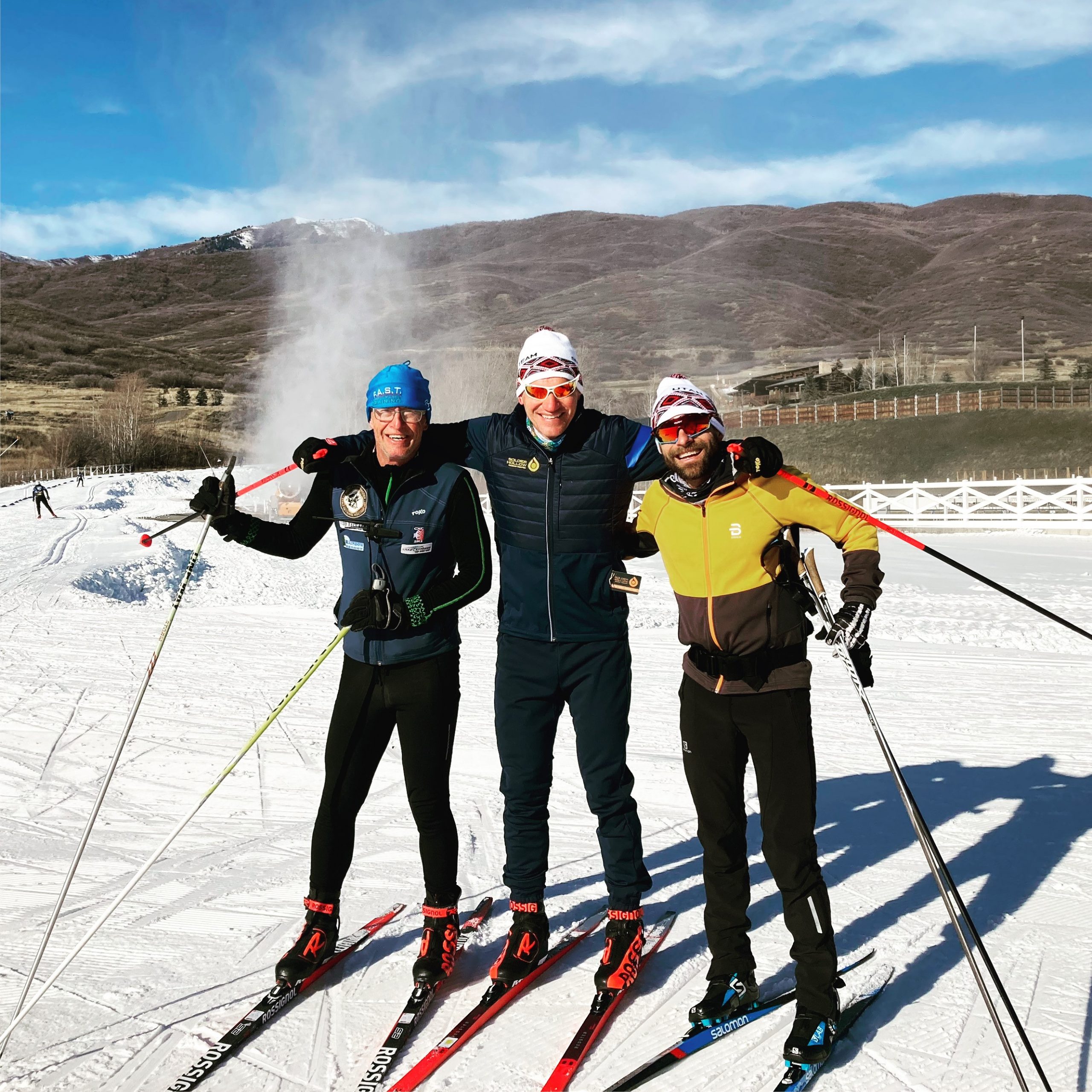
The “three Wisconsin boys” of Soldier Hollow: From left, Bill Pierce, Luke Bodensteiner, and Josh Korn. (Photo: Josh Korn)
Although Soldier Hollow “did not exist before the 2002 Olympics, and was built specifically for those Olympics,” it “wouldn’t exist without snowmaking,” Pierce states. “We’d have a very short season, maybe less than thirty days.” Cold air is the biggest concern: The temperature is rarely low enough to consistently produce snow. In a realistic scenario, Pierce and the trail crews have “a two-week window during which we want to be able to pump the maximum amount of power and water.”
The trails are currently equipped with roughly sixty “stick guns” and ten “fan guns,” all of which are fully automated (“I can run the snowmaking from my laptop at home. That’s how automated it is.”) At present capacity, with two weeks of sufficiently cold air, Pierce can cover 10k of trail in one meter of manmade snow, a base thick enough to “withstand any type of weather through March.” During the last season, he made enough snow in four weeks to cover 16k.
Ongoing expansions are no coddiwomple. By the 2034 Games, Soldier Hollow will aim to cover between 15k and 22k of trail, in a one meter-deep racing deck, in a two-week window—nearly double their current capacity. (For those with a pen and paper, or with a problem visualizing volumes, 15k of FIS-homologated Category D trail, at a depth of one meter, contains roughly 112,500 cubic meters—over 11,000 tandem-axle dumptruck loads—of compacted, groomed snow). This should give Soldier Hollow ample space to enable cross-country athletes to race (and get TV coverage) while biathletes train, and vice versa—an exercise in Olympic stadium-sharing that hasn’t taken place since the 2002 Games, and that Pierce describes as an “art and science” of visual and logistical trail configuration.
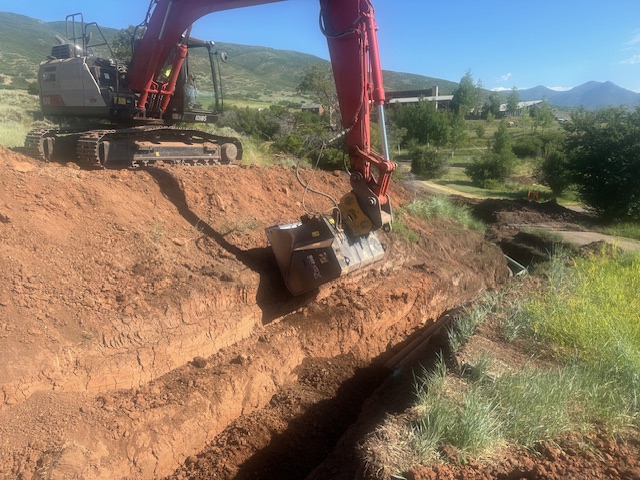
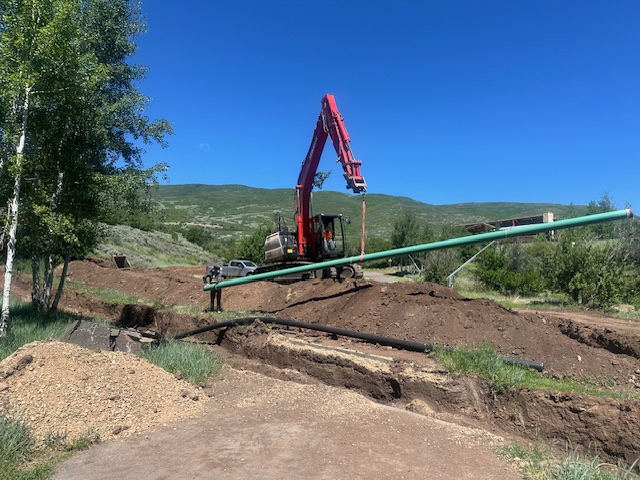
Excavating below-frostline trenches for snowmaking pipe along the Soldier Hollow trails. (Photo: Bill Pierce)
This scheme is an ambitious expansion of the current system, but a necessity. In Pierce’s words, there’s “too much fire, not enough water, and it’s changing fast” in the Mountain West: “When you see the climate history that’s happened in the last forty years, it’s actually very scary.” Today, snowfall totals are erratic. “In 2021-22, we had 32 inches of snow. In 2022-23, we had over 300 inches of snow. In 2023-24, we had a mix of snow and rain, including several seven- to eight-day stretches above freezing. We watch the weather two weeks out, and plan our staffing and snowmaking setup to go as fast as we can to use the cold air while it’s here.”
First on the to-do list is the creation of another water pond and pumphouse. That project will begin in summer 2025, in conjunction with the Soldier Hollow Golf Course. Summer 2025 will also see the excavation of a snow storage depot, which will be operational by the early months of 2026. Between the present date and 2027, the venue will also install an additional 2k of fully-automated snowmaking around the core trails and expanded stadium; from 2027-2030, they’ll undertake a “final touch-up” of the automated system to cover 8-12k of snowmaking (any remaining kilometers will be covered through machine pile-pushing of depot-stored snow and “whales”).
Lowering snowmaking pipe into place. (Photo: Bill Pierce)
A Long and Local Road
With another Crystal Globe for Jessie Diggins, a home-soil World Cup witnessed by 40,000 attendees, and long-awaited US Men’s victory by Gus Schumacher, the winter of 2023-24 brought America’s Nordic excitement to a fever pitch. As Josh Korn summarizes, “the amount of enthusiasm there is for this sport right now—there’s never been more of it.”
Husbanding this energy for the decade ahead seems like a tall order—and the landscape of 2034’s competitive field will be dramatically different from today’s bounty of emergent possibilities. Schumacher will be 33 years old; Diggins will be 42 and may have since storage-waxed her racing skis (although Maurilio de Zolt won Gold over the Norwegian Dream Team at Lillehammer ’94, at the age of 43—so anything’s possible!) Kikkan Randall made her Olympic debut (coincidentally, in Salt Lake City) at the age of 19, so the American star of the 2034 Games might not be spending this autumn rollerskiing and lactate testing—they’ll be too busy with fourth grade.
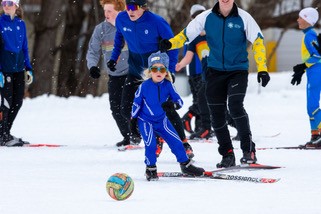
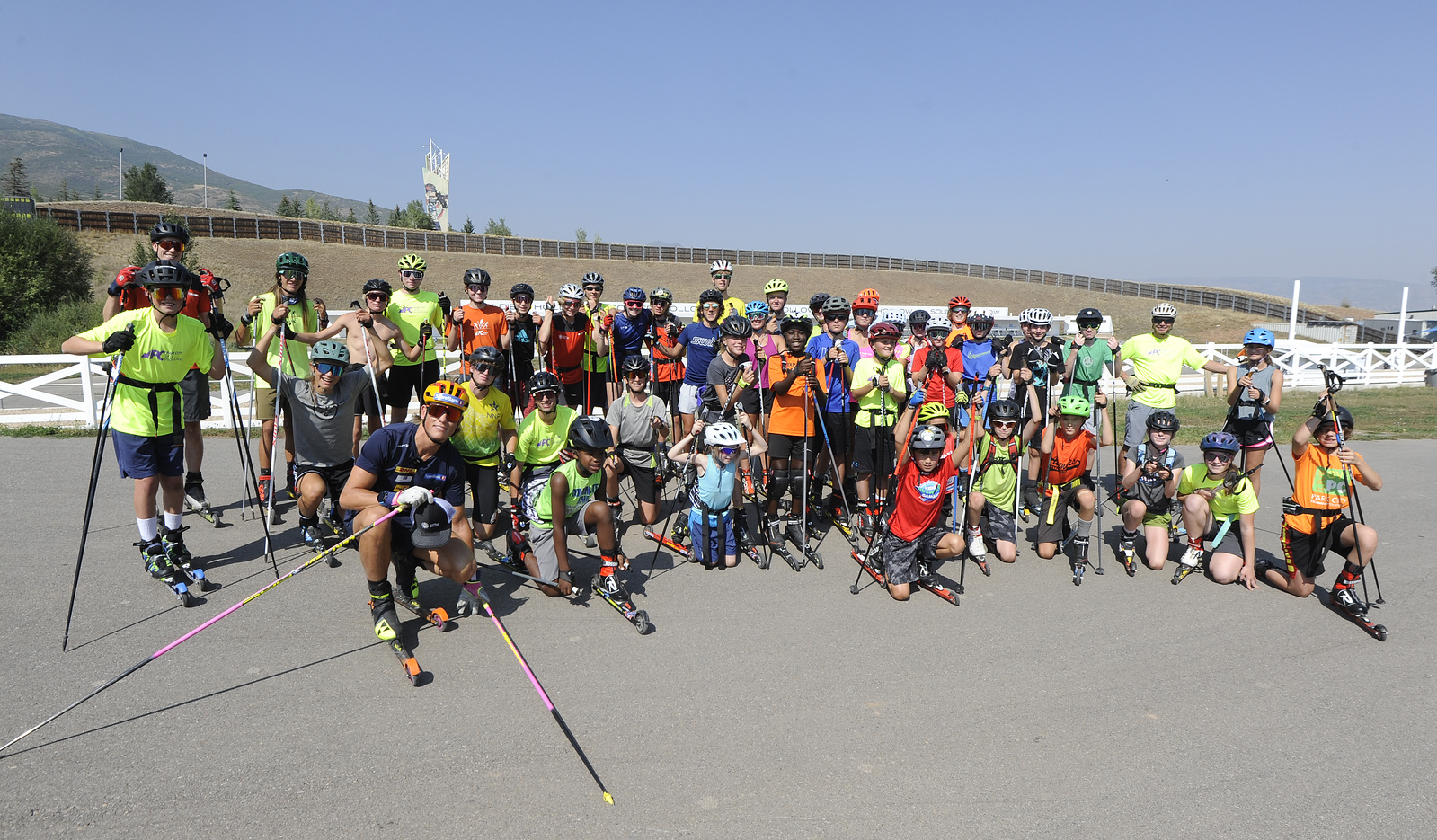
A potential prospect for the 2034 Games (or the 2034 FIFA World Cup) builds skills at the Soldier Hollow Nordic Center. (Photo: Josh Korn)
In Diggins’ opinion, the challenge of maintaining U.S. skiing’s momentum in the years to come is “the single biggest question for the future of our sport”—but the solution is relatively simple: Funding and access. “The pathways to success dry up really quickly in a financial drought in a country that has no government funding for skiing. Without money, we can’t have more World Cups in the U.S., we don’t have SuperTour, we can’t fund our athletes, and it’s pretty much impossible for people to pursue a career in a sport that is largely played out in Europe.”
The friction of distance also has implications for skiing’s American fanbase. “The other thing we really need is access to connecting to the races and connecting to the athletes […] We need it to be easy for people to find our races to stream on-demand wherever they are, and it needs to be straightforward.”
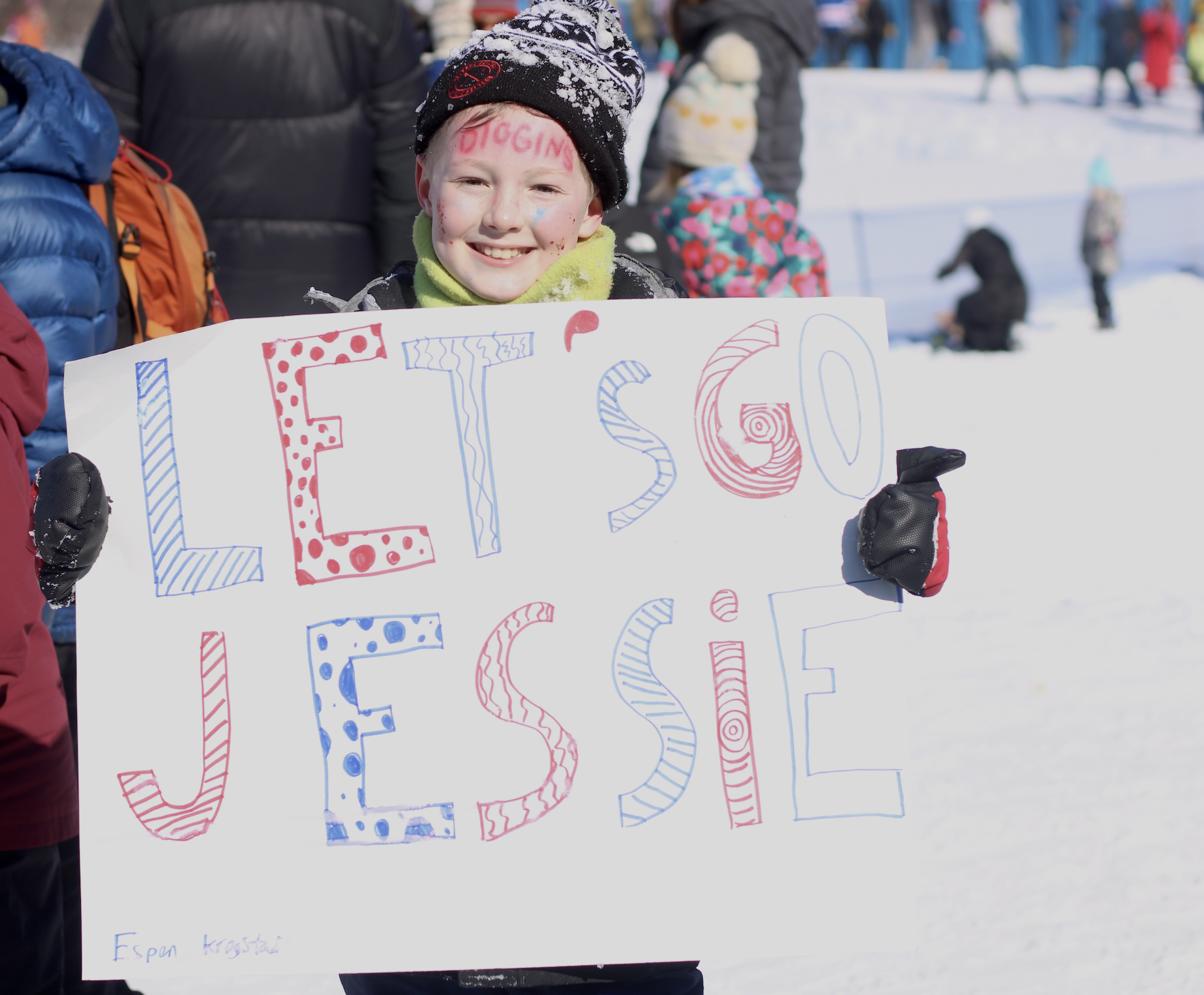
Espen Krogstad, 11, poses with his Jessie Diggins sign at the World Cup race in Minneapolis in February 2024. (Photo: Nathaniel Herz/FasterSkier)
Lastly, Diggins says, “Athletes need to be willing to share themselves, and to post on social media, so kids and fans can connect with athletes when they’re gone and on the road, because when you get to know someone, then you want to hear from them and stay connected when that sport is happening [abroad].”
Luke Bodensteiner notes the progress of the previous decades as he looks ahead. “The sport has grown in leaps and bounds. A lot of people who skied competitively thirty years ago continue to stay involved, and they’ve helped built, and brought expertise to, local clubs. It’s snowballed” as these original, personal investments in team, equipment, and grooming improvements across the country make skiing accessible and “enjoyable for a lot of people. We’re in a great cycle, where new skiers are bringing in additional skiers,” who learn from—and eventually become—local experts, growing the sport in their own towns and trails. “The real story is what’s happening in all these little communities all over the country […] what happens at the local level in all these ski clubs is driving our success.”
Josh Korn agrees. Kids are getting on skis in their own schools and clubs, and seeing that international success in the sport is “doable.” While the US Ski Team’s “hungry young guys are young enough that they’re going to be here in Soldier Hollow in 2034,” it’s essential to keep “putting them in front of as many kids as possible.”
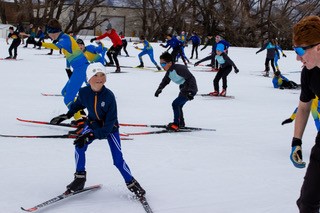
Youth skiers at Soldier Hollow Nordic Center. (Photo: Josh Korn)
It’s a sentiment Gus Schumacher echoes. “I think we need to keep ski racing fun for kids. We also need to keep pushing to make it as accessible as possible, like reducing costs at events when we can, and supporting our local clubs and larger organizations like NNF, that help support aspiring races from the first time they join a group, all the way to the World Cup,” he writes. “As long as we still have skiers aspiring to be the best they can be at every level we’ll be able to keep the enthusiasm. The level sometimes ebbs and flows, but the more we can all push each other to be the best possible, the more consistently good we’ll be. And I’m also planning on being around still in 2034!”
As a graduate of the University of Utah and no stranger to the Soldier Hollow trails, U.S. Ski Team member Sophia Laukli (winner of the 2024 Alpe Cermis climb) also has her eyes on the distant Games. Momentum for the sport and recent American successes go “hand in hand. It’s easy to get motivated and set higher goals when we continue to improve each season as a team, and that makes our team and the sport more known/seen in the country.”
Sophia Laukli secured her first FIS World Cup victory on Alpe Cermis, the final stage of the 2023-24 Tour de Ski. (Photo: NordicFocus)
For Laukli herself, “Originally the concept of racing until 2034 was a bit daunting […] But as I continue to improve myself and, in turn, want to set higher and higher goals, the idea of racing at the Olympics is pretty motivating. It’s a long ways away, but not many people get the opportunity to have an actual home-race Olympics.” It would be “special to race in Salt Lake, especially on a potential relay team with old University of Utah teammates,” but Laukli thinks “the country is already going in the right direction to make those Olympics big, no matter who’s racing. I think all of us skiing today are going to try and be a part of those Games one way or another, whether that be on the sidelines or the start line.”
To Bill Pierce, the key to Nordic engagement lies beyond both the sidelines and the start line. Pierce recognizes that, the success of the past season aside, skiing remains a “very micro-sport in North America.” In the years ahead, he’ll continue to focus on fostering “excitement about wellness” on and off the snow. “Not everyone can ski, but they can hike, bike, whatever. We can use these trails to build inroads and connections with the community, and wellness in that community. This is what the Olympics are all about.”
FasterSkier thanks Luke Bodensteiner, Josh Korn, and Bill Pierce (Soldier Hollow Nordic Center / Utah Olympic Legacy Foundation), and Leann Bentley, Jessie Diggins, Sophia Laukli, and Gus Schumacher (U.S. Ski Team) for their contributions to this piece.
A few weeks ago, Nat got a Facebook message from one Haakon Klæbo — father of Johannes Klæbo, also known as one of the greatest skiers of all time. What followed was a visit by Nat to Klæbo’s training camp in Park City, Utah, where he and Johannes taped this episode of the Devon Kershaw Show.
Join us to hear an interview with the five-time Olympic champion from Norway about his time in the U.S., his training and his schism with the Norwegian national team. You can also read Nat’s first written story from his visit with Klæbo here.
We’ll be back soon with more material from Utah. Send your questions, comments and hate mail to devon@fasterskier.com and nat@fasterskier.com.
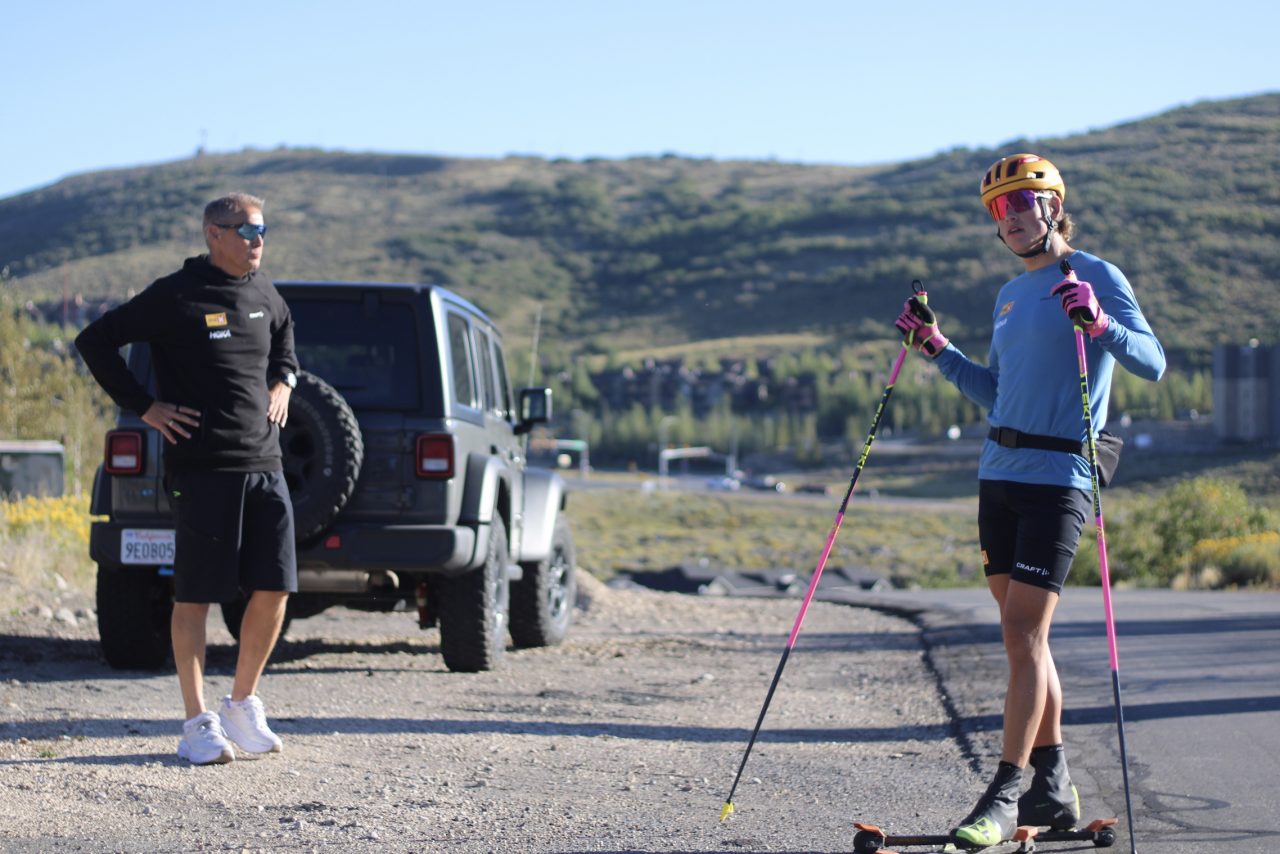
Johannes Klæbo stands with his father, Haakon, during a water break on a rollerski workout Saturday. (Nathaniel Herz/FasterSkier)
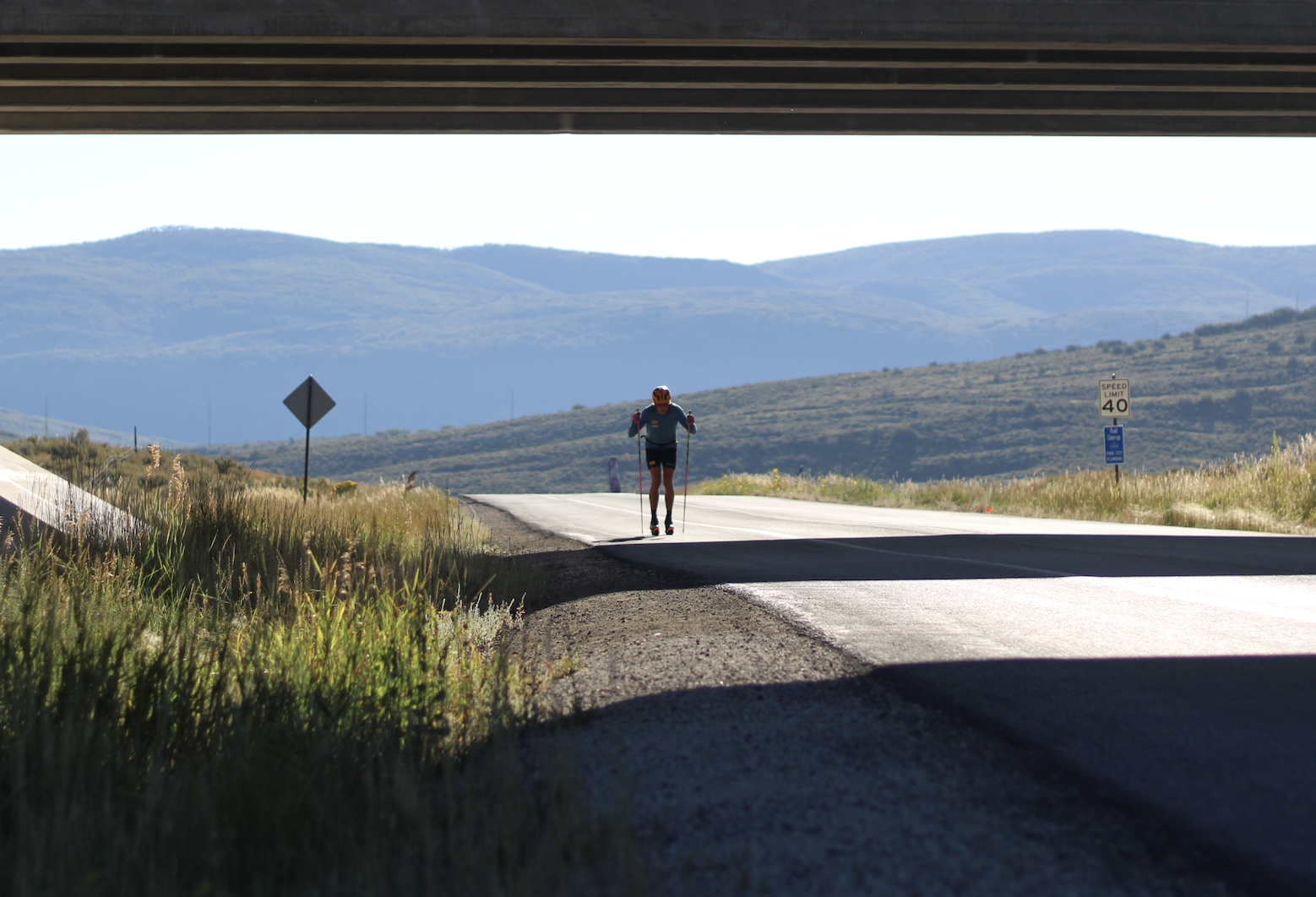
Johannes Klæbo trains Saturday in Park City. (Nathaniel Herz/FasterSkier)
PARK CITY, UTAH — Five-time Olympic champion Johannes Høsflot Klæbo could be cross-country skiing’s answer to Michael Jordan — a bona fide sports superstar in his home nation of Norway, where photographers and fans tail him after events.
But to the up-and-coming ski racers in the Wasatch Mountains of Utah, and their parents? Klæbo is just another dude on the local trails.
“The novelty has, sort of, worn off,” said Silvester Williams, a junior athlete who trains at the former Utah Olympic venue at Soldier Hollow, outside Park City. He added: “Not in a bad way. But it’s like, he’s been accepted into our community in a way where people just forget to care.”
In the past year, Williams, 16, has been chased by Klæbo in a sprint workout and labored to keep up as the nine-time world champion let youngsters tag along on an “easy” workout. His mom is friendly with Klæbo’s dad, Haakon, and knows all about the extra-athletic pursuits of Johannes’ siblings.
The reason? Klæbo has adopted Park City as a home away from home.
The Norwegian paid his first visit to the ski resort town in 2022, and has been drawn back for two more trips this year for a host of reasons: the benefits from training at Park City’s 7,000-foot elevation; its forgiving weather and trails; its chill vibes; and a local physical therapist who’s become a key year-round support.
“I like being here,” Klæbo said in an interview Saturday, sitting at the dining room table of the expansive Park City home he’d occupied for much of September. “It’s just quiet and easy.”
Listen to our podcast interview with Klæbo:
The affection is mutual: Klæbo and his dad seem to have made a positive impression on just about everyone he’s encountered in the U.S. — particularly the junior skiers and parents in and around Park City. He’s held clinics at Soldier Hollow where, a local news outlet reported, he “signed every poster, t-shirt, roller-ski, baseball hat, ski boot, ski helmet, and water bottle handed to him, and then posed for individual photos with every single participant.”
And even as a Norwegian, he’s also had an open door at the U.S. Ski Team’s own training center in Park City.
Those who have met them in Utah say the two Klæbos are disarmingly normal, and genuine.
Johannes Klæbo stands with his father, Haakon, during a water break on a rollerski workout Saturday. (Nathaniel Herz/FasterSkier)
“They’re great people,” said Amanda Williams, Silvester’s mom. “And they ingratiate themselves into whatever community they’re in.”
Park City has long been a destination for top ski racers, and this month, Canadian national team members and top Swedish and Finnish athletes are all holding camps here.
But Klæbo brings an extra dose of star power.
The 26-year-old has seven Olympic medals to his name, and is already described by some of his peers as one of the greatest cross-country skiers of all time. Klæbo has 435,000 followers on Instagram, an endorsement deal with a professional cycling team, shoes branded for him and his own line of hair styling products available for purchase by anyone aspiring to mimic his famously immaculate locks.
Klæbo’s business makes roughly $1 million a year, according to its annual reports. But his Park City setup is more family ski weekend than international sports sensation.
His posse, when he arrived in Utah, was just one guy: Haakon, a former telecommunications marketing consultant who is now Klæbo’s manager. And driver. And chef. And publicist. Klæbo’s girlfriend, Pernille Døsvik, joined them midway through the camp.
On Saturday, as his son finished a rollerski workout, Haakon juggled all those roles, heating up leftovers for Klæbo’s breakfast — chicken and potatoes — on the stove while on hold with a rental car agency sorting out changes to a reservation.
The house was rented, Haakon said, noting that they got a good deal. He’s responsible for the grocery shopping, which involves navigating Klæbo’s allergies to gluten, milk, and eggs — though the duo came supplied, by Klæbo’s grandmother, with eight loaves of gluten-free bread she baked.
“We’ve just been this normal family,” Haakon said.
After finishing his workout Saturday, Klæbo jumped in the shower and ate a quick breakfast while Døsvik went into town to shop for clothes for a quick trip the couple planned to Las Vegas.
At the dining room table afterward, he said he first planned a training trip to Utah in 2020, before the coronavirus intervened. He knew it was at high altitude — a staple of Klæbo’s training plan — and he was ready to try “something else.”
The autumn weather is good, warm and dry, and the terrain is varied, making it easy to schedule both challenging and easy workouts. And there are few distractions. In Norway, Klæbo can barely go to the store or walk down the street, Haakon said; in Utah, beyond the die-hard skiers at Soldier Hollow, he’s essentially anonymous.
Johannes Klæbo, U.S. skier Kevin Bolger and Swedish skier Maja Dahlqvist rollerski through downtown Park City on Saturday. (Nathaniel Herz/FasterSkier)
Park City is eight time zones behind Norway, so once Klæbo’s friends go to bed in the middle of the day in Utah, “it’s not many people to talk to,” he said.
“You just kind of be in your own bubble, and you do the things you need to do. I like that part, as well,” Klæbo said. “After being here last year for the first time, I said, ‘This is going to be my place for altitude training.’”
A bonus for Klæbo comes in the form of Megan Rowlands Stowe, a physical therapist from Wisconsin who, a few years ago, sold her clinic and retired from a career working with NBA basketball stars.
She now lives near Soldier Hollow and, after offering to help Klæbo with a leg injury during his Utah stint last year, has been flying back and forth to Europe to treat him.
There are also local elite athletes that Klæbo can train and mingle with. Last summer, University of Utah cross-country skiers hosted him for a barbecue, then took him to a college football game.
They also supplied him with GPS maps of some of the best rollerskiing routes in the area, said Luke Jager, who graduated from the university this year.
“We all got around the table and we were arguing about which turns you’d make on the bike path,” Jager said.
Now, at the end of his third trip to Utah, Klæbo no longer needs the maps: On his afternoon rollerski Saturday, an easy workout with American Kevin Bolger and Swede Maja Dahlqvist, Klæbo led them around Park City’s roads and bike paths like a local.
“It’s impressive, his knowledge of where to go — the loops and the shortcuts,” Bolger said afterward.
Johannes Klæbo and Kevin Bolger rollerski together during an easy workout Saturday. (Nathaniel Herz/FasterSkier)
The irony of Klæbo’s warm welcome in Park City is that he’s in a very different situation in Norway.
Amid a dispute with the national ski federation there, he’s declined to re-join Norway’s national team this year. That means he’s locked out of the country’s Olympic training facilities — even though he’s expected to be one of Norway’s top athletes at the 2026 games in Italy.
“If an athlete has not signed an agreement with the Norwegian Ski Federation on representing a national team, the athlete will unfortunately not have the opportunity to train at Olympic Top Sports Centers in Norway,” Espen Bjervig, the federation’s cross-country skiing director, said in a prepared statement.
In Park City, meanwhile, the American ski association has allowed Klæbo to exercise at its own Olympic training center, which both he and his father were quick to point out.
An association spokesperson, Courtney Harkins, said in a statement that the organization has a history of hosting elite athletes outside of its teams at the training center, “whether from the NBA, NFL, other Olympic sports and more.”
“We were happy to host Klæbo while he was in Park City and have him train alongside our athletes,” Harkins said.
Klæbo said he appreciates how kind and helpful Americans have been during his visit.
“That’s why I keep coming back,” he said. “I love the place.”
The Olympic and Paralympic Center at Soldier Hollow in Midway, Utah is looking to build and expand its venue and event operations team! Preparations are underway for major international Nordic and Biathlon World Cup events, including the 2023 IPC World Cup, the 2024 IBU World Cup and future Olympic and Paralympic Winter Games bid efforts.
We are looking for team members with a passion for trail infrastructure to work in maintenance, daily preparation, development and construction. The work covers both the summer and winter seasons to maintain a world-class standard of recreation and athlete development year-round.
Work includes but is not limited to single-track trail construction, ski trail design and development, snowmaking, snow grooming, roller ski trail maintenance, trail lighting layout and construction, and many other aspects of trail work and event operations.
Motivated individuals willing to learn, develop, and advance in an outdoor recreational environment career are encouraged to apply. Experience in equipment operation, construction and snow area management are a plus. A passion and desire to hike, run, bike, and ski on trails is always desired. Come work, play, and live in the Wasatch Mountains of Salt Lake City, Park City, and Midway and experience the best ski town in North America!
Positions open for Grooming & Maintenance Tech (apply here) and Snowmaking Crew (apply here). Apply today and start your next great adventure at Soldier Hollow!
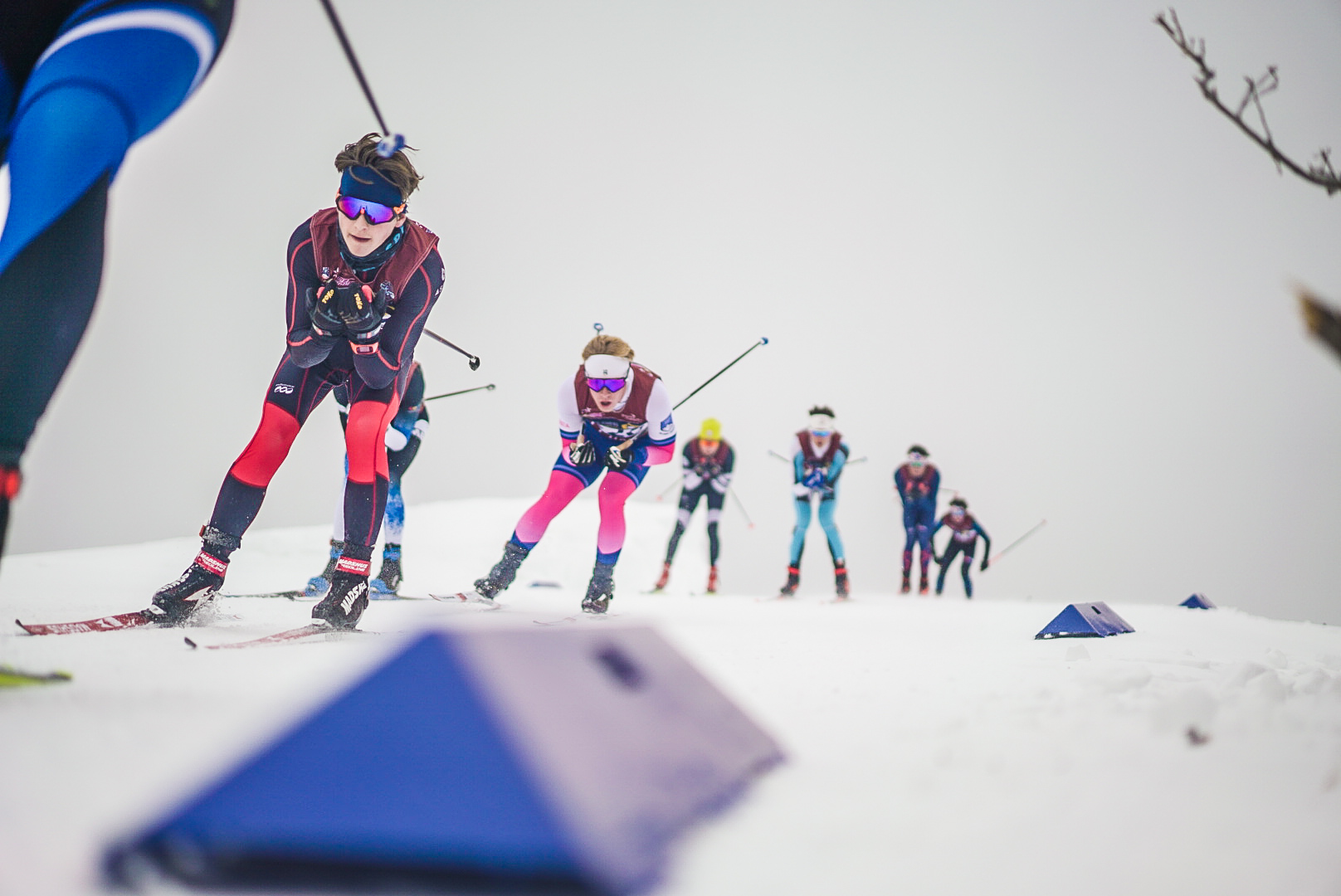
Junior athletes race during the 2022 U.S. Cross Country Championships in Soldier Hollow, UT. (Photo: Tobias Albrigtsen / @untraceableg)
The 2nd annual Schutzenski Festival is set to be held at Soldier Hollow in Midway, Utah from October 10th-16th. This year’s Schutzenski celebrates the culmination of a full offseason calendar for Soldier Hollow and beyond, offering a full weekend of cross-country and biathlon rollerski racing on the world-class Soldier Hollow course. Held amid the beautiful Heber Valley fall colors, and featuring US Ski Team and US Biathlon Team members competing on home soil one more time before heading out for the World Cup in Europe, the Schutzenski promises to be a kind of Homecoming for US skiing; a unique gathering combining a full competition program with a host of other industry and community programs.
The week will feature a suite of top ski industry members showing off the latest innovations in equipment, and a series of athlete meet and greets and scheduled social gatherings will give festival attendees the chance to connect with members of the ski community from across the country. A full updated event schedule can be found here.
Schutzenski Race Weekend – Friday, October 13th-Sunday, October 15th
A full weekend of biathlon and cross-country roller ski races kicks off Friday, October 14th with a series of biathlon sprint races (7.5 k/10 k). Saturday, October 15th features distance biathlon races (7.5 k/10 k/12.5 k Mass Start) and distance cross-country races (6.5 k/10 k Mass Start). A 5 k and 10 k running race will also be held Saturday morning. In between Saturday’s racing, a King/Queen of the range biathlon competitions will be held, and an opportunity to try biathlon for festival participants will round out the day’s events. Sunday, October 16th finishes out the weekend with fast and fun action with a full cross-country classic sprint race.
The whole racing program is one that’s busier than most World Cup weekends, and combines the disciplines of cross-country and biathlon throughout. In each race, a set of matched skis will be available for top-seeded competitors, and racers can compete across Open, Elite, and Junior classifications.
Schutzenski is being held concurrently with US Ski Team and US Biathlon Team Fall camps, and a number of top pro club altitude camps, meaning the Schutzenski is a one-of-a-kind opportunity to participate and watch the top skiers in North America all in the same field. Friday’s US Biathlon races are part of the World Cup Team selection process, and the whole festival will be a unique preview into US Skiing going into an exciting 2022-2023 winter season.
Full details are available on the Schutzenski website.
Olympic champion Johannes Høsflot Klæbo of Norway receives an official Soldier Hollow cap from a young skier after conducting a clinic for local cross country ski racers at the Olympic venue of Soldier Hollow near Midway, Utah. (Photo: (c) 2022 Tom Kelly)
Practice had ended for the Soldier Hollow Comp and Devo teams, but no one went to take their roller skis off. They were waiting for something that didn’t happen everyday; shortly, their patience was rewarded. The winningest male World Cup skier of all time—Olympic Champion, World Champion—glided around a gentle left-hand bend, dragged his wheels to a perfect stop in front of the crowd, picked up a microphone, and smiled a familiar smile: Johannes Høsflot Klæbo had arrived.
Hosting the day, Tom Kelly asked the questions that each of us in the American ski community might ask if the best skier in the world showed up on our local trail system:
For the kids:
Tom Kelly (TK): What advice would you give to our [youth] skiers here today?
Johannes Høsflot Klæbo (JK): The most important part is to have fun. That was my focus when I was that age, and all the way up until I was starting on the national team. For me also, I was small, like really small, so I tried to really work on my technique to make up for that.
For the (slightly) older kids:
TK: When you were young, which skiers were you looking up to?
JK: The skier I was looking up to was Petter Northug. [I also looked up to] my grandfather – who [is] my coach, but also just there for me and still is here for me and I look up to him for that.
And for the US Ski Community looking forward to the future:
TK: What do you think about [Soldier Hollow] as a venue for the [2030 Winter Olympic games]?
JK: “Yes definitely. This is a venue built for the Olympics and I remember watching some great races here in 2002. 2030 is eight years away, which, I guess I will try to keep [myself] going until then.”
On this day, it became apparent that Soldier Hollow is part of Klæbo’s plan to keep himself going . . . but why Soldier Hollow? Why would Johannes Høsflot Klæbo feel the need for a change? He’s the central figure in ski-obsessed Norway; for Norwegians, Utah is practically the edge of the skiing universe, and Klæbo’s achievements wouldn’t imply the need for rethinking his usual plans and strategies. At the age of 25, he’s already amassed seven Olympic medals, eight World Championship medals, and 48 World Cup victories (more than any male skier in the sport’s history). Ironically, these achievements may be credited to Klæbo’s insistence on doing things his own way (not simply as a member of the Norwegian Ski Team). Klæbo’s athletic support system is almost exclusively his family: his Grandfather serves as his primary coach, and his brother plays an important role in managing everything that goes into being Johannes Høsflot Klæbo. When viewed in that light, it seems less unusual that Klæbo would choose to spend time training in a new environment, and under a new plan.
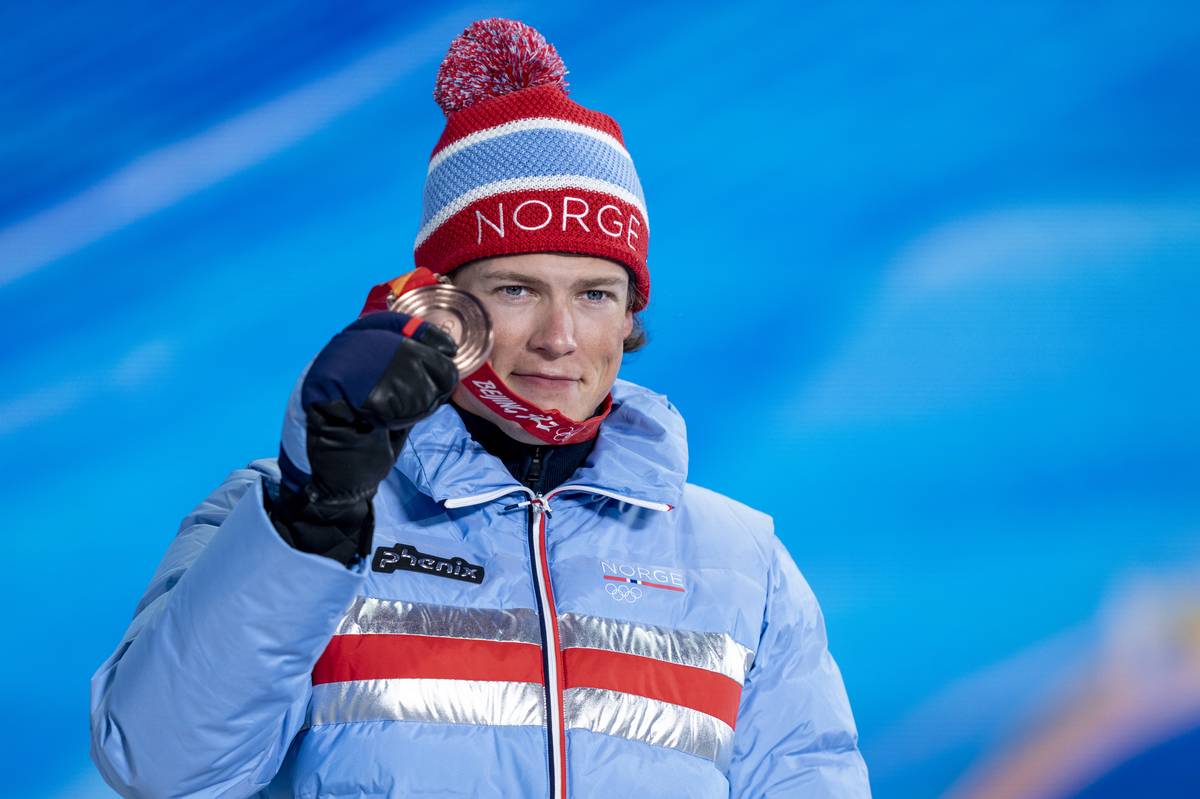
Johannes Høsflot Klæbo holds up one of the 3 Olympic medals he won at last February’s Beijing Games. Klaebo has been in Park City, Utah this month, preparing for the upcoming World Cup season. (Photo: Nordic Focus).
Klæbo is already experiencing a 2022-2023 season that differs from his normal program. His widely publicized mid-summer hamstring injury has necessitated changes to his usual training plan, including the incorporation of pool-therapy and swim-training to maintain fitness while he rehabs the injury. Fortunately, Klæbo seems to maintain a focus on skiing that is total. He likes to push, to experience the thrill of skiing fast, and to prove that he can go faster than anyone else. That persistent curiosity for the sport that is his profession seems to have motivated his trip to Utah. When Tom Kelly asked Klæbo what he knew about Soldier Hollow before showing up to train there last week he responded, “Honestly, I didn’t know much. I just wanted to try something new. [I] knew this was an Olympic venue with a good roller ski track, and I could see what skiing in America was like.”
When details of Klæbo’s 2022-23 plans emerged in June, the key innovation those plans revealed was to institute a program of high-altitude training separate from the Norwegian national team. With training at Soldier Hollow (elevation 5,882ft/1792m) and Park City (elevation 7,000ft/2,134m), Utah is the first of four stays at altitude that Klæbo plans for a season that will also include Livigno, Italy; Davos, Switzerland; and an as-yet undetermined location prior to the World Championships next March in Planica, Slovenia (which will take place at an altitude of 3120ft/951m).
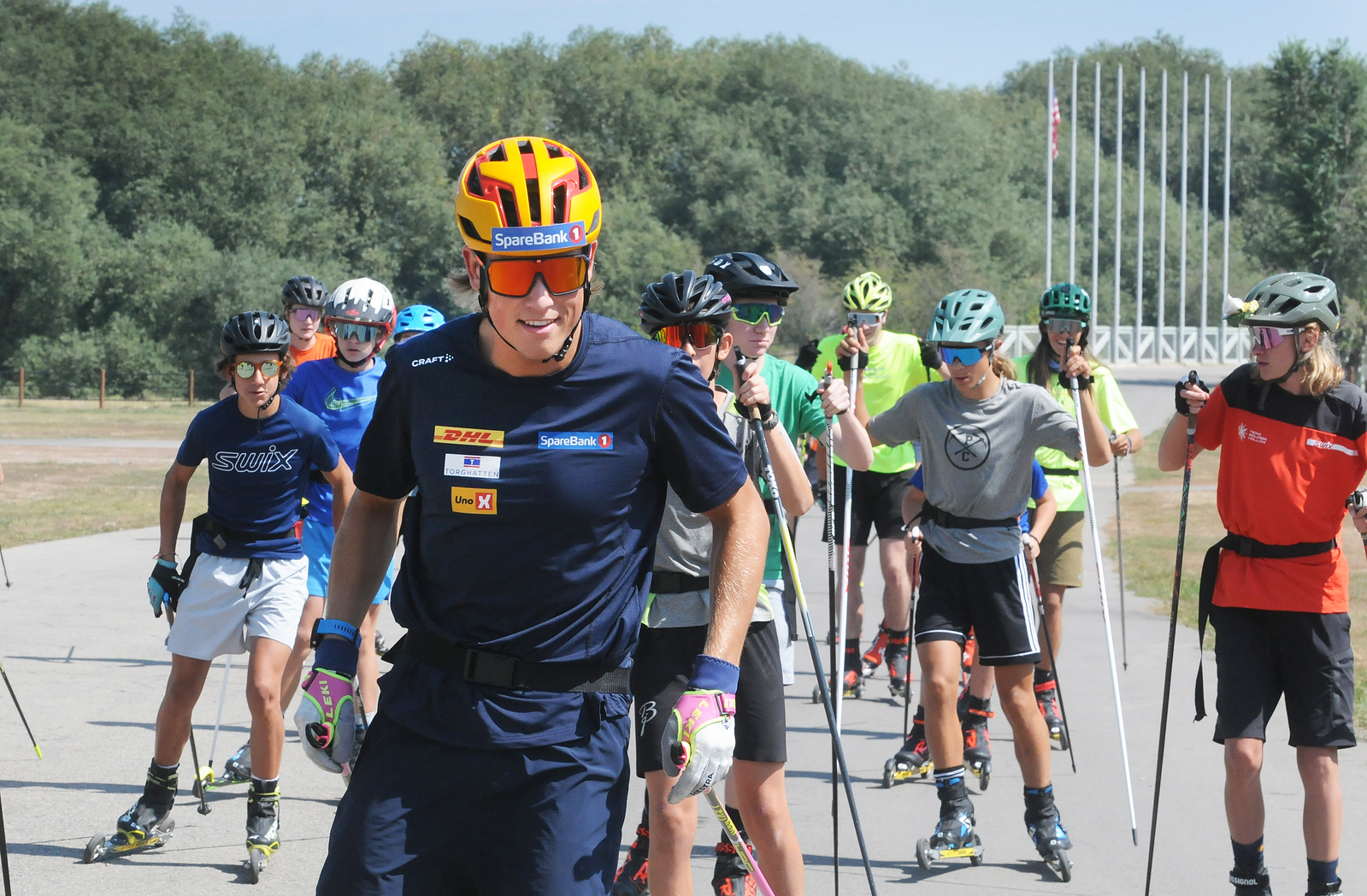
Johannes Høsflot Klæbo pauses in his own training to lead drills for Soldier Hollow Comp and Devo team skiers. (Photo: (c) 2022 Tom Kelly).
Altitude training camps have become commonplace additions to training plans for endurance athletes of all disciplines. The basic principle of altitude training takes advantage of the body’s ability to acclimatize to relatively low-oxygen environments by the production of more red blood cells to help supply the lungs with the oxygen (in-depth descriptions of altitude training philosophies can be found in this episode of the Devon Kershaw Show with Sports Scientist and Outside columnist Alex Hutchinson). With this consistent and well-established reliance on periods of high-altitude training, Soldier Hollow will be a key site for elite skiers from across the country, beginning with US Ski Team, US Biathlon Team, and a number of clubs convening on the Soldier Hollow loop for fall camps and the Schutzenski Roller Ski Festival (Oct.10th-16th).
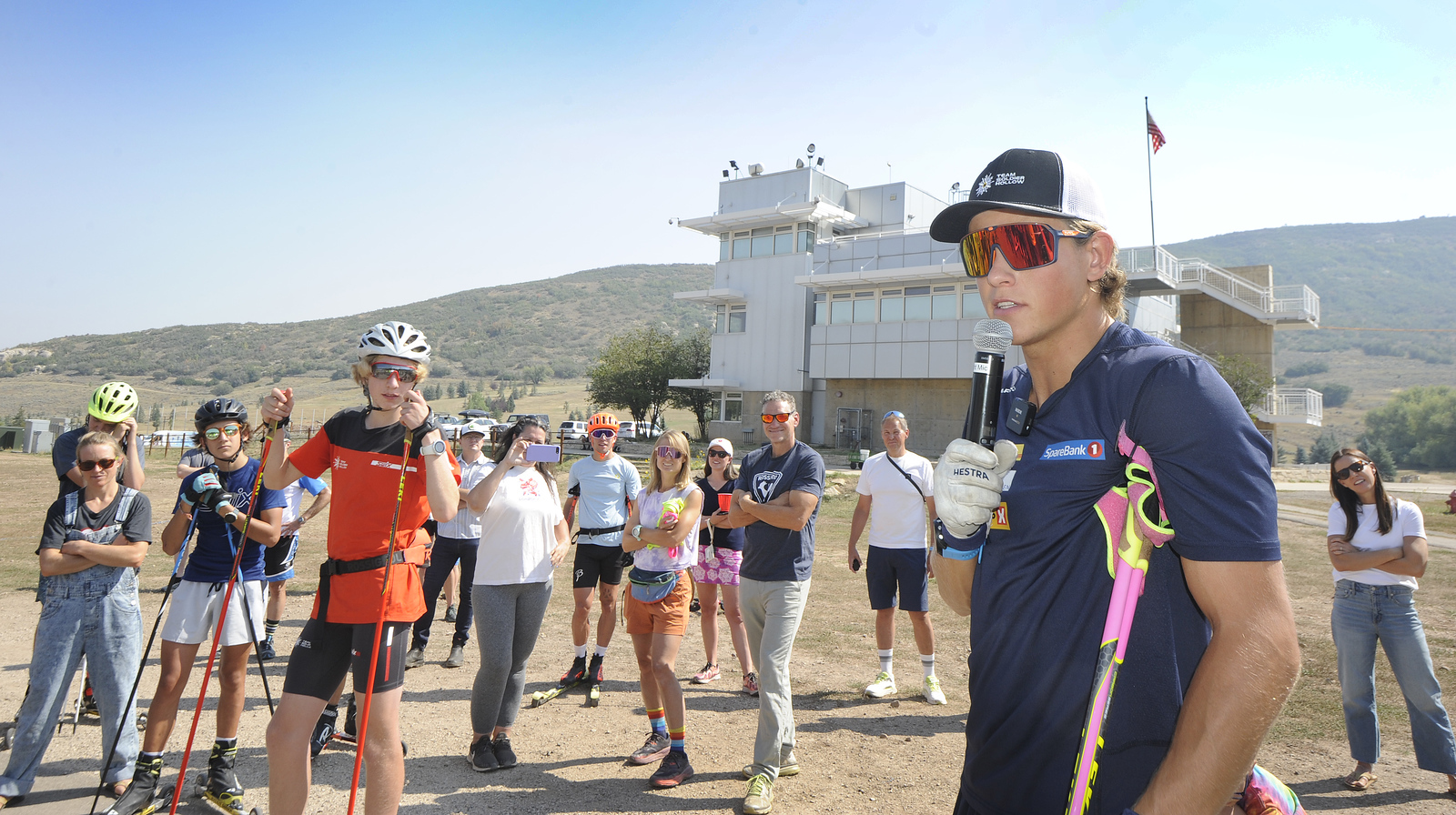
When Olympic champion Johannes Høsflot Klæbo picks up the microphone, skiers and ski fans are likely to listen closely. (Photo: (c) 2022 Tom Kelly).
Klæbo’s decision to spend this month at Park City bodes well for the reputation of Soldier Hollow as an altitude training destination. That development—along with so much else happening in US skiing—is truly exciting. Klæbo’s appearance at Soldier Hollow provides credence: when the best skier in the world chooses to train here, the rest of the skiing world is likely to follow. As Tom Kelly suggested to Klæbo on Saturday, perhaps this training approach will develop, “A few kids [from Park City] who will be here in 2030 to challenge you.”
Klæbo’s appearance at Soldier Hollow is likely to focus the gaze of the international skiing community on this unique training venue. (Photo: (c) 2022 Tom Kelly).
Doubling down, Vermont’s Ben Ogden takes the win in the mass start 20 k free, earning both national titles during the 2022 NCAA Championships.
MIDWAY, Utah – The University of Utah won going away Saturday at the 69th Annual NCAA Skiing Championships, using an impressive performance in the freestyle Nordic events to win its third straight national title.
The championships concluded with the men’s 20K and women’s 15K mass start freestyle events at Soldier Hollow, a world class venue constructed for the 2002 Winter Olympics. After three days of competition, Utah led Vermont by 27.5 points.
With Utah outscoring Vermont in the Nordic classic races on Thursday 148.5-138.5—including 102.5 points from the Ute women—what remained to be seen on Saturday was if the Utes could produce a similar effort or if Vermont could flip the script.
Ben Ogden (UVM) leads the men’s 20 k mass start free during the 2022 NCAA Championships in Soldier Hollow, UT. (Photo: Tobias Albrigtsen / @untraceableg)
In Saturday’s first race, Vermont’s Ben Ogden completed his sweep of the men’s Nordic titles by winning the 20K. His performance helped the Catamounts outscore Utah 78-73 and close the gap to 22.5 points. However, a one-two finish by Utah’s Sophia Laukli and Novie McCabe in the women’s 15K gave Utah 100 points to Vermont’s 56, carrying Utah to the NCAA title by a comfortable margin.
Utah finished with 578 points to Vermont’s 511.5. Denver was third with 436.5 points and Colorado came in fourth with 435. The rest of the field finished with under 300 points. It was Utah skiing’s 15th national title and 14th NCAA title.
Ogden won the 20K freestyle in 43:00.5. Samuel Hendry of Utah was the silver medalist, finishing in 43:07.9. The junior from Canmore, Alberta, Canada, placed second in the 10K freestyle in both 2020 and 2021.
JC Schoonmaker (UAA) snags third in the 20 k skate. (Photo: Tobias Albrigtsen / @untraceableg)
JC Schoonmaker of Alaska Anchorage held off Bernhard Flaschberger of Denver for third place as they finished in 43.13.9 and 43:14.8, respectively. Peter Wolter of Middlebury was fifth in 43:15.8 to earn first team All-America honors.
Second team honors went to Joe Davies (Alaska Fairbanks), Kjetil Banerud (Northern Michigan), Espen Persen (Alaska Anchorage), Jacob Nystedt (Vermont) and Skylar Patten (Michigan Tech).
The men’s 20K freestyle race consisted of six laps around a 3.3 km course. With a mass start of 40 competitors, the top 30 racers stayed fairly close together with a lead pack of about a dozen forming for the first three laps. During the fourth lap, Ogden tried to forge ahead while going up the course’s biggest climb. However, Luke Jager of Utah and Andreas Kirkeng of Denver chased him down and a lead group of six formed from there.
On the last lap, Flaschberger mounted an effort climbing up the hollow area, but everyone in the lead group was able to hang with him. When they came around to the middle section of the course with two short climbs on Cabin’s Corner, Ogden made his second big move of the race and this time pulled away for good, building a seven-second lead. Schoonmaker put together another push toward Hendry, but the Ute held him off for second place by nearly six seconds.
A Utah front: Sophia Laukli and Novie McCabe lead the women’s 15 k free during the 2022 NCAA Championships in Soldier Hollow, UT. (Photo: Tobias Albrigtsen / @untraceableg)
The women’s 15K freestyle race was four laps around a 3.75 km layout that added a tough climb to the course used by the men. That made for very few flat areas.
Unlike the men’s race that remained tight throughout, Utah’s trio of Sophia Laukli, Novie McCabe and Sydney Palmer-Leger pulled away at the first turn and quickly opened up a seven-second separation from the rest of the field. Palmer-Leger began to experience some cramping issues during the second lap, allowing Laukli and McCabe to pull away by 30 seconds.
Palmer-Leger maintained a 30-second lead for third place before her condition worsened in the third lap and she was overtaken by Jasmine Lyons of New Hampshire and Kendall Kramer from Alaska Fairbanks. Laukli had a 14-second lead over McCabe at the start of the final lap and won in 36:35.7. McCabe was the runner-up in 37:09.5.
The 2022 NCAA Championship women’s 15 k podium: Utah’s Sophia Laukli took the win ahead of teammate Novie McCabe. Jasmine Lyon (UNH) took third, with Kendall Kramer (UAF) fourth, and Mariel Pulles (UAF) fifth. (Photo: Tobias Albrigtsen / @untraceableg)
Before the NCAA Championships, Laukli, a junior from Yarmouth, Maine, had been off since the Beijing Winter Games, where she placed 15th in the 30K freestyle for Team USA.
McCabe won the women’s 5K classic on Thursday, crushing the field by more than 13 seconds. The sophomore from Winthrop, Wash., also competed in the 2022 Beijing Olympics, where she was part of the U.S. cross-country 4 x 5km relay team that took sixth.
Third place went to Lyons (38:05.0) and Kramer (38:21.7) was fourth. Mariel Pulles of Alaska Fairbanks was fifth (38:41.4). Second team All-America honors went to Anna Bizyukova (Vermont), Hanna Abrahamsson (Colorado), Palmer-Leger, Astrid Stav (Alaska Anchorage) and Renae Anderson (Bowdoin)
“Beautiful day and just a beautiful course. There’s nothing better. This is a dream come true. The sun, all my friends and a good race. I can’t ask for anything else.”
Ben Ogden celebrates back-to-back NCAA titles in style. (Photo: Tobias Albrigtsen / @untraceableg)
On knowing if he could pull away at the end:
“If you if watch closely, I tried to do it on the fourth lap. I couldn’t do it and I got chewed up and I thought that was game over. Luckily, I was able to hang on and get some good speed on that last line. I was lucky out there and it was a fun race.”
“I had the whole self-doubt going in my head that today isn’t my day and I was just fighting for third. But there were about 150 people on that back hill, and one was my best friend from growing up who was out there with a chain saw, making all kinds of noise and I got my second wind. And I was lucky to get over the finish line. It’s all about the noise and the loud cheers, and that was the deciding factor for me.”
On making his move to pull away in the last lap:
“I’m a good sprinter so I know I can take those boys over for a kilometer if I have some energy. So when my fourth lap move didn’t work, I figured I had to wait until the bitter end and make them hurt in the last minute and 30. It worked.”
Sophia Laukli – Utah (Women’s 15K Champion)
On if she felt like she could win entering the race:
“I knew that it was definitely possible on a good day, but I haven’t been racing a lot so I didn’t know what kind of shape that I was in. I knew it was going to be pretty fun to race with Novie (McCabe) and with Sydney (Palmer-Leger) and try to ski away from the pack. Sydney had some kind of injury during the race so she didn’t have her best day, but I was excited to race with Novie out front. I felt really good. I had some really fast skis so that worked to my advantage and it ended up just playing out really well.”
“When I was warming up I was like, oh no, this might be a long race. But, honestly, I tend to race better when I warm up and feel a little bit off. So I was hoping that was going to be the case today and it definitely did work. The course was great for me. A lot of gradual climbing and it was good.”
On the race strategy:
“I ended up leading a lot. There was a part where Novie started to lead and I noticed that my skis were a lot faster than hers so it didn’t make sense for her to lead. So I ended up ahead most of the time and I was able to get a little bit of a gap.”
“When I pulled away, I was not sure if it was going to be the right call. I was feeling good but it was a long race, so I was just hoping that I wasn’t going to blow up. I’m always nervous about breaking away too early so it wasn’t the most confident breakaway. It just gradually got bigger and luckily it was enough.”
Sophia Laukli takes the collegiate national title in the 15 k skate. (Photo: Tobias Albrigtsen / @untraceableg)
On her thoughts at the finish line:
“I thought Novie was really close behind me so I was going to try to ski as fast as I could until the end, but then I saw them handing the flag to me, and so I thought I would take it and hoped it’s enough. But it was not until I came down the last downhill it really sank in because I tend to fall when I’m doing well and I was just praying that I would just stay on my feet. It was a great feeling.”
On racing in front of home fans:
“I was grateful that everyone was in the hardest places on the course because I definitely pushed a lot harder there. This is why I love racing the U.S. and why I keep doing that. Just this whole vibe the entire uphill, it’s so motivating and so cool.”
Fredrik Landstedt – Utah (Director of Skiing)
On winning a third-consecutive NCAA Championship:
“It’s amazing, especially here and winning it at home in front of the big crowds and everybody that’s up here cheering us on. It’s just an incredible feeling. Winning our third straight, it feels great. There’s always more pressure when you are trying to do it at home. But we were able to do it here and after some bad weather on Wednesday, it was really good in Park City and near perfect conditions here at Soldier Hollow as well.”
On how confident he was during the week:
“I felt good about our team but I get nervous for sure. Any time you ski alpine it swings so quick. You have one person ski out and it’s 30 points less. It can swing 60-70 points in just one race. You can never be sure. But it’s always tight.”
On the women’s 15K freestyle race:
“We knew that all three of them could be up there. It’s very tough competition between those three as well, so they really went out there and almost tried to beat up each other almost a little too much. But it turned out well. Sydney (Palmer-Leger) had a cramp the last two laps and was fighting super hard to get the position she had. And Sophia (Laukli) had an amazing day and really good skis. Novie (McCabe) is always up there and fighting really hard. So it was great to see them perform so well.”
Utah’s Sam Hendry races to second place in the 20 k mass start free. (Photo: Tobias Albrigtsen / @untraceableg)
On the men’s 20K freestyle race:
“Sam (Hendry) had an amazing race. We’ve been waiting for this but he hasn’t felt too good in his body the last few competitions. But today he was right on it, you could see it in him. He really wanted to go. On the last lap, he asked me how many he had to go, and I told him that was it and he had to go now. But he was really feeling good for sure. Then Luke (Jager) and Bjorn (Riksaasen) weren’t having their best days but they were really fighting hard and go the points they needed.”
On his team’s journey this season:
“It was a tougher season because we had people out for the Olympics and the World Cup circuit, and then we had skiers over in Norway for the World Junior Championships and the U23 World Championships. So we had athletes all over the place and that made it tougher for us during the regular season even to sometimes put a team together for a meet. It’s also hard for the team dynamics when they are all over the place. But at the same time, everyone was super psyched because we had Olympians, people in the World Cups and people in Norway, and they were all skiing well and getting medals in Junior Worlds. Overall, it was a different year but a great year for sure. But I think this year showed off the quality of our program because we not only have the top collegiate program in the country, but we also have one of the top ski clubs all over the country. We have everyone working for the team and that seems to be something that we have been very successful at lately.”
Precipitation was no longer a threat for the final day of racing in Soldier Hollow on Friday, a 1.5-kilometer classic sprint offered alongside the 2022 U.S. Cross Country Championships, yet classified as SuperTour only. However, athletes still faced unseasonably warm weather as blazing sun brought temperatures into the low 50’s on course during the midday heats.
Howling wind and rippling bibs could be heard as background noise as Adam Verrier called the event on the livestream, creating extra work for the athletes who would fight through degrading course conditions throughout the heats. This extra work showed in the times on course; with the combination of freestyle technique and significantly faster course conditions, Sunday’s sprint races featured times over a minute faster on average. A similar difference was seen even between the qualifier today at 9 a.m., when temperatures were still colder and tracks firmer, and the heats which began at 12:30 p.m.
Warm temperatures, degrading tracks, and loose granular spray set the stage for a challenging classic sprint in Soldier Hollow. (Photo: Tobias Albrigtsen / @untraceableg)
“Sprint” seemed to perhaps be a misnomer, as times in the women’s heats climbed over five minutes and were well above four minutes in the men’s heats. Combined with a qualifier, this meant athletes who raced through the final saw between 16 and 20 minutes of racing, testing their endurance and fitness differently from the average sprint event.
Women’s Race: Katharine Ogden on Top from Qualifier to Final
On the heels of a second place finish in yesterday’s 15k classic, Katharine Ogden (USST/SMS T2) set the bar in the qualifier, finishing in 3:51.79.
Julia Richter (U of Utah) was the second fastest qualifier (+0.77), ahead of Lauren Jortberg (BSF Pro) in third (+1.48). Both Ogden and Jortberg won their quarterfinal to advance comfortably into the semis, however, Richter took fifth in Heat 4 and did not advance.
In the first semifinal, two Craftsbury teammates Annika Landis and Caitlin Patterson led the way in the opening climb, with Ogden and Sydney Palmer-Leger (USST/U of Utah) sitting in third and fourth a few strides behind. Descending from the high point, a third Craftsbury racer, Michaela Keller-Miller, had pulled to the front, but was quickly overtaken by Patterson and Ogden as the pack headed into the final short herringbone climb before the long descent toward the stadium. Patterson and Ogden sat in low tucks, letting their fast skis glide as long as possible before transitioning to doublepole as they headed over the bridge and into the finish.
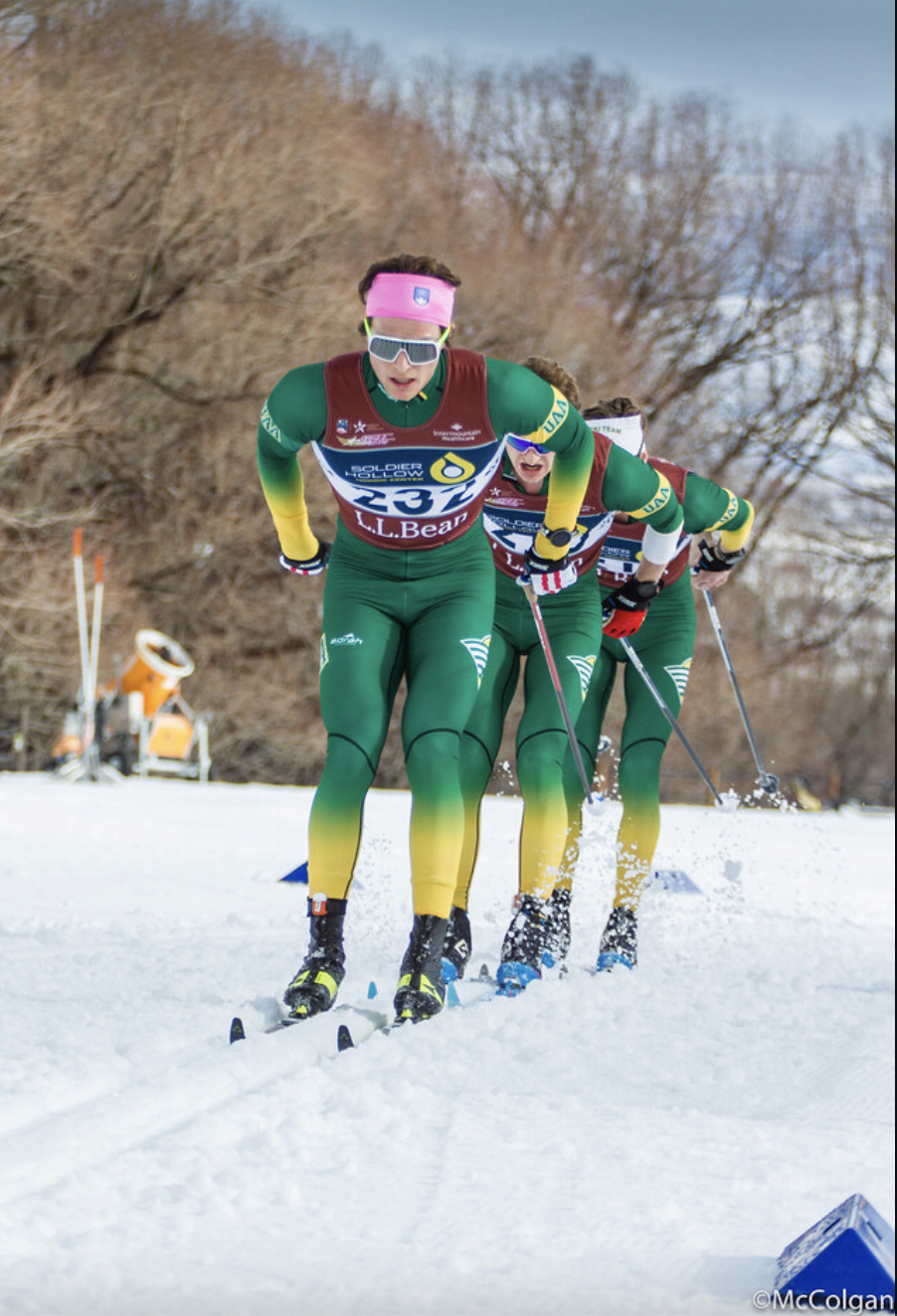
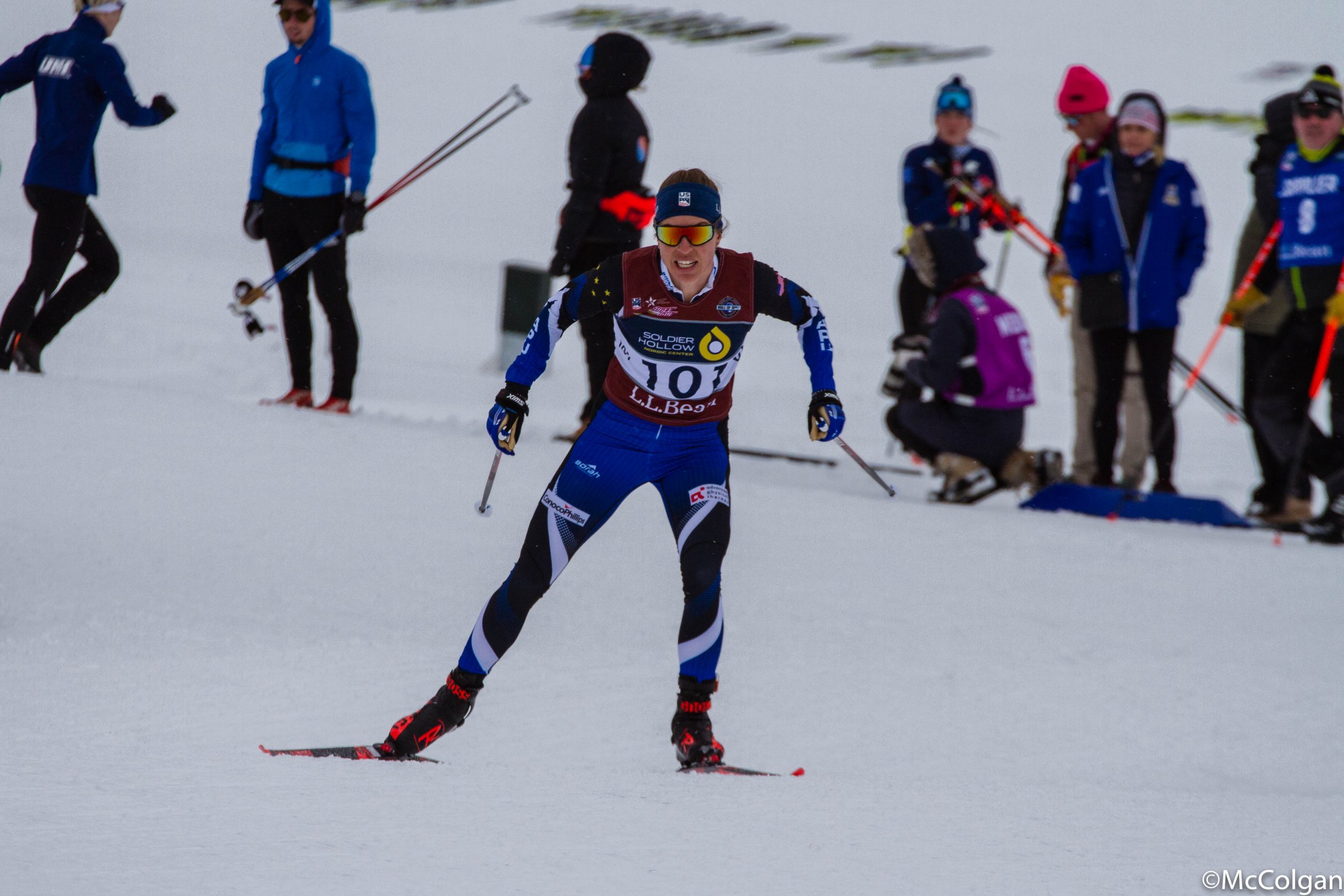
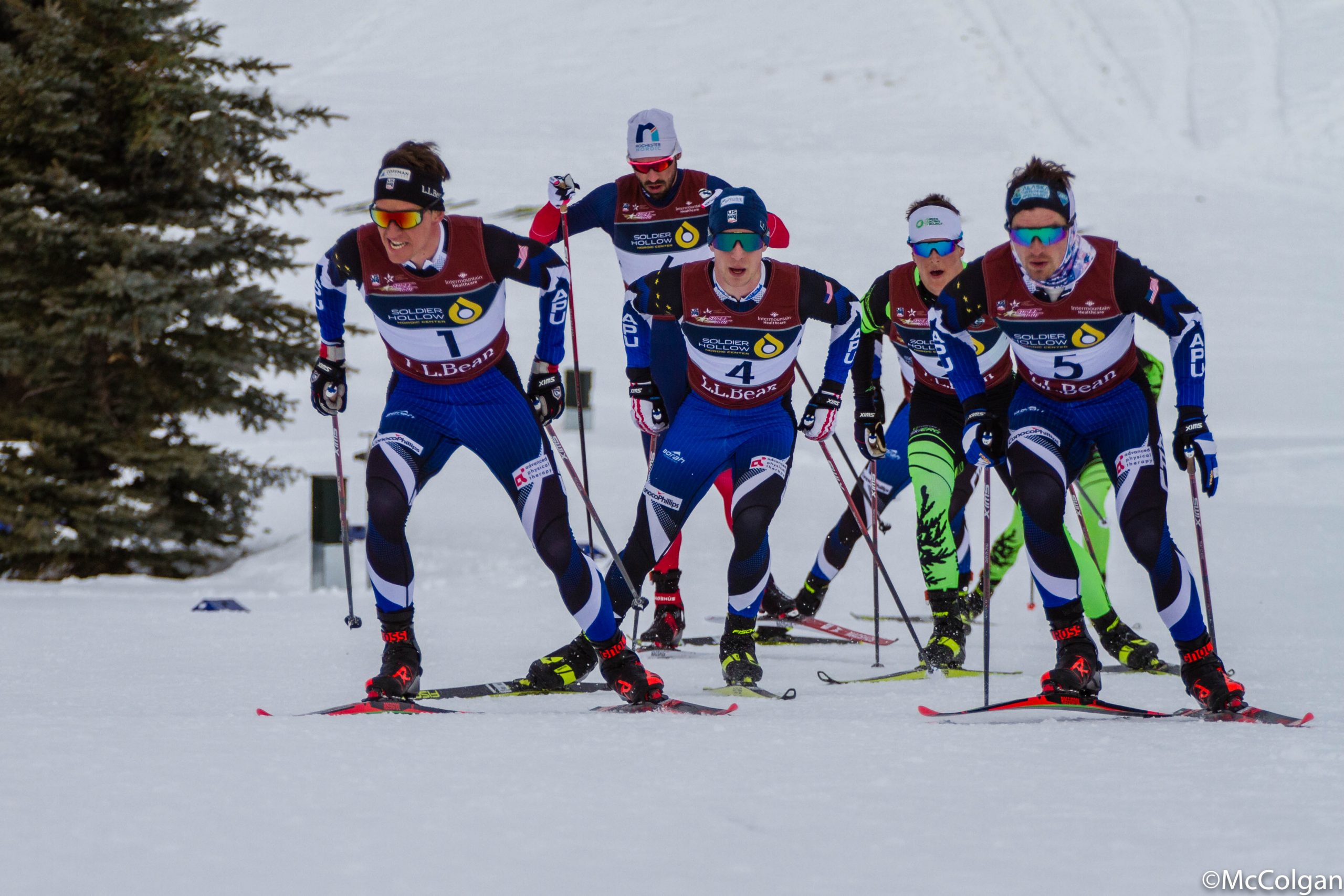
Sydney Palmer-Leger heads out for the 10k interval start classic race during the 2022 U.S. Cross Country Championships in Soldier Hollow. (Photo: John McColgan)
Upping the power in the final 200m, Palmer-Leger accelerated to make contact with Patterson as the women crossed over the bridge, but Patterson had better glide in the quick descent from the bridge’s exit, maintaining an advantage as they headed into the final stretch. Patterson tucked in on the tails of Ogden in the left-most track to go one-two in the heat, with Palmer-Leger not quite in the fight for an automatic qualifier spot finishing 1.5 seconds behind Patterson in third.
In the second semi, Bridger Ski Foundation (BSF) Pro Team members, Lauren Jortberg and Hannah Rudd lead the charging, looking as if their skis were gliding well as they pushed the downhills, perhaps with compromised kick as both showed signs of slipping in the final punchy climb.
In the long glideout, Lauren Jortberg moved from the far left side of the course outside of the track into the second track, losing some time on Rudd who had stuck with the second track from the start. Nevertheless, both held a significant gap over the remainder of the heat as they doublepoled over the bridge and into the finish lanes. Rudd took the win in 4:55.52, roughly +0.7 seconds ahead of Jortberg in second.
A few meters behind, Craftsbury teammates Margie Freed and Alexandra Lawson raced side by side to third and fourth, and as the heat proved to be seven seconds faster on average than the first, both advanced to the final.
As the women’s final headed out of the stadium and toward the first climb, Lauren Jortberg who was the first in a train of two BSF skiers, had her ski stepped on as she was switching from doublepole to a run outside the track. This caused Jortberg to stand up, spin sideways and crash in slow motion. Rudd, who was just behind, quickly moved around Jortberg without going down, soon taking the lead charging up to top of the first climb with Patterson, Freed, and Ogden close behind.
Patterson looked strong with solid kick as she chased a slipping Rudd up and over the final long climb, but it was Ogden on fast skis who quickly moved into second on the subsequent downhill.
Over the last punchy climb the women ran. Heading into the long glideout, Ogden was off the front in the left-most track, but Rudd and Patterson remained within reach a few ski lengths behind. Descending off the bridge, the top three accordioned together, all choosing the same track with Ogden confidently leading the way to the finish. Patterson, who was in third, moved into her own lane to the right, slowly gaining ground on Rudd as they headed to the line.
Katharine Ogden leads Caitlin Patterson and Hannah Rudd to the line during the SuperTour classic sprints in Soldier Hollow. (Photo: Livestream Screenshot)
Ogden maintained her lead to stop the clock in 5:01.63, while Patterson edged out Rudd for second (+0.98) and third (+1.53), respectively. After regaining contact with the pack following her crash, Jortberg finished fourth (+6.64), with Lawson fifth (+7.11), and Freed sixth (+21.55).
“I was having a lot of fun out there today!” Ogden wrote to FasterSkier after the race. “The sprint was definitely on the long side, especially late in the day, but that did not significantly affect my strategy; I am confident in my endurance as well as my short duration power. I was really excited to have fast skis from Pat [O’Brien] and it was fun to experience the high level of sprinting in the U.S. currently. I also haven’t really done a full sprint day in a while so that was a lot of fun! It was also so impressive to see Caitlin get her fourth podium in as many races and to see Hannah Rudd have an incredible breakout performance today!”
Katharine Ogden celebrates her win in the classic sprint while Caitlin Patterson edges out Hannah Rudd for second and third. (Photo: Livestream Screenshot)
In a post-race email, Patterson reflected on her experience racing through the heats.
“My racing today went fairly well, and it was a beautiful day to be out skiing and spectating,” wrote Patterson. “The sun-warmed snow became quite wet and broken apart for the heats, and combined with the wind, it certainly made a long sprint with plenty of herringbone and some sloppy tracks. I tried not to really think about the time duration much, it was mostly about getting from start to finish, however long it would take. All of the heats required some scrappy skiing, moving around through the slush and timing the length of the tuck. Now I’m really looking forward to some recovery after a good week!”
Patterson also spoke to the week of racing in Soldier Hollow, where she finished on the podium four times in as many races, including wins in both the 10k individual classic and the skate sprint. But she was not the only person in a green suit putting together a successful week. Yesterday, she shared the distance classic podium with teammate Adam Martin. On Tuesday, Crafstbury went 3-4-5 in the 20k skate, with Lawson and Freed leading a chase group behind Frankowski and Patterson. And today, five CGRP women raced in the semis, with three advancing to the final.
“Everyone at Nationals is really feeling the fatigue, and myself and my team were no exception out there today. The race coughs are becoming quite terrible from so many days of racing at altitude, which is not the most fun to be coughing uncontrollably in this time of COVID. However, I was really proud of our whole team, with 5 women in the top 10! We have a really strong group, as evidenced by the performances in the distance races too; it came as no surprise to me that the women were awesome today, because training and doing intervals all summer and fall we’ve been neck-in-neck and pushing each other.”
The women of Craftsbury with coach Pepa Miloucheva. CGRP put five women into the semifinal and three into the final of the SuperTour classic sprint in Soldier Hollow. (Photo: Facebook Crafsbury Green Racing Project)
For Rudd, this was her first career SuperTour podium. Originally from Plymouth, MN, she graduated from University of Alaska Anchorage (UAA) in May, 2020 before heading to Bozeman to join the newly minted BSF Pro Team. Placing in the top-10 in each of the three stages of the 2022 U.S. Cross Country Championships, Rudd has steadily worked her way up the results list, finishing 10th in Sunday’s freestyle sprint, 8th in the 20k mass start free, and 6th in the 10k interval start classic. She ends her week in Soldier Hollow on a podium high note.
Hannah Rudd is a member of the BSF Pro Team based in Bozeman, MT. (Photo: bridgerskifoundation.org)
“Yesterday was a pretty exciting day for me!,” Rudd wrote to FasterSkier after the race. “The sprint course at Soldier Hollow this year was very challenging as it included three solid climbs. During the qualifier, the course remained very firm and fast. However, the temperature quickly began to rise throughout the day, and by the time the quarterfinals began, the sun was baking the course, the wind was blowing, and temps were nearing 50 degrees. This made the snow begin to transform and slow down and turned the tracks into mashed potatoes in some sections.
“I woke up in the morning feeling quite tired from the past week of racing so I was not sure how the day was going to play out,” Rudd continued. “I ended up qualifying in 22nd, so it was clear that I had some work to do in the heats. I felt like I was able to gain momentum and energy throughout the day, and progressed through the quarters, and semis and onto the final. Going into the final, I knew that my team’s skis were running really well so I tried to ski big and relaxed and put myself in a good position for the last downhill. It was pretty neat to be in a final with my BSF teammate Lauren Jortberg, who is an incredible sprinter and someone that I have learned a lot about sprint racing from over the past few years. I was extremely excited to land myself a spot on the podium and think it will help me to continue building momentum and confidence for the rest of the season!”
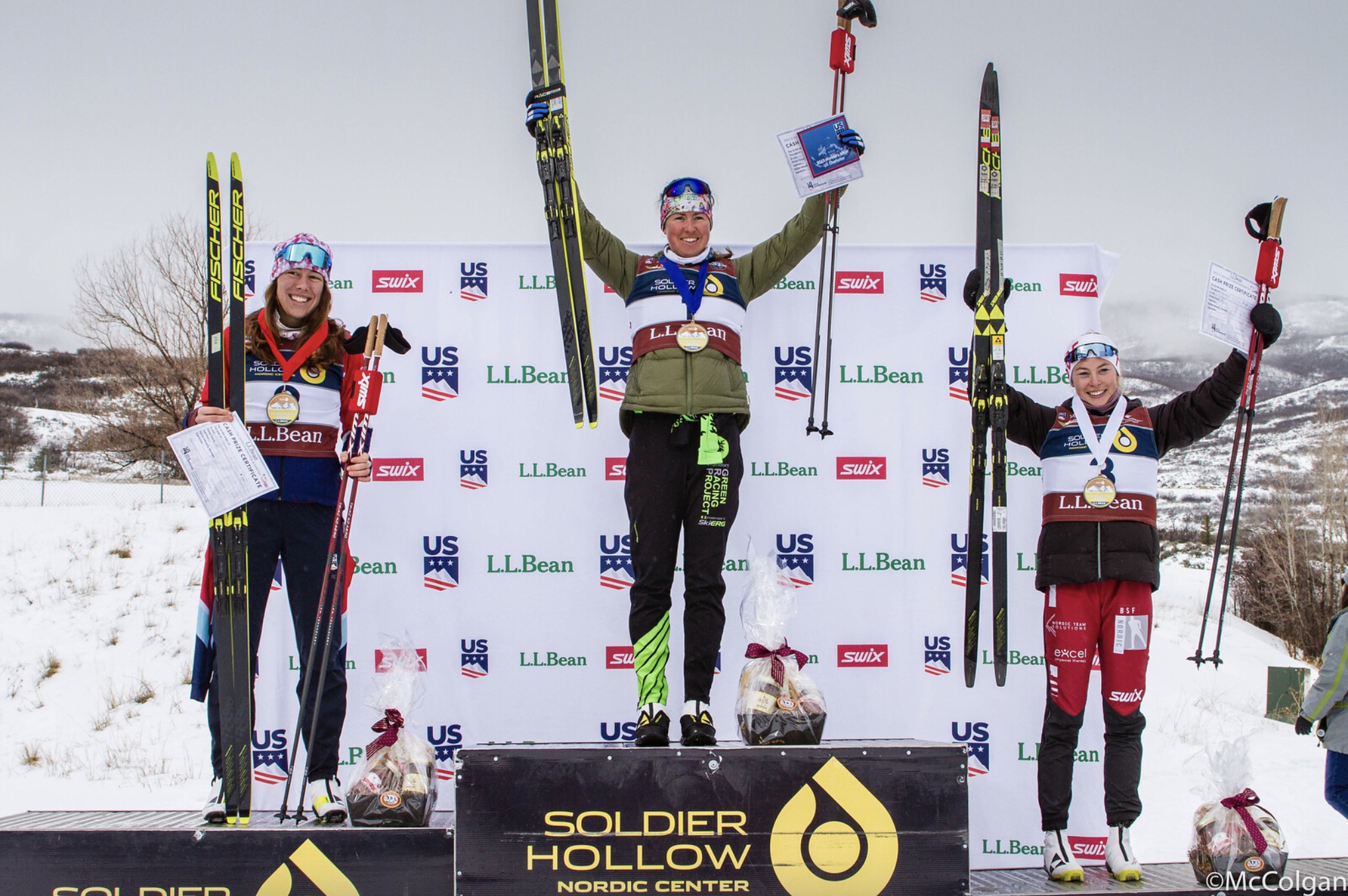
The podium ceremony for the women’s final following the SuperTour classic sprint in Soldier Hollow. Katharine Ogden took the win ahead of Caitlin Patterson and Hannah Rudd, with Lauren Jortberg 4th, Alexandra Lawson 5th, and Margie Freed 6th. (Photo: Facebook Craftsbury Green Racing Project)
Men’s Race: Colorado’s Magnus Bøe Upsets Schoonmaker in the Final
In qualifying, JC Schoonmaker (USST/UAA) showed why he has been the U.S. Ski Team’s most reliable fixture of World Cup Classic heats this season, winning the qualifying with a time of 3:08.43, 6.42 seconds ahead of 2nd place Peter Holmes (Sun Valley SEF). Andreas Kirkeng (University of Denver) rounded out the top 3 (+6.57), in a field where the top 30 were all within 20 seconds of each other.
With a dominant performance in qualification, the racing throughout the day always seemed to have one eye on where Schoonmaker was in the field. In his quarterfinal, Schoonmaker looked to start conservatively from the back of the field, which led the whole heat to sit back as well. When he moved to the front at the beginning of the first climb, the race surged forward with him. No one could match him, however, and he finished with a comfortable lead, with Kjetil Bånerud (NMU) taking the 2nd semifinal spot (+1.02).
JC Schoonmaker prepares for a sunny and warm classic sprint in Soldier Hollow. (Photo: Tobias Albrigtsen / @untraceableg)
The following two quarterfinals also previewed the competitors, and their preferred way of attacking the course, that would define the semifinal and final racing later on.
The second heat set a stark contrast in pace to the previous heat, with Noel Keefe (U of Utah) and Bill Harmeyer (SMS T2) leading the field out hard from the gun. Hunter Wonders (APU) and Johnny Hagenbuch (SVSEF) were able to keep with the pair though, and ended up out-sprinting Keefe and Harmeyer going into the finish. Still, the duel between Keefe and Harmeyer led to a blistering pace for the heat overall, and they would claim the lucky loser spots for the semifinals.
Then came the 3rd quarterfinal, featuring winner of today’s most aggressive racer award (unofficially handed out here, by Fasterskier), Ian Torchia (SMS T2), who in every heat he was in today would hammer out to the front of the pack while others seemed content to let the field play out. He was joined in the heat by Magnus Bøe (U of Colo.), who made his move on the first climb, stayed out in front, and came through in first place. Torchia, meanwhile, held onto second to advance automatically to the semifinal.
The semifinals marked more an amalgamation of race strategies than anything unique. But it was an amalgamation – which requires multiple parts. And indeed, on a course known for rewarding smart-racing, and in conditions – above freezing, on man-made, wind-swept snow – that reward smart waxing as well.
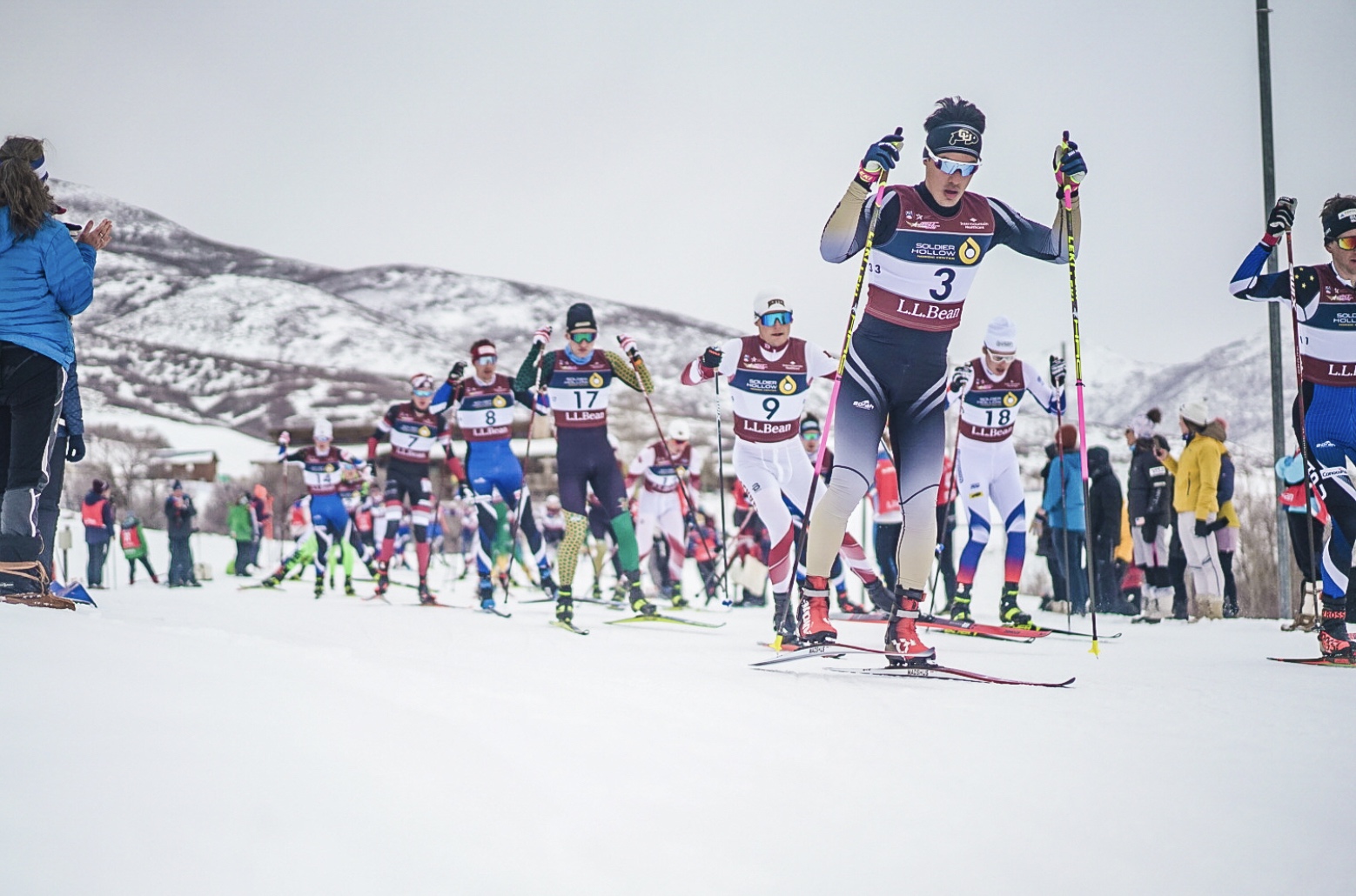
Magnus Bøe and JC Schoonmaker are off the line during the 2022 U.S. Cross Country Championships freestyle sprint stage. (Photo: Tobias Albrigtsen / @untraceableg)
The first semifinal featured Schoonmaker and Bøe, both of which stayed back in the back during the early part of the course. Going into the first climb, Bøe took a look back, saw Schoonmaker and Harmeyer were sitting in fifth and sixth place, respectively, and decided to attack. He led over the top, into the downhill, and up the final climb. Schoonmaker successfully did maneuver through the pack to counter the move, and on the final climb took the outside line up, cutting in to tuck behind Bøe going into the final downhill. When they came up, Schoonmaker had used the draft to put himself out front, while Bøe held off a late-surge from Hunter Wonders (APU) to take the second qualifying spot into the finals.
The second semifinal was again led out by Ian Torchia, who was then followed by former sprint National Champion Tyler Kornfield (APU). Kornfield seemed content to sit behind Torchia until the first climb, when he put in a burst of speed and broke open the field. The smartest racer, however, may have been Karl Schulz (SVSEF), who rode Kornfield’s attack, and then drafted, to go into the final climb with speed. By the time he hit the downhill, he had a gap which would remain unclosed. Kornfield, who had gone into the downhill in second, found himself joined by Noel Keefe and Ian Torchia into the final sprint for the second spot. As it would happen, all three would make it through to the finals, with Kornfield in second, and Keefe and Torchia being rewarded for their efforts early in the race by claiming the two lucky loser spots to the final.
The A-final then looked like this: JC Schoonmaker, Magnus Bøe, Karl Schulz, Tyler Kornfield, Noel Keefe, and Ian Torchia.
JC Schoonmaker races the qualifier during the SuperTour classic sprints in Soldier Hollow, UT. (Photo: Tobias Albrigtsen / @untraceableg)
With memories of Schoonmaker’s dominating qualifier in mind, it seemed like the field orbited around him off the line. Schulz found himself in front, but not going full bore to open the field up. Even Torchia, when he did make a move to the front, didn’t seem to do so with the same force that had marked his quarter and semifinal attacks. Schoonmaker waited until the first climb to move to the front, and then the final really was on. Schultz seized on the attack, and then put an extra-push into the downhill to try and open up an unclosable gap like he had in his semifinal. It was a good move, but one that didn’t prove to have the same force as his previous attack, and going into the final climb he was joined up with Bøe and Schoonmaker.
Then, Schoonmaker’s pace seemed to drop-off, with a few noticeable slips that progressed into a herringbone. Bøe, meanwhile, went for the herringbone from the get-go. He was the one that made contact with Schulz before the course gave way to a final downhill on the day. Schultz held a gap on the field through the glideout and over the bridge, but it proved not to be enough of a margin to feel comfortable in the final stretch. Meanwhile, Schoonmaker had fallen back to fifth.
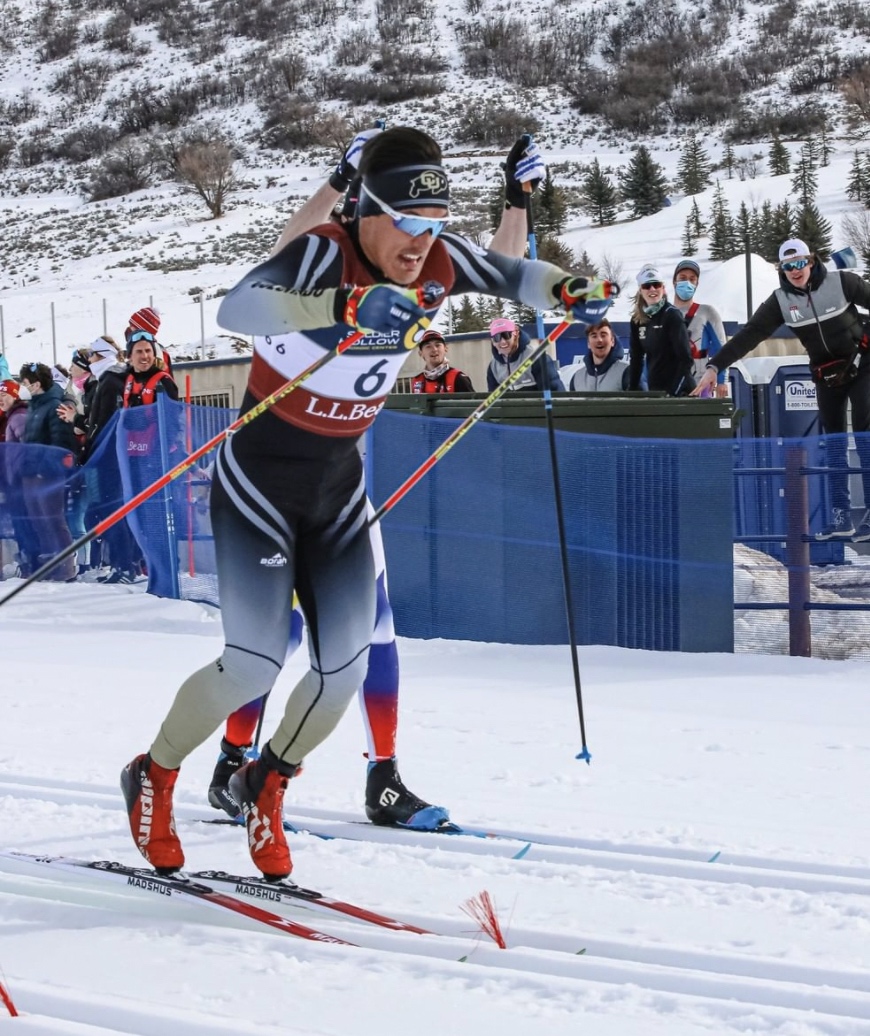
Utilizing his dominating doublepole sprint, when they hit the final 100m it was all Bøe, who closed a significant gap to catch Schulz in the final 50 meters. Looking as if he was leaping forward with each push, Bøe switched lanes, overtaking Schultz just before the line and letting out a fist pump as he realized a SuperTour – and collegiate – victory in a time of 4:08.28. Pushing to the line, Schulz was a close second (+0.35). (Video clip here.)
Magnus Bøe overtakes Karl Schultz just before the finish of the men’s classic sprint final. (Photo: Instagram @cubuffs)
After a gap, Schoonmaker, who was fighting for the final podium spot alongside Kornfield and Torchia, crossed the line outside of the track in third place (+4.53). Kornfield was a half second back from Schoonmaker for fourth (+5.10), with Torchia fifth (+5.64), and Keefe sixth (+11.02).
After the race Bøe explained that he changed his tactics in the heats relative to Sunday’s freestyle sprint, though he joked he thought it wise not to reveal everything.
“Today was a windy and slow-condition day,” Bøe wrote in an email. “There was headwind in the first half, and tailwind in the second half. Hence, pulling during the first half would be pointless. Furthermore, the second half, particularly for the last downhill there was very little to gain on the slipstream, due to the low speed and the ‘suctiony’ snow (cold conditions create better glide for the person coming behind on ‘heated tracks’). Therefore during all my heats I pretty much went all out from the top of the last uphill all the way to the finish, which on sunday would’ve been a suicide.”
Bøe walked through the final, including how he reacted to lead changes and adjusted his strategy when the race began to play out differently than anticipated.
“The final started off very slow, but then the positioning battle developed gradually from under the bridge. My main focus was to keep my eyes on JC, since he was clearly the favorite of the day, and I knew I would do well if I laid it up to beat him. Hence I never fell for the temptation of passing him, even though I had many chances of doing so. However, he did get tired during the last climb and tried to get others to pass him. This is when Karl took off and gained a massive gap that at first seemed too late to close. As soon as I realized that JC might not be able to catch up, I committed to catching Karl by myself. I made sure to put in a great push before the downhill straight, and did the ‘supertuck’ to gain every single inch I could. Once I started double poling towards the last bend it was just heads down and maximum effort. Was never certain I would catch Karl, I thought maybe he’d have something left at the very end. But lucky for me he didn’t and I had just enough to pull it off.”
University of Colorado’s Magnus Bøe heads out for the men’s 30k mass start free during the 2022 U.S. Cross Country Championships in Soldier Hollow. (Photo: Tobias Albrigtsen / @untraceableg)
A dual citizen of Korea and Norway, 23-year-old Bøe has already built a robust resume in international ski racing, including competing for Korea during the 2018 Olympics in Pyeongchang. Earlier this week, Bøe was fifth in Sunday’s freestyle sprints and finished 11th in the 15k classic. His only down race of the series happened in the 30k mass start freestyle, where he finished 43rd (+12:30.9).
“This week of racing has been up and down, from a miserable 30km where I got lapped, to today’s win. It’s been a lot of fun, and not least has been helpful for my shape. Next up is the Super Tour in Sun Valley, which I am looking forward to. Think I would be able to build on top of what I gained during this week.”
For Schultz, today also marked a career-first SuperTour podium. The 23-year-old Lake Placid, NY Native raced for the University of Vermont (UVM) until graduating in May, 2020, then heading to Sun Valley. Schultz had a podium just-miss earlier this year in a freestyle sprint where he finished fourth during the opening weekend of SuperTour racing in Duluth, MN.
“I was pretty fatigued from the three races prior,” Schultz wrote after the race. “I knew there was a decent headwind on that first climb, so I decided I’d tuck in behind up and over the first climb. I figured I’d need to save my strength for the final climb and long finishing straight, so I played my cards well and pushed where I needed to, and it just worked perfectly. I’ve learned sprinting is about preserving energy for critical parts of the course, it couldn’t have gone better.”
“And I won’t lie,” Schultz continued. “The spectators and everyone cheering allowed me to find another gear, especially up the last climb. I dug deeper than I have before.”
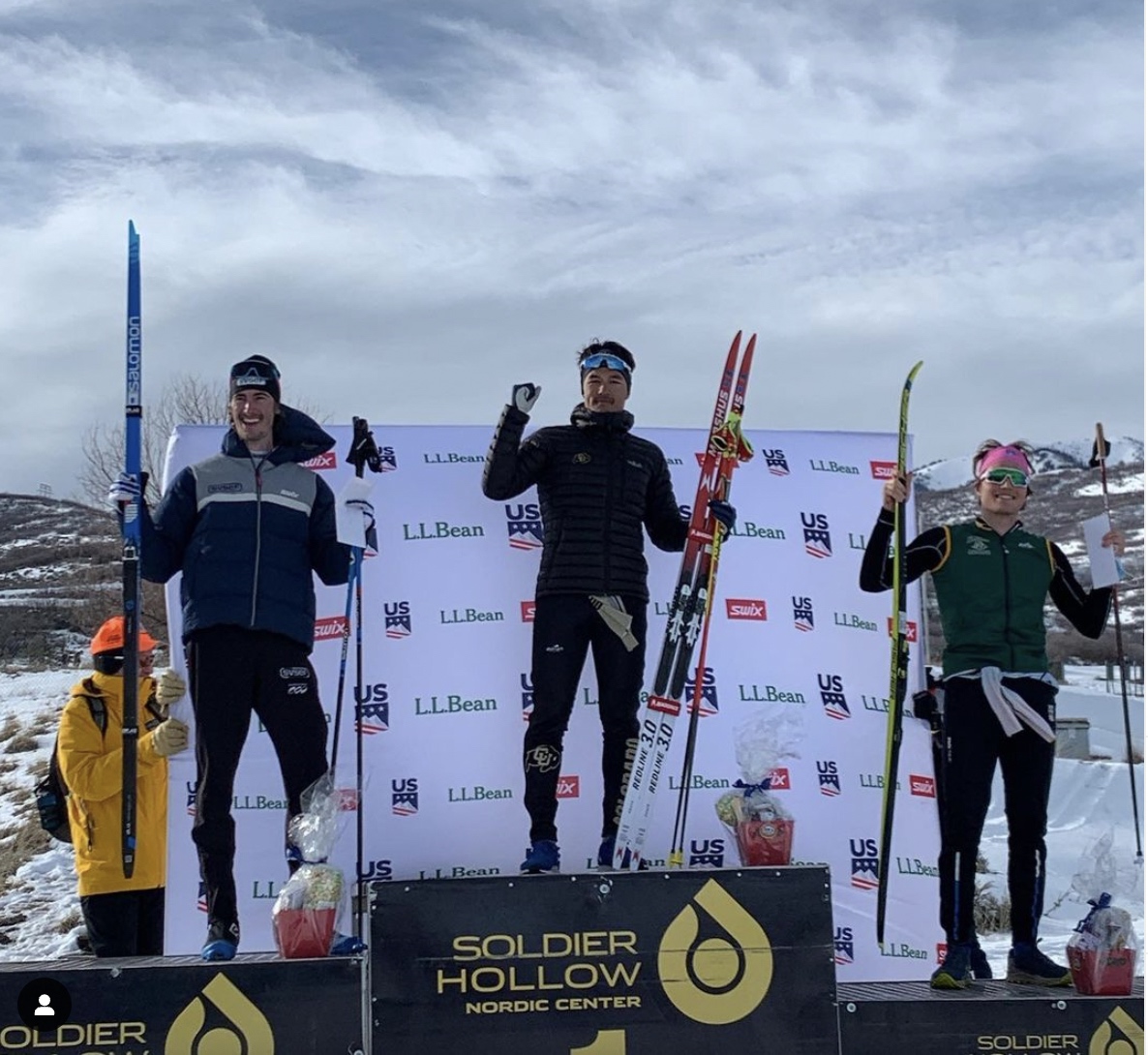
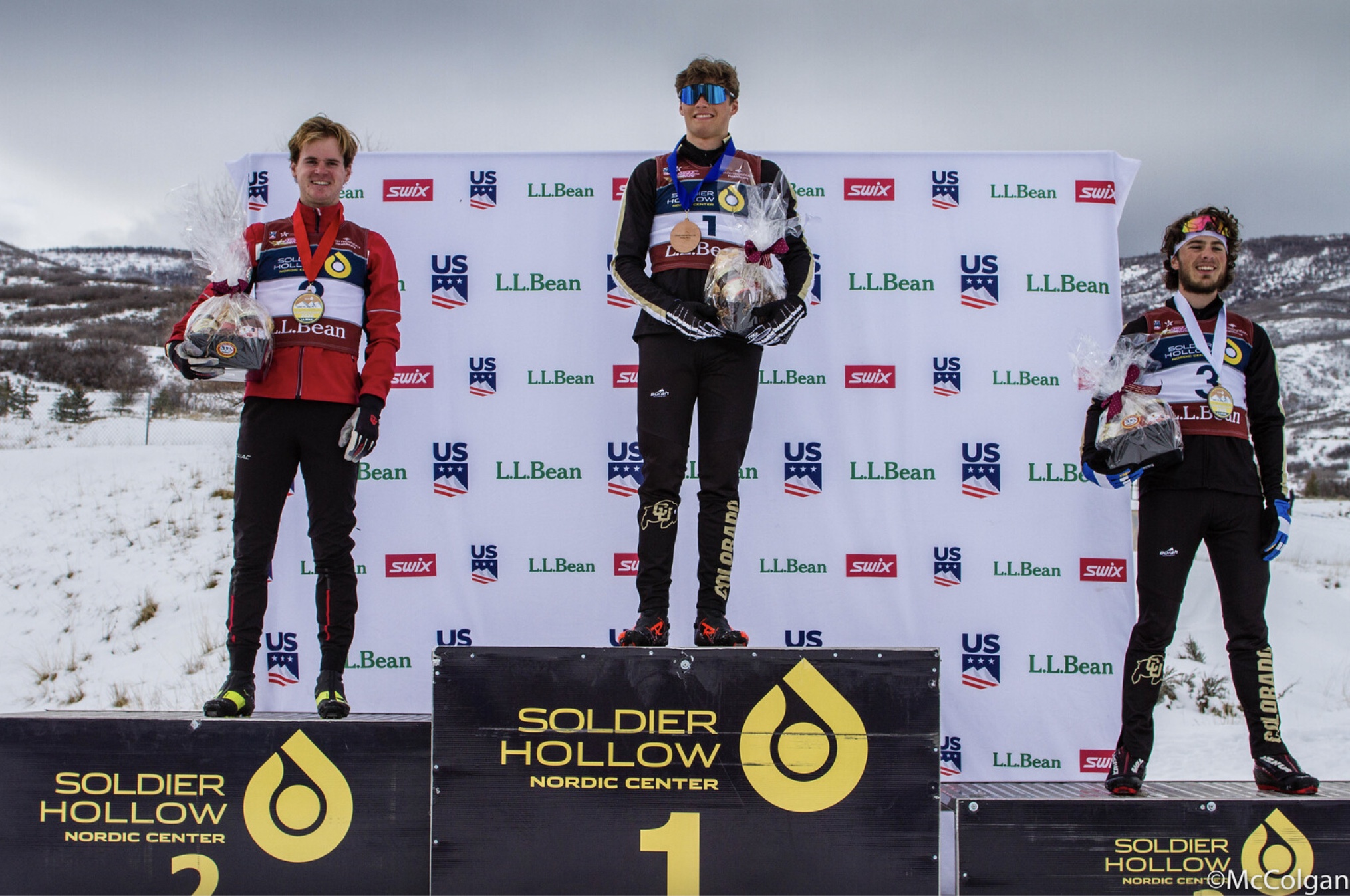
The men’s podium of the SuperTour 1.5k classic sprint in Soldier Hollow: Magnus Bøe took the win ahead of Karl Schultz and JC Schoonmaker. (Photo: Instagram @nysefnordic)
Writing to FasterSkier after the race, Schoonmaker explained how changing conditions forced athletes to make tough decisions about skis as well as tactics.
“It was a pretty crazy difference from this morning to the afternoon,” Schoonmaker explained. “The morning was icy and fast and the heats got really sloppy and slow. I had amazing skis in the morning and in the heats I struggled a bit with choosing whether to go for more kick or glide. I ended up asking for less kick to free the ski up a bit and I’m still not sure what was the right call. It was just really challenging conditions.”
Schoonmaker also explained that he had made fewer adjustments to the technique he had found such success with in Sunday’s skate sprint, however, the final proved to break the mold of what has historically proven to be the recipe for Soldier Hollow sprint racing.
“For this course I tried to take a somewhat similar approach as in the skate race by respecting the draft on the last downhill and trying to be careful about the guys behind me there. In the quarterfinal I felt I was able to ski away and create a big enough gap so that I couldn’t get sucked back in by the draft. In the semifinal, I tried to stay more in the pack and use the draft for myself. The final was tricky because I was going to try and use the draft again but Karl put in a really good move on the last hill that I couldn’t match. Then I was leading the rest of the pack and I decided to push over and try to catch Karl rather than go to the back to find the draft. It ended up not working out so great, but I’m happy with the day and the tough effort.”
We conclude a week of racing at Soldier Hollow, then, with a race that highlighted the strength and depth of the domestic circuit of U.S. skiing at present. Variable conditions on a technical course, which racers approached with tactics as diverse as the regions they hail from, indicated that this is a field that represents top-level racing. It was a testament to the development and growth of the sport in this country that a top-level racer like Schoonmaker can come off the World Cup and find a field where every heat is raced with closeness and intensity in his own country. That bodes well, and is a great place to leave the last national gathering of the US ski racing community before its best representatives look to take a crack at the Olympic Games in Beijing next month.
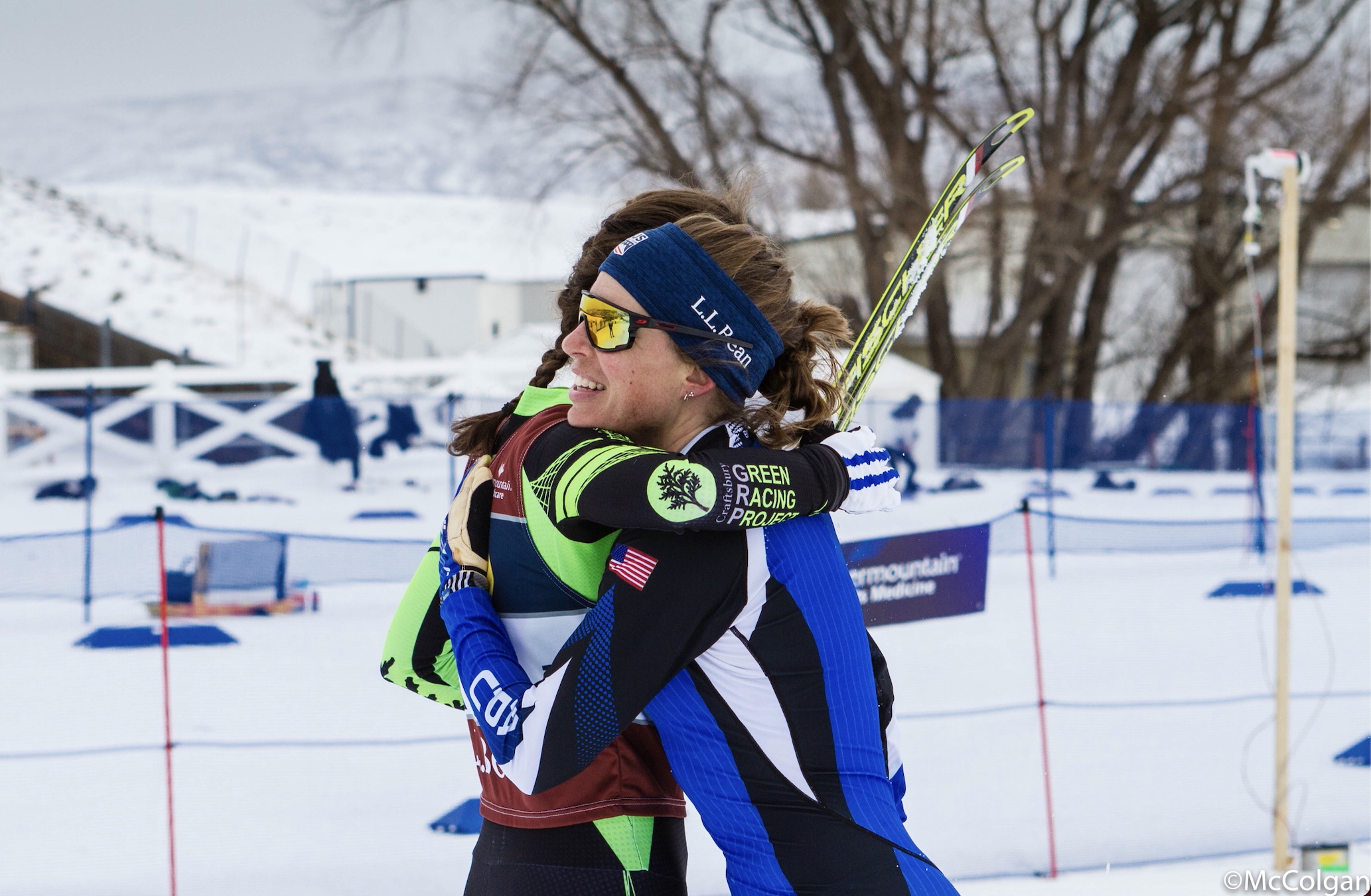
The spirit of the sport captured at the finish line as Alaska Winter Stars athlete Meredith Schwartz embraces her coach at the finish of the classic sprint in Soldier Hollow. (Photo: Tobias Albrigtsen / @untraceableg)
FasterSkier extends congratulations to all athletes who competed in Soldier Hollow this week, commending their efforts in a fiercely competitive field through a variety of race formats and course conditions. Also, a big thank you to Tobias Albrigtsen and John McColgan, who generously shared their photos with us throughout the week. Stayed tuned for an upcoming gallery highlighting many of the fantastic images that were not included in our reports.
Here’s a quick results recap from today’s SuperTour classic sprint in Soldier Hollow. Stay tuned tomorrow for detailed coverage including comments from athletes.
On a second warm and slow day of classic racing, temperatures in Soldier Hollow, UT climbed into the low 50’s as athletes raced through the heats of the 1.5 kilometer sprint.
In the women’s race, Katharine Ogden (USST/SMS T2) won each round of racing, from the qualifier to the final, where she stopped the clock in 5:01.63. Caitlin Patterson (CGRP) was second for women (+0.48), with Hannah Rudd (BSF Pro Team) in third (+1.53).
The men’s podium of the SuperTour 1.5k classic sprint in Soldier Hollow: Magnus Bøe took the win ahead of Karl Schultz and JC Schoonmaker. (Photo: Instagram @nysefnordic)
The men’s final saw a surprise upset. After JC Schoonmaker (USST/UAA) won the qualifier, and took first in his quarterfinal, and semi, it was Magnus Bøe (U of Colo.) whose tactics and strength carried him over the line in 4:08.28 for the men’s win. Bøe narrowly edged out Karl Schultz (SVSEF) who finished second (+0.35), with Schoonmaker hanging on for third (+4.58).
Soldier Hollow, UT offered a variety of conditions over the three days of racing at the 2022 U.S. Cross Country Championships. (Photo: Tobias Albrigtsen / @untraceableg)
By Rachel Bachman Perkins, Ella Hall, and Gavin Kentch
Thursday marked the final day of racing at the 2022 U.S. Cross Country Championships in Soldier Hollow, UT. (Friday’s classic sprint is a SuperTour only, not part of the National Championship series.)
After prime conditions in Sunday’s freestyle sprint and Tuesday’s 20/30-kilometer freestyle distance races, warm and wet weather made its way into the forecast just in time for the 10/15k interval-start classic races. Temperatures that started in the mid 30s for the women’s race climbed into the low 40s for the men’s race. In combination with variable precipitation that was not-quite-white, teams faced a dreaded combination of conditions for classic racing.
Looking like thoroughbreds, skiers shuffled and kicked their skis in the tracks to prevent icing as they lined up at the start gate to begin racing. For many athletes, the shuffling continued even after they pushed through the start wand and headed out onto the course. Even top-10 finishers could be seen slipping, struggling, and doing anything possible to get their skis to kick, while exhibiting technique that looked more like “desperate times call for desperate measures” than “this is what my technique videos should look like.” Classic racing in a warming world can be rough.
Women’s Race: Caitlin Patterson Wins by Nearly a Minute
One athlete who had scant difficulty with the variable conditions was Caitlin Patterson of Craftsbury Green Racing Project (CGRP). Starting in bib 37, near the back of the top-seeded field (bibs 21-40), Patterson had the advantage of receiving splits telling her how she was doing relative to the rest of her competition. Tuesday’s second-place finisher in the distance skate race, Rosie Frankowski, started one minute later in bib 39, but athletes starting ahead of her included Katharine Ogden (USST/SMS T2) in bib 23, Master skier Erika Flowers (BSF) in bib 29, and U20 skier Sydney Palmer-Leger (USST/U Utah) in bib 36.
Caitlin Patterson takes the national title in the women’s 10k interval start classic in Soldier Hollow. (Photo: John McColgan)
All that said, Patterson didn’t have to do very complicated math out there. After the first of three 3.33-kilometer laps, she was already in first, by 6 seconds over Palmer-Leger. After the second lap, her lead had grown to a healthy 30.9 seconds through less than 7 k of racing, this time over BSF Pro Team skier Mariah Bredal. Patterson proceeded to clock the fastest third leg in the field, by over 20 seconds, on her way to the finish, ultimately winning by nearly a minute.
Patterson notched the fastest first and second legs, too. The math can sometimes get complicated in interval-start races, but it’s safe to say that if you have the fastest time for each of three legs, you have won the race. Patterson did so by a remarkable margin of nearly one minute over ten kilometers, crossing the line in 28:12.0. No other athlete in the field broke 29 minutes on the day.
“Today was a really nice race for me, and I’m very happy with it,” Patterson wrote to FasterSkier after the race. “I skied my own race, but also felt that I went for it aggressively right from the start. It’s not every day that it’s possible to hold on to an effort like that, but I was able to keep pushing and building into the race. It’s fun to be able to race so hard, dig in deep but also be getting hints of recovery on the downhills. I was getting occasional splits that I was in the lead, but not many details, so I just kept pushing, especially since you never quite know with splits if they’re capturing everyone. However, in my 3rd and final lap, I believe I heard some cheering to the effect of ‘Caitlin you’re putting on a clinic, keep going!’ and I had some ideas that the race was quite a good one in results, to match the feelings.”
Patterson was one of few skiers who looked as if she could trust her skis throughout the race, still keeping her technique shorter and choppier than a traditional stride and glide, but nevertheless consistently achieving grip where her opponents were faltering. She acknowledged the role that the CGRP service team played in today’s success.
“The CGRP waxers – Nick Brown, Jake Barton, Ollie Burruss, and coach Pepa Miloucheva – did an awesome job with skis today and I’d like to thank them for their hard work today and every day! Great skis really helped set us up for success, and I’m proud of my whole team’s efforts this week.”
The women’s 10k interval start classic podium at the 2022 U.S. Cross Country Championships in Soldier Hollow, UT: Caitlin Patterson took the national title ahead of Katharine Ogden in second and Mariah Bredal in third. (Photo: John McColgan)
Patterson also reflected on her performance in the three stages of the U.S. Championships as a whole. Putting together a successful week of racing, she took home two wins, today and in the freestyle sprint Sunday, along with a third place finish in the 20k on Tuesday.
“Overall Nationals feelings have been quite good once I’ve gotten into the racing itself. Once I toe the line, my body wakes up and I’ve been able to push hard. It’s not all sunshine though, as many of the off days and even the warm ups before races have been a little rougher around the edges. Most racers I expect are familiar with the restless nights of sleep, the pre-race jitters, and the accumulated toll of so many races in a row – still, that’s part of the challenge to get through. I think the fact that Sunday was my first sprint race of the year, plus going the full four rounds, took more out of me than I would have expected. However everything seems to bounce back pretty well in time for the next race, and I’m looking forward to tomorrow’s sprint and overall enjoying so many chances during the week to dig in and race hard!”
Ogden, very recently returned from Europe after racing to 31st in Monday’s 10 k classic in Val di Fiemme in stage five of the Tour de Ski, took second, 53.4 seconds back, in a steady effort that saw “only” the third- and fourth-fastest individual lap times, but the second-best time overall.
Katharine Ogden races the classic sprint during the 2021/22 Tour de Ski in Oberstdorf, Germany. (Photo: NordicFocus)
“This race was brutally hard!” Ogden wrote to FasterSkier. “The course was hilly and a lot of fun, exactly what we expect of Soldier Hollow. I knew that winning today was a total long shot after racing five races of the tour and then flying [to Salt Lake City] only a day and a half before the race, but I am really proud of the way that I skied today. Even though it wasn’t the miracle race that I was hoping for, it was incredibly fun to race at home in the U.S. and to see so many people that are really special to me and have been instrumental in my ski career.
“Despite how painful the race was today, I can honestly say that I am so incredibly happy to be here and that I have never felt more loved by the ski world. It is always an honor to get a chance to race for Stratton, the team that has supported me unconditionally for the past 10 years. I am also extremely impressed by the way that Caitlin and Mariah skied today. They both work exceptionally hard and it was really special to witness that effort paying off in a big way.”
Bredal raced to third overall (+1:01.2), after moving up from fifth at the first checkpoint.
Originally from Victor, ID, just over Teton Pass from Jackson Hole, WY, Bredal is a 2021 graduate of the University of Utah, where she earned two-time All American and three-time All RMISA honors. Bredal also finished 8th in Tuesday’s 20k freestyle (+4:44.5) and 16th in Sunday’s freestyle sprint.
Mariah Bredal raced to third in the women’s 10k interval start classic in Soldier Hollow. (Photo: Instagram @bsf_pro_team)
“Today’s race was a day that everything fell into place for me and actually ended up being one of my better races ever!” wrote Bredal after the race. “It was pretty fun for that to happen and result in a podium at U.S. Nationals. I felt really good to begin with and was able to push myself a lot throughout the race too. I had amazing skis as well today.”
Speaking to her transition to post-collegiate racing, Bredal also shared her thoughts on joining the Bridger Ski Foundation Pro Team in Bozeman, MT.
“I have enjoyed it a lot so far and feel like my skiing is improving also. It’s been awesome to be on the team and I’m grateful for the quality of training and coaching I’ve had so far! Bozeman is a pretty sweet place too. I feel like I’ve had a pretty good start to the season at the SuperTours, and it’s been nice to start the season a little earlier as well.”
Initially a podium favorite, Frankowski had a rough day, posting the third-ranked time for lap one, but the 17th-ranked time for lap two, en route to finishing ninth overall (+1:41.2). Her APU teammate Becca Rorabaugh, who was second in the 10k classic in the Cable SuperTour races earlier this season, finished in a tie for 14th. Notably, APU may also have had trouble waxing for comparable conditions in the men’s classic sprint at this venue in 2017, when none of its athletes made the heats.
Notable performances from athletes starting outside the seeded group included Hannah Rudd (BSF) in eighth (+1:31.8), U18 athlete Nina Schamberger (Summit Nordic Ski Club) in 10th (+1:48.0), and Annika Landis (CGRP) in 14th (+2:02.0).
The junior women’s podium of the 10k interval start classic in Soldier Hollow. Sydney Palmer-Leger won the junior race ahead of Nina Shamberger in second and Samantha Smith in third. (Photo: John McColgan)
There was no separate juniors race on Thursday; all athletes raced the same course. Extracting the top junior athletes from the results yields an unofficial junior women’s podium of Palmer-Leger (6th overall, +1:23.7), Schamberger, and Samantha Smith (SVSEF, 13th overall, +2:01.7).
Men’s Race: Martin Out-Paces the Field for a Second Craftsbury Title
While temperatures continued to warm, the rain cleared and the sun began to shine at the start of the men’s 15 k classic individual start. Over 100 athletes completed the four 3.75 k laps, and it was Adam Martin (CGRP) who came out on top, winning in 39:18.0. With live timing down for most of the race, it was difficult to tell with certainty how the places were playing out, instead identifying strong contenders based on how skis were kicking and gliding and how well an athlete’s technique was holding together.
Adam Martin lines up to race the 30k mass start freestyle in Solder Hollow earlier this week. (Photo: Tobias Albrigtsen / @untraceableg)
For Martin, it was his first national title after several previous podium finishes, all coming in the classic technique. In 2019, racing on home tracks at Craftsbury, Martin was second in the 15 k classic, finishing behind Kyle Bratrud. The year prior at Distance Nationals in Craftsbury, Martin was second in the 50 k classic mass start. In 2016 at Nationals in Houghton MI, Martin was third in the 15 k classic behind Kevin Sandau (CAN) and Thursday’s second-place finisher, Scott Patterson.
“I wanted to win,” wrote Martin after the race, “However, I have a lot of respect for my competitors, so I knew it would take many pieces falling into place to have a shot at it.” He added, “I’m stoked – this is a dream come true for me!”
Reflecting on the conditions Martin wrote, “The conditions were soft klister skiing, and I was really happy with my skis – a good balance of enough kick and still good glide. I started towards the front of the A seed, so I tried to push a hard pace from the start. I was able to recover well on the course downhills, so even though it was at altitude, I was able to accrue big deficits on the uphills without completely blowing up.”
The men’s 15k interval start classic podium during the 2022 U.S. Cross Country Championships in Soldier Hollow, UT. Adam Martin took the win ahead of Scott Patterson in second and JC Schoonmaker in third. (Photo: John McColgan)
Scott Patterson (APU) came in second (+48.9), following up his victory in the 30 k with another podium finish. After the race he wrote, “I felt solid throughout the race. After talking to my sister following her success, I knew it was going to be hard from the start. I had that in my mind and went out for battle. I started quite strong and felt solid early on, but later, I knew my form was falling apart a bit and my arms were tiring. Four months of one pole and limited two pole skiing through the fall following my wrist injury didn’t exactly enhance my double pole endurance. However, I think I fought through that well and made the most of what I had today.”
Regarding the conditions Patterson noted, “Conditions were tough out on the course today. Warming up quite a few of my APU teammates were noting that it felt a bit like skiing on Eagle glacier in the afternoon. The pole troughs were deep, and the tracks were getting a bit wobbly and blown out. Days like today require a lot from both the athletes and the wax techs.”
Patterson started bib 231, meaning he could get splits off of Martin who started bib 224. To this, Patterson wrote, “Most of the race I was focused on chasing down my APU teammate Hunter Wonders who started right in front of me. (Wonders finished fifth, +1:18.5 back from Martin.) I did receive a few splits from Adam Martin, but it became clear pretty quickly in the race that he was skiing in a different league today.”
Scott Patterson races to second in the men’s 15k interval start classic in Soldier Hollow. (Photo: John McColgan)
“Instead I was focusing on the little things right in front of me,” Patterson continued. “Hunter proved a good rabbit with a strong start and similar performing skis. I was unable to catch him, but finished just a few seconds behind. I also had a bit of a view of JC Schoonmaker when we turned at the top of the hollow. His continual presence about 30 seconds back kept me pushing all the way as I knew it would be close.”
He turned out to be right. Rounding out the podium was JC Schoonmaker (USST/UAA) in third (+52.9), just four seconds behind Patterson.
Schoonmaker earned his first national title on Tuesday during the skate sprint but he wrote, “[Thursday’s] distance podium probably feels better than the sprint win the other day just because it’s been something I’ve been working super hard on. I’ve never viewed myself as just a sprinter, so today helps to prove that and I’m really proud to feel like I can do both.”
He continued, “I felt really good for the whole race, I definitely took it out pretty hard I think and just tried to hang in there. It was really tough conditions but I had awesome skis and I got a nice train with two of my other UAA teammates. It’s pretty fun when you can race next to your teammates and it just feels like another hard training day.”
Schoonmaker’s teammates Espen Persen and Magnus Norøy, both from Norway, finished fourth (+1:04.9) and eighth (+1:28.7), respectively.
JC Schoonmaker leads a train of UAA teammates during the men’s 15k interval start classic in Soldier Hollow. (Photo: John McColgan)
Looking forward to the next few weeks, Schoonmaker shared, “I’ll race the classic sprint tomorrow and then head to Sun Valley next weekend for some more super tours and RMISA races. After that, hopefully back to Europe and Beijing.”
Alexander Maurer (CU) was the first junior finishing in 41:59.7, 15th overall and +2:41.7 behind Martin. Walker Hall (UU) was the second junior, taking 17th overall, just +1.9 behind Maurer and +2:43.6 behind Martin. Will Koch (CU) was third for the day, 20th overall, +27.7 behind Maurer, and +3:09.4 behind Martin.
The junior men’s podium for the 15k interval start classic in Soldier Hollow: Alexander Maurer took the win ahead of Walker Hall in second and Will Koch in third. (Photo: John McColgan)
Men’s official results were not yet available at the time of publication, but will be posted here when possible. The first page of unofficial results is shown below.
Unofficial results for the first 23 finishers of the men’s 15k interval start classic, day three of racing at the U.S. Cross Country Championships in Soldier Hollow, UT. (Photo: Greta Anderson)
By Gavin Kentch, Ella Hall, and Rachel Bachman Perkins
Tuesday brought distance races to Soldier Hollow, in the second full day of racing at 2022 U.S. Cross Country Championships. The story at the front of the field was strong performances by athletes who had begun the year racing on the World Cup, as Rosie Brennan dominated the women’s field to win by over a minute, and Scott Patterson took the men’s race by roughly twelve seconds.
U.S. Ski & Snowboard Development Team Coach Greta Anderson encourages athletes during the men’s 30k distance race in Soldier Hollow. (Photo: Tobias Albrigtsen / @untraceableg)
Brennan was followed by Rosie Frankowski and Caitlin Patterson. Scott Patterson was followed by David Norris and Hunter Wonders, giving APU five out of six podium spots on the day. Craftsbury athletes went 3-4-5 in the women’s race. Notably, four out of six podium finishers were on the north side of 30, with a fifth gaining Master status later this month, underscoring the lengthy developmental curve often required to achieve success in distance racing.
Women’s Race: Rosie Brennan Solos to Victory
Tuesday’s race, the women’s 20-kilometer freestyle race at 2022 U.S. Cross Country Championships, was, technically speaking, a mass start – but for Rosie Brennan, it skied more like an interval-start race. Brennan wore bib 101, at the sharp end of the chevron start in a field of 55 athletes, and led every one of 20,000 meters of the 20 k, pushing the pace right from the start and never looking back all the way through the finish line. She covered the challenging course in a speedy 53:16.9 to take her seventh national title, and first since 2015, in a dominating performance.
The race began under overcast skies and moderate temperatures. By one second into the race, Brennan (USST/APU) was in the lead. By one minute into the race, she was notably off the front, with only three athletes, Rosie Frankowski (APU), Caitlin Patterson (CGRP), and Sydney Palmer-Leger (USST/Utah) even contemplating whether to follow.
By two minutes into the race, Brennan had a sizable gap, as athletes in the Frankowski-led chase pack had decided that discretion was the better part of valor, and opted to ski their own race and focus on chasing the remaining two spots on the podium. No athletes other than Brennan would appear on screen again in the free livestream until the six-minute mark, in a wide-angle shot of the main climb up the Cabin Loop most of the way through the first lap. This is nothing against the production values of the online broadcast, which were once again superb, just a statement about how quickly Brennan distanced herself from the rest of the field.
Rosie Brennan (USST/APU) skis away with the women’s 30k mass start freestyle national title. (Photo: John McColgan)
After the first of six 3.33-kilometer laps, Brennan’s lead over the chase pack was roughly 26 seconds. After two laps, this gap had nearly doubled, to 49 seconds. The chase pack was now led by Patterson, who collected her tenth national championship earlier this week, and Frankowski, who has a 21st at the Olympics and World Cup top-30s to her name. These were not bad skiers; Brennan was simply unmatched on the day.
Over the next four laps, as the wind increased and a light snow began to fall, Brennan put on a clinic. She V2ed where others V1ed, and added a slight hop at the end of V1 strokes where others adopted a more labored V1 reflecting the tough terrain and elevation. She slowed down through the coaching zone long enough to get a full drink from her feed. She skied the downhills aggressively and took the best lines throughout. It was a 53-minute demonstration of the form and fitness that have already brought her a World Cup podium this season behind Frida Karlsson and Therese Johaug, and an additional five top-six finishes.
Brennan lapped her first skier midway through lap 4. She would ultimately lap 26 athletes in a field of 52 finishers before the end of the race, precisely half the field. In a national championship.
Brennan actually slowed slightly, or the chase pack may have sped up, as the race went on. Her gap over the Frankowski/Patterson duo was “only” 1:02 at lap 3, 1:17 at lap 4, and 1:21 at lap 5. It may have even shrunk by a fraction of a second over the final lap, as Frankowski and Patterson raced for second behind her. But the outcome was never in doubt – and barring multiple broken skis, a devastating earthquake or meteor strike, or some other truly unforeseen occurrence, the outcome was never really in doubt after the first minute of the race.
A young Rosie Brennan prepares to race at Soldier Hollow in a vintage Team Utah Nordic Alliance suit. (photo: @rosiewbrennan Instagram screenshot)
Brennan grew up skiing in Park City, starting in eighth grade, first with Team Utah Nordic Alliance, then with coach Gordon Lange at Park City Nordic. She won her first ever ski race, a Wasatch Citizens race, albeit aided by the fact that “there was only one other girl in my age group,” she told the Park City Park Record for a 2017 profile. She’s come a long way since then.
“It was so great to race at home and have my family and friends cheering me on the whole way!” Brennan wrote in a post-race email. “With COVID, even my Mom has been unable to watch me race for years so it felt really special to be able to race with a hometown crowd before heading to Beijing.”
On her approach to the race, Brennan explained the role that she hoped her effort would play in her preparation for the upcoming Olympics, concluding with her feelings about sitting out the Tour to instead join her club teammates in SoHo.
“I was feeling quite inspired after watching some great performances by the APU men this morning and that gave me faith that our fitness was high and we could grind away,” Brennan wrote. “I wanted to do my best to simulate World Cup racing so I wanted to start hard and then reassess based on what others in the field did and then ultimately keep grinding to get a long hard effort in at altitude, which we haven’t had the opportunity to do on the World Cup this year. The course we raced played into my strengths with a long gradual climb right out of the start so I felt I had to use that every lap to keep building on my strengths and do my best to work on relaxed, powerful skiing the rest of the lap. I am really happy that I had the opportunity to come home and race a long race! I think I may have lost my voice screaming Frankie into the finish as well. It was really awesome to see her dig so deep today and to have APU put in such strong performances all around today.”
Caitlin Patterson (CGRP) and Rosie Frankowski (APU) race through 20k to round out the women’s podium. (Photo: John McColgan)
Behind Brennan, Frankowski and Patterson were locked in a dogfight for second and third. The two women, age 30 and 31, respectively, have raced head-to-head frequently over the years. They have spent much of their careers in that liminal space between being some of the fastest domestic skiers and some of the slower American World Cup skiers, competing for limited start spots on the World Cup or at global championships. In the last Olympic-year National Championships, in 2018 at Kincaid, Patterson was the first American in every race; Frankowski was the 2nd and 4th American in the two distance races; ultimately both women went to Pyeongchang.
Four years later, there the two athletes were again, holding down the chase pack with potential Olympic berths on the line. Patterson, from Anchorage but now skiing for Craftsbury, is taller, with a more upright skate stance and a tempo that looks nearly languid when skiing behind Frankowski. Frankowski, from Minneapolis but now skiing for APU, is shorter, with a somewhat more hunched-over approach to attacking an uphill, and with a higher tempo. (see photo above)
The two are a study in contrasts, but their differing approaches left them evenly matched throughout Tuesday’s race, as they literally occupied the space between the top American World Cup skiers and the top domestic skiers. At the start of lap two, they were separated from one another by 1.6 seconds, skiing in a larger pack that at the time included Alexandra Lawson, Palmer-Leger, and Lina Sutro. By the start of lap three, the chase pack was down to two, Patterson and Frankowski, 0.5 seconds apart. Start of lap four: 0.5 seconds. Start of lap five: 0.5 seconds. You may sense a theme. It was, once again, going to come down to two athletes with divergent strengths.
Writing in the FasterSkier Slack channel on Monday morning, 24 hours in advance of Tuesday’s race, this reporter foresaw Brennan skiing away with the win with relative ease, then one of two things happening behind her, as he jokingly drafted an article for a race that had not yet happened: “Behind Brennan, Rosie F. pushed the pace hard from the start, attempting to create a gap over the rest of the field. She [was ultimately able to do so, and took second slightly ahead of Caitlin Patterson et al.] [was unable to do so, and was swallowed up by Caitlin Patterson/someone else] in the final kilometers.”
This is not to claim any great powers of prognostication. This is rather to say that everyone in the venue, the two athletes on course notably included, knew what Frankowski’s strengths were, and what she would aim to do over the final three kilometers: open up enough of a gap over Patterson that it would not come down to a sprint, or bury herself in the attempt.
A few minutes later, this is precisely what occurred. The sixth and final time up the main hill on the Cabin Loop, Frankowski came into view in the distance at the bottom of the climb, V1ing with an explosiveness and tempo befitting a sprint heat more so than the final lap of a tough 20 k. Patterson was being dropped, but not definitively so, as she followed up the climb with a more human tempo, keeping Frankowski in view the whole time.
Rosie Frankowski (APU) pulls away from Caitlin Patterson (CGRP) to take second in the women’s 20k mass start freestyle in Soldier Hollow. (Photo: John McColgan)
Fast forward to the finish a few minutes later: Frankowski’s surge on the final uphill proved to be just enough. Patterson made up time on the downhill return to the stadium… closed to within a few meters… but was unable to shrink the gap any more.
Frankowski held her off with a progressively ragged V2, crossing the finish line and immediately collapsing into a heap on the snow just past the line. Brennan came over to take off her APU teammate’s skis and offer support. A few minutes later, Frankowski was upright, and giving Patterson a Covid-safe congratulatory hug.
Frankowski’s time was 54:37.5, 1:20.6 back of Brennan. She was 1.9 seconds ahead of Patterson in third.
The women’s 20k mass start freestyle podium: Rosie Brennan (USST/APU) won the national title ahead of Rosie Frankowski (APU) in second and Caitlin Patterson (CGRP) in third. (Photo: John McColgan)
“Today was something I am really proud of,” Frankowski wrote to FasterSkier after the race. “I have targeted this race for the last year and although I was excited, over the days leading up to the race, I was dreading the pain level Rosie B would inflict on the field. My initial plan was to try to stay with Rosie for any length of time, but that plan went out the window in the first kilometer when I thought I would literally pass out at 2k in if I tried her pace. I then had to recover for a lap in the chase pack, and the downhills were giving me real grief so I kept having to surge to get back on the pack or back with Caitlin P. After a few laps, Caitlin and I had a gap and we worked together using our individual strengths to make that gap larger, and that was super fun! Caitlin and I have raced together many times throughout the years so it was great to have the chance to relive some of that today. I knew I was feeling strong on the uphills, and the downhill finish was definitely on my mind, so on lap 5 I tried to push the pace on the ups a bit, and then on lap 6 going up the hollow I just went for it with total abandon. I created a gap that Caitlin narrowed over the rest of the course, but I managed to not fall on the last hermod’s downhill and take 2nd. I could see Rosie B in the finish stretch cheering me on so I was just full speed til that line.”
Frankowski also shared her thoughts on whether or not the race played out as anticipated.
“I’d say one of the surprises was how terrible the wind made the Hermod’s downhill. As someone who struggles with downhills anyways (but has made a lot of progress the last year), the wind drifts and the blowing snow were really dicey. And you couldn’t see the glazed icy spots under the snow so it was very stop-go. Otherwise, the race played out pretty much how I expected (or hoped) and one of the best parts of the day was having my APU teammates and coaches cheering out there, especially on the final lap.”
Rosie Frankowski (APU) leads Sydney Palmer-Leger (USST/Univ. of Utah) during the women’s 20k mass start freestyle. (Photo: John McColgan)
“It was quite the battle between Frankie and I,” Patterson wrote post-race. “However we also had a great time skiing and working together for the first 3/4 of the race or so. At the end certainly it was a furious battle to the finish, but earlier in the race we worked together to use each of our strengths and pull away from the chasers. Frankie and I have quite different styles, uphill vs downhill strengths, but it was really fun racing… Of course I would have been happier to be 2nd and I have slight regrets that I didn’t work my strengths a little better, but overall it was a strong race.”
Also commenting on the effect of wind, Patterson continued, “That was definitely a factor and annoyance on a few parts of the course. The Hollow had a notable head wind as we climbed up, which just added to the grinding nature of that climb. From lap 3 or 4 on, on both the back-side sprint downhill and the big downhill off of Hermod’s hill, there were small pockets of wind drifted snow forming. Especially on the Hermod’s downhill, the wind pockets were blowing across the course and making the downhill a little less predictable as the wind pockets felt much slower than the glazed path. Weather is just an aspect of racing, and while it was annoying, I think we as xc skiers have to learn to adapt to anything and everything, so it just became another variable to work around in the race.”
Patterson concluded with a nod to her brother, acknowledging the setbacks he has faced this season, which are elaborated upon in the men’s recap.
“I was quite nervous this morning watching the men’s race on the live feed, but I’m really proud of my brother Scott for skiing so smoothly and controlling the 30k. It’s awesome to see him showing a return to form and winning, after a tough start to the season attributable to his summertime broken wrist.”
Rosie Brennan (USST/APU) and Caitlin Patterson (CGRP) share congratulations at the finish of the women’s 20k mass start freestyle in Soldier Hollow. (Photo: John McColgan)
Craftsbury skier Alexandra Lawson took 4th (+2:49.2), in a brave effort after skiing solo for basically the entire race. Her teammate Margie Freed came in 18 seconds later for 5th (+3:07.2), giving the green-clad skiers from Vermont 3rd, 4th, and 5th overall on the day.
In the other close finish of the top-10, BSF skier Hannah Rudd (+4:13.5) came in a few seconds ahead of Palmer-Leger (+4:17.6) for sixth, after skiing substantially above the seeding suggested by her 125 bib number. (The start list ranked athletes according to their current USSS distance points.)
Palmer-Leger, in seventh, was notable as one of only four juniors in this senior women’s field.
Looking ahead to the rest of this week, Tuesday marked Brennan’s only planned race in this series. Her plan coming into today was to rejoin the World Cup soon, though those plans may have become somewhat more fluid with the recent cancellation of the Les Rousses World Cup stop set for mid-January. Regardless, even if Brennan were to compete in and win both distance races this week, the second-ranking domestic woman at these championships is still eligible for consideration for potential Olympic selection, due to the precise phrasing of selection criterion four of the USSS criteria document, which excepts athletes otherwise nominated to the team on other grounds. (Brennan has achieved nomination already via criterion one, multiple top-eight finishes in specified World Cup races.)
That is, that second-ranked domestic woman (Frankowski or Patterson, for example, or someone else who does well in the classic race if both these women do not perform as expected) is not guaranteed to be selected, but she certainly could be alongside Brennan.
Kate Oldham (Middlebury) leads the junior women’s 7.5k during the 2022 U.S. Cross Country Championships in Soldier Hollow. (Photo: Tobias Albrigtsen / @untraceableg)
In the junior women’s race, Middlebury’s Kate Oldham paced the 7.5k freestyle ahead of the Ninas, Nina Seeman (Dartmouth) and Nina Schamberger (Summit Nordic Ski Club). The threesome pushed the pace from the front, maintaining a small gap over the remaining women throughout the two-lap course.
In a three-way sprint to the finish, Oldham snagged the win in a time of 20:17.7, +0.7 ahead of Seeman in second place and +1.1 ahead of Schamberger in third.
The junior women’s 7.5k mass start freestyle podium: Kate Oldham (Middlebury) took the win in a tight race ahead of Nina Seeman (Dartmouth) in second and Nina Schamberger (SNSC) in third. (Photo: John McColgan)Ian Torchia (SMS T2) leads the charge at the start of the men’s 30k mass start freestyle in Soldier Hollow. (Photo: Tobias Albrigtsen / @untraceableg)
Men’s Race: Scott Patterson Leads APU Sweep
The first race of the day was the senior men’s 30 k, with 73 athletes completing eight 3.75 k loops. From the gun, the race was about bib number one, Scott Patterson representing APU. Patterson returned to the US after racing most of Period 1 of the World Cup.
Missing only the opening weekend in Ruka, Patterson competed in each of the distance stages despite having surgery on his wrist in late fall, roughly five weeks before he returned to World Cup racing, and still needing a brace to protect the healing injury. After his first race of the season in Lillehammer, Patterson explained that this made it harder for him to use his poles, shifting his energy use more to his legs and altering his technique, which likely impacted his ability to capitalize on the high level of fitness he had built through the summer.
Scott Patterson (USST/APU) leads the men’s 30k mass start freestyle in Soldier Hollow. (Photo: Tobias Albrigtsen / @untraceableg)
Through the first lap most of the field held together, though as the leaders departed for lap number two, a group of fourteen skiers at the front had separated, led by Patterson. Trading leads with Ian Torchia of SMS and Hunter Wonders of APU, the gap to the rest of the field had widened although the front group was still largely together. Among those front fourteen skiers were Johnny Hagenbuch skiing for Sun Valley Ski Education Foundation, David Norris of APU, Peter Wolter (SVSEF), Braden Becker (CGRP), Adam Martin (CGRP), Torchia (SMS T2), Zanden McMullen (APU), Wonders (APU), and the leader, Patterson (USST/APU).
Finishing the third lap in a total time of 27:01, the lead group was down to nine, having lost Hagenbuch and Wolter. Norris (APU) moved to the front for the first time, as the group headed up the Cabin Loop climb on the fourth lap, and upped the pace. This briefly created a gap with Norris, Patterson, and Wonders, though that gap was closed with the downhill draft and the group passed through the lap lane as a group of six, having lost Becker (CGRP).
The lead pack of men push through the 30k mass start freestyle at U.S Cross Country Championships. (Photo: John McColgan)
Climbing the hollow, Norris again put in an effort as he and Patterson created a small gap. Wonders worked to close it, bringing Torchia and Martin with him and once more, they closed on the front two on the sprint course downhill.
Ending lap five and departing for lap six, Patterson had gained a five-second advantage over his teammate, Norris. Through increasing lap traffic, Patterson continued to grow his lead. Despite the windy conditions, Patterson seemed to have no problem out on his own. Initially, Torchia was the sole chaser in second, with a gap to Wonders, Norris, and Martin.
Scott Patterson leads the men’s 30k mass start freestyle during the 2022 U.S. Cross Country Championships in Soldier Hollow. (Photo: Tobias Albrigtsen / @untraceableg)
Entering lap seven, Patterson was well clear of any competition, +24 seconds ahead of Torchia. Over the course of this penultimate lap, Torchia was caught by Wonders, Norris, and Martin and the chase group was once again a group of four.
Patterson held strong out front and entered the last lap after 1:03:58.2 of skiing. Norris and Wonders pulled away from Torchia and Martin, settling into second and third position respectively. Over the final 3.75 k, Norris gained steadily on Patterson, though Patterson had developed such a solid lead he was able to remain unchallenged to the line. Crossing the finish in 1:13:25.0, Patterson claimed his first national 30 k title.
“I went out today with the intention to win and establish myself as a top contender after some tough races early in the season,” Patterson wrote to FasterSkier after the race. “My intention from the start was to keep the pace fast even if I had to do most of the work. It was awesome on the early laps having APU teammates in the pack with the same intention. Although we strung things out earlier, lap 5 and 6 were really the key ones for eventually pulling away. On lap 5, David put a hard move up the cabin hill that gave the two of us a little gap. The front pack came back together in the stadium, but it was clear the next time up the hollow that many others in the pack were tiring. On lap 6 up the cabin hill, I put in a hard effort and found I had space behind me. At that point, I decided to go for it as I was still feeling strong. Climbing the hollow felt like my strength and I solidified my lead there. From that point it was a time trial to the finish while holding off David’s late charge. David and Hunter coming in to sweep the podium for APU and many of our younger skiers posting strong results were cherries on top of my personal success.”
In terms of how the races at U.S. Nationals fit into his season plan and goals, Patterson explained that his wrist injury has forced him to adjust on the fly, making it difficult to set objective goals.
“My grand plans for this season were a bit derailed from the start with my wrist injury and surgery. Mid summer, my intention was to race the full World Cup, but going into Period 1, I knew I had to take everything with a grain of salt. Every week would help my wrist, but also I was just lacking a bit of form following three months of training with one pole, a brace, or other modifications. I felt confident that my general fitness was still strong, but it was buried under a lack of race fitness early on in the season. Period 1 has always been a bit difficult for me and adding a few extra factors didn’t help. Following Davos I knew it was time to regroup a little. Nationals seemed like the best bet with a little more time. Also looking at the Tour [de Ski] races, I didn’t think they really suited my style, especially given my wrist.”
Providing additional insight into his rehabilitation, Patterson also gave an optimistic update on the status of his wrist and it’s lingering impact on his racing.
“Today marked 10 weeks post surgery for my wrist. While over on the world cup for period 1, I raced Lillehammer in a large plastic brace and Davos with it extensively taped. Neither of these were great solutions especially given where I was in the recovery process. Since then it has continued to improve and show signs of healing in all my follow up x-rays. I have also dialed in my taping since Davos. Only in the last week has my wrist really begun to feel that it’s ready for racing (with copious amounts of leukotape).”
Concluding on his plans moving forward, Patterson wrote, “At this point, I’ve got a little more confidence in racing and am looking forward to Thursday’s classic race. I’m not sure what my plans are after that, especially with the recent cancellation of the French World Cup, so I’m focusing on the remainder of races here for now.”
APU teammates Scott Patterson (left) and David Norris (right) head to the start of the men’s 30k mass start freestyle at the 2022 U.S. Cross Country Championships in Soldier Hollow, UT. (Photo: Tobias Albrigtsen / @untraceableg)
Norris, who skied the final lap 11.2 seconds faster than Patterson, finished in second place, +11.7 behind his teammate. Norris won the last 30k freestyle he contested at the 2019 National Championships, ahead of now-retired Kyle Bratrud (SMS T2) in second and Patterson in third.
“I’ve been skiing poorly this season without any explanation as to why,” Norris wrote in a post-race email. “This week I am enjoying being back with my team and seeing tons of friends on the course each day.”
In terms of his race, Norris continued, “Today I felt bad from the gun, but I tried to ignore those feelings and focus on making a race. Although I struggled quite a lot I am still proud to pull out a podium finish and to be part of a strong day for APU. Our coaches did a great job and gave me every opportunity to ski well.”
While Norris is perhaps facing an unlikely reality in terms of his selection for the currently five-man 2022 Olympic Team, his conclusion on the day was process focused.
“Every season I ski much stronger in February and March so I’m sure good form is on the horizon, but that doesn’t help me achieve my goals when I need to be skiing well right now. All I can do now is focus on the 15km classic coming up and then rest and prepare for the next races. After that – I don’t know yet what that will be.”
The men’s podium of the 2022 U.S Cross Country Championships 30k mass start freestyle: Scott Patterson took the win ahead of David Norris in second and Hunter Wonders in third. (Photo: Tobias Albrigtsen / @untraceableg )
Closing out the APU sweep was Wonders, finishing third +27.9 back. A sprint for fourth position went to Martin, while Torchia took fifth.
In the junior men’s 10k, the pace started easy as 121 racers headed out for the first of three 3.3 k loops. Initially Wally Magill (Dartmouth), Will Koch (Colo. Univ), and Walker Hall (Univ. of Utah) traded off in the lead. Up the Cabin Loop hill on the second lap Hall picked up the pace and pulled away with Magill. Koch worked hard to bridge the gap and join the leaders though the effort cost him and as the front two upped the pace once more, Koch dropped off.
The junior men’s podium of the 10k mass start freestyle: Walker Hall (Univ. of Utah) won the event ahead of Wally Magill (Dartmouth) in second and Brian Bushey (Univ. of Utah) third. (Photo: John McColgan)
Cresting the final hill in the last lap, Hall was in the lead though Magill drew even with the draft on the descent. In a sprint finish, Hall crossed the line first in a time of 24:29.4, his second junior championship title of the week. Magill finished second (+0.5), while Brian Bushey (Univ. of Utah) overtook Koch at the line for third (+18.9).
This article has been corrected to reflect the fact that Rosie Frankowski was the fourth American in the 10 k freestyle at 2018 U.S. Nationals, not the third.
Quick Recap:We’ll have a full race report up tomorrow, including athlete comments and plenty of photos, but here is a quick recap of the action in the men’s 30k and women’s 20k, which took place this morning at the 2022 U.S. Cross Country Championships in Soldier Hollow, Utah.
Perhaps becoming a theme of the 2022 U.S. Cross Country Championships, the 20/30-kilometer mass start freestyle distance races were both won by athletes who have spent the last six weeks racing in Europe on the World Cup.
In the men’s 30k, Scott Patterson (USST/APU) led the lead pack of men through an eight-lap course to take the win in 1:13.25. David Norris (APU) was next over the line for second (+11.7), with Hunter Wonders (USST/APU) rounding out the podium in third (+27.2) for an APU sweep. This is Patterson’s first national title in the 30k, though he won the 15k interval-start race in 2016 and 2018.
The men’s podium of the 2022 U.S Cross Country Championships 30k mass start freestyle: Scott Patterson took the win ahead of David Norris in second and Hunter Wonders in third. (Photo: Tobias Albrigtsen / @untraceableg)
Continuing the theme of APU dominance, Rosie Brennan (USST/APU) led from the start to win the women’s 20k free in 53:16.9. Her teammate, Rosie Frankowski (APU), won the race for second place, crossing the line 1:20.6 behind Brennan. Coming down to a final sprint, Caitlin Patterson (CGRP) finished 1.9 seconds behind Frankowski to take third.
In the junior men’s race, Walker Hall (Univ. of Utah) won the 10k in 24:29.4, edging out Wally Magill (Dartmouth) who finished second (+0.5), and Brian Bushey (Univ. of Utah) in third (+18.9). In the junior women’s 7.5k, Kate Oldham (Middlebury) took the win in 20:17.7, ahead of Nina Seeman (Dartmouth) in second (+0.7), and Nina Schamberger (Summit Nordic Ski Club) in third (+1.1).
Stay tuned tomorrow for detailed coverage, athlete interviews, and more photos from the action.
Results, including splits from live timing, can be found here.
In the thick of the elite winter sport scene for more than 25 years. That would in part define Luke Bodensteiner. He strung together an Olympic cross-country ski career and ended his over two-decade stint at U.S. Ski & Snowboard as their Chief of Sport. For roughly the past year, Bodensteiner has worn two hats at the Utah Olympic Legacy Foundation (UOLF): Chief of Sport Development and GM of Soldier Hollow (SoHo), the cross-country and biathlon venue from the 2002 Games. The SoHo part of his responsibilities involves managing the complex which includes ski trails, a biathlon range, waxing outbuildings, and an iconic but dated timing building.
Chief of Sport Development involves broader management responsibilities.
In Bodensteiner’s words, he “essentially guides all of the winter sports programs across the venues.” Considering this is a former winter Olympic site, the breadth of geography and sport-specific venue types are vast. There’s Utah Olympic Park with its sliding track and six ski jumps, Utah Olympic Oval with facilities for speed skating, and two arenas capable of housing hockey and figure skating, and the assets at Soldier Hollow.
Location of Soldier Hollow.
Location of Utah Olympic Oval.
Location of Utah Olympic Park.
Salt Lake and the surrounding region, including Park City and the Heber Valley, are again in the Olympic news. The 2002 host city, Salt Lake, is the United States Olympic & Paralympic Committee’s (USOPC) winter Olympic bid city for either the 2030 or 2034 winter Games.
The reforms allow places like Salt Lake greater flexibility as negotiations unfold, stakeholders determine new costs and benefits, and unexpected social-earthquakes manifest like COVID. The real issue is this: The IOC wants bidders who have community buy-in.
The prospects of an Olympics both excites Bodensteiner but also adds some complexity to the suite of his responsibilities. And although Salt Lake possesses the know-how and legacy venues, this is no slam dunk.
“Optimistic. But it is complicated,” Bodensteiner said when asked about Salt Lake’s prospects for a 2030 Game’s winning bid. “There is a lot up in the air right now. Tokyo is postponed and who knows what happens this year. I would say really optimistic because the IOC, on many levels, needs to present a sustainable Olympics and the budget for a Salt Lake 2030 Olympics is actually less money than was spent in 2002 because of the existing infrastructure. There are not currently that many candidates, but obviously Sapporo, [Japan] is in the mix. They have a nice bid and nice venues and they have this interesting Tokyo situation which could play in their favor or not. Barcelona, [Spain] has made some noise about making a bid but it is not probably real or realistic. Of course, Calgary bowed out in the last go-around which was fortunate for Salt Lake. So there are a lot of really positive factors for Salt Lake.”
The start of a women’s race at the 2002 Olympics in Soldier Hollow
Bodensteiner also acknowledged that LA’s 2028 Summer Games could complicate a 2030 SLC bid. Domestically, there is only so much advertising budget to allocate. Back-to-back Games could be untenable from a marketing standpoint. In that event, Salt Lake could defer it’s bid to 2034.
Either way, a ten year timeline to a potential Olympics adds a real degree of earnestness to Bodensteiner’s goals as he helps reform sport development at the Utah Olympic Legacy Foundation. From a venue standpoint, the community appears in support of nascent initiatives to fund venue modernization. Something Bodensteiner says is simply rejuvenating venues to a new Olympic standard, not a complete scrape and rebuild.
I’m going to rewind here to a quote from Bodensteiner’s exit interview with FasterSkier from U.S. Ski & Snowboard back in July 2019. Here’s that exchange:
FasterSkier: You are Chief of Sport, but I am hearing you talk like someone who is less focused on medals. Is this something you have learned and absorbed at US Ski & Snowboard over twenty some odd years?
LB: You are exactly right, you get pigeonholed after you have been known as somebody who is single mindedly chasing medals at the Olympics for twelve years. That becomes your brand or your persona. It is important to, it is better to not let that happen at the end of the day.
I think it has been an evolution. And I would say in our work at the U.S. Ski Team, while we have really, I would not say single-mindedly chased performance at the Olympics although that is something that my team thought about and worked on every single day for the twelve years I was there, I think we also built out programs and philosophies and plans on where we were going.
We were also recognizing that that is a real short term perspective and there are things that you might do in the short term that will yield those kinds of results that don’t create a sustainable foundation. And so I think we have always had some level of emphasis on club development or coaches education and important things like that.
Even prior to COVID and the jolt and now sustained tremors to remove structural racism, Bodensteiner had been thinking more holistically about athletes and what success looks like. He understands his mandate involves building equity in sport not simply creating a pipeline that terminates at a single point with medal success.
“We have asked, should we be hosting the Olympics in 10 years time, what is the story we want to be told about our community through the experience of our kids?, Bodensteiner said. “If the eyes of the world are looking at us what does success look like for us? Our metrics are really focused on broadening the number of kids who are involved in our programs, improving our demographic makeup so that the participation in our programs really reflects our communities from the racial diversity perspective, gender diversity, economic diversity, so that we are not just here for the kids that can afford what we think is affordable.”
According to Bodensteiner, his first eight months in the job with UOLF were consumed with understanding the foundation’s programs and how they were similarly failing. In his words, “diagnosing where we are creating these kinks that give us effectively the same results that any other youth sports program in America gets and then rolling out the set of initiatives to start to correct those.”
He cited stats that youth most often leave organized sport at 11 years old for girls and 12 for boys. Bodensteiner says retaining those youth remains a priority while also seeing that they find success off the field.
Then life was disrupted in mid-March. Good intentions, retooled programming, and any semblance of normalcy evaporated in the short-term.
“We had to shift from looking forward to shifting to how do we get through this initial shock here and how do we bring kids back into sports? Bodensteiner said.
Harnessing Bodensteiner’s bearish sentiments about a successful Olympic bid, the change he envisions may have a 10-year arc. Yet the change has tangible incremental goals. Better retention. Youth participants reflecting the diverse population in the greater Salt Lake region. Kids who feel valued not simply for a sport result but for engaging in self-improvement.
Along with a community steering group, Bodensteiner has absorbed and processed what these positive outcomes might resemble in a decade. UOLF, like many in sport, continue to grapple with the duality of participation and performance. The Olympics can be polarizing, especially in an era when the collateral damage of chasing medals is exposed. The human costs have been real. But in Bodensteiner’s eyes, sport can be more humane and foster a culture where participation and performance aren’t fossilized in their pre-2020 form.
“We have our eyes set on 2030 and so for us, it is a long term transformation plan,” said Bodensteiner. “We have put our heads together for about three months to think this through and one of the things that really came out was that participation and performance are often viewed as opposing factors. We really want to achieve both. We want to achieve both in a way that those two factors support each other rather than pull each other apart. The ultimate success for us is to provide a high amount of accessibility and have a positive impact on athletes’ lives and have some of those kids go on to have that ultimate sport success of being on an Olympic team in their backyard in ten years time.”
With the sporting venue assets in place and a dynamic region with the legacy of Olympic hosting know-how, the UOLF might just pull it off.
On Thursday, a three race series to help determine international race starts for U.S. biathletes began with a sprint at Soldier Hollow (SoHo) outside Midway, Utah.
For the IBU World Cup, five U.S. athletes have pre-qualified with a top-25 result on the World Cup or World Championships last season. Pre-qualified athletes include Joanne Reid, Clare Egan, Susan Dunklee, Sean Doherty, and Leif Nordgren.
According to the USBA selection criteria, the remaining World Cup Period 1 spots and IBU Cup Period 2 and 3 spots are determined through a series of rollerski races held over the summer in Jericho, Vermont and the current series at SoHo.
Yesterday, the women raced a 7.5-kilometer sprint, the men 10 k.
Susan Dunklee (USBA/CGRP) won the women’s race in 22:31.59 minutes after missing a single shot while shooting prone. Joanne Reid (USBA) was second in 23:31.08 (1,0). Hallie Grossman (USBA/CGRP) placed fourth but was the third American in 24:14.29 (1,1).
Travis Cooper (USBA/National Guard Biathlon) scored the win in the men’s 10 k sprint with a time of 26:13.45 while shooting clean. Lars Hammernes Leopold (U.S. JNT) placed second in 26:21.58 with no misses on the range. Sean Doherty (USBA/National Guard Biathlon) was third in 26:29.50 (1,1).
Racing will continue on Saturday with 10 k/13.5 k mass start race.
Hailey Swirbul of the USST D-team during an intensity session at the USST Park City, Utah training camp this October (Photo: Matt Whitcomb)
With the U.S. Ski Team’s final pre-season camp wrapping up on Oct. 22 in Park City, Utah, FasterSkier reached out to one of the newer additions to the USST’s D-Team, Hailey Swirbul, for a recap of her experience. (Read part 1 here.)
Born in Grand Junction, Colorado, the 20-year-old grew up skiing in the Rocky Mountain area with the Aspen Valley Ski and Snowboard Club. In 2016 she headed north to attend the University of Alaska Anchorage (UAA) for two years, before moving to Alaska Pacific University (APU) for her junior year.
While skiing for UAA, Swirbul qualified for NCAA’s twice, racing to a second and third in last season’s races held in Steamboat Springs, Colo. At the 2018 World Junior Championships in Goms, Switzerland, she came away with two individual medals, one silver and one bronze.
The script below is a firsthand account from Swirbul of what the Park City camp was like for her.
***
“The primary goal of virtually every U.S. Ski Team camp is to get together and push each other. That generally means camps have an intensity focus, and Park City was no different,” U.S. National Development team coach, Gus Kaeding, wrote in an email to Swirbul after the U.S. Ski Team (USST) training camp in Park City, Utah this October.
Along with intensity, the Park City USST training camp offers exposure to altitude for athletes who have been training at sea level, as well as access to the Center of Excellence (COE) and its resources, which includes medical work, sports psych, nutrition, and strength.
The first day of camp, the team woke early to squeeze in blood lab tests and body composition exams before a morning distance run and a max strength test. Blood tests like these have become part of an annual routine.
At least four times a year, USST athletes meet with the team nutritionist to monitor blood for deficiencies like iron ferritin, vitamin D, and electrolytes. By logging these results over time, athletes can create a blood profile. In tracking long and short-term changes, blood profiles may be used to explain and predict physical performance, both good and bad.
Hailey Swirbul of the USST D-team during a strength session at the USST Park City, Utah training camp this October (Photo: Reese Brown)
Along with blood tests, experts at the COE also catalog body composition measurements. This is done using pincers and measuring tape in order to evaluate the fat percentage and girth of the torso and limbs. Max strength tests are then used to track imbalances and changes to athletes’ bodies.
The USST strength coach, Tschana Schiller, spent time evaluating leg power or stability imbalances using single leg explosive jump examinations. Movements like these allow her to work with athletes on improving imbalances and power through an individualized strength plan.
After the first day, camp training turned to distance sessions for a few days. We completed a 2-hour-plus classic session up the Mirror Lake highway, and a flat high-speed skate threshold interval set.
The primary focus for athletes in Park City is to push one another in training and with that in mind, we turned to speed sessions. Since many athletes travel to Park City from a range of elevations — some came from sea level, others from 7,000 ft. — the first few days were spent adjusting to the altitude before executing the two speed sessions: a level 3/4 interval set, and two time trials intermixed with long distance sessions and strength. Gus Kaeding, the new U.S. D-Team coach, noted that U.S. Ski Team “camps [usually] have an intensity focus.”
The fourth day of camp brought a skate speed session with eighteen 15-second speeds on flat, steep uphill, and gradual downhill terrain on the Soldier Hollow (SoHo) rollerski track. The following day, our fifth of active training, we completed longer, natural intervals at SoHo.
The SoHo rollerski sessions were paired with a distance run or core strength circuit to round out the first two days of Park City intensity.
To the joy of many, but the inconvenience of others, snow fell in Park City and the surrounding mountains on our planned over distance day. Sunday’s long run was relocated to the Bonneville Shoreline Trail overlooking Salt Lake City.
Post-run, our afternoon was filled with presentations. One in particular was the L.L. Bean and Swix winter kit delivery, one of the many organizational, according to Kaeding, “nuts and bolts that come with forming a team.” A well-deserved recovery day followed.
Hailey Swirbul (right) of the USST D-team during an intensity session at the USST Park City, Utah training camp this October. (Photo: Reese Brown)
After a rest day, the team returned to SoHo for another speed session–classic skiing this time. After one more day of double distance sessions, it was time to push the limits with two time trials: a skate sprint simulation and a classic distance individual start.
The skate sprint followed the “King’s Court” format with heats of four, where the last athlete in each heat moves down a heat, and the winner of each heat moves up (excluding heat one with the top four qualifiers). After four times around the course, a qualifier and three heats, the athletes returned to Park City to recover before an afternoon distance session.
With the first hard time trial effort out of the way, the athletes returned to SoHo for a 12-kilometer freestyle race for the women, a 16 k freestyle race for the men. Using the entirety of the paved roller ski track at SoHo, skiers completed three or four laps, which means three or four efforts up the infamous Hermod’s Hill. A “brutal time trial” as Jessie Diggins accurately captioned in an Instagram post.
As the Park City training camp came to an end with a four hour roller ski, it was obvious that the USST left camp knowing they did what they came there to do–push each other to find a new level of fitness and technique to get them one step closer to becoming the best cross-country ski nation in the world.
Kelsey Dickinson (24) gets on course for the women’s 7.5-kilometer biathlon sprint for USBA SoHo trials on Tuesday, Oct. 30. Emily Dreissigacker (26) and Hallie Grossman (27) look on. (Photo US Biathlon)
On Wednesday, 12 biathletes competed in the senior women’s 7.5-kilometer sprint, with veteran Susan Dunklee once again coming out on top. Dunklee completed the course in a time of 22:23, after missing two shots, one prone and one standing.
The next closest competitor to Dunklee was Johanna Talihärm, who tied Dunklee’s shooting score and finished 55 seconds back from the winning time for second place. Talihärm is originally from Estonia and is currently a senior at Montana State University.
Rounding out the podium was Craftsbury Green Racing Project and former Bates College skier, Hallie Grossman in third. Grossman cleaned her prone stage and missed one standing shot, finishing 1:12 seconds back from Dunklee.
Emily Dreissigacker, who had placed third in yesterday’s sprint, finished in fifth (+1:49) on Wednesday after two missed prone shots and one missed standing. Clare Egan, another top three finisher in Tuesday’s race, placed sixth (+2:01) in Wednesday’s sprint with 2 missed prone shots and 3 missed standing. In fourth (+1:32) on Wednesday was Deedra Irwin of Wisconsin Biathlon.
In the men’s 10 k sprint, Leif Nordgren claimed first in a time of 26:21 after one missed prone shot and one missed standing. Finishing 12 seconds behind Nordgren was Sean Doherty in second. Doherty missed two prone and cleaned standing. Rounding out Wednesday’s top three was Jake Brown, who cleaned standing and missed one prone shot, finishing two seconds out of second place and 14 seconds back from the winner.
A junior men’s and junior women’s sprint was held, with Lexie Madigan (Sugar Bowl Academy) taking the women’s win in a time of 16:46 and Eli Neilsen (MSU/Methow Valley Ski Club) claiming the men’s in a time of 19:25.
Athletes have a rest day on Thursday before returning to the venue on Friday for a mass start.
Soldier Hollow Nordic Center (Midway, UT) is in search of coaches for the 2018-19 season. We are looking for individuals to work with Team Soldier Hollow Development athletes (ages 10+) and someone to both coach and supervise Nordic Center operations. These are year-round positions beginning May or June. We have both full- and part-time positions to fill. Please see the general job descriptions below, and visit www.utaholympiclegacy.org/careers/ to see full job descriptions and apply. Contact Nordic Manager and Head Coach Sara Studebaker-Hall (shall@uolf.org 435-709-3467) with any questions.
Nordic Center Supervisor/Development Coach
Overview
The primary role of the Nordic Center Supervisor is to manage all daily operations of the Center. Outreach, marketing and organization skills, as well as a long-term vision are important. Ability to multi-task and oversee several programs are crucial. This person should be comfortable coaching all ages and working with Nordic Manager to increase public awareness and accessibility. This position reports to the Nordic Manager.
Major Tasks, Responsibilities and Accountability
Manage rental shop, including staff hiring, scheduling and retail and rental fleet management
Scheduling and outreach for youth group ski sessions
Assist with management and staffing of Kickers and Gliders youth program
Teach skiing to the general public, school groups, youth groups
Maintain excellent customer service while interacting with public, coaches and athletes
Assist coaching of Team Soldier Hollow training as assigned, including occasional training planning
Supervise youth ski groups and ensure safety procedures are followed
Other duties as assigned
Required Knowledge and Essential Skills
Must be able to cross-country ski at a minimum of intermediate level
Able to instruct groups and individuals while skiing, both adults and children
Excellent customer service skills with friendly outgoing communication style
Basic first aid and CPR certification (can be obtained in-house)
Must enjoy working in a team environment
Self-starter attitude. Ability to see problems and tasks and complete them without supervision
Willing to be flexible and complete additional tasks as needed. This position reports to two different departments (Public Skiing and Team Soldier Hollow) so must be able to divide up duties each day.
Minimum Qualifications
Experience with Nordic Center operations or equivalent professional experience
US Ski & snowboard Level 100 Coaching Certification recommended, but not required
Flexible work schedule – must be available to work days, evenings, weekends and holidays
Development Coach
Overview
The primary role of the Development team Coach is to implement and assist in managing all aspects of the Devo and Devo Plus Team/program. Understand and apply Long Term Athlete Development (LTAD) philosophy to Development athletic plans. Support the vision and mission of the UAF, Fulfill the goals and plans of the Nordic club and work with other departments and UAF staff as necessary. The position reports to the Soldier Hollow Nordic Center Nordic Manager.
Major Tasks, Responsibilities and Accountability
Aid in development and implement a clear and specific athletic training plan/curriculum for Development Team. Curriculum will include but not limited to: year plan, technical training, fitness training, waxing techniques, goal setting, mental training, nutrition, physical testing, equipment selection, and competition planning.
Run the day-to-day operation of the Devo and Devo Plus programs
Assist Development athletes with competition preparation: planning, rule changes, equipment checks, and logistics of the competition.
Assist Program Manager in future development of program.
Be available to meet and communicate with parents at the beginning and end of each training session
Communicate accident/injury information to head coach/ program manager
Help arrange and manage travel logistics for Development team. This includes, but not limited to, ticketing, lodging, meals, transportation. Communicate to program manager costs and to parents when payment is due.
Assist with Sport/Public/Marketing events as necessary
Assist with the organization of competitions at Soldier Hollow
Coach Kickers and Gliders and Charter School programs as asked/available.
Required Knowledge and Essential Skills
Excellent organizational, coordination, oral and written skills.
Proactive and positive attitude, and able to work independently.
Must work well in a team environment with the ability to lead.
Proficiency with PC applications and Microsoft Office programs, such as Word, Excel, Publisher, Power Point.
Valid driver’s license.
Minimum of 18 years of age.
Flexible work schedule.
Minimum Qualifications
Coaching experience that is applicable to the sport of cross country skiing.
USSA Level 100 certification preferred.
Must have current USSA Coach License
Must be available 7 days a week (including weekends, evenings, and holidays as necessary).
In the last race of their careers, Tim Burke leads Lowell Bailey up a climb in the men’s mass start on Saturday, March 31, at USBA Nationals at Soldier Hollow in Midway, Utah. The two finished together. (Photo: Terry Wickland)
2018 USBA Junior/Senior Nationals
American biathletes officially wrapped up their race seasons at the 2018 US Biathlon Association (USBA) nationals last Thursday through Saturday at Soldier Hollow in Midway, Utah.
The event kicked off with Lowell Bailey edging his teammate and longtime training partner Tim Burke by 5 seconds in the men’s 10-kilometer sprint on Thursday, March 29. Bailey started 15th out of 17 men and skied a single penalty lap after his prone shooting then cleaned standing (1+0). He crossed the finish line in 22:48 minutes, bumping Burke, who started 11th and had two standing penalties (0+2), out of first place. A third national-team member Sean Doherty completed the podium in third place, 20 seconds out of first with one standing miss (0+1).
In the women’s 7.5 k sprint on Thursday, Susan Dunklee raced to the win in 22:45, 11 seconds ahead of Clare Egan in second place. Dunklee and Egan started sixth and eighth, respectively, out of 10 women, and had two standing penalties apiece (0+2). Joanne Reid, also of the national team, placed third, 1 minute back from Dunklee with one standing miss (0+1).
Tim Burke leads Lowell Bailey in the men’s mass start on Saturday, March 31, at USBA Nationals at Soldier Hollow in Midway, Utah. (Photo: Terry Wickland)
On Friday, Bailey and Dunklee returned to the top step of the podium with victories in the men’s and women’s pursuits, after starting first in each race based on their sprint results.
Dunklee started 11 seconds ahead of Egan and won the women’s 10 k pursuit by 1:20.6 minutes with two penalties (1+0+1+0). Egan repeated in second place with three penalties (1+0+1+1), and Emily Dreissigacker improved on her fourth-place sprint result by finishing third (+3:46.9) with two misses (1+0+0+1).
Bailey started 5 seconds ahead of Burke and 20 seconds ahead of Doherty, then finished first, 1:31.7 clear of Doherty in second place. Bailey shot three penalties (1+0+1+1) and Doherty overcame six misses (3+1+1+1), while Burke finished 7.1 seconds behind Doherty for third place (+1:38.8) with nine penalties (1+1+2+5) after crossfiring on the final stage.
In Saturday’s mass starts, Bailey and Burke tied for first place in the men’s 15 k to celebrate the last race of their careers (check out this Instagram video). Bailey shot 19-for-20, with his lone miss coming in the last standing stage (0+0+0+1), while Burke had two one-minute penalties (0+1+1+0). They entered the finishing straight together and crossed the line in unison in 36:23.3. Doherty once again reached the podium in third (+36.1) after shooting three penalties (0+1+2+0).
Like Bailey, Dunklee swept nationals as well with a win in the women’s 12.5 k mass start. She finished with the fastest time of 39:51.6 despite five penalties (1+2+1+1), while Egan was runner-up for the third-straight day, 1:25.4 back with seven penalties (2+1+2+2). Dreissigacker shot clean to repeat in third place (+1:32.5).
Marcus Gore (33) of Casper Mountain Biathlon and Ski & Snowboard Club Vail leads Nick Burkhart (32) of Auburn Ski Club and Bjorn Westervelt (31) of Craftsbury in the youth men’s pursuit at 2018 USBA Nationals in Midway, Utah. Burkhart went on to edge Westervelt for the win. (Photo: Terry Wickland)
In the youth races, Bjorn Westervelt of Craftsbury and Lexie Madigan of the Auburn Ski Club (ASC) won the youth men’s and women’s sprints, respectively. On Day 2, Madigan raced to her second-straight win in the youth women’s 7.5 k pursuit while Nikolas Burkhart, also of ASC, won the youth men’s 10 k pursuit by 10 seconds over Westervelt in second place.
On Saturday, Burkhart won the youth men’s 10 k mass start in 35:23.8, while Helen Wilson of the Anchorage Biathlon Club topped the youth women’s 7.5 k podium with a win in 26:37.3.
Zach Hall (far left) the new manager and head coach of team Soldier Hollow’s biathlon programs standing with his athletes during a training session this summer. (Photo: Sara Studebaker-Hall)
Last September, amidst the chatter of others gathered for the 11th annual U.S. Olympic and Paralympic Assembly in Colorado Springs, Colo., Sara Studebaker-Hall and the CEO of the Utah Olympic Legacy Foundation (UOLF), Colin Hilton, shook hands. Studebaker-Hall, a two-time Olympic biathlete, was attending the meeting as an athlete rep for the US Biathlon Board of Directors and was introduced to Hilton by US Biathlon Association (USBA) President and CEOMax Cobb.
The three were partaking in the U.S. Olympic and Paralympic Assembly’s two-day fall symposium, an event that included seminars on athlete rights and anti-doping. At the time of their introduction, Studebaker-Hall had no idea that her conversation with Hilton would evolve into a job opportunity and eventually, her return to the Intermountain region. Originally from Boise, Idaho, Studebaker-Hall was starting her third season as the assistant coach for the University of Alaska Anchorage (UAA).
But last fall, her coaching position and the future of the UAA Ski Team were in question. Financial restraints at Alaska’s state universities had put more than one cross-country ski program in limbo.
Back in Anchorage and also unsure about the future was Studebaker-Hall’s husband, Zach Hall, a former national-team biathlete himself. A native of Nikiski, Alaska, Hall had been working to develop a competitive youth biathlon program in Anchorage and was questioning whether or not it was time to make a career move.
Then Studebaker-Hall learned through Hilton that UOLF was looking to add a new biathlon program to Soldier Hollow, its cross-country ski resort in Midway, Utah. A world-class venue, the Soldier Hollow (SoHo) shooting range had hosted biathlon competitions during the 2002 Winter Olympic Games, yet no biathlon, development (devo) or competition (comp) teams existed in the SoHo or Midway area.
Team Soldier Hollow athletes Ingrid Norton and Pearl Harvey during a rollerski workout two years ago near Heber and Park City, Utah. (Photo: Morgan Smyth)
“One thing I look at is what are we doing with our venues, are we providing the sport we out to provide,” UOLF Vice President of Sport and Venues Marc Norman said on the phone in September. “The fact that we weren’t hosting [biathlon] and weren’t running any programs in it was a quick red flag for me.”
Along with the addition of a biathlon program, Team Soldier Hollow was also in need of a youth coach for its nordic program. From 2012 to 2015, Morgan Smyth served as the program manager, overseeing the Comp and Devo teams, the Youth League and the Charter School Ski Program. At the time of her departure, 145 kids were enrolled in SoHo’s programs — 10 on the Comp (competition) team, a number which has almost tripled since then.
“I left Soldier Hollow to work for Park City Nordic Ski Club [PNSC] as the Nordic Manager,” Smyth wrote in a recent email. “PNSC was part of the Utah Olympic Legacy Foundation. Ironically Soldier Hollow became a part of the Legacy Foundation less than a year later but I live in Park City so it was nice to work closer to home.
“I left Park City Nordic this fall and started a Physical Therapist Assistant program,” Smyth continued. “I am excited to try something new but plan to stay involved in the ski community. Hopefully coaching the younger kids during the winter months.”
Former UAA assistant nordic coach Sara Studebaker-Hall (center, white hat) at the #savealaskaskiing rally in Anchorage, Alaska, on Nov. 10, 2016. Former UAA skier and current USST member Sadie Bjornsen (pink jacket) is to her left. (Photo: Gavin Kentch)
Last fall, after Studebaker-Hall returned to Anchorage, she and her husband were offered the opportunity to work with Team Soldier Hollow, with Hall heading the new biathlon program and Studebaker-Hall leading the pre-existing nordic ones. When the offer was made, theUAA Ski Team’s future remained uncertain, and the two ultimately accepted UOLF’s offer, viewing it too good to pass up.
“It was hard to leave UAA,” Studebaker-Hall explained on the phone earlier this summer. (The UAA Ski Team wasultimately saved three weeks after she and Hall accepted). “But moving to a head-coaching position and managing a program here and getting this off the ground was kind of a once in a lifetime opportunity, so we had to take it.”
Studebaker-Hall is now serving as the head coach and program manager for Team Soldier Hollow’sDevo Plus andComp teams. The competition team alone has 25 athletes, many of which Studebaker-Hall described as being “on the precipice of just getting going”. As she transitions from coaching collegiate skiers to juniors, she expects a few challenges mainly involving the mindset of younger skiers.
For most of the college skiers she’s coached, knowing the fundamentals of being an endurance athlete were automatic: get adequate amounts of rest between training sessions, practice good hydration. In contrast, a majority of her Team Soldier Hollow athletes are still learning the basic principles, such as the importance of recovery, nutrition and getting decent amounts of sleep.
“With youth kids, you’re trying to instill in them this idea that coming to training everyday is really important,” Studebaker-Hall observed, “Even just how to think about training, all these things I think that maybe I took for granted a little bit, that all the kids that I previously worked with knew already. That’s definitely a challenge, but one that I’m really excited about because these kids are so moldable.”
Most of the juniors she’ll coach this winter range in ages from 10 to 20 years old.
“They’re really ready to take in everything you say,” Studebaker-Hall continued. “You have a huge opportunity as a youth coach to do that for kids, maybe even more so than on a collegiate level, because you’re their first real coach.”
Zach Hall teaching shooting skills in 2014 at an indoor range in Kotzebue, Alaska, as part of the NANANordic program in the state’s Northwest Arctic Borough.
Though Studebaker-Hall only started working with Team Soldier Hollow this summer — Hall arrived last December — she’s already made a positive impression on many of her athletes. Pearl Harvey, 16, who has been involved with Soldier Hollow’s nordic program since she started walking, highlighted Studebaker-Hall’s interest seeing her athletes succeed.
“I have never had a coach so involved with technique and caring about my progression as a skier and a person,” Harvey, who hopes to one day receive a college scholarship for skiing, wrote in an email. “Sara, for me, is a big role model and she is shaping me as an athlete with being more conscious of my technique, eating, drinking and sleeping habits. She is also shaping me as a person and keeping us in check and making sure we are on the correct path.”
As Studebaker heads Soldier Hollow’s nordic programs, her husband is in charge of SoHo’s new biathlon programs: Intro Flex ,Devo Plus Flex and Comp Flex (development team). Hall estimates he has a total of 20 athletes in the biathlon program, though not all belong to Team Soldier Hollow. The Utah Nordic Alliance (TUNA), the Park City Nordic Ski Club or Wasatch Nordic have athletes participating in SoHo’s biathlon program, thanks to what they dubbed a “flex” program option. With this “flex” program, members from any of the surrounding nordic ski clubs can join Team Soldier Hollow for biathlon training without changing their club affiliation.
Racers at 2017 U23/Junior World Championships last February in Midway, Utah. (Photo: Team Soldier Hollow blog)
“We’ve got the only range in the area, so what we’re trying to do is work with all the area coaches to schedule training sessions, so that it works as much as we can with them working with their local nordic clubs, ” Hall said on the phone in July. “A big part of the program is just pushing general nordic development and adding opportunities with biathlon.”
Sparking interest is the first step for Hall, as well as getting the word out about the biathlon program. Having U23/Junior World Championships held at Soldier Hollow last season was also helpful in promoting the biathlon and nordic programs there, as well as giving younger athletes an idea of where skiing could take them.
“This is my first summer trying Biathlon, and I am loving it,” Lina Farra, 16, wrote in an email in September. “Both Zach and Sara have very high-level Biathlon experience, and that combined with their great passion for sport sets this program apart from others around the nation.”
SoHo is currently bidding to host an International Biathlon Union (IBU) World Cup in 2019. According to Studebaker-Hall, an exploratory committee is also forming for a potential Olympic bid — the last Olympics held at SoHo took place in 2002.
“From a programmatic standpoint, we definitely want to see Utah kids participating in this sport,” Norman said. “There’s no reason we shouldn’t have a strong biathlon program. That’s our goal, is to build up and be one of, if not the best biathlon programs in the nation. And have kids of all ages and abilities participating in biathlon.”