From the FasterSkier archive — posts syndicated from athletes’ and coaches’ own blogs between 2004 and 2012, kept online as published. Current coverage is at fasterskier.com.

Tag: Sovereign Lake Nordic Centre

  • Sovereign Lake Nordic Centre Seeks Seasonal Nordic Head Coach

    Sovereign Lake Nordic Centre Seeks Seasonal Nordic Head Coach

    Seasonal Nordic Head Coach

    Sovereign Lake Nordic Centre (SLNC) is offering an exceptional opportunity for a Head Coach who wants to lead, inspire, and shape one of Canada’s strongest cross-country ski communities. As one of Canada’s largest Nordic clubs, with 50+ km of daily groomed trails, a thriving athlete base, and a full suite of high-performance facilities, it’s a place where a coach can truly make an impact. Located just minutes from the City of Vernon, Sovereign Lake delivers a rare blend of professional and outdoor lifestyle. The North Okanagan’s trails, lakes, and mountains sit right outside your door, making year-round training and recreation part of everyday life. If you’re driven to develop athletes, build a positive team culture, and contribute to enhancing Nordic programs while enjoying an unmatched work-life balance, Sovereign Lake Nordic Centre is an ideal place to lead your next chapter. Reporting to the General Manager, this role works in close partnership with the Biathlon Head Coach and a dedicated team of volunteer coaches to deliver premier Nordic programming. The successful candidate will foster a collaborative environment that strengthens the club’s community and ensures a unified approach to athlete development.

    Summary of Responsibilities

    The Head Coach provides technical leadership and strategic oversight for SLNC’s competitive and developmental pathways, from Learning to Train (L2T) through post-secondary levels. This role is responsible for ensuring all training aligns with Long-Term Athlete Development (LTAD) principles and maintaining the high standard of excellence for which our programs are known. Key focuses include athlete progression, program integration across disciplines, and the successful delivery of seasonal training cycles.

    Key Responsibilities

    Athlete Instruction & Planning: Designing comprehensive yearly training plans (YTPs); Conducting performance testing; Providing expert technical modeling in classic, skate, and roller skiing; Coach (assist) for biathlon program with communication with the Biathlon Coach. Race & Technical Leadership: Providing high-level coaching and oversight at regional, provincial, and national events; Management of race-day wax operations; Provide race support liaison with other coaches and race officials. Program Growth: Driving club expansion through athlete recruitment; Lead volunteer coaching development; Conducting professional development workshops; Recruit and train assistant coaches. Safety & Communication: Maintaining a secure, inclusive training environment through strict adherence to Safe Sport protocols; Develop, communicate and ensure implantation of safety management plans for all coach-supervised training sessions in consultation with the Program Committee; Ensure and manage pro-active effective communication pertaining to weekly training sessions, club events, and XC race dates to athletes, parents, and other coaches via digital platforms. Administrative Oversight: Participating in committee meetings; Regular coach meetings and ensuring program deliverables; Contributing to the continuous improvement of club operations; Regular reporting to the General Manager; Develop and maintain relationships with sponsors and community organizations.

    Fundamental Requirements

    Professional Credentials:

    • NCCP Competition Coaching Development Certification (or ability to obtain within 8 months);
    • NCCP Competition Introduction Certified Coach Status (or equivalent);
    • 5 years’ experience as an XC coach and/or athlete;
    • Standard First Aid Certification (to be maintained as current).
    • Proven excellence in classic, skate, and roller ski techniques with the ability to demonstrate skills to athletes effectively.

    Operational Readiness:

    • A valid driver’s license and dependable vehicle access;
    • Flexibility to work evenings, weekends, and holidays in diverse outdoor conditions;
    • Criminal Record with Vulnerable Sector Check.

    Character & Fit:

    • Collaborative, empathetic mentor;
    • Genuine passion for growing the sport across all skill levels;
    • Strong team player;
    • Ability to motivate, build trust, and gain the confidence of athletes and parents.

    Position Type: Seasonal Full-Time (August 17 – March 31) Salary: $45,000 (seasonal term) paid biweekly

    How to Apply

    Interested candidates should submit their application by June 30, 2026, including a resume, cover letter, and two references (one character, one professional) to the General Manager of Sovereign Lake Nordic Club: gm@sovereignlake.com We thank all applicants for their interest; however, only those selected for an interview will be contacted.

  • Wednesday Workout: Masters Strength at Sovereign (with Videos)

    Wednesday Workout: Masters Strength at Sovereign (with Videos)

    Eric de Nys (left) keeping the masters motivated at the end of a ski-striding intensity workout.

    VERNON, British Columbia — There are a lot of master blasters who are training hard all year. There are a lot less that progress from one season to the next. This strength program is designed to help one group of masters ski faster as they age.

    Eric de Nys, the program director and head coach at the Sovereign Lake Nordic Club (who previously coached Canadian World Cup athletes for a decade and at three Olympics), created a two-session-per-week strength plan for Sovereign’s Masters High Performance skiers.

    https://youtu.be/oSM2IsHGnYE

    The club’s regular masters program has 160 participants and is as much social as it is about learning to ski better. Its HP program is focussed on progressing to better results and has a limit of 20 skiers. At the first on-snow session early last November, de Nys set the group goal of showing significant gains at the 2019 World Masters, 15 months in the future.

    buy yaz online yasmin online

    The masters program is very different than the youth programs. The primary difference is that the kids show up for the scheduled sessions and don’t need videos to learn what they missed. The next big difference is that the school system trains kids to pay attention for an hour at a time. For masters, the videos never exceed four minutes in length.

    For Mesocycle 1, there are two strength workouts each week.

    Each workout starts with a 15- to 20-minute run/bike/treadmill/row in Zone 1.

    Next there is a warmup series of simple mobility drills, including high forward and backward skips, side shuffles, and hip mobility.

    The meat of the workout is the Day 1 and Day 2 exercises, followed by a Zone 1 cool down.

    The order and number of reps are laid out in this spreadsheet, but as de Nys explains in the intro video, one size does not fit all. Very few of the HP group are able to do this program unmodified. Check out these videos on progressions.

  • Sovereign Lake Hosts 1st Annual Enduro Ski Race (with Video)

    Sovereign Lake Hosts 1st Annual Enduro Ski Race (with Video)

    VERNON, British Columbia — Each year, the Sovereign Lake Nordic Centre reopens its trails in May to let skiers start the new training season on snow at its annual Spring Fling Ski Camp.  In addition to the local skiers, groups came from Whitehorse, Canmore, Saskatchewan, and Methow Valley to absorb some Vitamin D and snow. The longest travel award goes to Mark who travelled from Atlanta, Georgia, for a long weekend on snow.

    Day three of Spring Fling, May 12th, 2018. (Photo: Gerry Furseth)
    Crusty morning on Day 3 of Sovereign Lake’s 2018 Spring Fling Ski Camp on May 12.

    The trails were open from 6:30 a.m. to 2 p.m. each day to take advantage of the cooler mornings, with a crusty start and a soft layer over a firm base later on. Air temperatures rose from 1 degree Celsius to 10-15 degrees by noon (34 degrees Fahrenheit to 50-60 F). Most athletes skated early, switched to classic as the snow softened, and then headed down to the valley for biking, running, and paddle boarding in the afternoon.

    While there was enough snow to open the whole system, the club only set about 20 kilometers each day as there were only a few hundred skiers expected.

    Last year’s innovation was the pushup time trial, which was so much fun it was repeated with double the participation on Saturday, May 12.

    This year, the club added an ‘enduro’ race on Sunday, May 13 to spice things up.

    Enduro is a popular mountain-bike race format, with a defined course that everyone must complete, but only the downhill stages are timed. The winner is the person whose total time for the timed stages is the lowest.

    buy nasonex online

    The response from the 53 participants was generally positive, with most wanting to repeat the event next year.  Many suggested the long flat runout at the end of Stage 2 didn’t feel flat with soft, sticky snow in the sunshine on race day. A few said they were going to copy the event at their home ski area next season.

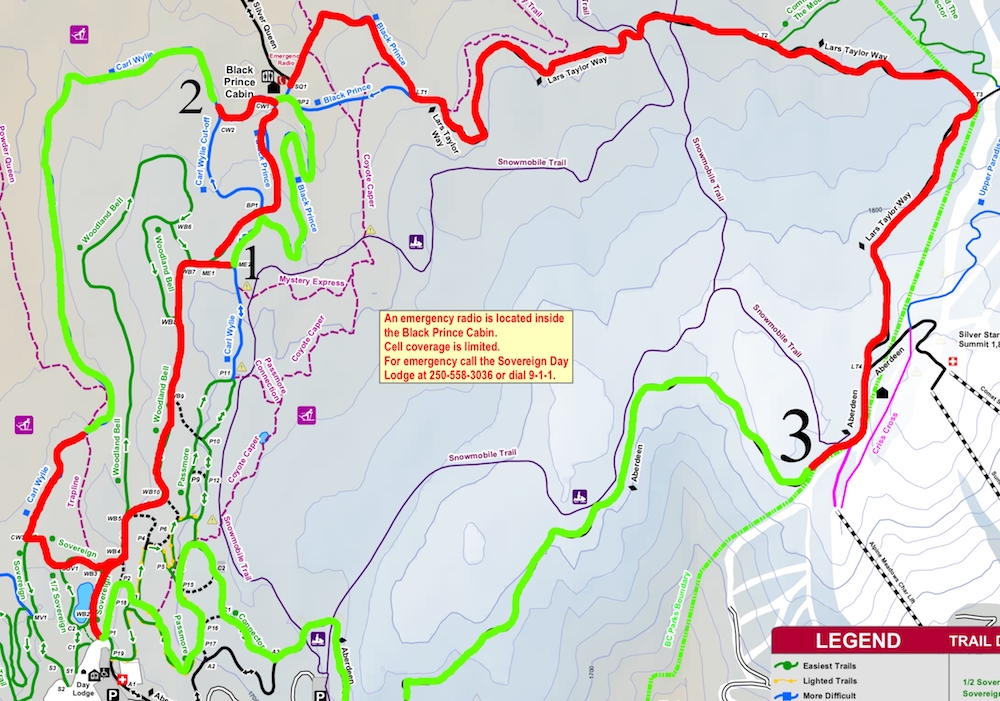
    The official course map. The green sections are timed stages, the red is the route to the next stage.
    The official course map. The green sections are timed stages, the red is the route to the next stage.

    How to Host an Enduro

    Pick a course that is safe for the snow conditions you’re dealt. Especially in spring, transitions can be dangerous. When the predicted high on race day was 17 C, the start time was advanced by an hour and the stages were slightly modified for safety.

    Balance the distance with the number of athletes you expect to attend. Sovereign used a 20 k loop with three stages of roughly 1 k, 1.5 k and 4 k.

    If your budget doesn’t suit chip timing, have the racers self-time their sections. This event used four volunteers. One covered the front desk in the day lodge while the manager started the event. Three wrote down the self-reported stage times on clipboards. Strava is an option for mountain-bike events, but not many skiers carry a GPS.

    Plan for some slow skiing. Many athletes skied the non-timed sections as a group chat. The transfer to the start of Stage 3 had a total climb of about 250 meters which, combined with hot and sunny weather, made for a very slow average pace with the first finishers arriving about 30 minutes later than estimated.

    Focus on fun. There are no FIS points for this race format, which means the organization can be very laid back. As this was the fourth day of a volume camp for most athletes, participants were more focussed on having fun than winning. Women’s winner Olivia Bouffard-Nesbitt didn’t check the results and was surprised to be awarded a prize (a 10-day Sovereign punch pass) as she packed her skis at the end of the weekend.

    Official results were not available at press time, but it appeared Olivia Bouffard-Nesbitt (Rocky Mountain Racers) won the women’s enduro and Sam Hendry (Canmore Nordic) was the men’s winner.

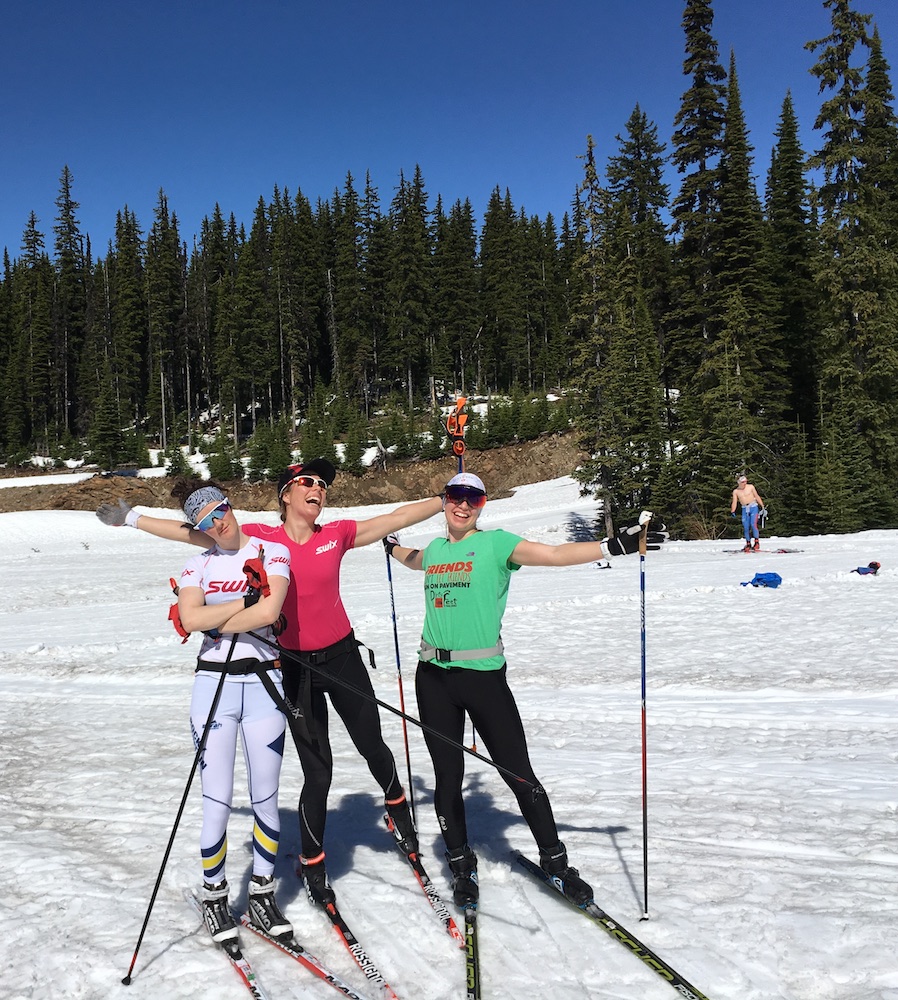
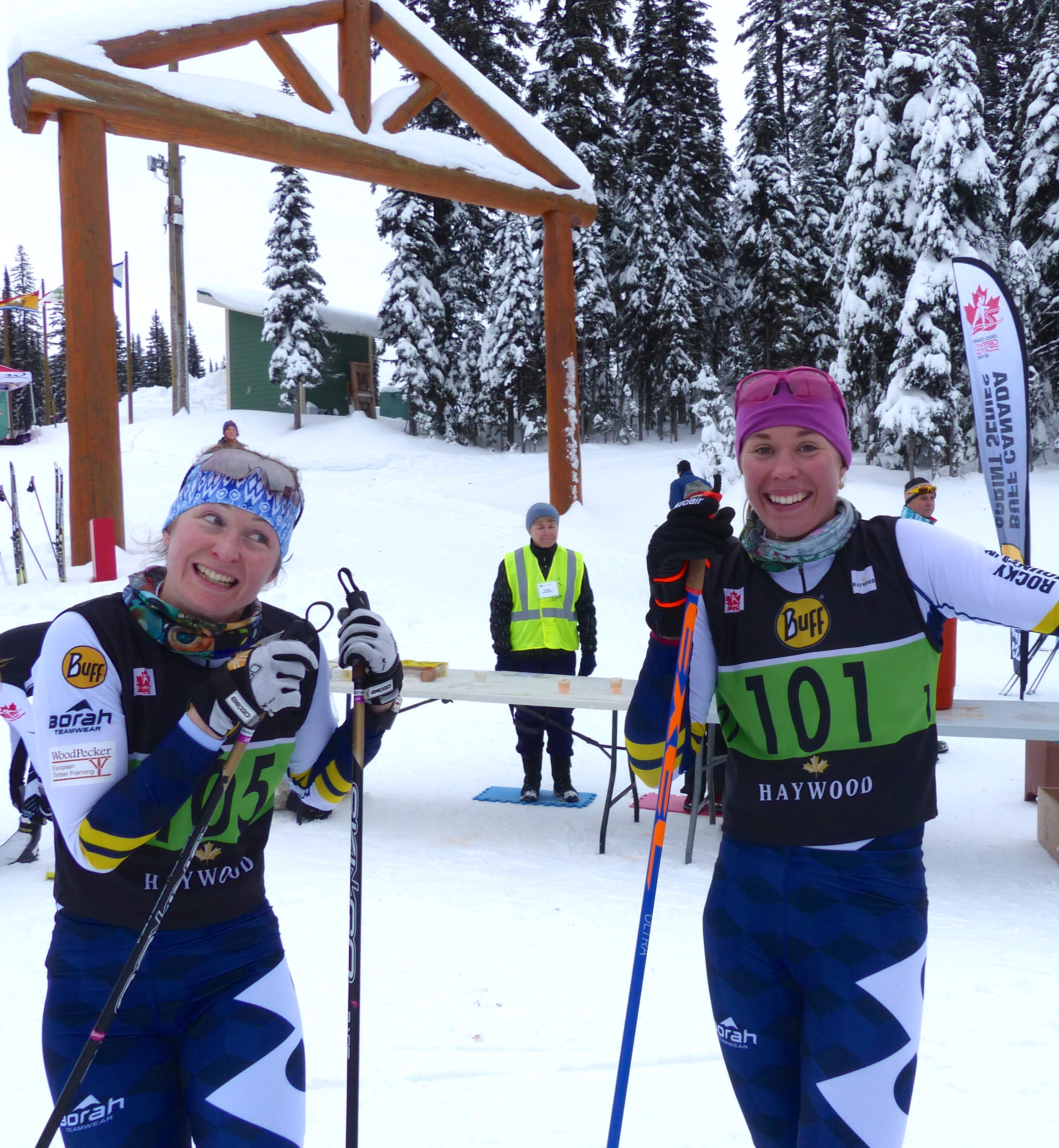
    Olivia Bouffard-Nesbitt (RMR), Maya MacIsaac-Jones (U25 national team and RMR), and Hannah Mehain (Sovereign Lake) at the finish.
    From left to right: Olivia Bouffard-Nesbitt of Rocky Mountain Racers (RMR), Maya MacIsaac-Jones (National U25 Team and RMR), and Hannah Mehain (Sovereign Lake) at the finish.
  • May Skiing in Canada (and Abroad) in Photos

    May Skiing in Canada (and Abroad) in Photos

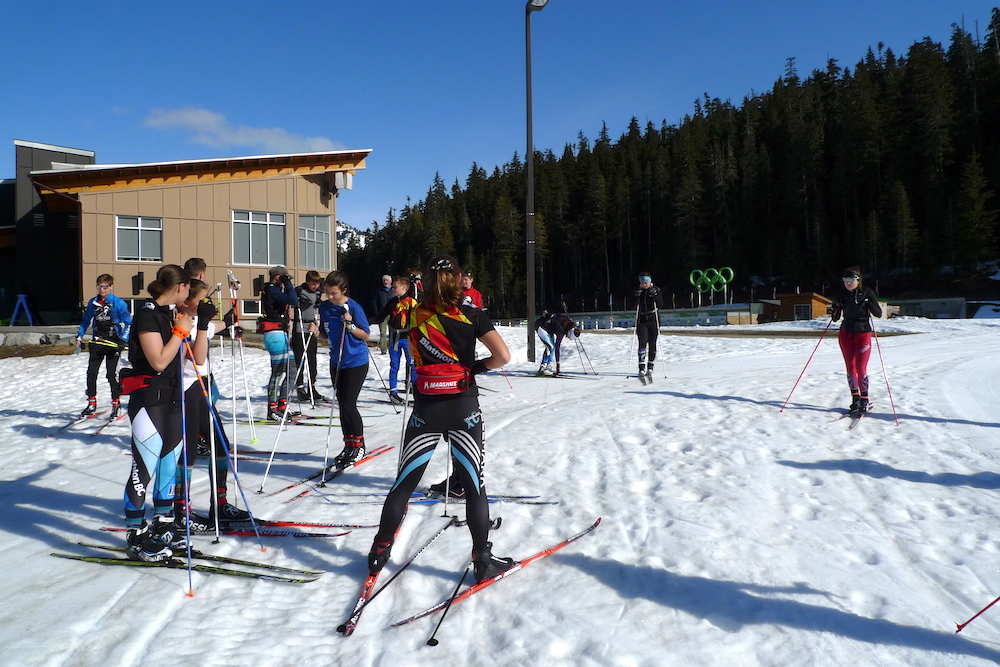
    The BC development team getting ready to ski out of the biathlon stadium at Whistler Olympic Park last weekend.

    While most people have moved on to other sports by May, the more obsessive skiers are starting the new training year on snow.

    Canada’s “first” cross-country ski “races” of the 2017/2018 season were held on May 6. “First” because, while we haven’t exhaustively researched this, it was the first Saturday after May 1, which is the traditional new year for the Northern Hemisphere. “Races” is also a bit misleading as most athletes were viewing the events as an opportunity to do some intensity.

    Here then, in the order which photos arrived, are the places where people are skiing in May. Did we miss one? Share in the comments below or email photos with caption and credit info to info@fasterskier.com.

    Sovereign Lake, Vernon, B.C.

    The Sovereign Lake Nordic Centre (SLNC) re-opened from May 4 to 7 for the Spring Fling camp and the “SLNC 1st Annual Pushups Classic Time Trial” race. The May camp has been running for years, but was moved to earlier in the month to ensure prime conditions. A number of clubs brought athletes out for technique lessons and long snow sessions. Canmore Nordic broke the pattern by focussing on low-elevation training with shorter training sessions. As the Canmore athletes live at 1,400 metres above sea level, the opportunity to train at 400 metres was more exciting than skiing at 1,700 metres.

    Canmore, Alberta

    The Canmore Nordic Centre lost its snow at the end of April, but Sunshine Meadows just a short drive west in Banff National Park hosted a large group of skiers starting May 9. Ivan Babikov is leading a training block for the Canmore-based national team members, Chris Jeffries has the Alberta World Cup Academy crew, and a number of other groups are there as well.

    https://www.instagram.com/p/BT7dTJHjPhS/?taken-by=andrewkchisholm

    https://www.instagram.com/p/BT7TVIfFWrc/

    Sjusjøen, Norway

    OK, not in Canada, but Canadians Dahria Beatty and Russell Kennedy went and enjoyed some superb skiing conditions. They raced at Bysprinten in Mosjøen, Norway, and then moved on to Sjusjøen’s 100 kilometres of trails.

    Menihek, Labrador City, Newfoundland and Labrador

    The Menihek Nordic Ski Club is officially closed, but has snow and will set track for Mother’s Day, according to club president Gerry Rideout.

    Whistler Olympic Park, Whistler, B.C.

    This venue is closed to the public, but has been hosting camps on natural snow. Biathlon got the first weekend of May and cross-country has the Victoria Day weekend. These photos are from the biathlon camp on the Olympic trails, mostly below 900 metres in elevation.

  • MacIsaac-Jones Wins First Career NorAm; Shields Tops Sovereign Men’s Sprint

    MacIsaac-Jones Wins First Career NorAm; Shields Tops Sovereign Men’s Sprint

    VERNON, British Columbia — The NorAm youth movement continued into the second weekend of the Canadian domestic series on Saturday at the Sovereign Lake Nordic Centre, with three new athletes reaching the podium in the freestyle sprints.

    In the women’s 1.275-kilometre sprint, first-year senior Maya MacIsaac-Jones of Rocky Mountain Racers (RMR) won the qualifier and her semifinal before taking a convincing victory in the A-final in 2:37.60. The 20-year-old finished 2.56 seconds ahead of her teammate, Andrea Dupont in second place, and 18-year-old junior Marie Corriveau, of the Pierre Harvey Training Centre (CNEPH) and national junior team placed third, 2.86 seconds after MacIsaac-Jones.

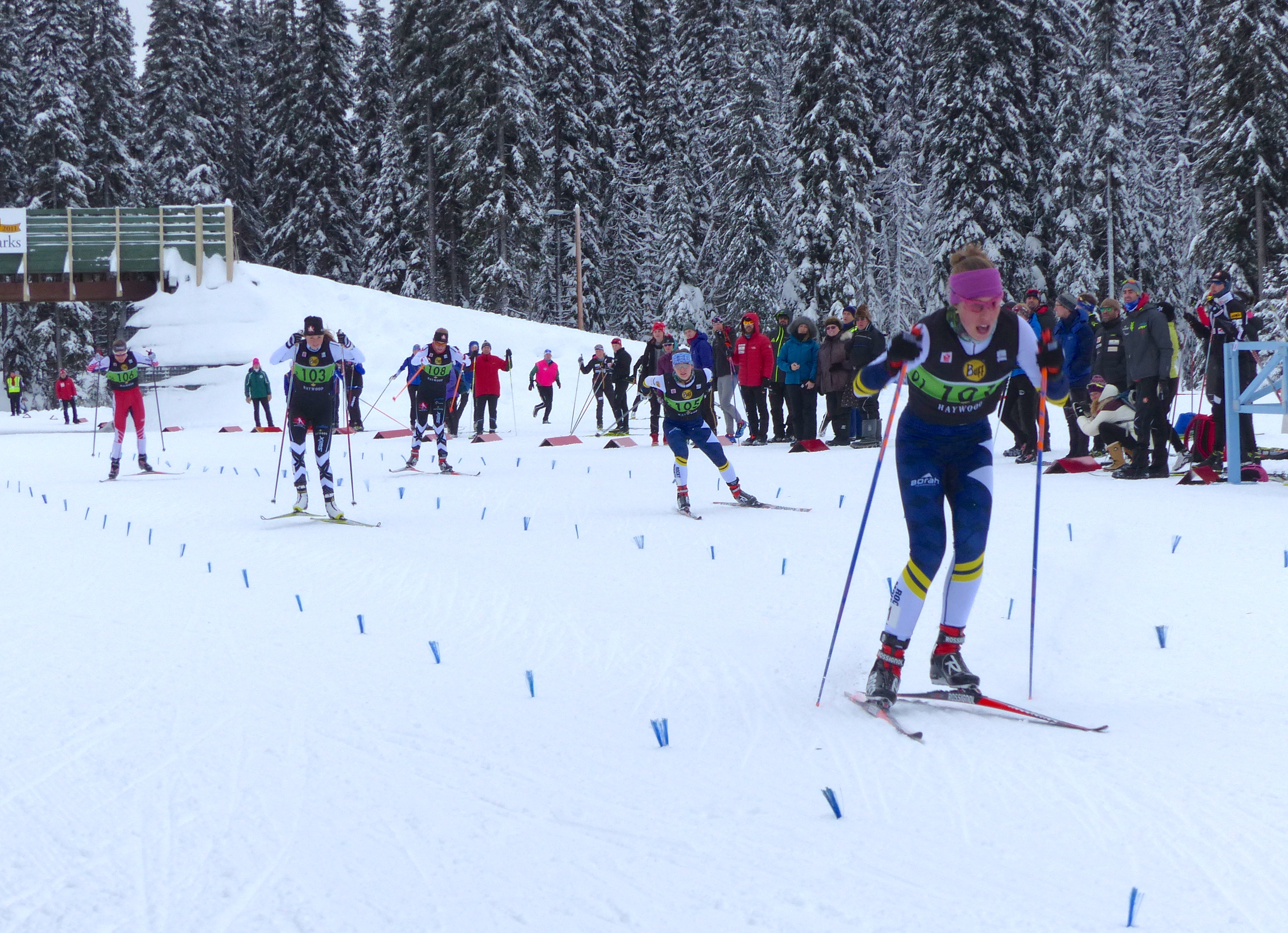
    Maya MacIsaac-Jones (r) leads Rocky Mountain Racers teammate Andrea Dupont (second from r) and Marie Corriveau (CNEPH/NST Junior Team) into the finish for the A-final victory in the NorAm freestyle sprint at Sovereign Lake in Vernon, B.C. (Photo: Gerry Furseth)
    Maya MacIsaac-Jones (r) leads Rocky Mountain Racers teammate Andrea Dupont (second from r) and Marie Corriveau (CNEPH/NST Junior Team) into the finish for the A-final victory in the NorAm freestyle sprint at Sovereign Lake in Vernon, B.C. (Photo: Gerry Furseth)

    “It was a goal of mine this season to win a a NorAm so I’m pretty stoked to have that achieved,” MacIsaac-Jones told FasterSkier after the race. “I had a really tough sprint last week at the Canmore NorAm and I was really glad to be able to come back both mentally and physically from that and have a good race today.”

    A regular podium contender in the sprints, Dupont, 25, was less excited than her teammate.

    “It was pretty decent, yeah,” Dupont said. “It was a good day for the club, both Maya and myself, and Olivia [Bouffard-Nesbitt] comes from our club, too.”

    Bouffard-Nesbitt, of the National Senior U23+ Development Team, placed sixth in the final after winning her quarterfinal and placing second in her semifinal behind Dupont.

    First-year senior Maya MacIsaac-Jones (r) with her Rocky Mountain Racers teammate Andrea Dupont after the two placed first and second in the NorAm freestyle sprint on Saturday at Sovereign Lake. MacIsaac-Jones won for her first NorAm victory. (Photo: Gerry Furseth)
    First-year senior Maya MacIsaac-Jones (r) with her Rocky Mountain Racers teammate Andrea Dupont after the two placed first and second in the NorAm freestyle sprint on Saturday at Sovereign Lake. MacIsaac-Jones won for her first NorAm victory. (Photo: Gerry Furseth)

    “We were all tight,” Dupont said of the A-final. “I was chilling out and expecting the finishing kick would be enough to make it. Olivia and I unfortunately got tangled in the bottom of the course which put me out of the fight for the win.”  

    The final descent, sweeping right, and short climb into the finishing straight caused several challenges throughout the day, despite being more than 10 metres (33 feet) wide.

    “I love the course,” Dupont continued. “It is a nice three-minute sprint, compared to last weekend that was almost five. As someone who really loves sprinting, the five minute [course] was just too long.”
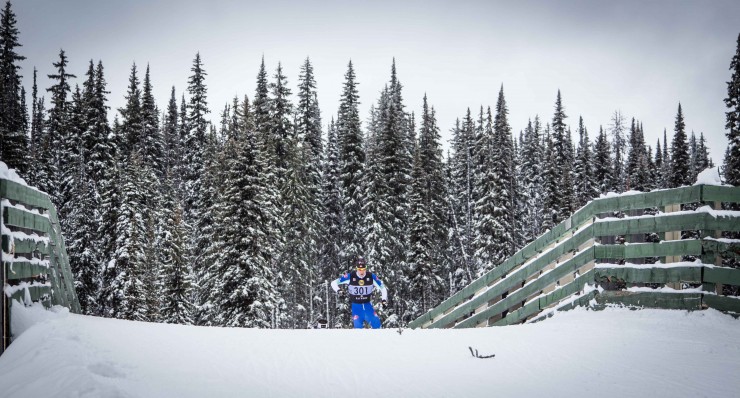
    Corriveau, a first-year junior, was excited to race with the senior women.

    “It was a great challenge and really fun,” she said. “It was my first senior podium.”

    The men’s 1.65 k sprint course shared the same start and final kilometre as the women’s, but had an extra loop that included two very short climbs.

    Andy Shields of the Thunder Bay National Development Centre (NDC) dominated the men’s qualifier, his quarterfinal, and his semifinal on the way to A-final victory in 3:15.68.  Sebastien Boehmler-Dandurand, 22, of Canmore, grabbed his first senior podium, 0.95 seconds back, and Knute Johnsgaard, of the Alberta World Cup Academy (AWCA) and U23+ Development Team, was visibly unhappy in third, another 0.28 seconds back.  The Canmore NorAm sprint winner, Bob Thompson (NDC Thunder Bay) finished fourth, also 0.28 seconds behind Johnsgaard.

    “I went to the lead right off the line,” Shields said, “which wasn’t exactly what I wanted to do.  I wanted to follow [because] there’s some headwind sections in the first part of the course.  When I got to the point when I wanted to make my move, I stretched it out and was able to stay pretty strong right to the end.”

    Shields accelerated hard on the third last climb, with only Johnsgaard staying close.  Johnsgaard allowed Shields a slight gap for the fast dip, but remained tight on Shield’s ski tails going over a narrow bridge — some 5 metres (16 feet) wide — leading into the final descent, turn and climb to the finish straight. On the final high-speed corner, Shields said he stayed clear ahead while Johnsgaard said he was impeded while trying to do an inside pass.

    “I had a lot of speed and was starting to slingshot Andy,” Johnsgaard said. “He saw me coming and really shut me down on the inside.”

    During Friday’s official training, Shields was seen taking one of the tightest exit lines on the corner.  Shields and Johnsgaard never faced off until the final (after both won their respective quarterfinals and semifinals), and Shields likely skied his preferred-and-practice line while Johnsgaard expected him to take the more common line.

    Dandurand took advantage of the tussle, carrying speed out of the second group to close the gap on Johnsgaard and edge ahead of him in the final metres for second.

    “In the final, my goal was to be always in the front because I knew at the last [downhilll] turn I could slingshot past and have a good line into the finish,” Boehmler-Dandurand said.” I had confidence in the final sprint so, yeah, it worked out almost perfectly.”

    He aimed to conserve energy in the quarterfinal, he explained, and finished second behind Angus Foster (NDC Thunder Bay). Boehmler-Dandurand then placed second in his semifinal after pushing “as hard as I could,” behind Shields in first. Their semifinal was slower than Johnsgaard’s (which he won) and Foster in third place did not advance.

    Johnsgaard was still shaking off the emotions at the podium ceremony.  “Third’s alright,” he said, “but I’ve been third and second and fourth and fifth so many times in the NorAms and I’ve never won one, so this is quite frustrating when this happens all the time.”

    Waxing was not a significant issue, with -4 degrees Celsius temperatures (25 Fahrenheit) and fresh snow overnight, but no falling snow during the open categories’ races.  Around 80 volunteers were on site to make the event happen.

    Complete results | Brackets

  • Sovereign Lake NorAm: Photo Gallery

    Sovereign Lake NorAm: Photo Gallery

    VERNON, B.C. — Photos from the season-opening NorAm at the Sovereign Lake Nordic Centre, with 10/15 k freestyle followed by classic-sprint races in temperatures near -18 degrees Celsius on Saturday and Sunday, respectively. All photos by Gerry Furseth and Peggy Hung.

    Dec. 7: Women’s 10 k and men’s 15 k freestyle individual starts (Race report | results)

    Dec. 8: Women’s 1.2 k and men’s 1.4 k classic sprints (Race report | results)

  • Opening Weekend at Sovereign Lake/Silver Star

    Opening Weekend at Sovereign Lake/Silver Star

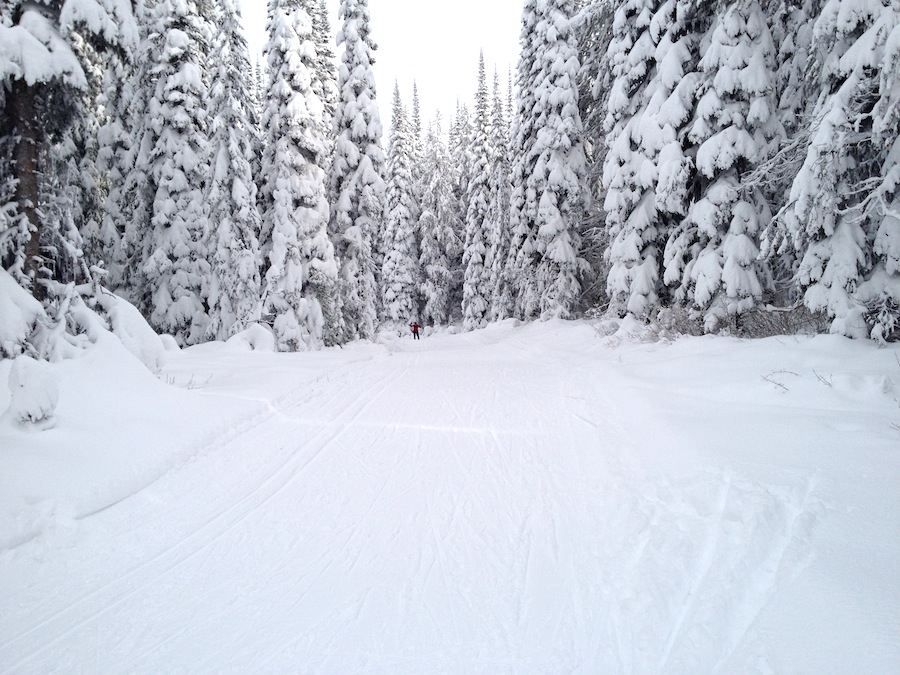
    Less crowded away from the stadium at the Sovereign Lake Nordic Centre on Nov. 9.
    Quiet serenity away from the stadium at the Sovereign Lake Nordic Centre on Nov. 9.

    By Gerry Furseth

    VERNON, B.C. – Both Sovereign Lake Nordic Centre and Silver Star Ski Resort had a ‘soft-opening’ for cross-country skiing on Thursday, Nov. 7.  By Saturday, there were classic tracks and 75-kilometres of trails set. FasterSkier’s Gerry Furseth spent Saturday on the Sovereign Lake side, where 100 of some 1,700 club members picked up their season passes and 236 visitors bought day passes.

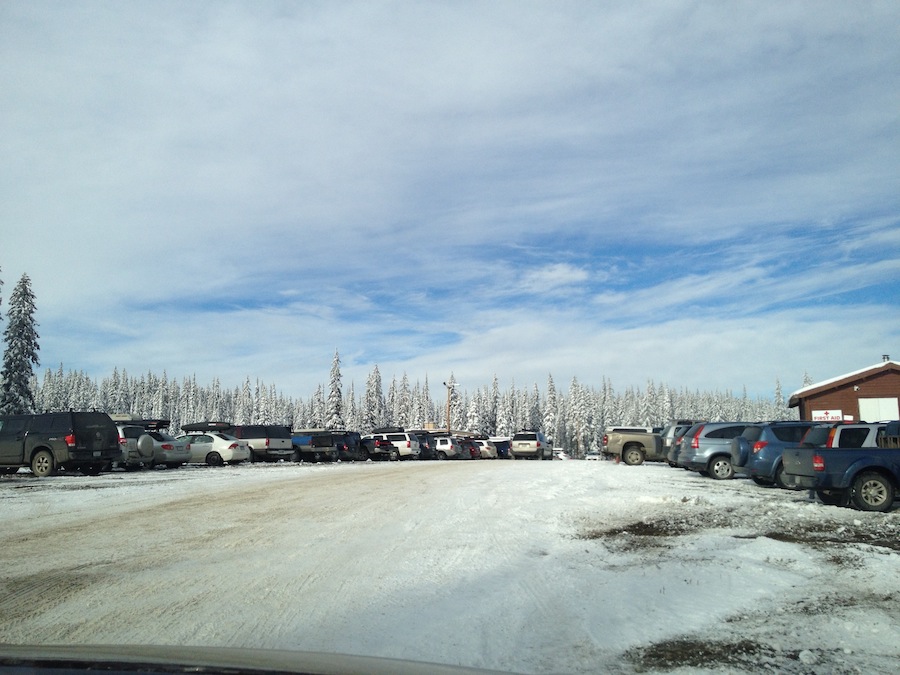
    A popular place: the Sovereign Lake Nordic Centre parking lot on Nov. 9, two days after opening for the 2013/2014 season.
    A popular place: the Sovereign Lake Nordic Centre parking lot on Nov. 9, two days after opening for the 2013/2014 season.

    Although most were local, skiers came from as far as Saskatchewan. A good collection from the neighboring clubs, Larch Hills and Telemark, made the roughly one-hour drive to kick off the season.  About 15 skiers drove five hours from Vancouver, representing at least three of the coastal clubs.

    To the East, Canmore has Frozen Thunder and about half of the national team. On the opposite side of the country, La Forêt Montmorency neighbours the epicentre of Québec skiing with another large group of national team members.  Of the early skiing destinations in Canada, Sovereign Lake and Silver Star comparatively fly a little under the radar.

    Like most nordic areas in the region, Sovereign Lake is operated by the local ski club. The day lodge staff and the track setters are paid, but a large amount of volunteer work makes the system and events possible.

    There is a definite family feel with trails named for founding members (i.e. Wylie Loop, for Carl Wylie) and founder’s grandsons (Lars Taylor, a local star, long retired from racing).  A photo of Matt Wylie racing at the Canmore World Cup last season is featured on the wall of fame, putting him one up on his cousin Alysson Marshall. A perennial NorAm destination, the club hosted World Masters in 2011 and hopes to bid for nationals in a few years.

    Farther up the hill, Silver Star is a major alpine destination, known for champagne powder and 7 metres of annual snowfall.  The resort maintains 50-plus kilometres of trails without a need for snowmaking. The main street of the village is groomed, but not set for classic.

    A fun way to end a long day is to ski up to Long John’s and order a pint of liquid carbohydrates – local and organic, of course.  The community has a mandatory gingerbread-house colour scheme, which sounds tacky but somehow looks great once the snow arrives.

    For the last decade, skiers have stayed at Silver Star while racing at Sovereign Lake.

    The dual-area pass is changing the way visitors see the area.  Pat Pearce, the chair of Sovereign Lake Nordic, said “it has gotten much more popular … the idea of skiing across [to Silver Star], having lunch and skiing back.”

    Larch Hills coach Brian May brought 50 juniors to the Sovereign Lake Nordic Centre last weekend.
    Larch Hills coach Brian May brought 50 juniors to the Sovereign Lake Nordic Centre last weekend.

    “We are in a real evolution and growth of the programs right now,’ said Sovereign Lake head coach Darren Derochie, who moved to the area in 1987 to try to make the Olympic team in 1988. He represented Canada at the 1992 Games.

    “Our junior development program is around the two dozen range, whereas a few years ago we only had a handful of kids of that age,” Derochie explained.

    The club executive and staff excitedly announced “mid-winter conditions on November 9th.”  Seeking truth behind the claim, FasterSkier carefully inspected 15 k of the system, and while there were twigs sticking up through some of the trails, there wasn’t a single rock or dirty patch.

    The classic tracks were good, but after two consecutive nights of heavy snowfall, it was a bit soft for skating in some areas. The end result of the two-hour inspection: “mid-winter” is a good description, as long as your idea of mid-winter includes heavy snowfalls. Don Wylie, part of the track-setting team, said a night of packing without new snow would get the skating lanes up to their usual standard.

    Saturday night brought only 5 centimetres of new snow, allowing the track setters to catch up and create firm skating lanes.  Another 15 k of trail opened Sunday, including Upper World Cup, which in this author’s opinion, is in better condition than the last five Decembers. For Furseth, this is the earliest ever switch from rock skis to race skis: most years he’s still on rock skis during early season NorAms. Classic was trickier Sunday, with a high of -2 degrees Celsius and some glazing in the tracks.

    Some skiers end up at national training centres, but they certainly don't start there.
    Some skiers end up at national training centres, but they certainly don’t start there.
  • There’s Still Snow in Sovereign: Spring Camp Wraps Up

    There’s Still Snow in Sovereign: Spring Camp Wraps Up

    Patrick Stewart-Jones of the Alberta World Cup Academy leads the way at the high point of the Upper World Cup trail at Sovereign Lake Nordic Centre last week.
    Patrick Stewart-Jones of the Alberta World Cup Academy leads the way at the high point of the Upper World Cup trail at Sovereign Lake Nordic Centre last week.

    VERNON, B.C. – Sovereign Lake Nordic Center’s annual Summer Ski camp from May 10-19 attracted the usual collection of hard-core skiers, a mixture of teams and day trippers who need a last fix of snow before the inevitable arrival of summer. With neighbour Silver Star Mountain Resort gearing up for a summer of mountain biking, and the city of Vernon already in full-summer mode in the valley below, Sovereign’s weeklong camp is the last chance for set tracks in the region.

    Canmore Nordic was the first group to arrive on May 10, with a four-day camp justifying the six-hour drive to Vernon. Another Canmore-based team, the Alberta World Cup Academy (AWCA) arrived next for a seven-day, sleep-low (train-high) camp beginning May 12. Black Jack skiers trickled in for the final four days, and biathletes and Para-Nordic team members flocked to the snow-covered trails as well.

    The week preceding the camp featured five consecutive days of temperatures at or about 30 degrees Celsius (86 Fahrenheit) in the valley below and significant snow loss even at the 1600-metre low point of the early season trails. After four days of skiing and a major thunderstorm, the track setters shifted to a higher set of trails.

    AWCA brought most of its athletes, including last season’s NorAm winners Emily Nishikawa and Michael Somppi, as well as Canmore World Cup top-15 finishers Jess Cockney and Phil Widmer, and perennial domestic podium contenders Kevin Sandau and Alysson Marshall.

    “We are up here in the mornings for skiing a few hours at least and then we’re downtown [in Vernon],” said AWCA coach Mike Cavaliere. “We do some cycling, or running in Ellison Park, or go to the gym.”

    While the team is expecting to return to crust skiing in Canmore, this camp was attractive for set tracks and the nearby low elevation (380 meters), with accommodation on a beach near the Ellison Park mountain biking area.

    “Part of the goal is to let people enjoy summer,” Cavaliere said.

    One day, the AWCA women got out their road bikes for a training ride to Marshall’s parent’s house in nearby Salmon Arm for lunch. The next day, the men rode from their lakeside accommodation to Silver Star Village – ascending some 1,200 metres – for their post-ski workout.

    Former Canadian national team coach Dave Wood, now happily “retired” in Rossland, B.C., persuaded his small Black Jack team to drive five hours to start the new training season on groomed trails.

    “We started skiing [in Rossland] in October, and they set track until April 27th,” he said.

    And what about those masters athletes? Most stayed down in the valley, mostly for all the biking, mountain biking, running, rowing, and stand-up paddling recreational options. Skiers from at least four nearby nordic areas were spotted up at Sovereign, having driven by the summer alternatives to get here.

    Despite the example set by the elite athletes, middle-aged journalists are simply not capable of skiing two hours in the morning and then running or biking in the evening for more than five consecutive days. Lesson learned. Or lesson not really learned, because it was so much fun.

  • NorAm Notes and Quotes: Sovereign Lake (with videos)

    With the first two NorAm races of the season over and done, here are a few tidbits that didn’t make it into the recaps of the classic sprints and distance races from Sovereign Lake Nordic Centre in British Columbia:

    On coming back to Canada after racing overseas in the World Cup:

    “Jet lag seemed to take a big grip on me for the first couple (days),” said Kevin Sandau, who returned about two weeks ago. “Normally when I get back from Europe it’s easy. I think because it’s midway through the season and I’m tired so it’s easier to get there. Now it’s like I get back in December and racing here hasn’t really started yet.”

    At least there’s snow in British Columbia.

    “(There’s) way more snow here than Europe,” Sandau added. “It’s nice to be able to warm up on a snow loop or ski on a 15 k loop.”

    On Sunday’s distance course:

    “I’m still trying to figure out what my strengths are. I’m not sure what my ideal course is in a classic, but I liked it.” — Jessie Diggins (CXC), 10 k winner

    “I really like hills. There were quite a few out there.” — Kate Fitzgerald (APU), 10 k runner-up

    “I think this course in general is really good for me. The altitude and the amount of climbs is kind of what my strengths are. I would say this course in general, I love it for skating but obviously for classic it worked out pretty well, too.” — Caitlin Gregg (CXC), third in 10 k

    “This was a really challenging course. It’s a climb, I feel like for the whole thing. … I kind of just died in the second lap a little bit. It happens, but it’s all right. I feel like I need a little break.” — Jennie Bender (CXC), eighth in 10 k after placing fourth in Saturday’s sprints

    “These hills, they just came at you. Every lap … you barely got a breather and then you were right back into it again. That said there was enough rest but you still had to be really smooth on the hills and not waste energy.” — Leif Zimmermann (Bridger SF), fifth in the 15 k

    “The first two hills were really hard. This first hill, you pretty much climb from (the start) and you climb for, I don’t know, a ‘k’ and a half, just right off the bat. Wham.” — Reese Hanneman, ninth in the 15 k

    “I tend to do a little better on a more double pole course. There was quite a bit of double pole in this, but there were a lot of hills. I was tired.” — Erik Bjornsen (APU/USST), 13th in the 15 k after placing third in Saturday’s classic sprint

    “It’s a World Cup course so it’s hard. I normally would like this course but I didn’t have it today.” — Sam Tarling (Dartmouth), 32nd in the 15 k

    On how a sprinter approaches a tough distance course:

    “I just wanted to see how the body was. I started relatively conservative, just tried to build throughout the race. I had good skis.” — Phil Widmer (AWCA), 23rd in the 15 k after placing sixth in Saturday’s sprint

    On the conditions for Sunday’s classic distance races:

    “I think the classic skiing today was perfect. Fresh new snow, a little bit greasy in the track so they have to learn to kick the skis, so it’s fun.” — Erik Flora, APU head coach

    “It was a little glazy out there so it was a little tricky I think to nail the kick, but my skis were fast.” — Leif Zimmermann (Bridge SF), fifth in the 15 k

    On Saturday’s sprint:

    “The course was really good. It’s a little bit soft, a little bit sugary, especially after all the rounds. It’s great having wide lanes, hard track like three tracks everywhere. They just do a great job here making the course nice and smooth.” — Mike Sinnott (SVSEF), who won the 1.4 k classic sprint

    “When you have six guys with experience skiing together you’re pretty comfortable skiing in close quarters. I think as long as people aren’t being aggressive in places where there’s no need … there’s sort of some contact and people on your skis a little bit, but if you relax and pay attention to what’s going on (it’s fine).” — Brent McMurtry (CNEPH), second in the sprint

    “The trails are amazing. They’re perfect, it’s some of the best skiing I’ve ever done.” — Sylvan Ellefson (Homegrown), eighth

    On how good wax makes a difference:

    “The skis were awesome. The coaches did a great job, good kick, good glide. It was perfect. Lots of good work out there.” — Kate Fitzgerald (APU), second in 10 k

    “My teammate Karl (Nygren) had a really good race (Sunday) so I was pretty happy to hear that. … If you had the same wax on it’s like, ‘Oh, he’s having a good race and we’ve got the same stuff on.’ … We had some great skis today. Jason (Cork) and Gus (Kaeding) did awesome.” — Brian Gregg (CXC), seventh in the 15 k

    On the significance of these races:

    “The first sort of big, important race for me started (Dec. 4) with an Alberta Cup. These NorAms this weekend and next weekend are important for FIS regional spot and hopefully sort of see where my season takes me.” — Brent McMurtry (CNEPH), second in the sprint and 15 k

    On racing in Canada:

    “I really like it up here. It’s been beautiful, the weather’s been perfect. That really helps. Like in the sprints yesterday, you’re not freezing your butt off between the rounds so that’s always really nice.” — Jessie Diggins (CXC), who won both women’s races on Saturday and Sunday

    “I love coming to Silver Star. I think it’s a great venue, great organization that puts on the races. It feels so good, oh my gosh it feels so good coming in (to lower elevation). I spend most of my time training down at sea level. I had one two-week training block (at altitude) the entire year. I’m pretty excited to even go down further.” — Caitlin Gregg (CXC), third in the 10 k and 11th in the sprint

    “It’s just a good atmosphere. There’s so many trails and the course is always good and everything’s, I don’t know, its just fun.” — Rosie Brennan (APU), fifth in 10 k

    “We’ve been here every year for the last five years. It’s one of my favorite places to come because the skiing is always really nice and the field is always really thick. It’s a great place to gain experience. And (Saturday) with all the rounds … everyone got to race a lot.” — Erik Flora, APU head coach

    On how anyone could possibly manage placing fourth in five of the last six races:

    “Karma.” — Matt Gelso (SVSEF), fourth in Sunday’s 15 k classic individual start