Tag: Spartan Race

  • Wednesday Workout: Redefining Endurance with Joe Howdyshell

    Wednesday Workout: Redefining Endurance with Joe Howdyshell

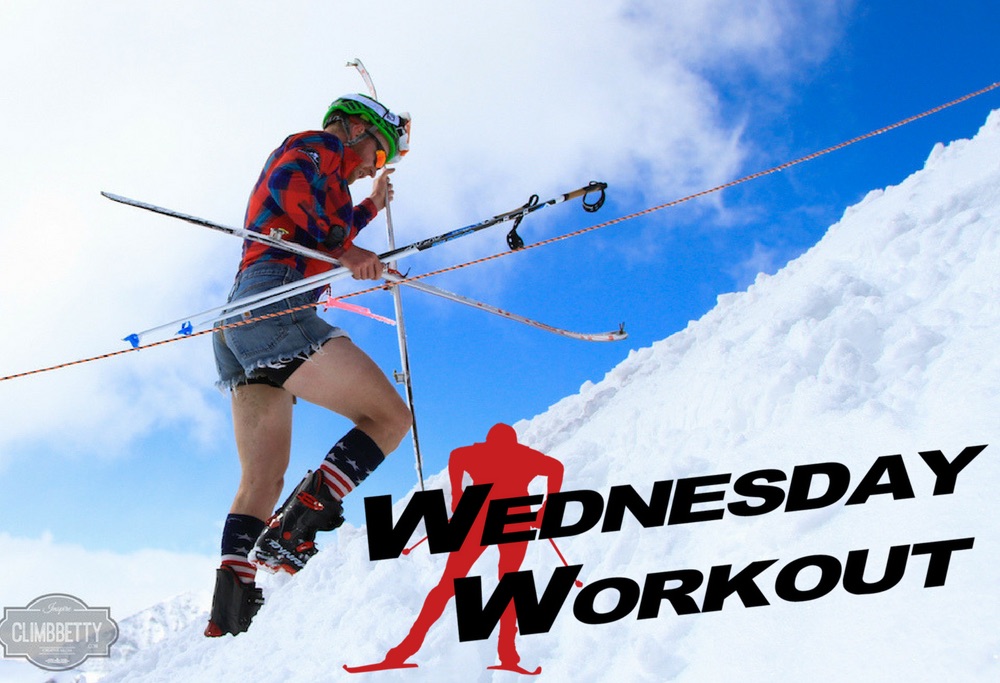
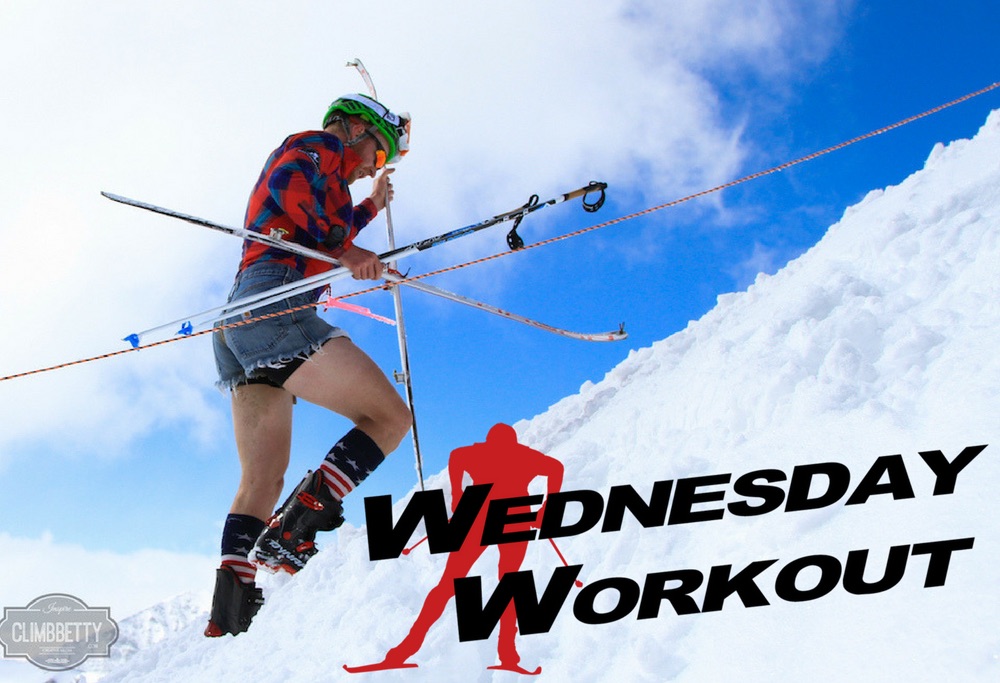
    Summit Endurance Academy coach/owner Joe Howdyshell getting vertical with his skinny skis. (Photo: Climbbetty.com)

    You name it and Joe Howdyshell, director and founder of Summit Endurance Academy in Frisco, Colo., has probably coached it. From skiers to cyclists to ski mountaineers, Howdyshell’s repertoire extends beyond endurance athletes. His experience with a wide range of outdoor-sport enthusiasts made him a prime candidate for one of our weekly workouts. Here he provides a workout he has all of his endurance athletes do, regardless of sport, throughout the year at the end of their recovery weeks.

    ***

    With the utterance of endurance athlete, a certain individual often comes to mind. The cross-country skier clamoring over boulders during a three-hour hike. The road cyclist grinding up the final hill of a four hour ride. The Ironman competitor, finishing up a 2.4-mile swim with more than a century bike ride and marathon run left to go.

    Many make the list. What about the motocross biker drifting a machine operated hunk of metal around a dirt course? Or the extreme-obstacle-course racer army-crawling under a stretch of barbed wire? Some would say they don’t fall under the same category.

    But 33-year-old Joe Howdyshell, founder and director of Summit Endurance Academy (SEA) in the Colorado Rockies, has a different point of view. He sees these individuals as one in the same. From the athlete he coaches who is currently climbing Everest, to the professional Spartan racer under his advisory, to the motocross racer he provides training plans to, all fall under the umbrella of endurance athlete.
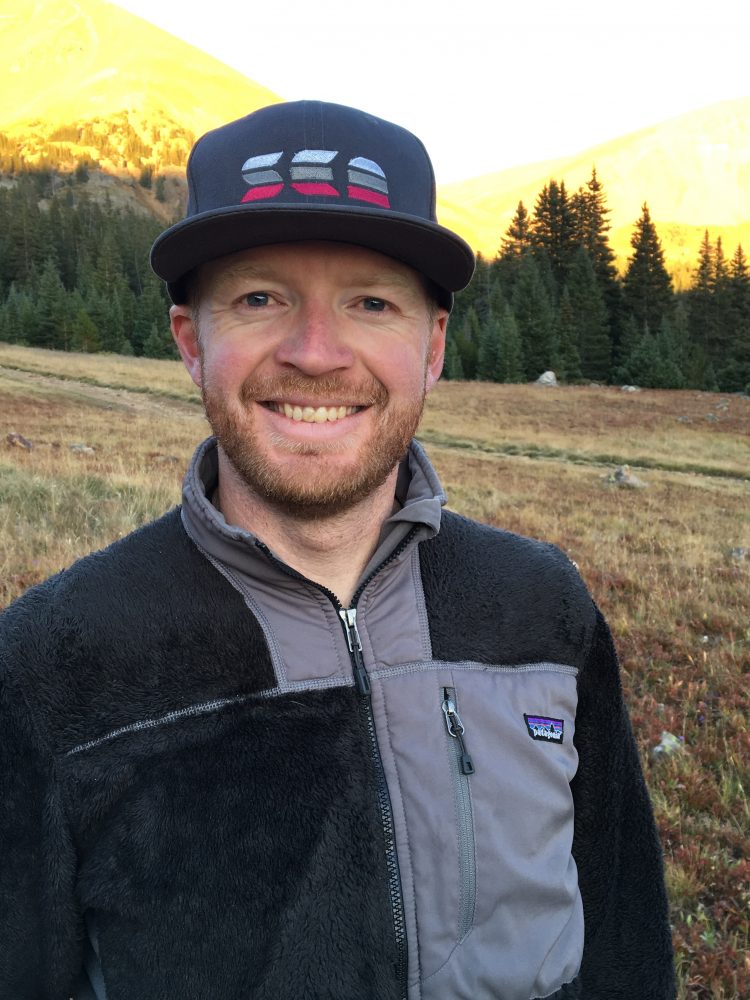
    Joe Howdyshell of Summit Endurance Academy (Photo: Erin Gigliello)

    The key is how one defines endurance and athlete. For Howdyshell and SEA — a training program he started in 2013 that offers coaching and training advice to its members –endurance is defined “as any effort lasting longer than two minutes (this includes crashing time)” and an athlete as “anyone who is trying to systematically improve performance or capacity.”

    If anything, the definition attracts a wide span of participants. At present, Howdyshell has 50 athletes following his training philosophy, 19 of which are Summit County locals. The other 31 athletes he works with hail from various states and countries, including New York, California, Washington, Utah, Vermont, Wyoming, Arizona, New Zealand, Spain, and Ecuador. Many fit the more traditional sense of endurance athlete, such as distance cyclists, skiers, and runners, and others less so.

    “It doesn’t really matter to me how fast they are, if they’re willing to dedicate to the process, then I’m all about working with them and figuring out ways to help them,” Howdyshell said on the phone last month. “So the guy who’s a motocross racer, he’s like, ‘Yeah, I’ll wear a heart-rate monitor every time I’m on the track or every time I’m at the gym.’

    “We looked at his heart-rate profile when he’s in a motocross race, and he’s pegged it for 185 for 15-20 minutes,” Howdyshell continued. “So the cardiovascular demands are insane. By collecting data and being communicative, together we can develop a strategy to make him faster.”

    As Howdyshell continues his professional work with athletes, he also continues to expand his realm of expertise. He began coaching professionally in 2005, and for almost a year now, has served as the head coach for the U.S. Ski Mountaineering national team.

    An average workweek for Howdyshell entails 40-60 hours for the SEA and another four to five hours for his national team coaching duties. His introduction to the U.S. Ski Mountaineering position and sport itself was in large part due to his background in cross-country skiing: he’s been nordic skiing since the age of 12, and he was previously head coach of the Summit Nordic Ski Club prior to founding SEA.
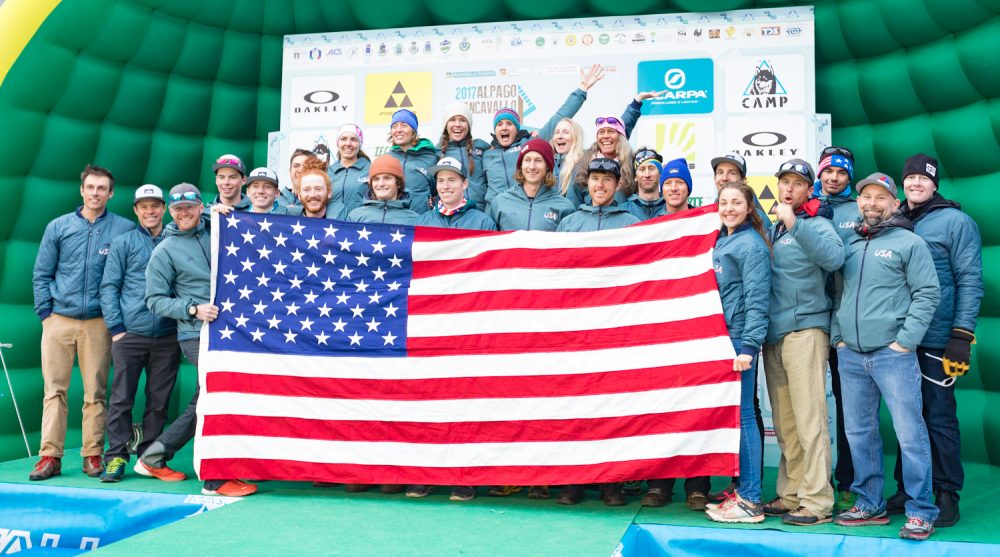
    Coach Joe Howdyshell (third from left, holding flag) with the U.S. Ski Mountaineering national team in Italy. (Photo: Mike Smiley)

    “I was the head coach of the Summit Nordic Ski Club for a number of years and I had all these crazy friends and a lot of the parents who would go skinning,” said Howdyshell, who also has a degree in exercise science. “I was like, ‘What the hell is that?’ … then I did it a few times and friends were like, ‘Hey, you gotta try this ski-mo race thing, so I started doing that. … Then, since there aren’t many coaches in the sport in the U.S., [becoming the national-team head coach] kind of happened naturally.”

    Regardless of which athlete he’s working with, there’s one workout he has each of them do. On the Thursday of a recovery week, whether in-season or off, he has his athletes complete a 20/40 workout: 20 seconds of on-time, followed by 40 seconds off. Each athlete repeats these 20/40s for five minutes, followed by five minutes easy. The set is then repeated two more times. The workout is intended to help athletes safely return to interval training. To an extent, his workout epitomizes what he hopes SEA embodies: demonstrating a way to bring on the “bad ass” without burning out the engine.

    “One of the big things that and I’m still trying to figure out how to say is that idea of what is bad ass,” he said. “Knowing when to work hard and when to just relax. Part of [SEA] is trying to teach people that you can get very, very, very fit if you take the time and you dedicate and you work hard when you need to and you don’t when you don’t need to. …. Training doesn’t have to be a monkish isolated journey that only involves hail. You should be able to have a beer after your workout. I think that too often we see a separation between the people who take it too serious and then people who don’t take it seriously at all. … For me, spreading that message that you can be fast and have fun at the same time, that’s kind of my key goal.”

    The Workout: 20/40 recovery

    Purpose: Remind the body what intervals feel like without overtaxing the system; on-time should not be max pace.

    “Typically I’ll do a rest week every third or fourth week and that’ll be a day off, a day easy, a day off, a day easy, and then I kind of get them back into the training mode with 20/40s,” Howdyshell explained.

    For XC skiers, he recommends doing the workout on rollerskis or running.

    Ideal time: Thursday of a rest week (rest week usually includes two days off and two days easy in four days for his athletes). Can be done year-round.

    Warmup: 15 minutes progressive

    • 5 minutes: Go from the bottom of Level 1 to the top of Level 2
    • 5 minutes: Done at 10-15 beats below Level 3
    • 5 minutes: Back to Level 1

    The set: 20/40s (x 3)

    • 20 seconds on and 40 seconds off for 5 minutes
    • 5 minutes easy
    • Repeat two more times

    (Note: Howdyshell recommends using 2- or 3-kilometer race pace for on-time effort)

    Cool down: 15-20 minutes easy

    Total time: 60-65 minutes

    Howdyshell’s Top-3 Suggestions:

    1. Staying on track sometimes means holding back. The 20 seconds of on-time should not all be done at a full-out sprint. Instead, goal pace should be around 2-3 k race pace. “I’ve had athletes come back and be like, ‘That was so hard,’ and I’m like, ‘Did you hit each one of them as hard as you possibly could?’, ‘Yeah I did,’ ‘Well, that’s exactly what I told you not to do.’ ”
    2. The workout won’t feel the way you want. “Especially if you’re coming off of an extended rest block, you’re going to feel sh*tty,” he said. “And that’s exactly what the workout is for; it’s a bridge to get you out of your body thinking that, after a few days of rest, your body is in couch-potato mode, which is good, it needs to be, but you’re not going to feel amazing right off the bat.”
    3. Make right with your warmup. After an extended period of recovery time, jumping into intensity without a good warmup isn’t always fair to you or your body. “It’s kind of easy to get antsy after a few days of not training too much and jump into the higher intensity too fast,” he said. “Make sure you don’t shortchange the warm up.”
  • For Biathletes Bédard and Godbout, Spartan Lifestyle is Anything But

    For Biathletes Bédard and Godbout, Spartan Lifestyle is Anything But

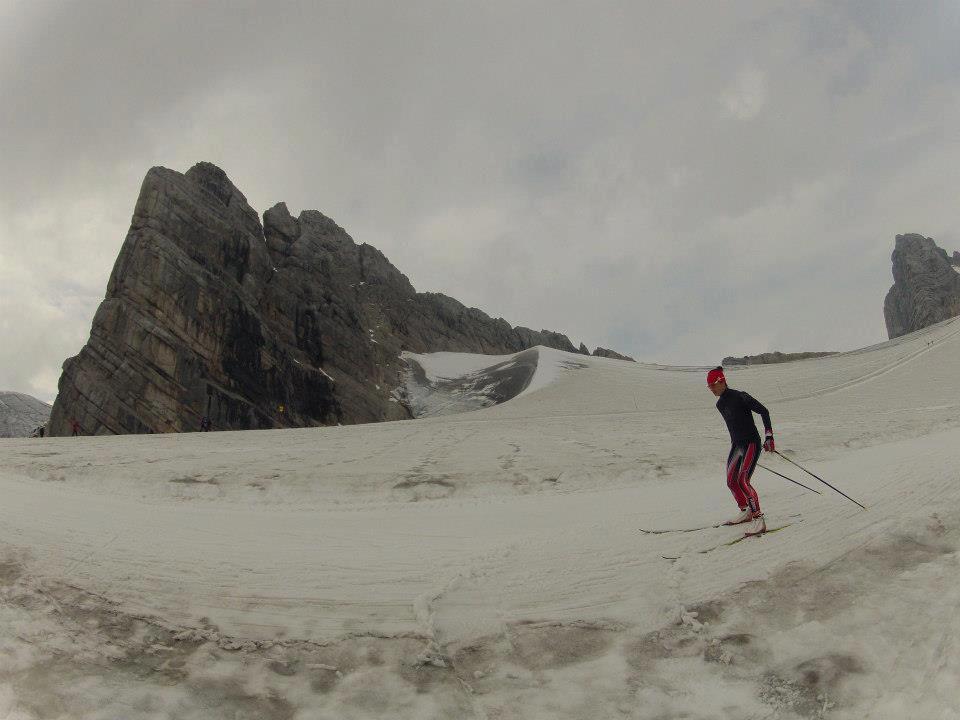
    Canadian biathlete Claude Godbout, who has won two of the four Spartan races she has entered, training on the Dachstein glacier in Ramsau, Austria. Her training camp is being facilitated by Spartan organizers, who flew her and boyfriend Marc-André Bédard to Slovakia to compete. Courtesy photo.

    As FasterSkier wrote last summer, Canadian biathletes Marc-André Bédard and Claude Godbout joined the Spartan Race craze almost on a whim, albeit a whim that hinted at the possibility of a payout.

    A year later, the partners have competed in three more of the notoriously brutal obstacle races, and neither has missed the podium yet. In June in Montreal, Bédard placed second among men and Godbout third among women. A month later in Pennsylvania, Bédard was again second while Godbout won the women’s race, and last weekend in Slovakia, both Quebec natives won the first-ever Spartan event held in continental Europe.

    So: running over hill and dale, crawling through mud and barbed wire, climbing fences, jumping over fire, dodging blows from gladiators … is this going to become a second career for the 2010 Olympian and his girlfriend, who also has World Cup experience?

    Godbout and Bedard after their double victory in Slovakia. (Courtesy photo)

    Probably not. After all, both are aiming for the Sochi Olympics, which are just a year and a half away. Earlier this summer, Godbout told FasterSkier that the 2014 Games were her main focus.

    “This is pretty much as big as it can go for me,” Bédard said in an interview from Ramsau, Austria. “We’re biathletes so we need to focus on that. This is fun for us and it’s good cross-training, but we’re not training at all to be good at it. It just happens that way, cross country skiers are good overall physically, so for us it’s easy to perform well.”

    National-team coaches were not initially pleased when the pair mentioned heading to Slovakia for a race (their trip was paid for by the organizers). But the biathletes are set on making Spartan racing work for biathlon and tried to think outside the box.

    “We were able to negotiate to get a training camp while we were in Europe, since they were sending us anyway,” Bédard said. “Instead of just sending us for five days and doing the one race, we get to stay here for longer [until the end of the week]. We’re having a good training camp right now in Dachstein. Our coaches were pretty happy about that, because otherwise we wouldn’t have gone to the Dachstein this year.”

    Bedard climbing a rope, one of the obstacles in the Slovakian race. (Courtesy photo)

    Spartan organizers helped the Canadians get a car, and they are staying in some apartments owned by Fischer, Bédard’s ski company. Bédard has been to Ramsau several times before, so it’s easy for him to get around; the duo also has several contacts in town and regarding the glacier.

    “We get a free trip to Europe and a free training camp, so that’s amazing,” Bédard said.

    Why would organizers go so far out of their way to help a few biathletes? According to Bédard, it has a lot to do with publicity. While more than 400,000 people have participated in Spartan races so far, the bulk of those entrants are in the United States. The franchise is already successfully expanding into the Canada, but it wants to go farther.

    And not just geographically: organizers dream of a day when Spartan racing is a competitive, more or less professional sport. Already in the U.S., some races put up prize money and there are bigger purses for end-of-season points leaders. In order to encourage that development race promoters need top athletes to show up to the starting line. And with their records, Godbout and Bédard definitely qualify. For the Pennsylvania event, Godbout was even featured on a poster advertising the top women who would be competing.

    And in Slovakia, organizers offered up $10,000 to anyone who could beat Bédard. They also arranged for the pair to go on the country’s equivalent of Good Morning America to introduce Slovakia to the concept of Spartan Racing and demonstrate how they conquer some of the typical obstacles. According to Bédard, it was as a “very weird” experience.

    “Really we don’t even know what happened!” he laughed. “They filmed us doing a bunch of stuff and asked us a bunch of questions, but it was funny because it was all in Slovakian so in between the questions in English they were just talking, talking, talking in Slovakian. We still haven’t seen the footage.”

    Godbout readying herself for the “spear throw” in Slovakia. (Courtesy photo)

    Since the champions are putting in their time to do publicity for the franchise, it’s worth the organizers’ effort to keep them racing, even if it means subsidizing a few more days in Europe.

    And while the training camp in Austria is an exciting development, it’s not the only way that Spartan racing is helping out the Canadians’ biathlon careers. In Pennsylvania, the two combined for over $2,000 in prize money, which Bédard said was more than either had ever won in a biathlon race. Becoming part of the Spartan world has gained them sponsors, too.

    “It’s not only that we get the checks from them, but those people are really into sports and love competition, so they want to help us,” Bédard said. “There’s a lot of contacts [to be made] … they have brought us a couple of sponsors already, and I’m sure these races this weekend can help. We got good money out of this and it will definitely help us for the winter.”

    He and Godbout use their appearances as a platform to tell people about their day-to-day job as athletes, too.

    “People know that we train for biathlon, and we put that at the front, that we are biathletes, and this helps our sport,” Bédard explained. “Especially in the states, people don’t even know what this is, so it’s really in a lot of different ways that we’re trying to get the most out of this.”

    But while plenty of Spartan participants are interested in biathlon, Bédard said there was a big difference between his attempts to promote his “real” sport career and his experience when he talks about Spartan races. He may be raising awareness about biathlon, but he doubts that he is gaining the sport any new athletes.

    “We talk about our sport to people and they are happy to hear about it, they even want to hear more, but they’re not going to go out and buy some cross-country skis and a gun,” he said. “It doesn’t really touch them personally because they don’t see themselves doing that. These races are more people-friendly. With all the videos and stuff they make it seem like it is hell, but really it just challenges people physically, and getting people off their couches is huge.”

    Although Bédard is unlikely to defend his original title from the 2011 Spartan Beast in Killington, Vt., on Sept. 22 — he has already done three of the races this year and his coaches aren’t keen on losing him to another, despite the allure of $4,000 in prize money — he and Godbout said that they’d do a few of the races next summer if they could fit them into their regular national-team training schedule, and particularly if the organizers keep catering to their needs as biathletes. One key to their participation is removing the cost of competing.

    “We’re not ready to put money into it, because we are already struggling to be able to race in our sport,” Bédard said. “But if we’re able to do more training camps like this, like doing one race and then being able to do a sweet training camp, then that’s a really good deal, to my ears. If it happens that they still want us next year, and I think they will, then I think, why not? It’s good cross-training and it’s fun.”

    Bedard denying his challengers the $10,000 they were offered to beat him in Slovakia. (Courtesy photo)
    Godbout waiting to demonstrate some Spartan skills on Slovakian television. (Courtesy photo)
  • Canadian biathlete Bédard reflects on Spartan win

    Canadian biathlete Bédard reflects on Spartan win

    In early July, Marc-André Bédard’s brother called him up, urging him to try a Spartan Race.

    Simon Bédard, of Montreal, had just finished one the 5 k trail challenges in Ottawa. He had heard of a $20,000 reward for outrunning the series’ reigning champ, Hobie Call, and figured his brother, Biathlon Canada’s 2008 athlete of the year, could beat him.

    Nuvision Action Image — Canadian biathlete Marc-André Bédard runs through the gladiator pit before winning the Spartan Beast Race at Killington Mountain in Killington, Vt., on Aug. 6.

    While training with the national team in Canmore, Alberta, the 2010 Olympian looked into it.

    “I was like, ‘This is no joke,’ ”Bédard said after researching the Spartan Beast Race in Killington, Vt. “I’ve done races where if you win, you get big money, but never that big.”

    He convinced his girlfriend, Claude Godbout, also on the Canadian biathlon team, to sign up with him. Their coach, Jean Paquet, knew they registered, but they spared him the details.

    “He was fine with it,” Bédard said in a recent phone interview between training sessions in Jericho, Vt. “It was like, ‘No problem, but don’t go crazy with it because it’s not our sport; it’s not what we train for.’ ”

    After watching videos on the Spartan Race website, Bédard had an idea what was coming: several obstacles over a long mountain course. The challenges, however, were kept secret, as was the distance of the race. They could expect to run 10-12 miles over rugged terrain and alpine ski trails, swim across a pond and dodge blows in a gladiator pit.

    The two 25-year-olds drove seven hours from Quebec City for the Aug. 6 race, setting clear intentions before the start. Above all, they didn’t want to get hurt. They aimed to have fun, and in the end, “compete: but only if goal number 1 and 2 are achieved first,” Godbout wrote on the Spartan Race blog.

    Fewer than three hours after the elite mass start, after jumping fires and covering some 13 miles of trails, Bédard emerged as the overall race winner. Muddy and cramped up, he was second to cross the finish, but the first man – a Montreal triathlete named Julien Dorais – missed a few obstacles and had to go back.

    Following Bédard’s winning time of 2:56.09, Godbout was the second female in 3:53.51. Both received Spartan helmets from the film “300,” Bédard said, with his valued at $500. There wasn’t any prize money for beating Call, who fell behind with an injury, since Call dropped out of a previous race. Regardless, Bédard gushed about his award being his best yet and both were pleased with their success.

    Nuvision Action Images — Canadian biathlete Claude Godbout crawls under barbed wire during the Spartan Beast Race at Killington Mountain in Killington, Vt., on Aug. 6.

    “I’ve being doing races since I was six years old,” Godbout said. “That was the hardest one I’ve done.”

    “We weren’t used to … (the) swimming and the obstacles and all this,” she added. “Everything was new. It was fun from the beginning until the end.”

    Bédard said he raced as fast as possible, especially on the downhills, while being careful enough.

    “We’re not supposed to do anything extreme,” he said of their national-team obligations. “We’re lucky in a sense that nothing happened. It’s a thin line between too dangerous and too tough. I had trouble walking after that for four days, so it was tough to come back to training.”

    Two days after the race, they jumped into biathlon-specific workouts with the team. Bédard said their coach wasn’t overly sympathetic to their soreness, yet they managed to log some 15 hours of training that week.

    Rollerskiing with the Canadian cross-country ski team in Jericho, Bédard said the race’s effect had not yet worn off. The Spartan series gave them free race entries and invitations to the Spartan championship and next year’s Death Race.

    While tentative to commit, Bédard said he hoped to do more races like it in the future. “It’s something you have to do in your life,” he said. “Not always as a competition, but just to finish that thing is really mentally and physically relieving.”

    Courtesy photo — Marc-André Bédard, left, and Claude Godbout pose with their awards after Bédard won the Spartan Beast Race in Killington, Vt., and Godbout was the second woman.

    For him, the training wasn’t especially different. He worked out at the gym for several hours each week and supplemented ski training with long trail runs. Out in the woods, he tossed sticks at targets to prepare for the anticipated spear throw. It turned out to be one of the last challenges, which he aced.

    “I’ve been on the national team for a long time,” Bédard said of his tenure with the team since 2000. “I need, at least once a year, to race something else. Even if I do a kayak race, it will be good for me.”

    But the Spartan Race was a beast of its own. “It was one of those things that I didn’t know what I was getting into and it looked like it was less tough,” he said.

    “It’s really big because it’s not our sport … (but) it’s something people can relate to,” he added. “It’s easier to understand the level of training that we do. To say that we finished in the 20th in the (biathlon) training that we did today; they don’t get it. “We’re not doing this for the fame or anything, but really, it gives good publicity for the biathlon.”

  • Tonight, We Dine on Annie’s Macaroni and Cheese!

    Tonight, We Dine on Annie’s Macaroni and Cheese!

    If there’s one thing that a pair of underpaid, endorphin-addicted, former collegiate athletes can’t say no to, it’s free entry into a race that involves barbed wire, spear-throwing, and enough running to sort out the pretenders.

    That’s why Topher and I found ourselves on our way to the Spartan Race near Burlington last weekend. They’d offered media free entry, and we somehow managed to convince ourselves that the six-hour round trip from Williamstown would be worth it.

    We drove up the night prior to the race, and stopped for some delicious breakfast sandwiches downtown. There were some posters around town, and Topher couldn’t resist posing with one.

    In truth, since leaving Williamstown the day before, I’d been watching previews and randomly shouting lines from The 300 (“Tonight, we dine in hell!” [More accurately, “tonight we dine on Annie’s macaroni and cheese,” but whatever.] “This. Is. Sparta!”). I kept waiting for Topher to draw the line, especially once I started assailing random passersby in Burlington, but surprisingly, he didn’t seem to mind. Maybe because I wasn’t wearing a FasterSkier hat.

    I also had been trying to grow my best Spartan beard, but sadly, even after like three weeks of no shaving, I still ended up just looking mangy and malnourished.

    Upon arriving at the Catamount Outdoor Center, where the race took place, I was unimpressed to see a sign with arrows pointing toward the “bed and breakfast.” Now, I admit that my only experience with ancient Greece during college was when I studied Latin (which Wikipedia actually tells me has nothing to do with Greece, only Rome—I guess they’re both just old), but I’m pretty sure that real Spartan warriors would have frowned upon things like bed and breakfasts. The impression that I got from The 300 is that if Spartans slept at all, they probably would have slept in a fearsome manner, like on top of the dead bodies of their enemies, which would not have entailed a bed.

    So it was with some trepidation that I emerged from the car in the parking lot. But the race was actually awesome. It was a wave start, but each wave had about 75 people, so it was still pretty exciting. And they had us doing two laps of the course, which took a little over half an hour, so it did end up being about fitness.

    This is how it went:

    Some guy in a Spartan helmet says go. We all take off running through a field, make a sharp left after about 50 feet, and keep cruising along. Some guy in front of me goes “water cannon on the left!” and indeed, there’s a water cannon on the left. Then we have to jump over a small bonfire. Then the trail narrows and we’re running through some small hemlocks, branches bashing us in the face as we start hearing heavy thuds from somewhere up ahead. After one last branch hits me, I look up in a clearing to see a 6’5” nearly-naked dude with a huge padded stick, whacking everyone in sight as they try to go past him. I sneak by on the right just as he clobbers the guy in front of me.

    We run down a small hill, and then there’s a stupid pond. I hate swimming. Hate swimming—like, I was that kid who wouldn’t go to swim lessons because he didn’t like putting his face in the water. And I’m still wearing my glasses (idiot—Spartans obviously didn’t need glasses—they all had 20/20 vision). But I jump in and feebly paddle my way across. Run along another 20 meters of muddy path, and then there’s another pond, this one with a short (three foot) underwater tunnel to swim through. Not cool, but I do it.

    Keep running along a rocky path, jog along some sketchy logs, throw a spear at a target (miss, and you have to do 10 push-ups—I think I missed, but nobody seemed to be paying attention so I kept going). Jump over two four-foot walls, climb over two eight-foot walls. Worry about your knees. Run down a rocky creek bed into a bigger, wet, muddy creek bed. Crawl under a tree, through a foot of really thick mud. More running. Slither under three strands of barbed wire, and sincerely hope that the scratch you just got on your butt wasn’t very deep. Climb up a rope ladder. Repeat for a second lap, except this time you swallow lots of pond-water, which you hope sincerely is not giardia-infested. Bemoan your utter lack of upper body strength.

    So yeah: challenging, painful, but not absurdly ridiculous. Actually, kind of fun. Topher and I were in the same heat, and sadly, he ended up taking the win, whereas I was defeated by two others in the sprint for second place (which, I will admit, seems to have occurred a good couple of minutes after Topher was finished). They apparently were taking the top ten finishers from each heat for a final round a few hours later, so Topher and I retreated to the car to nurse our wounds.

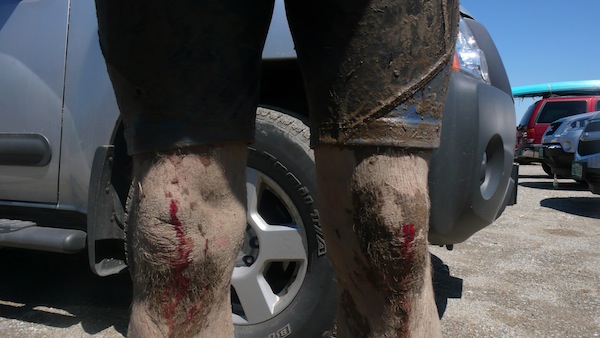
    It was pretty sweet. We were both pretty much entirely covered in mud. I had looked at my watch mid-race to discover that it was entirely obscured with mud. We were both bleeding from our knees, which had taken pretty serious beatings from all the rocks on the course. We were both freezing. And all we had for food were these foul-looking Raw Revolution bars. Spirulina-cashew? It looked like a pesto bar.

    Somehow, and very fortunately, they ended up being kind of delicious. I think I had four. And some pickle juice, more because we had eaten all of the delicious pickles in the jar than because I thought it would be particularly helpful to my cause. Gradually, our knees warmed up enough so that we could bend them again, although the mud congealing and cracking on our arms and legs made for a pretty uncomfortable afternoon.

    Though supposedly 80 people had qualified for the finals, it seemed as if there were only about 35 or 40 who were stupid enough to want to try it again. However, there was legitimate stuff on the line for the winners—an authentic Spartan helmet for first place, and free entry into the Death Race for the top three in each gender.

    We set off around the course one more time (the finals were only one lap). Topher was totally going to dominate until the 6’5” Spartan gave him a full-on Mark McGwire-style home run swing to the back of the head with the club, which practically knocked him out. Topher still pulled off second to the skinniest dude I’d ever seen. I think I cracked the top ten.

    It’s very embarrassing to lose to Topher, but there are a number of reasons that I didn’t come through for the win.

    1. I forgot to take my allergy medicine in the morning.

    2. Substandard footwear.

    3. Inferior upper-body strength, which is a direct result of Topher forcing me to work an unreasonable schedule this winter and inhibiting my training time.

    4. I suck at swimming.

    5. Topher got an extra boost forward when the 6’5” dude clubbed him on the back of the head.

    After some serious pressure-washing to get a small proportion of the mud out of our clothes and off of our bodies, we traded our beer tickets to the guy in the food cart in exchange for free French fries (a superb swap, since we had to drive home). After determining that Topher had NOT locked the keys in the car (oh yeah, they were in my pocket), we set off towards home, complete with a seven-foot Spartan spear that was Topher’s reward for second place. He has yet to decide whether or not to enter the Death Race.

    It took a 20-minute shower and two shampooings to get rid of the rest of the mud. 72 hours and a handful of ibuprofen later, I think our knees are starting to get better.

    Topher's knees. Yeah, he wore spandex shorts–another reason why I didn't beat him.
    Nat's watch.