Tag: speed workout

  • Wednesday Workout: Getting Adaptable with NSCF-FXC

    Wednesday Workout: Getting Adaptable with NSCF-FXC

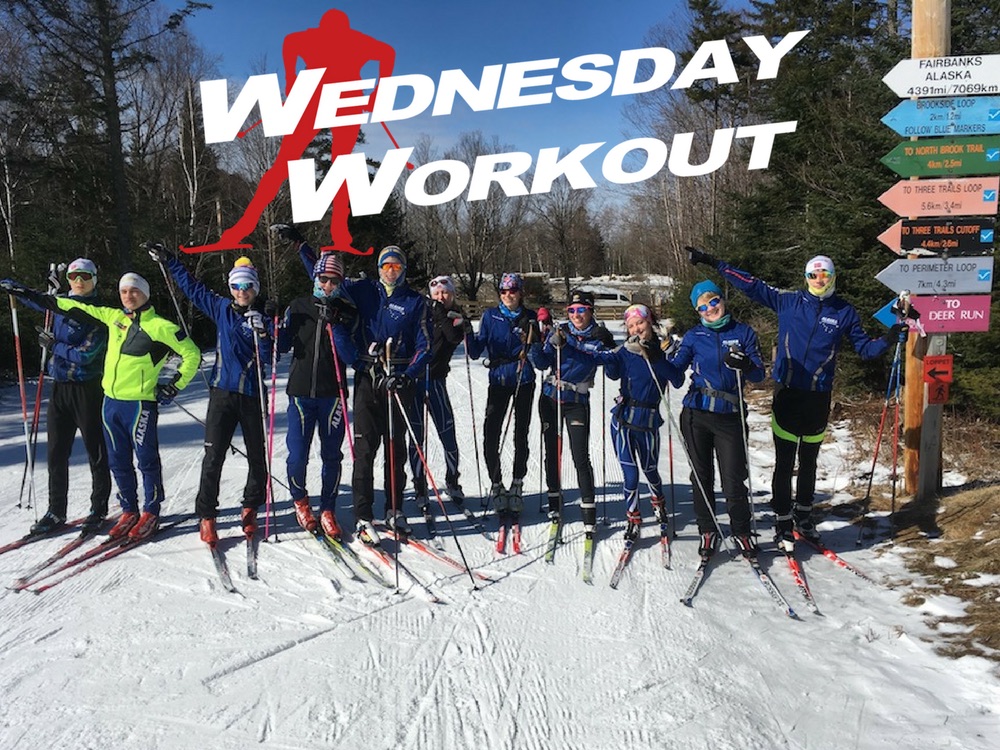
    The NSCF-FXC crew points toward home (some 7,000 kilometers away) at 2017 Junior Nationals this past March in Lake Placid, N.Y. (Photo: Peter Leonard)

    The following workout comes from Alasdair Tutt, interim coach for the Nordic Ski Club of Fairbanks/Fairbanks XC (commonly known as NSCF-FXC). Tutt recognizes that while training in central Alaska has its perks (like reliable snow), it can also be tough for skiers to excel outside of their familiar environment (like on significantly warmer snow). This is true for anyone racing in variable climates and at both high and low elevations across North America. So for NSCF-FXC, the goal is to get develop speediness for races in the lower 48. 

    ***

    Training in Fairbanks, Alaska, may have many advantages: skiable snow for six months a year, tough homologated loops at Birch Hill and the endless wilderness to explore regardless of the season. However, it presents many challenges for the 33 junior athletes who are part of our summer Comp Team when they compete out of town in temperatures often >30 degrees warmer than the average Fairbanks day.
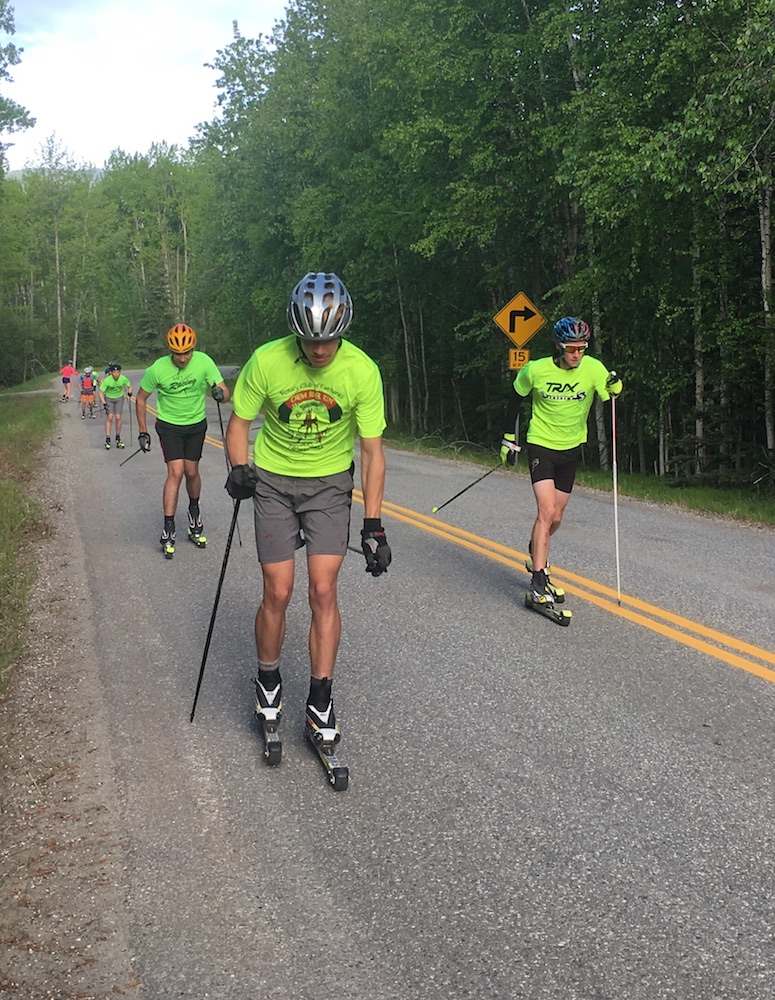
    (From left to right) NSCF-FXC skiers Ben Keener, Ari Endestad and Ti Donaldson work on diagonal striding during a summer workout near Fairbanks, Alaska. (Photo: Alasdair Tutt)

    This workout is designed to counteract the effect of always skiing on slow snow and steep terrain at Birch Hill mid-winter so the athletes can be competitive in faster conditions at the U.S. Cross Country Championships (a.k.a. Senior Nationals) or Junior Nationals. It can be completed skating, bounding, double poling, or diagonal striding. We have primarily focused on using it to improve diagonal striding this summer.

    We have no problem getting our skiers to be strong or have a high-aerobic capacity, but we often struggle to further develop the neuromuscular capacity of our skiers once the snow hits the ground. This can also be true when our athletes compete in high-school cross-country running, as their training can become pretty monotonous and low volume unless they make a considerable effort to add their own ski training on top of the running. This workout is applicable to all athletes though, as I believe all junior athletes need to first develop their capacity to go fast before learning to use that speed over a longer distance.

    The workout: Alaska-Specific (Speed) Training

    • Warmup: Preparation and Mobility
      • Our warmup is typically 20-30 minutes long consisting of about 10 minutes easy skiing to our start point, followed by 10-15 minutes of mobility and preparation exercises specific to the technique being performed on the day (we do this workout skating, double poling and striding depending on the goals of the team as a whole from last year)
    • Intervals: 2-3 sets of 3-5 x 150-250 meters at 2-3 k pace, and 50-80 m at 400 m pace over a course with two separate hills — not so steep as to lose full range of motion, but to challenge the athletes’ balance a little. Then, take a short recovery to return to the start of the next interval.
      • The course should cover around 150-250 m for the longer interval and 50-80 m for the shorter one on a gradual hill that is typically able to either be climbed in double pole or diagonal striding to induce a high speed.
      • First do the ~200m interval at a speed similar to how you would a hill in a 2-3 k event, then after a short recovery, complete the ~60 m interval at a speed just below that of an all out sprint (about 400 m pace). The idea being to have a repeated sprint stimulus and a clear difference in pace between the short and long speeds, without exhausting their capacity in one set.
    • Recovery: About 4-6 minutes active recovery between sets.
      • Between the longer and shorter sprint, just a rolling recovery back to the base of the hill repeated 3-5 times. Between each set there is a 4-6 minutes of active recovery with a chance to grab a drink or watch some video of technique.
    • Cool down: 30-45 minutes of easy rollerskiing back to the starting location.

    Technique Notes: We are looking for full extension through the arms to the back, a pendulum arm swing to return and a relaxed body position with hips over the heel when gliding on a ski during these intervals, as it quite easy to get into a posture with limited range of motion through the shoulders or a “back-seat” body position with little glide and a late kick when mostly skiing on green hardwax. As always when striding on classic rollerskis, we are careful to emphasize an early initiation of power with the lower body and a quick weight transfer from the center of mass over the gliding ski.
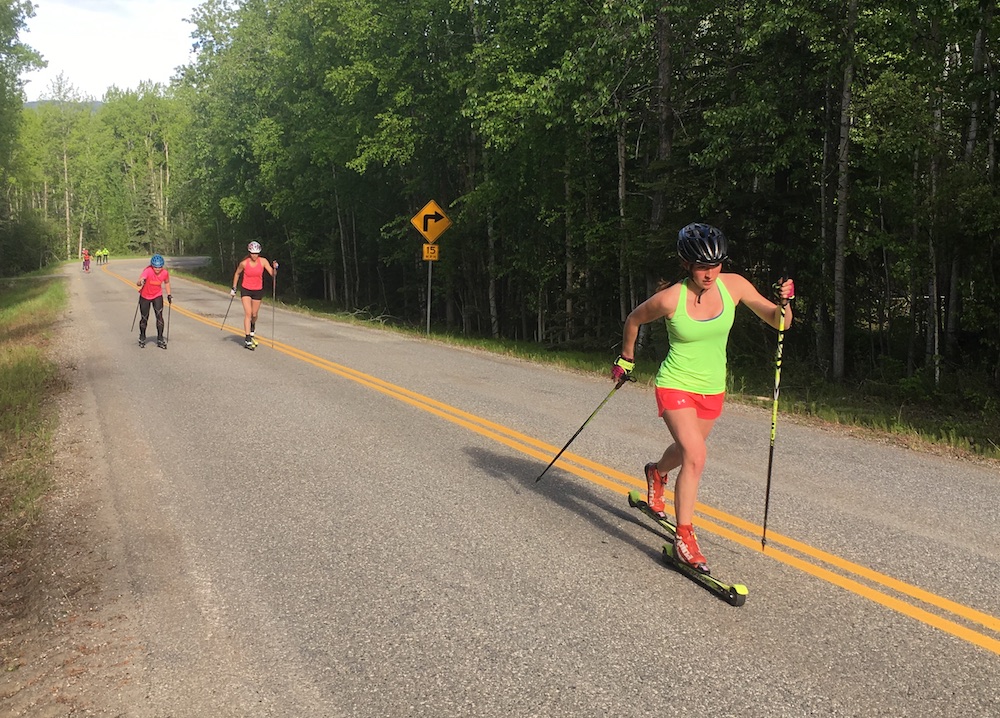
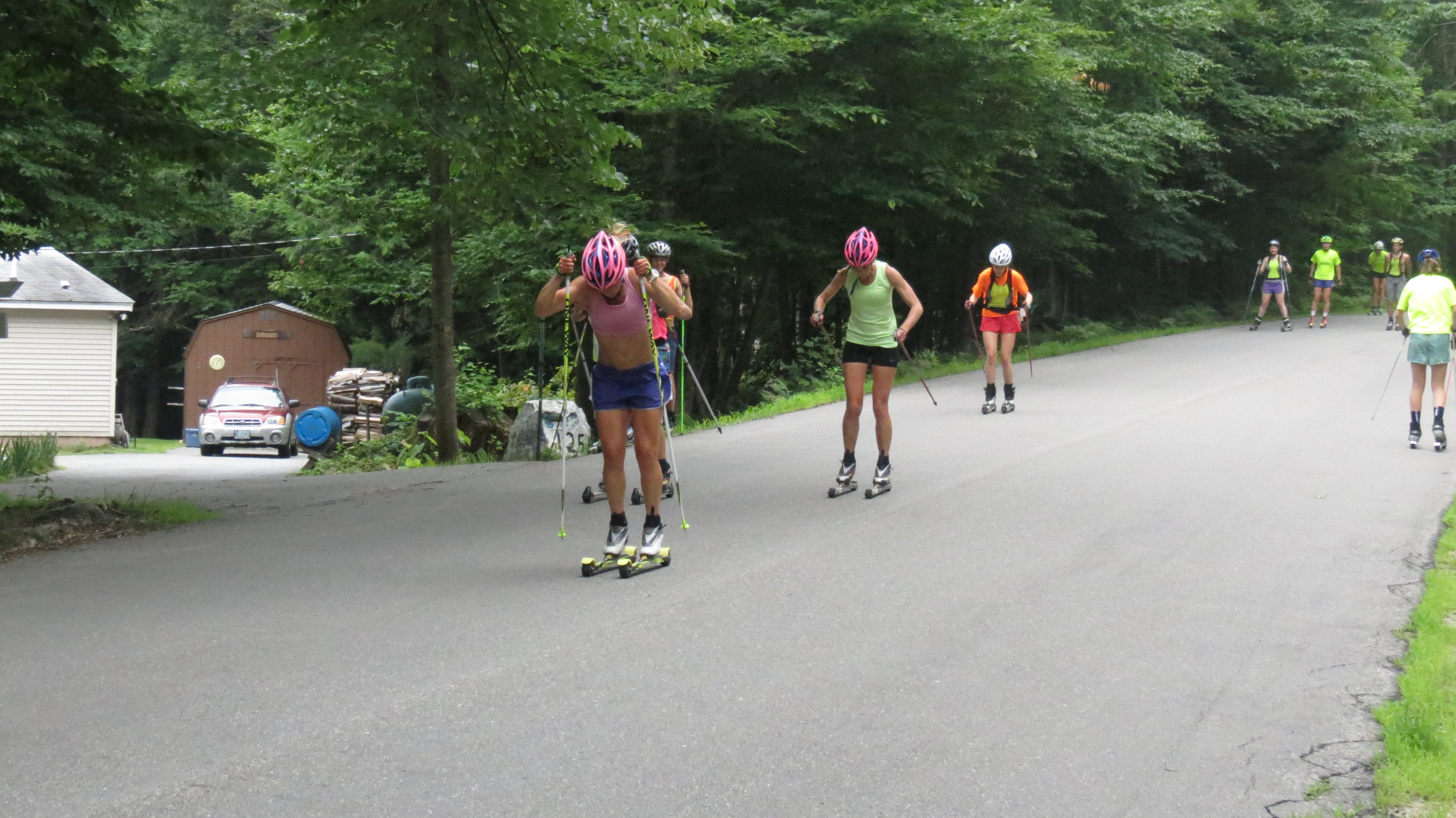
    NSCF-FXC skier Jenna DiFolco (r) leads Mackenzie Parrott (l) and Zoe Ratzlaff (c) during a diagonal-striding workout near Fairbanks, Alaska. (Photo: Alasdair Tutt)

    ***

    Have a workout you want to share? Email info@fasterskier.com with the subject line: Wednesday Workout.

  • Wednesday Workout: Metronomes with Michigan Tech’s Alice Flanders

    Wednesday Workout: Metronomes with Michigan Tech’s Alice Flanders

    Sunrise on campus at Michigan Technological University in Houghton, Mich. (All photos: Alice Flanders)
    Sunrise on campus at Michigan Technological University in Houghton, Mich. (All photos: Alice Flanders/aliceflanders.wordpress.com)

    This week’s workout comes from Michigan Tech masters student and skier, Alice Flanders, also a satellite athlete with the Central Cross Country (CXC) Team. Flanders trains with the Michigan Tech team, and largely does workouts designed by head coach Joe Haggenmiller, while CXC Team coach Andy Keller oversees her training. Read her complete blog post here.

    Do you have a workout you’d like to share? Email info@fasterskier.com with the subject line: Wednesday Workout.
    ***

    I’m waiting in the starting pen, the 20-degree wind blowing gently across the stadium as the clock beeps the tell-tale tones of another racer starting. I chisel the chunks of snow out of the bottom of my boot and clip into my skis. I step up to the wand.

    “15 seconds”

    “Beep… Beep… Beep….Beeeeeeeep”

    I try to start but for some reason my feet just won’t move.

    “Beep… Beep… Beep…. Beeeeeeeep”

    “Thwap!”

    Early morning speeds during metronomes at Michigan Tech in Houghton, Mich.
    Early morning speeds during metronomes at Michigan Tech in Houghton, Mich.

    Groggily, I fumble through the sheets looking for my persistently beeping phone. It’s 5:52 am and my body feels like a sack of bricks.

    I roll over placing my index and middle finger on the underside of my wrist. 10 beats in 15 seconds, 40 BPM (beats per minute). Not a bad a.m. pulse, but that’s a little higher than normal. I’ll have to drink lots of water today and make sure I haven’t caught the back-to-school-plague that seems to have taken over the school.

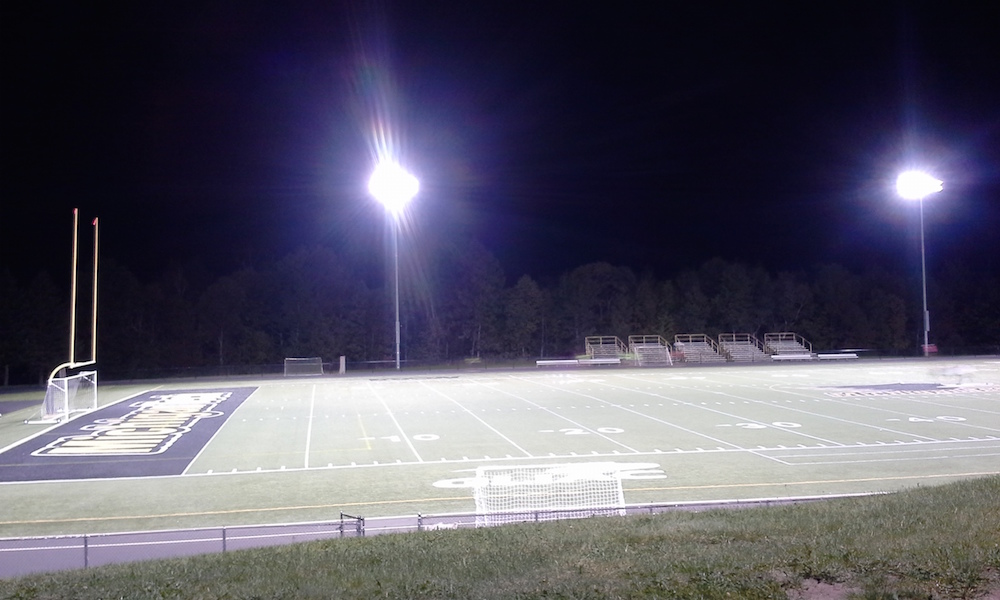
    Stepping outside, the entire town seems dead. If it weren’t for the street lights, I’d be unlocking my bike by starlight. Occasionally I’ll pass by a group of ROTC students running in synchrony, but until arriving at the Student Development Center there’s no one in sight.  This morning we’ll be doing metronomes, a workout where we double pole around the track at different tempos to work on technique and speed.

    The Workout: Metronomes

    Total Time: 45-60 min

    Goal: Focus on high quality technique while using different tempos. Immediately apply this to sprints and starts.

    Warmup: About 10 minutes or 3 songs

    Workout:

    Set 1:  (with metronome playing over loudspeakers: listen to an actual metronome and match your pole plants to the beat)

    2:30 @ 50 BPM

    0:20 @ 60 BPM

    0:10 @ 80 BPM

    Repeat 3-5 times

    Set Break: Length = one song of your choice

    Set 2: 6-10 x 100-meter sprints

    Cool down: About 10 minutes

    This workout has a lot of benefits.

    • It teaches the athlete how to ski using varying tempos
    • By skiing around the track, it is much easier for coaches to work with athletes of different speeds and track progress throughout the session
    • Technique and tempo can be applied immediately during the 100m sprints
    • It’s good mass start practice due to the amount of passing that occurs
    • Pace lines will form and it’s fun to go fast in a group!
    • There are a lot of opportunities for younger skiers to ski with, watch and learn from older people on the team.
    • You get to listen to music
    • No Cars!

    But be careful, this is an intensity session and should be counted as such. Recovery in between the 80 BPM and sprints should be a priority.

    By 7:30 the sun is painting the sky hues of pink, purple and yellow. It’s not hard to realize how lucky we are to live in a place like this.

    Class time: Where recovery and learning come together (Photo: Alice Flanders)
    Class time: Where recovery and learning come together.

    In class, while other students are guzzling coffee trying not to nod off, I’ve got positive endorphins keeping me engaged. However, as the day continues I find myself gazing out the window as storm clouds congregate on the horizon. It’s supposed to rain tonight. Right now I keep my fingers crossed that the rain will go somewhere else, keeping our roads dry for practice this afternoon. In a few weeks these clouds will hold potential for snow. As my professor fills the board with equations, I daydream about how much snow we’d get if it were 15 degrees cooler.

    Excelling in any sport takes an extreme amount of commitment and self discipline. It takes over your thoughts, drives your decision making process and rules your schedule. Every moment of the day is carefully crafted to strengthen your body through nutrition, intensity, recovery or education. It’s an all encompassing full time job. Luckily, this job comes naturally when you have passion for the sport. It begs us to reach higher, to do one more pull-up, to push the limits of comfort and ultimately persevere. What are your goals this season?

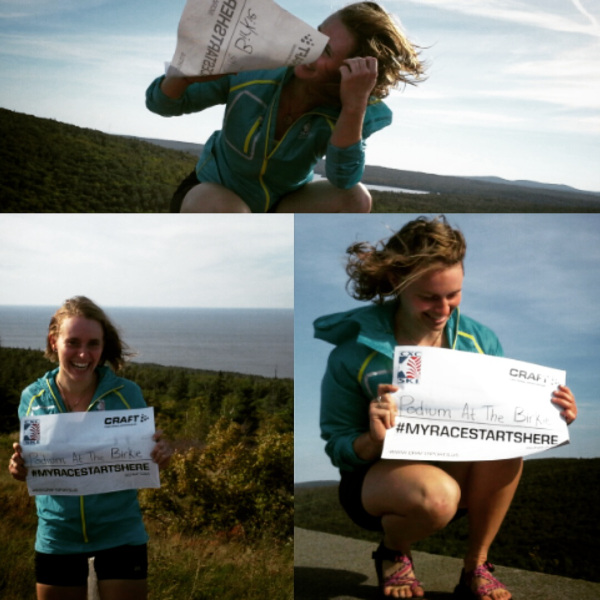
    Michigan Tech masters student and skier Alice Flanders setting goals. (Courtesy photo)
    Michigan Tech masters student and skier Alice Flanders setting goals, specifically to podium in the American Birkebeiner skate race, as photographed on Brockway Mountain in Copper Harbor, Mich. (Courtesy photo)
  • Wednesday Workout: Mountain Boarding Anaerobic Workout with Colette Bourgonje

    Wednesday Workout: Mountain Boarding Anaerobic Workout with Colette Bourgonje

    Colette Bourgonje doing some mountain-board work during a Canadian Para-Nordic Team training camp in Arizona two years ago. (Photo: Robin McKeever)
    Colette Bourgonje doing some mountain-board work during a Canadian Para-Nordic Team training camp in Arizona two years ago. (Photo: Robin McKeever)

    This week’s workout comes from Colette Bourgonje, a 10-time Paralympian who recently retired from the Canadian Para-Nordic Team to enjoy other hobbies at her home in Prince Albert, Saskatchewan, including kayaking, biking, and sitting outside sipping coffee. Over the last two decades, she’s racked up 10 medals between the Winter and Summer Paralympics (three silver and three bronze in sit skiing, and four bronze in wheelchair racing).

    While Bourgonje, 52, won’t miss four-hour training sessions that leave her stiff and tired, she’s looking forward to going out and doing something of her choosing for a couple hours at a time.

    “I just don’t feel good if I don’t do something,” Bourgonje says. “Exercise is a lifestyle and you can’t just stop.”

    While she does the following speed workout on a mountain board, which sit skiers use for dryland training, this could be done as a double-pole rollerski workout on pavement or trail running with poles (although the latter won’t give you as much of an upper-body workout).

    “I like this workout because of the change in pace, which makes you focus on technique with speed and adds variety with the distance you end up putting in,” Bourgonje explains.

    The Workout: Mountain Boarding Anaerobic Workout

    Total time: Up to 2 hours

    Warmup: 20-30 minutes with 3-4 accelerations

    Intervals: 3 x 4-minutes in Zone 4, with fully recovery in between each (3-4 minutes of easy movement in Zone 1)

    Rest: Take a 10-minute set break.

    Repeat: 3 x 4-minute intervals (with recovery periods) once more, for a total of 24 minutes of work.

    Cool down: 20-30 minutes with stretching after

  • Wednesday Workout: Kaeding Says Speeds Not Just For Sprinters

    Wednesday Workout: Kaeding Says Speeds Not Just For Sprinters

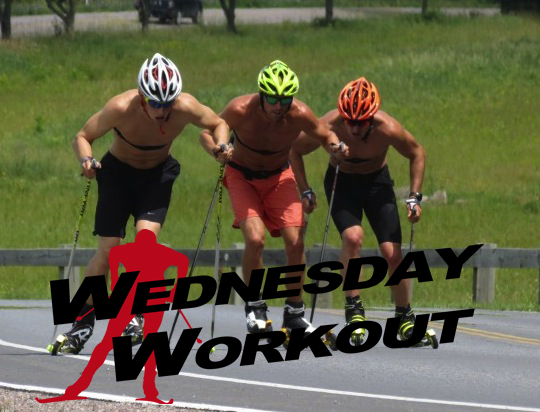
    Stratton Mountain School T2 skiers (l-r) Eric Packer, Andy Newell and Ben Saxton battle during a speed workout in Vermont. (Photo: Gus Kaeding)
    Stratton Mountain School T2 skiers (l-r) Eric Packer, Andy Newell and Ben Saxton battle during a speed workout in Vermont. (Photo: Gus Kaeding)

    Welcome to Wednesday Workout, where we round up training ideas on a weekly basis. This week, Gus Kaeding, head coach of the Stratton Mountain School (SMS) T2 Team provides some ideas for coaches and athletes looking to spice up their training plan and see improvement in multiple areas.  

    ***

    Many skiers and coaches associate speeds with sprinting. That’s true, to an extent, but I believe this workout has additional benefits. With the rapid change in pace, a skier can learn technique, tactics and acquire neuromuscular adaptations, which help with distance skiing. Since there is often a lot of skiing back and forth, it is an easy workout for a coach to watch and have continued dialogue with the athletes.

    After a full summer and fall of doing speeds regularly, athletes learn to ride their ski in a more forward position, even at a lower intensity. Additionally, they find it easier to go faster for a longer duration, because they are able to use their skeletal structures efficiently and not “muscle” each movement.

    The actual structure of the workout can vary, depending on the time of the year and the goal of the workout. Generally, the Stratton Mountain School T2 elite athletes will do 15-24 speeds in a single session, ranging from 10 to 15 seconds each. At the beginning of the summer we will do fewer, shorter speeds, once a week. As the preparatory period goes on, we add in more speeds and the duration becomes longer (up to 40 seconds per speed). We’ll do these almost religiously throughout the preparatory period, up to twice a week at times during the late summer/fall.

    Speed workouts can be set up a couple of different ways. One is stations, where we’ll do 5-8 speeds in one area, take a break (5-10 minutes of easy skiing), then rotate to another station and repeat. Full recovery between each individual speed is important.

    Jessie Diggins (U.S. Ski Team/SMS T2) leads a women’s group during a speed workout session. (Photo: Gus Kaeding)

    When coordinating stations, we like to have one that practices starts, set up to mimic World Cup qualifiers and heats. Another station will have terrain requiring a technique transition, whether it be from V2 to V1 or striding to double pole. The final station usually involves a drop-in from a downhill to a flat. The flat mimics a finish.

    By coming off a downhill, skiers are forced to either double pole or V2 at a higher speed than they are used to (overspeed). These will help athletes become more comfortable and efficient at higher speeds.

    Another workout format is “rolling” speeds. For these, the athlete skis a 3-5 kilometer repeatable loop with three designated speed zones. Skiers never completely stop between speeds, giving the workout a continuous distance benefit.

    Using the rolling format, the course is constantly changing. We try to find terrain features that are semi-unique to that trail or road. That way, the workout stays fresh and the athlete is ready for whatever race courses around the world may throw at them.

    When our athletes ski the same terrain feature several times, they are encouraged to approach it in a variety of ways. Correct technique is always emphasized, even if it means backing off to a lesser exertion.

    Often we’ll start speed workouts with the athletes skiing alone, so they can concentrate on technique. As they become comfortable, they will group up. Group speeds help with tactics and becoming comfortable skiing at high speed in a group. It also allows them to be pushed by an external force.