From the FasterSkier archive — posts syndicated from athletes’ and coaches’ own blogs between 2004 and 2012, kept online as published. Current coverage is at fasterskier.com.

Tag: sports science

  • Development in Norway Isn’t Just a Plan. It’s a System.

    Development in Norway Isn’t Just a Plan. It’s a System.

    This article was made possible through the generous support of our voluntary subscribers. If you value coverage like this, please support FasterSkier with a voluntary subscription.

    Johannes Hoesflot Klaebo (NOR), Emil Iversen (NOR), and Martin Loewstroem Nyenget (NOR), (l-r) during the final kilometers of the Olympic 50 k classic. (Photo: Vanzetta/NordicFocus)

    A review of a recently published paper from Norway, “Long-term development culture for sustainable Olympic success: Lessons learned from Norwegian cross-country skiing” by Jacob Walther and Øyvind Sandbakk, is worth the time.

    Long-term development culture for sustainable Olympic success: Lessons learned from Norwegian cross-country skiing – ScienceDirect

    We’ve all heard enough about Norway. But this one simply cuts through some misconceptions, and it is worth the time to review. It strips away the mythology and gets back to what actually drives development and ultimately elite performance. Norway isn’t operating with better information. They’re more disciplined about applying what most programs already understand, and more consistent about what they refuse to do.

    The paper addresses this immediately and directly.  There is no “Norwegian method.” No magic interval session. No secret intensity zone you can implement and expect results. What they have is a system. And more importantly, a system built around their culture.

    We tend to frame their success in physiological and technical terms.  It’s not physiology, technique, health management, or mental health; they are all part of it, but they don’t explain the system. Most programs know early specialization is risky and inaccurate. Most coaches understand long-term development and the need to build training slowly and in phases based on training age. The difference is that Norway holds the line on it.

    The elements are not new. Delay early selection. Encourage multi-sport participation, and integrate sport science into daily coaching. Invest in coach education. Treat athlete health as part of development, not something that gets in the way of it. The result isn’t just better elite athletes.  It’s broader mass participation, more informed training, and a deeper pool of athletes and families engaged in the sport.

    Norway’s Johannes Høsflot Klæbo won his first World Cup at 20, in the men’s 1.6 k freestyle sprint in Otepää, Estonia, in 2017. (Photo: Fischer/NordicFocus)

    The paper uses Johannes Høstflot Klæbo as a case study. At 15, he placed 101st at junior nationals. Years later, he’s the most decorated Winter Olympian of all time. That’s a compelling outcome. But the value isn’t the result. It’s what the system expects and allows.

    In most programs, that athlete gets filtered out early. In Norway, they stay in longer. That’s the point. This isn’t about identifying talent earlier and directing resources and opportunities at those. It’s about not eliminating talent identification too soon. That requires patience, cooperation among club programs, trust in the system, and a willingness to ignore short-term validation.

    That’s where the Norwegian model sets itself apart. The turning point came in the lead-up to the 1994 Winter Olympics. Norway didn’t discover new physiology or invent new training methods. They organized themselves differently. They centralized expertise, embedded sport science into coaching, collected experience and training data across all Olympic Sports, and aligned the ski federation from the national team down to the club level.

    Olympiatoppen sits at the center, not as a lab removed from the field, but as part of the training process. It doesn’t drive the system, but it informs and shapes it. That balance matters. Norway didn’t just add sports scientists. They used sports science to improve coaching. At higher levels, many coaches are trained in exercise physiology. That reduces misinterpretation and creates consistency over time.

    Long-term development in Norway isn’t a slogan. It is intentionally implemented. It follows physiology. Peak endurance performance arrives in the late 20s, after years of consistent training. They don’t challenge that reality; they built their whole system around that reality.

    You see that athletes stay in the sport longer, as evidenced by high-level FIS races in Norway. Hundreds of skiers are over 25-30 years old. They build general capacity before narrowing focus. Skill development has time and the room to engrain. Training isn’t rushed. Volume and intensity progress over years, not seasons. Junior results are not used as a sorting mechanism.

    And this is where most systems break down. They say development matters, so select early and train accordingly. In Norway, youth championships are not selection events. They are part of the development process. The culture reinforces it. Clubs and schools coordinate so athletes can participate in multiple sports. Athletes regularly move across multiple ski disciplines. The recruitment base stays broad, and the system stays resilient.

    Norway hasn’t eliminated selection; they’ve delayed it and minimized its consequences. That distinction matters. What gets labeled as “talent” at 14–16 is often early maturation, better support, or more exposure, not long-term potential. Norway avoids that trap by not falling into it. While many other systems double down on it.

    Another principle sits underneath all of this: athlete health, physical and mental, comes before results. Training is managed for long-term progression. Training loads increase gradually over the years. High intensity is controlled, and low intensity dominates most of the training. The goal is adaptation over time, not accumulation in the short term.

    The paper also points to emerging pressure on this model. Rising costs, shifting societal trends, increasing early specialization, and changes in team structures all push against it. These aren’t theoretical concerns. There are real pressures that can erode the system if they’re not managed.

    Harald Oestberg Amundsen (NOR), Johannes Hoesflot Klaebo (NOR), and Einar Hedegart (NOR), (l-r) share the 20 k Freestyle Mass Start podium at the final World Cup in Lake Placid (USA) to end the 2025/2026 season. (Photo: Modica/NordicFocus)

    So what carries over?

    We can’t copy Norway. That misses the point. The lesson is alignment. Align incentives with long-term outcomes. Integrate sports science into coaching to improve the coach’s work. Build systems that allow athletes time to develop. And hold the line when short-term pressure starts to dictate decisions.

    Many countries can point to a standout athlete. But if success depends on outliers, unusual resilience, unusual support, unusual talent, you don’t have a system. You have anecdotes. Norway produces depth, that is, the expectation and the standard.

    There’s no secret session here. What they’ve built is a system that connects coaching and science, commits to long-term development, creates space for late progression, and maintains consistency over time. Not what they’re doing this week or next week, but what the athletes are doing ten years from now.


    Help Support Our Olympic Coverage!

    If you value the thoughtful work and access FasterSkier provides, please consider becoming a Voluntary Subscriber. Your support directly fuels our work to cover the people, places, and moments that make our sport special.

    Join the FasterSkier community!


  • Using Heart Rate Variability to Guide Training

    Using Heart Rate Variability to Guide Training

    This article was made possible through the generous support of our voluntary subscribers.  If you value coverage like this, please support FasterSkier with a voluntary subscription.  

    Training by the numbers: heart rate, exertion levels, weekly/yearly hours, and lactate monitoring are all part of the system that guides the training of Stifel US Ski Team Sprinter, Jack Young. (Photo: Courtesy Photo)

    In my coaching and consulting work, I get a lot of questions about using heart rate variability (HRV) to guide training. This is a follow-up to a previous article, where I want to move from theory to practice and show how HRV has been one of the most valuable tools I’ve used to assess recovery and adaptation in endurance athletes.

    There is no shortage of research documenting the value of HRV in endurance training. That’s well established. What matters to me is how it works in coaching practice. In my experience, HRV is especially useful for helping athletes avoid the most damaging downsides of poorly implemented training. Most of the big performance issues I have seen over the years could have been avoided with the use of HRV.

    Over the years, I’ve collected long-term HRV data on many athletes, some spanning close to ten years. The example I’m using here covers nearly four years and serves as an excellent illustration of how HRV reflects training implementation, adaptation, and the consequences of training changes over time. This athlete was 50 years old at the start of the data set, but I’ve seen the same pattern in juniors, elites, and masters’ athletes alike. The trend is the same; only the absolute HRV values differ.

    Most of the athletes I’ve worked with over the past 15–20 years arrived with either inconsistent training or worse, chronic over-training. In this example, training lacked consistency and relied too heavily on endurance work performed at intensities that were simply too high. To be clear, many of the long-term problems I’ve seen, performance stagnation, recurring illness, persistent fatigue, would have been obvious much earlier had HRV been used properly.

    The chart below shows an overview of the data, collected using a Firstbeat sensor and analyzed through the Firstbeat Sports platform. With improved training structure and better implementation, this athlete’s RMSSD baseline steadily increased:

    • 2022: ~45 ms
    • 2023: ~55 ms
    • 2024: ~65 ms
    • 2025: ~75 ms


    For anyone familiar with HRV, these are substantial improvements. From a health and wellness perspective, they’re meaningful. From a performance perspective, they’re even more telling. Population data suggests that an RMSSD of around 75 ms is very good for someone in this age group. Performance metrics tracked alongside this, ski erg tests and six-minute roller ski tests, showed parallel and consistent improvements over the same period.

    Some people will point to what looks like large day-to-day variation in the data. Yes, the coefficient of variation can appear wide at first glance. In athletes with low or suppressed HRV, I often see variability in the 20–30% range. As fitness and autonomic stability improve, that typically narrows to the 10–20% range. So, while the spread may look dramatic, it’s often exactly what we expect. Larger variability usually reflects poor training implementation or an athlete drifting toward an overtrained state.

    I’ve seen this same pattern repeatedly in underperforming and overtrained athletes, at both junior and elite levels. HRV is often much lower than expected. When training and recovery are corrected, athletes frequently feel better before their HRV confirms they are ready to resume normal training. This is a critical point. Returning too early, before HRV plateaus, is a common mistake. When training is reintroduced with proper control, HRV not only stabilizes but often continues to rise beyond previous levels.

    Population-level HRV data can provide useful context. There will always be individual differences, but these ranges help determine whether an athlete is operating in a reasonable zone for their age. In practice, well-trained endurance athletes often sit above the “high” end of population norms. I’ve coached athletes in their 20s with RMSSD values consistently in the 110–120 ms range. The same 50-year-old athlete referenced here now sits closer to 75–80 ms.

    Normal Resting RMSSD Ranges by Age

    (Morning, seated or standing, ECG-based measurement)

    Age Low / Suppressed Typical / Normal High / Very Good
    <20 <50 ms 60–90 ms >90 ms
    20–29 <40 ms 50–80 ms >80 ms
    30–39 <35 ms 45–75 ms >75 ms
    40–49 <30 ms 40–65 ms >65 ms
    50–59 <25 ms 35–60 ms >60 ms
    60–69 <20 ms 30–50 ms >50 ms
    70+ <15 ms 25–45 ms >45 ms

    To make HRV actionable, the data must be analyzed correctly. I typically use a seven-day acute average of RMSSD and establish a normal range using a standard deviation of ±0.5 over a two- to three-month period. When training is well implemented, we expect to see a gradual upward drift in HRV. Eventually, HRV will reach a physiological ceiling, and further increases won’t occur unless the athlete is recovering from illness, injury, or prior overtraining.

    In a healthy training state, the acute HRV average should remain within that normal range. If it drops below, the first step is always context: life stress, sleep, travel, illness, or recent training load. Sometimes it’s a conversation. Other times, it’s an immediate adjustment to the plan.

    Daily fluctuations are normal. Hard sessions or unusually long workouts often cause short-term drops in HRV, and that’s not a problem provided values don’t fall well below baseline. What matters is the seven-day trend and whether that trend begins drifting downward.

    Chronic suppression tells us several things:

    • the autonomic nervous system is not recovering
    • training stress exceeds adaptive capacity
    • intensity distribution is likely wrong, even if volume looks reasonable

    This is where HRV is most powerful. It catches problems early, before performance falls apart. Large single-day drops can also flag oncoming illness or signal the need to review the previous few days of training.

    HRV often exposes poor intensity distribution long before performance declines. Athletes can hold things together for surprisingly long periods while autonomic stress accumulates underneath. HRV shows that the effects  early, particularly in athletes doing too much work in the higher intensity zones.

    This is especially relevant for junior and masters’ athletes, where recovery margins are smaller and the consequences of mistakes are greater.

    I will not increase training load, weekly or monthly unless the acute HRV is at baseline or higher (the midpoint of the error bars). This is one of the most common issues I see when consulting with athletes and coaches: loads are increased according to the plan, not according to how the athlete is recovering and adapting.

    JC Schoonmaker and Luke Jager training in Anchorage, Alaska. (Photo: Brinkema Brothers)

    Both experience and research are clear here. Increasing load or adding high-intensity work when HRV is suppressed does not lead to adaptation. I’ve worked with athletes whose acute RMSSD dropped 20–30 ms below normal for weeks or months, with the expectation that a short taper would fix it. At that point, the system is deeply suppressed. It often takes weeks or months for the nervous system to normalize and for performance to follow.

    RMSSD is a valid marker of systemic stress. When HRV is low, the body is not positioned to recover from or adapt to training especially high-intensity work and racing. The daily process to collect and review this data takes less than 15 minutes.

    The protocol is simple. The athlete wakes up, uses the bathroom if needed, then puts on a chest strap and sensor. In a seated or standing position, they remain still for a minute to allow heart rate to stabilize, then complete a three-minute test. I discourage optical sensors for HRV; they do not provide true ECG-based data. Sitting or standing introduces a mild orthostatic stress, which reduces variability and improves readiness assessment. We used supine testing for years and found far greater noise.

    Use reliable software, Firstbeat, Kubios, or one of Marco Altini’s phone-based applications to analyze the data. I export everything to Excel to dig deeper into respiration, coefficient of variation, and resting heart rate.

    If the goal is to prepare athletes optimally, manage recovery, and understand when they are truly positioned to perform, HRV is not optional. It’s inexpensive, easy to use, and one of the most valuable data streams we can collect.

    HRV doesn’t make training smarter.
    It is exposed when we aren’t smart already.


    Help Support Our Olympic Coverage!

    FasterSkier will have our own Nat Herz on the ground at the Olympics, which, to be honest, is a very big financial lift for us. If you value the thoughtful work and access FasterSkier provides at championships like this one, please consider becoming a Voluntary Subscriber. Your support directly fuels the work we do to cover the people, places, and moments that make our sport special.

    Join the FasterSkier community!


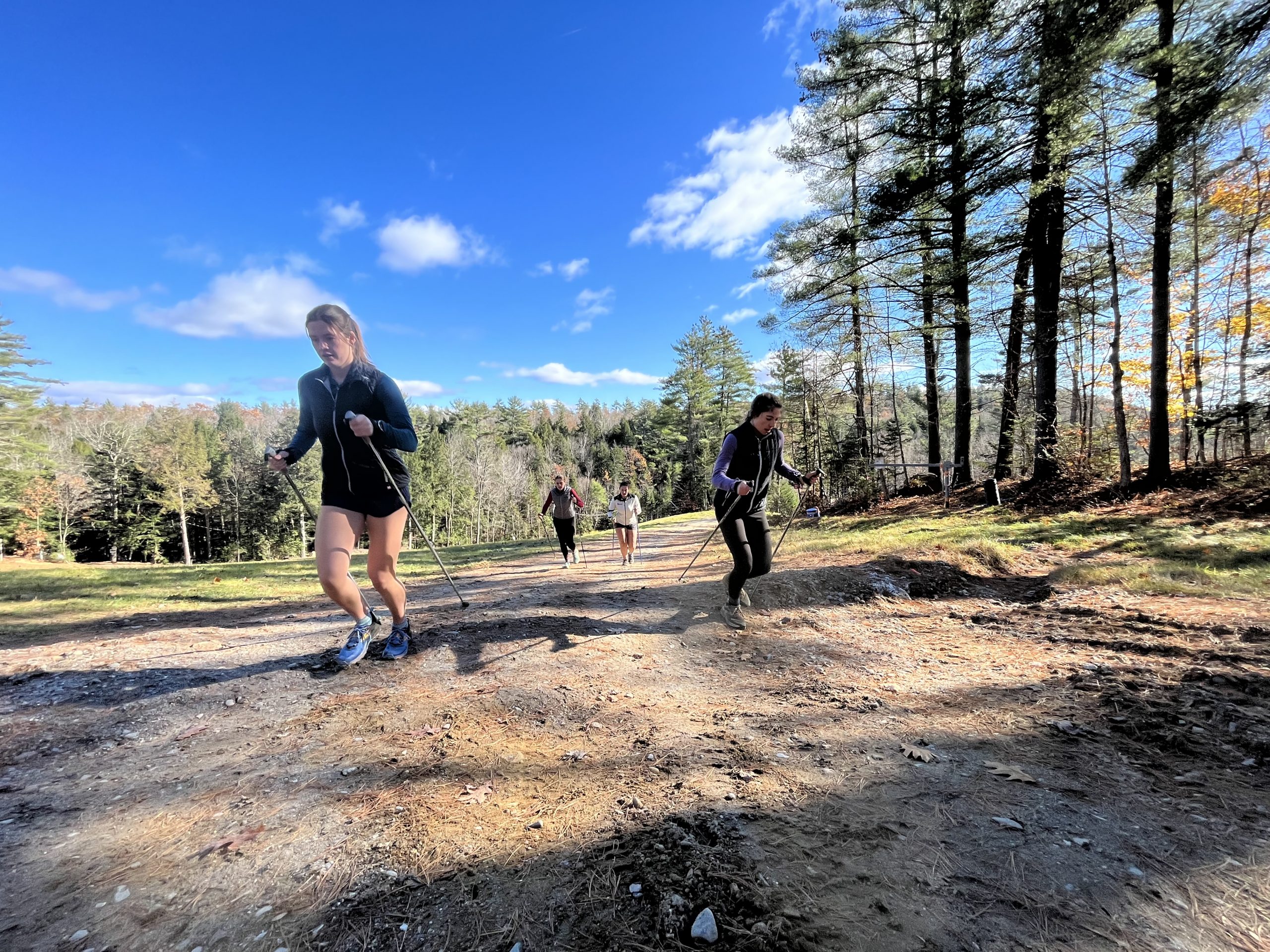
    Bates College skiers getting after some dryland training.
  • What Predicts Nordic Combined Success? Study Finds Out

    What Predicts Nordic Combined Success? Study Finds Out

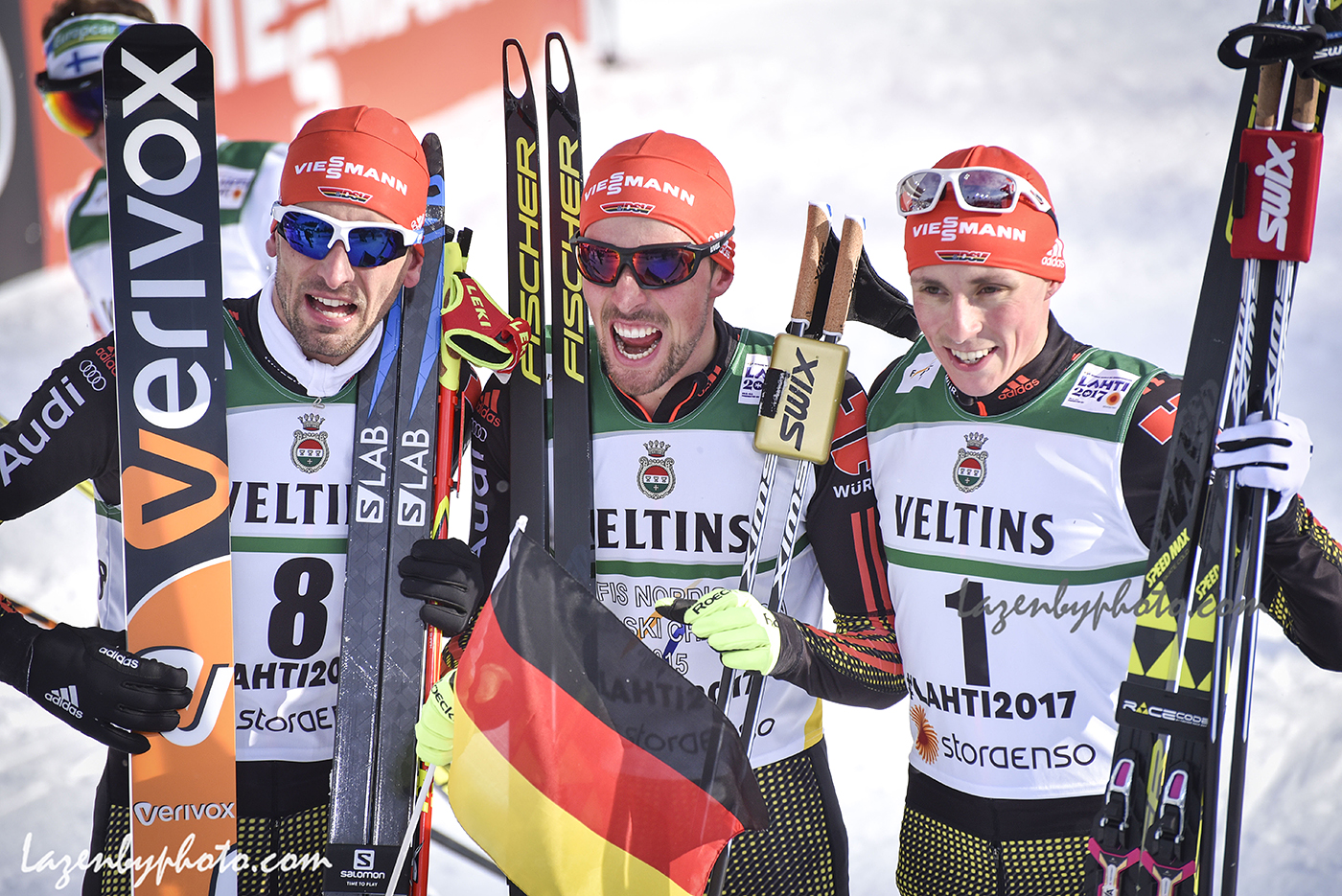
    German nordic-combined stars Johannes Rydzek (c), Eric Frenzel (1) and Björn Kircheisen (8) after taking gold, silver and bronze, respectively, in the individual normal hill/10 k Gundersen at 2017 World Championships in Lahti, Finland. (Photo: John Lazenby/Lazenbyphoto.com)

    What are the physiological capacities of nordic-combined athletes and can laboratory tests predict performance capabilities on the World Cup?

    Those are the questions that a team of Norwegian researchers set out to answer by testing 12 competitors from eight different countries before a 2015 World Cup competition in Trondheim, Norway.

    The study, led by Vegard Rasdal of the Norwegian University of Science and Technology and the Norwegian Olympic Sports Center, was recently published in the academic journal Plos One. It is an open-access journal, so you can read the paper here.

    “The sport is always evolving,” Rasdal wrote in an email to FasterSkier about the results. “Today it is no longer enough to be ‘just’ a strong ski jumper or cross-country skier, you really have to excel in both in order to be successful in terms of podiums. Johannes Rydzek and Eric Frenzel, the two most successful athletes last season, were not only two of the best jumpers last season but also the fastest skiers.”

    Indeed, they found that the best skiers in the nordic combined field have VO2Max capacities close to those of the best cross-country skiers, period – and even higher than those of Olympic medalist sprinters. Furthermore, this was a good predictor of World Cup results in the Trondheim competition.

    Variability in Abilities and Physiology

    There have been plenty of physiological studies on top cross-country skiers and some on ski jumpers, but the fascinating aspect of nordic combined is that two very different sports are combined. That creates uncertainty about what the ideal physiology for a competitor might actually be. Should they be light and explosive, for jumping? Strong and enduring, for skiing?

    And do nordic-combined atheltes have as much explosive power as ‘special jumpers’, or as high aerobic capacities as cross-country skiers?

    “As with most endurance sports, you will find a strong association between VO2Max and performance when the study group is heterogeneous, as e.g. a study group of 200 college students,” Rasdal explained. “Overall, VO2max is widely accepted as the most important factor for endurance performance. However, in a more homogenous study group, such as elite cross-country skiers, all athletes may have a ‘high enough’ VO2max to perform well at an elite level. Thus, other factors such as skiing efficiency becomes a stronger determining factor.”

    U.S. Nordic Combined skier Bryan Fletcher jumping to 31st on the large hill at 2017 Nordic Combined World Championships in Lahti, Finland. At the end of last season, he was the top-ranked American in the overall World Cup standings in 34th. (Photo: John Lazenby/Lazenbyphoto.com)

    Rasdal and his co-authors wondered whether nordic-combined athletes fell into the first group, with moderately variable VO2Max, or the second group, where all had such high capacity that they had to be distinguished by some other characteristics.

    Because some athletes get their start in ski jumping, and all must also train for jumping, the athlete selection process and training background from young ages is different than for cross-country skiers and could lead to more variability among individuals.

    “It is not given that all nordic combined athletes have a ‘high enough’ VO2max or vertical jump capacity,” Rasdal wrote. “The shortcomings in one may to some degree be compensated with higher level in the other.”

    To address that question, the research team partnered with the International Ski Federation (FIS) to conduct laboratory tests on athletes the day before a World Cup competition.

    “FIS was responsible for the invitation of athletes, and each nation in the World Cup was invited and encouraged to participate with two athletes to be tested,” Rasdal explained. “To collect data on the very best athletes in the world is always a challenge, especially so close to an important international competition. We as a research group are extremely grateful that so many World Cup athletes chose to participate in the data collection.”

    The athletes ran the gamut from being ranked second to 66th in the previous season’s overall World Cup standings, and included the eighth-best skier and second-best ski jumper.

    About Endurance Capacity, and World Cup Success

    The hypothesis that nordic-combined athletes were more variable in their physiology compared to single-sport specialists was largely upheld.

    “Among the athletes we studied, a VO2peak range of 66.9-80.8 could be found, which does illustrate the heterogeneity in nordic combined,” Rasdal wrote. “This may make subordinate factors such as skiing efficiency relatively less important (although still important) than VO2peak.”

    The upper measurements of VO2Max among the 12 athletes are close to those of cross-country skiers.

    “In the papers by Saltin and Åstrand (‘Maximal oxygen uptake in athletes’) and Tønnessen et al. (‘Maximal aerobic capacity in the winter Olympic endurance disciplines: Olympic medal benchmarks for the time period 1990-2013’), only a few athlete-groups possess VO2Max values above 80 ml/kg/min,” Rasdal noted.

    Furthermore, it was clear that the athletes on the lower end of the VO2Max spectrum were somewhat less successful on the World Cup. At least at this World Cup event, the overall ranking at the end of the day was strongly correlated to an athlete’s VO2Max and ski performance.

    “This study together with the study by Tønnessen et al. may indicate that a body-mass normalized VO2Max in the region of 75 ml/kg/min is a sufficient capacity for a strong cross-country performance in Nordic Combined, whereas 80 is at very highest percentile,” Rasdal explained.

    However, the Trondheim World Cup course is not necessarily representative of all World Cup venues. And poor cross-country skiing could have been penalized even more at this venue than usual.

    “Trondheim is a special arena compared with other courses in the World Cup, with many steep uphills and fast downhill terrain,” Rasdal wrote. “In addition, 2015 was a bad winter in Trondheim, and the course was salted and ice hard. This made the event well suited for technical good skiers with strong upper-body capacity. It is therefore necessary to investigate the impact of ski jumping versus cross-country skiing on overall performance, as well as the associations to laboratory capacities, also at other venues and conditions.”

    And About Those Jumps

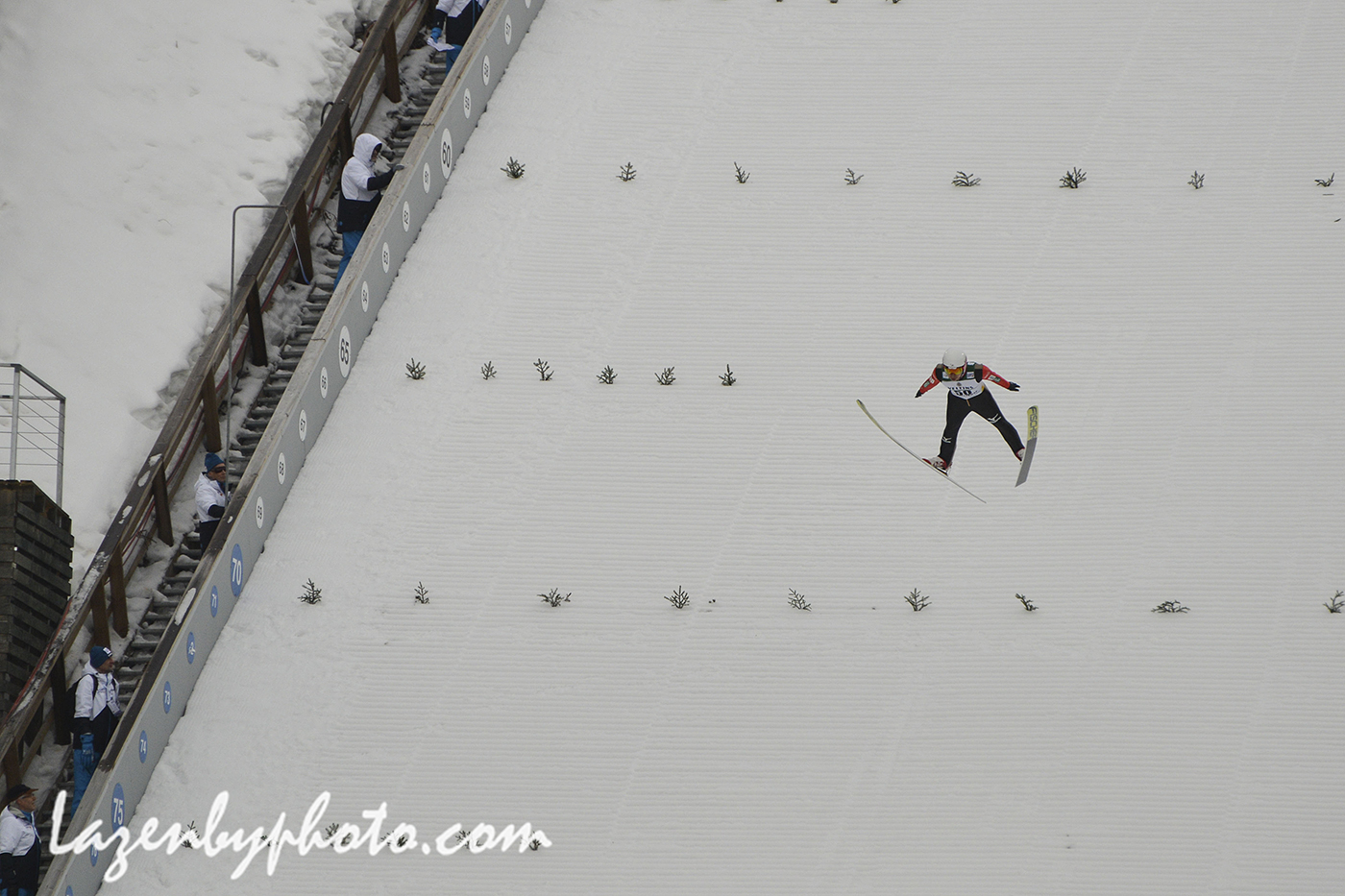
    2017 World Championships jump training on Feb. 21 in Lahti, Finland. (Photo: John Lazenby/Lazenbyphoto.com)

    The implication is that perhaps at a different competition, the association between ski jumping performance and overall competition ranking might be stronger.

    “Unpublished data does show that [across a whole season], the regression line for ski jumping to overall performance is similar to that of cross-country and the correlation coefficients are similar,” Rasdal explained.

    When it came to benchmarking, the researchers also identified laboratory measurements that could predict ski jumping performance by nordic-combined athletes. They tried two measurements: a straight, simple squat-jump, and an “imitation jump” where the athletes were asked to start in the same position they would on a ski jump ramp. The jumping style and technique varied from athlete to athlete.

    While it seems logical that these would be good predictors of ski jumping performance, it actually wasn’t a trivial matter. Such measurements have mainly been validated on straight ski jumpers, and because of their different body mass and physiology the relationship between squat jumping and performance, for example, could very well have been different among nordic-combined athletes.

    “The time available at the take-off in the [ski jump] hill may present a greater challenge for NC athletes than specialist ski jumpers as two-thirds of the NC athletes’ annual training consists of endurance training,” the authors wrote in the paper. “This does not only leave less time available for power and [jumping-] specific training compared to the specialists, but endurance training may lead to negative effects on muscle strength and power.”

    But in the end, the same measurements did predict ski jump performance.

    “The jump capacity in the sport-specific imitation jump distinguished performance level better than the general jump capacity in squat jump,” Rasdal wrote. “That supported the argument for sport-specific testing at an elite level.”

    Still, the imitation jump wasn’t perfect at predicting actual ski jump performance.

    “The upper range of the lowest ranked performance group touches the lower range of the highest ranked performance group,” Rasdal said of the imitation jump measurements. “There is not necessarily a continuous linear relationship with performance. At some level, the ability to utilize the capacity in the field as well as other factors become more determining for performance, e.g. body mass, transition to flight (minimize the loss of speed), flight performance, etc… Ski jumping is an extremely challenging technical task to be performed in less than 0.35 seconds, and where a well execution may compensate more for a lack of physical capacity.”

    And then there’s money.

    “In ski jumping the equipment plays an important role, and the nations with the highest budgets may for instance have better suits which makes them jump farther,” Rasdal said of other potentially confounding factors in predicting jump performance.

    What to Shoot For

    At the end of the paper, the authors summarized the ideal characteristics of a nordic-combined athlete: high VO2Max, a strong upper body, a good vertical jump, and low body mass. Hitting all those different metrics at the same time is a tough calculus, but it’s what is required to be a champion these days.

    “Although the relative importance of ski jumping to overall performance has varied in the sport over time, the pendulum today appears to lean more towards ski jumping,” Rasdal noted. “That’s both as a result of regulations (e.g. increase of meter-value in large hills in 2015), and also an increase in overall performance level where the best ski jumpers also ski fast.”

  • We’re Not Invincible: More Heart Arrhythmias in Endurance Athletes (Book Review)

    We’re Not Invincible: More Heart Arrhythmias in Endurance Athletes (Book Review)

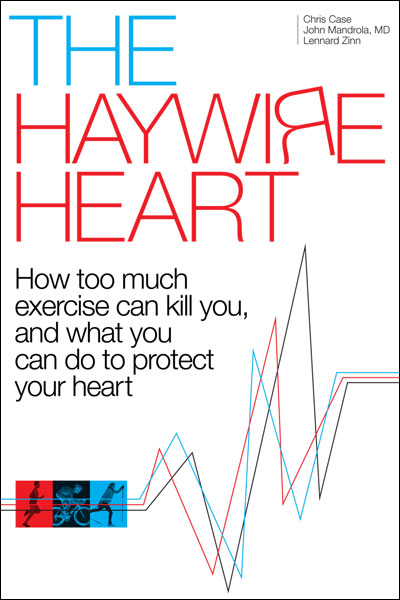
    The Haywire Heart by Lennard Zinn, Dr. John Mandrola and Chris Case, is available for purchase directly from the publisher at VeloPress, or at Amazon and other booksellers.

    When I heard that there was a new book coming out about heart arrhythmias in endurance athletes, I was interested.

    Several years ago, I read some of the research papers that the book’s authors refer to. One was a cohort study on participants in the Vasaloppet, the 90-kilometer ski marathon in Sweden. Those researchers found that skiers who competed in more Vasaloppets had more heart arrhythmias – as did those who finished the race the fastest.

    I wrote a piece about the findings at the time. The FasterSkier commenting system has changed, so original comments no longer appear at the bottom of the article, but I remember them clearly. Multiple commenters found the study hard to believe. One commenter was so sure that the findings were impossible that he wrote multiple angry comments arguing that exercise is good for you, so it couldn’t possibly cause heart problems.

    As a scientist, I was flabbergasted.

    There are a lot of crappy studies out there in sports science — and science in general, but I’m used to reading sports science papers with sample sizes of eight athletes. It’s hard to defend a lot of conclusions made from such studies. But this one? The researchers had following thousands and thousands of individuals and, well, numbers are numbers. An individual is either diagnosed with an arrhythmia or they aren’t. This was pretty straightforward.

    Scientists go out and measure a phenomenon, and then we present numbers as an estimation of the world. There are many legitimate reasons to question the data or interpretation, and this is actually built into the scientific process. Before publication, other scientists will rip a a study apart as part of “peer review”, suggesting ways to make it better or even recommending it not be published.

    That doesn’t mean that all published research is perfect. After publication, scientists continue to raise important points about whether the data collected represents reality (due to potential flaws like bias or study design), whether the statistical techniques are appropriate and correctly performed, whether alternative mechanisms could explain the patterns shown, and more. The public should absolutely engage in this process — and scientists should do better about engaging with the public. Anyone outside the study itself can ask questions that the researchers might not have seen, illuminating important aspects and leading to new research questions or repeating the study in a different way. In the end, this leads to gradually more and more accuracy in that estimation of the world.

    Asking good questions is different than arguing that data is wrong simply because of a gut feeling or belief. The reaction to the Vasaloppet article was a frustrating moment for me but, I would come to realize, not an unusual one. When presented with facts that do not support our worldview, we tend to just discount them. It’s human nature.

    All of which is to say that I was very interested to read The Haywire Heart by Chris Case, John Mandrola and Lennard Zinn.

    First, I wanted to get more background on the topic, and I wanted it to be explained to me in clear, straightforward language instead of the scientific jargon of research papers.

    Second, I wondered if the book would get the same reaction as my old writeup of the Vasaloppet study.

    And third, I was interested to see whether, when presented with some scary narratives, I had the same reaction as those few FasterSkier commenters. After all, as much as I tout that I’m a scientist, I, too, have knee-jerk reactions — and I spend a lot of time exercising. I guessed that I might find the conclusions of the book plenty threatening.

    The book opens with the story of Zinn, who is a former national team cyclist and a staff writer for VeloNews. Zinn is riding his bike outside of Boulder, Colo. He feels his heart skip a beat, and his heart rate “had jumped from 155 to 218 beats per minute (bpm), and stayed elevated.”

    Zinn initially takes some rest and dials his training back, but ultimately he tries to keep riding and training. The incidents become more and more frequent until his heart actually stops at one point.

    After that, Zinn radically changes his lifestyle. He does no hard efforts and much less training volume, period. Because of that, he’s still around to write the book today. His life is richer now, he writes (although it sometimes sounds like he is trying to convince himself as much as the reader). He has developed more different hobbies and can spend more time with his family. But it took him a long time to come to that understanding.

    It’s a transfixing story about what can happen to a seemingly fit, healthy person. Because Zinn is an author on the book, you know that he will make it out alive. But how far will he go before he stops training? What will happen to him? Could that happen to me?

    As we say in research, the plural of anecdote is not data.

    While the authors include “case studies” at the end of every chapter (several of which feature cross-country skiers who nearly died on the side of Colorado ski trails), they also bring the data.

    The book presents a compelling argument that we should be thinking more about our hearts – and particularly, the heart’s “electrical system,” as the authors call it. Endurance exercise doesn’t seem to increase the prevalence of problems with the “plumbing system,” or how the blood is pumped.

    That’s not to say that athletes don’t have heart attacks (or, more accurately, myocardial infarctions). Risk factors are risk factors, and don’t completely disappear with exercise. High blood pressure, high cholesterol, a family history of heart disease, being male rather than female – these increase the risk of a myocardial infarction. In particular, athletes who came to endurance sports later in life and previously smoked or were overweight still carry those risks with them.

    But the unique risk associated with long and intense bouts of exercise seems to be in the electrical system. Studies across multiple sports and countries, as well as in animal models like mice, rats and goats, have shown that the electrical impulses that keep the heart in rhythm can be made, well, haywire, by a lifetime of endurance training.

    There’s a wealth of observational, epidemiological data suggesting that a long-term habit of endurance exercise can cause atrial fibrilliation, a rapid and irregular heartbeat originating in the atria. (Atrial fibrillation was the type of arrhythmia mentioned in the Vasaloppet study.)

    Other arrhythmias seem to occur more frequently in athletes, too, like ventricular fibrillation. Premature ventricular contractions are common in trained athletes and don’t necessarily lead to bad outcomes; complex ventricular arrhythmias are also common, and can lead to cardiac arrest.

    Exercise can also make genetic diseases like arrhythmogenic right ventricular cardiomyopathy (ARVC) more dangerous, and can lead to the disease even in the absence of genetic markers.

    Some causes are straightforward. One symptom of “athlete’s heart,” as it is called, is enlarged chambers in the heart. And this is associated with atrial fibrillation: patients with atrial fibrillation tend to have larger left atria than those without.

    Exercise also leads to inflammation of muscles. The heart is a muscle; inflammation can lead to scarring, which can then disrupt the transmission of electrical signals across cells.

    The logic and evidence go on and on. The authors explain all of this much better than I can, even when paraphrasing. I’ll let you read the book and just say: it’s convincing. And if you haven’t studied human anatomy since high school, don’t worry. It’s clear and well-explained.

    As to the second question, the authors tackle that, too. Mandrola, a doctor, notes that when many athletes receive a diagnosis of a heart problem, they go into denial. Many decide not to change their behavior. There’s a sort of cognitive dissonance to being told that something you have always believed is healthy is actually putting you at eventual risk of death.

    “It is completely natural to go into denial for a while,” Zinn writes. “I don’t know of any masters athletes diagnosed with non-life-threatening arrhythmias who didn’t go back to pushing it hard in training or racing in hopes that the incident that sent them to a cardiologist was just a fluke.”

    If you do have a problem with heart rhythm, the authors provide several chapters as a guide for when to go to the doctor, what to ask and tell them, and what treatment options might be available. Getting a correct diagnosis is key, and as cross-country skiers, that is not a trivial ask.

    “Even doctors who run marathons don’t quite get the intensity thing,” Mandrola writes. “Marathons are a different sort of affair. There is no question that they are hard, but they generally have an even pace and don’t involve the competitive crises that flare up repeatedly in a bicycle race or a cross-country ski race or triathlon.”

    Women, too, are often misdiagnosed. The authors explain that women are more likely to be assessed as having an anxiety disorder than men, even when suffering from the same underlying heart problems: “Women younger than 55 were seven times more likely to be misdiagnosed and turned away from the ER than their male counterparts.”

    But the main advice, when confronted with a heart arrhythmia, is first to go to the doctor, and second to back off of training. It might save your life – and it might also make the problem disappear. That doesn’t necessarily mean stopping completely, but it might mean going slower and for shorter sessions. “Detraining” is a good therapy for several diagnoses.

    “In the end, I believe that all that denial and continued racing and training hard with the hopes of retaining some portion of my former life either damaged my heart or trained it so that it now goes into arrhythmia more easily,” Zinn writes of his own situation.

    Detraining might seem horrible, like an unacceptable lifestyle adjustment. But as the authors point out, once you know the other options – medications with scary side effects, procedures with non-trivial rates of complications, death – training a bit less might seem like a much better option.

    As for me? I definitely reacted to the book, but not by going into denial. Instead, I was scared.

    “The day before he died, he had gone for a six-hour run,” the authors wrote of Micah True, a barefoot- and distance-running legend.

    I read that the day after I had done a four-hour overdistance running workout. It hit home: none of us are invincible.

    That said, the one thing I found missing from the book was a real estimate of the prevalence of these heart problems. I could easily follow why they would develop, based on the physiology of the heart and what we do to it. And I found the research cited credible. But how many people does this happen to? Just what is the risk, statistically?

    One reason the answer might be lacking is simply that it’s hard to do comprehensive research on such a topic. As the authors point out, you can’t really do a randomized, controlled, double-blind trial – the gold standard for scientific studies – about the effects of lifelong exercise.

    Nevertheless, it’s clear that such health issues are common enough to give one pause.

    I’m just 30 years old, and I am probably not going to change my exercise habits after having read this book. But it reinforced a lot of peripheral behaviors that I should know are important anyway.

    For instance, in some patients, arrhythmias pop up only when they are stressed. Leading a high-stress life and sleeping too little are major risk factors. Burning the wick at both ends: that’s the sort of life I lead – and the sort of thing I always know I should work to address, but here’s another good reason to do so.

    Likewise, making sure to get enough electrolytes when training, to avoid dehydration, to get good rest and recovery, and to listen to your body – these are important.

    “You have probably been training for many years, if not most of your life,” Mandrola writes in one chapter. “Those years of training have given you a good sense of what ‘normal’ feels like. What you are looking for is anything that falls outside the boundaries of normal.”

    If I do ever feel a flutter in my chest, I’ll now know not to ignore it.

  • CXC’s Center of Excellence Seeks to ‘Study Latest Innovations in the Sport’

    CXC’s Center of Excellence Seeks to ‘Study Latest Innovations in the Sport’

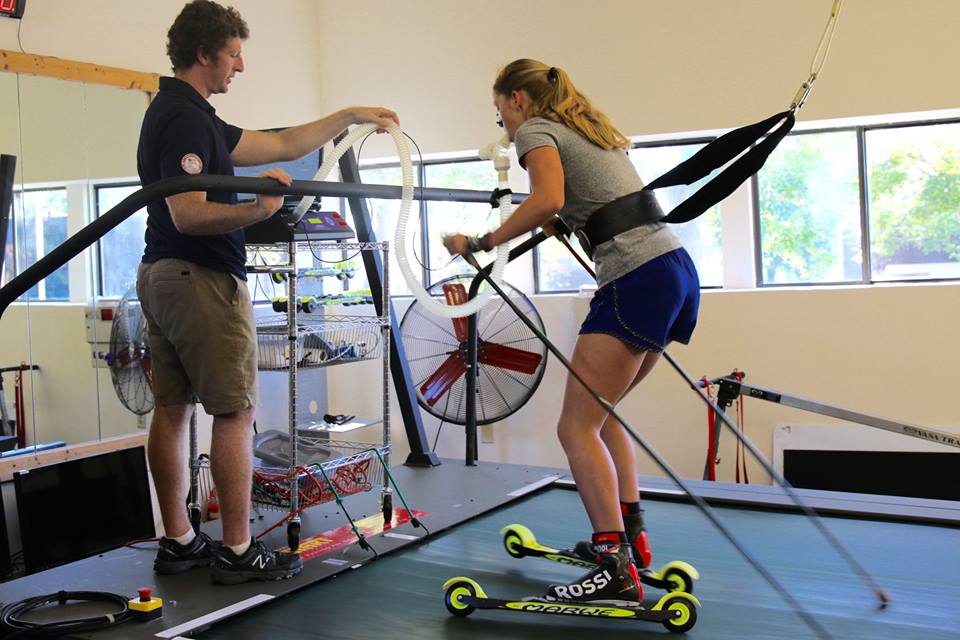
    Central Cross Country (CXC) Junior Development skier Siri Martin (r) gets a mid-summer VO2 max test on the rollerski treadmill at the Center of Excellence in Madison, Wisc. in late July (Photo: CXC Facebook)
    Central Cross Country (CXC) junior development skier Siri Martin (r) gets a mid-summer VO2max test on the rollerski treadmill at CXC’s Center of Excellence in Madison, Wis., in late July (Photo: CXC Facebook)

    A glance into any one of the glass windows lining the east side of Central Cross Country (CXC) Academy’s Center of Excellence building might give the impression of the average athlete gym. But if you step across the front threshold or take a peek at the academy’s 360-degree virtual online tour and sport science page, you’ll find much more than treadmills, stationary bikes and medicine balls.

    Located in Madison, Wis., the CXC Center of Excellence also houses a 10-by-12-foot rollerski treadmill, SkiErgs, and an in-house-made, power-pole machine. For many, though, equipment is not the most powerful tool in the center. Rather, it’s the center’s capacity to evaluate and educate its members and non-members alike about nordic skiing.

    Currently, the Center of Excellence offers performance evaluations, as well as fitness testing for lactate and VO2max using the oversized treadmill. Recorded and individualized technique coaching sessions on the rollerski treadmill are also available for those willing to pay $150 dollars per hour. To help athletes gain a better understanding of their body within sport, the center is also presently working on developing a biomechanical analysis software.

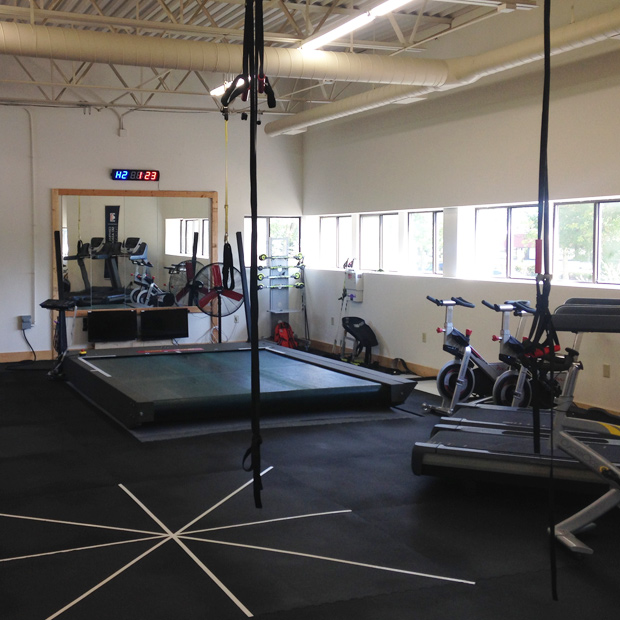
    A view of Central Cross Country's rollerski treadmill from the inside of the Center of Excellence (Photo: cxcacademy.com)
    The rollerski treadmill at the CXC Academy Center of Excellence (Photo: cxcacademy.com)

    And CXC recently hired a sport development and education director, Egor Akimov, CXC head coach Andy Keller explained on the phone.

    “He’s got a bachelor’s and PhD from the Russian State University in physical education and sport, so he majored in human physiology, he’s competed over in Russia and then he served on the Moscow Center of advanced sports technology as the head of the science department,” Keller said. “So he’s done a lot of research over in Russia on the biomechanics and stuff like that. He’s kind of leading our center [in Madison], doing a lot of the sessions down there and the technique work.”

    According to the CXC Executive and Athletic Director Yuriy Gusev, the Center of Excellence is approximately 90 percent complete. Anyone from CXC club members, to donors, to CXC team members, and the general public, can access the center at no cost. Rollerski treadmill evaluations cost CXC clubs $250 per day, $150 per hour for all others.

    “We are finalizing a few more partnerships on the sports science program and equipment but will start performing studies in cross country skiing this coming fall,” Gusev wrote in an email. “Our goal is to have top sports science facility to study latest innovations in the sport, potential application in cross country skiing to improve training, recovery and performance.”

    While the CXC elite team, known as the CXC Team, uses the center for testing, its current base in Marquette, Mich. has also led the team to seek out other partnerships. This included collaborating with the Northern Michigan University (NMU) Olympic Training Site, allowing CXC Team members to use the school’s facility and other amenities.

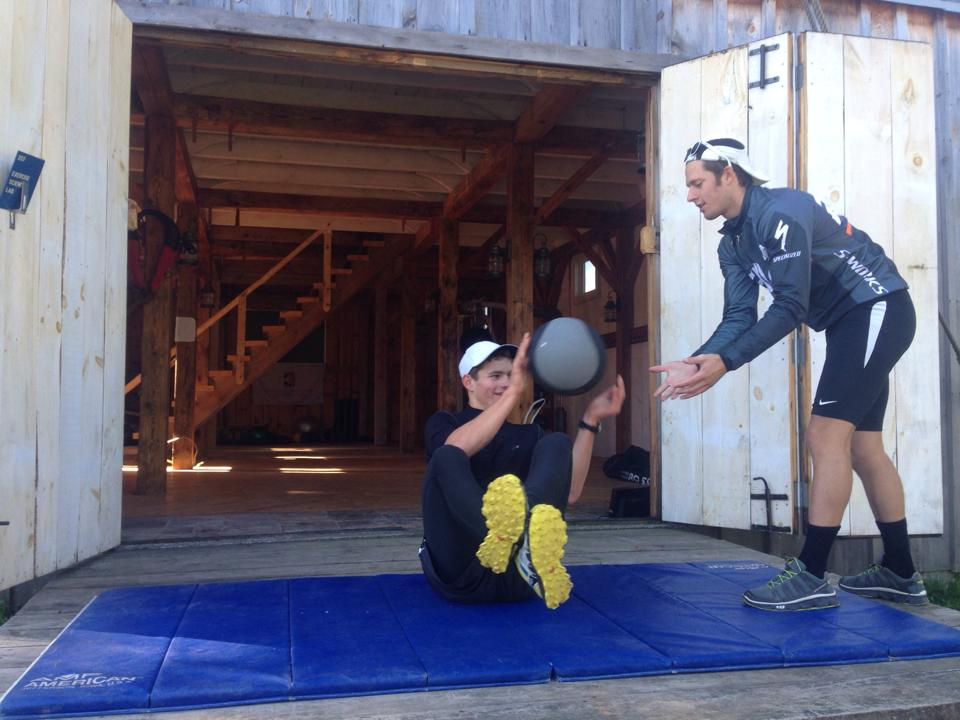
    The newly appointed CXC Team Head Coach Andy Keller (r) works on strength with an athlete outside a barn near Cable, Wis. (Photo: CXC/Facebook)
    CXC Team Head Coach Andy Keller (r) works on strength with Scott Harrison outside a barn near the team’s former home base in Cable, Wis., in 2014. The team is now based in Marquette, Mich. (Photo: CXC/Facebook)

    “This year we moved up to Marquette partly because a lot of the athletes have come from Northern Michigan, but also because there’s quite a bit of opportunity up here,” Keller said. “We’ve kind of partnered up with the Olympic training site located here. So we’ve been able to use the dorms on campus, offer schooling, have a training room and weight facilities available. … [The move to Marquette] has given us a lot more freedom with athlete housing and training opportunities.”

    At present, the CXC Team has three full-time athletes and two part-time collegiate skiers. Kyle Bratrud returned to the CXC elite team for his second year; new full-time members include Dartmouth graduate Oscar Friedman and NMU grad Felicia Gesior. Jan Ketterson, a Dartmouth student currently taking the fall and winter trimesters off to focus on skiing, plans to race for CXC along with Nicole Bathe, presently a student at University of Alaska Fairbanks.

    The growing numbers on the CXC Team was one reason CXC also recently decided to nix its marathon team, Keller explained.

    “That was kind of another thing with refocusing with the marathon team, just my role and what resources I can put out just being by myself,” Keller said. “The main reason why we [ended our marathon team] is we’re trying to make a big push to promote club development.”

    By discontinuing the marathon team, CXC saw an opportunity for athletes to return to their home clubs and promote racing on a more local, community-based level.

    “The athletes that were on our team last year, both our current athletes and our previous athletes that we don’t have on the team anymore, we encouraged them this upcoming year to be a part of the clubs in their local area,” Keller said. “From what I heard in talking to them, most will continue to race in some facet.”

    Chris Pappathopoulos won the men's overall Central Cross Country Marathon Cup last season while competing for the CXC marathon team. (Photo: CXC)
    Chris Pappathopoulos won the men’s overall CXC Marathon Cup last season while competing for the CXC marathon team. (Photo: CXC)

    He added that the team’s reigning CXC Marathon Cup winner Chris Pappathopoulos would likely be supported by companies like Rossignol and Boulder Nordic Sport.

    While former CXC marathon team members like Pappathopoulos will look to return to their local clubs, Keller looks to expand the CXC Team program and podium at U.S. nationals with the athletes he’s currently working with.

    “For a couple years [CXC] was really down and out from the years when we had Jessie [Diggins], Caitlin [Gregg], and Jennie [Bender], all those strong athletes,” he said. “So we definitely want to get back to fighting for SuperTour podiums, fighting for World Cup spots … and in this next year, I think there’s athletes who are on our team that are capable of it.”

    With access to the NMU Olympic Training Site, CXC’s Center of Excellence and new scientific research taking place this fall,  Keller doesn’t doubt CXC as a force to be reckoned with this season and seasons to come.

    “We have the training group, we have the structure and the facilities,” Keller said. “And I think the more excitement we got here, the more we can achieve those goals of being at the top level.”

  • For Better-Feeling Marathons, Try Taking More Feeds

    For Better-Feeling Marathons, Try Taking More Feeds

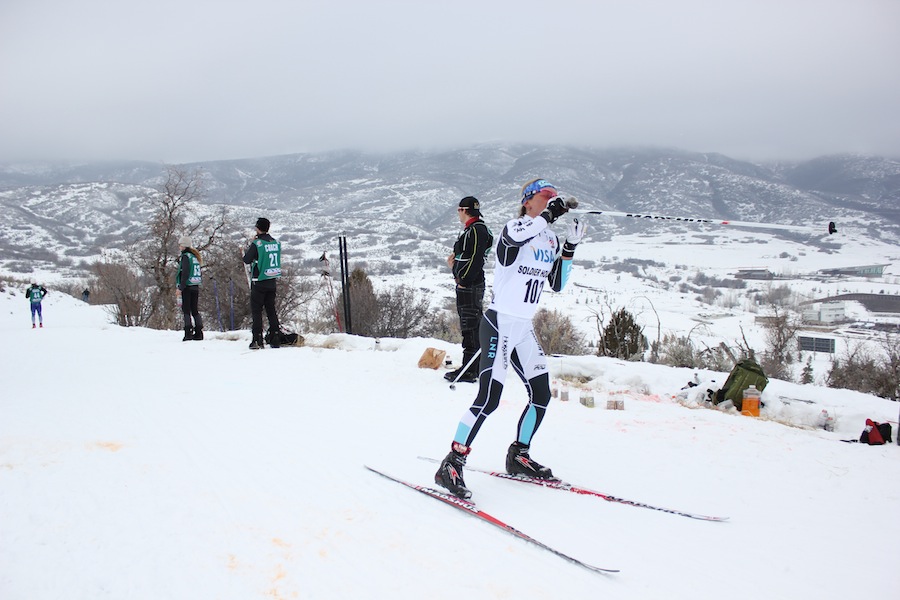
    Caitlin Gregg (Team Gregg/Madshus) gets a feed on the high point of the course in the 20 k freestyle mass start at U.S. nationals at Soldier Hollow, Utah, last January.
    Caitlin Gregg (Team Gregg/Madshus) gets a feed on the high point of the course in the 20 k freestyle mass start at U.S. nationals at Soldier Hollow, Utah, last January.

    What’s the best strategy for feeds in a ski marathon? How many carbohydrates do you need, and how often?

    That’s the question asked by a team of researchers from Mid Sweden University in Östersund and the University of Bath in Great Britain. With a group of experienced, but not elite, adult ski racers, they investigated high and low carbohydrate feeds delivered at high or low frequency over the course of several 30 k rollerski time trials on a treadmill.

    The results were recently published in the Scandinavian Journal of Medicine and Science and Sports. While the skiers did not perform differently under the various feeding regimes, a number of physiological variables did change.

    “The take-away message I would give to athletes, from this study, is to understand how nutrition can affect metabolism,” lead author Ben Stocks wrote in an email. “There are certain metabolic things we want to see during endurance exercise… One of those is maintenance of normal blood sugar levels and this study would suggest that, on average, drinking smaller volumes of carbohydrate more regularly is beneficial in that regard. Additionally, the little and often approach appears to cause less discomfort than the larger drinks taken less often.”

    The feeds were calculated to provide particular rates of carbohydrates per minute, with amounts calibrated to each athlete based on how long they took to ski between the set distances where feeds were delivered.

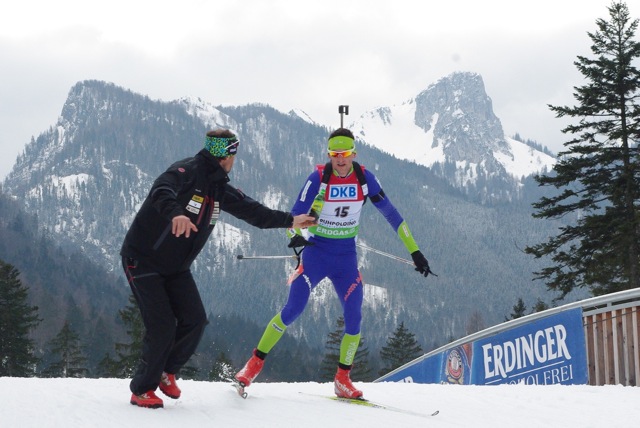
    Jakov Fak of Slovenia fueling up en route to a World Championship title in the 20 k individual at 2012 World Championships in Ruhpolding, Germany.
    Jakov Fak of Slovenia fueling up en route to a World Championship title in the 20 k individual at 2012 World Championships in Ruhpolding, Germany.

    The high carbohydrate treatment delivered about double the rate of the low carbohydrate treatment. In the low frequency treatment only two feeds were given, while six were given in the high frequency treatment. This required also adjusting the amount in each feed, so that in the high frequency treatment athletes only received a third as much carbohydrate per drink.

    The treadmill was slowed for the feeds as well as blood sampling, somewhat mimicking a downhill on the racecourse (although of course treadmills can’t go downhill). Each athlete did four time trials, one for each feeding regime, in a randomized order with at least four days in between.

    The researchers found that with only two feeds, athletes could not maintain a normal, steady blood sugar level.

    “This is important because glucose is transported from the blood into the muscles and forms a critical fuel during exercise performance,” Stocks wrote in his email. “We know from studies in other sports, such as cycling, that a reduction in blood sugar levels is related to the onset of fatigue and, therefore, an inability to continue exercising at the same intensity. Maintaining blood sugar levels is therefore a crucial strategy to maximising performance in endurance sports.”

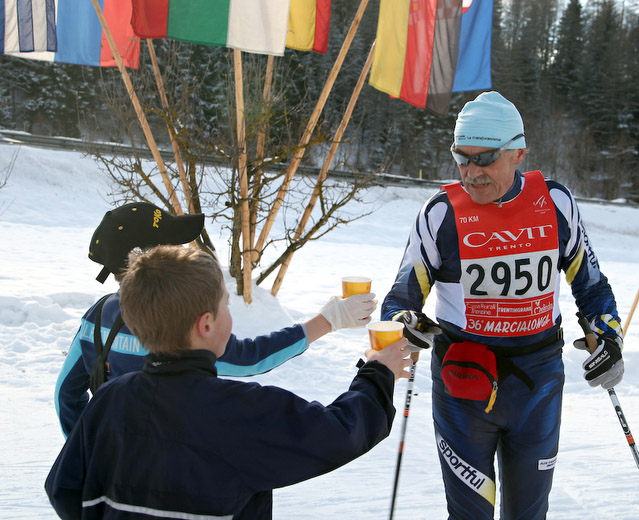
    Feeds aren't just important for naitonal and world champions! Kids hand out drinks on the  Marcialonga trail in Italy.
    Feeds aren’t just important for naitonal and world champions! Kids hand out drinks on the Marcialonga trail in Italy.

    They also found that athletes experienced greater gastrointestinal discomfort when consuming a lot of carbohydrates but only infrequently.

    However, performance did not improve under any particular feeding regime. Instead, times to complete the 30 k test improved with each successive time trial, no matter what order the treatments were completed.

    “Increased gastrointestinal discomfort is not going to improve performance and, anecdotally, will negatively affect performance in some individuals,” Stocks wrote. “Therefore, in the absence of any obvious performance effects, increased gastrointestinal discomfort and poorer maintenance of blood sugar levels suggest to us that low frequency carbohydrate drinking should not be a recommended strategy.”

    As for the amount of carbohydrate delivered, there didn’t appear to be major differences in physiological variables between the high-carb and low-carb feeding treatments when both were delivered six times over the course of the time trial. Frequency seemed to be more important than amount.

    One suggestion in the paper was that after a baseline carbohydrate ingestion rate of 1 to 1.3 grams per minute, adding more and more carbs doesn’t give much benefit, at least over the 30 k distance. In a longer race, that may change as the body would be forced to dip into and deplete glycogen stores.

    While the results seem to be clearcut that frequent feeds provide for a better race experience, if not necessarily better performance, Stocks cautioned that the real takeaway message was to get to know your body.

    “It is important to stress that every individual responds differently to these things and that it is important to work out for yourself how different nutritional approaches affect you,” he wrote. “While it may be difficult to measure blood glucose without visiting a specialist sports science centre, your feelings of gastrointestinal discomfort are easy monitor, as is your performance and that is the ultimate goal. Get to know what works best for you.”

  • This Month In Journals: All About Intervals

    This Month In Journals: All About Intervals

    This month, we’re doing a slightly different take on journal club. We’ll look at some new academic research into endurance training, then question how it can be applied to cross country skiing.

    We’ve already discussed, on several occasions, how VO2Max is not necessarily a good predictor of success as a ski racer. But this is often one of the response variables for studies of training responses, along with time to exhaustion, power output, and lactate levels. So how easy is it to take research that focuses on raising these numbers, and apply it to a complex, dynamic sport such as skiing?

    Before delving into this question further, let’s review a few papers that came out in the last month looking at different aspects on interval and intensity training. Here’s what researchers have recently been addressing.

    Kristiansand Study: A team from the University of Agden in Kristiansand, Norway, wanted to know how training intensity and accumulated time at intensity across a training block affect an athlete’s adaptation to work hard.

    Dr. Stephen Seiler and his colleagues designed four seven-week training plans: one of only easy distance training, and three with varying levels of intervals, ranging from 16-minute repeats at threshold to four-minute intervals at higher than race pace. The study subjects, masters cyclists, were assigned to a training plan, and physiological changes were tracked compared to their initial conditioning. Within each group of athletes, the intervals were assigned twice a week.

    The study’s results, published in the Scandinavian Journal of Medicine and Science in Sports, showed that the greatest physiological gains came from the group of test subjects who did 8-minute intervals twice a week at about 90 % of their maximum heart rate. That group showed significant gains in VO2Max, power at peak VO2, and time to exhaustion when doing max tests at the end of the study.

    In other words: it’s not all that useful to do threshold intervals that are too short, but submaximal effort is still incredibly valuable.

    “Our findings seemingly contradict recent research concluding that ‘up to an intensity approzimating VO2Max, intensity determines the training response, not duration,’” the authors wrote. “… Intensity and work duration appear to be integrated, and not independent of each other as signaling components of the adaptive response to training.”

    Stirling-Dublin Study: A group from the University of Stirling in Scotland and University College Dublin in Ireland looked at a slightly different question in regards to training block design – whether training sessions within a block should be similar or very different. Dr. Craig Neal and his colleagues published a study in the Journal of Applied Physiology asserting that having a large difference between intensities of training led to the biggest performance gains.

    Like the Kristiansand group, this team used cyclists, and designed two six-week training blocks. One featured 80% of the work at low intensity and 20 % of the work at high intensity; the second was more broadly distributed, with none at high intensity but 43 % of the work at middle or threshold intensity. The 80/20 treatment was similar to the Kristiansand group’s high-intensity treatment: three times a week, the cyclists did 6 x 4 minute intervals. The other treatment consisted of continuous 60-minute stretches of mid-level exertion on the “workout” days.

    Across most of the physiological indicators – lactate threshold, peak power output, and work capacity at 95 % – the 80/20 group showed significant, and in some cases very significant, improvement while the threshold group did not.

    “The present study therefore confirms the hypothesis that a polarized training-intensity distribution model is an effective strategy in already well-trained endurance athletes,” the authors concluded. “[It] is recommended for trained cyclists wishing to maximally improve performance and physiological adaptation over a short-term training period, particularly if they are currently following a threshold training distribution model.”


    * * *

    Now. What do these studies actually mean? Because at face value, they have different conclusions: one supports high-intensity, four-minute intervals, the other, longer eight-minute threshold intervals. Should skiers switch their training to focus on one or the other? And if they did, how would they choose between them?

    Why All These Studies?

    The fact that two studies, assessing very similar questions, were published in the same month is not surprising – training is big business, not just for elite athletes with their sponsors and prize money, but for the booming recreational sports industry and weekend warriors always looking for the best way to train.

    A Web of Knowledge search for “interval training” revealed more than 1,000 articles. Not all were about endurance training – some focused on other sports, like soccer or football – but you get the idea. There are tons of studies addressing these questions, and more coming out every year. Why should we take one of these recent papers as uprooting all this previous research?

    First, let’s turn to the authors themselves. The Kristiansand team noted that their study was different from several other recent papers because many researchers prescribe the same amount of work across groups in a study, but have that work be at different intensity. They believe their approach, of varying from longer intervals at a slightly lower work rate to short intervals at absolute maximum, more realistically matches how athletes and coaches design their training.

    The Scottish and Irish researchers, also asserted that their training design was more relevant to actual athletes than previous research, noting that an 80/20 distribution of low- and high-intensity training was common. They also invoked the idea that “zone 2” training was useless, and claimed to have demonstrated as much with the failure of their threshold training program.

    In comparing the two studies, one major problem immediately jumps out: they don’t report the same types of data or use the same response variables. For instance, the Kristiansand team reported extensively on the characteristics of the work done in each training regimen, including data for percent of maximum heart rate and blood lactate levels during intervals for each group.

    Those metrics were nowhere to be seen in the other paper, which prescribed the “zones” for the athletes to train in based on lactate threshold and lactate turning point, but gave no information about the actual measurements taken on athletes during the workouts. Instead, they reported power output and real heart rate. Because the zones were so large, it’s actually very relevant to wonder exactly where within them the athletes were training.

    So it’s impossible to compare actual data from the two studies. And that might be one reason that so many studies are being done – it’s in many cases hard to directly compare protocols and results from one to another. It’s easy to argue that the specific way a study is conducted is new and adds some knowledge to what’s already out there.

    What About Skiing?

    But perhaps the bigger question is how these hyper-controlled studies interact with actual training plans for skiers. Because it’s all well and good to conclude that eight-minute intervals are the way to go, or that mid-level training is pointless, but what elite athlete only does one type of intervals, in the same formulation, week after week? No coach would recommend one of the training protocols tested above to their athlete.

    (That said, master skiers, recreational skiers, and just plain busy people who can’t fit in too many workouts each month and are looking for quick increases in fitness might be interested to see these results – if you can only do one set of intervals per week and can’t make the brainspace to plan an elaborate, multi-workout rotation, one of these might be a good candidate.)

    If it seems a little outrageous that more research isn’t being done on actual, realistic training plans, it’s important to remember who researchers are writing for. The goal of academic research is to answer a question and test a specific hypothesis, and to do so, scientists must control all other potentially confounding factors. They’re not writing for athletes or coaches, although they hope that the information they discover might be useful. Instead, they are writing for the academic community.

    And in terms of applying tightly-controlled, simplified training studies to actual sports, skiers present one of the biggest challenges in the endurance world. Like other athletes, skiers periodize their training. Each week is different than the last, and a given week likely includes several sets of intervals, of different lengths and intensities. But while runners do most of their training on foot and cyclists do most of their training on bikes, in that same week a skier might rollerski, run, bike, hike, and bound with poles, adding yet another of complexity.

    Imagine writing the methods section of an academic paper that describes a skier’s yearly training plan, and remember that the reviewers, editors, and readers are not familiar with the sport. There’s no “Journal of Cross Country Ski Science.”

    All of this is not to say that academic research is useless to skiers – far from it. If all of these studies were stopped and discontinued for the future, we’d all suffer. By oversimplifying the training regimens they prescribe, scientists are hoping not only to learn what kind of intervals are best, but also why they might be best. If they can answer some underlying physiological question, then the new knowledge can be built into complex, real-life training plans.

    So if you’re a real training and physiology geek, don’t stop reading about new research. Just remember that you’re never going to find a magic key to athletic greatness in a sports science journal – those kinds of studies don’t exist. Instead, look at the big picture, and try to find trends and underlying physiological explanations in the papers.

    This Month in Journals is our occasional series surveying the world of sports science and trying to extract tidbits of research that might be of interest to the skiing public. Previous editions can be found here: January, December, October, and September.