From the FasterSkier archive — posts syndicated from athletes’ and coaches’ own blogs between 2004 and 2012, kept online as published. Current coverage is at fasterskier.com.
On Friday at Spring Series in Fairbanks, Alaska, clubs went head to head in the 4 x 5-kilometer co-ed mixed relay at the Birch Hill Recreation Area. Below is a photo gallery, courtesy of Lance Parrish and Max Kaufman. U.S. Distance Nationals and the SuperTour season concludes Sunday with the 30/50 k freestyle mass starts.
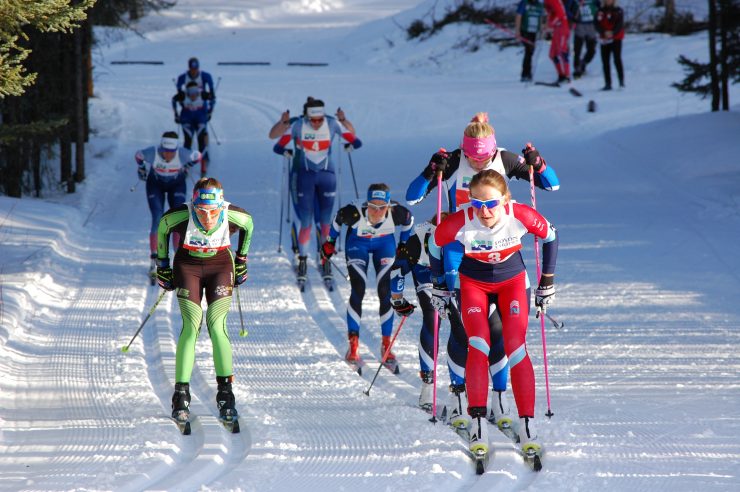
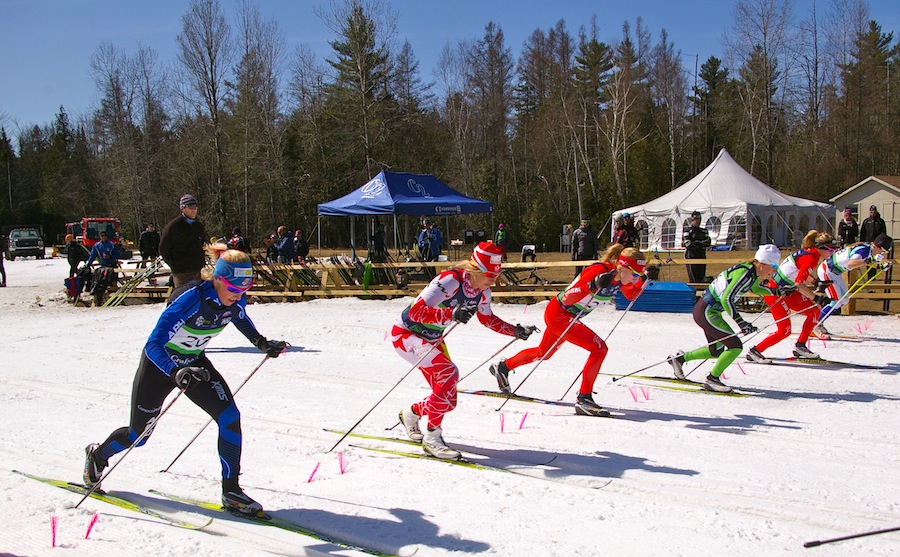
The start of the mixed relay at U.S. Distance Nationals on Friday in Fairbanks, Alaska, with Sophie Caldwell (SMS), Kikkan Randall (APU), Rosie Brennan (APU), Jessica Yeaton(APU), Annie Pokorny (SVSEF), and Kaitlynn Miller (CGRP) at the front. (Photo: Max Kaufman)
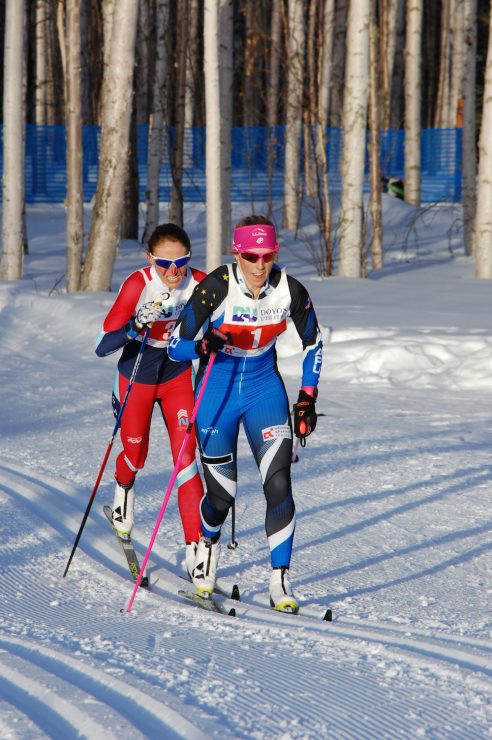
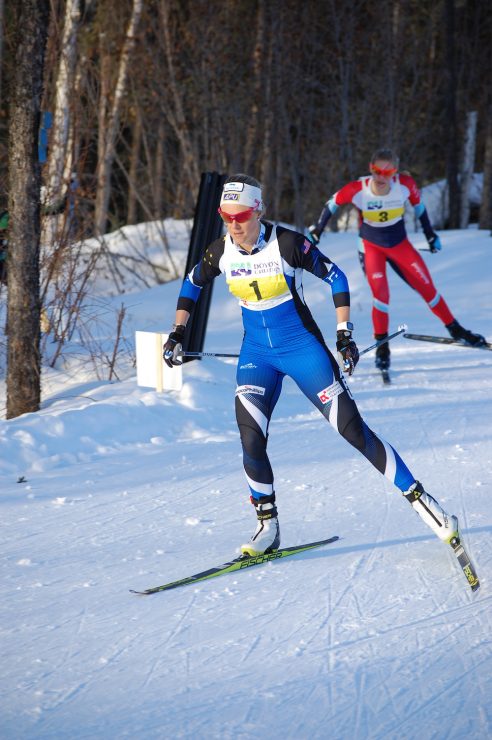
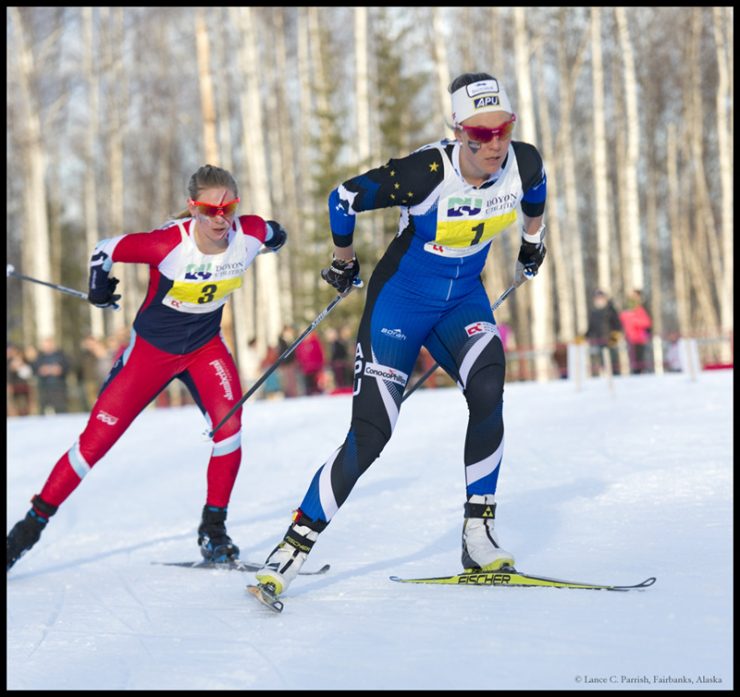
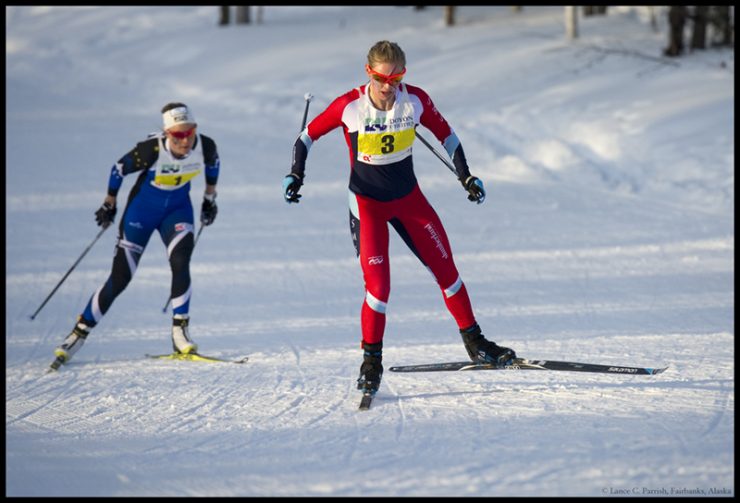
Kikkan Randall (APU) leads Sophie Caldwell (SMS Elite Team) during the first leg of the mixed relay at U.S. Distance Nationals on Friday in Fairbanks, Alaska. (Photo: Max Kaufman)
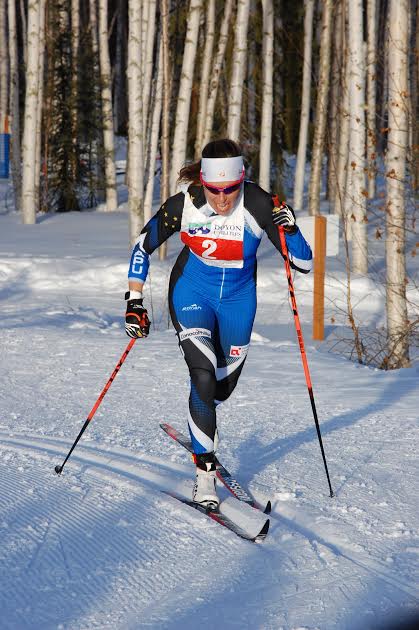
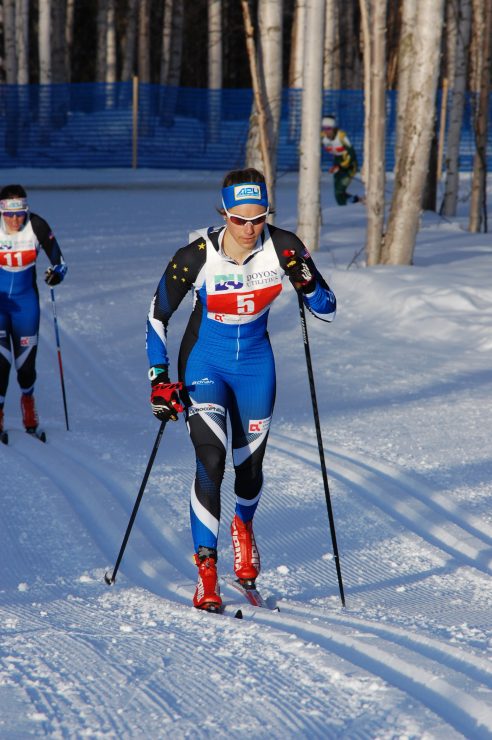
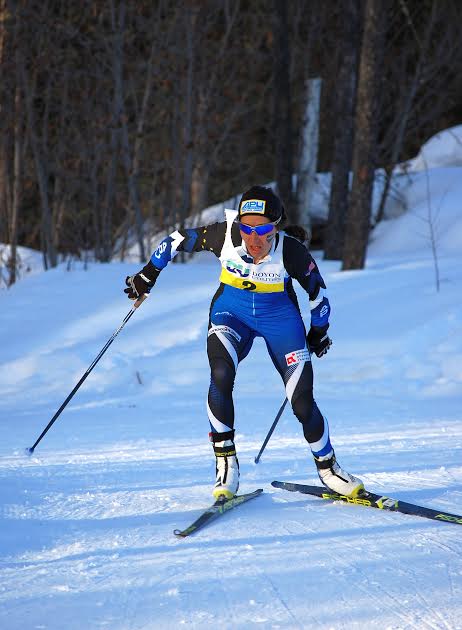
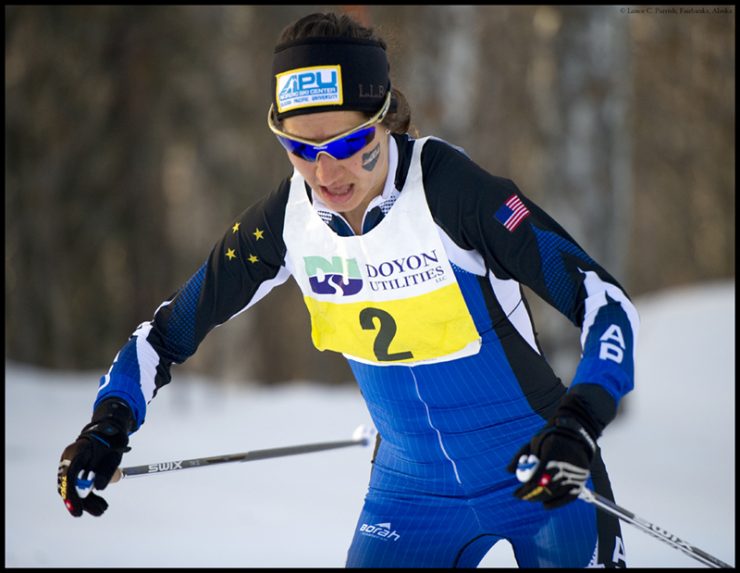
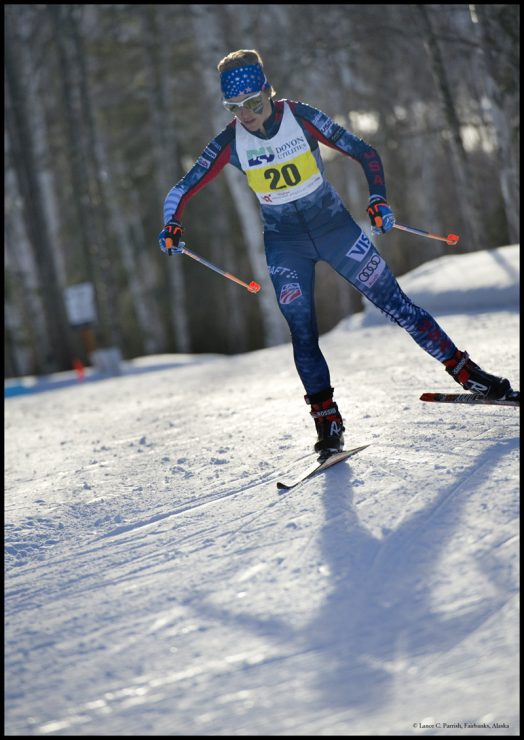
Rosie Brennan (APU) during the first leg of the mixed relay at U.S. Distance Nationals on Friday in Fairbanks, Alaska. (Photo: Max Kaufman)
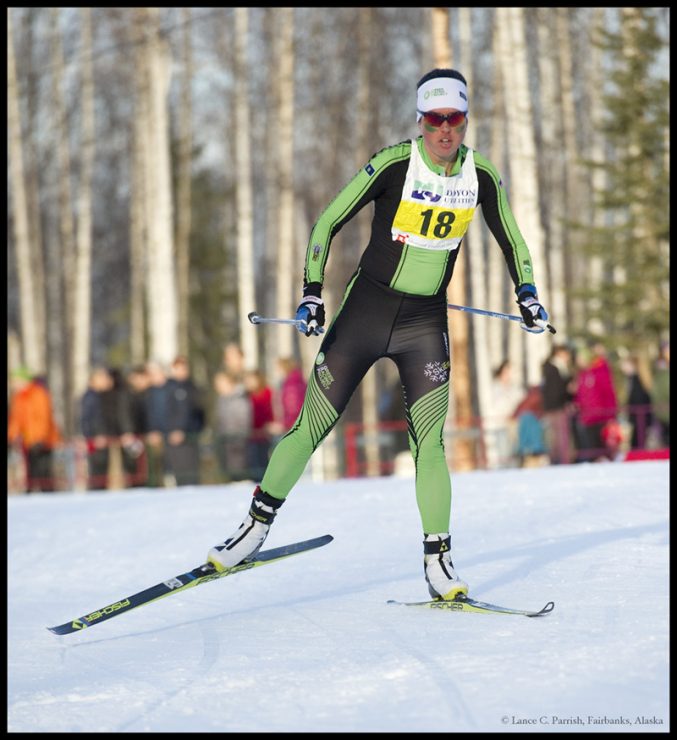
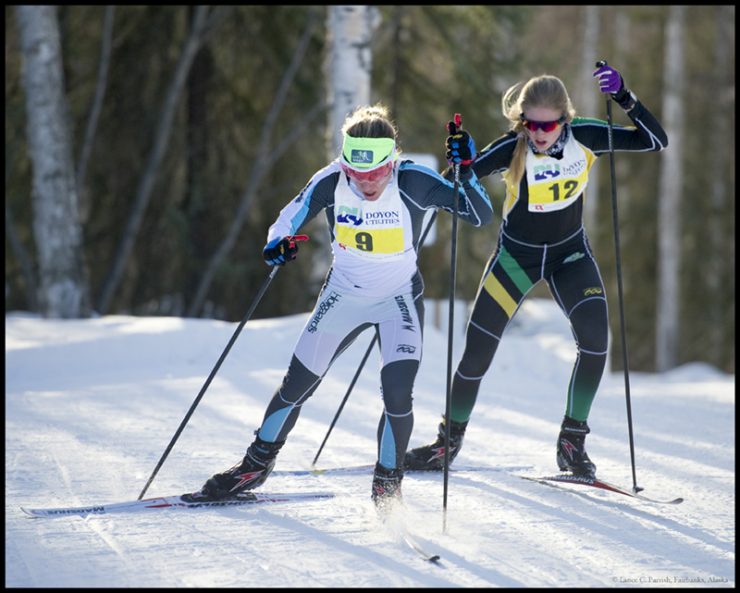
Right to left: Jessica Yeaton (APU) and Becca Rorabaugh during the first leg of the mixed relay at U.S. Distance Nationals on Friday in Fairbanks, Alaska. (Photo: Max Kaufman)
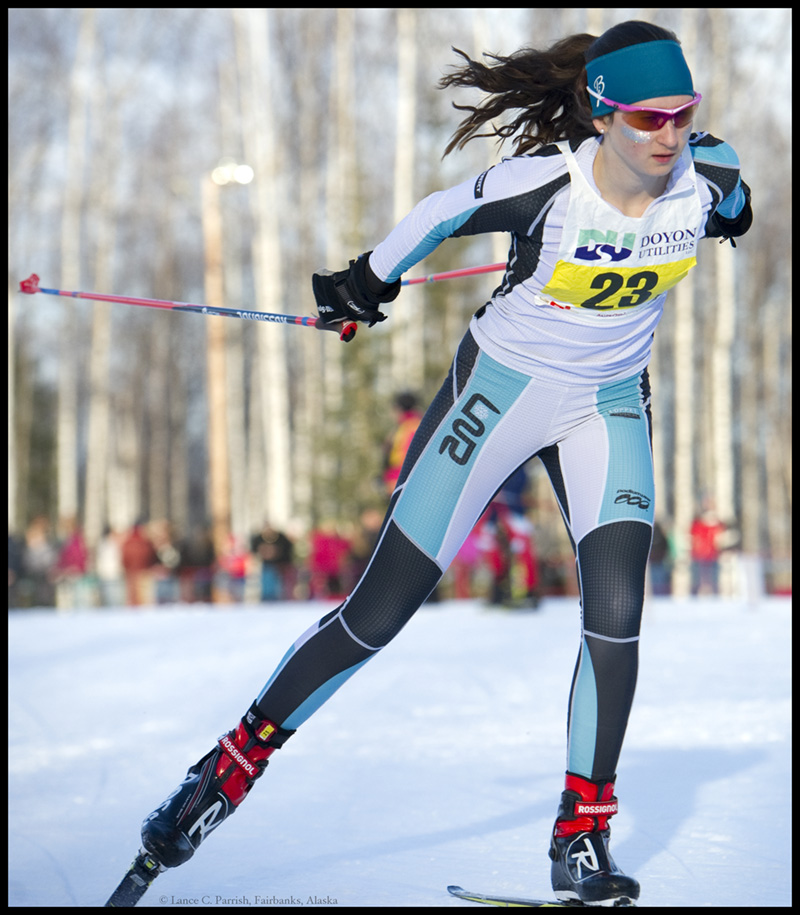
Renae Anderson (Loppet Nordic Racing) skiing the first leg of the mixed relay at U.S. Distance Nationals on Friday in Fairbanks, Alaska. (Photo: Lance Parrish, Fairbanks)
Eric Packer (APU) during the second leg of the mixed relay at U.S. Distance Nationals on Friday in Fairbanks, Alaska. (Photo: Max Kaufman)
Sadie Bjornsen (APU) leads Jessie Diggins (SMS Elite Team) during the third leg of the mixed relay at U.S. Distance Nationals on Friday in Fairbanks, Alaska. SMS went on to win by 10.3 seconds over APU. (Photo: Max Kaufman)
Left to right: Jessie Diggins (SMS Elite Team) gains on Sadie Bjornsen (APU) during the third leg of the mixed relay at U.S. Distance Nationals on Friday in Fairbanks, Alaska. (Photo: Lance Parrish, Fairbanks)
Right to left: Jessie Diggins (SMS Elite Team) after passing Sadie Bjornsen (APU) during the third leg of the mixed relay at U.S. Distance Nationals on Friday in Fairbanks, Alaska. (Photo: Lance Parrish, Fairbanks)(Photo: Lance Parrish, Fairbanks)
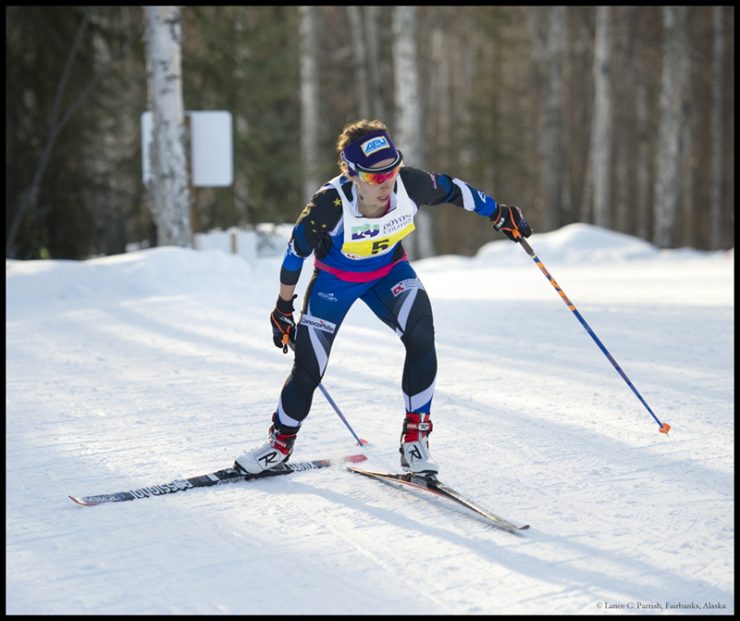
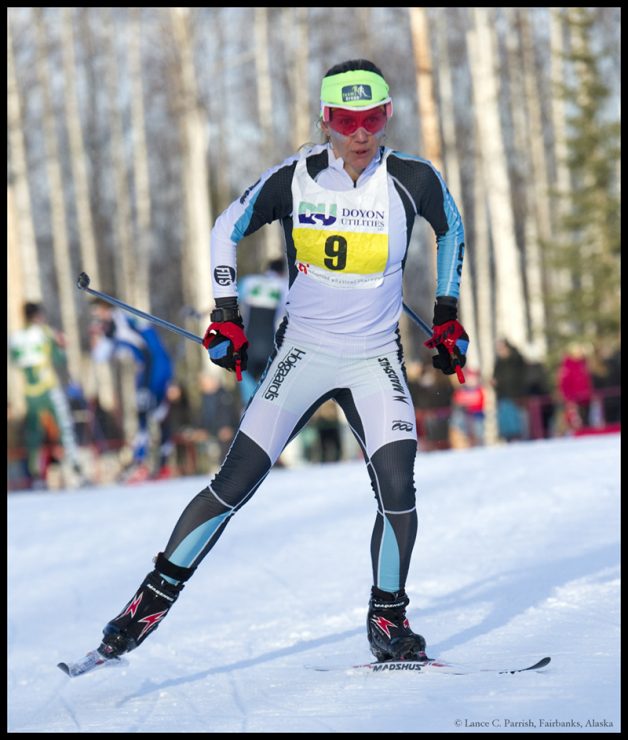
Chelsea Holmes (APU) during the third leg of the mixed relay at U.S. Distance Nationals on Friday in Fairbanks, Alaska. (Photo: Max Kaufman)
Chelsea Holmes (APU) skiing the third leg of the mixed relay at U.S. Distance Nationals on Friday in Fairbanks, Alaska. (Photo: Lance Parrish, Fairbanks)
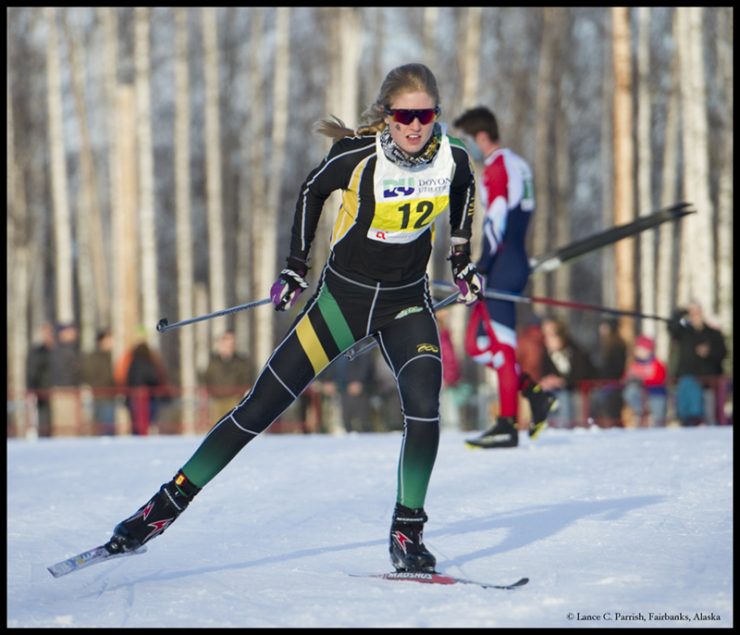
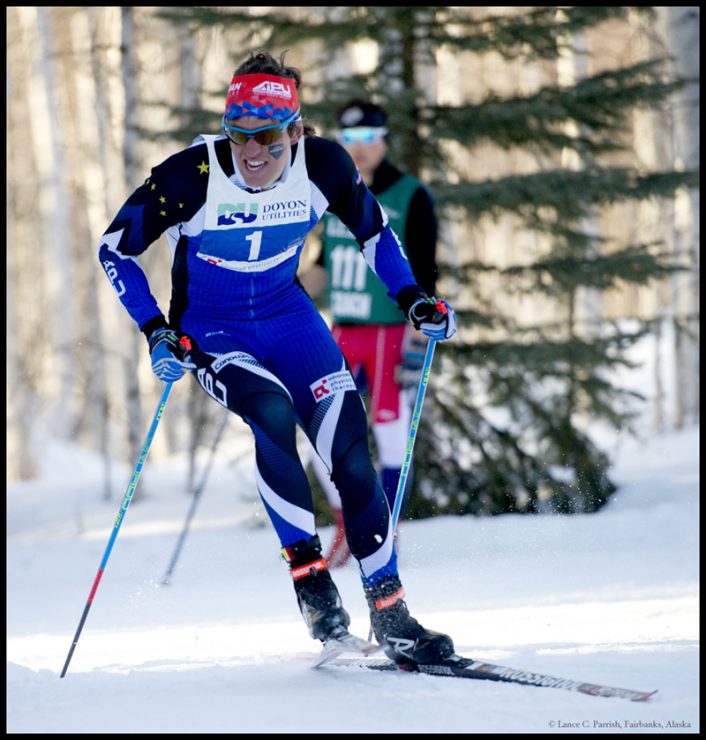
Liz Stephen racing the third leg for the APU/Sugar Bowl/Burke team during the mixed relay at U.S. Distance Nationals on Friday in Fairbanks, Alaska. (Photo: Lance Parrish, Fairbanks)
Liz Stephen racing the third leg for the APU/Sugar Bowl/Burke team during the mixed relay at U.S. Distance Nationals on Friday in Fairbanks, Alaska. (Photo: Lance Parrish, Fairbanks)
Liz Stephen racing the third leg for the APU/Sugar Bowl/Burke team during the mixed relay at U.S. Distance Nationals on Friday in Fairbanks, Alaska. (Photo: Lance Parrish, Fairbanks)
Liz Stephen racing the third leg for the APU/Sugar Bowl/Burke team during the mixed relay at U.S. Distance Nationals on Friday in Fairbanks, Alaska. (Photo: Lance Parrish, Fairbanks)
Liz Stephen racing the third leg for the APU/Sugar Bowl/Burke team during the mixed relay at U.S. Distance Nationals on Friday in Fairbanks, Alaska. (Photo: Lance Parrish, Fairbanks)
Caitlin Patterson (Craftsbury Green Racing Project) racing the mixed relay at U.S. Distance Nationals on Friday in Fairbanks, Alaska. (Photo: Lance Parrish, Fairbanks)(Photo: Lance Parrish, Fairbanks)
Rosie Frankowski (APU) racing the third leg of the mixed relay at U.S. Distance Nationals on Friday in Fairbanks, Alaska. (Photo: Lance Parrish, Fairbanks)
Left to right: Caitlin Gregg (Loppet Nordic Racing) leads Hailey Swirbul (UAA) during the thrid leg of the mixed relay at U.S. Distance Nationals on Friday in Fairbanks, Alaska. (Photo: Lance Parrish, Fairbanks)
Caitlin Gregg (Loppet Nordic Racing) skiing the third leg of the mixed relay at U.S. Distance Nationals on Friday in Fairbanks, Alaska. (Photo: Lance Parrish, Fairbanks)
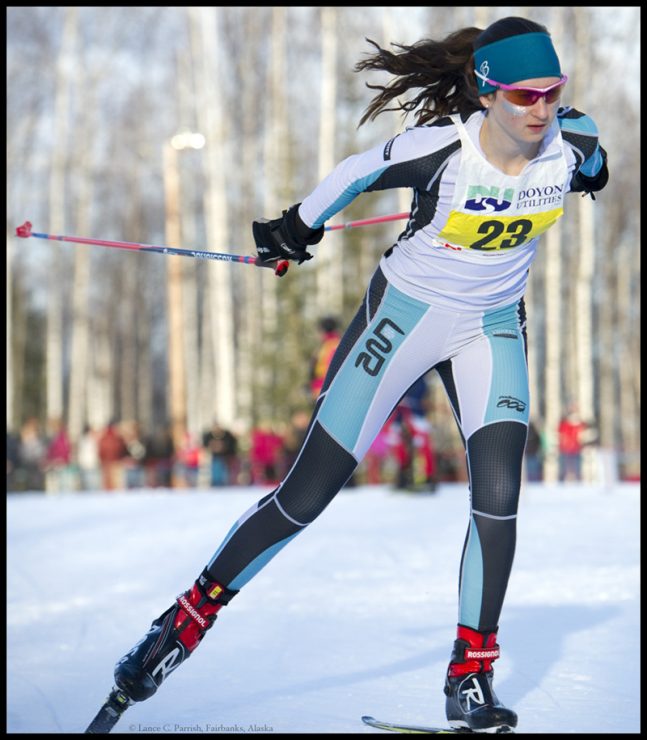
Hailey Swirbul (UAA) racing the mixed relay at U.S. Distance Nationals on Friday in Fairbanks, Alaska. (Photo: Lance Parrish, Fairbanks)
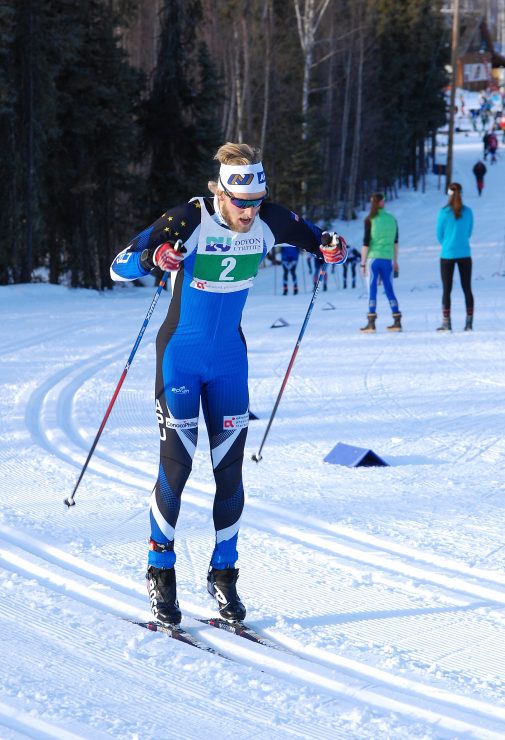
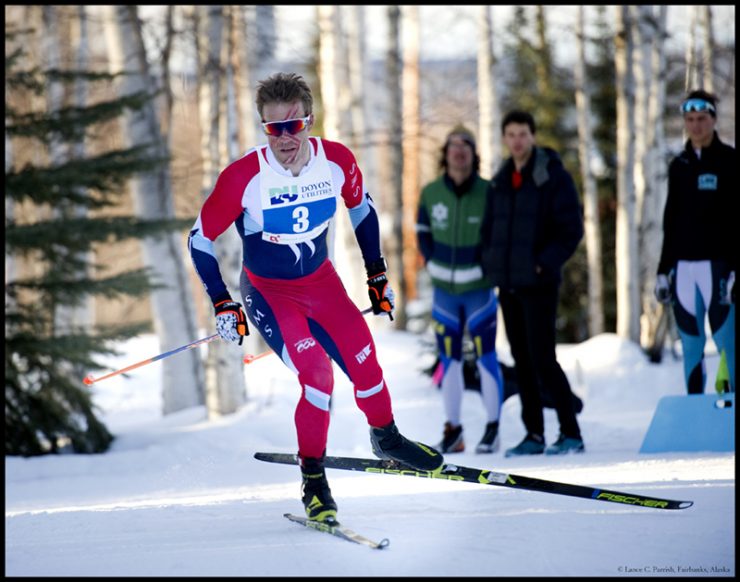
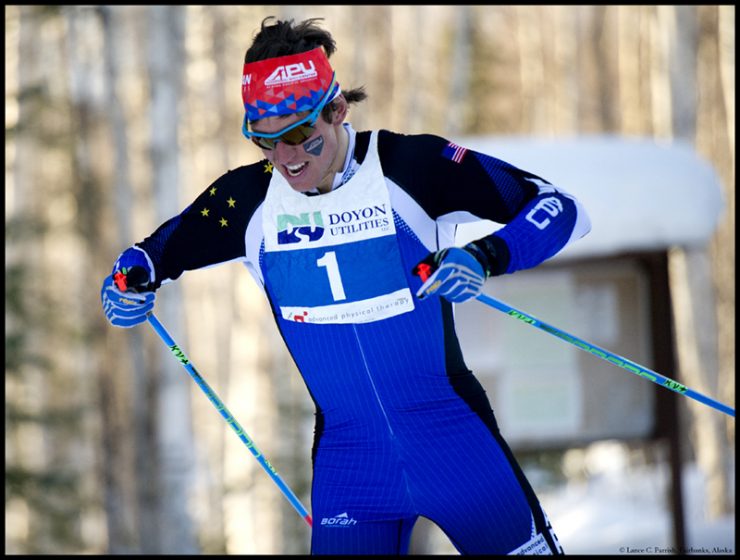
Simi Hamilton (SMS Elite Team) during the fourth leg of the mixed relay at U.S. Distance Nationals on Friday in Fairbanks, Alaska. (Photo: Lance Parrish, Fairbanks)
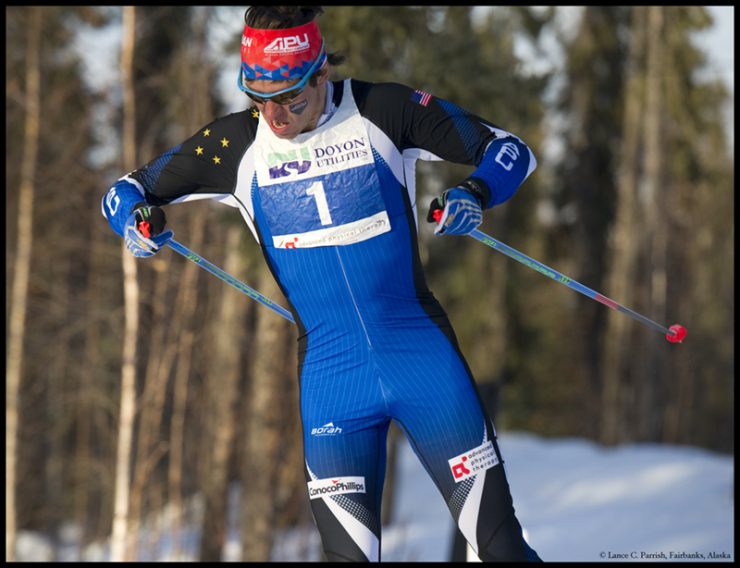
Simi Hamilton (SMS Elite Team) during the fourth leg of the mixed relay at U.S. Distance Nationals on Friday in Fairbanks, Alaska. (Photo: Lance Parrish, Fairbanks)
Simi Hamilton (SMS Elite Team) during the fourth leg of the mixed relay at U.S. Distance Nationals on Friday in Fairbanks, Alaska. (Photo: Lance Parrish, Fairbanks)
Simi Hamilton (SMS Elite Team) skiing the fourth leg of the mixed relay at U.S. Distance Nationals on Friday in Fairbanks, Alaska. (Photo: Lance Parrish, Fairbanks)
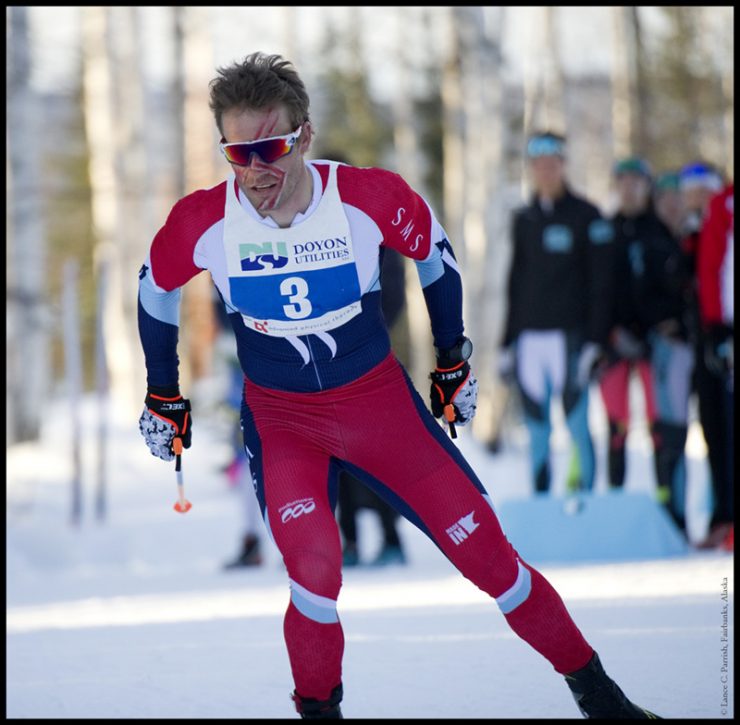
Simi Hamilton (SMS Elite Team) during the fourth leg of the mixed relay at U.S. Distance Nationals on Friday in Fairbanks, Alaska. (Photo: Max Kaufman)
Simi Hamilton (SMS Elite Team) during the fourth leg of the mixed relay at U.S. Distance Nationals on Friday in Fairbanks, Alaska. (Photo: Max Kaufman)
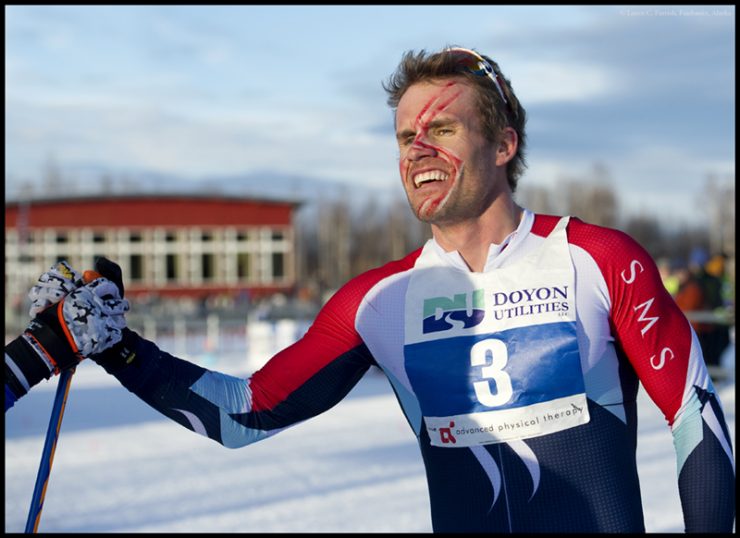
Simi Hamilton (SMS Elite Team) after the mixed relay at U.S. Distance Nationals on Friday in Fairbanks, Alaska. (Photo: Lance Parrish, Fairbanks)
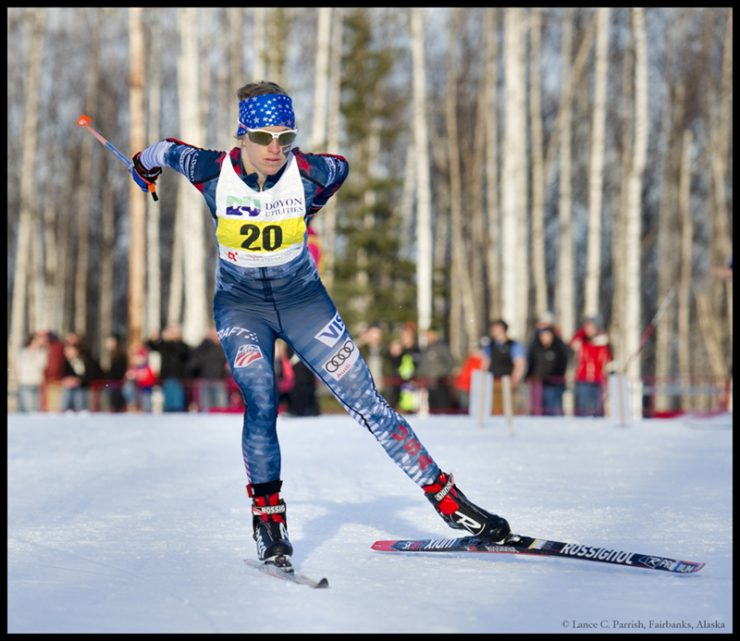
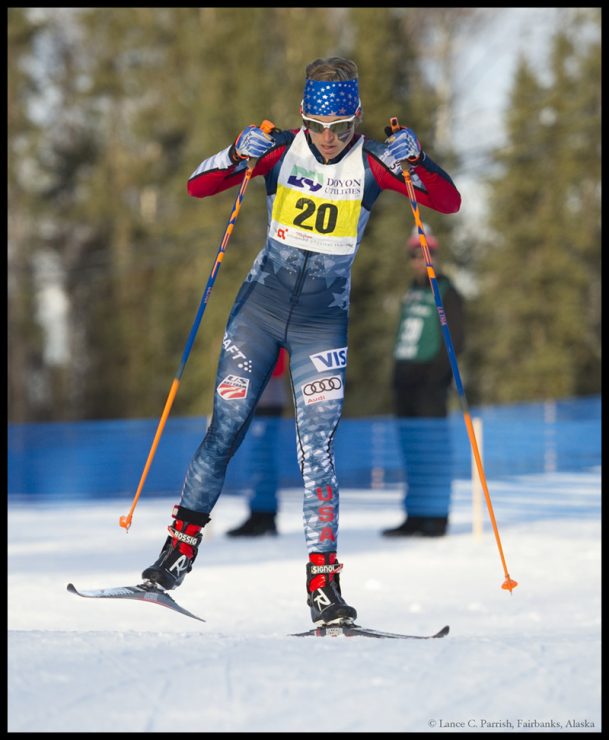
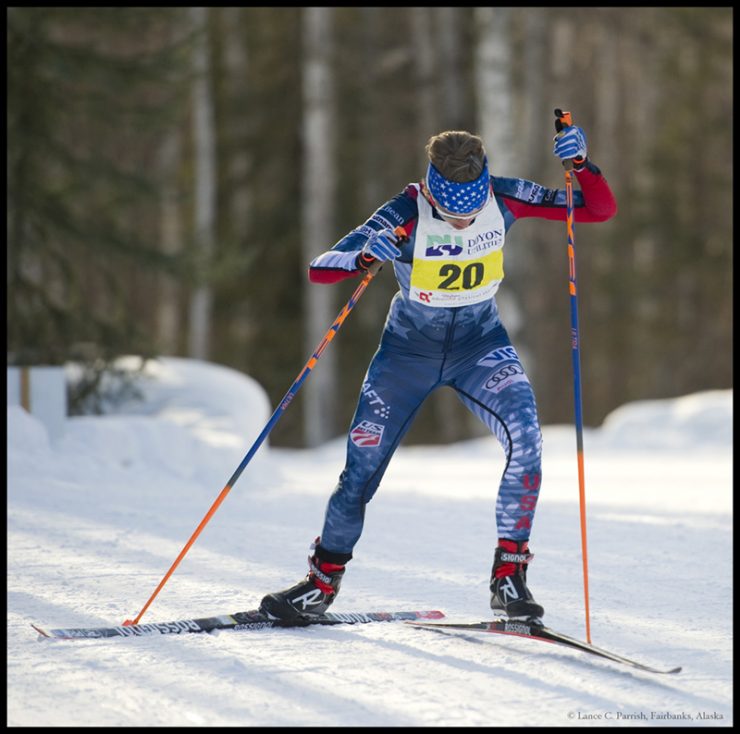
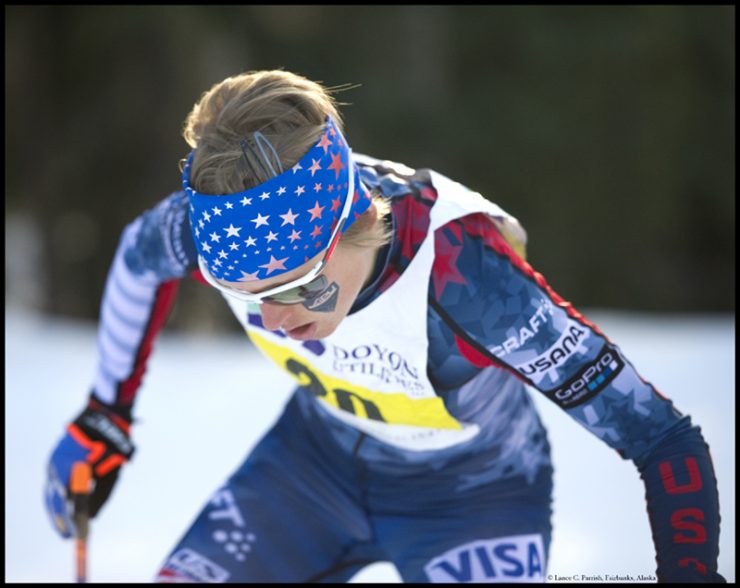
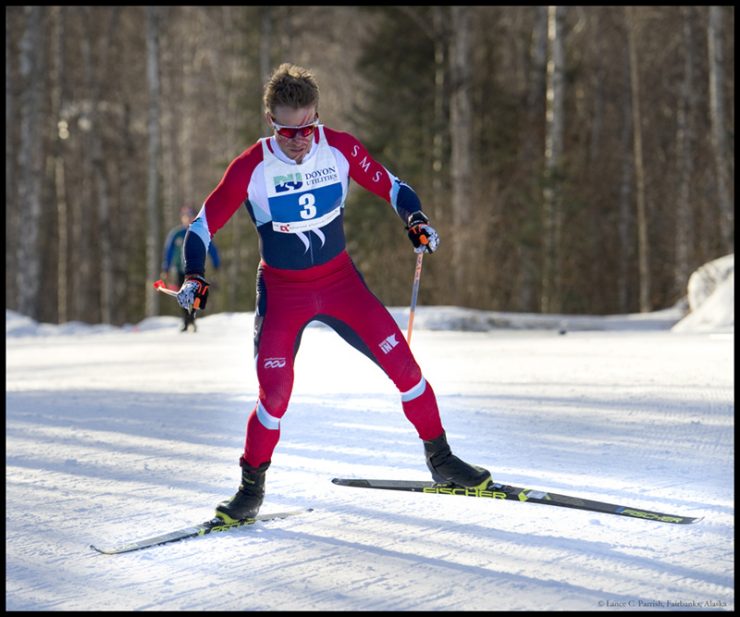
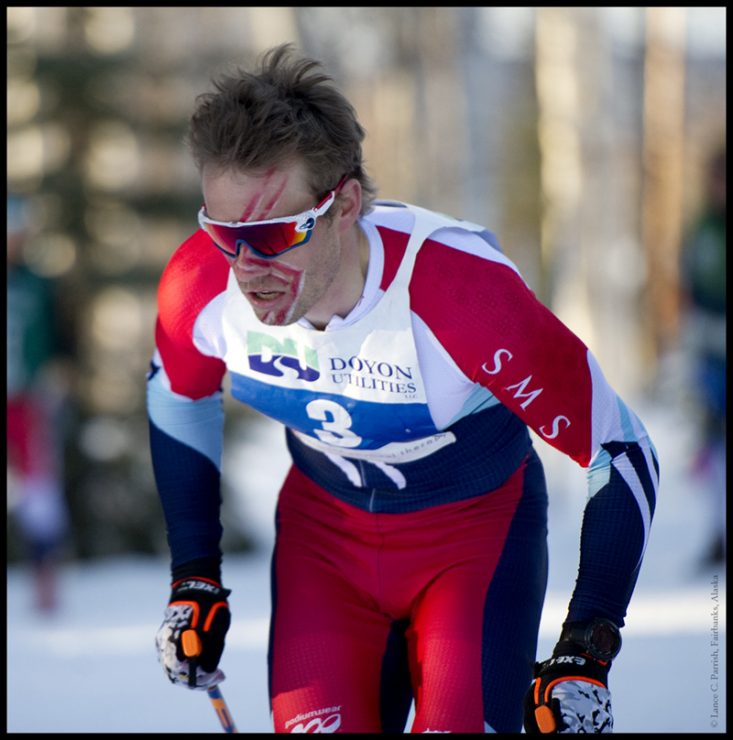
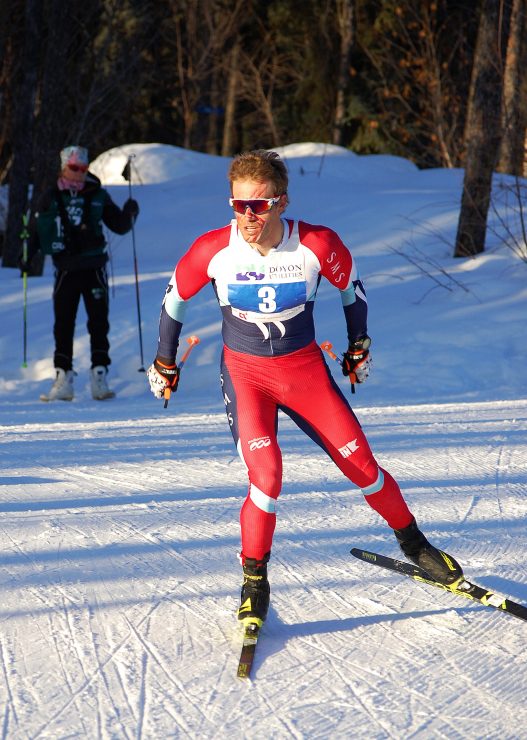
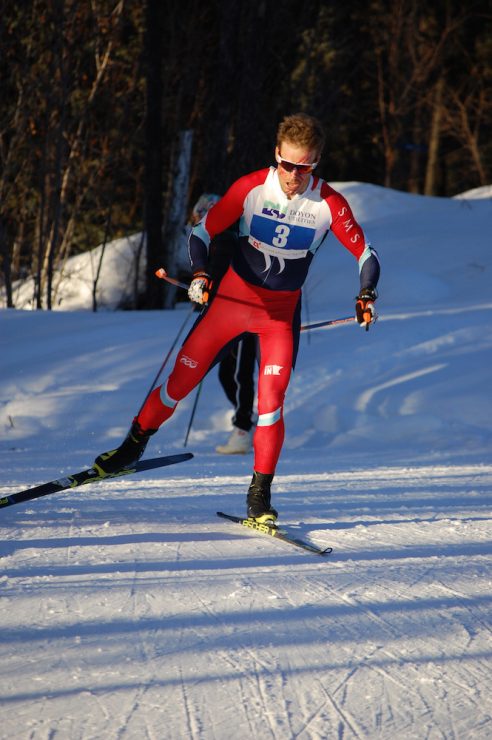
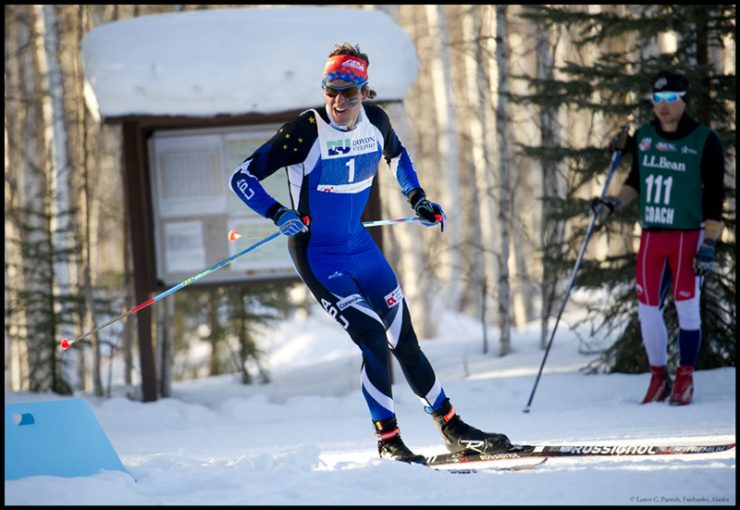
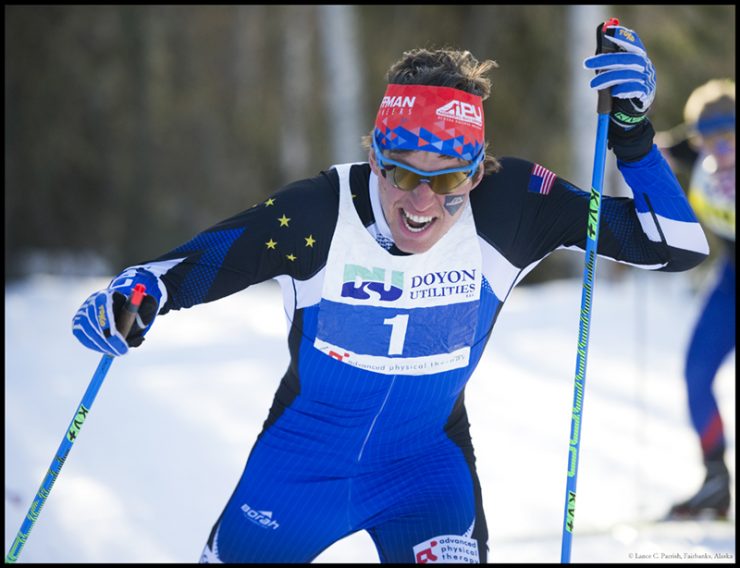
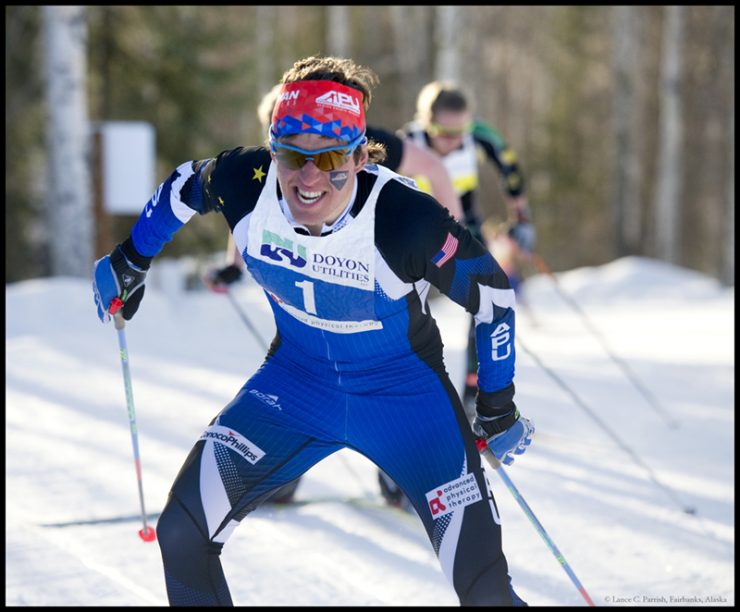
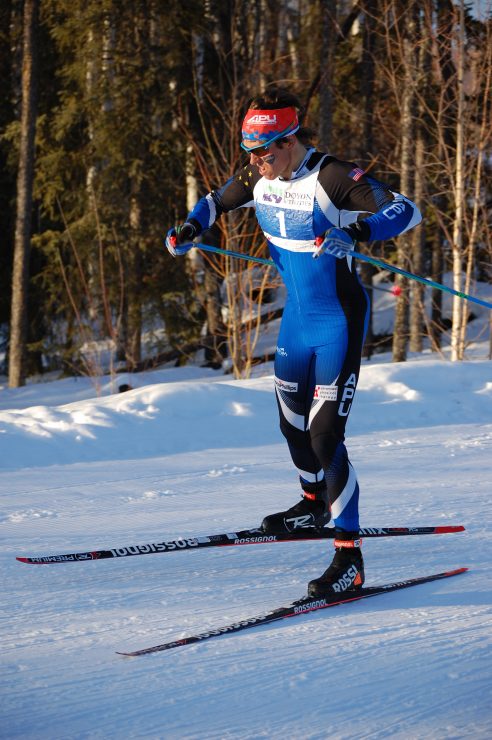
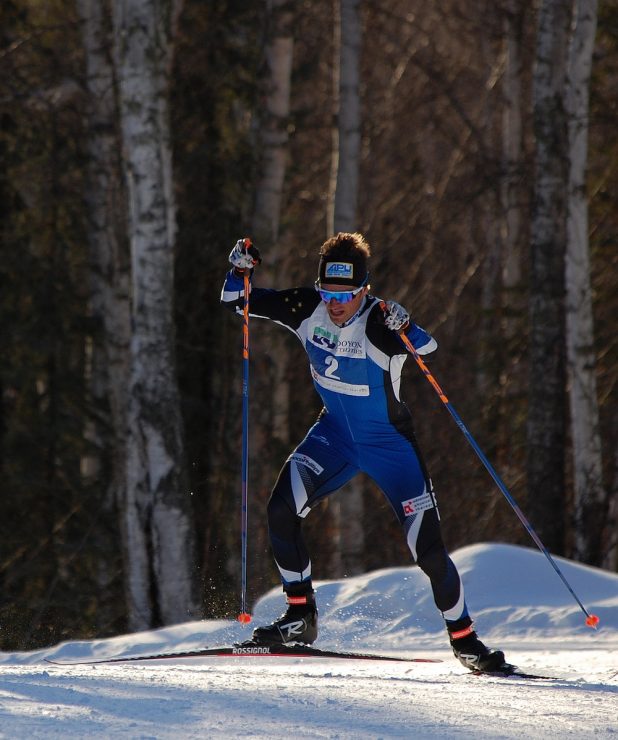
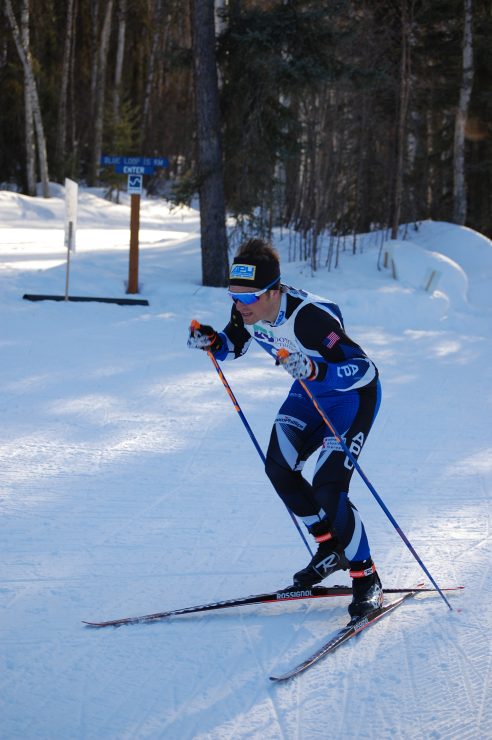
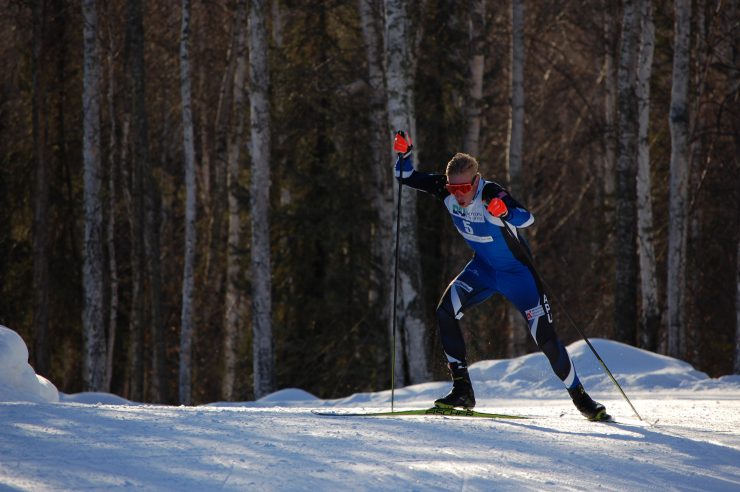
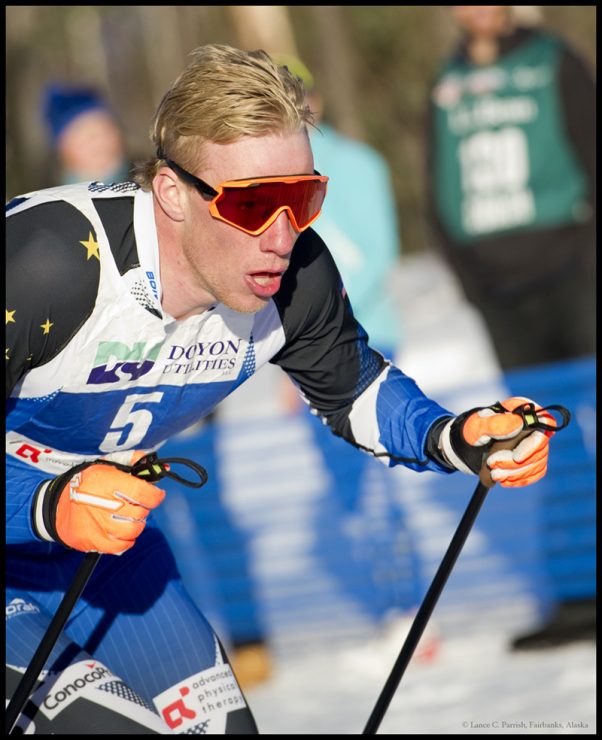
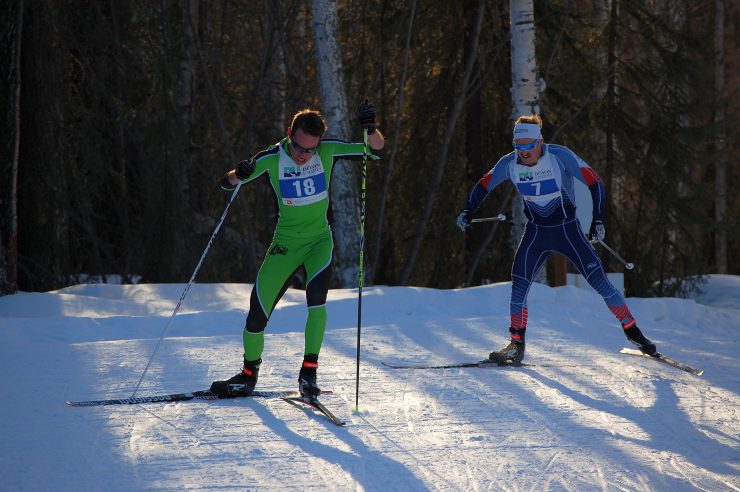
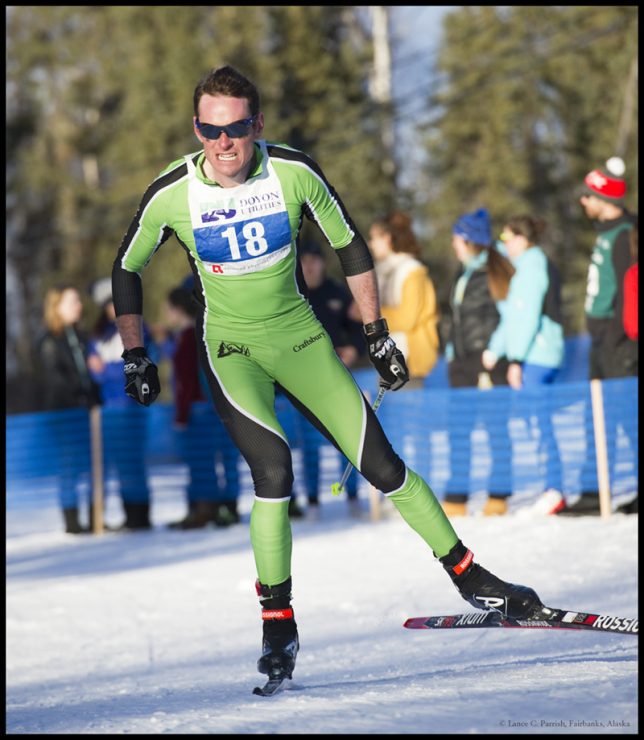
Scott Patterson (APU) during the fourth leg of the mixed relay at U.S. Distance Nationals on Friday in Fairbanks, Alaska. (Photo: Lance Parrish, Fairbanks)
Scott Patterson (APU) skiing the anchor leg of the mixed relay at U.S. Distance Nationals on Friday in Fairbanks, Alaska. (Photo: Lance Parrish, Fairbanks)
Scott Patterson (APU) during the fourth leg of the mixed relay at U.S. Distance Nationals on Friday in Fairbanks, Alaska. (Photo: Lance Parrish, Fairbanks)
Scott Patterson (APU) during the fourth leg of the mixed relay at U.S. Distance Nationals on Friday in Fairbanks, Alaska. (Photo: Lance Parrish, Fairbanks)
Scott Patterson (APU) during the fourth leg of the mixed relay at U.S. Distance Nationals on Friday in Fairbanks, Alaska. (Photo: Lance Parrish, Fairbanks)
Scott Patterson (APU) during the fourth leg of the mixed relay at U.S. Distance Nationals on Friday in Fairbanks, Alaska. (Photo: Lance Parrish, Fairbanks)
Scott Patterson (APU) during the fourth leg of the mixed relay at U.S. Distance Nationals on Friday in Fairbanks, Alaska. (Photo: Max Kaufman)
David Norris (APU) during the fourth leg of the mixed relay at U.S. Distance Nationals on Friday in Fairbanks, Alaska. (Photo: Max Kaufman)
David Norris (APU) during the fourth leg of the mixed relay at U.S. Distance Nationals on Friday in Fairbanks, Alaska. (Photo: Max Kaufman)
Logan Hanneman (APU) during the fourth leg of the mixed relay at U.S. Distance Nationals on Friday in Fairbanks, Alaska. (Photo: Max Kaufman)
Logan Hanneman (APU) skiing the fourth leg of the mixed relay at U.S. Distance Nationals on Friday in Fairbanks, Alaska. (Photo: Lance Parrish, Fairbanks)
Left to right: Craftsbury’s Ollie Burruss and Sun Valley’s Cole Morgan during the fourth leg of the mixed relay at U.S. Distance Nationals on Friday in Fairbanks, Alaska. (Photo: Max Kaufman)
Craftsbury’s Ollie Burruss racing the fourth leg of the mixed relay at U.S. Distance Nationals on Friday in Fairbanks, Alaska.(Photo: Lance Parrish, Fairbanks)
Brian Gregg (Loppet Nordic Racing) during the anchor leg of the mixed relay on Friday at U.S. Distance Nationals in Fairbanks, Alaska. (Photo: Max Kaufman)
Max LaChance (Bridger Ski Foundation) during the fourth leg of the mixed relay at U.S. Distance Nationals on Friday in Fairbanks, Alaska. (Photo: Max Kaufman)
David Norris (APU) after the mixed relay at U.S. Distance Nationals on Friday in Fairbanks, Alaska. (Photo: Lance Parrish, Fairbanks)
SMS Elite Team members (from left to right) Jessie Diggins, Simi Hamilton, Ben Saxton, and Sophie Caldwell after winning the mixed relay at U.S. Distance Nationals on Friday in Fairbanks, Alaska. (Photo: Lance Parrish, Fairbanks)
APU’s first team (front to back, left to right) Sadie Bjornsen, Kikkan Randall, Erik Bjornsen and Scott Patterson of Alaska Pacific University after placing second in the mixed relay at U.S. Distance Nationals on Friday in Fairbanks, Alaska. (Photo: Max Kaufman)(Photo: Max Kaufman)
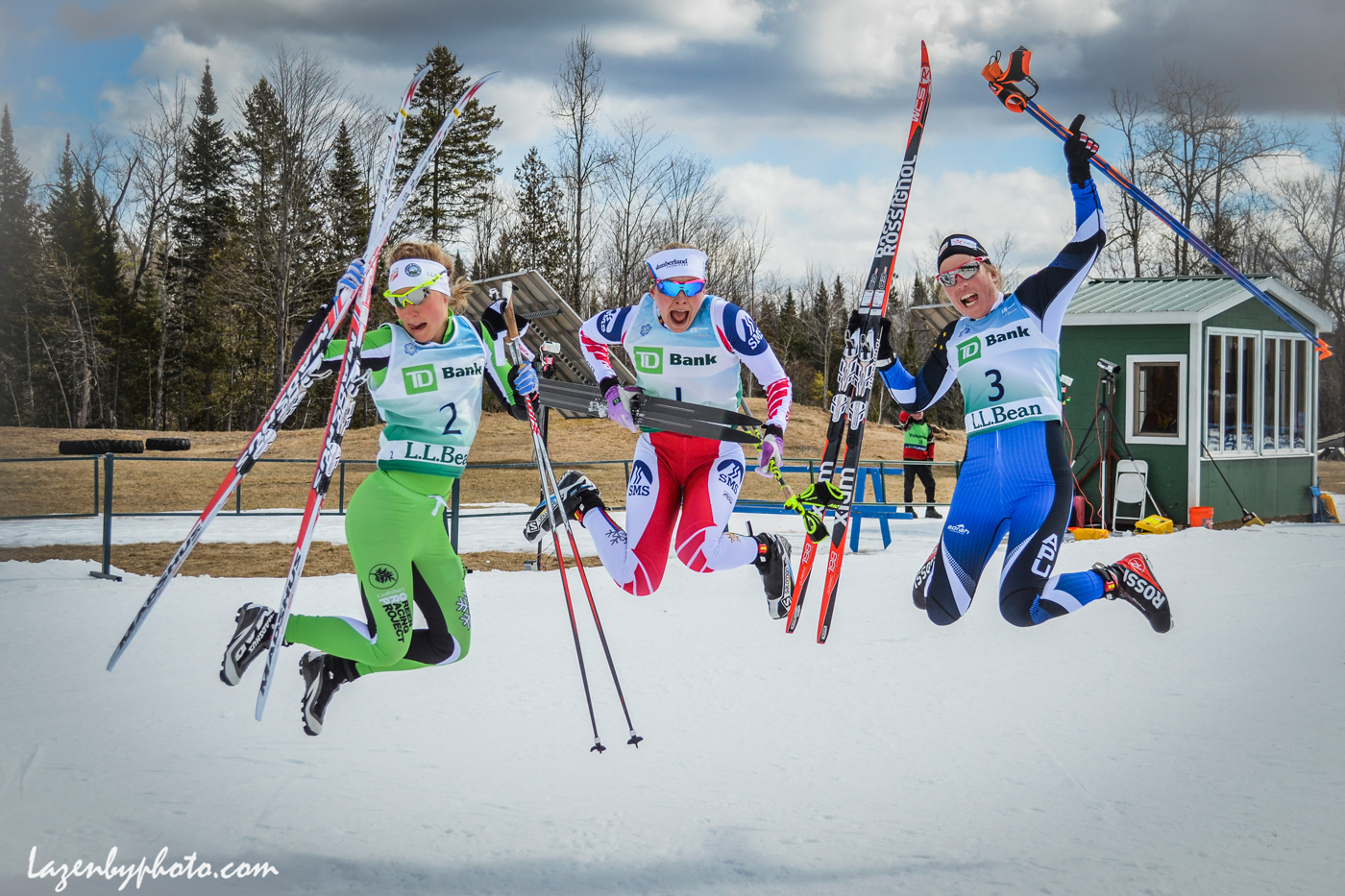
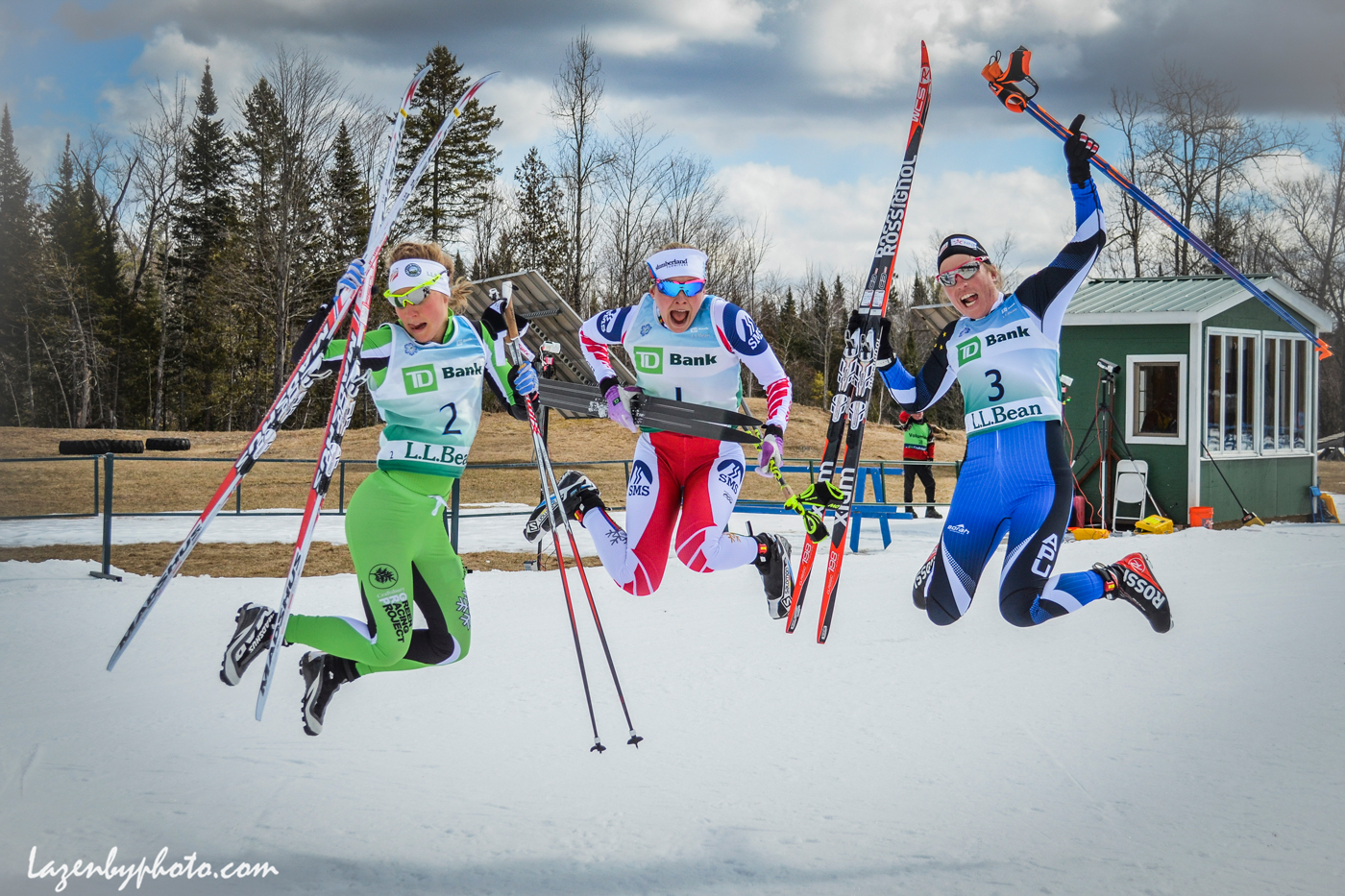
The top-three women in the SuperTour Finals classic sprint jump for joy, with winner Jessie Diggins (c), runner-up Ida Sargent (l) and third-place finisher Rosie Brennan (r). All three women are on the U.S. Ski Team but raced for their respective clubs on Tuesday in Craftsbury, Vt. (Photo: John Lazenby/Lazenbyphoto.com)
Note: This article has been updated to include comments from Sophie Caldwell and Dartmouth Nordic Assistant, Hilary McNamee.
While the glamour of racing in a suit sporting the American stars and stripes at a World Cup is a tough experience to beat for many U.S. cross-country skiers, racing at home amidst friends and family in the club suit that started it all makes for a pretty close second.
While U.S. Ski Team (USST) members have to leave their club tights behind during World Cup competitions, they’re quick to don them again when they return to domestic racing in the U.S.
This holds especially true for Jessie Diggins, of the Stratton Mountain School (SMS) T2 Team and USST. Diggins raced to her second-straight SuperTour Finals win this week in the women’s 1.5-kilometer classic sprint on Tuesday in Craftsbury, Vt.
“It was fun skiing in those red, white and blue SMST2 suits again and especially awesome to have half the final with my club teammates!” Diggins wrote in an email. “The atmosphere here is definitely more relaxed than a World Cup, with less pressure, which makes it just a lot of fun. And spring series is supposed to be fun!”
After Diggins won the qualifier in a time of 3:30.60, she continued to dominate all three heats, ultimately winning the final in a slightly faster 3:30.27.
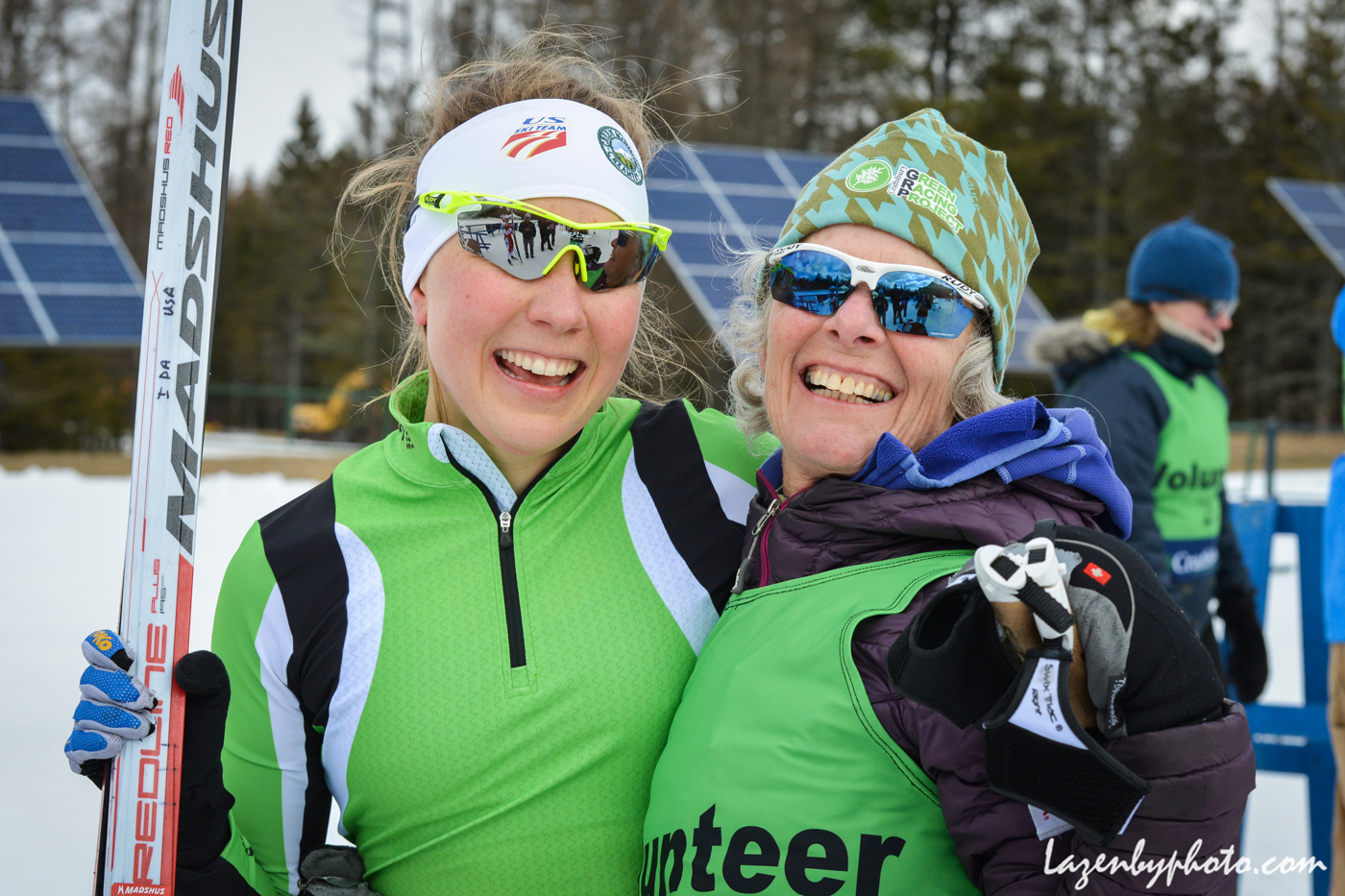
Ida Sargent and her mother, Lindy, after Sargent finished second in the classic sprint final at 2016 SuperTour Finals in Craftsbury, Vt. (Photo: John Lazenby/Lazenbyphoto.com)
Her USST teammate, Ida Sargent, of the Craftsbury Green Racing Project (CGRP) finished second in the final, 0.73 seconds behind. On the phone after, Sargent said that being club-proud before a home-crowd fueled her.
“After all the World Cup racing it’s really fun to end the season here altogether, racing against club teammates and my U.S. Ski Team teammates and friends,” Sargent said. “ I live in Craftsbury, so … from the starters, to the timers, to the jury, I knew all of the [volunteers] …[including] my dad, who was one of the course control people out on course.”
Third-place finisher, Rosie Brennan — also on the USST — said that racing the sprint for her club Alaska Pacific University (APU) also provides a visual of how domestic teams create opportunities toward the World Cup.
“I’ve been on the other side of it, too, being on the SuperTour all year and doing really well and anxious to see how I do against the World Cup skiers,” Brennan said. “It’s important for us to come back and do these races because it … shows that path [towards other levels of racing] to everybody that’s here.”
This seems to be true, for athletes and coaches alike.
“[I]t’s always a blast to hop in with the fastest ladies in the country (and WORLD!!), just to know how FAST fast is,” Dartmouth Nordic assistant, Hilary McNamee, who qualified for the first quarterfinal, wrote in an email. “That quarterfinal with Jesse Diggins, Annie Hart and Caitlyn Patterson… whoa. They don’t mess around. I like to keep in touch with what it feels like to train and race– the soreness, the nerves, the feeling of accomplishment because it allows me to better relate to the athletes I work with. ”
The Final
The club team charm continued in the final, at least for SMST2, with three Stratton skiers advancing through the quarterfinals and semifinals into the final heat.
“[A]ny day the final has three SMS T2 suits in it is a good day,” Stratton’s Annie Hart, who finished fourth, wrote in an email.
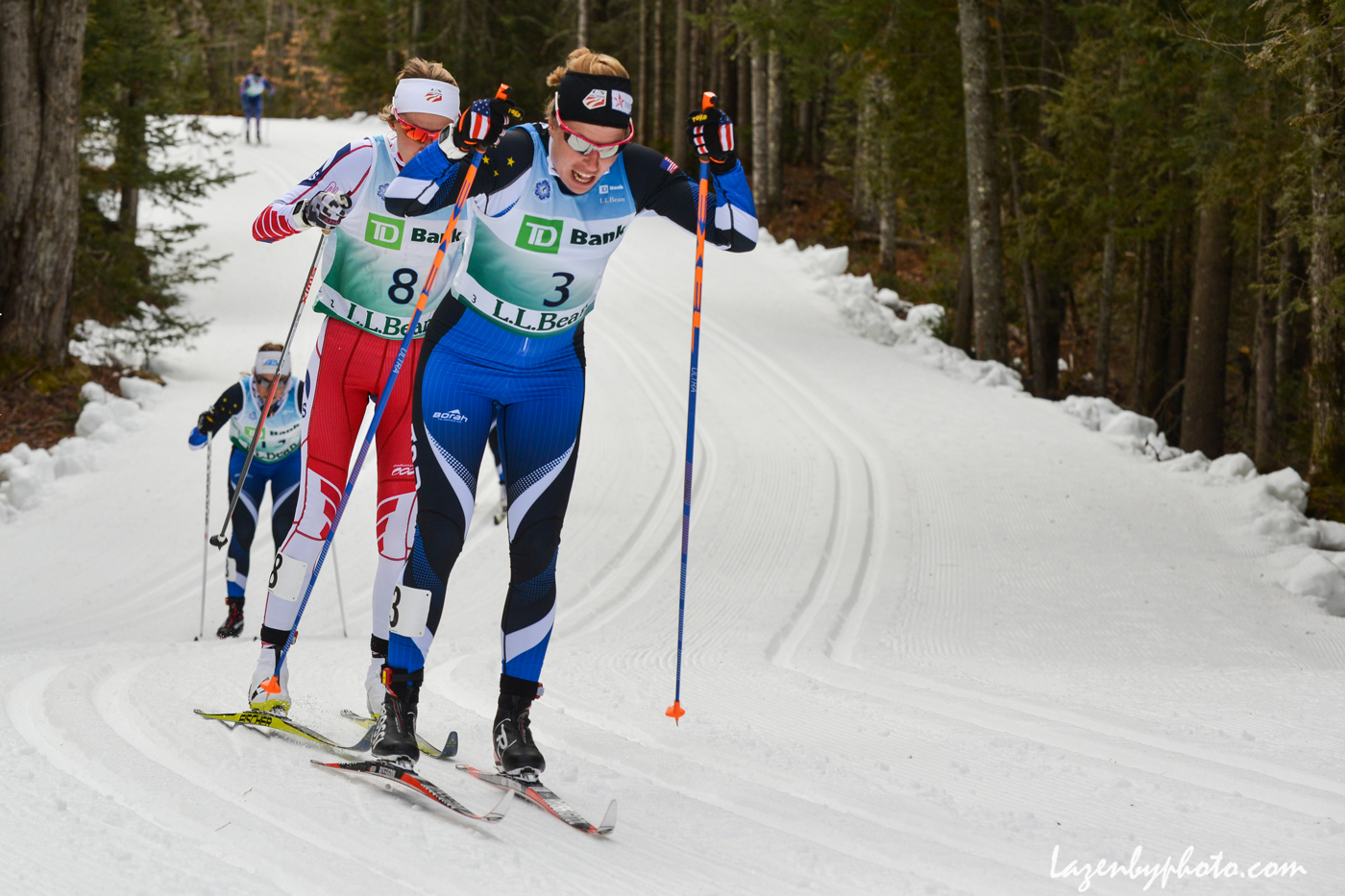
Rosie Brennan (3) of APU leads Stratton’s Sophie Caldwell (8) during their quarterfinal in the women’s classic sprint at SuperTour Finals on Tuesday in Craftsbury, Vt. (Photo: John Lazenby/Lazenbyphoto.com)
The third SMST2 skier to toe the start line of the women’s final, alongside Diggins and Hart, was Sophie Caldwell, also of the USST.
While SMST2 comprised the first half of the final start list, Brennan and Sargent as well as Jennie Bender, of the Bridger Ski Foundation, made up the second half.
“In the final with so many talented ladies and World Cup winners, I just felt so excited,” Hart wrote. “Regardless of result, it is just such a great opportunity.”
Out of the start, Caldwell and Diggins set the pace into the first downhill, according to Sargent.
“Their skis were gliding faster I think and so I just kind of tucked in behind them,” she said.
While Sargent pinpointed the lead pace pushers as Caldwell and Diggins, Brennan attributed the first race attack as one from Diggins and Sargent.
“Jessie and Ida went off pretty hot on the start,” Brennan said. “I kind of made my move on the uphill to try and to get up to them.”
After double poling the qualifier on skate skis for the first time, Bender qualified in 14th, 20.6 seconds behind Diggins. She then won her quarterfinal and advanced as a lucky loser from the first semifinal, and found her body fighting to keep pace in the final with Brennan, Diggins and Sargent up the first major climb.
“I slipped a bit on the hill and just kind of ran out of gas,” Bender said on the phone. “I’ve never double poled a qualifier before, but I think it was a good experience … and I was happy to be in the final with this crew of girls. I just wanted to be more a bit more in that top five.”
As the top five rounded into the finishing stretch, Diggins emerged in first, but Sargent refused to let her out of her sight.
“Jessie and I were just drag racing up the climbs,” Sargent said. “And we were neck and neck in the last climb.”
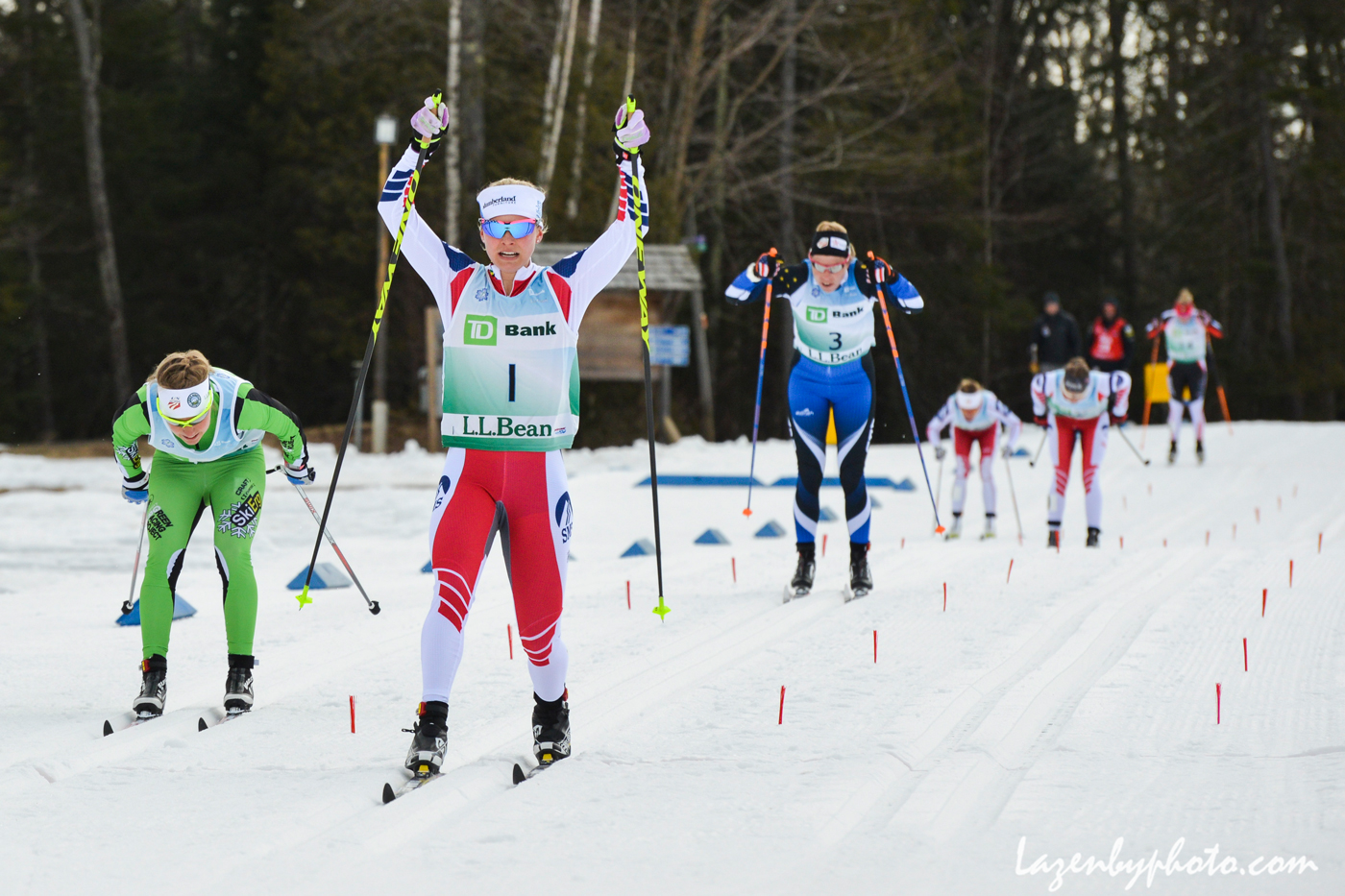
Jessie Diggins (1), racing for the Stratton Mountain School T2 Team, winning the women’s classic sprint final at SuperTour Finals on Tuesday by 0.73 seconds over Ida Sargent (l) of the Craftsbury Green Racing Project. (Photo: John Lazenby/Lazenbyphoto.com)
However, in the final lunge to the line, Diggins took first by 0.73 seconds over Sargent.
“[Diggins] is just such a strong double poler,” Sargent said. “She poled just a little ahead on the last double pole to the finish, but I was psyched to be close to her.”
Finishing third, 2.85 seconds back, was Brennan.
“These were the first rounds of the year for me, basically actually since nationals last year.” explained Brennan, after spending the entire season on the World Cup. “I was definitely a little rusty … but it was fun to be able to ski the heats with [my World Cup teammates], especially Ida and Sophie and Jessie because they have been skiing heats all year. So to see how they do it, for sure, helps you learn how to ski different sections of the course better and, hopefully, not lose as much time.”
About 3 1/2 seconds off the podium, Hart took fourth (+6.36), a result she was “psyched” about.
“I think it was a testament and a good finale to all the hard work I’ve put into fitness and lasting through three very fast rounds,” Hart wrote. “The most important thing I’ve learned, and where I’ve improved my sprinting and distance, is skiing with the confidence that I can compete. With each heat I had more and more confidence, and I think that showed in my racing [today].”
Caldwell, who also celebrated her 26th birthday on Tuesday, finished the day in fifth (+8.85).
“Yesterday was a fun day of racing with friends,” Caldwell wrote in and email on Wednesday. “I was really proud to have three SMS T2 skiers in the final and to watch Jessie win once again. I’m feeling the effects of a long season and am pretty tired and not skiing as fast as I would like to be, but it’s a great atmosphere and fun to be in the same place as the rest of the skiing community.”
“Huge thanks to the outdoor and all the volunteers who have helped make this happen!” she added.
Rounding out the final was Bender in sixth (+13.14).
“Spring Series every year is always a bit more of a mental challenge,” Bender said. “But I’ve been enjoying the process.”
So have a number of others, including McNamee.
“In the last two years of working at Dartmouth and jumping into races, I’ve found that I actually race MUCH better than when I was an athlete,” McNamee wrote. “I think that is 100% mental. I’m no longer emotionally attached to my race results, which takes the pressure off entirely. Before, ski racing was so entangled with my self-worth, every bad result, every mediocre interval session was so corrosive to my self-confidence. Now, I don’t give a crap. I just appreciate the sport for all it’s ups and downs.”
McNamee raced to 22nd overall, after qualifying in 20th, 24.53 seconds back from Diggin’s first place qualifing time of 3:30.6.
“I come out of retirement about once a year, to throw down– mostly to preserve my street cred among the Dartmouth squad,” McNamee wrote in an email. “I’m very selective about the races…I try to time it for the end of the season when everyone else is tired and burnt out, so I look relatively good by comparison.”
Racing picks up again Thursday with the mixed team relay event, with four members per team (two male, two female) racing 2 x 5 k classic followed by 2 x 5 k freestyle.
FasterSkier’s coverage of SuperTour Finals and U.S. Distance Nationals is brought to you by the generous support of Concept2, the leading manufacturer of indoor rowers, racing oars, and the SkiErg.
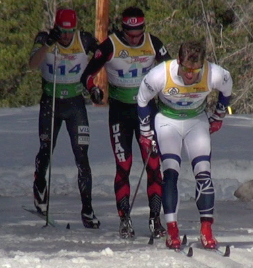
NORDEN, Calif. — Watch Kris Freeman (Maine Winter Sports Center/U.S. Ski Team) battle Andy Newell (SMS T2/USST) and Einar Ulsund (University of Utah/NOR) for the national title in the 50 k classic on the last day at spring series on Thursday. Freeman pulled away in the last 5 k to beat Newell by almost a minute.
U.S. Ski Team member Kris Freeman, who recently joined the Maine Winter Sports Center, during a relay at Mount Bachelor in Bend, Ore., on Wednesday. Freeman teamed up with his new MWSC teammate Welly Ramsey to win the training-camp event.
The Maine Winter Sports Center (MWSC) officially grew by two on Thursday, adding U.S. Ski Team veteran Kris Freeman and US Biathlete Annelies Cook to its roster. They join another national team member, biathlete Russell Currier, and three others on the Caribou-based club’s Olympic development team.
While the MWSC’s competitive program took off in earnest 11 years ago and produced several Olympic biathletes and cross-country Olympian Ben Koons, the recent signings mean more good news for the center. In April, L.L. Bean pledged to donate $1 million dollars to the club’s Healthy Hometowns community program.
US Biathlon team member Annelies Cook en route to a career-best 33rd place in the IBU World Cup sprint on Feb. 2 at Holmenkollen in Norway. (Photo: NordicFocus/USBA)
The extra cash didn’t exactly translate to more money for the elite athletes; competitive programs director Will Sweetser said he convinced Freeman and Cook to commit because of pre-existing relationships. Born in Saranac Lake, N.Y., the 27-year-old Cook trained with MWSC for two years following high school.
A true New Englander, Freeman, 31, has known Sweetser for years. The Maine Winter Sports coach previously worked with Freeman’s older brother, Justin, at Bates College, and Sweetser said he knew Freeman since about the mid ’90s when Kris was a teenager. Once in a while, they found time to chat.
“Occasionally, I’m his punching bag during cool downs,” Sweetser said in a phone conversation from Maine. “I’m a big believer in coaches learning from athletes at least as much as athletes learning from coaches. Any time that the national team athletes are home and I’m at an event where I can go for a ski with one of them, I like to pepper them with questions.”
Sweetser eventually made Freeman an offer too good to turn down. After casually reaching out to him in late March at Spring Series in Craftsbury, Vt., the three-time Olympian agreed to commit to his first actual club last week.
Freeman listed Waterville Valley as his club since he started skiing there at age 5, but explained he was the only member of an essentially non-existent nordic program. At the SuperTour Finals in Craftsbury, he skied for Ski & Snowboard Club Vail (SSCV). Since then, Freeman had said he was deliberating between teams.
“I think it’s been three seasons now where the U.S. Ski Team has stopped sending us support staff to U.S. Nationals and to SuperTours and being in a club is the best way to get that support,” Freeman said in early May. “Also going to domestic races by yourself isn’t much fun. Being in a club last year, skiing with the Vail guys was just a fun time so I think it was time to join a club.”
The affiliation was mostly based on Freeman’s relationship to three of SSCV’s members: Noah Hoffman, Tad Elliott and Sylvan Ellefson, all of which joined him on the World Cup last season. While the club was appealing, it was also out of Colorado, and Freeman wanted to be in New England.
Sweetser said it took about two months to get him to sign with MWSC.
“All I said was, if he found himself in a position where he needed support, that we were more than happy to provide that support,” Sweetser said. “Following the [U.S.] Ski Team nominations, he decided that, one, he needed to be affiliated with a stronger club and, two, he needed some financial support in the lead up to this year’s World Cup season.”
Freeman would not comment on what level of support he was receiving as an A-team member next season, and USST head coach Chris Grover said that was a private matter that only Freeman could answer.
After a training session in Bend, Ore., Freeman told FasterSkier he joined MWSC.
“A lot of their themes and stuff is healthy living and using sport as a means to an end,” he said. “That goes along well with what I’ve tried to get across with diabetes.”
Considering the club was a six-hour drive from his hometown in New Hampshire, he also liked its local appeal. Between returning from Europe and racing in Craftsbury, Freeman spent time there at the northeastern tip of Maine. Sweetser said he worked with 12- to 14-year-old juniors, demonstrating technique while they chased him.
At the end of June, Sweetser said Freeman will join the rest of his new teammates in Maine for a five-day camp. Freeman will also work toward some 100 hours of community service by spending a day at a diabetes camp. Meanwhile, Cook will do some public-relations work for MWSC.
Later this season, Freeman planned to travel overseas to train with the Norwegian National Team and his coach Zach Caldwell (and teammate Noah Hoffman) in Norway. Sweetser said MWSC was supporting Freeman on that trip, along with all of his domestic race support, the time he spends in Maine and attends their training camps, much of his dryland training and at least his first World Cup period and Tour de Ski expenses.
“In return, he’ll spend more than a month at training camps with us and close to a month doing PR in Maine, youth outreach and diabetes camps and training sessions with the athletes here,” Sweetser said.
“It’s certainly exciting to have somebody that’s not only an Olympian, but has the potential to medal at the next Olympics,” he added. “We have a couple of really strong upcoming Maine athletes, like Hilary McNamee and Welly Ramsey,and we don’t do them a good service if we don’t have somebody that can mentor them. For Welly to be able to able to ski with Kris or Russ Currier, who went through the same path that Welly’s trying to do right now, is really valuable. For Katrina Howe or Hilary to be able to learn from Annelies is very valuable.”
On Wednesday, Freeman teamed up with 21-year-old Ramsey to win a friendly relay at their training camp in Bend, Ore.
“It was a good first workout for us to ski together,” Freeman said. “We’ll see how these camps go. Hopefully I can help raise the level there and in turn their support should help me out in domestic races.”
Skiers converged on Craftsbury in the week leading up to spring series, and were greeted with 80 degree weather. Couresty photo.
It’s 80 degrees and you have five elite ski races to pull off for hundreds of athletes within a week. Go.
This was the outlook Northern Vermont’s Craftsbury Outdoor Center faced in the week leading up to the start of spring series at the end of March. Such a forecast might have cowed even the most experienced race organizers, but with its new snowmaking system in place, a bit of foresight, luck, and a lot of hard work, Craftsbury managed to pull of SuperTour Finals and Distance Nationals in seemingly impossible conditions. As a result, a general feeling of incredulity permeated the week of spring series. Athletes and coaches expressed unanimous amazement that races were happening at all in such thoroughly non-winter conditions.
We have now undeniably passed into the off-season, but Craftsbury’s feat bears revisiting. At the conclusion of the men’s 50 k awards, we stole away Craftsbury’s Chief of Competition Judy Geer for a few minutes to get a handle on what it took to make spring series happen.
Snowmaking during the last cold spell before spring series. Courtesy photo.
The numbers alone are daunting. It is difficult to parse out what resources were spring-series specific and what was spread out over their entire season, but in the snowmaking department at least, every last bit ended up counting.
From the time Craftsbury started making snow in November to when their water permit ran out on March 15, two million gallons of water from the nearby lake went towards making snow for the trails. Two Eastern Cups, a marathon, numerous transplanted high school races, one collegiate carnival, an ECSC race, and of course the entirety of spring series happened with the help of that artificial snow.
Without further ado, here’s what Geer had to say about the week, mere moments after wrapping up the week of racing.
FasterSkier:At what point did you start saving up the snow used this week?
Judy Geer: We started making snow for Thanksgiving, since we wanted to be open for that. From then on we were making it and stockpiling it. In the middle of the winter there was a huge mountain of snow here in the middle of the field, which actually became this favorite spot for all the kids, and some of the grownups.
Mount Craftsbury, mid-winter. Courtesy photo.
FS:What happened to the snow once you made it?
JG: Our plan was, rather than make it a lot of places, to stockpile it and then put it where we ended up needing it. As the event got closer and the forecast looked worse — even before we could really see the forecast — we knew we had to protect a certain minimum course.
And this comes partly from seeing the kids racing in Europe, seeing what happened in Muonio [Finland]: you have to get two, two-and-a-half k to be failsafe in the worst case. Which is what happened, you know, all hell broke loose.
It’s challenging to be disciplined enough to focus on just that short loop [throughout the season], because there’s this other snow around and you really hope you could run your whole 5 k, because it’s a great 5 k. I give [my husband] Dick a lot of credit for this, saying, ‘No, we’ve gotta focus.’ Some of the rest of us were like, ‘Oh but can’t we put a little more out further?’ But no, you’ve got to have that short loop.
And that was what got us through, was the fact that we did that. About three weeks ago was the last cold weather before the heat started coming in, and we saw this window to move snow all night and get another layer on that 2.5 k. Pat [O’Brien] and Dylan [McGuffin], who are racing, were up until 3:00 am getting the snow out.
So that was the last chance we had to put a significant amount of snow on this course. Since then it was taking any chances we had when it was cold for patching. Even on Wednesday, when everyone was at the hill climb, a small crew here put the rest of that pile from the lower field and put that out and tried to widen the climbs.
Moving snow in the warm week preceding spring series. Courtesy photo.
FS:Did you use it all?
JG: We used every last bit. There’s not really any left. Thank goodness the temperatures got cooler this week so we could make it.
FS:Your water permit also ended right before this week, was that a big issue for you?
JG: We have a permit to make snow from the lake until March 15. There was at least one date after March 15 where it would have been nice to make a little more, but then we still would have had to spread it around. We’re not going to break the permit, but it really wouldn’t have helped us that much anyway. By that time this was holding up, the temperatures were getting colder, and we were pretty sure it was going to be able to happen.
FS:What kind of labor went into moving around all the snow once it was made?
JG: Our whole crew is wonderful, I want thanks to go to the whole gang. And the volunteers; they’ve been coming in all week.
More snow moving. Courtesy photo.
The crew that did most of this work was the same crew who would have been doing a lot more grooming if there’d been more natural snow to groom! Once the races started, we also had help from both Jim Rodrigues and Will O’Brien, who volunteered their time to help move the last bit of snow.
That one last cold weekend, when we saw a cold weather window to be able to drive trucks on the trail, we decided to lay down another 8-12 inches of snow on the minimum course. A team of about six guys took turns over 20 hours straight, using two dump trucks and an excavator to load them. It was a marathon effort.
We’re really lucky to have a crew that, for the most part, are skiers themselves. Some of them are from the [Craftsbury Green Racing Project]. So they know what we’re trying to do and what makes a good course, and they don’t mind getting up in the middle of the night to work on it. We’re really lucky.
FS:You seemed outwardly confident everything would work out, but was there any point when you started to doubt that?
JG: I think it was Thursday, the last day it was 80 degrees. It was just — it was really good that was the last day, because I’m not sure we could have taken another 80-degree day. The next day it was in the 60s, so there was some melting, but it slowed a lot. After that it got to freezing or close to freezing at night.
I mean, there were times when I looked at it and thought we’d get through those SuperTour Finals races, but I really didn’t know if we’d get through the 30/50 k. But we did!
FS:And now you know that a 33-lap 50 k is possible.
The men's 50 k, partway through 33 laps.
JG: Yeah, the challenges of the 30/50 was — well with the shorter mass start we used the figure eight course, which was 2.5 k. That was great, but it was just going to be too complex to run all those laps with everyone figure-eighting. So that brought us back to the 1.5 k, at which point we had to make the decision: are we going to pull lapped people or not? We felt that people had come a long way, paid their money, wanted to race, and so we made the call not to pull people. If we had, there would have been five people left in the race at the end. And that’s not great, so I think that was the right decision.
It was a bit crowded for the guys race because that big pack stayed together for so long, but we got through it. Obviously we’d all rather have run this on our 5 k or longer. But we can do [1.5 k]. It is possible. Hopefully we’ll at least have a 2.5 k some other year.
We’ll be sitting down after this and making notes on what we would do differently next time. I think I’d love to have a 2.5 k course that we could protect that wasn’t a figure eight. I think we’ll look at the configurations and see how that could happen for another year.
FS:Is the plan to bid for more big races?
JG: Yeah, I think we’ll bid for more. It’s a little scary to bid on one at the end of March, but I think the gang has really gotten into it and really enjoyed it. We want to have a world-class venue here.
Start of SuperTour Finals classic sprint A-final (from left to right): Kikkan Randall (USST/APU), Chandra Crawford (CNST), Jennie Bender (CXC), Ida Sargent (USST/CGRP), Jessie Diggins (USST/CXC), Liz Stephen (USST/Burke). Crawford won the 1.6 k sprint in her first race in Craftsbury, Vt., on Tuesday.
CRAFTSBURY, Vt. – In shades of red, blue, green and white, six highly competitive women stood at the start line at the SuperTour Finals on Tuesday waiting for their signal to get after the 1.6-kilometer classic loop one more time.
On one end of the A-final lineup stood World Cup sprint champion Kikkan Randall, who flew in from Europe on Sunday. On the other, her World Cup teammate and distance specialist, Liz Stephen soaked up the opportunity to race in a sprint final at home in Vermont.
Then there was Chandra Crawford, the lone Canadian National Team member in Craftsbury coming off two titles at Canadian Nationals last week. To her left, Central Cross Country (CXC) racers Jennie Bender and Jessie Diggins (U.S. Ski Team) stood on either side of Craftsbury’s Ida Sargent (USST).
Canadian National Team athlete Chandra Crawford (l) celebrates after winning the 1.6 k classic sprint A-final at the SuperTour Finals on Tuesday in Craftsbury, Vt. U.S. Ski Team member Jessie Diggins (r) placed second and Jennie Bender (c) of CXC was third.
This was going to be good.
While spectators gathered around the start and finish near the Craftsbury Outdoor Center and lined several parts of the manmade loop, the six A-finalists did their thing, racing as hard as possible on the longer-than-usual women’s course.
The snow on the original women’s cutoff had melted, leaving one highly reinforced loop to race on. Even Sargent wasn’t familiar with it – they were racing on a new men’s course – but the competition was up for the challenge.
The fastest qualifier by nearly seven seconds, Crawford kept up the tempo through the heats, leading and eventually winning each. Immediately in front in the A-final, she set the pace and stayed ahead, accelerating on the last climb to take the clear-cut victory.
Diggins finished about three seconds later, edging Bender in a double-pole sprint for second. Fighting some illness after 4 ½ months overseas, Randall placed fourth. Stephen was fifth in her first career classic sprint final, and Sargent was sixth after falling on the first downhill.
“I like to lead and make the pace more mellow and attack at the end, so I did that,” said Crawford, fresh off her first 30 k classic national title at Mont Sainte-Anne, Quebec. There, she also won a 1.4 k freestyle sprint.
“It’s the end of the season. I know everyone is just torched right now,” she said. “I just wanted to go out there and enjoy this last week of racing.”
Chandra Crawford (l) leads Rosie Brennan (APU), Susan Dunklee (CGRP/USBA) and Heather Mooney (Middlebury) up a long climb during the quarterfinals of the 1.6 k classic sprint at the SuperTour Finals on Tuesday in Craftsbury, Vt. Crawford won the heat and eventually the A-final.
She appreciated the friends and fans cheering for her, many of which called her Chaundy.
“It’s good to be in the U.S.,” Crawford said. “The American team really took me in this winter so I feel pretty happy to be here.”
After placing third in the SuperTour Finals classic sprint last year, Crawford resolved to return to this year’s Spring Series. She said she had a blast in Sun Valley, Idaho, and was looking forward to her first trip to Vermont. Two days into her stay, she appeared to be adjusting well.
“It was really fun out there,” she said. “These guys [at Craftsbury] did an amazing job with the course. I can feel all the work that’s been poured into it. It’s in great shape.”
After placing sixth in last year’s SuperTour Finals sprint and also in Sunday’s 9.6 k classic race, Diggins was pleased with finishing second to Crawford, a 2006 Olympic skate-sprint gold medalist.
She avoided Sargent’s crash early on after Sargent moved to step in the track she was in. Sargent said she tried to get out, but wiped out at the bottom of the first descent.
That made Diggins more alert throughout the rest of the race, and she took advantage of great kick on the long uphill on the second half of the course.
Canadian National Ski Team member Chandra Crawford (l) and Jessie Diggins (USST) congratulate each other after finishing first and second, respectively, in the 1.6 k classic sprint A-final at the SuperTour Finals in Craftsbury, Vt., on Tuesday.
“I haven’t done heats in a classic race since nationals,” Diggins said. “Classic racing for me in the klister conditions has just been really challenging. It’s been hard to learn and figure it out as you’re just racing so it was really good to finish out the year on a good one.”
She also noted the benefit of racing with veterans like Crawford and Randall, and learning along the way.
Also on the podium, Bender finished second in both her quarterfinal (to Sargent) and semifinal (to Crawford). She had been looking to cap the sprint season on a high note. Fifth in the qualifier behind Crawford (3:29.4), Sadie Bjornsen (USST/APU), Randall, and Holly Brooks (USST/APU), respectively, Bender said she met her goal of starting off stronger.
In the heats, Bender said she was even more motivated.
“You look around and it’s like, ‘Oh these are all really good sprinters,’ ” she said. “To have Kikkan back and Chandra was awesome. Once I made it to the A-final it was like, ‘OK, anything goes. You never know, anything can happen.’ ”
In the end, she was happy to share the podium with her teammate, Diggins.
“This year has been great,” Bender said. “I’ve just been really happy with my team and the coaches have been doing a great job. It will be sad for Gus [Kaeding] to leave, but Stratton welcomes him with open arms, [his] alma mater. I’m excited for the season to come.”
After sweeping SuperTour Finals last year, Randall said she didn’t feel great in Tuesday’s final, but enjoyed the scrappy race. After winning her quarterfinal and semifinal, she managed to get ahead early in the A-final behind Crawford. Diggins remained in close contention and Bender accelerated to the finish to beat her by about a ski length.
“I’ve been doing just a lot of racing the last couple weeks,” said Randall, who placed fourth in the Red Bull NordiX ski-cross event in Oslo, Norway, on Saturday. With all the travel in the last few days, Randall figured she picked up a cold.
“It’s the end of the season so it doesn’t matter,” she said. “It’s nice to be back and really nice to see everybody. It’s fun to have made it through such a great season and now I have a little bit of fun here in the sun.”
Kikkan Randall (l) leads fellow U.S. Ski Team members Ida Sargent and Sadie Bjornsen up the final climb of their semifinal in the SuperTour Finals 1.6 k classic sprint on Tuesday in Craftsbury, Vt.
Stephen, who was second to Randall in the quarterfinal and third behind Randall and Sargent in the semi, was excited about advancing through the heats.
“I don’t sprint and I definitely don’t classic sprint and I was in the final with an Olympic champion and the overall World Cup sprint winner,” Stephen said. “There’s no better day than that. It was like the most fun that I’ve ever had.”
After hoping to qualify in the top 30, she clocked the eighth-fastest time. From there, Stephen aimed for the semifinals.
“And then I made the semis and I was like, ‘Woah,’ ” she said. “I knew I had to do two more, might as well try to do the A [final] and not the B, so it worked out.”
Sargent, who made a tactical move on the last climb of her semifinal to get in front of Bjornsen and make the A-final as well, was one of the first off the start in the final round. She said she fell within 200 meters later.
“I made a push to catch back up, but then ran out of energy and just couldn’t make it back up to that group,” Sargent said. “I was just on my own out there, holding in for sixth place.”
Regardless, she said it was great to race against such a strong field.
“It was really fast,” she said. “Fun.”
After finishing fourth in her semifinal behind Randall, Sargent and Stephen, Bjornsen won the B-final. Her APU teammates, Rosie Brennan and Brooks rounded out second and third in the B-final and respectively placed eighth and ninth overall.
A junior racer, Corey Stock (Cambridge Sports Union) made the B-final and ultimately took 10th. Susan Dunklee (CGRP/USBA) was 11th and Becca Rorabaugh (APU) was 12th.
Holding elite level events, whether World Cup races, National Championships or just FIS points competitions, pose numerous challenges for organizers and National Governing Bodies in the US and Canada. Over the course of the summer FasterSkier will examine the various issues at hand. This is the second installment in the series; the first investigated homologation.
Out of necessity, major early and late season races are usually hosted by the few venues in North America that have semi-reliable snow in November and March. While alternating venues between the East and West for events like U.S. Nationals and the SuperTour Finals attempts to give skiers from all parts of the country the opportunity to participate in these races relatively close to home, viable options particularly in the East are often still difficult to get to.
The bid to host this year’s SuperTour Finals, however, wasn’t limited by who has enough natural snow at the end of March. The U.S. Ski and Snowboard Association (USSA) confirmed on Thursday that the Craftsbury Outdoor Center in Vermont’s Northeast Kingdom will be holding the event this winter, thanks in large part to its plans to be making snow by November.
A glance back at Spring Series venues over the past several years is enough to reveal how much the majority of the East can be counted on to have adequate snow coverage late in the season. Since 2007, the only two Eastern hosts have been Fort Kent/Madawaska and Presque Isle, ME.
The alternative to Craftsbury for 2012 was again Presque Isle. Before USSA had made the decision, then-Nordic Director John Farra granted that Craftsbury would have been “too much of a risk” without snowmaking. This past season they could have held the Finals in April, but just the year before had to cancel their spring mini-tour in mid-March.
“That’s the northeast for you,” said Farra.
But with work already underway at the Outdoor Center to have snowmaking ready for November, owner Dick Dreissigacker plans to extend the dependable season on both the front and tail end, with the goal of being open at Thanksgiving.
“The early season is actually tougher, which is where snowmaking is going to help a lot—perhaps enabling us to open a month earlier than usual,” said Dreissigacker. And by making snow early on, they will have a solid base to last them late into the spring.
In the model of European ski areas, Dreissigacker also plans to create a reserve pile of snow that can be spread on trails beyond the five kilometers that will be covered by snow guns.
Hosting the final stop on the SuperTour is a big responsibility, but the Outdoor Center has done its homework to ensure that they have enough coverage come March 24.
“We’ve been watching the techniques and methods they use over in Finland and Nova Mesto in Czech, where the World Junior Biathlon Champions were this year. We’ve studied the weather patterns and looked back at the snowfall records for this region,” said Dreissigacker.
They’ve also taken the environmental impact of snowmaking into great consideration, as one of the central missions of Craftsbury since it became a non-profit in 2008 is “to use and teach sustainable practices; and to protect and manage the surrounding land, lake and trails.”
“It doesn’t take nearly as much energy as we thought,” Dreissigacker said. He justifies the energy used to make snow by pointing to the gas that skiers will save by being able to ski closer to home both earlier and later in the season, adding that Craftsbury won’t be using nearly as much energy as a downhill resort would be to cover their trails.
The water required for artificial snow will be pumped from Craftsbury’s 150-acre lake, which Dreissigacker says will be minimally affected—he calculated that less than half an inch of water would come off the surface to cover five kilometers of trail.
Though several ski areas in the northeast have snowmaking capabilities, it takes more than a few kilometers of trail in March to be able to host a SuperTour race. A venue needs a capable organizing committee and the funds for prize money.
Additionally, races scored with International Ski Federation (FIS) points in the U.S. and Canada will have to take place on homologated courses this season, which includes the SuperTour and NorAms. Every summer since Craftsbury changed ownership in 2008, Dreissigacker says they have been widening their trails in preparation for meeting specifications.
“The wood chips are flying as portions of the trail are being widened and smoothed out with the excavator,” he said.
The upside to bringing snowmaking to Craftsbury extends beyond being able to confidently plan on hosting Spring Series. Dreissigacker hopes that opening in November will attract college teams that normally go to Mt. Ste. Anne for their Thanksgiving training camps. They will be able to more confidently host the first Eastern Cup of the season, which last year had to be partly moved to the Ethan Allen Biathlon Range in Jericho.
“I think northern Vermont in general is becoming a great place to Nordic ski,” said Dreissigacker. “Between Trapps, Jay Peak and Craftsbury, it’s a pretty good location to bring events. I’m excited about being able to use the Outdoor Center for more of the year and stretch out the season.”
The GRP crew kicked off our racing here in Sun Valley with the 50k at US Distance Nationals this last Saturday. The weather here in Idaho has been a mix of fresh snow overnight and sun and clouds during the day making for some great mid-winter conditions. The morning of the 50k we were greeted by falling snow and high humidity, which in a classic race can make for tricky “zeros” conditions. Luckily Nick and Pepa found a hard wax that provided both the speed and kick we were looking for and we were able to avoid having to stop mid race and re-wax like several other teams. Being US Distance Nationals, the course planners didn’t hold back in their design. The result was a 7 lap course (4 laps for the girls racing the 30k the next day) that featured a great combination of fast double poling, gradual striding uphills, as well as an extremely long and steep “A” climb to really separate the field before the fast decent into the finish area. Of the previous 50k races that I have done, this one certainly featured some of the most vertical at over 4800 ft of climbing in 50k (for comparison Mt Mansfield is 4395 ft above sea level and is only around 3600 vertical of climbing) yet the course was still very skiable for having that much climbing.
A 50k is a very interesting distance to race because it is so different pace wise than a 10 or 15k race. Yes you breathe hard, and your muscles burn on the hills, but everything is much more drawn out than the shorter races. Instead of racing for 30 or 45 minutes you’re going hard for 2.5+ hours, and during that time some funky stuff can happen. The weather can change a lot (it did), you run out of glycogen which is your primary fuel source when racing (I did), your muscles can cramp up from over use (they did), and then you might not be going as fast as when you started. Somewhere between the feed station and long hill going out on my 6th lap I knew I was done. I went from skiing pretty easily with the main pack on earlier laps to survival mode in the span of just a few kilometers. Judging from the number of people I passed pulling off bibs or taking off skis trying to stretch and loosen cramped muscles I wasn’t the only one hurting during the second half of the race. The last two laps I was skiing to finish.
A 50k is one of my favorite race distances because it is so much about the right mindset. You really don’t know how the race is going to go until you have a bib on skiing down the trail. There might be times when you feel great, and there are certainly going to times when you feel terrible and want to stop but few things feel better than crossing the finish line exhausted knowing your done and you raced a long long way in the process.
Ida cheering on Kikkan (USST) and Maria (Utah) race leaders in the 30k
Han skiing away from a chase pack on the last climb
Apologies for the lack of photos so far. Super Tour Finals starts tomorrow with the freestyle prologue followed by a classic mass start the next day. Should be a blast!
BEND, Ore. – Kristina Strandberg moved to Bend from Sweden. Evelyn Dong moved to Bend from the East Coast. And Chisa Obayashi just recently transplanted herself in Bend all the way from Hokkaido in Japan. They all have been training with the XC Oregon program director and coach John “JD” Downing.
“The three of them are in pretty identical positions, in three different ways. Evelyn is just on the cusp of a breakthrough, Chisa is on the cusp of making the Japanese national team, and Kristina has raced on the Swedish World Cup team,” Downing said.
Perfect match
Obayashi, 25, first came to Bend in June, but the initial set-up happened earlier this spring.
“I tried the SuperTour in the spring, and Peter Hale, the racing manager for Madshus USA, introduced me to some club teams in the USA. I chose Bend and XC Oregon, and JD accepted me,” Obayashi recalled.
Downing was excited to welcome Obayashi to Bend and explained that the chemistry with the women on the team could not have been better.
“Chisa and Kristina really hit it off and trained together daily. The design of our program is perfect for that,” he said.
Kristina Strandberg during a dryland workout in Bend, Ore. (Photo: The Center)
Independent and flexible
“Our program is pretty much perfect for Chisa in that it is so athlete-driven. It lets the athletes dictate how they train, and because the program is so athlete-based, I as the director didn’t really do much for Chisa on a regular basis besides making sure the logistics were covered and match her up with training partners,” Downing said.
Downing explained that self-reliance has been part of his coaching philosophy since the XC Oregon program was established 12 years ago, and that the independence helps athletes excel.
“Chisa could easily have flourished in a more structured training environment as well, but I think she really benefitted from seeing how independently athletes train here and how they can take advantage of the support when it’s there,” Downing said. “Bend is an amazing place to train, and one of the best places in the world for skiers.”
On her first visit, Obayashi stayed for three weeks. She arrived just as the snow season was transitioning into dryland. She didn’t mind at all, as Bend has plenty to offer no matter what the time of year.
“I really like Bend. Bend is a great place for training. It has the best weather, and it has some really nice roller ski courses and big mountains,” Obayashi said. She ended up training a lot with Strandberg – much more than Strandberg had imagined to start with.
“She is pretty much a self-coached athlete, and after one of her first camp workouts, she wondered what I was doing the next week. So I sent her my training plan for the week and I figured she could pick out which workouts she wanted to join me for. But then she just said that the plan looked great and did all of it with me,” Strandberg said with a laugh.
In love with Bend
In fact, Bend was such an amazing place for Obayashi this spring that she e-mailed Strandberg from a New Zealand training camp this summer and wondered if she couldn’t come and stay with her for, say, four weeks this September.
Chisa Obayashi teaches Lars Flora how to make sushi from scratch. (Photo: Kristina Strandberg)
“You always start to wonder when someone comes to stay with you for several weeks, how on earth that is going to go. We don’t exactly have the largest house in town. But she is the easiest house guest ever. She immediately told us she likes housework and likes to cook, and she did a lot of both,” Strandberg said, mentioning that homemade sushi and Japanese specialties often landed on her dining table.
Mutual benefits and lasting impressions
“Kristina and Evelyn taught me some training methods and ways to weight train,” Obayashi said. “They are very strong and have very strong spirits. I have a lot of respect for them, and want to train to become as strong as they are.”
While Strandberg and Dong might have taught Obayashi a lot about their training methods and sent her home with some new tricks – most importantly, more focus on heavy strength training – Obayashi certainly left her impression on the Bend girls too.
“Skiing with Chisa was valuable, because she has perfect technique every minute she is out there,” said Dong. “She is never sloppy, even when we’re just going easy. You can tell she puts a lot of hours into perfecting every detail. That’s probably the thing that stuck out the most and hopefully will stick with me the most,” Dong noted.
Obayashi inspired Strandberg and Dong in ways that go far beyond the trails.
“She is incredibly polite and expressed such gratitude whenever she got help. She was always nice and kept her stuff in meticulous order. Even on training camps when things start to go everywhere for all of us, Chisa kept her stuff neat and packed away,” Strandberg said.
Now what?
For the upcoming season, the three skiers are in very similar positions. They all have to prove their potential to earn spots on their respective teams, and they all dream big.
Strandberg, 35, will try to make the Swedish World Cup team again this season, but she knows it will be hard.
“It’s a very hard team to get onto at this point, and it will be more interesting for the coaches to pick a 20-year-old than a 35-year-old, everything else being equal,” Strandberg explained. “But I will race hard and do my best, and if I make it, it would be fantastic.”
Obayashi will go to Muonio, Finland, with the elite ski team from Japan. “I want to get a chance to race at the World Championships in Oslo and get a good result,” she said.
However, to make it to Oslo, Obayashi will need to have all the stars aligned for her.
“She has to ski really well to make it to the World Cup,” Strandberg said. “She’s a distance racer, but she hopes to make it to the World Championships this year. It would be amazing if she did.”
Dong, 25, also has her eyes on Oslo.
“My goals for the season? I’m aiming big. I want to go to the World Champs and make top 30,” she said.
The Colorado International Spring Series in 2004 and 2005 featured a leader's bib (pictured), a climber's bib, a sprinter's bib, and a fun leader's bib. Photo, Tim Carter
Before this year’s mini-tour in Fort Kent, and even before the inaugural Tour de Ski in 2007, there was the Colorado International Spring Series (CISS) in 2004 and 2005. CISS was a stage race much like those coming into vogue today, and it was one of the first of its kind—if not the very first. Nathan Schultz, now the owner of Boulder Nordic Sport, had the idea for the event, and FasterSkier caught up with him last week for a quick look back.
FasterSkier: So this being before the Tour de Ski, how did you come up for the idea for the race?
Nathan Schultz: We have great snow in the spring, and I was pretty much done with my ski racing—I was still racing, but mostly just for fun. So I thought, “well, we’ve got all these great places to ski, and wouldn’t it be fun to have a Spring Series here.” We’d been having Spring Series forever in Sun Valley. That was great, it was super, but Rick Kapala got really burnt out, because he was volunteering his time organizing it.
We did it in 2004 and had the worst March melt-out ever, and we were questioning whether we were going to be able to run the event. It was pretty rugged—at one point we had a snowmobile go into an under-snow river that had formed. So there were a lot of challenges, but it turned out to be really fun. The whole time, I wanted to do something different, because I felt like the sport had kind of been changing in the wrong way. They’d been trying to get spectators by trying these new things—it’s still kind of that way—new formats, change the distance of the sprints, change this, change that. I wanted to try to do something that was different but more fun.
I figured it would build more of a story. Nobody was paying attention to ski races in the spring anyways, but if you want to create a compelling story, you do it by having this long series of the events. It was for the athletes, but it was also to try to do something different for the sport. We did that in 2004, and tweaked it a bit in 2005.
I had come from bike racing, so I’d seen a lot of the fun things that had happened there. We had three jerseys for the skiing: We had the climber’s jersey, an overall leader, and then the points jersey, for the sprinter. And then we created another jersey, which was called the fun leader. That made it a lot of fun, and people were doing some pretty crazy things [to win the fun jersey]—it made the whole event just have a fun and relaxed atmosphere.
FS: Why didn’t you keep doing it?
NS: We had great success—the problem was just that we got really burnt out doing it. We weren’t able to raise enough money to have someone to be the race organizer, and it was too much work to be able to have someone do it as a volunteer.
FS: Any good stories from the competition for the fun jersey?
NS: There were some crazy things. We got some great athletes to come over from Europe for a couple of those years—Martin Koukal, Oystein Pettersen. One day we had a criterium at the Winter Park Resort, which was at the base of their ski mountain. It had a really sick climb up an alpine slope. We built a double jump, and it was way faster [to go over the jump] than the other way.
Oystein Pettersen was trying to get the fun leaders’ jersey, and he pulled a backflip off of it. The first time he did that, he crashed really hard and separated his thumb. He came skiing down, the doctor reset his thumb, and then he went back out did a few more laps, pulled another backflip and this time landed it. (Corey Smith somehow dug up video of that first flip, here!)
This last spring in Vancouver, I saw him out at one of the bars a couple days after he won his medal—he came up to me and gave me a big hug. We’ve stayed friends—that’s cool to have built that rapport.
The other fun leader story…there were a couple Norwegian guys—one of the Aucklands, might have been Frederick or Jorgen, one of the CU guys—they left the bar at like 2 a.m., and they had finals in Boulder that day. So they decided that they were going to run over the Continental Divide, and meet the CU alpine team at the top of the ski hill in Eldora at 6 a.m. and get a ride back down to Boulder. They took off at 2 a.m. and made it over and did their tests.
It would be awesome to see that kind of adventure come back to Spring Series. I know it’s a big race to put on, but it seemed like it’s just become another race. It used to be a big race. The first time I did it, as a kid, it was so much fun that it kept me wanting to ski race. Having fun like that and having high-quality racing in the U.S. is worthwhile.
FS: How did you convince all those Europeans to come over?
NS: That was one of the things that Rick Kapala had done really well. He had called people up and said, “look, you need to come over here and race. We’ll pay your way over here—it will be a blast, you’ll win prize money.” It lowered the FIS points dramatically, so we kept along with that.
At the time, Trond Nystad was the U.S. Ski Team head coach, and Knut [Trond’s brother] was working over there as well. We had connections with four or five people who were traveling on the World Cup. I called ‘em up and said, “find [some] athletes, and have them call me.” We put it in our budget to ship over a bunch of people—they came over.
The first year we kind of had to recruit people, and the second year, people were calling us.