From the FasterSkier archive — posts syndicated from athletes’ and coaches’ own blogs between 2004 and 2012, kept online as published. Current coverage is at fasterskier.com.
Low snowfall and warming temperatures across the Sierra Nevadas have forced Royal Gorge XC Resort to cancel the Gold Rush, Silver Rush, and Bronze Rush races originally scheduled for March 21, 2026. Pre-registered racers will be offered a refund or a deferred entry to the 2027 races.
The long course races are off, but the Gold Rush Festival itself will carry on in a modified form on Saturday, March 21. Royal Gorge is planning a full day of activities, including live music, food, ski demos from Atomic, waxing clinics from Maplus, a laser biathlon demo courtesy of the U.S. Biathlon Association, and their redesigned Slush Cup Super Sprints.
The festivities kick off Friday evening with the cafe and bar opening at 4:00 p.m. serving tacos, pizza, fries, and drinks, followed by a free Maplus-USA glide waxing clinic at 5:00 p.m.
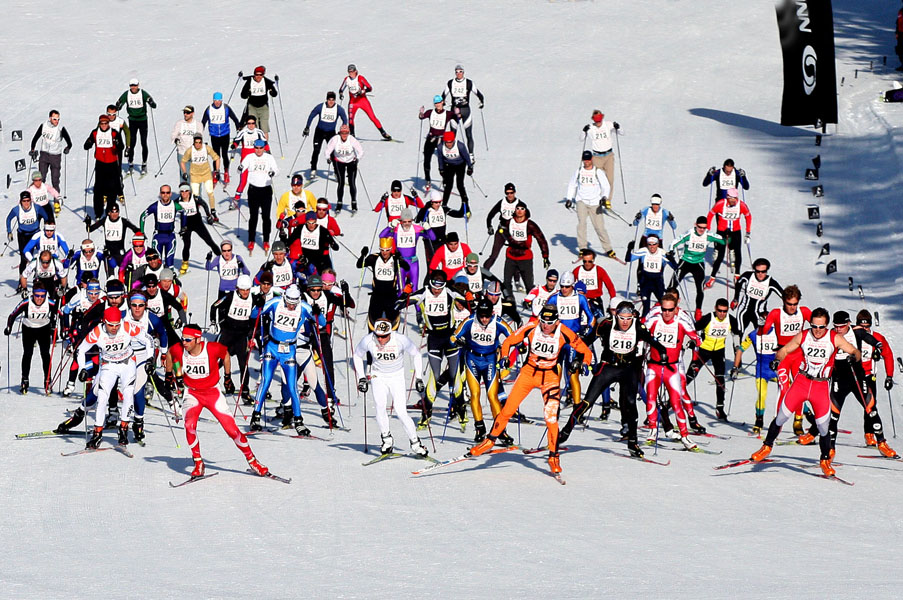
Gold Rush 2010 (Photo: MacBeth Graphics)
Saturday’s schedule runs from 8:00 a.m. through the afternoon:
8:00 a.m. — Resort opens for demos and skiing 9:00 a.m. — U.S. Biathlon Association “Take a Shot” laser rifle demo 10:00 a.m. — Cafe opens; Maplus-USA glide waxing clinic 12:00 p.m. — Music on the deck 1:00 p.m. — Slush Cup Super Sprints qualifiers (day-of entry only; $20 adults / $10 under 20)
The Slush Cup Super Sprints will feature a super short loop with single-lap qualifying, terrain elements, and gates. There will be Beginner, Fitness, and Expert classes, with heats of six following qualifying. Expert Class heats will be a minimum of 600 meters.
The last races of the season are already past. In that last month of ski racing, World Cup finals happened for Para Nordic at Soldier Hollow, the Holmenkollen 50k made history for offering the first women’s 50km race and Spring Series capped off the elite domestic racing here in the states. But those high-profile events were not the only ones being staged: this year, my friend Phil sent out a notice for a race on his trails on April 8th. Racing in April—especially in Minnesota—was something to embrace. Not only was the date novel, but the opportunity to race at a buddy’s farm on narrow single track with a post-race chili feed and hot tubbing was something not to be missed.
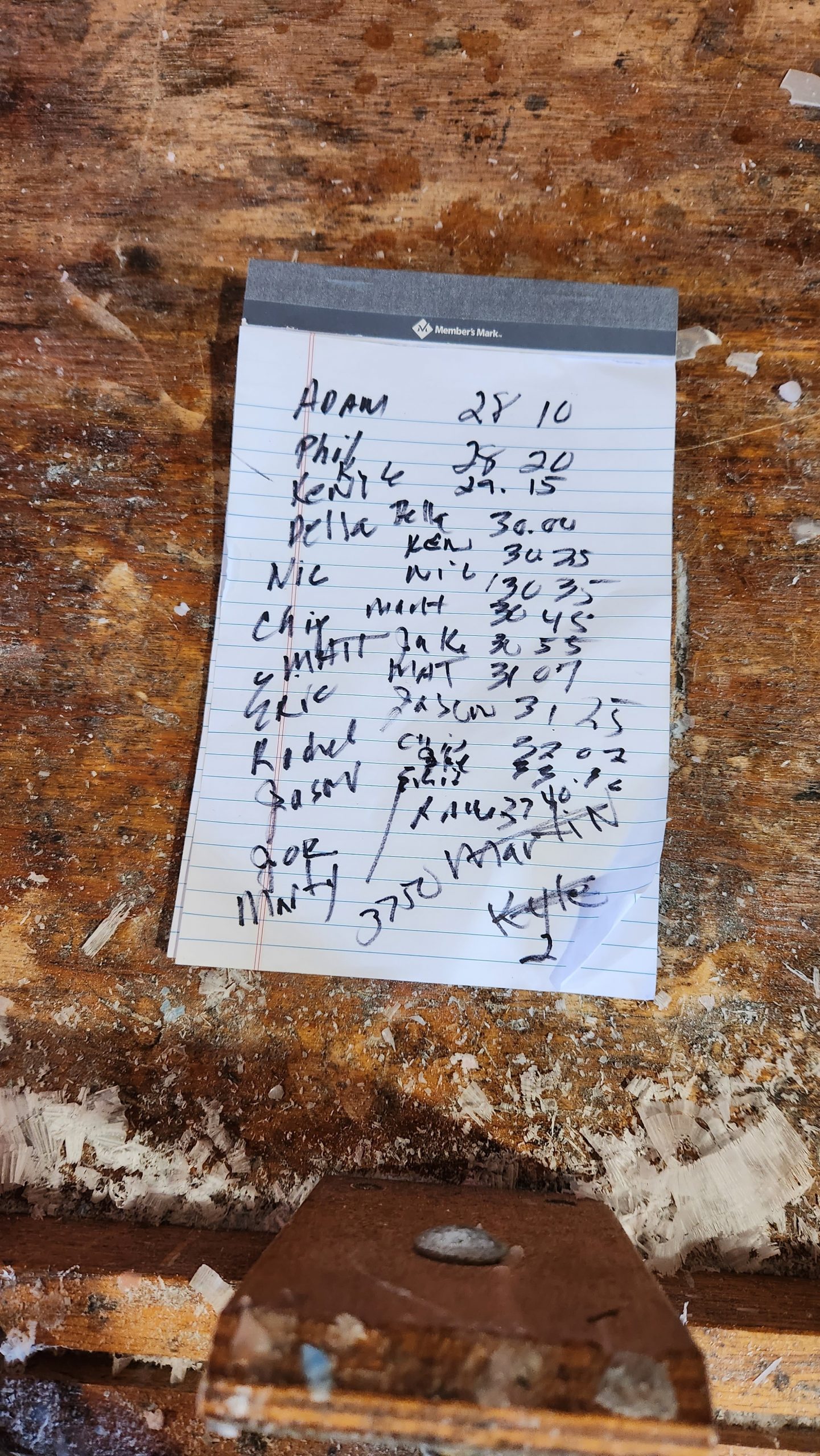
Official results: Racing at Phil’s Farm. (Photo: Jason Kask)
It’s a lot of work to put on a race, and small races like this are becoming increasingly scarce. Without bringing in large revenues from crowds of racers, it quickly becomes a labor of love. We were not going to miss the opportunity!
My wife and I loaded up our two-year-old daughter into the mini van and drove over to Phil and Kelly’s. I didn’t have time ski the course beforehand, so I was pleased when the pre-race meeting went over the course. The competitors (all 12 of us) were told it was really fast. So fast, that before the race one participant went to the shed to find the slowest pair of skis available. There were two bare spots under trees and one corner where it was suggested that we go as slow as possible at the top of the hill because it was really fast and there was not enough room to snowplow. Another warning was that the course loops back on itself so if you are going to run into another competitor the person going slower should get out of the way (it was a downhill in one direction). This all added to the excitement of a late-season ski. Nobody had any kick, two people went on skate gear and everyone had a great time.
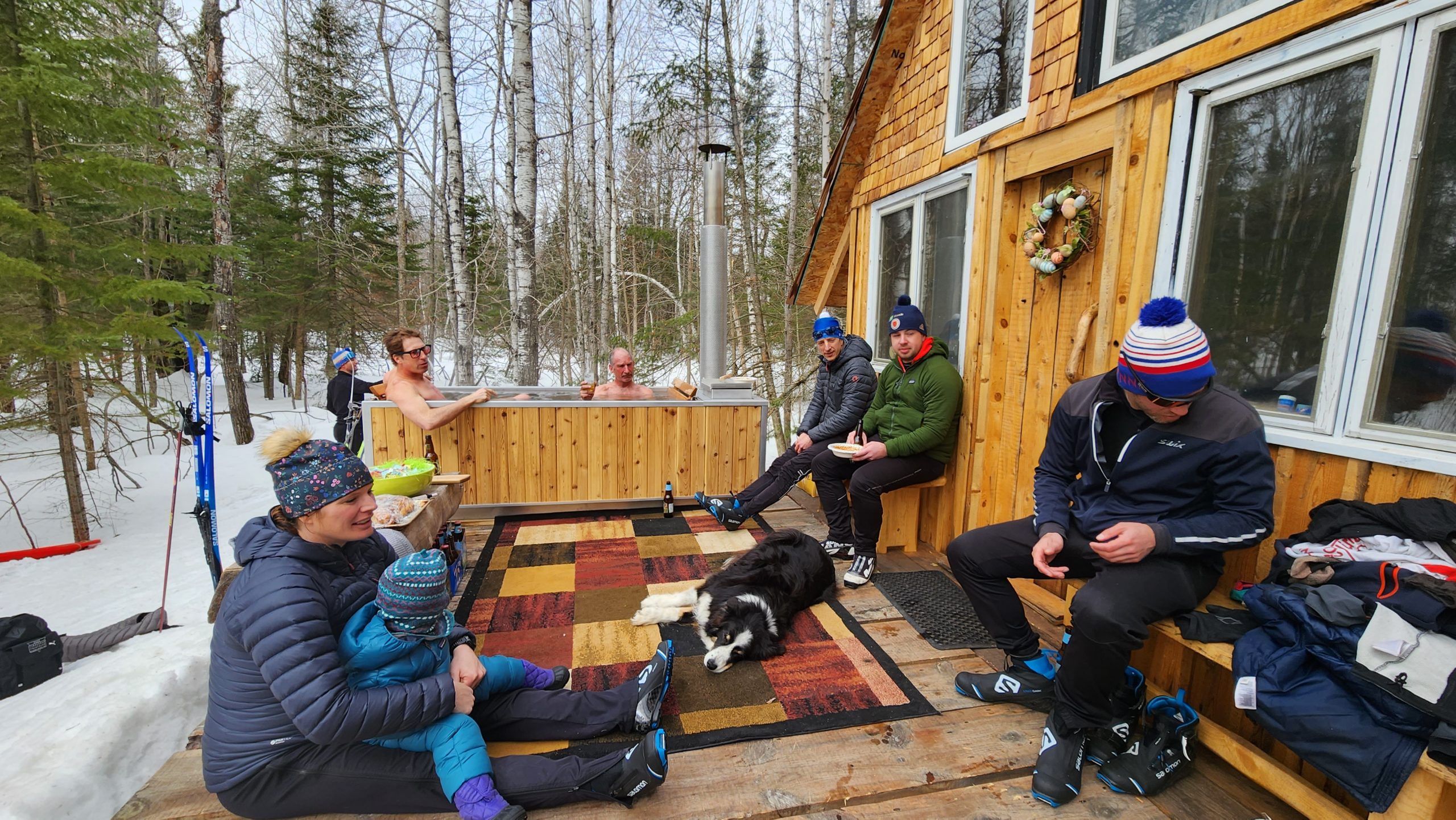
Perfect end to a great season: post-race relaxation, camaraderie, and storytelling on the deck and in the hot tub at Phil’s Farm. This is what April in Minnesota should be. (Photo: Jason Kask)
I’d spent the entire winter offering wax support on the Para World Cup scene, and advising clients who were worried about the Birkie: Phil’s Farm represented a race of an entirely different sort. There were no timing chips, no fencing, no V-board to follow, no waivers to sign. Just instructions that if you get out of the track you are probably going the wrong way. Race results were written in Sharpie on a damp legal pad. This simplicity was refreshing. Everyone finished and we had a brief awards ceremony before skiing back out to a cabin for chili and hot tubbing. It was a perfect end to a great ski season.
What a ski race is has changed dramatically over the years. My parents told stories of side-stepping whole courses before skiing in a track; now, we expect artificial snow with Piston Bully grooming. It’s easy to see why “perfection” has become the standard: I love a deep perfect track and corduroyed skate lane as much as the next skier, but there is a cost to this perfection. That cost is the impending demise of the little ski race, and that’s a sad thing. Sad, because ski racing is more than giant marathons, more than JNQs on homologated courses, more than SuperTours and the World Cups. Skiers can still love events that are staged without sponsor banners or television coverage; winters can still be loved and enjoyed with just a small group of like-minded, adventurous souls; and hand-timing can still deliver results quickly and accurately. These little races often support clubs or trails that need our support in order to continue maintaining the soul of cross-country skiing. So, if you hear of a little race happening, show up and make it a little bit bigger.
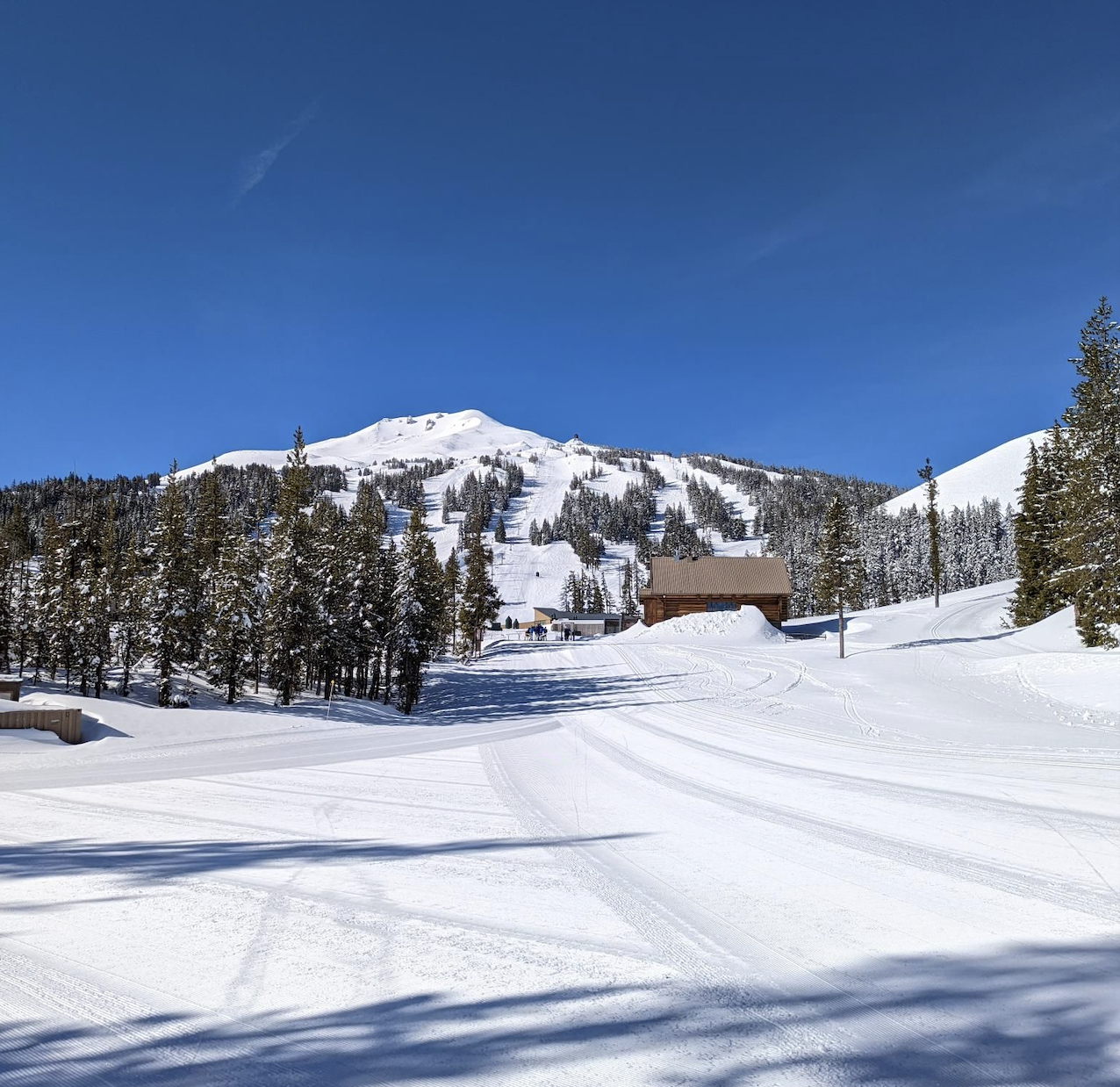
May or January? The US Ski Team has found prime conditions at Mt. Bachelor during the 2022 Bend Camp. (Photo: Noel Keeffe)
Believe it or not, it is mid-May. For those following a traditional cross-country calendar, this means the start of a new training year, building toward the 2022/2023 competition season. And, for many of the top American athletes, this means it’s time to make an annual pilgrimage to Bend, Oregon for the on-snow camp of the season at the Mt. Bachelor Nordic Center.
The weather gods were kind to the camp attendees, with nearly a foot of fresh snow falling on Mt. Bachelor last weekend, restoring it to mid-Winter conditions. April was also a fruitful month for snowfall, setting up for a base-depth of 92” currently reported on the trails – not bad for May!
To learn more about the camp and what has made Bend and Mt. Bachelor a staple of the U.S. Ski Team’s early season training, FasterSkier connected with head coach Matt Whitcomb, who shared that he has been coming to Bend almost-annually for the last 26 years.
He first experienced the trails at Mt. Bachelor during the 1996 U.S. National Championships.
“I was rooming with Justin Beckwith (current NENSA Competitive Program Director),” Whitcomb recalled fondly. “Amy Caldwell took us out and then Sverre [Caldwell] joined us, and we had our first experience racing Nationals. And it really jumped out as this town that had skiing at its center, not only alpine but cross country.”
The following summer, Whitcomb, Beckwith, and a couple additional training partners hopped into a car and drove to Oregon to spend the summer of ‘97 in Bend.
“But we weren’t, by any means, the first people to do this – we were following in the footsteps of Justin Wadsworth and Pat Weaver and a whole bunch of other people. And by our senior year [at Middlebury College], we had twenty-something people driving out from the east just to experience what Bend has in late May and June, and we’d be there through August until we had to go back to college.”
Lina Sutro (right) and Alayna Sonnesyn (left) enjoy fresh snow and a fresh groom at Mt. Bachelor during the 2022 Bend Camp. (Photo: Lauren Jortberg)
What Bend has in late May and June, he said, is a vast array of diverse training opportunities, which most importantly includes snow.
“That’s probably the first thing that really drew us in, particularly as people from the East.”
He shared that the snow report they had received from Mt. Bachelor Nordic Center manager Sue Foster was measuring the accumulation from April storms in feet, not inches.
But it’s not just the access to snow on its own that makes Mt. Bachelor worth the trip.
“The trail system is world class. You’re skiing through Douglas fir — just these massive, old old trees on creative, windy, hard trails, and on a good year they’ll have close to 30 or 40 kilometers groomed for us still in May.”
In addition to its geographical location and an accumulation of over 300” of snow annually, the elevation of the Nordic Center preserves the snowpack for late season skiing. The parking lot sits at roughly 6,000’ above sea level, while trails range from 5,750 to 6,400’.
This puts Mt. Bachelor in a similar altitude zone to Soldier Hollow, UT, offering athletes both an early season bump in red blood cells and the opportunity to fine tune their altitude skiing strategies, “which is something that we really value. Because skiing at altitude is not just something for the aerobically gifted; it’s also something for people that develop the skill of how to actually ski at altitude. So that’s been great.”
Whitcomb also lauded the convenience of Mt. Bachelor relative to their lodging down in Bend, roughly a 25 minute drive down the mountain at a significantly lower elevation of roughly 3,300’. In addition to easy access to the trails, this gives the team the opportunity to train high and sleep low, as well as to enjoy non-ski training modalities in a totally different climate.
“So recovery is complete. We can also go roller skiing in the afternoon, we can go mountain biking, we can run in shorts and tee shirts. It’s like you’re experiencing the summer and the winter on the same day for two weeks in a row.”
Fresh snow and vitamin D — Jessie Diggins and Alayna Sonnesyn head to Mt. Bachelor for the 2022 US Ski Team spring training camp. (Photo: Lauren Jortberg)
Overall, Bend and Mt. Bachelor have become a special place for Whitcomb, and for the many athletes who have made their way there over the years.
“It’s just such a wonderful environment. The way these cascade forests smell this time of the year when the new growth is coming up — you step out of the car when you first arrive and it’s like, ahh. I could be blindfolded and tell you exactly where I was.”
While Mt. Bachelor offers high quality grooming all season, Whitcomb also spoke to the relationships the US Ski Team have developed with the trail operations team, and their willingness to adapt their usual grooming patterns to best serve the visiting skiers. This year, Whitcomb is looking to replicate the track format of a World Cup stadium so the team can practice “switching lanes in the finish and figuring out how to develop more speed — a bit of a twist to our [usual] speed training.”
At the helm, and helping US Ski Team coaches interface with the grooming team, is the aforementioned Nordic Center Manager, Sue Foster, who Whitcomb says has been an invaluable resource over the years.
“She meets us in the lodge every day, she helps us prepare the TV and the chairs so that we can do a little visualization before every session. And she’s just a delightful, inviting person that makes you want to come back and see [her.] It’s rare that every athlete on the team knows the names of the people working the lodge, but Mt. Bachelor is one of those places.”
Midwinter conditions return in May to Mt. Bachelor. (Photo: Alayna Sonnesyn)
Off the ski trails, Whitcomb shared that a highlight for many athletes is the lower elevation terrain in Bend, where the unique volcanic geology of Mt. Bachelor sets up for miles of tacky “hero dirt” for afternoon rides.
“The mountain biking is some of the best in the US, particularly in May, before it’s gotten dusty.”
During the late spring, many trails along the Deschutes River are also beginning to open up, and often the team will be dropped off an hour and a half up-river to enjoy a point-to-point run back to their cluster of rental houses.
This year, the team is spread between three large rental homes in close proximity, with the staff house centrally located to host nightly team dinners catered by USOPC chef Megan Chacosky. To reduce COVID risks among the team and staff, masks are still worn during team meetings, allowing them to safely happen in-person. Though mask mandates and COVID safety precautions are largely being dropped, Whitcomb expressed the importance of keeping athletes and staff healthy, setting everyone up for success during the high-volume summer months of training.
“I think the world has made a major shift to decide that the pandemic is over, but we’re pretty well aware that the COVID is not done yet.”
Finally, Whitcomb cited the greater ski community in Bend as a reason the camp has been such a valuable component of the annual training cycle.
“As far back as I can remember, it didn’t matter whether we are registered with a local club or not, we were always being invited by [coach/director] John Downing to the XC Oregon sessions. He’s still a good friend of the team, and we have so many locals in town that are helping us out and welcome us every year to town.”
Acknowledging that he was only giving the short-list of names from the Bend skiing community who have supported and welcomed the team each year, he also noted former physiologist at the Olympic Training Center in Colorado Springs Tim Gibbons, who builds excitement for the camp by giving Whitcomb snow reports all winter, indicating how the trails are shaping up for spring skiing. And lastly, he thanked the members of the Mt. Bachelor Ski Education Foundation (MBSEF), including nordic director Dylan Watts.
This community support allows the team to maximize their time training in Bend, while also creating opportunities for outreach via programs like Fast and Female or hosting workouts for the MBSEF junior athletes. This partnership helps the team feel connected, and also stoke the enthusiasm of the next generation of cross country skiers.
“It just really feels like a family that we’re coming back to every year. So thanks to everybody that has always been welcoming. We try to be great ambassadors for the sport, and we need partners like this [to continue to move forward as a nation].
Sun, snow, and lots of training during the 2022 US Ski Team camp at Mt. Bachelor. (Photo courtesy Alayna Sonnesyn)
The Mt. Bachelor Nordic Center is known for it’s world class spring cross-country skiing. You can find more information about spring conditions at mtbachelor.com.
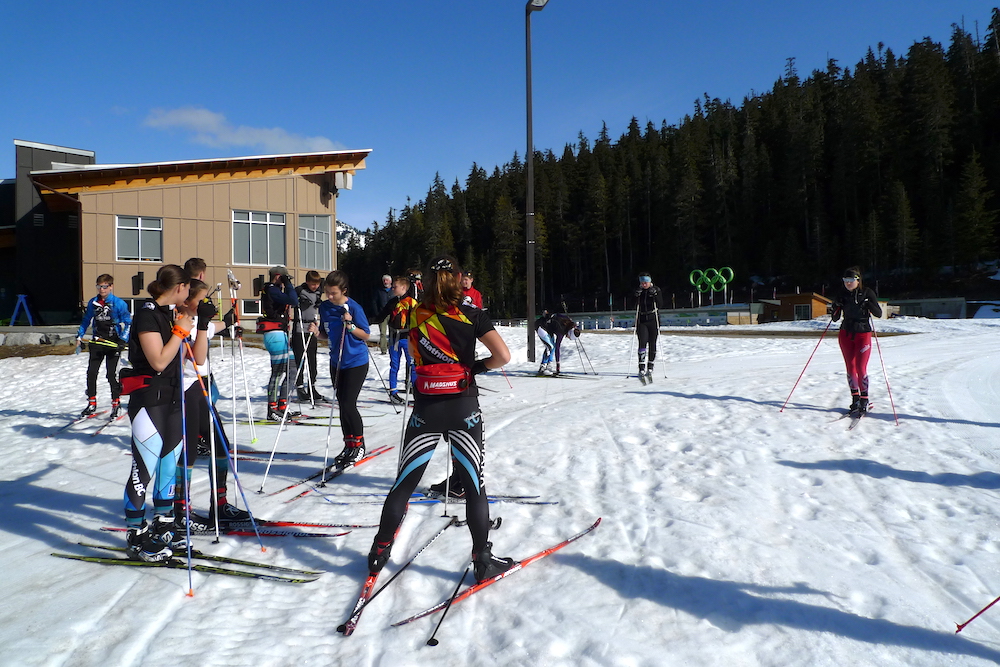
The BC development team getting ready to ski out of the biathlon stadium at Whistler Olympic Park last weekend.
While most people have moved on to other sports by May, the more obsessive skiers are starting the new training year on snow.
Canada’s “first” cross-country ski “races” of the 2017/2018 season were held on May 6. “First” because, while we haven’t exhaustively researched this, it was the first Saturday after May 1, which is the traditional new year for the Northern Hemisphere. “Races” is also a bit misleading as most athletes were viewing the events as an opportunity to do some intensity.
Here then, in the order which photos arrived, are the places where people are skiing in May. Did we miss one? Share in the comments below or email photos with caption and credit info to info@fasterskier.com.
Sovereign Lake, Vernon, B.C.
The Sovereign Lake Nordic Centre (SLNC) re-opened from May 4 to 7 for the Spring Fling camp and the “SLNC 1st Annual Pushups Classic Time Trial” race. The May camp has been running for years, but was moved to earlier in the month to ensure prime conditions. A number of clubs brought athletes out for technique lessons and long snow sessions. Canmore Nordic broke the pattern by focussing on low-elevation training with shorter training sessions. As the Canmore athletes live at 1,400 metres above sea level, the opportunity to train at 400 metres was more exciting than skiing at 1,700 metres.
The first day of camp on May 4 was a warm one, but the 16 k of trails held up well.
Julien Locke (Canadian National U25 Team) disappearing into the mist.
Three generations of Williams (Madeleine Williams, her baby and her parents) enjoying the sun and snow.
Canmore Nordic found bluebird skies and fresh tracks.
Graham Nishikawa smiling early on the first of four long ski days for him.
+17 C on Thursday, May 4, 30mm of rain on Friday, May 5, fresh snow on Saturday morning, and this salamander doesn’t care because he skipped the time trial.
SLNC General Manager Troy Hudson (second from left) explaining the race rules to Gareth Williams, Annika Richardson and others on May 6 at the Sovereign Lake Nordic Centre.
If the stairs are reappearing, it must be spring!
Sovereign Lake closing day: May 7, and the last set track here until November. (Photo: Troy Hudson)
Canmore, Alberta
The Canmore Nordic Centre lost its snow at the end of April, but Sunshine Meadows just a short drive west in Banff National Park hosted a large group of skiers starting May 9. Ivan Babikov is leading a training block for the Canmore-based national team members, Chris Jeffries has the Alberta World Cup Academy crew, and a number of other groups are there as well.
OK, not in Canada, but Canadians Dahria Beatty and Russell Kennedy went and enjoyed some superb skiing conditions. They raced at Bysprinten in Mosjøen, Norway, and then moved on to Sjusjøen’s 100 kilometres of trails.
Dahria Beatty and Russell Kennedy in Sjusjøen in early May. (Courtesy photo)
Russell Kennedy, Annika Taylor, Dahria Beatty, Brian Gregg, Caitlin Gregg in the Susjøen stadium. (Photo: Russell Kennedy)
Dahria Beatty, Russell Kennedy, and friends enjoying some spring skiing in Norway in early May. (Photo: Dahria Beatty)
Kennedy and friends skiing on a warm May day in Sjusjøen. (Photo: Russell Kennedy)
Russell Kennedy enjoying May sunshine in Sjusjøen. (Photo: Russell Kennedy)
Dahria Beatty in Norway in early May. (Photo: Dahria Beatty)
Sun, snow and Norwegian friends. (Photo: Russell Kennedy)
Menihek, Labrador City, Newfoundland and Labrador
The Menihek Nordic Ski Club is officially closed, but has snow and will set track for Mother’s Day, according to club president Gerry Rideout.
Menihek “Happy Trails” on April 21. (Photo: Gerry Rideout)
Whistler Olympic Park, Whistler, B.C.
This venue is closed to the public, but has been hosting camps on natural snow. Biathlon got the first weekend of May and cross-country has the Victoria Day weekend. These photos are from the biathlon camp on the Olympic trails, mostly below 900 metres in elevation.
The XC stadium in May sunshine.
The BC Development team getting ready to ski out of the biathlon stadium at Whistler Olympic Park last weekend.
Skiers on the connector trail between Whistler’s biathlon and XC Olympic trails.
The low bridge on the Olympic XC trails.
The Hub, an intersection that leads to the lower trails, closed in April.
800 meters from the finish of the Olympic blue loop, with just Hermod’s Hill to go.
The view from Hermod’s Hill. (Yes, John Aalberg and Hermod Bjørkestøl designed these trails, too.)
“Callaghan Gold” got its name the first (trial) season in which WOP started storing snow in 2013. Sawdust (seen here in early May 2017) was used to cover the snow over the summer and discoloured it. Expect white snow this October.
Rosanna Crawford and Brendan Green (not pictured) head off to Fort Simpson for Day 4 of their weeklong trip in the Northwest Territories last month. The two spoke at several schools in rural communities about biathlon and achieving dreams from April 20-24. (Photo: Brendan Green/Twitter)
Some might consider Rosanna Crawford and Brendan Green, Biathlon Canada’s power couple, restless. Shortly after flying home to Canmore, Alberta, after a three-monthlong stint in Europe for the IBU World Cup and World Championships, the two decided to pack up their skis and head five hours west to Sovereign Lake in British Columbia for some more skiing.
“The conditions there were incredible,” Green wrote in an email of their four-day excursion in early April. “A lot of people were wondering why we still wanted to ski after spending the entire winter racing in Europe, but racing and skiing for pleasure are different.
“A lot of people were wondering why we still wanted to ski after spending the entire winter racing in Europe, but racing and skiing for pleasure are different.” — Brendan Green, two-time Olympian and Canadian national-team biathlete
“During race season we never really have many opportunities to ski for fun and enjoy the trails — We’re always looking towards the next race,” the 28 year old added. “For me, skiing for fun in the spring is a nice way to decompress and reflect after the race season. The conditions in Silver Star were unreal with perfect snow. It was the nicest skiing I’ve done this year by far — most days it was hard to stop skiing!”
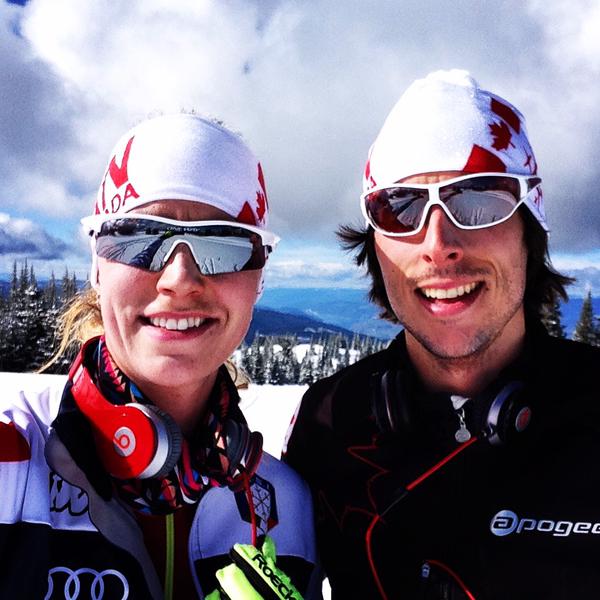
Rosanna Crawford (l) and Brendan Green at Sovereign Lake on April 4. (Photo: Rosanna Crawford/Twitter)
In all, they skied between 155 and 170 kilometers, according to Crawford.
“There was over 100km of trails still being groomed. It was the best snow we saw all year,” she wrote.
With the ski bug out of their system, the couple jetted south for a week of sun and sand in Mexico.
“It was awesome to feel some heat and force ourselves to relax, although our adventurous side did get the better of us and we did end up doing some beach running to explore the surrounding area,” Green explained.
Two days after returning from Mexico, the two ventured north — back to Green’s roots in the Northwest Territories — for a week of outreach. Last year, Crawford and Green visited schools around Hay River, where Green grew up, to share their experiences and world travels in biathlon. This time around, Green asked the Northwest Territories Power Corp. (NTPC) if it would support their visits to schools father north.
“I thought it would be fun to spend time in some of the more remote northern communities,” Green wrote. “I pitched the idea to one of my big supporters from the north, the NT Power Corp, and they were more than happy to sponsor the northern tour. It’s important to the NT Power Corp to support and empower youth in the north, and it worked out really well to have Rosanna and I help in this regard.”
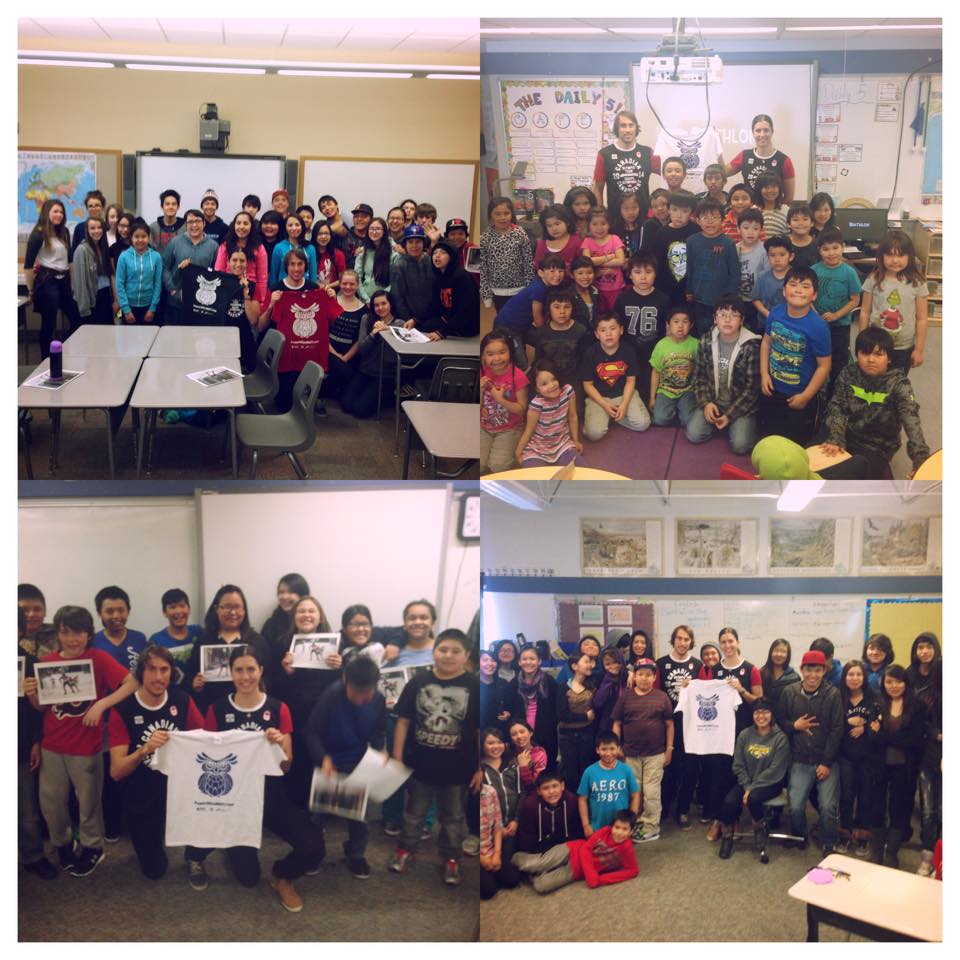
Rosanna Crawford and Brendan Green with a few of the classes they presented to in A few of the classes we presented to in Fort McPherson. (Courtesy photo)
From April 20 to 24, the couple presented seven times at a total of four schools (elementary and secondary) in Inuvik, Fort McPherson and Fort Simpson, according to the Northern Journal.
They explained the nuances of biathlon and shared videos of their races, and Green also talked about his 2012 back injury and the surgeries he’s had since, as well as the challenges he faced as an up-and-coming athlete in a small Northern town, with access to fewer training resources.
“Even though Brendan’s from a Northern community that’s farther south [than these kids], it can still feel really isolated,” Crawford told the Journal. “Any small step along the way, even if something feels a little silly, can maybe help towards their bigger goals and dreams.”
Green described the week as busy, but fun, “and all of the kids were really great.”
“Some of the communities in the North are very remote, so it’s pretty rare that they have the opportunity to interact with Olympians,” he wrote. “There are very few northern Olympians, so it was great to be able to connect with the youth and talk firsthand about growing up in the north. I can relate to a number off the challenges that these kids face. It was also Rosanna’s first time north of the Arctic Circle, so that was a pretty neat experience for her as well!”
Now back in Canmore, Crawford and Green are on the training wagon once again.
“Training in May is hard and I always find it a tough transition,” Green wrote. “My body is sore for days. Even if I’m able to ski quite a bit in April and enter May in decent shape, it still takes my body a while to adjust back to the full training routine.”
So what does he do?
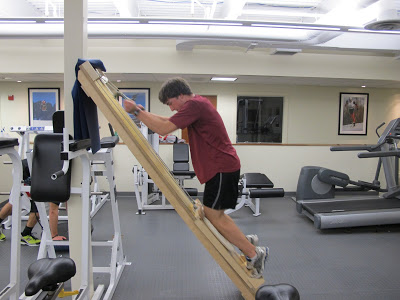
An athlete works out on Bill Koch’s roller board at the Stratton Mountain School in Vermont. (Photo: SMSXC.blogspot.com)
“One of my favourite spring workouts is paying a visit to one of my old friends — The roller board,” he wrote. “It’s old school. I’m sure most skiers have seen them, but maybe not everyone has tried one. For those who haven’t, they’re awesome.”
This time of year in the mountains, with snow still melting and streets in need of sweeping, rollerskiing isn’t the best option. The trails are too muddy for running or mountain biking, so Green finds the need to get creative with his workouts.
“One of my favourite go-to workouts in the spring is a combination of roller board and spinning in the gym,” he wrote.
Here is one of his typical gym sessions:
10 minutes of spinning
5 minutes on roller board
Repeat four times
“It’s a tough workout, but adjust the height of the roller board to a level you can manage,” he explained. “As you get stronger increase the length of the roller board interval and/or the height of the roller board.
“I love this workout to build upper body strength and feel it really helps my overall ski performance. Some years I spend more time on the roller board than others, but I’m a firm believer in its benefits and always try and keep it routine in my training whenever possible.”
***
FasterSkier contributor Gerry Furseth caught up with Crawford and Green at the Sovereign Lake Nordic Centre on April 6. Video interview below.
What do skiing, mountain biking, sunburns, snowstorms, rainbows and lots of roundabouts all have in common? They can all be found in Bend, Oregon in the month of May.
For the first time in recent memory, the US Biathlon team sent a group of athletes to Bend for an early summer on-snow training camp. We left […]
Ivan Babikov (CNST) shortly after starting the 10 k classic at Canadian Ski Nationals in Mont Sainte-Anne on Monday. Babikov was the eventual winner in 28:38.6.
MONT SAINTE-ANNE, Québec – Four days after flying home from Europe, Ivan Babikov was back in action at Canadian Ski Nationals on Monday.
The 31-year-old national team member was also back to his winning ways, hitting his stride as usual at the domestic championships and claiming his seventh Canadian title.
Out of nearly 160 men in the 10-kilometer classic individual start, Babikov was the fastest, completing the two loops in 28:38.6.
Runner-up Erik Carleton (Rocky Mountain Racers/NST) finished 8.1 seconds back, and Michael Somppi (Thunder Bay National Development Centre/NST) was third (+21.8).
By the time Babikov started Monday morning, the snow had softened under sunny skis and the wear about 200 racers before him. Babikov started near 30th in the randomized men’s race, which followed the women and junior girls.
Out on the course, he found several hills no longer had tracks; herringbone was the only option. That didn’t make racing any easier, but he acknowledged it was the same for most of the men’s field.
“I felt like I could fight,” Babikov said. “It was tough conditions and [I wasn’t] feeling great after the flight and jet lag … but it was enough to win and I’m super happy.”
Ivan Babikov (CNST) finishes while Dudley Coulter (NDC-Thunder Bay) recovers on the ground after the Canadian Ski Nationals 10 k classic individual start on Monday in Mont Sainte-Anne, Quebec. Babikov won and Coulter was seventh.
Babikov said the victory most in principle and to those that idolized World Cup athletes like him.
“It’s good to see kids looking up to you,” Babikov said. “It’s not for me; it’s more for the other youngsters coming up. A title is a title. It’s cool to be a national champion.”
Personally, the win was another high in Babikov’s rollercoaster season. After skiing one World Cup race in March and scratching out of his last three, the Russian-born skier didn’t end the season as he had hoped. A second bout with a virus or flu kept him from finishing his last race in Oslo, Norway: the 50 k classic mass start.
“That was the hardest part,” Babikov said. “I didn’t make the finals and I didn’t finish some races, which never happened before. I was disappointed, but it happens. Better this year than next year or an Olympics year.”
Fortunately, he had nationals to come home and look forward to. Babikov said he felt relaxed going into Monday’s race and focused on staying calm throughout the challenging 10 k.
At the halfway point, he was 15.1 seconds out of first behind Patrick Johnson of Middlebury College in Vermont. Babikov closed the gap over the last 5 k and ended up beating Johnson by 32.6 seconds. Johnson finished fifth after another American collegiate skier, Eric Packer (Dartmouth).
Carleton forced his body into high gear as well, and to his surprise, it responded. With just two men starting 15 and 30 seconds ahead of him, he passed them both.
“I didn’t really feel that great … I wasn’t that comfortable,” Carleton said. “But on a 10 k, you have to be able to go that hard, and it’s nice that I had that today.”
Erik Carleton (RMR) on his way to a second-place finish in the 10 k classic individual start at Canadian Ski Nationals on Monday.
During the race, he mostly worried about Brent McMurtry, who started two spots behind him. Eighth after the first lap, McMurtry finished 11th overall.
“I was thinking he would likely catch me today,” Carleton said. “It was just always skiing scared and, ‘You’ve got to just keep moving, he hasn’t caught you yet,’ kind of thing.”
A National Paralympic Nordic Team member and guide for Brian McKeever (Foothills/NPNST) on the IPC World Cup, Carleton knew this race could be his last before flying to Finland. While he hoped to squeeze in Tuesday’s 15 k freestyle individual start, Carleton also had a plane to catch with McKeever at 4 p.m.
Carleton said they were flying out of Québec on Tuesday to compete in the World Cup. The open men’s races start at 12:30 p.m.
“It was kind of, make the best of these two days,” Carleton said. “Hopefully, we have time to fit in that race tomorrow.”
Somppi in third initially aimed for the top five in the short-distance classic, which he said wasn’t his specialty. Upon hearing that he was in second throughout the race, Somppi set his sights a little higher.
“I couldn’t really hear who was leading,” Somppi said. “I knew I was in the mix anyway. I didn’t think I’d be on the podium.”
Michael Somppi (NDC-Thunder Bay/NST) out of the start in the 10 k classic at Canadian Ski Nationals on Monday in Mont Sainte-Anne, Quebec.
He wasn’t complaining. Starting about 10 racers from the front gave Somppi plenty of splits and motivation to feed off.
“Going into nationals I was hoping to take a medal, but I don’t think I really believed in myself,” he said. “I knew it was possible, but I knew everything would kind of have to work out perfectly for it to happen. Today it did.”
The race was Somppi’s first individual event since nearly a month ago at the 50 k American Birkebeiner in Hayward, Wis. Racing in Saturday’s team sprint helped him transition into racing mode again, he said.
“I think I’ve done a good job of peaking for the nationals,” Somppi said. “Hopefully the rest of the week will be just as good.”
Packer finished 6.9 seconds after from Somppi in fourth. Graham Nishikawa (AWCA/NST) was sixth, Dudley Coulter (NDC-Thunder Bay) was seventh, Harry Seaton (NDC-Thunder Bay) was eighth, David Greer (CNEPH) placed ninth and Jesse Cockney (AWCA) was 10th.