
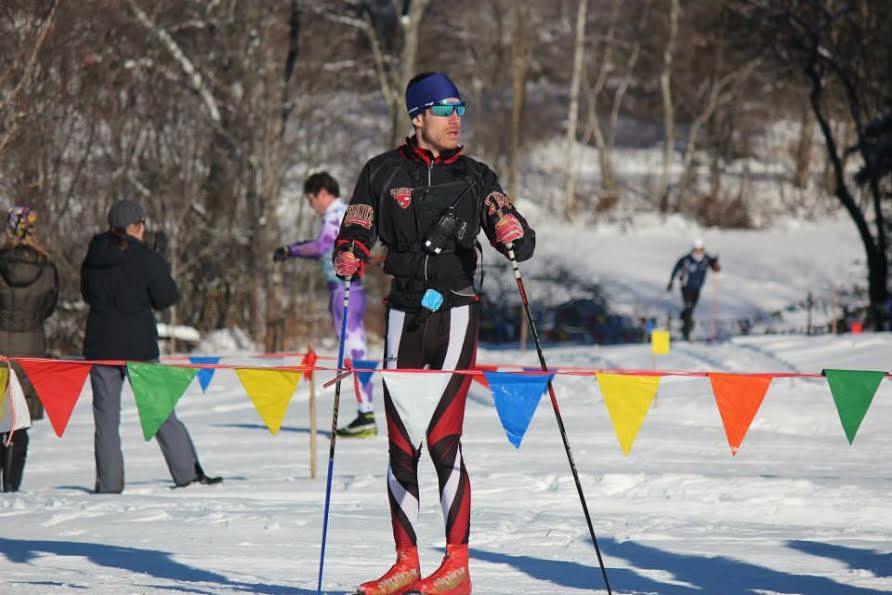
Adam Terko came to St. Lawrence University as a skier and student in 2008, but his time at the school would last long after his racing and studies ended. After graduating in 2012 he joined the Saints’ coaching staff, bringing the same energy and spirit into his three years as coach as he had while on the team himself. During his years as assistant coach, he dedicated his time to write weekly recaps of the EISA collegiate carnivals for the FasterSkier community. Earlier this year, Terko decided to leave his position as the assistant nordic coach this spring to become the Head Coach and Executive Director of Mansfield Nordic Club, replacing current Head Coach Tim Weston who will officially depart the program in July of 2015, according to the team’s website. While the new head coach has been busying navigating his new responsibilities, he answered questions from former teammate and athlete Kathryn Mulcahy about the next chapter of his ski coaching career.
FasterSkier: What are you most excited for with the Mansfield Nordic Club?
Adam Terko: I’m from Vermont and I was personally supported by a lot of people from this area growing up. Having such a great support structure as I became a skier, I’m excited to be part of that from the other end. Also, in New England there is a lot of success and there is definitely a positive future here. I’m excited to be a part of and contribute to that future for kids from this area and Vermont as a whole.
FS: What are you going to miss most about St. Lawrence University?
AT: I came to St. Lawrence in the fall of 2008 as an athlete, so I think after spending seven years there it’s hard not to have a strong connection to the ski team and everyone that was a part of my experience throughout those years. I got to interact with a lot of great teammates and assistant coaches, as I’m sure is similar for a lot of people. But this is a great opportunity to move forward with my coaching career, apply what I’ve learned during my time at St. Lawrence and give what I’ve been given back to others.
On a day to day operational level colleges, especially ones as well supported as St. Lawrence, are definitely benefited by logistical aids that I probably took for granted. For example, transportation, lodging budgets, waxing, equipment, and facilities of various types. Not to mention a corporate credit card (laughs). At the same time I’ve already gotten to know a lot of people who have contributed a ton to Mansfield Nordic and provide so much for the skiers even without that kind of corporate structure. I think it’s great to have that personal investment and those kind of connections are what a ski club is all about.
FS: When did you decide coaching was something you wanted to pursue as a career?
AT: Sophomore or junior year of college. I had some success with my own racing but knew I probably couldn’t race professionally. But I knew I wanted to stay involved in the ski world and felt that coaching was a good way to give back, stay involved and pass on what I had learned. I tried to learn as much as I could from then on. Knowing I was interested in being a coach even before I was finished racing had me looking for opportunities to apply situations from both the athletes and coaches perspectives, to consider the positives and negatives and difficulties of both sides and apply that to myself in the shoes of a coach.
FS: How do you think your youth is beneficial to you as a coach? In what ways is it a limitation?
AT: I’ve only been removed from racing for a few years and in that time I was an assistant coach. During that time I tried to immerse myself in other opportunities for coaching during all seasons. I attended clinics at the Olympic Training Center in Lake Placid, worked with athletes in the summer from the college age and younger, and tried to take every opportunity I was given to learn as much as I could knowing I wanted to stay in the coaching field.
As for limitations, at 25 I go into coaching knowing I don’t have a lot of experience, when experience is what brings success to many coaches. Realizing that, and going into every individual workout or race knowing that it is a learning opportunity is a way I’ve tried to approach it though.
FS: What do you think the hardest part about being a head coach will be?
AT: When you’re an assistant is easier for responsibility to be put on a head coach and I know that there are decisions that I will make that may not always receive unanimous support. But I’m always going to try to do what is best for the club and for the skiers and I need to trust that as long as I’m putting thought and consideration into my decisions I need to accept that I might not always please everyone all the time.
FS: What do you think your strongest attribute as a coach is?
AT: I think that on a personal level I’m pretty easygoing and very open and willing to collaborate and bring people together. Additionally, I think that I’ve learned the value of connecting with skiers and figuring out what success means for them at their level, whatever that level may be, and helping them to achieve that success. That could be related to results or what they enjoy doing for training, where they want to go in the sport and how they plan on achieving those goals.
I would also say as a ski racer myself I went through times when I would consider myself successful, on a relative scale, and then there were times when I skied into the woods after a race and asked myself why I was doing this and how I could be struggling so much. I’ve experienced both ends of the spectrum and moments of disappoint and triumph and I hope that I’m able to put myself in a lot of different shoes depending on where a skier is at.
FS: Where do you see yourself in ten years?
AT: I have the intention of committing to this program seriously and helping the club grow. Some of my individual goals as a coach are to get more experience and connections nationally like coaching at REG camps and Junior Nationals. From there I’d like to experience coaching at an international level through coaching at World Juniors and U18 Scando Cups with the hope that the Olympics are in there somewhere down the road.
FS: Final question, what are your race day coaching essentials?
AT: Guru red kick wax, chocolate covered pretzels, energy and enthusiasm, good coffee, Neos, seltzer, preferably music at the wax bench, and a radio vest so I don’t keep getting mistaken for a high school racer.


