Tag: St. Moritz

  • Klaebo Leads Six-Deep Norwegian Sweep in Engadin 20 k Mass Start

    This coverage is made possible through the generous support of Marty and Kathy Hall and A Hall Mark of Excellence Award. To learn more about A Hall Mark of Excellence Award, or to learn how you can support FasterSkier’s coverage, please contact info@fasterskier.com.

    Crossing the lake in St. Moritz. Plenty of contenders, only one winner. Clement Parisse (FRA), Federico Pellegrino (ITA), Iver Tildheim Andersen (NOR), Edvin Anger (SWE), Jens Burman (SWE), Iivo Niskanen (FIN), Gus Schumacher (USA), Paal Golberg (NOR), Paolo Ventura (ITA), Mika Vermeulen (AUT)—but it was Norway’s Johannes Hoesflot Klaebo (far right) who would take the win. (Photo: Authamayou/NordicFocus)

    We feel like we know what World Cup skiing looks like—then FIS schedules a Mass Start race that begins in St. Moritz, and we watch a pack of racers V2-Alternate across the opening kilometers of a dead-flat landscape. It looked a bit like old days at the American Birkebeiner on occasions when that race started on the frozen Lake Hayward. In St. Moritz, so little action was expected in the early kilometers of racing that FIS did not even provide a time-check until the 6.5 kilometer mark, at which point the field was still bunched together. They remained mostly together until the final kilometers where Norway re-exerted its dominance, taking the top seven spots.

    Johannes Hoesflot Klaebo out-dueled a lead pack of his countrymen to claim the victory. He was followed across the line by his countrymen, Iver Tildheim Andersen and Didrik Toenseth.

    Zak Ketterson was the top American, finishing 30th. Behind him, Zanden McMullen was 32nd, Hunter Wonders 44th, Gus Schumacher 49th,  Walker Hall 51st, and Luke Jager 65th.

    Among Canadians, Thomas Stephen was 22nd, Olivier Leveille 25th, Sasha Masson 28th, Remi Drolet 35th.

    A long, flat start across Lake St. Moritz made the World Cup 20 k Mass Start resemble notable ski marathons. The pace wouldn’t really heat up until the final kilometers. (Photo: Authamayou/NordicFocus)
    20 k Mass Start

    Six inches of new snow fell overnight, covering Engadin in a soft blanket of white. Course workers worked to clear new snow from the course right up until start time, though the race seemed likely to be affected by softer-than-normal conditions. Engadin’s Mass Start course is a point-to-point tour—a 9 kilometer section starting on the frozen lake surface at the nearby Olympic Village of St. Moritz, followed by three 3.7 kilometer laps around Engadin. Things definitely were not off to a fast start . . .

    A V2 Alternate stroke is one that’s efficiently employed by skilled recreationalists and age-group racers as they happily traverse flatter sections of terrain. For World Cup competitors, though, it’s simply an indication that not much is happening. The course is just too flat, so they’ll mark time until the track tilts up and things begin to happen. The only other time World Cup viewers see a race look like this is in the opening kilometers of the Alpe Cermis stage at the Tour de Ski. Even then, not much really happens until the six kilometer mark when the climbing begins. Don’t be misled: the racers in the 20 k Mass Start in Engadin were flying. It’s just that they were all flying at a pace that was fairly sustainable . . . for them, anyway.

    Predictably, it was at 6.5 kilometers (the first time check) where the accelerations began. Under the shadow of Engadin’s landmark castle—and with hills on the race course just ahead of them—the contenders began to take things more seriously. Andersen moved to the front and pushed the pace, stringing the field out behind him. The new pace revealed that the slower early kilometers had allowed a re-shuffling of the original start positions. The front of the field was now populated by numerous Austrian, Swiss, Czech, and French race suits, including that of Victor Lavera (FRA) who moved forward to push the pace.

    By this point in the racing—with high-stress challenges having only just begun—American racers were already dangling and in danger of being dropped. While Ketterson maintained his position in the top 20, other Americans appeared to be struggling. Gus Schumacher was only recently returned from a trip back to Alaska where he recuperated from recent illness. He, in particular, appeared slow to re-adjust to the pace of a World Cup field.

    Often at the front, Norway’s Johannes Hoesflot Klaebo (right) controlled the pace throughout much of the day. (Photo: Authamayou/NordicFocus)

    Whenever the pace was not to his liking, Klaebo moved to the front. Sometimes just to measure the pace, other times to slow things down. Either way, Klaebo was taking charge of the race, and the rest of the field was letting him do it. If the brazenly outspoken Swede, Edvin Anger, had intended to assert himself in this race, he wasn’t showing it yet . . . but a yet-to-be-dropped sprinter is always a dangerous racer. Norway was likely to keep the pace high enough to keep Anger in his place.

    There were bonus points available at 15.8 kilometers, though none of the racers noticed it much. Klaebo happened to be at the front when they crossed the line, but there was no sprint to challenge him. Everyone seemed silently to acknowledge that it was only the finish line that mattered today, and they’d sort that out in the kilometers to come.

    Team France—here represented by Clement Parisse, Jules Lapierre, and Hugo Lapalus—seems determined to insert themselves into the action. They get closer every week . . . (Photo:  Authamayou/NordicFocus)

    With three kilometers to go, Toenseth drove to the front to animate the long drive to the finish line. He was shadowed by Klaebo and Andersen, and that trio began to distance itself a bit from the lead group. On-air commentators continued to suggest that there was some sort of “Norwegian plan” to work together and establish breakaways. From the appearance of things on the race course, though, it seemed more likely that the Norwegians were simply better skiers possessed of better skis; they gravitated to the front as the pace ratcheted up, accompanied by a few game Frenchmen (Jules Lapierre, Clement Parisse, and Hugo Lapalus) who appear determined to insert their team into actions typically dominated by Norway.

    Time and time again, Klaebo has established himself as the formeost sprinter in the sport of cross country skiing. Really, the only hope for Andersen and Toenseth was that Klaebo might be exhausted from winning yesterday’s sprints (not unthinkable—Sprints are indeed a long and exhausting day) so that they could drop him before the finish line. The distance-guy’s job is to drop the sprinter. The sprinter’s job is to sit in and sprint. That’s just the law of the jungle. Sometimes it goes one way; sometimes, it goes the other. Regardless, the members of the now-breakaway group (Andersen, Toenseth, and Klaebo) were definitely not working together to maintain an advantage over the field—they could care less about those other guys. Andersen was trying to shake Klaebo, Klaebo was trying to hang on, and Toenseth was hoping to pluck the win if the other two beat each other up sufficiently. Law of the jungle, indeed . . .

    Fastest guy, fastest skis: Johannes Hoesflot Klaebo cruises to the victory in Engadin’s World Cup 20 k Freestyle Mass Start. (Photo: Authamayou/NordicFocus)

    But how do you beat the fastest guy skiing on the fastest skis? In the end, Klaebo—the best sprinter—didn’t even need to sprint. He simply glided past Andersen on the final downhill slope, and eased his way across the finish line. It’s not that Klaebo’s skis are motorized or voo-dooed or somehow magically endowed. Sure, Fischer has a vested interest in making sure Klaebo receives the very fastest skis that roll off the assembly line, but it’s Klaebo’s own innate sense of the sensitive millimeters where edges and bases meet the snow that allows him consistently to pull more speed out of his skis. In Engadin, he did it again—making it look easy, making it look a bit unfair—and all Andersen and Toenseth could do was tuck and watch.

    There will certainly be more World Cup days to come when the field will find Klaebo flat, when the distance will find Klaebo exhausted or ill, when the snow will find Klaebo’s wax to be less than perfect. But right now Klaebo reigns supreme. Everyone else is left to circle days on the World Championship calendar in the hope that Klaebo’s current peak won’t extend quite that far. Klaebo is imminently beatable; his rivals just need to be ready on the day that his vulnerability floats to the surface.

    Engadin 20 k Mass Start RESULTS

    Iver Tildheim Andersen (NOR), Johannes Hoesflot Klaebo (NOR), and Didrik Toenseth (NOR) led a seven-deep Norwegian sweep in the 20 k Mass Start in Engadin, Switzerland. (Photo: Authamayou/NordicFocus)
  • Interview: 1985 Overall World Cup Champion Anette Bøe

    Interview: 1985 Overall World Cup Champion Anette Bøe

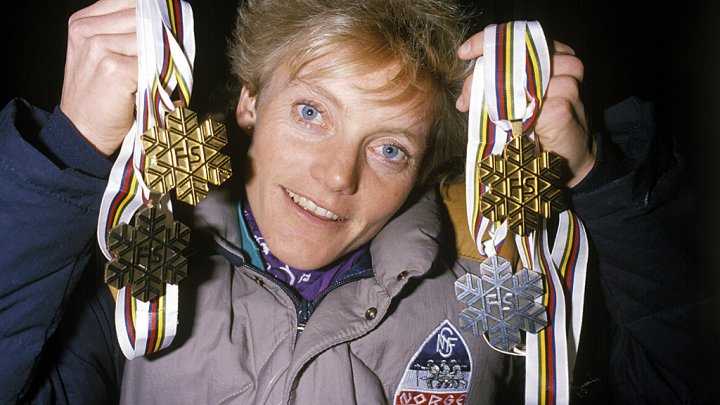
    Anette Bøe displays her medals from the 1985 World Championships in Seefeld, Austria. She earned two gold, one silver, and a bronze at the Championships and was crowned Overall World Cup Champion later that year. (Photo: Anette Bøe/Facebook)
    Anette Bøe displays her medals from the 1985 World Championships in Seefeld, Austria. She earned two gold, one silver, and a bronze at the Championships and was crowned Overall World Cup Champion later that year. (Photo: Anette Bøe/Facebook)

    Anette Bøe has led a life filled with innovation and adventure.

    The Norwegian skier was the first woman on the international racing circuit to venture into the realm of skate skiing in 1984 despite a Norwegian distaste for the new technique.

    When she retired from professional skiing, she decided she wanted to try a new sport in order to “cool-down” and in the process earned a podium finish in the inaugural year of the mountain bike World Cup in 1989.

    She didn’t stop there. Fulfilling a childhood desire to play hockey, Bøe joined a professional team where she earned two Norwegian national championships.

    According to Bøe, her adventurous nature can be traced back to her hometown of Larvik, Norway.

    “It was a very active, small town and I was very lucky to grow up in that kind of community,” she said in a phone interview. “When we came back from school we were always on skates or skis.”

    In addition to the active environment she grew up in, Bøe attributed her entry and drive in nordic skiing to her father Albert. Before Bøe was born, Albert attended the University of Denver as one of the first Norwegians to receive a ski scholarship, under famed coach Willy Shaeffler.

    Bøe was born in 1957 and from then on her father used his experiences as a ski racer to ensure his daughter shared his love for the sport.

    “I think he had a plan with me because he loved cross-country skiing,” she said.

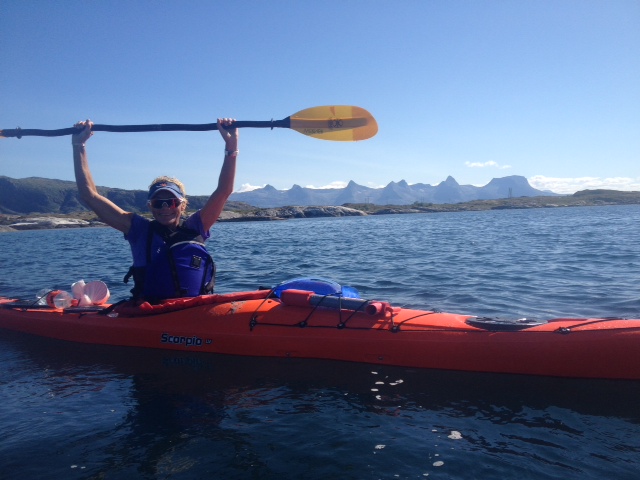
    1985 Overall World Cup Champion Anette Bøe kayaks on Norway's Helgeland Coast in a recent photo. (Photo: Anette Bøe)
    1985 Overall World Cup Champion Anette Bøe kayaks on Norway’s Helgeland Coast in a recent photo. (Photo: Anette Bøe)

    With guidance from her father throughout her developmental years, Bøe had dreams of becoming the best skier in the world, despite disapproval of such ambitions at the time.

    “It sounds crazy, but in the old days you couldn’t say that to anyone,” Bøe said of her aspirations. “Now it’s open. You can say that to anyone you want to, but in the old days you couldn’t say ‘I have a goal to be the best skier in the world.’”

    Her drive to succeed lasted well into the peak of her skiing career. In the 1980s she was training in St. Moritz, Switzerland where she interacted with many international teams and broadened her horizons outside of the often-isolated Norwegian team.

    Because of her familiarity with international teams such as the U.S. Ski Team, Bøe experienced the new technique of skating very early on in its conception.

    Bøe was selected for the Norwegian Olympic team in 1984, but despite winning a trial race, she was not picked to compete. She watched from the sidelines as skiers like Bill Koch used skating to their advantage. Later that season, Bøe followed suit and made the decision to abandon the kick wax on her skis, making her the first woman to skate on the international circuit.

    “No one on the girls side of the Olympics was skating but then I picked it up in the end of 1984 at the last ski race,” Bøe explained. “I took off the wax and I skated. I’m actually the first woman in the world to be skating without wax (on the international racing scene).”

    By 1985, Bøe had fully embraced the skating technique and earned two gold medals at the World Championships in Seefeld, Austria in addition to two other podium finishes. Later that year she was crowned the Overall World Cup Champion.

    Bøe also won the prestigious Holmenkollen Medal in 1985, Norway’s highest honor in in skiing.

    For the Norwegian, the creation of skating represented a new era not only for her but also for nordic skiing as a whole.

    “I think it was really good for cross country skiing when the skating came because everybody had a new chance,” she said.

    She pointed to the U.S. Ski Team as an example, saying that the innovative use of skate skiing opened the door for skiers like Bill Koch and Kikkan Randall to shine on the international stage and grow the sport outside the realms of Scandinavia.

    According to Bøe, the Norwegian national team was reluctant to embrace the new technique and suffered the consequences. She said she was fortunate to be training in St. Moritz at the time, so that she could practice the technique.

    “The Norwegians were in the back yard and all the other nations were in the front because they picked it up pretty quick,” she said. “We lost a generation in Norway of skaters because they were old-fashioned.

    “I was lucky to be in the right spot, in the right time and be open to changes. Every day being an athlete you need to find new ways.”

    Bøe retired from her cross country skiing World Cup career in 1989, but knew she still needed sport in her life.

    (Photo: Anette Bøe Skiskole)
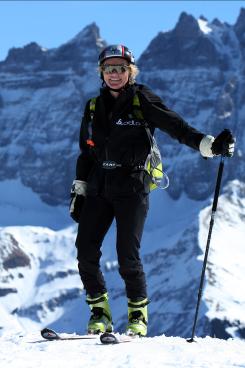
    “I like to give something back (to others) what the sport gave to me,” Anette Bøe says of her relationship with cross country skiing today. (Photo: Anette Bøe Skiskole)

    During her first of many visits to America Bøe witnessed mountain biking for the first time, and was inclined to try it.

    “I was lucky because I have always been adventurous and wanted to do new things,” she said on her entrance into the new sport.

    By the end of 1989 Bøe had participated in the inaugural year of the mountain biking World Cup and took third place in a cross country style race, making her one of the first women in the world to earn a World Cup podium in mountain biking.

    By the early 1990s she was finished with bike racing, but her ventures into new realms of athleticism were far from over.

    During her career as a skier, Bøe had an encounter with a Norwegian women’s hockey team. Having always been intrigued by hockey from a young age, Bøe talked with the team. After her conversation she walked away thinking that as soon as she retired from skiing she would play hockey.

    Once her skiing career ended, Bøe did just that. She joined a local team and in the 1990s she and her teammates won two Norwegian national championships.

    In 2000 she was awarded the Honorary Prize of Egeber, a distinction bestowed on Norwegian athletes who excel in more than one sport, for her accomplishments in cross country skiing and hockey.

    Bøe found her experience as a hockey player very rewarding, not only because of her successes but also because of the team dynamic she discovered while competing on ice.

    “When I was a cross country skier I would always ski by myself and I was always depending on me,” she said. “But when you are on a team and depending on the team to play together, it’s totally another ball game. For me it was good, it was very interesting.”

    Since Bøe’s departure from professional competition, she has filled her time with a variety of endeavors. She’s worked in the Norwegian television and radio industry, as a manager for an ice hockey team, and as a packager for athletic firms and Olympic sponsors.

    One of her favorite projects is the ski school that she created ten years ago.

    Anette Bøe hopes to move to the U.S. soon to be closer to friends and her two children who live in Denver and Boston. (Photo: Anette Bøe Skiskole)
    Anette Bøe hopes to move to the U.S. soon to be closer to friends and her two children who live in Denver and Boston. (Photo: Anette Bøe Skiskole)

    “That’s giving me a lot because it’s nice to give something back to the sport,” Bøe said of her ski school. “I see people getting happy when they break the code; when they feel all their body weight is on one ski and they can kick and glide with total body control on the skis.”

    However, now that the 56-year-old has more time on her hands she thinks she might be ready for a change. At the movement, Bøe sees that change as a move to the U.S.

    Intrigued by her father’s stories of America as a young girl, Bøe always found the U.S. very attractive. On top of that, two of her children will be living in the country in the coming year: her oldest daughter, Thea, graduated from the University of Denver in 2013 and is still living in Colorado, while her youngest son, Oliver, will be attending a boarding school in Boston this coming year.

    Bøe has been searching for work in the U.S. but can only commit to a year due to uncertainly of whether her youngest son will stay stateside. Earlier this year, Bøe had secured a job in Massachusetts but due to her sister’s illness she was forced to decline.

    Much like many other accomplished foreign skiers in the country, Bøe envisions herself as a possible coach or public figure in the U.S. cross country skiing community.

    “I like to give something back (to others) what the sport gave to me,” she said.

    Whatever lies ahead for the 1985 Overall World Cup Champion, her ability to take advantage of her surroundings will likely ensure that her future is just as innovative as her past.