Tag: St. Scholastica

  • From Biathlon to College and Back Again, Dickinson Eyes Olympic Berth

    From Biathlon to College and Back Again, Dickinson Eyes Olympic Berth

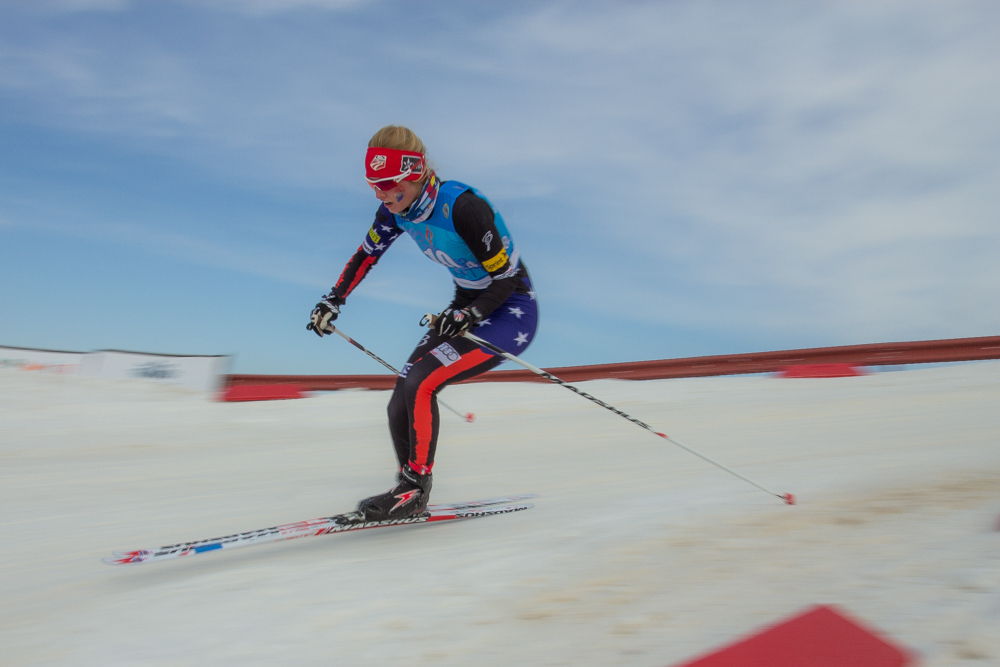
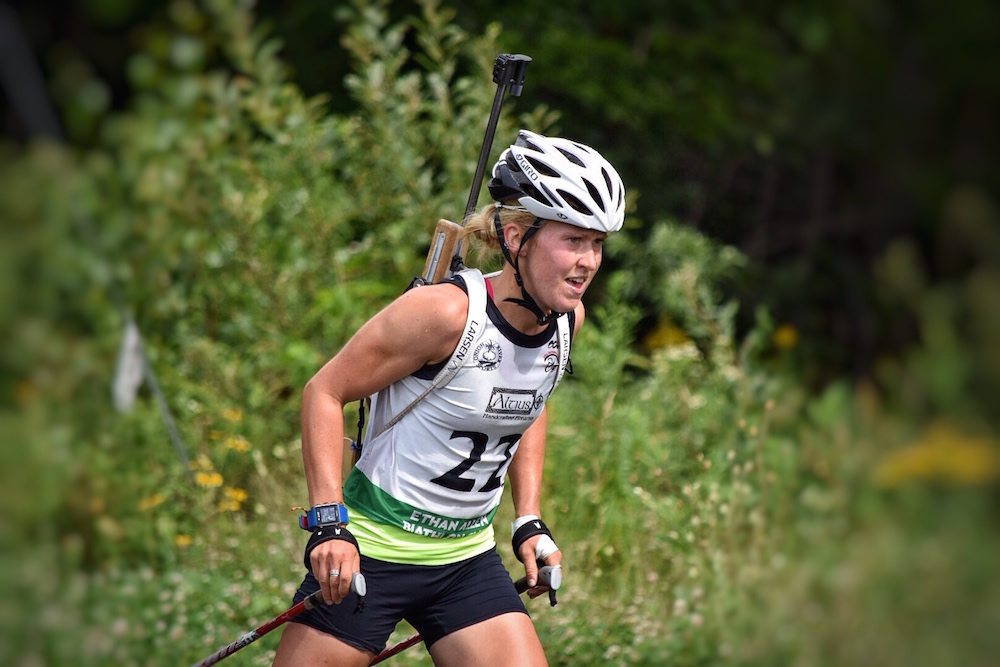
    Kelsey Dickinson during the women’s mass start at the 2016 US Biathlon National Rollerski Championships on Aug. 14 in Jericho, Vt. (Photo: Katrina Howe)

    Two and a half years ago, Kelsey Dickinson was wondering how she could keep doing biathlon.

    The Washington native had been training at the Maine Winter Sports Center (now the Outdoor Sports Institute), and had been a member of the U.S. Biathlon Association’s development team. But when team nominations came out in the spring of 2015, she wasn’t on them. At the same time, the Maine Winter Sports Center cut most funding to its senior teams.

    With few options, Dickinson headed back to the College of Saint Scholastica, where she had done one year of college already.

    “When I left biathlon, part of it was because I just wasn’t skiing fast enough,” Dickinson said in an interview this month. “So I asked how I could keep skiing, one, but also how could I get faster. I realized that going back to college was going to be the best way to do that, but I wasn’t going to be able to go back to college, and do biathlon, and get better at skiing. I decided that I would just ski in college and finish out my eligibility.”

    Dickinson still has one year of that eligibility left, but her biathlon career has come back sooner than expected. After strong college results last season, she was accepted into a summer training program at the Craftsbury Outdoor Center in Vermont. This summer, she spent time training with some of the country’s best cross-country skiers as well as having dedicated biathlon training and easy access to a shooting range.

    The result: she performed so well in rollerski trials in August and October that she automatically landed a spot on the U.S. World Cup squad for December.

    “Our goal for her this year is to make that Olympic team, for sure, but she’s really four years ahead of schedule with it,” Dickinson’s ski coach at Saint Scholastica, Maria Stuber, said.

    “Nothing about what’s going on right now is what I expected to happen,” Dickinson, a double-major in philosophy and natural science, said. “I thought that I would make it through this semester and not have to be traveling that much. I’m just going by communicating with my professors on a day-by-day basis and playing it by ear.”

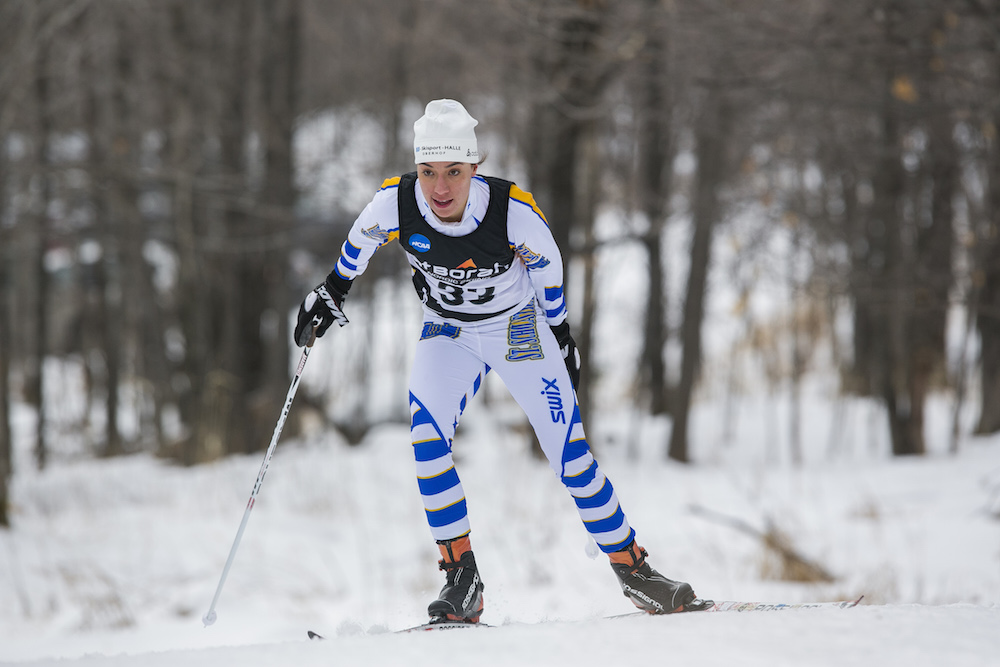
    Kelsey Dickinson (St. Scholastica) racing to 26th in the women’s 15 k freestyle mass start at 2017 NCAA Skiing Championships on March 11 at the Jackson Ski Touring Center in Jackson, N.H. (Photo: flyingpointroad.com)

    Stuber had only positive things to say about Dickinson’s work ethic and professionalism.

    “She was really clear about her goal to be a biathlete, and she has not wavered on that at all,” Stuber explained. “We said, okay, if you want to be a biathlete at the end of college, what needs to happen for you to be in the top few women, not a bubble skier but someone who is going to be on the World Cup? The bottom line was that she needed to ski a lot faster.”

    The work Dickinson put in paid off, and last season she ended up ranked sixth in the Central Collegiate Ski Association rankings, the top woman not from perennial powerhouse Northern Michigan University. She has now represented her team at NCAA Championships twice.

    “She made some big technical improvements last winter,” Stuber said. “But she was sick from early January, for over a month. She had some really good races but I don’t know if either of us felt like she really got to show her stuff last winter like we thought she could… I think mainly we just made it apparent that she had it in her to go even faster.”

    That was enough to get her to Craftsbury. Dickinson had applied to the summer training program the previous year but not gotten in.

    “I had a really good summer of training,” Dickinson said. “I’m really grateful to be able to have gone to Craftsbury and trained with the team there. That made all the difference for me, just to be around a lot of high-level athletes.”

    At Saint Scholastica, she is the one leading the team. One of the big focuses of going to Vermont was to get Dickinson used to seeing how more efficient technical skiers moved.
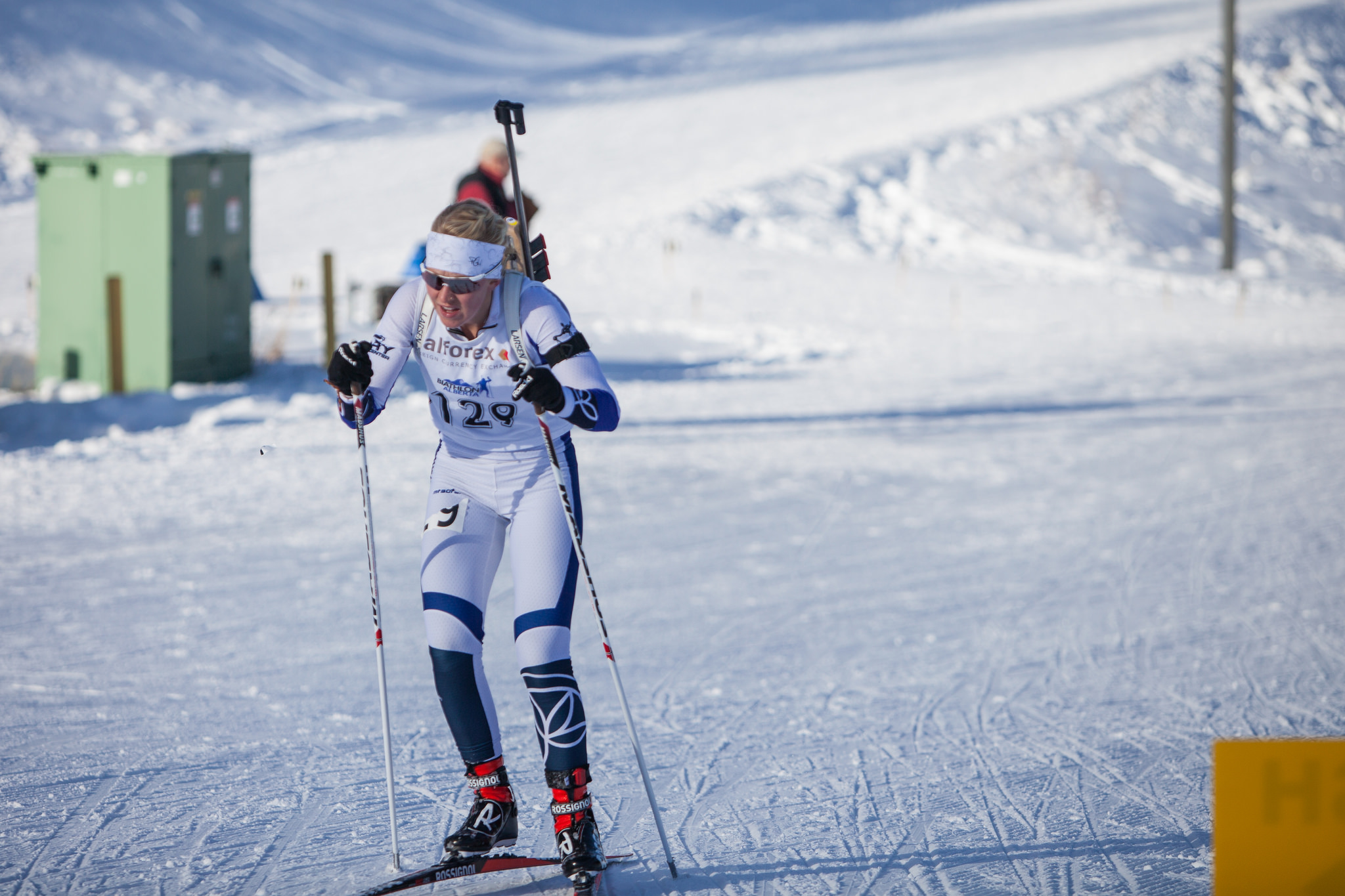
    Kelsey Dickinson representing the Maine Winter Sports Center at NorAms in Canmore in December, 2014. Her last international biathlon races were at IBU Cups in Canmore in March, 2015, where she twice finished 28th.

    “She could sit behind someone and try to figure out how to make skiing easy, instead of always trying to think in intervals of how to make it hard, and how to go harder,” Stuber said. “There’s this awesome mindshift when you’re going hard but trying to make it easy, which you don’t get to do when you are leading so much.”

    Stuber herself was a senior athlete at Craftsbury at one point, so she knew head coach Pepa Miloucheva well and was not worried that there would be any problems with Dickinson adjusting to the training approach. (“She was my coach before and I have a ton of respect for what she is doing there — so to be able to work with Pepa as a peer was really cool for me,” Stuber said.)

    In addition, Dickinson knew Sam Dougherty, the biathlon coach at Craftsbury.

    “Sam and Pepa work together to build the plan depending on what the biathlon schedule requires and what the cross-country athletes are doing,” Dickinson explained. “They try to make it comprehensive so people can train together… I have known Sam for a while because of we overlapped racing a little bit back when I was a junior. And Pepa, her philosophy is very similar to Maria’s. I get along great with Pepa and she has been an amazing coach. I’m lucky that the transition was really easy.”

    Dickinson turned in two third-place finishes at rollerski biathlon races in August.
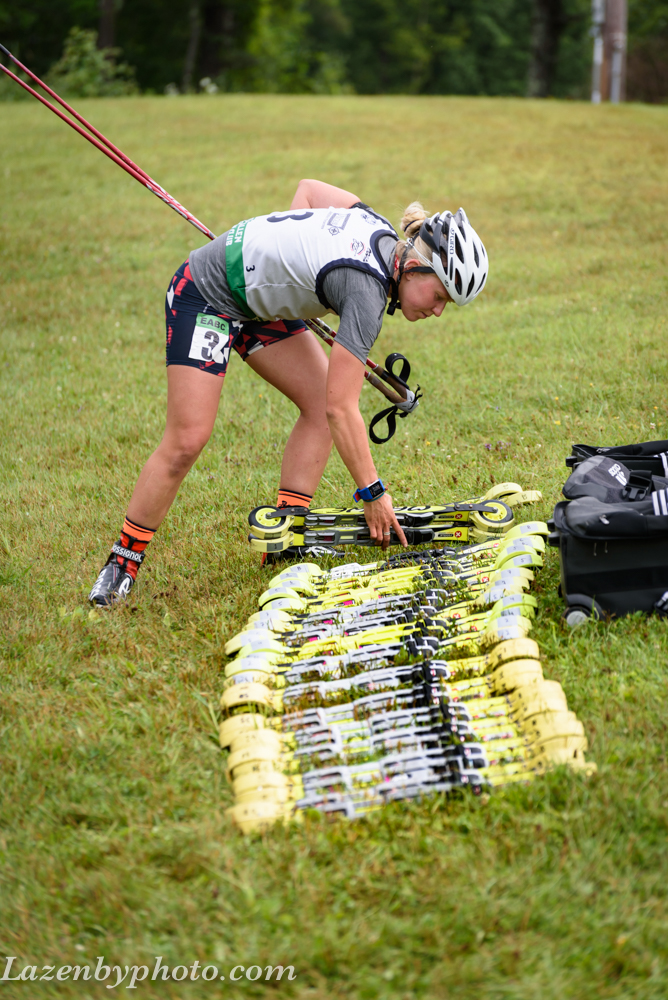
    Kelsey Dickinson (Craftsbury Collegiate Summer Team) picking out rollerskis for the women’s mass start on Aug. 13, at USBA Rollerski Championships in Jericho, Vt. She placed third on both days of the two-day championships. (Photo: John Lazenby/Lazenbyphoto.com)

    “I knew I was feeling good and that if I put all the pieces together then things could go well, but I wasn’t quite expecting that for sure,” she said.

    That put her in a good position to fight for a World Cup spot. Susan Dunklee, who was pre-qualified for the World Cup, had won both races. Dickinson could even afford one less-stellar race when the qualification series wrapped up with two more competitions in October.

    Because she was still in school and had options for how to spend her race season – including competing domestically in December, in an attempt to qualify for the IBU Cup in January and from there trying to make the Olympics – she didn’t feel pressure.

    “I think actually having school was a little bit helpful in that way,” she said. “I just was looking at the weekend as an opportunity. If things went well then that would be great, but if things hadn’t gone well then I still had a lot of great things going on back at school with the team there… I was in a good place emotionally, just happy to be there.”

    At those last two trials races, Dickinson finished second and fifth, and locked up the World Cup spot.

    Her goal is still the Olympics. As such, when she gets to the World Cup later this month – she has to first go to the second-tier IBU Cup in Sjusjøen, Norway, and score qualification points – she will focus mainly on process.

    While at least one more woman will be added to the Olympic roster based on December World Cup results, the team won’t be filled until January, when several athletes will be sent to the IBU Cup to fight for the last spots. That means that Dickinson can focus on performing well in January, when the season is in full swing and she has some races under her belt, and fight for an Olympic berth there.

    “Her process is going to be the most important thing,” Stuber said. “I don’t think she needs to be concerned with what her results are at those first World Cups… if she can use these World Cups to get a really good process dialed in, then when she goes to the IBU Cup she will be really ready to do what she needs to do there to secure an Olympic spot.”

    “It was such a huge goal just to get to this point,” Dickinson agreed. “Looking forward I’m just going to approach things as an opportunity. It’s an opportunity for learning, it’s an opportunity to race, to do what I love to do. So I think that in that sense, I obviously want to do well and I want to hold myself to a high standard. But I am just very grateful that I can have this opportunity and I’m very open to what it will bring.”

    In the past two seasons, Dickinson bought into college racing completely.

    “She tries really hard to be a good captain and sometimes I think that adds to her stress level,” Stuber said. “She just tries to do everything that she commits to, to do it really well.”

    But now, she’s back to biathlon.

    “If I could come across saying anything, I just want to express how grateful I am to all the people who have supported me,” Dickinson said. “Like Maria and Chad [Salmela], and Pepa, and everyone thoughout the years who have allowed me to get to this point. Because it has been a really long journey.”

  • Stuber Takes Over at St. Scholastica: Program is ‘On the Verge of Something Huge’

    Stuber Takes Over at St. Scholastica: Program is ‘On the Verge of Something Huge’

    Maria Stuber has spent the last three years coaching at the Aspen Valley Ski and Snowboard Club in Colorado. (Courtesy photo)
    Maria Stuber has spent the last three years coaching at the Aspen Valley Ski and Snowboard Club in Colorado. (Courtesy photo)

    Ever since the College of St. Scholastica began its NCAA ski team, the face of the program has been one man: head coach Chad Salmela. Over the last decade, his squad notched its first men’s and women’s team wins and saw its first NCAA Skiing Championship qualifiers. And on the way, he changed the lives of dozens of young athletes.

    Now Salmela is shifting roles at the college and will coach the cross-country running team. Taking the reins of the ski team is a new coach coach who is just as excited to build on the program’s burgeoning legacy in Duluth, Minn.

    Maria Stuber, a Wisconsin native, has developed her coaching chops over several assignments, most recently in Colorado with the Aspen Valley Ski and Snowboard Club (AVSC). In three seasons with the club, Stuber increased the size of the team and worked with a variety of athletes, from those who just picked up skiing in high school to those who competed in Europe.

    “At AVSC, coaches made sure we were encouraging brand new skiers to jump into the sport at any age,” she wrote in an email. “If you decided to join our high school team you get to train right alongside the best athletes in the country… This environment gives every athlete the opportunity to make a quick jump and be the best skier they can be. It can be so fun when it works, as our top male skier last year didn’t get into the sport until he was a sophomore in high school.”

    Stuber (second from left) with AVSC athletes. (Courtesy photo)
    Stuber (second from left) with AVSC athletes. (Courtesy photo)

    That attitude seems to be a perfect match for the College of St. Scholastica (CSS), a school which sent two men to NCAA’s in 2012 and two women in 2015 – but which also has a development team and provides growth opportunities for skiers coming in with a variety of backgrounds.

    “Chad didn’t really impact my ski career, he started it,” Paul Schommer, an NCAA All-American in 2014 now pursuing elite biathlon, told FasterSkier this spring.

    “CSS is unique in that it has a development team serving this purpose at the college level,” Stuber wrote. “Kids with college skiing aspirations that are not quite ready to make that jump can come and work hard, get faster, and have the opportunity to reach the same level as the top junior national athletes we recruit.”

    Taking athletes from those two tracks, Saint Scholastica has built teams that compete with the best in the NCAA Central division.

    And international success is on the radar too: grad Anita Kirvesniemi made the sprint heats in season-opening FIS racing in Muonio, Finland, last season; Schommer has caught the eye of the U.S. biathlon team; and current team member Kelsey Dickinson, who pursued biathlon full time for a year at the Maine Winter Sports Center, was back competing again at U.S. Rollerski Biathlon Championships.

    “CSS wants to be a competitive team in the Central Collegiate Ski Associaion conference,” Stuber explained. “In order to do that, we need to be competitive at the national level. What’s really cool about skiing in 2016 is that you need to have international ambitions to be competitive at the national level.”

    Salmela used sports science and lab testing to make that happen, and it’s one of the opportunities that drew Stuber to the program. She received a masters degree in exercise science from Northern Michigan University and relishes a data-based approach.

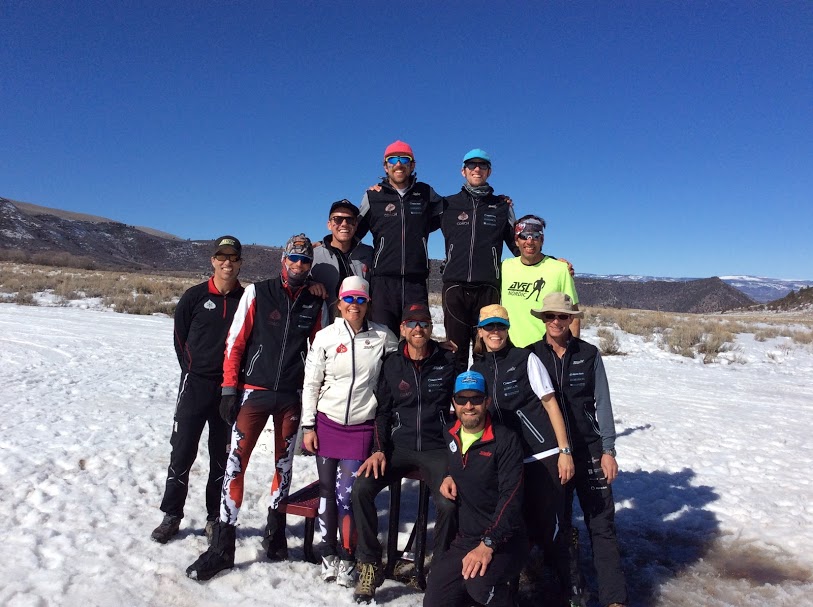
    Tuber with the rest of the AVSC staff last year. "I love these people!" she wrote. (Courtesy photo)
    Stuber with the rest of the AVSC staff last year. “I love these people!” she wrote. (Courtesy photo)

    “I love that St. Scholastica’s training is all based on science and sound research,” Stuber wrote. “The college has an exercise science lab and the professors are willing to share the space and knowledge with coaches to give the student-athletes more opportunities for success.”

    But more than anything, she is pleased to be part of a framework which will make it possible to integrate running and skiing into a cohesive college athletic career. In explaining his job shift, Salmela was clear that he wanted to see more – and smoother – crossover between the two sports at St. Scholastica, for those athletes who have dual ambitions.

    “The biggest program draws for me at CSS are Chad & Don Olson’s (athletic director’s) vision to create a collegiate endurance sport epicenter where student-athletes can choose to pursue xc running, skiing or both at a very high level,” Stuber wrote. “Linking endurance sports together will create well rounded, big picture athletes that have the support of a bigger peer group and more coaches and resources. I think CSS is on the verge of something huge.”

    Stuber has seen how a variety of teams achieve success. First, as an athlete: she captained the Northern Michigan University (NMU) ski team for three years.

    “My time at NMU had a huge impact on my life path and decision to pursue a career in ski coaching,” Stuber explained. “The running and skiing coaches there, Sten Fjeldheim and Jenny Ryan, have both contributed significantly to my coaching philosophy, training methodology and personal values. They have continued to be mentors, advocates and references for me as I find my way. I will feel extremely proud to consider Sten and Jenny peers and to go up against the Wildcats in December and I hope that they feel like a part of our success at CSS. They both know me well enough to not expect any mercy from us on the trails.”

    Hailey Swirbul of the Aspen Valley Ski Club races the anchor leg while guiding the American team to eighth place in the 4 x 3.3 k relay at the Junior World Championships in Almaty, Kazakhstan, in 2015. (Photo: Logan Hannneman)
    Hailey Swirbul of the Aspen Valley Ski Club races the anchor leg while guiding the American team to eighth place in the 4 x 3.3 k relay at the Junior World Championships in Almaty, Kazakhstan, in 2015. (Photo: Logan Hannneman)

    After college, Stuber raced for the Central Cross Country (CXC) Elite Team and then the Craftsbury Green Racing Project. In her senior career, Stuber was a runner-up at U.S. National Championships in 2009.

    But since retiring from competition, Stuber has been consumed by coaching. She began her career at Alverno College in Wisconsin, before taking over as head men’s and women’s cross-country running coach for Southern Vermont College for two years. Under her leadership, the men’s squad had their best team results ever.

    At AVSC, where the roster eventually neared 200 skiers, Stuber led a team of other coaches. Every year the club sent skiers to Junior National Championships as well as to World Junior Championships or the J1 Scandinavian Cup trip.

    “I will never forget our amazing coaching staff at AVSC that welcomed me to the community that they had carefully built over the past 20+ years,” Stuber wrote. “There is no other ski club in the country with the amazing mix of background, knowledge, energy, perspective and compassion. Working with this group of people will be a life-long career highlight for me… I am so proud of the club’s growing numbers and participation in Carbondale, Glenwood Springs and Aspen.  The way these three communities work together towards a common goal in Nordic skiing is phenomenal.”

    AVSC runs summer training programs and last season organized an end-of-winter race event called Tour de Sea which drew junior skiers from all over Colorado, as well as rave reviews.

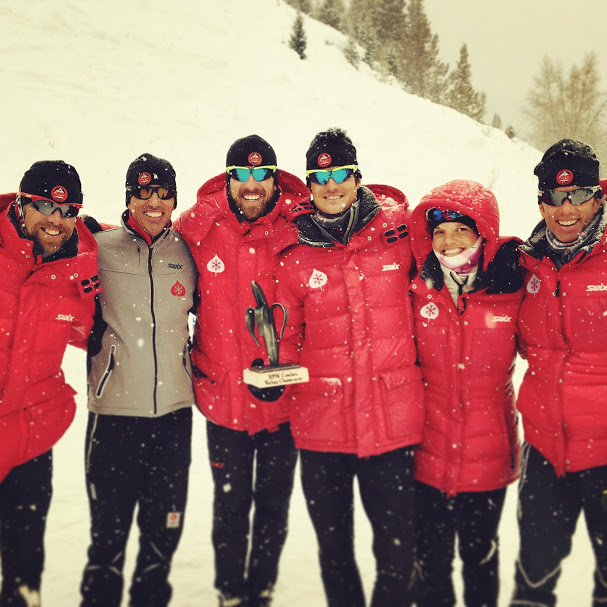
    Stuber and Cook (second and third from right) with AVSC staff at a competition this winter. (Courtesy photo)
    Stuber and Cook (second and third from right) with AVSC staff at a competition this winter. (Courtesy photo)

    It was difficult for her to decide whether to uproot herself from the Roaring Fork Valley, where she and husband Bryan Cook had just bought a condo. They had been “very happy” in the Elk Mountains.

    “We were not feeling 100% certain that we had made the right call until Monday when the CSS announcement was made,” Stuber wrote. “For days straight my phone and email were pinging and beeping non-stop with messages from friends, family, former teammates, fellow coaches and upcoming Midwest skiers and parents from clinics past. The Midwest ski community is a truly special group of people that we are incredibly proud to be a part of. During our racing careers, we leaned on this community for support and they delivered for us big time. I think we missed the Midwest ski culture more than we knew.”

    The couple will move in the first week of September and Stuber is looking forward to getting started with her new team; Cook will enter an MBA program at St. Scholastica.

    And besides the general homecoming, Stuber knows that the athletes she will be working with in Duluth – as well as those on the teams her skiers compete against – embody the same characteristics of the community which is welcoming her back.

    “The CCSA is definitely a powerhouse Nordic conference…. consistently dominating at the US National Championship and NCAA Championship,” Stuber wrote. “The CCSA attracts down-to-earth athletes that want to be great skiers and are willing to work hard to get there. This intrinsic motivation is a recipe for making fast cross country skiers. Midwest kids are tough and they are backed by outstanding club coaches that are looking at the big picture. I can’t imagine a better atmosphere for athlete development.”

  • St. Scholastica Coach Salmela Swaps Skis for Running Shoes: ‘It Almost Seems Nuts’

    St. Scholastica Coach Salmela Swaps Skis for Running Shoes: ‘It Almost Seems Nuts’

    Chad Salmela (r) and Anita Kirvesniemi of Finland. (Courtesy photo)
    The College of St. Scholastica’s nordic head coach for the last decade, Chad Salmela (r) with Saints skier Anita Kirvesniemi of Finland. (Courtesy photo)

    The sound of a Gator utility vehicle heading out to one of the race-course checkpoints. The long lines to the port-a-potties. The tribes of teams stretching in the shade of tree trunks near the white, spray painted start-line boxes.The smell of dirt and sweat. For Chad Salmela, a former high school cross-country runner and coach, nothing compares to the sensory mélange of a cross-country running meet.

    With that in mind, when the head running coach for The College of Saint Scholastica (CSS) for the past 26 years, Steve Pfingsten, decided to retire in mid-February, Salmela — in his 10th year as the CSS nordic head coach — saw an opportunity. He approached the CSS Athletic Department with an idea: if given Pfingsten’s position, using his background and knowledge in both skiing and running, Salmela could work to bring the two CSS endurance sport programs closer together.

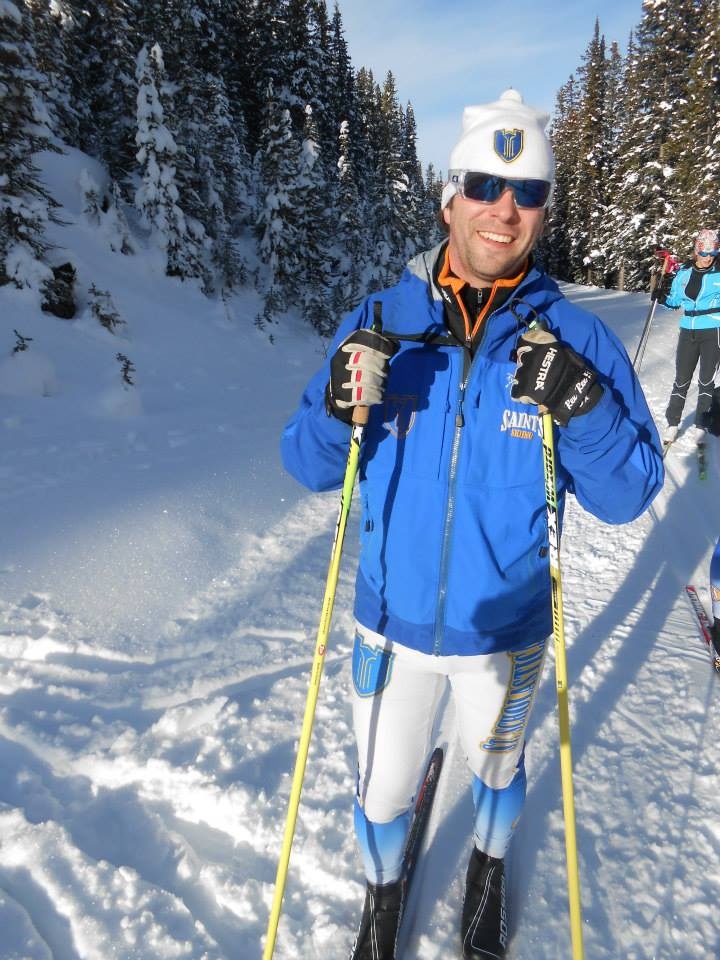
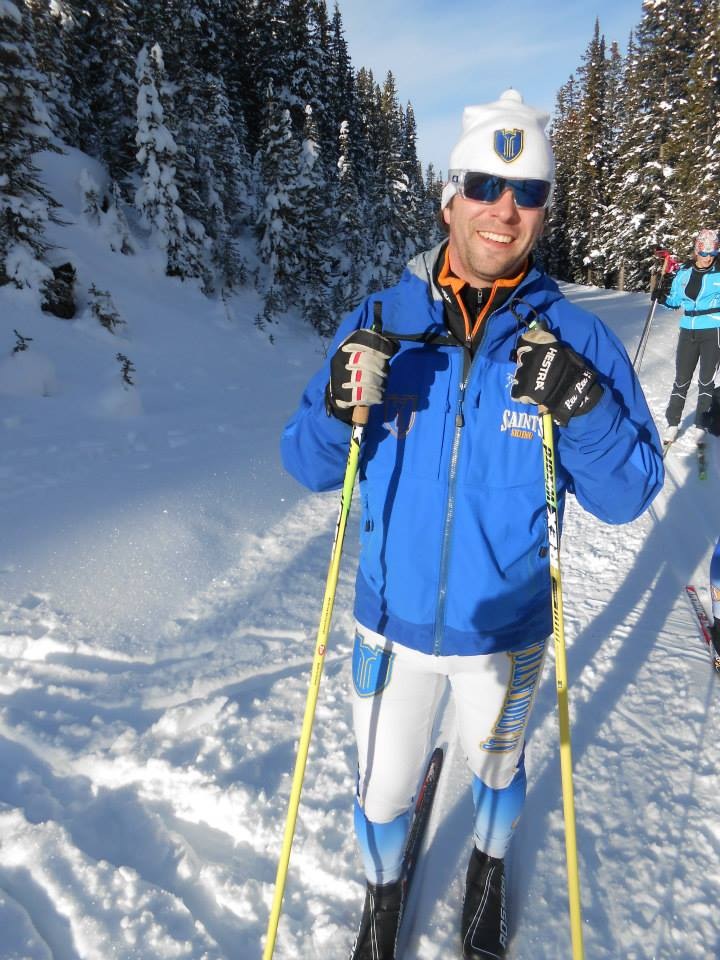
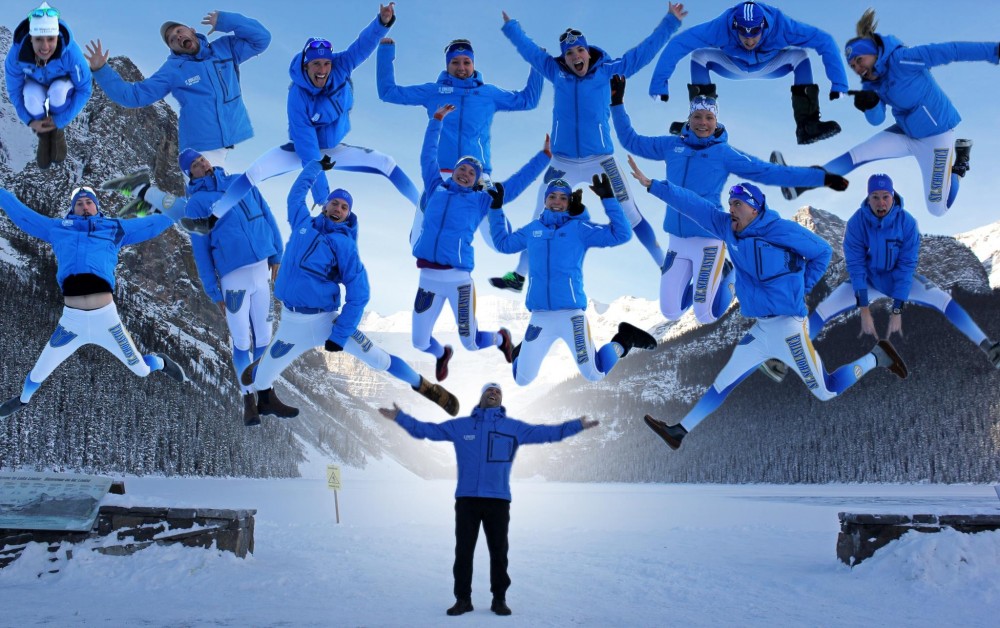
    Chad Salmela in Saint Scholastica gear during a ski at Lake Louise. (Courtesy Photo)
    St. Scholastica Head Coach Chad Salmela during a ski at Lake Louise near Canmore, Alberta. (Courtesy photo)

    Three-and-half months later, Salmela, a Virginia, Minn., native, is the new head coach of the Saints’ cross-country team and assistant distance coach for track and field. His dream to integrate the two programs will take teamwork and communication between himself and the new nordic coach — still to be determined. While he plans to help interview and mentor the new nordic hire as needed, he is most excited about the chance to once again discover himself amidst the fall running season.

    I can’t wait for that first meet where we get off the bus and the sights and the sounds and the nerves,” Salmela said during a recent phone interview. “There’s something majestic to me about cross-country running … as a coach, there’s just so much more to do the morning of an event in cross-country skiing. You don’t ever get to just revel in the atmosphere quite like you do in cross-country running.”

    Eliminating some of the elements involved with being a nordic ski coach on race day — waxing, testing, wax station set up and break down — doesn’t just afford more time for existential reverie. In Salmela’s eyes, it also creates more opportunity for coaches to engage with their athletes.

    “In cross-country skiing, waxing and ski preparation is important,” the 45-year-old coach said. “I’ve made it important and [the Saints] program has succeeded on the waxing for sure … but there’s a cost to that. The cost is you don’t get to interact with the athletes and really engage with them as well as you could. That’s the one big upside to people starting to limit the fluoro carbon use. I think it will get coaches back in touch with their athletes and sport again.”

    Getting back to basics of athlete-coach interaction is not the only thing Salmela hopes to achieve by making the switch. Though he started the Saints’ ski team in 2006 and has since helped the school develop the competitive Division III program it has today, the key for Salmela as a coach is staying challenged and open to change. Even if that change is a little uncertain.

    “It was not easy for me to leave the ski team,” he said. “I created the program. It’s not just that I was there 10 years, it’s that I was there 10 years and it was nothing when I started. It didn’t exist … and as a DIII program in 10 years of existence, [CSS] is pretty good … we were as good as we’ve ever been two years ago. We had more talent and better results. We won the conference championship, we did well against NMU [Northern Michigan University] and NMU is awesome. So to walk away from all that, it almost seems nuts.”

    The CSS nordic program’s growing success over the years under the guidance of Salmela is evident, with Bjorn Bakken’s first NCAA qualification in 2008 (the team’s second year in existence), Tyler Kjorstad’s second NCAA qualification in 2009, the men’s first team win in 2012, Paul Schommer and Jeremy Hecker’s 3rd and fourth NCAA qualifications in program history in 2012, followed by the Saints women’s first team win in 2014, Schommer’s All-American finish in 2014, and the first dual-female NCAA qualifiers in 2015.

    As Salmela explained, doing so took 10 years’ time and patience, occasionally working with athletes who had been injured or were just beginning their ski careers.

    “Chad didn’t really impact my ski career, he started it,” Schommer, a 2015 grad and now an aspiring Olympic biathlete from Appleton, Wis., wrote in an email. “Without him, I wouldn’t of had the career I’ve had and hopefully will have … I think a lot of athletes overlooked the amount of time Chad put into their training plans, time analyzing lab tests, and preparing skis for race weekends. Chad doesn’t take shortcuts … He cares about more than performance. He cares about the whole picture knowing that to be a high level athlete it’s all the little things that add up.”

    “Chad doesn’t take shortcuts … He cares about more than performance. He cares about the whole picture..” — Paul Schommer, former St. Scholastica skier and All-American on his college coach Chad Salmela

    As Salmela looks to swap skis for running spikes, he explained he is not leaving athletes like Schommer behind. He is discovering ways empower more. After returning from a TED Talk in his hometown presented by the former mayor of Duluth on vulnerability, Salmela realized one reason for the career is change is to ensure that not only is he challenging his athletes, but he is being challenged by his work with them.

    “It does feel like I’m stepping down the rabbit hole into a whole new world,” he said. “[But] I like challenges … and maybe that’s the essence of my coaching, is that I am vulnerable and that there’s some genuineness to being vulnerable and opening yourself up to vulnerability. I’ve certainly made mistakes with athletes, and I’ve certainly taken wrong paths in training. So I’m far from perfect, but I think the search for being a little more perfect is always good. You’re never going to get there, but the destination of trying is pretty powerful.”

    A Change of Pace and Salmela’s Next Steps

    Tempo runs. Hill workouts. Steady states. Strides. When it comes to running, there are quite a few workout sessions that are considered a standard in the sport. Lab testing is not one of them.

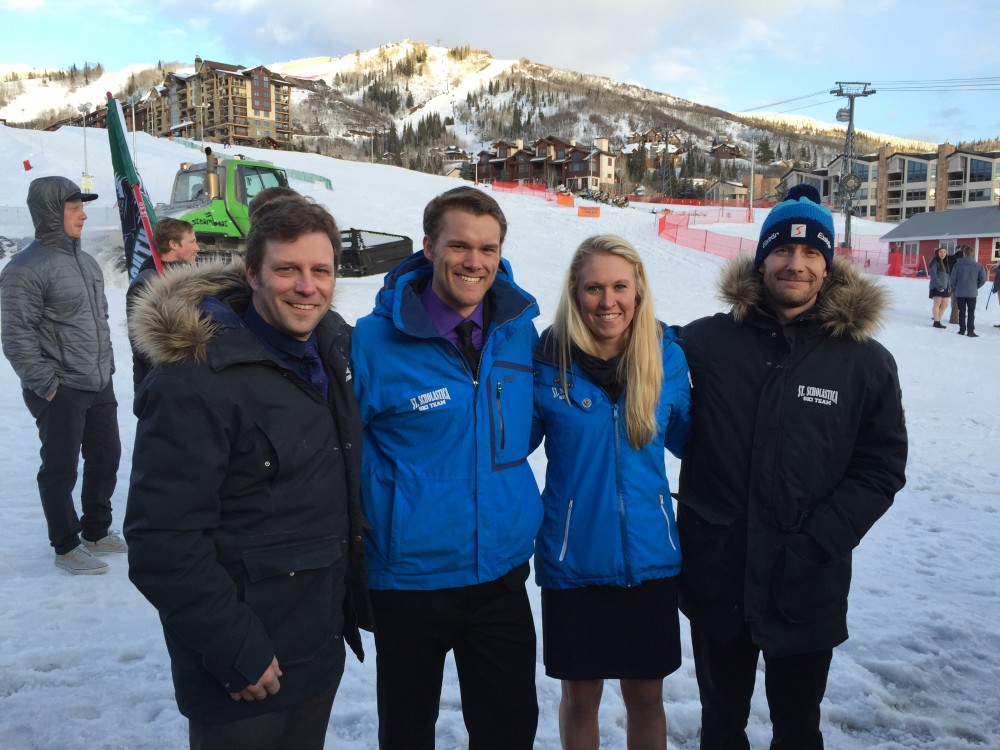
    Chad Salmela (far left) with 2016 NCAA qualifiers Reitler Hodgert and Kelsey Dickinson as well as assistant nordic coach, Josh Tesch at 2016 NCAA Championships in Steamboat Springs, Colo. (Courtesy Photo)
    Chad Salmela (far left) with 2016 NCAA qualifiers Reitler Hodgert and Kelsey Dickinson as well as assistant nordic coach, Josh Tesch at 2016 NCAA Championships in Steamboat Springs, Colo. (Courtesy photo)

    However, athletes who run for the St. Scholastica cross-country and track teams — Salmela predicts around 50 cross-country and 65 to 90 track and field athletes (20 distance runners) will join the program this upcoming season — can expect these tests to become a staple in their training plans.

    A US Biathlon National Team competitor for two years after high school, a US Biathlon assistant coach from 1998-1999 during his undergraduate years at Middlebury College, and the National Junior Development Program Director in 2000 — during which he helped render three future Olympians, Tracy and Lanny Barnes and Annelies Cook — along with seven years of coaching running, Salmela has a wealth of experience with high-end performance training plans. Using his knowledge on physiology primarily from nordic skiing, such as monitoring athletes’ aerobic efficiency in the lab, he hopes to bring a new perspective to the American populist running culture.

    “I don’t think there are a ton of Division III running programs who are bringing athletes into the lab,” he said. “My feeling is that there could be more emphasis generally placed [in running] on aerobic efficiency … I think that if you are strong enough and if you implement the right kinds of stress loads on runners, you can vastly increase the aerobic volume training of a runner, beyond what is commonplace today.”

    While increased aerobic volume training may be novel to many of Salmela’s future runners, he sees change as an imperative part of being an athlete, skiers and runners alike.

    “The one thing 20 years of coaching has taught me is that, for any single person, doing the same thing forever is never the most optimal way to go,” he said. “You have to change. Your body changes and you have to change.”

    Chad Salmela (grounded) and his team of Saints. (Courtesy Photo)
    Chad Salmela (below) and his Saints ski team. (Courtesy photo)

    A fresh start, fall racing and forfeiting long winter van drives are not the only things Salmela is embracing as he passes the CSS nordic team torch to the next coach. The switch also opens up the the opportunity for him to further establish himself as cross-country skiing’s garrulous nordic guru.

    “I don’t have any contracts of anything right now, but it frees up the potential to do more T.V. work or commentary work,” said Salmela, who’s been a color commentator for NBC at the last three Winter Olympics, as well as a biathlon and cross-country World Cup commentator. “It’s nice to be able to have that freedom. I certainly thought of that in this process … That’s definitely a factor, but more than anything, I needed a career change.”

    With a career change still steeped in coaching, Salmela does not relinquish the chance to spark and inspire.

    “I can’t travel as many people in skiing just because budget-wise and the number of skis I have to pack,” he said. “So I’m really excited that I get to coach a sport where I get to load a bus full of kids and I get to inspire them all to run the best they can.”

  • Wednesday Workout: The ‘Death Blow’ with Chad Salmela

    Wednesday Workout: The ‘Death Blow’ with Chad Salmela

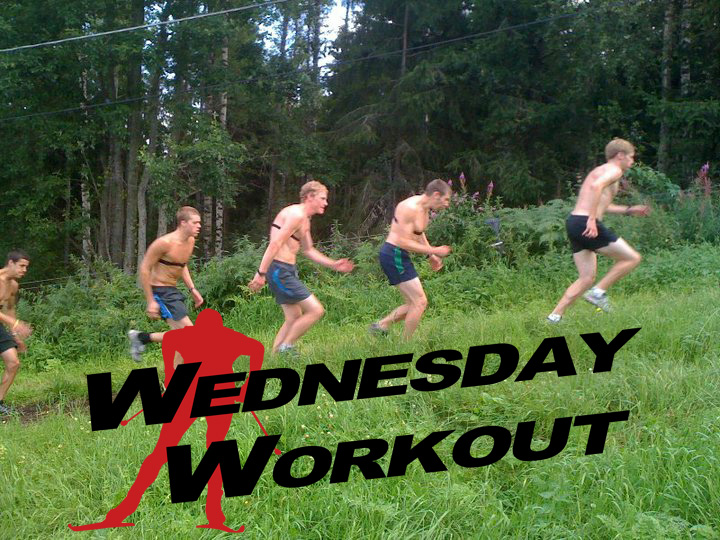
    Former St. Scholastica skiers doing coach Chad Salmela's "Death Blow" workout, running then bounding uphill without poles at the Saints 2010 Scandinavian summer camp in Torsby, Sweden. (Courtesy photo)
    Former St. Scholastica skiers doing a version of coach Chad Salmela’s “Death Blow” workout, running then bounding uphill without poles at their 2010 Scandinavian summer camp in Torsby, Sweden. (Courtesy photo)

    This week’s workout comes to us from Chad Salmela, head coach of The College of St. Scholastica in Duluth, Minn. Last month, Central Collegiate Ski Association (CCSA) coaches voted Salmela Women’s Coach of the Year. While the collegiate season is on hiatus, this “Death Blow” maximal-anaerobic-output-capacity workout remains one of Salmela’s favorites.

    ***

    The concept is an old Finnish “peaking” workout I used to do as an athlete to bring on my best performances.  I believe my old coach, John Underwood, fed me the parameters of this workout when I was a junior athlete.  I did this kind of workout a lot at home over Christmas before going to world team/Olympic trials events when we used to pick international teams that way.

    What I love about this workout is the raw intensity and guts required while doing it.  It is very challenging done right, and the psychological challenge is superb for competitive toughness while having clear physical adaptation goals.  Most of all, it’s low tech with great built-in monitoring requiring no gadgets, so technology isn’t necessary for effective feedback as a coach.

    As I came to understand the workout and cause-and-effect of training, I have used and continue to use this workout, adjusting it within approaches to individual athletes in my current coaching practice. Really what it does is it spurs on anaerobic power when the adaptation clearly isn’t developed to the point it needs to be for top performance.  It probably isn’t applicable as much to modern elite ski racers’ models of training, but it might be in some cases.

    Background:

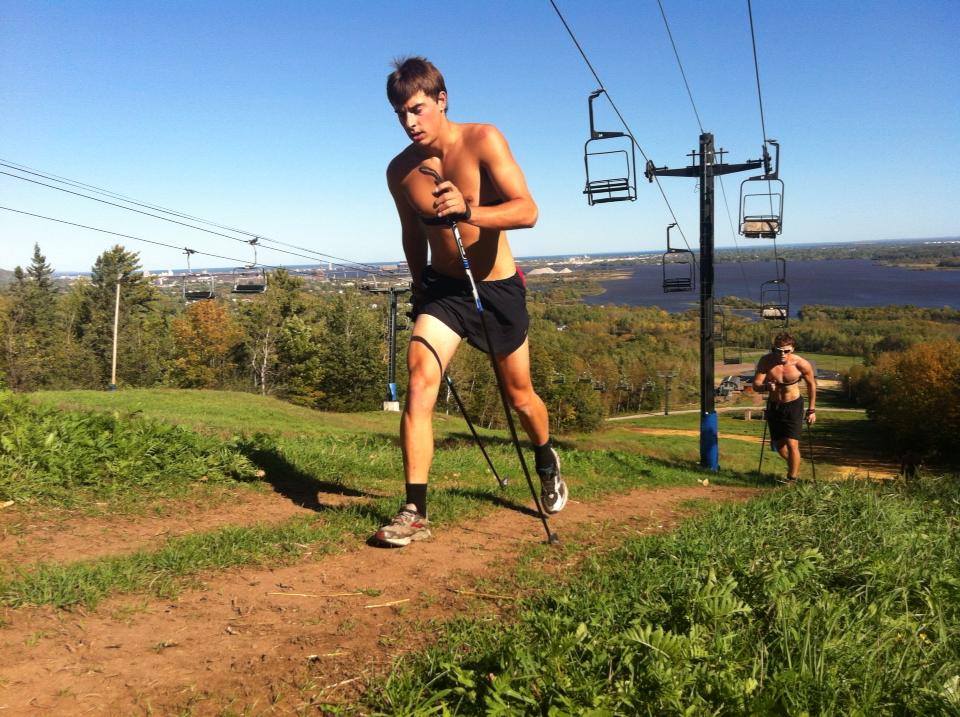
    St. Scholastica's Paul Schommer and Joe Dubay digging deep up Spirit Mountain in the fall of 2014 in Duluth, Minn. (Photo: Chad Salmela)
    St. Scholastica’s Paul Schommer and Joe Dubay digging deep up Spirit Mountain in the fall of 2014 in Duluth, Minn. (Photo: Chad Salmela)

    The name stems from when I coached the Marshall School High School cross-country running team in Duluth in the early 2000s, coupled with my love and frequent watching of Seinfeld at the time.  In one episode, Jerry and Kramer were getting fired up to go see a movie called Death Blow. Speaking in movie trailer schtick, Kramer says, “Death Blow!  Not because of who you are, but for different reasons entirely!” or something absurd like that.

    I wanted this workout to be our Excalibur—our weapon.  I wanted this workout to have a life and culture of its own, and eventually with my running teams, it did.  It became and remains the Death Blow — in how it felt, and how it effectively crept up on our competitors at the end of the season.

    Marshall was not a running powerhouse, but the kids were awesome and fun.  They would come in to the first practice late summer in all sorts of physical disarray save one or two fired up kids.  These were not “athletes” by and large, though what kid in a singlet and shorts with their school’s name on them isn’t an “athlete” at that age?

    I spent the first half of the 12 weeks I had with them, building aerobic efficiency, using every ounce of their limited physical energy just to be able to move some oxygen through their bodies at an effort that wasn’t herculean so that later, the herculean effort were wicked fast by comparison to Week 1 ability.  With this approach, we would really get slaughtered in the first few races of the year, but the Death Blow took care of all that later.

    Racing and an increase in controlled Level 3 (L3) intervals on a standard loop, would slowly bring the athletes to better running performances as the season progressed.  But when we’d get close to the section meet to try to qualify for the state championship, we went to a cycle of death blows, and the kids would improve in two weeks so profoundly I almost never had so much fun as a coach.  Almost.

    If we qualified for state, it was a shocker to everyone in our section and almost to me.  Almost.  But with this approach, we were definitely as ready for a state meet as we’d be with any other should we surprise and qualify.  The momentum worked perfectly.

    Today, I use it with my skiers, who have a much more thorough training trajectories, aerobic development, and have much more comprehensive systems of bringing on their anaerobic power, primarily for athletes who have raced a bunch but still haven’t seemed to reach into their anaerobic bag of tricks fully.

    St. Scholastica senior Sharmila Ahmed, one of the Saints' best responders to the Death Blow workout, during the Central Collegiate Ski Association (CCSA) Relay Championships on Feb. 7 at Spriti Mountain in Duluth, Minn. (Photo: Chad Salmela)
    St. Scholastica senior Sharmila Ahmed, one of the Saints’ best responders to the Death Blow workout, during the Central Collegiate Ski Association (CCSA) Relay Championships on Feb. 7 at Spriti Mountain in Duluth, Minn. (Photo: Chad Salmela)

    In early February of this year, I stood out on the slopes of Spirit Mountain alpine area at the crack of dawn in 0 degrees Fahrenheit before the hill opened, urging on one of my skiers to go further and dig deeper, and reeeeeach!  Four reps was all she needed.  That athlete raced pretty awesome after that morning and felt the bump of the Death Blow.

    The Workout:

    • Get warmed up well, however long that takes, but be ready to throw down for real when you start the reps.  Throw some L3 pickups into the warmup to open up your heart’s ability to do maximal work.
    • On undulating terrain, ski like you’re in a race.  Use the time to ski perfectly, but ski like you’re nearing go time at the end of a 10-kilometer race.  Do this for 2 minutes.
    • At the end of 2 minutes and continuing the rep, be at the bottom of a very tough, long uphill and have a clear mark in the snow at the bottom of that hill where 2 minutes is.
    • At the mark, either have a watch set for 1 minute to count down or have a coach time you for one minute.  Run, bound, or ski as absolutely all out and as far up the hill as you possibly can.
    • At the end of a minute, mark your progress in the dirt, grass or snow, after you’ve arisen from the heap on the ground you became.  That mark now becomes the goal.
    • Recover fully for the next repetition.
    • Do the exact same process after full recovery.
    • Mark the distance up the hill again.  If you drop more than 30 meters from the original mark, the workout is over.  If you are within that distance, and ESPECIALLY if you exceed it, repeat.
    • If you keep meeting the mark and are exhausted, stop and do the workout again in the future when you are physically ready to do it again.
    • In all my years and all the athletes I’ve coached, I’ve only seen one athlete do as many as eight reps with this workout and we called it after that eighth rep. This athlete was categorically put together by a lot of slow-twitch muscle fiber and only did half that the next time, showing progress.

    The Analysis:

    • It is important not to get hung up on how many reps of this nature you can do.  The goal is to ensure you have peak anaerobic output.
    • If you can continue to come close to the first mark even if you lose a little distance, you are not yet at your maximal anaerobic output capacity.
    • If your second interval is already at 30 meters back or further, STOP!  And never do this workout again in that season.
    • More reps = less anaerobically developed  at the time of the workout.  Fewer reps = well anaerobically developed, and you don’t need to continue the stress.  End the workout.
    • Without gadgetry, this workout gives me a clear picture of where we are in the spectrum of an athlete being anaerobically fit.

    When to do it:

    • When you know your athlete(s) need some sort of strong anaerobic power boost (high schoolers who need to giddy up and go) and you’ve done about as much aerobic training as you can with the season you have left.
    • An athlete who takes longer than most to “come around” with racing, and you’re running out of time to “the big one.”
    • Advanced and elite athletes who have been racing well for a while but don’t feel like they can really “go to the well” yet.
    • Advanced and elite athletes coming off a re-build of base during the long race season and need very quickly to get into top race output mode again.  Might only take 2 reps to be a great stimulus.

    Warning:

    While it sounds awesome and hard core, the Death Blow can backfire, particularly when an athlete is past peak fitness but believes they haven’t hit an anaerobic output peak yet.  This workout can bury an athlete’s season in such a case.  I speak from experience on this issue.

    So be honest with yourself or your athlete if you are a coach trying this.  Always stop after the second rep if you fall way off the mark!  It’s a sign you can already do what the workout is trying to develop.