Tag: standing

  • FasterSkier’s Para-Nordic Skiers of 2015: Andy Soule and Oksana Masters

    FasterSkier’s Para-Nordic Skiers of 2015: Andy Soule and Oksana Masters

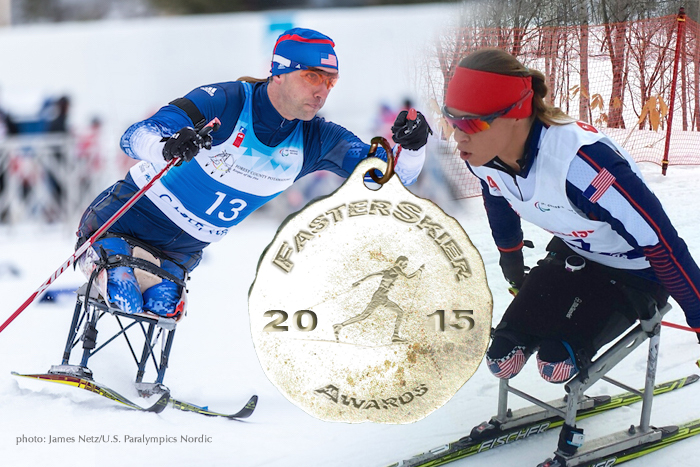
    Andy Soule (l) and Oksana Masters, both of U.S. Paralympics Nordic, are FasterSkier's 2015 Para-Nordic Skiers of the Year.
    Andy Soule (l) and Oksana Masters, both of U.S. Paralympics Nordic, are FasterSkier’s 2015 Para-Nordic Skiers of the Year.

    Andy Soule

    When you become the first American to rack up five medals in six individual events at World Championships, you’re essentially a shoo-in for Para-Nordic Skier of the Year. Andy Soule, a U.S. Army veteran and sit skier, did just that at the 2015 International Paralympic Committee (IPC) World Championships in January in Cable, Wis., taking silver in two biathlon events and the 10-kilometer cross-country race plus bronze in the cross-country 15 k and sprint.
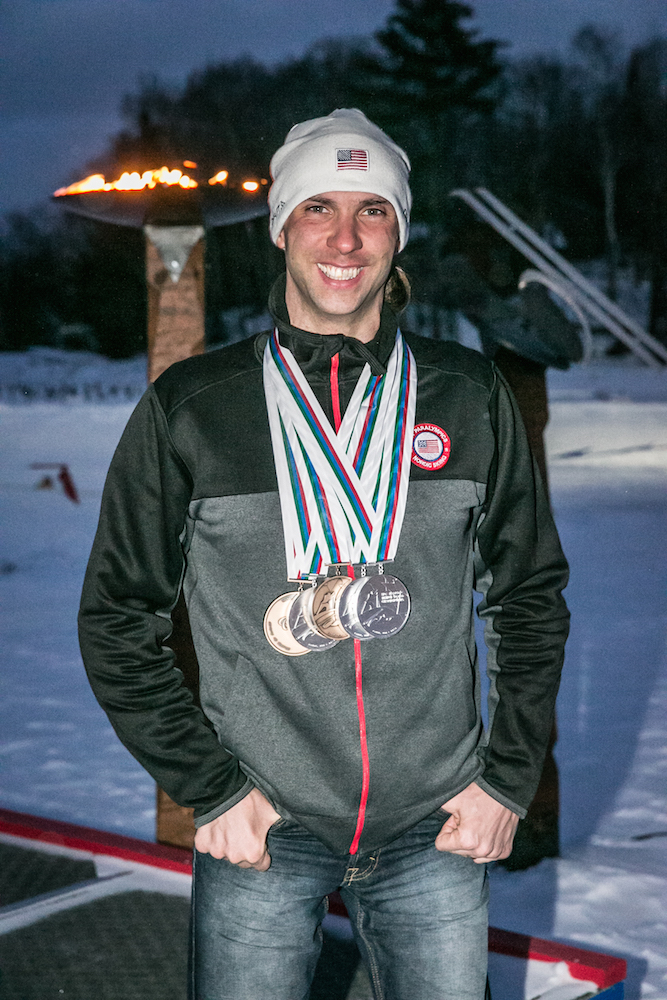
    Andy Soule and his hardware from 2015 IPC World Championships: five medals with three silvers and two bronze. (Photo: James Netz)
    Andy Soule and his hardware from 2015 IPC World Championships: five medals with three silvers and two bronze. (Photo: James Netz)

    “After the second podium, I just started feeling like that wasn’t a fluke,” Soule said in February.  “This isn’t just a one-time thing … I can come out and compete on a level with the top guys every day. It was a confidence builder as well when you have that feeling.”

    In his eighth year on the U.S. Paralympics Nordic Team, Soule, 35, was named IPC’s January athlete of the month. After World Championships, he improved to third overall in the World Cup and finished the season first overall in the cross-country standings.

    “It is a great feeling and a great finish to the season,” he said at World Cup Finals in Surnadal, Norway.

    In all, Soule tallied four World Cup golds — all of which came in Asahikawa, Japan — and a bronze during the 2014/2015 season.

    And all the success has led him to commit to another three seasons leading up to the 2018 Paralympics in Pyeongchang, South Korea. According to his teammate, Dan Cnossen, Soule considered retiring after 2013/2014.

    “I’m right at that age and I’m right at the point in my career where I’m in the prime of real top-performance potential,” Soule said. “I feel really great about what I have going forward and that I’ll be able to build on it and still improve on it.”

    Oksana Masters

    It got even better for U.S. Paralympics as Oksana Masters, another sit skier, also rose to the top of the 2014/2015 World Cup cross-country podium in her second year on the team.
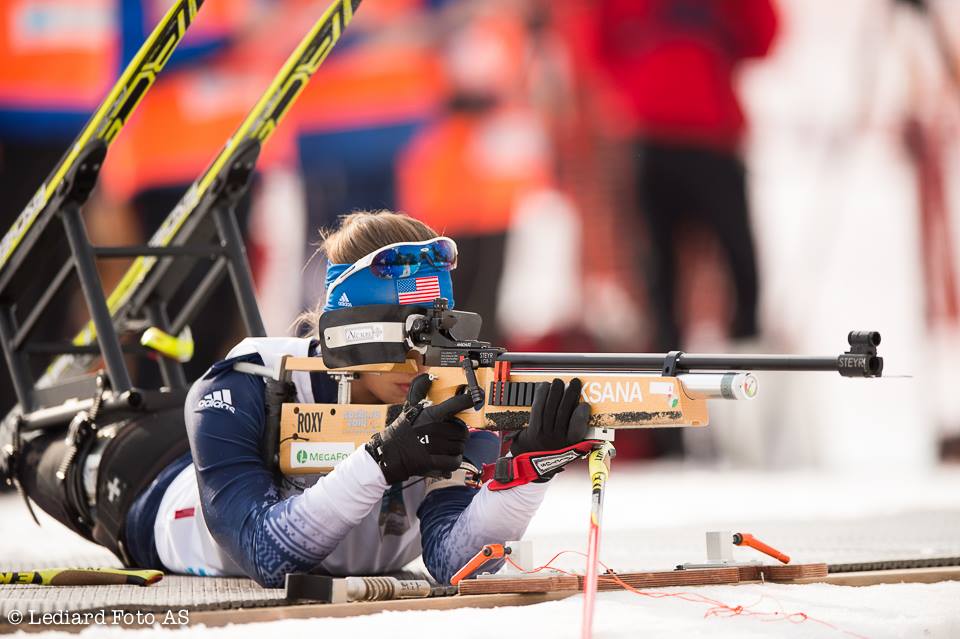
    Oksana Masters (U.S. Paralympics Nordic) in a biathlon competition at 2015 IPC World Cup Finals in Surnadal, Norway. Masters won Saturday's 5 k cross-country sitting to clinch the overall World Cup cross-country title for 2014/2015. (Photo: IPC Nordic Skiing/Facebook)
    Oksana Masters (U.S. Paralympics Nordic) in a biathlon competition at 2015 IPC World Cup Finals in Surnadal, Norway. Masters won the 5 k cross-country sitting to clinch the overall World Cup cross-country title for 2014/2015. (Photo: IPC Nordic Skiing/Facebook)

    A rowing convert, Masters, 25, earned two cross-country medals at 2015 World Championships — silver in the middle distance and bronze in the sprint — and won four out of five races in Japan this year. That put her on top of the IPC overall and she ended the season in first with a total of seven individual World Cup golds and two silvers.

    “I respect my competition, of the years they put in to be where they are now,” Masters said in February. “I’m playing catchup and I’m just doing what I can and focusing on myself. It just so happens to be putting me much higher than I ever could imagine being.”

    She explained that it took her 13 years to reach the Paralympic podium in rowing (she earned bronze in the double scull in 2012) and was humble about the strides she had made in skiing since starting the sport a year and a half ago.

    A silver and bronze medalist at the 2014 Winter Paralympics, Masters committed to skiing full time last spring, partially to alleviate a past rowing injury in her back. A training crash leading up to 2015 U.S. nationals re-aggravated the injury, forcing her to sit out the week.

    A week before World Championships, she got back on snow while fighting bronchitis and walking pneumonia.

    “World Championships was just more of a mental battle than … just a battle for getting medals, with one setback after another,” Masters said. “I didn’t really have much expectations for myself … so [I was] just basically trying to survive at that point.”

    The bronze medal she earned in Cable, her first of World Championships, brought her some serious relief.

    “[It] also just brought my focus more towards, OK, I had setbacks, but I still can be within the competition and hang with the field, so just believe in the previous training that I’ve done and what I do know and just do it,” she said.

    Masters made the nomination list for IPC athlete of the month in February.

    Honorable mentions: 

    Brittany Hudak
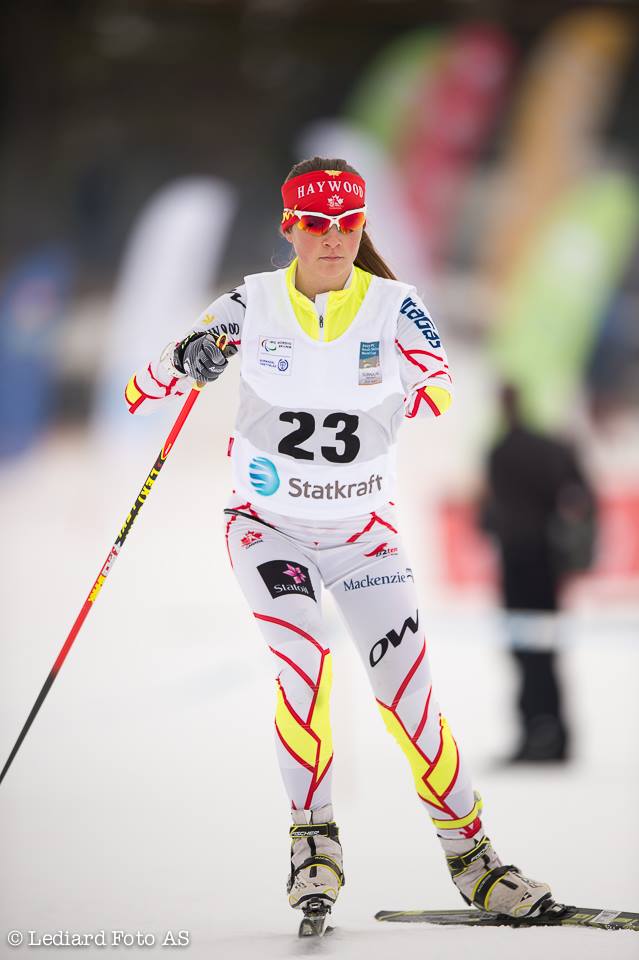
    Brittany Hudak (Canadian Para-Nordic Ski Team) at 2015 IPC World Cup Finals in Surnadal, Norway. Hudak won the 2014/2015 World Cup Overall Cross-Country title. (Photo: IPC Nordic Skiing/Facebook)
    Brittany Hudak (Canadian Para-Nordic Ski Team) at 2015 IPC World Cup Finals in Surnadal, Norway. Hudak won the 2014/2015 World Cup Overall Cross-Country title. (Photo: IPC Nordic Skiing/Facebook)

    The Canadian Para Nordic Ski Team had a banner season as well, with standing skier Brittany Hudak topping the overall World Cup cross-country podium in her first year on the development team.

    “The learning curve has been so huge for me,” Hudak, 21, said in a team press release after winning two consecutive races in Asahikawa.

    At the following World Cup Finals, she collected three medals: silver in the 15 k cross-country, silver in the 12.5 k biathlon and bronze in the 6 k biathlon.

    “Having the opportunity to attend national training camps … I have noticed a huge improvement in my technique,” she added. “It has been such an advantage for me to be in the same environment with the high-performance athletes, seeing how the train and learning from them.”

    Hudak wrapped up 2015 with two World Cup golds, two silvers and a bronze in cross-country, and a silver and a bronze in biathlon.

    Chris Klebl

    It’s a close call between several Canadian Para-Nordic teammates for the men’s pick for honorable mention, but Klebl tops the list as he placed third overall on the cross-country World Cup and is currently first in the IPC rankings. Standing biathlete Mark Arendz was was fourth overall in biathlon, and longtime team veteran Brian McKeever — a visually impaired distance specialist — won most of the races he jumped into for third overall in cross-country.
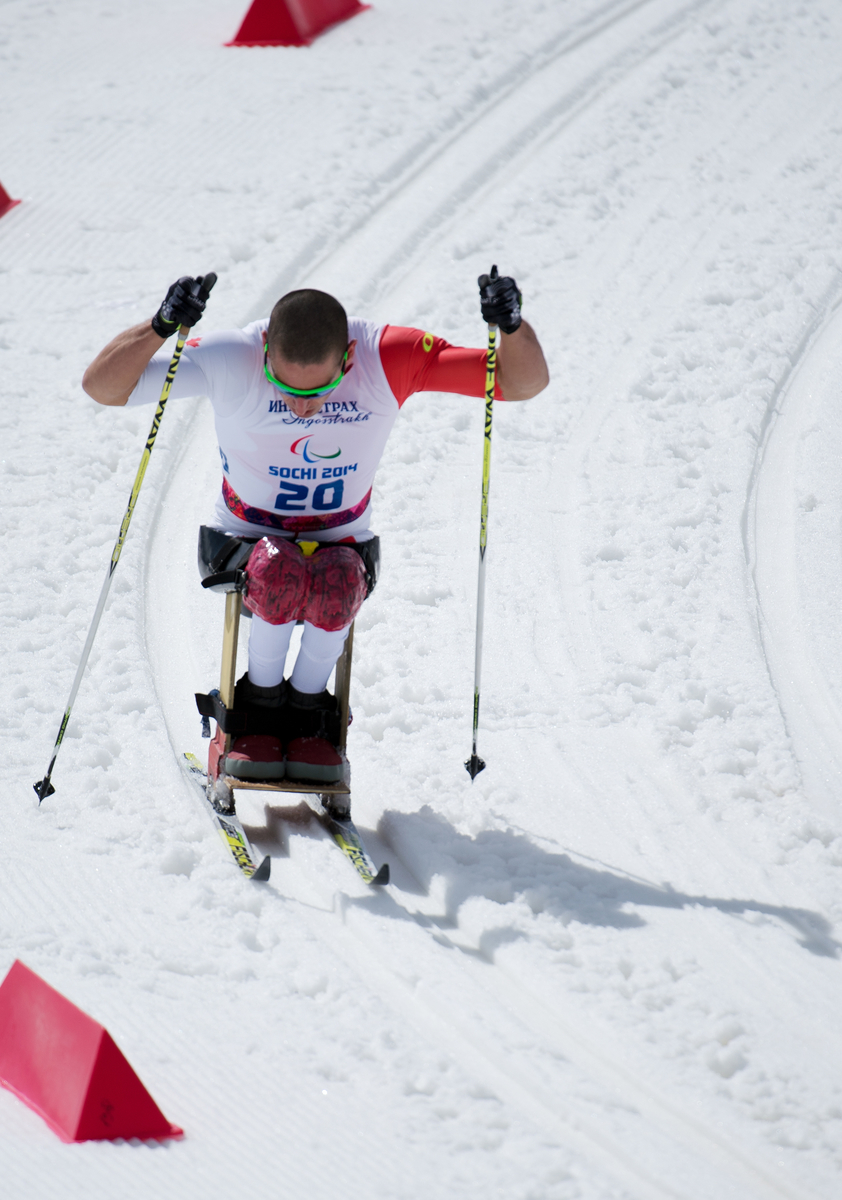
    Canada's Chris Klebl racing to gold in the last race of his third Paralympics on Sunday in the cross-country 10 k sit-ski  at the 2014 Paralympic Winter Games in Sochi, Russia.  (Photo: Matthew Murnaghan/Canadian Paralympic Committee)
    Canada’s Chris Klebl racing to gold in the cross-country 10 k sit-ski at the 2014 Paralympic Winter Games in Sochi, Russia. (Photo: Matthew Murnaghan/Canadian Paralympic Committee)

    In Asahikawa, both Klebl and Arendz notched back-to-back bronze medals before Klebl placed second in both the 10 and 15 k cross-country races. Klebl, a 2014 Paralympic gold medalist in the 10 k, went on to win the 15 k at World Cup Finals.

    McKeever won the 20 k that same day in Surnadal (he won the same event at 2015 World Championships; it was the lone race he competed in there) and took first in the 10 k classic in Japan as well.

    Arendz picked up two bronze medals at World Cup Finals in the biathlon sprint and following pursuit.

    Klebl edged American Dan Cnossen by 40 points for third overall on the World Cup, making Cnossen — who won his first World Cup in Japan and achieved multiple podiums later in the season — worthy of mention as well.

    ***

    Other 2015 Skiers of the Year (SOTY): Junior | Collegiate | Nordic Combined | Biathlon
  • Wednesday Workout: Make Every Shot with Norwegian Coach Joar Himle

    Wednesday Workout: Make Every Shot with Norwegian Coach Joar Himle

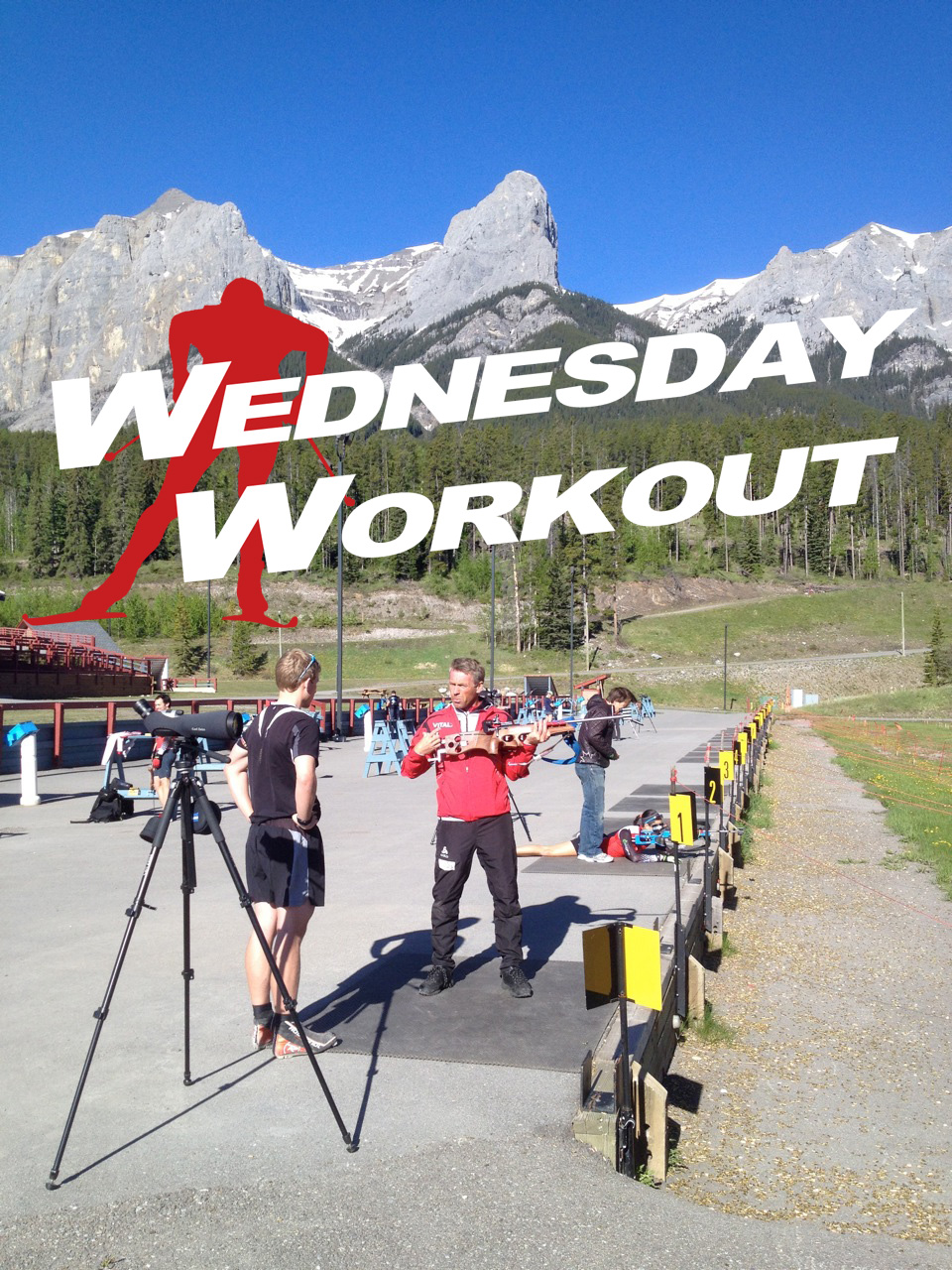
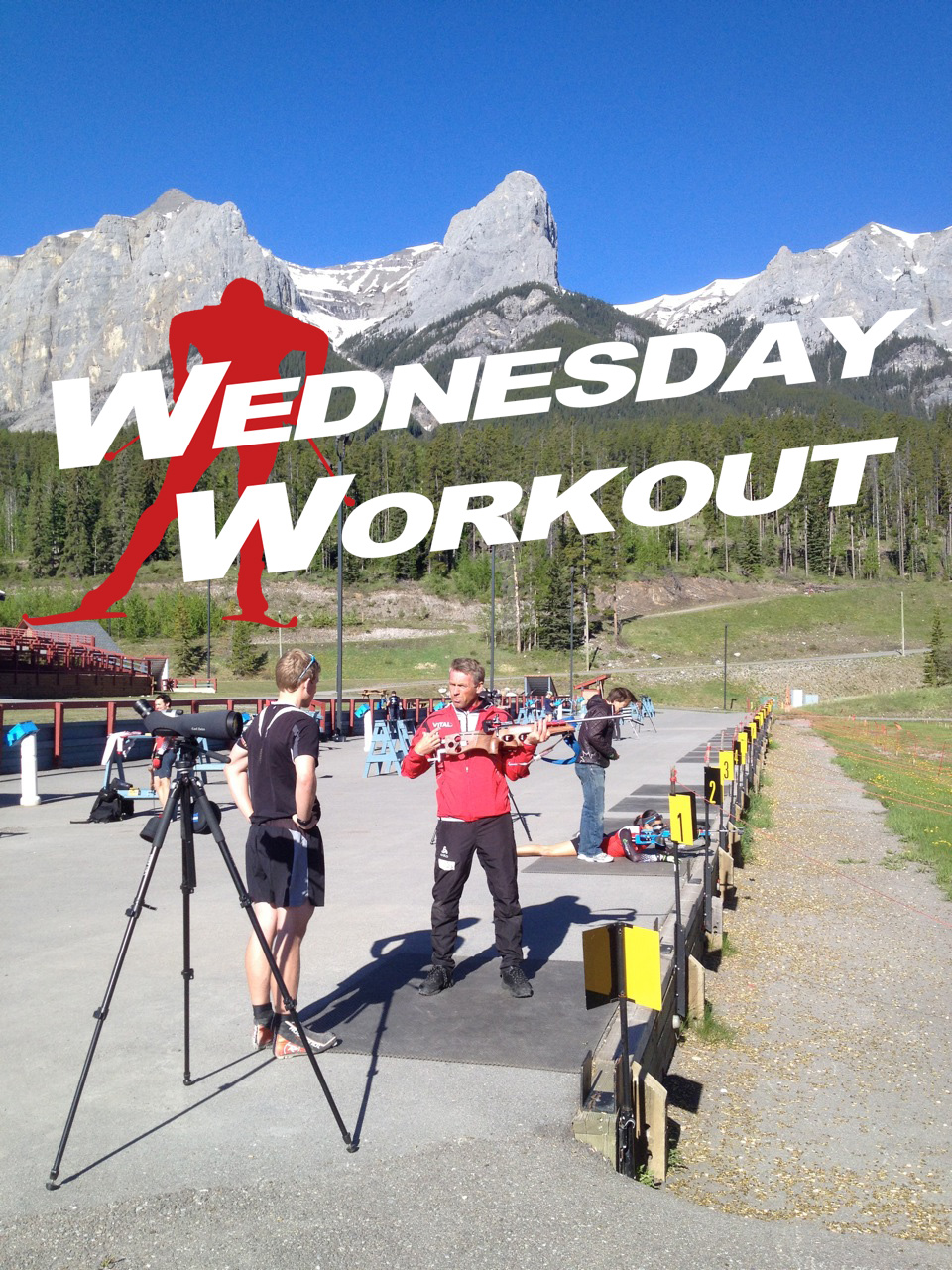
    Joar Himle, a personal shooting coach from Norway, assists Canada's Scott Gow during a recent shooting camp in Canmore, Alberta. (Photo: Matthias Ahrens)
    Joar Himle, a personal shooting coach from Norway, demonstrates shooting technique with Canada’s Scott Gow (l) during a shooting camp from June 8-14 in Canmore, Alberta. (Photo: Matthias Ahrens)

    There’s nothing wrong with getting a little outside perspective — at least that’s how Biathlon Canada’s national-team head coach Matthias Ahrens and his staff sees it.

    Ahrens explained in an email that he’s been trying for years to bring experts from around the world to observe his team and help enhance its athletes’ skiing and/or shooting. He finally pinned down Norwegian shooting coach Joar Himle, and from June 8-14, Himle worked with the Canadians at a shooting camp in Canmore, Alberta.

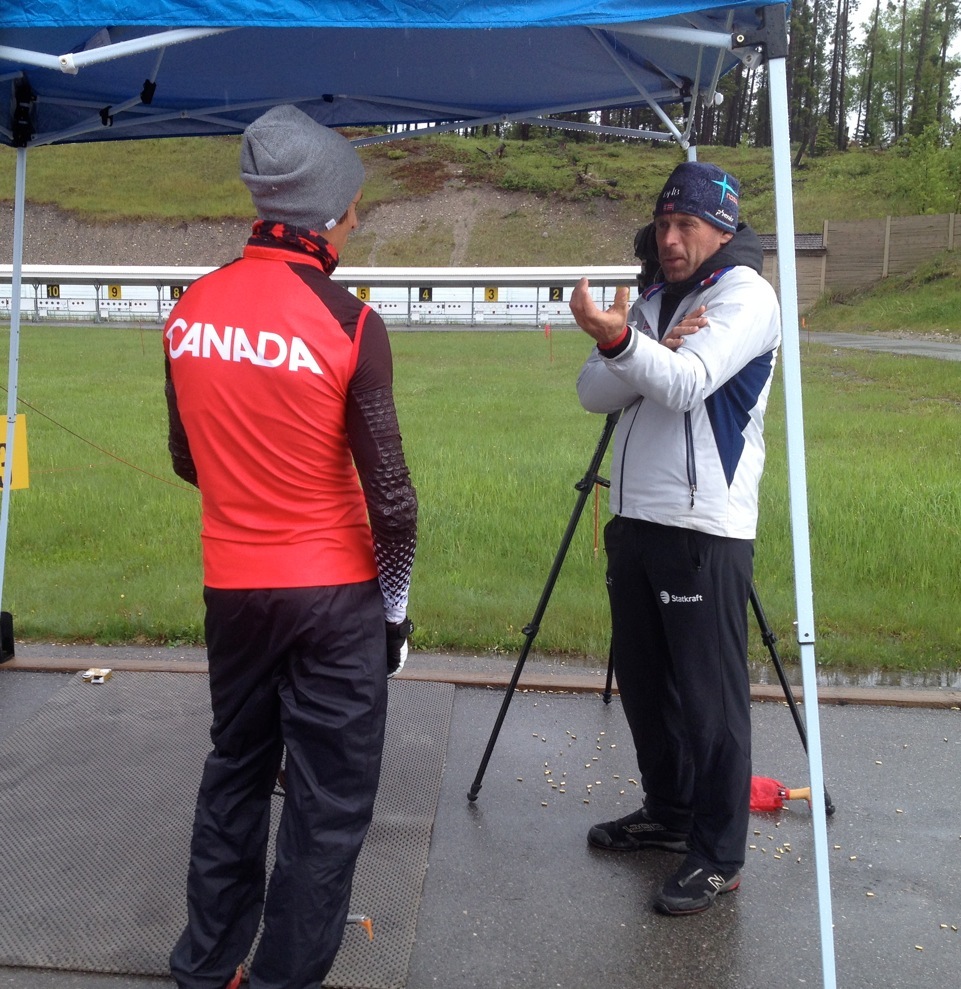
    Joar Himle, a personal shooting coach from Norway, converses with Canada's Brendan Green during a shooting camp in June in Canmore, Alberta. Himle worked with the team as a guest coach. (Photo: Matthias Ahrens)
    Joar Himle, a personal shooting coach from Norway, converses with Canada’s Brendan Green during a shooting camp in June in Canmore, Alberta. Himle worked with the team as a guest coach. (Photo: Matthias Ahrens)

    With experience coaching Olympic gold medalists like Ole Einar Bjørndalen and Halvard Hanevold, Himle was also the Norwegian team’s shooting coach until 2011. He currently works contractually for the national team as well as other athletes, including Germany’s Miriam Gössner.

    And while Biathlon Canada works with in-house specialists on a daily basis, including physiologists and physiotherapists, “over the past few seasons we have also brought in more outside expertise for shorter periods of time,” coach Roddy Ward wrote on his blog.

    “We have had a ski technique specialist and a functional movement and technique specialist, both from Sweden,” Ward wrote. “Recently, we brought in a shooting specialist from Norway. Each time I have been impressed and satisfied with what our team has got out of this work and I have grown to really appreciate bringing in someone new to work with the team.”

    “It has been very educational and motivational for our athletes but also us coaches,” Ahrens noted. “Sometimes it is even not anything new than what we already are coaching but it might be presented in a different way and therefore clicks with the athlete. But it also gives us some insight how other Nations train and where our strength or shortfalls are.”

    “Biathlon Canada has been great that they don’t let their ego get in the way of making us better athletes,” national-team member Rosanna Crawford wrote in an email. “We know that there are other countries who are better and stronger than us and if we can work with them then that will make us stronger and better!”

    Crawford explained that the shooting camp with Himle involved mostly one-on-one consultations, along with a couple of group sessions.

    “I worked on positional stuff in prone mostly and each athlete had things they wanted to work on,” she wrote. “He was great to work with and you never felt stupid asking him questions about shooting.”

    One drill Crawford found “both interesting and frustrating” was a shooting exercise done at the end of a shooting-specific workout. It’s simple enough: shoot ’til you miss.

    • Take a box of 50 bullets and try to hit every single shot. “You can start over if you don’t make it past 15 hits, but after that as soon as you miss you’re done,” she wrote. “I really feel like I learned a lot and am exciting to implement theses changes into training!”
    • Do 50 shots for prone and then 50 shots for standing.

    In all the Canadian team fired about 220 to 240 bullets during that drill and was on the range for about an hour.

    “After we were done we had strength that day, so went to the gym to warm up as soon as you finished,” she added.

    And while Himle has gone back to Norway, the team can continue to pick up new tips from Swiss biathletes Benjamin Weger, Ivan Joller and Serafin Wiestner — who are training in Canmore for three weeks.

    All three men competed at the 2014 Sochi Olympics. Weger, 24, has notched multiple World Cup podiums in his career and made two Olympics and three World Championships. Joller, 30, competed at five World Championships and Wiestner, 23, represented Switzerland at four consecutive Youth/Junior World Championships.