Tag: static stretching

  • Dynamic Stretching for Wellness and Performance

    Dynamic Stretching for Wellness and Performance

    The video presents several dynamic stretches as you begin to develop your own routine using slower, coordinated movements to move the joint through the desired motion.

    Striving for flexibility is ingrained from a young age. The sit-and-reach test was a key component of the presidential fitness test which was administered to elementary-aged school children until recently. Middle and high school athletes often go through a routine of static stretches before starting practice. Acro-yoga masters now fill our Instagram feeds, making us feel inadequate about our ability to touch both palms on the floor (and also to put both legs behind our heads).

    Stretching has long been promoted as the ultimate tool to help soothe sore muscles, aid recovery, and prevent injury. However, recent studies on the benefits of stretching have been controversial. Research that specifically targets static stretching, or holding a muscle at its end-range for 30-60 seconds (the type commonly used at high school running practice), has shown that it impairs the muscle’s elastic energy potential. This results in decreased strength and power.

    A common, yet newer school of thought, is that static holds are detrimental to overall performance when performed before physical activity. Furthermore, the belief that stretching decreases muscular soreness and aids in recovery post-exercise has been debunked. Evidence has shown that no amount of stretching can assist in alleviating the pain in our quads after that first long run of the summer. 1

    While static stretching has been shown to improve muscular flexibility, the actual benefits of this increased range of motion are up for debate. Much research has failed to link increased flexibility to a decreased risk of injury, concluding that overall, there is little to no benefit to static stretching for athletes. 1

    Why then are we still stretching… and should we be?

    There may exist a more indirect link between mobility and risk of injury for Nordic skiers than research gives credit, as decreased range of motion at a certain joint may lead to compensatory patterns and muscular imbalances that lead to overuse injuries. Also, there is evidence that a different type of stretching, dynamic stretching, can be beneficial to athletic performance when performed as part of a warm-up. 2,3

    Dynamic stretching involves stretching to a movement’s end range through repetitive, active movements without holding at end range. Muscles must actively contract, increasing blood flow to the muscle and thus temperature. This serves to decrease viscous resistance in the muscle, thereby increasing extensibility and tolerance to tensile forces. 2,5 In contrast to static stretching, dynamic stretching has been shown to facilitate increases in power, agility, jump height, and sprint performance when performed before exercise. 2,4

    The rationale behind dynamic stretching is to provide an active stretch into the motions a particular activity requires, making it much more functionally oriented than static stretching. In the case of skate skiing, this might entail a stretch of the adductor muscles while performing a side lunge, for example. Research has shown that neural pathways are strengthened as task-specific movement patterns are practiced, which increases muscular coordination and improves performance. 2

    How do you incorporate dynamic stretching into your pre-ski routine? This kind of stretching can be done at home, in the ski hut, or in the parking lot, but it is important to perform within about 15-20 minutes of starting your workout. You want to avoid bouncing, uncontrolled movements (also known as ballistic stretching).

    It’s best to use slower, coordinated movements to move the joint through the desired motion (see 2- minute example movie for pre-ski inspiration).

    Each movement can be performed about 8-15 times. Many of the motions are easy to perform while walking, which is great news, as research has shown that pairing these stretches with dynamic activity helps improve proprioception, or our awareness of body position, and balance. Walking can be thought of as a “mini-plyometric” and serves to activate muscle spindles, or stretch receptors. This activation during a combination of dynamic stretching and walking leads to the increased energy potential of a muscle.

    Do we need to be stretching for hours each night trying to hit the splits? According to the current research, probably not.

    Joint hypermobility has been shown to lead to instability that can cause further problems down the road- like dislocation, arthritis, and labral tears.6,7 Specific strengthening and postural control exercises may play a more significant role in injury prevention, but that’s another article in itself. However, we desire mobility that meets the requirements of the task we wish to perform, which is where dynamic stretching comes into play. By helping to improve the functional range of motion, muscle activation, and proprioception prior to activity, dynamic stretching can indirectly lead to a decreased risk of overuse injury while enhancing athletic performance. This isn’t to say you need to bag your nightly static stretching routine entirely, as anecdotal evidence from many athletes suggests it does make them feel better. There is inconclusive evidence to support why that may be the case from a physiological standpoint. However, it is a highly debated topic into which sports research will continue to delve. 


    Jessica is a 2018 Winter Olympian currently pursuing her Doctorate in Physical Therapy from the University of New Mexico. When she is not ski racing or studying, you can find her out on her mountain bike exploring the trails. Instagram: @jjyeaton.


    References:


    1.             Baxter C, Naughton LRM, Sparks A, Norton L, Bentley D. Impact of stretching on the performance and injury risk of long-distance runners. Research in Sports Medicine. 2017;25(1):78-90. doi:10.1080/15438627.2016.1258640
    2.             Opplert J, Babault N. Acute Effects of Dynamic Stretching on Muscle Flexibility and Performance: An Analysis of the Current Literature. Sports Med. 2018;48(2):299-325. doi:10.1007/s40279-017-0797-9
    3.             Vazini Taher A, Parnow A. Level of functional capacities following soccer-specific warm-up methods among elite collegiate soccer players. J Sports Med Phys Fitness. 2017;57(5):537-542. doi:10.23736/S0022-4707.16.06236-8
    4.             Kallerud H, Gleeson N. Effects of Stretching on Performances Involving Stretch-Shortening Cycles. Sports Med. 2013;43(8):733-750. doi:10.1007/s40279-013-0053-x
    5.             Freitas SR, Mendes B, Sant GL, Andrade RJ, Nordez A, Milanovic Z. Can chronic stretching change the muscle-tendon mechanical properties? A review. Scandinavian Journal of Medicine & Science in Sports. 2018;28(3):794-806. doi:https://doi.org/10.1111/sms.12957
    6.             Philippon MJ, Briggs KK, Fagrelius T, Patterson D. Labral Refixation: Current Techniques and Indications. HSS J. 2012;8(3):240-244. doi:10.1007/s11420-012-9290-z
    7.             Wolf JM, Cameron KL, Owens BD. Impact of joint laxity and hypermobility on the musculoskeletal system. Journal of the American Academy of Orthopaedic Surgeons. 2011;19(8):463-472.
  • What Drives Muscle Tightness: Tips for Improving Long-Term Performance

    What Drives Muscle Tightness: Tips for Improving Long-Term Performance

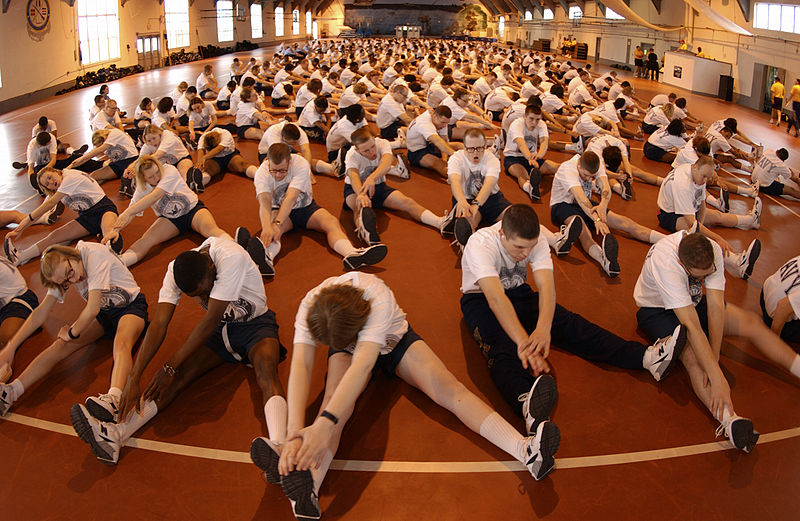
    If we could all just stretch a little more effectively, it would go a long way. (Photo: US Navy recruits/Wiki Commons)
    If we could all just stretch a little more effectively, it would go a long way. (Photo: US Navy recruits/Wiki Commons)

    Many of us have realized minimal gains with static stretching. For many it seems to be the training element we shove off to the end of the list even though we know it is important. Maybe we do this because for all the time we spend, we don’t get much positive reinforcement?

    Static stretching tends to yield short-term changes in muscle lengths. Ever notice about 10 to 15 minutes into your workout you feel tight again? It is because we have not addressed the root issue of what is driving the muscle tightness. We may get a few degrees more range of motion, but it is short lived.

    Why are the hamstrings and calves tight to begin with? For a long time, I thought it was due to those muscles being worked more, shortened due to growth spurts or inconsistent flexibility routines. Then I learned that this was only a part of the picture. Yes, these muscles were working extra, but because others were not. The main reason for the tightness had nothing to do with the muscle length, but the muscles that keep them tight are more active or “turned on” when they are not supposed to be, which will keep them tight. Essentially the muscles that are abnormally tight are working extra and always turned on.

    In my last article, ‘The Freedom of Movement,’ I discussed the importance of mobility and stability. Physical therapists, doctors and trainers have different theories on which element is best to address first. To a certain degree as we still develop our diagnostic tools, it will continue to be a chicken-and-egg conundrum. Since everyone’s body reacts differently, the best approach is to try a different method of improving flexibility and re-test your mobility or stability to see if it has an effect.

    Since we need to look at the muscles as an interrelated system, we should use mobility techniques as such as well (i.e. not stretch one isolated muscle group, but address the whole system). We address the system by turning on the muscles that are not activated (but are supposed to be), while at the same time lengthening the target muscle group we are hitting.

    Since no muscle group works with out interacting with other muscle groups, I like to think of targeting an area versus a specific muscle group. For example, instead of stretching just hamstrings, I like to think of stretching the hip, calf and foot muscles, all of which are involved with the hamstrings. Often, we may think our hamstrings are tight when it’s really our hip flexors and weak core driving the movement restrictions.

    How to Stretch

    Since our bodies work best fully mobile, we ideally want to exercise after improving our mobility.

    A good sequence is:

    • Foam roll to release trigger points
    • Hit your primary trouble spot with a mobility exercise sequence, for example, a toe touch (as detailed below)
    • Then move into your workout.

    This will take 10 to 15 minutes, but you will feel like a different athlete for most of your workout.

    Since many skiers tend to have tight hips, and especially those that use cycling as their core form of endurance base building – the body position in cycling tends to shorten hip flexors – I will use the hips as a starting-point example. Please keep in mind this is one example of multiple ways to address this.

    What will work most effectively to keep these changes in is flexibility coupled with strength exercises that teach and reinforce this improved muscle firing pattern. After a short time, the additional strength exercises will make the improvements in flexibility long term (for days/weeks), versus for 20 to 30 minutes.

    What works best for each person will again be driven by what you learn in your evaluation or FMS screening. For making long-term changes in your flexibility muscle release helps for a short duration, but will only elicit a change for a short while, unless we continue to work on fixing the system. The exercises below are based off the work of physical therapist and author Gray Cook.

    Hip Mobility

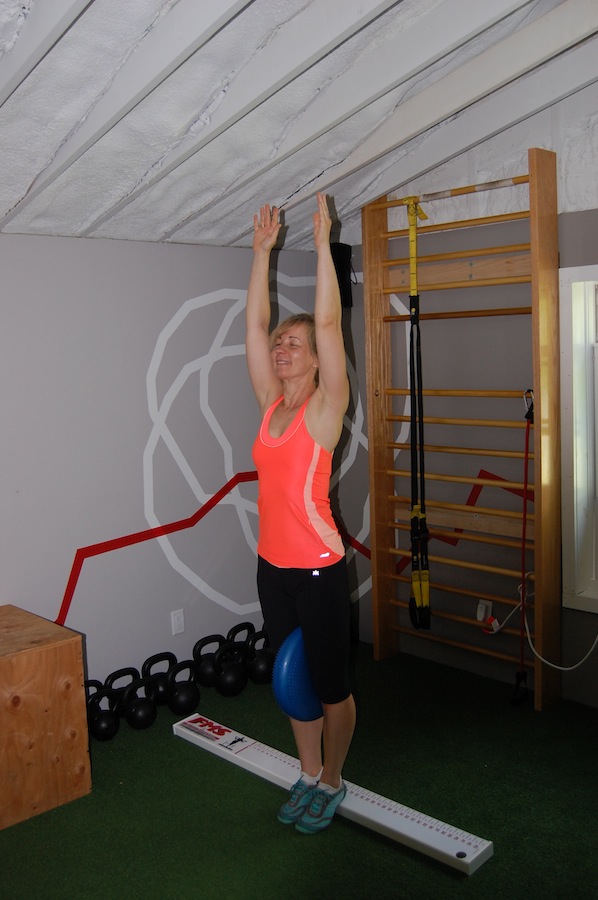
    Toe-touch demonstration
    Figure 1: Toe-touch demonstration

    Toe-touch example:

    Goal: Release tight hamstrings and hip flexors as a system.

    1. Start by doing a toe touch to see your existing range of motion.
    2. Foam roll back and forth 15-20 times: hamstrings, hip flexors, calves, abductors (outside leg muscles), adductors (inside leg muscles), and glutes. (For some folks, try rolling out your foot with a golf ball)
    3. Start with toes up (figure 1) on a 2-inch board and a towel roll between knees, reach up, inhale, then reach down. When you hit resistance, pinch your knees together and stretch more (figure 2). Bend knees if you still cannot touch your toes. Repeat 6-10 times.
    4. Start with heels on a 2-inch board and a towel roll between knees, reach up, inhale, then reach down (figure 3). When you hit resistance, pinch your knees together and stretch more. Repeat 6-10 times.
    Figure 2: Toe touch
    Figure 2: Toe touch
    Figure 3: Toe touch
    Figure 3: Toe touch

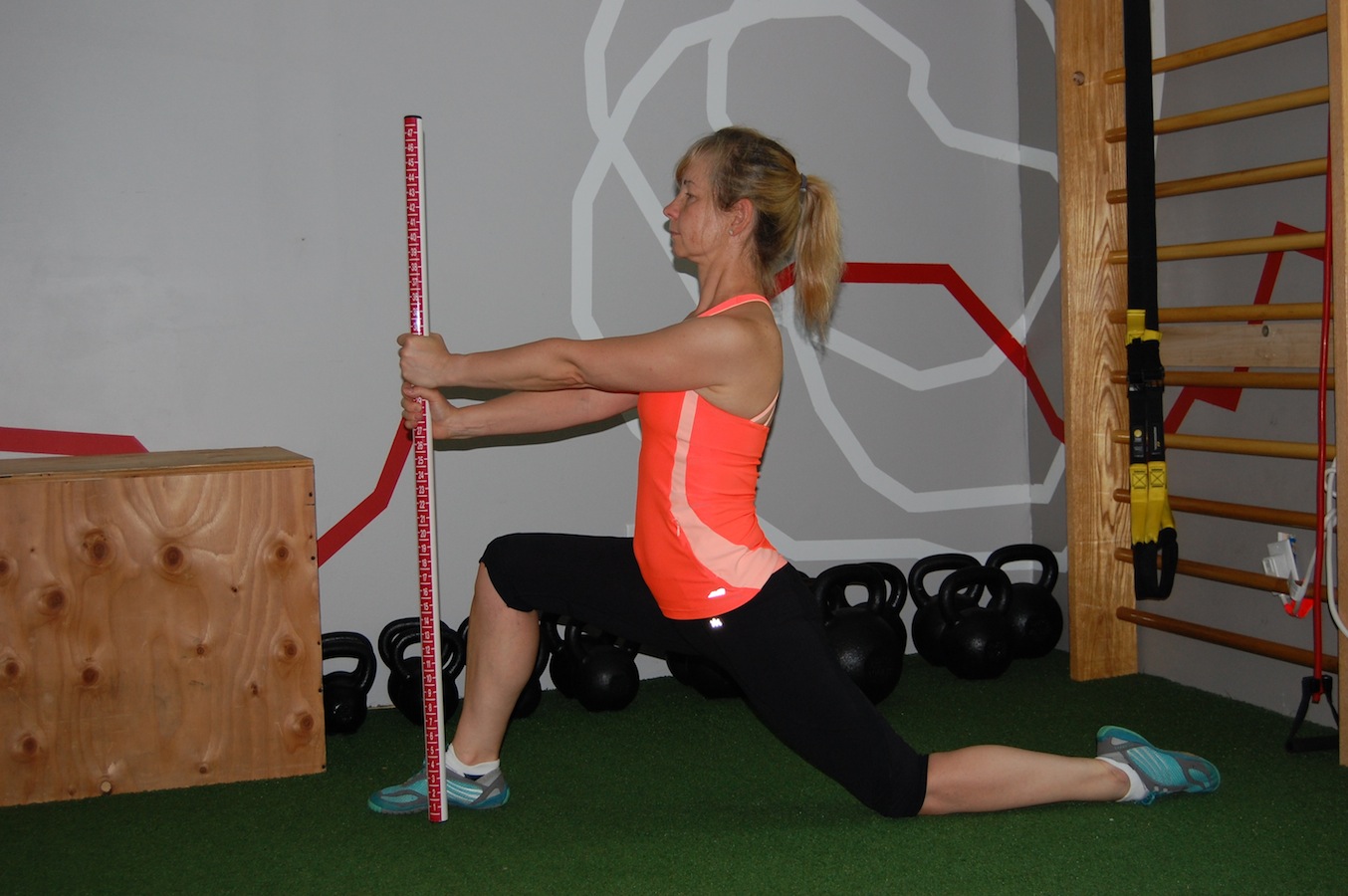
    Hip Flexor:

    Goal: Release tight hip flexors as a system.

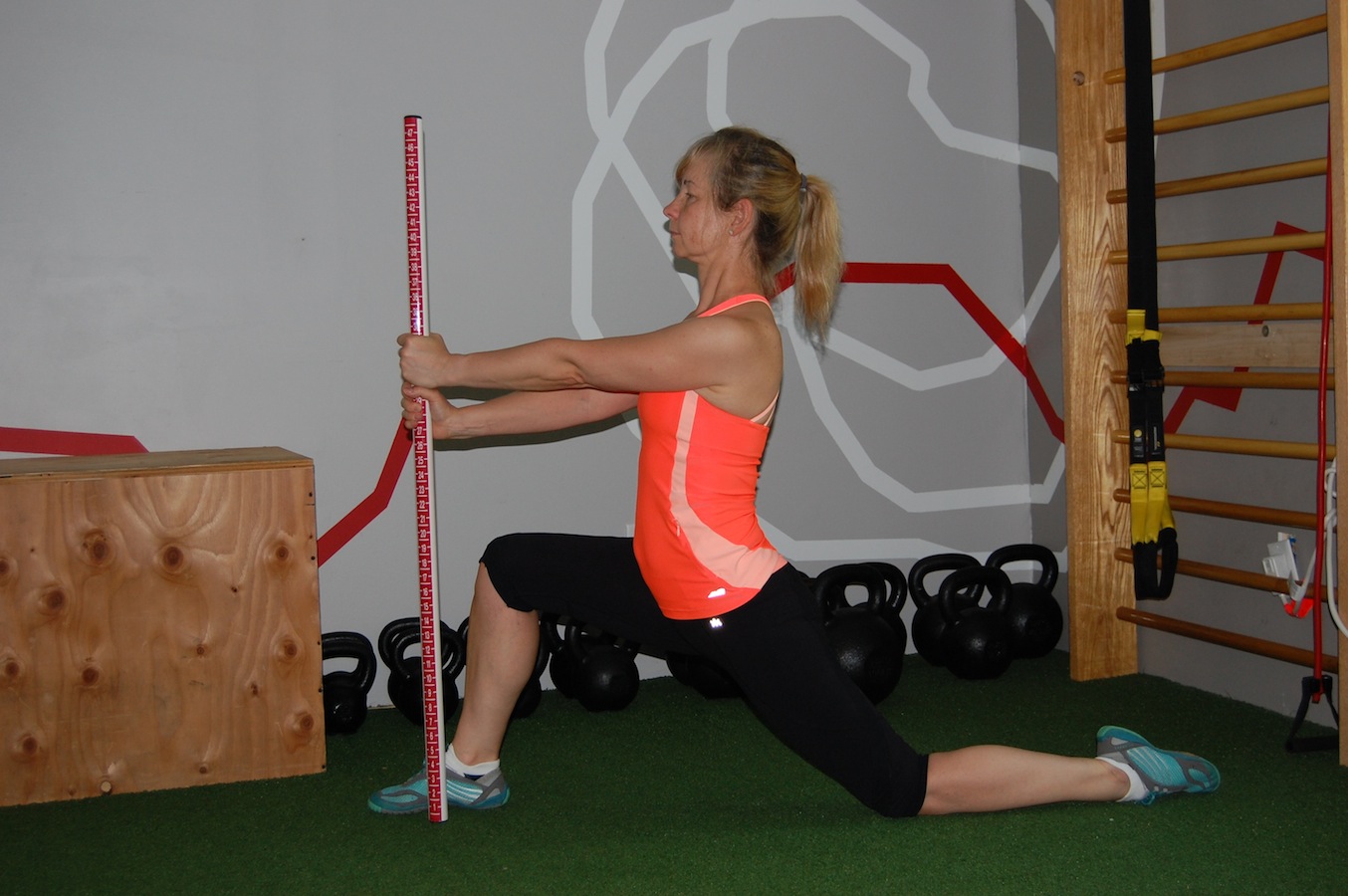
    Figure 4: Hip flexor release
    Figure 4: Hip flexor release
    1. Foam roll back and forth 15-20 times: hamstrings, hip flexors, calves, abductors (outside leg muscles), adductors (inside leg muscles), and glutes. If you did this for other exercises, no need to repeat.
    2. Position yourself as in figure 4. Press hips downward into the ground
    3. When you hit resistance, press the dowel into the ground with straight arms, keeping back straight, exhale. This will release the hip flexor further by engaging the core.
    4.  Repeat 2-3 times. Switch legs, repeat.


    Ankle Mobility

    Ankle mobility is important for correct running mechanics. Without the nominal 30 degrees of ankle dorsiflexion (the range of motion in the ankle when the toes are flexed up), one will tend to “over stride” or “block out” (strike the ground too far ahead of their center of gravity) when running.

    This can lead to a host of problems do to the repeated jarring and deceleration of the bodyweight when running. It can lead to shin splints and knee and hip injuries. Lack of mobility in these muscles can also cause Achilles tightness and over-active muscles involved in stabilizing the body, perhaps even contribute significantly to compartment syndrome, which can be caused by over-active muscle tissue that swells within it’s muscle sheath (like a piece of wet spaghetti swelling in a straw).

    As I explained in my previous article, if mobility cannot happen in the joint and muscles that were meant to handle these forces, it is transferred to adjacent muscles and joints that were not designed to mange these forces, and injury occurs.

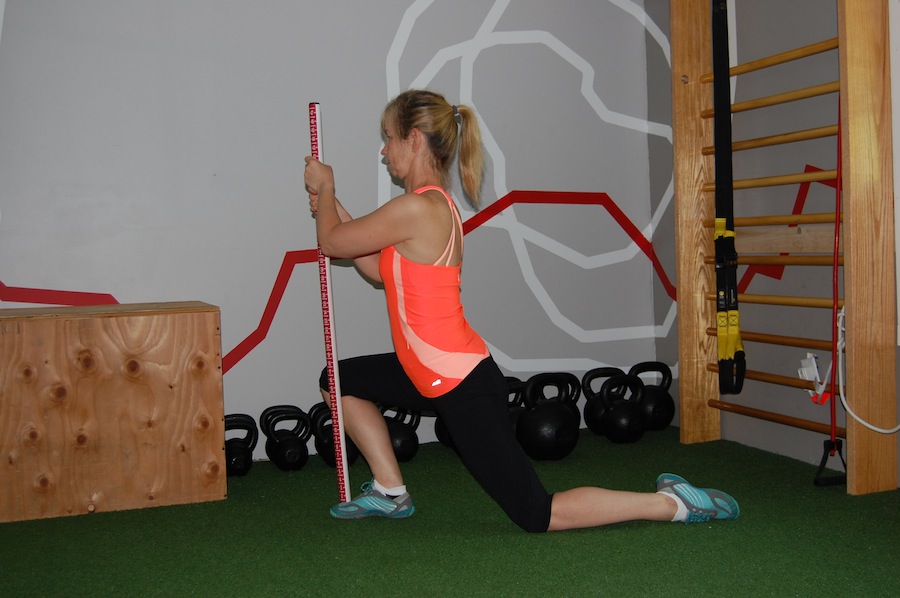
    Figure 5: Ankle release
    Figure 5: Ankle release

    Ankle release:

    Goal: Increase ankle mobility by stretching inter-related muscle groups.

    1. Foam roll back and forth 15 to 20 times: hamstrings, hip flexors and calves. Roll out foot, calf and anterior tibialis (front of shin) muscles. If you did this for other exercises, no need to repeat.
    2. Position yourself as in as in figure 5, dowel on the outside of your little toe, knee on the outside of the dowel, press ankle forward with heel flat. When you hit resistance, press the dowel into the ground with straight arms, keeping back straight, also press opposite knee down into the ground, exhale. Hold for 4-6 seconds.
    3. Repeat 6-8 times. Switch legs, repeat.

    After you have done these, re-test your toe-touch, move around and see how your body feels with the improved flexibility.

    Having good mobility though out your body is important for movement efficiency, not only injury resistance. You may not be getting injured do to some flexibility deficiencies but you may move with less efficiency, and who does not want to be a little (or a lot) faster?