Tag: Statoil

  • In Norway, a Fossil Fuel Feud at a Celebration of the National Sport

    In Norway, a Fossil Fuel Feud at a Celebration of the National Sport

    This article was made possible through the generous support of our voluntary subscribers.  If you would like to see more articles like this one, please support FasterSkier with a voluntary subscription.  

    Norwegian competitors at the Trondheim World Championships held a news conference Monday. Climate advocates have criticized sponsorship of the event by Equinor, the Norwegian state-owned oil company, and are threatening to disrupt one of the races; Martin Løwstrøm Nyenget, center, said that “we see their message, but we don’t think it’s the right way.” (Nathaniel Herz/FasterSkier)

    TRONDHEIM, NORWAY — The World Championships for cross-country skiing have so far gone off impeccably in this coastal city of 200,000.

    Epic duels between the top Norwegians and Swedes. Huge crowds lining the trails and packing into a city square for medals ceremonies. Steady bus service from downtown to the racing venue, where fans can buy locally produced foods.

    But one thorny problem remains unsolved, and threatens to mar what’s otherwise been an impeccably produced event: a standoff between organizers, competitors and a group of Norwegian climate advocates.

    The advocates are planning what they describe as a peaceful disruption of the marquee race of the championships, the men’s 50-kilometer marathon Saturday.

    Folk Mot Fossilmakta, or People Against Fossil Power, says it offered to stand down if the race organizers agreed to two requests: playing a short video for fans about a fossil fuel non-proliferation initiative, and removing the logo of event sponsor Equinor, Norway’s state-owned oil company, from visible advertising. 

    Organizers refused, writing in a letter that they had a responsibility to “facilitate the fulfillment of dreams and experiences” in Trondheim, “without fear.”

    In response, leaders of the demonstration plan to occupy a spot on an uphill early in Saturday’s race. The day before, they will share the exact time and location with the police, who say they will “immediately stop any protests” on the course but also must balance public order with Norway’s “fundamental right to freedom of expression.”

    The biggest remaining question mark is the crowd of boisterous fans that has gathered to watch the races at Trondheim’s Granåsen venue, many of whom have been drinking heavily. In the past, critics on social media have threatened physical violence against climate activists who disrupted other races.

    Crowds line the trails during a race at the Trondheim World Championships. (Nathaniel Herz/FasterSkier)

    “I understand completely that it’s super provoking, this kind of action. But we want to also help people direct their feelings and anger and frustration where it belongs — because it is the fossil fuel industry that is ruining things for all of us,” said Ragnhild Kvist Simonsen, a Folk Mot Fossilmakta spokesperson. “They’re willingly and knowingly killing the sport. And the fact that we have plans to disrupt one race this week is nothing compared to the disruption and death of the sport that the fossil fuel industry actually inflicts on these people.”

    Equinor, which until 2018 was named Statoil, says that 20% of its capital investments are now going toward renewables and low-carbon solutions, and it aims to reach net zero emissions by 2050. 

    But more than 99.5% of the energy it produces still comes from oil and gas, according to its most recent annual reporting. Last month, it announced it would slash its planned investment in renewables and boost oil production by 10% over the next several years.

    Åge Skinstad, the lead organizer of the World Championships, called Equinor a “very, very serious company,” and said that “they have to answer about how they work.”

    “We trust them in that work,” Skinstad said in an interview, adding that the company, for years, has supported Norwegian youth and junior skiers.

    An Equinor spokesperson, Rikke Høistad Sjøberg, said the company shares “the impatience in the energy transition, and it is going slower than expected.”

    “However, we continue to drive investments in renewable energy and low-carbon solutions like transport and safe storage of carbon dioxide,” she wrote in an email. “For us, it is important to balance the production of the energy needed today, while investing and developing the energy production and low-carbon solutions needed in the future.”

    Athletes at the championships, meanwhile, are caught between the climate advocates and the companies that sponsor competitions and some of their teams.

    Multiple Norwegian competitors, whose national ski association has long been sponsored by Equinor, have condemned the planned action.

    Simen Hegstad Krüger is one of the Norwegian athletes who’s criticized climate change advocates who plan to disrupt a race in Trondheim. (Federico Modica/Nordic Focus)

    Simen Hegstad Krüger, an Olympic gold medalist, last month called the climate advocates “idiots” and warned about the potential for things to get “ugly.” At a news conference Monday, Norway’s Martin Løwstrøm Nyenget did not directly answer a question about the merits of Folk Mot Fossilmakta’s requests to the championships organizers, saying that “we see their message, but we don’t think it’s the right way, to interrupt a race.”

    Nyenget declined to say whether he thinks it’s appropriate for a fossil fuel company to sponsor a cross-country skiing World Championships. “I’m not the one deciding this,” he said.

    But in the past few days, other competitors have begun a dialogue with Folk Mot Fossilmakta. 

    They include two members of the U.S. Ski Team, which arrived in Trondheim in new racing uniforms depicting melting glaciers — a message aimed at drawing attention to climate change’s effect on their sport.

    American Gus Schumacher, who already works with a winter sports-focused climate group called Protect Our Winters, met Monday with Folk Mot Fossilmakta along with the cross-country ski circuit’s two athlete representatives, American Julia Kern and the United Kingdom’s James Clugnet. 

    Schumacher called the meeting productive and said that leaders of Folk Mot Fossilmakta were “super reasonable.”

    Gus Schumacher races in his climate-themed uniform at World Championships. (Federico Modica/Nordic Focus)

    He said he hopes the group can be convinced to change its planned action in a way that allows them to draw attention to their position without affecting the 50-kilometer event. 

    “The biggest goal for us, in that meeting, was to convince them that obstructing the race wasn’t going to help them advance the message,” Schumacher said in an interview Monday. “Because it would stop athletes from wanting to speak out in support of them.”

    Schumacher said that he, Kern and Clugnet hope to work with like-minded athletes in the next few days to draft their own statement about the urgency of climate action — much like one issued by a group of Swedish athletes last week in advance of a high-profile race there, the Vasaloppet. 

    “We’re doing our best to get athletes who share the protestors’ general values on board while parsing out the exact details,” Schumacher said. “The most important thing is to show some solidarity.”

    Folk Mot Fossilmakta is part of the A22 Network, an international coalition of civil disobedience campaigns focused on the environment. The group’s efforts also include pushing Norway’s $1.7 trillion state oil-wealth fund to divest from fossil fuels.

    Its spokespersons include Simonsen, 26, who works at a Trondheim cafe when she’s not organizing, and Callum Macintyre, a 32-year-old Scot who moved to Norway to get a masters degree in climate change policy.

    Ragnhild Krist Simonsen and Callum Macintyre work with Folk Mot Fossilmakta, or People Against Fossil Power. (Nathaniel Herz/FasterSkier)

    Their efforts around the World Championships were, Simonsen said, an experiment in “open organizing.” 

    In the past, some members of the group have been involved in unannounced climate actions at high-level ski races. But weeks before this year’s championships started, Folk Mot Fossilmakta went public about its demands of the organizers.

    “What we really want, from our actions, is to create a conversation about these things that Norway, as a society, struggles to talk honestly about,” Simonsen said. “We are a petrostate, an oil nation that produces and exports huge amounts of oil and gas. And the fossil fuel industry, in our country, is hugely influential on our culture. To be a Norwegian is to have an identity around oil.”

    Simonsen’s group points to recent comments on a podcast by Clugnet, the British athlete, who noted his positive attitude toward Equinor because of the company’s past sponsorship of cross-country ski races.

    Folk Mot Fossilmakta’s open organizing strategy, its leaders say, has been a tremendous success: In the days leading up to the championships, the group’s requests and plans have received intense media coverage and attention from athletes and teams.

    At a community gathering Sunday, the group drew some 30 people to a downtown Trondheim meeting space. 

    Between bites of carrots and hummus, participants learned about the Fossil Fuel Non-Proliferation Treaty Initiative, which is led by Pacific Island nations and targets the production and development of oil and gas, rather than just consumption. 

    Folk Mot Fossilmakta held a community meeting Sunday in downtown Trondheim. (Nathaniel Herz/FasterSkier)

    They also held small-group discussions where they contemplated the weaknesses of their organizing strategy and arguments.

    “This is definitely the question: How far can protests go?” asked one participant, Anne Klenge, 26. But, she added: “It’s not blackmail. It’s the public interest we’re doing this for.”

    Another participant, a postdoctoral researcher who would only give his first name, Andreas, criticized what he described as shallow and “aggressive” Scandinavian media coverage of the planned demonstration.

    “Who are the activists here, really?” he asked. “The skiers that carry the logo are activists, in the sense that they are promoting fossil fuel extraction.”

    Andreas, 46, said he plans to participate in Saturday’s action, though he said the lead-up has been psychologically challenging, “because it’s so unpopular.”

    “I’m a little worried that spectators will interfere,” he said.

    Norwegian spectators took to the woods to watch a race at the Trondheim World Championships last week. (Nathaniel Herz/FasterSkier)

    Folk Mot Fossilmakta’s leaders say the Norwegian police have been clear that they will protect demonstrators’ safety, in addition to ensuring the safety of athletes. 

    In a lengthy response to emailed questions, a police lawyer, Ole Andreas Aftret, said his agency would “take necessary action to uphold public order and prevent bodily harm.” At the same time, he added, Norway is a liberal democracy where freedom of expression is a “fundamental prerequisite,” and political activists have “greater leeway in public spaces than anyone else.”

    While the police will “immediately stop any protests in the race course,” Aftret said, they would have to consider the specifics of a situation before any attempt to restrain advocates in advance of a planned demonstration. 

    “Taking action against activists before they’ve done anything that causes a risk of violence or disruption to public order, or before they’ve demonstrated a clear intent to do so, raises questions about censorship and political bias,” Aftret said. “This does not, however, mean that the police are powerless and must stand by while someone blocks the course and causes a major disruption.”

    Skinstad, the championships’ lead organizer, said event officials had a good discussion with Folk Mot Fossilmakta and that “free speech is no problem for us.” 

    But, he added, he hopes the group understands that it would be wrong “to ruin a competition for athletes that have been training maybe 10,000 hours to reach their main goal, maybe, in their life.”

    Åge Skinstad. (Trondheim 2025)

    “They can do the messages in the way they want outside the field of play,” Skinstad said. “But inside the field of play, I really hope that they understand they have nothing to do.”

    Macintyre, the Folk Mot Fossilmakta spokesman, said that his group’s ongoing discussions with Schumacher, Kern and Clugnet could lead to an agreement that could change Saturday’s action.

    “We see that the skiers’ voice is much more important than a disruptive protest,” he said.

    But any pact would have to be serious, Macintyre said, not just symbolic — such as a commitment to work with the International Ski Federation, the organization that oversees all world championships, to endorse the fossil fuel non-proliferation initiative and ban fossil fuel sponsorship.

    “We’re engaging with them,” Macintyre said. “But nothing is decided yet.”

  • ‘You Can Just Feel the Energy,’ Wadsworth Says of CCC’s Renewed Coaching Emphasis

    ‘You Can Just Feel the Energy,’ Wadsworth Says of CCC’s Renewed Coaching Emphasis

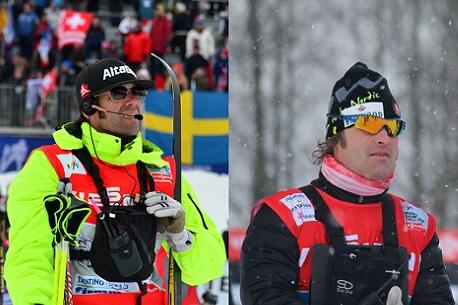
    Cross Country Canada coaches Justin Wadsworth (l) and Louis Bouchard will continue to lead the Canadian cross-country ski team at the national and World Cup levels. (Photo: Cross Country Canada/Twitter)
    Cross Country Canada’s Justin Wadsworth (l) and Louis Bouchard will share coaching duties on the World Cup Team while mentoring less-experienced Canadian coaches on the World Cup circuit for the 2015/2016 season. (Photo: Cross Country Canada/Twitter)

    Canada is getting back to its roots. A year after Cross Country Canada (CCC) hired Norwegian Olympic gold medalist Tor-Arne Hetland to co-coach its World Cup Team, the national governing body is once again emphasizing homegrown coaches at the highest level of skiing.

    And although national-team head coach Justin Wadsworth is technically American, he might as well be considered Canada’s own after leading its team and living in Canmore, Alberta, since 2010.

    “Besides me, I think we’ll just try to work with Canadians,” Wadsworth said with a laugh on the phone on Thursday.

    This season, the 46-year-old California native is at the helm again and is prepared to share World Cup coaching duties with Louis Bouchard, Alex Harvey’s personal coach and head coach of the Pierre-Harvey Training Centre in Quebec. Wadsworth and Bouchard have worked together on the Canadian World Cup Team for the last five years.

    In addition to the duo, a select crew of training centre and potentially club coaches will be called upon in 2015/2016 to assist on the World Cup circuit as well, Wadsworth explained. The idea is to give them elite-level experience and form a pool of strong coaches to draw from nationwide.

    “We really feel like one coach, like myself or Louis, with the addition of a younger coach [at each World Cup] will fill in nicely and really promote the coaching system that we talked about a lot,” Wadsworth said.

    Tor-Arne Hetland, Swiss sprint coach from 2010-2014, at the 2014 Sochi Olympics in Russia. (Photo: FIS) http://www.fis-ski.com/cross-country/news-multimedia/news/article=tor-arne-hetland-nor-become-world-cup-team-coach-for-canada.html
    Tor-Arne Hetland, Swiss sprint coach from 2010-2014, at the 2014 Sochi Olympics in Russia. (Photo: FIS)

    In a press release on Tuesday, CCC announced its “integrated national coaching structure,” with an emphasis on developing coaches within its own borders. The organization did not renew Hetland’s one-year contract.

    “If we truly want to put Canada’s cross-country ski athletes on the Olympic podium in 2018 and 2022, then I believe it is critical at this time to put the Canadian system in the hands of coaches that are living and embedded in our training centres across the country,” CCC High Performance Director Tom Holland said in a press release.

    “Tor-Arne brought many great qualities and technical savvy to our program,” Holland added. “In looking at the long-term goals of Olympic medals in 2018 and beyond, we felt that a Canadian-based program brings greater stability and synergies in coaching philosophy and sport science approaches – and, ultimately, a stronger platform to breed medal-winning performances from our current- and next-generation high-performance athletes.”

    Wadsworth explained that in the aftermath of the 2014 Sochi Olympics, in which the Canadians missed the wax in multiple races and did not reach the podium, the timing wasn’t right to implement this kind of coaching system.

    “I think it’s a lot brighter,” Wadsworth said of the atmosphere within CCC this year compared to last spring. “Not just because we got medals at a major championship, but I think this renewed vision … you can feel the energy there.”

    And it’s not necessarily because of the money, either. Last year, CCC’s budget took about a $300,000-dollar hit in the wake of the Olympics, and Wadsworth estimates they could be down another hundred-thousand dollars or more this season. Next week, CCC will present to Own The Podium — one of its main sources of government funding — and while the outcome of those meetings is to be determined, Wadsworth said CCC is losing one if its major sponsors: Statoil.

    “Definitely the pie has shrunk a little bit and we have to be more cautious with the money we have, which is sometimes a good thing … you have to spend your money more wisely,” he said. “We’re definitely not going to have an increased budget, that’s for sure, it’ll probably be slightly decreased.”

    Regardless, spirits remain significantly higher than the beginning of 2014/2015 from Wadsworth’s standpoint.

    “After the Olympics, I was so beat down by that experience and the fallout of it, I didn’t have the energy to build up the system and I wasn’t sure I was going to continue in April and May last year,” he said.

    In the aftermath of some coaching moves last spring, Wadsworth became the national-team head coach tasked with bridging the gap between the Canada’s development skiers and World Cup athletes. He’ll do more of that this year, with a more explicit goal of better reaching out to smaller hotbeds for skiers, such as Whitehorse, Yukon, and share training or technique knowledge with clubs in those areas.

    “I’m going to try to be a little bit more available for helping any coaches that are interested…” he explained.

    Before last year, Wadsworth had been on the road, away from home, nearly 200 days each winter, and he needed a change — specifically less travel. Last season, Wadsworth estimated he traveled half that amount and anticipates he will only travel two days more in 2015/2016 while trading off on the World Cup with Bouchard.

    “Traveling is part of being a ski coach,” Wadsworth said. “Part of what I gained from last year was gaining a bit of focus and energy back.”

    “Part of what I gained from last year was gaining a bit of focus and energy back.” — Justin Wadsworth, Canadian World Cup and national team head coach

    With a new physiologist and new psychologist on CCC’s Integrated Sports Team, he added that “the energy sharing and idea sharing” is at an all-time high. The addition of less experienced coaches, as well as wax technicians (to work alongside seasoned staff members), on the World Cup will require athletes to adapt, but now is the time to focus on coaching, he said.

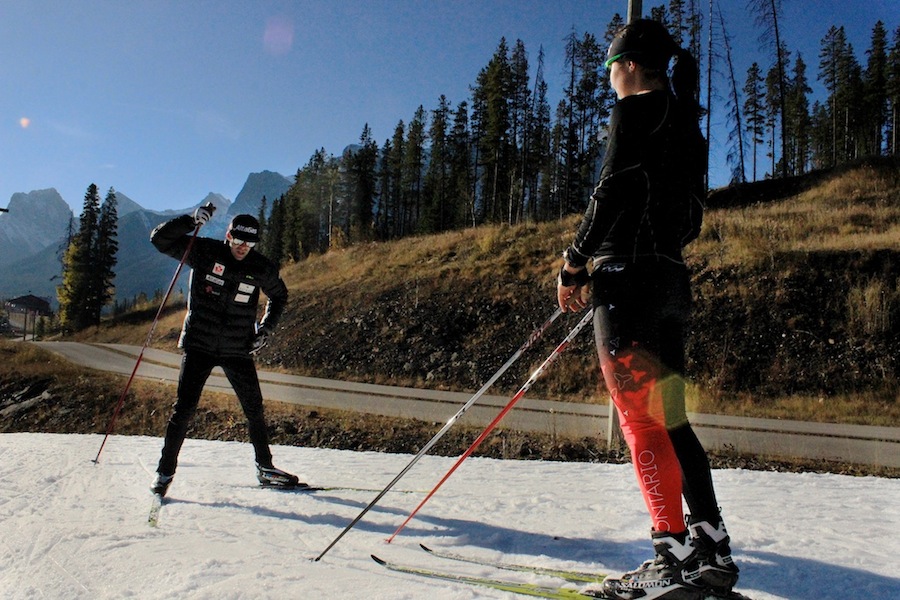
    Canadian National Team Head Coach Justin Wadsworth works on offset with development skier Jenn Jackson. (Photo: Pavlina Sudrich)
    Canadian National Team Head Coach Justin Wadsworth (l) works on offset with development skier Jenn Jackson in 2013. (Photo: Pavlina Sudrich)

    “You get so focused on one thing in the program and World Cup success and I think some of [these domestic coaching priorities] in particular fell through to the side,” Wadsworth said. “It’ll be open to more than just training-centre coaches; there are key club coaches that have produced athletes [as well] … In the meetings that we have coming up next week, we really need to start figuring out the balance … and who’s going to be able to travel where and get the experience to right people.”

    For Wadsworth, who was driving back to Canmore on Thursday after a three-day trip in Sweden with head wax tech Yves Bilodeau, he tentatively plans to be in Europe before the first World Cup in Kuusamo, Finland, and for the start of Period I. Bouchard will take over the second part of that period, then Wadsworth will be back with the team at the end of December for the Tour de Ski. He’ll return again for the mid-February World Cups in Falun, Sweden, before an “exploratory trip” to South Korea — the site of the 2018 Olympics — with Bouchard. Both will subsequently return home for the Tour du Canada, the final World Cups, in March.

    “Louis and I [have] a great relationship and great communication,” Wadsworth said. “I think that working relationship now is almost stronger than ever.

    “Tor-Arne’s done a lot of good things for our team and led the team well, but we really needed to get back to a Canadian model,” he added.

    On Wednesday, news of Hetland being hired to coach the Norwegian national team spread to the Scandinavian press. According to Langrenn, he will move from Davos, Switzerland, to Trondheim, Norway, this fall.

    “I think I have gained enough experience internationally to come home to Norway,” Hetland said, according to a translation. “Now I’m ready for my biggest challenge as a coach.”

    Hetland, Wadsworth and Bouchard worked alongside one another throughout last season and at 2015 World Championships, where Harvey earned two individual medals in Falun.

    “I think [Tor-Arne] ended up where he probably would have in a year or so,” Wadsworth said.

  • Cross-Pollinating Future Ski Champions

    Cross-Pollinating Future Ski Champions

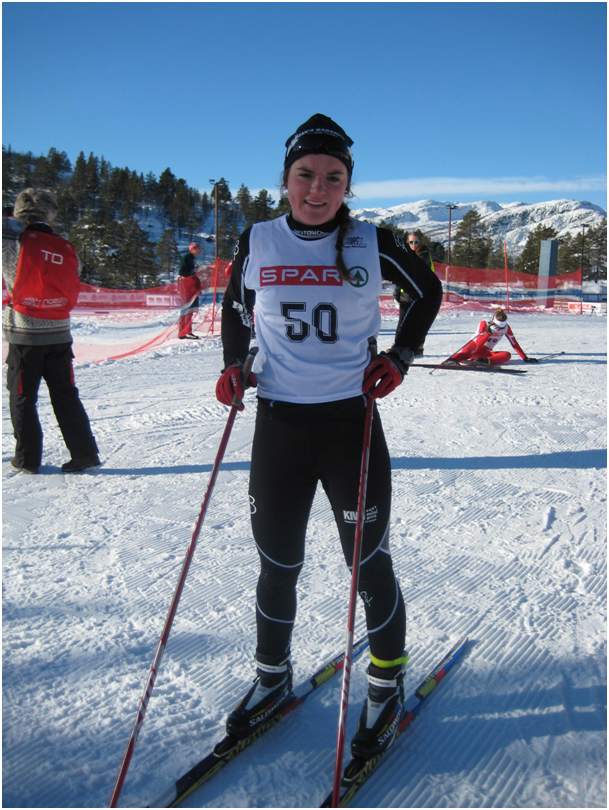
    Hilde Losgård Landheim, one of the 20 athletes in Team Morgendagens Helter.

    NORWAY – The Norwegian elite development project “Morgendagens Helter” (Ed. Tomorrow’s Heroes) brings 20 handpicked junior talents from all six of the ski disciplines organized under the Norwegian Ski Association (NSF) into one team.

    The athletes are assigned individual mentors on the national team level, receive an annual stipend of NOK 50,000 (roughly $8,500) that is split 50/50 between the athlete and his or her home club, and are invited to several team project training camps.  The money directed to the athletes’ local clubs is earmarked for talent development, recruitment, expanding local resources and coaches’ education.

    The goal is to encourage sharing of know-how and experience – both from the pros to the next generation, as well as between the different disciplines.

    “In order to succeed, it’s crucial to have the ability to learn not only from those who have made it to the top in you sport, but also to learn from those who have succeeded in other fields,” explains Kjetil Undhjem of Statoil, the NSF’s main sponsor for the project. He also feels that the athletes contribute value to his organization, and that the project is a win-win situation for all involved parties.

    Unique

    The project, a 5-year initiative backed by Statoil, is unique in that it combines talented skiers, mentors and coaches from all the FIS ski disciplines into one program. Athletes were handpicked by the association based on personal profiles, general attitude, posted results, motivation, stated ambitions and geographic considerations. Each of the NSF discipline directors picked their athletes, a task that was not easy.

    “There were a lot of good candidates, and there are talents who might feel that they should have been included on the team. However, they will have a new chance already next year,” says Bård A. Amundsen, the NSF’s secretary general. He points out that the team members have a unique opportunity to contribute to recruitment and development in their own clubs or ski academies, by sharing the project resources locally.

    During the camps, which are organized in various parts of the country, the athletes are introduced not only to different workouts and training methods in the ski disciplines but also to the training philosophies and methods of the other sports. During the August camp in Trondheim, for example, the athletes did a track workout led by cross-country skier and project mentor Therese Johaug, suffered through a grueling plyometrics session on the jumping hill stairs with telemark racer and mentor Eirik Rykhus, as well as several general workouts.

    The skiers also made a field trip to one of Norway’s biggest and most successful professional soccer clubs, Rosenborg, where they participated in a workout with the soccer coaches and were treated to a Champions League game afterward. And finally, the skiers were challenged to create computer-guided ski robots made from Legos at the Norwegian University of Science and Engineering (NTNU) – a task they handled with excellence once they discovered there were prizes for the teams that finished first.

    Solid ambassadors

    In addition to the individual mentors, the project also has two major ambassadors: Bente Skari (cross-country), and Kjetil Andre Aamodt (alpine), both former Olympians and world champions. Mentors include Johaug and Eldar Rønning (cross-country), Nina Løseth and Lars Elton Myhre (alpine), Rykhus (telemark) and Anders Jacobsen (jumping).

    The athletes have already completed two dryland camps, and the third will take place close to the start of the ski season.

    The team consists of three telemark skiers, four ski jumpers, three cross-country skiers, three alpine freestyle skiers, three alpine skiers and three nordic combined skiers.

    Well received

    “It’s so nice to have a mentor who has already made it to the World Cup and knows what it takes to get to the top. My mentor, Therese Johaug, is a skier I knew a little bit from before, and that makes it easier to pick up the phone and call her,” says Hilde Losgård Landheim, one of three cross-country skiers in the project. “We’ve talked a few times now, and she gives me a lot of good advice on training. That’s really useful.”

    Hilde Losgård Landheim

    Landheim particularly enjoys training with athletes from other ski disciplines during the team camps. So often, she says, cross-country skiers get stuck in a pattern.

    “I think it’s really healthy for us to see how other athletes train, and get some ideas for basic fitness and strength. I think in those areas, it’s really beneficial to try exercises you’ve never done before and don’t handle so well. I like being challenged and new things definitely do that,” Landheim says, explaining that she finds the project concept motivating.

    “It’s nice that the ski association and Statoil are spending this kind of money on us young skiers. It makes me want to train hard. I really enjoy meeting athletes from other sports, and it’s really motivating,” she says, adding that she had no idea NSF would pick her for the project.

    “I was really surprised when I got the call last winter. I am honored and excited to be a part of this project,” she says, admitting that she didn’t know a lot about it before she accepted.

    Landheim also finds that the project schedule works well with her existing training program from her local club (Tynset IF) and the regional division (Hedmark Skikrets).

    “The project team camps are generally fairly short and held in central locations, which makes it both convenient and easy to fit into my other training program. I’m excited about the next camp already,” Landheim says. “And I really liked the pro soccer game in Trondheim.”