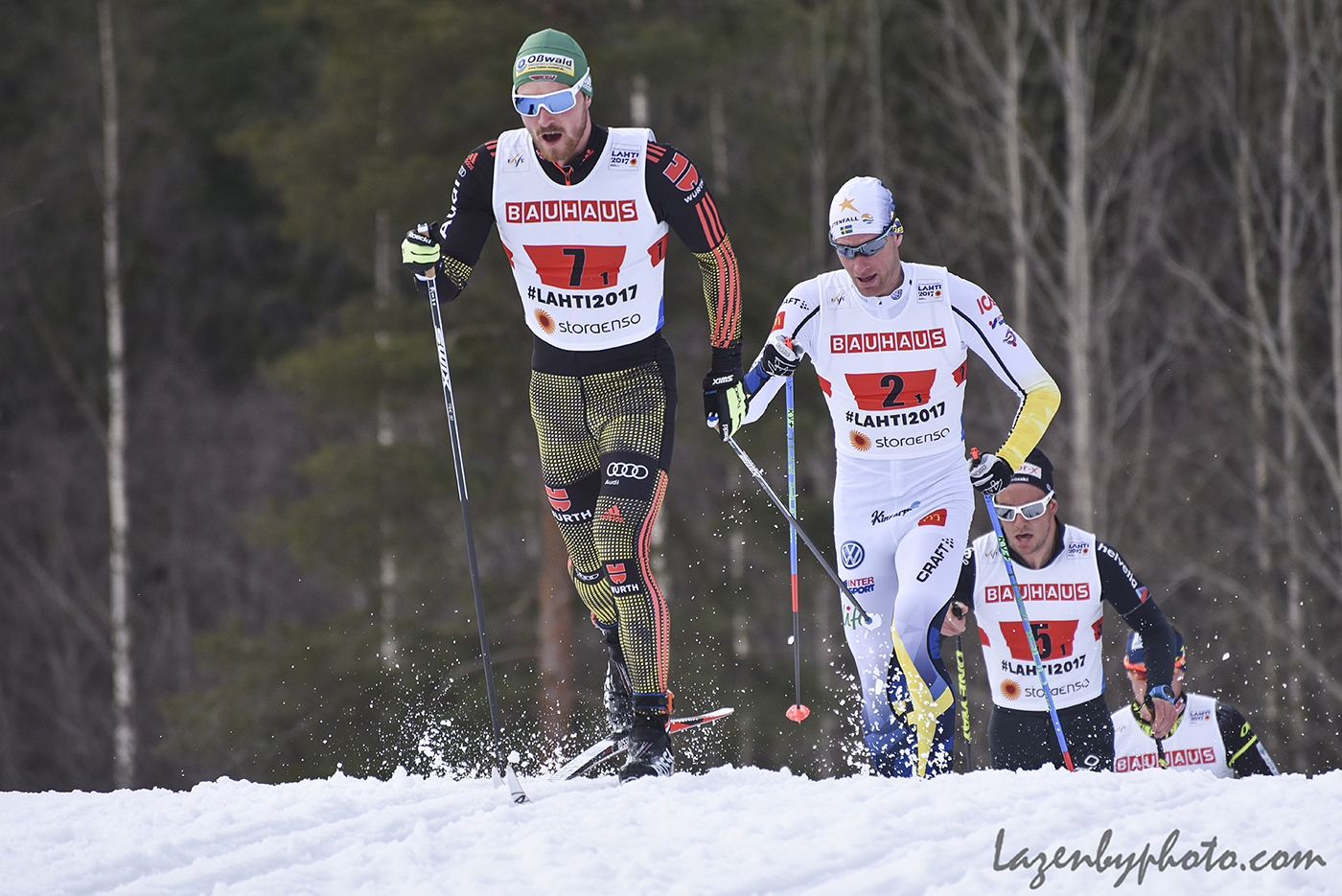
Germany’s Thomas Bing (7) leads Sweden’s Daniel Rickardsson (2) and Switzerland’s Jason Rüesch during the first leg of the men’s 4 x 10 k relay at 2017 World Championships in Lahti, Finland. (Photo: John Lazenby/Lazenbyphoto.com)
Welcome to World Cup Windup, where we check in with the top-10 teams from last year’s FIS Cross Country World Cup tour before the season starts with the Ruka Triple in Kuusamo, Finland, on Nov. 24.
GERMANY
Overall in Nations Cup Last Year:Seventh
Women’s Ranking 2016/2017:Sixth
Men’s Ranking 2016/2017: Ninth
Who’s Back:
Nicole Fessel and Steffi Boehler, top-20 in the World Cup distance standings; sprint finalist Sandra Ringwald; Victoria Carl and Katharina Hennig, who joined Ringwald and Boehler to finish second in the World Cup relay in Ulricehamn; Florian Notz, Elizabeth Schicho, Laura Gimmler, and Thomas Bing, each of whom had a single World Cup top-10 last season, and Hanna Kolb, who had two.
Who’s Missing:
Veteran sprinter Tim Tscharnke retired partway through the summer. The 2010 Olympic team sprint medalist has struggled with back problems and finally called it quits. “The last three years of my career were riddled with many mediocre months, punctuated by health problems and athletic setbacks,” he said.
Pre-Season Results:
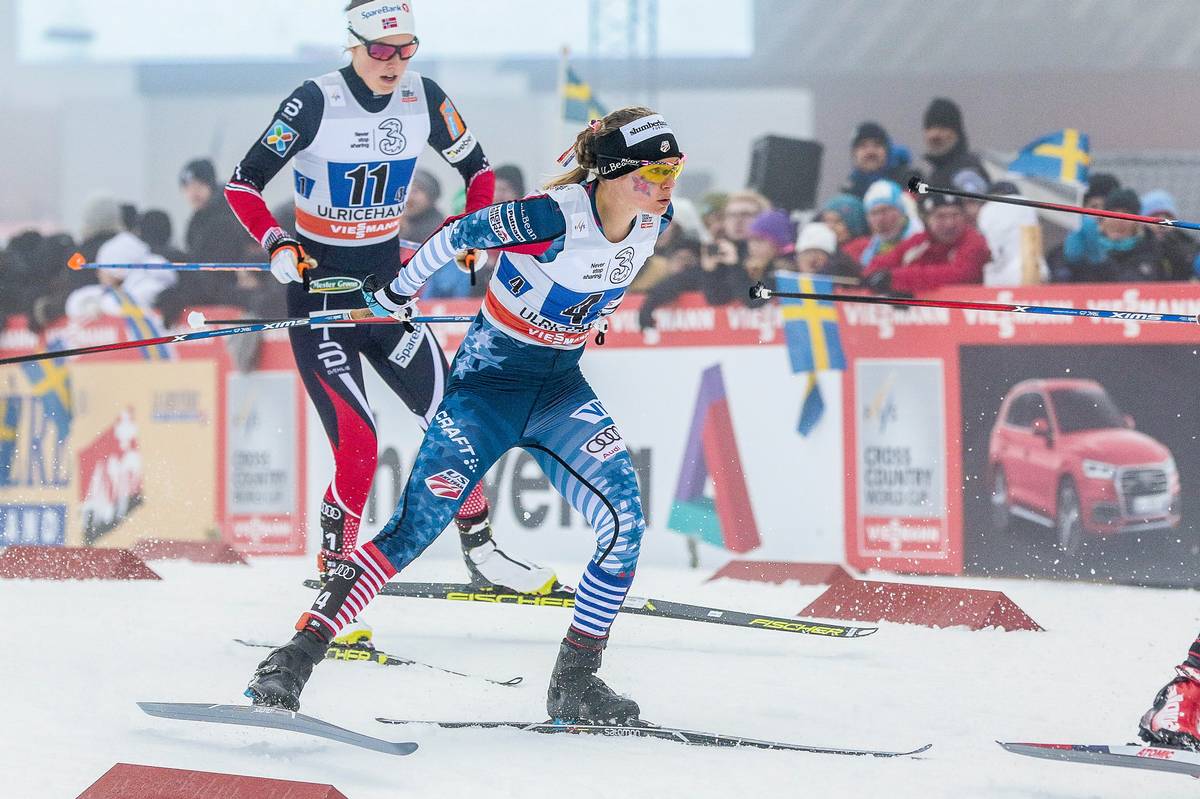
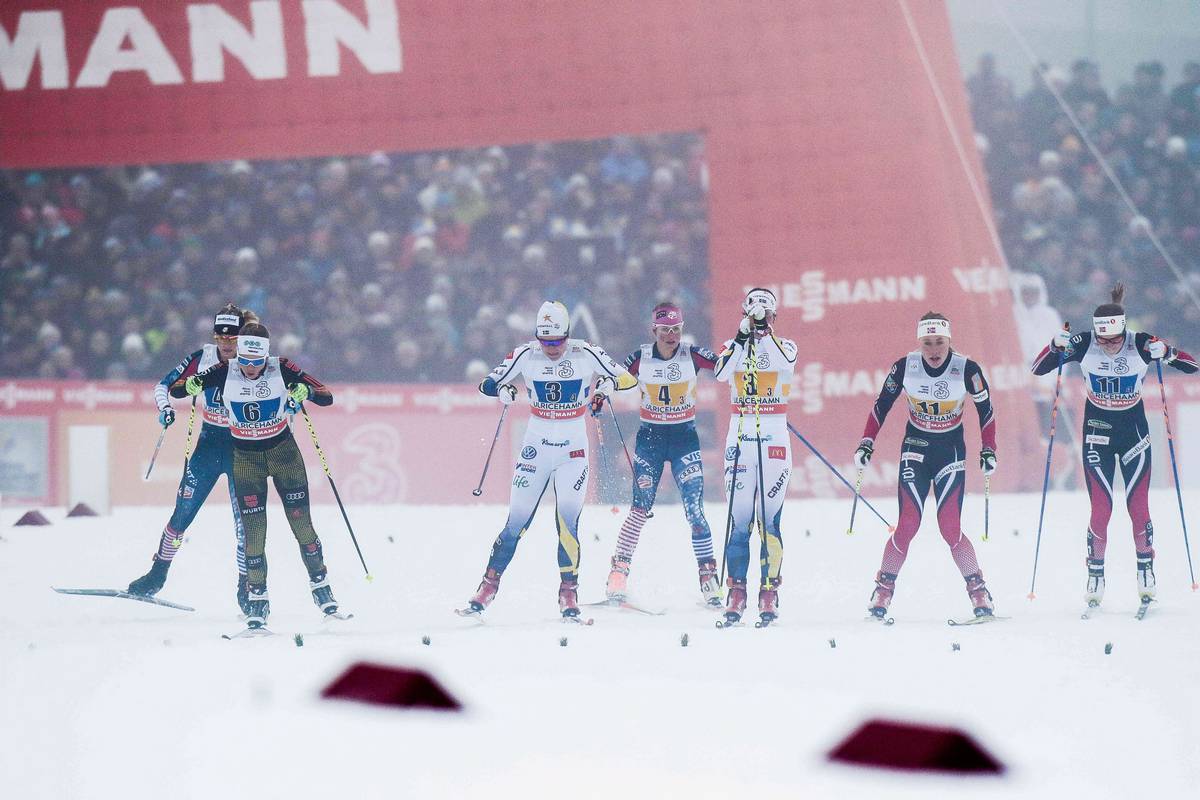
The World Cup women’s 4 x 5 k podium on Jan. 22 in Ulricehamn, Sweden, with (from left to right) Germany (Stefanie Boehler, Sandra Ringwald, Victoria Carl, Katharina Hennig) in second, Norway (Ingvild Flugstad Østberg, Heidi Weng, Astrid Uhrenholdt Jacobsen, Marit Bjørgen) in first, and Sweden in third (Ida Ingemarsdotter, Sofia Henriksson, Charlotte Kalla, Hanna Falk). (Photo: Fischer/Nordic Focus)
Earlier this month in Davos, Switzerland, Thomas Bing won a sprint race and Laura Gimmler was the runner-up in the women’s race. Katharina Hennig and Steffi Boehler went 2-3 in a distance race.
Recent Drama:
After being sick in both August and September, Florian Notz is aiming for a World Cup debut in Davos in December, not earlier. “I did not have any real training for two to three months,” he told Südwest Press. “That’s why Kuusamo is too early for me… I have set myself as a goal, that I want to attack fully [in Davos]. I am still optimistic that I can be in shape by then. But of course, everything has to go right.” If not, Olympic qualifying will be tricky.
Lucas Bögl is among the athletes joining the new “Athleten für Deutschland” athlete union, which was recently founded as an independent alternative to the athletes’ council run by the German Olympic Committee. The head of the German Olympic Committee is not a fan, saying basically that athletes trying to make demands will only bring problems upon themselves. Bögl disagreed. “The club should help the athletes commission and support the athletes,” he told OBV-online. “That should be in the interest of everyone involved.” He also said: “Cross-country skiing is not something you do for the money, it’s more of a way of life. I have turned my sport into a profession. I feel privileged that I don’t have to sit in an office. I can do that for a long time after my career is over.”
Sandra Ringwald, who just missed making the 2014 Olympic team for Germany, and is particularly focused on 2018 Games this winter. “I want to fulfill my Olympic dream and be in PyeongChang,” she told the Südkurier newspaper in an interview. “However, I’m going easy on the whole thing. In the past few years I have often set my goals too high… I’m not working just for Olympic qualification. My aim is to play a good role in the World Cup as well. I want to show what I can do at the very first races.”
Best Social Media Presence:
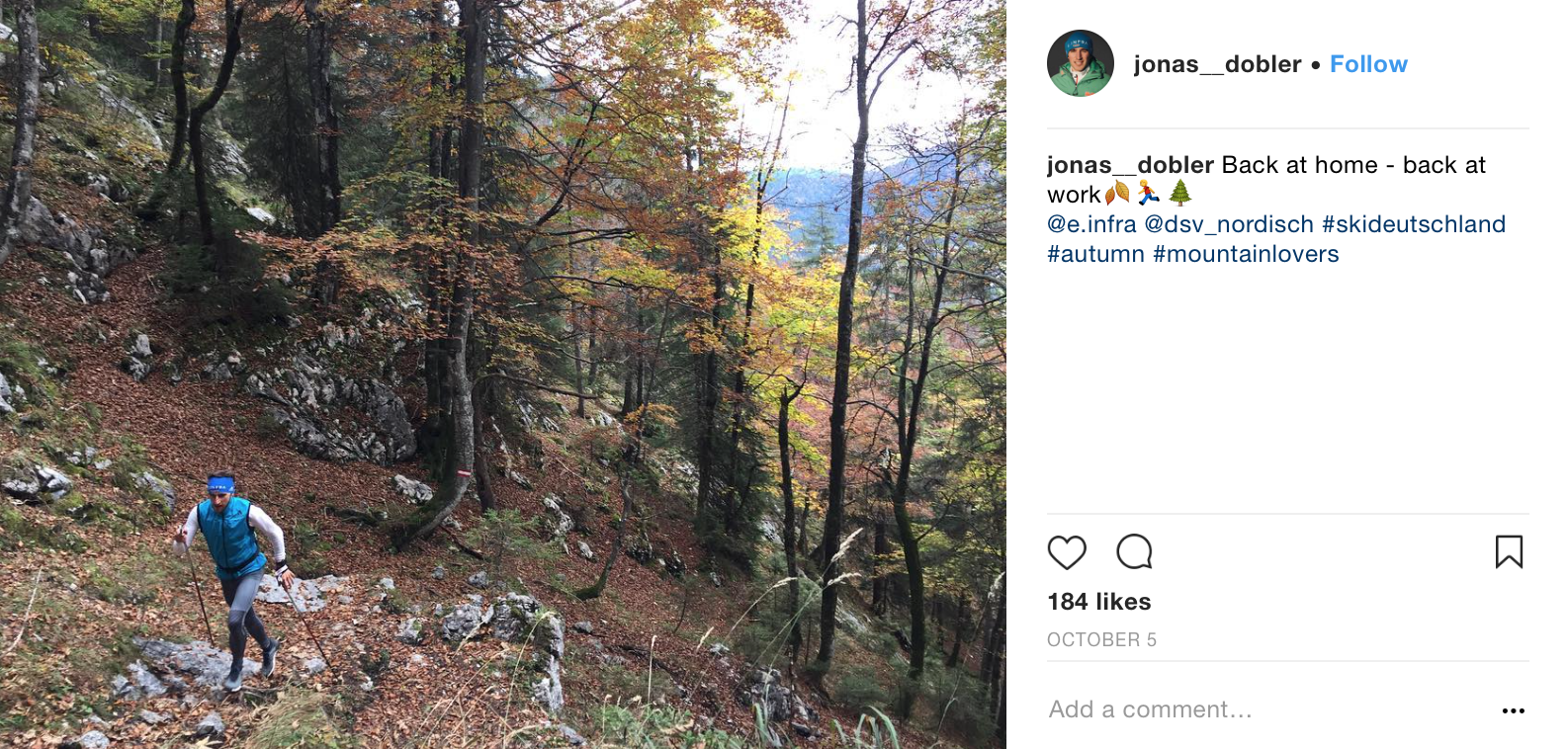
Steffi Boehler is a consistent Instagram poster, and also includes some of her artwork along with training and daily-life pictures.
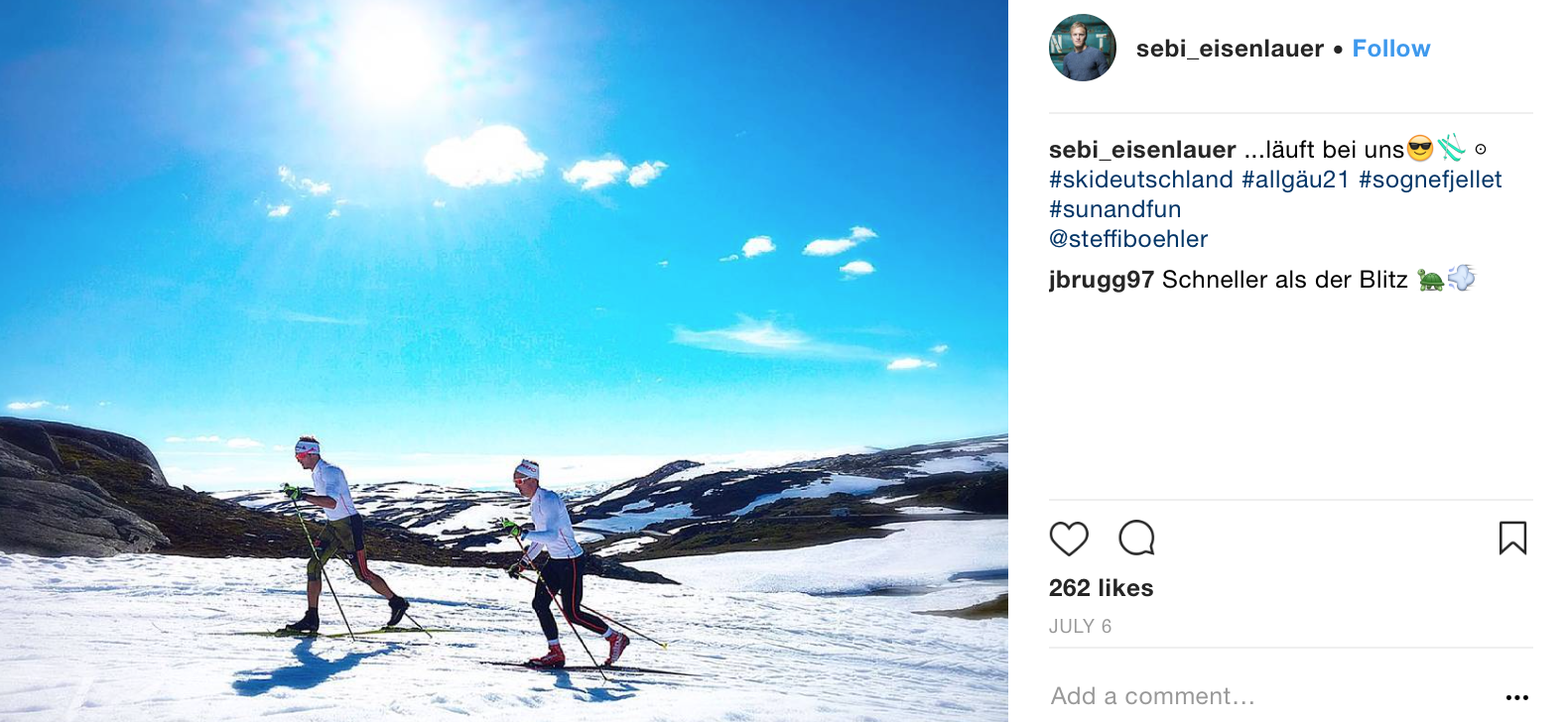
Sprinter Sebastian Eisenlauer also posts gorgeous training shots:
Marit Bjørgen taking Norway home for a win in the 4 x 5 k relay in Ulricehamn, Sweden. (Photo: Fischer/Nordic Focus)
Another women’s 4 x 5 k World Cup relay, another Norwegian win.
Yawn? Not so fast. While the team of Ingvild Flugstad Østberg, Heidi Weng, Astrid Jacobsen, and Marit Bjørgen may have picked up the victory, the women’s race in Ulricehamn, Sweden, was anything but dull.
For one thing, it was the closest race in 23 months, going all the way back to the 2014 Olympics where Sweden took gold. The top four teams all finished within 10 seconds of one another – a far cry from the more recent Norwegian victories by 30 or 40 seconds or even well over a minute.
And for another thing, the race for second place was a nailbiter. After trailing the leaders by 11 seconds at the first exchange, the German and American teams had clawed their way back into the fight for the podium. So by the time 19 kilometers had gone by, it was Hanna Falk of Sweden, Sandra Ringwald of Germany, and Jessie Diggins of the United States flying into the stadium to the finish together.
All were highly motivated. It is Falk’s home course, and the very first time her club has hosted a World Cup.
“It was again a great experience,” Falk told FIS. “I was motivated by the audience.”
For Germany, being in that group of three meant the potential for the team’s best finish in three or even seven years.
And for the United States? Well, the U.S. women are always game for a relay, and Diggins is always game for a fight.
Jessie Diggins skiing the anchor leg for the United States. (Photo: Salomon/Nordic Focus)
In the end, though, Diggins was boxed at the back of the group coming into the finishing straight. She had to choose an outside lane and couldn’t quite catch Ringwald and Falk.
The German edged the hometown favorite for second place, earning Germany their best relay finish since 2010.
“It was in my head that I absolutely did not want to become fourth today,” Ringwald told German broadcaster ZDF. “And then I just thought: killer instinct for the end, just keep at it! When Hanna [Falk] started her first attack I tried to somehow fight, and then on the last meters I knew that finish stretch suits me pretty well. And I just gave it all I had, and then it worked out for a second place.”
She crossed the line 8.8 seconds behind Bjørgen and Norway. Falk took Sweden to third, +9.0, and Diggins and the United States were left in fourth, +9.2.
“Of course we were hoping to be on the podium,” U.S. Ski Team Head Coach Chris Grover said in an interview. “So it’s hard when you’re that close to the podium, within a few hundredths of a second, and then not able to be on the podium. But all the women skied really well.”
U.S. Women Strong, But Can’t Crush the Course
The consensus from the U.S. team was that all four members of the first squad – the U.S. also fielded a second team, which finished 12th – skied well, but that the course wasn’t especially suited to them.
The classic portion of the relay (the first and second skiers) did ascend a major climb that had featured in the individual 10 and 15 k freestyle races on Saturday. But the skate course skipped that hill, and instead was rolling and flatter.
Sadie Bjornsen bringing the U.S. back up toward the leaders on leg two. (Photo: Fischer/Nordic Focus)
Rosie Brennan kicked things off for the U.S. She lost contact with the lead group (both Norwegian teams, Ida Ingemarsdotter of Sweden, and Anamarija Lampic of Slovenia), but tagged in fifth place, just 11 seconds back.
“I didn’t have the best start, but found my groove about half way through and was able to pull back some time in the second half,” Brennan said in a USSA press release. “I will always want more when it’s a relay because I want to be the best for my teammates, but I am satisfied with today and now know exactly where I need to put in some work to be better next time.”
From there, Sadie Bjornsen took over.
“I knew I needed to be somewhat patient closing that gap,” Bjornsen said. “Thinking back to Lillehammer when a similar thing happened, I tried to close the gap in one kilometer and I exploded. I was trying to be a bit more conservative for the first part today, and it all worked out well.”
By partway around the loop, Bjornsen and Germany’s Steffi Boehler had bridged up to the chase group. Heidi Weng of Norway had taken off, putting 15 seconds on the rest of the field – Norway never faltered after that – but the American and German teams were now skiing with Sweden, Slovenia, and the second Norwegian team.
“Once we finally did catch the group it was a bit challenging because there really wasn’t anywhere you could pass,” Bjornsen said. “There were just two lanes.”
Coming into the stadium she took the lead, but it still wasn’t what she had hoped for – and she wasn’t able to drop the other skiers.
“I was double poling as hard as I could coming down that hill, while others were tucking,” Bjornsen said. “It was the only way to get around. It was impossible to pass, which I knew the classic legs were the only places to make a break, so for that reason I was wondering how it could be possible to go around those girls, but yeah. It was what it was.”
“The goal is always to be as close as possible after the classic leg, and to put our skaters in contention for the podium,” Grover said. “Rosie and Sadie did exactly that. They brought it in right in contact with the second-place team.”
The inability to create gaps was something that would come back to haunt the Americans on the next two legs, as the race transitioned to skating. Charlotte Kalla of Sweden tried to move and break up the chase group, but the U.S. racer Liz Stephen stayed right on her – and then the rest of the group caught up too.
Charlotte Kalla of Sweden and Liz Stephen of the United States trying to make a break for it. (Photo: Fischer/Nordic Focus)
“Kalla took it out hot — I tried to stay with her, and then Ragnhild [Haga, of Norway] and [Germany’s] Victoria Carl caught up,” Stephen said. “It was a really hard course to pass on because the draft was pretty amazing. There’s just no real long hill to showcase fitness, or to make any moves on, and I think you saw that in both the men’s and women’s races today. But it was a really fun race to do, and I feel like I skied really well, especially tactically well, which is not always my strong suit.”
Later, Stephen tried to up the pace herself, but similarly failed to get a gap. On the particularly fast course, the draft effect was just too strong.
“Today I had to think about the best way for me to ski the course,” she explained. “I skied the uphills really well, and as fast as I could. But we weren’t able to fully break the group, Charlotte and I. I led some of the downhill, flat stuff, and I felt like I was really moving,and speeding people out — but then there were three people right up on me again. Once you realize what’s going on, you have to play to your strengths, so I knew that I needed to just hang with the girls.”
By the time Stephen tagged off, Slovenia had dropped out of the group and it was a four-way race for second place, about 16 seconds behind the leading Norwegian team.
Diggins took the tag and the lead of the group. But she, too, was unable to ski away from her competitors, although Kari Øyre Slind of the second Norwegian team did drop back.
“For my leg, it felt like a chess match,” Diggins wrote in an email. “After watching Charlotte and Liz racing so well but seeing the drafters in their pack still clinging on, I knew my usual strategy of going all out was unlikely to work. I did the best I could with how it played out, but I feel like my fitness wasn’t reflected well in this particular race. It was a huge drafting course and it was exceedingly hard to drop people in the skate leg.”
Coming down the final downhill to the finish, Diggins was in back of Falk and Ringwald and trying to get past. She couldn’t, and dropping down to the finishing straight didn’t have an immediately obvious choice of finishing lanes. She eventually had to swing wide to the left. Despite a hard sprint to the finish, Ringwald and Falk got there first.
“In the sprint finish, we fell short by a quarter of a second,” U.S. Ski Team women’s coach Matt Whitcomb said in a USSA press release. “Jessie felt like she made a tactical mistake with her positioning, but she also did a lot right out there. She skied great. We’ll take a look at the footage to learn from the race for each athlete. I know she’d like to do it again, and the good news is that she will.”
While the U.S. didn’t make the podium – a goal which had been made easier by a disastrous start by Finland, almost always a podium contender – the women seemed philosophical about the day.
“We all had these little things that we wish we could have improved, but the thing about the U.S. relay team is that the harder the course is, the better for us,” Bjornsen said. “Today was a challenging course; it was really hard to make breaks on the skate legs. On the classic legs, I think if it would have been an even more challenging course it would have been better. Every course is different, and you want to be the best on every single course, but I think all four of us, all eight of us, really, finished the race today feeling… we wanted to be on the podium, of course, but feeling no crush of confidence out there. We all feel confident going into the next relay.”
A Second U.S. Team Toes the Line
It’s not often that the U.S. has two relay teams in a race, but that happened in Ulricehamn. Kikkan Randall, Ida Sargent, Sophie Caldwell, and SuperTour leader Liz Guiney finished 12th, +3:03.0, after losing a finishing-stretch battle with the Russia I team.
Sophie Caldwell skiing leg three for the second U.S. team. (Photo: Fischer/Nordic Focus)
“It was really cool,” Grover said. “We had eight women so we were really hoping to field two teams, but you’re always worried that somebody’s going to get sick or something. But we were lucky that everyone was healthy and ready to go. That was cool. I wish we could do that more often.”
Randall had been 10th at the first tag, just 29 seconds behind the leaders and 18 seconds behind fifth-place teammate Brennan.
Sargent then took over and skied the eighth-fastest time among second-leg skiers, losing only 24.6 more seconds on Weng.
“I was really happy with how I felt today and had a lot of fun racing,” Sargent wrote in an email. “I skied solo for the whole race except for when [Finland’s Anne] Kylloenen caught me around the 4km mark, so we skied the last kilometer together. It was a very tough course to ski by yourself because there was a lot of flat and some long gradual downhill sections that would have been a lot easier to be in the draft or working with someone else during those sections… Considering that I was skiing solo I was really happy with how close I stayed to the leaders. I haven’t done many distance races this year so I wasn’t sure what to expect.”
After that, Sophie Caldwell brought the team to 11th, and Guiney, in her first World Cup relay, to 12th.
“I think the travel and excitement of the weekend caught up to me a bit,” Guiney wrote in an email. “I was mostly excited to be able to start on a World Cup relay, so I didn’t have any expectations beyond getting to the finish as fast as I possibly could. Skiing alone in a relay is always tough, so I just tried to focus on skiing each section as well as I could. Of course, I was really hoping to stay in front of the Russian team, but their last leg caught me with around 1 k to go. While I was able to stick with her until the finish, I didn’t quite have the sprint to get around her in the lanes.”
“Being on a team with Liz Guiney in her first World Cup weekend was also a blast!” Sargent, a Craftsbury Green Racing Project teammate of Guiney’s, wrote.
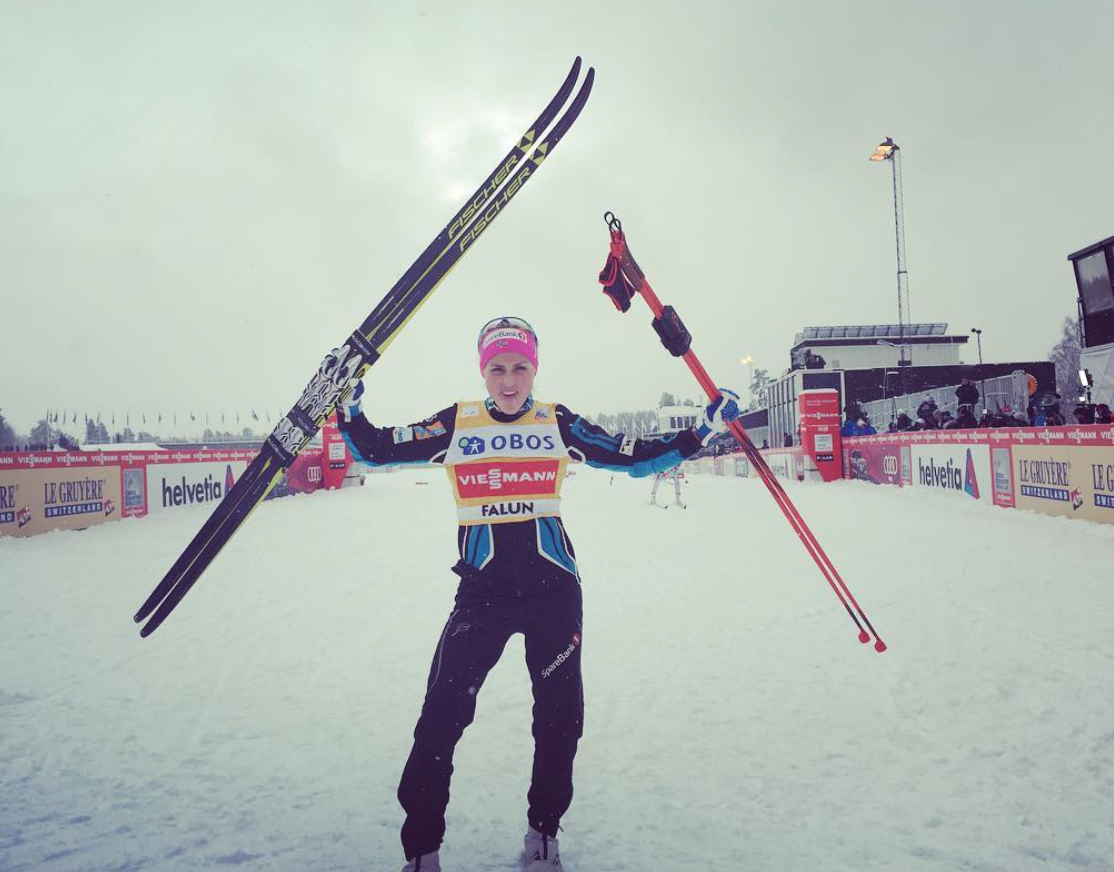
Therese Johaug of Norway celebrates her 13th win of the season, in the 5 k classic in Falun, Sweden. (Photo: FIS/Instagram)
The last interval-start race in Falun was one the Norwegian women’s team would probably rather forget.
At FIS World Championships last year, snow began falling during the 10 k skate and the Norwegians, heavily favored for medals, picked the wrong wax. Heidi Weng led the team in 22nd, a huge disappointment, as Swedes and Americans carried the day.
In Saturday’s five kilometer classic World Cup in Falun, the Norwegians more than made up for their previous disaster, with Therese Johaug claiming an 18.6-second lead over Weng. Ingvild Flugstad Østberg placed third, +29.2, edging out teammate Astrid Jacobsen, who ended up fourth +29.6.
The U.S. Ski Team’s Jessie Diggins proved once again that she is a force to be reckoned with on the tough Falun loop, finishing fifth +37.2. Teammate Sadie Bjornsen was close behind in seventh, +44.8.
“It was my best classic race I’ve ever had,” Diggins said in an interview.
Just like at World Championships, it was a gray and dreary day in central Sweden. But for Johaug, gray skies were pushed away by the joy of a particularly sweet win: it was her first in the 5 k interval start format.
Despite skis that looked like they were slipping early on, she blazed around the loop and up the brutal Moerderbacken hill.
“This is not my favorite distance,” Johaug told Norwegian broadcaster NRK. “But I’m in crazy good shape at the moment, and it’s fun to show that I can do a little good in the slightly shorter races as well.”
It was the 13th win of the season for Johaug – an impressive tally. Only fellow Norwegians Marit Bjørgen and Bente Skari have ever had a season so dominanting: Bjørgen won 14 times one year, and Skari 15 as well as an especially successful season with 17 wins.
But with a 10 k skate mass start scheduled for Sunday, a 15 k skiathlon in Lahti the following weekend, and then the whole of the Ski Tour Canada, it’s likely that Johaug will add to her 2016 tally.
It’s just another symbol of the Norwegian women’s dominance this season.
“we won’t become any better by just despairing about that,” Steffi Boehler, the top German finisher in 10th place (+51.0) told German broadcaster ARD. “We just have to take it step by step, and aim for that third spot on the podium. I think there is more possible than we sometimes dare to do.”
Østberg pushed Jacobsen off the podium by just the narrowest of margins, and was losing steam as she crossed the finish line.
“I had to fight against myself today to keep pushing,” she told FIS. “In the end I had nothing left. It’s another podium for me which is incredible and I am very satisfied with that and also a little tired.”
Jacobsen knew exactly where those four-tenths of a second came from: when she tried to overtake Maria Nordström of Sweden (a former University of Colorado racer), who had started a bib ahead of her, on the Moerderbacken hill.
According to Jacobsen, Nordström was herringboning up the hill and then jumped back into the track as Jacobsen began to overtake her.
“I was very annoyed because it happened at a point on the track where you are stiff if you fail to keep the rhythm,” Jacobsen, who was crying after finishing, told Norwegian daily Dagbladet.
Stay tuned for a full report on the North American finishers.