Tag: Steinar Mundal

  • Kershaw on Training with the Norwegians, Dating Steira, and Being Happy

    Kershaw on Training with the Norwegians, Dating Steira, and Being Happy

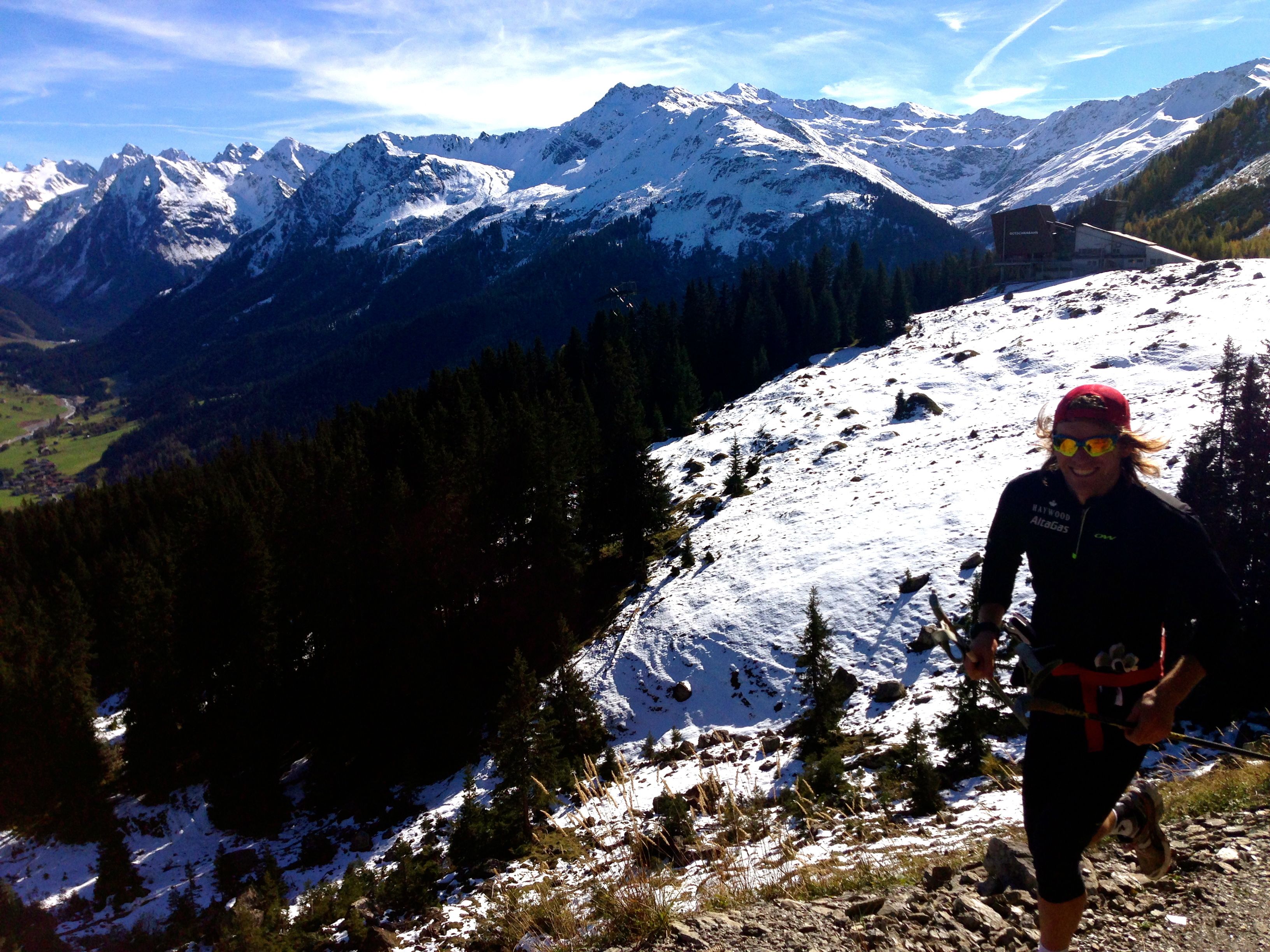
    Devon Kershaw after an interval workout in Klosters, Switzerland, before his training camp with the Norwegian national team in Val Senales, Italy. (Photo: Kristin Størmer Steira/http://www.kristinsteira.no/wordpress/?p=536)
    Devon Kershaw after an interval workout in Klosters, Switzerland, before his training camp with the Norwegian national team in Val Senales, Italy. (Photo: Kristin Størmer Steira/www.kristinsteira.no)

    With his ninth consecutive World Cup season in the bag, Devon Kershaw, 30, could finally put his feet up this spring and think about 2012/2013 – not that he necessarily wanted to.

    It wasn’t easy reliving that fateful stumble down a flight of stairs in Bruksvallarna, Sweden, in which the Canadian national-team skier tore a ligament in his foot a weekend before the season started. Unable to run for several months, he taped the afflicted area around his ankle and pushed through every ski race – refusing to publically acknowledge it or use it as an excuse.
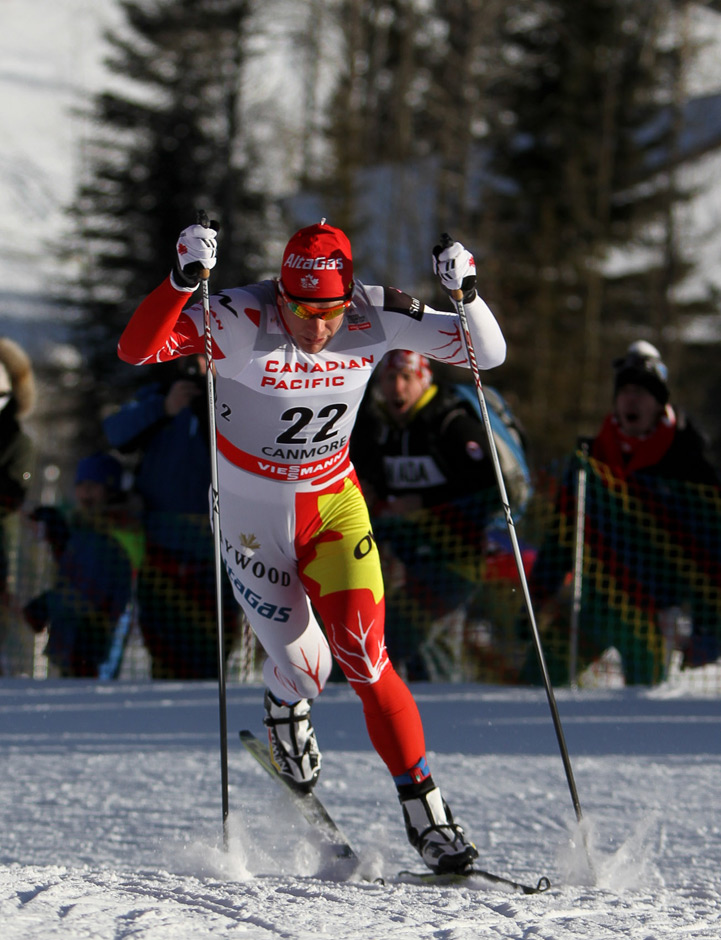
    Canadian Devon Kershaw pushing in Saturday's World Cup sprint qualifier in Canmore, Alberta. He was 50th and failed to advance to the quarterfinals.
    Kershaw pushing through the pain in his left for during the World Cup sprint qualifier last December in Canmore, Alberta. He was 50th and failed to advance.

    Things perked up about midseason (he placed eighth in two World Cup sprints in February and narrowly missed the World Championships team-sprint podium with teammate Alex Harvey in March), but ultimately, Kershaw finished farther back than he had hoped: 27th in the overall World Cup, compared to second in the world the year before. He ranked 42nd in distance events, his worst showing since 2007, but was better in sprints: 22nd, down from seventh in 2011/2012.

    All too aware of his results, Kershaw needed answers and had a good idea where to find them.

    “I’m a pretty big journaler,” he said on the phone from Davos, Switzerland, where he was getting acclimated earlier this month before a high-altitude camp in Val Senales, Italy. “But I haven’t taken much time going back to read what I write.”

    Thumbing through his entries, Kershaw took a particularly close look at his thoughts on World Championships in Val di Fiemme, Italy. He considered the team sprint the best race of his season, but the rest of his performances there “a disaster.”

    “That was a big slap in the face,” he said. “When I got back in Canada in the spring, I met with [head coach] Justin [Wadsworth] a lot, went back to my journals, met with the sports psychologist. … I realized how poor of place I was in for many, many months and how my decision-making was horrible. I was like, ‘Wow.’ ”

    His musings weren’t limited to sports, but also included personal reflections.

    “I wasn’t in a good place mentally,” he said. “I wasn’t sleeping great. With some of the things going on in my life, I shouldn’t have been racing as well as I was … There’s a lot that wasn’t going that well, but at the time I was just trying to stay so positive because you want to make the most of every day.”

    By nature, Kershaw is an optimist. He’s been dating Kristin Størmer Steira, one of Norway’s best distance skiers, for more than a year and said she’s had a tremendous impact on him.

    “I’ve been known to exaggerate a bit and make mountains out of molehills, and Kristin’s super, super grounded and a calming influence on me,” he said “As a person she’s got great, great perspective so it’s awesome to be around her.”

    Glancing at his schedule this year, Kershaw felts a pang of the in-season blues. He had been doing this for a long time, often the same training camp after another, and now he had a girlfriend who lived thousands of miles away in Norway.

    Steira, 32, visited him in Canmore, Alberta, in late July and trained with the Canadian women’s team through early August. Then, the couple parted ways, knowing they’d see each other in November. That didn’t sit well with Kershaw.

    “I’m old; I’m 30 and that’s a bit too long,” he said. “It’s not the best way to be in a great frame of mind heading into the racing season when you’re missing someone that you really care about.”
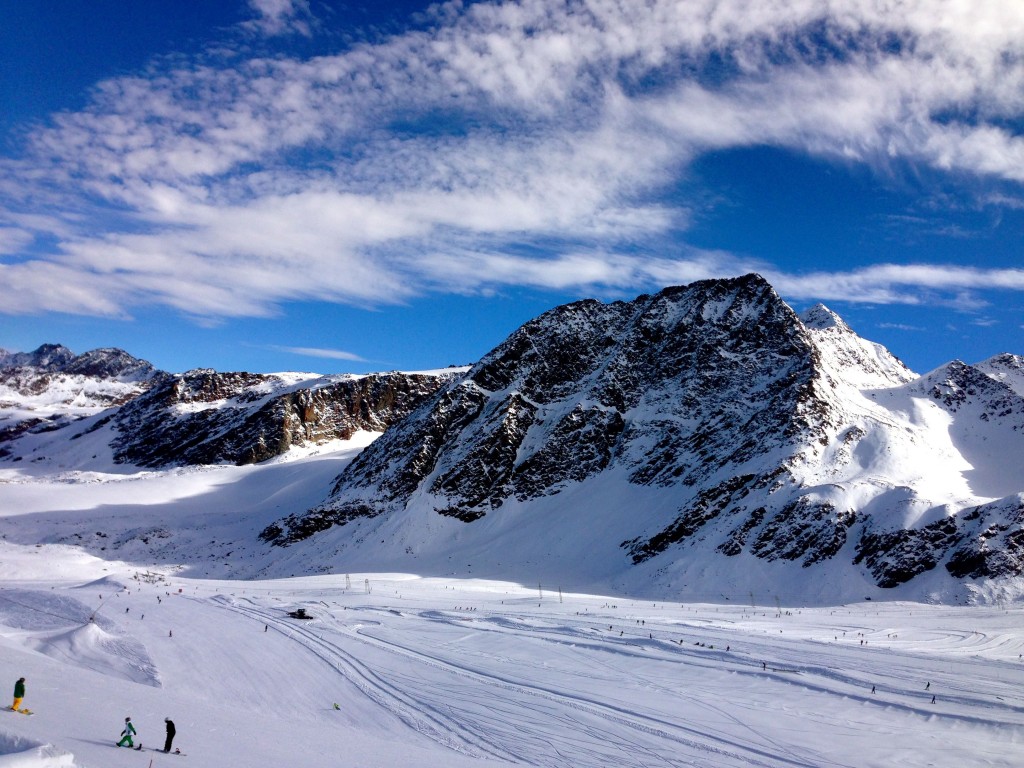
    The scene at the Norwegian national team's annual fall camp in Val Senales, Italy, earlier this month. (Photo: Kristin Størmer Steira/http://www.kristinsteira.no/wordpress/?p=536)
    The view from the Norwegian national team’s annual fall camp in Val Senales, Italy, earlier this month. (Photo: Kristin Størmer Steira/www.kristinsteira.no)

    Steira suggested he come to the Norwegian-national team camp in Val Senales in late October, then spend the rest of November with her in Norway. Reasoning he might as well ask, Kershaw contacted his former national-team coach, Steinar Mundal, who left Canada to coach the Norwegians in 2007. Mundal was open to it, Kershaw asked Wadsworth if he was, too.

    A former U.S. Ski Team member who crossed borders and married Canadian Olympic gold medalist Beckie Scott, Wadsworth understood. He and Kershaw turned to Norwegian head coach Trond Nystad, who coached the U.S. team until 2006, to work out the specifics.

    “I made sure for Trond to ask the boys if it’s OK if I’m there because, I don’t know, I don’t want to piss anyone off,” Kershaw said.

    On his first full day in Val Senales – his first time on the glacier that soars more than 3,200 meters (10,000 feet) into the atmosphere – Kershaw tweeted, “First impressions … ? I don’t miiiiiiiiiinnnnnnddddd it. ‪#feelsgoodtobeskiing.”

    “I’ve been in the game for a long time so its nice to have something to look forward to, seeing Kristin was the main thing, and training in a different environment in the fall is something to look forward, too,” Kershaw explained on the phone.

    From Oct. 20 to Nov. 6, he expected to see the Swedish national team there, along with the Swiss, and more than 50 Norwegians between the distance, sprint and U23 teams. More familiar with Norway’s sprinters than its distance skiers, Kershaw said he was invited to a couple workouts and would primarily train with the distance team.

    “That’s [the] thing about being a little older, I’m not in high school and trying to bring my lunch tray to a table and say, ‘Hey, can I sit here?” Kershaw joked.

    “I’m really not that concerned. I’m not there to rock any boats or do anything; I’m there do to my thing.”

    For the last five or six days, Wadsworth planned to join Kershaw in Val Senales to make sure he stuck to his training regimen. The two received the Norwegians’ camp outline a couple months ago and planned accordingly to make sure it jived with Kershaw’s plan.
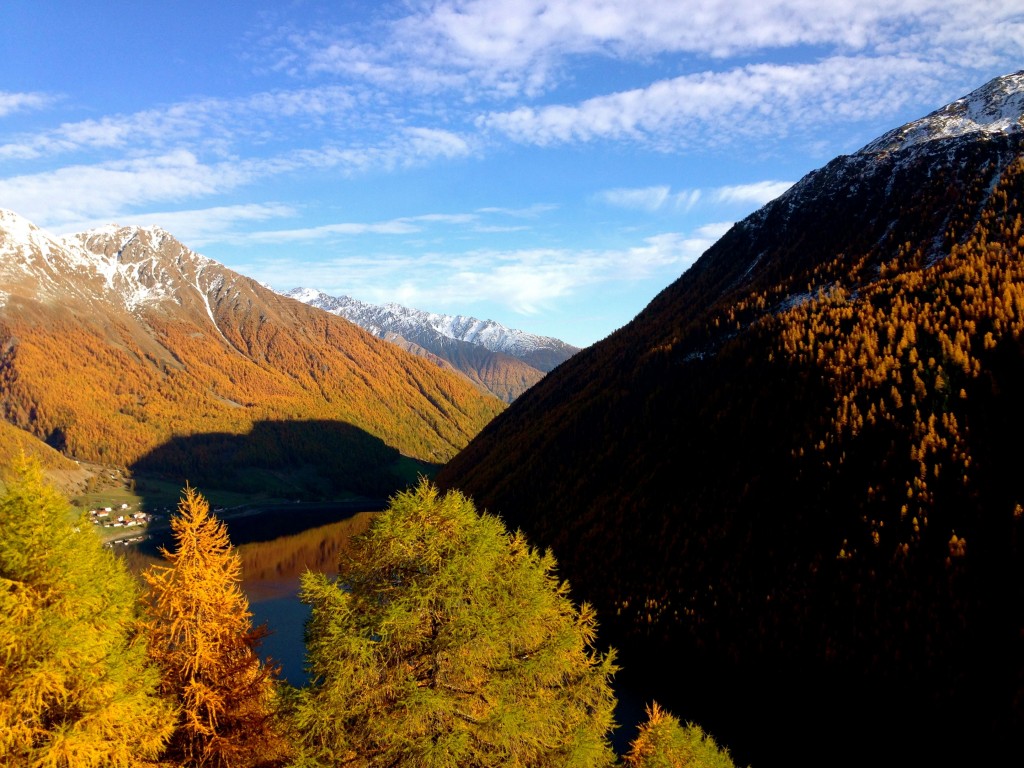
    The dryland scene in Val Senales, Italy, earlier this month. (Photo: Kristin Størmer Steira/http://www.kristinsteira.no/wordpress/?p=536)
    The dryland scene in Val Senales, Italy, earlier this month. (Photo: Kristin Størmer Steira/www.kristinsteira.no)

    “It’ll be hard, but nothing groundbreaking,” Kershaw said. “The plan looks pretty similar to what I do back in Canada: skiing in the mornings … then, in the afternoons doing some runs or rollerskis.”

    But most importantly, he’d be getting that skiing feeling back every day.  That’s what Kershaw said he needs before his first races in late November at the World Cup opener in Kuusamo, Finland. He’ll stay with Steira at her home in Oslo, Norway, until then.

    “I’m here ’til late March so it’s a long haul,” Kershaw said. “Packing up from Canada, it’s tough, [but] I’ve been doing this for a long time and I’ve spent five months in Europe before; what’s the difference with a couple extra weeks? My girlfriend is Norwegian and that’s important. A happy skier is a skier that usually races fast.”

    As for how he’s feeling now, almost a year after he tripped in a pair of loosely tied sneakers and tore a ligament around his ankle, Kershaw said he’s in a much better place – physically and mentally. Last February, he said his foot wasn’t the sole reason for the sub-par start to his season.

    “There were a lot of other factors, too,” Kershaw said.

    Now, he feels more settled.

    “My life’s a lot calmer,” he said. “I’ve taken care of a lot of things that were in flux the last couple years. You want to win every year and you want to win every season so when you have a little bit of a disappointing season, it’s not great, but we learned a lot and we’re a lot better at calculating what we can and can’t do. I tried to do a lot with not a lot of energy and it bit me in the ass.”
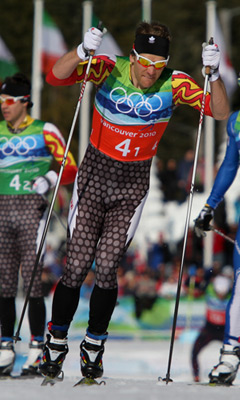
    Kershaw going "freaking hard" at the 2010 Olympics
    Devon Kershaw en route to a historic fourth-place finish with teammate Alex Harvey in the team sprint at the 2010 Olympics.

    Leading up to Kershaw’s third Olympics – the 2014 Winter Games in Sochi, Russia – he’s excited and not entertaining retirement.

    “I’ll continue to race through 2015,” he said. “This isn’t going to be a season where it’s like, ‘Oh, it’s over.’ Moving forward, as long as I’m really enjoying what I’m doing and can wake up every day with a passion and excitement to do what I’m doing, that’s kind of what’s driven me through my career, then I’ll continue racing.”

    Almost four years ago in Vancouver, B.C., Kershaw and Harvey placed fourth in the team sprint for the best Olympic finish by Canadian men. A year later, they won the same event at World Championships.

    “I actually don’t feel much pressure,” Kershaw said of Sochi. “No one can put more pressure on myself than myself. Last year I piled on pressure on myself, and what did that get me? Nothing. Hopefully I’ve learned lessons.”

    This time around, he said he’s better prepared and more realistic. “I hope to have some great races, but I’ll also have some miserably awful races, too. I’ll have some OK races, and that’s how most seasons look for most people.”

    That’s where his “dorky” journals help him in pointing out trends, Kershaw said.

    “It’s ski racing and I’m trying my best,” he explained.

    That said, he wants an Olympic medal – and if he can’t capture one, he’ll be happy if any of his teammates do.

    “No Canadian man has ever stepped on the podium and that sucks,” he said. “We’re better than that and the times is now. If it’s me, awesome. If it’s Alex, that’s just as good. … We really, really want to bring and Olympic medal back for Canada and I don’t care [which nordic events] it comes from.”

    “Is this my last Olympics? I don’t know, we’ll have to see,” Kershaw added. “Predominately, I look at [last] season as horrendous, and if the season’s like that again, there’s a lot of other things I’d like to get done. … [But] our team is just so fun to be around. I love those guys like brothers.”

  • Trond Nystad: I’m Honored to Take This Position

    “I feel like I was the first choice. That’s why I’m sitting here,” Trond Nystad said when he was introduced as the new head coach for the Norwegian national men’s all-round team. Nystad replaces Morten Aa Djupvik, who resigned in April. Nystad served as the head coach for the US Ski Team from 2002 to 2006.

    The Norwegian Ski Association (NSF) initially had a long list of candidates to narrow down. Some of the individuals the NSF approached were not interested, others determined that they didn’t have the time and some were tied up with other obligations. Pretty soon, Trond Nystad was identified as the hottest candidate to replace Morten Aa Djupvik.

    At the end of that process, four candidates interviewed with the staffing firm Adecco Select.

    “We believe Trond Nystad has what it takes to do the job for NSF,” Hedevig Stang Castberg of Adecco Select said to Norwegian news agency NTB.

    “I feel that we have hired a leader who is ready to coach as well as manage the team. Previously, we have been accused of only looking within our own ranks to fill these kinds of positions. This time, we have hired an outside candidate with experience from the United States, Germany and Switzerland,” Hermod Bjørkestøl said. He is the chair of the NSF cross-country committee.

    “He was one of several strong candidates, and I am satisfied with the outcome. Trond has the skills and qualities we were looking for, and we believe we have a strong coaching team in him and assistant coach Steinar Mundal,” national team director Vidar Løfshus said.

    An honor

    Løfshus knows Nystad well from their time in the United States. They both worked together as coaches with the US Ski Team. That bond was one of the reasons Nystad was identified as a strong candidate for the national team coaching position. National team directors like to know who they are working with.

    Nystad said he was “grilled, double-checked and cross-referenced” in a long, exciting and exhausting hiring process.

    “It was a very open, honest and diligent process. I did not choose myself for the position. I am honored to step into this position. It is a privilege to have the opportunity to work with athletes and coaches of this caliber,” Nystad said.

    Goals

    – What goals do you have in terms of results?

    “The Norwegian racers placed well both in the 2010 Olympics in Vancouver and in the 2011 World Championships in Oslo. The biggest challenge will be to improve on those results in a non-championship season. We have to do better at Tour de Ski, and we need a more consistent World Cup results,” Nystad said.

    Nystad considers himself as man who performs well under stress and is a good communicator.

    “I believe I work well in a team,” Nystad said.

    Brothers on the team

    Neither the NSF nor the staffing firm Adecco Select considers it a problem that Trond Nystad’s twin brother Knut Nystad is the head wax coach for the Norwegian national team. They don’t worry that the relationship between the brothers will be a destructive factor.

    – What kind of relationship do you have to your brother?

    “We don’t have any issues. We’ve worked together before in a professional setting, and we agree on a lot of things. He thinks he’s nicer, more intelligent and sexier than me. I don’t entirely agree. That’s a discussion I don’t think we’ll ever finish,” Trond Nystad said.

    Trond Nystad is currently the CEO of a company in Denver, Colorado. That’s a position he has to conclude before he moves back to Norway. Most likely, the national team camp at Sognefjellet in the beginning of June will be Nystad’s first coaching experience with the Norwegian national team skiers.

    From NTB, May 13, 2011. Translation by Inge Scheve

  • Concern Over Recruitment in the Norwegian XC Camp

    NORWAY – The Norwegian cross-country community is acknowledging that retaining young female talent is a huge challenge.

    During the Beitostolen races on November 12 to 14, there were only a couple dozen Norwegian female skiers on the start list. For the Saturday sprint race, there were only 21 Norwegian women in the mix. In comparison, Saturday’s 7.5K biathlon sprint race featured 39 Norwegian females.

    “This is an incredibly scary trend,” said Steinar Mundal, who argues that there is reason to be alarmed.

    “In the whole state of Buskerud, there is only one female senior racer left,” Mundal noted.

    Emil Søbak Gundersen, the manager of the private cross-country elite development project Team Norgeshus, is concerned about the trend, and argued that the biathlon association takes better care of their recruits.

    “There were far more female biathletes on the start lists this weekend. The junior girls have always been welcome at the season opener, even the younger juniors. The level in cross-country is not as good,” Gundersen said.

    Roger Grubben is the primary force in the rapidly growing female training community in Sirdal, Norway. Grubben explained that the clubs have actively focused on the female biathletes, and are seeing the results of their efforts now.

    “Every day, [retired Olympic medalist] Linda Grubben joins the girls for their practice, and she sticks around the range as a sort of coach. Additionally, we try to create a social environment where the girls thrive – a place where they can be around their friends outside the arena as well, and where they can focus on their education on top of their biathlon careers,” Grubben said.

    “I observe that girls feel a bigger pressure to not stick out. They have a more pronounced need for the social aspect of the sport, and are generally more interested in pursuing their education,” he added.

    Grubben argues that the critical time is right after the athletes graduate from high school.

    “We work closely with the top eight racers, whom we offer a weekly training program, also after they graduate from high school,” Grubben said.

    “It is particularly important to take good care of the (female) athletes as they enter their early 20s. Once they graduate from high school, a lot of the racers lose their structured training environment,” he concluded.

    From Strafferunden.no, November 17, 2010. By Ola Jordheim Halvorsen, translation by Inge Scheve.

  • Fewer Norwegian Girls Racing: “Incredibly Scary”

    Fewer Norwegian Girls Racing: “Incredibly Scary”


    Therese Johaug at the 2010 Olympics. (Photo courtesy of Kent Murdoch)

    BEITOSTØLEN, Norway – “It’s really too bad there weren’t more girls here,” Therese Johaug told Langrenn.com after the 10 k classic FIS race in Beitostolen on Sunday.

    That race had 25 Norwegian females on the result lists, while Friday’s 10K skate race featured 23 Norwegian women, and 21 completed Saturday’s sprint.

    “There are definitely fewer girls here than previous years,” said Egil Kristiansen, head coach for the Norwegian national team women.

    “Disappointingly few girls here,” said Norwegian national team director Åge Skinstad.

    But the most serious comments belonged to Steinar Mundal.

    “That we don’t have more girls racing at Beito is one thing, and in and of itself not that big of a deal. But this is an elite race, and there should have been more racers here. However, the general trend is incredibly scary. I am seriously concerned,” Mundal told Langrenn.com.

    Mundal pointed out that in the entire state of Buskerud, in the south of Norway, there is only one female skier left at the senior level who is pursuing the sport.

    “That’s just really sad. If this is a general trend, Norway will soon have very few female skiers,” he said.

    Who is responsible?

    “Somebody has to step up here. Soon,” Mundal said. ”But I don’t know who.”

    Not enough snow

    Therese Johaug thinks the lack of snow in parts of Norway is part of reason why so few girls raced this weekend.

    “A lot of the girls don’t feel like they’ve skied enough yet, and many of them have lofty ambitions for themselves here at Beito. But I still think there are too few girls racing. I hope we can increase the recruitment, and that the girls are well taken care of during the most critical phases – from the youth to the junior level and from the junior to the senior level,” Johaug said.

    Considerably More Swedes in the Swedish FIS Opener

    Parallel to the FIS opener at Beito last weekend, the Swedes held their FIS opener in Bruksvallarna. At those events, nearly 80 female skiers entered, and more than half of them were Swedish.

    Sweden has also had spotty snow coverage this fall, just like Norway.

    Erik Østli, the race director at Beito, is wondering what the reasons may be. “It’s disappointing how few girls are racing, and I also notice that there are huge gaps in the performance levels. I wonder if all the restrictions on entries in the past have scared people from registering,” he said.

    Encouraging Trend

    Erik Røste, vice president of the Norwegian Ski Association, doesn’t find the trend alarming. In fact, he finds it encouraging that fewer girls are racing the Beito opener.

    “As far as I know, this is a positive trend. Just look at the nationals. There are more racers than ever before,” Røste pointed out.

    What does he think about the sparse number of girls at the season opener?

    “It’s almost nice. We’ve tried to downplay the perceived importance of the Beito races for years. I’m actually encouraged to see less emphasis on this. There will be more important races later,” he said.

    From Langrenn.com, November 15, 2010. By Ola Jordheim Halvorsen, translation by Inge Scheve