Tag: Stephanie Howe

  • Subscription Review: Athletes for Yoga — Designed to Fit Into and Support and Athletic Lifestyle

    Subscription Review: Athletes for Yoga — Designed to Fit Into and Support and Athletic Lifestyle

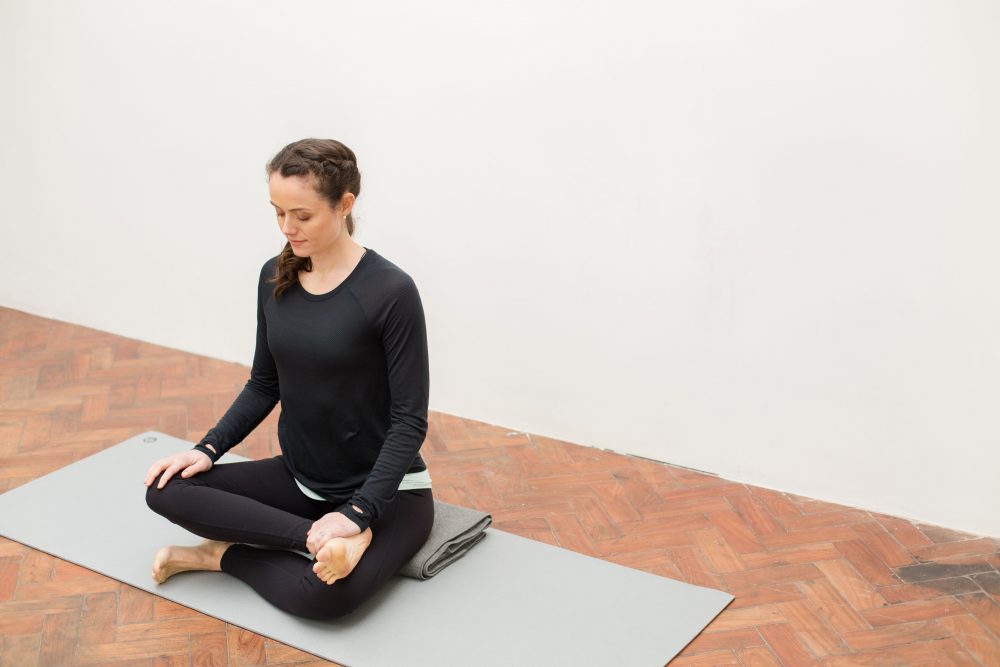
    Erin Taylor, founder of Athletes for Yoga (A4Y), demonstrates a hip-opening pose. (Courtesy photo)

    My relationship with yoga is very one-sided. Though I do not consider it in any way lesser, I ignore it most of the year when considering my options for exercise, choosing primarily running or skiing instead. 

    Then something crops up. A switch from skiing back to running in the spring makes my hips and IT bands cranky, causing pain in my knee. A couple ankle rolls on a trail run fire up my peroneal tendon. My elbow isn’t pleased about double pole intervals on pavement. 

    As if I hadn’t cast it aside, yoga welcomes me back with open arms, helping me improve body awareness and stability, and increase overall mobility and structural resilience. 

    Though local studios offer a variety of excellent classes, I consistently turn to an online resource: Athletes for Yoga. Started in 2010 by Erin Taylor, former collegiate basketball player turned runner, Athletes for Yoga (A4Y) is a unique resource designed to complement and support an active lifestyle or serious training. 

    Her message is this: “Don’t do yoga. Use yoga — right now, where you are, to get where you want to be.”
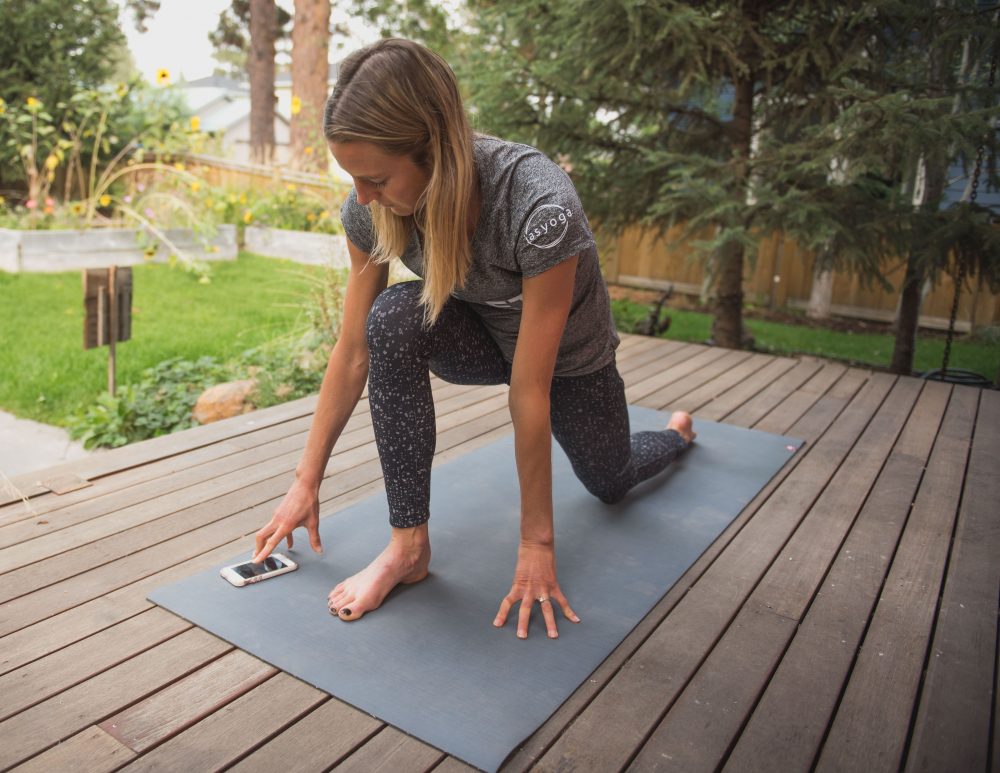
    Stephanie Howe uses Athletes for Yoga to compliment her training as a professional mountain running athlete. (Courtesy photo) 

    Taylor has a true talent for teaching how to unlock tight muscle groups, access and recruit the correct muscle groups, and develop a better understanding of the relationship between muscle groups in the body. For me, A4Y has been an essential tool to feel, identify, and understand muscle imbalances and sources of injury,

    The robust A4Y video series, which can be viewed on a cell phone, tablet, or computer, includes routines designed for pre and post workout, strength and balance training, and collections specific to triathlon, running, cycling, pregnancy, and more. There are also resources to quickly relieve tightness in the hip flexors, neck, and shoulders from too much computer time during the COVID-induced work from home grind. Your body will thank you on your aprés workout.

    “Athletes for Yoga is home to the only athlete-led, on-demand yoga video platform and app, coach training, and global community of athletes using yoga to achieve their goals. We are here to help you use yoga, for real. That means putting yoga into the context of your sport and goals with functional strength, strategic injury prevention, and optimized recovery to make you a more balanced, resilient, and powerful athlete.”

    While longer videos are also available, most of the resources fall between 10-20 minutes, allowing them to fit comfortably into your day. 

    The A4Y resources I use most frequently include the “5-minute resets”. These videos target specific areas such as hips, hamstrings, or shoulders, quickly yet effectively increasing circulation and range of motion to improve recovery and mobility. Given their length, it doesn’t feel daunting to tack one on at the end of a run, ski, or gym session. There is also a pre-run warmup routine of equal length to activate the glutes and hamstrings, promoting healthy running mechanics. 
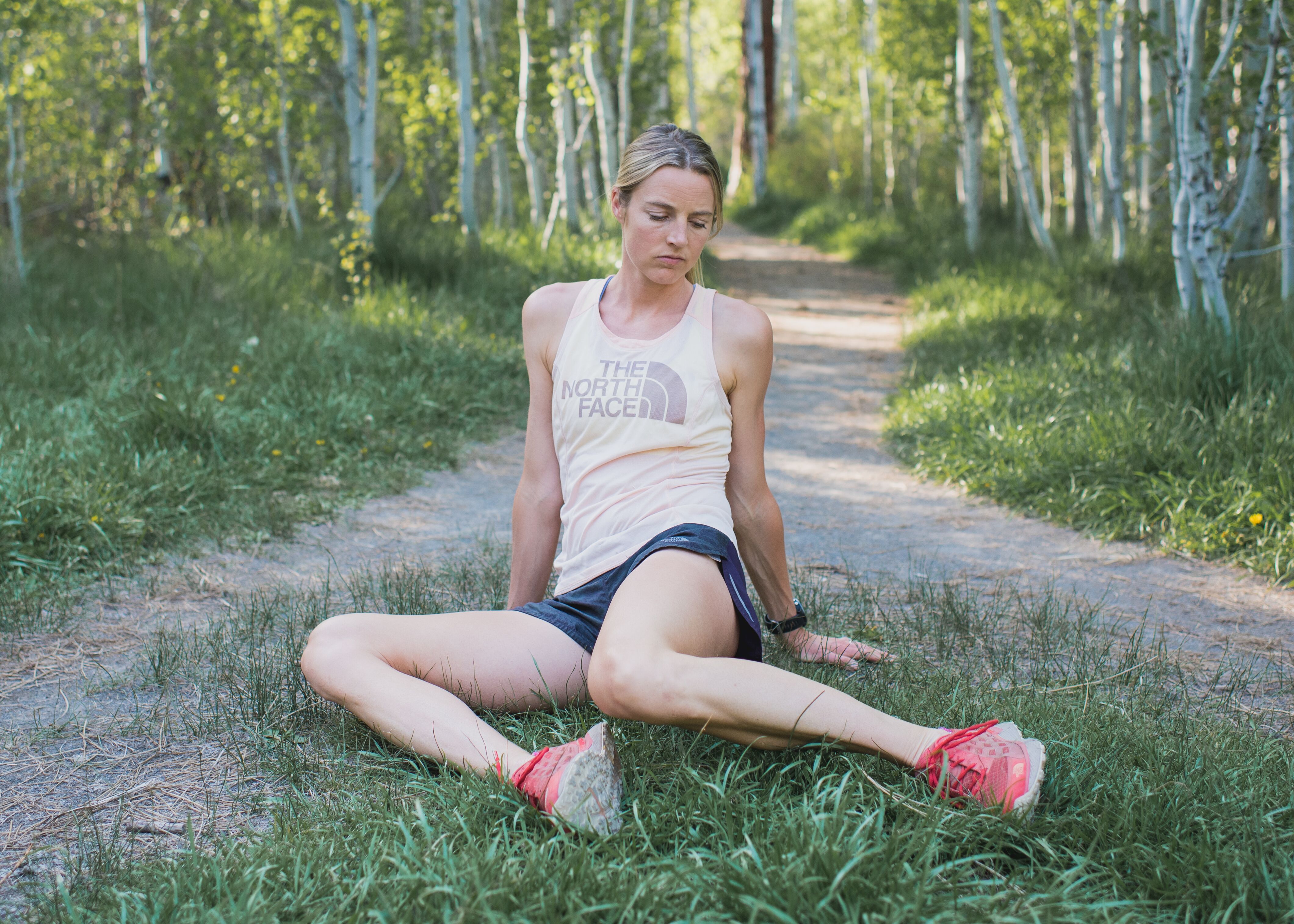
    Stephanie Howe works through Athletes for Yoga’s “Booty Lock Mitigation” routine, designed to reduce tightness and promote mobility in the hips. (Courtesy photo)

    When I have a bit more time, “Power Your Pushoff” (16 mins) is one of my go-to’s, which activates and strengthens the rear chain while mimicking the forward motion of running or skiing, adding power and stability to those movements. I also utilize “Booty Lock Mitigation” (19 mins) to loosen my hips after a workout, and “Standing Balance Flow” (10 mins) to improve body awareness for better glide on my skis. 

    “Full Body Core” and “Functional Core” are great strength training sessions that teach you to engage and develop inner core muscles, translating to improved strength and coordination in other activities. 

    If you’re looking to slow down, try the guided meditation series which includes specific practices to improve sleep, refocus, or visualize race performance. 

    For those averse to yoga, you may find A4Y challenges your presumptions. It is not “Yoga for Yogis”. You don’t need to wear Lululemon, drink golden milk lattes, or listen to Enya. The style is to the point and down to earth.

    A4Y serves all active people, male or female, regardless of sport. 
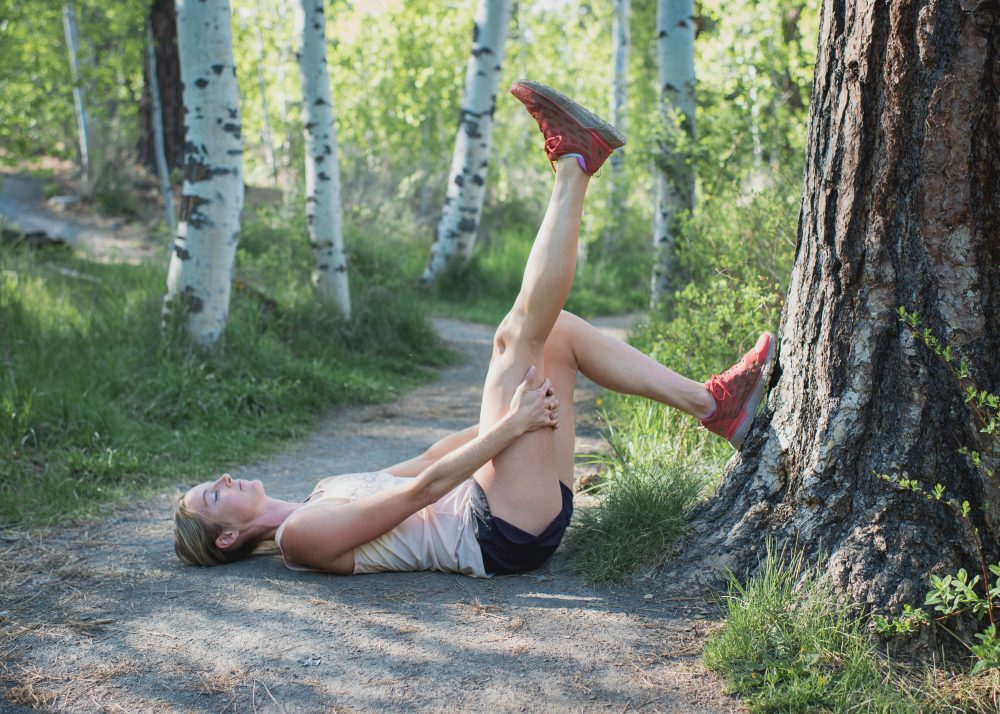
    No studio needed. Stephanie Howe, member of the Athletes for Yoga team, demonstrates the versatility of the A4Y resources. (Courtesy photo)

    To exemplify that athletes of all caliber have something to learn form Taylor’s approach, take a look at the list of athletes and alumni of the A4Y team, which includes Ironman Champion Ted Treise, professional track athlete Alysia Montaño, professional basketball player Desmond Simmons, and 4x national rowing champion Michaela Copenhaver

    In acknowledgement of the number of people currently looking for opportunities to exercise from home, A4Y is offering 50% off the first month with the code “HOMESTUDIO”, after which a subscription costs $9.99/month or $99.99/year. Subscriptions can be cancelled at any time. 
  • Interview: Former XC Oregon Racer Stephanie Howe Victorious in her first Western States 100

    Interview: Former XC Oregon Racer Stephanie Howe Victorious in her first Western States 100

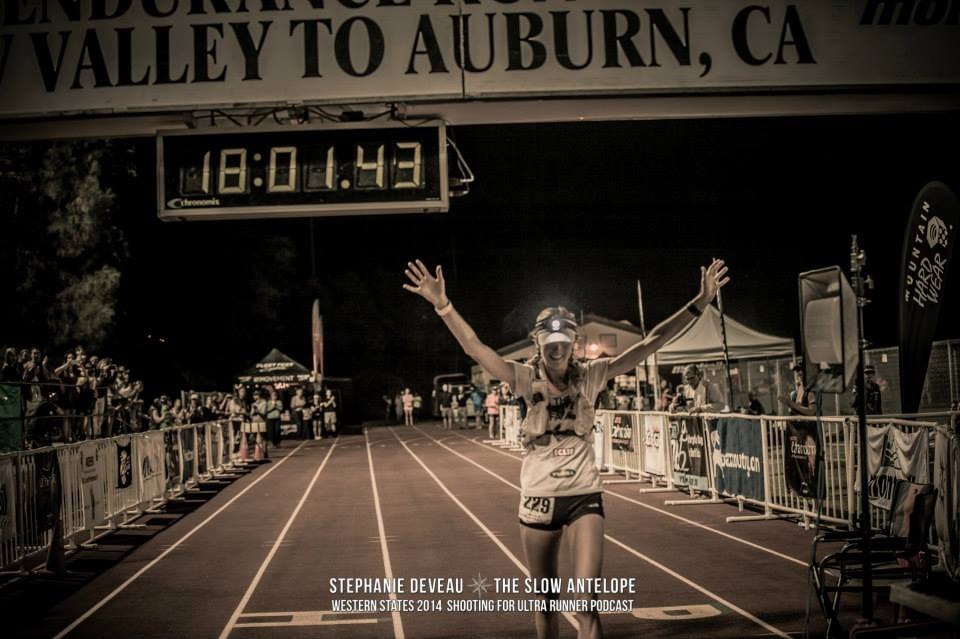
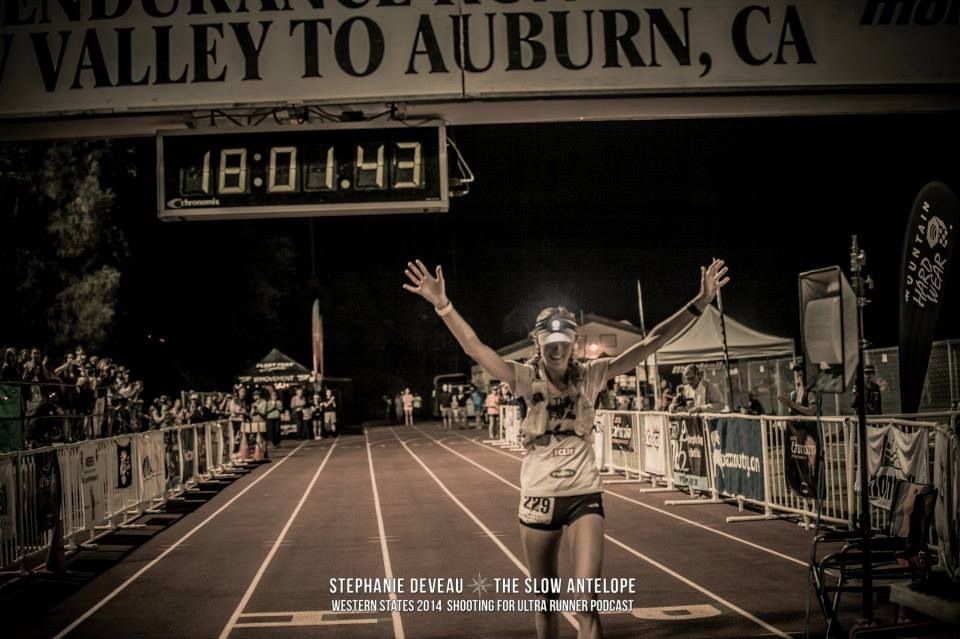
    North Face runner Stephanie Howe crosses the finish line in first position in the 2014 Western States 100 which took place on June 28. Not only was her time the fourth fastest female time in race history, it was the first time that Howe had ever ran 100 miles. (Photo: Stephanie Deveau)
    North Face runner Stephanie Howe crosses the finish line in first position in the 2014 Western States 100 which took place on June 28. Not only was her time the fourth fastest female time in race history, it was the first time that Howe had ever ran 100 miles. (Photo: Stephanie Deveau)

    The Western States 100 mile endurance run is one of the most coveted endurance races in the country. Starting in Squaw Valley and ending in Auburn, Calif., runners climb more than 18,000 feet and descend roughly 23,000 feet to finish the grueling test of both endurance and mental strength.

    This year’s race was held on June 28 and was filled with many current and former cross country skiers, the most notable of which was Stephanie Howe who won the women’s 100 mile with a time of 18 hours 1 minute and 42 seconds. Not only did she finish with the fourth fastest female time in race history, it was also the first time that she had ever run 100 miles.

    The 30-year-old who currently lives in Bend, Ore. is a former member of the XC Oregon ski team. Howe found much success with XC Oregon, including finishing first three years in a row in Bend’s Pole, Pedal, Paddle and being the top American at the 2011 Norwegian Birkibeiner.

    Howe now runs for the NorthFace and owns a coaching and athletic consulting business called Endurance by Stephanie.

    FasterSkier caught up with Howe after her victory at Western States to discuss what it was like to win the endurance race and find out how she was able to dominate her first 100-mile.

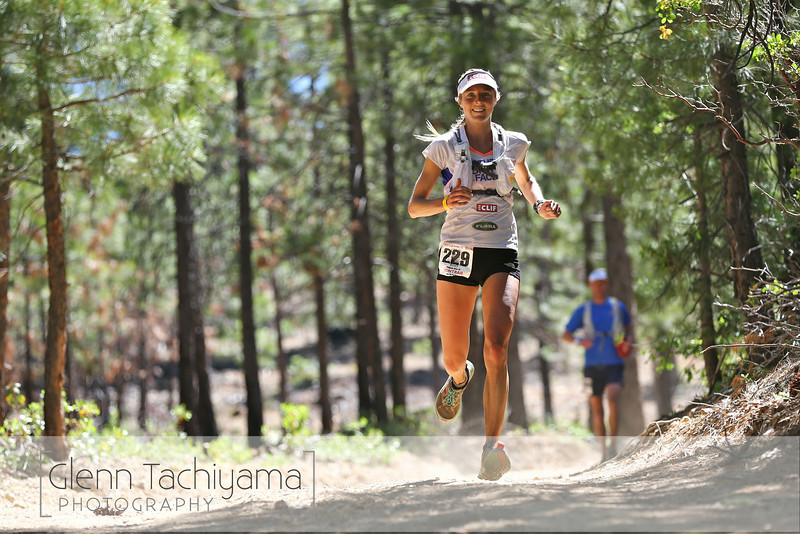
    Stephanie Howe racing to victory in the 2014 Western States 100-mile. Howe took over the lead roughly 30 miles into the race and finished with a time of 18 hours 1 minute and 42 seconds. (Photo: Glenn Tachiyama)
    Stephanie Howe racing to victory in the 2014 Western States 100-mile. Howe took over the lead roughly 33 miles into the race and finished with a time of 18 hours 1 minute and 42 seconds. (Photo: Glenn Tachiyama)

    FasterSkier: How does it feel to win the Western States 100?

    Stephanie Howe: Pretty awesome! It’s been a surreal experience. I never thought that I’d win Western States in my first 100-mile race!

    FS: I understand you had never run more than 100 k before the race. How did you prepare for such a long distance, especially one that you had never run?

    SH: Yes, I had not run more than 100k (62 miles) prior to Western States. Long story short, I was very smart with my training. I’ve had some injuries in the past (last year I was sidelined for about 3-4 months), so I took a new approach this year. I know that I respond best to lower mileage. Going into the late spring I was running about 50 miles/week. While that felt good and allowed me to race well at the 50-mile distance, it was not enough for a 100-mile race. After Lake Sonoma in April, I started to slowly increase my mileage. To prevent injuries I also simultaneously dropped my intensity (speed work). I had a few key runs that prepared me for Western States, including back to back 40 mile runs on Rogue River trail, a 52 mile run on the WS course with the last 8 miles at tempo pace, and the Western States Memorial Camp training weekend, where I ran 85 miles in 3 days. So I definitely got some big weeks in, with my highest week around 140 miles.

    BUT, the most important thing was that I recovered between those big training weeks. I allowed my body to absorb the training, rather than push through week after week of hard running. Many athletes underestimate the importance of rest, which is where all the fitness gains occur! I also included strength training at least once a week (heavy weights) and yoga at least 1-2 times per week as part of my training plan. Other than that I tapered well and had a good nutrition plan going into Western States. I’m lucky in that I have a background in exercise physiology and sports nutrition. I can apply what I know to my training and racing and it seems to work pretty well.

    FS: What factors led to your success in the race?

    SH: I was well trained, I tapered well, and I ran a smart race. Probably the biggest thing I did right during the race was that I started conservative and I fueled well. I ran the first 2 hours at a very comfortable pace, not concerned about anyone but myself. I didn’t chase the leaders up the first big climb (2,500 ft in 3 miles) and stayed within myself for the whole race. I also started fueling early and often, aiming for 250-300 calories an hour. That sure gets tough after 10 hours of running, but I just kept on a consistent schedule.

    FS: Once you were in lead what was going through your mind? Were you worried about anyone behind you?

    Stephanie Howe racing in the Western States 100-mile.
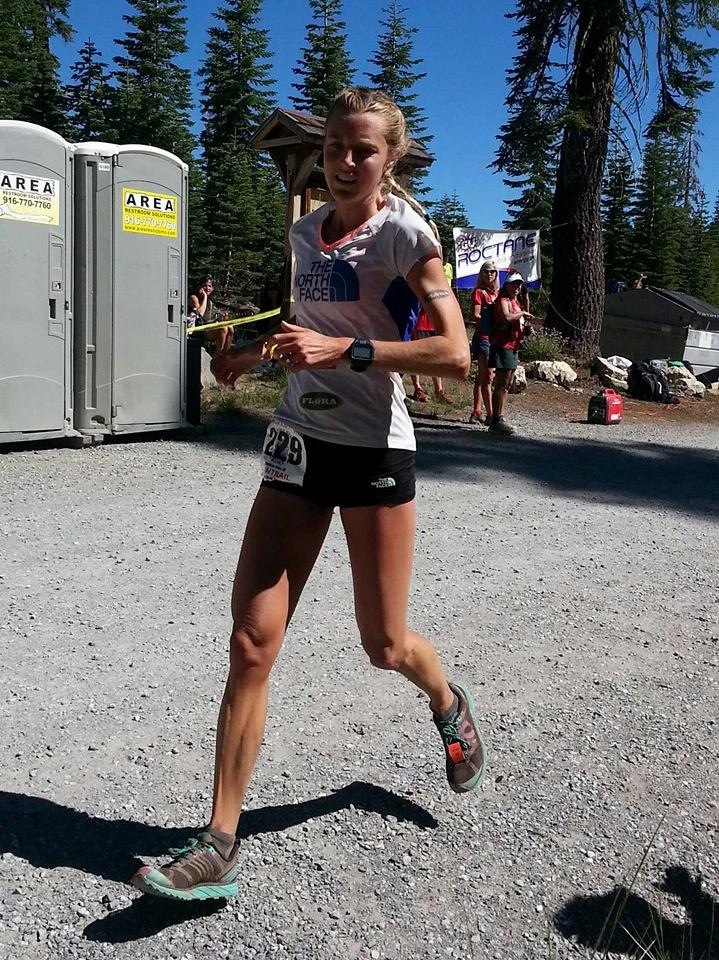
    North Face athlete Stephanie Howe racing to victory in the 2014 Western States 100-mile. (Photo: Stephanie Howe)

    SH: I took the lead around 33 miles and thought “Wow it’s cool to be leading Western States!” I didn’t read too much into though because there was still almost 70 miles of racing left! I tried to just focus on my race and keep in control. Once I got to mile 56 I got a backsplit I was in the lead by about 20 minutes. That totally shocked me! Again, I was thrilled but still was only half way through the race. Once I got to the river, around mile 78 I thought for the first time that I might be able to hold my lead. It was exciting! I was pretty tired by then, but I just kept on moving. The last 20 miles were tough- my quads were shot, I was exhausted, and I didn’t want to eat anything. I’m pretty stubborn and mentally tough, so I just pushed on. 100 milers are such a different kind of race, a slow suffer, if you will. So I just put my head down and slowly grinded it out to the finish.

    FS: How did you feel crossing the finish line in first?

    SH: That was the best feeling ever! I felt like I was floating around the track in Auburn. It was probably the most exciting thing I’ve ever done. I definitely will never forget the feeling of rounding the track, high fiving lots of little kids, and crossing the finish line first. Wow, what a day!

  • Elite Team Preview: XC Oregon

    Elite Team Preview: XC Oregon

    Matt Briggs leads XC Oregon teammates Jason Adams (c) and Ollie Burruss (l) during team relays during a training session in late May in Bend, Ore.

    Note: This is the first of a quick-and-dirty preview series on elite teams in the U.S. We asked coaches to send their 2012/2013 rosters and tell us what’s new for the coming season. We will be publishing additional reports over the next few weeks. Teams are presented in no particular order.

    Team name: XC Oregon

    Coaches: J.D. Downing (coach/program director, 15th year)

    National /International Elite Roster: Santiago Ocariz, Oliver Burruss, Matt Briggs;

    Carolyn Ocariz, Stephanie Howe, Sarah Max, Jamie Woelk

    Who’s new: Santi and Carolyn Ocariz (as the two confirmed additions, 1-2 more possible. Carolyn arrived just over a week ago on June 9).

    “We are super excited to have them both here,” Downing wrote in an email. “Their addition obviously allows us to significantly boost our national/international elite presence, but just as important to us is the quality of the individuals. Just look at what these two did this spring [rollerskied across the country] — and more importantly why they did it [to feed impoverished children]. There’s also a big comfort level in that Santi has spent several summers in Bend and has a brother living here so the transition should be very smooth. It’s really a perfect fit all the way around.”

    What else: With a PhD and all, Howe will likely compete in more marathons this winter after studying at Oregon State University in Corvallis last year on the western side of the Cascades.

    While it’s unclear how much Marshall Greene will race, Downing was excited to welcome him back to Bend this summer with his wife and new baby. Greene spent the last couple of years in Wisconsin earning his Master’s degree.

    XC Oregon (XCO) is also expecting to add 12 to 15 members to its associate roster.

    Who’s missing: Zoe Roy will likely make the full switch to Rocky Mountain Racers (RMR) in Canmore, Alberta, in an attempt to make Canada’s international teams. She was affiliated with XCO last season while completing her undergraduate degree in Utah and also raced in Canada with the support of RMR. Given that Roy is from Bend, Downing will try to incorporate her whenever possible.

    Top results last season: Burruss was eighth in the Boulder Mountain Tour and 20th in the American Birkebeiner 50 k skate, and both Burruss and Briggs had career-best SuperTour results last season. Max was the 19th woman the in the Birkie this year, and Roy notched four top-10 performances on the Canadian NorAm circuit, two of which were on the podium.

    In all, a dozen XCO skiers tallied best-ever results last year, which “radically improved on anything they had done before,” Downing wrote. “We really take our role seriously as positive ambassadors for the sport in Pacific Northwest and there is no question last year was one of our best ever in that regard.”

    Coach’s comment: XC Oregon is proud to celebrate its 15th season this year. According to Downing, it’s either the longest or second-longest continuously running elite-development program in the U.S. Aside from the high number of athletes that represented XC Oregon over the years, at least two dozen went on to coach nordic skiing.

    “That more than anything probably reflects the 100% athlete-based approach of XC Oregon,” Downing wrote.

    As for spring training, XCO skiers can enjoy at least another week on snow up at Mt. Bachelor, less than a 30-minute drive away.

    “That’s a huge upside as athletes can maintain normal routines and yet still get the same quality of on-snow workouts as if we were shelling out thousands of dollars sending them to some remote spot,” Downing wrote. “I feel really good that the vast majority of the crew is in a comfort zone of how they’ll structure their training around everything else in life. We’ve also got some good training partner options this year that should be a big help. Bend itself is often a huge asset since there is a deep and incredibly talented pool of endurance athletes here.

    “For the season I think we’ll find 2012/13 looking very much like the average year over the past decade,” he added. “We’ll have a nice mix of some notable SuperTour/Nationals results, some domestic and international marathons, and then the steady drumbeat of regional activity.”

    Down the road in 2013, the team may restart a summer internship program for collegiate skiers, especially for graduating seniors interested in racing after college.

    “We’ll be fundraising for that this summer and hope to roll out specifics this fall,” Downing wrote. “It’s also likely we’ll want to add 2-3 funded-level athletes in Spring 2013 so that’s always exciting to look forward to.”

  • XC Oregon’s Howe Wins Third Straight Pole Pedal Paddle; U.S. Ski Team Has Fastest Women’s Teams

    XC Oregon’s Howe Wins Third Straight Pole Pedal Paddle; U.S. Ski Team Has Fastest Women’s Teams

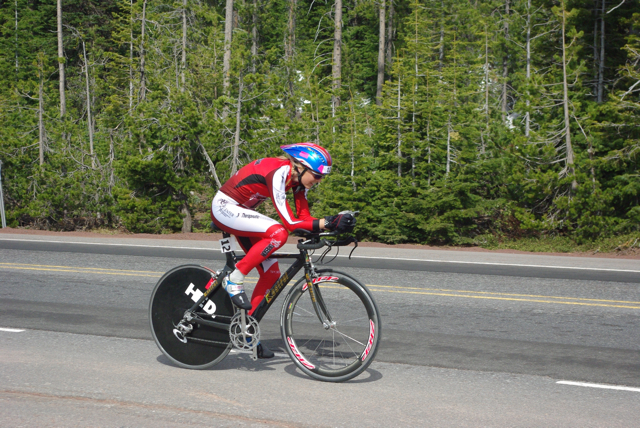
    Stephanie Howe working a new bike on the course from Mount Bachelor down to Bend.

    BEND, OREGON – How would a veteran describe Bend’s five-sport Pole, Pedal, Paddle to someone who has never seen it?

    “It’s a circus,” XC Oregon racer Stephanie Howe told FasterSkier at the race’s conclusion. “It’s the biggest logistic nightmare in the world… I just never have stuff lined up ahead of time. It’s always scrambling at the last minute.”

    First there’s the equipment: alpine skis, poles, boots, and a helmet; nordic skis, poles, and boots; a bike – for elite racers, most likely a time trial bike, maybe even with a disc wheel – and an aerodynamic helmet; running shoes; and a kayak, paddle, and life preserver.

    Then there’s getting all that gear to the right exchange zones at the right time and switching from one setup to another.

    Then, of course, there’s the racing – about which Howe was remarkably cautious for someone who had already won two titles.

    “You never know,” she said of her competition. “There are so many different legs and places where things can go wrong.”

    Howe had a large lead throughout the race, and eventually finished in 2:01:05, more than five minutes ahead of teammate and runner-up Mary Wellington. But it wasn’t until she got in her kayak for the second-to-last stage of the six-part race that she knew just how big her lead was.

    “I don’t get comfortable,” she said. “I don’t look behind me, so I just go. I race. I will say that when I got in the boat I did know where I was, so I relaxed. I went hard, but I relaxed.”

    Howe had very few obstacles en route to her win. She did crash in the cross-country ski section of the race – “which is not like me” – and was a bit unsure of her bike, which she had only received two days before. She describes herself as not a strong cyclist; through the two skiing stages, Howe was right with the men’s field, but once on the bike, she lost contact.

    In the run, though, she caught back up. Although Howe is a successful nordic skier, particularly in marathons, running is her specialty.

    “I’m living in Corvallis, so I’ve been doing a ton of running,” she said. “I started racing ultras, and that’s been great.”

    In the end, Howe felt the same about victory number three as she had about the first two: exhausted.

    “I always say, oh my god, that’s so hard, I don’t want to do it again, but I forget,” she said.

    Will she go for a fourth title next year?

    “We’ll see. It’s cool because so many people do it – there’s families out here, and that is really cool. Some day I want to do it in a costume and have fun like that.”

    * * *

    Starting more than an hour after Howe in the team division, two groups of U.S. Ski Team women had a competition of their own, and it was largely against each other.

    “We weren’t talking to each other this morning,” Sadie Bjornsen laughed about the inter-team rivalry.

    Her squad, which also included Kikkan Randall and Jessie Diggins, came out on top, but just barely, finishing in 2:00:28 to 2:02:32 by Ida Sargent, Holly Brooks, and Liz Stephen. They were the first two female teams on the results sheet.

    While Bjornsen pumped her fist as she crossed the finish line and was exuberant about her team’s victory, Randall, who had raced two earlier legs, didn’t want to brag too much.

    “It sounds like Liz maybe got off course a little bit out there, which is too bad because otherwise I think we would have been really close,” she said as she snagged some recovery snacks from the Rebound Physical Therapy tent.

    If the race was a logistic nightmare for Howe, it was maybe even more of one for the U.S. Ski Team athletes, who are in Bend for camp and didn’t bring their own equipment for the race. Luckily, Rebound helped them out.

    “Andy Fecteau from Rebound got everything together for us besides my nordic skis – those are mine!” Bjornsen said.

    Even that didn’t mean smooth sailing though. When Randall arrived at Mount Bachelor before kicking off the alpine leg, she encountered problems.

    “We pulled out the skis and I couldn’t make the bindings small enough for the boots I had,” she explained. “And then we realized there was glide wax on the bottom. So we had to quickly rent some skis, but they were awesome because they were tuned and set to go.”

    Randall, who raced alpine in middle school, enjoyed getting to do a different sort of competition; she also competed in the bike leg.

    “We heard a lot about how turny the course was, but it was actually super straight, so it was really fun – I wish I could have done about ten more runs,” she said. “The biking leg was hard, holy cow. Solid 40 minutes and just burn the whole time. I think it’s always good to challenge yourself in different venues than you’re used to, so hurting for 40 minutes on the bike actually makes me appreciate ski races where it’s hard, but you get little breaks here and there.”

    Full results

  • Norwegian Birkie: Rezac, Boner Take Final FIS Ski Classic Event

    Lillehammer, Norway: Stanislav Rezac (CZE) won the exhilarating sprint finish in the men’s elite wave of the Norwegian Birkebeiner Saturday. He polished off the 54 kilometers from Rena to Lillehammer in 2 hours, 39 minutes and 54 seconds. Jörgen Brink (SWE) was right on his tails, finishing in 2:39:55, with Jerry Ahrlin another second back for third place.

    “I had fantastic skis, super glide and perfect kick the whole way,” said Rezac, who skis for the Madshus Marathon Team.

    In the women’s elite wave, Seraina Boner (SUI) won by almost a minute. She clocked in at 3:11:17, with Jenny Hansson (SWE/NOR) posted 3:12:05 for second place. Sara Svendsen (NOR) was third in 3:12:09.

    “I really had to fight for it. This is probably the hardest course I’ve ever done. It’s up and down all the time and there is no place to recover,” Boner said to langrenn.com after the race.

    “I had really good skis, and I’m in great shape right now, so I really hammered the uphills. I think that was the difference between first and fourth place today,” Boner explained.

    Stephanie Howe (XC Oregon) was 17th in the FIS elite women’s wave, posting 3:38:29 for the 54-kilometer course. Brayton Osgood (XC Oregon) finished in 3:02:38 and earned him 24th place – the same as in the Engadin Ski Marathon last weekend. Teammates Taylor Leach was 33 in the 25-29 age category while Sarah Max was 11 in the 35-39 bracket.

    Postcard beautiful weather and solid tracks made for an enjoyable day across the mountains for all participants. The Norwegian Birkebeiner was filled to capacity, a maximum of 16,000 skiers, already in October, less than an hour after online registration opened. Complete and searchable results here. http://resultatservice.birkebeiner.no/sok_resultater2.php?arr=2&per=2011

  • The Norwegian Birkie: Something You Just Have To Do

    The Norwegian Birkie: Something You Just Have To Do

    Stephanie Howe (left), Taylor Leach and Sarah Max (right) at the 2011 Engadin. (Photo courtesy of Howe)

    The XC Oregon skiers posted solid results at the Engadin Ski Marathon in Switzerland last weekend and are ready to take on the Norwegian Birkebeiner on Saturday.

    Now fully adjusted to the time change, the XC Oregon racers are excited to race from Rena to Lillehammer, 54 kilometers in challenging, exposed, open tundra terrain with a 3.5-kilo backpack. The venerable event that has been a staple on the calendar for almost 75 years.

    Brayton Osgood, 29, is coming off a solid performance at the Engadin last weekend where he was the top American and finished 24th overall, is excited about the Birkie and hopes to build on that experience on Saturday.

    “For the Birkie I have pretty much the same goals as I had going into the Engadin. I want to ski with the lead group until the race gets serious, and then put out a good effort from there to the finish,” Osgood said to FasterSkier, noting that at the Engadin, the only thing missing was enough juice for the last couple of kilometers.

    “So, if I can finish things off a little better than I did at ESM, I’ll be very pleased, but mostly I want to make it to the finish and have some good memories when it’s all said and done. I won’t say I want to have a good time out there, because that’s a pretty tough standard to live up to during a race,” Osgood added.

    (Article continues below the photo)

    16,000 racers annually enter the Norwegian Birkebeiner. (Photo: Inge Scheve)

    Something a skier has to do

    While Osgood has tried his hand at the Birkie before, his XC Oregon teammates Taylor Leach, Stephanie Howe and Sarah Max are new to the legendary race.

    “As a skier, the Norwegian Birkie is one of the races you have to do in your lifetime,” Howe said.

    With her previous marathon results, including winning the women’s freestyle Gatineau Loppet in February, Howe has landed herself a spot in the FIS elite wave. That certainly adds some performance pressure, but Howe still wants to enjoy the experience.

    “I hope to have fun! I am starting in the elite FIS wave, so I’m a bit nervous. It should be fun though, I love climbing, and I hear there should be plenty of that. The biggest challenge for us will be to select the correct skis and wax,” Howe explained.

    Less pressure

    Leach and Max said being new to the event adds some uncertainties, but also cuts down on the expectations and self-inflicted performance pressure.

    “I have never done the Norwegian Birke before, but I have wanted to do this race for a long time. so I am really excited, a little bit nervous because it seems like a challenging course. As I have dedicated most of my winter to coaching, I do not have many expectations. My goals are to ski technically well, have a smart race and enjoy the experience,” Leach said to FasterSkier.

    The same is true for Max.

    “I’ve never done the Birkie. I don’t have much in the way of expectations, which is the beauty of doing a race that is completely unfamiliar,” Max said.

    Additionally, the Norwegian Birkebeiner will represent some extra challenges for Max, who is fairly new to classic skiing. Given that the course covers 54 kilometers of varying, exposed and challenging terrain, Max is hoping for good kick from Rena to Lillehammer.

    “This is only my fourth or fifth classic race ever. My hopes are to have good kick throughout the race,” Max said.

    (Article continues below the photo)

    Being new to classic skiing and new to the Norwegian Birkebeiner, Max (XC Oregon) is hoping for wax conditions a little less tricky and frantic than these. From the start at Rena in 2007. (Photo: Inge Scheve)

    A legendary race

    Since the inaugural Birkebeiner race in 1932, the Norwegian Birkie has only been cancelled seven times, most of them due to World War II (no race in 1941, 1942, 1943, 1944, and 1945).

    But in 2007, when the XC Oregon trio Brayton Osgood, Marshall Greene and Zach Violett, attempted to cross the mountains, the Birkie was cancelled due to blizzard conditions, high winds and literally no visibility in the open. The racers in the first couple of waves, which were allowed to start, were called down from the mountain and brought back to the start at Rena.

    XC Oregon's Birkie crew in 2007: Zack Violett (left), Brayton Osgood, and Marshall Greene (front). They were turned around early. (Photo: Inge Scheve)

    That first wave in 2007 included the XC Oregon skiers, who said they encountered head winds so strong that it was hard for even large skiers to make headway into the wind, let alone stay on the tracks that quickly disappeared from windblown snow on the tundra.

    In 1948, the owners of the event could not agree on whether to develop the Birkie into an elite competitive race or focus on participation and recreational skiers. The race was not held, but the owners worked out their issues and now the Birkie is a mass-participation event, maybe the largest and best-known ski race in the World.

    The lure of the marathons

    For Leach, 25, the European marathons represent crowds and atmospheres unmatched anywhere in North America.

    “The big European marathons are a different experience to racing the US, there are so many people. Even our biggest race, the American Birke, is not even close to the size of many of these races. Although when it comes down to it, racing is racing, regardless of where you are,” Leach said, explaining that as a junior coach with the Mount Bachelor Sports Education Foundation in Bend, she doesn’t have the opportunity to do many races for herself in the meat of the season.

    “The Engadin and the Norwegian Birke were the only races that I was planning on doing this year, I did get to race at Crescent Lake a few months ago and I may be able to race the Great Nordeen but these European races were really the focal point of my winter,” Leach explained.

    For Max, 36, now a veteran of the European marathon circuit, the European marathons have become the main focus of the season. But equally the overall experience is easily just as important as the race aspect.

    “I’ve done about half a dozen European marathons now, and while I consider them my main focus, the races are really just a good excuse to travel around, meet interesting people and eat euro breakfasts,” Max said to FasterSkier.

    Stephanie Howe won the 2011 Gatineu Loppet (Photo courtesy of XC Oregon)

    For Howe, 27, the European marathon races are the reward after a long domestic season, and the European racing experience is icing on the cake.

    “They are kind of a bonus at the end of the season. I didn’t have a lot of expectations since I haven’t raced in Europe before. I’m also still new to the marathon distance, but I am learning. In terms of overall season, these races were something I was looking forward to all year,” Howe said.

    Return on Investment

    In Downing’s opinion, ski marathons are a great return on investment for athletes who can’t do a lot of travel to follow the USSA SuperTour or Canadian Nor-Am series, but want to race a stacked field. For many of the XC Oregon racers, the marathons serve as motivation, variety and a season goal.

    “For any athlete that isn’t interested in the SuperTour-format races and prefer longer events with guaranteed field strength, the American Ski Marathon Series domestically and World Loppet internationally are the way to go. Particularly for female athletes, or any athletes with limited travel time, the value of the marathon circuits is super hard to beat,” Downing said.

    For XC Oregon as team, marathons are one more way get exposure and experience.

    “What we (as a team) are getting out of the World Loppet starts is keeping athletes motivated and excited plus many great to good results over the years,” Downing said to FasterSkier.

    Downing lists off that just this season, XC Oregon has placed four female athletes in the top ten at World Loppets: Evelyn Dong third place at the American Birkie, Kristina Strandberg’s Engadin Ski Marathon eighth, Sarah Max’s fourth at the Gatineau Loppet freestyle and Stephanie Howe’s first place in the Gatineau Loppet classic.

  • Bend’s Stephanie Howe Wins Gatineau Loppet

    Stephanie Howe of Bend, Ore., won in a time of 2:56:44, a full 10 minutes, 38 seconds ahead of second place women’s finisher Robyn Anderson of Stowe, Vermont. German skier Juergen Uhl won the men’s event in 2:30:26.

    The Gatineau Loppet is Canada’s largest Nordic ski event and a member of the prestigious Worldloppet Series of annual Nordic events around the globe.

    For Howe, the Gatineau victory came in the most unusual of circumstances as the airlines lost her clothing bag on the trip out to Ottowa Thursday night. The stress of not having her bag – and all the time calling the airline – ate up a lot of the XC Oregon contingent’s energy. But, they eventually came up with a backup plan for Howe to compete.

    “I ended up having to race in a borrowed race suit from (teammate) Felice Beitzel, borrowed long underwear from teammate Sarah Max, and ski boots (one size too big) from the Canadian Salomon representative. Everything but my skis and poles were borrowed,” Howe said. “But once I started warming up I forgot about the details and focused on the race ahead of me.”

    About the race itself Howe said: “It was cold and windy. It was a lot of rolling terrain, so I was able to get in a rhythm,” she said, adding the conditions, ice and with fresh snow blown in the tracks, were challenging.

    Winning a World Loppet title Howe said was a great warm up for the Norwegian Birkebeiner in March.

    “And it was a good confidence booster, since now I feel I can handle anything after this trip. It sure pays to surround yourself with generous and caring people,” Howe added.

    On Sunday XC Oregon skier Sarah Max will be attempting to duplicate Howe’s result in the 49km freestyle technique Gatineau Loppet.

  • Greene and Howe Win The 34th U.S. Bank Pole, Pedal, and Paddle

    Greene and Howe Win The 34th U.S. Bank Pole, Pedal, and Paddle

    On May 15, competitors stood at the start line of the The 34th U.S. Bank Pole, Pedal, and Paddle in Bend, Oregon. After a cold and wet spring, the weather cooperated with 76 degrees and an overcast sky.

    The race started at Mt. Bachelor, with a moderate Grand Slalom alpine run, followed by a five mile cross country skate race, a 23 mile road ride down into the town of Bend, OR, a 5 mile trail run by the river, a mile and a half paddle, and finished with a half mile sprint.

    The MBSEF fundraiser event brought in 985 entries with 3,005 racers competing as teams, pairs and individuals. According to Race Director, Molly Kelley, 50 per cent of participants come from out of town.

    “It was the largest we’d ever seen,” Molly Kelley, Race Director, who, before she was involved with the race, used to leave town because it would fill with people coming in to compete and to watch.

    This year’s winner, and five-time champion, was Marshall Greene. He found it to be exciting but also a relief because he worried about XC Oregon teammate, Andrew Boone. “I was racing scared,” Greene admitted.

    Greene accidentally flipped his boat while getting in at the paddle transition, something that could have cost him the race. “It was time for a snap decision,” he said. “Take it back to shore to dump or race with a bit of extra weight.”

    He decided to race with the extra weight and won.

    His favourite part though, was the support of spectators, “Having won before, lots of people have learned my name and having them all cheer for me by name was pretty awesome.”

    Boone switched up his training this past winter, from base miles on the bike to skiing and racing as an associate for XC Oregon. “I was amazed at how quickly I was able to train at a high level on the bike [after finishing the ski season].”

    Boone expected to make a move in the cycling leg – his primary sport – but had flat legs after the ski and couldn’t get his heart rate up. He ended up second, three seconds behind Greene. However, it didn’t keep him from enjoying the experience. “I love the crowds and the enthusiasm the whole town of Bend has during the event. It seems like everyone in town all of a sudden has a kayak on the roof of their car.”

    On the women’s side, Stephanie Howe was the overall winner of the elite women.

    “My goal this year was to podium – I had no idea I was going to win. It didn’t actually hit me that I could win until I was finishing the kayak leg of the race.”

    She was fourth going into the running leg, three minutes behind eventual second place, Sarah Max. “I was hammering pretty hard but it felt good. The run to the finish was awesome – I was smiling the whole time.”

    Max had issues of her own, tipping her boat twice during the paddle leg. “Going around the first buoy, the wind, my exhaustion and the pressure got the best of me and I went over… I almost caught Stephanie going into the second buoy but tipped again.”

    When asked whether they’ll race again next year, the competitors were of mixed feelings.

    “Going into the race, I had made up my mind to not race as an individual next year because it really does consume a lot of time,” said Max, “[but] I’m not sure how I feel about being the reigning champion of the Pole, Pedal, Paddle, Swim, Paddle, Swim, Paddle.”

    Boone, who raced the PPP as a kid, plans to make it an annual tradition as long as he continues to live “in this great town.”

    XC Oregon's Brayton Osgood, Marshall Greene and Andrew Boone.