From the FasterSkier archive — posts syndicated from athletes’ and coaches’ own blogs between 2004 and 2012, kept online as published. Current coverage is at fasterskier.com.

Tag: steroids

  • After Jamaican Doping News, Johaug (and Others) Should Be Mad

    After Jamaican Doping News, Johaug (and Others) Should Be Mad

    Usain Bolt after winning a gold medal at the 2008 Olympics in Beijing, China. Several Jamaicans tested positive for the steroid clenbuterol at those Games, but the International Olympic Committee hid the cases and they have never been investigated. (Photo: Wikimedia Commons)

    In the beginning of April, news hit that a group of athletes had tested positive for a banned steroid at the 2008 Summer Olympics in Beijing, China. The group had never been investigated or suspended for doping.

    The drug in question? Clenbuterol, a steroid. Its name might be familiar to cross-country skiers because it is often used in inhalers to treat asthma outside of the United States. But even for asthma, its use is prohibited for competitive athletes.

    The positive findings for clenbuterol, which were present in samples from athletes of several nationalities and multiple different sports, included some from the Jamaican track and field team, according to Germany’s ARD television channel.

    The findings were made in a 2016 re-testing scheme of the 2008 Olympic samples. They were never reported by the International Olympic Committee (IOC), and only brought to light by ARD many months later.

    The IOC apparently decided that the traces of the drug in the urine samples were so small that they did not merit follow-up. The World Anti-Doping Agency (WADA) signed off on this decision.

    One problem: like almost all of the drugs on WADA’s Prohibited List, there is no allowable minimum concentration of clenbuterol in a urine sample.

    “Clenbuterol is a prohibited substance and there is no threshold under which this substance is not prohibited,” WADA writes on its own website in a Q&A about the Prohibited List. “At present, and based on expert opinions, there is no plan to introduce a threshold level for clenbuterol. It is possible that under certain circumstance the presence of a low level of clenbuterol in an athlete sample can be the result of food contamination… Under the World Anti-Doping Code, result management of cases foresees the opportunity for an athlete to explain how a prohibited substance entered his/her body.”

    Explanations were apparently never solicited from the athletes in question, and the IOC simply buried the cases.

    Scores of athletes have claimed in the past to have unintentionally ingested banned substances, arguing that the concentrations were so low that they couldn’t be performance-enhancing. It is an argument that has rarely been successful.

    Among the athletes who were punished for unintentional ingestion are Norwegian skier Therese Johaug, who tested positive for clostebol, a steroid contained in a lip cream she used; and German biathlete Evi Sachenbacher-Stehle, whose tea was contaminated with the stimulant methylhexanamine – the same drug Carter was disqualified for – at the 2014 Olympics.

    Therese Johaug has portrayed herself as a victim unfairly punished for using a medication she did not realize was banned. Strict liability mandates that it doesn’t matter if she used clostebol intentionally or not, but that same standard is not being applied to certain Summer Olympic athletes.

    The Jamaican athletes in Beijing never went through the scrutiny that Johaug or Sachenbacher-Stehle did, and are unlikely, at this point, to ever serve penalties. Which begs the question: do the rules apply to everyone?

    Or is it better to take a banned substance at the Olympics than at a training camp?

    The Specter of Tainted Meat

    There is no minimum concentration of clenbuterol allowable in the WADA Prohibited List. So the decision not to confirm the doping cases was not made in accordance within the workflow of anti-doping rules, but instead subjectively.

    This is how it worked: ARD reported that IOC Medical Director Richard Budgett had instituted a policy that any positive analytical tests be cleared with him before being ‘confirmed’, the first step towards proceeding through the anti-doping investigation. These cases were reported to Budgett, and he said not to confirm them.

    The normal procedure is that such positive analytical tests are considered violations and the athlete is given the opportunity to explain how the substance came to be in their body. They can argue that they ingested it accidentally, for example.

    In this case, such an investigation and dialogue never took place. Because the cases were never ‘confirmed’, the IOC did not even confront the athletes.

    According to the IOC, this was because of the risk of the drug entering an athlete’s body after they ate contaminated meat. The steroid is used to promote livestock growth in some countries, and China – the site of the 2008 Olympics – is one of them.

    “It has been scientifically established that an athlete can test positive for clenbuterol at low levels following ingestion of contaminated meat,” WADA wrote in a press release after the documentary aired. “There have been hundreds of cases – limited to a number of countries where contamination is known to be an issue and where the athletes would have resided, trained and/or competed.”

    Another athlete in Beijing – a Polish canoeist – tried to use contaminated meat as an explanation for why he tested positive for clenbuterol. In Adam Seroczyński’s case, the IOC didn’t buy it and punished him anyway.

    “The behavior of the IOC is shameful,” a surprised Seroczyński told ARD after the news of the Jamaican tests came out. “They didn’t handle my case this way, I wasn’t as important.”

    If the IOC had tried to conduct follow-up to establish whether contaminated meat was the most likely explanation for the positive tests, they may have been disappointed. Fearing exactly this situation, the Jamaican sprint team had flown its own meat to China from home, and their food was prepared by the team’s own cook, according to ARD.

    After the fact, WADA explained their decisionmaking process.

    “Effectively, when the circumstances of a positive case indicate that the athlete has been in one of the identified countries where clenbuterol meat contamination is significant, the anti-doping community views it as unreasonable to put the burden of proof on the athlete, i.e. to prove that the meat, which he or she had consumed, was contaminated; in particular, eight years after the fact,” the organization wrote in their press release. “However, before a case is closed on the basis of low clenbuterol levels consistent with contamination, WADA recommends investigating such things as meat intake and whether there was exposure to a geographical area where contaminated meat is known to be prevalent.”

    As noted above, there does not seem to have been much investigation and this policy is directly at odds with WADA’s own policy as posted on its website.

    Are Low Levels Really Accidents?

    To justify the process, the IOC reported that in all of the 2008 clenbuterol cases which were not ‘confirmed’, the concentrations of the drug were below 1 nanogram per milliliter.

    Other athletes have been banned for less; Spanish cyclist Alberto Contador lost his 2010 Tour de France title over a finding of just 0.05 nanograms per milliliter, despite also arguing that he had ingested contaminated meat.

    In fact, in Contador’s case the Court of Arbitration for Sport wrote that “considering that clenbuterol is a non threshold prohibited substance, the fact that the concentration is extremely low does not have any effect on the result.”

    And in the same ruling, the arbitrators ruled out that contaminated meat could possibly be a source for the drug. Noting that that Spain is not a country known to have a problem with clenbuterol contamination, they concluded that “no established facts that would elevate the possibility of meat contamination to an event that could have occurred on a balance of probabilities has been established.”

    Thus, jurisprudence has established that concentrations of the drug can be found in very low concentrations in urine samples even where meat contamination is not a possible explanation.

    Of course this makes sense: as a substance is metabolized, its concentration will decrease. The concentration in a sample is simply a product of the amount ingested, and time. A longer time since ingestion means a low concentration.

    To get back to Therese Johaug: her urine sample, collected by Anti-Doping Norway, contained 13 nanograms of the steroid clostebol per milliliter. While that’s a lot higher than 1 nanogram of clenbuterol, it’s not particularly high.

    In banning her for 13 months, the disciplinary panel did not dispute her explanation that the substance entered her body from a lip cream, rather than an injection or some other more shocking route.

    The public will likely never know whether, in fact, she was using it on purpose; the accidental explanation has been used by many an athlete who later admits that yes, they were doping. But the point of strict liability actually gets exactly to that: it deals with the fact that when you rely on someone’s word, you can never be certain of what actually happened.

    Strict liability is strict liability. WADA’s explanation of its Anti-Doping Code specifically notes that an athlete should be suspended “whether or not the athlete intentionally or unintentionally used a prohibited substance or was negligent or otherwise at fault.”

    Part of the issue of the Russian doping scandal is that for athletes in some parts of the world, strict liability was being applied. But for some in Russia, it wasn’t just that unintentional positives were being forgiven – rather, intentional doping was protected.

    In this new scandal, the IOC – which is charged with ensuring fair competition at the most prestigious sports events in the world, the Summer and Winter Olympics – strict liability only applies sometimes.

    If you were an athlete working hard to stay clean, or even Therese Johaug or Evi Sachenbacher-Stehle, that must not feel great.

  • Johaug Tests Positive for Anabolic Steroid After Using Sunburn Cream Recommended by Team Doctor

    Johaug Tests Positive for Anabolic Steroid After Using Sunburn Cream Recommended by Team Doctor

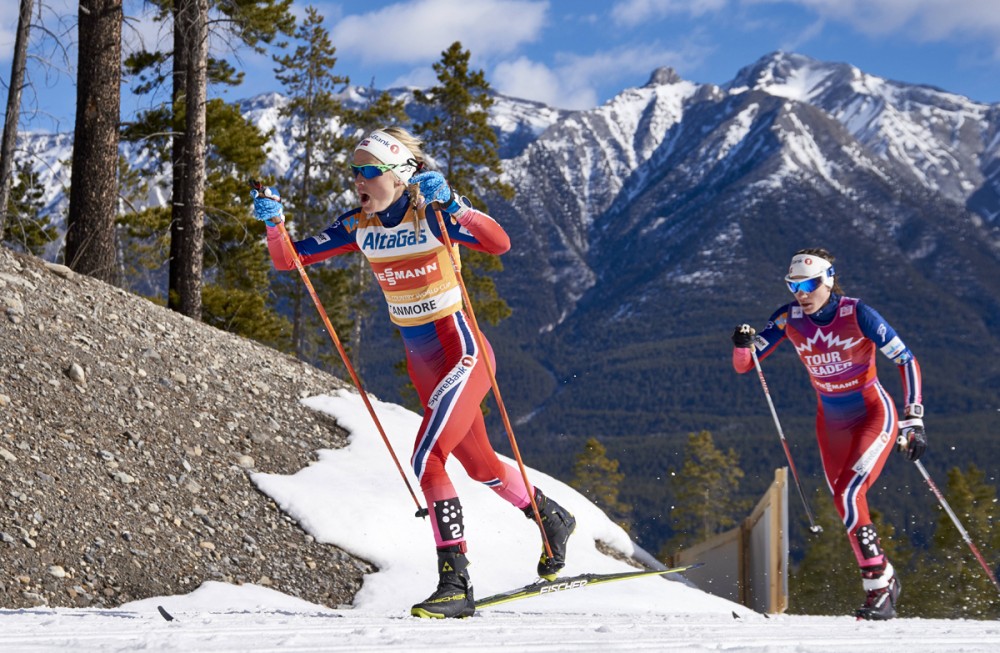
    Therese Johaug and Norwegian teammate Heidi Weng during the women's 15 k skiathlon  in Canmore, Alberta. The competition was part of the Ski Tour Canada, one of many World Cup events Johaug won last season. (Photo: Fischer/NordicFocus)
    Therese Johaug (l) and Norwegian teammate Heidi Weng during the women’s 15 k skiathlon in Canmore, Alberta. The competition was part of the Ski Tour Canada, one of many World Cup events Johaug won last season. (Photo: Fischer/NordicFocus)

    The Norwegian Ski Federation has announced that cross-country skier Therese Johaug, an Olympic and World Championships gold medalist and two-time winner of the overall World Cup title, has had a positive drug test.

    According to the federation, Johaug had severely sunburned her lips while training at high altitude in Seiser Alm, Italy, in August.

    The damage can still be seen in a photo she posted to Instagram over the weekend.

    Tok med jordbærpikenes kyllingsalat hjem til Dalsbygda #minfavoritt #høst #makeitpossible #huaweinorge

    A photo posted by Therese (@johaugtherese) on

    After the team moved to nearby Livigno for a mid-elevation camp, team doctor Fredrik Bendiksen noticed Johaug’s condition. He bought two creams at an Italian pharmacy and assured Johaug that neither contained substances on World Anti-Doping Agency’s Prohibited List.

    The first cream she used did not help her sunburn. So she switched to the second. It helped – but it also contained clostebol, an androgenic anabolic steroid which is in fact banned.

    Johaug was visited by doping control officers on September 16 – where she declared the lip cream, called Trofodermin, on a form listing what medications she was using – and was informed of her positive test on October 3. The test was ordered by Anti-Doping Norway, which will proceed with her case.

    Therese Johaug during a press conference on Thursday announcing her positive doping test.
    Therese Johaug during a press conference on Thursday announcing her positive doping test.

    The news was made public by the ski federation on Thursday morning. Johaug had a live press conference on NRK, Norwegian state television, around noon (Norwegian time) on Thursday.

    In the statement released Thursday morning by the federation, Johaug described her feelings.

    “I am completely devastated and in despair to have ended up in this very demanding and to me unreal situation,” she said, according to a translation by the International Ski Federation.” I see this as unfair and totally undeserved, even though I am obviously aware of the liability that I have as an athlete for the medication that I use.”

    In the press conference, she said that this had been “the worst week of my life.”

    Clostebol is commonly used to treat skin conditions. But it is also performance-enhancing. Clostebol was initially developed in East Germany and used by athletes there to gain an athletic advantage. It is a derivative of testosterone, but is considered a weak anabolic agent compared to some other steroids.

    A number of athletes across nationalities and sports – ranging from professional baseball and soccer to international Olympic sports like track and field, weightlifting, and beach volleyball – have tested positive for the clostebol.

    The test for clostebol is fairly sensitive, and a number of athletes have tested positive despite never taking the drug as a medication. For instance, the drug is also used to promote growth in livestock (particularly in countries where the use of growth hormones is prohibited) and there are documented cases of test subjects who had never taken the drug having it show in urine samples after eating meat from animals raised on the substance.

    Clostebol also has applications for gynecological care, and there are other documented cases where an individual has tested positive after having sexual intercourse with a partner who is using the drug in a medication.

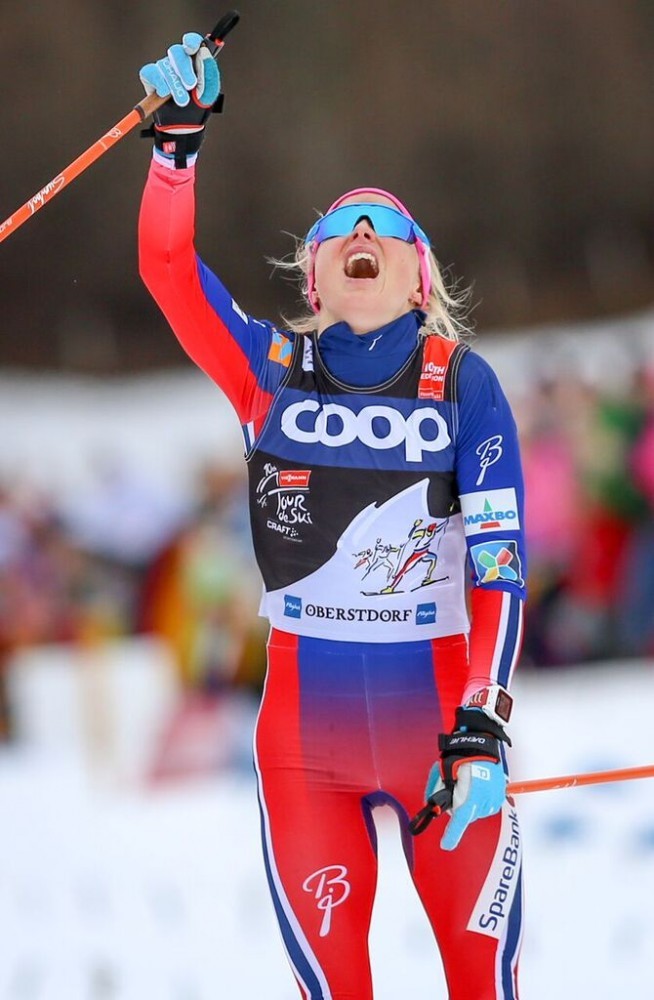
    Norway's Therese Johaug after winning the 10 k classic mass start at Stage 5 of the Tour de Ski in Oberstdorf, Germany, in January. (Photo: Marcel Hilger)
    Norway’s Therese Johaug after winning the 10 k classic mass start at Stage 5 of the Tour de Ski in Oberstdorf, Germany, in January. (Photo: Marcel Hilger)

    But a number of cases have been the result of athletes simply using topical skin creams without checking to see whether any of the ingredients were prohibited. In this case, it is clear that Bendiksen made a mistake in obtaining the medication. A simple online search would have revealed that clostebol was an active component of Trofodermin.

    Bendiksen has taken complete responsibility for the mistake.

    “Therese is an amazing, conscientious person and performer who is careful and precise in everything that she does,” he said, according to a translation. “The most important thing for me to do now, is to do everything I can to make sure she is not punished for using a cream which I assured her was legal to use.”

    At the same time, Johaug said that she took responsibility for following Bendiksen’s recommendation. She explained that she had asked whether the cream had any prohibited substances in it, was told that it did not, and trusted her team doctor.

    She tried to strike a balance by saying that she was responsible for the decision not to check the drug’s contents against the WADA list herself, she also “has zero guilt.”

    “To get an undeserved positive test, it’s an athlete’s worst nightmare,” Johaug said.” But I will fight everything I can and show that I am innocent in this matter.”

    Norwegian team doctors believe that Johaug would not have had enough of the substance in her system to affect her performance anyway. The case is ongoing and a suspension has not been issued, but a case from 2005 before the International Swimming Federation (FINA) resulted in a reduced sentence for a 15-year-old swimmer who had used the medication in a skin cream and successfully argued that she did not gain any performance advantage from it.

    The federation reportedly canceled a major season kickoff event scheduled for Thursday. Instead, the cross-country committee is meeting to decide how to handle the situation.

    For Norway, the news comes after a long summer of doping controversy. Several-time men’s World Cup winner Martin Johnsrud Sundby was suspended for two months for using a too-high dose of the asthma medication salbutamol.

    When that made news – 18 months after the positive tests had taken place, generating widespread outrage – several other Norwegian athletes came forward to say that they had been instructed to take the same doses of medication despite the fact that they did not even have asthma.

    The ski federation is clearly trying a different crisis management strategy this time around. Rather than delaying, Johaug held the press conference soon after learning the news herself.

    Whether that is due to the preferences of the federation or the athlete is unclear. The federation had reportedly urged Sundby to go public earlier in his appeals process, but he had refused.

    Now, after months of denying responsibility for the high doses of asthma medication he had been prescribed by a team doctor, Sundby has apologized and said he was “100% responsible”.

    The ski federation, meanwhile, is facing a nightmare. President Erik Røste said in the press statement that he was “concerned that Norwegian cross country have again ended up in such a demanding situation.”

    And once again, it appears that the doping violation was the result of an athlete following advice of a team doctor. Røste said that the federation would look into how to prevent the problem from continuing.

    The news also comes at a bad time for Norway as their Minister for Culture, Linda Hofstad Helleland, is bidding to become the vice president of the World Anti-Doping Agency.

    For Johaug, Seiser Alm has become quite a significant place for her, and not in a positive way: in 2015, she broke her hand while running there.

  • Four Sochi Gold Medalists Were Using Steroids, Whistleblower Alleges

    Four Sochi Gold Medalists Were Using Steroids, Whistleblower Alleges

    In a new investigation by CBS news, Vitaly Stepanov has alleged that four Russian athletes who won gold medals at the 2014 Winter Olympics were using steroids.

    Stepanov and his wife Yuliya initially came forward to German journalist Hajo Seppelt and revealed extensive state-sponsored doping within Russian track and field. That led to an investigation by the World Anti-Doping Agency (WADA), confirming the allegations as true. Rampant systematic doping within Russian track and field led to the team being barred from international competition for the foreseeable future.

    In WADA’s report, released in November, the commission briefly touched on winter sports. For instance, they wrote that the Russian state security agency FSB was present in the anti-doping laboratory at the Sochi Olympics. However, despite a broad mandate to investigate doping in sports, that commission stuck almost exclusively to Russian track and field while at the same time acknowledging that the problems extended into other sports.

    The CBS news story appears to go farther. Besides turning additional focus on the Russian track and field program – which is at risk of being barred from competition at the upcoming summer Olympic Games in Rio de Janeiro, Brazil – it also delved further into conversations that Stepanov had with others in the Russian Anti-Doping Agency, RUSADA.

    For instance, Stepanov recorded Skype conversations in which Grigory Rodchenkov, the former head of Russia’s anti-doping laboratory, who told him of a list of athletes he had protected from positive samples, including four Sochi gold medalists. He appears to be referring to steroid use.

    Then there was this: “FSB tried to control every single step of the anti-doping process in Sochi,” Stepanov said.

    Rodchenkov is now exiled in the United States as well.

    As for who the four medalists could be, there are 26 gold medalists from 13 events, with some athletes earning more than one gold. They are:

    Evgeni Plushenko – Figure skating team trophy

    Yulia Lipnitskaya – Figure skating team trophy

    Tatiana Volosozhar – Figure skating team trophy & pairs skating

    Maxim Trankov – Figure skating team trophy & pairs skating

    Ksenia Stolbova – Figure skating team trophy

    Fedor Klimov – Figure skating team trophy

    Ekaterina Bobrova – Figure skating team trophy

    Dmitri Soloviev – Figure skating team trophy

    Elena Ilinykh – Figure skating team trophy

    Nikita Katsalapov – Figure skating team trophy

    Adelina Sotnikova – Figure skating ladies’ single

    Alexey Volkov – Biathlon men’s 4 x 7.5 k relay

    Evgeny Ustyugov – Biathlon men’s 4 x 7.5 k relay

    Dmitry Malyshko – Biathlon men’s 4 x 7.5 k relay

    Anton Shipulin – Biathlon men’s 4 x 7.5 k relay

    Alexandr Zubkov – Bobsled 2-man & 4-man

    Alexey Voyevoda – Bobsled 2-man & 4-man

    Dmitry Trunenkov – Bobsled 4-man

    Alexey Negodaylo – Bobsled 4-man

    Alexander Legkov – Cross-country skiing men’s 50 k

    Viktor Ahn – Short-track speed skating men’s 1000 meters, 500 meters, & 5000 meter relay

    Semion Elistratov – Short-track speed skating men’s 5000 meter relay

    Vladimir Grigorev – Short-track speed skating men’s 5000 meter relay

    Ruslan Zakharov – Short-track speed skating men’s 5000 meter relay

    Alexander Tretiakov – Skeleton men’s single

    Vic Wild – Snowboarding men’s parallel slalom & parallel giant slalom

    “All his so-called revelations are based on speculations and are being actively distributed,” Russian sports minister Vitaly Mutko told the TASS news agency of Stepanov’s claims. “The Olympics in Sochi have ended a long time ago. [It was] not Russia collected doping tests then [but the IOC], and everything was held under very strict control. I don’t know whether we should endlessly refute Stepanov’s (claims). We will see if there are any legal risks for us, we will think about defense… It is obvious that someone wants to harm Russian sports. Stepanov has exhausted the topic of doping in athletics, now he has probably started with the Sochi Olympics.”

    If confirmed, the allegations will be yet another instance of journalists uncovering scandals that WADA itself failed to detect. In this case, the WADA commission would have had the opportunity to include Sochi results in its investigations, but apparently chose not to.

    “We will watch the program with interest,” WADA spokesman Ben Nichols told Reuters. “We will not comment further until we have viewed the program in full.”

    This revelation was a teaser for longer programs by CBS this weekend, which may reveal further information about winter sports. The interviews with the Stepanovs will be broadcast on 60 Minutes Sunday, May 8 at 7 p.m. ET/PT, and another excerpt will be included on the CBS Evening News at 6:30 p.m. ET/PT.

  • German Documentary Alleges Widespread Doping, Cover-Ups in Russia

    German Documentary Alleges Widespread Doping, Cover-Ups in Russia

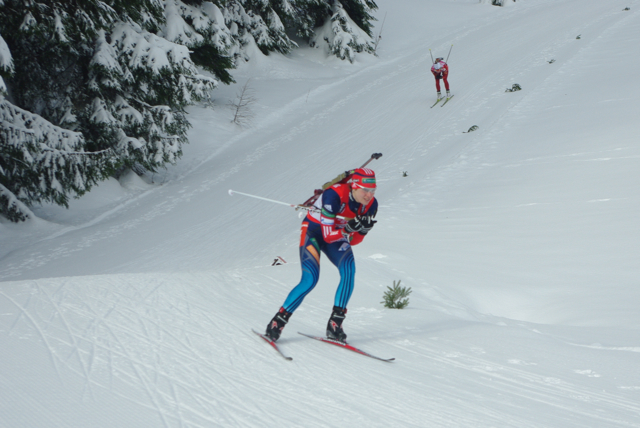
    Irina Starykh racing in Hochfilzen, Austria, last December, is one of three Russian biathletes caught using EPO in the last 12 months. While this has led to the conclusion that Russian biathlon has a systematic doping problem, a new documentary alleges that the problem is much worse and much more widespread.
    Irina Starykh racing in Hochfilzen, Austria, last December, is one of three Russian biathletes caught using EPO in the last 12 months. While this has led to the conclusion that Russian biathlon has a systematic doping problem, a new documentary alleges that the problem is much worse and much more widespread.

    When Russian biathlete Alexander Loginov was provisionally suspended last week after a year-old sample tested positive for the blood-doping drug recombinant erythropoietin (EPO) using a new method, many weren’t surprised.

    The question was, why does this keep happening to Russia? One interesting commentary by Evgeniy Slyusarenko of the Russian sports website Championat explained that in Western Europe and North America, the responsibility for performance lies on the athlete, who must make decisions for themselves and accept the consequences. On the other hand, in Russia, athletes are expected to follow orders – in fact, everyone is expected to follow the orders from their higher-ups. And it is not the bosses who get fired when there are doping scandals. The bosses only get fired when there are no Olympic medals.

    A new documentary aired on German broadcaster ARD last night alleges that though the roots of the Russian doping problem are just as Slyusarenko described, it goes much deeper. Noted journalist and documentarian Hajo Seppelt found evidence of not only state-sponsored doping, but routine cover-up procedures in place to avoid scandals involving high-profile athletes. Unknown and up-and-coming athletes were not so lucky, and were discarded by the system after a positive test.

    You can find the hour-long documentary here, if you have VPN or a location-unblocker, and if you understand German.

    Seppelt was compelled to investigate Russian doping after the 2014 Olympics, in part after it was revealed that Russian cross-country skiers were using xenon gas as a performance-enhancing measure.

    “I wanted to report to a much greater degree on doping in Russia,” Seppelt told ARD in an interview. “Research in March. I could not expect at the time that the story would evolve like this. We must assume that in Russia a state-supported doping system exists with a big cover-up machine that pulls the strings in the background.”

    Many of the central messages in the documentary come via a pair of whistleblowers who contacted Seppelt: 800-meter runner Yuliya (Rusanova) Stepanova, and her husband Vitaliy Stepanov, who used to work for the Russian anti-doping agency RUSADA.

    The pair claim that not only would officials cover up positive tests by star athletes, for instance by “making a mistake” in the labwork to justify throwing out the results, but that athletes were also told to keep “clean” urine samples in their freezers to use for doping tests.

    The documentary also shows a video clip recorded on a cell phone, in which London 2012 800 meter gold medalist Mariya Savinova admits to using oxandrolone, a prohibited anabolic steroid.

    Several other athletes went on the record about not only doping and the availability of illicit performance-enhancing drugs, but also shady financial practices used by Russian federations, sometimes through shell companies.

    Some of the allegations have also been reported on by other journalists. For instance, it was French newspaper L’Equipe which initially wrote that Russian marathon champion Liliya Shobukhova had paid her own federation a bribe to avoid a doping ban. After paying, she raced in the 2012 Olympic marathon – but when she failed to finish, the federation banned her after all.

    Multiple Russian sports and anti-doping officials have categorically denied the claims.

    “You should be very careful about putting too much faith into these athletes’ claims,” the head of Moscow’s doping control lab, Grigory Rodchenkov, said according to The Guardian. “These people are experiencing the biggest catastrophe of their lives.”

    Seppelt disagrees.

    “I did not think that there was still any system, in 2014, which has so many parallels to what was formerly done in East Germany,” he said in his ARD interview. “All this is topped by the capitalist characteristics of a commercialized elite sport system that is the status quo in Russia.”

    And as for why no Russian athletes tested positive in Sochi? That’s no accident, he concludes.

    “The facade has little to do with the reality of the thing,” he said. “In our film, you will see that both the Russian Anti-Doping Agency, the Doping Control Laboratory in Moscow, and sporting organizations operate what is obviously a system for the protection of national interests and the cover-up of doping to a significant extent… in my view it’s just window dressing.”

  • More Than Just Sports Fans, It’s Muscle Cells Who Remember Past Doping

    More Than Just Sports Fans, It’s Muscle Cells Who Remember Past Doping

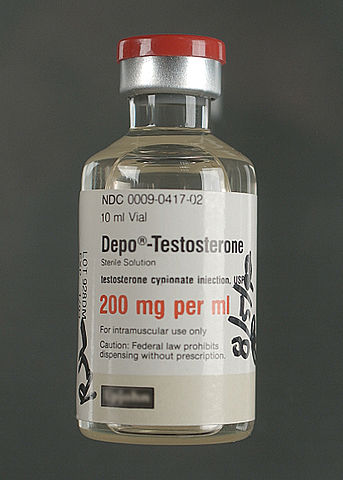
    Testosterone can have long-lasting effects on muscle cells. Photo: wikimedia commons.
    Testosterone can have long-lasting effects on muscle cells. Photo: wikimedia commons.

    As the World Anti-Doping Agency moves from two-year bans to potential four-year bans for doping violations in its updated 2015 Code, at least a few people think that’s not enough.

    Oslo researchers Dr. Ingrid Egner, Dr. Jo Bruusgaard, Dr. Einar Efterstøl, and Dr. Kristian Gundersen found last year in mice that a 14-day dose of testosterone had notable effects on muscle cells long after they had stopped administering the drug.

    How this works in humans isn’t a completely straightforward conclusion, but Dr. Gundersen said in a University of Oslo press release at the time that testosterone and other anabolic steroids could easily have effects for a decade or longer after drug use had ceased.

    “The specific time aspect is of course challenging to extrapolate from mice with a lifespan of two years to humans who live for 80 years,” he said. “However, the cell nuclei in humans are known to be very stable. If the muscle memory mechanism in humans is similar to what we observe in mice we could be talking about several decades of advantageous effects.”

    The specific mechanism for the long-lasting effects appears to be a proliferation of nuclei in muscle cells. There is yet to be a testosterone scandal in nordic sports, but this opens the door to the idea that other performance-enhancing substances which induce hypertrophy, or the enlargement of muscles, may have similarly long-lasting effects.

    As explained in The Journal of Physiology, both testosterone propionate (administered by a pellet inserted under the skin) and overload exercise (simulated by shortening the muscle itself) caused an increase in the cross-sectional area of muscle fibers. The increase in muscle size were greater with testosterone than with overload training. Similarly, both treatments increased the number of myonuclei in muscle cells.

    The difference between training and drug use emerged later. After giving the mice a 14-day dose of testosterone, the researchers then waited three months, during which both the drugged mice and the control group received no treatment. After that rest period, there were still 42% more mynuclei in the muscle cells of the drugged mice than in the control group. The cross-sectional area, meanwhile, was indistinguishable between the two groups.

    So why do nuclei matter? Each nucleus has associated structures which can synthesize the proteins the cell needs. This could help with muscle repair after damage, for instance.

    The study proved a long-standing scientific hypothesis: that there is some sort of “muscle memory” that allows muscles that have previously been trained to more easily regain mass if they are trained again later. No other researchers had ever found the mechanism for this, but it appears to be the myonuclei.

    The researchers pointed out that this finding may have many beneficial applications – for instance, in helping reduce frailty in an aging population. If hard exercise and/or drug application can produce long-lasting effects, then we might develop public health strategies that could reduce injuries to octogenarians.

    But the implications for sport are not as positive.

    “Our data demonstrate that in least in mice, an episode of testosterone use may recruit a long lasting pool of excess myonuclei, and a persistent increased ability to regain muscle mass by resistance exercise in the absence of further steroid exposure,” the authors concluded. “Thus, the benefits of even episodic drug abuse might be long lasting, if not permanent, in athletes. Our data suggest that the World Anti-Doping Code calling for only 2 years of ineligibility after a conviction for steroid use (WADA, 2009) should be reconsidered.”

    Furthermore, while the study only addressed testosterone, an anabolic steroid, the effect may be similar for other performance-enhancing substances currently banned by WADA.

    Insulin-Like Growth Factor I (IGF-I) has long been banned in sport and recently came to the fore when it was mentioned in the records of a South Florida clinic providing performance-enhancing drugs to baseball players.

    While there is yet to be any work done specifically examining whether IGF-I increases the number of myonuclei, it does contribute to the proliferation and differentiation of muscle cells – and many researchers (for example, here) have concluded that this by definition means increasing the myonuclei.

    Furthermore, human growth hormone (HGH) increases the circulating levels of IGF-I, leading to the same effects. Thus doping with HGH or IGF-I could, potentially, also have very long-lasting effects.

    In other words, it’s a good thing that Andrus Veerpalu isn’t returning to competition, and instead is merely assisting Alexey Poltoranin.

    One thing that might be comforting to nordic fans? Because erythropoietin (EPO) is not associated with muscle hypertrophy, there are unlikely to be long-lasting effects of previous EPO doping – at least through this mechanism. On the other hand, proof of the existence of a long-term cell memory mechanism suggests that other such mechanisms are not out of the realm of possibility.

  • Guilty Until Proven Innocent

    divbr //divdivspan class=”Apple-style-span” style=” ;font-family:Times;”div style=”border-top-width: 0px; border-right-width: 0px; border-bottom-width: 0px; border-left-width: 0px; border-style: initial; border-color: initial; margin-top: 0px; margin-right: 0px; margin-bottom: 0px; margin-left: 0px; padding-top: 3px; padding-right: 3px; padding-bottom: 3px; padding-left: 3px; width: auto; font: normal normal normal 100%/normal Georgia, serif; text-align: left; “divspan class=”Apple-style-span” style=”font-family:Times;”div style=”border-top-width: 0px; border-right-width: 0px; border-bottom-width: 0px; border-left-width: 0px; border-style: initial; border-color: initial; margin-top: 0px; margin-right: 0px; margin-bottom: 0px; margin-left: 0px; padding-top: 3px; padding-right: 3px; padding-bottom: 3px; padding-left: 3px; width: auto; font: normal normal normal 100%/normal Georgia, serif; text-align: left; “a onblur=”try {parent.deselectBloggerImageGracefully();} catch(e) {}” href=”http://3.bp.blogspot.com/_n7a3IKFYbqU/SkF-6mP5mHI/AAAAAAAACKU/czVLUsNDi0A/s1600-h/P6200118.JPG”img src=”http://3.bp.blogspot.com/_n7a3IKFYbqU/SkF-6mP5mHI/AAAAAAAACKU/czVLUsNDi0A/s400/P6200118.JPG” border=”0″ alt=”” id=”BLOGGER_PHOTO_ID_5350697377457608818″ style=”display: block; margin-top: 0px; margin-right: auto; margin-bottom: 10px; margin-left: auto; text-align: center; cursor: pointer; width: 400px; height: 300px; ” //aPictured above is a sticker from USADA showing a negative test result from my only drug test from this year.  I find it quite interesting that because of a few individuals, countries, and sport teams that every amateur athlete is guilty of doping until proven innocent. divWhile I really have no animosity towards USADA or