Tag: Steve House

  • Turning the Pages: “Training for the Uphill Athlete”

    Turning the Pages: “Training for the Uphill Athlete”

    “Training for the Uphill Athlete ”– Kílian Jornet runs down the Täschhorn, Switzerland. Photo: Steve House

    For many who read FasterSkier, going uphill remains the name of the game. Although we assume the fidelity to nordic skiing is strong we know many dabble in several outdoor pursuits. Some athletes nordic ski as a means to remain aerobically and anaerobically sharp to parlay their fitness into proud adventures or race efforts far from a PistenBully’s corduroy. In many mountain towns, Crested Butte comes to mind, cross-country skiing becomes a default post-work burn until the weekend’s ski mountaineering epic.

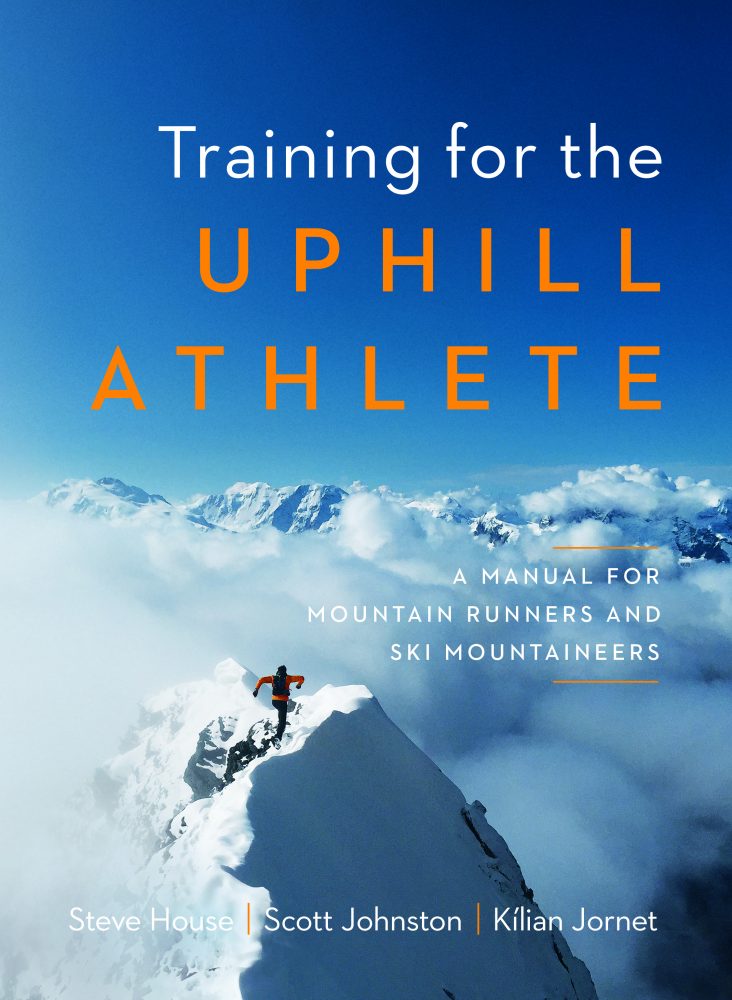
    If you are one of those athletes who are more keen on throwing a 30-meter skinny rope and skin wax in your backpack instead of a tin of extra-blue and you’ve been looking for a training guide, there’s a new book in the training-sphere that might be for you. It’s titled “Training for the Uphill Athlete”. The subtitle reveals more about its target audience — “A Manual For Mountain Runners and Ski Mountaineers”.   

    The book is penned by Kilian Jornet, Steve House, and Scott Johnston. Jornet remains a cutting edge mountain runner and ski mountaineer, House brings his experience training for and scratching up some of the globe’s most demanding alpine climbs, and Johnston, himself an accomplished alpinist and cross-country ski coach brings much of the training know-how.
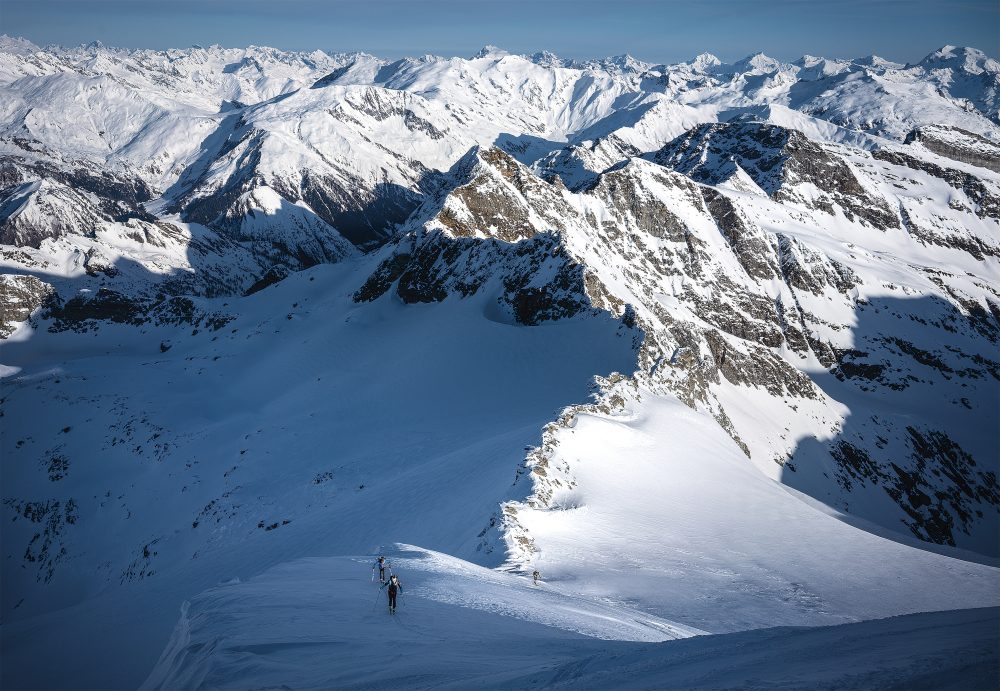
    A photo from “Training for the Uphill Athlete”. Tamara Lunger, Philipp Reiter, and David Wallmann nearing the summit of Rheinwaldhorn in Switzerland. Photo: Mark Smiley

    “Training for the Uphill Athlete” piggybacks on the template of Johnston’s and House’s book “Training for the New Alpinism”. What that means is this: readers are exposed to the science of endurance training physiology, training methods and how to monitor training effects, and the principles of strength training for those interested in defying gravity.

    Like their first “Alpinism” book, “Training for the Uphill Athlete” provides enough information for newcomers to enhance their understanding of training physiology (think metabolic pathways) without feeling as if they are reading a journal article. Conversely, for those well versed in training theory, the book provides a robust collection of sport-specific training stimulus ideas.

    Make no mistake, this is no touch-the-surface book. It is a deep dive pushing 400 pages.

    Organizationally, the writers and editor are genius in a few categories. First, the pages are liberally peppered with lovely photographs that allow one to daydream about why you might be training in the first place. Presumably, if you are reading their book, that reason would be moving fast or faster in the hills. Just when you might be overloaded by the wordsmithing on capacity versus utilization training, presto, several photos are presented that make the book seem like a sunny big-mountain hiatus. (Or a respite from mentally recreating the pathway of glucose to ATP + Pyruvate and so on.)

    Secondly, the book offers countless diagrams, charts, and graphs to help further illustrate the training principles conveyed in text. If you are a visual learner, don’t rule the book out. The visual means by which the authors illustrate information are top-notch and are worth the $35.00 price of admission. The visuals masterfully present dense technical information clearly and allow the reader to glance over at a diagram to reinforce a concept. In that way, it is like an über functional textbook written by Zen masters, not a snore-worthy treatise you might recall from your college days.   

    In reviewing the book over the winter in digital format, and now with the physical book in hand, one thing is clear and it is stated in the sub-title: This is a “manual”.

    The book remains a one-stop library for answering why we do certain types of training to providing scores of ideas for the highly motivated self-starter to craft a training plan. Sandwiched between the covers are personal anecdotes from numerous athletes that bring a human dimension to the book’s more science-oriented presentations.

    With Johnston’s experience in the cross-country ski world (disclaimer, I live in Scott Johnston’s old house but did not purchase it from him), you’ll notice several crossover ideas like moose hoofing, bounding, and striding. In the strength section for ski-mo you’ll feel at home when there’s a mention of rollerskiing and options like a ski-erg workout. So even if you remain a skinny ski devotee — and a 60mm underfoot ski as is typically used in ski-mo races sounds like a powder board — you’ll sense the common training DNA.

    A photo from “Training for the Uphill Athlete”. Anne Gilbert Chase training at The Mountain Project in Bozeman, Montana.
    (Photo: Jason Thompson)

    This is not a new treatise on training specifically for cross-country skiing. Looking for a tome on the why, how, and when to harness your inner Johannes Høsflot Klæbo or Stina Nilsson? “Training for the Uphill Athlete” may not be your go to. Want to delve into ski-mo racing or mountain trail running, or become a faster stronger version of yourself in those disciplines, or simply diversify your on-snow and off-snow training? Then have a read.

    The book’s backstory also offers insight into what you’ll be reading. Johnston was interviewed this past winter in Washington’s Methow Valley where he makes his home. According to Johnston, his first stab at a book, “Training for the New Alpinism”, allowed him an initial go at articulating his thoughts on endurance training.

    “I think I am a little more clear in this book because I have had to explain the physiology hundreds of times to so many people that I am better at it,” Johnston said. “I think the presentation is a little more clear this time. The information is essentially the same. Physiology hasn’t changed since I wrote the first book, but my ability to explain it to people has. I tried to use more metaphor in it this time. I think it is easier for people to learn more challenging concepts when they can relate it to other stuff.”

    Johnston also explained that in writing the book he had plenty of time to collaborate with Jornet. Pinning down Jornet for anything beyond the hardest-core of any mountain adventure remains a task. As Johnston said, “Kilian is busy being Kilian and doesn’t do much except run around the mountains all the time.”

    During the crafting of the book, Jornet suffered a shoulder injury requiring surgery and he then broke his leg in a ski-mo race. Those injuries slowed down Jornet enough for him to discuss uphill training.

    articles

    “I had quite a bit of time to spend on the phone with him last year putting these finishing touches on the book,” said Johnston. “One of the things we wanted to be sure we did was that we are not really presenting any real formulaic recipes. Like here is a training plan for X, Y, or Z. It is more here is all the bits and pieces of how to build a training program. Here are the things you have to keep in mind. Here is how to monitor your fatigue. Here is how to monitor your progress — more like how a coach would look at it than just a cookie cutter recipe.”

    A photo from “Training for the Uphill Athlete”. Christian Varesco loosens up with a run in view of the Pale di San Martino range clearing after a summer storm. Dolomites, Italy. (Photo: Federico Modica)

    What that means is the reader must be the filter when determining how to use the book. An independent-minded pro, as in self-coached, could use this resource as much as a neophyte master aged athlete. If your life includes activities like caring for small humans, time-consuming employment, or other priorities, the reader will have to scale back the training and determine for themselves how to optimize their reduced training hours.

    By design, the book becomes a stepping off point, like any good how-to book on say climbing, for an athlete to become more self-sufficient. Looking for where to play Lightning Roulette ? Go to the official website of the game https://lightningroulettegame.com/en/

    “Training for the Uphill Athlete” is as much a feast for the intellect as it is for the eyes.
     

  • Common Training Mistakes: Exposed at West Yellowstone!

    Common Training Mistakes: Exposed at West Yellowstone!

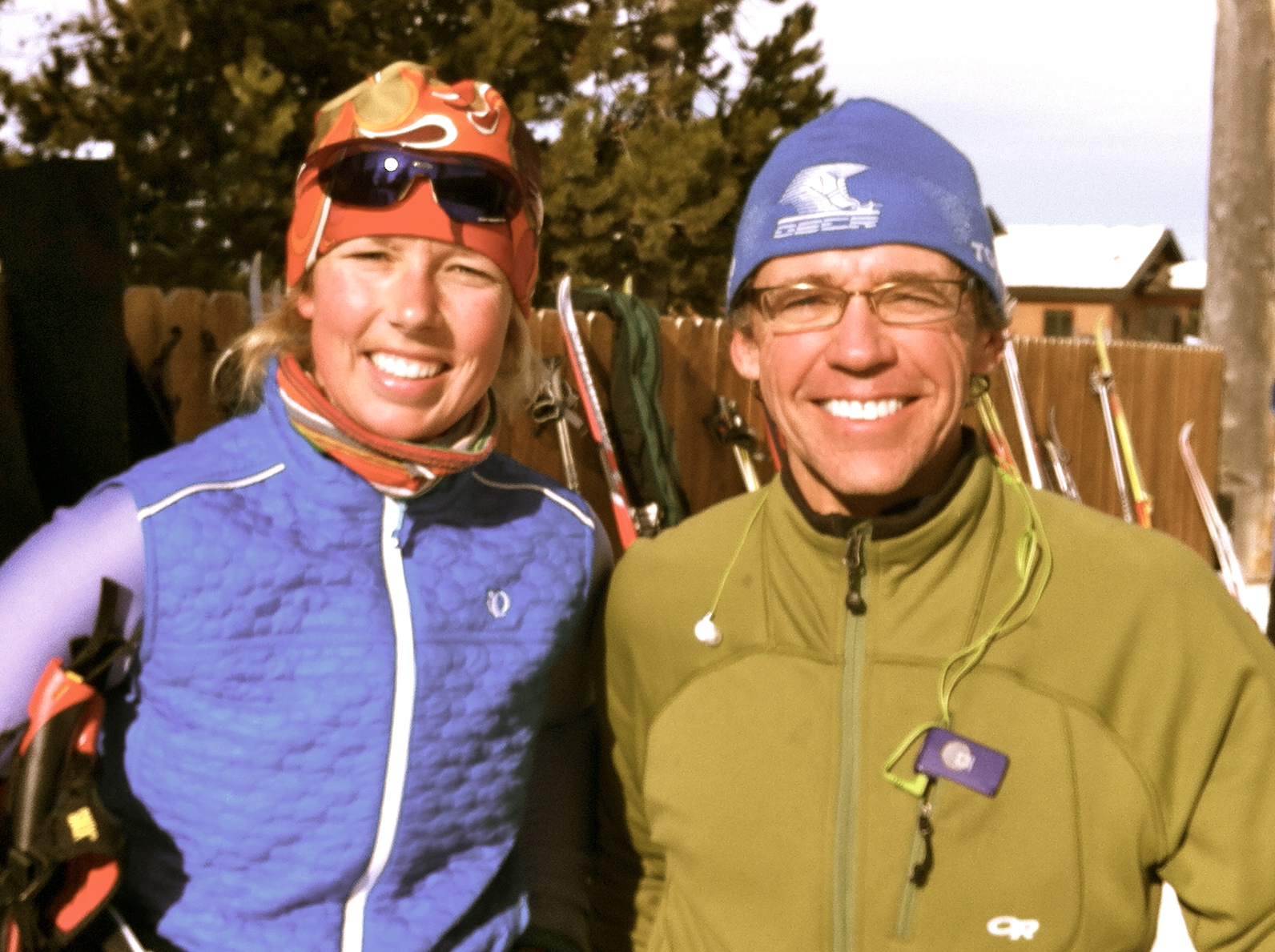
    From left to right: Alex Matthews, Managing Editor, and Mark Vosburgh, Para Nordic Contributor, in West Yellowstone, Mont.  "Let the races begin!"
    FasterSkier contributor Mark Vosburgh (r) with editor Alex Kochon last Thanksgiving 2013 in West Yellowstone, Mont.
    I have been following the Central Ski Association’s CXC Academy training program since last January, so when I traveled to the Yellowstone Ski Festival this Thanksgiving, I was eager to see how my preparations would translate to skiing on snow.In my enthusiasm, I skied long and hard from day one, eagerly testing my limits.  As with past years at West, I was utterly exhausted at the end of each day and pretty much toast by the end of the week.  Additionally, I believed my high-intensity early season training would be the winning formula for improving my racing results this season.
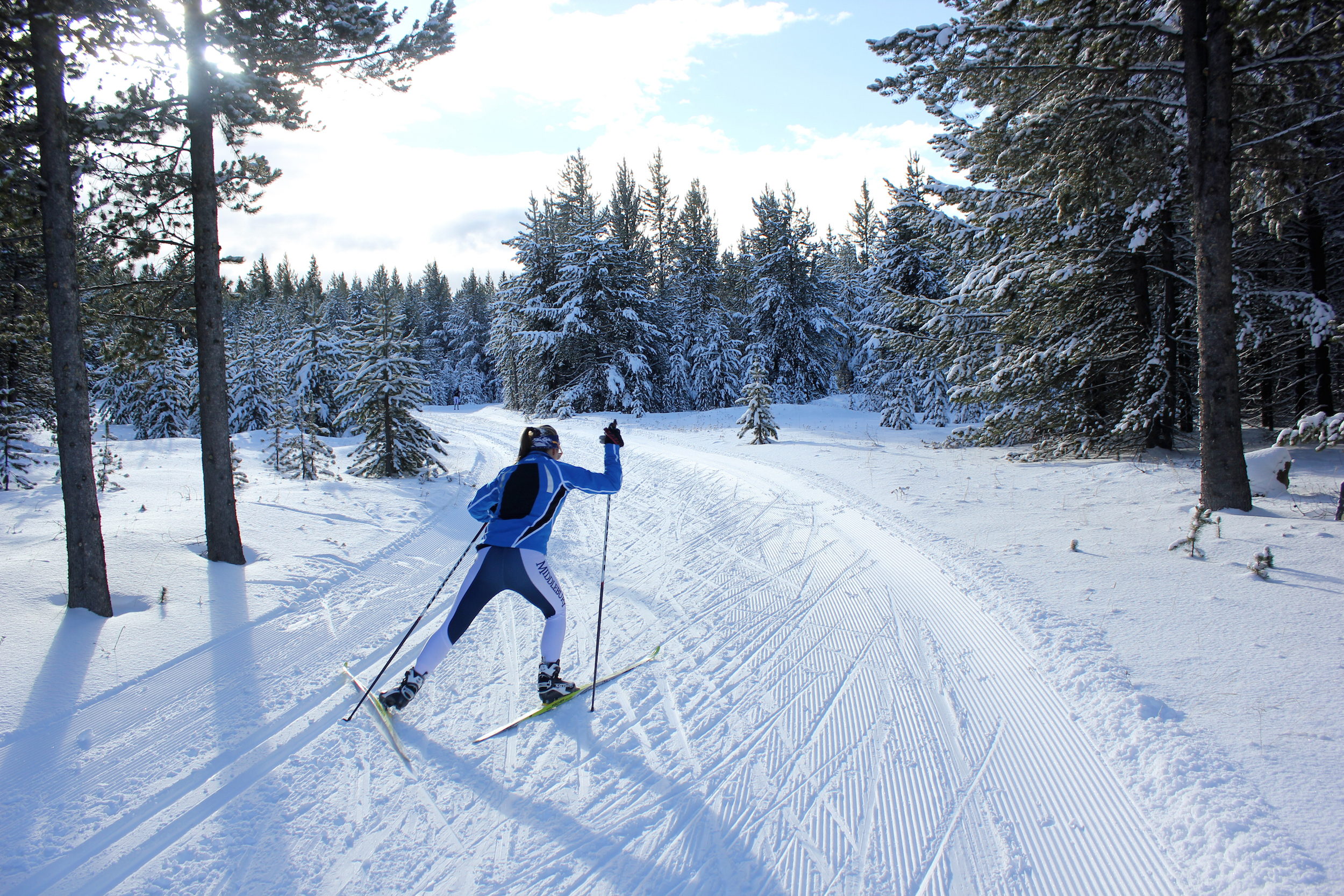
    Early season skiing at the 2014 West Yellowstone Ski Festival as pictured on Nov. 24. (Photo: Lander Karath)
    Early season skiing at the 2014 West Yellowstone Ski Festival as pictured on Nov. 24. (Photo: Lander Karath)

    Then, on my last night at the festival, I attended Scott Johnston’s lecture: Capacity Training vs. Utilization Training; making an informed decision. As I listened, my confidence in my training approach was shaken.

    Johnston, coach of the Methow Olympic Development Program, climber and former U.S. Ski Team member, said that he has seen many athletes whose training habits result in a phenomena called Aerobic Deficiency Syndrome (ADS). With ADS, athletes are forced to rely on inefficient high-intensity anaerobic energy pathways for even slow paced workouts.

    In the lecture, Johnson looked out at the conference room full of fit, dedicated skiers and said he guessed that many, and possibly most of the attendees fit into this category.

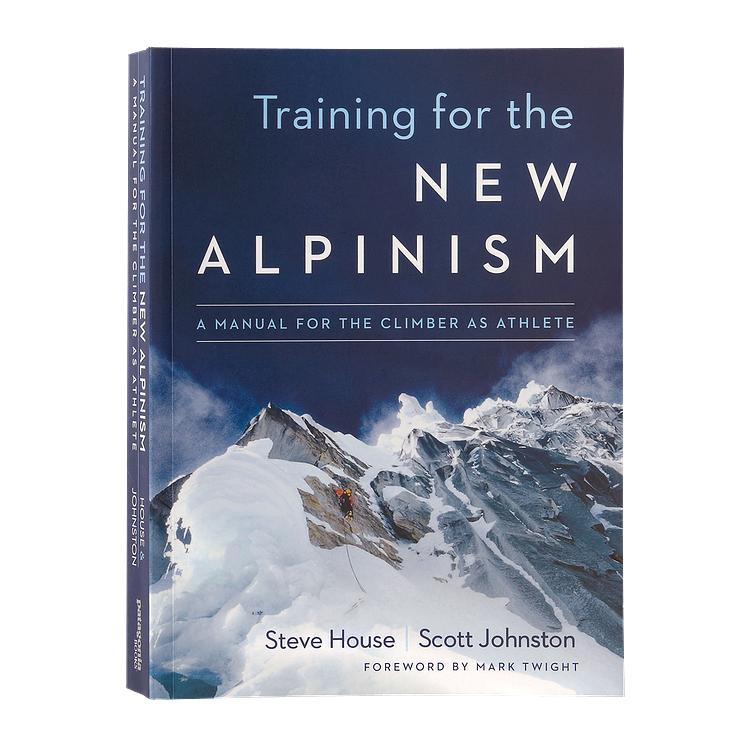
    Intrigued, I followed up the lecture by reading Johnston’s book,Training for the New Alpinism: a Manual for the Climber as Athlete,” co-authored with mountaineer Steve House.  In the book, Johnston goes into detail on the importance of proper aerobic training.Starting with the familiar concept of training zones, Johnston points out that the vast bulk of training, for athletes at all levels, should be done in Zone 1 (below the aerobic threshold).  He states, “The better developed the aerobic base, the faster you can move for extended periods.”

    “The better developed the aerobic base, the faster you can move for extended periods.” — Scott Johnston, Methow Olympic Development Program head coach

    He points out that even world-class endurance (defined as efforts lasting around two minutes or longer) athletes, including 800-meter runners, excel by developing a huge aerobic base before adding the high-intensity work needed to peak for competition.
    "Training for the New Alpinism: a Manual for the Climber as Athlete" by Scott Johnston and Steve House
    “Training for the New Alpinism: a Manual for the Climber as Athlete” by Scott Johnston and Steve House
    Johnston goes on to explain the mistake that I (and apparently many others) make.  For many of us, our Zone 1 workouts are mistakenly performed at intensities too high to give us the aerobic system benefits that are intended.”Harder is not better when it comes to development of your aerobic threshold,” he stresses.Johnston says that part of the problem is that Zone 1 aerobic training may feel too easy and too slow to be beneficial, a problem that worsens as we do more and more high-intensity training.   Without physiological testing to identify our aerobic threshold, we are left with a variety of methods including perceived exertion to heart-rate monitoring to gauge our intensity. In the real world, many of us overestimate the effort required to effectively train our aerobic energy systems.  As a result, our aerobic capacity can actually decrease.

    The symptoms of improperly training our aerobic base include not being able to ski without breathing hard, and prematurely tapping into our high-powered, but short-lived anaerobic energy reserves.Johnston points out that “long slow distance” aerobic training is better described as “long easy distance” training.  As our aerobic base develops, we should be able to ski faster and faster on our long distance days while not losing the feeling of “easy” effort.

    Scott Johnston (r) with Olympian Torin Koos in 2010. (Courtesy photo)
    Scott Johnston (r) with Olympian Torin Koos in 2010. (Courtesy photo)

    Another symptom of improper aerobic training was what I experienced at West Yellowstone.  Since I trained too hard on my long easy days and warm-ups, I was simply too tired to effectively train during my harder Zone 3, 4 and 5 workouts.  My exhaustion at the end of the week should have been a red flag my training was unsustainable, given my inadequately developed aerobic energy system.

    In his lecture and in his book, Johnston provides a prescription and practical methods to avoid Aerobic Deficiency Syndrome. If you are unable to get a laboratory test to find your aerobic threshold heart rate, Johnston recommends starting to exercise slowly while breathing through your nose only.

    “As you increase intensity/speed, note the point at which this nose breathing becomes noisy and labored,” he notes.  This is the upper limit of Zone 1 (your aerobic threshold).

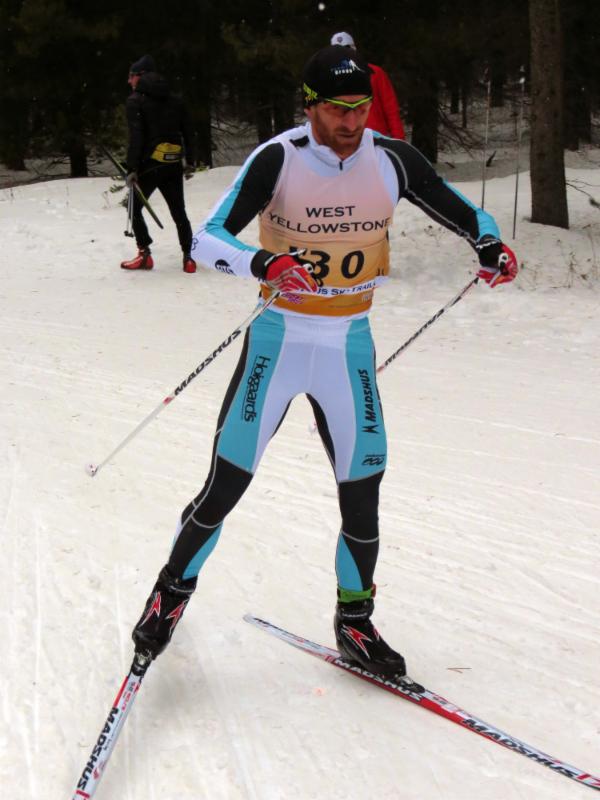
    Brian Gregg (Team Gregg/Madshus) racing to second in the SuperTour 15 k freestyle in late November in West Yellowstone, Mont. (Photo: Toko)
    Brian Gregg (Team Gregg/Madshus) racing to second in the SuperTour 15 k freestyle in late November in West Yellowstone, Mont. (Photo: Toko)

    In his lecture, Johnston described coaching 2014 U.S. Olympian Brian Gregg and prescribing months of long distance aerobic base training at an effort where Gregg would breathe only through his nose.  At first, Gregg found it very challenging to stay at this low intensity, and joked that he felt like training with “a bag over his head” because he was embarrassed that he was running so slowly.

    With time, Gregg’s aerobic capacity increased to the point where he could easily click off mile after mile at a faster pace while maintaining Johnston’s nose-breathing limit. Johnston credits Gregg’s improved aerobic capacity as setting the stage for Gregg’s eventual selection to the 2014 U.S. Olympic team.

    My experience with the nose-breathing method mirrors Johnston’s description in the book: “For some of you this (Zone 1) will be the hardest zone to train in.  You may find that you can barely jog or can only hike uphill very slowly … before you must begin mouth breathing … and your heart-rate climbs … right through Zone 2 and into Zone 3.”

    In my experiment with the CXC Academy training plan, I realize that I should have paid more attention to the information on training zones.  While the information is provided in the plan, I skimmed over it.  It took me hearing Johnson’s lecture and reading his book to jar me into recognizing my two major (but common) training mistakes.  Johnson summarized these mistakes in an Outside Online interview:

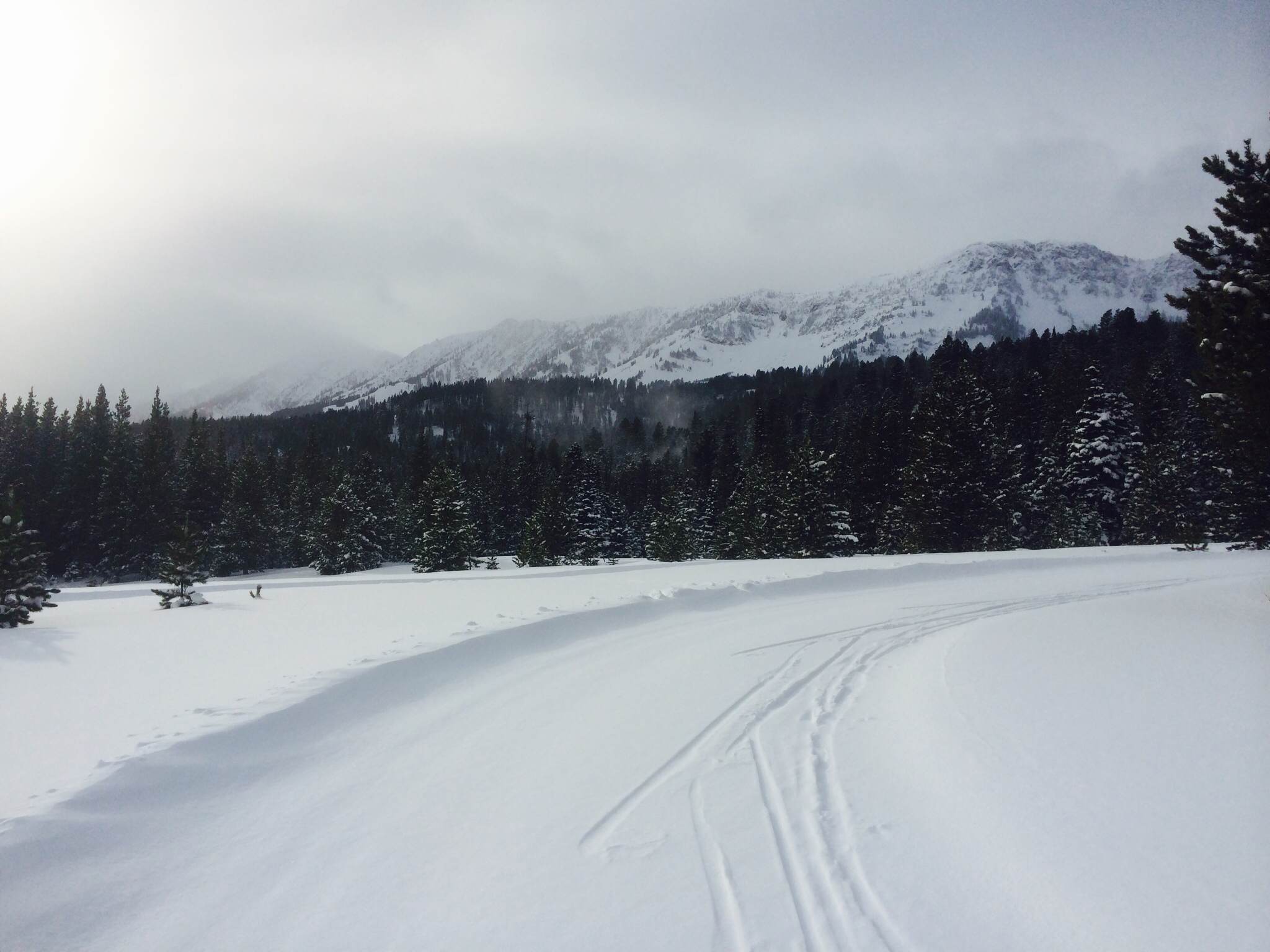
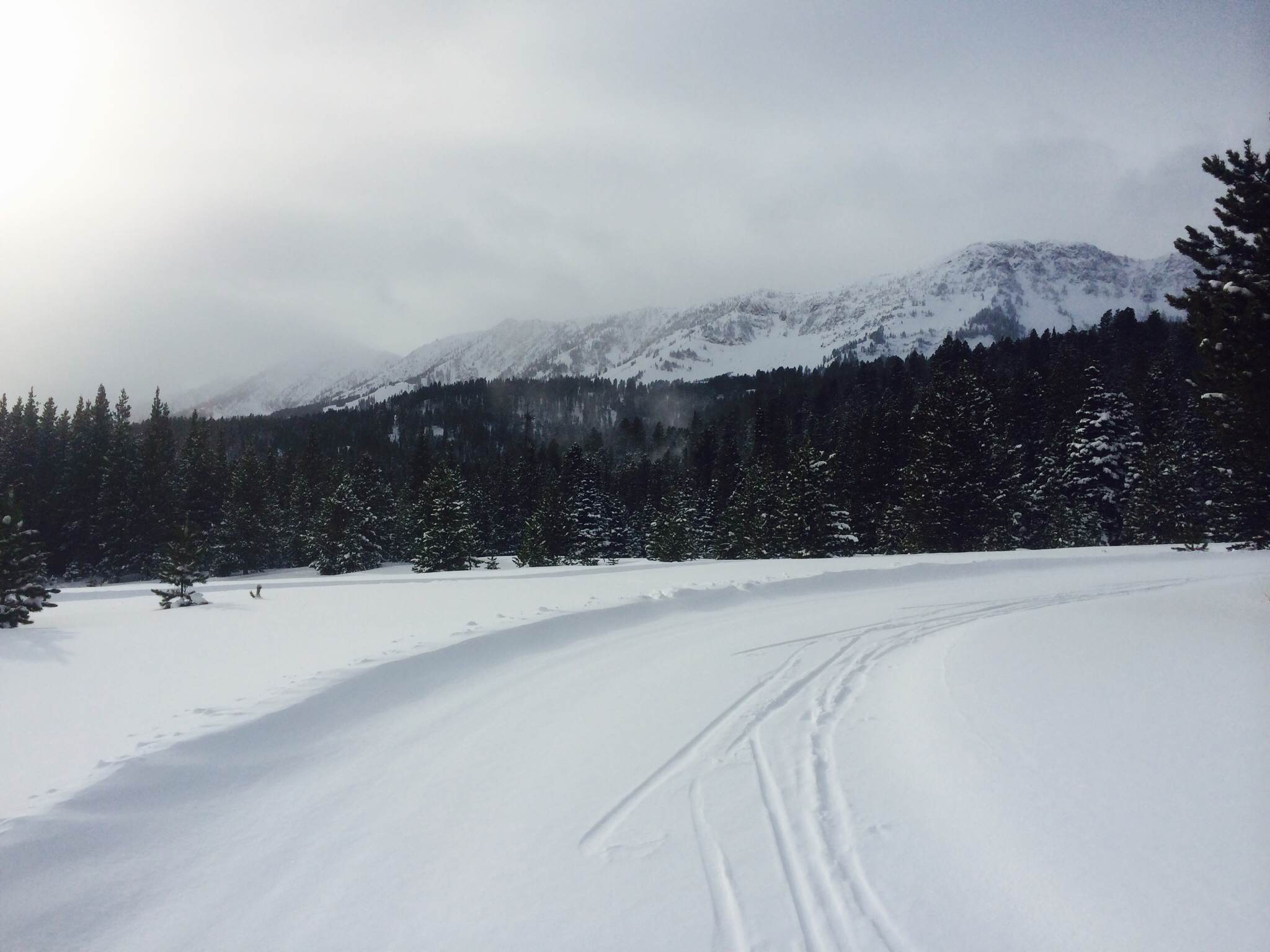
    Fresh tracks this winter at Bohart ranch near Bozeman, Mont. (Photo: Mark Vosburgh)
    Fresh tracks this winter at Bohart ranch near Bozeman, Mont. (Photo: Mark Vosburgh)

    “Most people, regardless of sport, train basic aerobic endurance too hard or fast. This happens for two primary reasons. The first is that this intensity level ‘feels like training’ because it feels moderately hard. Secondly, many people are time-limited in their training and imagine that they can make up for the duration of training by increasing the intensity.”

    So now, armed with good information, I’m back on track with my training plan.  I credit the CXC Academy training plan for a steep change improvements in my ski specific strength and ski technique.

    Now, I’m looking forward to improving my aerobic capacity.  On my CXC Academy prescribed Zone 1 over-distance days at Montana’s Bohart Ranch and Seeley Lake trails, I’ll be skiing easy, breathing through my nose, and avoiding the temptation to put a bag over my head!