Tag: steven mccarthy

  • For Diggins, It’s All About Balance and Not Taking Life Too Seriously

    For Diggins, It’s All About Balance and Not Taking Life Too Seriously

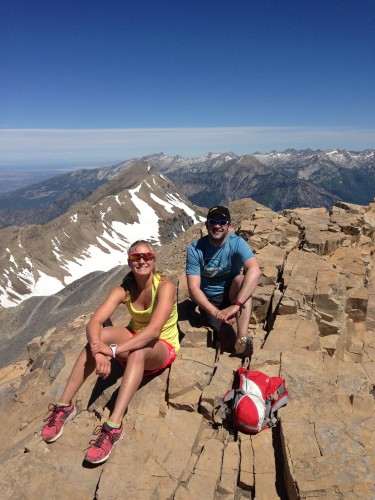
    Jessie Diggins and U.S. Ski Team coach Jason Cork on top of Mount Timpanogos, the second-highest peak in Utah's Wasatch Range. (Photo: Jessie Diggins/jessiediggins.com)
    Jessie Diggins and U.S. Ski Team coach Jason Cork on top of Mount Timpanogos, the second-highest peak in Utah’s Wasatch Range, this spring. “It was such a fun hike, and all the way up we kept seeing people coming back down, warning us that we wouldn’t make it because of snow and ice,” she wrote on her blog. “So, naturally, I wanted to make the top even more.” (Photo: Jessie Diggins/jessiediggins.com)

    STRATTON, Vt. – Jessie Diggins loves her job. The Minnesota native is one of the best in the world at what she does and travels the globe to show it. She’s not married, has no kids, and one of the biggest things stressing the 21-year-old skier out these days is making time to take an online college exam between workouts.

    Ten years from now, Diggins wants her genuine enjoyment to still be there so she occasionally has to take a break from her sport, she said during a July interview in Stratton, Vt., where she trains with the Stratton Mountain School T2 Team.

    For some, that means watching a movie, reading a book or doing yoga. Diggins enjoys all of those things, but her athletic ability opens doors to more active ways to indirectly improve her skiing fitness, all while dialing down her fiercely competitive side that comes out in World Cup competition.
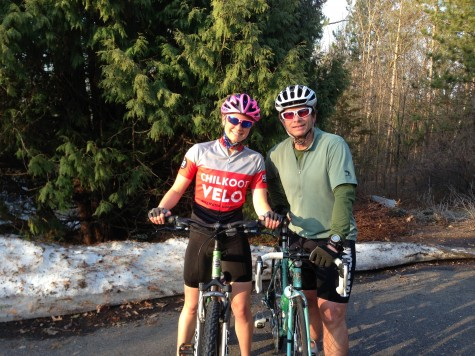
    U.S. Ski Team member Jessie Diggins and her dad before starting the 75-mile Minnesota Ironman bike race in April. (Photo: Jessie Diggins/jessiediggins.com)
    U.S. Ski Team member Jessie Diggins and her dad before starting the 75-mile Minnesota Ironman bike race in April. (Photo: Jessie Diggins/jessiediggins.com)

    In May, she ran a half marathon in Minnesota, mostly abiding by the Level-2 intensity speed limit set by her coaches. She ended up third among women and 11th overall. In April, Diggins pedaled 75 paved miles of the non-competitive Minnesota Ironman Bicycle Ride on a mountain bike because she couldn’t lower the seat far enough on a road bike she was borrowing.

    And before flying out to her summer training base in Stratton, following U.S. Ski Team (USST) testing in Park City, Utah, Diggins and USST assistant coach Jason Cork ascended the 11,752-foot Mount Timpanogos, the second-highest peak in Utah’s Wasatch Range.

    “Part of what I need to do to really enjoy my job is kind of have fun with it and do some adventurous things that aren’t always on the pavement,” Diggins said.

    Coming off an intense yet successful World Cup season, in which she won the World Championships freestyle team sprint with USST teammate Kikkan Randall, Diggins tried surfing and paddle boarding during a family vacation in Florida, and persisted until she could stand up and ride some small waves.

    A few weeks later in Park City, she locked herself out of the USST condo on her way out for an evening hike. After several unanswered shouts to her teammates, Diggins resorted to scaling the three-story exterior rock wall of the building and hauled herself over the railing outside their room. She said she has a ton more stories of predicaments she has gotten herself into.

    Already a world champion, Diggins doesn’t expect to win medals or prize money for every sport she dabbles in, and she doesn’t take occasional mishaps too seriously.

    “You don’t have to be really good or a professional to enjoy something,” Diggins said. “Everyone can get out and train just for fun.”

    It’s not unnatural for Diggins to flick the switch on her desire to win because she understands there is a time and place to drop the hammer. She said she just operates better when busy.

    “When the gun goes off [for races and hard workouts], that’s when it’s time to be competitive,” Diggins said. “As soon as you’re done, it’s time to just drop it and be done and not be competing with anyone but yourself. I’m really happy that the competitiveness doesn’t take over my life.”

    Growing up in the Midwest, Diggins didn’t have out-the-front door access to the type of mountain hikes and trail runs she has seen out West and in New England. There’s a lot to catch up on, but her excursions usually aren’t spontaneous. They are approved first by her USST and SMST2 coaches, all of which have been fine with Diggins getting mentally back on track by simply spending some time off track.

    In a recent blog entry, Diggins expressed satisfaction in a more polished approach to her training this summer following her third season on the USST. She has found a balance between hard training and recovery, hasn’t neglected strength and technique work, and has a renewed focus on her goals.

    “I love [summer] training,” Diggins said. “You can do really big volume weeks and just train yourself so hard and I think that’s really fun. You feel like you’re really getting somewhere and you’re working so hard. It’s really satisfying.”
  • Sadie Bjornsen Keeps Injuries at Bay, Skiing in Perspective Leading Up to Sochi

    Sadie Bjornsen Keeps Injuries at Bay, Skiing in Perspective Leading Up to Sochi

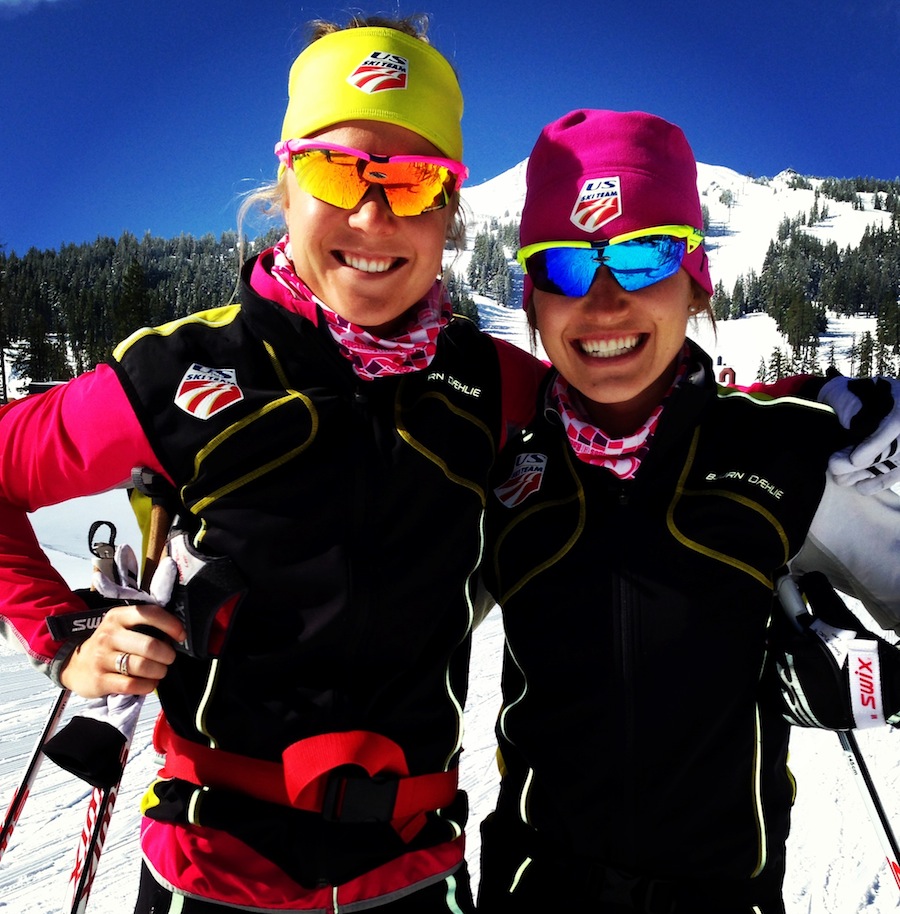
    U.S. Ski Team members Sadie Bjornsen (l) and Sophie Caldwell take a break from skiing in May at their training camp in Bend, Ore. (Courtesy photo)
    U.S. Ski Team members Sadie Bjornsen (l) and Sophie Caldwell take a break from skiing in May at their training camp in Bend, Ore. (Courtesy photo)

    The five interlocking rings hanging over Sadie Bjornsen’s bed mean everything they did four years ago when she shelved her college education at the age of 19, moved home and threw all she could muster at a dream of skiing in the Olympics – only to come up short.

    But closer examination of the wall ornament reveals that an upcoming February trip to Sochi, Russia, isn’t the only ticket to happiness for the experienced, confident and humbled Alaska Pacific University (APU) skier.

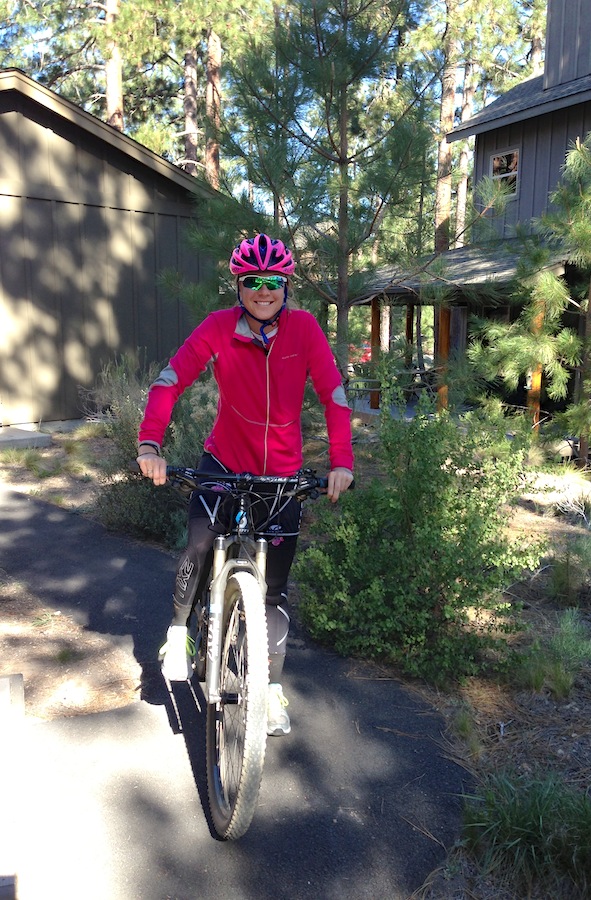
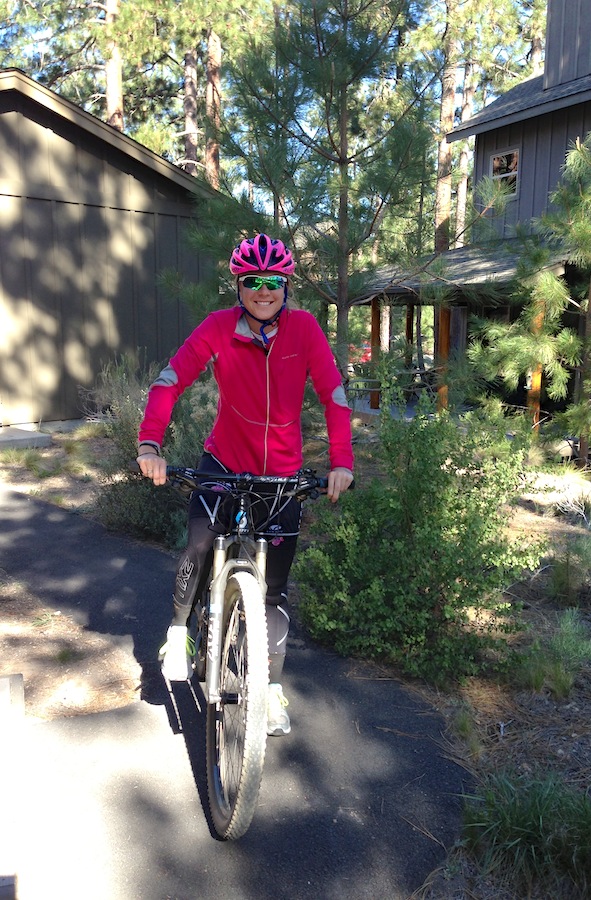
    Sadie Bjornsen (APU/USST) heads out on her mountain bike at the 2013 USST training camp in Bend, Ore. (Photo: Jessie Diggins)
    Sadie Bjornsen (APU/USST) heads out on her mountain bike at the 2013 USST training camp in Bend, Ore. (Photo: Jessie Diggins)

    Massage. Stretching. Sleep. Learning to speak French (for her French boyfriend) – each task has its own ring and a place in the 23-year-old U.S. Ski Team (USST) member’s daily routine, so that her mind and body are given the best opportunity to remain healthy throughout this Olympic year. (The fifth ring’s contents were too personal to share.)

    “The biggest thing that I learned [before the 2010 Olympics] was that I need different things in my life,” Bjornsen said Sunday on the phone from her home in Anchorage, Alaska. “Wholly focusing on skiing is not meant for me.”

    The significance of the most routine physical activity was magnified this spring for Bjornsen, who could relax after emerging in one piece from USST training camp in Bend, Ore., and most recently, fitness testing in Park City, Utah.

    At this time last year, she was hampered by a structural problem in her back and tendonitis in her foot, and this June she participated in most everything except treadmill tests because of foot limitations.

    But 2012/2013 was anything but a lost year. Bjornsen was able to check off her first top 10 in a World Cup event, was a member of the fourth place 4 x 5-kilometer relay team at World Championships and added a pair of national titles. She just had a late start.

    “Just racing in my first race, I appreciated it so much,” Bjornsen said. “I think it’s sometimes a good reminder to have those challenges. You just appreciate things more.”

    Bjornsen estimated it was five years ago when she took the antibiotic Levaquin, which has a known possible side effect of attacking tendons, most commonly the Achilles. She’s lived with a form of tendonitis ever since.

    Now she approaches training camps a little differently than her teammates. Bjornsen’s offseason is about consistency. If she has to substitute a dryland activity for a morning ski, that’s OK. Exercise in any form will make her stronger.

    “The difference this year is I have a little more confidence in knowing that the way that I train can work out,” Bjornsen said.

    What works for Bjornsen is laying off the intensity during the summer, as she has seen it come back to her quickly in the fall. She’s learned how to recognize the warning signs of a balky back. And she feels the support of her teammates and coaches.

    “It’s hard because everyone is really competitive and everyone wants to push each other,” Bjornsen said. “Especially now that we’re having some success, you feel like every moment you have to be 100-percent. The girls are really good about being patient.”

    Bjornsen described her coach, APU director Erik Flora as “unbearably positive.” Flora had his own racing career abbreviated by the combination of a car accident and back injuries.

    “You have to be so mentally strong to make it through without any support,” Bjornsen said. “[The support’s] coming at me from all angles.”

    With brief visits to Bend, Park City and Vancouver behind her, Bjornsen will train in Alaska for most of the summer, a place where she is constantly reminded of the intermediate goals she must attend to before approaching the ultimate one. Ideally she will race a full World Cup schedule for the first time in her career and post some of her best results in February.

    “The Olympics are a possibility to really spread our sport through our country,” Bjornsen said. “There’s a whole new generation coming into our sport soon. I think it would be really neat for them to see that success is totally possible.”