From the FasterSkier archive — posts syndicated from athletes’ and coaches’ own blogs between 2004 and 2012, kept online as published. Current coverage is at fasterskier.com.
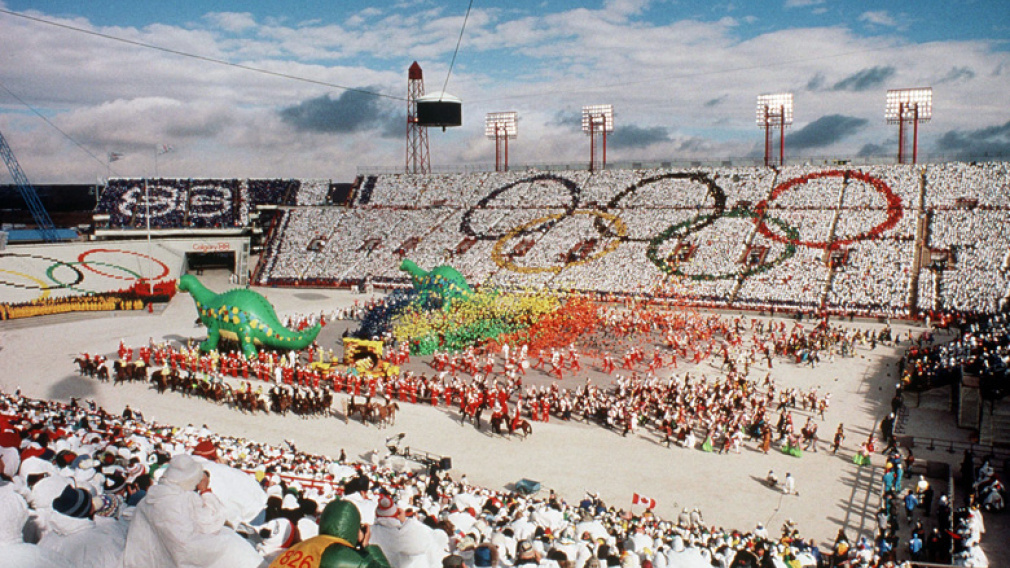
The Opening Ceremony at the 1988 Winter Olympics in Calgary, Alberta. Calgary is in the final three for hosting the 2026 Winter Olympics and Paralympics. (Photo: Olympic.ca)
The Olympics are a global spectacle, but all politics is local. And when the two truisms go head-to-head in today’s plebiscite vote in Calgary, Alberta, local threatens to win. At stake is the future of one of three remaining host cities for the 2026 Winter Olympic Games, a status that has perhaps lost some of its former luster.
There were once seven cities that had progressed to the “dialogue stage” of potentially hosting the 2026 Games, including Calgary; Graz, Austria; Erzurum, Turkey; Milan–Cortina d’Ampezzo, Italy (joint bid); Sion, Switzerland; Sapporo, Japan; and Stockholm, Sweden. (Other boldface names, such as Lillehammer or Innsbruck, had previously expressed some interest but then withdrawn.)
Then Graz, Sapporo, and Sion withdrew, followed by Erzurum. As of Tuesday morning, there are three cities still in the running: Stockholm, Milan–Cortina, and Calgary.
But Calgary might not be on the list too much longer. As the New York Times headlined its story on today’s vote, “Does Calgary Really Want the Winter Olympics? Does Anyone?” The article begins, “Hobbled by a reputation for gross expense and corruption, the International Olympic Committee has become a mendicant, shuffling from nation to nation, shaking its cup and asking if anyone might be interested in bidding on the 2026 Winter Games.”
Calgary’s plebiscite, which is synonymous with a referendum vote, is technically non-binding – “but a majority ‘no’ vote would make it almost impossible for the project to continue,” noted GamesBids.com. The Calgary City Council has final say on whether the city proceeds with its bid. Today’s vote will help guide the council’s decision.
GamesBids.Com added, “More than CAD $2 billion (USD $1.5 billion) of Olympics funding promised from the provincial and federal governments is contingent on a satisfactory ‘yes’ result on Tuesday. The total taxpayer costs are estimated at almost CAD $3 billion of the entire $5.2 billion project.”
Much more background information is available here on GamesBids.com. As the Calgary Herald explains, polls close at 8 p.m. local time tonight (6 p.m. Alaska Time, 10 p.m. East Coast Time for American readers), with results available roughly two hours later.
Here’s GamesBids.com on the “standings” of the other two remaining cities if the results of today’s vote lead Calgary to withdraw its bid at next week’s city council meeting:
Stockholm remains in the race to bring the first Winter Games to Sweden, but the Capital has failed to rally any government support for the project and it will need approvals in place before a January 11 IOC deadline.
A joint Italian bid between Milan and Cortina d’Ampezzo emerged just last month, but it lacks federal government funding. The Italian Olympic Committee (CONI) has said that the regional government representing the two cities will foot the bill, and last week IOC President Thomas Bach confirmed in Rome that this plan would be accepted.
If Calgary voters say ‘no’ Tuesday, it will be the Italian bid with the best chance of being elected as 2026 host city when the IOC takes the vote at the end of June.
The site also notes that the last eight cities to proceed to a referendum vote have seen voters reject the chance to host the Olympics… but that all those cities were in Europe, and that the last two Canadian cities to take up this question, Quebec City and Vancouver, voted in favor.
The Opening Ceremony at the 1988 Winter Olympics in Calgary, Alberta. Calgary is in the final three for hosting the 2026 Winter Olympics and Paralympics. (Photo: Olympic.ca)
The bidding process for the 2026 Winter Olympics and Paralympics is crawling forward, and when the International Olympic Committee (IOC) announced the shortlist last Thursday, Oct. 4, Calgary was in the final three.
Calgary, Alberta, is one of the final three in the running to host the 2026 Winter Olympics and Paralympics. (Photo: www.calgary2026.ca)
Much has changed since the last time Calgary, Alberta, hosted the Games in 1988 as well as since Vancouver, British Columbia, in 2010. The IOC is now in favour of joint bids, re-use of existing facilities and lower costs. These improvements have resulted in more competition for 2026 than for 2022 (which was awarded to Beijing), but each comes with challenges.
The increased interest in 2026 may turn out to be temporary. Sapporo, Japan, ended its bidding process after a major earthquake. Sion, Switzerland, dropped out after losing a referendum, and Graz, Austria, couldn’t get the support of its regional government.
Last Thursday, the IOC announced that Erzurum, Turkey, was out of contention. IOC Vice President Juan Antonio Samaranch, Jr., referenced telecommunications, transport and airports as concerns, but did not mention that there was no sliding centre (for bobsled, luge and skeleton). The Turkish government had previously declined the suggested use of Sochi’s sliding centre, some 650 kilometers away in Russia, which would likely have been unpopular with the IOC as well.
Calgary, Stockholm (Sweden), and Milano/Cortina d’Ampezzo (Italy) are still in the running, each with their own advantages and challenges. While most cost estimates are being disputed by local “experts”, comparing costs between bids remains difficult.
Bid books are to be delivered in January 2019 with a final decision announced in September 2019. The September announcement will be in Lausanne, Switzerland, replacing the originally planned meeting in Milano, as bidding countries are not allowed to host decision meetings.
Many of Calgary’s 1988 Olympic facilities are still in tact, the most visible being the 70- and 90-meter ski jumps. By the 1992 Winter Olympics in Albertville, France, the standard jump sizes were increased, replacing the 90-meter hill with the HS106 (K95) and adding a larger HS140 (K125) hill. Neither of the existing jumps, slated for closure this month, are suitable for upgrading.
The current proposal from Calgary is to maintain the jumps in Whistler, B.C., to current standards, allowing ski jumping and nordic combined events to be held in Whistler. This would save a great deal of money and avoid the construction of facilities that will get minimal use after the Olympics. The 11-hour drive and one-hour time difference between Calgary and Whistler is the largest separation of the remaining bids. The flying time from Calgary to Vancouver is about 90 minutes, but requires an additional 2 1/2 hours of driving to and from airports. The distance is not viewed as a problem in the IOC’s new vision. This is a big change from the 2010 bid process, when the two-hour drive from Vancouver to Whistler was originally seen as a deal-breaker. The cooperation between Whistler and Calgary makes financial sense for the local organizing committee, but will be difficult to achieve during the current economic battle between Alberta and British Columbia (see “The Alberta/B.C. Conflict” sidebar).
The Alberta/B.C. Conflict:
This is a very complicated and long-standing issue, but the conflict is currently front and centre in both provinces.
Alberta’s economy is almost entirely dependent on oil exports. Alberta is desperate to build a new pipeline to transport diluted bitumen to the coast for shipping. Alberta needs this export capability to restore its status as the richest province and re-employ laid-off citizens. The Alberta government needs the tax revenue from increased exports to function, let alone maintain support for expensive recreation facilities like Canmore Nordic Centre and Frozen Thunder.
B.C.’s economy depends on tourism, fisheries, and forestry, all of which would be seriously damaged by an ocean oil spill. A large increase in tanker traffic through the narrow and rock-infested passage to the open ocean is a serious concern, with the cleanup expected to be more difficult than the Exxon Valdez oil spill, with Vancouver, Victoria and Seattle all at risk.
The dispute between the provinces is unlikely to be solved quickly, unless the politicians of one province put their own voters’ jobs at risk to help the other province. The federal government is feeling the pain of Alberta’s tax revenue drop, but the Federal Appeals Court ruled that they must consider risks of an ocean oil spill before expanding their recently purchased pipeline to Vancouver. The Washington state government is concerned about the risk its state will face while Alberta reaps all the rewards, but it seems unlikely that it can interest the U.S. federal government in an environmental issue.
A natural gas (LNG) pipeline from Alberta to the coast is currently proceeding with support from the B.C. government as the risks to B.C. are much smaller. While the gas pipeline is in the news, it is unlikely to distract Calgary’s residents from viewing the 2026 plebiscite as a way to share their economic pain.
There is an idea that the Olympics should move around the world, and many feel that it is Europe’s turn. Calgary already hosted in 1988 and Vancouver in 2010. Asia has hosted since 2014 with Sochi in 2014, PyeongChang (South Korea) in 2018, and next up Beijing (China) in 2022.
Calgary has the most organized bid, having started the process three years ago.
The city of Calgary’s non-binding plebiscite is scheduled for Nov. 13. Voters will be considering their struggling economy, growing provincial debts, the disputed legacy from 1988, costs, and hitting back at B.C. against the possibility of a better legacy after 2026. While cross-country skiers wouldn’t doubt the value of the Canmore Nordic Centre to North American skiing, not all Calgarians are convinced about the value of hosting the Games.
The IOC is campaigning for Calgary to support the bid.
As a side note, in 2010, most Canadians saw the Vancouver Olympics as a two-hour event. The men’s gold-medal hockey game was what changed those Olympics from ‘disaster’ to ‘best-ever’ status.
Milano/Cortina d’Ampezzo
The Milano/Torino/Cortina d’Ampezzo bid briefly lost Milano in August before Italy’s differences were resolved. Then, when the national government confirmed that it would not support the bid financially, Torino dropped out, apparently for good. The Lombardy and Veneto regions are expected to provide funding, and considering that the two regions’ combined GDP is larger than Sweden’s, this may not be a problem.
This bid is very spread out, in European terms, with events in Milano, Cortina d’Ampezzo, Val di Fiemme, and Anterselva (“Anterselva” is the official Italian name for what the biathlon world and German-speaking locals call Antholz). Milano has excellent train service and two major airports, making it the most accessible host city. However, the mountain communities are served largely by bus and travel times can be as much as six hours from Milano. Express buses could reduce this to four hours.
Italy’s national political situation is always interesting, with short-lived coalitions running the country most of the time. This bid is dependent on the far more effective regional governments; while Lombardy and Veneto officially represent only 40 percent of Italy’s GDP, their influence is much larger.
Milano/Cortina, Italy, is among the final-three candidates in the running to host the 2026 Winter Olympics. (Photo: Neveitalia/Twitter)
Stockholm
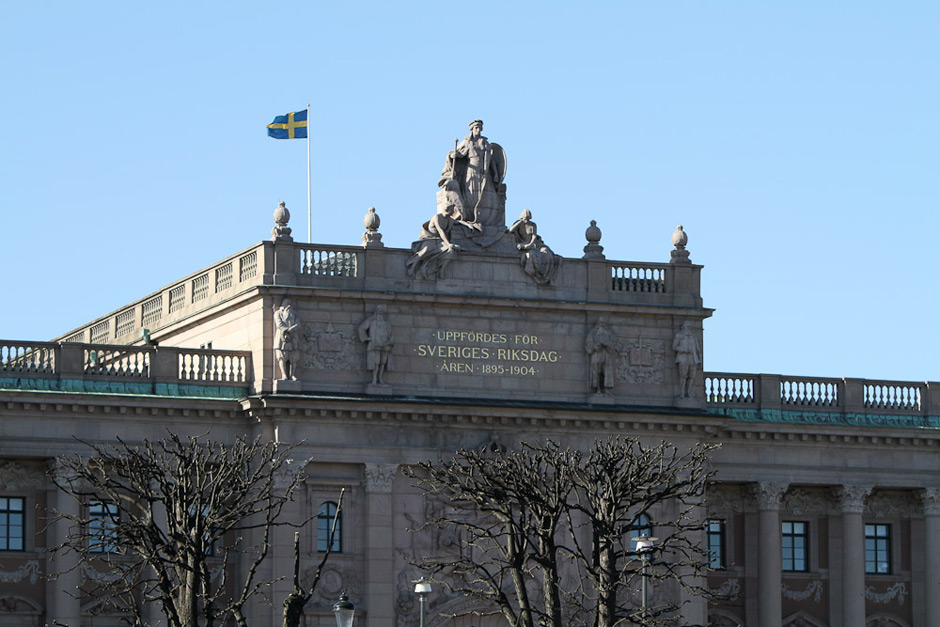
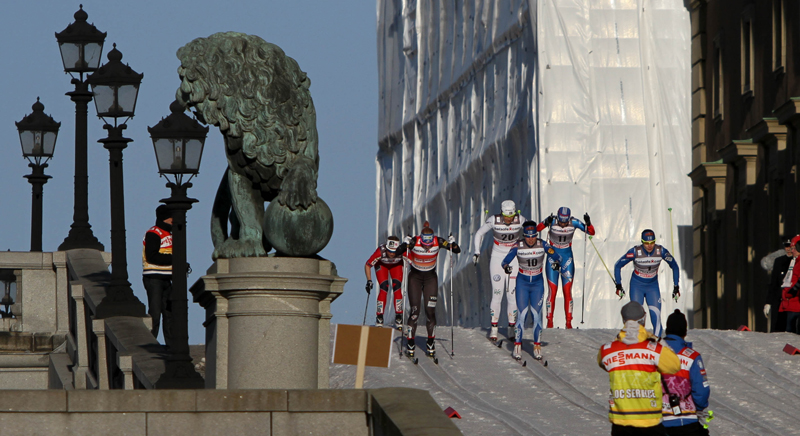
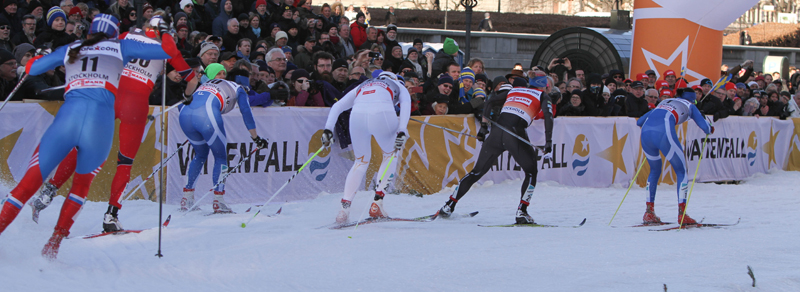
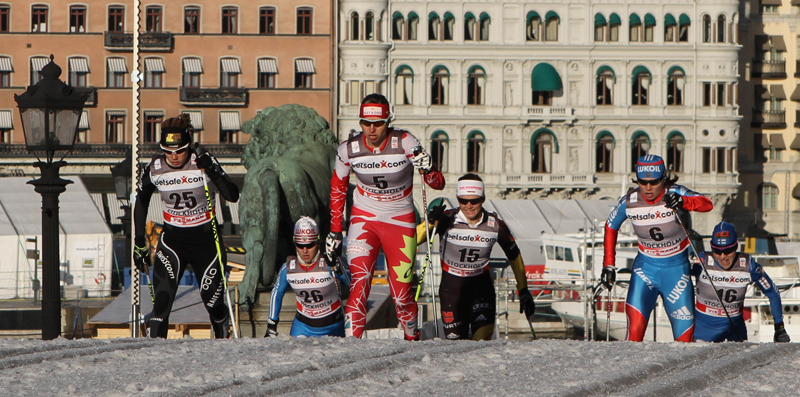
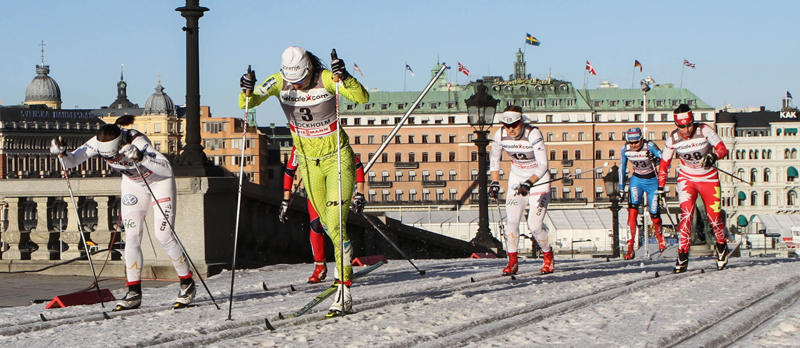
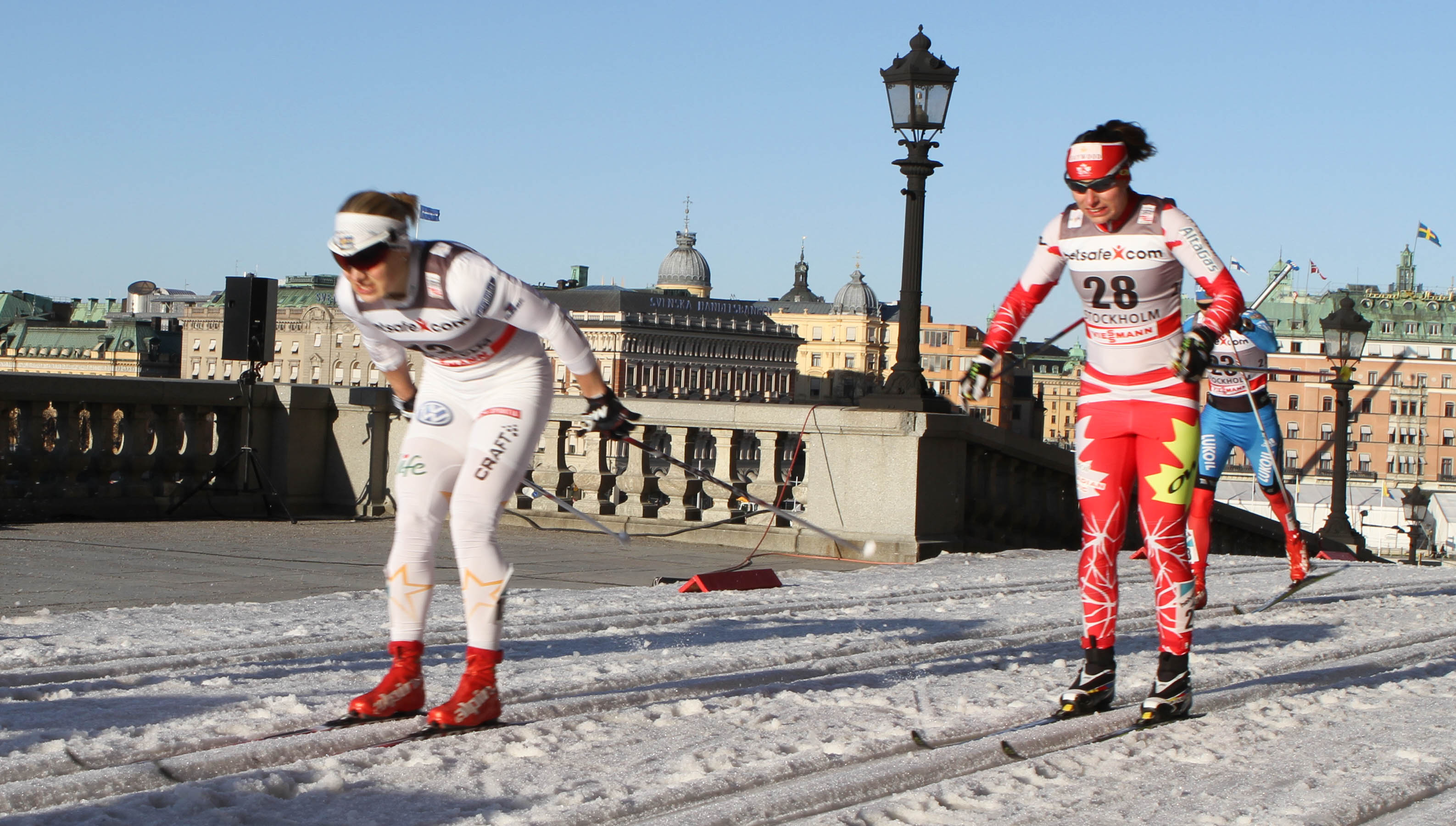
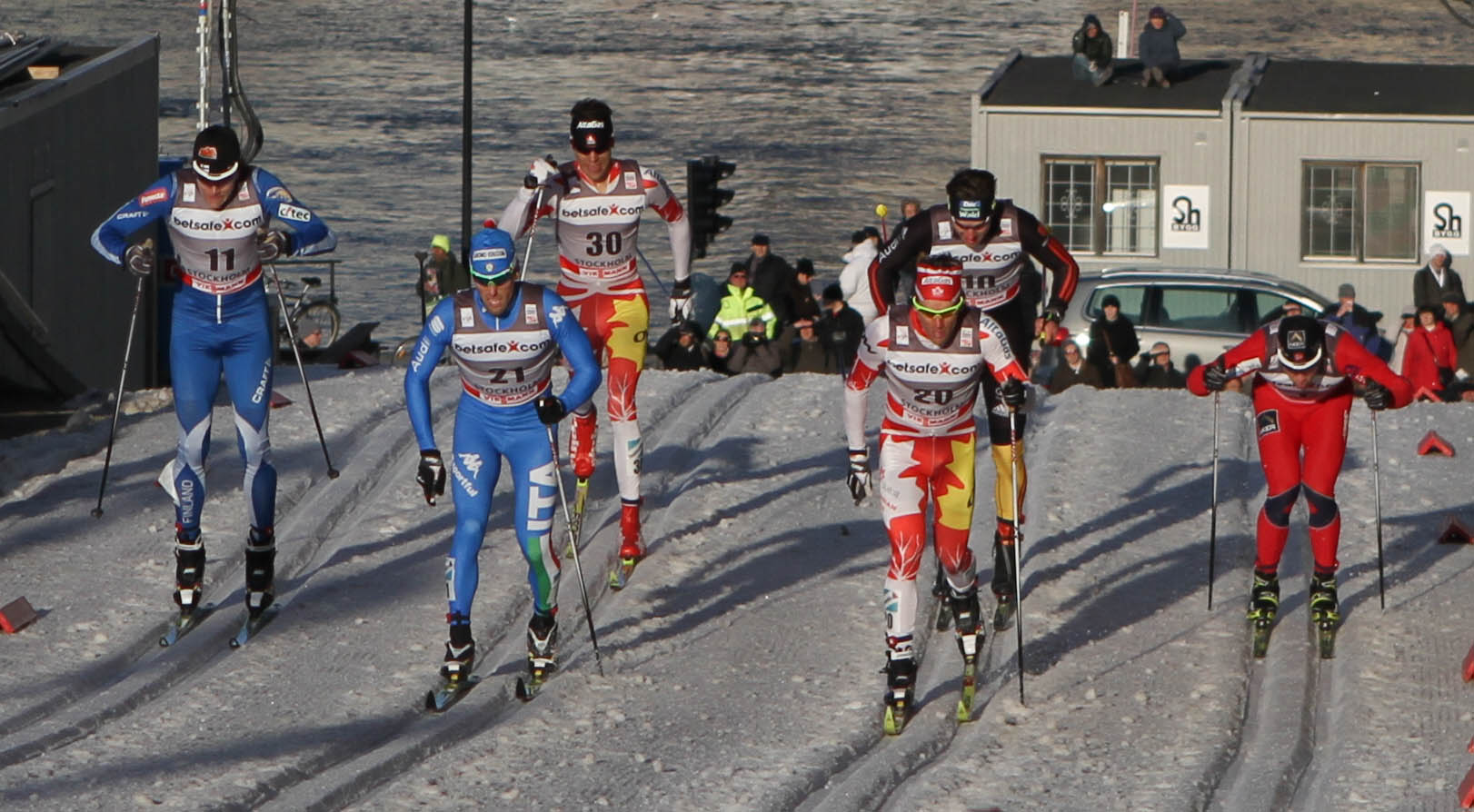
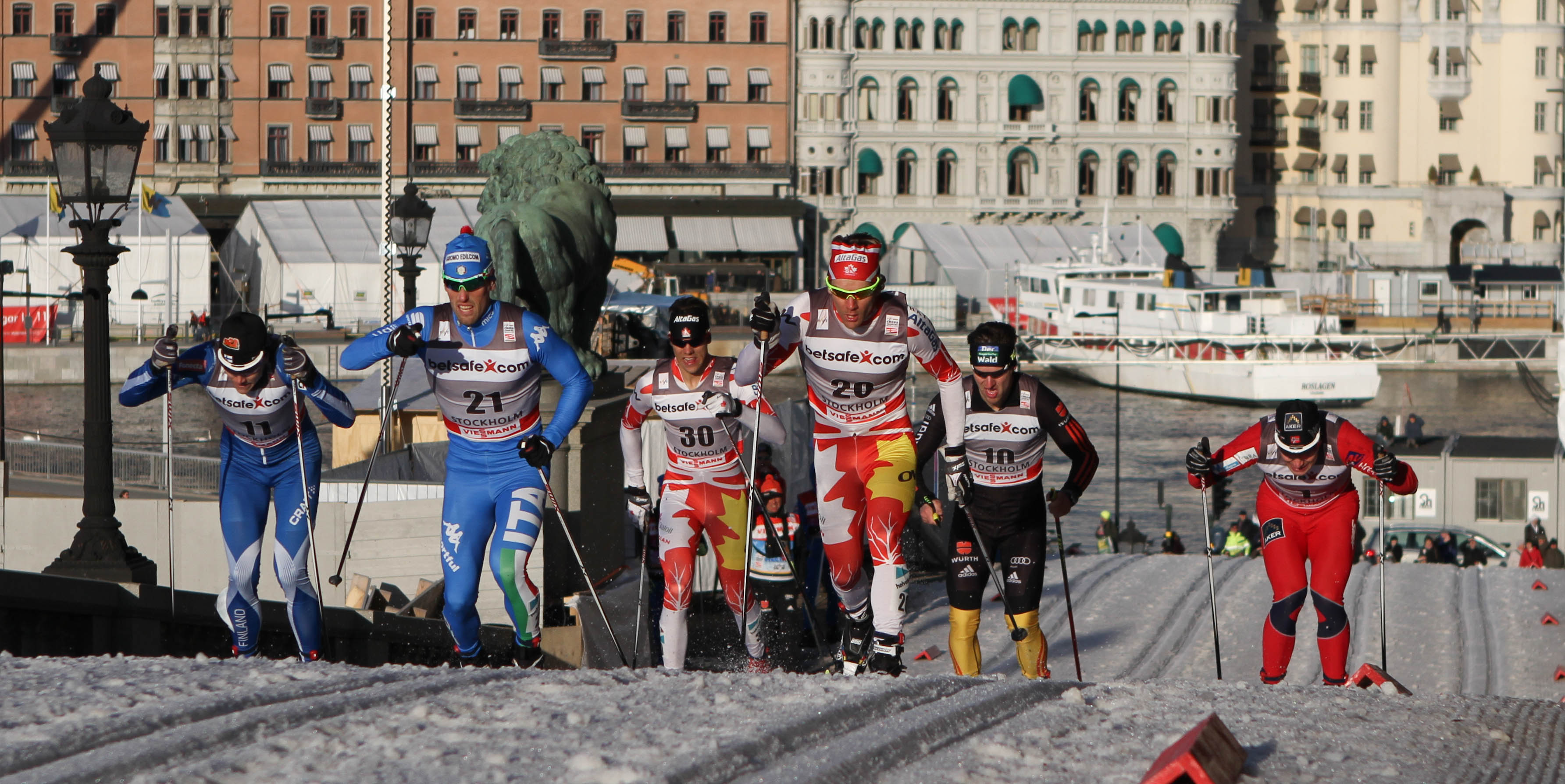
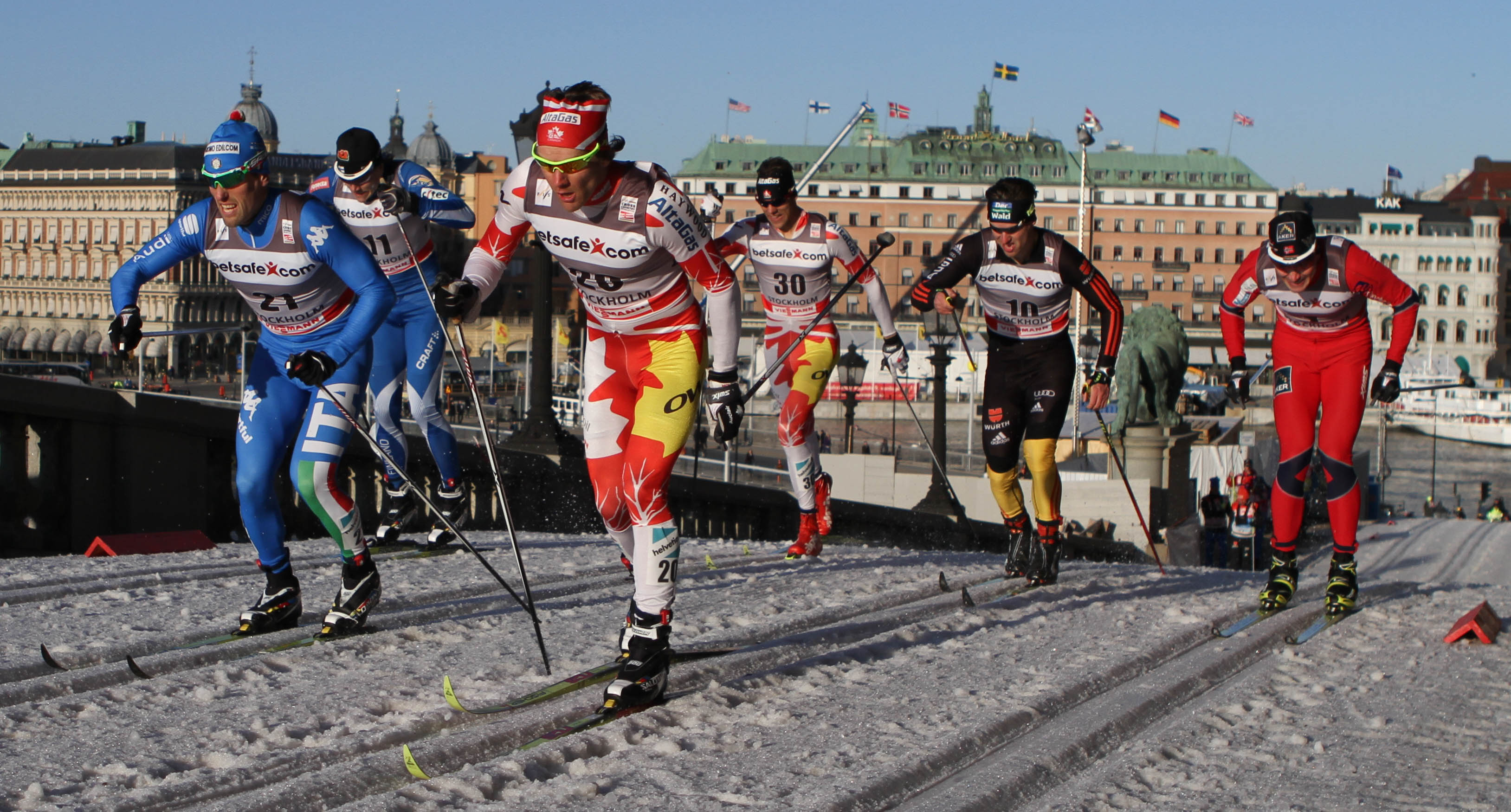
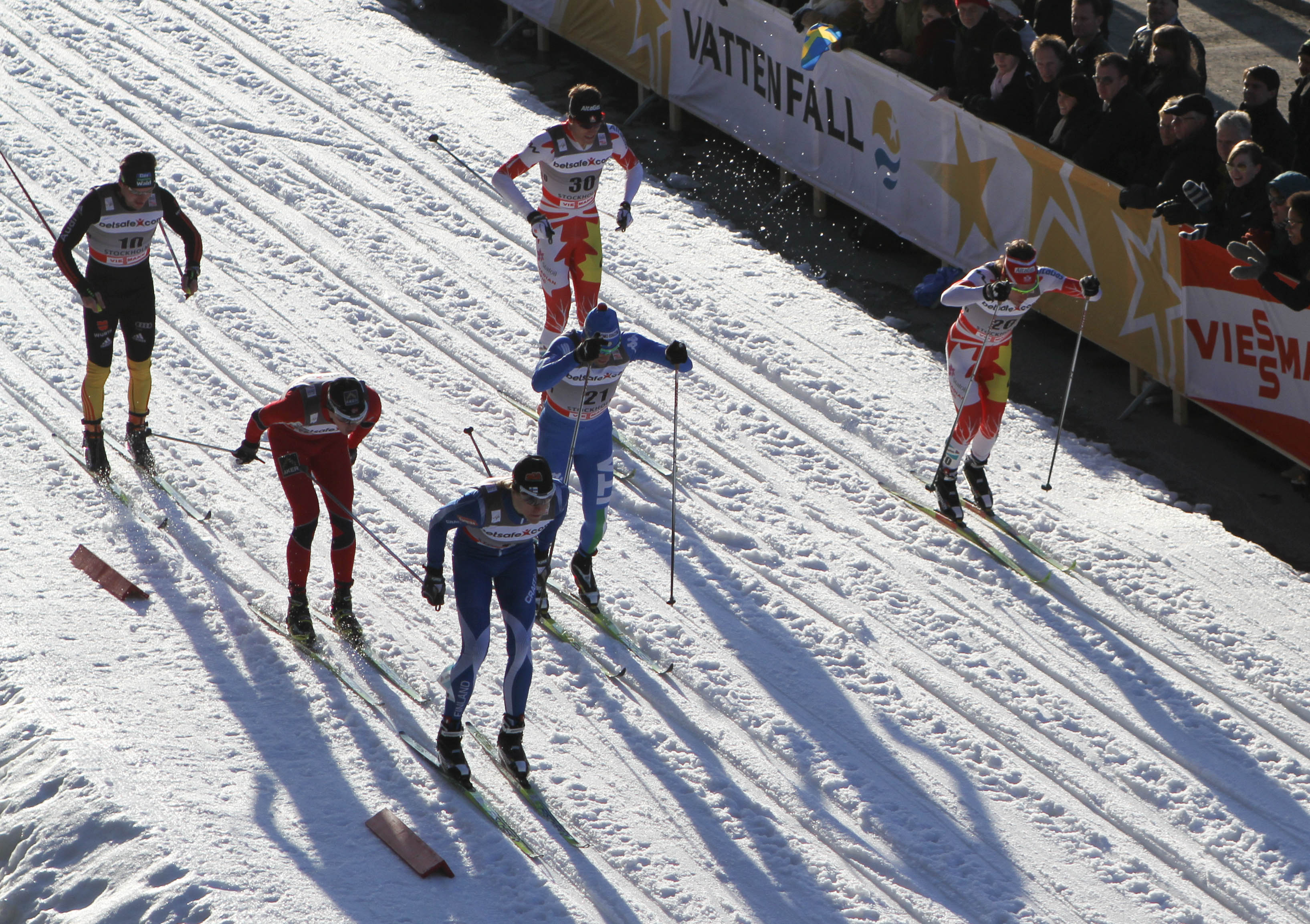
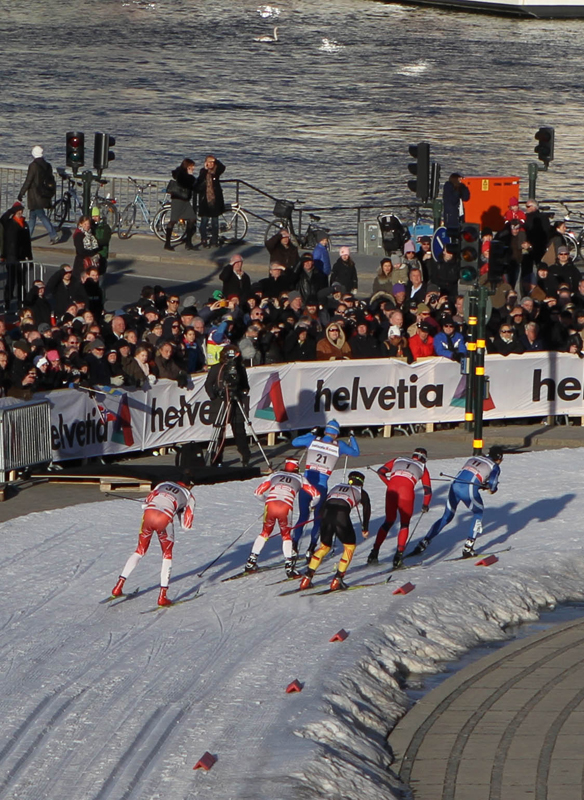
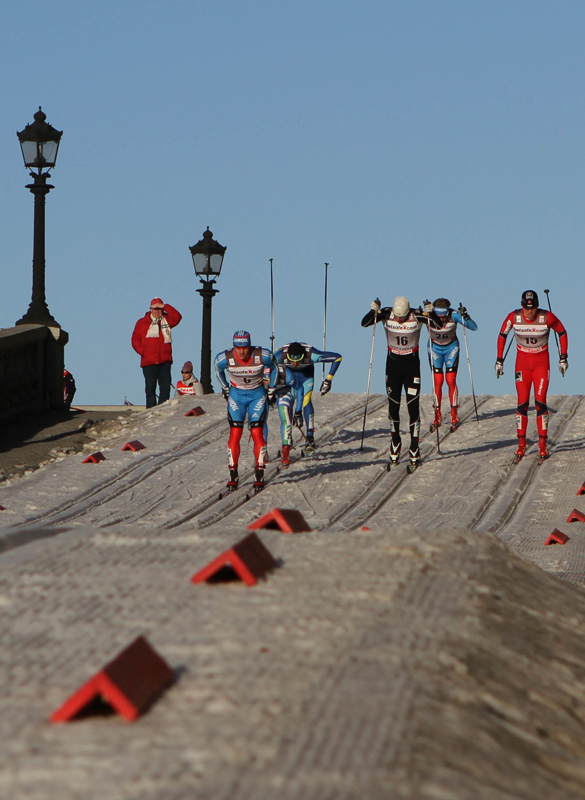
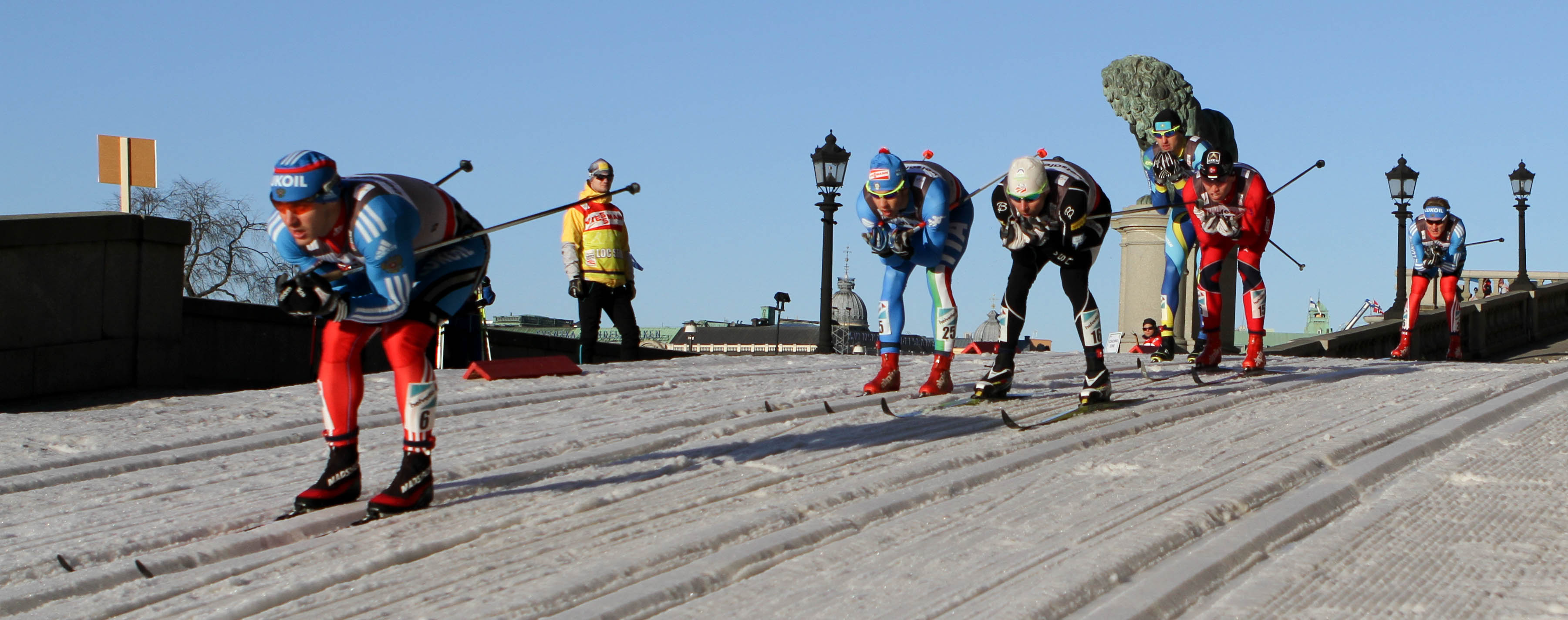
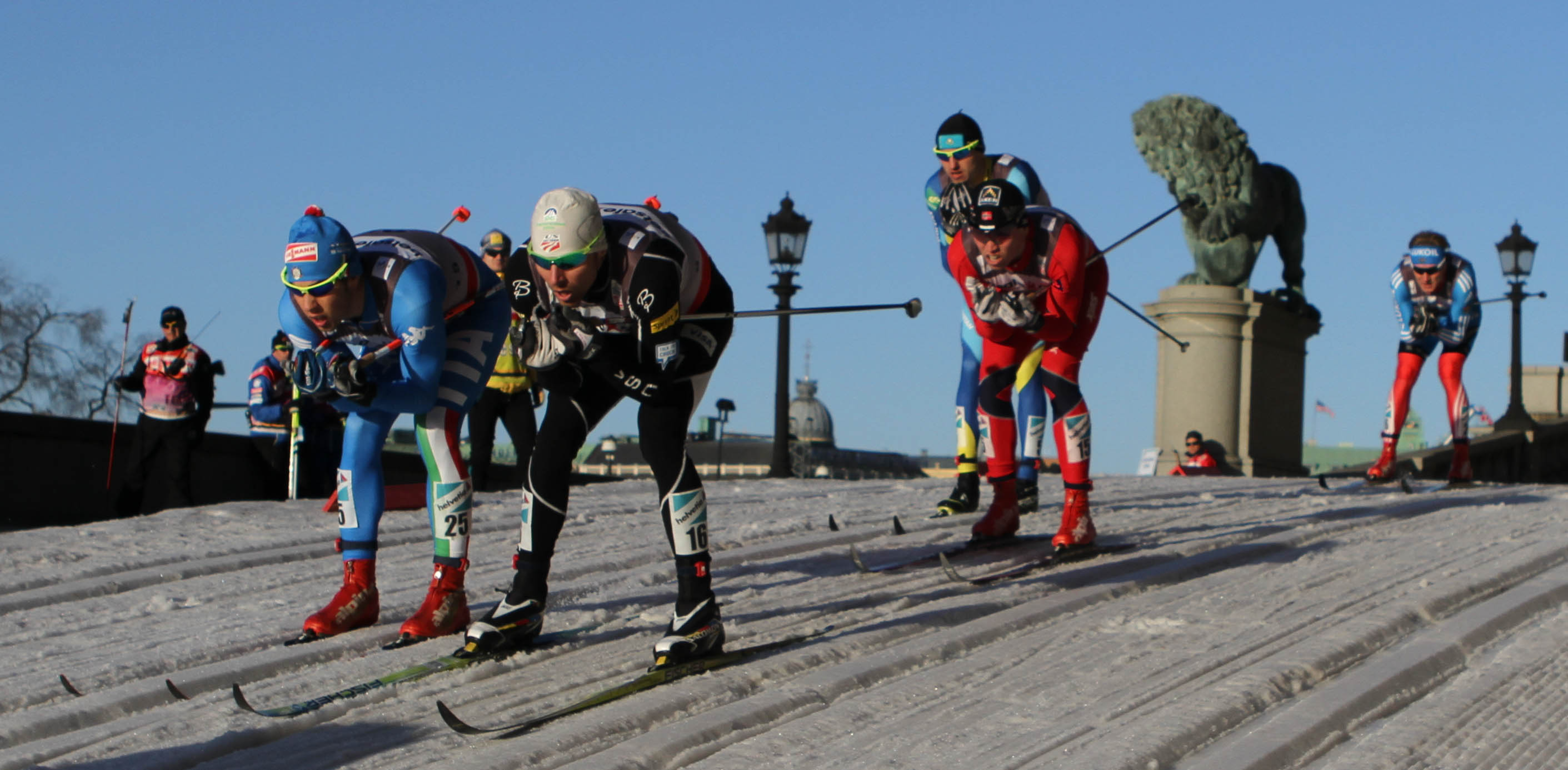
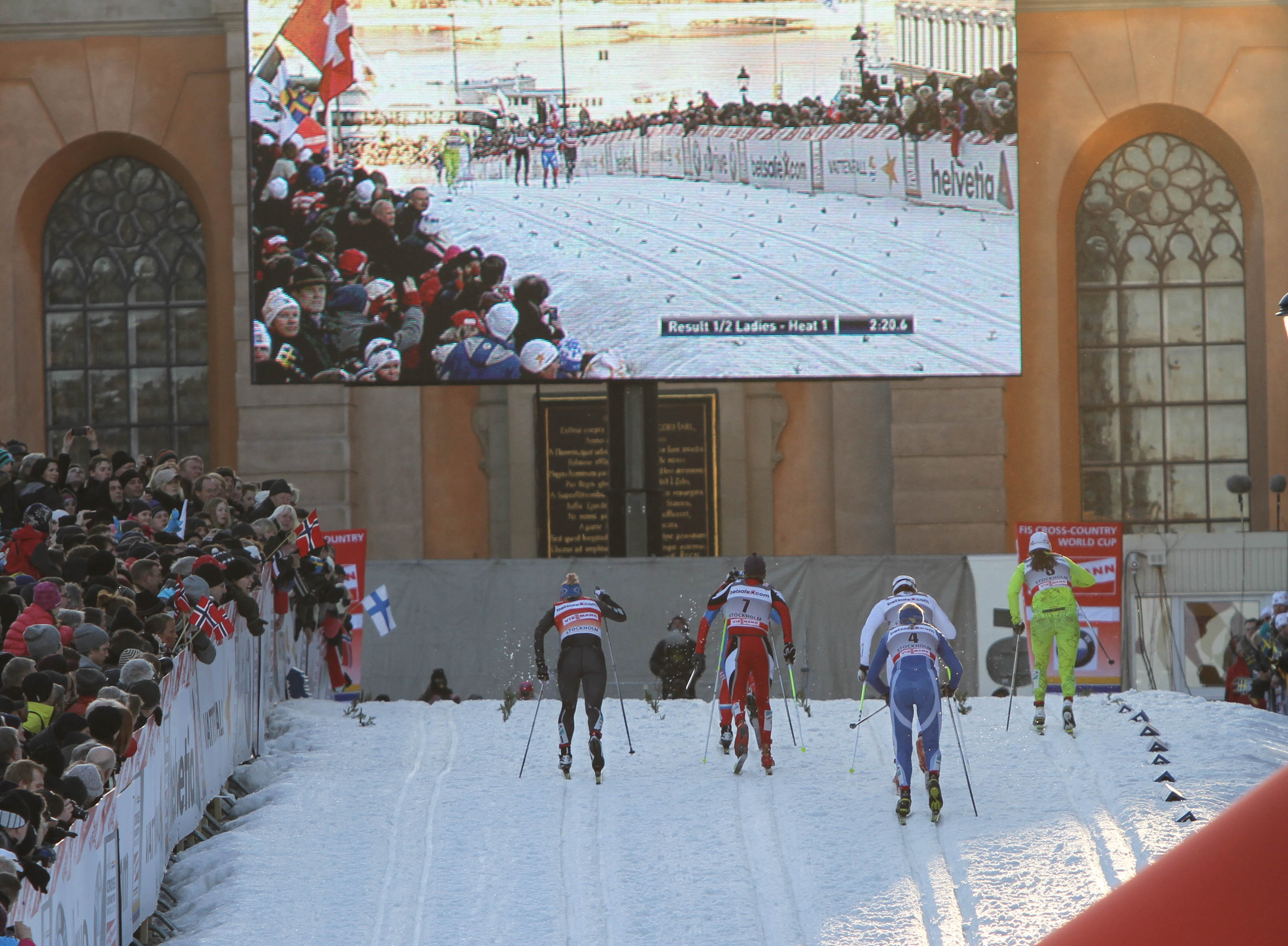
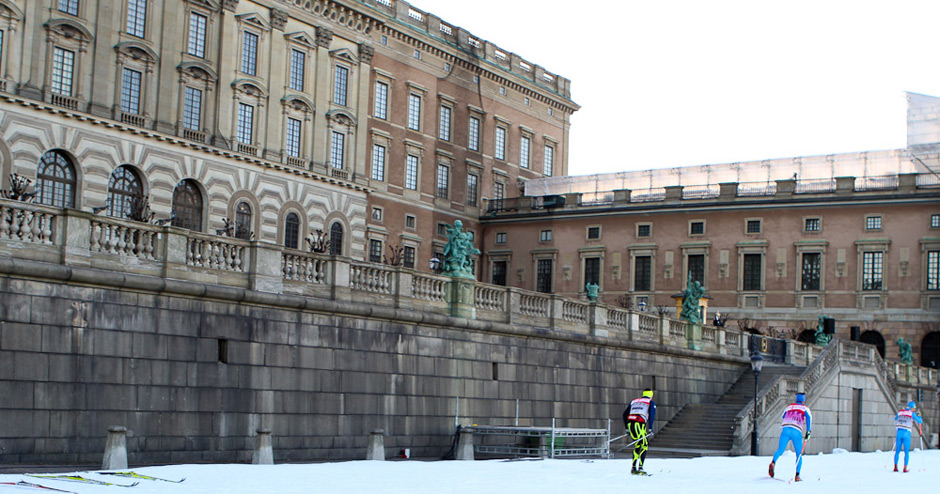
Stockholm’s Royal Palace as seen in 2012 during FIS Cross Country World Cup Finals.
Stockholm’s bid is moving along quietly, with Latvia planning housing for its existing sliding centre at Sigulda, 680 kilometers and a ferry ride away from Stockholm. Sweden has most of its facilities in place already and appears to have the least building costs of the candidates. Sweden’s bid currently has no official support from any level of government, which is partially why it’s been less visible. Sweden’s September federal election has added some uncertainty, with the far right making large gains and the prime minister losing a vote of confidence on Sept. 25. It is not clear that a stable coalition will form, which brings more uncertainty to the process of gaining political support and funding.
More on the 2026 candidates
Robert Livingstone of gamesbids.com wrote a good summary of bid politics before the announcement of the final three.
The Canadian Broadcasting Corporation (CBC) asked some experts to rank the three short-listed bids. The result is interesting, more for the reasoning that the ranking.
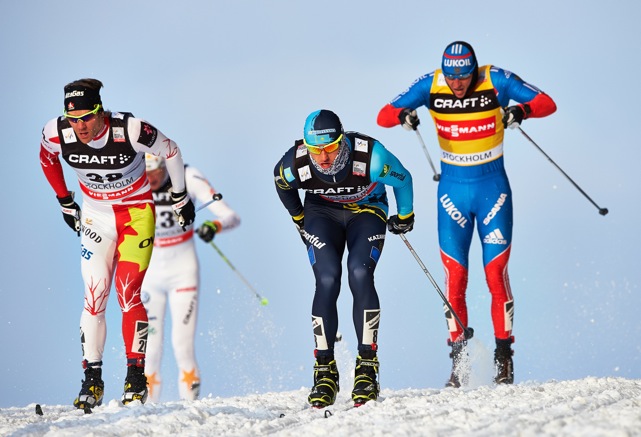
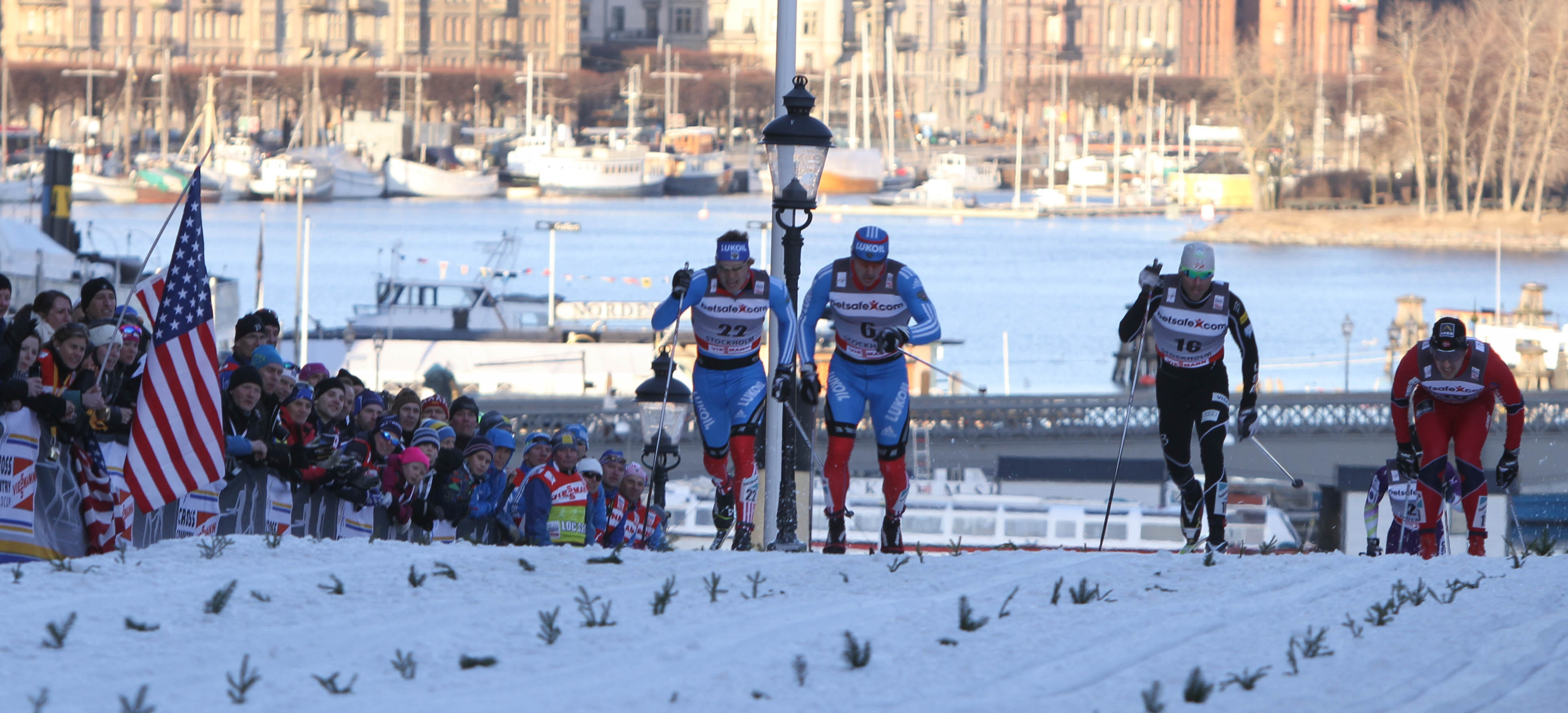
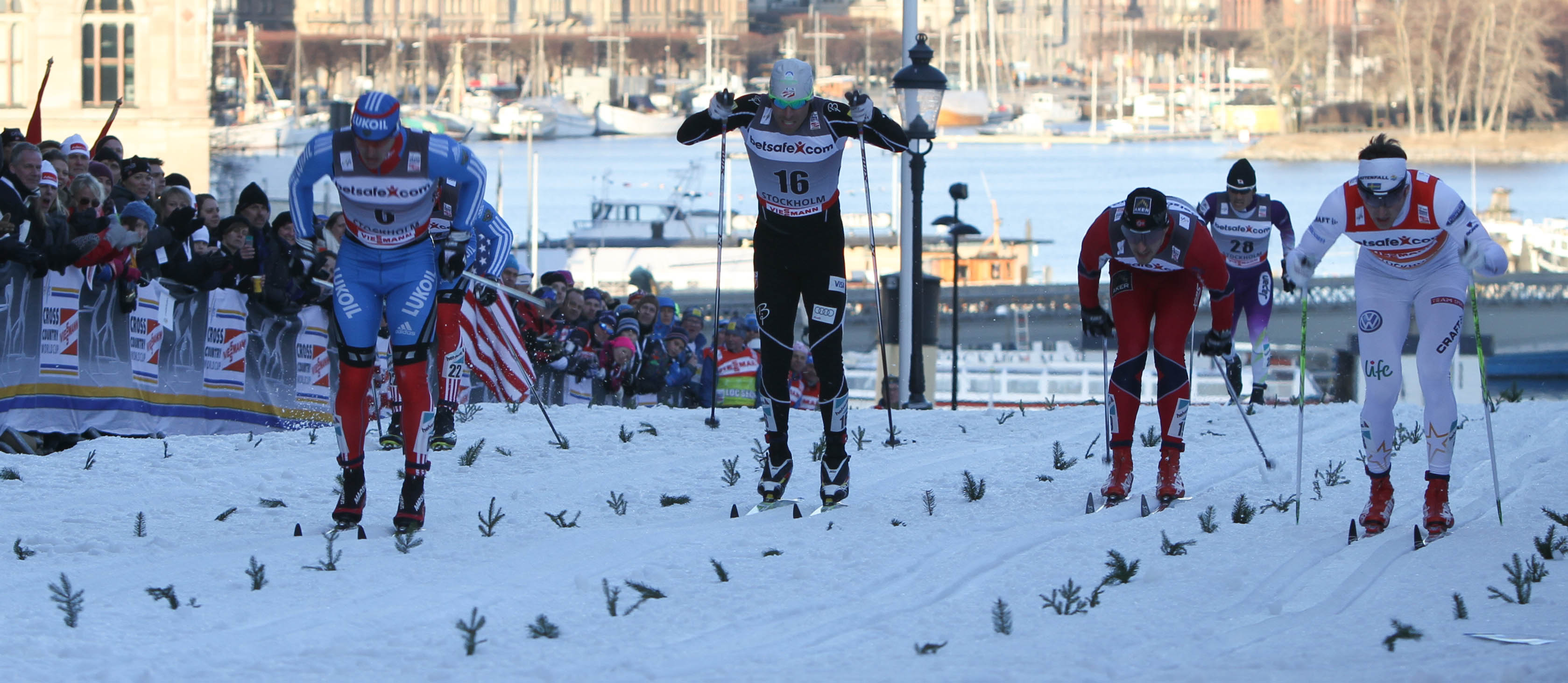
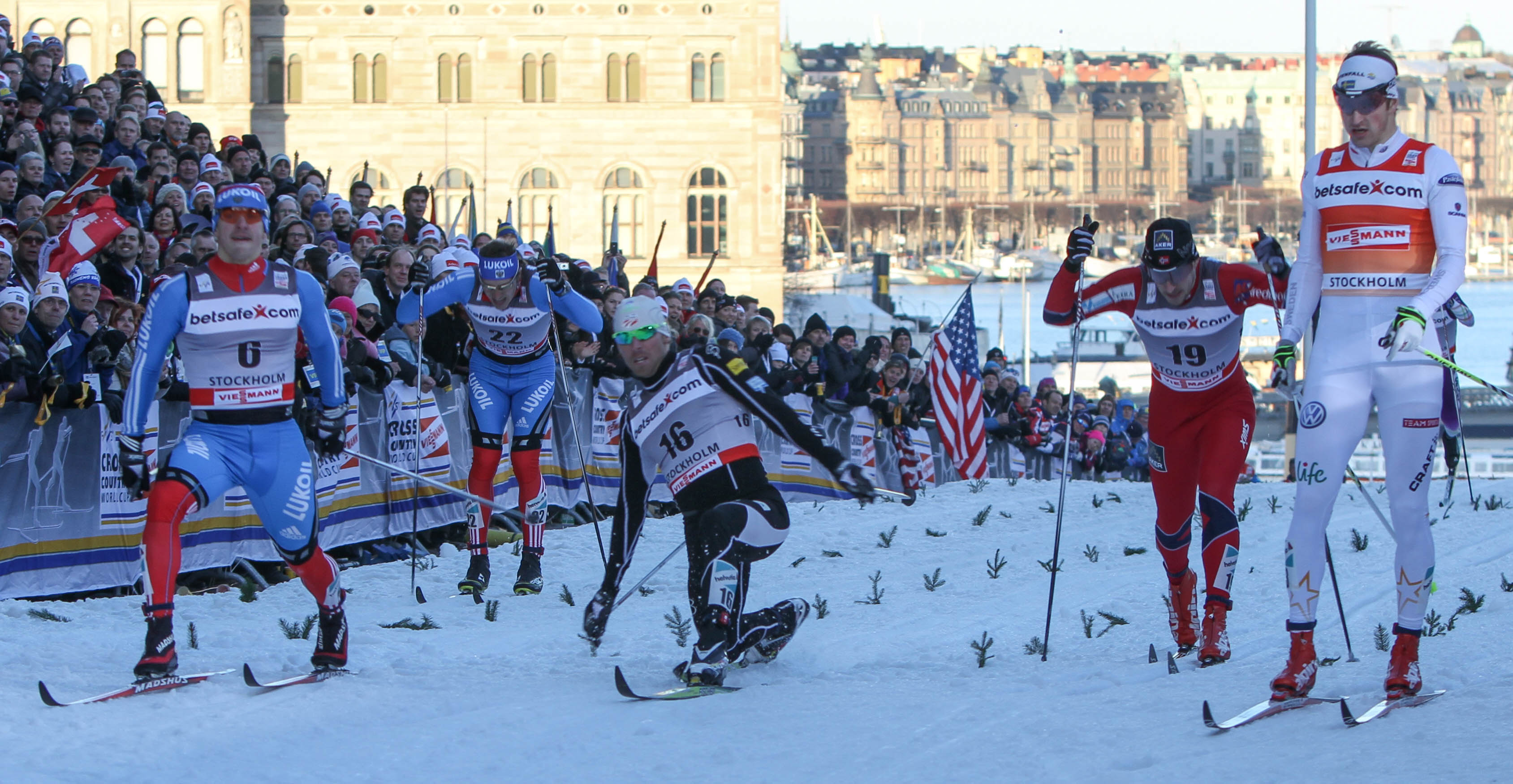
Russia’s Nikita Kriukov (27) celebrates his victory across the line during the men’s classic sprint final at the World Cup in Stockholm. Norway’s Ola Vigen Hattestad (2) placed second and Petter Northug (l) was third. (Photo: Fischer/NordicFocus)
A day of double-pole domination and some unlucky mishaps on a sloppy and warm course made for an interesting lineup in the men’s 1.2-kilometer classic sprint final in Stockholm.
At the start of the men’s classic sprint final at the Royal Palace, there were only was only two interruptions of the imposing red lineup of Norwegians: Frenchman Baptiste Gros and Russian Nikita Kriukov, the only two who could try to prevent a Norwegian sweep. This would be a tall order against Norway’s Petter Northug, Finn Hågen Krogh, Ola Vigen Hattestad, and Sondre Turvoll Fossli.
Although changes were made to the course to include another hill and encourage striding, it did not deter all of the men’s field from double poling the course. The decision to gut it out on skate skis proved to be rewarded through the heats amid deteriorating conditions as a large portion of the top 30 in the heats, including the final, were composed of racers who opted to double pole. Only one finalist, Fossli, chose to race on kick wax.
The Stockholm city classic sprint men’s podium on Thursday: with Russian winner Nikita Kriukov (c), Norway’s Ola Vigen Hattestad (l) in second and Petter Northug (r) in third. (Photo: Fischer/NordicFocus)
As the only strider, Fossli led the field up the first climb on the one-lap course. The field strung out, and Fossli continued to lead through the descent and the hairpin turn at the bottom. However, the pack swallowed Fossli on the flats and gentle descent that followed, and he faded to sixth.
Heading into the final straightaway, Hattestad took control, but Northug and Kriukov were closing. In the final 100 meters, Kruikov threw a crushing surge that neither could match. He passed both Northug and Hattestad in the final meters and established enough of a gap to celebrate across the line.
“I’m back!” Kriukov exclaimed at the finish.
With his first World Cup victory since December 2013 in Asiago, Italy, Kruikov had indeed returned. The 30-year-old Russian classic-sprint specialist had previously recorded a season-best 10th at the classic sprint in November in Kuusamo, Finland.
In Thursday’s qualifier, he narrowly made the top-3o cutoff in 27th, 7.4 seconds behind qualifying winner and fellow Russian, Alexander Panzhinskiy. But there’s a reason Kriukov had five previous World Cup victories and an Olympic gold medal in classic sprints.
In the heats, Kriukov automatically advanced to the semifinal after placing second in his quarterfinal, 0.2 seconds behind Fossli. He was the last lucky loser to advance from the first semifinal, after placing fourth behind Fossli, Hattestad, and Northug, respectively.
In the final, he outlasted Hattestad in second place by 0.69 seconds. Heading toward the finish, Hattestad thought he could hold him off.
“When I got halfway up the hill, and did not hear anyone who challenged me, so I thought actually I had it,” Hattestad told NRK, according to a translation. “But then stiffened I bit and then came Nikita in an insane speed.”
“It feels good to be back on the podium again and this time in first,” Kriukov told FIS afterward. “I have skied well here before and I am happy to do it again in the soft snow today.”
The other lucky loser from the first semifinal, Northug followed up his classic-sprint win from last week in Drammen, Norway, with another podium in third, 1.16 seconds behind Kriukov. After the race, Northug was uncharacteristically complimentary.
“What he [Kriukov] did at the end today, was totally awesome,” Northug told NRK.
Kriukov was the highlight for an otherwise rough day for the Russian team. Panzhinskiy posted the top qualifying time by 0.55 seconds over Hattestad in second, but broke a pole in his semifinal and did not advance. Sergey Ustiugov crashed hard in his quarterfinal after posting the third-fastest qualifier, 2.28 seconds behind Panzhinskiy. Hitting the homestretch, Ustiugov appeared to cross his skis when jumping into a track, but nobody else was involved in the crash.
Harvey Narrowly Misses Final; Hamilton and Newell in the Heats
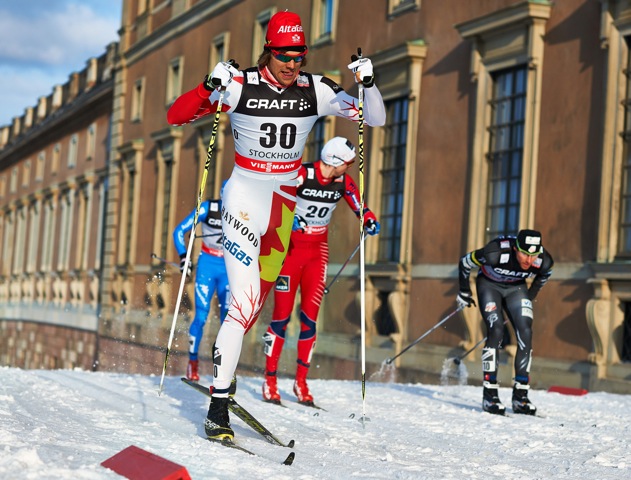
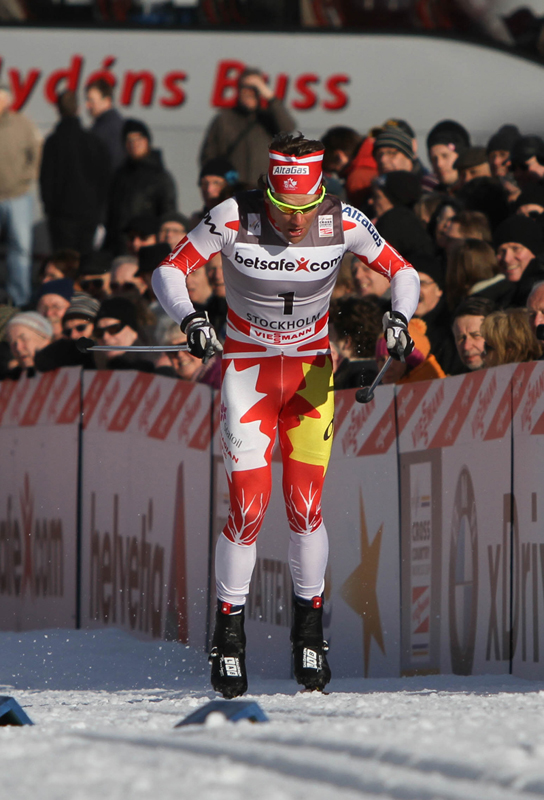
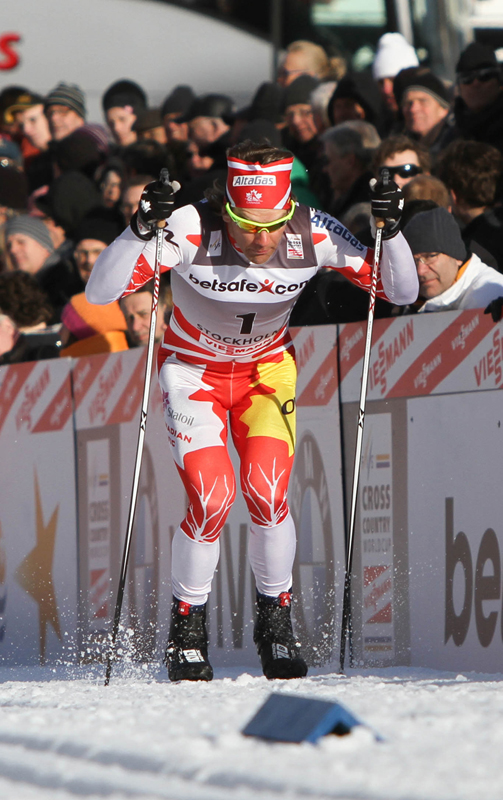
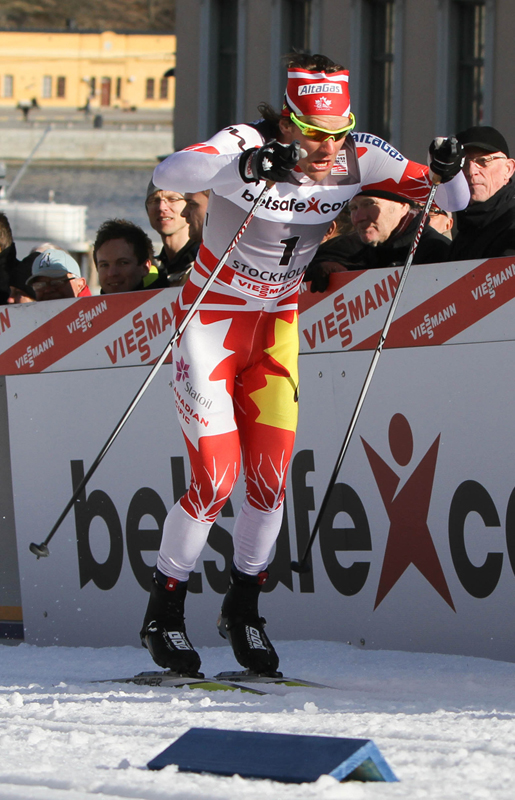
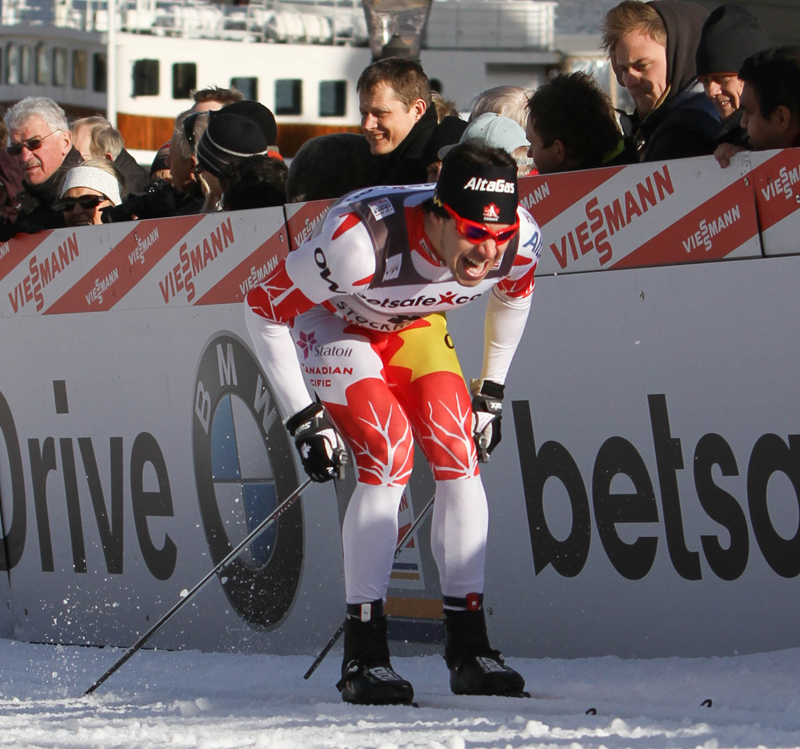
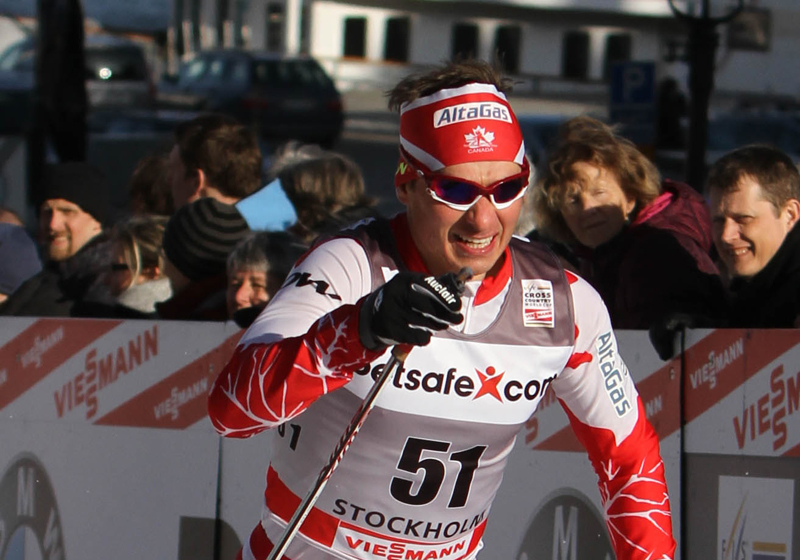
Canada’s Alex Harvey racing to 20th in the qualifier at Thursday’s World Cup classic sprint in Stockholm. Harvey made it to the semifinals, where he placed third in his heat for seventh overall. (Photo: Fischer/NordicFocus)
As Canadian Alex Harvey charged to the line of the second semifinal, the potential of advancing to the final hung tantalizingly close. Harvey was third entering the homestretch, within reach of Gros and Krogh, but the pair pulled away along with Harvey’s shot at automatically advancing.
Harvey lunged for the line in third, finishing 1.11 seconds behind Gros in first and 1.08 after Krogh in second, but the second semifinal was nearly four seconds slower than the first. Gros’s winning time of 2:47.82 was slower than both the lucky loser times of Northug in third (2:45.01) and Kriukov in fourth (2:45.03) from the first semifinal.
Harvey’s finish placed him seventh in the overall standings for his best sprint result this season.
“Sprinting hasn’t been going super for me this year,” Harvey wrote in an email after Thursday’s race. “Today was the first day I made the semis, but still, every time I put a bib on, I’m racing for the podium.”
“Alex skied really well through all the rounds and looked really strong, especially his straightup double pole,” said Canadian head coach Justin Wadsworth said on the phone.
Harvey chose to double pole through the rounds and it paid off as he put together three strong races and narrowly missed qualifying for the final.
“I felt good today, but nothing special,” he wrote. “My lungs are still not 100% recovered from the 50km [last Saturday at Holmenkollen]. I did feel like my double pole was holding up well.”
Harvey was the lone Canadian who reached the heats, qualifying in 20th (+6.72). Americans Simi Hamilton and Andy Newell advanced to the quarterfinals as well, qualifying in 21st (+6.79) and 26th (+7.40), respectively.
Harvey and Hamilton both raced in the fifth quarterfinal — Hamilton striding and Harvey double poling.
Simi Hamilton (U.S. Ski Team) racing to 21st in the classic-sprint qualifier at the World Cup in Stockholm on Thursday. He went on to place 22nd overall after finishing fifth in his quarterfinal. (Photo: Fischer/NordicFocus)
Although he considered double poling the course, Hamilton chose the technique that he felt fit his strengths.
“When it is not obvious that double poling is going to be faster than everything else, I lean towards striding,” Hamilton said on the phone afterward. “I had a really good race last week in Drammen on klister skis when about half the field was double poling so that gave me confidence.”
Hamilton’s plan for Stockholm was to power up the last hill to put himself in contention to advance. However, he ran out of time to close gaps that had opened on the flats and gradual descent.
“I tried to make something happen in that last 200m, my kick was really good and I still felt really good energy wise but I just ran out of room and couldn’t close the gap,” Hamilton explained.
Ahead of Hamilton, Sweden’s Oskar Svensson won the quarterfinal by 0.78 seconds over Harvey in second, as both advanced to the semifinal. Hamilton placed fifth, 2.21 seconds after Svensson, and also behind Finland’s Matias Strandvall in third and Norway’s Even Northug (one of Petter’s younger brothers) in fourth. Overall, Hamilton finished 22nd on the day.
Andy Newell (U.S. Ski Team) racing to 26th in the classic-sprint qualifier at the World Cup in Stockholm on Thursday. He went on to place 23rd overall after finishing fifth in his quarterfinal. (Photo: Fischer/NordicFocus)
Newell found himself in a stacked first quarterfinal, which included eventual finalists Fossli, Kriukov and Gros. Although both Ustiugov and Finland’s Toni Ketelä advanced to the semifinals as lucky losers from that quarterfinal, Newell finished a distant fifth after making a last-minute decision regarding technique.
“In the quarterfinals I was prepared to double pole the heat but switched to kick wax right before the start since it was looking like I would have a majority of striders to go up against,” Newell wrote in an email. “Who knows if it was the right call, but for whatever reason my Klister was dragging a bit on the flats which was frustrating.”
While Newell was far enough behind Ustiugov to avoid his trip-up before the finish and ski around him into fifth (+9.44), it wasn’t enough to advance and he placed 23rd overall.
Canada’s second skier, Len Valjas also chose kick wax and ended up 45th in the qualifier, 10.72 seconds out of first and 2.83 seconds out of the top 30.
Reese Hanneman and Erik Bjornsen also competed for the U.S., finishing 66th (+17.64) and 69th (+18.87), respectively.
Canadian Devon Kershaw leads Kazakhstan’s Alexey Poltoranin (second from r), Russia’s Alexander Legkov (r) and Sweden’s Daniel Richardsson during Wednesday’s 1.1 k classic sprint quarterfinal at the World Cup Finals in Stockholm. (Photo: Fischer/Nordic Focus)
For every Canadian qualifier except Dasha Gaiazova, the quarterfinals of Wednesday’s 1.1-kilometer classic sprint — the first race of the 2013 World Cup Finals — were a second chance, an opportunity to get it right.
Gaiazova, 29, had qualified in a career-best fourth, 2.24 seconds behind Finnish winner Anne Kyllönen (who clocked 2:45.63)at the last city sprint of the season in Stockholm. It was a great feeling, and Gaiazova carried the momentum into her heat to end up 16th overall.
Meanwhile, Canadian World Cup teammates Devon Kershaw and Lenny Valjas were scrambling for an edge – something that would make them faster than their 28th– and 30th-place qualifier finishes. Double poling the relatively flat 1.1 k course on skate skis, Kershaw made it through in 28th, 7.88 seconds off Norwegian Eldar Rønning’s top qualifying time of 2:21.52. Valjas opted to stride and tied Marcus Hellner for 30th (+9.63), advancing with a better sprint ranking.
Canadian Lenny Valjas takes on American Andy Newell (r), Norway’s Tomas Northug (c) and Italian Giorgio Di Centa in the quarterfinals of Wednesday’s World Cup Finals 1.1 k classic sprint in Stockholm. The only one in his heat on classic skis, Valjas went did not advance in fourth and placed 20th overall. (Photo: Fischer/Nordic Focus)
“It was pretty close,” Valjas recalled.
But there wasn’t much he could do. A lean 6-foot-6, Valjas knew his strengths weren’t in double poling – even if everyone else was doing it. He tried it warming up, but could tell by the first climb grinding it out wasn’t going to work.
“I don’t know if I was too heavy, my poles were sinking in, and it just didn’t feel good,” Valjas said. “For now, I’m not strong enough to double pole this course.”
The 24-year-old went with the one option he had and stuck with the classic skis. He kicked off the first men’s quarterfinal of the afternoon in strong form, taking charge up the first hill against the likes of Norway’s Tomas Northug, American Andy Newell and Rønning.
Up and over, Valjas continued to stride while everyone else double poled into the descent. Valjas held his own on the downhill, moving to third on the first technical corner, and strided alongside Northug to lead the following incline.
But classic skis could only take him so far, and Valjas dropped toward the back on the final straightaway rise to the finish. Northug stayed in front, Newell surged past Valjas, and Rønning got back in the mix ahead of him. Valjas finished fourth, 1.73 seconds behind Northug in first.
“I was hoping to be different and hoping it would work out, but this time it didn’t,” Valjas said . “But that was my only choice.”
He did not advance and ended up 20th, good enough for eighth place in the overall sprint rankings, which were finalized Wednesday. Last year, Valjas was 12th in the Sprint Cup.
With 10 days left until he’s surfing somewhere tropical, Valjas remained positive about his result.
“I’m not too upset, it’s just the conditions didn’t suit me at all today,” he said.
Kershaw in Wednesday’s 1.1 k classic sprint qualifier, where he advanced in 28th. (Photo: Fischer/Nordic Focus)
Kershaw faced a similar dilemma in the fifth quarterfinal. He recalled being up against the likes of this year’s World Cup sprint champion, Emil Jönssonof Sweden, Norway’s Eirik Brandsdal, and Alexey Poltoranin of Kazakhstan, and two distance skiers: Sweden’s Daniel Richardsson and then-overall World Cup leader Alexander Legkov of Russia (who was ultimately bumped to second by Stockholm sprint winner Petter Northug).
Unsure whether the others would go for all-glide again, like most of the top men did in the qualifier, Kershaw focused on himself. He had narrowly qualified on skate skis so why not switch to classic? He had a feeling Brandsdal, Jönssonand Poltoranin would double pole, but wasn’t so sure about Richardsson and Legkov. When he saw everyone but him line up on freestyle boards, Kershaw was a bit surprised.
“But I don’t regret making that choice,” Kershaw said. “I double poled in Drammen and ran out of gas hard in the last 100 meters and consequently ended up a very disappointing 49th so I was happy to make the heats, but I barely made it.”
Kershaw used his second chance and good feelings from Saturday’s Holmenkollen 50 k – where he was 29th on a tough waxing day – as fuel, rising to fourth at the top of the first hill in the quarterfinal.
He maintained his good positioning on the final downhill and into the headwind on the following straightaway. By the next descent, however, Kershaw said he didn’t have much of a chance. With significantly less glide, he dropped behind on the gradual downhill before the final corner into the stadium. He needed to be in contact, Kershaw said, and was left running from the back toward the finish.
He picked off two places, passing Richardsson and Legkov to end up fourth, 1.79 seconds behind Brandsdal in first.
“I was surprised at how fast the hill ended,” Kershaw recalled. “I’m like, ‘Oh, I’m making up ground, I’m making up ground, I might be able to catch third.’ Second might have been a stretch, but I was coming back on [Poltoranin in third] quite a bit.
“All of a sudden, it flattened out a bit and I was at the finish line,” he added. “I’m like, ‘No! I’m not even tired and it’s over.’ ”
Kershaw ended up 18th, his best result since placing eighth in mid-February at a World Cup classic sprint in Davos, Switzerland. While it was a good sign, the 30-year-old veteran and 2011/2012 overall World Cup runner-up thought it was a little too late.
“I have three more races in my season,” Kershaw said. “I’m super motivated, I still want to ski race to the best of my abilities, but I’d be lying if I said I wasn’t already going through what I did wrong this year.
Dasha Gaiazova at last year’s World Cup classic sprint in Drammen, Norway, where she was eighth to tie a career best. She notched another personal best on Wednesday in Stockholm, where she was fourth in the classic sprint qualifier.
“I’m a far cry from second in the overall and second in the distance cup this year,” he added. “Two years ago, [Alex Harvey and I] were world champions and I was eighth in the overall. This year was the worst I’ve had in a long time. I feel OK for this weekend, but it doesn’t matter how good this weekend goes, this season was a disaster so I’ve got to go back to the drawing board.”
Gaiazova, who was ultimately 16th after placing fourth in her quarterfinal, had a few thoughts about what she could’ve done differently. She started off in front with Finland’s Mona-Liisa Malvalehto and Russia’s Elena Soboleva, and stayed there when Marit Bjørgen charged up another lane toward the finish. Malvalehto snuck inside and ahead on the last corner, passing them both and skiing away to win the heat, 0.43 seconds over Bjørgen. Maiken Caspersen Falla of Norway was third, 0.99 seconds back, and Gaiazova finished fourth (+3.02).
“If I could do it over again I would have attacked from the front and tried to break away,” Gaiazova told Cross Country Canada. “The body felt amazing. My skis were fast, but I went light on the kick wax.”
That turned out to be a problem.
“I had no kick for the uphill, but we thought I’d be much faster in the double poling section,” she added. “The other girls just had more kick and were stronger than me up the hill. I am happy, but want to come back here next year and get on the podium.”
Just outside the top 30, Alex Harvey missed qualifying by 0.23 seconds. He was 32nd, 9.86 seconds back from Rønning.
“I’m feeling good about the effort, just super frustrated about some pole issues I had 10 sec before the start!” Harvey wrote. “That’s when I realized that the basket on my right pole was on backwards.”
Fortunately, Canadian head coach Justin Wadsworth was nearby and gave him a spare. Unfortunately, it wasn’t the right size and had a “pretty basic” unadjusted strap.
Double poling on skate skis, Harvey felt strong up the first climb, but the pole became a factor in the more gradual sections.
“I felt like I lost time on the high speed section because of the pole thing,” he wrote. “The track was in really poor conditions. It just never really settled … loose, cold, dry snow. Testing kick wax we could barely make it up the first hill. Guys on classic skis couldn’t really use it as an advantage up the hills today.”
If you ask him, Wednesday’s sprint – which included high winds that blew out the tracks – “100%” depended on conditions, and they weren’t necessarily fun.
For Michael Somppi of the Alberta World Cup Academy (AWCA), who earned World Cup Finals starts as the NorAm leader, the experience of his first World Cup city sprint was what he’d remember. Somppi finished 48th in the qualifier after double poling on skate skis as well.
“The conditions were slow, but the first big climb on the course was so broken down that it was difficult to kick classic skis up it,” he wrote. “Although my result wasn’t anything amazing, I finally felt good pushing my body today. I think that’s a good sign leading into the prologue and distance races.”
World Cup Finals continue with freestyle prologues on Friday, 10/15 k classic mass starts on Saturday, and 10/15 k freestyle pursuits on Sunday.
“My goal is simply to have a race I am satisfied with in terms of how I felt,” Somppi added. “I still don’t feel I have had any really good performances in World Cup races to date and I hope to change that this weekend.”
The women’s NorAm leader, Emily Nishikawa (AWCA) finished 47th, and Canadian World Cup distance specialist Ivan Babikov placed 50th.
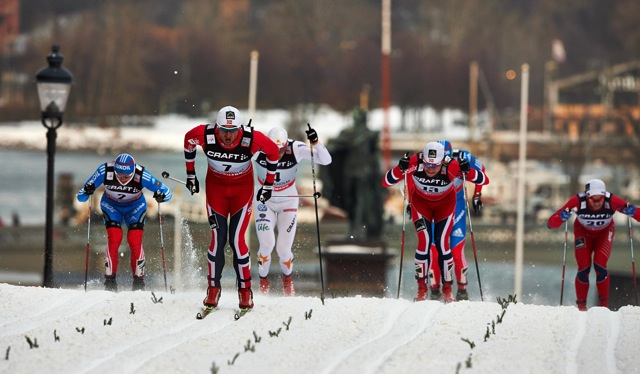
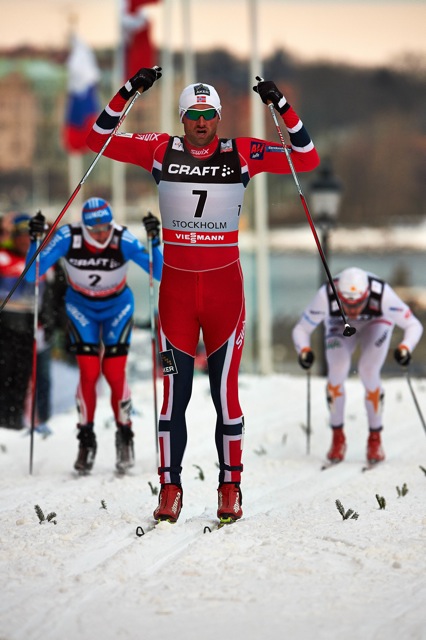
Petter Northug (7) takes on Russia’s Nikita Kriukov (l), Teodor Peterson of Sweden, Norway’s Eirik Brandsdal (13) and Tomas Northug (r), and Russian Sergey Ustiugov. (Photo: Fischer/Nordic Focus)
It’s hard to look manly when you’re hiding behind dividers to get out of the wind, but most of the finalists were doing so at the start of Wednesday’s World Cup Finals 1.1-kilometer classic sprint in Stockholm.
Petter Northug probably didn’t think much of it, nor the irony of seeking shelter behind an advertisement for a heating-systems manufacturer, Viessmann, also a World Cup sponsor.
Like his five competitors, with two Norwegian teammates, Northug was cold. It was a few degrees below freezing with a wind chill that made standing in downtown Stockholm almost unbearable. They had to race in it.
The six men, including Northug’s younger brother Tomas, teammate Eirik Brandsdal, Sweden’s Teodor Peterson and Russians Nikita Kriukov and Sergey Ustiugov, forged ahead into the blustery conditions just as they had done before. However, the wind had picked up and snow became more unsettled as the afternoon heats wore on.
Petter Northug celebrates his classic sprint victory in Stockholm on Wednesday. (Photo: Fischer/Nordic Focus)
With the tracks blowing away with it, it gave the top men even more of a reason to go on skate skis, as many in the 53-man field did.
Not caring much about the start, Northug let the others lead for the first half of the final. He stayed out of trouble in last on the first 180-degree turn at the bottom of a long descent. On the following gradual incline, Northug moved to third behind Kriukov and Peterson, who led from the start.
The group remained tight, with Tomas slightly off the back in sixth. Heading into the final corner, his big brother picked up the pace, building steam gradually before punching it on the last turn.
There, Peterson (who had been issued a warning after obstructing Petter Northug in the quarterfinals) held his ground in the middle, while the older Northug charged ahead.
It didn’t matter what Northug looked like in the minutes or even hours before – this was the man people remembered. Exploding upward with every double pole, the 27-year-old leaped off the ground and increasingly farther ahead of his competitors with the powerful balancing act.
Seemingly flying past the spectators on the last straightaway, Northug was accompanied by a string of fireworks on the other side of the track, which went off as he passed by. The Norwegian let them herald in his victory as he pushed to the line and pumped his arms at the finish.
Northug turned around and smiled. The men closest to him, like runner-up Brandsdal 0.74 seconds back and Kriukov 1.14 seconds behind in third – smiled back. Kriukov tapped Northug with his pole after as if to gesture, ‘Come on, it wasn’t that easy.’
But Northug had made it look that way, doing what he does best and winning in dominating fashion. Before the victory, his first in Stockholm, Northug had already moved to first in the overall World Cup standings; Russian Alexander Legkov in the leader’s bib and Swiss contender Dario Cologna set themselves back after failing to advance out of the quarterfinals.
Petter Northug’s double-pole snap on Wednesday in Stockholm. Yes, those are his legs coming off the ground.
Northug simply solidified the lead in his quest for the World Cup overall title, which he set out to capture after World Championships. Wednesday’s win put him 34 points ahead of Legkov (who was last in his quarterfinal for 27th) and 43 points up on Cologna (fifth in quarterfinal, 21st overall).
And keeping cool was his plan all along. Seventh in the qualifier behind teammate Eldar Rønning, Northug went on to win his quarterfinal and semifinal by nearly half a second, letting others break the wind ahead of him for most of the race.
In the quarterfinal, he came from behind to challenge Peterson in the last uphill stretch, and in the semi, he put himself in the top four around the final corner. Leading into the finish, he lunged casually for the win a sure-shot spot in the final.
“I was a little slow in the start of every heat so I just tried to find the best position,” Northug told FIS. “It was not as windy being behind at the back. My goal in every heat was to have a good position before the last hill.”
He executed as planned, while Peterson settled for fourth (+1:61) and Tomas Northug and Ustiugov duked it out for fifth. Tomas took it by 0.12 seconds and Ustiugov placed sixth, 2.68 seconds after Northug.
The Swedish king presented the podium awards, but Northug told Expressen he was hoping Princess Victoria would do the honors like she recently did at World Championships.
“It was a disappointment,” Northug said, according to a translation. “I’ll have a chat with her … Maybe she was a little nervous.”
Cockiness aside, the stage win gave Northug 50 World Cup points and 60 bonus seconds heading into Friday’s freestyle prologue, the second of the four-race Finals. The remaining events, including the prologue will take place Friday through Sunday in Falun, Sweden. Northug will have 5.5-second advantage on Brandsdal, who is second in the standings, and 7 seconds on Kriukov in third.
The top qualifier by 0.65 seconds over Kriukov, Rønning had a rough go in the quarterfinal after Russian Ilia Chernousov got caught up on the back of his skis on the first hill. Rønning couldn’t quite get back in the hunt and finished third, 1.26 seconds behind Tomas Northug and Andy Newell, respectively. He failed to advance and settled for 13th.
The third-fastest qualifier and World Cup sprint king, Sweden’s Emil Jönsson started strong in his semifinal but fell behind after misjudging the last corner. He was third in the heat, 2.03 seconds behind Brandsdal and Kriukov, respectively, for seventh overall.
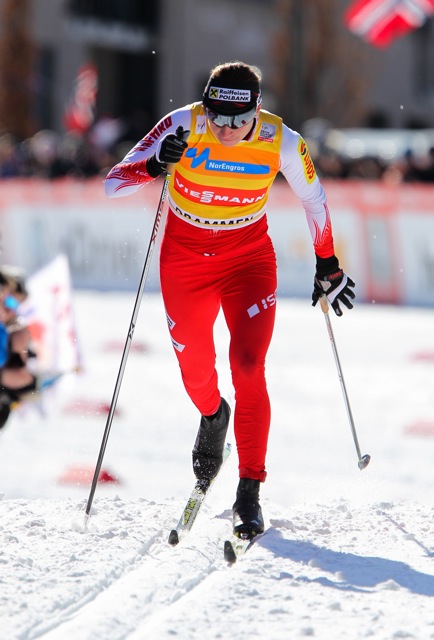
Justyna Kowalczyk (POL), who also won the classic sprint in Drammen, Norway, last week, cruised to another victory on Wednesday in Stockholm, Sweden, at the World Cup Finals opener. Photo: Fischer/Nordic Focus.
Before the women’s classic sprint final got underway on Wednesday in Stockholm, Sweden, Justyna Kowalczyk (POL) had won the last three races in the classic discipline on the World Cup calendar. Apart from World Championships, where she was shut out of a gold medal in every event, the 30-year-old Polish star had already established herself as an odds-on favorite whether the race on tap was a sprint or distance event. Sometimes she has to fight for her wins, and for others it looks almost looks easy for her.
The latter was true in front of the Royal Palace in Stockholm, where she won her fourth World Cup classic race in a row by 2.2 seconds on a 1.1 k course. She made no bones about it after finishing: it had been a piece of cake.
“It was a relatively easy victory today,” Kowalczyk told the FIS interviewer. “I had great skis. I like such cold conditions. I felt very strong.”
Clearly. After a reserved start in the qualifying round, where she placed fifth behind Anne Kyllönen (FIN), Kowalczyk proceeded to demolish her quarterfinal and semifinal heats, leading from the first hill and never relinquishing the position despite a strong headwind on the back half of the exposed waterfront course. She would increase her lead both on climbs and descents, blessed with fast skis and a strong diagonal stride. Kowalczyk won her quarterfinal by 1.7 seconds against Ingvild Flugstad Oestberg (NOR) and her semifinal by a closer 0.7 seconds over Katja Visnar (SLO), who was the only one that came close to pushing Kowalczyk all day.
Even Marit Bjørgen (NOR), who took a break from racing for the Oslo 30 k in order to recover from a cold, couldn’t match her Polish rival’s pace. Bjørgen looked more mortal than usual in the heats on Wednesday and barely made it into the final as a lucky loser. Despite feeling fresher than those who competed in Holmenkollen, her hopes to challenge Kowalczyk were quickly dashed in the final when an early fall from Kyllönen forced the back of the pack to maneuver around her, slowing Bjørgen’s progress as Kowalczyk began her typical surge off the front.
Bjørgen moved up from her position near the rear as the group neared the last gradual climb to the finish, passing two Finns, but Kowalczyk’s lead was already too great. Bjørgen took second, 2.2 seconds back, and Kerttu Niskanen (FIN) held on for third (+3.1) for her first individual World Cup podium.
As Kowalczyk’s win was not a surprise and Bjørgen’s failure to stop it was likely a disappointment, Niskanen appeared to be the happiest person on the podium.
“A really great day,” she told Hevoskuuri.fi “I got to the podium in the end, and this is indeed expected.”
Kyllönen, at a loss to explain exactly how she tripped herself up on the 180-degree turn, was generally happy with how the day turned out for her team. There were three Finns in the final despite two crashes from Krista Lähteenmäki and Aino-Kaisa Saarinen in the quarterfinals, and in the qualifier Kyllönen posted the fastest time by 1.7 seconds.
“Today was a really super day,” Kyllönen told Hevoskuuri.fi via translation. “If I would have stayed upright… I got a Sprint Cup fifth place, which is a very important achievement. I’m still in a position to improve the condition of the end of the season, I’ve been waiting all the time. This is great to go to the last three races.”
Stockholm is the very last sprint on the World Cup calendar, so in addition to the regular podium ceremony the end-of-season sprint leaders were awarded their crystal globes. Kikkan Randall (USA) and Emil Jönsson (SWE) locked down these respective titles in Lahti, Finland, two weeks ago, but “World Cup Sprint Champion” became official for each of them on Wednesday.
As the opening event of World Cup Finals, the mini-tour that constitutes the last four races of the season, Kowalczyk next heads to Falun as the series leader. She has already secured the overall World Cup title and merely widened her margin of victory on Wednesday, so the drama yet to play out in the women’s field is essentially limited to who will take the mini-tour title. With bonus seconds from her most recent victory taken into account, Kowalczyk leads by 7.1 seconds after the first stage.
Kikkan Randall (USA) led the North Americans on Wednesday with an eighth place finish in Stockholm, Sweden.
All 2012 FIS World Cup Finals coverage is brought to you through the generous support of Fischer Sports USA, proud sponsors of Kikkan Randall, 2012 overall Sprint Cup Champion.
STOCKHOLM, Sweden — Kikkan Randall (USA) and Chandra Crawford (CAN) have steadily shed their images as skate sprinting specialists.
While Randall has remade herself as one of the top all-around skiers on the circuit, Crawford has made good progress as well—historically she excelled at one type of event: short fast skate sprints.
Both women brought their 2012 World Cup sprint seasons to a close with strong results in what has been their weaker discipline.
The last three sprints have been of the classic variety, and entering the season this was seen as a potential stumbling block for Randall in her quest for the Sprint Cup.
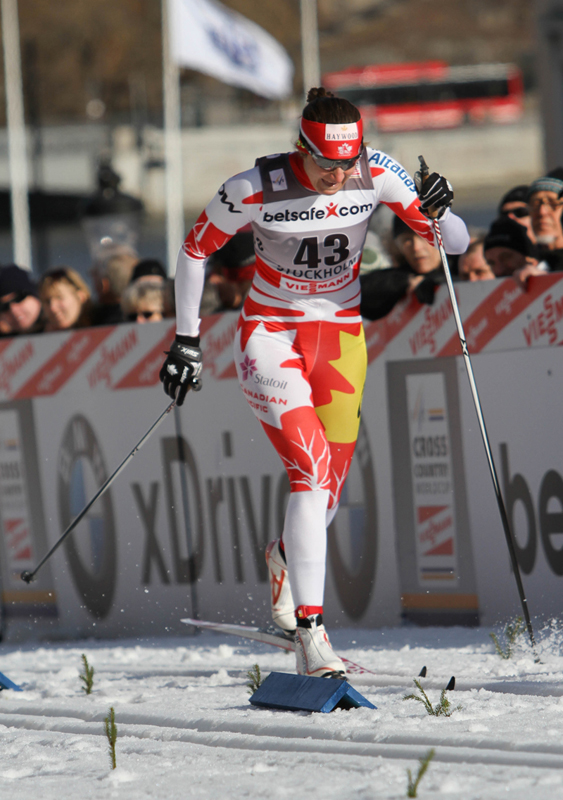
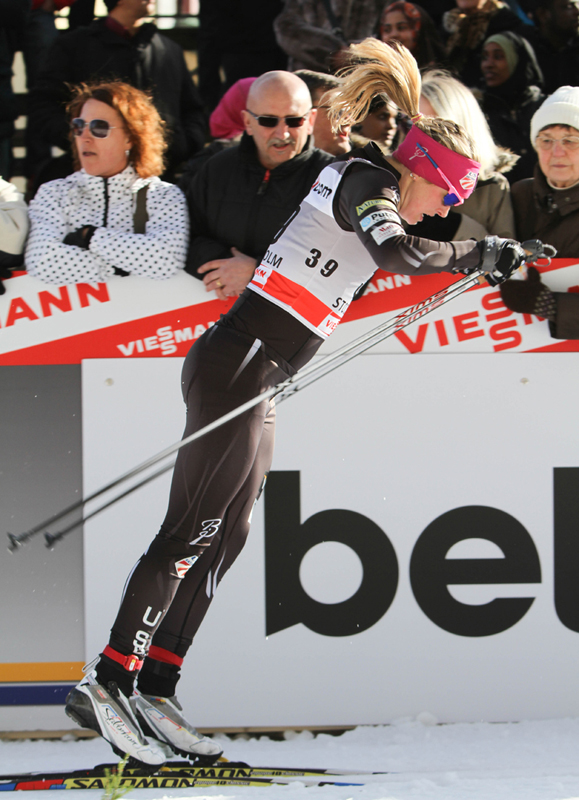
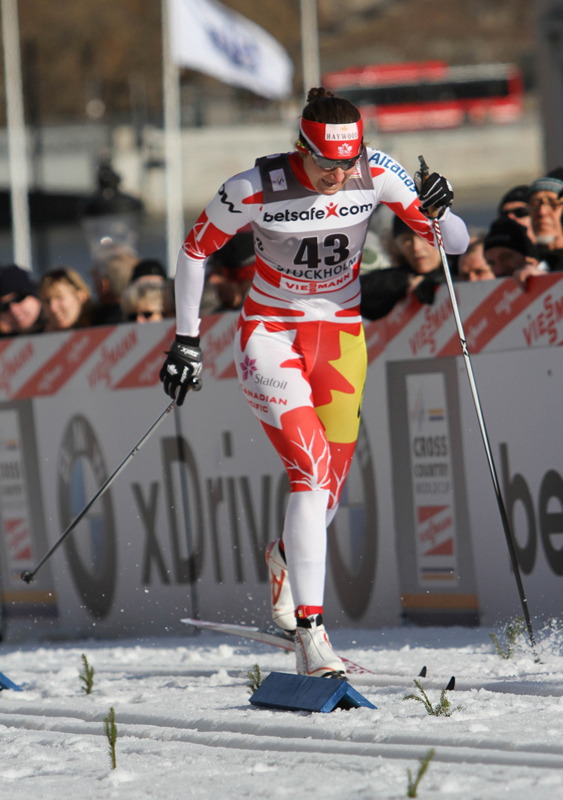
Chandra Crawford (CAN) striding during the qualifier.
She wrapped that up a week ago in Drammen, and posted results of fifth, 11th, and now eighth in Stockholm.
“Overall, I am pretty happy on the performance today,” Randall said. “I am still feeling strong and it is great to finish this off. Seventh or eighth, which ever it ends up being is my best finish here in Stockholm, so it is still a success.”
Randall qualified in 21st but skied aggressively to advance out of her quarterfinal.
She took the lead on the backstretch along the water and held that position into the final climb.
Top qualifier Mona-Lisa Malvalehto (FIN) responded after having led the first half of the heat, pulling nearly even with Randall, as another challenger, the always dangerous Ida Ingemarsdotter (SWE) also closed.
The three women came across the line in a blur separated by inches.
Randall claimed the top spot with Ingemarsdotter taking second.
In the semis, Randall skied a similar race, solidly in second before dropping back at the end of the flat. She attacked the hill, but was unable to do enough, placing fourth, 0.6 seconds out of a lucky loser spot.
“The semifinal didn’t go quite as well as I would have liked, I felt like I had the energy to be competitive on that last stretch,” Randall told FasterSkier. “I just struggled technically in these conditions, so I just kind of spun my wheels a little bit there and it was too late.”
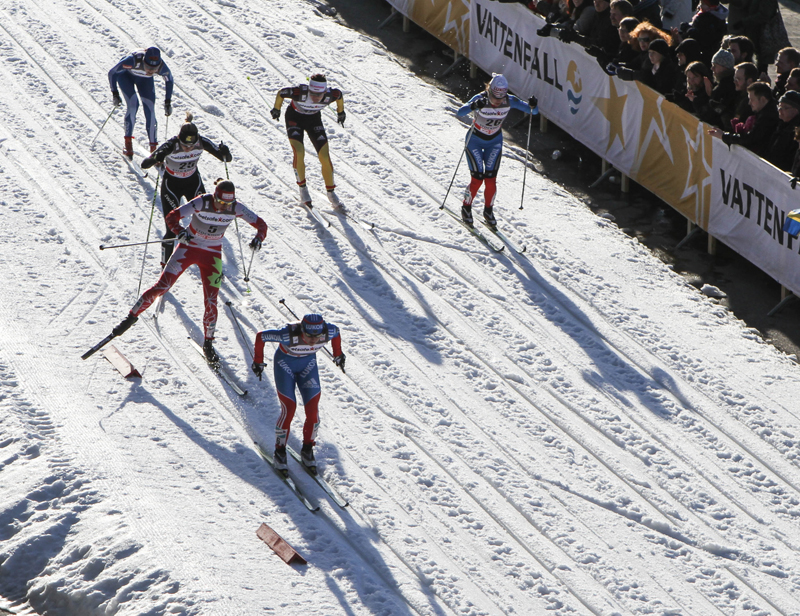
Randall cresting the city steps during the heats.
The snow was soft and wet on the hill, soaked by the warm spring sun, and klister was very much in play.
With parts of the course shaded from the afternoon sun conditions were significantly different on the two climbs on the 1.1-kilometer loop.
“The track was a lot firmer on that steeper hill and here it has been baked in the sun a little bit more,” Randall said at the finish. “It kind of depends on which track you get in. I think I picked a better track in the quarterfinal and had a little bit more momentum.”
Crawford qualified in fifth and won her quarterfinal over eventual silver medalist Julia Ivanova.
She took the lead on the 180 corner, getting good position heading into the flats.
Ivanova moved back into the front, but the two were in good stead as the last climb approached.
Swiss sprinter Laurien Van der Graaff made a valiant attempt to get back in the top two, but came up short as Crawford took the top spot.
In the semifinals, Crawford appeared fatigued, and was unable to keep pace with eventual Marit Bjørgen (NOR).
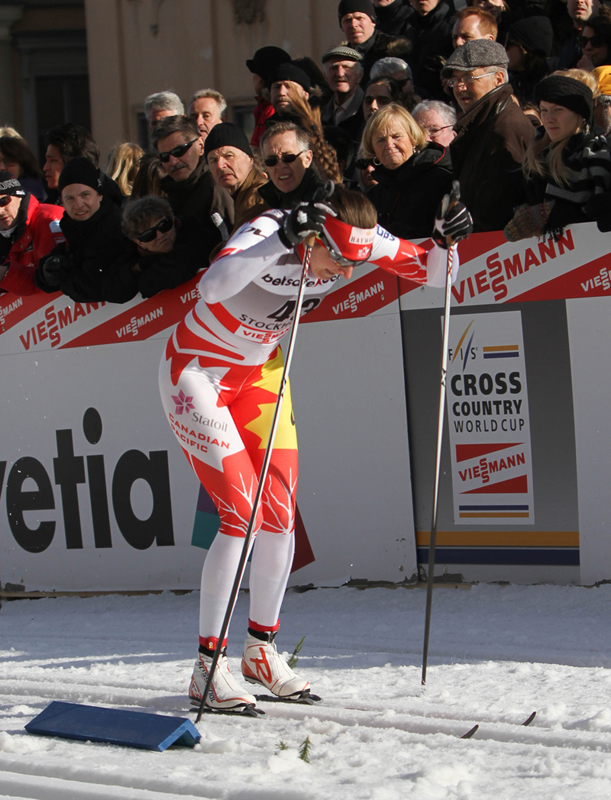
Crawford changing lanes.
After her strong qualification and a fifth last week in Drammen, Crawford was hoping for more.
“It’s still one of my best classic sprints ever, but athletes always adjust their expectations on a hair trigger,” Crawford said. “I got fifth last week, so I wanted to better it. I have been feeling super good in classic.”
Both Randall and Crawford were enjoying the day at “one of the coolest sprints” on the circuit.
“You are down by the water, the palace steps, lots of cheering out there and it’s a fast race—two-and-half minutes,” Randall said. “So it’s pretty fun and I think it is a great way to end the sprint season.”
Crawford concurred adding “It is such a privilege to be a ski racer. I just have to pinch myself when I see the harbor and the blue skies, snow around the King’s castle. I was so happy to be in the heats and get a chance to rip it again.”
On the start line prior to the semis, Crawford was seen on camera moving her hands as if she were revving a motorcycle.
When asked about the novel motion, she explained that she rides a Ducati Monster back home in Canmore.
“This time of year everyone is tired, everybody wants to go home,” Crawford said. “I want to go home and ride my bike, ski tour the mountains and it gives me energy to think about that full-throttle feeling.”
Gaiazova and Marshall Crack Heats, Out in Quarters
Alysson Marshall (CAN) in the quarterfinals.
Canadians Dasha Gaiazova and Alysson Marshall gave North America four women in the heats.
For Marshall the day was notable as she earned her first career World Cup points.
Coming off two days off due to a cold, Marshall was happy to ski her first World Cup heats.
Dasha Gaiazova (CAN) in qualifying.
She finished last in her quarterfinal and ended the day in 28th place.
“I did not quite have the juice in the quarterfinal…I felt beat [coming up the last climb], my body is pretty dead,” Marshall said.
She hung with the pack on the first climb, but drifted back on the double pole, and was never able to recover.
“But it was fun,” she said, “and it was my best race.”
Gaiazova, a seasoned veteran at this point, qualified 22nd and finished 23rd after being eliminated in the quarters as well.
After getting knocked out in a stacked heat, Gaiazova said she felt bad on the course, and lacked her mental edge at this point in the season.
She matched up with Bjørgen, Justyna Kowalczyk (POL), Vesna Fabjan (SLO) and Ingvild Flugstad Oestberg (NOR), but said she actually liked the stiff combination.
Such a heat is usually fast, she explained, meaning a better shot at the lucky loser slots.
Stephen, Diggins Outside Looking In
The final two North Americans in the race, Liz Stephen and Jessie Diggins, failed to make it out of qualification, with Diggins missing a spot by all of 0.12 seconds as she placed 31st.
Diggins (USA) hammering uphill.
“I’m not normally a very good classic sprinter,” Diggins told FasterSkier. “I’m trying to get better at it, and use every chance as an experience to learn something…and practicing how to move my feet faster.”
Stephen, whose bread and butter is distance races—generally the longer the better—is still looking for her first World Cup sprint heat experience.
“One of these days it is going to be really fun to qualify, but it’s a long way off still,” Stephen said.
She was thrilled getting to race in Stockholm, but not as happy about the way she skied in qualification.
“I skied this last uphill really poorly which I am upset about… I was slipping and just skiing poorly here,” she said.
She did feel her double pole was good but the best part of the day was just being there.
“The highlight for me is that I have been fired up for sixteen days right now, just because I got to ski on a palace. This is so cool. The king is out here and we’re skiing up steps right now and the crowds are awesome,” Stephen said.
One of her goals for the season was to qualify for the World Cup Finals, and have an opportunity to race in Stockholm.
“I never ever get to do city sprints,” she said. “This is the highlight of my whole season because I got to do this.”
Stephen placed 51st out of 53, but should move up over the weekend now the sprinting is done.
All 2012 FIS World Cup Finals coverage is brought to you through the generous support of Fischer Sports USA, proud sponsors of Kikkan Randall, 2012 overall Sprint Cup Champion.
STOCKHOLM, Sweden — Below are a series of Canadian- and American-focused shots from the Royal Palace sprints on Wednesday.
Chandra Crawford (CAN)
Chandra Crawford (CAN)
Kikkan Randall (USA)
Jessie Diggins (USA)
Jessie Diggins in action.
Jessie Diggins (USA)
Dasha Gaiazova (CAN) en route to finishing eighth in a World Cup classic sprint in Drammen, Norway, which tied her career best.
Dasha Gaiazova (CAN) racing the World Cup last March.
Liz Stephen (USA)
Liz Stephen (USA)
Liz Stephen (USA)
Liz Stephen (USA)
Liz Stephen (USA)
Liz Stephen (USA)
Alysson Marshall (AWCA/NST) racing at the 2012 World Cup finals in Falun, Sweden, last March.
Alysson Marshall (CAN)
Justin Wadsworth
Devon Kershaw (CAN)
Devon Kershaw (CAN)
Devon Kershaw (CAN)
Alex Harvey (CAN)
Alex Harvey (CAN)
Stephen headed out for a cool-down jog. Warm enough for shorts.
Lenny Valjas (CAN)
Lenny Valjas (CAN)
Lenny Valjas (CAN)
Lenny Valjas (CAN)
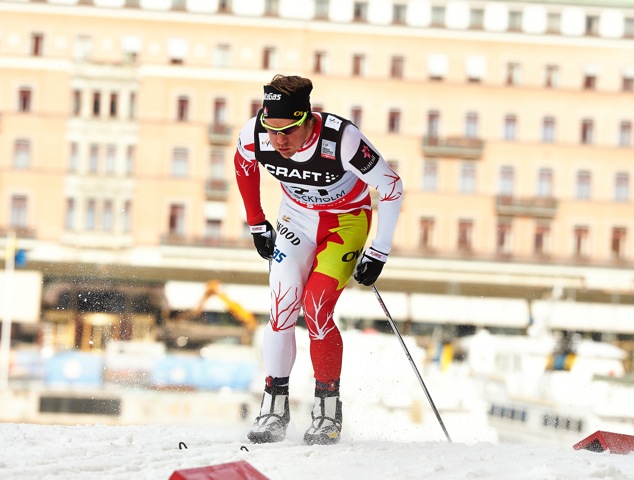
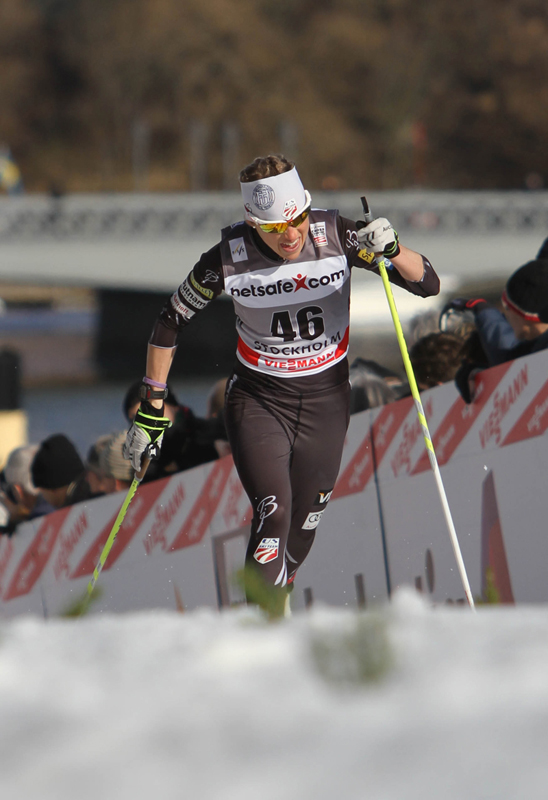
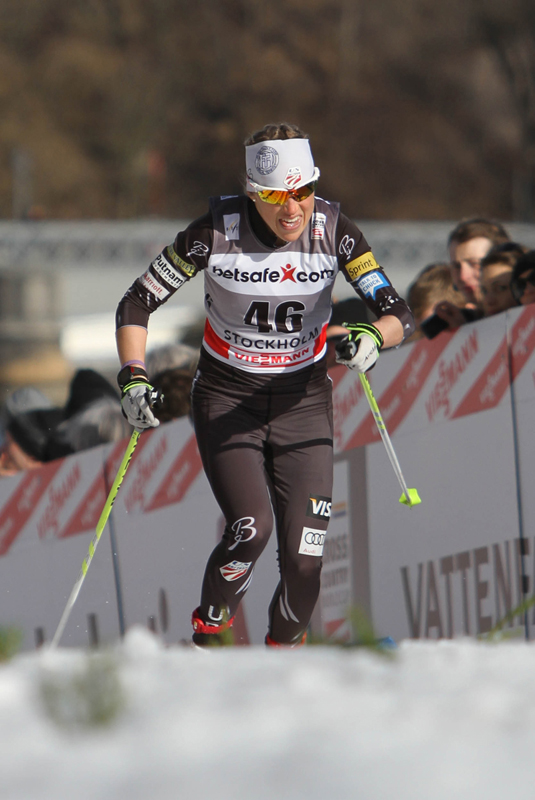
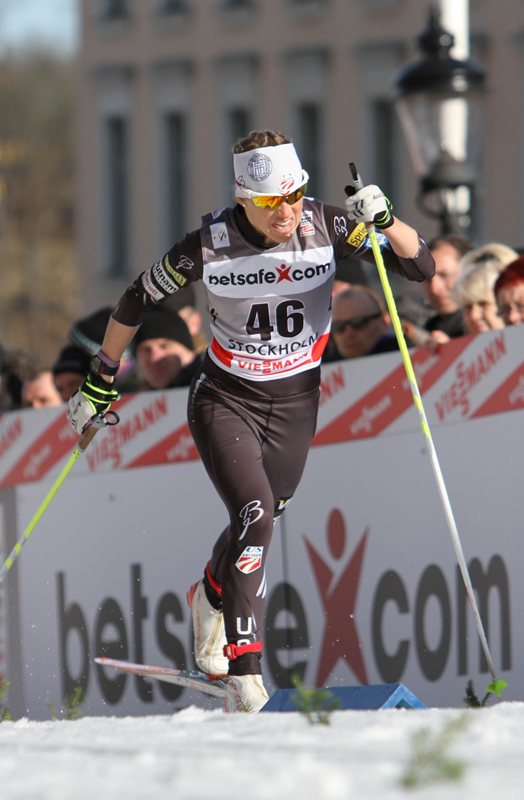
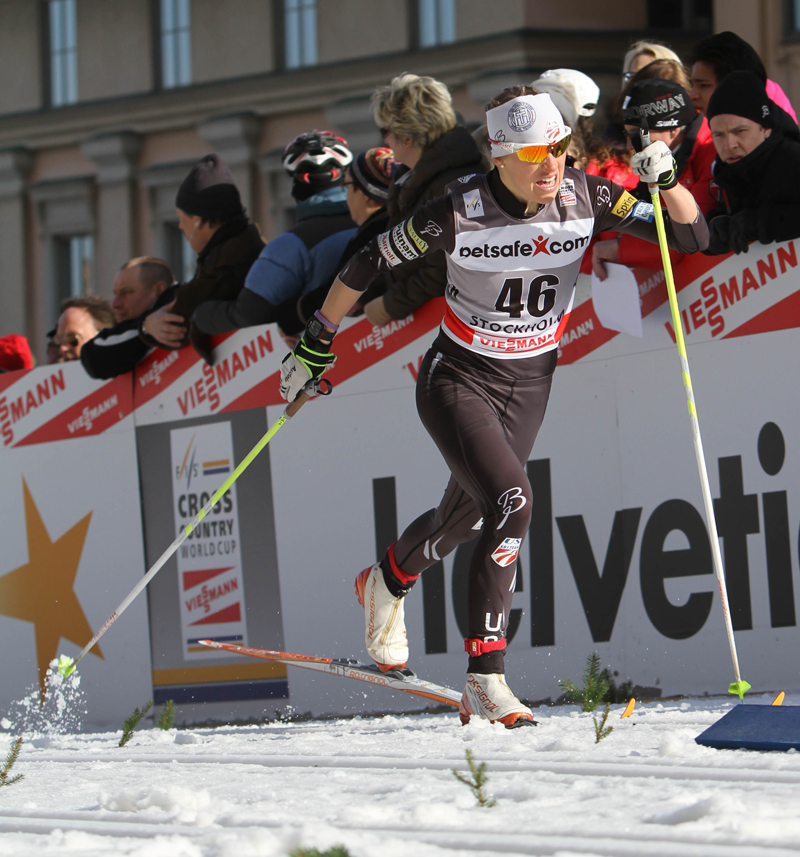
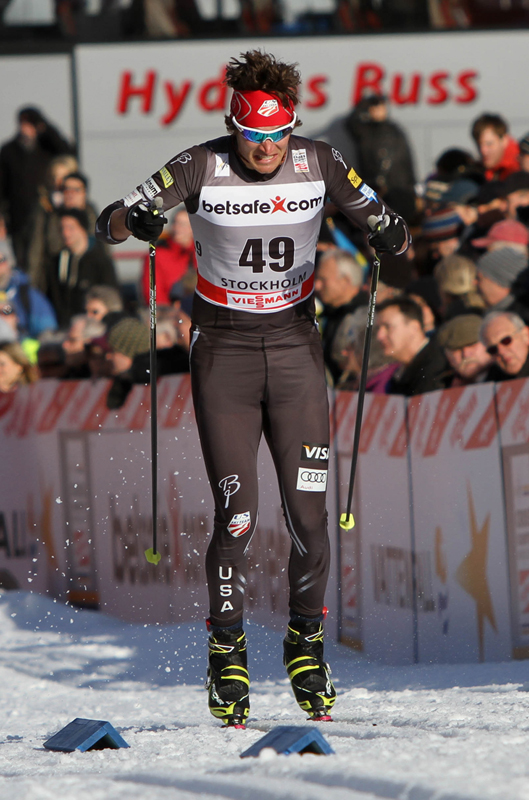
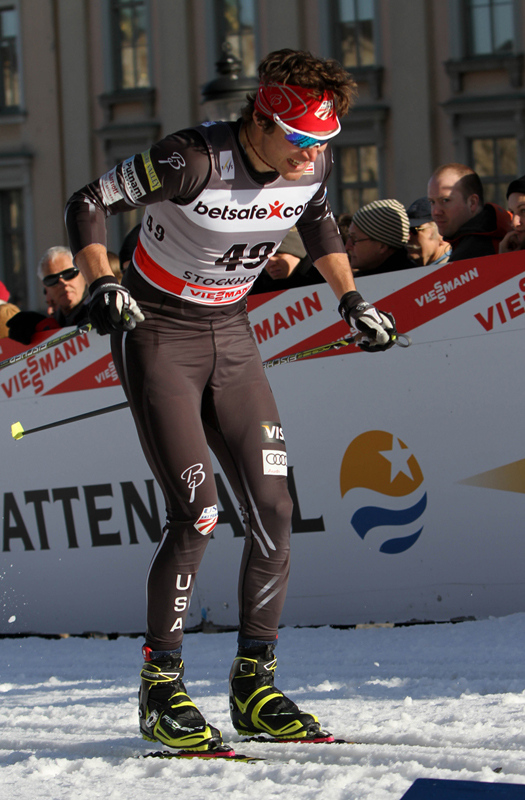
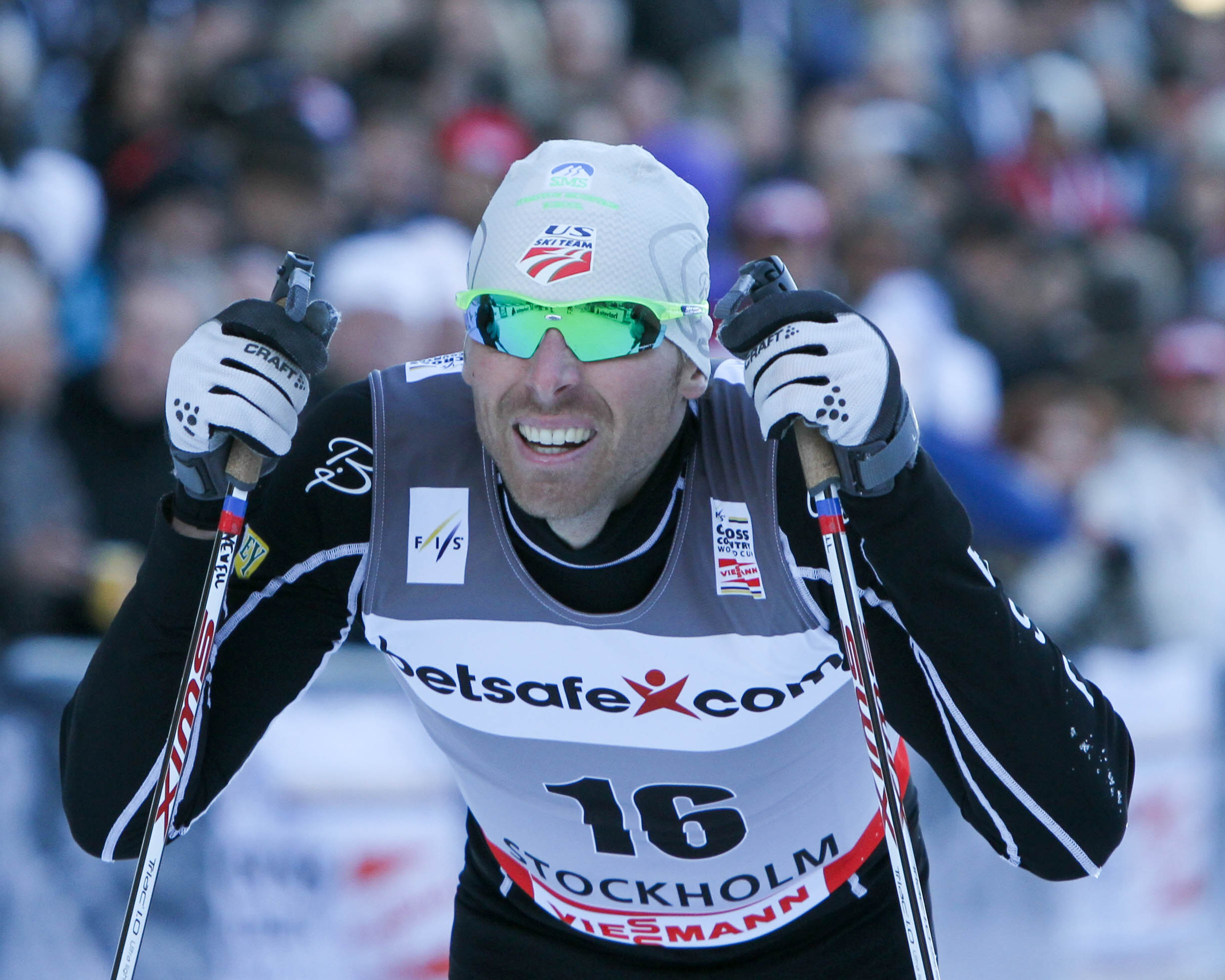
U.S. Ski Team member Andy Newell during a World Cup classic-sprint qualifier on March 14 in Stockholm. Newell posted the 16th fastest time and went on to place seventh in the final.
The Stockholm city sprints, the first stage of the World Cup Finals, take place on Wednesday.
All 2012 FIS World Cup Finals coverage is brought to you through the generous support of Fischer Sports USA, proud sponsors of Kikkan Randall, 2012 overall Sprint Cup Champion.
STOCKHOLM, Sweden – The first leg of the 2012 World Cup Finals kick off with the Royal Palace Sprint in downtown Stockholm, Sweden on Wednesday.
The race takes place on the doorstep of the King of Sweden, Carl the 16th Gustav, and is conducted in the classical technique.
Snow was trucked in over the period of two-and-half days, with final grooming to take place Tuesday night.
Members of the Russian team previewing the course.
While temperatures have been warm during the day, there is hope that the course will set-up over night, creating firm fast tracks.
Only the top-50 ranked skiers in the world, plus continental cup leaders, are granted start spots in the four-race competition.
The US brings Kikkan Randall, Andy Newell, Liz Stephen, Jessie Diggins and Sylvan Ellefson while Canada will start Devon Kershaw, Alex Harvey, Chandra Crawford, Lenny Valjas, Dasha Gaiazova, Alysson Marshall, and Kevin Sandau.
Randall has already locked up the Sprint Cup title, but is looking to hold off Charlotte Kalla (SWE) for fourth in the overall.
Kershaw and Harvey have their own overall rankings to think about. The former is just 15 points ahead of Petter Northug, but with the Norwegian star reportedly withdrawing due to a continuing stomach ailment, there may not be much of a fight.
Harvey is aiming to hold in the top-6 and is facing stiff competition from Russian Maxim Vylegzhanin.
Both Newell and Randall are looking forward to a festive day.
“It’s always a great atmosphere being so close to the downtown of a major city, especially down by the waterfront,” Randall told FasterSkier. “Pretty sweet too that the terrain features of the course are literally the steps of the Royal Palace.”
Andy Newell racing in Stockholm, Sweden last season. Photo: Kellen MacFadyen.
Newell concurred, adding that any urban sprint is a good time, and that racing in a country that holds an event on the King’s front porch is a special experience.
Last year Newell used classic skis in the qualifier, but opted to double pole the heats on skate gear, a strategy he may repeat this time—if the track gets firm enough.
The track must be firm enough to support vigorous double poling for the strategy to be appropriate, Newell explained.
Last season the tactic worked well; he qualified ninth and advanced to the final, ultimately placing fifth.
With the major climb coming right at the end, Randall expects fast starts in the heats, and Newell said that being in good position around the final corner into the big hill is key.
Randall raced the 30k on Sunday in Oslo, with Newell contesting the 50k on Saturday. Both said they are ready to go, if not completely fresh.
“This year is definitely a quicker turnaround than we’ve had to do before,” Randall said of the jump from Holmenkollen to Stockholm. “I’ve had a solid last couple of weeks and I feel like my racing shape is still strong…We’ll just have to see what’s left in the tank.”
Matt Voisin contributed reporting.
The Stockholm city sprints, the first stage of the World Cup Finals, take place on Wednesday.
Tracks are expected to firm up overnight.
The Norwegian team bus parked outside the palace.
The Royal Palace.
A ribbon of snow running through the street.
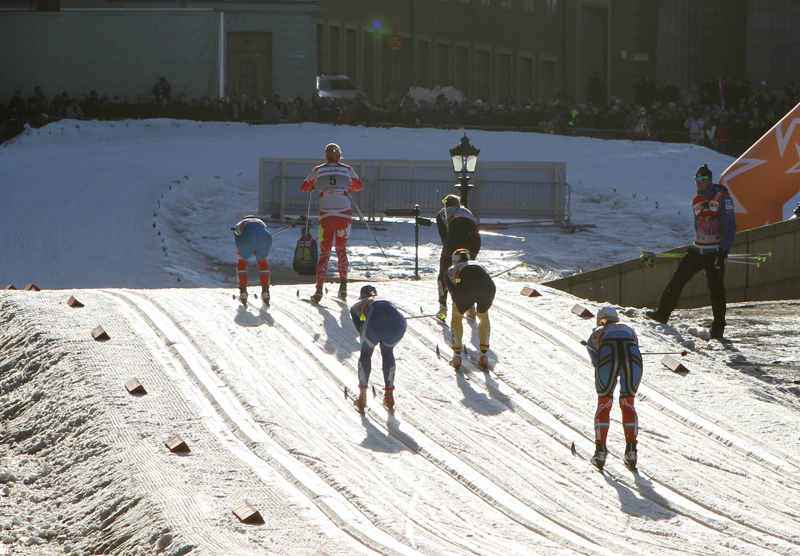
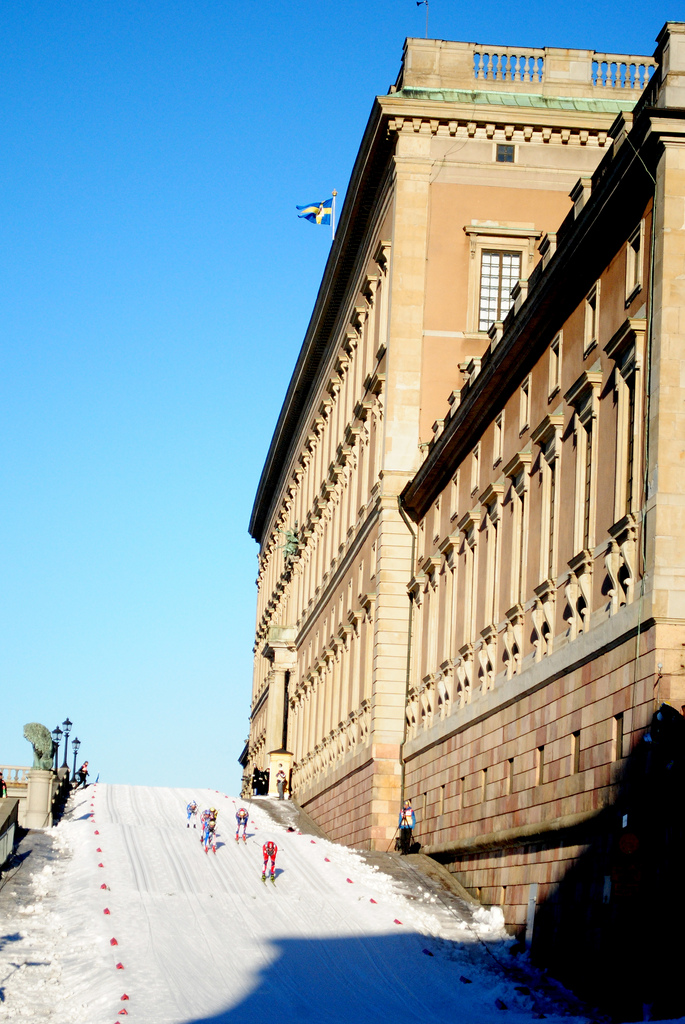
The hills on the sprint course go up and down the palace steps.
The palace guards go about their business in the background as a Pisten Bulley sets up the course.
The palace sits close to the waterfront in Stockholm.
Athletes previewing the palace sprint course in downtown Stockholm, Sweden on Tuesday.
All 2012 FIS World Cup Finals coverage is brought to you through the generous support of Fischer Sports USA, proud sponsors of Kikkan Randall, 2012 overall Sprint Cup Champion.
STOCKHOLM, Sweden — On Wednesday afternoon, the Royal Palace Sprint in Stockholm, Sweden will bring to a close what cold be termed the “Year of the City-Sprint” on the World Cup circuit.
With no World Championships or Olympics the International Ski Federation (FIS) took advantage of the resulting schedule flexibility, and added an additional two city-sprints to the usual stops in Dusseldorf, Drammen and Stockholm.
With Milan, Italy and Moscow, Russia on the calendar, sprinters faced a variety of courses and interesting locales.
It is hard to rank the venues—who can say that racing along the Rhine in Germany is better than on the front lawn of the Castello Sforzesco in Milan or vice versa?
Business almost as usual for the palace guards.
But there is no doubt that the Stockholm sprint more than holds it own. Running right along the doorstep of the Royal Palace in Sweden’s capital, the course overlooks the Riddarfjärden bay, dropping down nearly to the water’s edge before climbing back up the finish.
Royal guards continue their stoic watch, and boats navigate the icy waters as the top sprinters in the world do battle on 5,000 cubic meters of snow trucked five kilometers from a nearby alpine area.
According to the Chief of Race Göran Nilsson, not just any snow will do.
“Not only snow, but white, good snow,” Nilsson told FasterSkier in an interview on Tuesday evening in Stockholm.
The two key components of pulling of a successful race, says Nilsson is the snow and the volunteers.
In his fourth year working on the event—one as a technical delegate and now three as either the Chief of Competition or Assistant Chief of Competition—Nilsson has set a high bar.
“When you have done it seven times, each year you take one more step up and one more step up. And this year we will be the best in the world,” Nilsson said.
The snow to make it happen started arriving on Sunday at 9:00, and the last load was delivered Tuesday at noon. Racers could preview all of the course but for the final hill to the finish in the afternoon.
A Stockholm Pisten Bulley getting the course ready for Wednesday's sprint.
Two small Pisten Bulleys are on-hand to prepare the tracks, one of which is piloted by none other than Thomas Wassberg—the great bearded Swedish cross-country champion.
Wassberg hails from the north of Sweden, but made his fifth trip down for the Stockholm sprints this year.
“People look up to him, and he comes with his hair and his beard and rrrrrrr,” Nilsson said, pantomiming a hulking figure.
“He is one of the best skiers in Sweden and he is still working on the floor,” Nilsson continued, referring to the fact that Wassberg is still very much involved with the sport on a day-to-day basis. “He is a very nice man, a very good sportsman and coach and leader and machine driver,” Nilsson said.
The great Swede is one of over 100 volunteers working on the event. The majority hail from one of seven Stockholm clubs.
With most having multiple Royal Palace Sprints under their belts, Nilsson said his focus is not on the technical details, which the volunteers have down pat, but on providing the best overall experience.
This is the core of his goal of being the best in the world.
“I tell them that every person coming here, athletes, coaches, spectators, media, all of them are our guests, and we have to give them what they want when they come,” Nilsson explained.
Checking out the course.
He wants everyone to leave thinking “it is a professional event, I will come back here, thank you very much.”
He also points to a level of attention to detail that may be overlooked elsewhere, saying “you will find all signs perfect, not handwritten, they will all be straight. The tracks and all around will be perfect.”
This year there is an added incentive to perform beyond a commitment to excellence.
Nilsson said that FIS has not put Stockholm on the World Cup calendar for next year, and with 2014 featuring pre-World Championships (the big event will be in Falun in 2015), there would not be another race in the city until at least then.
At this point he has “no idea” as to why FIS may take away the event next season though he believes the best way to keep the race is to “do the very best.”
The current draft schedule for the 2013 season does not have a substitute event listed.
Nilsson is hoping for as many as 15,000 spectators on Wednesday.
One climb on Stockholms sprint course goes right up the palace steps.
“Skiing is very popular in Sweden,” Nilsson said, “and we are proud about it to have his majesty the King in our ski family.
Carl the 16th Gustav is a big supporter of the sport. He will travel to Falun for the rest of the World Cup Finals, and his son recently completed the Vasaloppet.
The weather is predicted to be sunny and warm, making for ideal spectating, and Nilsson foresees no problems, predicting that temperatures will drop low enough for the tracks to set up hard.
And despite long hours and complicated logistics, Nilsson, who served as the chair of the Swedish Ski Federation for a decade, beginning in 1995 at the Thunder Bay World Championships, loves the event.
“People around here they wonder what kind of person is working on this,” he said of many of the city-dwellers. “But you must be a little bit here,” he pause pointing to his temple and swirling his finger in a “crazy” gesture before continuing, “if you work this type of event.”
Emil Jönsson racing in Stockholm on Wednesday. Photo, Kellen MacFadyen.
The day before Wednesday’s World Cup city sprint in Stockholm, Swedish sprinter Emil Jönsson took a phone call from one Carl XVI Gustav—his king.
“It was a strange thing—it does not happen every day,” Jönsson told SVT, the Swedish television channel. “He called and told me that I should ski for king and country.”
And the monarch must have been pleased with the outcome of the race: Jönsson striding away from Northug up the homestretch to win in front of his home crowd.
A view of the crowd at the palace. Photo, Kellen MacFadyen.
“It’s unbelievable,” Jönsson said. “They carried me up the hill.”
In four previous attempts at the Stockholm sprint, Jönsson had been on the podium three times—but never on the top step. In fact, in the decade-long history of the race, a Swedish male had never won it.
With the overall Sprint Cup already in his pocket heading into Wednesday, Jönsson’s win was no surprise. But there wasn’t any lack of excitement in the rounds in Stockholm, which made for one of the most entertaining spectacles of the whole season.
Last year, Northug was the only skier who attempted to double-pole the one-kilometer loop around the palace, which contains just two short climbs, and a long downhill out of the start.
But this year, in qualifying, Hattestad joined his Norwegian teammate on skate skis, and the pair took the top two spots, with Hattestad winning by a jaw-dropping margin of nearly four seconds.
According to U.S. Ski Team Head Coach Chris Grover, klister wasn’t a whole lot slower. But the Norwegian strategy in the qualifier still opened the floodgates for a whole horde to forgo kick wax in the ensuing rounds—most of whom did so successfully—with the notable exception of Jönsson.
The Swede is among the best diagonal striders in the world, and as he put it earlier this year, when he stubbornly stuck to classic skis in another flat sprint in Estonia, “you do what you are good at.”
While both Hattestad and Northug won their quarterfinal heats on skate gear, Jönsson stayed on his classic skis and won his own. Then, in the semis, he held on as Hattestad charged out of the gate and down the initial
The initial descent in Stockholm. Photo, Kellen MacFadyen.
descent, then strode past the Norwegian on the uphill homestretch like he was standing still.
In the finals, both Jönsson and Northug stuck to their guns, while Hattestad, perhaps cowed by Jönsson’s strength in his semifinal, switched back to classic skis. But it was Jesper Modin, Jönsson’s 6’7” teammate, who led a tightly-packed group into the homestretch.
Briefly, it appeared that Modin might be able to break his string of eight straight World Cup sprint finals without a podium. But he had neither the kick wax to hold off Jönsson up the climb to the finish, nor the energy to stay ahead of Northug. By the time he reached the line, Hattestad had come by, too, relegating Modin to fourth.
Jönsson, meanwhile, turned it on as Modin began fading. Northug was just behind at the beginning of the uphill, but his double-pole was no match for Jönsson’s kick—much to the delight of the Swedish crowd.
“He is the world’s best classic sprinter,” Northug told SVT. “I’ve said it before, and he showed it again today.”
Jönsson went down as he crossed the finish line, and he celebrated on his back, oblivious to Hattestad’s attempts to congratulate him. Finally, he got up and skied backwards down the homestretch, saluting the crowd and soaking it in under a cloudless sky.
“My whole home town is here,” Jönsson said. “So I had to send a big thank you to them.”
The men's podium. Left to right: Petter Northug (NOR), Emil Jönsson (SWE), Ola Vigen Hattestad (NOR). Photo, Kellen MacFadyen.
While the skate-classic dilemma was surely on the tips of the tongues of television announcers worldwide, in the end, the skis didn’t end up being any kind of a magic bullet. The top three men were all among the top four finishers in the sprint at the World Ski Championships in Oslo last month.
“People went with their strengths—Emil Joensson stayed on classic gear all day, and Northug double-poled all day,” Grover said. “The guys that ended up on the podium were the strongest guys in the race.”
With the win, Jönsson now leads the overall classification of the season-ending four-stage mini-tour known as the World Cup Finals. With a short prologue and two distance races remaining, he likely won’t be able to hold on—in second place, Northug is best-positioned among the overall contenders. But taking the sprint, Jönsson said, was his main objective.
“I’ve always wanted to win in front of the castle, on my own home turf and in front of my home audience,” Jönsson told NTB, a Norwegian news agency. “This was like a dream for me.”