Tag: Stonegrinding

  • Where Are They Now: Jim Galanes Heads East to Master Stonegrinding Trade

    Where Are They Now: Jim Galanes Heads East to Master Stonegrinding Trade

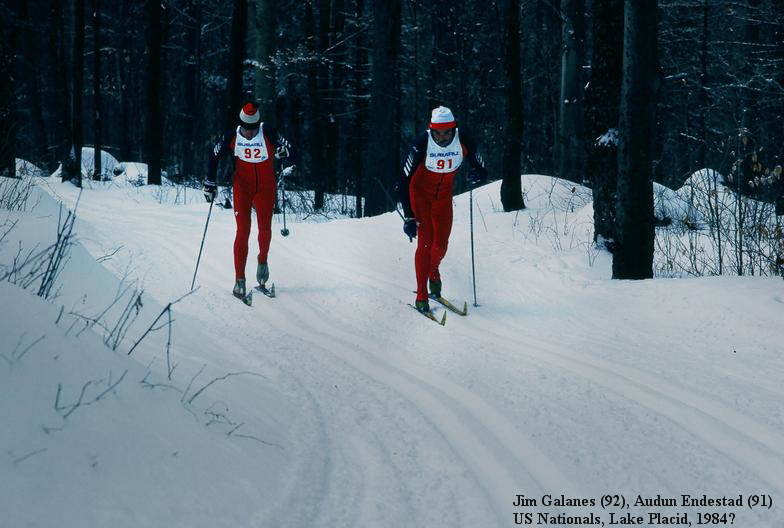
    Jim Galanes (left) and Audun Endestad, two of the best skiers in U.S. history, racing head-to-head in the 1980's. (Courtesy photo)
    Jim Galanes (left) and Audun Endestad, two of the best skiers in U.S. history, racing head-to-head in the 1980’s. (Courtesy photo)

    This profile is part of a ‘Where Are They Now’ series, made possible through the generous support of Fischer Sports. Learn more about their products at www.fischersports.com.

    Despite getting his start as an athlete in Brattleboro, Vermont, moving back to the Green Mountain State wasn’t specifically on Jim Galanes’ list of things to do in the coming years.

    Yet that’s exactly what the three-time Olympian has found himself doing, after expressing an interest in a job with Graham and Mila Lonetto at Edgewise Ski Service in Stowe. Turns out, it was a perfect fit.

    “I had been talking to the folks here at Edgewise for a couple of months,” Galanes said in a phone call last week. “I came back and interviewed with them and talked some more, and I just felt really comfortable with Graham and Mila, and I really like their business model and their philosophy. I thought it was a great opportunity for me.”

    In taking over as manager of the stonegrinding operations for both nordic and alpine skiing, Galanes is at the same time returning to the ski industry seven years after leaving his position as head of the Alaska Pacific University (APU) program and taking on something new. Among his tasks is to develop the smaller nordic side of the business operation, which means settling back into the community and connections that he enjoyed for so many years. And through his experience as an athlete and a coach, he has tested a lot of grinds, and even did some of his own on machines around the country.

    But helping to develop a grind system? That’s new.

    “Back when grinding first really started to come into the sport, I worked a lot with Nat Brown on testing his grinds that he was doing,” Galanes says. “He was really the first guy in the country set up to do strictly cross country grinds. I’ve had a lot of experience preparing skis and testing grinds, and it will be fun to develop our own system of grinds here.”

    There’s no reason to think the results won’t be excellent: besides the Lonettos’ expertise in stonegrinding for alpine skis, there’s the persistent drive for excellence that Galanes has shown throughout every aspect of his career. For instance, he started his athletic career by winning three national titles in nordic combined and two World Cups. Most people would consider that pretty satisfying.

    Not Galanes. Instead of resting on his laurels, he switched sports.

    “That was real easy,” he laughs, recalling his decision back in 1979, when he was 23 years old, to focus only on cross country skiing. “Jumping was really hard, and hard for me to perform consistently… I was successful at times, but it wasn’t the consistency of success that I was looking for. My cross country skiing was continuing to improve, and that made it an obvious decision to me.”

    Back then, nordic combined was “old school.” Galanes trained mostly as a cross country skier, and the national team didn’t always have a coach, much less a specific jumping coach. So the switch was easy, and he joined a men’s team that was the best the U.S. has ever seen. Bill Koch had won his silver medal in the previous Olympics; Tim Caldwell, Dan Simoneau, and Audun Endestad were at or coming into the peak of their careers.

    In that competitive atmosphere Galanes thrived, winning ten national titles, competing in two more Olympics (he already had one under his belt as a combined skier), and collecting a top finish of fourth place in the final World Cup race in Russia in 1984. Historically, he’s among the best skiers the U.S. has ever seen.

    His individual finishes were his first big contribution to American skiing: the results by American men from that era still inspire racers today. Current star Kikkan Randall, who has now won two international Sprint Cup titles, calls Galanes’ era of racing “the last Golden Era.” It’s a reminder of what is possible, even as Americans and Canadians still seem to reach new heights every year.

    But Galanes didn’t just want that success for himself and his teammates; he wanted it to continue. And so his second contribution, and most would agree an equally huge one, is through coaching and vision. After heading the U.S. Ski Team women’s squad and the Stratton Mountain School for a few years each, Galanes went on to found APU, introducing the club system that currently sustains elite skiing in an era of meager budgets from the U.S. Ski and Snowboard Association.

    Up To Alaska…

    In 1995, Galanes was in Anchorage, Alaska, where he started APU and called it Gold 2002.

    “I really believed, at least when we started that, maybe a gold in 2002 was a little bit of a reach, but I really believed we could step up to the level of being competitive,” Galanes says.

    Today, APU is a behemoth of American skiing. Then, there was nothing like it: skiers at every age and level, multiple training groups, racers who attended U.S. Ski Team camps, athletes who were taking college classes but were not competing on the NCAA circuit – all under one club umbrella.
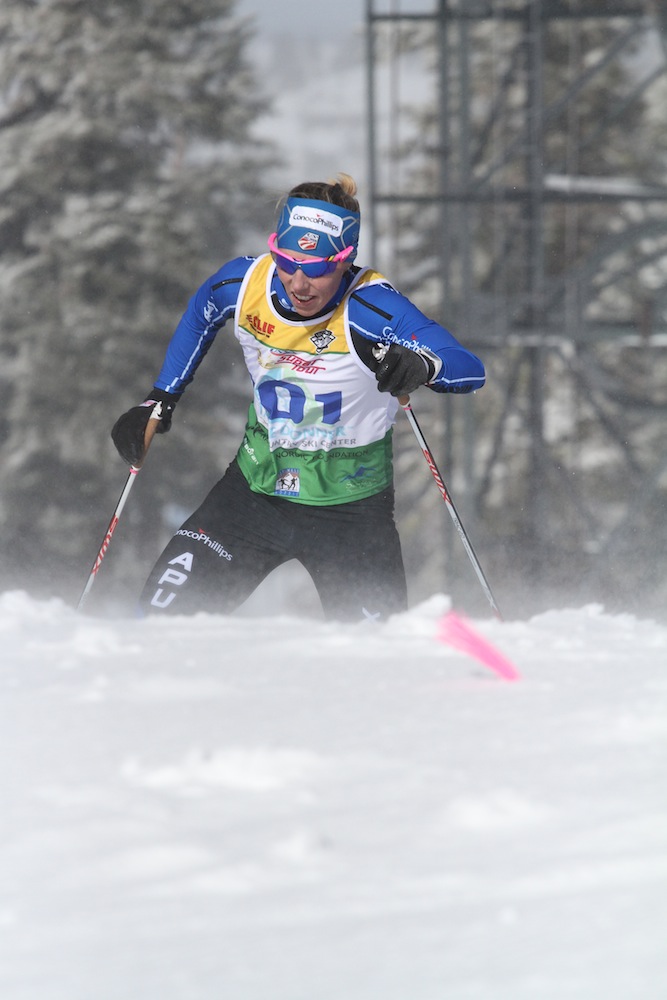
    Kikkan Randall winning 2013 SuperTour Finals for APU, the club that has supported her throughout her career. Photo: Mark Nadell/MacBeth Graphics.
    Kikkan Randall winning 2013 SuperTour Finals for APU, the club that has supported her throughout her career. Photo: Mark Nadell/MacBeth Graphics.

    “It came from a fundamental belief, and I still believe this, that the U.S. Ski Team can’t be everything to everyone,” Galanes says. “You can’t have a coaching program and a high-level training program just at the time when you’re at camps with the U.S. Ski Team, and then be on your own. My vision was to have a high-level program that was community-based, that the community supported and was behind and felt part of. I thought that was really critical to long-term success and more importantly, sustainability of the program.”

    Hence, the many levels of skiing. In the beginning Galanes was coaching two or three, sometimes even four, training sessions per day.

    At that point, Randall was a sophomore in high school, focusing on running. When her coach left town, she needed a new training group, and a family friend mentioned that two guys – Galanes and Frode Lillefjell – were starting a junior program at APU.

    “Within a few weeks I was hooked, and I changed my focus from running to skiing,” Randall wrote in an e-mail this weekend. “So it was rather serendipitous that this new junior ski program was starting up at the time when I was looking for a training group! … I always found Jim’s technique advice to be helpful and easy to understand. He was actually quite a good motivator out on course as well.”

    She has raced in the APU suit in domestic races ever since, and says that Galanes “certainly has been a very influential part of my career.”

    Furthermore, developing from a junior to a senior, a World Cup skier to then a World Cup winner, was easy for her at APU.

    “I was able to take classes during the training season and then have opportunities to race internationally at the developmentally appropriate stages (World Juniors, U23’s, OPA Cup),” she wrote. “I always had the club team support and daily training sessions when I was at home, race support domestically and then the U.S. Ski Team camp and competition opportunities on top of that.”

    She thought about taking a year to do NCAA racing, but decided against it.

    “Jim’s opinion was that many of our talented U.S. skiers lost too much ground to their counterparts in the rest of the world while racing in the NCAA system,” she wrote. “He felt it was imperative to train at a high level right out of high school and fit in school around the training… Jim and Frode believed it was possible to reach international success, it was just going to take a different approach then most of our US skiers had been taking. I agreed with them and together that is what we set out to do.”

    But while Randall remembers her development being smooth – the hardest thing, she wrote, was to have patience and remember that it as many small steps that would take her to the top – Galanes had a few things to add on that subject. Eschewing the NCAA option for older juniors and skiers in their mid-20’s was not always a popular strategy, and APU also did not always receive full support from the U.S. Ski Team, despite earning Olympic nominations for several athletes.

    “It was challenging at times – about the same time I founded the APU program, the U.S. Ski Team was to loosely support club programs,” Galanes says. “But then a couple years into that they went to a highly centralized focus, trying to strongly encourage people to relocate to Park City, which for a variety of reasons didn’t make a lot of sense to me. I felt it was detrimental.”

    Luckily things loosened up again, and the national team now relies on clubs like APU and praises them for their work in athlete development. Galanes’ idea was that when athletes went home from their U.S. Ski Team training camps, they should have reliable, high-level coaching and training partners. The national team more or less requires that of its athletes at this point.

    “In the last five, six, seven years, their collaboration with the regional programs and clubs is what has led to the success,” Galanes opines. “It has been key. Those are the coaches who are working with those athletes and developing those athletes, and they know best… I think that the sustainability and the success that we have now is focused on those programs and more of them around the country. I hope we can keep it going.”

    Galanes does not believe that the American ski community has reached the saturation point for these sorts of clubs. But to fill all the “pockets of interest” isn’t easy, as a few startup elite squads have discovered in the last few years.

    “I don’t think you can hatch a plan or craft a program proposal and go out and shop it around, and try to get the funding up front,” he asserts. “Funding follows success of the program and support from the community where the program is based. So you’ve got to bootstrap those programs for a little while to get to the point where you can enjoy the funding…. it was extremely tough.”

    … And Back to Vermont

    After 2006, Galanes stepped away from the APU club that he had founded. It has, of course, continued to thrive: four of eleven current U.S. Ski Team members are APU athletes, and this spring head coach Erik Flora became the first nordic coach to win the U.S. Ski and Snowboard Association’s Coach of they Year Award.

    Galanes is happy to see that success. For himself, though, instead of seeking another coaching job, he pursued life outside of skiing.

    “I spent basically 32 years doing nothing but focused on high-level skiing,” Galanes says. “I felt it was time to do something different, learn a different area professionally, and move on.”
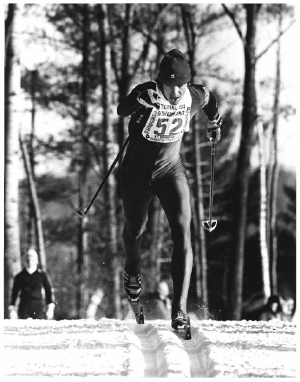
    Galanes back in his own racing days. Courtesy photo.
    Galanes back in his own racing days. Courtesy photo.

    He worked for an engineering firm in Anchorage, and then moved to Sun Valley, Idaho, for a stint. Of course, he wasn’t completely gone from the ski world; he continued to do a bit of consulting, personal coaching, and advertised a masters training group in Sun Valley. “I keep up to date,” he says.

    But the job at Edgewise is by far the most decisive step back towards the sport that Galanes has taken since leaving APU. And he seems excited to join Graham Lonetto, a former serviceman for the U.S. alpine team.

    “They have an amazing setup here and some great equipment that not many shops in the country have,” Galanes says. “We’re a race shop, we’re focused on high-level performance skis. Whether that is for a masters skier or a U.S. Ski Teamer, we’re going to be targeting that whole market.”

    But he also has some more specific ideas of how Edgewise can best help the nordic community.

    “The goal is going to be to keep it simple and focus on coming up with some good, broad-range grinds,” Galanes explains. “When people get so specialized, you have to have many pairs of skis to match to the snow conditions. Not a lot of the customer base that we’ll be working with, college skiers or ski academies or masters, have that big a fleet of skis… A kid with two pairs of skis can’t have a narrow-range grind.”

    In either the super-specific or broad-range realm, he’ll have competition. Stowe is just two hours from Putney, Vermont, and Caldwell Sport. If a stonegrinder can be famous in this country, then Zach Caldwell certainly is, and Galanes is setting up shop in his backyard.

    So what, says Galanes.

    “First of all, Zach is a good friend of mine, and he has been a key advisor for me as I’ve moved into this role,” he explains. “I’ve talked to him quite a bit, and he has a wonderful attitude about it. You know, competition is good, and it’s going to force everyone to do a better job and the winners are going to be the skiers.”

    There’s good reason to think that local skiers might win for other reasons, too. If Randall’s testimonials say anything at all about Galanes, it’s that any ski community is lucky to have him.

    “Jim is incredibly passionate about cross country ski racing and has such a deep bank of experience from being an elite racer himself during the last golden era of U.S. cross country skiing, plus having coached so many top U.S. skiers,” she wrote. “He is very good at thinking and analyzing and conceptualizing.”

    So is a return to coaching a possibility? Not right now, Galanes says. He’s too busy settling into a new town and a new job. But in the future, he certainly hopes so.

    “I think I’m good at coming in and offering perspectives on technique, and how to implement technical changes, and how I see things,” he says. “I’d like to do some of that, go in and talk to coaches and athletes about how I see technique. I think that could benefit programs and people quite a bit.”

  • Stonegrinding Batches Happening Weekly at Cyclova XC!

    Our Customized Wintersteiger Micro 100 machine is safe and sound in it’s new home at Cyclova XC in St. Croix Falls, WI – and ready to grind your skis!

    The racks are full of amazing new skis, snow is on the mind, and it’s now officially “stonegrinding season”!  
    We have had a steady trickle of skis coming in for stonegrinding since opening our doors on October 1, but beginning tomorrow, we are

  • Stonegrinding Batches Happening Weekly at Cyclova XC!

    Our Customized Wintersteiger Micro 100 machine is safe and sound in it’s new home at Cyclova XC in St. Croix Falls, WI – and ready to grind your skis!

    The racks are full of amazing new skis, snow is on the mind, and it’s now officially “stonegrinding season”!  
    We have had a steady trickle of skis coming in for stonegrinding since opening our doors on October 1, but beginning tomorrow, we are

  • Stonegrinding Batches Happening Weekly at Cyclova XC!

    Our Customized Wintersteiger Micro 100 machine is safe and sound in it’s new home at Cyclova XC in St. Croix Falls, WI – and ready to grind your skis!

    The racks are full of amazing new skis, snow is on the mind, and it’s now officially “stonegrinding season”!  
    We have had a steady trickle of skis coming in for stonegrinding since opening our doors on October 1, but beginning tomorrow, we are

  • USST and USBA Mull Collaboration For Race Support at Sochi Olympics

    Inside the U.S. Ski Team wax room at the 2010 Olympics: Joakim Augustsson (l) and Peter Abrahamsson (r) were two of the core members of the service staff.

    In the lead-up to the 2010 Vancouver Olympics, Zach Caldwell led a much-discussed, multi-year effort to pin down the best stonegrinds and waxes for the challenging, variable conditions at Whistler Olympic Park. Caldwell’s months and months of hard work even drew the attention of National Public Radio, which profiled him about a week before the start of the Games.

    The problem? Even when so many hours have been spent in preparation, sometimes things go wrong. Case in point: Kris Freeman’s horrific skis in the opening 15 k freestyle in Vancouver.

    When the best skiers and wax techs in the world can be baffled by conditions, grinds, and ski flex, teams need all the help they can get. Which is why the U.S. Ski Team (USST) and the U.S. Biathlon Association (USBA) are discussing a possible group effort to hand their athletes the very best skis possible before each race at the 2014 Sochi Olympics.

    Bernd Eisenbichler, USBA’s high performance director, told FasterSkier that there had already been “a lot of meetings on that theme.”

    “We had plans to collaborate with cross-country on a so-called ‘Sochi fast ski project,’” he said in an e-mail. “We agreed with cross country to keep the concept of the idea confidential from both sides, so all I can say is that we had good and constructive meetings.”

    U.S. Ski and Snowboard Association Nordic Director John Farra was similarly mum on the details of the partnership, but confirmed that something was brewing.

    “We have held some discussions between our organizations, looking for collaboration opportunities, but there is nothing to report on this front,” he wrote in an e-mail, promising to be more forthcoming once the plans were finalized.

    Like the others, USBA President and CEO Max Cobb was tight-lipped about the actual negotiations. However, he was more than willing to discuss the challenges – and rewards – of reaching an agreement.

    “I’ve had conversations with John Farra and Bernd, and [USST Head Coach] Chris Grover has been in touch about it. So I think those guys are looking for solutions for how we can work together in the most productive way possible for Sochi,” Cobb said in a phone interview from Munich, Germany. “We have kind of different programs, different setups, so it’s still not really clear how we’re going to work together and what it’s going to look like.”

    While three years before the next Olympics might seem like too far ahead to begin planning, Cobb said that the early timing was in fact essential to the success of a collaboration.

    “It’s good that everyone is talking to each other now about it,” he continued. “Going into Vancouver, we weren’t talking about it until right before the first World Cup event before the Olympics. There’s an opportunity for us to continue to work together, but we haven’t gotten that nailed down yet, because we’re going a million miles per hour in our own worlds.

    “We’re certainly planning, on our end, to have technicians on the ground in Sochi this winter, if it’s allowed,” Cobb said.

    At the Vancouver Games, the biathlon service team provided structure for some of the nordic combined skis. If talks continue to move forward, then there could be even more collaboration. One challenge, however, is that while the cross-country skiers predominantly receive grinding services from domestic sources, the biathletes have their skis ground by a company in Europe.

    Caldwell said that cooperation on race support would be a step in the right direction for both teams.

    “I think it would be a really sensible thing to do,” he said in a phone conversation. “I think it would be a good use of resources to try to build on each other, and add to the other team’s base and knowledge.

    “It didn’t seem to work prior to the 2010 Olympics–the two teams didn’t seem too interested in working together–so I’m hopeful that they can get something done,” he said.

    Three-time Olympic cross-country skier Kikkan Randall was also enthusiastic, although she hadn’t previously heard anything about the effort.

    “I think it sounds like a really smart plan,” Randall wrote in an e-mail. “They have been having lots of success on the biathlon side, as well, so we might as well join into a SUPER FORCE!! It seems like we have some duplicate resources and personnel at the Olympics sometimes, so this might be a great way to be more efficient.”

    But Randall wouldn’t stop there. The World Championships medalist occasionally trains with Canadian Olympic gold medalist Chandra Crawford, and last summer, she even joined in on a double-pole workout with the Norwegian national team during a two-week trip to Europe.

    For someone like Randall, the obvious next step in a skiing-biathlon partnership is athletic.

    “I would also like to see some collaboration on training camps,” she said. “It would be great if the two teams could be in some of the same places, to do some training together.”

    For now though, the two organizations have their work cut out for them to hammer out the details of a race support deal.

    “The really good news is that we have a really, really good relationship with Chris Grover and John Farra, so we’ll figure out how to make this work in a good, efficient way,” Cobb said.

  • Stonegrinding Last Call: Friday, March 18!

    Frank loves stonegrinding and wants to grind your skis – but this is your last chance for the season!  Photo Credit:  Dave Gabrys of Cycleture.com

    It is mid March already.  The Birkie and most of the other big races have passed us by.  We’ve had one of the best snow years on record.  Cyclova XC hope that you had one of your best ski seasons ever aboard the fastest skis of your life!
    Sadly,

  • Stonegrinding Last Call: Friday, March 18!

    Frank loves stonegrinding and wants to grind your skis – but this is your last chance for the season!  Photo Credit:  Dave Gabrys of Cycleture.com

    It is mid March already.  The Birkie and most of the other big races have passed us by.  We’ve had one of the best snow years on record.  Cyclova XC hope that you had one of your best ski seasons ever aboard the fastest skis of your life!
    Sadly,

  • SKI TECH: Structure Profile of the Warm Universal Stonegrind

    A close up image of the Cyclova XC Racing Service Warm Universal Stonegrind Structure – photos don’t do it justice…

    Most Nordic skiers would agree that the best skiing of the winter is late in the winter, when there is ample snow, comfortable temperatures., and the snow if fast.  It is these days that the “Warm Universal” structure is right at home on the snow! 

    The Warm Universal

  • Man vs. Wild: Zach Caldwell Takes On the 2010 Olympic Venue

    Man vs. Wild: Zach Caldwell Takes On the 2010 Olympic Venue

    Zach Caldwell examining a ski this fall. Photo courtesy of Zach Caldwell and Erik Nilsson
    Zach Caldwell examining a ski this fall. Photo courtesy of Zach Caldwell and Erik Nilsson

    Editor’s Note: Portions of this article were removed at the request of the US Ski Team, which believed that sensitive information included in the piece could impact its medal chances.  FasterSkier does not generally grant such requests and will not do so in the future, and we would not have done so if we believed the material in the article to be of critical import to the skiing community.  While we did not agree that the information was cause for concern, given the stakes and the potential to compromise access for the Olympic Games, we decided to err on the side of caution and grant the request.

    The U.S. Ski Team has a secret weapon that could help it win a medal at the 2010 Olympics.

    Drugs? Hormones? Nope. It’s Zach Caldwell’s Tazzari stonegrinding machine.

    Caldwell, a Boulder-based ski technician, has been working quietly for the last three winters on a project under the auspices of U.S. Ski Team Head Coach Pete Vordenberg. Caldwell’s job: to develop a set of stonegrinds that will give the eleven Americans in Whistler an edge on their competition.

    Stonegrinding is an esoteric art, practiced at a high level by only a few people in the U.S. The process involves applying different patterns, called structures, to the base of athletes’ skis by passing them over a rotating circular stone. Different structures are designed to interface with specific snow conditions to help the skis move faster.

    The cross country ski venue for the Games, in the Callaghan Valley, is known for its erratic weather conditions,  which means that good grinds could make a big difference. There’s a chance that Caldwell’s work–focused specifically on developing grinds for the Olympics—could turn out to be the difference between an average day and the podium for one of the Americans.

    We caught up with Caldwell during his son’s karate class in mid-January, as he prepared to travel to Whistler for some final preparation and testing.

    FasterSkier: How did you end up with this contract working on grinds?

    Zach Caldwell: My wife got a job coaching a development program up [in the Callaghan Valley], and to make a long story short, Pete [Vordenberg] learned that I was going to be there and called me up and proposed that we put something together. He scared up some funding with the help of the U.S.O.C., and we basically put together a three-year contract.

    I started on it when the snow flew in 2007. I started just trying to work with some really basic stuff, like testing brands against linear grind

    Nilsson (l) and Caldwell (r) grinding skis, fall 2009. Photo courtesy of Zach Caldwell and Erik Nilsson
    Erik Nilsson (l) and Caldwell (r) grinding skis, fall 2009. Photo courtesy of Zach Caldwell and Erik Nilsson

    frequencies—how many lines per centimeter do we want on the snow? Is it 18, 20, 22? And some really basic textural things, trying to find ingredients rather than recipes—does this snow like eggs or milk?—so that I knew what I had to work with, and what kinds of parameters we could build into the grinds.

    Year two, we started to work on some recipes. We’ve had a lot of time, and not even close to enough.

    FS: Is it unprecedented for a team to be testing grinds for a big event this far in advance? Or does this kind of happen all the time? Are there other teams that have been out there testing?

    ZC: I wish I could answer that. What I can tell you is that the Norwegians have had some people over testing. This is like the Norwegian Olympic Committee, not the Norwegian National Team, that had people testing. They were there for quite a while last year, four to six weeks or something like that. I would say the Norwegians probably have the second most time testing on snow, behind us. I can’t really comment on what other people have done. Lillehammer was a pretty long time ago—grinding was relatively young, so I don’t know if [the Norwegians] were that involved with it then. At Torino I would assume the Italians would be working intensively there because they’ve always been at the front edge of that type of thing.

    It’s not a common thing [to develop grinds for a specific location], because at most World Cup venues you don’t have time to respond. What are you testing for if you don’t have time on site? Most teams aren’t hauling grinders around with them. The World Cup, in terms of service, is not terribly much different than the college circuit, where you go to a venue and you do what you can with the tools you have. They have more expertise and  more tools for sure, but at no point on the World Cup is anyone trying to control all the variables and bringing them to bear on one event. It’s generally trying to hit a pretty big target with each solution…by getting in the ballpark in a bunch of different areas. It would be nice if all this was applicable to something beyond the 2010 Olympics, but it’s not, and it probably won’t ever be. It’s a good learning experience, but if you want to talk about an exercise in belly button examination [this project] is focused on one small thing as you can possibly get. It makes me better at what I do, but it’s not like I can take the specific lessons learned at the Callaghan Valley anywhere else in the world.

    Erik Nilsson (who assists Caldwell with testing) grinding a pair of hole skis. Photo courtesy of Zach Caldwell and Erik Nilsson
    Nilsson (who assists Caldwell with testing) grinding a pair of hole skis. Photo courtesy of Zach Caldwell and Erik Nilsson

    FS: How do you go about creating a grind? I’m guessing that it’s more complicated than just sitting around drawing patterns on a sheet of paper. Are you using a computer program, mostly?

    ZC: I wish I could give you something that was scientifically verifiable—a method that was foolproof logic. In the end, it’s really not that way. An alarming amount of it is sitting around with a piece of paper. A lot of times I’ll wake up in the morning and say ‘Hey, I got something. I should try this.’ Most of the best creative work happens away from the snow and away from the grinder. I’m a little too embarrassed to admit how much of my time is occupied by thinking about skis. It’s not that cool a thing to be thinking about all the time. When I started grinding skis in 2002, I figured it would take me four years to reach saturation. And here it is eight years later, and I’m way more involved than I anticipated being, and the whole sport has completely consumed me.

    I spend a lot of time just thinking about it. It is more creative than it is scientific. Let’s not confuse what I’m doing with science. When you rigorously test it is, but it’s not a controlled set of circumstances. The most important lessons are lessons of adaptability and limiting liability, and being able to change quickly and anticipate things. And so the most valuable part is me being there, and just knowing the venue and how volatile it can be. I don’t have a knockout punch right now—it’s not like in my back pocket we have a grind that’s going to win a gold medal. In some ways, the testing this year has been a little bit discouraging—a lot of stuff that we relied on last year isn’t winning the tests.

    Two years ago I spent the first few months there making skis slow, because it’s so counter to expectations. Even last year I could see something new, and it would take me a week and half to react to it. When we’ve been up there, we see a change in weather, and we get confused in one way and we react the next day, so that’s what the testing has brought us.

    FS: So, you have an assistant, Erik Nilsson, doing a lot of the testing for you this year, since you’re in Boulder now?

    ZC: For this season, because I’m so divided in my time, I’m mostly in Boulder here. We spent the week up [in Whistler] in early December and then I was up there again over New Year’s and early January.

    [Erik and I] have done a lot of work together, and he’s the guy who’s been putting a lot of hours in the snow.

    We’re running speed traps. The challenge this year is that the competition venue is closed, so we can’t even get on the race trails. We decided early on this year—[John] Farra and Pete [Vordenberg]—those guys said, ‘well, can we learn enough to make it worth it?’ And the answer was definitely yes, and in hindsight, it remains definitely yes.

    The place we’re running the speed trap is definitely suspect a little bit. You ski it, and you come over the crest of the final hill and you feel the air moisten. It’s colder and higher moisture. Things are running funny in the speed trap, so we’re counting more on feeling than we have in the past couple of years, particularly for testing skating solutions. Because we need grinds that will produce speed on a whole race course, it doesn’t matter how fast they are on a glazed track, for example—it’s how fast they go around in a  loop.

    FS: You must have a whole lot of skis that you use for testing.

    ZC: We’re actively running two well-managed fleets—one that’s eight and one that’s nine pairs. In order to get good data, 20 pairs is too much, but we’ve done it—I’ve had Erik out there testing 20 pairs of skis.

    We’ve done some cooperative testing [with Fischer in Austria]. A typical speed trap test we’re running close to 20 pairs, but in groups. We’re really focused inside one group at a time. I met with those Fischer guys last June, and they built me test skis last year based on specifications I requested.

    FS: Is there anyone out there that you’re able to get guidance from on this stuff? Is there even anyone else in the country that has enough expertise to be able to help you?

    ZC: There are a large handful, anyway, of people in the world who are more experienced than me, and who have more high-level, practical-level race experience. If you ever get the chance to go to a ski factory and speak with the engineers that work with the materials and design and build the products, it’s pretty humbling. You realize that we take what they give us and play like kids in a sandbox—it’s amazing what they’re able to do.

    When you look at the Finnish waxing team and the consistency of the astonishingly good classic skis they put out there in different conditions, there’s no question that there are people who are way ahead of me. If there’s any advantage we have here, it’s some sense of the chaos coming at us.

    I haven’t met most of the people in the world that are doing this at a super-high level. I’m pleased and proud that I’ve got grinds that are doing well on the World Cup, that are competitive. It’s been really rewarding working with the Fischer guys and the U.S. Ski Team, and I’ve learned a huge amount. I have learned more in the past two and a half years as part of this project than I had since I started grinding. It has put me in contact  with people that have completely changed my work, and the way I work and the way I look at things.

    FS: So, at the Olympics, how is the grinding going to work? Are you going to take the team’s skis and grind all of them in the next few weeks?

    ZC: The focus is going to be on continuity. We have a really good World Cup service team. Cast your mind back and ask yourself when the last time the Americans had bad skis on the World Cup. We have the luxury of having a relatively small team of athletes—I would not want to be in charge of the Norwegian service program. We have a lot more flexibility, and we can afford to be a lot more nimble and personalized than those guys. We’re not going to try to reinvent that at all. My job up there is to try to provide perspective, experience, and added value to what those guys start with.

    Nilsson testing skis at the Olympic biathlon venue. Check out those flakes! Photo courtesy of Zach Caldwell and Erik Nilsson
    Nilsson testing skis at the Olympic biathlon venue. Check out those flakes! Photo courtesy of Zach Caldwell and Erik Nilsson

    I haven’t even started testing wax at the Callaghan Valley. We have a good wax testing team—you don’t want to be throwing a whole bunch of wild cards in at the Olympics. It’s like cooking: you need to know your ingredients and your materials. Part of it has to do with access to skis and brands. Kris and Kikkan and Andy are all on Fischer, and we’ve worked really closely with Fischer so we’re in a really good position to support those guys. I know really clearly what we’re looking for from Fischer for those conditions. We have to the ability to put grinds on the night before the race; we don’t have the ability to do it right at the venue. We’ll be doing a lot of re-grinding.

    The really cool thing about our service team is that we’ve got two Swedes, Peter Johansson and Jokke Augustsson. These are two guys with the most professional attitude and the least ego tied up in it that I have ever seen, and I think the success of the last couple seasons has had come down to their willingness to work inside the system and with the athletes and the materials we bring to it. The head coach is there cleaning klister and sweeping the floor at the end of the day—it’s that kind of team.

    The difference at the Olympics is going to be made very much in the way that it was made at World Championships last year. It’s going to be made in the working procedures and the attitude of the team just willing to provide service. Everyone has to be willing to carry bags and shovel snow, and there’s nobody on the U.S. team that thinks they’re above that. It’s just a really hard working group, with very few egos standing in the way.

    FS: Tough question, but is there any way you can quantify the advantage that you’ve given the U.S. Ski Team? Have you given them a definite advantage?

    ZC: There are one or two things that we’re doing…that I don’t think anyone else is doing.  And they work. It’s not that they’re like a knockout punch every day up there.

    I believe in our athletes, and as much as I would love to come out looking like a hero—and I would love the service team to as well—I would prefer that we have a level playing field, and to give them the opportunity to go out there and win a medal by virtue of what they put in.

    So, the advantage is that hopefully we are better prepared than most teams to deal with unpredictable and really difficult conditions, but as I say, there’s no guarantee of that. It’s like having a malaria shot—that’s our advantage. We go into the jungle and we’ve got our shot—maybe we’re not going to die, maybe we are. It’s really easy to be overconfident in that place.

    Classic skis lined up for a test in December. Photo courtesy of Zach Caldwell and Erik Nilsson
    Classic skis lined up for a test in December. Photo courtesy of Zach Caldwell and Erik Nilsson