Tag: strength and conditioning

  • Plyometrics: Where They Fit Within a Training Program

    Plyometrics: Where They Fit Within a Training Program

    This article was made possible through the generous support of our voluntary subscribers. If you value coverage like this, please support FasterSkier with a voluntary subscription.

    Where do Plyometrics Fit Within a Training Program

    Hint: You Don’t Start with Plyometrics

    Over the past few years there’s been a noticeable shift in how athletes and coaches talk about training. More emphasis on power. More interest in being “explosive.” That’s a good direction. Cross-country skiing is a power-endurance sport, and the ability to produce force quickly matters — whether it’s a finishing sprint, a tough climb, or simply skiing more efficiently at race pace.

    But as often happens, the optimal application gets missed. What I keep seeing is athletes jumping straight to plyometrics as if that’s where power development begins. It doesn’t. And when you start there, you usually end up with a lot of activity and not much adaptation.

    Plyometrics are not a shortcut. They are part of a progression — the conversion of maximal strength into power. Exercises like bounding, jumps, hurdles, and medicine ball throws can all be effective. But only when the athlete has the capacity to both absorb and produce force. Without that foundation, you’re not really training power. You’re mostly practicing jumping.

    That distinction matters more than most people think.

    I’ve used Tudor Bompa’s periodized strength model since the mid-1990s, and what still holds up is not the exercise list, but the sequencing. He didn’t build the model around movements. He built it around a logical progression. In my experience, that sequencing becomes even more important at the edges of the sport — junior athletes who are still developing and masters athletes who need to be more deliberate about how they load the system.

    And in that sequence, plyometrics come late. Not first.

    The progression is simple:

    1. Anatomical Adaptation (AA) — 4–8 weeks
    2. Maximum Strength (MS) — 6–8 weeks (minimum)
    3. Conversion to Power (CP) — 6–8 weeks
    4. Maintenance (M) — through the competitive period

    No shortcuts. No skipping steps. And no mixing phases and expecting the same result.

    Sweden’s Nicolina Lindquist jumping over Jake Pearson, of Cody, Wyo., during a strength workout at the USBA development camp in 2016 in Jericho, Vt.(Photo: Katrina Howe)

    Anatomical Adaptation

    The Anatomical Adaptation phase is the one most often underestimated, and it’s the reason a lot of strength and power work never turns into what it should. The goal here is not to get strong in the traditional sense. The goal is to prepare the athlete to train.

    That means building connective tissue tolerance, improving movement quality, and addressing the weak points most skiers share: eccentric control, single-leg stability, trunk stiffness under load, and upper body pulling strength. If those aren’t in place, everything that follows is limited.

    The work in this phase should look simple and controlled. Single-leg strength work like split squats, step-ups, and single-leg Romanian deadlifts (RDLs). Eccentric work like slow step-downs and controlled lowering. Trunk work that emphasizes force transfer, not just stability. Upper body pulling through a full range of motion. Even basic plyometric preparation — jump rope, small hops, controlled landings — but with the focus on coordination and tissue conditioning, not power.

    Two to three sessions per week is enough. The progression is not about maximizing loads. It’s about improving control under increasing demand. If this phase is done well, the athlete finishes it ready to train — not already fatigued.

    Max strength. (Photo: Corey Young)

    Maximum Strength

    From there, the focus shifts to Maximum Strength — and this is where many endurance athletes miss the point. Max strength is not circuits. It’s not high-rep fatigue work. It’s the ability to produce force.

    That means high load, low reps, and full recovery. Roughly 80–90% effort, sets of three to six reps, and enough rest between sets to maintain quality. The goal is not to exhaust the athlete. The goal is to improve motor unit recruitment and force production.

    For skiers, the work should still be sport-specific in its intent. Single-leg strength for the lower body — Bulgarian split squats, heavy step-ups. Posterior chain work — deadlifts, RDLs, hip thrusts. Upper body pulling — weighted pull-ups, heavy rows. And trunk work that connects the system under load, not isolates it.

    A session doesn’t need to be complicated. A few key movements, done well, with intent. Two to three sessions per week. Progress by increasing load, improving speed at the same load, and cleaning up movement under stress — not by constantly changing exercises.

    This phase is critical for a simple reason: you can’t convert strength you don’t have into power. In a sport already biased toward endurance, this is often the missing piece.

    Skate jumps with Chelsea Holmes back in 2014.

    Conversion to Power

    Only after that does the Conversion to Power phase make sense.

    Now the goal shifts. You’re no longer trying to get stronger. You’re trying to apply force faster. Rate of force development, timing, coordination, and the elastic qualities of muscle and tendon all become the focus.

    This is where plyometrics belong.

    The difference from the max strength phase is clear. Loads come down. Speed goes up. The movement patterns may look similar, but the intent is entirely different. If it’s not fast, it’s not power.

    That changes how the work is structured. Low volume, high quality. Three to six reps per set. Three to five sets. Full recovery. Stop when speed drops. This is neural work, not conditioning.

    Now the exercises make sense: bounding, especially uphill; single-leg hops; lateral bounds; reactive jumps; drop jumps, box jumps, hurdles. Loaded power work like jump squats and explosive step-ups. Upper body power through medicine ball throws and explosive pulling. And finally, ski-specific integration — bounding with poles, hill sprints, roller ski accelerations.

    If the power isn’t developing there, it’s not transferring.

    A session doesn’t need much. A handful of exercises, done with speed and intent. Two sessions per week is usually enough. More than that and you start turning power training into accumulated fatigue.

    This is also where athletes often get it wrong. They expect this phase to feel hard in the traditional sense. It shouldn’t. It should feel sharp. Explosive. Fresh. If it feels heavy and slow, you’re no longer training power.

    In the yearly plan, this phase typically sits in late summer or fall — after strength has been established and before racing begins. You’re not building the system at that point. You’re sharpening it.
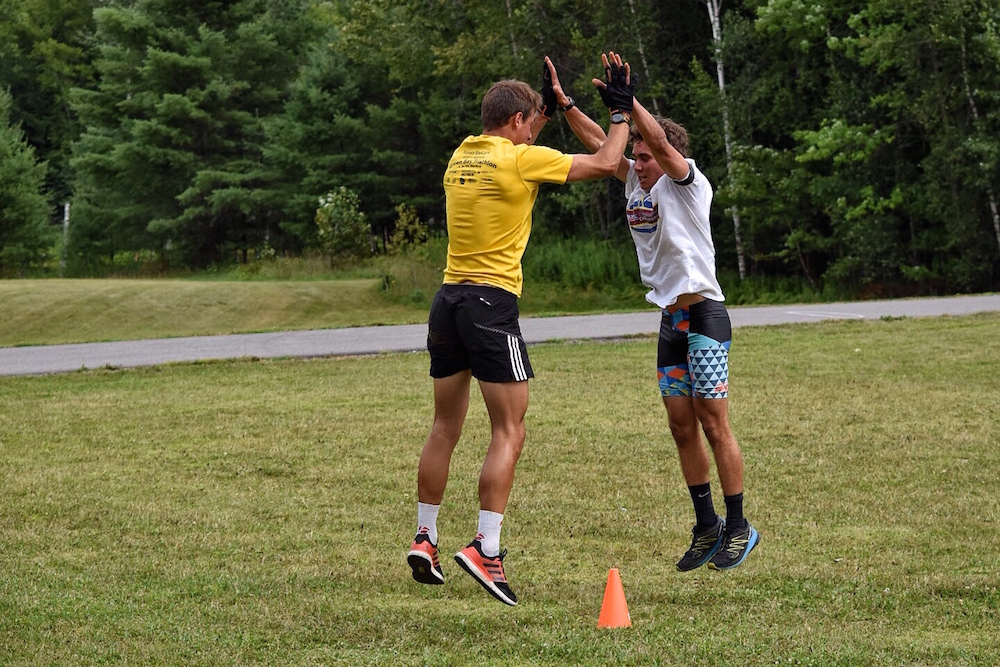
    Paul Schommer (l) and Jake Brown doing high-five partner burpees during a strength workout at the U.S. Biathlon development camp in Jericho, Vermont. (Photo: Katrina Howe)

    What This Looks Like in Practice

    What this looks like depends on the athlete. Younger athletes should spend most of their time on movement quality and basic strength, with only low-level plyometric work. Developing athletes need to build real strength first, then layer in plyometrics gradually. Senior athletes need to respect the sequence across the year — spring to rebuild, summer to get strong, fall to convert, winter to maintain.

    None of this is complicated. But it does require patience.

    There’s nothing wrong with plyometrics. Used at the right time, they’re one of the highest-return tools we have. But they’re not a starting point. They’re a finishing layer.

    Strength gives you the foundation. Plyometrics teach you how to use it.


    Help Support Our Olympic Coverage!

    If you value the thoughtful work and access FasterSkier provides, please consider becoming a Voluntary Subscriber. Your support directly fuels our work to cover the people, places, and moments that make our sport special.

    Join the FasterSkier community!


  • Annika Martell Named Head Ski Coach at Craftsbury Green Racing Project

    Annika Martell Named Head Ski Coach at Craftsbury Green Racing Project

    Annika Martell racing during the NENSA club relays, Saturday, March 28, 2026 at Craftsbury. (Photo: Phil Belena)

    The Craftsbury Green Racing Project has named Annika Martell as its new Head Ski Coach.

    Martell brings a resume that spans nearly every corner of the Nordic skiing world. A Minnesota native, she headed east to ski at Colby College, where she captained the team and earned recognition for her leadership before graduating with a degree in economics and environmental science.

    Her coaching career has taken a similarly wide path. Early on, she interned with the US Biathlon Association and coached juniors at Ford Sayre and the Berkshire Nordic Ski Club, before moving into elite-level work as an assistant coach with the Stratton Mountain School T2 Team. She spent four years as an assistant coach at Williams College, during which time she completed two stints as a Trail to Gold Fellow with the US Ski Team and served twice on the wax staff for Team New England at Junior Nationals.

    Most recently, Martell was the Head Nordic Coach at St. Michael’s College, where she guided the program to highly competitive results.

    Her background extends well beyond the ski tracks. She is a certified weightlifting coach and handled strength and conditioning duties at Williams. She also has experience in finance and operations management, and holds a Master’s degree in Sports Business from Drexel University.

    The Craftbury Green Racing Project is still accepting athlete applications for the incoming 2026 snow class — Apply Here
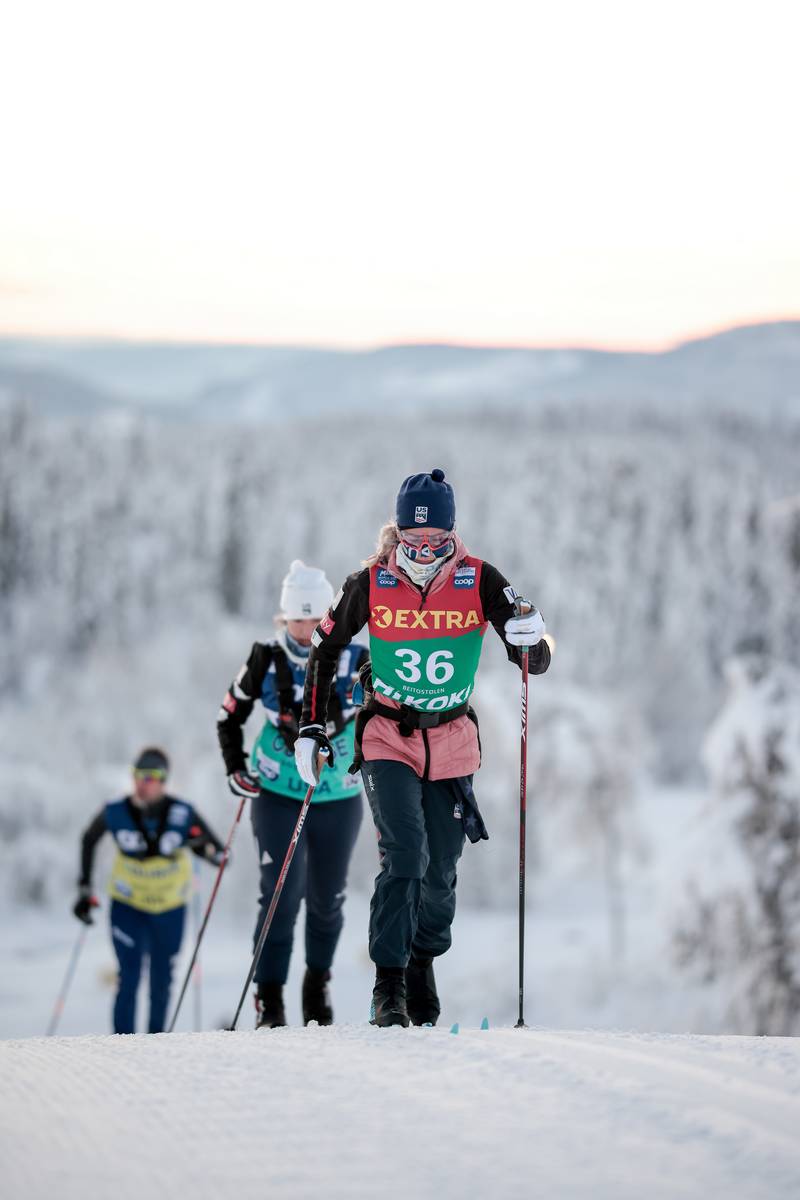
    Martell follows Jessie Diggins on course in Beitostolen in 2022. (Photo: Nordic Focus)
  • Park City Ski & Snowboard Seeks Head Cross Country Competition Coach

    Park City Ski & Snowboard Seeks Head Cross Country Competition Coach


    Park City Ski & Snowboard is seeking a Head Cross Country Competition Coach to lead its U16+ competitive Nordic program. The full-time, year-round position reports to Cross Country Director Emma Garrard.

    Below is the full job description.


    Reports To: Cross Country Director, Emma Garrard
    Employment Status: Full-time, year-round, salaried exempt
    Compensation: Annual salary commensurate with experience, plus benefits
    Athlete Focus: U16 and above

    Position Summary

    The Head Comp Team Coach will manage the coaching staff, run the competitive calendar, and represent PCSS in the Regional and National Nordic community. This position requires someone who can coach at a high level and manage staff, budgets, calendars, and travel around the country for training and races, while upholding PCSS core values of Passion, Accountability, Respect, Team, and Integrity.

    Program Leadership & Staff Management

    • Design and execute a multi-year training and competition framework, consistent with US Ski & Snowboard Training System principles
    • Supervise, mentor, and evaluate XC comp assistant coaches
    • Lead staff meetings and maintain clear communication
    • Maintain a strong focus on positive team culture
    • Collaborate with the Director on program goals, budget planning, and seasonal priorities
    • Contribute to the recruitment and retention of quality coaching staff
    • Prioritize strong communication with the Director, staff, and parents
    • Attend PCSS staff meetings and all-program events as requested by PCSS leadership
    • Support PCSS-hosted events and fundraising initiatives

    Technical Coaching & Athlete Development

    • Implement and evaluate individual and team training plans on an annual and multi-year basis
    • Lead on-snow sessions 5–6 days per week during the training season, with full preparation and follow-up
    • Develop and execute strength and conditioning programs, including dryland
    • Conduct formal athlete evaluations semi-annually covering individual goals, technique, physical, psychological attributes, and equipment domains
    • Maintain current knowledge of FIS, USSS, and Divisional rules, regulations, and athlete advancement pathways
    • Stay current in coaching methodology through continued education, clinics, and engagement with the national Nordic community
    • Manage race-day waxing and equipment preparation
    • Establish clear pathways to the comp team within other PCSS Cross Country programs by working with development coaches

    Competition & Travel

    • Manage all aspects of competition scheduling — race entries, travel logistics, lodging, and transportation
    • Lead the coaching staff and athletes at all competition events
    • Oversee competition ski preparation and course previewing
    • Provide real-time coaching feedback and athlete support during racing
    • Conduct post-competition reviews with athletes and staff to inform future training decisions
    • Attend Intermountain Division meetings and assist with Junior Nationals planning
    • Manage competition expense tracking and reporting
    • Uphold and maintain PCSS vehicles

    Administrative Responsibilities

    • Assist with the annual Cross Country budget
    • Use Playmetrics and other approved platforms for scheduling, communication, athlete records, and training logs
    • Ensure all athletes and coaching staff maintain required USSS licenses, SafeSport compliance, and certifications
    • Support end-of-season evaluation, awards, and program planning processes

    Qualifications

    • Minimum 3 years of coaching experience in a competitive Nordic environment
    • Current US Ski & Snowboard Level 200 coaching license, or ability to obtain within first season
    • Current SafeSport certification and compliance
    • First Aid, CPR, and AED certifications
    • Valid driver’s license with clean record
    • Proficiency with Google Suite, Microsoft 365, Playmetrics, and training management platforms
    • Strong written and verbal communication skills
    • Demonstrated ability to manage staff, budgets, and multi-week travel logistics
    • Experience with strength and conditioning program design for endurance athletes
    • Knowledge of FIS rules and athlete advancement procedures

    Physical Requirements

    • Ability to work up to 6–8 hours per day outside in all weather conditions
    • Capacity to lift and transport equipment up to 75 lbs
    • Ability to perform course and race site preparation work
    • Available for weekend and holiday work throughout the competition season
    • Willingness and ability to travel for training camps and competitions, including multi-night trips
    • Stamina to demonstrate technique and participate in training sessions


    APPLY NOW


    This job description is not an employment agreement or contract. PCSS management reserves the right to alter the scope of work within the framework of this description at any time. All offers are contingent on successful background check completion.

    To apply, submit a resume, cover letter, and references to: egarrard@parkcityss.org

  • Wednesday Workout: Cueing the Glutes — The Penguin Walk and White Line Drill (with Video)

    Wednesday Workout: Cueing the Glutes — The Penguin Walk and White Line Drill (with Video)

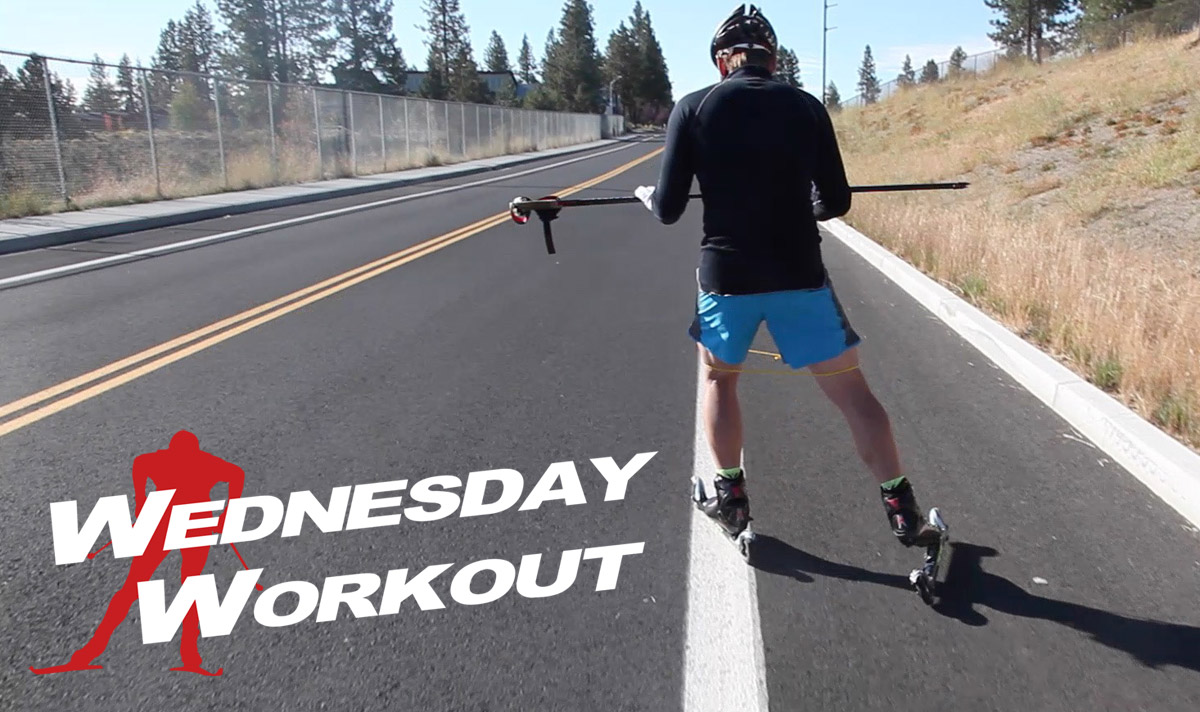
    Wednesday Workout with Dave Cieslowsk: cueing and engaging the glutes while skate skiing.
    Wednesday Workout with Dave Cieslowski: cueing and engaging the glutes while skate skiing.

    From the penguin walk to what physical therapist Dave Cieslowski calls the “white line drill”, now is the time to embrace strength and efficiency in your skate skiing. But with snow not exactly flying in abundance yet, it’s also time to break out the rollerskis for a disciplined workout to hardwire some specific biomechanical cues.

    This Wednesday Workout is an extension of Cieslowski’s Wednesday Workout #1 where we learned how to increase skiing efficiency by engaging the glutes. If on-snow or pavement, Cieslowski advises to start slowly, skate skiing at an intentionally slow speed to feel the glutes firing.

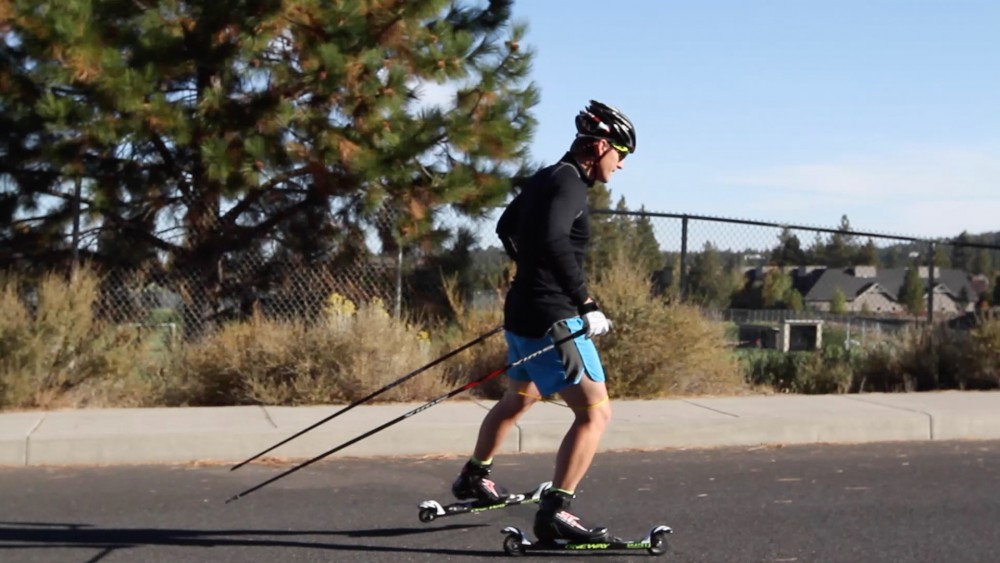
    Dave Cieslowski uses a therapy band above his knees to help cues the glutes to fire while skate/roller skiing.
    Dave Cieslowski uses a therapy band above his knees to help “cue” the glutes to fire while skate rollerskiing.

    The Workout

    Part 1:

    1. The penguin walk — a simple back and forth motion using a therapy band stretched around the top of the knees (see video below) — allows the athlete to “cue up” the glutes. In other words, you’ll begin to understand how it feels when the glutes are indeed firing.
    2. Rock back and forth on the skis for two to three minutes. You’re trying to “teach” the glutes to help stabilize your body while on skis.

    Part 2:

    1. Without poles go ski while still using the therapy band above the knees. When you come up onto the ski, try to the get the glutes to fire (squeezing the glutes together), keeping the hips high, and remain on the ski a bit during the glide phase.
    2. Do the same drill with poles.

    Part 3:

    1. Find a gradual uphill suitable for no-pole, V2 and V2 alternate skiing.
    2. While still using the therapy band, and without poles, ski uphill keeping the white line of the bike lane as centered as possible. The objective is to move up the hill without what Cieslowski calls significant “lateral translation”. You want your force going “down the trail”.
    3. Repeat with poles using V2 and V2 alternate technique.


    Dave Cieslowski is a DPT (Doctor of Physical Therapy), CSCS (National Strength and Conditioning Association Certified Strength and Conditioning Specialist). He also works with the U.S. Nordic Combined Team in and out of the competition season.